Tag: topic-link-auto

  • Philly jails dropped a monthly addiction shot to save money. Now 1 in 3 inmates is misusing the cheaper pill.

    Philly jails dropped a monthly addiction shot to save money. Now 1 in 3 inmates is misusing the cheaper pill.

    Two years ago, Philadelphia’s jails were struggling to stop prisoners from misusing a daily pill offered to ease the craving and withdrawal symptoms that make it hard to overcome opioid addiction.

    The city’s solution: a once-a-month shot that eliminated the potential to sell, trade, or give away the medication.

    City leaders touted the injection, called Brixadi, as a way to enhance a jail addiction-treatment program long considered one of the most comprehensive in the state. A pilot launched in late 2024 with immediate success, leading to expansion to the city’s intake jail and other facilities four months later.

    This year, the city took it away.

    The reason, city officials say, is cost. Brixadi costs led the city last year to overspend by nearly $1 million its $4.3 million budget for addiction treatment in the jails, officials said.

    As the city moved to rein in the expense, Mayor Cherelle L. Parker’s administration in June slashed funding for jail-based addiction treatment by more than half. The city’s total budget for the program is now about $2 million, according to budget documents.

    The city imposed the reductions even as it has begun receiving the first of hundreds of millions of dollars from legal settlements with the pharmaceutical companies that fueled the opioid epidemic.

    City and jail officials say that the cuts are the result of extensive discussions around how to appropriately prioritize settlement spending and introduce cost-effective measures to prevent misuse of these drugs.

    Officials are “looking systematically” at how they can “do the best for the most number of people” suffering from opioid use disorder, said Deputy Managing Director Crystal Yates-Gale, who oversees health and human services for the city.

    Advocates for people suffering from opioid addiction say the move sets back efforts to rehabilitate those whose low-level offenses land them in city jails. Roughly 1,700 people booked into Philadelphia’s jails in 2024 were treated for an opioid use disorder, according to the city’s most recently reported data.

    Treatment behind bars can lower their risk of dangerous complications during withdrawal and of dying of an overdose in jail or after release, when people are especially vulnerable. Families have sued the city over such deaths in recent years.

    City officials did not provide information for months in response to The Inquirer’s questions about changes to its jails’ addiction-treatment program. Only after the newspaper filed a public records request — and appealed the city’s decision to deny it in part — did they begin providing detailed figures on the funding and numbers of people treated, as well as make decision-makers available for interviews.

    At a hearing last week of City Council’s Committee on Legislative Oversight, jail officials were asked what had happened to the injections. The officials cited their cost at a time of significantly rising expenses for prison healthcare overall.

    Inside the jails, the funding cuts meant relying on a cheaper oral medication, Suboxone, the same medication widely abused two years ago.

    Suboxone is effective and the most cost-efficient option for the city, “given available funding and rising medical expenses needed to treat all patient needs,” said Sharon Gallagher, a spokesperson for the Philadelphia Managing Director’s Office.

    But since the city stopped prescribing Brixadi, the same problematic patterns have returned: One in three of the 719 people prescribed Suboxone in city jails since the switch in June got caught misusing it, city officials said in a statement. They were ultimately cut off from treatment.

    Gallagher said that the jails’ opioid treatment medication policies have not changed and that officials “remain committed to ensuring that every person housed in our facilities who needs medication-assisted treatment receives it.”

    But at last week’s hearing, at-large Councilmember and Minority Whip Nicolas O’Rourke, a member of the Working Families Party, called for further investigation into the decision to end this treatment option.

    Incarceration is “a public health challenge directly impacted by the care provided on the inside,” he said, noting that whether people leave jail still in treatment can shape their ability to rebuild their lives.
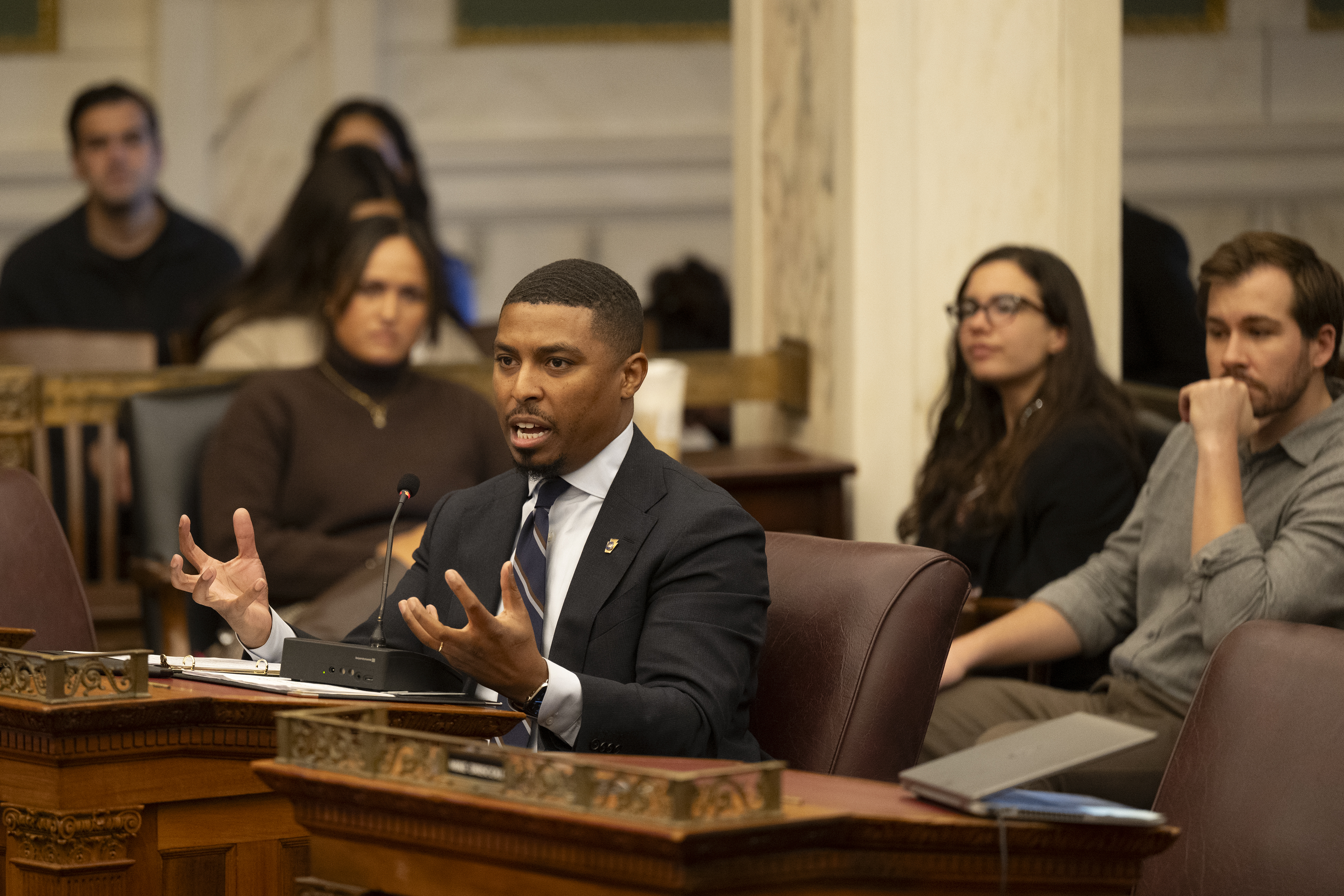
    Philadelphia City Councilmember and minority whip Nicolas O’Rourke speaks during a hearing last week of the City Council’s Committee on Legislative Oversight. Jose F. Moreno / Staff Photographer

    Addiction treatment in Philadelphia jails

    Philadelphia’s jail system is one of the few in the state that allow incarcerated people in addiction to start treatment with a class of drugs that contain legal forms of opioids, considered state-of-the-art for addiction treatment.

    That has included in recent years both Suboxone, taken as a daily pill, and Brixadi, an injection whose effects last for a month, in addition to other medications.

    In July 2024, four months before the jails began offering Brixadi, Bruce Herdman, the jails’ longtime medical director, told The Inquirer that about half of the prisoners prescribed Suboxone had been removed from the program for selling it, trading it, or giving it away — a practice known as diversion.

    A pilot run offering Brixadi launched in November 2024 under the Parker administration at Riverside Correctional Facility with 46 patients. By 2026, before the program ended, 563 patients had received the injections. A source familiar with the program, who was not authorized to speak publicly, estimated the injections cut diversion by at least 30%.
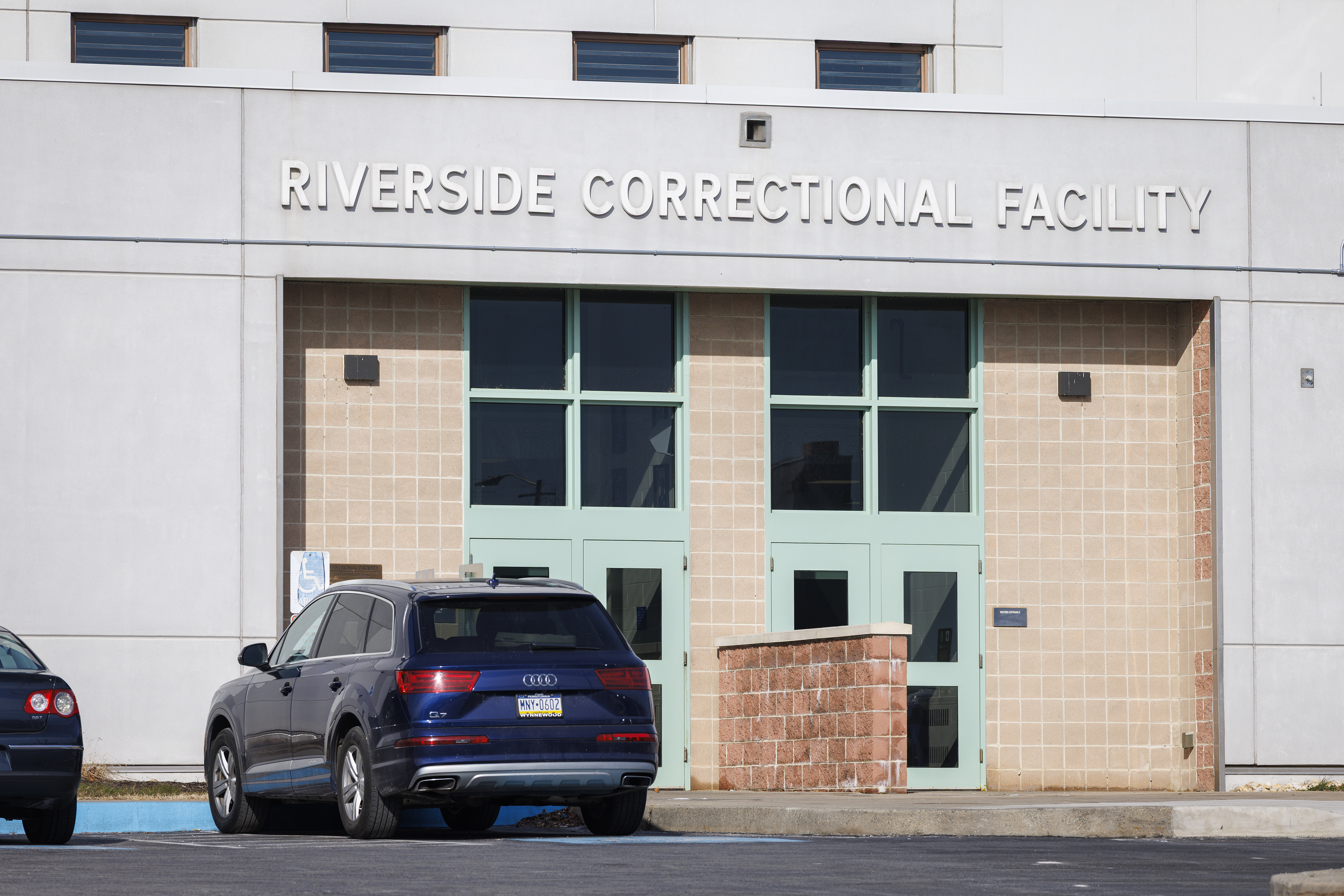
    The Riverside Correctional Facility at prison complex in northeast Philadelphia.Alejandro A. Alvarez / Staff Photographer

    Previously, prisoners caught misusing or selling Suboxone were typically tapered off the drug, then left without any addiction treatment for the rest of their time in jail, officials said.

    The monthly shot, they said, gave those prisoners another chance at recovery.

    The rollout of Brixadi at the city’s jails coincided with the launch of the Parker administration’s “Wellness Ecosystem Initiative” to tackle opioid use in a city that has long struggled with high overdose rates and an open-air illicit drug market in the Kensington neighborhood that is one of the nation’s largest.

    She pledged to make the city a national model for opioid treatment. Philly Home at Girard, a low-barrier shelter, opened in 2024 with 180 beds. And in 2025, city officials unveiled the Riverview Wellness Village, a city-run recovery home with 336 beds.

    A major source of funding for addiction treatment comes from several multimillion-dollar legal settlements from opioid manufacturers, distributors, and pharmacies. Parker’s predecessor as mayor, Jim Kenney, had first allocated some of this money to the jails’ treatment program in 2023.

    In June, as city officials reduced the share going to the jails’ medication-assisted treatment budget to $2 million, they directed roughly $151 million over five years to operations, programming, and other costs at Riverview Wellness Village and Philly Home at Girard. Funding for these efforts can come from both opioid settlements and other sources, city officials said in response to a right-to-know request.

    At last week’s oversight hearing, O’Rourke questioned whether the settlement funds had been “diverted to other administration priorities.”

    In a subsequent interview, Yates-Gale said she would “push back hard” on the idea that “we’ve taken something from one group of people to allocate it to other people.” City officials, she added, are seeing success at the treatment locations.

    City officials declined to say how many people have been treated for opioid addiction at Riverview Wellness Center and Philly Home at Girard, saying doing so would compromise patient privacy due to the small number of patients involved.

    City officials said they had to tap into settlement funds from the previous year, as well as money from the jails’ general fund, to make up the budget shortfall resulting from Brixadi’s expense. They called the cost unsustainable in a statement.

    Yates-Gale said the city was aware of the high cost of Brixadi when launching the jails’ program, but is now taking a more “holistic” approach toward allocating opioid settlement dollars.

    Suboxone, the oral treatment used in place of Brixadi, costs about $50 per patient a month, or about $600,000 a year. Between 1,200 and 1,400 prisoners received it annually in the last five years, city officials said in response to the right-to-know request.

    Brixadi costs $2,660 per patient for the first month and $1,776 for each month after.

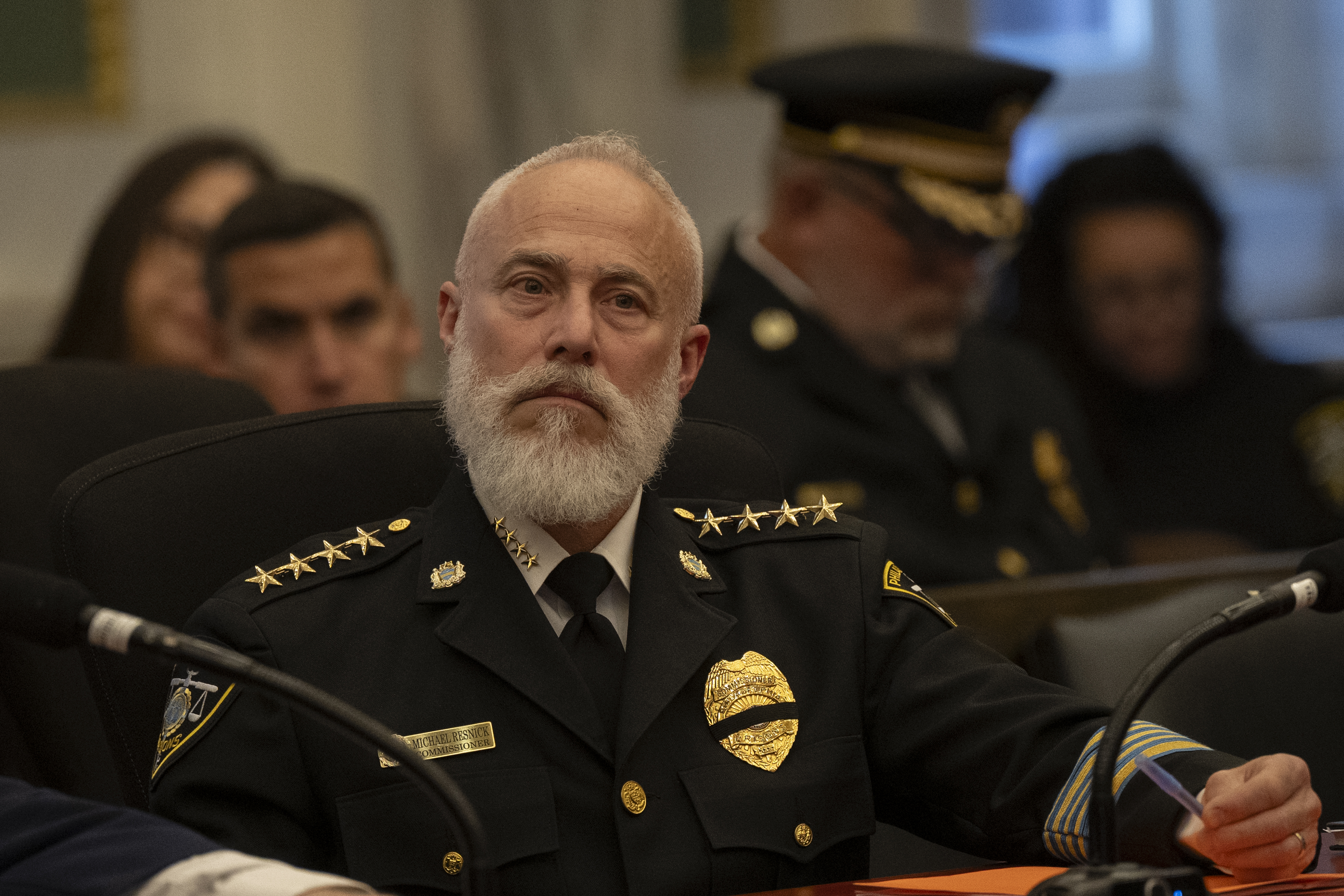
    “The math is simple,” Michael Resnick, the city’s prisons commissioner, said in an interview.

    In May, the city signed a contract with a new jail healthcare provider, CFG Health. The cost of addiction medications under CFG Health has yet to be determined, officials said.

    Back to the daily dose

    Many of the patients who moved back to the daily medication had a history of diverting it — and did so again after the switch, according to the source familiar with the program who was not authorized to speak publicly.

    Not everyone caught diverting Suboxone was doing so for profit, the source said. Some were being shaken down by fellow prisoners for their doses.

    Those people, the source said, benefited the most from the injections and have now lost access to medication treatment for addiction.

    The prisoners barred from the oral medication were slowly tapered off to avoid intense withdrawal, Resnick said.

    Opioid withdrawal can be severe, and people who quit too suddenly and lose their tolerance face a higher risk of fatal overdose if they use again.

    Resnick said that Brixadi shots were effective at preventing misuse. “I don’t know how you divert a shot,” he said.

    Jail officials are now working to mitigate the risk of diversion by housing people receiving opioid-addiction treatment in the same units, Resnick said.

    If everyone in a unit receives the same medication, “there would be less of an incentive to sell it,” he said. Medical staff have been “extra vigilant” in watching people take their doses to make sure they swallow them rather than hide them, he added.

    Sarah Bleiberg Bellos, an attorney advocating for the civil rights of incarcerated people, said Brixadi is not always popular among prisoners with opioid addiction. Some simply prefer Suboxone, or have a skin reaction to the injectable drug.

    But, she said, everyone behind bars has a right to treatment for opioid use disorder — in the form that is the best fit for them.

    “Whatever form it is, they have a right to that treatment, and that’s what they should be getting,” said Bleiberg Bellos, who works for the nonprofit Pennsylvania Institutional Law Project.

    The source familiar with the program said the monthly Brixadi injection helped prisoners walk out with medication already in their system, rather than having to start daily doses on the outside.

    Resnick said officials are exploring a more limited use: giving prisoners an injection on the day of their release. That would “hopefully provide them with protection until they get enrolled into a program out in the community,” he said.

    For now, he said, people released from the jails are provided with a five-day supply of medication and kits of naloxone, or Narcan, a medication used when someone has overdosed to keep them from dying.

  • The Pemberton mayor who charged at a resident last month has lost his bid for reelection

    The Pemberton mayor who charged at a resident last month has lost his bid for reelection

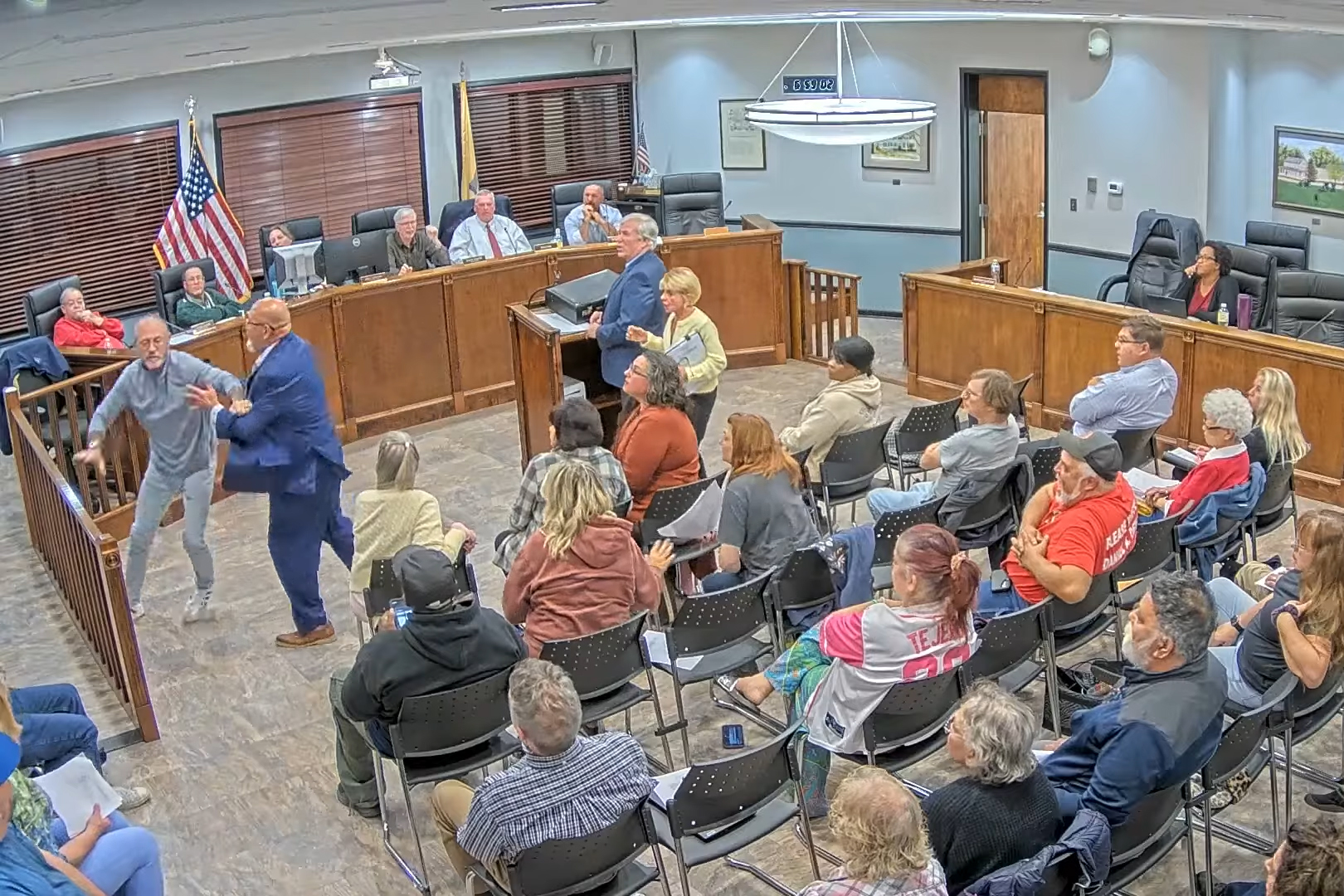
    Less than two weeks after making national headlines for his involvement in a near-physical altercation with a resident during a council meeting, Pemberton Township Mayor Matthew Bianchini was ousted by voters on Tuesday.

    The Republican received just 30% of the vote, or 1,983 votes, compared with Democrat Belinda Fontanez, who pulled in 3,998 votes, according to preliminary election results from Burlington County as of Wednesday afternoon.

    A late write-in effort from Republican Councilman Dan Dewey, which ramped up after Bianchini’s outburst, drew just 52 votes.

    Over 500 Pemberton voters selected a write-in or personal choice candidate.

    Bianchini was appointed mayor in January following the resignation of Jack Tompkins, who stepped down after multiple workplace sexual misconduct allegations.

    During the Oct. 21 council meeting, Bianchini charged at a resident who raised his middle finger toward the mayor.

    Bianchini’s wife, Nicole, later tried to explain her husband’s actions on Facebook, stating that he was acting as a protective father after the resident antagonized him and his family, who were also sitting in the audience.

    Bianchini made no mention of the incident in a Facebook statement Wednesday congratulating Fontanez on her win.

    “Campaigns are intense, emotional, and testing journeys. There are moments we look back on with pride, and moments that teach us humility,” Bianchini said. “Leadership requires learning from every chapter, I accept this outcome with an open heart and a deep respect for our democratic process.”

    “Serving as your mayor has been one of the greatest privileges of my life,” he added, noting that his commitment to Pemberton Township “remains unchanged.”

    He did not immediately respond to requests for comment.

    Meanwhile, Fontanez, a U.S. Navy veteran and former township code enforcement and zoning employee, released a lengthy victory statement Wednesday on Facebook.

    “Throughout this campaign, I made a commitment to you: Leadership with Integrity. Service with Humility. Government with Transparency,” Fontanez said. “Those were not simply campaign words. They are the principles by which I intend to lead.”

    “As we move forward, we will work to strengthen our neighborhoods, support our local businesses, protect our environment, invest in our young people, honor our seniors and veterans, and ensure that the voices of our residents are heard,” she said.

  • Source: Flyers center prospect Jett Luchanko to miss time with a lower-body injury

    Source: Flyers center prospect Jett Luchanko to miss time with a lower-body injury

    The Flyers’ injury woes have permeated down to the American Hockey League.

    Center prospect Jett Luchanko, 20, missed Lehigh Valley’s Wednesday night 5-4 overtime win against the Laval Rocket with a lower-body injury.

    While there is no timeline for his return, according to a team source, the Flyers are hopeful he will not be out for too long, and the injury is unrelated to the procedure performed on Luchanko’s core near the start of June. That injury caused the speedy center to miss his second straight development camp.

    “It’s been lingering for about a year and a half. It’s been a problem,” assistant general manager Brent Flahr said at the end of development camp in July.

    Luchanko, 20, was back on the ice not long after development camp and flashed his speed and hockey IQ in rookie and main camp in September. Although he did not break camp with the Flyers for the third straight year — the plan was always for him to head to Allentown, anyway — the Flyers remain high on the 2024 first-round pick, especially with him in one spot for the year.

    “We’re excited to see him turn pro [full-time]. I think that’s great. … Stability will probably be a good thing for him,” Flyers general manager Danny Brière told The Inquirer at the beginning of June. “… The big thing with Jett is he has an elite skill in skating that is almost unmatched from anyone in the organization, other than maybe Owen Tippett. So that’s always going to have a lot of value for anybody to have a player like that.”

    This season with the Phantoms, Luchanko has a goal and six points in 10 games. The Flyers have wanted him to focus on shooting the puck more this season, and he already has 20 shots on goal, compared to just the seven he put on in nine regular-season games with Lehigh Valley two seasons ago.

    The Flyers remain high on Jett Luchanko’s tools, even if it hasn’t necessarily led to production thus far.Elizabeth Robertson / Staff Photographer

    Known as a gifted passer, Luchanko said in early October that his process this year is to rewire the way he thinks and get shots on goal.

    “In a game, I think it’s just so automatic and so fast that you don’t have time to think about things like that, and I think it just comes from experience of playing the game,” he told The Inquirer recently. “Things you would do automatically; you see the lane and it just kind of happens.

    “I think it definitely happens from reps in practice. In practice, if you get in that situation, just shooting it no matter what, maybe, or passing it, no matter what, to be able to get yourself in a position where you shoot it instead of pass it. When maybe, even if you should have passed it, you still get the puck on net and [it] creates a rebound or something.”

  • He shot into a crowd of Eagles fans celebrating the NFC championship. On Thursday, a judge sentenced him to prison.

    He shot into a crowd of Eagles fans celebrating the NFC championship. On Thursday, a judge sentenced him to prison.

    A Philadelphia man who fired into a crowd of Eagles fans celebrating the team’s NFC championship game victory last year, seriously injuring a 20-year-old man, was sentenced to 3½ to 9 years in prison on Thursday.

    Amere Wright, 20, was 18 when he opened fire on Jan. 26, 2025, in Center City as hundreds of people gathered to revel in the Eagles’ win over the Washington Commanders.

    It was supposed to be a night “filled with joy,” prosecutor Mackenzie McGeehan said Thursday. Instead, a scuffle broke out on the 1300 block of Chestnut Street, and Wright, who was not involved in the altercation, pulled out an illegal handgun and fired into the crowd, McGeehan said.

    The bullets struck the 20-year-old in the abdomen and hip, causing injuries that required a four-day hospital stay, the prosecutor said.

    Wright pleaded guilty to aggravated assault and illegal firearms charges in August. Philadelphia Common Pleas Court Judge Chesley Lightsey sentenced him Thursday after hearing arguments from McGeehan and Wright’s attorney, Michael McDermott, as well as an apology from Wright.

    Wright told the judge he had overreacted when he drew and fired his weapon and said he regretted it.

    “I know there were a thousand different options — a thousand different scenarios — that I could have chosen, and I chose the wrong one,” he told the judge.

    He added: “When I was young, I thought carrying guns was the coolest thing to do, but it’s not.”

    Lightsey said she had been moved by Wright’s words and had imposed a sentence that recognized he was “young and maturing.”

    At the same time, she encouraged Wright to continue anger-management treatment, which he said he had begun while in jail awaiting the resolution of his case.

    “I can tell you mean what you say,” Lightsey told Wright. “Some guys come in here and I don’t believe them.”

    But, she added, “you’re lucky he [the victim] didn’t die, because you’d be facing life in prison.”

  • Cheltenham Township wants to hike taxes by 20% and boost firefighter funding

    Cheltenham Township wants to hike taxes by 20% and boost firefighter funding

    Cheltenham Township, already the most property tax-burdened municipality in Montgomery County, has proposed a plan to raise taxes next year to limit an impending structural deficit.

    The township portion of property taxes would increase about 20% under the draft budget. The average homeowner’s bill would rise $89, according to township estimates, even after the cancellation of the stormwater fee, which the state Supreme Court ruled this year is an illegal tax. The average combined property tax and stormwater fee bill this year was $1,762.

    With the elimination of the stormwater fee, which averaged $220 for homeowners, the effective tax hike is 5%, commissioner board president Matthew Areman said during a Wednesday budget presentation.

    Areman emphasized that since most of Cheltenham residents’ property taxes fund the school district, the township’s tax hike only affects a small portion of their bill.

    Officials have long said the township is struggling financially due to its small commercial tax base, high proportion of tax-exempt land, and the cost of lifetime healthcare benefits for retirees — a policy the township began limiting after 2013, according to staff union contracts.

    Still, about half of the township’s spending on staff health insurance is for retirees, Areman said Wednesday.

    To pay off debt, the township voted to sell its sewer system to a private company in 2018. The same company, Aqua, also supplies the town’s drinking water.

    A 20% increase would leave a deficit of about $223,000 for 2027, according to a slideshow Cheltenham shared at a budget meeting last week, but there would be a surplus by 2028.

    The township had also considered slashing $100,000 from the library budget or halving a planned $200,000 funding increase to fire companies. The library cut would have required staff layoffs and reductions in weekend hours, according to a township budget slide.

    Instead, the draft budget retains the fire increase, which the township’s four volunteer companies will put toward recruitment and retention, and avoids the library cut.

    “The township’s budget is much more than just a list of numbers on a spreadsheet,” Areman said at the Wednesday meeting. “It’s both a road map of the township’s work plan for the coming year and a statement about the community’s priorities.”

    The finance committee will decide on Nov. 10 whether to adopt the draft budget, Areman said. The preliminary budget would then go to the commissioner board for approval on Nov. 18, and put online for public inspection by Nov. 23.

    A final budget vote is set for Dec. 16.

    This suburban content is produced with support from the Leslie Miller and Richard Worley Foundation and The Lenfest Institute for Journalism. Editorial content is created independently of the project donors. Gifts to support The Inquirer’s high-impact journalism can be made at inquirer.com/donate. A list of Lenfest Institute donors can be found at lenfestinstitute.org/supporters.

  • Philly politicos predict City Council shake-ups, Fetterman’s downfall, and Shapiro’s 2028 slogan

    Philly politicos predict City Council shake-ups, Fetterman’s downfall, and Shapiro’s 2028 slogan

    With their plates overflowing with fried chicken and pastrami sandwiches, Philadelphia Democrats on Tuesday gabbed at their biannual Election Day lunch events, which are hot spots for candidate appearances and gossip trading.

    Inquirer reporters were there, too, chatting with politicos at South Restaurant & Jazz Club on North Broad Street and Famous 4th Street Deli in Queen Village. We continued our tradition of asking attendees three questions about the state of politics.

    This time, we asked:

    • Of 17 City Council incumbents, how many will win reelection next year?
    • Who will be the top two finishers in the 2028 Democratic primary for U.S. Senate?
    • What should be Gov. Josh Shapiro’s presidential campaign slogan?

    Here’s what Philly’s politicos had to say.

    Predictions on which Council incumbents survive 2027

    Every City Council seat will be on the ballot next year, and all 17 members have said that they are running for reelection. We’ll see how many of them end up on the ballot — we have reported that one member is up for a different job.

    So on Tuesday, we asked: Give us a number. How many survive?

    The incumbents themselves mostly said 17. That includes Council President Kenyatta Johnson, who confidently predicted “all of us,” and Councilmembers Jim Harrity and Jeffery Young Jr., who each said they are hoping for 17. Even Jamie Gauthier, a progressive Council member who may be asked by left-leaning challengers to support their bids against her colleagues, said 17.

    Mayor Cherelle L. Parker, a former Council member herself, said that every incumbent will win reelection.

    Philadelphia City Council President Kenyatta Johnson speaks with District Attorney Larry Krasner during an Election Day political luncheon in Philadelphia on Tuesday, Nov. 3, 2026.Jose F. Moreno / Staff Photographer

    Notably, State Rep. Morgan Cephas also said she sees all 17 Council members being reelected. She has been floated as a potential successor to Councilmember Curtis Jones Jr., a longtime member who has been encouraged by some in the party to consider stepping aside.

    Kellan White, a Democratic operative rumored to be considering a run for Council’s 5th District, said “no more than 16.” How coy.

    Ryan Boyer, the head of the Philadelphia Building and Construction Trades Council, predicted two members will be ousted, but when pressed, he wouldn’t name them. “I’m a pro,” he said. And T.J. Lepera, the political director for the powerful electricians union, said 16 members.

    Leftists were more bullish about seeing new faces on Council as their allies plot a takeover.

    State Sen. Nikil Saval, who has long been aligned with the city’s progressive faction, predicted only 12 or 13 Council incumbents will be reelected. And State Rep. Ben Waxman, who has been aligned with both progressives and establishment Democrats, said 13.

    Perhaps the boldest prediction for the next City Council came from longtime strategist Neil Oxman. He predicted only 11 incumbents would win next year.

    Dems say Fetterman won’t win his own seat

    We also asked Democrats to tell us which two members of their party would finish at the top of the primary for U.S. Senate in 2028 when incumbent U.S. Sen. John Fetterman is up for reelection.

    Fetterman has not yet said whether he intends to seek another term, but he has angered members of his own party and been not-so-secretly courted by the GOP. That means there is likely to be a competitive primary for Fetterman’s seat.

    We thought the answers to our question would be revealing, because it would show us who the party’s power brokers think will run in addition to Fetterman. But few of the Democrats we talked to on Tuesday named Fetterman at all.

    “Anybody but Fetterman,” Boyer said.

    “Fetterman won’t be one of the two,” added State Rep. Malcolm Kenyatta, of North Philadelphia.

    “Oh, my God, goodbye,” Gauthier said. “We need somebody who stands for everything that Fetterman doesn’t.”

    Ryan Boyer, Business Manager for the Philadelphia Building and Construction Trades Council, chats with Senator Anthony H. Williams at the lunch event at South Restaurant & Jazz Club on Election Day in Philadelphia, Pa., on Tuesday, Nov. 3, 2026.Tyger Williams / Staff Photographer

    The most common answer we heard was U.S. Rep. Chris Deluzio, of Western Pennsylvania, who has been positioning himself for a run and told The Inquirer that he is considering a bid for Fetterman’s seat.

    White said he sees the top two finishers in a primary race being Deluzio and U.S. Rep. Madeleine Dean. Oxman said Dean and former U.S. Rep. Conor Lamb, who lost to Fetterman in the 2022 primary.

    Cephas said Kenyatta, who also lost to Fetterman in the primary, and U.S. Rep. Summer Lee, a progressive favorite from Pittsburgh.

    And State Sen. Anthony Williams, who was reelected Tuesday for what he has said is his last term, floated his longtime ally Speaker Joanna McClinton for the job, saying she “certainly would be a viable candidate.”

    Both Waxman and State Sen. Sharif Street, of North Philadelphia, said the top two finishers would include one candidate from Western Pennsylvania and one from the eastern part of the state.

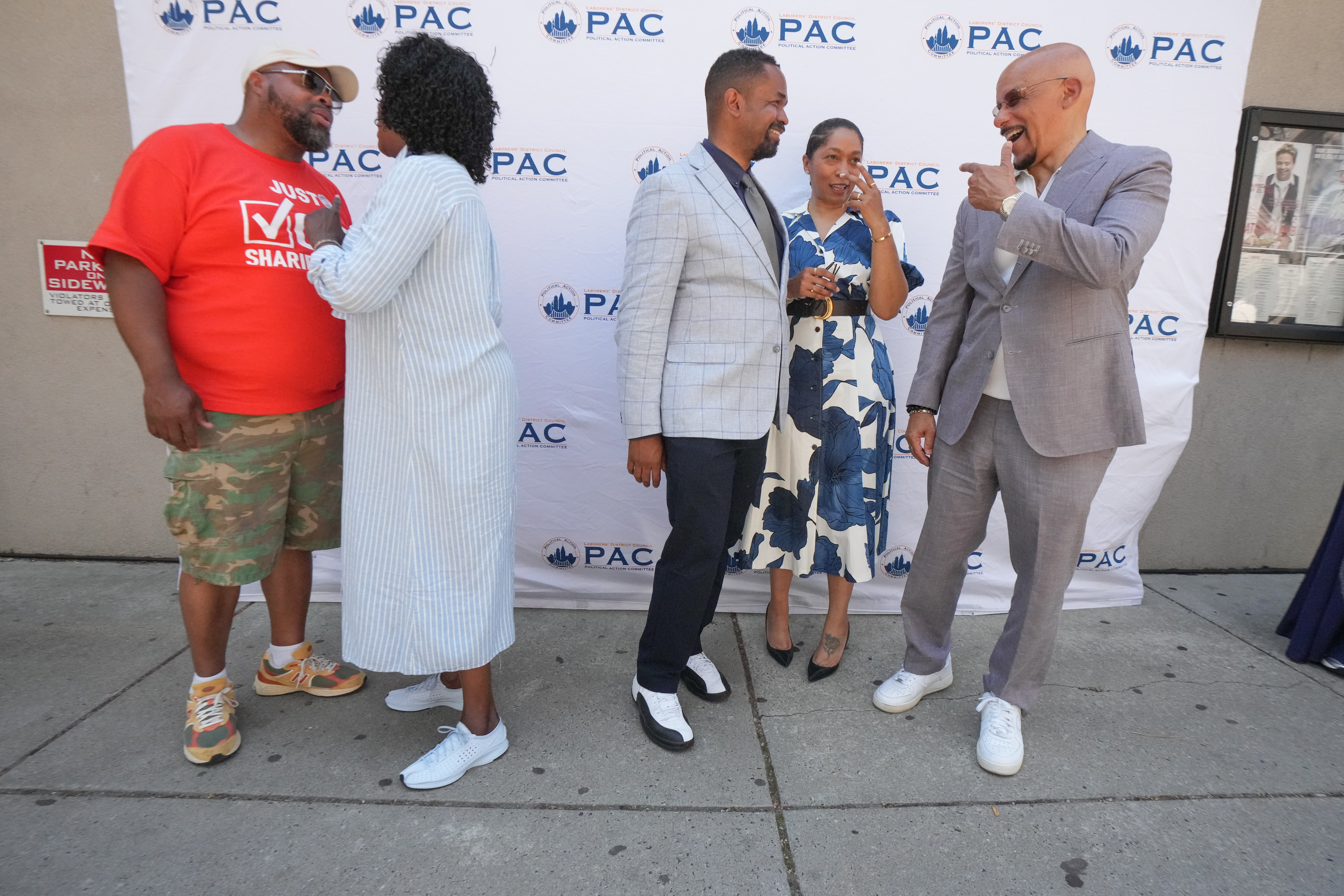
    (Left to Right) Ryan Boyer, Mayor Cherelle L. Parker, State Sen. Sharif Street, April Scott-Street, and State Senator Vincent Hughes, outside South Restaurant & Jazz Club, in Philadelphia, May 19, 2026.Jessica Griffin / Staff Photographer

    State Sen. Vincent Hughes predicted “the field will be broad,” which he said could benefit Fetterman if he decides to run again.

    Several of the elected officials said they would like to see U.S. Rep. Brendan Boyle, who represents a large swath of Philadelphia in Congress, run for the seat. However, Boyle told The Inquirer on Wednesday he won’t seek it and will instead stay in the House, where he is in line to chair the powerful Budget Committee.

    Coming up with a slogan on the fly

    We wanted the politicos to tap into their creative side and tell us what they think Shapiro’s presidential campaign slogan would be. The governor has, of course, not said he is running for president. But most insiders see him as a strong prospect.

    We had one rule on the slogans: You can’t pick Shapiro’s oft-used mantra, “Get s— done,” or the version he uses in family settings, “Get stuff done.” Too predictable!

    Of course, there were variations. White said: “Get more s— done.” Lepera offered: “Got s— done.” Cephas said: “I did s—.” We’ll allow it.

    Some played on the idea that it is time to move on from President Donald Trump. “Make America America Again,” Gauthier said. Boyer likes: “Bringing sanity back.” Harrity went with a simple: “I’m not Trump.”

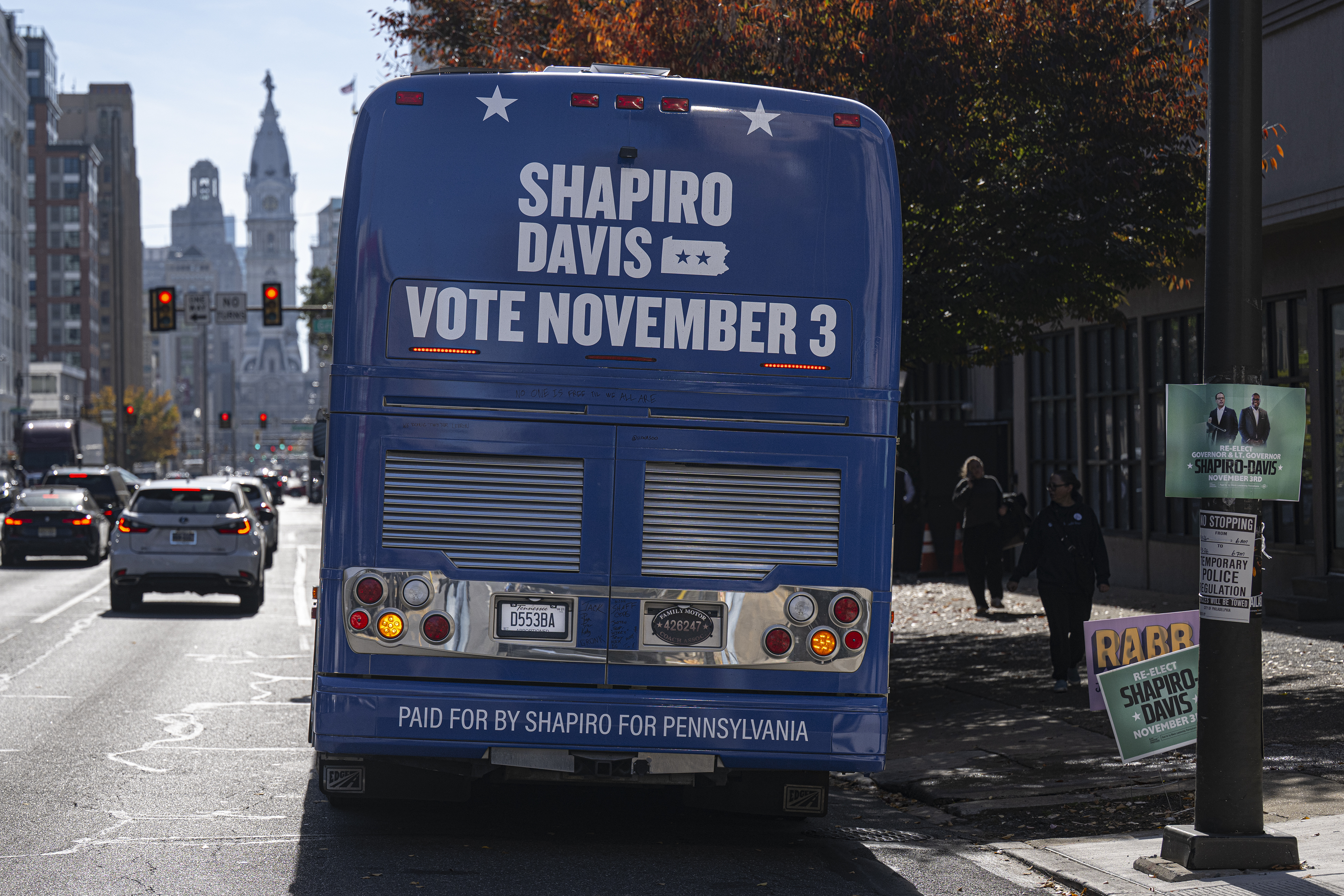
    A campaign bus for Pennsylvania Gov. Josh Shapiro is parked outside South Restaurant, 600 N. Broad St., in Philadelphia as he campaigns on Election Day, Tuesday, Nov. 3, 2026.Jose F. Moreno / Staff Photographer

    Others were a little more esoteric.

    “A democracy, renewed,” said State Rep.-elect Chris Johnson. Vik Patel, a City Council candidate, suggested “Building a better America.” Saval’s idea — “Fight the power” — sounds a bit more like his own slogan than Shapiro’s.

    And some just dodged. “I don’t have a creative bone in my body,” Parker said. (So much for “One America, a united country.”)

    Of course, District Attorney Larry Krasner, a progressive who has clashed with Shapiro in the past, seized on the opportunity to needle the governor. He said Shapiro should consider “Beige is beautiful,” essentially calling him boring.

    Or, Krasner suggested, simply: “More of the same.”

  • BalletX’s new ‘Speakeasy’ brings Prohibition-era Philadelphia to life

    BalletX’s new ‘Speakeasy’ brings Prohibition-era Philadelphia to life

    BalletX brought a bit of Broadway to the Suzanne Roberts Theatre Wednesday night, when it opened the world premiere of Loughlan Prior’s Speakeasy.

    Glittering, sexy, and polished, Speakeasy is set 100 years ago in Prohibition-era Philadelphia. It includes a fun story, highly colorful, beautiful costumes and sets by Emma Kingsbury, and original music by Frank Moon. The dancing ranges from the Charleston to classical choreography. The dancers used their pointe shoes to both perform ballet steps and strut across the stage.

    The inspiration for Speakeasy, Prior said before the piece, was his visit to Philadelphia bars in 2024, when he was here to choreograph Macaroni, another period piece set in Philly.

    BalletX dancers Ashley Simpson and João Pedro Silva in Loughlan Prior’s “Speakeasy.”Vikki Sloviter / BalletX

    In Speakeasy, the dancers stepped up their game as actors, led by April Watson playing an impossibly glamorous mob boss; Jonathan Monteparra as an undercover detective whose resolve begins to slip; Jared Kelly as the judge; and Ashley Simpson as the jazz singer.

    Watson is one of four new dancers to the company this year, and is all long legs, strong technique, and personality.

    The sets and costumes make the production seem like a fully realized musical, with bright colors and humor. The eponymous speakeasy itself is “hidden” in a giant liquor barrel that opens up like a dollhouse with dancers spilling out and spreading onto the stage.

    The speakeasy is allegedly situated in Philadelphia “a city as wet as the Atlantic in the midst of America’s dry Prohibition era,” the program notes say, but while we are told this, we are not shown it.

    One factual error involves the judge’s costume, which includes a powdered wig. Prior is Australian and Kingsbury was born in the U.K. and grew up in Australia, and judges and lawyers still often wear wigs in parts of the British Commonwealth. Americans stopped wearing them after the Revolutionary War.

    Speakeasy could’ve worked well as an evening-length work, but it shared the program with two works BalletX has performed in the past, Amy Hall Garner’s 2023 Switching the Groove, and Christian Denice’s 2025 In the Wake.

    BalletX dancers Eileen Kim and Jonathan Montepara in Amy Hall Garner’s “Switching the Groove.”Vikki Sloviter / BalletX

    Switching the Groove is a celebration of various styles of dance, and it’s a soothing piece set to music by Rodrigo y Gabriela, Francesco Tristano, and Rami Khalife. The steps are at times impossibly fast, other times long and stretchy, and other times include bits of hip hop. The dancers seamlessly change from style to style as the music changes.

    BalletX dancer Eli Alford in Christian Denice’s “In the Wake.”Vikki Sloviter / BalletX

    Denice was a BalletX choreographic fellow when he created In the Wake to music by Philip Daniel, and it seems to have only gotten better in the years since. The dancers are all in shrouds in shades of grays (both this and the Hall Garner piece have costumes by Martha Chamberlain) and they move smooth as smoke through the scenes as mourners, reflecting, remembering, and somehow still looking impossibly cool.

    In its 21st year, BalletX looked great in all three pieces, even when with so much action and theatricality, it was hard to pick out some of the new dancers to judge how they performed.

    It’ll be interesting to watch them as the season goes on.

    BalletX fall series. Through Nov. 15. Suzanne Roberts Theatre. $55-$85, 215-225-5389 x250 or boxoffice@balletx.org

  • Gov. Shapiro’s victory positions him as a formidable national force | Editorial

    Gov. Shapiro’s victory positions him as a formidable national force | Editorial

    Thanks to deep discontent with Donald Trump’s presidency, the midterm campaign was fought on strange new political battlegrounds such as Texas, Kansas, and Alaska, until recently reliable Republican strongholds. At the same time, the top contest in the perennial political battleground of Pennsylvania was uncharacteristically predictable. And that is in no small part owing to broad public support for Gov. Josh Shapiro.

    The can-do Democratic governor won a second term Tuesday, defeating Republican state Treasurer Stacy Garrity by more than 20 percentage points. He also helped lead the state’s Democrats to an impressive string of victories in more closely contested congressional and legislative races, assisting the party’s decisive takeover of the U.S. House of Representatives and securing its first majority in the Pennsylvania Senate in this century.

    With the benefit of Shapiro’s political and financial backing, Democrats ousted incumbent Republicans in four congressional districts, including political survivor Brian Fitzpatrick in Bucks County and Trump stalwart Scott Perry in Central Pennsylvania, and gained enough legislative seats to control both chambers of the General Assembly.

    Shapiro’s coattails thereby contributed to a crucial check on Trump’s power while putting the Democrat in an unusually strong position to work his will as governor and launch a widely expected campaign for president. The result looked a lot like the resounding gubernatorial reelection with which Chris Christie hoped to catapult himself into the White House from neighboring New Jersey a decade ago — minus the retaliatory political interference with interstate travel.

    Tuesday’s result inherently affirms Shapiro’s pan-partisan appeal in a purple state. What he does with a rare legislative majority in Harrisburg could boost his reputation for commonsense competence and concrete accomplishments in an era of poisonous politics and bad government.

    Shapiro did have the advantage (not for the first time) of a less-than-formidable Republican opponent, one who aligned herself all too closely with Trump and gambling interests. And he and other Pennsylvania Democrats clearly caught a national wave of frustration and disillusionment with Trump. But the governor also reaped the benefits of a broadly orderly and ethical administration focused on making the state more livable and “getting stuff done,” epitomized by the rapid rebuilding of I-95 in Northeast Philadelphia after a tanker fire triggered its collapse.

    The governor, moreover, is a skilled communicator who isn’t afraid to answer difficult questions or frequent corners of the state that are politically and geographically distant from his Democratic base and suburban Philadelphia roots. The dividends are evident not just in his approval rating and vote tally, but also in the number of voters who appreciate him despite differences of opinion. He offers a compelling alternative to a president who has made himself an avatar of destruction, corruption, and polarization.

    The anti-Trump mood of the country, however, will only encourage Democrats to crowd into the presidential primary campaign in a 2028 cycle that will look like it’s theirs to win or lose. A moderate by ideology and temperament, Shapiro would have to compete with fellow Democrats whose positions and personae are more suited to channeling the id of the party’s progressive, power-starved base. He would also be blazing a trail as a Jewish American at a time of deep division over U.S. support for Israel’s hard-line government.

    That said, the last successful Democratic nominee for president was also a centrist from Pennsylvania, one who didn’t enjoy Shapiro’s relative youth and energy. Now the governor has an opportunity to “get even more stuff done” in the state capital, as he put it, with plans to increase the minimum wage, encourage more housing construction, fund mass transit and education, regulate data centers, and codify abortion and LGBTQ+ rights.

    It’s an ambitious, public-spirited agenda and a potentially heartening counterpoint to the administration and party Americans just resoundingly rejected.

  • After just one game, Steve Donahue thinks this freshman is one of the ‘next great St. Joe’s guards’

    After just one game, Steve Donahue thinks this freshman is one of the ‘next great St. Joe’s guards’

    St. Joseph’s men’s basketball coach Steve Donahue thought his team executed when it needed to in its 82-73 season-opening victory over Longwood.

    He pointed to the Hawks’ 8-3 run in the final 90 seconds Wednesday night at Hagan Arena as a “good sign.” But he said his biggest takeaways are always going to be how his team can improve.

    “I think we played really good basketball [for] 20, 25 [minutes], just not 40,” Donahue said. “But I love that we figured out a way to win this game because there’s times where they could have [gotten] the momentum.”

    Donahue suggested that going deeper on the bench can help the Hawks play a more complete game. St. Joe’shad 28 bench points, led by freshman guard BJ Ranson’s 17.

    He exited the game with six minutes left because of cramps, which Donahue said is a testament to how hard he plays and how he “gives it his all every single day.”

    “He’s a playmaker,” Donahue said. “He’s going to be one of those other next great St. Joe’s guards, in my opinion, just because of all those things. And we never had someone like that, that can make three or four hard shots in a row. He has that ability.”

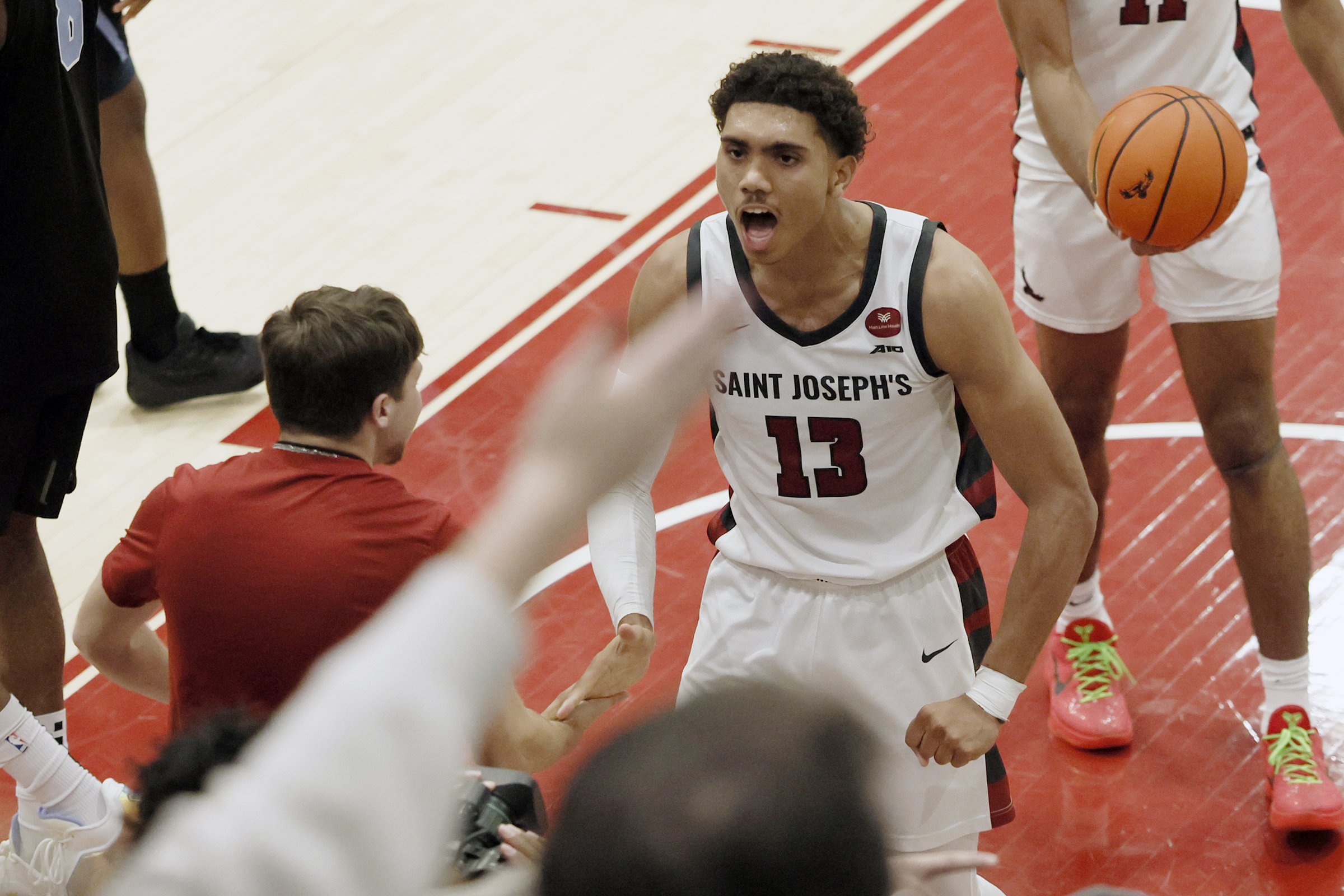
    Ranson was one of four Hawks double-digit scorers, led by Jaiden Glover-Toscano, who finished with a game-high 22 points. Khaafiq Myers had a career-high 17 points, and Austin Williford added 10.

    Since several older players are new to the team this season, Myers said it’s up to returners like himself, Williford, and Glover-Toscano to step up as leaders.

    Austin Williford was one of four St. Joe’s players that scored in double figures on Wednesday night.Elizabeth Robertson / Staff Photographer

    “We were here last year, we had a good year last year, so we need to bring that energy back this year,” Myers said. “We’ve been through it, so we know what it’s like. So just bringing those guys with us, and we know what it’s going to take, and we’ll be willing to do anything to figure it out down stretch.”

    One of those newcomers, 6-foot-11 Davidson transfer Sean Logan, was a major contributor defensively. He had six blocks, seven rebounds, and seven assists and was a “facilitator,” in Donahue’s words, despite picking up three of his four fouls in the game’s first 26 minutes.

    Donahue said that in addition to Logan’s six blocks, he “probably discourages about four” other shots. He also thinks he can rely on a four-guard strategy for some of the game with Myers, Glover-Toscano, Williford, and Ranson partially because of what Logan brings.

    “Glover and Wilford are such two-way players,” Donahue said. “But Sean just adds another dimension … I thought we got easy buckets at times because of Sean’s ability to pass.”

    St. Joe’s guard Khaafiq Myers had a career-high 17 points on Thursday.Elizabeth Robertson / Staff Photographer

    Up Next

    The Hawks will host Lafayette on Saturday (4 p.m., ESPN+).

  • At this Philly-area trades college, students are swarmed with job offers

    At this Philly-area trades college, students are swarmed with job offers

    Jose Medina-Martinez, a senior at Williamson College of the Trades, already had seven companies interested in making him a job offer before he showed up to his school’s biannual career fair.

    “You get a lot of job offers here. I think it’s a little foolish to take one without having everything lined up before you because who knows, maybe something later on down the line is a lot better,” said Medina-Martinez of Dover, Del. “The last thing I want to do is commit to something and then go back on my word.”

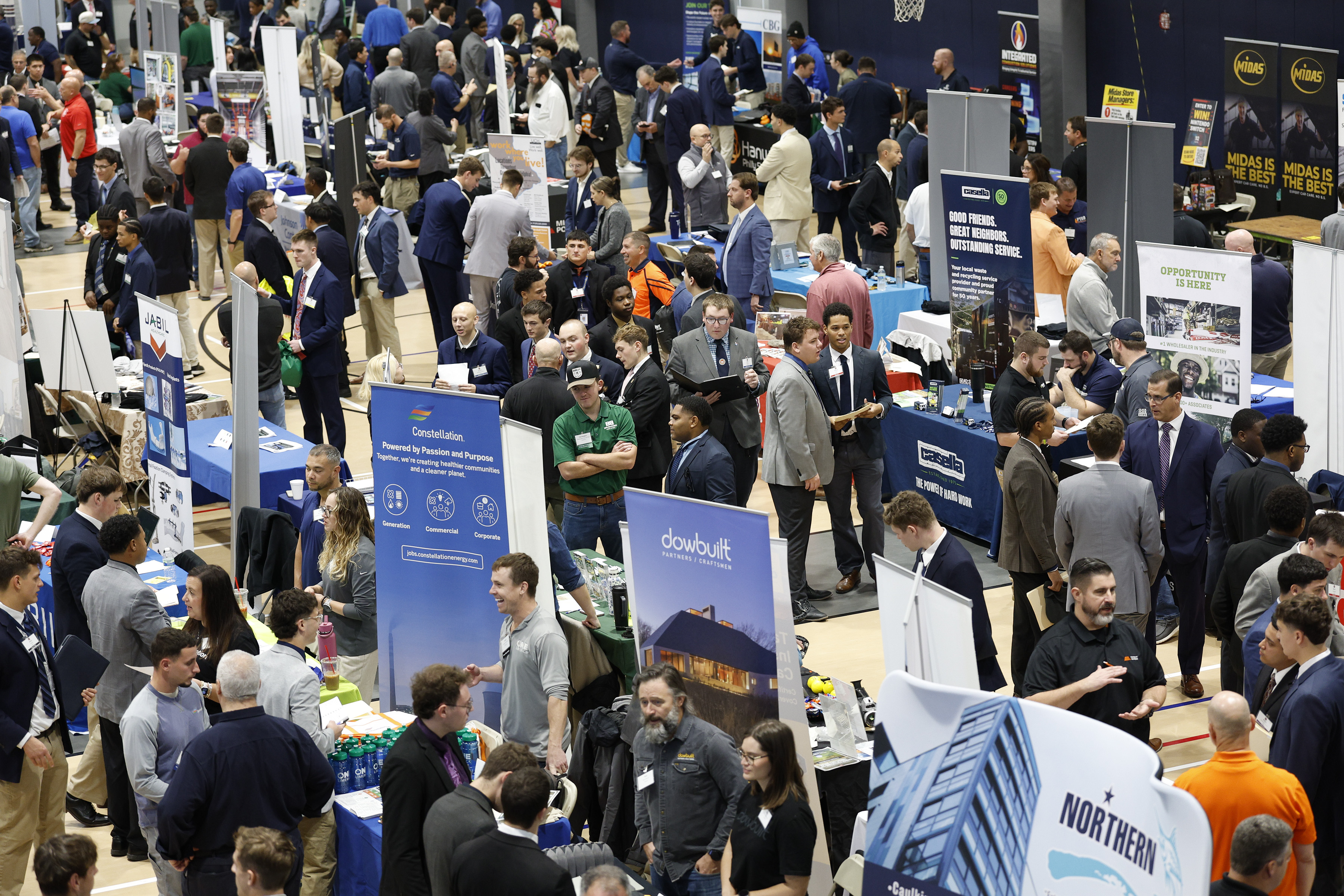
    The country’s need for workers in the trades was on full display at Williamson’s career fair Wednesday in Media. That’s taking place amid an otherwise challenging job market, in which the hiring rate has been down for the past two years.

    But at the Williamson career fair, some companies leave telling the school, “I would hire more guys if you had them,” said college president Michael Rounds.

    Upon graduating, students can expect to make between $60,000 and $85,000 depending on their trade. They can go on to work as carpenters, masons, project managers, and field engineers.

    With the skills Medina-Martinez has learned in the college’s power plant technology track, he said he could work many different jobs, such as a power plant operator or as an electrician for a utility company.

    During Wednesday morning’s career fair, he estimated that he could line up some 25 interviews and felt confident he could get an offer from all of them.

    “At that point, it just comes to which one gives better pay, benefits, location, stuff like that,” he said.

    Medina-Martinez’s confidence isn’t misplaced. Many seniors start their final year at the college with at least one job offer in their pocket, said Rounds, and many have more than one to choose from.

    Seniors Joey Tillman (left) and Jose Medina-Martinez attended the career fair on Wednesday. Medina-Martinez already had several companies interested in making him a job offer. Steven M. Falk / For The Inquirer

    “There are definitely more companies that are trying to hire people than there are students available to hire,” he said.

    Companies have told the school that their skilled workforces are reaching retirement age, and they’re looking for new hires to fill their workforce pipeline.

    Patrick McMahan Jr. of Germantown manufacturing company Derbyshire Machine & Tool Co. noted a large skills gap between newcomers and those leaving the workforce.

    “The guys that you can hire that are ready [on] Day One are retired at this point,” he said.

    Matthew Moates, a commercial arborist with Bartlett Tree Experts, said it’s difficult to find new hires who “are really interested in getting their hands dirty and doing hard labor.”

    “But it’s very rewarding when you find that person because usually when they do start working with you, they’re in it for the long run.”

    Demand for workers in the trades

    “Why are companies from 19 different states coming to Media, Pennsylvania?” asks Rounds. “Because this is a nationwide problem.”

    Some 178 companies gathered at the college Wednesday to find potential summer interns and full-time employees. They included local employers Peco, Hanwha, Lockheed Martin, and SEPTA.

    “We’re at capacity, and we have been the last few events,” said Stephanie Boon, the college’s director of career services.

    While getting into the trades might have been looked down upon in the past, Rounds said, that’s been changing given the need in those industries, coupled with the growing cost of higher education.

    The college is trying to keep up with demand, both from the industry as well as the growing application pool. Over 770 applications were submitted for 130 spots in the most recent freshman class. The three-year school, which is nonprofit and tuition-free for students, today has 340 students, up from 238 in 2015.

    “We have to push ourselves — which we have — to try to bring in as many young men as we can,” Rounds said.

    Seniors Ramon Sanchez (left) and Anthony James are among the 340 students enrolled across the three-year program at Williamson College of the Trades.Steven M. Falk / For The Inquirer

    Students don’t just learn trade skills at the college, they pick up soft skills that companies are also looking for, she said. Those include communication, critical thinking, time management, and problem solving.

    “We have a pretty strict atmosphere. We have a strong code of conduct,” Boon said. “Our students attend chapel every morning. They line up on a lineup pad every morning. They wear a shirt, tie, coat every day.”

    Businesses want someone who is going to show up with their safety gear ready, who is going to be on time, and communicate issues effectively, she added.

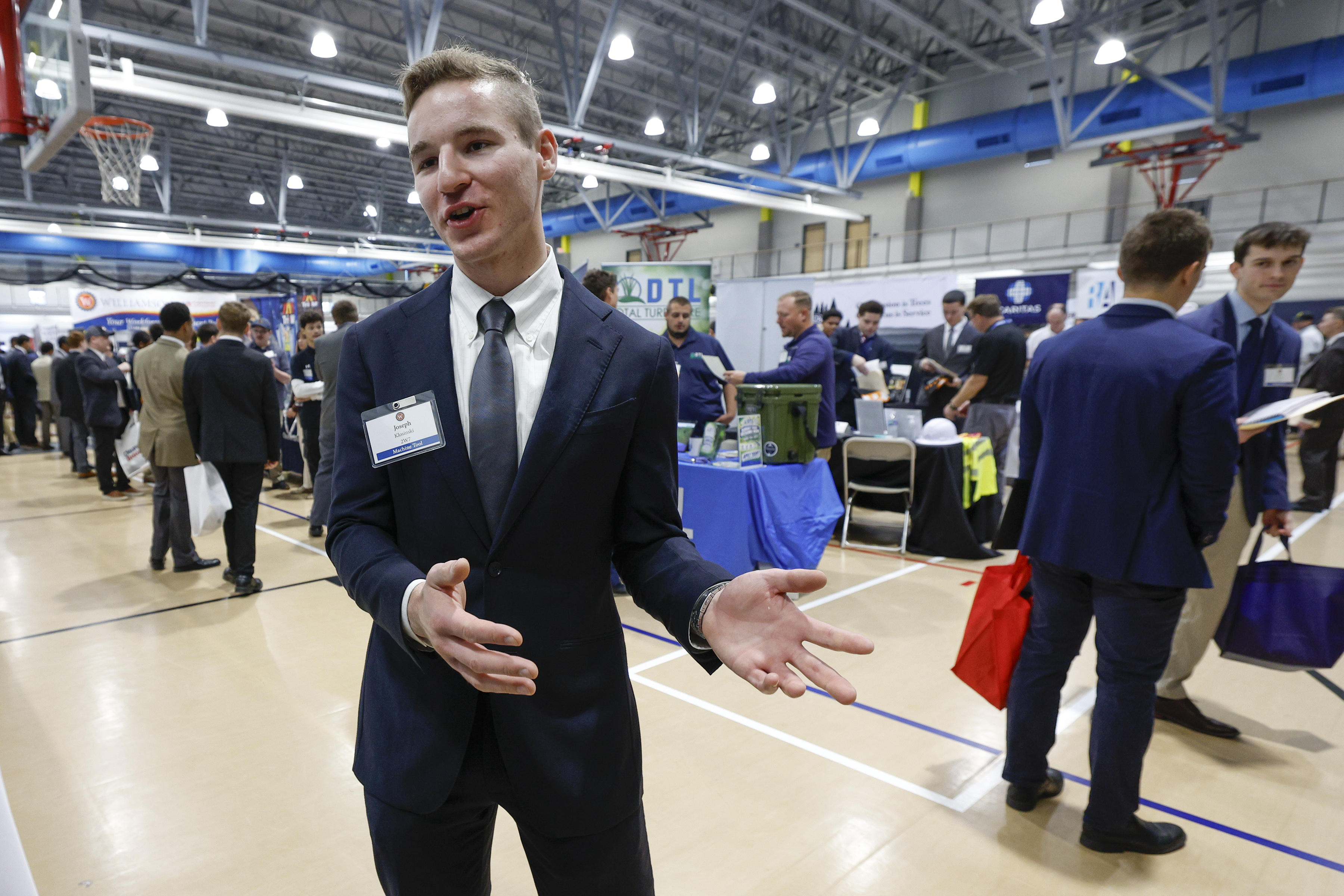
    Senior Joseph Klosinski in the machine tool technology track at Williamson would like to one day own his own business. Steven M. Falk / For The Inquirer

    Joseph Klosinski, a senior in the machine tool technology track, said pay is important when evaluating potential job offers, but he also cares about company culture.

    “I want to be happy where I work,” said the Mount Holly native. “I don’t want to go there to collect a paycheck. I kind of want to feel part of the team.”

    And one day he hopes to own his own business, he said. “It would be nice if I control my own destiny.”

    For Peter Gaglio of Ware, a Kentucky-based boiler rental and service company, the career fair was a homecoming.

    Peter Gaglio, a graduate of Williamson, identified potential interns and full-time candidates for the company he’s now employed at during his time at the career fair. Steven M. Falk / For The Inquirer

    Gaglio studied in the power plant technology track at Williamson, and started out the day with a couple hundred T-shirts to give out from his booth. Two hours later, he was down to six. He had also identified four interns to hire and three other candidates for full-time positions.

    “It’s been very very successful,” he said.