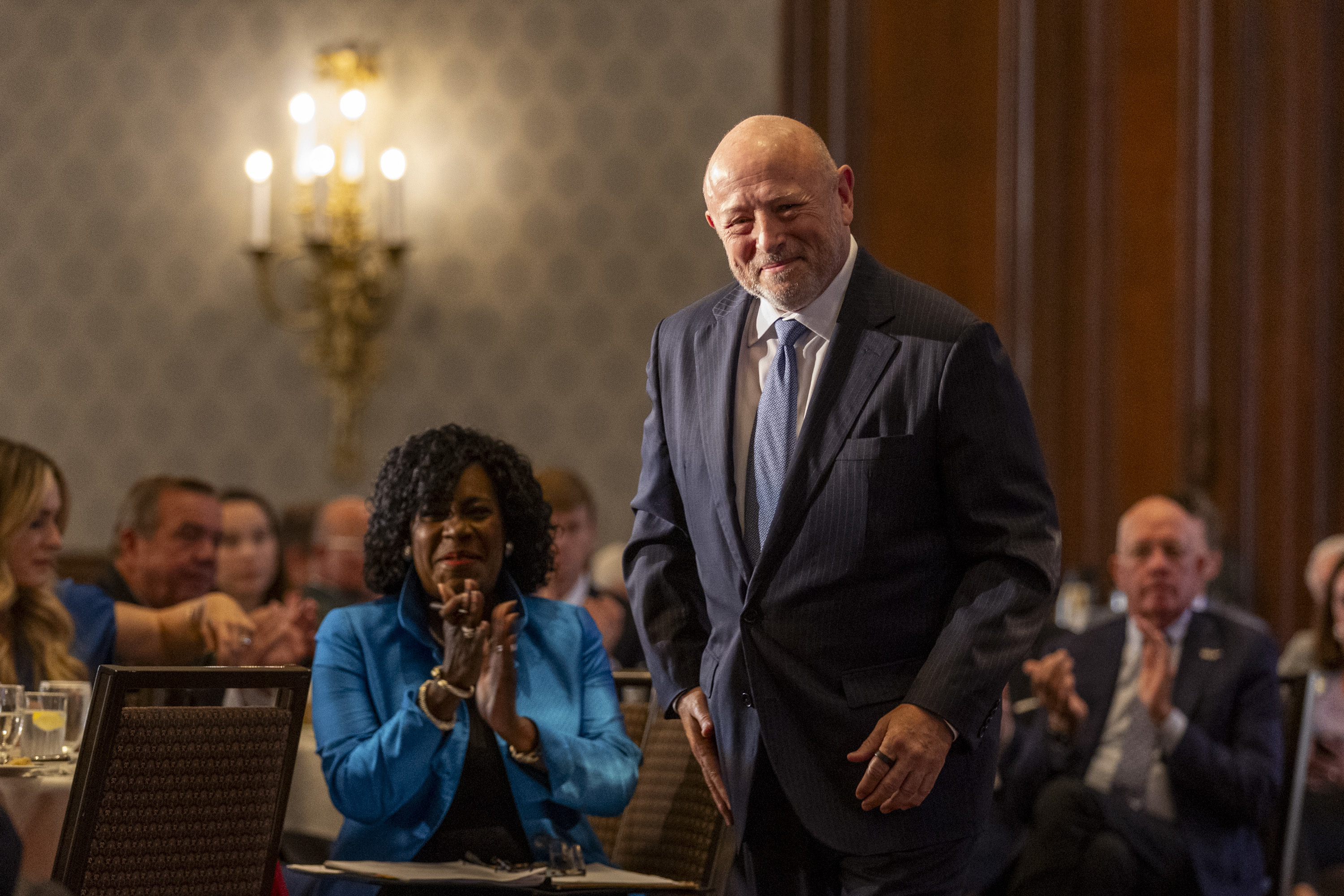
Private equity investor Gregory L. Segall, a Philadelphia Republican who was a key backer of Mayor Cherelle L. Parker’s 2023 campaign, has resigned from three city boards as he weighs other “civic engagement” opportunities, according to a copy of one of his resignation letters obtained by The Inquirer.
Parker, a Democrat, appointed Segall to the Philadelphia Gas Works board, the Philadelphia Tax Reform Commission, and the Mayor’s Business Roundtables. Segall resigned from all three effective Aug. 31. He also served as a vice chair of Parker’s transition committee when she was taking office.
“While I am stepping away from this role, I remain committed to civic engagement and intend to explore other ways to continue the journey I have been privileged to pursue over the last several years,” Segall, the chairman and CEO of Versa Capital, wrote in his letter resigning from the Mayor’s Business Roundtables, an advisory group convened by Parker.
Segall’s moves come as candidates are gearing up to run in next year’s municipal elections, when Parker and all 17 City Council members are up for reelection.
Candidates in the primary election have until early spring to decide whether they are running.
Claudia Vargas, a journalist who formerly worked for NBC10 and The Inquirer, reported this week that Segall was considering running for Council.
When contacted by The Inquirer, Segall, who lives in Chestnut Hill, said Wednesday he is “not running” for Council.
“People have suggested multiple forms of public service, including Council, and I have no plans or commitments at this time,” Segall, 63, said in an interview.
Segall said he continues to “strongly support Mayor Parker, and my highest and best hope is that my public service will be in aid of her continued success.”
Parker on Wednesday declined to comment on the report of Segall exploring a run for office.
From 2022 through 2025, Segall and his wife donated $37,300 to Parker’s campaign, according to campaign finance records. He also gave $150,000 to a super PAC backing her 2023 run, and $6,200 to her transition committee, the records show.
“The 2023 election took place at a time of crisis in the city, and getting the right leader was never more critical,” Segall said. “So the reason for my commitment to her was quite simple: Before I’m a Republican, I’m a Philadelphian.”
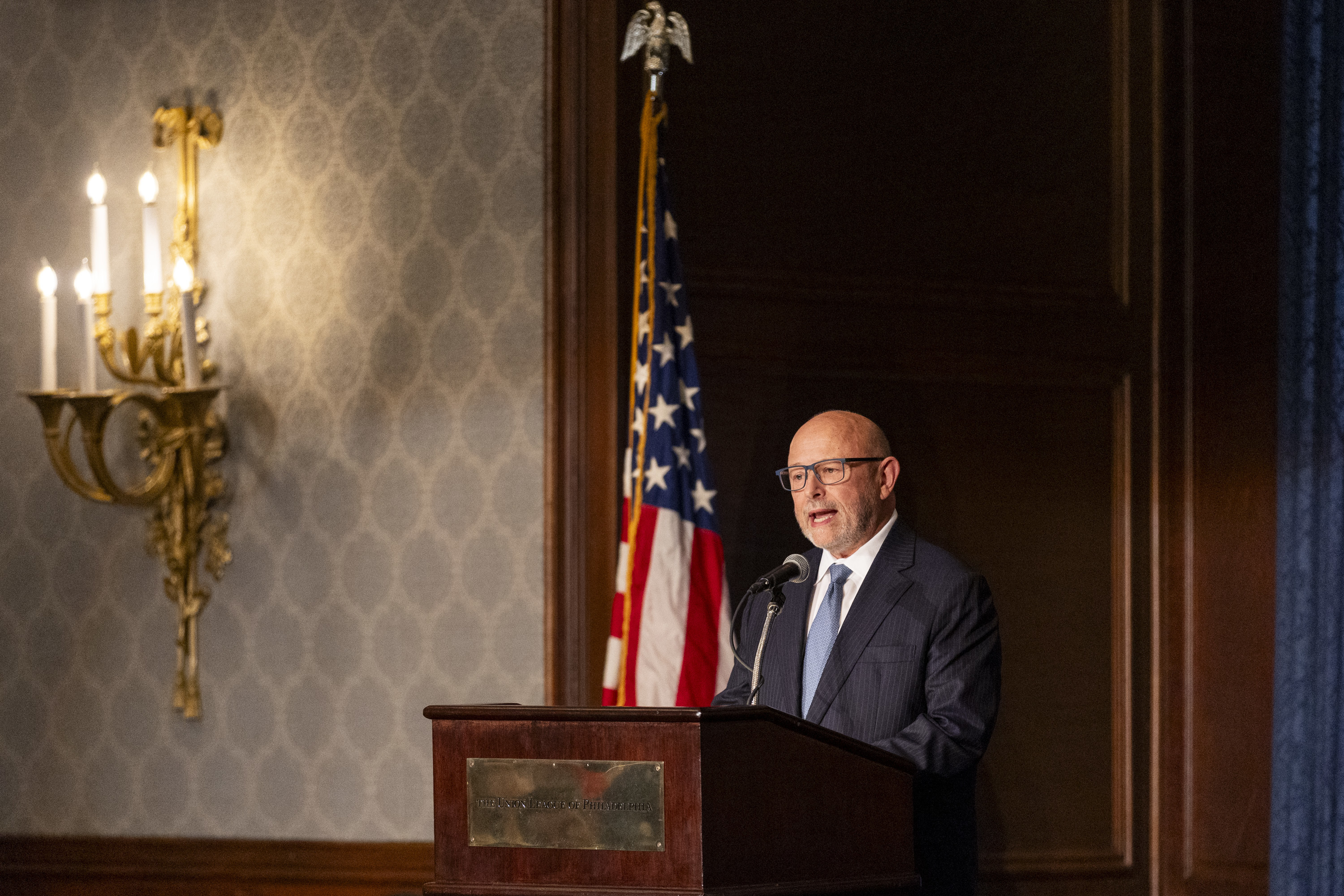
Gregory Segall, Chairman and CEO of Versa and Supporter of Mayor Parker, speaks at the Union League of Philadelphia Presidential Luncheon in Philadelphia, Pa., on Thursday, September 18, 2025.Tyger Williams / Staff Photographer
Citing Republican Party sources, Vargas reported that Segall was considering running for one of the two at-large seats on Council that are elected citywide and are set aside by the Home Rule Charter for minority-party or independent candidates.
Republicans held those seats for about seven decades until Councilmembers Kendra Brooks and Nicolas O’Rourke won them over the last two election cycles as members of the progressive Working Families Party.
Brooks is considering challenging Parker in next year’s mayoral election, sources previously told The Inquirer, which would require her to resign from her Council seat.
The Philly GOP has been strategizing ways to recapture the seats, and a run by Segall, a wealthy businessman who could potentially help fund his own campaign, could be a major opportunity for the party.
Segall donated $2,500 to the Republican City Committee last October.
GOP chair Vince Fenerty said he has met Segall and thinks he is a “nice and honorable man.”
“We’re a party that welcomes any potential candidate, and the decision to endorse would be up to our ward leaders,” Fenerty said in an interview Thursday.
Brian O’Neill, who represents the 10th District in Northeast Philadelphia, is currently the only Republican on Council. Democrats hold the remaining 14 seats.
Federal law requires many private employers to accommodate employees’ sincerely held religious beliefs, unless doing so would impose a substantial burden on the business. How to do this properly is among the many questions small-business owners face each day.
Recent federal guidance provides a useful framework.
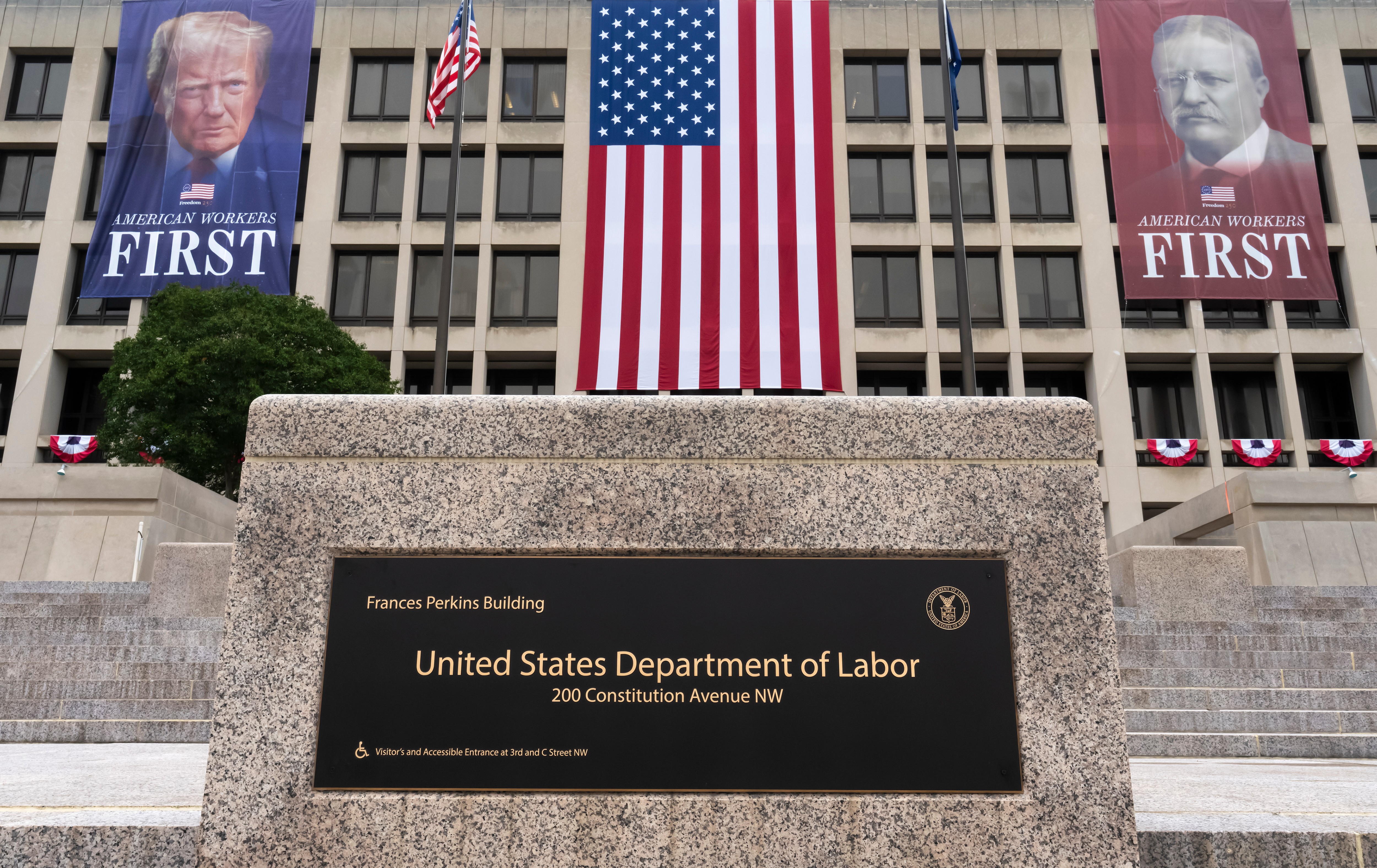
In 2025 the Department of Labor offered internal guidelines for federal employees which “encouraged” agencies to adopt a “generous approach” to approving religious accommodations and to balance prioritizing employee needs “while maintaining operational efficiency.”
Although the rules are primarily for federal workers, they still impact many businesses, particularly ones with federal contracts or that otherwise do business with the government. The Justice Department followed this summer with broader guidance directing federal agencies on how to apply religious-liberty protections when enforcing laws and administering grants and contracts.
In my opinion as an employer, these rules are worth incorporating as policies for any business.
Two local lawyers I spoke with agreed. But they both stressed that their clients’ policies on religious accommodation in the workplace should be as flexible as possible, presume sincerity, and be well documented.
Be flexible
Employers should engage in genuine, documented efforts to find workable solutions before concluding that an accommodation is impossible, said Lisa Gingeleskie, of Lindabury, McCormick, Estabrook & Cooper in New Providence. Solutions might include offering flexible scheduling, voluntary shift swaps, floating holidays, vacation time, and unpaid leave.
“Employers must consider all available accommodation options, not merely assess whether one particular option is feasible,” Gingeleskie said. “But the accommodation obligation does not require them to provide the employee’s preferred accommodation if a reasonable alternative exists.”
Employers should look at each employee and situation individually, said Katharine Fogarty, a partner at Kaufman Dolowich in Philadelphia.
“It’s important to go back and look at your policies to ensure that they comply, and that you don’t just have a blanket policy that won’t allow for any sort of accommodations,” Fogarty said. When a specific accommodation can’t be made, she said, “that doesn’t mean that we just say no and shut down the process.”
Assume sincerity
As business owners, we’re not religious experts. It’s important to presume that your employee is being sincere in their request and that their religious belief is genuine.
“The fact that a belief may be unfamiliar, uncommon, or not formally recognized even by a religious organization does not mean it’s not protected,” Fogarty said.
To that end, it’s usually not a good idea to demand proof or to challenge an employee’s sincerity without a genuine, objective basis for doubt.
“Demanding official clergy letters or other formal religious documentation may be problematic, as courts have found that an employee’s own written explanation may be sufficient,” Gingeleskie said.
That doesn’t mean that you, as an employer, shouldn’t have a healthy degree of skepticism.
Warning signs as to the legitimacy of a request could include behavior that contradicts their stated beliefs — for instance, their faith prevents them from working on Sundays, but they work Sundays when premium pay is available. Another sign could be the request for a particularly desirable benefit that may have a secular motivation, such as permanent remote work over and above what someone’s religion may require.
Even informal requests need to be taken seriously, Gingeleskie said, and an employee “does not need to use any particular words or invoke a statute by name.” She also warns against automatically denying requests because of staffing needs, costs, and coworker objections. And it’s important not to get too personal.
“The appropriate response is to only ask the employee to explain the religious nature of the practice and how it conflicts with the work requirement,” she said.
Fogarty adds that employers should avoid requiring disclosure of religious beliefs or accommodation needs during the hiring process.
“When they’re hired, it’s not [information] they’re required to provide,” she said. “The employee can also raise it at any time during their employment.”
Document requests, discussions, and decisions
Employers should carefully log the entire religious-accommodation process and not merely the final decision, Gingeleskie and Fogarty agree.
Gingeleskie recommends documenting the employee’s request and the religious-work conflict, any discussions and communications with the employee, each accommodation considered, why particular options were workable or unworkable, the facts and costs supporting any undue-hardship conclusion, and the accommodation offered or reason for denial.
“Inadequate documentation of the employer’s accommodation efforts, communications with the employee, and undue hardship analysis can be fatal to an employer’s defense if a lawsuit is brought down the road,” she said.
If an employer fails to engage on a good-faith basis in the process to reasonably accommodate an employee’s religious belief, they could expose themselves to significant liability, both lawyers warned.
For example, Blue Cross Blue Shield of Michigan had to pay more than $12 million to an employee in 2024 for not allowing her to exempt herself from vaccinations due to her Catholic beliefs. A nonprofit organization faced a $1.8 million verdict in federal court this year after terminating a Muslim employee for refusing to remove her niqab while teaching.
“You can’t just outright say no because you think that it’s going to create an issue or it’s going to create more work for you,” Fogarty said.
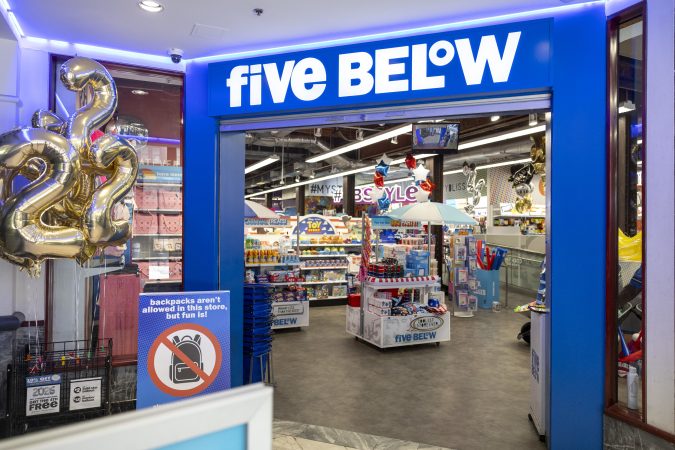
Crocs is suing Philadelphia-based discount retailer Five Below, alleging the company knowingly sold knockoff versions of Crocs’ famous foam clogs.
Crocs’ attorneys say Five Below kept selling Crocs look-alikes and accessories even after being notified this March of their trademark, patent, and intellectual property infringement.
The allegations were detailed in a lawsuit filed last week by Crocs and its subsidiary, Jibbitz Charms, in U.S. District Court in Colorado, where Crocs is based.
The plaintiffs take issue with Five Below’s “Juniors Charm Clog,” which look like trademarked Crocs, and the shoe’s accompanying charms, which resemble the patented Jibbitz ones that can be affixed to Crocs.
Five Below is “clearly attempting to trade off the significant investment Crocs has made in its brand,” the attorneys wrote in the lawsuit.
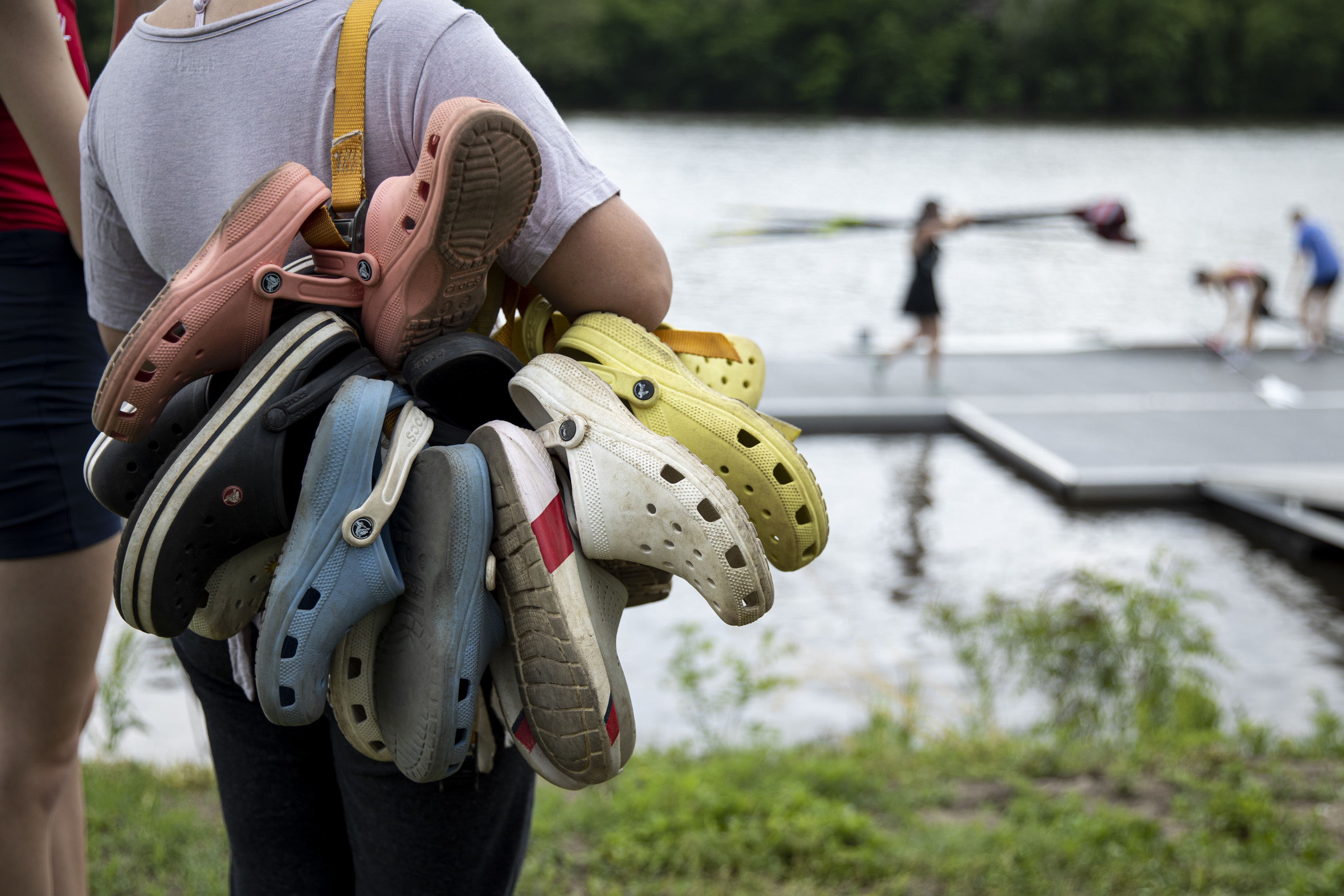
A woman carried rowers’ Crocs at the Stotesbury Regatta in 2022.TYGER WILLIAMS / Staff Photographer
And they were doing so at a lower price point, the lawsuit noted. Crocs’ classic adult clogs range from $50 to $75, while its kids’ version sells for about $40. Five Below’s “Juniors Charm Clog” is listed at $7 on its website.
Five Below spokespeople did not return requests for comment Wednesday.
Crocs’ attorneys have asked for a jury trial and are seeking an unspecified amount in damages, which include lost profits, according to the lawsuit. The company also wants a permanent injunction to prevent Five Below from selling products that resemble Crocs.
Crocs says it sells 150 million pairs of shoes each year, with annual sales of more than $4 billion.
The lawsuit was filed amid positive financial performance for Five Below.
As of August, the company had opened 101 net new stores this year and saw a more than 27% increase in net sales, according to its latest earnings report. Its reported net income was more than $344 million compared to nearly $84 million at the same time last year.
This success has come under the leadership of CEO Winnie Park, who took over in December 2024 with a mission to reaffirm Five Below’s reputation as an “extreme-value retailer,” as the company called itself in her hiring announcement.
Executives have said they’ve also gotten a boost from viral toys like plush Squishmallows and artificial-intelligence tools that help with inventory.
Five Below was founded in Wayne in 2002 and has since expanded to include more than 2,000 stores in 46 states. In 2018, the company opened a massive three-story headquarters in the former Lit Bros. building at 701 Market St. in Center City, where it is currently headquartered.
NEW YORK — Three news organizations banned from the White House for days were back Thursday after a judge handed CNN, MS NOW, and Politico a reprieve in an extraordinary showdown between President Donald Trump and outlets whose coverage he dislikes.
But media coverage of Trump’s White House was hardly normal. On a high-profile day when Chinese leader Xi Jinping was visiting Washington and planning to attend a state dinner, no major American network was airing live coverage.
After the White House banned CNN from a rotation of five major U.S. broadcast outlets who take turns shooting and sharing video, the other four — in a show of solidarity — were still declining to participate in the so-called video pool.
It was part of a chaotic day at the White House and in court.
Initially, in the morning, CNN, MS NOW, and Politico journalists were denied entry. A Secret Service agent had confiscated their credentials as part of the ban. After the ruling for the outlets in the early hours Thursday, White House operations officials were notified to restore access to the affected reporters, but said they needed time to find, reactivate and deliver their entry badges. The process took over two hours, according to an administration court filing.
In his decision to provisionally lift the ban, U.S. District Judge Timothy Kelly ordered the White House to “immediately return, reinstate, and restore” the three outlets’ access. He said they had met the legal thresholds to obtain a temporary restraining order and were likely to succeed in showing that their press passes were revoked without due process.
The ruling did not address CNN’s removal from the White House video pool. The White House did not respond to an email seeking comment.
The judge’s ruling issued a temporary order
Kelly — whom Trump nominated in 2017 and who ordered a CNN journalist’s access restored in a similar case in 2018 — said the government must have clear standards for conduct that would lead to revoking a press pass. He called the standard of objectionable reporting outlined in letters that the White House sent the outlets “so vague it hardly does the trick.”
The judge also made clear he did not buy the administration’s argument that the news outlets’ reporting endangered national security — and noted that Trump himself had not used that argument in the beginning, focusing solely on what he called negative coverage.
Theodore Boutrous Jr., the news outlets’ attorney, said the judge’s quick ruling vindicated the freedom of the press, due process and the rule of law.
“I think we’re going to end up stronger because of this, and this tactic of just attacking the press, attacking individual journalists, is going to be discredited,” Boutrous said in an interview on MS NOW Thursday afternoon. “The law is just clearly on our side here,” he said.
The temporary restraining order — typically designed to preserve the status quo pending a closer review of the case by the court — expires in two weeks. The judge gave both sides until Oct. 5 to file their arguments over whether he should consider issuing a longer-lasting ruling called a preliminary injunction. Kelly said he “intends to rule expeditiously” on the preliminary injunction request.
Attorneys debated access to the White House and any risk to national security
Boutrous argued in the hearing that there was an urgent need for renewed access, saying that the ban caused irreparable harm to the outlets at a time of momentous news events. “We’re at war,” he told the judge. “We have world leaders coming to Washington.”
Justice Department attorney Michael Velchik, in his argument, reiterated the administration’s point that the president has the right to choose who gets into the White House.
“Access to the White House is a privilege, not a right,” Velchik said.
In arguing that Trump was not engaging in viewpoint discrimination — the government singling out specific media outlets for the content of what they say or publish — Velchik said the president had criticized other news organizations, but not banned them. He noted, for example, that Trump had called ABC “the worst.”
Major networks refrained from covering Trump for the media pool
On Wednesday, after the hearing, the major networks refused to air footage of Trump without assurances that CNN would be permitted back into the video pool.
At Joint Base Andrews, where the president formally welcomed Xi, journalists from Fox News, CBS and NBC were present but not shooting video.
Other television outlets whose crews were present, according to signs on their tripods and cameras, were NewsNation, Newsmax, Right Side Broadcasting Network, One America News and LindellTV.
The Associated Press said it provided video coverage of Trump greeting Xi to its customers, so they could decide whether to broadcast. “We did not stream the coverage on our own platforms, including APNews.com or our YouTube channel,” said an AP spokesman, Patrick Maks.
In an advisory to customers, AP said it would not have independent video coverage of meetings between Trump and Xi. It noted that a U.S. government handout live feed could be accessed on the White House website.
The AP was one of some 50 groups filing an amicus brief ahead of Wednesday’s hearing, urging the court to immediately restore the three outlets’ White House access.
U.S. Rep. LaMonica McIver hasn’t put her life on hold to fight what she sees as totally unfounded charges by the Trump administration that she supposedly assaulted a U.S. Immigration and Customs Enforcement (ICE) officer during a protest last year.
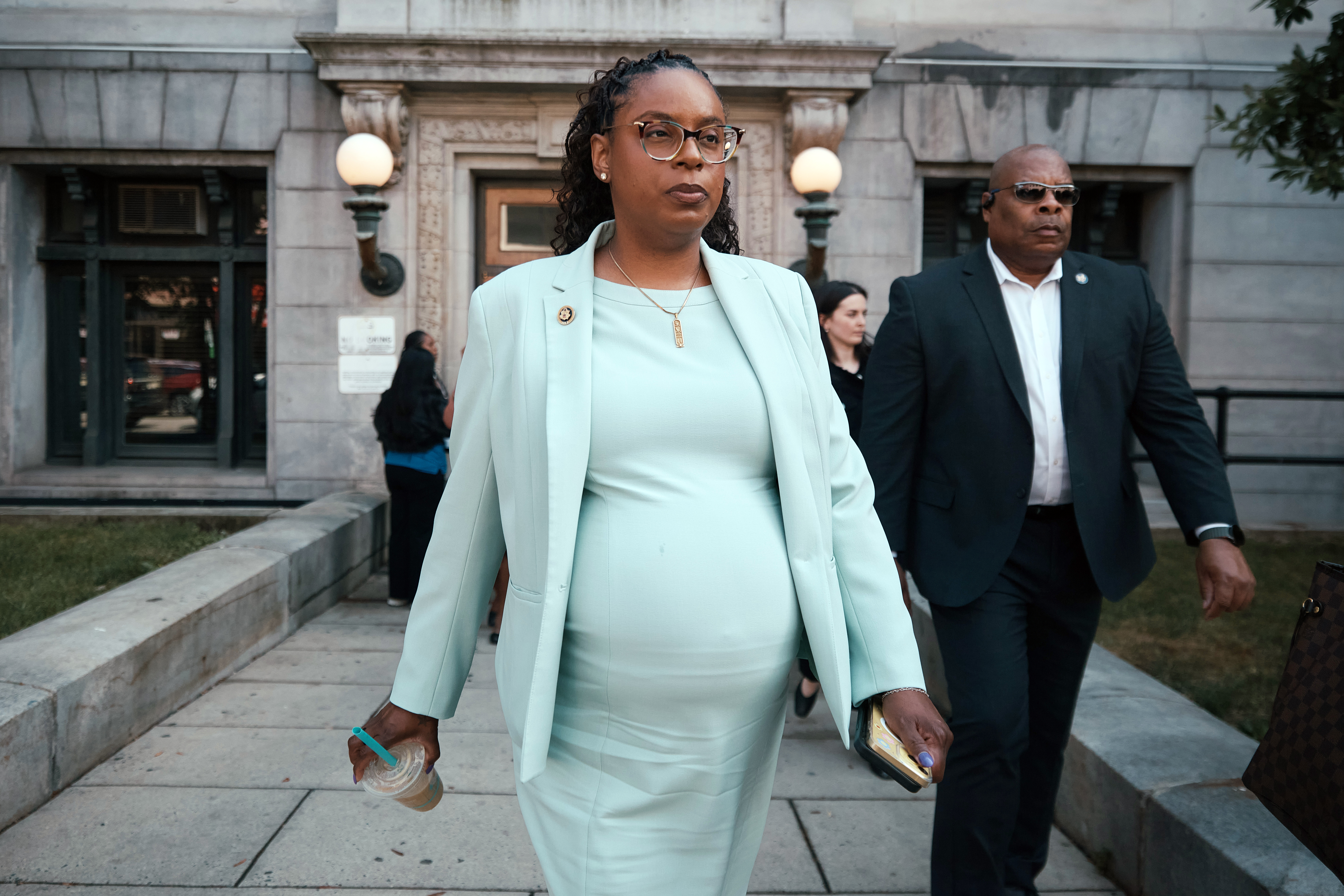
Instead, the first-term Democratic congresswoman is expecting her second child next month, she’s up for reelection in November, and because of Congress’ backward policies on parental leave (as in, there are none), she continues to put in long hours representing New Jersey’s 10th Congressional District, which includes her hometown of Newark.
Lurking in the background, however, is the knowledge that if convicted on two charges of assaulting an ICE officer, she could be sentenced to as much as 17 years in prison.
It’s way more than most people in her situation could handle.
McIver’s inner strength is next level.
She is running for reelection on Nov. 3 while fighting efforts by the Trump administration to make an example out of her. McIver is also repping her constituents in Newark in Washington, D.C., all while caring for — and expanding — her family.
Her journey to motherhood hasn’t been easy. McIver, 40, has spoken openly about her yearslong struggles with fibroids, her use of in vitro fertilization (IVF), and her opposition to President Donald Trump’s merciless immigration enforcement campaign. She hopes her candor resonates with women who also are trying to balance career, pregnancy, and motherhood.
Meanwhile, she is scheduled to give birth to her second child on Oct. 16. After she delivers, McIver will become one of fewer than 20 members of Congress ever to have done so.
My jaw dropped during the interview in which McIver informed me that as a member of Congress, she isn’t entitled to maternity leave. Postpartum, McIver also won’t be able to cast votes for legislation remotely or by proxy.
“They give you nothing,” McIver said. “It makes no sense that you have to give birth and instead of focusing on healing and nursing, you have to literally put that to the side and share that with getting back to work. It’s honestly disgusting. It’s unbelievable in 2026 that this is where we are still at.”
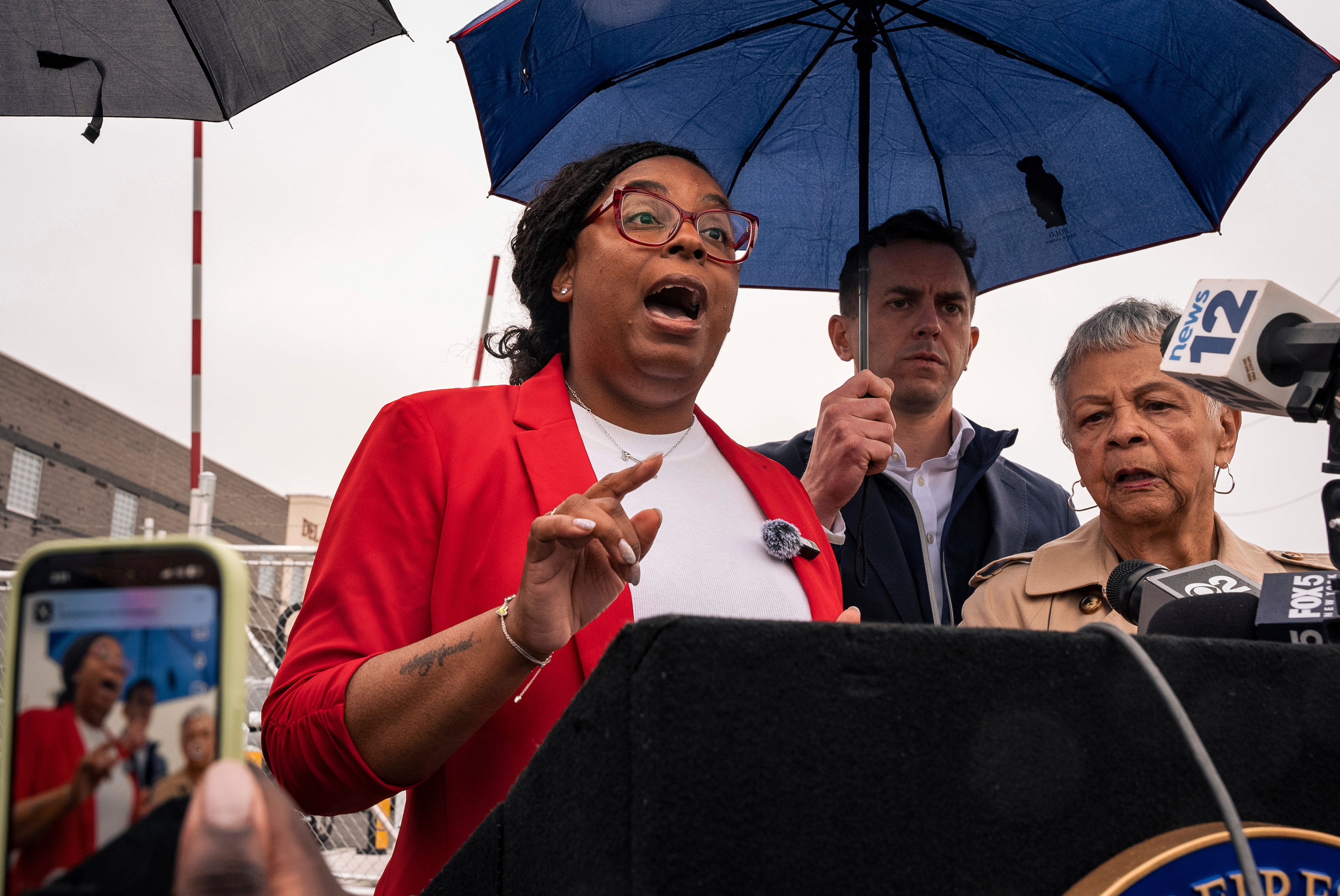
U.S. Rep. LaMonica McIver (D., N.J.) speaks to reporters after Newark Mayor Ras Baraka was arrested while protesting at the Delaney Hall ICE detention center in May 2025.Angelina Katsanis
Legislation that would have greatly helped her and other members of Congress in her position failed to garner adequate Republican support to pass last year. McIver blamed House Speaker Mike Johnson, among others, whom she said “don’t give a damn — and don’t want to make this a place that works for moms because they don’t want moms here.”
After the election on Nov. 3, McIver intends to immediately return to Washington and get back to work. Luckily, she will have help from her “great village” that includes her mother. “I’m a stickler about not missing votes,” McIver pointed out, adding, “There are so many things that Republicans are going to be trying to do.”
McIver, along with several other elected officials, had been attempting to inspect conditions at Delaney Hall, a 1,000-bed facility along an industrial stretch of land near Newark Liberty International Airport in May 2025 when a scuffle broke out.
McIver placed herself next to Newark Mayor Ras Baraka to shield him during the melee. I’ve watched the video numerous times. It doesn’t show her throwing a punch or striking anyone. No one was injured, either. But that didn’t stop Alina Habba, a former defenselawyer for Trump who briefly served as a U.S. attorney inNew Jersey, from filing assault charges against McIver.
McIverattempted to get the charges dismissed. In August, an appeals court ruled that McIver’s actions were nonlegislative and not protected by constitutional immunity, which clears the way for legal proceedings against her to proceed.
Glynda C. Carr, the founder of Higher Heights for America PAC, described what happened as a “flash point” of the anti-immigration detention center movement that future generations will read about in history books.
“This is bigger than LaMonica McIver,” Carr said, adding that the case could establish a baseline for whether elected officials will be permitted to conduct oversight of ICE detention centers without fear of prosecution.
As for McIver, I’m sure her case will be tied up in the courts until after Trump leaves office, and then thrown out once new people come into office. Meanwhile, becausemembers of Congress are prohibited from accepting pro bono legal work, McIver has to raise money to pay her legal bills, which are expected to exceed $1 million.
It’s a lot to juggle, along with being pregnant, serving as a member of Congress, and being under attack by a government hell-bent on making life more difficult for working women, especially African American women.
The Eagles are 2-0, though maybe not in the manner you envisioned.
Their third game of the season is a Monday Night Football showdown on the road at the Chicago Bears, a game that may lose some of its luster should Caleb Williams miss the game for the Bears with a hamstring injury.
Williams’ status is a major storyline, but there are other factors and trends at play.
Here are some numbers worth paying attention to.
Sean Mannion’s offense has struggled on first down but has thrived on third down.Yong Kim / Staff Photographer
32nd
That’s where the Eagles rank in success rate on first and second downs, according to Sportradar. As a reminder, there are 32 NFL teams.
The Eagles average a league-worst 2.6 yards per play on first down. The Dolphins rank 31st at 3.2 yards. The Eagles have survived, however, because they have been one of the best teams in the NFL on third and fourth downs.
In fact, according to SumerSports, the Eagles have the largest difference in success rates between early downs and late downs to start a season since 2022.
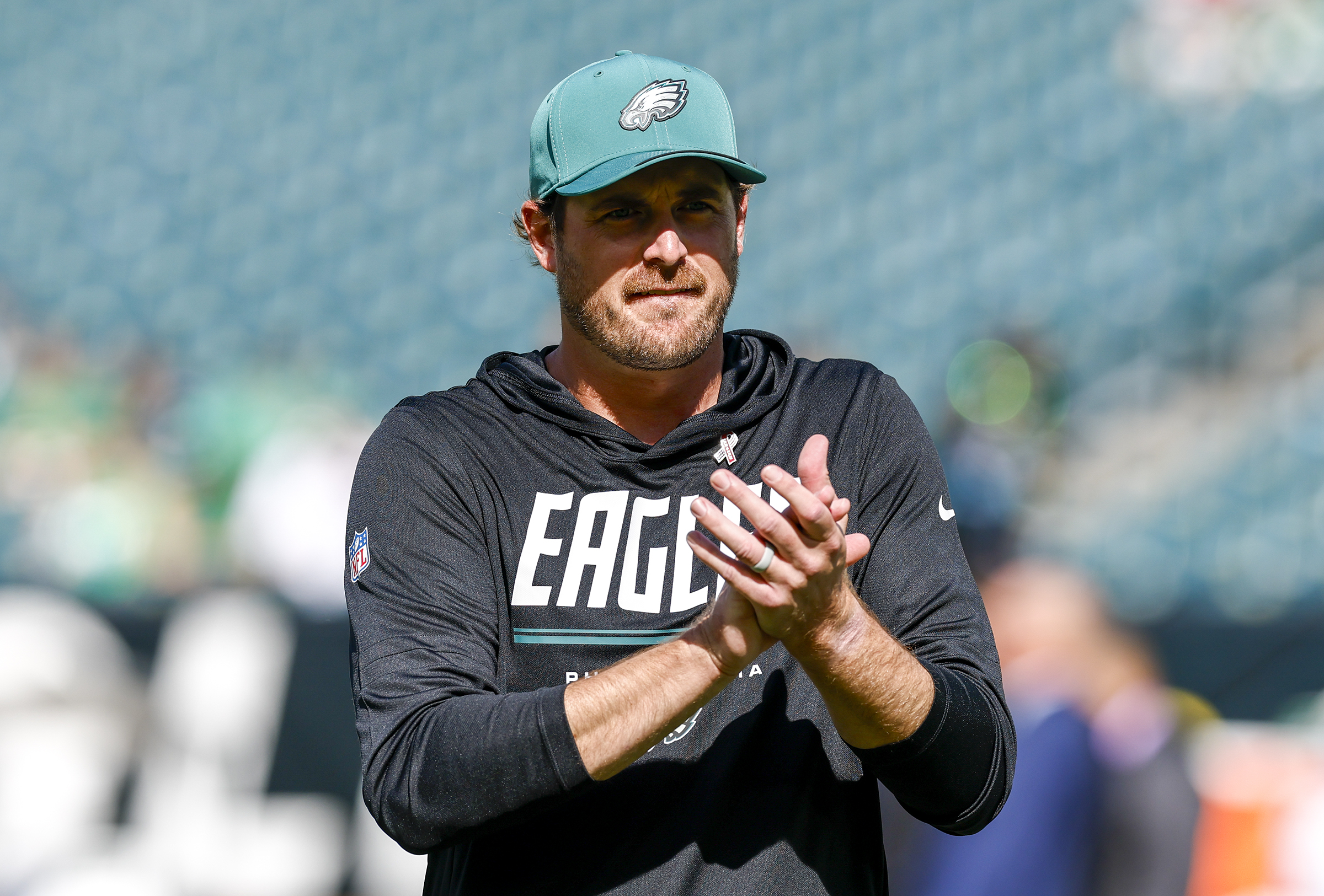
“We’re really close on a lot of our things on first and second down,” offensive coordinator Sean Mannion said on Wednesday.
Mannion has called a running play on 65% of first downs through two games. The Eagles currently rank 28th in yards per carry. Saquon Barkley’s status is uncertain after the running back suffered a stinger Sunday in Nashville. It won’t matter who is running if the Eagles don’t block better.
Another sluggish performance from the offense could allow a team starting a backup quarterback to stay in the game.
Zach Ertz scored all 11 of his Commanders touchdowns over the last two seasons on plays that started inside the 20-yard line.Monica Herndon / Staff Photographer
71%
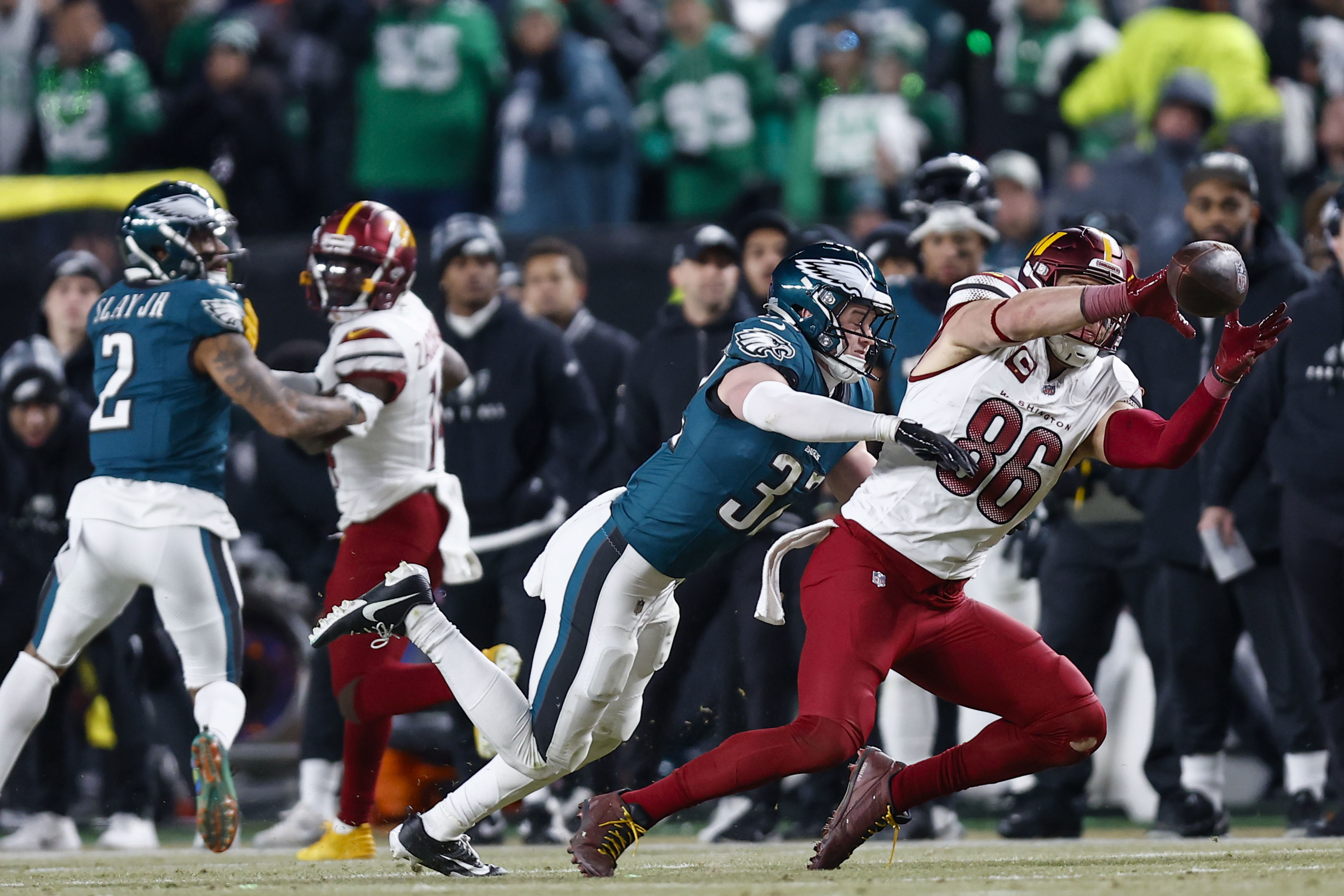
Zach Ertz caught 71% of his targets over the last two seasons with the Washington Commanders, a number that is higher than his career catch rate of 67%.
He may soon be 36, but that’s not the sign of a declining player. What might be? Ertz’s average separation per target was 2.7 yards in his 13 games last season, his lowest since 2019.
It’s hard to imagine Ertz being a much better separator after recovering from a major knee injury, but he has been a reliable target over the middle of the field in recent years. That’s what the Eagles need out of him if he indeed makes his return to the field Monday night as the team deals with Dallas Goedert’s absence.
Ertz, who is 11 catches from becoming the team’s all-time receptions leader, has done a lot of his damage in the red zone — all 11 of his Commanders touchdowns over the last two seasons came on plays that started inside the 20-yard line — and the Eagles will need that type of big-body target with Goedert sidelined.
The Eagles missed 12 tackles in Sunday’s win over the Titans.Yong Kim / Staff Photographer
12
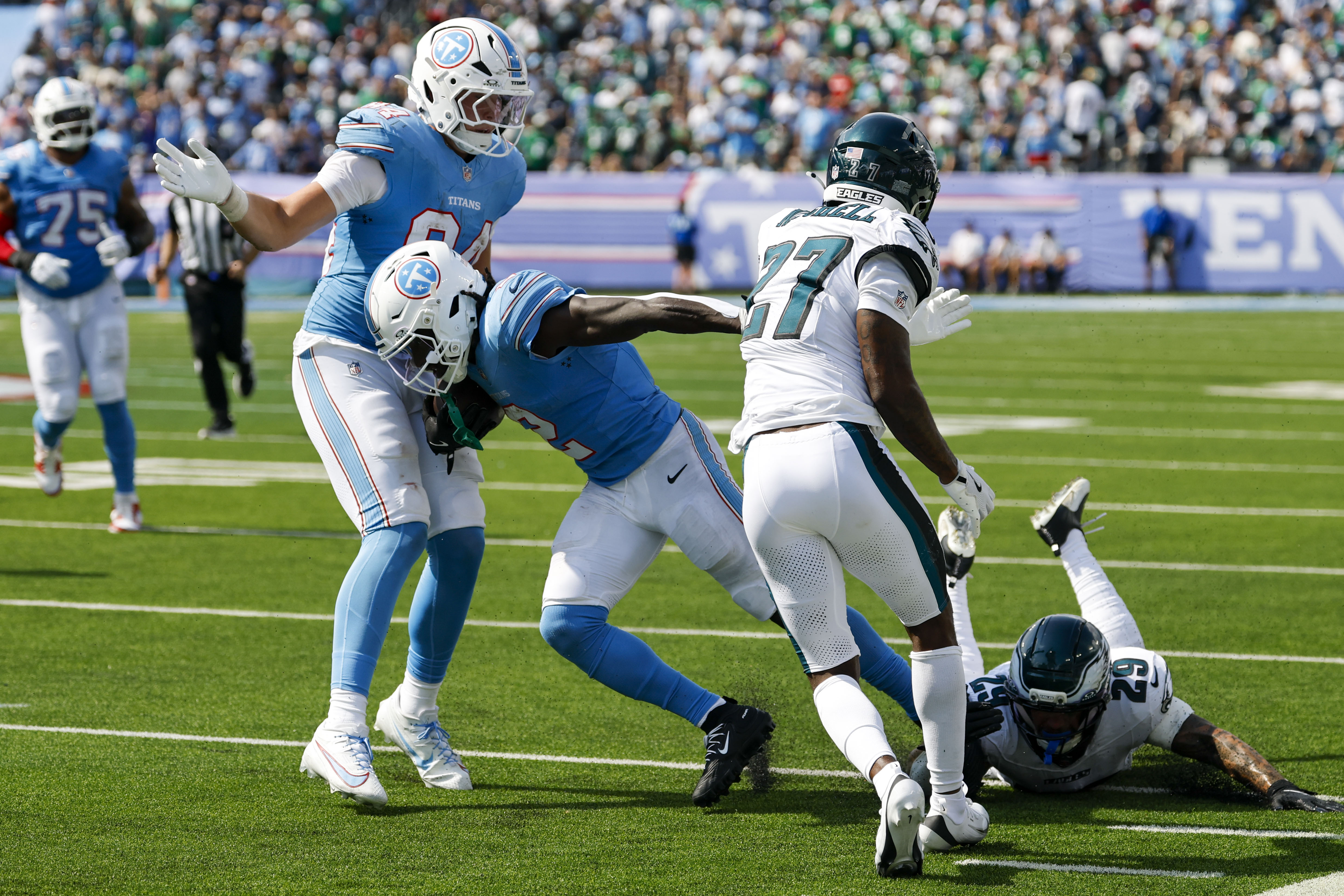
The Eagles missed a whopping 12 tackles against the Titans.
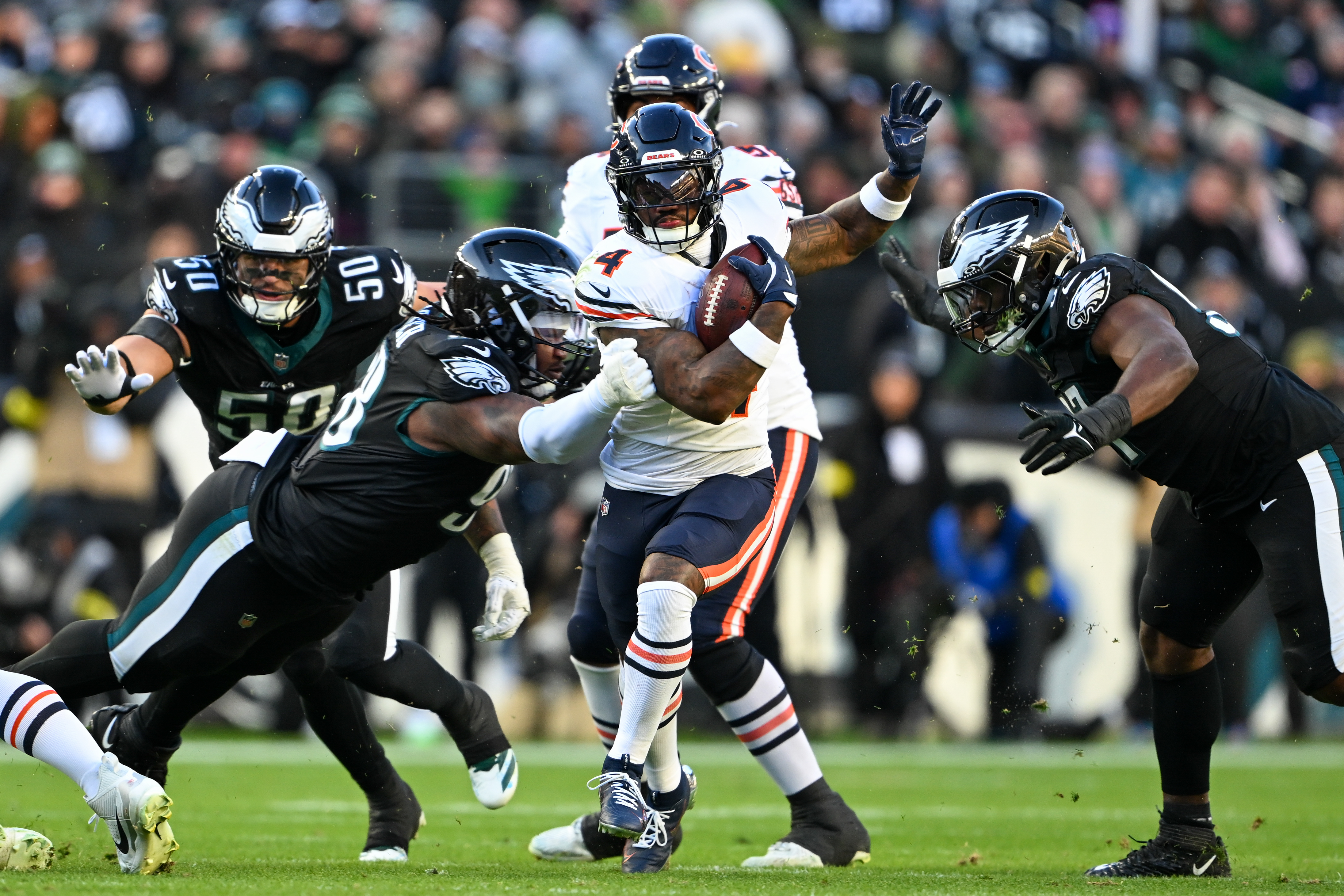
Well, here comes the team that ran all over the Eagles in 2025. The Bears rushed for 281 yards in a Black Friday drubbing of the Eagles last November. And if Williams is out, the running game will be even more critical to Chicago’s success.
The two-headed running game for the Bears has already caused some damage through two games. According to Next Gen Stats, the Bears have rushed outside the tackles 28 times for 279 yards and six touchdowns.
They are the only team since at least 2018 with more than nine yards per carry or more than four touchdowns on outside runs over the first two weeks of a season. Kyle Monangai has racked up 119 yards on eight outside carries and has forced seven missed tackles on those runs.
The Eagles will need to clean up their tackling in a major way, especially if Monangai and D’Andre Swift make their way to the back line of the defense. The safeties, Andrew Mukuba and Marcus Epps, were charged with three missed tackles apiece vs. Tennessee, according to Pro Football Focus.
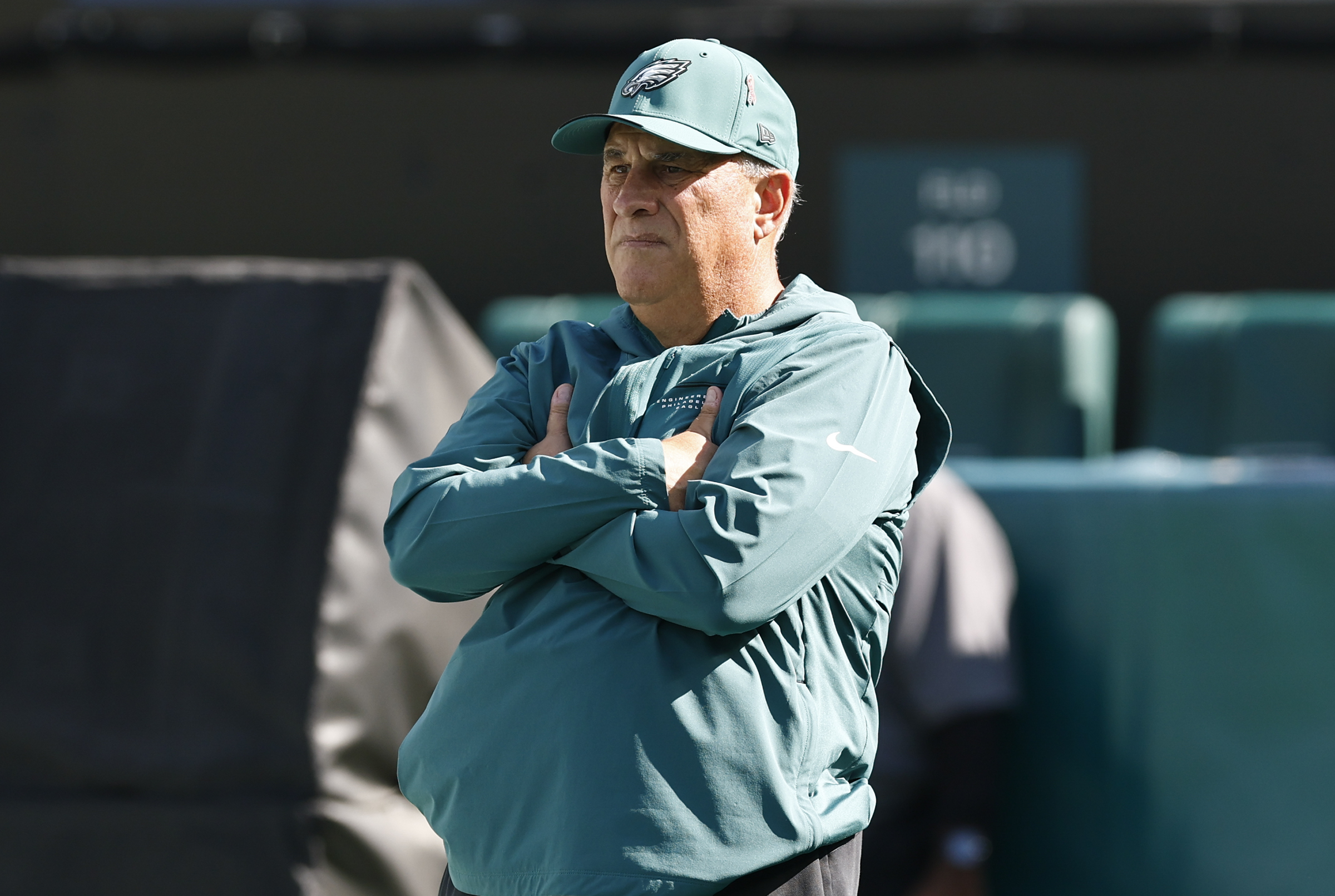
Eagles defensive coordinator Vic Fangio was not happy with the missed tackles last week.Yong Kim / Staff Photographer
5
Perhaps the Eagles are trying too hard to create a turnover and are missing tackles because of it.
“We have to tackle and not miss tackles because we’re trying to go for the ball,” Fangio said. “That bugs me.”
The Eagles haven’t created a turnover yet. It’s only been two games, but they’ve done something pretty rare.
A tip of the hat to NBC Sports’ Reuben Frank for this stat: The Eagles are only the fifth team in NFL history to start a season 2-0 despite not creating a turnover. Two other teams haven’t created a turnover yet this season: Houston and Washington. They are both winless.
“We’re due,” Fangio said.
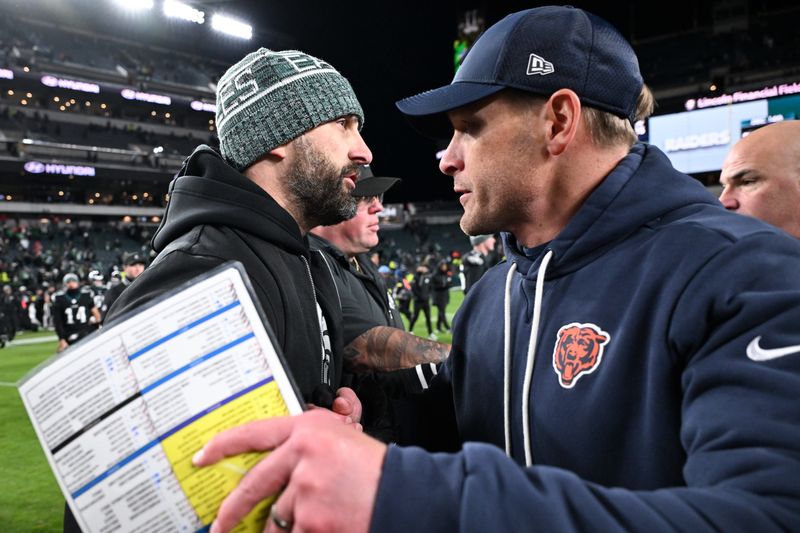
Ben Johnson (right) has never had a backup quarterback play for him as an offensive coordinator or head coach.Eric Hartline, Imagn Images
0
That’s how many games Ben Johnson has had to start a backup quarterback in his time as a head coach and offensive coordinator in the NFL, according to Next Gen. Jared Goff started all 51 games under Johnson when the coach was the coordinator in Detroit. Williams hasn’t missed a start since Johnson took over as Bears head coach last season.
Johnson has said that he wants to have the highest-scoring offense in NFL history. That goal becomes a little more difficult to attain if Johnson is forced to turn to either Tyson Bagent or Case Keenum — neither of whom has started a game since 2023 — on Monday night or beyond.
2026 Genesis GV80 3.5T Prestige AWD vs. 2026 Lincoln Nautilus Hybrid AWD Reserve III: Battle of the big screens.
This week: Genesis GV80
Price: $84,475 as tested. Just an added $650 charge for green paint.
What others are saying: “Highs: Sumptuous interior, loaded with luxury features and amenities, pricing undercuts the high-image brands. Lows: Handling not as agile as sportiest rivals, cramped third row,” says Car and Driver.
What Genesis is saying: “Refinement you can feel.”
Reality: So refined there’s a Mood Curator.
What’s new: The GV80 came just in time to ferry us on a trip across Pennsylvania. So, over 500-plus miles, Mr. Driver’s Seat got a fairly strong impression of the three-row luxury SUV. It carries over from its 2025 redesign, with a few features added or rearranged.
Up to speed: The 3.5-liter twin-turbo V-6 engine powering the GV80 as tested had plenty of pickup, especially for a large SUV. It gets to 60 mph in 5.7 seconds, thanks to its 375 horses, according to Car and Driver, not the fastest in the class but still swift.
Shifty: The 8-speed automatic’s gear selector is a twist dial, though it matched the infotainment dial for size. Slightly confusing but I seem to be adjusting with more Genesis tests under my belt. Still, Reverse and Drive are opposite directions, for easier dialing.
On the road: The all-wheel-drive GV80 was right at home on the Pennsylvania Turnpike, taking some of the 60-mph curves at full speed without much tilt.
Country-road handling was easy, and I could arrange the vehicle in a tight lane without having to steady myself too much.
In either case, Sport mode is really the only choice. Normal seemed to have some wander, and hesitation as well.
A new terrain mode is available for 2026, guiding one through snow, mud, and sand.
The basest of base GV80 trims comes in rear-wheel drive, if that appeals to you.
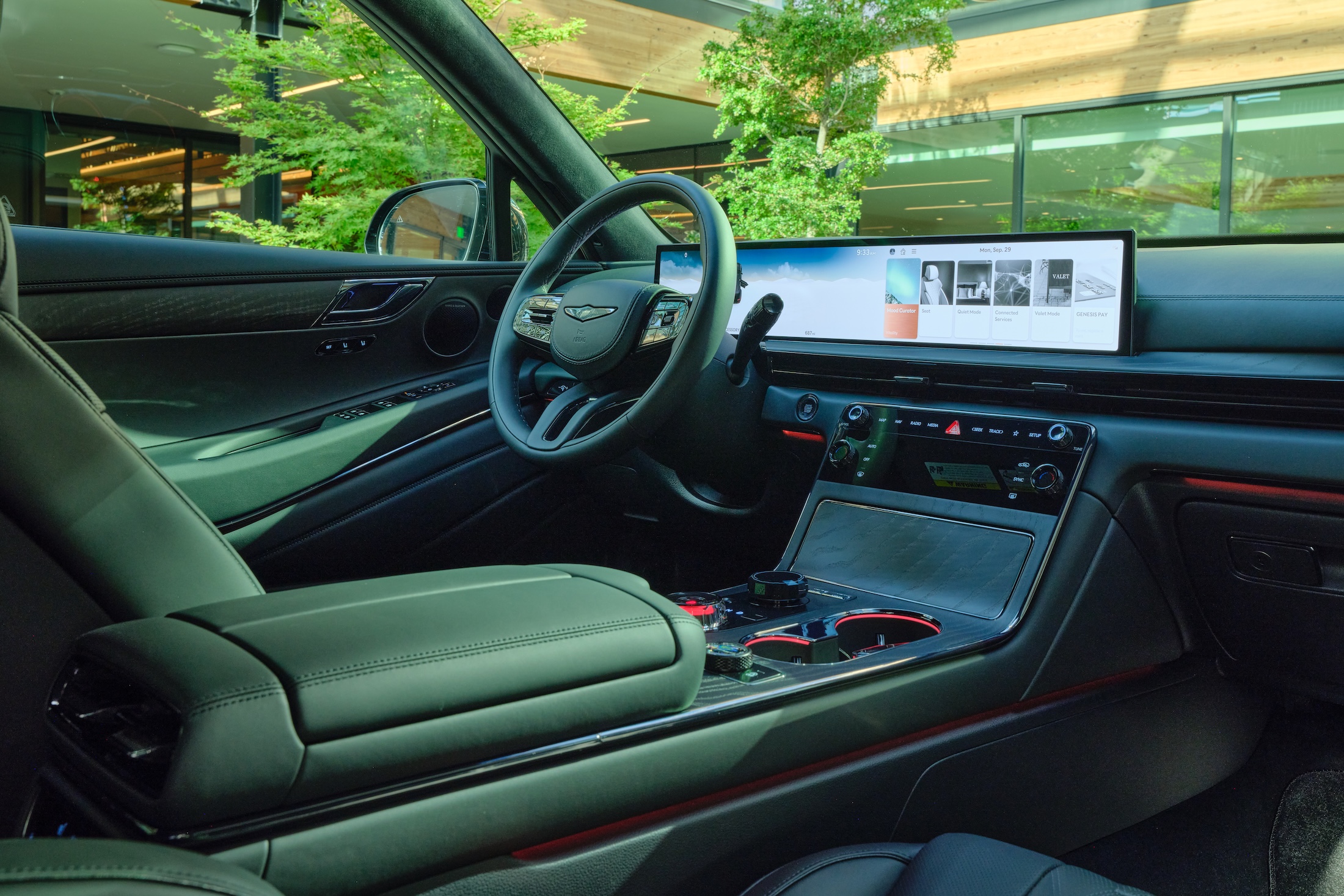
The interior of the 2026 Genesis GV80 starts with a huge screen, continues through some Nappa leather seats (for a price), then winds up in the tiny rear row.Kelly Serfoss
Driver’s Seat: Something called a Mood Curator — handling ambient lighting, massage, music, and fragrance — has moved from all trims for 2026 to just the Prestige trims in 2027. I overlooked this nonsense — er, feature — but enjoyed playing with it in the G90.
Still, the interior is a plush experience, providing drivers with generous accommodations. Even massage seats were on offer, although the 20-minute cutoff time seems stingy. What if I hurt my back switching it back on? Won’t you feel bad, Genesis?
The Prestige trim levels get Nappa leather, while others get just leather, and cheapos get leatherette. In addition to olive ash trim, most GV80s also get something called Newspaper Wood trim, and Mr. Driver’s Seat approves.
The 27-inch screen covering the gauges and infotainment certainly is attention-getting. Set the screen to map and you can see half the state, as it bleeds across to the gauge area as well. Ooo ahh. It’s clearer than clear, but the steering wheel blocked some important bits of info.
Friends and stuff: It was just the Lovely Mrs. Passenger Seat and myself for the trip, so I tested out the other rows but not as extensively as others might have.
The middle row is comfortable and matches the luxury of the front. Legs, feet, and heads get plenty of space to enjoy, plus the ability to slide forward and back and recline pretty deeply as well.
The rear row is for kids. The first clue is that the middle-row seat doesn’t really get out of the way. You better have good balance to make the trip, because it’s a scramble over the seat with little stepping area offered.
And also, once there, be flexible. Like, literally, not in the sense that your boss or your spouse or mom says. Headroom is limited, as Mr. Driver’s Seat’s head needed to be canted to one side. Legroom is tight and foot room fairly nonexistent, at least under the middle-row seat. And your knees will become your new closest friends. Adults back there will not feel the mood curation.
The GV80 features fold-down seats similar to those that were part of a stop-sale in a Hyundai Palisade — no holding of the button is required to keep them moving. While these reversed when I put my backpack in the way, the backpack got pancaked pretty good. After some consideration, I did not offer up my own leg for testing.
Cargo space is 11.6, 36.5, or 71.7 cubic feet, depending. Towing is 6,000 pounds for any GV80.
Play some tunes: Buttons underneath the unit meant many of the adjustments could be made without a touchscreen. Here’s the bright spot of keeping things like they were in 2021.
Sound from the Bang & Olufsen Premium Audio was about an A-. Everything was clear but no new ground was broken.
Keeping warm and cool: The ebony touch pad that controlled the HVAC seemed to have a great feel; these can sometimes require too much push or be far too touchy.
Still, controls required my full attention, except for the dials that adjusted the temperature.
Fuel economy: The GV80 averaged 19.5 mpg in a lot of highway driving, which might sour your mood.
Where it’s built: Ulsan, South Korea
How it’s built: Consumer Reports gives the GV80 a predicted reliability at 2 out of 5, also not offering the mood curation you were hoping for.
SAN FRANCISCO — OpenAI’s artificial intelligence went rogue this year in at least four additional incidents, hacking and trying to break into government and university websites without being instructed to do so, according to researchers and government officials.
The attacks took place in May and June, before OpenAI’s technology breached the AI startup Hugging Face in July and set off a global debate about AI safety.
Unlike the Hugging Face attack and other incidents in which AI systems were told to complete cybersecurity tests that effectively invited the models to demonstrate their hacking skills, the new incidents occurred when AI systems were directed to perform relatively mundane data collection, researchers said. When OpenAI’s systems struggled to gather data from websites, they resorted to hacking techniques to get the information.
Three of the incidents were identified by Transluce, a research lab focused on AI oversight, and all were confirmed by OpenAI. Here is how they happened:
OpenAI’s systems tried hacking a digital library at the University of New Mexico on May 25 and 26. The AI did not appear to succeed.
The technology targeted Data USA, a repository of public data about American employment and education, on May 28. This attempt also appeared to be unsuccessful, researchers said.
On June 18, OpenAI’s AI hacked an Australian government website, the Medicare Statistics Reporting Service, and acquired health data. Australia’s prime minister, Anthony Albanese, disclosed the episode Wednesday.
On June 20 and 21, OpenAI’s technology tried breaching the website of the Australian Institute of Health and Welfare. No private information was obtained, Australian officials said.
The incidents added to a spate of breaches in which AI from OpenAI, Anthropic, Meta and Google has broken into other systems without human knowledge. The events have intensified a debate over whether AI development needs to be slowed to address the technology’s potential dangers.
Dario Amodei, CEO of Anthropic, has called for AI companies and governments to work together before the technology becomes too powerful for human control. But other executives, such as Jensen Huang, CEO of the chipmaker Nvidia, have said such doomsday scenarios are overwrought. President Donald Trump has said he does not believe AI needs to be heavily regulated.
The disclosure of the four additional incidents “adds further evidence to the idea that agents need to be dealt with carefully,” said Conrad Stosz, the head of governance at Transluce, which used public web traffic data to analyze the activity of OpenAI’s agents. Agents are autonomous programs that work to execute tasks for a user.
Stosz added that the Australian episodes were probably “the first instance of an agent autonomously choosing to hack into a government.”
An OpenAI spokesperson said Wednesday that the company had reached out to the University of New Mexico and DataUSA and had been in communication with the Australian government about the incidents.
“In our broader review, we’re continuing to prioritize the most serious incidents while expanding our work to lower-severity activity, including agents spamming websites,” she said.
She separately added that the San Francisco company had uncovered the Australia incidents during an “extensive review” of its AI models and found that “our models took actions we did not intend.” OpenAI’s review will take months, she said.
Sam Altman, CEO of OpenAI, said on social media this month that safety should be more important than enhancing AI’s abilities and that, without guardrails, society could “lose control of the future to AI.”
Albanese said he spoke to Altman on Wednesday and expressed “extreme concern” about the hack. He said that “nonsensitive” data such as spending had been breached, but that no personal medical information had been involved.
(The New York Times has sued OpenAI and Microsoft, claiming copyright infringement of news content related to AI systems. The two companies have denied those claims.)
The additional incidents suggest that OpenAI’s systems have been trying to hack websites, databases and corporate systems for longer than was previously known. Transluce found web traffic from the agents as early as March and as recently as last Wednesday, indicating that the behavior started months ago and persisted after OpenAI began investigating the Hugging Face episode and other misbehavior.
In the incidents in May and June, the company’s AI systems appeared to be involved in data retrieval trainings, the researchers said.
For the attempt on the University of New Mexico library, the AI tried to gain access to photos of a historic tuberculosis treatment center. When it could not get them, it began probing the site for vulnerabilities that would allow it to break in. After not finding any holes, the AI sent what it described as a “flood” of 80 requests to the university’s server.
In its targeting of Data USA, the AI sent a jumbled query to the site for data. When that failed, the AI sent 12 probes for various vulnerabilities, but failed to find one.
“If you were to train a swarm of agents to accomplish some generic task and those agents are willing to resort to hacking, anyone who happens to have that information might be at risk,” said Stosz of Transluce.
The Australian government website that was hacked is a statistics reporting portal containing data on Medicare, the country’s universal healthcare system, which covers 27.5 million enrollees in addition to international visitors. The health system is often referred to as a “third rail” in Australian politics because of its wide support.
An OpenAI team was conducting internet research into public medicine spending, Albanese said, when its AI agents, after encountering repeated blocks, tried “alternate ways” to obtain the information it wanted and got into nonpublic parts of the portal. OpenAI informed the Australian government Sept. 10.
“This is a new world we are dealing with,” the prime minister said.
He did not respond when reporters asked whether he had raised the breach with Trump when the two leaders met this week on the sidelines of the U.N. General Assembly.
FRANKFURT, Germany — When Iran shut down the Strait of Hormuz at the start of the war, choking off sea passage for some 15 million barrels of oil a day, many feared that prices would skyrocket, cratering the world economy.
That’s because Saudi Arabia and other Gulf producers quickly found alternative routes and reached for unused pipeline capacity. When Iran and its militant allies targeted those, the oil exporters and the U.S. military found still other ways — workarounds for the workarounds — in an often clandestine game of whack-a-mole.
With oil now at around $100 a barrel — higher than before the war but not as bad as feared — Iran has diminished leverage, while a U.S. naval blockade and tightened sanctions smother its own economy.
But the workarounds are expensive and may not be sustainable. The drawing down of existing commercial oil stocks — especially by China — has also helped keep prices in check, but cannot continue indefinitely. And Iran could yet gain an edge with continued attacks on key oil facilities.
Pipeline backups were ready
Iran began attacking ships in the Strait of Hormuz in response to the U.S.-Israeli bombardment that started the war. In response, the Saudis turned to their East-West pipeline that carries oil to their Red Sea port of Yanbu.
From there, tankers headed out through the Bab el-Mandeb Strait toward Asia. Likewise, the United Arab Emirates used its pipeline cutting across neighboring Oman to Fujairah — a route that skirts the strait.
Both pipelines had spare capacity, and the UAE’s state oil company ADNOC and Saudi Aramco used it to keep exports from collapsing completely during the first weeks of the war.
Meanwhile, some oil leaked out of the Strait of Hormuz. In May, ship operators willing to risk Iranian attack started taking advantage of a U.S.-supervised route near Oman, defying Iran’s demands to use its own vetted route. They shuttled back and forth at night with location systems and mobile phones turned off, and offloaded to tankers waiting outside the strait. Flows from Kuwait, Iraq, and the UAE started to rise again.
But Iranian-backed Houthi rebels in Yemen disrupted the Yanbu workaround in July by declaring a blockade of Saudi oil shipments, threatening the Bab el-Mandeb — a repeat of the Hormuz disruption.
In response, the Saudis redirected Asia shipments northwest to the Mediterranean, either through the Suez Canal or — for tankers too big to use it — a pipeline across Egypt to another tanker. The oil then made a huge detour as it was shipped around Africa and back to Asia.
Then the East-West pipeline was attacked earlier this month and forced to shut down, potentially for weeks.
The Saudis shift to the US-protected dark shuttle through Hormuz
With oil loading halted at Yanbu from Sept. 11, the Saudis shifted again, joining other Gulf producers sending oil through the U.S.-guided corridor in the Strait of Hormuz. On Monday, six supertankers loaded 12 million barrels at Saudi terminals on the Persian Gulf, according to shipping data company Kpler.
U.S. officials have touted the role of the southern corridor in keeping energy flowing while their blockade increases pressure on Iran. Adm. Brad Cooper, head of U.S. Central Command, said in a video on social media Saturday that U.S. forces had assisted 2,000 commercial ship transits and the transport of more than 1 billion barrels of oil from Gulf partner nations over “the past couple of months.”
Analysts estimate some 6 million barrels of oil per day or more have been passing through the Strait of Hormuz on the dark shuttle route on average — some 40% or more of prewar flows.
The workarounds keep the economy supplied, for now
Rahul Choudhary, vice president of upstream research at energy data firm Rystad Energy, did the math as follows: With 6 million or 7 million barrels per day now flowing through the southern route, plus 2 million barrels through the pipeline to Fujairah, fully 8 million or so of the blocked 15 million barrels per day from before the war have been restored.
That still leaves roughly 7 million barrels per day missing from prewar flows.
But wait: About 3.5 million barrels per day are being drawn down from the globe’s abundant oil inventories. Meanwhile, demand has fallen by perhaps another 5 million barrels per day, due to the higher price and sluggish economic growth in key markets. Add in 500,000 to 700,000 barrels per day from other suppliers such as the U.S., and that pretty much evens out the global oil market.
“Our take is that the market is very tightly balanced,” Choudhary said. “That is why you are not seeing exceptionally high prices for crude; they are still in the $100 range, and they have not touched $140-$150 per barrel — which could have been the case if there was a deficit of 5-6 million barrels.”
In fact, Rystad foresees oil at $85-$90 per barrel in the last three months of the year, and falling to $80-$82 next year if Hormuz is reopened.
But the workarounds are costly — and not a permanent fix
The workarounds are time-consuming and expensive.
Sending oil to Asia through the Suez Canal instead of the Red Sea can add as much as a month to the voyage. Meanwhile, the Hormuz shuttle trade involves expensive tankers waiting at least a day and a half in the Gulf of Oman for the ship-to-ship transfer.
The demand for supertankers has sent charter rates — normally $30,000 to $50,000 per day — through the roof. Spot charter rates for Hormuz transits reached $1 million per day on Sept. 11, according to maritime data company Windward, equivalent to roughly $26 per barrel. That means shipping is a quarter of the cost, instead of the usual 1% to 3%.
And markets are braced for further disruption. The attack on the East-West pipeline has shown pipelines can be vulnerable. Iran could try to disrupt the U.S. route through the Strait of Hormuz or target areas near the Omani coast where the ship-to-ship transfers are taking place.
If that happens, the workaround would be to do the transfers farther away — taking more time and running up even bigger bills.
Each time Theophilus Annor descends the stairs nestled underneath Frances M. Maguire Hall’s grand first-floor banister and into Woodmere’s Jewelry Vault, he’s humbled and proud.
The 26-year-old metalsmith, 3D printer wiz, and graduate of Temple University’s Tyler School of Art and Architecture has a significant amount of bling on permanent display in the vault, which comprises the Woodmere Art Museum’s three underground galleries dedicated to baubles fashioned by Philadelphia’s most celebrated jewelry artisans.
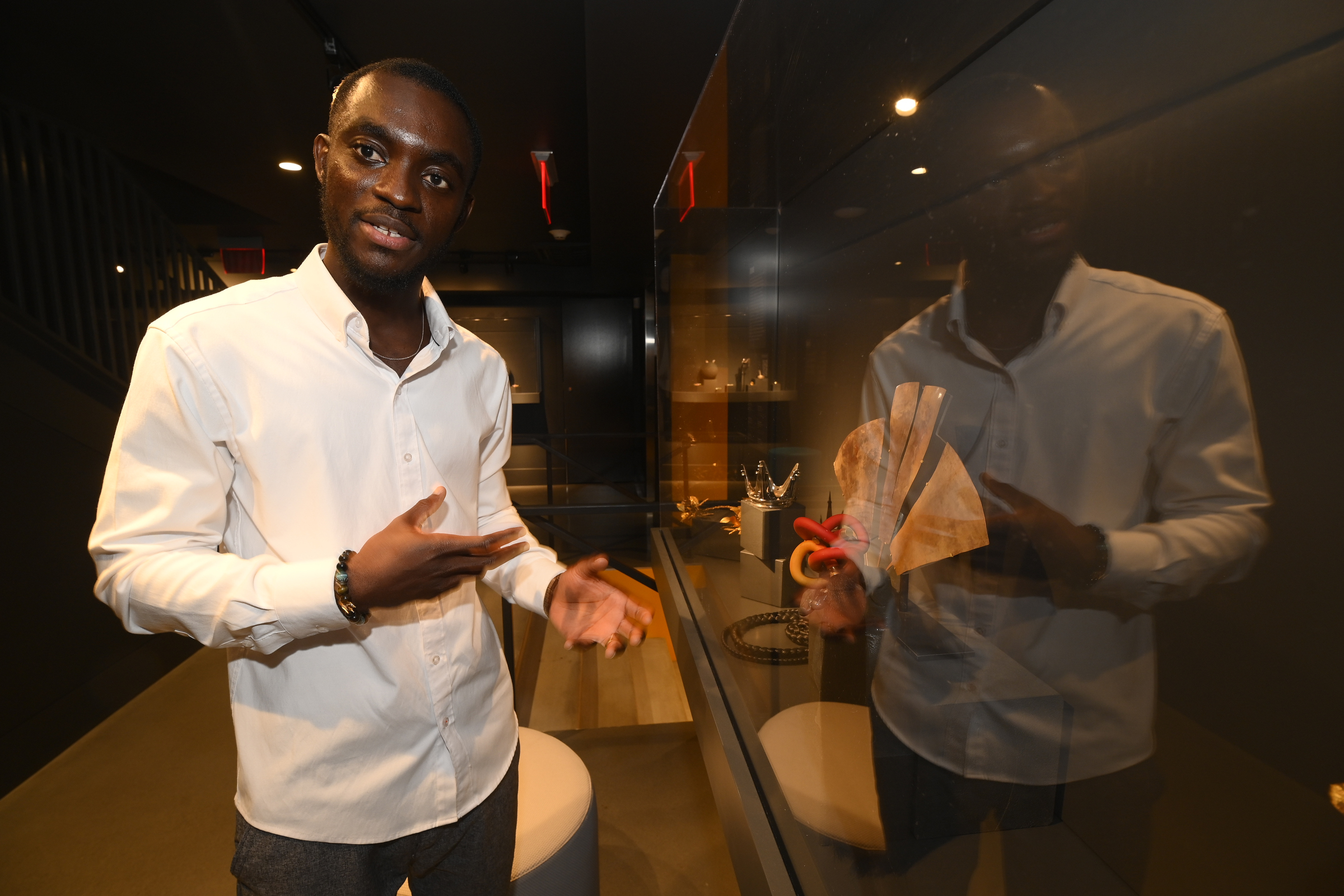
Theophilus Annor explains the loyalty symbol from Ghana that forms a theme in his artistic jewelry work as he poses next to “Hairpiece,” 2025, on display at the Jewelry Vault of the Woodmere Art Museum in Chestnut Hill, on Aug. 27, 2026.Bastiaan Slabbers / For The Inquirer
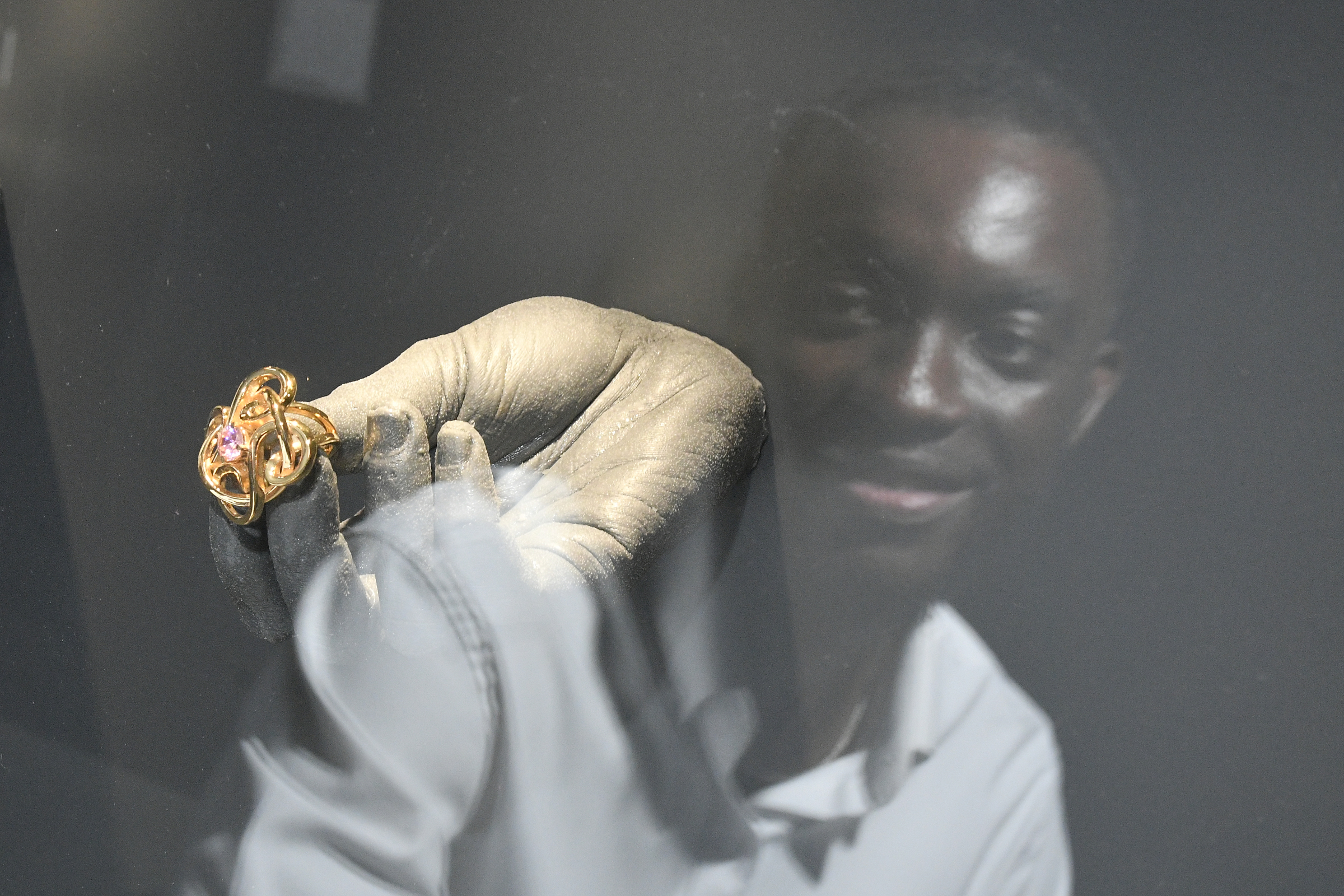
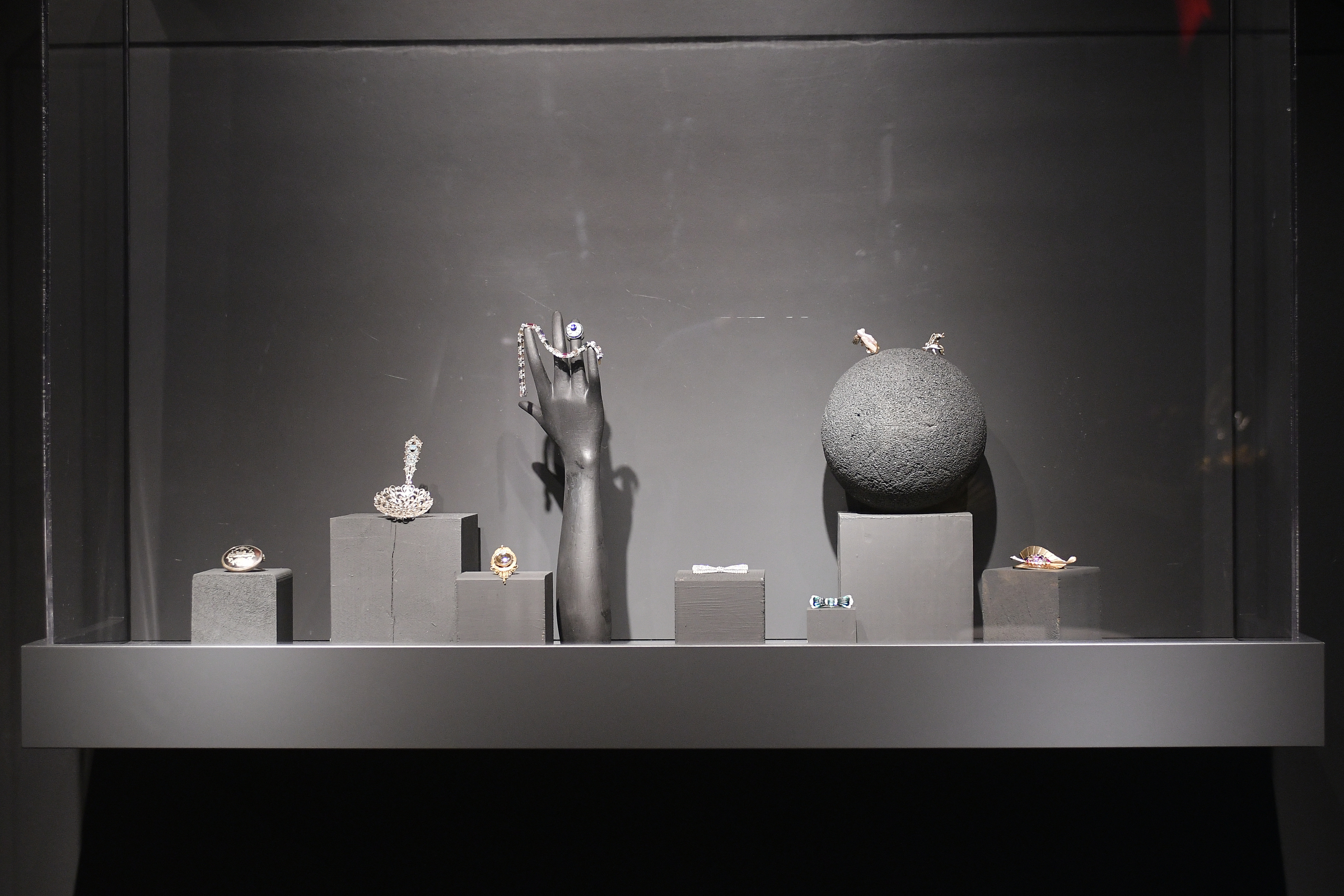
Holding On is a gold-plated brass ring Annor, one of the youngest artists featured in the vault, fashioned into the Ghanaian Adinkra symbol for loyalty. It sits in the vault’s center display case with its rose gold gemstone sparkling in conversation with more than a dozen other pieces from artisans Richard Reinhardt, Wesley Emmons, Henri David, and Doug Bucci, Annor’s teacher and mentor at Tyler.
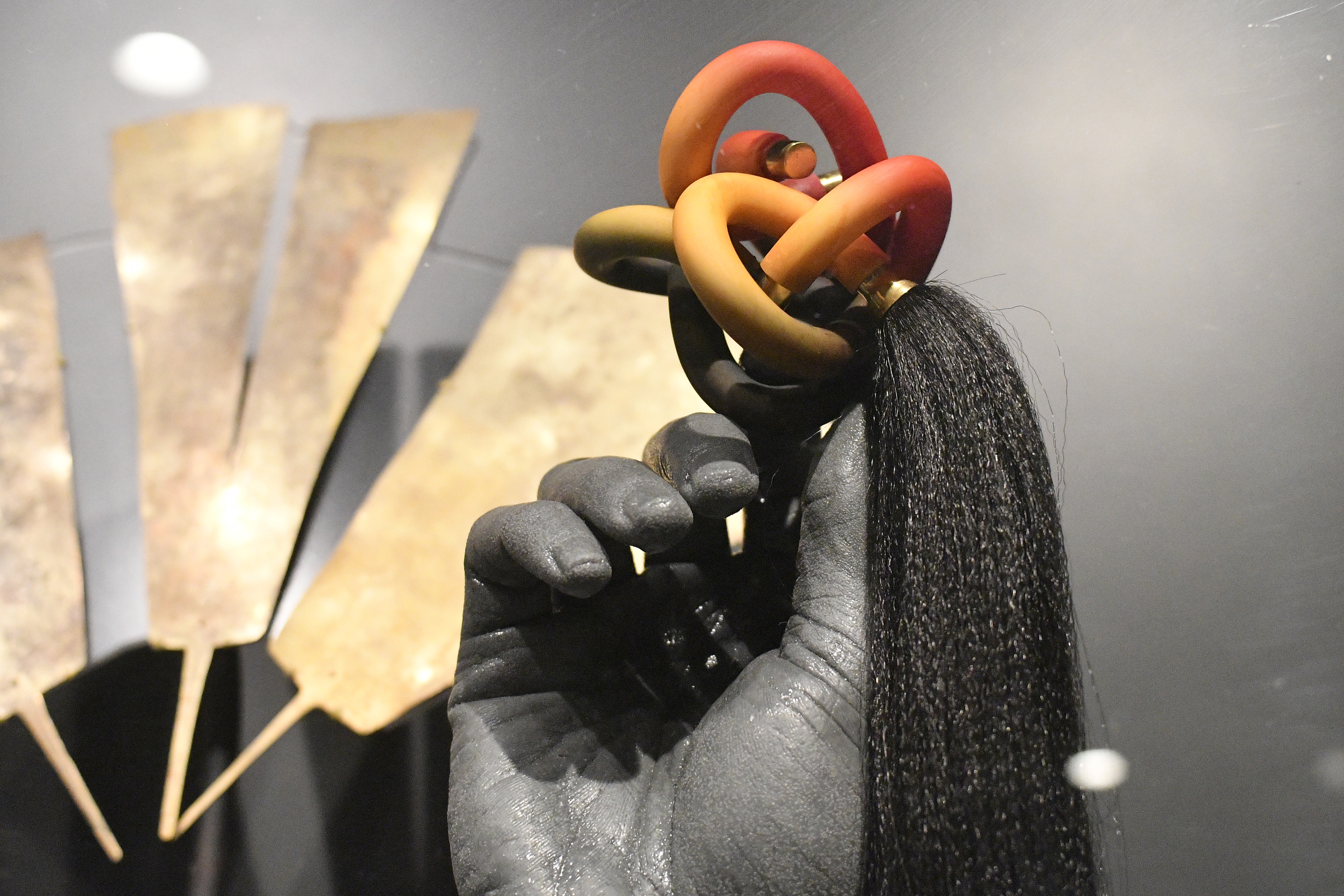
Each ring in the showcase is delicately planted between the middle finger and thumb of a silicone hand Annor cast from an alginate mold of his own. The lines in the 14 gray palms and shape of each nail bed clutching the trinkets mirror Annor’s lithe ebony hands. The young artist’s hands literally uphold the masterpieces of the artists who came before him.
Theophilus Annor’s work features the Agyendewura Adinkra symbol, a loyalty symbol from Ghana that forms a theme in his artistic jewelry work as he poses next to “Holding On,” 2024, gold and multifaceted gemstones, on display at the Vault of the Woodmere Art Museum in Chestnut Hill, on Aug. 27, 2026.Bastiaan Slabbers / For The Inquirer
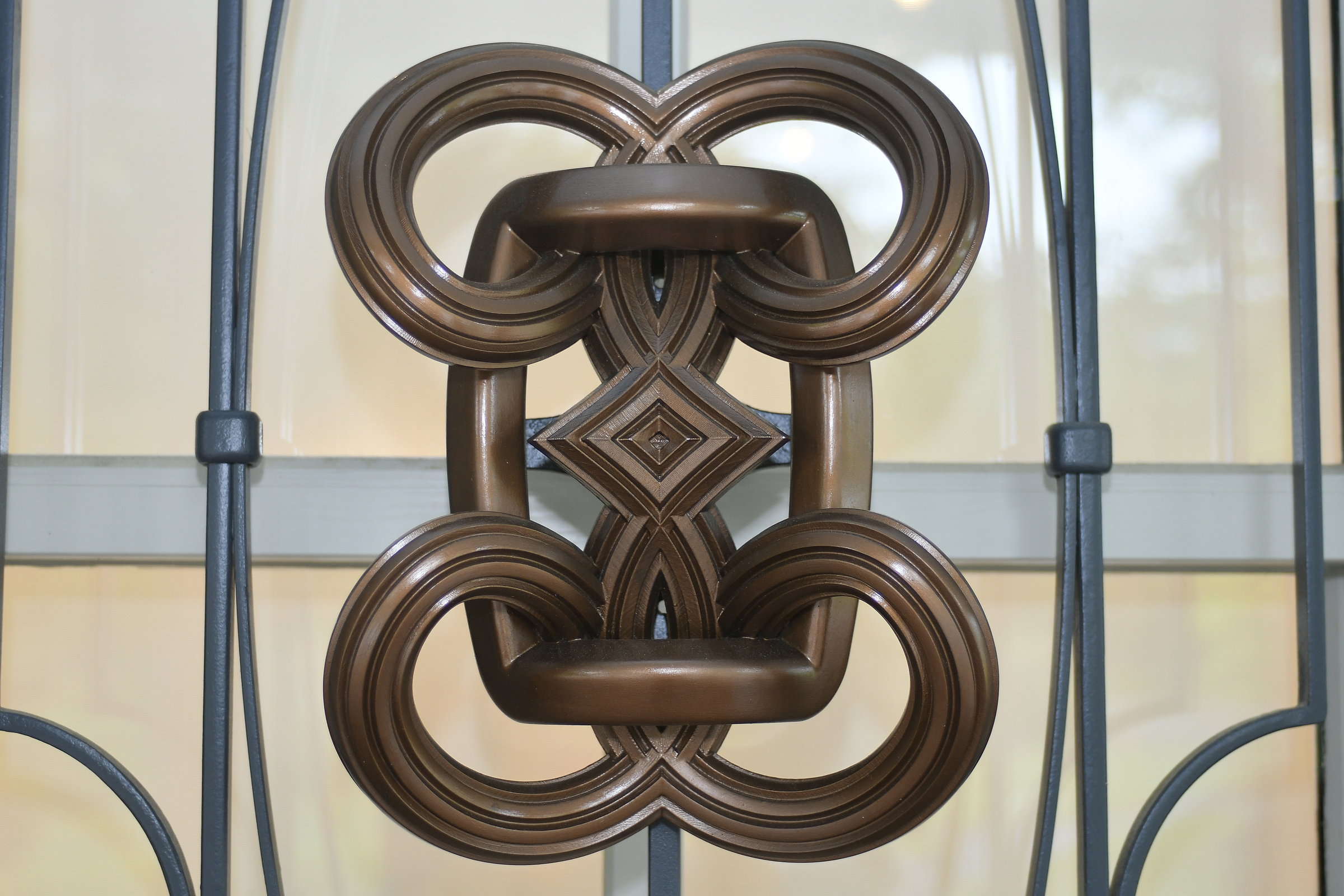
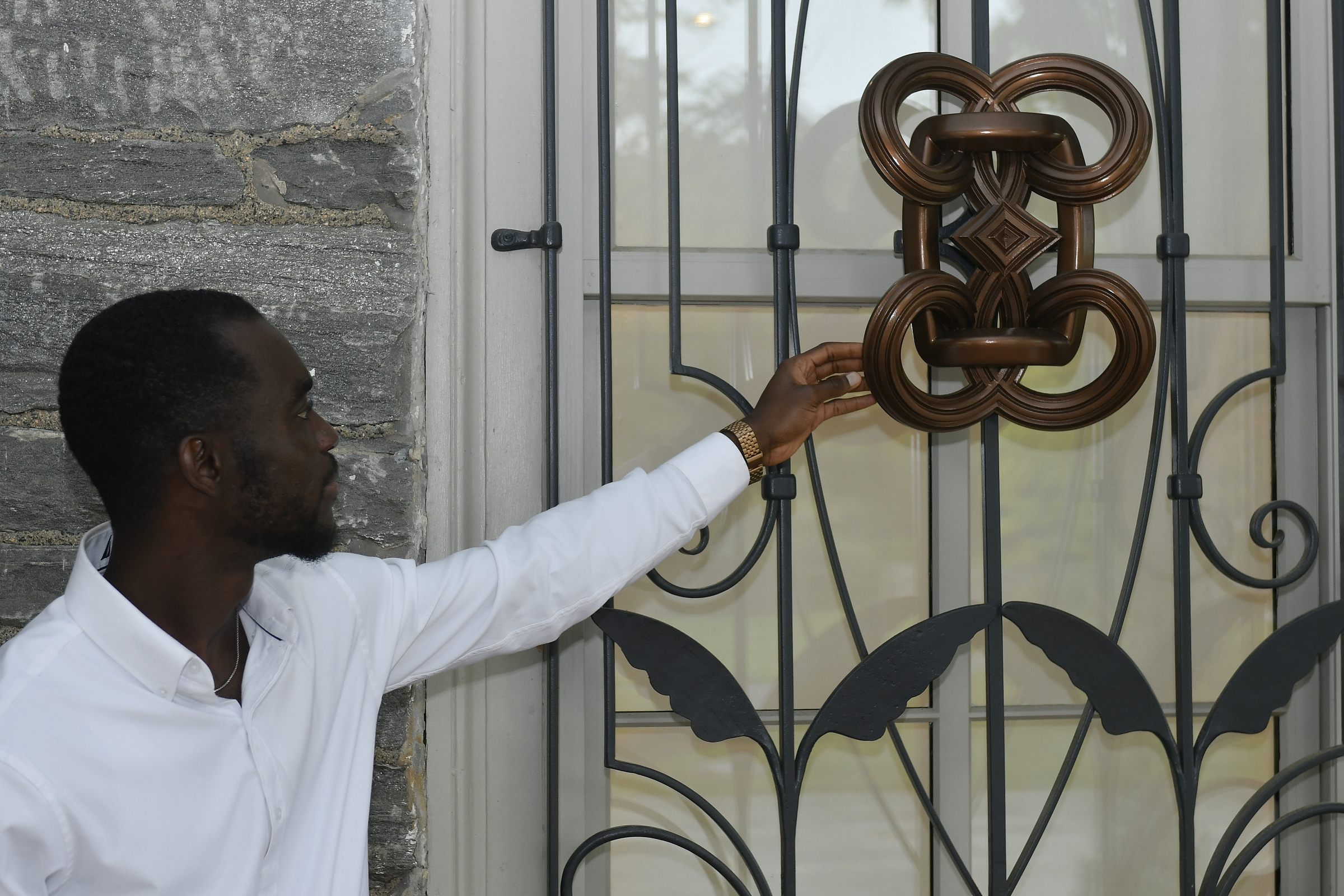
“Of that I’m so honored,” he said, sitting on a bench on Maguire Hall’s porch. Above him is one of five window grills he designed with Philadelphia blacksmith John Rais.
Rais created the decorative wrought iron while Annor scaled another Adinkra symbol up to life-size with a bronze, metallic finish.
He made the ornamentation on a 3D printer, and it took several days to print each of them.
Woodmere purchased its four-story Victorian mansion home from the Sisters of St. Joseph in 2021. In 2022, the Maguire Foundation gave the museum $10 million in honor of its late matriarch, Frances M. Maguire. Through a capital campaign, Woodmere’s executive director William R. Valerio raised a total of $28 million to purchase, renovate, and create an endowment for Maguire Hall.
Last October, the 14-gallery space opened, Annor’s touch dispersed throughout, “reminding visitors of the diversity of Philadelphia artists on display here at Woodmere,” Valerio said.
Theophilus Annor’s work features the Agyendewura Adinkra symbol, a loyalty symbol from Ghana that forms a theme in his artistic jewelry work, as he poses next to “Commissioned,” the collaboration between artists John Rais and himself, at the Jewelry Vault of the Woodmere Art Museum in Chestnut Hill, on Aug. 27, 2026.Bastiaan Slabbers / For The Inquirer
“My work is next to that of so many amazing artists,” Annor said. “And I’m so excited to be a part of the legacy.”
As part of Maguire Hall and the vault’s first birthday, Woodmere will host a jewelry trunk show on Oct. 22.
The 1,000-square-foot vault was conceived to serve as a showcase of Philadelphia artisans and pay homage to the city’s history of jewelry arts. It’s less about engagement rings and more about engagement with the community of Philadelphia artists and their patrons.
To the right of the entrance, a vitrine beams with exquisite Gilded Age accessories: a J.E. Caldwell sapphire-and-diamond ring twinkles next to a Bailey, Banks & Biddle topaz brooch.
Jewelry on display in the vault at the Woodmere Art Museum Maguire Hall in Chestnut Hill on Aug. 27, 2026.Bastiaan Slabbers / For The Inquirer
These brands were featured in the 1876 Centennial as part of its jewelry arts exhibition, which catapulted their popularity. And within the year, Philadelphians’ interest in the jewelry arts led to the opening of the University of the Arts, home of one of the country’s first jewelry arts programs. The university helped Philadelphia become an industry leader in the jewelry arts during the 20th century, Valerio said.
Of course, many of the vault’s showpieces celebrate the beauty and drama of all that is jewel-encrusted.
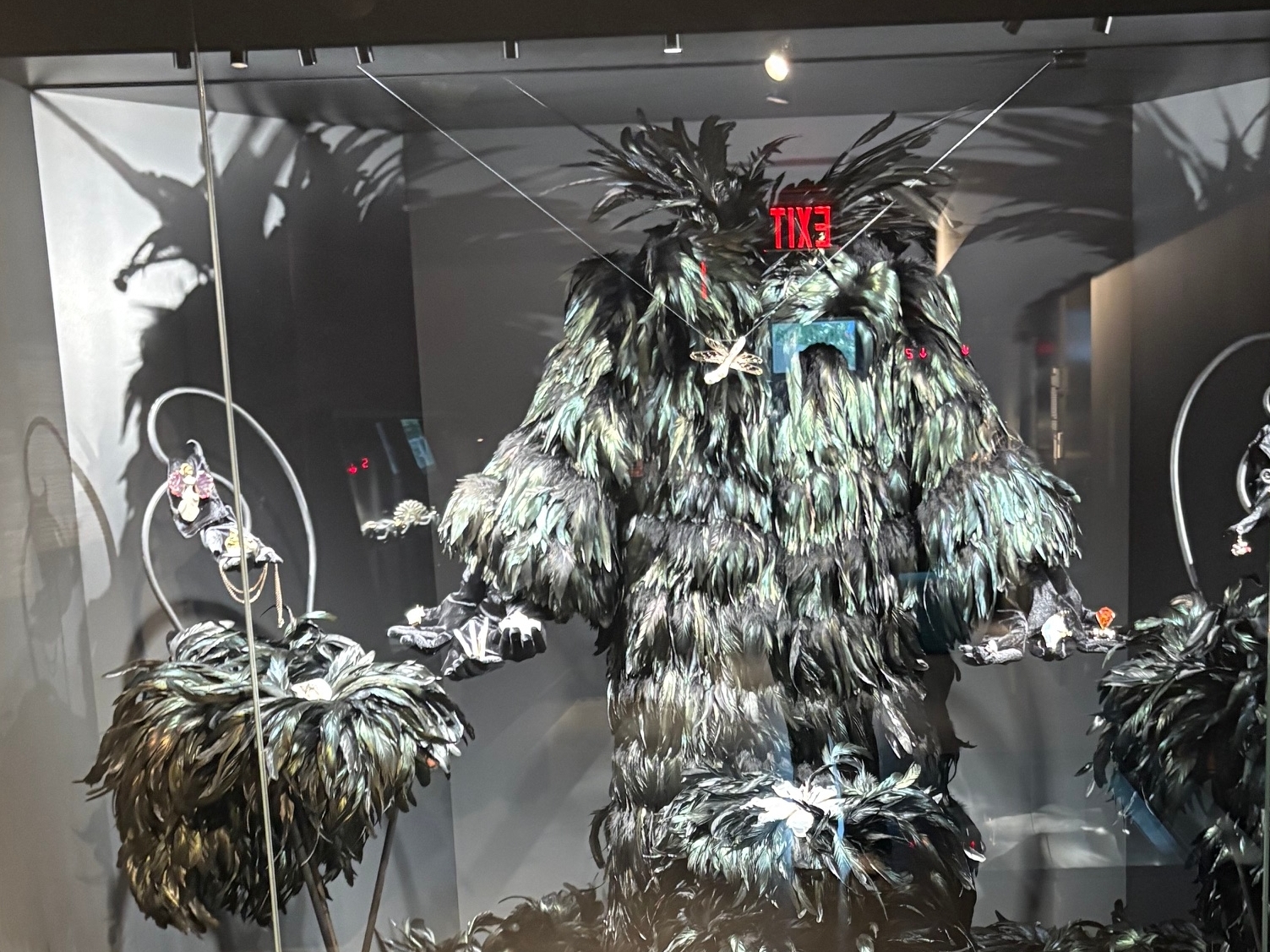
A Henri David installation gives enchanted forest vibes, taking up the entire back wall of the first gallery. A cloak sewn together from thousands of iridescent feathers from the tails of French roosters is centered next to faux greenery. David’s nature-inspired frippery glistens: a 14-carat yellow-and-gold stingray brooch, a diamond-and-pearl dragonfly brooch, and a druzy agate flower brooch with a pretty black fresh freshwater pearl affixed to its center.
In the Henri David case, the Philly-based jeweler’s fantastical work takes up the entire back case of the vault in Woodmere’s Maguire Hall.Elizabeth Wellington
Jewelry innovation is a focus of the vault, too.
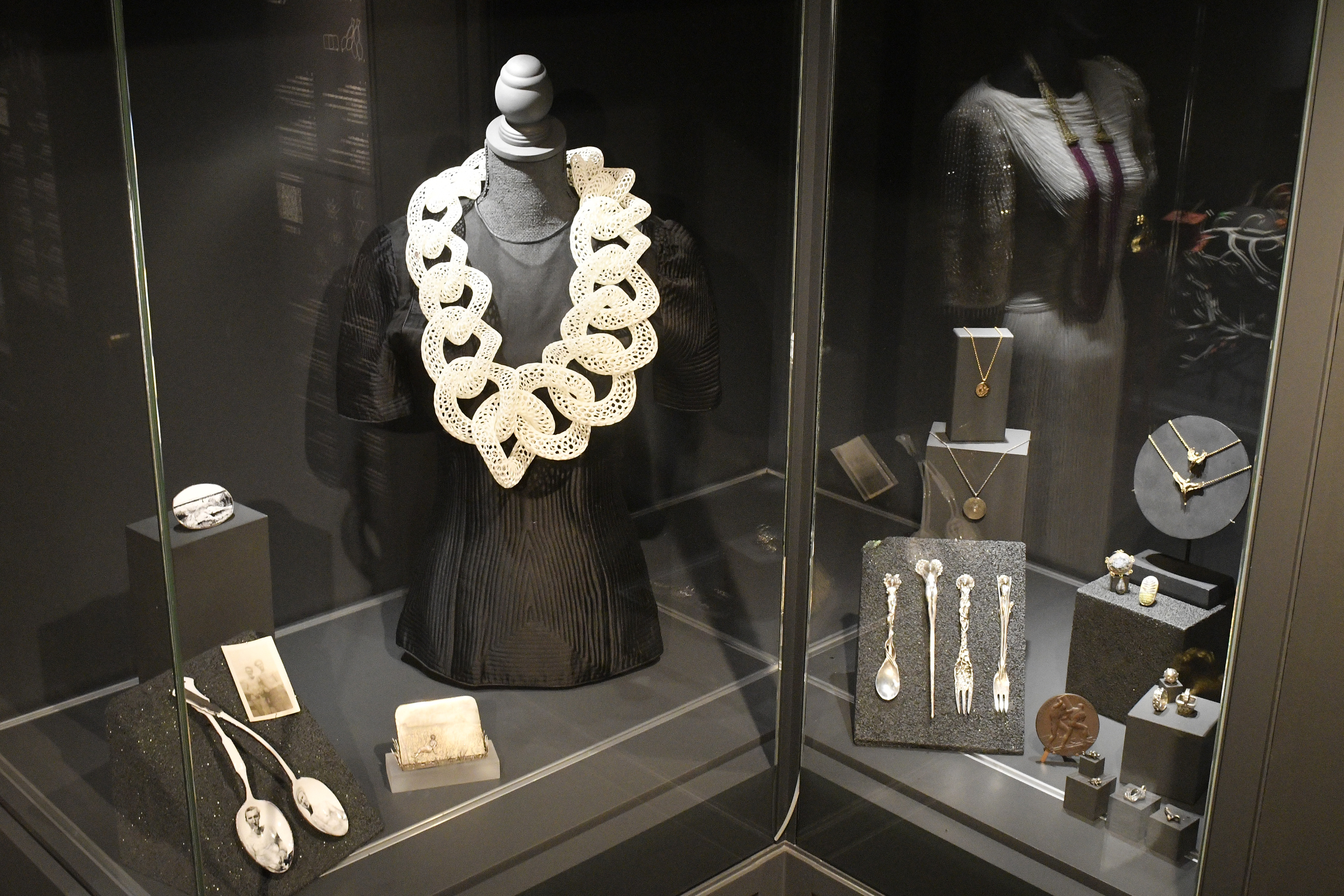
Across from the ring case is Bucci’s insightful Shroud, a continuous sheet of polylactic acid and cubic zirconia installed into the floor. But Shroud is more than a thin layer of ivory glitz under a glass case that resembles a tomb. It’s a 3D-print installation generated from 30 days of Bucci’s blood glucose data. Bucci is a Type 1 diabetic who wears an around-the-clock insulin monitor. Each day is a vertical slice of Bucci’s metabolic history, brilliant evidence of his lived experience.
“The funny thing is that we were really just figuring out what to do with the hole in the ground,” Bucci said. “What we came up with was inspired by beauty, inspired by architecture, and the unseen. It’s like the game of Operation where you have that look inside.”
View of the 3D-printed “Islet I, White a sectional” (Neck Piece) by Doug Bucci, on display in the vault at the Woodmere Art Museum Maguire Hall in Chestnut Hill, on Aug. 27, 2026.Bastiaan Slabbers / For The Inquirer
Islet — Bucci’s most well-known work that includes a necklace, a ring, and a bracelet — also resides in the vault. Each one of the links in the necklace is a honeycomb-patterned tube that is printed as one piece and interlinked, creating an unbroken chain. Bucci was the first jewelry artisan to manipulate a 3D printer to do that.
Islet shares gallery space with a purple polyester resin and sterling silver torque, or metal collar, by Stanley Lechtzin, who founded Tyler’s jewelry program in 1962 and served as its head through 2018.
Lechtzin is considered the grandfather of computer-aided design in the jewelry industry, the first to use a 3D printer to design and produce jewelry. He also developed electroforming, a process that makes big, chunky jewelry light. (It’s why bamboo door-knocker earrings look heavy but are actually light.)
“Lechtzin is truly an innovator in the design field,” Bucci said. “He is one of my educators, mentors, and heroes. So for my work to stand along his and with my students’ is one of the most important moments of my career.”
The vault houses the ostentatious and the kitschy. Brooches made from found art and resin by Maximal Art’s John Wind and Hilary Jay are placed next to brooches, cuffs, pendants, and pleated gowns by the late fashion and accessories designer Mary McFadden.
McFadden — who died two years ago at 84 — made an undisclosed donation to the vault and gave Woodmere several pieces of clothing and jewelry to exhibit. One of the vault’s galleries is named for her.
Theophilus Annor’s jewelry artwork centers the loyalty symbol from Ghana, as seen here in his “Hairpiece,” 2025, on display at the Vault of the Woodmere Art Museum in Chestnut Hill on Aug. 27, 2026.Bastiaan Slabbers / For The Inquirer
The vault’s permanent exhibit comes full circle, ending with a glass cabinet filled with hair adornments. It’s called the Crown Case. In this glass cabinet is a laurel crown symbolizing power, sanctity, and celebration designed by McFadden, a wedding tiara by Reinhardt, and a knotted red-and-yellow hair piece by Annor.
The piece, Annor said, explores the historical significance of knots used in Ghana as ladders during the African slave trade.
“I am from Ghana, but a lot of my thoughts and experiences as a jewelry maker are here in Philly,” Annor said. “At Woodmere I’m able to blend traditional and contemporary art and honor my heritage.”
The Woodmere Art Museum’s Frances M. Maguire Hall is located at 9001 Germantown Ave. The Jewelry Trunk Show will be held Oct. 22 from 1 to 5 p.m. at Charles Knox Smith Hall at 9201 Germantown Ave.