Tag: topic-link-auto

  • Activists fooled by Hannah Gann want Philly schools to hold her accountable for hurting students

    Activists fooled by Hannah Gann want Philly schools to hold her accountable for hurting students

    The teacher activists who organized alongside Hannah Gann want accountability on behalf of the vulnerable students who believed the Philadelphia School District teacher was someone she was not.

    “We hope the district will take the necessary steps to hold Hannah accountable for the harm she caused, prevent any further harm to students, and provide meaningful support to the students and school community as they process what occurred,” the Racial Justice Organizing Committee and Philly Educators for Palestine said in a statement.

    Gann, who works at the Workshop School, a project-based high school in West Philadelphia, claimed for years that she was Palestinian and Black. After direct questioning, Gann admitted she is a white, Jewish woman and the relative of Israeli settlers.

    Ultimately, Gann acknowledged she is “a white woman of significant privilege and wealth.”

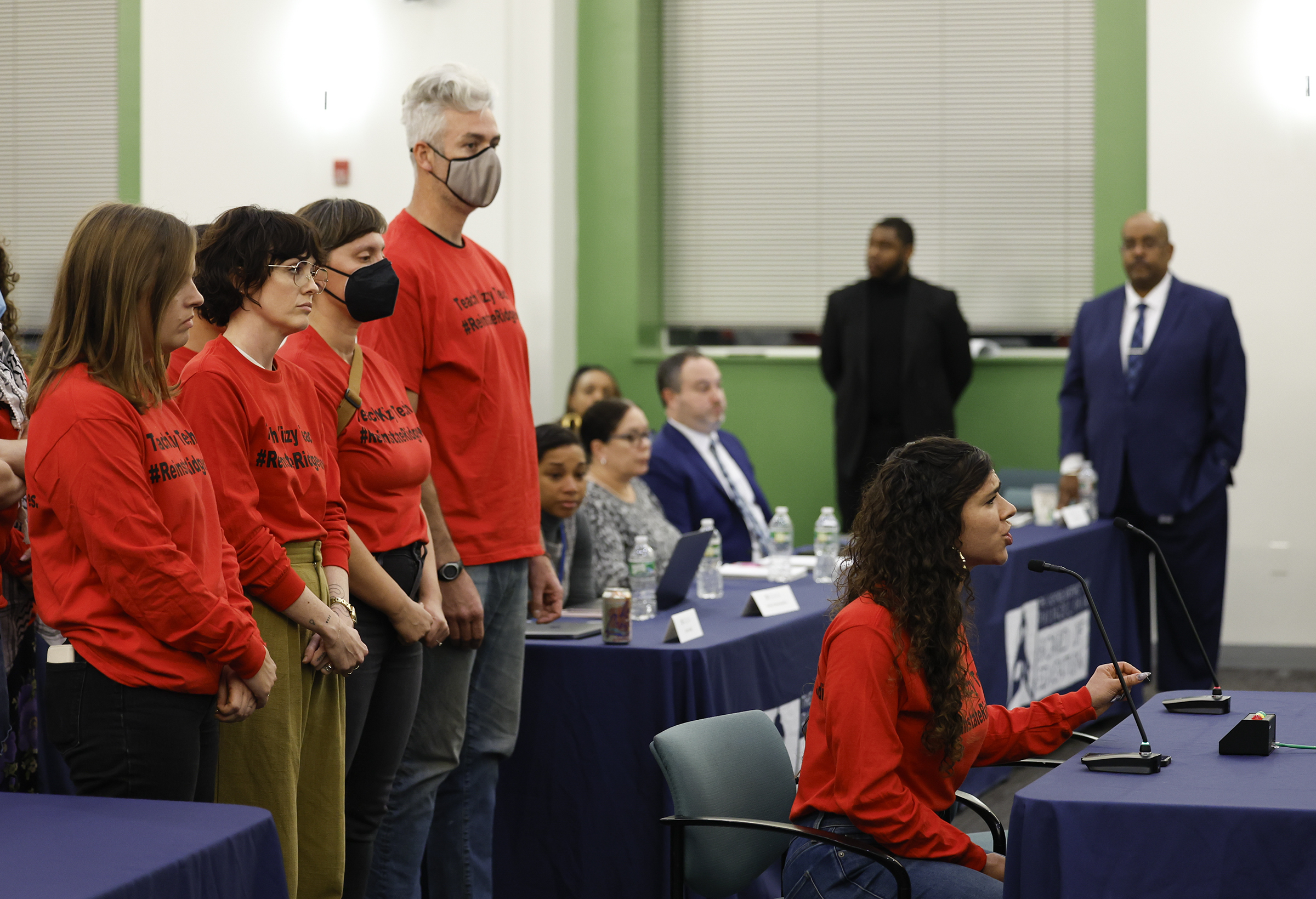
    Gann was a key member of both organizing groups — which are made up of district teachers but unaffiliated with the district. She led teach-ins after the Oct. 7, 2023, Hamas-led attacks on Israel, decrying “scholasticide” in Gaza and defending Keziah Ridgeway, a Philadelphia teacher who was disciplined by the district over her private, pro-Palestinian social media posts. (Ridgeway has since sued the district, alleging anti-Islamic bias.)

    Gann’s deception has earned national attention and comparisons to Rachel Dolezal, the scholar and former NAACP official who had claimed to be Black. Racial Justice Organizing Coalition and Philly Educators for Palestine members, in the statement, said they understood why the matter is receiving attention, “but for us, it is not a spectacle. The emotional harm is real and palpable for the people who knew, trusted and worked alongside, and learned from Hannah.”

    Most important, the Philadelphia activists who once claimed Gann as a friend and colleague said, the focus needs to be on her students.

    Gann remains employed by the district, teaching students at a majority-Black school who viewed her as a trusted adult, someone who helped them create community and feel protected, the Philly organizers said.

    “Finding out that someone who taught them about identity and belonging had been dishonest about her own identity could deeply damage their trust in her and other adults,” the committee said.

    The school system has said it does not comment on personnel matters, but noted that it made support available to any Workshop student or employee who needed it.

    Blackness, the groups said, “cannot be donned as a costume. Black and Palestinian identities, grief, and genocide are not identities or experiences that anyone has the right to adopt for credibility, access or belonging.”

    Gann “could’ve easily been an invaluable ally to these communities without lying about who she was,” the groups said.

    Gann has not commented beyond a 10-minute video posted to her Instagram account in which she admitted to the deception.

    “I hid my family’s background from everyone in Philly and also hid from the people in my own family what I was doing,” she said, adding that she believed in the causes she fought for despite her deception.

    Gann said she “allowed half-truths and obfuscations to grow into outright lies.”
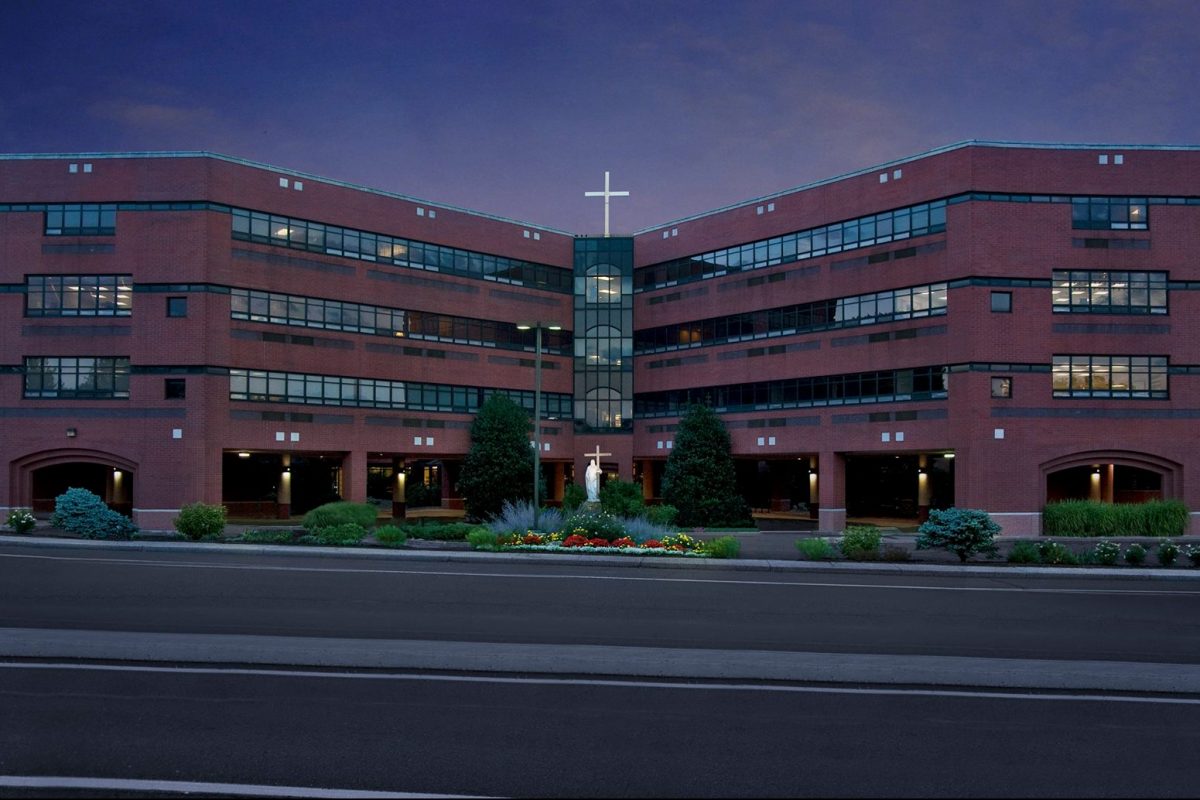
  • Redeemer Health CEO Greg Wozniak has resigned from the Montgomery County health system

    Redeemer Health CEO Greg Wozniak has resigned from the Montgomery County health system

    Redeemer Health CEO Greg Wozniak has resigned from the financially troubled nonprofit Montgomery County health system after a little more than two years, Redeemer announced Thursday.

    Replacing Wozniak on an interim basis is chief transformation officer Jim Logue, who has held the role since early 2025.

    Redeemer has posted operating losses every fiscal year from 2017 to 2025. It hasn’t yet posted financial results for the fiscal year that ended in June.

    “Jim and his team will work with our financial advisors and counsel to implement a reorganization of the Redeemer system to assure its continued viability and a sustainable business model,” board chair William R. Sasso said in an internal communication obtained by The Inquirer.

    “This reorganization is expected to involve some significant organizational changes which will be announced in the coming weeks as they are finalized,” the note said.

    More than four years ago, Redeemer announced that it was seeking what it called a “strategic partner” for its 239-bed hospital in Meadowbrook, near Abington, but nothing came of that effort.

    Redeemer also operates a home care business, nursing homes, senior apartments.

    Redeemer announced additional personnel changes Thursday in its internal communication, including the departure at the end of this month of chief financial officer Kim Cummings. Former CFO Michael Keen is returning to that position.

    Another returning executive is Donald Friel, a former executive vice president tapped to assist Logue.

    Diane Derr, who has been at Redeemer for 44 years, is being promoted to chief administrative officer from chief nursing officer.

    Editors note: This article has been updated to correct Derr’s history with Redeemer.

  • Eagles fans can watch DeSean Jackson’s football journey unfold, thanks to 35 years of footage: ‘A greater purpose’

    Eagles fans can watch DeSean Jackson’s football journey unfold, thanks to 35 years of footage: ‘A greater purpose’

    The NFL did not work out for DeSean Jackson’s older brother, Byron.

    In 1992, the San Jose State wide receiver signed with the Kansas City Chiefs’ practice squad but was cut two seasons later. Afterward, he moved home to Los Angeles to pursue a career in film and television. His father, Bill Jackson, did not approve of Byron ditching football. Bill tirelessly trained Bryon for the NFL, and anything short of the league was considered a failure.

    The two had a major fight and fell out of contact for years. Byron wanted to change that.

    “I wasn’t speaking to my dad,” Byron told The Inquirer. “He started doing the same thing to DeSean, like putting him in Pop Warner football, two teams at the same time. Just really taking it overboard.

    “And I was like, ‘You know what? I’m going to get back in my dad’s life and my brother’s life.’ Not only am I getting back here to kind of shield my brother from my dad’s overbearing ways, I’m going to document everything, and I’m going to be able to give my brother everything that I learned.”

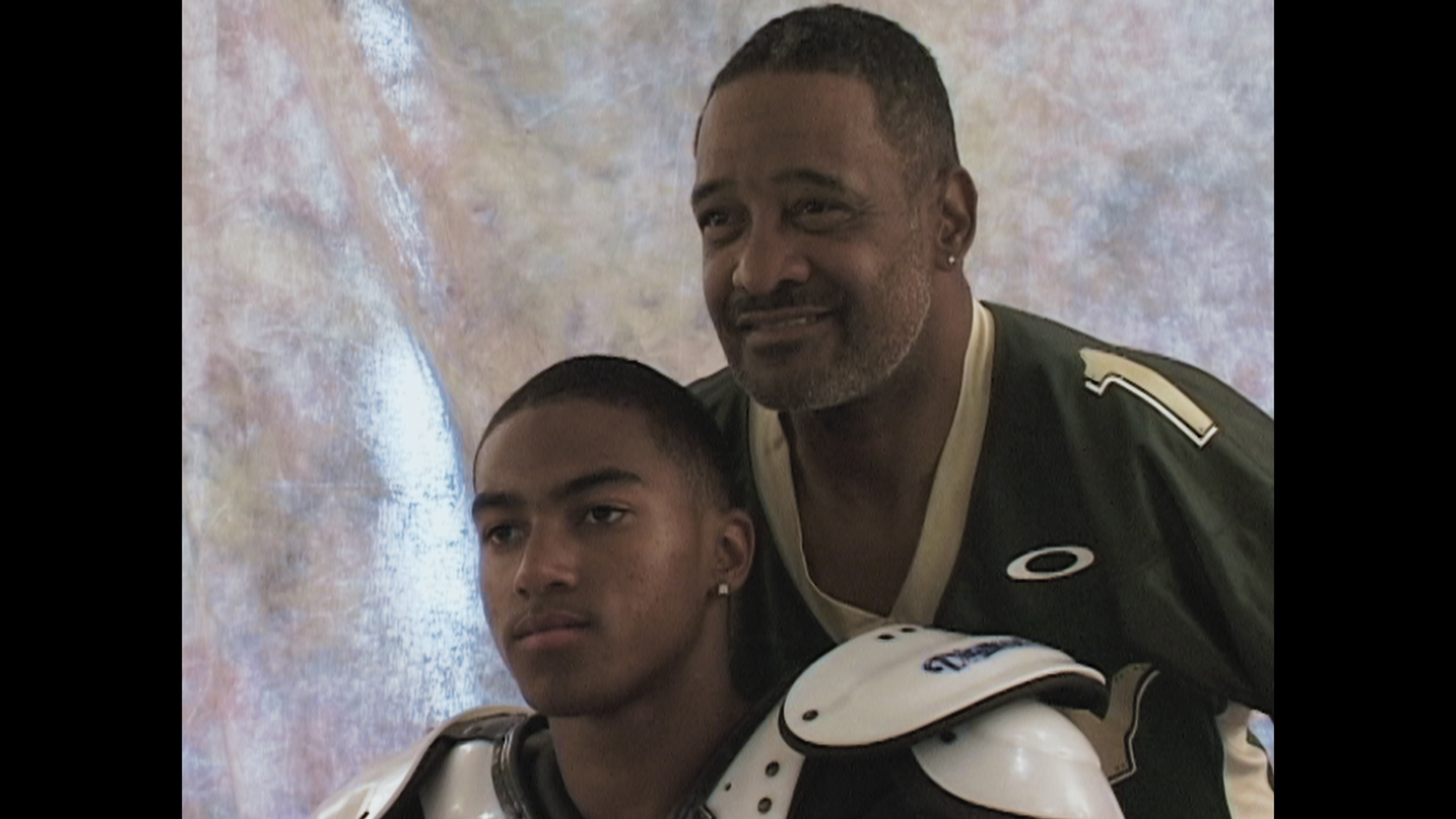
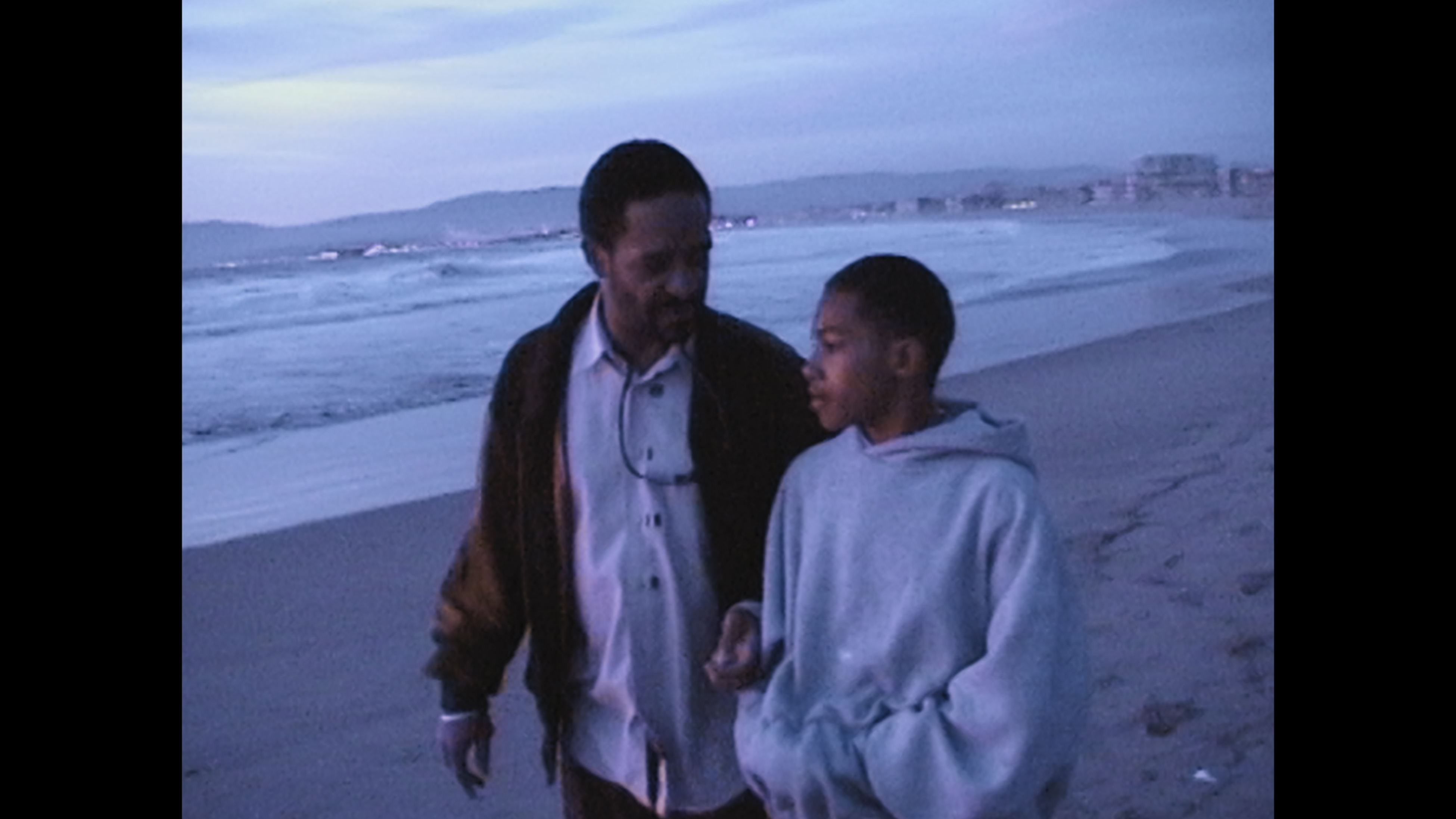
    Byron started filming his little brother and never stopped. On Thursday, Go Deep: The DeSean Jackson Story released on Prime Video. The documentary, 35 years in the making, follows the former Eagles wideout through his football career. It also features a nuanced perspective on Bill, who is a major focus in the film.

    “I’m excited for the world to see just the grand scheme of things when you talk about a father’s love and passion,” DeSean told The Inquirer. “His dad didn’t allow him to play sports, and then he has kids and he pushes his kids to make it, and one of them actually makes it big time.”

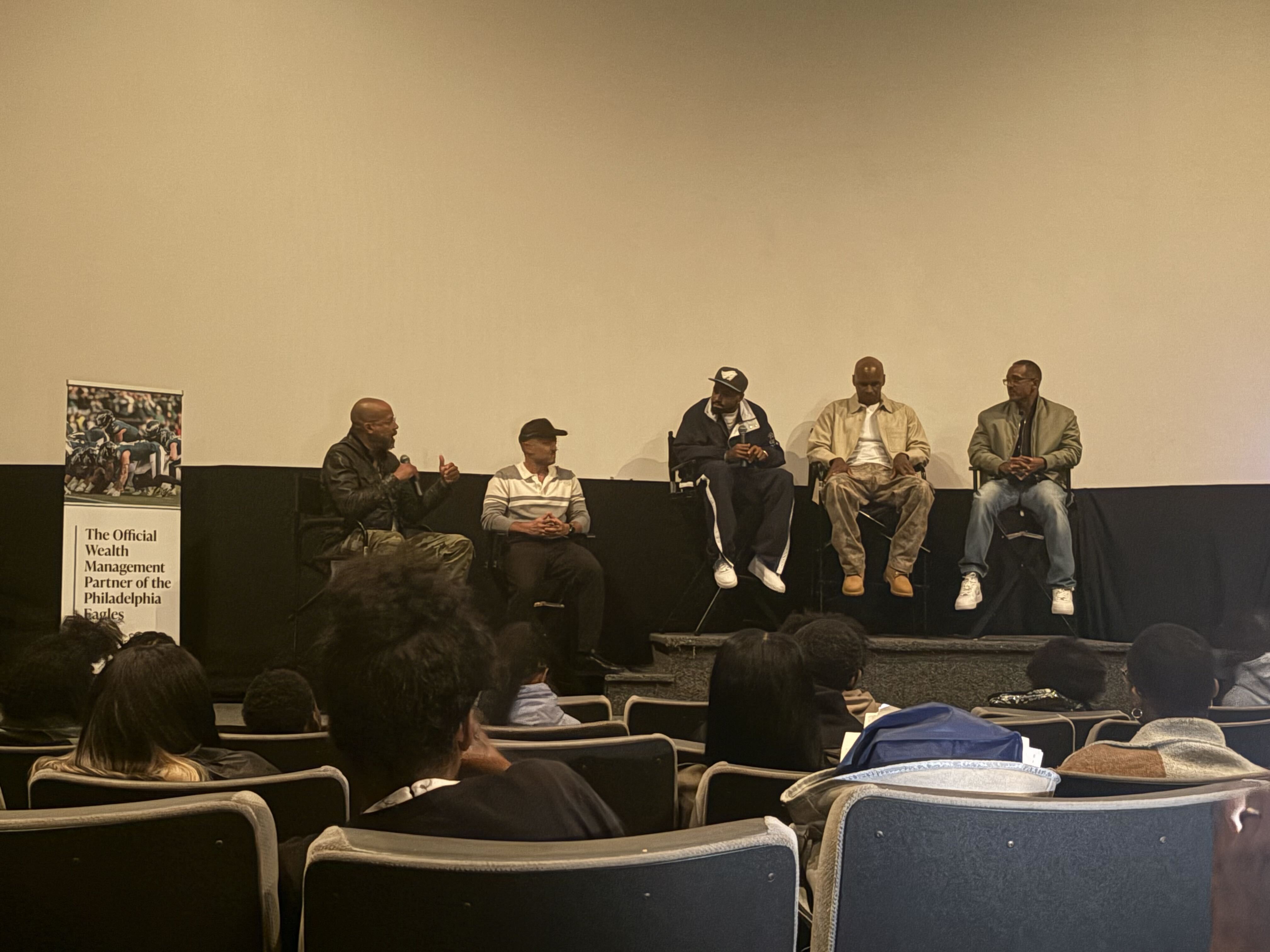
    Moderator Marshall Mitchell (left), producer Scott Kaplan, DeSean Jackson, Mandon Lovett, and Byron Jackson participate in a panel discussing “Go Deep,” a movie about DeSean Jackson’s career.Conor Smith

    On Tuesday, a private screening of the film and a Q&A with DeSean and the filmmakers was held at the Landmark Ritz Five theater in Old City. The theater was filled with friends of the Jackson family, local youth football players, and Birds fans.

    Multiple Eagles chants broke out before the film even began.

    “I obviously feel like Philly’s my second home,” DeSean said. “It’s good to be able to show the documentary a few days before it comes out. I’m really excited, man. The process leading up to this, and what better way is to come here to where I consider my home and let them see it.”

    35 years in the making

    Word of Byron’s footage spread through Hollywood for years. However, some potential filmmakers did not understand how Byron’s tapes differed from a typical sports documentary.

    “Filming all 35 years, I’m really, really attached to the footage, almost like married to it,” Byron said. “I tried to complete the documentary a while ago, and it didn’t get no distribution, and it didn’t really go nowhere. And I think one reason was I’m so tied to the footage and I was so protective of it. And it’s my family’s life, you know what I mean? I filmed a lot of stuff, and a lot of stuff was controversial.”

    Mandon Lovett spent about four months sifting through the footage before signing on as the film’s director. He was shocked by Byron’s “incredible intimate access” to DeSean’s life. The next step for Lovett was expressing to Byron why more controversial moments — like an intense argument over DeSean’s rookie paycheck — were important to include in the documentary.

    “Once his family could understand what I was trying to say, and I would never do anything to undermine them or to make them look bad or embarrass them,” Lovett said, “but there was a greater purpose involved with it, then I got their full support.”

    Added DeSean: “That’s why you got these types of big-time producers and directors. The footage was taken from us, and they paid for it and they made it this great story. So for us, I mean, we kind of sat back and we had input on it, but it was really a merge of what we wanted and what they wanted. It was a happy medium.”

    DeSean Jackson’s father, Bill, is a central figure in the documentary.Amazon MGM Studios

    The film’s portrayal of Bill, who died in 2009 after a brief battle with pancreatic cancer, was especially important for Lovett. The director wanted to portray the Jackson patriarch as a “a full human being.”

    “Sometimes in sports documentaries, it’s easy to just give the highlight reel and give the best quotables and all the highlights,” Lovett said. “For me, you just want to tell the truth. I think that there’s a lot of beauty in truth, and there’s a lot of beauty in imperfection. And Bill, by no means, is a perfect father.

    “He is a flawed individual in so many ways, but I think that’s what actually draws people to him. They can see a little bit of their own fathers or their own selves in him.”

    The documentary sheds light on the conclusion of DeSean’s first stint in Philadelphia. Following his best statistical season, the Eagles released the deep threat in 2014. The announcement came just one hour after NJ.com released an article detailing DeSean’s alleged association with gang members in Los Angeles. Eagles coach Chip Kelly later told reporters that DeSean was cut for “purely football reasons.”

    “After he got released by Chip Kelly, I think a lot of people kind of started wondering, ‘Dang, is DeSean really a bad dude?’” Byron said. “I think as his career went on and he kept having success, people learned a little bit more about his off-the-field side. I think people started appreciating him more and realizing that the controversy he got into with Chip Kelly and all of that, it wasn’t really true.”

    The film has its fair share of highlights for football fans. Bryon filmed DeSean’s entire college recruitment, so eagle-eyed viewers will spot familiar faces like then-Southern Cal assistant Ed Orgeron or Jimbo Fisher, who was the offensive coordinator at LSU when DeSean was in high school.

    The documentary also includes DeSean’s draft day. The Cal receiver was expected to be selected in the first round, but he ultimately fell to the Eagles in the second. The film shows DeSean becoming visibly frustrated as he waited to hear his name. During the Q&A on Tuesday, a teenager in the audience asked how DeSean looks back on the day now.

    “I made every team that passed on me pay for it,” Jackson said with a laugh.

  • Australian wine gets a bad rap, but it’s not all Yellow Tail

    Australian wine gets a bad rap, but it’s not all Yellow Tail

    It’s a shame that fine independent wines from Australia have been so hard to find in recent years. The sole upside is that when one does find a bottle from a genuine independent, small-scale vintner like this one, the price tends to be more than fair for the quality of wine inside the bottle, making it tempting to stock up.

    Sadly, the devaluation of Australian wines in the eyes of American buyers is largely driven by the runaway success of one single bargain brand: Yellow Tail makes gluggable, chuggable, sweetish wines that are so cheap and so popular that their proliferation of flavors and styles has more or less swallowed whole the Australian section of most liquor stores. In the process, an entire generation of wine shoppers has concluded that the only wines made Down Under must be plonk.

    Australian wineries do make a stunning range of more ambitious wines as well, from soulful reds to bracing whites and everything in between. Where Australia’s bulk wines come from the continent’s hot and irrigated inland flats, this wine’s fruit is grown closer to the coast, near Adelaide. Here in the foothills of Barossa, vineyards with very different climate and terrain produce considerably less fruit per acre, but their berries are hyper-saturated in color, flavor, and aromatics, without tipping over into the cooked flavors of overripe grapes. This wine’s scent conjures fresh blackberries, cherry pie, and Chinese five-spice, making it an ideal partner for the heartier meats we cook toward the tail end of grilling season.

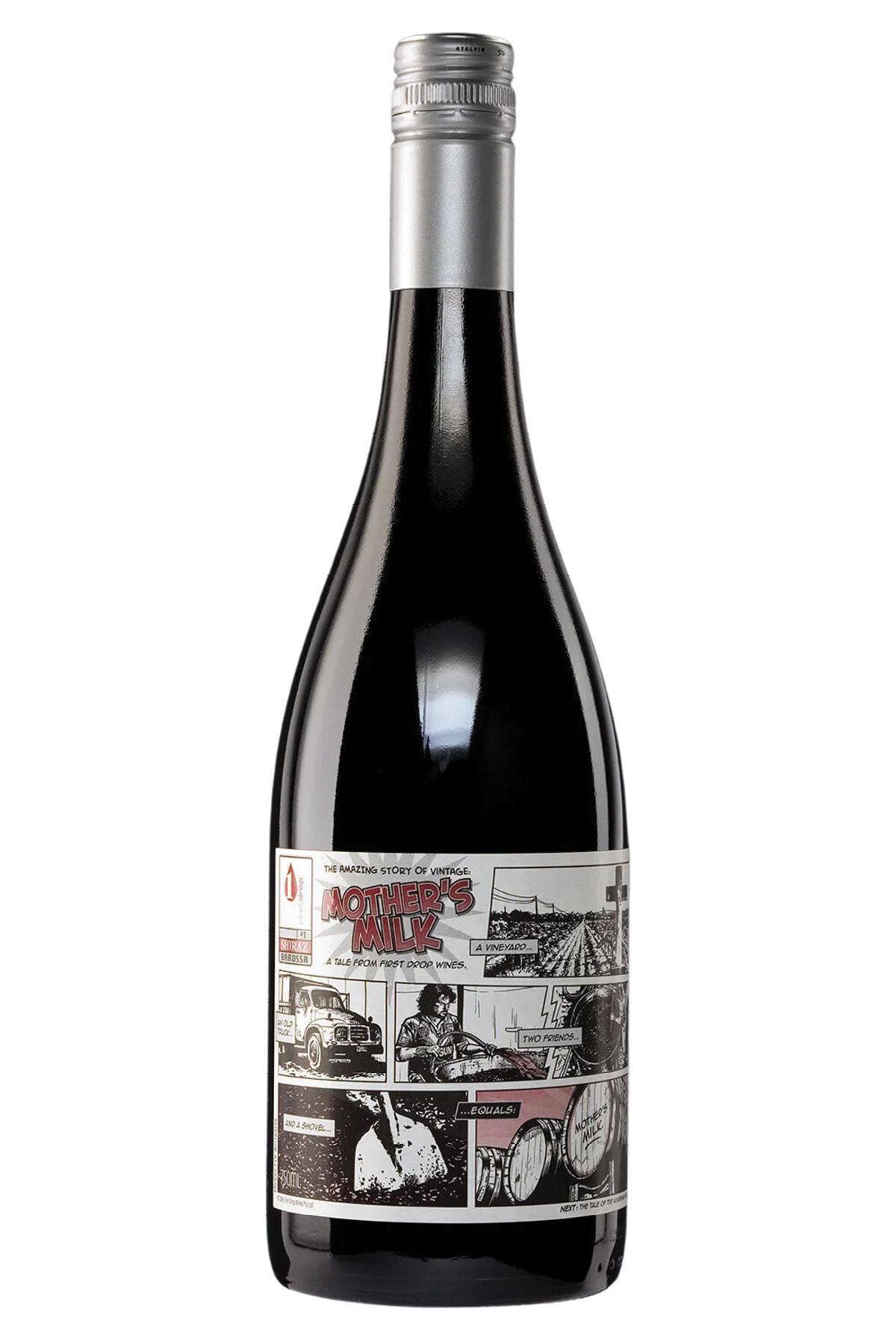
    First Drop “Mother’s Milk” Barossa ShirazCourtesy of First Drop Wines

    First Drop “Mother’s Milk” Shiraz

    Barossa, Australia

    14.5% ABV

    PLCB Item #100033583

    On sale for $17.99 through Oct. 4 (regularly $19.99)

    Also available at: WineWorks in Marlton, N.J. ($17.98; wineworksonline.com), Wine Warehouse in Voorhees and Mantua, N.J. ($17.99; winewarehousenj.com), Super Buy Rite in Moorestown and Hopewell, N.J ($18.99; moorestownbuyrite.com, hopewellbuyrite.com)

  • Angelo Cataldi is back talking about the Eagles, mostly because of his former WIP producer

    Angelo Cataldi is back talking about the Eagles, mostly because of his former WIP producer

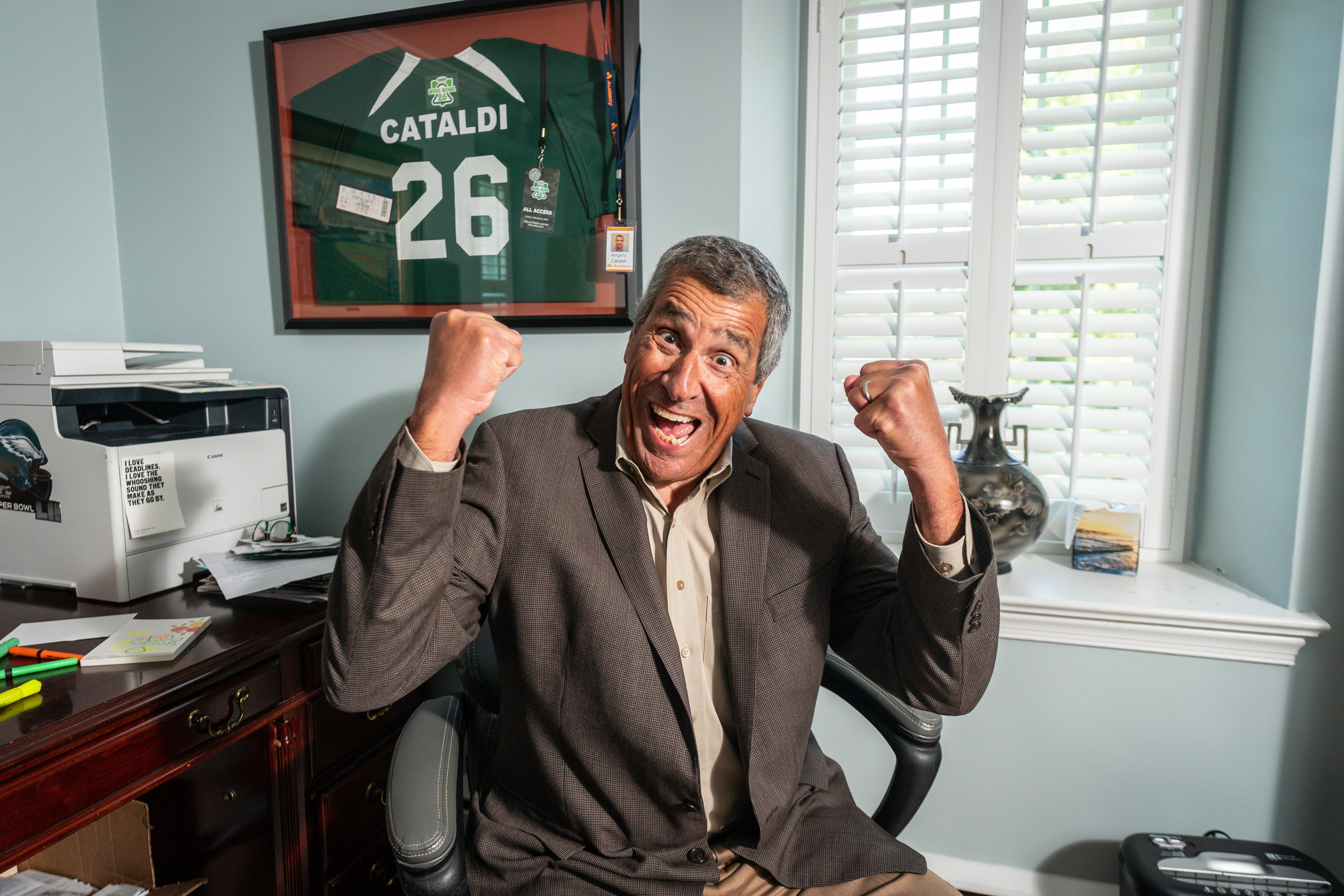
    Angelo Cataldi is back. Sort of.

    The former morning show host, who retired in February 2023 after more than three decades with 94.1 WIP, is back this season offering his opinions about the Eagles on the newly launched BirdBrains podcast for OnPattison, hosted by longtime Birds reporter Derrick Gunn and ex-97.5 The Fanatic host and former Daily News reporter Bob Cooney.

    It’s not a regular thing — he appeared after Week 1 and plans to join the show about once a month, depending how angry the Eagles make him. And the only reason he agreed to it was because of the involvement of his former producer, Joe Weachter, who was all but forced to retire from WIP in 2025.

    “I wanted to do right by him, so I said I would do the first one and sprinkle a couple more in during the course of the season,” Cataldi said, bristling at the idea of being locked into a regular gig talking about Philly sports.

    “I’m too old for that crap. I did it for so long,” Cataldi said. “People really need to hear me anymore? I don’t think so.”

    In a way, he never left. After retiring he wrote columns a few times a week he shares on his website, shades of his previous career as a Pulitzer Prize-nominated journalist with The Inquirer. He’s also made appearances on a handful of podcasts, and even stoked controversy by harshly criticizing longtime NBC Sports Philadelphia reporter Reuben Frank.

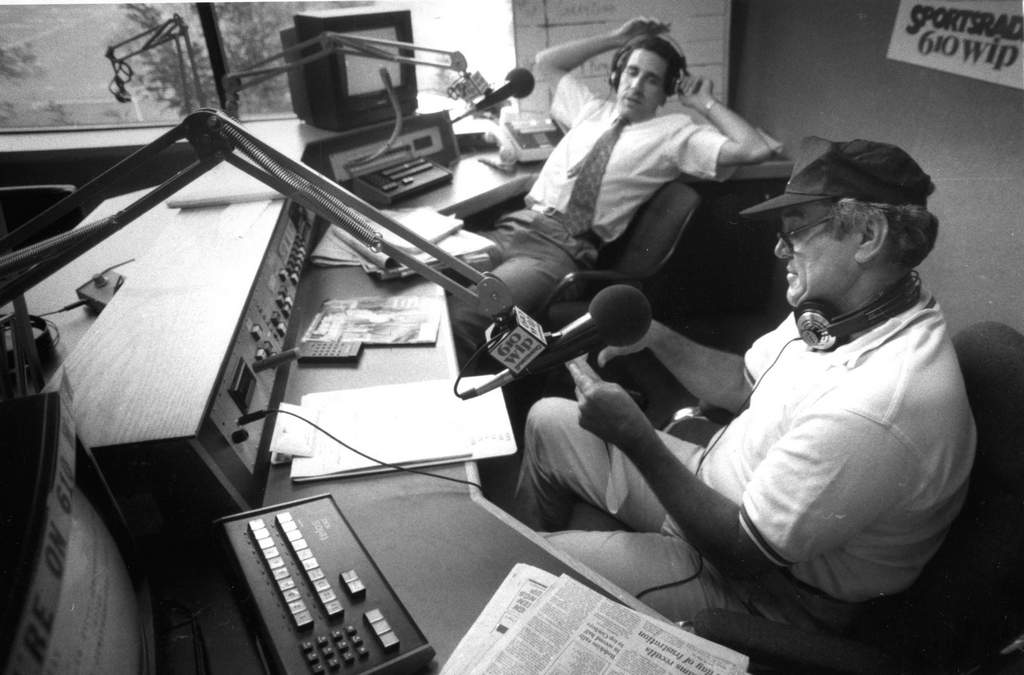
    Angelo Cataldi and Tom Brookshier during WIP’s morning show in 1991.

    He still has strong and sometimes head-scratching opinions — Jalen Hurts is underrated, Nick Sirianni is overrated (“Love Hurts, hate Sirianni, I’m done.”), and Andy Reid is a fraud — but what’s changed in retirement is the need to spew them to the largest audience possible. Cataldi credits the therapy he received from Philly sports psychologist Joel Fish after sliding into a retirement-induced depression with shaping his newfound perspective.

    “He said, ‘Look up at the scoreboard. The game is over. You won. Now just enjoy every day you have left,’” Cataldi said. “It connected with me and totally changed the way I looked at competition, scrounging for more listeners and trying to get more people to read my stuff.”

    That also meant shedding “Radio Guy,” which is what his wife, Gail, dubbed his loud and cantankerous on-air persona. Off the air, he remains a self-described “shy nerd from Providence” who turned his dream of becoming a TV critic into The TV Show, a weekly podcast he’s co-hosted for more than three years alongside longtime WIP co-host Rhea Hughes and Philadelphia comedian Jay Black.

    “The radio guy now may not be dead, but he’s on life support,” Cataldi said. “I get defibrillated like maybe 10 times a year, and the rest of the time he’s going away slowly … I’m just trying to be a regular human being for whatever time I have left.”

    Current WIP morning show hosts Joe DeCamara (left) and Jon Ritchie.Yong Kim / Staff Photographer

    As for the state of sports talk radio in Philly, Cataldi doesn’t have an opinion, because he doesn’t listen. Not even to his former show, which still features Hughes alongside Joe DeCamara and former Eagles fullback Jon Ritchie.

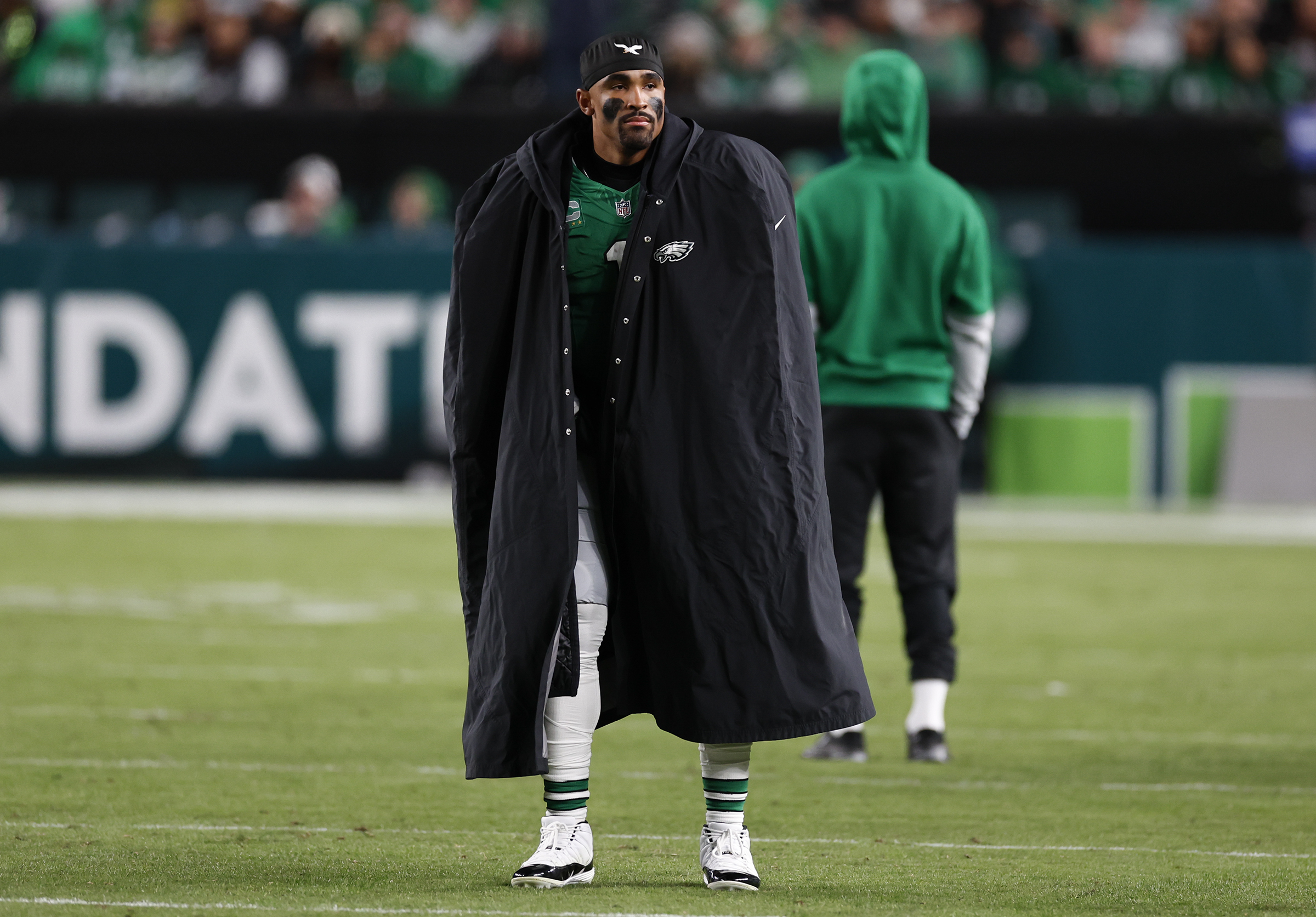
    Jalen ‘Jedi’ Hurts

    Has Jalen Hurts become the Luke Skywalker of Philadelphia?Yong Kim / Staff Photographer

    Cataldi’s tenure on WIP included a number of WIP callers who turned into household names among Philly sports fans — “Big Rube” Harley, “Arson Arnie,” “Cowboy Dave,” “Eagles Shirley,” Levi in Overbrook Park.

    It’s a trend that continues, for better or worse. On WIP’s midday show Tuesday, it was Mark in Jersey who stole the show by offering a cosmic analogy to Hurts’ evolution into a more complete quarterback, a “2.0 version” which carried the Eagles to a 2-0 start.

    “You’re looking at a man that has now achieved Jedi status,” Mark said, immediately catching the attention of co-host and former Eagles defender Hugh Douglas.

    “Oh, talk to me,” Douglas shot back.

    “Early on, in Star Wars one, Mark Hamill … He was good, up and coming, but he had Han Solo, Chewbacca. He had like a team around him,” Mark said. “By the time Return of the Jedi showed up, and he want to Jabba’s cave with that hoodie on, he was the man. He could do everything”

    In Mark’s analogy, new offensive coordinator Sean Mannion has been Hurts’ Yoda, offering him an Empire Strikes Back level of training. There’s also Jabba the Hutt, the loud villain helpfully played in Week 2 by Tennessee Titans defender and Hurts trash talker Jeffery Simmons.

    “He told Jabba, ‘Look man, you’d better give up Han Solo and Chewbacca. Bring them to me, or I’m going to burn this whole place down,” Mark continued. “Jabba laughed … and [Hurts] burned the place down.”

    “Love the analogy,” co-host Joe Giglio said. “That one of the better ones we’ve had.”

    Quick hits

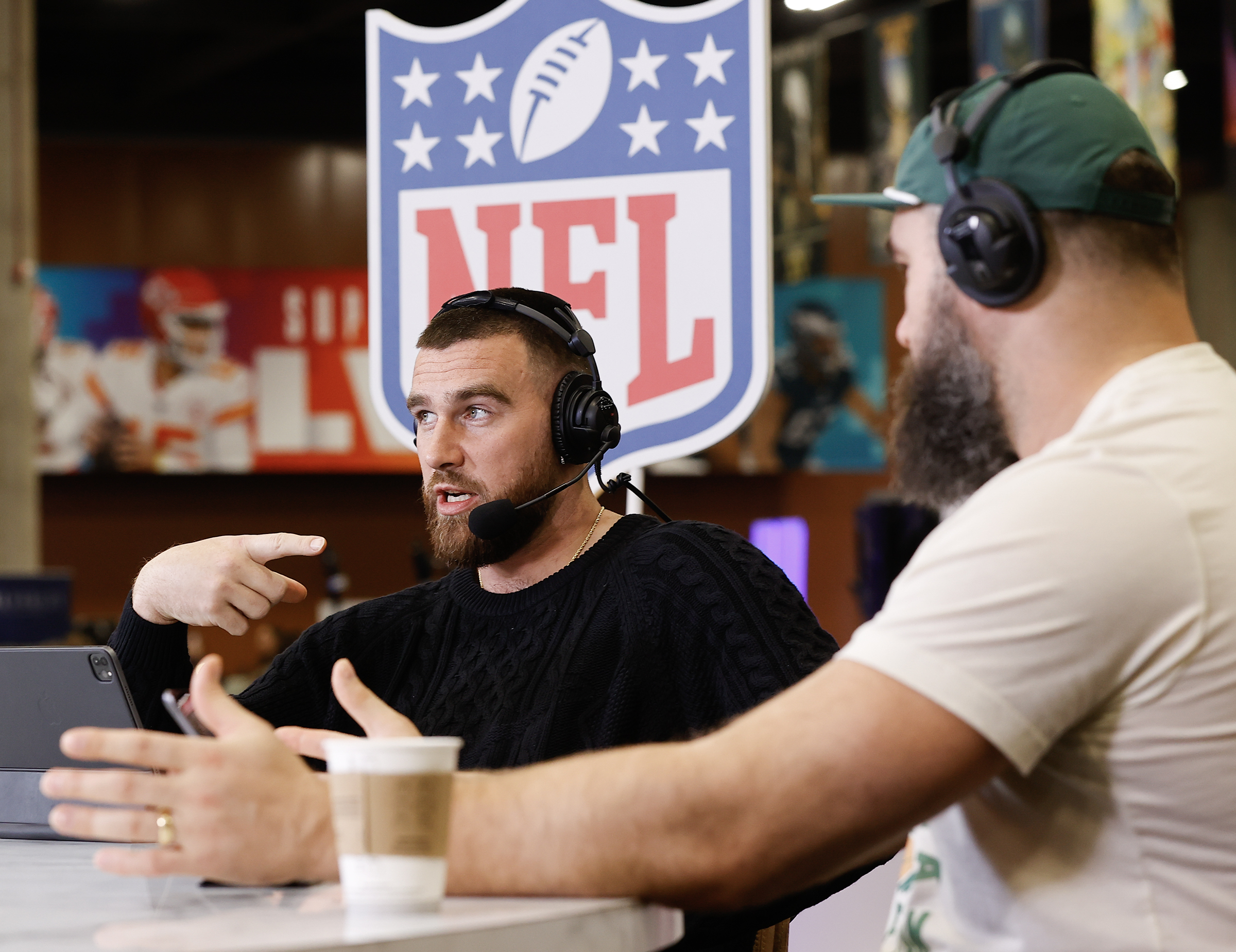
    Is the NFL media world ready for even more Kelce?Yong Kim / Staff Photographer
  • A GOP backer of Mayor Parker resigned from three city boards as he weighs ‘civic engagement’ opportunities

    A GOP backer of Mayor Parker resigned from three city boards as he weighs ‘civic engagement’ opportunities

    Private equity investor Gregory L. Segall, a Philadelphia Republican who was a key backer of Mayor Cherelle L. Parker’s 2023 campaign, has resigned from three city boards as he weighs other “civic engagement” opportunities, according to a copy of one of his resignation letters obtained by The Inquirer.

    Parker, a Democrat, appointed Segall to the Philadelphia Gas Works board, the Philadelphia Tax Reform Commission, and the Mayor’s Business Roundtables. Segall resigned from all three effective Aug. 31. He also served as a vice chair of Parker’s transition committee when she was taking office.

    “While I am stepping away from this role, I remain committed to civic engagement and intend to explore other ways to continue the journey I have been privileged to pursue over the last several years,” Segall, the chairman and CEO of Versa Capital, wrote in his letter resigning from the Mayor’s Business Roundtables, an advisory group convened by Parker.

    Segall’s moves come as candidates are gearing up to run in next year’s municipal elections, when Parker and all 17 City Council members are up for reelection.

    Candidates in the primary election have until early spring to decide whether they are running.

    Claudia Vargas, a journalist who formerly worked for NBC10 and The Inquirer, reported this week that Segall was considering running for Council.

    When contacted by The Inquirer, Segall, who lives in Chestnut Hill, said Wednesday he is “not running” for Council.

    “People have suggested multiple forms of public service, including Council, and I have no plans or commitments at this time,” Segall, 63, said in an interview.

    Segall said he continues to “strongly support Mayor Parker, and my highest and best hope is that my public service will be in aid of her continued success.”

    Parker on Wednesday declined to comment on the report of Segall exploring a run for office.

    From 2022 through 2025, Segall and his wife donated $37,300 to Parker’s campaign, according to campaign finance records. He also gave $150,000 to a super PAC backing her 2023 run, and $6,200 to her transition committee, the records show.

    Segall introduced Parker last year when she gave a high-profile speech at the Union League, where he is a member.

    “The 2023 election took place at a time of crisis in the city, and getting the right leader was never more critical,” Segall said. “So the reason for my commitment to her was quite simple: Before I’m a Republican, I’m a Philadelphian.”

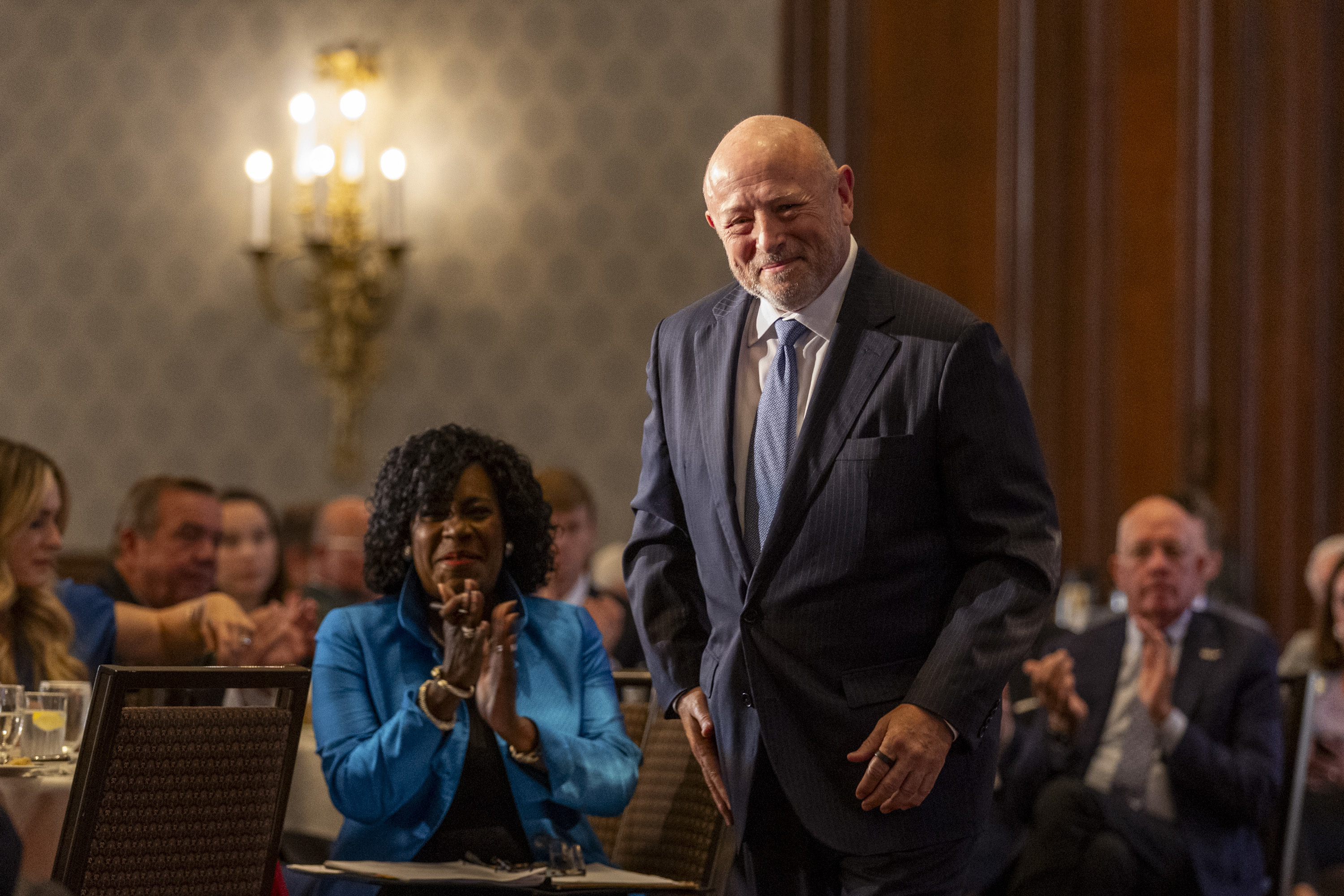
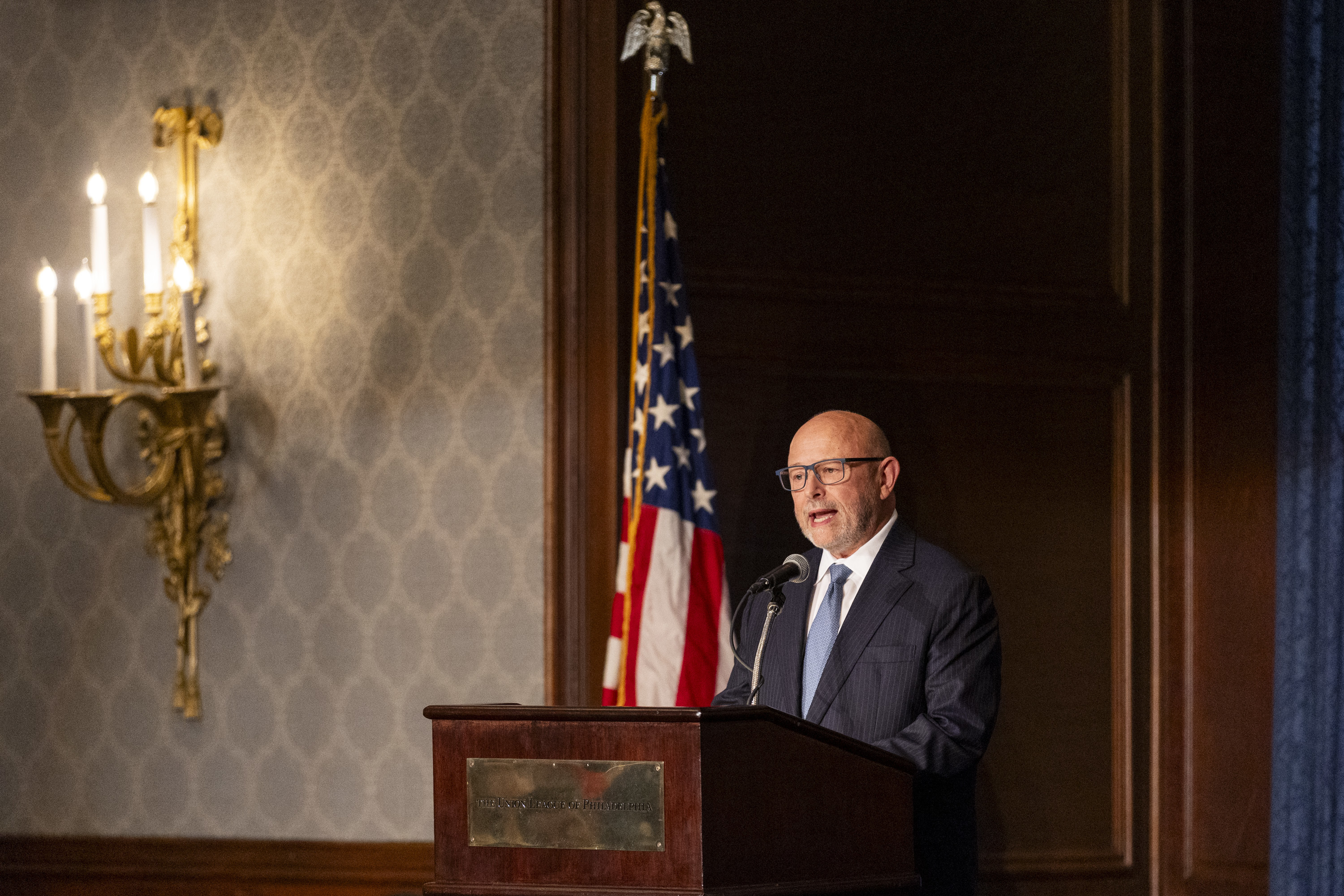
    Gregory Segall, Chairman and CEO of Versa and Supporter of Mayor Parker, speaks at the Union League of Philadelphia Presidential Luncheon in Philadelphia, Pa., on Thursday, September 18, 2025.Tyger Williams / Staff Photographer

    Citing Republican Party sources, Vargas reported that Segall was considering running for one of the two at-large seats on Council that are elected citywide and are set aside by the Home Rule Charter for minority-party or independent candidates.

    Republicans held those seats for about seven decades until Councilmembers Kendra Brooks and Nicolas O’Rourke won them over the last two election cycles as members of the progressive Working Families Party.

    Brooks is considering challenging Parker in next year’s mayoral election, sources previously told The Inquirer, which would require her to resign from her Council seat.

    The Philly GOP has been strategizing ways to recapture the seats, and a run by Segall, a wealthy businessman who could potentially help fund his own campaign, could be a major opportunity for the party.

    Segall donated $2,500 to the Republican City Committee last October.

    GOP chair Vince Fenerty said he has met Segall and thinks he is a “nice and honorable man.”

    “We’re a party that welcomes any potential candidate, and the decision to endorse would be up to our ward leaders,” Fenerty said in an interview Thursday.

    Brian O’Neill, who represents the 10th District in Northeast Philadelphia, is currently the only Republican on Council. Democrats hold the remaining 14 seats.

  • When an employee requests a religious accommodation, here’s what employers should do

    When an employee requests a religious accommodation, here’s what employers should do

    Federal law requires many private employers to accommodate employees’ sincerely held religious beliefs, unless doing so would impose a substantial burden on the business. How to do this properly is among the many questions small-business owners face each day.

    Recent federal guidance provides a useful framework.

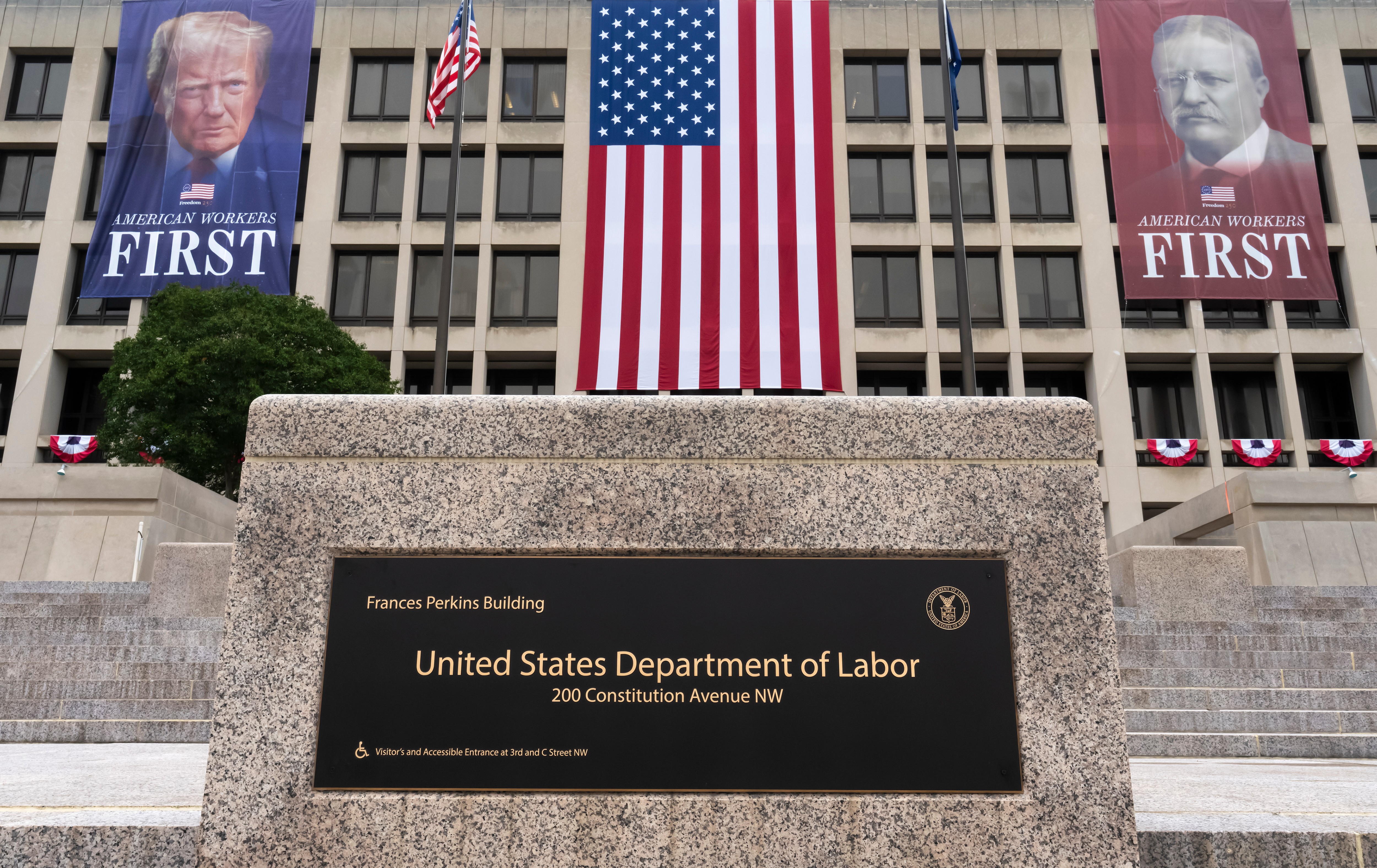
    In 2025 the Department of Labor offered internal guidelines for federal employees which “encouraged” agencies to adopt a “generous approach” to approving religious accommodations and to balance prioritizing employee needs “while maintaining operational efficiency.”

    Although the rules are primarily for federal workers, they still impact many businesses, particularly ones with federal contracts or that otherwise do business with the government. The Justice Department followed this summer with broader guidance directing federal agencies on how to apply religious-liberty protections when enforcing laws and administering grants and contracts.

    In my opinion as an employer, these rules are worth incorporating as policies for any business.

    Two local lawyers I spoke with agreed. But they both stressed that their clients’ policies on religious accommodation in the workplace should be as flexible as possible, presume sincerity, and be well documented.

    Be flexible

    Employers should engage in genuine, documented efforts to find workable solutions before concluding that an accommodation is impossible, said Lisa Gingeleskie, of Lindabury, McCormick, Estabrook & Cooper in New Providence. Solutions might include offering flexible scheduling, voluntary shift swaps, floating holidays, vacation time, and unpaid leave.

    “Employers must consider all available accommodation options, not merely assess whether one particular option is feasible,” Gingeleskie said. “But the accommodation obligation does not require them to provide the employee’s preferred accommodation if a reasonable alternative exists.”

    Employers should look at each employee and situation individually, said Katharine Fogarty, a partner at Kaufman Dolowich in Philadelphia.

    “It’s important to go back and look at your policies to ensure that they comply, and that you don’t just have a blanket policy that won’t allow for any sort of accommodations,” Fogarty said. When a specific accommodation can’t be made, she said, “that doesn’t mean that we just say no and shut down the process.”

    Assume sincerity

    As business owners, we’re not religious experts. It’s important to presume that your employee is being sincere in their request and that their religious belief is genuine.

    “The fact that a belief may be unfamiliar, uncommon, or not formally recognized even by a religious organization does not mean it’s not protected,” Fogarty said.

    To that end, it’s usually not a good idea to demand proof or to challenge an employee’s sincerity without a genuine, objective basis for doubt.

    “Demanding official clergy letters or other formal religious documentation may be problematic, as courts have found that an employee’s own written explanation may be sufficient,” Gingeleskie said.

    That doesn’t mean that you, as an employer, shouldn’t have a healthy degree of skepticism.

    Warning signs as to the legitimacy of a request could include behavior that contradicts their stated beliefs — for instance, their faith prevents them from working on Sundays, but they work Sundays when premium pay is available. Another sign could be the request for a particularly desirable benefit that may have a secular motivation, such as permanent remote work over and above what someone’s religion may require.

    Even informal requests need to be taken seriously, Gingeleskie said, and an employee “does not need to use any particular words or invoke a statute by name.” She also warns against automatically denying requests because of staffing needs, costs, and coworker objections. And it’s important not to get too personal.

    “The appropriate response is to only ask the employee to explain the religious nature of the practice and how it conflicts with the work requirement,” she said.

    Fogarty adds that employers should avoid requiring disclosure of religious beliefs or accommodation needs during the hiring process.

    “When they’re hired, it’s not [information] they’re required to provide,” she said. “The employee can also raise it at any time during their employment.”

    Document requests, discussions, and decisions

    Employers should carefully log the entire religious-accommodation process and not merely the final decision, Gingeleskie and Fogarty agree.

    Gingeleskie recommends documenting the employee’s request and the religious-work conflict, any discussions and communications with the employee, each accommodation considered, why particular options were workable or unworkable, the facts and costs supporting any undue-hardship conclusion, and the accommodation offered or reason for denial.

    “Inadequate documentation of the employer’s accommodation efforts, communications with the employee, and undue hardship analysis can be fatal to an employer’s defense if a lawsuit is brought down the road,” she said.

    If an employer fails to engage on a good-faith basis in the process to reasonably accommodate an employee’s religious belief, they could expose themselves to significant liability, both lawyers warned.

    For example, Blue Cross Blue Shield of Michigan had to pay more than $12 million to an employee in 2024 for not allowing her to exempt herself from vaccinations due to her Catholic beliefs. A nonprofit organization faced a $1.8 million verdict in federal court this year after terminating a Muslim employee for refusing to remove her niqab while teaching.

    “You can’t just outright say no because you think that it’s going to create an issue or it’s going to create more work for you,” Fogarty said.

  • Crocs sues Five Below, alleging they copied the famous clogs

    Crocs sues Five Below, alleging they copied the famous clogs

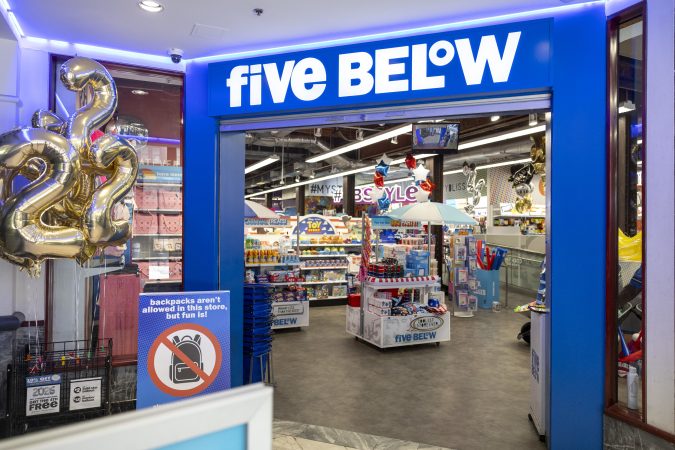
    Crocs is suing Philadelphia-based discount retailer Five Below, alleging the company knowingly sold knockoff versions of Crocs’ famous foam clogs.

    Crocs’ attorneys say Five Below kept selling Crocs look-alikes and accessories even after being notified this March of their trademark, patent, and intellectual property infringement.

    The allegations were detailed in a lawsuit filed last week by Crocs and its subsidiary, Jibbitz Charms, in U.S. District Court in Colorado, where Crocs is based.

    The plaintiffs take issue with Five Below’s “Juniors Charm Clog,” which look like trademarked Crocs, and the shoe’s accompanying charms, which resemble the patented Jibbitz ones that can be affixed to Crocs.

    Five Below is “clearly attempting to trade off the significant investment Crocs has made in its brand,” the attorneys wrote in the lawsuit.

    A woman carried rowers’ Crocs at the Stotesbury Regatta in 2022.TYGER WILLIAMS / Staff Photographer

    And they were doing so at a lower price point, the lawsuit noted. Crocs’ classic adult clogs range from $50 to $75, while its kids’ version sells for about $40. Five Below’s “Juniors Charm Clog” is listed at $7 on its website.

    Five Below spokespeople did not return requests for comment Wednesday.

    Crocs’ attorneys have asked for a jury trial and are seeking an unspecified amount in damages, which include lost profits, according to the lawsuit. The company also wants a permanent injunction to prevent Five Below from selling products that resemble Crocs.

    Crocs says it sells 150 million pairs of shoes each year, with annual sales of more than $4 billion.

    The lawsuit was filed amid positive financial performance for Five Below.

    As of August, the company had opened 101 net new stores this year and saw a more than 27% increase in net sales, according to its latest earnings report. Its reported net income was more than $344 million compared to nearly $84 million at the same time last year.

    This success has come under the leadership of CEO Winnie Park, who took over in December 2024 with a mission to reaffirm Five Below’s reputation as an “extreme-value retailer,” as the company called itself in her hiring announcement.

    Executives have said they’ve also gotten a boost from viral toys like plush Squishmallows and artificial-intelligence tools that help with inventory.

    Five Below was founded in Wayne in 2002 and has since expanded to include more than 2,000 stores in 46 states. In 2018, the company opened a massive three-story headquarters in the former Lit Bros. building at 701 Market St. in Center City, where it is currently headquartered.

  • 3 U.S. news outlets return to White House after judge orders Trump to lift ban

    3 U.S. news outlets return to White House after judge orders Trump to lift ban

    NEW YORK — Three news organizations banned from the White House for days were back Thursday after a judge handed CNN, MS NOW, and Politico a reprieve in an extraordinary showdown between President Donald Trump and outlets whose coverage he dislikes.

    But media coverage of Trump’s White House was hardly normal. On a high-profile day when Chinese leader Xi Jinping was visiting Washington and planning to attend a state dinner, no major American network was airing live coverage.

    After the White House banned CNN from a rotation of five major U.S. broadcast outlets who take turns shooting and sharing video, the other four — in a show of solidarity — were still declining to participate in the so-called video pool.

    It was part of a chaotic day at the White House and in court.

    Initially, in the morning, CNN, MS NOW, and Politico journalists were denied entry. A Secret Service agent had confiscated their credentials as part of the ban. After the ruling for the outlets in the early hours Thursday, White House operations officials were notified to restore access to the affected reporters, but said they needed time to find, reactivate and deliver their entry badges. The process took over two hours, according to an administration court filing.

    In his decision to provisionally lift the ban, U.S. District Judge Timothy Kelly ordered the White House to “immediately return, reinstate, and restore” the three outlets’ access. He said they had met the legal thresholds to obtain a temporary restraining order and were likely to succeed in showing that their press passes were revoked without due process.

    The ruling did not address CNN’s removal from the White House video pool. The White House did not respond to an email seeking comment.

    The judge’s ruling issued a temporary order

    Kelly — whom Trump nominated in 2017 and who ordered a CNN journalist’s access restored in a similar case in 2018 — said the government must have clear standards for conduct that would lead to revoking a press pass. He called the standard of objectionable reporting outlined in letters that the White House sent the outlets “so vague it hardly does the trick.”

    The judge also made clear he did not buy the administration’s argument that the news outlets’ reporting endangered national security — and noted that Trump himself had not used that argument in the beginning, focusing solely on what he called negative coverage.

    Theodore Boutrous Jr., the news outlets’ attorney, said the judge’s quick ruling vindicated the freedom of the press, due process and the rule of law.

    “I think we’re going to end up stronger because of this, and this tactic of just attacking the press, attacking individual journalists, is going to be discredited,” Boutrous said in an interview on MS NOW Thursday afternoon. “The law is just clearly on our side here,” he said.

    The temporary restraining order — typically designed to preserve the status quo pending a closer review of the case by the court — expires in two weeks. The judge gave both sides until Oct. 5 to file their arguments over whether he should consider issuing a longer-lasting ruling called a preliminary injunction. Kelly said he “intends to rule expeditiously” on the preliminary injunction request.

    Attorneys debated access to the White House and any risk to national security

    Boutrous argued in the hearing that there was an urgent need for renewed access, saying that the ban caused irreparable harm to the outlets at a time of momentous news events. “We’re at war,” he told the judge. “We have world leaders coming to Washington.”

    Justice Department attorney Michael Velchik, in his argument, reiterated the administration’s point that the president has the right to choose who gets into the White House.

    “Access to the White House is a privilege, not a right,” Velchik said.

    In arguing that Trump was not engaging in viewpoint discrimination — the government singling out specific media outlets for the content of what they say or publish — Velchik said the president had criticized other news organizations, but not banned them. He noted, for example, that Trump had called ABC “the worst.”

    Major networks refrained from covering Trump for the media pool

    On Wednesday, after the hearing, the major networks refused to air footage of Trump without assurances that CNN would be permitted back into the video pool.

    At Joint Base Andrews, where the president formally welcomed Xi, journalists from Fox News, CBS and NBC were present but not shooting video.

    Other television outlets whose crews were present, according to signs on their tripods and cameras, were NewsNation, Newsmax, Right Side Broadcasting Network, One America News and LindellTV.

    The Associated Press said it provided video coverage of Trump greeting Xi to its customers, so they could decide whether to broadcast. “We did not stream the coverage on our own platforms, including APNews.com or our YouTube channel,” said an AP spokesman, Patrick Maks.

    In an advisory to customers, AP said it would not have independent video coverage of meetings between Trump and Xi. It noted that a U.S. government handout live feed could be accessed on the White House website.

    The AP was one of some 50 groups filing an amicus brief ahead of Wednesday’s hearing, urging the court to immediately restore the three outlets’ White House access.

  • U.S. Rep. LaMonica McIver is eight months pregnant and — after a skirmish with ICE — facing 17 years in jail

    U.S. Rep. LaMonica McIver is eight months pregnant and — after a skirmish with ICE — facing 17 years in jail

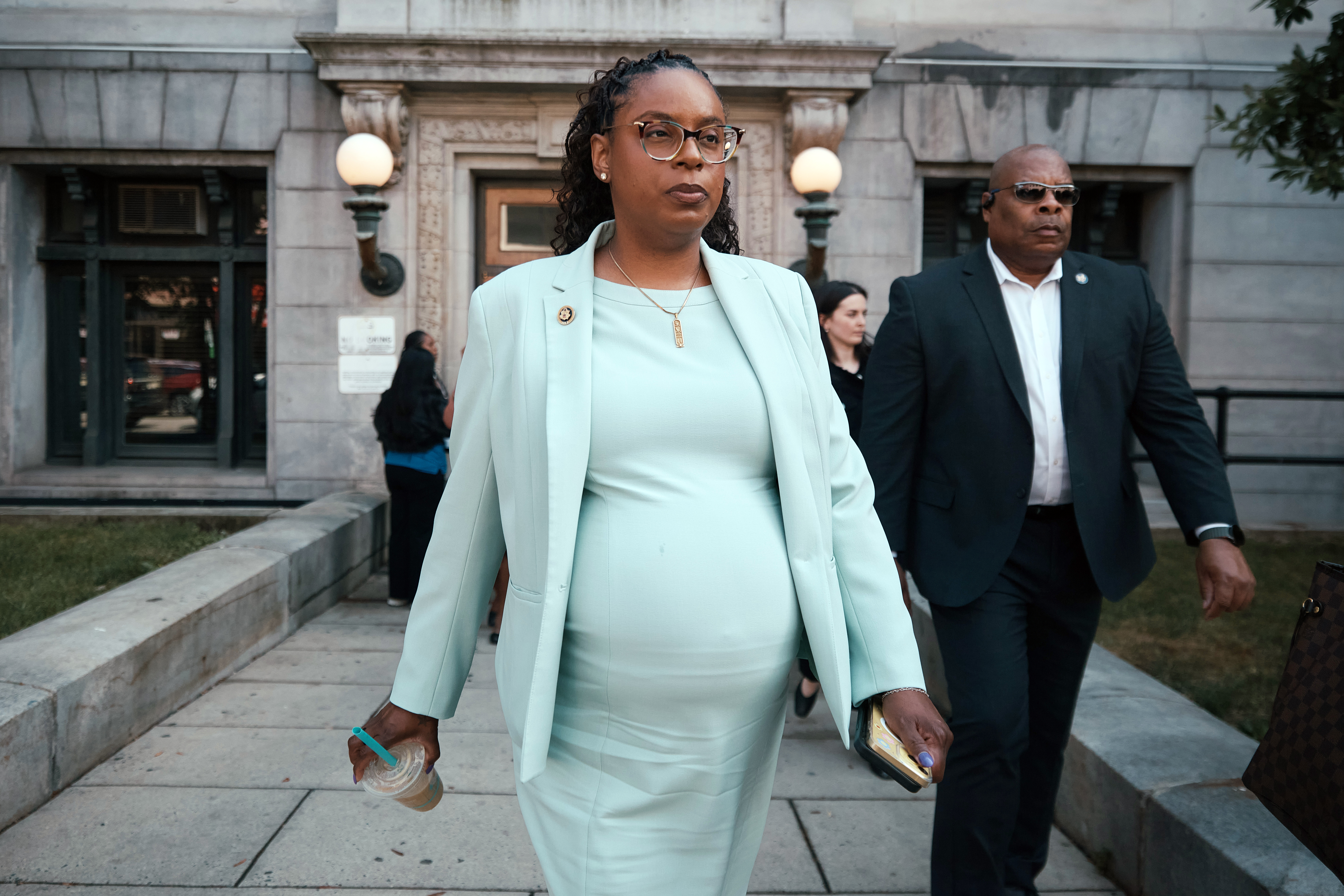
    U.S. Rep. LaMonica McIver hasn’t put her life on hold to fight what she sees as totally unfounded charges by the Trump administration that she supposedly assaulted a U.S. Immigration and Customs Enforcement (ICE) officer during a protest last year.

    Instead, the first-term Democratic congresswoman is expecting her second child next month, she’s up for reelection in November, and because of Congress’ backward policies on parental leave (as in, there are none), she continues to put in long hours representing New Jersey’s 10th Congressional District, which includes her hometown of Newark.

    Lurking in the background, however, is the knowledge that if convicted on two charges of assaulting an ICE officer, she could be sentenced to as much as 17 years in prison.

    It’s way more than most people in her situation could handle.

    McIver’s inner strength is next level.

    She is running for reelection on Nov. 3 while fighting efforts by the Trump administration to make an example out of her. McIver is also repping her constituents in Newark in Washington, D.C., all while caring for — and expanding — her family.

    Her journey to motherhood hasn’t been easy. McIver, 40, has spoken openly about her yearslong struggles with fibroids, her use of in vitro fertilization (IVF), and her opposition to President Donald Trump’s merciless immigration enforcement campaign. She hopes her candor resonates with women who also are trying to balance career, pregnancy, and motherhood.

    Meanwhile, she is scheduled to give birth to her second child on Oct. 16. After she delivers, McIver will become one of fewer than 20 members of Congress ever to have done so.

    My jaw dropped during the interview in which McIver informed me that as a member of Congress, she isn’t entitled to maternity leave. Postpartum, McIver also won’t be able to cast votes for legislation remotely or by proxy.

    “They give you nothing,” McIver said. “It makes no sense that you have to give birth and instead of focusing on healing and nursing, you have to literally put that to the side and share that with getting back to work. It’s honestly disgusting. It’s unbelievable in 2026 that this is where we are still at.”

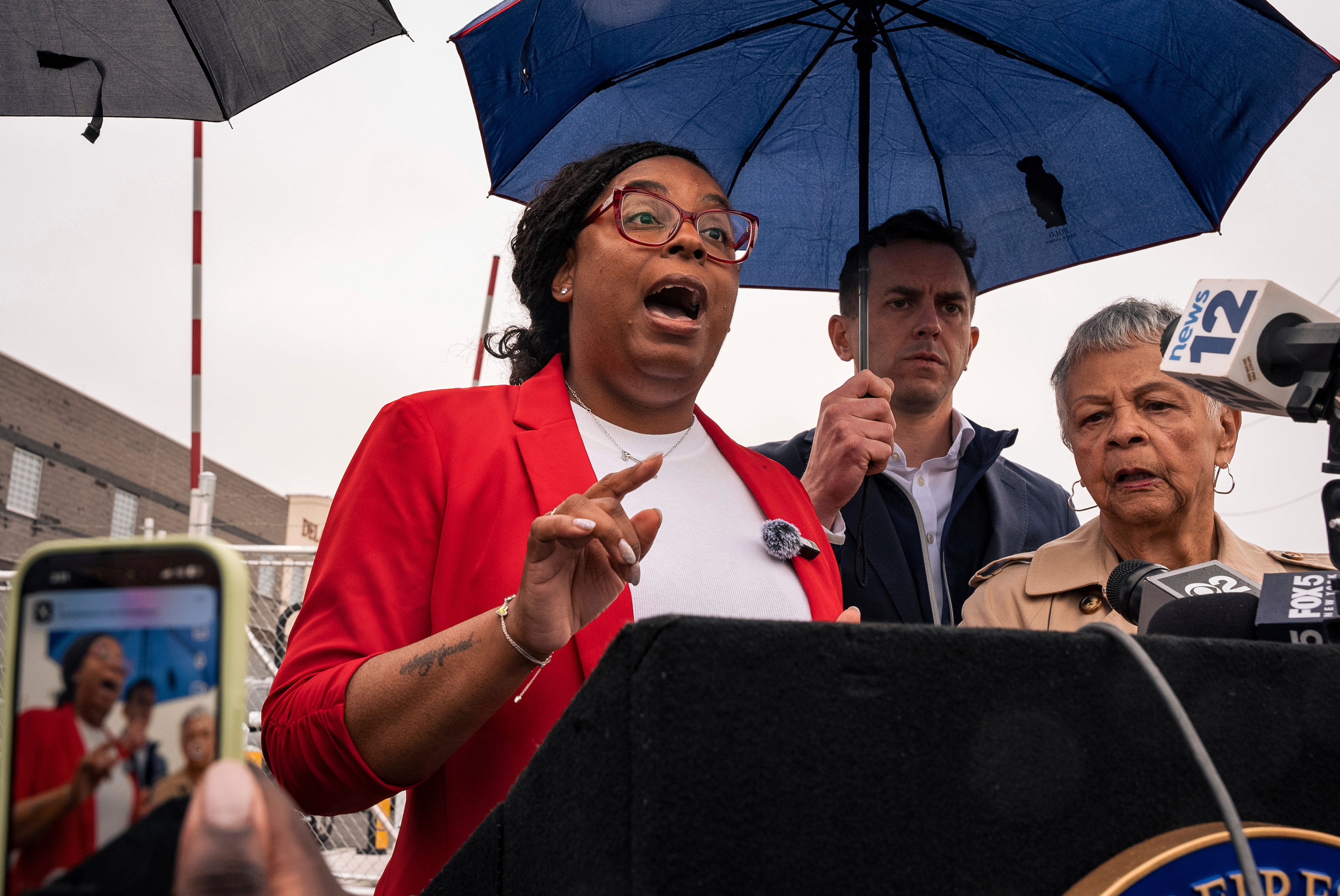
    U.S. Rep. LaMonica McIver (D., N.J.) speaks to reporters after Newark Mayor Ras Baraka was arrested while protesting at the Delaney Hall ICE detention center in May 2025.Angelina Katsanis

    Legislation that would have greatly helped her and other members of Congress in her position failed to garner adequate Republican support to pass last year. McIver blamed House Speaker Mike Johnson, among others, whom she said “don’t give a damn — and don’t want to make this a place that works for moms because they don’t want moms here.”

    After the election on Nov. 3, McIver intends to immediately return to Washington and get back to work. Luckily, she will have help from her “great village” that includes her mother. “I’m a stickler about not missing votes,” McIver pointed out, adding, “There are so many things that Republicans are going to be trying to do.”

    Trump has made a point of going after high-profile Black female elected officials such as New York Attorney General Letitia James and Lisa Cook, a governor of the Federal Reserve. Trump called McIver “woke” and “out of control.”

    McIver, along with several other elected officials, had been attempting to inspect conditions at Delaney Hall, a 1,000-bed facility along an industrial stretch of land near Newark Liberty International Airport in May 2025 when a scuffle broke out.

    McIver placed herself next to Newark Mayor Ras Baraka to shield him during the melee. I’ve watched the video numerous times. It doesn’t show her throwing a punch or striking anyone. No one was injured, either. But that didn’t stop Alina Habba, a former defense lawyer for Trump who briefly served as a U.S. attorney in New Jersey, from filing assault charges against McIver.

    McIver attempted to get the charges dismissed. In August, an appeals court ruled that McIver’s actions were nonlegislative and not protected by constitutional immunity, which clears the way for legal proceedings against her to proceed.

    Glynda C. Carr, the founder of Higher Heights for America PAC, described what happened as a “flash point” of the anti-immigration detention center movement that future generations will read about in history books.

    “This is bigger than LaMonica McIver,” Carr said, adding that the case could establish a baseline for whether elected officials will be permitted to conduct oversight of ICE detention centers without fear of prosecution.

    As for McIver, I’m sure her case will be tied up in the courts until after Trump leaves office, and then thrown out once new people come into office. Meanwhile, because members of Congress are prohibited from accepting pro bono legal work, McIver has to raise money to pay her legal bills, which are expected to exceed $1 million.

    It’s a lot to juggle, along with being pregnant, serving as a member of Congress, and being under attack by a government hell-bent on making life more difficult for working women, especially African American women.