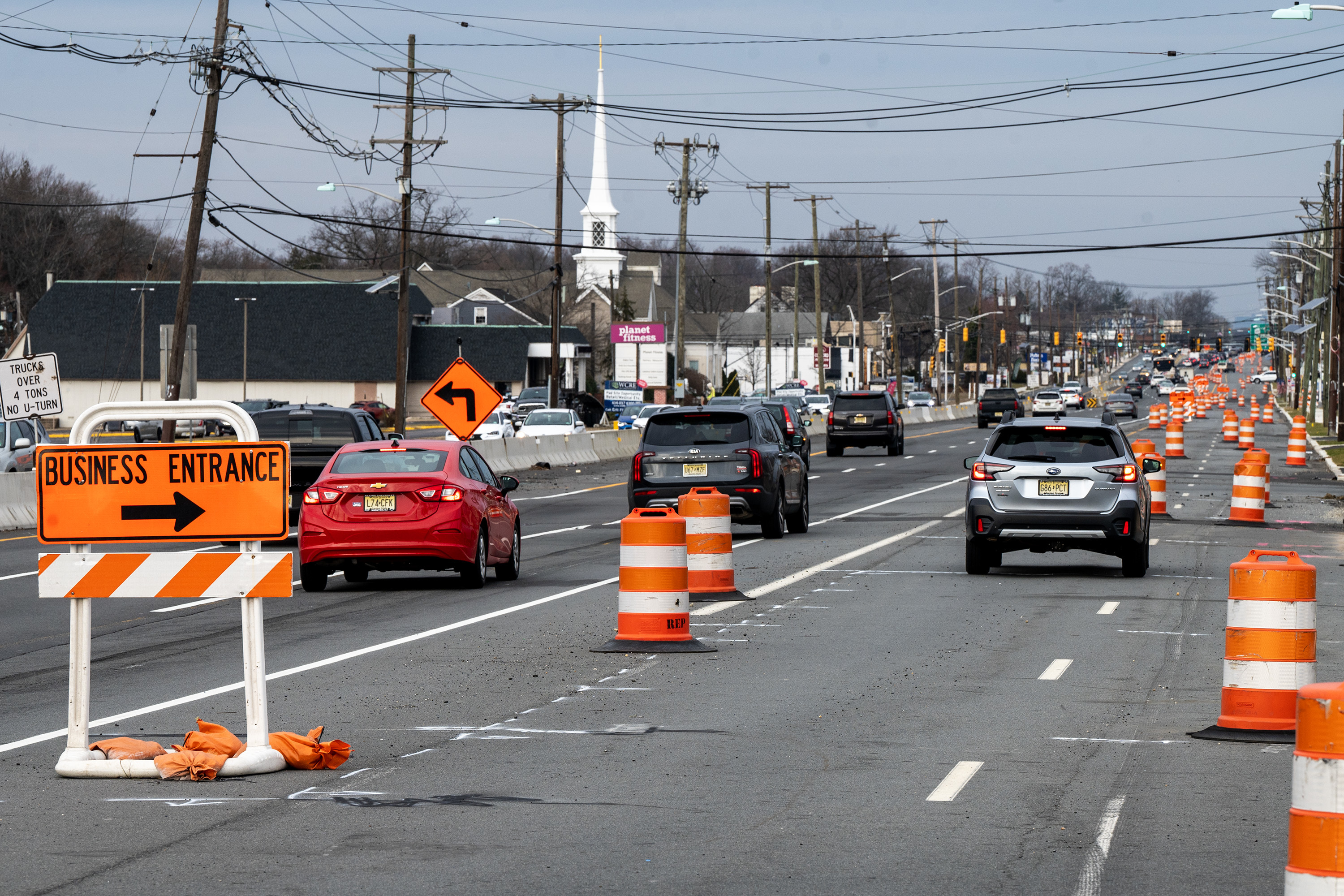
Only a handful of new traffic signals and some final paving work are left on the to-do list for the $155.1 million safety improvement project that essentially rebuilt a roughly 9-mile stretch of the highway.
In addition to repaving the road from Route 38 in Pennsauken to Cooper Avenue in Marlton, the work included new gas and water mains, traffic signal upgrades at 27 intersections, sidewalk and drainage improvements, and more.
“The investment NJDOT is making will help improve travel times, relieve congestion, and increase safety on this key roadway through Camden County, and these improvements are expected to benefit more than motorists,” said NJDOT spokesperson Steve Schapiro told the Inquirer this week.
“Reconstructed sidewalks and concrete curbs will mean improved safety for pedestrians, cyclists and other vulnerable roadways users,” he said. “Updated utilities, improved drainage and replaced culverts will ensure resiliency along the corridor and help to mitigate inclement weather events that may cause flooding.”
Over the next month, the final six traffic signals will be installed along the highway after “several utility-related delays” previously held up the work, Schapiro said.
The signal work is expected to be completed in October, he said, and will be followed by re-striping and paving in two remaining work zones.
First, the agency aims to finish repaving Route 70 between the Grove Street/Haddonfield Road intersection and Route 38 this fall, weather permitting, Schapiro said.
The final unfinished section of highway stretching from Route 295 to Cropwell Road, will be repaved this fall“where necessary, with final paving scheduled for next spring,” he said.
NJDOT is also working with Camden County on additional landscaping work to be conducted in the spring, he said.
It was early on a Friday evening, a week after her ninth birthday. Ashley Rivera, already in her pajamas, walked from her home to the 7-Eleven across the street to grab a snack. She was within eyesight of her stepdad, who sat on the front porch of their Kensington home, smoking Newports, crutches at his side.
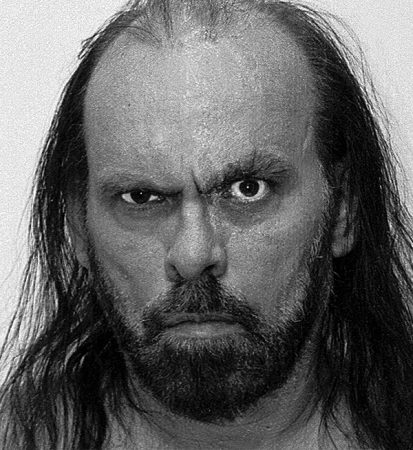
Ashley left the convenience store and noticed a man in his 60s in a green Jeep. He had long, greasy, stringy hair and had been slowly circling the block.
At first, she didn’t pay him much attention. She lived in Kensington, where throngs of people suffering from addiction crowd the sidewalks, and sex workers linger under the El tracks. She figured he was just another guy looking to pay for drugs or a woman.
But he had his eyes on her.
The man pulled up, rolled down his window, and asked her to get into his car. He called her sexy.
Ashley moved away. But the man jumped out and gripped her arm tightly. She screamed for help as he dragged her toward his Jeep.
Even now, 17 years later, she remembers his eyes. “He looked very evil,” she said.
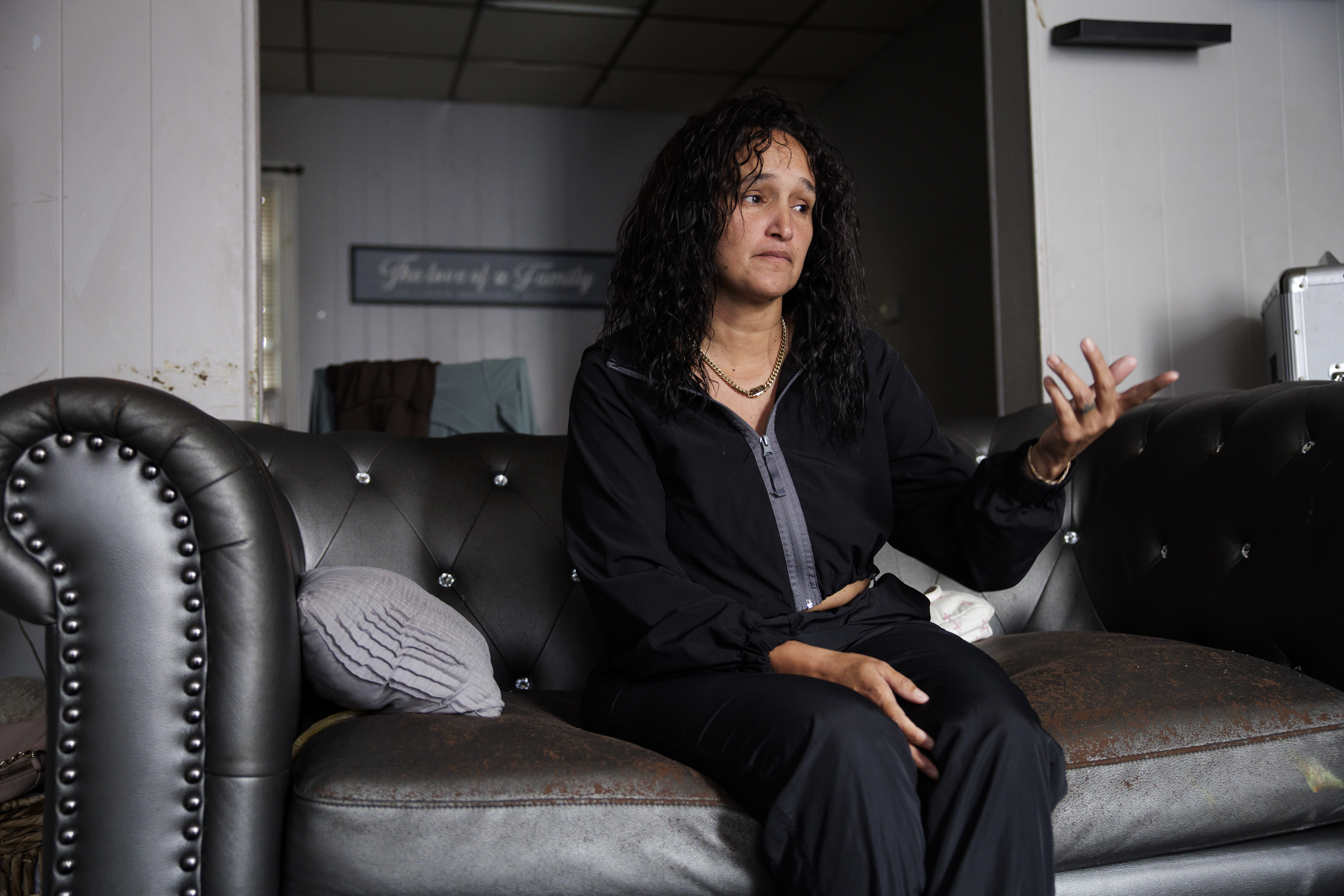
Sasha Rivera posed for a portrait at her home on Tuesday. Her daughter was 9 when accosted by Raymond Horsch in 2009.Monica Herndon / Staff Photographer
Ashley Rivera, who is 26, was stunned to learn this week that the man who tried to abduct her was Raymond “R.C.” Horsch, the shock-seeking pornographer now linked to at least seven missing women.
Horsch’s Olney home, and his bizarre past, have been at the center of a sprawling local and federal investigation since June that has uncovered a trove of disturbing digital evidence suggesting he may have killed women he lured off the streets of Kensington.
He died in 2025 at the age of 82. His son, Eugene, with whom he shared the Olney twin, is in prison on federal charges from a June 19 car stop near Independence Hall, in which authorities recovered the fake ID of a missing woman. Eugene Horsch has not been accused of any violent crimes involving the deaths or disappearances of the women.
Rivera’s account is the first known instance of Raymond Horsch attempting to victimize a child, and shows his violent obsessions may have extended beyond the women in addiction he exploited for decades. It also offers new insight into how Horsch evaded consequences.
“I really do feel like I escaped something big,” Rivera said. “He could have kidnapped me. He could have done the same thing to me that he did to those women. He could have raped me, killed me.
“I was a 9-year-old girl. I was just a kid.”
An unforgettable face
Rivera credits her stepfather with helping her escape Horsch’s grip that evening in March 2009.
When he heard her scream, she said, he hobbled off the front porch and hit the back window of Horsch’s Jeep with one of his crutches. Horsch sped off.
Rivera ran inside, crying to her mother, Sasha, who called 911.
Sasha Rivera, in an interview this week, said she then ran outside and saw Horsch circling their block.
“I chased him with a baseball bat,” swinging it at the Jeep as he drove by, she said. “I thought he was going to kill her. If he had taken her, I may never have found my daughter.”
Sasha Rivera talks about the night that Raymond Horsch tried to abduct her daughter, who was 9 years old at the time. Monica Herndon / Staff Photographer
Police arrived to find Horsch near the 3200 block of Kensington Avenue, according to an arrest report. Inside his Jeep, officers found a pair of high-powered binoculars, a digital camera, a telephoto lens, an eye patch, and a condom.
Officers asked Ashley and her mother if this was the man who had tried to lure her into his car.
There was no question it was him.
“I couldn’t forget that face,” Ashley Rivera said.
‘I just broke down crying’
Police arrested Horsch, and he was charged with luring a child into a motor vehicle and corrupting the morals of a minor.
Several months later, in January 2010, Rivera appeared in a courtroom in the decaying former Family Court building on Vine Street to testify against Horsch.
Rivera shook as she walked to the stand to testify. Horsch and his lawyers sat just a few feet away. She said he glared at her, with one eye looking straight ahead and the other bulging out crookedly.
“I was so scared, and he just kept staring at me. I just broke down crying,” she said. “I felt like I was looking at a killer.”
Rivera said her testimony had to be cut short.
“They made me get off the stand because I was crying so much,” she said.
The prosecutor on the case, Jill Fertel, said Rivera had to sit through Horsch’s attorneys accusing her of lying and saying she was not as innocent as she appeared because she grew up in a rough neighborhood.
“They said the morals of a girl from Kensington were harder to corrupt than a girl from Chestnut Hill,” Fertel said, referring to a wealthier neighborhood near the city limits.
The memory she can’t escape
Common Pleas Court Judge Roger Gordon convicted Horsch of both counts and sentenced him to 2½ to 5 years in prison.
The conviction meant Horsch would have been required to register as a sex offender under Megan’s Law, but he requested a “trial de novo,” or a new trial, in Common Pleas Court.
Unlike a typical appeal — in which a higher court reads the transcript of the lower-court proceedings to check for any legal or procedural errors — a trial de novo wipes the slate clean.
Ashley Rivera would have to testify again.
When she learned this, she begged her mother not to make her go back to court. Sasha Rivera, who is 46, said she could not put her daughter through such trauma again.
“I thought he and his family would do something to us,” Sasha Rivera said of Horsch.
A new prosecutor took over the case. But without Ashley Rivera, the Philadelphia District Attorney’s Office dropped the charges against Horsch. The original conviction was vacated and, in 2015, Horsch successfully petitioned for the case to be expunged.
Fertel said Rivera’s experience was “horrible.”
“The system was not designed for children,” she said. “There is a difference between being able to confront your accuser and being able to intimidate a victim.”
The state upgraded the crime of luring a child under the age of 13 to a felony in 2013. Fertel also said courts now more frequently allow children to testify on camera from another room to avoid their abuser.
Records from the case, including a psychological examination of Horsch, are at risk of being destroyed. The Inquirer has filed a motion with the court to preserve them and make them public, and a judge ruled Wednesday that they should not be immediately destroyed.
Ashley Rivera, who said she supports unsealing the records, said the incident with Horsch left her scared to play outside as a child. Even today, she said, she struggles with anxiety.
“When men stare at me, I’m instantly scared,” she said.
It has also affected the way she raises her son, who is the same age she was when Horsch grabbed her. She said she is afraid to let him go anywhere alone.
“We have a park down the block from my house, literally on the corner of my block,” she said. “He asks me, ‘Hey, Mom, can I go to the park by myself?’”
She tells him no. She’ll go with him. “And then he doesn’t want to go because he doesn’t want to go with his mom because all the other kids are by themselves.”
“I tried to get that memory out of my head,” she said. “But I can’t. It stays with me.”
Rivera now works as a receptionist in Northeast Philadelphia. She never realized Horsch walked free after she didn’t appear at his second trial. She said she feels guilt because had she been able to testify again as a child, perhaps the case would not have fallen apart.
“Maybe it’s my fault that he was free,” she said. “I thank God every day my stepdad was there to save me because I could be missing or dead. I feel really lucky.
“But I feel so bad for all the victims and their families. I didn’t have to go through what they went through.”
Last November, Mayor Cherelle L. Parker announced with great fanfare that Philadelphia could create a property tax break to spur the conversion of derelict buildings, such as empty Center City office towers and vacant school facilities, into apartments.
She had worked with legislators in Harrisburg to change state law to allow Philadelphia to pursue the legislation, which would create a 20-year property tax abatement for conversions of “deteriorated” properties.
But 10 months later, no such legislation has been introduced in City Council, and Parker on Wednesday called on city lawmakers to consider her 20-year abatement idea for distressed properties.
“We have an affordability crisis here in the city of Philadelphia,” Parker told reporters Wednesday. “What if we marry that challenge with these persistently vacant buildings that have gone underutilized, and we put them to their best and their highest use to incentivize affordable housing?”
Parker’s administration, however, has not yet transmitted a draft of the bill to Council, which is typically the first step for lawmakers to consider legislation championed by the mayor.
“Tell them, ‘Send the bill over,’” Council President Kenyatta Johnson told reporters Thursday. “We haven’t seen any piece of legislation regarding 20-year tax abatement at this particular point in time.”
Asked about the delay, Tiffany W. Thurman, Parker’s chief of staff, said Thursday that city agencies “are collaborating to ensure the proposed legislation is legally sound and can withstand constitutional scrutiny.” She added that Parker “remains firmly committed to presenting City Council with a bill that incentivizes the development of affordable and workforce housing on vacant, publicly owned land.”
On Thursday, several members of Council questioned the lack of specifics from the mayor’s office, and others were less than enthused about the idea of approving a new tax break when the Philadelphia School District is facing a funding crisis.
“I continue to appreciate an effort to make sure that we have access to affordable housing in the city of Philadelphia,” Councilmember Nicolas O’Rourke said. “At the same time, I am very much so laser-focused and desirous of the city getting the revenue that it needs.”
A controversial policy
Property tax abatements have long been controversial in Philadelphia, with opponents contending that they starve the city and school district of needed revenue while favoring real estate developers.
Philadelphia’s 10-year abatement program, which was established in the 1990s, previously exempted owners from paying real estate tax on all new construction or improvements on any type of property for 10 years.
That program was long hailed as key to the city’s turnaround in the early 2000s. But concerns about its impact on neighborhood inequality and school funding grew over time, and Council in 2019 roughly halved the value of the tax break for new construction.
Parker argues that the idea behind her legislation is different: She wants to see a far more narrowly targeted bill that would only help developers who seek to redevelop large, derelict buildings.
“We’re talking about … persistently vacant school buildings that have been vacant from three up to 30 years,” Parker said Wednesday.
The mayor also noted that the development environment has worsened dramatically since Council cut the 10-year tax abatement’s power, with soaring interest rates and construction material inflation as factors that weigh heavily on complex and large-scale projects.
Still, many Council members are skeptical of tackling a potentially controversial measure that is seen to favor developers ahead of next year’s municipal elections, when all 17 city lawmakers will be on the ballot.
“I’d like to get more information on exactly what the plan is because the tax abatements are, as you know, hugely unpopular,” said Councilmember Cindy Bass, who represents parts of North and Northwest Philadelphia.
Bass said that while the abatement has spurred needed growth, she would need to see any expansion of it balanced with the needs of lower-income Philadelphians who are struggling with rising costs and property taxes.
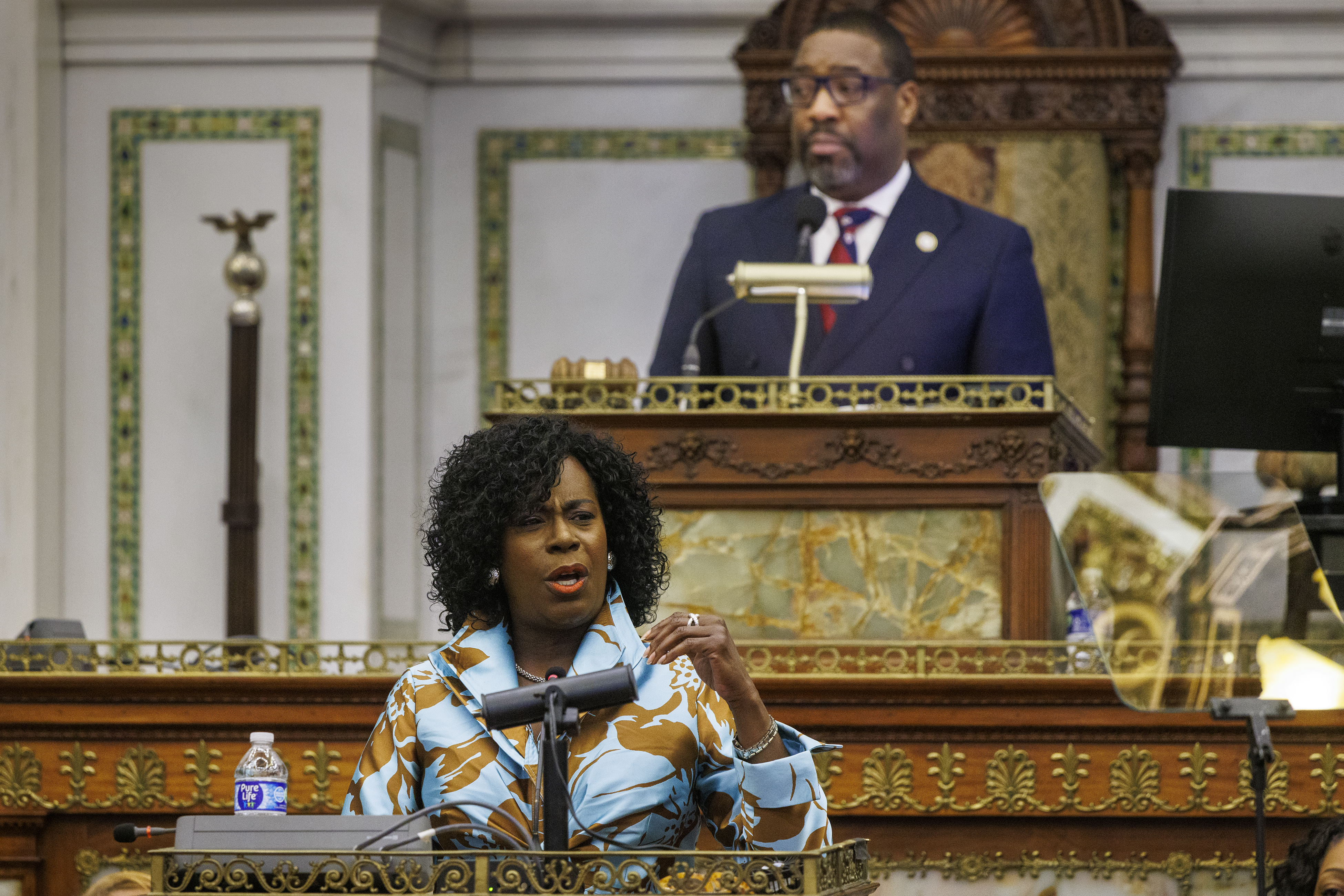
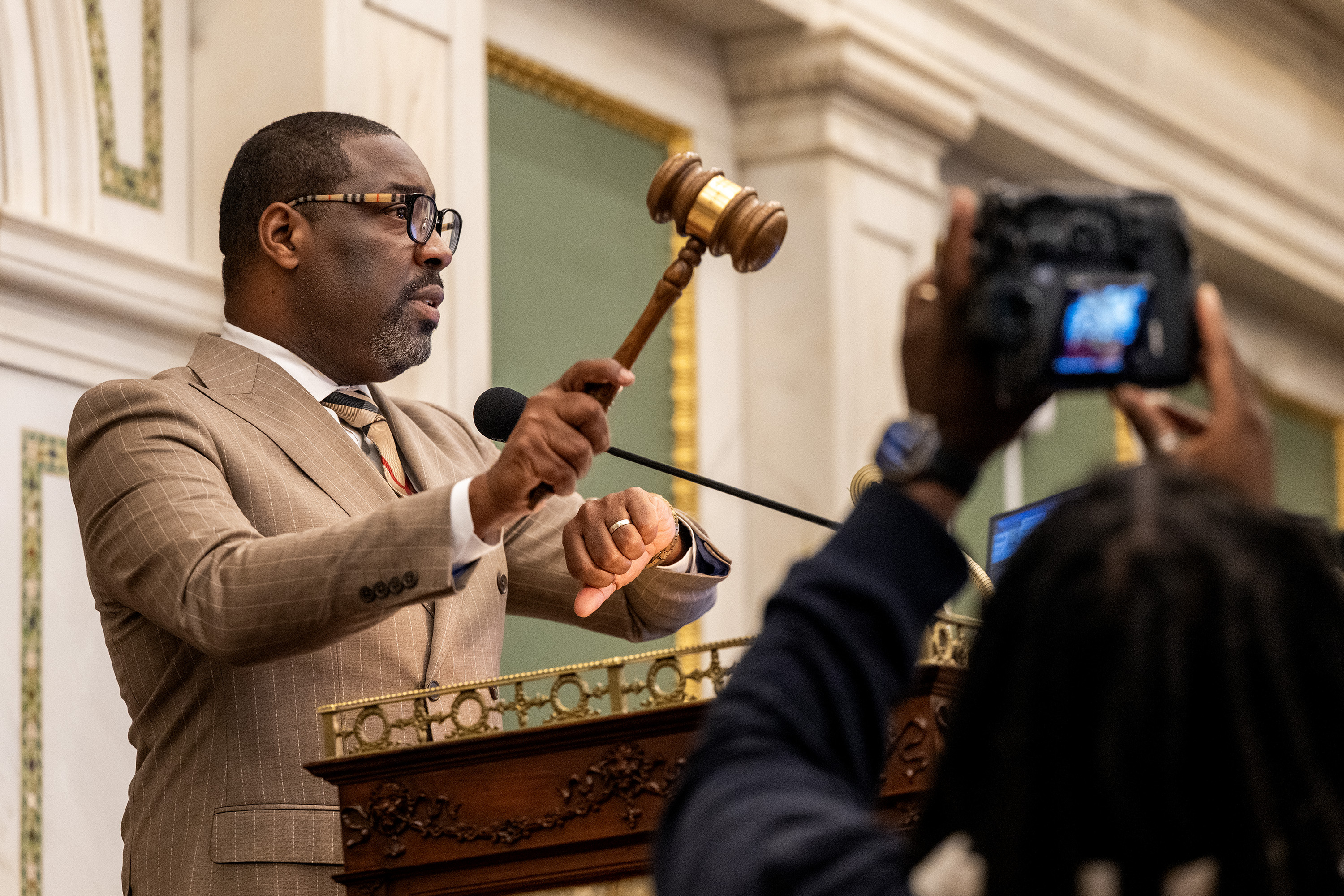
President Kenyatta Johnson checks his watch and gavels City Council into session on Sept. 17, as the body returns for start of its fall session.Tom Gralish / Staff Photographer
And Johnson on Thursday reiterated his comments from earlier this year that he would like to see the newly authorized 20-year abatement include a provision that requires an affordable housing component of the projects it enables.
“Any type of legislation like that should really focus on making sure that we’re providing a level of affordability, also senior housing,” he said. “Obviously, the devil’s always in the details.”
But it is not clear that state law would allow Philadelphia to mandate affordability in an abatement bill, and Parker cautioned against doing anything that would exceed the city’s authority.
“We have to make sure that whatever we are proffering, that it is directly connected to what has been enabled,” Parker said. “It has to pass legal muster for no one to question the constitutionality of what it is that we’re doing.”
Persistently vacant schools
A 20-year abatement would apply to empty office buildings in Center City and long-vacant industrial buildings. But Parker and administration officials have focused their pitch on revitalizing empty public schools.
“We need to pass it because it’s going to be extremely beneficial for challenging properties,” John Mondlak, chief of staff of the Philadelphia Department of Planning and Development, said Wednesday. “You think about schools in 10 years, 20 years — they are very difficult to reposition.”
That pitch, however, runs up against another policy issue festering between Parker and Council.
Thomas and other Council members vigorously protested the plan and are still pressing for the board to reconsider it.
“That’s our priority,” Thomas said Thursday. “I don’t want to have a conversation about schools that are vacant until we have a conversation about schools that are occupied.”
A Philadelphia judge on Wednesday ordered a temporary halt on the destruction of court records related to Raymond Horsch’s 2009 conviction for attempting to lure a 9-year-old girl into his car in Kensington.
The ruling comes in response to an emergency motion The Inquirer filed seeking to preserve records of the child endangerment case that Horsch had expunged from his record in 2015.
The news organization argued that preserving the records is a matter of public interest because of the ongoing criminal investigation into the violent pornographer, whom police have now linked to seven missing women.
Horsch was arrested in March 2009 after approaching 9-year-old Ashley Rivera on East Ontario Street and attempting to lure her into his green Jeep Wrangler.
“Come here, in my car, sexy girl,” Horsch said to Rivera, according to an arrest report.
Horsch, who died last year, spent decades prowling Kensington seeking sex workers to film or photograph nude. Until the incident with Rivera, he had not been publicly accused of targeting children.
Rivera ran home, and her parents called the police, according to the arrest report. Officers found Horsch driving in the area hours later in the green Jeep, the report said. They searched his vehicle and recovered a pair of high-powered binoculars, a camera with a telephoto lens, and a condom, according to a news report at the time.
Horsch was charged with two misdemeanor counts of attempting to lure a child into a vehicle and corrupting the morals of a minor. At a bench trial, Rivera gave a tearful statement about the incident as Horsch glared at her from across the courtroom.
He was found guilty and sentenced to 2 ½ to 5 years in prison, and was required to register as a sex offender under Megan’s Law. However, Horsch’s lawyers sought a new trial in the Common Pleas Court and the case collapsed after Rivera was too afraid to testify a second time.
“I was so scared, and he just kept staring at me. I just broke down crying,” Rivera said this week, recounting her testimony at the first trial. “I felt like I was looking at a killer.”
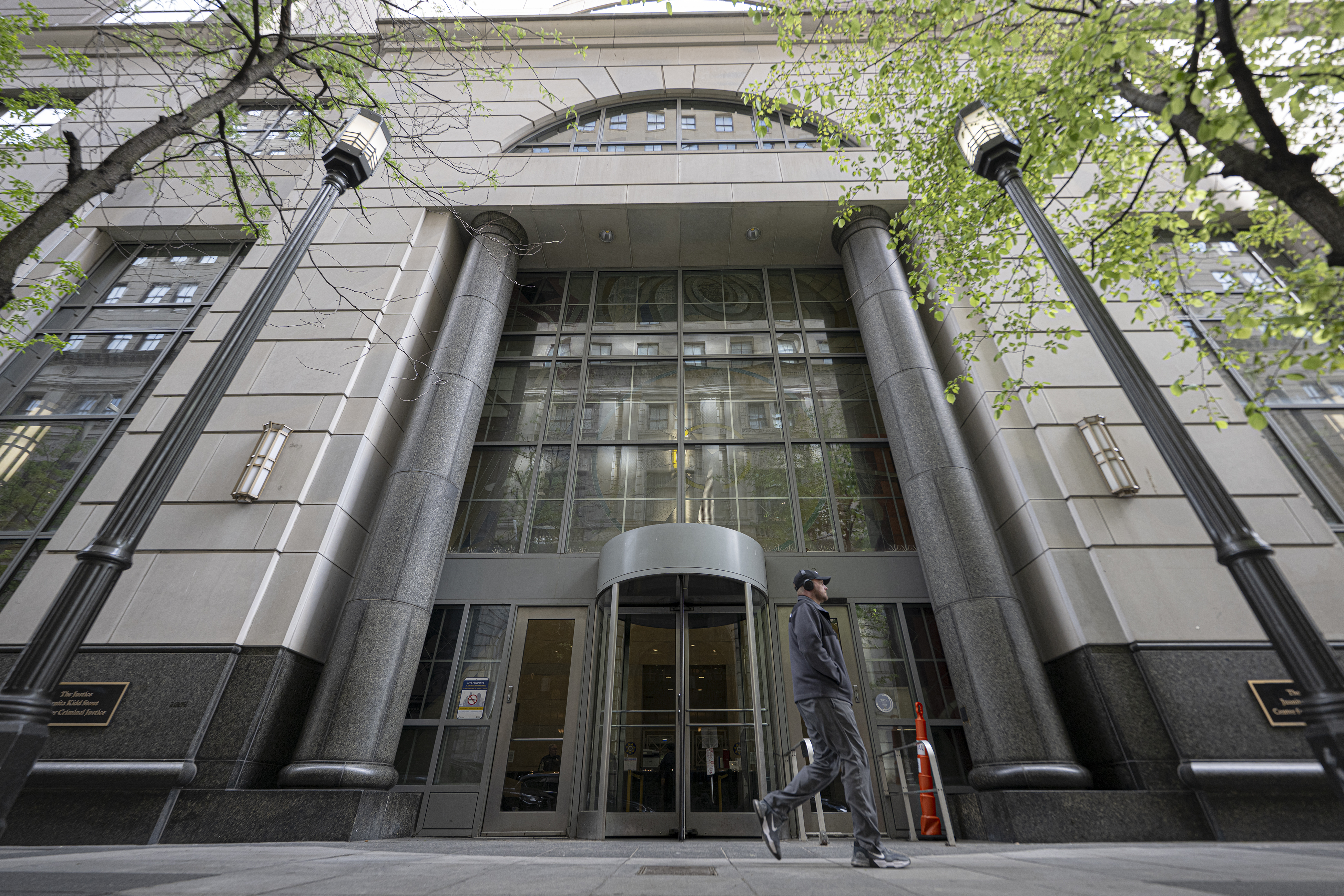
The Inquirer reported on the 2015 expungement and the existence of the court records on Tuesday, after reporter Ellie Rushing learned the documents remained on file at the Criminal Justice Center. When Rushing sought to review them, a clerk denied the request, saying the records should have been destroyed after the expungement.
Rushing, on behalf of The Inquirer, wrote a letter to administrative judges on Monday requesting that the records be preserved.
Horsch is now dead, she wrote, and the records may “hold pieces of information that are irreplaceable and important to the public and the criminal investigation.”
Kaitlin M. Gurney, an attorney for The Inquirer, filed an emergency motion reiterating those points and seeking an order allowing the news organization “access to inspect and copy all filings.” (Gurney’s husband, Patrick Kerkstra, is a managing editor at The Inquirer.)
State expungement laws, Gurney wrote, extend only to criminal histories — such as arrest records — and not to judicial records.
“Allowing court records to be expunged and permanently destroyed — not just sealed — would create significant tension with the press and public’s constitutional and common-law rights,” the motion said.
Newspapers have a constitutional right to inspect court records, except in the “most extraordinary cases,” Gurney wrote.
“These rights to access do not disappear simply because a record has been deemed expunged,” she said, adding that in this case, Horsch’s subsequent actions and suspected involvement in the deaths of multiple women had effectively invalidated the expungement.
“Given the unusual circumstances of this case, and the strong public interest in Horsch’s activities, any expungement order should be vacated,” she wrote.
On Wednesday, Common Pleas Court Judge Rose Marie DeFino-Nastasi, the supervising judge in the criminal division, ordered the Office of Judicial Records to cease “destroying or deleting any records” related to the case until further notice.
A hearing in the case is scheduled for Monday.
David Rudovsky, a prominent civil rights attorney, said that even with a deceased defendant and significant public interest, the case represents uncharted legal territory. A ruling to overturn the expungement could have far-reaching consequences, he said.
“It’s an extraordinary case,” Rudovsky said. “But I don’t know of any precedent in which an expungement can be reopened, even after the death of a defendant.”
In Donald Trump’s world, public service pays better than being a real estate mogul.
Trump has been lining his pockets since he returned to the White House. His sons, Eric and Donald Jr., have been cashing in, too. So has his wife, son-in-law Jared Kushner, and other cronies in the Trump administration.
In just his first year back in office, Trump made more than $2.2 billion — an unheard-of sum for any previous president, and more than he ever made in any of his years as a private businessman.
More troubling is how Trump has blurred his private profiteering with public policy — so much so that it is hard to know where one starts and the other ends.
Most of Trump’s recent windfall has come from a murky crypto venture and a number of foreign real estate deals. But his cash grab seemingly has no end. Trump incorporated dozens of new companies just before returning to the White House.
While much of Trump’s shameless self-dealing has occurred in broad daylight, he has received little pushback from Republican lawmakers who control Congress, or the conservative media echo chamber that once championed his calls to “drain the swamp.”
The White House continues to maintain the president is doing precisely that. The administration has repeatedly denied accusations of corruption and self-dealing, stating through a spokesperson that “President Trump only acts in the best interests of the American public.”
Questions about whether Trump’s focus during his second term is more on personal enrichment than public service beganeven before Day One.
Four days before returning to office, the Trump family’s newly created cryptocurrency company, World Liberty Financial, sold a 49% stake in the company valued at $500 million to Sheikh Tahnoon bin Zayed Al Nahyan, the United Arab Emirates’ national security adviser, known asthe Spy Sheikh.
In May 2025, another company chaired by Tahnoon invested $2 billion using a stablecoin issued by World Liberty. Two weeks later, the Trump administration announced a deal to sell hundreds of thousands of dollars worth of advanced computer chips for use in AI to the UAE.
Trump made almost $60 million on foreign licensing deals in 2025, a 900% jump from the years before he returned to the White House.
Unlike in his first term when Trump promised not to make any private foreign business deals, some recent family ventures include a $530 million luxury skyscraper on the Red Sea, an 80-story Trump Tower in Dubai, and golf resorts in Oman and Qatar.
Most of Trump’s foreign money-making has occurred in the Middle East, but he added millions to his wealth through far-flung ventures in India, Ireland, Romania, and Vietnam. At the same time the Trump family is cutting lucrative private foreign business deals, he, as president, is negotiating public trade deals while ricocheting between imposing and lifting tariffs.
Amid making more than a billion through crypto, Trump hosted a White House gala for top crypto purchasers. He also used the power of the presidency to pardon three crypto convicts, including a billionaire who was critical to helping his family’s crypto business and another man who was serving a double life sentence for using Bitcoin to facilitate sales of heroin, cocaine, and LSD.
Along the way, Trump has cashed in on his deep business ties to Saudi Arabia that go back decades. Since his return to the White House, his family has announced at least nine deals worth more than $50 billion.
At the same time, Trump has used the federal government to benefit Saudi Arabia. His administration just approved a deal to sell billions of dollars worth of F-35 fighter jets to Saudi Arabia — rejecting concerns raised by the intelligence community and lawmakers that the advanced technology may end up in the hands of the Chinese.
Trump also approved a deal to allow Saudi Arabia to enrich uranium for nuclear energy at the same time he is at war with Iran to prevent it from obtaining nuclear weapons.
Trump continues to mix politics and personal business, often at the same time. Trump recently used the lavish $400 million jet the Qatari government gave to him to attend a golf tournament at his resort in Ireland, where he met with government leaders and sparked an international incident regarding the future of Northern Ireland.
Trump rejected dire warnings from artificial intelligence executives to slow down and regulate the technology before it spirals out of control. Trump called the concerns that AI could end humanity a hoax — but failed to disclose how he and his sons are personally invested in the technology.
The billion-dollar question is whether Trump’s Oval Office decisions are made in the best interest of the American people or his bottom line.
Trump’s tangled financial history with Russia for so long has caused many to wonder if it influences his embarrassing deference to Vladimir Putin, unwillingness to fully help Ukraine defend itself, and constant attacks on NATO.
Years before he became president, he proposed building a hotel there and brought the Miss Universe pageant to Moscow. After Trump’s real estate empire ran into financial trouble, he received help from Russia.
A Republican-led Senate intelligence report found Russia interacted with Trump campaign officials during the 2016 election, and recently declassified documents show Russia tried to help him win the 2020 election.
Amid that backdrop come two recent reports that show how Trump continues to mix policy and business in Russia. First, the White House has been dangling business deals to get Putin to end the war in Ukraine. Second, a Russian oligarch and Putin ally helped bankroll the recent wedding of Trump’s son, Don Jr. (Trump said his son will give the money back.)
Trump came of age in the 1980s when the Wall Street mantra was “greed is good.” As president, he’s showing that graft is even better — at least for him.
Even when the schemes don’t work out, they never die.
Trump floated a brazen deal to reward cronies who committed crimes and violence on his behalf with financial payouts from a $1.8 billion fund to be created with taxpayers’ money. It was part of an unprecedented “settlement” Trump reached between himself and the IRS — which he oversees — on the heels of a lawsuit he filed againstthe agency for $10 billion after his tax information was leaked to the news media.
Amidbipartisan pushback and legal challenges, then-acting Attorney General Todd Blanche declared the plan “dead” in June, and the U.S. Department of Justice formally rescinded it in August.
The second part of the deal — which received essentially no GOP pushback — includes a scheme to issue a blanket pardon to Trump, his businesses, and his family members for pending tax audits. The deal could enable Trump to avoid a potential $100 million penalty.
Despite resistance and legal challenges, the president continues to support the slush fund and the IRS immunity. Both remain alive, even as a federal judge this month demanded to know who came up with these ideas in the first place.
After the Constitution was established, Benjamin Franklin wrote that the document has “an appearance that promises permanency; but in this world nothing can be said to be certain, except death and taxes.”
For Trump, the certainty of taxes apparently now does not apply.
After all, in Trump’s world, corruption is king.
It is all part of Trump’s second White House tenure, which could be coined the Art of the Steal.
The Flyers may have “dodged a bullet,” as Rick Tocchet said Tuesday, but even if Dan Vladař can’t play for a bit because of an upper-body injury, the bench boss has a solid option in reserve.
Acquired from the Toronto Maple Leafs with defenseman Simon Benoit for Sam Ersson and Emil Andrae in June, Joseph Woll has won 63 of his 117 career games with a 2.94 goals-against average, .906 save percentage, and four shutouts.
Across his three full seasons in the NHL, he has never shouldered a true No. 1 goalie workload. Woll’s career high is 42 games played in 2024-25, where he went 27-14-1 with a 2.73 GAA and .909 save percentage. But the Missouri native feels that, because he’s seen it all and has played all different roles, he has learned to stay consistent with his habits and mindset.
“I think I’ve proven that I can do that in my career. So my goal from the start with this team has been to help them however I can, whatever situation that means, so [it] doesn’t really change my process or my day-to-day or my mindset with whatever happens,” Woll said when asked Wednesday if he would be ready if Vladař cannot go.
While Vladař’s status remains in question, it appeared that the Czech netminder was putting in some work on the ice at the Flyers Training Center on Thursday behind closed doors. Woll will make his second start of the preseason on Thursday against the Boston Bruins (7 p.m., NBCSP) and is expected to play the full game.
He played two periods in Monday’s preseason game against the Washington Capitals, allowing three goals on 19 shots. His reads, timing, and movement stood out.
“I think my skating, my athletic ability, is definitely something I’m trying to prioritize and really use when I’m able to. I’ve talked about it, after the summer [it] is really my goal to balance the two between the technical part of the game and the athletic kind of instinctual part,” he said after the game.
Joseph Woll will start Thursday in his second preseason appearance for the Flyers.Jose F. Moreno / Staff Photographer
“So felt like I had a couple nice saves showing that part and a few things I can work on as well. So I think that’s the goal, when you come out of a game, is feel good, feel like you’ve made some good saves, [and] at the same time, feel like you have stuff to take you forward.”
The adjustment to a new team and new systems has not been too drastic for Woll, as ex-Flyers forward and former Maple Leafs coach Craig Berube employed similar systems during his two-year tenure. But he has spent extra time working with the defense to get acclimated to its style of play.
“He actually asked if a few of the D could go through some calls with him. Work on him playing the puck at the end of yesterday’s practice,” Jamie Drysdale said Wednesday. “So that’s good to see. It’s much better than going into Game 1 and having some confusion.”
Added Woll on Wednesday, “There’s just little things, right, within everything that obviously no organization is going to be identical to the last. So I think with puck playing, it’s important for the D and the goalie to be on the same page, and just for me to hear them and hear them talk and learn how they come back for pucks.
“There’s little nuance things between teams [that] is different, but also player to player. So I think with any team, kind of comfortability with the guys you’re around is important.”
Breakaways
As Tocchet spoke to the media, saying Denver Barkey was a possibility for Saturday, the young forward left the non-game group practice, according to the Nasty Knuckles podcast. Wearing a yellow non-contact jersey, Barkey reportedly grimaced and left the ice. Barkey left Monday’s preseason game against the Washington Capitals with a lower-body injury. … Several veterans — forwards Travis Konecny, Sean Couturier, Christian Dvorak, Trevor Zegras, Matvei Michkov, and Tyson Foerster, and defensemen Travis Sanheim, Cam York, Drysdale, and Rasmus Ristolainen — will see their first game of the preseason while forwards Jett Luchanko and Cole Knuble will see their third. Fans will also get their first look at forward Noel Acciari, while forwards Jacob Gaucher and Porter Martone, and defensemen Helge Grans and Benoit will play their second game of the preseason. … Daniel Spencer has been named the Flyers’ full-time emergency backup goalie for the season after serving in the role on game nights for the past three seasons. Each team is required to carry a full-time EBUG, beginning this season. A native of Gloucester, who played at Gloucester Catholic and served as an assistant hockey coach from 2022-25, Spencer played four years of Div. III hockey at Finlandia University. … Forwards Carl Grundström, Jack Studnicka, Nolan Foote, Danila Klimovich, and Zach Aston-Reese, and defenseman Cam Dineen all cleared waivers on Thursday. All except for Grundström were loaned to Lehigh Valley of the American Hockey League.
A Washington Township coffee shop is seeing longer lines after YouTube star Ms. Rachel gave it a shout-out on social media.
Blended Joe Coffee Bar, a South Jersey coffee roaster, has had an influx of customers after Rachel Anne Accurso, the online educator and songwriter, chose the business to feature for National Black Business Month.
On Aug. 11, Ms. Rachel asked Black business owners to share the names of their businesses under her post on Threads.
Eric Powell took a chance.
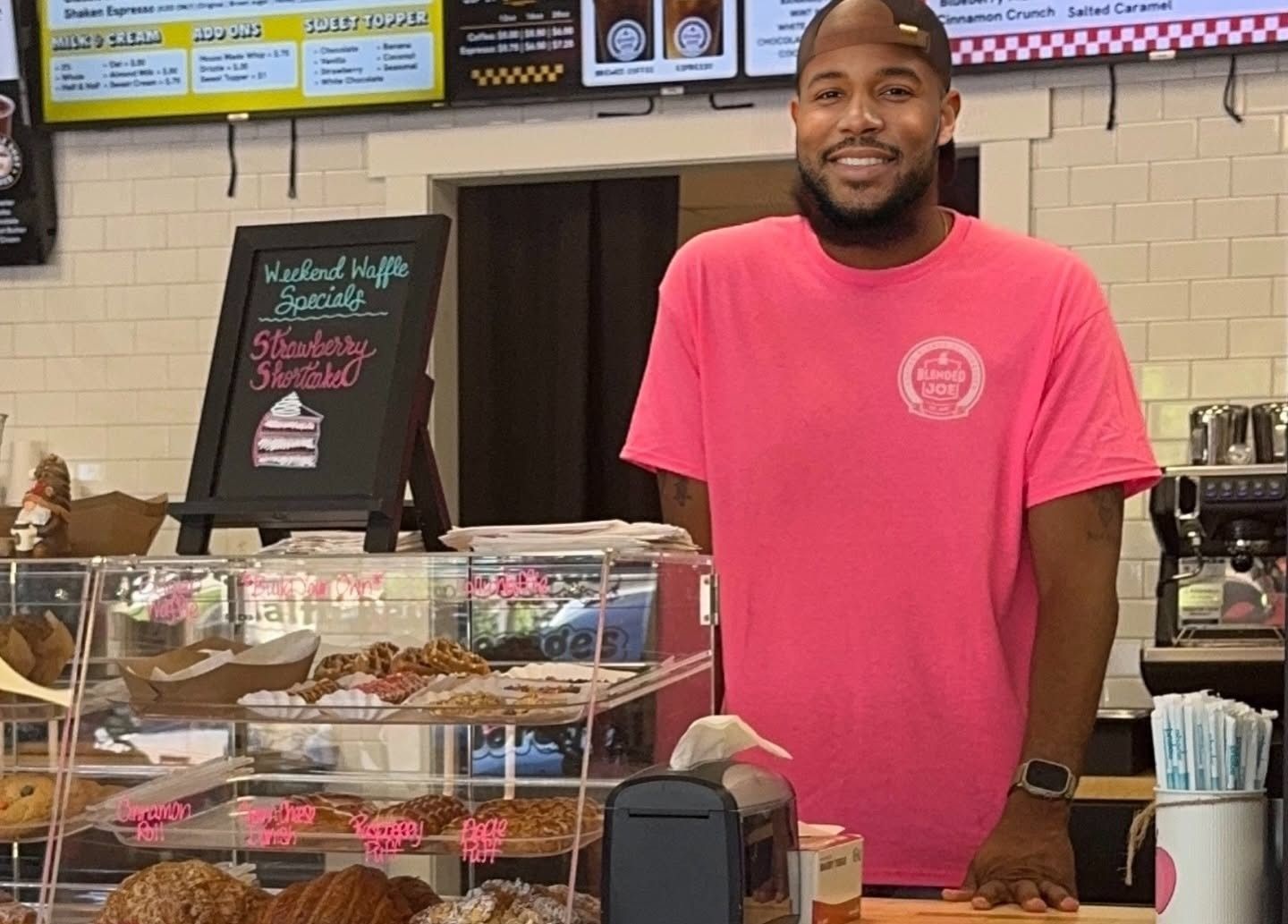
A part-owner of Blended Joe, a 13-year Air Force veteran, and a father of four, Powell commented when he spotted the post a few weeks later. He promoted the coffee shop and an app he created, HEARTBEAT, which reminds users to reach out to the people they care about.
It only took two days for Ms. Rachel to shout out Powell and the coffee bar in a post that included its address at 421 Hurffville-Cross Keys Rd. and has been viewed over 81,000 times. Powell’s phone was dead when it happened, but his coworkers broke the news the next morning. He immediately called Joe Iaconelli, the founding owner of Blended Joe.
“I called Joe,” Powell said, remembering he told him: “‘I think we need to beef up [our staff] this weekend.’” The shop, which opened in 2018, has 15 employees.
Powell was one of only a few business owners to get a shout-out from Ms. Rachel.
She has since made a follow-up post telling people to follow the Camden native on Instagram, which has garnered 90,000 views. He gained 5,000 Instagram followers, including Ms. Rachel herself.
Powell’s sons, who range from 10 to 18, have been teasing him about his newfound fame, but Powell said he knows they think it’s cool.
“My oldest son is laughing at me the whole time,” Powell said, adding a joke by his son. “’Bro, you’re not gonna be single for long now.’”
The Gloucester County coffee shop has seen a boost in customers since the promotion. One couple drove all the way from Virginia, Iaconelli said, and others have come from at least an hour away.
Blended Joe, which sells coffee drinks made with flavored beans rather than pump syrups, moved to Washington Township from Mantua in March 2025. It’s one of several jobs for Powell, who also has a laser-engraving business and writes children’s books.
Powell said he hopes the posts by Ms. Rachel inspire other fathers and up-and-coming entrepreneurs.
“What are the chances of Ms. Rachel seeing a small coffee shop in South Jersey? It got her attention,” Powell said. “My message would be to keep trying.”
And it’s not the first celebrity encounter for Blended Joe, Iaconelli said.
Blended Joe ships coffee to Delatron Johnson, the mother of former Eagles safety C.J. Gardner-Johnson, for her own coffee shop, Cafe Krewe Breakfast Bar, in Rockledge, Fla.
It’s officially fall, and Philadelphia’s arts and events calendar is packed this weekend.
The Philadelphia Orchestra opens its 127th season, the Puerto Rican Day Parade returns to the Parkway, and fall festivals and cultural celebrations are filling the calendar across the region.
Philadelphia Orchestra conductor Yannick Nézet-Séguin introduces Lang Lang at the Kimmel Center’s Marian Anderson Hall in Philadelphia on Tuesday, April 7, 2026. Elizabeth Robertson / Staff Photographer
The Philadelphia Orchestra returns for its 127th season on Thursday under music director Nézet-Séguin.
As my colleague Peter Dobrin reports, the season offers a mix of standard repertoire with new scores, film music, family concerts, and familiar and first-time guest artists.
Opening night begins with the U.S. premiere of Joe Hisaishi’s choral piece Orbis, followed by Beethoven’s Ninth Symphony with the Philadelphia Symphonic Choir.
Julia Masli, whose “ha ha ha ha ha ha ha ha” is playing as part of the Philadelphia Fringes Festival 2026Andrew Levy
🌊 One final lap: Visit Spruce Street Harbor Park one last time before the Delaware River waterfront attraction closes for the season Sunday.
🏇🏽Saddle up for a new screening: Head to Muhammad Abdul-Hadi’s Out West on Friday for a screening of the new documentary Fletcher Street, honoring the long-running North Philly horse stable and riding club.
🎭 Catch the final Fringe shows:Philadelphia Fringe Festival wraps up this weekend, with closing shows including The Adoption Game at Asian Arts Initiative and Murdered Darlings at Deep End Studios.
🥪 Roll up to the Hoagie Throwdown: More than 20 of the city’s sandwich makers will compete at Other Half Brewing during the second annual Heavyweight Hoagie Throwdown.
📅 My calendar picks this week: Philly AIDS Thrift Block Party, Monarch Festival, and the Delaware River Festival. Here’s our full list for the week.
Celebrate at the Puerto Rican Day Parade
Erika Sanchez dances with other members of the Rumbero Jeep Club during the 2024 Puerto Rican Day Parade in Philadelphia.Tom Gralish / Staff Photographer
Join thousands on the Benjamin Franklin Parkway on Sunday to celebrate Puerto Rican culture, music, dance, food, and heritage.
The free event is hosted by Concilio, which has put on the annual celebration for more than 60 years. For more information, visit elconcilio.net.
Fall fun this week and beyond
Lynnewood Hall is getting a second chance under new ownership.Monica Herndon
🖼️ Get to know your city: The Museum of the Philadelphian, whose mantra is “No One Likes Us, We Don’t Care,” begins a limited run inside a Fishtown rowhouse Friday. The micro museum will showcase distinct local gems, like the short-lived hitchBOT, the hitchhiking robot whose cross-country journey famously ended on a Philadelphia street.
💐 Step into the Gilded Age:Lynnewood Hall, the iconic Elkins Park mansion, is opening its doors to the public for the first time in 84 years. The 100,000-square-foot home will host Fleurs de Villes: The Gilded Age, a 10-day floral experience inspired by the popular HBO series. The show features life-size mannequins made with thousands of flowers and other floral installations.
👻 Things are getting spooky: Morticia, Wednesday, and the rest of the clan take over Walnut Street Theatre this fall The Addams Family: The Musical.
Staffer picks
Here’s pop music critic Dan DeLuca’s list of the best concerts this weekend.
🎸 Thursday:Willie Nelson, a 12-time Grammy winner and bona fide outlaw, is co-headlining a show at Highmark Mann with the legendary Neil Young.
🎤 Friday:The Sex Pistols, with new singer and punk veteran Frank Carter, take the stage at Fillmore Philly on Friday.
🔊 Saturday: The Haverford Music Festival kicks off Saturday, with singer-songwriter Shannon McNally, home-grown vocalist Abby Lee, Philly Englishman Wesley Stace, and bluegrass and country outfit Demolition String Band performing across two stages.
🎤 Sunday: Georgia-raised songwriter Katie Pruitt, who comes off as honest and intelligent in her efforts to make sense of modern life, arrives at Ardmore Music Hall on Sunday.
Tuesday: AC/DC, the electrifying Australian hard rock band, is headlining at Lincoln Financial Field for the “Power Up Tour.”
State officials are “not aware of which death the CDC is citing,” a spokesperson said in a statement Thursday, referring questions to the federal agency.
Federal health officials did not specify where the death reported on the CDC dashboard occurred. On the dashboard, they said the number was “subject to change” and the agency will update its reporting of deaths “as additional information becomes available and relevant reviews are completed.” The agency did not announce the update.
The agency also said it is working to develop a standard case definition of measles deaths with the Council of State and Territorial Epidemiologists.
The update came after the National Center for Health Statistics told the CDC that it had received “a report from a state of a measles-related death,” federal health officials said in a statement late Wednesday.
“Through its standard process, NCHS verified that the death occurred and that measles was listed as the underlying cause of death. This is now reflected on the CDC website,” the statement said.
Pennsylvania’s measles outbreak, currently the largest in the nation, has sickened more than 800 people, with state health officials reporting more than 100 new cases in the last week alone.
Lancaster County, the center of the outbreak, has confirmed more than 300 cases, and nearly 80 people have been diagnosed with measles in Chester County, the only Philadelphia-area county with cases in the current outbreak.
The four measles-associated deaths reported in the state represent the highest death toll linked to the highly contagious disease in more than three decades.
Two more deaths were reported this month. One involved an unvaccinated 18-year-old in Mifflin County who died from a serious neurological complication of measles. And measles led to the death of an unvaccinated 40-year-old woman in Jefferson County with severe respiratory conditions.
Both deaths were confirmed by local coroners, both Republicans.
The Lancaster deaths, later disclosed as two infants in the Amish community, drew widespread scrutiny.
The county coroner later said he did not believe measles caused one of the deaths, involving an infant with a lacerated spleen who tested positive for measles, though physicians have noted measles can weaken the organ and make it more likely to rupture.
The coroner, an elected Republican, said a second death, in another infant with a fatal genetic condition, was caused by measles.
Pennsylvania defines a “measles-associated death” as one that occurs within 30 days of symptom onset in a person with clinical evidence of infection and a positive laboratory test, and who did not die of another unrelated cause, like a car crash.
All four deaths recorded in Pennsylvania meet that definition, state officials say.
Announcing the deaths in Lancaster, Democratic Gov. Josh Shapiro criticized President Donald Trump’s Health and Human Services secretary, Robert F. Kennedy Jr., saying he has spread misinformation about vaccine safety that’s contributed to a decline in measles vaccination rates across Pennsylvania.
Kennedy, a longtime anti-vaccine activist, said Shapiro was politicizing the issue. Kennedy wrote on social media that the governor’s administration may have “fabricated” the Lancaster County deaths, although he later acknowledged that one death was caused by measles.
And until Wednesday, the CDC had not acknowledged any 2026 measles deaths on its data dashboard for weeks.
The agency had briefly noted two measles-associated deaths on the dashboard the weekend after Pennsylvania officials confirmed the two Lancaster County deaths, the Washington Post has reported.
Then, within a day, the deaths were removed from the website and replaced with an asterisk.
The CDC initially posted an explanation saying it left the deaths off the dashboard because “available information does not establish whether measles caused or contributed to the deaths or whether the individuals died from other causes while infected with measles.”
The agency later updated its asterisk explainer to note that the National Center for Health Statistics “does not currently have any death records from 2026 that indicate measles is the underlying cause.”
Using the NCHS to record deaths from measles is a departure from the CDC’s standard protocol. Former CDC officials say the agency has used a different system, the National Notifiable Diseases Surveillance System, to confirm deaths, and does not typically challenge routine disease surveillance from states.
It can take weeks for the NCHS system to record a death.
Delaying death reporting, experts have said, could affect efforts to contain Pennsylvania’s outbreak.
Staff writer Sarah Gantz contributed to this article.
In the ubiquity race in South Jersey, Dunkin’ seems to be edging out Wawa. Banks used to be a leading competitor in that race, but with the growth of online banking, they’re disappearing to other development.
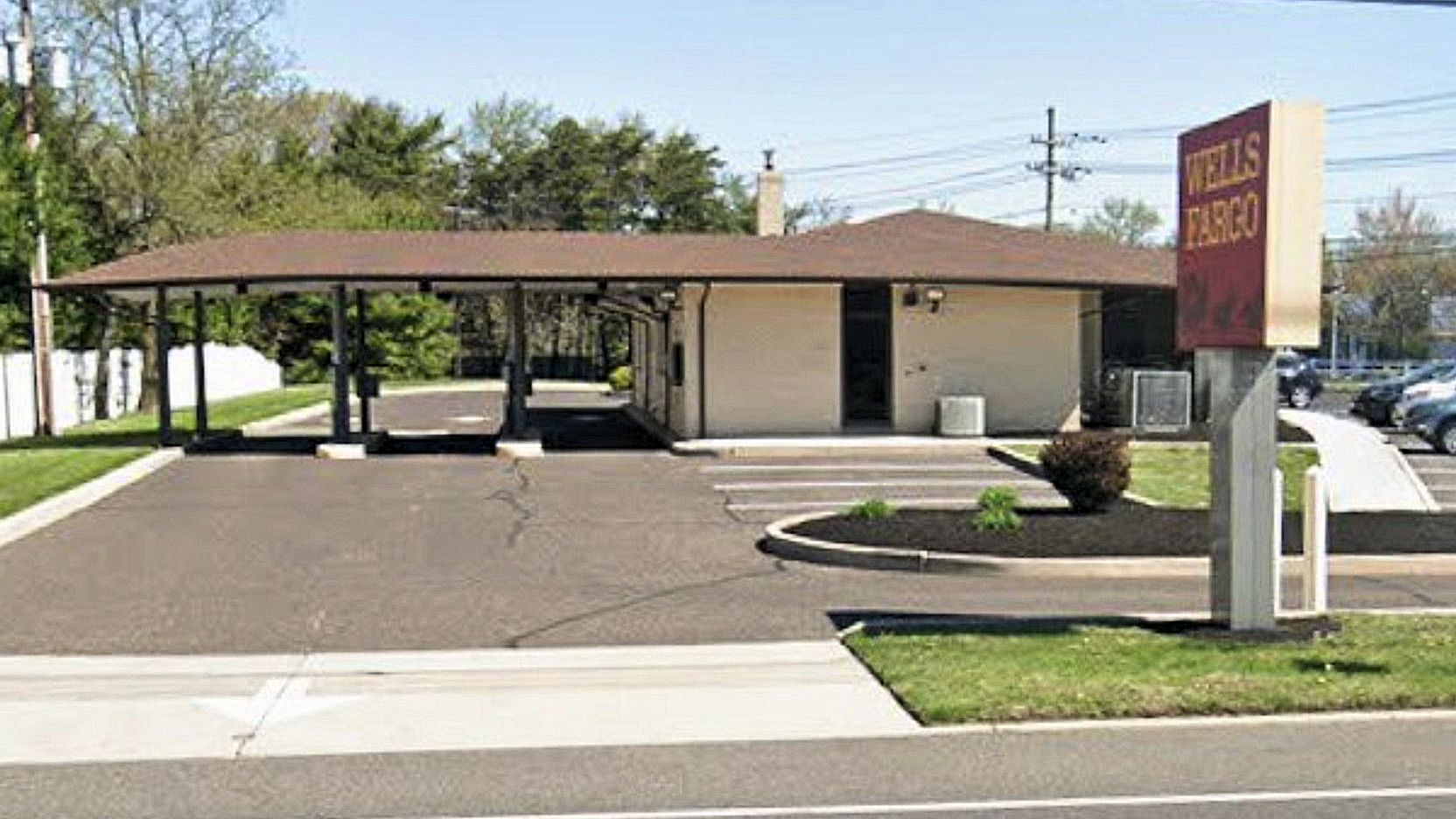
A Dunkin’ operator in Mount Laurel is proposing to repurpose a former Wells Fargo Bank at 4523 Church Rd., east of the North Maple Avenue intersection, into one of the chain’s coffee and doughnut restaurants.
Applicant Siya Kinjal LLC is scheduled to appear at an Oct. 7 zoning board of adjustment meeting for a use variance and preliminary and final site plan approval. The bank property is zoned residential.
The Dunkin’ is projected to add 130 in and 120 out vehicle trips in the morning peak hour and 109 in and 114 out in the Saturday peak hour, according to a developer’s traffic study by McDonough & Rea Associates Inc. of Manasquan.
The 2,999-square-foot Dunkin’ would include a drive-through lane. The property abuts single-family homes on Camelot Court and a gas station, according to a report by board engineer Richard A. Alaimo Associates of Mount Holly.
The property would be purchased by the developer from 4523 Church Road Associates LLC of Saw Mile Drive in Mount Laurel, according to the zoning application.
Gulu Puri of Marlton and Ashwin Chaudhary of Pittsgrove filed with the board as owners of Siya Kinjal LLC.
70and73.com is a hyperlocal news site focused on South Jersey, including the communities of Cherry Hill, Evesham, Mount Laurel, Voorhees, Medford, Medford Lakes, and Moorestown.