Tag: topic-link-auto

  • A Main Line lawyer is building a team to defend Trump from an expected ‘subpoena-palooza’

    A Main Line lawyer is building a team to defend Trump from an expected ‘subpoena-palooza’

    As Democrats in Washington prepare to launch a flurry of investigations into President Donald Trump and his allies once they assume control of Congress in January, one Philadelphia-area lawyer is gearing up for battle.

    Wally Zimolong, a Main Line attorney who has worked for Republican causes including the unsuccessful efforts to overturn the president’s loss in the 2020 election, said his firm is assembling a team of trial lawyers to defend Trump administration officials when Democrats take control of Congress in January.

    Incoming Democratic leaders have vowed to hold Trump and his cabinet accountable. Their sweeping wins in the midterm elections, they have said, give them a broad mandate to act not just on voters’ top-of-mind affordability issues but also on what they have described as the most corrupt administration in history.

    Warning of an unprecedented “subpoena-palooza,” Zimolong, a longtime Trump supporter, said the situation is all-hands-on-deck.

    “Anybody that had any interaction with the Trump administration is going to be a potential target,” he said. “That’s certainly how we’re treating it.”

    Less than 12 hours after the “blue tsunami” became apparent last week, Zimolong and his Wayne-based firm announced the plan they had been discussing for months: a Congressional Investigations and Lawfare Defense Task Force.

    The group’s intention is to defend Trump officials as well as private third parties associated with the White House. Those include businesses that have come under scrutiny for working with the government or donating to the president’s projects.

    The top Democrat on the House Natural Resources Committee, for instance, on Monday sent letters to nine federal agencies and 27 private companies to preserve records that may be relevant to congressional inquiries. The list included major corporations like Chevron, United Airlines, and TikTok, which Democrats have said may have received special treatment after donating to this year’s 250th anniversary events.

    “[T]o every agency official and corporate executive receiving these letters: save everything,” U.S. Rep. Jared Huffman, a California Democrat who is poised to become the committee’s chair in January, said in a statement. “The American people deserve to know what you did with their government and their money, and we intend to get them answers.”

    U.S. Rep. Robert Garcia, another California Democrat set to chair the powerful House Committee on Oversight and Government Reform, had a more succinct election night message: “Lawyer up.”

    Zimolong said he believed Garcia’s statement showcased an intention by Democrats not to engage in legitimate investigations that fulfill their legislative and oversight duties but to take an illegal and “prosecutorial” approach that the public does not want.

    He pointed to the failed attempt, initiated by an outgoing Republican and supported by House Democrats, this week to impeach Defense Secretary Pete Hegseth. Democrats promised to try again when they have a sizable majority in January, revisiting accusations that Hegseth violated the Constitution while waging the war in Iran, ignoring laws intended to limit civilian casualties, and more. Zimolong said the idea that Hegseth committed high crimes or misdemeanors by following the commander in chief’s orders was “ridiculous” and “political retribution, plain and simple.”

    “If Democrats want to spend their perceived legislative mandate on investigations and subpoenas rather than focusing on the wants and needs of the American people … then it’s going to be a short reign for Democrats,” Zimolong said. “In some ways, if that’s how they want to spend their time, I welcome it because it’s the quickest way for Republicans to regain control of Congress.”

    Zimolong has represented Republican clients in some high-profile Pennsylvania election cases.

    In 2020, he worked outside the Trump campaign to invalidate ballots cast in the Pennsylvania election as the president spread false claims that widespread fraud led to his loss. Four years later, he represented the Trump campaign as well as Republican Dave McCormick’s U.S. Senate campaign and the Republican National Committee in lawsuits around election administration — including a successful move in Bucks County to extend a deadline for voters to apply for, receive, and cast mail ballots in person.

    This year, he has represented Democratic Gov. Josh Shapiro’s Abington Township neighbors in a land dispute, as well as a Lehigh Valley congressional candidate who made a last-ditch effort to get on the ballot in a highly competitive race as a Green Party nominee but who Democrats believed was part of a disguised GOP effort to draw votes from the Democratic nominee, Bob Brooks, who went on to win the seat.

    Zimolong, in an interview with The Inquirer, said that he did not “coordinate with anybody” in the congressional race and that the Shapiro situation was not “a Republican thing.”

    “People think it’s sort of coordinated and we all get together and plan these things out,” he said. “That’s not the way the world works.”

    Zimolong said he and his colleagues began considering the task force in the spring when it looked like Republicans might lose control of Congress in the midterms. He said they spoke “to a wide range of stakeholders that may be affected by this,” though he declined to name any individuals or groups because of confidentiality concerns. The team of lawyers is still being built out, and he said he is confident that both outside counsel and those working in the Department of Justice are equipped to handle the coming investigations, whether he is part of the defense or not.

    “I’m not worried about anything. I don’t think it’s going to get very far,” he said.

    Still, he said, he expects a robust court battle that will “test the limits of executive privilege” — possibly unlike anything since Watergate, when President Richard Nixon unsuccessfully fought to keep White House recordings private. Zimolong said the Trump administration is “correctly” signaling that it will take “a very aggressive view on executive privilege” that protects its communications and those of cabinet officials.

    In a clear sign of the clash ahead, White House counsel William Scharf sent a letter to Garcia on Monday that claimed Democrats had issued “abusive and capricious threats,” and that their actions to issue “unlawful subpoenas … may warrant further investigation.” One of the comments the White House noted was from U.S. Rep. Analilia Mejia (D., N.J.), who wrote on social media, “We’re going to toss out subpoenas like Mardi Gras beads.”

    Garcia responded in a statement, saying the new Congress “will not be deterred by baseless threats from a weaponized DOJ or from the president’s lawyers.” The lawmaker has indicated he will pursue investigations into Trump’s family’s business dealings — which he has referred to as the “Trump Crime Family” — as well as the handling of the Jeffrey Epstein investigation files and immigration enforcement “abuses” by Immigration and Customs Enforcement and the Department of Homeland Security.

    Another investigation topic could be Trump’s personal settlement with the Department of Justice this year. The deal included a $1.8 billion anti-weaponization fund that Trump launched to compensate individuals whom the administration believed to be the victims of political prosecution, though both Democrats and Republicans raised deep concerns and it was blocked by the courts. Zimolong and his firm applauded its creation in May.

    Democrats have also raised alarms about Trump’s use of the Justice Department to investigate and indict his perceived political enemies, such as former FBI Director James Comey.

    Democrats are set to begin their investigations around the sixth anniversary of another Philadelphia-area attorney stepping into the spotlight to defend Trump. After the Jan. 6 attack on the Capitol, Trump selected former Montgomery County District Attorney Bruce L. Castor Jr. to lead his defense team during his impeachment trial in the U.S. Senate. Castor’s performance was panned by some of the president’s allies, though Trump was acquitted and made a historic comeback in 2024.

    After an additional boundary-pushing two years, Zimolong said Democrats are preparing to unfairly target Trump and nearly anyone in his orbit.

    “I like to say that if you look at the White House, you’re a potential target,” Zimolong said. “Obviously, that’s in jest. But, depending on which member you speak to or … which member statements you read, it’s not that far off.”
  • Is the United States facing a second Reconstruction era?

    Is the United States facing a second Reconstruction era?

    Peter Schmidt is a retired high school principal and history teacher.

    As election returns on the night of Nov. 3 made clear that voters were endorsing sweeping changes for the political future of our country, media pundits were offering a broad range of explanations of what was unfolding across the nation.

    The most obvious sources of voter unrest were spoken about at length: the reeling economy; deep dissatisfaction with the unending war with Iran; confrontational immigration policies that led to the deaths of American citizens in Minnesota, Maine, and Texas; opposition to data centers; and the Trump administration’s blind faith in the future of artificial intelligence.

    Regardless of how we interpret the results of the 2026 midterm elections, it is abundantly clear the United States is facing a crucial moment in its history. In fact, I would argue that the next two years will be as defining for America as any period of time since the conclusion of the Civil War in 1865.

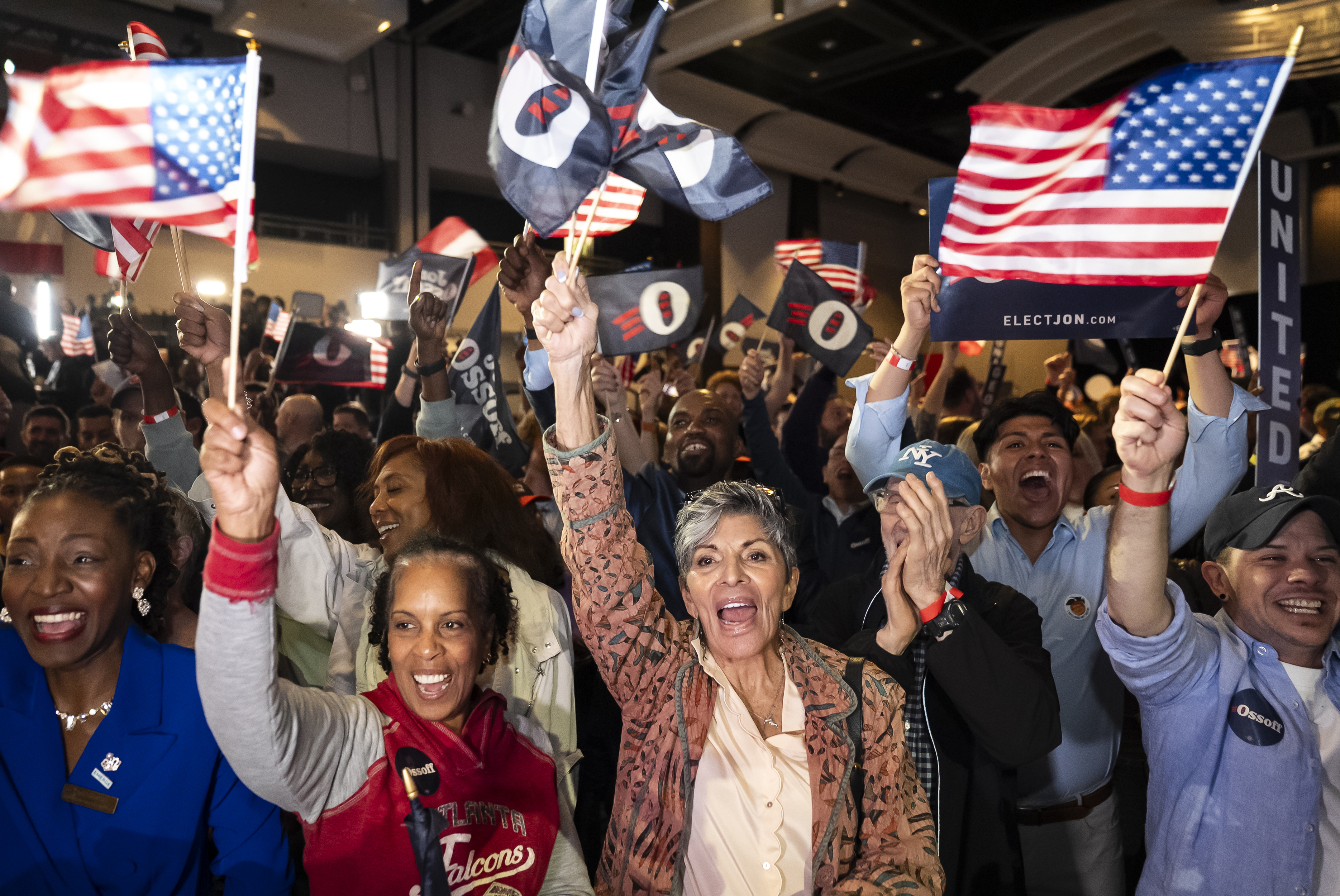
    Supporters of Sen. Jon Ossoff (D., Ga.) react as he is projected to win reelection on Nov. 3. The repudiation of President Donald Trump with an overwhelming victory of the Democrats has set the stage for major policy changes in Washington.NICOLE CRAINE

    At that time, the nation was facing not only the political uncertainties of how to reunite a country torn by four years of domestic warfare that claimed the lives of hundreds of thousands of soldiers and civilians, but also the loss of its president, who had been assassinated just a few days after Robert E. Lee’s historic surrender to Ulysses S. Grant at Appomattox in Virginia.

    Opportunity to rebuild

    Call it a second Reconstruction, if you will.

    Historians have argued over the successes and failures of Reconstruction-era policies and their enforcement, or lack thereof, since the late 19th century. It remains abundantly clear that the opportunity to rebuild a nation that practiced its principles of liberty and justice for all was left incomplete.

    Despite the passage of the 13th Amendment to the Constitution, which abolished slavery, there remained forced incarcerated labor, which remains in effect to this day. Despite the passage of the 14th Amendment, which granted citizenship to enslaved African Americans, the debate over the meaning of “birthright citizenship” continues. And while the 15th Amendment granted the right to vote to African Americans, we must not forget the battles over voting rights that dominated the news before the recent midterms.

    We need to pay close attention to our history and learn the lessons it has placed in front of us. Well-intended Reconstruction policies meant to restrain the forces of hate that sustained the brutality of slavery were not enforced. That hatred and brutality did not end with the conclusion of the Civil War. It continued with the rise of the Ku Klux Klan and other forms of white supremacy that led to the lynchings of African Americans and uninhibited racial violence in both the North and the South.

    To be sure, the past two years of the Trump administration can hardly be compared to the horrors of enslavement. And while the country is not as shattered as it was 160 years ago, the division and distrust and disillusionment today run deep. What is broken won’t be easily put back together.

    Benefit the majority

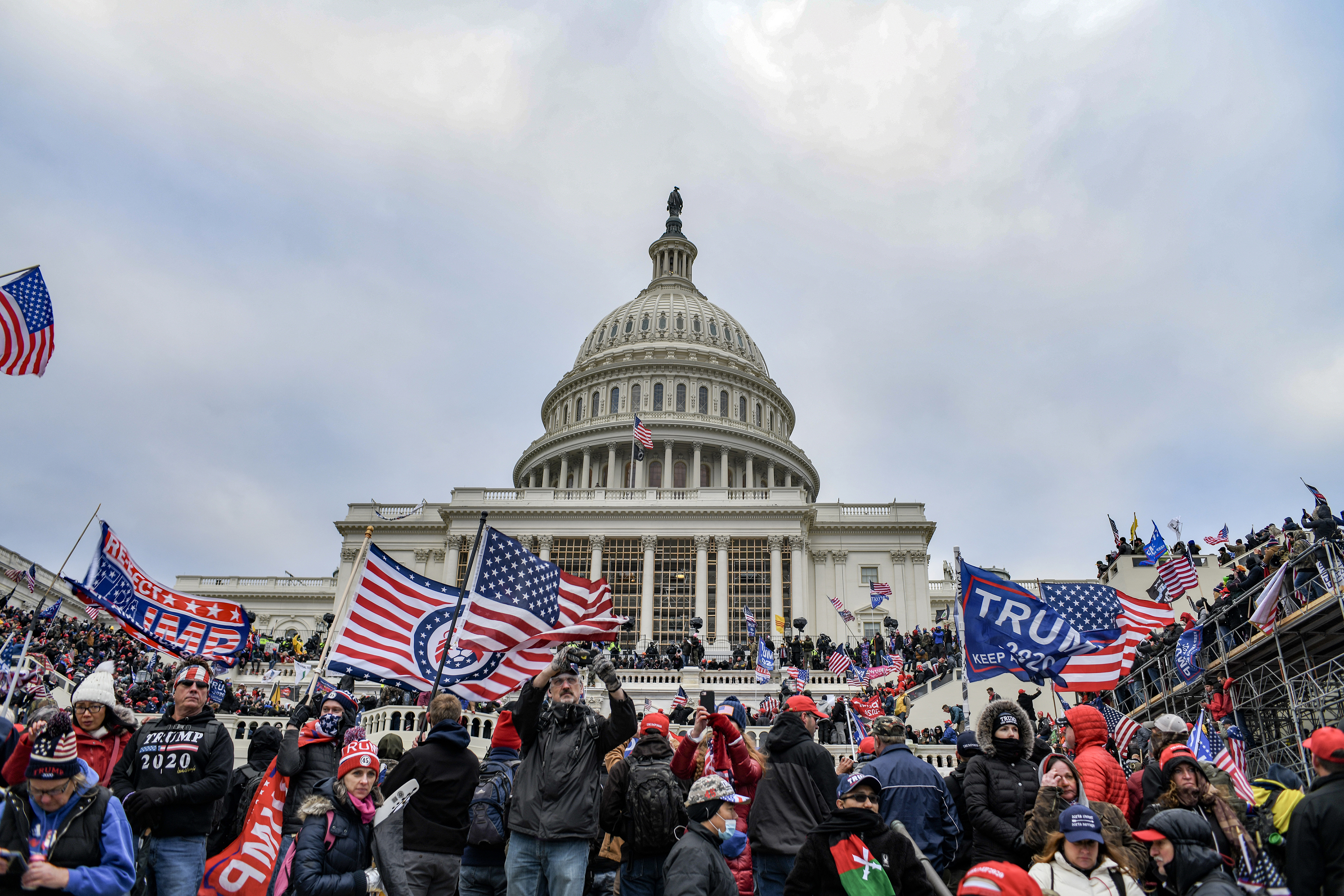
    We cannot forget the efforts by the Trump administration and its Republican allies in Congress to erase the reality of the Jan. 6, 2021, insurrection from history. That alone has created a seemingly unbridgeable chasm, but it should compel the incoming Congress to focus its attention on what will benefit the vast majority of Americans who are now in financial distress, including measures that end the senseless war with Iran, and legislation that will address the failures of immigration policies that have contributed to the deaths of honest and law-abiding Americans.

    The failure of Reconstruction to rebuild a country torn by war should lead our contemporary policymakers to understand that it won’t be enough to create legislation that will right the wrongs of the past several years. We must now work to repair our frayed democratic ideals. It will take political will and moral fortitude. And a resolute commitment to making the nation whole.

    As President Abraham Lincoln noted so clearly in his Second Annual Message to Congress in 1862:

    “We shall nobly save, or meanly lose, the last best hope of earth. Other means may succeed; this could not fail.”

  • Jensen Huang built the company that powers AI. Now Nvidia must find a way forward without him

    Jensen Huang built the company that powers AI. Now Nvidia must find a way forward without him

    HONG KONG — Nvidia CEO Jensen Huang resigned Thursday, capping a spectacular downfall for a poster boy of the artificial intelligence boom whose exit following reports of extramarital affairs now thrusts the chipmaker into an uncertain future.

    After a dizzying series of headlines about Huang’s infidelity and ties to an alleged Chinese spy, his departure sets off a scramble to find a permanent replacement to lead the multitrillion-dollar colossus that grew from obscurity to a perch between Apple and Microsoft at the top of the S&P index.

    The resignation sent shares of Nvidia plummeting 14% at the opening bell, before stabilizing. The stock was down about 4% around midday Thursday as investors pondered the lawsuits, investigations, likely corporate jockeying and the resilience of a market driven by the gains of a few tech giants.

    “Huang’s departure introduces uncertainty well beyond the company itself,” said Asa Hiken, senior analyst for research firm eMarketer, reflecting fears of wider implications and the possibility of an AI bubble.

    The company named Colette Kress, the executive vice president and chief financial officer, as interim chief executive. She became CFO in 2013, overseeing the company’s global finance operations. Before that, she worked for three years at Cisco and spent 13 years at Microsoft.

    Nvidia had no succession plan to prepare for the possibility of the departure of Huang, who was synonymous with Nvidia for more than 30 years in much the same way Steve Jobs embodied Apple. Nvidia said its board would consider internal and external candidates to replace him.

    In a statement Thursday, Kress said that Nvidia’s “strength has always come from its people” and that she was “committed to building on the extraordinary foundation Jensen created over the last 33 years.”

    The board of directors said Thursday it had also named its first-ever chairman, Harvey C. Jones, an entrepreneur and venture investor.

    Drumbeat of scandals grew louder

    Huang, 63, is one of the world’s wealthiest people, with a personal fortune that Forbes estimates at more than $150 billion. He is the single largest individual shareholder of Nvidia stock.

    A drumbeat of scandals around him had grown louder in recent weeks after The New York Times reported Huang’s relationship with a woman the paper said U.S. officials had concluded was a Chinese spy who was recruited to influence California-based Nvidia to make its most advanced chips more available in China.

    The discovery set off alarms as high as the White House.

    U.S. President Donald Trump said Monday that the FBI was investigating but remained complimentary of Huang on Thursday, saying he “has done a fantastic job.” Like many top tech CEOs, Huang is close to Trump, who has hosted him at the White House and on Air Force One, and awarded him a National Medal of Science.

    Nvidia’s board announced an investigation into the allegations on Sunday, but said it remained confident in Huang’s leadership. Then pressure compounded late Wednesday after reports surfaced of another alleged affair by Huang, this time with an Nvidia employee who reported to him.

    The company has said it had “no reason to believe” that either national security or its secrets were compromised, but that its inquiry would examine all available information.

    Nvidia is due to report earnings Tuesday.

    Lawmakers still want to question Huang

    After Huang’s exit, U.S. lawmakers were still insisting on questioning him about his interactions with a Chinese businesswoman named Alice Huang and the company’s security protocols against espionage.

    “Congress must demand answers from Mr. Huang and others at Nvidia about how they may have put U.S. national security at risk,” Democratic Senate leader Chuck Schumer of New York posted online.

    Rep. Brian Mast, chairman of the House Committee on Foreign Affairs, said the committee was in contact with Huang’s team as recently as Wednesday night after putting in an initial request for an interview on Nov. 5. Mast said Huang would receive a subpoena to compel his appearance, if necessary.

    Alice Huang, the suspected spy at the center of the scandal, is a former executive at Singapore-based Megaspeed International. Jensen Huang acknowledged an affair but did not identify her.

    The two are not related.

    Megaspeed faced allegations last year that it was illicitly shipping advanced Nvidia computer chips into China, but in December said there was “no evidence” of such exports.

    Singaporean authorities said Thursday that they questioned Alice Huang and confiscated her passport last year as part of an investigation into Megaspeed. They concluded that there wasn’t enough evidence that she had committed a crime but suspected she provided “inaccurate information” to downplay her role at Megaspeed and barred her from returning to the country.

    China denies attempting to ensnare executive

    China has denied that it attempted to ensnare Jensen Huang. Nvidia has become a leader in making chips that power AI, and Huang has lobbied Washington to loosen limits on sales of Nvidia chips to China. In January, he won Trump’s approval to sell Nvidia’s H200 chips to China.

    Megaspeed said Thursday that it has cooperated with the U.S. Department of Commerce’s Bureau of Industry and Security, which handles enforcement of national security restrictions on technology exports, and was ready to “cooperate fully with any other relevant U.S. government authority.”

    The company said it has hired a U.S. law firm to conduct a “comprehensive census” of its computer chips and to verify its export controls.

    “Megaspeed welcomes appropriate government scrutiny and is committed to demonstrating through concrete actions that it operates responsibly, transparently, and in accordance with applicable U.S. laws,” it said.

    Apart from questions over national security, Megaspeed’s finances also have drawn attention. Its total assets soared roughly 90-fold from late 2023 to 2024, to almost $3 billion, according to Singapore corporate records.

    Revenue surged to over $294 million in 2024 from none in 2023.

    What comes next for Jensen Huang is unclear, though another tech mogul, Elon Musk, said on X that it “would be an honor” to hire him.

    At a time of growing alarm about AI’s potential risks, Huang has been a voice of optimism on the technology’s potential. His climb to the top of the corporate world started with an idea born in an unglamorous setting.

    Huang and two other engineers gathered in 1993 at a Denny’s in San Jose, California, where they discussed building a computer chip that would make graphics for video games faster and more realistic.

    That conversation led to the founding of Nvidia.

  • Philadelphia Marathon 2026: What to know about road closures, parking, and race times

    Philadelphia Marathon 2026: What to know about road closures, parking, and race times

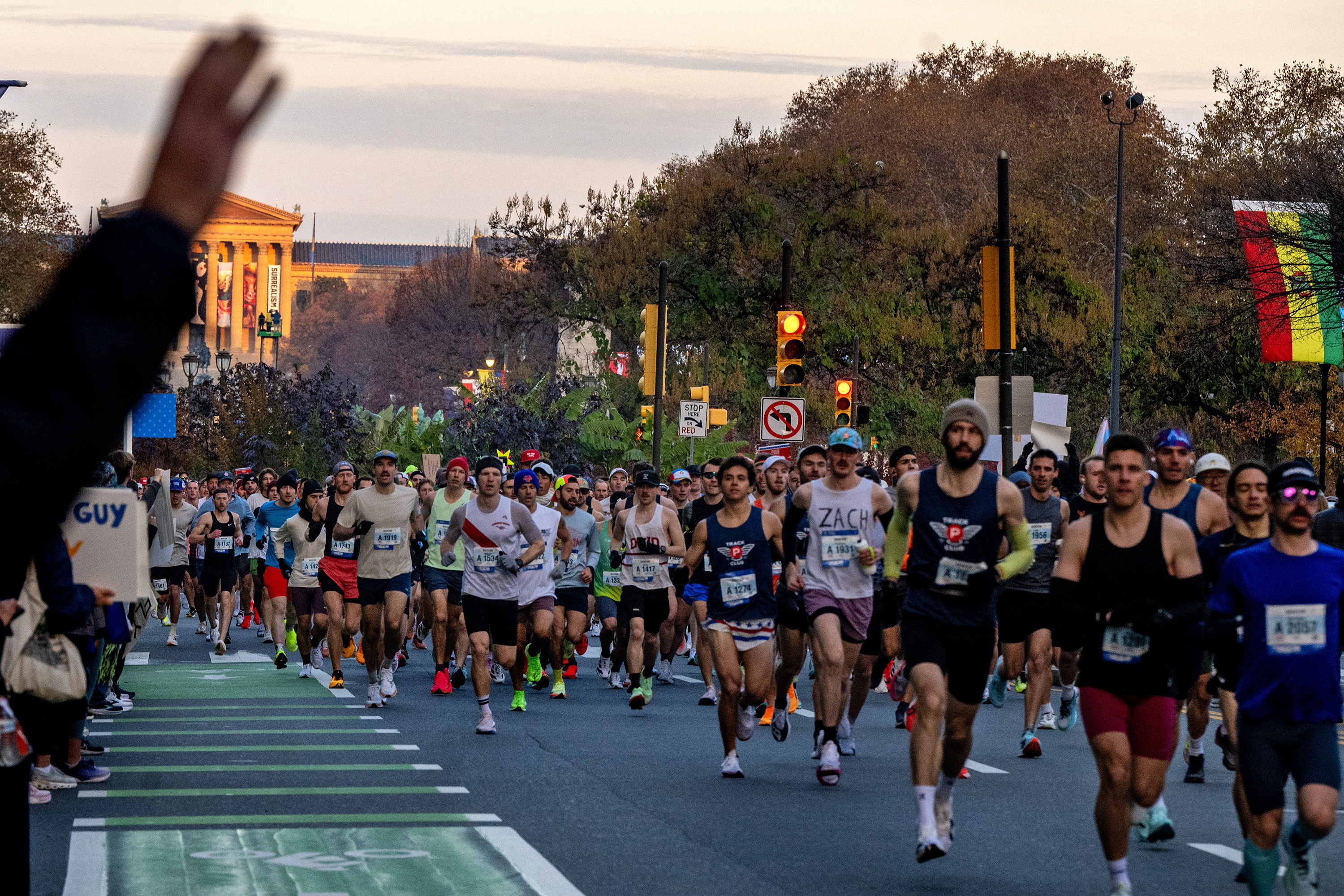
    The Philadelphia Marathon returns Nov. 20-22 for what organizers expect to be the largest race weekend in event history.

    Runners from around the world will compete in the 8K, half-marathon, and 26.2-mile marathon, which stretches from Manayunk to the Delaware River waterfront.

    The first Philadelphia Marathon was held in 1994 with just 1,500 participants. This year, organizers expect nearly 40,000 runners across four races.

    With that many runners hitting the streets, Philadelphians can expect road closures, parking restrictions, and traffic detours throughout the weekend.

    Here’s what to know before the 2026 Philadelphia Marathon Weekend.

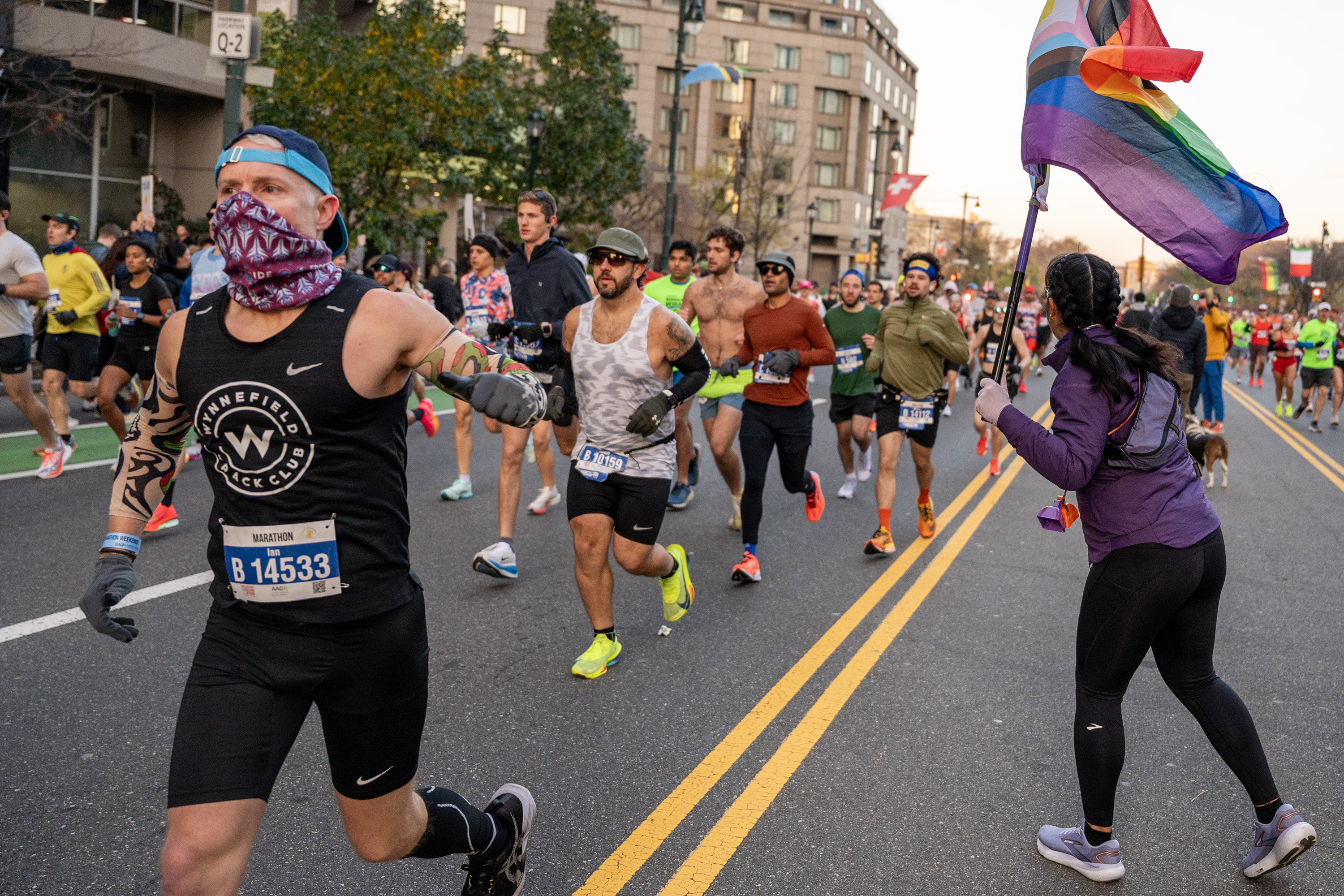
    Sharon Tejada (right), a coleader of Queer Run, encourages runners heading out on the Benjamin Franklin Parkway at the start of the annual Philadelphia Marathon on Nov. 23, 2025.Tom Gralish / Staff Photographer

    Race start times and locations for the Philadelphia Marathon

    All four races start near the Philadelphia Museum of Art. The marathon, half-marathon, and Children’s Run begin at 22nd Street and Benjamin Franklin Parkway, while the Rothman Orthopaedics 8K starts at 25th Street and Kelly Drive.

    • Dietz & Watson Philadelphia Half-Marathon: Saturday, Nov. 21, 6:55 a.m. (wheelchair participants); 7 a.m. (runners and walkers)
    • Rothman Orthopaedics 8K: Saturday, Nov. 21, 10:55 a.m. (wheelchair participants); 11 a.m. (runners and walkers)
    • TIAA Philadelphia Marathon: Sunday, Nov. 22, 6:55 a.m. (wheelchair participants); 7 a.m. (runners and walkers)
    • Philadelphia Children’s Run: Sunday, Nov. 22, 11 a.m.

    Race routes for the Philadelphia Marathon

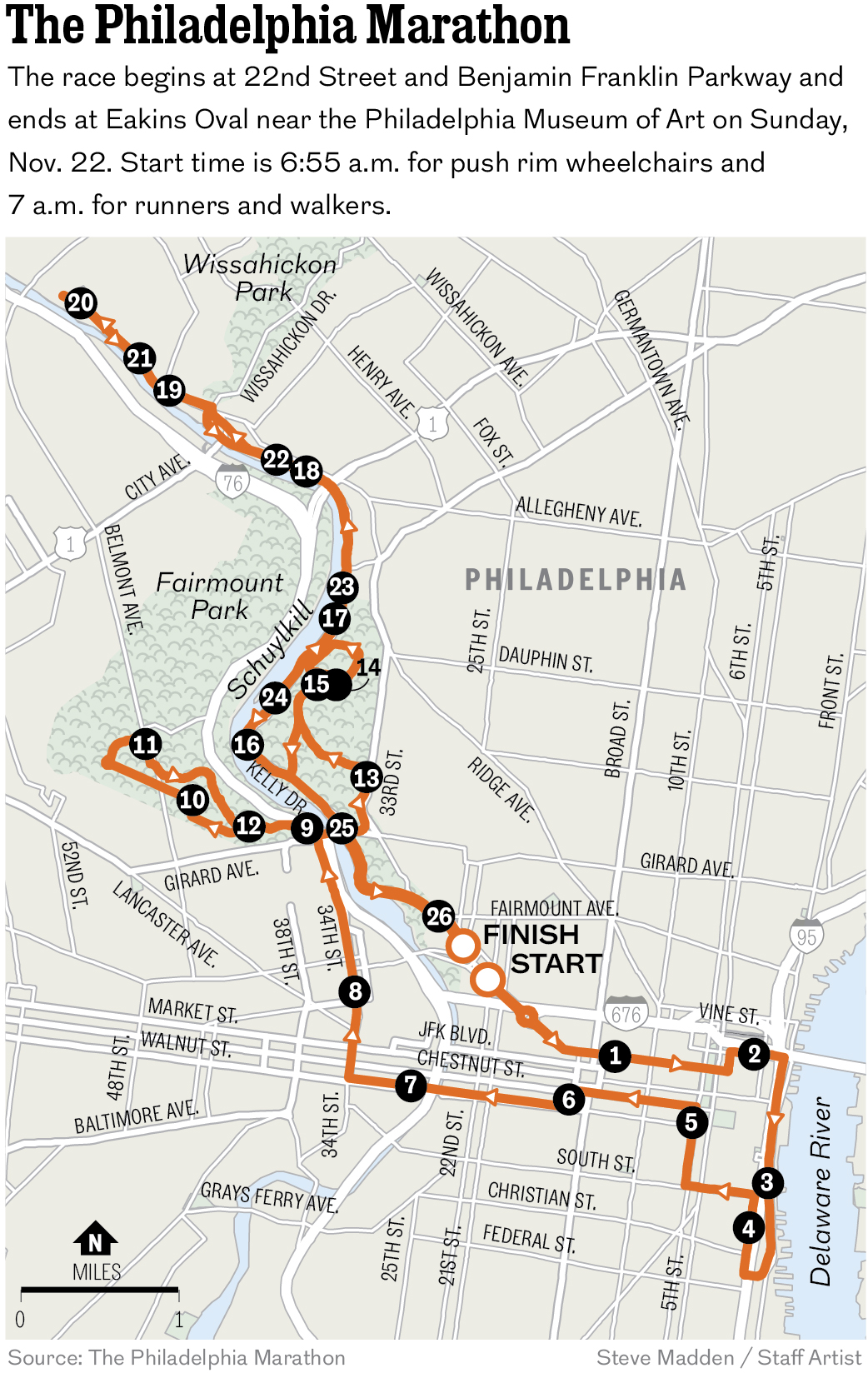
    Each race follows a unique route. The marathon and half-marathon wind through Center City, Chinatown, Old City, Queen Village, Rittenhouse, and University City, with portions of the courses passing through Fairmount Park and along Kelly Drive and the Benjamin Franklin Parkway.

    Course map for the Philadelphia MarathonSteve Madden

    Health & Fitness Expo

    The Philadelphia Marathon Weekend Expo returns to Hall F of the Pennsylvania Convention Center, at 12th and Arch Streets.

    • Friday, Nov. 20: 8 a.m. to 9 p.m.
    • Saturday, Nov. 21: 8 a.m. to 5 p.m.

    The expo features vendors showcasing apparel, shoes, and running gear, along with free product samples and educational booths focused on health and fitness. Both days will also feature a speaker series and meet-and-greets with some of the country’s top runners.

    For spectators of the Philadelphia Marathon

    Spectators are welcome to line the race routes to cheer on runners but will be restricted from the starting lines and in secure running areas until after 8 a.m. on Saturday and Sunday to ensure smooth race starts.

    The Philadelphia Marathon has a list of prohibited and discouraged items for spectators, available in full on its website.

    • Large umbrellas, coolers, alcohol, bicycles, scooters, and animals (except service animals) are prohibited. Organizers also discourage spectators from bringing large blankets, backpacks, handbags, and cameras.
    Lilian Yao, 20, poses for her mother, Leslie Liu, after completing the Philadelphia Marathon on Nov. 23, 2025. This was her first marathon. Her mom arrived from Hong Kong just hours before the start of the race.Tom Gralish / Staff Photographer

    Road closures

    All-weekend closures

    Friday, Nov. 20, through 5 p.m. Sunday, Nov. 22

    • Benjamin Franklin Parkway (all lanes) between 22nd Street and Eakins Oval
    • Kelly Drive (inbound) closed at 25th Street, with local traffic permitted to Anne d’Harnoncourt Drive
    • Spring Garden Street Bridge and MLK Drive (inbound) traffic detoured onto 24th Street
    • Spring Garden Street closed between Benjamin Franklin Parkway and Pennsylvania Avenue

    Saturday, Nov. 21

    2 a.m. closures

    • 2000-2400 Benjamin Franklin Parkway
    • Spring Garden Street, from Pennsylvania Avenue to Benjamin Franklin Parkway
    • 23rd Street, from Pennsylvania Avenue to Benjamin Franklin Parkway
    • 22nd Street, from Winter Street to Park Towne Place (local access to Park Towne Place maintained)
    • 21st Street, from Pennsylvania Avenue to Winter Street

    4 a.m. closures

    • I-676 off-ramp at 22nd Street (westbound)
    • I-76 off-ramp at Spring Garden Street (eastbound)

    6 a.m. closures

    • 17th Street, from Arch Street to Vine Street
    • 18th Street, from Arch Street to Callowhill Street
    • 19th Street, from Arch Street to Callowhill Street
    • 20th Street, from Arch Street to Callowhill Street
    • 21st Street, from Arch Street to Spring Garden Street
    • 22nd Street, from Arch Street to Spring Garden Street
    • Benjamin Franklin Parkway, from 16th Street to 20th Street
    • Market Street, from Sixth Street to 16th Street
    • Chestnut Street, from Fifth Street to Eighth Street
    • Sixth Street, from Market Street to Chestnut Street
    • Fifth Street, from Chestnut Street to Race Street
    • South Penn Square
    • Juniper Street, from Chestnut Street to Market Street
    • John F. Kennedy Boulevard, from Juniper Street to 17th Street
    • 15th Street, from Race Street to Chestnut Street
    • 16th Street, from Chestnut Street to Race Street
    • Race Street, from Sixth Street to Columbus Boulevard
    • Columbus Boulevard (southbound lanes), from Vine Street to Washington Avenue
    • I-95 southbound off-ramp at Washington Avenue
    • Washington Avenue, from Columbus Boulevard to Front Street
    • Front Street, from Washington Avenue to South Street
    • South Street, from Front Street to Seventh Street
    • Sixth Street, from Bainbridge Street to Locust Street
    • Lombard Street, from Fifth Street to Broad Street
    • 13th Street, from Bainbridge Street to Chestnut Street
    • Walnut Street, from 12th Street to 34th Street
    • 34th Street, from Chestnut Street to Girard Avenue
    • Spring Garden Street, from 32nd Street to 34th Street
    • Girard Avenue, from 33rd Street to 38th Street
    • 33rd Street, from Girard Avenue to Cecil B. Moore Avenue
    • Reservoir Drive, from 33rd Street to Diamond Drive
    • Mount Pleasant Drive
    • Fountain Green Drive
    • Kelly Drive

    Access and reopening

    • Local access for residents and businesses will be maintained at police-controlled points.
    • Access to the Philadelphia Museum of Art will be available via Spring Garden Street (Bridge and Tunnel) to Anne d’Harnoncourt Drive.
    • Motorists and pedestrians can expect delays when trying to cross roads or streets along the racecourse.
    • Police will allow traffic through intersections when possible, depending on runner flow.
    • All streets (except Eakins Oval and the Parkway) are scheduled to reopen by 2 p.m. Saturday. Many Center City roads will reopen earlier as they are cleared and serviced.

    Sunday, Nov. 22

    As part of enhanced security for the TIAA Philadelphia Marathon, “No Parking” regulations will be strictly enforced. Vehicles on the race route will be relocated beginning at 1 a.m. Sunday.

    2 a.m. closures

    • 2000-2400 Benjamin Franklin Parkway
    • Spring Garden Street, from Pennsylvania Avenue to Benjamin Franklin Parkway
    • 23rd Street, from Pennsylvania Avenue to Benjamin Franklin Parkway
    • 22nd Street, from Winter Street to Park Towne Place (local access maintained)
    • 21st Street, from Pennsylvania Avenue to Winter Street

    4 a.m. closures

    • I-676 off-ramp at 22nd Street (westbound)
    • I-76 off-ramp at Spring Garden Street (eastbound)

    6 a.m. closures

    • 17th Street, from Arch Street to Vine Street
    • 18th Street, from Arch Street to Callowhill Street
    • 19th Street, from Arch Street to Callowhill Street
    • 20th Street, from Arch Street to Callowhill Street
    • 21st Street, from Arch Street to Spring Garden Street
    • 22nd Street, from Arch Street to Spring Garden Street
    • Benjamin Franklin Parkway, from 16th Street to 20th Street
    • Arch Street, from Third Street to 16th Street
    • Fourth Street, from Arch Street to Vine Street
    • Race Street, from Sixth Street to Columbus Boulevard
    • Columbus Boulevard (southbound lanes), from Vine Street to Washington Avenue
    • Columbus Boulevard (northbound lanes), from Washington Avenue to Callowhill Street
    • I-95 southbound off-ramp at Washington Avenue
    • Washington Avenue, from Columbus Boulevard to Front Street
    • Front Street, from Washington Avenue to South Street
    • South Street, from Front Street to Seventh Street
    • Sixth Street, from Bainbridge Street to Market Street
    • Chestnut Street, from Sixth Street to 15th Street
    • 15th Street, from Chestnut Street to Walnut Street
    • Walnut Street, from Broad Street to 34th Street
    • 34th Street, from Chestnut Street to Girard Avenue
    • Lansdowne Drive, from Girard Avenue to South Concourse Drive
    • South Concourse Drive, from Lansdowne Drive to West Memorial Hall Drive
    • East Memorial Hall Drive, from South Concourse Drive to Avenue of the Republic
    • Avenue of the Republic, from East Memorial Hall Drive to Catholic Fountain
    • Belmont Avenue, from Montgomery Drive to Parkside Avenue
    • States Drive, from Lansdowne Drive to Girard Avenue
    • Girard Avenue Bridge, from Lansdowne Drive to 33rd Street
    • 33rd Street, from Girard Avenue to Reservoir Drive
    • Reservoir Drive, from 33rd Street to Edgley Drive
    • Edgley Drive, from Reservoir Drive to Fountain Green Drive
    • Fountain Green Drive, from Edgley Drive to Kelly Drive
    • Kelly Drive
    • Falls Bridge
    • Ridge Avenue, from Schoolhouse Lane to Manayunk Avenue
    • Main Street (Manayunk), from Ridge Avenue to Conarroe Street

    Access and reopening

    • Local access for residents and businesses will be maintained at police-controlled points.
    • Access to the Philadelphia Museum of Art will be available via Spring Garden Street (Bridge and Tunnel) to Anne d’Harnoncourt Drive.
    • Expect delays at crossings along the course; police will allow traffic through when possible.
    • All streets (except Eakins Oval and the Parkway) are scheduled to reopen by 3 p.m. Sunday; many Center City roads will reopen earlier as they are cleared and serviced.
    • The outer lanes of Benjamin Franklin Parkway, Eakins Oval and Kelly Drive will be reopened to vehicular traffic by 5 p.m. on Sunday. All affected roads will be reopened by 8 a.m. on Monday, Nov. 23.

    Transportation to the races

    🚌 Bus

    Lines 7, 32, 38, 43, 48, and 49 normally stop within a short walk of the Philadelphia Museum of Art. However, race-related detours are expected throughout the weekend.

    Check SEPTA’s system status for the latest route changes and schedules.

    🚄 Trains

    Athletes and spectators can take the Market-Frankford Line to 15th Street at City Hall or Drexel Station at 30th Street, then connect to nearby routes 7, 32, 38, 43, 48, and others to reach the museum area.

    Visitors can also board the Broad Street Line to Fairmount and Broad-Spring Garden stations, and transfer to connecting routes 7, 32, 48, 49, or others serving stops near or at the museum.

    🚆 Regional Rail

    Visitors can take SEPTA Regional Rail to Suburban Station or 30th Street Station to reach the start and finish areas. Check SEPTA’s website for schedules and service updates.

    🚴‍♀️ Bicycle

    The race’s starting line is within a 10-minute ride from the City Hall area and subway stop and other locations. Check the map of Indego bike share stations to rent bikes and return them at a station near the Art Museum.

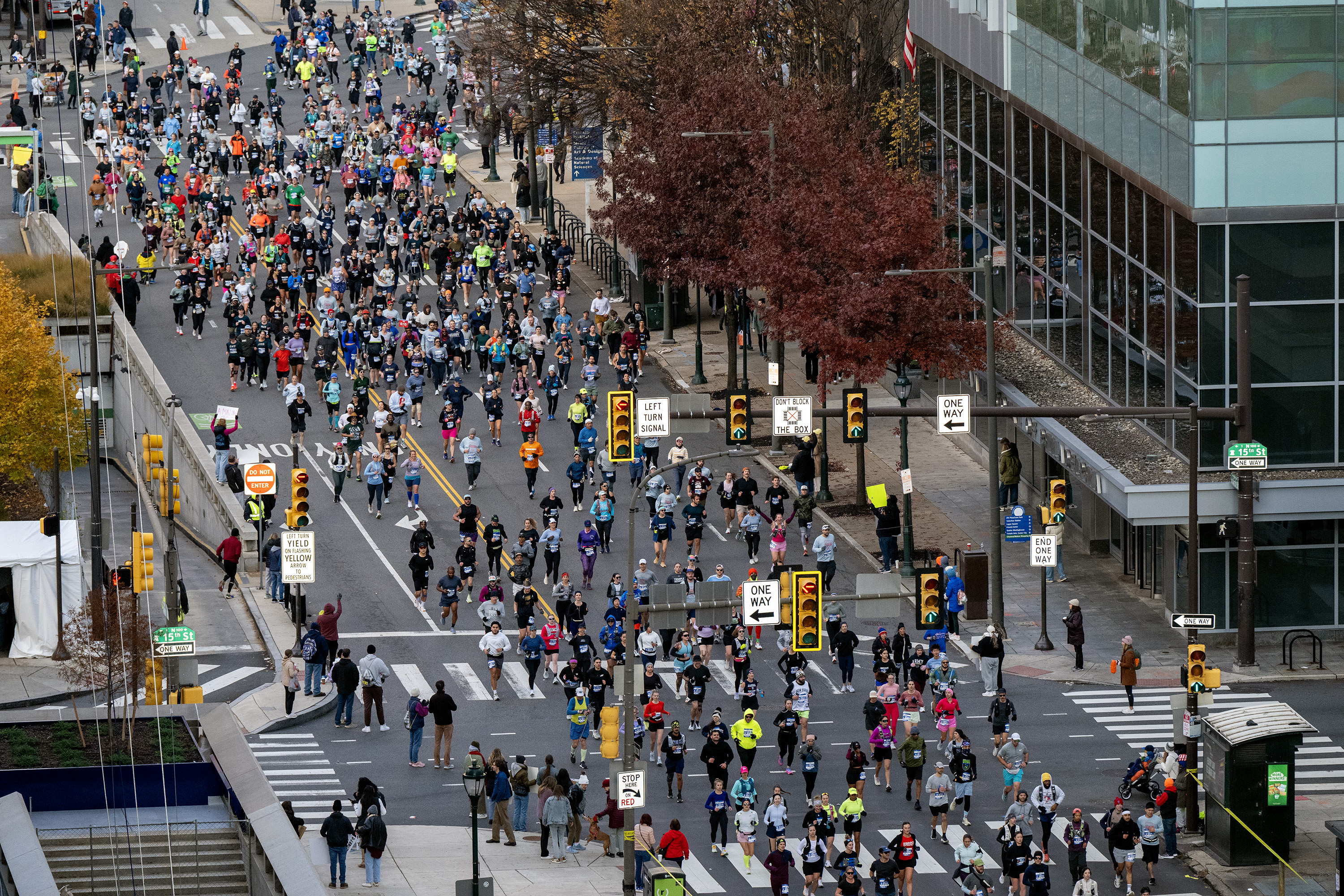
    Runners turn from the Benjamin Franklin Parkway (upper right) onto Arch Street heading to 15th Street (bottom) in the first mile of the annual Philadelphia Marathon on Nov. 23, 2025.Tom Gralish / Staff Photographer

    Where does the money go?

    Proceeds from the Philadelphia Marathon support several charities and nonprofits, including local organizations such as B Inspired Philadelphia and the Mazzoni Center.

    See a full list of partnering nonprofits on the Philadelphia Marathon website.

    Awards & prize money

    Cash prizes range from $1,000 to $10,000, depending on the race, with the Philadelphia Marathon’s professional division offering the largest awards.

    See a full list of awards and prize money on the Philadelphia Marathon website.

  • 2026 Volkswagen Atlas Cross Sport: Swooping into premium territory

    2026 Volkswagen Atlas Cross Sport: Swooping into premium territory

    2027 Infiniti QX65 Sport vs. 2026 Volkswagen Atlas Cross Sport SEL Premium R-Line AWD: Battle of the chopped-down SUVs

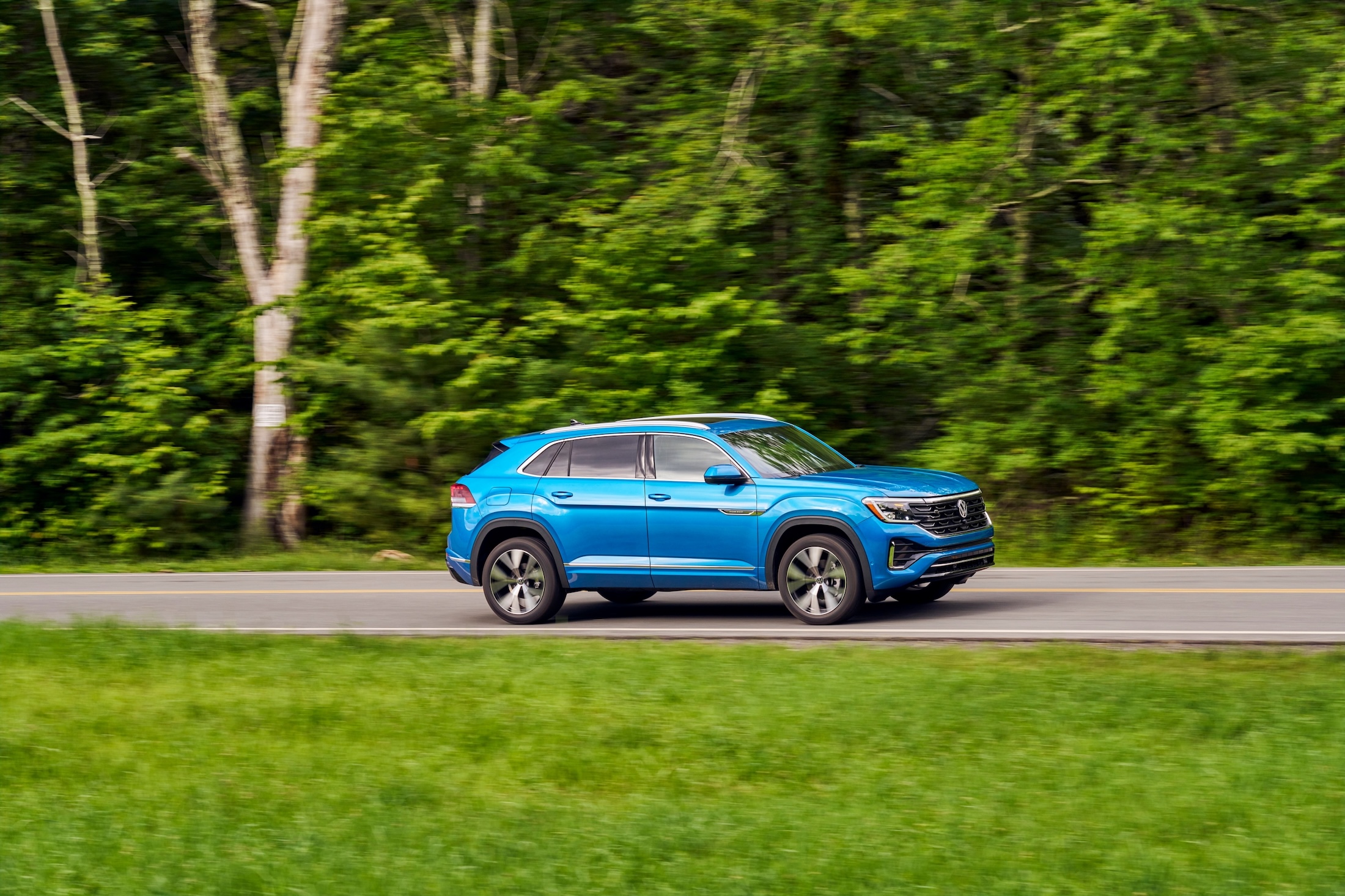
    This week: 2026 Volkswagen Atlas Cross Sport

    Price: $55,095 as tested. It’s a tippy-top-of-the-line sample, so no options on the test vehicle; even the panoramic sunroof, heated rear seats, and premium sound system were included.

    What others are saying: “Highs: Fashionable profile, roomy interior, even base SE comes well-equipped. Lows: Infotainment interface still on VW’s to-do list, dynamically blasé, value argument erodes with top trims,” says Car and Driver.

    What Volkswagen is saying: “That turbo engine means business — and fun.”

    Reality: Last week’s Infiniti confidence has met its match.

    What’s new: Not that much. The Atlas Cross Sport got its start in 2022. It’s based on the large three-row Atlas SUV; with a lowered rear roofline and removed third row and some tuning tweaks, you have a “sport crossover.” A refresh came for 2024. Its big moment will arrive in the 2027 model year with a redesign. So, maybe, here’s your chance to get a discount on a leftover, especially with Volkswagen crying poor these last few months.

    Competition: Volkswagen reaches for the stars with this model. Other writers may disagree, but the competition I see is in the upscale brands. In addition to the QX65, other competitors include Audi Q4, BMW X6, Lincoln Nautilus, Mercedes GLC-Class Coupe, and Porsche Cayenne.

    Up to speed: Car and Driver complains Volkswagen never got around to the multimedia center, yet C&D never got around to testing a Cross Sport from this latest generation. They cite a 2025 Atlas SUV for 0-60 numbers, noting a 7.3-second time in that larger SUV. Let’s assume this swoopier, seat-reduced version gets there in 7 seconds; even the 7.3 number is still a full second faster than the QX65.

    The 2.0-liter turbocharged four-cylinder engine creates 269 horses, precisely one more than the QX65. Its best trick is highway passing; stop paying attention in a radar zone, and expect flashing lights in your rearview as a reward. Just tell the nice patrol officer how cool the engine sounded doing it; maybe that will help. Advantage, Atlas Cross Sport.

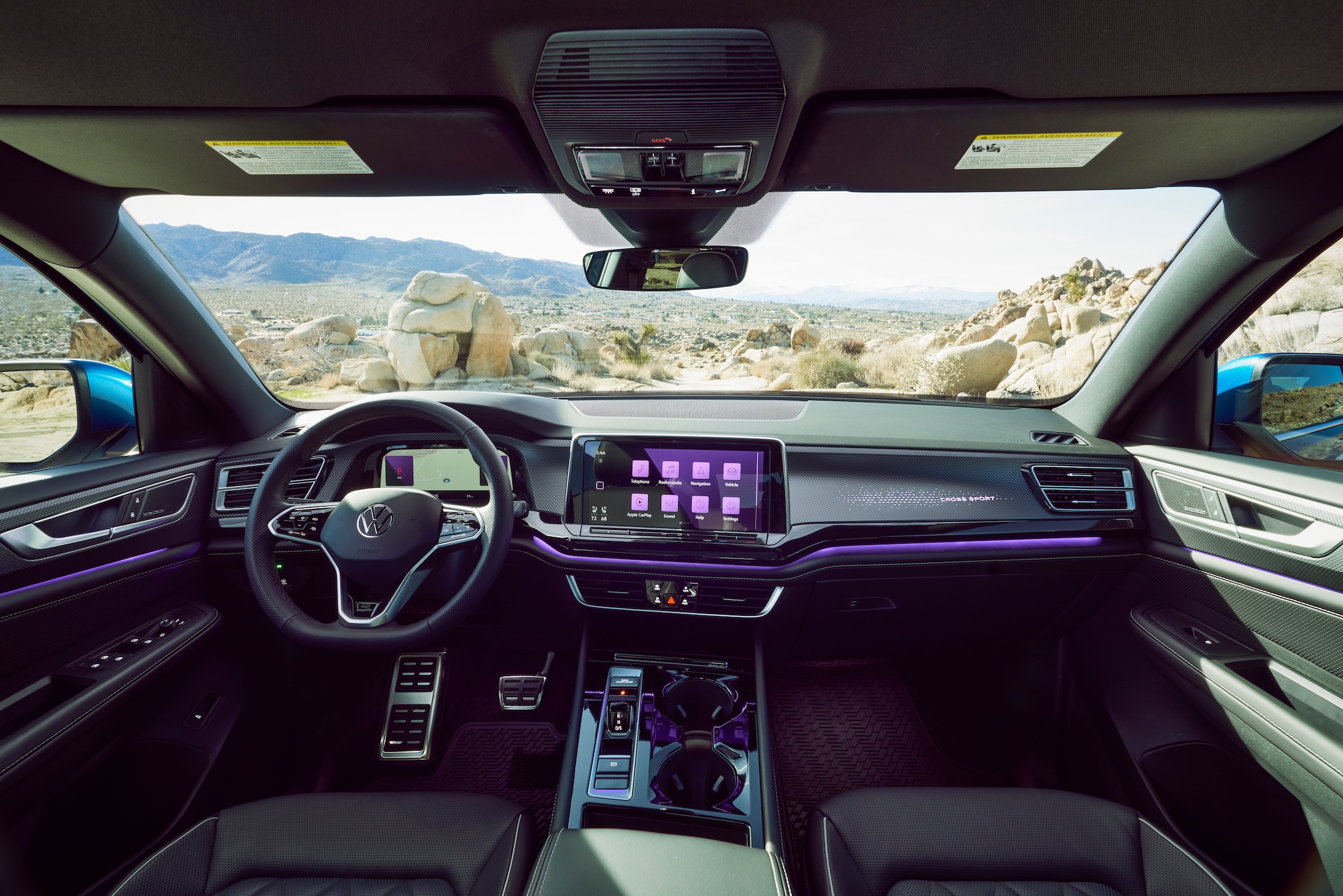
    Shifty: The Cross Sport gets the Audi-esque shift switch, which is a big toggle for R-N-D. Park is a button. Shutting down the Cross Sport is a “I’m Mr. Cool” moment. The start-stop switch sits in a row with the transmission choices, and a small electronic emergency brake brings up the back end. Park button, stop button, pull brake, boop, boop, yank. Pretty slick.

    There was shiftability as well, but I never tried it.

    On the road: The Atlas Cross Sport is by no means a perfect vehicle, but, man, did I look forward to driving it. The handling was direct, and Sport mode really brought out the best characteristics of the SUV. As I was putting the finishing touches on this comparison, I noticed I’d written that I did not look forward to driving the Infiniti, so the clear advantage again goes to the Atlas Cross Sport.

    The interior of the 2026 Volkswagen Atlas Cross Sport offers comfort, convenience, and some roominess.Volkswagen

    Driver’s Seat: The comfortable Driver’s Seat remained heavy on firmness like Volkswagens and Audis can be. The no-cost chalk and titan black leather interior rivals the upscalery of the competitors; so does difficulty seeing around the vehicle. Sloped windshields, high driving positions, and “sporty” designs make the close-ups hard to spot.

    The dashboard operates as easily as most VWs. Still, the QX65 gets this category.

    Friends and stuff: The rear seat is not as bad as some: The fabric matches the front; there’s some grip from the seat outlines; and the seat back does have two adjustments. But with seats that move forward and recline with more options, the QX65 wins this event.

    Cargo space is 40.3 or 77.6 cubic feet.

    In and out: It’s a bit of a leg hoist but not a lot.

    Play some tunes: I really thought the infotainment troubles I keep experiencing with Volkswagens have been my fault, but I’m glad to see Car and Driver says they’re “still on Volkswagen’s to-do list.” I can link up CarPlay in theory but can’t ever get the screen to show.

    At least the 12-inch screen works. I can find the settings without too much trouble. (It sounds small these days, but I thought it was a nice size.)

    Sound from the Harman Kardon system is about an A- or A. Even with the missing tech functions, the Atlas Cross Sport is ahead of the QX65.

    Keeping warm and cool: The HVAC controls have moved into the touchscreen, annoying at best. A button opens up the screen, and then look again for the choices. Cold mornings made balky controls balkier. This is a toss-up.

    Fuel economy: Over 800 miles with multiple drivers, the Atlas Cross Sport averaged around 22 mpg. That’s no great achievement, but it’s more than 10% better than the QX65.

    Where it’s built: Chattanooga, Tenn.

    How it’s built: Consumer Reports rates the Atlas Cross Sport reliability as 3 out of 5.

    In the end: CR pits this against more run-of-the-mill SUVs like the Subaru Outback and the Jeep Grand Cherokee, and you can certainly get a version of this for a more reasonable price.

    But at this level, the Atlas Cross Sport does a pretty good job of showing the far more expensive Mercedes and BMW products — as well as the competitively priced Infiniti — just how sporty crossovers can be.

  • Death toll rises to 8 in Brooklyn building collapse as rescuers dig through rubble

    Death toll rises to 8 in Brooklyn building collapse as rescuers dig through rubble

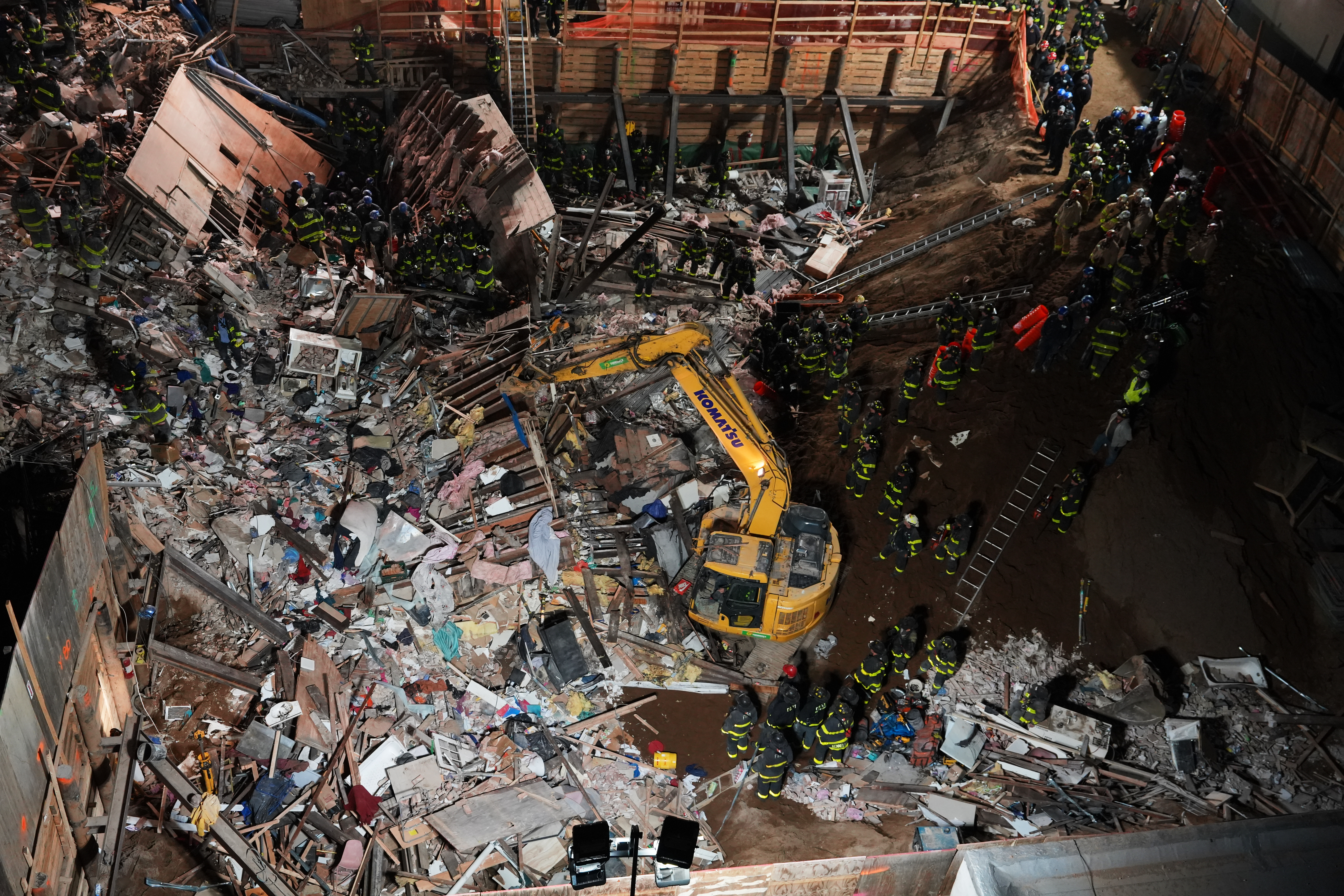
    NEW YORK — Crews operating heavy equipment hoisted chunks of debris Thursday in the search for more victims in the rubble of a collapsed Brooklyn apartment building that killed at least eight people, including two children.

    The three-story building gave way while construction workers were digging Wednesday afternoon at an adjacent lot, causing New York City’s mayor to order inspections at about 100 building sites involving companies related to the project.

    “If there is anyone, or any entity, operating in this city that bears responsibility for what happened, we will hold them fully accountable,” Mayor Zohran Mamdani said during a news conference.

    Investigators have not determined what caused the collapse that injured 18 others, including four firefighters, Mamdani said.

    One witness said he watched bricks fall minutes before the disaster while a woman in a neighboring building said she and fellow residents blamed vibrations from the construction for cracks that appeared in their apartment walls.

    Emergency workers used power saws and pickaxes to get through the debris, pulling four victims out of the rubble in the early hours of Thursday. Hours later, excavators removed larger piles of the wreckage so searchers could get deeper into the construction pit, said New York Fire Commissioner Lillian Bonsignore.

    “We always assume there are more people there until we can access the ground,” Bonsignore said. “So until we remove some of the bigger debris and are able to search beneath them, this will remain a rescue operation”

    Victims were from multiple countries

    Among those killed and injured were people from Mexico, Colombia, Ecuador, and Trinidad, Mamdani said. Two of the dead were construction workers, he said.

    He described how some workers who survived joined firefighters in digging out survivors, thanking “those who ran toward danger when this building collapsed, and in the hours afterward.”

    Witnesses describe the immediate aftermath and destruction

    James Williams, who works at a deli across the street, said he heard loud banging at the site all day Wednesday and looked outside to see bricks falling. “Two minutes later, the building collapsed,” he said.

    As the building crumbled and exposed the neighboring building, Williams spotted a woman on a staircase. “There wasn’t anything I could do,” he said, his voice cracking.

    Customers and stylists at a nearby hair salon jumped up and ran onto the sidewalk as the building fell.

    “We heard the boom and we all rushed outside and saw smoke and dust everywhere,” said hairstylist Brigitte Anama.

    She saw emergency workers pulling people from the rubble, including what appeared to be a child. “People were saying, ‘Pray for the baby, pray for the baby,’” Anama said.

    Dervie Mapp, who lives along the construction site, said she and others complained for months about the project. Her landlord brought engineers into the building, but residents never received an inspection report, she said.

    Rescuers with dogs searched through the night

    This was the second high-profile structural problem with a building in New York in the past five months. In July, several buildings in Manhattan were evacuated after support columns buckled inside a skyscraper that was formerly the headquarters of Pfizer.

    First responders in Brooklyn worked to clear through a massive heap that included mattresses, a broken sink, and a refrigerator tossed on its side. Among the belongings scattered in the rubble were vinyl records, clothes, and shoes.

    Rescue dogs sniffed piles of twisted wood and brick dotted with brightly colored clothing.

    Firefighters pulled a pregnant woman from the rubble Wednesday, hoisted her up on a stretcher, and rushed her to a waiting ambulance. Others were rescued as the night wore on.

    The fire commissioner said the search would not end despite heavy rain Thursday afternoon.

    Building records show there were four apartments on the upper two floors and a commercial unit on the ground floor of the collapsed building.

    A construction worker from Ecuador was among those killed

    The Consulate of Ecuador in New York said José Luis Caguana Cosquillo from Ecuador was among those found dead.

    His brother told WNBC-TV that he died while working at the construction site. He was an immigrant from Ecuador who had been in the U.S. for about six years and had a pregnant wife and a young child, Carlos Caguana said.

    “He was the sole provider for the family. Now that he’s gone, she is going through an immense amount of pain,” Caguana said.

    The surrounding blocks along Flatbush Avenue, a busy thoroughfare in Brooklyn, are tightly packed with mostly older brick buildings and a few newly built apartment complexes. A mix of Caribbean and Mexican restaurants reflects the diversity of the neighborhood.

    Inspectors reported violations at the construction site this year

    New York City’s buildings commissioner, Ahmed Tigani, said Wednesday that construction workers were excavating the empty lot next door when the building buckled. The city’s Department of Buildings is investigating what caused the collapse.

    The architect, property owner and general contractor listed in city records have not responded to phone and email messages seeking comment.

    City officials said a stop work order was issued in March after inspectors concluded the building next door was being demolished without adequate overhead protection such as netting to shield neighboring buildings, the department said in an emailed statement.

    In April, inspectors found that the demolition work had resumed in violation of the stop work order, the department said. Work was allowed to continue in May after the problems were corrected, it said.

    The project has active permits for excavation and foundation work.

  • Cold, rain, wind, and possibly stray snowflakes are forecast this week in the Philly area

    Cold, rain, wind, and possibly stray snowflakes are forecast this week in the Philly area

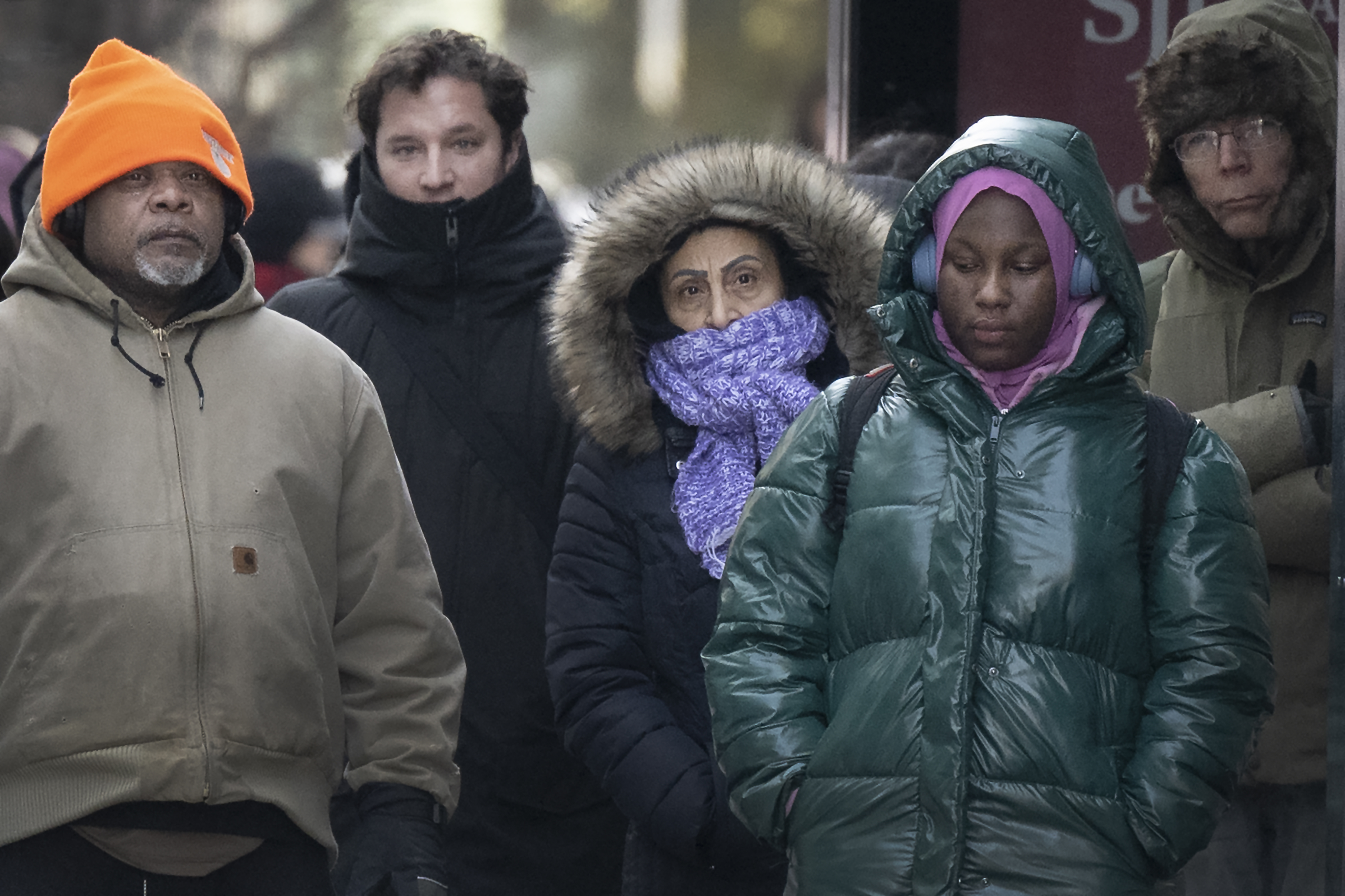
    It won’t be extreme — about what one might expect in mid-November when the sun goes to bed early and takes its time pinking up the sky in the morning — but a December-like chill is about to settle across the Philly region.

    After a gloomy, rainy Thursday — with a thunderstorm possible — forecasts are calling for highs in the 40s Friday and Saturday, with perhaps some wet snowflakes making cameos.

    The chill should last into early next week. However, it appears warmer days will be making a strong comeback after that, with perhaps record warmth Thanksgiving week.

    The forecast for the Philly region

    Light rain is expected to develop Thursday with highs in the 60s, but winds from the northwest generated by a coastal storm due to mature off the Jersey coast are expected to import much colder air Thursday night into Friday, with more rain possible.

    Snow is possible in the higher elevations of Eastern Pennsylvania, and random snowflakes could find their way into the Philly region, said Marc Chenard, senior branch forecaster at the federal Weather Prediction Center, in College Park, Md.

    But no cause for panic.

    While the cooldown won’t be polar vortex stuff, stiff northwest winds will drive wind chills into the 30s through the weekend.

    Areas in the city away from the core heat island could see temperatures below freezing, said Amanda Lee, meteorologist with the National Weather Service office in Mount Holly.

    “It’s going to be a shock to the system,” said Tom Kines, senior meteorologist with AccuWeather Inc. “We’ve been spoiled for the last several weeks.”

    True. In fact, after a mild October, temperatures this month are running a lusty 7 degrees above normal.

    That has a lot to do with that El Niño warming of sea surface temperatures in the equatorial Pacific, Kines said.

    El Niño continues to cook and affect U.S. weather

    The interaction of the overlying air and the waters that have been running about 4 degrees Fahrenheit above normal have been delivering generous amounts of warmth to North America.

    That is likely to continue.

    A significant warmup is likely in the region starting in the middle of next week, and Kines said that heading into Thanksgiving week, record warmth is possible in Philly.

    The government’s Climate Prediction Center has the odds strongly favoring above-normal temperatures in the Northeast leading up to Thanksgiving, not the most welcome news for ski resorts hoping for early openings.

    It is likely to get chilly again Thanksgiving weekend, but “before that we’re going to have a lot of nice weather,” he said.

    Meteorologists still are keeping an eye on an Arctic disturbance that may allow cold air to spill southward later in the month or in December.

    But for now, Kines said: “This is El Niño all the way.”

  • The midterm elections are over. The test of our right to assemble is not.

    The midterm elections are over. The test of our right to assemble is not.

    Alaine K. Arnott is the president and CEO of the National Liberty Museum in Philadelphia.

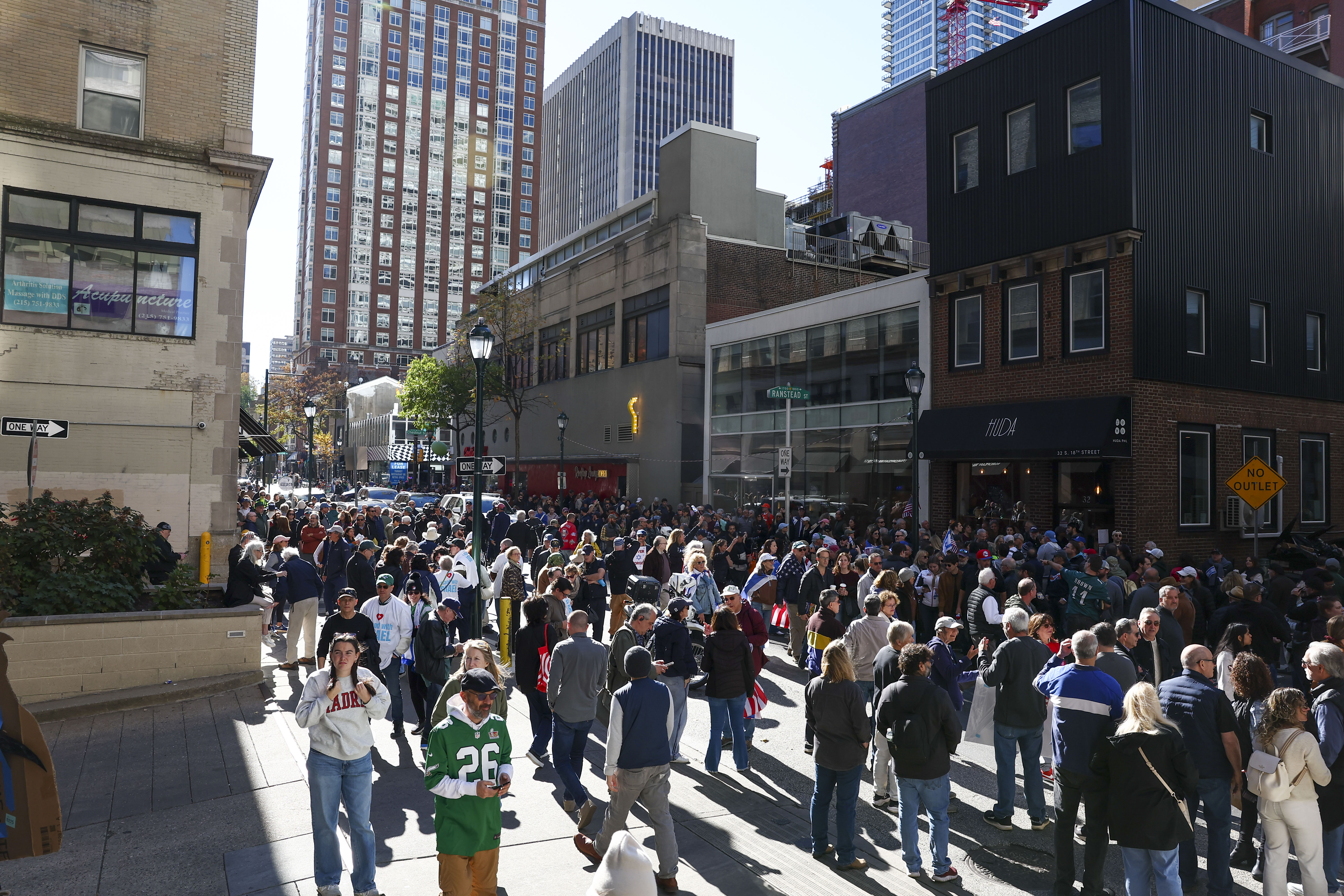
    Last Sunday on Walnut Street, a woman held a sign above her head that read, “HATE is not Brotherly LOVE.” A few dozen feet away, a man held one that read, “Money loving Zionists.” Cyclists carrying Palestinian flags rode past both, while police officers on bicycles moved between the crowds. Each side may have seen the other as a threat. All of them were standing in and utilizing the same American constitutional system.

    That system has just faced one of its regularly scheduled stress tests, and the strain is not yet over. Protest activity does not quiet down when the polls close; it often ratchets up. Immigration enforcement, reproductive rights, campus free speech policies, the Israeli-Palestinian conflict, economic angst, and the election results themselves will continue to converge on our cities, sometimes at the same time.

    As Americans, we should plan for a season of demonstrations, not be surprised by one. And at moments like this, civic leaders such as myself should not stay on the sidelines. We have a role to play in defending the right to assemble, and an equally important one in teaching people how to exercise that right safely, effectively, and legally, whatever their cause may be.

    The government has the authority to enforce the law. Citizens have the right to challenge how that authority is used. Officers must be able to do their jobs without being threatened, and protesters must be able to object without being treated as enemies of the state. A functioning democracy holds all four ideas at once.

    The First Amendment protects the right of the people to assemble peaceably and petition the government. “Peaceably” matters. Violence, threats, destruction of property, and unlawful physical interference with government are not protected simply because they occur during a protest. But “the right of the people” matters just as much. Officials should not treat anger as violence or a crowd as dangerous. The standard must be conduct, not viewpoint or which viewpoint a crowd supports.

    Philadelphia just put that principle to the test. A group calling itself Philly Bike on Your Left organized last Sunday’s “boycott ride” through Rittenhouse Square, targeting six Jewish-owned businesses because of their alleged support of Israel. This demonstration also fell on the eve of the 88th anniversary of Kristallnacht, the night when Nazi mobs ransacked Jewish shops and synagogues.

    Mayor Cherelle L. Parker, Gov. Josh Shapiro, Attorney General Dave Sunday, and countless other elected officials and faith leaders condemned this assembly as antisemitic. The organizers, however, insisted their quarrel was not with the Jewish community, but with Israel.

    Police estimated roughly 500 protesters and counterprotesters in total. Throughout the event, many heated words were exchanged, and three arrests were made, but no property was damaged, and crowds had all but dispersed by early afternoon.

    I bring this recent event up not to make a political statement, but to make a constitutional observation. Both sides were exercising the same constitutional right.

    The U.S. Supreme Court has consistently held that peaceful political boycotts are protected expression, and a government cannot shut one down simply because officials find its message offensive.

    In this framing, our elected officials did their duty, balancing and defending the organizers’ right to protest peacefully while also voicing their own personal beliefs regarding the morality of the message that organizers were spreading.

    While the Constitution limits how our government may respond to this kind of speech and assembly, it places no such limits on what citizens may say back. And Sunday’s counterprotesters showed us exactly that.

    Regardless of your opinion on the cause of the assembly or the content of the speech, one thing is clear: What we saw on Sunday is exactly how our system was designed to work and must operate. Answering speech and assembly not with government intervention and suppression, but with more speech and assembly is exactly the right way for Americans to exercise our freedoms.

    As president and CEO of the National Liberty Museum, I have seen too often where things go astray because most Americans have never been taught how to demonstrate safely, effectively, and legally. They are not familiar with their rights when approached by police, how the permitting process works, what “time, place, and manner” restrictions mean, or how a peaceful gathering can be hijacked by a few bad actors.

    That gap in civic knowledge is where museums and civic institutions like mine can do real good, and where confusion and fear currently thrive.

    We need to teach this directly. We need to teach what the law actually protects vs. what it does not. Organizers need to know how to document a demonstration and spot agitators before they become the story. And everyone should understand how to de-escalate and calmly assert their rights with law enforcement.

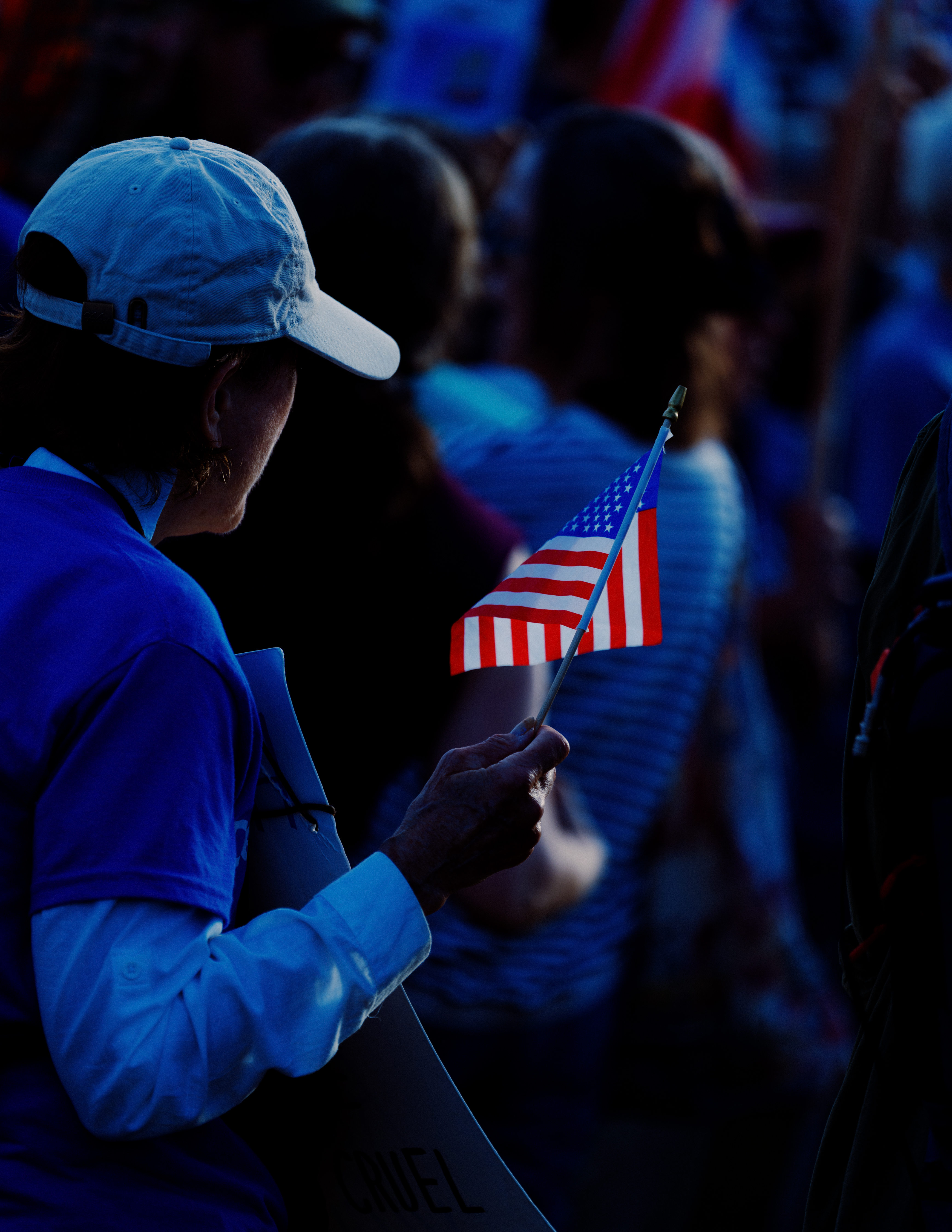
    Demonstrators during a protest against President Donald Trump’s proposed arch in Washington, Oct. 1.ALEKSEY KONDRATYEV

    That is why the National Liberty Museum created “The Freedom to Peaceably Assemble,” an online guide that explains where you can protest, when you need a permit, how to record law enforcement officers, and what to do if you are ordered to disperse.

    And importantly, what forms of action are and are not protected.

    Freedom of assembly is not a political or partisan issue. As Americans, we all possess the same rights and responsibilities. But these rights are only meaningful if we know how to use them. Knowing how to assemble is just as useful for every parent protesting a school board decision as it is for every student walking out over war, every union member picketing for a better contract, and every Philadelphian who stood on Walnut Street last Sunday.

    As keepers of our shared history, museums and other civic institutions play an important role in preserving the record: the signs and banners, the experiences of immigrant families, the officers’ accounts, permits granted and denied, footage before it is edited and twisted and transformed.

    Preserving this competing and oftentimes contradictory evidence is how future citizens come to understand what actually happened, not just what the loudest voices say happened.

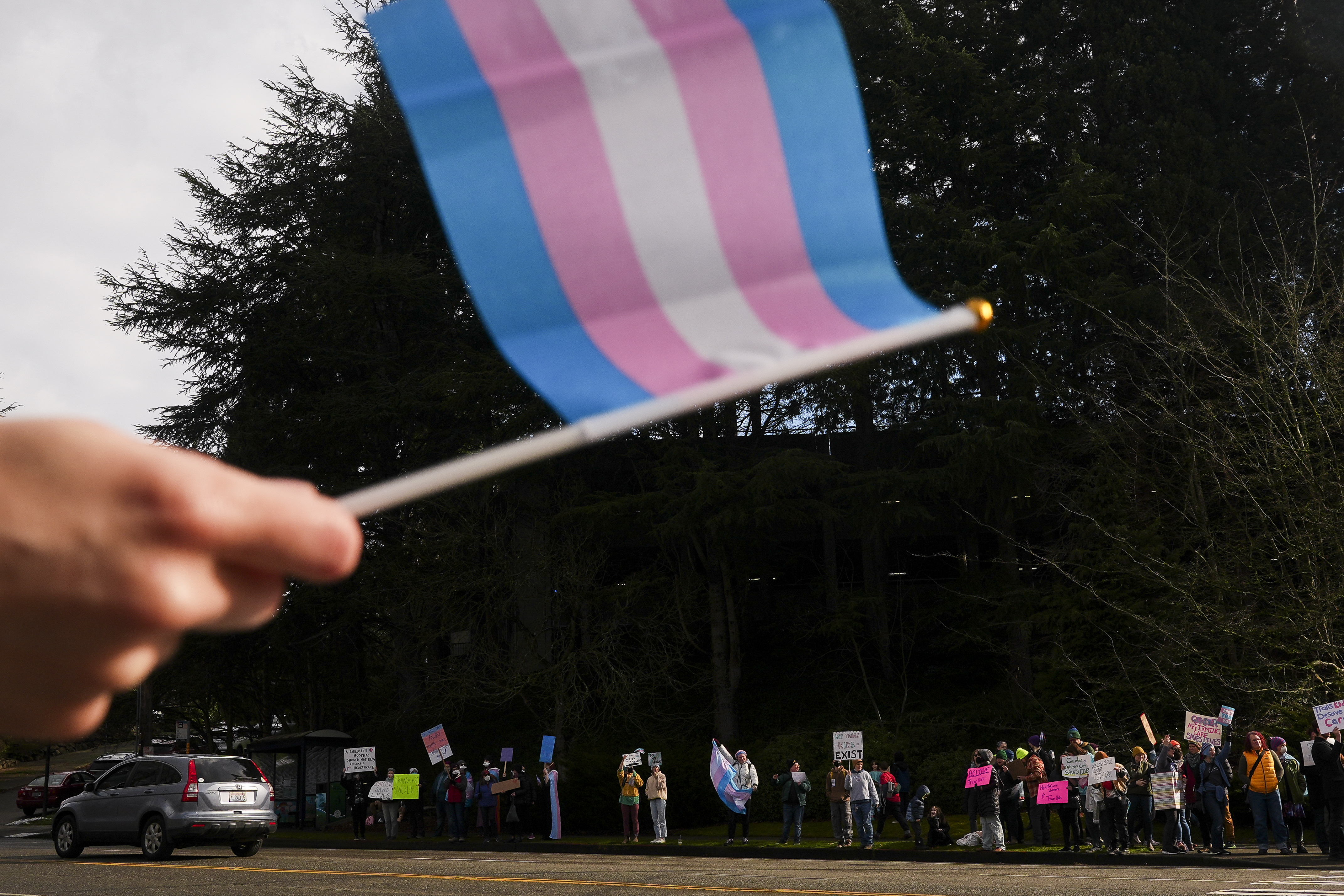
    A person waves a trans pride flag during a pro-transgender rights protest outside of Seattle Children’s Hospital in February.Lindsey Wasson

    There will not be one answer for every demonstration in the months ahead, because context, along with time, place, and manner, all play a role. But the integrity of the process depends on rules that are understandable, proportionate, and applied consistently.

    To protect our right to assemble, protesters and law enforcement need to know where dissent ends and unlawful conduct begins. And when gatherings begin to boil over, public leaders should focus on lowering the temperature rather than leveraging confrontation for political points.

    As a nation, we do not protect freedom of assembly because every crowd is wise or every cause is just. We protect it because government should not decide which peaceful voices deserve to be heard.

    The test is not whether we defend assembly when we agree with the people gathering. It is whether we equip every American, whatever their sign or slogan, to exercise that right peacefully and lawfully.

  • Israeli strike on a Gaza hospital kills 6 people, including a doctor, Health Ministry says

    Israeli strike on a Gaza hospital kills 6 people, including a doctor, Health Ministry says

    KHAN YOUNIS, Gaza Strip — An Israeli airstrike hit the surgical wing of a major hospital in southern Gaza on Thursday, killing six people, including a doctor, and wounding at least 28 others, Gaza’s Health Ministry said.

    The Israeli military said it struck a Hamas commander and other militants, without providing evidence.

    Nasser Hospital in the city of Khan Younis is one of the few functioning medical facilities left in Gaza, whose healthcare infrastructure has been decimated by a yearslong war.

    The Israeli military has raided or laid siege to hospitals across the territory, accusing Hamas of using them as command centers and to hide fighters. It has also destroyed medical equipment and supplies and killed or detained hundreds of healthcare workers.

    The Gaza Health Ministry said Thursday’s strike killed general surgeon Rizk Abu Shaira. Inside the building, parts of several floors were either severely damaged or destroyed. Debris was scattered across hospital beds and equipment, and rebar dangled from the ceiling.

    Work is halted in several areas of the hospital after the strike

    British surgeon Goher Rahbour, who is volunteering at Nasser Hospital, said that the strike occurred just after midnight and shook the whole building.

    “It was extremely smoky,” said Rahbour, who was on the fourth floor of the surgical department at the time. The recovery area on the same floor was reduced to rubble, he said.

    He said he had been operating alongside Abu Shaira just hours before the strike. “Lovely guy, happy and smiling,” Rahbour said.

    Ahmed al-Farra, a doctor and the general director of the hospital, said no warning came before the attack. He said surgeries had been suspended, as had work in the radiology department and the laboratory, because of damage to the building where medical personnel were already struggling to provide care due to supply shortages and “miserable” conditions.

    He said other nearby medical facilities were not equipped to do the type of “specialized surgeries” that Nasser Hospital had been providing, leaving patients in need of them to “face an unknown fate.”

    He said an attack on a hospital should be met with a forceful response from the international community. “Imagine if this event happened in another country in the world. Would the world fall silent about it? No, by God, no.”

    “No one’s safe here,” he added, switching from Arabic to English.

    Israel has targeted Nasser before

    The Israeli military has raided or laid siege to hospitals across Gaza, accusing Hamas of using them as command centers and to hide fighters. It has also destroyed medical equipment and supplies and killed or detained hundreds of healthcare workers.

    In armed conflict, hospitals and their staff are protected under international humanitarian law. A hospital can lose its protected status, however, if it is used for military purposes.

    In a statement on Thursday, the military said Hamas had “established a presence within the hospital complex” and that the commander had turned it “into a headquarters.”

    Israeli forces have previously attacked Nasser Hospital. In 2025, the military killed five journalists — including Mariam Dagga, who worked for The Associated Press — when it struck a gathering point for local reporters at the complex.

    The war in Gaza started on Oct. 7, 2023, when Hamas-led militants attacked southern Israel, killing around 1,200 people and taking 251 others hostage. Since then, Israel’s retaliatory offensive has killed more than 74,600 people, according to the Gaza Health Ministry. The ministry, part of the Hamas-run government, maintains detailed records and its figures are seen as generally reliable by U.N. agencies and independent experts. It does not distinguish between civilians and militants in its toll but says women and children make up around half the dead.

    Israel has continued to strike Gaza despite a U.S.-backed ceasefire and controls at least 60% of the enclave. Since the truce went into effect in October 2025, Israeli strikes and gunfire have killed 1,622 people, health authorities say. Five Israeli soldiers have also been killed during that period.

  • Rowan University is ending its 40-year MLK Day breakfast in a cost-cutting move

    Rowan University is ending its 40-year MLK Day breakfast in a cost-cutting move

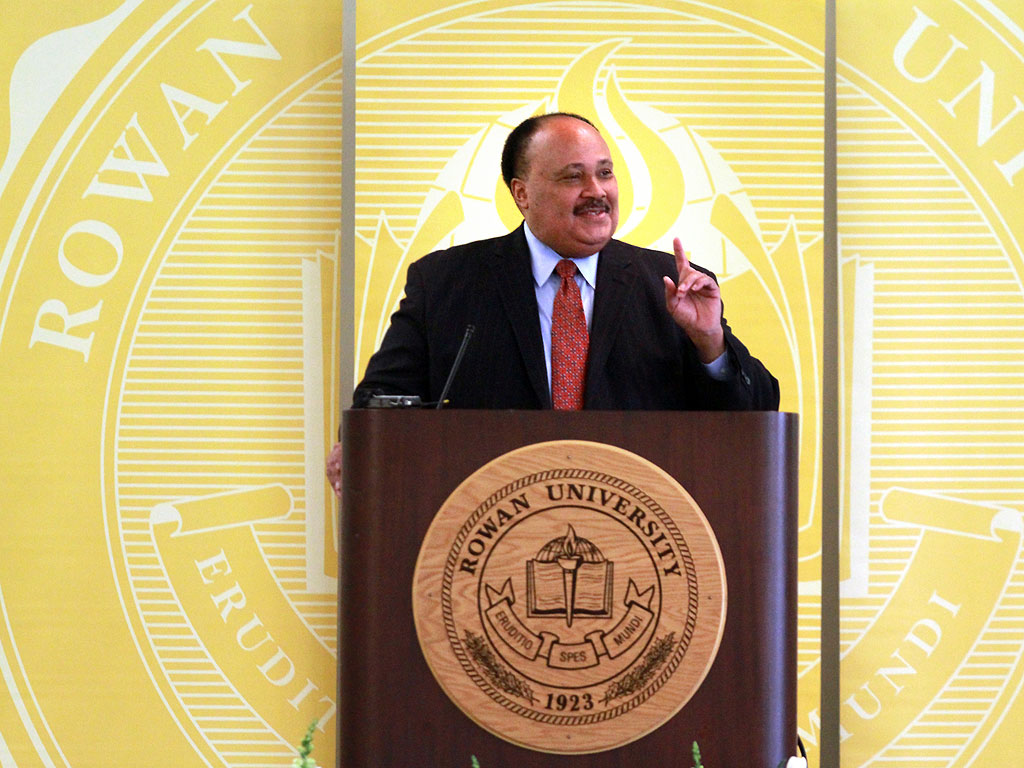
    For the last 40 years, Rowan University has celebrated Martin Luther King Jr. Day with an annual breakfast and speeches by the country’s leading civil rights leaders. It once included King’s son, Martin Luther King III.

    But in a cost-cutting measure, the public university is ending its breakfast tradition, said Joe Cardona, a university spokesperson. Some Black community members who have long attended the breakfast say the change is a loss.

    The breakfast is one of several cuts the university is making to prepare for a future with a potential shrinking student body and tighter budgets, Cardona said. Other “internal and external events” were also scaled back, he said, but did not name them.

    “We’re looking at expenses because we don’t know what’s going to happen tomorrow,” Cardona said. “We see a decline in the next 15 years of the amount of students coming to higher education. … What are the things we need to do now to prepare ourselves for the future? The breakfast fell into that category.”

    Last year, the breakfast cost $79,600, Cardona said, and made about $53,300. The university was responsible for filling the gap, with various college departments volunteering money to help out.

    It has also been harder to recruit recognizable names for the breakfast, especially people affiliated with King, which has hurt attendance.

    Last year, 259 people attended the breakfast, Cardona said, fewer than in prior years, and 70 of those tickets went to students for free. When comedian and actor Dick Gregory spoke in 2004, 400 people were there to listen, The Inquirer reported at the time.

    Tickets for the breakfast, $75 each, went toward the William H. Myers scholarship endowment fund, which supports high-achieving students. Myers, who died in 2003, was assistant dean of students, a mentor for numerous student groups and student leadership programs, and a recipient of Rowan’s Joseph A. Barnes Award, a recognition for outstanding service to the college.

    “We were passing the hat around the college more than in the past just to make ends meet and keep money flowing to the scholarship fund,” Cardona said.

    Instead of the breakfast, Rowan, which has an $814 million budget for 2026, will host community service events on the Saturday after the holiday. The university will ask corporate donors to support the Myers scholarship fund, including the breakfast’s longstanding sponsors, PSE&G and Atlantic City Electric.

    The school announced the change in a September email. The Rowan University Black Alumni Network, one of Rowan’s largest affinity groups, was not notified in advance, which Cardona said led to an influx of messages to university administration.

    Jeannine Frisby LaRue, an activist, Rowan alumna, and chair of the university’s Education Advisory Board, said she understands that the school is under financial pressure, but she wishes that the university had notified Black alumni well in advance.

    Now, LaRue said she and others want to host their own Gloucester County King breakfast with more affordable, local speakers. She said she would pitch in $5,000 to get them started.

    “I believe there will be an event in January,” LaRue said. “We have 60 days to make a tradition, to find other donors.”

    ‘The spirit of Dr. King’

    The Rev. Keith Dickens, who retired from Rowan’s admissions department in 2025, helped lead the breakfast for more than two decades.

    Dickens remembers securing Civil Rights Movement legends — the Rev. Walter Fauntroy, entertainer and activist Harry Belafonte, and lawyer Clarence B. Jones, King’s friend and draft speech writer — to speak to the hundreds who would attend the breakfast.

    Rowan’s breakfast was one of the best King celebrations in the country, Dickens said, adding that it provided an opportunity to hear stories from people who knew King, like Fred Shuttlesworth, who had invited King to Birmingham, Ala., in 1963, and Gregory, an activist who confronted racism with his comedy.

    “People are not paying $75 for shrimp and grits. They’re paying $75 to see Dick Gregory, Martin Luther King III,” Dickens said. “They wanted to be able to feel the spirit of Dr. King and be inspired and encouraged to continue their work.”

    Community service is not new to Rowan’s annual King celebrations. In recent years, service activities have immediately followed the breakfast, but Cardona said Rowan struggled to get people to show up because many students leave campus for the long weekend. He hopes moving the community service event to the following weekend will boost attendance.

    Dickens said while service events play an important role, they should not be the only acknowledgment of King.

    “It’s not an ‘either-or.’ It’s a ‘both-and.’ Dr. King was about word and deed,” Dickens said. “I don’t want to throw that out the window, but people can do good things without Dr. King.”

    Hopes for the future

    Edith Myers Spearman, the sister of William Myers, whose name is on the scholarship fund, said her main hope is preserving her brother’s legacy.

    “I’m sorry to see any celebrations change, but … I know things are changing financially, and I’m cognizant of that. It’s their decision,” said Spearman, who graduated from Rowan in 1972 when it was Glassboro State College.

    The scholarship fund currently has $175,000 in it, and the fund continues to grow through investments every year, Cardona said. Rowan spends 4.5% of the fund annually for scholarships.

    Cardona said the school should have no problem giving out the scholarship “in perpetuity.”

    For some, the breakfast was about more than raising money.

    Loretta Winters, president of the Gloucester County NAACP, has not gone to Rowan on the holiday in recent years because she volunteers at Habitat for Humanity, collecting bags of winter clothes and dropping them off at local shelters.

    But she said South Jersey needs events that keep history alive and offer a sentiment of inclusion.

    “You have to find somewhere to cut, but it’s sad that they’re cutting things under the umbrella of diversity, equity, and inclusion,” Winters said.

    Winters said she hopes Rowan includes local activists like herself in ongoing conversations about what a day of service in Gloucester County should look like.

    “I’m anxious to find out what they’re doing,” Winters said, “and I would love to be a part of it.”