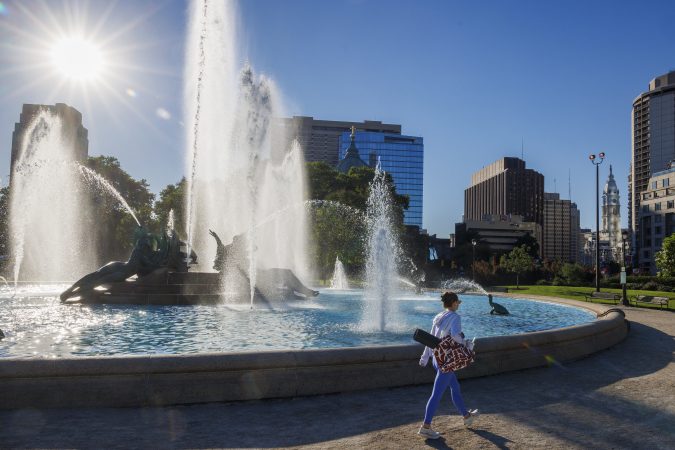
With the summer solstice still two weekends away, already the temperature has reached 90 degrees or higher in Philly nine times.
And while the sequence of 90s has been extraordinarily premature, the early experience may come in handy this week as the region could experience triple-digit heat indexes.
“It will definitely feel different,” said Ray Martin, lead meteorologist with the National Weather Service office in Mount Holly, as the humidity and dew point, the measure of absolute moisture in the air, reach their highest levels of the year to date.
Any 100-plus heat indexes may present challenges to some older residents, and those with heart and other health issues. The weather service Wednesday morning issued an advisory for indexes of up to 103 Thursday and Friday.
But the heat the region has experienced, starting in mid-April, could be viewed as a sort of spring training for the discomforts to come, said Samuel Eldrich, director of the Temple Health-Chestnut Hill Hospital Emergency Department.
“It’s all about adaptability,” he said. And it’s not just physiological, he said.
In addition, a juicier atmosphere may squeeze out some much-needed rain.
The regional forecast for the next several days
Showers are possible Wednesday morning and late in the day, Martin said, with highs in the mid-80s. However, it might not get cooler than 70 degrees early Thursday, a sign that mugginess is on the increase.
A moist air mass inhibits daytime heating from escaping into space, and the heat and humidity build for real on Thursday.
“It’s not going to feel nice out there,” said Tom Kines, senior meteorologist with AccuWeather Inc.
Shower chances are in the forecast Wednesday through Friday, and at times the atmosphere will be highly energized, Martin said. The Storm Prediction Center in Norman, Okla., has outside chances for severe thunderstorms for the entire region Thursday and Friday. Isolated flooding downpours are not out of the question, Martin said.
The heat and storm threats should back down some by the weekend, when Philadelphia hosts the World Cup match between Ecuador and the Ivory Coast, with a high about 90, the air less muggy, and rain looking unlikely.
How hot has it been in Philly so far?
Philly has logged four daily highs of 90 degrees or more so far this month, and nine since April — including four record highs — almost a third of the average for an entire year.
Far more dangerous are hot spells that come abruptly after the weather has been relatively cool and comfortable for a period, he said.
Early heat, which typically is short-lived, can make a difference in terms of how we respond to subsequent hot spells. “You’re more accustomed” to the heat, Eldrich said. “You’ve adapted to the lifestyle. You sweat more quickly, more easily.”
People are more likely to stay inside, and stay hydrated.
“It’s both the physiological and the cultural factors,” he said. “In the South, you don’t hear about heat exhaustion or heat emergencies. It’s something they deal with three-quarters of the year rather than a quarter of the year.”
Drought conditions persist, but more rain may be coming
The longer-range outlooks favor above-normal temperatures for the rest of the month, but they also see the odds tilted toward above-normal rainfall.
That would be a switch. Philadelphia’s precipitation has been below normal for 10 consecutive months.
“We could certainly use the rain,” Martin said. The interagency U.S. Drought Monitor has most of the region under “severe drought” conditions. State-declared drought emergencies remain in effect in New Jersey and Chester County.
Any showers would mean temporary breaks in the heat Wednesday and Thursday, and the heat wave is not expected to survive the weekend, in keeping with a trend.
Even though average summer temperatures have been rising, the hot spells this century have not lasted as long as some of those of the 1990s.
“Let’s hope that streak continues,” Martin said.
Whether it is related to heat-wave durations or the city’s responses to hot-weather emergencies, heat mortality is way down in Philadelphia.
From 1991 through 2000, 227 heat-related deaths were recorded in the city. In the last 10 years, there were 37.
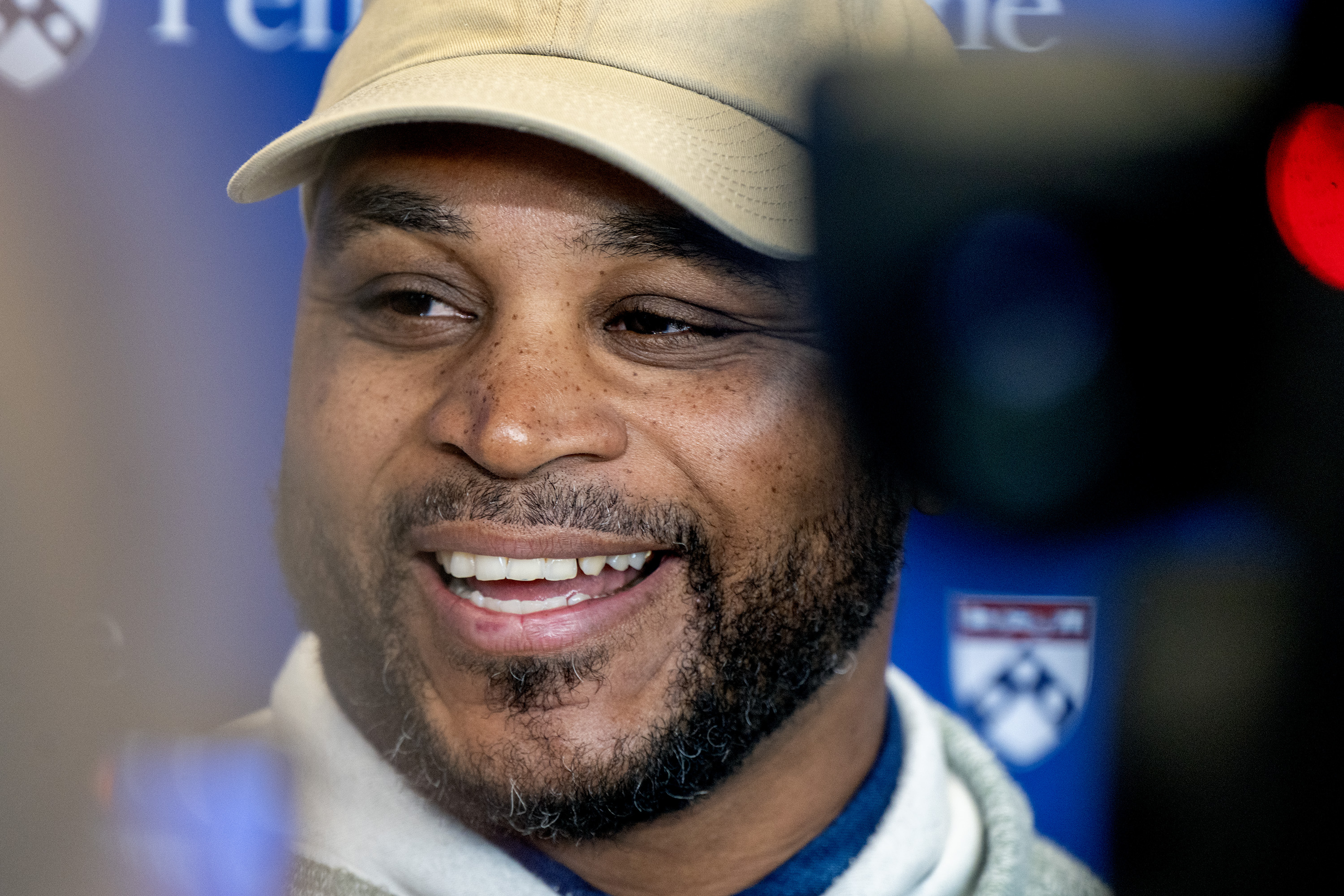
Jameer Nelson took care to draw a distinction that was important to him and should be important to the franchise that has promoted him.
“Growing up in this area — everybody keeps saying Philly — I’m a Chester native,” he said Monday. “Philly adopted me.”
There’s a difference between the two, as anyone who has lived and followed basketball in the Philadelphia area long enough can tell you. Chester is a small, forever struggling city with its own glorious hoops history, with a high school program that has won eight PIAA boys basketball championships, with its own heroes and legends, the 76ers’ executive vice president of basketball operations among them.
When Nelson mentioned his favorite players as a kid, he name-dropped Charles Barkley and Allen Iverson. Any Chester aficionado would have chided him for leaving John Linehan and Zain Shaw off his list, and he laughed in acknowledgment of the omission.
That contrast might not seem to mean much. But it said everything about Nelson’s potential value to the Sixers, to his ability to provide at least some of the institutional memory and understanding of the market that the organization has lacked for so long. “No one more capable,” Phil Martelli, Nelson’s coach at St. Joseph’s, said in a text message Monday.
He knows Philadelphia and Chester and knows they aren’t quite the same. He knows what it was like here in 2001, when Iverson led the Sixers to the NBA Finals, and he knows what it was like in early 2004, when Nelson himself led the Hawks in that magical unbeaten regular season and that run to the Elite Eight.
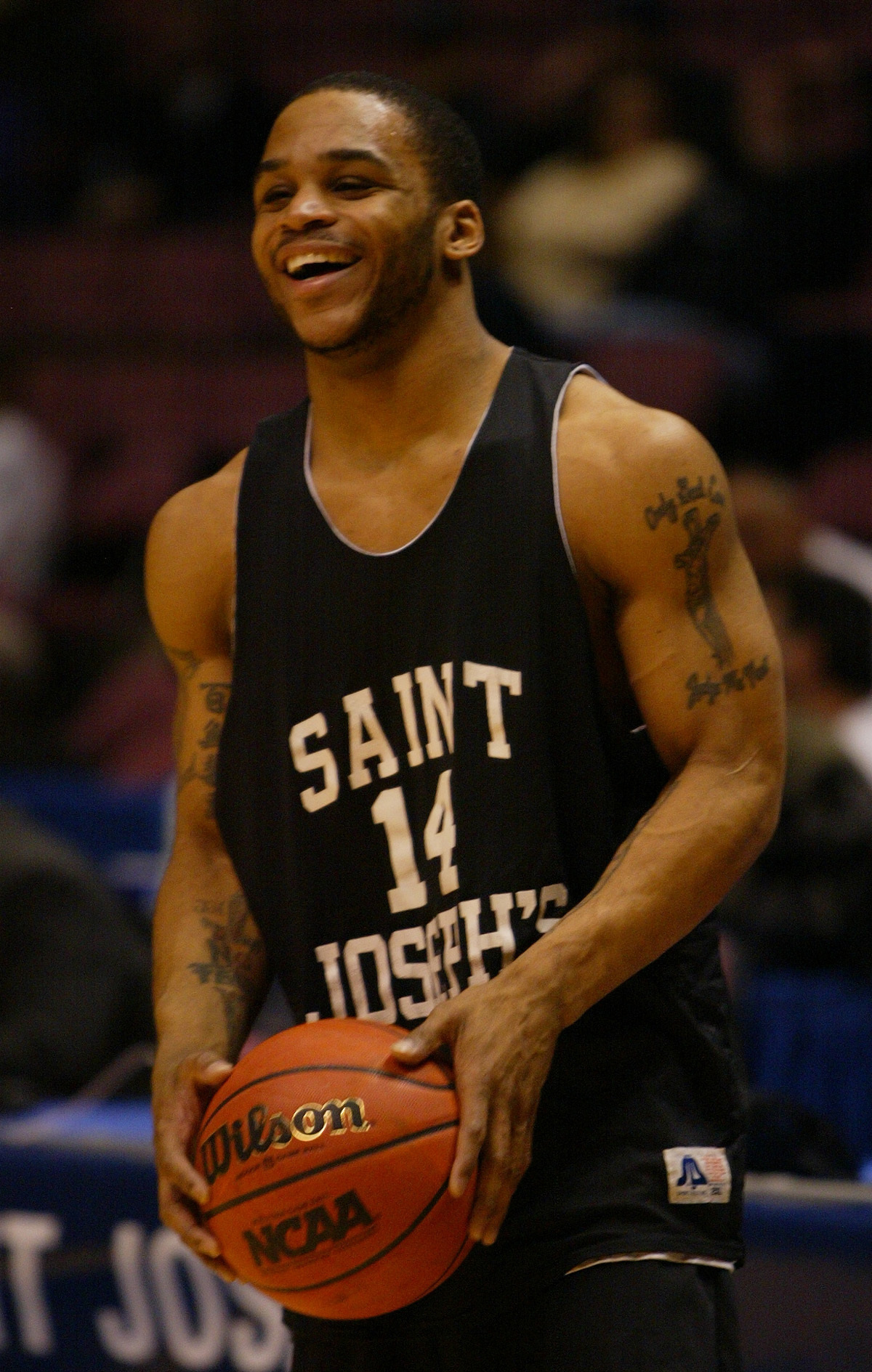
Jameer Nelson Sr. was a 2,000-point scorer for St. Josephs. He ignited the Hawks to the NCAA Tournament Elite Eight in 2004.George Reynolds / Staff Photographer
He knows what will play here and what won’t, who can play here and who can’t.
“Understanding the landscape and understanding what this team means to the city, I can bring that,” said Nelson, who had a 14-year playing career in the NBA. “I can help everybody in the building understand that because I understand it. Growing up, I was one of the people who are doing what people are doing now.”
Too few people among the Sixers’ previous power players have had that background, and no member of the current leadership has it. Harris Blitzer Sports & Entertainment president Bob Myers lives in California. Mike Gansey, the Sixers’ new president of basketball operations, reminded people at the team’s headquarters in Camden that he “just got here” after growing up in the Cleveland area and working for the Cavaliers for 15 years. And managing partner Josh Harris splits his time between Miami and his $28 million mansion in the Georgetown section of Washington, parachuting into town for home games and the latest hiring/firing news conference.
Nelson still is third in the pecking order at best within the Sixers’ basketball hierarchy, behind Myers and Gansey. But at least his new title might afford him a louder, stronger voice when it comes time to draft, sign, or trade for players the Sixers hope to have here for a while. Myers said aloud Monday what anyone who has followed this team already knew to be true: “We’ve got to find an identity. We just don’t have one.” That assertion goes beyond the Sixers’ style of play.
It gets to the character and attitude of the players, the coaches, everyone in the organization. It gets to the Sixers’ giving themselves a better chance of making better decisions. For every time they’ve recognized that Tyrese Maxey or VJ Edgecombe had the mental and emotional makeup to cut it here, they’ve failed to see that Ben Simmons and Markelle Fultz didn’t, that James Harden and Paul George and mercenaries like them, stars who require a softer setting, were unlikely to thrive or to be embraced.
“Anytime you can put somebody in a leadership role who understands and embraces it and is reared here, it’s an advantage,” Myers said. “I don’t know to say it was a negative last year or in years past, but I do think most people would agree this is a uniquely spirited community, and having someone who knows that and grows up and feels that — and the responsibility that comes with it — I love that Jameer is in the place he’s in.”
The Sixers under Harris need Nelson’s instincts and experience and all the additional help they can get in that regard. A longtime NBA executive noted recently that in professional sports, you often can trace a franchise’s excellence or stability to the geographical proximity and familiarity of its owner. Does the person in charge live where the team is based? Did they grow up there? Do they truly understand the city and its fan base?
Spurs managing partner Peter Holt has deep familial ties to San Antonio. The Heat’s Micky Arison has lived most of his life in Miami. Joe Lacob was a Warriors season ticket-holder for nearly 10 years before he bought the team in 2010. Jeffrey Lurie relocated from Boston and took the time to learn what Philadelphia was all about. Ed Snider and John Middleton were already here to know.
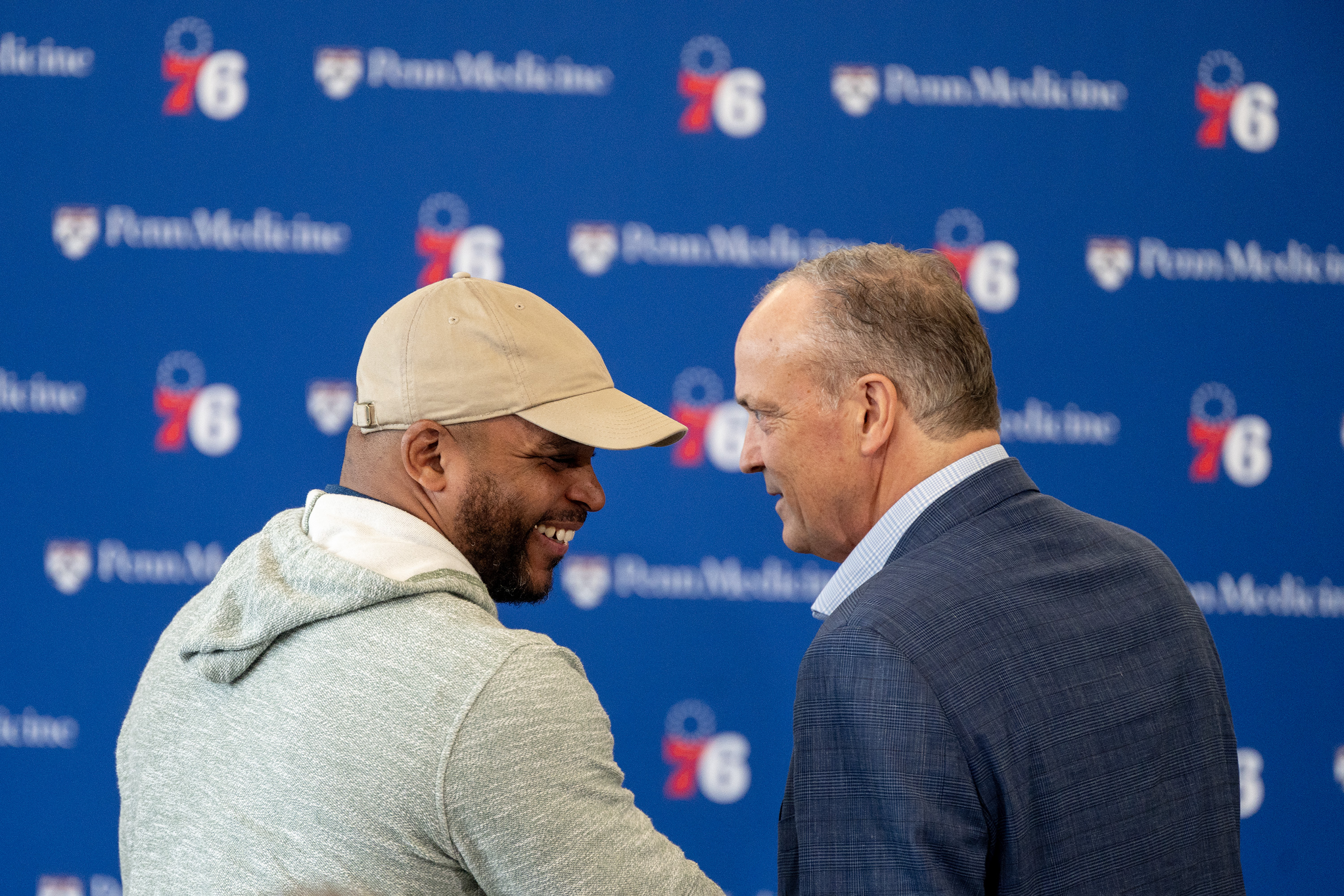
New Sixers executive vice president of basketball operations Jameer Nelson (left) talks with Harris Blitzer Sports & Entertainment CEO Tad Brown (right) after Mike Gansey’s introduction press conference on Monday.Tom Gralish / Staff Photographer
James Dolan is a surveillance-happy nepo-Boomer who, after a quarter-century of mismanaging the Knicks, finally stumbled into ecstasy thanks to Leon Rose, William “Worldwide Wes” Wesley, and Jalen Brunson. But Dolan’s also a native Long Islander who felt the heat in New York — the city where rebuilding isn’t allowed — every time one of his cockamamie attempts to quick-fix his franchise went awry.
Too often since Harris took control of them in 2011, the Sixers have acted as if they’re content to be interesting, to settle for the sugar rush of another roster shake-up and a sold-out arena instead of putting in the demanding, patient work that leads to genuine and lasting success. “You can’t buy championships,” said Myers, who won four of them as the Warriors’ general manager. “You have to go through it to get them.”
Whether it’s the pain of Sam Hinkie’s Process or the cost of exceeding the league’s luxury-tax threshold, Harris’ Sixers have shown a reluctance to make such sacrifices, and their status in the city and their performance come the second round of each year’s playoffs have sunk because of it. If nothing else, in Jameer Nelson, out of Chester and adopted by Philadelphia, they have someone who can remind them that the hard way is what this region prizes and rewards, the only way that works.
Lane Johnson said he knew something was wrong with his right foot on the first play against the Detroit Lions in Week 11 last season.
At the snap, Johnson took a power step and attempted to anchor down against the opposing defender. Then he said he felt a pop in his foot.
He kept playing. But on the next series, Johnson took a bull rush from Lions defensive end Aidan Hutchinson and couldn’t anchor. The six-time Pro Bowl right tackle had played through several ailments throughout his 13-year Eagles career to that point, but he struggled to overcome this one.
Over halfway through the first quarter, Johnson exited the game with what was later diagnosed as a Lisfranc sprain that ended his 2025 season. Still, Johnson was determined to ensure that it wouldn’t be the last moment of his career on the field.
“I didn’t want to go out that way,” the 36-year-old Johnson said on Tuesday.
He didn’t. The two-time All-Pro was back on the practice field for the first practice of mandatory minicamp on Tuesday. Johnson didn’t appear to miss a step, taking every repetition in both individual and team drills with the starting offense.
At the end of the 2025 season, fellow tackle Jordan Mailata said he expected Johnson to return for a 14th season, but he added, “whatever happens, happens,” acknowledging the degree of uncertainty surrounding Johnson’s future. According to Johnson, though, he never doubted that he would return, staving off retirement for at least another year.
“I wanted to play,” Johnson said. “Only thing that’s keeping me thinking about retiring, just family. Mom and dad getting older. You miss a lot of time. But other than that, man, I love this game so much. I love competing with all my teammates. I love becoming an older player. A lot of guys trend down in their 30s. I feel like my career has been the opposite, where my career started to blossom in my 30s.”
Lane Johnson’s foot injury he suffered on Nov. 17 last season against Detroit kept him out of the Eagles’ final eight games of the year, including the playoffs.David Maialetti / Staff photographer
That positive career trajectory, Johnson said, had continued in 2025 up until the foot injury. He said he thought he was having a “really good season” at the time, and the stats back up that assertion. Johnson did not concede a quarterback hit through 262 pass-blocking snaps, according to Pro Football Focus.
Johnson said he also felt like the team was starting to “make a turn” for the best before his injury. The win over the Lions extended their winning streak to four games. The offense displayed flashes of dominance in the first two wins of that stretch against the Minnesota Vikings and the New York Giants.
But the Eagles’ season began to falter instead, as they lost their next three games. Johnson, meanwhile, did not go on injured reserve, with the hope of returning for the playoffs. However, he didn’t recover in time to play in the wild-card playoff loss to the San Francisco 49ers.
“I was trying to come back,” Johnson said. “I was rehabbing, I was practicing, and so toward the playoff game, I went out there to practice, and after a couple series, my foot would just swell up, and then the mobility piece became to where it was just I couldn’t function.”
Time was a luxury that Johnson didn’t have last season. He said he finally felt 100% healthy around February or March.
“I feel good,” Johnson said of his current health. “But it took a long time to get here. I wish I could have done this at the end of last year.”
Johnson is moving forward, and so is the rest of the offense. With Sean Mannion now at the helm, Johnson is acclimating to a plethora of changes, from the scheme to the man in charge of teaching its finer details to the offensive line.
For the first time since his rookie season in 2013, Johnson has a new offensive line coach in Chris Kuper. Jeff Stoutland, the Eagles’ offensive line coach for 13 years, left the organization this offseason.
Eagles offensive tackle Lane Johnson (left) was coached by Jeff Stoutland for his first 13 seasons in Philly. Now, Chris Kuper will lead the room.YONG KIM / Staff Photographer
Johnson called Stoutland’s departure a “shocking ordeal.” But he said he has had time to process the change. Kuper, he said, has garnered the respect of the offensive line room through his playing and coaching experience.
Throughout the offseason program, Johnson has mostly worked remotely, tuning into meetings via Zoom. Johnson has been encouraged by the new scheme, stating that he hopes that the offense “won’t be as stagnant as it was last year,” especially regarding the run game.
“You have the ability to stretch it front side, but also the running back has the ability to read backside blocks more than maybe what we did in previous years,” Johnson said. “It really does a good job of allowing us to run. We have a lot of athletic guys up front, so being able to stretch the field, make the D-tackles run, make the linebackers run, cover all this ground.
“And then I think setting up with the play action is just going to be a whole lot tougher to distinguish what we’re doing. Whole lot harder to catch on tells with stuff that we’re doing. So I think this stuff, we can disguise it more.
“I’ve watched this system, [Klint] Kubiak, [Kyle] Shanahan style of offense from afar, and I’ve always envied wanting to be a part of it. So here I am, after all these years, getting a chance.”
A chance to play in the Shanahan/Sean McVay style of offense will also give its tackles more help from guards in pass protection. Throughout most of Johnson’s career, he’s been left on an island to fend for himself.
“If I get beat inside, having a guard come out and help me is a big deal for me,” Johnson said. “So, me likey.”
Johnson likes the new blocking scheme, and his familiar opportunity to prove that he only gets better with age entering Year 14.
“I’m hoping this will be a great year for us, a great year for me, and we can right a lot of the wrongs that we had last year,” he said.
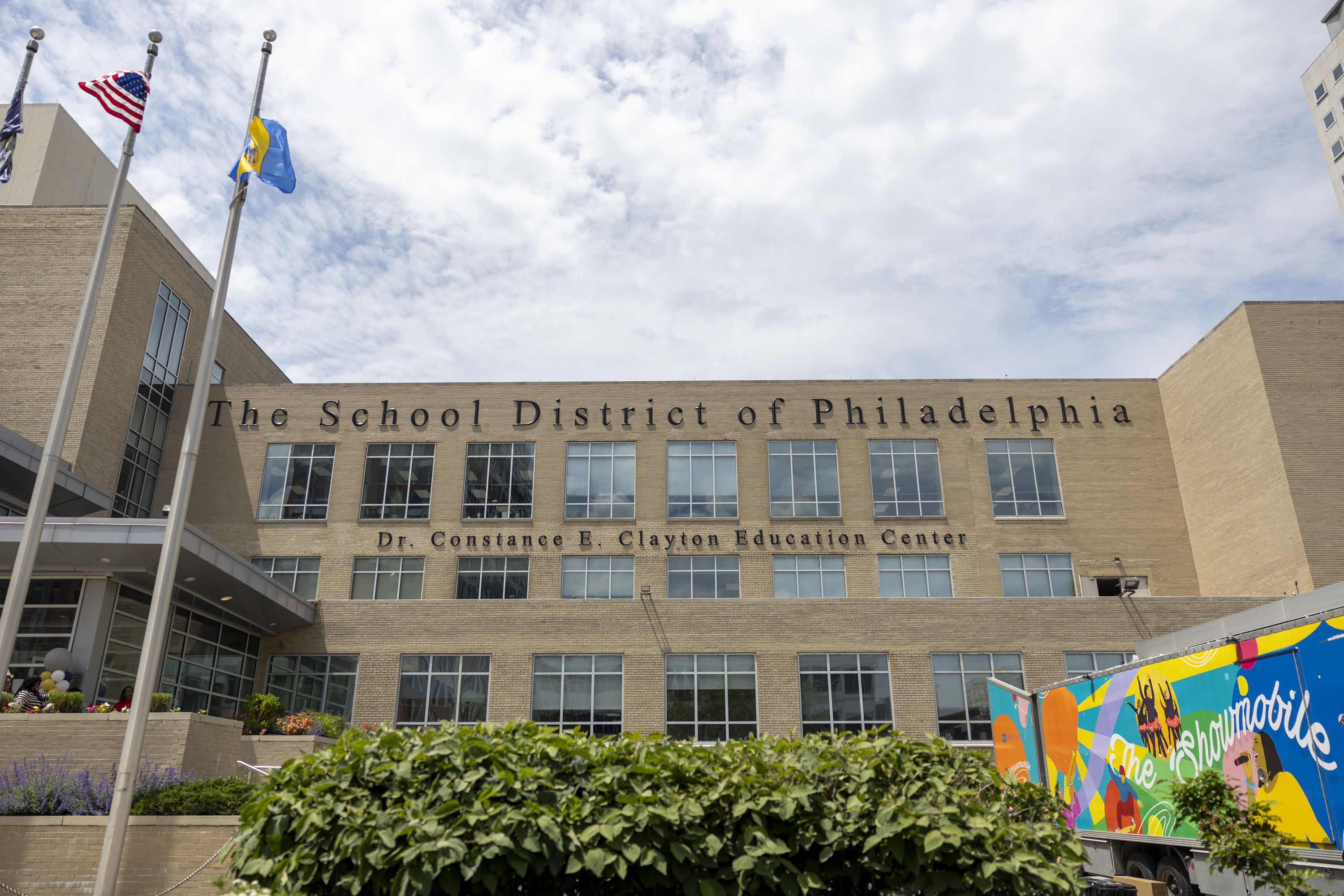
Amid the passionate debate about Philadelphia’s schools, one thing has been getting lost: No public school district wants a budget that requires changing people’s jobs. Behind every position is a person, a family, and years of service to students. Those decisions are difficult and are never made lightly.
As caretakers of Philadelphia’s public schools, the Board of Education and the school district have a responsibility to look beyond this year’s budget. We have to make sure our schools remain financially stable and able to serve students not just this year, but for years to come. That is what good governance means.
That is also why the district should stay the course with its planned reduction of some roles and the reassignment of teachers and staff, even after City Council approved a preliminary budget that includes a one-time $50 million funding increase.
At first, that may seem confusing. If there is more money, why not keep every position? The answer is simple: One-time money should not be used to pay for permanent costs.
A job is not a one-year expense. It comes with salary, benefits, retirement costs, and other ongoing expenses. If those costs are paid with money that exists for only one year, the district will face the same bills next year without the funds to cover them.
Most families understand this idea. A one-time bonus at work might help pay for a new roof or replace an old refrigerator. But it would be foolish to use that bonus for a down payment on a car with a huge car note and no resources to pay it off.
The author writes that the Board of Education is grateful for City Council’s $50 million boost — but won’t use it to fund permanent expenses.Jessica Griffin / Staff Photographer
The same principle applies to the Board of Education and the school district. For too many years, difficult financial decisions have been delayed. Continuing to postpone them only makes the problem larger and harder to solve. Federal COVID-19 relief dollars did help the district avoid cuts, but that was a once-in-a-century time of crisis.
That does not mean the additional funding lacks value, and we appreciate such support from City Council. It gives us a chance to address important needs that do not create permanent expenses. Those dollars can be used for building repairs, school safety improvements, technology upgrades, instructional materials, and managing staffing changes. Such spending would help improve schools today without creating a budget problem tomorrow.
It is also important to understand what these staffing changes mean. The district’s goal is to move employees into positions where they are needed across the system whenever possible, keeping experienced staff and reducing disruption for students and schools.
The Board of Education has a responsibility to protect the interests of both today’s and tomorrow’s students. Sometimes that means supporting new investments. Always it means advocating for more reliable funding from the city and the state. And at times it means making difficult decisions that protect the long-term financial health of the district, even when it appears there are easier choices.
The reality is that Philadelphia’s students deserve a school system built on stable, dependable funding — not temporary fixes. One-time dollars can solve one-time problems. Permanent commitments require permanent funding.
These decisions are not easy. But making responsible choices today is the best way to ensure our students have strong schools for years to come.
Reginald L. Streater is the president of the Philadelphia Board of Education, to which he was elected in December 2022. He was appointed to the board in February 2021.
Philadelphia’s powerfulHouse delegation to Harrisburg will push state lawmakers to close a loophole that allows online sellers to avoid paying Philadelphia’s 2% sales and use tax, its chair, Democratic Rep. Morgan Cephas, said Tuesday, as legislative leaders seek a quick state budget deal in a consequential midterm election year.
The tax would be exacted on online sellers based outside the city selling goods to Philadelphia customers, including retail giants such as Amazon. Currently, sellers outside the city have to collect only the 6% state sales tax.
The proposal — estimated to generate an additional $1.5 million for the city — would require authorizing legislation to be passed by the state and signed by Gov. Josh Shapiro.
When asked about the Philadelphia delegation’s effort to revive one of Parker’s tax proposals — albeit the one that would generate the least revenue for the city — Joe Grace, a spokesperson for Parker, said it is a “technical amendment.”
That development comes as top lawmakers are in closed-door budget negotiations trying to find additional revenue to close the state’s deficit, where Pennsylvania is expected to spend more than it brings in this fiscal year and in the future, ahead of the constitutionally required June 30 deadline. Legislators often blow past that deadline, with last year’s budget agreement stretching nearly five months after talks stalled over mass transit funding and resurfaced Pennsylvania’s rural-urban divide.
Here is a look at the status of state budget negotiations, what Philadelphia’s delegation wants in a final budget deal, and the potential sticking points as the deadline draws nearer.
Talks are ‘further along’ — in a big midterm year
Senate Majority Leader Joe Pittman (R., Indiana) said in an interview last week that legislators are “a lot further along” in their budget negotiations than they were at this point last year, but still have more to do to rein in spending.
Other top legislative leaders echoed a similar hope that budget talks will not draw out into another monthslong impasse during the midterm election year in Pennsylvania’s split legislature, where Democrats hope to ride an anticipated blue wave to gain seats in both chambers while Republicans hope to stave it off and maintain control of the state Senate.
“There’s nothing like a political wave to help politicians focus,” said House Majority Leader Matt Bradford (D., Montgomery) in an interview last week.
Shapiro proposed a $53.2 billion budget earlier this year, which would be a 6.2% spending increase over last year and would largely rely on the state’s Rainy Day Fund and new revenue streams from skill games and adult-use cannabis to help fill a $4.6 billion budget hole. The state House in April passed Shapiro’s budget as introduced, though the final product will be struck in closed-door meetings involving Pittman, Bradford, and Shapiro. The three negotiators may call on additional leaders to join the budget talks in the state’s tightly divided legislature, where Democrats hold a one-seat majority in the House and Republicans control the Senate with a three-seat majority.
In previous midterm election years, the electoral pressure has sped up negotiations, as legislators want to bring home results to their constituents before they return to the campaign trail in a year when the governor’s mansion and control of the state House and Senate are on the line.
‘An opportunity to regroup with Council and regroup with our mayor’
Philadelphia’s delegation to Harrisburg, made up of 25 lawmakers representing parts of the state’s most populous city, will take up Parker’s requested sales tax loophole closure, in addition to any other requests from City Council once the city’s budget receives final approval on Thursday, Cephas said.
“City Council hasn’t finalized their budget just yet. So we are paying close attention as to what is the final product that gets across the finish line, and then we look at it, look at it as an opportunity to regroup with Council and regroup with our mayor to see where we are and where there’s still gaps that would potentially fill,” Cephas added.
State Rep. Morgan Cephas, who leads the Philadelphia delegation in Harrisburg, attends a get-out-the-vote rally for State Sen. Sharif Street at the Church of Christian Compassion in West Philadelphia Monday, May 18, 2026 on the day before Tuesday’s Democratic primary election for the 3rd Congressional District. Cephas was a candidate for the same seat, but withdrew early in the race.Tom Gralish / Staff Photographer
As part of several proposals meant to juice revenue from gig economy companies, Parker requested the city’s sales tax loophole be closed in her budget pitch in March.
Closing the loophole, however, was an easier sell in Harrisburg than Parker’s efforts to raise taxes on city hotels and short-term rentals, which would have also required state legislative approval.
Last week, sources close to state budget negotiations told The Inquirer there was no interest in raising taxes in Philadelphia as Parker had proposed, even on big tech companies, in an election year. Shortly after, any support appeared to evaporate in City Council for Parker’s proposed taxes on hotels and rideshare services to fund homelessness-prevention programs and help plug the Philadelphia School District’s $300 million structural deficit.
Shapiro previously said he was uninterested in raising any taxes, and has boasted about cutting taxes in past budgets.
Shapiro’s office did not immediately respond to a request for comment.
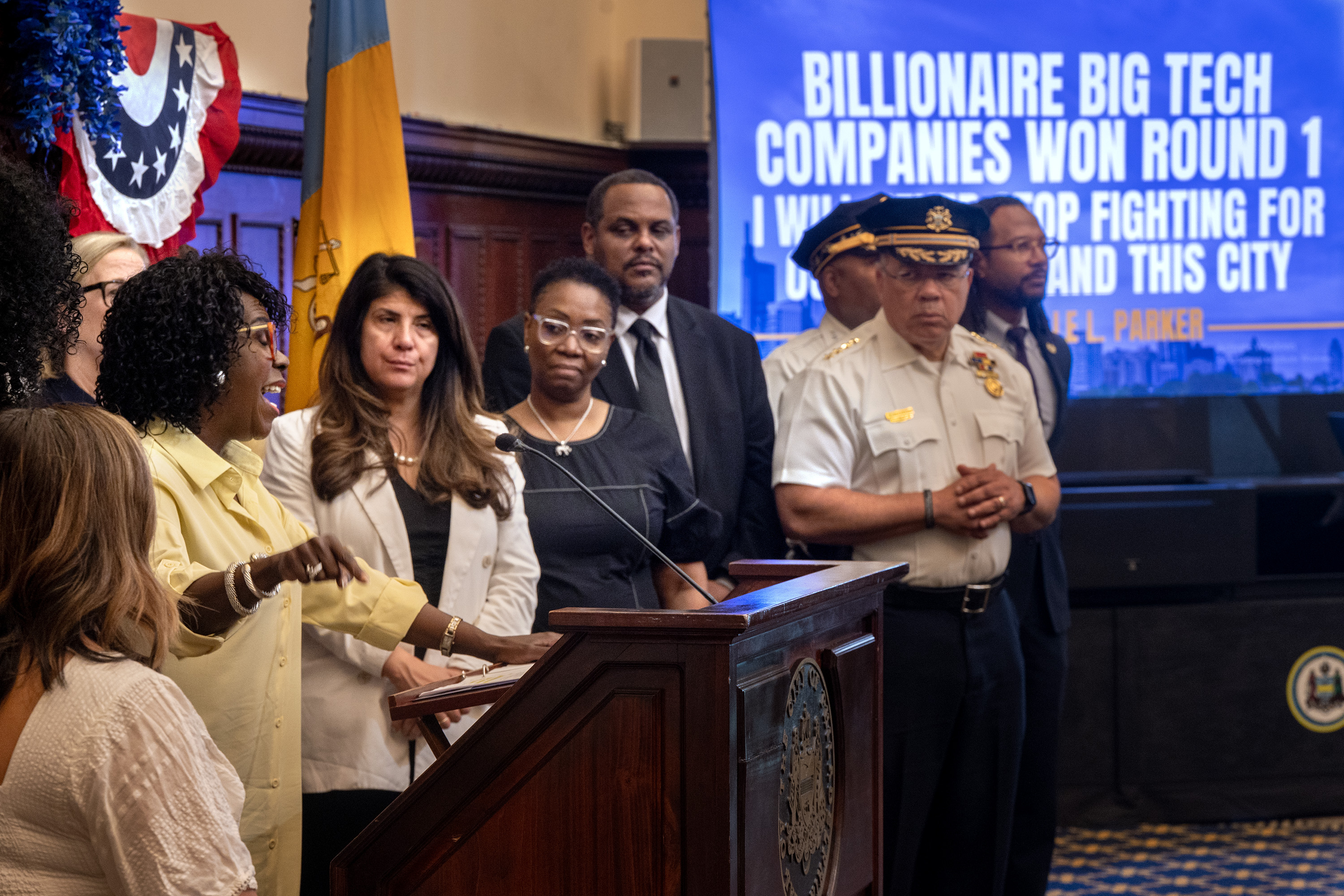
“Billionaire big tech companies just won round one in this process,” says Mayor Cherelle L. Parker at City Hall Thursday, June 4, 2026 after City Council rejected most of her tax proposals for the city budget.Tom Gralish / Staff Photographer
Cephas said Philadelphia’s statehouse delegation is also focused on continuing to increase public education funding through the state’s new adequacy formula, expanding a popular student-teacher stipend program, and increasing funding to improve school facilities.
The delegation — which includes Democratic legislative leaders such as House Speaker Joanna McClinton and House Appropriations Chair Jordan Harris, who are involved in budget talks — will also push to expand a working families tax credit, a childcare tax credit, and an increase to the state minimum wage from its current $7.25 per hour, Cephas said.
Potential sticking point: Skill games and gaming expansions
The big unknown in Pennsylvania’s Capitol is whether lawmakers this year will finally address skill games and other gaming expansions in the state as an effort to raise additional revenue.
Skill games are slot-machine look-alikes that have proliferated around Pennsylvania and, despite coaxing from Shapiro to tax them at a much lesser rate than the hefty 52% levied on slot machines, remain unregulated and untaxed by the state. Shapiro estimated that taxing machines at the same rate as slots would generate $765.9 million in its first year.
A case is before the state Supreme Court to determine whether the machines found in restaurants, corner stores, and bars are legal — and distinct from other gambling devices.
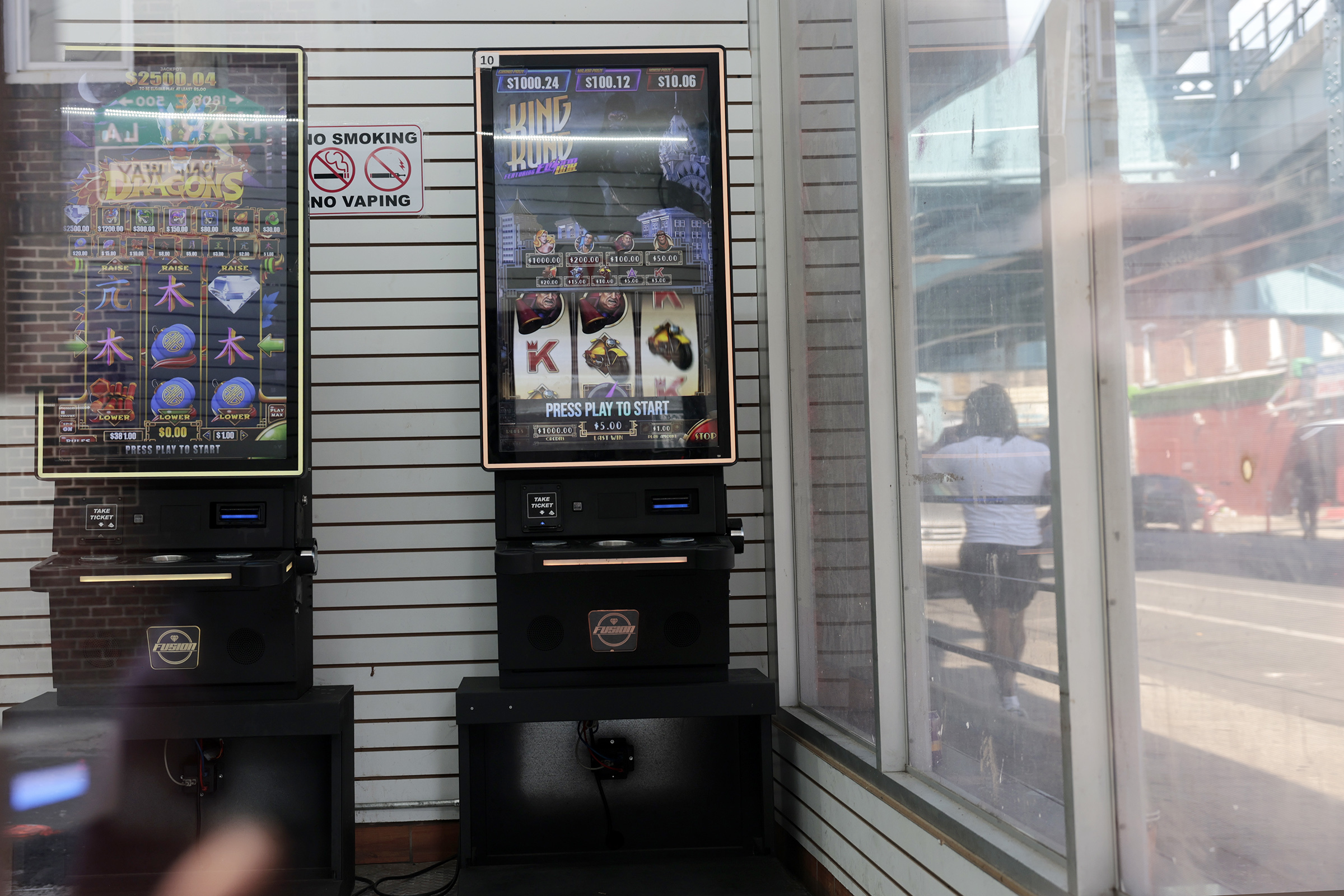
Skill games can be seen through the door of a mini mart on Kensington Avenue in the Kensington section of Philadelphia on Wednesday, July 30, 2025.Elizabeth Robertson / Staff Photographer
The deep-pocketed skill games lobby had long been an ally of the Senate GOP until recent years, when Republicans considered a higher-than-desired tax on the industry that the lobbyists claim would hurt small businesses. The relationship eroded further last month when a conservative group tied to the skill games lobby helped fund three unsuccessful primary challenges to Republican state senators.
Now, top GOP lawmakers say they are awaiting the court ruling before they decide how to tax the devices.
Another emerging form of gaming that could require state regulation would be prediction markets like Kalshi or Polymarket, which allow users to place bets on the outcome of events, including elections. Pittman said he wants federal lawmakers to regulate the new industry, while House Minority Leader Jesse Topper (R., Bedford) said “it will need to be addressed.”
“Prediction markets, to me, seem to be a whole new world,” Pittman said last week. “That is something that the federal government really needs to grab onto in a very consistent manner to make sure that you have consistent policy nationwide on that front.”
This is a tumultuous week for Philadelphia’s schoolchildren. If members of City Council and the school board can find a path forward before lawmakers take a final vote on the budget on June 11, 340 school staff jobs will be saved. More than 3,700 Philadelphia students will enter the summer knowing that when they come back to school next year, their teachers, counselors, and climate staff will still be there.
A lot could still go right in the final days of the city budget negotiations. To its credit, City Council worked hard to find $48 million this year to save the jobs for a year. But the school district can’t reverse the cuts without recurring funding. That would not be sound fiscal management. If these positions are cut, critical school staff will be forced to find other jobs, and it will be almost impossible to bring them back.
City Council, the school district, and the mayor are ultimately on the same side — the side of the kids. Finding a way to keep the 340 school staff jobs is about more than balancing budgets; it is about protecting the educators, counselors, and support staff whose work shapes students’ lives. The decisions made in the coming days will determine whether our students start the next school year with stability or disruption.
Priyanka Reyes-Kaura,K-12 education policy director, Children First, Philadelphia
Budget questions
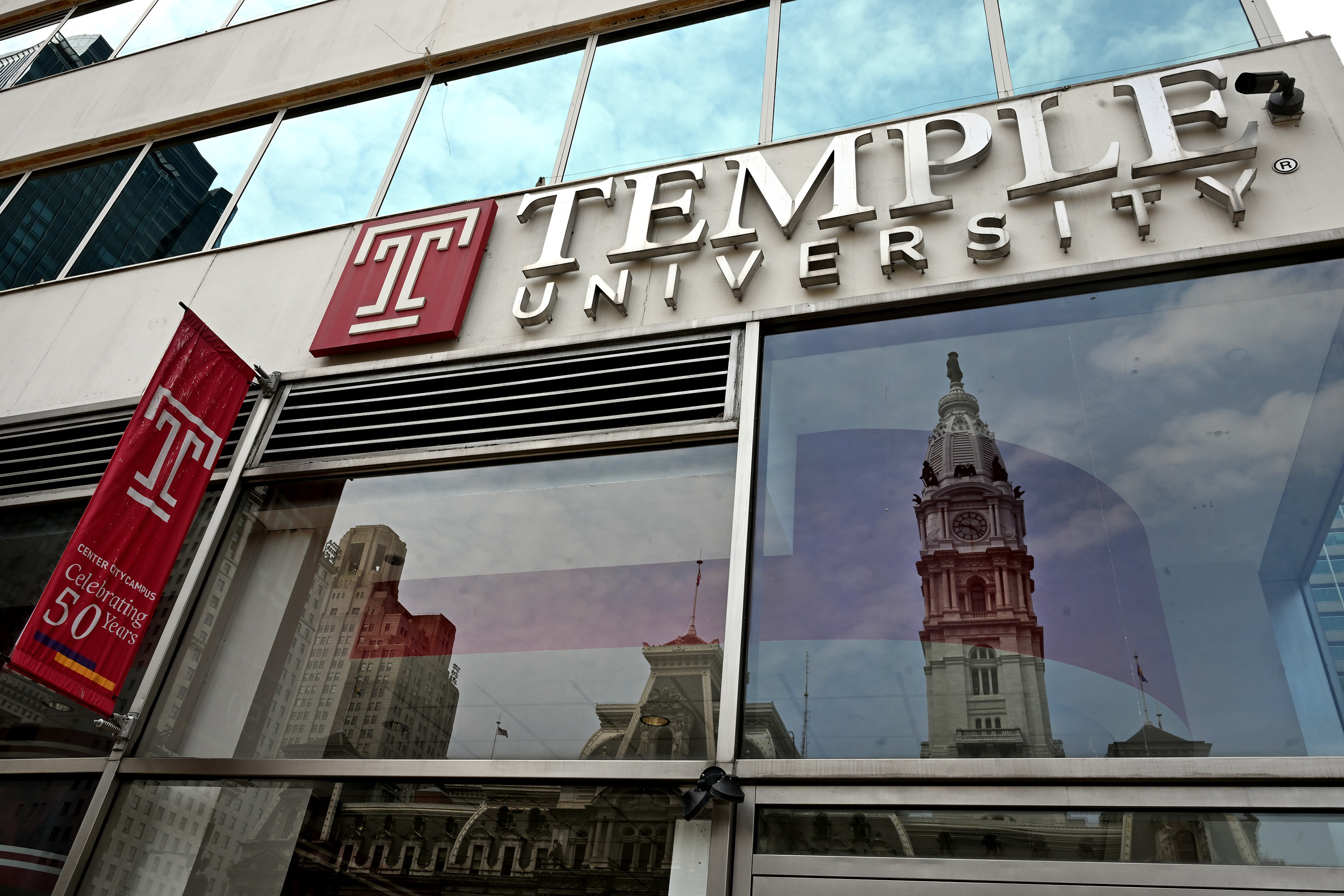
After reading that Jason Wingard was paid $1.5 million by Temple University — a year after resigning as president — I’m looking at my alma mater’s current budget situation in a different light.
In April, Wingard’s successor, John Fry, announced that the operating budget for next year was projected to have an $85 million deficit, a figure that has since come down.
I know capital budgets are in a separate category from other spending, but this doesn’t look good for the university. And has anyone calculated the increased operating expenses related to these new buildings? Or is it assumed that the cost will be covered by tuition from declining enrollment?
As a triple alum, I only want the best for the university, the students, and the staff. Hopefully, whoever’s reading this wants the same.
Ronnyjane Goldsmith,Palm Beach, Fla.
Join the conversation: Send letters to letters@inquirer.com. Limit length to 150 words and include home address and day and evening phone number. Letters run in The Inquirer six days a week on the editorial pages and online.
DEAR ABBY: I have been married to my wife for two years. We met online and have known each other for about five years. We originally lived an hour apart, and after some persuasion, we bought a condo together. Everything was going great until I began to notice my wife’s attraction to other women. I noticed lesbians “cruising” my wife wherever we went, whether we were on vacation or just at the grocery store. I also believe she’s finding women online and having sex with them. I don’t think she’s gay — but just enjoys the sex part. Also, she still has sex with me.
I hate the fact that all this is done in secret. She denies anything is happening, but I’ve caught her in many lies. We are retired and living off both our savings, but most of it is hers. I don’t know if I could survive on just my savings. She’s also threatened to take a lot of my savings through litigation. I’m stuck. I love her, but I can’t continue this farce. Help, please.
— NERVOUS IN NEW ENGLAND
DEAR NERVOUS: Your wife may not be gay, but if your hunch is accurate, she is certainly bisexual. However, you have more problems than her having sex outside your marriage. Equally troubling are her threats to help herself to your savings and the fact that when you ask her something, you don’t necessarily get a straight answer.
You may love your wife, but I don’t see how you can stay married and be happy under these conditions. You should consider whether you are at risk for an STD. You may need to talk about this with a lawyer.
One more thing: You stated that you are afraid you can’t survive financially if you leave her. Because you both invested in the condo, wouldn’t you be entitled to half the money from its sale? Think about how you were managing to survive before you met her, and consider whether you can live that way again.
** ** **
DEAR ABBY: I am in love with a married woman. I was in love with her many years ago. Before she was married, she knew I was in love with her, but she lied to me and led me on. Despite knowing how I felt about her, she got married, leaving me devastated. Now, many years later, I am still in mourning and haunted by “what if?” I know I can never move on from her, and it seems like things will never change. So what do I do?
— ABANDONED IN ARIZONA
DEAR ABANDONED: When I was young, I was in love with Steve Reeves and Robert Redford (not at the same time, though). Unfortunately, they were both taken — and not with me. If you want to waste any more of your life pining after a woman who lied to you, led you on and married someone else, that is your privilege. If, however, you would like to get beyond your lingering emotional pain, you will ask your physician or insurance company for the name of a licensed psychologist. You CAN move on, but it will require concerted effort.
ARIES (March 21-April 19). What some call luck is really the result of sensible choices, steady work and the willingness to act when opportunity appears. You have shown up time after time. Now opportunity comes knocking and you’re so prepared.
TAURUS (April 20-May 20). Other people are experiencing something wonderful about you. Challenge yourself to see what they see. It’s not in the mirror so much as in your deeds and how you show up time after time, ready to work.
GEMINI (May 21-June 21). Your good taste is indisputable. Sometimes your style is unserious, playful or niche, and still it’s stellar. You know what you like and you keep seeking it out, learning about it, perfecting it. Study can be a kind of worship.
CANCER (June 22-July 22). Oscar Wilde said, “Morality is simply the attitude we adopt toward people we personally dislike.” You challenge that idea by remaining fair even when emotions run hot. Anger would be easier and far more satisfying. But you choose integrity instead.
LEO (July 23-Aug. 22). People are impressionable today. Moods, attitudes and behaviors are contagious. Your conduct affects others more than usual. When you behave thoughtfully and graciously, that’s the tone that will spread.
VIRGO (Aug. 23-Sept. 22). Because the same sentence that comforts one person might provoke another, you’re mindful of the unique needs of each person you interact with. Your growing awareness leads you to communicate with more precision, warmth, timing and discernment each day.
LIBRA (Sept. 23-Oct. 23). Many encounter openings they never take. Not you. You see it and strike while the iron is hot, forming the opportunity to your specifications. That’s what makes it a good fit — knowing yourself and your needs enough to shape it that way.
SCORPIO (Oct. 24-Nov. 21). Competition weakens each side. Connection strengthens the team. People who stop trying to win and start trying to understand create connection instead of competition. Connection gives you more energy to complete the task at hand.
SAGITTARIUS (Nov. 22-Dec. 21). You handle crises with skill and endurance. But that shouldn’t define your life. Please, more pleasure. Buy the flowers, learn the recipe, frame the photograph, take the scenic route. Acts of devotion toward your joy are restorative.
CAPRICORN (Dec. 22-Jan. 19). Your environment trains your nervous system to expect chaos or harmony. That’s why a room can change your thinking. Clearing clutter, repairing broken things and placing beauty where your eyes rest each day creates concentration and ease.
AQUARIUS (Jan. 20-Feb. 18). You’re becoming known for something specific. A signature look, favorite meal, trusted ritual or recognizable style helps people form a strong memory of you and keeps them coming back. So don’t try to fit in. There’s power in distinction.
PISCES (Feb. 19-March 20). Opportunities will be disguised as extra work. Hosting dinners, tending gardens, mentoring or mastering skills may exhaust your schedule for a season, though these commitments are also among the richest parts of your life and strong sources of belonging.
TODAY’S BIRTHDAY (June 10). It’s your Year of Uncanny Companionship. Love appears in whimsical forms. A stranger understands you and offers lucky opportunity. Non-human companionship such as pets, immersive hobbies and mystic protectors and muses are sources of joy, fun, solace and protection. More highlights: You’ll be lauded for your intelligent observations. You’ll influence, invest and make a difference. Scorpio and Aries adore you. Your lucky numbers are: 8, 10, 30, 12 and 15.
TORONTO — Most times when Jhoan Duran makes the jog from the bullpen to the mound, the result of the game seems like a foregone conclusion.
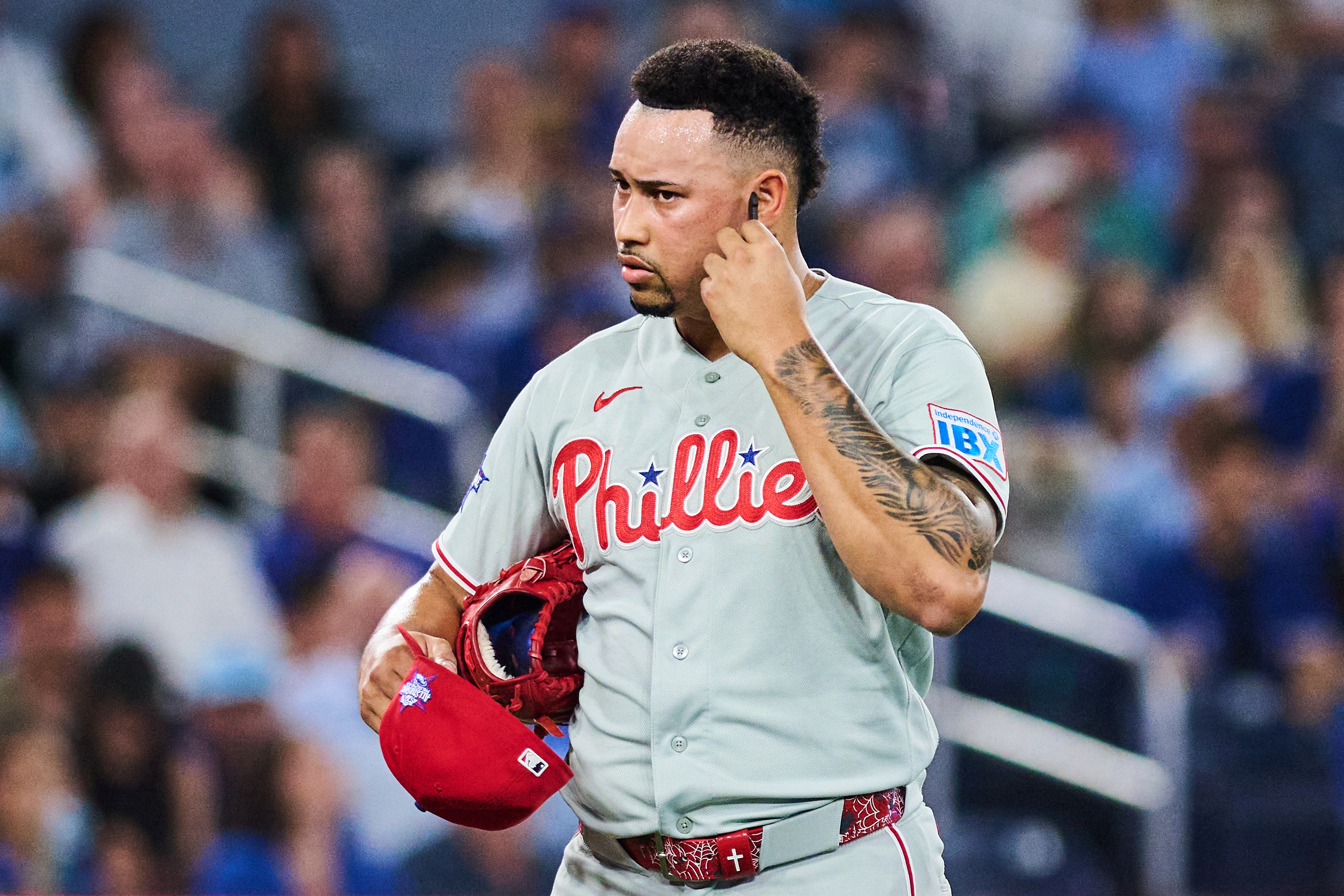
The Phillies closer had been perfect in his first 16 save opportunities of the season. But on Tuesday, the Blue Jays managed to end that streak, walking Duran off, 3-2, in the ninth inning.
“You know it’s going to happen at some point,” said interim manager Don Mattingly.
The first two batters Duran faced singled on ground-ball hits that found holes in the infield. The Jays used two pinch-runners, and a wild pitch brought the tying run home before Brandon Valenzuela hit an RBI single to end it.
“They just kind of got us in a bind at that point,” Mattingly said. “They run [Daulton] Varsho, and it’s hard to throw anybody out, really, with those guys. So, yeah, it’s one of those games.”
Duran entered the game after Bryson Stott drove in the go-ahead run in the top of the ninth against Louis Varland. The Blue Jays pitching staff confounded the Phillies’ offense for most of the game, as they struck out 15 times. But with two out in the ninth, Stott punched an opposite-field double to break the 1-1 stalemate.
It marked just the second earned run that Varland has given up this season.
The Phillies’ only other run came in the first inning when they strung together doubles from Trea Turner and Brandon Marsh to take a 1-0 lead against starter Dylan Cease. The ball only left Turner’s bat at 64.4 mph, but he was aggressive against Toronto’s rookie right fielder Yohendrick Piñango and wound up on second. He advanced to third on a wild pitch and then scored easily when Marsh laced a slider to right field.
After that, though, the Phillies couldn’t generate much against Cease. He only allowed one more hit — a single — and walked one while striking out 11. Cease generated 29 swings-and-misses from Phillies hitters, including 10 on his fastball.
“Just the way his hand is, he hides the ball well,” Stott said. “So you have a split second to see kind of what pitch it is. Usually when they’re not kind of cupping their hand, you can see the pitcher’s fingers or whatever it is, so you kind of have an idea of what’s coming the whole way. But with him, it feels like halfway there, you pick it up, and then he’s throwing 99 [mph]. So it makes a lot of guys late, and his pitches are moving all over the place.”
Zack Wheeler held Toronto to one run over six innings. He gave up some hard contact early, but managed to escape a few jams. Wheeler allowed a leadoff single in the second inning, but immediately erased the runner with a double play. Kazuma Okamoto followed that up with a double and Wheeler then hit Andrés Giménez with a fastball to put two on. But he stranded both runners with a strikeout.
“It wasn’t the best, wasn’t the sharpest,” Wheeler said of his outing.
Wheeler said he found the mound tough and wasn’t able to push off like he normally does, so he had to rely on his upper body more.
“I think that’s kind of why it wasn’t as sharp,” Wheeler said. “Velo’s down just a tick. So we kind of take those games and throw them out right away.”
Still, he held Toronto off the scoreboard until the sixth inning, when Wheeler’s cutter to Jesús Sánchez didn’t get high enough above the zone. Sánchez — who had also doubled in the third — sent it into the Phillies’ bullpen in right field for a solo shot that tied the game at 1.
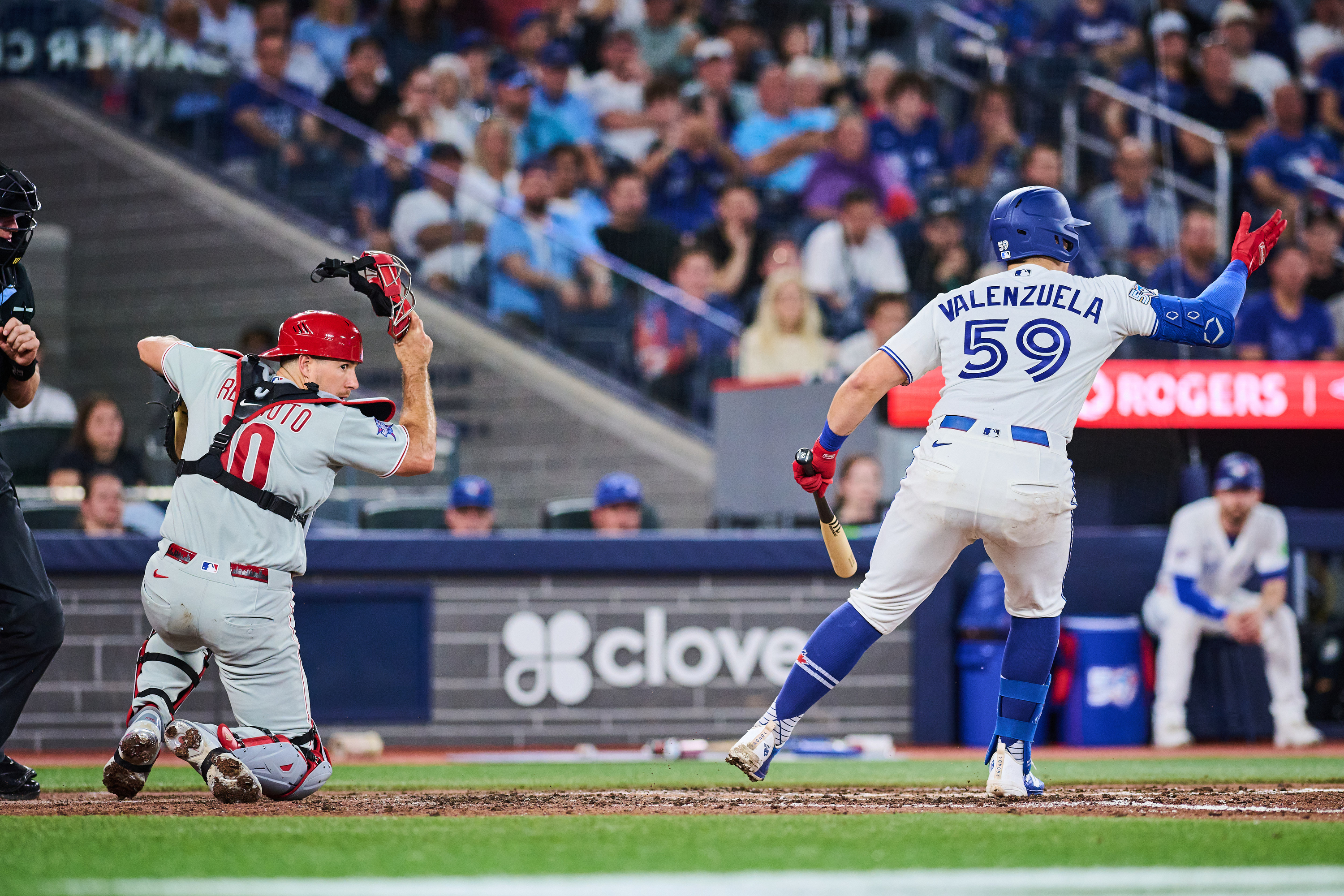
J.T. Realmuto (left) loses the ball as the Blue Jays’ Brandon Valenzuela (59) waves Myles Straw in to score on a wild pitch during the ninth inning.Sammy Kogan
“Cease was really good; I thought Zack was good,” Mattingly said. “Obviously, it was one of those games that’s just not going to be a bunch of runs going up, with a guy like Cease and Wheels. … I thought the at-bats were OK. He’s just one of those guys that you’re going to have your hands full when you start the game.”
Although Cease was cruising, since he was making his first start after being reinstated from the injured list, Toronto manager John Schneider lifted him after six innings and 93 pitches. Former Phillie Jeff Hoffman pitched a scoreless seventh and Mason Fluharty retired the side in order in the eighth, before Stott came through against Varland.
The Phillies finished with five total hits. Bryce Harper drew their only two walks.
“You always want to score, especially when you get guys on base,” Stott said. “But felt like when [Cease] needed a pitch, he got it, and sometimes you just run into guys who have that stuff that day, and he kept us off-balance.”
Orion Kerkering took over for Wheeler in the seventh and pitched a 1-2-3 inning. He returned for the eighth to face Vladimir Guerrero Jr. and induced a line out. José Alvarado retired the next two batters before Duran entered in the ninth.
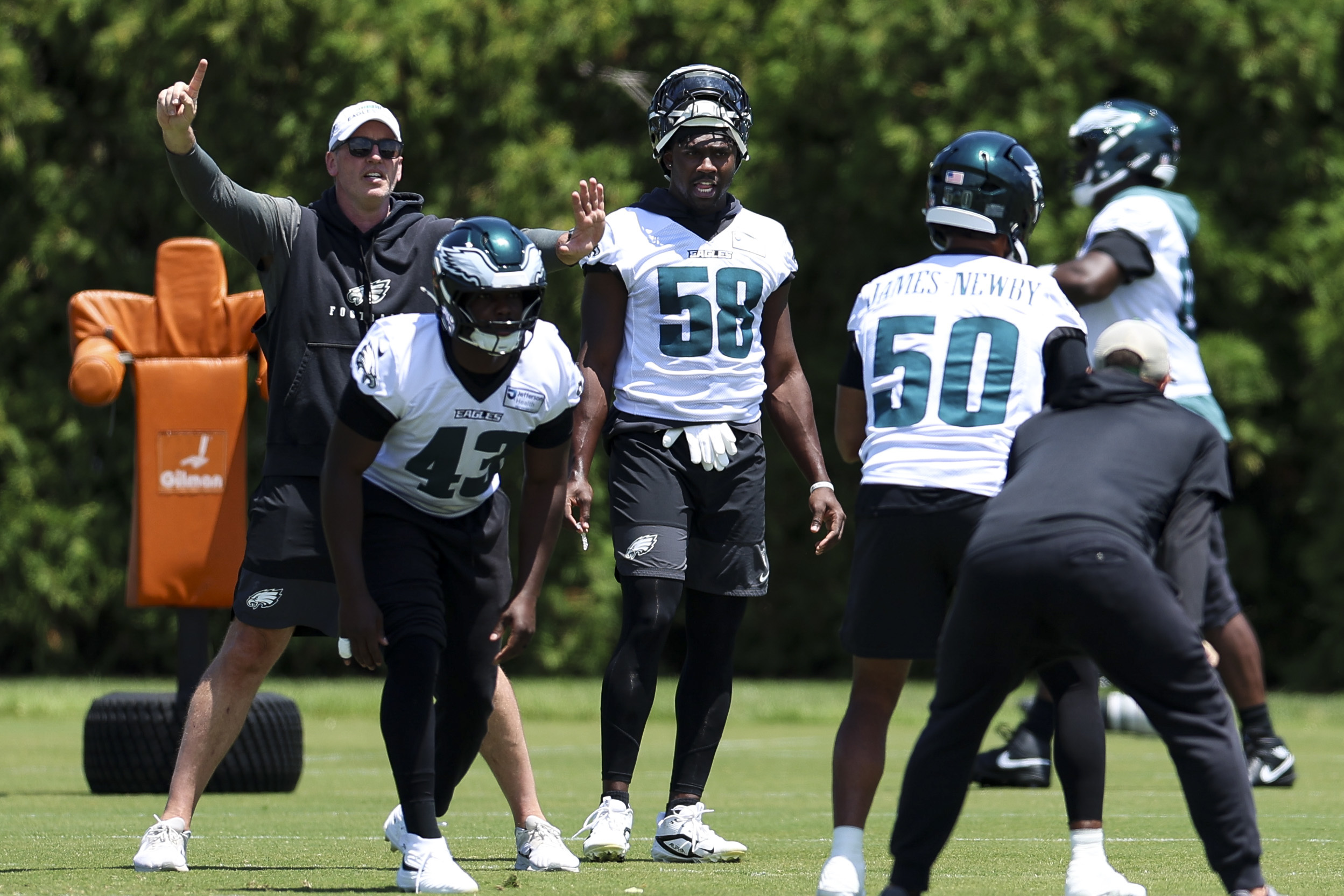
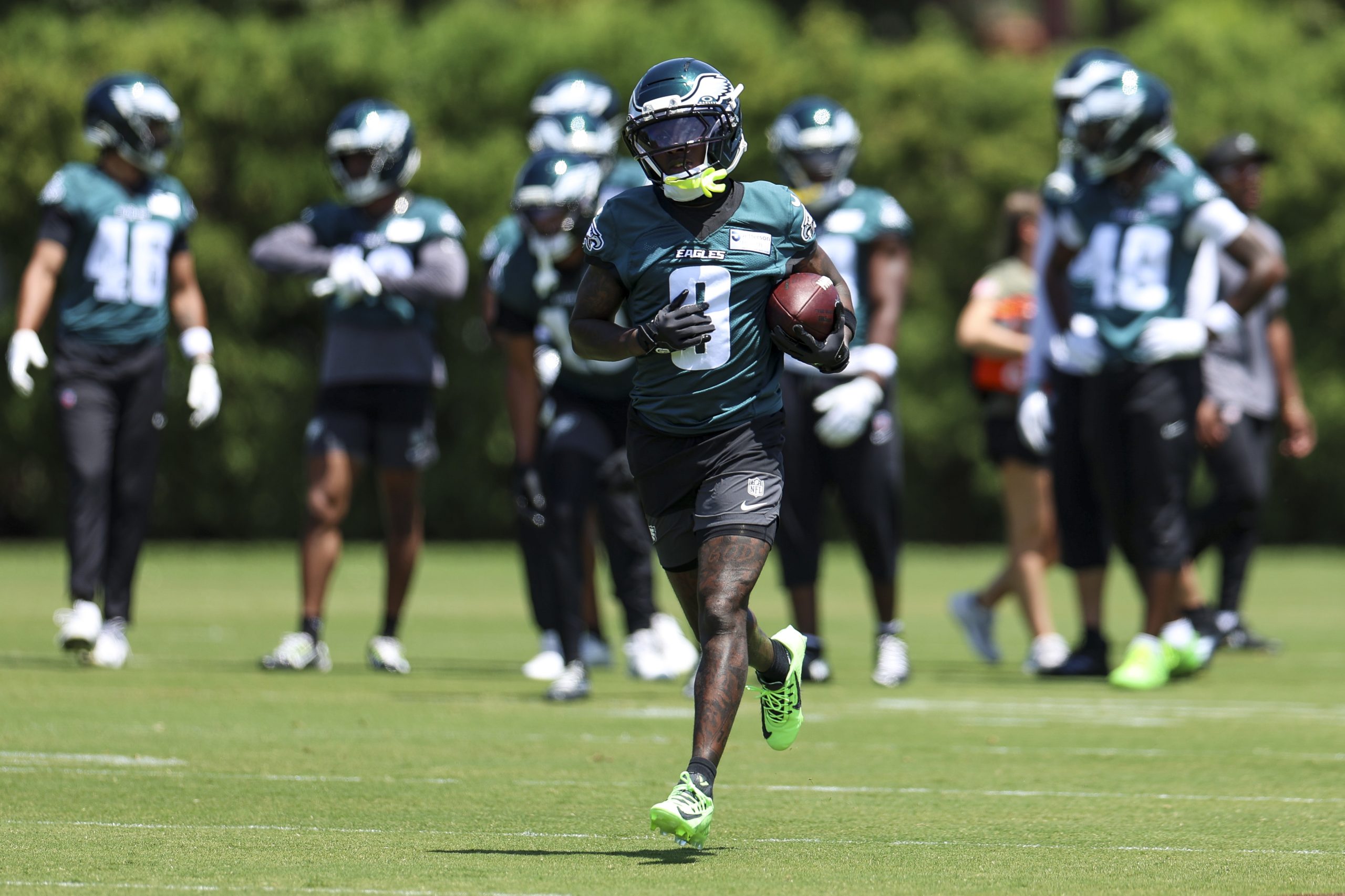
The Eagles held their first practice of minicamp on Tuesday at the Jefferson Health Training Complex. Here are my observations:
Pave the Lane
We had our first Lane Johnson spotting of the spring, and, really, since November when he suffered a season-ending Lisfranc foot injury. The right tackle also spoke with reporters after practice for the first time since October. He talked about former offensive line coach Jeff Stoutland’s departure, among other topics.
Johnson looked in fine shape. He opted to miss most of the Eagles’ offseason program, but returned for this week’s mandatory workouts. We also got our first look at defensive tackle Jalen Carter, who was absent from the two open organized team activities. He is believed to be fully recovered from his shoulder woes, but he didn’t participate in team drills. Outside linebacker Joe Tryon-Shoyinka was the only player from the 90-man roster who was missing.
Makai Lemon remained out with an apparent hamstring strain. The rookie wide receiver was initially sidelined last week. If he misses Wednesday’s session, he should be fully recovered in time for training camp. Tight end Grant Calcaterra was a new addition to the injury list and watched practice. Linebacker Jihaad Campbell is still working his way back from shoulder surgery.
Receiver Britain Covey was still out, as were fullback Carson Steele, linebacker Chandler Martin and safety Tucker Large. Edge Jonathan Greenard also wasn’t active. He, too, is recovering from shoulder surgery, but should be ready by late July.
Offensive start
It would be simple to focus on Vic Fangio’s defense considering how well it performed in seven-on-seven and 11-on-11 drills. His first two units outplayed the offense in my estimation. And maybe they should have since first-time offensive coordinator Sean Mannion is installing a new scheme. Fangio returns seven starters on his side of the ball with many entering Year 3 in his system.
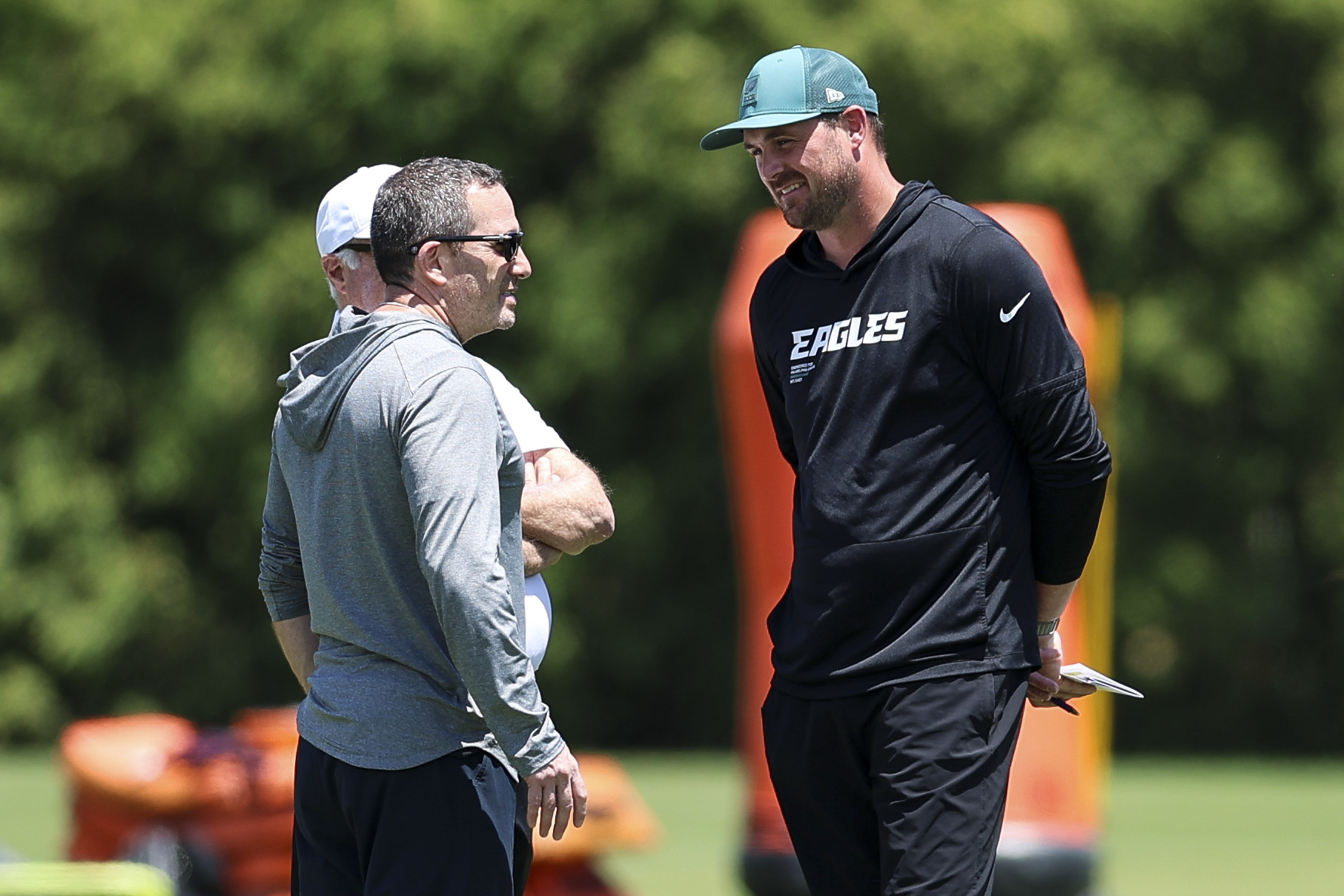
Sean Mannion (right), shown with Howie Roseman (left) and Jeffrey Lurie during mandatory minicamp on Tuesday. Mannion’s first-team offense struggled.Monica Herndon / Staff Photographer
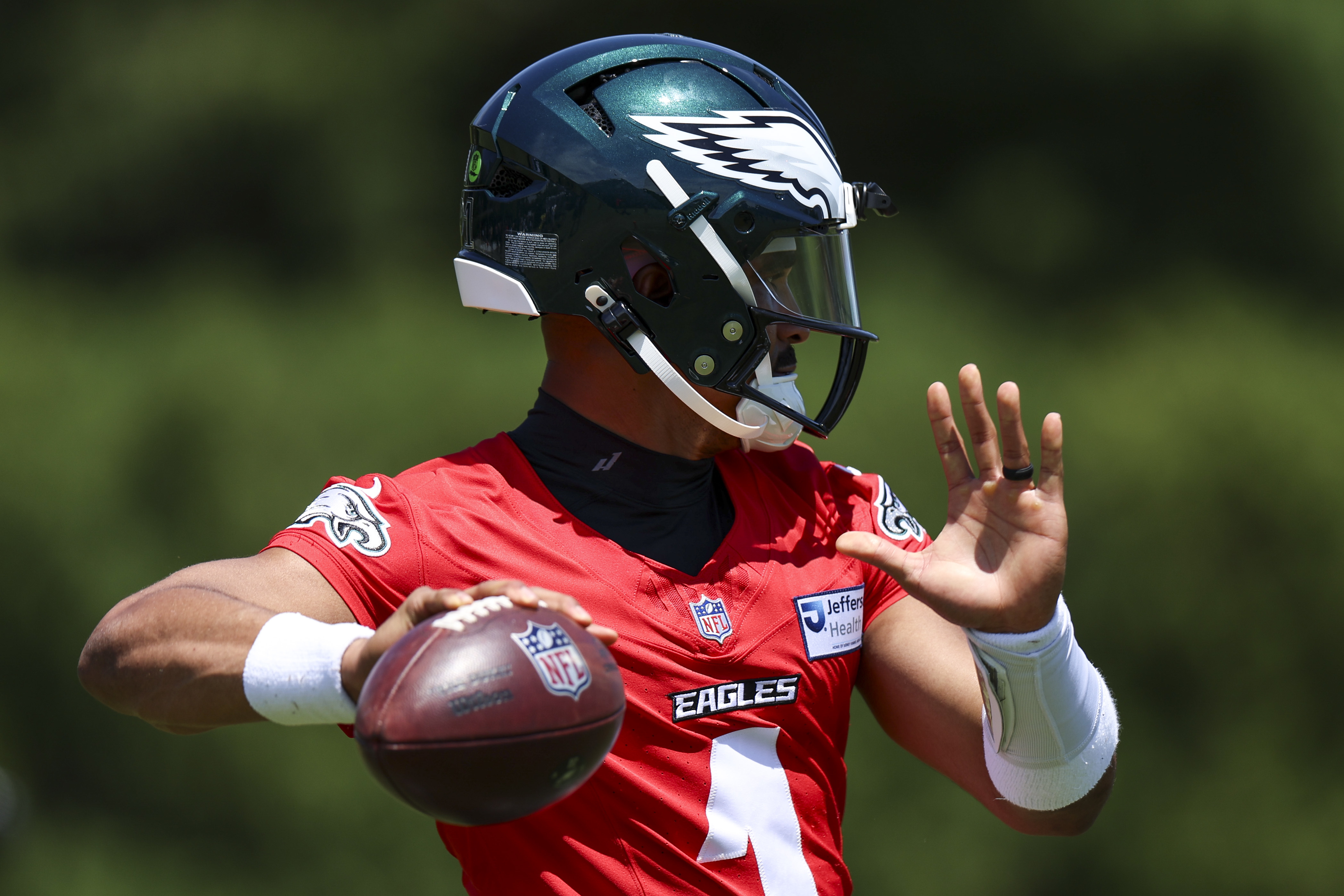
But this offseason is mostly going to be about how quarterback Jalen Hurts and Co. adjust to learning a new offense. There are going to be some ugly moments early on. And we saw plenty on Tuesday. Hurts threw over and behind a covered (by Riq Woolen) DeVonta Smith on two pass plays during seven-on-sevens. The second could have been intercepted by post safety Drew Mukuba if he wasn’t intent on breaking up the pass. There was another toss into traffic that surprised receiver Hollywood Brown and bounced off his shoulder. In team drills, Hurts heaved one ahead of Smith, who had cornerback Quinyon Mitchell on his heels. He later just flicked a pass out of bounds rather than to an open Smith, who was near the line of scrimmage.
There were completions, with most of them of the check down variety to running back Saquon Barkley or tight end Dallas Goedert as a safety outlet. There were also a few over-the-middle hookups. But the first-unit pass offense, which often worked from under center and off play action, looked out of sorts. On a red zone play, Smith and receiver Dontayvion Wicks were run out of bounds by defenders and Hurts had nothing. Nevertheless, it’s way too soon to make any proclamations about the season. There were bound to be growing pains.
Dutch Dalton
The same thinking could apply to the apparent competition for the backup quarterback spot. Andy Dalton continued to get snaps ahead of Tanner McKee. We haven’t been to every workout this spring and were told that the two split time with the second offense. But McKee no longer has a firm grip on the No. 2 spot, which is mildly surprising.
Eagles linebacker Jalyx Hunt (center) intercepted Andy Dalton during minicamp practice on Tuesday.Monica Herndon / Staff Photographer
It’s not like Dalton has overly impressed. Like Hurts a week ago, Dalton’s first pass in seven-on-sevens resulted in an interception. Outside linebacker Jalyx Hunt dropped into coverage and undercut a slant route for the pick. Later on, Dalton was nearly intercepted by cornerback Jonathan Jones. He had some solid throws, too. Dalton found receiver Elijah Moore down the seam on a busted coverage. He twice hit receiver Johnny Wilson on crossers. And he found Danny Gray in the end zone after the receiver beat his man to the sideline.
Tight lies
As Goedert said after practice, the tight end position is central to the Shanahan/McVay style of offense. A lot of that has to do with deception and marrying the run with the pass. But Goedert and others have been featured a fair amount in what is essentially a passing camp. New guy Johnny Mundt might have been brought in primarily as a blocker, but he broke through the secondary and probably would have pulled in a Dalton deep ball had safety Michael Carter not held him.
E.J. Jenkins was on the receiving end of passes from Hurts and Dalton. He saw more time with Calcaterra out. Rookie tight end Eli Stowers has been quiet in the practices we’ve attended. He has a lot to learn.
Johnson’s return meant a slight change on the offensive line with rookie Markel Bell dropping from first-team right tackle to second-team left tackle. Here’s a look at the updated depth chart:
Drew Kendall was the lone O-lineman I didn’t spot in team drills.
Depth thoughts
Jordan Davis and Moro Ojomo were the first-team defensive tackles in nickel with Carter watching. Byron Young was the third interior lineman in base personnel and was still ahead of second-year defensive tackle Ty Robinson.
Jeremiah Trotter Jr. took most of the first-unit repetitions alongside Zack Baun at inside linebacker with Campbell out.
Trotter was around the ball all practice. He blitzed and forced Hurts outside the pocket in team drills. A play later, he filled the hole on a Barkley run. And he nearly picked off rookie quarterback Cole Payton when he worked with the third-unit defense. (Payton almost tossed another interception on the next play, but cornerback Tariq Castro-Fields couldn’t hang on to a ball that hit him in the hands.)
Eagles wide receiver Hollywood Brown is one of the new additions vying for a role in the remade position group.Monica Herndon / Staff Photographer
Receiving line
Coach Nick Sirianni didn’t have much to say about A.J. Brown, who was traded to the Patriots last week. He instead focused on the Eagles’ existing receivers when asked about Brown before practice. Sirianni first mentioned Smith, Lemon, and Wicks before he got to Hollywood Brown and Moore. He also mentioned Wilson and Darius Cooper, who didn’t partake in team drills, as “dirty work” receivers.
Brown and Moore were featured most on this day, partly because of the first-unit offense’s struggles. Brown caught several passes from McKee late in the session and flashed strong hands on low throws. Moore, playing with the starters, was set up on a screen pass, but Young wasn’t fooled by misdirection. The receiver later caught a seed from Hurts over the middle.
Highs and lows
McKee had some highlights with the third group. He connected with tryout receiver James Proche on a few occasions. He hit receiver Samori Toure over the middle off play-action.
There were defensive standouts, as well. Hunt and Ojomo teamed up for a would-be sack. Defensive tackle Ta’Quon Graham batted a Dalton pass. Rookie cornerback Maximus Pulley broke up a Payton toss. ChanceCampbell almost got to a Dalton misfire. And corner Kelee Ringo forced a wide throw in the end zone in man coverage.
Extra points
I narrowed my binoculars on the Eagles’ two international pathway prospects: defensive tackle Uar Bernard and edge Joshua Weru. Needless to say, getting those two acclimated to football at this level will be a process. … The Eagles return on Wednesday for the last practice of minicamp.