Tag: topic-link-auto

  • A new federal ‘Data Center Bill of Rights’ took lessons from Philly suburbs and Western Pa. fracking country

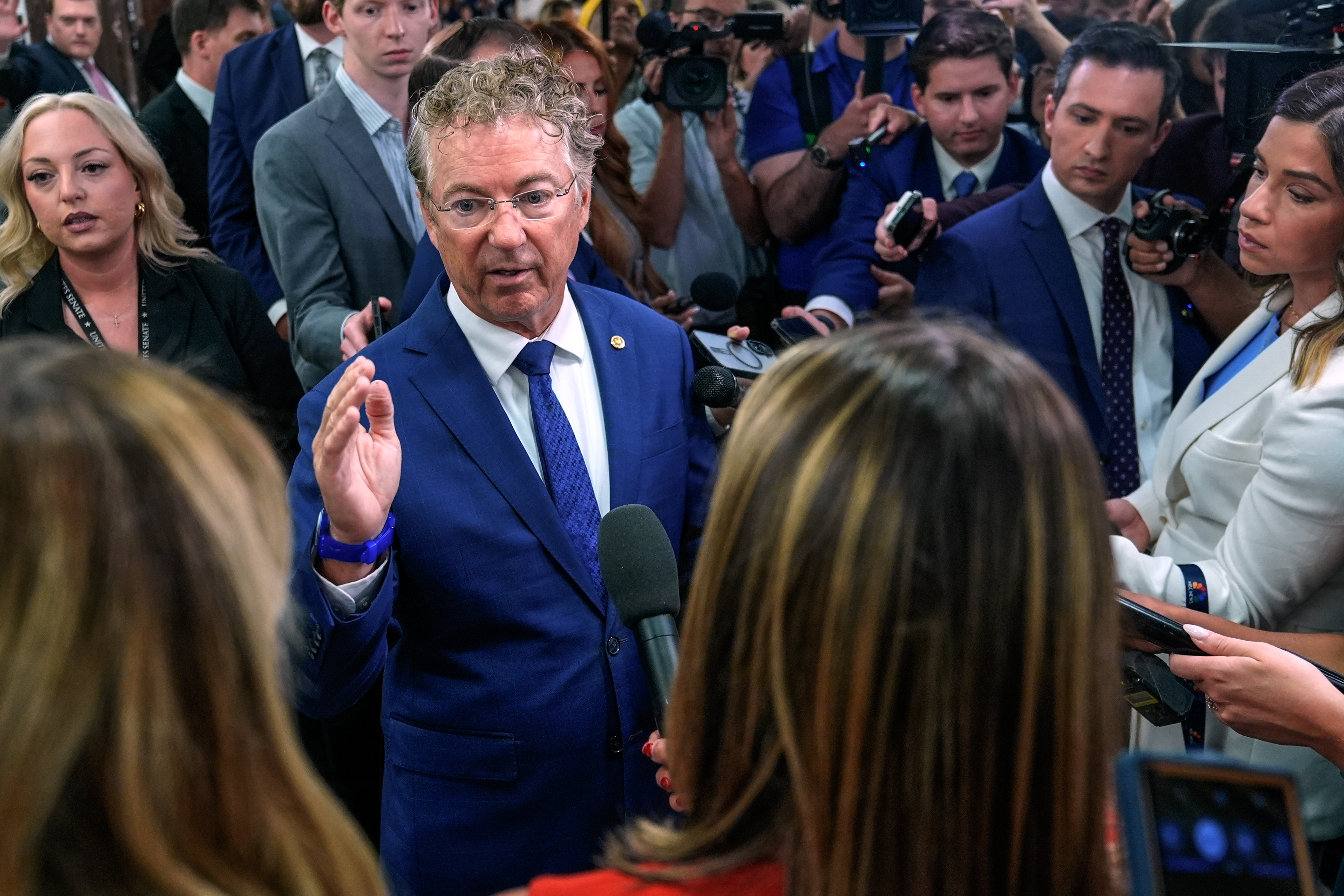
    WASHINGTON — A new federal proposal to enact protections for communities opposed to the proliferation of data centers has drawn inspiration from both the Philadelphia suburbs and Western Pennsylvania fracking country.

    The Data Center Bill of Rights is one of several national efforts to address a growing dissatisfaction with data centers, which have so far faced few restrictions at either the federal or state level in Pennsylvania.

    U.S. Rep. Ro Khanna, a California Democrat and Bucks County native considering running for president in 2028, said his home state should be doing more.

    He introduced the federal legislation after a recent tour across Pennsylvania that he said was designed to hear from communities that have lost manufacturing jobs and other economic opportunities.

    Data center concerns came up more than any other issue, he said — leading him to incorporate new ideas into the bill he already had in the works, and to call for a pause on data center development in Pennsylvania until further protections and local controls are enacted.

    A statewide pause would be more than what Gov. Josh Shapiro — another potential 2028 Democratic contender — has proposed as he seeks to enact data center guidelines. It would also be less than other Democrats, both in Pennsylvania and nationally, who have called for more robust moratoriums. Shapiro’s Republican challenger this year, Treasurer Stacy Garrity, has also called for a pause but not for an extended moratorium.

    “I was surprised by the anger about it in Pennsylvania,” Khanna said in an interview after his 15-county tour. “In other states, people are sometimes opposed in local communities, local pockets. But not this widespread anger.”

    Khanna, a Council Rock High School graduate who has represented Silicon Valley in Congress since 2017, spoke about the Data Center Bill of Rights during his tour but said afterward that it was “partly inspired” by the concerns he heard in the communities similar to the ones where he grew up.

    He said he was alarmed by the complaints he heard outside Philadelphia, where five data centers have been proposed in close proximity to each other in King of Prussia and another 2-million-square-foot data center is proposed in Conshohocken.

    “As a kid, I used to go to Conshohocken and the King of Prussia Mall. I’m familiar with that area,” Khanna said. “You can’t ride roughshod over what Delaware County wants or when Montgomery County wants.”

    The legislation would declare that communities have the right to reject data centers through a “transparent community process” or allow them with specific protections. That includes demanding that data centers don’t lead to higher electricity rates, that they use renewable energy sources and disclose their water consumption, and “pay their fair share of state and local taxes.”
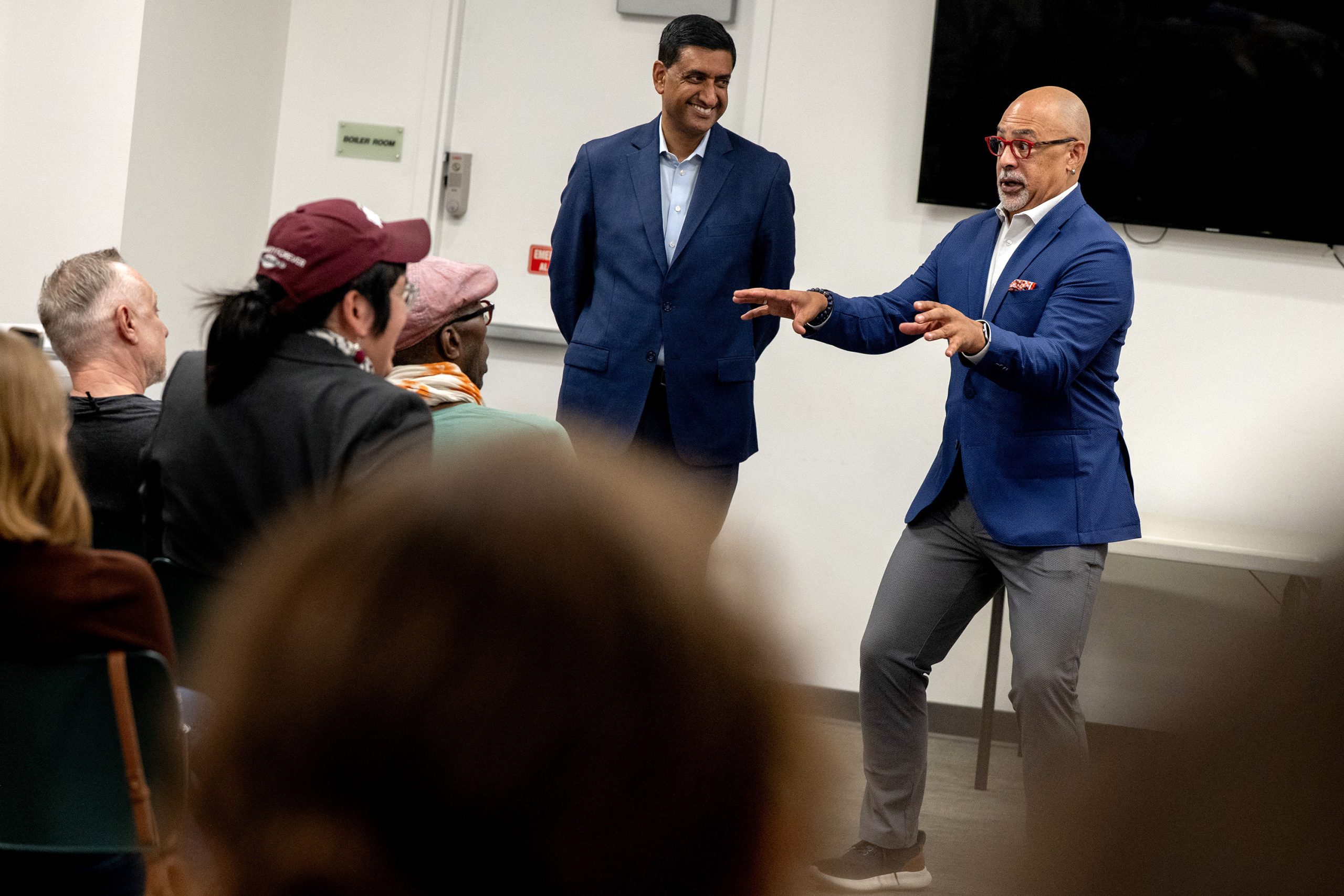
    State Rep. Chris Rabb (right) joins U.S. Rep. Ro Khanna (left) Tuesday, July 28, 2026, as he stops on his “Made in PA: New Economic Patriotism Tour” at the City Institute Library on Rittenhouse Square.Tom Gralish / Staff Photographer

    One specific provision, Khanna said, was informed by his visit in Washington County with individuals who are paid to host natural gas wells on their properties. It was there that he said he learned of community demands for oil and gas well sites to be at least 2,500 feet from residences. That buffer was a recommendation from a 2020 grand jury report released by Shapiro when he was serving as attorney general and that outlined health and safety issues caused by fracking in the Marcellus Shale region.

    The recommendation was not followed, and advocates are continuing to push for extending the buffer from the current distance of 500 feet, according to Inside Climate News.

    Khanna’s bill of rights would call for data centers to be built no closer than 2,500 feet from residences, schools, childcare facilities, hospitals or nursing homes. He said the environmental and health hazards for data centers aren’t the same as fracking but they should be kept at a distance from communities that don’t want to live directly next to them.

    “At least they were offering royalty checks in the cases of fracking,” Khanna said. “[Data center developers are] not even giving the communities checks. It’s just kind of like, ‘OK, we’re going to build.’ What does the community get out of it? I literally don’t understand it.”

    Data center advocates have argued their development is critical in winning an artificial intelligence war with China, and that they will bring construction and some skilled jobs to communities that need them.

    Even the staunchest advocates, though, have acknowledged the public blowback.

    “I do think that data centers in Pennsylvania have raised legitimate concerns,” U.S. Sen. Dave McCormick (R., Pa.) said during a recent telephone town hall as he continued to promote them in the competition with China and their creation of “thousands of jobs.”

    When developers are making their pitch, McCormick said they should come with commitments to protect energy costs and overuse of water, use local labor, invest in the community and pay taxes.

    “That should be part of the deal up front,” McCormick said during the telephone town hall in late July. “With all those facts, then the local community can decide whether they want the data center or not. And if they choose not to, that’s their choice.”

    Khanna said he’s hoping for bipartisan support as he introduces the bill of rights idea. He’ll also be competing with other proposals — like one from fellow progressives U.S. Rep. Alexandria Ocasio-Cortez (D., N.Y.) and U.S. Sen. Bernie Sanders (I., Vt.) called the AI Data Center Moratorium Act. The bill would enact an immediate federal moratorium on data center construction until other safeguards are passed into law, including some of the ideas Khanna and McCormick have proposed, like around utility costs.

    Several Pennsylvania state-level laws have been proposed, though the legislature did not address them during its busy budget season earlier this spring and summer. Lawmakers also left Harrisburg without ending tax breaks aimed at incentivizing data center construction even though the idea had garnered widespread support.

    “They shouldn’t be getting these tax breaks to build,” Khanna said. “That’s absurd when you’ve got hyperscalers that are making trillions of dollars.”

    The fact that many of those ultra-wealthy corporations are based in his district made the issue a politically dicey situation for him, but also one that the possible presidential hopeful said he was willing to take on.

    “We’ve got to pause it in states like Pennsylvania,” Khanna said. “Some of my own constituents aren’t going to like that.”
  • Oxford may soon disband its police department. The community is worried about losing its homegrown force.

    Oxford may soon disband its police department. The community is worried about losing its homegrown force.

    Oxford officials are inching closer to disbanding the borough’s century-old police department and joining a regional law enforcement agency, as increasing costs of maintaining the local force have outpaced revenue. But the plan has prompted worries from some residents.

    The seven-member borough council will review final agreements to join the Southern Chester County Regional Police Department at its Aug. 17 meeting, where officials are poised to cast their final vote to move ahead with regionalization.

    First responders represent some of the most expensive parts of a municipality’s budget, between salaries, health insurance, and pensions, as well as facilities and equipment costs. Oxford will join a smattering of other area municipalities that have moved to regionalization as a way to save money.

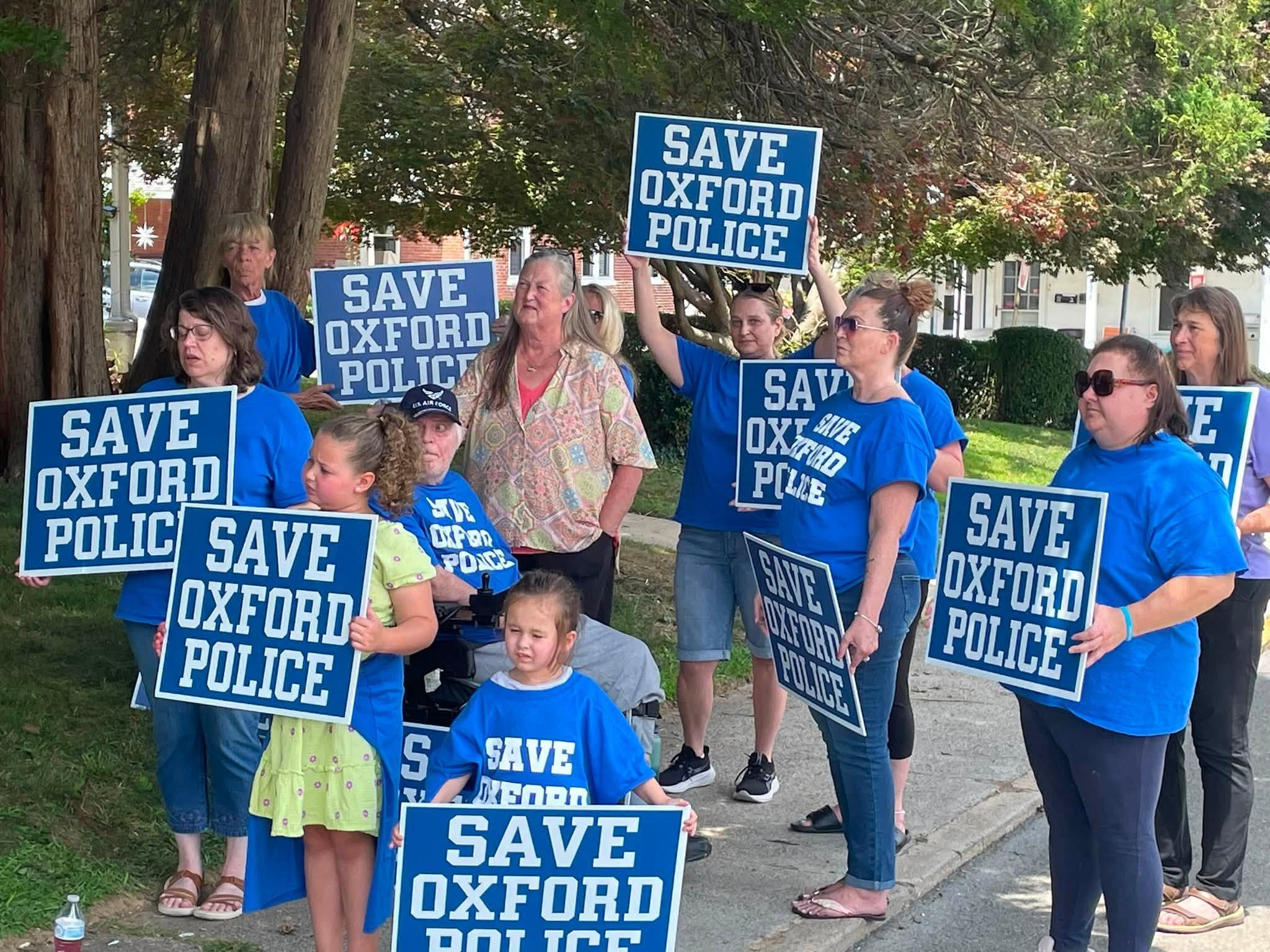
    But the prospect has sparked concerns in the community of roughly 5,800 people. Some fear that dissolving the borough’s department will increase emergency response times and potentially leave the municipality unprotected. And they worry about losing the officers who have grown up alongside them and understand their community. Some residents have called on the township to try to save the department by cutting costs in other ways.

    “These are people that literally would pull my kid over, give him a ticket, and ask how his dad is when he had cancer,” Oxford resident MaryAnn Riess said. “This is personal. This is a small town. These guys, all 11 of them, mean something to us. We buy them coffee. We buy them doughnuts. They are part of our extended family. This matters to us, and how they’re being treated matters to us.”

    Mayor Phil Harris does not disagree. But he says it is becoming impossible to maintain the department at its current level — let alone increase salaries or staffing.

    “We all want the same thing. I want our officers in a different uniform in our town doing the same job, with more equipment and more access to the tools they need to continue to perform at a very high level,” he said. “That’s the goal.”

    Years of deliberation

    When Oxford’s council casts its vote later this month, it will be after more than three years of studies and evaluations, the township said.

    In 2023, leadership found its police department — which consists of a police chief, 10 full-time officers, and several part-time officers — was the borough’s largest operating expense. It accounts for about half of the borough’s expenditures, with more than $2 million budgeted in 2026 for police.

    Meanwhile, the borough’s revenues were not keeping pace. Officials began exploring how they could sustainably provide public safety services long-term.

    Original fiscal forecasts were quite “bearish,” Harris said. But even when the borough performed better than earlier projections, the writing was still on the wall, he said.

    Its higher revenue was in part thanks to an influx of new homes with higher-than-expected earned income tax. But the largest indicator of why revenue rose was a 21% tax increase during the same period.

    “We’re seeing the operational and the structural imbalances continue within the police department,” he said. “We’re struggling on the operational side to be able to maintain what we currently have.”

    A July analysis from Keystone Municipal Solutions found that though Oxford’s financial status had improved, it levied the second-highest millage rate in the county, increasing by 21% since 2023, compared with the average of 12% across the county. Additional raises were seen as “counterproductive to the growth necessary for long-term fiscal stability.”

    The analysis evaluated five possible service alternatives: keeping the borough’s department, restructuring the existing department, reducing staffing and supplementing coverage with Pennsylvania State Police, relying entirely on the state police, and merging with the Southern Chester County Regional Department.

    At its July 29 meeting, the borough council voted 6-1 to authorize the council president, borough manager, mayor, and solicitor to negotiate with the regional department. They will present those agreements to the full council in August.

    If the council votes in the affirmative, the borough will join New Garden, West Grove, and Avondale in the regional department. Formed in 2017, the department employs 21 full-time officers.

    It is projected the regional department would add 12 more officers with the inclusion of Oxford. Oxford would receive 24-7 police services, with at least two officers on patrol at all times, like the current structure.

    Harris said the goal is for every officer who wants to go to the regional department to do so. But there are protections and a path for those who do not.

    Oxford is a ways further west from its partners; the borough is up to 16 miles away from them.

    To keep response times low, the borough would have a substation — though likely not in Oxford’s existing police building — with cars in the borough. Officers would start and end the clock within Oxford’s boundaries, so there would be no shift-change gaps. They hope to retain the administrative assistant and have a lieutenant stationed on duty at the substation, Monday to Friday.

    Officers would get new uniforms, the cars would be relabeled, and Oxford’s assets would become part of the regional department’s assets.

    According to the report, after an increase in costs associated with up-front transition costs in 2027, annual savings would range from $300,000 to $320,000 “before declining slightly toward the end of the projection period.” The report estimates cumulative savings through the projection period at approximately $1.4 million.

    “What you get by regionalizing is the economy of scale,” Harris said. “You get stability across those lines, and it’s predictability — and you can spread things out, and you can plan.”

    More regionalization

    The Southern Chester County Regional Department is part of a broader swell across the state of municipalities utilizing regionalized services to slash expenses, said John Brenner, executive director of the Pennsylvania Municipal League.

    You would be “hard pressed” to find a community that spends less than 50% of its budget on public safety, he said. And those costs continue to rise.

    “That puts pressure on local officials again to say, ‘OK, what is more efficient here? Is there a better way to do this?’ And I think a number of local officials throughout the state have said, ‘You know what? Regionalization might make a lot of sense,’” he said.

    It is not a perfect solution: Across the state, municipalities have joined and then withdrawn from regional services due to increasing costs under the agreement, according to the analysis by Keystone. Similarly, Kennett Square pulled out of the regional fire and emergency services commission that it had helped start after costs soared too high. It rejoined the commission earlier this year, having not found a cheaper alternative.

    In Chester County, some municipalities contract out with their neighbors’ forces. Oxford tried to embrace such a model, but its closest neighbors have relied entirely on the Pennsylvania State Police for public safety, at zero cost. Contracting Oxford’s force was an expense those communities could not take on.

    Across Chester County, more than 20 municipalities rely on the state police for full coverage. Around a dozen others use partial coverage.

    But that was not a direction Oxford wanted to go. While the state police do a “great job,” they are “not a community-based police department,” Harris said.

    “We were desirous of having a community-based police department that operates in a different model, that knows the neighbors, that knows the streets, that goes out to the festivals, that shakes the hands and goes to the schools and the nonprofits,” he said. “We felt like the [regional department] brings that model and it maintains that standard.”

    Residents are concerned

    Danny Graham grew up running around town with the men who would go on to become police officers in Oxford. There is a distinct “hometown” feeling to the force, he said. It feels like the officers know what to do, how to calm people down. And they respond almost immediately, he said, recalling an incident outside his home when they were there within 2.5 minutes.

    Oxford police responded to 4,406 calls for service in 2023, according to the most recent data in the Keystone report. A majority were for property and house checks, followed by traffic stops, medical emergencies, and more.

    Serious crime — such as larceny or violent crime — was “not prevalent,” according to the report.

    But residents worry about what regionalization will do to that community culture and speed of response.

    In response, Graham created Save Oxford Police, a Facebook group that amassed nearly 1,000 members in recent weeks. A Change.org petition calling for saving the department has accrued hundreds of signatures.

    He said he did not understand how the borough could have enough cash flow for other expenses, but would not invest in the department.

    “Something stinks in Oxford, and we’re trying to find that smell,” he said.

    He hopes that, if enough people come to the Aug. 17 meeting, they can shut the regionalization effort down by postponing the vote, with the hope something could come up in the interim to save the department.

    But, if not that, “it’s no longer Save Oxford Police. It’s Save Oxford Police Officers, because now that means more than the department itself,” he said.

    Riess, who believes the Oxford police force is a greater extended family for the borough, said that sitting out on the patio at a restaurant recently, her group watched an officer test each business door, making sure they were locked.

    “Do you really think that’s going to happen [with regional]?” she said.

    “I’ve never seen regional do that, but I haven’t seen any officers really do that. Except Oxford,” Graham said.

    This suburban content is produced with support from the Leslie Miller and Richard Worley Foundation and The Lenfest Institute for Journalism. Editorial content is created independently of the project donors. Gifts to support The Inquirer’s high-impact journalism can be made at inquirer.com/donate. A list of Lenfest Institute donors can be found at lenfestinstitute.org/supporters.

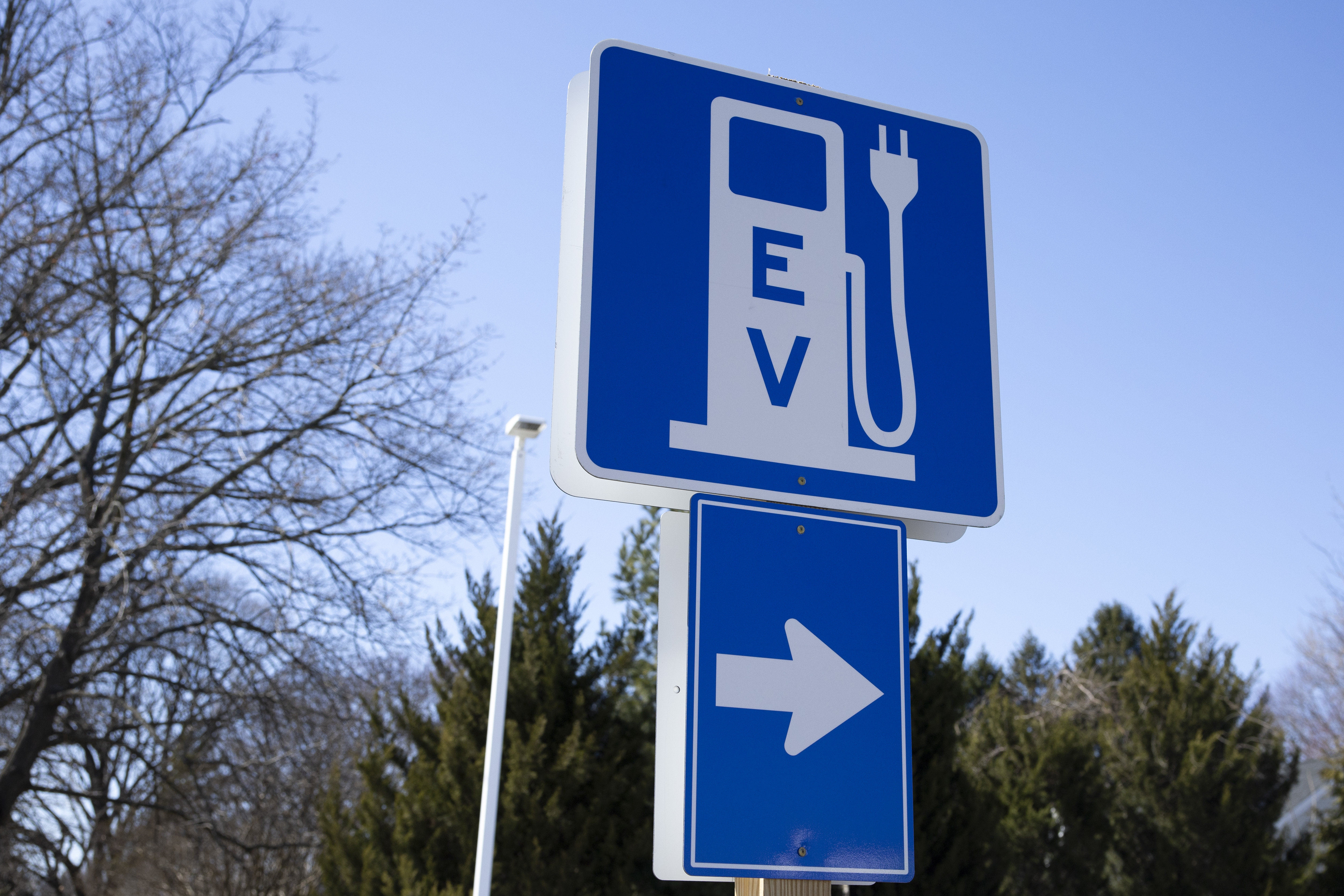
  • Pa. small towns set to get latest wave of federal funding for EV chargers

    Pa. small towns set to get latest wave of federal funding for EV chargers

    HARRISBURG — As Pennsylvania prepares to receive millions of federal dollars to build electric vehicle charging stations, the small towns that will host the devices hope they can double as tourist magnets.

    “People can let their vehicles sit for a bit and walk the stores downtown and grab food,” Steve Herman said of the vision for the devices. “They’ll serve folks who are living here but also draw in visitors.”

    Herman is transportation planning program director for SEDA-COG, an economic development organization that covers eight central Pennsylvania counties. He’s spent the past year working with chambers of commerce and community groups to explore how to make the chargers economic assets. If planned properly, he said, the stations can “draw people into our downtowns.”

    The funding is the latest wave of a $5 billion federal program created under the Biden administration to build out EV chargers across the country. A previous phase of the program placed chargers along interstates and other major roads, but this round is focused on building chargers in local communities. All told, Pennsylvania is slated to receive $171 million by the program’s end.

    In the past year, Herman has surveyed where the best locations for chargers would be, hosting in-person workshops on the program and polling residents. He even created a tool that lets people drop pins on a map to recommend locations for chargers.

    He reported his findings to the Pennsylvania Department of Transportation, which has been consulting with dozens of other local planning councils across the state in preparation for the funds.

    “Compared to Philadelphia or Pittsburgh, [there are] differences in terms of existing network and priorities,” Herman told Spotlight PA, referring to current charger access. “We already have some in university towns and hospitals and destinations like that, even some of the grocery stores. But [there’s] not as widespread availability. The community charging program will broaden that out.“

    Pennsylvania has built at least three dozen chargers so far — the most of any state in the U.S. Each charging port cost roughly $163,000.

    Clean energy and transportation experts attribute the fast deployment to PennDot, which had previously partnered with the Department of Environmental Protection to research the issue. The agency also worked directly with local gas stations to dole out grants.

    Environmental advocates view EVs as a key part of combating climate change, as the transportation industry is one of the largest sources of greenhouse gas emissions in the U.S. Over half of those emissions come from passenger cars and trucks.

    Alissa Burger, regional policy director at clean transportation industry group CALSTART, said the federal funds are “creating a foundation” for states to have basic EV charging infrastructure that will “encourage their citizens to consider switching over to a zero-emission vehicle.”

    She added: “You’re not gonna get an EV if you feel nervous about where you’re going to charge it.”

    Previously, states were on their own, Burger said. For instance, she pointed to the 2019 PennDot plan to build out EV infrastructure. That pitch proposed just four charging stations and identified only state sources for funding.

    “There was intention. I don’t think there was a lot of funding behind it,” Burger said.

    So far, Pennsylvania has already spent or plans to spend roughly $60 million of the $171 million allocated to the state. The remaining $100 million has been obligated — meaning a contract is in place to spend the funds — to the grant program that Herman of SEDA-COG is participating in, per PennDot.

    That initial commitment is important, as unobligated funds can be clawed back by federal officials when the program expires in October. The EV charging effort is among a slate of initiatives funded by the Bipartisan Infrastructure Law that the Trump administration has tried to roll back or freeze.

    In the first weeks of his second term, President Donald Trump issued an executive order to freeze funding to this and other programs within the BIL. Trump said the freeze was for the purpose of eliminating “unfair subsidies and other ill-conceived government-imposed market distortions that favor EVs over other technology.”

    As a result, the federal Department of Transportation paused funding to states. But after a suit by environmental organizations and states, including Pennsylvania, a federal judge ruled the order unconstitutional and returned the funds.

    The Federal Highway Administration also issued new guidelines for the National Electric Vehicle Infrastructure program last August, which environmental advocates said slowed down EV build-out by forcing states to resubmit their plans.

    Under the NEVI program, states get funding to grow their electric charger network. Site hosts, such as gas stations and local governments; EV charging companies; and contractors can apply for money to buy, install, and operate EV chargers. These funds can be used to pay for up to 80% of the total costs to build, replace, or upgrade a charging station.

    The first tranche of funding was released in 2021 and designated for a specific use: ensuring that there was an EV charger every fifty miles on major highways in the state, namely the Pennsylvania Turnpike. The money was aimed at building chargers for passenger vehicles.

    Pennsylvania was the first state to meet that goal, which allowed PennDot to tap the funding dedicated to setting up charging networks in less-trafficked routes. That second tranche went toward areas like Northeast Pennsylvania, Erie, and the Pittsburgh suburbs.

    The latest and final round of funds, for “community-focused EV charging projects,” is what has small towns excited.

    PennDot is still in the process of mapping out where to place chargers, working with local planning organizations like SEDA-COG to finalize locations.

    The agency is doing this work in stages, targeting different regions of the state. Officials plan to begin announcing this fall which municipalities will be awarded grants to build charging stations, and say the process of choosing locations should wrap up by next summer.

    Spotlight PA is an independent, nonpartisan, and nonprofit newsroom producing investigative and public-service journalism that holds power to account and drives positive change in Pennsylvania. Sign up for our free newsletters.

  • A Philly band is providing the sound for a rec kickball league from its apartment window — and making players ‘feel famous’

    A Philly band is providing the sound for a rec kickball league from its apartment window — and making players ‘feel famous’

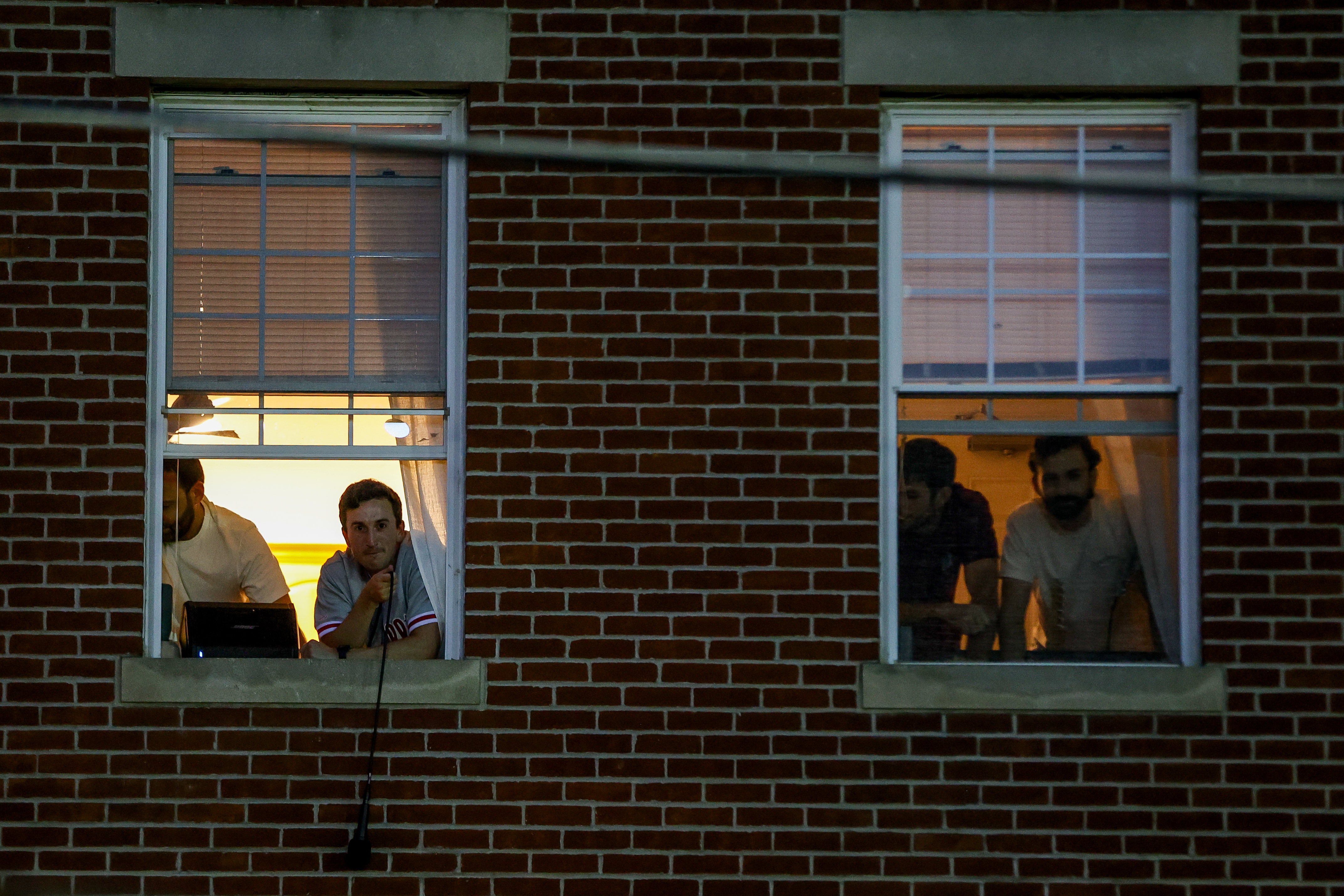
    A “loading” sign sat in the window of a three-story apartment complex across from Hancock Playground in Olde Kensington. Nearly an hour later, the sign was taken down, the window was opened, and the sounds of Mark Morrison’s “Return of the Mack” rang throughout the park.

    Suddenly, 29-year-old Brian Ulrich’s voice took over the speakers as his band, Mid Sentence, prepared for its next show.

    “How are we doing out there guys? Are we having a good night tonight? Let’s have some fun out there.”

    This isn’t a typical gig for the band that consists of Ulrich; Jeff Ross, 32; Shawn Cox, 29; and Ian Stutzman, 25. They usually perform at spots like Ruba Club, Kung Fu Necktie, MilkBoy, Dawson Street Pub, and The Grape.

    But ever since a series of clips showing the band commentating on local Heyday Athletic recreational adult kickball games went viral on social media, Ulrich’s apartment window has become a new stage for the band.

    “We’re a Philly indie band, and I think the videos really draw our community together,” said Cox, the band’s lead guitarist. “And that’s a big part of the content as well. Aside from us wanting to tie our music into it, we definitely want to tie Philly into it as a whole.”

    Mid Sentence singer Shaun Cox says he thinks the videos of his band’s kickball commentary “really draw our community together.”Isaiah Vazquez / For The Inquirer

    ‘You have to be innovative’

    Ulrich, the lead vocals and rhythm guitar of Mid Sentence, has lived across the street from the kickball field at Hancock Playground for over a year. And every night he could hear the games being played from his window.

    So, one day, he decided to turn his speakers toward the field and commentate as Ross, the band’s bass player, recorded the action. And he immediately became a favorite among players.

    As he played the end theme of SpongeBob SquarePants, one player began to dance. Meanwhile another player yelled out, “Where have you been all season?”

    ”It was really to promote the band’s music,” Ulrich said. “So we started posting it on our band’s page. And the idea was to be like making something funny that also included the music in it. So we try our hardest to make sure you’ve heard one of our songs every time we make one of the videos.”

    The band didn’t post the first video until September, six months after they recorded the footage.

    Since then, they’ve turned it into a series titled “How to annoy your local rec kickball league.” So far, there have been four parts, and throughout each clip, the band has kept the players entertained — playing classic 2000s hits along with their own music, playing iconic theme songs from Wii Sports, and heckling some players in the process.

    “No, [we didn’t expect it to blow up],” Ulrich said. “It was supposed to be a joke. God’s honest truth. It was literally just throwing a bone and seeing if it hit. And the first one actually didn’t hit; the second one didn’t hit. They were doing well on TikTok but not Instagram. And then we hit the third video, and that’s the one that actually went viral and is why we’re speaking to you guys right now.”

    The band has been together since 2023, starting as a cover band before making their own music. They met through Vampr, a Tinder-like networking app designed for musicians to connect. After three years together, they aim to keep growing.

    But as the music industry continues to change, so does the way artists have to promote themselves.

    “Nowadays, you have to be innovative,” Cox said. “Like, you have to be a content creator as well as being a great musician. It’s not mutually exclusive.”

    ‘It’s gotten more eyes on us’

    Six months ago, 32-year-old Walter Bayer and his team, Poultry in Motion, waited patiently at Hancock Playground for their opponents to arrive. Unfortunately, they never did. So they decided to play among themselves with a special rule: Each player had to have a drink in their hand while playing.

    Bayer, who has been part of Heyday for five years, was ready for a memorable night. But what he didn’t know was it was about to get even more special.

    This was the first day Ulrich decided to commentate on the game. And remember that SpongeBob SquarePants dancer? That was Bayer.

    “That was hilarious,” Bayer said. “They just out of nowhere started playing some music and doing the color commentary one night. And then six months later, I saw someone sent me the video of it and I was like, ‘Oh wait, that’s me dancing. That’s my team. Ok, cool.’ And now it’s blowing up. … But, yeah, they provide a little added entertainment. Especially if we’re losing, then it’s fun to have them kind of distracting us. So, big fans.”

    Mid Sentence’s kickball commentary has gotten positive reviews from players.Isaiah Vazquez / For The Inquirer

    Sarah Rabo has become a fan of Ulrich’s work. The 42-year-old Fishtown native, who has been part of the league for 16 years, believes you just need to be on the right side of the commentary when it comes to game time.

    “It’s a little distracting but it’s also really funny,” said Rabo, who’s the captain of Balls World Order (which might get renamed to Le’Ball James next year). “But it sucks, especially when you’re playing badly. He’s like, ‘Oh, big miss in right field.’ It’s kind of embarrassing, but it’s fun. I think it does razz people a little bit. But if you’re doing good, then it makes you feel famous.”

    Part 3 of the series has over 2 million views and 300,000 likes. Since the clips have taken off on social media, Heyday, the adult sports rec league, has gained more attention, too.

    “It’s gotten more eyes on us, and it’s gotten more eyes on the band,” said Brian Wagner, the chief administrative officer of Heyday. “So, you know, local Philly band, we want to help them. We’re a local Philly company, and whatever helps them helps us, too. So it’s definitely gotten more eyes on us and maybe has gotten more people playing. That’s all positive. So we want to lean into that as much as we can and it’s been a great relationship with them so far.”

    However, not everyone is a fan of the antics.

    ”About like three weeks ago, my neighbor came down, it was like 10 p.m., and I was literally on the guitar playing, and he goes, ‘Hey, could you close your window?’ And I was like, ‘Oh, sorry. Is it too loud?’ He was like, ‘Yeah, it’s really [expletive] loud,’” Ulrich said. “And then my face got really red, I closed the window, and that was the end of that night.”

    Finding rhythm: content creation and making music

    When it comes to their new social media fame, the band is still trying to find the balance between their kickball content and their music.

    “Ultimately, we don’t want to be like, ‘Oh, these are the kickball guys,” said Stutzman, the band’s drummer. “Like, no. That’s Mid Sentence. So that’s what we’re aiming for. If this is what we have to do to get the attention drawn on us at first, then we’re happy to do what we can to keep the attention on us. But we’re also going to respect our band while doing it.”

    The band recently released their debut album, Please Be There When I Come Home in July. It features songs written by Stutzman and Ulrich before the band was fully established.

    “You listen to the album start to finish, and you kind of find yourself in a little bit of an emotional roller-coaster in a good way,” Stutzman said. “It’s got a lot of different tastes to it, and I think there’s a song for everybody.”

    While Mid Sentence enjoys its kickball commentary, drummer Ian Stutzman says they don’t want to become “the kickball guys.”Isaiah Vazquez / For The Inquirer

    And with all the new attention on them, they’re headed back to the studio next month to record their next EP. But before that, they will be competing in the Local Noise battle of the lands on Thursday at Brooklyn Bowl and will play Aug. 20 at the Ruba Club.

    However, Heyday and the band are open to working together in the future.

    “We do social events; we do other types of events, too,” Wagner said. “So there’s probably some more things we can do with them. They’ve given us some creative ideas that I’m not going to ruin for anyone, but we’re all for it. It supports us, supports them. And anything fun and interesting we can do together, we will.”

  • Philly school principals were asked about their jobs. Here’s what they had to say.

    Philly school principals were asked about their jobs. Here’s what they had to say.

    Most Philadelphia principals believe the city’s district and charter schools are moving in the right direction, though they are also frustrated with punishing workloads and inadequate access to resources.

    And while the majority of principals are satisfied with their leadership roles, Philadelphia School District school leaders are less likely to feel positive about their levels of support and autonomy. Only about half of district principals reported feeling backed by central administration, and about the same number said felt they had the authority to make decisions about school policies and practices.

    Two-thirds of principals citywide have considered leaving their jobs, with most contemplating K-12 jobs outside Philadelphia or in the education sector but not in a school or district.

    The results come via a new survey commissioned by the Philadelphia Citywide Talent Coalition, a group asked by the Philadelphia Mayor’s Office of Education to design and implement strategies to hire and retain more effective teachers and teachers of color.

    Elevate 215, a Philadelphia-based education nonprofit, commissioned the study on the talent coalition’s behalf, surveying 135 district and charter school principals this spring.

    Here are some takeaways from the recently released report:

    There are some reasons to be optimistic

    Most principals have spent more than a decade in Philadelphia schools, district or charter.

    Both charter and district principals said they think Philadelphia schools are going in the right direction — 64% of charter principals and 55% of district principals. (In all, 36% and 45%, respectively, believe the sectors are going in the wrong direction.)

    Charter and district principals report a satisfaction gap in some areas

    While charter and district principals report similar levels of satisfaction in areas like relationships with students (95% for district principals and 96% for charter principals), there were areas of disparity.

    More than three-quarters, 80%, of charter principals felt they had access to adequate funding, supplies, and support staff. Just 23% of district principals were satisfied with their level of resources.

    Facilities satisfaction was a key area of difference, too — 83% of charter principals said they were satisfied with their access to adequate facilities, while 34% of district principals did.

    Only 32% of district principals said they were satisfied with their workload; 54% of charter principals reported workload satisfaction.

    In all, 51% of district principals said they felt supported by their central office administrators, while 88% of charter principals did. The same percentage of district principals said they felt they had autonomy to make decisions regarding school policies and practices; 81% of charter principals did.

    Principals’ top challenges are consistent

    Principals across sectors reported that staff shortages, workload, inadequately prepared teachers, and expectations around student achievement are top challenges.

    Principals sound off

    Asked what policymakers should know, the principals — who were not identified in the report by name or school — had much to say.

    “One piece of advice I would give policymakers is to listen directly to school leaders who are doing the work every day,” one principal wrote. “Retention will improve when leaders are not expected to carry the weight of academics, culture, staffing, family engagement, safety, and community concerns without adequate support.”

    Another principal was succinct, writing: “do not micromanage!”

    “People need to be paid more, especially teachers. We also need to be able to enforce truancy policies. It’s frustrating for all involved,” another principal said.

    “Attract, support, and help retain high-quality educators,” wrote another principal. “We can’t [hire large numbers of teachers without permanent certification] and expect miracles. Hold parents more accountable for school attendance — other states do.”

    Another principal focused on a lack of experienced educators: “Offer veteran teachers a higher salary to commit to working at schools such as mine in Kensington where the only applicants are just out of college with no experience. The children continue to fall further behind even with [academic coaches] in our building.”

    “Schools in hard to fill locations require veteran teachers with heart who understand their skills are needed desperately,” the principal said.

  • LeBron James could live in New York while playing in Philly. Wilt Chamberlain did it first.

    LeBron James could live in New York while playing in Philly. Wilt Chamberlain did it first.

    The trolleys stopped running at midnight, so Tom Hoover waited outside the Philadelphia Warriors locker room for a lift back to Villanova. He was a teenage college student and his ride after sitting in the stands at Convention Hall was the passenger seat of Wilt Chamberlain’s purple Cadillac El Dorado.

    A 40-minute drive, Hoover said, became a 10-minute sprint as Chamberlain burned rubber before dropping his buddy off at the dorm.

    “Dippy had a heavy foot,” Hoover said. “Back then, you didn’t pay attention. You were just talking and riding. But you would be like ‘Damn, how’d we get here so fast?’ It was one of those kinds of things.”

    Chamberlain then jumped on the turnpike and headed for New York, as he lived in the 1960s in an apartment overlooking Central Park while playing in Philadelphia.

    He maintained a residence in Philly but spent most nights in New York, from which he’d commute for games and practices while owning a popular club in Harlem. Chamberlain even hitched a ride from Hershey back to New York in 1962 with Knicks players after his 100-point game.

    “He would do 90 to 100 [mph] all the way up the turnpike,” Hoover said of Chamberlain, who died in 1999. “And if he got stopped. ‘Oh, it’s Wilt Chamberlain. Can I get your autograph?’ Back then it was a different time. It was really different.”

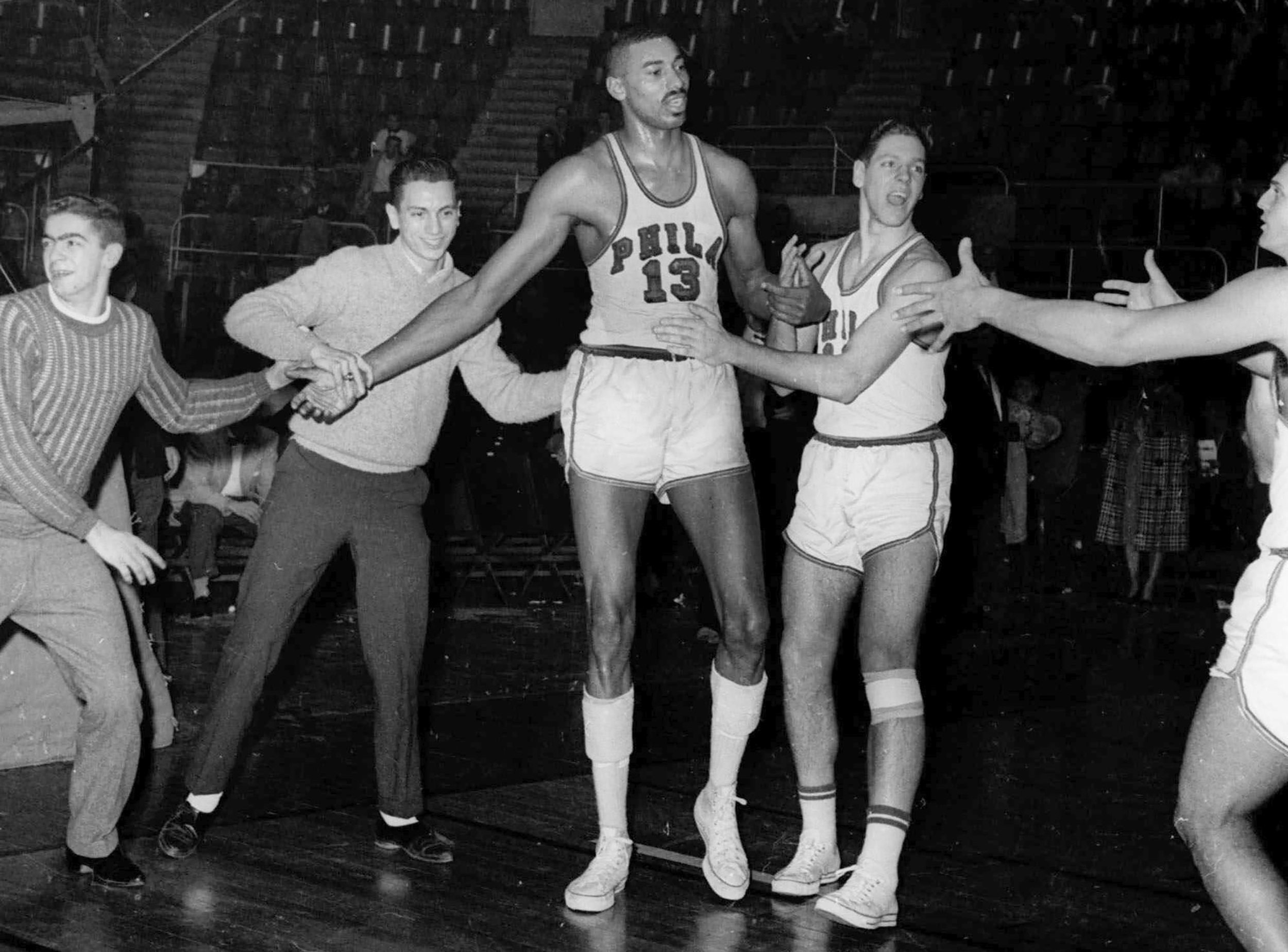
    Fans and teammates rush onto the court to congratulate Wilt Chamberlain after his 100-point game in 1962 in Hershey, Pa. He hitched a ride back to New York with Knicks players after the game.PAUL VATHIS / AP

    Chamberlain’s commute could be copied this season as several NBA insiders reported last month about the possibility of LeBron James living in New York while playing for the Sixers. James, one report suggested, could use a helicopter to get to games and practices. Not even Chamberlain’s heavy foot could keep pace with that.

    “I was thinking LeBron might do the same thing,” said Hoover, who played for the Knicks after leaving Villanova and now lives in Manhattan. “Philly is not his kind of town. And that’s not a knock against Philadelphia. But I just think he’s a New York City kind of guy after living in L.A. That kind of lifestyle. So I can see him living in New York and making that trip back and forth.”

    A New York ‘magnet’

    Chamberlain purchased Smalls Paradise in 1959, spent $200,000 to renovate the club on Seventh Avenue and 135th Street, and renamed it Big Wilt’s Smalls Paradise. It became the spot.

    “Oh, that was jumping, man. You kidding me?” Hoover said. “That was just a wonderful time in my life and a wonderful time to be growing up as 20-some years old, living in New York, and hanging in that place.”

    Chamberlain told Ebony magazine that he spent 18 hours a day at Smalls to learn everything about owning a bar. Sammy Davis Jr. played Smalls, as did King Curtis, Jerry Butler, The Coasters, and Willis “Gator” Jackson. James Brown would perform at the Apollo Theater and then stop by Smalls.

    “Dip was a magnet for everyone,” Hoover said. “People just wanted to be around him. They would come in there and just look at him. They had never seen a guy who could dress like that and looked like that. He was a 7-foot athlete who wasn’t gangly and uncoordinated. Plus, that big diamond he wore on his finger. They never saw anything like that.”

    The club was a hub for Black entertainers, drawing “everybody who was anybody.”

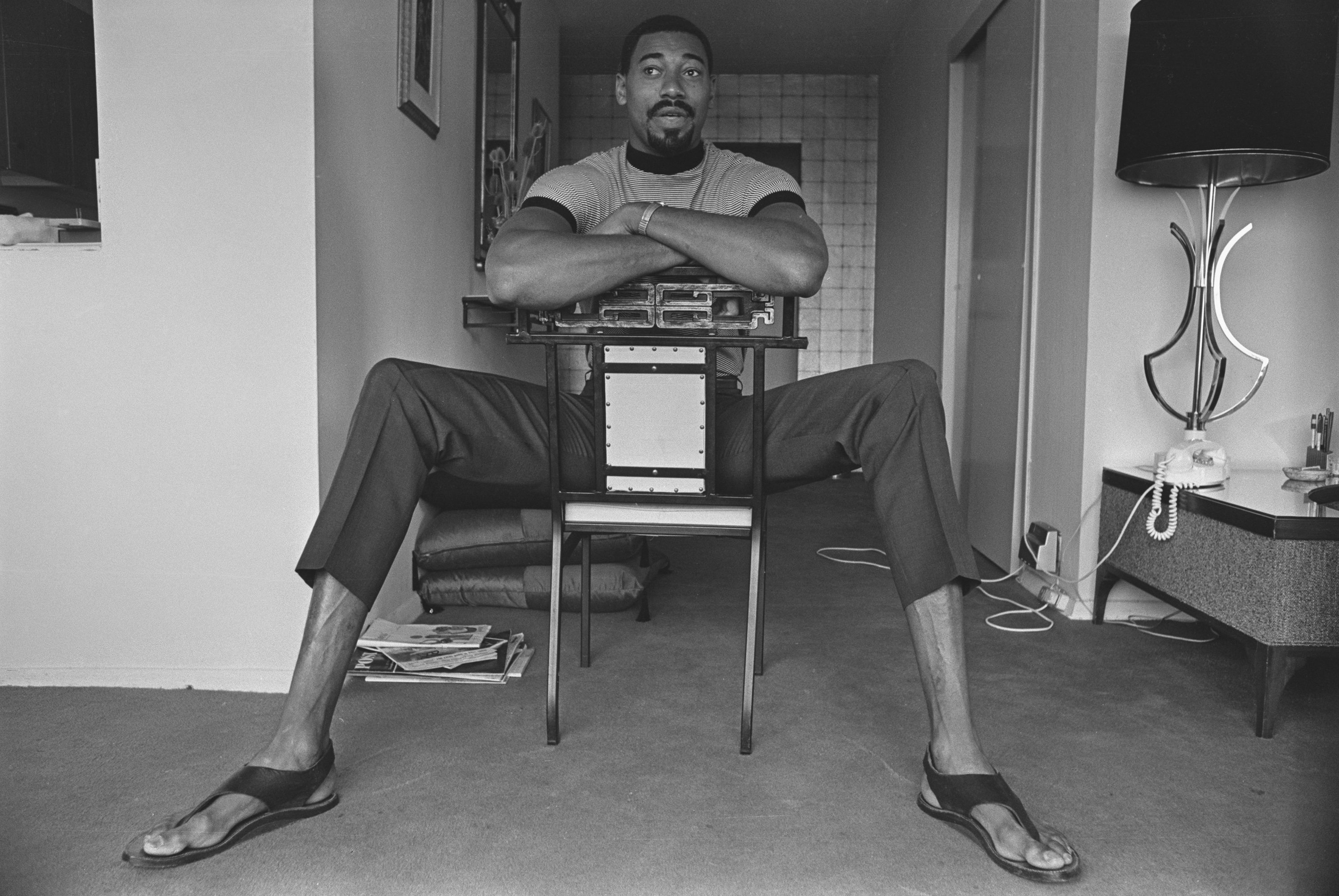
    Wilt Chamberlain “was a magnet for everyone,” said his friend Tom Hoover. “They had never seen a guy who could dress like that and looked like that.”Harry Benson/Express/Hulton Arch

    “My mother always tells the story that she met Sidney Poitier at the club,” said Gloria Miller, whose father, Vince, was Chamberlain’s childhood best friend and often drove with him back to Philly.

    Chamberlain’s Manhattan apartment was on the top floor of Park West Village, then a ritzy high-rise near Central Park. The apartment had a terrace and windows that overlooked the park with a view downtown of the Empire State Building.

    Kareem Abdul-Jabbar — who hung there as a high schooler still named Lew Alcindor — described the apartment as “the ultimate bachelor pad.”

    “A two-bedroom place done up in antique gold finish with a big couch in the living room, paintings on the walls, good stereo, great record collection,” Abdul-Jabbar wrote in his autobiography Giant Steps. “Wilt was known for his expensive taste, and the place showed it. I walked in and I clammed right up tight. I didn’t know what cool was, but I knew very strongly that I didn’t want to be uncool.”

    Abdul-Jabbar played “Dirty Hearts” at Chamberlain’s dining room table with Chamberlain, Hoover, and Cal Ramsey. Chamberlain’s crew used to close Smalls at 4 a.m. and then play cards at the apartment. Abdul-Jabbar called them “hearts junkies.”

    They ate sandwiches and swapped stories: What did Bill Russell say? What was Elgin Baylor complaining about? What’s up with Oscar Robertson? The loser of the card game had to chug a quart of water.

    “But he would never drink,” Hoover said. “So it was like a wrestling match with that big guy.”

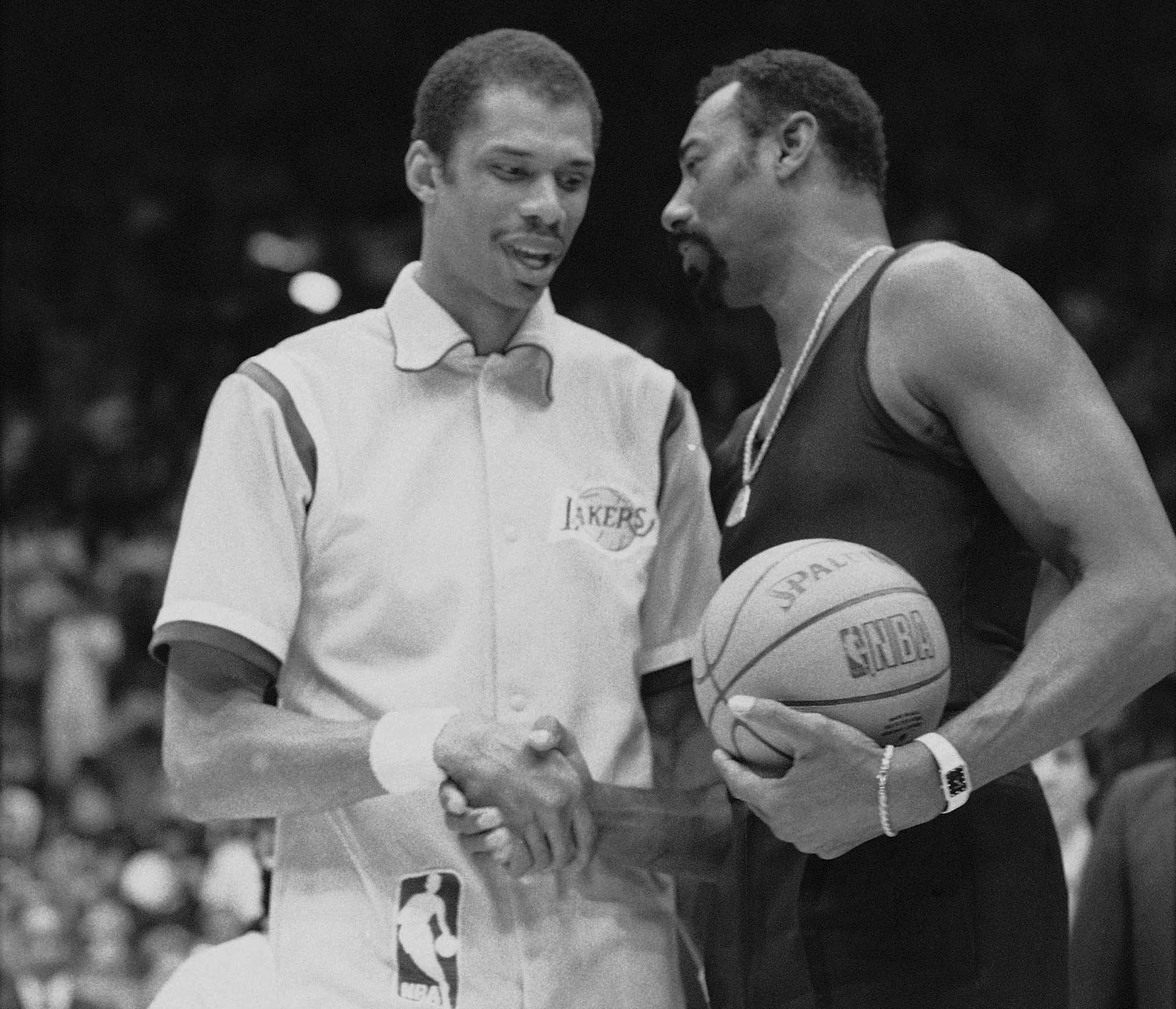
    Kareem Abdul-Jabbar (left) is congratulated by Wilt Chamberlain in 1984 after Abdul-Jabbar passed Chamberlain’s NBA all-time scoring record. LeBron James has since passed Abdul-Jabbar’s record.Mark Avery

    Living in Elkins Park

    The Sixers traded for Chamberlain in February 1965, bringing him back to Philadelphia after the Warriors had moved three years earlier to San Francisco. There were a few weeks left in the regular season, and Sixers owner Ike Richman didn’t want Chamberlain spending nights in New York.

    “He had a driver who he used to pay to take him up to New York,” said Richman’s son, David. “My father used to pay him under the table to not drive him to New York.”

    Richman instructed Chamberlain to live at his home in Elkins Park for the rest of the season.

    “I came home from Cheltenham High School and my mother, with our domestic helper, was putting my twin beds together and doing all this stuff to my room,” Michael Richman said. “I said, ‘What are you doing?’ She said, ‘Wilt’s moving in. Daddy’s making him.’”

    Chamberlain shot baskets in Richman’s driveway, hung out with the kids, and ate dinner with the family. Richman and Chamberlain usually drove together to Convention Hall, but once Richman had to be there early for a playoff game against Cincinnati. So he asked David — who had just earned his driver’s license — to drive Chamberlain.

    The 16-year-old usually drove a 1959 Austin-Healey Sprite, but that wouldn’t be big enough for Chamberlain. Neither would the Pontiac Tempest. So the teenager drove his dad’s Cadillac.

    “He used to sit in the back seat of the car and hang his body over the front seat,” Richman said. “It was like having a cobra in the car. He was in the back, but his head and body was in the front seat.”

    Gloria Miller as a child standing in front of Wilt Chamberlain’s powder blue Bentley.Gloria Miller

    The season ended that April when the Sixers lost to Boston in seven games. Chamberlain shared an apartment the next season with Miller on the Benjamin Franklin Parkway but spent most of his time in New York. He often commuted by train or driving to Philly with Miller in a powder blue Bentley that was delivered to his Manhattan apartment.

    The press ripped Chamberlain every time he missed a practice and chided him for living in another city. He once shoved a reporter into a locker after the writer kept asking him after a playoff defeat — in which Chamberlain scored 46 points — if he would have made more free throws had he not missed practice that week.

    “He wasn’t kidding when he played. He really meant it,” said Richman. “Whether he was going up to New York to party or whatever, when it came to game time, he was never half-hearted about it. He was really into it. When it was time to play ball, this wasn’t a game to him. It was a war.”

    Family in Philly

    Chamberlain drove after each season to Los Angeles, where he had built a beautiful house off Mulholland Drive in Bel Air.

    “He used to jump in his Bentley and drive for three days straight without stopping,” Richman said. “He didn’t need to sleep. Then he would get there. He was basically an insomniac.”

    The powder blue Bentley was there in the 1970s when the Millers — who lived in South Jersey — visited Chamberlain.

    “He called my father ‘Miller’ so he would call me ‘Little Miller’,” said Miller, whose father worked as a scout for the Sixers. “My mom was going to make dinner so we had to go to the store. He said, ‘Come on, Little Miller. Come to the store with me.’ I was getting my shoes on and he had no patience. He said, ‘You don’t need shoes. Come on.’ We got in the Bentley and we’re riding down the freeway and I’m like, ‘Why are they all looking at us?’ I didn’t realize I’m in a beautiful Bentley with Wilt Chamberlain. But it fit him.”

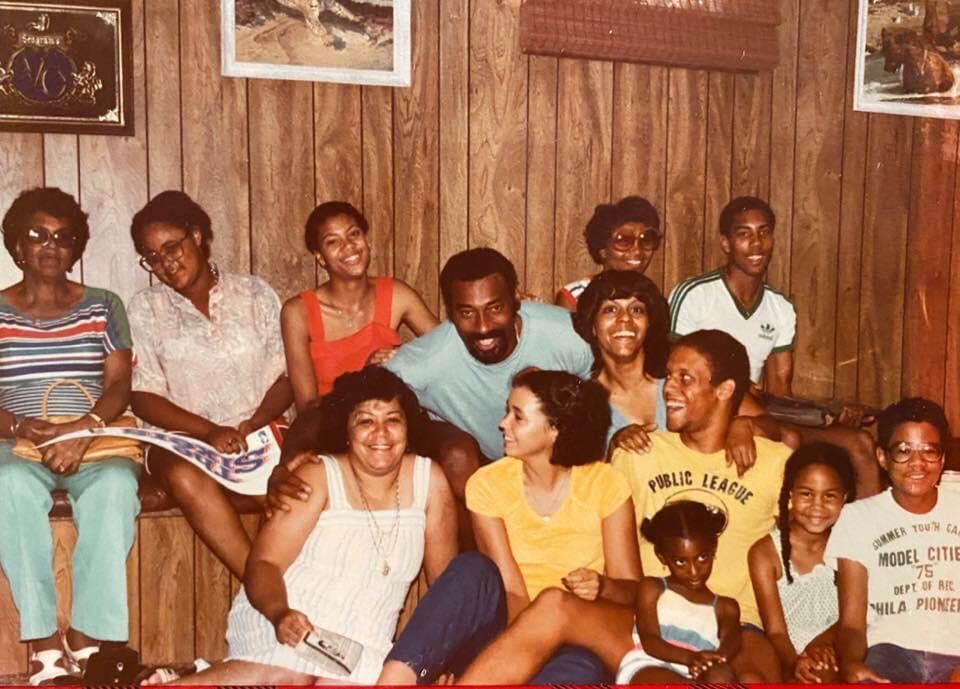
    Chamberlain retired in 1973 and spent most of his time in L.A. but still kept close ties to Philly. He was the best man in Miller’s wedding and became Gloria Miller’s godfather. The basketball icon kept a tight circle of friends from his childhood. Chamberlain, just like when he lived in New York, was always close to Philadelphia.

    “He was family,” Miller said. “He never forgot where he came from. Whenever Wilt came to town, he would come to my parents’ house and my mother would make him fried chicken and cobbler. Wilt and I would pick up the cobbler pieces together. It was just home. It was family.”

    Wilt Chamberlain visiting the Miller family in Philadelphia in the 1970s.Gloria Miller

    Hoover said he never thought much about Chamberlain living in New York while playing in Philly. The 7-footer belonged in the big city. And Hoover wouldn’t blame James for thinking the same.

    Hoover met Chamberlain when he was playing a summer game in New York — “Wilt Chamberlain knows my name,” Hoover thought after Chamberlain watched him play — and they soon became friends. Chamberlain dropped him off at his dorm and sped to New York. Hoover said no one even noticed the basketball superstar dropping off the college kid. It was normal.

    “Nobody saw me. It wasn’t necessary,” Hoover said. “The key to having relationships with guys is just having relationships. Not taking pictures, getting autographs, and jumping out saying, ‘Look who I’m with.’ That kind of thing makes you have lasting relationships with guys. If you’re always in front and always going to be out front with them, then that relationship is not going to last at all.”

  • Letters to the Editor | Aug. 9, 2026

    Letters to the Editor | Aug. 9, 2026

    Falsely accused

    It is unfortunate that former Olympian David Hearn cannot hold Donald Trump and District of Columbia U.S. Attorney and Trump stooge Jeanine Pirro personally liable for his indictment under what now clearly appears to be false pretenses.

    When the administration was looking for a scapegoat to shift the responsibility for its botched Lincoln Memorial Reflecting Pool project, Mr. Hearn was the victim, charged with felony vandalism because he was seen placing his hand in the water.

    Pirro said at the time that Hearn ripped up recently installed sealant on the pool in “a deliberate act” that caused more than $1,000 in damage. She accused him of “forcefully and violently” pulling up the bottom liner “with both hands” and acting belligerently toward an employee who told him to stop. “This is a case with tremendous evidence,” she said, adding that authorities have made about six other misdemeanor arrests. Now, she has to eat crow as an untrustworthy administration has to admit it was wrong. Mr. Hearn is innocent.

    Tell us, Mr. President, how it is that only Democrats engage in the weaponization of government?

    Oren Spiegler, Peters Township

    Getting the facts straight

    When we debate U.S. military aid to Israel, the conversation often misses a crucial economic reality: This “foreign aid” is overwhelmingly domestic aid.

    By 2028, 100% of the regular military assistance the U.S. provides to Israel must be spent right here at home. This isn’t cash handed over to a foreign government; it operates like a line of credit strictly for American manufacturing.

    When Israel acquires defense systems, the funds go directly to U.S. aerospace and defense companies. In fact, more than 1,000 companies across 47 states, Washington, D.C., and Puerto Rico hold contracts worth billions through this program. This sustains American jobs nationwide, from major assembly lines in California and a new Iron Dome manufacturing facility in East Camden, Ark., down to small subcontractors across the country.

    As a concerned American, I believe we need a clear-eyed debate about our foreign policy. Whatever your stance, we should get the facts straight. The billions we authorize don’t get shipped overseas — they stay right here, supporting American workers and reinforcing our industrial base.

    Bob Fleischman, Philadelphia

    Distorted justice

    Republican Sen. Rand Paul wants Anthony Fauci to go to prison for lying to Congress and destroying documents. Does he want Fauci in a medium- or maximum-security prison? Or would he settle for a cushy “Club Fed,” like Ghislaine Maxwell is in? And what good would it do to imprison an 85-year-old man, who should have a suspended sentence if convicted because of his age? The junior senator from Kentucky lacks any sense of the double standard that would exist for Fauci, who served his country for 50 years, is locked up, while a sexual predator like Maxwell enjoys a cushy imprisonment courtesy of Todd Blanche.

    George Magakis Jr., Norristown

    Join the conversation: Send letters to letters@inquirer.com. Limit length to 150 words and include home address and day and evening phone number. Letters run in The Inquirer six days a week on the editorial pages and online.

  • Horoscopes: Sunday, Aug. 9, 2026

    ARIES (March 21-April 19). To be alive is different than to feel alive. The quickening that happens today when you’re near the subject of your delight will once again help you remember the difference. Make a plan to put yourself in the path of this feeling very soon.

    TAURUS (April 20-May 20). It’s the practical fixes that improve things. For instance, just a few minutes in sunshine and nature will restore vitality. And being dehydrated by just two cups can cause a mood swing in a negative direction. So, stay hydrated and stay happy.

    GEMINI (May 21-June 21). Silence isn’t necessarily golden today. Don’t mistake neutrality or lack of resistance for active support. An unopened door isn’t the same as an invitation. Learn where people truly stand before you count on them.

    CANCER (June 22-July 22). If knowledge is the bread of life, then action is the meat of the sandwich. Oh, how you will enjoy taking a big bite today. But one bite is not enough to nourish you. Keep at it with consistent effort until it’s finished.

    LEO (July 23-Aug. 22). There’s always an upside, and you’re the one who sees it. Like a toddler who enjoys the box more than the toy, so optimistic is your lens that you may experience a circumstance as “all up” even when others around you see something else.

    VIRGO (Aug. 23-Sept. 22). It feels like pressing the crosswalk button to a sign that will light up the same whether it’s touched it or not. Options designed to soothe the restless need for control can feel patronizing, but what matters is that you’re in action.

    LIBRA (Sept. 23-Oct. 23). It’s OK to begin your mission for superficial reasons. Along the way, you’ll discover deeper reasons to continue. In time, your internal motivation will become stronger than any external promise of reward.

    SCORPIO (Oct. 24-Nov. 21). If the problem is likely to expand, you address it while it’s small. But you don’t hand every inconvenience a megaphone. Half the battle is refusing to make a five-minute problem into an all-day one.

    SAGITTARIUS (Nov. 22-Dec. 21). If they want to help, let them. If you give too much and don’t let anyone give back, people will be robbed of the pleasure of completing the circle of reciprocity. Sometimes accepting help is the help.

    CAPRICORN (Dec. 22-Jan. 19). You can benefit from relationships that are unbalanced, but if this is the norm, you’re likely to get burned out by the constant work of replenishing what’s been drained from you. If they don’t reciprocate your gestures, stop gesturing.

    AQUARIUS (Jan. 20-Feb. 18). Talk about what’s been on your mind, but be thoughtful about who you share with. Everyone has a bias. Those who love you are the most biased. A perfect stranger or experienced professional will have a helpful point of view.

    PISCES (Feb. 19-March 20). You know you’ve forgiven someone when their name stops changing your mood. You know you’re over the pain when your mind stops defaulting to what caused it. The future is new conversations, new thought patterns and new sources of joy.

    TODAY’S BIRTHDAY (Aug. 9). It’s your Year of Your Own Constellation. The stars are dots you can connect in any way you please, so don’t let conventionality dictate your path. You’ll lead with heart, uniqueness and a spark of whimsy that brings scattered fragments of life together in a gorgeous picture. More highlights: Joy from a darling relationship, a legendary celebration of a milestone and a revamp of domestic life. Finances transform. Capricorn and Libra adore you. Your lucky numbers are: 11, 22, 34, 8 and 1.

  • Dear Abby | Lifeline thrown to nephew instead weighs down relatives

    DEAR ABBY: I suggested to my husband that he invite his nephew “Ryan” (age 26) to stay with us. Ryan definitely needed some male direction. He was homeless, jobless and didn’t even know how to apply for a job. Ryan is not mentally challenged. He simply was never taught anything until he was thrown out on the street with no skills.

    Once Ryan moved in, I realized just how big a mistake we had made. He got a job because a relative was able to get him hired without even so much as an interview. He doesn’t make enough money to move out on his own. He sleeps all day and plays video games all night anytime he’s not at work.

    Ryan doesn’t shower, doesn’t do his own laundry and leaves dirty dishes all over the room he sleeps in. The room smells horrible. On top of that, my clothes closet is in that room. (There is no other option for my clothes.) I’m worried his body odor and dirty clothes will soon make all my clothes smell as well.

    This was meant to be a temporary situation until Ryan had saved enough to get his own place. However, he makes no effort to save toward that end. I wouldn’t intervene if it weren’t that he is diminishing my quality of life. I was all in for helping him out, but I can no longer live under these conditions. My husband keeps saying he’ll handle it but doesn’t. It’s not my place because Ryan is his relative. I’m in desperate need of your wisdom.

    — SMELLY SITUATION

    DEAR SMELLY SITUATION: Ryan’s parents did their son a terrible disservice by not teaching him survival skills so he could live independently. Because you chose to take him off the streets, that task now falls to you. I say “you” because your husband doesn’t appear to have the backbone to address this. Both of you need to tell Ryan there are rules he must follow if he wants to continue living with you.

    Show him how to put his clothes (and detergent) into a washing machine and to use the dryer. Tell him he must shower at least three times a week and use deodorant every day. No longer tolerate food in his room or dirty dishes left in the sink. He must eat in the dining area like a civilized person.

    Also, set up a savings plan for what little money he earns so part of his paycheck can accumulate and he can finally move out on his own — even if it’s with a roommate. If he learns the lessons that you teach him, someone may actually be willing to share quarters with him. I wish you luck. Nothing will change until you assert yourself.

    ** ** **

    DEAR ABBY: My son and I have been estranged for three years. He wants nothing more to do with me. I do not expect to see him ever again. However, I still have items of his. Do I pack up the items and have them dropped off, or what? I’m not sure what to do.

    — EX-MOTHER IN ARIZONA

    DEAR EX-MOTHER: If you are sure that your son is still living at the same address, box the items up and send them. That way, you can never be blamed for withholding anything from him.

  • Aaron Nola has an injury scare in Phillies’ 7-5 loss to Blue Jays in extras

    Aaron Nola has an injury scare in Phillies’ 7-5 loss to Blue Jays in extras

    Aaron Nola and Max Scherzer have battled over the years.

    Saturday night marked the seventh time the two pitchers have faced head-to-head. Scherzer, 42, has been limited this year with Toronto due to injuries, and entered the game with a 7.92 ERA. He’s on a one-year deal; it’s fair to wonder if their seventh meeting could also be their last.

    It was fitting in Saturday’s 7-5 extra-innings Phillies loss that they each made history. The game was momentarily paused in the second inning to celebrate the Phillies right-hander after he struck out Blue Jays catcher Brandon Valenzuela looking on a sinker.

    Nola’s third strikeout of the game was the 2,000th of his career, making him the 94th pitcher in baseball history to reach the milestone. He accomplished it in his 308th start, the 10th-fastest ever.

    “It’s funny I’m pitching against Scherzer,” Nola said. “I’ve got a long way to catch up with him.”

    Not to be outdone, Scherzer’s called strikeout of Kyle Schwarber in the sixth inning was his 3,516th career strikeout, which moved him into 10th all-time in MLB history.

    “It’s a challenge, for sure. He’s pitched a long time, and he’s still so good,” Nola said of facing Scherzer. “We’ve seen him so much, and it’s so good to watch him go out there. He’s a ultimate competitor, and obviously he’s a Hall of Famer, no doubt.”

    Nola didn’t leave the game on a high note, however. He was removed in the sixth inning with a bruised right knee after Jesús Sánchez hit him with a 104.8 mph comebacker. X-rays were negative, and he said afterward he felt fine and expects to make his next start.

    The Phillies had plenty of opportunities to back Nola’s milestone with a win. But Nathan Lukes’ two-out, two-run homer in the 11th proved to be the fatal blow.

    “We just got to find ways to finish it off,” Trea Turner said. “I feel like it’s not always one thing to point at. We can do all things better, but it feels like late in games where we could break it open and put it away, I feel like we’re not doing that. So just keep working and try to figure that part out.”

    Nola exited at 97 pitches, and was nearing the end of his outing. He had allowed two runs on six hits and had struck out eight. The Phillies were trailing, 2-0, after failing to provide him any run support.

    It’s been a struggle for Nola this year. But over his last three starts, he has a 3.24 ERA. Home runs continue to be an issue, and Vladimir Guerrero Jr. took him deep in the first inning. When Nola can limit the homers to solo shots, though, he gives his team a fighting chance.

    But the first two times through the order, the Phillies offense was making Scherzer look like his vintage self. For five innings, he held them off the scoreboard while they mustered just three singles.

    “He looked really good tonight,” Turner said. “Velo was there. I felt like his command was really good. He made it tough on us for a while, and then we got to him a little late. But he looked pretty sharp.”

    The third time through the order was different. Back-to-back homers from Turner and Bryce Harper, both off sliders, brought the crowd right back into it and abruptly ended Scherzer’s night in the sixth inning. And when Blue Jays reliever Spencer Miles took the mound, hits became contagious.

    Luis Arraez singled, advanced to third on a Bryson Stott double, and scored on a sacrifice fly from Brandon Marsh, dodging the tag at the plate.

    Justin Crawford celebrates after hitting a sixth inning RBI triple.Yong Kim / Staff Photographer

    Then, Justin Crawford came inches away from homering into the Phillies’ bullpen in center field. It bounced off the wall instead, and Crawford settled for an RBI triple after flying around the bases to give the Phillies a 4-2 lead.

    In the eighth inning, José Alvarado coughed it up. His command was erratic — at times completely wild — and he had walked two batters but was on the verge of escaping the inning. Free-swinging Andrés Giménez fell behind 0-2 chasing two pitches outside of the zone.

    But Alvarado left a sinker right down the middle for Giménez to punch a game-tying two-run double to center.

    “Anytime your guys out of the pen walk guys, that makes you uncomfortable, especially late in the game,” interim manager Don Mattingly said. “Because it usually causes traffic, and the game has a better chance of spiraling on you.”

    Mattingly called on Brooks Raley, Jonathan Bowlan, and Jhoan Duran to pitch an inning each in relief. Orion Kerkering took over from Alvarado in the eighth and faced one batter. With the bullpen stretched thin over the past week, that left Chase Shugart for extra innings.

    With the ghost runner on second, Shugart walked Davis Schneider on five pitches in the 10th inning. He induced a soft grounder from Ernie Clement to first, but a mental lapse from Alec Bohm — who had entered as a defensive replacement for Schwarber when the Phillies were leading — at first base allowed him to reach. Bohm hesitated before tossing the ball to Shugart, and Clement beat out the throw.

    “It looked a little bit indecisive,” Mattingly said. “I looked at it quickly, and I would say that’s part of it. Just not playing over there enough.”

    Mattingly stood firm postgame in his decision to bring Bohm in at first over Schwarber in the eighth due to his superior infield experience. The Phillies were leading by two, and Mattingly was betting on Schwarber’s spot in the lineup not coming up again. After Toronto tied the game, Bohm flew out in the bottom of the ninth and was on deck during the final out in the 11th.

    Phillies pitcher Chase Shugart covers his face after giving-up a two-run homer in the 11th inning.Yong Kim / Staff Photographer

    “You don’t really want it to come up. Trying to win in nine, honestly, trying to make sure the game doesn’t go past nine,” Mattingly said. “So you can always play it safe. Maybe if you don’t make a play over there, then you’re going to kick yourself for not defending. It’s going to go either way.”

    Bohm’s play on the grounder from Clement was scored a hit, which loaded the bases for Giménez. He then drove in a run on a sacrifice fly. The Phillies tied it again in the bottom of the 10th on their own sacrifice fly, but couldn’t push across the go-ahead run.

    Shugart had Lukes down to two strikes in the 11th before he left a sweeper belt-high for the Toronto right fielder. Lukes sent it 395 feet into the seats.

    The Phillies went down in order in the bottom of the inning, sealing the series loss.