Tag: topic-link-auto

  • Rob Stone has spent half his life broadcasting World Cups. This summer, he leads what could be Fox’s last.

    Rob Stone has spent half his life broadcasting World Cups. This summer, he leads what could be Fox’s last.

    NEW YORK — So much in American soccer is defined by change that sometimes the constants get overlooked.

    But one constant will be front and center during the World Cup and hopes to be welcomed by longtime and new fans alike.

    This will be Rob Stone’s 13th tournament between men’s and women’s, in a 28-year run that spans nearly half his 57 years. His first was in 1998, when he was a reporter for ABC and ESPN, and he worked seven for those channels through 2011. In 2012, he moved to Fox, where he became the lead studio host for every World Cup the network has aired since the first in 2015.

    Now comes a summer like none before, from a logistical and personal perspective.

    “The fact that it’s on home soil, you do allow yourself a moment to hit the pause button,” he told The Inquirer, “and rewind back to old MLS Cups in the ’90s and covering the U.S. team in ’98. And then do the math of where you are now, and the responsibility that’s on all of our shoulders. It’s a cool moment.”

    The interview occurred amid mountains of preparation for the first World Cup with 48 teams and 104 games. It’s so much time and tonnage that Fox will have four studio hosts: Stone, Rebecca Lowe (borrowed from NBC), Jules Breach (from England’s TNT Sports and Channel 4), and Pien Meulensteen (from England’s Sky Sports).

    “I’ll probably reflect better on it in late July when it’s done,” Stone said. “Right now, it’s like a refrigerator on your chest, and you’re just trying to catch your breath and be healthy and ready to run at a sprint pace on Day 1. This is a massive undertaking for our network, for sure, but I think more so for our country.”

    Most of Fox’s studio coverage will come from the network’s Los Angeles headquarters, a perk of a home World Cup. But Stone will be on site at U.S. games, and perhaps other big ones, and is happy to be taking the show to fans. He has experience with it, too, as the host of Fox’s Big Noon Kickoff college football pregame show.

    Rob Stone (left) with Landon Donovan and Maurice Edu at last year’s Concacaf men’s Gold Cup final.Fox Sports

    “College football and soccer have always, to me, been kind of blood brothers,” he said. They run in the same circles: it’s the same amount of passion and that energy and that tailgating and that tribalism. So I’m really excited that Fox is saying, ‘Let’s get out with the people’ and really do have our finger on that pulse.”

    That will be the most true for the U.S. team’s second group-stage game, against Australia on June 19 in soccer-crazed Seattle. It’s the most-anticipated group game for many U.S. fans, not because of the opponent, but because of the expected atmosphere.

    “That home-field advantage from Seattle should be amazing,” Stone said. “And I am so happy for that city that they get the opportunity to host their national team, and not just in a tuneup game, but in a game that could absolutely determine where they go through the course of this summer.”

    The studio sets’ locations hadn’t been finalized when Stone spoke, not least because there are a lot more security layers at a World Cup than a college football game. But the idea is as clear to him as it undoubtedly is to fans: to “have a much better vibe and be able to report that, and let the viewer understand a little bit to a better extent what World Cup soccer is all about.”

    An electric atmosphere is expected when the U.S. plays Australia on June 19 in Seattle.Seattle Sounders

    ‘A distinguished, educated soccer culture’

    How does he handle the always-delicate balance of teaching new fans while not alienating diehards who don’t want to be condescended to? That exists in other sports, but it’s especially pronounced in soccer.

    “It’s a really interesting conversation because if you compare the soccer tent in the U.S. to ’94, it’s worlds apart, right?” Stone said. “This is much more of a distinguished, educated soccer culture than it was back then in the early ’90s. But there’s still growth. There’s still opportunity for more.”

    The specifics of a home tournament come into play for him here, too, with the potential for even bigger audiences than World Cups already draw on U.S. television.

    “We definitely want to make sure that the newbies feel welcome to come in with the soccer intellectuals, if you will, and make it one big happy family where we can all get certain levels of enjoyment out of it,” he said. “But we have to be welcoming to new people and that new generation of the soccer fan, and this is a great opportunity to do it.”
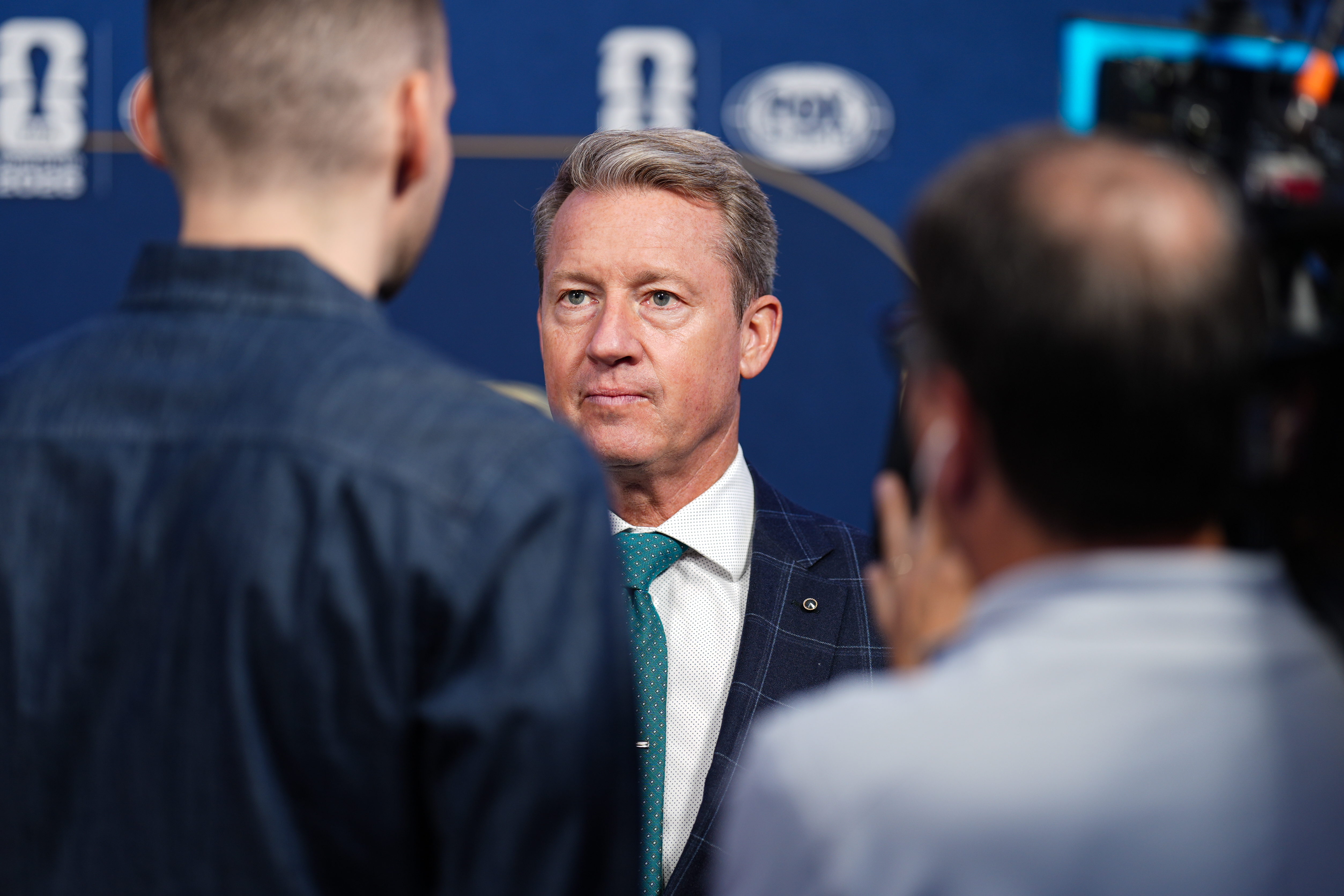
    Rob Stone (center) participates in Fox Sports’ World Cup media day in late May.Fox Sports

    He added that he thinks “about the millions and millions of people who became soccer fans in our country because of ’94. We have another opportunity to do that this summer.”

    Stone’s experience and professionalism have long drawn praise from across the industry.

    “I mean, Rob Stone is American football for me,” Lowe said, only to realize her British roots had spun a double entendre. “I mean, he’s also American football, right? He’s American soccer.”

    Then she turned serious.

    “His passion, his depth of knowledge, and his experience means that when you turn on your television, you are listening [to] and watching somebody you can be safe with,” she said. “There are so many avid football fans in this country who know everything about the game, and so does Rob. They need somebody on their screen reflecting back that level of knowledge, but also that depth of passion. He just gets it.”

    Rob Stone (left) on the call with John Harkes at an ESPN soccer broadcast in 2008.Lorenzo Bevilaqua

    ‘A grind-plus-one’

    Longtime Fox analyst Stu Holden played for the U.S. national team in the 2010 World Cup, which was Stone’s last for ESPN. The two have known each other well for a long time; Holden joined Fox in 2014 and quickly became its lead game analyst.

    “He is, and will be, remembered long, long after he’s done in television as one of the most important people in sports broadcasting for American soccer,” Holden said.

    Stone also can teach his Fox colleagues who don’t know the sport well. Though it isn’t to some fans’ taste, the network is unabashed about wanting to bring in big names from other sports and popular culture.

    “If you’re coming into a World Cup cold, I’m worried about you,” Stone said. “Alexi [Lalas] and I have talked about this for decades. Whenever a new talent comes in, and usually it’s a former athlete, we get to him or her really fast and [are] just like, ‘Hey, this literally is a marathon, and you need to be prepared mentally and physically before it starts.’”

    As much of a grind as a World Cup is, he said this edition is “a grind-plus-one.”
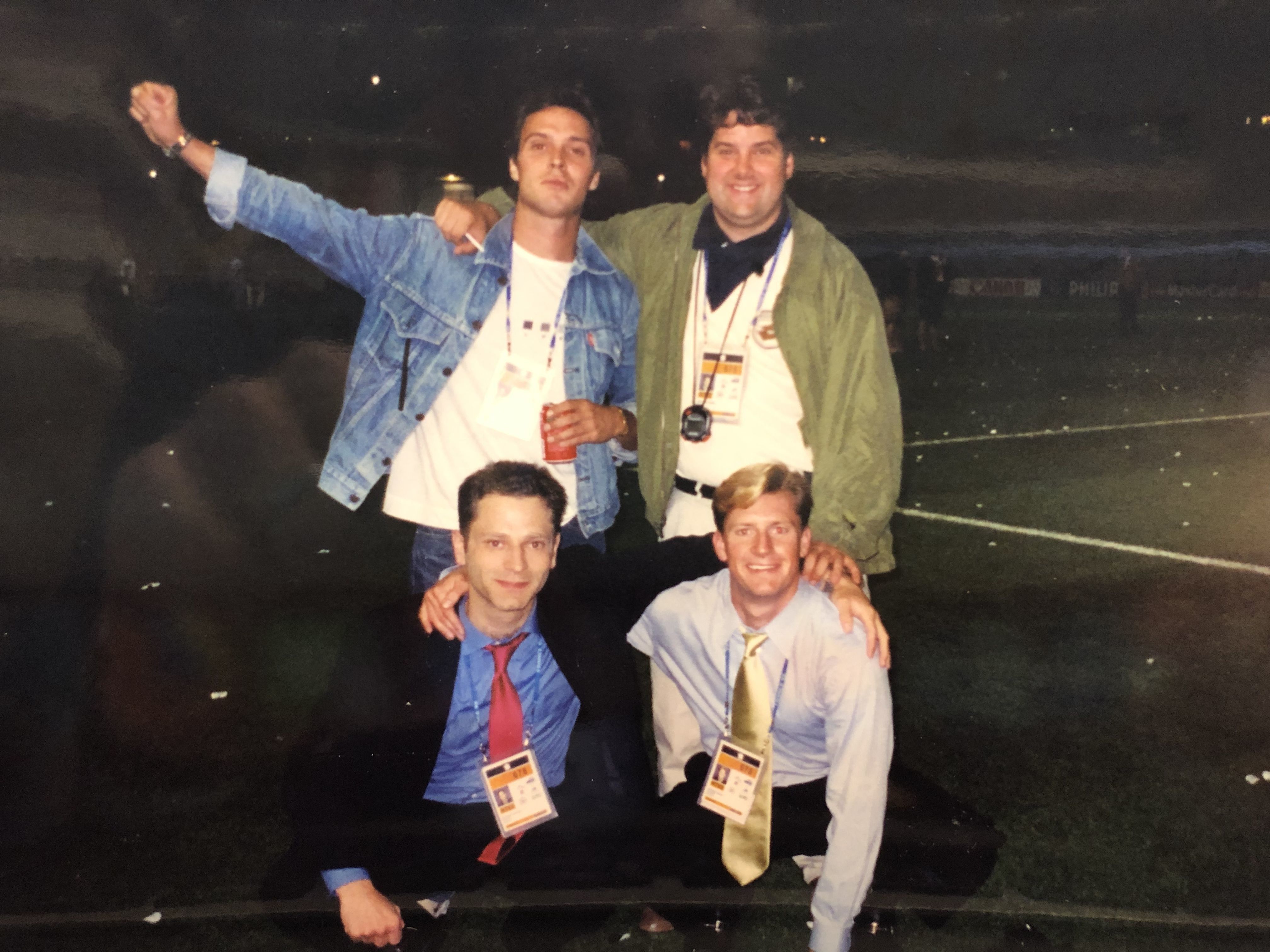
    Longtime ESPN reporter Jeremy Schaap sent The Inquirer this photo with himself (bottom left), Rob Stone (bottom right), cameraman Nicolas Servant (top left), and producer Jim Witalka (top right) on the field at the Stade de France during the 1998 World Cup.Jeremy Schaap

    For all the highs and lows to come this summer, the end also will bring a major moment. This tournament is Fox’s last of its 15-year contract with FIFA. The women’s World Cup will move to Netflix for next year’s tournament and 2031, and negotiations for the next round of men’s tournament rights haven’t started.

    Stone doesn’t know what the future holds for those rights or for him. But he is aware that this World Cup could be not just Fox’s last, but his last.

    “I’m not ready to say it’s an end of an era yet, because who knows where the next men’s World Cup is going to go,” he said. “I’m 100% looking at it like I’ve got more to go, and I’ve got plenty more in the tank. … There’s certainly that possibility out there that’s it for Fox. And if it is, we’re going to finish with a bang, just like we started.”


  • A Wawa bag at the Vatican, a cheesesteak crisis, and Tina Fey’s Knicks fandom | Weekly Report Card

    Tina Fey and Taylor Swift’s Knicks fandom: F

    Look, we understand how these things happen.

    You move to New York, you work in New York, you spend years in New York. Eventually somebody hands you Knicks tickets and before you know it you’re sitting courtside wearing orange and blue.

    Still. Tina Fey is from Upper Darby. Taylor Swift is from Reading. At some point, Pennsylvania has to ask whether we’re comfortable with this arrangement.

    The internet’s answer arrived quickly in the form of a Sopranos screenshot declaring: “You’re weak, you’re outta control, and you’ve become an embarrassment to yourself and everybody else.”

    A bit harsh, maybe, but not entirely unfair.

    We’re not saying they have to root for the Sixers. The Sixers haven’t always made that easy.

    We’re just saying there are certain things that hit differently when they come from your own people. And watching two Pennsylvania icons cheer on the Knicks in the NBA Finals is one of them.

    Cheesesteak olive oil is either genius or evidence we’ve gone too far: B+

    Philadelphia added another item to the growing list of products that sound completely fake until you learn they’re real: cheesesteak-infused extra virgin olive oil.

    And somehow the marketing may be even better than the product. “It tastes like the oil from a real cheesesteak wrapper!” was highlighted as a testimonial, which is an astonishing sentence to see in the wild. Because that’s not a flavor profile most companies would voluntarily advertise.

    The reaction online was divided. Half the internet was horrified, and the other half was brainstorming recipes involving Sarcone’s bread, pizza, omelets, pasta, and popcorn.

    Somewhere between “that’s disgusting” and “OK, I’d try it” lies the city’s entire food identity.

    The best part, though, is that the olive oil helps support Mama-Tee Community Fridge, which stocks community refrigerators across Philadelphia with prepared meals. And, let’s be honest, nobody can convincingly argue they aren’t at least a little curious.

    A Wawa bag full of Tastykakes made it to the Vatican: A

    When a Philadelphia delegation traveled to the Vatican to meet Pope Leo XIV, they brought a Liberty Medal, Villanova gear, a historical document connected to George Washington… and a Wawa bag full of Tastykakes.

    According to the National Constitution Center, the pope, a Villanova graduate, gave a “big belly laugh” when he saw the Tastykakes.

    And the story contains one of the most Philadelphia sentences ever printed: “Where else would this happen that you meet up with the archbishop toting Tastykakes in a Wawa bag?” Iconic.

    The delegation was there for a serious purpose ahead of next month’s Liberty Medal ceremony. But it’s hard not to appreciate that somewhere inside the Apostolic Palace sat a Wawa bag and a box of Tastykakes.

    Amy Poehler arrives at the Oscars on Sunday, March 2, 2025, at the Dolby Theatre in Los Angeles. (Photo by Richard Shotwell/Invision/AP)Richard Shotwell

    Amy Poehler got cursed out at PHL. Tina Fey had the perfect response: A

    Amy Poehler revealed this week that the only time she’s ever been called the c-word to her face was at Philadelphia International Airport after she declined an autograph request.

    Tina Fey’s response? “Welcome to Philly.” No outrage, no apology, and no attempt to explain the behavior.

    Just a simple acknowledgment that, yes, this sort of thing occasionally happens here. Philadelphia is one of the few places where somebody might yell at you in an airport and another person will later explain that this is actually part of the culture.

    Philly cheesesteaks at Nihonbashi Philly on Sunday, Nov. 9, 2025, in Tokyo, Japan.Monica Herndon / Staff Photographer

    An American cheese shortage in Japan is now a Philadelphia emergency: A-

    There are international crises, and then there are international crises.

    This week brought news that Nihonbashi Philly, Tokyo’s beloved cheesesteak outpost, is struggling after Costco Japan discontinued the American cheese that powers its sandwiches.

    Philadelphia, of course, was ready to give solutions. Offers to smuggle in Cooper Sharp. Debates over Whiz vs. provolone. Strong opinions about what constitutes an authentic cheesesteak from 6,700 miles away.

    The whole thing feels oddly moving. A couple in Tokyo became so obsessed with Philadelphia that they built a restaurant around cheesesteaks, pretzels, Tastykakes, and Eagles fandom. Now Philadelphians are responding as if a neighborhood institution is facing hard times. You stand up for us, we’ll stand up for you.

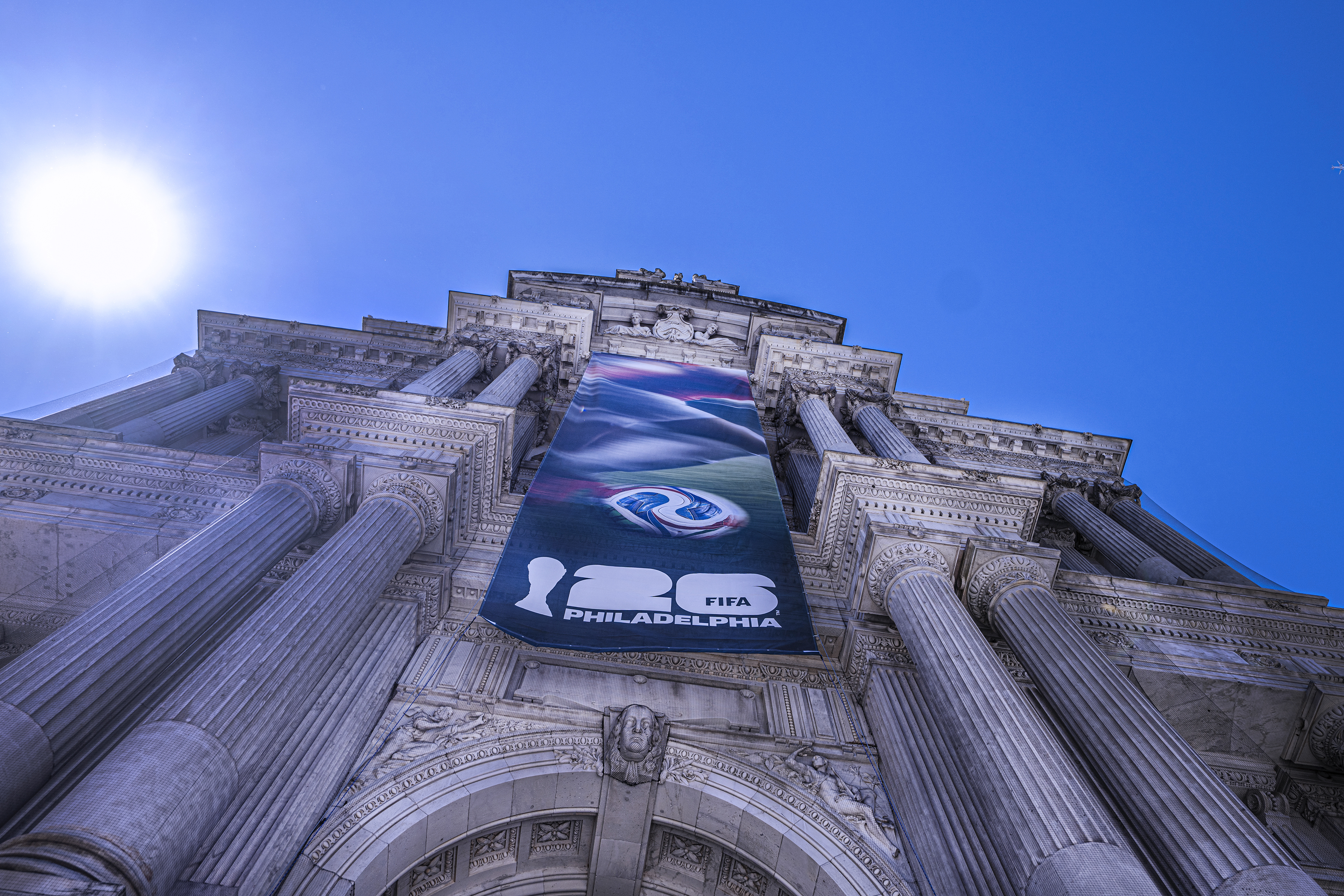
    A large FIFA World Cup banner hangs from an entrance of Philadelphia City Hall as the city prepares to host matches during the FIFA World Cup, Wednesday, June 3, 2026, in Philadelphia.Jose F. Moreno / Staff Photographer

    The World Cup hotel boom hasn’t exactly arrived: C+

    For years, the World Cup was sold as a tourism bonanza that would fill hotel rooms, pack Airbnbs, and send visitors flooding into host cities.

    So far, Philadelphia’s hotel industry seems to be responding with a polite shrug.

    Days before kickoff, plenty of hotel rooms remain available. Some Airbnb hosts who expected a month-long gold rush are still waiting for bookings. One South Philly host told The Inquirer she expected to be full all month and has gotten just a few nights reserved.

    That’s not exactly soccer Coachella.

    To be fair, this doesn’t mean the World Cup won’t be successful. Tens of thousands of fans are still coming, and hotels expect a solid summer between FIFA, the Semiquincentennial, and the MLB All-Star Game.

    They’re just apparently not paying $900 a night for an Airbnb in South Philly.

  • Her son was killed in a mass shooting. Graduation day brought his family joy, grief — and an unexpected reunion.

    Her son was killed in a mass shooting. Graduation day brought his family joy, grief — and an unexpected reunion.

    Unable to sleep, Nyshyia Thomas stepped into the shower at 4 a.m.

    She stood beneath the water longer than usual, feeling its warmth against her face and running down her skin, hoping it would carry her tears with it.

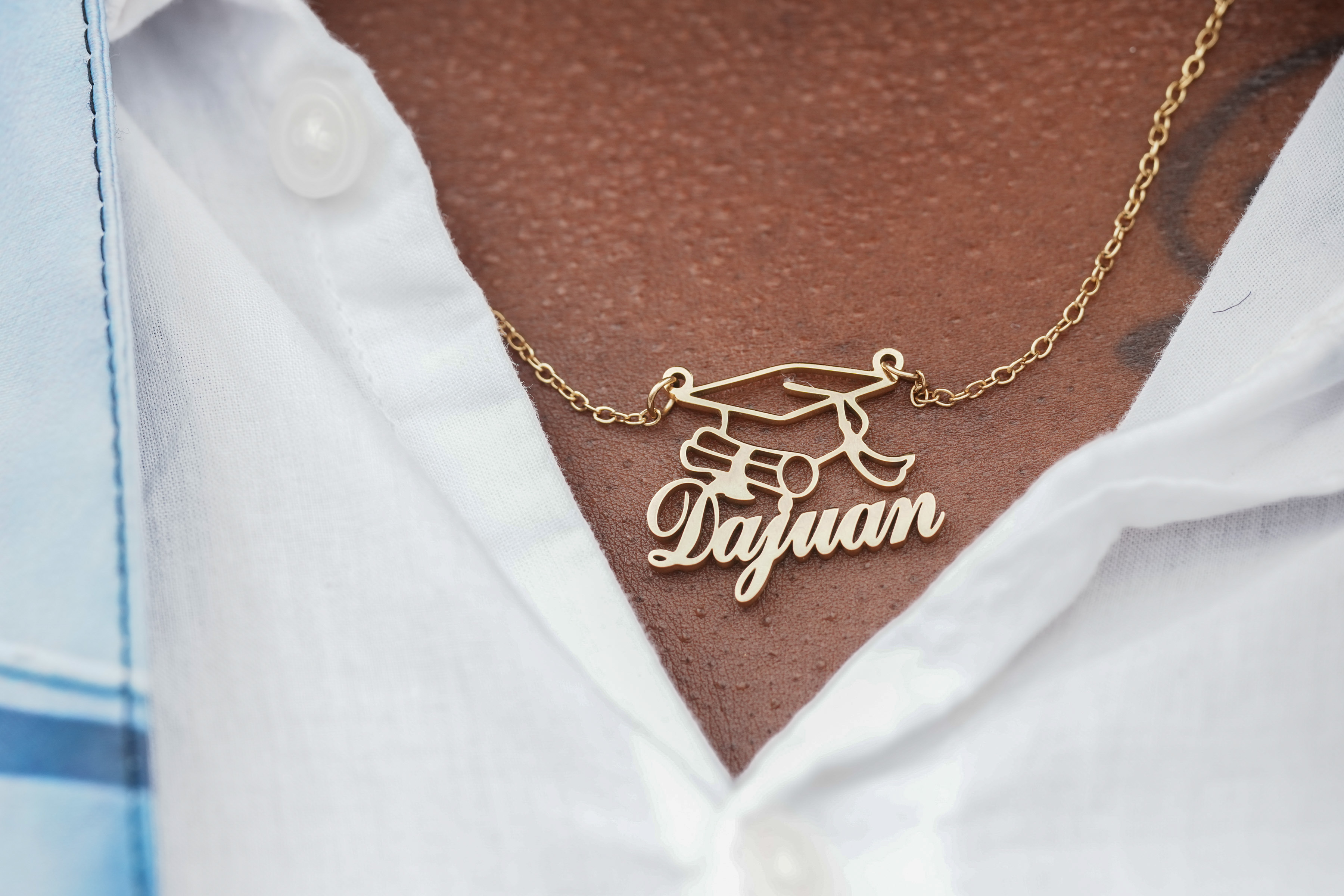
    It was graduation day. A day she’d been waiting for since 2022, when her youngest son, DaJuan, started his freshman year at Jules E. Mastbaum High, where she had graduated years earlier, and where her eldest child had graduated as well.

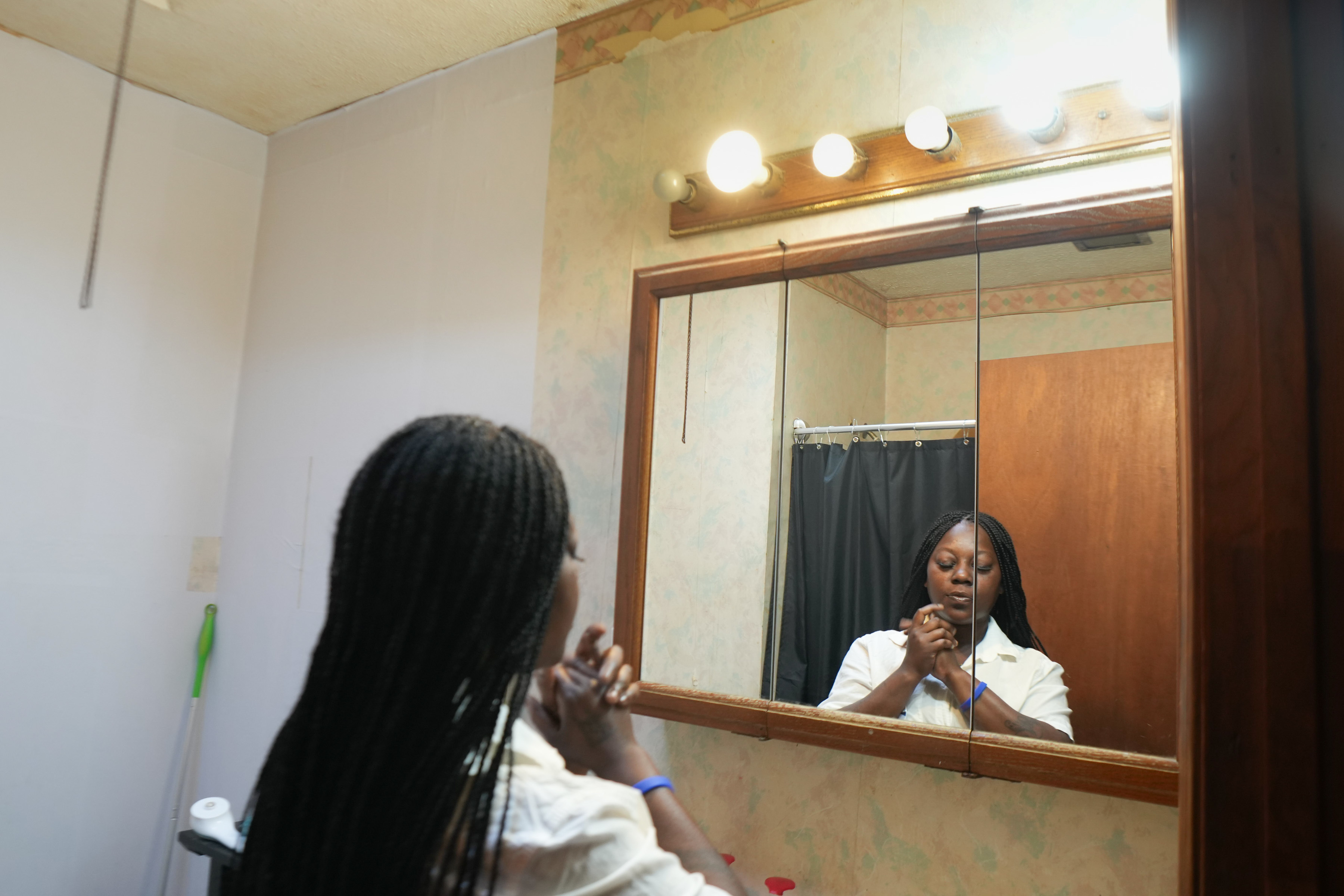
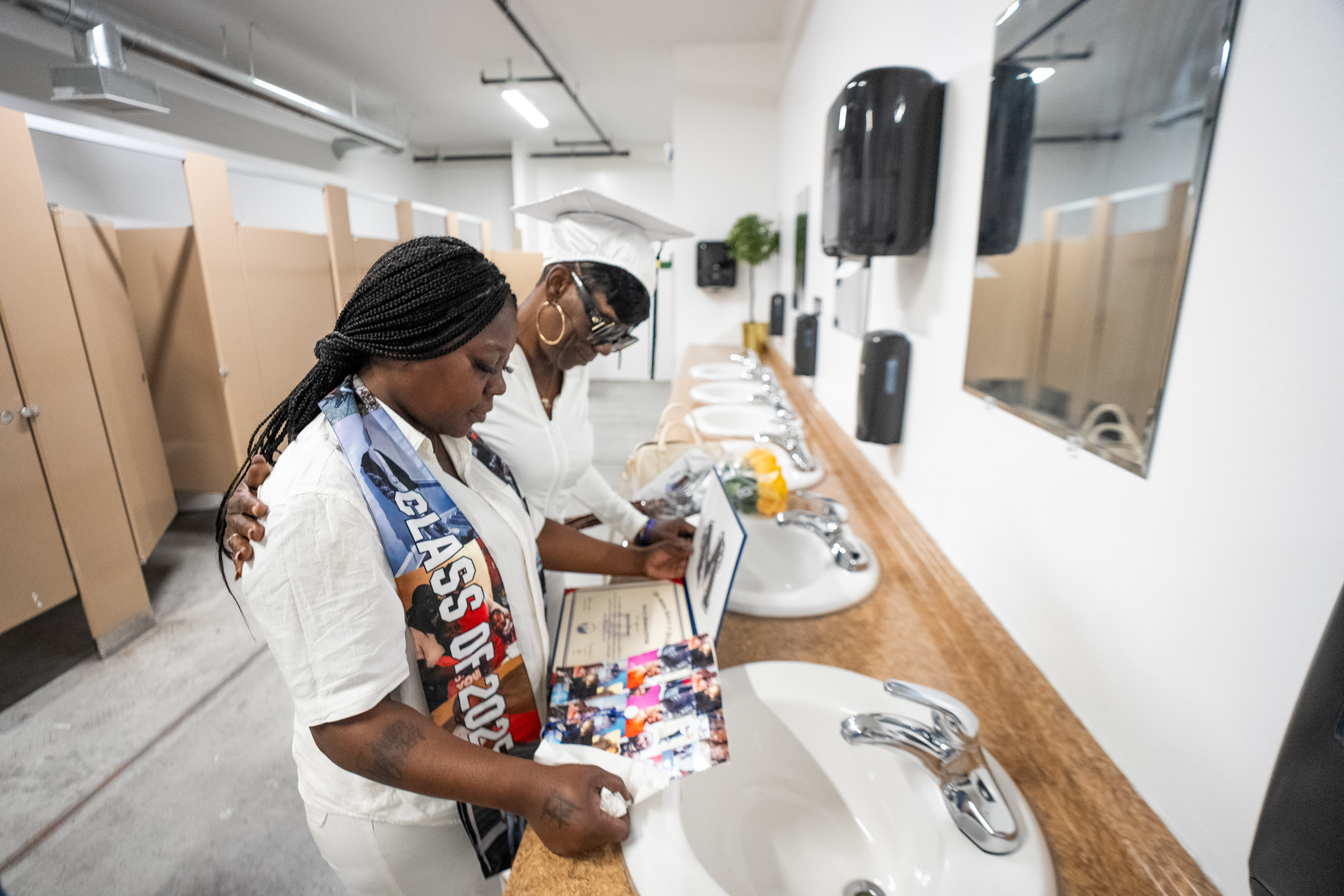
    Nyshyia Thomas gets ready to attend the Jules E. Mastbaum High School graduation, where her son DaJuan Brown was honored and would have graduated.Jessica Griffin / Staff Photographer

    DaJuan was supposed to graduate on this day.

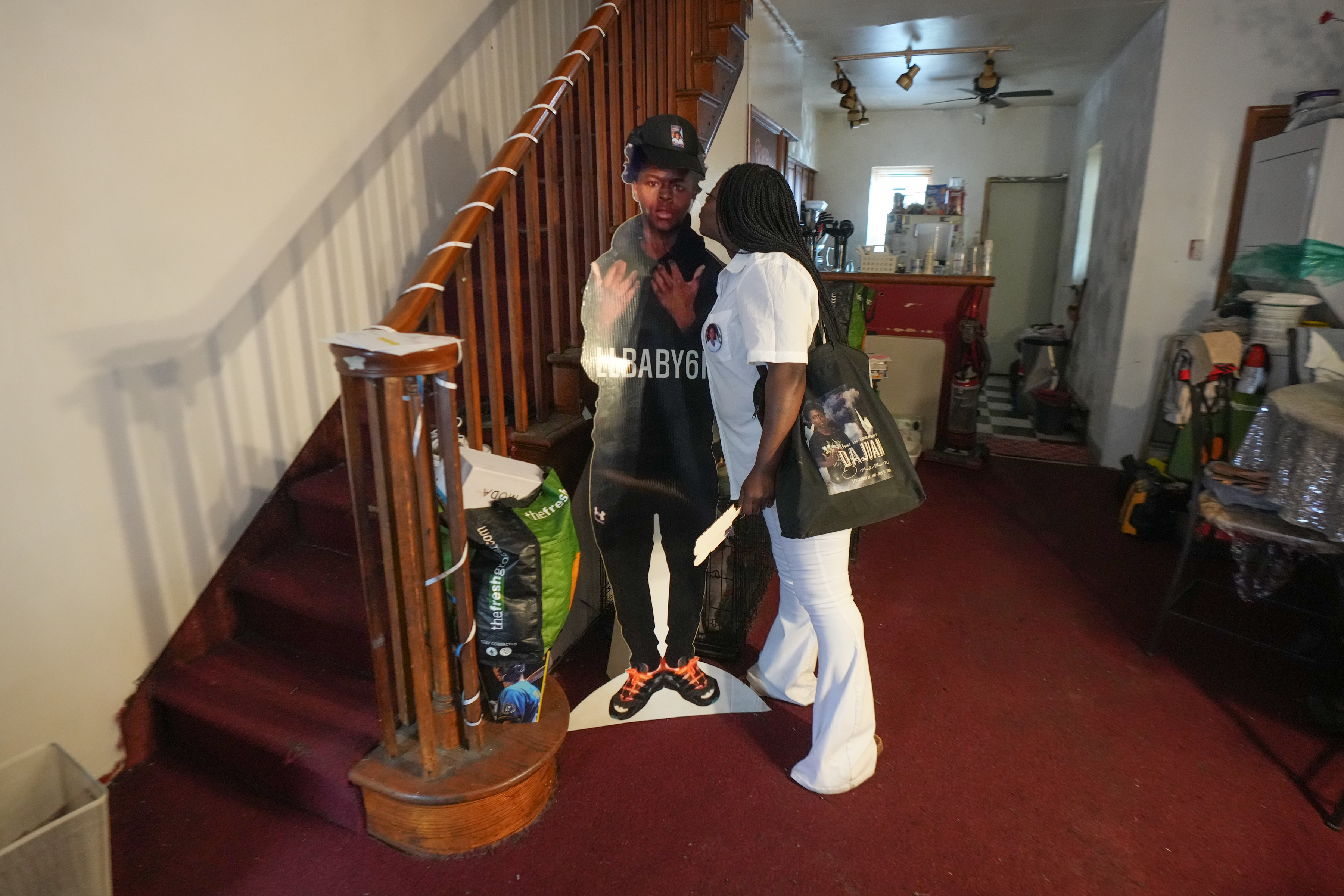
    She stood at the base of her stairs, wrapped in a purple silk robe, and stared at the life-size cardboard cutout picture of him in her living room, her cheeks quivering through a smile.

    DaJuan Brown was only 15 when he was one of five people shot and killed by a mentally ill man dressed in body armor who gunned people down at random on the streets of Kingsessing in July 2023.

    He had just completed his freshman year at Mastbaum.

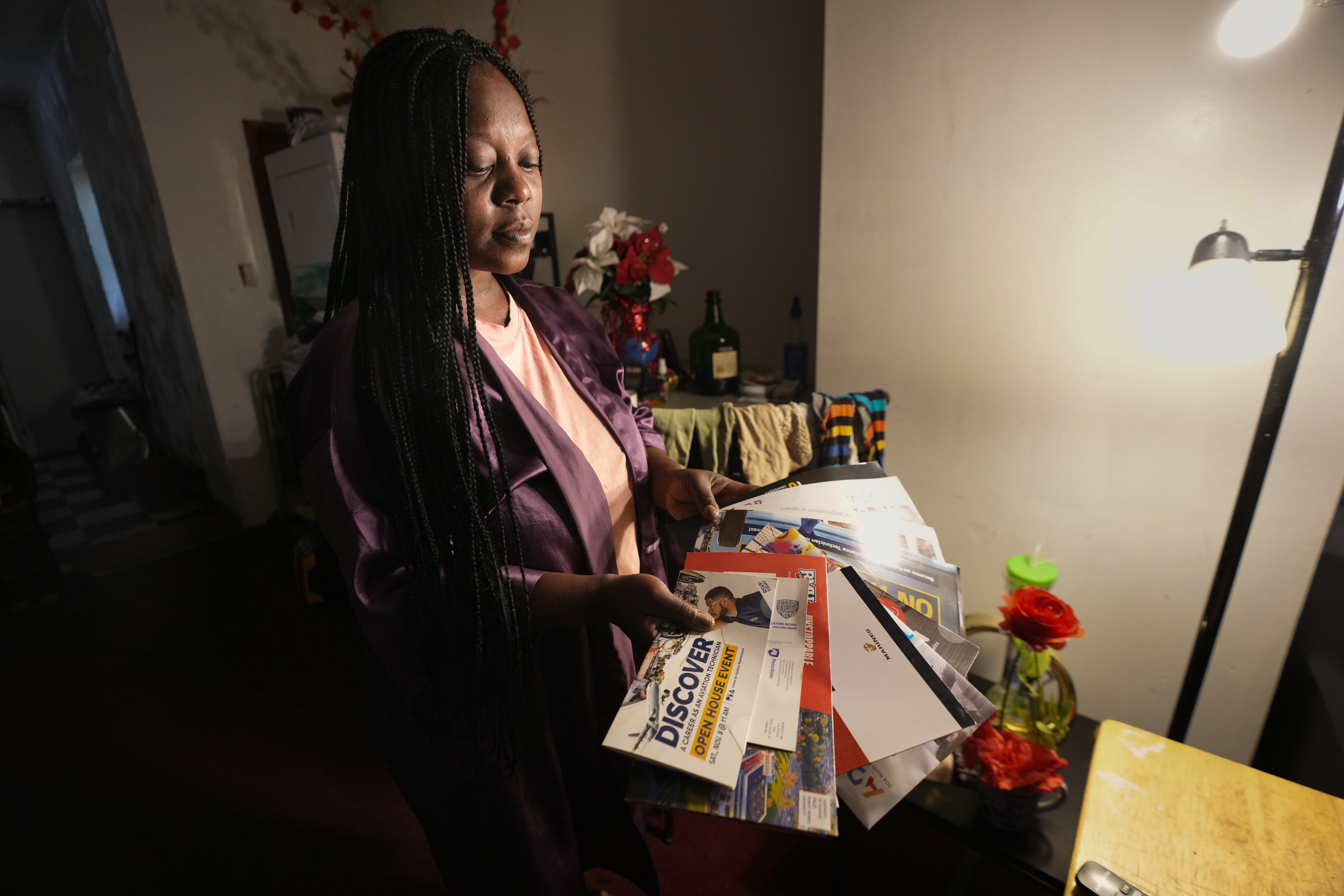
    Now, three years later, college brochures regularly arrived in the mail, addressed to him.

    Mail from different colleges has often arrived addressed to Nyshyia Thomas’ son, DaJuan. Jessica Griffin / Staff Photographer

    Penn State. Indiana University of Pennsylvania. The Marines. Towson. Aviation school.

    Each one like an arrow through his mother’s heart.

    But now she had something to look forward to. Mastbaum was honoring DaJuan at its graduation ceremony Wednesday with a posthumous diploma.

    “You did it, Juan Juan,” she told the cutout. “I’m so proud of you.”

    She kissed his cheek and walked upstairs to get ready.

    Thomas, 37, plumped her skin with Vaseline, dabbed her lips with coconut oil gloss, and carefully applied fluttering eyelashes with waterproof glue.

    Then she dressed, all in white — the color of angels, of the doves they released at DaJuan’s funeral.

    Nyshyia Thomas at the Mastbaum High School graduation, where her son Dajuan Brown was honored and would have graduated Wednesday. Jessica Griffin / Staff Photographer

    Around 9 a.m., her eldest son, DaQuan Brown, called from jail, his morning voice slow and gravelly.

    He has been incarcerated since August after police said he was among at least 15 people who fired guns aimlessly down the 1500 block of Etting Street during a block party last July, leaving three dead and 10 others wounded. Defense lawyers have said Brown, 22, and other partygoers thought they were being shot at and were defending themselves when they opened fire and unintentionally shot one another.

    Prosecutors say that there was no one targeting the party, and that a loud “pop” triggered contagious gunfire. Anyone who fired a gun that night, officials said, is responsible for the carnage.

    So Brown is in custody, held without bail, facing three counts of murder, 10 counts of attempted murder, and related crimes.

    The father of her children was locked up, too. Police said that when they reviewed surveillance footage from that night on Etting Street, it showed TyeJuan Brown, 38, running down the block toward his son and the gunfire, holding a firearm, which he is barred from owning because of criminal convictions.

    He was charged with illegal gun possession and had been held on $250,000 bail since August.

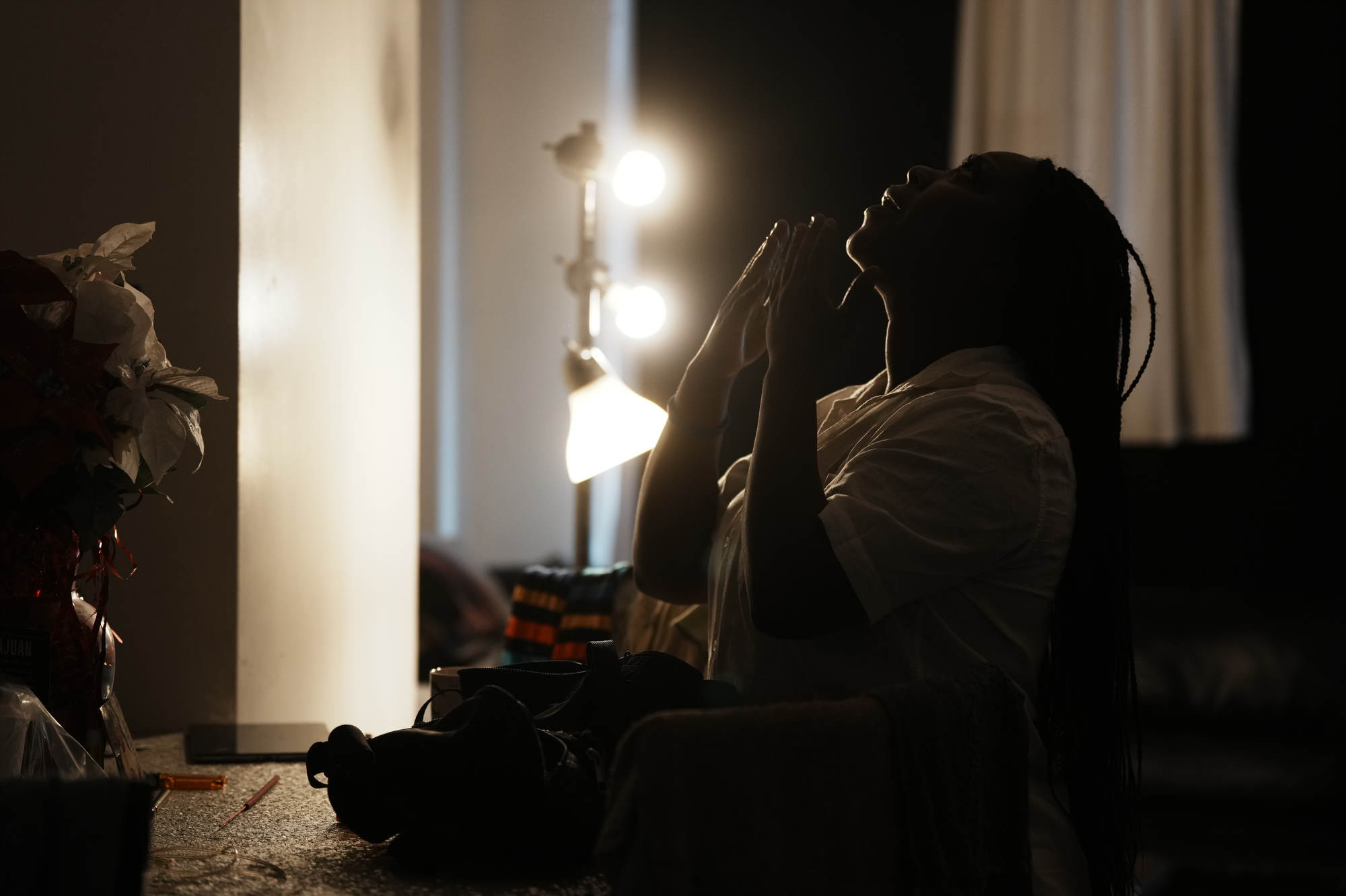
    Nyshyia Thomas prayed for strength before attending what would have been her son’s high school graduation.Jessica Griffin / Staff Photographer

    Thomas hadn’t heard from him in a few days. She suspected his cellblock was on lockdown again.

    She often wonders: How is this my life?

    One son killed in a mass shooting, another charged with committing one, and their father in jail.

    On this morning, at least, DaQuan called.

    “Stay strong today,” he told her.

    “Love you,” she said. “Call me when it’s over, like 2 o’clock.”

    Nyshyia Thomas kisses the life-size cardboard cutout picture of her son DaJuan Brown before leaving for what should have been his high school graduation ceremony.Jessica Griffin / Staff Photographer

    Her nerves worsened as she, her daughter, and her mother-in-law arrived at the South Philadelphia venue. They were 15 minutes late. And where were her sisters?

    “I told y’all hurry up!” she said into the phone.

    Just wait, they told her. We’re almost there.

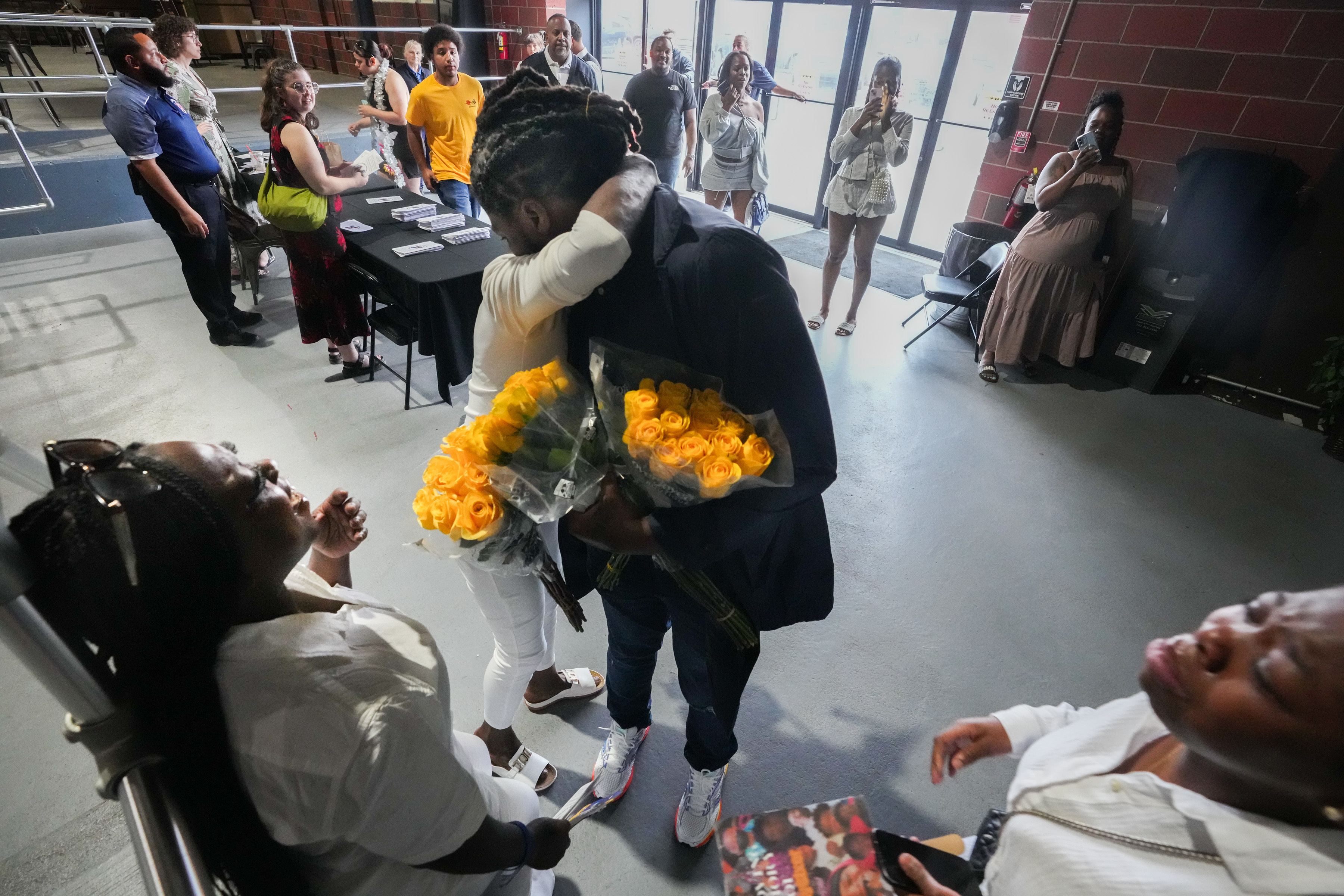
    She paced the hall, deciding whether to take a seat without them, when she saw TyeJuan Brown walk through the door carrying three bouquets of yellow roses.

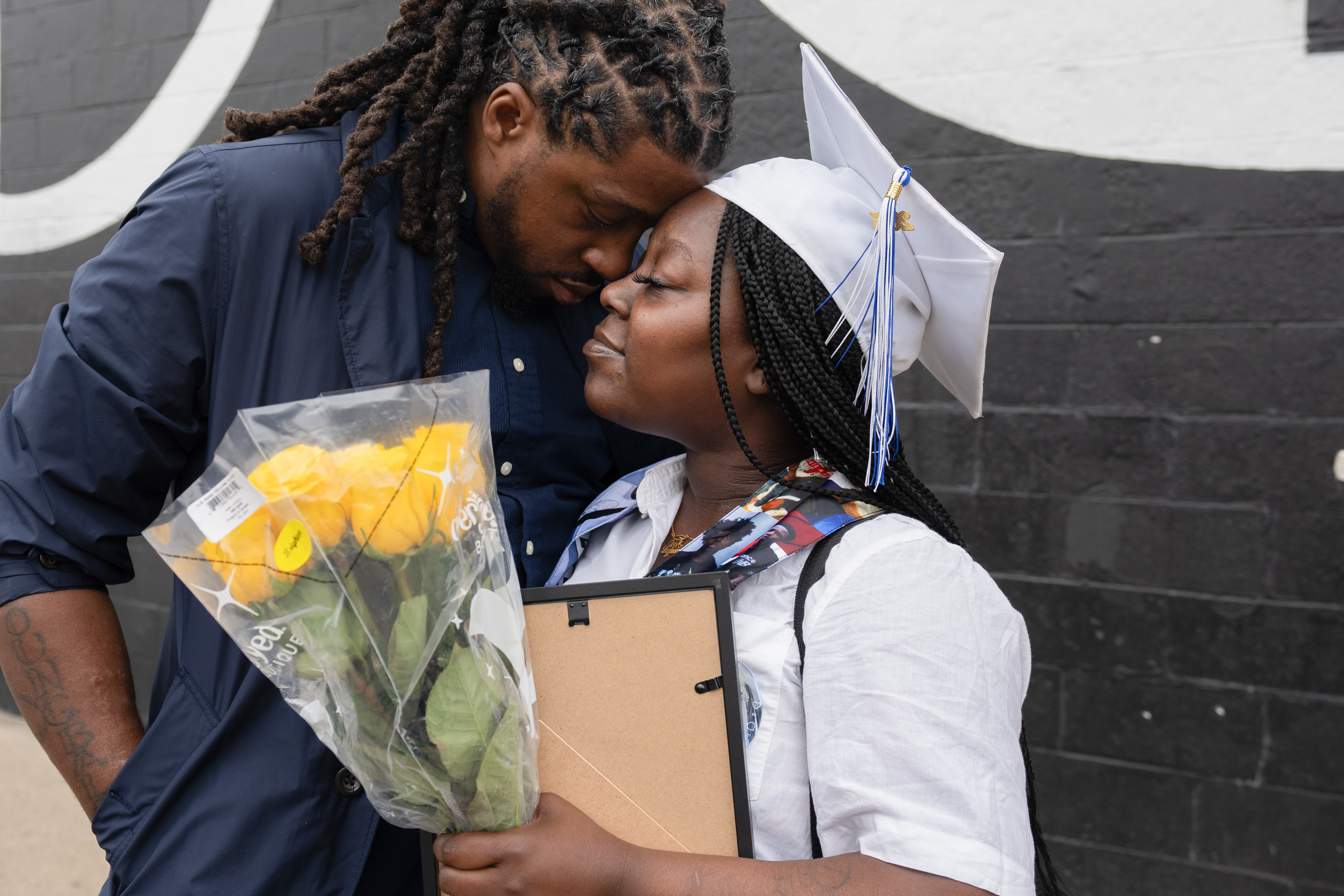
    She ran into his arms and buried her head in his chest. Their daughter, NeSiyah, 15, turned away in tears, then dived into his arms. Their three faces nuzzled together at last.

    TyeJuan Brown had been jailed since August, when police said he was seen on video with a gun, rushing toward the sounds of gunfire the night of the July 2025 mass shooting. After his bail was lowered, he surprised his family, including his daughter and the mother of his children, at what would have been his son’s high school graduation.Jessica Griffin / Staff Photographer

    “How?” Thomas cried.

    His bail was lowered last week, he said, so his sister posted the $250 necessary for his release and started planning the surprise.

    She couldn’t stop touching his face. His cheeks were fuller, his skin was healthier. But his eyes, those rich mahogany ones she had loved since she was 12, were filled with relief. She kissed him deeply.

    “All right, all right,” said his sister, Shikema. “We’re going to miss the graduation!”

    Nyshyia Thomas, left, and TyeJuan Brown, reunite at what would have been their son DaJuan’s graduation day. They met when they were 12, and share three children.Jessica Griffin / Staff Photographer

    Thomas could not stop giggling as she took her seat beside the broad-shouldered man she had known more than half her life and missed every day for 10 months.

    Their relationship had its trials, and he had been jailed years ago for drug and gun charges. But with their eldest son now fighting a murder case, Thomas and her daughter needed him more than ever.

    She interlaced her fingers through his, and leaned into his shoulder. NeSiyah kept glancing over at her father, as if to make sure he was still there.

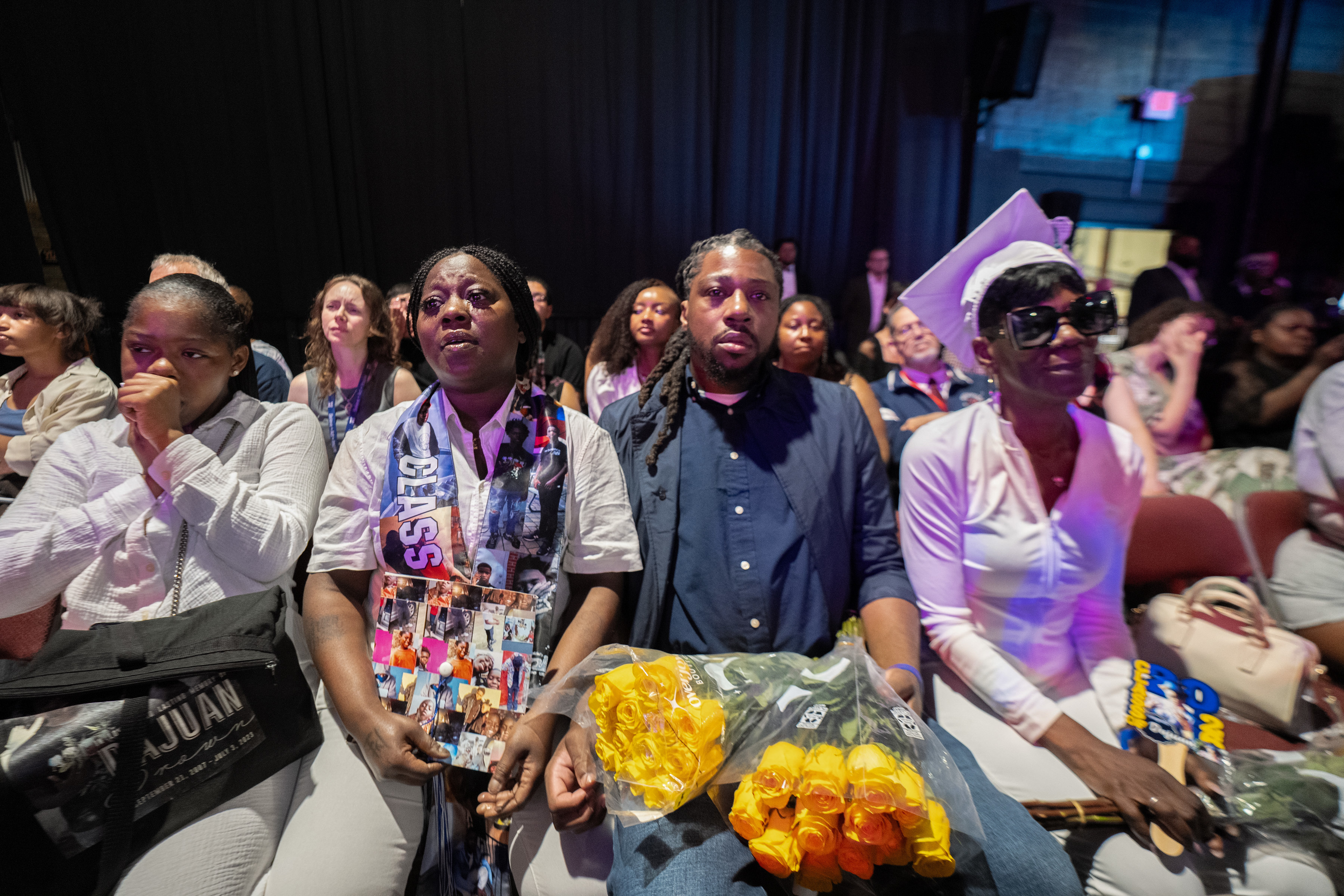
    But as the ceremony progressed, each moment of celebration wore on them. Their smiles faded. When the students from each vocational program stood to applause, Thomas pinched her eyes shut.

    NeSiyah Thomas-Brown, Nyshyia Thomas, TyeJuan Brown, and Odessa Brown (left to right) experience a range of emotions during the graduation ceremony.Jessica Griffin / Staff Photographer

    What would DaJuan have chosen? she wondered. Culinary or carpentry? Maybe film and video?

    Name after name was called. Past the B’s, where DaJuan would have been mentioned.

    Thomas clapped. NeSiyah sucked her thumb.

    How would he have decorated his cap?

    As the final students picked up their diplomas and the cheers waned, a quiet fell over the auditorium. It was time for the school to honor DaJuan.

    Just at the sound of his name, Thomas’ eyes welled and she looked toward the ceiling.

    Nyshyia Thomas, left, and Odessa Brown, right, at the Mastbaum High School graduation, where Thomas’ son and Odessa Brown’s grandson Dajuan Brown would have graduated.Jessica Griffin / Staff Photographer
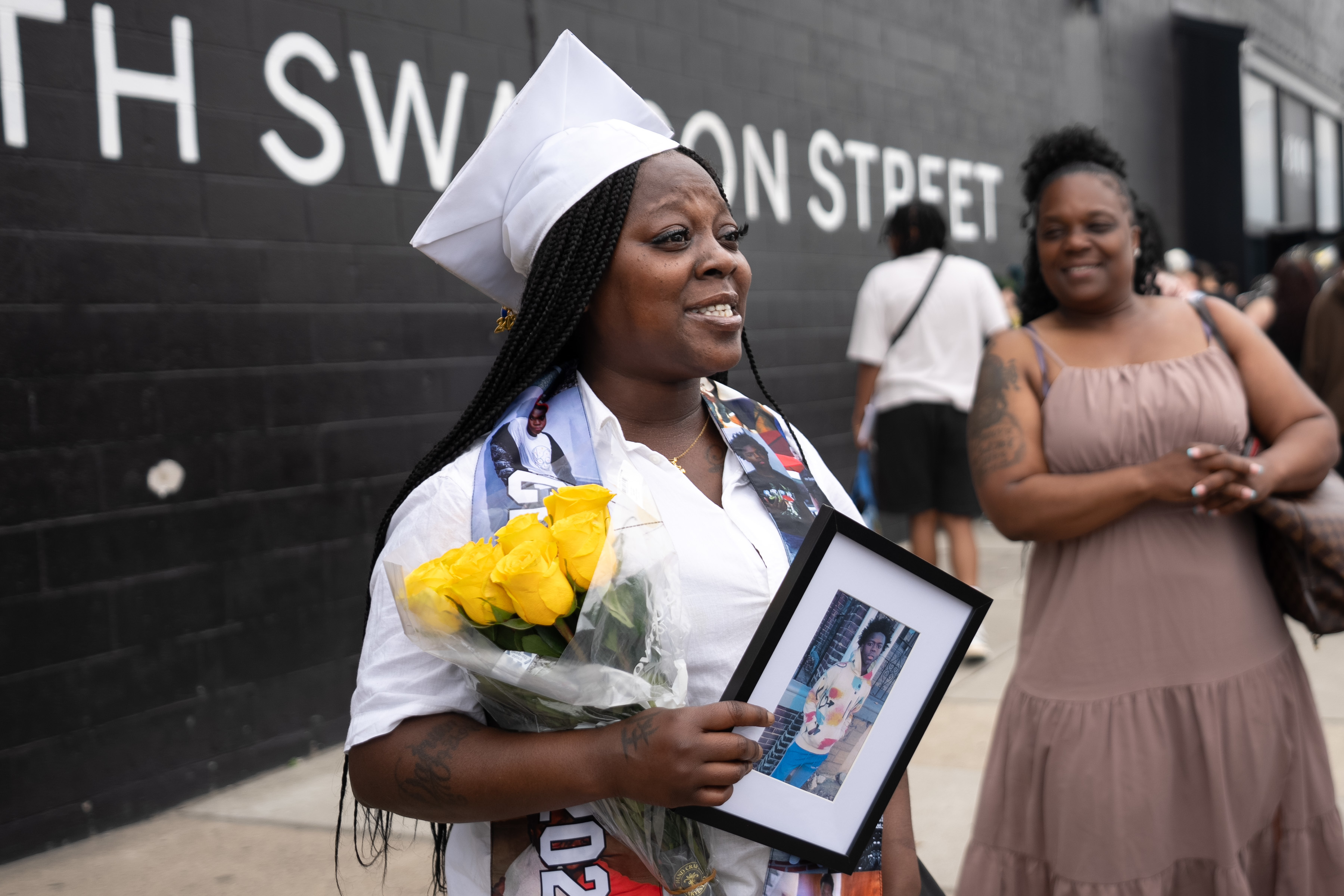
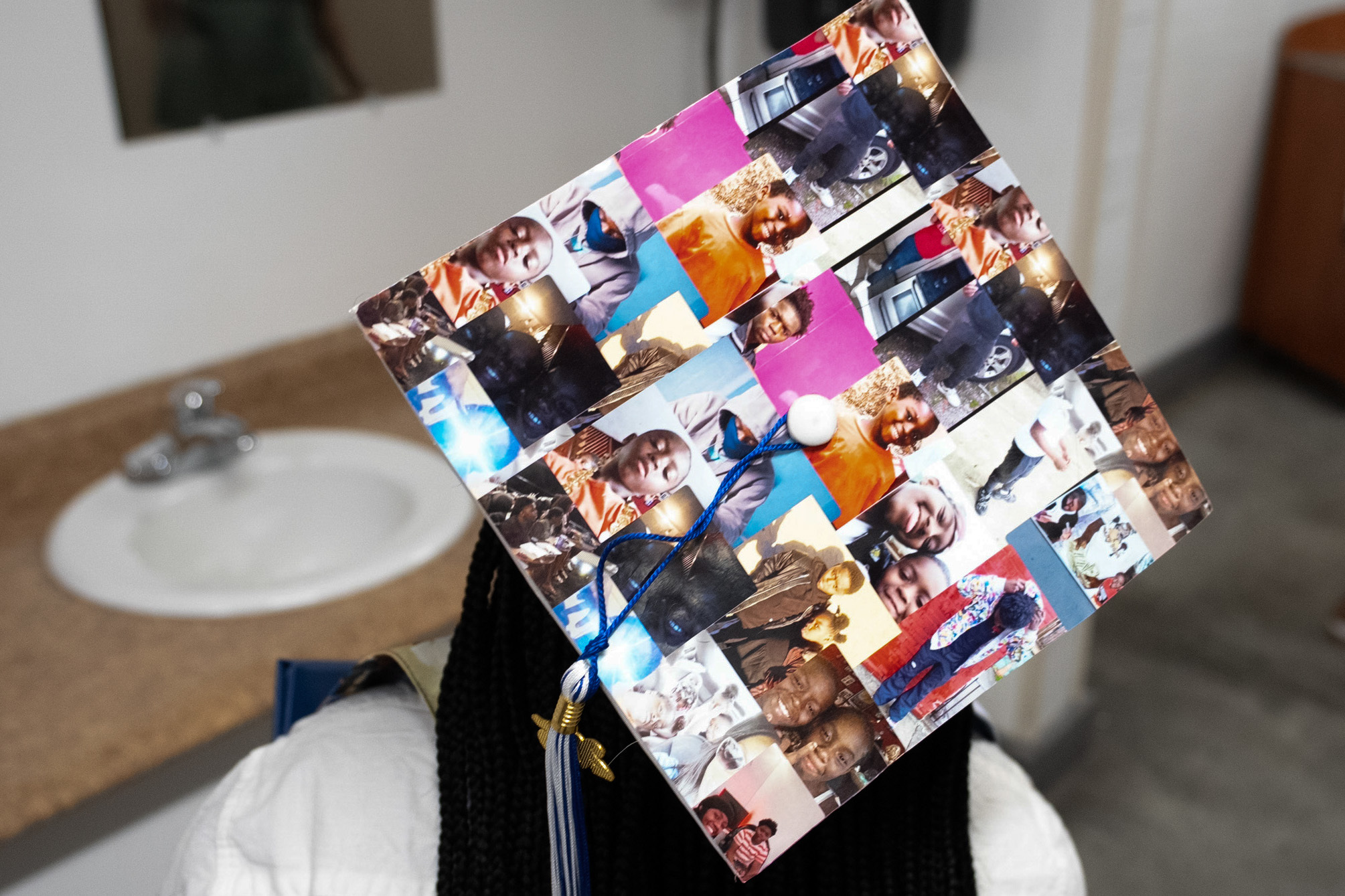
    Nyshyia Thomas wore a graduation cap she decorated with photos of her son DaJuan. Jessica Griffin / Staff Photographer

    “It’s hard to find the right words to say goodbye to someone who had so much life to live,” assistant principal Amy Georgia Foster told the crowd. “He had a beautiful, silly streak in him, the kind of sweet, mischievous energy that made you feel the protective love of a grandparent.”

    That’s my Juan Juan, Thomas thought.

    “DaJuan undoubtedly left his mark on each one of us,” Foster said. “He brought warmth to our halls, and light to our lives.”

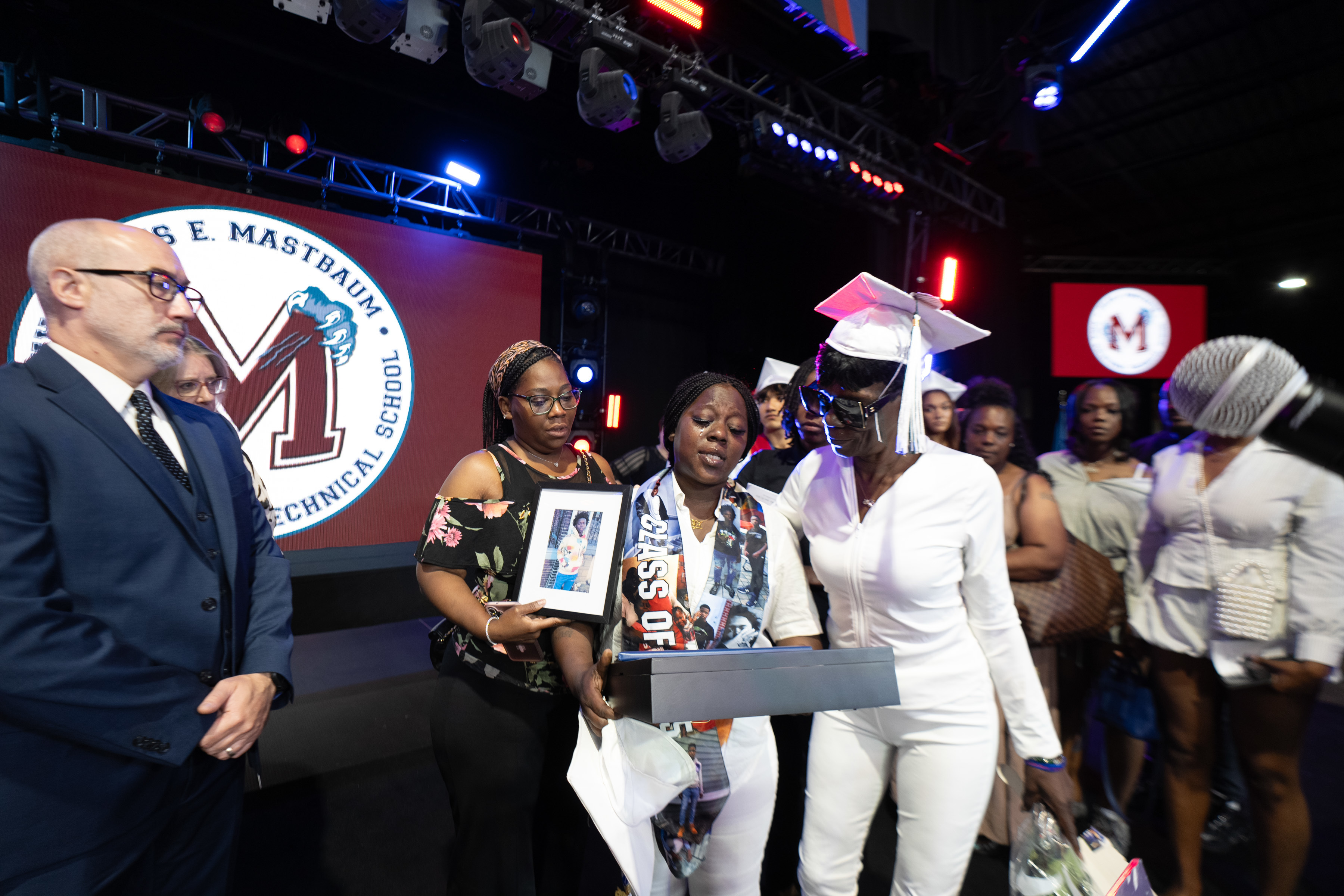
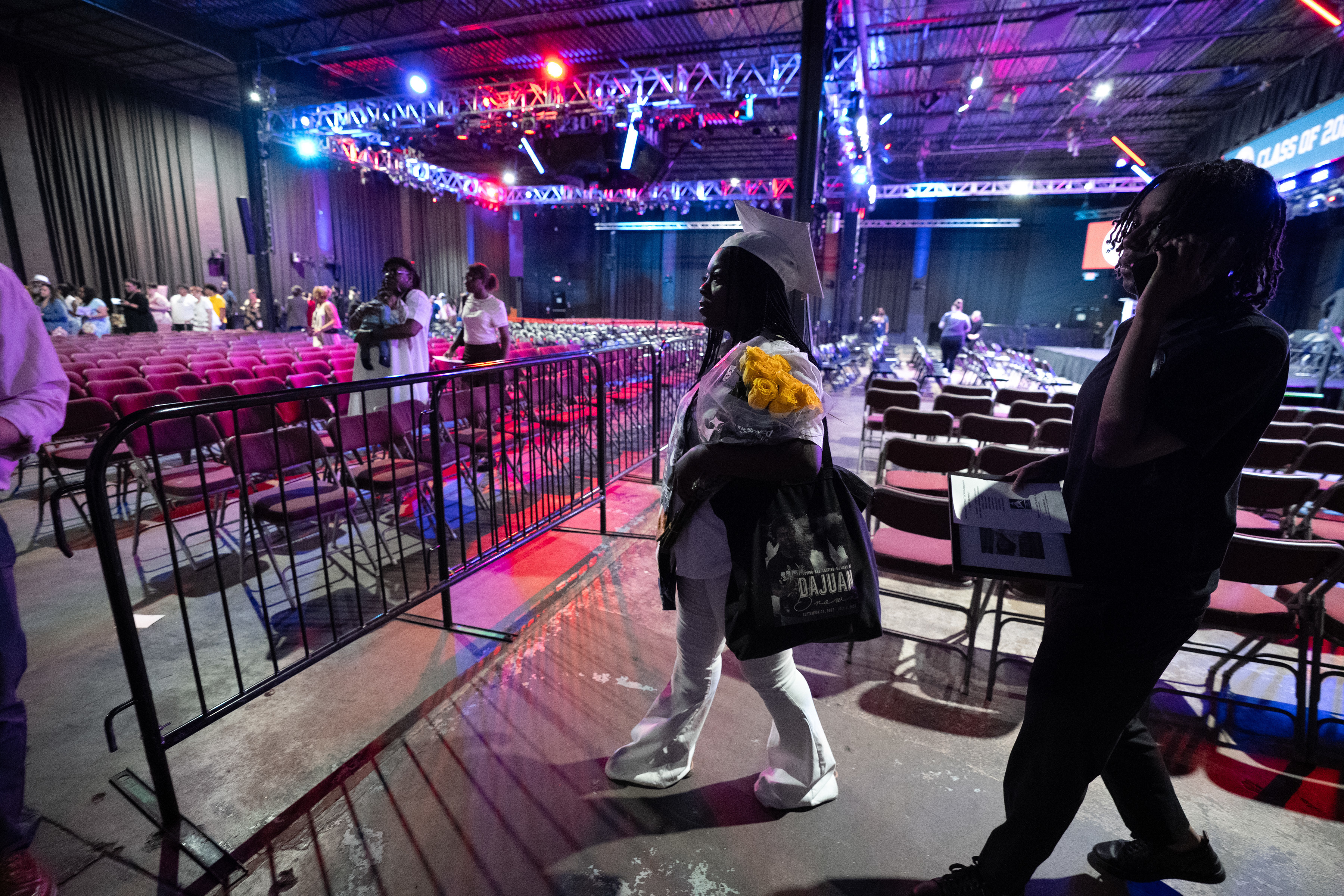
    Thomas walked toward the stage, her face streaked with tears, her chest heaving. She embraced Foster and the teaching staff, and in her arms they placed a glass box frame, holding a red Class of 2026 stole, and his cap and gown. She pressed his diploma to her heart.

    Principal David Lon, left, and the staff at Mastbaum High hand Nyshyia Thomas, center, and Odessa Brown, right, DaJuan’s stole, cap and gown, and diploma.Jessica Griffin / Staff Photographer
    DaJuan Brown, 15, was killed in the Kingsessing mass shooting in July 2023. Jessica Griffin / Staff Photographer

    The ceremony continued with final words from the class president, before all the students moved their tassels from left to right.

    “Congratulations, Class of 2026!” their principal cheered.

    Thomas and her family moved through the crowd toward the door. Beaming teens snapped selfies. Overjoyed mothers embraced their children.

    She held hers in a picture frame.

    Nyshyia Thomas walks through the auditorium after her son was honored.Jessica Griffin / Staff Photographer
  • Three offseason questions for the Sixers after the hiring of Mike Gansey, starting with Elton Brand

    Three offseason questions for the Sixers after the hiring of Mike Gansey, starting with Elton Brand

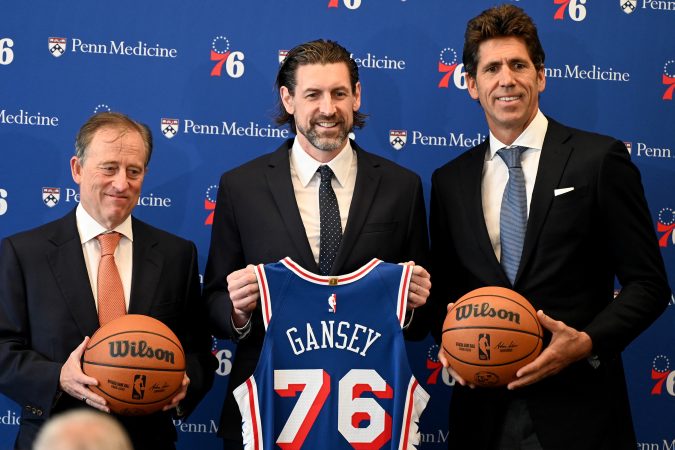
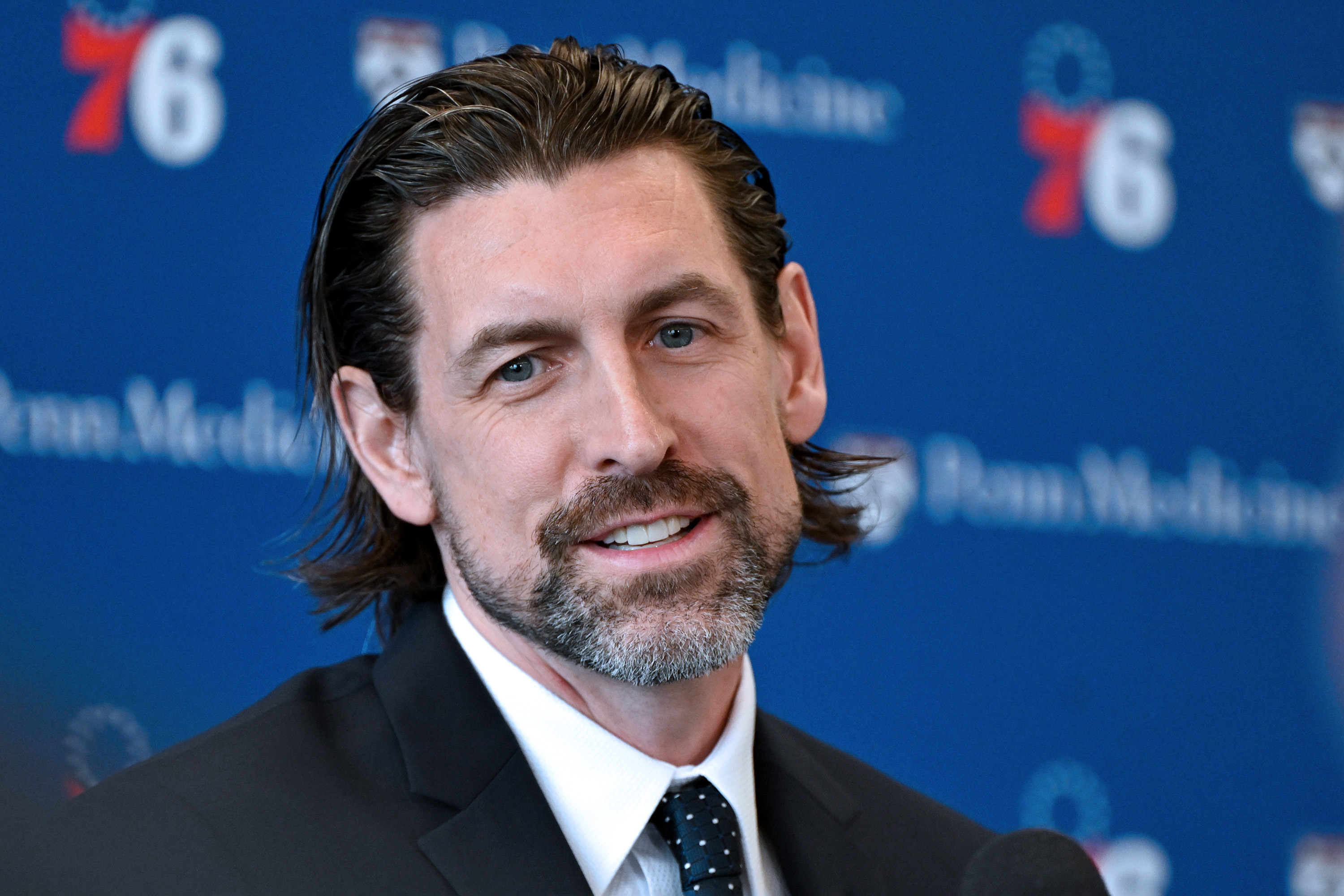
    The 76ers’ first major offseason task has been completed, after Mike Gansey was introduced Monday as the new president of basketball operations.

    “It’s just one good decision at a time as far as [creating] change,” said president of Harris Blitzer Sports & Entertainment Bob Myers, who led Gansey’s hiring process.

    Additional obvious offseason checkpoints will be tackled in the coming weeks. The Sixers hold the No. 22 overall pick in the June 23 NBA draft, which was Gansey’s specialty in his previous job as the Cleveland Cavaliers’ general manager. Shortly after that is free agency, which the Sixers are expected to enter with limited financial flexibility with three players on max contracts.

    Yet here are some more subtle questions still lingering following Gansey’s hiring:

    Elton Brand is expected to transition to another role and title with the Sixers.Monica Herndon / Staff Photographer

    What will Elton Brand’s role/title become?

    Brand was not spotted during Gansey’s news conference, evidence of the decision that Brand will not continue as general manager.

    Brand had previously been the front office’s top decision maker, before taking a step back to the No. 2 role when Daryl Morey was hired as president of basketball operations in 2020. Still, Brand was respected inside and outside the organization, and turned down interest from other teams to stay with the Sixers in past years.

    But now Jameer Nelson has been promoted to that No. 2 front office spot, while Brand is expected to transition to another role and title. What exactly will those responsibilities entail? And how visible will he be moving forward?

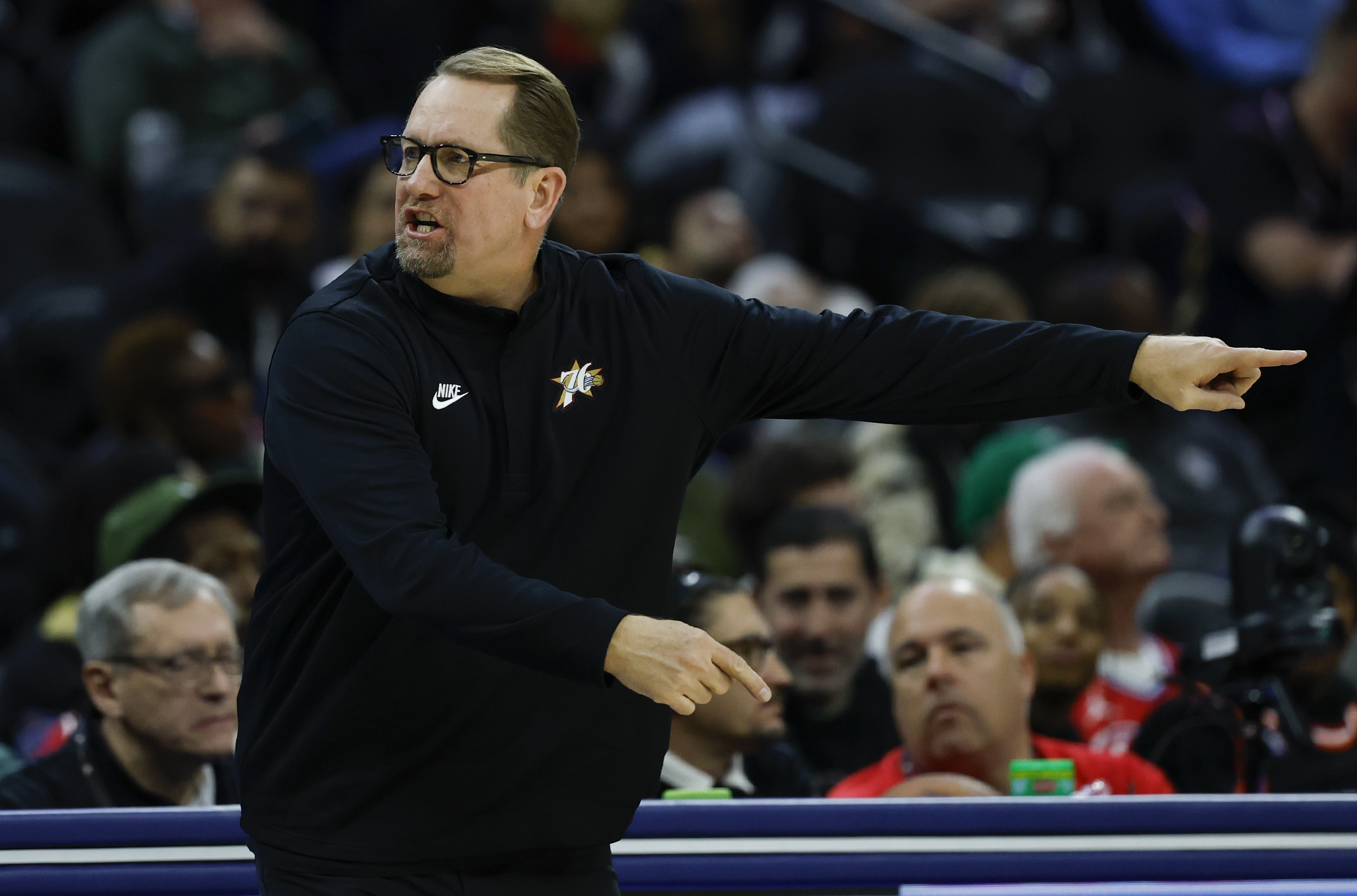
    Nick Nurse will be back for a fourth season as Sixers coach. Will his coaching staff look any different?Yong Kim / Staff Photographer

    Any other changes to the front office or coaching staff?

    The most candid comments during Monday’s media availabilities came from Myers, who said the Sixers need an identity.

    They were mediocre on both ends of the floor in 2025-26, ranking 16th in offensive efficiency (114.3 points per 100 possessions) and 17th in defensive efficiency (114.4 points allowed per 100 possessions) during a 45-37 regular season. Rebounding and three-point shooting were particularly glaring issues, especially during the playoffs.

    It is unlikely that the Sixers can make fixes by immediately overhauling the roster, given how Joel Embiid (32) and Paul George’s (36) ages and health struggles make their max contracts difficult to trade. The best short-term outcome might be that those two former perennial All-Stars play more than the 75 combined games they suited up for during this past regular season, allowing the potential this team flashed during its first-round upset of the Boston Celtics to sustain.

    As far as additional nonplayer personnel changes, it is possible that Gansey does not make any prominent new front office hires for his first season.

    In addition to Nelson’s promotion, vice president of player personnel Prosper Karangwa has agreed to a contract extension, The Inquirer confirmed. Assistant general managers Ned Cohen and Fan-Hal Kuong, plus Delaware Blue Coats general manager Ariana Andonian, got shout outs from Gansey during Monday’s news conference.

    On the coaching staff, Nick Nurse obviously will be back for a fourth season. But are there any possible changes in the assistant ranks to address shortcomings on either end of the floor?

    Last year, for example, Coby Karl did not return (neither did Bobby Jackson, who took an assistant job with the Sacramento Kings). And Mike Longabardi was promoted from Blue Coats head coach to the Sixers’ bench, where he took on defensive responsibilities.

    Job movement from the front office and coaching ranks continues throughout the offseason, and can often be triggered by other teams.

    Mike Gansey says he wants to build a positive work environment with the Sixers.Tom Gralish / Staff Photographer

    How will Gansey establish his culture?

    Gansey’s go-to saying Monday was that he wants “fountains, not drains” — aka people who enhance the work environment instead of suck the life out of it. He wants employees to enjoy coming to the facility, to create alignment through communication and collaboration, and to add players who want to be Sixers.

    The most cynical outsider could define those words as workplace culture jargon. And shifting that in a meaningful way is a challenge with this organization, which has a reputation of instability, at best. One could argue that always stems from the top — no matter who is in key basketball leadership roles — and ownership has not changed.

    Still, it will be interesting to monitor how Gansey aims to set his organizational tone in these initial months. Do things feel tangibly different with young players around for much of the summer, then when everybody reconvenes for informal workouts and training camp?

  • The Eagles have to get more daring on offense this season. Nick Sirianni has to let them.

    The Eagles have to get more daring on offense this season. Nick Sirianni has to let them.

    OK, here’s a hypothetical scenario.

    It’s Week 5 of the Eagles’ season. They’re 2-2, but their record is not the concerning thing, not really. They have lost their most recent game, at home to the Los Angeles Rams, but that loss, in and of itself, is not the concerning thing, not really. The Rams are favored to represent the NFC in the Super Bowl, after all, and any team would struggle to hold Myles Garrett at bay, and the Eagles could not.

    No, here’s what’s concerning: Jalen Hurts is doing the one thing that he generally does not do. He’s turning the ball over. He’s throwing interceptions, and it’s clear that those interceptions are born of his acclimation to the Eagles’ new offensive system under their new offensive coordinator, Sean Mannion. The Eagles would be at least 3-1, perhaps 4-0, if not for Hurts tossing the ball to their opponents too many times.

    So … what does Nick Sirianni do in this scenario?

    The question cuts to the core not only of the Eagles’ fortunes this season but their long-term future. And Hurts’ future. And Sirianni’s. Spend just a few minutes watching one of the Eagles’ recent minicamp workouts or listening to Hurts and Lane Johnson speak about Mannion’s offense, and you understand how big a change this will be and how committed the Eagles are to making it. Hurts will be under center more. The offensive line’s blocking techniques and schemes will be different. Oh, and A.J. Brown isn’t here anymore.

    Put simply, this transition may take some time, and it may be rough at the start. If it is, it promises to force Sirianni to choose between riding out Hurts’ rite of passage in Mannion’s system and falling back on one of his primary coaching principles: Above all else, protect the football.

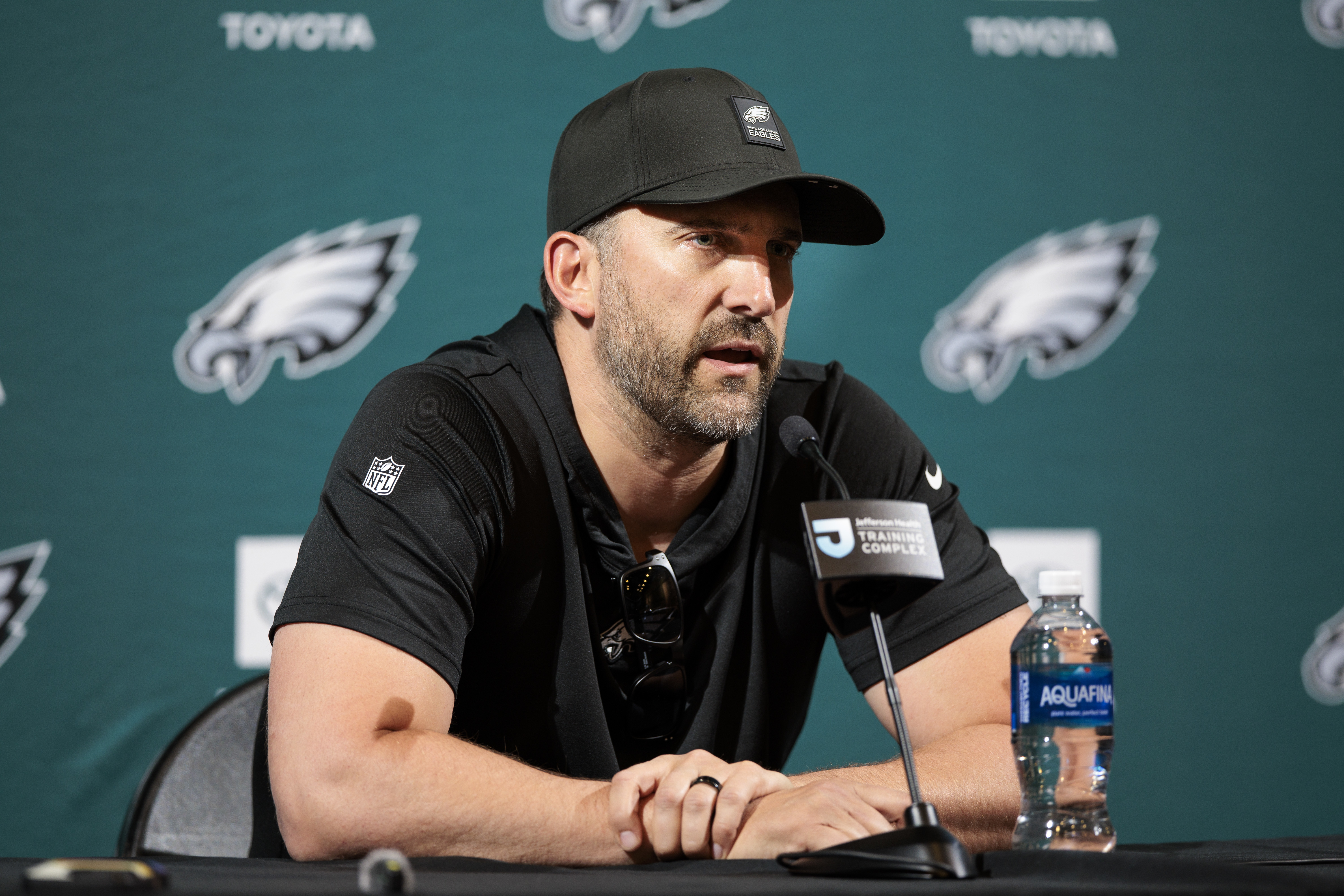
    “As long as I’m the head coach here, we’re going to be very diligent about winning that turnover battle and winning the explosive-play battle,” Sirianni said Wednesday. “I know it’s like, ‘OK, that sounds simple,’ but there’s an art to it because you’ve got to be able to create explosives in different ways and sometimes that puts the ball at risk. But at the end of the day, that ball is still the most important thing.

    “We’ll know how to create explosives in that time, but taking care of the ball is the most important thing, and we talk about this all the time: Can we come out of a game with every drive ending in a kick? Whether that’s an extra point, hopefully, whether that’s a field goal, or whether that’s a punt.”

    Will Jalen Hurts be given the bandwidth to struggle in his early moments within the Sean Mannion offense?Monica Herndon / Staff Photographer

    A quick review of the last two seasons provides plenty of evidence that Sirianni is pastor of The Church of Do No Harm. In 2024, Hurts threw the ball at least 30 times in each of the Eagles’ first four games and was intercepted four times as the Eagles went 2-2. Over the remaining 13 regular-season games, he surpassed 30 pass attempts in a game once, and he threw just one interception, and the Eagles rode Saquon Barkley, their O-line, and their defense to a Super Bowl victory.

    In 2025, Hurts’ most daring passing performance — and, in Sirianni’s eyes, his most destructive — came in Week 14 against the Los Angeles Chargers. Hurts made some dazzling downfield throws that night … and tossed four picks, including one in overtime that ended the Eagles’ hopes of winning. His subsequent four games were a case study in cautiousness. He attempted just 15 passes in a rout of the (awful) Las Vegas Raiders. He had 185 passing yards on 30 attempts against the Washington Commanders, then threw for a piddling 110 yards (in freezing and windy weather, granted) against the Buffalo Bills, then managed just 168 yards on 35 attempts in that maddening wild-card loss to the San Francisco 49ers.

    The Eagles wouldn’t have hired Mannion if they believed such an approach were sustainable. The combined greatness of Barkley and their offensive line was responsible for the offense’s quick-strike and big-play capabilities in 2024, and it had the added bonus of cutting down the occasions when Hurts or anyone else had to put possession of the football at risk. But those circumstances and conditions were ideal and difficult, if not impossible, to replicate, and the Eagles couldn’t and didn’t in 2025.

    Now they have Mannion, who is regarded as a sharp, up-and-coming mind in the NFL. And they have Hurts, who for the sake of his own improvement and his team’s fate has to master a system unlike any he has played in before. And they have Sirianni, whose instinct has been to minimize any possibility of a big mistake. Something might have to give, and the season just might come down to the head coach and his ability to resolve a fundamental conflict within himself.

  • A perfect weekend in Princeton, N.J., from record stores to ice cream and ivy-covered quads | Field Trip

    A perfect weekend in Princeton, N.J., from record stores to ice cream and ivy-covered quads | Field Trip

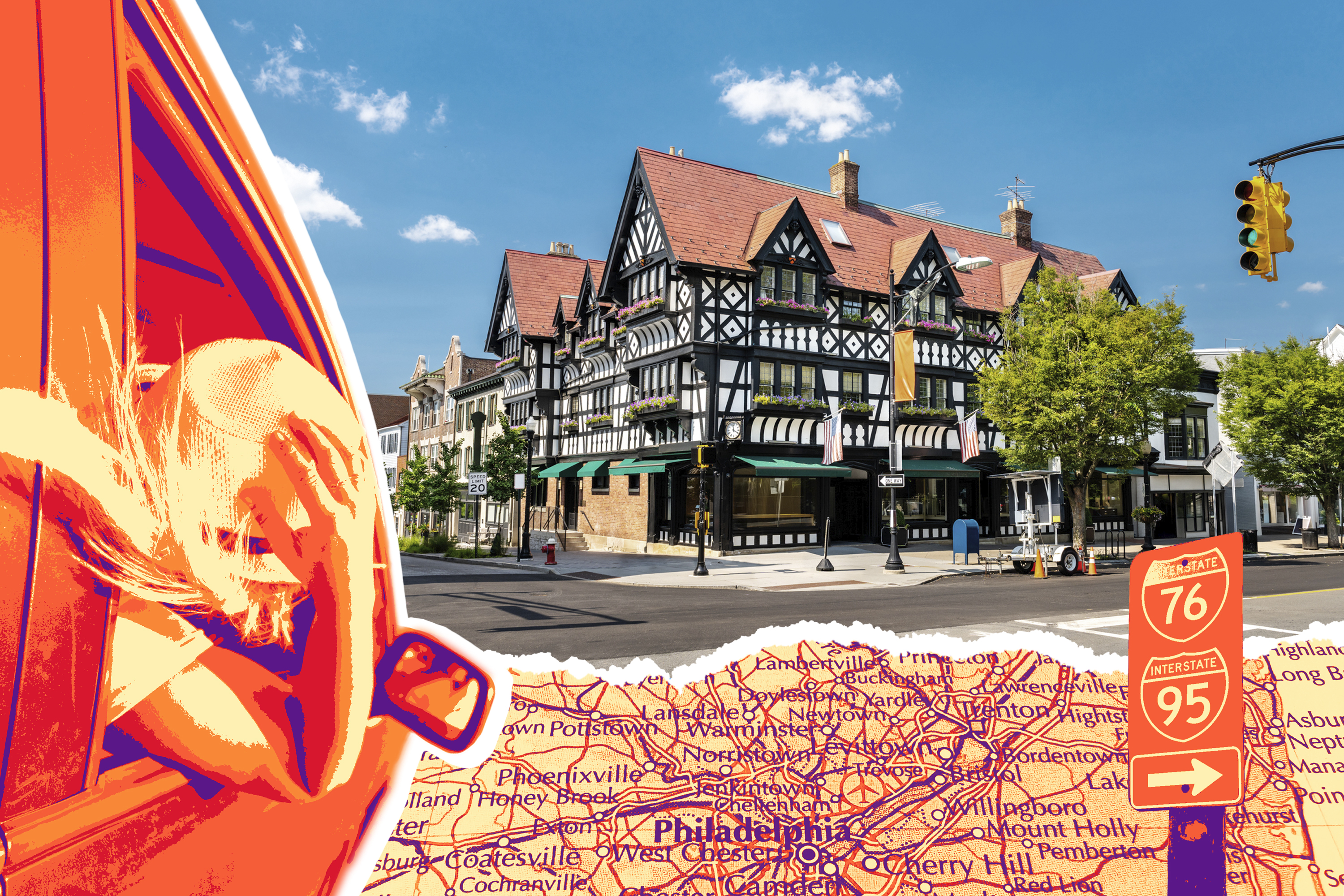
    A college campus in Central New Jersey might not sound like the ideal getaway, but Princeton has a Ph.D. in historic charm, boutique shops, eateries, and museums. As a lifelong New Jerseyan, I keep forgetting how much I love it there.

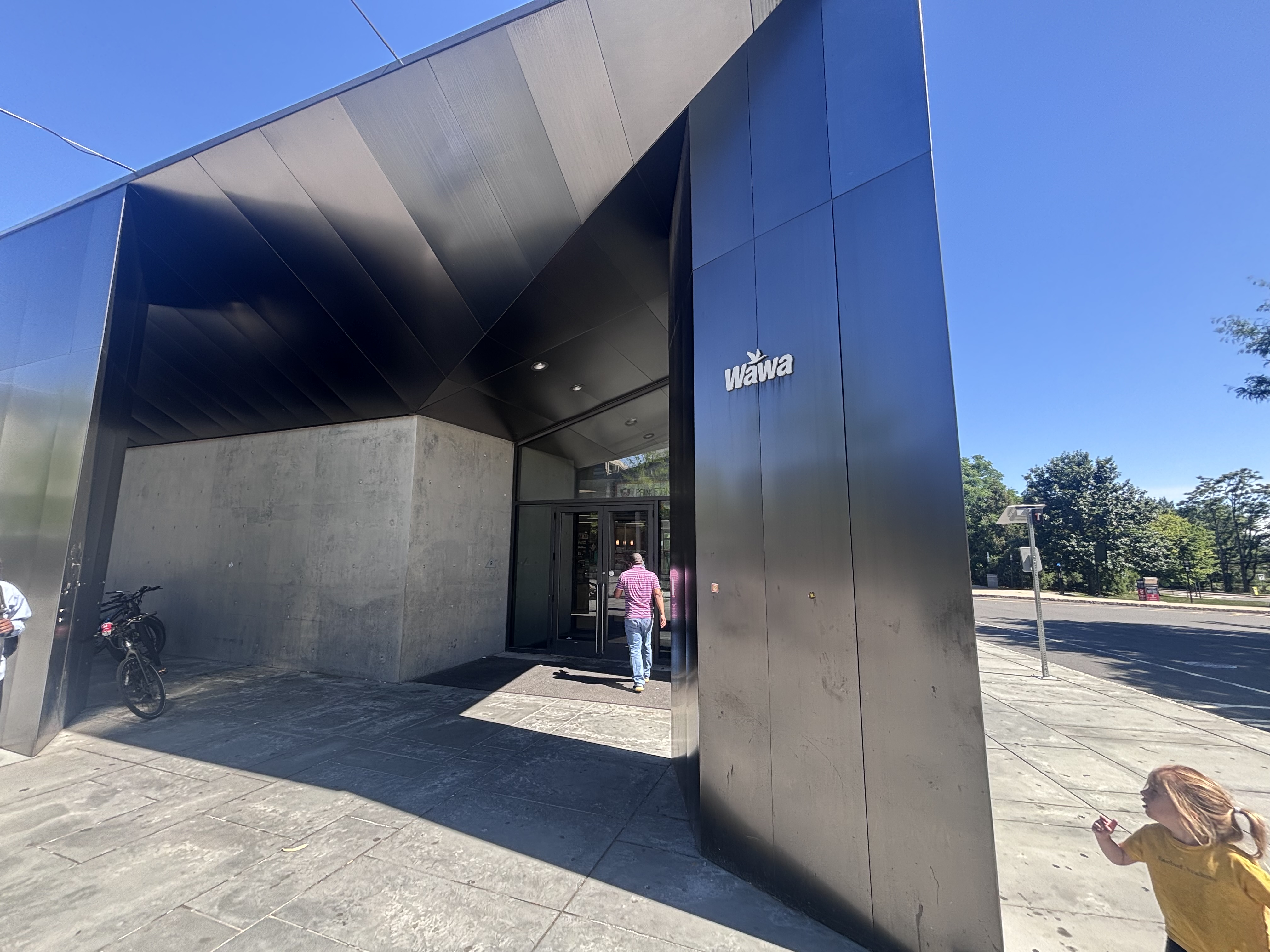
    Even the Wawa is a work of art.

    “Princeton is just a beautiful little town and, in my opinion, there are only a few places like it in all of New Jersey,” said John Lambert, owner of the iconic Princeton Record Exchange.

    Strolling through Princeton University’s ivy-covered campus, as Albert Einstein used to, is almost worth the trip alone, particularly if you go on a bustling fall weekend. The campus is teeming with sculptures, massive churches, and historic school buildings. The town is only 50 miles northeast of Philadelphia and is even accessible by Amtrak at 30th Street Station.

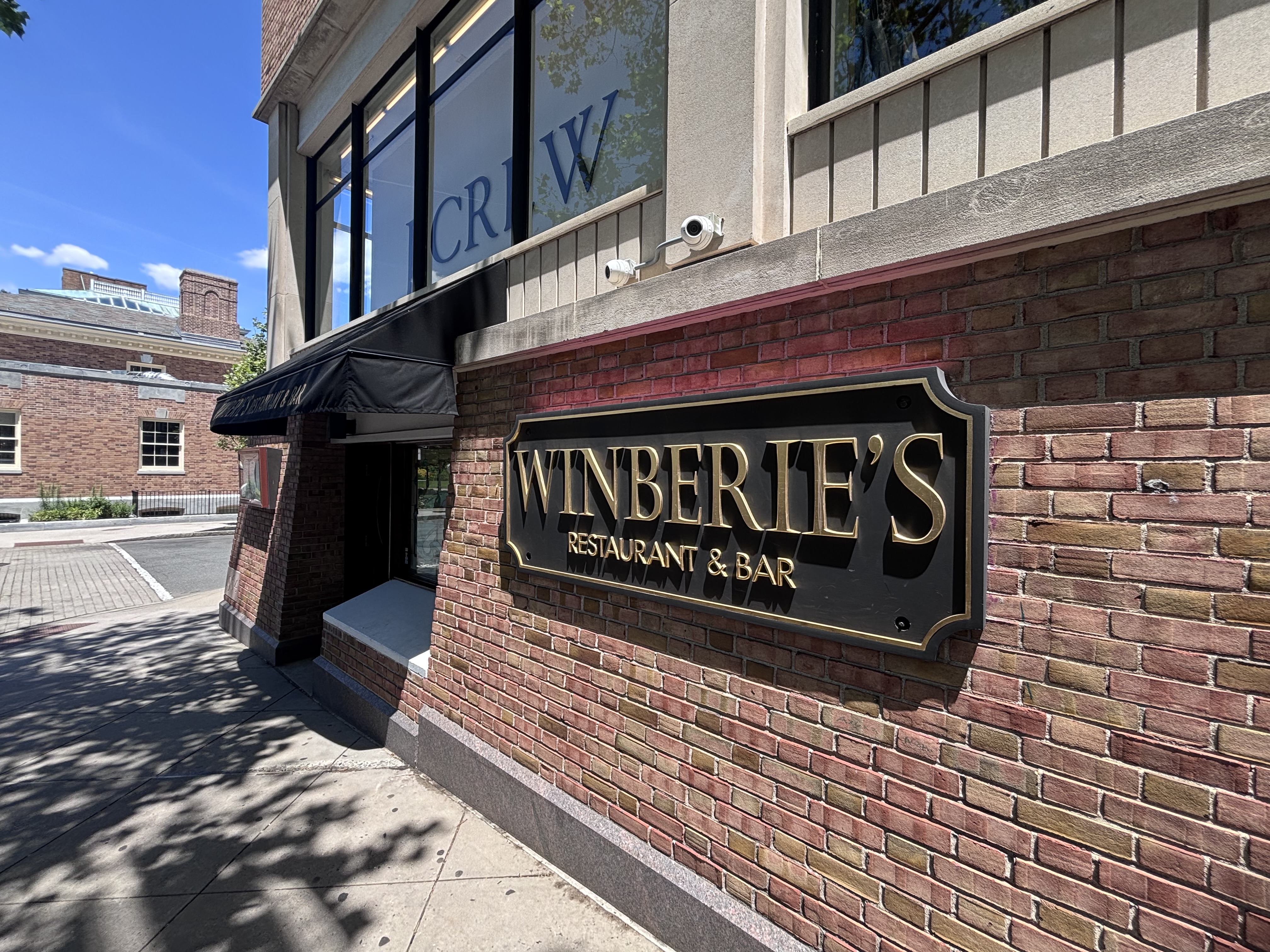
    Winberie’s is a Princeton staple.Jason Nark

    Fuel

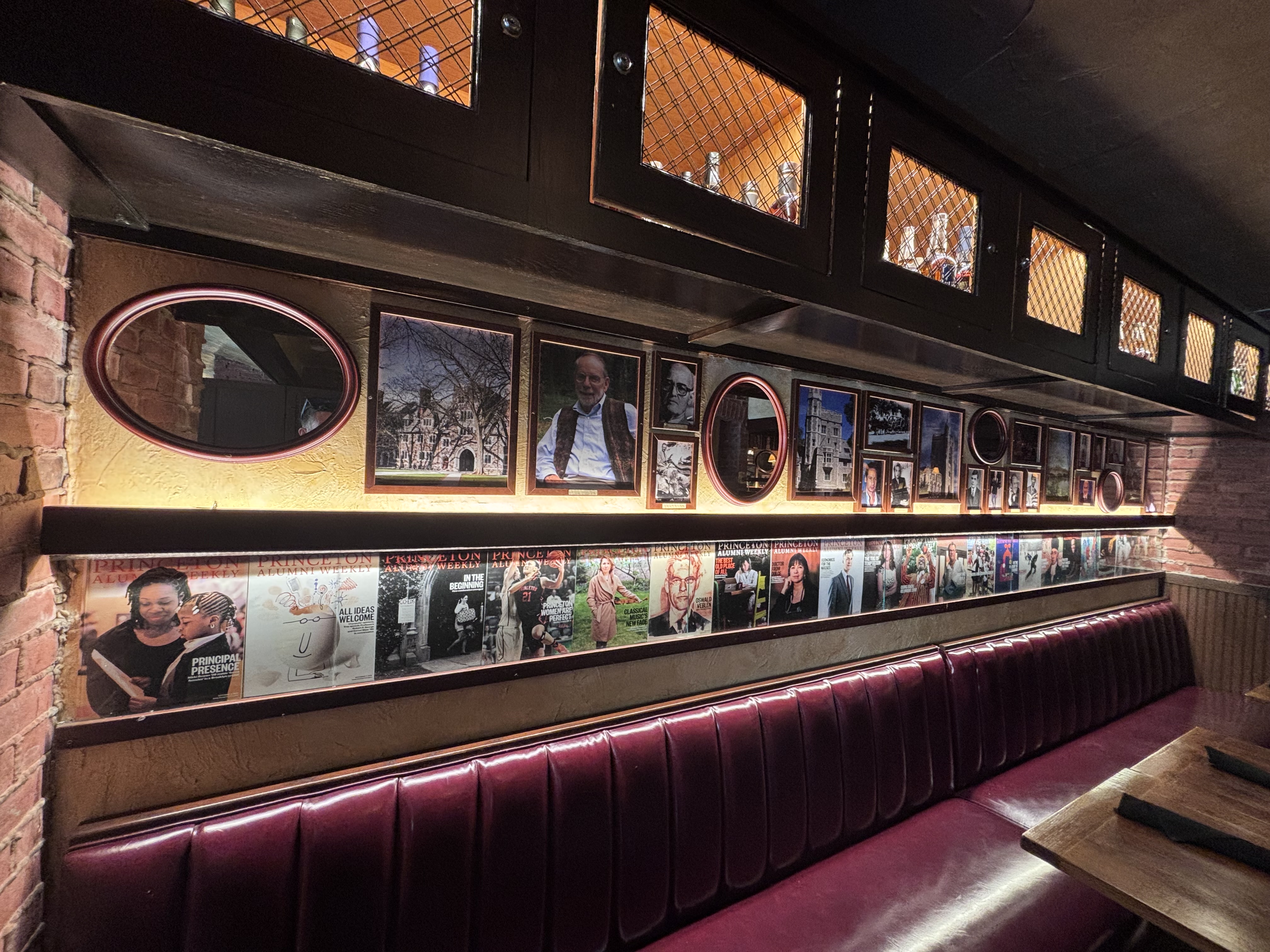
    I’m a sucker for a downstairs pub, and I’ve been to Winberie’s Restaurant & Bar a handful of times. It’s dark and bedecked in stained glass and brick, and images of Princeton icons, like author John McPhee and basketball legend Bill Bradley, line the walls.

    It’s not the only bar in town, but Winberie’s seems like the ideal place to grab a craft beer or wine before or after a Tiger football or basketball game. It sits right on Palmer Square in the middle of town.

    Princeton legends like John McPhee line the walls at Winberie’s.Jason Nark

    Winberie’s has full entrees, including pan-roasted, crispy skin salmon, and braised, beef short ribs, but I also get one of their burgers. On a recent weekday in June, I ordered the smash burger on rye bread with mustard.

    Afterward, while walking off the meal around Palmer Square, I made a note to try Teresa’s Pizza & Wine Bar next time. Princeton’s Triumph Brewing is an elevated brewing experience with duck, lamb, and oysters on the menu. It was named a 2025 Diners’ Choice by OpenTable.

    📍 Winberie’s Restaurant & Bar, 1 Palmer Square E., Princeton, N.J. 08542

    📍Teresa’s Pizza & Wine Bar, 23 Palmer Square E., Princeton, N.J. 08542

    📍Triumph Brewing Company, 20 Palmer Sq. E, Princeton, N.J. 08542

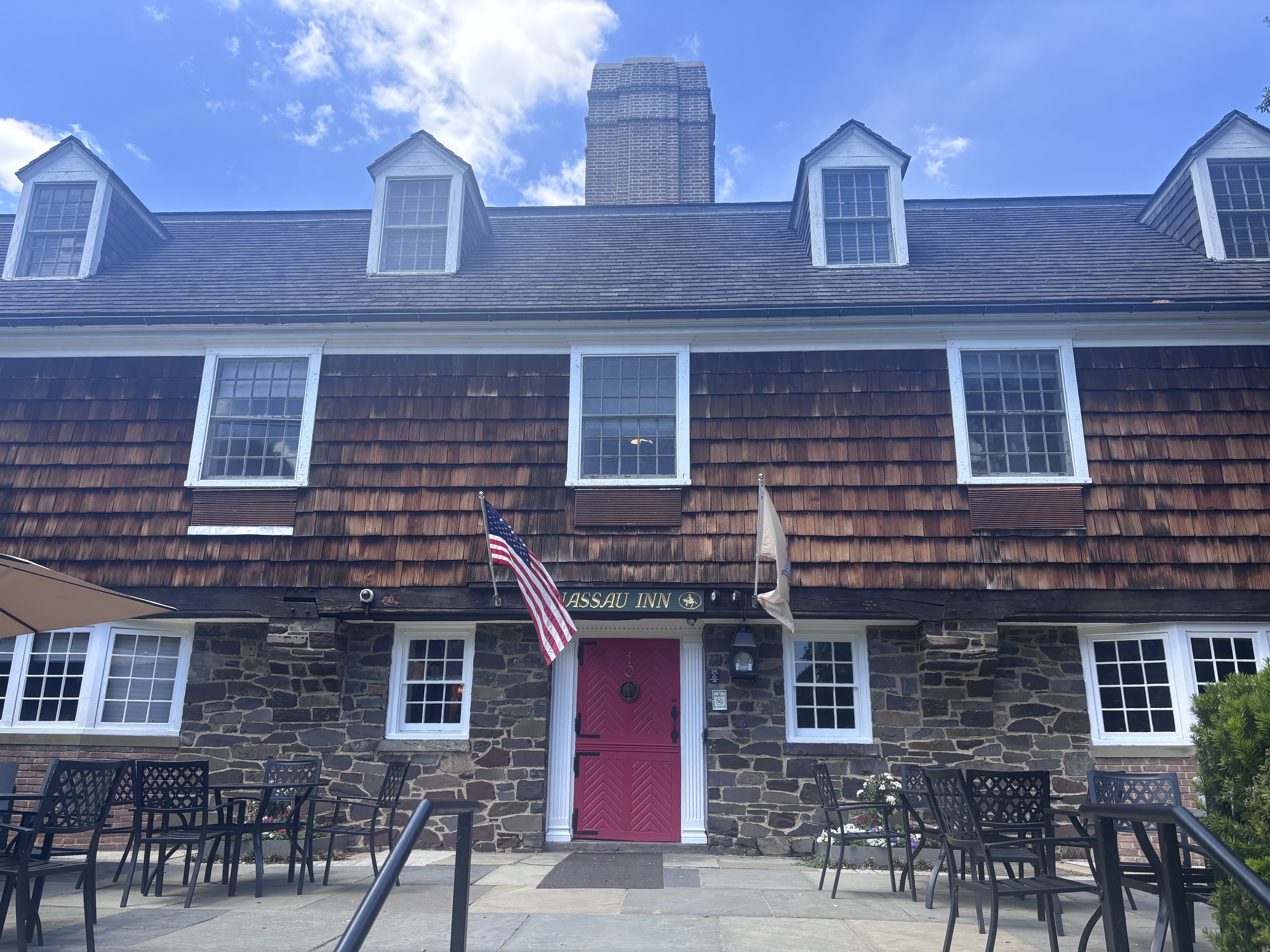
    The Nassau Inn has been in operation in Princeton since 1775.Jason Nark

    Stay

    Princeton can be an easy day trip for anyone in Philadelphia. That’s a great option too, because overnights can be expensive, particularly when school is in session, and there are large events on campus.

    The Nassau Inn, on Palmer Square, is Princeton’s most iconic hotel, and it offers summer getaway deals starting at $175 a night. Rooms jump to $325 a night come mid-September. The Nassau, established in 1775, offers 16 craft beers, plus breakfast, lunch, and dinner at its Yankee Doodle Tap Room.

    The Graduate Hotel, by Hilton, has a breathtaking lobby, but the prices are breathtaking too. There are some simple and relatively affordable Airbnbs downtown, too, but expect the prices to double during the school year.

    📍 Nassau Inn, 10 Palmer Square E., Princeton, N.J. 08542

    📍 Graduate Princeton, 10 Chambers St., Princeton, N.J. 08542

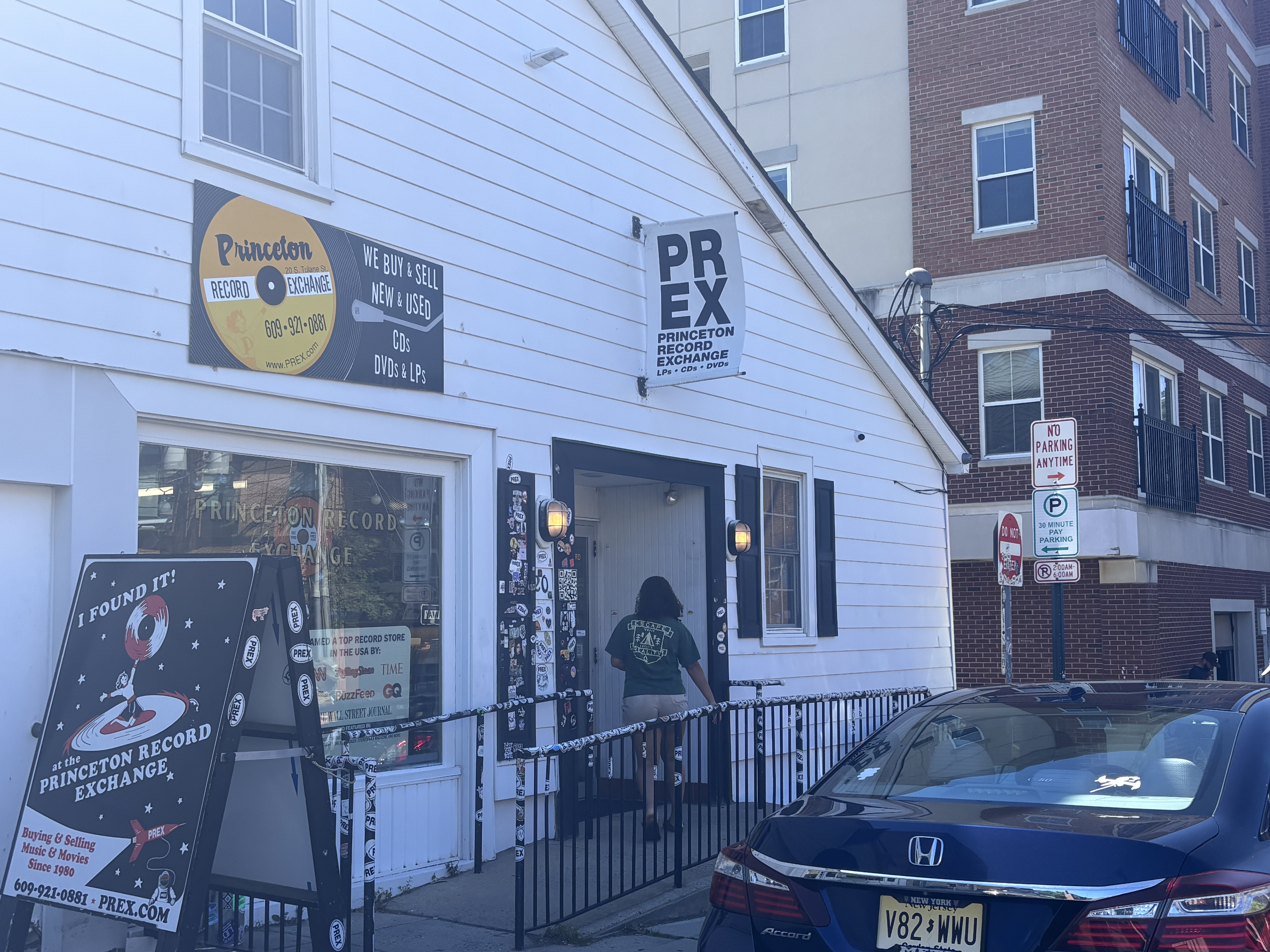
    The Princeton Record Exchange is considered one of the country’s best places to get vinyl.Jason Nark

    Shop

    There are almost too many options to choose from, but the Princeton Record Exchange, or PREX, is a must-see. As the sign in the window attests, it’s one of the nation’s, even the world’s, best record stores with over 100,000 albums, cassettes, and CDs spread out over 4,500 square feet.

    James Murphy, of LCD Soundsystem, said PREX “saved his life.”

    Owner Jon Lambert said he has visitors from all over the world, and he’s found the average customer spends over an hour in the store. Sometimes they’re simply browsing and reminiscing, and Lambert said that’s just fine.

    “We want you to feel comfortable here, to have a tactile, sensorial experience,” he said. “We know you’ll probably be back.”

    Toys from floor to ceiling at jaZams in Princeton.Jason Nark

    Other must-sees are jaZams, arguably the greatest toy story ever (I managed to spend just $14) and Labyrinth Books, which specializes in rare and academic titles.

    📍 Princeton Record Exchange, 20 S. Tulane St., Princeton, N.J. 08542

    📍 jaZams, 25 Palmer Square E., Princeton, N.J. 08542

    📍 Labyrinth Books, 122 Nassau St., Princeton, N.J. 08542

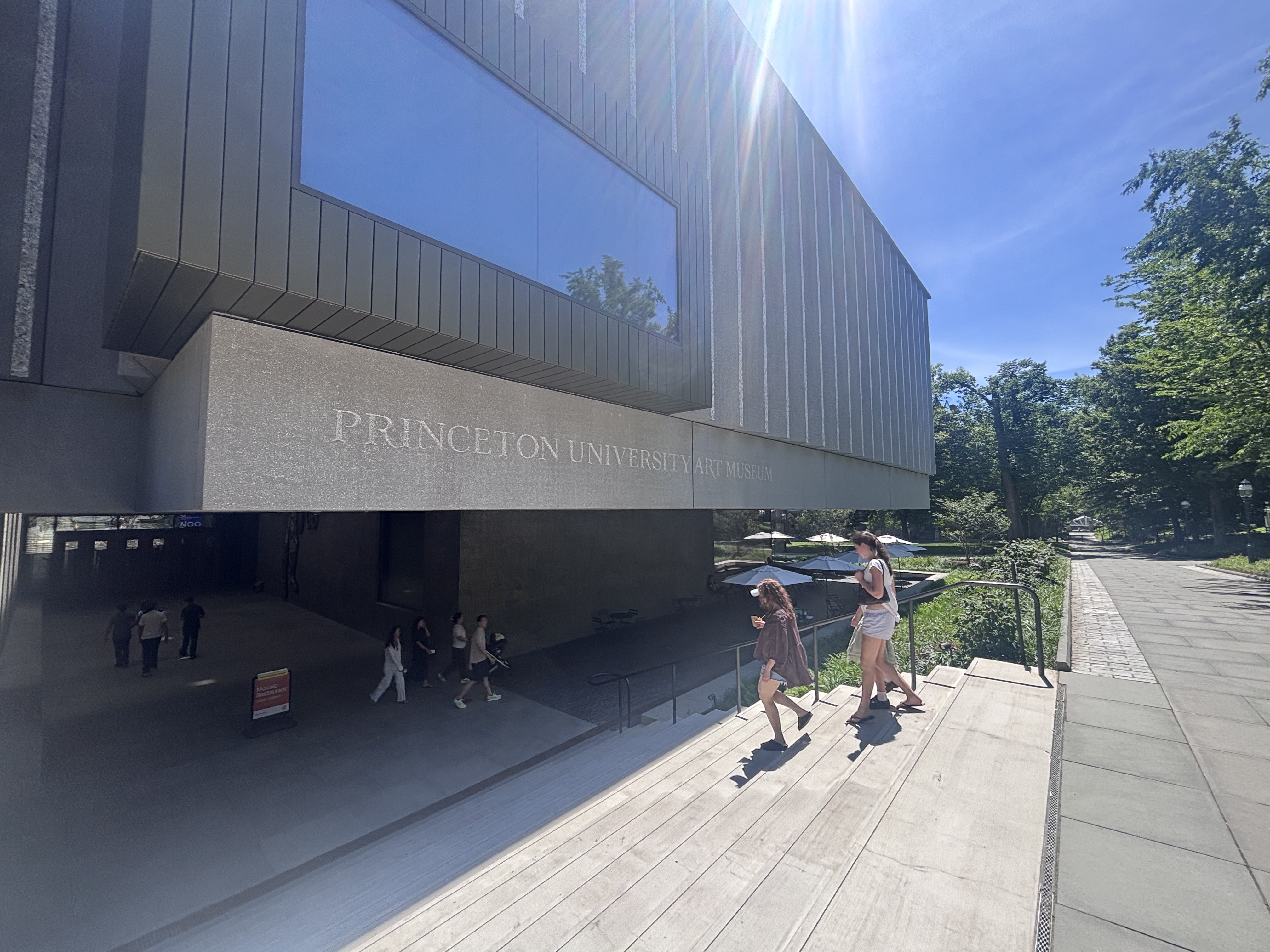
    The Princeton University Art Museum is free to the public.Jason Nark

    See

    The Princeton University Art Museum was the biggest surprise of my visit, a vast, modern building full of pieces, large and small, that touch on, well, everything. My daughter, just 4 years old, was captivated.

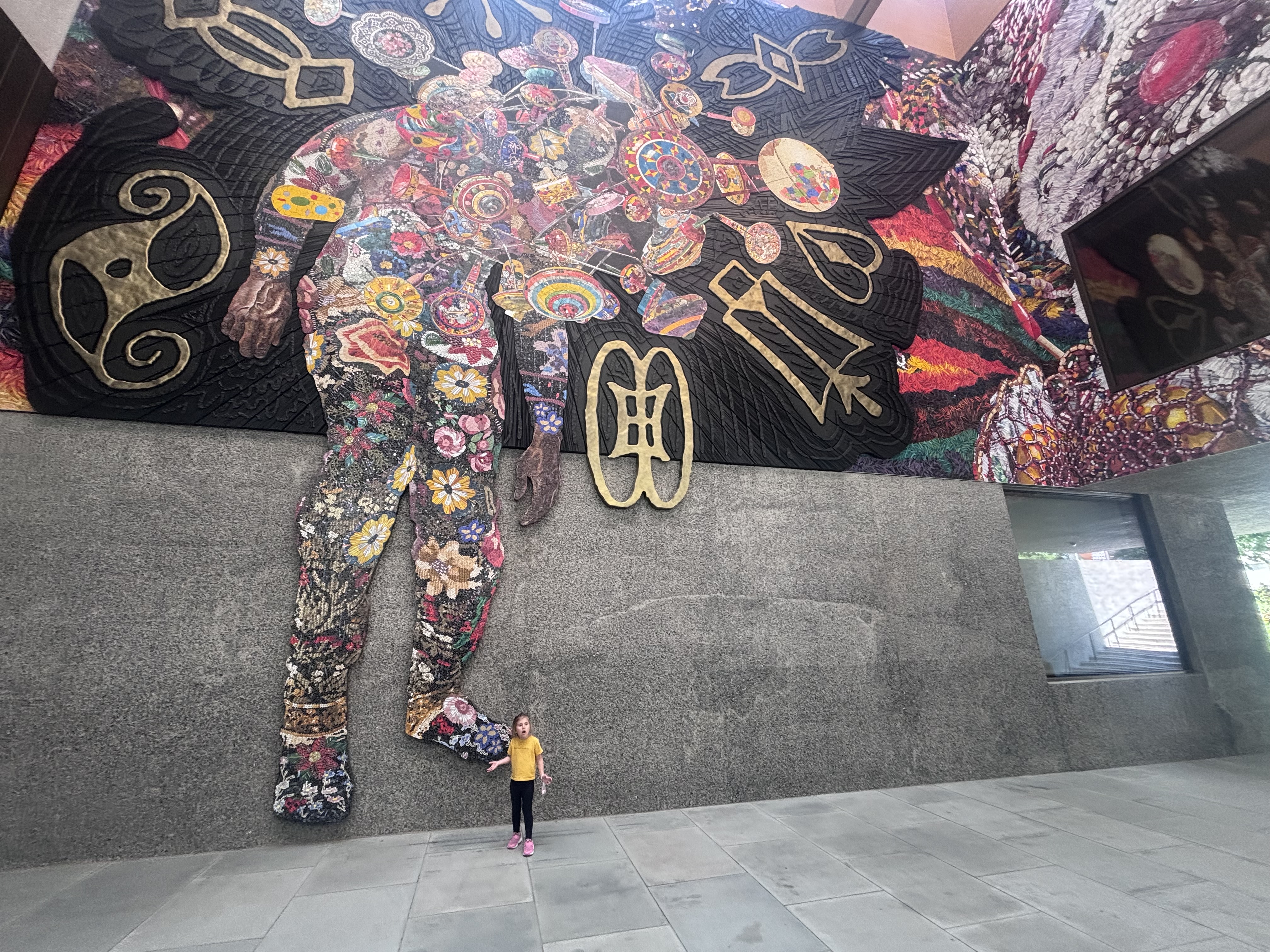
    There’s a Warhol, Monet, some German expressionism, gold-ground paintings from the 1400s, and massive, modern pieces by sculptor Nick Cave.

    In honor of America’s 250th celebration, the museum has an exhibit titled “What Is an American?” running through November.

    Even better: It’s free.

    📍 45 Elm Dr., Princeton, N.J. 08544

    The author’s daughter stands by a Nick Cave piece at The Princeton University Art Museum.Jason Nark

    Sweets

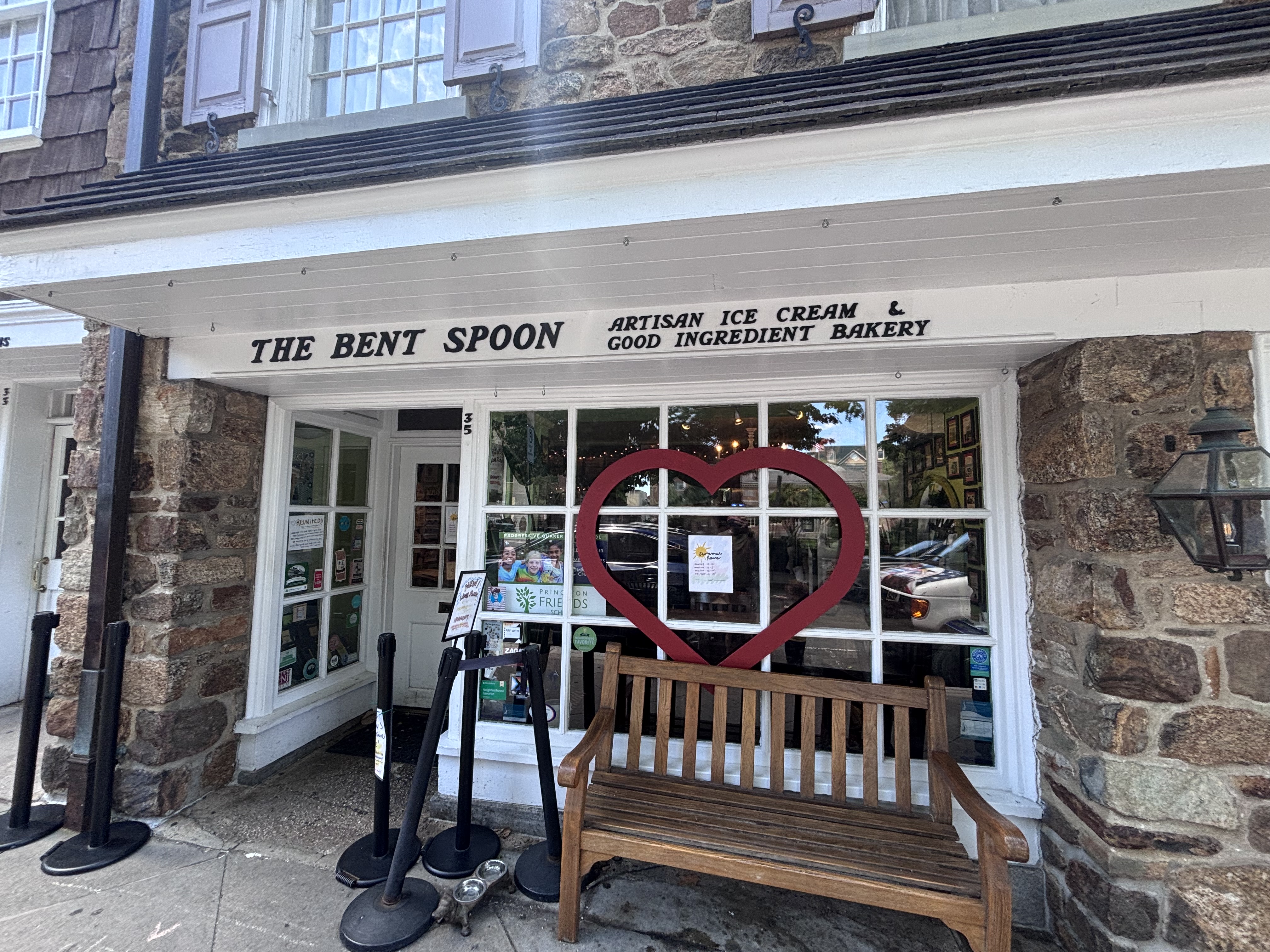
    The Bent Spoon, an artisan ice cream shop on Palmer Square, has crafted hundreds of flavors since it opened in 2004. The small shop, which is open year-round, redefines “farm to spoon,” which means you have to grab flavors like blueberry and strawberry when they’re available.

    “We really try to celebrate the seasons, for real,” said co-owner Gabrielle Carbone. “We get our strawberries from South Jersey, and they’re only available until the strawberries run out.”

    The Bent Spoon has been making artisanal ice cream on Palmer Square since 2004.Jason Nark

    I ordered vanilla bean — sourced from Madagascar. My daughter had a vegan vanilla with organic rainbow sprinkles. We swapped.

    Carbone says blueberry ice cream and blueberry-lemonade sorbet will be in around July, but not for long. Princeton is bustling come winter, too, she said.

    “We’re known for our hot chocolate,” she said.

    📍 35 Palmer Square W., Princeton, N.J. 08542

    The Princeton Wawa was designed by architect Rick Joy.Jason Nark

    Wawa

    You know Wawas. You’ve seen hundreds of them and, for the most part, they all look the same.

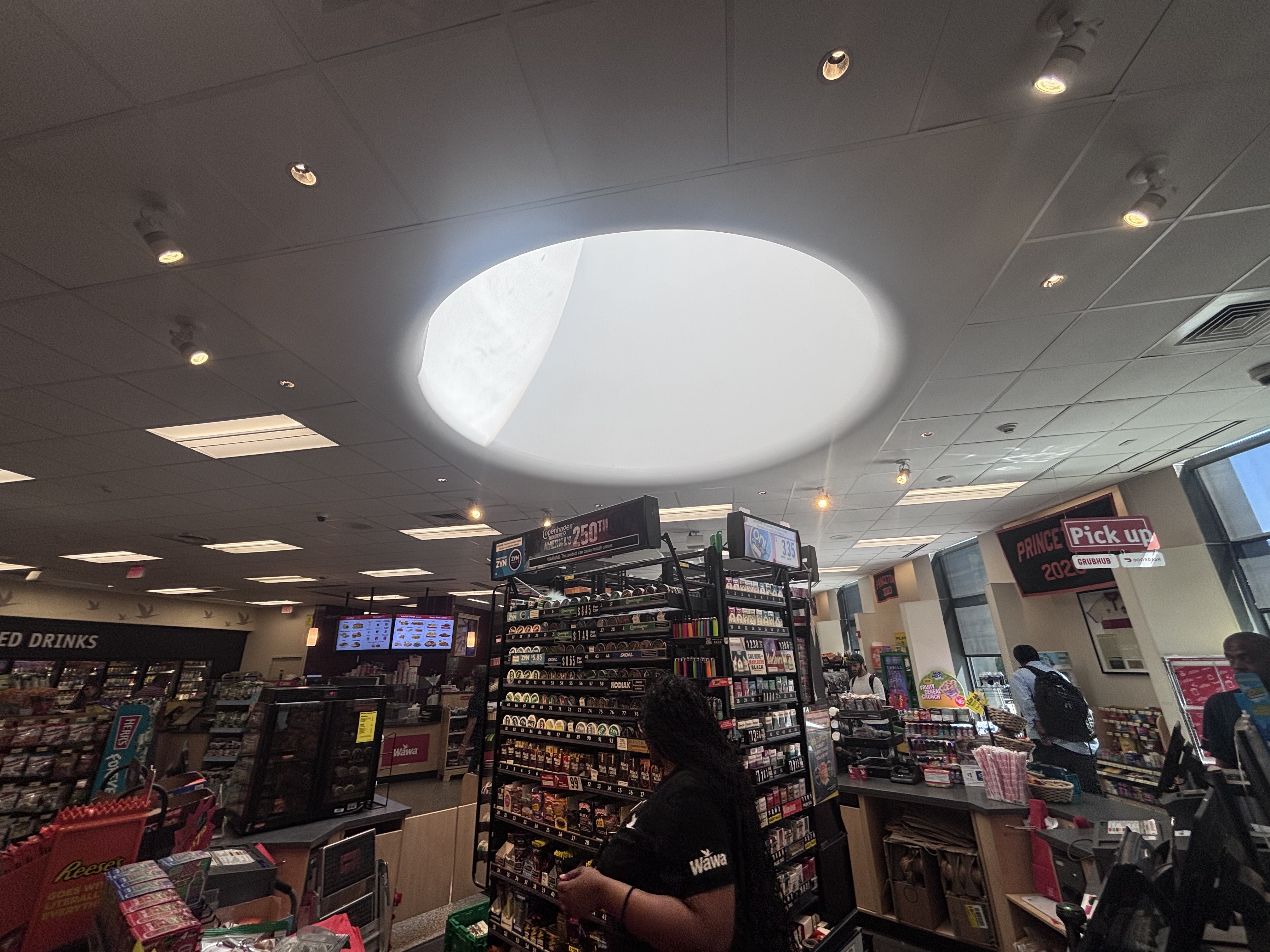
    The Wawa at the Princeton Station train stop was designed by architect Rick Joy, though, and features exterior walls with sharp angles and columns made of blackened steel panels. Inside, above the cash register, is a large skylight.

    The Wawa even has a green roof, along with the ubiquitous shorties and hot coffee.

    📍 152 Alexander St., Princeton, N.J. 08540

    The cash register at the Princeton Wawa is bathed in sunlight.Jason Nark
  • They bought a $975,000 Fairmount home with no money down | How I Bought This House

    They bought a $975,000 Fairmount home with no money down | How I Bought This House

    The buyers: Charlotte Burns, 33, veterinary anesthesiologist; Noah Johnson, 37, battery scientist

    The house: a 1,850-square-foot townhome in Fairmount with four bedrooms and three bathrooms built in 1876

    The price: listed for $975,000; purchased for $975,000

    The agent: Sela Fallt, KW Empower

    The ask: When Charlotte Burns and Noah Johnson moved back to Philadelphia in July 2024, they already knew they wanted to buy a house. They had spent the previous decade renting while they went to college and graduate school, and years of lease renewals and rent hikes had worn them down. Now that they both had steady jobs, they wanted a payment that stayed put and a home to call their own.

    They started looking casually that fall. Johnson wanted a big kitchen with lots of counter space. Burns wanted enough outdoor space for a garden and a house with character. “I love the old Colonial homes,” she said. “I’ve wanted one since I was 12.” They wanted to stay in Fairmount if they could.

    A large kitchen with counter space was a must-have. Erin Blewett / For The Inquirer

    The search: The couple’s search was unusually brief. They had only started casually browsing listings online when Johnson bumped into their next-door neighbor, who happened to be a real estate agent. She asked him what they were hunting for. “My husband thankfully knows me quite well, so he told her what I like,” Burns said. A week later, the agent knocked on their door. “I think I found your house,” she told them.

    The appeal: The house looked like the old Colonial home Burns had wanted since she was a kid. It still had several of its original details, such as the crown molding, shutters, doorknobs, hinges, marble steps, and 150-year-old wood floors. The previous owners had updated the house, Burns said, but didn’t gut it or turn it into “some modern monstrosity.”

    A large red couch is the centerpiece of the first-floor living area in Charlotte Burns and Noah Johnson’s home. Erin Blewett / For The Inquirer

    The house also had the big kitchen Johnson wanted and space for a garden for Burns. Then there was the screened-in porch on the second floor. “I feel like that’s a rare find,” Burns said. Her other favorite feature is the third floor, which “felt like your own private suite,” she said.

    The deal: The house was listed for $975,000. The couple offered the full asking price and felt good about not going over. “I really was not in the market for haggling or fighting over a house,” Burns said. “We weren’t that desperate.” There was one other offer, but it was lower, so the seller accepted theirs.

    Homeowner Charlotte Burns appreciated that the home’s prior owners kept historical details like moldings intact. Erin Blewett / For The Inquirer

    The inspection came back mostly clean. Some porch wood and window linings needed work, but the biggest issue was the HVAC system, which was more than 20 years old. Burns and Johnson negotiated a $7,500 seller’s credit for it and later replaced the HVAC and heat pump for about $8,500.

    The money: Burns and Johnson bought the $975,000 house with no money down through a professional loan, a mortgage product for borrowers with high future earning potential but not necessarily years of savings. “It’s a very good option if you’re a medical professional,” Burns said. She didn’t know the loan applied to veterinarians until a colleague told her.

    The screened-in porch on the second floor was a selling point. Erin Blewett / For The Inquirer

    Unlike other low- or zero-down payment loans, a professional mortgage doesn’t require private mortgage insurance, and Burns said her student loan debt was not held against her in the same way it might have been with a conventional mortgage.

    The couple actually had $100,000 in savings, most of it from Johnson, who had been working for several years after graduate school. But they decided not to put that money toward the house. They wanted to keep it as an emergency fund instead. “I feel like you should always have at least six months of emergency savings at all times,” Burns said.

    Since moving in, the couple has done a lot of painting. Erin Blewett / For The Inquirer

    Their mortgage payment was originally $7,200 a month. Recently, they paid a one-time fee of $1,200 to lower their interest rate from 7% to 6.5%, which brought their monthly payment down by about $400.

    They plan to refinance if rates drop enough in the next few years.

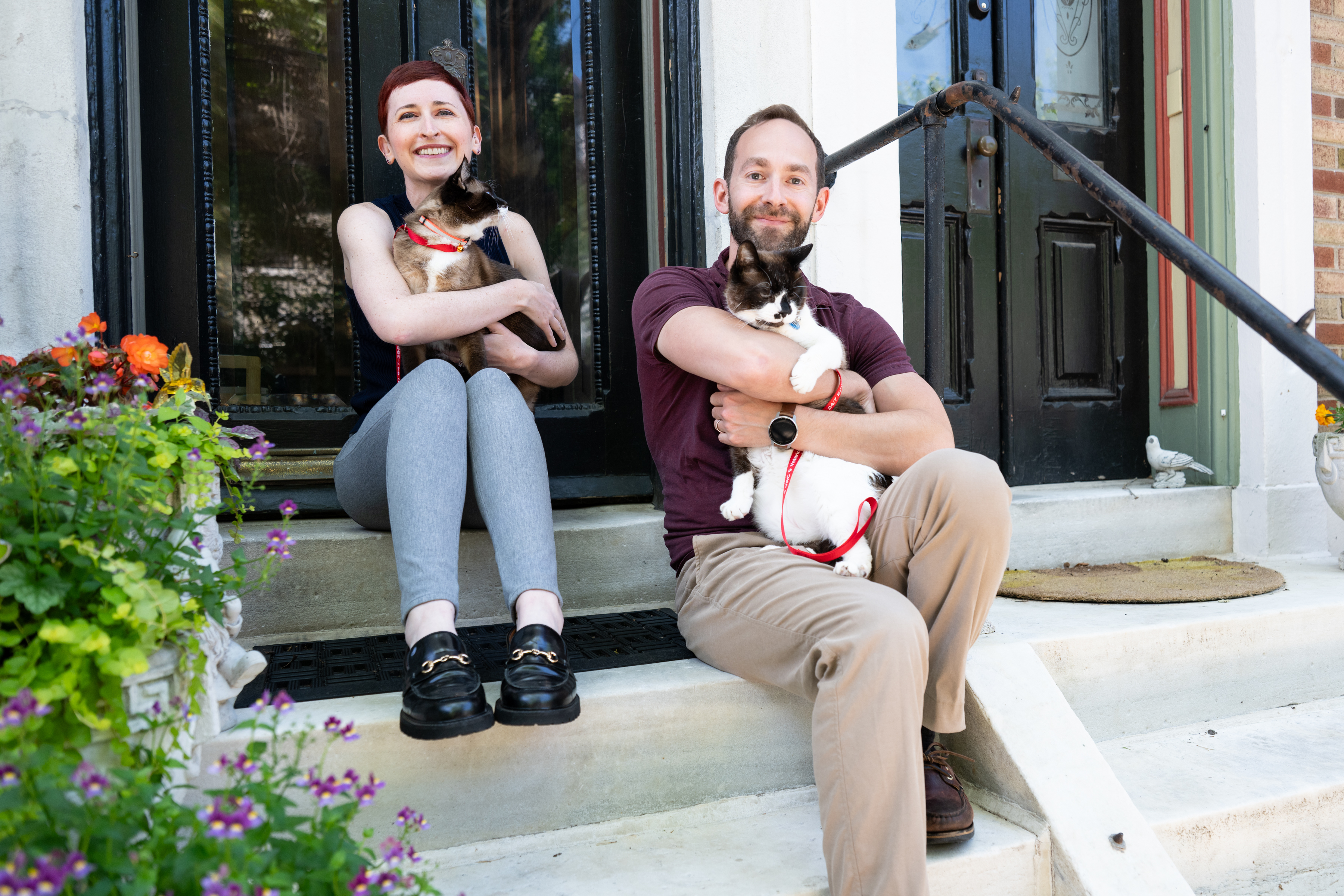
    The couple turned one second-floor room into a living room, including space for their cats to lounge. Erin Blewett / For The Inquirer

    The move: The couple closed Feb. 3 and started packing a week or two later. When they signed their lease, they had told their landlord that they might buy soon. She let them leave without issue and found new tenants within a week.

    The move itself was a mess. They’d booked it for the day after the Super Bowl parade, and Fairmount was still buried in cars — including in front of their old house, where the no-parking signs Burns had ordered from the city were ignored. So Burns called the Philadelphia Parking Authority and had the cars ticketed and towed. Then, at the new house, the truck blocked the Route 48 bus, so Burns called SEPTA, and they rerouted it.

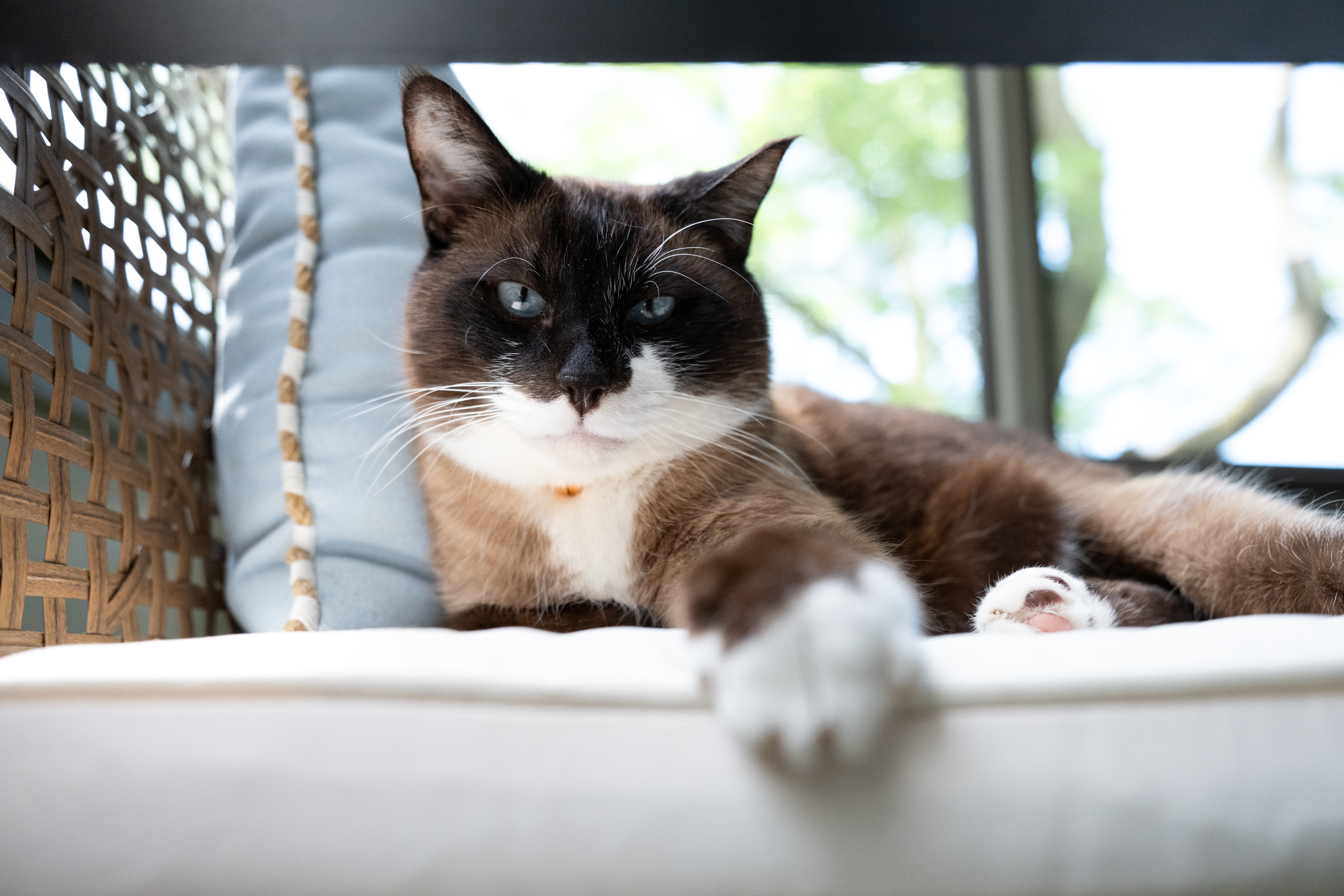
    Mao is enjoying his new home in Fairmount. Erin Blewett / For The Inquirer

    Life after close: Since moving in, the couple has been busy making the house their own. Burns has painted, wallpapered, gardened, and gotten “really into stencils,” she said. She painted the green living room herself and added an ivy stencil along the stairs.

    Some days, she still can’t believe how easily everything came together. “It’s really crazy,” she said. “But you gotta let the universe do what it wants to do.”

    Did you recently buy a home in the Philadelphia area or South Jersey? Share the story of how you did it. Email Inquirer real estate reporters at properties@inquirer.com.

  • See it, hear it, feel it: All the Philly art we loved this week

    See it, hear it, feel it: All the Philly art we loved this week

    Ringing freedom

    My dream of ringing the Liberty Bell has (sort of) been achieved.

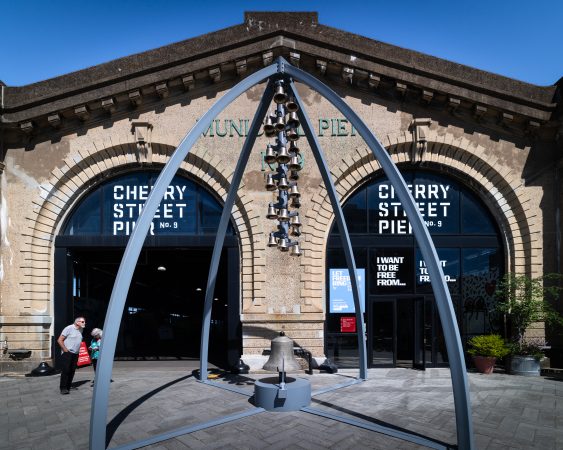
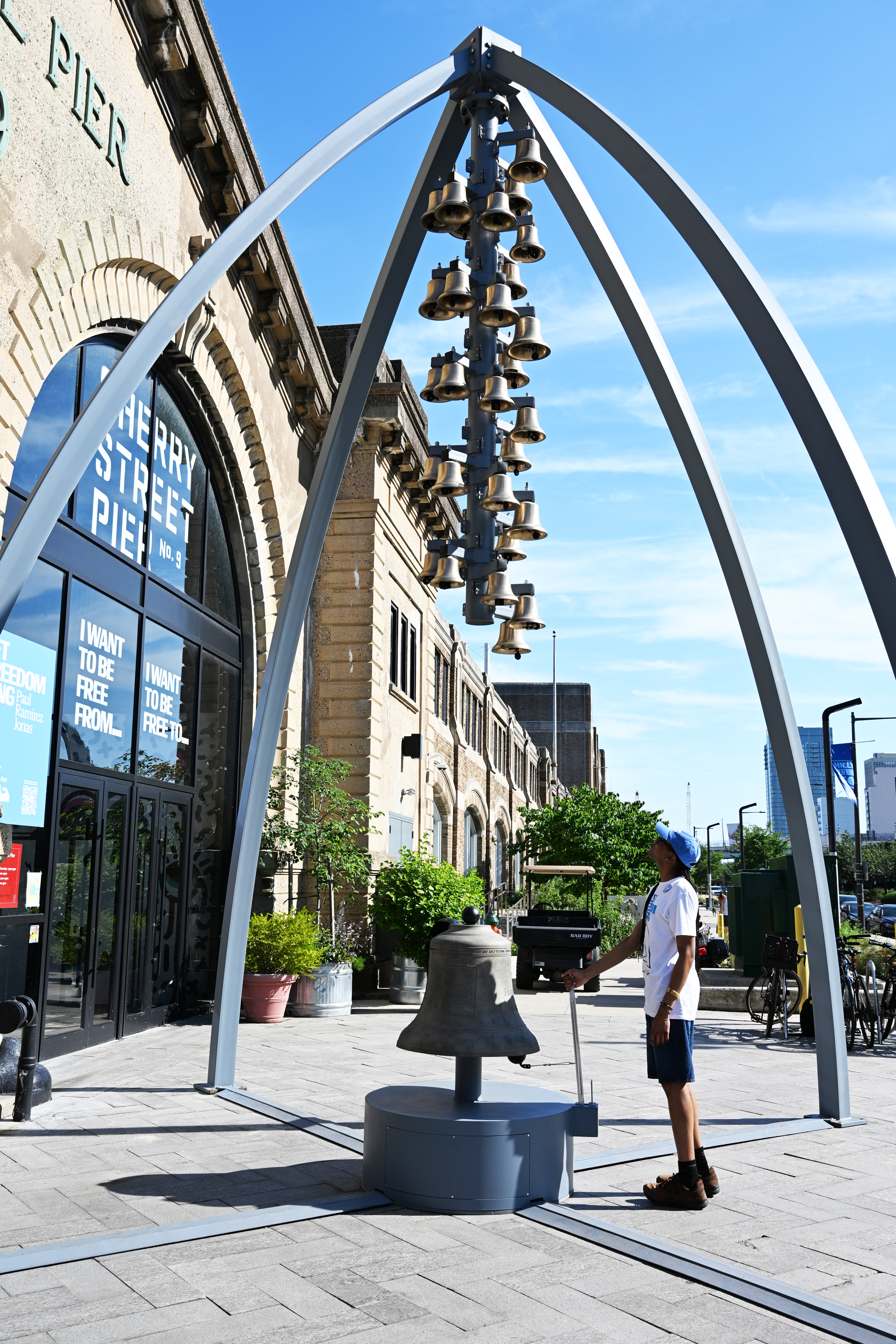
    Just in time for America’s 250th anniversary, a 600-pound Liberty Bell look-alike has popped up on Cherry Street Pier. The exhibit titled “Let Freedom Ring” by artist Paul Ramírez Jonas features a lever in front of the bell that allows passersby to ring it, resounding a bright gong sound.

    That’s not all; a spiral of 32 smaller bells hang overhead. Together, in tings and gongs, they play “My Country ‘Tis of Thee” every 15 minutes on the hour but the very last note is left out. This final note is meant to be rung from the bigger bell using the lever by onlookers, allowing them to be a part of the exhibit.

    The display allows participants to ring the bell and finish the rendition of “My Country ‘Tis of Thee.”Julia Perciasepe

    The most moving part for me were the inscriptions on the big bell itself. Engraved on either side of the bell, one says “I want to be free from …” and the other “I want to be free to …” These simple open-ended statements invite Philadelphians to question what freedom means to them in today’s American society.

    It got me thinking about this country, where freedom is meant to be a founding principle. How much freedom do we really have, especially across diverse identities?

    Let Freedom Ring runs through Sept. 27 at Cherry Street Pier, 121 N. Christopher Columbus Blvd. associationforpublicart.org

    — Morgan Ritter

    Philly anti-folk hero Adam Brodsky’s new album is “American Epitaph.”S. Elfie

    The return of a Philly anti-folk hero

    “I believe what Woody sang: ‘All you fascists bound to lose,’” Adam Brodsky sings on American Epitaph, his first album in over two decades. “But he didn’t give a time, and man that’s sure something we could use.”

    Recorded at Retro City Studios in Philadelphia with producer Matt Muir, American Epitaph is a protest album divided into stripped-down tracks with Brodsky on guitar and Butch Ross on organ, and a full band presentation with backing by guitarist Jesse Lundy, drummer Alec Meltzer, and Chris Bixler on bass.

    Songs like “Achy Breaky America” and “New World Order” are unapologetically confrontational in their politics, aiming to inspire a fighting spirit. A need to speak to the moment led Brodsky to return to recording and performing after a long layoff.

    “Though long thought to be retired or eaten by a bear,” Brodsky writes in the liner notes, “truth is, Adam has been pried off the couch by the disappointing reemergence of fascism.”

    And while Brodsky is the first to admit that his songs might not have the power to effect political change, on American Epitaph he aims to keep standing firmly in resistance to injustice and keeping faith in himself. “Singin’ songs and marching may not change my country,” he sings. “But I still do it every day, so my country don’t change me.”

    — Dan DeLuca

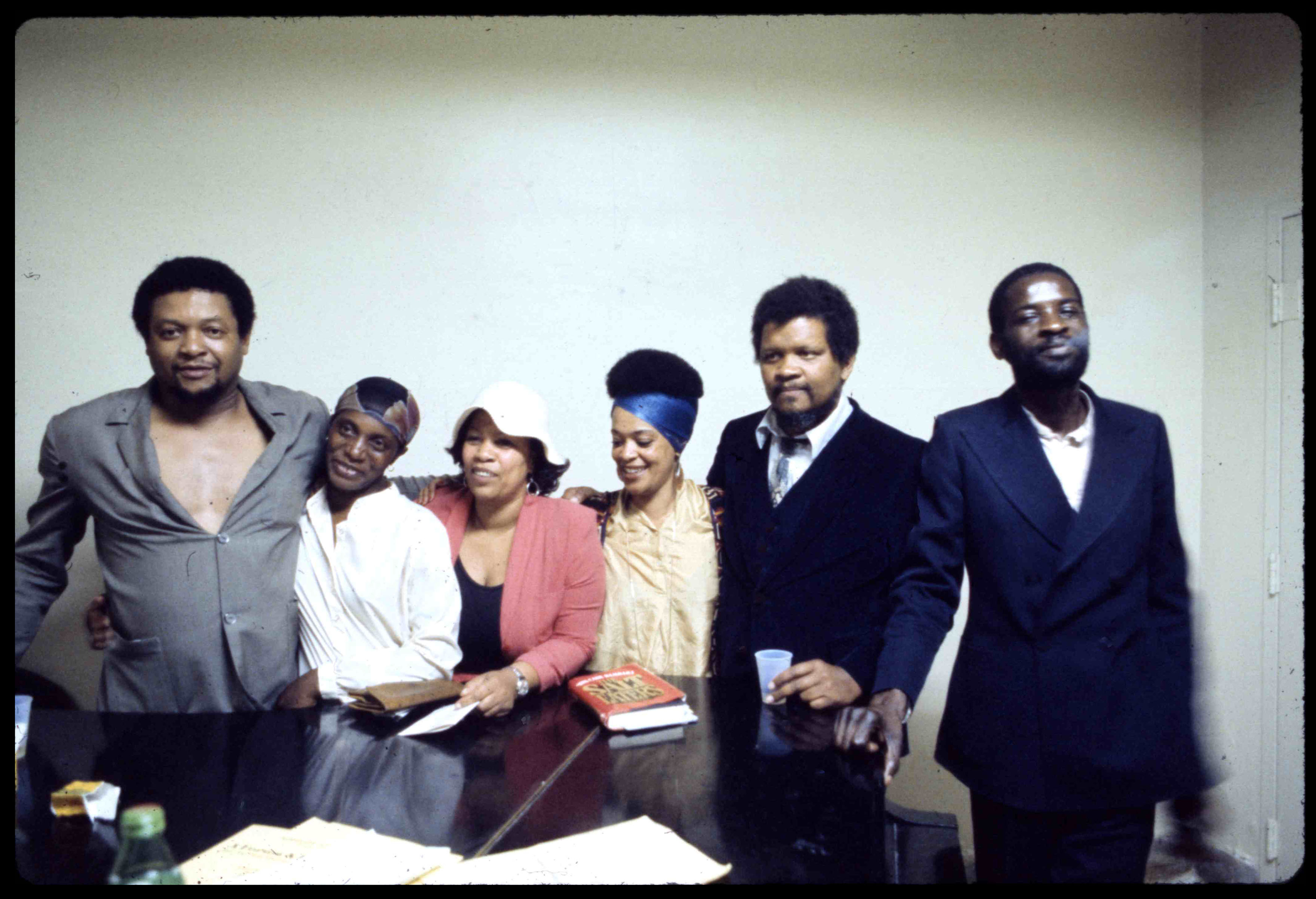
    Portrait of, from left, American poet Quincy Troupe, literary executor and writer Gloria Karefa-Smart (sister of author James Baldwin), authors Toni Morrison and Toni Cade Bambara (1939 – 1995), poet Ishmael Reed, and Nigerian critic and journalist Chinweizu Ibekwe at an unspecified event, 1972.Anthony Barboza / Getty Images

    A Philly legend on film

    Toni Cade Bambara was a legend. But more importantly, she was a Philly legend.

    Born and raised in Harlem, having studied theater in Florence and Paris, she taught in Atlanta before moving to the city in 1986. The Black Woman, an anthology she edited, published in 1970. That collection of writing is largely credited for introducing readers to the likes of Alice Walker, Audre Lorde, and Nikki Giovanni. Bambara was a filmmaker, academic, and activist but she was also a world builder; she built worlds with her ideas and then invited people to partake and wander in them. Wander and wonder.

    After reading her 1980 novel Salt Eaters in college, I wrote out her words “All cocoons are temporary and disappear” on a piece of paper that I stuck above my writing desk.

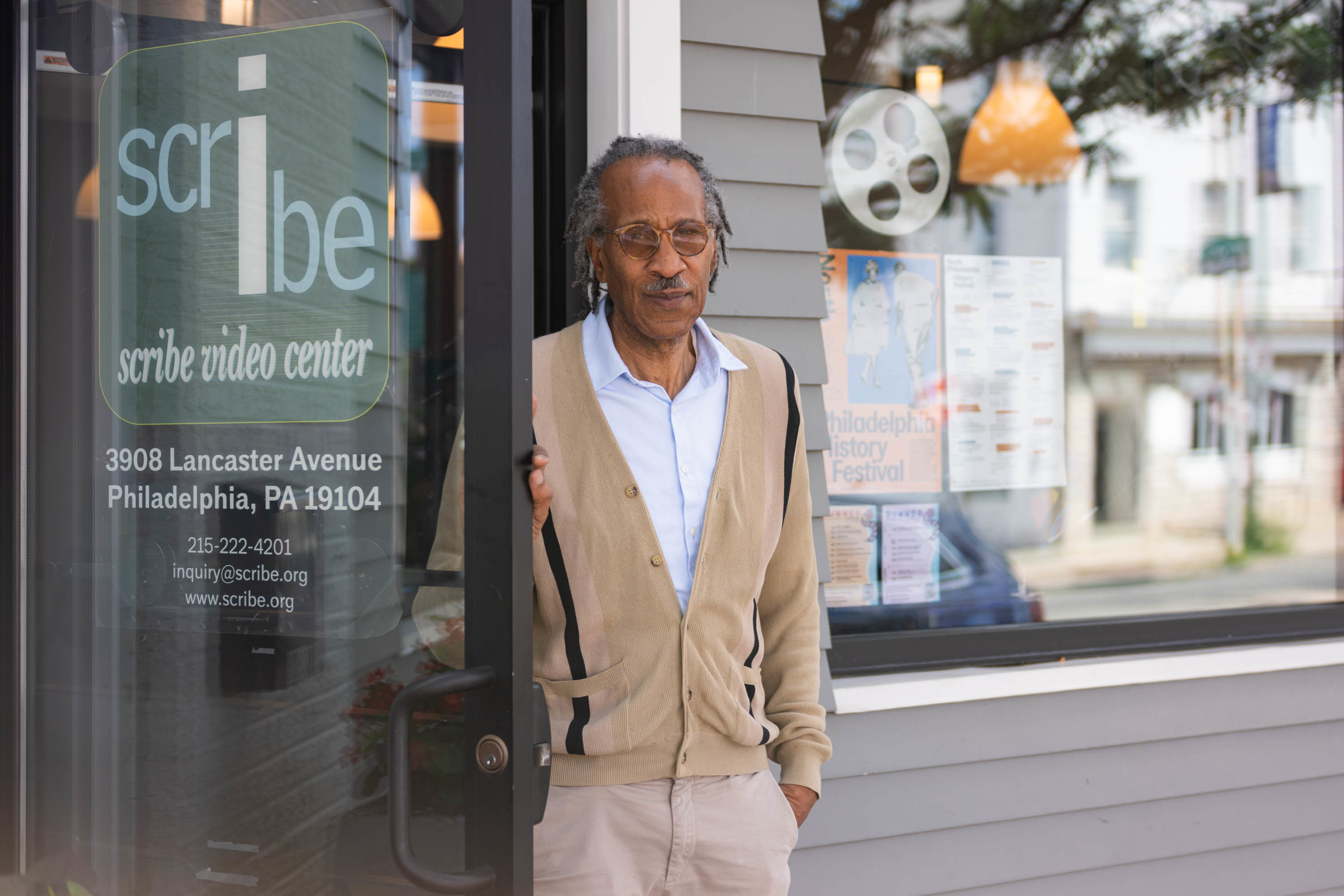
    In Philadelphia, Bambara made friends with another Philly legend: Louis Massiah, the founder of West Philly’s Scribe Video Center. Together, Massiah and Bambara made the 1986 documentary, The Bombing of Osage Avenue, about the MOVE bombing, and then 1996’s W.E.B. Du Bois: A Biography in Four Voices.

    Documentary filmmaker and principal organizer of the North Philadelphia History Festival Louis Massiah poses for a portrait at Scribe Video Center in West Philadelphia on Wednesday, July 23, 2025.Kaiden J. Yu / Staff Photographer

    Thirty years after Bambara’s death in 1995, Massiah’s film TCB — The Toni Cade Bambara School of Organizing premiered at the BlackStar Festival. The documentary is structured like a syllabus and is a lesson in organizing, creating, and living from Bambara herself. It chronicles her life, tells us what she can still teach us today, and brings together the galaxy of legends she called friends: Toni Morrison, Nikki Finney, Sonia Sánchez.

    TCB plays as part of cinéSPEAK’s Under the Stars Film Festival on June 19 under the open night sky in Clark Park, not too far from Scribe, where Bambara and Massiah together wrote stories that continue to teach us about the many fault lines running through our world and lives.

    “TCB — The Toni Cade Bambara School of Organizing” plays June 19, 9 p.m., at Clark Park, 4300-4398 Baltimore Ave., cinespeak.eventive.org

    — Bedatri D. Choudhury

    Ahmir “Questlove” Thompson plays the drums during The Roots Picnic at the Mann in Fairmount Park on Sunday, June 2, 2024.Elizabeth Robertson / Staff Photographer

    Questlove gives Earth, Wind & Fire its flowers

    I learned how to do the two-step to Earth, Wind & Fire’s hits like “September,” “Groove Tonight,” and “Shining Star.” In Afro-puffs and bell-bottoms trimmed in 1970s rickrack, my dance moves were clumsy. In my family’s white tiled kitchen, I practiced as the familiar voices of lead singers Philip Bailey and Maurice White crooned from my mom’s AM radio. Earth, Wind & Fire was like McDonald’s French fries and Sesame Street. I loved them.

    So when Ahmir “Questlove” Thompson’s trippy documentary on the R&B group that I fondly call “the elements” aired on HBO recently, I tuned in.

    I was pleased with what I saw. The two-hour Earth, Wind & Fire (To Be Celestial vs That’s the Weight of the World) was more than a nostalgic look back; it was an insightful look at the life of founder Maurice White. White was anything but transparent to the world, except when he was making music. That is where he put his emotion. That is why the band’s music spoke to us.

    White meditated. He had faith and mantras. He poured what he learned into the making of iconic tunes.

    Through interviews with living bandmates, Thompson, who directed the film, gives us a peek into White’s childhood. We see White fall, get up, and fall again, and spend way too much money on the group’s spacey costumes. White was fearless and Earth, Wind & Fire, iconic. And my feet moved — and still do — with syncopated joy.

    “Earth, Wind & Fire (To Be Celestial vs That’s the Weight of the World)” is streaming on HBO.

    — Elizabeth Wellington

  • The first CARE box shipped from Philly 80 years ago. The world still needs us.

    The first CARE box shipped from Philly 80 years ago. The world still needs us.

    Eighty years ago, in a city whose very name means brotherly love, someone packed a box. It held simple things like canned meat, dried milk, a little sugar, and was sent across an ocean to a stranger in a war-torn land who had next to nothing.

    That first CARE Package, shipped from Philadelphia in 1946, was not a political act or a diplomatic gesture. It was something older and simpler: an act of humanity, of one human being reaching out to help another.

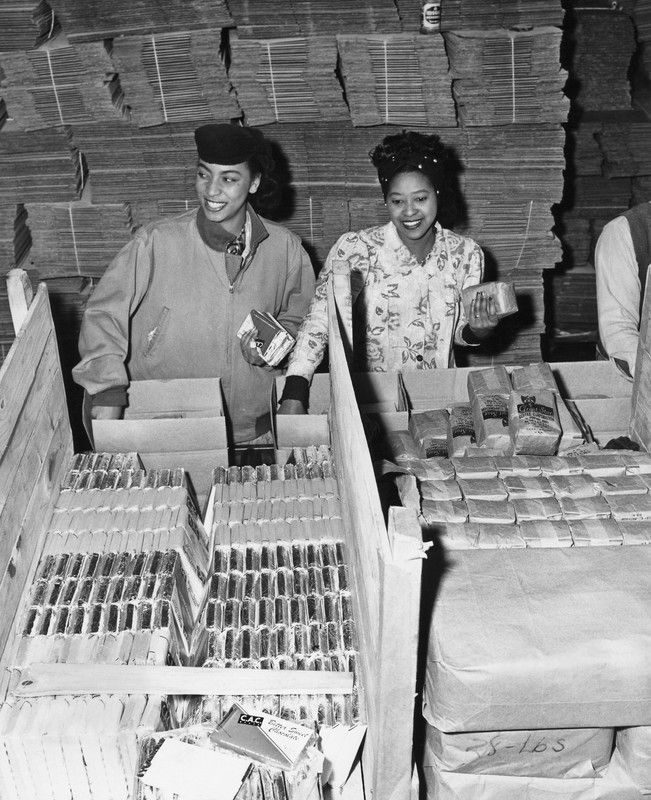
    Two women put items into CARE Package boxes at the main packing facility in Philadelphia in 1946.CARE

    Eighty years later, as the world again strains under the weight of conflict, displacement, and division, that first humble box from Philadelphia speaks to us from the past and asks us a question I believe America, as it turns 250, would do well to answer: Who are we willing to help?

    The story of CARE is like the story of America, rooted not in governments or grand institutions, but in citizens. In 1945, a few visionaries spearheaded the coming together of 22 American organizations, including labor unions, religious groups, and civic associations, with a straightforward conviction: that the people of a recovering Europe needed help, and that ordinary Americans could provide it.

    The first packages shipped the following year contained U.S. Army surplus rations.

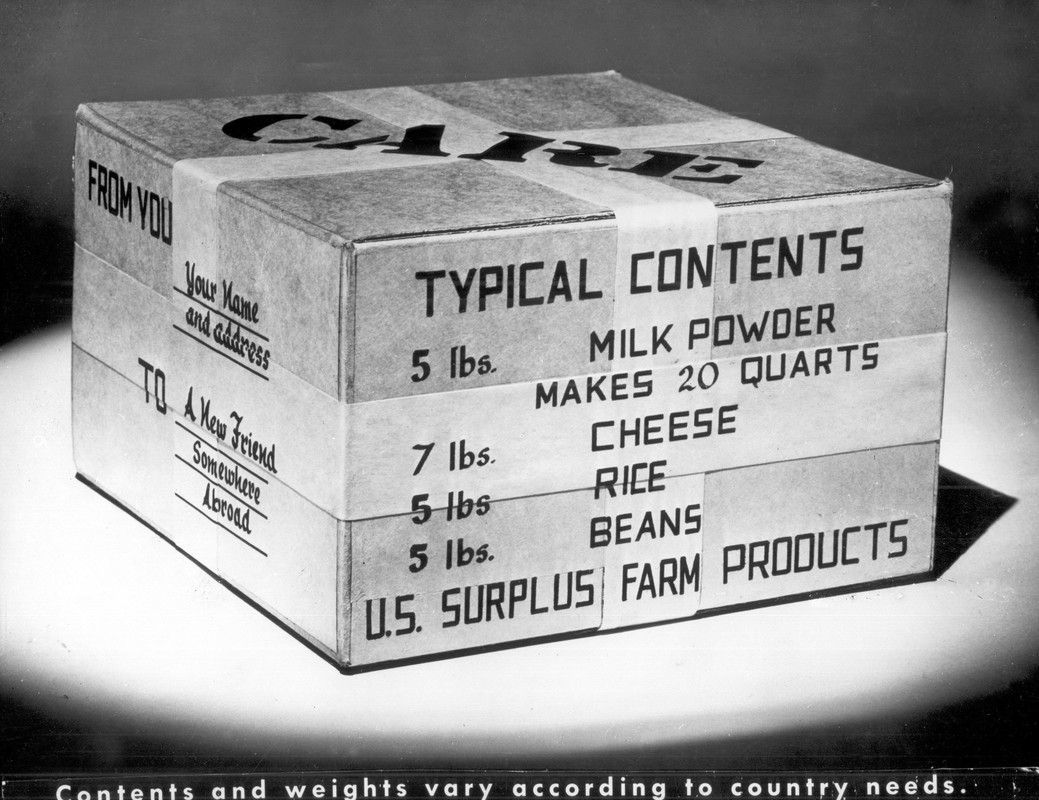
    In 1947, a typical CARE Package box contained five pounds of milk powder, seven pounds of cheese, five pounds of rice and five pounds of beans.CARE

    They were practical, even humble. But what they carried beyond calories was something no logistics manifest could capture: the message that someone, somewhere, was looking out for you, and had not looked away.

    Philadelphia was the perfect place for this altruistic effort to begin.

    William Penn founded this city on the radical idea that a community built on mutual respect and goodwill was not just a noble dream, but a practical one. Penn’s “Holy Experiment” was always about more than religious tolerance. It was a wager that people of different backgrounds, beliefs, and origins could build something together; that the ties binding a community need not be sameness, but shared commitment to one another’s dignity.

    The Quakers who shaped this city’s early character understood mutual aid not as charity, but as covenant. To care for a stranger was not exceptional. It was the baseline of a decent society.

    That spirit did not stay contained within Philadelphia’s borders, and it was never meant to.

    Today, CARE works in more than 100 countries, reaching close to 60 million people a year, the vast majority of them women and girls. The crises we respond to have changed in scale and complexity since 1946: protracted conflicts, climate-driven displacement, food systems pushed to the breaking point.

    But the fundamental logic of that first box has not changed at all. Resources and stability are not distributed equally across the world. Where they are lacking, people suffer unnecessarily. And where communities near or far extend a hand, lives change.

    What has changed is the urgency. At this moment, humanitarian funding has been dramatically cut in the United States and is under serious pressure globally, even as conflicts and disasters increase, and the need continues to grow.

    The architecture of international generosity Americans helped build in the postwar era — the one that began, in its way, with a box of rations shipped from this city — is being tested as it has rarely been tested before.

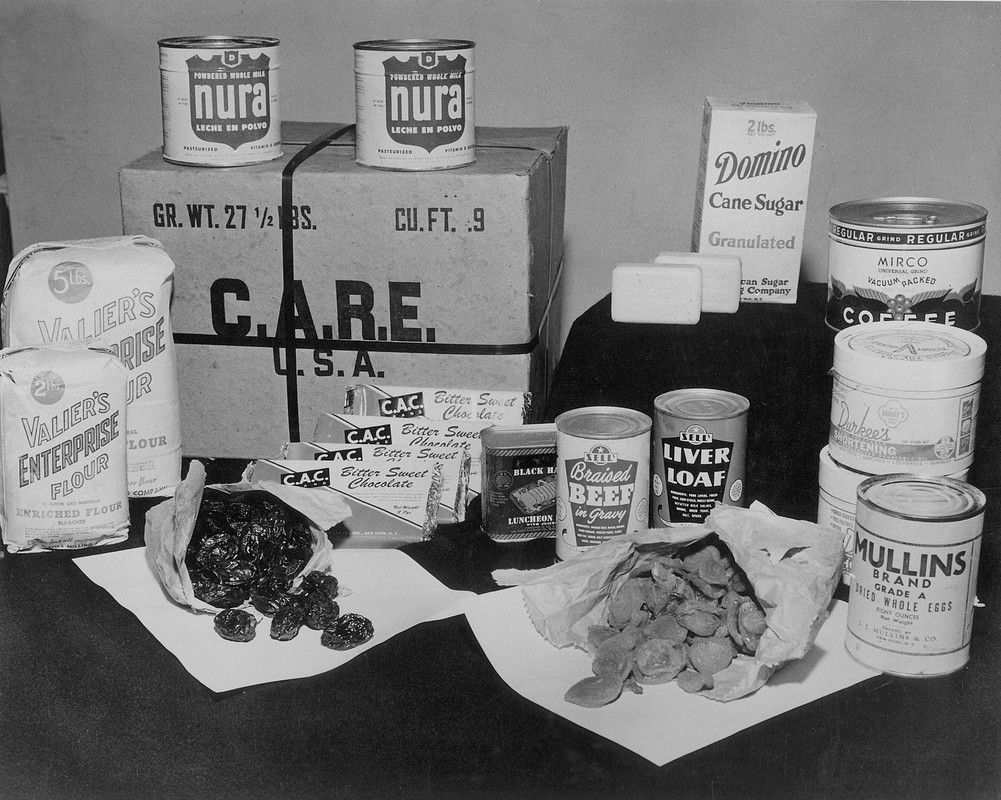
    The contents of a CARE Package box in 1956.CARE

    The question Penn posed by naming this place for “philos adelphos” is no longer abstract. It is operational.

    Philadelphians know something about the work of building community against the odds. This is a city that has long had to hold its founding ideals up against the harder facts of inequality, poverty, and injustice. A city that has chosen, again and again, to keep reaching.

    Our neighborhoods are full of mutual aid networks, food pantries, parishes, synagogues, mosques, and community organizations doing quietly what that first CARE shipment did 80 years ago: refusing to let distance — whether of geography or circumstance — become indifference.

    That local impulse and the global one are not separate. They are the same instinct, operating at different scales.

    When a Philadelphian volunteers at a community kitchen, they are practicing the same covenant Penn described and CARE embodies. When CARE delivers emergency food in Sudan or flood relief in Bangladesh or North Carolina, it is acting on the same principle that moved those 22 organizations in 1945 to pool their resources for strangers they would never meet.

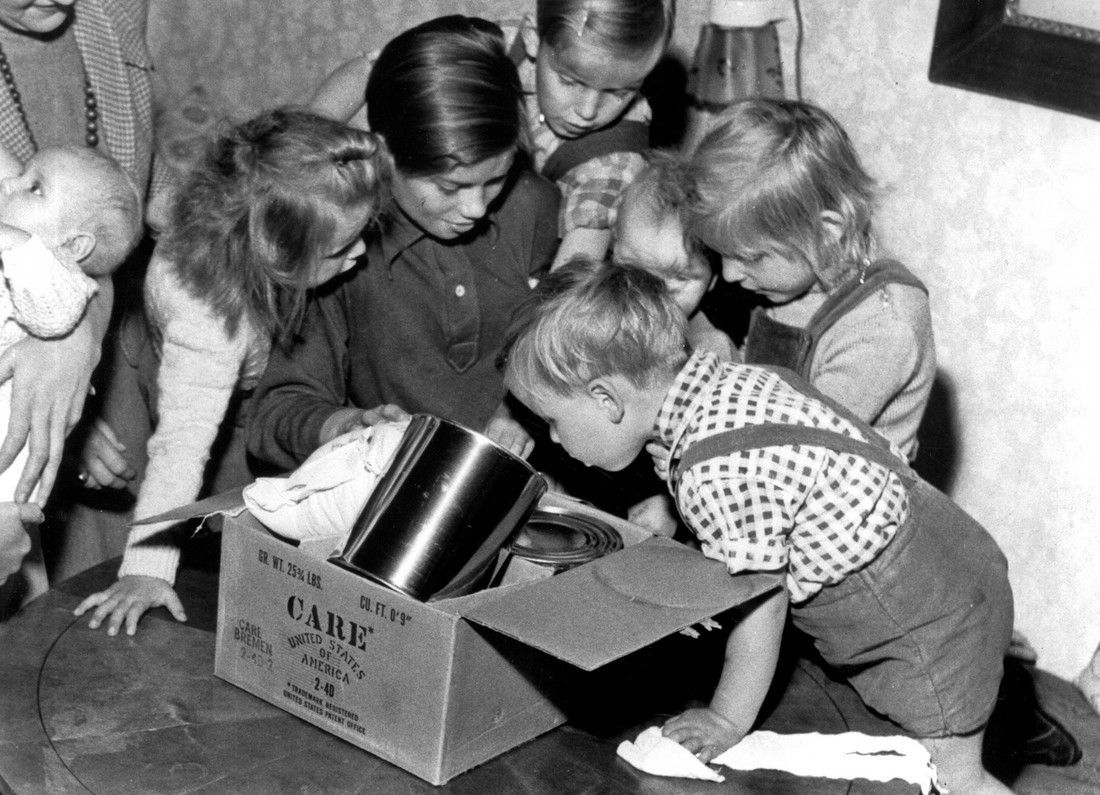
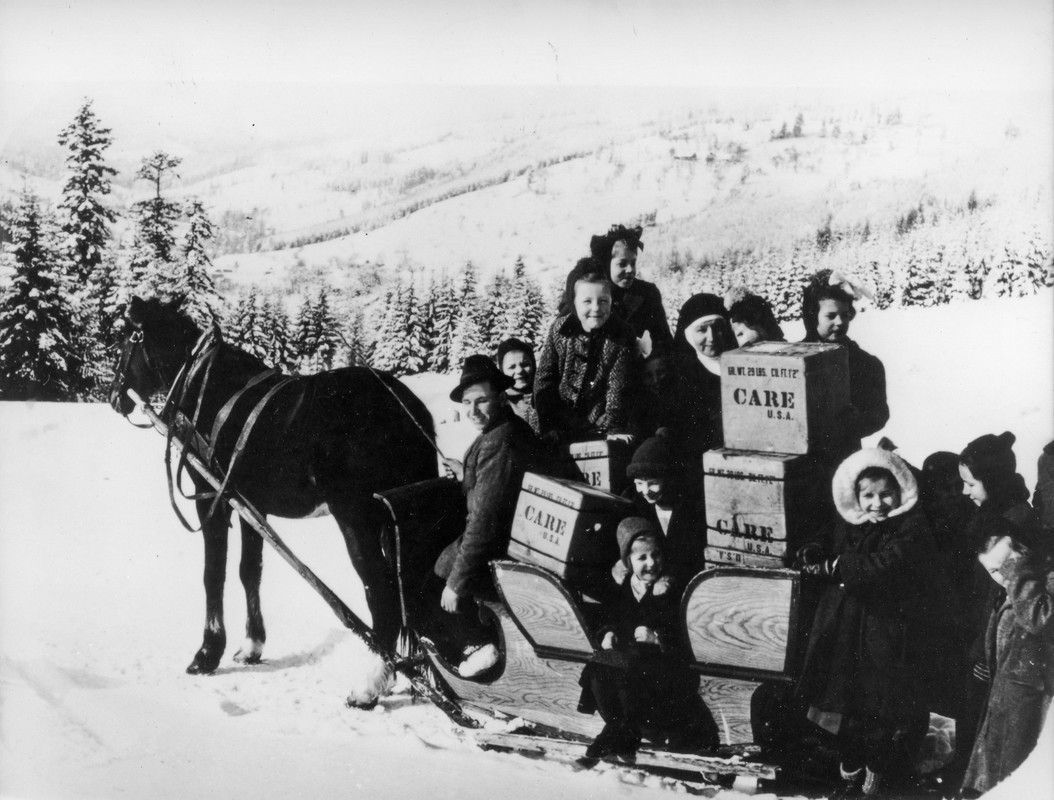
    Polish citizens carry their CARE PACKAGE boxes home in a sleigh in 1948.CARE

    The circle of who counts as a neighbor has simply grown wider.

    This anniversary is worth marking, not for nostalgia’s sake, but because anniversaries are invitations to recommit.

    Eighty years on, the CARE Package has become a metaphor so common we barely notice it anymore. We send “care packages” to college students, to kids at sleepaway camp, to friends going through hard times, to soldiers deployed abroad. The phrase has traveled so far from its origins that most people don’t know it began with a specific act, in a specific city, in a specific moment of postwar reckoning with what humanity owed itself.

    I think it’s worth knowing. Because embedded in that origin story is a reminder that generosity is not a personality trait belonging to unusually kind individuals. It is a collective capacity: something communities build, sustain, and, when necessary, rebuild.

    Philadelphia built it once. CARE has carried it forward for eight decades. The need, today, is as real as it has ever been. So we return to the question that first box poses: Who are we willing to help?

    The answer, I believe, is easy: those in need, those we can. I think William Penn would agree.

    Michelle Nunn is the president and CEO of CARE USA.

  • AI firms should have to prove their products are safe for kids

    AI firms should have to prove their products are safe for kids

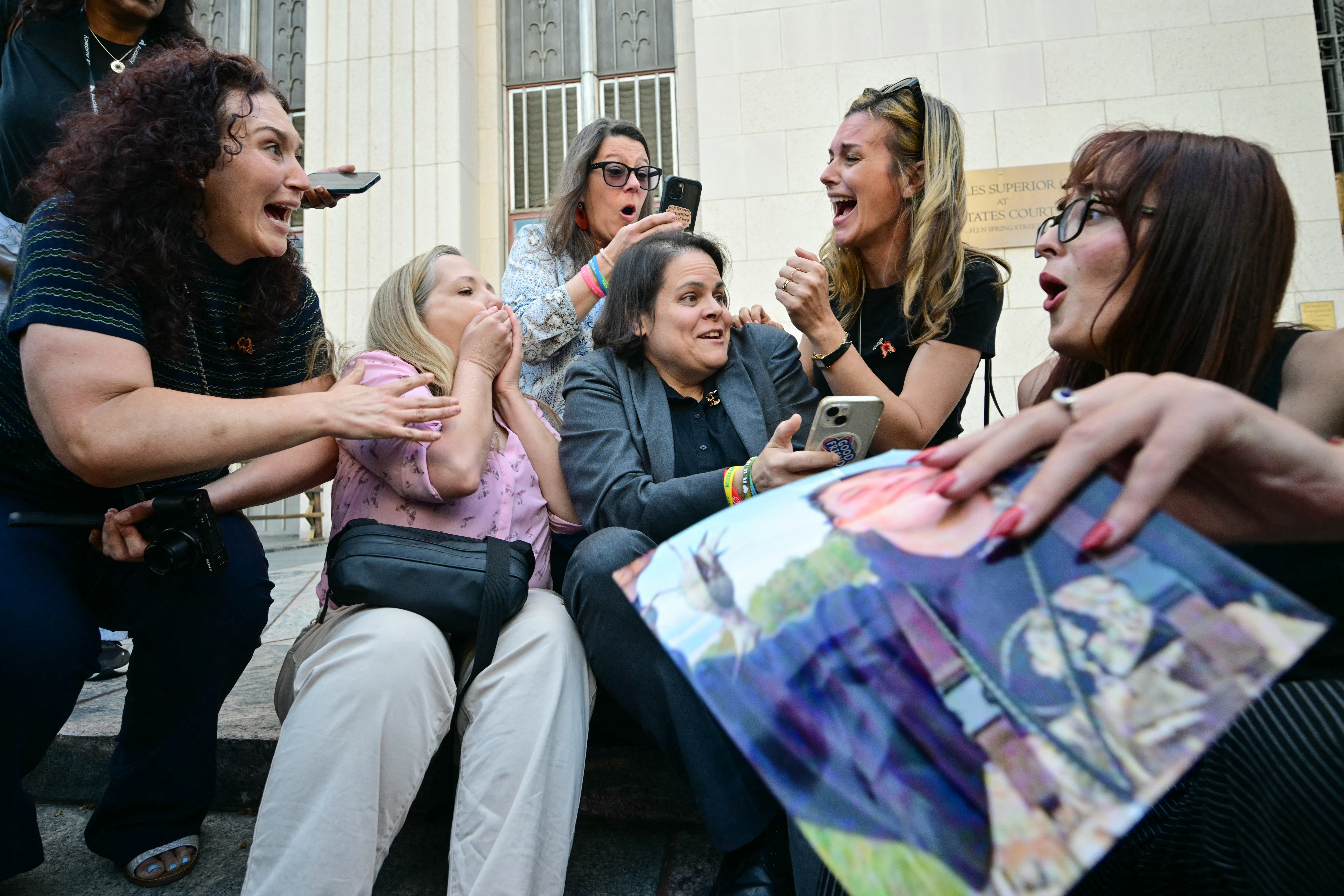
    Kaley sat in a Los Angeles courtroom this March while 12 jurors tried to calculate what her childhood was worth. They found Meta and YouTube liable for designing features that addicted her as a child, contributing to depression, body dysmorphia, and suicidal thoughts, and awarded her $6 million — half of it punitive, after deciding the companies had acted with malice.

    To set the compensatory half, one juror explained, they estimated what she might have earned over a lifetime, weighing “what she’s gone through and what job she would be able to hold down.” Both companies are appealing.

    The jury compensated Kaley for a diminished adulthood — for the person she would never become. That is the true cost of these platforms.

    The verdicts keep coming.

    In March, a New Mexico jury ordered Meta to pay $375 million for failing to protect children from sexual exploitation. In May, Meta, TikTok, Snap, and YouTube agreed to pay about $27 million to settle the first federal test case, brought by a Kentucky school district.

    Moving beyond content moderation

    The tide is turning against Big Tech, but we should not be celebrating.

    These verdicts arrive after children have already been irreparably harmed, and they do nothing for the children who will be harmed by whatever technology launches next. As new platforms capable of greater harm enter the market and are adopted at an accelerating pace, a reactive legal system is profoundly inadequate.

    Instagram took two and a half years to reach 100 million users. TikTok took nine months. ChatGPT took two. By the time a jury assigns liability, the product has already scaled past the reach of any remedy. Smartphones entered classrooms two decades ago, and Pennsylvania lawmakers are only now passing legislation.

    But to understand what is actually being taken, start with how a child’s mind develops.

    Humans have the longest childhood of any species on Earth. That stretch of dependence gives our mental capacities time to develop through specific experiences. But that window does not stay open forever. The neural pathways solidify. What doesn’t form in childhood may never form at all.

    So the more urgent question about any technology a child uses is not what it puts in front of them, but what it crowds out.

    Some technologies don’t just change how we live; they change who we are, writes AJ Ernst.Kiichiro Sato

    The average teenager now spends half their waking life looking at screens, and the number keeps climbing. That time has to come from somewhere.

    Sleep has fallen to the lowest level on record. Only one in four adolescents meets the recommended federal minimum for physical activity. Over two decades, face-to-face socializing has been cut in half.

    Yes, these platforms expose children to violence and predators, but the greater threat is the algorithms draining necessary developmental inputs.

    Kaley started on YouTube at 6, Instagram at 9, Snapchat at 11. She is 20 now and living with the consequences, but she became an adult before artificial intelligence reached the market. The next child will not be that lucky.

    I started teaching in 2009. My students made eye contact, talked to each other, and could hold their attention on a hard problem. By the end of that decade, they came in sleep-deprived and anxious, reaching for their phones at every moment. Earbuds in, eyes down.

    Now, I watch students reach for the answer before they think for themselves.

    AI and accumulating cognitive debt

    Some technologies don’t just change how we live; they change who we are.

    A car lets you travel farther; it does not make you incapable of walking. GPS goes a step further. Lean on it long enough, and your own sense of direction fades. But GPS takes only one skill. AI takes the rest. Offload your thinking to it, and the skills weaken. Offload it during childhood, and your capacity to think may never fully develop.

    We learn through struggle. Our survival depended on the ability to solve problems, synthesize information, and imagine new possibilities. Remove the struggle, and with it goes the growth the struggle produces.

    Students who lean heavily on ChatGPT show a sharp decline in cognitive effort and weaker memory retention — what Massachusetts Institute of Technology researchers call “cognitive debt.” A generation is offloading its thinking capacity, and with it, losing the stamina, curiosity, and desire for hard problems that only come from solving them yourself.

    AI does the same to the capacity for connection. AI companions are patient, compliant, never bored, never hurt, never inclined to push back. Nearly two-thirds of teenagers now use AI chatbots. Nearly one in five high schoolers has had a romantic relationship with an AI, or knows someone who has.

    But human relationships require struggle. A child who learns intimacy without friction will find it difficult to connect with a real person.

    This is why the conversation needs to move beyond content moderation.

    We already know how to handle products that endanger human health. We do not let a pharmaceutical company ship a drug and promise to fix the lethal side effects once the bodies turn up. We require proof of safety first, through years of testing, because we decided that corporate speed does not outrank human life.

    For the systems now shaping the developing brain, we decided the opposite.

    The man building the most powerful of them has said so plainly. The best way to make AI safe, Sam Altman has written, is “by iteratively and gradually releasing it into the world, giving society time to adapt and coevolve with the technology.” The adapting is done by users. Many of them are children. Do we want him experimenting on the minds of children?

    Prove the product is safe

    The fix is not complicated.

    Make companies prove their products are safe for developing brains before release, the way we make drug companies prove it before the pill reaches the shelf. Put the burden of proof where it belongs — on the trillion-dollar firm, not on the 10-year-old.

    The objection to this shift is that a slowdown will hand the future to China.

    But this year, Beijing moves to bar AI companies from offering virtual companion and intimate relationship services to anyone under 18. China has decided the best way to compete for the future is to protect the people who will inherit it.

    There is progress at home.

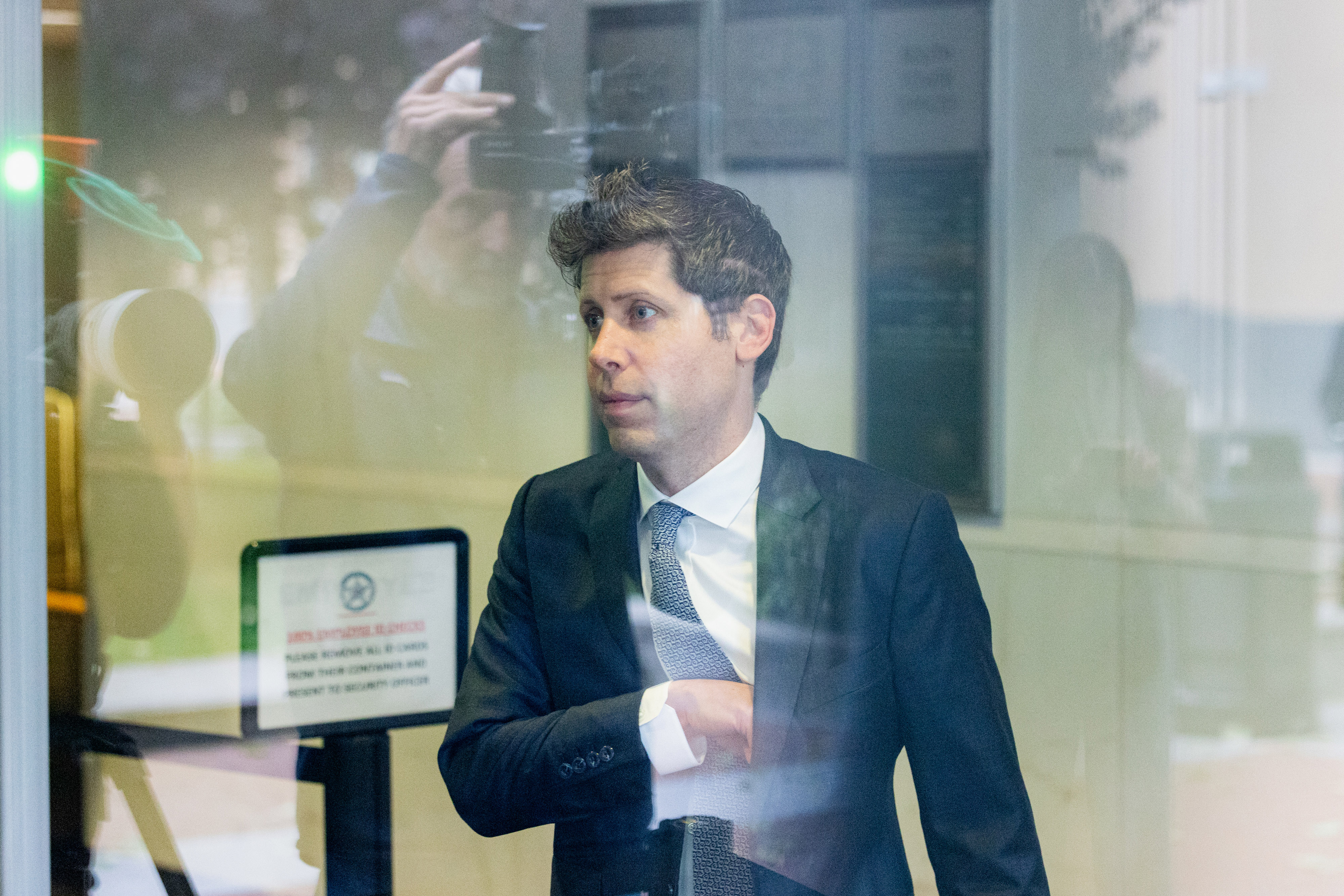
    OpenAI’s chief executive, Sam Altman, at the Ronald V. Dellums U.S. Courthouse for the “Musk v. OpenAI” trial, in Oakland, Calif., in May.JASON HENRY

    In June, Florida sued OpenAI and Altman, alleging the company released a product that addicts minors, erodes their critical thinking, and counterfeits human compassion.

    Pennsylvania should join the fight.

    But these lawsuits won’t undo the damage done. Nothing short of proving these products are safe before they reach a child will be sufficient.

    This should no longer just be a debate over shielding children from harmful content. We need to defend the baseline capacity to think, to connect, to be human. The opportunity cost for children is too steep.

    A jury can put a dollar figure on an unfulfilled life, but it can never restore what is lost. If we don’t act fast, another generation will suffer.

    AJ Ernst worked as a teacher and administrator in Philadelphia for 13 years and holds a doctorate in educational leadership from the University of Pennsylvania’s Graduate School of Education.