Chess is being played throughout Philadelphia’s neighborhoods, bringing together people of all ages, backgrounds, and experience levels. Players gather in parks, community recreation centers, and cafes. It doesn’t matter what language you speak. In chess, the only language that matters is the game itself.
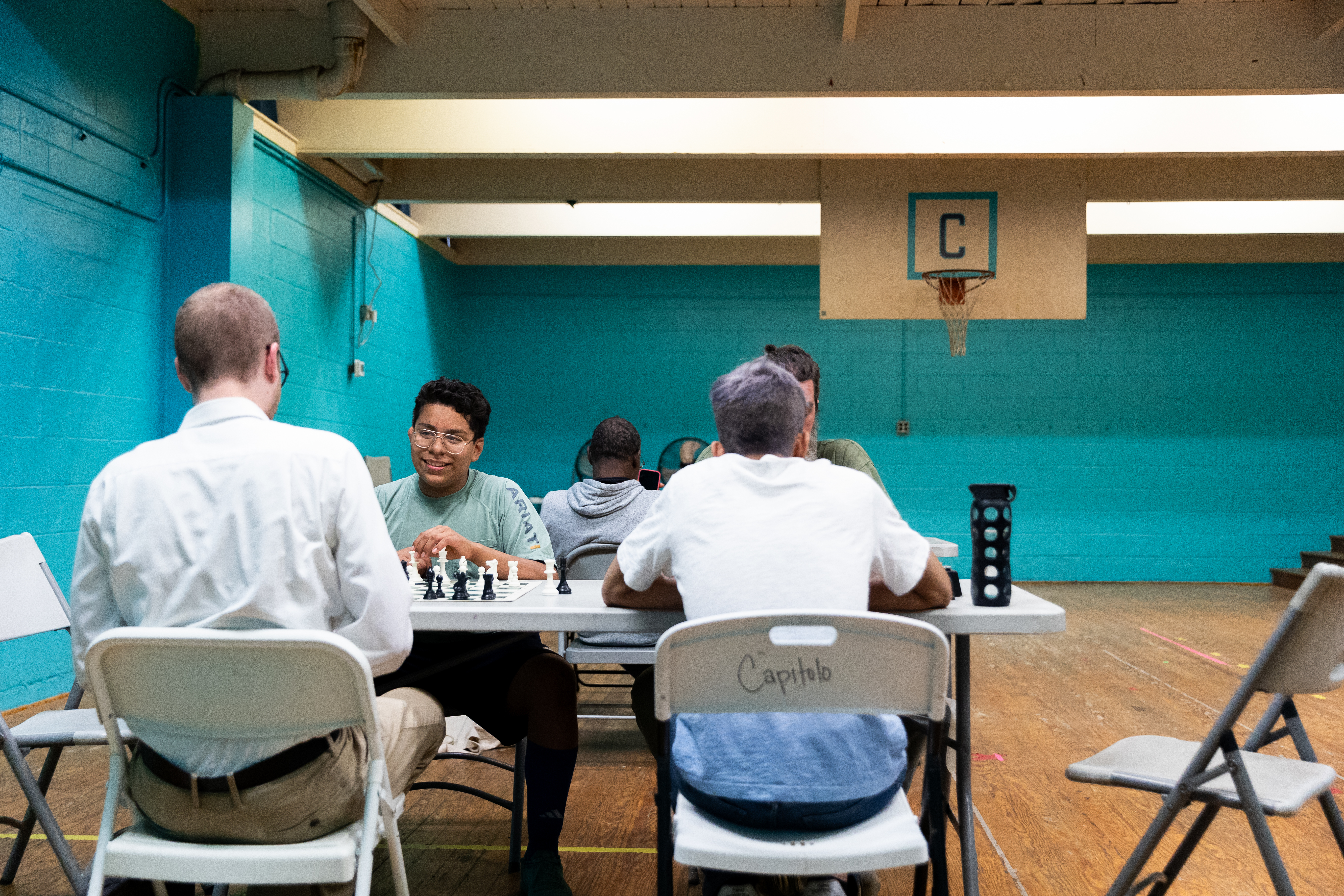
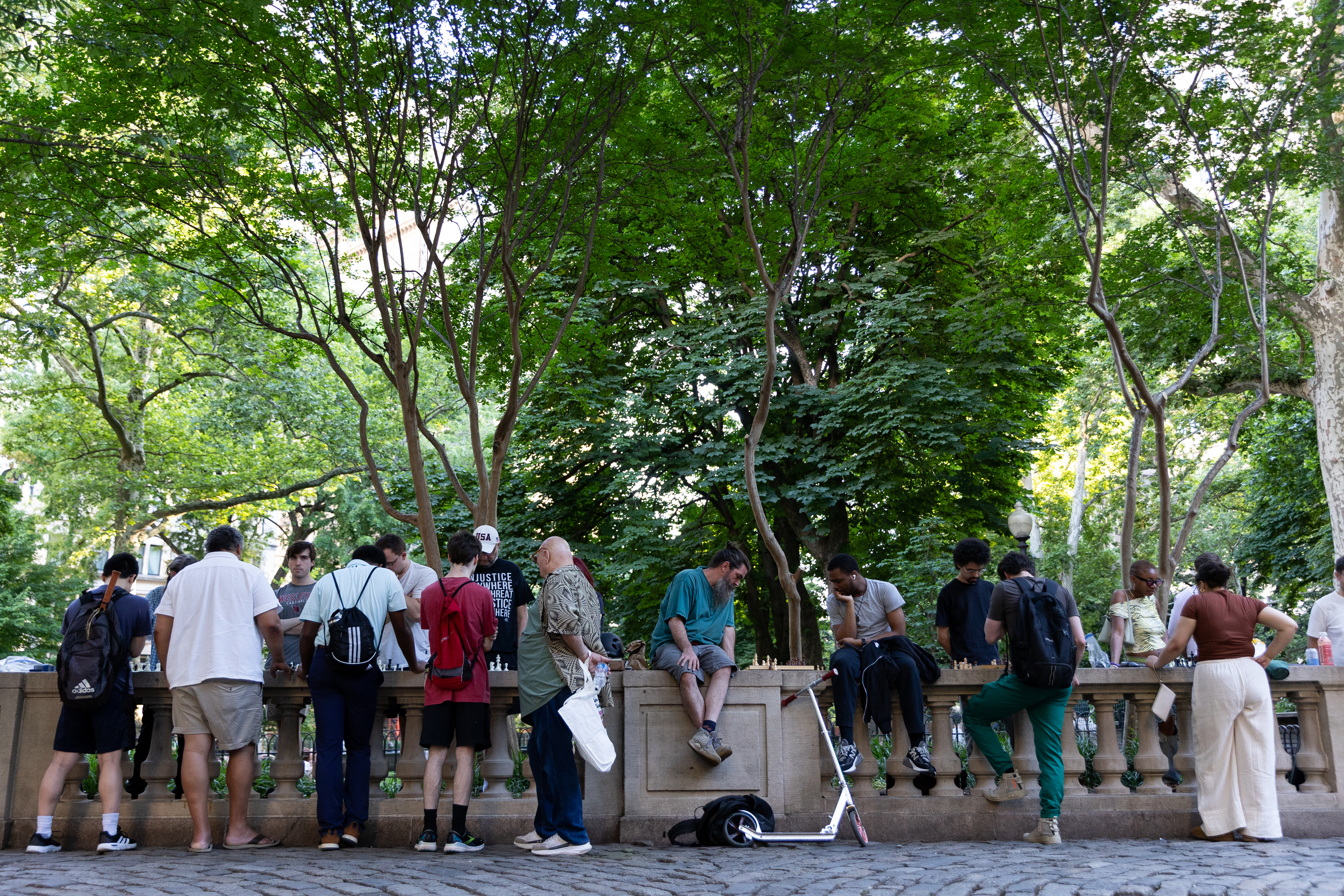
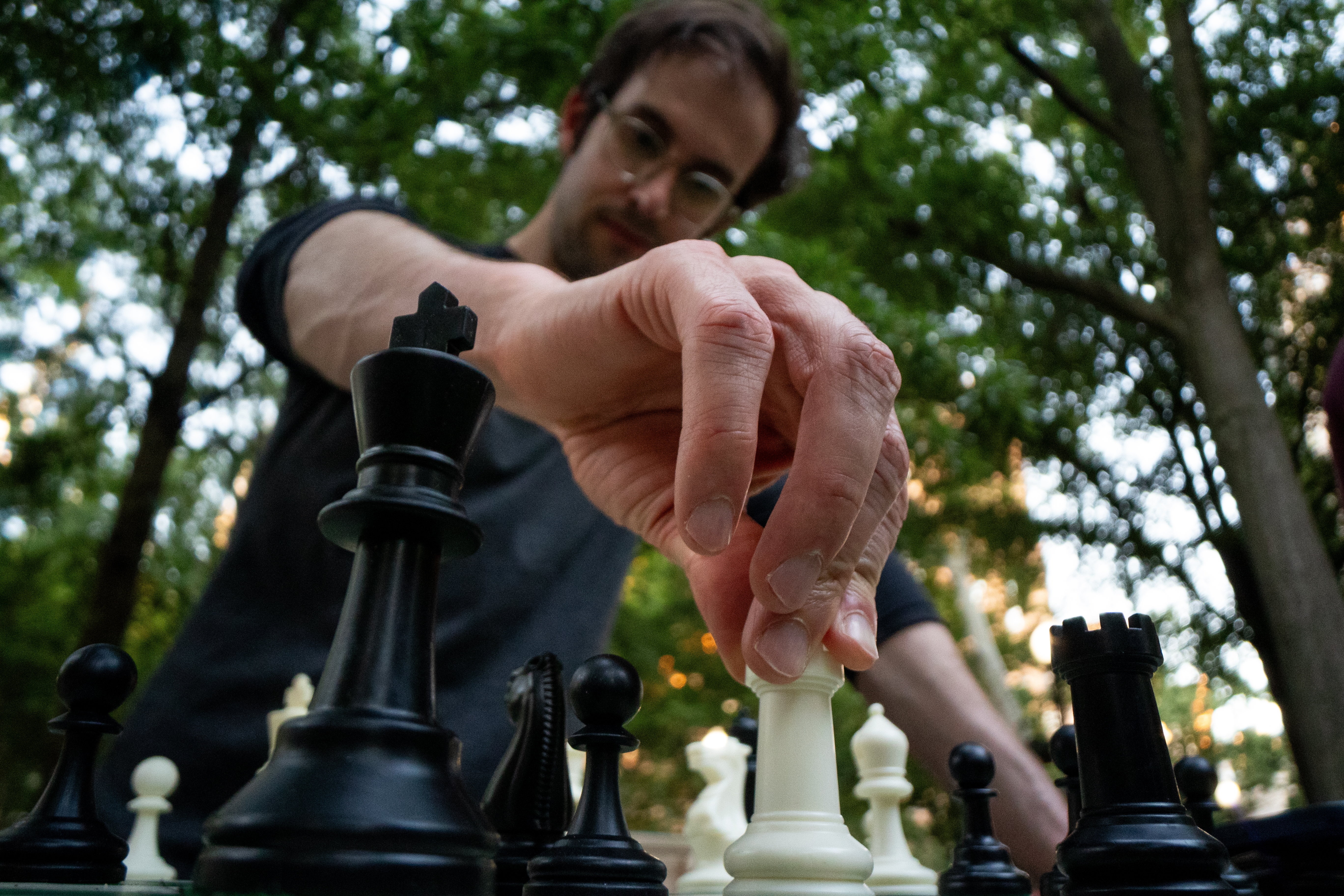
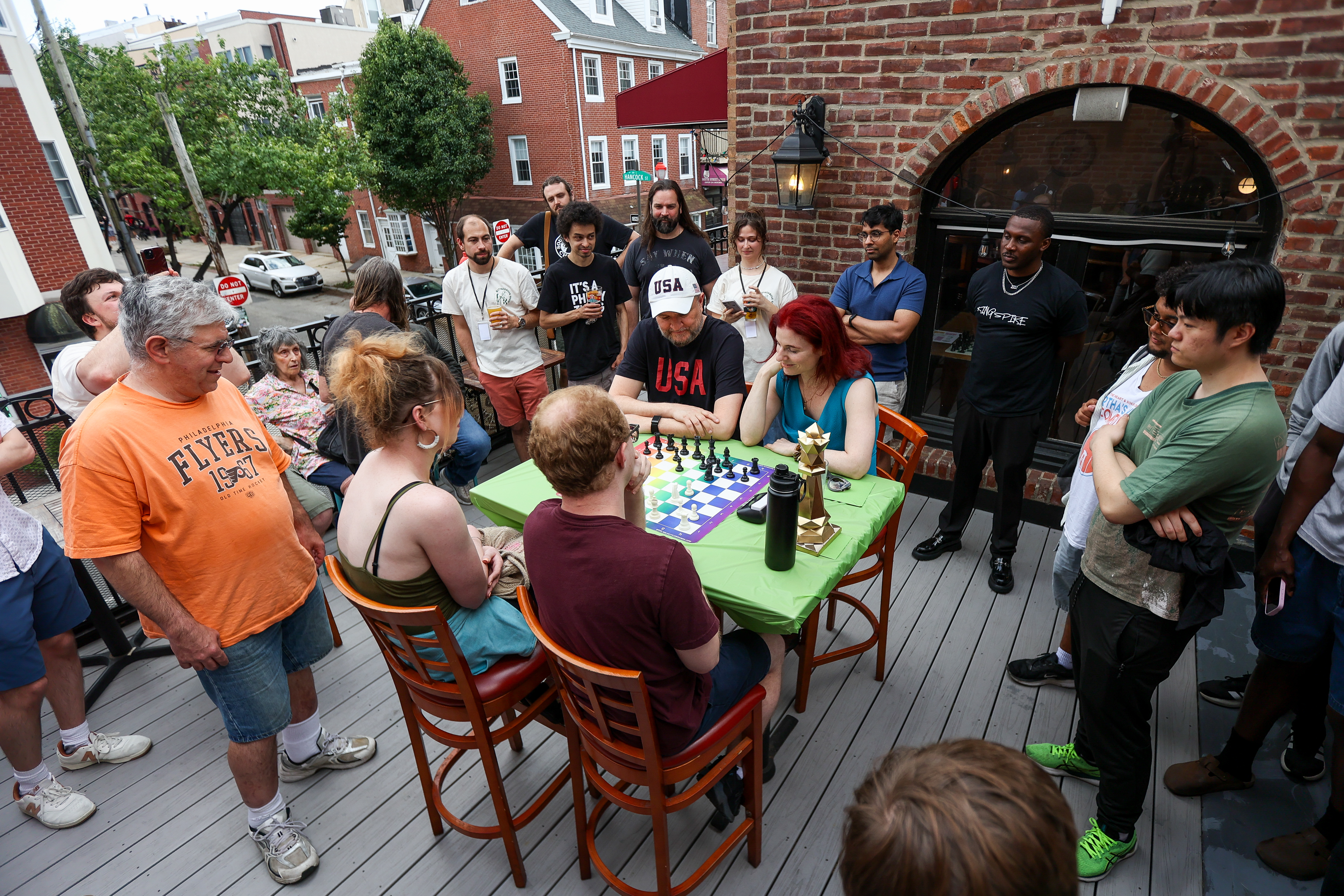
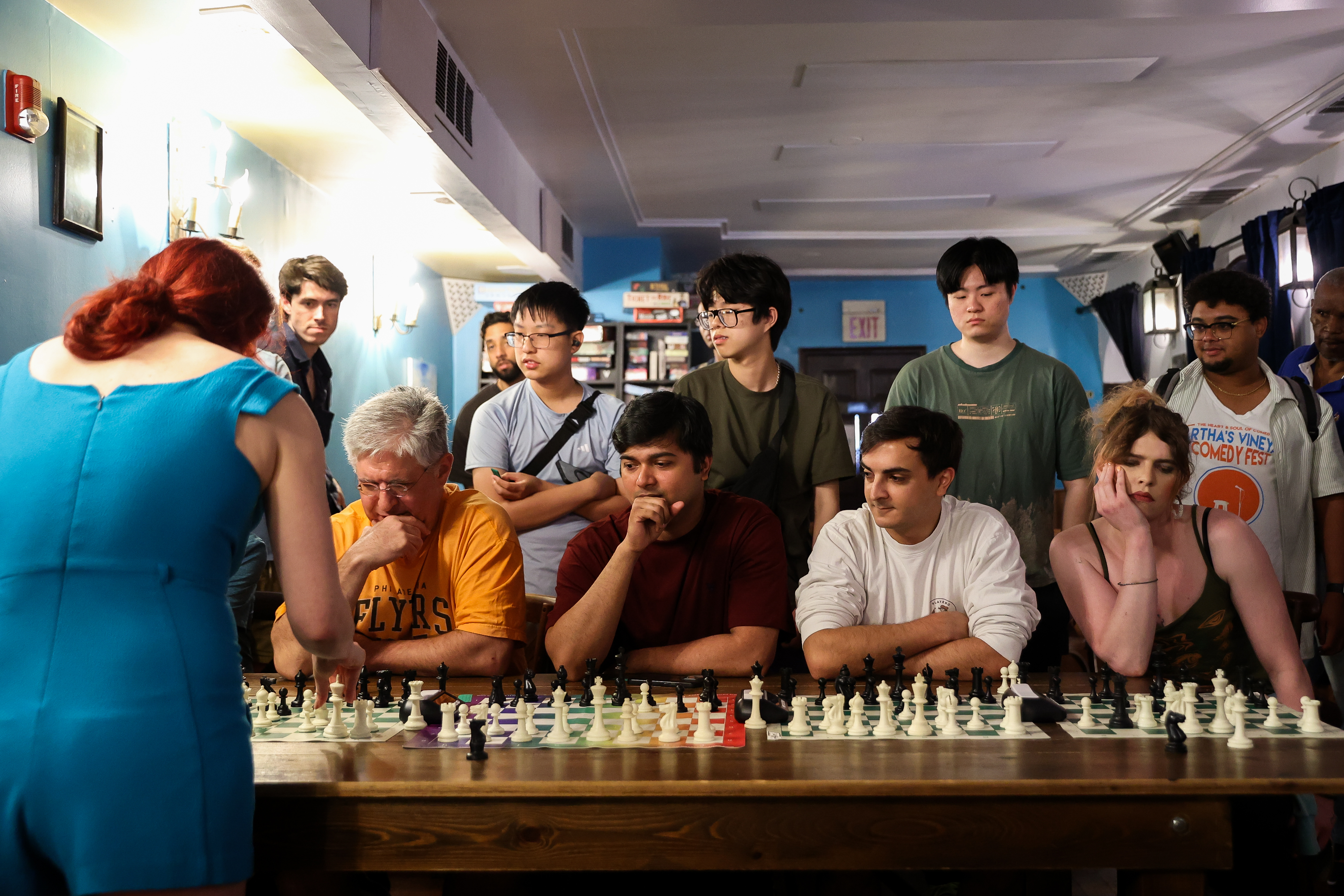
South Philly residents Michael Tlacopicl (second from left) and Brett Screiber (left) play a game at Capitolo Rec Center in Philadelphia.Isaiah Vazquez / For The InquirerDan Webb and Johanna Mudry share a kiss after a game during an Open Streets event at 13th and Walnut Streets.Isaiah Vazquez / For The InquirerChess players meet in Rittenhouse Square to play. The organizing group, Rittenhouse Chess, started in 2021 amid the chess boom that surrounded “The Queen’s Gambit” and the pandemic.Isaiah Vazquez / For The InquirerMike Donahue moves his rook during a casual game at Rittenhouse Square. Donahue, a student at the Philly Improv Theater, has been a part of the Rittenhouse chess community for two years.Isaiah Vazquez / For The InquirerFans watch as women’s grand master Jen Shahade and former Sixers GM Daryl Morey take on Kat Reeves and Matthew Iacoviello in a hand and brain game during the Rittenhouse Chess Club Charity Blitz Tournament at Queen & Rook Game Cafe.Isaiah Vazquez / For The InquirerWomen’s grand master Jen Shahade studies the board during a hand and brain game in the Rittenhouse Chess Club Charity Blitz Tournament. A hand and brain game is where one player announces the piece, and their teammate moves that piece to a location they determine. Isaiah Vazquez / For The InquirerDavid Sherman (from left), Paul Pinto, Francisco Boschetti, and Kat Reeves play a simul match against women’s grand master Jen Shahade during the Rittenhouse Chess Club Charity Blitz Tournament. A simul match is one in which one player plays multiple chess games simultaneously.Isaiah Vazquez / For The Inquirer
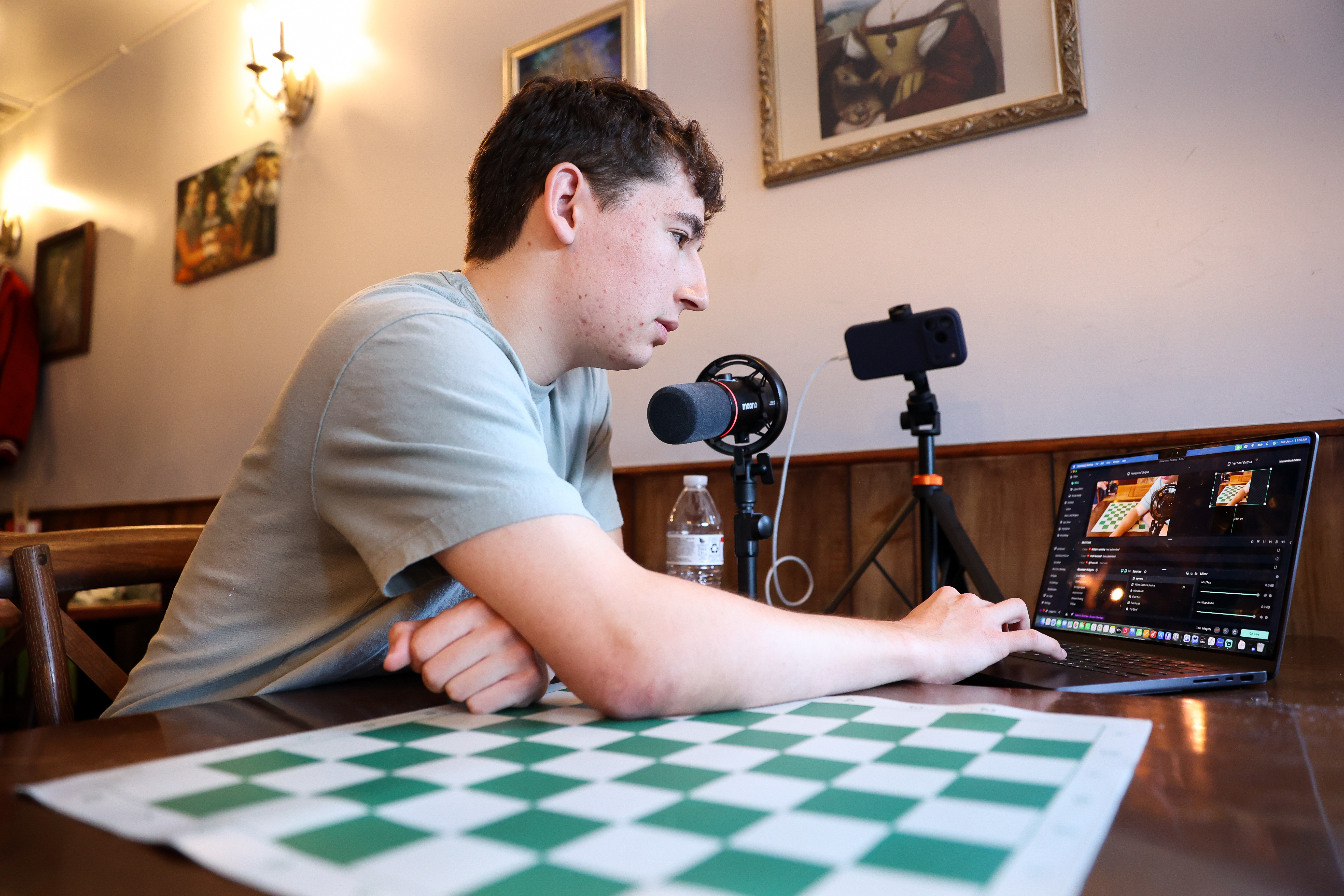
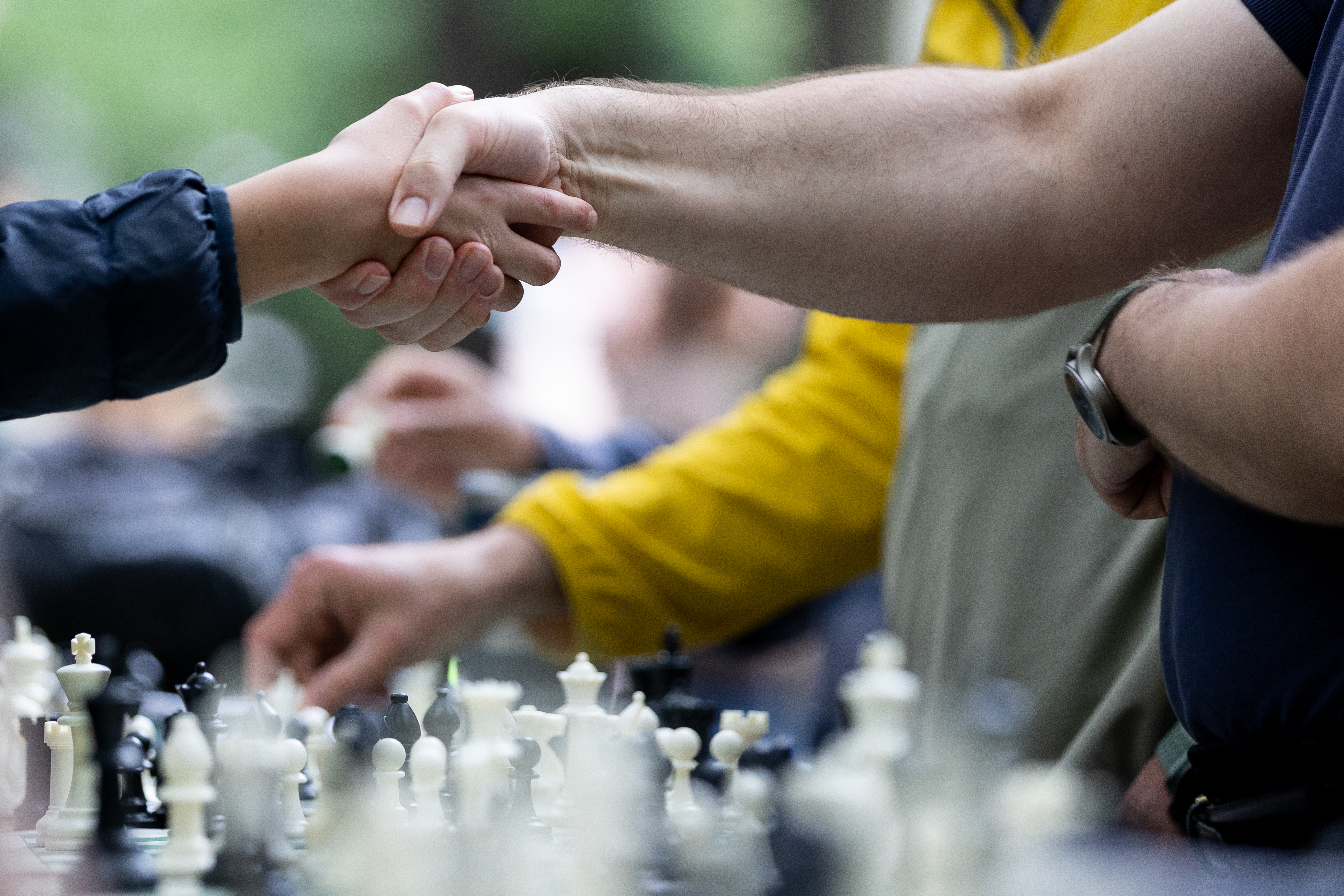
Alex Carson, a content creator, prepares his live stream before competing in the Rittenhouse Chess Club Charity Blitz Tournament. Carson started his online career in April, streaming his chess matches on YouTube and Twitch.Isaiah Vazquez / For The InquirerAndre Scott, 7, holds a plush Charizard as he competes in the Rittenhouse Chess Club Charity Blitz Tournament at Queen & Rook Game Cafe on June 7. Scott started playing chess when he was 5.Isaiah Vazquez / For The InquirerTwo players shake hands at end of a game at Rittenhouse Square.Isaiah Vazquez / For The Inquirer
Donald Trump continues to inflict historic damage on the United States through his corruption, incompetence, and cruelty. But amid the daily chaos and nightly fury, Trump has suffered significant losses that should give citizens who support the Constitution and democracy a glimmer of hope.
He’s lost in Congress, the court of public opinion, and courtrooms across the country. Even the Iran war has turned into a no-win situation. Adding to the indignity, Trump was roundly booed in his hometown by Knicks fans when he made an appearance at an NBA Finals game at New York’s Madison Square Garden on Monday.
But here’s the thing about Trump: He’s never more dangerous than when he’s losing.
He continues to dismantle democracy even as the country prepares to celebrate 250 years since the adoption of the Declaration of Independence. And he still wields immense power over his MAGA base.
But fissures abound.
Just look at Congress. After largely serving as lapdogs, (some) Republicans who control the House and Senate have begun to push back.
The Senate shelved Trump’s brazen scheme to create a $1.8 billion fund to reward loyal lackeys prosecuted and convicted of crimes, including the Jan. 6, 2021, insurrection — but passed on reining in his tax audit chicanery.
Senate Republicans also dropped $1 billion in security funding for Trump’s ballroom — an obscene waste of tax dollars that keeps growing in price and size as many Americans struggle to make ends meet.
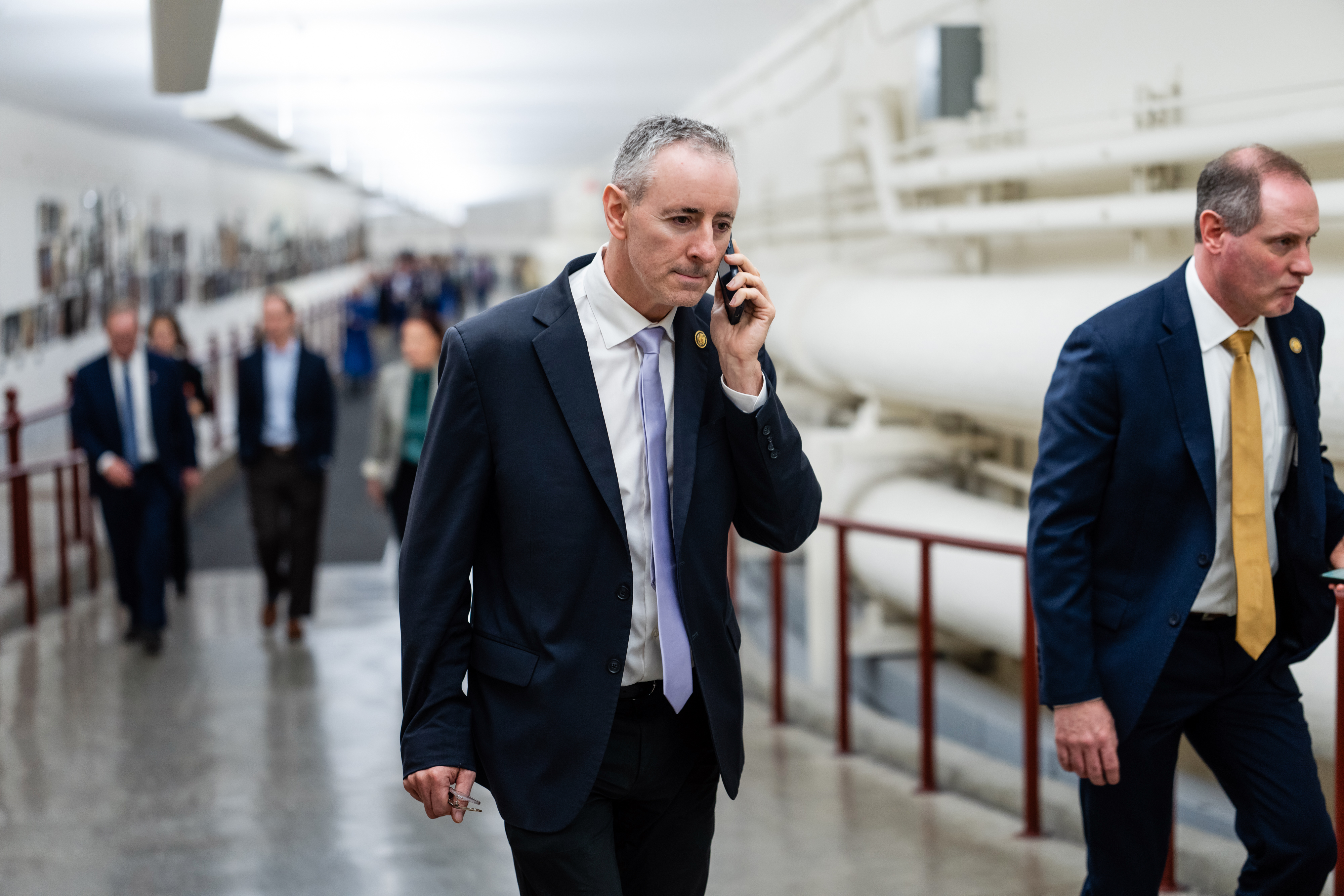
U.S. Rep. Brian Fitzpatrick (R., Pa.) was one of four GOP House members who joined with Democratic lawmakers to pass a war powers resolution.Eric Lee
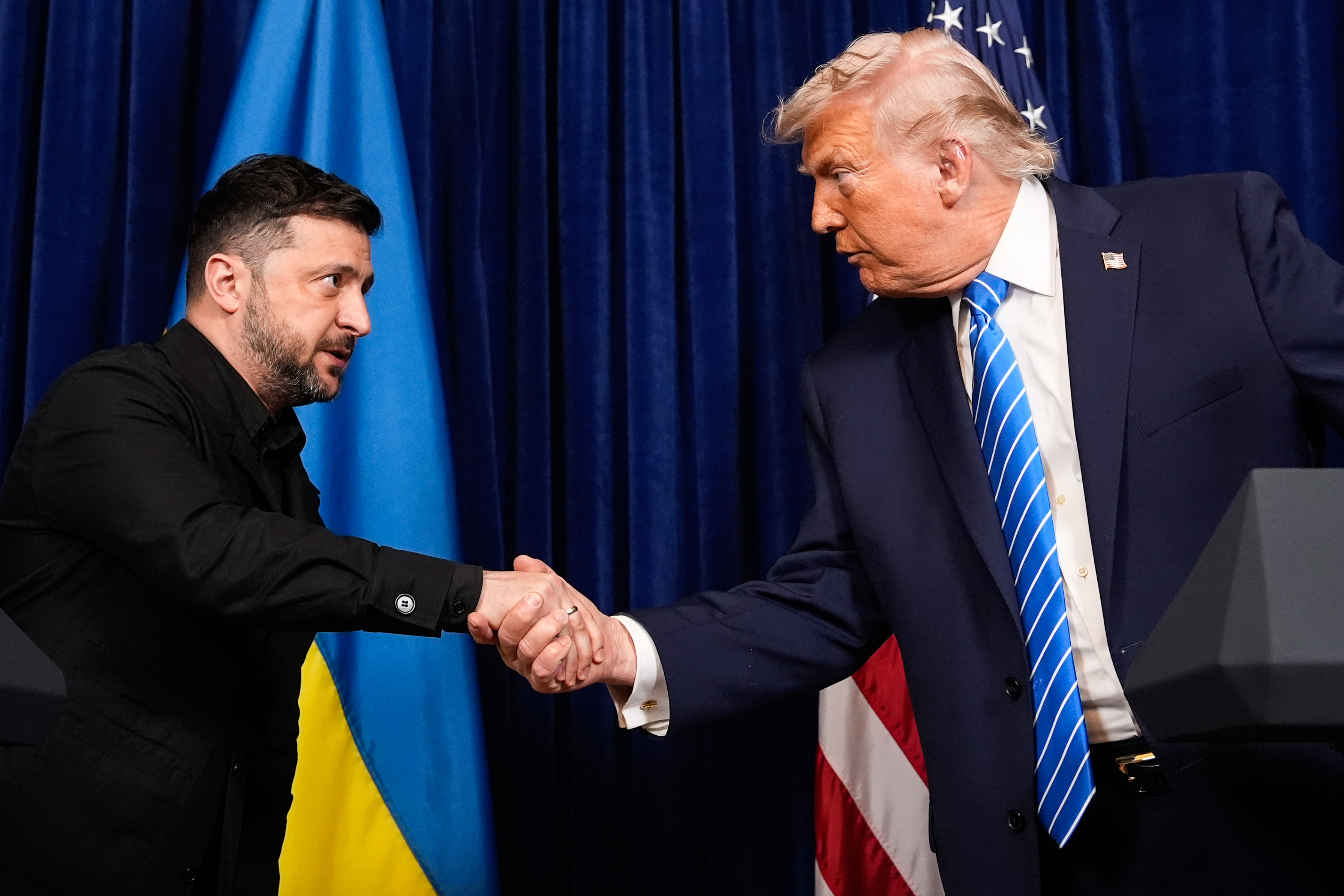
In defiance of Trump’s refusal to help Ukraine, 18 House Republicans joined Democrats to pass a measure to provide more than $1 billion in aid and impose new sanctions on Russia. (Recall how Trump repeatedly said he would end that war within 24 hours after returning to office.)
U.S. Rep. Don Bacon (R., Neb.) called Trump’s continued deference to Russian leader Vladimir Putin a “moral blindness” that “communicates weakness.”
The sudden turn against Trump by some GOP lawmakers is likely driven more by the looming midterm elections than any allegiance to their constitutional oath.
Trump’s poll numbers are sinking. There are even cracks among white working-class voters without a college degree who now disapprove of the president’s handling of the economy. They could tolerate Trump’s lies, corruption, and incompetence, but not $5-a-gallon gasoline.
On Monday, a judge voided “in its entirety” Trump’s scheme to impose $100,000 fees on employers seeking visas for skilled foreign workers — one in a series of misguided moves by the administration to target immigrants, which hurts all Americans.
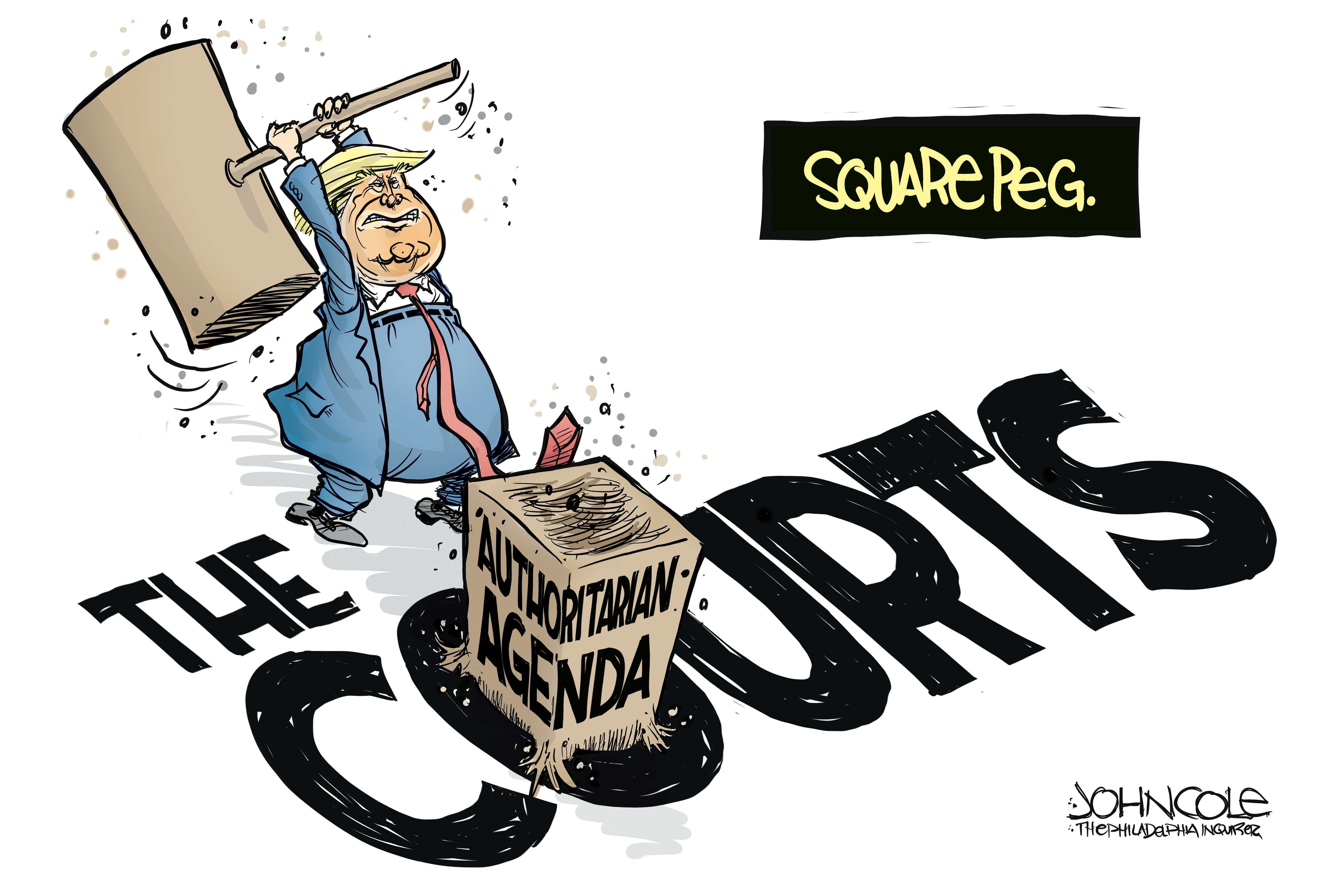
Earlier this year, the U.S. Supreme Court struck down Trump’s cockamamie plan to impose tariffs on countries in a way best described as willy-nilly. Beyond being fiscally stupid, the court found Trump’s signature economic policy was unconstitutional.
The Supreme Court will soon rule on Trump’s signature immigration policy to end birthright citizenship for babies born in the U.S. to undocumented immigrants or those on temporary visas.
Most legal experts believe Trump will lose this case because birthright citizenship is guaranteed under the 14th Amendment. Even Trump predicted the court would “probably rule against me.” As it should, since the law is not on his side.
A federal judge ruled that Trump’s name must come off the John F. Kennedy Center for the Performing Arts. The judge said the law is “crystal clear,” and that only Congress can change the name.
After beating four criminal indictments, Trump is still subject to the law.
In fact, the Trump administration has lost 70% of the more than 600 lawsuits it has faced over the past year or so. The record of futility underscores Trump’s overreach, since the federal government traditionally prevails in court.
The losses are real. And they matter. But democracy doesn’t survive on court rulings and poll numbers alone — it survives because people keep showing up.
Trump’s losing streak obscures the harder truth that he continues to trample the rule of law, attack countries, install lackeys, line his pockets, and upend the economy — moves that systematically weaken the U.S. at home and abroad.
It is, after all, a reminder that the arc of the moral universe can bend toward justice — even in these “dark, disturbing, and dangerous times.” The bending, though, is up to us: follow the Constitution, hold wrongdoers accountable, and vote.
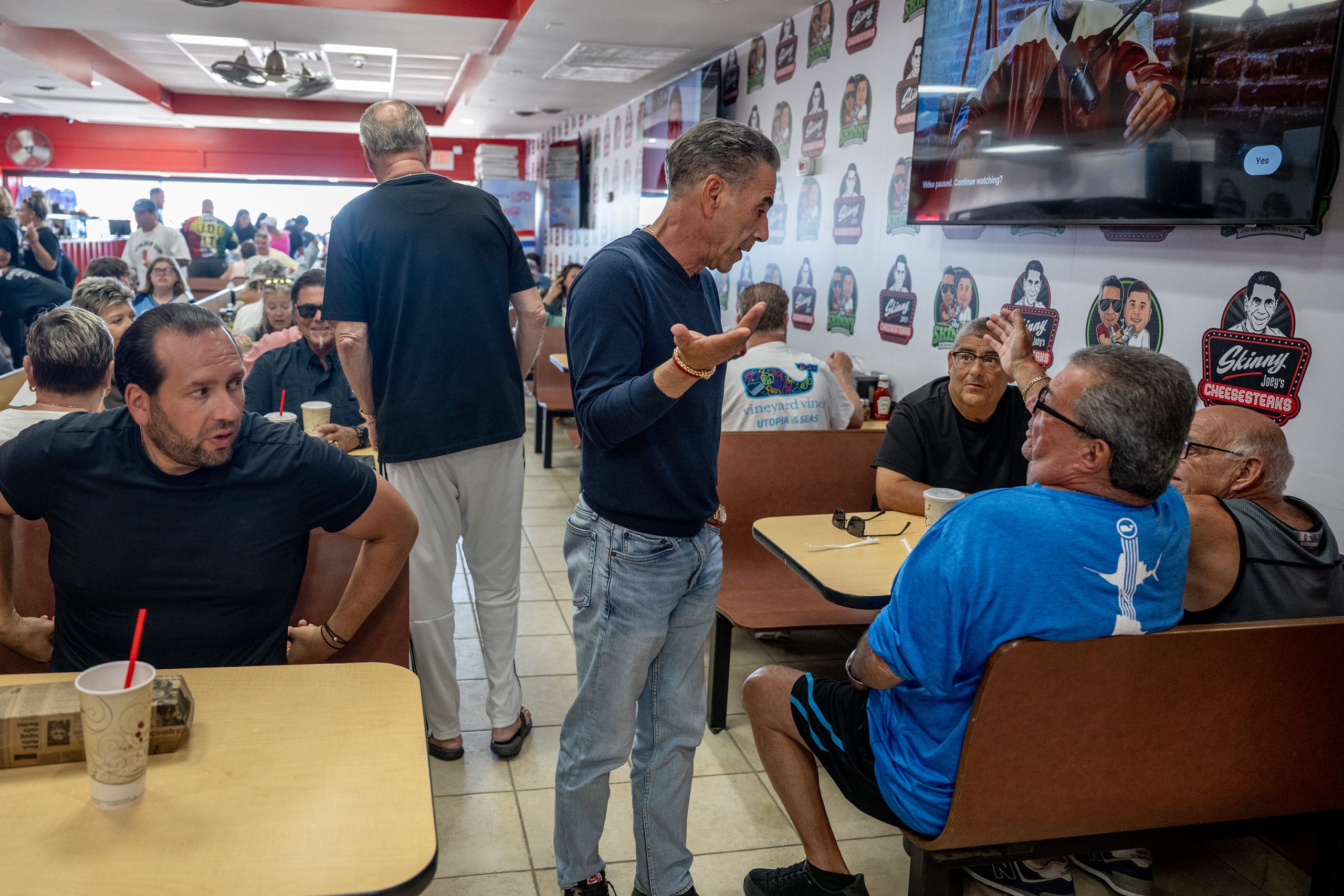
At noon on a bright June Tuesday, the scene at Skinny Joey’s Cheesesteaks & Pizza on the Wildwood boardwalk felt more like a South Philly block party than a soft opening.
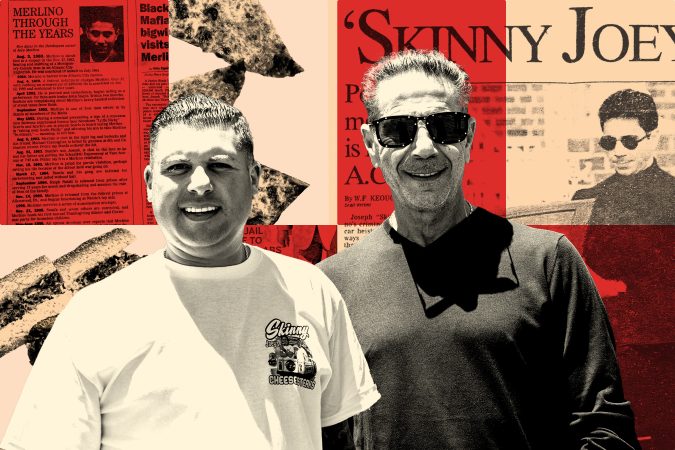
Joseph “Skinny Joey” Merlino worked the crowd at his new shop — hugging, shaking hands, posing for photos — moving easily among his friends and admirers. At 64, five years removed from the criminal justice system, the onetime alleged head of Philadelphia’s underworld is enjoying a second act that few could have predicted: cheesesteak entrepreneur, podcaster, and social-media personality.
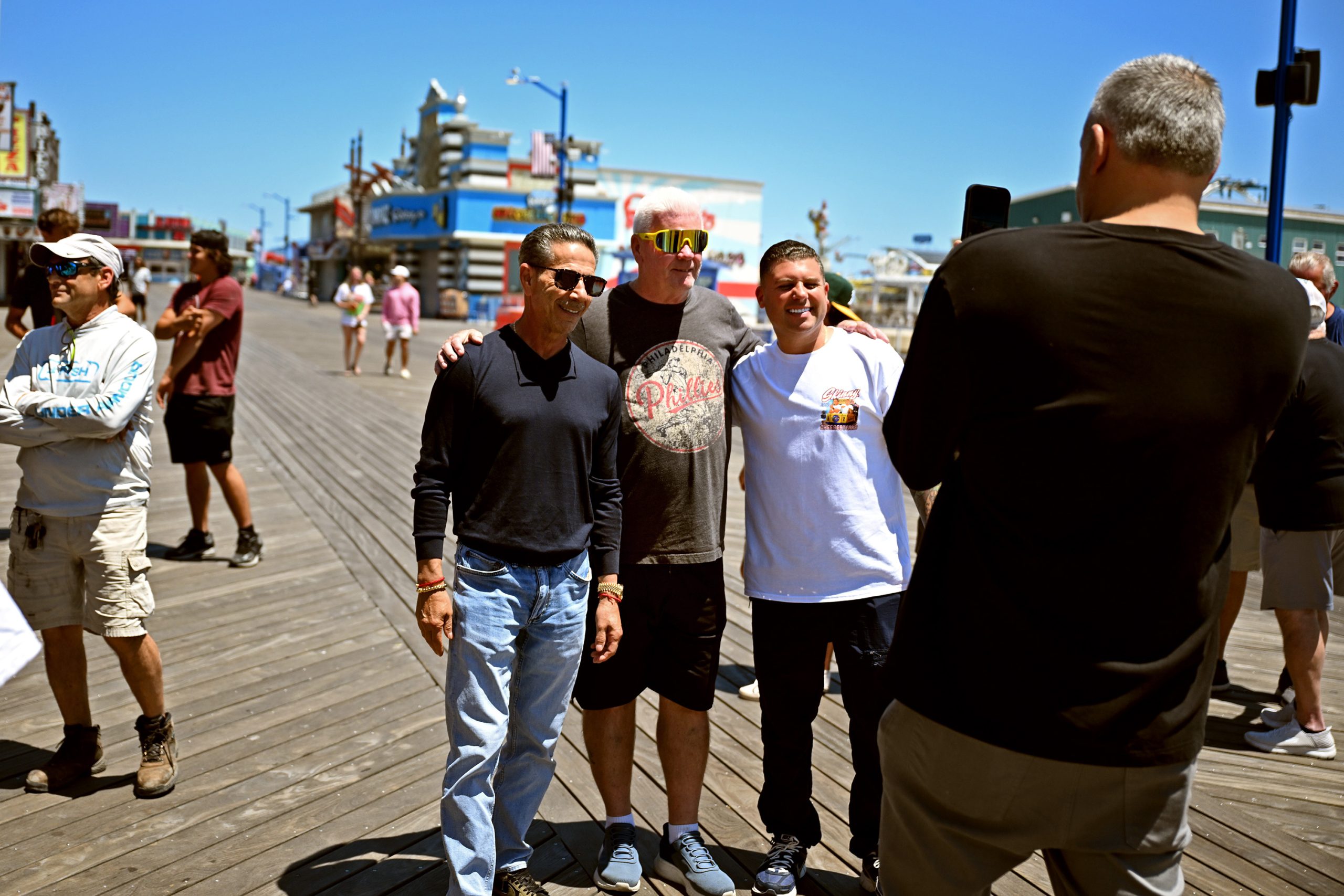
Joseph “Skinny Joey” Merlino (left) and Joe “Lil Snuff” Perri Jr. (right) posing with a customer outside the Skinny Joey’s Cheesesteaks & Pizza shop in Wildwood.Tom Gralish / Staff Photographer
Orbiting him with a phone and a grin was Joe “Lil Snuff” Perri Jr. — 30 years his junior — Skinny Joey’s collaborator and the man who helped set him up with a new career. While customers lined up out front for steaks, slices, photos, $35 hats, and $25 T-shirts, Perri was shooting clips for social media.
Their partnership has transformed Merlino from a flashy, polarizing tabloid fixture into a flashy, polarizing Instagram-age brand. Merlino provides the mythology, while Perri supplies the algorithm.
Symbiotically, they are building an unlikely enterprise. Merlino gives Perri access, credibility, and a bigger stage. Perri gives Merlino comic relief, social-media fluency, and a way to be seen as entrepreneurial rather than simply infamous as a reputed former mob boss.
“Without me, there’s no him,” Perri said. “Without him, there’s no me. It’s just a good mix.”
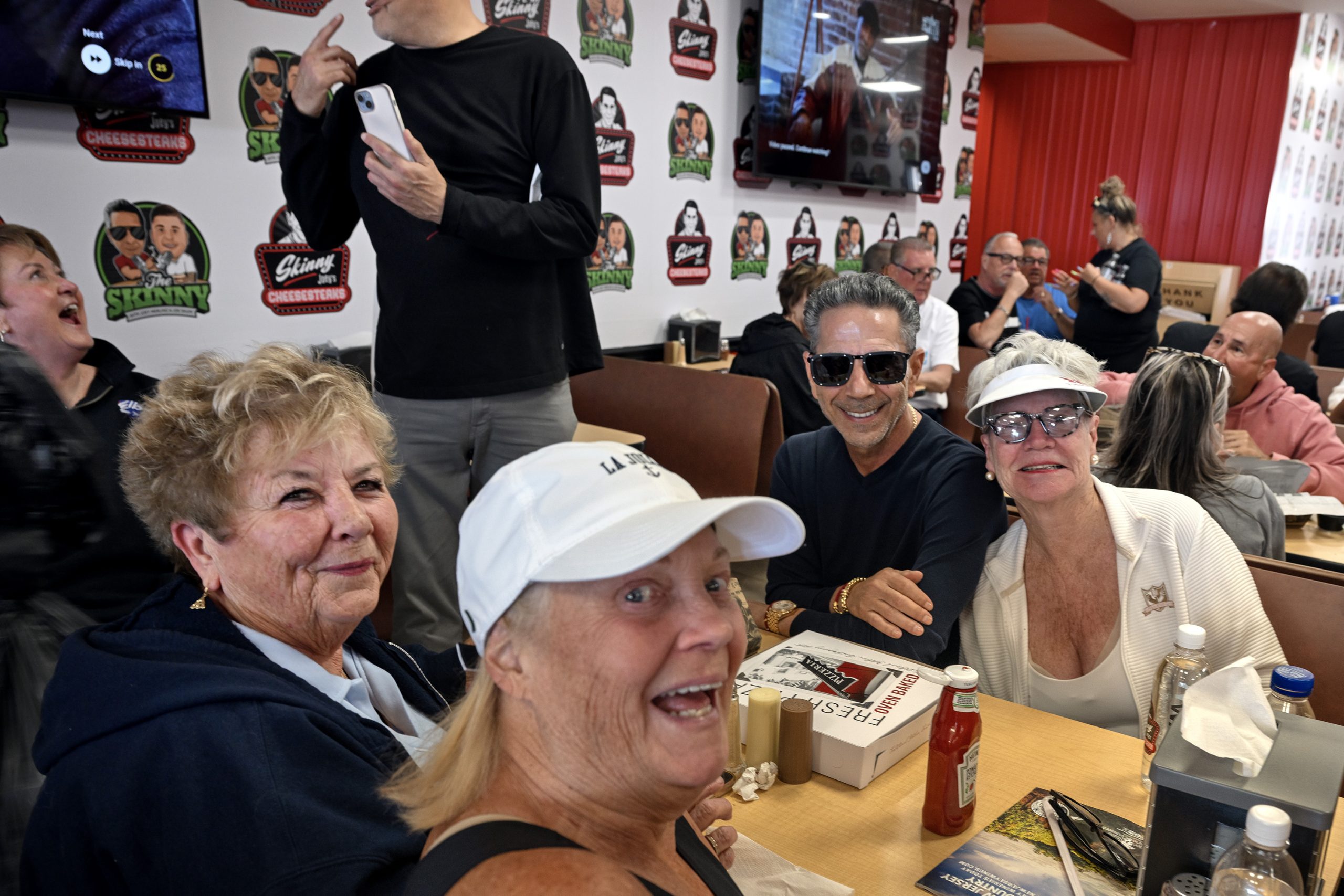
Joseph “Skinny Joey” Merlino joining customers at Skinny Joey’s in Wildwood during its soft opening on June 2. They call themselves “the Schuylkill Girls” (from left): Julie Shelton, Cindy McCullough, and Terry Landy, all of whom now live in Wildwood.Tom Gralish / Staff Photographer
A ‘mob media’ moment
George Anastasia, who covered organized crime for more than 30 years at The Inquirer and now teaches an organized-crime course at Rowan University, said Merlino’s new career fits a broader moment in mob media.
Former wiseguys, associates, historians, and fans now gather in a true-crime subculture known online as “MobTube,” where the lore is packaged into YouTube shows, Patreon feeds, podcasts, clips, and merch.
Merlino has lived the story that fuels the genre. One of Philadelphia’s most recognizable organized-crime figures, Merlino was convicted in 1990 for his role in a $352,000 armored truck robbery in 1987.
In 2001, he and six co-defendants were tried on federal racketeering charges, including three counts of murder and two of attempted murder. Merlino was acquitted on those counts, but served about 12 years on other charges, including gambling and extortion. A supervised-release violation briefly returned him to prison in 2014, and a second major racketeering case ended in 2018 with a guilty plea to a single illegal-gambling charge after a mistrial. In a separate trial in 2004, he was acquitted of the 1996 killing of Joseph Sodano, an underling in North Jersey. Merlino completed federal supervision in 2021, but he’s been banned from New Jersey casinos since 1988 and from Pennsylvania casinos since a 2016 incident at the former SugarHouse Casino.
And Merlino has made it no secret that he is different from many of the former figures who populate the MobTube genre. Unlike Sammy “The Bull” Gravano, John Alito, and Jimmy Calandra, Merlino never cooperated with prosecutors.
“He saw guys who cooperated come back and become media sensations,” Anastasia said. “And I think he got [annoyed] that these are all guys who, in his view, violated the code, and now they’re making money on that old life. He did his time as a stand-up guy. ‘So [to heck with that] — I’m going to make money, too.’ And he created this brand.”
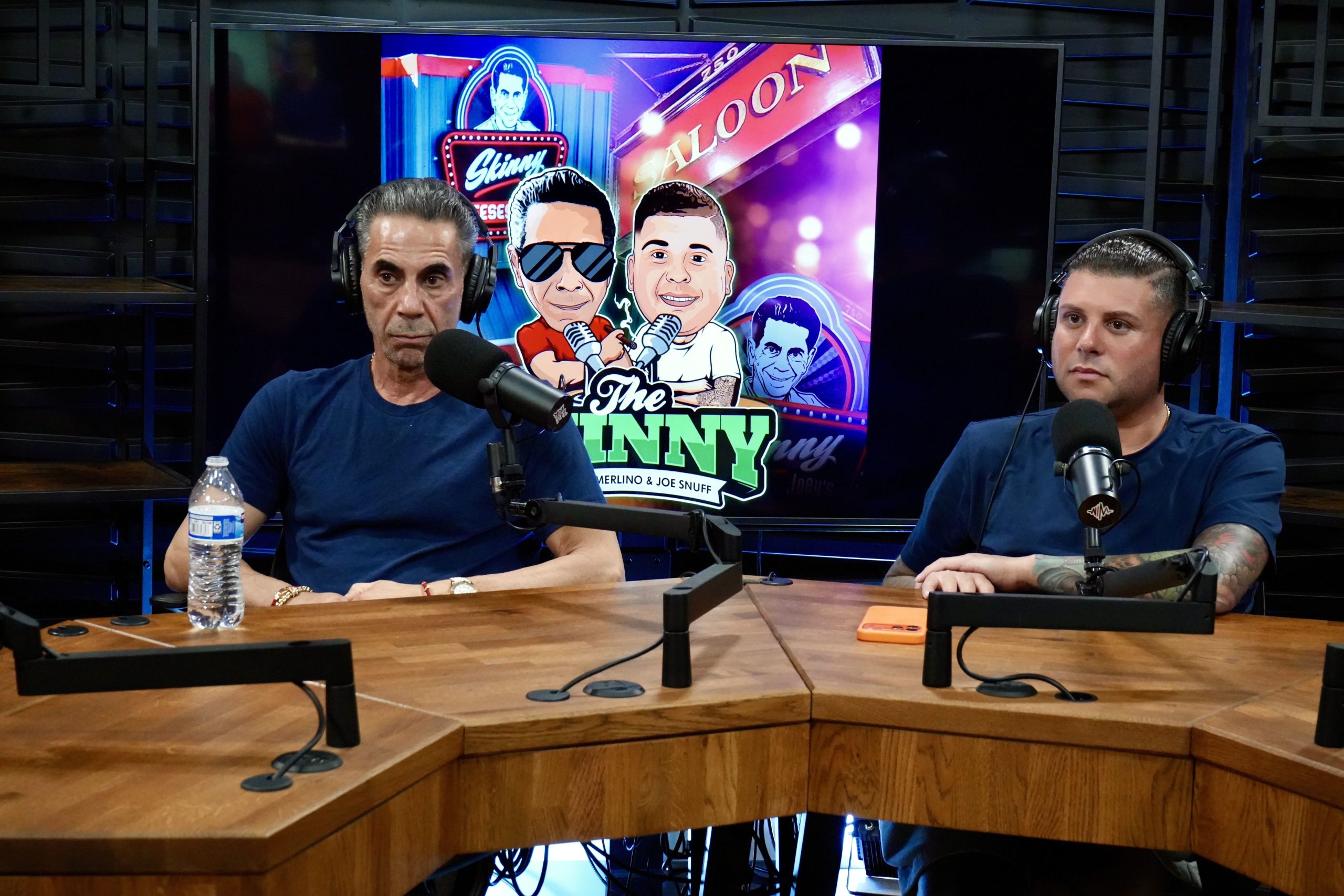
Joseph “Skinny Joey” Merlino (left) and Joe Perri Jr. on the set of “The Skinny” podcast.Courtesy of Joe Perri Jr.
Perri helped make that legible to a younger audience.
“Lil Snuff is part sycophant and part guide,” Anastasia said. “He’s the one who, in a lot of ways, sets the flow. Joey is going to be Joey, but somebody has to keep bringing him back to the point.”
The rise of Lil Snuff
Before he was Merlino’s co-host, Perri was Lil Snuff.
The nickname came from his father: As a 10-year-old, Joe Sr. turned around when a cousin was calling for a dog named Snuffy. Boom. He was Snuff. When his son was born at Methodist Hospital in 1992, Snuff became Big Snuff.
As a teenager, Lil Snuffbussedtables at Stogie Joe’s, the Saloon, and Fitzwater Cafe. At 18, he joined the stagehands union. At 21, he got a job at Mall Chevrolet in Cherry Hill. The older salesmen had relationships and repeat customers. Perri’s mentor told him that he needed a lane.
It was 2013, and social media was beginning to reshape promotion. Perri started making his own brassy, unscripted commercials. “Selling Chevys for less” became his tagline.
He also made videos about gambling and food, his two passions. He was not famous, but he was visible in the South Philly-to-South Jersey social media corridor where restaurants, sports, betting, family, and neighborhood identity blur into one feed.
At the same time, Perri said, he was abusing pills. In 2014, at 22, his parents found him a rehab center in South Florida. To make sure he got there safely, they called a family friend whose Italian restaurant in Boca Raton had recently opened:
Joey Merlino.
“My father grew up with his grandfather,” Merlino said, explaining the bond. “I grew up with his father. I’ve known him since he was born.”
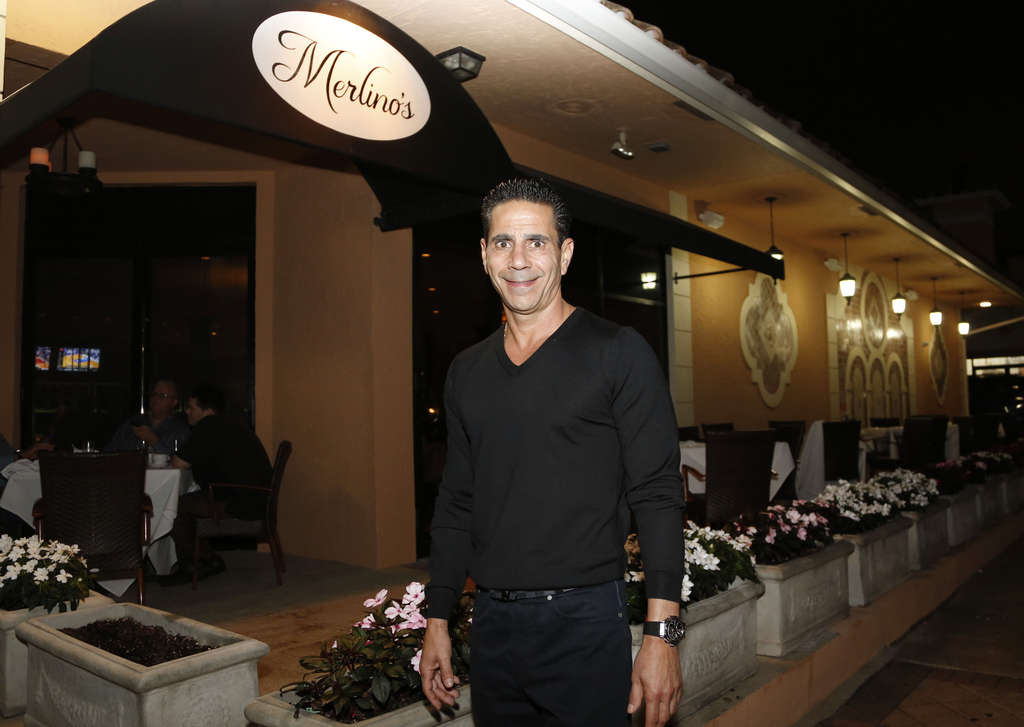
Joseph “Skinny Joey” Merlino in 2014 at the Boca Raton restaurant bearing his name.Terry Renna / For The Inquirer
Perri said it took several attempts before recovery stuck. He has been sober since Sept. 11, 2016. “I’m big with recovery,” he said. “That’s the main thing in my life. I put sobriety first and then everything after that.”
Merlino’s — where Merlino was maitre d’ because his legal situation then precluded ownership — closed in 2016, just before the feds arrested Merlino at his home in Boca in the lead-up to his second racketeering case. “If I didn’t have this trouble, it would still be open,” Merlino said earlier this month.
After Merlino attained freedom in July 2021, producers called with movie, television, and book deals. Merlino turned them all down. “Nothing seemed right,” Merlino said. Someone brought up the idea of a podcast.
“I didn’t even know what that was,” Merlino said.
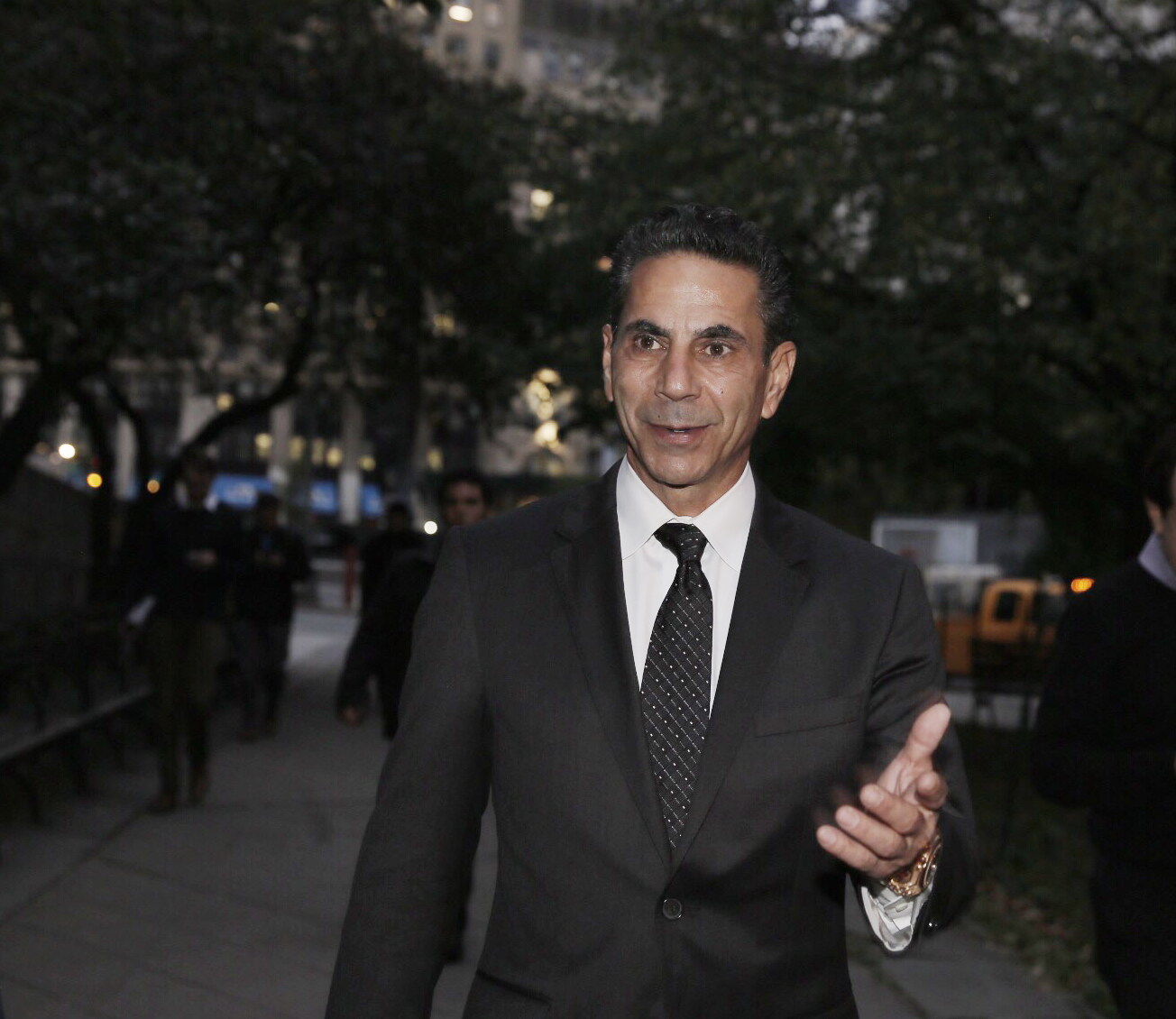
Joseph “Skinny Joey” Merlino leaving the federal courthouse in Manhattan after being sentenced on Oct. 17, 2018.Elizabeth Robertson / Staff Photographer
His friend Raymond “Wags” Wagner explained the concept and suggested a loose format built around food and sports betting. Actor Kevin Connolly of Entourage fame, who was involved early as a producer, told Merlino that he needed a co-host.
“They said, ‘Who would you want?’” Perri said. “They were sending him people, and he was like, ‘I’m not doing nothing with these people.’”
Then Ray Wags suggested Perri.
“Joey was like, ‘100 percent. Get him on the phone,’” Perri said. “Kevin Connolly said, ‘Send me your videos.’ I sent him my videos, and he said, ‘You’re the guy.’ The rest was history.”
The world of ‘MobTube’
Merlino and Perri launched the video podcast in 2023. Viewers are not just watching Merlino talk about the old life. They see him bust Perri’s chops about eating too much and mock his parlays. They get gambling tips, watch them interview athletes and celebrities — all part of a South Philly generational comedy.
Perri describes it in family terms. “My dad’s my dad, but he’s also my best friend, too,” Perri said. “We gamble together. We go out together. We have fun together. So they see me and Joey as that, and they can’t figure out how we mix so good.”
“He’s good,” Merlino said. “I’m old, he’s young. He talks good, he’s funny. He’s a pain in the balls, but it’s a good fit.”
They began The Skinny podcast on YouTube, but now focus more on Patreon, where the content is unfiltered. And better monetized. Perri says TheSkinny has 1,600 Patreon subscribers paying $15.95 a month. He said their social-media pages combined average 30 million views a month.
Perri’s wife, Danielle, handles bookings and schedules. “I produce,” Perri said. “I cut the clips. I do everything. It’s me and Joey. Two-man show.”
A wider audience
When they started, Perri was still selling cars at Mall Chevrolet. But the now-shuttered dealership got tired of people showing up hoping to see Merlino instead of test-driving a Suburban.
Perri quit. The show grew.Merlino’s reinvention has coincided with a broader shift in the gambling world. Legal sportsbooks, now ubiquitous on television and online, have largely supplanted the corner bookmaker, turning an activity once associated with organized crime into a mainstream consumer business. Guests span sports, hip-hop, gambling, and entertainment, including Wallo267, Fat Joe, Ric Flair, and Bernard Hopkins.
Each booking widened his audience, and Merlino was being absorbed into a broader celebrity ecosystem.
Last October, Netflix released Mob War: Philadelphia vs. The Mafia, a docuseries revisiting the violent 1990s power struggle between John Stanfa and Merlino’s younger faction. It steered even more viewers to Merlino and Perri’s world.
‘Skinny Joey,’ wit’
Then came the cheesesteaks.
One night, Perri, Merlino, and friends were playing poker. Merlino wanted cheesesteaks. Perri said he’d make them.
“He’s like, ‘You can’t make cheesesteaks,’” Perri said. “I said, ‘Are you nuts? I’ve been making them my whole life.’”
Perri cooked some. “He was like, ‘This is the best f— cheesesteak ever,’” Perri said. “He said, ‘Let’s open up a cheesesteak place.’ I said, ‘All right. Call it Skinny Joey’s Cheesesteaks.’ And that was it.”
The first shop opened in March 2025 at 3020 S. Broad St., near the sports complex. From the start, Skinny Joey’s was more than a sandwich shop. It was a set. The shop leaned into Merlino’s notoriety; the sandwiches are wrapped in a collage of newspaper articles about his past.
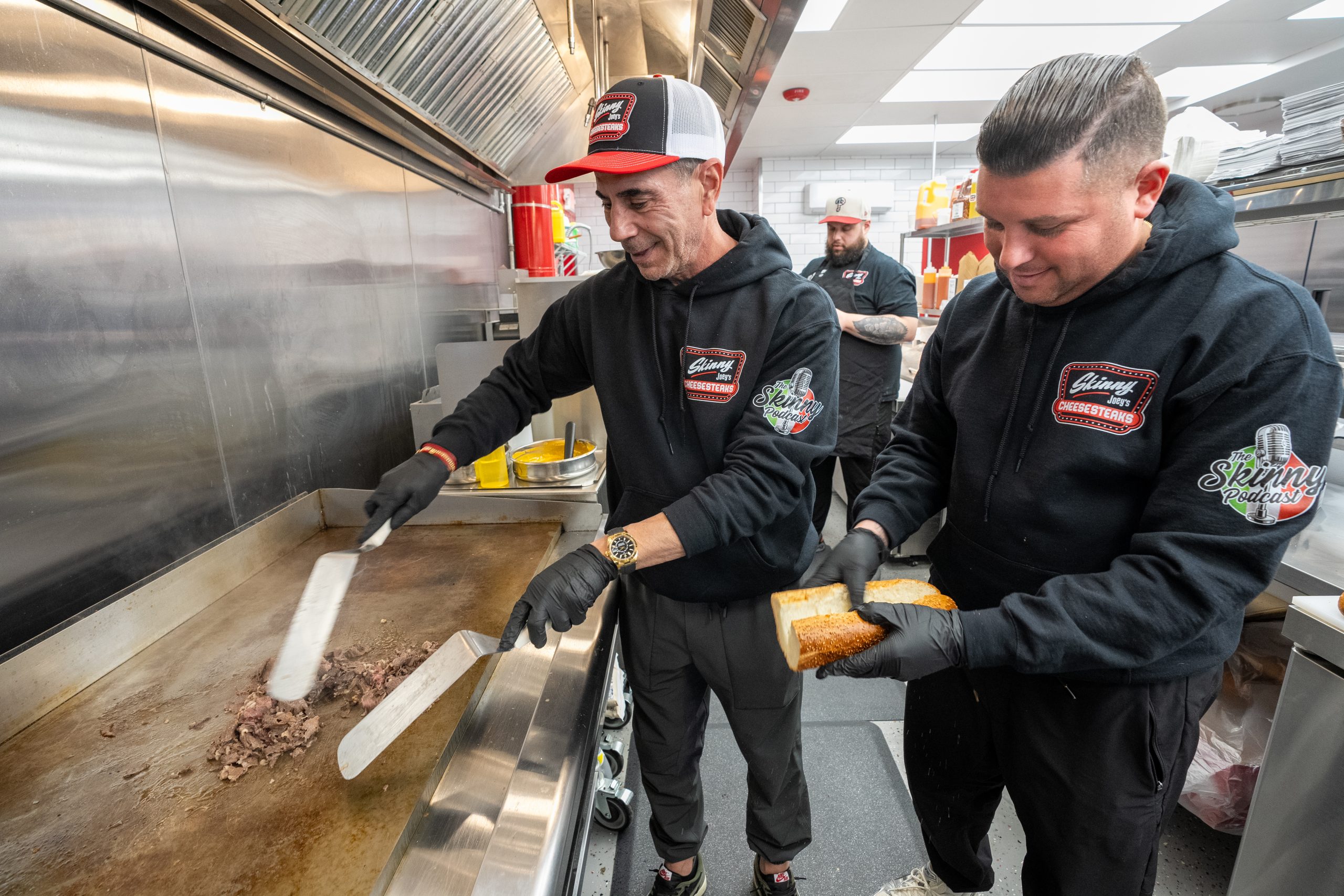
Joseph “Skinny Joey” Merlino (left) working the grill beside Joe “Lil Snuff” Perri Jr. at the Skinny Joey’s Cheesesteaks in Philadelphia at its opening in March 2025.Jessica Griffin / Staff Photographer
Celebrities showed up: Jason Kelce, Landon Dickerson, Mack Wilson. A customer eating a cheesesteak was good content. A recognizable person eating one on camera was better.
The restaurant also became a magnet for the kind of drama that fuels digital engagement: online beef. Podcaster Gene Borrello, a former Bonnano crime family associate and Merlino antagonist, weighed in last year on an apparent feud between Skinny Joey’s camp and Frank Olivieri of Pat’s King of Steaks. Merlino and Perri had taken issue with a video posted by Olivieri — whose great-uncle invented the steak sandwich — in which he chided shops that chop the meat on the grill. Like most online food feuds, this seems to have subsided.
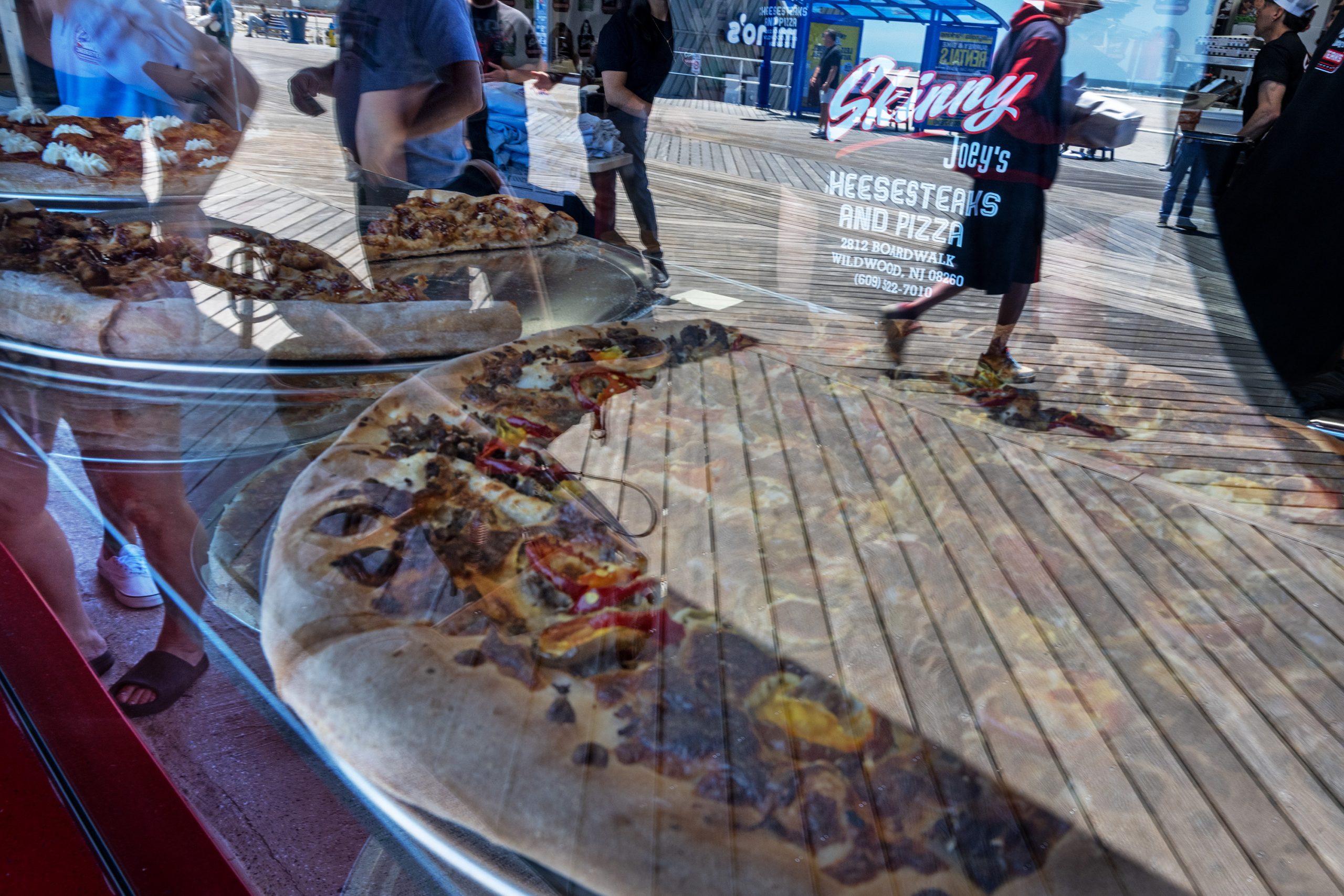
Then came the deal for Wildwood, where Skinny Joey’s replaced Joe’s Pizzeria, which had been on the boardwalk at Magnolia Avenue for 15 years. There, Skinny Joey’s added pizza and stromboli, which are not sold at the South Philadelphia location.
Reflections in the pizza display case on the boardwalk at Skinny Joey’s Cheesesteaks & Pizza in Wildwood.Tom Gralish / Staff Photographer
The pizza recipe comes from Vito’s on Haddonfield Berlin Road in Cherry Hill, and the stromboli from Pizza Shack at 15th and Oregon in South Philadelphia, both owned by Skinny Joey’s business partners Stephen Casasanto and John Fioravanti, whom Merlino also described as longtime friends.
More locations are planned. Perri said a Boothwyn shop is expected around Sept. 1, and several others are in the pipeline.
Bypassing the gatekeepers
Merlino is an extreme case of a recent phenomenon. People with complicated histories — criminal, scandalous, controversial, or simply overexposed — no longer need traditional gatekeepers to reintroduce themselves. They can speak directly to followers and monetize the attention.
Perri is not a journalist, of course, or a publicist, exactly. He is not merely a manager, producer, or sidekick. He is something in between — a new kind of local media operator.
He knows the scene, and how to make content feel unscripted even when the business behind it is deliberate. He is close enough to Merlino to bust his chops and deferential enough to preserve the hierarchy. He can translate Merlino to younger audiences without making him seem managed.
Perri softens Merlino without sanding him down. Merlino still curses, rants, and mocks rivals. Anyone they disagree with is a “bedbug.”
Joseph “Skinny Joey” Merlino greets a table of customers at Skinny Joey’s Cheesesteaks & Pizza in Wildwood.Tom Gralish / Staff Photographer
“At the end of the day, Joey isn’t going to change who he is for anybody,” Perri said. “If he can’t talk the way he wants to talk, what’s the point?”
That is part of the appeal and part of the discomfort. The audience knows Merlino’s history. They may see him as funny, defiant, loyal, misunderstood, or simply entertaining.
“There’s a segment of the American population that has always been fascinated with the outlaw: Billy the Kid, Jesse James, Don Corleone, Al Capone,” Anastasia said. “What the internet has provided is: Here are these guys in their own words. Are they being genuine? I don’t know. You can say that about any personality. But here’s a look at them without any filter.”
The filter used to be people like Anastasia.
“I was, in a lot of ways, the middleman between the people who were interested in this and the guys who were doing it,” he said. “And people who are interested in this don’t need the middleman anymore. They just go online and listen to whoever they want to listen to.”
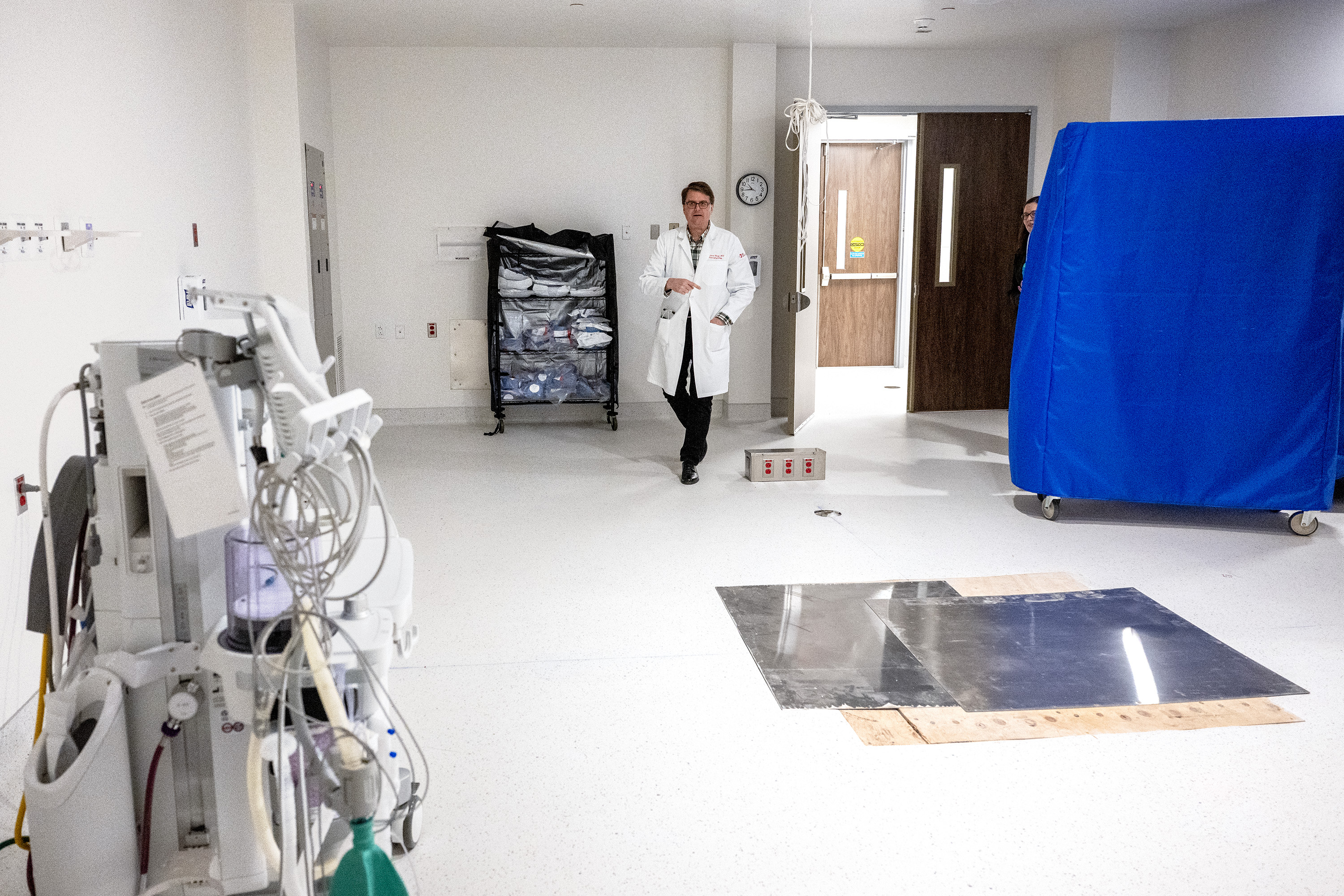
Independence Blue Cross, the Philadelphia region’s largest health insurer, launched this month a policy designed to move care into lower-cost surgery centers and away from hospitals and clinics that can generate payments twice as high for the same treatment.
The policy started June 1 echoes Medicare’s efforts to slow federal healthcare spending by paying the same price for outpatient procedures such as colonoscopies and knee surgery in hospitals as in surgery centers.
Pressure from employers to control costs has similarly motivated IBX and a newer regional competitor, Pittsburgh-based Highmark, which implemented a similar policy on Jan. 1. Both companies’ policies affect people with low risk of complications who are covered by commercial insurance or Medicare Advantage.
When doctors seek insurance authorization for certain procedures, IBX reviewers will ask whether doctors can treat low-risk patients in a surgery center, according to the company’s chief operating officer Richard Snyder.
“This is a gentle move,” Snyder said. “We’re not willing to force you to change doctors to have your colonoscopy or your service, but we want docs to get privileges in ambulatory surgery centers.”
The region doesn’t have enough low-cost surgery center capacity for a large-scale move to that setting, Snyder said. That means the policy might not hit hospital finances right away.
But the implication is that the policy could take a harder edge in the future. IBX’s goal is to spur the development of more surgery centers — either by the incumbent health systems or by new competitors, Snyder said.
Even now, the potential for delayed care and denied coverage has several regional health systems worried. Temple University Health System, for example, does not own ambulatory surgery centers, so the time could come when it has to coordinate care with outside providers.
The money at stake
Surgery to remove torn cartilage on the knee can cost $7,190 when performed on an outpatient basis in a hospital, nearly three times the $2,477 cost in ambulatory surgery centers, according to Philadelphia-area commercial insurance averages from heath prices data firm Turquoise Health.
Smaller gaps exist for hernia repairs and colonoscopies with a biopsy, Turquoise reported. Another data firm, Medscout, showed that a majority of those colonoscopies had already shifted to ambulatory surgery centers by 2024. The shift was far less advanced for hernia repairs— a procedure IBX is targeting.
(function(){function e(){window.addEventListener(`message`,function(e){if(e.data[`datawrapper-height`]!==void 0){var t=document.querySelectorAll(`iframe`);for(var n in e.data[`datawrapper-height`])for(var r=0,i;i=t[r];r++)if(i.contentWindow===e.source){var a=e.data[`datawrapper-height`][n]+`px`;i.style.height=a}}})}e()})();
Some physicians’ groups already are seeing opportunity in commercial and government insurers’ increased emphasis on surgery centers as a way to reduce spending — as well as regulatory changes that allow more procedures to be done in free-standing surgery centers.
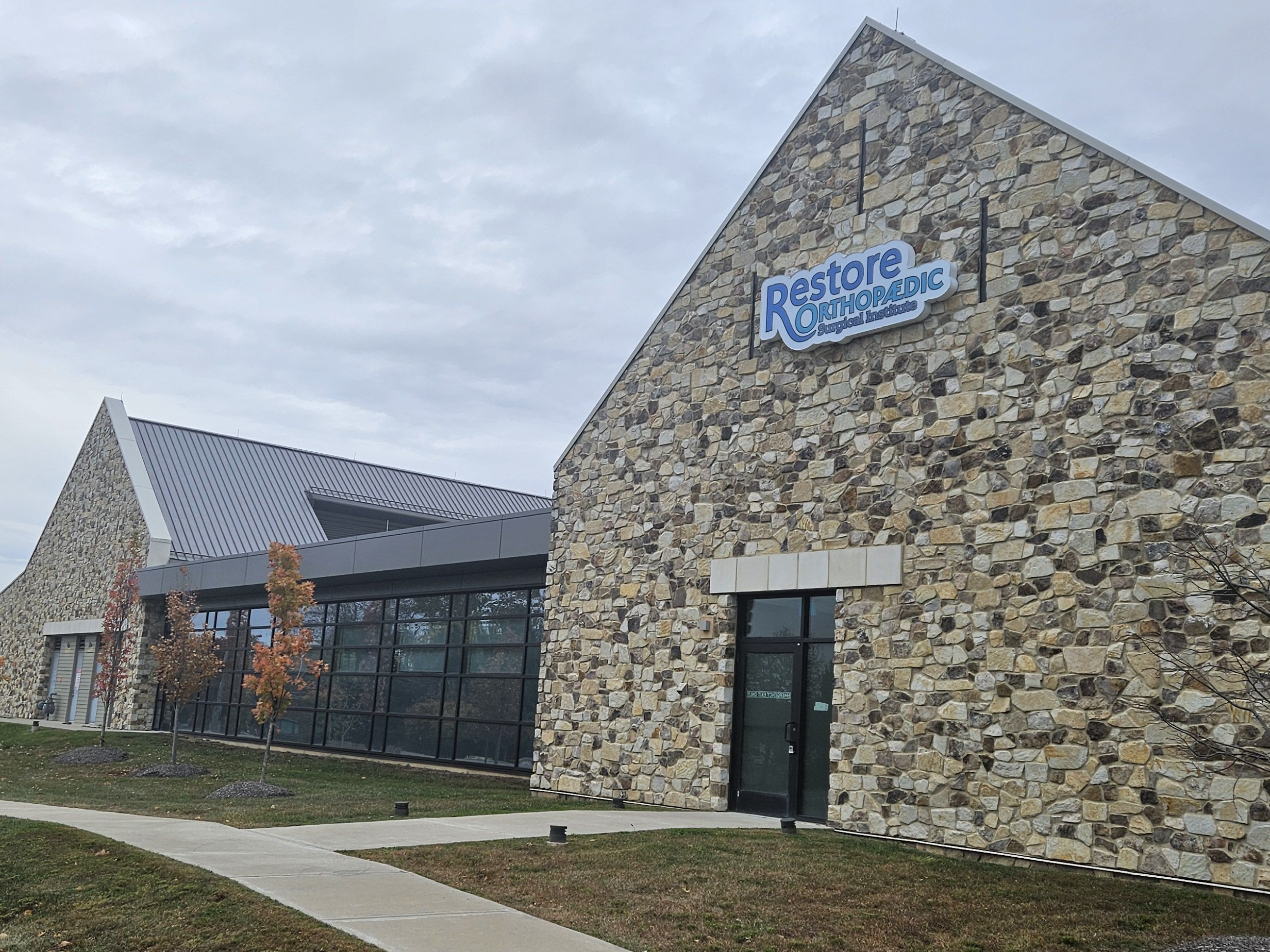
Restore Orthopaedic Surgical Institute in Chadds Ford, founded by a group of Delaware doctors, has been quickly become a high-volume joint-replacement center.
In the coming year, Rothman Institute plans to open three surgery centers in the Philadelphia region, the private practice’s CEO Christian Ellison said.
Restore Orthopaedic Surgical Institute in Chadds Ford has grown quickly to become one of the top joint replacement destinations in Southeastern Pennsylvania after opening in March 2023. The center is positioned to take advantage of an effort by Highmark and IBX to move outpatient procedures from high-cost hospitals to lower-cost surgery centers.Restore Orthopaedic Surgical Institute
Potential consumer impact
Several major health systems said the new site-of-care review policies raise questions about the potential impact on patients, without commenting on the implications for their finances.
Because Temple University Health System does not have any ambulatory surgery centers, “the policy will require certain studies and procedures to be referred outside the health system. This could create additional coordination requirements and may contribute to delays in testing, crucial diagnosis, and/or treatment,” Temple said in an email.
Main Line Health also said it anticipates the policy “could disrupt established care pathways, including in circumstances where surgeons lack privileges at available free-standing surgery centers,” the nonprofit said in a statement. Main Line has ownership interest in three surgery centers in Philadelphia’s western suburbs.
The University of Pennsylvania Health System said it will “advocate for our patients’ best interest and appeal any service denials based on the clinical and nonclinical exceptions outlined in the policy.”
Additional concerns for consumers include complexity, confusion, and possibly more risk of having care denied to what can already be a burdensome prior authorization process, said Christine Monahan, assistant research professor at Georgetown University’s Center on Health Insurance Reforms.
Monahan said she understands insurers’ impulse to steer people to lower-cost settings, but called policies like IBX’s “maybe not the most efficient way to handle the inefficient pricing in the system.”
The economic and political backdrop
The biggest increases in healthcare costs in 15 years are hitting employers this year, according to Mercer’s National Survey of Employer-Sponsored Health Plans.
The average increase was 6.7%, according to the February survey of 161 chief financial officers, who were not identified.
The increases are substantially higher than broader inflation. “It becomes more of a tax on employers,” Snyder said. “Next to salaries, many will tell you, that’s the biggest line item” in their expenses.
IBX has taken other steps to reduce healthcare spending, such as in 2015 introducing a benefit design that includes a preventive colonoscopy with no out-of-pocket costs for the patient at what are called Preventive Plus facilities. Elsewhere, they have a $750 co-pay.
Highmark and IBX have new policies designed to move more outpatient procedures and treatments out of high-cost hospitals and into lower-cost surgery centers.Pablo Martinez Monsivais
Medicare has pushed for the last decade to pay the same for services in hospital outpatient departments as in doctors’ offices and surgery centers.
Medicare prohibited most new off-campus hospital clinics from billing at hospital rates in 2017. So-called site-neutral payments expanded in 2019 to include clinic visits. This year, the government applied the standard to payments for drug administration, such as chemotherapy.
Highmark Health Plans’ approach
In the first five months of under new policy, Highmark Health Plans has found some health systems are willing to accept lower surgery center rates for procedures performed within hospitals.
“What we’ve found is that a number have been willing to do that,” said Kate Musler, chief financial officer for Highmark’s insurance arm. “It may be advantageous for them to have that volume flow through the hospital and keep some volume there, it’s just not necessary in terms of the expense level.”
Musler cited bariatric surgery as an example of how technology and surgical practices have advanced to the point where a hospital is no longer needed.
It’s too early to say how much savings the new policy has generated, including in Southeastern Pennsylvania, Musler said. Highmark has seen its policy accepted at different levels across the five states where it took effect.
Some hospital systems are proactively shifting care to surgery centers to reduce costs, said Musler, who oversees Highmark underwriters helping employers understand their health expenses.
“We hear directly from employers who are making very difficult decisions,” she said. “It is now more than ever a question of whether they can afford employee health.”
Only a few days into the World Cup, residents of Brewerytown and Fairmount, trapped inside the blast zone of the fan festival in their backyards, are seeing their fears realized.
Drivers are clogging up roads, rerouting, and sometimes speeding through neighborhood side streets due to road closures. Uber and Lyft services are offline for residents directly next to the festival during operating hours. Many residents are forced to navigate parking nightmares, turning everyday life into an exhausting headache.
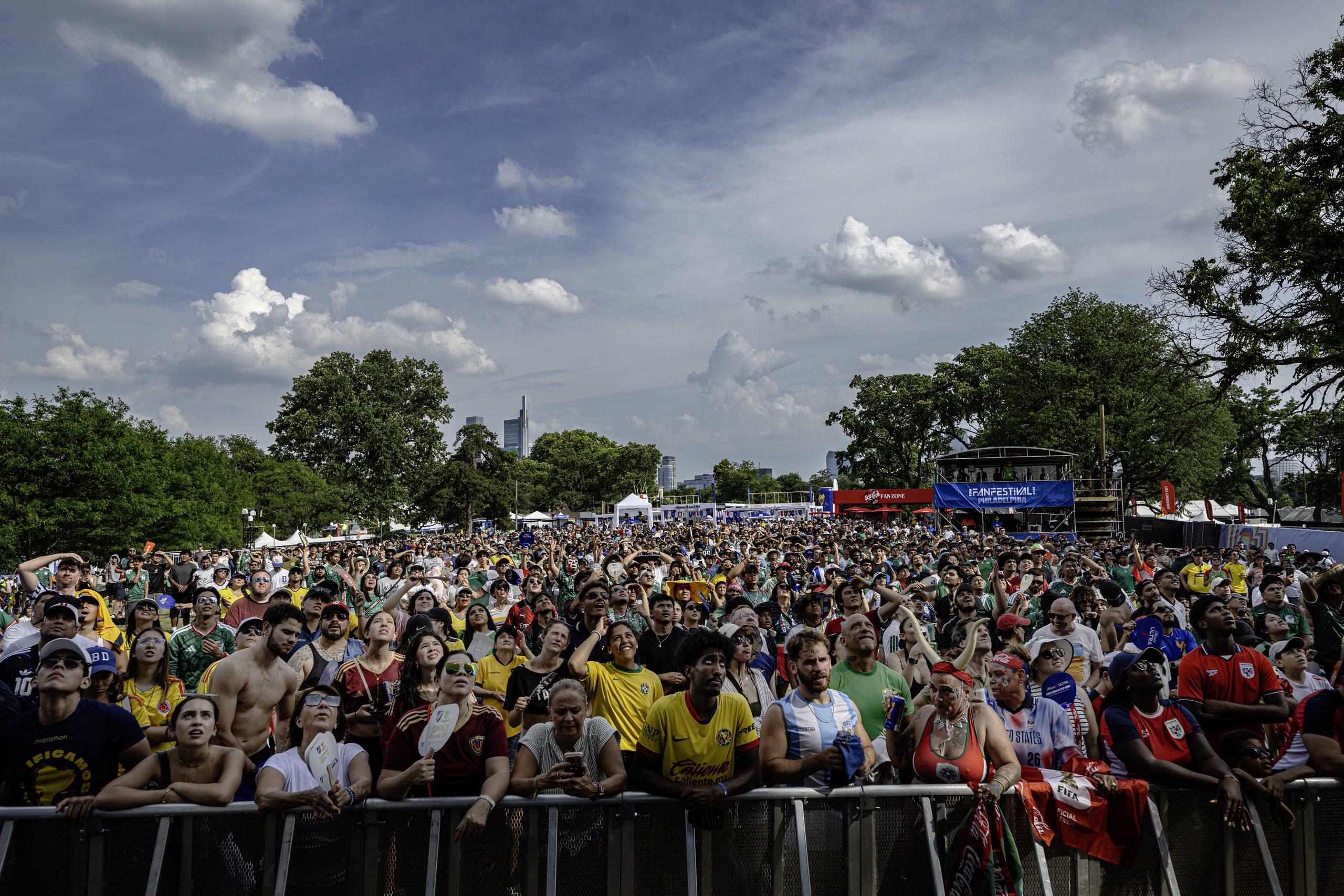
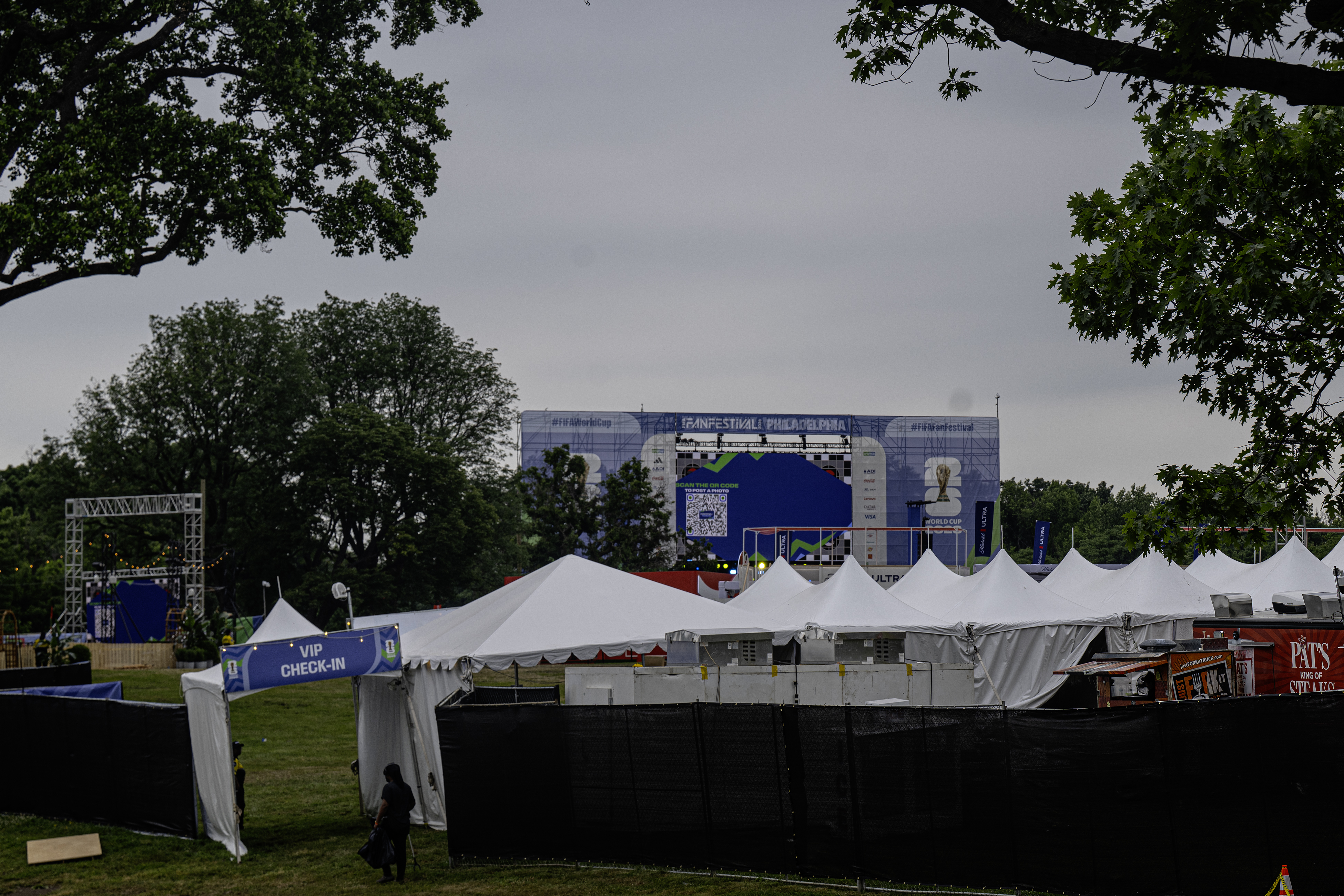
It’s all for the sake of the FIFA Fan Festival, a 39-day, million-square-foot party taking over Lemon Hill and inviting 15,000 daily visitors to its picturesque fields. While city officials and event organizers roll out the red carpet and spend millions on World Cup fans, residents who for years have been pleading for Lemon Hill improvements say the festival will use their neighborhood and park at their expense.
“The sentiment right now is just the complete disrespect for the residents and that this is all being done for tourists,” said Nissa Eisenberg, Fairmount resident and co-organizer of the Lemon Hill Neighbors Association, the organization disseminating festival information and communicating with the city. “Everybody’s feeling pretty resentful, maybe cautiously optimistic, but also just not feeling respected as residents.”
Soccer fans gather to watch Mexico play South Africa on a giant screen during the opening day of the FIFA Fan Festival at Lemon Hill on Thursday, June 11, 2026, in Philadelphia.Jose F. Moreno / Staff Photographer
The FIFA Fan Festival opened its gates to thousands of fans Thursday as not only the cheapest way to experience the revelry of a World Cup game (admission is free, though it requires registration),but also the melting pot of Philly’s best food and shopping. It is also the only fan festival across the 11 U.S. host cities that is open daily for the entire 39-day tournament, culminating on July 19.
If these changes weren’t tough to navigate already, city officials gave residents a little more than three weeks to prepare.
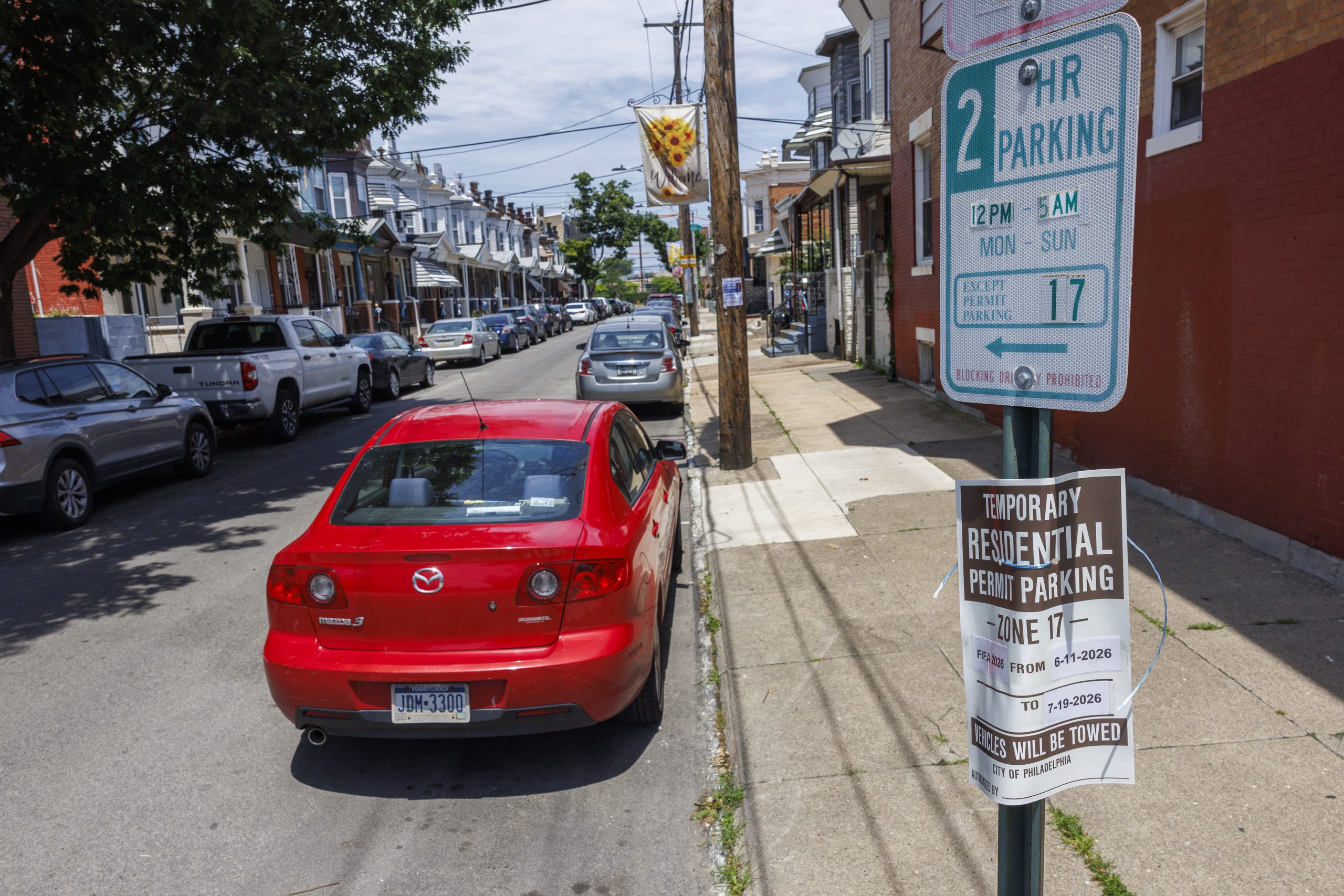
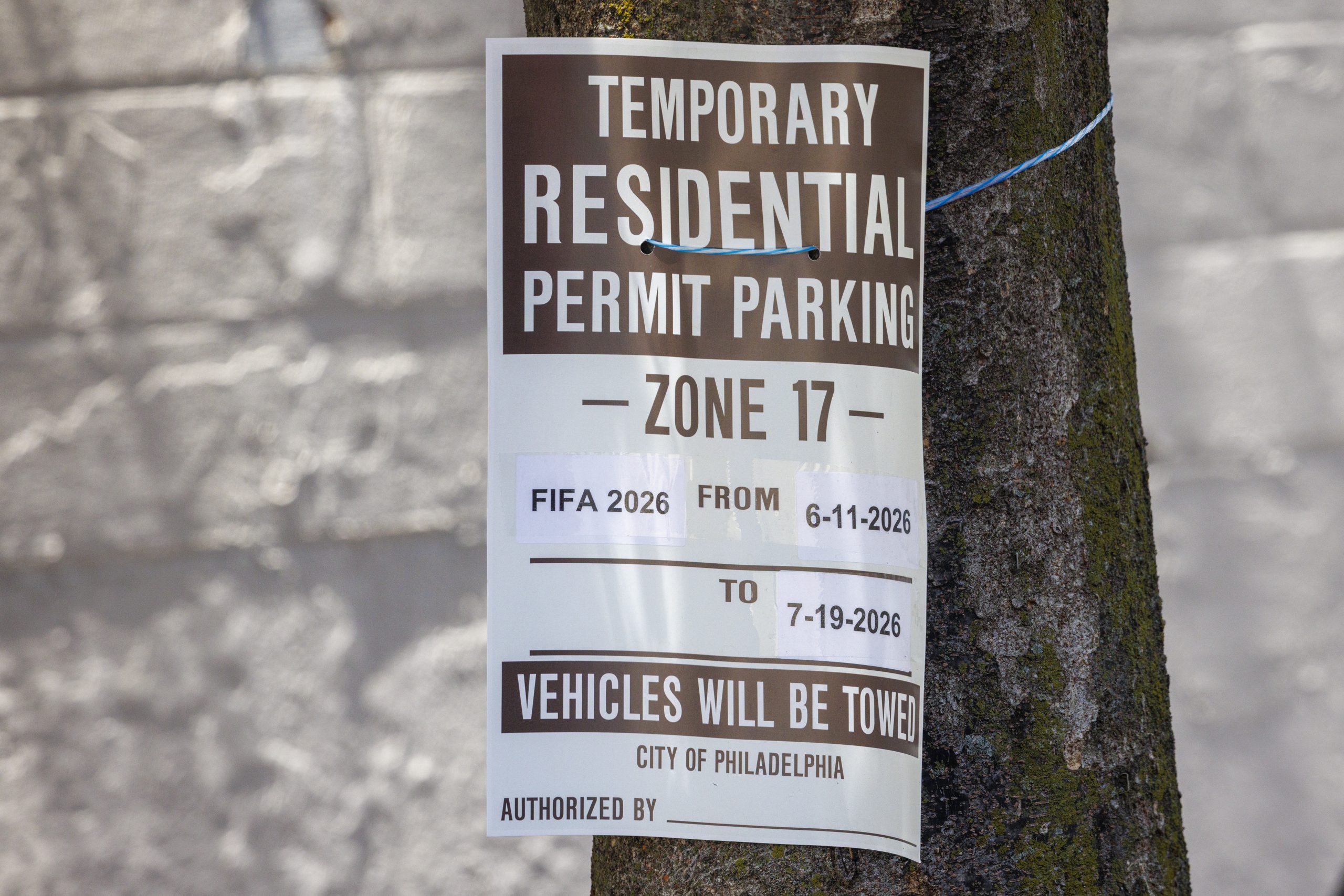
Temporary Residential Permit Parking sign on pole along N. 30th Street and Oxford Street, Thursday, June 11, 2026. Philadelphia Parking Authority is in the area ticketing and enforcing during FIFA Fan Festival at Lemon Hill.Alejandro A. Alvarez / Staff Photographer
“We’ve been talking with them for two years to engage neighbors with a plan, and they waited to communicate their plan until after people made their summer plans, after parents made driving schedules for their kids’ summer camps every week, and after people planned daily commutes,” Eisenberg said.
Charlotte Burns, a Fairmount resident and veterinarian, fears for other residents who work in hospitals and are often on call for medical emergencies. “For months we’ve known this was going to happen, but there has been nothing from the city,” Burns said, referring to the fact that door-knocking, flyers, and posters did not begin in earnest until weeks before the tournament.
(function() { var l = function() { new pym.Parent( ‘fifaroads2__graphic’, ‘https://media.inquirer.com/storage/inquirer/ai2html/fifaroads2/index.html’); }; if(typeof(pym) === ‘undefined’) { var h = document.getElementsByTagName(‘head’)[0], s = document.createElement(‘script’); s.type = ‘text/javascript’; s.src = ‘https://pym.nprapps.org/pym.v1.min.js’; s.onload = l; h.appendChild(s); } else { l(); } })();
On May 18, the city unveiled its plan for how it would manage the festival for residents. Officials informed neighbors that thousands of them would need to swiftly apply for parking permits to allow them to park near their homes for two months, something many residents are still unclear on, said Shaun Cerborino of Lemon Hill Neighbors.
Additionally, no rideshare services like Lyft and Uber will work at Lemon Hill and around six blocks of the surrounding residential areas during festival operating hours, sometimes spanning all day, in a practice called geofencing.Those without cars will have to walk blocks from their home to hail a ride, or use SEPTA, which is still operating in the neighborhood.
City officials told residents last month that rideshare services will not be disabled for riders who require a wheelchair-accessible vehicle (WAV). However, after The Inquirer asked for clarification on how this exemption works in practice, the Philadelphia Office of Transportation and Infrastructure Systems (OTIS) found that a miscommunication between rideshare services occurred.
The city was supposed to designate where WAVs can operate within the geofence, while the city was under the impression that rideshare services handled it.
Philadelphia Parking Authority, Zone 17, a temporary no park zone except for residents with special permit during FIFA Fan Festival at Lemon Hill, Thursday, June 11, 2026.Alejandro A. Alvarez / Staff Photographer
“Now that we have that clarity, we’re going to evaluate some changes to the perimeter that is enclosed in the geofence area. We’ll try to act as quickly as we can to adjust the geofence,” said OTIS Deputy Managing Director Mike Carroll.
City officials said they could not specify what these geofence adjustments will look like until they have finished talks with Uber and Lyft. But what was initially promised, that WAVs will pick up and drop off disabled riders at their homes, might not be possible. Instead, there is a chance WAV-only drop-off zones will be created in that geofenced area.
“That challenge is too difficult for us to work through for any resident who needs it,” Carroll said. “It’s too bad that there’s not a more general way to have these vehicles come in, but we can’t really haggle with [rideshare services] at this point. We’ll just try to make it work as best we can.”
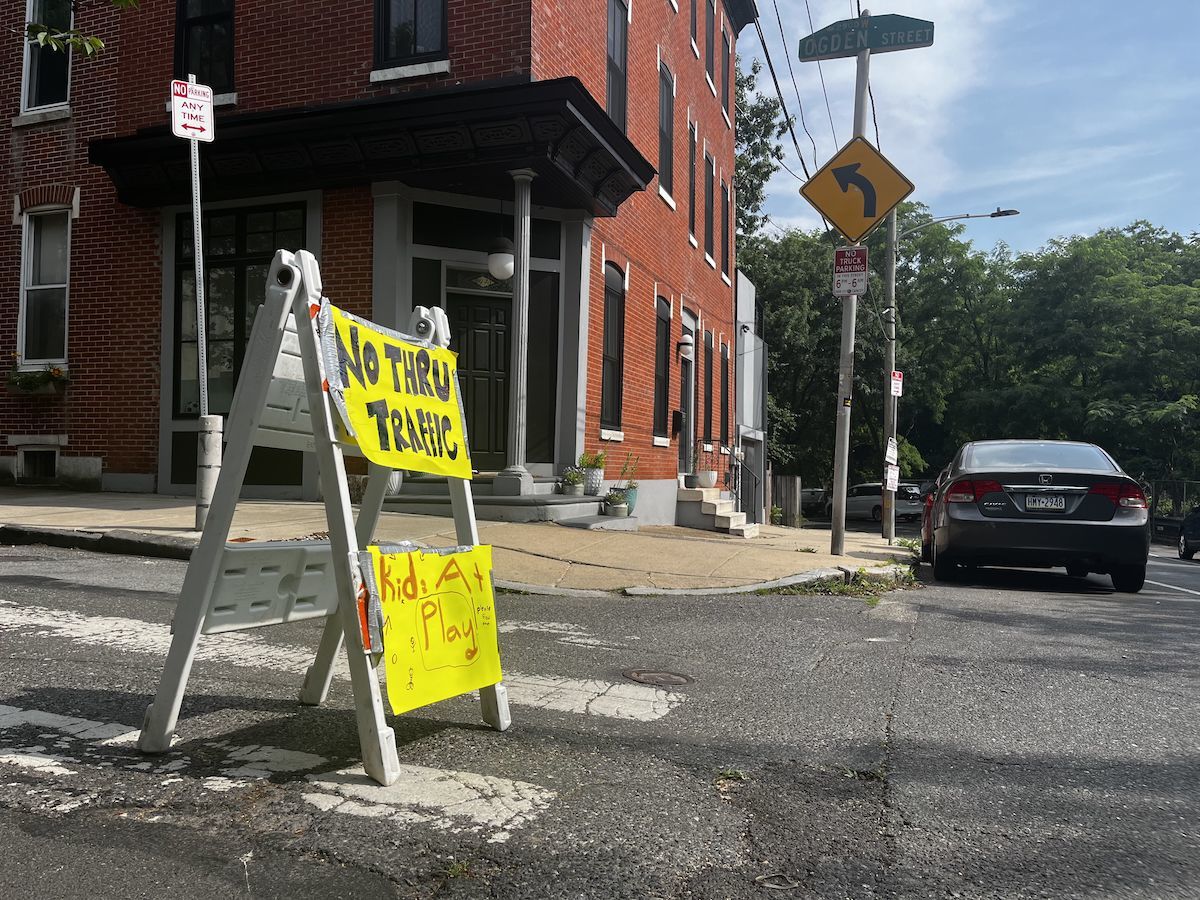
A makeshift sign created by local neighbors, pictured on Wednesday, June 10, 2026, advises drivers not to use side streets for through traffic on Ogden Street, a narrow residential side street one block from the festival, which drivers have been racing down to avoid road closures and traffic.Henry Savage / Staff
The work to calm neighborhood traffic
Dustin Dove, president of the Fairmount Civic Association, points to the 2900 block of Ogden Street, a mere block from the festival, as a microcosm of the neighborhood’s concerns.
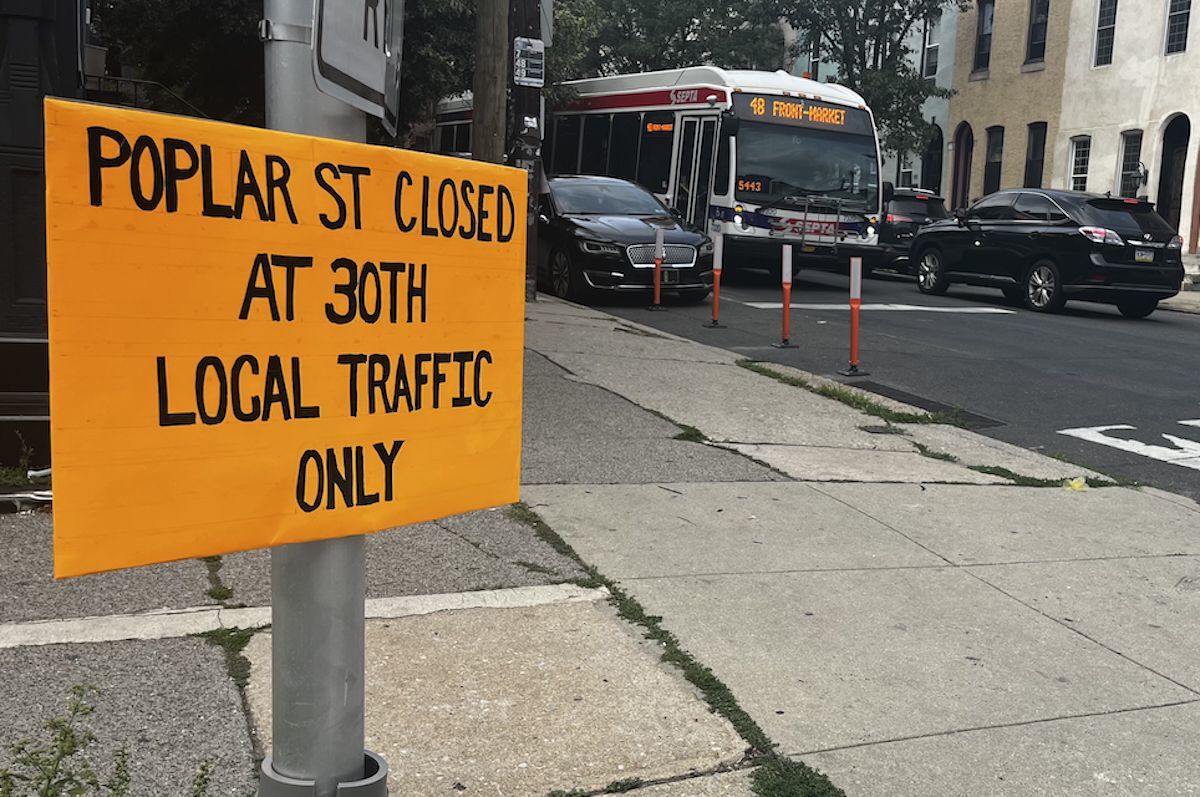
Due to road closures on 30th and Poplar Streets, agitated drivers, stuck in traffic, are choosing to speed down narrow one-way Ogden Street to get around lines of cars, residents said. Neighbors have seen at least two incidents where a car rocketed down the street while young children were playing.
Dove said residents have called every relevant city department and elected official who represents the area, including Councilmember Jeffery Young, requesting additional signage and traffic-control measures at 29th Street to dissuade drivers from using side streets.
“We’re going to be welcoming a lot more people than usual, and we need Council members to come and look at this situation,” Dove said. “There are issues that need some sort of leadership at the top to get them fixed.”
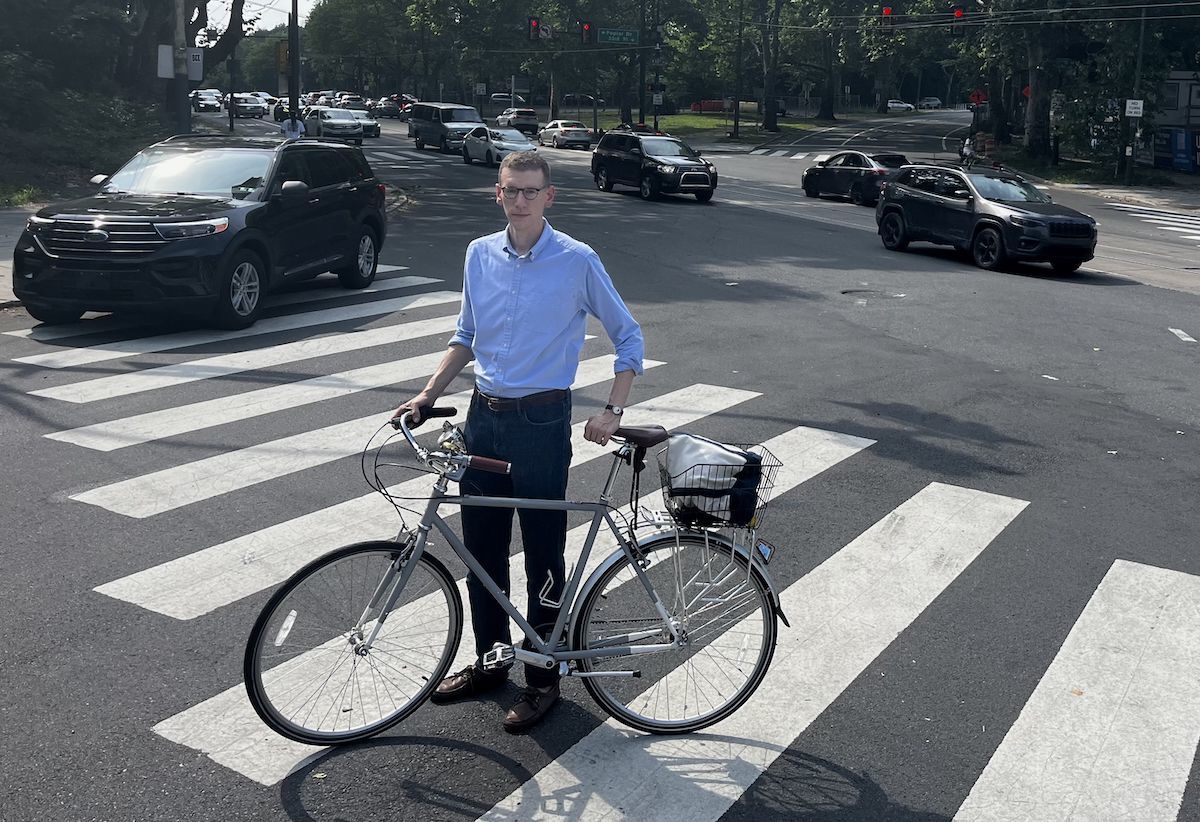
Dustin Dove, a Fairmount resident and president of the Fairmount Civic Association, poses for a photo near one of the busiest intersections near the FIFA Fan Festival in Lemon Hill, at Girard Avenue and Poplar Drive, on Wednesday, June 10, 2026. The FIFA Fan Festival is forcing the local neighborhood to navigate parking restrictions, road closures, and the sacrifice of their summer green space in exchange for the once-in-a-generation World Cup in their backyards.Henry Savage / Staff
Young said he and his office have heard from residents who are “understandably frustrated” by traffic being redirected onto neighborhood streets and confusing or insufficient signage.
“When these concerns were brought to our attention, we immediately notified the appropriate city departments and event organizers and have already seen some additional signage and traffic-control measures put in place. However, more work remains to be done,” Young said.
A city spokesperson said police officers will be stationed at 30th and Poplar Streets throughout the duration of the festival and will make adjustments as needed. The city also committed to installing additional signage where appropriate, the spokesperson said.
Still, as the first day of the World Cup rolled around, neighbors near Ogden Street reported heavy traffic on side streets, Fairmount resident Nicole Ross said, with many residents saying they received parking tickets despite having registered temporary permits. Ross said the Philadelphia Parking Authority later told residents who were ticketed that it was a system error and would be resolved.
Crew members make final preparations, including work on a 60-foot-wide screen, for a FIFA Fan Fest at Lemon Hill in Philadelphia on Tuesday, June 10, 2026.Jose F. Moreno / Staff Photographer
The legacy of Lemon Hill Park
Besides the short-term, everyday nuisances of the FIFA Fan Festival, there are deeper-rooted issues about care and longevity of the park. Park stewards, like Cerborino and Eisenberg, are volunteer workers who care for and maintain much of Lemon Hill.
Across the city’s parks, stewards understand that Philadelphia Parks and Recreation is unable to perform some needed upgrades due to staffing and budgetary constraints. That’s where stewards spend their free time and money to try to keep the city’s nationally ranked parks in an idyllic state. But that often comes with yearslong discussions about proper park funding and upgrades, as recently reported by The Inquirer, where stewards are again pleading with City Council for more funding as they are tired of operating off “love and duct tape.”
When pitching the festival to the city and residents, Philadelphia Soccer 2026 said it would be leaving lasting legacy improvements to the park in exchange for residents giving up their summer green space.
“We will see this through during organizational wind-down following the tournament,” a festival spokesperson said.
Crew members make final preparations, including work on a 60-foot-wide screen, for a FIFA Fan Fest at Lemon Hill in Philadelphia on Tuesday, June 10, 2026.Jose F. Moreno / Staff Photographer
Philadelphia Soccer 2026 is committing $4 million to install a new ADA-accessible sidewalk path, a new playground, and new lighting, as well as to rebuild the picnic pavilion, organizers said. Residents have begged the city for some of these improvements for years, Cerborino and Eisenberg said.
“Residents deserve a clear understanding of what lasting benefits will remain after the crowds leave. I will continue advocating for transparency, accountability, and a concrete plan for legacy investments that benefit the Lemon Hill area and the city as a whole,” Young said.
The city said it will work alongside Philadelphia Soccer 2026 to see these legacy commitments come to fruition, as well as have Philadelphia Parks and Recreation staff monitor the grasslands and trees to address any issues that appear during the festival, a spokesperson said.
While stewards understand that park upkeep is not at the forefront of city budgetary concerns, it does hurt when it seems improvements to Lemon Hill Park will come only after an international or major sponsored event takes place there, Cerborino said.
“Especially when the parks are primarily supported by public dollars, it doesn’t feel right for FIFA or Live Nation, or whatever company, to come in, have their way with our parks, make all the money on it — and the taxpayers foot part of that bill and get very little out of it,” Cerborino said. “The tradeoff is FIFA makes a few billion dollars, and we got a sidewalk.”
In the spring of 1983, my wife graduated from Williams College. We weren’t married — yet — but I was already in love with her. So I was in the audience on a warm May morning to watch her receive her diploma.
That’s also where I first encountered Robert Coles.
Coles, who died June 4, was the commencement speaker. I’m embarrassed to admit that I didn’t know anything about Coles, perhaps the most influential psychiatrist in modern America. But as soon as he started talking, I was transfixed.
He spent his life listening to children and their parents, particularly during moments of trauma or crisis. And he urged the rest of us to listen, too.
When you listen closely, Coles discovered, every individual you meet becomes exactly that: an individual. They’re no longer a category or a caricature. They’re a human being, trying to make sense of the world. Just like you, and like me.
That’s why Time magazine, in a 1972 cover story about Coles, congratulated him for “breaking the American stereotypes.” Wherever Coles looked, he saw people distorting — and demeaning — each other. The only antidote for that was conversation, which would “depolarize a divided society” (Time predicted) by allowing us to recognize the humanity in everyone.
It’s easy to assume we have lost that spirit in America, which seems even more divided than it was a half-century ago. You can hear it in our heated political rhetoric, so full of anger and recrimination. She supports Democrats, so she’s a libtard. He votes Republican? Must be a fascist.
But Coles reminded us that we can move beyond the vituperation and name-calling. Show compassion and curiosity toward everyone, he insisted. And listen to them before you judge them.
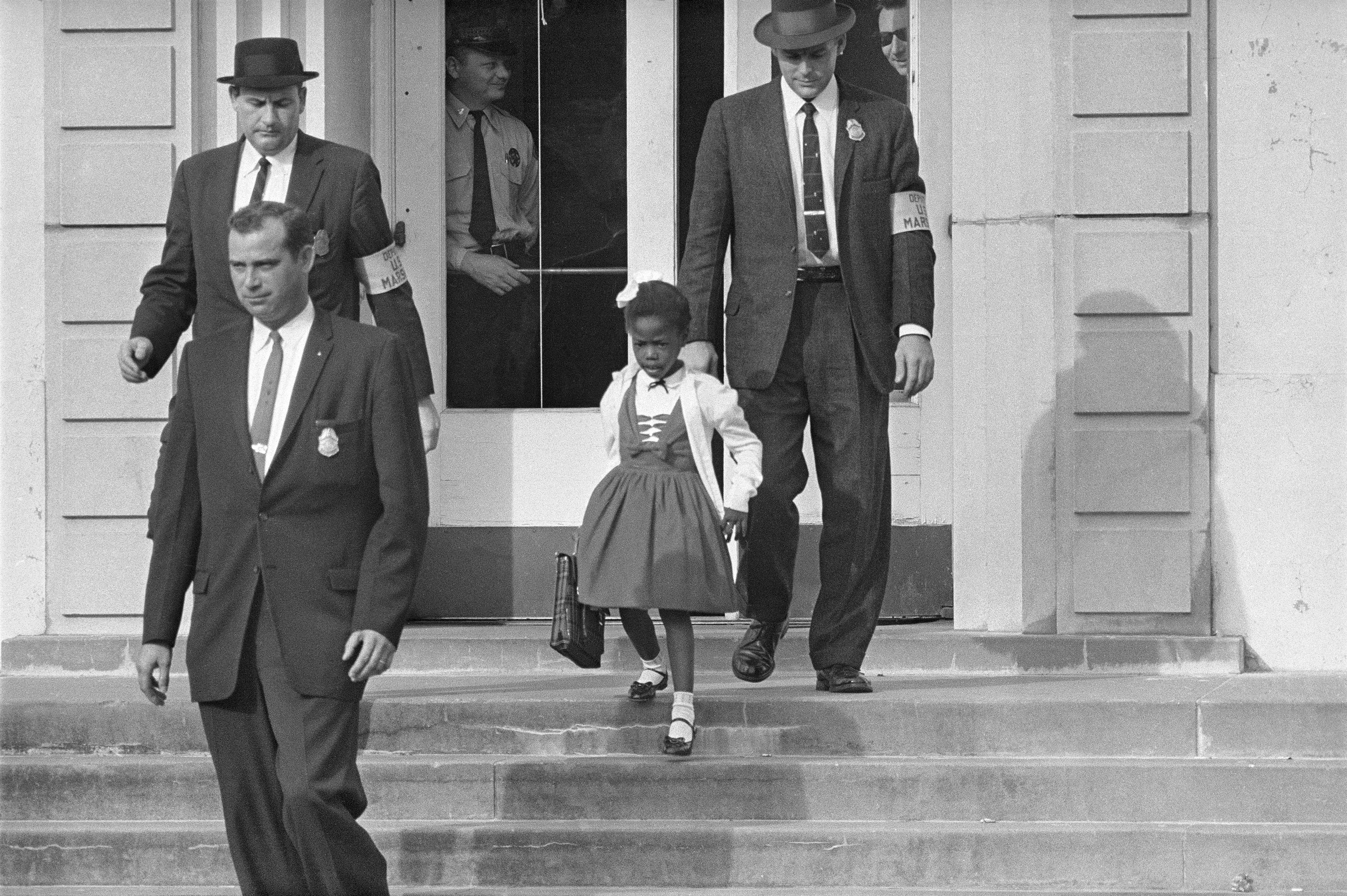
Coles was best known for his interviews with Black children like Ruby Bridges, the 6-year-old girl who faced a mob of white racists in 1960 while integrating an elementary school in New Orleans. But he also warned against imagining Black people as noble victims, or Southern whites — including opponents of integration — as ignorant bigots.
“Policemen are not pigs, white Southerners are not rednecks, and Blacks are not all suffering in exotic misery,” his Harvard colleague David Riesman told Time, summarizing Coles’ approach. “What he is saying is ‘People are more complicated, more varied, more interesting, have more resiliency and more survivability than you might think.’”
Coles’ conversations with poor and right-wing whites confused his liberal friends, who wondered why he would spend so much time with “awful, vulgar, reactionary people,” Coles noted. The reason was both simple and profound: He wanted to understand them.
“I don’t look upon them as good or bad,” Coles explained. “I look upon them as human beings, strong and sensible, weak and full of faults.” He readily acknowledged “the blindness, the distortions, the racism, the meanness” among them. But he refused to reduce them to that.
You could find the same negative qualities in any group, Coles insisted. And working people “bore the brunt of change in American society,” he added. Dismissing them as racist was itself an unjust act, committed by people who imagined themselves as agents of social justice.
In academia, meanwhile, these same tribunes of justice often wrote in impenetrable jargon that only their fellow professors could understand. Coles didn’t do that, either. He used ordinary language, just like the people he interviewed.
Federal marshals escort 6-year-old Ruby Bridges from William Frantz Elementary School in New Orleans, in November 1960.Uncredited
That spawned skepticism among some of Coles’ colleagues, who disparaged him as “unscientific” or — heaven forbid — a “popularizer.” But what’s the point of writing something that nobody — other than a small set of specialists — will ever read?
Coles made a difference in the world precisely because his work was accessible to so many people. At the Williams graduation, he told us Bridges had been moving her lips as she walked past the mob protesting her for desegregating an all-white school. Later, Coles asked her what she had been saying.
“I was talking for God and praying for the people in the street,” she replied. “I always pray the same thing. ‘Please, dear God, forgive them, because they don’t know what they’re doing.’”
Bridges’ courage and compassion inspired Norman Rockwell’s famous painting, The Problem We All Live With, which appeared on the cover of Look magazine in 1964. And it inspired Coles to spend his life talking to people about how they experienced the challenges and contradictions of their world. In over 50 books and hundreds of articles, he taught us that everyone — especially children — had something important to say.
We just have to listen to them. And, I hope, to Robert Coles.
Jonathan Zimmerman teaches history and education at the University of Pennsylvania. He is the author of “Whose America?: Culture Wars in the Public Schools.”
As President Donald Trump sinks deeper into an Iran quagmire, he looks like a loser for joining an ill-planned war of choice and failing at peace talks.
Even if a U.S.-Iran memorandum of understanding (or MOU) is signed soon, this will not be a “peace deal” but will merely kick negotiations on all the tough issues down the road. And the MOU will most likely leave the U. S. worse off than before the war.
Yet, on another front, the Ukraine war, where Trump is supposedly still working on a peace proposal, the president has new opportunities to advance a reasonable deal and be lauded as a winner.
Kyiv, through incredible bravery, fortitude, and technological brilliance, has finally turned the tide against Russian aggression via its innovative drone war. The conflict is far from over, but Russia has been stalled for months, gaining almost no ground, and is now losing more men than it can mobilize.
And President Volodymyr Zelensky has just proposed freezing the war along current lines while negotiating directly with Vladimir Putin in a third country, an offer the Russian leader immediately refused.
Yet, Trump continues to aid the loser, Putin, and to undermine the advances of the increasingly visible winner, Kyiv. He has cut off all military aid to Ukraine (even though Europe will pay for the weapons), including vital air defense systems Kyiv desperately needs to destroy the ballistic missiles Putin is raining down on civilians. POTUS is also resisting bipartisan efforts in Congress to restore limited Ukraine aid and add sanctions to Russia.
The House just passed the Ukraine Support Act in a bipartisan push that overcame Speaker Mike Johnson’s efforts to block it, but the White House has strong-armed pro-Ukraine Republicans in the Senate to sit on a similar measure. The GOP‘s cowardice has become a national embarrassment.
If Trump insists on going down in history as a foreign policy loser (or a Russian dupe), Senate Republicans must decide whether they want to share the shame.
It is pathetic to watch how the Kremlin has been making fun of Trump’s weakness. The president keeps claiming he doesn’t want to provoke Moscow by sending more weapons, yet his vacillation has made him a punching bag on RT, the Kremlin’s mouthpiece TV outlet.
“Vladimir, STOP!” Trump begged on Truth Social on April 27, after massive Russian drone and missile attacks on Kyiv and other cities. “Lets get the Peace Deal DONE!” He told reporters he thought Putin would listen. Haha!
“What Vladimir Putin doesn’t realize is that if it weren’t for me, lots of really bad things would have already happened to Russia, and I mean REALLY BAD. He’s playing with fire!” POTUS posted on May 27. RT posted sarcastically: “Trump’s message leaves little room for misinterpretation. Until he posts the opposite the next morning.”
A Kremlin spokesperson dismissed his remarks as “emotional overload.” Trump appears unaware of Kyiv’s extraordinary achievement in bringing the war home to Russia, hitting deep into the country with mid-range and long-range drones that take out military bases, oil depots, refineries, bridges, and rail lines.
When I spoke to Ukrainian military officers as they were displaying videos of sophisticated drone operations to business and political leaders at the Munich Security Forum in March, they told me their goal was to interrupt Russian supply lines and thus cripple military logistics inside Russia and inside Russian-occupied territories.
Another main point was to finally bring the cost of the war home to Russians, since Kremlin-controlled media and internet constantly portray Russia as winning.
Even under President Joe Biden, Ukrainians were frustrated that U.S. aid, notably medium- and long-range missiles, was conditional on their not being fired into Russia — lest it “escalate the fighting.” Under Trump, who has cut all aid, the Ukrainian military feels no such compunctions.
This approach is succeeding. Fuel shortages are spreading across Russia, and fuel supplies in Crimea have reportedly run dry last week, after Ukrainian drones took out two land bridges to the Russian-occupied peninsula.
Even more embarrassing to Putin, he was forced to curtail the huge annual May 8 and 9 World War II Victory Day military parade due to fear of Ukrainian long-range drone strikes.
Yet, Trump refuses to take advantage of Russia’s new weakness and to endorse Zelensky’s call for a freeze along current military lines. Instead, the president’s ill-equipped negotiators have swallowed Putin’s demand that Kyiv surrender critical cities, which Russia has been unable to take by force.
Even more idiotic, Trump has failed to take advantage of Zelensky’s year-old offer to share Ukraine’s brilliant drone technology and swap just-in-time, battle-tested drones and interceptors for U.S. weapons. This, at a time when the unacceptably slow pace of U.S. drone development has put America on the back foot in the Iran war, and forced our military to use $2 million missiles to down $50,000 Iranian Shahed UAVs (as unmanned aerial vehicles are called).
All of America’s Sunni Arab allies are begging Kyiv for help downing Iran’s drones, as U.S. private companies are rushing to test new drone innovations in Ukraine. Even some Pentagon officials are waking up to how much they need Ukraine’s help, yet Trump remains aloof — and still blames Ukraine, not Putin, for causing the war.
My only explanation for such stupidity is that POTUS has never gotten over his anger at Zelensky for rejecting the president’s famous 2019 demand in a phone call to dig up (nonexistent) “dirt” on Biden. That phone call was the basis for Trump’s first impeachment.
I’d add to the mix Trump’s envy of dictator Putin’s total control of everything in Russia and his past, frequent displays of bare-chested masculinity. (Perhaps the choice of a bizarre UFC mixed martial arts match for his birthday on the White House lawn Sunday is a way for POTUS to play catch-up.)
The result, however, is that America rejected the vital help of an important Ukrainian partner at a critical moment in the Iran war, while aiding a Russian adversary who is assisting Iran. And the U.S. president has squandered hundreds of scarce Patriot and THAAD long-range interceptor missiles in the Iran war, which, if Europe could have purchased them for Ukraine, could have saved that country’s urban infrastructure.
Instead, Trump refuses to put Ukraine in the queue for receiving new missiles when the woefully slow U.S. production lines are sped up. And he has just halted a scheduled deployment of Tomahawk missiles to Germany, supposedly from fear of upsetting Russia, even though Putin is now openly threatening Europe.
From June 15 to 17, the leaders of the G7 group of the world’s top industrial nations will meet in France, on the shores of Lake Geneva, and French President Emmanuel Macron has invited Zelensky to speak. The topic will be Ukraine, and Trump will have a chance to strongly endorse Zelensky’s proposal.
I don’t expect much from Trump, who has complained about Russia being kicked out of the former G8 after invading Ukraine. But who knows? Maybe POTUS will decide he doesn’t want to be a loser after all.
It is with great sadness that I read the article about a proposal to end Black history education in Cherry Hill. As a retired history teacher, principal, and superintendent of schools with fond memories of my experience in Cherry Hill, I cannot help but remember the days when we were all Americans, regardless of our racial or religious identity.
We took it for granted that Black history was an integral part of American history.
We taught slavery, Reconstruction, Jim Crow, and the Civil Rights Movement as part of, and integral to, American history. We never had sufficient resources to satisfy all the expectations our communities had of us.
If any of our racial (or religious) groups required further education, it came from the family, from the places of worship, or from some other community effort. It did not come from public education.
To teach separately breeds separation. To breed separation is to secure separation.
That was never our goal.
Bernard D. Shapiro,Voorhees
Power over people
I am shocked and angered to find out about Councilmember Cindy Bass’ conduct in Philly’s 22nd Ward elections. There have been reports of misinformation around the time of the meeting, the bumbling of the vote, and the flap around the sign-in sheet. The most upsetting part of this story is the quote, “That’s democracy.” It’s as if our elected officials are going to just hoard power in the face of practicing the will of the people. It’s especially harrowing to see this behavior from a vice chair of the Philadelphia Democratic Party.
Not only does the party need wholesale leadership change, but there has to be an overhaul of the entire system. Elected officials should not be able to serve as committeepeople or ward leaders. This is a clear conflict of interest. What do you do if you’re unhappy with your ward leader … and your ward leader is the mayor? Also, elected officials have full-time jobs they should be focusing on, not this volunteer role. One elected role should be enough. If we’re not practicing transparency and inclusion in a volunteer role at the street level of city politics, how is the rest of our democracy going to work?
Jayson Massey, Philadelphia
. . .
As a former ward leader, I find it disheartening to learn that Cindy Bass acted like a mini-monarch on Monday in denying a fair ward election. The 27th Ward in West Philly faced a similar despotic challenge back 56 years ago — the more things change, the more they stay the same. Our contested ward leader election on Monday was fairly settled by secret ballot. Welcome to 21st-century democracy.
Mary L. Goldman, Philadelphia
Join the conversation: Send letters to letters@inquirer.com. Limit length to 150 words and include home address and day and evening phone number. Letters run in The Inquirer six days a week on the editorial pages and online.
ARIES (March 21-April 19). New moon — new rules for love. You’ve been giving a surface-level tolerance to something that you know, on a deeper level, is not working for you. You now have the courage to admit this and move toward a change.
TAURUS (April 20-May 20). New moon — new investment opportunity. You’ve often wondered what would happen if you did a bit more research or took a smidge more risk. The fates will favor this flavor of boldness in your financial sector.
GEMINI (May 21-June 21). New moon — new vocabulary. It’s a matter of being a bit more precise when you talk about what you want, using language that stays positive and keeps you excited about the possibilities. Whether directed inwardly or to others, these tweaks will create manifestation magic.
CANCER (June 22-July 22). New moon — new boundaries. You’ve spent enough time carrying emotional weight that doesn’t belong to you. This lunar reset helps you recognize where care ends and overextension begins. Protecting your peace will strengthen your closest relationships.
LEO (July 23-Aug. 22). New moon — new audience. The people around you are ready to see another side of your talent, humor and leadership. Instead of trying to impress everyone, you’ll focus on connecting deeply with the right few.
VIRGO (Aug. 23-Sept. 22). New moon — new systems. A small adjustment to your daily habits creates far more ease than expected. You don’t need a dramatic overhaul to improve your life. Tiny acts of organization and consistency quietly open the door to freedom.
LIBRA (Sept. 23-Oct. 23). New moon — new perspective on romance. Forget about perfection. Love can be messy because it’s a creative process, and creativity is inherently messy. The connections worth keeping will allow room for honesty, individuality and change.
SCORPIO (Oct. 24-Nov. 21). New moon — new emotional territory. You’re ready to stop circling the same private questions and move toward deeper trust in yourself. A revealing insight helps you release an old fear that has been unconsciously influencing your choices.
SAGITTARIUS (Nov. 22-Dec. 21). New moon — new route forward. Restlessness has been trying to tell you something useful. You’re ready for experiences that stretch your thinking and reconnect you to curiosity. Say yes to invitations, conversations and opportunities that widen your world.
CAPRICORN (Dec. 22-Jan. 19). New moon — new standards. You are becoming more selective about where your time, energy and loyalty go. This is not coldness. It’s wisdom earned through experience. What once felt obligatory may now feel negotiable, freeing you to focus more intentionally.
AQUARIUS (Jan. 20-Feb. 18). New moon — new experiment. Your unconventional instincts are leading somewhere interesting, even if the path looks odd from the outside. Follow your curiosity without needing immediate validation. The people who understand your vision will arrive once you begin building it.
PISCES (Feb. 19-March 20). New moon — new inner compass. You’ve absorbed enough outside noise lately to lose touch with your own timing and instincts. Quiet moments restore clarity now. Listen carefully to what brings relief, softness and a sense of emotional expansion.
TODAY’S BIRTHDAY (June 14). It’s your Year of the Lyre. Just as Orpheus charmed the animals, trees and rivers with his magical stringed instrument, you will use your talents to soothe, heal, charm, persuade and create. You quite naturally evolve to a level of mastery few can claim. More highlights: A flirtation grows roots. You move on exclusive information, and it pays. Home is a sanctuary for brilliant people and unforgettable nights. Pisces and Libra adore you. Your lucky numbers are: 18, 4, 27, 10 and 31.