Before Philadelphia’s chefs, bakers, restaurateurs, and bartenders take center stage at tonight’s James Beard Awards in Chicago, one Philadelphian has already brought home a medal.
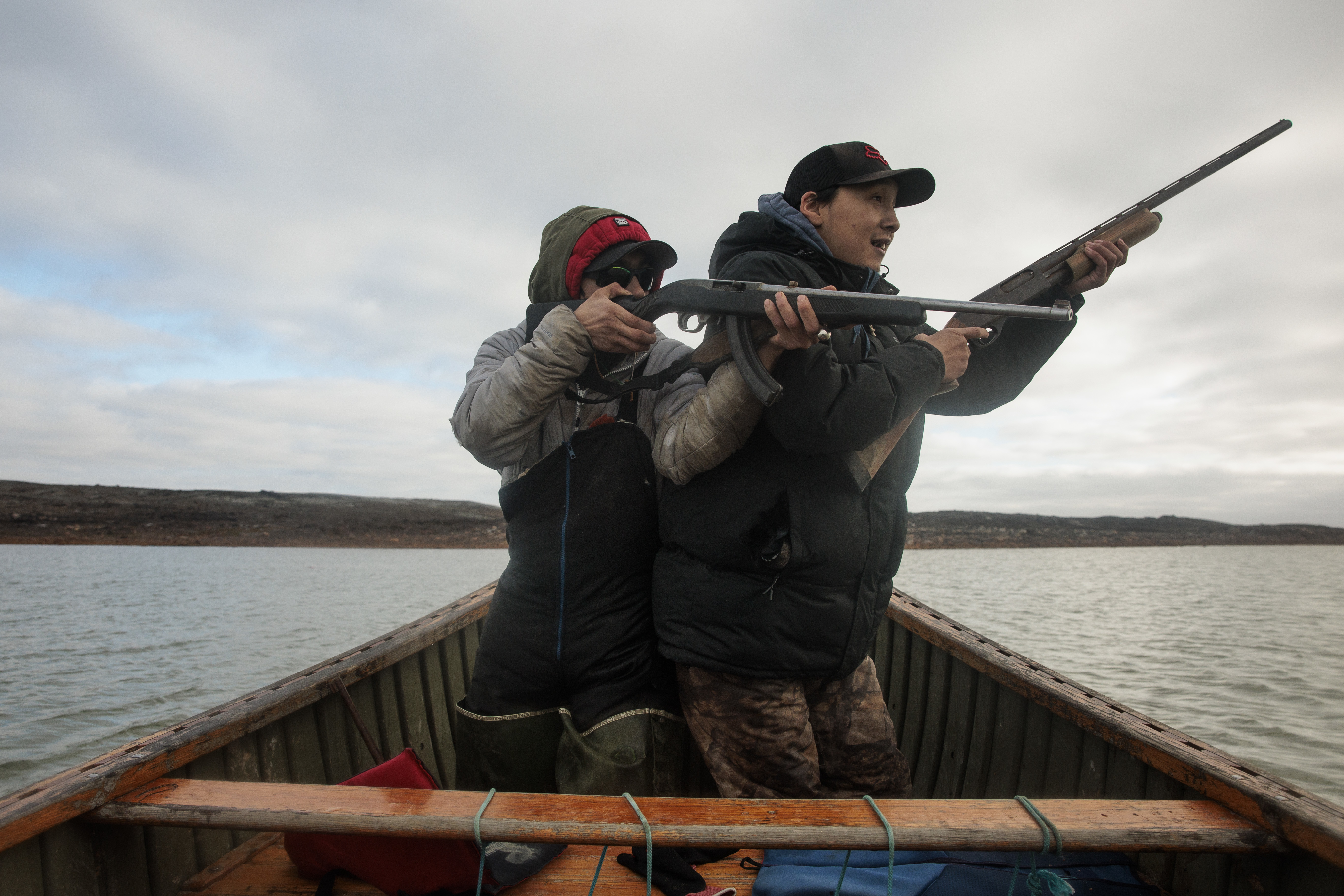
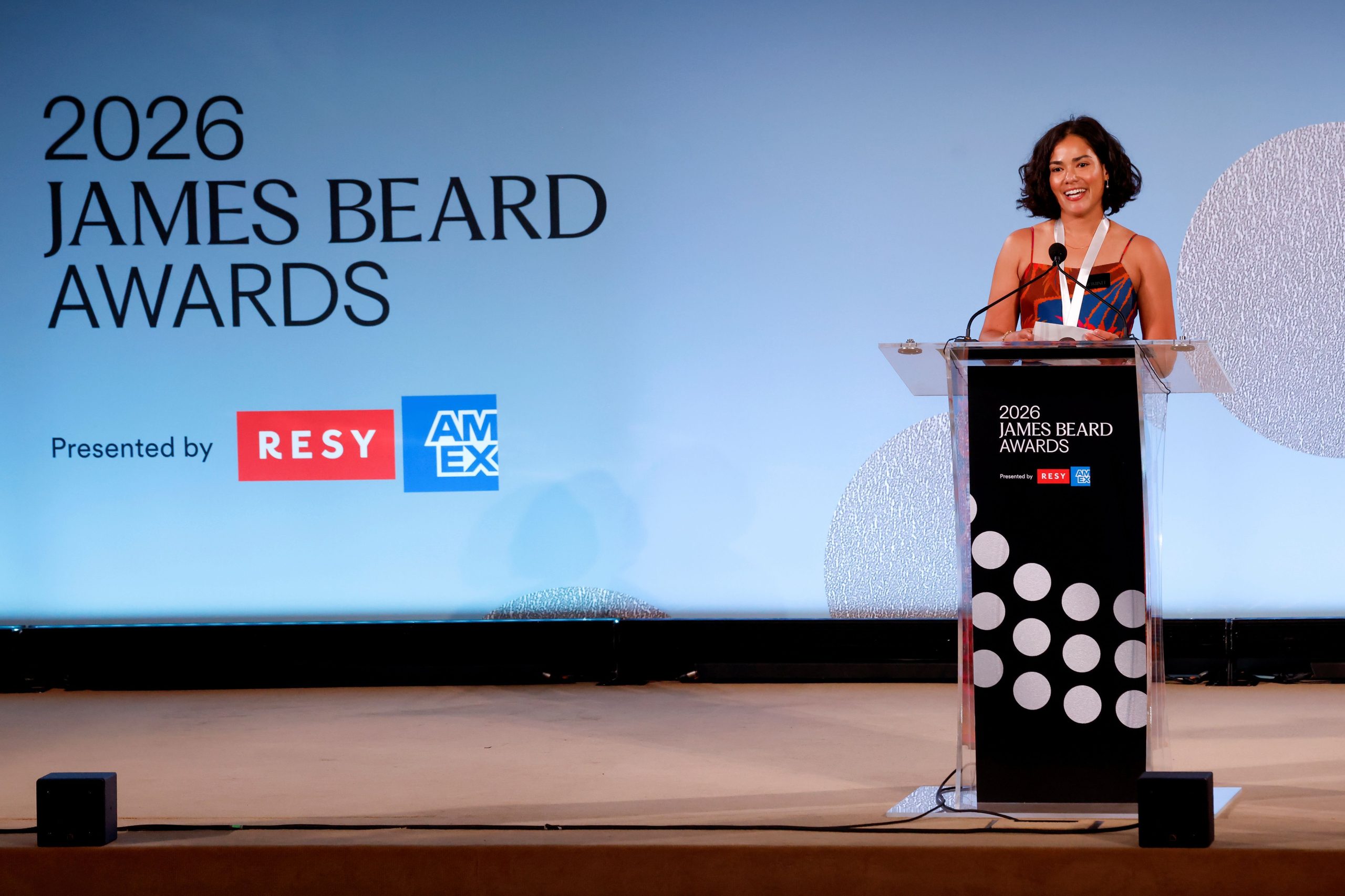
On Saturday night, Inquirer staff photographer Monica Herndon won the 2026 James Beard Media Award for Narrative Photography for “The hunt for life-giving ‘country food’ in the Canadian Arctic,” a photo essay documenting Inuit food traditions in the remote northern Québec community of Inukjuak.
The Inquirer’s Monica Herndon, winner of the Narrative Photography Award, speaks during the 2026 James Beard Media Awards on June 13.Jeff Schear / Getty Images for the James Beard Foundation
The project accompanied reporting by Inquirer restaurant critic Craig LaBan and chronicled how residents hunt, prepare, share, and preserve traditional foods, including seal, beluga, and caribou. In October 2024, Herndon and LaBan followed filmmaker Kirk French of Penn State to the region as he screened a documentary.
“There was this moment, at the end of the trip when I was leaving, when one of the elders pulled me aside and whispered, ‘You know you’re very lucky to be here,’” Herndon recalled in a chat Monday before she photographed tacos for a food article. “It sent chills down my spine.”
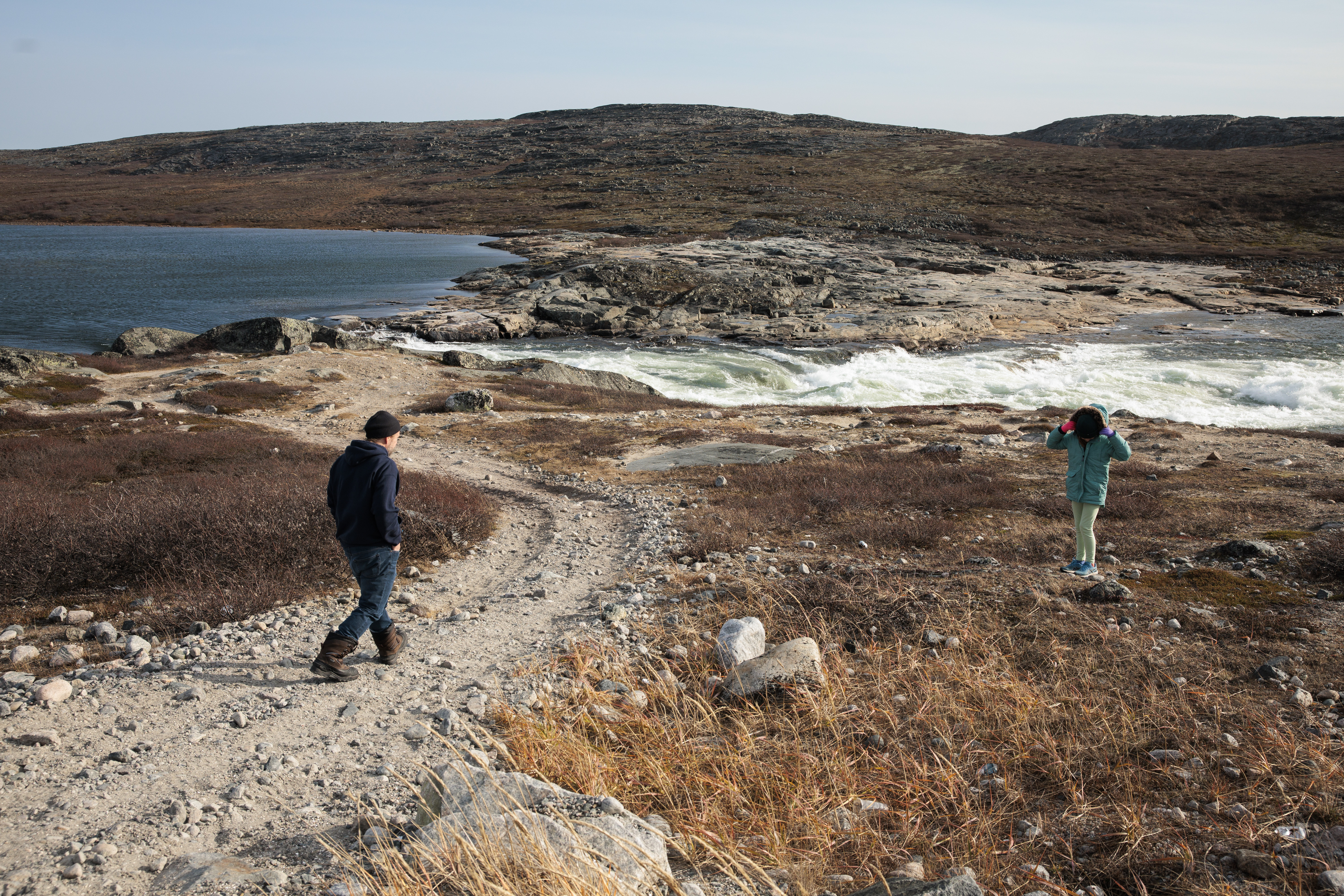
A father and daughter walk near the Innuksuak River in Inukjuak, Quebec.Monica Herndon / Staff Photographer
A native of Annapolis, Md., Herndon has worked at The Inquirer for nearly seven years. She won a 2022 Mid-Atlantic Emmy Award and Best in Show recognition from the National Press Photographers Association’s Northern Short Course contest for her work on The Inquirer’s “Wildest Dreams” project, a mini-anthology of storytelling about Black cultural inheritance, legacy, and joy.
Now the attention turns to the restaurant and chef awards, which will be presented tonight at the Lyric Opera of Chicago.
Philadelphia enters the ceremony with seven finalists, one of the strongest showings of any city in the country. Kalaya is nominated for Outstanding Restaurant, while Emmett is a finalist for Best New Restaurant. The Lovers Bar at Friday Saturday Sunday is in the running for Outstanding Bar.
In individual categories, Justine MacNeil of Fiore is a finalist for Outstanding Pastry Chef or Baker. The hotly contested Best Chef: Mid-Atlantic category includes three Philadelphia contenders: Jesse Ito of Royal Sushi & Izakaya, Amanda Shulman of Her Place Supper Club, and Omar Tate and Cybille St.Aude-Tate of Honeysuckle.
Philadelphia already has one James Beard honor secured this year.
In February, Center City’s Oyster House received a James Beard America’s Classics Award, recognizing restaurants with timeless appeal and deep roots in their communities.
Major League Baseball released the first update for All-Star voting on Monday, and several Phillies are vying for starting spots.
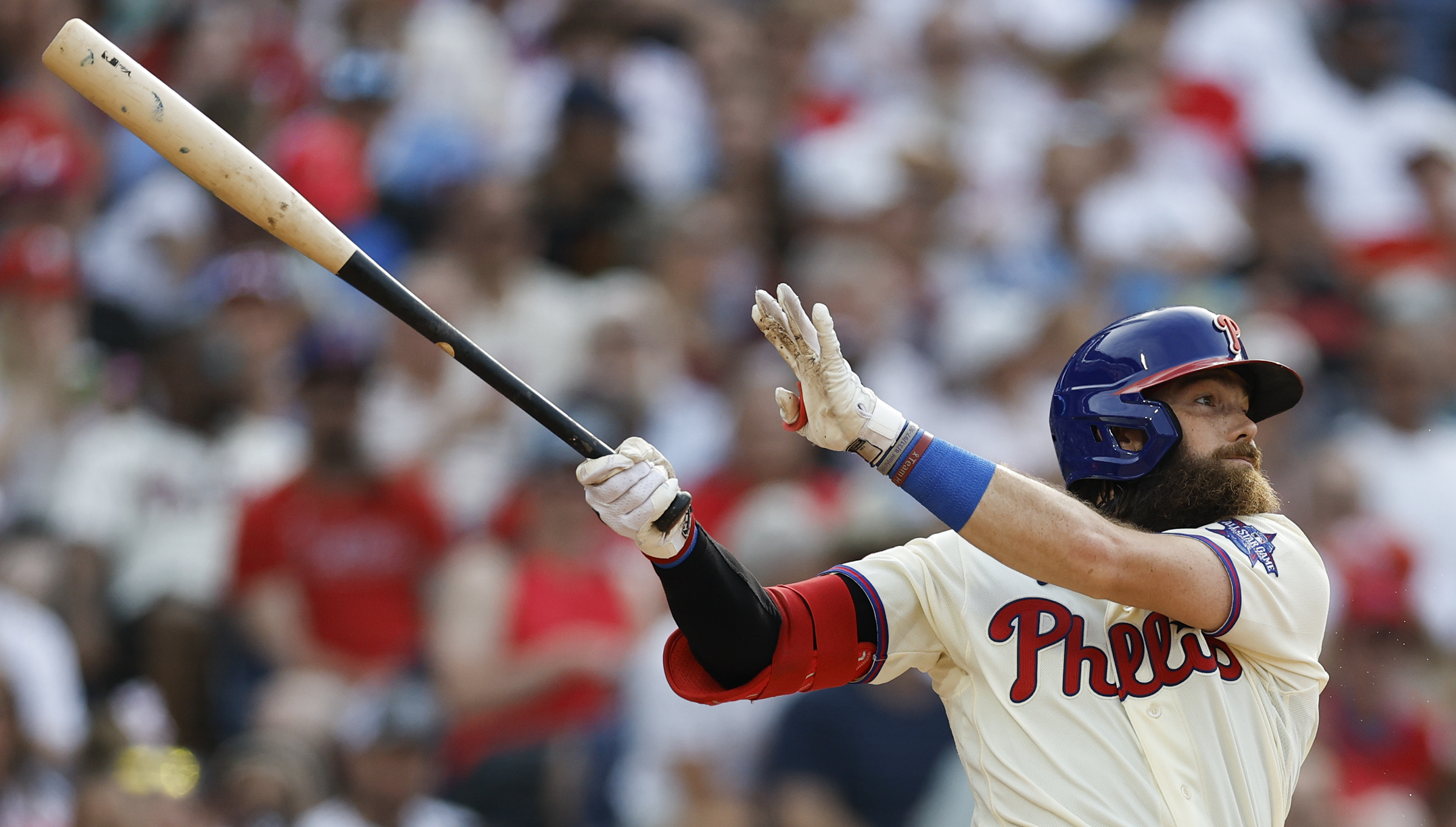
With 668,191 votes, Brandon Marsh is third among National League outfielders behind the Dodgers’ Andy Pages (800,496) and Ronald Acuña Jr. (693,472) of the Braves.
Marsh entered Monday’s game against the Marlins with a .322 batting average, which ranks fourth in baseball and third in the NL.
“Great for him and great for us, and it’s good to see that nationally he’s starting to get recognized,” interim manager Don Mattingly said of Marsh. “After that April last year, he’s probably been one of the best hitters in baseball.”
Kyle Schwarber (820,009) ranks second for designated hitters behind the Dodgers’ Shohei Ohtani (1,165,133), who is the top vote-getter in baseball.
Bryson Stott is second among second basemen and Alec Bohm is second among third basemen, while Bryce Harper and J.T. Realmuto are third at first base and catcher, respectively.
Phase 1 of voting concludes on June 25 at noon, after which the top two vote-getters at each position and top six outfielders will advance to the second phase. The All-Star Game is July 14 at Citizens Bank Park.
Women working in Philadelphia continue to make less than their male counterparts, according to a new report from the Forum of Executive Women.
While the gender pay gap in the city narrowed between 2015 and 2024, women in the local workforce still earn on average about 89 cents for every dollar men make, according to the organization’s annual report, citing Philly-specific research from the Economy League of Greater Philadelphia.
And the pay gap is worse for women of color, the report found.
“Persistent pay gaps do more than reduce annual income,” Meghan Pierce, forum president and CEO, wrote in the report. “They affect lifetime earnings, retirement security, access to capital, business formation, and the generational wealth of women and their families.”
“Pay gaps impact who leads, who invests, and who builds lasting economic power in our region.”
The gender pay gap is narrower in Philadelphia than the national average, which is roughly the same as it was in 2010. Across the country, women earn on average 81 cents for every dollar made by men, according to data from the Economic Policy Institute, a left-leaning nonprofit think tank.
Because of the gap, working women in the U.S. collectively lose about $1.7 trillion in wages each year, according to the forum report, and each woman loses about $500,000 on average during their career.
While the gender pay gap is smaller in Philadelphia, racial disparities persist.
Compared to non-Hispanic white men, white women in Philadelphia earn 94 cents on the dollar, the report found, while Black women earn 64 cents, and Hispanic and Latina women earn 57 cents.
Women in the city also remain concentrated in lower-earning professions, making up 76% of healthcare workers and 66% of education workers, two sectors where the median annual earnings was below $60,000, according to the report, titled “The Philadelphia Paradox.”
While a pay gap persists for local women at every education level, some industries have narrowed the gap more than others in recent years, the report found: Finance, retail, and real estate saw their gender pay gaps narrow, while the gap widened in arts, utilities, and construction.
When it comes to Philadelphia’s gender pay disparity, the report concluded: “Progress is real, but closing the remaining gap requires addressing the structures that determine who enters higher-paying fields, who advances within them, and who benefits from the systems that shape long-term economic security.”
The soft-shell crab is one of the pleasures of late spring and summer. They offer the sweet, briny flavor of fresh blue crab wrapped in a delicate, edible shell that turns crisp when cooked.
This year’s season, however, appears to have been compressed.
Soft-shells are blue crabs that have recently shed their hard outer shell and are briefly in a soft, vulnerable state. Anthony D’Angelo of South Philadelphia seafood distributor Samuels Seafood said warmer water temperatures brought on the crab molt early, while fewer marketable peelers, weather interruptions, and normal predation left restaurants with fewer crabs and a shorter window.
Volume this year is down about 20% from last year, yet prices last year were about 15% higher, D’Angelo said.
As an example, D’Angelo said jumbo soft-shells sold for an average of about $98 a dozen in May, compared with roughly $117 a dozen during the same period last year. Another run of crabs from the Carolinas is expected in late August or early September, likely at lower prices, he said.
Many restaurants are offering soft-shells when they can get them. Blue Corn in the Italian Market recently featured them as tacos with mango slaw, guacamole, fresh jalapeño, and microgreens.
Others keep them on the menu throughout the season. Soft-shells remain one of the more expensive seafood items. Several restaurateurs said they are paying $95 to $100 a dozen for jumbo crabs. Given that many restaurants target food costs of roughly 30% to 33% of menu price, that is one reason a soft-shell dish can easily top $30.
For chef Randy Rucker, who serves soft-shells at both River Twice and Little Water, the annual ritual is worth the cost and unpredictability. “When they’re available, we grab them,” he said. “They’re special. They’ll always be special.”
Here are some of the dishes I’ve found. As always, call ahead to confirm availability.
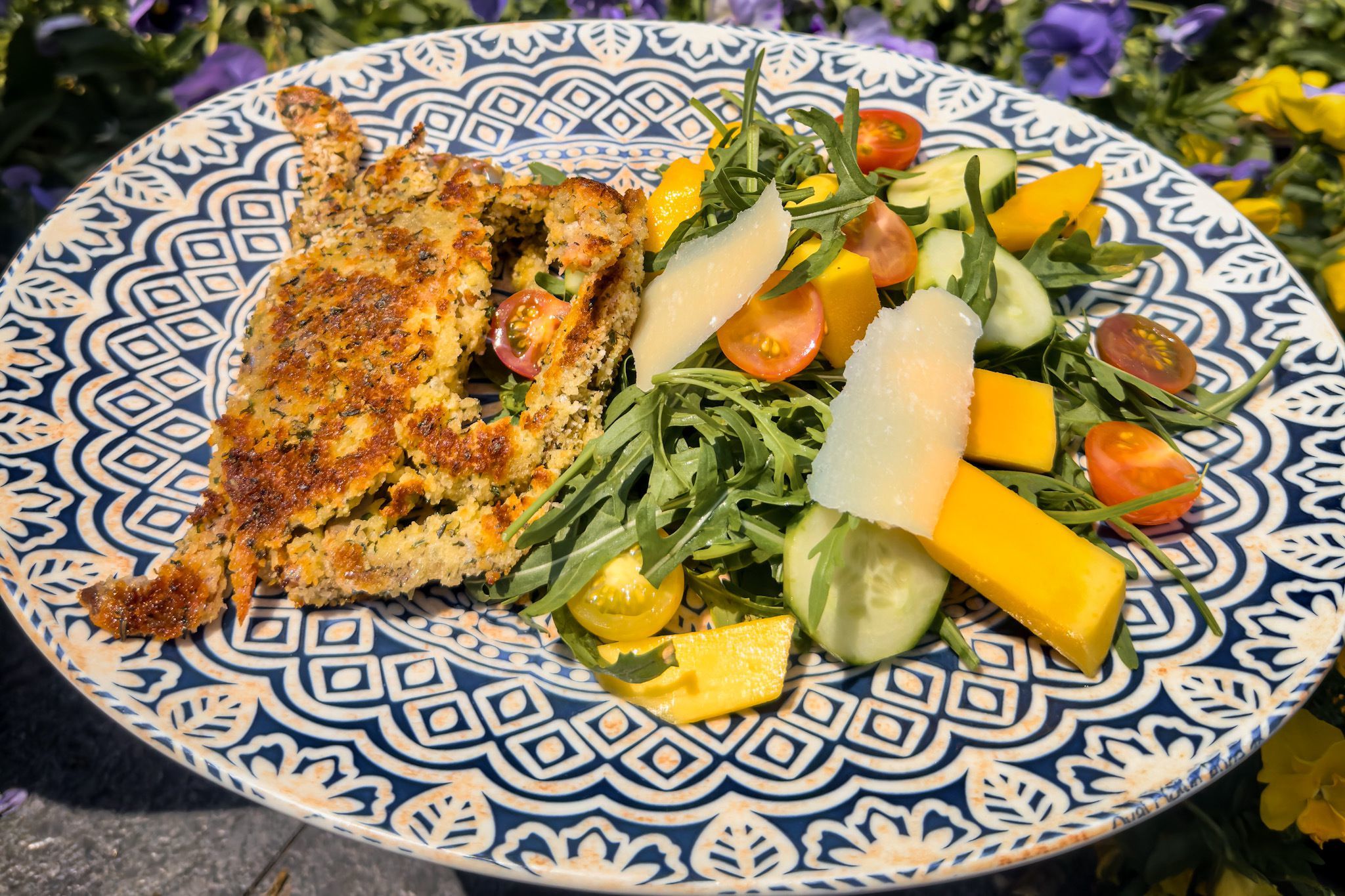
Soft-shell crabs, herb crusted over an arugula salad with tomatoes, cucumbers and mango, at Caffe Aldo Lamberti, 2011 Marlton Pike, Cherry Hill.Courtesy of Caffe Aldo Lamberti
Caffe Aldo Lamberti, Cherry Hill
Chef Genaro “Jerry” Ventura changes the preparation of his crabs frequently at this Italian destination. Last week, he crusted soft-shells with herbs and served them over arugula with tomatoes, cucumbers, and mango. Another preparation paired pan-seared soft-shells with squid-ink linguine, garlic, extra-virgin olive oil, tomatoes, and snap peas. Expect to pay about $28 for one crab at lunch or $45 to $48 for two at dinner.
Condesa, Center City
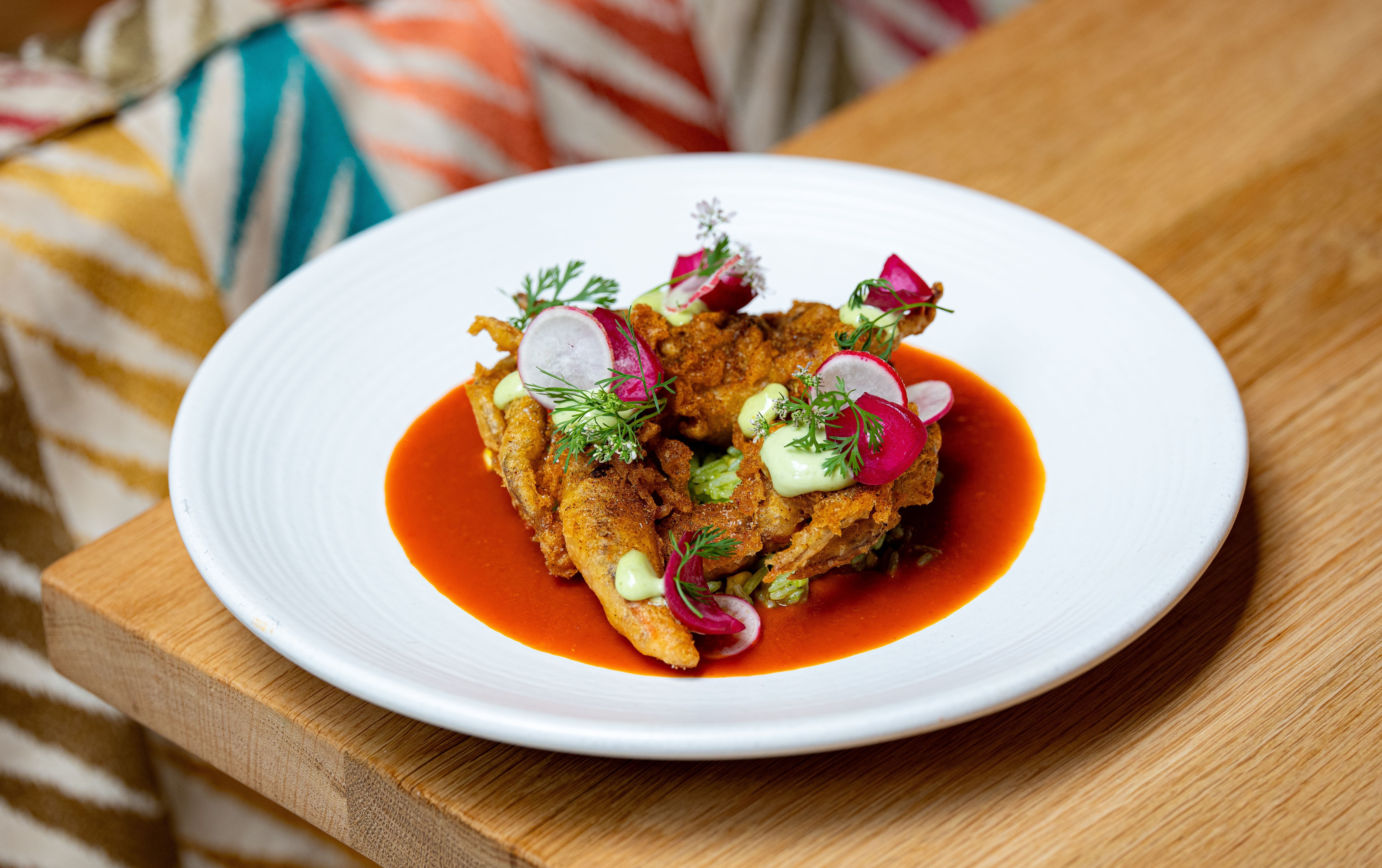
At this Mexican restaurant, chef Jason Peabody’s crab relleno features beer-battered soft-shell crab with green rice, salsa roja, and epazote mayo ($34).
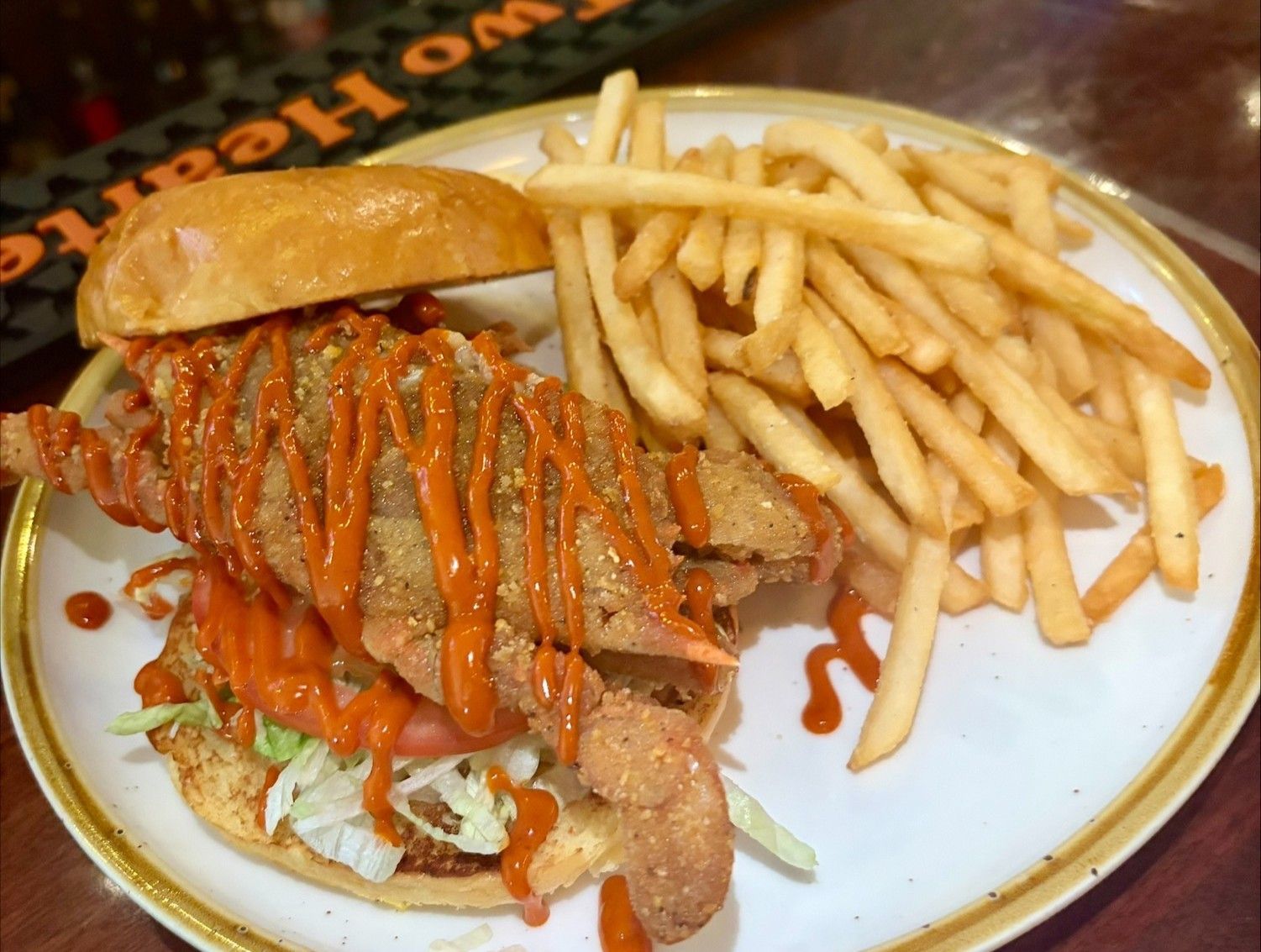
At the Crossbar (2225 Darby Rd., Havertown), a soft-shell crab sandwich is deep fried and topped with a smoky house- made harissa aioli, lettuce, and tomato and served on Le Bus brioche bun.Courtesy of the Crossbar
The Crossbar, Havertown
This Delco taproom’s soft-shell is battered and fried, then topped with smoky house-made harissa aioli, lettuce, and tomato on a Le Bus brioche bun ($24).
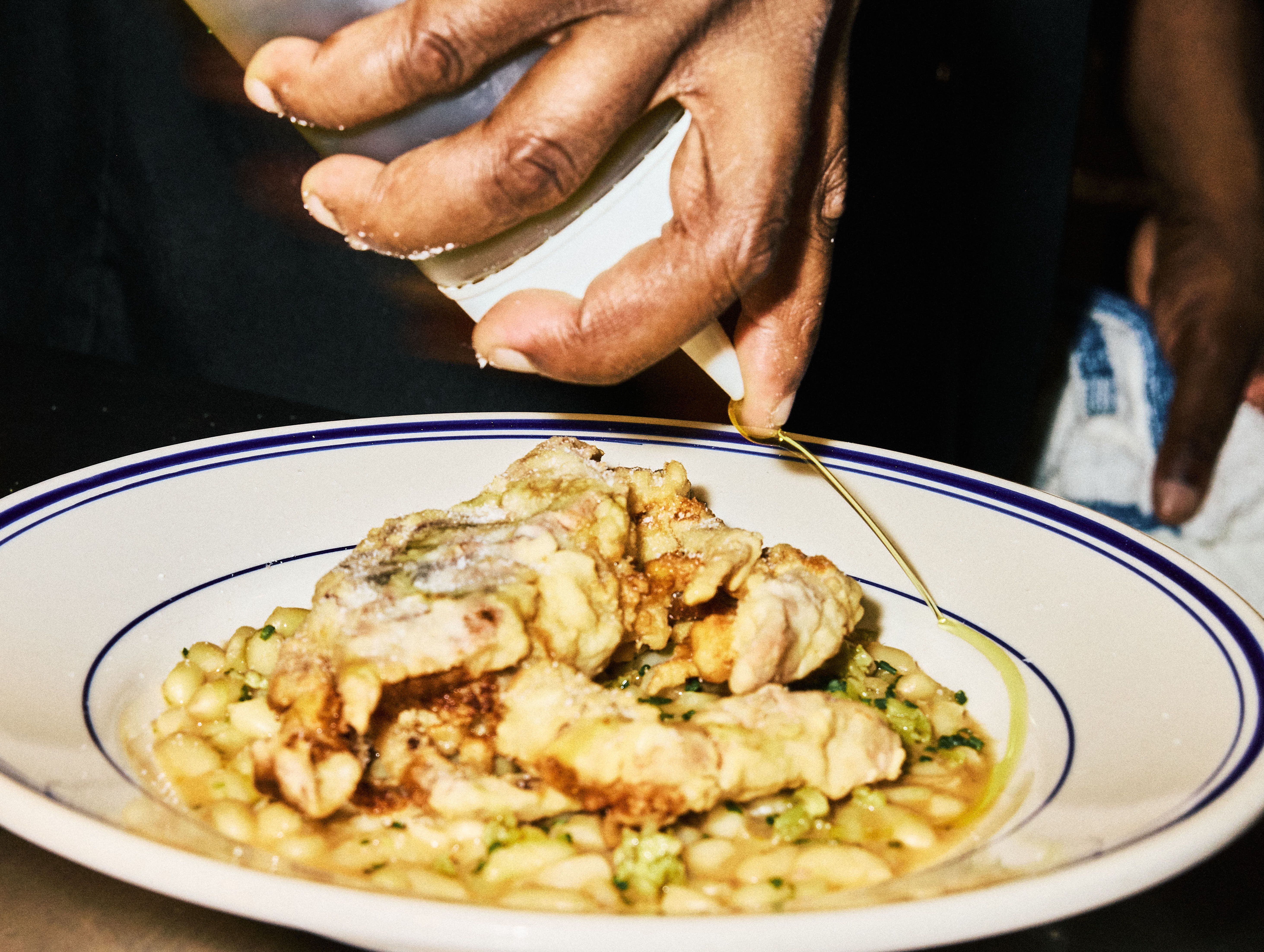
Soft-shell crab with flageolet beans, tapenade, and preserved lemon at the Good King Tavern, 614 S. Seventh St.Ed Newton
The Good King Tavern, Bella Vista
The French bistro has featured soft-shell crab as a chalkboard special with flageolet beans, tapenade, and preserved lemon ($32).
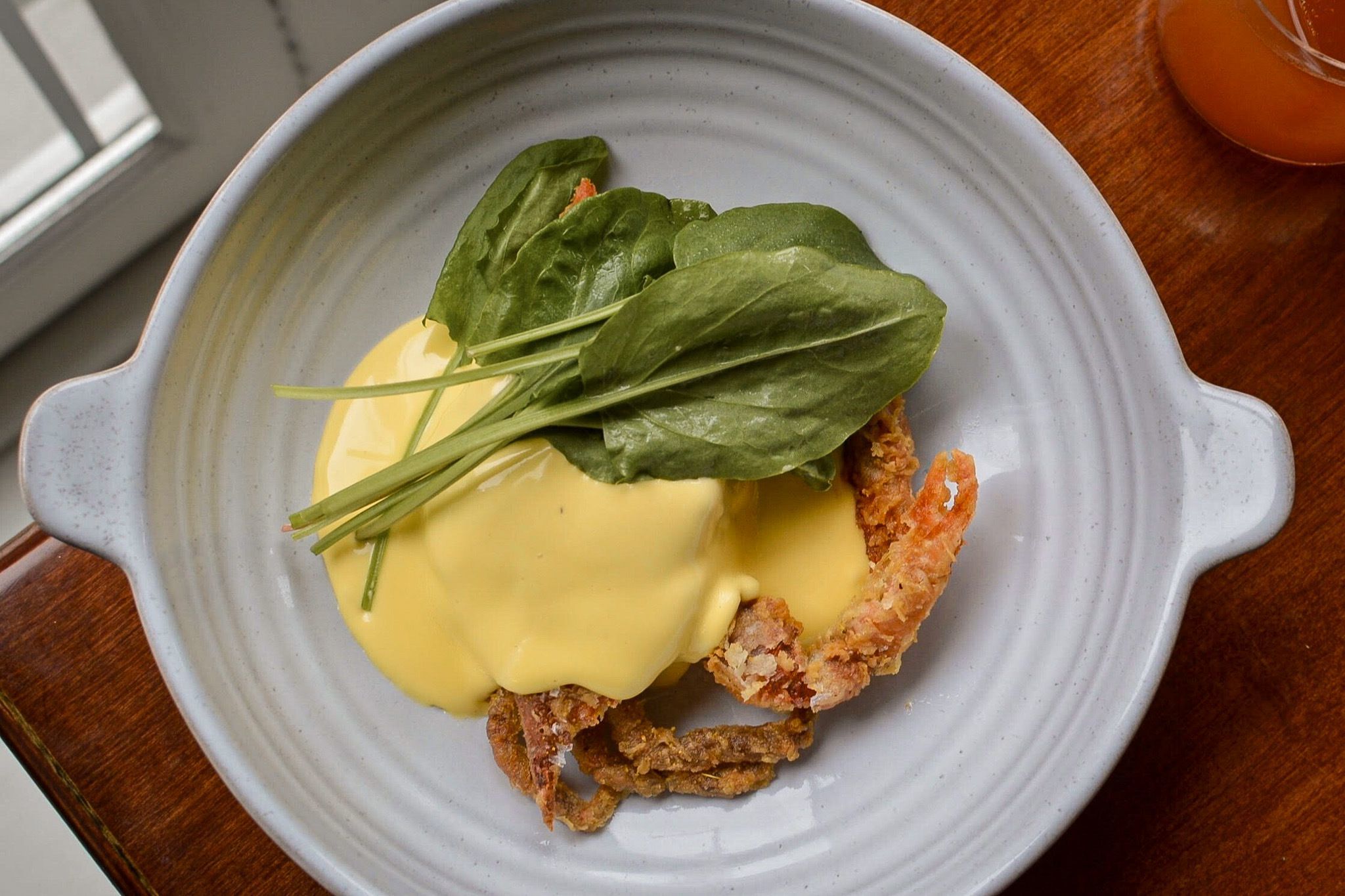
Chicken-fried soft-shell crab with vin jaune hollandaise and sorrel at Little Water, 261 S. 20th St.
.Courtesy of Little Water
Little Water, Center City
This seafood restaurant’s chicken-fried soft-shell crab comes with vin jaune hollandaise and sorrel ($42).
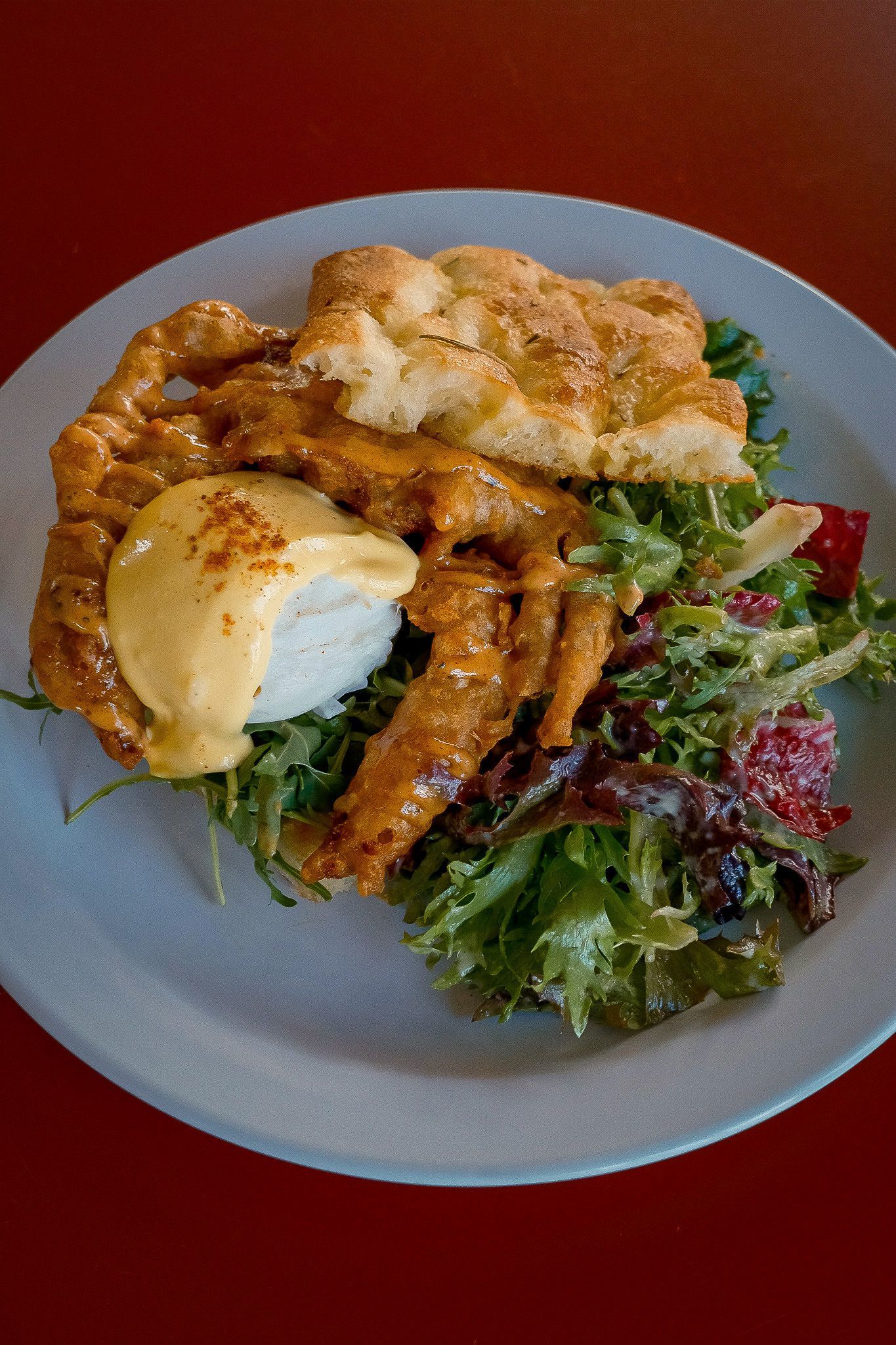
The soft-shell Benedict at Lucky Duck, 501 N. Columbus Blvd.Pri Rambhia
Lucky Duck, Old City/Northern Liberties
Soft-shells are on this riverside bar’s weekend brunch menu as a Benedict with Old Bay Alabama white sauce, arugula, and hollandaise, on brioche.
Oyster House, Center City
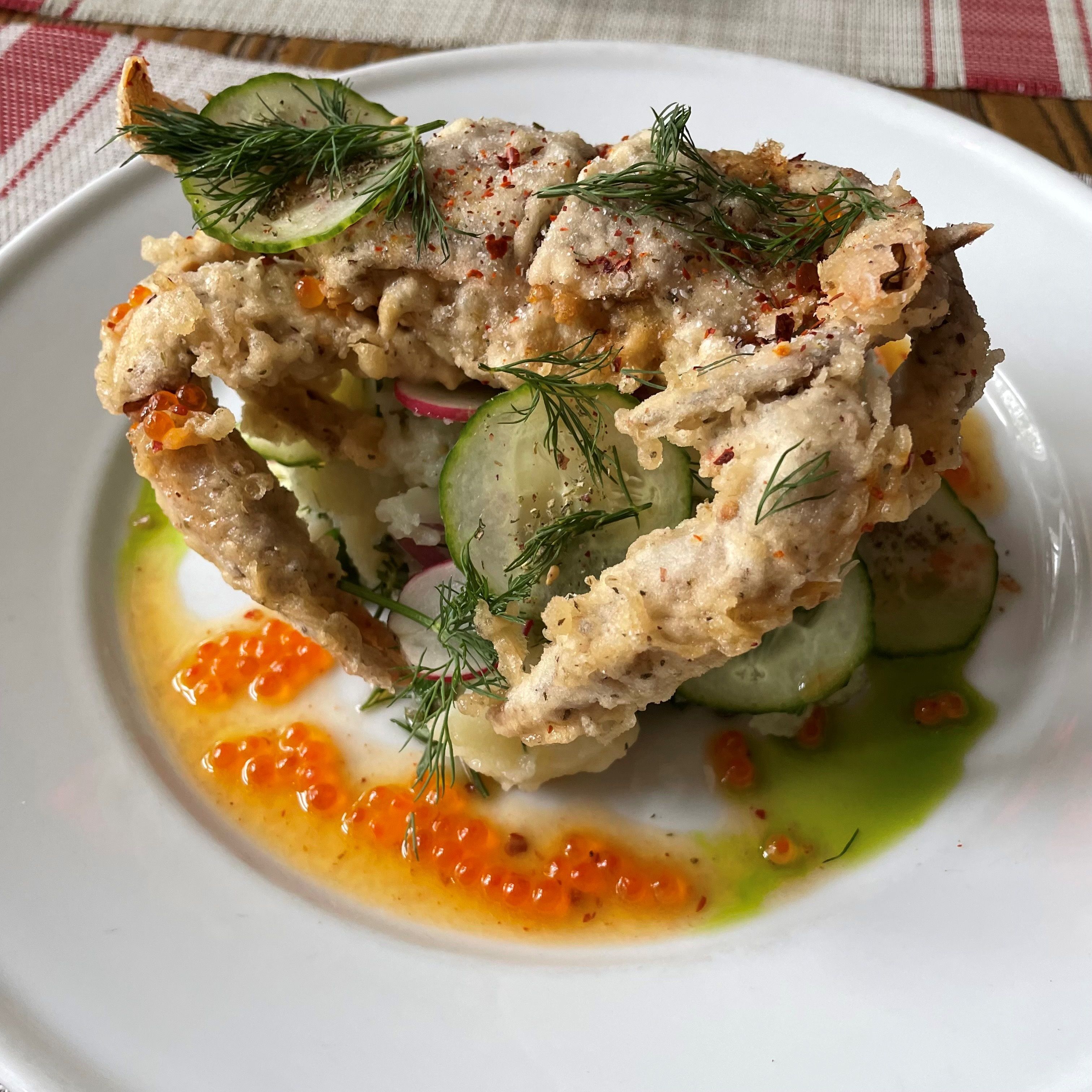
The seafood destination’s grilled soft-shell crab ($36) is plated with poblano Dijon sauce, blanched asparagus, smoked trout roe, and pickled ramps. There’s also a fried soft-shell crab BLT ($29) with smoked bacon and ramp buttermilk ranch.
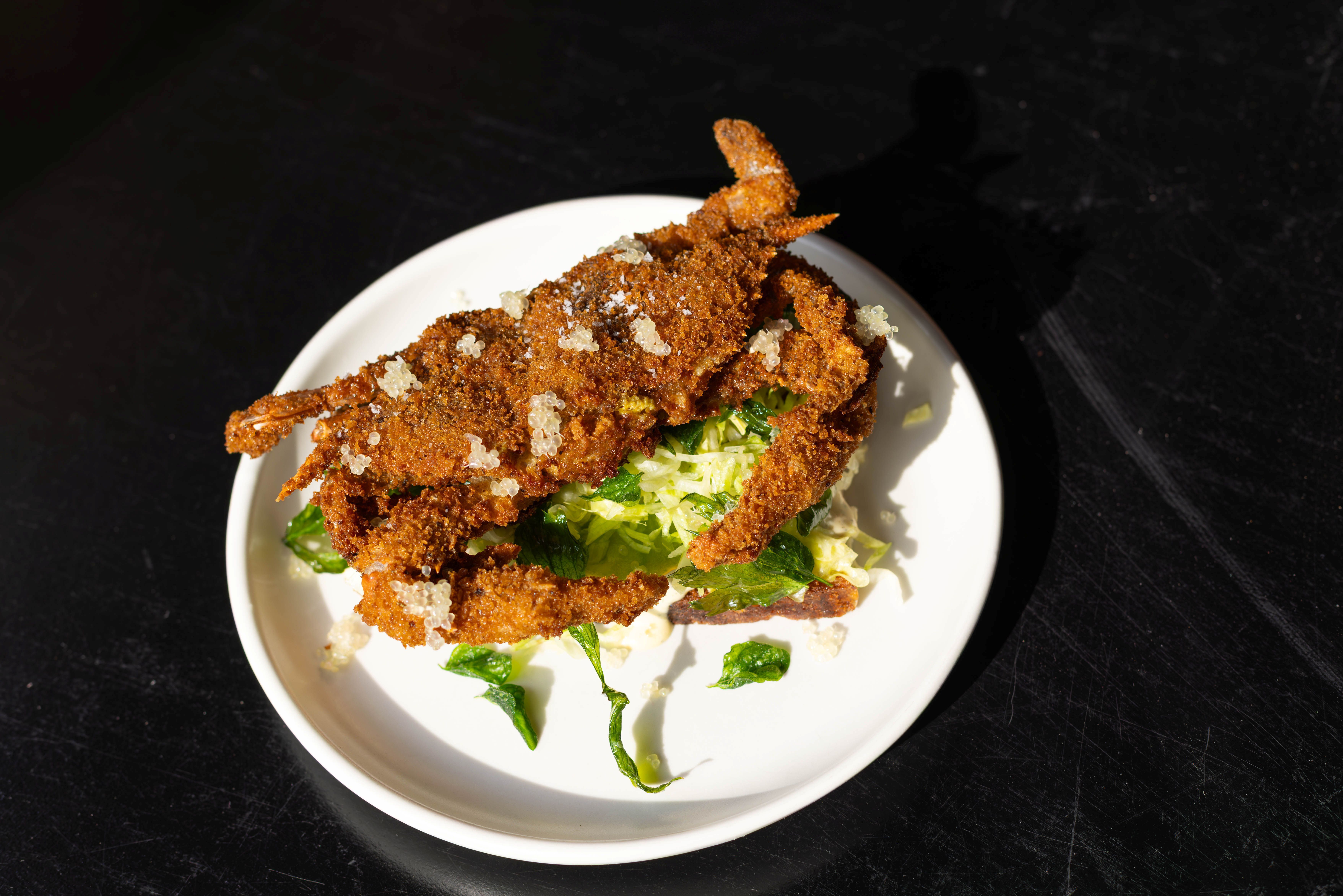
Soft-shell hoagie tartine at Post Haste, 2519 Frankford Ave.KC Tinari
Post Haste, Kensington
At this farm-to-table restaurant, chef Ari Miller (husband of Inquirer food reporter Kiki Aranita) offers a soft-shell hoagie tartine featuring a breaded and fried crab on Brass Monkey bread with green coriander mayo, shredded local iceberg lettuce, heirloom tomato, crispy herbs, and caviar lime ($24).
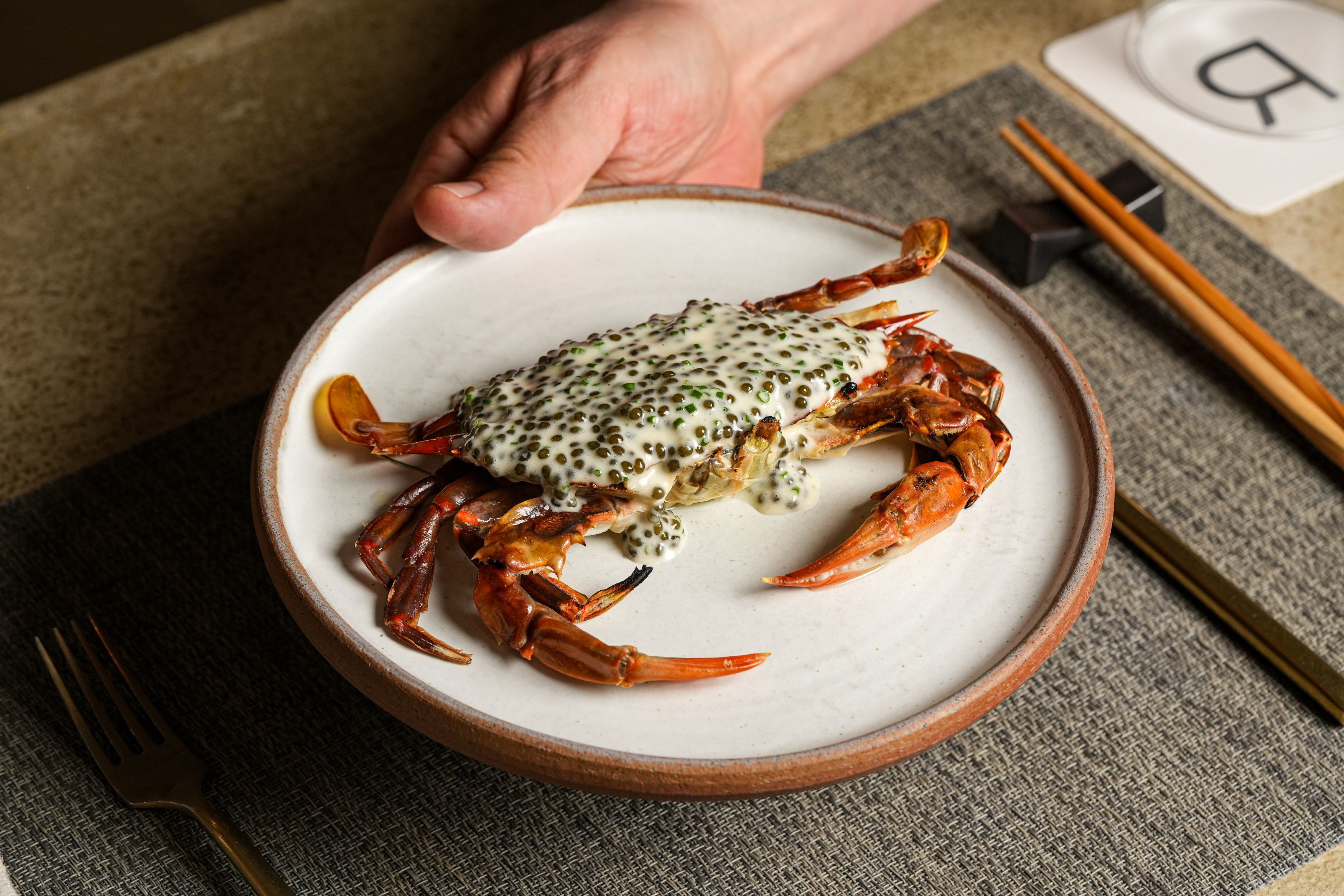
Soft-shell crab cooked over charcoal with crab fat and golden Ossetra caviar at River Twice, 1601 E. Passyunk Ave.Mike Prince
River Twice, South Philadelphia
The signature preparation at this Southern restaurant returns this season: a soft-shell crab grilled over charcoal and finished with crab-fat koji butter and golden Ossetra caviar ($52).
At Stina (1705 Snyder Ave.), the soft-shell crab is served with Greek-style potato salad, capers, lemon, herbs, extra-virgin olive oil, smoked trout caviar, and Bukovo vinaigrette.Courtesy of Stina
Stina, South Philadelphia
At his Mediterranean restaurant, chef Bobby Saritsoglou serves soft-shell crab with Greek-style potato salad, capers, lemon, herbs, extra-virgin olive oil, smoked trout caviar, and Bukovo vinaigrette ($36).
Rita’s Italian Ice & Frozen Custard has added a new limited-edition flavor to its summer menu.
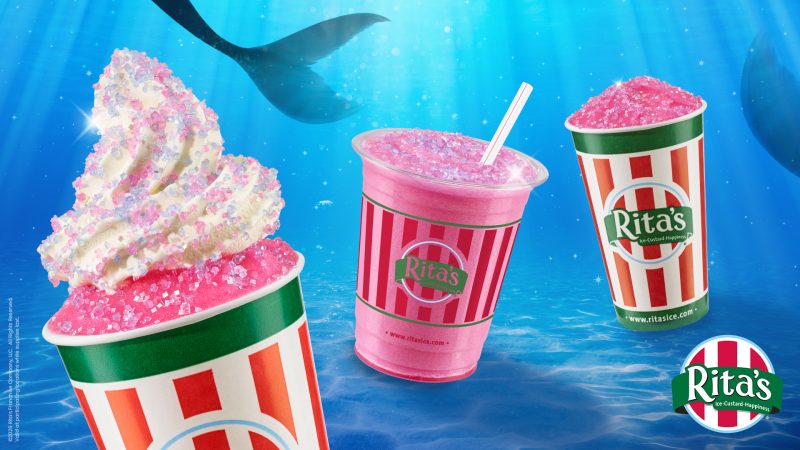
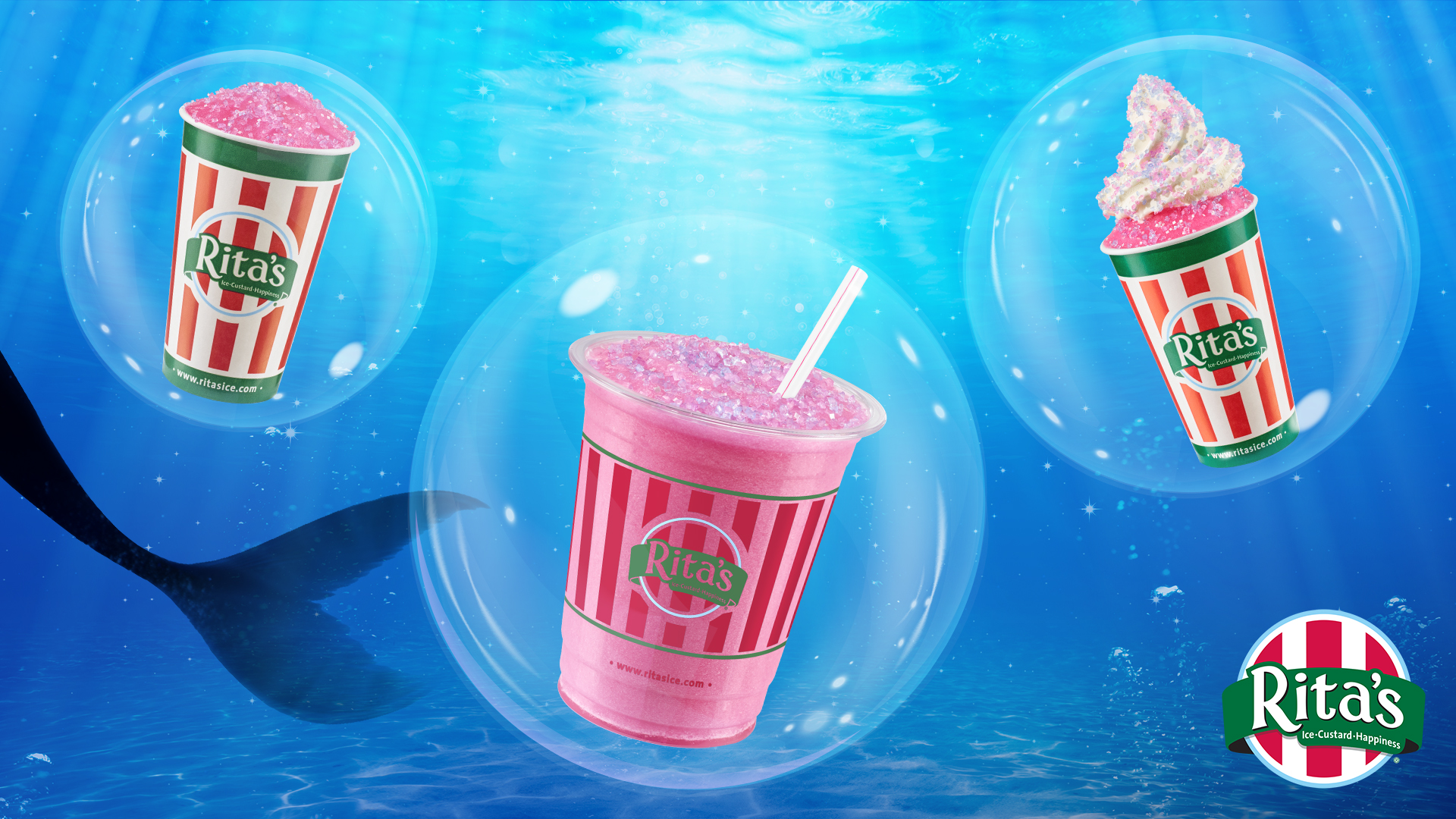
Mermaid Italian Ice is vibrant pink flavor that combines berry and marshmallow and comes topped with glitter.
The Bensalem-born water ice purveyor is offering the flavor at all 600 Rita’s locations nationwide until July 19.
Order the new flavor three ways: Italian ice, gelati, or ice blender.Rita's Italian Ice & Frozen Custard
Rita’s Italian ice is made daily on-site with a rotating selection of over 80 flavors. The menu also includes frozen custard, gelati, frozen coffee, Rita’s Blendinis, and milkshakes.
The new flavor comes three ways: as an Italian ice; a gelati (Mermaid Italian ice layered with vanilla frozen custard and topped with glitter); and as an ice blender (an icy berry-marshmallow blend shimmering with glitter.)
“At Rita’s, we’re always looking for ways to create joyful experiences that bring families together, and Mermaid Italian Ice does exactly that,” said Carmela Hughley, SVP of Marketing Insights and Innovation at Rita’s, in a statement. “This treat captures the magic and imagination of summer. We can’t wait for guests of all ages to dive in and experience this enchanting new flavor for themselves.”
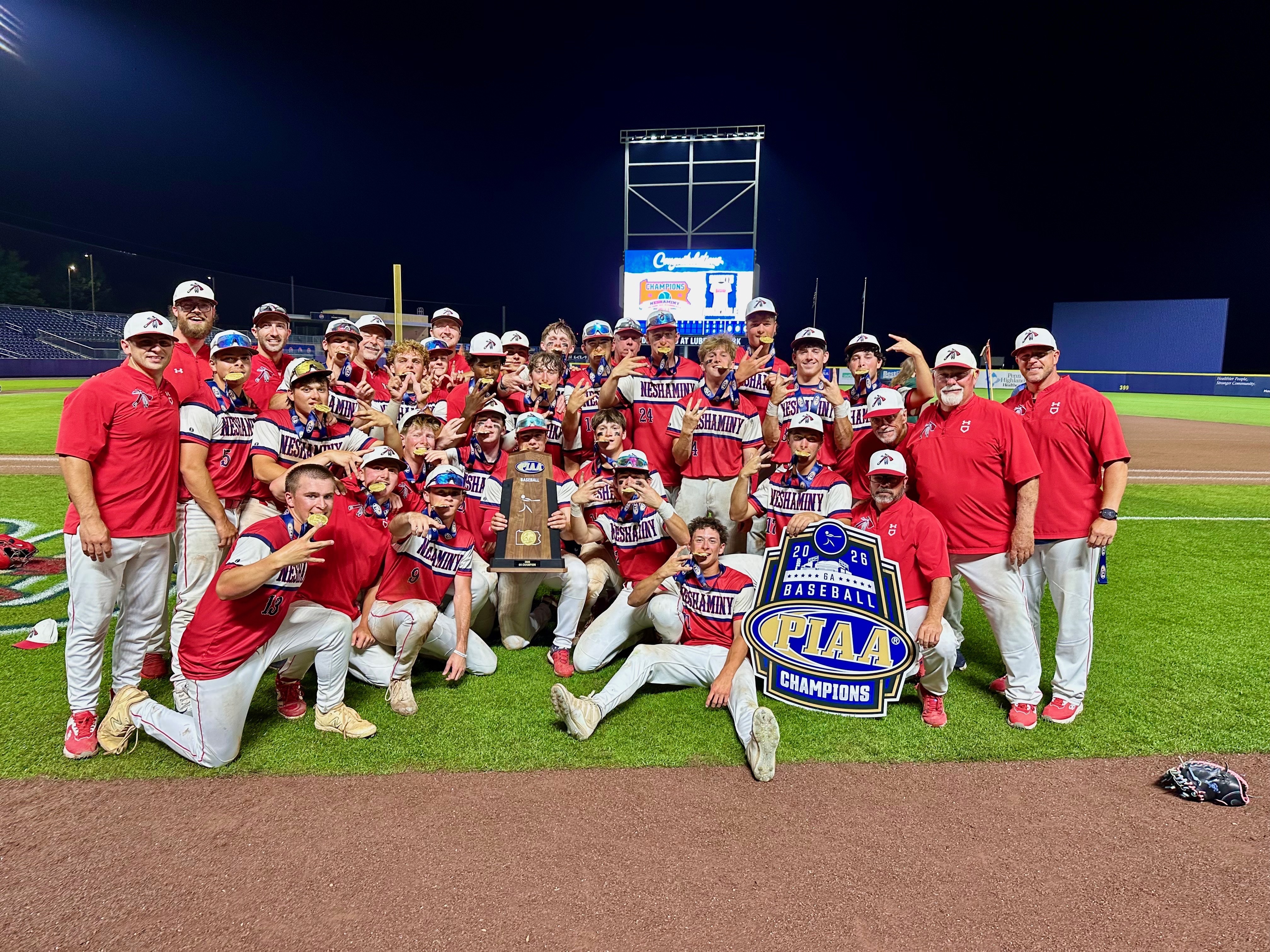
Neshaminy baseball has been waiting for a state championship since its inception, so having to wait another three-and-a-half hours wasn’t going to stop the team from accomplishing what it set out to do.
Following a rain delay at Penn State’s Medlar Field at Lubrano Park, Neshaminy won the first state title in program history with a 7-3 win over Butler Senior High School in the PIAA Class 6A championship last Thursday.
Neshaminy was one of three area schools competing in the state final from June 11 to June 12. Dock Mennonite Academy in Lansdale beat Eden Christian Academy of Allegheny County for the 1A crown, while Holy Ghost Prep fell short to Indiana Area Senior High in the 4A title game.
Head coach Dan Toner said from when the team arrived, and through the delay, he knew Neshaminy was coming home with the plaque.
“We felt it when we got there.” Toner said. “[The players] were studying film, talking about ways to be successful, [and] visualization. So, they were focused from the second they arrived, all the way through.”
These techniques were part of the team’s pregame conversations about creating its own narrative. Toner said Neshaminy’s football coach, Nick Felus, sent him a video about how creating your own narrative is what separates elite athletes and winners.
Toner preached this to his team early on, and the players bought into it. Even during a stalemate through the first half of the game, Neshaminy knew it was going to break through.
That breakthrough finally came in the back-half of the game.
Tied 1-1 through the bottom of the fifth, a single from senior Dan Marable brought senior Michael Welsh home from second to give Neshaminy a 2-1 lead, followed by three more runs in that frame. In the next inning, they added two insurance runs.
In Toner’s nine years as the head coach, Neshaminy has made the PIAA tournament six times, losing in the state semifinal in both 2019 and 2025.
“We were kind of knocking on the door a couple times,” Toner said, “But to finally get over that hill and make it and then actually win it, was the feeling everybody chases and the goal everybody chases when they start playing, start coaching.”
Toner said coaches Jess Toner, his father, and Jim Strickler, who have been coaching in the area for more than 40 years, have been waiting for this state title longer than anyone else.
Strickler was the head coach at Truman before joining Neshaminy’s coaching staff. Jess Toner was also with Truman, as well as Pennsbury and Council Rock, before joining his son at Neshaminy.
They’ve experienced league and district championships, but states were a new experience for them.
“Watching them finally get that moment was absolutely fantastic for myself and I’m sure everybody else involved,” Toner said.
— Pennsylvania State Baseball Coaches Association (@pabasecoaches) June 12, 2026
The moment also meant a lot to the players who got a taste of the PIAA playoffs before.
Third baseman Brandon Lall, shortstop and pitcher Chase Bonner, second baseman Mike Sassano, and first baseman and pitcher Noah Wallace have experienced state playoffs for most of their careers.
They have been starters since their sophomore year, when Neshaminy won the Suburban One League title in 2024 and made it to the state quarterfinal. Toner said they had a good idea of what the “intensity and competition” was like on this stage.
“The experience played a huge part,” Toner said. “Once they got to the game that they really couldn’t get past [the state semifinal], they knew what they had to do to be able to accomplish that and they were able to do it.”
With three sophomores and five juniors on the state championship team returning next year, there’s a solid group of players who have gained this experience as well. After learning from the upperclassmen, Toner said it’s their turn to pass it on to the younger players and get back to the state championship.
“That’s what they’re going to be chasing from now on,” Toner said. “So right away, whether the skill level is the same or not, whether they’re as successful, they know what it takes and they have that feeling of what they want to accomplish again. That’s a huge part of being successful.”
A U.S. Immigration and Customs Enforcement agent was hit with a vehicle in Manahawkin early Monday as he tried to arrest a man who later fled in the car, according to local police. As the suspect got away, the officer struck the vehicle with his firearm.
The attempted arrest played out on Route 72 near Mermaid Drive, according to the Stafford Township Police Department, which learned of the incident around 9:30 a.m.
An ICE spokesperson said immigration officers were conducting a targeted car stop to arrest Peruvian national Friedrich Castillo-Ormeno, who’d been given a final order of removal Jan. 30.
“The driver then weaponized his vehicle and struck an officer resulting in the officer discharging his weapon,” said the ICE spokesperson in a statement, adding the incident was part of a “pattern of vehicle attacks” against its officers.
The ICE agent was reported to have sustained injuries, but his condition was not immediately clear. The ICE spokesperson did confirm the officer was transported to a local hospital for treatment
Stafford Township Police said it’s unclear whether the suspect fired back at the ICE agent as he tried to flee, but noted they believed there is no threat to public safety.
For now, local police continue to secure the area, which is expected to see road closures for several more hours as ICE continues to investigate. The FBI was also on the scene.
New Jersey’s Immigrant Trust Directive and other state policies limit police cooperation with ICE. Stafford Police said they were not part of the attempted arrest when the incident occurred, adding they would not be investigating the incident, either.
New Jersey State Police similarly directed all questions regarding the ongoing investigation to ICE.
An ICE spokesperson said the agency would update the public when more information is available.
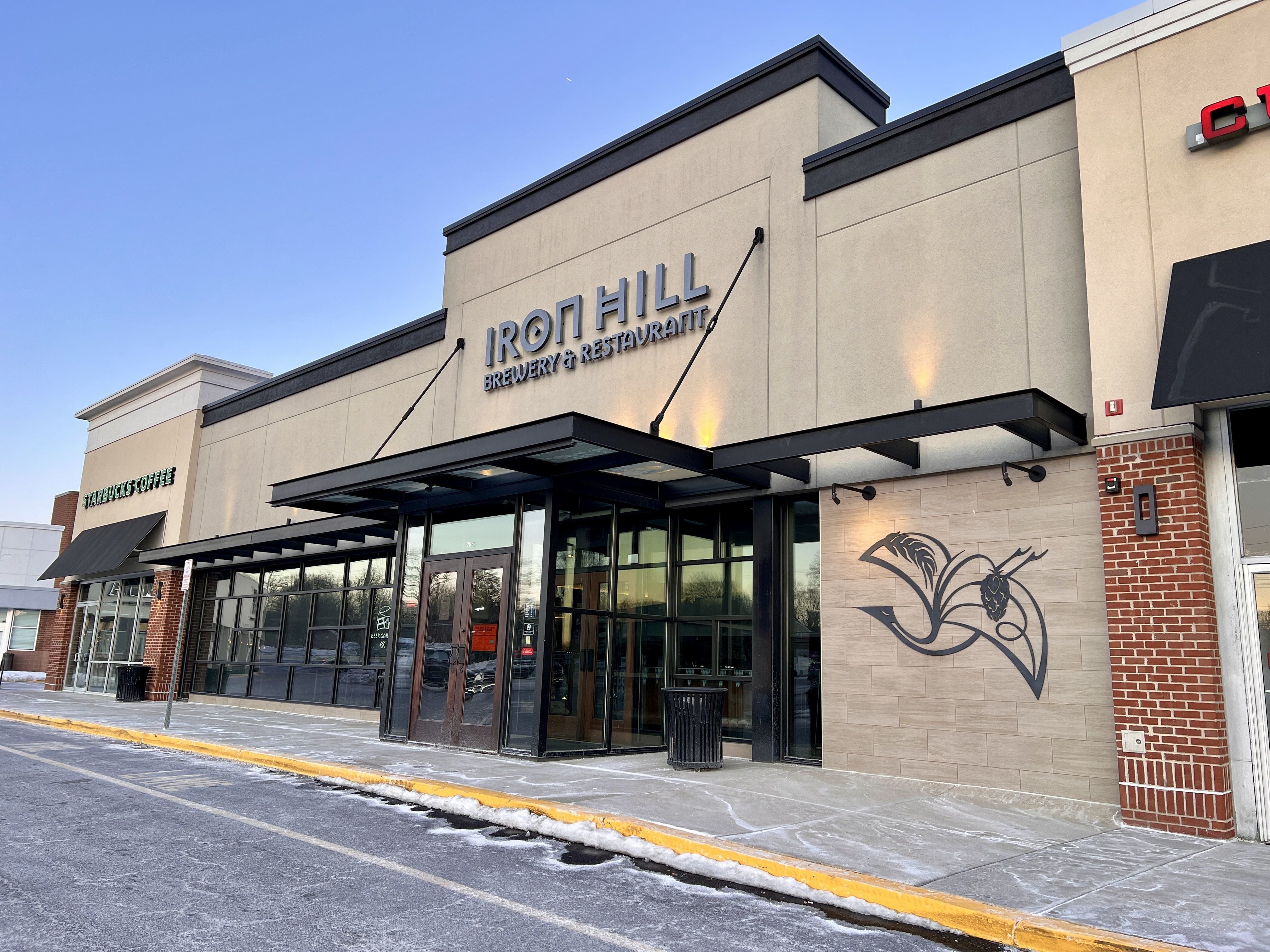
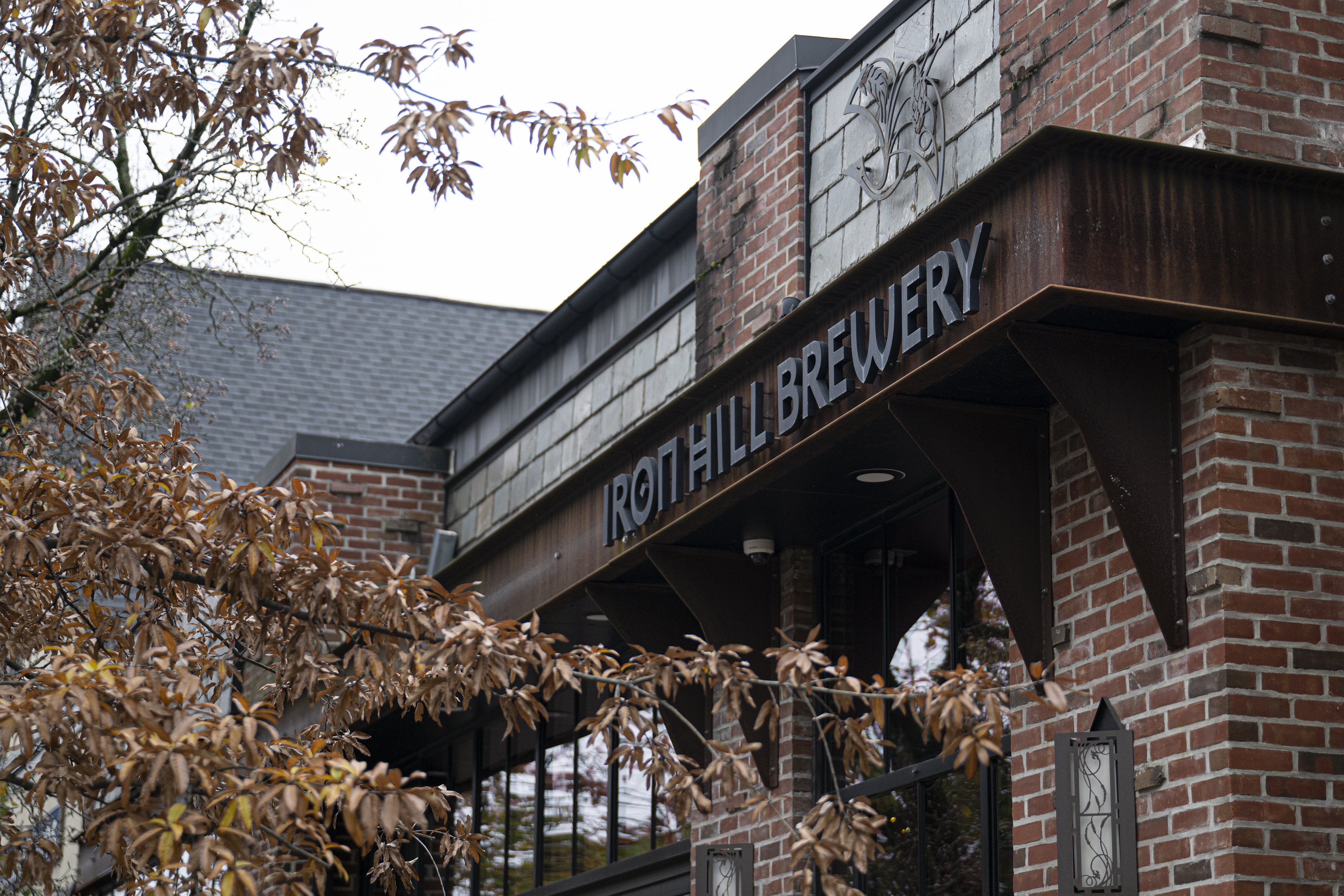
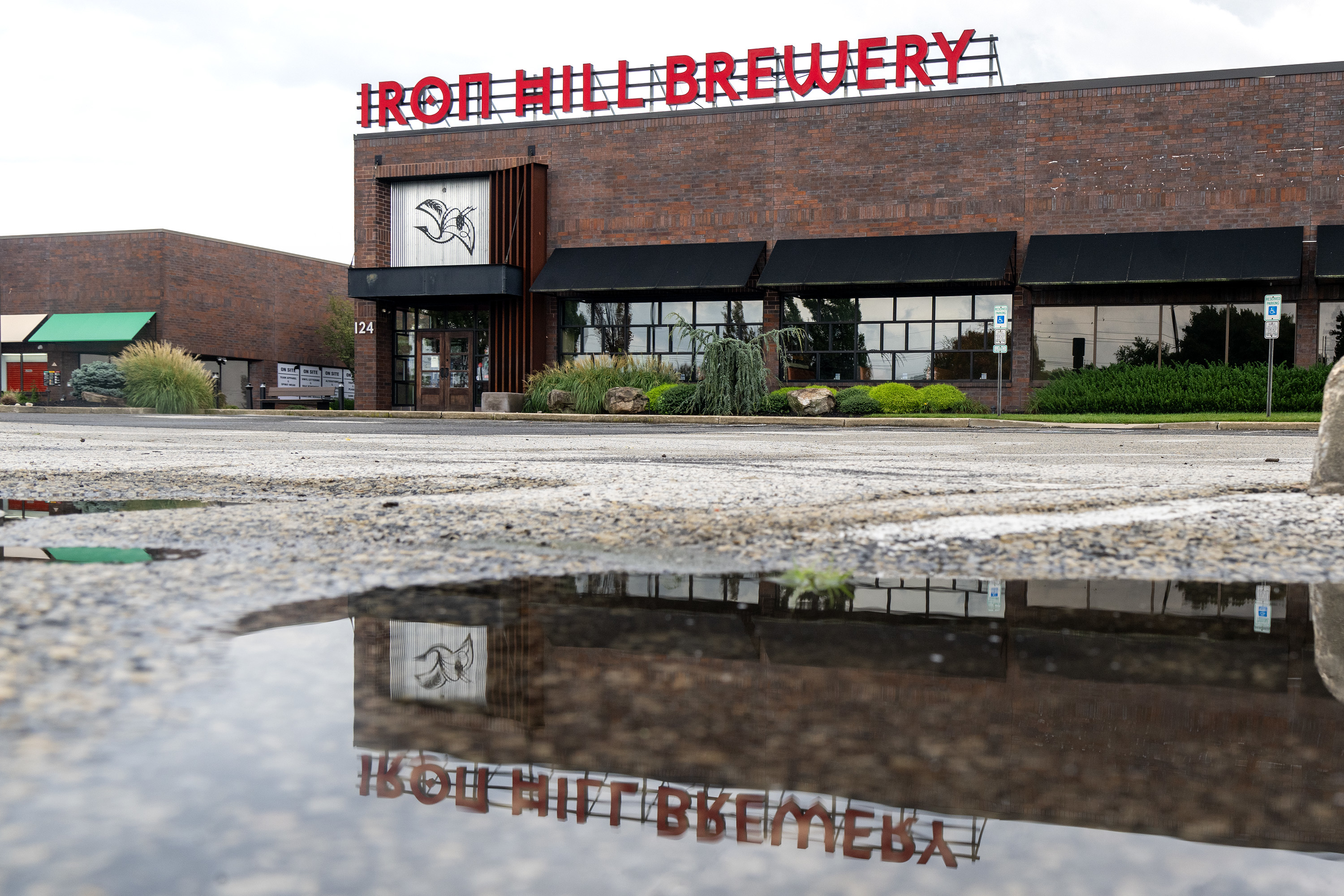
Another Iron Hill Brewery is set to reopen next week.
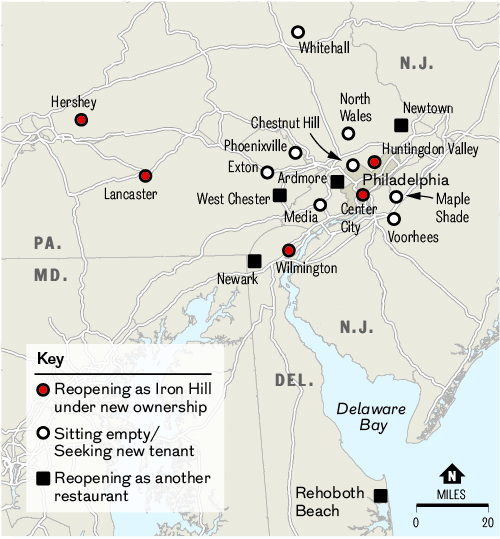
The Huntingdon Valley restaurant will be back in business Monday, June 22, according to the restaurant’s new ownership group. It will mark Iron Hill’s fourth post-bankruptcy revival and the only one in the Philadelphia suburbs.
Amid the reopenings, the new owners have launched a fresh loyalty program and special offers, including a free beer and free appetizer for customers with prebankruptcy gift cards that are no longer usable.
While Iron Hill had a suburban-Philly focus before bankruptcy, the Huntingdon Valley Shopping Center location is the only one set to be resurrected in the collar counties or South Jersey.
Bartenders there will be pouring a new IPA, Hop Chase, brewed exclusively for Huntingdon Valley, according to the new owners. They said patrons can sit inside or outside at the restaurant’s beer garden, which was the chain’s first when it opened in 2016.
“We’re creating a true neighborhood place for the guests we call family, somewhere the community can come together over laughter, great food and award-winning beer,” Naomi Yared, general manager of the Huntingdon Valley Iron Hill, said in a statement.
The former Iron Hill Brewery in Chestnut Hill sat empty in November. Property owners are still marketing the space for lease.Jose F. Moreno / Staff Photographer
Here’s what we know about these local Iron Hill Breweries as of publication time June 15:
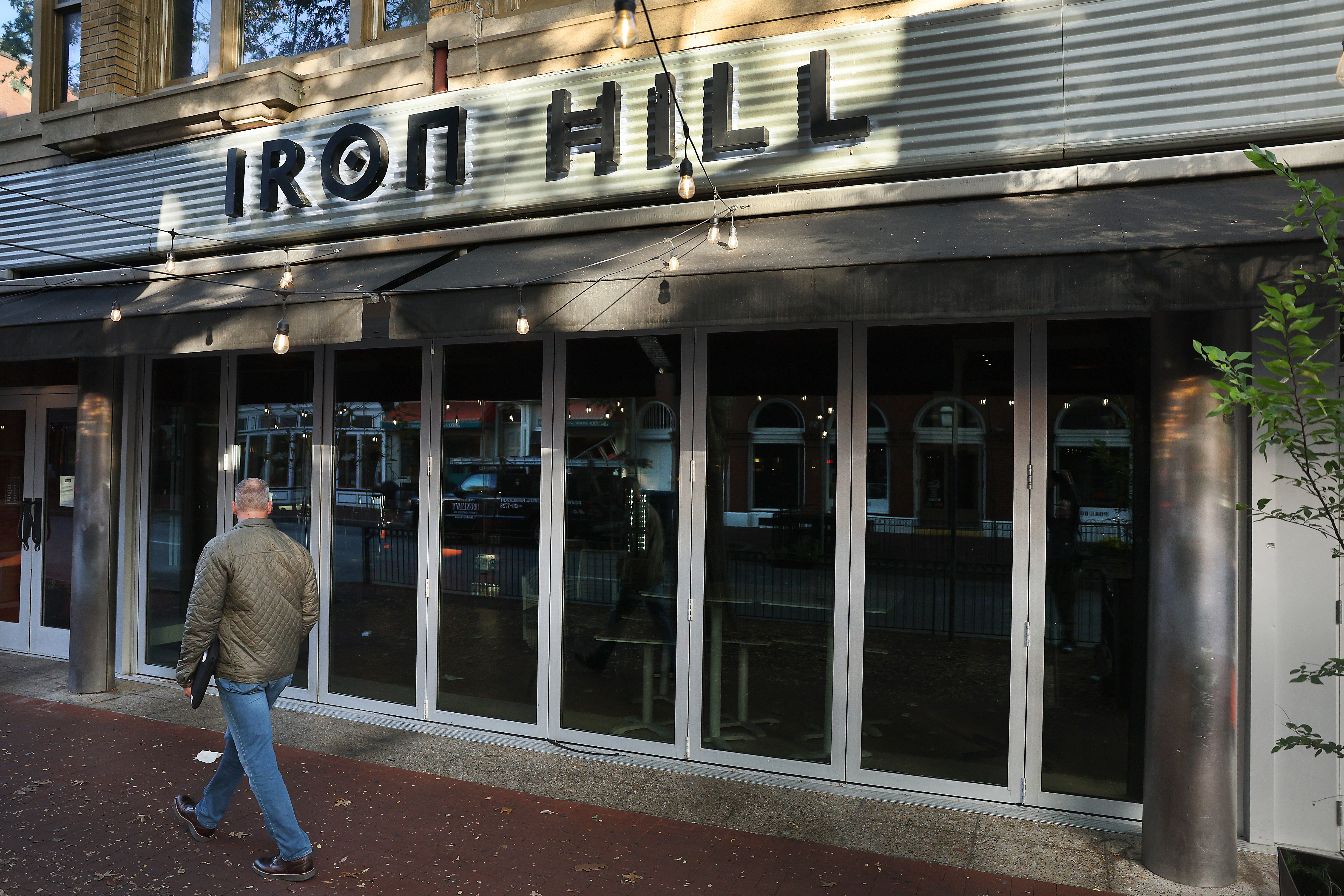
A pedestrian walked by the closed Iron Hill Brewery in West Chester in October. Magerk’s Pub & Grill is now taking over the space.David Maialetti / Staff Photographer
Justine MacNeil’s hands seem to hover over the brioche dough as she shapes it from amorphous mounds into perfectly round balls that will eventually bake into maritozzi that yawn wide with sweet cream.
Her touch is incredibly light. The trick, MacNeil said, is to tighten your grip on the dough almost imperceptibly as you roll it, and to avoid working on anything that isn’t wood. The grain helps guide her to find the right surface tension to keep the ball firm.
Getting that feel is crucial to MacNeil, the pastry chef at Fiore, the casual Italian cafe in East Kensington that she co-owns with her husband, Ed Crochet. There, MacNeil’s commitment to Italian dessert deep cuts — marzipan-esque ricciarelli cookies, Tuscan torta della nonna, crusty schiacciata sandwich bread, and the maritozzi that are just starting to become trendy outside of Rome — draws lines out the door almost every weekend alongside praise so effusive it sounds fake.
MacNeil’s flaky cornetti are “the closest you’ll get to what they have in Italy,” acclaimed restaurateur Greg Vernick told The Inquirer in April. They’re also part of what made her a finalist for the outstanding pastry chef award at the 2026 James Beard Foundation Awards, where winners will be revealed tonight in Chicago.
“I’ve always respected the awards, but I didn’t know if what we were doing would garner their attention,” MacNeil, 38, told The Inquirer in May. “I just never feel like where I’m at is complete, like I’m never going to learn it all. But [that] doesn’t deter me.”
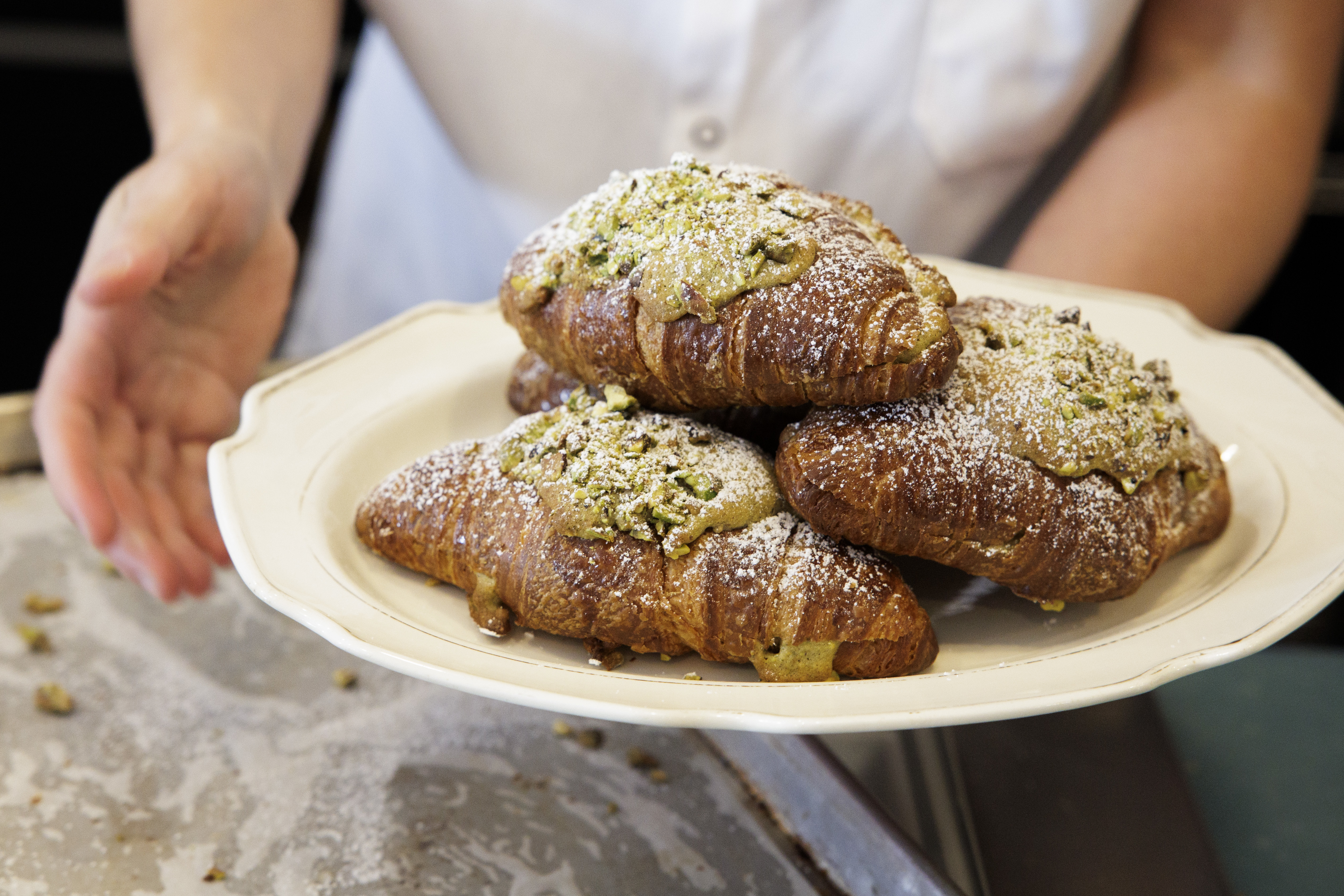
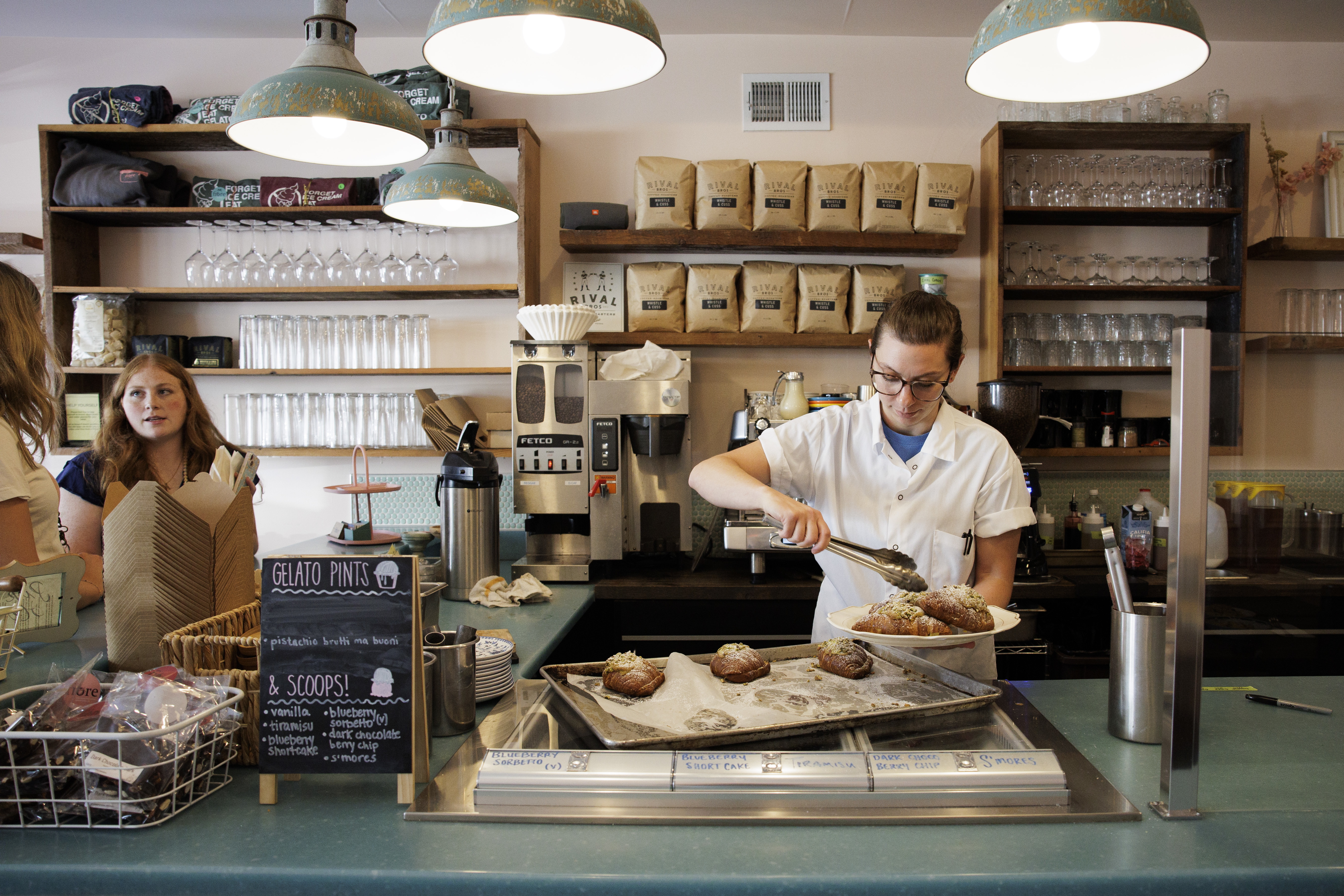
Pastry chef and Fiore co-owner Justine MacNeil holds a plate of pistachio cornetti at the East Kensington restaurant.Monica Herndon / Staff Photographer
Fiore’s pastries aren’t going for virality. They’re faithful adaptations of Italian baked goods, a genre distinct from Italian American baking. You won’t often find rainbow cookies on Fiore’s menu, which can sometimes cycle through 20 unique pastries a day. But you may, for example, find Pastiera Napoletana, a time-intensive Easter pie from Naples that suspends wheat berries in a citrusy and fluffy ricotta filling.
The restaurant’s old-school Italian ethos stems, in part, from MacNeil’s single-minded devotion to doing things the exacting, traditional way. MacNeil tests every pastry that ends up on Fiore’s menu, working from a tiny counter in the restaurant’s ground-floor kitchen, that she affectionately calls “the lab.” There, she makes multiple versions of a recipe with minor variations in one go so they can be compared. Often, said Crochet, only she can tell the difference.
“I’ve seen her do seven different versions of the same thing and taste them all side-by-side,” he said. MacNeil “is not reinventing the wheel. She’s taking these traditional recipes, tweaking them, and making them her own by creating the best version of whatever it is.”
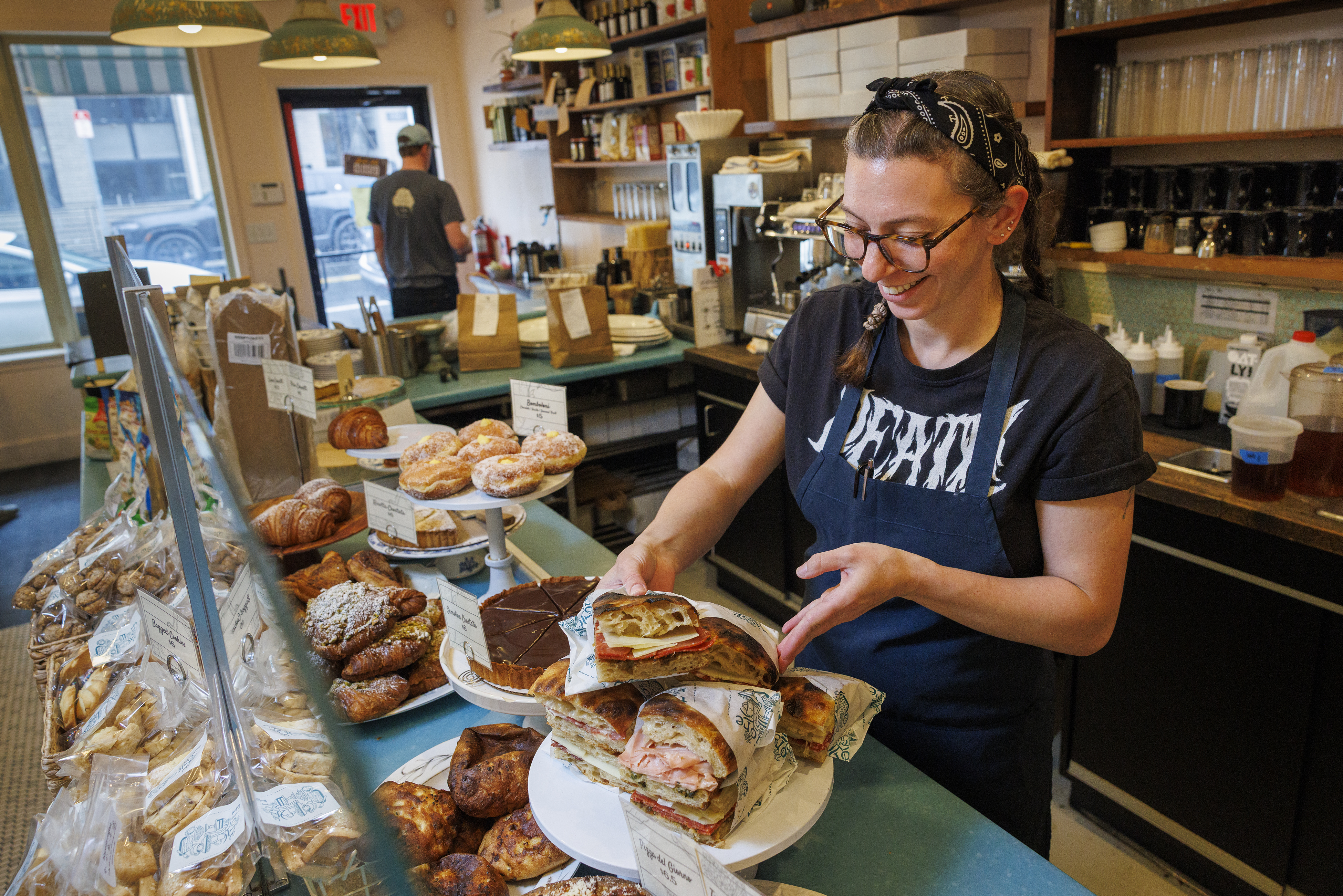
Justine MacNeil, co-owner of Fiore, places pizza bianca sandwiches in a pastry case at the restaurant, which she co-owns with her husband, Ed Crochet. Alejandro A. Alvarez / Staff Photographer
From dance floor to pastry kitchen
Baking was not MacNeil’s first plan. Dancing was.
MacNeil, who grew in Jackson, N.J., trained in ballet and Graham technique at a vocational high school and planned to study dance in college when she tore her in ACL in 2007. Sidelined and taking classes at a community college, MacNeil fell in love with baking through her best friend’s mom, who taught her how to make traditional Greek cookies.
“She would always tell me, ‘I don’t know the real recipe, but here’s what I did’ which made so much sense in my mind. She was crafting something beautiful from memory,” said MacNeil.
Plus, there was something about it that she said felt like dancing.
“There’s rules, but there’s fluidity and movement … I’m constantly trying to feel connected to the Earth, and I think that’s why I’m attracted to fields where I use my body and my hands. You use your personhood to make something,” she said.
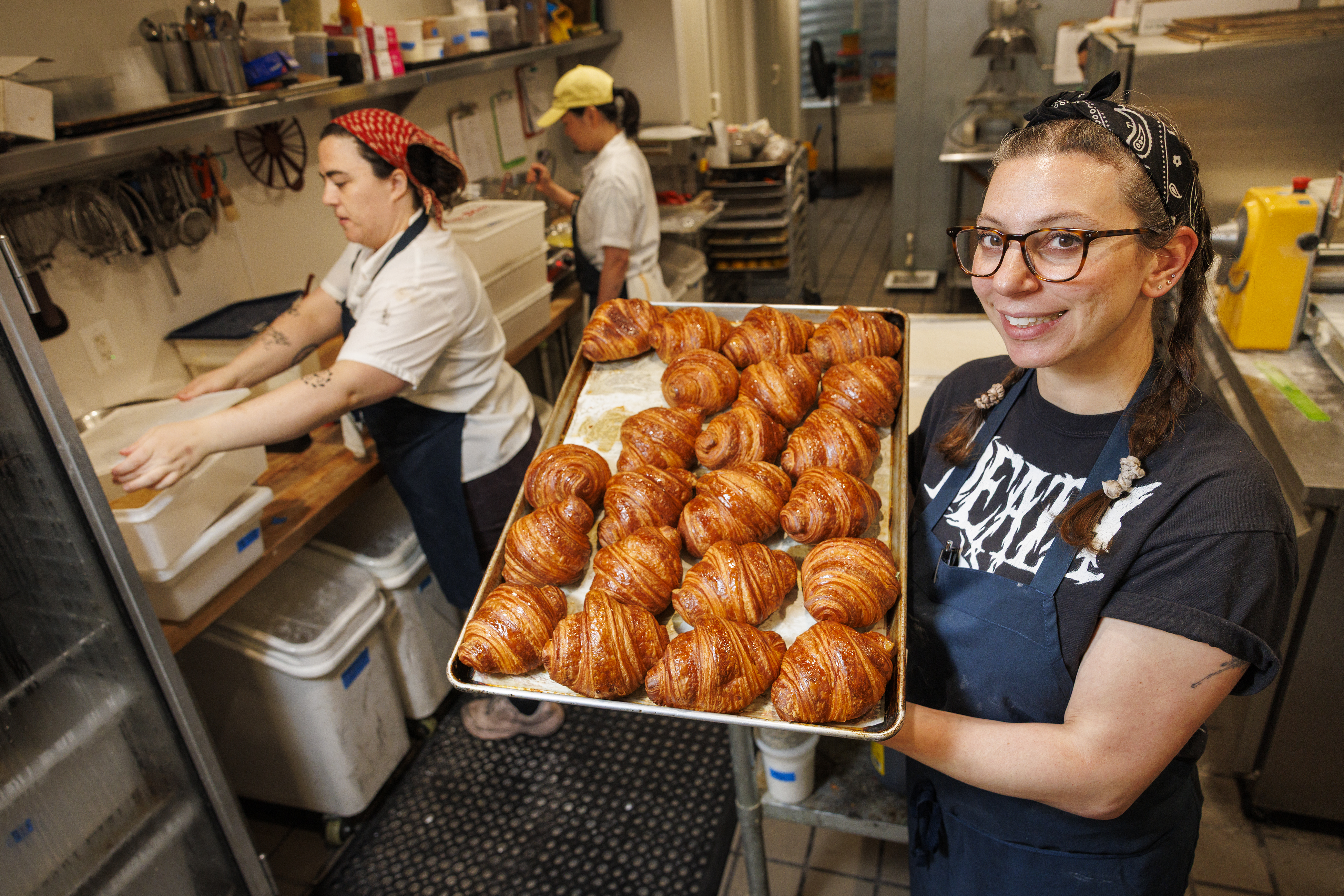
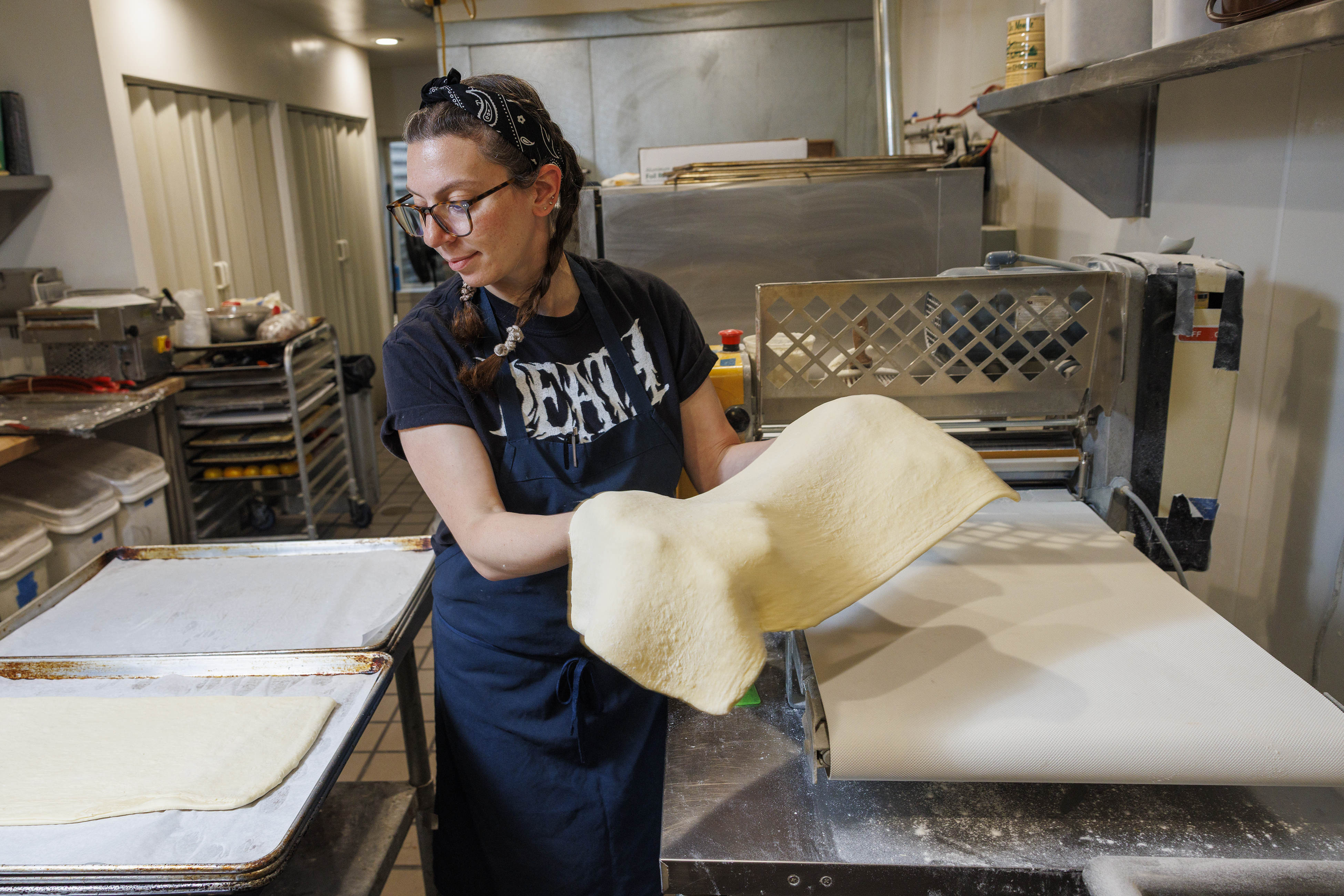
Pastry chef and Fiore co-own Justine MacNeil removes cornetti dough from a sheeter in the East Kensington restaurant’s kitchen. Fiore sells upwards of 300 cornetti a week.Alejandro A. Alvarez / Staff Photographer
MacNeil enrolled at the pastry program at New York City’s International Culinary Center (then called the French Culinary Institute) a year later. After graduating, MacNeil said it took trials at “at least 10″ different restaurants before landing her first job in 2009: a service and pastry cook with Tom Colicchio’s Craft company, where Crochet was a chef de cuisine.
Crochet said he and MacNeil barely interacted, but he was struck by the way she could immediately answer stressful questions off the top of her head, like how to accommodate a dietary restriction. MacNeil said she liked how Crochet was good at small talk.
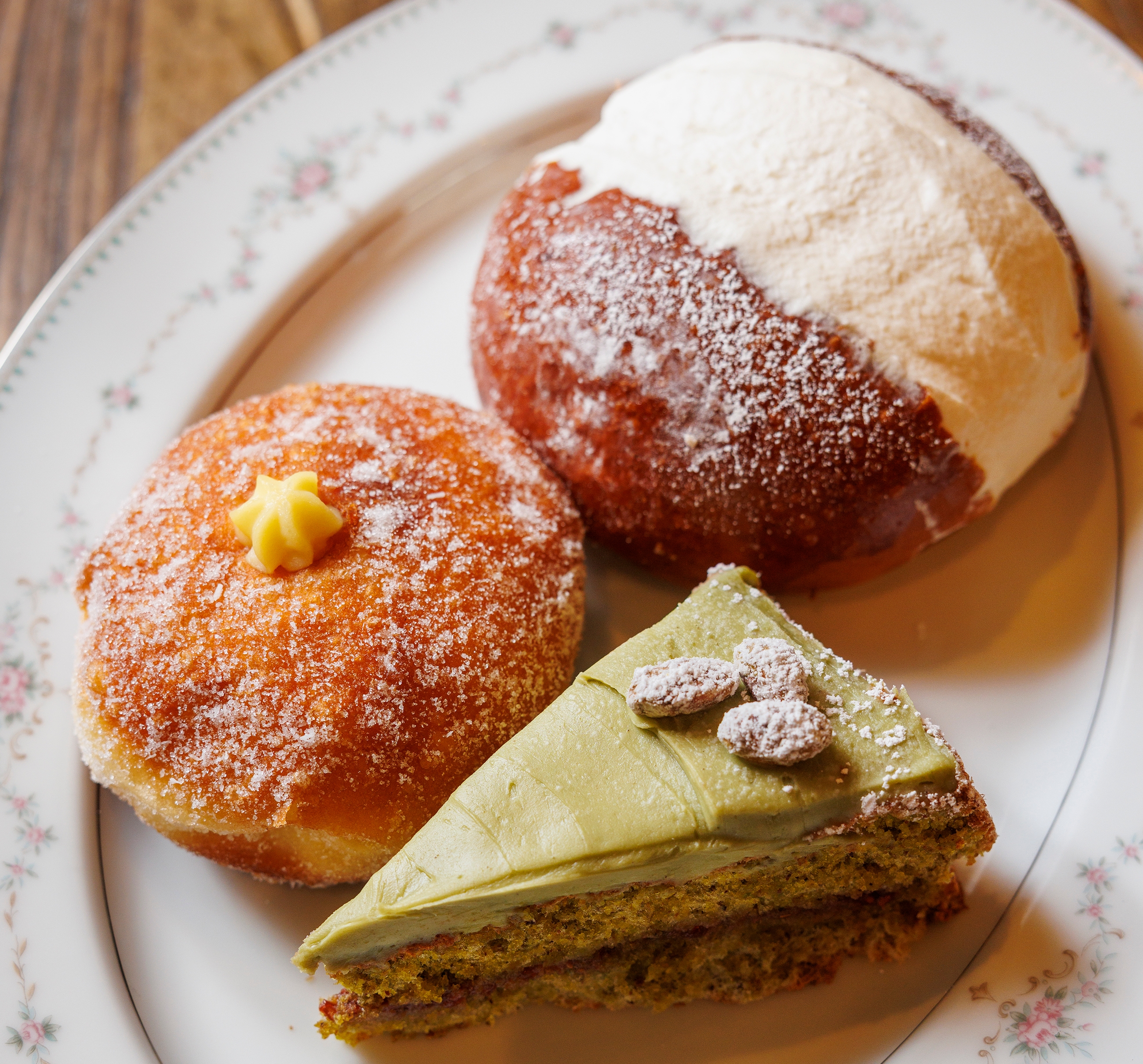
(Clockwise from left) Maritozzo, bombolone, and a slice of pistachio crostata available at Fiore, 2413 Frankford Ave.Alejandro A. Alvarez / Staff Photographer
MacNeil stayed at Del Posto for six years until 2017, ultimately becoming executive pastry chef. Working there, she said, helped her trust her palate and perspective, though she felt like she didn’t put her stamp on the dessert menu until the end.
Her old co-workers beg to differ.
“If you want to know something, Don’t Google it. Ask Justine,” said Brooks Headley the Superiority Burger founder and former Del Posto executive pastry chef who hired MacNeil. Her superpower, he said, was ice cream. Headley, who won the Beard award for outstanding pastry chef in 2013, calls MacNeil when his restaurant’s ice cream machine is on the fritz.
Kim Janusz, the pastry chef at Chicago’s Beard award-winning Lula Cafe, also hangs onto MacNeil’s knowledge. When they were both sous chefs at Del Posto, MacNeil taught her a hack for candying nuts that Janusz still uses to this day.
Rewriting and rebuilding
Inside Fiore’s downstairs kitchen, MacNeil and two of the restaurant’s bakers find a groove amid a playlist of surf rock, 2000s indie hits, and the occasional throwback R&B banger. It’s a contrast, MacNeil said, to the low hum of Del Posto’s service kitchen, where she recalled chefs weren’t allowed to play music or talk above a whisper.
Fiore’s pastry room, meanwhile, is full of giggles: MacNeil laughs while showing off the team’s celebrity crush-themed calendar, which a coworker designed. She chuckles and asks if she’s saying too much while explaining the process for Fiore’s beloved cornetti, Italian croissants that MacNeil said takes three days to make and involve laminating layers of centimeter-thick dough. She smirks while handing over a ricciarelli fresh out the oven. The traditional almond cookie from Siena, Italy, involves baking the dough at three different temperatures and tastes like a meringue.
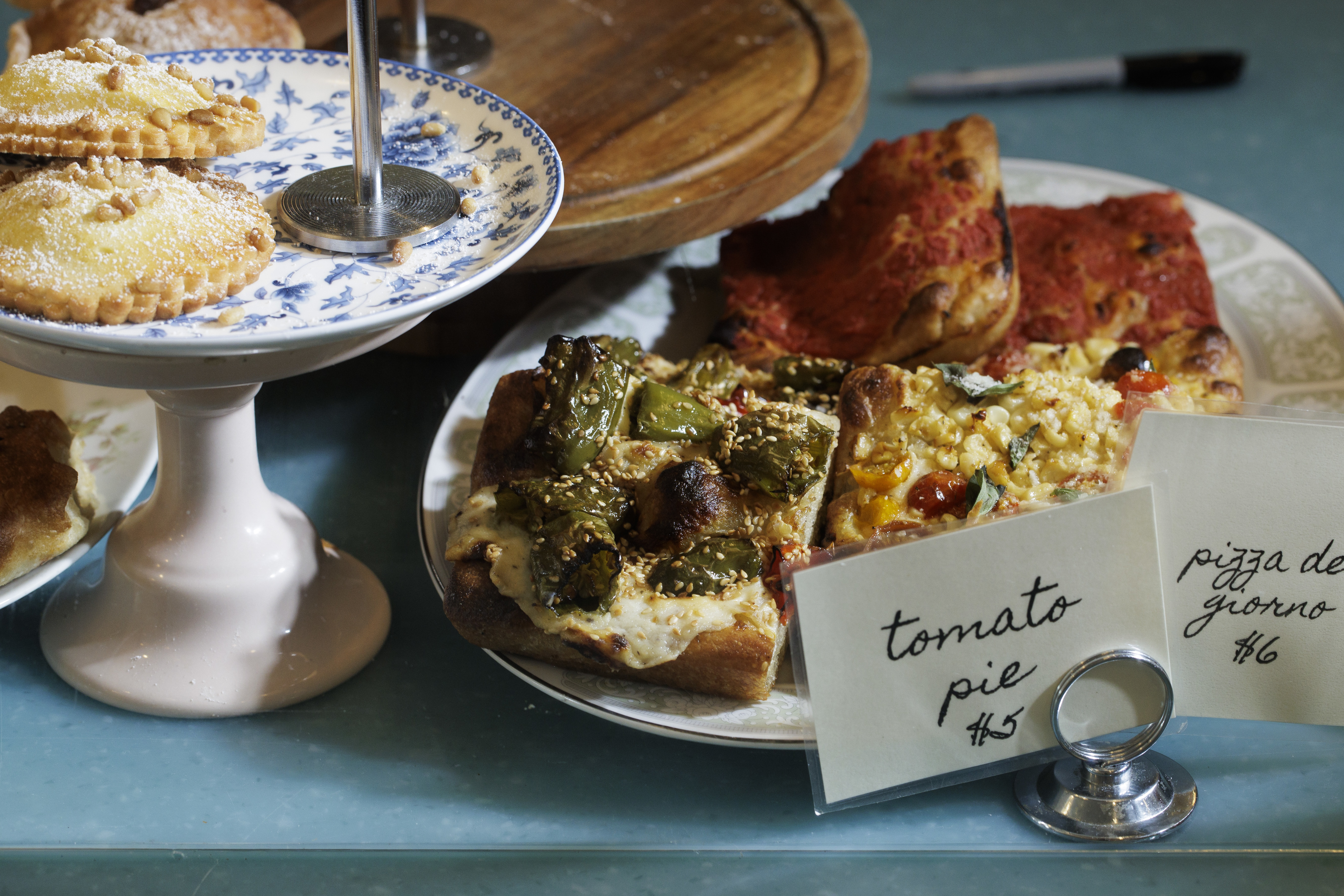
The tomato pie and pizza del giorno at Fiore, which co-owner and James Beard-nominated pastry chef Justine MacNeil makes the dough for.Monica Herndon / Staff Photographer
“They’ve been doing it this way for hundreds of years so I’m going to do the same,” MacNeil said.
Crochet and MacNeil moved to Philly in 2017 after he was hired to lead Rat’s Restaurant in Hamilton, N.J. The plan was for MacNeil to open a bakery and gelato shop, she said, until the couple realized that Philly was affordable enough to open a restaurant together.
They opened the first iteration of Fiore in 2019 as a 78-seat Italian restaurant at 757 S. Front St. with pastas, focaccia sandwiches, pastries, and sorbettos that Inquirer critic Craig LaBan said “were worth crossing town for.”
The new plan was going swimmingly, MacNeil and Crochet said, until it wasn’t: The restaurant had been broken into six times, and hiring after the pandemic proved difficult. And when the couple had their first son, Roman, in 2022, working 10 to 12 hours a day, between brunch and dinner service, felt untenable.
“I had this idea that we would just figure it out. [Roman] would just come to the restaurant and be a nighttime kid … He’ll adapt,” said MacNeil. “No matter what anyone tells you, you adapt to them.”
Pastry chef and Fiore co-owner Justine MacNeil behind the counter at Fiore in 2024.Monica Herndon / Staff Photographer
It was MacNeil’s idea to close the original Fiore down in 2023 and relocate to its current location in East Kensington. Crochet said he “had to be dragged kicking and screaming,” but that in the end, his wife was right.
The couple reopened Fiore roughly seven months later. The most time-consuming part, Crochet recalls, was MacNeil organizing her recipes. She “took all of her notebooks that have all of her recipes in it — like hundreds and hundreds of recipes — and she bought new notebooks and just rewrote them because she felt like it was the most sensible thing to do,” he said.
Now, all of MacNeil’s recipes are typed in a color-coded binder, with Post-its flagging the tiniest of revisions. All of it, she said, was part of the process, locking them in her memory and exposing holes that needed filling.
“So much of what they teach you in [culinary] school is repetition,” MacNeil said. “They’re all building blocks, but unless you do something a bunch of times it feels unnatural.”
A brand new stage
The current Fiore has just 24 seats and functions as a daytime only catch-all restaurant, bakery, and cafe. It’s also a space where MacNeil shines, handling all the bread, some pasta dough, and wintertime hot chocolate on top their rotating pastries.
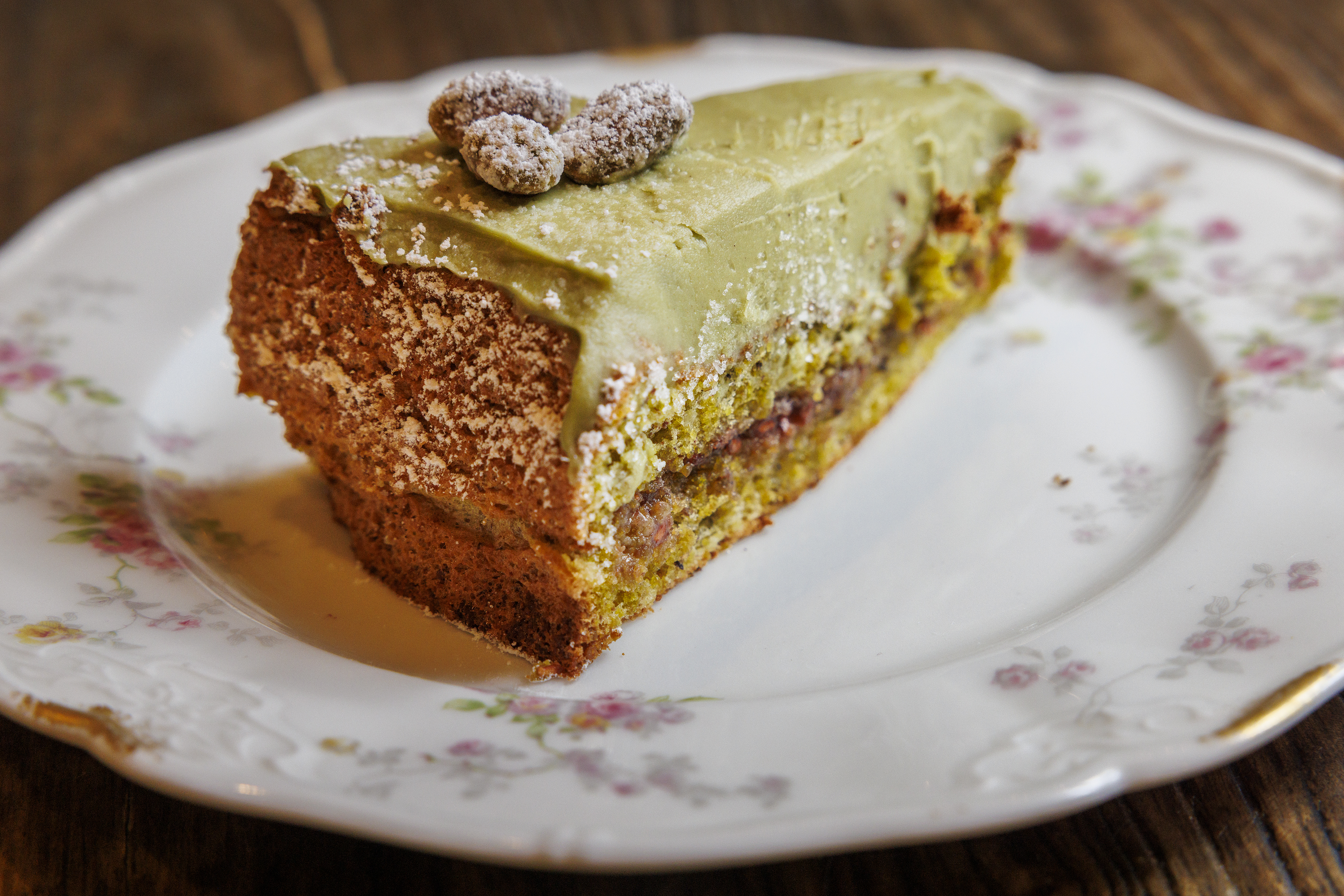
A slice of pistachio crostata at Fiore, 2413 Frankford Ave.Alejandro A. Alvarez / Staff Photographer
Typically, MacNeil works from 6 a.m. until about 3 p.m., overseeing a kitchen that splits its days equally between baking and prepping. When The Inquirer visited in May, she and her team had already spent the day baking cornetti; buns to be stuffed for maritozzi; bomboloni; dough for pizza bianca; milk buns and schiacciata for breakfast sandwiches; and a semolina crostada cake to be coated with chocolate ganache. They all sat in neat rows on a cooling rack.
Fiore goes through 400 bomboloni, traditional Italian doughnuts, weekly. It’s the most popular item on the restaurant’s menu. The restaurant also goes through upward of 300 cornetti a week and 225 maritozzi, which MacNeil finds a little bemusing. Fiore sells them all day long, but in Italy, the cream-stuffed buns are a breakfast pastry.
Crochet said his wife cried when she found out she was a James Beard finalist in March. Headley — her former boss was unsurprised. “Every accolade Justine has gotten just makes me so proud,” he said. “You want the people who work under you to do better than you and make you look stupid.”
Headley said that moment came two years ago, when Crochet and MacNeil hosted a pop-up at Superiority Burger and he tasted slabs of her focaccia. “It tasted like floating on olive-oil flavored air with a crispy bottom,” he said.
The Saltie, a breakfast sandwich from Fiore, uses bread made by pastry chef and co-owner Justine MacNeil.Karelia Forlenza
MacNeil, for her part, is focused on climbing the next hill: Mastering Zeppole di San Giuseppe, a Neapolitan Father’s Day pastry that’s a ring of cream-stuffed choux. It’s taken five years, a trip to Naples that turned into a zeppole crawl, and a YouTube video she had to translate from Italian, but MacNeil thinks they’re finally ready to leave the lab.
She has no regrets about it — or getting to Fiore’s current version — taking this long.
“I don’t know if I could’ve been able to do this if I didn’t work through everything else first,” MacNeil said.
WASHINGTON — President Donald Trump emerged from the Oval Office first, then fighters from around the globe followed straight into the fight cage, in part for the president’s 80th birthday celebration and to bring a sport long on the fringe of mainstream acceptance into a main event on the White House South Lawn.
For a president who revels in winners, Trump had to enjoy crowning two champions on a big fight night staged closer to the Rose Garden than Madison Square Garden in the co-main event of UFC Freedom 250.
American lightweight Justin Gaethje capped his unification championship victory in the main event over Ilia Topuria with a backflip off the top of the cage. He crouched near Trump for a celebratory chat and the betting underdog draped the American flag over one shoulder — and the 155-pound title belt over another. Trump later stepped into the cage to congratulate Gaethje.
“Hey, I’m from America, 250 years ago we were way more than 6-1 underdogs,” Gaethje said. “I know that was absolutely legendary because I can not even believe it.”
Topuria and Gaethje made their walkouts from the Oval Office as fireworks exploded overhead during Michael Buffer’s introductions. Gaethje — who appeared to skim the copy of the Declaration of Independence on his way out — mustered some scattered “USA!” chants against the Spanish-Georgian Topuria, though not even the main event could stop the trend of mostly quiet fights.
It took the gory sight of a bloodied Topuria — his back to Trump in a white “USA” hat as he peered through the wire-mesh cage — nearly having the fight waved off to get a “let them fight!” chant going. The fight continued, and the 37-year-old Gaethje won eventually via corner stoppage in the fourth round.
“Hard work, baby,” Gaethje said. “I am made for these moments. This sport is made for me.”
Earlier, Ciryl Gane hammered Alex Pereira with a series of elbows and fists to the head and won via TKO in 1:27 of the second round to claim the interim heavyweight belt for a second time and set up a rematch with heavyweight champ Tom Aspinall.
Like the bulk of the fighters who had their hands raised in victory, Gane thanked Trump.
The White House was a most improbable all-American setting for a fight promotion that long ago shed the “human cockfighting” tag and decades later became entwined with the emboldened right-wing “manosphere” that soaks up UFC fights and threw its support behind Trump in two elections.
Trump and UFC boss Dana White, the tempestuous tag-team that rallied the fight company to the nation’s capital, walked from the Oval Office to the Blue Room Balcony to chants of “USA! USA!” to kick off the fight card jacked up by a dose of high-octane patriotism on a blustery night for cage fighting.
UFC ramped up the patriotism for White House debut
The Marine Band jazzed up the festivities and played fighter entrance music in front of the White House and Zac Brown sang the national anthem — never performed before normal UFC fight cards because of the mix of nationalities fighting inside the Octagon. The Navy’s Blue Angels and Air Force Thunderbirds zipped overhead as part of a flyover to celebrate Trump’s birthday and the 250th anniversary of the Declaration of Independence’s signing.
The 4,000-plus fans — Meta CEO Mark Zuckerberg and Paramount Skydance CEO David Ellison among them — on the South Lawn who sat under the claw, the flying saucer-like, open-air structure that housed the cage, mostly sat on their hands until the fighters used theirs to deliver punishing blows and a true fighting spirit that got everyone on their feet.
Bo Nickal delivered the red, white and boom when the three-time NCAA Division I wrestling champion at Penn State earned the TKO win over middleweight Kyle Daukaus, a Northeast Philly native and Father Judge alum, and immediately bolted the Octagon for a cage-side chat with Trump. Nickal met Trump in 2019 during a ceremony at the White House for collegiate national champions.
The first blight of the night for Trump came when American heavyweight Derrick Lewis lost his fight after he got a personal invitation from the president. Trump proclaimed himself a fan of Lewis and his unconventional celebrations and asked White to add him to the card. Josh Hokit instead improved to 10-0 when he flattened Lewis by TKO.
Sean O’Malley celebrated his walk-off KO win with a salute, and Mauricio Ruffy and Diego Lopes won their fights earlier in the night.
“That was sexy,” O’Malley said to cheers. “I felt the energy in here. I truly felt the energy in here.”
UFC says it’s only running one card at the White House
More than $60 million and tens of thousands of hours of labor were poured into building the arena, according to a court filing from the National Park Service, which oversees the South Lawn, and the looming threat of rain that threw White into a tizzy each time a miserable forecast was raised never materialized over the early portions of the card.
Fight night came only hours after the United States and Iran reached an agreement to end the war and open the Strait of Hormuz, offering relief to the global economy more than three months after the war began.
The rare UFC outdoors event marked the pinnacle of the relationship between White and Trump that has yielded personal, political and financial dividends for both parties. White’s first card as UFC president came in 2001 at an event held at Trump Taj Mahal.
Trump has attended four UFC cards as sitting president, walking to the cage amid rock music and patriotic chants from fans. White introduced Trump at two Republican National Conventions.
Trump got a home game for this one, making the short walk from the Oval Office to the Octagon, much like the fighters who made the walk down West Wing halls covered with presidential portraits and were flanked by first responders and medal of honor recipients, among other individuals who served.
Strickland causes trouble at the fan zone at the Ellipse
Thousands more outside the White House lawn watched the fights on big screens from the nearby Ellipse, though not everyone was able to get tickets.
Even one of UFC’s champions.
UFC middleweight champion Sean Strickland was escorted out of the Ellipse event by a group of police officers.
U.S. Park Police said in a statement that Strickland’s presence drew enough attention from attendees that it resulted in disorder. He wasn’t cited or arrested, they said. Instead, he was taken to his hotel and told not to come back to the venue.