Tag: topic-link-auto

  • Two coaches in Nigeria — and an ex-New York Giant — helped Uar Bernard reach the NFL. Back then, he had a nickname: ‘Bigfoot’

    Two coaches in Nigeria — and an ex-New York Giant — helped Uar Bernard reach the NFL. Back then, he had a nickname: ‘Bigfoot’

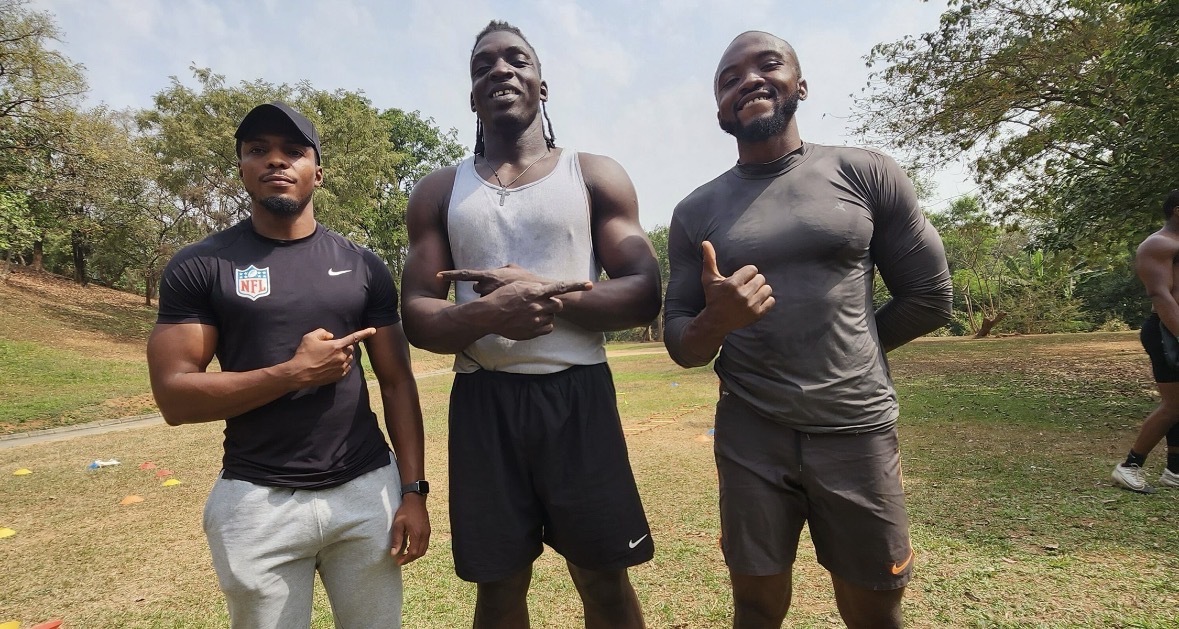
    In the summer of 2022, a sheepish teenager with a backpack walked into Moshood Abiola National Stadium in Abuja, Nigeria. He was there for a basketball camp, but his physique looked like that of an edge rusher; lean and athletic with sculpted calves.

    Two coaches told him as much. Mustapha Musa and Dike Christian of Pro Prospects Program were in the same building for a flag football event coordinated by former New York Giants defensive end Osi Umenyiora’s agency, The Uprise. Musa and Christian approached the teenager and asked if he’d ever played American football.

    The teenager said no. They asked if he would give it a try. He explained that this would be logistically difficult; he had traveled six hours from Unguwa Uku, a suburb of Kano, in the northern part of the country.

    But the coaches were insistent. They asked if the teenager would consider extending his trip.

    “You know,” Musa said, “you look like a footballer, not a basketballer.”

    The teenager let out a laugh. He decided to stay, and underwent a workout the following day. Ejike Ugboaja, a co-founder of The Uprise, sent Umenyiora some video.
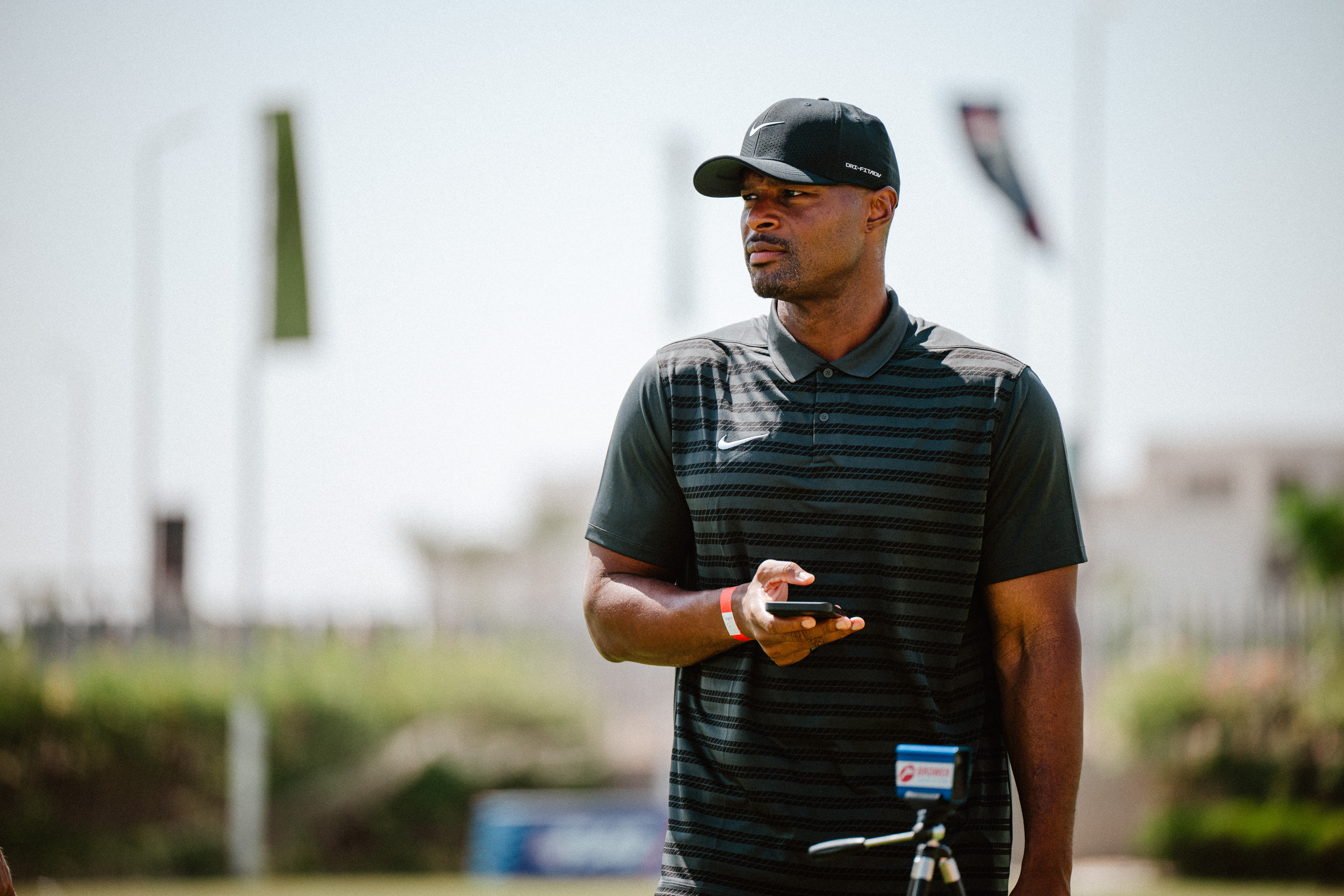
    Former Giants star Osi Umenyiora has played a role in the discovery of players, including Uar Bernard, in Africa.provided by NFL Africa

    He didn’t know the teenager’s name, but quickly came up with a moniker.

    “[Ejike] just called him Bigfoot,” Umenyiora said. “And he was a freak athlete. I saw him running and moving around, and I was like, ‘OK, this kid, he’s got something.’”

    By the time he showed up to the next flag football event, everyone knew him as Uar Bernard. But “Bigfoot” stuck, in part because the coaches couldn’t find cleats that fit him.

    “He had like a size 18,” Umenyiora said. “It was ridiculous.”

    At 17 years old, Bernard was too young to qualify for the NFL’s International Player Pathway (IPP) program but too old for the NFL Academy. He would have to wait until he was three years removed from high school to try again.

    Over those three years, Bernard trained with Musa and Christian in Abuja. In 2024, he attended another NFL Africa Camp in Lagos, but failed again to make the IPP, this time because he was not considered mobile enough.

    The Nigerian finally qualified in 2025. He entered a 12-week training program in Florida in January, and in April, he was drafted by the Eagles in the seventh round.

    Bernard has never played a down of organized football. He didn’t spend his childhood on a Pop Warner team. But Musa and Christian have helped him prepare for this moment.

    And Umenyiora is confident it is all going to work.

    “I think one of the GMs for the Giants used to call it ‘planet theory,’” he said. “There are only so many people walking around the planet that have that type of physique and ability. And so whenever you get that, you have to take a chance on them, and give them an opportunity to develop.

    “And hopefully, Philadelphia — who have been absolutely tremendous — will give him that opportunity.”

    Training in ‘The Trenches’

    Of the tens of thousands of players who have ever competed in the NFL, only 40 were born in Nigeria.

    Twenty-one of those 40 hailed from Lagos, the country’s largest city; Umenyiora says most come from the southern and eastern regions.

    Osi Umenyiora (center) has discovered players in Nigeria previously, but never from the impoverished community that Uar Bernard calls home.provided by NFL Africa

    None have come from Kano. According to the World Bank Group, the state has a poverty rate of 53.75%, more than double that of Abuja, and more than six times that of Lagos.

    “It’s a dangerous place,” Musa said. “You only see a few kids that will grow up in that area, and be like, ‘I want to do sports.’ It’s very hard and very rare in that kind of environment.”

    When Bernard moved to Abuja, Musa already had a handful of aspiring football players living with him. So Christian took the teenager in. Together, they’d work every day, from 8 a.m. to 11 a.m., at a local public park they called “The Trenches.”

    This wasn’t an NFL training facility, but Musa and Christian saw potential. The park had a sand pit. Its hills were steep, perfect for mid-morning sprints, and its trees were as sturdy as a blocking sled.

    The coaches purchased small pieces of equipment, like cones, ladders and mini hurdles, and set them up on the grass, sharpening the players’ skills under the blistering sun.

    They’d also use the natural resources around them. Bamboo sticks were repurposed for cross-chop drills and honing inside shoulder drops. Bernard and his fellow athletes had occasional access to a gym, but due to limited funds, everyone had to get creative.

    This was especially true for Bernard. One of his biggest early obstacles was mobility, and he didn’t have access to a physical therapist in Nigeria.

    So, Musa and Christian came up with an idea.

    “We had to push him into a dance class,” Musa said. “We’re like, ‘Yo, you need to go to a dance class.’ It was to help his flexibility. More aerobics than Afro dance.”

    “He laughed about it,” Christian said, “but even if he laughs, he will never say no. He will do it. He’s humble.”

    Bernard knew virtually nothing about American football when he started working with the coaches. But even from West Africa, Musa and Christian had learned quite a bit.

    In 2011, a former University of Maryland linebacker, Ricardo Dickerson, co-founded the American Football Association of Nigeria, an organization focused on youth development. He started going on visits to high schools around the country, which is how Musa was introduced to the sport.

    He and his classmates stayed in touch with Dickerson, who sent them YouTube tutorials and documentaries. Musa had hoped to attend an American university on a football scholarship, but the pandemic — and a lack of financial support — made that a nonstarter.

    The coach wasn’t getting any younger, and as months turned into years, he conceded that his dream had passed him by. But he and Christian still felt a passion for the sport, and continued to follow it religiously.

    They’d seek advice from high-profile coaches on Instagram, like defensive line trainer Javon Gopie. They’d study film of pass rushers including Umenyiora and Myles Garrett.

    Before long, Musa and Christian could recite defensive drills and plays by heart. And the two coaches would break them down for the future Eagle, bit-by-bit.

    If a move required three steps, Musa, Christian and Bernard would spend a week working on each one. Their pupil had many God-given gifts — explosiveness, quickness, strength — but the coaches wanted to refine the basics.

    Bernard would know exactly where his size-18 feet would need to be planted before and after the snap. He’d know exactly how to get off for a cross chop play, and which direction to break in the following moments.

    He would know the difference between bull rush and speed rush, and when to use each move.

    “Small details,” Musa said, “that will make him outstanding.”

    Like his coaches, Bernard was a voracious learner. After spending three hours at The Trenches, he’d put in extra work, calling Musa or Christian with follow-up questions.

    At night, over the West African dish soup and swallow, Bernard and Christian would study more video, usually of Uar’s favorite player, Aaron Donald.

    “He would show me tape, and then say, ‘What’s my take?’” Christian recalled. “And then we’d try to dissect and talk about it.”

    Unlike other athletes his age, Bernard wasn’t prone to distraction. When he wasn’t at the gym, he was at The Trenches. When he wasn’t at The Trenches, he was often in prayer.

    “The boy only goes to church, gym, training,” Musa said. “That is his life. Because he came with the hunger that nobody believes in him. Sometimes we even needed to tell him, ‘You need to slow down before you break down.’

    “He would go to the church and do overnight prayer, and early morning he would come to the field and keep working. And I’m like, ‘Yo, I know your eyes. You haven’t slept.’”

    ‘Our boy has been drafted’

    Musa and Christian were 5,166 miles away from Pittsburgh on Day 3 of the NFL draft, but that didn’t help calm their nerves. In an homage to Bernard, Musa watched the broadcast at home, on his prayer mat.

    He was concerned after the Kano native hadn’t been picked in the earlier rounds.

    “I was like, ‘Oh God, please let this happen to us,’” Musa said. “It wasn’t just happening to him. It was happening to the whole of Africa.”

    When Bernard was finally selected, with the 251st pick, the coach called Christian, who had dozed off. It was just past midnight in Nigeria.

    “He woke me up,” Christian said. “He was like, ‘Yo, are you sleeping? Our boy has been drafted!’”
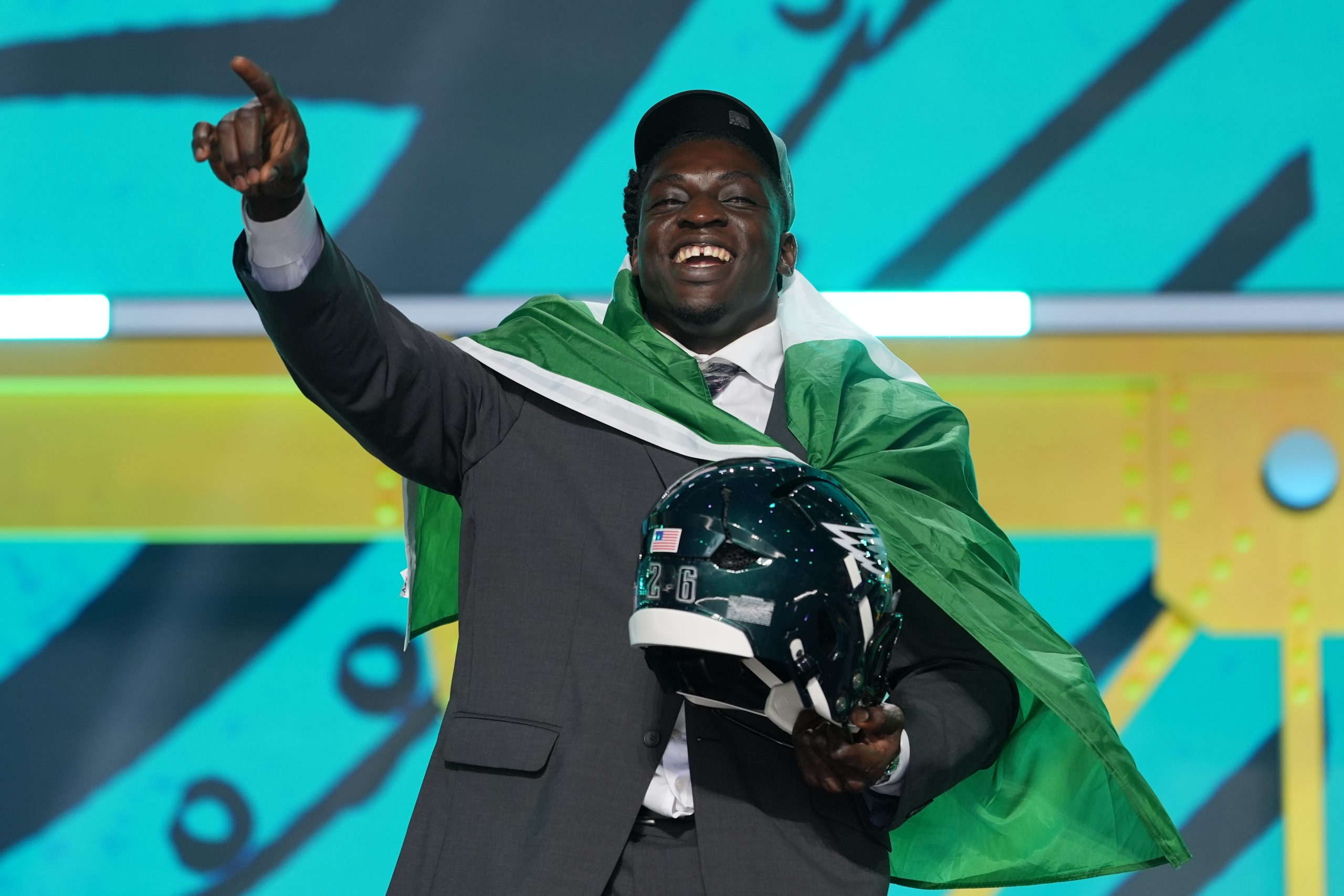
    Uar Bernard’s seventh-round selection was one of the feel-good stories of the 2026 NFL draft. AP Photo/Jeff Roberson

    Musa and Christian were overcome with excitement. So was Umenyiora. The longtime Giant may have hated the Eagles as a player, but as an ambassador for NFL Africa, he looked at the organization through a different light.

    In his mind, Philadelphia was a perfect fit for “Bigfoot.”

    “[The Eagles] have this mentality that they’re going to be patient with these guys,” Umenyiora said. “A lot of times, teams will get a guy who’s never played football before, and after maybe a month or two, they’ll cut him and get rid of him.

    “And you’re like, ‘Well, what were you thinking was going to happen in a month or two?’ But with Philly, when they get them, they stick with the process. It’s like they’ve done so much homework, that when they get them, they are stuck in their belief system that they can turn this guy into a player.

    “And they have the right coaches, and they believe in their coaches. So, when I found out he was going there, quite frankly, I was really happy. Because they get it. A lot of teams don’t get it. But they do.”

    The work is far from over. Going from the basics to Vic Fangio’s defense will be challenging. The Nigerian is still getting used to wearing a helmet; soon, he’ll be facing the best players in the world.

    But no matter what happens, Bernard has already proved something.

    Back in Abuja, at The Trenches, a handful of football players are waking up each morning to run grueling sprints.

    It wasn’t so long ago that locals used to mock them. They’d compare their drills to kung fu, as if their sport was a novelty.

    Not anymore.

    “The athletes here are super proud,” Christian said. “He’s the motivation to all of them who are working so hard. And we keep preaching that.

    “‘Bernard was here with you guys. He’s not a stranger. He’s not a ghost. He’s someone you all know. So, if he can do it, you can do it.’”

  • Flyers assistant GM Brent Flahr talks Jett Luchenko’s big summer, the value of NCAA hockey, and the team’s intriguing college prospects

    Flyers assistant GM Brent Flahr talks Jett Luchenko’s big summer, the value of NCAA hockey, and the team’s intriguing college prospects

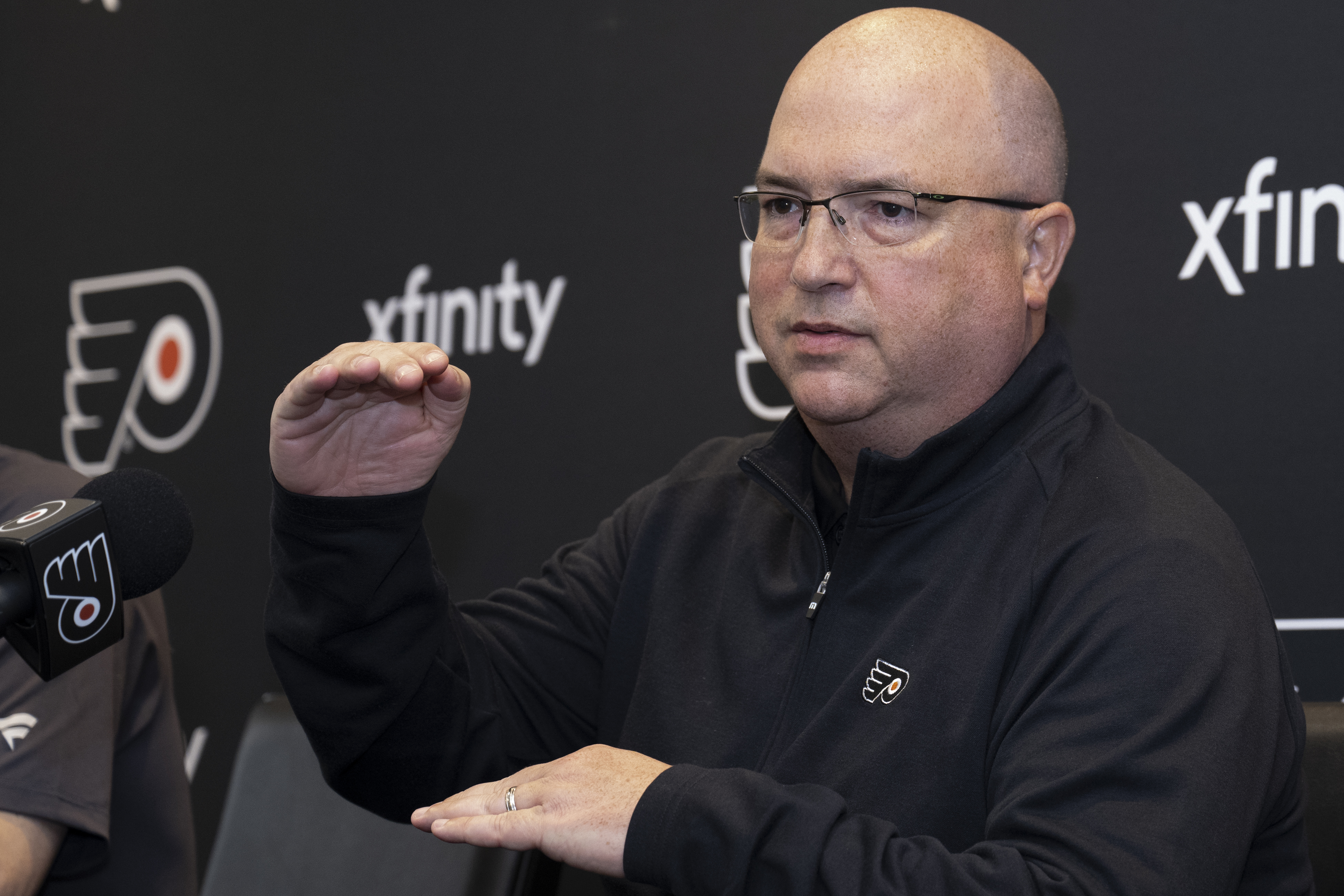
    BUFFALO, N.Y. — In Part 2 of The Inquirer’s two-part interview with Flyers assistant general manager Brent Flahr, he gives some insight into the prospects already in the system.

    This interview has been edited and condensed for clarity and was conducted on June 3.

    Q: Was there anyone who set themselves apart, or surprised you this season?

    A: I don’t think there were too many surprises. Obviously, Porter Martone’s finish — we thought he could play [but] we didn’t know he was going to have that level of impact, maybe. But other than that, Jack Berglund, maybe for fans who didn’t know him well, that’s just been the way he’s played the last couple of years. … Heikki Ruohonen, at the World Juniors, that grouping there maybe stepped up. Overall, our kids have been good. … So it’s exciting.

    Q: Not everyone has the same opinion on Jett Luchenko and how things went this year. So, how do you think his season went?

    A: I don’t think he’s happy with his points or whatever. Still, there’s a stretch there where — I don’t know whether it was pressure — just wasn’t on his game, as far as offensively. But even his B-game is still very good with his speed, defensively responsible, and I think he lost a little confidence, maybe on the offensive side of things. But he bounced back, had some really good games down the stretch; he’s already been a really good player for us in the past, within the system, and he’ll get it back and get it going. You know, he’s also missed most of last summer training-wise too, which set him back due to injury, so I think he’s got a big summer here, hopefully.

    Q: Do you think getting that one playoff game gives him a little confidence moving forward?

    A: I shouldn’t say lack of confidence, but he knows he’s a good player. I just think it should give him confidence that he knows that the coaching staff thinks that highly of him — and that wasn’t our decision, that [was] the coach doing that. But, no, I think he knows what he is, but he also knows what he’s going to have to do to crack the NHL and stay there full time.

    Q: With the changing landscape, do you like that more and more players are going to college hockey?

    A: It’s up to every player. I don’t think a lot of these kids understand how hard college hockey is, and how fast it is, and you’re playing against older players. Some kids are ready for that, and some kids aren’t, so it’ll take longer for them to adjust. … So, yeah, it’s a new situation for us and the teams and agents; we’re all trying to figure this out as we go. But there’s some good programs out there that do a great job and get these kids stronger, and, obviously, the hockey is good.

    Like his fellow first-round pick in 2025, Jack Nesbitt will be heading off to college — except he is going to Porter Martone and Michigan State’s rival, the University of Michigan.Alejandro A. Alvarez / Staff Photographer

    Q: Several players in the Flyers system are playing college hockey now, and some are off to play college hockey, like Jack Nesbitt this September to Michigan and Nathan Quinn next year at Northeastern. How does that impact things on your end?

    A: Well, I think it will impact the American League a little bit, as not every kid at 19 or a CHL player is coming right in. In some cases, it might be beneficial [as] some kids aren’t quite ready for the American League physically or mentally at 20, so maybe having an extra year or two to play NCAA, and then transition. So, there might be a buffer zone in there where we have to find players to fill up rosters and stuff, but that’s not a big deal. Whatever is the best development path for these guys is fine. And there’s still going to be CHL kids that are going to be committed to schools, but maybe they’re ready for the American League right away, and they’ll go that route, too. So we’ll see.

    Q: Speaking of Quinn, what did you see from him this year and does it change your outlook on his projection?

    A: Well, he was a skilled kid. He was already a good junior when we drafted him, but when you see him off the ice, you see him on the ice — he knows how to play. A longer path, because physically, he’s got a ways to go, but he knows how to play the game. He has the ability to generate offense and make players around him better. I saw him a number of times because they have a number of draft picks on his team, and obviously I follow him as well, but he had a really good year. I thought he had some really high-end stretches, so he’s put himself in a position where he’s a legitimate prospect, and he’s improved from a year ago. Kind of met or exceeded expectations, and now that’s just a stepping stone for him, though; he’s got to keep working, getting better, and that’s his plan.

    Q: Porter Martone was brought up often by the prospects regarding him gaining strength and making himself NHL-ready at Michigan State. With that, how excited are you for Nesbitt to go to a college program and build up his strength?

    A: Porter, when we drafted [him], was a little more dense physically than Jack. Even though they were the same draft year, they’re far apart as far as where they are physically. So, Jack, we’re really excited about as a prospect, as a player. He’s got some work to do, just with his body type, to put on the right type of weight, get stronger. … He’s a good player, a good prospect, and it’s a great program for him to come in to play with top players, and the way they practice, the way they train, it’s really conducive for improving. So we’ll see the timeline — we don’t really have one — but he’s excited about going there.

    Q: Jack Murtagh, a 2025 pick, will be a sophomore in the fall at Boston University. How did you see his past season unfold?

    A: I think he was a little frustrated, just with the role, and his ice time kind of fluctuated all over the place. But the games I was at, he was good. I think he began to earn it, which is good and healthy. … But he’s going to have a much bigger role this year, and my expectation is he’s going to make a big jump statistically. He brings a lot of assets [like] his speed and his shot. … He played a lot of different roles, which, when he was available in the second round, it’s kind of why we drafted him. So there’s pro potential, but he’s got some work to do: get stronger conditioning-wise and fast, but he’s in a good program for that to happen.

    Q: Carter Amico was his teammate with the Terriers but left a few months in for Muskegon of the United States Hockey League. Where do you see things with him now?

    A: I think it was the right decision to go because he played a lot of minutes. He missed so much time last year [due to injury], and to not play a lot of minutes regularly, I think it wasn’t great for him. … The first couple games, he’s … catching his breath playing that many minutes, and then he started to go, and he really got better. But he’s an intriguing guy because of his size and skating ability and range and physicality, and his puck game and puck touches have really improved. And then they had a long playoff run, too, which was awesome for him, and selfishly for us, too, just to get him those games, which he needed. He’s going back to BU next year, and should be a lot more ready and more confident, I think, and obviously they’ll be more confident using him.

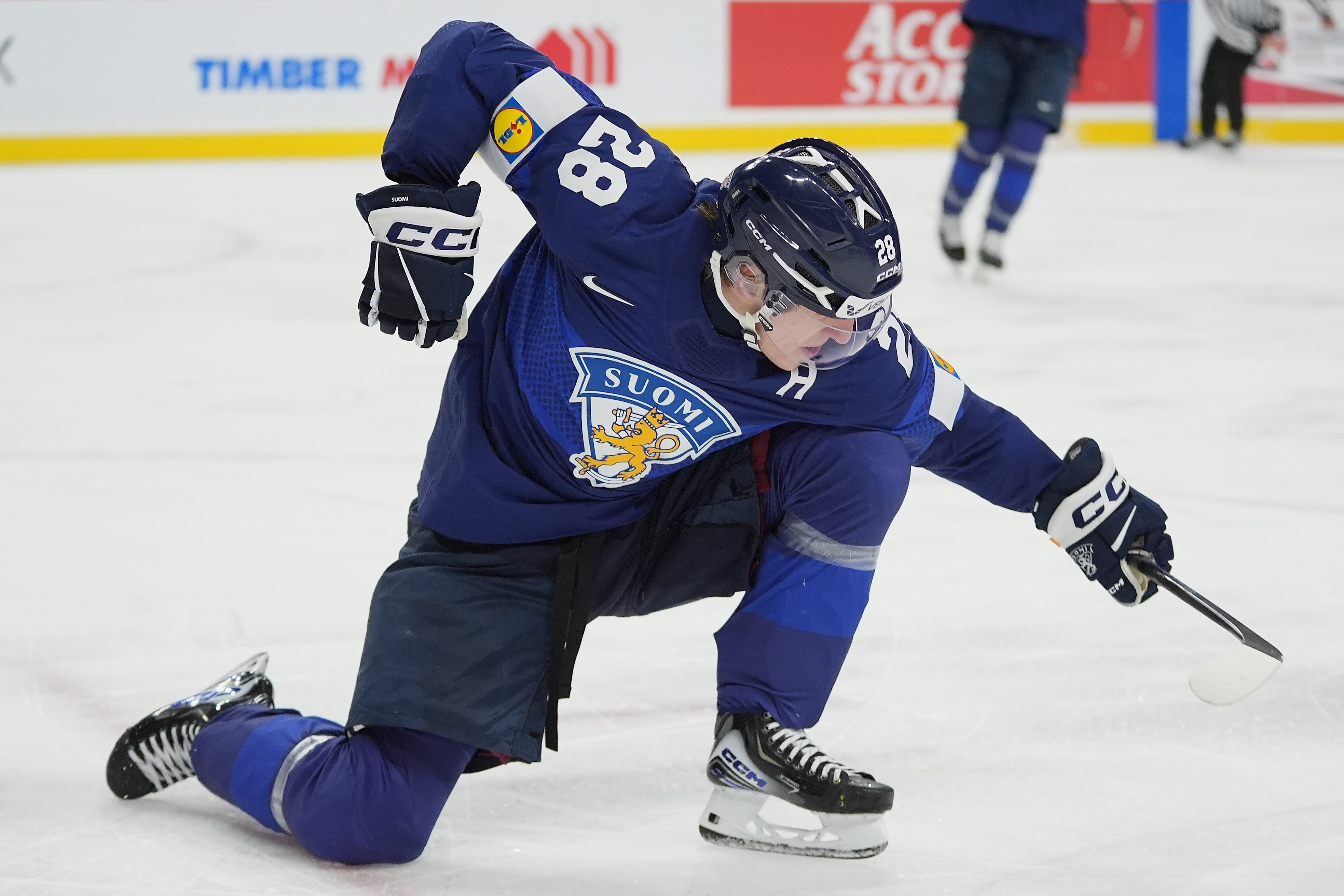
    Forward Heikki Ruohonen (playing for Finland at the IIHF World Junior Hockey Championship) will play for Harvard against next season. Abbie Parr

    Q: What about Heikki Ruohonen at Harvard?

    A: Yeah, I thought [this] last year was great. I was able to see him play a couple times there in Harvard, not just the World Juniors, but he had a big role there. One thing about playing [at Harvard], he was the first power play a lot of nights, first penalty kill, played in all situations, big faceoffs. So that was really healthy, and I thought he just got better and better. His skating is coming, his pace, he’s really working on his body, and he’s in a good environment for that to happen. He’s obviously a bright kid, too, and very focused on his school. And with his World Juniors tournament, I thought he opened people’s eyes, too, for the type of player he could become, and I think the way he played there translates to what he’s going to be in the NHL, hopefully, too.

    Q: Spencer Gill will be turning pro in 2026-27. He’s battled a few injuries the last couple years, so where do you see his projection now?

    A: Well, thankfully his team had a pretty good playoff run, so he got a number of games. He’s been frustrated, but he’s put on a lot of weight in his downtime because of injuries. Now we’ve got to get him quicker, stronger for the pro game. But I thought his playoff run was really good and he should be ready to jump in and play at the American League level. It’s going to be an adjustment period for him, but he’s a smart player, he’s puck friendly, he’s big. I think once his pace of play comes, and learning the details of the pro game, he should be a fairly quick study.

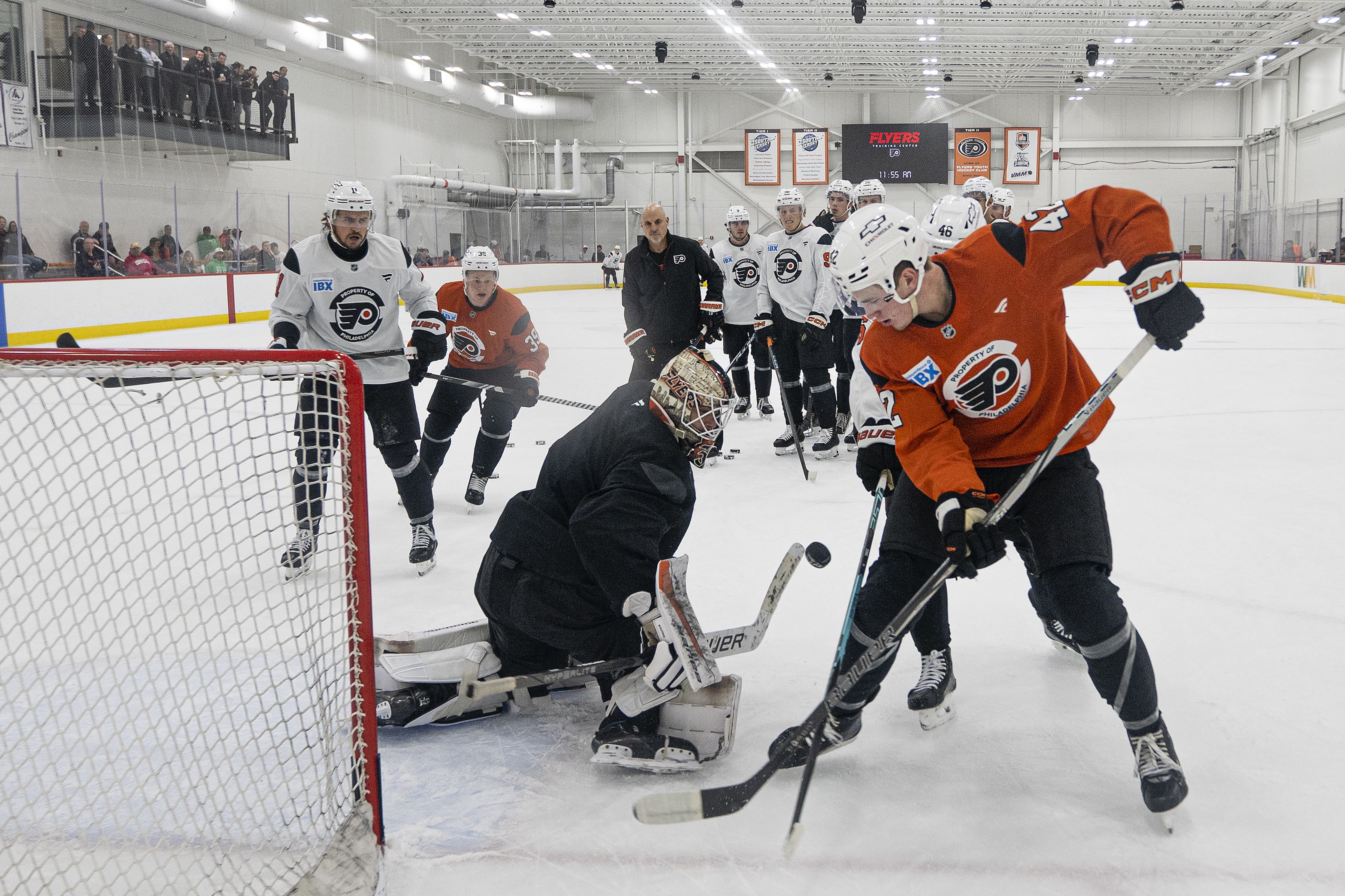
    Flyers prospect Spencer Gill (42) has dealt with a broken ankle and an upper-body injury that required surgery over the last two seasons in juniors.Jose F. Moreno

    Q: Luke Vlooswyk and Matthew Gard were traded out from Red Deer of the Western Hockey League this season. How do you assess their seasons?

    A: Vlooswyk, who just finished [with a loss in the Memorial Cup Final], had a great season in Everett, and he was a big part of that team — and we interviewed one of his teammates there this morning. But there’s another kid [who’s] got the tall, lanky frame that’s going to take some time to put on weight, get stronger; his mobility hopefully can come with that. He’s long, he’s rangy, good defender, and his puck game is improved dramatically. They’ve got a really good program there. I thought he just kept getting better and better, and a lot of big minutes, and he’s going to go back there next year and then the plan is to go to college. … He’s a longer-path guy, but he’s shown some interesting traits this year, and he’s certainly taken a step in the right direction.

    Gardo, I think once he got to Seattle, he emerged. But he’s another guy who’s tall and lanky. He’s got some work to do to get stronger, quicker with the explosiveness. He’s got a long stride, he’s got a powerful stride, so we project him to be a good skater — it’s going to take him the time to get there. Obviously, his defensive details have always been solid, but the offensive game in Seattle is good. … Big, exciting year for him, and he’s in the same category: go back and wants to play junior. He had options to go to college this year, but I think his agent and even his family thought playing one more year, getting stronger.

    Q: Max Westergård is an intriguing prospect: on the smaller side, but showed a lot of skill and a lot of upside at World Juniors. What did you see from him this year?

    A: He’s actually bigger than I thought when we initially drafted him, but what he brings is, he has a skill set … [and] he has dynamic speed, and he’s sneaky strong. He has one-on-one ability; he has the ability to generate offense out of nothing because of his speed, and he can score. … I think he’s in a good spot over there [in Sweden] to keep going. I know colleges are all over him, but he’s not going to college. I think he’s in a good spot, and hopefully earn his spot on Frölunda. We have a good relationship with them, so if he’s not having a bigger role than down to Allsvenskan, which is the second division, hopefully have a good role. But he’s determined to make it there, and they’re going to give him a chance, too.

  • Mark Franek quit being a lawyer to teach the history of U.S. soccer to the future of U.S. soccer

    Mark Franek quit being a lawyer to teach the history of U.S. soccer to the future of U.S. soccer

    Cavan Sullivan slammed his book bag down and told the teacher that he had had enough of those boring, dull readings.

    Animal Farm? The House on Mango Street? No, not those.

    It was the passages Mark Franek assigned four years ago to the class of ninth-grade soccer phenoms about the sport’s history in America that made Sullivan irate. They weren’t just uninteresting. They were negative.

    “You can just take a look at the books and the titles of them,” said Franek, who teaches at YSC Academy, the soccer-specific high school that funnels students to the Union. “One is Why the U.S. will never win a World Cup. Who wants to read that? Let alone, Cavan Sullivan.”

    Franek, 57, taught at Penn Charter in the 1990s before becoming a lawyer and then returning to the classroom in 2022 to teach at YSC, the high school for elite boys’ soccer players that produces World Cup players and sits across the parking lot from the Union stadium in Chester.

    The school moved from Wayne to Chester in 2023, taking over space in an old power station on the banks of the Delaware River. It is an incubator of soccer talent, and three players on the U.S. World Cup squad — Mark McKenzie, Auston Trusty, and Brenden Aaronson — graduated from YSC.

    Sullivan, a 16-year-old who already plays for the Union and has a deal to play for Manchester City in the English Premier League when he turns 18, graduated last month. He might be the future of American soccer. First, Sullivan had to learn the history of American soccer. And it was Franek’s job to make that subject more engaging.

    “If you think about where someone is in their formative years and this really critical point of development in mid-adolescence and learning about themselves and the world and the soccer world,” said Jared Micklos, YSC’s Chief Strategy Officer. “Then understanding what comes before them is also this optimistic way to give them hope and confidence and belief that they might be able to write the literal next chapter is something you need to reinforce and you need to inspire.”

    The Union’s Cavan Sullivan wrote the foreword for the book written by his former teacher, Mark Franek.Elizabeth Robertson / Staff Photographer

    Back to school

    Franek grew up in York and played soccer at Duke University before starting his teaching career in Montgomery, Ala. He wanted to teach American Literature and coach varsity soccer. An Alabama high school, Franek said, was the only place that would let him. He moved four years later to Penn Charter, where he coached Chris Albright and Bobby Convey — teammates on the 2006 U.S. World Cup team — and taught Matt Ryan.

    Franek left Penn Charter in 2007 and enrolled at Temple’s Law School after realizing there was money in litigation. He used to charge his neighbor $20 to mow his grass while his wife — a lawyer — made much more for providing a few hours of legal aid for the neighbor’s painting business.

    “I said, ‘I’m in the wrong field,’” Franek said.

    He landed a job with a big firm, enjoyed the money, but hated the hours. Franek was in his early 40s when he passed the bar, but he was working like someone in their 20s. He worked almost every weekend and could see he would soon be missing his son’s soccer games. Something had to give.

    He went to YSC to meet Brendan Sullivan shortly after Quinn Sullivan — Cavan’s older brother — signed with the Union in 2022. Franek wanted Sullivan to autograph a jersey for his son. And there he saw Nooha Ahmed-Lee, the former administrator from Penn Charter and current YSC Head of School.

    “An hour later, I realized she was actually vetting me and trying to figure out if I was happy being a lawyer,” Franek said. “I talked to my wife and said, ‘I’m going to call Nooha and say if you’re serious about an English position, then I’m serious about getting out of the law and back into teaching.’ It was the right time for me.”

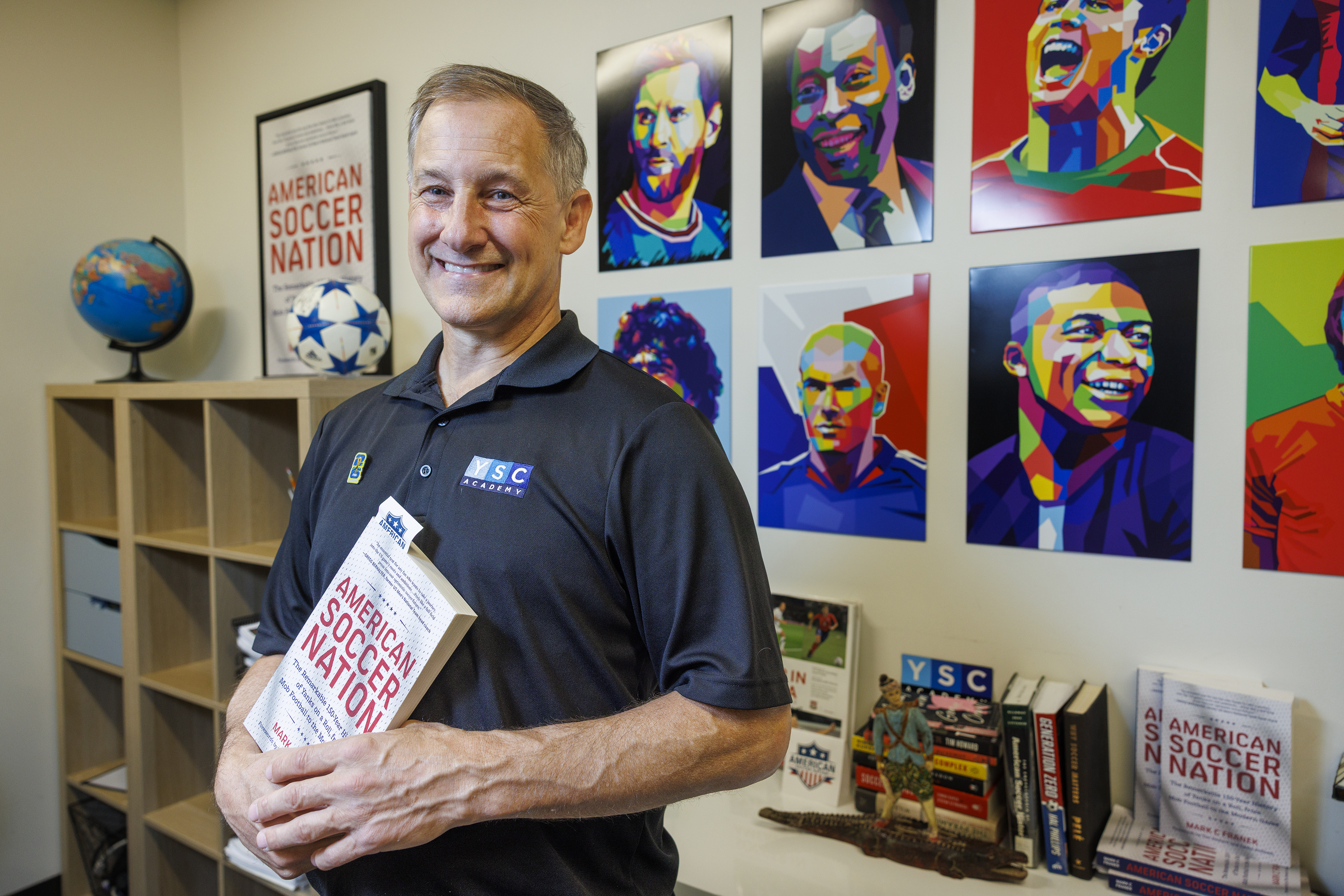
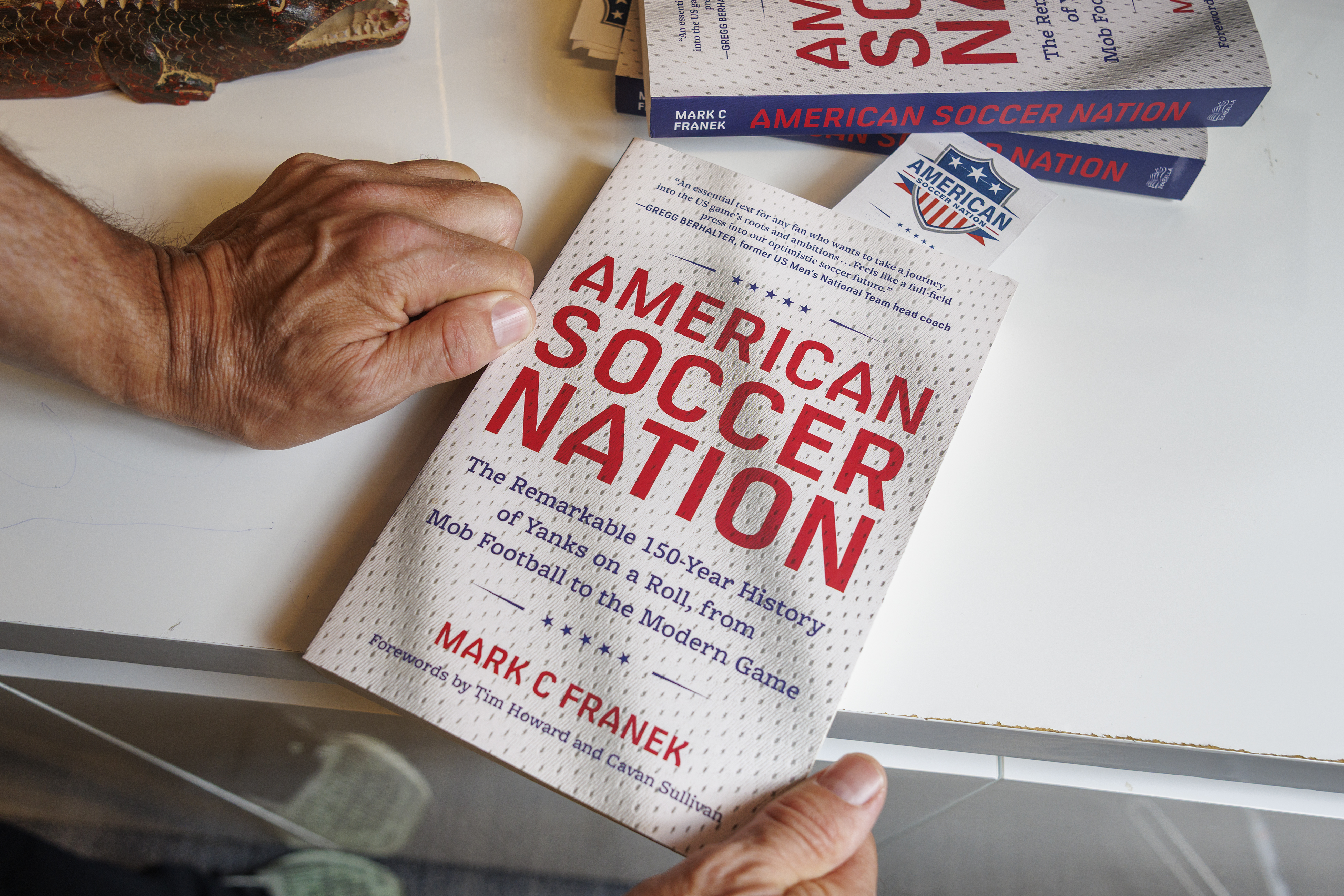
    Mark Franek shows his book, “American Soccer Nation: The Remarkable 150-Year History of Yanks on a Roll, from Mob Football to the Modern Game.”Alejandro A. Alvarez / Staff Photographer

    Writing the book

    Ahmed-Lee heard about Sullivan’s reaction to those readings and challenged Franek to design a course about the history of American soccer that he could weave into his English class. Franek accepted. He tracked down every book he could find about U.S. soccer, combed through internet articles, and learned everything he could.

    But Franek failed to find something that covered the whole story. So Franek wrote his own: a nearly 300-page book that was published earlier this year titled American Soccer Nation. It is a thorough history of American soccer that tries to deliver the story with optimism. It’s something Sullivan would want to read. He even wrote the foreword.

    “It’s incredibly rewarding to see an idea that began in our classrooms grow into a resource that is now helping students and soccer enthusiasts better understand the game,” Ahmed-Lee said.

    Franek uses the book in class at YSC as he assigns a chapter every week. The kids who dream of playing professionally learn about the pro league that rivaled baseball in the 1920s and the one that recruited Pele in the 1970s. Yes, there was pro soccer before the MLS. And Franek’s book does not ignore the mistakes that plagued those early leagues or the challenges the MLS faces today.

    “I have the best job in the world,” Franek said. “I get to teach young men in small classes who are living the dream. They’re grinding in the pitch and the classroom, trying to get better, and they have little tolerance for busy work or boring work or work that won’t help them get better whether it’s on the pitch or in the classroom.”

    The final chapter of Franek’s book details YSC and why he believes that “total immersion” is soccer’s path to success in America. The Union paired their soccer academy with a high school that is centered around soccer.

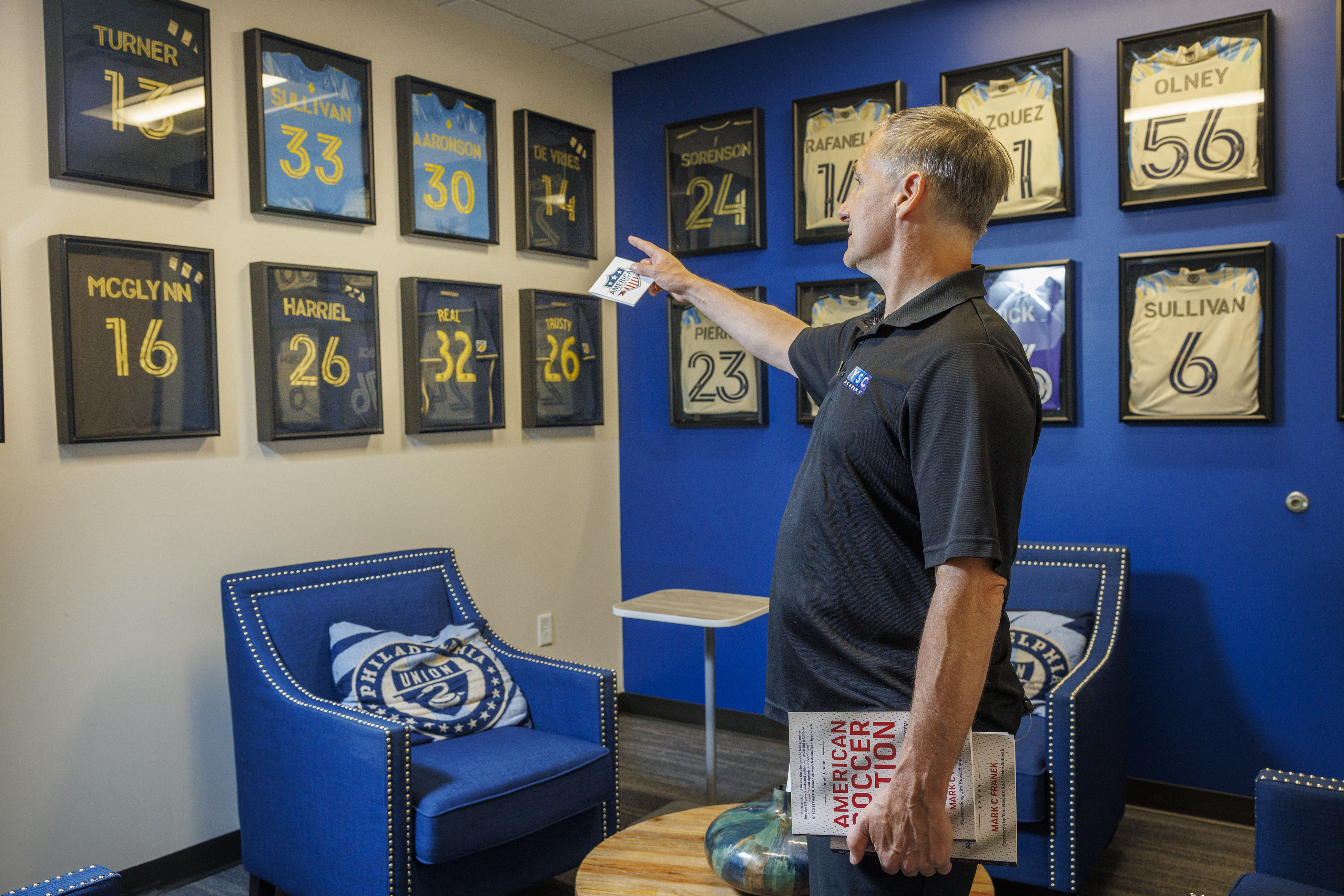
    Mark Franek shown in the “jersey room” at YSC Academy in Chester. Alejandro A. Alvarez / Staff Photographer

    “Imagine what the United States could do on the international level if one-third or one-half of the 30 MLS teams were able to build an academy and then surround that soccer environment with a learning environment that works for their setting and their community where you’re supercharging the dream and helping the kids along to the college dream,” Franek said. “The Union have shown without a doubt that it works.”

    YSC says 86% of its students graduate from college and 68 have signed professional soccer contracts since the school opened in 2013. The academics are not secondary at YSC but everyone understands the importance of soccer. The day starts later so students can train in the morning. Coaches and teachers work together to not overload a student’s schedule.

    “We have to remind everyone that their ultimate drive and purpose is to be great at soccer,” Micklos said. “Whether that means they’re a pro directly when they leave our doors and walk off the stage or they go to college and become a pro or it means they go to college, play soccer, and that’s the end of their soccer career, but the journey has prepared them for life and a career off the field.

    “The thing that drives them and their passion and the reason for the school is to help stimulate that growth and help them on that journey. It’s a hard journey for a young person to have the demands they have. If those things aren’t designed around their schedule then we’re actually doing them a disservice in their day-to-day life by creating a bigger challenge or hurdle than they need vs. saying, ‘Hey, we incorporate everything you need on the soccer field and then integrate that into what we’re doing at the school because an aligned and integrated environment is going to be the one that helps you best prepare.”

    Even the food is fit for budding pro athletes.

    “I remember two weeks into school and Cavan was eating a T-bone steak in my class,” Franek said. “I’m like, this is weird. I’ve taught for 15 years at Penn Charter and I’ve never seen anyone pull out a T-bone steak with A1 Sauce and then grab House on Mango Street. You’re living with alpha males. There’s a certain energy around the building that’s palpable and it’s glorious. Cavan was great and so is pretty much everyone. They’re moving in a direction and they’re super-focused.”

    Franek had Sullivan and his classmates autograph a ball during their freshman year. It was a keepsake of a class that pushed him to write that book. So far, several of them have already signed pro contracts. Sullivan should soon be playing in England for one of the world’s biggest clubs, and he’ll be a contender in four years to make the U.S. World Cup roster. Perhaps he’ll even team with his older brother, who graduated from YSC in 2022. If so, Franek will have more positive stories about American soccer to share with his students. And his book will need some more chapters.

  • The renovated Highmark Mann has reopened and the vibe is national-park chic. A 195 foot-long digital wall is its new star.

    The renovated Highmark Mann has reopened and the vibe is national-park chic. A 195 foot-long digital wall is its new star.

    Greener and roomier with a chic naturalistic look, the Highmark Mann Center officially reopened Monday after the final phase of a yearslong renovation.

    Construction at Philadelphia’s outdoor arts center in Fairmount Park went not just down to the wire, but a few weeks beyond it, delayed by this past winter’s stretch of snow, ice and subfreezing temperatures. In early June, dance fans arriving for BalletX performances found the main entrance and other parts of the campus still under construction.

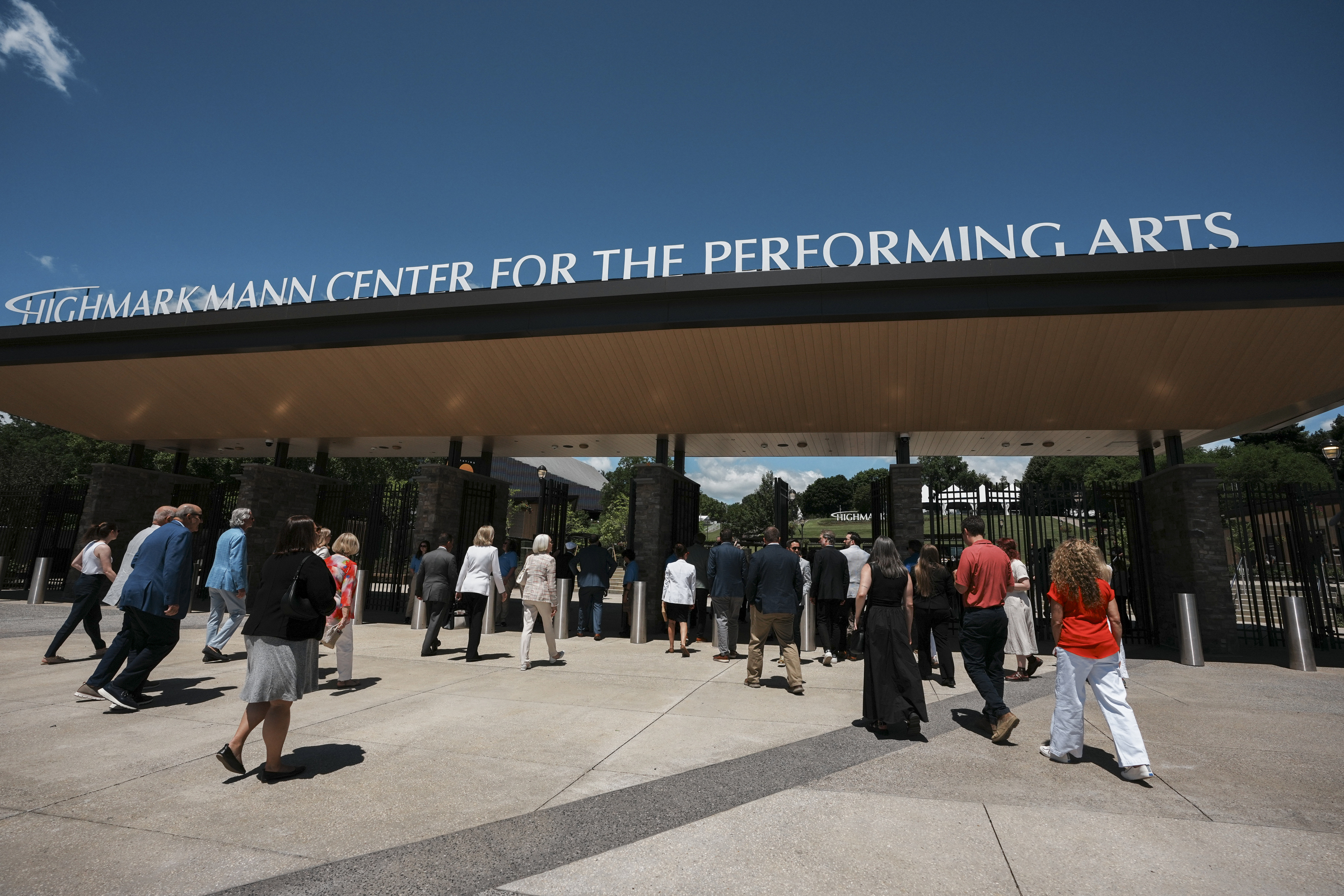
    But on Monday, amid speeches and the cutting of a long golden ribbon, the Highmark Mann emerged polished and substantially changed from its appearance after closing for the season last October.

    Stevie Wonder said it best, said Highmark Mann president and CEO Catherine M. Cahill to a crowd of dignitaries gathered at the center’s entrance Monday.

    “Music is a world within itself with a language we all understand,” she said, quoting the lyrics to Wonder’s “Sir Duke” from 1976, the year the center opened. “Music offers a release from the ordinary, and today we celebrate exactly that. This new space was designed to transport us from our everyday lives into a magical, musical, immersive experience that begins with the moment you arrive.”

    An opening event on Monday showcased a renovated Highmark Mann Center.Jessica Griffin / Staff Photographer

    Monday’s relaunch came 50 years and one day after the center’s opening concert.

    The Highmark Mann has raised $68.6 million toward its $70 million goal in this campaign — a sum going toward operations, endowment and cash reserves, artistic and 50th anniversary projects, as well as paying for the last several years of construction projects.

    The renovations unveiled Monday, designed by architecture firm EwingCole, include a redesigned plaza three times the size of the previous one, and a substantial new gateway entrance structure.

    A “Hollywood”-style “Highmark Mann” sign now stands planted in the lawn, ready to serve as backdrop for selfies. A new sound system promises a truer musical experience tailored to each performance.

    “If there’s a country artist, you’re going to want a slightly different response than if you are hearing R&B or classical,” said Highmark Mann vice president and general manager Evan Rogers.

    Promising young plantings and a new welcome center and other structures faced in wood and stone might echo the surrounding park — Cahill calls the aesthetic a “timeless national park look” — but the centerpiece of the renovation is more like something out of Times Square.

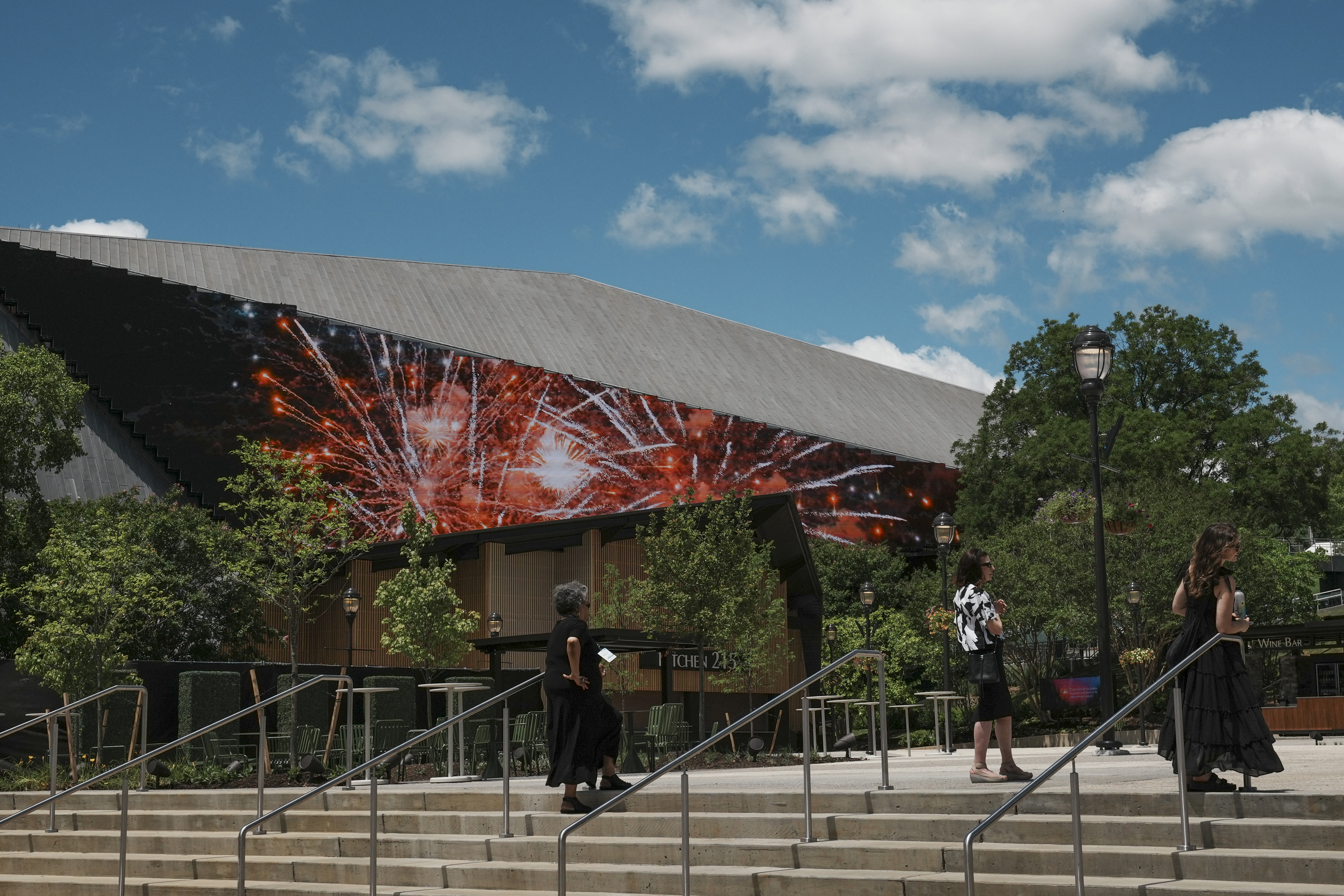
    The Satell Centennial Wall East at the Highmark Mann Center on Monday.Jessica Griffin / Staff Photographer

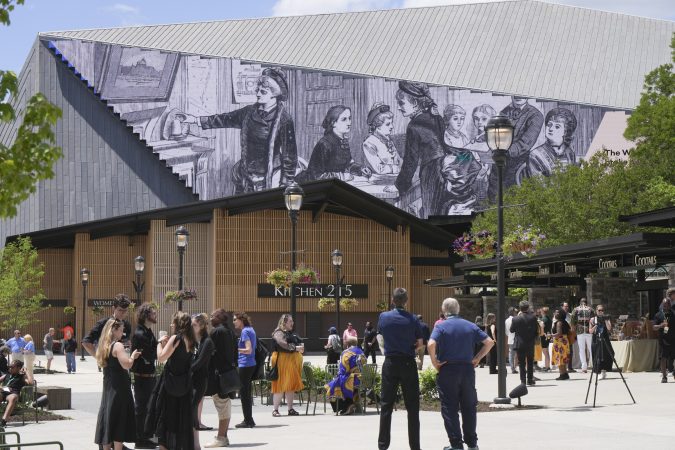
    A spectacular digital screen now bedazzles the main concert shed, greeting visitors with a stream of video art and programming rendered in images vivid and saturated even in bright sunlight.

    The Satell Centennial Wall East on the side of TD Pavilion won’t carry advertising, Mann leaders vow, but sequences on culture, history and the like. On Monday, it displayed a feature on the 1876 Centennial Exposition in Fairmount Park and photo montages.

    “It’s purely artistic content, which is super exciting,” said Brad Baer, digital experience/innovation adviser of the screen, which runs 195 feet on its longest side.

    The Highmark Mann opened five decades ago as the Robin Hood Dell West, the local summer retreat for the Philadelphia Orchestra, and it has evolved into a bona fide arts center that feels both sylvan and city. The orchestra today is a small part of the Highmark Mann identity; this summer only six of an announced 45 presentations involve the ensemble. Pop music predominates.

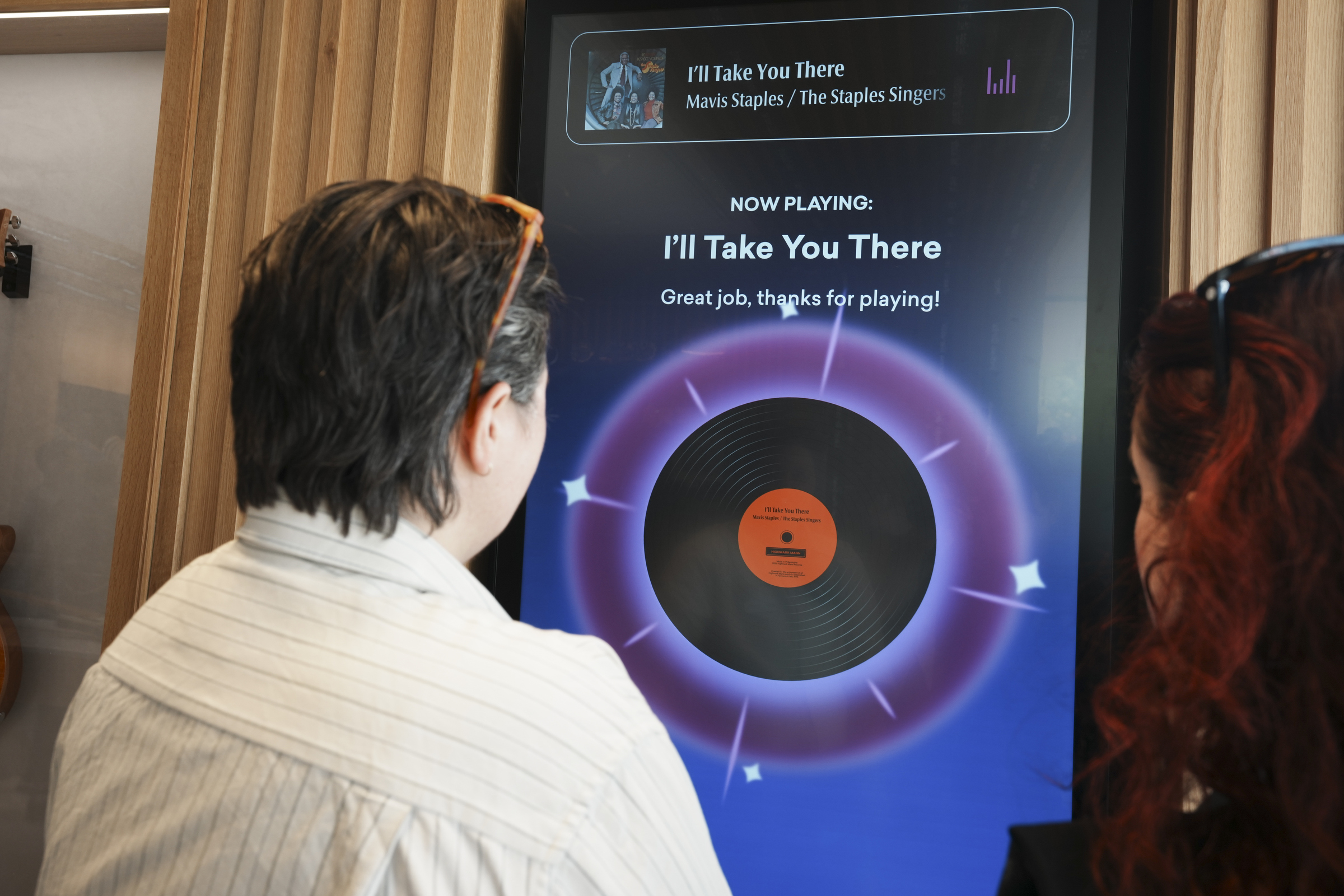
    An interactive jukebox in the Highmark Mann Center’s welcome center tests knowledge and rewards users by playing a piece of music at the end.Jessica Griffin / Staff Photographer

    Other recent changes include a second major performance space, the Skyline Stage, opened with a permanent structure in 2023 and a capacity up to 7,500 patrons standing; and a stylish remaking in 2024 of dressing rooms and other backstage areas whose displays of archival photographs and other materials remind visiting musicians of the center’s formidable artistic history.

    The goal is to communicate that the center is “not static,” says Cahill, “whether it’s world premiere commissions, or new sound systems to engage lawn patrons who hopefully will become seated patrons at some point in their life cycle.”

    All this is part of a conscious campaign of institution-building. Once considered something like an annual but ephemeral summer bloom on the edge of Philadelphia’s arts and culture community, the Highmark Mann has grown its budget and built out programs beyond concerts, like a summer arts institute for classical and jazz student and an entertainment industry apprenticeship program.

    It even has aspirations to increase its number of operational months, if not to year-round, then at least well beyond summer.

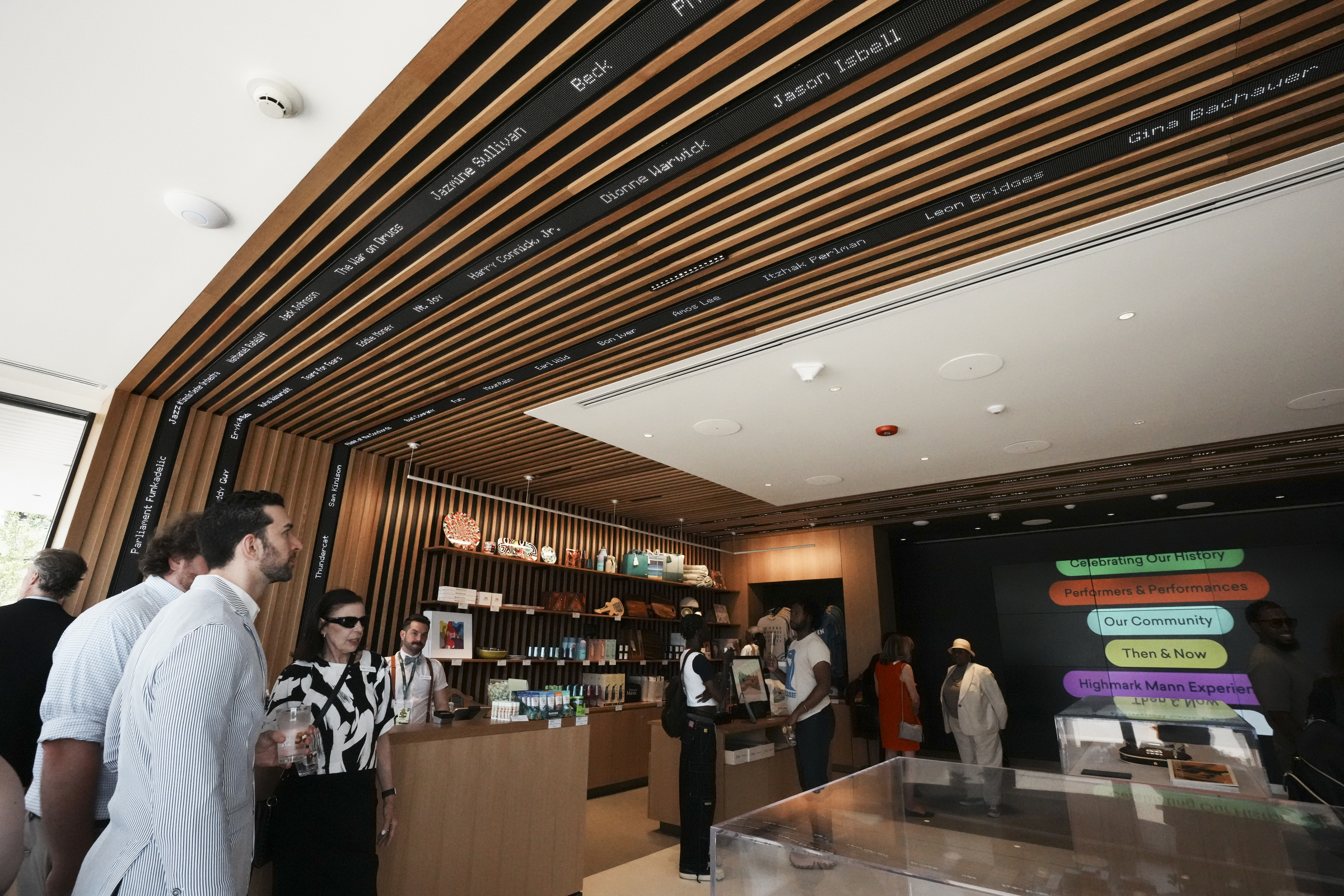
    The welcome center at the Highmark Mann includes a gift shop, interactive panels with games testing musical trivia, and tickers flashing the names of artists who have performed at the outdoor arts center.Jessica Griffin / Staff Photographer

    It is also now telling its own story. The center commissioned a book — A Century of Music Under the Stars, by historian Jack McCarthy — that covers music in Fairmount Park even before the Philadelphia Orchestra organized its concert series on the other (east) side of the Schuylkill in 1930.

    And it is mining its own archives for the potential release of recordings of historic pop and orchestral performances that have taken place there over decades.

    Concertgoers can now experience some of the center’s history in the welcome center, where an interactive video jukebox quizzes visitors with trivia about artists who have performed. Merch is for sale, and the names of musicians glide by on electronic tickers crawling up the walls to the ceiling.

    Said Cahill:

    “With this transformation of this campus and celebrating the 50th anniversary, this is where we thought we could bring it all together and tell the history and the incredible legacy through all this technology, which is what people in the 21st century are used to engaging with.”

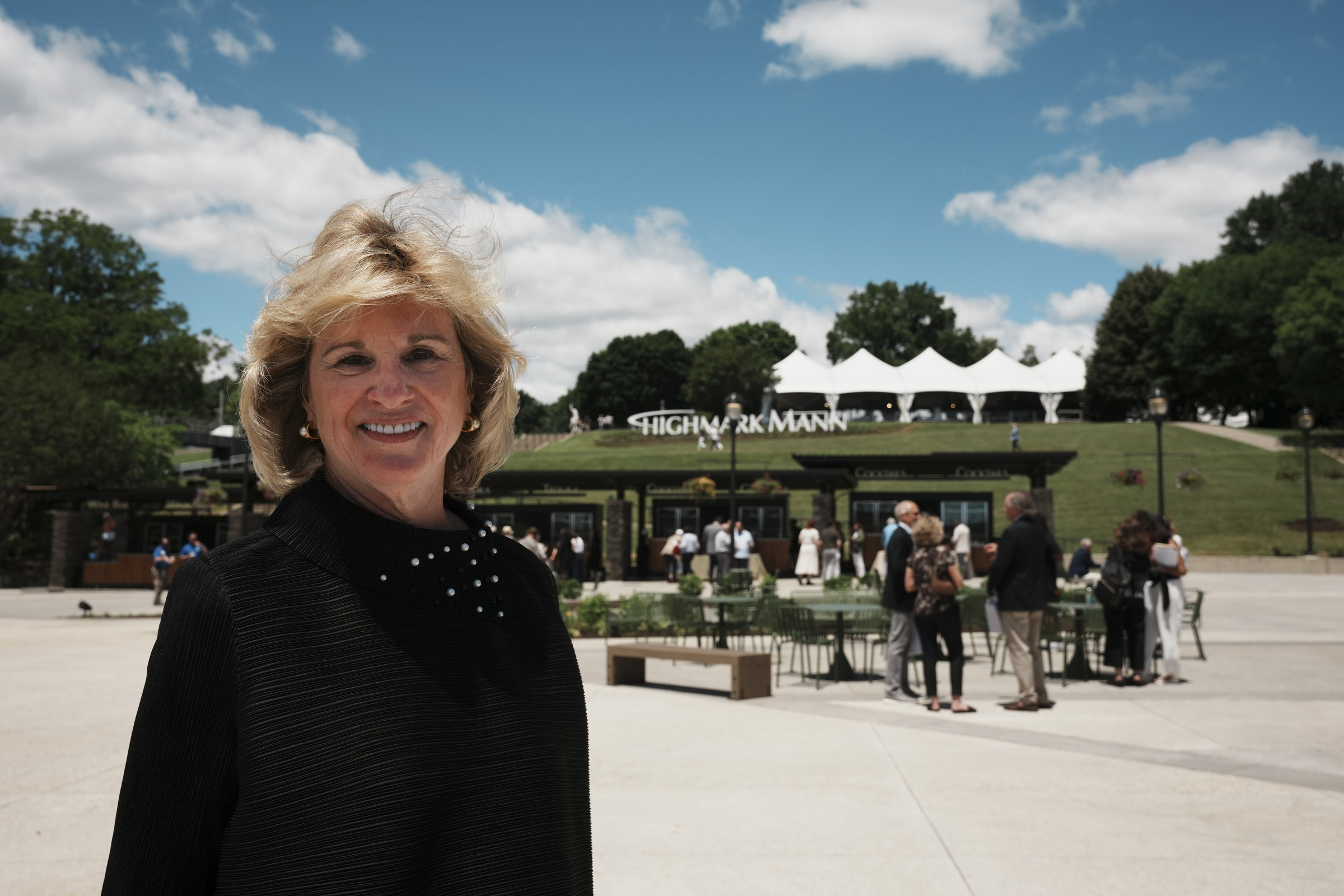
    Highmark Mann president and CEO Catherine M. Cahill in the center’s new plaza with the “Hollywood”-style “Highmark Mann” sign in the background.Jessica Griffin / Staff Photographer

    In the past, the center has often relied on tents to house certain amenities. Now, there are fewer tents and more buildings.

    The effect is symbolic as well as practical.

    “One of the things that you hate about the tents is, they go away. But all of this building, the gardens, the infrastructure — all of this sends a different message that it’s not going away when the Highmark Mann closes down at the end of the summer.”

    Cahill wants to imbue visitors with a feeling that they were “someplace that mattered” and wants them to be able to say, “‘I was a part of it.’

    “The Highmark Mann has a lot of people who love us,” she said. “We want to become their premier destination, for them to come here and bring family and friends and say, ‘Oh my God, look at what we have in Philadelphia. This is world class.’”

  • Horoscopes: Tuesday, June 16, 2026

    ARIES (March 21-April 19). You’re using your powers for something genuinely beneficial. Sometimes it feels like you’re maneuvering through this, but that’s because experience has taught you what no theoretical knowledge ever could. You know the moves that actually work.

    TAURUS (April 20-May 20). Priorities will be revealed today, perhaps unintentionally. The things people make space for become apparent. What gets the care, maintenance and attention reflects what matters most. Looking honestly at the scene will expose what’s been neglected or unresolved.

    GEMINI (May 21-June 21). Listen up today for the golden echo. The good you’ve sent outward returns amplified and beautifully timed. You may not even remember these old efforts, but it’s beautiful to feel them finally produce resonant rewards.

    CANCER (June 22-July 22). Don’t underestimate how deeply clutter affects the nervous system. Constant visual noise competes for attention and creates background stress. All it will take is clearing one surface to change your mood and restore a sense of capability and calm.

    LEO (July 23-Aug. 22). It’s a quid pro quo situation between you and life today — not transactional so much as mutual and balanced. This is not always the case. Life obligates itself to no one, so days like this are something to savor.

    VIRGO (Aug. 23-Sept. 22). Your kindness is felt — not in the moments when you mean to be or are supposed to be kind, but in the moments when you don’t have to be kind at all and yet you are.

    LIBRA (Sept. 23-Oct. 23). Your goal is simple, to elevate the room and brighten people’s hearts. Achieving the goal is trickier because everyone wants something different. But don’t overthink it. Go with what excites you, and you’ll be contagious.

    SCORPIO (Oct. 24-Nov. 21). There’s someone you like a whole lot. You would go just about anywhere with that person because it’s the company, not the location that really matters. Maybe it’s not always easy with this person, but it will be now.

    SAGITTARIUS (Nov. 22-Dec. 21). You hesitate to make agreements, not out of withholding but out of honor. The world needs more like you — people who don’t give their word unless they believe they can stand by it, defend and make good on it.

    CAPRICORN (Dec. 22-Jan. 19). Your personal goals can be as small as a cake pop. That’s what makes life manageable and sweet. The group goals need to be as big as a cake, so when it’s baked you can cut and serve.

    AQUARIUS (Jan. 20-Feb. 18). You have one version of your future in your sites, but any change you make now, however small, could change everything. Stay open and don’t underestimate the power of small adjustments. They can drastically alter the destination.

    PISCES (Feb. 19-March 20). Today brings exchanges of mutual benefit. How do you know this will be the case? You ask questions and really listen to the answers. You share your needs openly without worrying about appearing too vulnerable. You are, after all, among friends.

    TODAY’S BIRTHDAY (June 16). It’s your Golden Apple Year. Like the fruit of the Hesperides, guarded by nymphs, you will enjoy the rare rewards that are the harvest of your labor in this year rich in blessings, beauty and treasured achievement. More highlights: A luxurious purchase improves daily life. Romance grows through teamwork and shared ambition. You’ll become known for something specific, useful and strangely glamorous. Virgo and Sagittarius adore you. Your lucky numbers are: 11, 4, 49, 3 and 16.

  • Dear Abby | Additional dinner invitation upsets birthday girl

    DEAR ABBY: I invited a friend, “Sybil,” to dinner at a fine dining, special occasion restaurant to celebrate her birthday. About a month before, I called to say I had also asked someone else to join us, as it was also her birthday. I thought the three of us would have fun, as we rarely go to fine dining establishments.

    I was the host, so I said that I would pay for all of us. Sybil said she wouldn’t go unless I “uninvited” the third person! A week after I refused to do that, I received an email saying “leave me alone” after I’d unsuccessfully tried to phone and set up an alternative date to celebrate, but at a less expensive restaurant. I could not afford to host two fine dining nights out.

    That was five months ago. Now what? I won’t apologize for including another person at a dinner party I was hosting, but I am willing to move on. It took a mutual friend to explain to me why I got the “leave me alone” email. It never occurred to me that I could be wrong. I don’t think I was. Do you?

    — GOOD INTENTIONS IN CALIFORNIA

    DEAR GOOD INTENTIONS: It might have been better form to have asked Sybil if she would mind your including another birthday girl at the dinner before you did it, but not having done that was insufficient reason to excommunicate you. I do not think you owe her an apology. On the contrary, she owes you one for overreacting the way she did.

    ** ** **

    DEAR ABBY: Three years ago, I found out that the man who raised me wasn’t my biological father. I suspected it for many years and asked my mother about it twice. She angrily denied it both times. The man who raised me was definitely my dad. He passed away in 1989. I recently found out that he knew of my parentage all my life.

    Through a cousin, I found my DNA profile. I reached out to my biological father in 2020. We met twice and have a cordial relationship. I sent him and his wife a Christmas card, which he acknowledged with a phone call. He says that he’s so glad I reached out to him. I also call him around his birthday but do not send a card.

    Is it weird for me to acknowledge Father’s Day with him? I have just been letting it pass by. He wasn’t a dad to me, but we all know he’s my father (as does his one other daughter). For whatever reason, I want to send him a card. Or should I call? Maybe this is a “me” thing. I’d like your advice.

    — WONDERING IN WISCONSIN

    DEAR WONDERING: I can understand why, having lost the man you always regarded as your father, you feel a desire to have a father figure in your life. Why not ask your biological father how he feels about a card and a call and what he would prefer?

  • Philly takes home two wins at the 2026 James Beard Awards

    Philly takes home two wins at the 2026 James Beard Awards

    Philadelphia can now add two more food awards to its shelf.

    Restaurants and chefs from the City of Brotherly Love took home wins in two categories Monday night in Chicago at the 2026 James Beard Awards, considered to be the most prestigious restaurant industry honor in the United States.

    The showing builds on the momentum of last year, when Mawn’s Phila Lorn took home the title of Emerging Chef, an award he dedicated at the time to “the assumption” that the Cambodian noodle house in Bella Vista wasn’t “popular enough,” “focused enough,” or ”good enough” to win.

    Now the assumption isn’t that Philly is an underdog. It’s that we’re a full-on culinary powerhouse.

    Chef Chutatip “Nok” Suntaranon’s Thai restaurant Kalaya won outstanding restaurant, an award that recognizes “consistent excellence” in food, hospitality, and operations.

    Suntaranon originally opened the restaurant — known for its ornate dumplings — in 2019 in what is currently Mawn’s location, where it was nominated in 2020 for Best New Restaurant. In 2022, Kalaya moved to a bigger space just off Frankford Avenue in Kensington, where it has flourished, earning a Michelin Guide recommendation, a spot on The Inquirer’s The 76, and, in 2023, Suntaranon’s first Beard Award for best chef, Mid-Atlantic.

    Chef Chutatip “Nok” Suntaranon as seen through the line at her restaurant Kalaya in Fishtown on August 22, 2024.Neal Santos

    “This award means a lot to me because it’s validation for Thai food and validation for the city of Philadelphia that we’re a world-class food city,” Suntaranon, in a shimmering floor-length orange gown, said backstage.

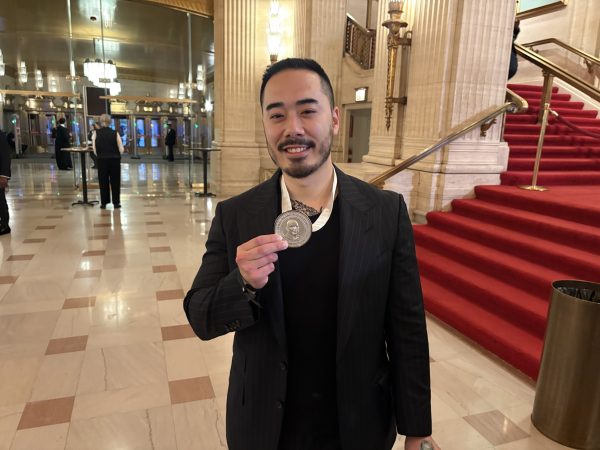
    Chef Jesse Ito of Royal Sushi & Izakaya on Monday night took home his first James Beard Award, for best chef, Mid-Atlantic. “It’s been a long ride,” Ito said from the stage at the Lyric Opera theater.

    Indeed it has.

    The chef behind the notoriously-hard-to-get-into Queen Village omakase counter and its more casual bar and restaurant has been nominated nine times for the award, which honors the top culinary talent across Pennsylvania, New Jersey, Delaware, Maryland, Virginia, and Washington. This go-around, Ito beat out two-time finalist Amanda Shulman — whose Her Place Supper Club earned one of Philly’s first Michelin stars last year — and Omar Tate and Cybille St.Aude-Tate of Honeysuckle, who transformed their cafe-market into a Michelin-recommended prix fixe restaurant in 2025.

    During his acceptance speech, Ito invoked the oft-quoted Serenity Prayer and thanked his parents, who ran the Cinnaminson and Haddonfield sushi restaurant Fuji for 40 years, before selling. It’s where Ito worked his first restaurant job as a dishwasher, and a place he has long credited for helping him find his footing in the restaurant industry.

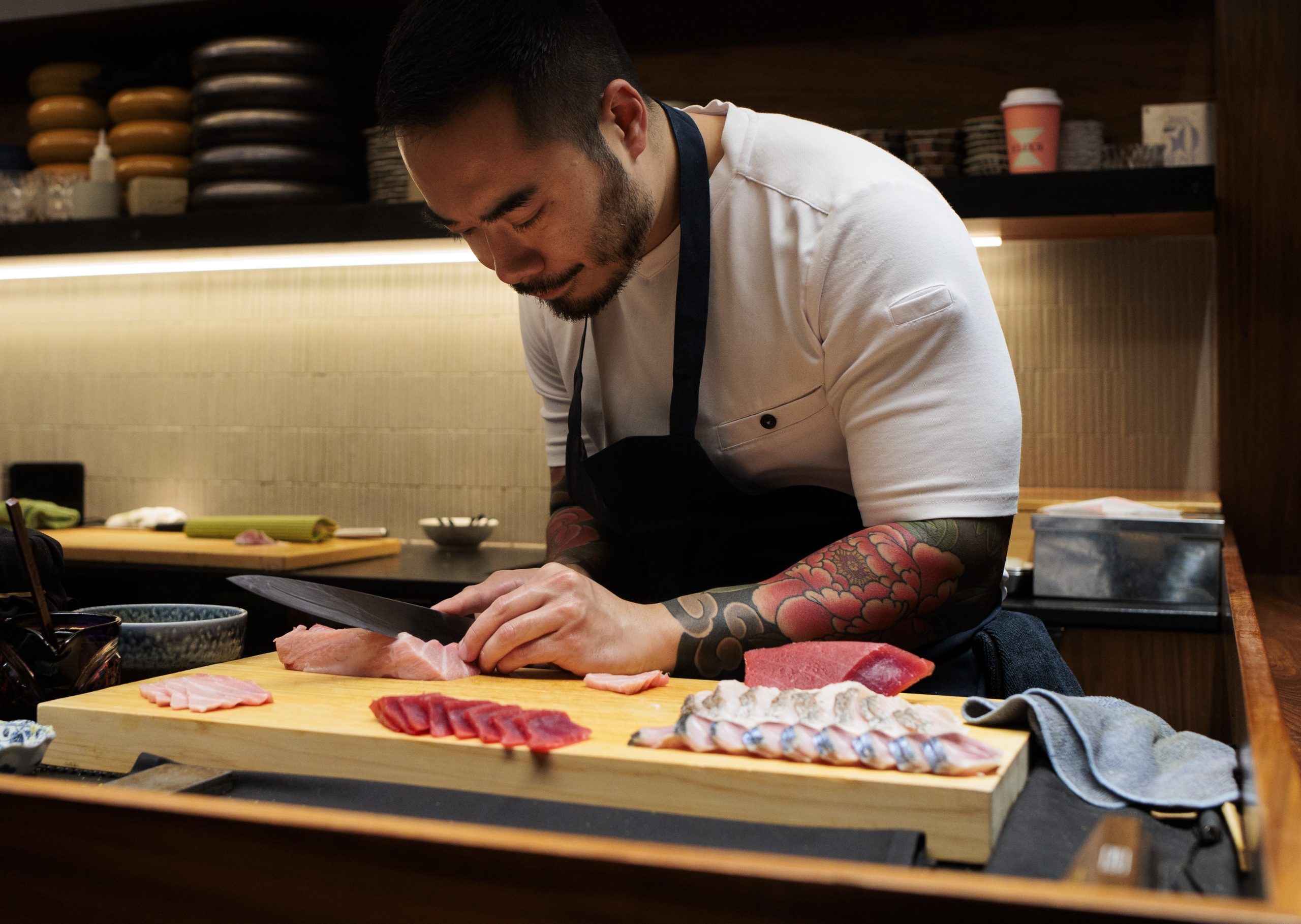
    Chef Jesse Ito prepares a course during the omakase at Royal Sushi and Izakaya on Tuesday, Oct. 28, 2025, in Philadelphia.Monica Herndon / Staff Photographer

    “We went through so much,” Ito said, choking up. “Restaurants are glamorous, and it seems great, but we went through so much hardship. I’ll never forget the struggle just to get here.”

    Royal Sushi’s success has also, at times, been its greatest challenge: The $355, 16-seat omakase prepared by Ito is one of the toughest seats to score in Philly, which potentially led to the restaurant losing out on a Michelin star last year. At the same time, the restaurant earned a spot on North America’s 50 Best Restaurants list in 2025 and high praise from The Inquirer, landing on The 76 two years in a row.

    The pendulum swing of accolades keeps Ito on his toes. He told The Inquirer over the phone Monday night that he wasn’t certain what made this year different from all the others.

    “I don’t know how it all works,” Ito said. “I came to Chicago 99% certain that I was going to lose.”

    Now that he’s won, Ito plans to celebrate by singing Harry Styles’ “Sign of the Times” and “Creep” by Radiohead at karaoke — somber choices for a victorious night.

    “They’re just my songs,” said Ito. “I have to sing them.”

    Who else represented Philly?

    Philly restaurants and chefs didn’t take home medals in every category.

    Emmett, the Levantine-inspired Kensington restaurant from chef Evan Snyder, was nominated for best new restaurant. The award ultimately went to Lei, a New York City wine bar that serves Chinese food. Named after Snyder’s first-born, Emmett had a quick rise after its January 2025 opening: In the past year, it made its first appearance on The 76 and was named one of the best new restaurants in the U.S. by Esquire magazine.

    From left: The gaeng pae, khao mun klone, and moo yaang prik at Kalaya on Wednesday, Sept. 3, 2025, in Philadelphia.Monica Herndon / Staff Photographer

    First-time nominee Justine MacNeil did not take home the award for outstanding pastry chef or baker, which went to Susan Bay of Washington’s buzzy Vietnamese restaurant Moon Rabbit. At Fiore — the East Kensington cafe MacNeil co-owns with husband Ed Crochet — the former fine dining pastry chef churns out thousands of classic Italian pastries a week, from oversize maritozzi to pistachio cornetti that have earned praise from 2017 James Beard Award-winner Greg Vernick and Inquirer critic Craig LaBan, among others.

    Friday Saturday Sunday lost out on its second Beard Award on Monday, this time for outstanding bar. Its downstairs, first-come-first-served Lovers Bar was nominated for the honor, which instead went to Portland, Ore., whisky bar Scotch Lounge, a recent addition to the list of North America’s 50 Best Bars from World’s 50 Best. Friday Saturday Sunday won its first Beard award in 2023 for outstanding restaurant, and earned one of Philly’s first Michelin stars in 2025.

    The deluxe nigiri box for take-out at Royal Izakaya, in a photograph from 2020.Courtesy Royal Izakaya / Jesse Ito

    The Inquirer also took home hardware of its own Sunday night during the James Beard Media Awards, also in Chicago. Inquirer staff photographer Monica Herndon won for narrative photography for “The hunt for life-giving ‘country food’ in the Canadian Arctic.” The photo essay chronicled the food traditions of the Inukjuak, a remote Inuit community in northern Québec. It accompanied reporting from Inquirer food critic Craig LaBan about how the community continues to hunt and preserve foods such as caribou and beluga despite the challenges of climate change.

    Philadelphia had 13 semifinalists across eight categories when the Beard Awards were announced in January. They included chef Greg Vernick for outstanding restaurateur; Amá’s Frankie Ramirez for emerging chef; Almanac in Old City for best new bar; and deli magnate Russ Cowan and Michelin Green Star winner Ian Graye of the vegan restaurant Pietramala, both for best chef, Mid-Atlantic.

    All three were later eliminated from the finalists’ list.

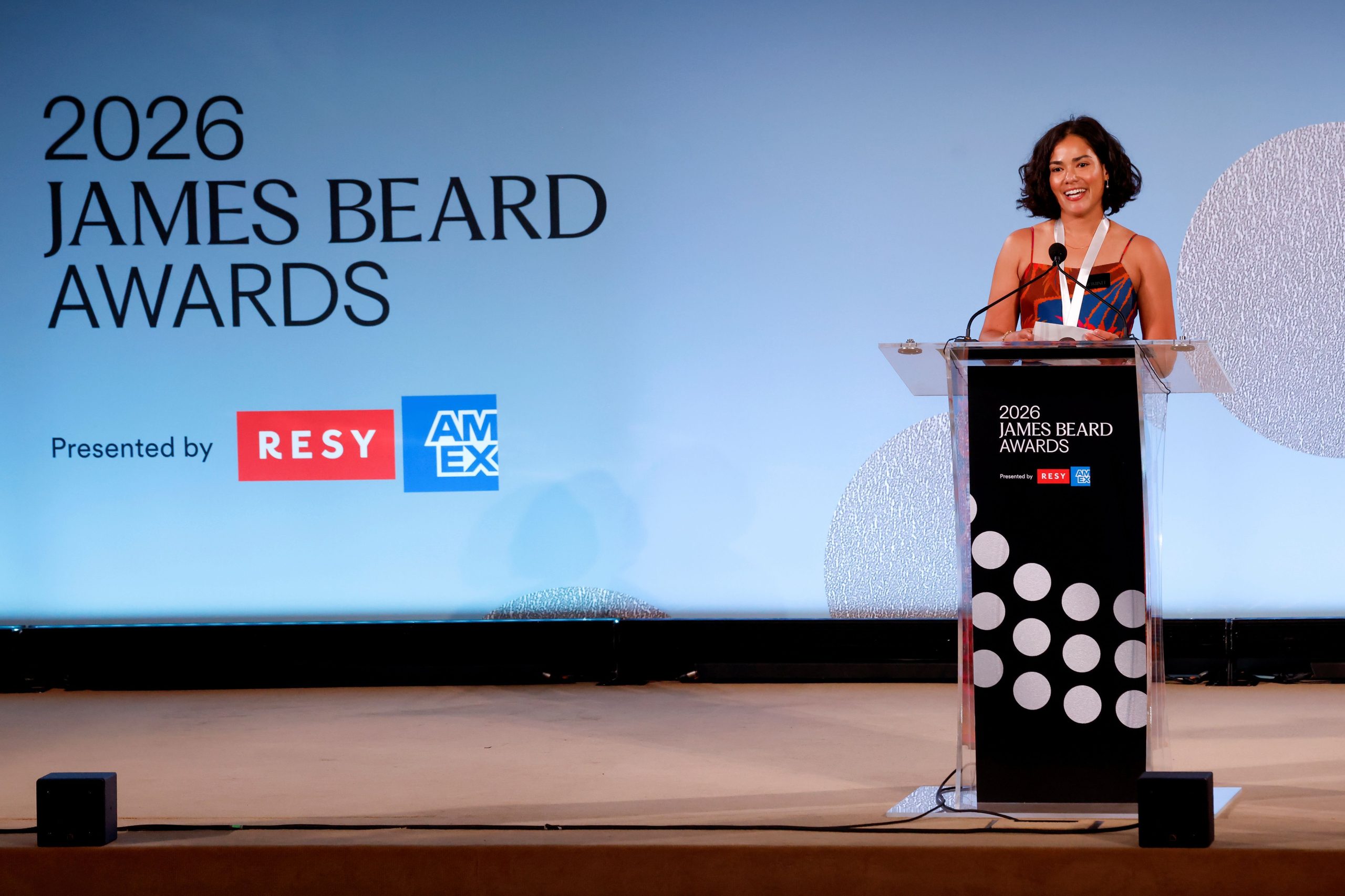
    CHICAGO, ILLINOIS – JUNE 13: Monica Herndon, winner of the Narrative Photography Award, speaks onstage during the 2026 James Beard Media Awards at the Art Institute of Chicago on June 13, 2026, in Chicago.Jeff Schear / Getty Images for the James Beard Foundation

    The night’s showing adds one more win from February when Center City stalwart Oyster House was named an American classic, which honors local restaurants across the U.S. with “timeless appeal that serve quality food and are beloved by their communities.” Representatives from the Philly mainstay were in Chicago to receive their medals in person.

    “I am very fortunate that I live in Philly. People are loving and caring [here]. People are strong, and we all come together to support one another,” Suntaranon said. “Go Birds!”

  • Gabriel Rincones Jr. emerges, Zack Wheeler efficient as Phillies return home with 7-0 win over Marlins

    Gabriel Rincones Jr. emerges, Zack Wheeler efficient as Phillies return home with 7-0 win over Marlins

    Right away, Gabriel Rincones Jr. knew it was gone.

    He let the bat flip off his fingertips as he started toward first base. Miami right fielder Owen Cassie made a futile jog toward the wall, but the ball kept carrying and carrying until it landed just inside the foul pole, Rincones’ first major league hit and home run all at once.

    “I daydreamed about that, and tried to think about what it would feel like, what would I see, smell,” Rincones said. “And it’s very similar. I had a whole routine in my head with what I could possibly do, and thank God I was able to do that.”

    The rookie outfielder debuted Friday in Milwaukee when he and the rest of the Phillies were baffled by Brewers star Jacob Misiorowski. But in his first start at Citizens Bank Park on Monday, Rincones made his presence felt in the 7-0 win over the Marlins.

    It’s been a whirlwind few days for the right fielder, and it hasn’t all sunk in yet.

    “I process things really slow,” Rincones said jokingly. “It doesn’t help — that atmosphere vs. one of the best pitchers in baseball, I had a crazy travel day, going out to Milwaukee, pretty bad weather there at the time. But I got good sleep today and was able to do my thing.”

    Rincones’ solo homer in the second inning gave the Phillies an early lead they would not surrender as they pounded the Brewers for 10 hits. Every starter reached base at least once. That included Trea Turner, who was 0-for-3 before getting hit by a pitch in the sixth and was later removed from the game with a bruised right wrist.

    Interim manager Don Mattingly said Turner’s X-rays were negative, but he is sore.

    Phillies starter Zack Wheeler tossed six scoreless innings, even though he said postgame he was unsatisfied with his command.

    “I think that’s something that makes him so special,” said catcher J.T. Realmuto. “He has very high standards for himself, and he doesn’t feel like he’s perfect. He feels like it’s not his best stuff, but he continues to go out and just give us quality innings and gives us a chance to win every time he steps on the mound.”

    A leadoff single to Liam Hicks was the only hit he allowed until Joe Mack doubled in the fifth inning, but both times Wheeler battled back to strand the runner. He also pitched around three walks to hold the Marlins off the scoreboard.

    “It’s a tightrope,” Wheeler said. “Just got to walk it fine and get outs. You put yourself in that situation, so you got to get out.”

    Zack Wheeler was not happy with his command but the Marlins did not trouble the scoreboard on Monday. Yong Kim / Staff Photographer

    Wheeler leaned on his splitter and cutter more than normal, and collectively those two pitches generated nine of his 12 swings-and-misses.

    “I think those are probably the two pitches that kind of saved me today,” Wheeler said. “You sprinkle in everything else, but those two pitches really worked for me today.”

    He struck out nine, four of which were called looking.

    While there were offensive contributions up and down the Phillies lineup, it was the bottom of the order that consistently came through.

    Rincones picked up another RBI in the third inning to add to the Phillies’ lead. With the bases loaded, he grounded into a force out that scored a run. Justin Crawford followed it up with a single that made it 3-0.

    “The second at-bat I liked from the standpoint of putting the ball in play there,” Mattingly said. “Where he controlled the zone enough to get himself a pitch to put the ball in play, got us an extra run.”

    J.T. Realmuto celebrates his two-run fifth-inning home run against the Marlins on Monday. Yong Kim / Staff Photographer

    Realmuto then swatted a two-run homer in the fifth, his second home run in as many games after he had the day off on Sunday.

    “It’s important for any team to be able to have a deep lineup, and that’s something we feel like we put together here, is being able to score up and down the lineup,” Realmuto said. “We haven’t obviously done that all season long, but we feel like when we’re at our best, we can score at any point, doesn’t matter who’s hitting. So it’s good to see us score some runs the last few games with the bottom half.”

    The Marlins threatened the shutout in the eighth when they put two runners on against Jonathan Bowlan with an error and a single to bring up the heart of the order. But Bowlan struck out back-to-back Marlins — Kyle Stowers on a fastball and Xavier Edwards on a changeup — to end it.

    The bottom of the order started another rally in the eighth when the Phillies loaded the bases on consecutive singles from Crawford and Edmundo Sosa and then a walk from Kyle Schwarber. They tacked on two more runs with two sacrifice flies to make it 7-0.

    If it had remained a five-run game, Mattingly said he likely would have used a higher-leverage arm in Orion Kerkering for the ninth, but the extra cushion allowed him to bring in Chase Shugart instead. Shugart sidestepped a single to seal the shutout.

    “Those kind of runs, they don’t seem huge during the course of a game because it’s 5-0,” Mattingly said. “But it’s really big from the standpoint of bullpen usage, who’s available tomorrow and the next day, so those are big runs at the end.”

    After his second-inning homer, Rincones jogged back out to his position on defense, past where it had landed. He tipped his cap to the fans as they greeted him with an ovation.

    With Adolis García’s season likely over following a right lat tear, the Phillies have a need, and Rincones has an opportunity.

    He knows it.

    “I don’t want this to get familiar,” he said. “I want it to be like it’s a new feeling, and that fire, I don’t want that to go away. And I want to give these fans all that I got.”

  • Bob Brady has chaired Philly’s Democratic Party since 1986. Ward leaders just gave him four more years.

    Bob Brady has chaired Philly’s Democratic Party since 1986. Ward leaders just gave him four more years.

    Since 1986, Philadelphia has had six different mayors and five City Council presidents. But over those four decades, the city’s Democratic Party has known only one leader: Robert A. Brady.

    And he’s not done yet.

    Brady, 82, on Monday night won an 11th term as chair of the Democratic City Committee, continuing an astonishing run as the top official in the local party despite growing tensions between the local Democratic establishment and progressive insurgents.

    Fresh off democratic socialist Chris Rabb’s victory in last month’s Democratic primary for an open Philly congressional seat, District Attorney Larry Krasner called on Brady to resign, and progressive activists hoped to shake up the local party they blame for Philly Democrats’ lackluster turnout in recent federal elections.

    But following last week’s ward leader elections — in which left-leaning candidates notched at least five victories but came up well short of the numbers needed to seriously threaten Brady and his allies — the writing was on the wall.

    No challenger stepped forward during Monday night’s leadership elections at the party’s headquarters, the Robert A. Brady Office Building on Spring Garden Street, and the incumbent won another four-year term.

    “It‘s pretty nice to get it unanimous — nobody complains at all, no problems whatsoever, and that’s the way I like to have it,” Brady told reporters after his reelection, in which the ward leaders approved his slate of party officers in a unanimous voice vote.

    He added that he believes the party’s factions can overcome their differences.

    “They know that my heart’s in the right place,” Brady said of the party’s left-leaning critics. “I want to go in the right direction, and it might be the direction that they want to go.”

    Mayor Cherelle L. Parker, who leads the 50th Ward, addressed party officials during the election meeting, telling them she is a “progressive with a capital P — because if you want to be a progressive, you got to make some progress.”

    “People want results,” Parker said in an interview afterward. “They don’t want to see fighting. They don’t want to see finger-pointing. Let’s focus on an agenda and not try to eat our own.”

    Also Monday, the party elected several new officers to serve alongside Brady and ordered reruns of three ward leader elections with contested outcomes.

    Those include Mount Airy’s 22nd Ward, in which City Councilmember Cindy Bass controversially declared herself the winner after a contested voice vote.

    All three reruns will take place Wednesday night.

    Soup to nuts in Democratic politics

    Brady lives in Overbook, where he is the 34th Ward leader.

    His mother was a committeeperson, and he worked as a union carpenter before his mentor, the late City Council President George X. Schwartz, got him a patronage job as a Council sergeant-at-arms. (Schwartz later went to jail after being convicted on corruption charges as part of the Abscam scandal in the 1980s.)

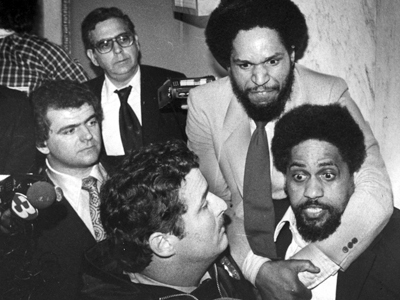
    City Council Sergeant-at-Arms Bob Brady, left, looks on as Councilmember John F. Street, top, and State Rep. Milton Street, right, take part in a near-riot in Council chambers. (Daily News File Photo)

    Brady was elected to Congress in a 1998 special election, and eventually chaired the House Administration Committee, which handles behind-the-scenes tasks such as assigning office space to lawmakers.

    While in Congress, he ran unsuccessfully for mayor in 2007, losing to Michael A. Nutter, who ran on an anti-corruption campaign.

    In 2017, news broke that Brady’s congressional campaign was the subject of a federal investigation over an alleged scheme in which a would-be challenger accepted $90,000 to withdraw from running against Brady in a 2012 primary.

    Two of Brady’s aides served prison time, but Brady never admitted wrongdoing. He chose not to run for reelection the following cycle, in 2018.

    A modern political ‘boss’

    While Brady is often referred to as Philly’s “party boss,“ leading the Democratic City Committee is not the same job as it was in the heyday of big-city machine politics.

    Thanks to civil service reforms in the 1950s, there are far fewer patronage jobs to hand out. And Brady’s time is more often spent attempting to maintain peace among the various political organizations around the city, rather than telling them what to do.

    “It really isn’t all that easy, you know, keeping everybody together,” Brady said Monday night. “You got all kinds of factions, all kinds of egos, and I try to do the best I can to keep together, like we did tonight.”

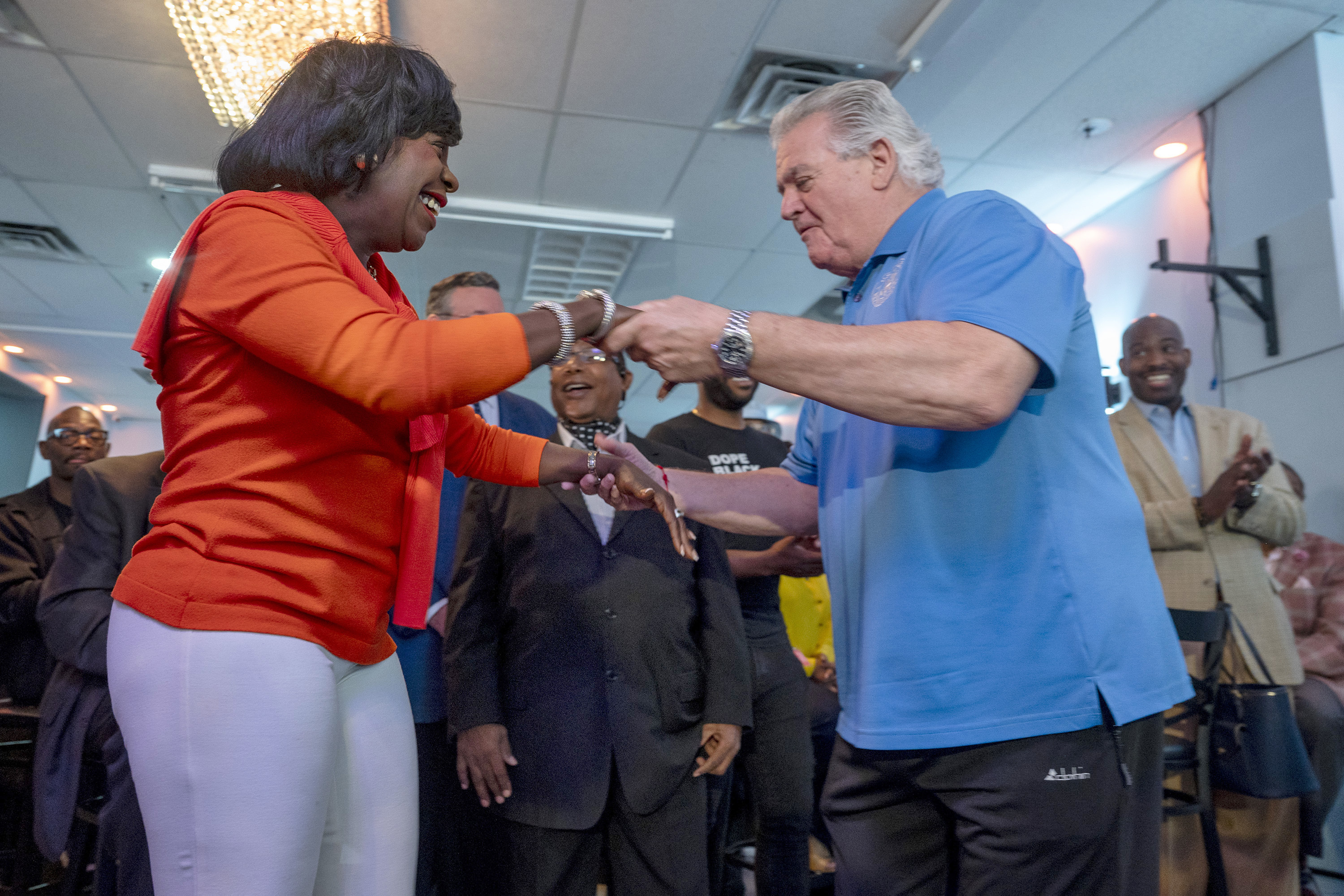
    Bob Brady, right, chair of the Philadelphia Democratic City Committee, dances with Cherelle L. Parker at a “unity breakfast” following her victory in the 2023 Democratic mayoral primary. Tom Gralish / Staff Photographer

    One area where today’s party does resemble the machine politics of old is local judicial elections. Party-endorsed candidates almost always win seats on the local Municipal Court and Common Pleas Court benches, and many of their staffs are in turn filled with people connected to the local party.

    Brady and party leaders have no qualms about admitting what it takes to win their approval: doing favors and free legal work for the city committee, ward leaders, and their constituents.

    Philly Democrats’ new No. 2

    Although the Democratic City Committee does not have a new chair, ward leaders on Monday elected a new No. 2.

    Former Councilmember Sharon Vaughn, who leads the 49th Ward, will be the new first chair of the party, replacing former Councilmember Jannie Blackwell, who did not run for reelection as 46th Ward leader.

    Vaughn, who is also a secretary of the Pennsylvania Democratic Party, would temporarily become city committee chair if Brady were to step aside. Brady said Monday he would support her to one day hold the position on a permanent basis as well.

    “She’s a great world leader, a former Council person, a hard worker,” Brady said. “What you see is what you get, straight shooter, and she’ll tell you just what it is. And she’s a loyal lady.”

    Lauren Rinaldi, the 18th Ward leader who is seen as having relationships with both the progressive and establishment wings of the party, became the second vice chair. She replaces Bass, who has now lost out on her citywide party leadership post regardless of how Wednesday’s 22nd Ward election redo shakes out.

    Rinaldi said Monday night she understands her election to leadership was partially an olive branch to the left wing of the party.

    “I‘m sure that’s part of it, definitely,” Rinaldi said in an interview. “But I am seeing my role as an advocate — advocating for reform to strengthen the party and modernize the way we do some things and bring more people in instead of shut them out. Basically to rebuild trust with voters.”

    The third vice chair remains 7th Ward leader Angel Cruz, and 63rd Ward leader Brian Eddis has replaced Bill Dolbow as fourth vice chair.

    Former City Controller Jonathan Saidel will stay on as the party’s treasurer, with John Brady, who is not related to the chair, serving as assistant treasurer.

    And 6th Ward leader Pete Wilson was retained as secretary, with 8th Ward leader Elaine Petrossian elected as assistant secretary.

    Back-to-back-to-back reruns

    The party on Monday ordered the results of three contested ward leader races voided. They will be rerun on Wednesday at the Brady building, with a committee of other ward leaders overseeing the results.

    In all three instances, the ward elections were found to have violated the party’s procedures.

    The redo for the 14th Ward, in which incumbent Arthur Green lost to Valerie Williams, will take place at 6 p.m.

    City Councilmember Cindy Bass, left, speaks with a reporter about her contested 22nd Ward leader election. Aidan T. Gallo / Staff Photographer

    That will be followed by a 7 p.m. rerun of the 17th Ward election, which was an open seat in which Tyrone Barge defeated Michelle Schley.

    And finally, the 22nd Ward redo will take place at 8 p.m., with progressive challenger Octavius Price taking on Bass.

    In all three races, the party will allow submission of “proxy votes” from committeepeople who cannot attend if they are accompanied by notarized affidavits.

    Brady said the decision to redo the 22nd Ward vote was an easy one after he saw a video published by The Inquirer showing Bass, who chaired her own reelection meeting, shutting down requests for a roll-call vote that could have clarified the results.

    “I don’t think anybody that saw that … was supportive of it,” Brady said. “One ward is one ward, and there’s 68 others, and we’re all going to fix that on Wednesday night.”

  • In major decision, Pa. Supreme Court rules ‘skill games’ are slot machines

    In major decision, Pa. Supreme Court rules ‘skill games’ are slot machines

    HARRISBURG — So-called skill games, the slot machine look-alikes that have proliferated by the tens of thousands around Pennsylvania bars and corner stores, are slot machine devices and should be regulated as such, the state’s highest court ruled Monday.

    The Pennsylvania Supreme Court ruling clears the way for widespread taxation and regulation by the state, as well as limits on where the machines are available, as a majority of justices ruled that both gambling law and the criminal code apply to the machines.

    “The device is a ‘slot machine,’” wrote the newly independent Justice David Wecht in the majority opinion.

    The majority recognized that the ruling could cause a “potential disturbance” for “business owners and other good-faith participants in the industry,” so the ruling will take effect after a 120-day “safe harbor” period. And if lawmakers in Harrisburg disagree with the opinion, the General Assembly “remains free at any time to take whatever legislative action it may deem appropriate.”

    Pennsylvania’s gambling industry is highly regulated and taxed. If state law is unchanged after the 120-day waiting period, the estimated 70,000 skill game machines available across the state would need to be regulated and confined to specific locations like casinos that have the proper licenses.

    Chief Justice Debra Todd and Justice Daniel McCaffery, both Democrats, joined the opinion in full, while Republican Justices Sallie Updyke Mundy and Kevin Brobson concurred with most of the majority’s reasoning but wrote a short dissent.

    Justice Christine Donohue, a Democrat, wrote a concurring decision.

    “Because chance predominates both the player’s eligibility for winnings and the magnitude of those winnings, the [skill games] device is a gambling device,” Donohue wrote.

    Justice Kevin Dougherty, a Philadelphia Democrat, sat out the long-awaited decision.

    Skill game operators have evaded taxation and regulation for more than a decade, operating in a legal gray area after lower courts ruled that the machines require a level of skill not necessary to play games of chance like slot machines.

    The most influential player in the skill games industry, Georgia-based operator Pace-O-Matic, has asked the state on multiple occasions to regulate and tax the machines — but at a rate much lower than slot machines, arguing that their technology helps small businesses with small margins stay afloat as prices rise.

    In a statement, Pace-O-Matic said it was disappointed by Monday’s ruling, which it said would have “far-reaching consequences” on Pennsylvania’s small businesses and fraternal organizations.

    “[Small businesses] are now potentially left facing an impossible choice: cease operating these games and lose an important source of revenue, or endure a legislative solution that could bring excessive regulation and crippling taxation, which will force them to cease operating these games and lose an important source of revenue,” a spokesperson for Pace-O-Matic added.

    Gov. Josh Shapiro, a first-term Democrat, has proposed regulating and taxing skill games at 52% — the same rate currently levied on slot machines and most other games of chance. He estimated taxing and regulating the machines could bring in $765.9 million for the state in new revenue in its first year, as part of his $53.2 billion February budget pitch.

    Lawmakers have been waiting for the state Supreme Court to rule whether the machines are legally slot machines or not, as the split legislature considers whether to and how much to tax them as a way to create a much-needed new revenue stream.

    Top legislators and Shapiro have convened over the last few weeks in closed-door meetings to finalize a state budget deal ahead of a June 30 deadline. Now, with the decision in hand, Senate President Pro Tempore Kim Ward (R., Westmoreland) and Majority Leader Joe Pittman (R., Indiana) said in a statement they believe gaming reform is a “critical piece of resolving this year’s budget.”

    In Philadelphia, City Council banned skill games in 2023 over concerns that they attract crime, but a lower court blocked enforcement of the ban while several cases worked their way to the state Supreme Court.

    A Philadelphia jury ordered Pace-O-Matic to pay $15.3 million last year to the estate of Ashokkumar Patel, a Hazleton store clerk killed during a 2020 robbery. And a Philadelphia store clerk shot last year during an armed robbery of Philly Market in Frankford, Ahmedine Maham, sued Banilla Gaming, a North Carolina-based skills game manufacturer, for enticing his assailants.

    At the end of the 120-day waiting period, the machines will be subject to regulations like slot machines and restricted to specific locations licensed to house slot machines — unless lawmakers decide to change the law.

    Pace-O-Matic, in its statement Monday, urged lawmakers to approve bipartisan proposals backed by rural GOP members and Philadelphia Democrats that would charge a $500 fee per skill game machine and would not restrict the machines to licensed slot machine locations, such as casinos.

    In a statement, Pennsylvania Attorney General Dave Sunday, a Republican, praised the Supreme Court’s decision as a “significant victory for consumers, taxpayers, and the rule of law.”

    “The Supreme Court recognized what our office has argued from the beginning — these machines operate as gambling devices and cannot legally exist without the same oversight, regulation and accountability as other forms of legalized gaming in the commonwealth,“ Sunday added. ”Pennsylvanians deserve protections that ensure games are fair, transparent and operated within the bounds of the law.”