Tag: topic-link-auto

  • Whole Foods workers in Philadelphia voted to join a union in 2025. They just cleared their latest hurdle.

    Whole Foods workers in Philadelphia voted to join a union in 2025. They just cleared their latest hurdle.

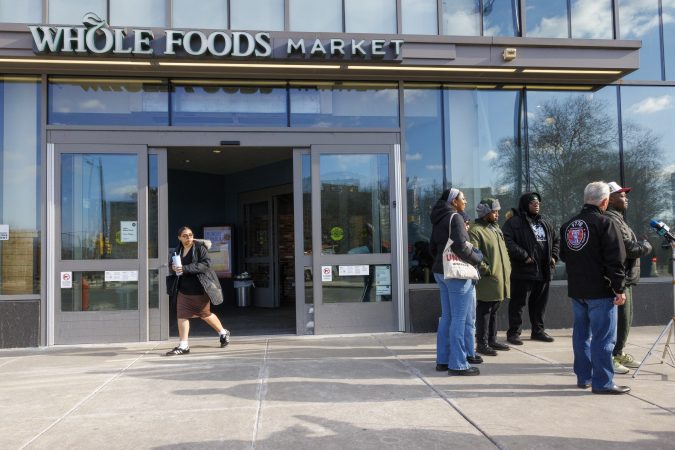
    Philadelphia Whole Foods workers cleared a major hurdle in their unionizing efforts this week, paving the way to negotiating their first union contract.

    Workers at the 2101 Pennsylvania Ave. store voted last year to join UFCW local 1776, becoming the first group within the Amazon-owned Whole Foods chain to unionize. But they have been caught in a procedural standstill for months.

    Whole Foods challenged the union election, citing multiple objections, including allegations that the union promised employees would get a raise if they voted for a union.

    A few months after the election, a regional director at the National Labor Relations Board dismissed Whole Food’s challenge — but the company pushed back, asking for a review by the national board. That brought the case to a standstill because the NLRB was without a quorum after President Donald Trump fired a board member.

    The board has since gained two new members, including one with ties to the Philadelphia area, Scott A. Mayer, a Villanova University graduate who has worked for locally headquartered concessions company Aramark and area law firms.

    This month, the board stood by the regional director’s conclusion upholding the union election, saying Whole Foods’ latest challenge “raises no substantial issues warranting review.”

    Wendell Young IV, president of UFCW local 1776, said Tuesday that the union had been expecting this outcome.

    The NLRB decision “completely vindicates the union and these workers, and there’s no reason at this point Whole Foods/Amazon shouldn’t sit down and begin bargaining right away, although I suspect they won’t,” Young said.

    A Whole Foods Market spokesperson said in an emailed statement that the company strongly disagrees with the board’s decision.

    During a hearing on the issue last year, the spokesperson said, Whole Foods argued that “restrictions on free speech and the union’s illegal conduct interfered with our team members’ right to a fair vote at our Philly Center City Store.”

  • Cherry Hill’s Brio Italian Grille isn’t closing yet, as Brazilian chain Fogo de Chão looks to move in

    Cherry Hill’s Brio Italian Grille isn’t closing yet, as Brazilian chain Fogo de Chão looks to move in

    Confusion about the potential closing of Brio Italian Grille in Cherry Hill has felt like a nightmare, Grace Ortiz, the restaurant’s general manager, said.

    Staff have been inundated with calls inquiring about the closure, which hasn’t been made official by the restaurant, its landlord, or the Brazilian steakhouse interested in the property, causing confusion for some of the employees.

    “We’re here. We want to be busy,” Ortiz said Friday. “Hopefully this blows over.”

    Several media outlets recently reported that Brio Italian Grille, which opened in 2007 as Brio Tuscan Grille at 901 Haddonfield Rd., will soon close. The Italian restaurant shuttered the doors of its Marlton location last month, less than a year after the chain filed for bankruptcy for the second time in five years.

    Other Camden County dining spots have faced recent struggles, too, including the closure of the Bistro at Cherry Hill last summer. The Cherry Hill Diner closed in 2023, Star View Diner in 2024, and the Collingswood Diner shut down last August. The Kibitz Room deli, which closed temporarily in January before filing for bankruptcy, has since reopened, after its King of Prussia location shut down permanently.

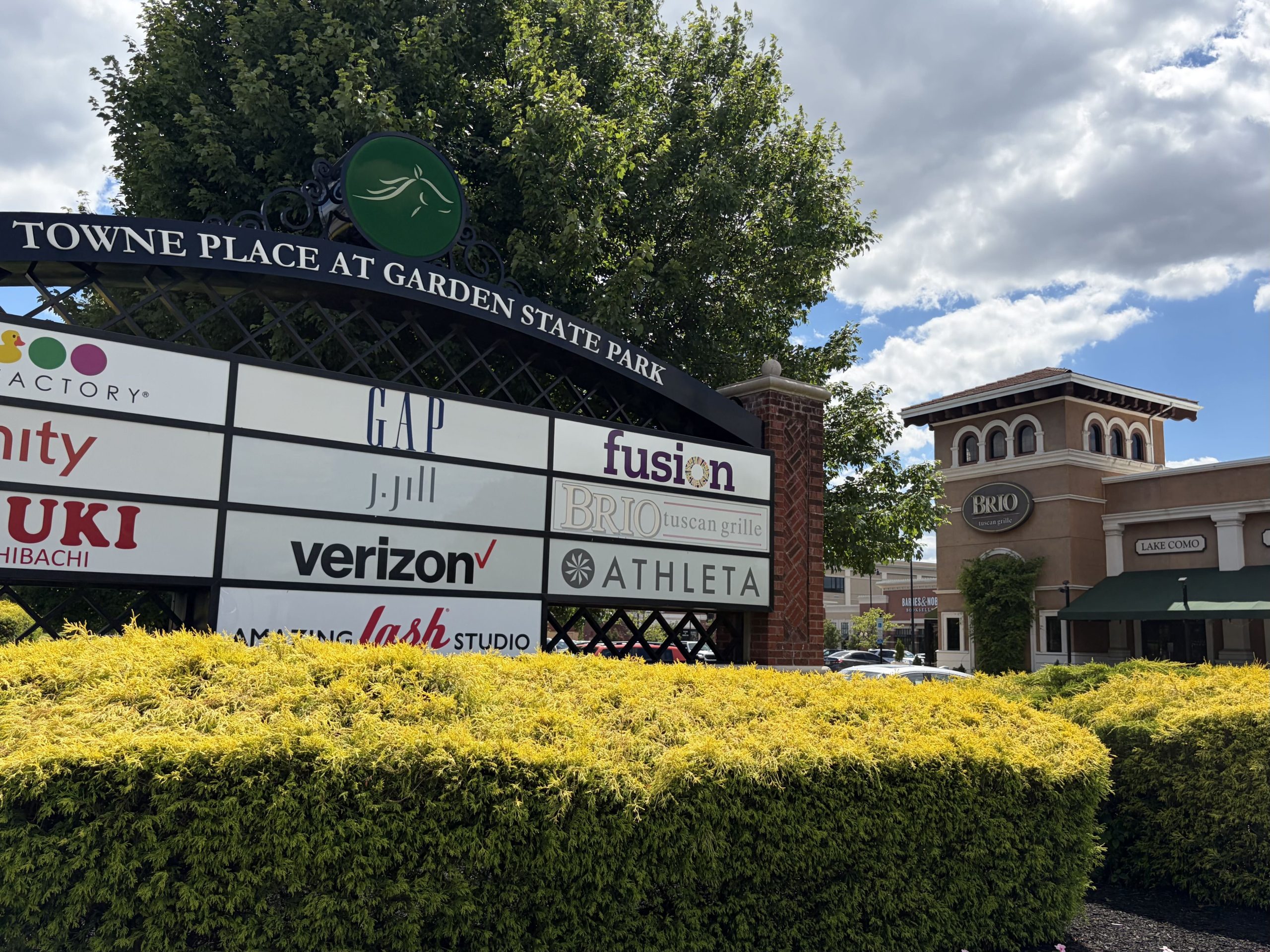
    Brio has 19 remaining locations nationwide, including the last New Jersey location at Cherry Hill’s Towne Place at Garden State Park. That retail complex, a five-minute drive from the Cherry Hill Mall, features about 20 eateries from the Cheesecake Factory to Kabuki Japanese Cuisine.

    The next closest Brio Italian Grille for South Jerseyans is 200 miles away in Farmington, Conn.

    42 Freeway, a publication covering development in South Jersey, first reported in May that chain Fogo de Chão Brazilian Steakhouse would replace the restaurant. NJ.com followed suit, attributing the news to project plans filed by Fogo de Chão and the owners of Towne Place to the Cherry Hill Township Zoning Board in April.

    Those plans propose a remodeled restaurant with 296 seats. Cosmas Diamantis, the municipal attorney for Cherry Hill Township, said in an email that the required zoning permits for the conversion from Brio Italian Grille to Fogo de Chão were already issued.

    One zoning permit, obtained in a records request to Cherry Hill Township, referred to the restaurant property as “the former Brio Italian Grille.” A design development presentation dated November 2025 shows renderings for what the Brazilian restaurant could look like at 901 Haddonfield Rd.

    But Ortiz said Brio Italian Grille’s corporate office told her that there are no current plans to close down, and that her restaurant just got its liquor license renewed last week. So what’s going on?

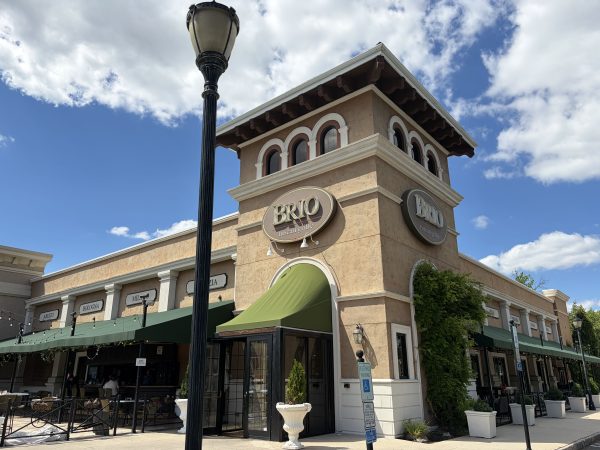
    Brio Italian Grille in Cherry Hill is located at Towne Place at Garden State Park.Sarah Nicell

    Is Brio Italian Grille actually leaving Cherry Hill?

    That depends on whom you ask. Brio Italian Grille did not respond to a request for comment, and a spokesperson for Fogo de Chão declined to discuss the potential project.

    In Cherry Hill Township and elsewhere, restaurateurs must apply for zoning permits before any changes in occupancy are set in stone. That means there’s no guarantee that Fogo de Chão actually has a lease in hand for 901 Haddonfield Rd.

    It’s common for work to never actually start on projects even when they receive zoning permits, a Cherry Hill Township attorney said. In Fogo de Chão’s case, the zoning permit just means the proposed project is permitted to happen, even if it never does.

    Since rumors of Brio Italian Grille’s closure have swirled, Joe Morris, an executive for M&M Realty Partners, which owns the landlord entity that manages the site’s tenants, said he has received an influx of people interested in developing the property.

    Morris, said Monday that Fogo de Chão has not signed a lease for a lot at Towne Place, but the chain has inquired about joining the Cherry Hill retail center for the last 12 years.

    M&M Realty, a New Jersey-based real estate development company, has kept a close eye on Brio Italian Grille after it declared bankruptcy in August and recently closed its Marlton location. Morris said those problems could mean the chain might not reup its lease at Towne Place, and M&M Realty might have to find other viable tenants. Morris declined to share when that lease will expire, though he said the restaurant has “a semi-limited period of time before important decisions have to be made.”

    Still, Morris said he has no idea whether Brio Italian Grille is in conversations with Fogo de Chão about giving up the property. He said Brio Italian Grille is “alive and well,” isn’t behind on payments, and continues to spend money on its business.

    “There are certain things I know I can’t say. There are certain things I can speculate,” Morris said. “I can absolutely tell you, if Brio gives their space back, Fogo is 100% a tenant we would be interested in speaking with.”

  • 3 Philly-area athletes, including 2 Syracuse football recruits, arrested in Old City attack

    3 Philly-area athletes, including 2 Syracuse football recruits, arrested in Old City attack

    Three Philadelphia-area athletes were recently arrested in connection with an April assault in Old City that left the victim with a concussion, a broken nose, and two chipped teeth, among other injuries.

    Charles W. Foulke and Masiia Acrey, both 18, have been charged with aggravated assault, conspiracy, simple assault, recklessly endangering another person, and harassment.

    Jalen Millevoix, 19, was charged with criminal mischief and conspiracy.

    Foulke is a former starting quarterback for St. Joseph’s Prep who transferred to Glassboro High School in the last school year. Acrey is currently a cornerback at St. Joe’s. Millevoix played football at Eastern Regional High School in New Jersey and graduated in 2025, according to his social media.

    As first reported by Syracuse.com, Foulke and Acrey are Syracuse University football recruits. The university’s athletics department did not immediately respond to a request for comment, but a source familiar with the football program’s thinking told Syracuse.com the school still considers Foulke and Acrey part of the 2027 football class.

    The incident started with a “noogie” just before 2:30 a.m. on April 12, according to Philadelphia police.

    The group of athletes encountered a man and woman outside waiting for their rideshare when one of the football players proceeded to rub his knuckles against the man’s head. The interaction appeared to have ended after the man told the group to knock it off.

    But as the rideshare arrived, one athlete gave the man another noogie. The man lunged in response, took a swing, and the group began to attack him.

    Police said the victim was taken to Thomas Jefferson University Hospital with abrasions to the left side of his face and body, requiring stitching for his nose, which was also broken. The rideshare car was also damaged in the scuffle.

    Millevoix was arrested May 23 and released without bail, with his preliminary hearing scheduled for June 22. His attorney, Gregory Joseph Pagano, could not immediately be reached for comment.

    Foulke was arrested May 26 with his unsecured bail set at $200,000 and his preliminary hearing scheduled for July 10. His attorney, Joseph Kelly, declined to comment.

    Acrey was arrested June 3 with unsecured bail set at $50,000 and a preliminary hearing scheduled for June 22. His attorney, Fortunato Perri Jr., could not immediately be reached for comment.

  • JD Vance can never become president | Will Bunch Newsletter

    One of my many New Year’s resolutions back in January was never to write what I call “Captain Obvious columns” about the Donald Trump scandal du jour that’s all over your social media feed. So you’ll have to imagine the column I didn’t write about Trump’s tacky UFC cage match that desecrated the White House, and the role of bread and circuses (or just circuses…where’s the bread?) in the inevitable decline and fall of decrepit empires.

    If someone forwarded you this email, sign up for free here.

    A ‘President JD Vance’ would be a different kind of dictator. The scary kind.

    They say you never get a second chance to make a first impression — unless your name is JD Vance, or it becomes JD Vance after a few false starts. In 2016, a then utterly unknown Yale Law grad introduced himself to America with a No. 1 bestseller, Hillbilly Elegy, that used his (sort-of) Appalachian family’s hardscrabble story to come off as an empathetic horse whisperer for the white working class.

    He cemented that first impression when we learned he’d privately described Trump as a kind of a demagogue feeding off the pathologies he’d written about in Elegy — someone he feared might become “America’s Hitler.”

    But Trump’s victory coupled with some exposure to the ketamine-fueled paranoia of Silicon Valley’s billionaires gave the former James Donald Bowman yet another shot at reinvention — now embracing extreme right-wingers and crackpot conspiracy theories all the way to his election, at age 40, as the 50th vice president of the United States.

    Today, less than two weeks before the 10th anniversary of Hillbilly Elegy’s publication, Trump has become America’s…Mussolini, a strutting yet sometimes buffoonish strongman and a hopelessly corrupt invader of faraway lands.

    It’s Vance who could actually become America’s Hitler, if he gets that chance…a very real possibility.

    That’s a strong statement, but it’s also perhaps the most powerful takeaway from the heavily promoted, about-to-be-published book from all-access New York Times reporters Maggie Haberman and Jonathan Swan, Regime Change. It portrays the vice president as eager to go much further than Trump in crushing domestic dissent.

    In book excerpts published Monday, Haberman and Swan depicted Vance — in a tag-team alliance with Trump’s ruthless mass-deportation guru Stephen Miller — as calling for the radical step of invoking the Insurrection Act to send in troops to put down protests by everyday Americans in Minnesota who were enraged by masked goon squads snatching their immigrant neighbors and the killing of two U.S. citizens.

    Describing a White House meeting of senior aides — but not Trump — in late January after Renee Good and Alex Pretti were gunned down, the Times reported that “Vance got to the point. They needed to invoke the Insurrection Act, swiftly, to crush the unrest in Minnesota. It would be painful in the short term, he said, but the message it would send — that paid agitators could not get away with disrupting ICE operations — would make sure no one tried it again.”

    There are many problems with Vance’s anti-democratic impulses. As Haberman and Swan reported, even most of the Trump aides in the room agreed that invoking the 1807 law in this circumstance would be both a significant expansion of presidential power and a public-relations nightmare. Even worse, the nation’s No. 2 official was urging this would-be abuse of power based on a right-wing internet lie — the falsehood that Minnesota’s angry neighbors were “paid protesters.”

    The deeply reported episode isn’t the only disturbing glimpse of Vance’s governing philosophy in recent months, but it’s the most revealing, and most damning: a true believer in the worst conspiracy theories about the left, with the inclination to wield dictatorial powers against them.

    Earlier this month, Vance — arguably the regime’s top cheerleader for Europe’s extreme far-right political parties — stunned the United Kingdom’s center-left government by weighing in on growing unrest over the stabbing death of an 18-year-old English college student by a Sikh migrant. He sounded more like a wannabe X influencer than a top official of the U.K.’s historic American ally. As racist hate mobs prowled streets in England and Northern Ireland, Vance said the murder of Henry Nowak proved that “European elites” had failed to oppose the “politics of self-hatred and the mass invasion of migrants.”

    One thing is clear: Vance is not on the side of calm, which is problematic when what the world needs now is love, sweet love.

    Increasingly, Vance seems to disappear for longer stretches of time, and when he reemerges he is bathed in the stench of the social media sewers where he seems to spend much of his time.

    That’s certainly appears to be the case with his main mission in 2026; rooting out fraud, which isn’t targeted at the nation’s biggest scam — the multi-dollar enrichment of the president’s family — but at alleged schemes by Somali immigrants and other heirs to Ronald Reagan’s racially coded “welfare queen.” A recent Washington Post report found many claims by a Vance-led task force are misleading or overhyped, and that legitimate business have been swept up in its wide net.

    Ten years ago, Vance wrote a book seeking your empathy because that served his true purpose: ruthless ambition. In that context, it was no moral conflict at all to pull a 180 and support a victorious Trump, or to leverage his rising fame into a hookup with Silicon Valley types like his billionaire patron Peter Thiel — people who believe in building private cities to protect them from the masses and the government, and who are more prone to conspiracy theories than your 79-year-old uncle on Facebook.

    Thiel and the other tech billionaires have programmed Vance into a true believer of whatever nonsense they believe, and lined him up next in the queue for power. That makes him even more dangerous than Trump, who believes in nothing beyond himself.

    Ever since Trump first claimed victory on Nov. 8, 2016, I’ve worried that the next guy would be even worse — chasing American autocracy with a real plan, not clown-car narcissism. Vance is the one I was worried about, and he is only an 80-year-old, Big Mac-infused heartbeat away from the presidency for the next 31 months.

    I’ve made clear my disgust at political violence, and the possibility of a Vance succession is another reason why I shudder to think what would happen if an attack killed or disabled the 47th president someday. If Vance was willing to send troops to Minneapolis to stomp down soccer moms and baristas with whistles, his militaristic power grab against the left after an assassination would end any last hope for our bedridden democracy.

    It’s one more item on the pro-democracy checklist. It may be the proverbial lost cause worth fighting for, but we should try to ensure that JD Vance does not become the 48th president of the United States.

    If Democrats stay on track to retake the House and possibly the Senate, they should hold hearings not only on Trump’s high crimes and misdemeanors but on the vice president’s involvement — and, based on that evidence, his possible impeachment. It may prove impossible to remove Vance from office, but hearings will help to establish a record that will end his dreams — and those of his billionaire buddies — about 2028.

    It’s past time for the next transition for this American chameleon who calls himself JD Vance: back to private citizen.

    Yo, do this!

    • The World Cup’s return to North America has gone much as I expected it would: Marred by its runaway commercialism and the U.S. immigration hassles that kept too many fans and a world-class referee from Somalia at home, but with a focus on joy on the pitch and in the stands now that the games have begun. Here in Philadelphia, the essence of everything good about the World Cup has been the FIFA Fan Festival at Lemon Hill, the city greenspace on the hill behind the Art Museum on the Schuylkill. It’s been a daily gathering post for thousands of fans to watch the matches on a 60-foot screen, imbibe from a beer garden, and load up on official merch. It’s free but ticketed; learn how to gain access and how to get there here.
    • Some 51 years after Jaws, filmmaker Steven Spielberg is still finding ways to get us out to the multiplex for a summer blockbuster. His new the-aliens-are-here epic, Disclosure Day, merges nostalgia for his greatest hits like E.T. with our 21st century anxieties about artificial intelligence, outsiders, space, and what it means to be human in our modern world. It’s getting excellent, but not perfect, reviews, and I’m looking forward to seeing it for myself.

    Ask me anything

    Question: What is your favorite fast food joint? — @funkndonuts.bsky.social via Bluesky

    Answer: Most of this week’s questions were in this lighthearted mode; it feels like the good sports excitement of the World Cup and the NBA finals has provided us a calm eye in the hurricane. Anyway, as an apparent donut lover you’ll be glad to know that my modern family runs on Dunkin coffee. As a kid, my barely-evolved-from-hillbillies family had low-brow tastes that I now appreciate in hindsight, and on our yearly road trips to the ancestral home of Peoria, I fell in love with the greasy pizza — later augmented by greasy fried chicken — at Shakey’s. The chain has shrunk to a few West Coast outlets and I haven’t been in decades. Probably for the best.

    What you’re saying about…

    Last week’s question about what the next, hopefully normal U.S. president should do about the ballroom monstrosity rising on the east side of Donald Trump’s White House drew a good array of responses. Although a couple of you wanted to see the project repurposed for community gardens or housing for D.C.’s homeless, others believe any Trump creation must be expunged in dramatic fashion. “Provide Pulaskis (fire axes) and sledgehammers and a good crew of competent supervisors and let we the people come and pay five bucks for the privilege of fifteen minutes of smashing it up,” wrote Linda Nafziger-Meiser. “Hell, I’ll bring my own Pulaski.” But architect Larry Weintraub thinks the White House needs a ballroom, as long as it meets historical and architectural standards. “Hopefully, the new design will be understated but appropriate and subordinate to the majesty of the White House,” he wrote.

    📮 This week’s question: In a recent column, I announced that I’ve deleted Elon Musk’s social-media app X, which once thrived as Twitter. I saw that as a way to protest Musk’s racism, and his obscene wealth. Should governments and corporations continue to use X for communications? Are you still on X or have you left, and why? Please email me your answer and please put the exact phrase “Deleting X” in the subject line.

    Backstory on the birthright citizen who’s a U.S. hero

    Folarin Balogun, now 24, grew up in London, which is where one of the world’s top clubs, Arsenal, spotted him as a potential soccer star at age 8. His parents are Nigerian. He currently plays club soccer in Monaco. So how was it that Balogun found himself last Friday wearing the red, white, and blue jersey of the United States in front of 70,000 delirious Americans on the pitch near Los Angeles, mixing skillful footwork with an aura of glee as he scored two goals in a 4-1 World Cup opener win over Paraguay?

    Credit the 14th Amendment — or maybe blame it, if you’re one of the reactionaries who believe that people like Balogun should not be U.S. citizens, soccer gods be damned.

    Even if for some weird reason you’re not yet a soccer fan, you’ve probably followed the heated debate over birthright citizenship. The notion that anyone born on U.S. soil is automatically an American citizen — an idea enshrined after the Civil War to remove any potential doubts about the citizenship of formerly enslaved African Americans — is disputed by the Donald Trump regime. The president’s executive order seeking to undo the longstanding interpretation of the 1868 14th Amendment, and strip citizenship from millions of people born here to immigrant, non-citizen parents, is currently before the U.S. Supreme Court. Trump’s xenophobic MAGA supporters have long slurred children of undocumented migrants with the epithet, “anchor babies.”

    It turns out that Balogun, when he’s not lighting up the back of the net, is a law-school case study of the immigration debate roiling his accidental country. In the summer of 2001, Balogun’s future mom, who was seven months pregnant, and dad decided to vacation in the United States. When the couple attempted to fly home to London, an unnamed airline worker who would change the course of soccer history told Florence Balogun she was too pregnant to safely fly. So she stayed in Brooklyn, gave birth to her son, and the family left America after two months.

    As he developed into a world-class striker on European soil, Balogun came to understand that his U.S. citizenship offered a much better shot at competing in the World Cup than the other two nations where he was also eligible, England or Nigeria. For his mom, Balogun’s fate was sealed in the summer of 2001. “Even when he wasn’t even thinking of making an international decision, I’d already made up my mind that he is going to play for America,” Florence Balogun said.

    They say that the Supreme Court, despite all the blather about “calling balls and strikes,” is in reality always aware of the political zeitgeist. Even a right-wing justice who happens to also be a long-suffering Phillies fan in Samuel Alito probably sees on some level that stripping citizenship from the breakout star of U.S. men’s soccer would be highly unpopular. The World Cup — the idea, and not its capitalist corruption by FIFA — imagines a society that abhors exclusion, where it takes every kind of people to make what life’s about. I dream of an America that can run with France and Argentina on the pitch, and that welcomes human beings like Balogun, even ones who’ve never kicked a soccer ball in their lives.

    What I wrote on this date in 2019

    This newsletter goes out Tuesday on the 11th anniversary of the day that changed America forever: Donald Trump’s gilded Trump Tower journey down an escalator to join the 2016 presidential race, as Neil Young’s “Rockin’ in the Free World” blared behind him. In 2019, I used that date to reflect how much we’d fallen in just four years since June 16, 2015. I wrote: “The president’s “shocking” tweet or statement of the day still sparked hours and hours of cable TV blather, including a parade of congressional Democrats who were concerned or saddened or what not. They called Trump’s worst acts impeachable offenses, but then nobody impeached him. They said Trump was unpresidential, but the next day he was still president.” Read the rest: “4 years since Trump came down that escalator and the cycle of empty outrage has become unbearable.”

    Recommended Inquirer reading

    • Last week I focused on the little people who’ve been crushed by the return of Donald Trump, and the big guys getting obscenely rich. In my Sunday column, I looked at the agonizing fate of Tuan Van Bui, an Amerasian born in Saigon at the height of the Vietnam War who was welcomed to Philadelphia in 1990 under a government-approved visa. Why was he violently arrested by U.S. Immigration and Customs Enforcement, and what is the truth about his April death behind bars in Indiana, at age 55? Over the weekend, I voiced my outrage over Elon Musk, who in just one week used his massive platform on X to whip up race riots in Belfast, and was rewarded by Wall Street as the world’s first trillionaire. I looked at how we enable this situation, and announced my small step in fighting back by deleting the X app.
    • One depressingly constant story in the 21st century is the way that supposedly liberal blue states and big cities still fall back on oppressive, militarized policing to crack down on protesters. Progressive activists in New Jersey took to The Inquirer this week to express their lingering disappointment in first-year Gov. Mikie Sherrill — a Democrat that many of them had worked to elect in 2025 — and her state police’s aggressive handling of demonstrations outside the ICE detention center in Newark, Delaney Hall. They would have found an amen chorus here in Philadelphia’s LGBTQ+ community, where city cops showed up at the annual Gayborhood Pride festival in riot gear and arrested 15 of the revelers. The backlash against the police actions has already triggered a City Council investigation. Journalists are typically society’s first line of defense against police misconduct. You support that mission when you subscribe to The Inquirer.

    By submitting your written, visual, and/or audio contributions, you agree to The Inquirer’s Terms of Use, including the grant of rights in Section 10.
  • 13-acre Villanova estate to be preserved in $13M deal

    13-acre Villanova estate to be preserved in $13M deal

    The 13-acre Oakwell estate, which Lower Merion School District once hoped to turn into school athletic fields, has been preserved after being purchased by two nonprofits.

    The $13 million deal was authorized by the district in 2024 to sell the lush estate in Villanova that contains 700 trees, many of them old growth. The sale closed Friday.

    Under the arrangement, the conservation nonprofit Natural Lands purchased 10 acres of land for roughly $10 million, and the nonprofit Wyncote Foundation purchased three acres that contain the Oakwell mansion for about $3 million.

    John Bennett, a retired medical doctor who owned the estate before the district, said he was relieved.

    “Beneath those magnificent oak trees, some of which have stood for more than 200 years, rest my son’s ashes,” Bennett said. “Those trees were already old when America was young. They have survived wars, economic depressions, hurricanes, and generations of families who walked beneath their branches.“

    Bennett, who has moved from the area, said he feels “an overwhelming sense of gratitude.”

    (function() { var l = function() { new pym.Parent( ‘oakwell__graphic’, ‘https://media.inquirer.com/storage/inquirer/ai2html/oakwell/index.html’); }; if(typeof(pym) === ‘undefined’) { var h = document.getElementsByTagName(‘head’)[0], s = document.createElement(‘script’); s.type = ‘text/javascript’; s.src = ‘https://pym.nprapps.org/pym.v1.min.js’; s.onload = l; h.appendChild(s); } else { l(); } })();

    The district’s agreement to sell Oakwell to the nonprofits came after furious pushback by Bennett, neighbors, and even some students who banded together in protest.

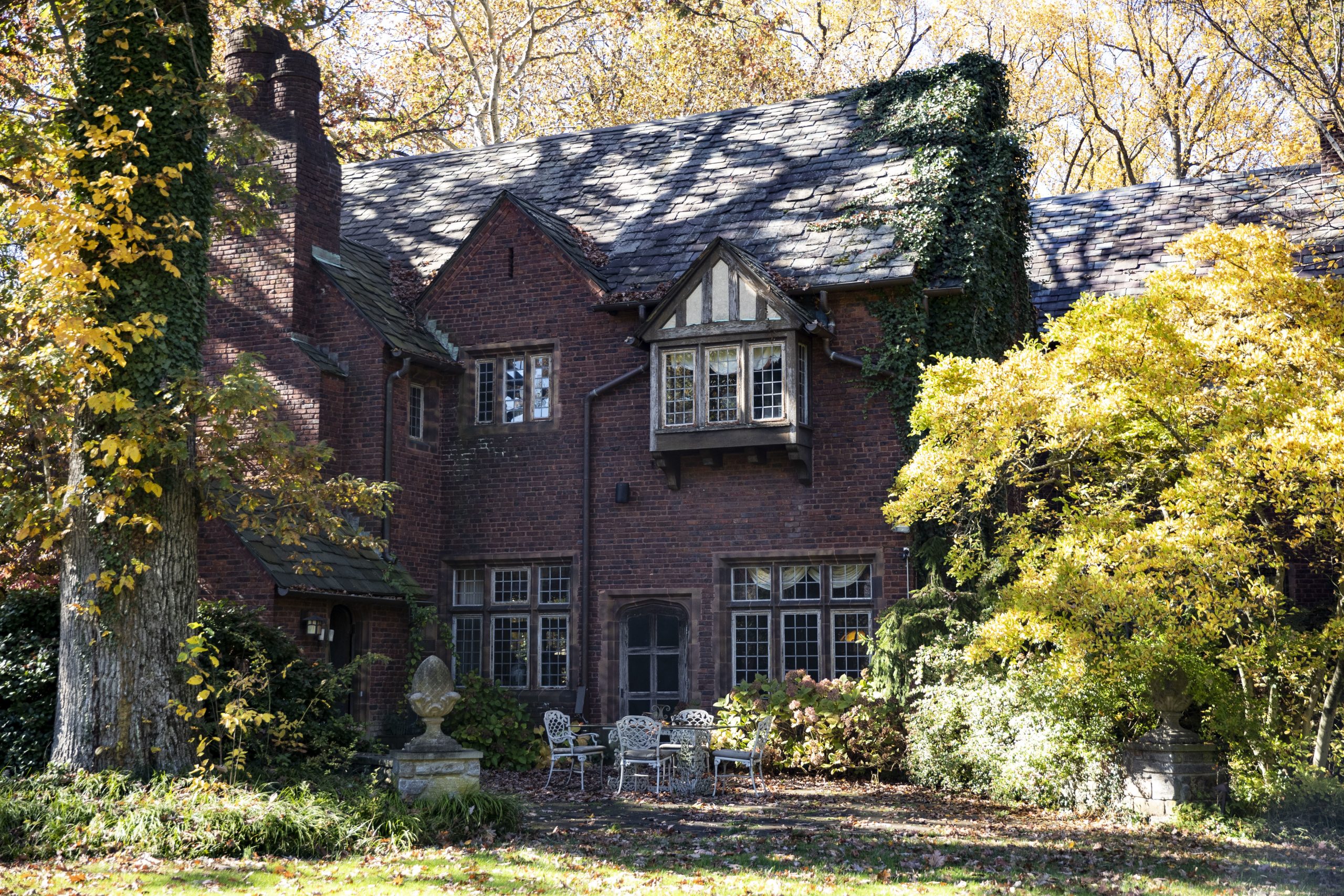
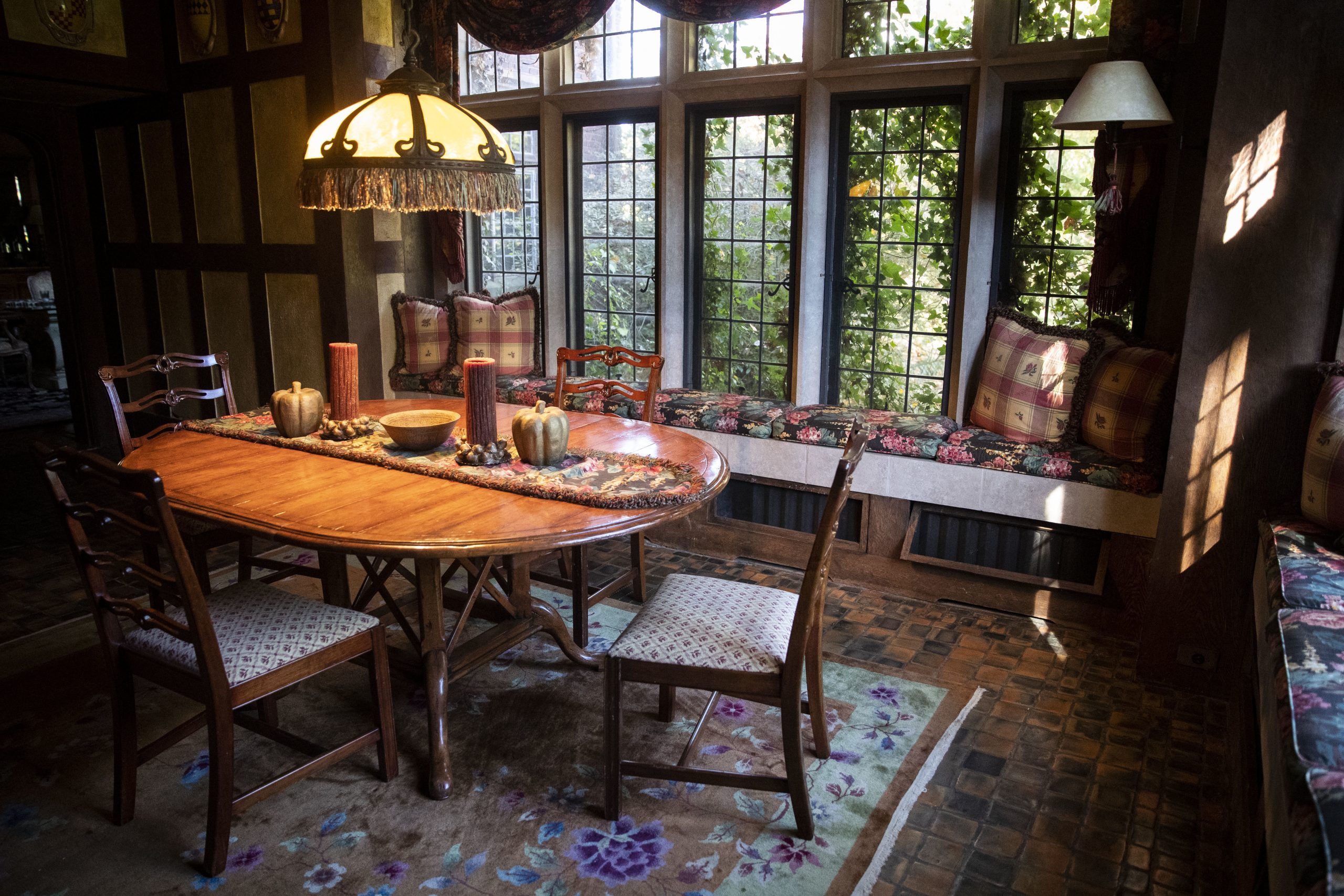
    Besides trees, Oakwell contains a 20,000-square-foot brick Tudor Revival mansion replete with heavy wooden doors, a wainscoted library, and Mercer floor tile. The Wyncote Foundation plans to restore and preserve the mansion.

    The property also contains a pool house, a teahouse once watched over by a terra-cotta warrior, stone fencing, and a brick-walled garden complex all dating back at least 120 years. That will all be owned by Natural Lands.

    Frank Ranelli, superintendent of the Lower Merion School District, said in a statement that the sale “will enhance the quality of life for members of the Lower Merion community.”

    “It feels really like a dream come true,” said Oliver Bass, president and CEO of Natural Lands.

    A portion of the Oakwell mansion in Villanova in 2022.Monica Herndon / Staff Photographer

    Becoming part of Stoneleigh

    Bass noted it had taken years of planning to acquire the tract after the Lower Merion School District purchased Oakwell in 2018 from Bennett.

    The district purchased Oakwell under condemnation with the goal of transforming it into a large athletic complex for the then-new Black Rock Middle School. However, Bennett had originally wanted to sell it to Villanova University.

    The 10 acres that Natural Lands just purchased will become part of the organization’s neighboring 42-acre Stoneleigh public garden. Oakwell was once part of Stoneleigh but was subdivided in the late 1920s and early 1930s.

    Now, the properties will be reunited, Bass said.

    The interior of the Oakwell Estate in Villanova, Pa. Monica Herndon / Staff Photographer

    Bass said that Natural Lands never envisioned that the entire tract would be saved when discussions first started with the school district years ago. The deal was helped by money from the Wyncote Foundation, Bass noted, and the William Penn Foundation provided leadership support.

    Natural Lands has a master plan for the new parcel, but Bass said it could take years to complete work and integrate it fully with Stoneleigh. He said Natural Lands is working with an architect and a landscape architect and will likely have to raise additional money. When finished, the Oakwell tract will be open to the public.

    “It will become one holistic experience with Stoneleigh,” Bass said, “just larger and grander.”

    “The fact that we’ll be able to unite two properties separated by nearly a century is pretty remarkable,” Bass said.

  • The Lower Merion school board repealed its technology policy over outcry from parents who don’t want kids on laptops

    The Lower Merion school board voted Monday to repeal its existing technology policies, over outcry from parents who accused the board of stripping their right to opt their children out of district-issued laptops and iPads.

    During a contentious meeting — the board summoned security after interruptions from the crowd in the Lower Merion High School auditorium — parents demanded answers on why the district was denying families the ability to reject devices they said were threatening their kids’ education, and even their lives.

    “A parent’s right to opt out of one-to-one educational technology to do what is best for their children” is “life and death for their development and learning,” said parent Meredith Brisco-Bacik, a cardiologist who likened the district’s use of educational technology to giving kids a risky medical procedure without their parents’ consent.

    By repealing the existing policies, which contain language requiring administrators to accommodate students whose families do not sign electronic device use agreements, “you stand ready to remove the proverbial defibrillators from the room,” Brisco-Bacik said.

    Parents in Lower Merion have been battling the district since the spring over concerns about excessive screen time in school, saying the district is relying too heavily on educational technology programs and failing to stop kids from accessing distracting or inappropriate content.

    District officials have responded to the criticism by advancing a new technology policy that would end the assignment of personal devices to K-2 students and set guidelines for technology use by grade level.

    But officials say it is not possible for families to opt out of devices entirely, despite hundreds of parents signing a petition supporting the ability to do so.

    “That is not an option in Lower Merion School District, nor has it ever been an option in Lower Merion School District to opt out,” said Anna Shurak, the chair of the board’s policy committee.

    She said the policy repealed Monday — which dates to when the district adopted one-to-one devices in 2011 — has been misinterpreted by parents, and was related to families who did not sign agreements about taking electronic devices home.

    But parents said the district had failed to explain why technology was so integral to the curriculum that it was not possible to opt out of personal devices.

    “If there were direct payoffs or dirty money exchanging hands, it would make sense, but to think that our kids and teachers have been sold out for simple ideological capture by tech corporations … is incredibly depressing,” parent Eleanor Stanford said.

    Numerous parents expressed frustration, saying they felt the district had not listened to them.

    Brian Nealis, a parent of children finishing seventh and fourth grades in the district, said that when he tried to talk to his sons’ assistant principal about his concerns, “his response to me was, ‘The kids need to learn self-control.’ And my reaction was like, oh, should we just hand out nicotine packets in middle school? … That is the most asinine thing to hear from an educator.”

    The board voted 7-2 to repeal the current technology policies, with members Sarah Thomas and Abigail Lerner Rubin voting no.

    Rubin said she was uncomfortable with repealing existing policies before the district had adopted new ones, and asked fellow board members to “pause unless and until we can provide the evidence that people have asked for, that these devices are safe, effective, and legal.”

    Shurak said the board needed to repeal the existing policies to allow administrators and teachers to move forward with planning for adoption of the proposed replacement policies for the coming school year.

  • Brazilian fans brought the noise in their nation’s World Cup opener in New York. Philly, we’re next.

    Brazilian fans brought the noise in their nation’s World Cup opener in New York. Philly, we’re next.

    EAST RUTHERFORD, N.J. — Philly, you’re in for a treat.

    In anticipation of next Friday’s match between Brazil and Haiti, I decided to make the 93-mile trek by train from Philadelphia to MetLife Stadium to watch the Seleçao take on Morocco last Saturday.

    This match was sure to be comparable to the numbers that will be back here in about three weeks for the World Cup final, so I wanted to see what the trip would be like on NJ Transit, since New Jersey has prided itself on the legion of bus shuttles it’s arranged to take fans over to MetLife Stadium.

    Also, this match was definitely going to be worth the trip, considering the matchup of two teams regarded among the top 10 best in the world (in fact, the match pitted No. 6 Brazil against No. 7 Morocco, according to FIFA World Rankings).

    Though some might want to argue whether or not it’s still worth the price of FIFA’s hefty admission, it went down as an unforgettable match.

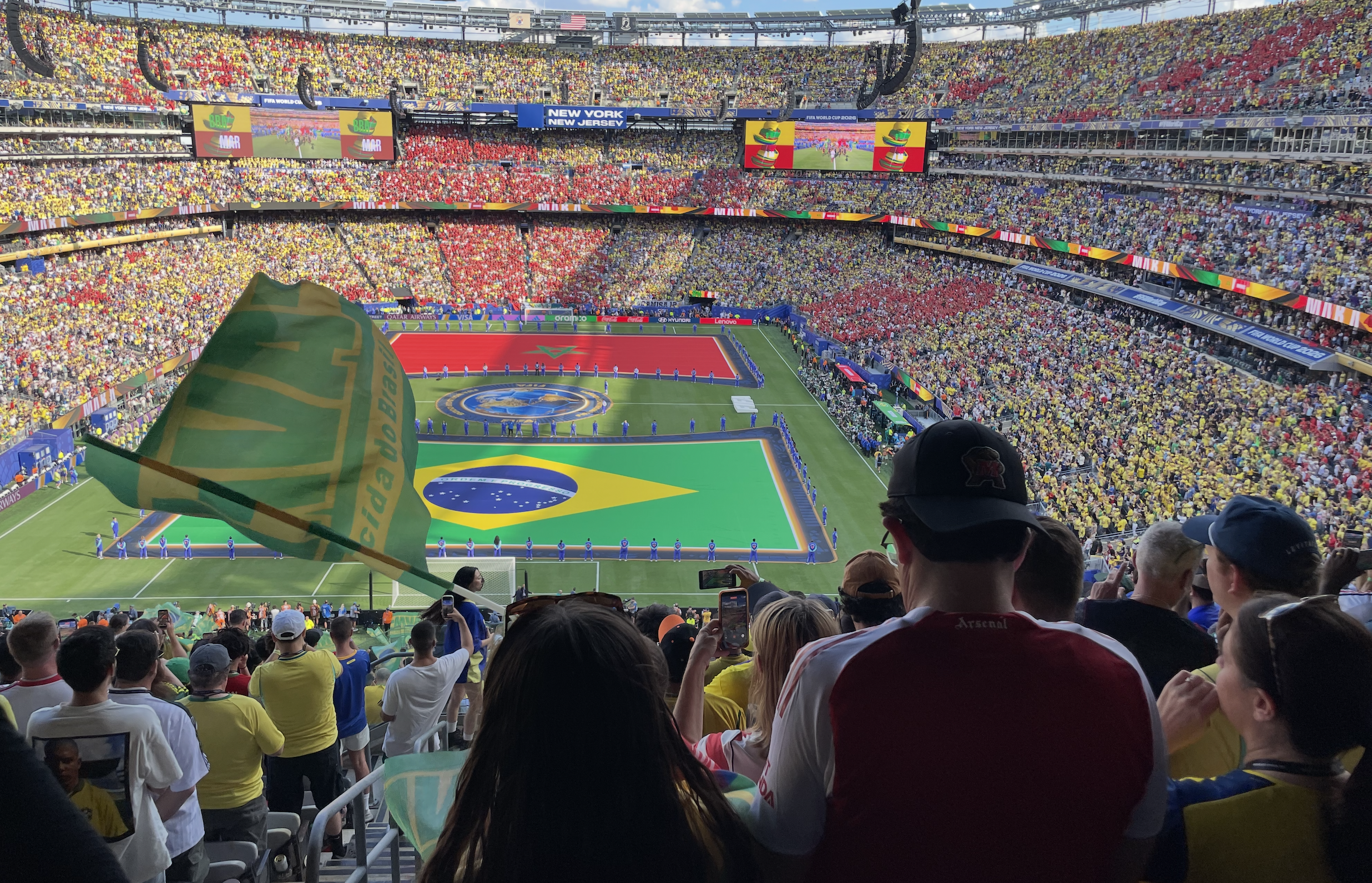
    Brazil fans were out in force at MetLife Stadium.Kerith Gabriel / Staff

    Over 80,000 (80,663 announced) mostly yellow-clad fans sang, cheered — a few even shed tears while the Brazilian national anthem played — watching this first game for both teams in Group C. For anyone there, it was worth FIFA’s steep admission price, and speaking with various fans, the prices did vary across similar sections.

    Sergio Ximeyo, 22, who came from Brooklyn, said he waited until the morning of the game and was able to snag his ticket for $300. Ximeyo, dressed from head to toe in Brazil’s colors, considered himself “lucky” to say he was witnessing this World Cup match live.

    Mariana Costa traveled from São Paulo, Brazil, for last Saturday’s match against Morocco. Kerith Gabriel / Staff

    Another fan, Mariana Costa, 38, who traveled from São Paulo, Brazil, was all smiles in a traditional Brazilian headdress and said that she paid $1,000 for her ticket to the match in the same 200-level section, though a bit closer to the pitch.

    “These tickets [prices] are crazy,” Costa said, “But you love your team and your country, so you pay.”

    It’s safe to anticipate that same passion will travel down I-95 for Brazil’s second group match against Haiti at Lincoln Financial Field on Friday (9 p.m., Fox29). As much as FIFA would like us to refer to the venue as “Philadelphia Stadium,” the Philly in me has a hard time conforming.

    Sergio Ximeyo says he spent just $300 for a 200-level seat for last Saturday’s Brazil-Morocco match. Kerith Gabriel / Staff

    Joao Brigadóes, 33, who said he resides in New York, noted that he’s already excited to take in the match. Brigadóes explained that he purchased his tickets through a presale and spent $4,200 for a total of four tickets, two for the match against Morocco and two for Friday’s game.

    “This team is my heart,” Brigadóes said. “Look at this, we are all Brazilians here, this is the World Cup — I may never get a chance to witness this opportunity again, so yeah, I saved because I knew I couldn’t miss this chance to see my country play so close to [my home].”

    We got a taste of just how much Brazilian (and Moroccan, too, we didn’t forget) supporters brought the noise during last summer’s FIFA Club World Cup, when fans of Flamengo and Fluminense came through for group stage matches. The atmosphere of their club teams was unbelievable.

    For the national team? On Saturday night, it was a different level. Even from the bird’s-eye view of MetLife Stadium’s hermetically sealed press box where I didn’t stay for very long. You can’t feel the pulse of anything in there, but in the adjacent 200-level sections? Fantastic.

    New York has a large contingent of Brazilians living up here, an estimated 35,000, according to 2024 U.S. Census data, and it felt like they all packed into MetLife Stadium on Saturday. They packed shuttles, held up the lines at concessions, took over large swaths of sections, and were loud.

    For this soccer fan, who has been to quite a few live matches in my lifetime, this one is right up there as one of the best when it came to atmosphere, excitement, and quality on the pitch as Brazil and Morocco battled to a 1-1 draw.

    Let’s talk water for a second …

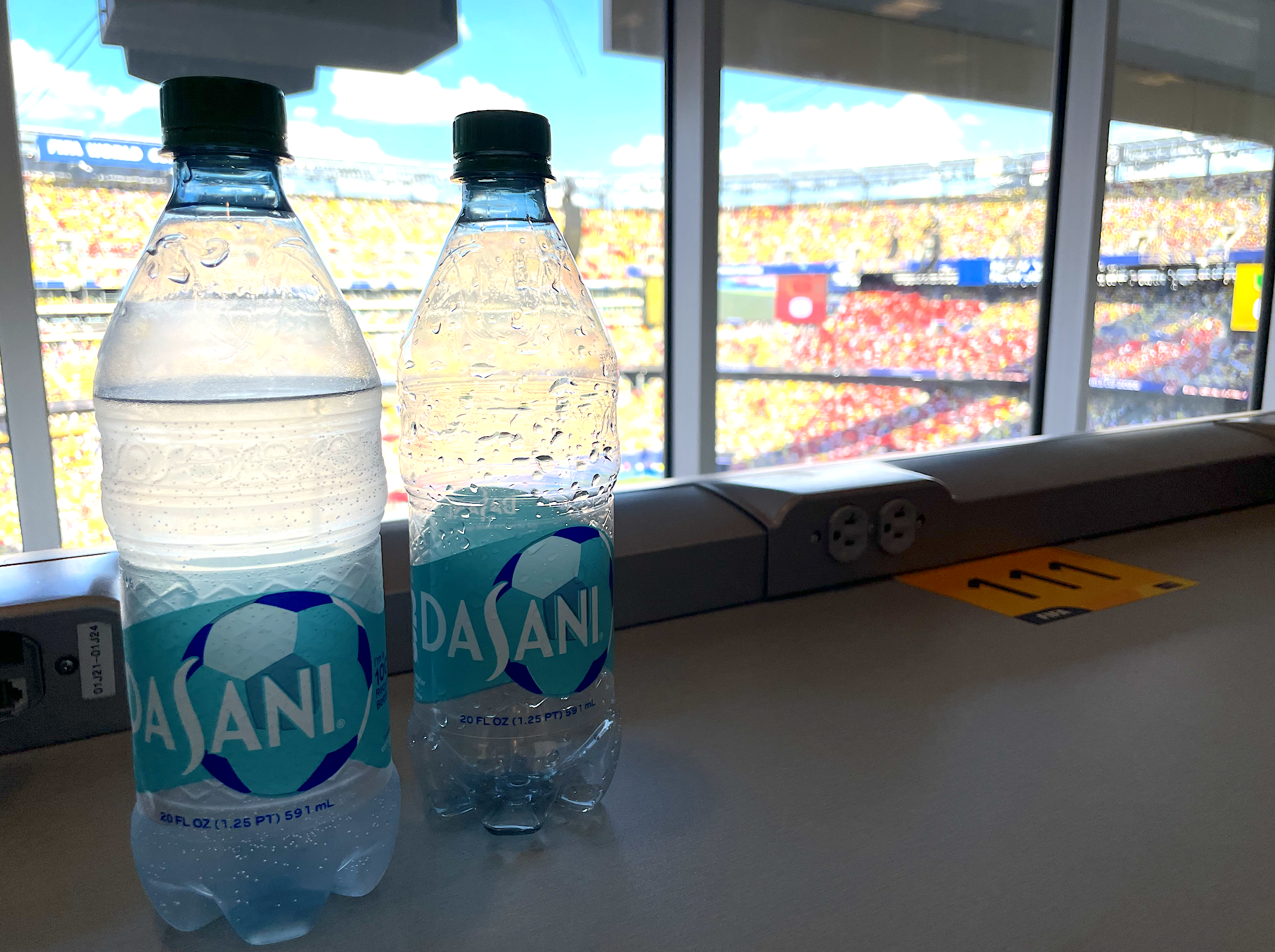
    Oh, speaking of concessions, “Philadelphia Stadium” should consider taking a page from “New York-New Jersey Stadium” when it comes to water bottles.

    A bottle of Dasani at MetLife? $5.75. A concession worker noted, too, that regardless of the event, that’s the going rate at MetLife. Anyone who’s been to the Linc knows that’s not the case, with prices surging to as much as $10 for the Club World Cup.

    In Sunday’s opening match in Philadelphia between Ecuador and Ivory Coast, the price for a water was $6.99.

    Brazil fans in yellow bring the noise in their nation’s first match at MetLife Stadium. And the water prices weren’t terrible, all things considered.Kerith Gabriel / Staff

    So, while yes, $5.75 isn’t exactly the cheapest for a plastic bottle of purified water, it’s still cheaper than options at the Linc.

    Not gonna lie, that was refreshing to hear, so I bought two.

  • Main Line Health’s Paoli Hospital will get a new, 108-bed patient tower in a major expansion

    Main Line Health’s Paoli Hospital will get a new, 108-bed patient tower in a major expansion

    Main Line Health is adding a 108-bed patient pavilion to its Paoli Hospital campus as part of a push to expand its capacity in Chester and Montgomery Counties, the nonprofit health system announced Tuesday.

    The building, expected to cost between $220 million and $240 million, is scheduled to open in early 2029. The project will expand Paoli’s capacity by more than 40%.

    Patient rooms will occupy three of five floors. They will be convertible from standard hospital rooms into rooms for intensive care. One floor will be used for diagnostics, such as radiology and perinatal testing. The roof will have a landing pad for helicopters.

    Beyond Paoli, Main Line is adding to its outpatient capacity in Downingtown, where a large facility that has township approval will include surgical care. The health system also has shared an early-stage proposal for outpatient offices in the Collegeville area, while it considers building there what would be its fifth hospital in Philadelphia’s western suburbs.

    “While many communities face declining access to care, Main Line Health is moving forward with optimism, investing in this region’s future and reaffirming our commitment to exceptional care where people live and work,” Main Line CEO Ed Jimenez said in the announcement.

    Paoli hospital currently has 261 licensed beds and employs nearly 1,400 people, according to Main Line. The hospital had 53,000 emergency department visits in the year that ended June 30, 2025. Main Line Health completed its last major expansion of Paoli Hospital in 2009, doubling the facility’s size.

    Like other Philadelphia-area health systems, Main Line has experienced tough times financially since the pandemic, which led to broadly higher costs in healthcare. In the nine months that ended March 31, Main Line had a $214,000 operating profit on $2.1 billion in revenue.

    More Main Line projects

    Separately, about 12 miles west of Paoli Hospital, in Downingtown, Main Line plans to open a large outpatient facility next summer. Main Line Health Downingtown, at the intersection of Lloyd and Manor Avenues, will cost $150 million and include a surgery center and substantial imaging capabilities.

    In central Montgomery County, as well, Main Line recently made a presentation to the Upper Providence Township Board of Supervisors about a major development in an area where the health system has seen substantial growth.

    The long term could see Main Line build a 108-bed hospital, but more immediately it needs to add outpatient office space in the Collegeville area, Main Line said.

  • Developers of a Yass-backed Gladwyne development present a pared-back plan after hearing from residents

    Developers of a Yass-backed Gladwyne development present a pared-back plan after hearing from residents

    The team behind a major redevelopment of the heart of Gladwyne presented a pared-back plan to residents last week after considering extensive public feedback.

    Design firm Haldon House and local billionaires Jeff and Janine Yass earlier this year unveiled plans to reinvigorate Gladwyne with new buildings, renovated historic structures, public green space, and updated commercial options that would breathe new life into the Main Line community’s quaint downtown.

    The project has sparked buzz in the community, with some Gladwyne residents eager for their neighborhood to get a facelift, and others skeptical of the development’s impact on traffic, parking, and Gladwyne’s character.

    Five months after unveiling the project, Haldon House owners Andre Golsorkhi and Autumn Oser brought an updated approach to Gladwyne residents at a meeting of the Gladwyne Civic Association on May 18. The new proposal features fewer buildings, more open green space, and more subdued aesthetics than the original scheme.

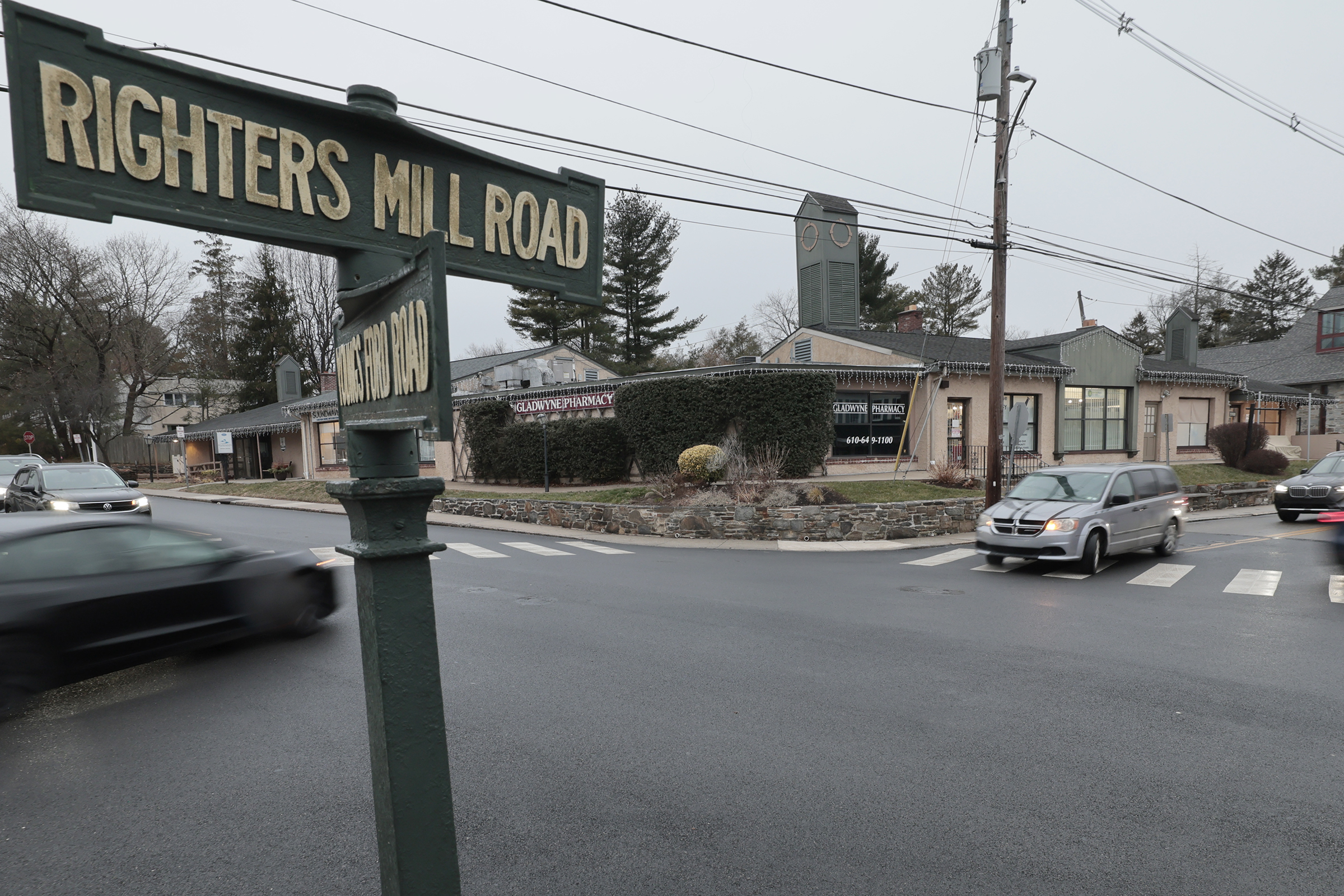
    The Village Shoppes, including the Gladwyne Pharmacy, at the intersection of Youngs Ford and Righters Mill Roads in Gladwyne. Under the proposal, the Shoppes would be razed and replaced with an updated, barn-style building.Elizabeth Robertson / Staff Photographer

    Haldon House’s revised plans for Gladwyne center on five main renovations: moving and expanding the Gladwyne Pharmacy into the former Gladwyne Market building; bringing a restaurant into the former OMG Hair Salon building; constructing a new barn-style building for an expansion of local cafe Homeroom; building a public green space between Homeroom and the library; and razing a residential property on Youngs Ford Road to create a parking lot.

    The reconfigured plan has not officially been submitted to Lower Merion Township for approval. Greg Prichard, historic preservation planner for Lower Merion, said the township is expecting the Gladwyne project to involve meetings of multiple review boards with the board of commissioners’ approval as the final green light.

    Haldon House has not disclosed a cost for the project, but Golsorkhi has said that the developers “have a very good understanding of the scope and scale of the investment required” and are “fully committed to what is needed to see this through.” The developers have spent over $15 million acquiring the properties.

    Golsorkhi and Oser said survey responses, public comment, and informal feedback from the Lower Merion Historical Architectural Review Board (HARB) gathered over the last few months helped shape the amended plan, one that leans into Gladwyne’s existing businesses and keeps a “quirkiness” cherished by residents.

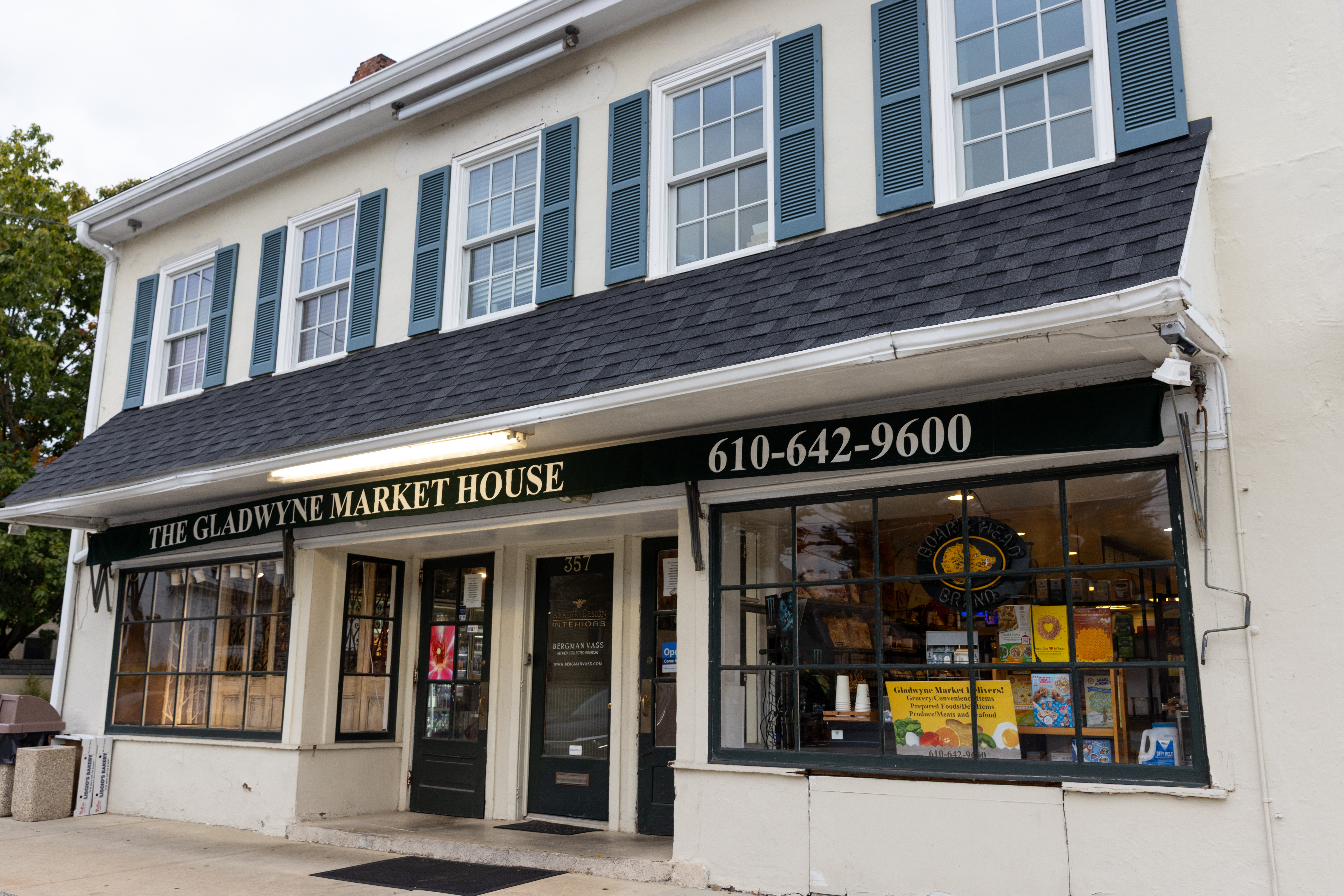
    Under the proposal, the Gladwyne Pharmacy would be moved into the former site of Gladwyne Market at 357 Righters Mill Rd. Gladwyne Market shuttered last fall after the building was purchased for $5 million.

    Oser said Haldon House wants to “celebrate the pharmacy” by expanding its inventory and designing a space that is “charming and nostalgic” with a wraparound porch and outdoor seating.

    The former Gladwyne Market, which shuttered last fall after developers purchased its building. The Gladwyne Pharmacy is set to move into the space under plans proposed by Haldon House.Jasmine Goldband / Staff

    Across the street, 358 Righters Mill Rd., the current home of the pharmacy and Homeroom, a local cafe, would be torn down and replaced with a new building. The building would house an expanded site for Homeroom and an upstairs office tenant (the upstairs would potentially be used as a conference space for Haldon House, the developers said at a HARB meeting, or as a flexible event space for community vendors). Homeroom would likely expand its menu, extending its hours into the early evening and growing its bakery apparatus.

    The building would combine stone facades with wood paneling and floor-to-ceiling windows, a design the developers say is “rooted in Main Line tradition” yet “contemporary.”

    Oser said Haldon House took to heart feedback that the first iteration of 358 Righters Mill Rd. was too polished for Gladwyne.

    “There was the specific request, like, ‘Please keep the quirk.’ Gladwyne is quirky, and it’s eclectic, and we like that,” she said at the civic association meeting. “… That was awesome feedback, and it was a really good point.”

    Haldon House originally intended to bring a slate of new businesses to the village, but Oser and Golsorkhi realized they could fulfill the community’s needs by expanding the offerings at its existing businesses, rather than bringing in more retail tenants.

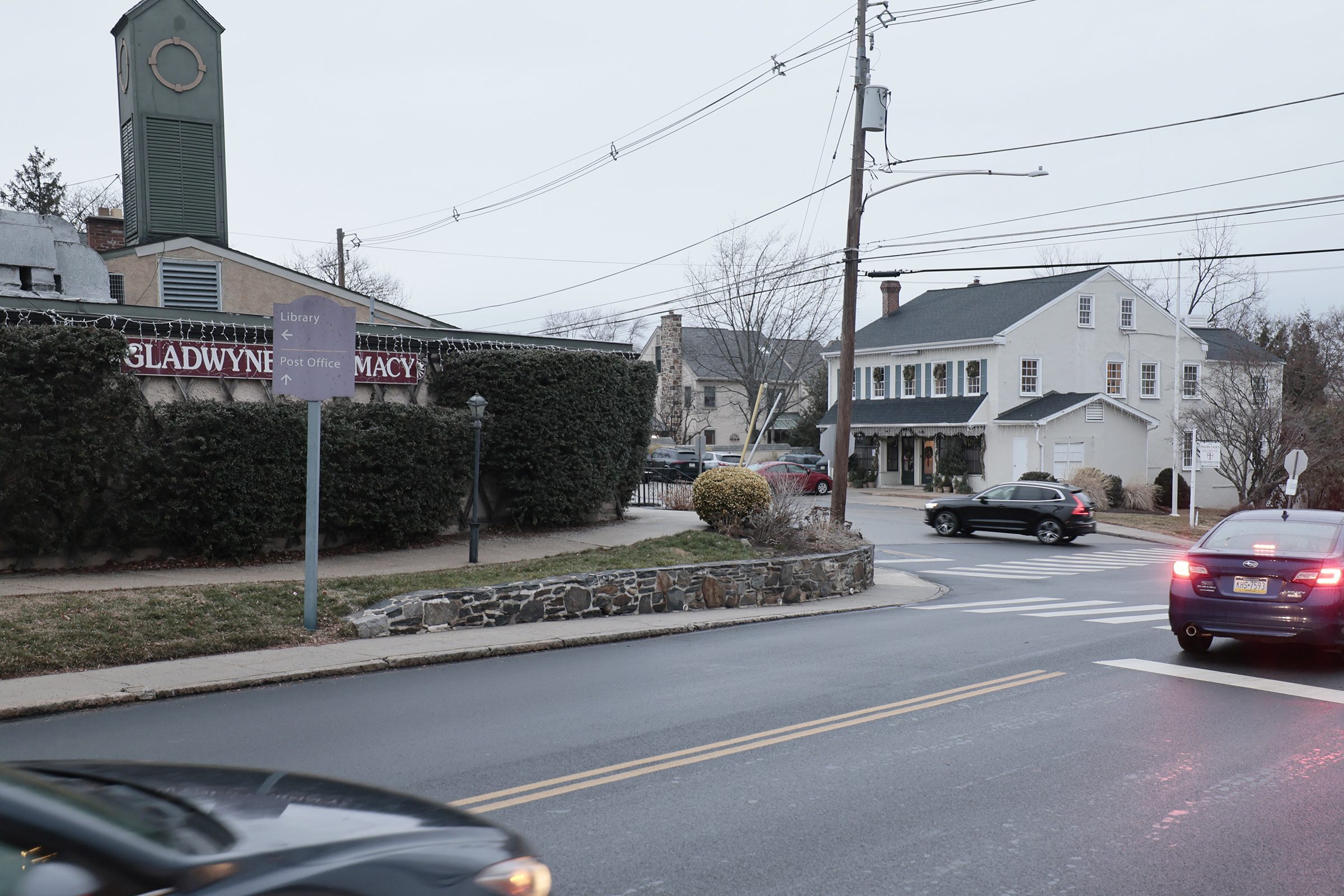
    The intersection of Youngs Ford and Righters Mill Roads in Gladwyne.Elizabeth Robertson / Staff Photographer

    358 Righters Mill Rd. would abut a community green space outfitted with a gazebo, native plants, and an amphitheater. The developers hope to use the green space as a hub for outdoor education, library events, and yoga classes, among other activities.

    The developers said they would establish a fund that draws on revenue from the properties to pay for park upkeep. Golsorkhi at a township meeting said that the tenants themselves would not be responsible for the park’s maintenance.

    The developers plan to bring a restaurant to 351 Righters Mill Rd., the former location of OMG Hair Salon. Currently, the only full-service restaurant in Gladwyne’s commercial core is the Union League’s members-only Guard House, which has been closed to the public for dining for nearly a decade.

    Oser outlined a vision for a “watering hole” that honors Gladwyne with historic photos and a “timeless” interior.

    The developers want a dining option that “only exists in Gladwyne” and do not plan to recruit a restaurant from Philadelphia, Oser said.

    A residential property at 946 Youngs Ford Rd. would be razed and turned into a parking lot. A retaining wall and tree barrier would be erected around the lot as a buffer for neighboring residents (one single-family home and a townhouse development border the proposed parking lot). The developers would need to secure a zoning change from the township to convert the property into parking.

    The proposal has brought tepid optimism — and a handful of concerns — to the small community.

    Some have praised the redevelopment, describing it as a much-needed facelift for a corridor with few amenities and deteriorating buildings. Others have warned of increased traffic and parking issues in an intersection that already deals with congestion.

    At Monday’s meeting, residents who border the proposed parking lot criticized what they described as a lack of communication from the developers and warned that the lot would disrupt the neighbors who surround it.

    “I think you’ve come a long way. This thing is going in the right direction,” Ed Lewis, a resident of a neighboring property, said during a recent HARB meeting.

    But Lewis warned, “You have to have the basics solved at the beginning: traffic, pedestrian access, and the green, existing trees and reinforced with new vegetation.”

    This suburban content is produced with support from the Leslie Miller and Richard Worley Foundation and The Lenfest Institute for Journalism. Editorial content is created independently of the project donors. Gifts to support The Inquirer’s high-impact journalism can be made at inquirer.com/donate. A list of Lenfest Institute donors can be found at lenfestinstitute.org/supporters.

  • Trump’s war of choice in Iran ends with humiliating concessions | Editorial

    Trump’s war of choice in Iran ends with humiliating concessions | Editorial

    Just before hosting a modern day gladiatorial bout on the White House lawn Sunday, Donald Trump announced a deal to end the needless war he started in Iran. But the terms of the deal made public so far underscore the epic blunder of his Middle East misadventure.

    None of the goals the president initially stated were attained: Iran did not offer the “unconditional surrender” Trump demanded. Its nuclear program was not abolished. The hard-line theocratic regime remains firmly in place. The people of Iran were not liberated. And Iran’s military, though damaged, is still intact.

    At best, the preliminary agreement is a fragile ceasefire that will reopen the Strait of Hormuz and end the costly U.S. bombing campaign. If all goes well, that will maybe get the world back to the way it was on Feb. 27 — the day before the war began.

    At worst, it is another humiliating defeat for the U.S. to go with the losses in Afghanistan and Vietnam. While the Iran war was much shorter, the damage was just as disgraceful, and perhaps even more unnecessary.

    In fact, the Middle East and the rest of the world is less stable today than before Trump started bombing Iran.

    If anything, Iran learned it can easily create a global economic crisis whenever it wants by putting a choke hold on the Strait of Hormuz with just a few drones and underwater mines. Iran can use that leverage as future deterrence against the U.S., Israel, or any other foe — which may be better than a nuclear weapon.

    Then there is the cost of Trump’s useless war.

    The military spent more than $25 billion just through the end of April. But the cost to the economy was estimated to be more than $1 trillion.

    Closing the strait meant cutting off passage for a fifth of the world’s oil supply, leading Americans to feel the financial pain at the gas pump and the grocery store. Farmers were hurt by higher fuel and fertilizer prices. Overall, the war sent inflation surging to a three-year high.

    Trump was unfazed by the pain he inflicted, claiming he “loved inflation,” and that gas prices were not very high and a cost everyone needs to endure to keep Iran from obtaining a nuclear bomb.

    As usual, Trump’s war spin was delusional, as he veered from dozens of claims that peace was just around the corner to psychotic threats to wipe out Iran’s civilization.

    Then there was the human cost.

    Fourteen U.S. service members died and hundreds more were injured. More than 3,000 Iranians were killed, including scores of children in a school that was bombed.

    How many hearts have turned cold toward America and its interests after the senseless killing and destruction of civilian sites in Iran and other parts of the Middle East bombed by Israel?

    Of course, the agreement did not resolve the main issue regarding Iran’s nuclear ambitions — which Trump oversold.

    Trump can’t even claim his deal is better than the Nuclear Non-Proliferation Treaty Iran signed in 1968, let alone the nuclear agreement negotiated by the Obama administration in 2015, whereby Iran agreed to do away with much of its nuclear program in exchange for sanctions relief.

    In 2018, Trump abandoned that deal, which was reached through nearly two years of discussions by seasoned diplomats, in contrast to the untrained negotiators Trump sent in — a group that included his son-in-law, Jared Kushner.

    Trump and his Republican allies for years railed about the $1.7 billion the Obama administration sent to Iran as part of the deal. But preliminary drafts of Trump’s plan include unfreezing $24 billion in Iranian assets, lifting oil sanctions, and implementing a massive reconstruction plan — or reparations — for Iran valued around $300 billion, according to Reuters.

    No wonder why the final terms of Trump’s deal remain secret while he tries to claim victory for a war he lost, while everyone else was stuck with the cost.

    All to end up — at best — back where we started.

    Mission accomplished!