Tag: topic-link-auto

  • FDA’s green light of old chemical offers chance to restore faith in sunscreen

    FDA’s green light of old chemical offers chance to restore faith in sunscreen

    Officials, environmental health advocates, and skin care industry groups are expressing hope that the Food and Drug Administration’s approval of a sunscreen ingredient on June 9 — after consideration for two decades, and global use for nearly as long — will help restore Americans’ wavering faith in sunscreen.

    “Bemotrizinol has been used safely in Europe for decades,” Health and Human Services Secretary Robert F. Kennedy Jr. said in the announcement about the approval. “FDA’s action will increase competition and consumer confidence in sunscreen products.”

    Nonprofits that advocate for health, such as the Environmental Working Group, and the skin care industry alike had lobbied for approval of the ingredient, which makes sunscreens sheerer and lighter on the skin than many available American options while blocking a wider spectrum of ultraviolet rays that can cause premature aging and skin cancer.

    The newly approved sunscreen filter will allow companies to reformulate sunscreens to address consumers’ concerns, said Carl D’Ruiz, a senior manager at DSM-Firmenich, a Swiss maker of sunscreen chemicals that applied for the FDA approval. In addition to allowing companies to offer what the FDA calls safe and effective formulations, he said, the approval will allow sunscreens that are more like sought-after South Korean brands to be sold in the U.S. by autumn.

    Confidence in U.S. sunscreen has faltered on two fronts: among those concerned about what’s in the sunscreens they use and those who believe sun exposure is healthy. But will the new ingredient win the trust of Make America Healthy Again skeptics and Gen Zers intentionally tanning? RFK Jr., strikingly bronzed, has helped stoke this confusion by pledging in 2024 to fight what he called the FDA’s “war on public health” and “aggressive suppression” of sunshine. Under his leadership, the FDA backed away from a plan in March to ban people under 18 from using tanning beds.

    All this matters because 1 in 5 people will develop skin cancer by age 70 in the United States. It is the most common cancer in the nation, where about 3.3 million people are diagnosed each year with basal and squamous cell carcinomas.

    D’Ruiz said he thinks bemotrizinol, also known as BEMT, will change the dynamic. “People will talk more positively about sunscreens,” he said.

    In the U.S., new sunscreen chemicals are regulated as over-the-counter drugs like aspirin or cough syrup rather than as cosmetics, as in Japan and the European Union. That means they face more elaborate testing and safety protocols, such as animal testing that runs afoul of EU laws, which is why the approval process for bemotrizinol took nearly two decades, D’Ruiz said.

    What’s “generally recognized as safe and effective,” otherwise known as “GRASE” in FDA-speak, is at the center of the American sunscreen debate. Bemotrizinol joins zinc oxide and titanium dioxide on the FDA’s GRASE list.

    That could help rebuild trust, said Alexa Friedman, an environmental epidemiologist at the Environmental Working Group, a nonprofit that researches the ingredients in consumer products.

    “It has strong safety data,” Friedman said. “The documents submitted to the FDA to achieve ‘generally recognized as safe and effective’ include tests of irritation, sensitization to allergies, two-year animal studies for carcinogenicity, and reproductive health.”

    Phillies fan Theresa Krallinger, of North Wales, Pa. applies sunscreen before the Phillies play the Reds at Citizens Bank Park in Philadelphia on Sunday, July 6, 2025.David Maialetti / Staff Photographer

    The approval will also give consumers access to sunscreens that don’t leave as much of a white cast, she said, which makes some people hesitant to use mineral sunscreens such as zinc oxide and titanium dioxide.

    Bemotrizinol’s approval won’t change the possibility of several chemicals with unclear safety profiles being added to sunscreens.

    In 2019, the FDA said there was insufficient data to support a positive “generally recognized as safe and effective” determination for 12 commonly used sunscreen chemicals.

    The concerns emerged after the FDA published a study that said some sunscreen ingredients had been found in humans’ bloodstreams. Though the industry has since phased out several of those chemicals lacking GRASE status, four are still widely used: avobenzone, homosalate, octisalate, and octinoxate.

    “The European Union had recently concluded that homosalate was not safe at concentrations that they were using and recommended a very low percentage — which was effectively a ban,” Friedman said. “The U.K. also issued a safety evaluation.”

    Octisalate and octinoxate have been associated with disruption of the endocrine system, and octinoxate was banned for sale in Hawaii due to concerns that it harms marine life and bleaches coral reefs.

    Avobenzone breaks down when exposed to light, making it less effective, Friedman said, and has been associated with allergic reactions.

    Mark Mitchnick, a pediatrician who invented transparent zinc oxide, which is known under the brand Z-Cote, said bemotrizinol will give chemists a new tool to make sunscreens that people will want to wear.

    “It’s a good UVA block,” he said. “It gives us good flexibility. In my mind, it allows you to make really good products without using avobenzone, which I think has a lot of baggage.”

    Most of the UV rays people are exposed to are UVA rays that can penetrate the middle layer of the skin and cause up to 90% of skin aging, along with a smaller amount of UVB rays, which are responsible for sunburns. Ultraviolet radiation falls on the electromagnetic spectrum between X-rays and visible light.

    Mitchnick said major companies have used chemical filters because they work better on a per-pound basis compared with mineral sunscreens made with zinc oxide and titanium dioxide. “That’s why hybrids are great — you get the best of both worlds.” He said he expects companies, including his own, to release hybrid products containing bemotrizinol and zinc oxide later this year.

    J. Frank Nash, a senior director and research fellow at Procter & Gamble, said skepticism about sunscreen is unfortunate because properly formulated sunscreens do an excellent job blocking solar UV, “which we know is responsible for skin cancers and aging.”

    He worries the industry has contributed to the trust gap by adding unapproved UV filters, called boosters, to mineral sunscreens, to raise sun protection factor ratings, or SPF. This leads consumers to wonder what’s in the products they’re buying.

    Still, in Australia, where bemotrizinol has been used in sunscreens for years, a recall scandal over ineffective products shows that even when regulators allow lauded UV filters, bad actors can taint a whole industry.

    “People are not shunning sunscreen because they have stopped believing UV is dangerous,” said Joseph Mizikovsky, a director of the Australian Sunscreen Council. “They are shunning it because they have lost trust in what is in the bottle.”

    He applauds the FDA’s transparency with American consumers about the lack of safety data for filters without GRASE status, and FDA’s insistence on mandatory microbial testing of products.

    But he said the FDA could do more to rebuild trust in sunscreens.

    “My view is the FDA should move faster to ban filters that are missing safety data, and the public should focus on physical protection — shade, clothing, hats, sunglasses — with sunscreen as the last layer, not the first.”

    KFF Health News is a national newsroom that produces in-depth journalism about health issues and is one of the core operating programs at KFF — the independent source for health policy research, polling, and journalism.

  • Flyers deal Samuel Ersson, Emil Andrae, draft pick to Leafs for Joseph Woll, Simon Benoît

    Flyers deal Samuel Ersson, Emil Andrae, draft pick to Leafs for Joseph Woll, Simon Benoît

    The mystery over the future of two Flyers players has been solved.

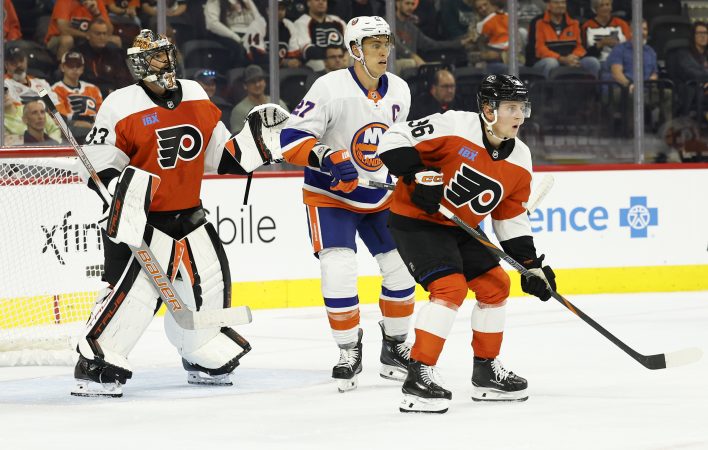
    The team traded goaltender Samuel Ersson, defenseman Emil Andrae and a third-round 2026 draft pick to the Toronto Maple Leafs in exchange for goaltender Joseph Woll and defenseman Simon Benoît, the team announced Tuesday.

    “We thought it was a chance to improve the team, help them take another step. Sam has been a fantastic teammate, really loved in the room, both him and Emil,” Flyers general manager Danny Brière said.

    “We just felt, in Sam’s case, it’s one of those where it might be time for a change of scenery for him, and hopefully it gives him that chance to take another step. He did well in the second half last year, down the stretch. He’s a gamer, but I think it was time for him to get the points elsewhere, and we felt that Woll is a step forward for us, and we’ll be able to help [Dan Vladař] in a tandem role.”

    With one more year on Dan Vladař’s current deal and a likely extension coming, Woll should slide into Ersson’s backup role. He has two more years left on his current contract at $3.66 million annually.

    Toronto Maple Leafs goaltender Joseph Woll makes a glove save in a March game.Connor Hamilton

    Woll made his NHL debut in November 2021 for the Leafs, and since then has seen his role steadily increase. In 117 games, he has recorded a 2.94 goals-against average and a .906 save percentage. But he’s coming off a down year in 2025-26, putting up a career-worst 3.34 GAA and .899 save percentage in 39 appearances.

    Ersson had his moments, and was even selected to Sweden’s Four Nations Faceoff team, but ultimately wasn’t as consistent as the Flyers wanted. In 143 appearances for Philadelphia, Ersson put up a .884 save percentage and a 3.01 GAA.

    “We pushed the tandem thing, but the goalies have to perform, and I think it was tough at times last year when Sam was struggling early in the season,” Briere said. “ … We hope that we’re not coming down the stretch with a tired goalie [again]. The better you can have both of them going, I think it helps prevent injuries and stays fresh, and they can, I think, perform better. We hope that they can push each other that way.”

    Benoît is a bottom-pairing defenseman who started with the Anaheim Ducks before spending the last three seasons in Toronto. He played 73 games last year, averaging 17:18 minutes per game and picking up six assists.

    “He might be; maybe he’s even higher up the lineup too. Why not?” Briere said when asked if Benoît would play on the bottom pair. “We like the physicality that he brings, and we like the size and the skating aspect, too; he’s a really good skater. Emil, we loved his competitive edge inside, but it did make our defense a little small at times; we have Jamie [Drysdale] and [Cam York] there, so the three of them wasn’t ideal. So I think it’s going to probably be a little easier for the coaches having a guy like Simon Benoît back there to use.”

    Andrae, a left-handed shot who was in and out of the Flyers’ third pair this season, is a restricted free agent, like Ersson.

  • James Beard, 50 Best, Michelin, and so on. What do all these restaurant awards mean?

    James Beard, 50 Best, Michelin, and so on. What do all these restaurant awards mean?

    While the city’s attention may be mostly tuned to the World Cup games, we are also in the midst of another cutthroat period where only a few can be named the best.

    Hearts will be broken. Medals will be hoisted in the air. It’s restaurant awards season.

    Publications grant restaurants awards, with major ones being Bon Appetit, the New York Times, Food & Wine, and of course, The Inquirer’s own annual list, The 76. But none are quite as prestigious as Michelin stars, the 50 Best’s rankings, and the James Beard Foundation Awards, which were doled out in Chicago on Sunday.

    (Philly took home two, including the much-coveted outstanding restaurant, a little like the best picture accolade at the Oscars).

    What’s the difference between all these lists? Michelin and 50 Best are internationally renowned awards-granting institutions, whereas the James Beard Foundation is strictly American. North America’s 50 Best Restaurants list is a 2-year-old subsidiary of 50 Best, which judges restaurants from the United States, Canada, and the Caribbean. Michelin only reviews restaurants that fall into the geographic confines of its specific guide.

    These awards follow different criteria (though it often seems like the same chefs are being decorated, with little variation in lineups of nominees) and operate independently of one another. Michelin is the most secretive of the three major awards, as its inspectors are anonymous Michelin employees. 50 Best and JBF draw judges from the restaurant and food media industries.

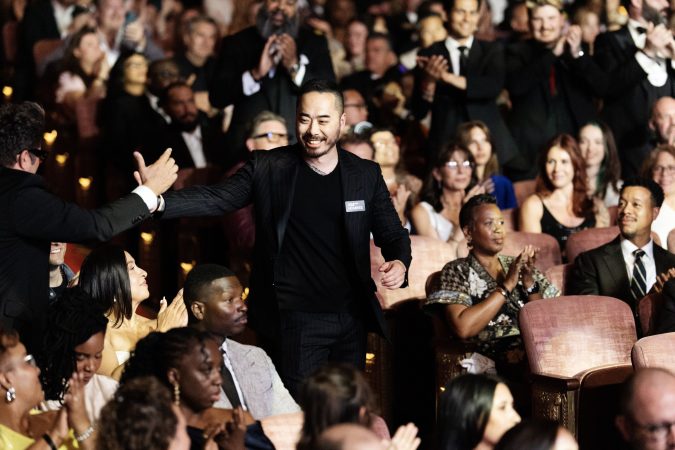
    Chef Chutatip “Nok” Suntaranon and her Kalaya partners on Sunday accepting the 2026 James Beard Award for outstanding restaurant. The award is akin to the best picture accolade at the Oscars.© Eliesa Johnson / James Beard Foundation

    Last month, Kalaya and Friday Saturday Sunday celebrated their placements on the North America 50 Best Restaurants list. These were the hometown restaurant heroes up for national JBF awards: Kalaya for outstanding restaurant, Friday Saturday Sunday’s Lover’s Bar for best bar, and Emmett for best new restaurant. As for chefs, Fiore’s Justine MacNeil was a contender for outstanding pastry chef or baker.

    MacNeil had a steep hill to climb — Washington’s Susan Bae of Moon Rabbit took home the prize, and she, like Kalaya’s Chutatip “Nok” Suntaranon, has been a darling of national and international awards. After nine nominations, Philly’s Jesse Ito finally took home the award for best chef, Mid-Atlantic.

    You’d be forgiven for experiencing déjà vu from scanning this list and celebrating the recent wins of restaurants from North America’s 50 Best Restaurant, as well as those from Michelin’s inaugural Northeast Cities edition in November. It can feel like the same handful of Philadelphia chefs and restaurants receive the majority of the national attention from food media.

    Suntaranon, Chad and Hanna Williams, and Jesse Ito are at every awards ceremony. They each have compelling narratives, making food storytelling incredibly easy.

    Suntaranon and Kalaya have been on a tear, topping lists and gaining national recognition. The JBF outstanding restaurant title comes as little surprise. Until Sunday night, Jesse Ito was among the most nominated of chefs without a win in the Foundation’s history. (In comparison, Jose Garces had seven finalist nominations before winning the same award in 2009. Nobu Matsuhisa, whose eponymous restaurant won best new restaurant in 1995, was subsequently nominated for outstanding chef nine times and has not won yet).

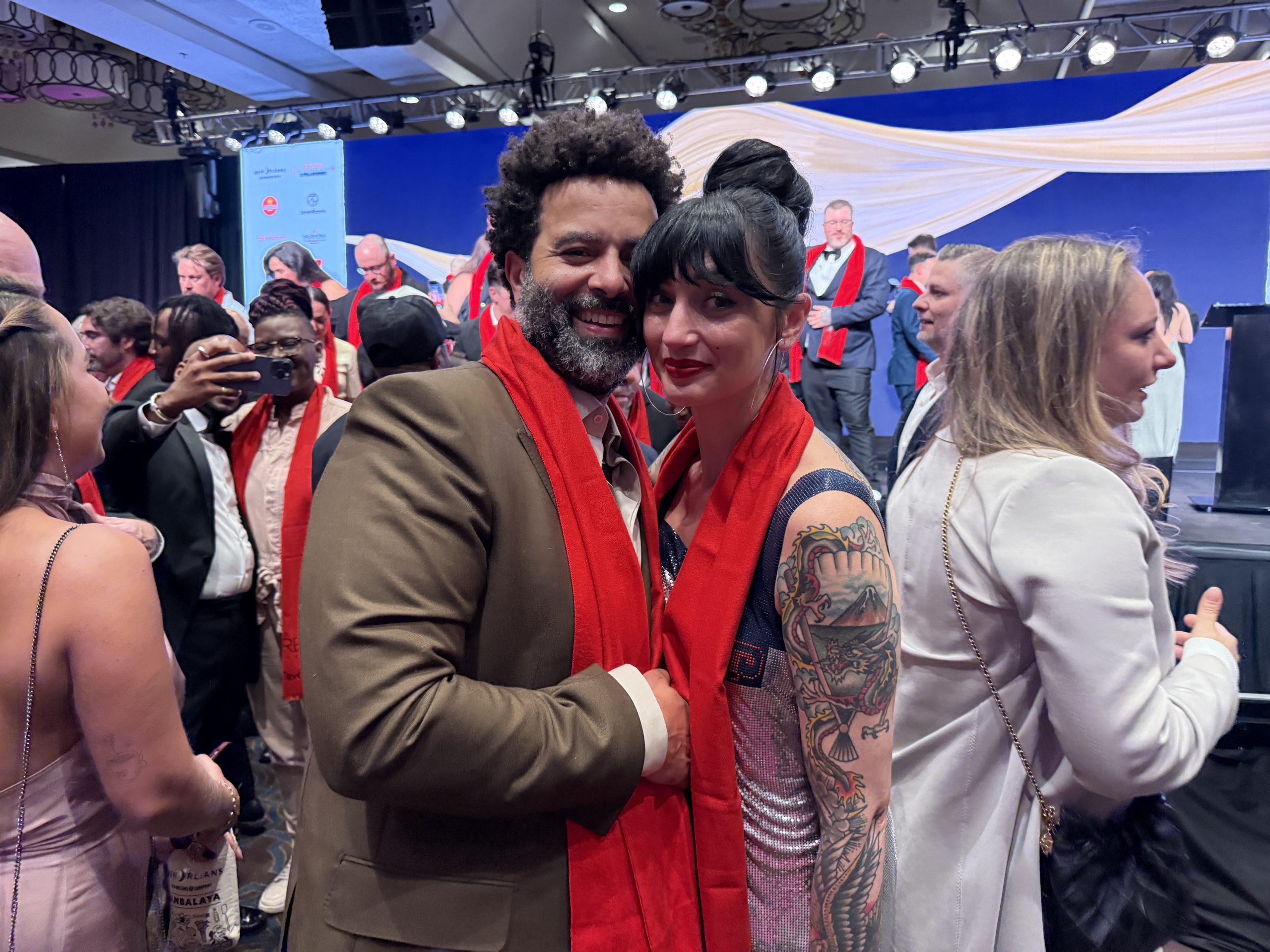
    Chad and Hanna Williams of Friday Saturday Sunday.Kiki Aranita

    Both Suntaranon and Ito are iconoclasts. They’re making world-class Thai and Japanese food in a city that is not known for either (Philly has seen no significant immigration from either Thailand or Japan). They’re an immigrant and the child of immigrants, excelling and winning awards at a time when anti-immigrant policies are upending the restaurant world.

    And awards do matter. They can (but not always) bolster business. They bring attention to our city. And they bring other restaurateurs to Philly, weaving them into a food scene that continually becomes more diverse, interesting, and excellent.

    In recent years, Philly chefs, especially the ones who have received these awards, have been part of a larger national conversation. These awards, and the communities their ceremonies foster, expand Philadelphia’s culinary borders.

    To be sure, the chefs who are garnering these awards — stars, scarves, and medals — are hardly the only ones making excellent food, treating their employees decently, and sourcing ingredients that benefit our food systems. In fact, the latter has little to do with any of these awards, especially given Michelin’s retirement of its green star designation. Benefiting the food system and sourcing sustainably often has little to do with chefs being granted any of the most-coveted awards.

    May this be a reminder that awards aren’t everything. But it sure is nice to win.

    Disclaimer: Members of The Inquirer Food Team have been part of the James Beard Foundation Awards’ voting body.

  • A 17-year-old is in critical condition after being stabbed outside Logan house party, police say

    A 17-year-old is in critical condition after being stabbed outside Logan house party, police say

    A 17-year-old is in critical condition after being stabbed Monday evening outside a party in the Logan section of Philadelphia, authorities said.

    The crime happened around 11:30 p.m. on the 4500 block of North Carlisle Street, according to police.

    Police said the teen, whom they did not identify, had been approached on the street by a group of men he had argued with earlier in the day.

    Someone in that group pulled a knife and another person drew a gun, police said.

    As the teen fled, he realized he had been stabbed and called police, authorities said.

    First responders found that he had been stabbed three times in the back and once in the left thigh. He was taken to Jefferson Einstein Philadelphia Hospital, where he remained in critical condition as of Tuesday afternoon, according to police.

    Officers have not identified any suspects or recovered any weapons as they continue to investigate, police said.

  • This scrap metal facility has had 13 fires in Camden. It’s suing the city to reopen operations.

    This scrap metal facility has had 13 fires in Camden. It’s suing the city to reopen operations.

    A scrap metal recycling facility in Camden that has been prone to fires is suing the city for suspending its operations after its 13th fire in six years.

    The city of Camden this month suspended the EMR scrap metal recycling facility’s junkyard license after a late May two-alarm fire that officials said created smoke plumes that stretched to Gloucester Township. It was the latest in a string of several fires in recent years that have plagued the facility and local Camden residents.

    In the complaint, filed Monday and first published by WHYY, the company argues that the city acted outside of its power and did not provide due process by issuing the suspension. The company’s legal team says the pause in operations has cost EMR $10 million in lost revenue and operational expenses, as well as irreparable harm in the “competitive, relationship-driven” industry.

    The most recent fire occurred on May 29 at 3 a.m. and was under control about two hours later. It led to air quality alerts and broke out just days after the company installed a new fire suppression system.

    The company says it had shut down its shredder to investigate the cause of the fire before the city sent a suspension notice on June 4 ordering it to cease its primary operations. The notice, signed by the city code enforcement officer, states that the suspension will be reassessed after 30 days.

    The company said it asked the city on June 12 to continue operating on June 15 after implementing “preventative measures.”

    Camden Mayor Victor Carstarphen said after that fire, “Enough is enough.”

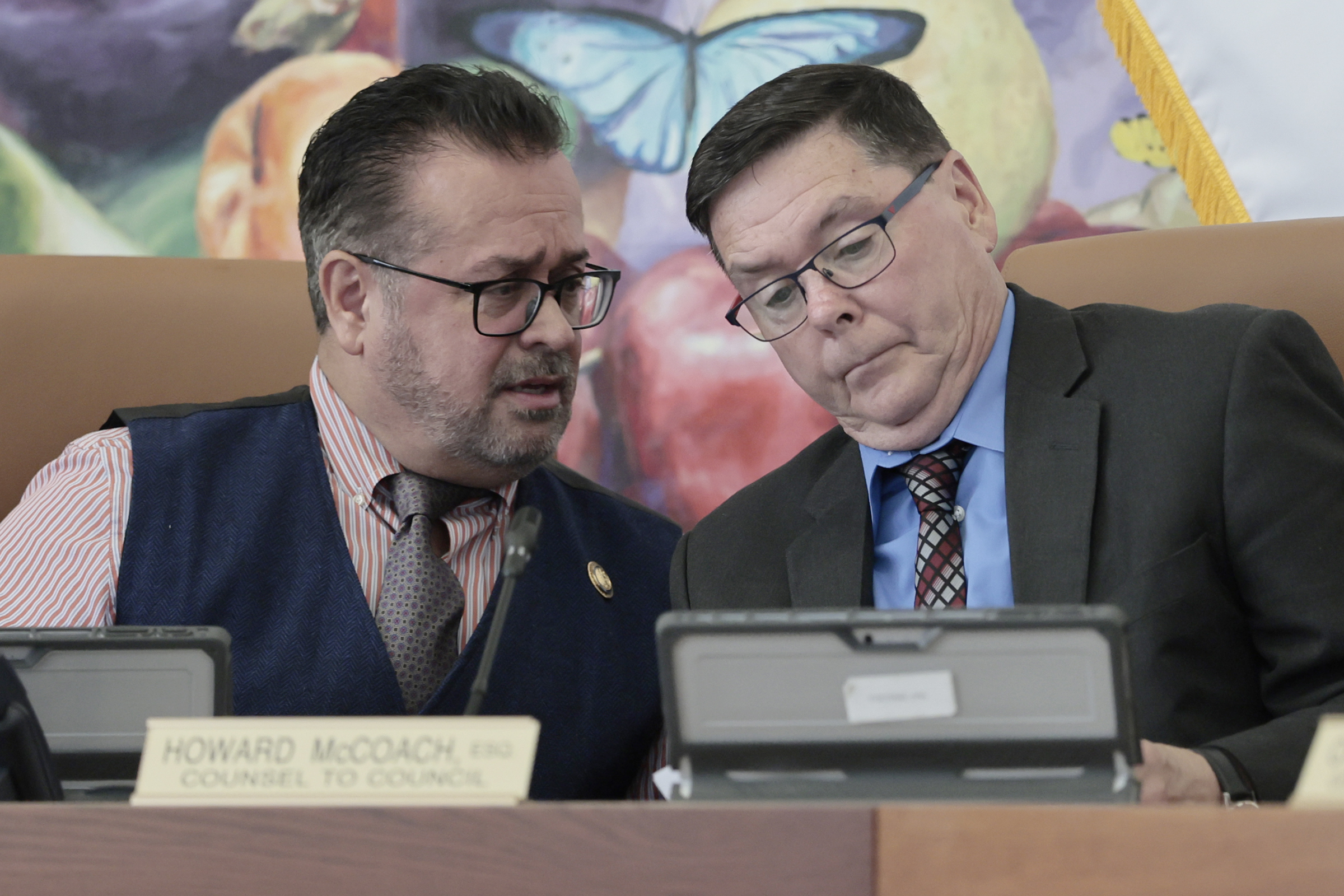
    Camden City President Angel Fuentes (left) and counsel to council Howard McCoach discuss business during a Camden City Council meeting at Camden’s City Hall on Thursday, June 11, 2026.Elizabeth Robertson / Staff Photographer

    The Camden City Council voted on a resolution Thursday calling on all regulatory agencies with jurisdiction over the facility, including on the county and national levels, to shut the facility down. The company has faced lawsuits over fires at the facility, including from the state attorney general’s office and local residents.

    The resolution cites a joint statement signed by Carstarphen, County Commissioner Jeffrey Nash, State Sen. Nilsa-Cruz Perez, City Council President Angel Fuentes, and City Council Vice President Arthur Barclay, all Democrats:

    “We will not stand idly by while residents are exposed to fires on a regular basis and have to bear the burdens of an operation that clearly cannot function in a safe manner,” it says in part. “We will no longer allow shelter in place alerts to go out because of another mishap in this scrap metal operation.”

    At Thursday’s council meeting, Camden residents called for the facility to be permanently shut down — citing health concerns and other disruptions to their quality of life — and criticized the city for not doing more earlier.

    Aliyia Jones becomes emotional during a community meeting for residents, affected by the recent junkyard fire, at MJD Fieldhouse Gym on Broadway in Camden on Sunday, February 23, 2025. Jones was describing her attempt to alert all of her neighbors before fleeing the area with her disabled mother after the fire broke out.Elizabeth Robertson / Staff Photographer

    “I just want to say, too little, too late,” said Aliyia Jones, who was among 100 Camden residents who fled their homes after a four-alarm fire at the facility in February 2025.

    “No one wants to come here and say ‘finally,’ or ‘thank you,’ or ‘hurrah.’ … We can’t breathe,” she added.

    EMR employs 500 people in Camden, including 179 Camden residents, according to the complaint, and if the shutdown continues, employees will face layoffs. EMR workers protested calls to close the facility earlier this month.

    Ajeena Riggs, a project manager at the Center for Environmental Transformation, said that she is sympathetic to workers seeking to keep their jobs and that the city and their union should help them find new positions if they lose their employment.

    “I don’t blame them for fighting for their jobs,” she said at Thursday’s meeting. “They’re fighting for their livelihood. But the only entity that’s to blame is the EMR.”

    The company blames the fires on improperly disposed lithium-ion batteries, but officials said in their joint statement “that story line is old and irrelevant at this point.”

    EMR implemented a fire suppression system and agreed to make other changes after entering a memorandum of understanding with the city last summer following the massive February 2025 blaze. Residents at the meeting criticized that agreement as lacking teeth.

    Camden city spokesperson Vincent Basara declined to comment on the lawsuit.

  • The World Cup’s hottest accessory is this free bracelet, prompting hourslong lines

    The World Cup’s hottest accessory is this free bracelet, prompting hourslong lines

    The World Cup’s hottest accessory is free, but it’ll cost hours of your time.

    At the FIFA Fan Festival in Lemon Hill, fans watched Germany beat Curacao, the Netherlands and Japan draw, and Ecuador lose to Ivory Coast on Sunday. Between games, attendees bought snacks or tried their hand at sponsored booths for prizes. Lines ebbed and flowed. But one stretched across the field with seemingly no end in sight.

    A simple customizable charm bracelet has taken off at FIFA Fan Festivals nationwide, including Philly’s. The accessory has prompted wait times rivaling a Taylor Swift merch line, the latest sneaker drop, or John’s Water Ice during a record-breaking heat wave.

    @antonietadice

    The line never got any shorter. We watched the whole game, halftime, and hung around for two more hours… still the same. Maybe next time lmao 🥲 . #fifafanfestival #mundial2026 #philadelphia #worldcup2026 #parati

    ♬ Saxophones getting louder – Sped Up – AntonioVivald

    “Get there early!” TikTokers warned while showing off their new hardware. “I waited four hours,” one user wrote.

    Bank of America is the sponsor behind the giveaway. The company announced in a news release that it was armed with more than 2 million “Fan Bands” and 10 million beads.

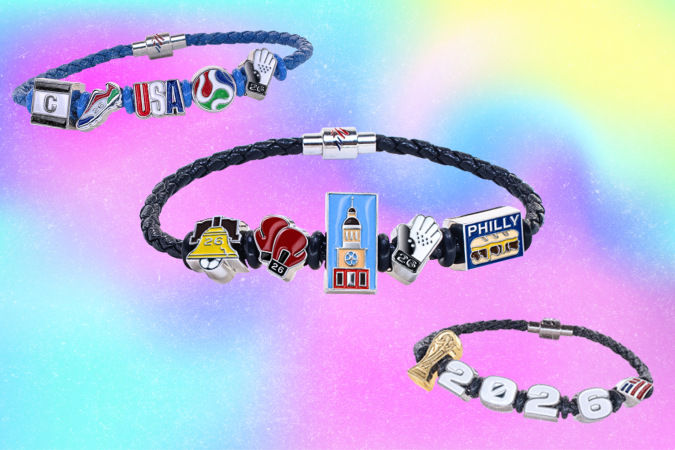
    Mimicking a Pandora bracelet, the Fan Bands are composed of a red, blue, or black woven band and an assortment of metal beads that lace through. Available beads include numbers, flags, a FIFA World Cup trophy, and several city-specific designs that pair with World Cup host cities.

    City-specific designs include a cable car for San Francisco, Mount Rainier in Seattle, a yellow cab in New York City, and a lobster in Boston.

    Philadelphia’s city-specific charms include the Liberty Bell, a cheesesteak, the LOVE statue, Rocky’s boxing gloves, and Independence Hall. Visitors can either design a custom bracelet, selecting five beads, or opt for a faster pre-designed bracelet.

    The bracelets are completely free for Fan Festival attendees — no sign-ups or bank loyalty required, either. But be warned: The lines are serious.

    On Reddit, an attendee said visitors ran straight to the Bank of America booth when Philly’s Fan Fest opened and that they waited an hour and 20 minutes to get theirs. On TikTok, users said they waited anywhere from four to eight hours depending on when they arrived and their level of determination.

    The allegiance isn’t limited to Philadelphia. People attending Fan Fests in other cities are also complaining about the lines.

    In Dallas, one attendee noted: “more people [were] lining up for bracelets than watching the match.”

    And if waiting in lines isn’t your thing, Philly has another charm bracelet ready and waiting.

    Artist John Wind launched a collection of Philly charms in honor of the nation’s 250th birthday that feature the LOVE statue, a boxing glove, and even a soccer ball.

    The locally made bracelet, which is a collaboration with the Philadelphia Visitor Center, is $98.

  • 1,200 union nurses at Jefferson Einstein Philadelphia Hospital vote in favor of strike as bargaining continues

    1,200 union nurses at Jefferson Einstein Philadelphia Hospital vote in favor of strike as bargaining continues

    Nurses at Jefferson Einstein Philadelphia Hospital on Monday voted to authorize a strike if their bargaining committee calls for it as they negotiate a new union contract.

    The nurses want the contract to include solutions to staffing issues, as well as assurances that the hospital will not close departments. Earlier this year, Jefferson Health announced plans to close several pediatric clinics, including the Pediatric & Adolescent Ambulatory Center at Einstein Philadelphia at the end of this month.

    “Our patients deserve better than Jefferson is willing to deliver on its own. So do the nurses who care for them,” said Stephanie Stucka, a neuroscience nurse and co-president of Einstein Nurses United, in a statement.

    The Logan hospital has about 1,200 unionized nurses, whose contract expired over six weeks ago. They are members of Einstein Nurses United, a local of Pennsylvania Association of Staff Nurses and Allied Professionals (PASNAP).

    A little more than half the local’s members participated in the in-person vote, and 96% voted in favor of a strike, according to the union.

    The union also voted to authorize a strike during their last contract negotiations in 2023, and ultimately reached an agreement on a new contract without walking off the job.

    The union and hospital management continue to negotiate. Bargaining sessions are scheduled Tuesday, Wednesday and Monday, PASNAP spokesperson Megan Othersen Gorman said. If the committee does call for a strike, it must submit a 10-day notice under the National Labor Relations Act, she said.

    “This action risks putting disruption ahead of patients and community members,” a Jefferson spokesperson said in an e-mailed statement Tuesday. “While a strike is not imminent, this vote sends the wrong message at a time when our community needs stability, partnership, and a shared commitment to care — especially as Philadelphia prepares to host major national and global events that will place increased demand on our healthcare system.”

    The nurses’ union has proposed changes to improve staffing levels in most units, as well as contract language to protect staffing standards. It says Jefferson management has rejected these proposals.

    The nurses also want management to commit to keeping hospital safety measures put in place in recent years, including increased security and weapons screenings. The union also noted nurses’ concerns that benefits like paid time off and pension may be cut, and that the cost of their healthcare plans could rise.

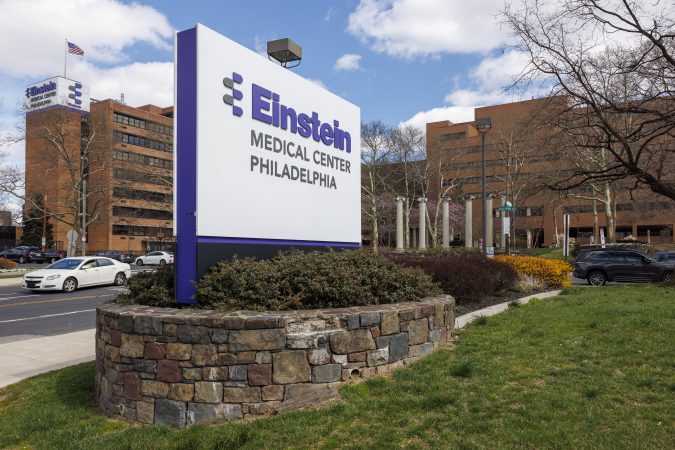
    The hospital, formerly known as Einstein Medical Center Philadelphia, became part of Jefferson Health when it acquired the Einstein Healthcare Network in 2021.

  • AI is preserving Holocaust survivor stories. But should it be trusted?

    AI is preserving Holocaust survivor stories. But should it be trusted?

    My phone rings, and a Holocaust survivor is on the line. She is 91. She wants to know if her story will still matter when she is gone.

    I do not know how to answer that honestly, so I tell her what I know for certain: We are working on it.

    That work has brought me into conversations I never expected to have, including ones about artificial intelligence. Because the uncomfortable truth is that AI is already entering Holocaust education, whether the field is ready for it or not. The question is not whether to use these tools. It is whether we will use them with the seriousness the subject demands.

    Philadelphia has a deeper stake in this than most cities realize. The Philadelphia metro area is home to about 1,500 Holocaust survivors, just under 1,000 of whom live in the city itself. Most are in their late 80s and 90s.

    Artifacts collected and displayed in the Jenkintown home of Holocaust survivor, Anneliese Nossbaum. She was sent to Auschwitz in October of 1944 and liberated by the U.S. Army in 1945.LAUREN SCHNEIDERMAN

    At the same time, Holocaust knowledge is eroding in alarming ways, with nearly half of Americans unable to name a single concentration camp and many students reporting little to no classroom exposure. Pennsylvania is not exempt from this. The commonwealth does not have a strict statewide mandate requiring Holocaust education, as the bill that was introduced is dead and has not been passed. It is time for a bill to be passed mandating Holocaust education in Pennsylvania.

    Into that gap, technology is rushing. Some of what is arriving is extraordinary. Some of it should concern us deeply.

    I lead a nonprofit, The Blue Card, which serves Holocaust survivors in need. Our organization has helped develop a hologram program featuring Sonia Warshawski, a Holocaust survivor whose testimony has been preserved and made interactive for students. When a student asks her a question and she responds in her own words, the room goes quiet in a particular way. Something real is happening.

    But what makes it real is precisely what makes it different from so much of what is being built right now: The system does not generate. It retrieves.

    If Sonia never said something, the system does not say it for her. It pauses. It stops. That silence is not a limitation. That is the whole point.

    Generative AI works on a different principle. It predicts what should come next. It fills gaps. It is extraordinarily good at producing language that feels authentic, even when nothing authentic underlies it. In most domains, that fluency is a feature. In Holocaust testimony, it is a serious risk.

    We are not talking about getting a few facts wrong. We are talking about the possibility of fabricating witnesses. Of building systems that speak in the voices of people who survived genocide and putting invented words in those voices because the technology can, because it sounds right, because students find it engaging.

    The road to that outcome is paved with good intentions and not enough caution.

    This is not theoretical, and Philadelphia makes that painfully clear. In 2025, a U.S. House committee launched an investigation into allegations of antisemitism in the Philadelphia School District, citing reports that incidents were “rife” and going unaddressed in classrooms. The Anti-Defamation League (ADL) tracked 465 antisemitic incidents in Pennsylvania in 2024, the fourth highest in the nation, showing a 140% rise in physical assaults.

    For the survivors that The Blue Card serves in this region, this is not a distant political story. It is a reopening of wounds that never fully closed.

    And there is a particular indignity worth naming: Until late 2025, Pennsylvania remained one of only four states that still taxed Holocaust reparation payments as personal income. An exemption was finally signed into law in November 2025, decades after the federal government stopped taxing such payments in 2001. That basic discrepancy endured so long, and it says something about the context in which survivors in this city have led their compensation for persecution.

    That context matters when we discuss what we owe them in the realm of memory.

    Survivors choose their words deliberately. They decide what to tell, what to withhold, how to describe things that resist description. That choosing is part of the testimony. A system that completes their sentences, that invents the parts they left out, that generates responses to questions they were never asked, is not preserving memory. It is replacing it with something more convenient and less true.

    There is a version of AI in Holocaust education that is genuinely valuable. It can extend reach, bring testimony into classrooms that would never host a survivor, make voices accessible across languages and geographies.

    None of that requires fabrication. All of it requires restraint. The technology that earns a place in this work is technology that knows what it does not know. That admits the limits of the record. That treats the gaps in testimony not as problems to solve but as facts to honor.

    The survivor on the phone is asking whether her story will matter when she is gone. The answer depends entirely on what we build, and what we refuse to build, while she is still here to tell us what she actually said.

    Masha Pearl is the executive director of The Blue Card, a nonprofit that provides financial assistance to Holocaust survivors in the United States.

  • PPA tickets and tows Fairmount residents with Fan Festival parking permits

    PPA tickets and tows Fairmount residents with Fan Festival parking permits

    Justin Siebel woke up on Sunday to drive with his wife to the Pocono Raceway and enjoy the NASCAR Cup Series, a two-hour drive from their Fairmount home.

    But when he walked to where he had parked his car a few days prior, near Harper Street, a block from the FIFA Fan Festival, the vehicle was gone.

    Though Siebel had registered for special permit parking with the Philadelphia Parking Authority that allows residents to park in the neighborhood during the festival, his car was ticketed and towed to a South Philly tow yard.

    “My wife and I did the right things, we registered our vehicles with PPA, and still came out to my car and it wasn’t there,” Siebel said.

    Fairmount residents have been taking to social media to share accounts of parking tickets despite having registered for special permits. Since the fan festival started last week, residents have expressed concern over the city’s management of road closures, parking restrictions, and communication.

    The PPA issued nearly 2,500 tickets for illegal parking in the festival parking enforcement zone over the weekend, with 173 of those tickets written in error to residents with valid parking permits, said Gabe Roberts, the agency’s acting executive director. PPA’s internal system has flagged these tickets for cancellation and will continue to flag wrongfully issued parking tickets by “cross-checking them with our existing residential parking permit holder lists,” Roberts said.

    Residents who have permits and were wrongfully ticketed will receive a cancellation notice by mail, the PPA said.

    “The PPA utilizes a daily internal accuracy control mechanism that identifies and cancels any FanFest Enforcement Zone ticket written in error for vehicles with valid residential parking permits or Lemon Hill permits,” a PPA spokesperson said. “Any vehicle towed in error will also have its violation canceled and all fees refunded. The PPA apologizes for any inconvenience.”

    Most ticketed residents will simply have their ticket canceled, Roberts said. But four residents with valid parking permits had their vehicles towed, and later returned with no fees.

    However, Siebel’s was not returned, and he needed to call PPA to locate his car, then call the tow yard in South Philly about picking it up. Siebel said he was initially told it would cost $238 to drive out of the tow yard, but his fees were waived upon arriving and he was able to freely leave with his car.

    “It did cost me an Uber and an afternoon to retrieve. But I recommend that anyone else stay calm and use humor. Everyone in Philly has a sense of humor,” Siebel said.

    Residents can contact the PPA with questions or to confirm that their ticket has been canceled by calling 215-683-9421 or 215-683-9677 or by emailing engageppa@philapark.org.

  • QVC’s on-air hosts aim to unionize as bankruptcy case continues

    QVC’s on-air hosts aim to unionize as bankruptcy case continues

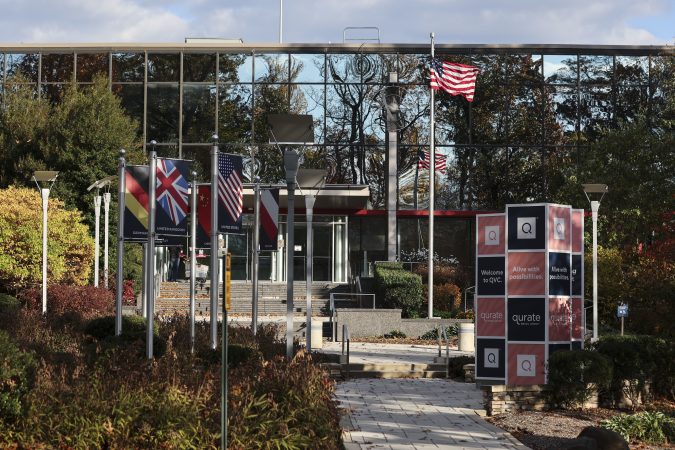
    QVC hosts are moving to unionize as the West Chester-based home shopping network reorganizes in Chapter 11 bankruptcy.

    A supermajority of the network’s 32 on-air hosts presented a petition to company management last week, announcing their desire to unionize and asking for voluntary recognition of the union, according to a statement from SAG-AFTRA, which the hosts intend to join.

    QVC management is reviewing the petition, spokesperson Matthew Goldstein said in a statement: “We respect the legal rights of all team members and are committed to following the appropriate process thoughtfully and responsibly.”

    On Tuesday, SAG-AFTRA — which represents 160,000 media professionals nationwide — filed an election petition with the National Labor Relations Board (NLRB) on the QVC hosts’ behalf, according to the federal agency’s website. If the employer does not voluntarily recognize the union, the petition can trigger an NLRB election and lead to a union’s formal certification.

    The hosts are taking steps to unionize as company higher-ups try to expedite the bankruptcy process, with the hope of emerging this summer.

    QVC pioneered home shopping 40 years ago and developed a loyal following of fans, mostly women, who bought clothes, home goods, kitchen appliances, tech products, and other wares at all hours.

    From its West Chester studios, the network and its smaller counterpart, HSN, still broadcast live, and customers can still call in to order merchandise. But the company has also expanded into online, social-media, and livestream shopping — with mixed results. They are up against stiff competition from the likes of Amazon and other ecommerce giants.

    After years of declining revenue and months of speculation, QVC Group filed for Chapter 11 protection in April, and submitted a reorganization plan that would slash its debt from about $6.6 billion to $1.3 billion within 90 days.

    In recent weeks, a group of shareholders has challenged the plan, putting the company’s expedited emergence in jeopardy, according to court documents.

    The QVC hosts, meanwhile, have other issues on their mind: They are concerned about artificial intelligence, and don’t want QVC using AI to imitate their image, voice, and likeness without consent or compensation, according to SAG-AFTRA, citing the hosts’ petition.

    The national union said the hosts are also calling for stronger job security in the face of AI, clearer paths for career advancement, greater say in company decisions, more equitable pay, and transparency around compensation.

    “We believe we should have meaningful input into our role in the network’s future, and that this is best accomplished through a formal collective-bargaining process,” the hosts wrote in the petition, according to SAG-AFTRA.

    SAG-AFTRA officials said they encouraged QVC management to voluntarily recognize the union and “avoid a costly NLRB process.”

    SAG-AFTRA national executive director and chief negotiator Duncan Crabtree-Ireland said in a statement that he applauded the QVC hosts’ “decision to stand together and seek a collective voice.”

    “These workers are at the heart of QVC’s success, connecting with audiences through creativity, authenticity, and innovation every day,” Crabtree-Ireland said.

    Goldstein, the company spokesperson, said the network’s hosts are “deeply valued team members and an important part of what makes QVC special.”