Chinese esports player Jian “Uzi” Zi-hao was more than a star “League of Legends” player: He was so talented that his team structured its entire strategy around his abilities, funneling resources to him and another teammate, Shi “Ming” Sen-Ming, so the duo could lead the team to victory. Over the course of his career, he earned more than $500,000 in tournament prize money.
Video games have a reputation for keeping people glued to the couch. But for those who compete against the best players in the world, gaming can be surprisingly physically and mentally taxing.
The strain of ‘climbing the ladder’
The best esports players often have grinding schedules. They’re expected to regularly practice, participate in scrimmages, and compete in official matches. Even at the recreational level, esports players cite the mental toll: playing for hours a day, every day, to hone their skills so they can “climb the ladder.”
A 2021 study of Portuguese esports players found that 37% experienced anxiety and depression, and 45% experienced sleep disturbances. The most common physical injuries in esports generally fall under eye problems and musculoskeletal issues.
Many esport players — professional or otherwise — also battle hand and wrist pain, with repetitive button-smashing causing injuries such as carpal tunnel syndrome, tendonitis, and “gamer’s thumb,” which arises from overuse or irritation of the tendons around the thumb and wrist. Many of the overuse injuries seen among video game players are also familiar to assembly-line workers, whose jobs can involve similarly repetitive movements.
Then there are the back injuries. Players can remain seated for three or more hours without a break, and this prolonged sitting can take a toll on the lower back and spine.
The sedentary nature of esports has also led to a lesser-known — sometimes fatal — injury called deep vein thrombosis: a blood clot, often in the leg, that can become life-threatening if it travels to the lungs. In 2011, British gamer Chris Staniforth – who would play for as long as 12 hours at a time – died of the condition.
Ellis Celia and other students starting Staffordshire University’s esports degree course play “Counter-Strike” in the school’s London digital studio in 2019. A number of Universities launched degrees in esports to capitalize on the booming industry’s growing demand for skilled professionals. (AP Photo/Kelvin Chang)Kelvin Chang / AP
Preventive measures
As more esports injury research has been published, more treatment and prevention strategies have emerged.
Teams often incorporate group exercise activities to both build rapport among players and reduce the risk of injuries. During competition, proper positioning of the spine and limbs has become an essential injury prevention strategy. For example, selecting a chair that encourages an upright posture can reduce pain and injury risk, especially when gamers couple ergonomics with an exercise program that centers on functional strength, mobility, and stretching of the upper limbs.
Looking to the stage
When esports began gaining mainstream popularity in the 1990s and early 2000s, its proponents were eager to draw comparisons to traditional sports and athletic competition. The parallels helped establish esports’ legitimacy and gave non-gamers a familiar framework for understanding the competition.
As esports became a big businessand a lucrative career path, players and teams hired a web of support staff — trainers, coaches, and therapists — that mirrored the structure of professional sports. In this vein, a lot of esports injury research has pulled from the training methods of traditional sports.
However, as a scholar of exercise science, I think injury treatment and prevention strategies could be further improved by seeing esports competitors as more like musicians and dancers than football players and basketball players.
Performance optimization and injury research on professional performing artists has existed for centuries, and I think it represents a valuable, untapped resource. That’s because the physical and mental stresses experienced during musical performance have a lot in common with esports competition: long stretches of sitting; small, dexterous hand movements; and performing without the real-time input of a coach.
For example, biomechanics research has found similar patterns of forearm muscle fatigue among esports players and piano players. However, no studies to date have directly compared the two groups.
And what if the interest in joint hypermobility or hand size among performing artists were translated to esport populations? Could popular piano warm-up exercises be effective for esports athletes who use keyboards?
Even research on sports like car racing might offer valuable insights. As with gamers, many people overlook how physically demanding car racing can be — and, yes, that includes sitting for extended periods of time.
Prevention and rehabilitation techniques continue to improve. Even Jian, the player who retired in 2020, returned to play for a few splits, or partial seasons, in 2022 and 2023.
“League of Legends” star Lee “Faker” Sang-hyeok was once relegated to the bench due to cubital tunnel syndrome, but came back just a month later after physical therapy.courtesy of Riot Games
Through a treatment plan that included changing his gaming posture and intensive physical therapy, Lee was able to return to play just a month later. He went on to win three consecutive world championships, with his support team helping prevent recurrence of injury throughout each season.
Thanks to his rehabilitation, Lee’s fans will be able to follow his hunt for his fourth “League of Legends” World Championship, which kicks off in October 2026 in the United States.
Sienna Cinti assisted with the research and writing of this article.
Erica D. Henn is an assistant professor of kinesiology and exercise science at Temple University.
Missouri is poised to hold its November election with congressional districts passed after the last census, after the U.S. Supreme Court on Thursday again rejected a new map backed by President Donald Trump that Republicans hoped could help them win an additional seat in the pivotal midterms.
The Supreme Court’s decision marked a defining moment in a pitched legal battle that has lasted nearly a year and caused confusion for voters. Citing the court’s latest action, Missouri’s chief election official directed local authorities to use U.S. House districts passed in 2022, as the state’s highest court had ordered.
The Trump administration had urged courts to allow use of the president’s preferred map, drawn at his request last year.
The decision means Missouri could run the November general election with different U.S. House districts than were used in the August primary — an extremely rare situation that could switch the candidate choices for more than a million potential voters, or nearly 1 in 4 voters statewide, according to an Associated Press estimate.
No Supreme Court justices publicly dissented from the brief order. It did not detail the court’s legal reasoning, as is typical in emergency appeals.
The White House did not immediately respond to a request for comment on the U.S. Supreme Court decision.
Missouri’s highest court scrutinizes secretary of state’s actions
Earlier Thursday, Missouri’s top court convened a hearing on whether to hold Republican Secretary of State Denny Hoskins in contempt for not following its orders to use the districts passed after the last census. Hoskins had instead told local election authorities to use the new Trump-backed map, pointing to a competing order from a federal judge on Tuesday that forbade him from using anything other than the new districts.
Missouri Supreme Court judges, while questioning a state attorney representing Hoskins, repeatedly pressed for Hoskins to send out guidance Thursday to use the 2022 version of the congressional districts.
“We’re in a precarious situation,” Chief Justice W. Brent Powell said.
Hoskins later released a statement acknowledging the U.S. Supreme Court decision, saying “my Office is directing local election authorities to use the 2022 congressional map.”
The court then reconvened, finding Hoskins in contempt for violating its order not to use the Trump-backed map but then quickly declaring that he had corrected the problem with his latest order to use the 2022 map. The court imposed no consequences on Hoskins.
Voters could face significantly different districts
Outside the court, progressive activist Keith Rose stood in the rain protesting Hoskins’ legal maneuverings to try to use the Trump-backed map. Rose, who helped gather petition signatures to put the new map to a statewide vote, said he hopes the U.S. Supreme Court’s decision Thursday ends the uncertainty.
“We need some finality. We need to focus on the real issues that Missourians care about,” Rose said.
Candidates who won Missouri’s August primary already have been certified for the November ballot according to the number of the district they won. But those districts could substantially change shape.
The 5th Congressional District encompasses only the Kansas City area under the 2022 map that Republican lawmakers passed after the last census. Under the revised map backed by Trump, portions are shed to neighboring districts and the remainder is stretched into rural Republican areas. About 59% of the potential voters are new to the district under that version, according to an AP estimate.
Some other states that have switched congressional districts after their primaries have redone their primary votes. Alabama held a new primary in August under revised districts when the U.S. Supreme Court allowed a change to occur after voting in the original May primary.
In Missouri’s case, however, no court has suggested redoing the primary.
It was the second Republican-led state, after Texas, to enact new districts after Trump urged Republicans last year to redraw House districts to their advantage ahead of the midterm elections.
The revised districts target a Kansas City-based seat held by Democratic Rep. Emanuel Cleaver of Kansas City, aiming to help Republicans win seven of the state’s eight House seats in the midterm elections.
Redistricting opponents collected hundreds of thousands of petition signatures seeking to force a statewide vote on the new districts. They submitted the signatures in December. But Hoskins waited until August — on the same day as Missouri’s primary — to reject the petition. Hoskins asserted that a referendum petition could not be used for congressional redistricting.
The delay allowed Missouri to use the new districts in its August primary. Cleaver was unopposed for the Democratic nomination. State Sen. Rick Brattin won the Republican primary for the right to challenge Cleaver. Brattin was among those suing in federal court to try to prevent the state from reverting to the prior districts.
Republican U.S. Rep. Bob Onder, who was also among those suing, said Thursday, “This isn’t over.” He noted that the 8th U.S. Circuit Court of Appeals will hear arguments on the merits of his case.
Republican state officials have argued it would violate voters’ federal rights to switch districts before the general election.
But the Missouri Supreme Court last week ordered Hoskins to put the redistricting referendum on the November ballot, which he did. It also ruled that the new districts never became law and instead were suspended retroactively to the December petition submission. The court barred Hoskins from using the new map and said the old map — passed by Republican lawmakers in 2022 after the last census — must be used in the November election.
The state then appealed to the U.S. Supreme Court to block the state court decision. Justice Brett Kavanaugh rejected the request.
The group People Not Politicians Missouri, which sponsored the redistricting referendum, applauded the Supreme Court decisions that left the state court ruling in place.
“The law is the law, the Missouri constitution is clear as was the Missouri Supreme Court,” said Executive Director Richard von Glahn. “The courts have settled this, now it’s up to Missouri voters to finish the job and vote NO on Proposition A.”
Nearly six months after Pennsylvania’s highest court struck down automatic life sentences for second-degree murder, four prisoners have asked the justices to extend that ruling to everyone still serving one — and to change how the state handles unconstitutional punishments going forward.
The court’s landmark ruling in March ended a practice most other states had abandoned or never adopted, and it required judges to weigh a defendant’s role in the crime in every second-degree murder case moving forward. But it left unanswered a consequential question: Does it also apply to the roughly 1,100 people already serving these sentences?
The four requests, filed Thursday in petitions to the court, are a coordinated effort to force an answer.
But the prisoners want more. They are also asking the justices to adopt a statewide rule that any sentence the court strikes down as cruel punishment would automatically become void for everyone already serving it.
As things stand, even after the state Supreme Court has declared a sentence unconstitutional, people whose cases closed long ago have no legal path to a new one until the high court declares its ruling retroactive or lawmakers pass a law that covers them — a process that can take years.
The proposed rule would eliminate that wait.
That broader request is, “in the most literal sense of the word, an extraordinary request for relief,” said Marsha Levick, cofounder of the Juvenile Law Center in Philadelphia, an organization at the center of a similar fight after the U.S. Supreme Court struck down mandatory life-without-parole sentences for juveniles but did not say whether the ruling applied retroactively.
The Pennsylvania Supreme Court’s ruling striking down the mandatory sentences came in the case of Derek Lee, a Pittsburgh man convicted in the 2014 killing of Leonard Butler, who was shot by Lee’s accomplice during a home-invasion robbery. Lee argued the automatic sentence violated the state constitution’s ban on cruel punishments. The justices agreed, saying a judge must weigh each person’s individual role before imposing life without parole.
The court, however, did not say whether the decision applied to people who had already been sentenced. Instead, it put the ruling on hold for 120 days to give lawmakers time to write a new sentencing law and, if they chose, to settle that question themselves. The deadline passed July 24 without a new law.
The four prisoners argue lawmakers’ inaction has left the courts as the only branch of state government able to resolve the issue. And, so that prisoners are not stranded like this again, they want future rulings of this kind to take effect for everyone automatically.
“The legislature has made it manifest that they are not going to be prioritizing fixing this constitutional injustice,” said Bret Grote, a lawyer with the Abolitionist Law Center who represented Lee before the state Supreme Court and now represents the four petitioners, along with lawyers from the Pennsylvania Innocence Project and the law firm Phillips Black. “So it is now on the courts to do that.”
A punishment the state constitution forbids, Grote said, cannot be imposed on anyone — including, he argued, people already serving it. A rule recognizing that from the start, he said, would spare prisoners a separate legal fight that “only prolongs a constitutional crisis.”
The prisoners filed their requests as what are known as King’s Bench petitions, invoking a power that lets the state Supreme Court take up a case directly, skipping the lower courts, when a matter of public importance cannot wait. In June, the court used that power to require the Philadelphia District Attorney’s Office to notify the state attorney general whenever it declines to oppose a prisoner’s bid to overturn a conviction, giving the attorney general a chance to step in, after allegations of widespread malfeasance.
King’s Bench petitions are rarely filed and even more rarely taken up, said David Rudovsky, a senior fellow at the University of Pennsylvania Carey Law School. Still, he said, these petitions have a real chance: The circumstances are exceptional, the issue is urgent, and courts statewide need a uniform answer.
And the prisoners making the request, he added, present compelling cases.
The prisoners — Cecil Holmes, 70; Lori Ann Lassiter, 62; John Marshall Payne III, 70; and Marsha Scaggs, 62 — have served about 160 years combined.
Of the four, only Payne has been accused of killing the victim himself. At his 1986 trial, prosecution witnesses testified he had admitted to beating Elsie Rishel, 90, with a telephone during a 1981 burglary of her York County home. No physical evidence tied him to the crime, however, and he has long maintained his innocence. The other three were convicted related to crimes in which, prosecutors said, someone else killed the victim.
At least two of the petitioners — Holmes and Scaggs — have faced serious medical problems that underscore the urgency of resolving the question, Grote said.
Holmes, a Philadelphia man, was convicted in 1980 in the death of Joseph Melvin, a taxi driver who was fatally stabbed at a gas station during an attempted robbery the year before. Prosecutors said Holmes had served as an unarmed lookout across the street.
He now has advanced dementia and is confused about where he is, said Jennifer Merrigan, a Phillips Black lawyer who represents Holmes. Without action from the high court, Merrigan said, his future “looks really bleak.”
Two of the petitioners’ cases come from Philadelphia, one from Lawrence County, and one from York County. If the court takes up the petitions, prosecutors in those counties would typically argue the state’s side.
District Attorney Larry Krasner, whose office supported Lee’s challenge, said Thursday that while “retroactivity is necessary,” prosecutors would need to review the four prisoners’ petitions before taking a stance on them. More than 500 of the roughly 1,100 people serving the sentence were convicted in Philadelphia.
Other prosecutors have signaled resistance. For example, John Adams, the Berks County district attorney and communications chair of the Pennsylvania District Attorneys Association, said in August that district attorneys would not concede the ruling applies retroactively without a new sentencing law. Attorney General Dave Sunday, a Republican, backed a Senate bill that would have made most people already serving the sentence eligible for parole only after 35 years. He warned in July that legislative inaction would be “dangerous.”
It was unclear whether Sunday’s office would weigh in on the petitions. The attorney general’s office did not immediately respond to questions Thursday.
Even if the court agrees to hear one or more of the petitions, a decision could be months away, Rudovsky said. That would leave time for lawmakers to act, which some stakeholders predict could be more likely after the Nov. 3 midterm elections.
The Republican-controlled Senate passed a bill in June that would have set a 35-year mandatory minimum for second-degree murder. The Democratic-controlled House passed its own version in July, which would have made people already serving life eligible for release after 30 years. Neither bill, which made it the state parole board’s responsibility to determine whether a prisoner was fit to be released, cleared both chambers.
“We’ve no substantive preference as to whether the remedy is through the courts or the legislature,” Grote said. “If something changes in the legislature and they pass a law that applies to everybody … then we would welcome that.”
If the state Supreme Court considers the petitions and rules in the prisoners’ favor, trial judges would have an opportunity to resentence them and everyone else currently serving the life sentences. But they would do so without sentencing guidelines on Pennsylvania’s books — until lawmakers act.
That could produce starkly different resentencing outcomes in otherwise similar cases, depending on the county where a case is heard and the judge who hears it, some stakeholders have warned.
Levick, the attorney whose work helped end life sentences for juveniles, said that although some people may prefer letting the parole board decide, the high court’s ruling requires judges to weigh individual culpability.
With juvenile lifers, she said, judges “did a great job.”
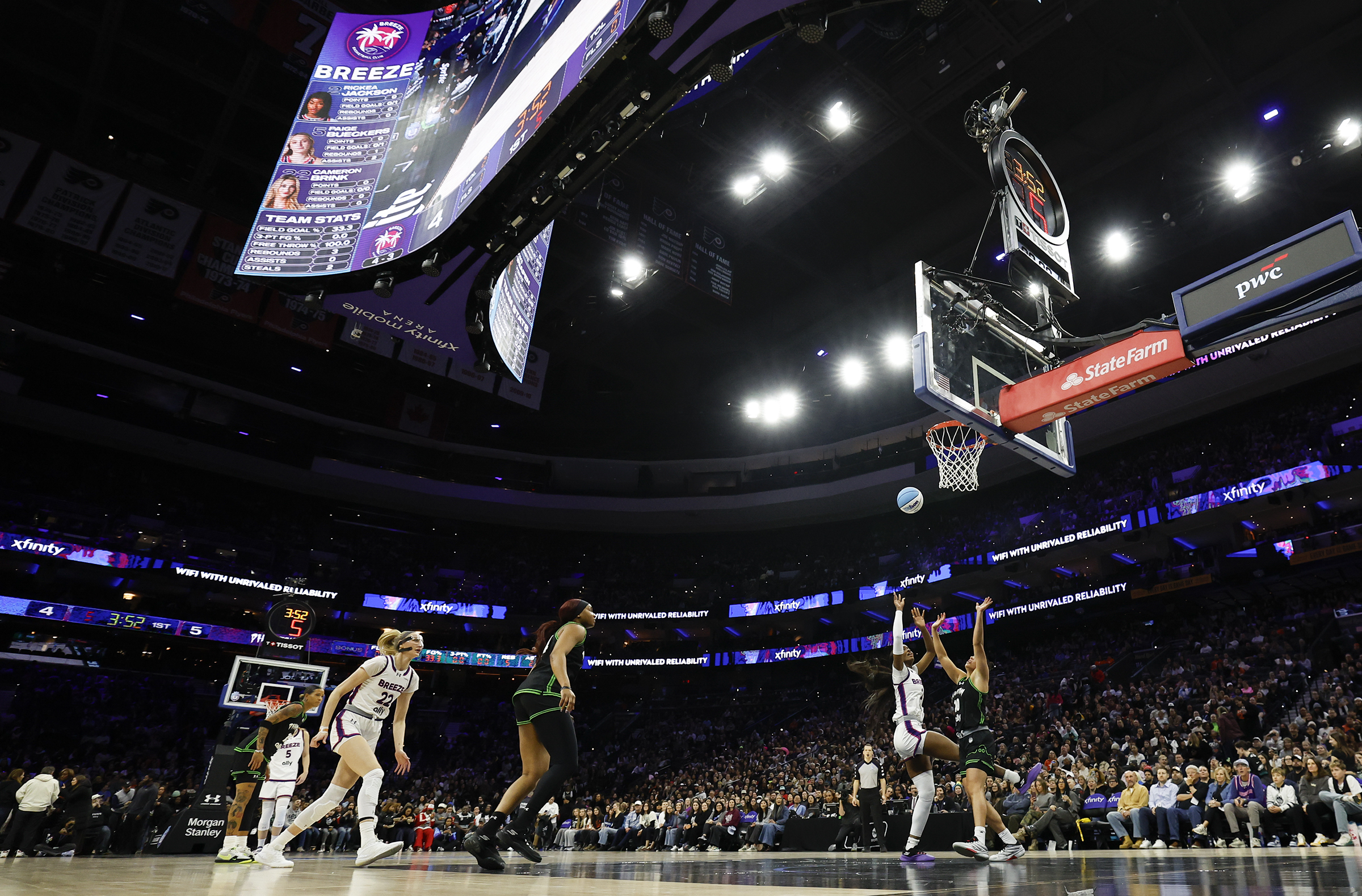
After a record-setting debut at Xfinity Mobile Arena in 2026, Unrivaled will return to South Philadelphia on Feb. 15, 2027.
The South Florida-based three-on-three women’s basketball league hit the road for the first time in 2026, bringing four of its eight teams to Philadelphia for its inaugural tour stop.
“It was our first tour stop ever, and because we broke every attendance record, it was a no-brainer to come back to Philly,” Unrivaled commissioner Micky Lawler said. “It felt like Philly was part of our family, and we’d worked hard to get there and to do what we did there. So it was like Thanksgiving coming back.”
Celebrities like Dawn Staley, Kylie and Jason Kelce, Kyle Lowry, Robin Roberts, and Leslie Jones were in the building, and big names like Paige Bueckers, Marina Mabrey, and locals Natasha Cloud and Kahleah Copper were on the court for the 2026 doubleheader.
The Unrivaled doubleheader that included the Breeze and Phantom set attendance records at Xfinity Mobile Arena.Yong Kim / Staff Photographer
“It was unbelievable,” cofounder Napheesa Collier said. “You could feel the love tonight. I’m so glad we came here. I just can’t explain it more than I was just so filled up with joy. It was amazing.”
Lawler could not confirm which of Unrivaled’s teams or players would play in the 2027 tour stop. The four clubs will be finalized later in December.
Ashley Lunkenheimer, vice president of the Philadelphia Sisters, an organization dedicated to bringing professional women’s sports to Philadelphia, said attendees from last year’s event already are inquiring about purchasing suites, and there’s increased sponsorship interest. Tickets go on sale at 3 p.m. for Unrivaled newsletter subscribers and 4 p.m. for the general public.
The Sisters played a critical role in attracting Unrivaled to Philly, which provided proof of concept that women’s sports can be successful in the city. Lunkenheimer hopes Unrivaled’s continued presence in the city helps to lay the foundation for Philadelphia’s WNBA team, which is set to begin play in 2030.
“For Philadelphia specifically, it’s the makings, I hope, of a season ticket list, right?” Lunkenheimer said. “… We need to build back the awareness for the broader crowds, so they all know when the WNBA comes.”
Unrivaled was the first major pro women’s basketball event in Philly since 1998. Philly’s embrace of it ensured it won’t be the last.
“It was a mutual opportunity to showcase that we believed in our city and in Unrivaled,” Lunkenheimer said. “I’d like to believe that’s why New York and Barclays said, ‘Let’s jump on that.’ Now they’re going to all these other cities because every other city is saying, ‘We want it.’ They could have said, ‘Well, we’re going to skip Philly. We already did that.’ But they didn’t. They value that partnership.”
In California, oaked chardonnay was once the norm, with its faint accents of butterscotch. Nowadays, the unoaked style has come into its own, and this seems likely to continue. Almost all of the world’s white wines are unoaked, and the current fashion favors refreshment over richness, so it’s no surprise that even chardonnay specialists known for an oakier style might want to broaden their portfolio.
Kendall-Jackson is not just known for its chardonnay — the brand has helped to define California chardonnay as an oaky white wine in the minds of Americans. Their “Vintner’s Reserve” bottling has been the top-selling chardonnay brand in the U.S. for over 30 years. That wine has always featured the bright apple-pear profile of the chardonnay grape itself, intensified and enriched with a layer of flavors derived from fermentation and aging in new oak barrels, adding a taste similar to butter pecan ice cream.
Applying new oak to a chardonnay wine results in the kinds of flavors you get when you add butter and sugar to fresh apples and bake them. So when chardonnay is labeled as “unoaked,” shoppers should not expect that caramelized quality. Instead, they will find a flavor profile that is lighter and more tangy — closer to that of fresh apples and pears than to baked fruit desserts — since no new toasted oak is involved.
The grapes for Kendall-Jackson’s Avant chardonnay are sourced entirely from coastal counties of California, adding a bright lemony freshness and hints of pineapple to chardonnay’s apple-pear core that make it a great partner for seafood and poultry.
PLCB Item #3697 – on sale for $14.99 through Oct. 4 (regularly $17.99)
Also available at: Total Wine & More ($12.99, totalwine.com) in Wilmington and Claymont, Del.; Hopewell Super Buy Rite ($13.99, buyrite.wine) in Pennington, N.J.; WineWorks ($14.98, wineworksonline.com) in Marlton, N.J.
The spotlight coming into Wednesday’s Union game was on Cavan Sullivan, as the 16-year-old continues to seize headlines across American soccer.
At kickoff, Cavan shared it with Quinn Sullivan, since the brothers were starting a regular-season game together for the first time. It was a big game, too, the Union’s first in a while against a big-time Eastern Conference opponent.
The stakes rose a little more when interim Union manager Ryan Richter chose to start Ezekiel Alladoh at striker with Bruno Damiani. It was a gamble to rest Milan Iloski, even if it was helpful in a three-game week.
That setup meant the Sullivans had to be the Union’s playmaking engine, and then they’d hope that the duo in front of them could finish the chances they created.
They delivered with style in a 5-0 rout of FC Cincinnati. Cavan had team highs of five chances created and 15 touches in the opponent’s 18-yard box, and his 73 touches were the most of any player in the front six. He completed 42 of 55 passes, sent six passes into the attacking third, and took two shots.
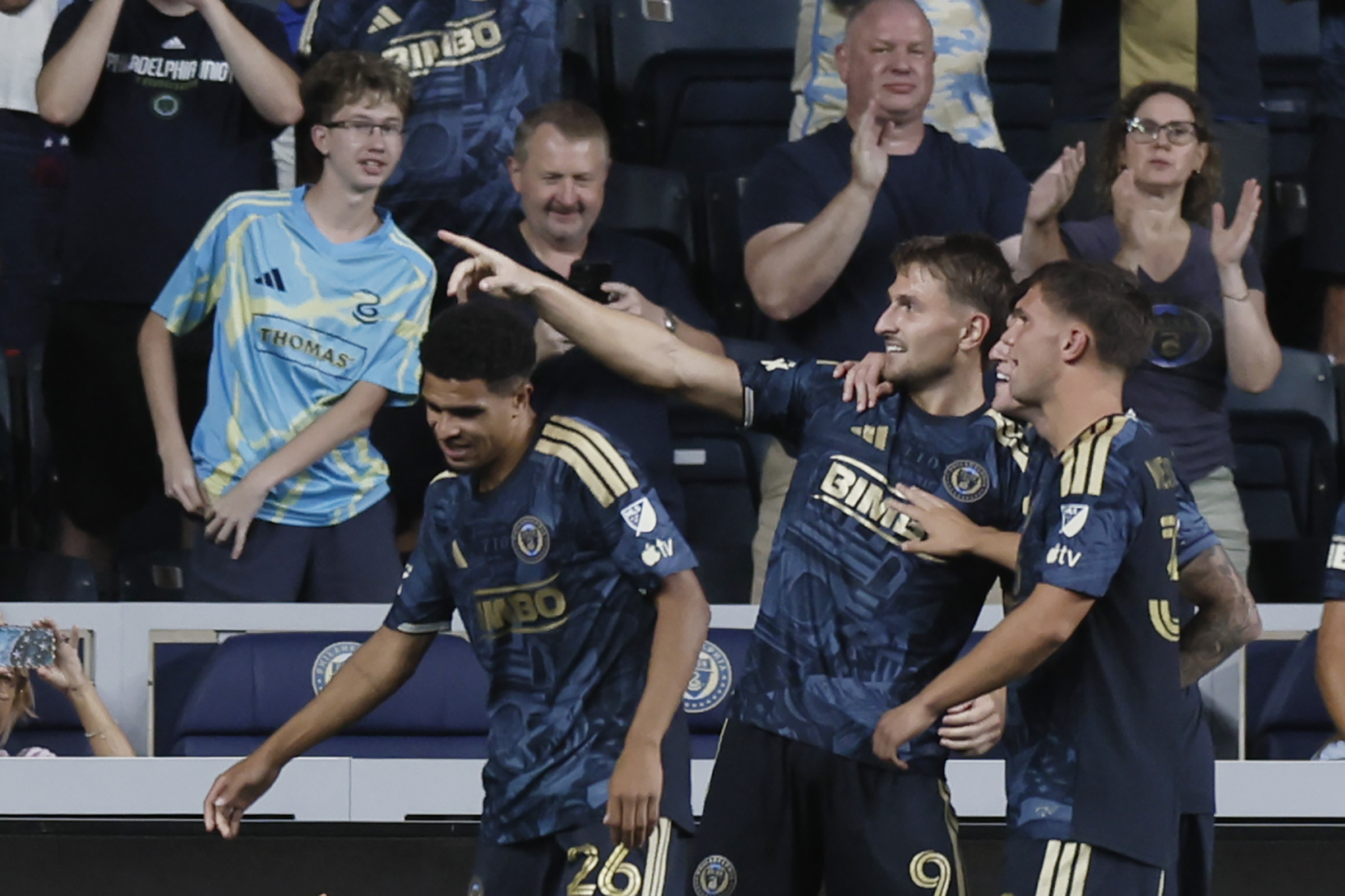
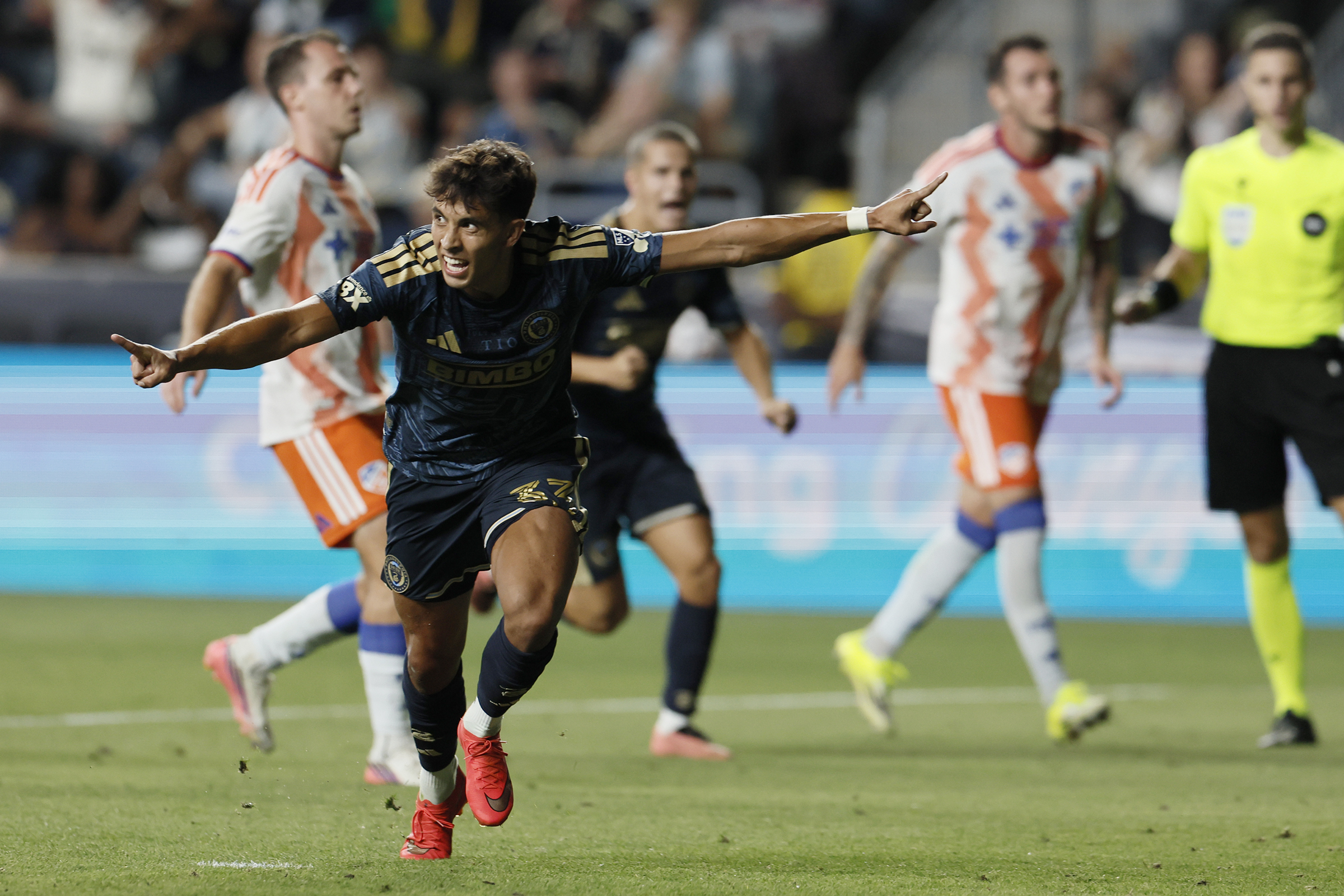
Union’s Quinn Sullivan takes a selfie with young fans after the Union vs. FC Cincinnati soccer match at Subaru Park in Chester on Wednesday, September 9, 2026.Elizabeth Robertson / Staff PhotographerCincinnati’s # 24 Kyle Smith and Union’s Quinn Sullivan pursue the ball during the Union vs. FC Cincinnati soccer match at Subaru Park in Chester on Wednesday, September 9, 2026.Elizabeth Robertson / Staff PhotographerCincinnati’s # 10 Evander and Union’s # 21 Danley Jean Jacques run towards the ball during the Union vs. FC Cincinnati soccer match at Subaru Park in Chester on Wednesday, September 9, 2026.Elizabeth Robertson / Staff PhotographerUnion’s Bruno Damiani celebrates his first half goal during the Union vs. FC Cincinnati soccer match at Subaru Park in Chester on Wednesday, September 9, 2026.Elizabeth Robertson / Staff PhotographerUnion’s Quinn Sullivan and Cincinnati’s # 20 Pavel Bucha fight for position during the Union vs. FC Cincinnati soccer match at Subaru Park in Chester on Wednesday, September 9, 2026.Elizabeth Robertson / Staff PhotographerUnion’s Bruno Damiani and Cavan Sullivan high five teammates after coming out of the game in the second half of the Union vs. FC Cincinnati soccer match at Subaru Park in Chester on Wednesday, September 9, 2026.Elizabeth Robertson / Staff PhotographerUnion’s Milan Iloski after scoring in the second half of the Union vs. FC Cincinnati soccer match at Subaru Park in Chester on Wednesday, September 9, 2026.Elizabeth Robertson / Staff PhotographerUnion’s Quinn Sullivan celebrates his first half goal during the Union vs. FC Cincinnati soccer match at Subaru Park in Chester on Wednesday, September 9, 2026.Elizabeth Robertson / Staff PhotographerUnion’s # 9 Bruno Damiani surrounded by teammates after scoring in the second half of the Union vs. FC Cincinnati soccer match at Subaru Park in Chester on Wednesday, September 9, 2026.Elizabeth Robertson / Staff PhotographerUnion’s Cavan (left) and Quinn Sullivan celebrate Quinn’s goal that put the Union up 1-0 in the first half of the Union vs. FC Cincinnati soccer match at Subaru Park in Chester on Wednesday, September 9, 2026.Elizabeth Robertson / Staff Photographer
Quinn had 54 touches, including eight in the 18-yard box. He created two chances, took two shots, and had six defensive recoveries and one tackle.
You may have noticed that none of those stat lines included their assists. That’s because they wouldn’t have been recorded if someone else hadn’t scored the chances.
His hat trick, scored with his mother and brother in the stands at Subaru Park, was what mattered most — not just for this game, but for the rest of the season.
They were all different goals, too: a sliding charge at the goal line in first-half stoppage time, a first-touch hit from the middle of the 18-yard box in the 49th minute, and a cut and smash from the top of the box in the 61st.
It could even have been four had Kai Wagner not trapped a pass with an arm before crossing for Damiani’s finish in the 73rd. A video review took that off the board.
“I’m sure he feels a weight off his shoulders in some ways, but also he should be proud of the work that he put in, and he deserves the goals he scored tonight,” Richter said. “And for the team, when your striker leads the line like this, then he’s doing his job in the best way possible.”
Nothing has held this team back more this year than a lack of goals from Damiani and Alladoh. Coming into Saturday, the two most expensive signings in team history had combined for just eight goals in all competitions across 3,028 minutes in 30 games.
Bruno Damiani’s reaction to a big miss against CF Montréal last saturday.Elizabeth Robertson / Staff Photographer
Even worse, Damiani’s six goals in all competitions came from 52 shots, many of which resulted in awful misses. Union fans need no reminding of the wide-open chances he fluffed in last Saturday’s 2-0 win over CF Montréal.
Alladoh, meanwhile, had just two goals from 19 shots. That’s a reflection of his having under-delivered so badly that he spends most of his time on the bench. Wednesday’s game was his first regular-season start since May 9, a span of 13 contests.
Consider this, too: Before Wednesday, Damiani ranked fifth on the Union’s season scoring chart. Iloski was at the top with 12 (now 13) in all competitions, Cavan Sullivan has seven, then Danley Jean Jacques and Neil Pierre have four each.
That’s an attacking midfielder (a very good one, for sure), a defensive midfielder, and a centerback, all with more goals than a striker.
¡GOOOL de Bruno Damiani 🇺🇾!
El uruguayo anota al cierre del primer tiempo ante Cincinnati tras un pase de Sullivan.
“A game like tonight, scoring that hat trick is big for him, and hopefully it’s a snowball,” Iloski said. “If me and him are both firing, that’s so big for the team going down the stretch.”
Iloski also praised his frontline partner’s other contributions, as Richter has also done repeatedly.
“Bruno does a lot for us, and he does a lot for me,” he said. “He battles with guys constantly, and lets me kind of run a bit more free. And he does so much work defensively.”
But Iloski knows what matters most, because it’s what he’s also paid to do.
¡Doblete de Bruno Damiani 🇺🇾!
El uruguayo anota su segundo gol del partido a favor de @PhilaUnion.
When Damiani scored twice at New York City FC just under a month ago, there was hope he was finally unlocked, having also tallied in a Leagues Cup game a week earlier. At that point, he had just one goal in 19 regular-season outings.
Then he went scoreless in the next four, with especially ugly misses against Inter Miami and Montréal.
Everyone saw Damiani’s frustrated reactions. It was clear that the burden weighed on his shoulders, as it did earlier in the year and in prior droughts.
“I’m an emotional person, an emotional player — and yeah, of course when things don’t go my way, like the team didn’t perform really well in the first half of the season, I wasn’t happy,” he said. “I’m happy now that things are working, game-to-game we’re improving, keeping the clean sheet and winning the games. I’m also happy for my personal moment, too, that I scored a hat trick this time.”
¡Hat-trick uruguayo!
Bruno Damiani anota su tercer gol del partido a favor de @PhilaUnion.
Richter has backed Damiani all along, and did so again Wednesday.
“Of course, the goal didn’t come [until now], but assists, affecting plays that lead to goals, his hold-up play [has been] outstanding, his work against the ball top,” he said. “What he can control is, he’ll do all these things every game, and we know that, and we know that it makes the team better. And then, yeah, his main job is to score goals, and when he starts chipping in and doing the job that he did tonight, then it’s a complete striker.”
Wednesday’s win nudged the Union up to eighth place (8-10-6, 30 points) heading into Sunday’s game at San Diego FC (9 p.m., Apple TV), their longest road trip of the season. The standings remain a logjam, with four points separating sixth-place Orlando City from 12th-place Red Bull New York.
“Yeah, we are in the playoff [places]. It feels good,” Damiani said. “We have the [standings] table in the gym, and we can see our club in the playoff spots. We should be there all the time. So, it’s good, but let’s stay game-after-game.”
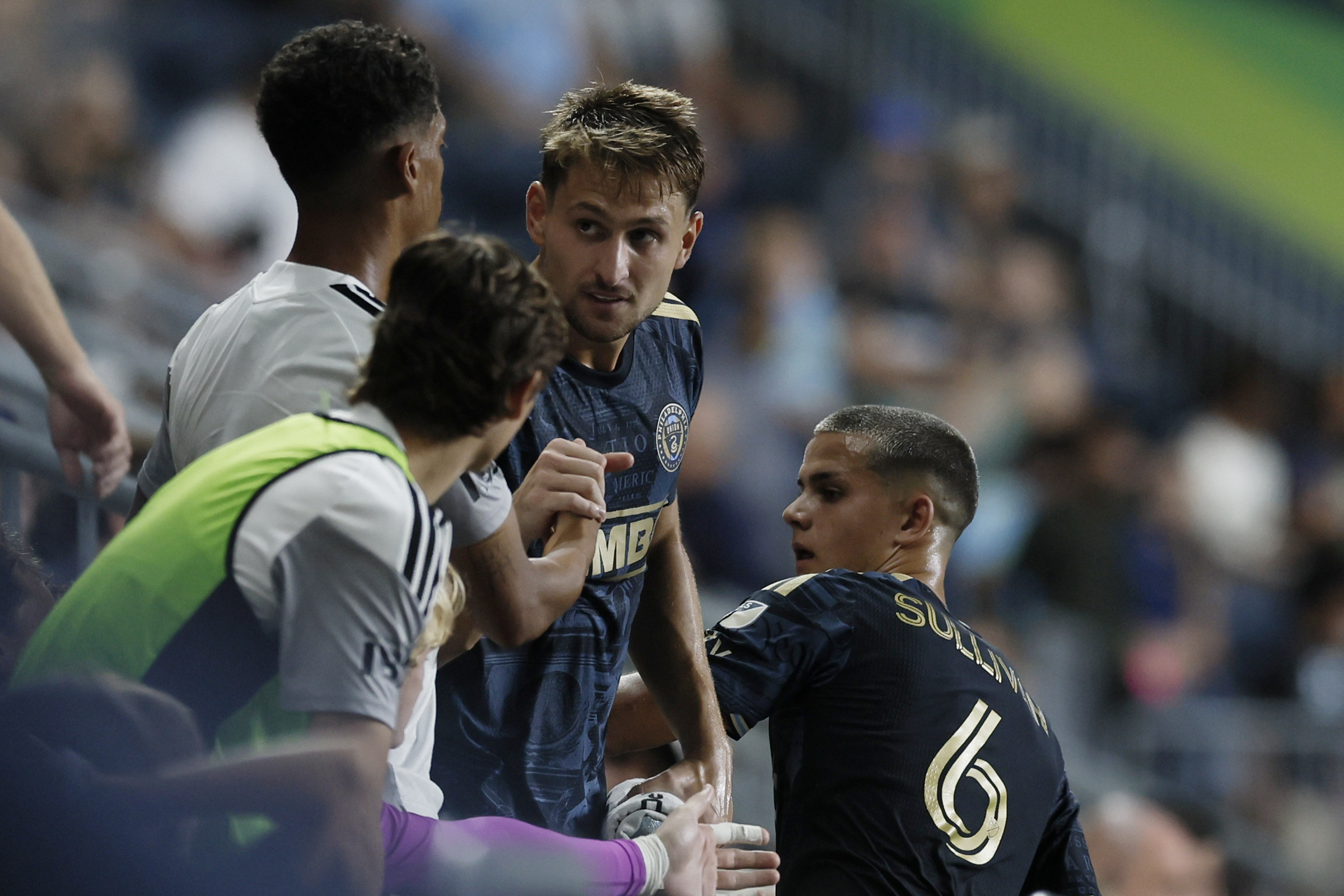
Bruno Damiani (center) gets congratulations from teammates on the bench after coming out of the game.Elizabeth Robertson / Staff Photographer
He channeled his manager in saying that, and when he called it “the hard thing to do now, and the best thing to do. … That mentality is what brings us here.”
And will that mentality now deliver more goals? Or will this game become another mirage, rooted in the Union’s man advantage from the 16th minute on thanks to Obinna Nwobodo’s red card?
The answer will be one of the biggest factors in how this season ends up.
window.addEventListener(“message”,function(a){if(void 0!==a.data[“datawrapper-height”]){var e=document.querySelectorAll(“iframe”);for(var t in a.data[“datawrapper-height”])for(var r,i=0;r=e[i];i++)if(r.contentWindow===a.source){var d=a.data[“datawrapper-height”][t]+”px”;r.style.height=d}}});
And the insurance company with the biggest piece of that business in Pennsylvania is making its voice heard in Harrisburg, Washington, and across the political landscape.
Newtown Square-based AmeriHealth Caritas, an affiliate of the Philadelphia-based healthcare giant IBX, contributed $500,000 total last year to national Democratic and Republican groups that work to elect governors and state legislators, more than double what it gave those entities in 2020.
As the GOP-led Congress passed legislation making deep cuts to Medicaid spending last year, AmeriHealth spent $1.7 million on federal lobbying, the most since at least 2008. And the company made charitable contributions aligned with causes promoted by political leaders in states where it does business — including a $5 million donation to food banks announced by North Carolina’s Democratic governor and 250 book bags for schoolchildren as a gift to the Democratic speaker of the Pennsylvania House.
It all adds up to a growing influence operation run by a company in a competitive industry that relies on government for revenue. Last year, AmeriHealth generated almost $16 billion from Pennsylvania contracts — more than half its total revenue.
Medicaid — a joint state-federal program that funds healthcare for low-income people, children, seniors, and individuals with disabilities — is also the single biggest cost driver in Pennsylvania’s budget. Almost three million Pennsylvanians, or more than one-fifth of the population, are covered by Medicaid.
AmeriHealth’s corporate political giving has drawn criticism from some Republican state lawmakers, who call it an inappropriate use of taxpayer dollars.
“That’s money that’s supposed to be going out to our hospitals, pharmacies, and disabled service providers,” said State Sen. Cris Dush (R., Jefferson).
State Sen. Cris Dush (R., Jefferson) in 2021.Matt Rourke / AP
AmeriHealth’s increased political activity has come during a volatile period for Medicaid. Enrollment surged during the COVID-19 pandemic as a federal emergency declaration meant people didn’t have to reapply for benefits, even if they no longer qualified. Once states resumed verifying eligibility, insurers including AmeriHealth saw membership decline — and those most likely to maintain coverage were sicker than average.
Now insurers are grappling with the biggest cuts to federal healthcare spending in history — $1 trillion over the next decade, mostly to Medicaid — in President Donald Trump’s big domestic policy legislation last summer. They are set to take effect next year.
Lee Drutman, a senior fellow at New America, a Washington, D.C.-based think tank, said AmeriHealth’s political activity is part of a “tried-and-true playbook” in corporate America.
“If you do business with the government or have contracts or regulatory interests, you want to make sure the people who are making the decisions have a nice warm feeling when they think about your company,” said Drutman, author of The Business of America is Lobbying. “The best way to give them that nice warm feeling is to contribute to their campaigns and their causes.”
AmeriHealth said in a statement that it reviews all political contributions to ensure compliance with applicable laws and regulations and that the company does not make contributions “from legal entities that have state or federal contracts.”
AmeriHealth did not say what revenue source it uses to fund its corporate political contributions and did not answer questions about whether it had any revenue streams that were not tied to tax dollars.
“Our participation in the public policy process focuses on healthcare issues affecting our members and the communities we serve,” AmeriHealth said, adding that it supports organizations across the political spectrum.
Donations to DGA and RGA
Like most states, Pennsylvania contracts with private insurers — also known as managed care organizations (MCOs) — to manage Medicaid beneficiaries’ benefits.
Federal law sets broad coverage requirements, but states have flexibility in determining which populations are eligible and which services to include.
And every year, they set monthly rates they pay insurers for Medicaid enrollees. Federal regulators review the rates.
“That all has a huge impact on the financial health, the success of the Medicaid managed care plan,” said Edwin Park, research professor at the McCourt School of Public Policy at Georgetown University.
It is not surprising, then, that insurers like AmeriHealth donate to political groups that elect governors and state legislators.
Among the groups that have benefited from AmeriHealth’s giving is the Democratic Governors Association, which in 2022 gave $7.2 million to then-Pennsylvania Attorney General Josh Shapiro’s successful gubernatorial campaign and which has given $750,000 to his reelection bid.
From 2021 through last year, AmeriHealth gave $250,000 to the DGA annually, up from $100,000 in 2020. It gave $250,000 to the Republican Governors Association in 2025, up from $100,000 each of the previous two years.
The donations put AmeriHealth in the top 10% of donors to each group in 2025, according to an Inquirer analysis of Internal Revenue Service data compiled by ProPublica.
(function(){function e(){window.addEventListener(`message`,function(e){if(e.data[`datawrapper-height`]!==void 0){var t=document.querySelectorAll(`iframe`);for(var n in e.data[`datawrapper-height`])for(var r=0,i;i=t[r];r++)if(i.contentWindow===e.source){var a=e.data[`datawrapper-height`][n]+`px`;i.style.height=a}}})}e()})();
The RGA has not invested in Pennsylvania’s gubernatorial election this year, in which Shapiro is favored against Republican state Treasurer Stacy Garrity.
Pennsylvania law prohibits corporations and labor unions from making direct contributions to state campaigns, though those groups can form political action committees. PACs can raise funds from their employees or members and use that money to donate to candidates. AmeriHealth started a Pennsylvania PAC in 2022.
However, corporations and unions can use their treasury funds — drawn directly from profits or member dues — to give unlimited amounts of money to groups such as the DGA and RGA. Those groups can donate to campaigns that may otherwise face restrictions on receiving corporate money, as in Pennsylvania.
In response to written questions, neither AmeriHealth nor Shapiro’s campaign would say whether the governor or his representatives had solicited contributions from the company on the DGA’s behalf.
AmeriHealth did not answer a question as to whether it had asked the DGA to designate some or all of its contributions to Shapiro’s race. Izzi Levy, a spokesperson for the DGA, said, “As a policy, DGA does not accept funds earmarked for any race or state.”
Gov. Josh Shapiro in August.Kalim A. Bhatti / For The Inquirer
“Corporations, labor unions, wealthy individuals want to have a powerful ally in a governor,” said Michael Beckel, an expert on money in politics at Washington, D.C.-based Issue One, a group that advocates for campaign finance restrictions.
“Being able to give through a group like the DGA or an RGA is a way to help secure your position as a friend and ally, who then in turn might be somebody that [governors] listen to on policy matters,” he said.
Many companies donate to these groups, but AmeriHealth’s corporate contributions have caught the attention of Pennsylvania lawmakers, including Senate President Pro Tempore Kim Ward (R., Westmoreland).
“The money should be used as appropriated for Medicaid because we are struggling with the increased funding needs for the program,” she said, adding that it doesn’t matter which party benefits from the donations.
Pennsylvania Senate President Pro Tempore Kim Ward in Harrisburg in February.Tom Gralish / Staff Photographer
Ward said AmeriHealth has suggested that one of its contributions to the DGA “was comprised of the interest made off the principal of the Medicaid money.”
“To be clear, no matter if the political contribution is made up from the principal or the interest from Medicaid funds, it is all government money and shouldn’t be used for political purposes,” Ward said in a statement.
Under federal regulations, insurers are required to spend at least 85% of Medicaid funds on services for beneficiaries, leaving 15% for plan administration and profits. A spokesperson for the Pennsylvania Department of Human Services said AmeriHealth has complied with those rules.
AmeriHealth isn’t the only Medicaid insurer that donates to the DGA, RGA, Democratic Legislative Campaign Committee, and Republican State Leadership Committee — the latter two of which work to elect state legislators across the country.
The University of Pittsburgh Medical Center (UPMC), the No. 2 Medicaid insurer in Pennsylvania, has given three of the four groups a total of $330,000 since 2013, the year AmeriHealth significantly increased its giving. AmeriHealth gave $3.3 million over that period of time.
By contrast, St. Louis-based Centene Corp. has far outspent AmeriHealth, giving a total of nearly $18.8 million to the groups since 2013. Centene is the No. 3 Medicaid insurer in Pennsylvania and the largest in the country, operating in 30 states.
Neither UPMC nor Centene responded to requests for comment. Centene says on its website that its political activity is grounded in the company’s public policy positions “and the best interests of our business, our employees, and the members we serve, without regard to political party affiliation.”
From West Philly to 13 states
For-profit AmeriHealth is owned by nonprofits Independence Health Group and Blue Cross Blue Shield of Michigan.
Formerly known as AmeriHealth Mercy, the company started as a pilot program in the early 1980s at a West Philadelphia hospital. It now operates in 13 states and Washington, D.C., and employs almost 10,000 people.
AmeriHealth covered about 771,000 Pennsylvania residents enrolled for physical health — including for services such as medical visits, pregnancy and newborn care, and dental — and 176,000 for community services, including nursing homes, at the end of 2025. The company also manages benefits for behavioral health services.
In addition to its Medicaid business, AmeriHealth also offers Medicare Advantage plans for people eligible for both Medicare and Medicaid, as well as Affordable Care Act health insurance marketplace plans.
AmeriHealth had net income of $138 million last year after reporting a loss in 2024, though Independence Health — which includes insurer Independence Blue Cross — has continued to struggle financially.
Pennsylvania’s Medicaid program cost $49.3 billion in state and federal funds for the fiscal year that ended in July 2025, according to the Independent Fiscal Office. The state share of Medicaid expenditures, $14.4 billion, accounted for 31% of total general fund spending, among the highest ratios in the country, according to health research nonprofit KFF.
State spending on Medicaid was on track to increase 7.8% for the fiscal year that ended July 1, according to a June analysis by the IFO.
AmeriHealth’s $15.7 billion in revenue last year from contracts with the Pennsylvania Department of Human Services and county governments was up from $14.2 billion the prior year and $11.4 billion in 2021 — a 38% increase over the four year-period.
UPMC saw a 50% increase over that period, for $12.6 billion in revenue last year.
(function(){function e(){window.addEventListener(`message`,function(e){if(e.data[`datawrapper-height`]!==void 0){var t=document.querySelectorAll(`iframe`);for(var n in e.data[`datawrapper-height`])for(var r=0,i;i=t[r];r++)if(i.contentWindow===e.source){var a=e.data[`datawrapper-height`][n]+`px`;i.style.height=a}}})}e()})();
AmeriHealth has attributed its financial success last year — when it swung back to a profit a year after reporting losses in 2024 — in part to higher Medicaid rates as well as “work with state partners to support reliable access to high-quality care for the members we serve.”
Ali Fogarty, spokesperson for the Pennsylvania Department of Human Services, said rate increases are necessitated by costs that insurers incur administering the Medicaid program.
A big driver has been higher costs for GLP-1s, the drugs that manage Type 2 diabetes and obesity. Pennsylvania in 2023 started covering GLP-1s in Medicaid for weight loss only. Medicaid spending on the drugs in Pennsylvania increased from $223 million in 2022 to more than $1 billion last year, Fogarty said. The state stopped covering GLP-1s for weight loss this year.
“Realities like this can drive rate increases to ensure stability of our Medicaid program and solvency of MCOs that coordinate care, in addition to typical year-over-year increases in costs of care and operations,” she said.
AmeriHealth increased its lobbying, too
AmeriHealth spent $1.7 million on federal lobbying last year, up from $970,000 in 2024 and $400,000 in 2023, according to data compiled by OpenSecrets, a group that tracks money in politics.
The bill mentioned the most on the company’s lobbying reports in 2025 was H.R. 1, or the One Big Beautiful Bill Act. The sweeping domestic policy legislation — passed by the GOP-controlled Congress and signed into law by Trump — included $900 billion in cuts to federal Medicaid spending over the next decade.
(function(){function e(){window.addEventListener(`message`,function(e){if(e.data[`datawrapper-height`]!==void 0){var t=document.querySelectorAll(`iframe`);for(var n in e.data[`datawrapper-height`])for(var r=0,i;i=t[r];r++)if(i.contentWindow===e.source){var a=e.data[`datawrapper-height`][n]+`px`;i.style.height=a}}})}e()})();
The law reduces spending in part by imposing new work requirements on adults who are eligible for Medicaid under the Affordable Care Act, the 2010 law that sought to expand healthcare coverage. Pennsylvania expanded Medicaid in 2015.
Those requirements take effect Jan. 1. The new law also includes provisions requiring more frequent eligibility checks and cost-sharing requirements for enrollees in the so-called Medicaid expansion group.
The law’s Medicaid provisions are projected to increase the number of uninsured in 2034 by 7.5 million people, according to estimates from the Congressional Budget Office. About 300,000 Pennsylvanians could lose coverage due to the Medicaid restrictions, according to Shapiro’s administration.
Medicaid insurers opposed the cuts. After the House passed its initial version of H.R. 1 in May 2025, Medicaid Health Plans of America — a trade group that represents AmeriHealth and other insurers — cautioned Senate leaders against legislative provisions “that have been found to increase churn, set up additional barriers to receiving coverage, disincentivize essential care, hamstring states in financing the program, and that will likely cause disruption that radiates across the health care system.”
Republicans say the law will strengthen the integrity of programs like Medicaid and help ensure that able-bodied adults on public assistance are contributing to society. Democrats voted against the measure, accusing the GOP of cutting the safety net to finance tax cuts for the wealthy.
The One Big Beautiful Bill Act has big implications for state budgets. Starting in October, states including Pennsylvania will be restricted in their ability to finance Medicaid through taxes on healthcare providers such as hospitals, nursing homes, and insurers. States have traditionally used that financing mechanism to help draw federal matching funds.
Management consulting firm Oliver Wyman wrote that as states adjust their financing strategies, “plans may face more volatile rate-setting processes, delayed approvals, and growing tension between providers seeking to preserve revenue and payers managing constrained margins.”
As H.R. 1 is implemented, insurers like AmeriHealth are maintaining a strong presence in Washington. Records show AmeriHealth spent $1.5 million on federal lobbying through June — almost as much as it spent all of last year.
But as insurers seek to influence policymakers, they are facing increasing criticism from conservatives who say they have failed to improve patient outcomes, lower costs, or deter fraud. More broadly, Trump last year directed Health and Human Services Secretary Robert F. Kennedy Jr. to “take appropriate action to eliminate waste, fraud, and abuse in Medicaid.”
“Medicaid managed care creates strong incentives to maximize enrollment, as plans are generally paid a fixed amount for each enrollee,” Brian Blase, a former Trump White House official and president of the Paragon Health Institute, wrote in June. “Improper enrollment, duplicate enrollment, and phantom enrollment increase payments flowing to MCOs.”
The plans say they have taken action against fraud and abuse. The Medicaid Health Plans of America in a February report pointed to an inspector general report showing that insurers in recent years had steadily increased their fraud referrals to state law enforcement agencies.
Pennsylvania’s GOP-led Senate in July passed a resolution, largely along party lines, directing the Legislative Budget and Finance Committee (LBFC) to audit the state’s Medicaid program. The resolution calls for a review of the “standards used in Pennsylvania to evaluate Medicaid managed care program contracts.”
Democrats said they wanted to limit the scope of the audit, saying the state’s Medicaid program is already subject to federal reviews.
The resolution does not carry the force of law, but its lead sponsor, Dush, said he hopes the bipartisan LBFC — a committee that consists of 12 legislators from both chambers of the General Assembly — agrees to take up the cause.
Charitable giving
When the federal government shut down last fall amid a congressional spending impasse, the Trump administration paused the disbursement of food assistance, known as SNAP benefits, which help low-income families pay for groceries.
Within days of that announcement, North Carolina Gov. Josh Stein said the state would grant $10 million to local food banks — and that AmeriHealth Caritas and other private donors had also chipped in.
AmeriHealth, which had won a Medicaid contract with the state in 2019, gave $5 million, according to Stein’s announcement. “With the help of generous partners, North Carolina is taking action to keep families fed,” Stein, a Democrat, said in a news release at the time.
It’s an example of how AmeriHealth has made philanthropic gifts in line with causes promoted by political leaders in states where the company does business. Drutman, the lobbying expert, said supporting such causes can be seen as part of a company’s broader political strategy.
“As long as government is an important player in an industry, either as a regulator or purchaser of services, companies can have a strong interest in making sure that people in power have a positive opinion of the company,” he said. “Usually, the positive opinion of a company is not free.”
Stein’s office didn’t respond to a request for comment.
AmeriHealth told The Inquirer that the company and its foundation invest in community organizations “to improve access to care and address needs such as maternal health and food insecurity.”
“We invest in healthcare policy that is aligned with the needs of the nation’s most vulnerable populations,” the company said.
Another organization it partnered with was the Hope Florida Fund, a charity founded by Casey DeSantis, wife of Republican Gov. Ron DeSantis. The Governor’s Office announced in March 2023 that AmeriHealth had contributed $100,000 to reduce reliance on public assistance and make grants to local nonprofits.
The next month, the state started the bidding process for new Medicaid contracts. AmeriHealth ultimately lost its bid to remain in Florida, where it had operated since 2012. Gov. DeSantis’ office didn’t respond to a request for comment.
Sometimes AmeriHealth’s gifts are smaller.
Pennsylvania House Speaker Joanna McClinton, a Democrat who represents parts of West Philadelphia and Delaware County, reported on her 2025 financial disclosure form that AmeriHealth had donated 250 book bags at resource fairs in her district. She valued the gift at $2,500. A spokesperson for McClinton confirmed the gift but otherwise had no comment.
Other companies including insurers Highmark Wholecare and Independence Blue Cross gave similar gifts, according to the disclosure.
House Speaker Joanna McClinton during a Feb. 3 news conference at the Capitol in Harrisburg.Tom Gralish / Staff Photographer
AmeriHealth has won praise for some of its giving.
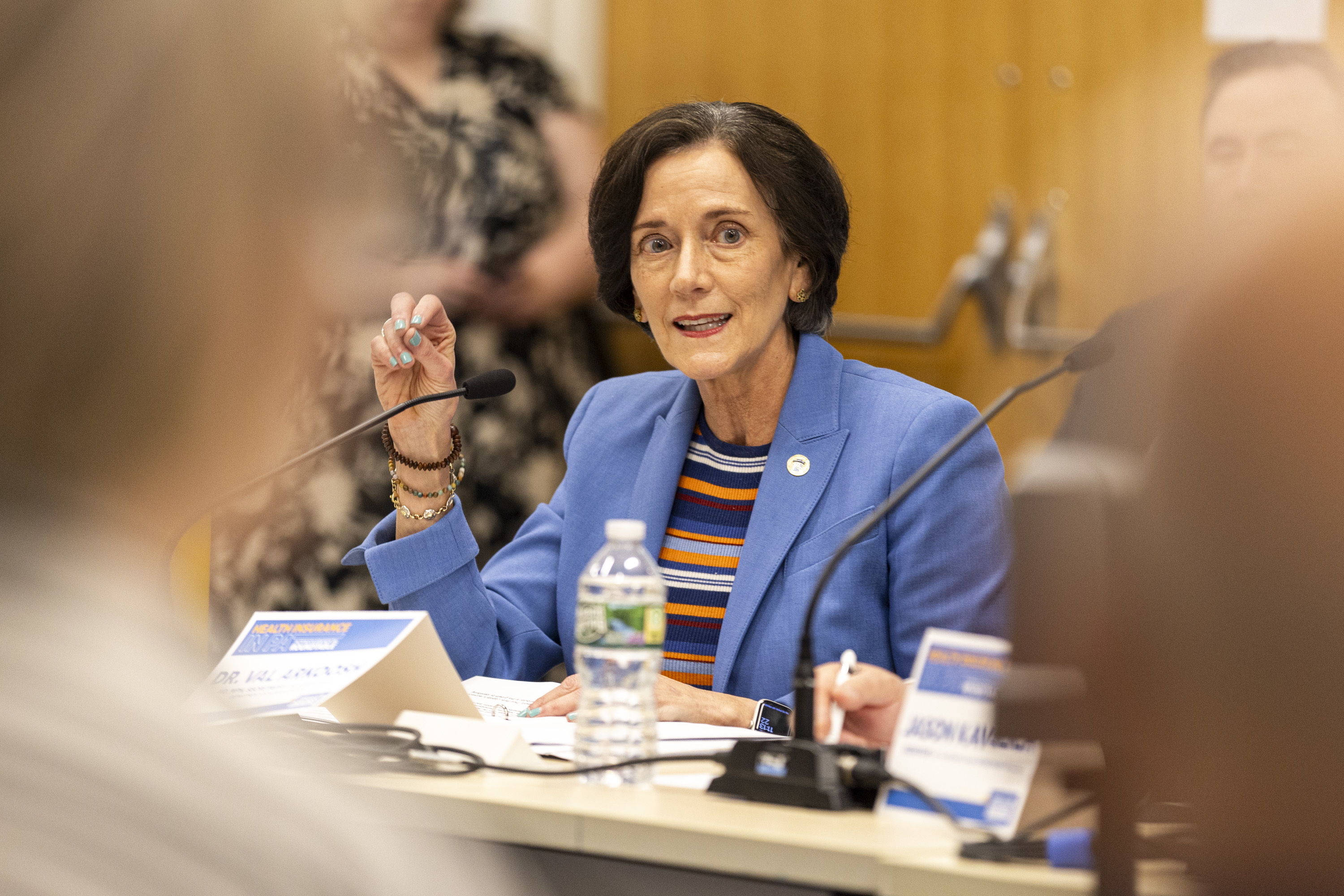
In May, Val Arkoosh, secretary of the Pennsylvania Department of Human Services, visited the Greater Philadelphia YMCA’s Willow Grove branch to highlight a maternal health initiative that provides a free membership and programming for expectant moms.
Arkoosh’s office said in a news release that the initiative “aligns perfectly” with the Shapiro administration’s “Healthy Moms, Vibrant Futures” strategic plan.
DHS Secretary Val Arkoosh in 2025.Tyger Williams / Staff Photographer
Fogarty, the DHS spokesperson, noted that the U.S. maternal mortality rate outpaces all other high-income countries and said Arkoosh, an obstetric anesthesiologist, is passionate about the issue. “We appreciate the many partners who work to address maternal mortality and are stepping up to support mothers and children in their community,” Fogarty said.
AmeriHealth’s foundation said in a news release that “providing children with healthy beginnings will help them avoid adverse experiences later in childhood.”
The release featured a photo of Arkoosh standing next to a YMCA executive and Steve Fera, an IBX executive and AmeriHealth Caritas Foundation board member.
Penn Medicine announced a $50 million gift from Stanley C. Middleman on Thursday to support early-stage research and will name a recently expanded building at 3600 Civic Center Blvd. in the businessman’s honor.
Income from the fund will be used to accelerate work on therapies for cancer, autoimmune diseases, infectious diseases, and other serious conditions, with a goal ofshortening the path from the laboratory to the market, Penn said.
“I was born and raised in Philadelphia, and I’m proud to support Penn Medicine and the extraordinary work being done there to advance medicine and improve people’s lives,” Middleman said in a news release provided to The Inquirer in advance.
The Middleman Center “will bring together the people and ideas” to support new approaches to treatment and scientific discovery, he added.
The $50 million gift marks his first to Penn. He previously donated undisclosed amounts to his alma mater, Temple University, and to Children’s Hospital of Philadelphia, which named the main patient tower at its King of Prussia hospital for Middleman’s family.
Middleman founded privately owned Freedom Mortgage Corp. in South Jersey in 1990 and grew it into one of the nation’s largest lenders before moving the company’s headquarters to Florida in the early 2020s.
The building being renamed for Middleman underwent a $376 million, 217,000-square-foot expansion that opened last year. Itadded seven floors, including as many as 37 labs. Penn originally opened the building in 2018 with eight floors and 250,000 square feet of office space, which has also been renovated.
The new floors house the Colton Center for Autoimmunity at Penn and the High-Throughput Institute for Discovery, a specialized lab testing patient samples to help make diagnoses and guide treatments. The Middleman Center also includes a Biosafety Level 3 lab, which is specially equipped to handle infectious disease specimens.
“Anchoring the western edge of Penn Medicine’s campus, the Middleman Center is uniquely positioned to bring together biomedical researchers, physicians, medical students, patients, and experts from engineering, business, and other areas of the University of Pennsylvania,” said university president J. Larry Jamesonin the news release.
“This creates an extraordinary environment for discovery — not just sparking ideas but seeing them all the way through to the moments where lives change for the better, as a result of discovery,” he said.
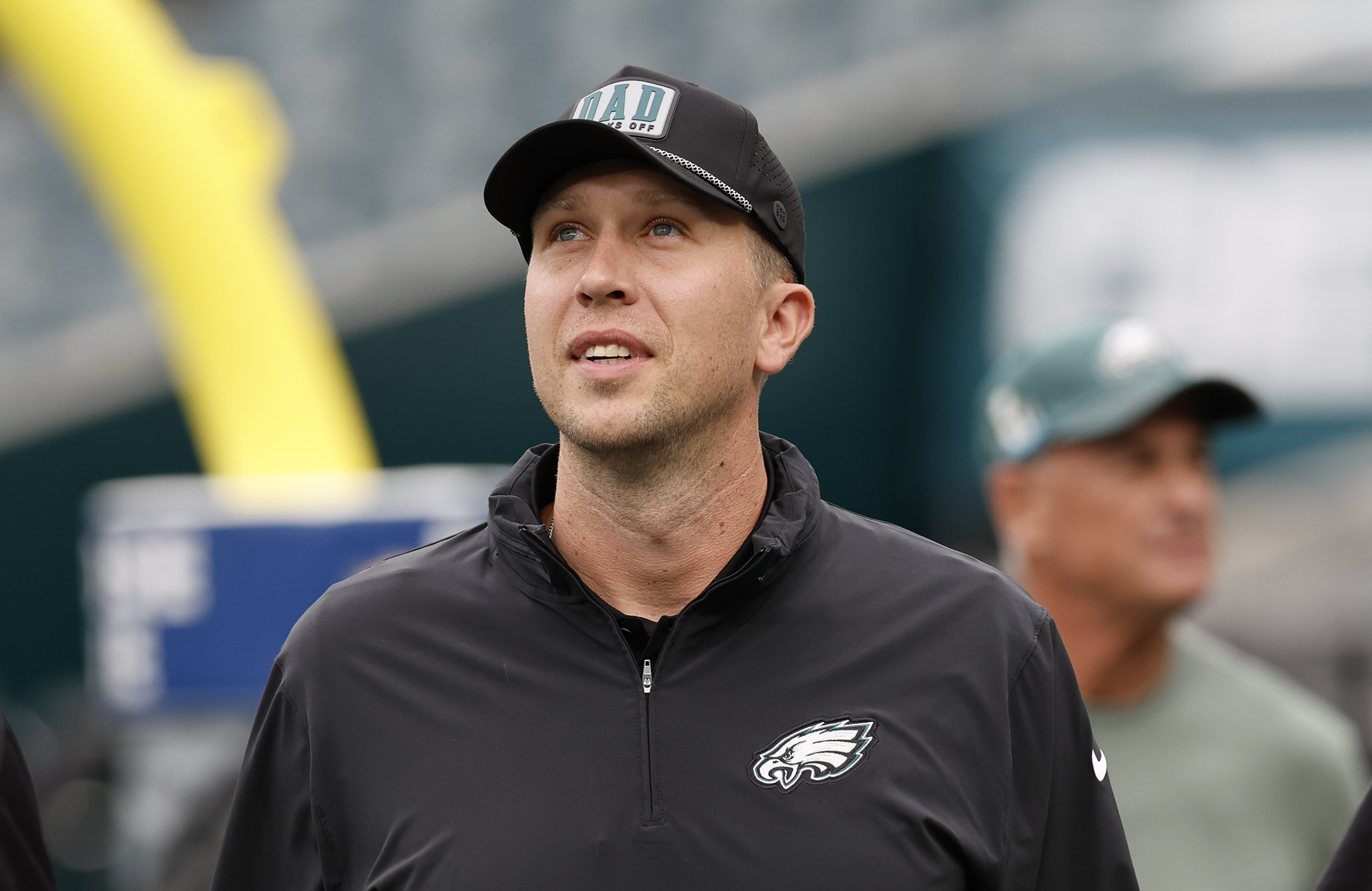
The San Francisco 49ers face the Los Angeles Rams Thursday night in the first-ever NFL game in Australia (8:35 p.m., Netflix), and the streamer is bringing an Eagles legend along for the time-bending ride.
Nick Foles, the Super Bowl MVP whose statue sits outside Lincoln Financial Field, will be part of Netflix’s NFL studio show this season, which includes Thursday night’s game at the Melbourne Cricket Ground, Thanksgiving eve, two Christmas Day games, and a Week 18 matchup.
“These are primetime games. These are important games. And Netflix is obviously a huge company,” Foles said. “It’ll challenge me.”
Alongside Foles for pregame, postgame, and halftime coverage will be host Elle Duncan, Hall of Famer Michael Irvin, and former Green Bay Packers defender Clay Matthews III. Calling the game will be Noah Eagle and Hall of Famer Luke Kuechly, the former Carolina Panthers linebacker who also landed a color analyst role this season with CBS.
NBC is helping Netflix produce its five-NFL-game slate, and brought Foles and his new colleagues to their studios in Connecticut last month for something akin to a broadcast training camp. That included Foles and Matthews — the two TV newcomers — practicing situations without any preparation, including a mock kickoff.
“They wanted to see if we could even handle going to transition, having a producer in our ear,” Foles said. “We understand we’re rookies at it, and we’re just hungry to learn. … They want us to be ourselves and have fun.”
It’s a big jump for the Super Bowl champ, who is in his second season co-hosting The SZN podcast with his brother-in-law, former NFL tight end Evan Moore. But it’s also an ideal gig, allowing Foles to offer analysis to millions of viewers while only committing to a few extra days during the season.
“It was really just the right time, right situation,” Foles said.
It also offers him a chance to show off his nerdy side. While the game will kick off 8:35 p.m. Philly time Thursday, it will take place locally in Melbourne at 10:35 a.m. Friday, which could have an impact on the players. There’s also the long flight down, the longest Foles has ever taken.
“I got my compression tights. … I’m literally geeking out on the science,” Foles said.
If it feels like you haven’t heard much from Foles since he retired from football in 2024, that’s by design. He spent a year away from football to clear his head, spend time with his family, and coach his three children.
He began to receive media offers, but opted instead to focus on building the podcast with Moore. That gave him a comfortable spot to find his voice talking about football, which drew the attention of producers at Netflix.
Thankfully, Foles has plenty of broadcasters to turn to for advice, including Moore and former teammates like Jason Kelce and Brandon Graham. He also attends the same church as longtime Fox Sports college football analyst Joel Klatt, and squeezed some sage advice about the need to be quick.
“On a podcast, you can be long-winded and get your point our there at the end,” Foles said. “He said ‘No, start with the main point and then have a meaningful explanation …’ That’s simplistic, but it makes a world of difference.”
Unlike Kelce and Graham, Foles takes a quieter and more analytical approach to breaking down the game, which was on display last season when the Eagles offense struggled. He drew attention for comments he made about former offensive coordinator Kevin Patullo, but rather than just pile on, Foles tried to offer suggestions to help the team.
“I’m not going to be one of those guys that just crushes someone,” Foles said. “Maybe the Cowboys.”
Foles has one big concern about the Eagles
Nick Foles is most interested to see how well new offensive line coach Chris Kuper helps the Eagles. David Maialetti / Staff Photographer
While the Eagles aren’t slated to appear on Netflix this season, unless they land in their Week 18 game, Foles will spend plenty of time talking about the Birds on his podcast, which will air weekly on NBC Sports Philadelphia.
Heading into the season, Foles expects Vic Fangio’s defense to be solid and the offense to rebound after last year’s struggles.
It’s the offensive line he’s worried about. Specifically, how the loss of former offensive line coach Jeff Stoutland and his availability to develop players could impact the team.
“If you look at the Eagles the last couple of years, when has their season fallen apart? When the offensive line gets banged up,” Foles said.
While he has concerns, Foles said he’s heard nothing but good things about new offensive line coach Chris Kuper, who played eight seasons with the Denver Broncos and most recently served as offensive line coach with the Minnesota Vikings.
He’s part of a big overhaul under new offensive coordinator Sean Mannion that includes a different run blocking scheme and a new approach at the line. Kuper told reporters the squad has “come a long way” as the Birds prepare for their season opener against the Washington Commanders Sunday, but only time will tell how the team performs.
“There’s a lot of pressure on this guy. He played the position well. … [Kelce] said good things about him,” Foles said. “But I’m circling that.”
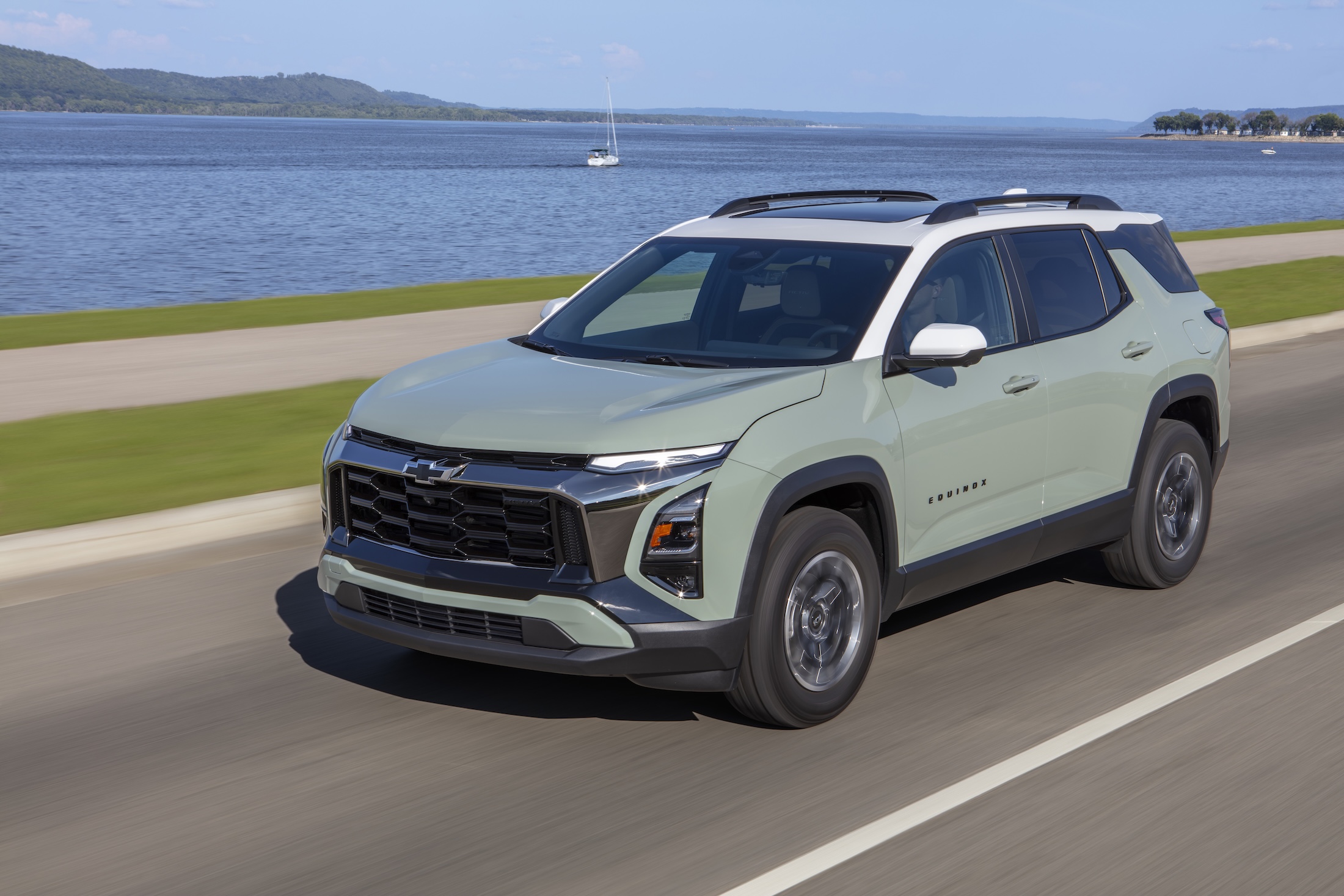
2026 Volkswagen Tiguan SEL R-Line Turbo vs. 2026 Chevrolet Equinox ACTIV AWD: Midsize SUVs flying under the radar.
This week: Chevrolet Equinox
Price: $40,985 as tested. Panoramic sunroof added $1,495. More options packages noted below. Advantage, Equinox, by about 10%. But is it?
What others are saying: “Highs: Attractive design, affordable pricing, impressive standard tech features. Lows: Lethargic acceleration, mediocre fuel-economy estimates, cabin is noisy at highway speeds,” reports Car and Driver.
What Chevrolet is saying: “Made to do more.”
Reality: Do more than what exactly?
What’s new: The Equinox was redone for 2025, so it pretty much carries over unchanged. The ACTIV trim is the lowest rung, not the level we usually get to test, as manufacturers like to show off their top tiers, so credit to Chevrolet for that.
In and out: The Equinox ACTIV sits up surprisingly high for a small SUV, high enough to mention from the outset, so plan for some leg raises. I was surprised it features just 17-inch wheels; they looked bigger. (More upscale trims get 19s or 20s.) But with 8 inches of ground clearance, what usually amounts to a side note may explain a lot about the Equinox’s overall performance.
Up to speed: The Chevrolet Equinox’s 1.5-liter turbocharged four-cylinder engine creates 175 horsepower, and it pales in comparison to the Tiguan’s 258.
So does its performance. The all-wheel-drive Equinox takes 8.6 seconds to get to 60 mph, according to Car and Driver. And that’s the only engine choice you get. Advantage, Tiguan, by almost 2 seconds. That high profile may be slowing the Equinox down.
Shifty: The all-wheel-drive Equinox gets an eight-speed automatic transmission. (Front-wheel-drive models are stuck with a continuously variable transmission.)
The steering column holds the stalk, and triggers can be used to change gears if needed. It’s not a lot of fun.
On the road: Speaking of not a lot of fun, neither are country roads in the Equinox — no zip, no zig, no other Z-words denoting any sort of hilarity or joie de vivre.
And yet, neither are highways, where the bumps come with enhancement and the potholes kinda hurt, if I’m being honest. I expected the Equinox’s country-road indifference but not the lack of highway manners. Strong advantage, Tiguan.
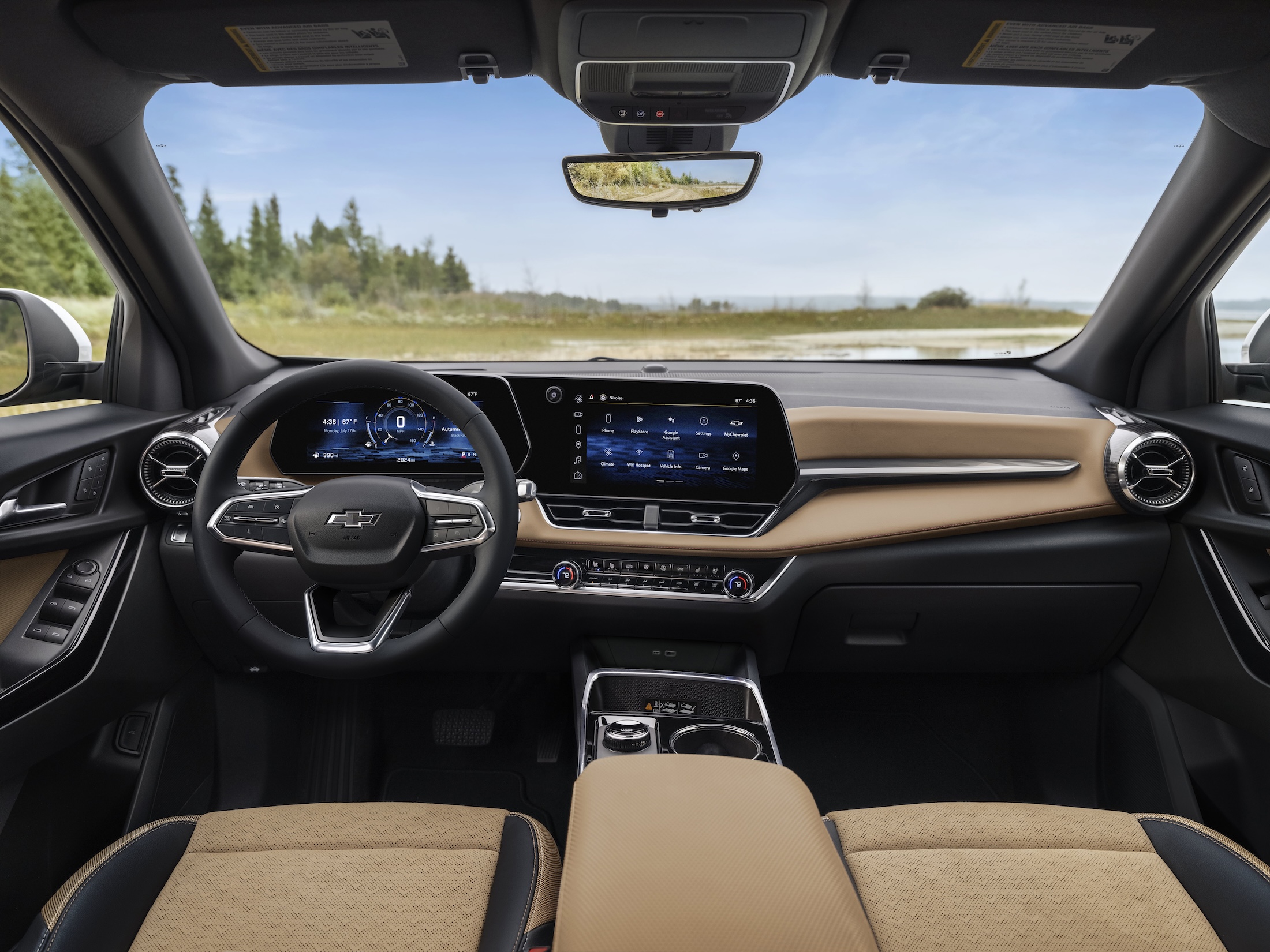
The interior of the 2026 Chevrolet Equinox is comfortable in the front but not quite so much in the rear.GM-DESIGN
Driver’s Seat: The Equinox seat was super comfortable and the materials seemed almost luxurious, not a given in a Chevrolet by any means.
Front seats were heated for free, and ventilated with the help of a $945 package, which also heated the rear corner seats and added more power controls and settings to the front seats. We finally have a tie among the competitors in this category, although the Tiguan upgrades give it a slight advantage.
I gave up a Subaru Trailseeker (think Outback EV) for the Equinox, and the Equinox seemed so much bigger and harder to see around or fit into snug spaces than the larger Subaru. The Equinox is shaped like a pyramid, while the Subaru has more vertical glass, allowing for better views all around. The short windows further hamper visibility to the side of the vehicle and into the corners.
Friends and stuff: The rear seat feels very … adequate. It’s not uncomfortable, the fabric feels OK, the Evotex in between the microsuede holds you in place. The center spot is bit of a hump, but the floor is quite flat, helping with legroom there. Still, this would not have been as much fun for my fellow vacationers as the Tiguan, I’m certain.
Cargo space is 29.8 or 63.5 cubic feet, as folded, about 10% smaller than the Tiguan.
Play some tunes: The 11.3-inch multimedia display seemed much larger, so getting around the system is easy. A volume knob is the only old-timey control.
Sound from the unnamed system was quite good, about an A, another tie with the Tiguan.
Keeping warm and cool: All the HVAC controls are in toggles underneath the infotainment systems. They’re not hard to figure out but the typeface could be a little bolder. Advantage, Equinox.
Fuel economy: 22 mpg average, which is not too far off the average for small SUVs. The Tiguan Turbo beat it by 5 mpg, though, while moving much more nicely, a real feat.
Where it’s built: San Luis Potosí, Mexico. Parts are 55% Mexican and 11% U.S. and Canadian.