Tag: topic-link-auto

  • Flyers will start 2026-27 season at home against Penguins, play at Devils in opening week back-to-back

    Flyers will start 2026-27 season at home against Penguins, play at Devils in opening week back-to-back

    Didn’t the Flyers’ season just end?

    It feels like it — the team played into May by making the second round of the Stanley Cup playoffs for the first time since 2020.

    Although they got swept by the eventual Stanley Cup champion Carolina Hurricanes, the Flyers will get a chance to start their 2026-27 season by picking up where they left off in the win column, with a rematch on Sept. 30 against their cross-state rivals, the Pittsburgh Penguins, at Xfinity Mobile Arena (7:30 p.m., TNT).

    This season, the NHL schedule is 84 games, with two extra Metropolitan Division games added. The full schedule will be announced at 1 p.m. on Thursday.

    The last time the Flyers and Penguins met, defenseman Cam York threw his stick into the crowd after firing home the 1-0 overtime winner in Game 6 of the first round, sending the Penguins golfing.

    Noel Acciari (55) can now call Matvei Michkov (39) and the rest of the Flyers teammates. Gene J. Puskar

    Heading into the lid lifter, both teams will look different, notably with Noel Acciari switching sides from the Penguins to the Flyers. The forward leads a retooled fourth line after inking a two-year deal with an average annual value of $2.8 million. He is excited to be in orange and black now.

    “Just being a part of that Pennsylvania rivalry, I got to experience it on the other side, which was a lot of fun,” he said on July 7. “And just seeing how passionate the fans are, which is unbelievable, and to be able to experience it with their cheering for you this time, I’m so excited for [it]. And I’m glad to have them on my side now because they are very passionate, and they’re all up in your face.

    “It’s fun to play against, but at the same time, I’m happy I get to play on the same side.”

    This year will mark the eighth time the Flyers start the season at home against the Penguins (5-2-0); the overall record in home openers is 33-18-5-2. It is also the ninth time they are opening the season against Pittsburgh (4-3-1-0) with an overall record of 29-20-7-2 when kickstarting a season. The Flyers have faced the Penguins more than any other opponent in season and home openers.

    The following night, the Flyers will head up the turnpike to the Prudential Center for the New Jersey Devils’ home opener. The Flyers will also be in Ottawa for the Senators’ — and former Flyers goalie Sam Ersson’s — home opener on Oct. 8.

    This year’s NHL schedule also features the 2026 Heritage Classic on Oct. 25, with the Winnipeg Jets hosting the Montreal Canadiens; Carolina taking on the Seattle Kraken in Finland on Nov. 12-14; and Ottawa and the Chicago Blackhawks in Germany on Dec. 18-20.

    On New Year’s Eve, the Utah Mammoth and Colorado Avalanche will participate in the 2026 Winter Classic at the University of Utah’s Rice-Eccles Stadium.

    Rice-Eccles Stadium in Utah will host the Winter Classic. Jeffrey D. Allred

    And Feb. 5-6, the New York Islanders’ home of UBS Arena will host All-Star Weekend. On Feb. 5, 10 young stars, ages 25 or younger, will compete across eight events, and the following day will be the All-Star Game — with a twist. Five teams of 11 players representing Canada, Finland, Sweden, the United States and a “World” team will compete in a three-on-three, round-robin exhibition tournament.

    Breakaways

    Lehigh Valley’s American Hockey League home opener is Oct. 3 against the Hartford Wolf Pack. … Trevor Zegras and Jamie Drysdale, who each filed for salary arbitration on July 5, have their hearings scheduled for next week, according to Puckpedia. Drysdale is scheduled for Monday and Zegras for Wednesday. Arbitration can be avoided with a contract between now and the morning of the hearing. … Former Flyers forward Rodrigo Ābols signed a three-year deal with SC Bern of the National League, the top men’s league in Switzerland. The Latvian made his NHL debut with the Flyers at the age of 29 on Jan. 21, 2025. Across 64 regular-season games with Philly, he had five goals, 15 points, and won 53.8% of his faceoffs while averaging a little over 10 minutes a game. He suffered a season-ending injury in January that forced him to also miss representing his country at the 2026 Winter Olympics. … Former Flyers goalie Ivan Fedotov returned to the Kontinental Hockey League, signing a two-year deal with Spartak Moscow.


  • A just legal system doesn’t fear examining wrongful convictions. Pennsylvania’s Supreme Court just made that harder.

    A just legal system doesn’t fear examining wrongful convictions. Pennsylvania’s Supreme Court just made that harder.

    As a former U.S. attorney with more than 18 years of experience prosecuting cases involving violent crime, organized crime, and public corruption in Philadelphia, I sought to follow the principle that the role of a prosecutor is to seek justice, not simply convictions, without using improper methods to secure a finding of guilt. This meant following well settled constitutional law requiring prosecutors and law enforcement to identify and turn over to the defense exculpatory evidence and material undermining the credibility of government witnesses prior to trial — no exceptions.

    While people accused of crimes are entitled to a fair trial — not a perfect one — the outright failure of prosecutors and law enforcement to comply with the basic rules of fairness undermines public trust in our criminal legal system. More importantly, the failure — whether intentional or negligent — becomes tragic when an innocent person should not have been prosecuted and sentenced in the first place, because the case clearly pointed to another perpetrator who was not prosecuted.

    Since 1989, according to the National Registry for Exonerations, more than 3,800 men and women have been exonerated across the U.S. (152 in Pennsylvania) in cases involving the problems just described. Conviction Integrity Units, which have been set up in district attorney offices across the country, including the Philadelphia district attorney’s office, play an important role in addressing the wrongful convictions of innocent people.

    Recently, the Pennsylvania Supreme Court — with urging from the Pennsylvania attorney general’s office — issued a ruling that effectively gives the state’s top prosecutor veto authority in any post-conviction relief case in which Philadelphia’s district attorney determines that an innocent person has been convicted and sentenced to prison for a crime they did not commit.

    While I am not in a position as the executive director for the Pennsylvania Innocence Project to comment on the animosity that appears directed at the district attorney, I do know from experience that some prosecutors and law enforcement officers conceal evidence (DNA and other lab test results, contradictory or inconsistent witness statements, evidence of benefits or rewards given to witnesses in exchange for testimony).

    Some law enforcement officers use improper methods to coerce statements and false confessions out of people, and some eyewitness identifications are faulty or the product of improper law enforcement influence.

    Cooperating witnesses sometimes lie about the involvement of others to avoid responsibility for their own criminality.

    And, finally, some criminal defense lawyers are ineffective at their jobs and have no business being in the courtroom when individual liberty is at stake.

    If our criminal legal system is truly just, one should not fear looking back to make sure the right person has been held accountable. Victims also lose when prosecutors and police officers get it wrong while the real perpetrator of a crime remains free to victimize others within the community.

    There are 67 elected district attorneys in Pennsylvania who are primarily responsible for prosecuting more than 90% of the serious violent crime cases committed within their counties. In Philadelphia County — where police and prosecutorial misconduct are historically known to have resulted in the convictions of innocent men and women — both the Supreme Court and the attorney general appear to support a world in which looking under the hood is a bad thing and needs to be curtailed.

    There were exonerations before the current Philly DA, and there will be exonerations after the Philly DA eventually leaves office, because the unfortunate reality is that some prosecutors and law enforcement officers do not play by, or follow, the rules. I know, because during my tenure in the U.S. Attorney’s Office, my colleagues and I prosecuted more than our share of bad police officers who ignored their oath to follow and uphold the law.

    While prosecutors, law enforcement officers, and the courts serve an important societal role in holding people accountable for crimes they have committed, they are not perfect.

    When it comes to the innocent, we should not be afraid to look back in appropriate cases to make sure that the innocent do not suffer. Both the Supreme Court and Pennsylvania attorney general’s office need to remain mindful of the role of prosecutors and the importance of Conviction Integrity Units to ensure that justice ultimately prevails in our criminal legal system.

    Zane David Memeger is the executive director of The Pennsylvania Innocence Project and a former U.S. attorney for the Eastern District of Pennsylvania.

  • U.S. war against Iran enters a new phase

    U.S. war against Iran enters a new phase

    WASHINGTON — The Trump administration has lurched back into a war against Iran that had never really ended.

    When the war started more than four months ago, U.S. forces targeted Iranian military bases, missile launchers, ships and naval facilities. Israel, fighting alongside the United States, hit leadership targets, hoping to bring down Iran’s hard-line government.

    Their record of success has been mixed, at best. Israel killed the supreme leader, Ayatollah Ali Khamenei, but the leaders who succeeded him were even more hard-line. U.S. forces struck thousands of targets, but did not destroy Iran’s ability to control the Strait of Hormuz, the waterway through which about 20% of the world’s oil typically flows.

    For roughly 90 days beginning in April, an on-again-off-again ceasefire prevailed. And then it was over.

    The United States now appears to be entering Round 2 of its military campaign. This round has a new focus — but not necessarily a clearer strategy.

    Iran’s ability to control the strait, despite the pummeling its navy took, is by far the most important lesson of the first phase of the war. So it is no surprise that the Trump administration is focused on trying to loosen Iran’s grip on it.

    A satellite image shows an oil terminal at Kharg Island, in the Persian Gulf off the coast of mainland Iran, on Feb. 25, 2026. President Trump publicly mused about ordering the Marines to take control of Kharg Island during the first phase of the war, but ultimately abandoned those plans for fear of high U.S. casualties. PLANET LABS

    Last week, in retaliation for attacks on tankers, President Donald Trump ordered airstrikes on dozens of targets in Iran, including coastal radars, anti-ship missile launchers and a fleet of small Iranian attack boats.

    After a short lull, the United States hit 140 military targets in the first of three consecutive days of heavy bombing this week.

    U.S. forces carried out new rounds of attacks on Iran throughout Tuesday and resumed a naval blockade of Iranian ports, a strategy that showed some success in the earlier phase.

    The strikes are intended to open the waterway to shipping. The purpose of the naval blockade is to put economic pressure on Iran by choking off its trade and to flex U.S. military might.

    Trump was quick to declare success.

    “The Strait of Hormuz is open to ALL Ship traffic except for Iran — and that is because of their lying, violent, malicious leadership, which is taking them down the path of TOTAL DESTRUCTION,” Trump wrote on Truth Social on Tuesday morning.

    But exactly what the U.S. military will do to enforce the blockade, and how far it will go to exert control of the strait, is not clear.

    A key question is whether Trump will consider an operation to take the strait’s Kharg Island, a key export hub for Iran’s oil.

    Trump publicly mused about ordering the Marines to take control of the island during the first phase of the war, but ultimately abandoned those plans for fear of high U.S. casualties.

    Such an operation would be a far bigger escalation than Trump has undertaken so far. But it would be difficult, and lives could be lost in either taking or holding the island.

    The United States continues to have a fearsome arsenal in the region, including two aircraft carriers, and dozens of carrier- and land-based attack and surveillance planes.

    “There are currently more than 20 U.S. Navy warships and hundreds of military aircraft operating across the Middle East,” Central Command said in a statement announcing the resumption of the blockade. “American forces remain vigilant, lethal, and ready.”

    In the strikes last week, U.S. forces hit more than 170 Iranian military targets. In three consecutive days of heavy bombing this week, the United States has hit 140 military targets.

    Analysts said the Trump administration was sending a pointed message to the government in Tehran that the United States was willing to broaden its mission again and hit sites that have both military and civilian uses.

    But senior U.S. officials said the real focus of the current phase is undoubtedly the strait.

    President Donald Trump during a meeting with Prime Minister Ali al-Zaidi of Iraq in the Oval Office of the White House in Washington, on Tuesday, July 14, 2026. The latest phase of the U.S. military campaign in Iran has a new focus, but not necessarily a clearer strategy. Doug Mills

    The U.S. military has hit some targets far from the strait, but they are also connected to the central mission. For example, U.S. forces last week appeared to hit a railway bridge in northeastern Iran more than 700 miles from the strait. Online video verified by The New York Times showed several people inspecting a crater at the site.

    Capt. Tim Hawkins, a spokesperson for Central Command, said in a phone interview that those targets included Iranian military logistics infrastructure targets that enabled Iran to direct weapons, munitions and other military supplies to the most contested area of the conflict.

    So far, Trump had not ordered resumption of an all-out conflict, in part because that could prompt Iran to target not only U.S. military bases in Gulf countries like Kuwait, Bahrain, Qatar and Saudi Arabia, but also energy infrastructure in those nations.

    Attacks on those facilities could send oil and natural gas prices skyrocketing even higher.

    Senior officials said the goal of the new military campaign is to force Iran to allow tankers and other commercial cargo ships to pass freely through the strait, and ultimately to return to the bargaining table to resume nascent talks on more difficult, long-term issues like the fate of Iran’s highly enriched uranium.

    Administration officials acknowledge that the military strategy is not without risks. Iran has shown it has an asymmetric advantage. Iranian forces do not have to hit every ship passing through the strait, or sink any of them. They only have to cause enough damage and issue enough threats to scare shipping companies and insurers.

    This week, Iranian missiles struck two crude oil carriers that were transiting the southern part of the strait. The attack killed an Indian crew member. Another tanker, carrying liquefied natural gas, was also hit and caught fire near the Omani coast.

    Senior U.S. officials said time remains on the American side as Iran’s economy collapses.

    During the uneasy peace, Iran was able to get many of its tankers out, and to empty storage tanks that were overflowing with oil.

    The resumed blockade will cause that oil to back up once more, and the money Iran has made from its oil exports will begin to dry up.

    But the real question is: Can Iran’s hard-line leadership outlast Trump’s anxiety over rising oil prices?

    This article originally appeared in The New York Times.

  • Bagel chain Call Your Mother signs a third Philly location before the first two have opened

    Bagel chain Call Your Mother signs a third Philly location before the first two have opened

    Call Your Mother, the Washington, D.C.-based bagel sandwich shop, has signed for a third Philadelphia location, before its first two have spread a single schmear.

    The chain, founded eight years ago by husband-and-wife team Andrew Dana and chef Daniela Moreira, will open at the Jessup House apartment building at 12th and Sansom Streets in Washington Square West. The new shop will join under-construction locations in the former Metropolitan Bakery space at 262 S. 19th St. near Rittenhouse Square, and in a new building at 1500 Frankford Ave., across from El Chingón Fishtown.

    Call Your Mother bagel sandwich shops have a subtropical feel.Courtesy of Call Your Mother

    Fishtown is expected to open first, around Aug. 31, followed just weeks later by Rittenhouse Square, Dana said. Washington Square West likely will open in early 2027.

    Dana told The Inquirer that Call Your Mother committed to a third Philadelphia location before opening the first two because of “simple math” and confidence in the market.

    Three locations in one city would justify hiring an area manager to oversee general managers at each shop. Just as important, he said, is the company’s belief that Philadelphia will embrace the concept. “We’re just that bullish on Philadelphia,” he said. The strategy echoes that of other fast-growing regional chains entering the market, including New York-based 7th Street Burger, which has signed four Philadelphia-area leases before opening its first restaurant.

    Andrew Dana and Daniela Moreira founded Call Your Mother in 2018.Courtesy of Call Your Mother

    The chain has grown rapidly since Dana, a former pizza food-truck operator whose mother grew up in Germantown, and Moreira, an Argentine-born chef, opened the original Call Your Mother in Washington in October 2018. The couple met while haggling over the last carton of eggs at a Washington farmer’s market. They eventually became business partners before marrying.

    The restaurant’s name came after months of brainstorming. Looking for something that captured the playful spirit of Jewish deli culture, Dana asked friends, “What’s something funny our Jewish moms or grandmothers would say?” The answer “was like fireworks went off in my brain,” Dana said. “I said, ‘Oh my God, that’s it.’”

    Dana envisioned a brand inspired by the bright colors and easygoing vibe of the South Florida delis he visited while spending time with his grandparents in Boca Raton. Moreira’s upbringing in Argentina brought a fresh perspective to the menu, which pairs hand-rolled bagels with inventive sandwiches and toppings. (Example: the Alta Gracia Choripán, which layers smoked Argentine chorizo, chimichurri, and pickled vegetables on a poppy seed Hawaiian bagel bun.)

    Call Your Mother’s Alta Gracia Choripan is an Argentine-inspired sandwich featuring a smoked Argentine chorizo, chimichurri, and pickled vegetables on a poppy seed Hawaiian bagel bun.Courtesy of Call Your Mother

    Today, Call Your Mother operates 23 locations, with an additional six to eight in development, including the three in Philadelphia. Beyond Philadelphia, new stores are planned for the Washington suburbs, Colorado, and Chicago.

    The company’s expansion accelerated after it sold a majority stake in January 2025 to New York investment firm Invus, an early investor in Cava. Dana said the deal was less about fueling rapid expansion than finding a long-term partner that would provide additional resources while allowing the founders to continue running the business.

    “We didn’t need outside capital, so we were only going to do it if we found the right partner,” Dana said. “There’s no mandate that says we have to open a certain number of stores. If food quality or the guest experience starts slipping, we can take our foot off the gas and strengthen the foundation.”

    The 12th Street shop will occupy ground-floor space in Jessup House, whose other commercial tenants include Rival Bros Coffee and Solidcore. Dana expects it to seat about 20 people. Like the chain’s other locations, it will offer counter service for dine-in and takeout.

    Dana said the neighborhood appealed because it has a dense residential population, strong daytime foot traffic, and nearby hospitals, creating the kind of all-day customer base the company enjoys at several Washington-area stores.

    The restaurants, open from 6:30 a.m. to 2 p.m. on weekdays and until 3 p.m. on weekends, position themselves as bagel sandwich shops rather than breakfast restaurants. Breakfast and lunch draw roughly equal business, though sandwiches account for the bulk of sales, Dana said.

    Philadelphia has become a hot bagel market, but Dana welcomes the competition.

    “We’re big believers that all boats rise with the tide,” he said. “We’re always looking for ways to create great bagel sandwiches, and we think Philadelphia is the kind of city that appreciates that.”

  • Baseball celebrated itself with All-Star Week. Next up: Avoiding self-destruction with a looming labor fight

    Baseball celebrated itself with All-Star Week. Next up: Avoiding self-destruction with a looming labor fight

    In 1976, when the All-Star Game came to Veterans Stadium, the Yankees’ Catfish Hunter and Thurman Munson did a midgame interview about a historic collective bargaining agreement that was ratified the night before.

    Now that was a celebration of baseball.

    Fifty years on, this wasn’t so bad either. MLB pulled out all the stops — and tugged on a few heartstrings, too — Tuesday night, from Miles Teller’s pregame ode about the sport’s impact on a 250-year-old country to the fifth-inning recreation of The Sandlot, including Ray Charles’ rendition of “America The Beautiful,” with All-Stars and children watching fireworks together on the field like it was some magical backyard.

    Go ahead and admit it: It got you.

    “Oh, yeah, that was honestly one of my favorite parts of the game just because that was my favorite baseball movie growing up,” said Brandon Marsh, the Phillies’ first-time All-Star. “When I hear that song, it almost just brings tears to my eyes because it takes me back to being 5 years old.”

    That was the point. And on that count, bravo, baseball.

    All of which makes what will happen in less than five months so much more galling.

    Because the owners and players agree on one thing — and one thing only: Baseball is thriving. Commissioner Rob Manfred and interim players’ union chief Bruce Meyer have the attendance figures and television ratings to prove it.

    Baseball’s owners are “more united than any group in my entire time in baseball” in the pursuit of a salary cap, according to commissioner Rob Manfred.Yong Kim / Staff Photographer

    Yet when the collective bargaining agreement expires Dec. 1 without a new deal — the sides can’t even agree on an economic framework within which to work — the owners almost surely will lock out the players, inciting a work stoppage that threatens to shutter the sport not only during a long, cold winter but also for part or even all of the 2027 season.

    Talk about hitting the self-destruct button. Or pulling the pin out of the grenade. Pick your metaphor. They all apply.

    And if you didn’t already think baseball was headed to such a dark place, well, you should’ve been in the hotel ballroom where Meyer and Manfred met separately with members of the Baseball Writers’ Association of America hours before the American League scored three first-inning runs against the Phillies’ Cristopher Sánchez in a 4-0 victory over the National League.

    Start here: Meyer rejected MLB’s proposal to institute a salary cap, forever a third-rail issue for the players, on the union’s contention that baseball isn’t suffering from competitive imbalance as much as a subset of owners that aren’t trying to actually win. The players, then, are proposing changes to how revenue is shared between the teams.

    “Teams in every market across the league can afford to compete; many of them are choosing not to,” Meyer said. “From our standpoint, that’s the biggest problem in the game right now.”

    But the owners are “more united than any group in my entire time in baseball” in the pursuit of a salary cap, according to Manfred, who said they were influenced by internal polling of fans. (Here’s a secret: It’s really more about the owners wanting to control costs and raise their franchise values.)

    And the players? Although it remains to be seen whether the union can hold — rank-and-file players with lower salaries might have different interests than superstars — the biggest names in the sport are steadfast in their refusal to accept a cap.

    It goes back generations, in fact, to Philly’s 1976 All-Star Game, where the players won the right to become free agents after accruing six years of major league service. They played without a CBA for the first half, the sides trusting they would work something out.

    “None of us talked about that stuff,” Larry Bowa said. “I hear it now [from players]. You hear a lot of talk about if there’s going to be a lockout. I do know that when we had these talks, [owners] always wanted a cap, and that was one thing that was embedded in our brains: ‘Don’t go for a cap. It’s not going to work.’”

    And now?

    “I think the opportunity for players to get paid is what this is all about,” Bryce Harper said. “That’s why we have no cap and what we’ve done for so long, starting with Curt Flood. He started everything. So, we owe it to the guys that have come before us to do the same thing and all the young guys that are going to go through it, as well.”

    Said Mike Trout: “I think [a cap] is bad for the game. The game’s in a great spot right now, you know? I just don’t support that.”

    With five months before the CBA expires, this is a time for rhetoric more than serious negotiation. But Meyer blasted MLB for its advertising campaign on MLB.TV — “Level the Playing Field” — to drum up public support.

    “The supposed stewards of the game have spent an inordinate amount of time trying to convince fans that they shouldn’t have hope, or that the product they’re paying to consume in record numbers is somehow broken,” Meyer said. “I think it’s perverse.”

    Manfred pointed out that a small-market team hasn’t won the World Series since the Royals in 2015. Meyer noted that the Brewers and Rays are leading their divisions at the All-Star break, with Milwaukee bound for its eighth playoff appearance in nine years, including four in a row.

    “It gives Bruce talking points,” Manfred said. “But from our perspective, the more important issue is, what’s the aggregate data over time? Our view of the world is that over a very long period of time, there’s a very strong relationship between [payroll] and who gets into playoffs.”

    The Phillies’ Bryce Harper is adamantly against a salary cap.Elizabeth Robertson / Staff Photographer

    It’s ugly. And it will only get uglier.

    Five years ago, baseball went through a 99-day lockout before reaching a deal in mid-March and shoehorning a 162-game season into a compressed schedule. Back then, though, the owners and players settled their differences within the existing non-cap system.

    Now, they can’t even agree on an economic structure. It’s as if the owners are speaking French and the players German.

    “A salary cap is the ultimate excuse for an owner to say, ‘Gee, I would like to make the team better, but you know, I can’t,’” Meyer said. “Salary caps are bad for fans.”

    Said Manfred: “I think the number from top to bottom in our sport, in terms of payroll, the gap is $441 million. It defies human experience to ask a fan to think that the bottom end of that gap has the same opportunity to win as the top end.”

    And ‘round and ‘round they went.

    Hours later, after that reenactment of The Sandlot, Marsh detailed the conversation with the boy who watched the fireworks with him in right field.

    “We were talking about how his grandma is a huge fan of the Phillies,” Marsh said, “and how she was a huge fan of me personally.”

    Then, Marsh asked the boy to take out his phone.

    “Yeah, we sent her a video,” he said, “and hopefully made her night.”

    Imagine shutting all of that down.

    Now that’s perverse.

  • Josh Shapiro has fundraised $50 million since the beginning of last year, his campaign says

    Josh Shapiro has fundraised $50 million since the beginning of last year, his campaign says

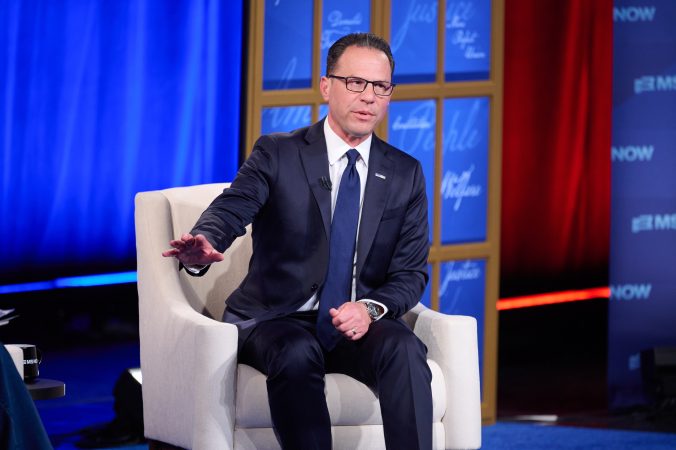
    Gov. Josh Shapiro’s teeming campaign war chest continues to grow.

    The first-term Democrat raised a whopping $12 million toward his reelection bid for Pennsylvania governor between April and June, his campaign said Wednesday — bringing his total fundraising to $50 million since January 2025.

    The announcement from Shapiro’s campaign came months ahead of the next financial filing deadline for Pennsylvania candidates, on Sept. 22.

    But the news of the governor’s eye-popping fundraising figures — topping the $10 million he raised between January and March — came the same week that federal elected officials and candidates are required to submit their financial reports.

    Shapiro is widely speculated to be considering a 2028 presidential run, though he has demurred when asked about any presidential ambitions. Several members of Congress, including U.S. Sens. Cory Booker of New Jersey, Mark Kelly of Arizona, and Chris Murphy of Connecticut, and U.S. Reps. Ro Khanna of California and Alexandria Ocasio-Cortez of New York — all of whom were due to file their latest fundraising totals by Wednesday night — are also seen as prospective candidates for the Democratic presidential primary.

    However, federal officials face different limits on the amounts of money they can receive. Individuals can give only $3,500 per candidate per election. In Pennsylvania, state law allows unlimited spending for candidates, and multiple donors have contributed five- and six-figure dollar amounts to Shapiro’s campaign.

    A spokesperson for Shapiro declined to comment on the timing of his fundraising announcement.

    If Shapiro decides to run for higher office, the money he has raised would not follow him. State campaigns are not permitted to transfer money to a presidential run. But his connections could provide a vast network of donors if he pursues the White House.

    Shapiro, who has boasted high popularity ratings in Pennsylvania throughout his term, has also consistently polled well ahead of his Republican gubernatorial opponent, State Treasurer Stacy Garrity.

    Garrity’s campaign did not provide its latest fundraising numbers. Full reports for both Garrity and Shapiro, including who gave the money and how much was spent, will be available in September. In the 2022 Pennsylvania governor’s race, Shapiro spent a historic $73 million to beat Republican State Sen. Doug Mastriano.

    During the last reporting cycle, Shapiro outraised Garrity 10-1 as she struggled to compete with Shapiro’s large donations from across the country. Her campaign has previously emphasized that most of her contributions came from individual Pennsylvanians.

    State Treasurer and Republican candidate for governor Stacy Garrity holds a rally in Bucks County Sept. 25, 2025 at the Newtown Sports & Events Center.Tom Gralish / Staff Photographer

    On Tuesday, Garrity stopped in Philadelphia for an event with Florida Gov. Ron DeSantis at the Union League about issues related to affordability, according to an event flyer. Media were denied entry into the private event.

    Shapiro was also in the city on Tuesday, touting the boost to education funding in the new state budget.

    The governor has repeatedly said his focus is on the November election in Pennsylvania, where he is vying not only for reelection but also to rally enthusiasm down-ballot in efforts to flip control of the state Senate and elect Democrats to four nationally watched congressional seats in attempts to flip the U.S. House.

    Shapiro has taken on a more prominent role in the state’s Democratic Party over the last year. A longtime ally, Larry Hailsham Jr., became the party’s executive director in October 2025, and since then, the governor has continued to invest in the party.

  • Data centers to add billions in power costs in 13 states, including Pennsylvania and New Jersey

    Data centers to add billions in power costs in 13 states, including Pennsylvania and New Jersey

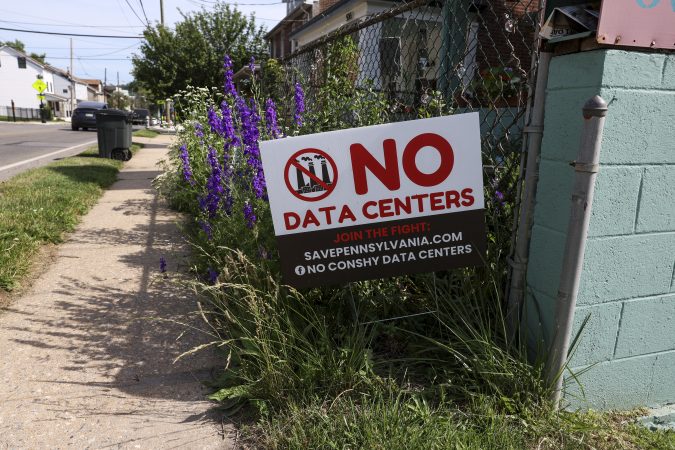
    PJM, the nation’s largest electrical grid operator, on Tuesday released results of an electricity auction that would add $6.3 billion in costs to the bills of millions of households and businesses within the next three years, an increase driven by the power demands of data centers.

    During the annual auction, power companies supplied prices that they were willing to accept to supply electricity to PJM at times of peak demand. Those prices are then factored into the electricity rates that are eventually charged to the grid’s customers in 13 Eastern states and the District of Columbia.

    In a statement, PJM said data centers were increasing electricity demand throughout the region.

    “These auction results show that demand for electricity continues to grow faster than electricity supply,” David Mills, president and chief executive at PJM, said in an announcement of the auction results. “We are working with government and industry leaders on multiple fronts to restore that balance by bringing on new generation as fast as possible and managing the growth of new load on the grid.”

    Over the last few years, individuals and politicians have grown frustrated with PJM’s operations as electricity prices have steadily increased. At the same time, anger over data centers has spread nationwide. New York on Tuesday announced the nation’s first statewide moratorium on construction of the giant facilities, a one-year pause to assess their impact on the environment and energy use.

    The PJM grid supplies electricity to 67 million people from Virginia Beach, Virginia, to Chicago. The network of power systems includes the world’s largest cluster of data centers, in northern Virginia.

    “Demand growth is not going away,” said Patrick Cicero, a former state-appointed consumer advocate for Pennsylvania who is now counsel for the Pennsylvania Utility Law Project, which assists low-income consumers. “The bottom line is high prices are going to remain in place.”

    In its role as a regional grid manager, PJM effectively sets a significant portion of retail electricity rates, but governors and their appointed regulators have little sway over it. PJM is regulated by the Federal Energy Regulatory Commission, not state lawmakers.

    PJM’s annual auctions help determine the electricity costs for the two years after the auction. Since 2024, the auctions have added in total about $29 billion in costs to all utility customers in the PJM region because of data centers, according to Monitoring Analytics, PJM’s independent market monitor. The market monitor also produced the estimate of $6.3 billion in additional costs from the latest auction, which was held on June 30.

    The high costs have so angered Pennsylvania Gov. Josh Shapiro, a Democrat, that he sued PJM in December 2024. Shapiro and PJM reached a settlement that capped the price set by the auction, saving consumers billions of dollars.

    The PJM grid has often had only a thin buffer of excess power during extreme weather such as the recent heat dome that sent temperatures soaring across the East.

    Shapiro and other governors have complained that PJM has been too slow to connect more power plants, solar and wind farms, batteries and other resources that would have helped lower prices and eased strain on the grid.

    PJM’s grid serves all or part of New Jersey, Pennsylvania, Delaware, Maryland, Virginia, West Virginia, North Carolina, Tennessee, Kentucky, Ohio, Indiana, Illinois and Michigan, as well as the District of Columbia.

    This article originally appeared in The New York Times.

  • House votes for permanent daylight saving time

    House votes for permanent daylight saving time

    WASHINGTON — The House on Tuesday voted overwhelmingly to make daylight saving time permanent, but the measure to spare Americans the semiannual clock-changing that shortens winter days faces an uncertain path to enactment.

    The measure, fittingly named the “Sunshine Protection Act,” passed on a 308-117 vote. Its fate is murky in the Senate, where one GOP leader said it was unclear whether it could move ahead and at least one Republican appears inclined to try to block it.

    President Donald Trump has championed the effort to save an extra hour of daylight before nightfall and make the time zone permanent, describing the ritual of moving clocks forward in the spring and back in the fall a “ridiculous, twice yearly production.”

    “We are going with the far more popular alternative, Saving Daylight, which gives you a longer, brighter Day,” Trump wrote in a social media post in May. “And who can be against that.”

    A sizable bloc of Florida Republicans in Congress is leading the charge on legislation that would do just that, mandating daylight saving time nationwide for the entire year. Rep. Vern Buchanan of the Tampa Bay area is backing the bill, and Rep. Anna Paulina Luna, another Tampa Bay-area Republican, cosponsored it.

    House leaders agreed to allow a vote on the measure this week as a sweetener for Luna in their efforts to persuade her to lift a legislative blockade she had maintained as she sought to force Senate action on a voting restriction bill Trump has championed.

    Congress first passed the Standard Time Act in 1918 and established federal oversight of time zones. Then came the Uniform Time Act of 1966, which said states can observe daylight saving time from late spring to early fall. The country’s clock-changing practices were last altered in 2005, with the enactment of bipartisan legislation that extended daylight saving time for several weeks.

    Most states comply, though there are exceptions: Hawaii and most of Arizona abide by standard time year round, as do Puerto Rico, Guam, American Samoa, the U.S. Virgin Islands and the Northern Mariana Islands. Nineteen states have moved to make daylight saving time permanent, though those laws have not taken effect because federal law does not currently allow people to live in daylight saving time year-round.

    Not everyone agrees with the proposed change. Reps. Mary Gay Scanlon, D-Pa., and Pat Harrigan, R-N.C., backed an alternative bill earlier this month that would mandate standard time — which Americans observe between November and March — be used all year.

    “Morning light is an environmental cue to set our body’s internal clocks and promote alertness.” Scanlon said. “And dim evening light tells our bodies it’s time to sleep.”

    Though many Americans find they are groggy and tired after changing their clocks, sleep experts warn that permanent daylight saving time would hurt, not help, sleep health. The Coalition for Permanent Standard Time, an advocacy group, argues that the winter time zone aligns closely with the body’s circadian rhythm, which is its internal clock.

    Should the bill pass, state lawmakers could opt out of permanent daylight saving time in favor of year-round standard time if they enacted such legislation.

    Buchanan has said the measure would give Americans all of the health and recreational benefits that an extra hour of sunshine bring, including more time outside and less seasonal depression. Florida’s legislature passed similar legislation in 2018, making it the first state to do so.

    “The twice-yearly clock change is a relic of the past that no longer reflects the way Americans live, work and conduct business in the 21st century,” said Rep. Gus Bilirakis, R-Fla.

    It isn’t the first time Congress has grappled with turning back the clocks. The United States tried in 1974 to ditch the clock-switching, but went back to flipping the clocks twice a year following widespread discontent. In 2022, the Senate unanimously passed then-Sen. Marco Rubio’s bill to make daylight saving time permanent, but that bill died in the House.

    Sen. John Barrasso of Wyoming, the No. 2 Republican, noted Tuesday that the House had “hit the snooze alarm” back then on the Senate measure.

    “We’ll see what happens when it gets here,” he told reporters at the Capitol, referring to the current House bill.

    He would not say whether he backed the measure. “Depends where you’re living in the country and the impact that it would be in your own home state,” Barrasso said. “So, it’s not as simple as what one state might like.”

    Sen. Tom Cotton, R-Ark., said in a floor speech last year that he regretted not objecting to Rubio’s bill.

    “By moving the clock back an hour in winter,” he said, “permanent daylight saving time would push winter sunrises to an absurdly late hour, depriving Americans of morning sunshine that’s essential for our safety and well-being.”

    This article originally appeared in The New York Times.

  • 1 dead and 3 missing after boat carrying mostly family members sinks near Alcatraz Island

    1 dead and 3 missing after boat carrying mostly family members sinks near Alcatraz Island

    SAN FRANCISCO — One person died, three people were missing and 16 were rescued from the waters off San Francisco after a pontoon boat sank Tuesday afternoon while carrying mostly family members as part of a memorial service, authorities said.

    Crews arriving on the scene near Alcatraz Island found a three-deck pontoon vessel almost fully under water with the motor still running and leaking fuel, San Francisco Fire Chief Dean Crispen said.

    By Tuesday evening, authorities were searching for the missing in open ocean on the western side of the Golden Gate Bridge. The search, which involved divers, helicopters and vessels, was expected to continue all night, officials said.

    Authorities updated the initial number of missing people from two to three after hearing from witnesses.

    “Right now we are in full rescue mode,” Crispen said, adding that three people who suffered injuries falling from the boat were taken to a hospital and expected to be released Tuesday night.

    Alcatraz Island, once a federal prison infamously inescapable due to the strong ocean currents and cold Pacific waters that surround it, is now a tourist destination. It is located in San Francisco Bay about a mile north of the city’s shoreline, in an often windy area that attracts sailboats and other recreational vessels.

    Videos of the scene showed boats deployed to rescue people who had been on the vessel, which was largely submerged with objects floating nearby.

    The boating mishap was initially reported as a fire, “but we now don’t have any evidence of that,” Crispen said.

    The person who died was alive when plucked from the frigid waters by rescue crews but later died. A dog onboard also died.

    All those rescued were taken to Gashouse Cove Marina, a small craft harbor in San Francisco.

    Aaron Anfinson, captain of the Bass-Tub, told the San Francisco Chronicle his boat was carrying guests toward the Golden Gate Bridge in “pretty windy, a little choppy” waters when a man on a smaller vessel flagged them down and pointed to a pontoon boat in the middle of the bay that appeared to be on fire.

    By the time the Bass-Tub reached it, the flames were out, but the pontoon was sinking. Some people were already in the water while others remained aboard, Anfinson said, adding that they tried to hand out life jackets to the passengers.

    One woman’s head was injured.

    “We figured we would get her first,” Anfinson said. A deckhand lowered a swim ladder and threw a life ring into the water to help pull her aboard.

    “It was scary,” Anfinson said. “I don’t want to see anybody in that situation.”

    Fire Lt. Mariano Elias said the vessel, described as a “pontoon pleasure boat,” was about 600 yards from Alcatraz and the emergency call came in just after 3:30 p.m.

    Crispen said the vessel was believed to have launched near the St. Francis Yacht Club in San Francisco. A person who answered the phone there said the club did not have any information on what happened.

    Live video from the scene showed a man and a woman wrapped in blankets and sitting on a curb before walking to a nearby ambulance. A yellow tarp covered a body on the dock.

    The Coast Guard and Oakland police also helped in the rescue, Elias said.

  • Five Philly-area arts organizations receive a total of $500,000 in grant funding

    Five Philly-area arts organizations receive a total of $500,000 in grant funding

    As local arts groups continue to face decreases in city funding, a multiyear initiative is lending a hand to Philly-area craft makers and the organizations that support them.

    Through a collaboration with Etsy and the Center for Craft, five Philly-based arts organizations have received a combined $500,000 in grant funding. The recipients are the Brandywine Workshop and Archives, the Clay Studio, InLiquid, Fleisher Art Memorial, and the Museum for Art in Wood.

    Each organization received a $100,000 place-based, unrestricted grant, allowing them to direct funding where it is most needed.

    “It feels really exciting to be recognized in this way,” said Rebecca Morrison, executive director of the Brandywine Workshop and Archives. “Being recognized on a national stage in a city filled with so many incredible organizations is really special to us.”

    The Clay Studio’s open air roof deck event space with view of Center City Philadelphia.Courtesy of Sam Oberter

    The funding is powered by Etsy and the Center for Craft’s Craft Catalyst Initiative, a new, multiyear collaboration that aims to support “greater organizational impact and resilience” within arts communities across the country.

    According to the Center for Craft website, the two organizations will award a total of $10 million over three years to select “craft hubs.”

    The Philly craft hub is among the first round of recipients. Other selected regions include Asheville, N.C., Berea, Ky., Santa Fe, N.M., and the San Francisco Bay Area.

    An exterior image of the Museum for Art in Wood in Old City, Philadelphia, PA.Courtesy of John Carlano

    In an “increasingly AI-driven and digitized world,” Center for Craft executive director Stephanie Moore said, these investments are “essential” for local arts groups and craft makers to thrive.

    “This initiative will fortify craft’s place by investing in the spaces, relationships, and infrastructure that encourage artists, sustain creative careers, and strengthen communities across the country,” Moore said in a statement.

    According to the Center for Craft website, these regions were selected based on research commissioned by Etsy.

    Last month, arts organizations were notified that they were selected, and the grants were quickly distributed.

    Artists at work inside The Clay Studio.Courtesy of Sam Oberter

    Rachel Zimmerman, founder and executive director of InLiquid, a visual arts organization in Kensington, has already used a portion of the funds to give her staff raises.

    “They are partly responsibly for this,” she said. “We couldn’t do the work without the people.”

    Zimmerman said the funding arrived a year after InLiquid’s worst financial period since its founding.

    The economic challenges were worsened by lower state and city funding, which led to “fierce” competition among other struggling arts groups to acquire fewer resources.

    Zimmerman said the grant not only eased InLiquid’s financial struggles, but was also “affirming.”

    Her hope is that it will incentivize other large corporations to invest in small, grassroots institutions that are working to uplift and sustain the careers of local creatives. “It’s not charity. We’re doing the work,” she said.

    While her organization is still mapping out plans to administer the funds, Morrison said, she is excited to forge stronger connections and collaborations with other grant recipients.

    “It’s great to know we have these organizations in our cohort, so we can learn from each other,” Morrison said. “With grant funding not being as easily accessible as it was in the past, this is a great way for us to work together.”

    In a statement, Monica Zimmerman, executive director of Fleisher Art Memorial, said this recognition proves what she and other arts leaders already know: “Philly runs on creatives.”

    For more information, visit craftcatalyst.centerforcraft.org.

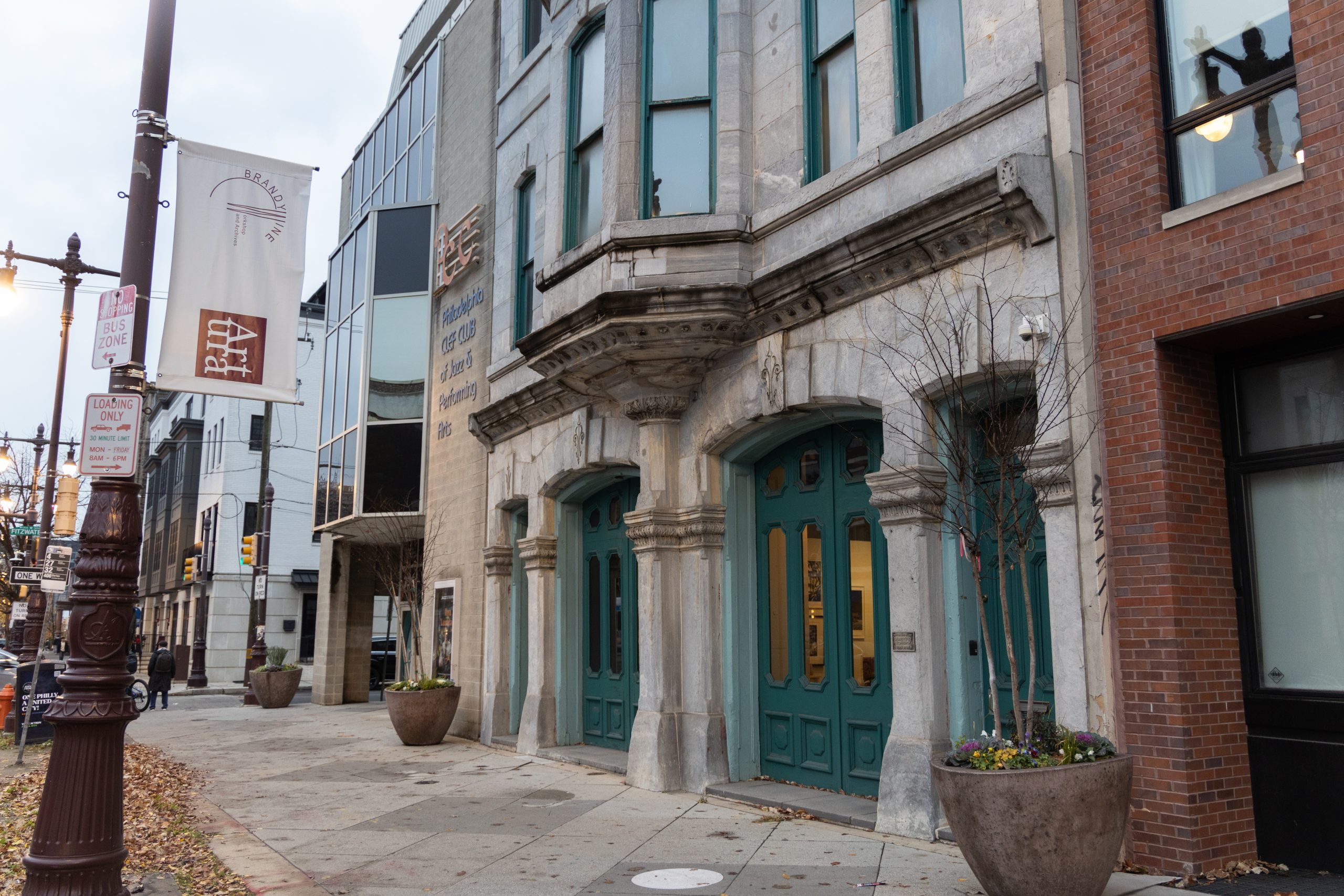
    An exterior image of the Brandywine Workshop & Archive building.Courtesy of Brandywine Workshop and Archives