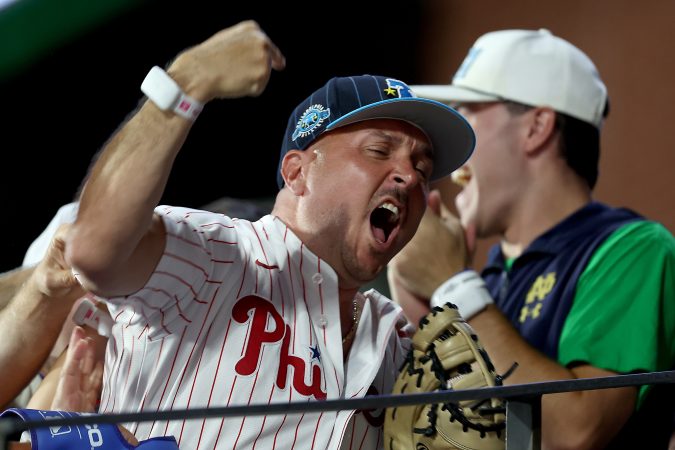
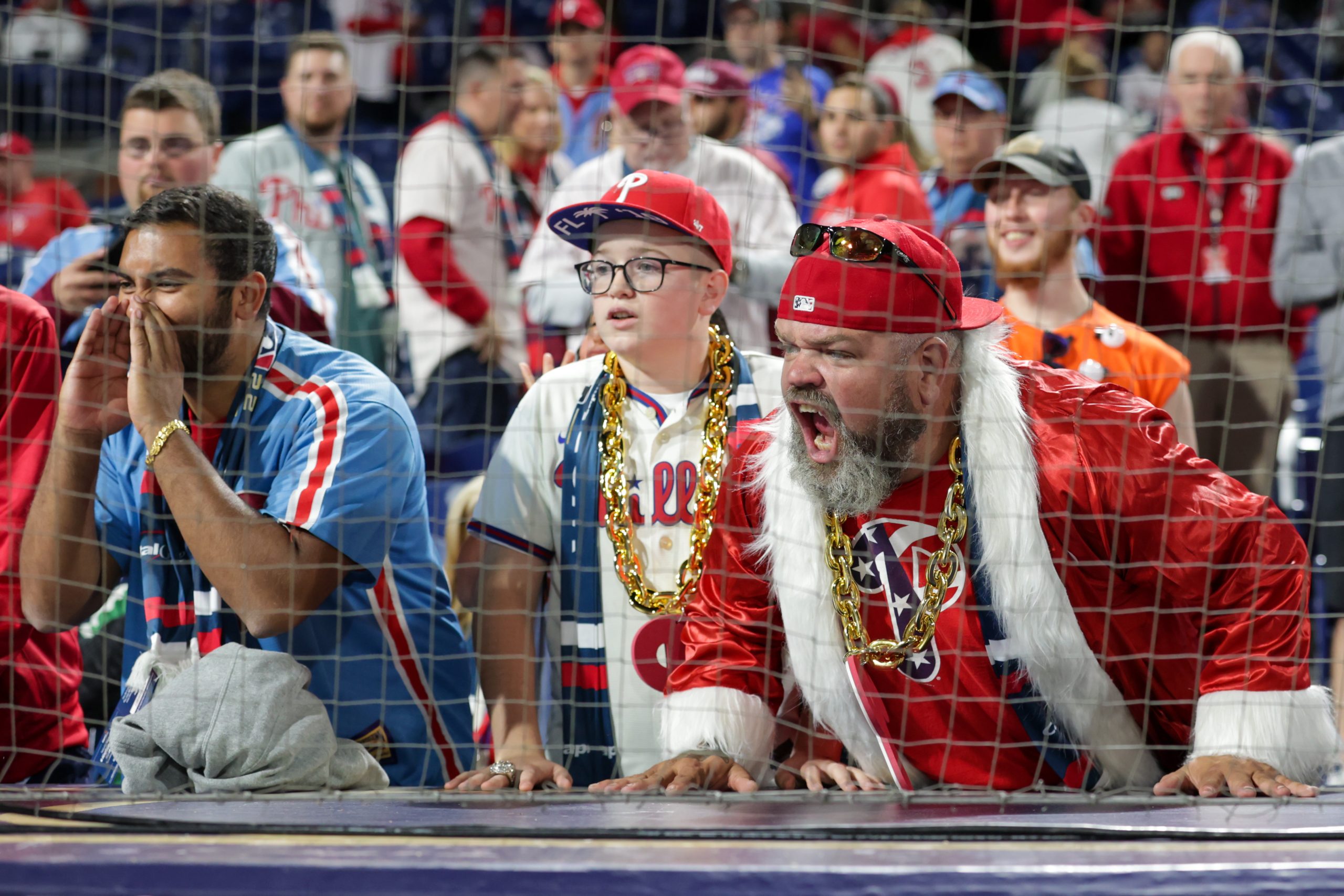
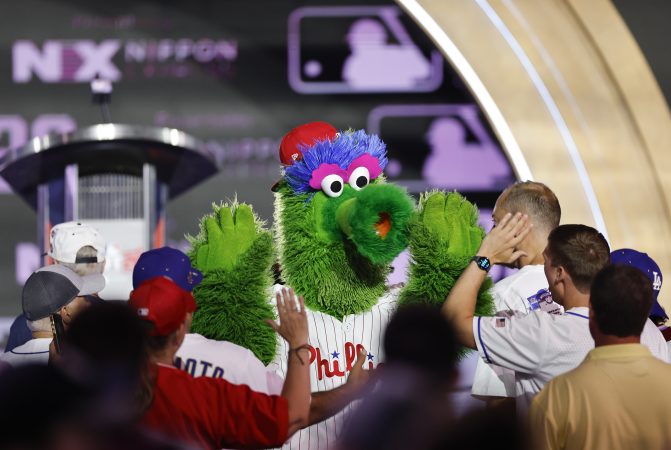
I understand some folks on social media are very upset with Phillies fans for booing every baseball player but their own during the Home Run Derby at Citizens Bank Park on Monday night.
To those whom we’ve offended, may I humbly say: BOOOOO!!! There’s no crying in baseball, you whiny babies.
I wasn’t there in person so sadly I can’t claim to have been a part of the cacophonous crowd that joyfully jeered player after player as they walked onto the field (except, of course, for Kyle Schwarber and Bryce Harper, who received thunderous applause), but I did laugh like hell while watching the incessant booing on TV.
Philly literally booed these guys just for daring to show up and be introduced at our ballpark. We are so unserious.
Our humor is just as brutal as our honesty and while it may not seem like it on the surface, both come from a place of respect. Sure, we could be fake and feign applause for players from other teams, or we could be “polite” and not say anything at all, but we’d rather be engaged and enjoy a good time and a good ribbing.
Heck, Monday night Phillies fans booed one of the kids picking up baseballs in the outfield because he didn’t catch a fly ball, so yeah, puppies and sunshine should be on high alert.
Over on Threads, users posted: “How totally classless!” and “The Philly crowd booing every single player is really gross” and those people were rightfully and immediately ratioed. Philadelphians responded with brilliant retorts like: “If you don’t get booed in Philly, you’re not an All-Star” and “If those players didn’t want to be booed, they should play for the Phillies.”
You know who didn’t seem to have a problem with the boos? The players who actually got booed! They appeared to get it and have fun with it. Every story that’s really a home run needs a good antagonist and a dramatic arc. For that night, they were our Moriartys and we were theirs.
Phillies Bryce Harper climbs the ropes of the boxing ring during his introduction at the MLB Home Run Derby in Philadelphia on Monday.Yong Kim / Staff Photographer
If you can’t stomach some theatrics when the Home Run Derby is broadcast on Netflix — there was a boxing ring on the field and Will Ferrell was providing unhinged commentary — then you probably should’ve watched the Little House on the Prairie remake instead, Laura Ingalls Wilder.
Listen, I understand being surprised by the boos if you’re not familiar with Philadelphia’s dark and dystopian joie de vivre. Before I moved here, I don’t think I’d ever booed anything in my life or had ever been booed, and I couldn’t imagine a scenario in which either would happen (outside of my nightmares and Renaissance fairs, that is).
But after 19 years in Philly, I can now proudly say I’ve been booed in person, over the phone, via email, and on social media by Philadelphians, and I have participated in many communal and individual booing sessions. I didn’t realize how cathartic it could be or how much I’d been suppressing my medieval side, but I know now and have vowed to boo better.
Philadelphia Phillies fans boo the Houston Astros after batting practice ahead of baseball’s World Series Game 5 in 2022. We boo people at batting practice and you’re surprised we booed players at the Home Run Derby? Charles Fox / Staff Photographer
Most recently, I booed a tourist I was interviewing on July 2 when she told me she was visiting Philly through the 3rd and then heading to Boston to celebrate Independence Day on July 4. I did give her a pass when she later said her son and grandson lived in Boston, but I did not apologize. We can’t be getting soft around here.
I mean this is a city where our mascots throw popcorn at babies, harass opposing coaches, and eat people while at work — and they’re the ultimate Philly fans, so expecting us to treat baseball like the ballet is totally bananas (and I’m not talking about the Savannahs).
For those who remain offended, I suggest looking in a mirror and asking: When is the last time I booed something? If the answer is “never” or “not in a while,” give it a go — you may not realize how much you’ve been holding back.
And if you don’t want to boo yourself, turn on a Phillies game and boo us. We’ll take the compliment, because we can take a joke.
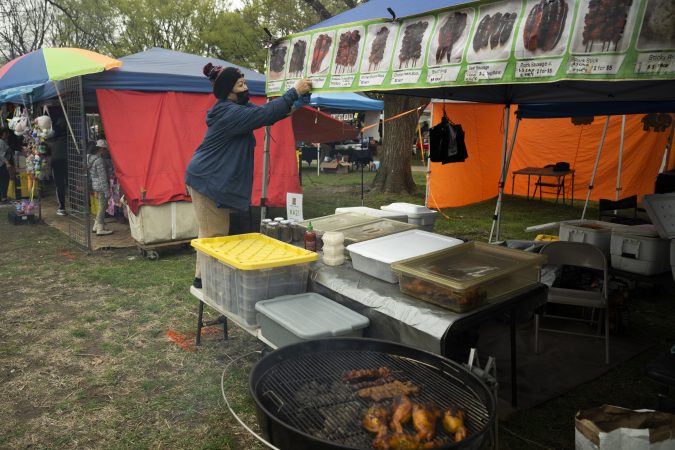
The Southeast Asian Market in FDR Park plans to operate on its regular schedule this weekend, though likely not at full capacity after last weekend’s storms caused damage and forced the market to close. The market’s Dolla Holla event, featuring items like barbecue sticks and light bites for $1, has been moved to this Sunday.
Saturday’s sudden microbursts closed the market early, wreaking havoc on all 53 vendors’ tents. The annual market, which operates on Saturdays and Sundays until Oct. 31, was also closed on Sunday as damage was assessed.
District 7 Parks and Recreation employee Luther Bennett throws part of a downed tree into a trash truck at FDR Park on Sunday, July 12, 2026 in Philadelphia. On Saturday severe thunderstorms caused damage across the region.Monica Herndon / Staff Photographer
Food inventory, merchandise, and tents were all destroyed. The storms were frightening. Catzie Vilayphonh, the market’s community cultivator, said she received photos from staffers “as they were hiding in the porta-potties.”
Vilayphonh was uncertain which vendors would be participating in this weekend’s market but said the hours, from 10 a.m. to 6 p.m., would be the same as usual.
After the storm, market organizers immediately looked to support the vendors, including soliciting community donations to fund the replacement of tents and other materials.
The timing of the storms made the vendors’ losses all the more difficult. “This is the middle of the season, not the end. It’s not like you’re preparing for bad weather. It was supposed to be like any other day,” Vilayphonh said. “Tents were completely ripped, some were inside out, some had nothing left but the frame.”
Vilayphonh, who has been fielding many messages and emails from the public, said the market’s fans have responded to the call for help. “It’s been really great hearing from people who have visited the market before and are now looking for ways to support.”
A journalistic mentor of mine back in the 1980s told me that Harry Truman, pressed for a comment on the passing of a political enemy, finally said, “It’s a damn shame when anybody dies.” Of course, like most perfect quotes, HST probably never actually said this, yet I find occasion to think of these words often. On Saturday night, South Carolina GOP Sen. Lindsey Graham — whose moral compass went haywire in the 2010s when a brief moment of truth–telling about Donald Trump melted into embarrassing capitulation — died suddenly from heart problems. He was just 71. It’s a damn shame.
Dems need to give up on fake blue-collar campaigns like Platner’s
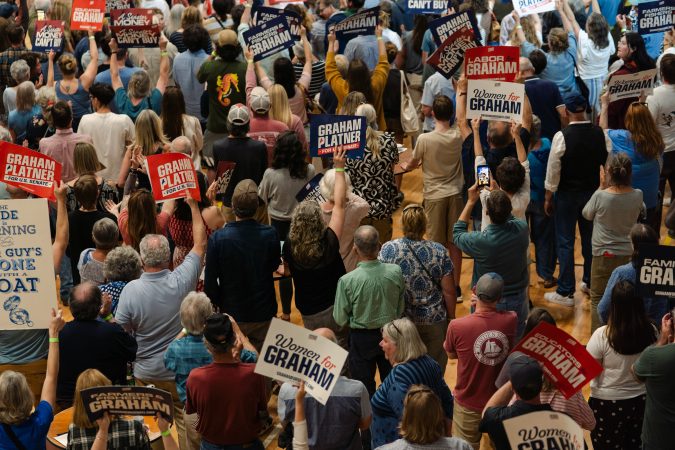
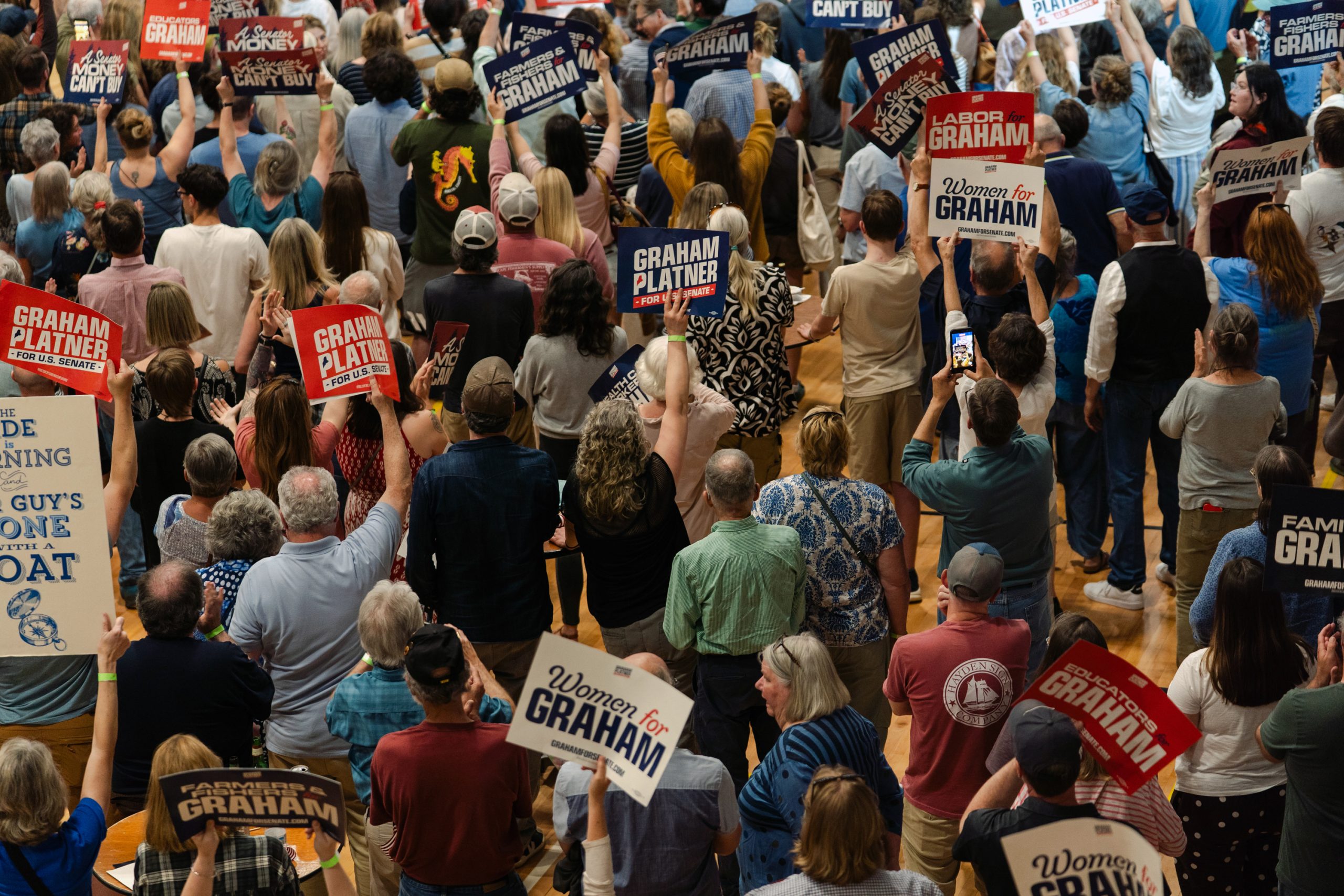
Supporters cheer for Graham Platner in Blue Hill, Maine, after he won the Democratic Senate primary on June 9. Platner’s bid for the Senate inspired progressive Democrats. But the campaign, which he suspended July 8, was messy, disorganized and ultimately doomed by a steady drip of scandal. SOPHIE PARK
Graham Platner, the failed Maine Democratic Senate candidate, was introduced to most of us outside of the Pine Tree State less as a human being than as a fully formed narrative.
The ruggedredhead with angry eyes was an ex-Marine from the Iraq and Afghanistan wars who became an oyster farmer and then a political outsider with all the right words for an electorate that’s mad as hell and isn’t going to take it anymore.
We now know that Platner’s origin story — compelling, but larded with omissions and sprinkled with lies — belonged on the fiction shelf. But even after the Democrats’ scandal-scarred June primary winner accepted the inevitable and ended his candidacy on Friday, he lives on as an avatar upon which everyone with a stake in a badly broken Democratic party can project their distrust and rage toward others — folks who ought to be their allies in an all-out war against fascism.
Days later, the Platner discourse is almost as toxic as the candidate himself. People who voice their opinions, even in 280 characters on social media, get called everything from sexist Bernie-bro rape apologists to Quislings who want big corporations to keep running the Democrats into the ground, and all the rest in between. Don’t even mention Israel. In fact, don’t @ me after this is posted.
Having said all that, there is a conversation that must be had by the Democrats, and probably a wider circle. And the disappearance of Platner himself from the picture makes that easier, because I think we can all stipulate that as a human being he was clearly not worthy to be a U.S. senator, even in the Senate’s current morally diminished state.
There is another Graham Platner somewhere on Earth 2 who also suffered PTSD and developed a drinking problem fighting in pointless wars, and who also got a Nazi tattoo and posted wretched stuff on Reddit, but turned his life around in a glorious redemption song. But that’s not the Platner we got on here on Earth 1. Instead of an apology, he was weirdly defensive about his past, because — we now know — he was hiding stuff that was even worse than that.
Although Platner has denied the most serious charge of a sexual assault, there should be zero tolerance in the Democratic Party for the type of sexual misconduct that’s been confirmed, let alone what’s been additionally alleged. That’s not just the only proper moral stance, but it sets Dems apart from a twisted GOP that nominated Trump three times. Platner’s disappearance is a blessing to everyone.
But even with that matter resolved, we still haven’t answered the bigger question that I posed the only other time I wrote about Platner back in the spring: Why did a majority of Maine Democrats — roughly 150,000 voters — ignore the party establishment to back this guy?
But first Democrats — and just about everyone, frankly — need to do a better job understanding not just the “why” of Platner supporters, but the “who.” Baked into the Platner myth was this notion that in running a gruff-sounding ex-Marine and oyster farmer, Democrats had found a key to regaining the long-lost white working class.
Two huge problems with this. First — and this will sound familiar here in Pennsylvania where shorts-and-hoodie-wearing Sen. John Fetterman grew up upper middle class before donning a blue collar — Platner comes from a fairly privileged background. He’s the son of a lawyer and upscale restaurant owner and grandson of a famous architect; he started high school at the super-elite Hotchkiss School.
Which brings us to the crux of the problem: the notion that Platner’s pre-implosion success was his ability to win back working-class voters in an overwhelmingly white state. Polls exposed this all as a lie. A late June survey from the New York Times/Portland Press Herald/Siena showed Platner losing white, non-college educated voters by a whopping 21% to the GOP incumbent Sen. Susan Collins. So what gave him a shot at winning? A massive 37% edge among college degree holders.
Look, we all know that it’s been the obsessive mantra of the political pundit class that Democrats will never fully win back America without restoring the working-class coalition that elected Franklin Roosevelt four times during the New Deal era. I hate to be a contrarian here, but what if that’s not true?
A society that over a half-century has once again made higher education an elite sport and now has a right-wing media and demagogues like Trump to heighten working-class grievances and blame the wrong people has created voters who — at least for now (hold this thought) — arguably aren’t worth chasing after.
The frayed alliance of progressives and liberals who comprise the core of the Democratic base do some dumb stuff — opposing new units that could lower housing costs, or “nice white parents” leading to de facto school segregation — that should stop.
An America that’s not inclusive and that isn’t fair when it comes to gross income inequality, not to mention who gets to see a doctor or send their kid to college, isn’t a cause worth fighting for. And there’s already a healthy number of working-class people — not the majority, not yet — who would agree with this.
Platner was a bad guy but he appealed to voters who wanted good things. Let’s not bemoan the fact that his movement was based on educated people. Let’s build on that. Instead of lowering our values to win elections, let’s play the long game to lift more people up to a better place.
It’s way past time for college-educated progressives and our allies to stop apologizing for the things we believe in. The current push to find a candidate who can replace Platner and fight for all the right stuff — without the personal baggage of their predecessor — is a great place to start. Maybe it’s even time to revive the old cliché: As Maine goes, so goes the nation.
Yo, do this!
Tuesday is the folk-music legend Woody Guthrie’s 114th birthday. I use the present tense because it very much feels like the singer who influenced living icons from Bob Dylan to Bruce Springsteen is still with us. Now, a friend, the pioneering rock journalist Greg Mitchell, has directed a new documentary about the musician, his political activism in the mid-20th century, and his lasting influence: Woody Guthrie and the Ghost of Tom Joad. It’s now streaming on PBS.org and will also be popping up on PBS stations this summer. You can — and should! — stream it here.
Monday night I read a remarkable piece of journalism that I feel compelled to share. Last week, a lot of America was talking about a photo from July 4 that showed a young Black woman on a D.C. Metro train surrounded by masked members of the white supremacist Patriot Front. There was so much commentary about what this woman must be feeling and thinking, and almost all of it — as shown by some remarkable reporting by former Inquirer journalist Ellie Silverman, writing for NOTUS — was wrong. The truth is heartbreaking.
Ask me anything
Question: Why do we not know what’s going on with (ailing Kentucky Sen. Mitch) McConnell? What is the Republican endgame? What’s the benefit to prolonging the process of determining a replacement? What is that process (seems to be in dispute)?
Answer: We know a little more now than we did when I addressed this issue last week. His staff on Sunday released a brief statement and what is being called a “proof of life photo” — with that morning’s Washington Post sports page visible in the shot — seeking to explain McConnell’s month-long hospitalization and hoped-for return to the Senate. There were, of course, immediate conspiracy theories that the photo was artificial intelligence, but there’s no compelling evidence of that. The biggest mystery is, why doesn’t the 84-year-old McConnell just quit, with only about six months left until he leaves office in January? Kentucky has changed its Senate replacement law a couple of times, mainly because GOP lawmakers don’t want Democratic Gov. Andy Beshear making the pick. The new law requires a special election, but there probably will not be one if McConnell stays in office through Aug. 3. Republicans seem desperate to avoid the special election, and I’m not sure why, since McConnell surely isn’t helping advance the Trump agenda from his hospital bed.
What you’re saying about…
You really didn’t think I could go a whole newsletter without mentioning soccer, did you? Last week’s question about Trump’s FIFA intervention and the reversal of the American Folarin Balogun’s red-card suspension drew a unanimous response: The president was wrong to get involved, and he seemed to create a negative vibe around the U.S. team before it got blown out of the World Cup by Belgium, 4-1. “To me, it appeared to be the wrong call, but the ref called it.” wrote ex-soccer mom Suzanne Urban Ryan. “We had to live with it. Trump getting involved was just really poor judgement based on his need to win a game that he is not even a player.” Added Jordan Lang: “I’m sure his corrupted meddling negatively affected the psychology of the U.S players.” Yup.
📮 This week’s question: Trump plans to address the nation in prime time Thursday with ginned-up information about his bogus and debunked claim that the 2020 election was stolen from him. He is laying the groundwork for November, and election interference on a scale to rival the Jim Crow South. How can Congress, the courts, the media, and everyday citizens respond to this dire threat before it spirals out of control? Please email me your answer and put the exact phrase “Trump election meddling” in the subject line.
Backstory on why ICE is killing immigrants, again
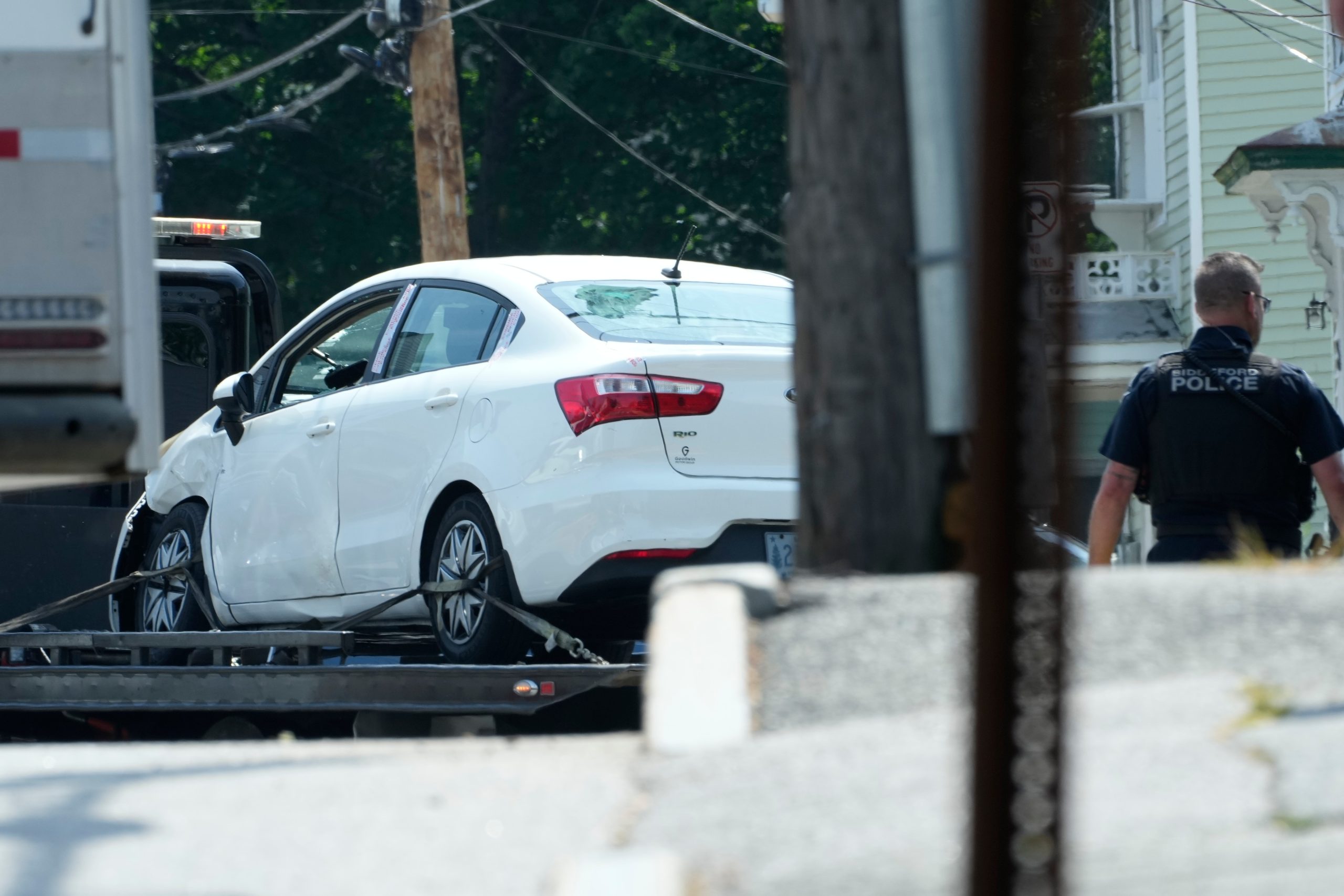
A vehicle with a damaged window is transported away from the scene of a shooting involving U.S. Immigration and Customs Enforcement, Monday in Biddeford, Maine. Robert F. Bukaty
The fight against police brutality against African Americans in the late 2010s found its rallying cry when New York City police choked and killed a street peddler named Eric Garner, whose last words were. “I can’t breathe!” Now, Monday’s latest fatal shooting by U.S. Immigration and Customs Enforcement agents that shattered the morning calm of Biddeford, Maine has produced a new mantra. As 26-year-old Joan Sebastian Guerrero lay dying on the pavement — shot in the head, then dragged from his car and handcuffed — a bystander heard him say in anguish: “I tried to stop.”
Moments earlier, the man, reported to be a Colombian national with a U.S. work permit, had left his home, possibly with his daughter, in a white Kia sedan, which was hemmed in by ICE agents in their vehicles. Although the Department of Homeland Security changed the wording of its statements over the course of the day, it ultimately reported that an ICE agent shot Guerrero because the driver attempted to flee and the officer was “fearing for public safety.” But ICE and DHS, whose officers have now shot and killed at least 11 people since Donald Trump returned to office, have repeatedly seen their versions unravel as more video and witnesses emerged. The two most recent attacks — Monday’s assault on Guerrero and last week’s Houston shooting of 52-year-old Mexican national Lorenzo Salgado Araujo — happened on working-class residential streets without clear videos of the shootings, and with ICE agents not wearing body cams.
Still, a pattern is starting to emerge as DHS and its new leader, the former Oklahoma senator Markwayne Mullin, put a flood of new, barely trained ICE recruits on the streets in attempt to make mass arrests of immigrants without the same level of hoopla and backlash that happened in cities like Minneapolis and Chicago under Mullin’s predecessor, Kristi Noem. In both the Houston and Biddeford shootings, ICE began the morning in what it claimed was a targeted operation seeking a specific immigrant with a removal order, only to try to arrest and ultimately kill men, in Salgado and Guerrero, who were not the supposed targets.
It’s quickly becoming clear that ICE’s new strategy is a recipe for disaster. Both Salgado and Guerrero, according to what we know from witness accounts, didn’t seem to know what exactly to do when their vehicles were surrounded by unmarked vans and yelling men. In both cases, ICE agents interpreted the predictable panic and chaos as aggression, and made a split-second decision to end a human life forever. It increasingly looks as if the federal agents — facing an impossibly ambitious goal from the Trump regime of arresting and deporting 1 million people a year — insist they have a name on a sheet of paper, when in reality they are racially profiling brown-skinned men driving to blue-collar jobs.
Like so many projects of our current government, the new ICE scheme is not only inhumane but also dumb and counterproductive. Mullin’s apparent new strategy was to meet the high arrest quotas sought by Trump and his immigration guru Stephen Miller without generating the kind of public protest and backlash that all but drove DHS out of Minnesota this winter. It’s not working. Even before Guerrero’s name was released, angry demonstrators took to the streets in Biddeford and stormed the office of the state’s GOP Sen. Susan Collins, who recently voted for a $70 billion cash infusion for immigration raids.
The tactics may have changed slightly, but the repulsive devaluation of human life has not. Mass deportation is a failure — strategically, politically, and morally.
What I wrote on this date in 2019
Some days my past writings read like Nostradamus, but more often than not they reveal how fleeting our political moments can be. On this date seven years ago, this columnist joined a lot of progressive voters in swooning over the early-stage presidential ambitions of Massachusetts Democratic Sen. Elizabeth Warren, who had just spoken at the left-wing convention Netroots Nation here in Philadelphia. “With her slam-dunk performance Saturday,” I wrote, “Elizabeth Warren became president … of the American progressive movement, anyway.” But Sen. Bernie Sanders had other ideas about that, and then Joe Biden and South Carolina voters came along with different ideas about Warren, Sanders, and control of the Democratic Party. Read the rest: “Netroots Nation was the day Elizabeth Warren became president of the American left.”
Recommended Inquirer reading
It was a full week for me, and for American outrage. First, I tackled the Houston ICE killing of 52-year-old Mexican national Lorenzo Salgado Araujo and the return of ambitious immigration raids to American cities. I noted that the new ICE strategy aimed to ramp up arrests without generating public outcry, and I urged readers not to go to sleep on mass deportation. Over the weekend, I wrote about the similarities between the Trump regime and the disastrous ancient reign of the Roman emperor Caligula. I detailed how Trump’s growing paranoia that he will be assassinated in office is causing new bloodshed in the Persian Gulf and inspiring fresh efforts to quash civil liberties here at home.
Kenesaw Mountain Landis must be spinning in his grave. He was the former federal judge who tried Chicago’s notorious “Black Sox” for throwing the 1919 World Series at the behest of New York gamblers, then became baseball commissioner to clean up the national pastime. For decades, Major League Baseball shunned even the slightest whiff of gambling connections that might taint the sport — but times have changed. My Inquirer colleague David Gambacorta — one of the best investigative reporters in the business — last week broke a remarkable story about how the lucrative betting site FanDuel egged on a local addicted gambler to keep playing until he lost some $1.5 million. Plot twist: FanDuel’s effort includedhaving Phillies slugger Bryce Harper send a personalized video to please the local bettor. It’s disturbing that a) Harper, with a 13-year $330 million contract, also feels the need to peddle $899 videos on Cameo and b) he has a relationship with people at a gambling website. But FanDuel is now “the official sports betting partner” of MLB — an appalling relationship that only encourages morally dubious behavior like the Harper video. The rank corruption of modern American society, including sports, is why we need investigative reporters like Gambacorta. You can read the next installments in this saga, and support his work, when you subscribe to The Inquirer.
By submitting your written, visual, and/or audio contributions, you agree to The Inquirer’s Terms of Use, including the grant of rights in Section 10.
A Malvern man was sentenced Tuesday to more than three years in prison for having a collection of homemade bombs at his house — a discovery police made after he was arrested for bringing guns to a “No Kings” protest in West Chester last year.
Kevin Krebs, 32, apologized for his actions, saying he had let his family down and adding: “I really screwed up, and I regret everything that I did.”
His family said in court that Krebs — who was adopted from a Lithuanian orphanage as a toddler — had suffered from lifelong developmental disabilities, including autism. And they believed his interest in bombs and firearms was part of an obsessive nature that he also displayed in other, non-threatening technical areas, such as electrical work, which he performed professionally.
Krebs told U.S. District Judge Mary Kay Costello that he had built the bombs only to blow up pumpkins in the Poconos, calling his pursuit “purely recreational.”
Costello said she was not sure that was true. And in any case, she said, his possession and interest in building such devices was a threat to himself and others.
“Just having these bombs in your home posed a grave danger to other people,” Costello said.
In addition to imposing a 37-month prison sentence, Costello ordered Krebs to serve three years of supervised release. He had pleaded guilty in December to a charge of possessing unregistered devices.
A firearms case remains pending in Chester County, with a trial scheduled to begin next week, according to court records.
The events that led to Krebs’ arrest began last June, when attendees at a “No Kings” protest in West Chester told officers they thought Krebs had been carrying a gun.
Police who stopped Krebs found him carrying a loaded handgun, extra rounds of ammunition, and other weapons including a knife and bayonet, prosecutors said. He also had an AR-15 rifle in his car.
He did not have a concealed carry permit, and Chester County prosecutors charged him with illegal gun possession.
Two days later, police searched his home on Conestoga Road and found 13 homemade pipe bombs, prosecutors said, some of which contained nails or screws, which can make the devices more violent when they detonate. Investigators also found components used to make detonators and tactical vests, which prosecutors said demonstrated that he was not simply experimenting with explosives — he was building an “arsenal” of dangerous weapons.
County prosecutors charged Krebs with new crimes including possessing weapons of mass destruction and causing a catastrophe, and federal prosecutors went on to adopt the portions of the case that related to explosives.
Krebs’ case attracted attention in part due to its connection to the No Kings demonstration, one in a series of recurring events at which protesters across the country rally against President Donald Trump. But prosecutors said Krebs’ beliefs and potential motives were not particularly clear.
Krebs was a registered Democrat but had previously been registered as a Republican and said online that he had voted for Trump. Writing online, Krebs later said he came to regret that vote, and before the No Kings event, he had been posting violent rhetoric about Trump and police.
Krebs said in court Tuesday that he attended the protest “in support of the rally” but did not elaborate.
Krebs’ parents told Costello, the judge, that they harbored deep remorse and shame for failing to recognize their son’s drift toward dangerous habits.
But Costello said they had done everything they could to provide their son a better life — welcoming him into a safe home, providing him structure and support, and seeking to connect him with therapy and medications throughout his life.
“This is not your fault,” Costello said. “This was Mr. Krebs’ doing, and he’s going to have to face the consequences of that.”
After years of fits and starts, Delaware says it is ready to build a new container port on the Delaware River to attract more cargo — and create jobs.
Not so fast, says an operator of ports upriver in Philadelphia and New Jersey.
Affiliates of Gloucester City-based Holt Logistics Corp. filed a lawsuit last week seeking to block project approvals granted by the U.S. Army Corps of Engineers for construction of Delaware’s proposed terminal in Edgemoor.
If that sounds familiar, it’s because Holt and the Pennsylvania agency that owns Philadelphia’s seaports in 2024 successfully persuaded a federal judge to throw out an Army Corps permit authorizing the same project.
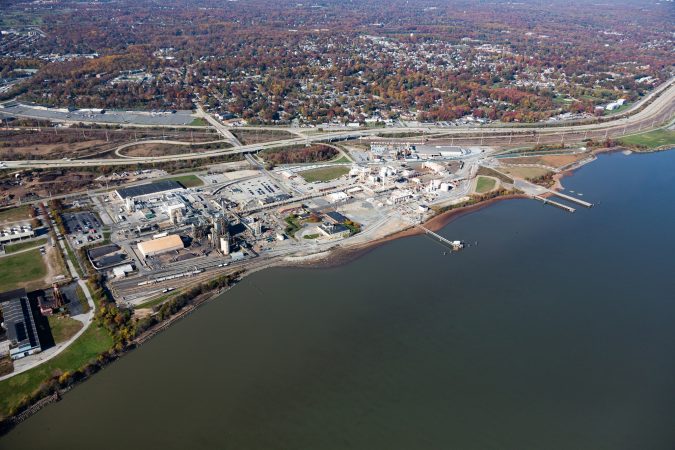
But since then, Delaware’s taxpayer-owned Diamond State Port Corp. requested new approvals, and the Army Corps granted them in April. The following month, Diamond State and its private-sector partner, Massachusetts-based Enstructure, announced they were moving ahead with the $669 million project at the site of a former DuPont chemical plant.
They say the new terminal — three miles northeast of the Port of Wilmington — will bring thousands of construction, warehouse, and longshore jobs to the area. Delaware officials estimate the Edgemoor terminal will be able to handle up to 1.2 million container units annually.
That’s one-third more than Philadelphia’s port handled in 2025, a record year. But Philly’s port — a major gateway for refrigerated cargo, especially fresh fruit from Central and South America — is also expanding.
The Philadelphia Regional Port Authority (PhilaPort), a state agency, last fall bought a 152-acre yard from Norfolk Southern Corp. for $90 million to create more cargo space.
A PhilaPort spokesperson declined to comment on the lawsuit. Diamond State didn’t immediately respond to a request for comment.
“While out-of-state competitors continue their efforts to stop this project, it is time to move forward and make sure Delaware’s port can compete fairly on the Delaware River,” Charuni Patibanda-Sanchez, who as Delaware’s secretary of state serves as Diamond State’s chair, said in May.
Holt — a family-owned company that operates marine terminals in South Philadelphia, Gloucester City, and Paulsboro — now says the Army Corps repeated several mistakes that doomed its earlier approvals.
“Most significantly, the court found that the Army Corps had failed to sufficiently consider the project’s likely impacts on navigation and safety in the Delaware River,” says the suit filed by Holt affiliates Greenwich Terminals LLC and Gloucester Terminals LLC.
“Yet despite the court’s detailed opinion and suggested remedial direction,” it continues, “the Army Corps reissued the project approvals again without conducting a proper evaluation of the applications before it.”
A spokesperson for the Army Corps declined to comment.
DUBAI, United Arab Emirates — The U.S. military said Tuesday that it has reimposed its blockade of Iranian ports in response to Iran’s attacks on commercial ships in the Strait of Hormuz, as the interim ceasefire deal unravels and concerns grow about a return to all-out war.
The U.S. first imposed the blockade in mid-April and then lifted it in mid-June, a day after the signing of the interim deal aimed at permanently ending the war. The deal set a 60-day timeline to also negotiate an agreement on Iran’s nuclear program, but talks have stalled as fighting over the strait has intensified.
When U.S. President Donald Trump announced the return of the blockade Monday, he also said he would impose a 20% fee on ships passing through the strait. But he dropped the plan to collect fees hours before resuming the blockade, citing requests from allies in the Gulf.
The interim peace agreement was supposed to reopen a waterway that is key to world energy supplies and give negotiators time to hammer out a permanent end to the war. Instead, fighting has once again engulfed the region, threatened the global economy, and brought warnings to commercial airlines.
The U.S. carried out another wave of strikes ahead of reimposing the blockade, a U.S. official told the Associated Press on condition of anonymity to discuss a sensitive military operation. Iran’s deputy foreign minister for legal and international affairs, Kazem Gharibabadi, said in an interview aired Tuesday by IRIB, Iran’s state broadcaster, that the U.S. was seeking to prevent Tehran from exercising what he described as “effective sovereignty” over the strait.
There are at least 19 U.S. warships in the Arabian Sea, including two aircraft carriers and an amphibious assault ship with more than 1,000 Marines aboard. U.S. Central Command also said in a social media post that there are “hundreds of military aircraft operating across the Middle East.”
A fifth of all traded crude oil and natural gas passed through the Strait of Hormuz before the war, when it was open to all without tolls. When the U.S. and Israel attacked Iran on Feb. 28, it effectively shut the passage by attacking and threatening ships. That sent the price of oil, fertilizer, and other goods soaring.
Iran has more recently attacked ships moving through the strait on a route overseen by the U.S. military that is outside Tehran’s control, setting off tit-for-tat strikes. The U.S. has threatened to reopen the strait by force — but experts say that would require a much bigger armada if not tens of thousands of ground troops.
Trump says he’s replacing the fees with Gulf investments
Trump said Tuesday that he was called by “kings and emirs” and other leaders who suggested an alternate arrangement to charging ships fees to pass through the strait.
“They said we’d love to do it a different way. We’d love to invest in the United States with billions and billions of dollars,” Trump told reporters Tuesday in the Oval Office.
Trump said he preferred that arrangement to charging tolls “because I don’t think anybody should be able to charge a fee for the strait.”
It was unclear if the investment deals would be new commitments relative to what Trump announced after a visit last year to the Middle East.
Strikes and counterstrikes resume across the Mideast
The U.S. military’s Central Command said it struck several areas in Iran, targeting “coastal defense systems, missile and drone sites and maritime capabilities.” Iran acknowledged the strikes but provided no immediate casualty or damage assessments.
“These strikes will continue imposing a heavy cost on Iranian forces and degrade their ability to attack innocent civilians and commercial shipping in the Strait of Hormuz,” the U.S. military said.
Iranian state media Tuesday reported the sound of explosions on Qeshm Island in the strait, alongside additional explosions in the southwestern city of Ahvaz and the port city of Bandar Abbas.
Iran responded with attacks targeting Bahrain, Kuwait, Jordan, and three tankers that traveled through the strait.
The International Maritime Organization said the attack killed two mariners and wounded 14 others on two of the tankers, Mombasa and Al Bahiyah, which were associated with the United Arab Emirates. The UAE threatened to retaliate.
Qatar called for diplomacy Tuesday and condemned what it described as repeated Iranian attacks on Jordan, Bahrain, and Kuwait, calling them an “egregious violation” of the three countries’ sovereignty and the international rules-based order.
Hours after the U.S. said it ended its campaign of strikes, the Iranian city of Bushehr on the Persian Gulf was hit in at least four locations, the state-run IRNA news agency reported. Explosions in the southwestern city of Ahvaz and the southern port city of Bandar Abbas also were reported by Iranian state media on Tuesday evening.
The attacks again raised the possibility that Gulf Arab states were retaliating against Iran without discussing it in public.
The interim peace deal is in peril
Exchanges of fire in recent days had already cast doubt on the interim peace deal — now almost halfway through the 60-day period in which negotiators were supposed to agree to a final accord, which also was meant to address Iran’s disputed nuclear program and other issues.
“The passage of vessels is not important to the U.S. The U.S. is not dependent on the Strait of Hormuz, and Trump has announced it many times,” Gharibabadi, Iran’s deputy foreign minister, said in an interview aired Tuesday by IRIB. It was not immediately clear when the interview was recorded.
Trump’s plan to charge fees would have been a change to longstanding U.S. policy and a departure from U.S. promises that the strait would remain open to all without tolls — recently offered by U.S. Secretary of State Marco Rubio on a trip to the region.
Under the interim deal, Iran agreed that passage through the strait would remain free of charge for 60 days — but the agreement left open what would happen after. Iran asserts it has the right to manage traffic and potentially charge fees. The U.S. has disputed that.
The price for a barrel of Brent crude oil, the international standard, briefly topped $87 early Tuesday, still well below the nearly $120 reached at the height of the war. The price dipped to $78 in the aftermath of Trump’s announcement that he had changed course.
Mediators are trying to prevent a return to full-scale war
Regional mediators are still trying to get the United States and Iran back to the negotiating table, according to two regional officials.
The officials, speaking on condition of anonymity to discuss the delicate diplomatic process, said Pakistan-led mediation was working around the clock to reactivate the ceasefire.
Meanwhile, Lebanese and Israeli delegations met Tuesday in Rome and will continue U.S.-mediated negotiations Wednesday. Shortly after the U.S. and Israel launched the war on Feb. 28, the Lebanese militant group Hezbollah joined the conflict in support of its ally, Iran, and began attacking Israel. Israel responded with a ground invasion of Lebanon.
Philadelphia City Council is already looking to 2027. And with all 17 seats on the ballot next spring, the elections are shaping up to be a pivotal test of whether the city’s established politicians can withstand a rising tide of frustration with the party among Democratic voters.
All of the incumbents have said they intend to run for reelection, and several are likely to face serious challenges from new candidates focused on grassroots organizing and progressive groups — hoping to seize the opportunity presented by a nationwide leftward shift amid President Donald Trump’s second term.
Three districts have emerged as key battlegrounds.
And the city’s progressive organizations, emboldened by a series of wins locally and nationally, are targeting two other districts: the 1st, which stretches from South Philadelphia to Fishtown and is represented by Councilmember Mark Squilla, and the 8th, which includes parts of North and Northwest Philadelphia and is represented by Councilmember Cindy Bass.
“We’re definitely feeling confident,” said Robert Saleem Holbrook, executive director of the progressive advocacy group Straight Ahead. “Anyone who is going to be running under a progressive banner or a progressive movement is going to have to be running against the establishment, not toward it.”
A competitive race also appears to be taking shape for the seven Council seats that represent the city at-large.
Five of those seats are all but certain to be won by Democrats, making the May 2027 primary the key election in deep-blue Philadelphia.
The other two at-large seats — set aside for Council members outside the majority party under the city’s Home Rule Charter — will be decided in the November 2027 general election. Currently, the two minority party seats are held by Councilmembers Kendra Brooks and Nicolas O’Rourke of the left-leaning Working Families Party.
Jane Golden, founder and executive director of Mural Arts Philadelphia, takes the stage during the dedication of the Super Bowl LIX mural at Spike’s Trophies on June 17, 2025 in Philadelphia.Monica Herndon / Staff Photographer
Golden, 73, said last week that she is not currently running for Council, but acknowledged she has thought about it for years.
“It’s always something that is tempting to me, because I just love the city so much,” she said. “I feel honored that people even think of me.”
Progressives eye Bass’ North Philly seat
Philadelphia’s progressive activists this year see two key opportunities to expand the loosely organized left-leaning bloc on Council, which currently consists of four members. Winning additional seats could also grow their influence by enticing more moderate members to vote alongside them if they believe primary voters are moving left.
Leftists have notched high-profile wins in Democratic primaries across the country this year, including in Philadelphia, where democratic socialist State Rep. Chris Rabb (D., Philadelphia) bested more moderate candidates for a seat in Congress representing about half of the city. The district is one of the most Democratic in the nation.
Anderson-Oberman, 55, the executive director of the progressive group Reclaim Philadelphia, said last week that he is “leaning” toward taking another swing.
“We’re in a moment in this country and this city where people have had enough,” he said. “People are looking for new answers. … Cindy represents the old way of doing things.”
Union organizer Seth Anderson-Oberman, running for 8th District City Council, joins in a small rally with community and Happy Hollow Advisory Board members along Wayne Avenue at Happy Hollow Playground in Philadelphia on April 2, 2023.Tyger Williams / Staff Photographer
Another Council run by Anderson-Oberman may test how far progressive momentum can go in Philadelphia. He was a member of the Communist Party USA in his 20s, and has said he is proud of that experience.
Bass, 58, said she is ready for the race no matter who her opponent is.
In June, she survived a contentious fight for another four-year term as Democratic leader of Mount Airy’s 22nd Ward. She was criticized for her handling of the process, and the party ordered a redo of the election.
She and her progressive opponent, Octavius Price, tied, then struck a power-sharing agreement. Through it all, Bass said, longtime residents stuck by her — and she is confident voters will do the same next year.
“My voters are people who are based in this community, committed to this community, intend to stay in the communities that they are in,” she said.
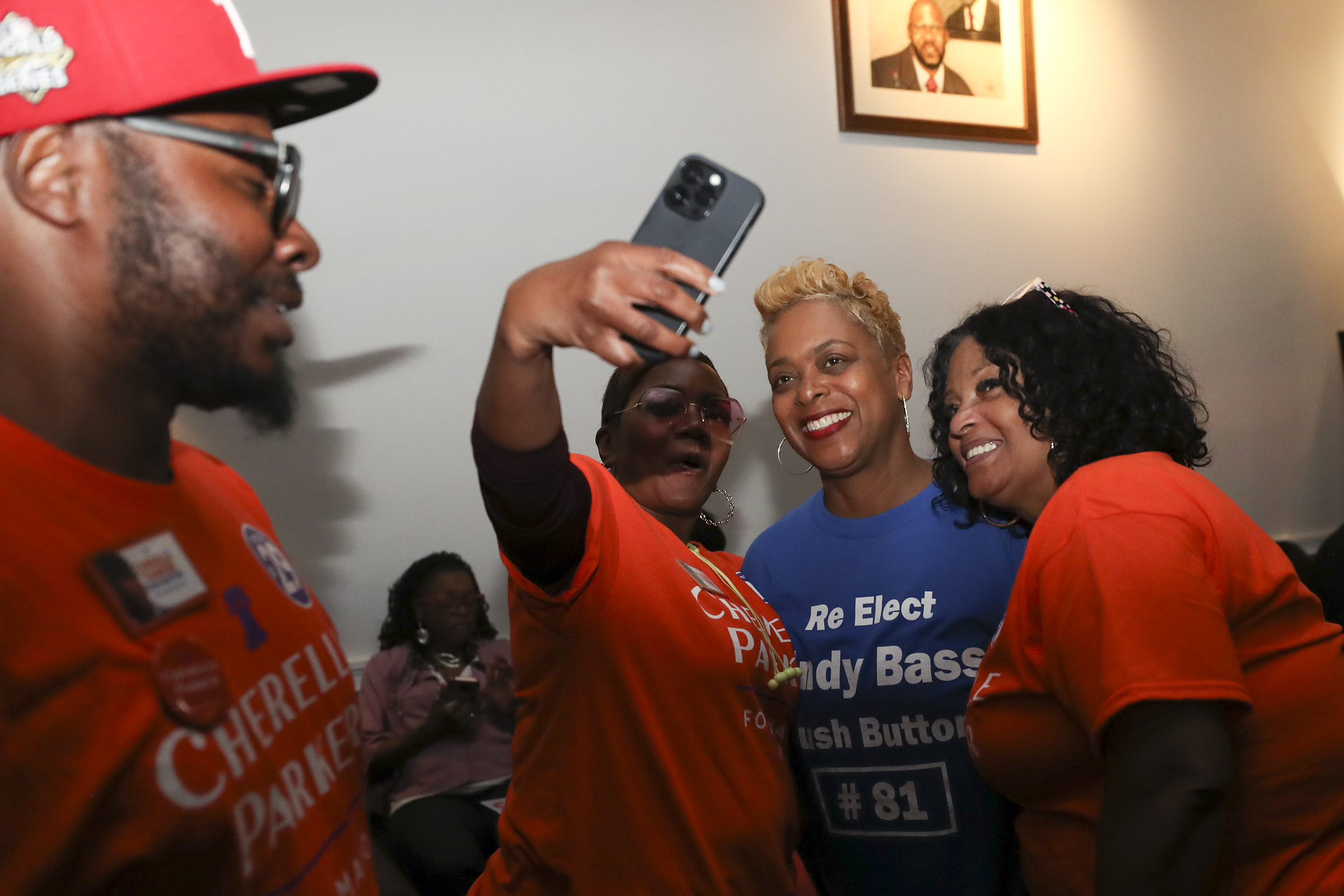
City Councilmember Cindy Bass (center) attends the watch party for Democratic candidate for mayor Cherelle L. Parker at Laborers 332 in Philadelphia on May 16, 2023.Heather Khalifa / Staff Photographer
Jeff Jones, a community leader and social justice advocate from Germantown, has also said he intends to run in the 8th District.
“I want to bring that new vision and a new voice to the 8th District, where residents and children and families can know that their voice matters, their concerns will be heard, and their challenges will be met,” said Jones, 61, a first-time political candidate.
Squilla could see a lefty challenger
Leftists are also eying Squilla’s seat, which represents the area along the Delaware River from Pennsport to Kensington. Since Squilla took office in 2012, the district has transformed from a bastion of working-class white voters to one of the most progressive swaths of the city.
Squilla, 63, who has strong labor ties and is one of the most pro-development district Council members, said being a centrist has likely put a target on his back in the 2027 election.
Another contributing factor may be Squilla’s support for controversial legislation in 2024 to approve the 76ers’ since-abandoned plan to build a new arena in Center City. The project, which would have been in Squilla’s 1st District, was opposed by advocates for Chinatown, which the arena would havebordered.
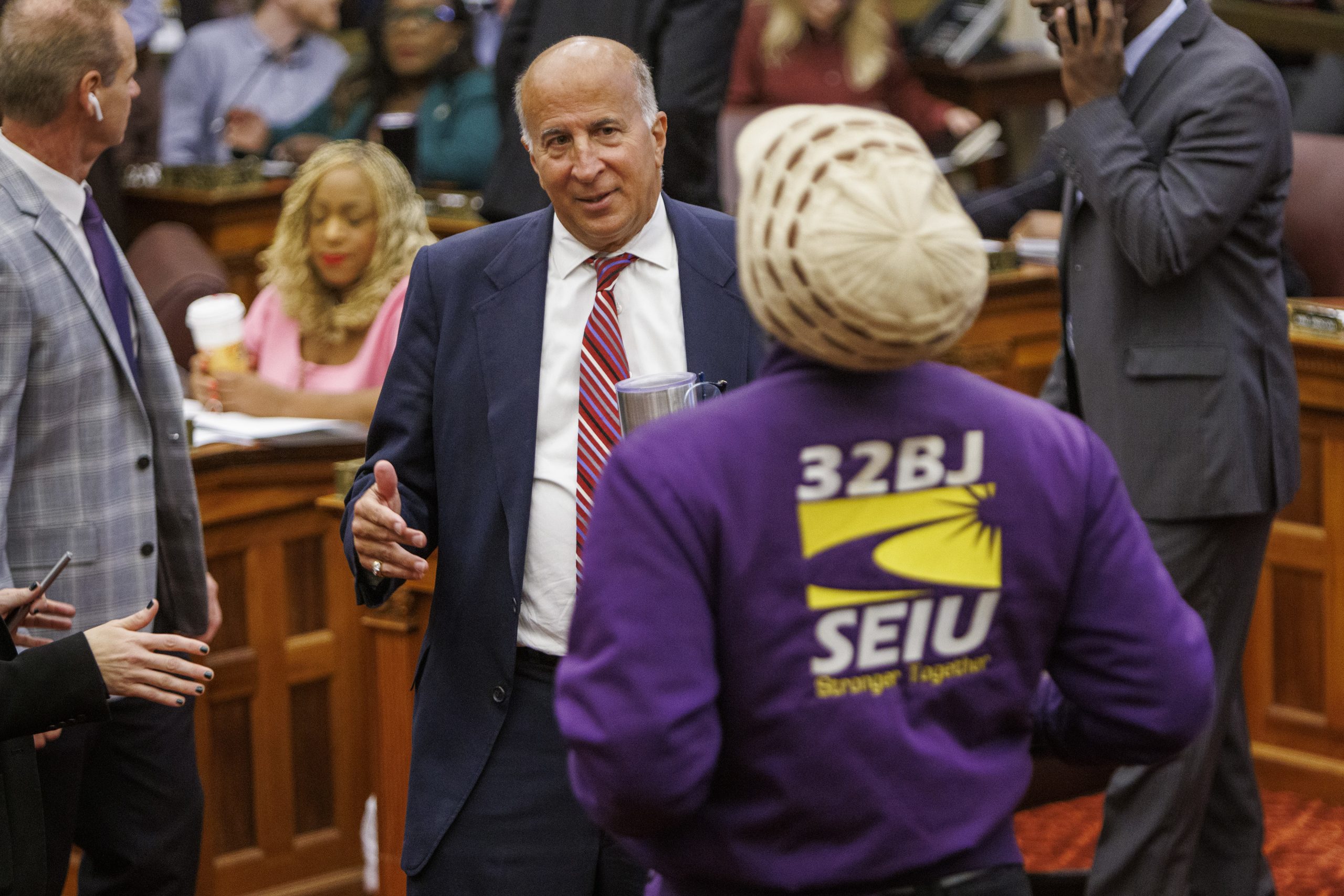
Councilmember Mark Squilla arrives in Council chambers on Nov. 12, 2024, before the start of a public hearing on a proposed Sixers arena.Alejandro A. Alvarez / Staff Photographer
Despite the fierce objections, Council approved the project with Mayor Cherelle L. Parker’s support in December 2024. Weeks later, the basketball team announced it was abandoning its Center City plan and would instead build its next arena in South Philly.
Squilla said he is prepared to defend his actions, noting that he worked to ensure any arena deal would benefit his district and that many of those promises are moving forward despite the 76ers withdrawing their proposal.
“The goal as an elected official, and also as a leader, is not always to make the popular decision,” he said. “The goal is to have a process to make the decision that would be best for the people around it.”
One prominent opponent of the Center City arena plan was Will Gross, the owner of Ox Coffee in Queen Village and a progressive who is the Democratic leader of the 2nd Ward. He is seen by political insiders and progressive organizations as the most likely candidate to take on Squilla.
Gross declined to comment.
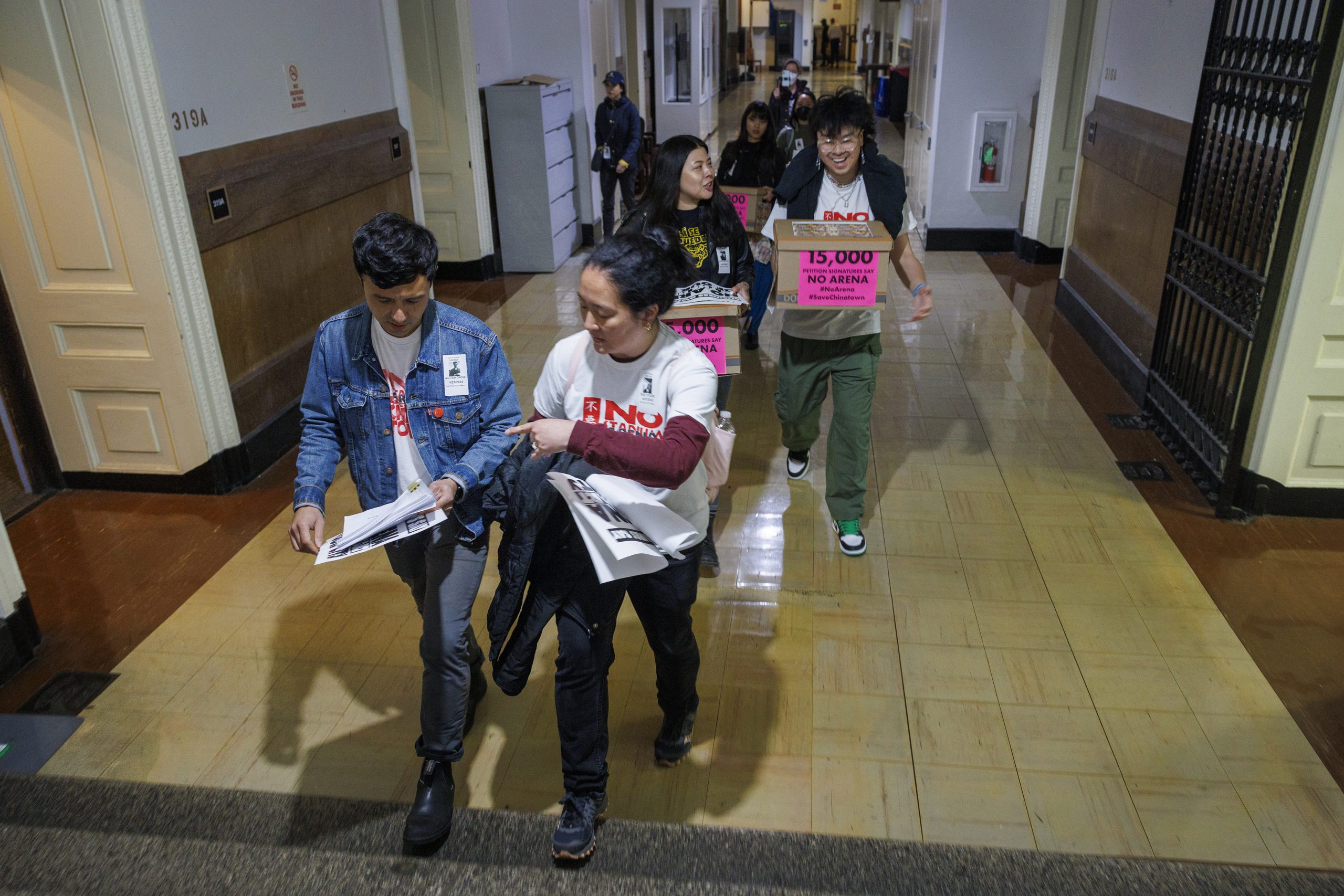
In this 2023 file photo, Will Gross and Kay Yoon, of the No Arena in Chinatown group, deliver petitions to Councilmember Mark Squilla. Alejandro A. Alvarez / Staff Photographer
A progressive challenger may also emerge in the North Philly and Kensington-based 7th District, which is represented by Councilmember Quetcy Lozada.
Some insiders have speculated that Celin may run again. He declined to comment.
Lozada, 55, said she “can’t focus” on potential challengers.
“If I spend my time listening to the buzz about who is running,” she said, “we won’t get any work done.”
A battle takes shape in the 5th District
In the 5th District, a seat that represents parts of North Philadelphia and Center City, a handful of Democratic challengers are lining up to take on Young, 40, who is seen as one of Council’s most vulnerable members.
That is in part because of the unusual way in which he was elected in 2023. He ended up being the only Democrat on the ballot after several others, including party officials’ preferred candidates, were removed amid legal challenges.
Councilmember Jeffery Young Jr. in chambers as City Council meets Dec. 11, 2025.Tom Gralish / Staff Photographer
One of those candidates was Curtis Wilkerson, who was chief of staff to former City Council President Darrell L. Clarke. Two sources, who spoke on condition of anonymity because they were not authorized to discuss the campaign dynamics, said Wilkerson is considering running for the seat again next year.He did not respond to a request for comment.
Also likely to run is Jalon Alexander, an attorney who unsuccessfully ran for an at-large seat on Council in 2023. Alexander, 33, formed an exploratory committee last year and is expected to formally declare his candidacy later this summer.
Two others are also considering running.
Dustin Dove, a lawyer and the president of the Fairmount Civic Association, said neighbors and community leaders have encouraged him to get in the Council race, and he is “taking the possibility of running seriously.”
“I think our city government should work for everyone by keeping our neighborhoods safe and streets walkable, making housing affordable, and ensuring fairness and access in public services,” Dove, 38, said last week.
Jalon Alexander, an attorney and community advocate, speaks to attendees at a meeting about potential SEPTA budget cuts hosted at Garden of Prayer Church in Strawberry Mansion on June 9, 2025.Erin Blewett / For The Inquirer
And Max Tuttleman, 37, a philanthropist who unsuccessfully ran for an at-large seat in 2023, said he “cares deeply about the 5th District and would never close the door to serving Philadelphia.”
He added that “Center City and the neighborhoods around it should be growing faster than they are.”
Young said in an interview last weekthat he intends to run for reelection, but that challengers are not his focus.
“I‘m focused on serving my constituency, serving my community,” he said. “The work that we’ve been doing will hopefully earn the support of the residents of the 5th District.”
A smaller, but competitive, at-large field
Over the last several election cycles, dozens of candidates lined up to run for at-large seats during a time of immense turnover in Council.
But with seven incumbents all looking toward reelection in 2027, there may be fewer challengers who line up to take them on. So far, only Golden and a handful of others have emerged as possible contenders.
David Alexander Jenkins, a cultural strategist known for delivering impassioned speeches during Council’s public comment section, said he is considering a run, encouraged by fellow community members.
“When the community that is around you constantly pushes you to intercede on their behalf, then it’s because they have trusted you to do what it is that you do best,” Jenkins, 39, said. “I think it would be incredibly unwise to ignore that.”
And Jude Husein, 28, a Palestinian-born community activist who was raised in North Philly, has already launched her campaign. If her bid is successful, Husein, a former staffer for State Sen. Art Haywood, would be the first member of Gen Z on Council.
In this 2023 file photo, Jude Husein, of North Philadelphia, speaks at a rally for a Day of Solidarity event at the Art Museum steps.Tyger Williams / Staff Photographer
Leaders of progressive organizations said they are closely watching her candidacy. However, Husein is not exactly running as a leftist. She said that her policy positions are varied and that she will seek endorsements from any institution that is “values-aligned.”
“I’m running because I think government should work for the people who pay for it, and should make neighborhoods affordable and safer,” she said.
Also in the running for Council at-large seats are Billy McCann, 46, a former teacher who lives in Port Richmond, and Isaiah T. Martin, 26, who lives in West Philly and leads a community development nonprofit. The pair, who both said they are progressive, have established something of a slate with Jones, who is challenging Bass in the 8th District.
They said they would prioritize public education, affordability, housing assistance, and government accountability, and they argued that establishment Democrats are failing to connect with voters.
“A new day is coming,” said Martin, another member of Gen Z who would make history on Council if elected. “It’s time we get people who are going to do the actual work and not just sit here and talk about it.”
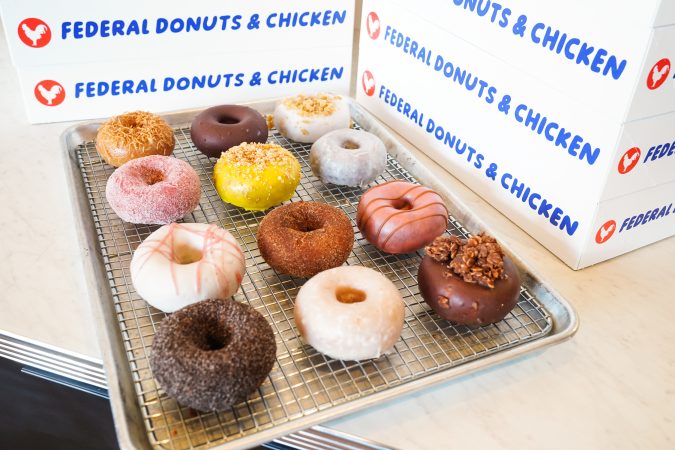
Restaurant group CookNSolo will close three Center City Federal Donuts & Chicken locations and shrink its Goldie falafel chain from four shops to one as owners Steve Cook and Michael Solomonov retrench, citing weakened demand for fast-casual dining, particularly at weekday lunch.
Federal Donuts’ shop at 1909 Sansom St. — designated only months ago as the company’s flagship after the South Philadelphia location closed in February — shut down after business Sunday. Locations at 21 S. 12th St. and 18th Street and Benjamin Franklin Parkway are expected to close by July 31, although Cook said staff departures could accelerate the timetable.
Of Federal’s 45 employees, 27 will be laid off, Cook said. Eighteen employees will be retained to staff the two remaining Philadelphia stores, on Fairmount Avenue and on South Street. Federal launched in 2011 in South Philadelphia with a menu of fried chicken, coffee, and hot doughnuts from a robotic fryer.
Federal Donuts founders (from left) Tom Henneman, Michael Solomonov, and Steve Cook at the Federal Donuts & Chicken location at 1776 Ben Franklin Parkway in 2022.Michael Klein / Staff
Goldie, which debuted in 2017 with a menu of falafel, fries, and tehina shakes, will close its restaurants at 1218 Sansom St., Franklin’s Table food hall at 34th and Walnut Streets, and the Whole Foods Market at 2101 Pennsylvania Ave. in late July or early August. The lone remaining Goldie, at 1911 Sansom St., will absorb the chain’s delivery, takeout, and catering business.
Eighteen of Goldie’s 36 employees will lose their jobs. Cook said the company is working to help find former Federal Donuts and Goldie workers other roles. Hourly staffers will not be given severance, Cook said, as is standard industry practice.
Cook said the closures reflect a restaurant landscape that has changed dramatically since the pandemic.
Dozens of fast-casual and quick-service restaurants have opened in recent years. “We feel like we’re oversaturated in the city, given the economy right now and the demand for fast-casual restaurants,” he said. Federal Donuts has experienced “significant” year-over-year same-store sales declines, he said. He hopes the closures stem the losses.
“We have two great brands here that are worth saving, and we feel like economically this is the best way to preserve those brands.”
Falafel from Goldie.Craig LaBan / Staff
The company’s full-service restaurants — including Zahav, Dizengoff, K’Far Cafe, Jaffa Bar, and Laser Wolf — are unaffected by the shutdowns.
“Post-COVID, while we’ve seen really good rebounds in the dinner, more fine-dining side of our business, weekday lunch traffic has never really returned to full strength,” he said. “The $10-to-$15 lunch is an easy thing to kind of do without.”
Cook’s assessment reflects broader industry trends.
Tehina shakes are a signature product at Goldie.Tim Tai / Staff Photographer
While some national fast-casual brands such as Chipotle and Cava continue to post strong results, many regional chains are struggling as consumers increasingly choose prepared foods from grocery stores and convenience stores instead of restaurant meals, according to R.J. Hottovy, head of analytical research at Placer.ai, a location analytics and foot-traffic company.
While fine-dining restaurants have generally continued to gain traffic through much of 2026, “fast-casual has been more of a mixed bag,” Hottovy said.
Placer.ai’s findings show visits to grocery stores, convenience stores, and wholesale clubs increasing from a year earlier while overall restaurant visits have declined. “Middle-income consumers are increasingly substituting restaurant visits with meals at home,” Hottovy said.
Restaurants also continue to battle rising labor costs while customer traffic softens as menu prices rise. “Price increases are increasingly showing up as lost visits,” he said.
Federal then operated 11 locations and arena concessions, and executives envisioned a franchise system that eventually could reach 150 stores.
The company’s largest franchisee later closed its restaurants in Radnor, Conshohocken, and Willow Grove and returned several Philadelphia stores to the company. In April, Cook and Solomonov announced plans to regain control of those city locations, simplify operations, and improve execution.
At the time, the Sansom Street restaurant was designated as the flagship to redevelop menu items. “I thought we would get a significant bounce in sales [there] and it just didn’t happen,” Cook said.
Cook said NewSpring remains the majority owner of Federal Donuts, while he and Solomonov retain a significant ownership stake and seats on its board. Representatives of NewSpring did not respond to requests for comment.
Under the restructuring, two Philadelphia stores will remain. CookNSolo will take over the location at Seventh Street and Fairmount Avenue, now owned by the company, as a franchisee around Aug. 1.
Federal cofounder Tom Henneman confirmed that he was in talks to operate the location at Sixth and South Streets as a franchisee.
Cook said those stores were chosen because of their historical performance and geographic separation. Consolidating delivery and takeout in two locations instead of five should improve profitability, he said.
Besides the two city stores, Federal will continue operating independently owned franchises in Marlton, Lancaster, and the Hard Rock Hotel & Casino in Atlantic City, along with its licensed airport and stadium locations.
Goldie, unlike Federal Donuts, is owned entirely by CookNSolo.
CookNSolo has also been the focus of pro-Palestinian demonstrations and boycott campaigns since the start of the Israel-Hamas war on Oct. 7, 2023. Activists have criticized the restaurant group for raising money for an Israeli emergency medical nonprofit as well as Cook’s and Solomonov’s outspoken support for Israel. The chefs have said their support for Israel was “not unqualified” and have criticized the Netanyahu government’s efforts to thwart a two-state solution.
A group with the Instagram handle @boycottcooknsolo on Monday reported word of the store closings, contending that the boycott had softened sales.
Cook disagreed. “Any time there’s been a protest, it’s always resulted in a short-term increase in business,” Cook said. “This is really an economic decision that goes back many years at this point.”
(function(){function e(){window.addEventListener(`message`,function(e){if(e.data[`datawrapper-height`]!==void 0){var t=document.querySelectorAll(`iframe`);for(var n in e.data[`datawrapper-height`])for(var r=0,i;i=t[r];r++)if(i.contentWindow===e.source){var a=e.data[`datawrapper-height`][n]+`px`;i.style.height=a}}})}e()})();
Tom Burgoyne was selling computer supplies for six months after graduating from Drexel when he saw a listing in the newspaper that said “mascots wanted.” It didn’t say who was looking for mascots or where the job would be located. Burgoyne, who was the mascot in high school at St. Joe’s Prep, didn’t need to know.
“I sent my resume to the P.O. Box,” Burgoyne said. “I thought I’d be like the Hamburglar or the Statue of Liberty at tax time. And then the Phillies called.”
Burgoyne aced his audition and spent five years as the backup Phillie Phanatic before becoming the main man inside the flightless bird from the Galápagos Islands.
But Burgoyne has long protected the mascot like a professional wrestler protecting the business.
He’s not the Phanatic. He’s the Phanatic’s best friend. He talks about the mascot in third person — “The Phanatic will be busy on Tuesday,” Burgoyne said of the All-Star Game — and does his best to separate the man from the bird. He knows another big-league mascot who is a teacher during the day but keeps his other job so secretive that people in his school don’t know he’s a mascot.
“I respect the hell out of that,” Burgoyne said.
So Burgoyne, who is participating in his 30th All-Star Game, needed some convincing to peel back the curtain for a documentary expected to premiere later this year about the character he brings to life every summer. But then Burgoyne remembered watching a documentary about the Muppets that showed Jim Henson pulling the strings for Kermit The Frog. If Henson could do that, then Burgoyne could talk about what he does.
Tom Burgoyne, the man inside the Phanatic, posed for a portrait with some of the children’s books he’s written at Citizens Bank Park in 2024.Monica Herndon / Staff Photographer
The documentary — which is titled Big Phan — is directed by Flourtown native Hoag Kepner, the brother of longtime baseball writer Tyler Kepner. It tells the history of the mascot, Burgoyne said, and “has a lot of heart.” And it allowed Burgoyne a chance to admit that he’s more than just a friend of the Phanatic.
“You never want to think that there’s someone in the costume,” Burgoyne said. “I can look at an old clip of the Phanatic and I’m not thinking, ‘Oh, that’s me in there.’ I’m just thinking ‘That’s the Phanatic.’ You want that magic to stay alive.”
Burgoyne’s first All-Star Game was in 1996 at Veterans Stadium when Major League Baseball invited every mascot for the first time. The mascots were told to dress across Pattison Avenue at the Spectrum before the Home Run Derby, but the locker rooms were under construction when they arrived. So they took over the Vet’s umpire dressing room, which equipment manager Joey Dunn had already set up for the next day’s All-Star Game.
“Here come the mascots trashing the place on Monday,” Burgoyne said. “MLB has learned a lot over the years.”
The game has become the annual gathering of the mascots as they didn’t have a reason to come together before MLB started to invite them each July.
Burgoyne was in Boston in 1999 when Ted Williams returned to Fenway Park. He was in Pittsburgh when Ryan Howard won the 2006 Derby, and he was in New York in 2008 when they played 15 innings. But his favorite memory is the one that leaves him wondering what could have been.
The mascots were taking turns sliding down Bernie Brewer’s slide in Milwaukee during the 2002 Home Run Derby when the Phanatic took his turn.
“I think someone had to give him a shove with their foot,” Burgoyne said.
The big, feathery green thing neared the bottom of the slide just as Sammy Sosa homered off it. The Phanatic could have made a play.
“I’m telling you, the Phanatic was coming down the slide and it just missed,” Burgoyne said. “If the Phanatic slid two seconds earlier, he could’ve caught it on the fly in the slide. It’s such a regret. It would’ve been the ESPN Play of the Day.”
The mascot arrived in Philadelphia in 1978 and was brought to life by Dave Raymond, who retired after the 1993 season. The schtick has been fine-tuned in nearly 50 years, but the main elements have remained unchanged. Burgoyne makes fans allow themselves to believe that what they’re seeing is real. Because he’s not in the costume. He’s just a friend. And he has no plans of stopping.
“I’m still having fun,” Burgoyne said when asked how much longer he has in the gig. “I’ve been thinking of David Montgomery a lot and when they announced the All-Star Game so long ago for him, I was like ‘2026? Someone else can do that.’ But here we are. When you’re having so much fun, why not?”
A man was killed and four others were injured in a shooting overnightoutside an apartment complex in the city’s Crescentville section.
Nearbyofficers heard several gunshots coming from the 500 block of East Hill Creek Drive, where the Hill Creek Apartments, a Philadelphia Housing Authority complex, is located, at 11:52 p.m., according to police. The responding officers found two people suffering gunshot wounds, an unidentified male who wasshotin the leg and an 18-year-old woman who was shot in the shoulder, Philadelphia Police Capt. Louis Higginson said. Both were transported to Einstein Medical Center, where they were in stable condition.
Additional responding officersfound another unidentified man at the scene who was shot and taken to Temple University Hospital, where he died at 12:14 a.m. Monday, Higginson said.
While investigating, officers were called to a different part of the complex around 12:10 a.m., where they found two additional people who were shot: a 45-year-old man who was shot in the arm and a 16-year-old boy who was shot in the ankle. They had fled from the shooting into a nearby property on the 5500 block of North Hill Creek Drive, police said. They were transported to Temple University Hospital, where they were in stable condition.
Police said they found at least 17 spent shell casings at the scene.
PHA said an unauthorized “pop-up” party held at the Hill Creek Apartments prompted the large gathering before the shooting took place.
“The safety and well-being of our residents remain our highest priority, and PHA is making supportive services available to residents who may be impacted by this tragedy,” a PHA spokesperson said.
As of publication time, police could not confirm a motive and no arrests have been made.
A large crowd, shooting, and vandalism the night before
Police were working to determine if the shooting, which occurred following a large gathering late Sunday night, was connected to another large gathering that ended in shots fired early Sunday morning.
Around 2:45 a.m. Sunday, police responded to the Hill Creek Apartments to assist PHA police officers who were following a reportedly stolen vehicle into the area. During the incident, an unidentified person jumped onto a marked PHA police vehicle and vandalized it, police said.
As police officers worked to disperse a large crowd that had gathered, an unknown person fired several gunshots before fleeing the scene. Two unoccupied vehicles were struck by gunfire, and no injuries werereported.
No arrests have been made, and police did not confirm if these two shooting incidents are connected.
Officers cited three men, ages 22, 23, and 28, for disorderly conduct during Sunday morning’s large gathering.