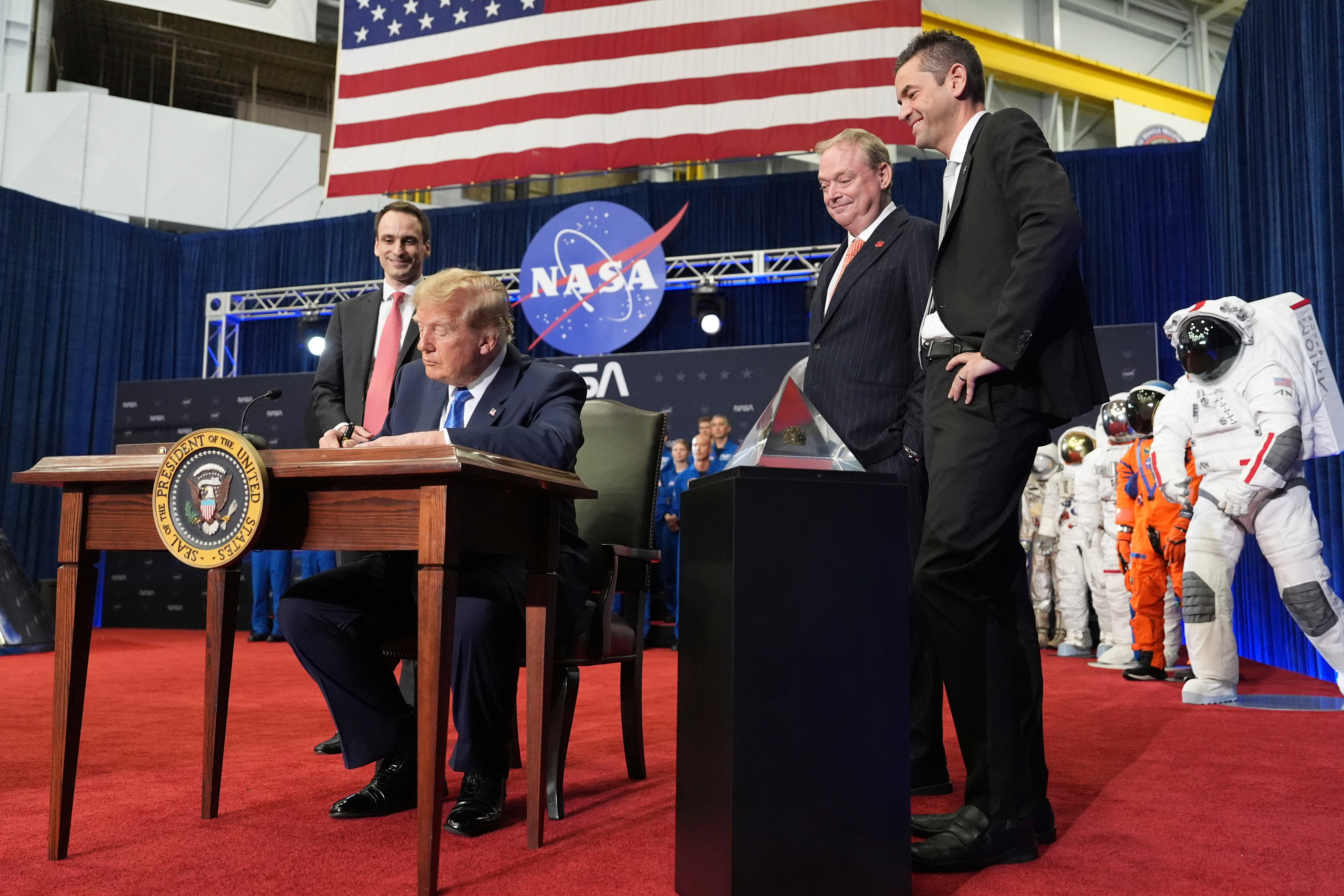
Gov. Josh Shapiro andPennsylvania’s twoU.S. senators are united in a bipartisan effort to make the state the home to a new U.S. Space Academyordered by President Donald Trump.
Pennsylvania State University as well as other regional partners will also be involved in the effort to bring the academy to the Pittsburgh area, according tonews releases from Shapiro and Republican Sen. Dave McCormick.
“Pennsylvania is now uniquely positioned to welcome the United States Space Academy — building off our robust space industry and world-class research universities — to launch the next generation of America’s scientists, engineers, astronauts, and service members and ensure America remains the global leader in space,” Shapiro said in a statement.
“Pennsylvania’s application provides the federal government with an opportunity to strengthen and diversify America’s space industry. My administration is all in,”he said.
The planned academy will provide training for NASA and the U.S. Space Force, the armed services branch that Trump established during his first term.
As part of its application, the Shapiro administration outlined a commitment of up to around $85 million toward construction of the academy, including $30 million for site preparation, $11 million for water infrastructure upgrades, and $45 million for regional transportation improvements.
In addition, the state’s proposal also includes what’s being described as “an independently governed private endowment” — with a $200 million initial target — to strengthen the education provided at the academy and fund scholarships and fellowships, endowed faculty chairs, mission studios, and laboratories.
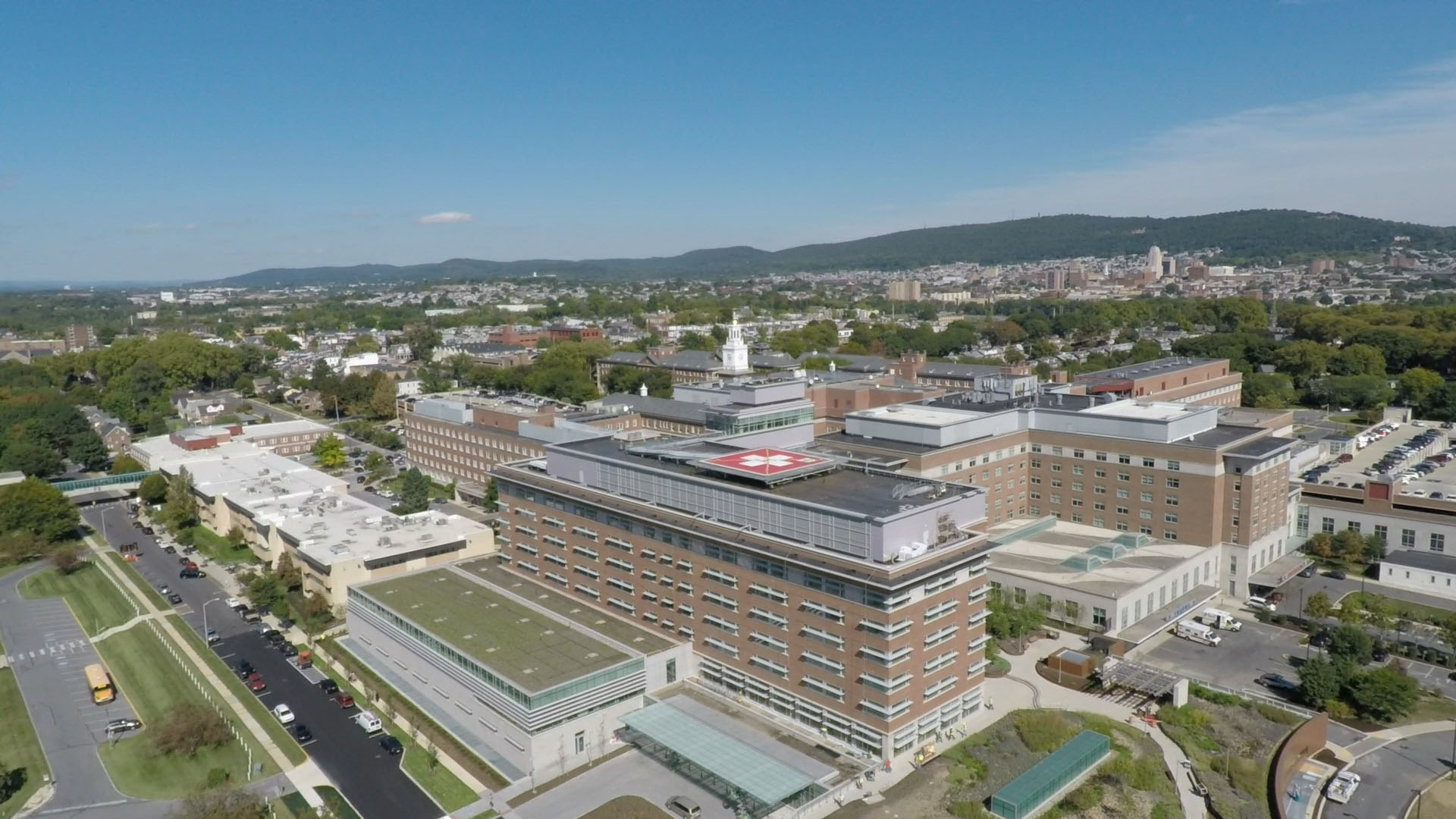
If Pennsylvania’s application is selected over other states, the academy would break ground in 2027 on a campus on 300 acres of publicly owned land that sits beside the Pittsburgh International Airport, according to the state’s proposal.
While the Pittsburgh site and the Allegheny County area are the focus of the proposal, Shapiro’s statement included a brief mention of the Bellwether District in Philadelphia as an alternative site for the academy, without detail. The Bellwether District is a massive 1,300-acre campus in South Philadelphia transforming the site of the former Philadelphia Energy Solutions oil refinery into a hub for logistics, life sciences, and manufacturing.
The statements from Shapiro and McCormick said state leaders are responding to Trump’s August 2026 executive order, as well as a request for information from NASA, to establish an American space academy.
The school would train the “next generation of astronauts, scientists, engineers, operators, entrepreneurs, civil servants, and warfighters,” according to the order.
“Pennsylvania has the talent, technology, and industrial strength to help America win the race for space dominance,” McCormick said in a statement. “Bringing the U.S. Space Academy to Pittsburgh would build on those strengths, create new opportunities for Pennsylvanians, and train the next generation of leaders who will ensure America remains the world’s leader in space.”
The commonwealth already has a robust connection to the so-called “space economy,” according to Shapiro’s statement.
The Pittsburgh region alone is home to 126 of these businesses, spanning engineering, research and testing, software and computing, advanced machinery and equipment manufacturing, academia, spacecraft, power systems, and propulsion, the statement added.
All told, the state’s space economy has generated $8.6 billion in economic impact over the last four fiscal years and supports556 businesses across the space supply chain, Shapiro’s statement said.
In his own statement, Democratic Sen. John Fetterman said as a member of the Senate Commerce Committee, he’s “deeply committed to investing in NASA and its workforce, our national security, and making sure Pennsylvania is part of those important conversations.”
Under the proposal, Penn State University and six other Pennsylvania research universities would help develop the academy’s curriculum.
If selected, Pennsylvania would become home to the nation’s first new federal service academy since 1955.
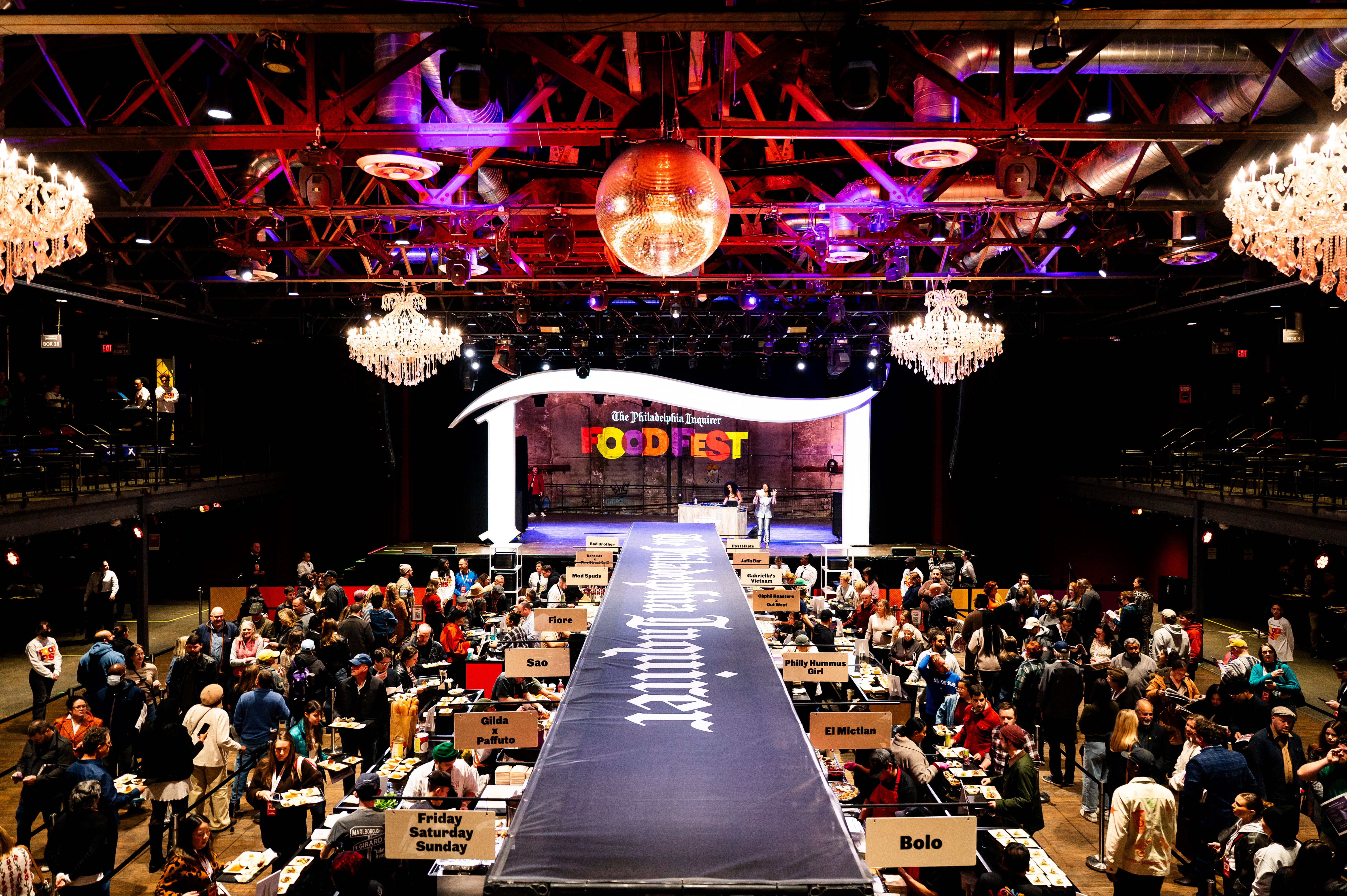
By the time I arrived at the Fillmore for last Saturday’s Inquirer Food Festival, my stomach was growling. I knew I needed to bring my appetite for the big day, so I’d skipped breakfast. Now it was time to eat, and a feast of inventive, off-menu bites from nearly 50 of Philly’s best chefs and bakers awaited.
Inside, colorful lights illuminated the crowds of hungry food lovers weaving between restaurants’ booths. Bartenders were pouring signature cocktails and mocktails, chefs were staging cooking demonstrations, and Inquirer bake-off treats were circulating upstairs.
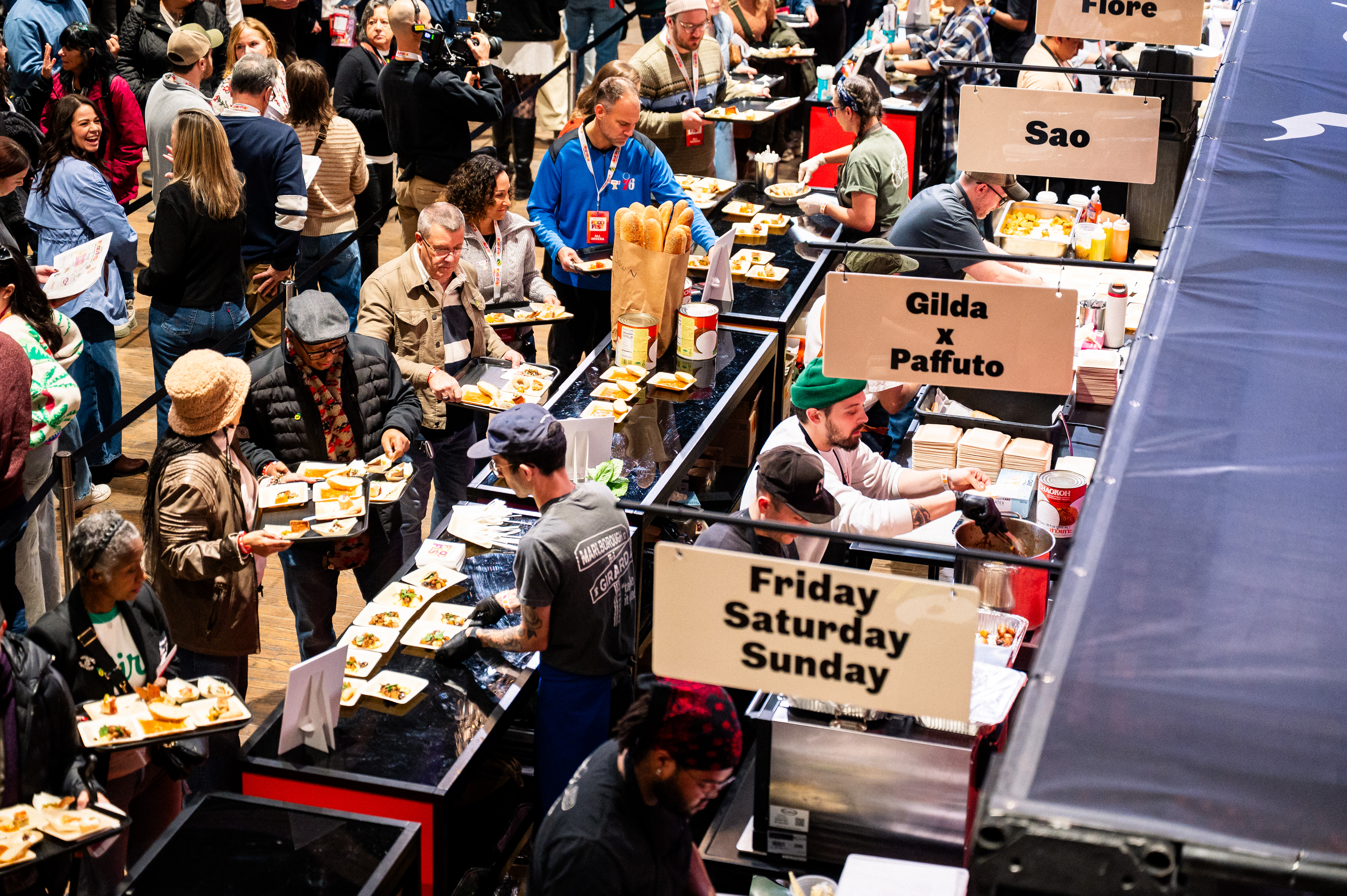
It was a choose-your-own-adventure kind of afternoon, but I was on a specific mission: Eat everything. Over two tasting sessions, I did just that, sampling dishes from stellar restaurants like Michelin-starred Friday Saturday Sunday, neighborhood favorite El Mictlan, and fine-dining spots Vedge and Ocho Supper Club, which were among several restaurant pairs that teamed up for the festival. Choosing just five favorites wasn’t easy, but a few bites were simply too good to forget.
Here are the best things I ate.
The restaurant booths, including Friday Saturday Sunday, at the Inquirer Food Festival.Joe Dantone
Friday Saturday Sunday
I don’t have much of a sweet tooth, but pastry chef Amanda Rafalski’s blackberry-and-corn pavlova won me over. Tart blackberry-chamomile preserves balanced the sweetness of roasted corn custard, while the delicate meringue and fried corn silk snapped, crackled, and popped in my mouth. Just when I thought I’d experienced every texture, another one came along.
Gilda x Paffuto
Gilda and Paffuto’s wild boar ragù tasted like November in a bowl. Slow-cooked with red wine, pancetta, and mushrooms, the rich, earthy meat was served over creamy chouriço polenta with roasted root vegetables. A little orange gremolata cut through the richness, adding a welcome burst of brightness. It was the kind of hearty, comforting dish that makes you glad it’s cold outside.
Classic Scottish tattie scones with Malaysian rendang from Mod Spuds.Abigail Covington
Mod Spuds
I wasn’t sure what to expect when I approached Mod Spuds’ table. I’d never heard of a tattie scone, nor had I tried Malaysian rendang. Turns out I’d been missing out on both. Ange Branca’s miniature Scottish potato flatbreads were crisp around the edges and soft in the middle, making them the perfect vehicle for the rich, hearty, deeply spiced meat.
El Mictlan
I was already stuffed when I got to El Mictlan. So I planned to take only one bite of chef Chelo Manzanarez’s chochoyotes, little corn masa dumplings swimming in a rich, nutty green mole that reminded me of pozole. Instead, I inhaled the whole thing. No regrets.
The Bread Room
A butter-and-cheddar sandwich has no business being so delicious, but Christina McKeough’s humble dish was a reminder that sometimes simple is best. The seeds coating the bun gave every bite some crunch, the cultured butter added richness, and the sharp Clover Creek cheddar delivered a smack of flavor. That was the whole sandwich, and I wouldn’t have changed a thing.
Emmett’s Julian van der Tak serving up chili-cured tunakc tinari
Emmett
My second tasting got off to a blazing start thanks to chef Evan Snyder’s chili-cured tuna. Served on a crunchy everything-seasoned matzo cracker with red pepper labneh and pickles, the fish had just enough heat to give it a kick, while the labneh and pickles added pleasant tang. The perfectly sized portion left me wanting more and eager to try out Emmett’s full menu.
Tesiny’s pickled mussels with spiced Espelette breadcrumbs and chives.Joe Dantone
Tesiny
My last dish of the day turned out to be the perfect finale. Kevin McWilliams’ pickled mussels were worlds away from the traditional white-wine-and-butter preparation. Briny and pleasantly tart, with a crunchy topping of Espelette-spiced breadcrumbs and chives, they were refreshing rather than rich. After hours of eating, this light, delicate bite was exactly what I needed.
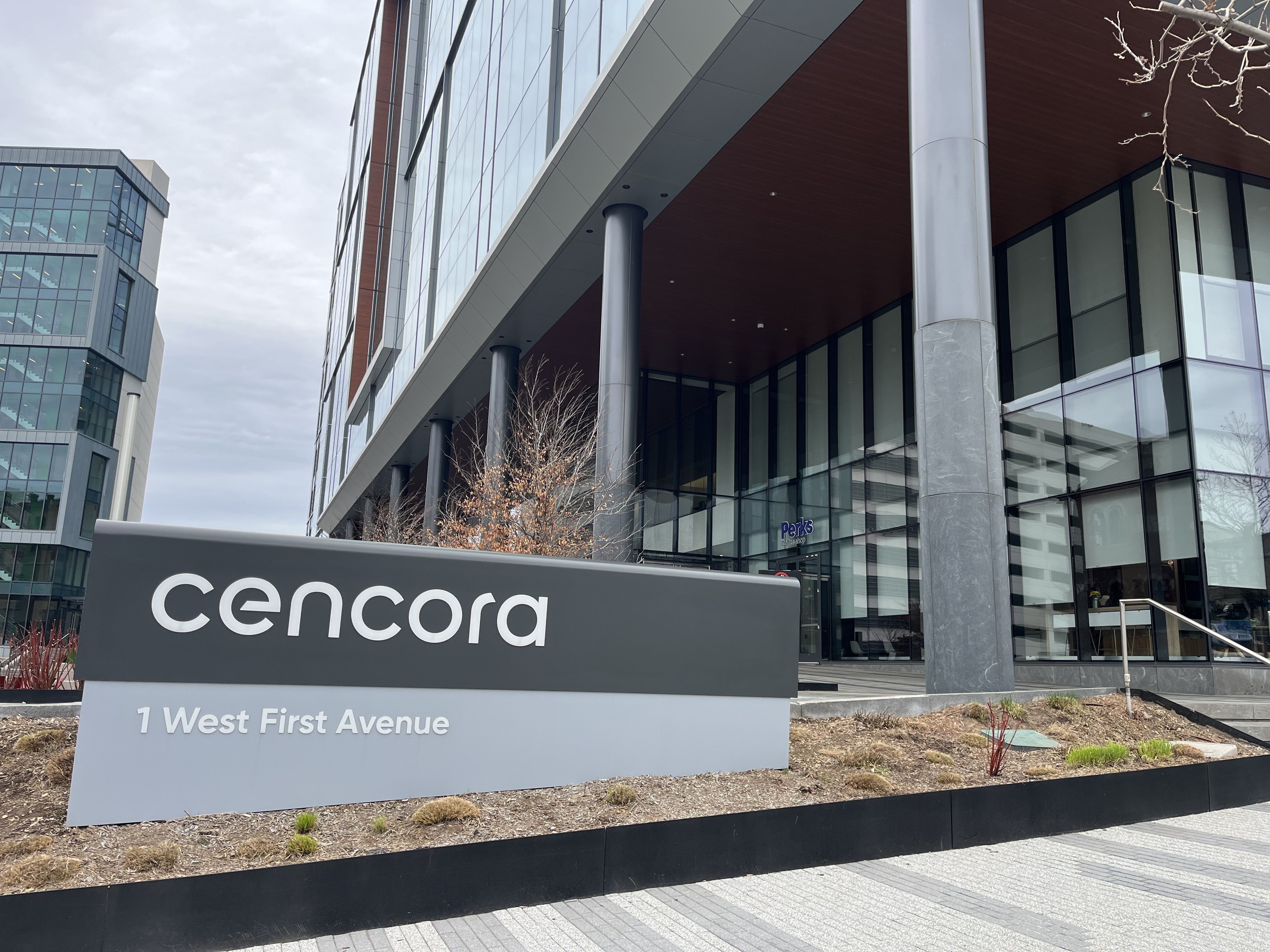
The Federal Trade Commission and more than a dozen states have filed a lawsuit seeking to block the merger of two veterinary products distributors, including one owned by Conshohocken-based Cencora Inc.
The FTC and states allege that Maine-based Covetrus Inc.’s proposed $3.5 billion acquisition of Cencora’s MWI Animal Health would raise costs for veterinary clinics, increase prices for pet owners, and reduce the quality of services.
Covetrus and MWI are two of the largest veterinary clinic distributors in the country, according to the plaintiffs. They supply products including pharmaceuticals, vaccines, gloves, and syringes.
“Veterinarians and millions of American pet owners benefit when veterinary distributors compete by offering lower prices and better service,” Daniel Guarnera, director of the FTC’s Bureau of Competition, said in a statement.
“This transaction will reduce competition in an already concentrated market and drive up prices for veterinarians and their customers,” he said.
A bipartisan coalition of 13 states — not including Pennsylvania or New Jersey — joined the complaint, which was filed under seal in federal court in Manhattan on Friday.
“A trip to the vet should never break the bank,” New York Attorney General Letitia James, a Democrat, said in a statement. “Pet owners are already paying enormous prices for care, and this merger would threaten to drive costs even higher.”
A spokesperson for wholesale drug distributor Cencora, a publicly traded company formerly known as AmerisourceBergen, didn’t immediately return a request for comment Monday.
Covetrus — a subsidiary of private equity firms Clayton, Dubilier & Rice LLC and TPG — said the FTC’s case “relies on a narrow and outdated view of the market.”
“Clinics today choose freely from numerous manufacturers and distributors to meet their needs, and online platforms have ensured that veterinarians have complete flexibility across a wide range of suppliers,” the company said in a statement.
Under the proposed transaction, announced in February, Cencora would receive $1.25 billion in cash, $800 million in preferred equity, and $1.45 billion in common equity — retaining a 34% common equity stake in the combined company.
“This transaction positions MWI for success with a partner strategically focused on and dedicated to animal health, while allowing Cencora to further invest in our key growth priorities,” Cencora CEO Robert Mauch said at the time.
Cencora reported $337 billion in revenue for the fiscal year that ended in September. It had $3.5 billion in net income.
The FTC said the complaint seeks a permanent injunction to block the proposed merger.
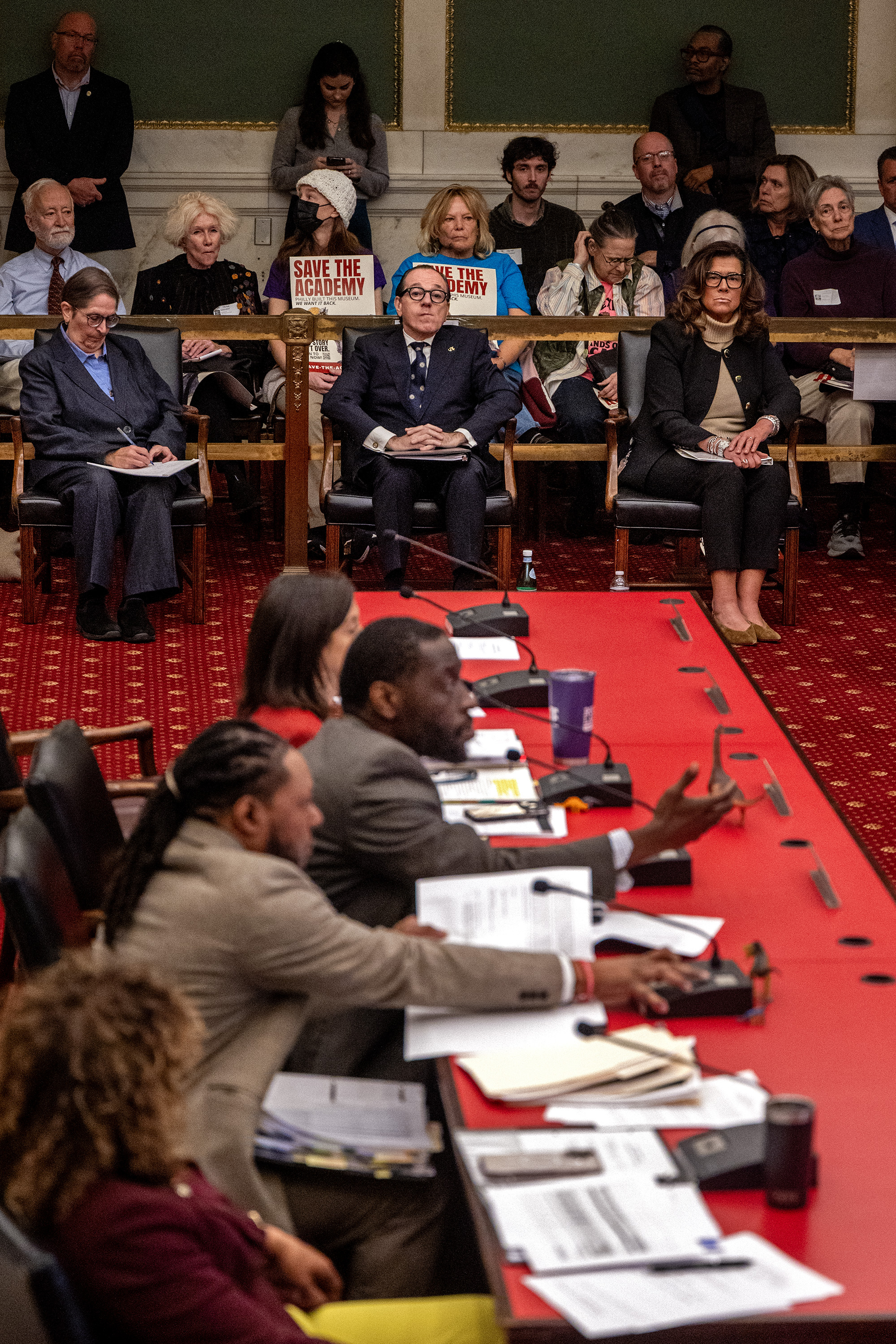
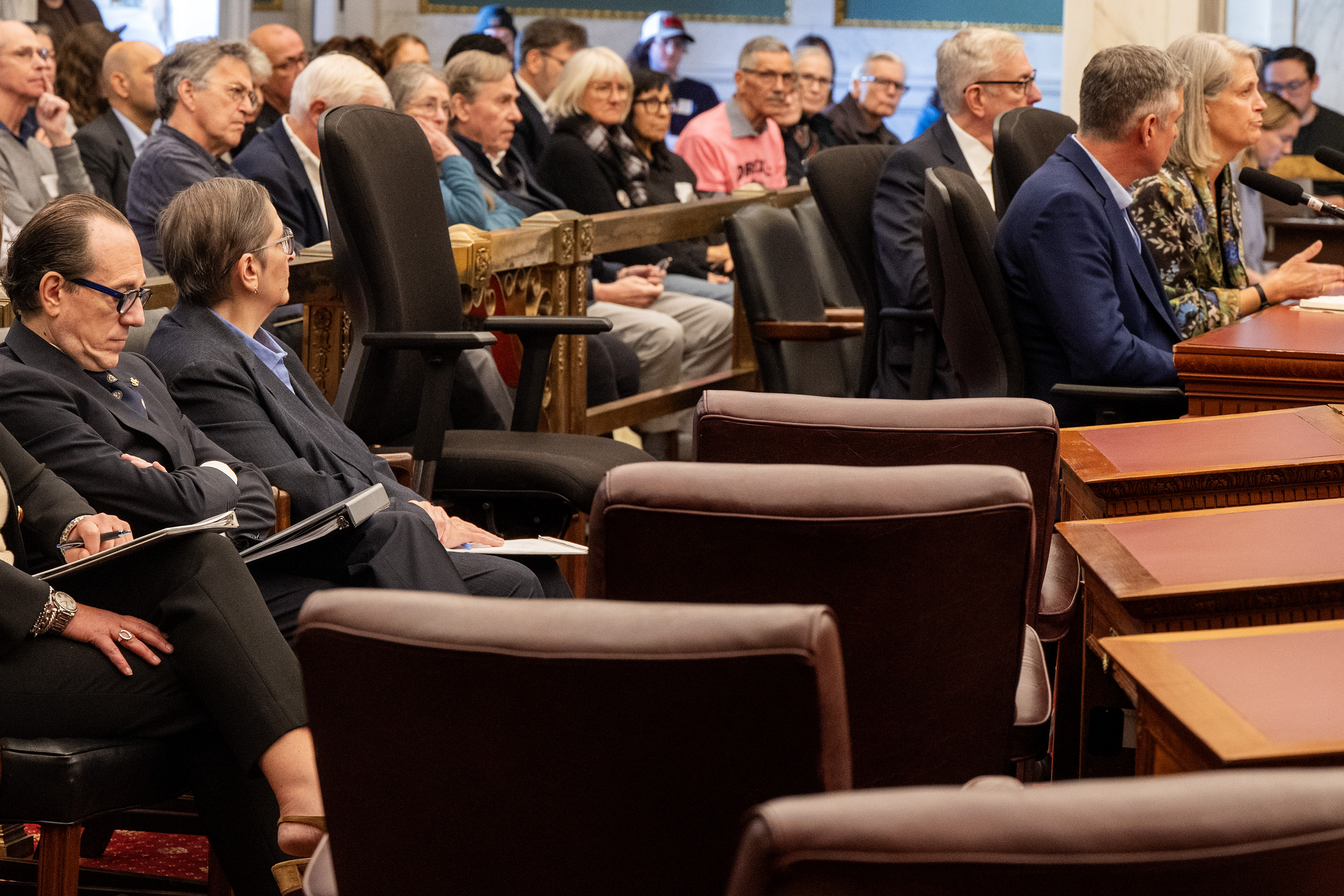
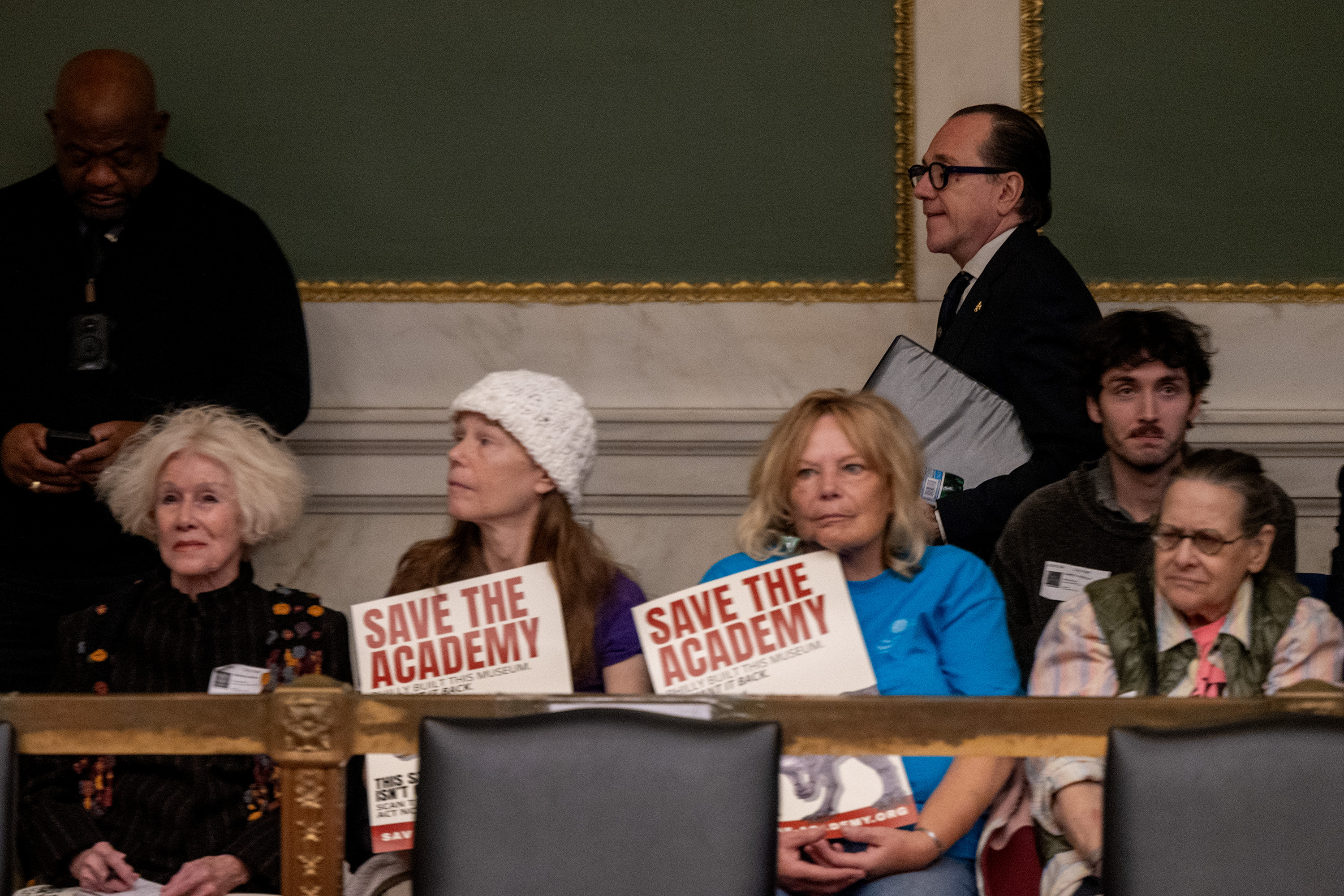
On Monday, the president of Drexel University sought to defend the school’s handling of the Academy of Natural Sciences’ museum closing under intense questioning by City Council members at an hourslong hearing.
In their first public, gloves-off exchange, Drexel president Antonio Merlo and Academy board chair Suzanne Biemiller shared their different versions of what led the institutions to the brink of divorce after a 15-year affiliation.
But even there, leaders of the Academy and Drexel could not agree on who had the power to do that.
“Any decision about reopening,” Biemiller told Council, “rests with Drexel.”
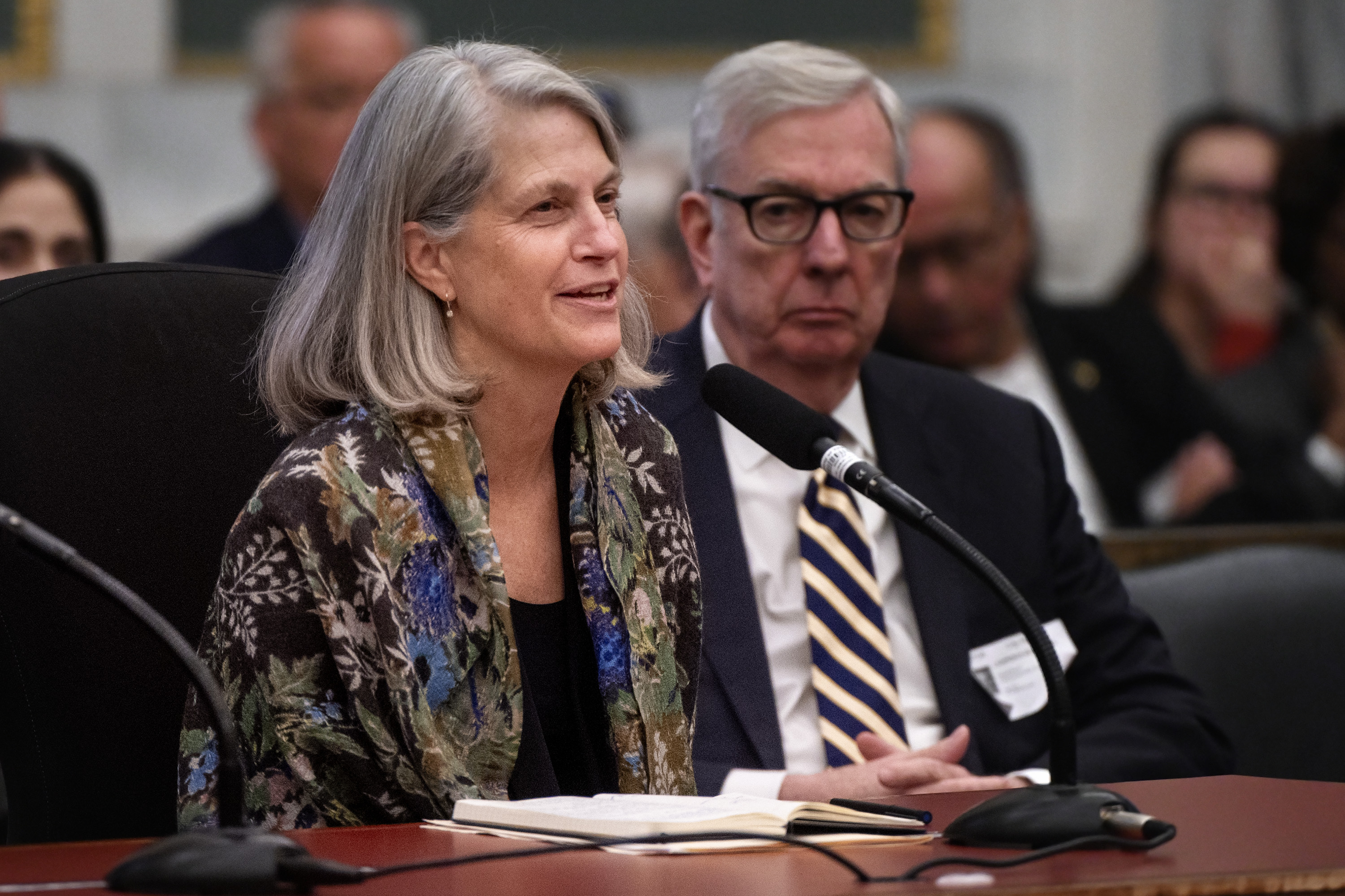
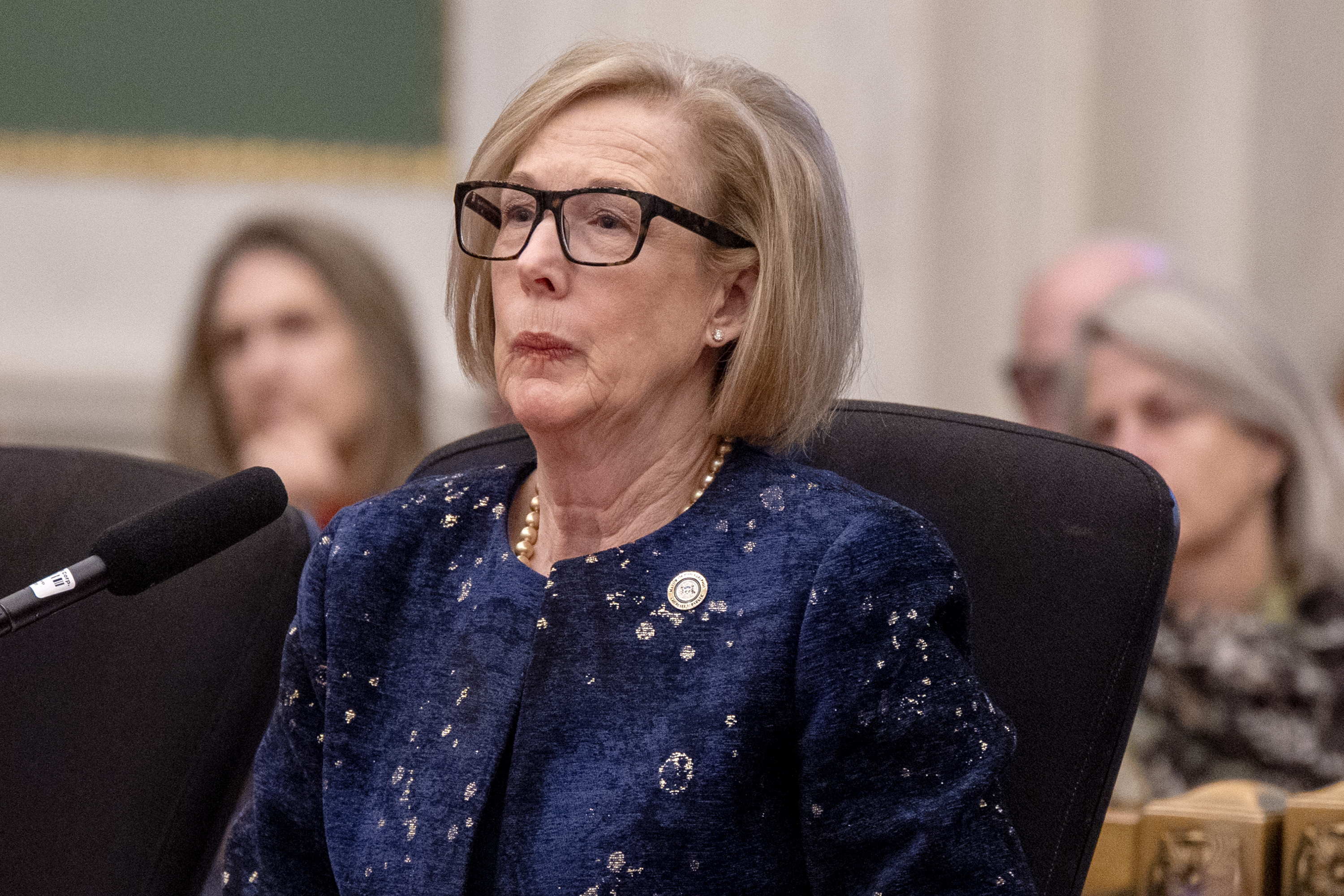
Academy of Natural Sciences of Drexel University board chair Suzanne Biemiller answers questions during Monday’s hearing.Tom Gralish / Staff Photographer
“The public museum was never ours to run, keep open, or close,” said Merlo, earlier in the hearing, expressing frustration over Drexel’s inability to control the Academy’s deficits.
Council members said they wanted to commit taxpayer dollars by the end of this year to help reopen the museum. Councilmember Isaiah Thomas, chair of the legislative oversight committee, said he had spoken to eight lawmakers — nearly a majority of the 17-member body — who want to “put the money on the table” to provide recurring revenue to the Academy over a “three to five year period.”
“It’s important that we move as fast as possible on a solution,” Thomas said.
It’s unclear whether Mayor Cherelle L. Parker, who could sign or veto any funding legislation, would support pulling money from the city’s coffers to support the Academy.
A spokesperson for the mayor’s office did not respond to a request for comment.
Dueling versions on why museum shut
In his testimony, Merlo told Council that over a year ago, the Academy presented Drexel with a plan it wasexploring to permanently close itsPhiladelphiamuseum and move the entire collection to Cleveland or Abu Dhabi, capital of the United Arab Emirates.
And it was Drexel that opposed that plan, Merlo said during the second part of a hearing called by Council to investigate the shutdown.
“The Academy board and executive leadership presented the closure of the public museum as unpreventable and inevitable” at an Academy board retreat in September 2025, Merlo testified. “In response, I made it clear this was unacceptable and Drexel wanted no part of any plan to remove the Academy’s treasures from the city of Philadelphia. I told them they would need to disaffiliate from Drexel to move forward with that.”
Merlo did not testify at the first hearing at the end of October, but rather sent one of his administrators. Council then, in a rare move, issued a subpoena to force Merlo to testify, as well as Deputy Mayor Patricia Wellenbach.
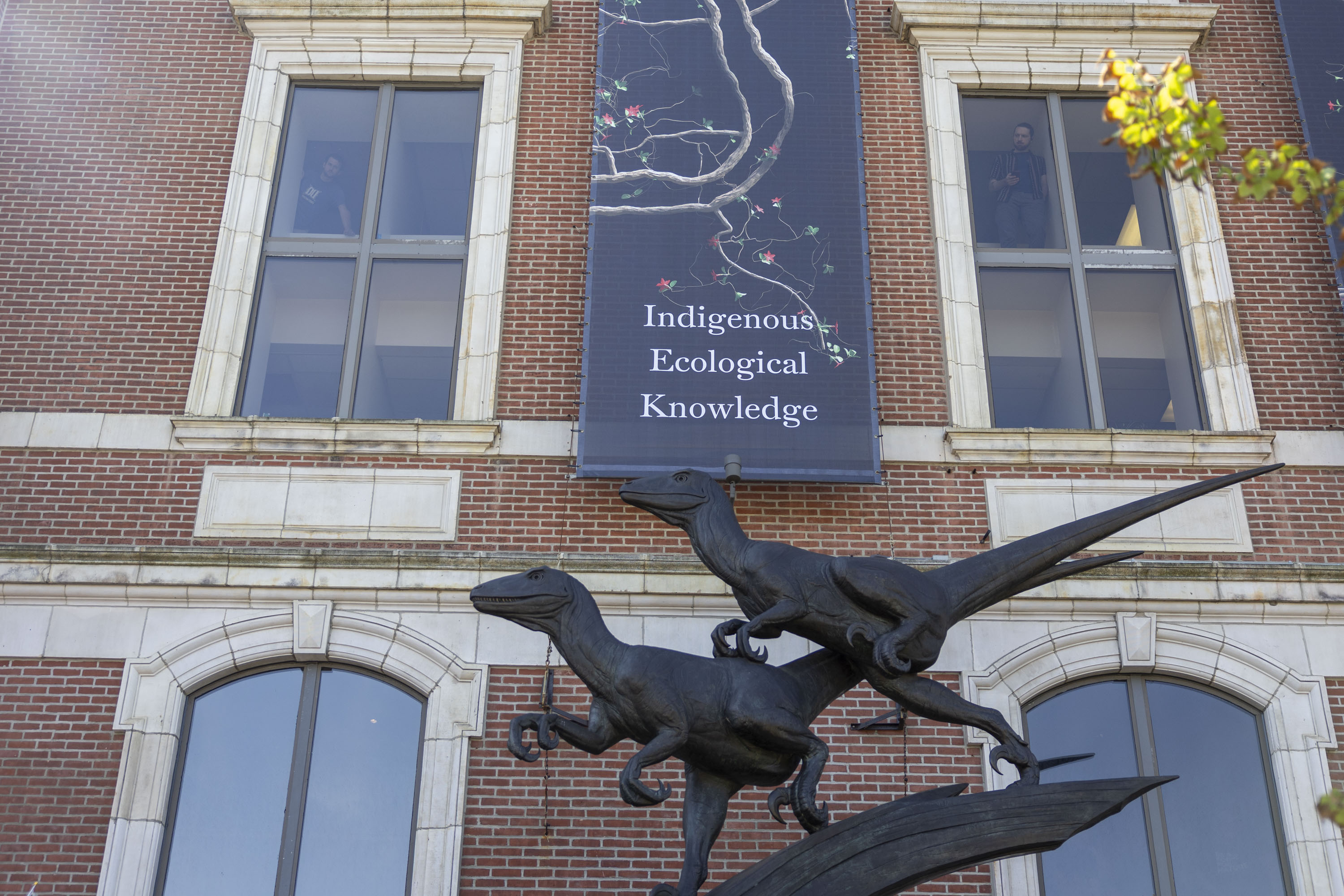
Staff look down as people come out to rally, speak out, and support the Academy of Natural Sciences of Drexel University in September. Tyger Williams / Staff Photographer
Biemiller, who was in the audience during Merlo’s testimony, shook her head in response.
Later, she told Council that it was Merlo at the September meeting who said he wanted the Academy out of its building on the Benjamin Franklin Parkway.
“He basically said, ‘Look, you all need to move your collections and sell the building within two years,’” Biemiller said.
That information was obviously upsetting to the trustees, she said.
Biemiller also later disputed the characterization that the Academy thought the closure of the museum was inevitable.
“We began to explore various options for the museum including renovating the Parkway space, moving the museum exhibits to Drexel’s campus, or moving it to another building on the Parkway,” said Biemiller who has chaired the Academy board since March 2025, replacing David Griffith, who is now an emeritus board member.
The Abu Dhabi and Cleveland proposals “never developed as real options and were never presented to, voted on, or advocated for by the board,” she said.
The conflicting statements concerned Council.
“Clearly there’s a difference of opinion on how we got to this point and whose fault it is,” Thomas said.
It seems clear that Drexel and the Academy are headed for disaffiliation, he said.
“There will be an infusion of cash that’s needed in order to put us in a position for this transition,” he said.
A dispute over money
The two sides have been at an impasse as they try to negotiate disaffiliation, and the rub has been over money. Drexel in its first proposal offered to provide in-kind services for three months after the date of disaffiliation, but no cash.
The Academy, on the other hand, asked for $25 million over five years as a bridge to independence, in addition to in-kind services, Gregory S. Rigdon, an Academy trustee and board treasurer, told Council. He said the Academy ultimately wanted to disaffiliate from Drexel because Academy board members didn’t think the school had the financial resources to meet obligations in a potential new deal for continued affiliation.
“It’s not in the best interests of Drexel, a very important institution for the city of Philadelphia and the state of Pennsylvania, to take on additional burdens, really unrelated to its core mission,” he said.
Merlo said Drexel would support disaffiliation.
“If the future is best served by having the Academy separate and disaffiliate from Drexel, Drexel is ready to stand aside and let other people come in,” he said.
As part of the hearing, the Parker administration submitted hundreds of pages of records that were subpoenaed by Council.
Drexel, too, as part of its testimony submitted Academy board meeting minutes marked confidential along with planning and financial documents, disclosing the Academy’s behind-the-scenes steps to eventually close the Academy building and send its invaluable collection of 19 million items to other museums as the institution continued to cope with deficits.
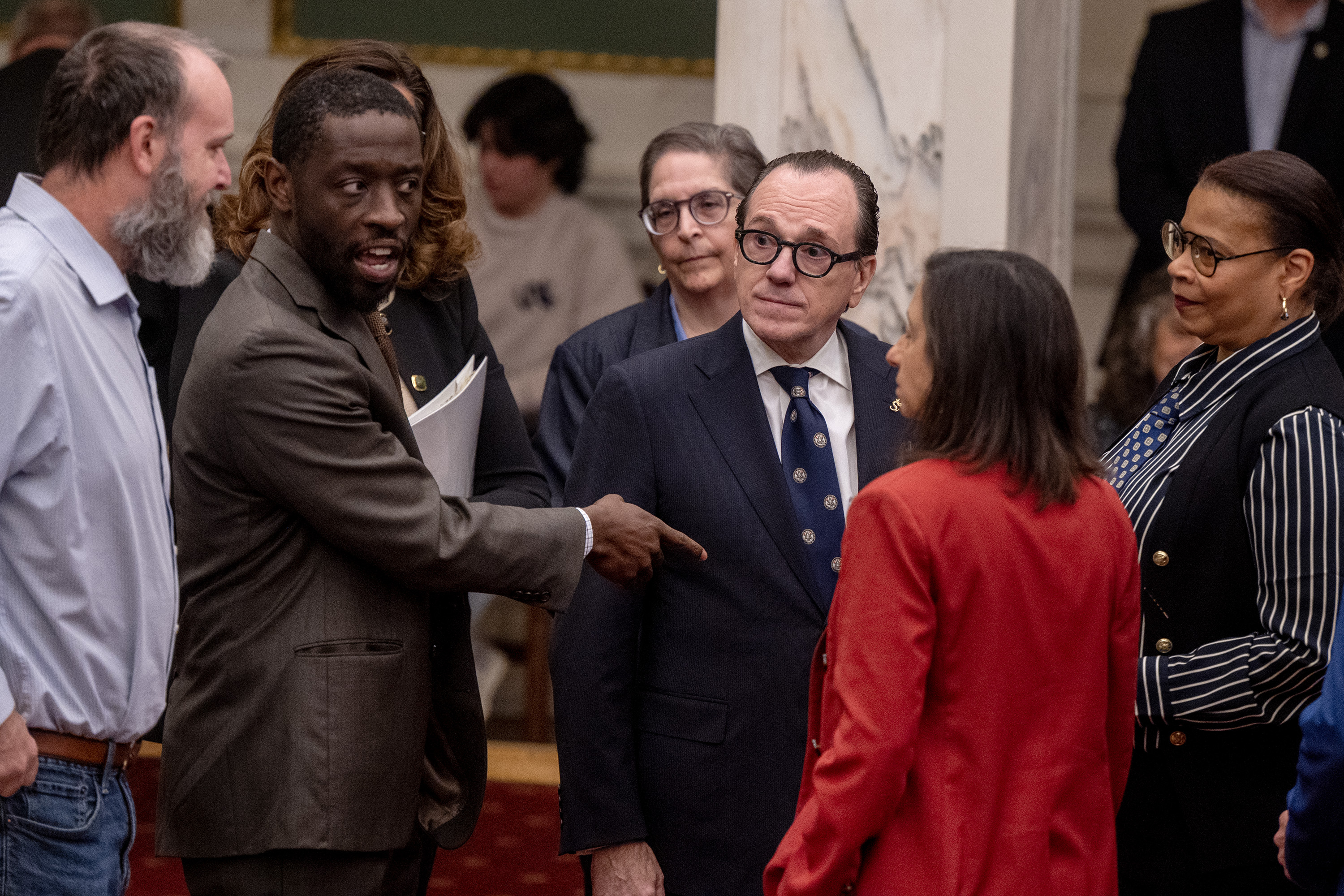
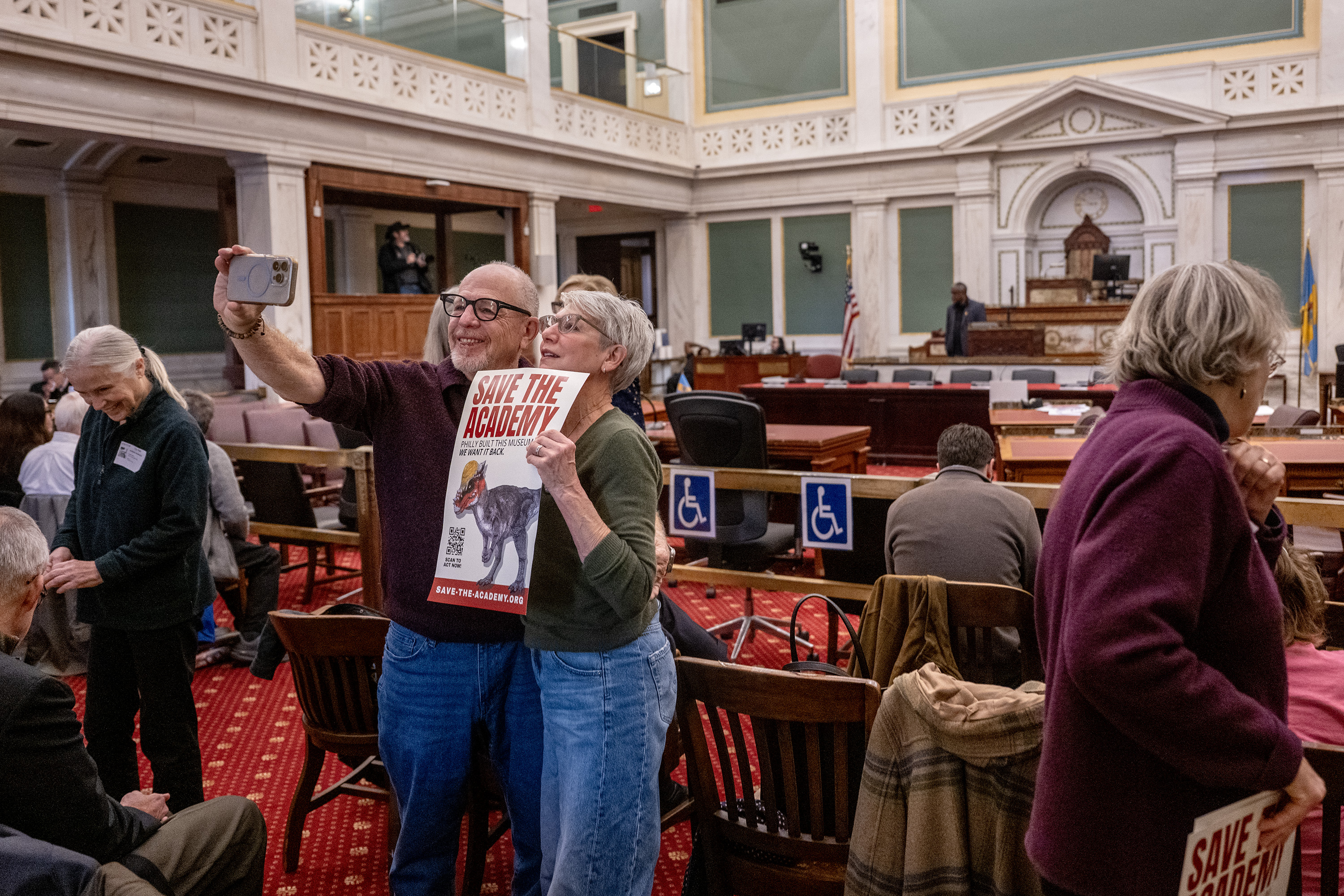
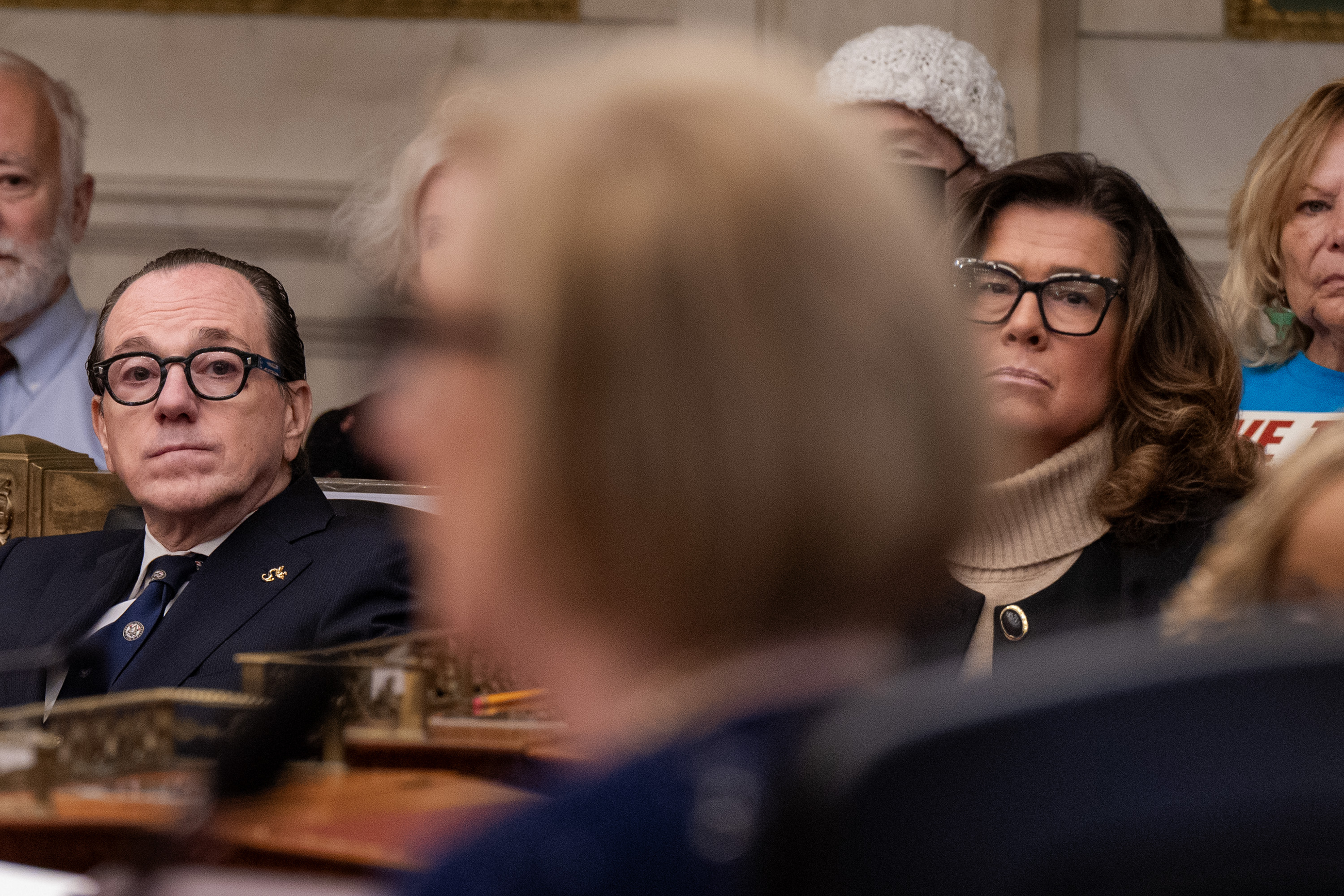
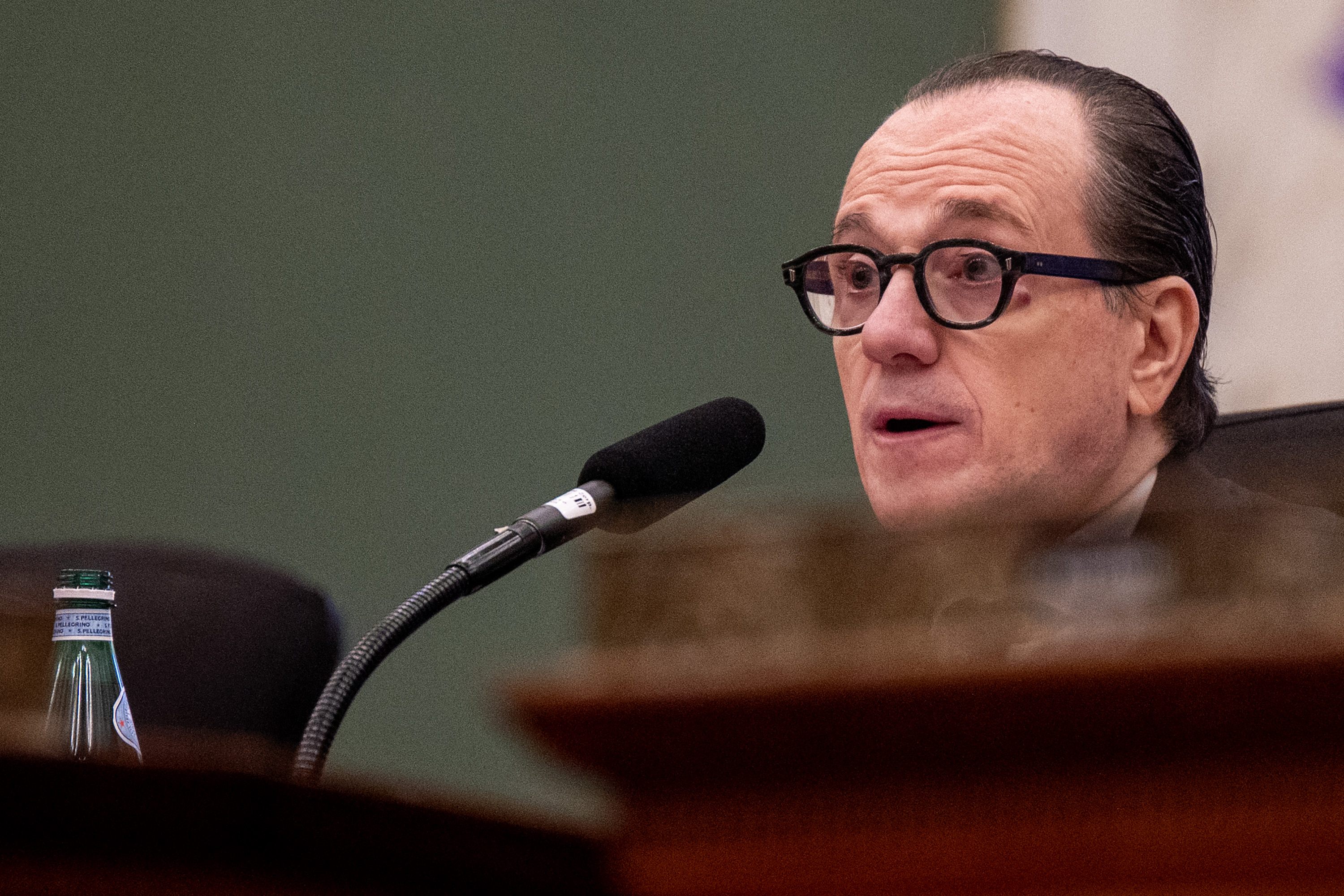
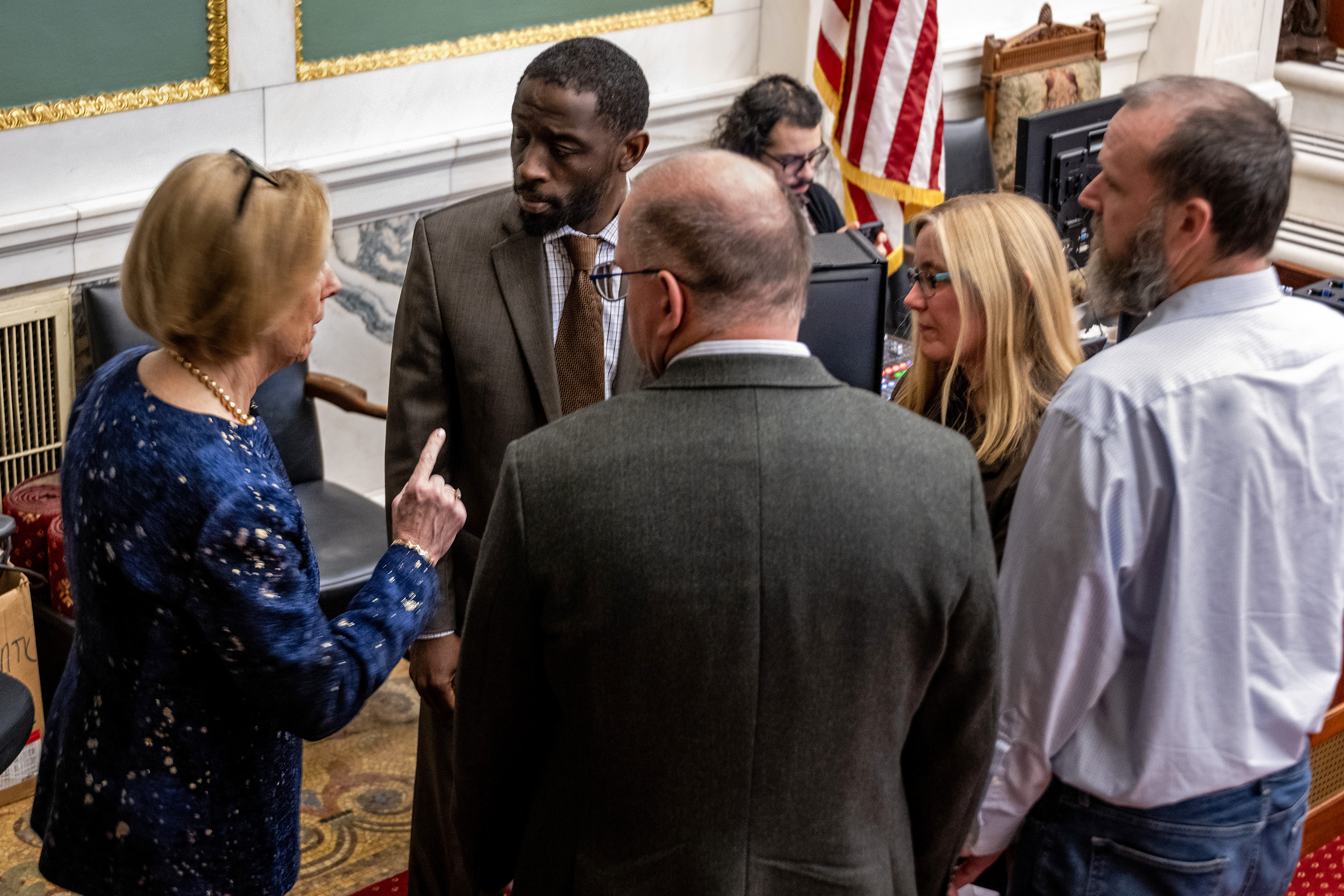
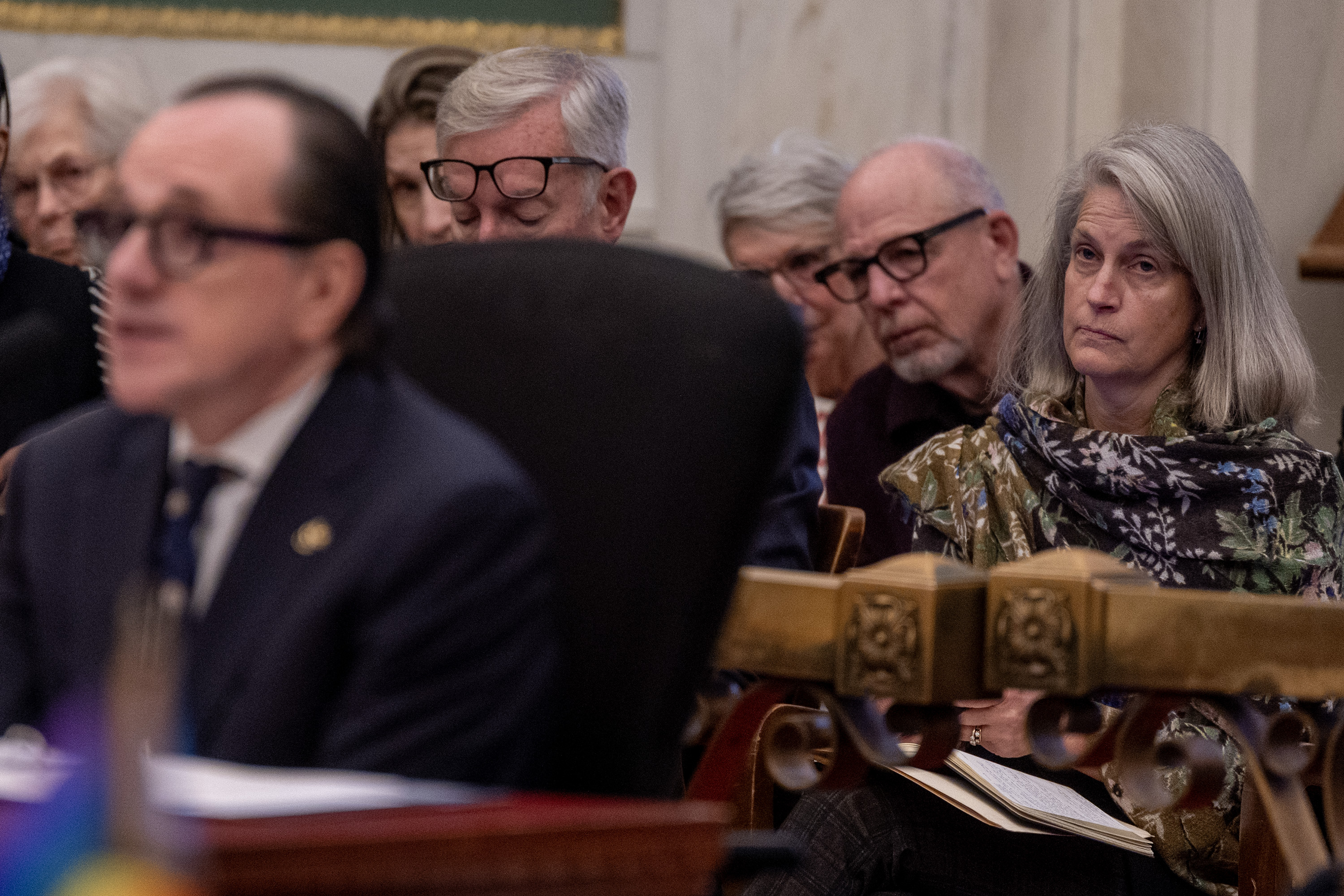
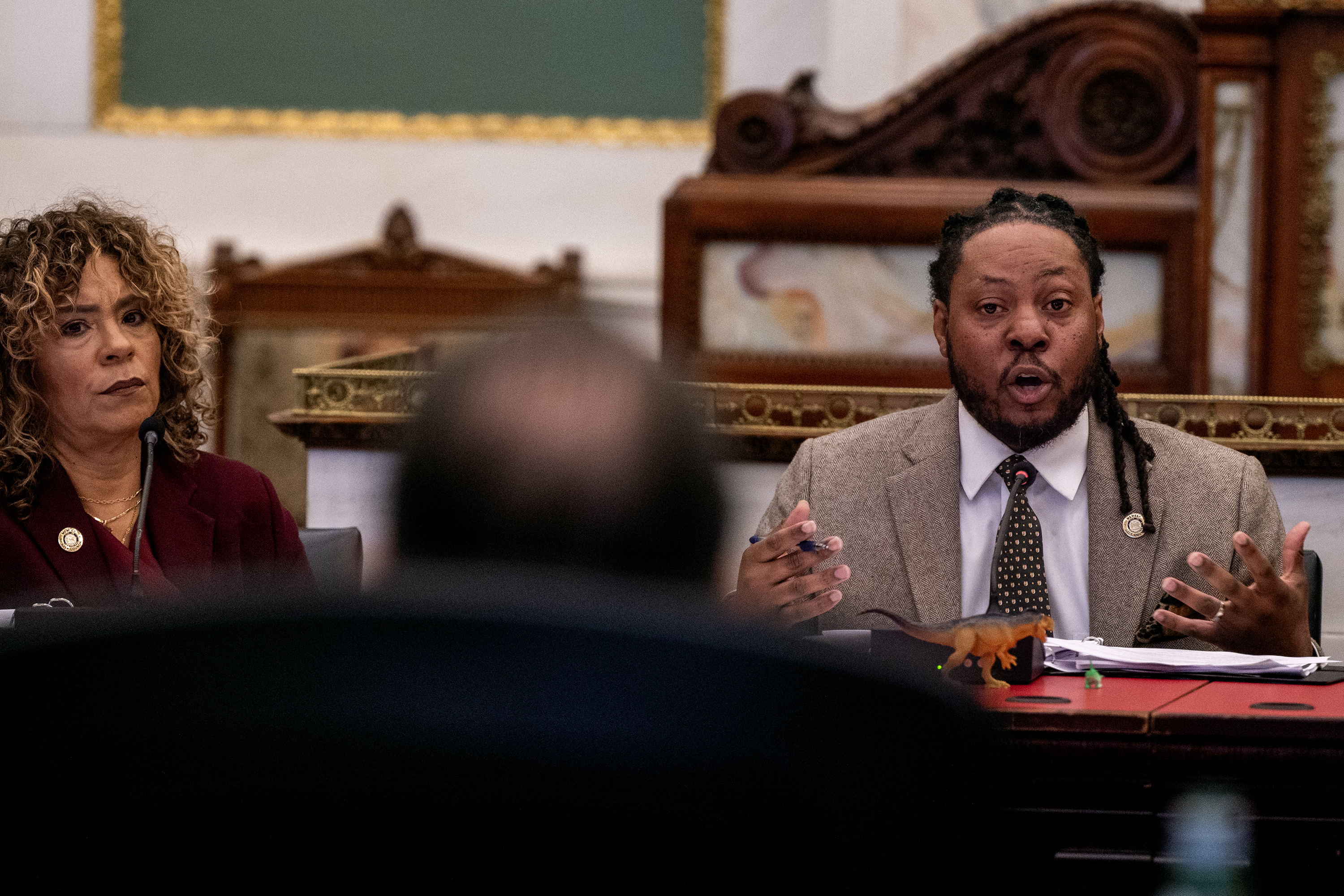
Academy of Natural Sciences of Drexel University supporters Nancy Koppelman and Neil Samuels of Old City take a selfie in council chambers before the start of the hearing.Tom Gralish / Staff PhotographerCommittee chair Isaiah Thomas (left) talks with Drexel President Antonio Merlo (center) after he arrives for the hearing.Tom Gralish / Staff PhotographerMerlo and Helen Bowman (rear, right), Drexel’s executive vice president and chief operating and financial officer, wait their turn as the committee questions Deputy Mayor Patricia Wellenbach.Tom Gralish / Staff PhotographerDeputy Mayor Wellenbach is questioned by the committee. She did not testify at the first hearing at the end of October, and council issued a subpoena to force her to appear.
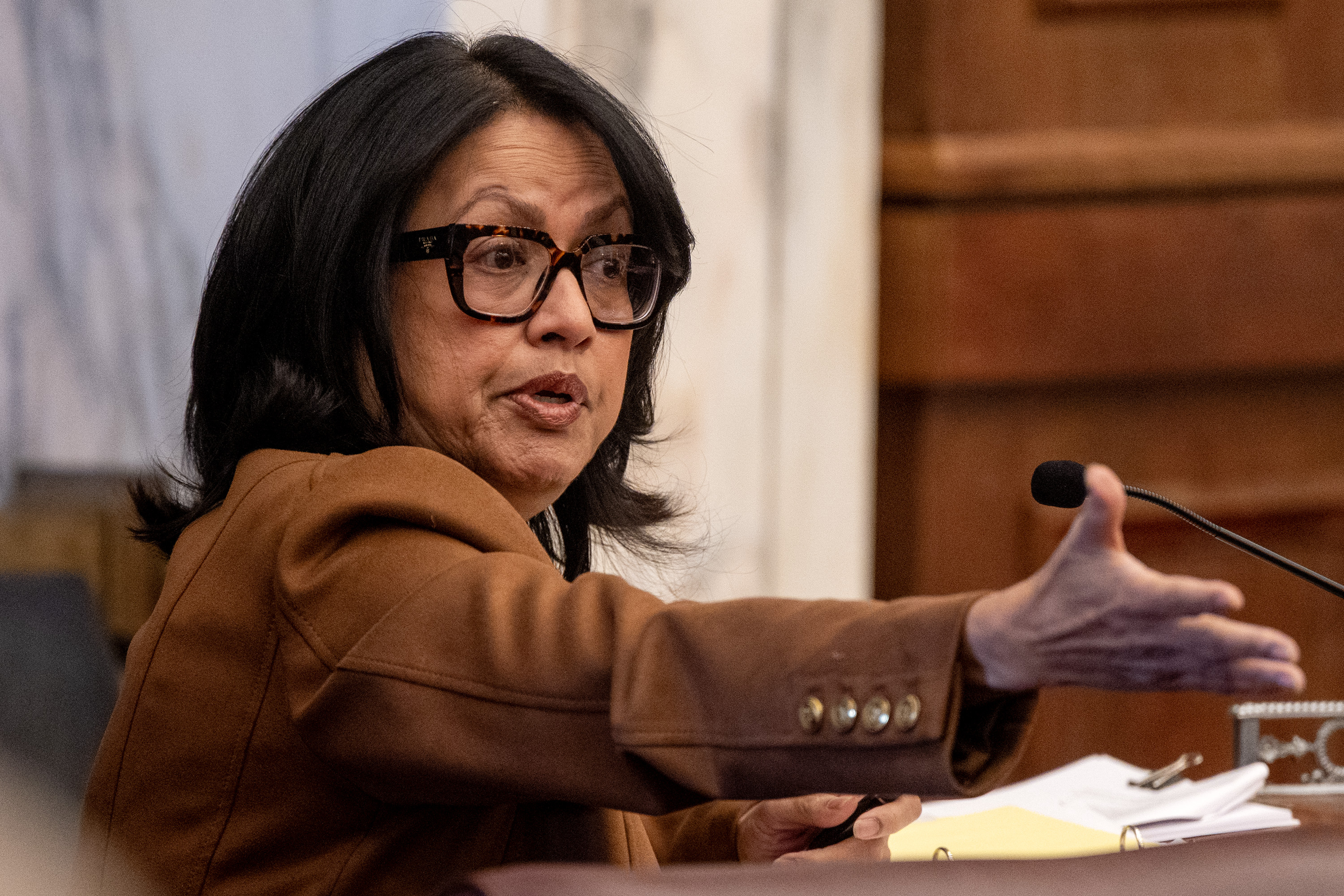
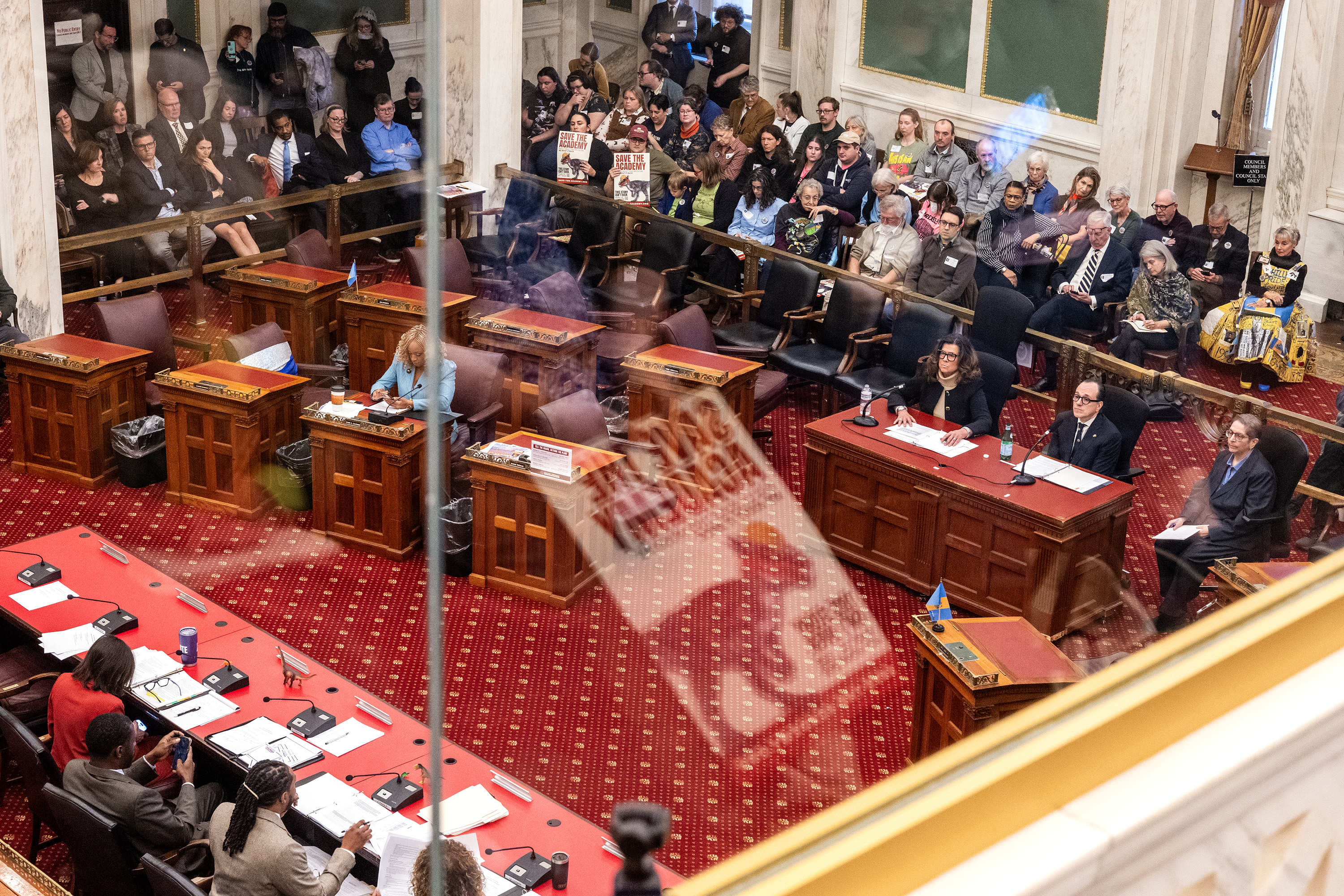
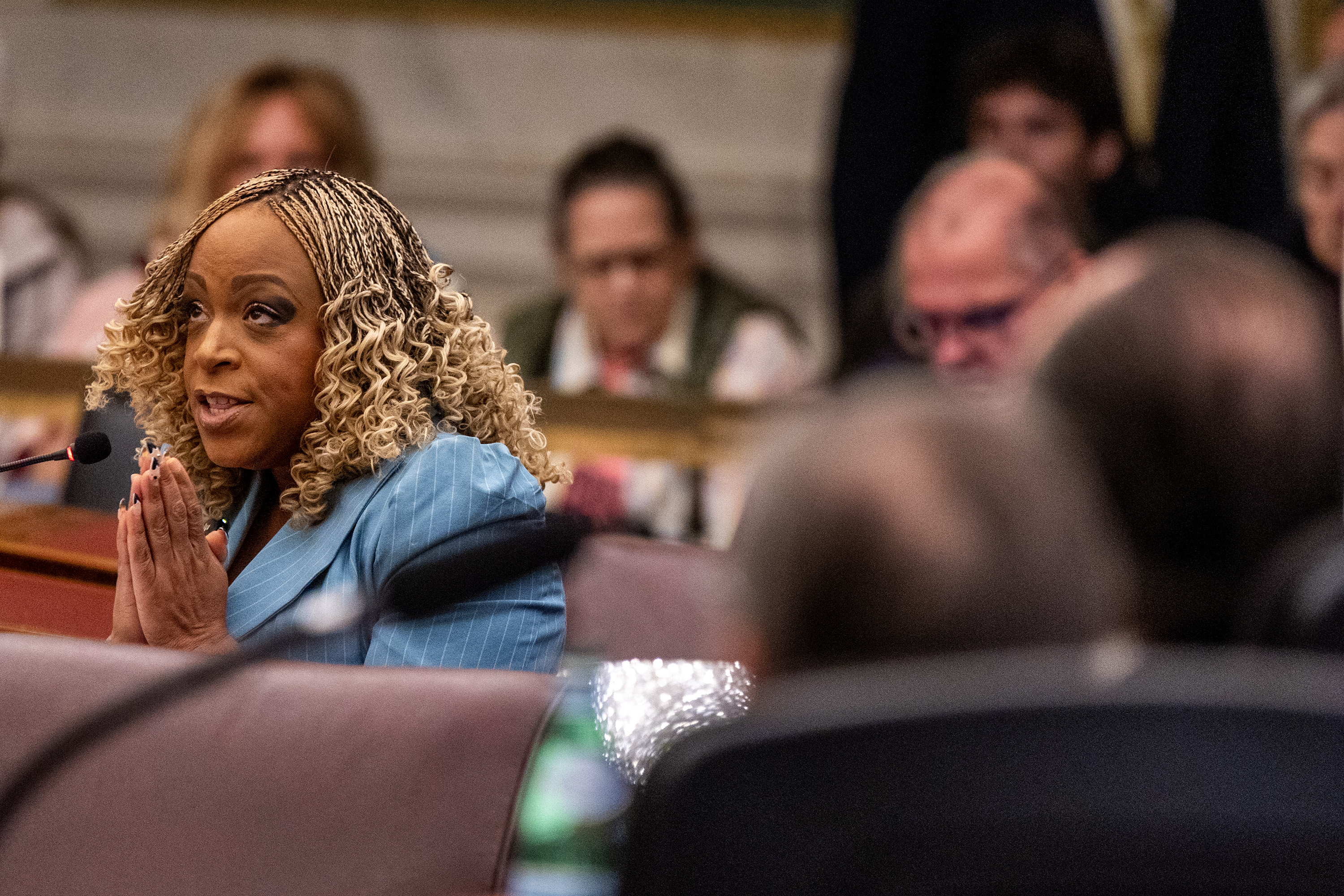
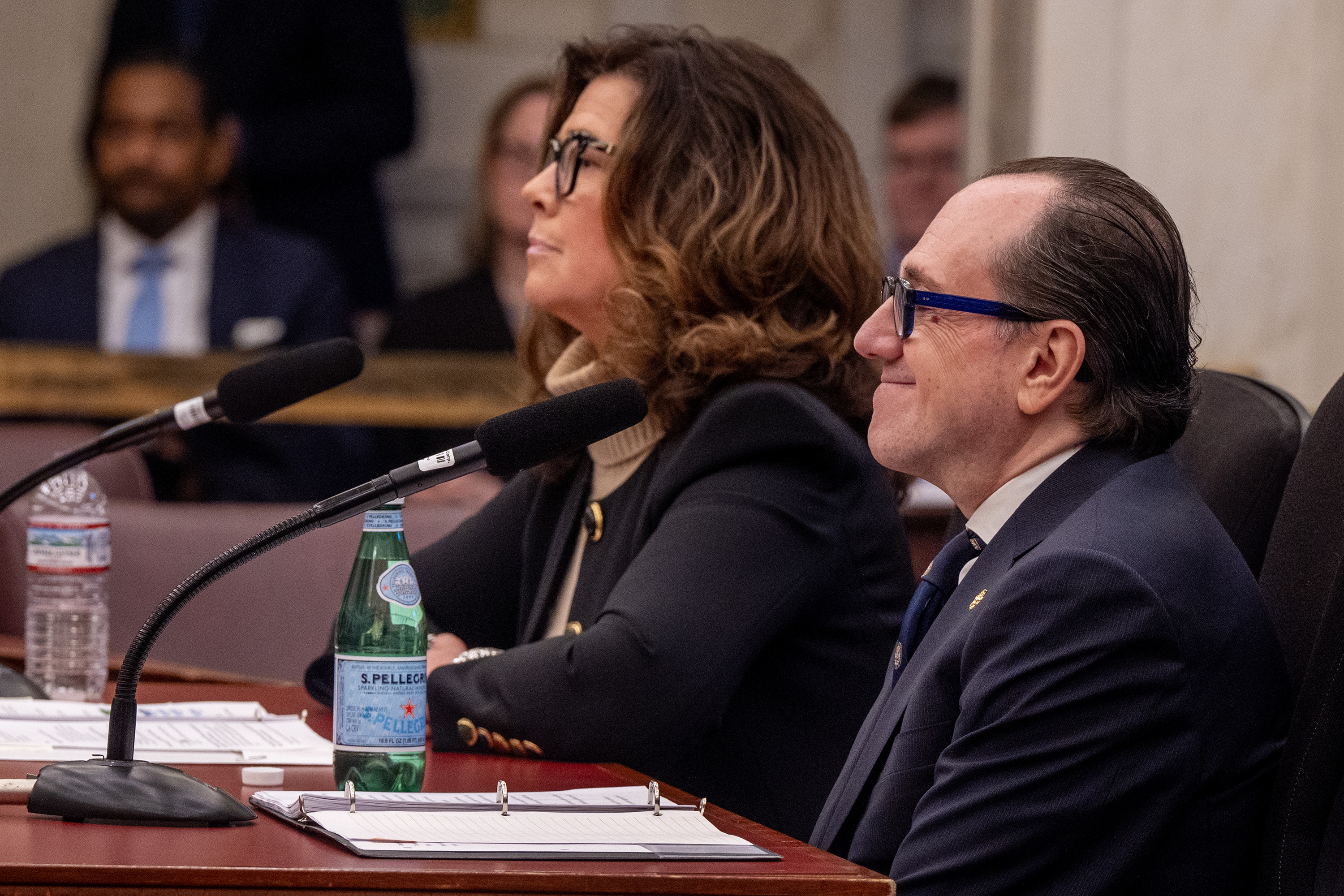
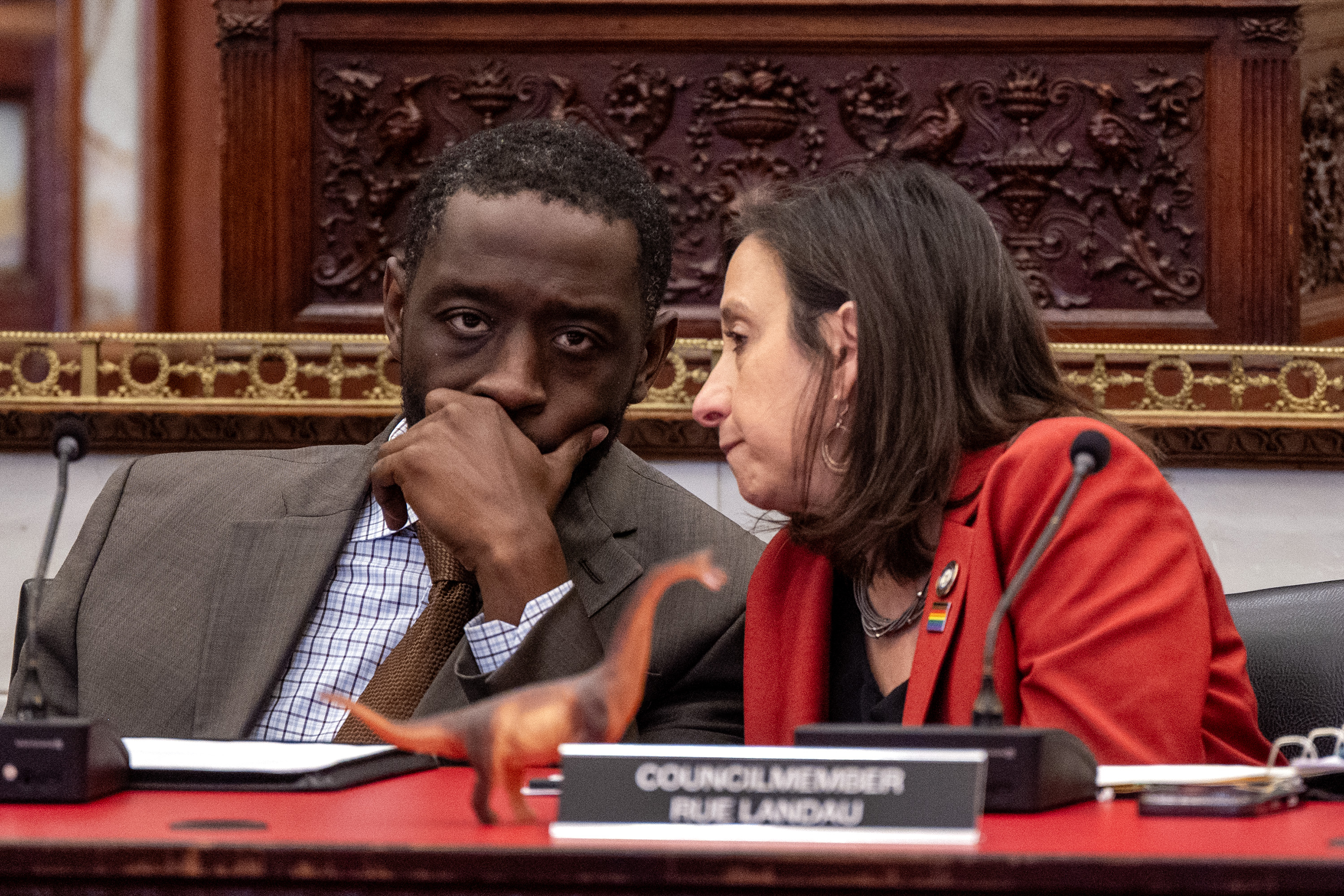
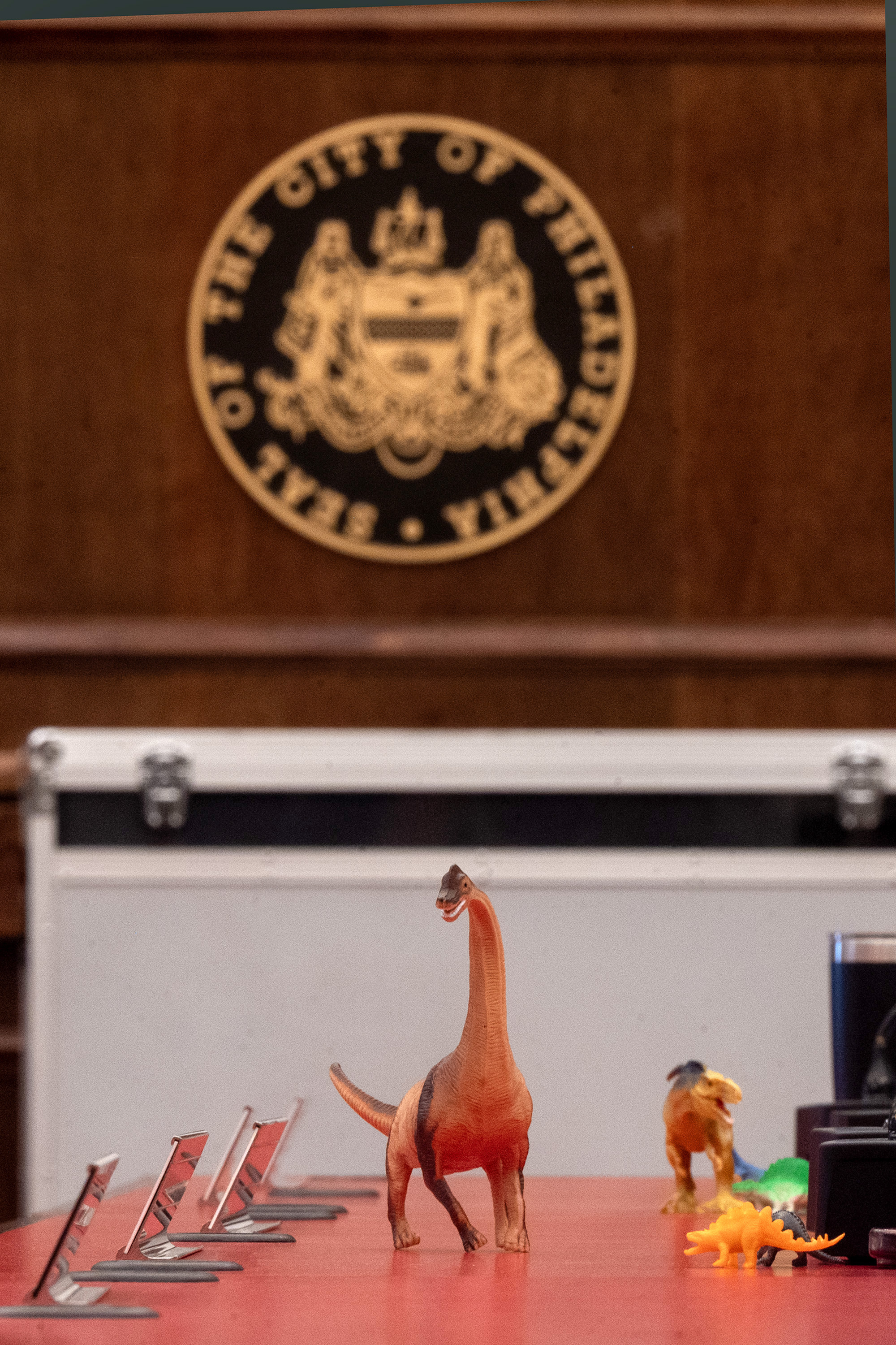
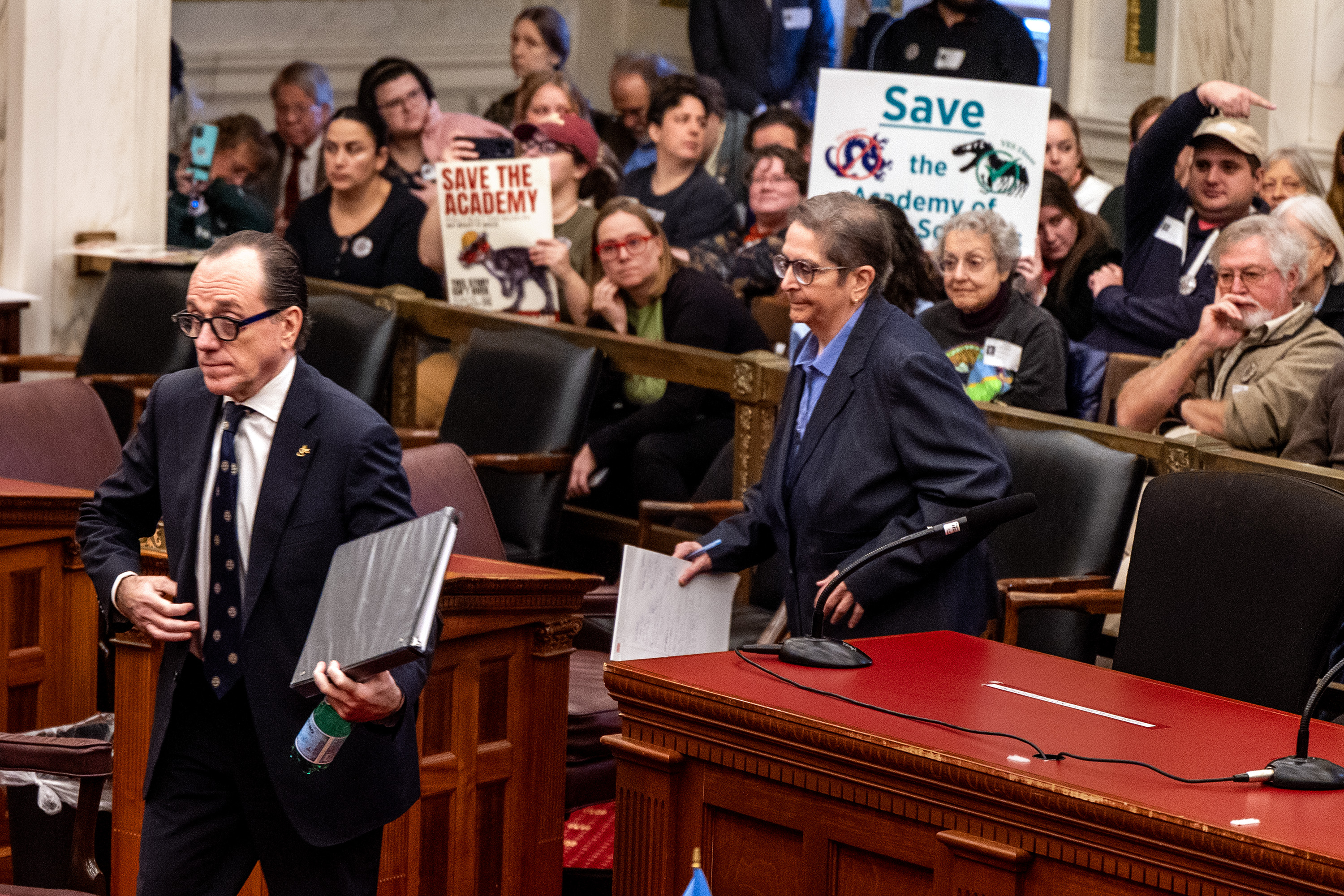
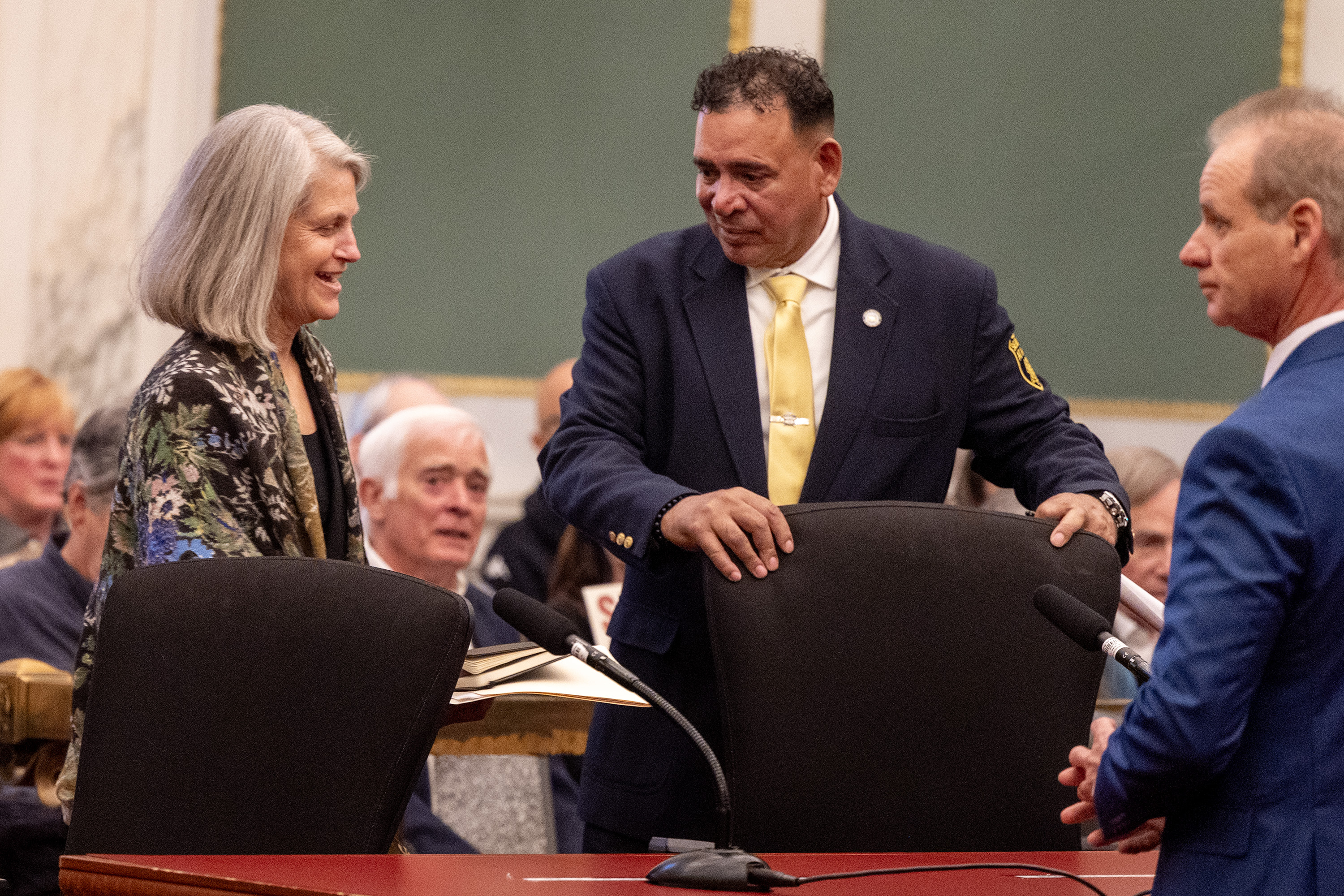
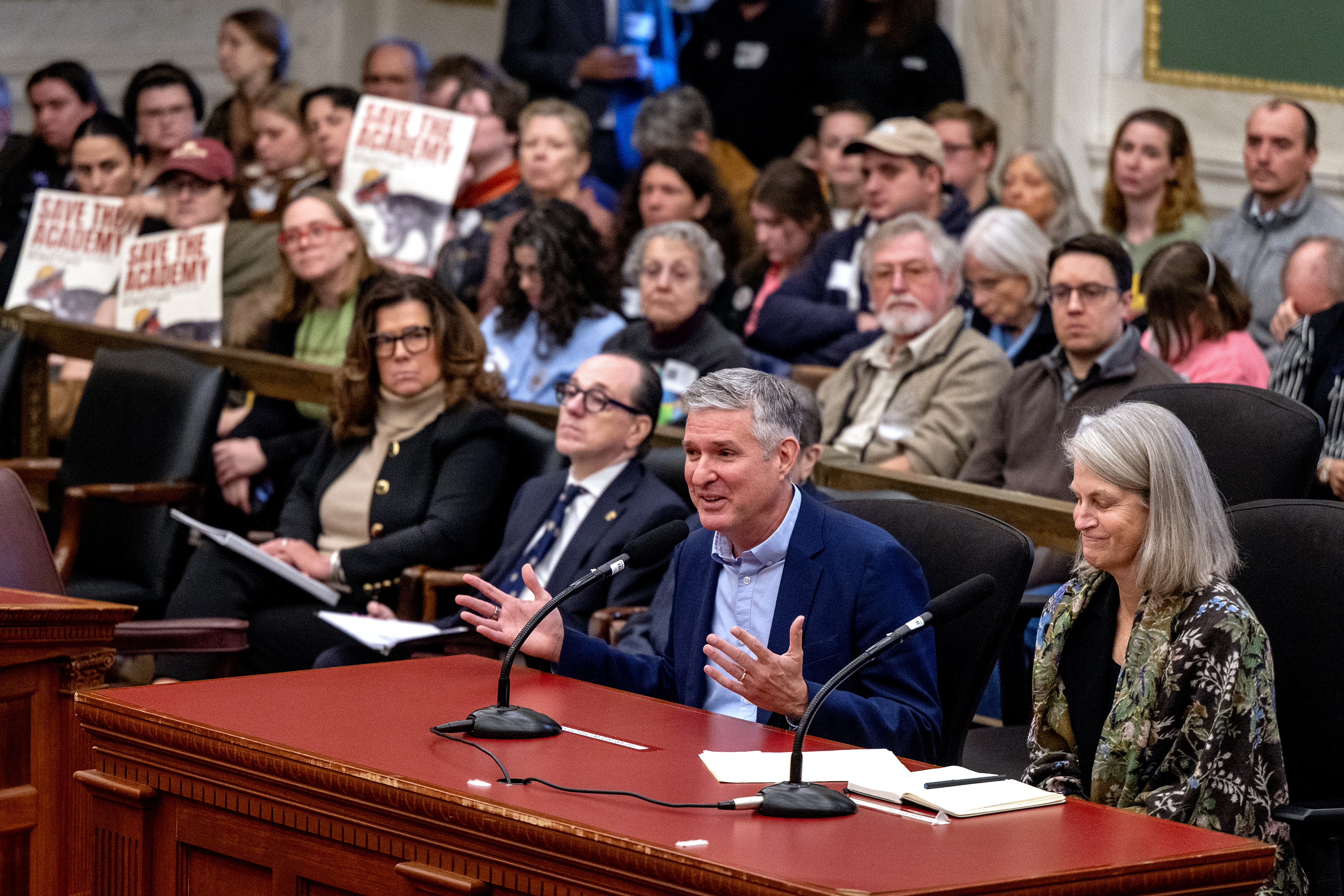
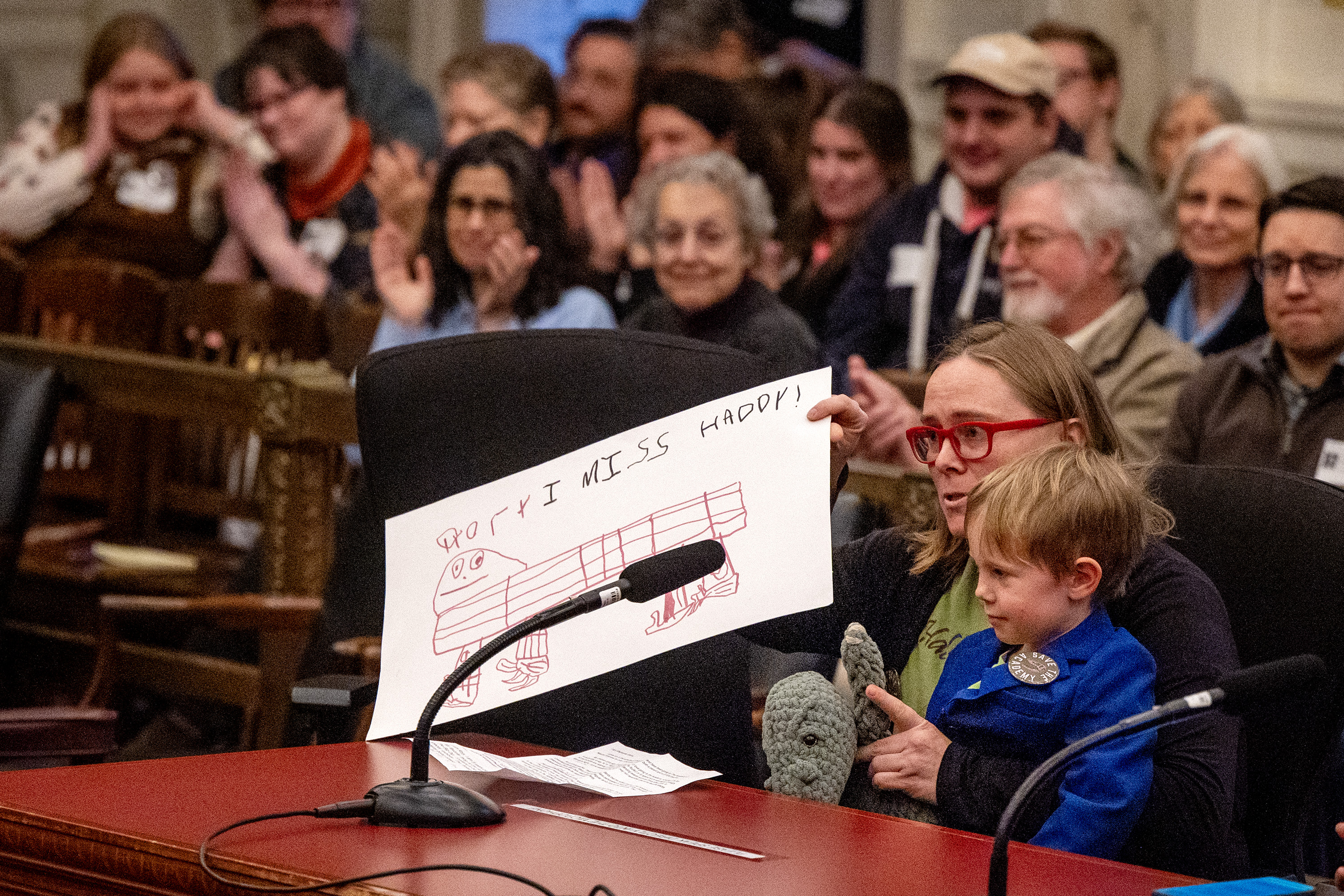
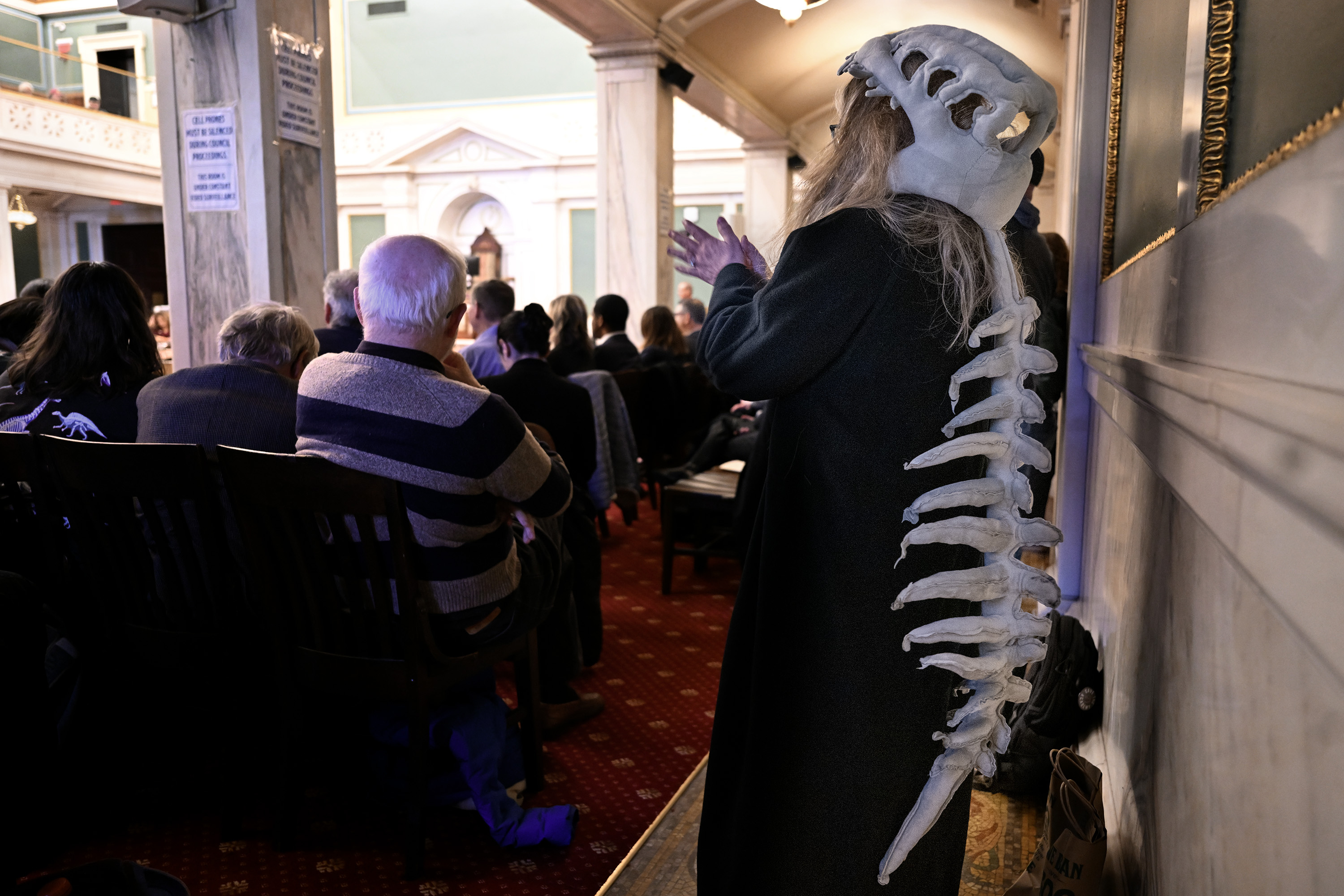
Tom Gralish / Staff PhotographerMerlo and Bowman wait their turn to testify as Wellenbach (foreground) answers questions.Tom Gralish / Staff PhotographerMerlo also did not appear at the October hearing, sending one of his administrators instead. Council also subpoenaed him to testify at the Monday hearing.Tom Gralish / Staff PhotographerCouncilmember Nina Ahmad.Tom Gralish / Staff PhotographerA protester’s sign is reflected in the glass of the upstairs overflow gallery, as Council’s Committee on Legislative Oversight holds a second hearing Monday, Nov. 16, 2026 into the closing of the Academy’s museum.Tom Gralish / Staff PhotographerCouncilmember Jamie Gauthier makes praying hands as she questions Drexel President Antonio Merlo (foreground) during a hearing by City Council’s Committee on Legislative Oversight Monday, Nov. 16, 2026 into the closing of the museum at the Academy of Natural Sciences of Drexel University.Tom Gralish / Staff PhotographerMerlo and and Bowman are questioned.Tom Gralish / Staff PhotographerDeputy Mayor Wellenbach (left) talks with committee chair Thomas and Rachel Meadows (right), Mayor Cherelle L. Parker’s director of legislative affairs.Tom Gralish / Staff PhotographerAcademy of Natural Sciences of Drexel University board chair Suzanne Biemiller (right) is in the gallery as Drexel President Antonio Merlo answers questions.Tom Gralish / Staff PhotographerCouncilmembers Thomas and Rue Landau (right) confer.Tom Gralish / Staff PhotographerThere are toy dinosaurs in front of councilmembers Rue Landau and Jeffery Young, Jr.Tom Gralish / Staff PhotographerCouncilmember Jeffery Young, Jr. questions Drexel President Antonio Merlo (foreground). Councilmember Quetcy Lozada is at left.Tom Gralish / Staff PhotographerMerlo leaves after his appearance. Tom Gralish / Staff PhotographerAcademy board chair Biemiller (left) steps up to appear before the committee. She was not a scheduled panelist but was called to answer questions after Drexel President Antonio Merlo testified.Tom Gralish / Staff PhotographerAcademy board treasurer and trustee Gregory S. Rigdon testifies with Biemiller (right). Drexel’s Merlo and Bowman are seated to the left.Tom Gralish / Staff PhotographerMerlo (left) is in the gallery as Academy board chair Suzanne Biemiller (right) testifies. Tom Gralish / Staff PhotographerStephanie Atkins and her five year-old son Rory testify during the public comment part of the hearing. Atkins is a STEM teacher at the Albert M. Greenfield School. They live in Haddonfield, where a life-size statue (named Haddy by school children) of a Hadrosaurus foulkii Leidy commemorates the site of the discovery in 1838 of the world’s first relatively complete set of dinosaur bones that were first exhibited at the Academy. Rory’s mom say he is “Haddy’s best friend.”Tom Gralish / Staff PhotographerA costumed supporter of the Academy of Natural Sciences of Drexel University is in the gallery Monday, Nov. 16, 2026 as City Council’s Committee on Legislative Oversight holds a second hearing into the closing of the Academy museum.Tom Gralish / Staff Photographer
Ultimately, the plans to move the collection to Cleveland or Abu Dhabi didn’t materialize, and the Academy and Drexel have been at a stalemate over the future of the Academy and their affiliation. Drexel has said it can no longer afford to fund the Academy’s deficits as it faces financial pressure to close its own budget shortfall, and gave the Academy the choice of fully merging into Drexel or disaffiliating.
The Academy, for its part, objected to Drexel’s maneuvers to gain full control over collections and operations and reluctance to fund the Academy’s needs. No talks between the two have been held since early October.
Merlo on Mondaypresented a timeline of his dealings with the Academy. He told Council that it was clear to him from his start as Drexel’s president in July 2025 that the affiliation “was no longer tenable.”
Since the affiliation, Drexel has provided nearly $95 million in funding and in-kind services and contributions to the Academy, he said.
In response to the Academy’s desire to close the museum, he said he recommended that Drexel provide a new home for the collections.
In documents that Drexel submitted, the Academy building and air rights were estimated to be worth $30 million.
“Under my proposal, Drexel would preserve the Academy’s identity and legacy as a public-facing institution through public programming and staging of public exhibits either on campus or with a partner museum,” Merlo said. “Drexel would assume the Academy’s assets and liabilities, and the Academy’s board would become advisory. If the Parkway building were sold, its proceeds would be dedicated entirely to the care and preservation of the collections.”
In March 2026, Gov. Shapiro asked former Comcast executive and U.S. Ambassador to Canada David L. Cohen to attempt to broker an agreement between the Academy and Drexel, Merlo said.
Cohen’s involvement came about six months after the Academy board meeting where plans to move the collections to Abu Dhabi or Cleveland were discussed.
The two sides in early September agreed to a set of terms that “closely resembled our proposal” and included the closure of the museum, Merlo said. The deal “would have secured a financially sustainable future” for the Academy in Philadelphia, he said.
“Drexel was all in on the deal,” Merlo said. “So was the mayor. So was the governor … But the Academy’s trustees walked away from that deal.”
Biemiller told The Inquirer last week that the board concluded the deal was not in the Academy’s best interest.
“We said that the term sheet did not work economically and that the trustees of the Academy would therefore not approve it,” she said.
The Academy, Cohen said last week, decided to pursue disaffiliation.
The governor has not returned a request for comment on the matter.
Merlo said it will take “tens of millions … to create a sustainable operating model [for the Academy], including undertaking major capital repairs, providing dependable operating support, and supporting a museum program that gives people a reason to visit and come back.”
He said Drexel will continue to honor terms of the 2011 affiliation agreement that joined the two institutions and pursue options to keep the Academy in Philadelphia but on “secure and sustainable financial footing.” The university also has agreed to a review funded by the William Penn Foundation and other philanthropies on the physical and fiscal conditions of the Academy and a sustainable model for its future.
“Drexel is ready to do its part,” Merlo said.
During his testimony, Merlo said he regretted the way the museum’s closure was announced.
“It is now clear,” Merlo testified, “that this process would have benefited from including City Council members, foundations, and other civic leaders much sooner into the conversation over our efforts to address the Academy’s dire financial condition.”
The Eagles made several roster moves coming out of the bye week, including signing tight end Zach Ertz to the active roster.
Ertz, 36, had been on the Eagles’ practice squad since late September, commencing his second stint with the team. The 2013 second-round pick out of Stanford, who initially played for the Eagles from 2013-21, was elevated three times from Weeks 3-5. He tallied 22 yards on three receptions during that span. Practice squad players are allowed to be elevated a maximum of three times in a season, and Ertz was out of elevations.
Now that Ertz is eligible to be active on game days again, he has a chance to break the franchise record in receptions. Ertz has 582 receptions between his two stints, just eight catches shy of eclipsing Harold Carmichael’s record of 589 (1971-83).
In addition to Ertz, the Eagles also signed offensive tackle John Ojukwu to the active roster. Ojukwu, the 2023 undrafted free agent out of Boise State, became an Eagle in January when he was signed to a reserve/future contract after three years with the Tennessee Titans.
Ojukwu has been on the practice squad since cutdown day on the heels of training camp. He could be a candidate to replace the recently released Fred Johnson as the backup swing tackle behind Jordan Mailata and Markel Bell. Ojukwu had nine career starts for the Titans, playing mostly at right tackle.
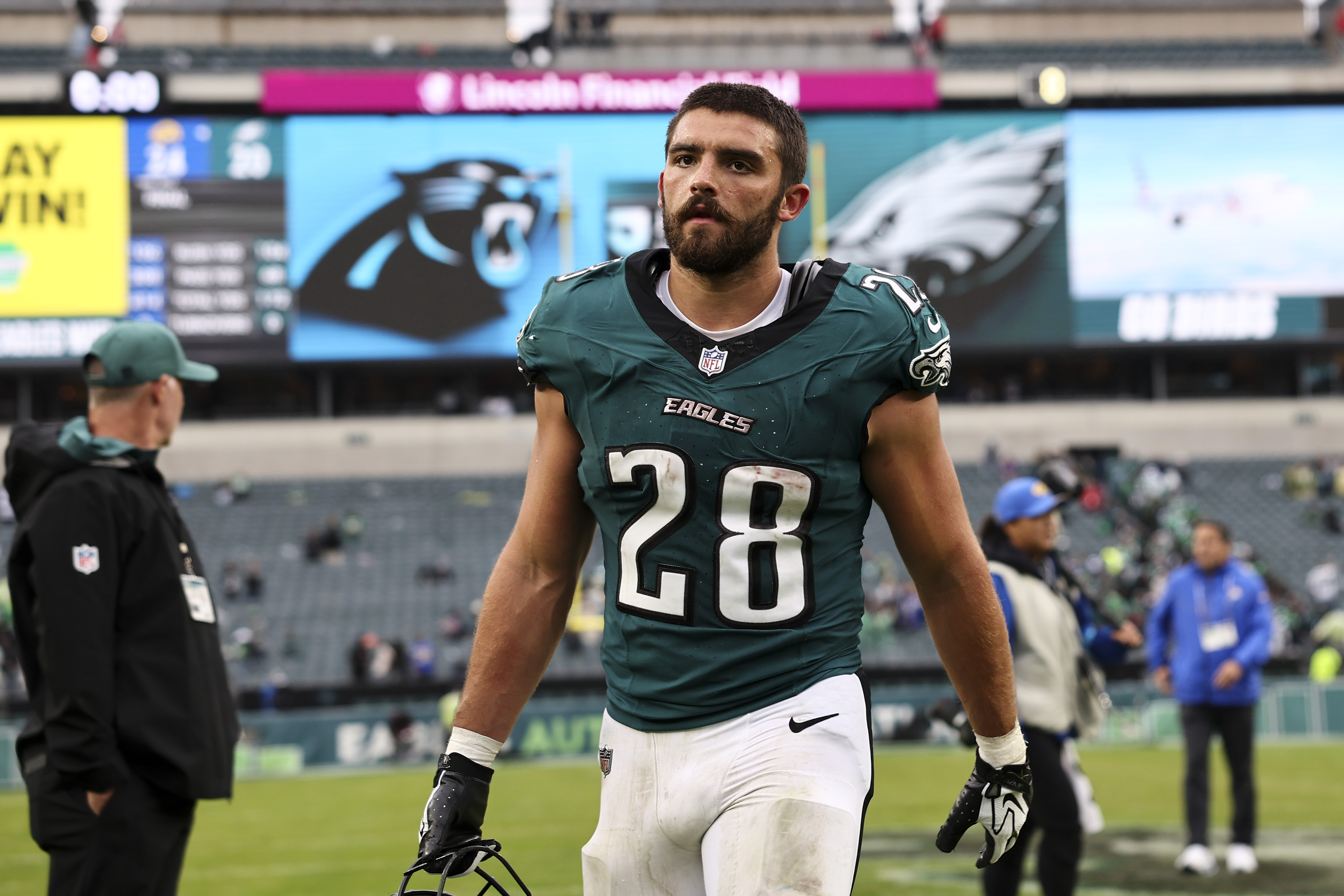
The Eagles also opened the practice window for running back Will Shipley, who has been on injured reserve since Oct. 16 with a foot injury. He has three weeks to practice before the team must decide whether to sign him to the active roster or place him on season-ending injured reserve.
Will Shipley’s return would be timely for an Eagles backfield that has endured a slew of injuries. Monica Herndon / Staff Photographer
Shipley’s potential return would provide a boost to the depth in a banged-up running backs room. Saquon Barkley, who has been dealing with hamstring and back injuries, is the lone running back on the active roster. Tank Bigsby (abdomen) remains on injured reserve.
The Eagles added three players to the practice squad — running back Jaydon Blue, inside linebacker Chance Campbell, and tight end Hayden Rucci. They also released defensive back Shaun Wade. The New York Giants signed wide receiver and return specialist Xavier Gipson off the Eagles’ practice squad, too.
Blue had been on the Eagles’ active roster and practice squad for multiple periods dating back to Aug. 31. He failed to make the Dallas Cowboys’ roster out of training camp after spending his rookie season with the team in 2025. The 2025 fifth-rounder out of Texas originally signed to the Eagles’ practice squad, but he signed to the active roster twice to provide insurance at running back and as a kickoff returner with several players suffering from injuries.
Campbell makes his return to Philadelphia after he was released on Oct. 6. He spent the 2025 season and the beginning of 2026 on the Eagles’ practice squad, appearing in the Monday night loss to the Chicago Bears.
Rucci, a 2024 undrafted free agent out of Wisconsin, joins his sixth NFL team in a span of three seasons. He has spent time with the Miami Dolphins (2024-25, active roster), Detroit Lions (2025, active roster), the Dolphins again (2025, practice squad), the San Francisco 49ers (2025, practice squad), Jacksonville Jaguars (2026, practice squad), and Los Angeles Chargers (2026, active roster).
Rucci is from Lititz, Pa., and played at Warwick High School. His father, Todd, was an NFL offensive guard who played at Penn State and Upper Darby High School. His grandfather, Tom Gilburg, who also played in the NFL with the Baltimore Colts, was the longtime head football coach at Franklin & Marshall from 1975-2002. His brother, Nolan, is an offensive tackle on the Indianapolis Colts’ practice squad.
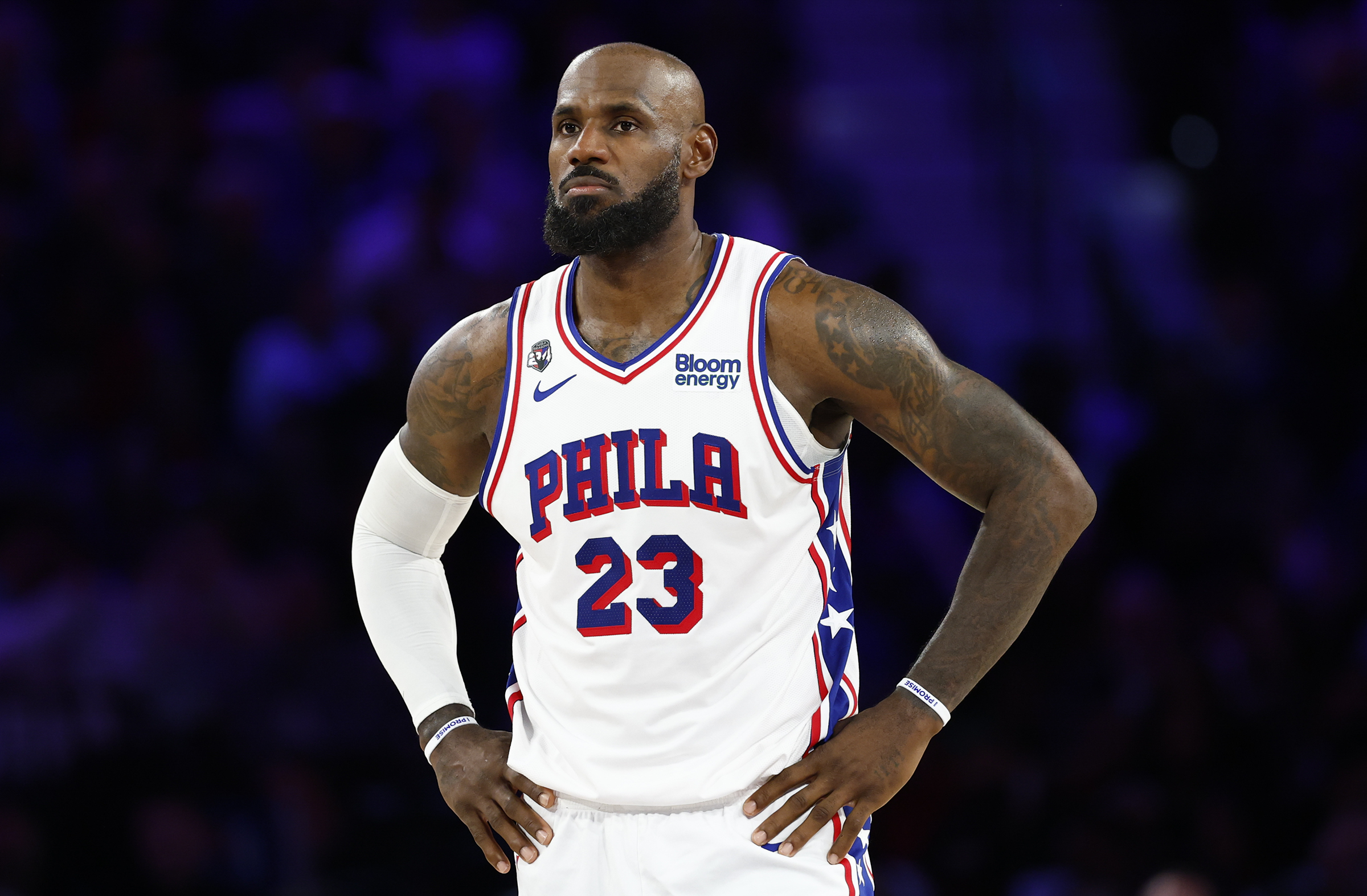
LeBron James will miss the 76ers’ game at the Brooklyn Nets on Monday for sciatica management, according to the NBA’s injury report.
The Sixers are on the second night of a back-to-back, after beating the Indiana Pacers at home Sunday afternoon. James, who turns 42 years old next month, also missed Thursday’s victory over the Toronto Raptors to manage the same lower back condition.
Joel Embiid, who missed Sunday’s win to manage plantar fascia in his right foot, is listed as questionable to play against the Nets. The former MVP also briefly left Thursday’s win over Toronto after inadvertently knocking knees with a Raptor while setting a screen, but returned to action and totaled 20 points on 7-of-17 shooting, four rebounds, and three assists.
James’ absence comes one day after he moved into third place on the NBA’s all-time assists list by recording 11 in Sunday’s win. He is averaging 15.1 points, 7.2 rebounds, and 6.9 assists in 11 games played in his first season as a Sixer.
Backup center Adem Bona (spine) and reserve frontcourt player Dominick Barlow (back) remain out for Monday’s game. After the Sixers’ visit to Brooklyn, they next play Wednesday at the Orlando Magic.
Tatiana Der Avedissian is a communications and sustainability expert. She is the founder of Mereweg, England’s first blue economy cluster and a member of Leading Women for the Ocean.
The midterm elections in the United States have changed the balance of power in Washington. And among the most pressing issues facing the new Congress, one deserves far more attention than it usually receives: Why do the world’s governments help pay for the destruction of the natural systems that sustain us?
All over the world, governments are subsidizing policies that harm our forests, fisheries, and other resources at a rate that dwarfs the spending to protect them, according to the World Bank. This is far from just an environmental catastrophe; it is an economic calamity. Old policies that are no longer tenable are still being maintained despite the fact they no longer make economic sense.
Why care?
Why should ordinary people care about biodiversity? After all, most of us have enough to worry about without counting species, and in the United States today even the word “diversity” is contentious. But you don’t have to love nature to depend on it.
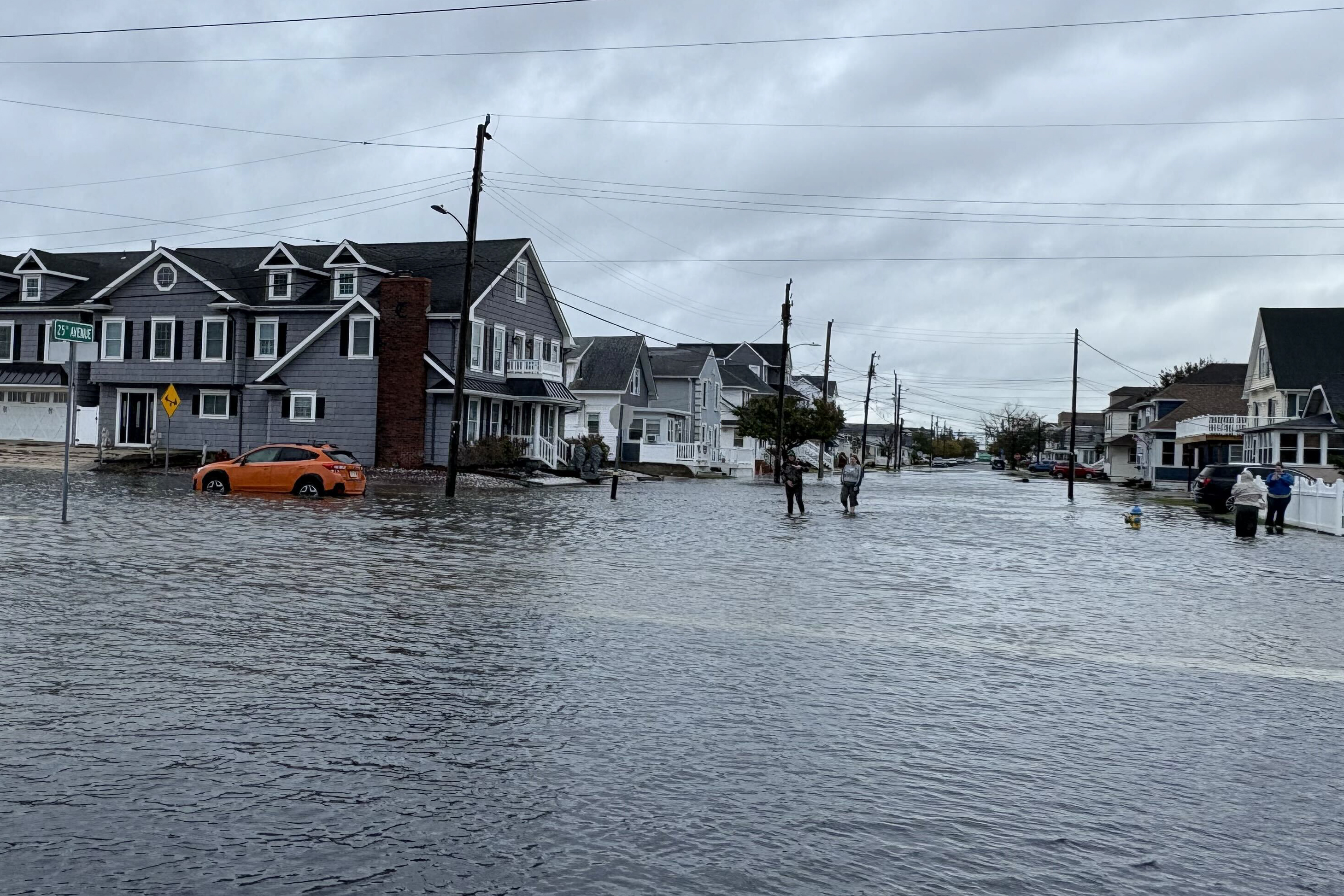
Pennsylvania offers a prime example. In Philadelphia, where the Schuylkill and Delaware rivers shape the city’s geography, flooding is already an expensive reality. The city estimates that damage from a single major storm in 2021 exceeded $1.3 billion. Healthy wetlands, forests, and floodplains help absorb rainfall and reduce the damage such events can cause. Protecting these natural defenses is an economic investment that can save taxpayers billions.
Flood waters brought by a nor’easter in Wildwood, N.J. in September.Brett Sholtis / Staff
When forests and wetlands are damaged, communities lose protection from floods and access to reliable sources of clean water. When bees and other pollinators disappear, crops suffer. When fisheries decline, families lose food and jobs. The costs show up in grocery bills, water supplies, and livelihoods. The Trump administration has shown little enthusiasm for international environmental cooperation, but this is a problem that deserves attention across party lines.
That is why the recent United Nations biodiversity conference, COP17, which took place last month in Yerevan, Armenia, matters well beyond the circle of environmental experts who participated in it. Governments have already promised to protect more of the planet’s land and waters and repair damaged ecosystems, but will they actually do it and pay for it? The answer will affect families and businesses far from the conference halls.
Studies have shown that funding and protection efforts are falling short of governments’ own promises. The World Bank estimates the cost of failing to aggressively protect the environment at $2.7 trillion by 2030. This is about food, health, work, and the security of our communities.
The scale of this self-inflicted damage is staggering. According to a United Nations Environment Programme report released in January, governments worldwide provided $2.4 trillion in environmentally harmful subsidies in 2023 dealing with fossil fuels, agriculture, water, transport, and construction. Such economic incentives encourage excessive resource consumption, over-intensive farming, and the destruction of habitats. Meanwhile, the world invested just $220 billion in nature-based solutions in 2023. Including private sector financing, money flowing into the activities that damage nature outweighed the investment in protecting it by roughly 30 to 1.
Destructive policies
The United States offers a particularly troubling example. The Trump administration has made weakening environmental protections a central element of its economic agenda. In July, it narrowed protections under the Endangered Species Act, making it easier for logging, mining, and drilling operations to proceed in wildlife habitats. The administration presents such measures as removing obstacles to growth, yet forests, wetlands, and functioning ecosystems are productive economic assets, supplying clean water, protecting communities, and sustaining agriculture. Policies that encourage their destruction transfer costs from businesses to taxpayers, families, and future generations.
The U.S. should be leading the effort to counter these incentives. Instead, its government is moving in the opposite direction. Paradoxically, the administration last week unveiled the new America First Seafood Strategy to try to protect the American fisheries industry, which demonstrates that officials understand the economic imperative of protecting livelihoods.
War makes the danger to our environment even more immediate. Research on the Persian Gulf shows that attacks, oil spills, and chemical contamination can damage coral reefs, mangroves, and other marine habitats, with consequences for aquaculture and the water supplies of countries that depend on desalination. Pollution does not stop at a border. Protecting shared ecosystems requires cooperation even among governments that disagree on almost everything else.
Focus on oceans
The oceans offer a particularly urgent test of whether governments intend to turn promises into reality. Much of the world’s biodiversity work has focused on land, but our oceans demand equal attention. Three priorities stand out: integrating the new High Seas Treaty into global biodiversity efforts, protecting 30% of the planet’s land and seas by 2030, and ensuring that marine protected areas are more than “paper parks,” where destructive practices such as bottom trawling, a destructive method that affects our sea floor to catch fish and other marine species living close to the seabed, can still take place.
We also need better marine spatial planning, too. Governments must balance offshore wind farms, aquaculture, undersea cables, and shipping routes with genuine conservation, rather than allowing one activity to undermine another. And Indigenous peoples and coastal communities must have a meaningful voice in these decisions, not merely be consulted after the fact. Their livelihoods and futures are directly at stake.
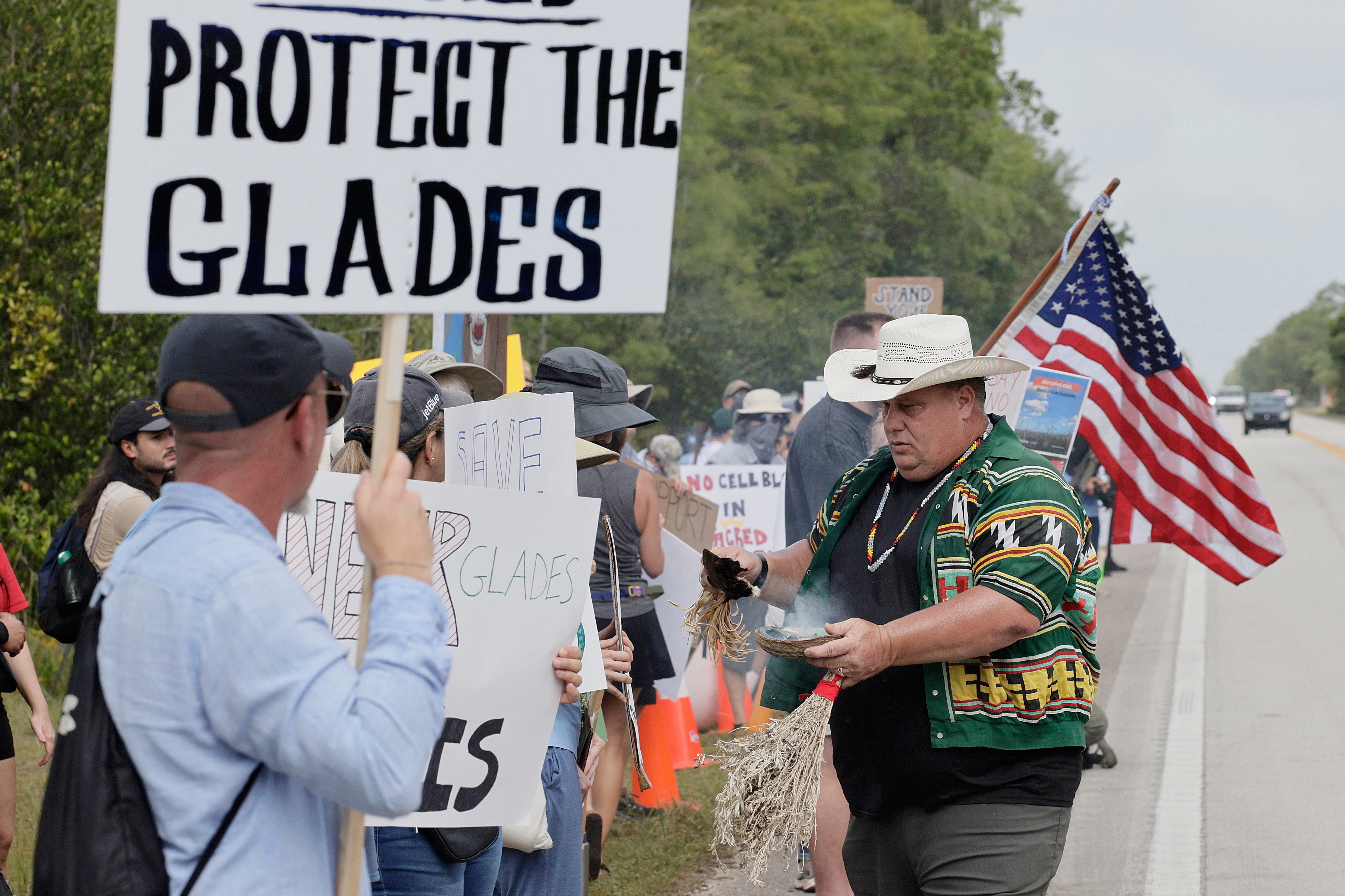
Gary Wilcox with the American Indian movement blesses and cleanses environmental advocates and protesters at the Dade-Collier Training and Transition Airport on Tamiami Trail E, Ochopee, Fla., on June 28, 2025. Mike Stocker
Governments must stop subsidizing the destruction of the natural systems on which their economies depend. This cannot be left to environmental policy makers alone. It requires a collective governmental effort including leaders in agriculture, finance, trade, and infrastructure to recognize that maintaining healthy ecosystems are just as vital to long-term prosperity as roads or power grids.
COP17 concluded with the adoption of the Yerevan Pathway, a roadmap for accelerating global biodiversity protection through 2030. The conference also announced nearly $2 billion in new biodiversity financing and strengthened conservation commitments, although significant challenges remain in meeting global targets.
Individual citizens have a role, too. We can press elected officials to treat healthy land and water as essential rather than a luxury or afterthought. We can reconsider the brands we buy, support organizations doing serious, science-based restoration work, and demand greater accountability for how public money is spent.
The midterms have created a new political reality in Washington, but they have not changed the economic realities confronting America and the world. Whether Democrats and Republicans can agree on environmental policy is another matter. Yet protecting fisheries, securing water supplies, preserving productive farmland, and preventing costly natural disasters should not be understood as exclusively partisan objectives. They are fundamental economic interests.
The incoming Congress has an opportunity to scrutinize subsidies that reward environmental destruction, examine the long-term costs of weakened protections, and demand that public spending reflect the true economic value of healthy ecosystems. The Trump administration, meanwhile, has an opportunity to demonstrate that its commitment to American prosperity includes protecting the natural assets on which that prosperity depends.
You do not have to be an environmentalist, or belong to any particular political party, to insist that governments stop paying to destroy what keeps us alive. After the midterms, that is a question both parties should be prepared to address.
Philly’s own Jill Scott garnered five Grammy nominations for music from her album To Whom This May Concern. Sabrina Carpenter, Questlove, Yannick Nézet-Séguin, Christian McBride, and Adam Blackstone are among the other Philadelphia-area artists up for awards at the 2027 Grammys.
British singer-songwriter Raye is the surprise leader with 11 nominations, tying Beyoncé for the most ever. The singer, born Rachel Keen, is up for three major awards: album of the year for This Album May Contain Hope and record and song of the year for “Where Is My Husband!”
Nearly all the top nominees are women at this year’s awards, which will be held in Los Angeles on Feb. 7. Rosalía has nine nominations; Ella Langley, Miranda Lambert, Phoebe Bridgers, and Olivia Rodrigo have seven each; and Olivia Dean, Bruno Mars, and Leon Thomas have six each.
Along with Scott, artists with five nominations include Taylor Swift, Geese, Jesse Welles, Don Toliver, and Lainey Wilson.
Jilly from Philly is up for best R&B performance for “Pressha”; best melodic rap performance for “To B Honest,” featuring JID; best traditional R&B performance for “Beautiful People”; best R&B song for “Pressha,” which was written with Blackstone and Vincent Tolan; and best R&B album for To Whom This May Concern.
Carpenter, who grew up in Quakertown in Bucks County, is up for two awards, but she can’t win them both because they’re in the same pop duo/group performance category. Her collab with Madonna “Bring Your Love” is going against a team up with Swift on ”The Life of a Showgirl.”
Berks County native Swift’s five nods include album of the year for The Life of a Showgirl, in which she’s battling Raye as well as Olivia Dean, Langley, Mars, Rodrigo, Bridgers, and Rosalía. Swift’s “The Fate of Ophelia” is up for record of the year, in competition with Langley, Mars, Rodrigo, Raye, and Rosalía with Bjork and Yves Tumor, plus Tame Impala and Jennie.
In 2022, Roots drummer Questlove won a music film Grammy for his directorial debut, Summer of Soul. This year, he’s trying to win again for his Earth, Wind & Fire doc To Be Celestial vs. That’s the Weight of the World.
Raye performs at the Greek Theatre in Los Angeles on May 12, 2026. Andrew Park
Two Philly artists are nominated for best jazz performance. The Baylor Project, the married couple of Jean and Marcus Baylor, is in the running with “Good Life — Tamron Hall Main Title Theme,” from Temple grad Hall’s daytime talk show.
They’re vying against a version of Hoagy Carmichael’s “I Get Along Without You Very Well (Except Sometimes),” from Southwest Philly native Christian McBride, with Gilad Hekselman, Nicole Zuraitis, and Dan Pugach.
In best opera recording, Philadelphia Orchestra music director Séguin is nominated for conducting the Metropolitan Opera Orchestra in Bates: The Amazing Adventures of Kavalier & Clay.
Philadelphia choir the Crossing is nominated in the best choral performance category for Farming, a collaboration with composer Ted Hearne. It’s the 12th nomination for the group conducted by Donald Nally. The group has won four Grammys — in 2018, 2019, 2023, and 2025.
Philly string trio Time for Three is nominated along with Joyce Didonato for best engineered album, classical, for Puts: Emily — No Prisoner Be. And Marin Alsop, who is the Philadelphia Orchestra’s principal guest conductor, is nominated for Cline: Color Field, with the Baltimore Symphony Orchestra.
In the best rock song category, Philly’s Alex G. is nominated for cowriting Bridgers’ song “Lost Boys.” The competition includes Bruce Springsteen’s anti-ICE protest song “Streets of Minneapolis.”
Bruce Springsteen at the “Land of Hope & Dreams” tour stop at Xfinity Mobile Arena in Philadelphia on May 30. He’s up for a Grammy for “Streets of Minneapolis.”Elizabeth Robertson / Staff Photographer
Other nominations of note: Dolly Parton is up for three posthumous awards, including two for country duo/group performance, plus another for reading her book Star of the Show: My Life on Stage in the audio book, narration, and storytelling category.
Comedian Wanda Sykes, who lives part time in Media in Delaware County, is up for Best Comedy Album for Legacy, against Nikki Glaser, Trevor Noah, Jeff Ross, Fred Armisen, and Dave Chappelle.
This year’s list of best new artist nominees is strong, with microtonal polka-dot-mask-wearing Canadian duo Angine de Poitrine (who play Franklin Music Hall on Friday), indie quartet Geese, record-breaking country star Langley, electro-pop sensation Slayyyter, powerhouse British vocalist Sienna Spiro, rapper Toliver, indie pop singer Remi Wolf, and retro-soul siblings the Womack Sisters.
After being broadcast on CBS for more than half a century, this year’s Grammy s, which will be held at the Crypto.com Arena, will be shown on ABC and streamed on Hula and Disney+. The great majority of the 100 awards will be given out in a pre-telecast ceremony streamed on YouTube and on Grammy.com.
This combination of images shows performers, (from left), Raye, Rosalía, Ella Langley, and Olivia Rodrigo. Uncredited
Tower Health posted a significantly smaller operating loss in the three months that ended Sept. 30 compared to the year before, despite flat to lower patient volumes, the Berks County nonprofit reported to bondholders Friday.
The latest quarterly loss was $4 million, down from $16 million last year.
“Tower Health’s first quarter fiscal year 2027 results reflect continued progress in strengthening our financial position and transforming how we serve our communities,” the organization said in a statement.
In addition to Reading Hospital in West Reading, Tower owns Pottstown Hospital in Montgomery County and Phoenixville Hospital in Chester County. It also oversees management of St. Christopher’s Hospital for Children in Philadelphia, which it owns in a joint venture with Drexel University.
Here are more details:
Revenue: Tower reported $522 million in total revenue, up 4% from $501 million last year. Reading Hospital accounted for virtually all of the gain, with a 10% revenue increase to $416 million from $378 million. Revenue at Pottstown Hospital fell to $23 million from $33.5 million, following cuts there in the last two years. At Phoenixville Hospital, revenue was relatively flat at $47.6 million this year, compared to $46.8 million a year ago.
Patient volumes: The revenue gain and the improved operating result happened despite a decline in overall admissions, surgeries, and physician visits compared to a year ago. Only outpatient surgeries rose, but the 2% gain (all at Phoenixville) was more than offset by a 13% drop in systemwide inpatient surgeries.
Notable: Tower’s report to bondholders mentioned several investments at its hospitals, including enhanced maternity care in Phoenixville, a 20,000 square-foot emergency department expansion in at Reading Hospital, and the launch of 24-hour pharmacy, which is said is the only one in its core Berks County market.
Philadelphia City Council members said Monday that they want to commit taxpayer dollars by the end of this year to help reopen the shuttered Academy of Natural Sciences museum.
City Councilmember Isaiah Thomas, the chair of Council’s Committee on Legislative Oversight that has been probing the museum’s closure, said during a hearing Monday that lawmakers want to “put the money on the table” to provide recurring revenue to the Academy over a “three to five year period.”
Thomas did not specify an amount. Officials with Drexel University, which has provided financial support to the Academy since 2011, have said that the school can no longer afford the $5 million a year needed to sustain the public museum, which closed its doors in September.
“I think we should stop dancing and just do it,” Thomas said.
It was not immediately clear where the money would come from. Thomas mentioned the city’s $982 million fund balance, or the amount of money left over in the city’s general fund at the end of the fiscal year. That money is intended to be the city’s financial cushion, and the state board that monitors Philadelphia’s finances has warned of a looming structural deficit and significant uncertainty about future federal funding.
Setting aside city money for the Academy by the end of this year would require Council members to work quickly. There are only three sessions remaining on the calendar this year, and legislation must be read in two sessions before it can be passed. That means a proposal must be introduced by early December to meet that timeline.
Councilmember Jeffery Young, Jr. questions Drexel President Antonio Merlo (foreground) during the hearing on Monday. Councilmember Quetcy Lozada is at left.Tom Gralish / Staff Photographer
Typically, the city sets its budget in the spring after the mayor unveils a budget proposal and then negotiates with Council for months. However, lawmakers can use a midyear transfer process to reconcile accounts, and some members have pushed to use that procedure to fund their priorities outside the typical budget season.
It’s unclear whether Mayor Cherelle L. Parker, who could sign or veto any funding legislation, would support pulling money from the city’s coffers to support the Academy.
Deputy Mayor Patricia Wellenbach — who is serving as a senior adviser to Drexel and the Academy — said that, because Drexel and the Academy remain locked in negotiations over their own affiliation agreement and may separate, she “wouldn’t know what to say to people about how much to invest” or which entity would manage the funds.
She said she was not aware of any discussions in Parker’s administration to put city money into the museum.
“That is very disappointing,” Councilmember Rue Landau responded.
Councilmember Isaiah Thomas (left) talks with Drexel president Antonio Merlo (center) after he arrives for Monday’s hearing.Tom Gralish / Staff Photographer
During the first hearing last month, Council members were incensed that Wellenbach and Drexel president Antonio Merlo and did not appear to testify. The committee took the rare step of issuing subpoenas to both to appear on Monday.
Councilmember Jeffery Young Jr., who represents the district where the public museum is located, criticized Parker’s administration on Monday and insinuated that the mayor was behind Wellenbach’s failure to show at the hearing last month.
“You would not just not show up unless others who you may report to made that decision for you,” Young said.
Deputy Mayor Patricia Wellenbach testifies before a hearing by City Council’s Committee on Legislative Oversight on Monday.Tom Gralish / Staff Photographer
He also slammed the administration for producing hundreds of pages of subpoenaed records related to the closure less than two hours before the hearing started on Monday.
A spokesperson for the mayor’s office did not immediately respond to a request for comment.
Members also complained that they were not alerted to the plan to close the museum before it was announced, saying that they could have considered a funding mechanism earlier this year.
Suzanne Biemiller, the chair of the Academy’s board of trustees, said that the board notified Parker’s office — as well as officials in Gov. Josh Shapiro’s administration — in late 2025 that Drexel was looking to renegotiate its financial support for the Academy.
But Council members said they weren’t made aware of threats to the Academy’s viability until after the museum closure was announced publicly nearly a year later.
City Councilmember Nina Ahmad asked Wellenbach if there was anything to preclude Council from allocating money to the museum while negotiations between Drexel and the Academy are still underway.
“I don’t know that there’s anything to preclude us,” Wellenbach responded, “but that would be a decision that Drexel would have to make.”
However, Wellenbach emphasized that her role in the museum negotiations has been “narrow” and will end on Dec. 31. She said she was brought in to be a “stabilizing force” while the Academy and Drexel worked to hire a full-time director to fill the role.
And, Wellenbach said, she was not charged by the mayor with reopening the museum to the public.