Two months after closing suddenly because of deteriorating conditions, Oaklyn’s popular outdoor hockey rink has been torn down and will be replaced by a multiuse court for both hockey and soccer, according to Oaklyn Mayor Greg Brandley.
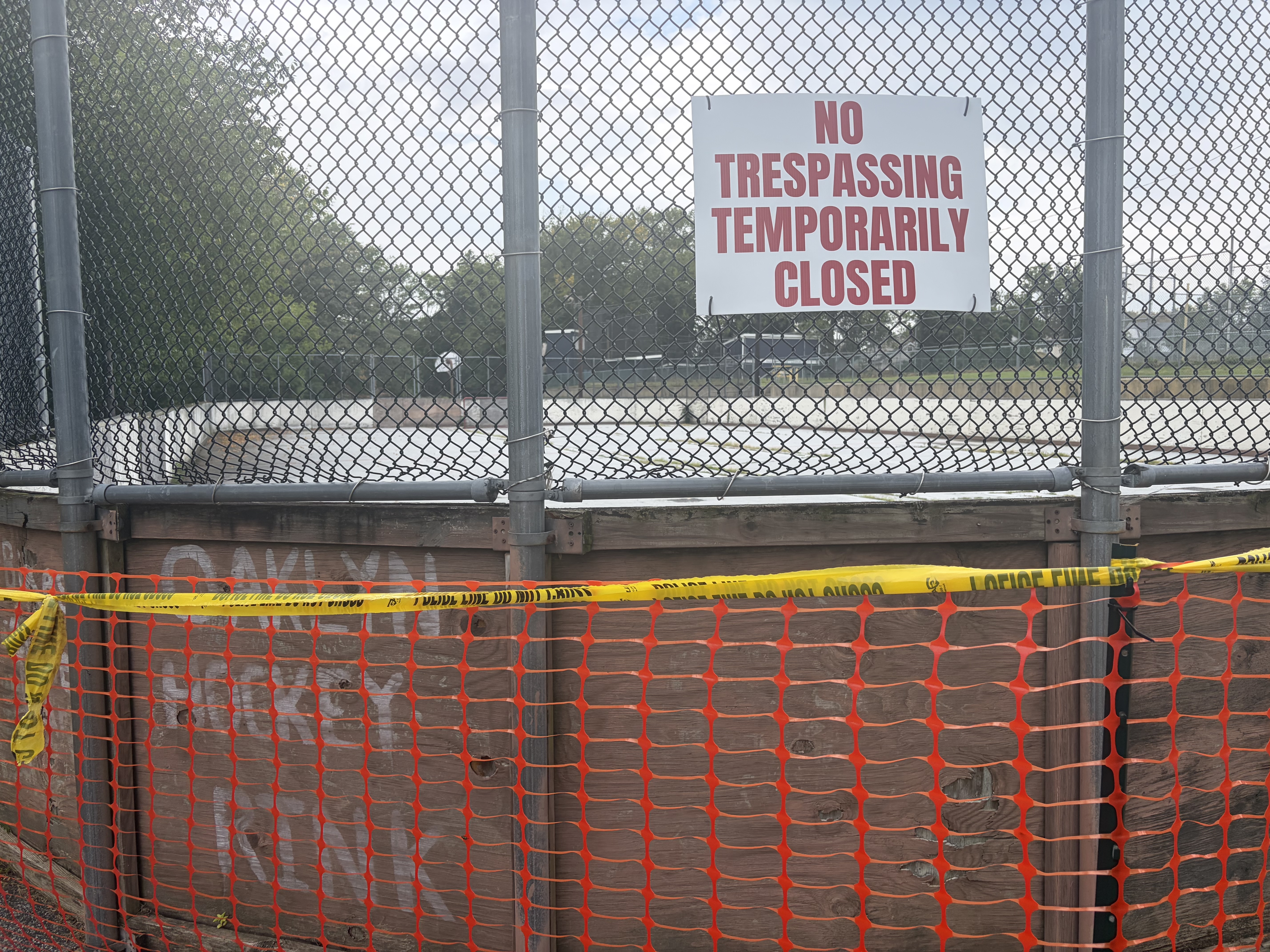
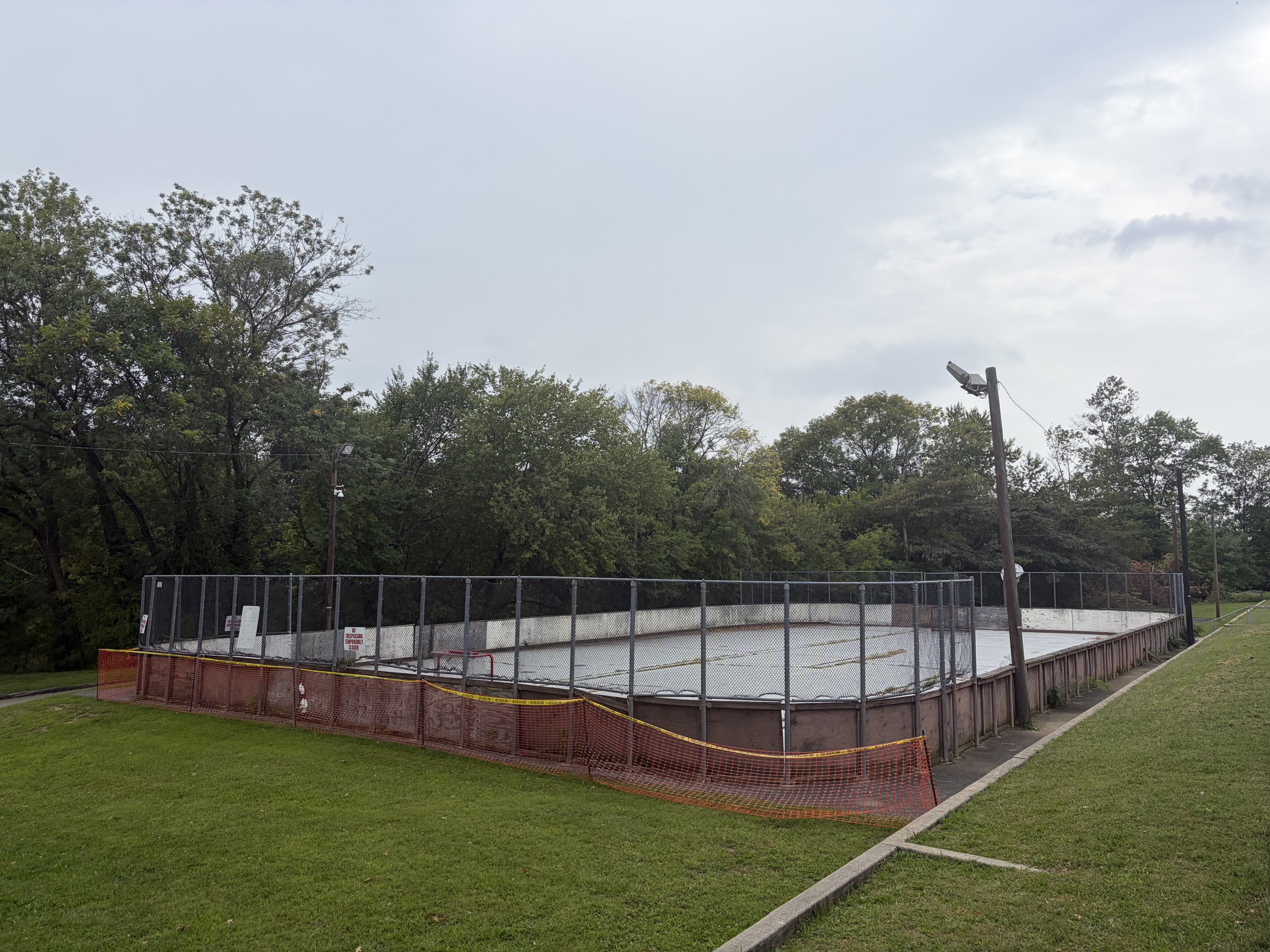
The rink and the adjacent basketball court at Oaklyn-Lions Park had been cordoned off by temporary fencing and caution tape since closing in early September after an annual safety inspection found issues with the surface, boards, and fencing.
The new rink should be open by next summer, Brandley said, with most of the construction set to begin once the cold weather breaks in the spring.
The outdoor hockey rink at Oaklyn-Lions Park, cordoned off on Sept. 17 after being closed due to safety concerns.Lacey Latch
The borough may even begin to pour the concrete footings this fall if the weather cooperates, Brandley said.
The project’s total cost is still being calculated, he said.
The rink’s second wind is coming thanks to help from Camden County and Flyers Charities, said Camden County Commissioner Jeff Nash. A spokesperson for Flyers Charities said Friday the organization is looking into the Oaklyn project but could not provide any further information.
“Everyone who was involved in this — the mayor’s office, the county parks department, Flyers Charities — everyone is very excited about this project,” Nash said. “This is a really great opportunity for the Flyers to make a difference in the community, and the county was happy to help work with all the partners to make it happen.”
County parks staff are already working on the project’s engineering and design, Nash said.
After the rink is rebuilt, Brandley said, the borough will make sure the space is suitable for both hockey and soccer players.
Alex Lewis, an Oaklyn native and founder of Oaklyn United FC, has long been a proponent of both repairing the area and formalizing the long-standing practice of sharing the court between sports.
Once the rink is back in working order, Lewis said, he and other local soccer enthusiasts are willing to help fundraise for any remaining soccer aspects needed.
The repairs are likely as simple as a few extra lines painted on the court, an extra set of removable goals, and possibly a shed for storage, and the roughly $1,000 he has already raised for repairs will go a long way, he said.
“This is progress,” Lewis said. “This is more progress than we’ve had in 20 years, as far as I know.”
Lewis said the community needs to ensure that it remains a public asset.
With so many athletic fields across South Jersey reserved by leagues or organizations, he said, it is critical that Oaklyn kids still have somewhere to play whenever and with whomever they want.
“It’s really important at this point, and even before it’s built, that Oaklyn starts to prepare itself for keeping it as a public good,” he said, “because that’s what made it so great all those years ago for so long, and that’s what’ll make it good again.”
One of the major Wall Street bond-rating agencies has upgraded Philadelphia’s credit to rank among the nation’s high-grade, low-risk borrowers. It’s a vote of confidence that the nation’s poorest large city is more likely to fund police and sanitation worker pensions and other long-term expenses than some other big cities.
Moody’s Ratings on Friday boosted Philadelphia’s rating to Aa3, from A1. That’s the highest rating any Wall Street agency has given the city, according to a statement from Mayor Cherelle L. Parker.
Cities and other borrowers with high bond ratings tend to enjoy lower financing costs because borrowers consider them to be a good bet to pay back all their money, with interest.
Moody’s says Philadelphia enjoys “a significant regional economy anchored by world-class institutions,” though it remains “demographically weaker” than other big cities, with the lowest proportion of residents able to afford typical rents among the 20 largest U.S. cities.
“Poverty is high at 21.4% [of the population], growth is slow, and most other socioeconomic indicators are weak,” yet officials persist in balancing spending and long-term obligations with tax revenues, wrote Dan Seymour, a Moody’s lead analyst, in a report explaining the rating.
Mayor Parker called the upgrade “a clear testament to the value my Administration places on fiscal stability” and thanked Moody’s.
A key difference between Philadelphia and lower-rated cities is its elected officials’ willingness to put billions of dollars into stabilizing pension funds for retired city employees, according to Moody’s. Like many cities where population has declined from peak years, Philadelphia is paying more retirees than active city workers.
The new Moody’s evaluation puts Philadelphia ahead of Los Angeles and Dallas, which are a notch lower at A1, and just a step below New York and Houston, which it rates Aa2. But Moody’s warned earlier this year that it is considering cutting New York’s rating, because it is spending more money under Mayor Zohran Mamdani than it is bringing in.
The lowest-rated major city is Chicago, where three chief financial officers have resigned this year. Moody’s rates Chicago Baa3, one step above the junk-bond level considered unacceptable for insurers and other high-quality bond buyers. Rival bond-rating agency S&P downgraded Chicago last year and warned it may do so again.
Chicago Mayor Brandon Johnson, a former public school teachers’ union organizer, has said he inherited years of financial mismanagement and a woefully underfunded public-worker pension plan, leaving Chicago squeezed between towering debt and rising taxes.
While Chicago lacks an elected financial watchdog, and faces no state financial control board, Philadelphia’s mayor and Council are watchdogged by the elected city controller, and an underfunded city budget can be vetoed by the Philadelphia Intergovernmental Cooperation Authority (PICA), said David Skeel, a University of Pennsylvania law school professor.
Skeel is a historian of bankruptcy and has served on government financial reorganizing boards; his 2026 book Promise Landdetails Wall Street and political struggles over attempts to cut or delay Puerto Rico’s crushing debt payments while he was chairman of its financial control board in 2020-24. Skeel says he and other bond experts are concerned Chicago may face a state financial takeover and reorganization, as Detroit did when it endured a rare municipal bankruptcy starting in 2013.
The new Philadelphia bond rating also applies to $623 million the city plans to borrow for city water and sewer projects.
Moody’s concluded that Philadelphia’s role as “an employment hub with a significant eds and meds presence that also faces a challenging demographic profile will persist indefinitely.”
A 25-year-old man Delaware County has been charged with two counts of murder for the 2022 fatal shooting of a pregnant woman in the Port Richmond section of Philadelphia and the subsequent death of her newborn who survived a month after the woman was killed, police said.
Christian G. Brown, of Lansdowne, was arrested Friday and was being held without bail at the Curran-Fromhold Correctional Facility, court records show.
Around 1 a.m. on June 4, 2022, in the area of Richmond Street and Wheatsheaf Lane, Brown allegedly shot 19-year-old Matayah Haynes in the head.
Haynes, a Camden resident who was about 34 weeks pregnant, was taken by medics to Temple University Hospital, where she was pronounced dead at 1:56 a.m.
Police reported that a baby boy was delivered and was immediately listed in critical condition.
Ry’Kier Haynes, as he was named, died July 5, 2022, at 2:56 p.m., police said Monday.
Police did not release any other details about the investigation.
No attorney was listed in court records on Monday for Brown.
An online obituary for Haynes said she “couldn’t wait to take on life with her first child, son Ry’Kier whom she passionately referred to as her critter.”
Mayor Cherelle L. Parker wants to see more housing development on East Market Street, with the goal of more than 2,000 new homes on the beleaguered commercial corridor where the Philadelphia 76ers once wanted a new arena.
Following the arena deal’s collapse, last November Parker launched a Market East Advisory Group — composed of 60 members from the public, private, labor, and nonprofit sectors — to help guide planning for the corridor’s future.
On Monday, at an event closed to the public, Parker administration leaders briefed dozens of attendees on the resultsso far. The mayor was not in attendance.
The administration outlined a “high growth” target that would see 4,400 households on East Market within 10 years.
The corridor is already home to 1,700 households, and the redevelopment of the Wanamaker building is set to add 620 apartments. That leaves a target of 2,080 units.
Along with additional visitor and daytime workers, that would add enough consumer demand to sustain existing businesses and add more.
According to four attendees at Monday’s meeting, possible incentives to bring that about have not been detailed.
In early 2025, the Macy’s in the Wanamaker Building closed, the last of the iconic department stores that once defined East Market.
Shortly thereafter, the 76ers stunned the city by striking a deal with Comcast to stay in South Philly, abandoning the proposal for a new arena on East Market Street. Days before the team’s withdrawal, the mayor had called the project the key to the future of the corridor.
Currently, the Market East corridor sees roughly $260 million in spending annually, while $606 million is “needed to support existing Market East business inventory,” according to a fact sheetdistributed to reporters about Monday’s advisory group meeting.
“The long-range plan lays out a vision to invest in residential and commercial growth in the corridor, with the goal of increasing spending to $676 million by 2036, closing the gap and supporting additional amenities on the corridor,” it reads.
Housing, but how?
Housing development has long been seen as the presumed fate of East Market, given the weak post-pandemic office market and the decline of large format department stores. The former Wanamaker Building — once dominated by retail and office space — is being converted into 620 apartments.
Hotel, retail, and large-scale entertainment offerings are also being considered, although hotel and retail are seen as less likely.
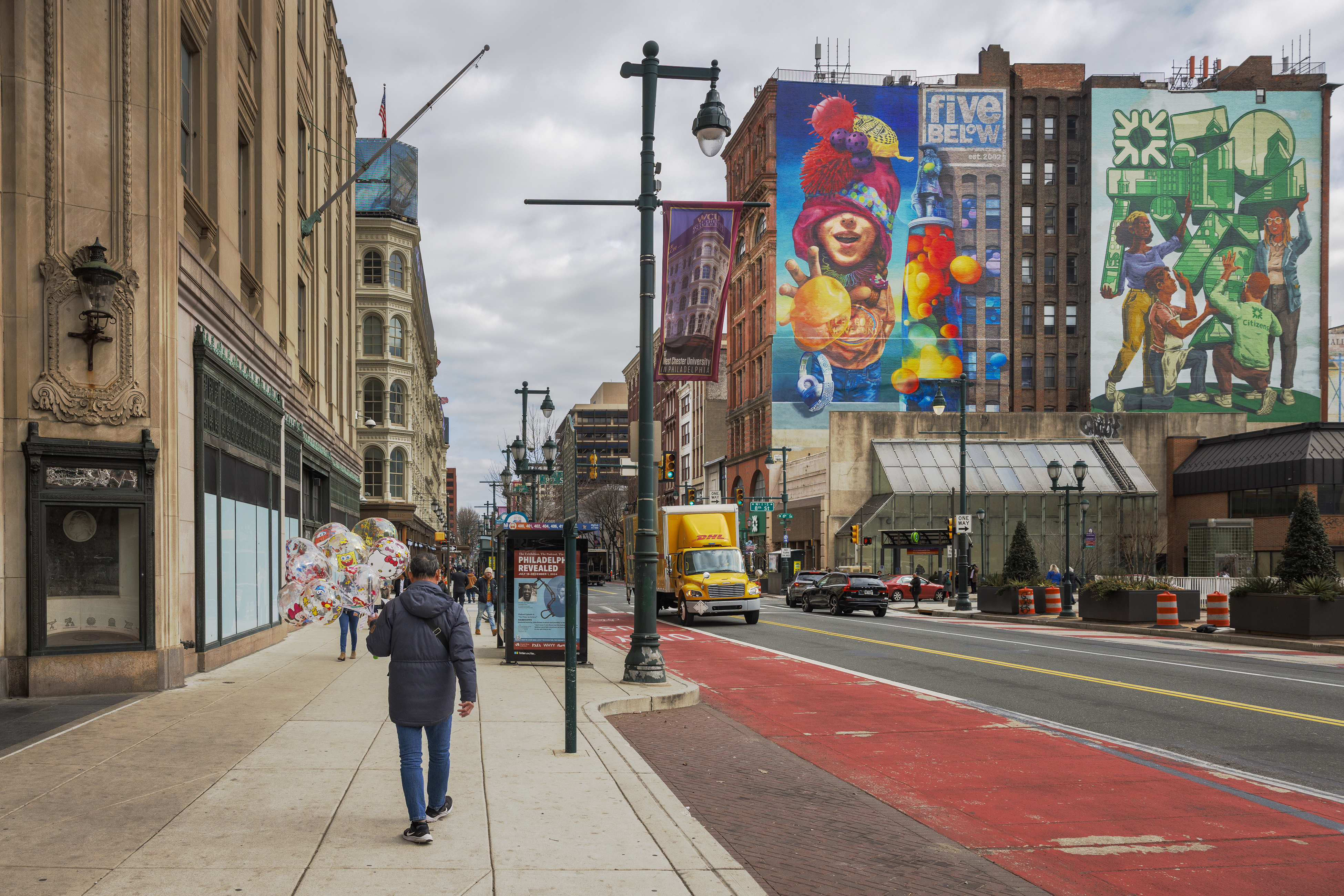
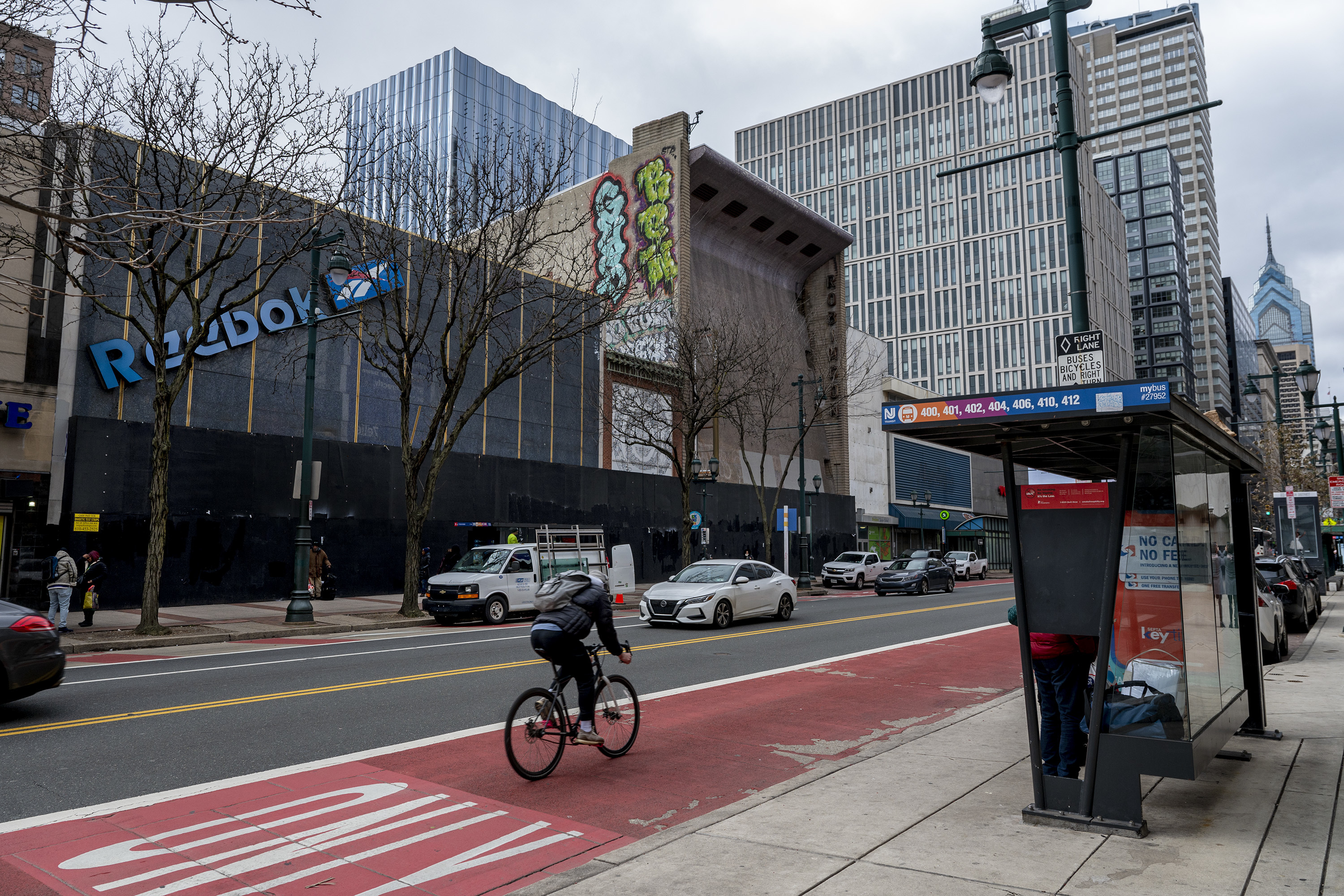
The south side of the 1000 block of Market Street in January 2024.Tom Gralish / Staff Photographer
The question is how the administration can get more developers to build on East Market.
“Currently, getting potential development projects on Market East to ‘pencil’ is challenging,” the administration’s fact sheet reads. Currently soaring construction costs and elevated interest rates are strangling development, with all but the highest end projects and data centers suffering.
Attendees at Monday’s meeting said administration officials have not revealed any plans for new municipal or state level incentives.
A Market East Advisory Board update from October obtained by The Inquirer suggested as possible “incentives grants, tax abatements, below-market-rate loans, and adaptive use to reduce development costs” as ways to attract new hotel development to the corridor.
“Potential tools” to attract new entertainment venues could include “public or philanthropic capital contributions, tax-exempt financing, and public-private financing structures,” according to the October update.
Parker’s long discussed, but not yet released, 20-year property tax abatement for the redevelopment of underused and vacant commercial, industrial, and public-sector buildings also could be used to redevelop the corridor.
What comes next
The administration has made some tweaks to the built environment of East Market over the last year.
A new public safety station was unveiled in June at 1101 Market St. The south side of the 900 block of East Market — where former downtown arena rivals Comcast and the Sixers own a row of buildings — was turned into a retail pop-up in the summer and has been extended into 2027.
The administration also gave the Center City District a $1.85 million grant for more trees and lighting, among other streetscape improvements. The federal government has distributed $2.5 million for safety improvements and sidewalk accessibility between Sixth Street and City Hall.
At Monday’s meeting, the administration unveiled next steps.
Parker has made a new tradition of a December “State of the City” address. This year, additional details about the East Market Street plan will be revealed then.
The release of the full plan with details about incentives and other policy prescriptions is expected in January. Then a “launch of implementation initiatives” is expected in February.
“When I launched the Market East revival, I charged the advisory group with developing a plan for the future of Market East that reflects both public priorities and market realities,” Parker said in a statement.
“I was clear that the plan must be actionable as well as ambitious — not destined to sit on a shelf gathering dust,” she wrote. “As the emerging plan takes shape, I am grateful to the advisory group’s chairs and to each and every member for their exhaustive efforts to deliver on these commitments.”
Coach K.C. Keeler sat in the media room on Monday, following Temple’s 36-10 loss to Alabama-Birmingham on Saturday, ready to address a new low. The Owls (2-8, 1-5 American Conference) went scoreless in the second half for the first time this season and dropped their fifth straight game.
Keeler harped on his team to keep its head up despite the less-than-ideal position. Temple has a chance to redeem itself when it plays its home finale against Rice (1-9, 0-6) on Thursday (7:30 p.m., ESPN).
“In some ways, it’s almost good that we have a short week, can’t commiserate over our loss,” Keeler said Monday afternoon. “It’s now a matter of just trying to do your best to represent your teammates, yourself, and your families.”
Ajani Sheppard has played the bulk of snaps this season. On Saturday, he struggled to produce in the passing game.
Sheppard totaled 85 passing yards and one touchdown pass on 30 attempts against UAB and took Temple’s first safety of the season. Keeler attributed the struggles to injuries — both his and the offensive line’s. Sheppard injured his ankle at East Carolina.
Sheppard didn’t practice on Monday after getting banged up against the Blazers, giving Jaxon Smolik another shot. He last played in Temple’s 42-35 loss to Navy on Nov. 7 and threw three touchdown passes.
“Jaxon gets an opportunity to kind of show us where he is with things,” Keeler said. “I went to Coach Walker on Sunday, I said I want to see Jaxon out there.”
Tyler Walker is the offensive coordinator and quarterbacks coach.
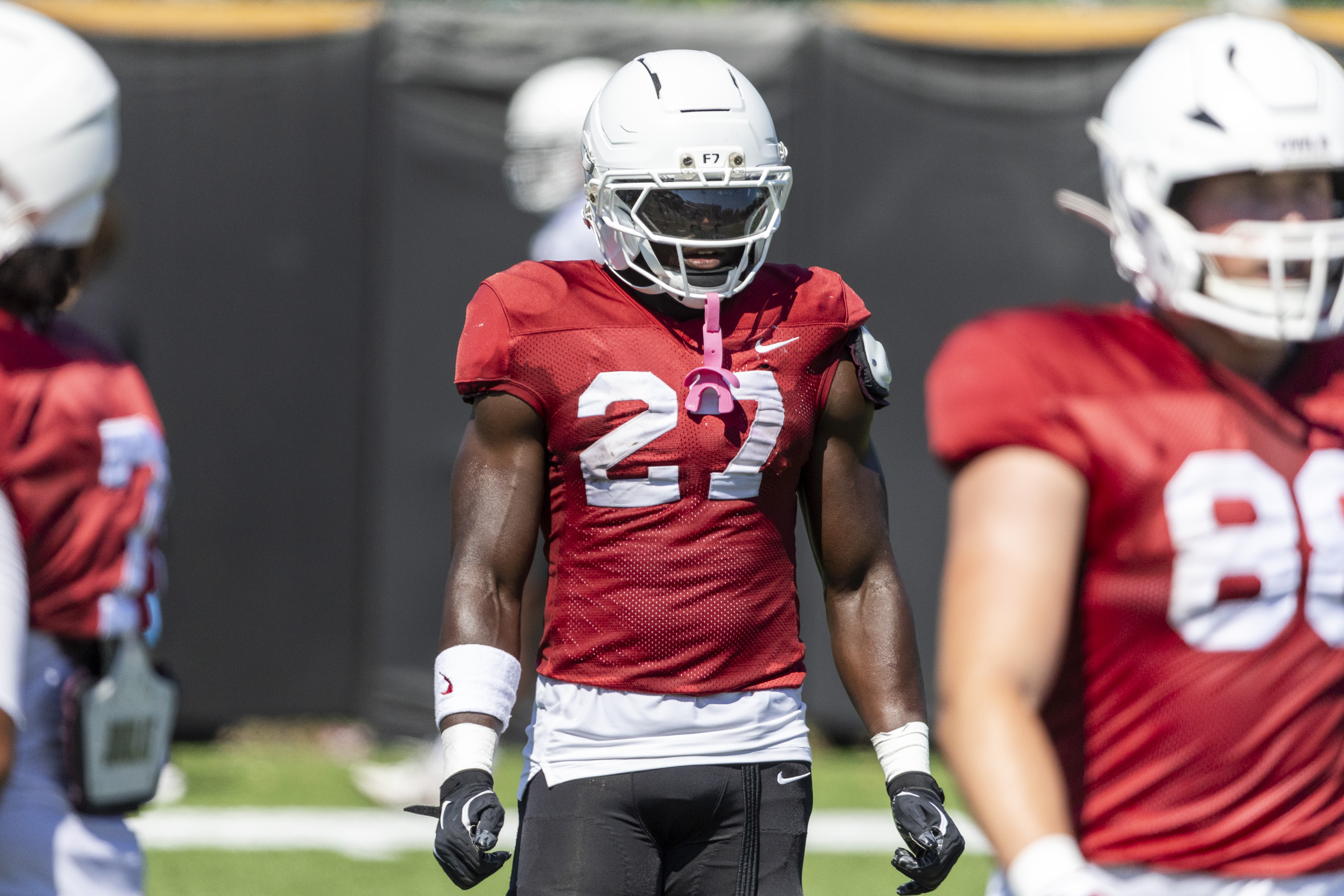
Temple running back Sam Brown is likely done for the season with a rib injury.Tyger Williams / Staff Photographer
Keeler also announced that running back Sam Brown V will miss the rest of the season with a rib injury. The Rutgers transfer was limited to five games due to injury.
Keeler maintains positivity
The 67-year/-/old coach is standing in uncharted territory. Keeler is experiencing consecutive losing seasons for the first time as a head coach.
“I don’t sleep. This affects me,” he said. “I’m built uniquely where I see life as a challenge, and I’m willing to hit anything head-on. And I have no problem taking responsibility. Like, when this season is over, there’s definitely gonna be a realization that I didn’t have my best season.”
He wants everyone else in Temple’s practice facility to adopt his lead-by-example mindset. Keeler believes one of the hardest things for college students to do is take responsibility. When the season closes, he plans to evaluate everyone, including himself.
Owls-on-Owls
The Rice Owls will fly to South Philadelphia to play a similar team. Temple and Rice live in the basement of the conference standings.
Rice’s focus is the ground game. It averages 265.7 rushing yards per game, good for third in the conference behind only Army and Navy. It also defends runs measurably better than Temple, allowing 30.7 fewer yards per contest.
“They do a phenomenal job in the triple option,” Keeler said. “If they find a fault that you have, it’s like the academy [programs], they are attacking that fault over and over.”
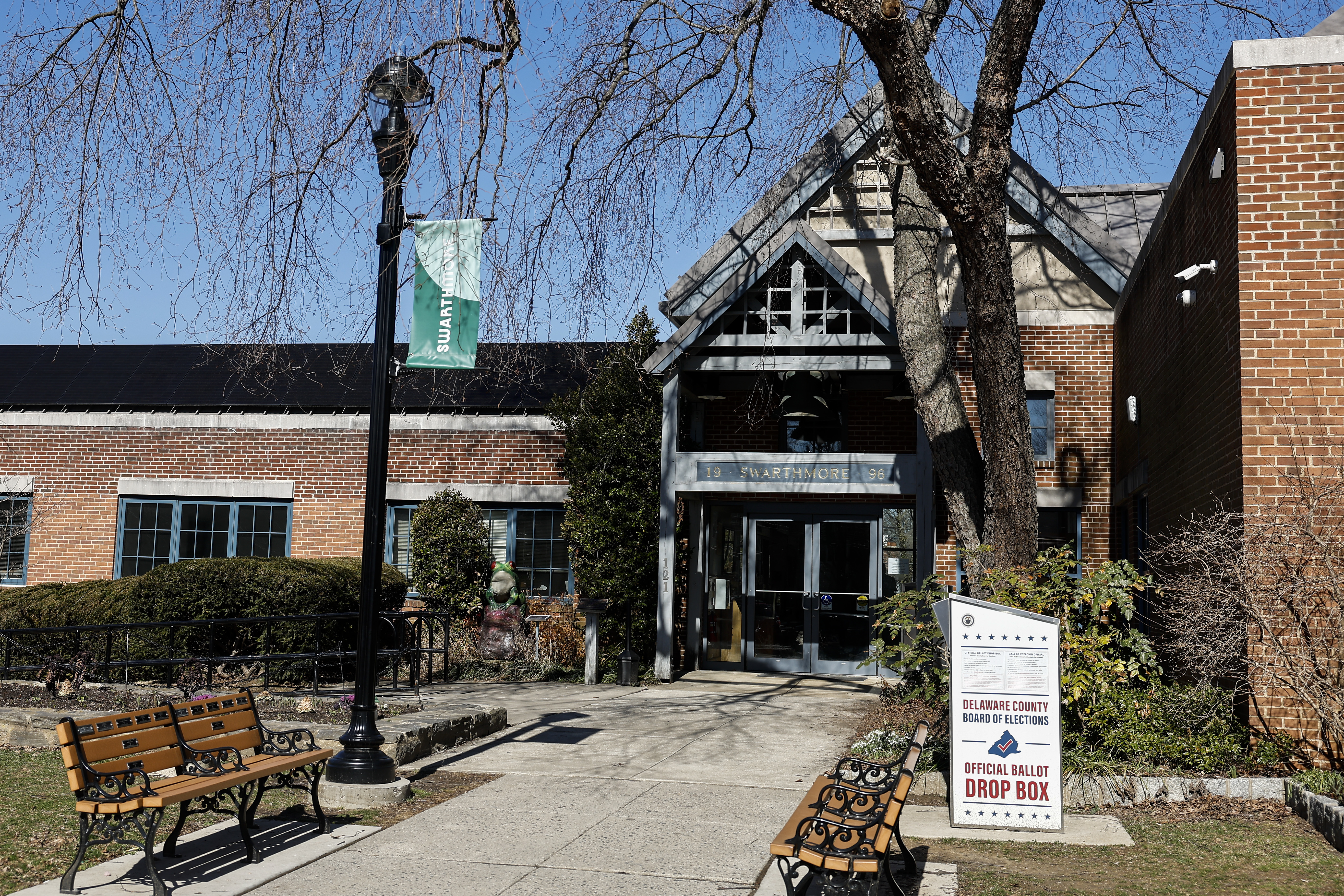
Swarthmore Borough voted to implement a 1% earned income tax last week, a move officials say will generate nearly $2 million next year as the borough contends with deferred maintenance and rising operational costs.
Swarthmore’s earned income tax will take effect on Jan. 1 and will be levied on both working Swarthmore residents and nonresidents with jobs in the borough. The borough estimates the tax will bring in about $1.9 million in 2027 and about $2.9 million annually after that.
Disability benefits and retirement pay such as pensions and Social Security will not be taxed. People making $12,000 or less annually will be exempt.
Swarthmore joins 28 of 49 municipalities in Delaware County, and nearly 97% of municipalities across the state, that levy earned income taxes.
In Pennsylvania, earned income taxes are reciprocal, meaning that for people who work in one municipality with the tax and live in another that also has it, the tax revenue from their income goes to their home municipality.
In Swarthmore, about two-thirds of working residents already pay an earned income tax or wage tax to another municipality. The new tax will allow the borough to recapture about $1 million in revenue that residents are currently paying elsewhere, according to a presentation from consulting firm Keystone Municipal Solutions.
Philadelphia is a notable exception. Those who work in Philadelphia but live in a municipality with an earned income tax must pay Philadelphia’s nonresident wage tax instead of their home municipality’s tax. One-third of employed Swarthmore residents worked in Philadelphia as of 2023, according toKeystone Municipal Solutions.
Residents are projected to contribute about 80% of Swarthmore’s income tax revenue, and people who work in the borough but live elsewhere will contribute the remaining 20%, according to the presentation.
The tax, approved at a Nov. 9 council meeting, faced pushback from residents in attendance, many of whom said it will unfairly burden lower-income workers who do not benefit from the borough’s services.
Resident and local business owner Gus Pappas called thetax “aggressive” and warned it will land “on the backs of people who don’t live here.”
“Supposed good intentions do not excuse poor fiscal stewardship, and taxpayer dollars are not an unlimited resource to fund every program that council members consider worthwhile,” said resident Stephen Kraftschik, who criticized the council’s spending decisions.
Council members described the tax as an unfortunate necessity, as the borough faces a “sobering” financial reality.
In the absence of an earned income tax, the borough would face a budget shortfall of more than $1 million, council member Cindy MacLeod said.
“There is no great way to approach this problem, and I’ve racked my brain and I’ve been uncomfortable and squirming, and this is a horrible position to be in as council,” council president Jill Gaieski said.
“I do think that we’re in this period of righting our financial ship and figuring out where the money is actually coming from and where it’s going,” council member Angie Tseng said.
Council members described years of overdue maintenance, including fire trucks that are beyond their usable life and bridges that need to be replaced.
Swarthmore floated an earned income tax last year, but dropped the proposal after a $638,000 contribution from Swarthmore College. The borough instead voted to levy an emergency service tax, which will be eliminated in 2027.
Swarthmore’s borough council voted to approve the new tax in a 6-1 vote. Council member Jared Therrien voted against it, arguing it would burden working people and young families.
This suburban content is produced with support from the Leslie Miller and Richard Worley Foundation and The Lenfest Institute for Journalism. Editorial content is created independently of the project donors. Gifts to support The Inquirer’s high-impact journalism can be made at inquirer.com/donate. A list of Lenfest Institute donors can be found at lenfestinstitute.org/supporters.
Thursday will mark the release of one of the most highly-anticipated video games in years, Grand Theft Auto VI. The video game franchise has had a massive cultural impact across different platforms, spreading from the video game world into the sports sphere — partnering with sports teams like the Miami Heat for themed game nights with “Vice City” jerseys, and leaving athletes like Steven Adams worried about players’ performance across the NBA and NFL once the game is released.
Its return ends a 13-year wait since the release of GTA V, which came out in September 2013. A lot has changed since. When it debuted, Barack Obama was president; the second film in The Hunger Games series, Catching Fire, was about to be released in theaters; Breaking Bad was airing its final episodes; and Katy Perry’s “Roar” was on repeat on the radio stations.
As different as it sounds, that’s nothing compared with the changes that have happened in Philly sports — we’re still making Hunger Games movies, after all. In fact, 2013 itself was a big year of change across the city’s sports scene. As fans all over the internet celebrate the game’s long-awaited release by comparing life 13 years apart, let’s take a look at the viral trend through the lens of Philly sports.
The current Sixers roster includes future Hall of Famer LeBron James, five-time All-Star Jaylen Brown, two-time All-Star Tyrese Maxey, former league MVP Joel Embiid, and rising star VJ Edgecombe.
But 13 years ago, during the release of GTA V, these players were all at very different stages of their lives and basketball careers. James was on the verge of winning his second NBA title with the Miami Heat and already had close to a decade of NBA experience. Embiid, meanwhile, was a freshman at the University of Kansas, and had only been playing basketball for a couple of years. Brown was a junior at Wheeler High School in Georgia. Maxey (13 years old) and Edgecombe (8) were still dreaming of playing at the next level.
The Sixers’ organization was also at a different stage of its life.
In 2013, the team was at the start of The Process under former general manager Sam Hinkie. The multiyear rebuilding strategy focused on exchanging current players for assets, and intentionally losing to gain multiple high draft picks. Some of the first dominoes fell when the team traded reigning All-Star and future six-time All-Defensive Team player Jrue Holiday to the New Orleans Pelicans on draft night in 2013 for the rights to Nerlens Noel and a future first-round pick. With the 11th overall pick, they also selected Michael Carter-Williams, who would be traded away less than 18 months later — after winning rookie of the year.
The Sixers won just 47 games over the next three seasons — including going 19-63 in 2013-14 — resulting in several high draft picks. During The Process, the team selected Embiid with the third-overall pick in the 2014 draft and Jahlil Okafor third overall the following year. Then, with back-to-back first-overall picks in 2016 and 2017, the Sixers took Ben Simmons and Markelle Fultz, respectively.
Embiid is the only player from that era who remains on the team, which otherwise looks nothing like the one that is currently off to one of the best starts in the NBA.
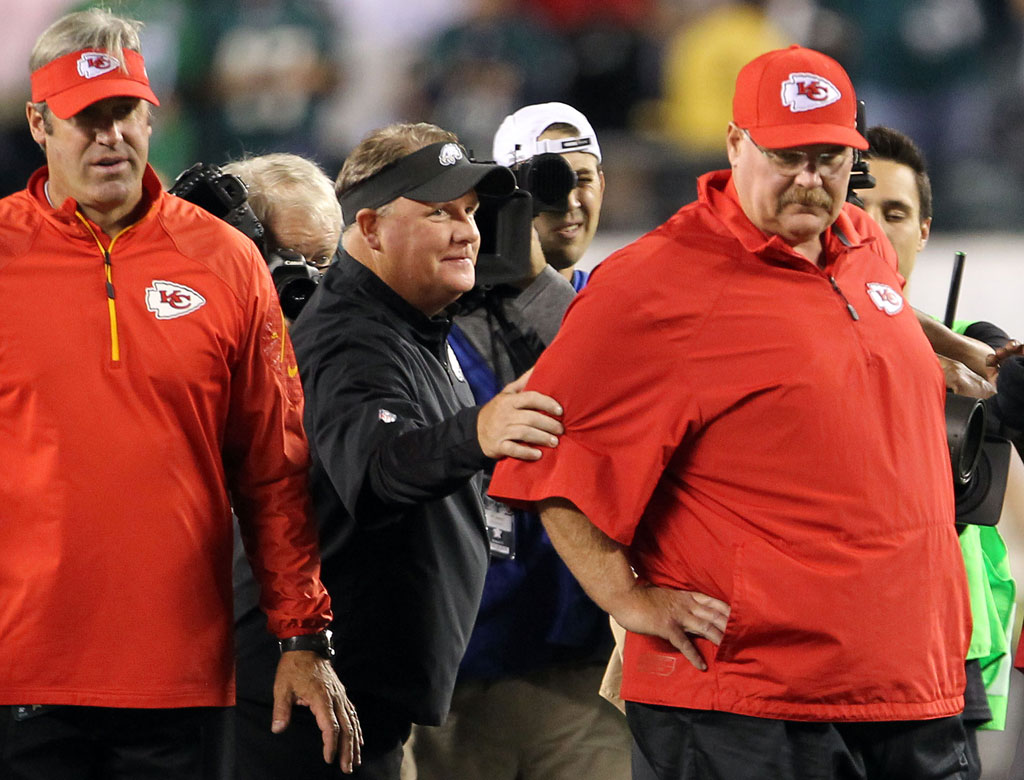
A trio of former Eagles coaches in one shot. Andy Reid (right) was replaced after the 2012 season by Chip Kelly (middle), who was replaced after 2016 by Doug Pederson (left).
The Eagles: The Chip Kelly Era
It was the start of the Chip Kelly era for the Birds. In 2013, following a disappointing 4-12 season that would be head coach Andy Reid’s last with the Eagles, the team hired Kelly, and left fans dreaming of a potentially revolutionary offense under the former Oregon Ducks coach. In Kelly’s first year, he led the Eagles to an NFC East division title with a 10-6 record before losing to the New Orleans Saints in the wild-card round.
The 2013 team featured players like Michael Vick, Nick Foles, LeSean McCoy, DeSean Jackson, Zach Ertz, Brandon Graham, Jason Kelce, Connor Barwin, Brent Celek, Fletcher Cox, and DeMeco Ryans.
But perhaps the biggest difference for Eagles fans in 2013? No Super Bowls. That’s no longer the case, thanks in large part to the contributions of many of the players listed above.
The Kelly Era was short-lived. In 2015, during his third season at the helm, Kelly was fired following a 6-9 start. Kelly was criticized for his lack of “emotional intelligence,” as well as for making questionable roster moves that included releasing Jackson, and trading McCoy and Foles. This came after a power struggle that saw him wrestle roster control away from general manager Howie Roseman.
But even at their lowest under Kelly, the Eagles had never lost seven straight games — and never had a record this poor, this late in the season. Ahead of the release of GTA VI, the Eagles are 2-7, are in last place in the NFC East, and haven’t won a game since mid-September.
Many of the team’s current stars weren’t even in college yet when GTA V first hit the shelves. And some weren’t even old enough to play the violent game, which carries a “Mature” rating and is meant for players 17 and older. Jalen Hurts was a quarterback at Channelview High School in Texas, Saquon Barkley was a running back at Whitehall High School in Pennsylvania, and Cooper DeJean was just a 10-year-old kid in Odebolt, Iowa.
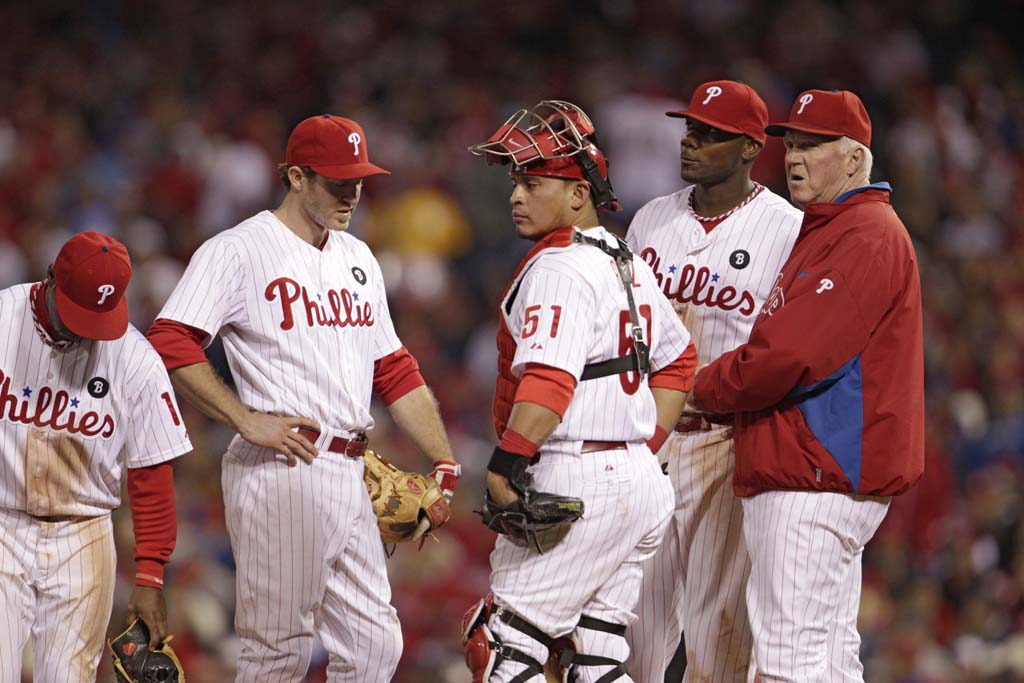
Jimmy Rollins (from left), Chase Utley, Carlos Ruiz, and Ryan Howard, meet with former Phillies manager Charlie Manuel (right) after he pulled Cliff Lee (not pictured) from a game.
The Phillies: End of an era
In the years leading up to the 2013 season, the Phillies found plenty of success, but were backsliding each year. During their run of winning five straight National League East titles (2007-2011), the team peaked with a 2008 World Series title, but was eliminated one round earlier each year, capped off by a National League Division Series loss following a 102-win season in 2011. In 2012, the team’s string of playoff appearances and division titles came to an end as they finished the season .500 (81-81), starting a run of nine straight seasons without a winning record and a decade of being shut out of the playoffs.
The 2013 team featured household names like Chase Utley, Jimmy Rollins, Cole Hamels, Ryan Howard, Roy Halladay, Cliff Lee, and Carlos Ruiz. But over the next three seasons, almost all of those players would be gone. And in August of that season, with the team at 53-67, manager Charlie Manuel, who led the team to its first title in 28 years, was fired and replaced by Ryne Sandberg, who finished the season as interim manager before taking the role full-time.
The Phillies Lineup when GTA V released (September 17, 2013):
1. Cesar Hernandez CF 2. Jimmy Rollins SS 3. Chase Utley 2B 4. Carlos Ruiz C 5. Domonic Brown LF 6. Darin Ruf RF 7. Kevin Frandsen 1B 8. Freddy Galvis 3B 9. Roy Halladay SP
The Flyers had made the playoffs in 16 of the previous 17 seasons, but coming off a shortened 2012-13 season (due to the NHL lockout) in which they failed to reach the postseason, they wasted no time acting. The team opened the 2013-14 season with three straight losses, leading to the firing of head coach Peter Laviolette less than a week into the season. Craig Berube stepped in and lead the team to a 42-30-10 record, getting the Flyers back to the playoffs as the third seed in the Metropolitan Division, before they lost to the New York Rangers in the first round.
The team featured players like Claude Giroux, Wayne Simmonds, Scott Hartnell, Jakub Voracek, Kimmo Timonen, Steve Mason, and Brayden and Luke Schenn.
Flyers center Sean Couturier (14) celebrates a November 2013 goal with Luke Schenn (22).
It also featured one player who is still wearing the orange and black: current Flyers captain and the longest tenured athlete in Philly sports Sean Couturier. Then a 21-year-old center, Couturier was the youngest player on the team — he is now the second oldest at 34 — and was eighth in total points with 39 (13 goals, 26 assists) while appearing in all 82 games.
In 2013, the Union was in only its fourth year of existence, and was in search of its second Major League Soccer postseason berth, which wouldn’t come for a few more years (2016). Now, 13 years later, the team is a regular in the postseason, qualifying this season for the ninth time in the last 10 years. After a slow start, the team caught fire following the World Cup break, and went several months without losing a game.
A few days after the release of GTA VI, the No. 6 seed Union will face the third-seeded New England Revolution in Game 1 of their best-of-three first-round series.
The Union’s turnaround has been in part sparked by a trio of young players who was more than just too young to play GTA V; they were likely too young to play most video games: Cavan Sullivan, now 17, was just three when the game was released. Meanwhile, 19-year-old Neil Pierre was six and 20-year-old Frankie Westfield, was seven. Perhaps some of the older players, like Andre Blake, who was drafted by the Union four months after the game’s release, and Alejandro Bedoya, who was already 25 when the game came out, can explain it to them.
After a year in redevelopment limbo, plans for the dead Exton Square Mall have received a legal stamp of approval. But the fight between developers and local officials is set to continue.
A Chester County judge on Friday ruled in favor of the site’s owner, Abrams Realty & Development, which wants to knock down the enclosed mall and build a mixed-use complex with apartments, shops, and restaurants.
Last fall, West Whiteland Township Supervisors Brian Dunn and Rajesh Kumbhardare rejected those plans, citing sewer, traffic, and density concerns. Their denial prompted Abrams to sue the supervisors, arguing that the plan meets the township’s zoning requirements and should be approved.
Chester County Court of Common Pleas Judge Sarah B. Black agreed with Abrams in her order, writing that it appeared the supervisors held Abrams to a “higher standard due to fears of overdevelopment.”
Black reversed the supervisors’ decision, according to the order, and approved Abrams’ application.
Abrams, Black wrote, provided “sufficient evidence to obtain the presumption that the use was consistent with the public health, safety, and welfare of the township.”
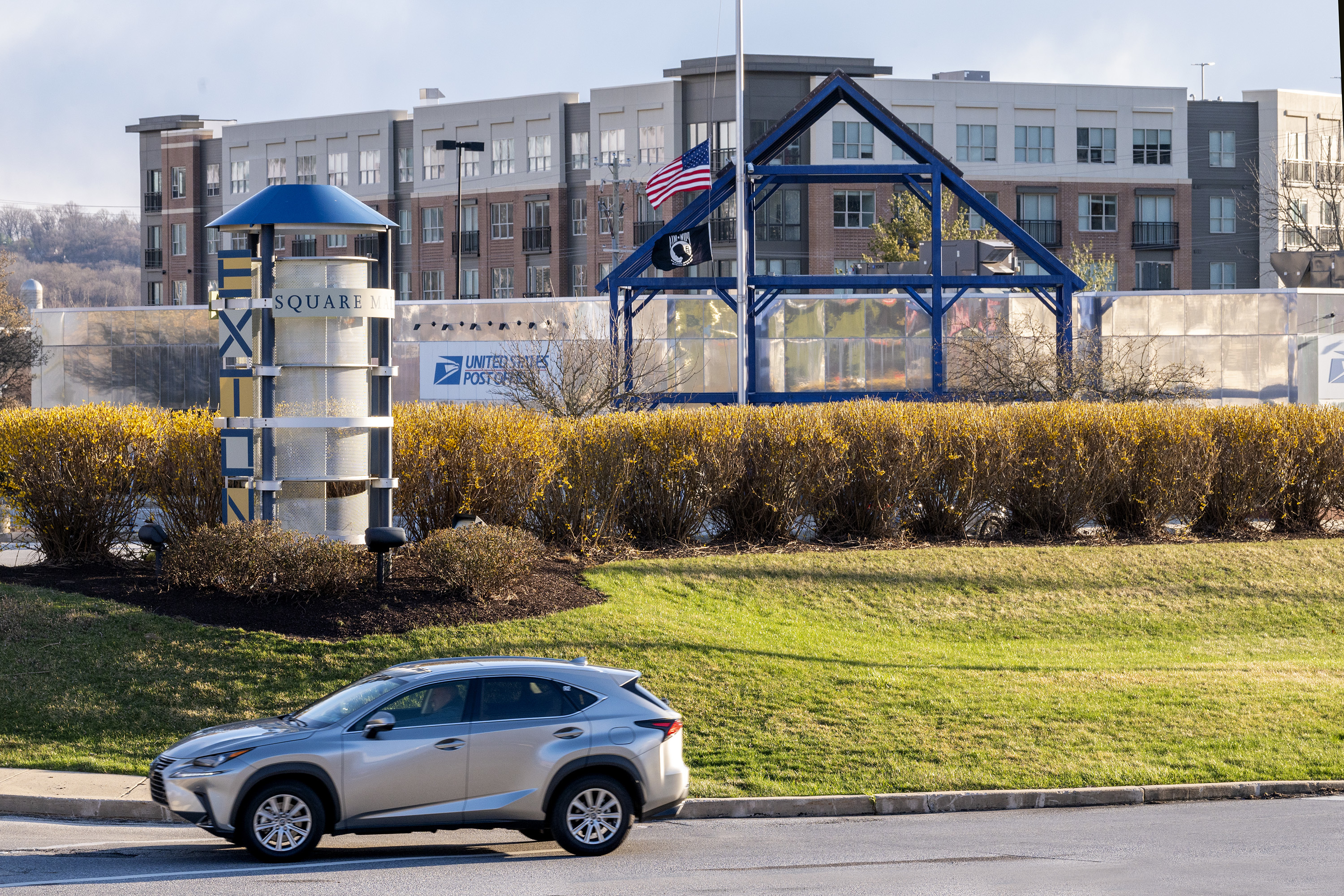
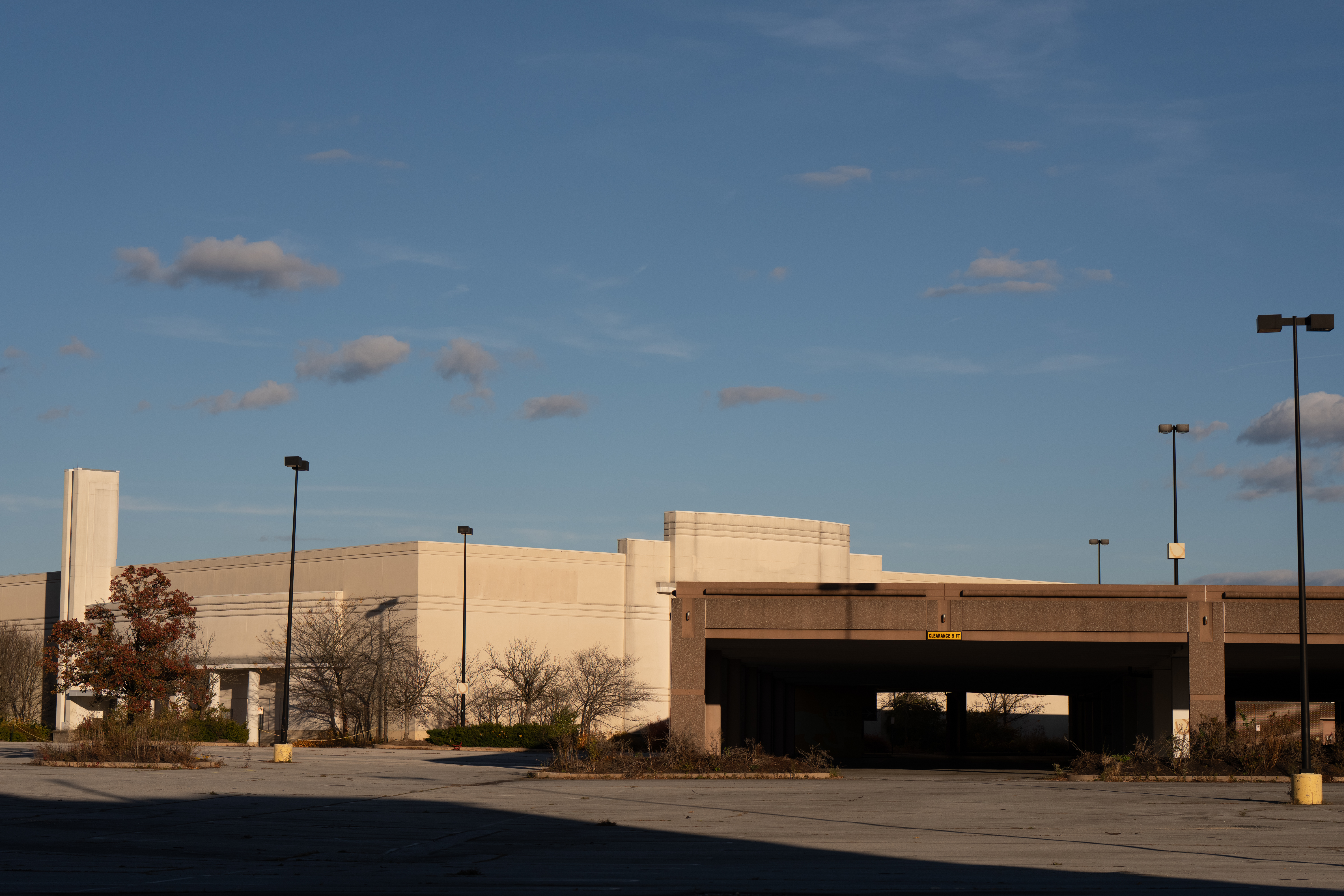
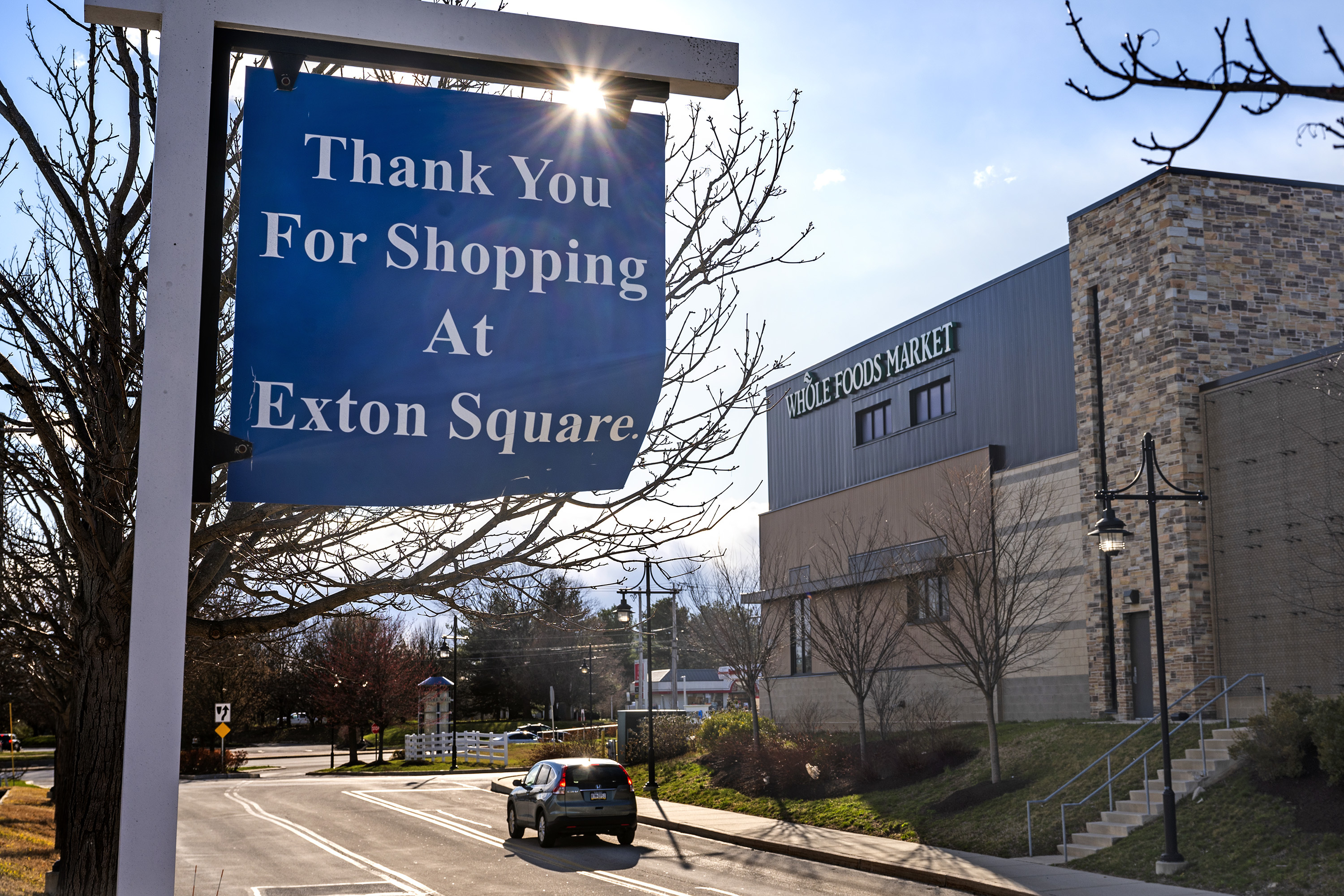
A view of the dying Exton Square Mall in November 2025. After languishing for years, it closed in June 2026.Jessica Griffin / Staff Photographer
But the judge’s decision may not be the last word.
“The township is pursuing all its legal options, and the board intends to appeal the decision,” said Dunn, chair of the West Whiteland Township Supervisors.
“I will not hesitate to stand up and fight for our community when I believe a decision does not serve its best interests,” added Kumbhardare, the board’s vice chair.
Meanwhile, Peter Abrams, CEO of Abrams Realty & Development, said Monday that his company plans to start demolishing the mall by early summer.
Renderings of what Abrams Realty & Development wants to build on the Exton Square Mall property.Courtesy Abrams Realty & Development
Elkins Park-based Abrams Realty & Development, which last year bought the mall from PREIT for more than $34 million, wants to bring hundreds of townhouses, rental apartments, a 55+ community, and a town center with shops, restaurants, medical offices, and green space.
The property’s 178,000-square-foot Boscov’s would remain, as has been the case at many reimagined malls across the region. The Main Line Health offices and Round 1 entertainment venue would also stay open.
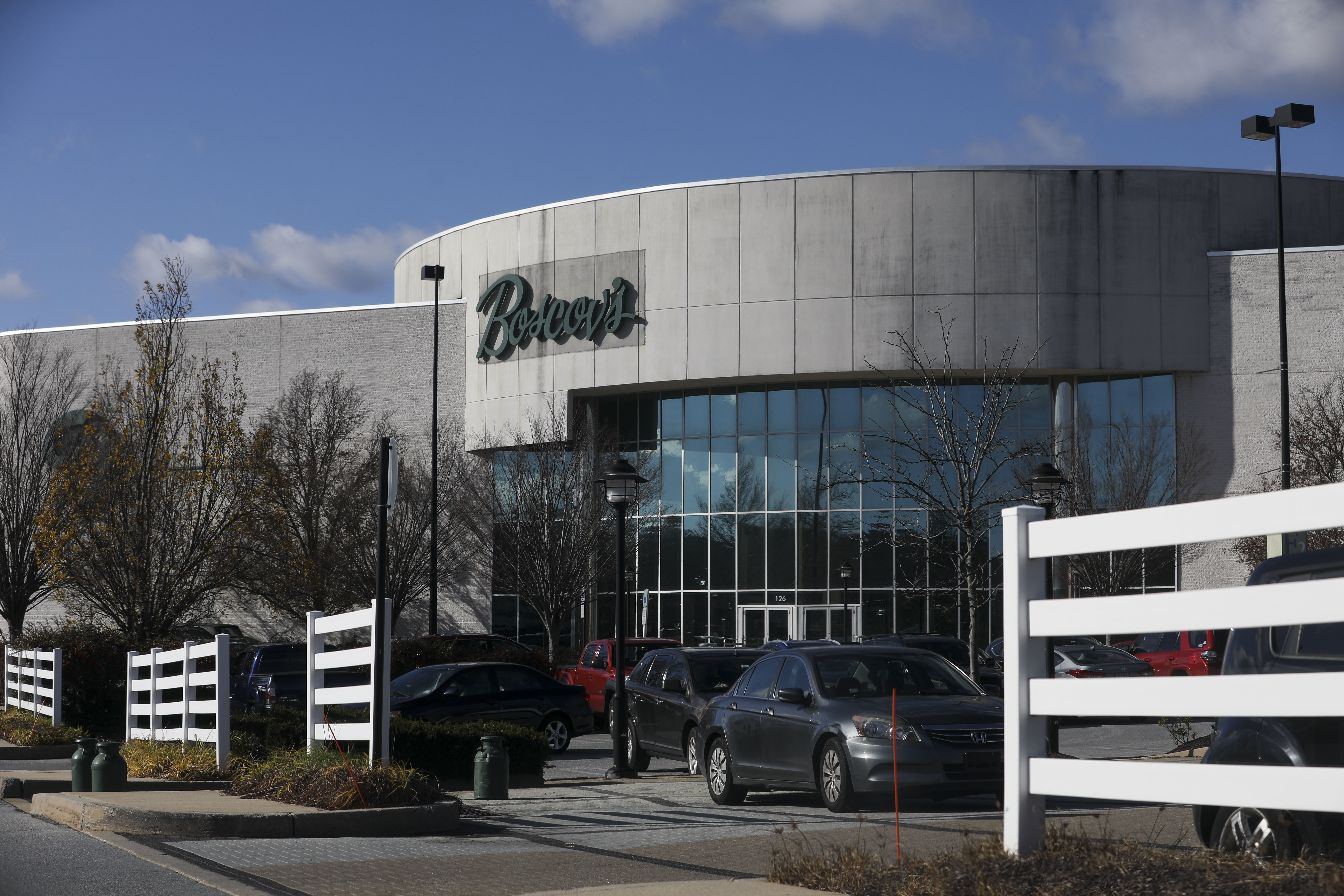
The Boscov’s at Exton Square Mall, pictured in 2020, will stay open if the mall is demolished and redeveloped.MONICA HERNDON / Staff Photographer
The mall site, located at the intersection of busy Route 100 and Business Route 30, has already been partially redeveloped amid rising demand for high-end apartments.
Abrams has said he envisions connecting the existing apartments and the Whole Foods to his project, which would include 172 townhouses, 381 apartments, and 165 “age-restricted active adult apartments.”
The developer also has said he’d build nearly 170,000 square feet of new shops, restaurants, and other commercial space, along with 120,000 square feet of fitness and entertainment venues.
The Whole Foods store at the Exton Square Mall, as seen in 2022, would connect to Abrams Realty & Development’s proposed mixed-use center on the property, Peter Abrams has said.TOM GRALISH / Staff Photographer
In Bucks County, Neshaminy Mall closed on Halloween. Bensalem Township Mayor Joe DiGirolamo has said its owner, Paramount Realty, plans to tear it down, but Paramount has been hush about its intentions.
Facing more uncertainty is Northeast Philly’s Franklin Mall, formerly Franklin Mills, which is no longer for sale after real estate magnate Dean Adler’s ambitious redevelopment plan fell through.
And in South Jersey earlier this month, a developer who wanted to turn Voorhees’ long-dead Echelon Mall into a “regional destination” said he had to pull out because his company, Hoboken Brownstone, could not acquire a $90 million state tax credit. Local officials have been trying to revive the property for nearly two decades.
Netflix House Philadelphia is reportedly struggling to attract nighttime visitors as the streaming platform reconsiders its expansion plans.
On Sunday, Bloomberg reported that Netflix is reassessing its plans for opening new Netflix Houses, nearly a year after launching its first two locations in King of Prussia and Dallas.
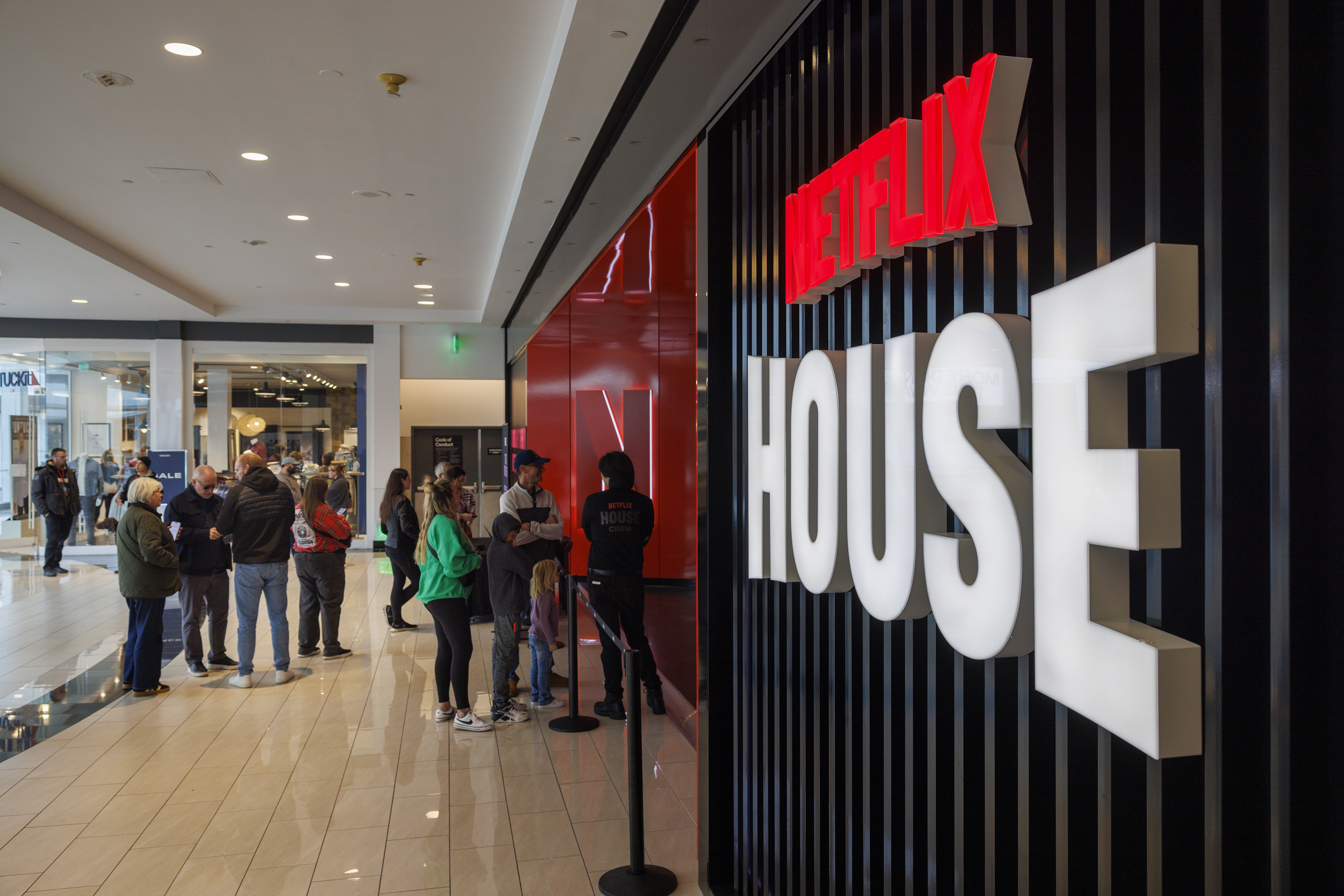
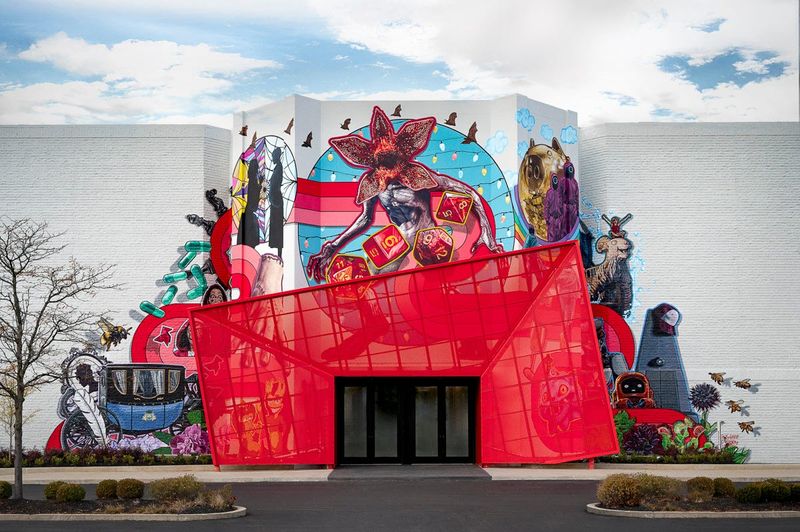
The 100,000-square-foot entertainment venue at King of Prussia Mall features mini golf, virtual reality games, a movie theater, and rotating attractions inspired by popular Netflix shows, including Stranger Things and Squid Game. Admission tickets start at $39.
The opening came as shopping malls across the Philadelphia region have increasingly turned to entertainment and other experiences to attract visitors beyond traditional retail. As The Inquirer previously reported, Plymouth Meeting Mall has embraced that approach with attractions, including Dave & Buster’s, Legoland Discovery Center, and an indoor trampoline venue. King of Prussia, meanwhile, has remained one of the region’s more successful shopping destinations.
The King of Prussia location has reportedly been more difficult for Netflix to establish than its Dallas counterpart. Bloomberg identified nighttime attendance as a particular challenge for the attraction.
Dallas, meanwhile, is reportedly breaking even, with group visits and corporate events helping drive business.
Both Netflix Houses are located outside their namesake cities. The Philadelphia location sits inside King of Prussia Mall in Montgomery County, while the Dallas venue is in a suburban area north of the city’s downtown, according to Bloomberg.
At a conference in early 2025, Netflix co-CEO Ted Sarandos said he envisioned dozens of Netflix Houses throughout the world in a relatively short time.
Now, those early results are factoring into Netflix’s decisions about where and when to open additional entertainment venues, according to Bloomberg. The company is reportedly taking more time to evaluate future locations.
A third Netflix House is scheduled to open on the Las Vegas Strip next year. Unlike the King of Prussia and Dallas locations, the Las Vegas venue will have a smaller footprint and sit in an area that draws a steady stream of tourists, the outlet reported.
Bloomberg reported that Netflix is also exploring opportunities outside the United States, with London among the cities under consideration. The company may wait another year before committing to additional locations, according to the report.
Netflix did not provide an on-the-record comment in response to The Inquirer’s questions about its expansion plans.
When the Phillies announced that Chase Utley would be added to their Wall of Fame this year, it made sense to ask the question.
Can the Hall of Fame be far behind?
“One step at a time,” Utley said in March.
Well, the time has come to talk about it … again.
Utley is the top returning vote-getter on the 27-player ballot released Monday by the Hall of Fame. Six other former Phillies are listed, including Jimmy Rollins, Cole Hamels, and Bobby Abreu. Jake Arrieta, Jay Bruce, and Asdrúbal Cabrera are among 14 first-time candidates, a group headlined by Buster Posey and Jon Lester.
But Utley might want to get started on his speech. The iconic Phillies second baseman’s poll numbers rose to 59.1% last year, up from 39.8% and 28.8% in the previous two cycles since he made his ballot debut in 2024.
History says Utley will eventually vault over the Hall’s 75% bar for election. His trajectory is similar to that of Scott Rolen, who climbed from 35.3% in 2020 to 52.9% in 2021, 63.2% in 2022, and finally 76.3% in 2023.
Will 2027 be the year Utley paints Cooperstown red?
Consider this: Each year, new voters enter the process as they reach 10 consecutive years of membership in the Baseball Writers’ Association, while other voters are weeded out. It explains how a candidate’s year-to-year vote total changes when his statistics don’t.
Video: Jeff Francoeur on Chase Utley: ‘He was the ultimate winning player’
Utley tends to do well with newer voters, many of whom are analytically minded and/or value big peaks over longevity. There were more first-time voters than usual last year (46, according to Ryan Thibodaux’s Hall of Fame tracker). Thibodaux is estimating only 15 to 20 first-time voters this year.
Since 1975, only Larry Walker and Ralph Kiner reached 75% without clearing 60% in the previous election cycle. And in both cases, they were in their final year of eligibility on the writers’ ballot.
Then again, Posey is the only first-year candidate with a strong chance to get elected. And his presence on the ballot could help Utley’s case. The three-time World Series-winning Giants catcher finished with 1,500 career hits; Utley had 1,885.
Regardless, Utley knows he’s getting closer.
Chase Utley shakes hands with then-interim manager Don Mattingly on Aug. 9 at Citizens Bank Park.Monica Herndon / Staff Photographer
“I’ve tried to educate myself on how the process works,” he said. “And, yeah, it seems like it’s evolving a little bit different than it has in the past. But I think the game is evolving. We as people are evolving as far as how we identify good players and great players and Hall of Famers.
“Obviously you can’t help but pay attention to it.”
Rollins, entering his sixth cycle on the ballot, is seeking to continue his momentum after making his biggest jump yet to 25.4% last year.
Abreu also made a sizable gain last year, reaching 30.8% after treading water the previous three cycles (19.5%, 14.8%, 15.4%). But he’s running out of time in his eighth year on the ballot. (The Hall allows candidates to remain on the writers’ ballot for a maximum of 10 years.)
Hamels debuted last year with 23.8%, slightly ahead of fellow pitcher Félix Hernández’s 2025 debut (20.6%) before he jumped to 46.1% last year.