Tag: topic-link-auto

  • NYT writer practiced her principles with her daughter’s schooling

    NYT writer practiced her principles with her daughter’s schooling

    My parents were big supporters of public education.

    Teaching was their life’s work. They spent almost their entire careers in the District of Columbia Public Schools system. However, they chose to send my four siblings and me to Catholic schools through grade 12. They sacrificed almost everything to do it. Many of their educator friends made similar choices.

    My husband’s mother made a similar pick. He still recalls how out of place he felt after his mom — also a schoolteacher — enrolled him in an expensive, predominantly white boarding school in New England when he was just 11. Last year, during one of his school reunions, I walked around and marveled at the beauty of the campus.

    At the same time, though, the thought of him dressed in his little blazer and being so far away in Massachusetts makes my heart ache for the adolescent version of him. Not that he regrets it. It put him on the path to Princeton University.

    Like many other middle-class families, our parents faced a difficult decision: send us to our neighborhood schools with all of their problems, or identify the best possible educational opportunity for us elsewhere.

    Add in a bunch of other variables that Black students in predominantly white private schools often still face — including social isolation and subtle discrimination — and the decision becomes even more difficult.

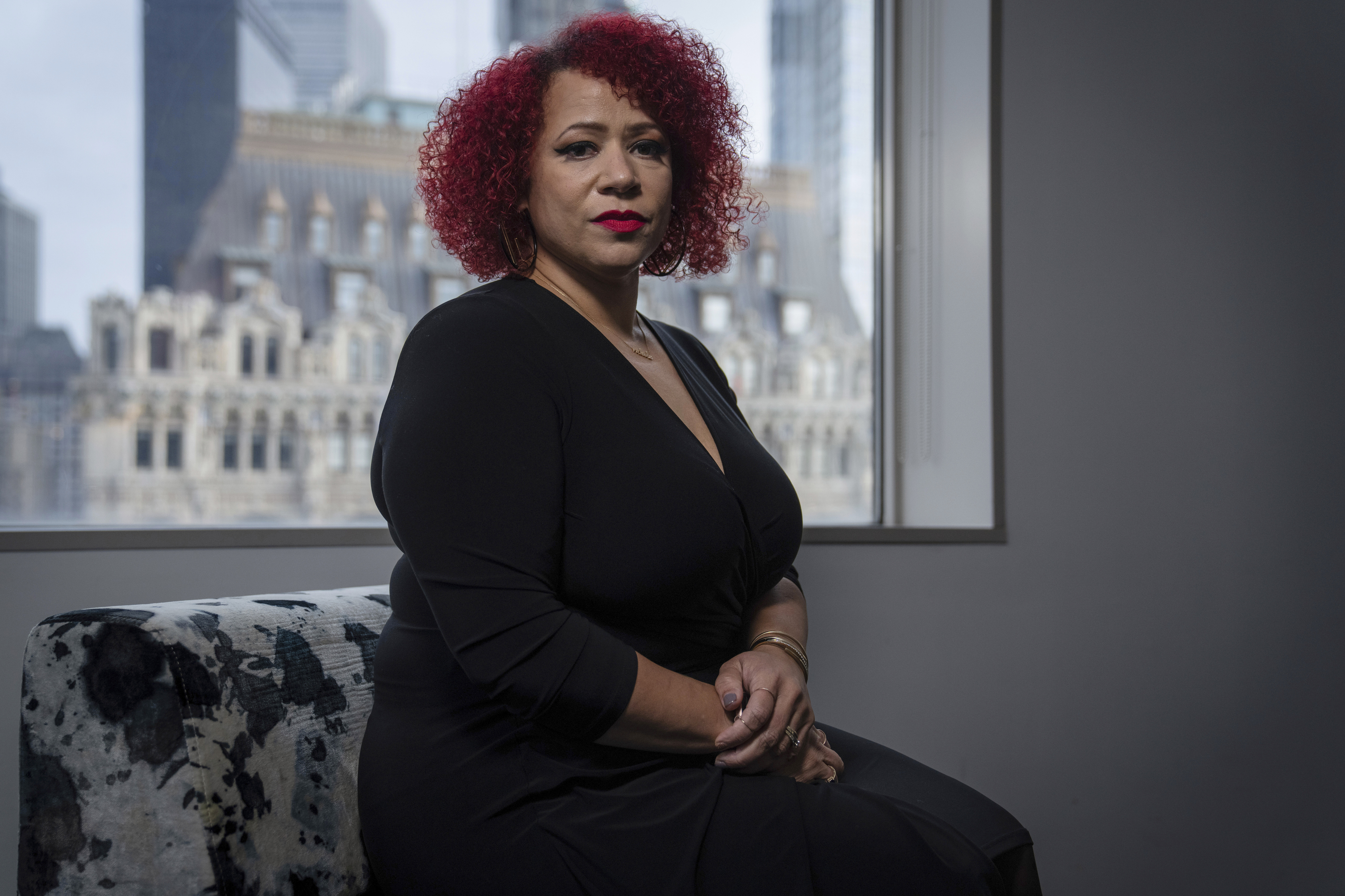
    I’ve been thinking a lot about the choices Black parents have to make for their children after reading Nikole Hannah-Jones’ essay in the New York Times about what her family went through getting her daughter educated in New York City public schools.

    The Pulitzer Prize winner, who founded the 1619 Project, could have afforded to send her daughter to the most exclusive school in the city. Instead, she enrolled her only child in a segregated, high-poverty public elementary school in Brooklyn across from a public-housing project.

    Because she and her husband were well-off financially, Hannah-Jones naively thought they could use their resources and networks to help the school thrive. It was a decision based “on the collective good and not just our individual advantage,” she wrote.

    She acknowledged that her decision returned to haunt her years later when her daughter was in middle school and confronted her, saying, “So you had money to send me to one of the best schools, and you chose not to?”

    Gulp.

    As Hannah-Jones noted in a response to a reader comment about the article, teenagers have a way of humbling us.

    In the piece, Hannah-Jones delves deep into why she made the choice that, she eventually concludes, was a mistake.

    “Najya deserved better. They all did. But she was mine. This girl, my only child, looked to me to protect her, to give her what she needed to thrive. And I had not chosen her.”

    It was a stunning admission.

    Not to mention brave.

    When it comes to choosing schools, there aren’t always suitable options, especially for socially conscious Black parents like Hannah-Jones. People sometimes find themselves having to make a no-win choice the way she did.

    “Which struggle are we asking our children to bear? Stay in the neighborhood school and risk being underserved; leave for a more selective or whiter school and risk isolation, racism, and the message that the children left behind are not worth saving,” Sharif El-Mekki, CEO of the Philly-based Center for Black Educator Development, told me in an email.

    Hannah-Jones’ daughter, Najya, now attends a selective, predominantly white and Asian public high school. Hannah-Jones wrote she is better off academically, but racism is a factor. “My daughter had never been part of a minority in a school, and now she sat in classrooms where some classmates casually tossed around racial slurs as if it were cool.”

    Najya also has regular homework assignments, which was something she wasn’t used to. She hadn’t learned to study on her own. Her grades faltered. Her parents hired an algebra tutor and learned that their student “had huge gaps in many of the building blocks of math that she should have learned in elementary school, like mastery of long division and fractions.”

    Eventually, Najya was able to get her footing and started getting A’s and B’s again.

    I reached out to Shanée Garner, executive director of Lift Every Voice Philly, a grassroots, Black-led parent organization, who pointed out, “The most heartbreaking aspect of [her] story is how clearly it reveals a trap any of us can fall into: Believing that being right, or having access and influence, is enough.”

    She added, “There is no perch high enough and no argument brilliant enough to produce the seismic and enduring shifts our public systems require.”

    Public education needs widespread systemic reforms to better serve diverse populations.

    That’s where critics should be directing their outrage — not at Hannah-Jones for the choice she made about schooling her daughter, a decision that was rooted, as others have noted, in an attempt to live out her principles. Some people are mad at the wrong things. As Hannah-Jones noted, Najya will be fine. She “has learned resilience,” her mother told a reader online.

    But what about all of the children enrolled in schools that don’t adequately serve them? They must not be ignored. Their schooling matters, too.

    When it comes to those often-forgotten students, we already know where Hannah-Jones stands on the principles of equity, fairness, and equal educational opportunities. What about the rest of us?

  • Sixers’ new sponsor Bloom Energy was long a money-loser and now soars with AI data center orders

    Sixers’ new sponsor Bloom Energy was long a money-loser and now soars with AI data center orders

    The logo of Bloom Energy, maker of mini-power plants, is replacing Crypto.com on the Sixers’ uniform advertising patch this season.

    Bloom Energy is hiring and trying to raise its local profile, said vice president Barry Sharpe, who runs the company’s plant in Newark, Del. Bloom has stepped up recruiting in nearby Pennsylvania, New Jersey, and Maryland.

    So what exactly is Bloom Energy, and why are they supporting the Sixers?

    Bloom is based in San Jose, but its biggest employee center is the Newark factory, which has languished for years but suddenly became profitable in 2025. That’s when Bloom began selling its modular, off-grid electric plants to power-starved high-speed artificial intelligence data centers.

    The Newark plant, where 1,200 of Bloom’s 2,200 employees work, makes fuel cells, an update of 1800s technology that presses natural gas or other hydrogen-based fuels through battery-like metal plates at superhot temperatures to generate electricity — at temperatures of around 800 degrees Celsius (about 1470 degrees Fahrenheit).

    Fuel cells run independent of electric-power grids, which can take years to grant approval for new plants to power data centers.

    AI data centers built for Oracle, Microsoft, Intel, and other giants, including the DataOne center in Vineland, have been placing orders with Bloom. That’s helped pack the Newark plant with a production backlog, new hires, and new robots.

    Bloom offers “reliable, clean power that can be quickly deployed and easily scaled,” Oracle Cloud Infrastructure executive vice president Mahesh Thiagarajan said in a statement.

    Bloom joined the S&P 500 list of the most-valuable U.S. companies last week.

    The Newark plant is located among labs and offices that have sprung up between I-95 and the University of Delaware. A warehouse, a repair center, and other Bloom structures line a nearby road.

    Besides data centers, Bloom says its boxes help power Urban Outfitters’ headquarters at the Navy Yard, as well as Coherent Corp.’s data center and telecom-equipment factories in Pennsylvania and New Jersey. Bloom also sells power to PSE&G in New Jersey and to Delmarva Power in Delaware — whose customers continue to pay monthly surcharges that cover certain Bloom costs, as part of the deal that brought the factory to Newark.

    A sudden boom

    Though the company opened the Newark plant in 2012 with state aid and went public in 2018, Bloom Energy lost money and its stock price languished below its original offering price.

    The new orders have boosted Bloom’s share price from under $20 to around $300. As of Friday, the company was worth $85 billion on the stock market, more than Comcast or General Motors.

    Short-sellers and subsidy critics have warned that Bloom’s data-center orders may not come in on schedule, or at all; that fuel cells aren’t always as efficient as claimed; and that the company’s proprietary metal-and-ceramic fuel-cell cores depend on specialized materials that are hard to find from U.S. sources.

    But even as Oracle and other data-center boom stocks falter, Bloom shares have stayed close to their bullish high. On Friday, Bloom closed at $288.70.

    Bloom has a smaller plant near its Silicon Valley headquarters. “We like to say that California builds the [fuel cell] engines; Delaware builds the cars,” Sharpe said, referring to the 30-foot-long, 8-foot-high, 4-foot-wide modular boxes installed on-site at users’ locations. Sharpe, a former Ford and Toyota executive, has run the Newark plant since 2012.

    Each 325-kilowatt, 13-ton cell group is housed in one of the metal boxes made in Delaware. As local power sources, they enable data centers to open without tapping the strained U.S. electric grid. As they wear down, the cylindrical fuel cells in these Bloom boxes are swapped out for easy replacement without shutting the system.

    The Newark plant was built in anticipation of rapid growth that took more than a decade to materialize. Sharpe said the plant has only recently reached its limit, with the addition of an automated welding line that will enable a single controller to join plates, instead of the three-worker welding crews.

    The company is making plans for a 125,000-square-foot addition.

    How it started

    Bloom was founded in 2001 by University of Arizona rocket scientist KR Shridhar, who remains the CEO. Early investors included Kleiner Perkins Caufield & Byers, a Silicon Valley venture capital firm. Kleiner Perkins helped secure government funding from the Barack Obama administration and state governments for energy projects that offered less-polluting alternatives than burning coal, oil, or gas.

    Then-Delaware Gov. Jack Markell was eager to replace lost Chrysler, GM, and DuPont Co. factory jobs in the state. Delaware power users have contributed over $200 million to their power company to cover certain Bloom costs — more than Bloom’s total profits to date — under a 21-year contract critics have failed to end in legal and regulatory challenges.

    The first wave of Bloom Energy customers included Walmart, JPMorgan, and other image-conscious companies that wanted credit for burning less carbon. Delmarva Power, the local utility, also uses some Bloom cells.

    The assembly plant stood partly empty for its first decade, with a fraction of the projected workforce. In 2019, Bloom had to return a slice of its subsidy because it employed just 300 in Delaware, a third of its targeted 900.

    The company has now passed that target and won’t have to repay more, Bloom officials say.

  • Eagles’ Cooper DeJean and Jalen Carter haven’t looked like stars; Deshaun Watson’s resurrection; NFL Week 3

    Eagles’ Cooper DeJean and Jalen Carter haven’t looked like stars; Deshaun Watson’s resurrection; NFL Week 3

    Entering the game Monday Night in Chicago, the good news for the Eagles’ defense is that veteran linebacker Zack Baun remains elite.

    The bad news: Newly extended tackle Jalen Carter, as well as soon-to-be-extended defensive backs Quinyon Mitchell and Cooper DeJean, have not played to their elite standard. They have forced zero turnovers, have one sack combined, and remain, as a group, unremarkable through two games.

    Mitchell, among the best cover corners since he was drafted in 2024, suddenly is mediocre, if you consider the grades from Pro Football Focus relevant. Most folks pointed to PFF rankings the past two seasons, when Mitchell was blowing folks away with grades that hovered around 80, which was top-six. Mitchell’s at 62.3 entering MNF, which ranks 48th among corners with about as many snaps as he has, and Mitchell remains without an interception in his 34 regular season games.

    Carter, who got a $152 million extension just before training camp, disappears for large spans of the game, just like he did as a rookie three years ago. Carter has a wrist injury, but still.

    And DeJean — he’s just been awful. He was ranked No. 1 by PFF among all corners as a rookie in 2024 and No. 2 among nickel corners last season. But since DeJean moved to safety part-time this season, he’s been a liability. Like Carter, DeJean is not 100% (calf, abdomen), but, again … still.

    Asked if he would consider simplifying DeJean’s life by moving him to safety full-time instead of shuttling him between there and nickel corner, defensive coordinator Vic Fangio said, “No.”

    Fangio’s defense is one of three in the NFL without a takeaway.

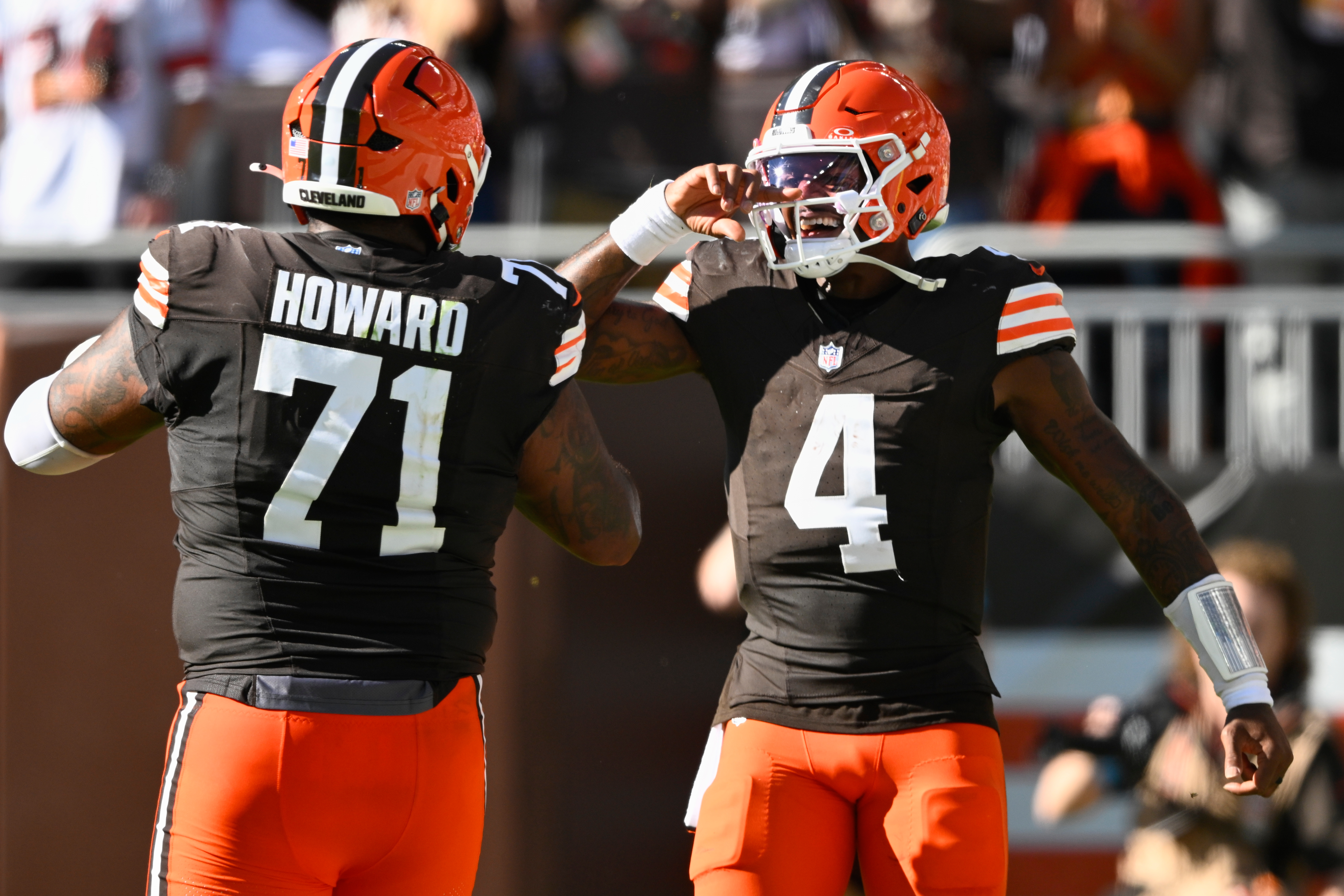
    Deshaun Watson’s (4) competent play creates some tension both for the Browns and the league. David Richard

    Deshaun Watson’s resurrection

    Three weeks into the season, the league’s least likable quarterback has resurrected hope in football-crazed Cleveland.

    Understand that calling Deshaun Watson the least likable quarterback in the NFL is saying something, considering the NFL still suffers the presence of Aaron Rodgers and, tangentially, the top in-game analyst is the insufferable G.O.A.T., Tom Brady.

    However, between accusations of Watson’s serial sexual misconduct with massage therapists (he has settled or resolved 24 lawsuits), the smarminess with which he has comported himself since the accusations were made in 2021, the astonishing decision of the Browns in 2022 to mortgage their future on Watson by trading for him and guaranteeing him $230 million despite pending litigation, and his generally poor play, Watson, who often is booed in his own stadium, has few friends and fewer allies.

    Injuries to his shoulder and his right Achilles tendon cost him most of the past three seasons, but the Browns failed to acquire competent replacements. Watson outplayed Shedeur Sanders in training camp and he has been the Browns’ starter this season.

    For better or worse, since Game 1, Watson has played well. His play was key to wins in Games 2 and 3, in which he compiled a 106.4 passer rating with no interceptions and ran for 67 yards on 18 carries. He looks a lot like the player who went to Pro Bowls from 2018 to 2020.

    The Browns were expected to founder this season after they traded superstar defensive lineman Myles Garrett to the Rams in June, hired rookie coach Todd Monken, and had no clear starter at QB. Instead, after beating the Panthers on Sunday, they’re 2-1, they have winnable games on deck against the Steelers and Jets, and they have a clear leader in Watson.

    The NFL suspended Watson for 11 games and fined him $5 million in 2022 in connection with the misconduct. If he continues to lead the Browns to wins, it will be fascinating to see how the NFL, its in-house media wing, and its national broadcast partners deal with this unique tale of … redemption?

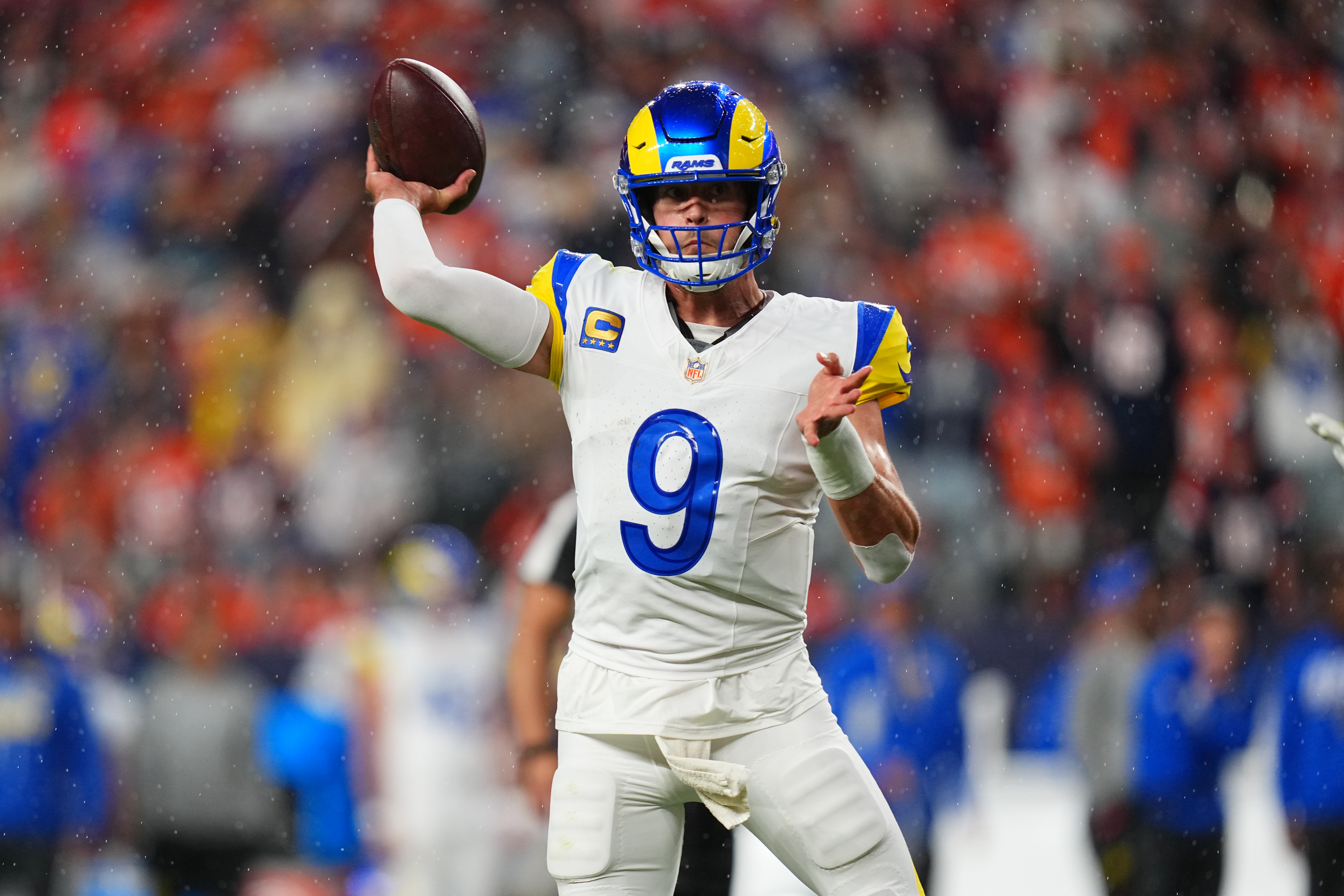
    Matthew Stafford and the Rams will come to Philly next week as a 1-2 team. Jack Dempsey

    Extra Points

    The Rams, who visit Philly on Sunday, fell to 1-2 when the Broncos completed a touchdown drive in the last minute, then intercepted reigning MVP Matthew Stafford for a second time in the fourth quarter, this one at the buzzer. The first interception was a 66-yard pick-six with 4:49 to play. … The Ravens stunned the Cowboys (1-2) in Rio de Janeiro with a last-second field goal set up by the Cowboys’ decision, with the game tied, to kick off for a touchback, which gave the Ravens the ball at their own 35, then played man coverage and surrendered a 27-yard completion and called a timeout with 1 second to play. Tyler Loop then kicked a 56-yard field goal. … The Super Bowl champion Seahawks had won 12 in a row and they got Sam Darnold and his strained rear end back in time to visit D.C., but, with Jayden Daniels sidelined for a third time in two seasons with a dislocated left elbow, former Eagles backup Marcus Mariota led the Commanders to a 33-31 win. … Retread quarterback Kirk Cousins, 38, and first-time head coach Klint Kubiak, 39, have the Raiders at 3-0, as the Saints committed four fourth-quarter turnovers, including a game-clinching fumble forced by former Eagles star linebacker Nakobe Dean. … The battered Niners also moved to 3-0 with a win in Arizona, but they lost two more players: receiver Mike Evans (rib) and left tackle Trent Williams (stinger).

  • ESPN’s Joe Buck on softening Eagles fans and a possible future without Troy Aikman

    ESPN’s Joe Buck on softening Eagles fans and a possible future without Troy Aikman

    Do Eagles fans actually like Joe Buck?

    Buck has had a lot stacked against him in Philly during much of his broadcasting career. Eagles fans have hated Buck because of his association with Hall of Famer Troy Aikman, who led the Dallas Cowboys to three Super Bowl victories. Phillies fans felt like he was rooting against their team because they were used to hearing fan-friendly announcers like Harry Kalas and Tom McCarthy.

    “Philly fans are at times hard to please, and that’s what makes them great,” Buck said. “They demand effort and excellence.”

    A good example of the divide was 2008, when Buck was broadcasting the Phillies’ World Series victory on Fox while Kalas provided the radio call.

    Kalas’ passionate call of the final out, a strikeout by closer Brad Lidge, still gives goose bumps to Philly sports fans: “Swing and a miss! Struck him ooooooooout! The Philadelphia Phillies are 2008 world champions of basebaaaaaaaall!”

    Buck’s call, by contrast, was dry and direct: “Phillies are world champions.”

    “I was raised in a house where I was taught to dislike Joe Buck,” Kylie Kelce said last year on her husband’s short-lived ESPN late-night now. “It seemed as though he was always cheering for the other team,”

    But these days, Buck has noticed less venom from Philly sports fans, especially compared to 2015, when he quit Twitter for more than a year over harsh criticism during a Phillies game against the Boston Red Sox.

    Buck’s voice is one of the few in the sports world that signal a big game, and fans have come to view him and Aikman as one of the best broadcasting duos in the league. This year, the two will be back calling the Super Bowl, their first together since 2020 at Fox.

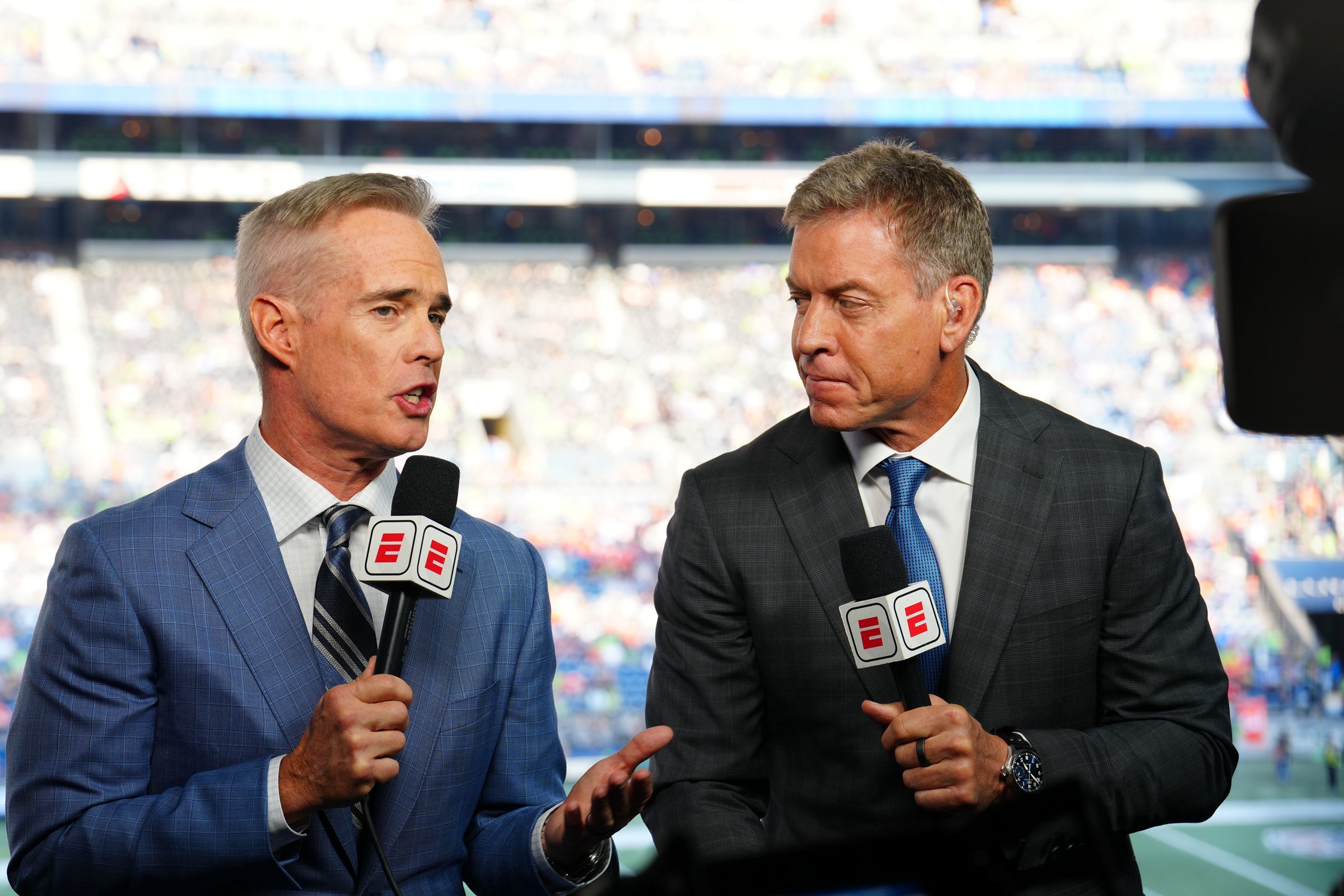
    Joe Buck (left) and Troy Aikman have been calling games together since 2002. ESPN Images

    Buck isn’t sure what to attribute his newfound respect from Philly sports fans to. Likely it has something to do with Aikman being far removed from his playing days with the Cowboys, but the more likely culprit is that he no longer calls national baseball games.

    “Everyone is listening to every tone that comes out of your mouth and assigning some rooting interest that just doesn’t exist,” Buck said. “There would just be no reason why I would root against Philly. It’s just silly stuff.”

    Count Angelo Cataldi among Buck’s fans. As the morning host of 94.1 WIP for more than three decades, Cataldi was never afraid to rip into announcers, whether it was Philly native Dick Stockton or celebrated play-by-play voice Al Michaels.

    But Buck never ended up in Cataldi’s crosshairs.

    “I think people have come around on Joe over the past five to 10 years,” Cataldi said. “He’s always accused of rooting for the opposite team, but if you listen to his broadcast, it’s right down the middle.”

    In his fifth season on ESPN’s Monday Night Football, Buck won’t have a rooting interest when the Eagles take on the Chicago Bears. But his stat guy in the booth will.

    Ed Sfida, a Villanova grad, has worked with Buck and Aikman since 2003, dating back to their days at Fox Sports. They’ve become so close Buck invited Sfida to his wedding when he married Michelle Beisner, who now works alongside her husband at ESPN.

    “Back at Fox, if the Eagles were playing the same time we were doing another game and scored a touchdown, we’d look down in the corner of the booth where Sfida stands and he’s doing the Eagles’ wing flapping thing,” Buck said. “He’s the best.”

    Buck doesn’t see himself following in Merrill Reese’s footsteps

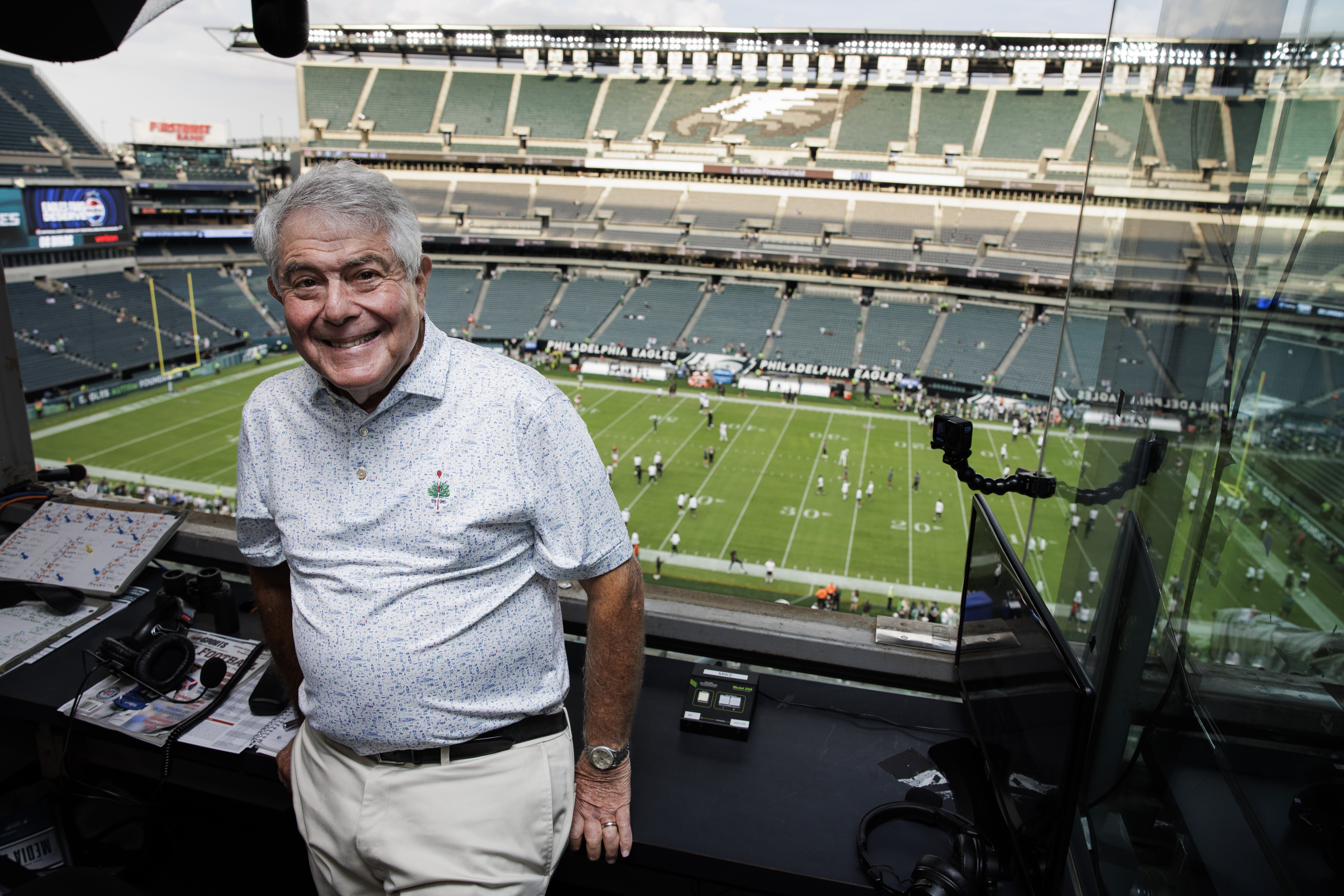
    Merrill Reese is in his 50th season as the radio voice of the Eagles. Monica Herndon / Staff Photographer

    Buck is in his 33rd year calling NFL games in a career that dates back to Fox acquiring TV rights to the league in 1994.

    That’s a long time, but he has a ways to go to match Eagles radio announcer Merrill Reese, who is in his 50th season calling the Birds, easily the most-tenured announcer in the league.

    If Buck were to make it to 50 years, he’d be 74. So does he seem himself lasting in the booth that long?

    “The answer to your question is no,” Buck said. “It’s just amazing to me, whether it’s Merrill or Al Michaels, the mental clarity and strength it takes to find your way through these games and not say something ridiculously stupid.”

    That doesn’t mean Reese or any other veteran broadcaster is perfect. Just last week, Reese mistakingly thought a Tennessee Titans interception of Jalen Hurts had been returned for a touchdown. But he rebounded to offer a vintage call of Hurts leading the Eagles to a last-minute comeback victory.

    “I’m just blown away by Merrill and how smart and clear and energetic is he,” Buck said.

    A future without Troy Aikman at ESPN?

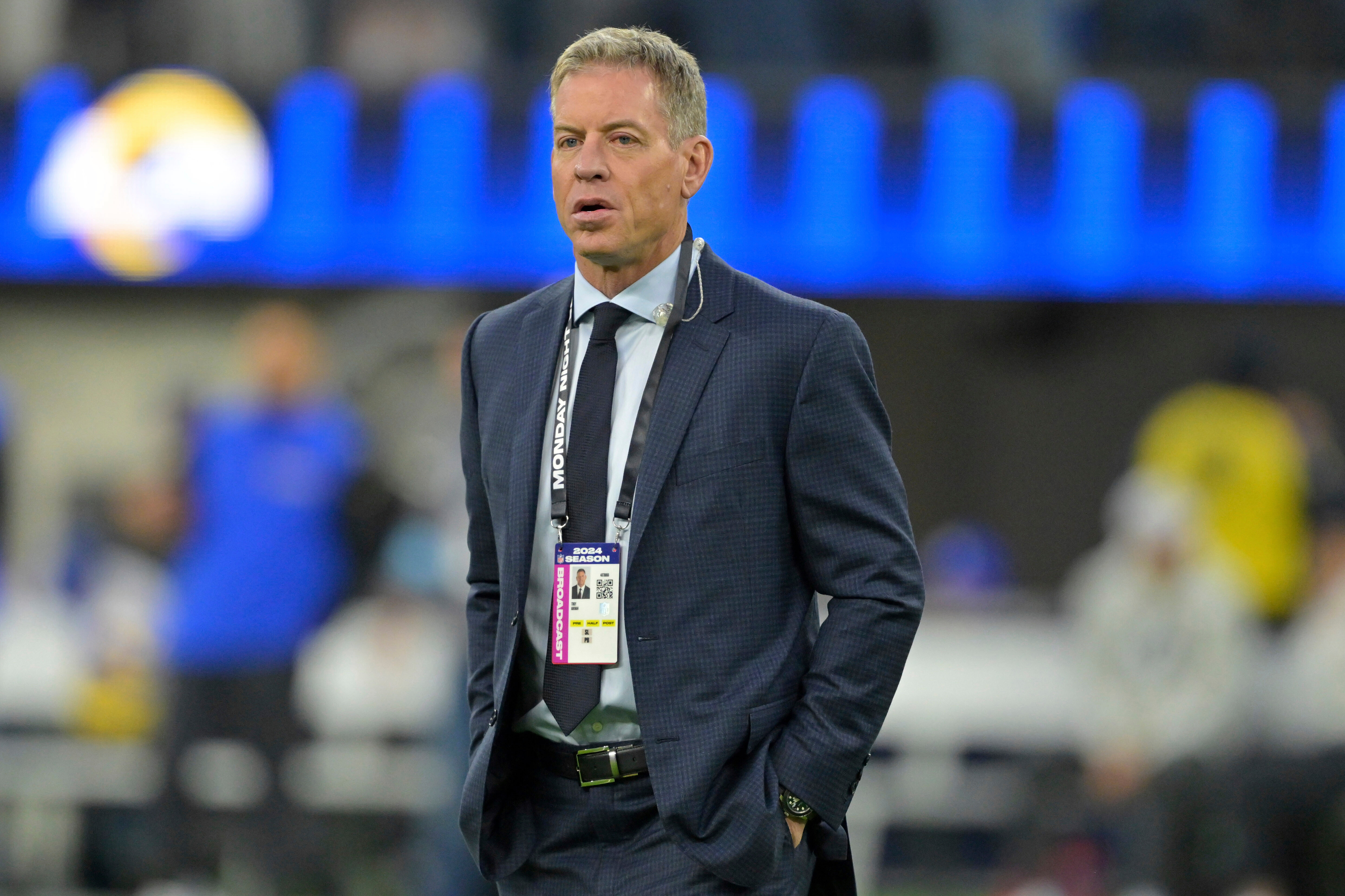
    Troy Aikman’s ESPN contract expires at the end of the season. Jayne Kamin-Oncea

    Buck recently signed a contract extension reportedly worth more than $100 million that will keep him at ESPN through the 2032 season. But Aikman hasn’t and reportedly won’t until after the season ends, after he and Buck call the Super Bowl at SoFi Stadium in February.

    There’s been uncertainly about the longtime duo before. When Aikman signed with ESPN in 2022, Buck had a year remaining on his deal with Fox, but executives let him out of his contract early so he could move to ESPN with Aikman.

    Buck hasn’t spoken with Aikman about his plans, but he hopes the two will remain together at ESPN and keep the NFL’s longest-running TV booth going.

    As for Aikman, there could be plenty of options. With uncertainty at CBS due to Tony Romo’s arrest and subsequent suspension, Aikman could solidify their No. 1 booth ahead of their Super Bowl next season. There’s also Amazon Prime, where Thursday Night Football announcers Al Michaels and Kirk Herbstreit have contracts that expire at the end of the season.

    “I’ve been in this business long enough to know nothing is a guarantee,” Buck said. “So my only answer to any of that is we’ll see.”

  • At every turn, Trump’s ideas for aiding U.S. consumers run into resistance

    At every turn, Trump’s ideas for aiding U.S. consumers run into resistance

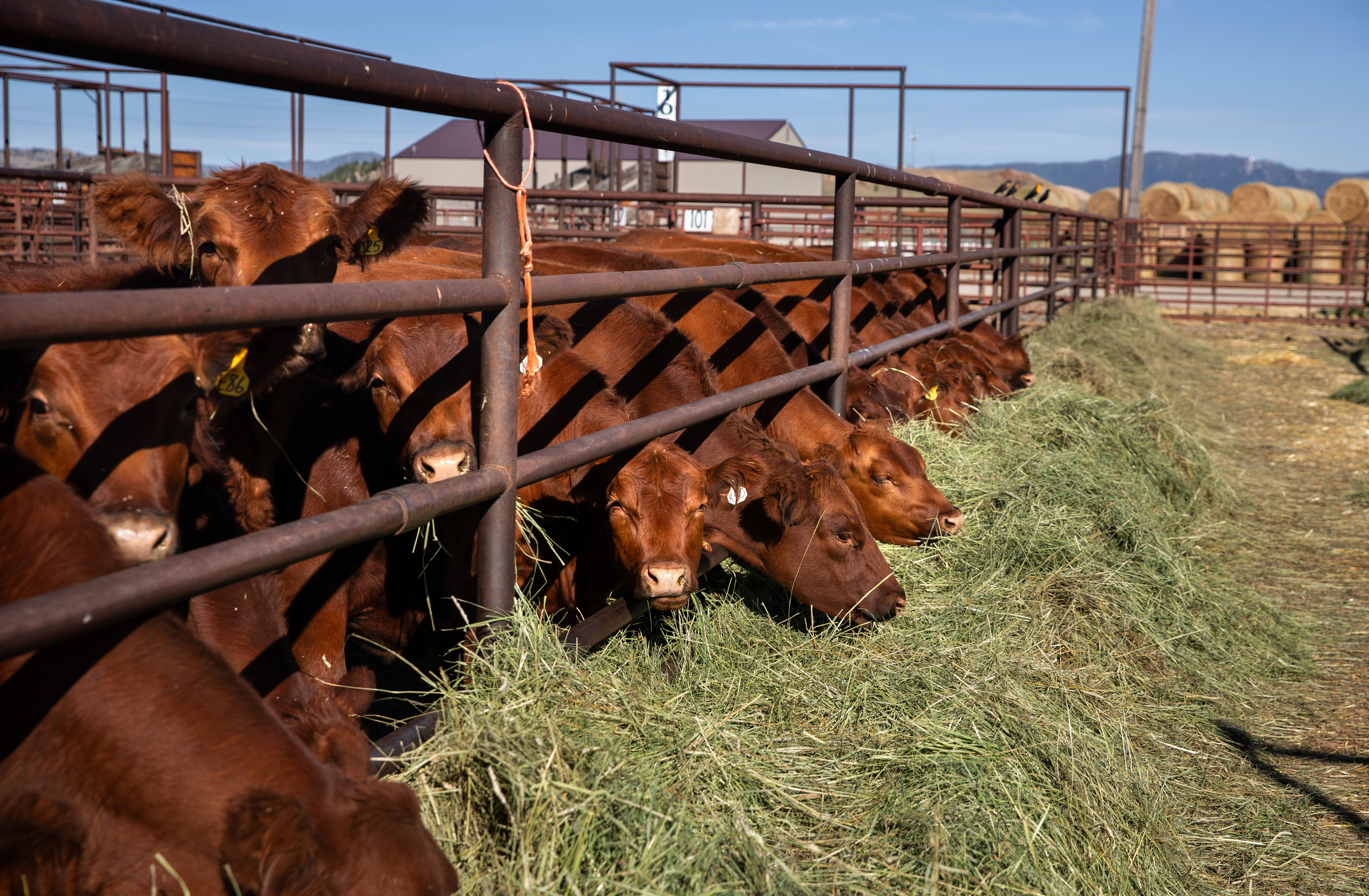
    First came a proposal to permit tariff-free beef imports, but that immediately angered America’s farmers and ranchers.

    Then came a plan to ban exports of domestic diesel fuel, but that met with pushback from major oil companies.

    In between, President Donald Trump pitched the idea of simply cutting $5,000 checks to adult Americans frustrated, polls show, by high food and gas prices — if the GOP maintains control of Congress. But that idea, too, has come under fire, even from some Republican lawmakers concerned about the potential hit to the budget deficit.

    With just five weeks until Election Day, the White House has thrown out multiple ideas for combating persistent inflation, which has outpaced wage growth. But experts say it is unclear whether Trump can execute any policy that would placate inflation-weary voters and help the GOP maintain control of Congress.

    “These are symptoms of panic in the administration about problems that they have in part created,” said David Wessel, director of the Hutchins Center on Fiscal and Monetary Policy at the Brookings Institution.

    Inflation has been running over the Federal Reserve’s target rate since 2021, but an array of Trump policies have fed the problem, economists say. Trump’s decision to join Israel in going to war with Iran has disrupted the global oil supply, leading to elevated energy rates. His tariffs have produced higher prices for some imported goods. And his administration’s immigration crackdown has made low-cost labor harder to find, keeping price pressures on domestic companies high.

    Consumer frustration is reflected in polling. The gap has steadily widened between voters who approve of and disapprove of Trump’s performance as president, and 73 percent of Americans said they disapprove of Trump’s handling of the economy in a recent poll conducted by SSRS for CNN. Only 27 percent approved — his lowest approval rating on the issue ever recorded by the survey.

    Against that backdrop, Trump has floated a parade of ideas for cutting prices.

    “President Trump pledged to lower costs and raise real wages for everyday Americans, and the Administration continues to rigorously evaluate every option on the table to deliver,” White House spokesman Kush Desai said in a statement.

    On top of the political hurdles, however, these policies have been “small in the grand scheme of things … if they’re helpful at all,” said Mark Zandi, chief economist at Moody’s Analytics. “So it’s not like it’s moving the dial on the affordability crisis.”

    Douglas Holtz-Eakin, president of the American Action Forum, a conservative-leaning think tank, said it’s not uncommon for politicians to try to bring down prices in the run-up to elections, especially when their party’s control of Washington is at risk.

    President Joe Biden did the same ahead of the 2022 midterms, notably by calling for a federal gas tax holiday and releasing millions of barrels of oil from the nation’s Strategic Petroleum Reserve in an effort to bring down sky-high gas prices.

    “This whack-a-mole with particular prices is something the Biden guys tried,” said Holtz-Eakin, who was a senior economic adviser to President George W. Bush and the 2008 presidential campaign of then-Sen. John McCain (R-Arizona). “It doesn’t solve the economic problem, and it doesn’t seem particularly politically successful.”

    For Trump, time is running out, said Rebecca Patterson, a senior fellow at the Council on Foreign Relations.

    The U.S. economy is so big and so complex that improving affordability “is simply not something anyone can do in a month,” Patterson said. “Actions taken today might help in the medium and longer term. But between now and the election, the best you can hope for is that voters appreciate that you’re trying.”

    One idea the administration has executed is buying back Treasury bonds. But so far, the payoff has been minimal.

    In part because of the competition for cash from massive private-sector spending on artificial intelligence, investors are demanding higher interest rates for Treasury bonds. Higher bond yields, in turn, raise interest rates for consumer loans such as mortgages. The average 30-year fixed mortgage rate hit 7 percent last week for the first time since January 2025.

    In August, Treasury Secretary Scott Bessent announced he would intervene in the bond market by buying back longer-term Treasury bonds to try to slow the rise in yields. That has not yet worked in bringing down yields, though Bessent contended in a recent congressional hearing that it is nonetheless a success because “we then proceeded to have the two most successful Treasury auctions that we’ve had in 20 years.”

    While Bessent was wrestling with the bond market, Trump decided to tackle meat prices.

    In late August, the president signed a proclamation that rolled back tariffs on foreign beef trimmings for 90 days in an effort to boost imports and lower ground beef prices, which have risen almost 25 percent since the beginning of Trump’s second term.

    But that drew rare pushback from farm-state Republicans, including Sen. Chuck Grassley (Iowa), Sen. Pete Ricketts (Nebraska), Sen. Roger Marshall (Kansas) and Rep. Ashley Hinson (Iowa), who is running in a competitive Senate election in her state.

    The lawmakers argued that a flood of cheap foreign beef would undermine American farmers and ranchers, who are already struggling with high fuel, grain and fertilizer prices due to the Iran war and other factors.

    Trump issued a follow-up executive order aimed at helping ranchers, and the Agriculture Department announced new policies aimed at supporting American beef producers. The administration is now reportedly considering reversing course on beef imports — though the White House has denied that.

    Then came the Republican midterm convention in Dallas, where Trump made his biggest pitch yet: If Republicans keep both the House and Senate on Nov. 3, Trump said he would give every adult American a $5,000 dividend to spend within the United States.

    Some Republican lawmakers applauded the idea, but others were skeptical, saying the checks not only could exacerbate inflation but also could increase historically large budget deficits. The proposal could cost more than $1 trillion at a time when concern is growing about the nation’s outsize debt, which recently surpassed $40 trillion.

    Public interest groups blasted the idea; Lisa Gilbert, co-president of the left-leaning consumer watchdog Public Citizen, called it an “explicit and desperate attempt to buy votes.”

    And voters largely have not been swayed: A YouGov poll released earlier this month found that 64 percent of U.S. adults felt they would probably or definitely not receive the dividend if Republicans were to win the election.

    So far, there have been few signs of interest on Capitol Hill, where lawmakers would have to draft legislation to authorize the checks and vote to approve it.

    Last week, after diesel prices hit a record high, Trump and Bessent announced a new idea for tackling soaring fuel prices: a ban on diesel exports. Their theory was that a ban would boost the diesel supply for American consumers, lowering the price at the pump.

    Several Republican candidates in competitive congressional races supported the idea. But major oil companies and Energy Secretary Chris Wright objected, arguing that such a policy would incentivize companies to lower diesel production, which would further raise fuel prices.

    By midweek, the fate of the diesel export ban, too, seemed uncertain: Wright said any new limits on diesel exports were likely to be voluntary.

    Scott Clement contributed to this report.

  • Sixers name Bloom Energy as new jersey patch sponsor

    Sixers name Bloom Energy as new jersey patch sponsor

    The Sixers announced a new jersey patch partnership with Bloom Energy.

    In a release, the Sixers said the deal will be “one of the most comprehensive and impactful patch partnership deals in the NBA.” One of Bloom Energy’s largest manufacturing hubs is located in Newark, Del., and as part of the partnership, the company will sponsor the Delaware Blue Coats’ jerseys.

    The deal also includes a seven-figure charitable investment in the greater Philadelphia area, participating in several Sixers community initiatives like the court resurfacing and the Jr. Sixers Summer Hoops tour.

    The Bloom Energy logo will feature on all of the Sixers’ jerseys.

    The Sixers partnered with Crypto.com for six seasons beginning in 2021. No terms were ever officially announced, but reports at the time suggested that the deal ran for six years, which would bring the deal to the end of 2026-27.

    The Sixers also announced their full slate of jerseys, which included the return of their black uniforms and a new look with stars and the word “Sixers” in small print across the top of the chest.

  • 5 British nationals arrested over suspected attack at a U.S.-operated air force base released on bail

    5 British nationals arrested over suspected attack at a U.S.-operated air force base released on bail

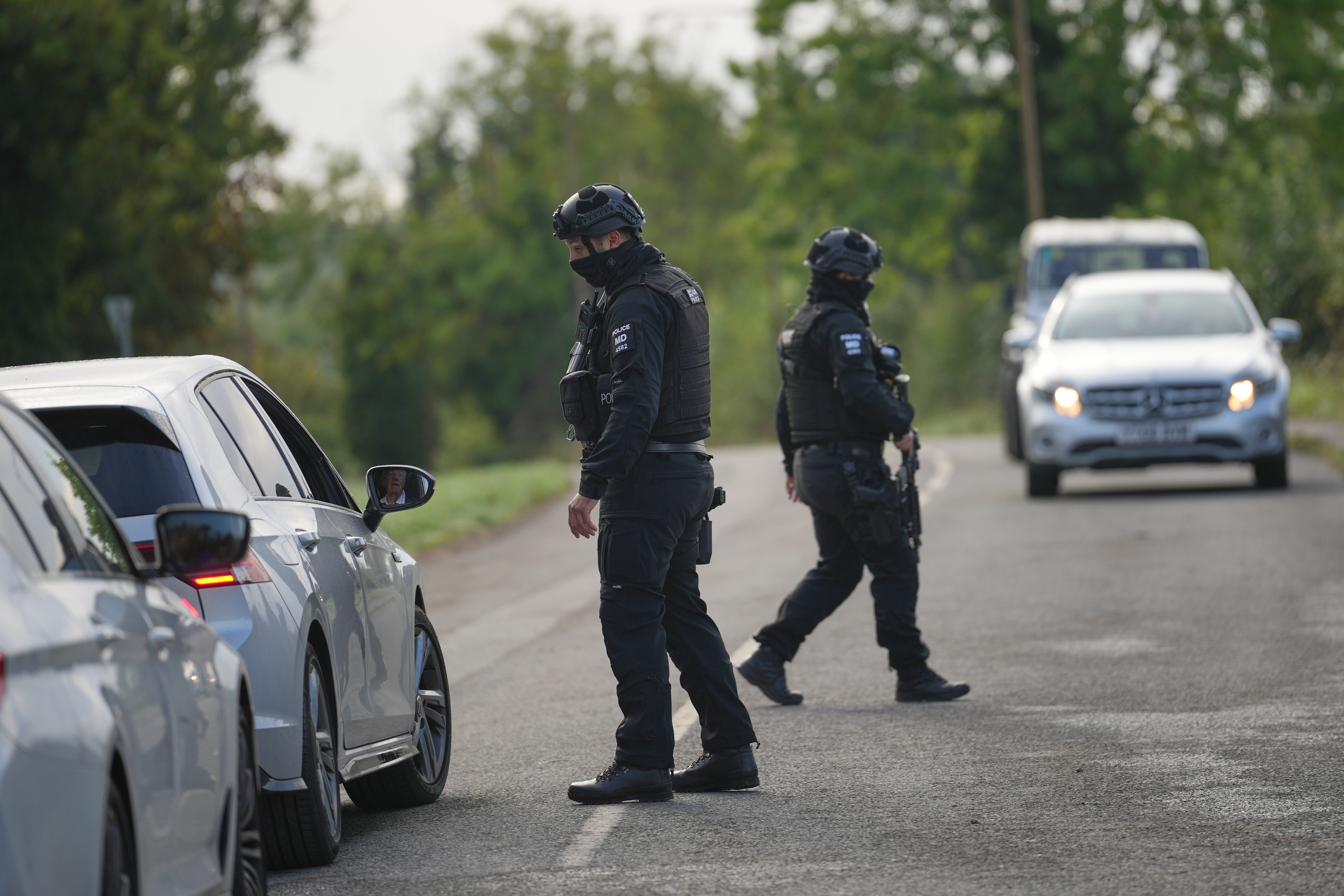
    FAIRFORD, England — Five young British men arrested on explosives and terror charges near a U.S.-operated air force base in England were released on bail Monday, and counterterror detectives said they were investigating “multiple lines of inquiry,” including whether there is a link to Iran.

    The men were detained early Sunday after three vans were spotted in the countryside near RAF Fairford, a U.K.-owned base that has been used by American bombers during decades of conflicts in the Middle East, including this year’s war with Iran.

    Investigators haven’t concluded whether the incident was state-backed. They are investigating a possible link to Iran, Russia, or nonstate militant groups. RAF Fairford has also been the focus of protests by anti-war campaigners.

    The five suspects, who haven’t been named, were initially held over suspected explosives offenses, and later also arrested on suspicion of preparing an act of terrorism. Police said the men are all British nationals from London and in their 20s.

    Britain’s national news agency, PA, reported without citing sources that police had not found viable explosives. Announcing that the suspects had been bailed, the head of U.K. Counter Terrorism Policing, Laurence Taylor, said that the suspects face stringent conditions and “absolutely remain under investigation.”

    Taylor said lines of inquiry include that the suspected offenses were committed by “proxies or individuals, either knowingly or unknowingly, working on behalf of a foreign state.”

    Iran denied involvement. The Iranian Embassy in London said that it “categorically rejects and strongly condemns the recent unfounded and malicious speculations” about the incident.

    Residents were evacuated from 85 homes in the village of Whelford near the base on Sunday, and army bomb-disposal experts used a robot to examine three white vans. The villagers were allowed to return home late Monday afternoon, though a cordon remained around the three vehicles, police said.

    Prime Minister Andy Burnham chaired a meeting of the government’s COBRA emergency committee on Monday “to make sure we have the full picture” of the incident, he said.

    Arrests came after reports of suspicious vehicles

    It was unclear whether the arrested men had been on security services’ radar. Local residents described seeing heightened security around RAF Fairford in recent days, with heavy vehicles parked across entrance gates.

    U.S. President Donald Trump said the suspects had been detained following cooperation between the U.S. and Britain, and had been “under view” for some time. Police, however, said the arrests were triggered by a late-night call about “suspicious vehicles” near the base.

    A local farmer said she called police after seeing three oddly parked vans as she drove home late Saturday night, and that nearby she came across “a large group of men,” some with their faces covered. She said they scattered when they saw her vehicle.

    She declined to be identified to protect her identity because she was describing what she saw as potential security lapses.

    British Defense Secretary Wes Streeting said the farmer “did exactly the right thing” by calling police but only had “a partial view” of the operation.

    The arrests came at a time of heightened tensions around the threat from hostile states, with British intelligence services saying Russia and Iran have both used proxies to commit crimes on U.K. soil. In March, officials said the number of national security cases involving activity by hostile states, including Iran, increased by 50% in the six months to December 2025.

    Iran has been linked to a series of attacks in Europe

    Britain didn’t join the U.S. and Israel in the Iran war, which began on Feb. 28, and initially denied Trump’s request to use bases in the U.K. to strike Iran. But then Prime Minister Keir Starmer agreed in March to let the U.S. use bases in Britain for what he called “defensive” operations against Iran’s missiles and their launch sites following Iranian attacks on U.K. interests and Britain’s allies in the Gulf.

    American B-1 and B-52 bombers have taken off from Fairford, 100 miles west of London, for operations during the Iran conflict.

    Iran has said that it considers any base used to attack its territory a legitimate target.

    British security officials say proxies linked to Iran have been behind a string of arsons and other attacks in the U.K. and other countries, many of them targeting the Jewish community and intended to sow fear. They have previously warned that Tehran could expand its targets in the U.K. if conflicts in the Middle East continue.

    Several people also have been charged with plotting to commit arson in the U.K. on behalf of Russia-linked groups.

    U.K. Foreign Secretary Ed Miliband said Monday that the incident is a “reminder of the threats our country faces.”

    Miliband met Iranian Foreign Minister Abbas Araghchi at the United Nations in New York last week and told him that “Britain will not tolerate intimidation, threats, or hostile activity on U.K. soil,” according to a U.K. readout of the conversation.

    U.S. Air Force says personnel remain vigilant

    The U.S. Air Force said that its personnel on the base “remain vigilant,” but “for operational security reasons we will not discuss specific force protection measures.”

    The U.S. Embassy in London has warned Americans in Britain to be cautious and mindful of their personal security.

    Trump said that authorities had the suspects “under view for a long time and we got them.”

    “It was an amazing job. We had them under investigation. They were looking to do big damage to our fort. And working with the British worked out great,” he told reporters in Chicago on Sunday.

  • Pope Leo leans into statesman role, urging peace in an era of renewed war

    Pope Leo leans into statesman role, urging peace in an era of renewed war

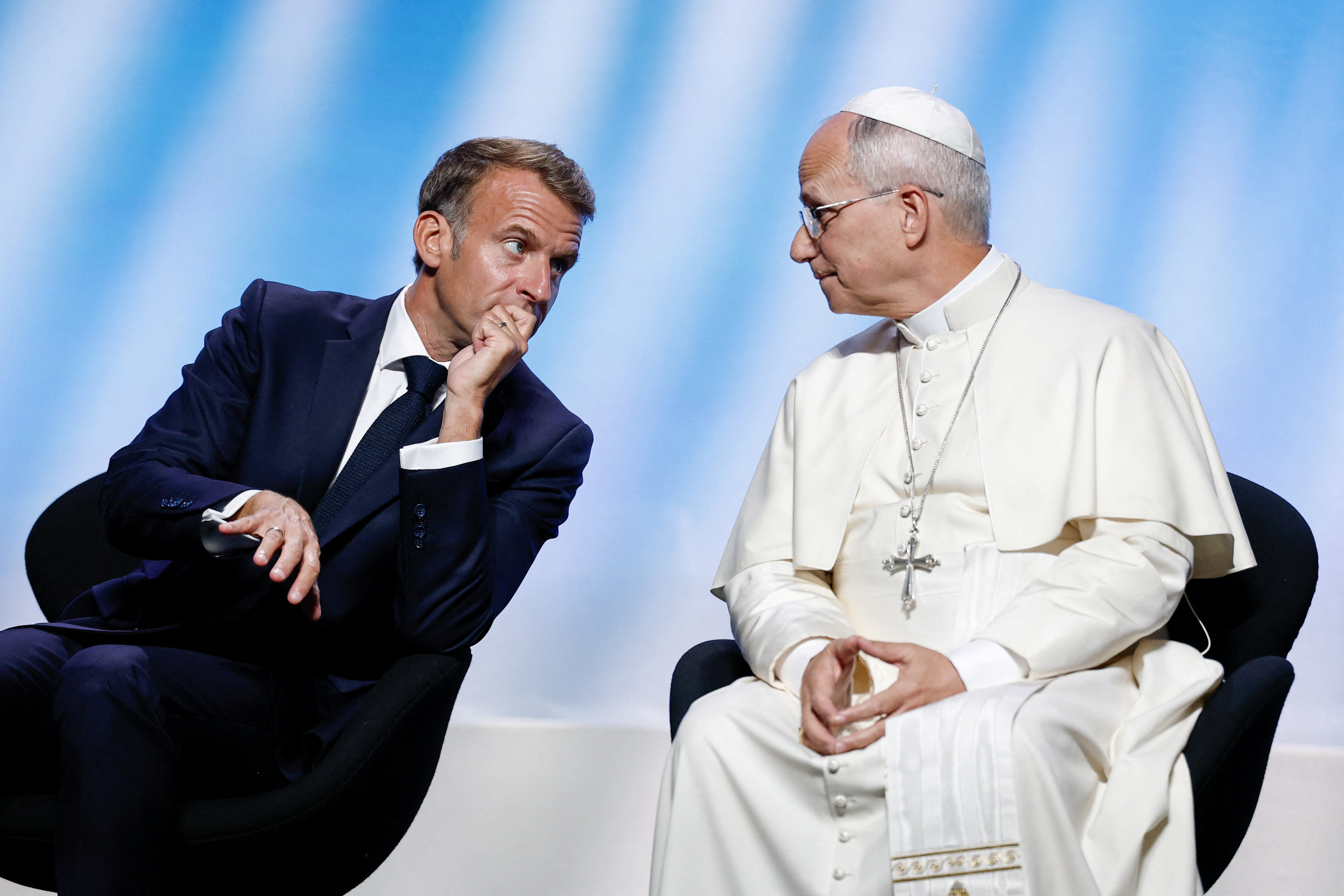
    METZ, France — Pope Leo XIV capped a four-day trip to France in the intellectual birthplace of the European Union, heralding its success at “tearing down walls that were dividing it” and leaning into his role not only as spiritual leader of 1.4 billion Catholics but as an increasingly influential statesman.

    In back-to-back addresses delivered symbolically in a conference center named after Robert Schuman, the late French foreign minister who was a founding father of the European Union — and now a candidate for Catholic sainthood — Leo struck what has become his trademark: a balanced tone on hot-button issues like migration that seem to leave interpretation to the beholder.

    He was less equivocal on religious freedom, the importance of international law and multilateralism, and his deep distaste for invoking God’s name for the purpose of war. Leo spoke in a part of Europe — near the once violently disputed border with Germany — where Schuman championed continental integration as a binder of lasting peace.

    At a time when President Donald Trump has pressed NATO allies into ramping up military spending, Leo acknowledged that “the search for peace in Europe, as throughout the world, must not be confused with a naive form of pacifism.” But he also warned against “the illusion that rearmament is the answer.”

    During tours of Africa and Spain in April and June, Leo — who initially seemed uneasy with fame — emerged as a confident and emotive spiritual leader capable of moving throngs.

    During his trip to secular France, the U.S.-born pope did just that in Paris, Lourdes and Metz, including drawing 800,000 faithful for an outdoor Mass on Saturday, the largest crowd in the capital since France’s World Cup victory in 2018. The night before, Leo, the 71-year old leader of a two-millennia-old faith, managed to easily pack a stadium with 80,000 roaring youth.

    Yet more than on some of his other trips, a different pope was also on display in France: Leo as an emerging elder statesmen.

    “We’re now dealing with a pope I’d describe more as a diplomat,” said Claude Dargent, a Paris-based expert on religion and politics.

    Leo is also being seen by some as the pope that many believe the cardinals who elected him had hoped for — a plain-talking, Chicago-born counterweight in an era of unbridled American power.

    In April, when President Trump openly criticized the pope as “WEAK on Crime, and terrible for Foreign Policy,” Leo appeared unbowed, saying he had “no fear.” But he has since sought to lower the tone and refrained from fanning the flames of a feud with the White House.

    Instead, he has taken to challenging the notion of “might-is-right,” and offering an alternative world where kindness, generosity and, above all, human dignity hold sway.

    He calls it our “common humanity.”

    Days after Trump skewered the United Nations and spoke of victors taking spoils, Leo addressed UNESCO — the UN’s cultural agency in Paris — to rousing applause. He spoke of the horror of war and the glory of peace. He reiterated the risks of artificial intelligence, as he did in his first major Encyclical, raising red flags at a time when Trump has defended its breakneck advancement.

    At a time when Venezuela is under the thumb of Washington, and Moscow is waging war in Ukraine, Leo condemned the quest for “domination” and the rise of modern “neocolonies” of powerful nations. In France, where nationalist Marine Le Pen is polling first in next year’s presidential election, Leo warned of creeping authoritarianism in the free world.

    “A truly free society does not impose uniformity but protects the diversity of consciences, preventing authoritarian tendencies and promoting an ethical dialogue that enriches the social fabric,” Leo said.

    In Metz, he doubled down on a point for which the White House has taken him to task: his claim that “God’s name” can never be used to “justify violence or oppression.” He reiterated his fears over the erosion of international law.

    “International law and multilateralism emphasize the genuine equality of States in their relations and constitute the best antidote to the desire for domination, which lies at the root of every conflict,” Leo said. “Today, relations between individuals and States are becoming increasingly uncivilized. The value of keeping one’s word is dismissed; instead, people boast of lies and deceit.”

    He spoke of a new European transformation through waves of migration. He reiterated earlier backing for legal pathways, and improving conditions in origin countries to inhibit migration. But he also called for integrating newcomers as if they were “part of one’s own family” and offering them opportunities.

    French President Emmanuel Macron, who was at the speech in Metz, had invited leaders from the E.U.’s other 26 member nations, though few appeared to have accepted. The prime minister and grand Duke and Duchess of Luxemburg attended, as did the head of a German state, Anke Rehlinger, minister-president of Saarland, the Élysée Palace said.

    The crowds in France, though perhaps slightly more reserved than those in neighboring Spain, were often young. In Paris, a smattering of nonbelievers joined the faithful in cheering the pope. At a university event in central Paris on Saturday, three young men — none Catholic or even religious — whooped for Leo, fanboying over a pope that one of them described as the American the world “needs.”

    “For us in France, it is important that we have an American saying these things, you know, an American with a wonderful message of peace who speaks so many languages, and who, you know, is speaking this truth when we have the insanity of Trump,” said Robin Pitrat-Demurger, 21, a Paris political science major.

    “I am here because I want to hear him and see him,” Pitrat-Demurger continued. “But also because I am happy to hear an American say these things, and to know that other Americans might listen to him because he is one of them.”

    As is customary in papal trips, there was pageantry, especially when Leo became the first pope to view the restored Notre Dame Cathedral following its devastating 2019 fire. He joined a high procession dressed in gleaming white and gold. As incense swirled and thunderous organ music played, he venerated a relic said to be the crown of thorns at the crucifixion of Jesus.

    In Lourdes, he comforted the sick and elderly who seek miraculous cures in a city where a 19th century miller’s daughter is said to have witnessed apparitions of the Virgin Mary. He said Mass for 150,000 pilgrims, and later met individually and collectively with seven carefully selected victims of abuse by clergy. Several of the victims praised Leo after the exchange.

    At an event at a hospital, rows of disabled people in rickshaw-like wheelchairs hung hopefully on the pope’s words, some of them in tears.

    MAGA influencers have dubbed Leo the “woke pope,” but in France, if anything, he was seen as the opposite, at least on social issues.

    In Paris, he spoke up for conservative Catholic principles not always popular in secular France, taking aim at surrogacy and the country’s recently passed euthanasia law — calling it an industry built around “arranging one’s own death.”

    He did so in a manner that was described by some in the French press as astutely aware of French identity and self-perception. Perhaps it was genetic. Leo spoke fondly of his familial roots in Normandy and Béarn.

    “He said some things that he doesn’t like in France and I feel like it’s important, because a pope can’t always have a speech everyone agrees with, but he does it in a gentle way,” Zoe le Barzic, a history major at the Catholic University of Paris who came to hear Leo. “There is so much division right now. I don’t think he wants to add to it. He is being very diplomatic.”

    Yet Leo has not shied away from all comments on American politics, albeit treading lightly and seemingly going there only when pressed by the media.

    Asked on the papal flight to Paris about Trump’s decision to ban CNN and other news outlets from the White House, Leo told reporters: “I’m very happy that here, you are all welcome. And good ​coverage. I ⁠think it’s very important that we have it all ​the way around for everyone.”

  • Tom Kean Jr. backs Trump on Iran and tariffs, if not local issues

    Tom Kean Jr. backs Trump on Iran and tariffs, if not local issues

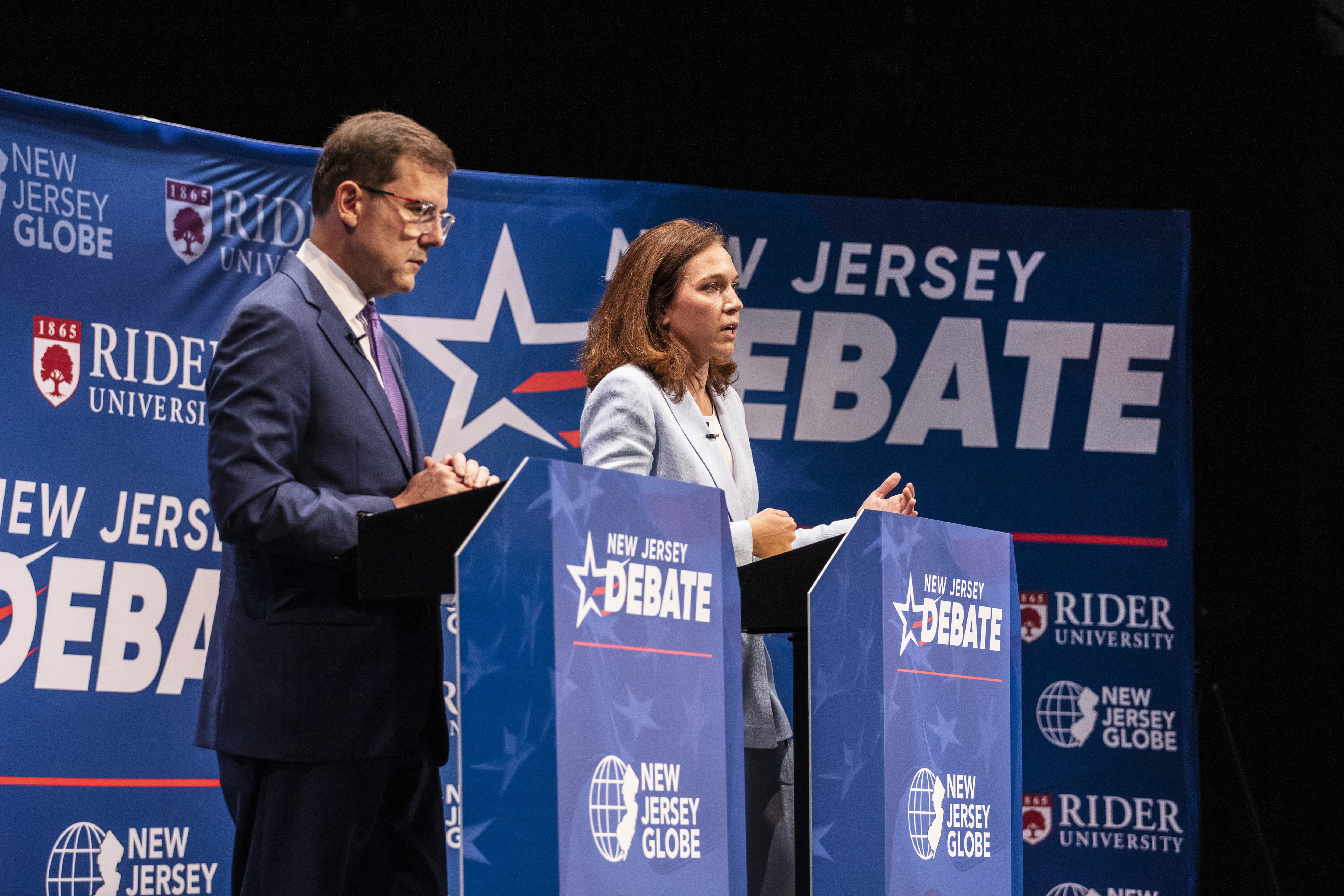
    Rep. Thomas Kean Jr., a New Jersey Republican in a tight reelection battle, sought to distance himself slightly from President Donald Trump on Sunday as his Democratic opponent, Rebecca Bennett, pelted him with reminders of his years of loyalty to the unpopular president.

    Kean began his opening comments during a debate in Rahway, New Jersey, by stating that he was willing to stand up to Trump’s efforts to strip funding from a critical Hudson River rail tunnel. “I will make sure that I counter anybody who gets in my way, including this president,” he said.

    And for the first time, Kean clearly stated his opposition to the Trump administration’s plan to convert a warehouse in Roxbury, New Jersey, into an Immigration and Customs Enforcement detention center.

    He also said he opposed Trump’s decision to change the name of Lake Ontario to “Lake America.” On key issues such as the war in Iran and the president’s tariffs, however, he maintained strong support for Trump’s policies.

    “The president is justifiably using that to reduce costs for consumers,” Kean said of the tariffs.

    His seat in New Jersey’s 7th Congressional District, which has seesawed between the two parties three times since 2018, is considered a prime pickup opportunity for Democrats as they try to retake control of Congress in November.

    On Friday, in a sign of the volatility of the contest, The Cook Political Report shifted the race from “toss-up” to “leans” Democratic, despite the Republican Party’s 16,600-voter registration edge. An independent poll taken this month showed Kean trailing Bennett, a former Navy helicopter pilot.

    Groups aligned with the Republican Party are pumping millions of dollars into the race. Kean and his Republican allies have booked $17.4 million in advertising, far outpacing Democrats’ $4.9 million, according to AdImpact, an ad analytics firms.

    Sunday’s debate was the first time that Kean, 58, had subjected himself to extensive public questioning since being absent from Congress for nearly four months while being treated for what he has said was depression. The first question Kean was asked dealt with the lack of information he shared while hospitalized and missing from Congress from March through June.

    “Nobody can plan a medical emergency,” he said. “And that was a medical emergency.”

    Neither the debate’s moderators nor Bennett pressed him for additional details about his treatment or his fitness to continue to hold office for a third term.

    “I’m glad that you got access to the care that you need,” Bennett said, “and I wish you a continued speedy recovery.”

    Kean — the son and namesake of a former New Jersey governor — has never been known as a graceful speaker, even after 25 years as a politician. But he appeared confident Sunday as he parried for 90 minutes with Bennett. His wife, father and twin brother sat in the front row behind the moderators.

    He stressed his experience and his unconditional support for Israel, noting that he would support sending U.S. troops to defend the country, if needed. He also tried to depict Bennett, a first-time candidate, as a puppet of the Democratic Party.

    “You have not heard my opponent once tonight differ from the average Democratic member of Congress, who always votes the party line,” he said.

    Bennett, 39, focused on Kean’s support for Trump’s policies, including his vote to slash Medicaid funding, as she worked to present him as out of touch with his constituents’ concerns.

    She repeatedly mentioned his active stock portfolio and the trades he signed off on while absent from Congress, as well as the fact that he had not put his assets in a blind trust when he entered Congress, as he had promised to do. (Kean’s lawyer has said that doing so would preclude him from also taking “principled and pragmatic stands” against investing with foreign adversaries and selling American stocks short.) Bennett said she had sold all of her individual stocks before the race — although she refused, when pressed, to disclose the value of those sales or her net worth.

    Bennett also spoke forcefully about the need to end the war in Iran.

    “Any time we are going to put American service members in harm’s way, there needs to be a clear motivation, a clear objective and a clear exit strategy,” she said. “And we have not seen any of that from this administration.”

    She repeatedly linked the war to the high price of gas as she stressed her goal of bringing down costs if elected. “The reason that we are seeing this increase in our gas prices,” she said, “is because of this unnecessary war.”

    The two did share a moment of bipartisan agreement when asked about pineapple on pizza.

    “I find that perfectly acceptable,” Kean said.

    “I’ll eat it,” Bennett said. “But I wouldn’t put it on there myself.”

    After the debate, the challenger lingered to take questions from reporters. Bennett said that if Kean opposes Trump’s efforts to block funding for the Hudson River tunnel, which is known as Gateway, he hasn’t been effective.

    “Donald Trump has tried to hold up the funding for the Gateway tunnel,” she said, “and Tom Kean Jr. has been unable to do anything to make sure we’re actually going to get the funding back.”

    Minutes after the debate ended, Kean quickly exited through a side back door, flanked by family members and aides.

    He ignored a question about his differences with Trump as he climbed into a silver sport utility vehicle that was waiting for him near the exit.

    This article originally appeared in The New York Times.

  • A political scientist studied the rise of grassroots activism in local government. Philly was his case study.

    A political scientist studied the rise of grassroots activism in local government. Philly was his case study.

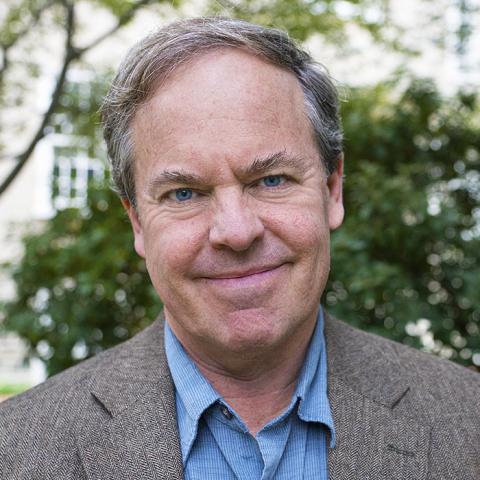
    In the five years he spent researching his book Mobilization Politics, Haverford College political scientist Stephen J. McGovern interviewed former Mayor Jim Kenney and other Philadelphia elected officials, political activists, campaign consultants, labor leaders, and protesters.

    The book, which covers events from the 2010s through Mayor Cherelle L. Parker’s victory in the 2023 election, uses Philly as a case study to examine the national rise of grassroots progressive politics over the last two decades. McGovern details how local activists employed bottom-up tactics to win major policy victories in areas like criminal justice reform, helping to decrease the jail population, and immigration, leading to Philly becoming a so-called sanctuary city.

    The activists often used an inside/outside strategy, McGovern wrote, of leaning on officials they helped elect, like District Attorney Larry Krasner, and publicly pressuring more moderate ones, like Kenney.

    Haverford College political scientist Stephen J. McGovern authored the 2025 book “Mobilization Politics,” on grassroots activism in Philadelphia.Sean Walsh

    McGovern also explores areas where progressives have fallen short of their goals, and the problems associated with a brand of politics driven by groups that tend to be more affluent and white than the city as a whole. Much of the new type of political organization has been driven by millennials born outside the city, McGovern found, leading to tensions over gentrification.

    McGovern recently spoke with The Inquirer about his 2025 book, the rise of the local progressive movement, and what it all means during Parker’s administration. The interview has been lightly edited and condensed for clarity.

    Your book describes how grassroots activists are really driving the agenda in Philadelphia City Hall, and, as you say, across the nation in local government. Is that an accurate summation of your thesis statement?

    I think that’s fair, and what I want to call attention to is how significant that change is. There may be a lot of people today who assume, “Well, hasn’t that always been the case in city politics?” But no, for much of the mid- to late 20th century, city politics operated in a very different way. It was much more of a top-down phenomenon, and the shift towards more bottom-up politics has been a relatively recent one. And increasingly it’s pretty widespread throughout the United States. So as a scholar of urban politics, I was interested in trying to explain how and why that happened.

    In the book, you describe various political science theories that have sought to explain urban politics in the past. Can you explain how your thesis is different from those previous schools of thought, such as “regime theory”?

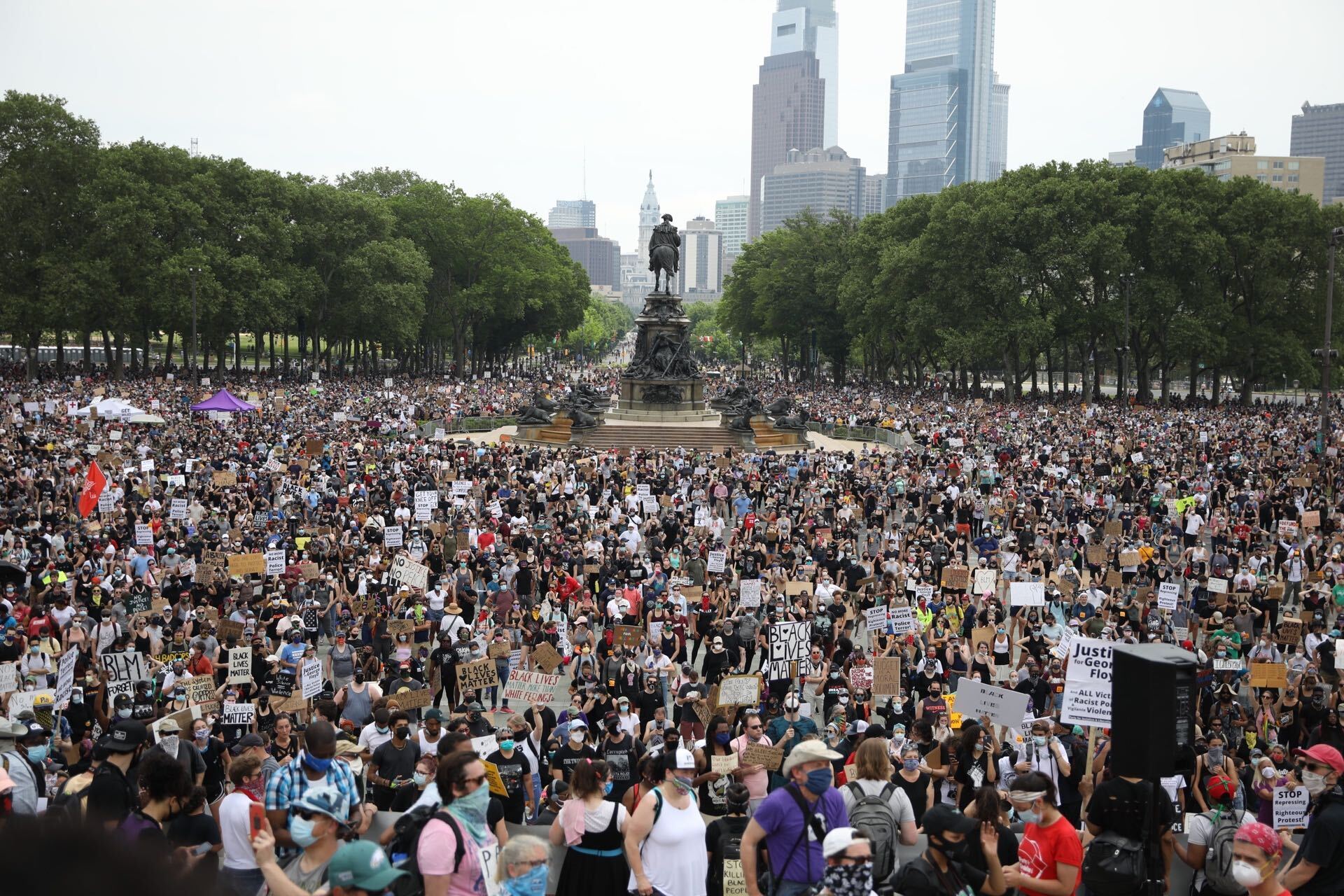
    Many scholars have argued that downtown-led regimes wielded a great deal of power over urban policymaking. Regimes were led by business leaders and their allies — law firms, accounting firms, mass media relations firms, and interest groups that had an interest in promoting growth, especially pro-growth labor unions, and, of course, public officials. Basically from 1970 on, every Philadelphia mayor headed a downtown-led regime in a relatively top-down fashion, in terms of governing style. So that’s the backdrop. My book is all about how that pattern began to change around the turn of the century, and then picked up in the 2010s with a burst of social movement activity. Occupy Wall Street really started things off, but then it picked up, especially with Black Lives Matter, the immigrant rights movement, and all of that social movement protest had a catalytic effect on grassroots organizing in cities with respect to a whole host of public policy issues.

    As your book points out, much of the activism has been driven by millennial transplants who have moved into the city. Is it fair to say that trend is the main driver of this change, or one of several factors?

    That is one of the main factors in explaining why there is this big shift. But there are also some underlying changes in the local political environment, what social movement scholars sometimes call the “political opportunity structure.” One of those changes is a decline in the organizing capacity of the downtown business community, which had been so dominant. It started to create a vacuum. Into that vacuum steps young people. Populations had been steadily declining in virtually all big American cities. They started to stabilize around 2000, and you see an influx of young people who are relatively well educated, more likely to be professional, more likely to be progressive, more likely to get involved in local politics. Some people call it the “back to the cities” movement.

    What’s different about these newcomers compared with other left-leaning groups that have sought to impact city politics in the past?

    In the past, a lot of young people tended to get involved in protest politics. People on the left were very wary about engaging in electoral politics. The folks who are moving into Philadelphia after 2000 increasingly are participating in more conventional politics, including electoral politics, and that’s a big change. That escalates when Bernie Sanders runs for president in 2016. One of the lessons learned for lots of people who volunteered for him is: This is something we can do at the local level.

    As you note, the groups driving this style of politics tend to be more affluent, more educated, and more white than Philadelphia as a whole. That’s created a lot of friction. There’s a debate over whether this is a phenomenon that will be limited to gentrified areas, or whether it will grow into a cross-racial or cross-class coalition. Is it fair to say that’s the central question going forward?

    Absolutely. So much of this is turf-oriented. The millennials and Gen Zers moving into Philadelphia tended to congregate in neighborhoods that attract a lot of white, middle-class people who were relatively well educated, and so those became significant bases of progressive politics. The challenge then becomes organizing in other neighborhoods. Some of the grassroots groups made impressive inroads. I’m thinking about campaigns for Larry Krasner, in particular, in lower-income, predominantly Black and brown neighborhoods, where a group like Reclaim Philadelphia or the 215 People’s Alliance were pretty effective. But in many cases, it was fairly difficult for a group like Reclaim Philadelphia to venture into neighborhoods beyond their comfort zones, if you will. They were mindful of some of the skepticism that residents of those neighborhoods felt towards the millennials and Gen Zers flocking into the city and contributing to gentrification. Somebody from Reclaim Philadelphia might be knocking on the door talking about the affordable housing crisis, and people answering the door might look at them and say, “You’re actually a big part of the problem here.” This tension between so-called new Philadelphians and old Philadelphians became more pronounced, and navigating those tensions becomes a real challenge.

    Your book finishes with the 2023 mayor’s race, when Cherelle L. Parker defeated more progressive candidates and won the election with a “law and order” platform. So perhaps that was a surprising twist on your thesis at the end of your research.

    She’s obviously fascinating. She’s a shrewd operator. In the primary election, two progressives split the vote. And being the only prominent Black candidate worked to her advantage. But since she’s been elected, she’s been very skillful about maneuvering in ways that have brought back a return of the traditional kind of urban politics — a top-down governing coalition led by a somewhat resurgent business community and pro-growth unions, the building trades unions, and a somewhat resurgent establishment-oriented Democratic Party, all of which is led by Parker. This is very reminiscent of standard politics of the mid- to late 20th century. So in some ways, Philadelphia is a bit of an aberration in that it’s moved backwards, if you will, recently. But I still see lots of evidence that bottom-up grassroots activism remains a force, and will become much more impactful in the next four years.

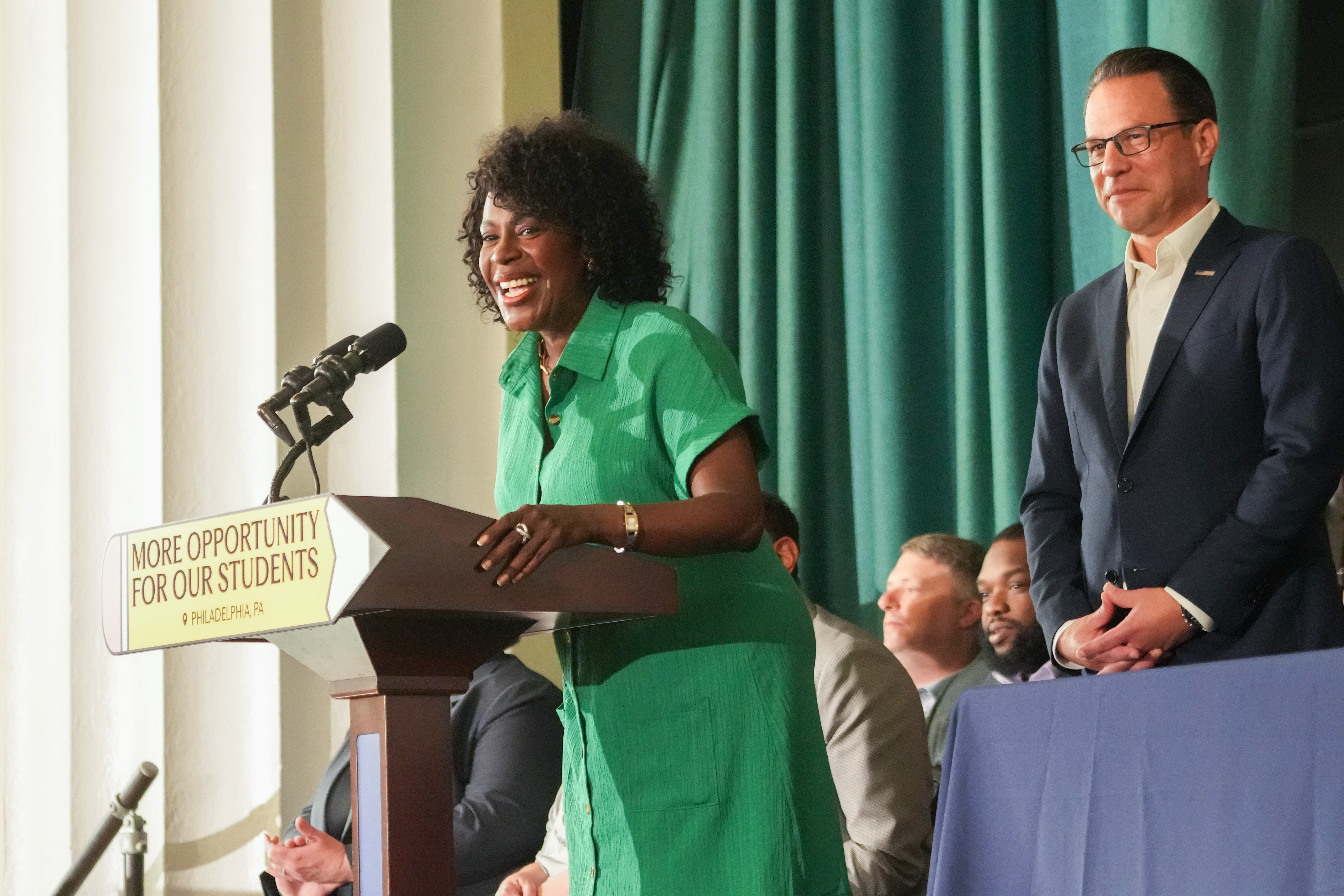
    Mayor Cherelle L. Parker speaks at Vare-Washington Elementary School to highlight the historic education investments included in the 2026-27 state budget, in Philadelphia, July 14, 2026.Jessica Griffin / Staff Photographer
    For what it’s worth, Parker herself seems to be mindful that grassroots politics are still relevant. We reported last year that she ordered a bunch of copies of a book called Performative Outrage: How Manufactured Fury Undermines Local Government and Public Service, and was handing it out to people. So I think it’s safe to say she isn’t a fan of the trends you described. You alluded to Parker returning to a “regime theory” style of politics. What’s an example of that?

    The 76ers’ arena, for example. She was siding with the Sixers and other downtown-oriented interests that wanted to see the arena in Center City on East Market Street, and discounting the views of community groups, most prominently Chinatown. There’s a general mode of governance style associated with Parker that’s very uncomfortable with dealing with grassroots-oriented groups. That’s just not her style. She’s much more comfortable dealing with downtown business elites and people in the building trades unions. Her whole mindset is much more comfortable with the old ways of governing cities.

    Parker won in 2023, when Joe Biden was president. Progressives in Philly and elsewhere seem to do better when Trump is in office. This spring Democrats just elected Chris Rabb, a progressive firebrand, in a high-profile primary for a Philly congressional seat.

    Politics is cyclical. Donald Trump has had that effect of reinvigorating lots of activists. So there was a lull in progressive activism in the city for a while, but it’s on the rise again. But it takes time to regroup, especially on the activist side. Some groups last for a long time, but the norm is for groups to be quite ephemeral. New groups have to pop up, often involving activists who had been involved in the old groups. The transition costs are pretty steep. Somebody like Chris Rabb winning doesn’t surprise me at all. There will probably be more successes in the next two or three years. That said, progressive activists have lots of challenges. They’re in a holding pattern right now.

    Thanks for your time. That’s all I’ve got. Is there anything I didn’t touch on that you want to include?

    I’m an urban politics specialist. I wrote this book. I devoted five years of my life to it. But in the last year or two, I’ve been so fixated on what’s going on in national politics and Donald Trump and the threat that he and his administration pose to democracy. With that in mind, I just want to say that urban politics in general offers some hope for people who are increasingly demoralized. At the local government level, partisan polarization isn’t nearly as intense. We’ve got divisions between progressives and moderates, but that’s nothing like what we’re seeing in national politics. There’s real hope for city governments to address big problems and offer real solutions. There’s a path forward. One can make a case that right now, democracy in American cities is actually thriving.