Tag: topic-link-auto

  • Smoky skies? Throw shade at the fossil fuel industry.

    Smoky skies? Throw shade at the fossil fuel industry.

    Last week’s air quality is brought to you by the fossil fuel industry.

    To quibble about how much of the Canadian fires are due to human-caused climate change as opposed to poor forest management or normal climatic changes is to not see the fire for the trees. The fossil fuel industry has created human-made climate change, and it has won the war against it.

    If your first reaction to this claim is to think the climate is always changing and that there is nothing out of the ordinary about the speed of current global temperature rise, that, too, was brought to you by the fossil fuel industry.

    Since the 1970s, this industry has known about the impact of its products on climate. Rather than prioritize planet over profit, it chose to “manufacture uncertainty” about these impacts, fostering climate denial in order to delay government action that might otherwise address the problem.

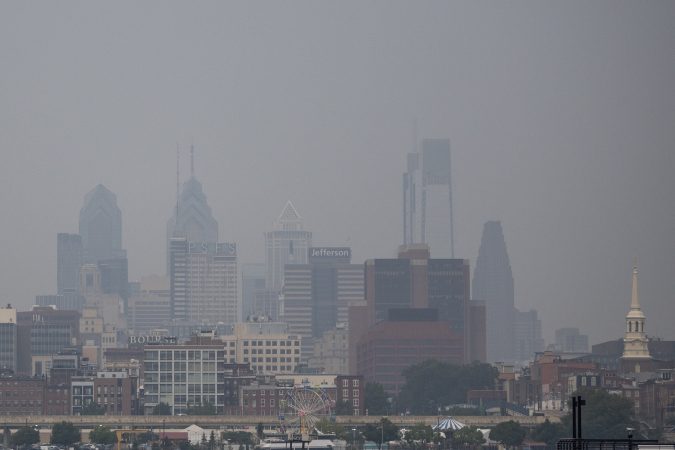
    A woman wears a mask because of the smoke in the air from the wildfires in Canada on Friday in Philadelphia.Aidan T. Gallo / Staff Photographer

    The fossil fuel industry’s “playbook” involves sustained and well-funded efforts to diminish climate reduction targets, protect subsidies to fossil fuel companies, and push for “energy independence” that is achieved through more oil and gas drilling. To extend their reach beyond their very successful lobbying of politicians, energy corporations have even sponsored university centers that lend academic credibility to their preferred climate solutions, such as relying on natural gas rather than renewable energies that would have far lower climate impacts.

    If thinking about the role of climate change in causing the fires that are to blame for last week’s haze makes you feel guilty about your own energy consumption, that guilt was also brought to you by the fossil fuel industry.

    Most prominently, in 2004, British Petroleum funded a $250 million marketing campaign to introduce the public to the “carbon footprint calculator” while rebranding itself as a green energy company. This fostered widespread framing of the climate problem as something caused by individual lifestyles, a problem that could be solved by individual behavior changes such as recycling and the use of energy-efficient appliances.

    The carbon footprint framing created and promulgated by the fossil fuel industry focused public concern on voluntary changes that could be made by individuals, rather than on regulation of the industry profiting from sustained use of planet-heating fuels.

    That guilt you feel about your own energy consumption was put there to prevent your individual anger from turning into collective anger that could bring down the industry profiting from your fossil fuel consumption.

    Protesters carry placards as they cross the Brooklyn Bridge in New York during a Youth Climate Strike march to demand an end to the era of fossil fuels in 2024. Andres Kudacki

    But the industry isn’t just making you personally responsible for climate change; it’s using its immense economic power to influence political decisions shaping domestic automobile markets.

    It is fitting, then, that a large part of North America is choking on smoke from rampant fires at the end of a fiscal quarter in which China’s BYD electric car company again outsold Tesla in global electric vehicle sales.

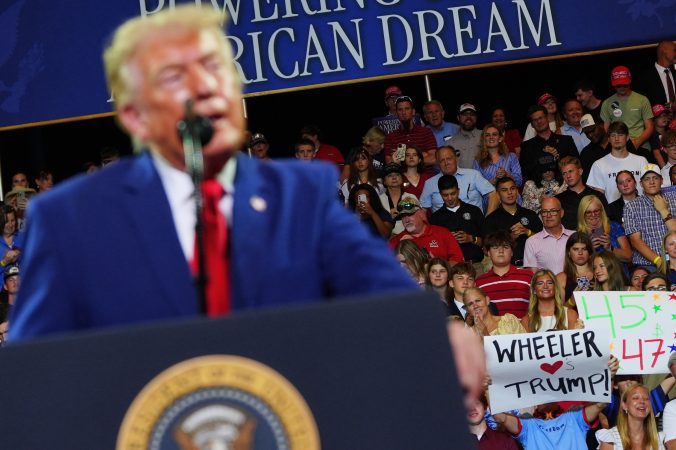
    In contrast to many countries around the world that are benefiting from access to low-price, high-quality EVs manufactured in China — which will simultaneously diminish the cost of driving and its climate impact — the Trump administration is doing a solid for Elon Musk’s EV company by virtually blockading Chinese EVs from entering the U.S. domestic market through the use of 100% tariffs and related technology bans.

    President Donald Trump and Tesla CEO Elon Musk speak to reporters as they sit in a red Model S Tesla vehicle on the South Lawn of the White House in March 2025. Uncredited

    Effectively, this protects billionaire Musk’s domestic market dominance while keeping EV prices high enough to ensure Americans stay dependent on gas-powered cars.

    It should come as no surprise that the fiscally savvy prime minister of Canada just pivoted to deliver a blow to the fossil fuel industry that President Donald Trump will never even try to land. In a reversal of its protectionist stance, Canada cut its 100% surtax on Chinese EVs down to a 6.1% tariff rate, allowing up to 49,000 Chinese EVs per year, conditioned on Chinese automakers’ investment in joint ventures with Canadian manufacturers.
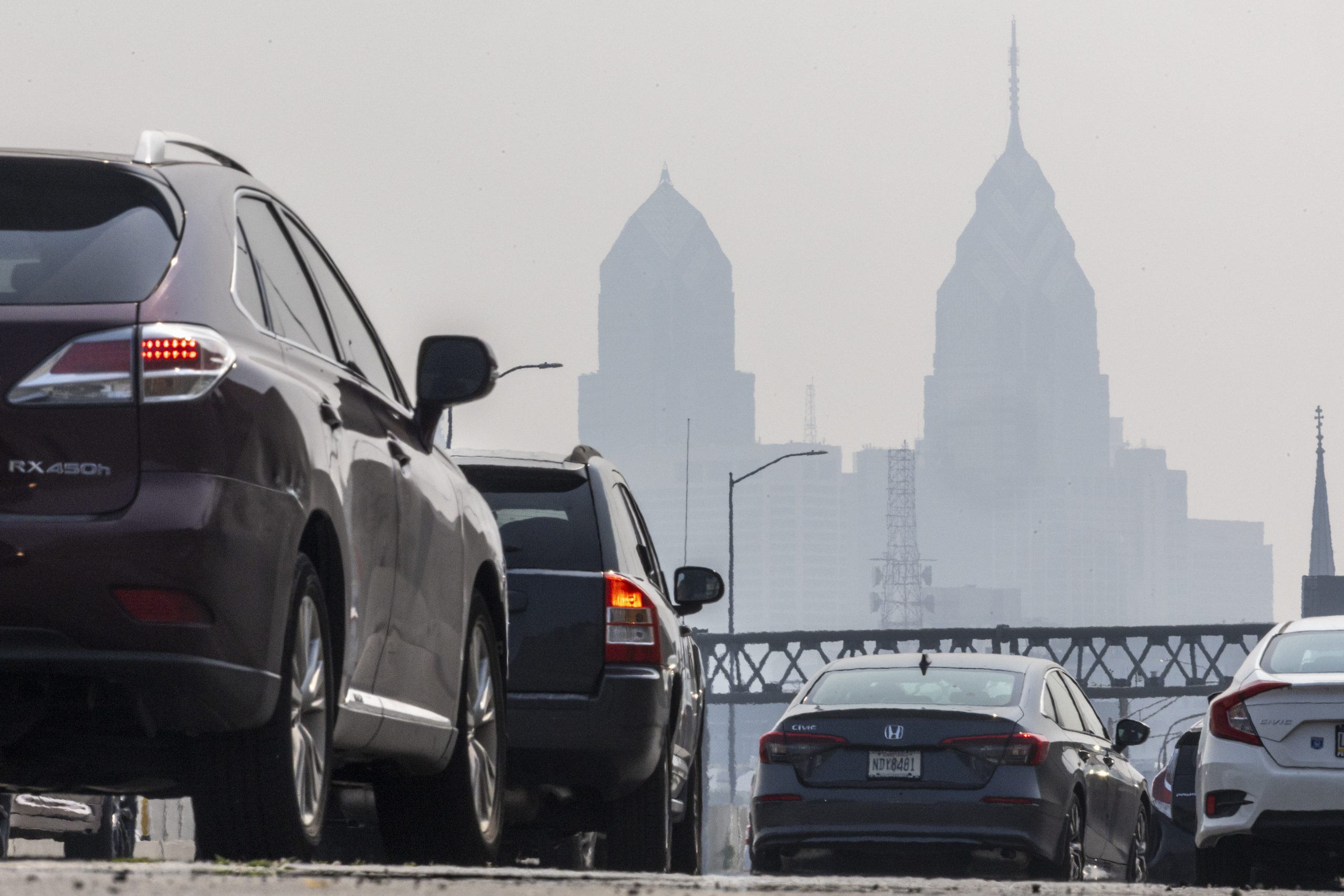
    Hazy skies over the skyline caused by wildfires in Canada on July 17 in Philadelphia.Aidan T. Gallo / Staff Photographer

    Access to affordable, high-quality EVs that diminish climate harms currently wreaking havoc on Canada is no consolation for all the humans and animals whose homes, habitats, and lives are currently being burnt to a crisp. But it reflects the behavior of a country that is still capable of doing something besides protecting the profits of its billionaire class.

    If you want to do something that will save your bank account and your lungs, stop voting for political candidates who are bought and brought to you by the fossil fuel industry.

    Breena Holland is an associate professor of political science and environmental studies at Lehigh University. Her research focuses on domestic environmental policy and air quality in the Lehigh Valley.

  • How LeBron James’ lingering decision is holding up the Sixers — and the NBA

    How LeBron James’ lingering decision is holding up the Sixers — and the NBA

    The latest turn in LeBron James’ free agency saga happened late Tuesday, when the Miami Heat published a YouTube livestream link scheduled for July 27 titled “LeBron James Introductory Press Conference.”

    A Heat spokesperson told multiple outlets it was a mistake by the organization’s social media team, which prepared the livestream in the event James chose to return to Miami. That is believable, considering that, since July 2, The Inquirer has had versions of breaking news stories ready for whenever James chooses the 76ers or another team.

    That firework broke up the LeBron-related nothingness of recent days.

    The all-time great did not announce his new destination during multiple public appearances at Fanatics Fest in New York City late last week, even after some light coaxing by fellow NBA star and podcast guest Tyrese Haliburton. The rumblings that James’ announcement would come early this week — aka, after the World Cup final — were incorrect. And agent Rich Paul said on his Game Over podcast released Monday that James would not rush his decision.

    “It’s his choice to make,” Paul said of James. “And when he makes the choice, he’ll make it.”

    So we are now officially more than three weeks into the waiting game. Much longer than James’ nationally televised — and vilified — 2010 decision to leave the Cleveland Cavaliers to take his talents to South Beach (July 8). Or when he announced his triumphant return to Cleveland in a 2014 letter published in Sports Illustrated (July 11). Or when Paul’s agency, Klutch Sports, sent out a 2018 news release that James would sign with the Los Angeles Lakers (July 1).

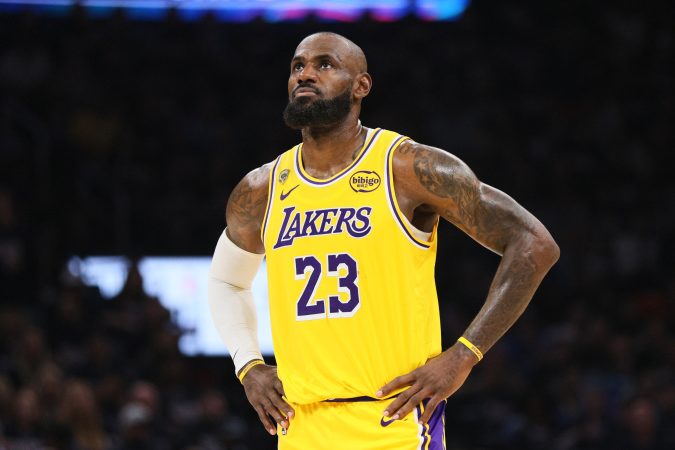
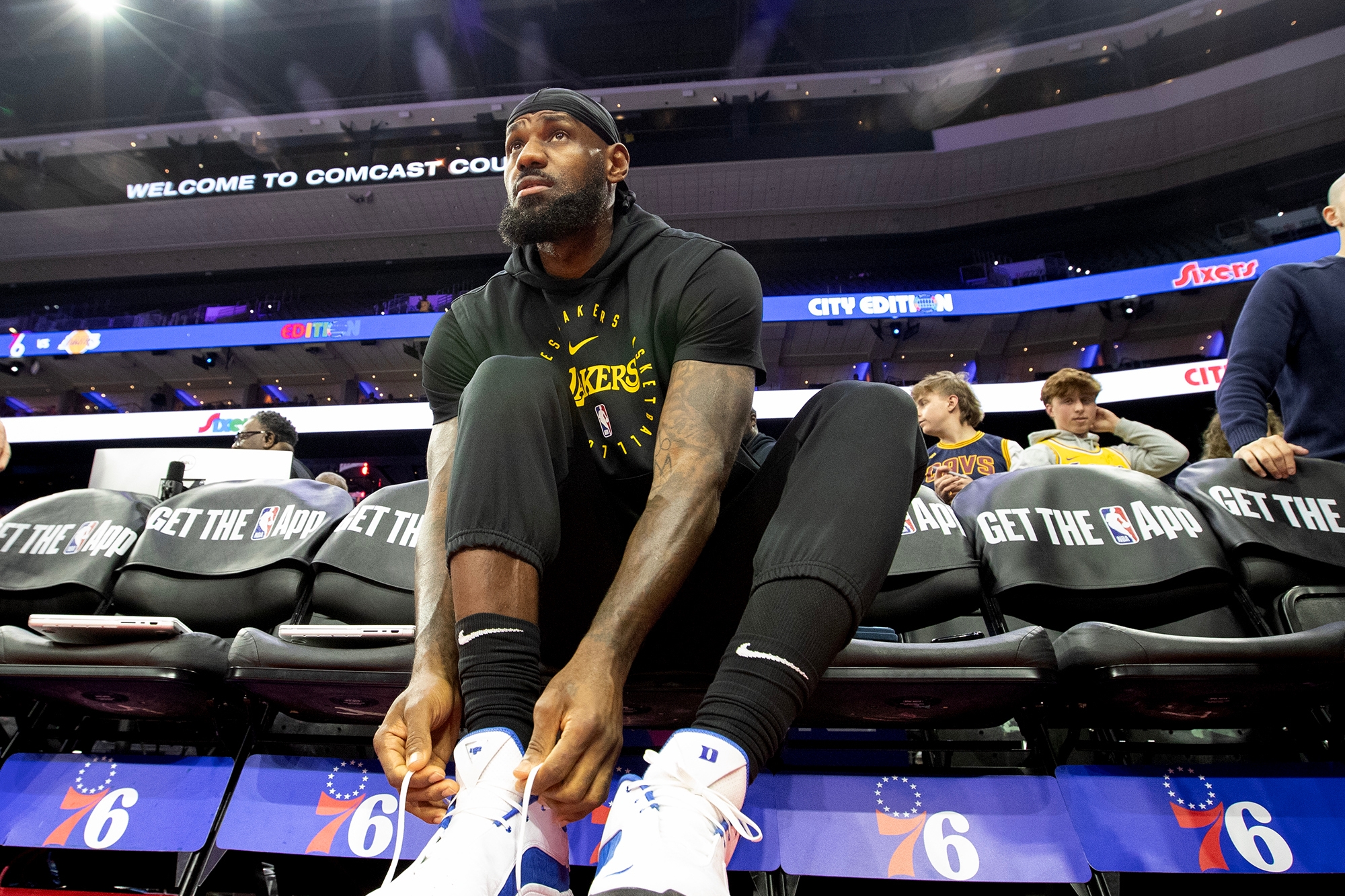
    LeBron James has not picked a free-agency destination after three weeks of contemplation. Charles Fox / Staff Photographer

    It is not only holding up the Sixers, but much of the league.

    James is no longer a perennial MVP contender, but still an All-Star-caliber player at age 41, and essentially has halted the second wave of free agency. Teams that still believe they are in contention to land James — which also are desirable options for other veterans and role players looking to win — are holding a roster spot for him. When James makes his pick, the teams that do not land him will move on to players still in limbo, which includes the likes of DeMar DeRozan and Jonathan Kuminga.

    That Paul has said money is not a factor for James — aka, that he will take a minimum contract — eliminates the urgency during the early free-agency flurry, when salary cap space and players are at a premium.

    NBA commissioner Adam Silver even acknowledged last week that James’ decision is delaying the creation of the 2026-27 NBA schedule — which typically is released in mid-August — because his longstanding popularity demands that his team play in premier television matchups.

    August also is when a mostly around-the-clock league goes on hiatus until Labor Day, when players reconvene at their team facilities for informal workouts before training camps begin in late September.

    That period is when staffers — from front-facing executives and coaches, to important behind-the-scenes figures — plan vacations following months of nontraditional work schedules that require extensive travel and consistent nights and weekends. New Sixers president of basketball operations Mike Gansey told The Inquirer at Las Vegas Summer League earlier this month that he has barely seen his four children since taking this job and that his family still needs to find a home in the Philly area. Some might scoff at feeling empathy toward the wealthy in high-profile NBA jobs, but these still are people.

    “I just need a break,” said Gansey, whose whirlwind start with the Sixers also included the blockbuster trade for All-NBA wing Jaylen Brown. “I think we all do, just because [this offseason has] been so much.”

    The most cynical also could say that James is doing all of this for content for Paul’s podcast or for sheer attention after a somewhat awkward end to his Lakers tenure once the team shockingly acquired Luka Dončić in February 2025 and signed Austin Reaves to a four-year, $185 million maximum contract. This saga surely will be a prominent component of a James documentary that reportedly has been in the works for years. It is evidence of the power James possesses as a cultural icon and stellar player, even entering his league-record 24th season.

    Sixers president of basketball operations Mike Gansey has selected first-round draft pick Labaron Philon Jr., and traded for All-Star Jaylen Brown in his first summer in Philly. Tom Gralish / Staff Photographer

    Yet Gansey said he understood the gravity of James’ choice. This is a basketball legend determining his (likely) final on-court act.

    “I have all the respect in the world for him, and he’s smart as heck,” said Gansey, a fellow Ohioan who previously worked his way up the Cavaliers’ front office. “He’s going to figure it out and talk to his family. … Whatever he decides, I know he’s going to make the right decision.”

    So the Sixers — and the rest of the NBA — will continue to wait.

    And wait.

    And wait.

  • Spain’s most famous wine region is mixing it up with this native grape

    Spain’s most famous wine region is mixing it up with this native grape

    Many wine lovers think of grenache as a French grape — after all, it’s the backbone in red blends like Côtes-du-Rhône and Chateauneuf-du-Pape. However, this grape is native to Spain, where it is known as “garnacha.”

    While this prolific vine is planted extensively in Spain, garnacha is overshadowed by the country’s No. 1 red grape, tempranillo, in export markets like the United States. However, it’s worth keeping an eye out for Spanish garnacha since these are some of Spain’s most interesting red wines nowadays. That’s the case with this surprising offering from the Rioja region, Spain’s most recognized and most widely exported wine appellation.

    Rioja is almost synonymous with tempranillo, but other grapes are planted here, too. While garnacha has typically been a minor ingredient in Rioja’s tempranillo-based blends, a growing number of wineries there are branching out to bottle it separately in wines like this “limited edition” from one of Rioja’s largest wineries.

    Garnacha makes lovely wines that are spicy in flavor profile and quite expressive — conveying different tastes depending on where they are grown. In Rioja, garnacha makes wines that are lighter in color, fruitier, and more delicate than the alternatives, which leads winemakers to scale back the use of oak barrels in maturation to preserve their freshness. Here, the wine has a delightful flavor of wild strawberries with hints of white pepper and balsamic glaze. This makes for a great choice with anything off the grill — from salmon or chicken to steaks and beyond.

    Ramón Bilbao Rioja GarnachaRamón Bilbao

    Ramón Bilbao Rioja Garnacha

    Rioja, Spain; 14% ABV

    PLCB Item # 100049341 — on sale through Aug. 2 for $16.99 (regularly $19.99)

    No alternate retail locations within 50 miles of Philadelphia according to Wine-Searcher.com.

  • 2026 Volvo EX30: The little EV that could go fast, but beyond that …

    2026 Volvo EX30: The little EV that could go fast, but beyond that …

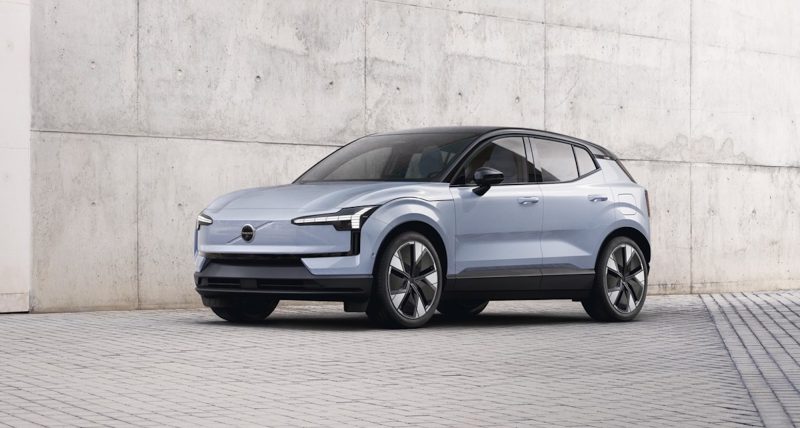
    2026 Toyota bZ XLE FWD Plus vs. 2026 Volvo EX30 Twin Motor Performance Electric Ultra: A little EV battle.

    This week: 2026 Volvo EX30

    Price: $48,445 as tested

    What others are saying: “Highs: Blistering acceleration, short stopping distances. Lows: Unintuitive controls, overly light steering, cramped rear seat, some driving position quirks,” notes Consumer Reports.

    What Volvo is saying: “The range and quick charging you want in a small SUV that’s big on style, storage and safety.”

    Reality: You’re really leading with range and recharge rate, Volvo?

    What’s new: The EX30 is Volvo’s answer to the small car, but in EV form.

    Competition: I kinda cheated pitting the Toyota and the Volvo against each other, at least following Consumer Reports’ competition report, but they do run about the same price when outfitted comparably. And it’ll make even more sense later. Others are Audi Q4 E-Tron and Q6 E-Tron; BMW iX; Cadillac Lyriq, Optiq, and Vistiq; Genesis Electrified GV70 and GV60; Lexus RZ; Lucid Gravity; Mercedes-Benz EQE and EQS; Rivian R1S; and Tesla Model X.

    The interior of the 2026 Volvo EX30 pays for the tall, straight stance of the vehicle.Daniel Ahlgren

    Driver’s Seat: The EX30 requires a great deal of get-acquainted time. Like a Tesla, the Volvo puts all the information you need into the spacious touchscreen in the center of the dashboard — there are no standalone gauges.

    The key card waved in front of a spot marked with a Wi-Fi symbol in the driver’s door gives you access; place that card in the exact spot in the console to fire the motors up. Waving the card in front of the door at shutdown locks everything up and shuts it off.

    An app can do all that as well.

    Driving position is almost like a city bus in its verticality, completely opposite the bZ’s stance, but the seat is comfortable. An array of seating controls happen in just one button; watch the screen to see which one you’re on and then adjust accordingly.

    Play some tunes (perhaps better renamed “Controlling the vehicle”): Like the seat adjustment options, everything happens in the touchscreen. Lights? Also in the touchscreen.

    As for the music, I never found much in the way of tone adjustments, but the standard setting seemed to play just fine, about an A-.

    Keeping warm and cool: This also pretty much happens in the touchscreen. A small temperature icon lets you change that in a larger window, and a little fan icon lets you make more detailed adjustments, which is a real pain. Either should offer the whole array.

    Manual adjustments were quite fussy, but automatic settings left me uncomfortable most of the time. Most vehicles figured this out a long time ago.

    Up to speed: Like almost every electric-powered vehicle, the EX30 zips from a start so freely, it’s almost like you barely have to look before pulling into traffic. I said almost, people. I heard those tires squealing.

    For small-car lovers like Mr. Driver’s Seat, the EX30 really brings the best of peppy little rides. The two motors produce 422 horses, and that rushes the little car to 60 mph in 3.4 seconds, according to Volvo. That’s half a second slower than a Corvette (2.8 seconds).

    A front-drive version gets 268 horses and reaches 60 mph in 5.1 seconds. Advantage Volvo, on both models.

    Shiftless: Tap the right steering column lever downward for Drive or up for Reverse. A button on the end parks the vehicle.

    On the road: Unlike the bZ, the all-wheel drive and battery weight don’t do much for the handling, though. The EX30 handles like a golf cart at its best. But it’s small and maneuverable, and the punchy performance makes up for the sedate slithering.

    Friends and stuff: Legroom is quite snug. Head and foot room are nice, though. The seat is seriously short; the accommodations are just not that nice back here.

    Volvo claims the cargo space is 12.5 or 27.8 cubic feet, which is a super low number. Some manufacturers measure the dimensions differently; this seems on par with similar-size vehicles, although probably not as generous behind the rear row as the bZ. Still, I can confidently say advantage Toyota.

    In and out: Entering the rear doors is the tightest I’ve felt this side of a two-door. Advantage Toyota.

    Sunny days: I still haven’t figured out how to close the shade for the sunroof.

    In the rain: When it’s raining, a driver wants easy access to the wipers, defroster, and rear defroster. As in, why aren’t these grouped together?

    The wipers are on the steering wheel stalk, and the defrosters require two-plus clicks into the touchscreen. Sure, there’s a standalone defroster button for making the thing blow so hard it feels like the windshield has been removed. (Business idea: This setting could be sponsored by Refresh Tears or some similar eye drop manufacturer.) Advantage Toyota.

    Range and recharge: The EX30 has a maximum range of 253 miles, a little on the short side.

    Volvo says the charging from 10-80% capacity is 28 minutes. The EX30’s recharge rate on a simple 110-volt charger is one of the quickest I’ve seen in the last several years, gaining 4 miles per hour of charge. Advantage Toyota.

    Where it’s built: Ghent, Belgium. Parts are 80% Chinese and 10% Belgian.

    How it’s built: The EX30 rates a 2 out of 5 for reliability from Consumer Reports. I’d have guessed lower. I’ve had Volvo EVs that repeatedly failed to show up for test weeks because of rainy weather. I’m hoping they’ve worked out those kinds of issues.

    In the end: The EX30 would be great competition for the CX-30 Turbo, a $35,000 ride, because this is also an awesome $35,000 ride. Unfortunately, it costs $48,000.

    So the bZ really wins the day here. But even its $40,000 price tag is also not going to help move vehicles.

    And the EX30 is no competition for most of the Consumer Reports offerings; some of those are running over $100,000 and have far different space configurations.

    Coming in September I expect to review the new Chevrolet Bolt. Here’s hoping.

  • Mideast oil producers step up plans to bypass the Strait of Hormuz

    Mideast oil producers step up plans to bypass the Strait of Hormuz

    Before the war in Iran, roughly 15 million barrels of Persian Gulf oil were shipped each day through the Strait of Hormuz. Within a few years, much of that oil could bypass the strait.

    As Iran’s chokehold over the strait drags on and oil prices surge, countries across the Gulf are planning to spend billions of dollars to build pipelines enabling them to redirect more supplies to ports along the Red Sea and the Gulf of Oman.

    At least seven major pipeline projects are under construction, in the planning stage or being discussed as possibilities, according to government officials, oil companies and analysts. The war has been a wake-up call for Gulf oil producers, who are determined to become less dependent on a transit point that hugs Iran’s coast.

    But alternatives to Hormuz are also vulnerable to disruption. Yemen’s Iran-backed Houthi rebels said early Thursday they had attacked two Saudi oil tankers in the Red Sea, a key alternative route to the strait for Saudi oil exports.

    Some alternative routes will take the oil on longer and more expensive paths to market. Regardless, producers have realized that relying so heavily on the Strait of Hormuz “is no longer a prudent long-term strategy,” said Victoria Grabenwöger, senior research analyst at data firm Kpler.

    The Red Sea and Gulf of Oman have become vital alternatives to Hormuz

    The effective shutdown of the Strait of Hormuz would have been an even greater shock to the world economy were it not for a pipeline Saudi Arabia built in the 1980s amid fears that Tehran would disrupt shipping through the strait during the Iran-Iraq war.

    The Saudis’ East-West pipeline carries oil across the desert nation from a processing facility in Abqaiq to the city of Yanbu on the Red Sea coast. Once there, it is loaded onto tankers that head either south to the Arabian Sea or north to the Suez Canal.

    The United Arab Emirates has been sending more oil to the port of Fujairah, which abuts the Gulf of Oman, about 145 kilometers (90 miles) south of Hormuz.

    Combined, the two pipelines had spare capacity of about 3.5 million to 5.5 million barrels per day before the war began, according to the U.S. Energy Information Administration. The two pipelines are now running near full capacity.

    More oil could begin flowing through a UAE port by next year

    The state-owned oil company of Abu Dhabi, one of the UAE’s seven emirates, is accelerating construction of a $3 billion, 300-kilometer (200-mile) pipeline to Fujairah. That pipeline, which will run parallel to an existing one, aims to increase oil supplied to Fujairah by more than 1.2 million barrels a day.

    The project, which started before the war, is now reportedly about halfway completed, according to Kpler. The pipeline is intended to be completed by early 2027, but Kpler says mid-2027 is more likely given the need to expand the port at Fujairah.

    The ambitious timeline “has only become feasible against the backdrop of the Strait of Hormuz blockade,” Kpler’s Grabenwöger said.

    Plans to pipe more oil to Turkey and Syria will take longer

    In Iraq, officials are ramping up plans to develop alternative export routes for southern oil fields around Basra. Iraq is so dependent on the Strait of Hormuz that it has had to scale back production.

    The Iraqi government, which gets some 90% of its revenues from oil sales, has been pursuing pipeline projects with U.S. companies. One would take supplies from an oil terminal in Basra — through which more than 3 million barrels were exported daily before the war — to the port of Ceyhan in Turkey, along the Mediterranean Sea.

    That pipeline would also have a branch extending to the Mediterranean port of Baniyas in Syria. Some 2 million barrels a day of oil could ultimately flow through the pipeline to Baniyas, which the U.S. State Department has called “a critical energy corridor.”

    Iraqi officials have also held discussions with Jordan on advancing long-discussed plans for a pipeline that would carry oil from Basra to Aqaba. From there it would be exported via the Red Sea or the Suez Canal to Asia and beyond.

    The new pipelines will add time and costs — and are also vulnerable to attacks

    Taken together, the new projects to bypass Hormuz could carry an added 3.8 million barrels of oil a day by the end of next year, and 7.3 million barrels per day by the end of 2028, according to analysts at the investment bank Goldman Sachs. The projects would mean some 60% of the Gulf’s total prewar exports of 23 million barrels a day could bypass Hormuz if needed, the analysts said.

    Pipelines from the Persian Gulf to the Mediterranean Sea send oil in the wrong direction to help Asian countries that relied on exports through Hormuz, requiring a much longer trip around the southern tip of Africa.

    Any additional supplies piped from Saudi Arabia to the Red Sea will also be vulnerable to attacks by Houthi rebels in Yemen, as Thursday’s attacks show; the rebels have successfully disrupted shipping before at the Bab el-Mandeb Strait, which connects the Red Sea to the Gulf of Aden.

    That oil could also be sent to the Suez Canal instead to reach the Mediterranean. But the canal cannot accommodate the industry’s largest tankers, which hold up to 2 million barrels per vessel and are often the most cost-efficient way to transport oil long distances.

    And pipelines themselves are not immune to attack. The Saudi East-West pipeline was shut down by a Houthi drone strike in May 2019.

    Meanwhile oil pipelines don’t help with the disruption to supplies of liquefied natural gas, or LNG, carried by ship. About one-fifth of the world’s LNG — much of it from Qatar and headed for Asian customers — transited the strait before the war.

  • Trump poised to restart tariff campaign, using provision on forced labor

    Trump poised to restart tariff campaign, using provision on forced labor

    The Trump administration is expected as soon as this week to introduce permanent new tariffs to replace the temporary import penalties it imposed after the Supreme Court earlier this year abruptly upended President Donald Trump’s trade strategy.

    The first batch of new tariffs is expected to affect 60 nations that the administration said in June were importing goods produced using forced labor, putting higher-paid American workers at a disadvantage.

    Nations that do not prohibit such goods would face tariffs of 12.5%, while those that have such laws but fail to enforce them would be hit with 10% levies, under a proposal that Jamieson Greer, the president’s chief trade negotiator, made public last month. The president could adjust those numbers before taking final action on what are called “Section 301” tariffs.

    Those tariffs would fill the gap left by the scheduled expiration at 12:01 a.m. Friday of a stopgap measure that Trump introduced in February after the nation’s high court invalidated levies he imposed last year under the 1977 International Emergency Economic Powers Act.

    In response, Trump used a different legal authority to levy a 10% tariff, limited to just 150 days. Now those tariffs are lapsing.

    Forced to start his tariff campaign anew, Trump appears eager to pull every lever of trade power he can identify, using laws considered less vulnerable to challenge than the rushed approach he employed last year. Some are well-established weapons in major laws dating to 1962 and 1974. Others, like his use this week of an untested 1930 law to challenge Canada, reflect his unquenchable desire to test legal limits.

    “The specific authorities this administration is using have changed but the trade strategy has not,” Greer told the Senate Finance Committee on Wednesday.

    Indeed, the president’s goal of greater domestic manufacturing has remained constant since he entered the political arena more than a decade ago. Through tariffs, he aims to encourage manufacturers to invest in new American factories rather than import foreign products.

    In his Senate testimony, Greer said the administration is making progress. The trade deficit through the first five months of the year is down by almost 4%, according to Commerce Department data. The United States is exporting more merchandise and — rather than buying foreign consumer goods — is importing machinery needed to equip new factories that will employ American workers, he said.

    The administration has used tariff pressure to secure 10 so-called reciprocal trade arrangements, which pried open some foreign markets while cementing in place higher U.S. tariffs. Broader trade and investment accords have been reached with the United Kingdom, Japan, and the European Union.

    “They’ve gotten a number of trade agreements that they otherwise would not have,” said Blake Harden, managing director of Washington Council EY, a consultancy. “The way that they used [the International Emergency Economic Powers Act] really resulted in commitments by trading partners that the U.S. has been seeking for quite some time, both on tariffs and nontariff barriers.”

    Yet U.S. factories employ 75,000 fewer workers than when Trump returned to the White House. And despite administration denials, tariffs are aggravating inflation, according to a recent study by the Federal Reserve Bank of Dallas. Without tariffs, the Fed’s preferred inflation measure would have risen at an annual rate of 2.3% in March, instead of its actual 3.2% figure, the Dallas bank said.

    Meanwhile, Trump’s insistence on using the International Economic Emergency Powers Act (IEEPA) to impose his initial round of tariffs in April 2025 — which permitted him to take immediate action — has had far-reaching consequences. After the Supreme Court disallowed his use of the law in February, the administration was required to refund tariffs it had illegally charged importers, an amount the Cato Institute estimated at more than $170 billion. Through the end of June, the government had paid out more than $71 billion, U.S. Customs and Border Protection told a federal judge this month.

    As Trump has sought to rebuild his tariff wall, he has turned instead to Section 301 of the Trade Act of 1974. In addition to pursuing the forced-labor tariffs, the administration is probing 16 nations it says deliberately maintain excess production capacity, leading to a global glut of low-cost products. Some of the largest U.S. trading partners — including China, the European Union, Japan, Mexico, South Korea, and India — subsidize manufacturing at the expense of U.S. producers, the administration says. New levies could result from that probe within weeks.

    The latest flurry of tariff activity began with the imposition earlier this month of 25% tariffs on Brazilian goods, which the administration said was a response to Brazil’s “unfair” trade practices.

    On Tuesday, the president took to social media to announce a 100% tariff on imported generic drugs, effective Aug. 1, 2028, and rising to 200% one year later.

    And on Monday, he cited an untested 1930 trade law to threaten 50% tariffs on Canadian products, which would take effect in 30 days.

    In addition, the Commerce Department has a number of open investigations under Section 232 of the Trade Expansion Act of 1962, which authorizes the president to impose 25% tariffs on national security grounds.

    And Trump could get new tariff powers under a Russian sanctions bill in the Senate that would empower him to levy 100% tariffs on major importers of Russian oil. Business groups such as the National Foreign Trade Council oppose the provision, fearing that Trump would stretch those powers in unforeseeable ways. China, India, and the EU could be at risk of punishing trade taxes if the legislation is approved.

    The administration’s renewed legal maneuvering will arm the president for future trade negotiations, including ongoing talks over revisions to the U.S.-Mexico-Canada Agreement, and equip him to respond when domestic industries seek protection, said John Veroneau, a U.S. trade negotiator under President George W. Bush.

    “The steps they’re taking to get their legal house in order does not necessarily mean that they’re gearing up for massive levels of new tariffs. I think it does suggest they need to get their legal house in order and want to have flexibility to act in targeted ways as they see fit,” Veroneau said.

    Still, this month’s spate of tariff news has left importers and foreign governments scrambling to keep pace.

    “There’s a little bit of whiplash in terms of keeping track of the various duties on Brazil, France, Russia, Canada, you know, the hits just keep on coming,” said Jake Colvin, president of the NFTC, which represents companies such as Coca-Cola, Google and IBM. “It feels like the administration is trying out every tool in its toolbox to come up with new tariffs.”

  • U.S. on track to have historically low number of homicides in 2026, report says

    U.S. on track to have historically low number of homicides in 2026, report says

    LOS ANGELES — Data collected from 30 American cities showed an 18% decrease in the homicide rate from 2025 compared to the same period in 2026, translating to about 215 fewer homicides this year, according to a new report from the independent Council on Criminal Justice.

    Should the trend continue, it would push the annual homicide rate to the lowest levels in over a century once final numbers are released at the end of the year.

    The report, released Thursday, tracked 13 crimes and recorded drops in nine of those categories, including carjackings, residential burglary, and aggravated assaults. There was a small jump in shoplifting, domestic violence incidents, sexual assaults, and drug offenses over the same period between 2025 and 2026, the report showed.

    Experts say the broadly positive changes are exceeding expectations, improving on baseline crime rates from before 2020 and the COVID-19 pandemic, which brought historic surges in violence.

    Democrats and Republicans across the country have tried to capitalize on the positive developments during a competitive midterm election year. But the trends documented in the report carry through in cities with leadership across the political spectrum.

    That suggests the most significant factors contributing to the improvements are taking place nationwide and are not specific to a single local public safety measure, said Adam Gelb, the president and CEO of the Council on Criminal Justice, a nonpartisan think tank for criminal justice policy and research.

    “Murder and other crime rates are falling across the map in cities with different political leadership, different housing and economic conditions, different policing and prosecution and violence reduction strategies and different levels of federal enforcement activity,” Gelb said.

    The council collects data from police departments and other law enforcement sources. Some of the report categories include data from as many as 36 cities, while others include fewer cities in their totals because of tracking gaps or differences in definitions for specific crimes.

    Notably, Gelb said that a significant number of violent crimes were less deadly: There was a 23% drop in the lethality of the crimes committed, which is measured by the share of serious violent crime that is fatal.

    Many of the non-violent crimes tracked in the report also saw declines, including a 13% drop in residential burglaries year over year and a 50% drop in burglaries compared to pre-pandemic levels in 2019. At the same time, reported shoplifting bucked the trends of other property crimes, showing a 5% increase. And while there was a small increase in drug offenses, those were still lower than pre-pandemic levels.

    Roughly a third of the 30 sampled cities defied average homicide rate declines across the country, recording an increase in deadly violence from the first half of 2025 to the same period in 2026. That includes Norfolk, Va., which saw a 64% increase in homicides, and San Francisco, which saw a 55% increase. The number of cities that saw a longer-term increase was far smaller: Only Norfolk, Austin, Pittsburgh, and Minneapolis experienced more homicides in 2026 than in the same period in 2019.

    Philadelphia has recorded 96 homicides so far in 2026, a 23.8% decline from the same period in 2025. If the current pace continues, Philadelphia is on track to record fewer than 200 homicides for the first time since the 1960s, a remarkable turnaround from just five years ago, when nearly three times as many people were killed.

    There are many factors that could impact why a location sees increases or decreases in certain crimes when another doesn’t, according to John Roman, director of the Center on Public Safety and Justice at the National Opinion Research Center from the University of Chicago.

    Roman said that conservative politicians affiliated with President Donald Trump will point to intensified immigration crackdowns and the deployment of the National Guard in cities like Los Angeles and Memphis, whereas liberal politicians might point to former Democratic President Joe Biden’s public safety legislation that strengthened background checks on firearm sales.

    But ultimately, Roman said, the best explanations transcend specific administrations. That ranges from decreased drug usage and therefore fewer purchases from illegal markets, which are often linked to violence, to an influx of federal funding for localities after the pandemic that was spent on social programming.

    Those programs, Roman said, often funded jobs like teachers and social workers who primarily work with “young people who are the highest risk of violence and victimization.”

    While both Gelb and Roman concurred that there wasn’t a single reason, Gelb said the outcomes should be studied for future insights and celebrated.

    “This is one of the most significant public safety developments in decades. It means lives are being saved, families are spared trauma and communities are regaining stability,” Gelb said.

  • Inflation is a policy choice | Expert opinion

    Inflation is a policy choice | Expert opinion

    Ask most Americans to name their number-one financial problem, and you’ll get the same answer: the high and rising cost of living.

    Consumers have rarely been as glum, with the collective psyche weighed down by higher prices for gasoline, groceries, and other goods and services. Voters also appear to be in a bad mood in the lead-up to the midterm election, as most polls show they aren’t happy about having to pay so much more for nearly everything.

    The frustration is well-founded. Inflation has now exceeded the Federal Reserve’s 2% target for five years running. It is currently roughly double that, depending on the measure. And even if inflation fell back to target tomorrow, prices aren’t rolling back. There’s no easy fix to the damage done to family budgets.

    So, which way is inflation going from here? To answer that, it helps to be clear-eyed about what is driving it. And the uncomfortable truth is that it is mostly about economic and foreign policy.

    Start with tariffs. The effective tariff rate on goods coming into the country has more than tripled since the trade war began just over a year ago. And they may go higher, given the recently announced tariff hikes on goods imported from Brazil and Canada. By my calculation, the higher tariffs added nearly half a percentage point to inflation last year and will add at least a couple of tenths more this year, as businesses pass the costs along to you. That is a policy choice.

    Then there is immigration. Net foreign immigration into the U.S. has collapsed to less than half its historical norm, and the foreign-born workforce is shrinking outright. Fewer workers in construction, agriculture, food processing, and elder care mean higher costs in exactly the industries where affordability problems bite hardest. That, too, is a policy choice.

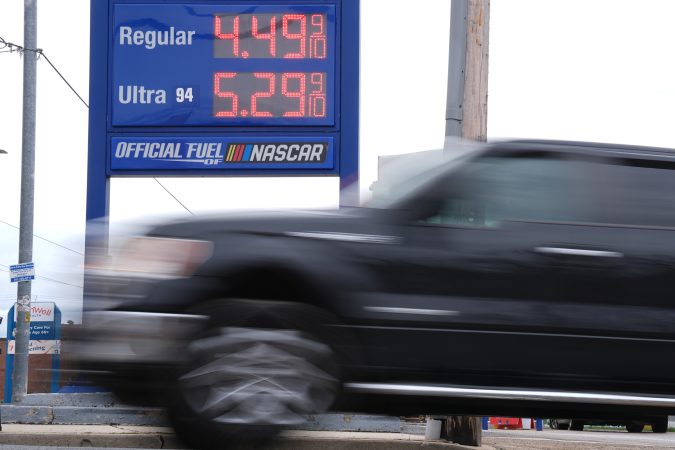
    And then there is the Iran war. Iran’s closure of the Strait of Hormuz produced the largest disruption to global oil production in history, and the price of a gallon of regular at my local Wawa jumped from less than $3 before the war to as much as $4.50. All told, the war has cost the U.S. economy over $150 billion — upward of $1,100 per household. That is foreign policy showing up at the gas pump and grocery store.

    What makes this so frustrating is that without the higher tariffs, the severe immigration restrictions, and the war, inflation would be a little over 2% — essentially at the Fed’s target. We are suffering uncomfortably high inflation due to the policy choices we are making.

    The good news is that, beneath the policy shocks, disinflation (slowing inflation) is already at work. The job market is soft — painful if you’re looking for work, but it means wage growth has moderated and there is no 1970s-style wage-price spiral brewing. Landlords are cutting deals on new leases as vacancies rise, signaling slower rent increases. Vehicle prices are also going nowhere, as the run-up in prices during the pandemic has made buying a car unaffordable for many.

    Even here in the Philadelphia region, where eds and meds keep the job market steadier than elsewhere in the country, paychecks are barely keeping up with prices. Not the stuff of an inflationary spiral.

    Bond investors, who put their money where their mouths are on the inflation outlook, agree. Their inflation expectations, after spiking when the war broke out, have settled back to levels consistent with the Fed’s target. If investors, businesspeople, and consumers believe that inflation will not be a problem down the road, they will behave accordingly, and it is less likely to be.

    And as I wrote in my Inquirer column in May, the Kevin Warsh-led Fed appears committed to doing whatever it takes should that change. Worries that the Fed would lose its independence from the President and lower interest rates for political and not economic reasons have eased.

    So, which way inflation? It has likely peaked. If the Iran war continues to wind down, tariffs do not rise materially further, and no other geopolitical hot spot boils over, inflation should moderate back toward the Fed’s target over the next year or two, without the Fed having to raise interest rates.

    But notice how much work “if” is doing in that sentence. In a world where the U.S. is pulling away from its trading partners and allies — and they are pulling away from us — disputes that drive higher inflation will become more commonplace. Adding to the concern is that the global institutions used to resolve those differences, ranging from the World Trade Organization to NATO, have been marginalized.

    And that is the point. The high inflation began because of the unavoidable. Think the pandemic. But increasingly, it is something we are doing to ourselves. High inflation is a policy choice. So, as it turns out, is low inflation.

  • EU hits Google with $1 billion fine over its Play app store and search

    EU hits Google with $1 billion fine over its Play app store and search

    BRUSSELS — The European Union on Thursday hit Google with a fine of 890 million euros ($1 billion) after it said the technology behemoth broke digital antitrust regulations by setting up Google Play and its ubiquitous search engine to corral consumers towards its own services and apps to the detriment of competitors.

    It was the latest major crackdown on Big Tech by Brussels, which has led the world in reining in some of the world’s largest companies from Silicon Valley to Beijing.

    Google had recently lost its appeal of a $4.5 billion antitrust fine imposed by the EU for throttling competition and reducing consumer choice through the dominance of its mobile Android operating system.

    The European Commission, the bloc’s executive branch and highest antitrust enforcer, said it was acting in the interest of consumers after running an antitrust investigation of Google.

    “The best products should succeed because they’re better, not because they’re owned by the company running the search engine. And European consumers have a right to be told by app developers where to sign up to the best offers, even when the app store owner does not get a cut,” said Teresa Ribera, the commission’s Executive Vice President for Clean, Just and Competitive Transition.

    Google’s President of Global Affairs Kent Walker blasted the fine as “product degradation driven by a small group of self-serving complainants” that will have a negative impact on European businesses and consumers.

    He said that the EU’s Digital Markets Act forces Google “to strip away real-time search features Europeans love — like instant pricing and direct availability for hotels, flights, and restaurants — and dismantle safety protections on Google Play.”

    Brussels has ratcheted up the pressure on U.S. and Chinese tech giants despite the risk of incurring the wrath of President Donald Trump, who has lashed out at the 27-nation bloc’s digital regulations and vowed to retaliate if American tech companies are penalized.

    The EU describes the world’s seven tech giants — Amazon, Apple, Google parent Alphabet, Meta, Microsoft and TikTok owner ByteDance — as “gatekeepers” that control access for consumers.

    “In the EU, businesses have the right to compete fairly. Gatekeepers have the obligation to ensure a level playing field and consumers the right to choose for cheaper alternative offers,” European Commission spokesperson Thomas Regnier said.

  • Millions are being bet on LeBron’s next team. The NBA told regulators that sort of market shouldn’t exist.

    Millions are being bet on LeBron’s next team. The NBA told regulators that sort of market shouldn’t exist.

    LeBron James has spent two decades turning every move into a major event. This time, he’s not the only one who stands to get paid.

    More than $245 million in trading volume tied to where James will play next has accumulated on prediction markets, including more than $200 million alone on Kalshi. The Miami Heat is the favorite, followed by the Cleveland Cavaliers, Golden State Warriors and Philadelphia 76ers.

    The enormous sum is striking not simply because so much money is riding on one athlete’s choice. James and a small circle of family members, agents and team executives will determine the outcome, while a larger group of assistants, communications employees, contractors, reporters and others could learn it before the public.

    That is precisely the sort of market the NBA has told federal regulators should not exist.

    “Markets relating to officiating, injuries, league disciplinary actions, player or team transactions, or fan actions should be prohibited,” Dan Spillane, the NBA’s executive vice president and assistant general counsel, wrote in an April letter to the Commodity Futures Trading Commission (CFTC), the federal agency that regulates derivatives, including prediction markets. “These markets are readily susceptible to manipulation and/or improper use of confidential information and have a negative effect on perceived game and league integrity.”

    Prediction markets allow users to buy and sell contracts tied to real-world events, with prices generally reflecting the market’s estimate of an outcome’s likelihood. A contract trading at 50 cents typically pays $1 if the event occurs and nothing if it does not. Trading volume measures the total value of the contracts bought and sold, not the amount committed by users.

    Prediction markets offer contracts on nearly anything, but sports have become one of their biggest draws, inviting comparisons to the legal sports-betting industry that has exploded since 2018 and stirred controversy along the way.

    The companies resist the sportsbook label, describing their products as federally regulated event contracts and their customers as traders, not bettors. But to consumers, the basic proposition can look much the same: Put money behind a predicted outcome and profit if it occurs. The distinction is blurry enough that FanDuel and DraftKings now advertise during sporting events that their own prediction markets are available in California and Texas — two enormous states where conventional sports betting remains illegal but prediction-market trading is permitted.

    The sudden ascent of prediction markets has lawmakers, courts and regulators scrambling to determine whether sports contracts are financial products or just another form of gambling. Meanwhile, the industry’s popularity is soaring, especially among sports fans. Monthly trading volume on Kalshi and Polymarket, its two largest platforms, reached nearly $24 billion as of April, according to a data analysis by the Pew Research Center, which found that sports traders are more active and spend more than those trading on any other single subject, including cryptocurrency and politics.

    James is not the first athlete whose free agency has become tradable. But his prolonged decision has pushed the practice into a new frontier, turning a private personnel choice into a market with the scale and volatility more commonly associated with a presidential election or championship game.

    Nothing else in sports free agency has come close. On Kalshi, a market involving Kawhi Leonard attracted about $760,000 in trading volume, while one involving Bronny James, LeBron’s son, generated $395,000. Markets involving baseball outfielder Kyle Tucker and NFL edge rusher Jaelan Phillips drew $157,000 and $46,000, respectively.

    And in James’s situation, his destination is merely the main event.

    Traders can also put money on whether he will announce his decision before Sunday; which conference he will join; whether his next contract will be worth more than $12.5 million; and even who will break the news of his landing spot: James, his agent, NBA Insider Shams Charania of ESPN or perhaps a member of James’s family.

    After lamenting sports betting for decades, professional sports leagues have spent the past decade navigating their evolving relationship with sportsbook gambling, striking lucrative sponsorship and data agreements while trying to prevent players, coaches and other insiders from wagering on their sports.

    Their relationship with prediction markets is developing unevenly. The NBA and NFL have sportsbook partners but no prediction-market partners. Major League Baseball has partnered with Polymarket, while the NHL has agreements with Polymarket and Kalshi.

    Those relationships do not necessarily grant leagues veto power over the contracts or exchange offers. But they provide a direct channel to raise integrity concerns and press those exchanges not to list subjects considered especially vulnerable to manipulation.

    “By engaging in this community, we are able to work together to create clear boundaries with the goal of mitigating risk while providing fan engagement opportunities,” MLB Commissioner Rob Manfred said in a March statement.

    NBA Commissioner Adam Silver said this spring that the league had maintained an open line of communication with Kalshi and Polymarket and was not necessarily opposed to a licensing or data agreement.

    “We’re watching closely the uptick in the amount of sports activity that’s happening on those platforms,” Silver said. “We aren’t necessarily averse to entering into licensing deals with them. But again, the league’s number one role is to ensure the integrity of the competition.”

    The NBA has asked the CFTC to prohibit markets involving player transactions, injuries, officiating and disciplinary decisions. The league also urged regulators to require exchanges to consult leagues before introducing new sports contracts, share trading information with league investigators and block athletes and other prohibited insiders from participating.

    While traditional sportsbooks are largely barred by state regulators from taking bets on James’s free agency, prediction markets face no such restrictions. The CFTC requires exchanges to police cheating and manipulation but generally lets them launch new contracts after effectively vouching that the offerings comply with federal rules. The agency can later review, challenge or halt them.

    In guidance issued in March, the CFTC said sports contracts are generally less susceptible to manipulation when their outcomes depend on the combined performance of many participants over an extended competition. It highlighted greater concerns when the result rests on the actions of one person or a small group — the defining feature of a free-agent decision.

    Carl Kennedy, an attorney at Katten Muchin Rosenman who specializes in financial markets, told a House Agriculture subcommittee Tuesday that “the commission has been signaling” skepticism toward contracts whose outcomes can be influenced by a single person. The CFTC’s March advisory warned of heightened manipulation risks when a contract turns on the actions of one individual or a small group, and a proposed rule issued in June went further.

    Kalshi chief executive Tarek Mansour has argued that prediction exchanges already possess safeguards comparable to traditional financial markets.

    “As a regulated financial market by the CFTC, we have the same rules as the Nasdaq and the NYSE and we have the same mechanism of enforcement,” Mansour said earlier this year on CNBC’s “Squawk Box.”

    Yet when asked during the same appearance to consider who should be allowed to trade with advance knowledge of an event, Mansour articulated the ambiguity facing the industry.

    “What is information, and what is insider information?” he said.

    That ambiguity is not merely theoretical. Federal prosecutors charged an active-duty Army soldier with using classified information about a U.S. operation involving Venezuela to profit on Polymarket. Kalshi disciplined a MrBeast editor who traded on markets involving videos before they were released. And a White House teleprompter operator was placed on leave amid allegations that he used advance access to President Donald Trump’s prepared remarks to trade on which words the president would say.

    Polymarket recently partnered with Chainalysis, a blockchain analytics company, to monitor trading activity and flag patterns that might indicate someone was acting on nonpublic information. But James’s free agency also illustrates a harder problem: Market-moving information can surface through an ordinary mistake, without any suspicious trade at all.

    On Tuesday night, the Miami Heat posted a link on its YouTube channel to a scheduled live stream titled “LeBron James Introductory Press Conference.” The link was subsequently deleted, and a team spokesperson said the video had been produced preemptively in case James signed with Miami and was mistakenly made public.

    Miami’s implied probability on Kalshi quickly rose from about 37 percent to 47 percent. By Wednesday afternoon, Miami was trading at roughly a 50 percent probability, compared with 27 percent for Cleveland, with similar prices on other platforms.