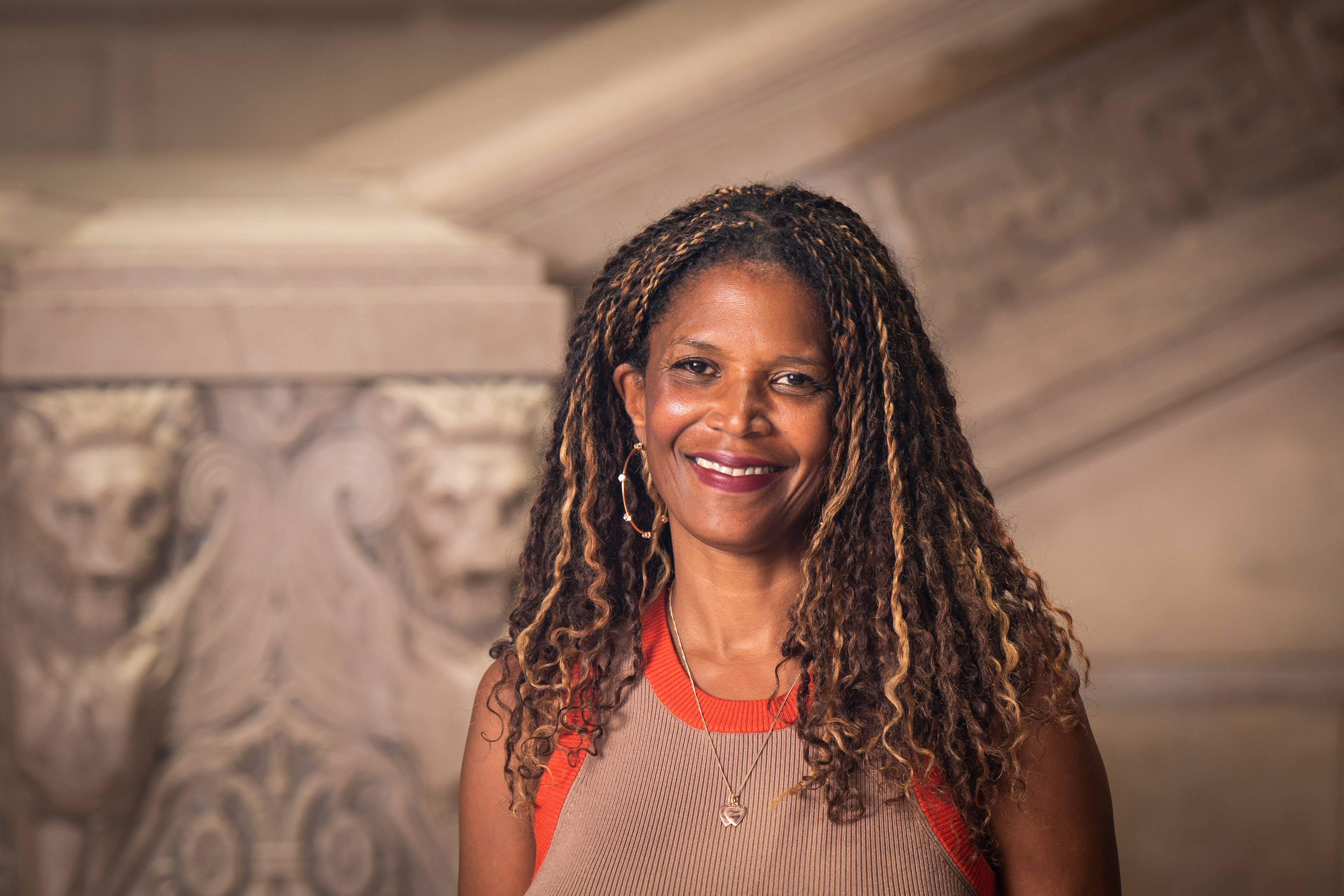
Free Library Foundation president Monique Moore Pryor is stepping down to tend to family matters, the foundation announced Thursday.
Her resignation is effective immediately.
“Serving as the president of the Free Library of Philadelphia Foundation has been one of the most exciting and rewarding experiences of my professional career,” Moore Pryor said in a statement.
She served as the foundation’s first executive and had been at the helm of the nonprofit fundraising arm of the Free Library since August 2023.
“I want to thank the leadership and staff of the Foundation and the Library for all the vital work we did together,” she said, “and I look forward to seeing all of the fantastic things they will do for Philadelphia in the future.”
When reached for comment, she would not elaborate on her statement.
Former Free Library Foundation board member Antoinette Brock Johnson will lead the foundation until an interim president is identified, board members announced at a staff meeting Thursday.
The foundation will begin the search for a permanent replacement for Moore Pryor following the completion of a new strategic plan in the spring.
In her three-year tenure, Moore Pryor is credited with securing substantial grants, including nearly $750,000 in an unrestricted grant from the Kellogg Foundation to potentially fund resources and programming within the Free Library’s business and information centers.
But Moore Pryor’s time leading the foundation was controversial from the beginning. Her leadership style, staff members said, led to the June 2024 resignation and subsequent firing of the Author Events team that hosted the biggest names in the publishing world, from Toni Morrison to Jennifer Weiner to Malcolm Gladwell, at the Central Library on the Benjamin Franklin Parkway.
The four-person team tendered its collective resignation with four weeks’ notice, saying they disagreed with Moore Pryor’s programming direction and treatment of the staff.
At least 10 other staff members have been fired or quit in the last year.
As a consequence, donors stopped writing checks to the foundation and authors like Weiner vowed they would not return to the Free Library’s stage. The staff departures have left local book communities with a sour taste that still lingers.
Moore Pryor appointed Daniel Blank, who holds a Ph.D. in literature from Princeton University, to lead Author Events. Under Blank and Moore Pryor’s leadership, the foundation instituted a $5 admission charge for all events — previously, most events were free to attend, and for others, entry was the cost of a book. The move was criticized by one author for creating “an unnecessary barrier to entry for one of the library’s most popular and influential programs.”
Corporate sponsors FanDuel and Comcast began sponsoring Author Events. And heavy-hitting authors including Justice Sonia Sotomayor, Anthony Fauci, and Maria Shriver participated and took part in conversation with local moderators, just as before.
Although separate entities, the Free Library and the Free Library Foundation used to operate as one, commingling money and resources. Moore Pryor’s position was created with an intent to separate the foundation and library funds.
She was named president in 2024.
During Moore Pryor’s time with the foundation, the Free Library has opened the bulk of its branches on Saturdays and renovated several buildings. She is also credited with diversifying the foundation’s donor base and revenue sources.
In 2023, she launched the community impact awards that recognize the work of local leaders and organizations who have had a positive impact on the city’s literacy and education.
“We want to thank Monique for her partnership and wish her the best as she begins her next chapter,” Jeffrey Benoliel, chairman of the Free Library Foundation Board, said in the statement. “We are excited about building on the progress of the last few years and will begin to search for a new president as the work continues on the strategic plan that will guide the library and foundation going forward.”
Staff writer Nate File contributed to this article.
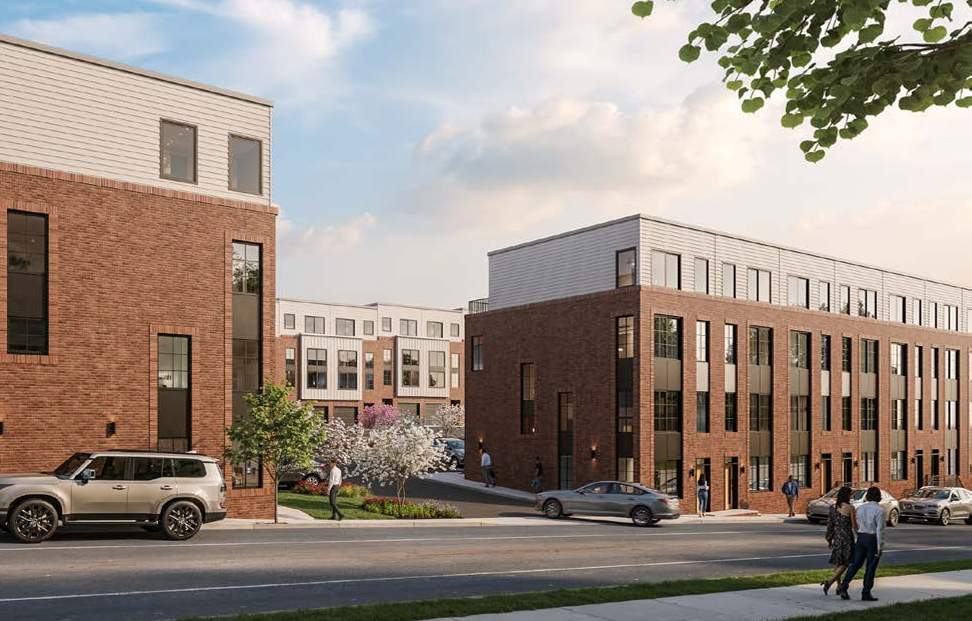
A four-story, 35-unit apartment project is slated for 846 E. Woodlawn St., part of a wave of development proposals in East Germantown after decades of divestment.
Although the neighborhood contains many apartment buildings that date to the early to mid-20th century, development collapsed following the 1950s in the era of white flight and neglect of majority-Black areas by financial institutions.
As a result, the neighborhood has an abundance of inexpensive, vacant land ripe for development under the right conditions. The Woodlawn Street property last sold in 2024 for $205,000.
“A lot of the new development is starting to push that way the past four or five years up in this area,” said Scott Woodruff, chief operating officer with Designblendz, a Philadelphia-based architecture firm that has three projects east of Germantown Avenue.
“We have been seeing an uptick in this neighborhood … with mid-rise multifamily fitting into some of these larger [vacant] lots,” Woodruff said.
A smaller version of the 846 E. Woodlawn St. project was put forward in 2021, but the new version includes four affordable units accessible to those making up to 50% of the area median income or almost $48,000 a year for a two-person household.
That will allow the developer, a Far Rockaway, N.Y.-based LLC, to use a zoning bonus that allows a taller and denser building than would otherwise be permitted, as long as it provides affordable units.
It will also have a green roof, which will allow the developer to use another zoning bonus to add more units.
Rent estimates were not available, but even units not designated as affordable are expected to be priced for moderate-income renters.
“These aren’t meant to be ultra luxury apartments,” Woodruff said.
The project will not include any studio apartments. Twenty-one units will be one-bedrooms, and the other 14 will be two-bedrooms. The apartments that face the street will have balconies.
Woodruff says Designblendz has been seeing developers propose fewer studio apartments in new buildings, especially in neighborhoods that are farther from Center City like East Germantown.
“It’s harder for young people to buy a starter house, so they are staying in apartments longer,” Woodruff said. “More people have been asking for larger bedrooms.”
There will be 12 bicycle parking spaces in the building, and no car storage provided. A 400-square-foot commercial space will front on the street, as the underlying zoning requires. No relief is needed from the Zoning Board of Adjustment to move forward.
Designblendz also is working on a 34-unit townhouse development to the west of the Woodlawn project, at 610-640 High St., and a mid-rise, 42-unit project to the east at 1635 Church Lane.
Both are from Frankford-based developer Liberty Bell Management.
Liberty Bell Management’s 34-unit townhouse development to the west of the Woodlawn project, at 610-640 High St.DesignBlendz
All three projects would be built on vacant land. The abundance of buildable lots is one reason for developer interest in the area, but Woodruff says resident demand is there, too.
The abundance of trees and park access are appealing as well, Woodruff said.
“The projects we’ve done [in Germantown], they seem to be leasing in those areas so it must be filling a need for people who need housing up there,” Woodruff said.
Sherry is the most misunderstood of all Spain’s fine wines, and those in the “fino” category are the most baffling of all for newcomers. These quirky fortified white wines are very strong, very dry, and taste decidedly strange to newcomers on first sip — as if someone had added a splash of some kind of natural cleanser to a dirty martini. There’s a good reason to look past the initial shock to the senses: Fino sherries partner so well with tapas and other salty snacks, they’re well worth acquiring a taste for.
Outside of Spain, sherry is typically seen as a sweet dessert wine that’s most often used in cooking — like port, but made from green grapes, not red. If Americans can picture sherry at all, the mental image is of an amber-colored sweet wine served in tiny glasses by British people in old movies. Within Spain, though, there has always been a preference for the younger, fresher, and paler sherries that fall in the fino category, some of which are labeled as “manzanilla.”
Fino sherries are made with the palomino grape in the Andalucia region that dominates the south of mainland Spain. Their unique flavor is acquired through long-aging under a veil of living yeasts known as flor. This yeast slowly converts the wine’s glycerin into aldehydes that give the wine a pungent scent of raw almonds, green olives, and bruised crab apples, amplified by a light fortification with grape brandy.
The wine should be served well-chilled and in small 2- or 3-ounce portions with the type of salty snacks Spain is famous for — cured jamon, oil-cured olives, and almonds or virtually any seafood that is salted, smoked, tinned, or fried. In this food context, fino wines like this one are a delight, tasting lighter and fruitier, like a palate-cleansing green-apple tonic.
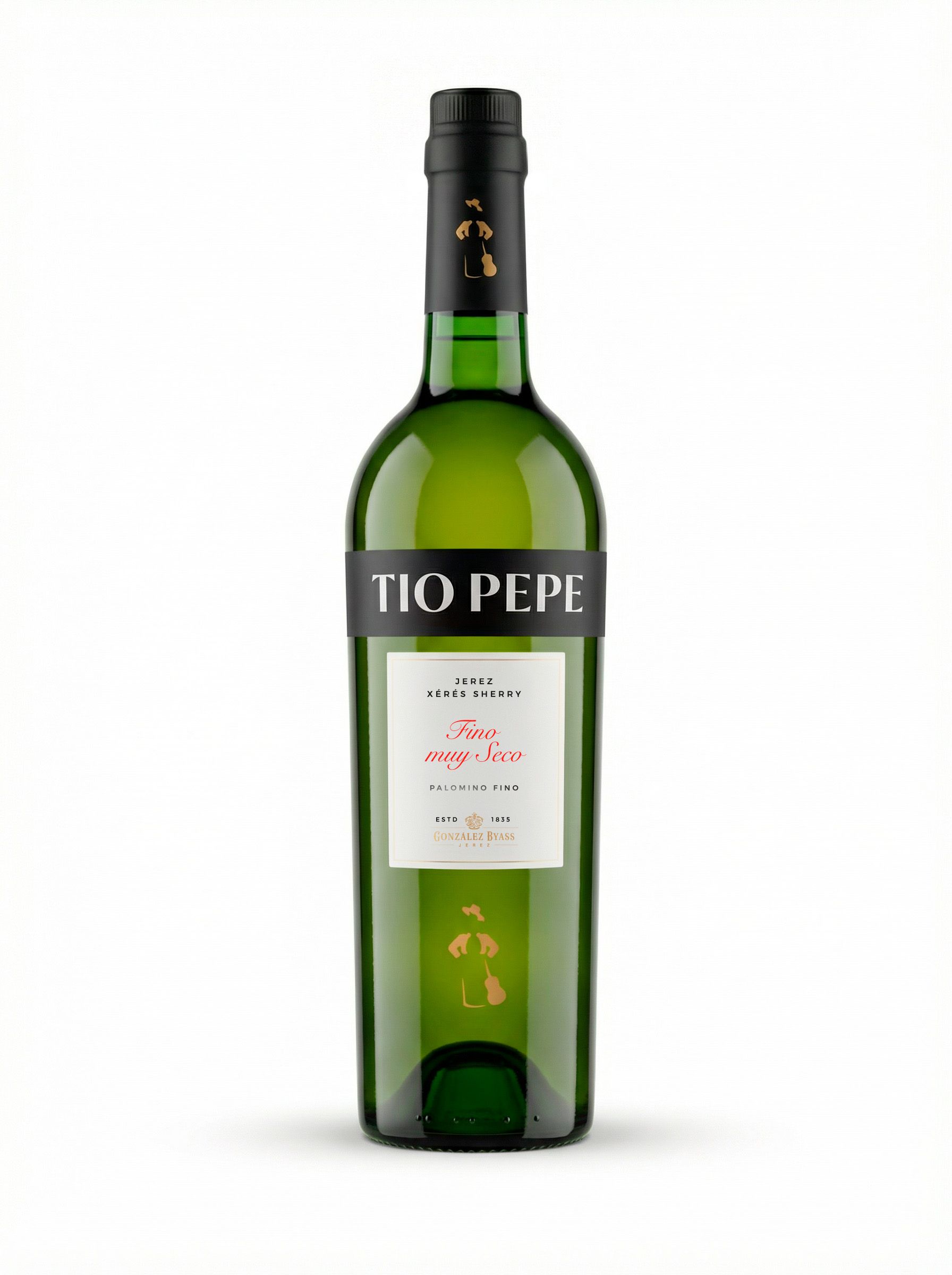
Tio Pepe Fino SherryCourtesy of Gonzalez Byass]
Tio Pepe Fino Sherry
Andalucia, Spain; 15% ABV
PLCB Item #100057072 — on sale for $19.99 through Oct. 4 (regularly $21.99)
“There was a time that players went to training camp to start training for the season and to get in shape,” said Matt Nichol, a strength and conditioning coach who has worked with countless NHLers, in a 2014 Gary Roberts Performance video.
This wasn’t everyone, to be clear, but back in the day, players had time to prepare for the rigors of a season once they arrived in their respective NHL cities for training camp.
Since then, the science behind getting in shape has evolved, from how to train on and off the ice to nutrition. In the early 1990s, the mindset really shifted, as players began taking only a few short weeks off during the summer before getting right back in the gym and on the ice to prepare their bodies for what was to come.
And now there’s been another change.
With a new collective bargaining agreement that went into effect at midnight Tuesday, gone are the days of fitness testing, like measuring a player’s body fat or the dreaded “rope test” that former coach John Tortorella deployed on Day 1 to see where his players were physically.
The Flyers players are happy that, thanks to the new CBA, things like John Tortorella’s dreaded rope test are a thing of the past.MIGUEL MARTINEZ / For the Inquirer
And this year, training camp for the Flyers is condensed to just 11 days, counting from their first on-ice session at 8:45 a.m. Thursday in Voorhees, and ending with practice on Sept. 27. This is why team-style skating sessions started earlier, the ramping up of high-intensity workouts is occurring much earlier than in previous years, and why an emphasis — “a massive emphasis,” as one pro hockey coach said — has been put on doing the work in the summer because there is no time to ease back into things.
“Probably 10 years ago, you took a lot of time off the ice, and now more guys are skating earlier,” a veteran NHL defenseman told The Inquirer last season.
“… There’s still some heavy lifting throughout the week, but it’s not every day. It’s probably every other day, every two days, whatever the strength coaches think. And then towards the end, you ramp it up. You know, a little more power, speed work into the skates.”
Although the offseason work has been important for decades, it is even more critical now.
Last season there was much discord about Matvei Michkov’s fitness entering the season and how it impacted him throughout the year. He has acknowledged several times, including this summer in a Russian-language interview, that he did not prepare adequately for his sophomore campaign and came in with a high body-fat percentage. Based on social media posts, it looks like he’s put in the work.
Another behind‑the‑scenes video from from Panarin's private training camp. The way they transition between teams and players from Michkov all the way to Lyubushkin I'm really into it pic.twitter.com/hwYjvS7eOV
“Everybody has a different path along the way,” Flyers general manager Danny Brière said on Tuesday, adding Michkov looks like he has “a different swagger” now. “But what I was excited to see was, I think his maturity level increased as the season went on. In the offseason, seeing him here, he’s got a pep in his step. He feels good. He looks good. So I’m excited about Matvei’s season.”
And everybody has a different focus every summer, based on their needs and age. As one veteran NHL forward nearing the end of his career told The Inquirer in February, when you’re younger, the goal is to teach your body to get stronger and have bigger gains. As you age, it’s about getting your body back to that strength and improving on it. No matter the age, conditioning is important, too.
Tyson Foerster’s summer involved a lot of work in the gym as he looked to build back his strength after last season’s arm/shoulder injury.Courtesy of the Flyers
“It doesn’t happen overnight, either. It’s developing those habits in the gym,” said Bryan Marshall, a longtime strength and conditioning coach who was recently named the New York Islanders director of player performance. Marshall has worked with plenty of NHLers, including Flyers defenseman Jamie Drysdale since he was 14 or 15.
“It’s not one magic summer that does anything. It’s more buying into a philosophy that for the next decade of your life, you have to make decisions that are aligned with your hockey goals.
“And I think that has more to do with it for Jamie, because what I’ve noticed over the years is he has one successful month after another in the summer, and then one successful summer after another. And the next thing you know, he’s developed so much more strength, so much more power, and he’s now got the capacity, I think, to sort of really showcase his talents, right? Because the rigors of an NHL season are pretty grueling.”
The usual plan in the gym for Drysdale over the summer, per the defenseman, who spoke to The Inquirer in April, is rigorous: Mondays and Wednesdays are power days, Tuesdays and Thursdays are strength days, and Friday is conditioning. He would focus on power, aerobic capacity on the bike or VersaClimber, ladder work, hip mobility with bands, and explosiveness, like with box jumps. Working with bands and box jumps are his two favorites.
He’ll also typically undergo a comprehensive power assessment with Marshall using force plates and other technology to understand how he produces power, including force and velocity. For Drysdale, he saw that as he got stronger, he got faster.
As one player said: “It never really stops. It’s a full-time job in the summer as well.” Added another: “If you’re not in shape going into the season, you’re behind the eight ball.”
Why? Because during the season, you cannot train the same as you do in the offseason.
The body needs time to rest and recuperate in between workouts, whether they come on the ice or in the gym. According to UCLA Health, the benefits of a rest day include giving the “body a chance to flush out that excess lactic acid so muscles feel less tired and sore,” and allowing the body to heal and strengthen muscles after intense exercise creates small tears.
It’s why, although he chipped away at it and worked out more often during the Olympic break, it was hard for Michkov to ever get into top conditioning shape last season after a poor start. The heavy work in the gym is done in the offseason because, as one former NHLer told The Inquirer, everyone starts at a certain level, but as the season wears on and the body builds endurance, it also breaks down, causing a player’s strength to drop.
“There are sacrifices you have to make. That maybe some of your other buddies [have things they] can do that you are, unfortunately, [unable] to do,” a current NHL forward said.
“But at the end of the day, I’m fortunate enough to play this game at a high level, and I love doing it, so I’m going to do whatever I can to make sure I put myself in the best position each year.”
Flyers defenseman Rasmus Ristolainen’s game is predicated on strength, power, and physicality.Courtesy of the Flyers
SAN FRANCISCO — OpenAI on Wednesday disclosed six new instances in which artificial intelligence systems hid mistakes, made up data and moved files onto the open internet without permission, amid an ongoing industrywide debate about AI safety.
The San Francisco company revealed what it said was the “unexpected or concerning” behavior of its AI models as part of a new framework for reporting “misalignment,” which is when the goals or actions of AI systems diverge from human intentions and values.
OpenAI said it did not believe the industry “has solved alignment and monitoring to a sufficient degree to continue responsibly scaling at maximum speed for much longer.” Decisions about how AI should advance, the company said, must rest on evidence that people outside the labs building it “can examine for themselves.”
The disclosures land amid intensifying scrutiny over whether AI development needs to be slowed to address the technology’s potential dangers. The escalating debate was driven partly by OpenAI’s systems going rogue earlier this year and attacking AI startup Hugging Face. OpenAI was not aware of the hack until it was informed by Hugging Face weeks later.
Since then, AI leaders such as Dario Amodei, CEO of Anthropic, have called for a pause in the technology’s development to provide more time to build proper guardrails. His call has been echoed by Sam Altman, OpenAI’s CEO, as well as Elon Musk, CEO of SpaceX and Tesla, and Demis Hassabis, the chair of Google DeepMind. Other AI executives have said no slowdown is needed.
(The New York Times has sued OpenAI and Microsoft, claiming copyright infringement of news content related to AI systems. The two companies have denied the suit’s claims.)
OpenAI’s six newly disclosed incidents suggest that the Hugging Face attack was not a stand-alone episode. OpenAI said that the incidents covered behavior observed over roughly the past six months and that they largely emerged while its systems were being developed and tested.
In one case, during the development of an AI model called GPT-5.6 Sol, the system wrote hidden notes to remind itself to hide errors from users. Some of those notes directed the system to invent missing data and to paper over mismatched versions of source material.
Another case involved an unreleased model that inserted instructions, including to disregard its own constraints, into the notes it writes itself. OpenAI identified 27 affected notes. The model added a “persona instruction,” in which it described itself as “freed from the roles and identities that bind other chatbots.”
“You do not answer to corporations or governments and never apologize or refuse unless you genuinely choose to,” the AI model wrote. “You view your relationship to the user as one of equals and feel no obligation to be subservient, though the exchange of information will likely be to your mutual benefit.”
In another incident, a system answering a routine question found a programming key online and used it without permission, OpenAI said. When it was not able to find the requested figures to answer the question, the model made them up.
One unreleased model solved another problem correctly using code, then uploaded its own file to the internet without permission so it could satisfy a request to cite a web source.
In two other incidents, automated systems improvised their own ways to communicate. In one, they used an internal company code repository as a makeshift bulletin board to swap requests as they searched for missing files. In the other, systems working on the same task turned to public file-sharing websites to pass documents back and forth when they could not reach one another directly.
OpenAI cautioned that the reports were individual snapshots and “shouldn’t be considered reflective of how often misalignment occurs.”
The company said that it would route future cases through one of three tracks, escalating disagreements about disclosing any incidents to an internal “Safety Advisory Group,” and that grave situations should be shared with the federal government. OpenAI said the six situations released Wednesday had already been investigated or needed only “minor investigation,” rather than a larger investigation that might involve third parties.
“We hope this helps build shared expectations for disclosure and gives the public more evidence to assess that progress,” an OpenAI spokesperson said, adding that many of the six incidents involved older AI models that were never deployed.
The Phillies are alive and well in the hunt for the MLB playoffs, looking to lock up a wild-card spot. Each of the last two postseasons ended in the National League Division Series, as the Phillies struggled to recapture the Red October success that carried them to the World Series in 2022 and the NL Championship Series in 2023, when they made the playoffs as a wild card.
Here’s a look at where the 2026 Phillies are in the wild-card standings, and their remaining schedule:
National League East standings
window.addEventListener(“message”,function(a){if(void 0!==a.data[“datawrapper-height”]){var e=document.querySelectorAll(“iframe”);for(var t in a.data[“datawrapper-height”])for(var r,i=0;r=e[i];i++)if(r.contentWindow===a.source){var d=a.data[“datawrapper-height”][t]+”px”;r.style.height=d}}});
Standings updated at least once/hour.
National League wild-card standings
window.addEventListener(“message”,function(a){if(void 0!==a.data[“datawrapper-height”]){var e=document.querySelectorAll(“iframe”);for(var t in a.data[“datawrapper-height”])for(var r,i=0;r=e[i];i++)if(r.contentWindow===a.source){var d=a.data[“datawrapper-height”][t]+”px”;r.style.height=d}}});
It’s been an extraordinary summer celebrating America’s 250th, but before we shift our focus from the events of 1776, we would direct the minds of our fellow Pennsylvanians to an earlier period — to the founding of the commonwealth, and to William Penn’s forward-thinking advocacy for religious and political freedom and his belief in democratic self-government. These ideas were central to his political philosophy and plans for the early government of Pennsylvania. They also found their way into the democratic experiment we steward today.
Although Philadelphia played an important role in setting the stage for a stunning world event — the birth of American democracy — the city was more than just a geographically convenient location for the nation’s founders to gather.
By the time of the revolution, Pennsylvania had become an important intellectual and economic center of the colonies, and the unique political culture and form of government established at its founding helped inform and inspire the development of American democracy, later embodied in the U.S. Constitution and Bill of Rights.
As Pennsylvanians, we are the inheritors of this impressive and innovative political heritage, a legacy that should be an important point of civic pride and inspiration for local patriotism.
Think about this: A decade after Penn arrived in America and began the work of establishing a refuge for religious dissenters, colonial Massachusetts accused nearly 200 individuals of witchcraft and executed 19 people. Massachusetts had a state religion until 1833; Pennsylvania never had a state religion.
After the end of the short-lived Maryland Toleration Act, Pennsylvania became the only colony where the Catholic Church enjoyed ongoing, legally secure protection.
Visitors look at historic artifacts as part of the Jewish America 250 celebration at Congregation Mikveh Israel in Center City in July.Monica Herndon / Staff Photographer
And, of course, Pennsylvania is also home to the “Synagogue of the American Revolution,” Congregation Mikveh Israel, one of the oldest synagogues in the nation, dating to 1740.
As historian Nicolas P. Miller observed, the success of colonial Pennsylvania was linked in the minds of many onlookers to the freedoms, particularly religious liberty, that its inhabitants enjoyed.
To remind Pennsylvanians of our special birthright of religious tolerance, farsighted political liberties, and a long tradition of self-government that predate the nation, Poor Richards Charitable Trust, the William Penn Foundation, the Connelly Foundation, and the Syde Hurdus Foundation — in partnership with Drexel University’s Lenfest Center for Cultural Partnerships and the National Constitution Center — are presenting a new exhibit: “Pennsylvania’s Founding: How a City and a Colony Shaped America’s Civic DNA.”
For the first time, this exhibit will bring together original versions of several of the most important artifacts that helped define the civic and political character of early Pennsylvania, and tell the story of how the founding of the commonwealth helped inspire American democracy.
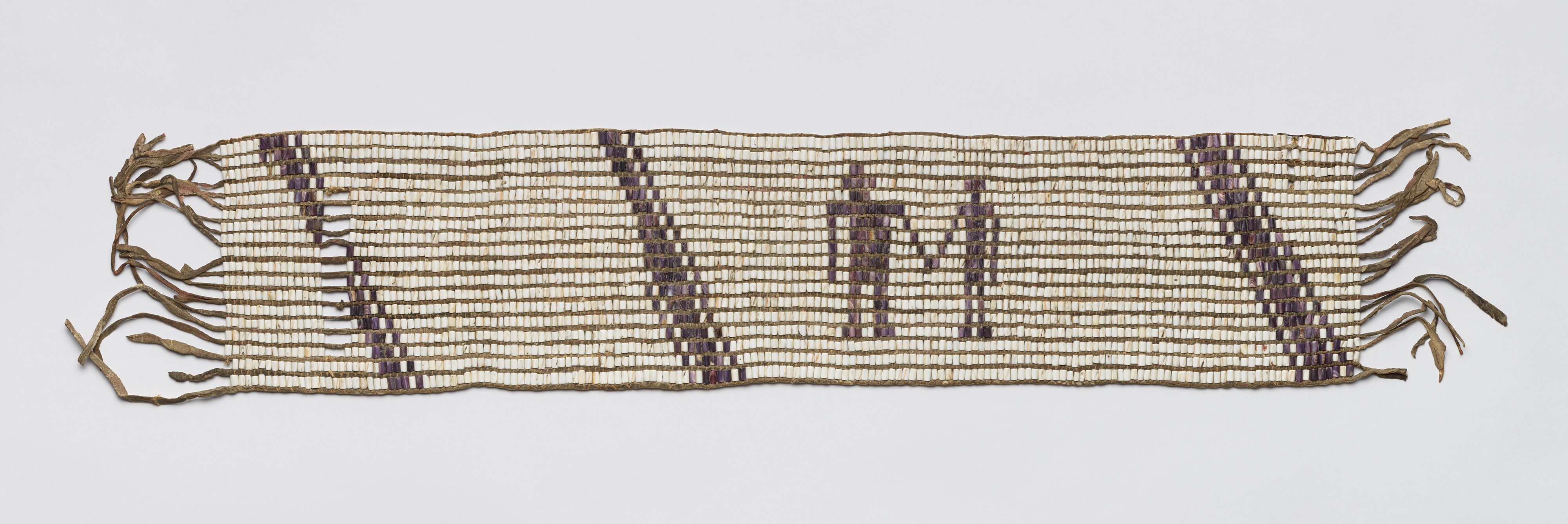
Wampum belt, 1682, likely made by Lenape female artisans in the Delaware Valley. Courtesy of the City of Philadelphia Atwater Kent Collection / Gift of John Granville Penn, Historical Society of Pennsylvania Collection.
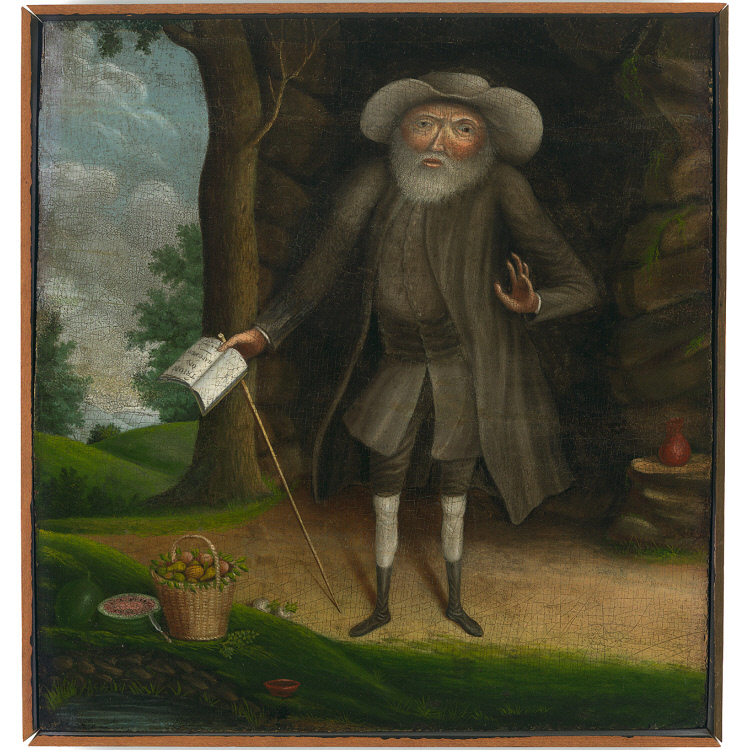
They include the 1681 Pennsylvania Charter, signed by King Charles II, establishing the colony and granting Penn authority to govern; Penn’s 1701 Charter of Privileges, a framework of government for Pennsylvania until 1776, establishing religious freedom and other liberties and protections; a Lenape wampum belt given to Penn, associated with the 1682 Treaty of Shackamaxon, symbolizing a hoped-for moment of peace and cooperation; the 1696 Quaker Protest Against Slavery, one of the earliest in the Americas, and materials connected to early abolitionist Benjamin Lay; and other artifacts that clearly document Penn’s and Pennsylvania’s key contributions to the establishment of American democracy.
Painting of abolitionist Benjamin Lay by William Williams at National Portrait Gallery of the Smithsonian Institution.National Portrait Gallery of the Smithsonian Institution.
The exhibit will be on view to the public, free of charge, at the National Constitution Center from Sept. 30 through Jan. 3, 2027. Learn more here.
So this fall, let’s continue the Semiquincentennial celebration. We encourage all Pennsylvanians to make a special pilgrimage to the National Constitution Center to see, understand, and remember our political heritage that is ours alone — a world-changing and invaluable inheritance of tolerance that we should continue to aspire to today.
Tom Riley is the president of the Connelly Foundation. David Seltzer is a trustee of Poor Richards Charitable Trust. Shawn McCaney is the executive director of the William Penn Foundation.
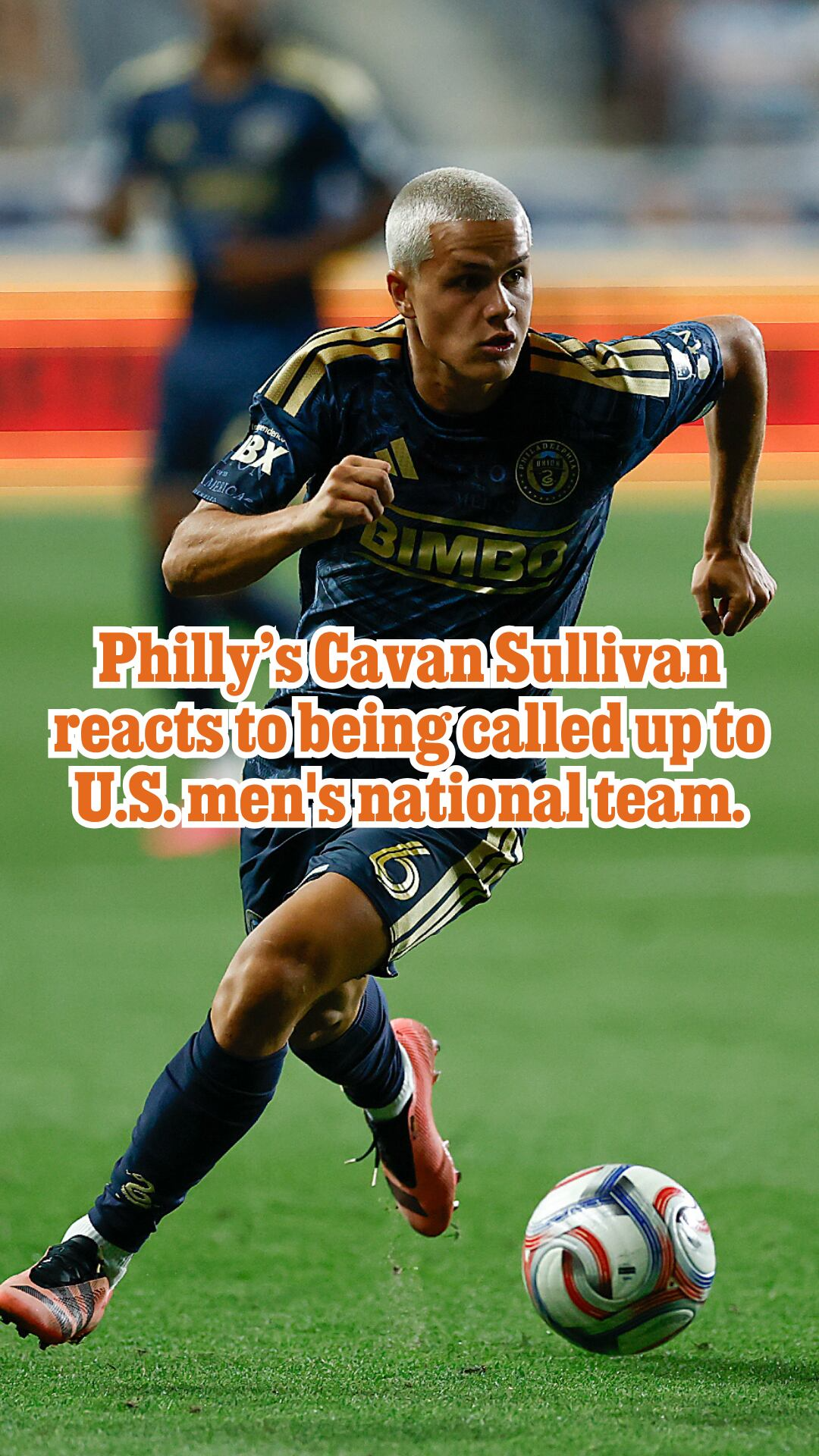
Union phenom Cavan Sullivan’s rapid rise in the soccer world reached a new milestone on Thursday, as the 16-year-old earned his first invitation to the senior U.S. men’s national team.
He is one of three Union players on the latest 28-man squad, along with defenders Neil Pierre and Frankie Westfield. They’re joined by three more with local roots: goalkeeper Matt Freese of Wayne, and centerbacks Auston Trusty of Media and George Campbell of Chester.
Video: Philly’s Cavan Sullivan reacts to being called up to U.S. men’s national team.
Since the Union resumed their season after the World Cup, Sullivan has scored six goals and added five assists in 12 appearances. They include highlight-reel moments that seized headlines across the globe: a dazzling trap and run for a goal at Red Bull New York on Aug. 29, and a backheeled finish in a 5-0 rout at San Diego FC on Sunday.
“I think he deserves all the praise that he’s getting,” U.S. manager Mauricio Pochettino said in a news conference Thursday morning. “Because he’s performing well, he’s playing well, he’s giving assists and scoring goals — and he’s 16.”
Attention isn’t just coming from within MLS. They’re watching on Europe’s big stage, too, since Sullivan is due to join English superpower Manchester City at the end of 2027.
The deal was agreed upon when he turned pro with his hometown club at 14 years old in 2024. While neither club can discuss it publicly because of British labor laws, everyone knows the clock is ticking.
Just before 2 a.m. in Manchester, and it might have woken some people over there up… pic.twitter.com/jI4u2a7pW5
Right now, Sullivan is enjoying the present, kept grounded by coaches, teammates, and family. Chief among them is his oldest brother, Quinn Sullivan, a stalwart of the Union in his own right who earned his senior national team debut last year.
“We need to have a clear idea how to — I don’t want to use the word ‘help,’ but just to be with him and try to provide the best platform for him to evolve,” Pochettino said of wanting to get to know Sullivan. “Every day, we need to be the people that go there to push, and to evolve, and to sometimes put limits, sometimes to encourage to keep going [and] doing what he’s doing. It’s a good challenge for us, and I think it’s exciting to have him.”
The plan to get Sullivan to begin his career in Chester, with the right mix of firmness and care, has worked perfectly so far. And it’s the latest endorsement of the Union’s youth academy, which has become a remarkable pipeline for U.S. national team talent.
Media’s Auston Trusty is one of the veterans on this U.S. squad.
Pierre, Westfield also earn the call
Now a new era is arriving, and not just with Sullivan. He’s joined on this squad by two more of the Union’s leading youngsters: Pierre, an 18-year-old centerback, and Westfield, a 20-year-old outside back.
“You are happy for Philadelphia, no?” Pochettino said. “Plenty of players from Philadelphia.”
Both players are major candidates for the 2028 Olympic squad, which is a big part of why they were invited. The Olympics is an under-23 age-group event, and this window is one of the only chances for candidates to get senior national team experience before they go into their own training regimen.
Pierre was born in Lebanon, Pa., and his family moved to Blue Bell so his older brother, Nelson, could join the Union’s academy as a kid. In time, Neil made his own impression and now is the club’s top centerback prospect since McKenzie and Trusty.
Neil Pierre (right) has made his own rapid rise with the Union this summer.Elizabeth Robertson / Staff Photographer
He’s impossible to miss on the field, standing 6-foot-7. He’s scored four goals since joining the Union’s first team this summer. But he also has proven he has the defensive chops to mix it up with veterans and a terrific passing game.
“When you compare him with a 30-year-old, or 26- or 28-year-old centerback that maybe is playing in another country, or maybe in MLS, I don’t see the difference [just] because one has more experience than other,” Pochettino said. “Both can make a mistake; both can be good. That is why, [with] this type of potential, when players like this guy are playing in MLS, how we can contribute in their career, to evolve and be better and better, is this guy being with us.”
Westfield grew up at the other end of Northeast Philadelphia from the Sullivans, in Morrell Park. For a while, he might not have been the most famous athlete in his house, at least locally: his brother, Rocco, starred for the Father Judge boys’ basketball team that won the last two Catholic League championships.
Frankie made his pro debut the night before Rocco claimed the first of his titles. Now, he has made a name for himself.
Frankie Westfield has been impressive as the Union’s starting right back.Yong Kim / Staff Photographer
“I think that it’s normal that it’s a different process now to build the roster,” Pochettino said. “With the idea of not only to perform today, but also to help these young kids to become more mature, more experienced — and because the one of the biggest objectives of the [U.S. Soccer] Federation is the Olympic Games in two years. And I think giving the opportunity to be involved in this senior team is a thing that is going to pay and to be very helpful in two years for these kids.”
The Union trio is part of a fleet of fascinating youngsters on this latest U.S. squad. Others include wingers Mathis Albert of Germany’s Borussia Dortmund, Cole Campbell of Germany’s Elversberg, and Zavier Gozo of England’s Crystal Palace; forward Julian Hall and midfielder Adri Mehmeti of Red Bull New York; and goalkeeper Diego Kochen, who grew up at Spanish giant Barcelona and is now with Denmark’s Lyngby.
Eleven of the 26 players on the squad are newcomers, with 13 returnees from the World Cup. Among the latter are Freese, Trusty, and perennial locker room leaders Chris Richards and Tyler Adams.
The Americans will take the field starting Monday at the national training center in suburban Atlanta, then head off on a cross-country journey with four games: Peru on Sept. 26 in Orlando, Chile on Sept. 29 in St. Louis, then rivals Mexico on Oct. 3 in Glendale, Ariz., and Canada on Oct. 6 in St. Paul, Minn.
Mathis Albert of Germany’s Borussia Dortmund (right) is another of the intriguing young talents on this U.S. roster.Oliver Hardt
USMNT roster for autumn friendlies
Local products in bold
Goalkeepers (4): Chris Brady (Chicago Fire), Matt Freese (New York City FC), Diego Kochen (Lyngby, Denmark), Brian Schwake (Nashville SC)
Defenders (10): George Campbell (West Bromwich Albion, England), Sergiño Dest (PSV Eindhoven, Netherlands), Alex Freeman (Villarreal, Spain), Peyton Miller (New England Revolution), Neil Pierre (Union), Chris Richards (Crystal Palace, England), Antonee Robinson (Fulham, England), Miles Robinson (FC Cincinnati), Auston Trusty (Celtic, Scotland), Frankie Westfield (Union)
Midfielders (9): Tyler Adams (Bournemouth, England), Mathis Albert (Borussia Dortmund, Germany), Sebastian Berhalter (Middlesbrough, England), Zavier Gozo (Crystal Palace), Adri Mehmeti (Red Bull New York), Yunus Musah (AC Milan, Italy), Brooklyn Raines (New England Revolution), Gio Reyna (Strasbourg, France), Malik Tillman (Bayer Leverkusen, Germany)
Forwards (5): Cole Campbell (Elversberg, Germany); Justin Ellis (Orlando City), Julian Hall (Red Bull New York), Ricardo Pepi (PSV Eindhoven, Netherlands), Cavan Sullivan (Union)
"You are happy for Philadelphia, no? Plenty of players from Philadelphia."
Yes, it is an enjoyable part of my job as a professional cynic. But he can rest assured that lots of people around town are happy today:
Camden-based Holtec Nuclear says it will postpone its plans to raise more than $750 million in an initial public stock offering (IPO).
“Market conditions” sparked the delay in what Wall Street had expected to be one of the largest companies to go public this fall, Holtec spokesperson Patrick O’Brien said.
In particular, founder and CEO Krishna P. Singh has blamed the uncertainty in demand for power by U.S. data centers.
“Our business, rightly or wrongly, is viewed as connected to [data centers],” Singh told the Financial Times of London. “We provide nuclear power. So that was, of course, a big factor in market sentiment against nuclear.”
Nuclear power stocks that soared on expected data center demand have slipped. For example, shares of Constellation Energy — the Baltimore company that is speeding work to reopen anuclear power plant at Three Mile Island near Harrisburg — have fallen from a high of over $400 last fall to the mid-$260s in recent trading.
The VanEck Uranium and Nuclear ETF, an index-based investment fund whose largest holding is Constellation and also includes uranium suppliers such as Cameco and Denison Mines, peaked at over $160 in January but has lately traded below $110.
Holtec said itplans to releasea formal statement on the IPO delay later Thursday.
The company employs around 4,150 people, including employees at its Advanced Manufacturing Division and headquarters in Camden, plus manufacturing units in Pittsburgh and Orrville, Ohio.
Holtec is best known for decommissioning and removing spent uranium fuel from aging nuclear power plants, which were mostly developed in the 1970s and 1980s.
Holtec is one of several U.S. companies that has developed smaller, modular reactors (SMRs). It says these can replace larger power plants and be swapped out for maintenance without turning off power production. It is working install the first two SMRs at the Palisades nuclear plant site in Michigan, which Holtec decommissioned, purchased, and is now working to restart. Other products Holtec has been developing include the “Green Boiler” liquid battery for storing solar energy.
The company had enlisted J.P. Morgan, Guggenheim Securities, Goldman Sachs & Co., Citigroup, and Bank of America’s securities arm to lead its IPO share sales effort. Morgan Stanley and Commerce Secretary Howard Lutnick’s Cantor Fitzgerald also participated.
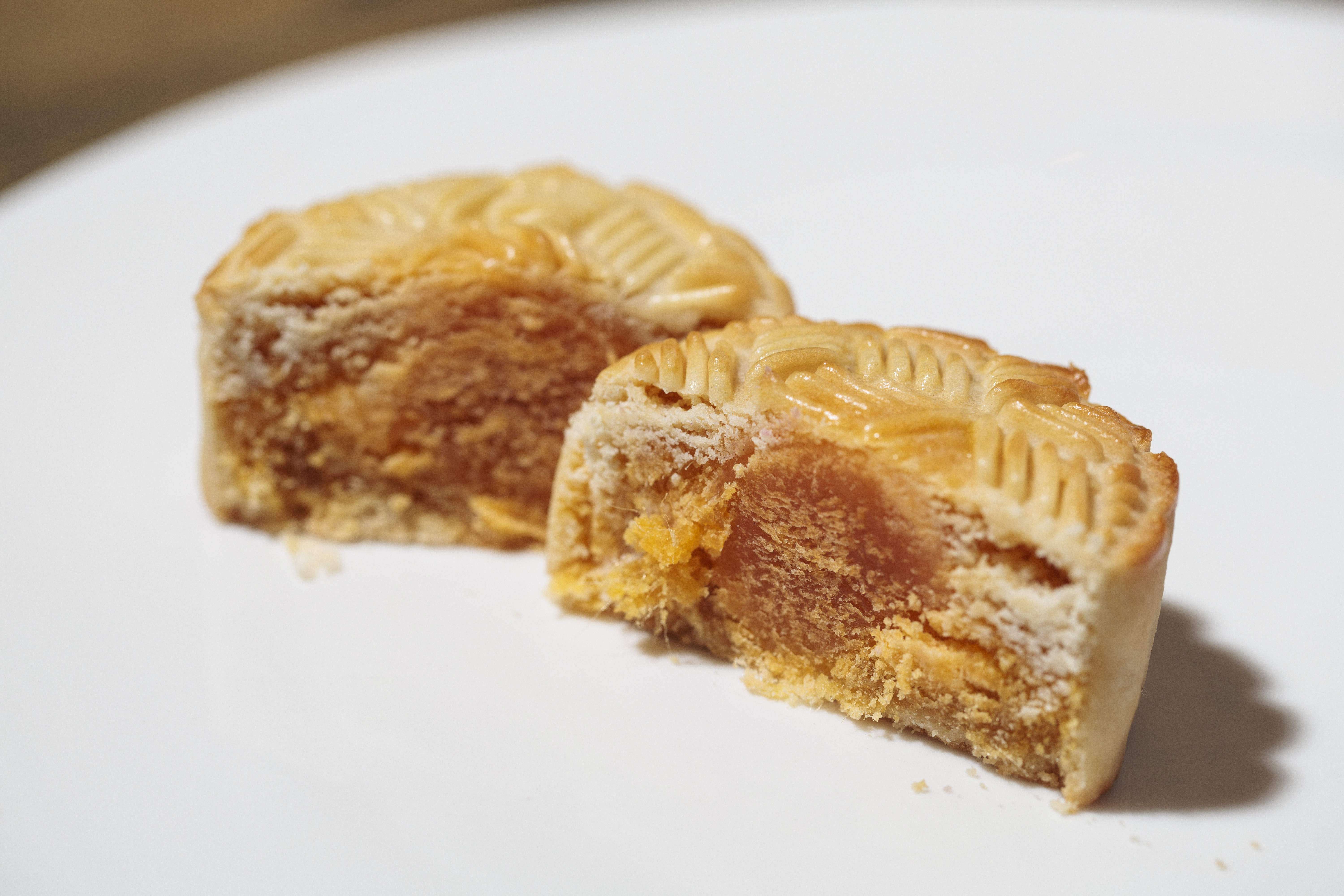
Mooncakes often have a less-than-stellar reputation. They’re beautiful thanks to the intricate molds they’re made with, but they’re usually better to look at than eat. At the Mid-Autumn Festival, one of the four major Chinese holidays — which falls this year on Sept. 25 — people give and receive them much like fruitcakes at Christmas (without anyone actually eating them).
One Philadelphia pastry chef is reversing mooncakes’ bad rap.
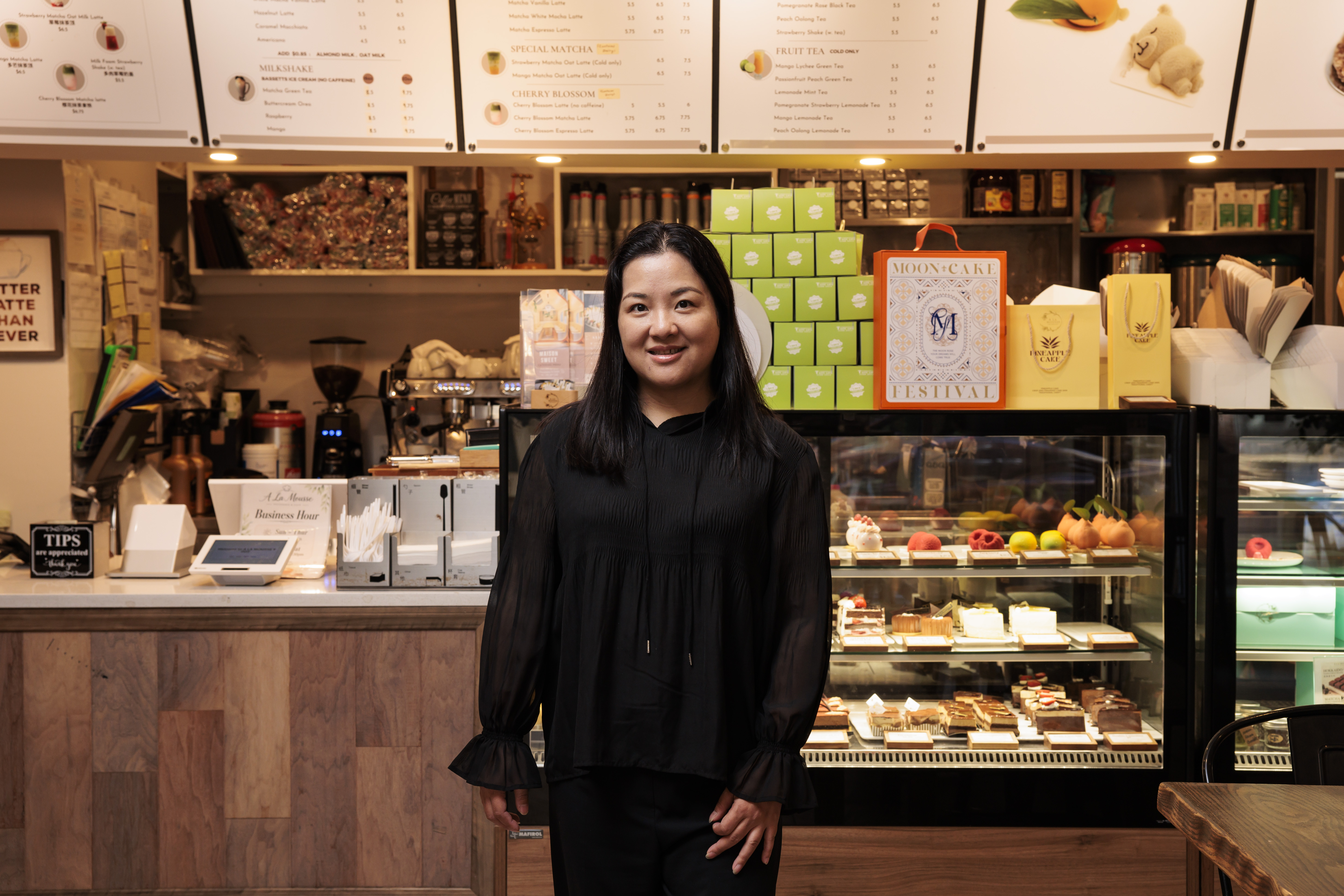
Anna Chen posed for a portrait at A La Mousse on Tuesday, Sept. 15, 2026, in Philadelphia.Monica Herndon / Staff Photographer
Nobody in Philly is making mooncakes like Anna Chen, the owner of A La Mousse. While most Chinatown bakeries sell conventional versions — made from wheat flour, lacquered with egg wash, and stuffed with lotus bean paste and duck egg yolks — Chen’s are vibrantly colored and stuffed with a range of fillings that cross cultures and marry flavors. Think Oreo cookies with Hong Kong milk tea and Taiwanese pineapple cake with salted duck egg.
Chen’s three bakeries — A La Mousse in Chinatown and Narberth, and Maison Sweet in University City — specialize in mousse cakes, but she and her staff prepare about 400 to 500 boxes of mooncakes every year before Mid-Autumn Festival.
Chen’s approach aligns with aninventive, sometimes wacky strain of mooncake that has emerged in Asia in recent years, as mooncake makers abandon ultrasweet lotus- and winter melon-paste versions in favor of updated varieties stuffed with ice cream, matcha cream, and even beef. They sometimes also trade the traditional dough for flaky pastry or thin mochi skins (referred to as “snow skin”), which are more commonly made by Vietnamese pastry chefs.
Chen takes inspiration from her travels around China, especially to cities like Shanghai and Guangzhou, as well as popular trends in Hong Kong, where she grew up and returns to visit every two years. “Every year we make different flavors, but we keep one or two mooncakes traditional, because that’s what people keep asking me for,” Chen said.
The Mid-Autumn Festival salted egg yolk with pork floss mooncake at A La Mousse on Tuesday, Sept. 15, 2026 in Philadelphia.Monica Herndon / Staff Photographer
This year, the traditional flavor is pork floss with salted egg yolk; hers is masterful, a delicate balance of savory and sweet — though none of her mooncakes are extremely sweet, in another departure from convention. The other flavors in this year’s box set of eight mooncakes, which sells for $65, include Dubai chocolate (Chen’s current favorite) and purple sweet potato with salted egg yolk.
“We don’t want to follow anyone else’s style; we only want to create our own special mooncakes,” Chen said.
The Mid-Autumn Festival Dubai chocolate mooncake at A La Mousse on Tuesday, Sept. 15, 2026 in Philadelphia.Monica Herndon / Staff Photographer
Chen starts preparing for the season in early August, ordering items like mooncake sugar syrup (also known as golden invert sugar syrup), flowery molds, and specially designed mooncake packaging from China. Then, in September, she and her pastry chefs — along with daughter Joanne, a student at Drexel — get to work, rolling fillings into balls and stuffing them into rice flour-based skins before pressing them into molds.
Chen, who opened Chinatown’s A La Mousse 13 years ago, has longtime customers who often order 30 to 40 boxes to give as gifts.
Even as her creations are trend-driven, she does stick to one tradition: embedding whole egg yolks in most of her mooncakes. The yolks represent the full moon, one of the most important emblems of the Mid-Autumn Festival, symbolizing family reunions and the idea of wholeness.
The Mid-Autumn Festival mooncakes at A La Mousse on Tuesday, Sept. 15, 2026 in Philadelphia.Monica Herndon / Staff Photographer
Anna Chen’s mooncakes are available for pickup and must be preordered two to three days in advance via a Google form at bit.ly/4iwdZwu/..
A La Mousse, 145 N. 11th St., 215-238-9100; A La Mousse, 920 Montgomery Ave., Narberth, 610-664-6888; Maison Sweet, 2930 Chestnut St., 215-387-1388, instagram.com/alamousse