Tag: topic-link-auto

  • Josh Shapiro may be the biggest fundraising juggernaut Pennsylvania politics has ever produced

    Josh Shapiro may be the biggest fundraising juggernaut Pennsylvania politics has ever produced

    The Rev. Ed Stafford first donated to Josh Shapiro in August 2024, sending the Pennsylvania governor $10 through the Democratic fundraising platform ActBlue. A few weeks later, he gave him $5. And then he made two more $5 contributions on the same day toward the end of the month.

    He would go on to make 105 separate contributions to Shapiro between that August day two years ago and early June, an average of one donation every 16 days.

    “I’ve been getting a lot of text solicitations, and his [Shapiro’s] have come by rapidly and frequently, and that’s how I got to get to know him,” said Stafford, a priest at the Diocese of Youngstown, Ohio. He was particularly impressed with Shapiro’s handling as attorney general of the Catholic Church child sex abuse scandal in the state.

    Stafford’s donations, totaling just under $1,200 over the last two years, form a microscopic share of the $60 million Shapiro has raised since the current fundraising cycle began in 2023. But smaller, repeat contributions from dedicated donors like him are one piece of a strategy — along with eye-popping checks from wealthy donors and a nationalized fundraising network — that has allowed the governor to shatter state fundraising records as he looks beyond this November’s race to a prospective presidential run in 2028.

    Blowing past prior candidates

    Between the start of 2023 and June 8, Shapiro raised more than $60 million, 56% more than the $39 million he raised at this point four years ago when adjusted for inflation.

    That figure is nearly double that of the second-best fundraiser: former Democratic Gov. Tom Wolf, who had raised an inflation-adjusted $31 million at this point in his successful 2018 reelection campaign.

    Shapiro raised the eye-popping amount from roughly 22,000 unique individuals, about 44% more than the 16,000 who had given to his campaign at this point last cycle. That is more than triple the number of donors for the closest comparison, former Republican Gov. Tom Corbett in 2014, who had only about 6,000 donors at this point in his unsuccessful reelection campaign.

    That figure does not include contributions from donors who gave $50 or less in a campaign finance reporting period, as campaigns are not required to disclose information on those individuals. When including that group, Shapiro’s campaign said, it has more than 120,000 unique contributors. The campaign declined to comment on the rest of this article.

    Perhaps most staggering, Shapiro’s current campaign has raised nearly one in every five dollars collected by every major party gubernatorial candidate since the 2010 cycle.

    (function(){function e(){window.addEventListener(`message`,function(e){if(e.data[`datawrapper-height`]!==void 0){var t=document.querySelectorAll(`iframe`);for(var n in e.data[`datawrapper-height`])for(var r=0,i;i=t[r];r++)if(i.contentWindow===e.source){var a=e.data[`datawrapper-height`][n]+`px`;i.style.height=a}}})}e()})();

    Robin Kolodny, a political science professor at Temple University, said Shapiro is benefiting from a strong personal brand, a weak GOP opponent in State Treasurer Stacy Garrity, and a favorable national environment with an unpopular president of the opposing party dragging down GOP candidates across the country.

    “This is what happens when you have a highly popular incumbent running for reelection,” Kolodny said.

    Differing motivations for large and small donors

    Shapiro has raised about $2.5 million from donors who have given $50 or less in any given campaign finance reporting period — more than any prior candidate since 2010. That is about 4.3% of his total fundraising. Garrity has raised about $530,000 — 9.6% of her funds — from such small donors.

    Among Pennsylvania gubernatorial candidates who raised at least $1 million, Shapiro’s percentage is relatively high. Only Garrity; Shapiro’s 2022 opponent, State Sen. Doug Mastriano; and 2010 GOP candidate for governor Samuel Rohrer raised a higher share from small-dollar donors. Shapiro’s 2026 run is also pulling in a slightly smaller percentage of small-dollar givers than his 2022 campaign.

    Kolodny suggested that improvements in technology have likely aided Shapiro’s hunt for smaller-dollar donors.

    “It’s so much easier to reach somebody on their phone with an Instagram post or whatever and get them to Venmo me 10 bucks, while it was definitely more steps in earlier elections,” Kolodny said.

    Stafford, whose most common contribution was for $10, agreed.

    “They make it real fast and easy to donate,” Stafford said of the multiple daily text messages he gets from ActBlue. “You gotta watch [that] you’re not pressing the button too quickly if you don’t want to let go of all your money,” he added with a laugh.

    (function(){function e(){window.addEventListener(`message`,function(e){if(e.data[`datawrapper-height`]!==void 0){var t=document.querySelectorAll(`iframe`);for(var n in e.data[`datawrapper-height`])for(var r=0,i;i=t[r];r++)if(i.contentWindow===e.source){var a=e.data[`datawrapper-height`][n]+`px`;i.style.height=a}}})}e()})();

    Dan Mallinson, an associate professor of public policy and administration at Pennsylvania State University’s Harrisburg campus, suggested an additional factor: National politics has filtered down to state politics in ways it had not in the past.

    “[Pennsylvania] voters don’t have a presidential candidate on this ballot to express support or anger [about],” Mallinson said. “So that gets translated into these other races, and Shapiro’s is obviously the most high-profile.”

    On the flip side, Shapiro has raised more than $33 million from donors who have given $100,000 or more in aggregate. That figure is vastly greater than any prior candidate for the office since 2010 and accounts for about 58% of his total funds raised. Garrity, by contrast, has raised about 21.3% of her money from such mega donors.

    Kolodny said big donors’ motivations can differ from those of more modest givers.

    For some donors, it’s practical: They want access to the halls of power in case their business interests intersect with government policy — regardless of the party in charge.

    With such donors likely viewing Shapiro’s reelection as a sure thing, Kolodny suggested their money has one place to go.

    “There’s no reason for a lot of these donors to even think, ‘Well, just in case, I should give some money to Garrity,’” Kolodny said. “There’s only one horse to bet on.”

    For other donors, it’s ideological: They share Shapiro’s moderate views and want to demonstrate their support.

    A national fundraising network

    More than two-thirds of Shapiro’s money has come from donors who live outside Pennsylvania. That figure is vastly higher than any prior candidate for governor since 2010. Only 6.4% of Garrity’s money has come from outside the state.

    Mallinson pointed out that Shapiro finds himself in a unique position among the state’s recent crop of gubernatorial candidates.

    “This is the first time Pennsylvania’s really had a governor who’s attracting the national attention that Shapiro’s gotten,” Mallinson said, referring to the widespread expectation that he will run for president in 2028. “So if we’re comparing across governors, it makes sense he’d be attracting more outside [the state] money.”

    Among the $33 million Shapiro has raised from donors who have given at least $100,000 or more over the course of the campaign, nearly 70% has come from outside Pennsylvania, with California accounting for about 29% of the money and New York accounting for a little over 18%.

    (function(){function e(){window.addEventListener(`message`,function(e){if(e.data[`datawrapper-height`]!==void 0){var t=document.querySelectorAll(`iframe`);for(var n in e.data[`datawrapper-height`])for(var r=0,i;i=t[r];r++)if(i.contentWindow===e.source){var a=e.data[`datawrapper-height`][n]+`px`;i.style.height=a}}})}e()})();

    Here, too, changes in media and technology likely play a role.

    “At an earlier point in time, we didn’t have that much information about people representing other areas that shared a characteristic or a position similar to me as the donor, but now, this is easy information to find,” Kolodny said.

    Shapiro, for example, has repeatedly emphasized the impact his Jewish faith has had on his political values and how those values are shared among adherents of many religions. That sort of openness about his identity can be appealing to donors of all faiths.

    As he learned more about the governor, Stafford, a devotee of Catholic social teaching, came to believe the two men shared similar values.

    “He’s a good, just man — a good, holy man — set on serving people, especially people who’ve been hurt and victimized, and those are the kind of leaders we need more than ever.”

    Staff writer Michelle Baruchman contributed to this article.
  • Krasner’s office is accused of lying and cutting corners to win exonerations — and the wrongly convicted could pay the steepest price | Editorial

    Krasner’s office is accused of lying and cutting corners to win exonerations — and the wrongly convicted could pay the steepest price | Editorial

    District Attorney Larry Krasner has a growing credibility problem and needs to take steps soon to repair the damage to his office.

    During an extraordinary hearing in federal court last week, one of Krasner’s former prosecutors testified that his office colluded with defense attorneys to try to overturn a murder conviction, and encouraged her to lie to the judge to conceal the shoddy handling of the man’s appeal.

    In sworn testimony before U.S. District Judge Paul S. Diamond, former Assistant District Attorney Jaclyn Mason said she refused to move forward with a plan to take the blame and instead resigned last month.

    The federal court hearing came on the heels of other damaging rulings that determined prosecutors in Krasner’s office have been lying to the courts.

    The Pennsylvania Supreme Court ruled last month that Krasner’s office misled judges in several previous cases alleging wrongful convictions.

    Justice Kevin Dougherty wrote that Krasner’s office repeatedly “made unreliable concessions unsupported by the facts and law” and “violated its duty of candor.”

    In December, a panel of federal judges disbarred a prosecutor in Krasner’s office from practicing in the region’s federal court after concluding he “lied repeatedly” while trying to overturn the death sentence of a man convicted of killing a couple in East Mount Airy and leaving their infant daughter inside to die.

    Mason’s testimony last week amounted to strike three.

    She testified that supervisors in the district attorney’s office failed to independently investigate the trial transcripts, witness interviews, or homicide files before determining whether Dennis Johnson’s conviction should be set aside.

    Mason had recommended Johnson’s conviction be overturned, but said she did so at the direction of her boss, Matthew Stiegler, the head of the Conviction Integrity Unit. She added that Stiegler met with Johnson’s defense lawyers, including from the Pennsylvania Innocence Project, to discuss the best path to secure Johnson’s release.

    “Matt told me, ‘If it’s good enough for the Innocence Project, it’s good enough for me,’” Mason said in court.

    This week, two prosecutors in the district attorney’s office filed a court document claiming Krasner instructed them to push forward with Johnson’s appeal in a manner that would “protect the office.”

    Assistant District Attorneys Katherine Ernst and Steven J. Wildberger wanted the state attorney general’s office to take over the appeal because of conflicts. But when they pressed Krasner to refer the case to state prosecutors, he “stated that there would be ‘consequences’ for anyone who notified the court of the conflict issues.”

    For those keeping score, that would be strike four.

    But there are two sides to every story. The hearing in Judge Diamond’s court has not concluded. Additional prosecutors from Krasner’s office, including Ernst and Wildberger, are expected to testify and shed more light on the handling of Johnson’s case.

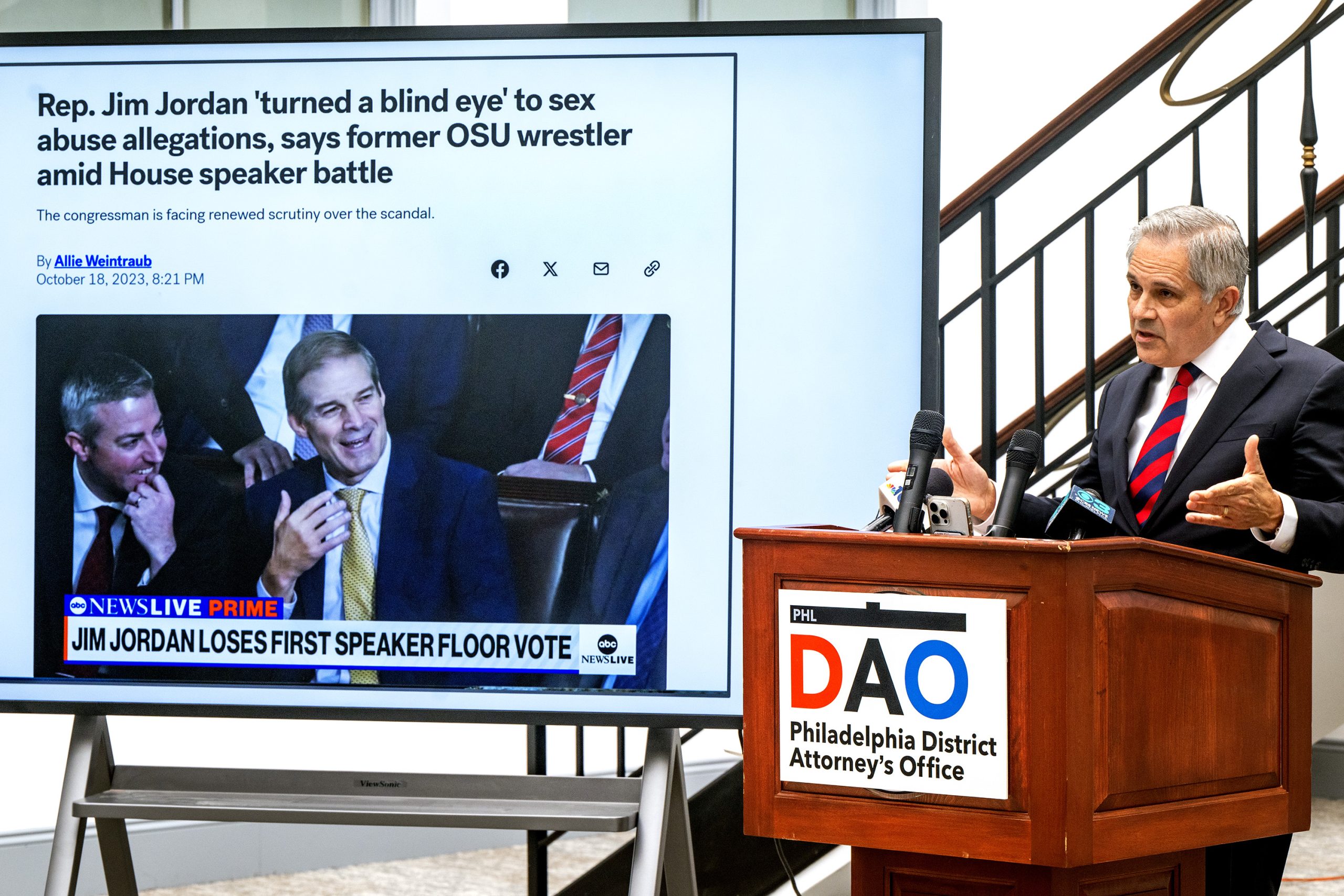
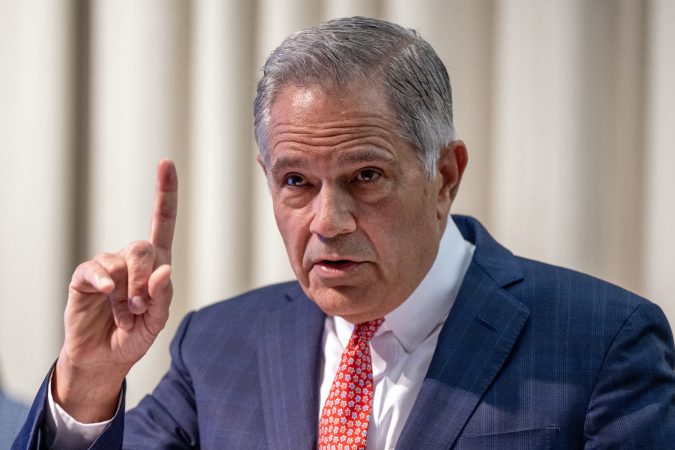
    District Attorney Larry Krasner at a May news conference denouncing criticism of his office leveled by Republican members of the House Judiciary Committee, and specifically its chairman, Rep. Jim Jordan (on screen).Tom Gralish / Staff Photographer

    In an interview with members of the Editorial Board, Krasner said he could speak more freely after the hearing ended. He added that more information would come out, and he hoped that until then the public would keep an open mind.

    This board has long supported Krasner’s efforts to examine claims of wrongful convictions. But the board does not support cutting corners or lying to the court.

    City, state, and federal prosecutors come into court with a level of credibility and trust earned over generations. Just as we have seen Donald Trump’s Justice Department fritter away its trust and credibility with repeated lies and sloppy lawyering, Krasner’s office risks doing the same.

    That could result in a major setback for others who have been wrongfully convicted. It is extremely difficult to get convictions reversed, and often takes years. If the courts don’t believe the prosecutors in Krasner’s office, anyone seeking an exoneration may face an even steeper hurdle.

    Studies indicate thousands of people nationwide are behind bars for crimes they did not commit, including some 4% of inmates on death row.

    Many wrongful convictions nationwide are the result of misconduct by police or prosecutors as well as misidentification by eyewitnesses. Philadelphia has a history of police corruption and abuse that has largely gone unchecked.

    Krasner’s decision to hold police accountable and investigate claims of wrongful convictions has been a long-needed correction. It has also animated Krasner’s law enforcement critics — of which there are many.

    That is all the more reason why his office must ensure its work involving exoneration cases is beyond reproach.

    Since taking office in 2018, Krasner’s office has freed 59 people, most of whom are Black men. That’s an impressive number in a short period of time.

    By comparison, over the past 34 years, the Innocence Project has helped to exonerate 257 people nationwide, largely through the use of DNA technology.

    But the state Supreme Court recently ordered the state attorney general to review any case in which the Philadelphia District Attorney’s Office wants to alter or overturn a past conviction.

    This board wrote earlier this month that the state Supreme Court went too far in ordering the added layer of oversight by the state attorney — which will live on long after Krasner leaves office — for fear it could slow down appeals and politicize the process.

    The court’s unprecedented overreach aside, the recent sworn testimony by a former prosecutor and two current prosecutors with firsthand knowledge of the office’s inner workings has raised doubts about the integrity of Krasner’s Conviction Integrity Unit.

    Public confidence in the district attorney’s office is paramount. Nothing should be off the table to ensure justice is delivered to victims and the accused in a safe, fair, and legal manner.

  • Audubon has opened its new history museum. Here’s what you’ll find there, from a New Century Theater seat to ‘Mudubon’ photos.

    Audubon has opened its new history museum. Here’s what you’ll find there, from a New Century Theater seat to ‘Mudubon’ photos.

    More than a century’s worth of varsity jackets, trophies, civic documents, photos, and more memorabilia from Audubon Borough have made their way into Camden County’s newest museum.

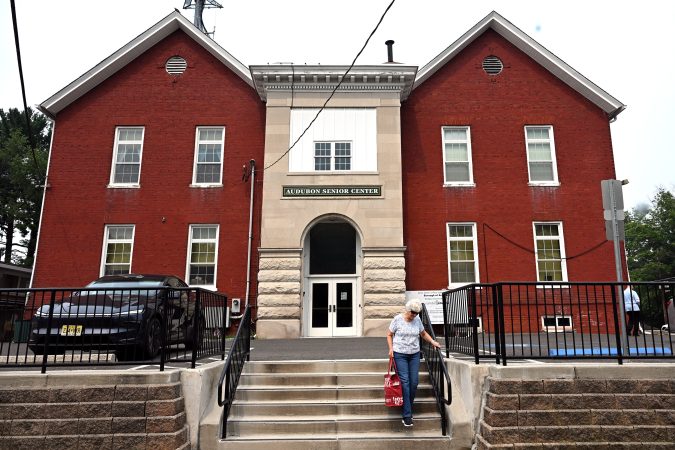
    The Audubon Historical Society Museum takes up much of Audubon Senior Center’s second floor, a red brick building that once served as Audubon School No. 1. The collection includes donated items from Audubon residents, including from the historical society’s own members, found in basements.

    Even though there are still more artifacts to put on display, from a 45-star American flag to thousands of pictures, Audubon’s rich history is already well represented. There’s memorabilia repping Joe Flacco, an NFL player and Audubon High School grad; an Audubon-themed Monopoly board created for a fundraiser; outdated land use maps; and an old police radio. A large section of the museum covers Audubon’s military history, including information about the borough’s three medal of honor recipients and two naval vessels named in their memory.

    The museum hosted its first public open house on July 4, and about 60 people came despite the heat, said Rob Jakubowski, Audubon’s mayor. Starting Aug. 8, the historical society will open the museum from 2 to 4 p.m. on the second Saturday of every month.

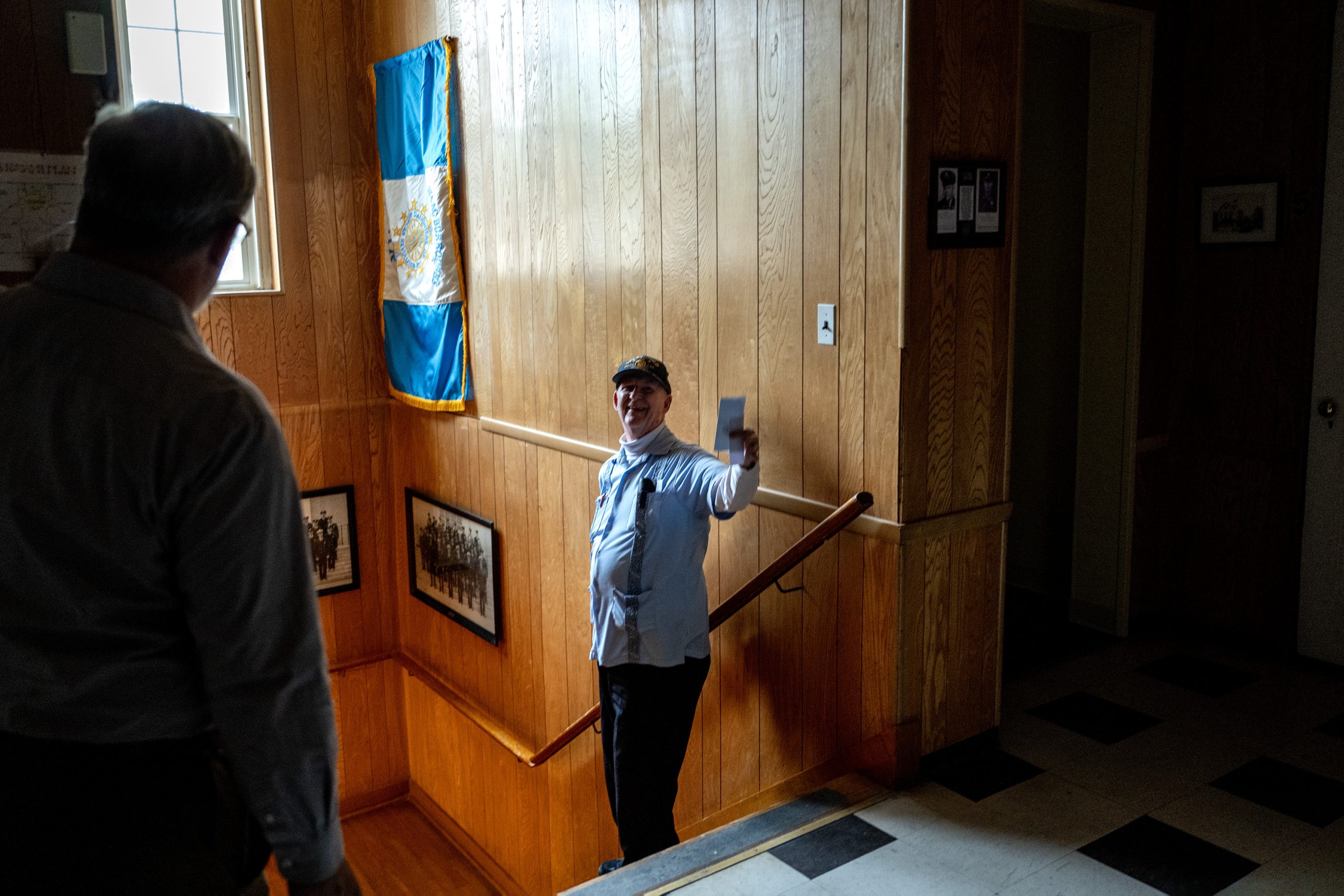
    Mayor Rob Jakubowski (left) and Craig E. Burgess on the stairs at the newly opened Audubon Historical Society Museum. They plan to use the wall space for more displays.Tom Gralish / Staff Photographer

    Jakubowski worked to develop the museum with a small group of Audubon Historical Society members, kept on task by corresponding secretary and longtime Audubon resident Nancy Whalen, 80. The museum, the brainchild of the late Walter Casebeer, a founding member of the society, came together 18 years after his death. Members sorted through four full closets of donated relics to establish the museum’s initial displays.

    “We were able to set up what is a really beautiful museum with a lot more work to do,” Jakubowski said.

    Though the senior center isn’t a schoolhouse anymore, the museum, funded by $40,000 in Camden County grants, was clearly once two classrooms, divided through the middle by chalkboard panels that pull out from the wall. The seniors running the museum hope to rotate the items on display as time passes, but for now, the group is proud to show off their hard work.

    Here are a few of the standouts.

    New Century Theater

    New Century Theater, founded in 1921, is no longer standing. The theater, renamed the Coronet in the ‘60s, was demolished in 2003. The space is currently being developed by a car wash company.

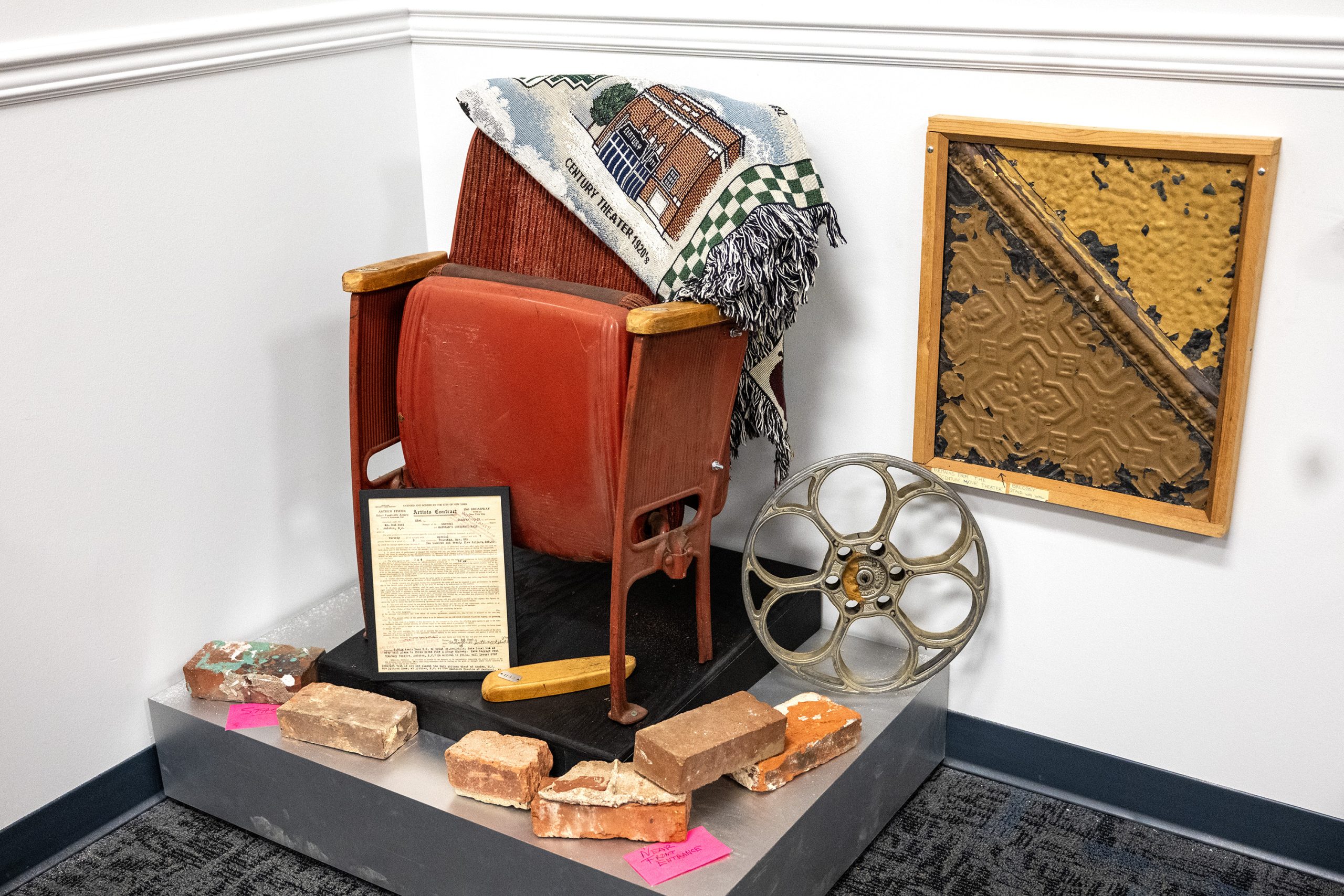
    But the historical society managed to acquire many keepsakes to remember the theater’s past. They have a seat someone rescued before the building got knocked down, a part of the wall, bricks, faint blueprints, and a movie reel Jakubowski said he found on eBay. A 1931 vaudeville contract is propped against the seat.

    Craig E. Burgess, 81, remembers when he could see a movie, a newsreel, a serial, and get candy, all for 10 cents at New Century Theater. When he found out the Audubon staple was going to be torn down, Burgess, who lived in the same house in Audubon for 73 years before moving to Collingswood, didn’t let the theater die without a last trip.

    “I stood in front of the door and said, ‘You don’t get in here until I get in to get some photos and get some video. If you won’t do that for me, then I will stay here, and you’ll have to push me over into the rubble,’” Burgess said. “And they believed me. I got in.”

    A theater seat and other memorabilia from the New Century Theater that opened in 1921, on display at the newly opened Audubon Historical Society Museum. Tom Gralish / Staff Photographer

    ‘Mudubon’

    Audubon, a part of Haddon Township until residents voted to become a borough, was incorporated in 1905. That was a couple of decades before paved roads boomed in the U.S., which made for a lot of wet dirt streets in the early 20th century in Camden County. Some photos at the new museum show those mucky roadways.

    Thus, the nickname Mudubon. It came from the mouths of delivery drivers trekking Audubon after bad weather, Jakubowski said.

    Burgess said ice trucks and milk trucks, along with the horses pulling them, used to get bogged down in the mud when it rained. He likes to tell a story about a boy who spent the summer away with his grandparents in the early 20th century, and returned home to paved roads — and confusion.

    “Mom took him out to visit his grandparents, came back on the bus to get off at Merchant Street. And he refused to get off the bus,” Burgess said. “He said, ‘This is not Audubon. I know my hometown.’”

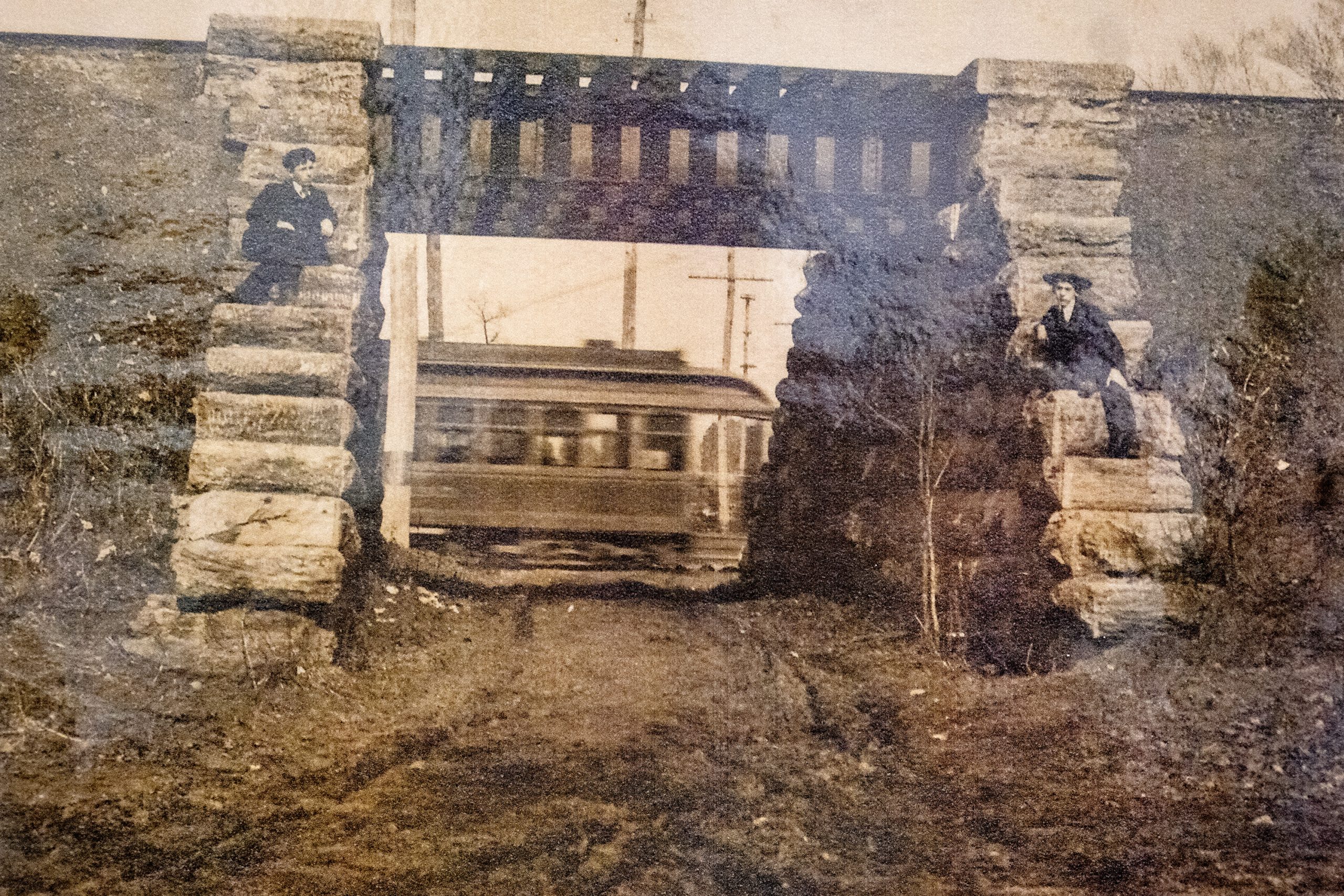
    An early 20th-century photo showing an unpaved Nicholson Road and the train overpass on display at the new Audubon Historical Society Museum. The trolley passing behind was on the line between Camden and Clementon Park that ran along East Atlantic Ave. The train line is no longer active, but Nicholson Road still goes under the bridge.Audubon Historical Society

    Nancy Ryan, 79, moved back to her native Audubon nine years ago to retire. She recalls stories from her father about the pavers coming in when he was 4 years old, watching the steam shovels digging up Cedar Croft in 1917 or 1918.

    Now, Ryan said, the only people who call the borough Mudubon are non-natives who like to make fun, like her husband. But Audubon residents know the borough has grown far beyond its muddy origins, Burgess said.

    “We’ve come a long way in the last 110 years, more or less,” Burgess said.

    100 years at Audubon High School

    Nearly a century ago, about 500 students took the first classes offered at Audubon High School on Edgewood Avenue in September 1926.

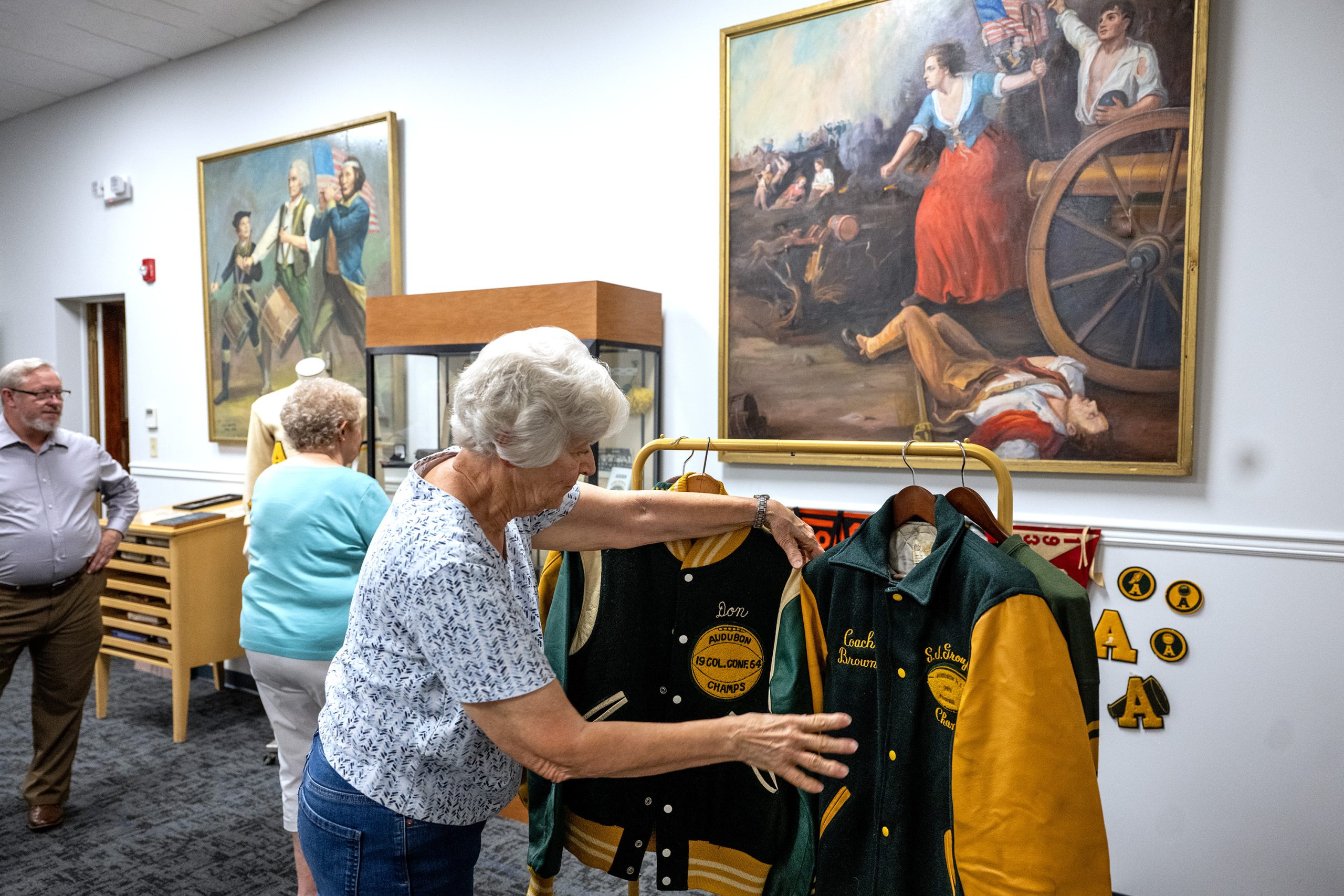
    Today, items spanning the high school’s history are on display: a booklet teaching children the 20th-century Palmer Method to learn cursive, pennants, a rack of letterman jackets, school handbooks, admission cards, and a cream varsity cardigan from 1966. A candlestick telephone used by the school’s first principal, Grace Kramer, sits at the bottom of a display case.

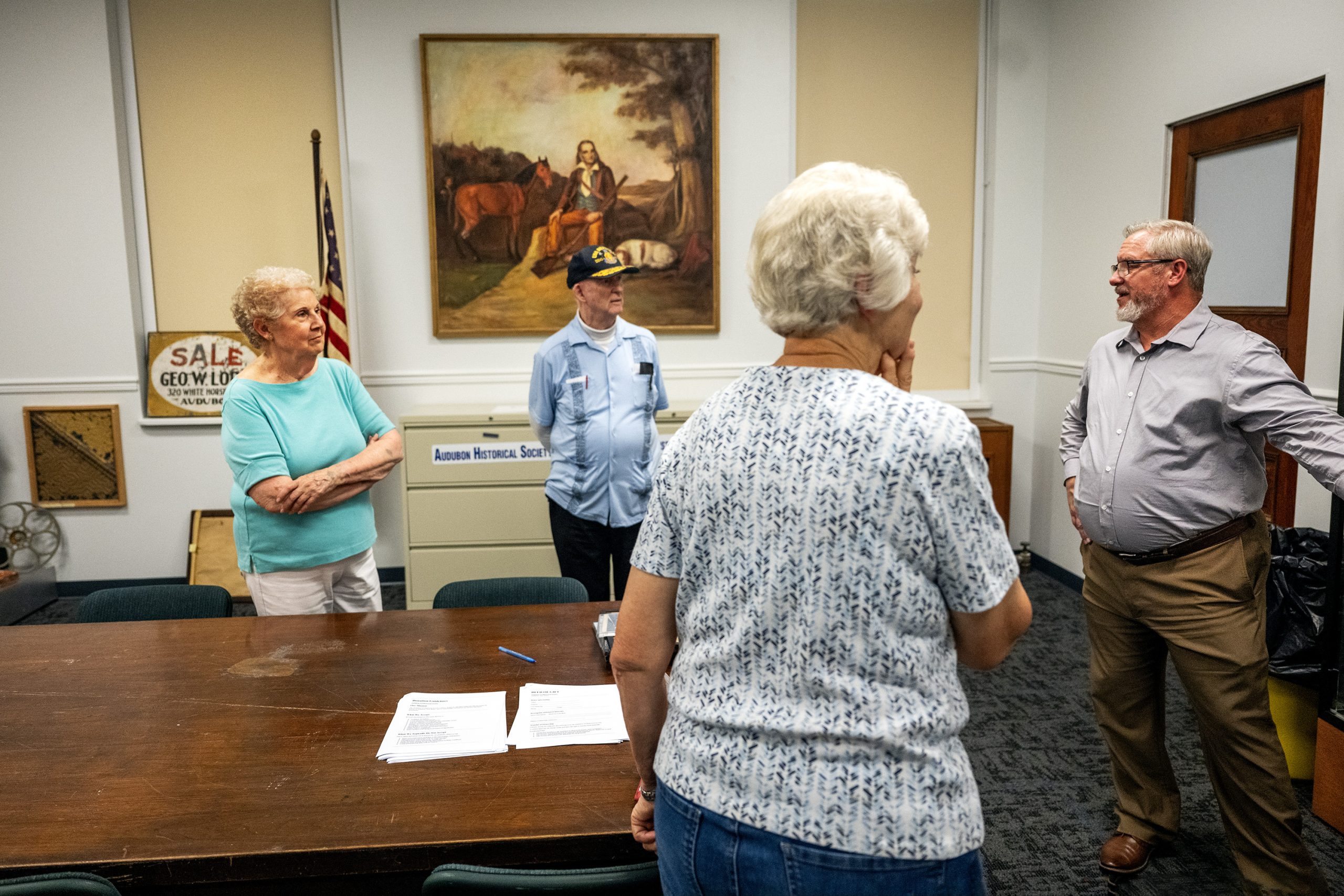
    Mayor Rob Jakubowski (from left), Nancy Whalen, and Nancy Ryan at the newly opened Audubon Historical Society Museum.Tom Gralish / Staff Photographer

    Three replica oil paintings recreated by the late Michael J. Miceli, a Mount Ephraim local, hang on the walls, too. They picture military drummers, fictionalized American Revolutionary War heroine Molly Pitcher, and French American artist and ornithologist John J. Audubon, the borough’s namesake. Their previous home was the Audubon High School auditorium, but when they were removed during recent renovations, a history teacher saved them, Jakubowski said.

    Plus, every high school yearbook available since the school’s founding line a bookshelf in a back room, in case anyone comes looking to do archival research.

    From left: Nancy Whalen, Craig E. Burgess, Nancy Ryan, and Mayor Rob Jakubowski at the newly opened Audubon Historical Society history museum on the second floor of the Audubon Senior Center Thursday, July 16, 2026. Behind them is a painting of naturalist, ornithologist, and painter John James Audubon, for whom the town was named. Tom Gralish / Staff Photographer

    The group is still open to taking donated artifacts, though with their large existing collection, they’re not afraid to decline duplicates. In the meantime, the historical society will continue sorting their archives. It’s a lot of work, all volunteer.

    “But that’s what makes it fun,” Burgess said.

  • Philadelphia shoe retailer Sherman Brothers is moving to the Main Line after 73 years in Center City

    Philadelphia shoe retailer Sherman Brothers is moving to the Main Line after 73 years in Center City

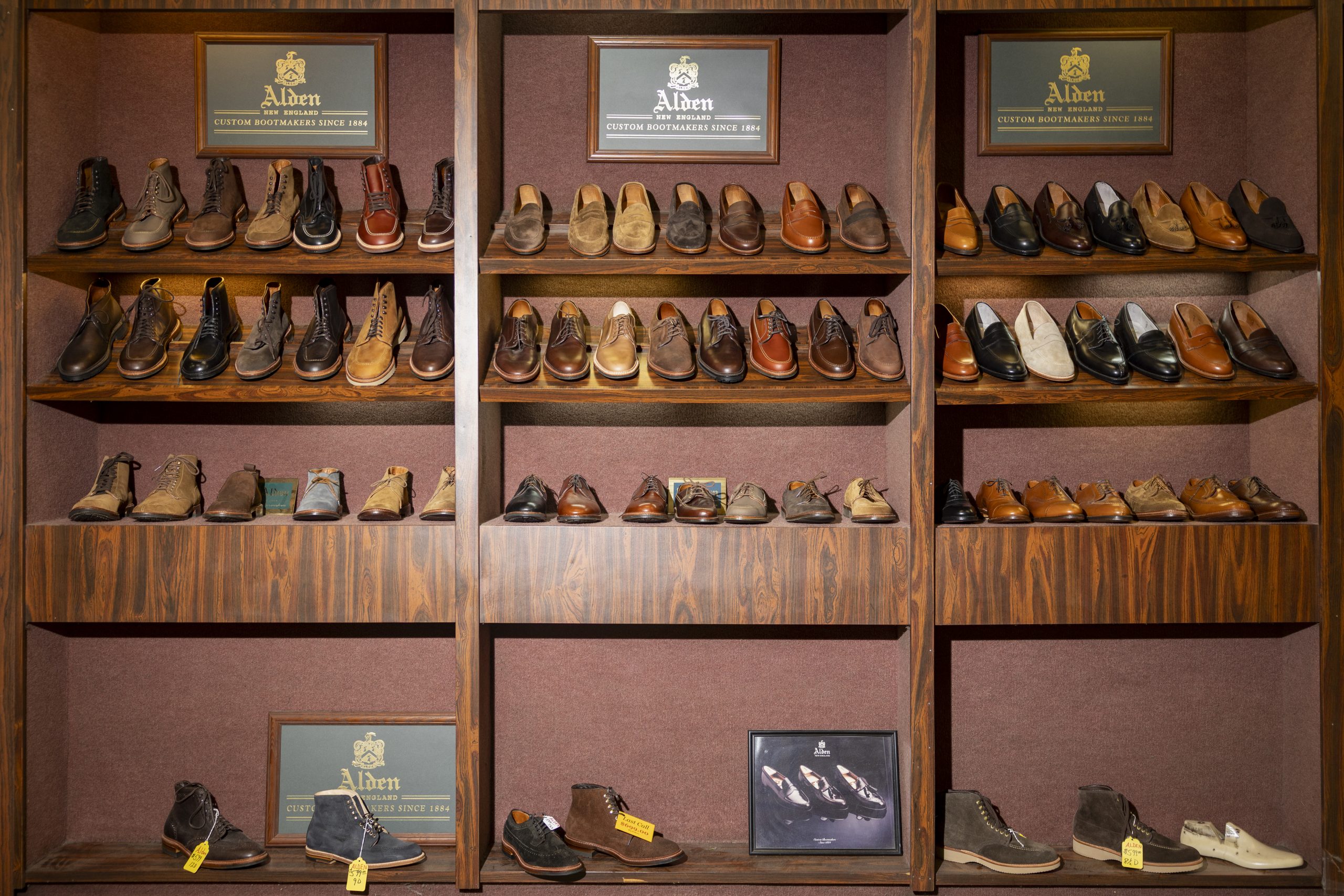
    A wood placard mounted behind the register at Sherman Brothers Shoes in Center City is inscribed with the following message: “The BITTERNESS of Poor Quality Remains Long After the Sweetness of Low Price is FORGOTTEN.”

    The saying is commonly attributed to Benjamin Franklin, making it a fitting aphorism for a shoe store that has served Philadelphia’s men for 73 years, outfitting them with pristine suede loafers and stitched leather boots, ranging in hues from auburn and chestnut to sienna and camel.

    After seven decades in Center City, Sherman Brothers is moving from 1520 Sansom St. to the Main Line this summer. The men’s footwear retailer will take over 42 Greenfield Ave. in Ardmore, formerly home to consignment store Clothes Mentor, and will aim to open by Labor Day. The move will reestablish Sherman Brothers in the Philly suburbs, where it once had multiple storefronts, and will mark a new chapter for the storied family business.

    Alden boots and loafers line the walls of Sherman Brothers in Center City.Aidan T. Gallo / Staff Photographer

    Sherman Brothers was founded in 1953 by brothers Herbert and Edwin Sherman. The two purchased a small shoe store on Mole Street in Center City from their Uncle Lou, using a $5,000 loan from their father. Herbert and Edwin would take long road trips up to New England to visit shoe factories, stocking up with closeout and clearance shoes from brands like E.T. Wright, Bates, and Alden. Because they were buying clearance shoes, they often returned to Philadelphia with extra small and large sizes, making Sherman Brothers a favorite store for men with hard-to-fit feet.

    In 1967, the brothers moved to the Sansom Street location. By then, the store had become a destination for mayors and council members, athletes and entertainers, turning to standing room only during its busiest hours. At one point, Sherman Brothers had three suburban outposts in addition to the Sansom Street store, all of which eventually closed. Now, the shoe store does more than half of its business online, shipping to buyers everywhere from Mississippi to Nebraska.

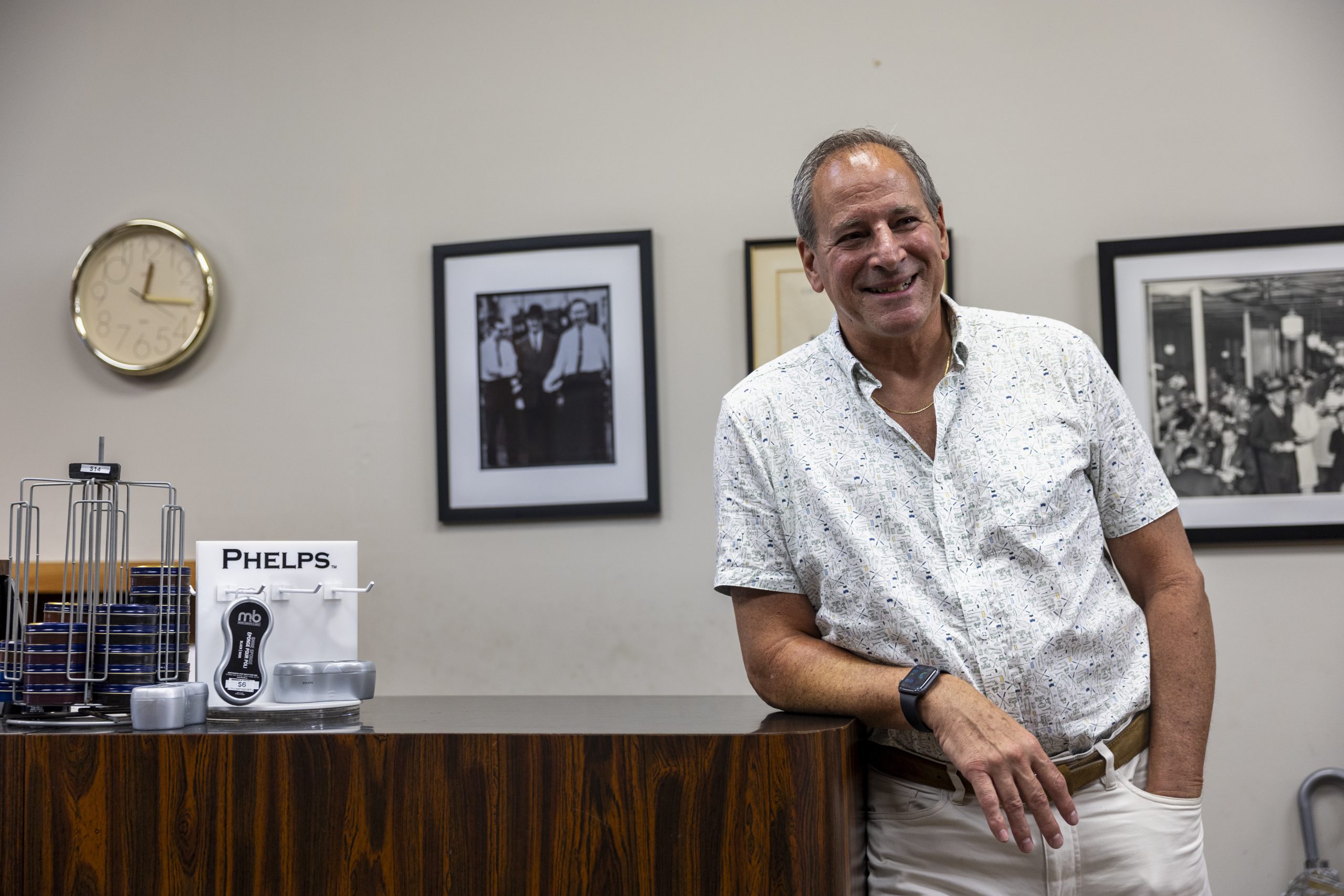
    Ken Sherman, 66, Herbert’s son, has “been doing this all my life.”

    Ken, along with his cousin Jeffrey, make up the second generation of Sherman Brothers ownership. Ken worked in the shoe store in high school, then after class as a student at Temple University. He’s always loved key components of the business: schmoozing with customers, visiting factories, learning the art of bending leather into footwear. He says he can size up a person’s foot just by looking at a picture.

    “This business is a passion of mine,” Ken said, sitting in the store on a Tuesday morning.

    As he moved through the store, Ken helped a patron pick out a pair of wedding shoes and pointed out a favorite shoe brand of Gov. Josh Shapiro, who’s known for pairing suits with upscale sneakers.

    “I love the customers,” he said. “I love what we do. I love just engaging in conversation.”

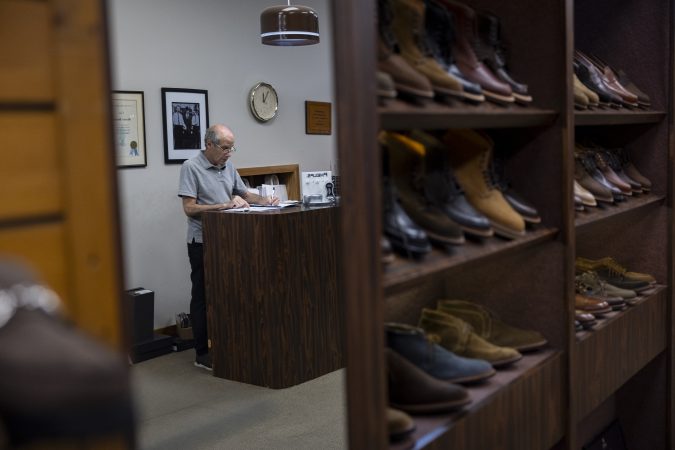
    Ken Sherman stands at the register of Sherman Brothers. Ken marks the second generation of ownership for the family business. Aidan T. Gallo / Staff Photographer

    The reasons for moving Sherman Brothers to Ardmore are manifold, said Ken.

    The block of Sansom Street where the store is located has become a restaurant hub — Sherman Brothers is flanked by 1518 Bar & Grill, Mission Taqueria, Oscar’s Tavern, and Bagels & Co., among other bars and eateries. The shoe store is one of the last retailers on the block. For years, Ken said, stakeholders made offers to bring something new into the Sherman Brothers space. Ultimately, a restaurant made an offer that the Shermans decided to take (the Shermans own the buildings at 1518 and 1520 Sansom Street and lease space to multiple tenants). Ken declined to share any details about the new restaurant, which will be called Silver Shaker.

    Another reason to leave Center City: Parking. For years, Sherman Brothers employees and patrons have complained of parking tickets and the high prices of lots. The Ardmore store will have ample free parking.

    Ken said he’ll miss the city — the Sansom Street storefront holds memories of celebrity patrons, family milestones, and now-funny mishaps. He hopes his Philadelphia customers will make the trek out to Ardmore to visit with him. But he’s ready to bring Sherman Brothers back to the Main Line.

    “We’re still Sherman Brothers. Our legacy is what it is, and I’m proud of that, proud of what we’ve done for the city,” Ken said.

    “We’re gonna do exactly what we do, just in a different location.”

    This suburban content is produced with support from the Leslie Miller and Richard Worley Foundation and The Lenfest Institute for Journalism. Editorial content is created independently of the project donors. Gifts to support The Inquirer’s high-impact journalism can be made at inquirer.com/donate. A list of Lenfest Institute donors can be found at lenfestinstitute.org/supporters.

  • It started as a joke. Now, three Philly friends are the proud owners of their very own garage.

    It started as a joke. Now, three Philly friends are the proud owners of their very own garage.

    It was a very Philly problem.

    Corey McMillan, Luke Elrath, and Jeremy Stock were longtime friends. All in their mid-to-late-40s and all self-described “motorheads,” the South Philadelphia residents loved to spend their free time restoring old vehicles and, over the years, had come to amass a small assortment of trucks, cars, motorcycles, and bicycles.

    It was a side passion, started as a way to save money on mechanic fees or escape — for an hour or two, at least — the stresses of daily life.

    The issue was, this was Philly, where century-old rowhouses dominate the local housing stock and a home garage is notoriously difficult to come by. While they all owned at least one classic vehicle, none had a garage of his own.

    Then, last spring, came a crazy idea.

    What if we bought one ourselves?

    Making do

    Through the years, the three friends had done their best to make it work: They’d tinkered on sidewalks or rented out space in under-the-table — and sometimes dubious — commercial garages. Elrath was so desperate for space that, for a time, he used the living room of his apartment as a workshop for bicycle-related repairs.

    “I’d roll back the [rug] and get to work on the hardwood floor,” he said.

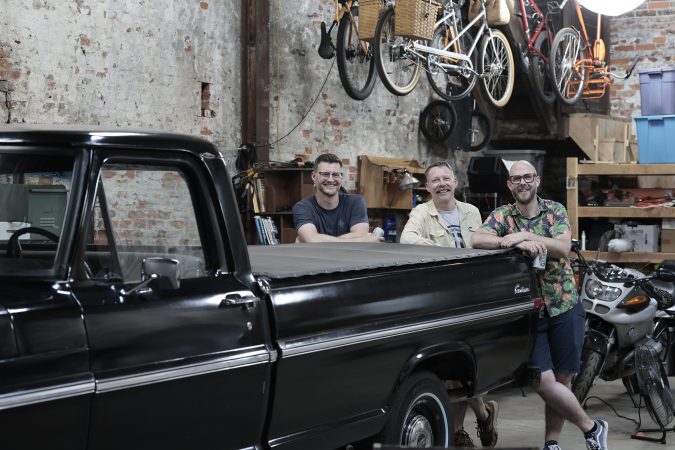
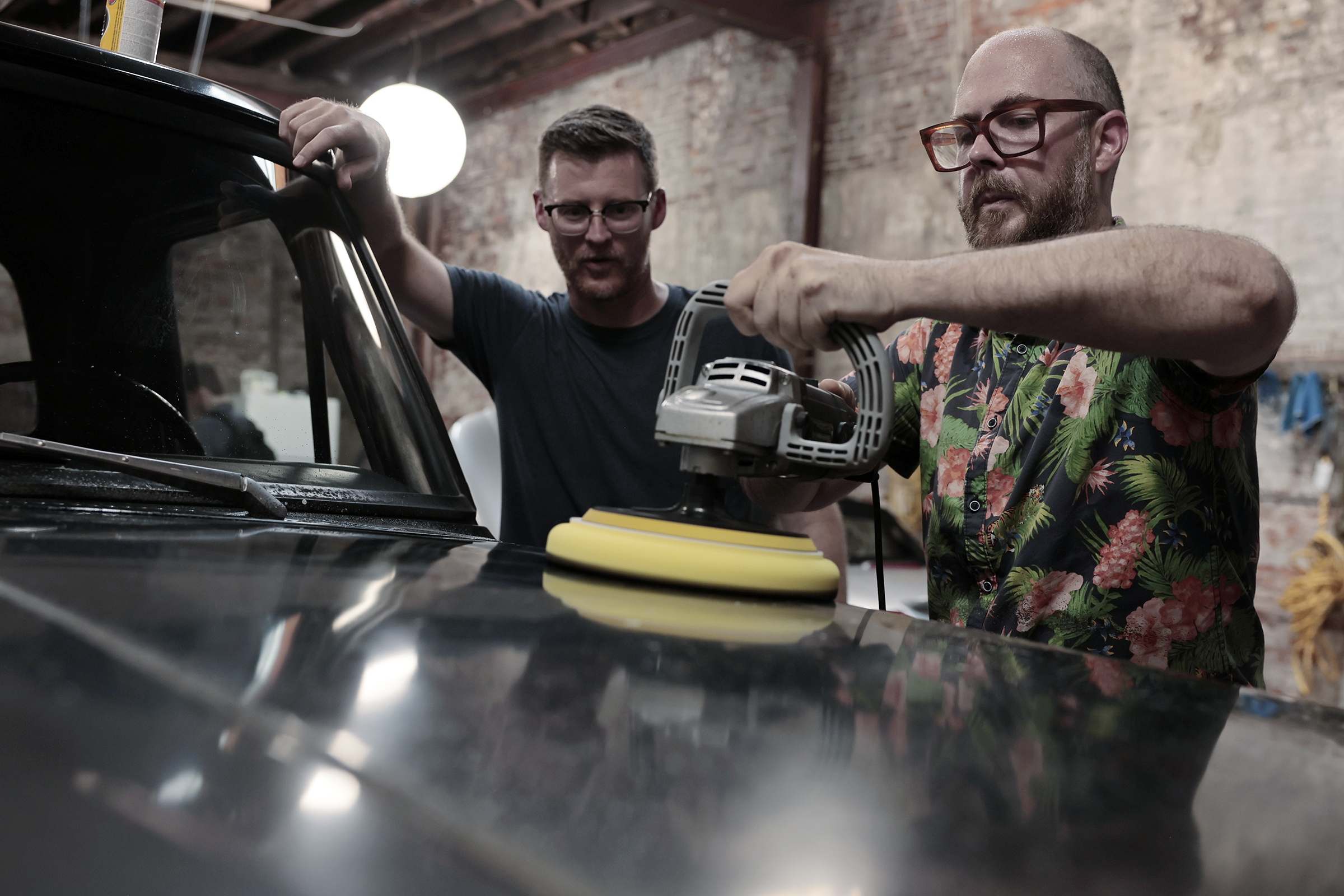
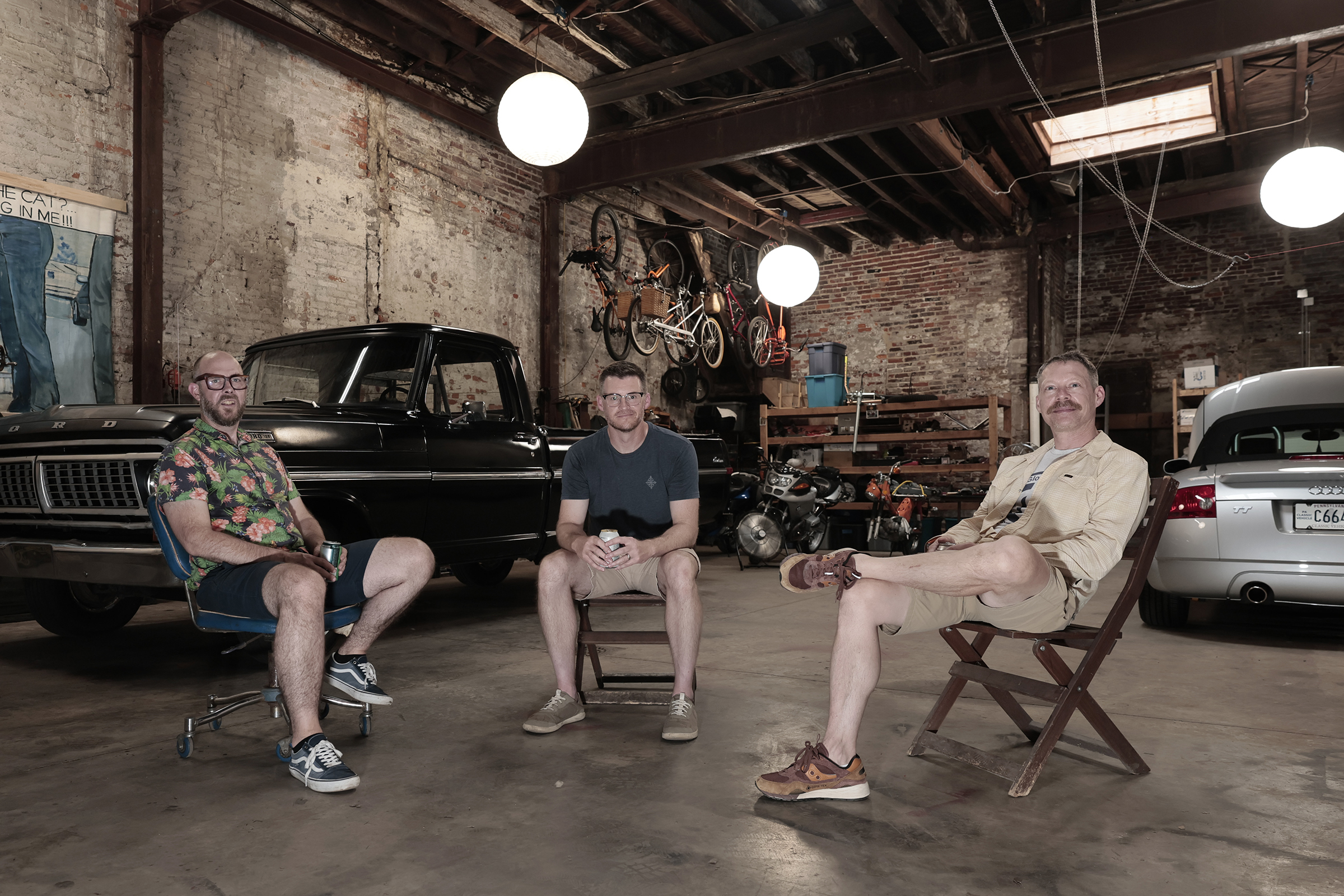
    Jeremy Stock (right) works on his 2001 Audi TT Roadster as Luke Elrath (middle) and Corey McMillan (left) chat in their South Philadelphia garage one evening earlier this month. The group bought the garage together so they would have a place to work on their cars, trucks, motorcycles, and bikes.Elizabeth Robertson / Staff Photographer

    As the years passed, they’d largely accepted this as the price of city living, making do however they could.

    McMillan, 49, kept his 1970 Ford Truck at his family’s place in the Catskills, working on it only when he could make the trip up from Philadelphia. For the 2001 Audi TT Roadster he was restoring, Stock found a cramped space over the river in Haddonfield that was “so small I couldn’t work on the car at all.” Elrath rented a spot in a garage that doubled as a storage unit for the Mummers — grateful to have even that.

    “If that was all I had for the next decade, I’d consider myself at least lucky for that,” he said.

    Then, one day this spring, McMillan — who by day works as a professor at the University of Pennsylvania — stumbled upon a curious Instagram post.

    It was a property listing, for a sizable South Philly garage. 3,000 square feet. Brick walls and a reinforced concrete floor. Located on a narrow, nondescript residential street. Listed for $380,000.

    Notably, it was located within a mile and a half of each of their homes.

    ‘Absolute heaven’

    McMillan texted the listing to his two buddies, who over the course of the day traded a flurry of bemused texts — daydreaming of what they’d be able to do with a space all their own.

    “It was a full day of talking about it like what would we do if we won the lottery,” said Stock, 46, who works in marketing technology for a pharmaceutical company.

    It was all in fun, insists McMillan. “Just kind of like, Haha, isn’t this funny?”

    But when Stock woke up the next morning, there was something about the idea he couldn’t shake.

    I just can’t get this out of my mind, he texted the group.

    Neither could Elrath, it turned out. Or McMillan, who was already preparing for how he might broach the idea with his wife.

    Jeremy Stock, a former detailer, (left) guides Corey McMillan as he restores the paint on his 1970 Ford F-100 truck nicknamed “Boone” in their South Philadelphia garage earlier this month. Elizabeth Robertson / Staff Photographer

    That weekend, the three of them went to look at the space.

    It was a cavernous, nearly windowless structure. There was no heat or air-conditioning. A rusted beer fridge stood in the back. In one corner was a small bathroom, which was easy to find considering it had no walls — just a toilet and sink anchored to an elevated patch of concrete.

    “Absolute heaven,” Stock said.

    Gettin’ wrenchin’

    Soon enough, the three were running the idea past their wives. And though it took a bit of getting used to — “Buying a second property was not on my 2026 bingo card,” said Danielle Burrows, Stock’s wife — everyone ultimately bought in.

    Not long after, McMillan was meeting with a transactions lawyer, who helped navigate the three-way purchase, and, suddenly, they were signing the sale documents — the proud owners of a South Philly garage.

    “It all happened so fast,” said McMillan. “It didn’t feel real. It still doesn’t.”

    They began moving their things in early June, said Stock, “and immediately got to wrenchin’.”

    Recently, McMillan brought his Ford Truck from the Catskills to the garage, and has begun working on it a couple times a week. Elrath, 49, who works as a subject matter expert investigating bicycle crashes, has three motorcycles and a slew of bicycles on-site, and tries make it over to the garage five days a week to tinker with them.

    Stock is preparing to take ownership of a 1970 Triumph TR 6, a sporty British roadster in need of significant work, which, he says, will “be a nice multiyear project that we’re going to take on.”

    “As the budget allows,” his wife quickly added.

    From left, Corey McMillan, Jeremy Stock, and Luke Elrath in their South Philadelphia garage.Elizabeth Robertson / Staff Photographer

    Settling in

    On a recent evening inside the garage, the three friends still seemed in awe that it had all come together so nicely. So far, they agreed, it’s been a revelation. Working side by side, they’re able to share tools and the technical know-how they’ve accumulated through the years. Maybe best of all, it’s been an excuse to see each other regularly. Their wives have begun using the hashtag “GarageWives” in the friends’ group chat.

    A month and a half in, meanwhile, the place is starting to feel like home. McMillan’s wife found a used espresso maker. Someone brought over some old speakers. There are rumors of a potential couch.

    There is still plenty left to do; there are plans to add a lift, and the rotting wood floor of the upstairs hay loft needs replacing.

    On this night, however, they seemed perfectly content as they worked on their respective vehicles in satisfied silence — the only sound the clank of tools, the hum of a pair of floor fans, and the sweet crack of a fresh fridge beer.

    Heaven, indeed.

  • Eagles newcomers ’26: How will wideout Dontayvion Wicks fit into Sean Mannion’s offense?

    Eagles newcomers ’26: How will wideout Dontayvion Wicks fit into Sean Mannion’s offense?

    With Eagles training camp drawing nearer, The Inquirer is taking a closer look at the more than three dozen new faces who are expected to report along with the rest of the team on July 28.

    Player: Dontayvion Wicks

    Position: Wide receiver

    Age: 25

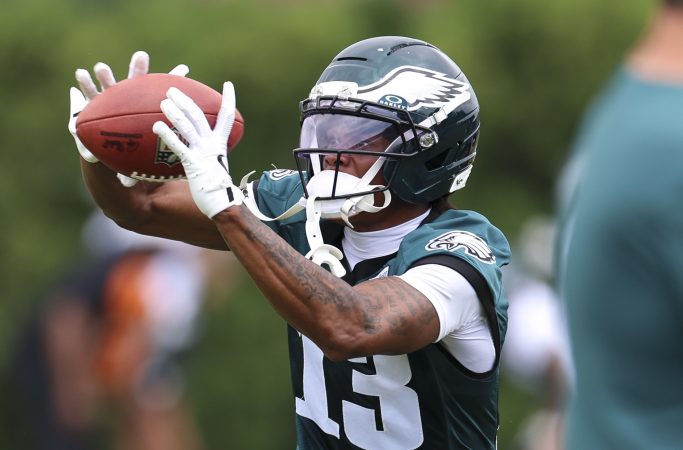
    Previous experience: The Eagles acquired Wicks this offseason from the Green Bay Packers, the team that drafted him in the fifth round in 2023 out of Virginia. Wicks also signed a one-year, $10.5 million extension, keeping him under contract through 2027.

    He overlapped for two seasons in Green Bay with Sean Mannion, the new Eagles offensive coordinator who served as a Packers offensive assistant in 2024 and the quarterbacks coach in 2025. But Wicks’ best season was his rookie year in 2023, when he racked up a career-high 581 yards and four touchdowns on 39 receptions.

    Every year since has paled in comparison. He finished with 415 yards and five touchdowns on 39 receptions in 2024, and 332 yards and two touchdowns on 30 receptions in 2025. Wicks was, in part, a victim of the Packers’ deep receiving corps, as he never played more than 54% of the offensive snaps in a single season.

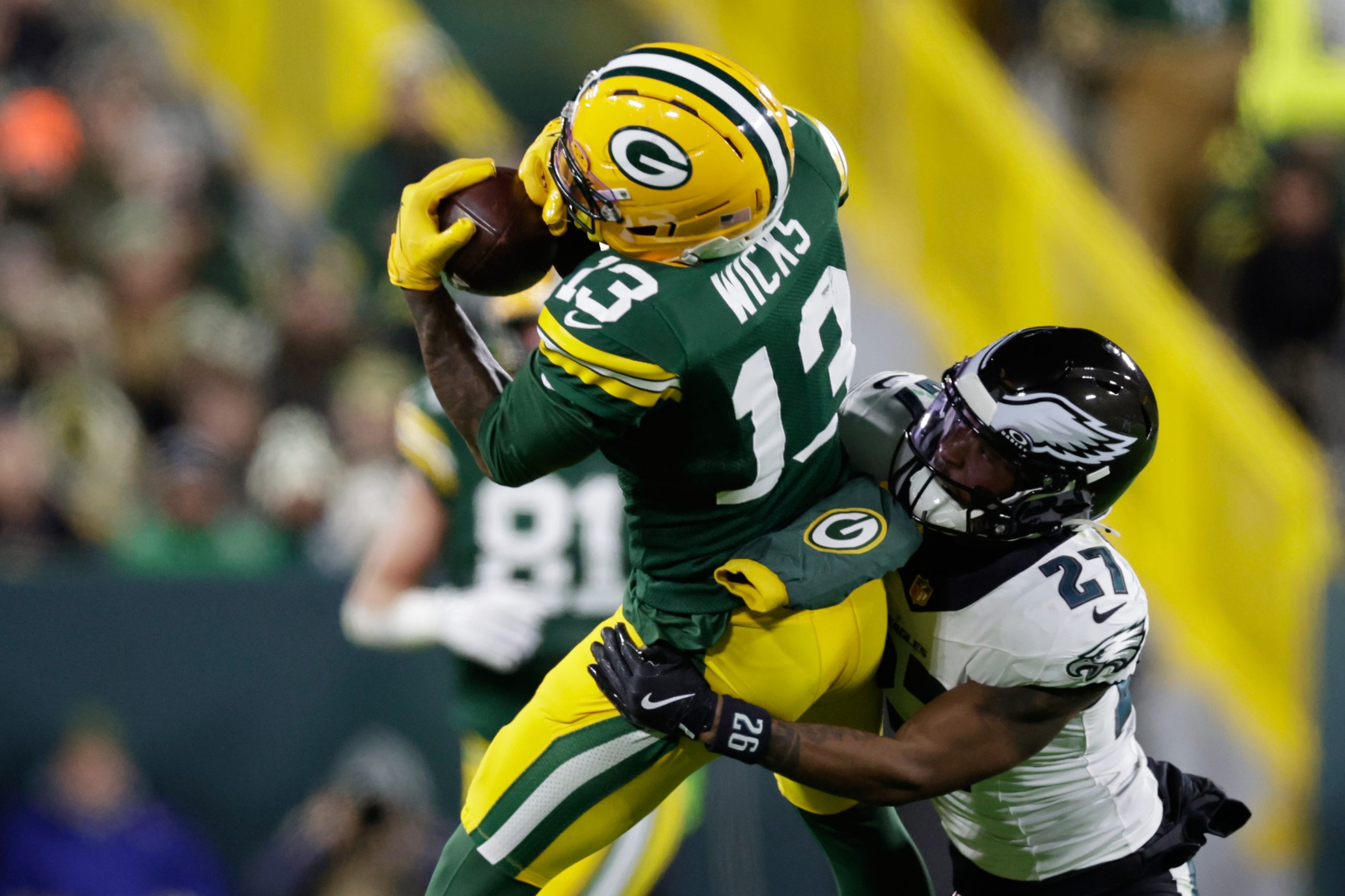
    Dontayvion Wicks (13) faced Quinyon Mitchell (27) and the Eagles last season. Matt Ludtke

    He also struggled with drops in 2024, registering the third-highest drop rate at 11.8% among wide receivers with at least 70 regular-season targets, according to Stathead.

    Still, the 6-foot-1, 206-pound Wicks has had his standout moments, including his two-touchdown performance in the Packers’ Thanksgiving victory over the Detroit Lions last season. His drop rate improved in 2025, too, finishing with a career-low 4.3%.

    Path to a roster spot: Wicks currently projects (depending on whom you ask) as the third receiver behind DeVonta Smith and Makai Lemon, although Hollywood Brown could contend with him for more targets. Wicks will have an opportunity to show that he’s capable of taking on more responsibility in the offense, especially one that traded away its top playmaker in A.J. Brown this offseason.

    The Eagles are high on Wicks. Nick Sirianni likened his skill set to that of Keenan Allen, especially in terms of their shared ability to get in and out of breaks and their efficiency at the line of scrimmage. Wicks also has the versatility to line up in the slot (39.3% of his career pass snaps, according to Pro Football Focus) and on the outside (58.9%).

    Fun fact: Wicks was a quarterback at Plaquemine High School in Louisiana, and a left-handed one, too. His arm came in clutch during his rookie season when he completed a 14-yard pass to running back Aaron Jones on a trick play against the Denver Broncos.

    Quotable: “He’s a unique player in terms of some of the things that he’s able to do from a route-running perspective. He’s headed into Year 4, you’ve seen the growth, and I think you’re excited, because you still see that there are parts of his game that he’s still refining, like every single player. I think he brings toughness. Obviously you can see from watching the tape, he’s a talented guy. One thing I think with Tay is his mindset, he thinks the game in the proper way.” — tight ends coach Ryan Mahaffey, the former Packers receivers coach, on Wicks in June


    Player: Jose Ramirez

    Position: Outside linebacker

    Age: 27

    Previous experience: Ramirez was the Tampa Bay Buccaneers’ 2023 sixth-round pick out of Eastern Michigan. He didn’t make the initial 53-man roster out of training camp that summer and subsequently was signed to the Bucs’ practice squad.

    In 2024, shortly after his three-sack performance in the second week of the preseason against the Jacksonville Jaguars, Ramirez made the active roster out of camp. He appeared in four games that season (30 defensive snaps, 40 special teams snaps). The 6-2, 252-pound outside linebacker was waived at the end of training camp in 2025.

    Ramirez continued his pro career in the CFL with the Hamilton Tiger-Cats last season. In three games, he registered one sack and four tackles. Ramirez was released in the offseason to sign a reserve/future contract with the Eagles in January.

    Path to a roster spot: Ramirez has a shot at the practice squad, but it’s a long one. He will have to compete against veteran A.J. Epenesa and sixth-rounder Keyshawn James-Newby for one of the last spots on the active roster behind Jonathan Greenard, Jalyx Hunt, Nolan Smith, and Arnold Ebiketie. If the 27-year-old Epenesa is the early favorite to make the initial 53, James-Newby and Joshua Weru (International Player Pathway program; would not count toward 16-man limit) are the top candidates for the practice squad.

    Fun fact: In four years at Eastern Michigan, Ramirez notched 20½ sacks, the second-greatest career total in school history. He had 12 sacks in 2022, making him the fourth player at Eastern Michigan since 1998 to notch double-digit sacks in a single season. That season, he was named the Mid-American Conference’s defensive player of the year.

    Quotable: “I feel like my best attributes are my stab and my speed, just using my get-off to scare the O-lineman. But I feel like there’s a lot of things I need to work on. Even the things I’m good at, I feel like [there’s] still room to get to perfection. I feel like you can practice over and over and over, and there’s no such thing as getting to the end of it. There’s always time to get better.” — Ramirez in 2023 after the draft, via the Buccaneers

  • The Flyers’ rivalry with the Ducks might be the strangest part of a strange Philly sports summer

    The Flyers’ rivalry with the Ducks might be the strangest part of a strange Philly sports summer

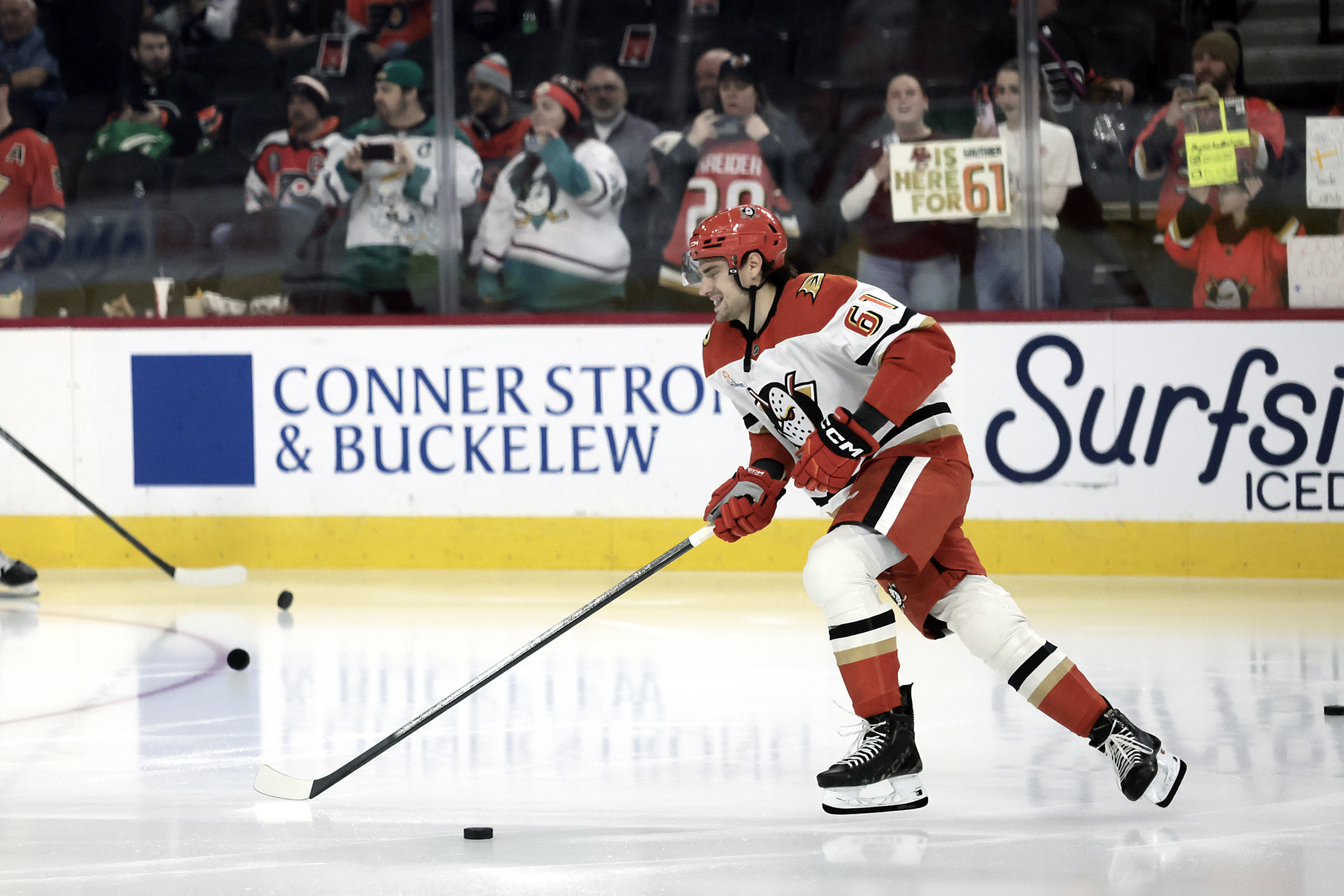
    The Flyers’ schedule came out last week, and maybe I’m an exception in this regard, but I did not scan it immediately for games against the Penguins and Rangers and Capitals. My eyes fell on two dates: Saturday, Oct. 24, and Sunday, Jan. 3. A pair of unmissable matchups against the Flyers’ newest and most hated rivals: the … Anaheim Ducks?

    This has been an odd few months, in so many ways, for the Philadelphia sports scene. Think about some of the stories. The A.J. Brown trade watch. The reasons for that trade — i.e. his relationship, such as it was, with Jalen Hurts. The Phillies’ slow start. Their decision to fire Rob Thomson. Their inability to play reasonably intelligent baseball. The Sixers’ comeback over the Celtics. Their embarrassing sweep by the Knicks. Their decisions to fire Daryl Morey and hire Mike Gansey and trade for Jaylen Brown. Their nightly vigil for LeBron James.

    But none of those developments, none of them, compares to the sheer weirdness of the rising tensions between the Flyers and their Disneyland-adjacent counterparts. Imagine the Eagles and their fans hating the Jacksonville Jaguars or the Phillies and their fans being obsessed with beating the … Los Angeles Angels of Anaheim, and you have a sense of just how strange it is that the Ducks have become mallard non grata around here.

    It’s one thing to despise Sidney Crosby; the guy is one of the greatest players in hockey history, has won three Stanley Cups, has tormented the Flyers for years, plays exactly the tenacious, win-at-all-costs style that would make him a god if he wore orange and black, and is based just 300 miles west of the Xfinity Mobile Arena. It’s another to despise a franchise that has been in existence for just 33 years, has won just one Stanley Cup (almost 20 years ago), and was named after a children’s movie. But here we are.

    The origins of the bad blood are no secret, at least not to anyone who follows the Flyers closely. On Jan. 8, 2024, they traded Cutter Gauthier — the No. 4 pick in the 2022 NHL draft, the prospect who was presumed to be their top goal scorer and franchise centerpiece for the next decade or more — to the Ducks for Jamie Drysdale and a second-round pick. The deal was a shocker, and when Flyers president Keith Jones said during an NBC Sports Philadelphia interview that they traded Gauthier because “he didn’t want to be a Flyer,” Gauthier’s villain status was instantly established.

    The public sentiment here, with some exceptions, went from For chrissake, the Flyers let their future get away to Who the hell does that punk think he is? And Drysdale, whom the Flyers recently signed to a four-year contract extension and whom they consider an important member of their corps of defensemen, would forever be compared to the potential superstar the Flyers felt they had to give up.

    “The only thing that it does and will continue to do moving forward is just motivate me,” Drysdale said Monday. “I want to be the best player I can for the city, for the team, for the fans, for everything. I know I still have a lot more to give, and that’s exciting for me on my end.”

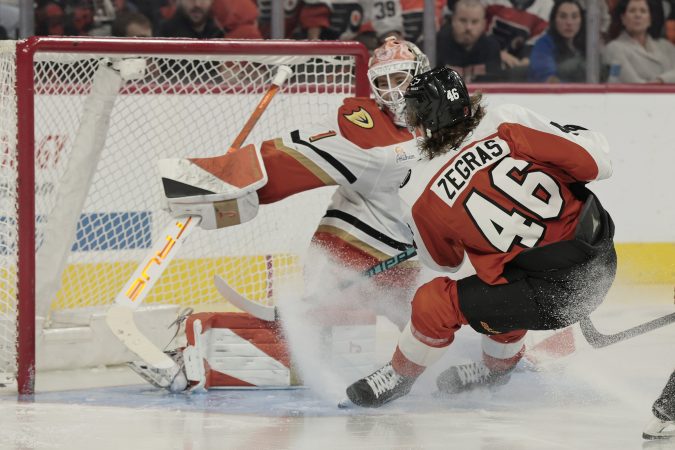
    Things have gotten only more intense since the Gauthier-Drysdale trade. It’s not just that the two franchises consummated another significant trade — and, for the Flyers, a so far highly successful one — 13 months ago, when Anaheim sent Trevor Zegras here for forward Ryan Poehling and two draft picks. It’s not just that the Flyers have beaten the Ducks all four times the clubs have faced each other over the last two seasons. It’s not just that the teams’ last matchup in Philadelphia, a 5-2 Flyers victory on Jan. 6, was loaded with checks and hits that sometimes crossed the line separating clean from dirty.

    Cutter Gauthier became an enemy for the Flyers’ fan base after his trade to Anaheim two years ago.Elizabeth Robertson / Staff Photographer

    It’s this: Of all the possible maneuvers and gambits that Flyers general manager Danny Brière could have attempted this offseason to supercharge the team’s push toward Stanley Cup contention, he and his staff decided to target Leo Carlsson, maybe the Ducks’ most important player. On July 3, they sent him to a five-year, $90 million offer sheet, one that would have made Carlsson — 21 years old, nearly a point-per-game player last season, still improving — the highest-paid player in the league.

    The Ducks always had the right to match the Flyers’ offer, and as expected, they did, and Brière and the Flyers still have to figure out how to acquire (or somehow develop) a top-line center. A disappointing result, to be sure. But from the Ducks’ perspective, the outcome of the Carlsson situation wasn’t exactly seashells and balloons. Brière made a bold move at Anaheim’s expense, forcing Pat Verbeek, the Ducks’ GM and a notoriously tough and frugal executive, to pay a price that he never would have otherwise chosen to pay to keep Carlsson — who had made it clear he wouldn’t have minded playing somewhere else. Plus, though the NHL’s salary cap is rising and will likely continue to rise for a while, the Carlsson deal promises to limit the Ducks’ ability to add or re-sign other vital players, including Gauthier.

    What we have now are two organizations that have squared off in some high-stakes competitions — on the ice, yes, but the boardroom battles between them have been even better. No, this coast-to-coast duel doesn’t immediately call to mind the fear and loathing that Philadelphia fans have had for the Cowboys, the Mets, and the Celtics. Yeah, it feels sort of silly to have a rivalry with a franchise whose spiritual forefathers are Emilio Estevez and the guy who played Pacey on Dawson’s Creek. But if it walks like a duck and quacks like a duck, it must be … well, you know.

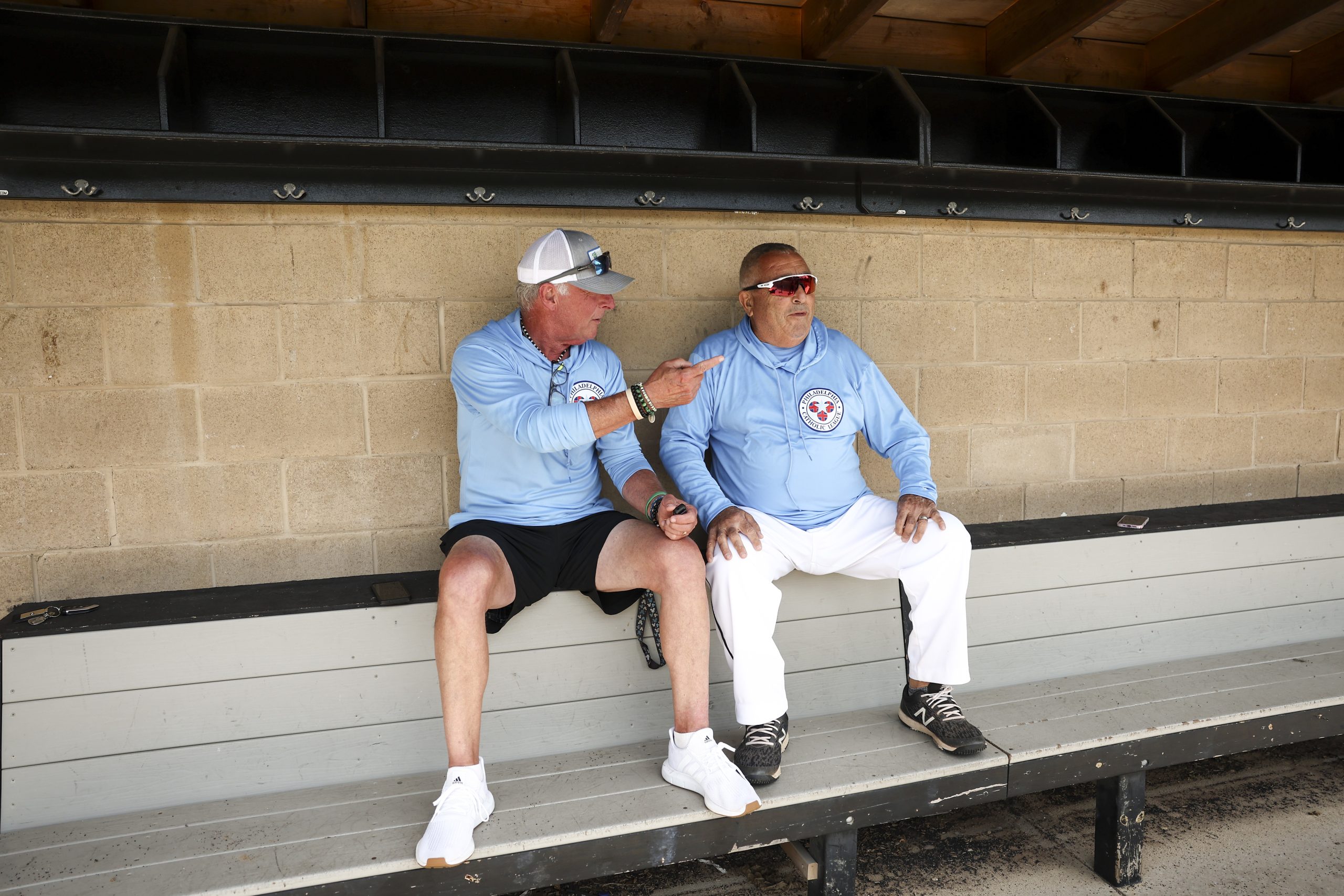
  • The friendship of two longtime baseball coaches was shaped over decades in the Catholic League

    The friendship of two longtime baseball coaches was shaped over decades in the Catholic League

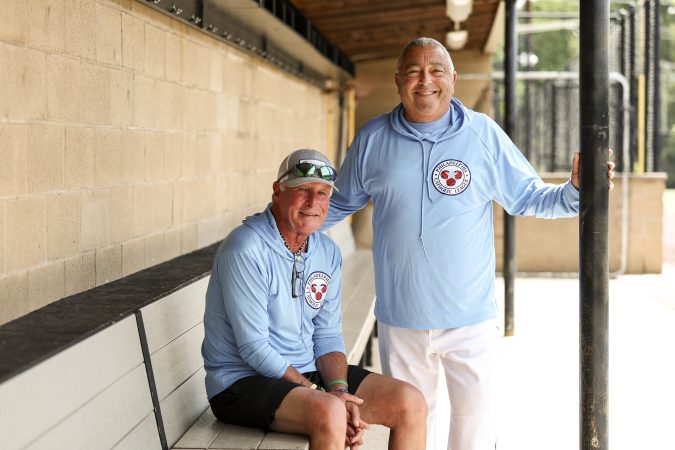
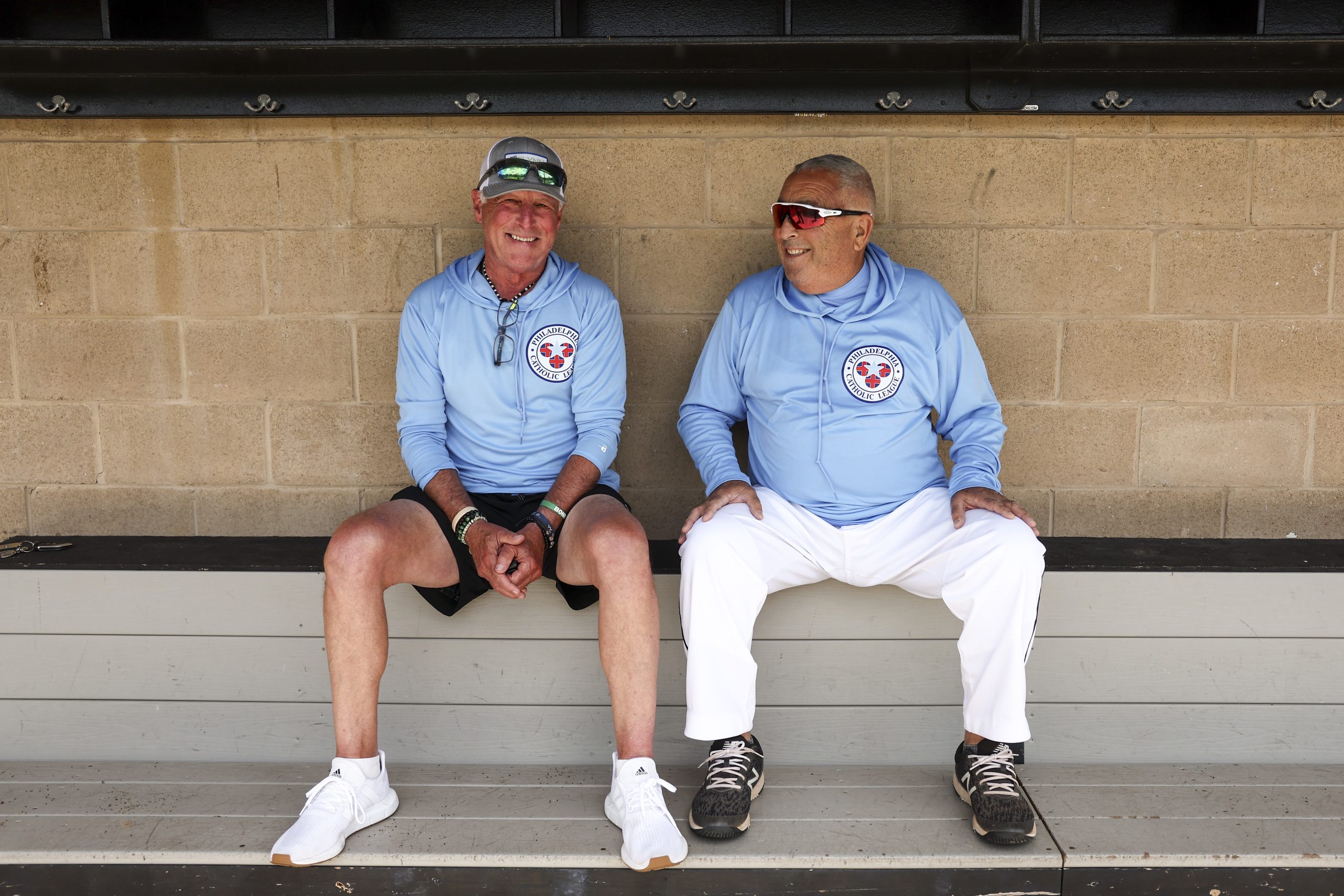
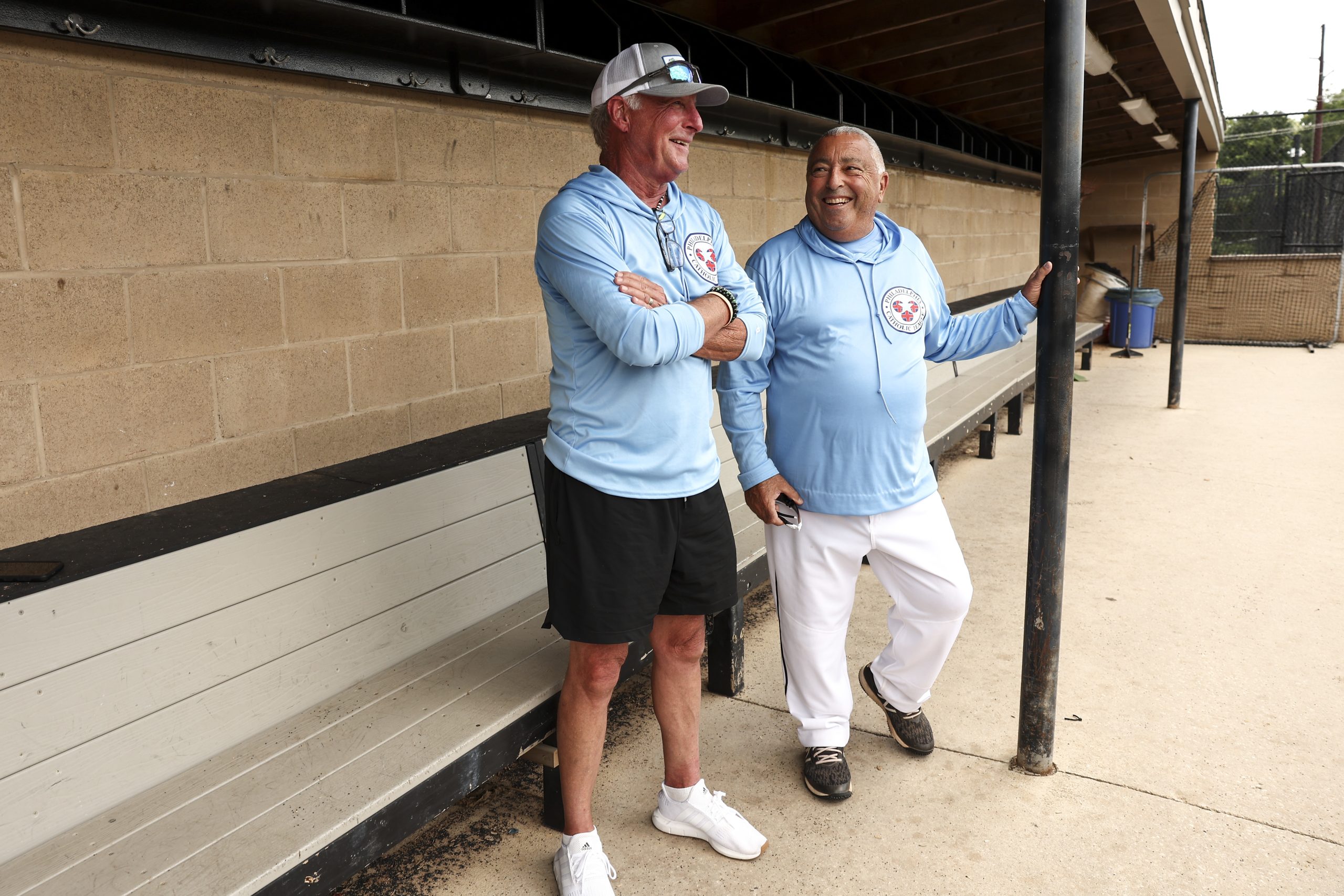
    For most of the year, Jim DiGuiseppe and Joe DeBarberie are standing in opposing dugouts. But for a few weeks each year, they’re on the same team as co-managers for the Catholic League in the annual Carpenter Cup.

    It’s an 18-year standing tradition between the pair to put aside their different allegiances — DiGuiseppe to Archbishop Wood and DeBarberie to Bonner-Prendergast — in favor of representing the Catholic League in the tournament.

    The Carpenter Cup, a tournament that features the top players from leagues across Pennsylvania, New Jersey, and Delaware, had not seen a PCL win since 2005. That was until June 8, when the pair helped lead the PCL to its first title in 21 years.

    The Catholic League team will be honored at the Phillies game on Aug. 4 for its victory.

    “It was a really good mix of players that understood that we hadn’t won in a while, and I think really took it to heart,” DeBarberie said. “There was a little bit of strategy in there, and I think we did a good job of doing that, it just fell the way we thought it was going to.”

    DiGuiseppe was head coach at Wood from 1995-2011, having joined the coaching staff a few years earlier when his son was on the team. DeBarberie began as an assistant coach with Bonner-Prendie in 2005 (while it was Monsignor Bonner) and took over as head coach from 2008-18.

    Despite sporting different shades of green and gold, the pair are longtime friends off the diamond and share a lot in common.

    They both were head coaches for more than a decade, they both saw their sons take over the helm when they stepped down, they both continue to serve in assistant coaching roles, and they share a love for the Catholic League.

    Joe DeBarberie (left) and Jim DiGuiseppe Sr. led the Catholic League to a Carpenter Cup championship for the first time in 21 years.Monica Herndon / Staff Photographer

    When DiGuiseppe’s son, Jim DiGuiseppe Jr., the current head coach at Wood, took over as the general manager for the Carpenter Cup team, he thought that his dad and DeBarberie would serve as unbiased managers for an all-star team.

    And even though the two spend most of the year in the backseat, DiGuiseppe Jr. said, the two stepped into the lead role “like riding a bike,” with the background and credentials to support their positions.

    “I think our league as a whole genuinely benefits from the structure of that and having guys like that,” DiGuiseppe Jr. said.

    Through their many years together, the pair hasn’t rubbed off much on each other in terms of personality. DiGuiseppe is more outspoken, while DeBarberie is quieter. But the dynamic works for them.

    “I’m fiery, I usually am on the field running, and he does all the paperwork and gives me all the knowledge that he can impart, but yeah, we’re a little different,” DiGuiseppe said.

    DiGuiseppe’s passion is hereditary. Most people warn against working with family, but DiGuiseppe has been his son’s assistant for longer than his son served his dad.

    In the dugout, the two get very animated during games, but it comes from a place of love and passion. Last season, DiGuiseppe Jr. became the winningest coach in Wood’s history with his 204th win. His father previously held the record with 203.

    “The joke of it is that we struggled early. It took me 17 years to win about 210. He won about 220,” the elder DiGuiseppe said. “[But] you always want your son to do better.”

    As for DeBarberie, with the amount of strategy that goes into the Carpenter Cup — making sure everyone is playing the correct number of innings and managing pitch counts — the knowledge he imparts comes in handy.

    His son, Steve DeBarberie, the current head coach at Bonner, said this happens during the season with the Friars as well.

    “The knowledge of having him in certain situations is invaluable,” Steve DeBarberie said. “When he’s up on the varsity staff he’ll just have little tidbits for me and put some stuff in my ear, to look out for it, to game plan for later on in the game because he sees stuff that not a lot of people see. He’s very intuitive and is always thinking ahead of the next steps.”

    This year, thinking ahead included setting the tone early with highly competitive players throughout the league. DeBarberie said they reminded the athletes that the competition they once harbored during the season was behind them and for the duration of the Carpenter Cup, they were all working toward a shared goal.

    Joe DeBarberie (left) was a head coach at Archbishop Wood, while Jim DiGuiseppe Sr. led Bonner-Prendergast.Monica Herndon / Staff Photographer

    DiGuiseppe and DeBarberie served as the exemplars for that.

    “Respect among the coaches is also transferred to the players on the various teams, and I think the fact that the Catholic League means a lot to us as coaches, kids also get that vibe,” DeBarberie said. “They understand that yes, you’re going to compete, that’s fine, but there’s no need for animosity — we’re all part of what we feel is the best league in the area.”

    There’s a “coaching fraternity in the Catholic League,” says DeBarberie.

    Along with DeBarberie and DiGuiseppe, Conwell Egan’s Jeff Manto, Neumann Goretti’s Nick Nardini, Lansdale Catholic’s Brian Ferko, St. Joseph’s Prep’s Jimmy Stinsman, and DiGuiseppe Jr. were members of the coaching staff for the Carpenter Cup.

    Both DiGuiseppe and DeBarberie were PCL Honorary Coach Award recipients for their 10 years of service as a head coach. When DiGuiseppe was honored in 2024, DeBarberie presented the award to him. This year, when DeBarberie received the honor, DiGuiseppe Jr. presented it.

    “Their personalities are very different, yet at the same time, they’re extremely close, not just in baseball, but off the field,” DiGuiseppe Jr. said. “Our families get together for dinner.”

    Joe DeBarberie and Jim DiGuiseppe Sr. say the Catholic League is “the best league around.”Monica Herndon / Staff Photographer

    Along with the friendship they formed from their time in the league, DiGuiseppe and DeBarberie also share an appreciation for a league that means “everything” to them.

    “We think that this is the best league around, just everything about it,” DeBarberie said. “Even when we’re not playing or we lost in the playoffs or whatever, and other teams are going on, I’m rooting for the other Catholic League teams to win. It’s just been such a big part from a baseball standpoint of our lives.”

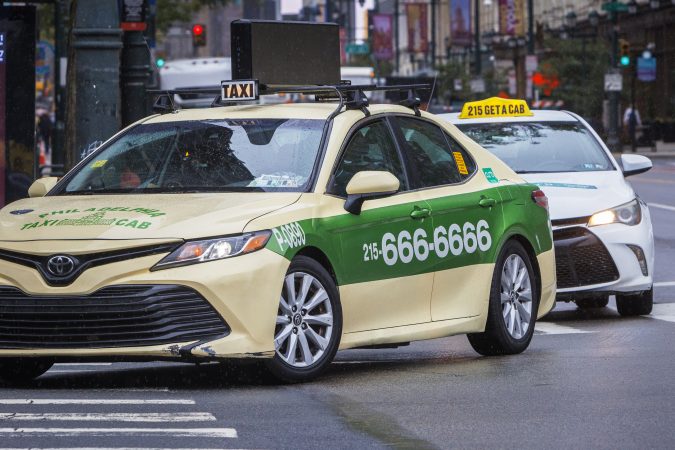
  • Philadelphia’s taxi fleet is shrinking. This app is helping keep cabs alive in Boston and beyond.

    Philadelphia’s taxi fleet is shrinking. This app is helping keep cabs alive in Boston and beyond.

    Uber and Lyft helped flatten the taxicab industry. Now they are joining forces.

    Last month, Boston became the latest city where drivers of licensed taxicabs can respond to rideshare trip requests, using apps that are integrated with the Uber and Lyft platforms.

    But don’t expect to see this change in Philadelphia, even as the city’s taxi business continues its free fall.

    Curb, the leading app company for cabs, and Uber petitioned the Philadelphia Parking Authority, which regulates taxis in the city, to allow coordination of rides on a pilot basis but eventually withdrew the proposal.

    Pennsylvania law strictly separates licensed cabs and transportation network companies like Uber, said Christine Kirlin, deputy general counsel for the PPA and former head of its Taxi and Limo Division.

    “It was a handful of regulations that just couldn’t be integrated,” Kirlin said, adding that state law would need changes for it to work.

    For instance, she said, taxi fares in the city are set by the PPA and cab operators are not allowed to flex prices, as rideshare companies do during periods of high demand. Drivers also need a commercial license, and taxi vehicles are subject to safety inspections — and regulatory fees — that rideshare is not.

    In other cities, referrals from rideshare companies account for 30% to 60% of total taxi trips, said Dorel Tamam, vice president for mobile business at Curb.

    He is in charge of Curb Flow, an open API platform that aggregates available rides from multiple sources, including Uber and Lyft, direct hails from taxi apps, fleet dispatches, and taxi ranks.

    “This program is helping actually reduce idle time, increase the overall trips, giving drivers the add-on opportunity to earn more,” Tamam said.

    Curb Flow is being used in 17 U.S. cities, including Newark, N.J.; Seattle; Los Angeles; New York; Reno, Nev.; and Charlotte, N.C.

    Philly’s taxi nosedive

    The taxi business has been declining in Philadelphia for more than a decade, coinciding with the arrival of Uber and Lyft in the city. Pandemic restrictions also hurt.

    Taxi rides dropped 88% from 2015 to 2025, PPA data show.

    (function(){function e(){window.addEventListener(`message`,function(e){if(e.data[`datawrapper-height`]!==void 0){var t=document.querySelectorAll(`iframe`);for(var n in e.data[`datawrapper-height`])for(var r=0,i;i=t[r];r++)if(i.contentWindow===e.source){var a=e.data[`datawrapper-height`][n]+`px`;i.style.height=a}}})}e()})();

    Fewer cabs are available. In 2010, a monthly average of 1,600 taxis were on the road. In 2025, there were 674, reflecting a 58% drop.

    As of June, 633 taxis were active in the city, suggesting a continued decline.

    “Things have not really improved. There’s less people out there driving,” said Ron Blount, president of the Taxi Workers Alliance, who believes the number could be even smaller.

    “A lot of drivers do both taxis and [rideshare] switching back and forth, trying to make it work,” Blount said.

    He said that Curb Flow would lead to more trips for drivers here, but that it was unclear how much their net incomes would improve.

    And the average sales price for a taxi medallion, a license required for each cab to operate in the city, fell to an average of $12,857 last year.

    The average price was just over $500,000 during several months of 2014, according to PPA numbers.

    “We really hope one day to bring it to Philadelphia,” said Tamam, the company vice president in charge of Curb Flow. ”We’re open to further collaboration with the regulators.”

  • The city plans to pay up to $75,000 to help measure the economic impact of Philly’s major events in 2026

    The city plans to pay up to $75,000 to help measure the economic impact of Philly’s major events in 2026

    When Mayor Cherelle L. Parker faced questions about spending on Philadelphia’s Fourth of July concert, she promised a “fiscal impact report” that would help determine how the economic benefits of the concert and other major events in Philadelphia during 2026 compared with their cost to city taxpayers.

    It turns out the city will have to spend a bit more taxpayer money to get to the bottom of that inquiry.

    The finance department is looking to hire a consulting firm for up to $75,000 to provide “economic analysis services to better understand the economic and fiscal impact of Philadelphia’s 2026 events and related activity on the local economy,” according to a contract opportunity posted on the city’s website last week. Responses are due Aug. 5.

    The contract solicitation calls for an evaluation of “event-related visitation, tourism activity, and associated economic activity” and estimates of “state and local tax revenues generated by event-related economic activity,” among other things. But it does not ask the consultant to produce an accounting of the city’s spending on those events.

    Andrew Richman, a top attorney in the city law department, said the administration will also produce an analysis of the city’s spending related to the major events hosted in Philly during 2026, including the nation’s 250th birthday, FIFA World Cup games, and the MLB All-Star Game.

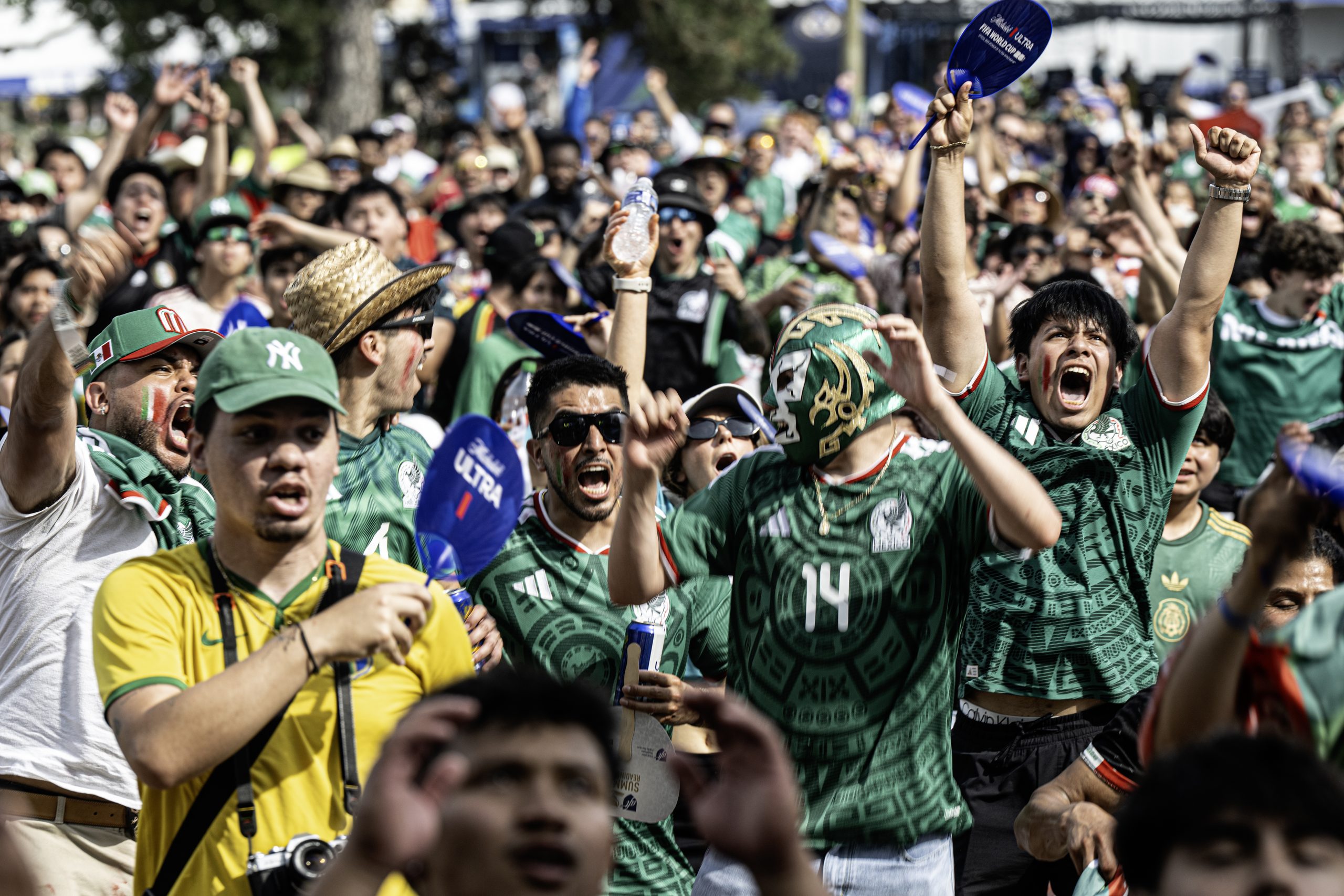
    Fans celebrate after Mexico scores against South Africa while watching the FIFA World Cup opening match on a giant screen during the opening day of the FIFA Fan Festival at Lemon Hill on Thursday, June 11, 2026, in Philadelphia.Jose F. Moreno / Staff Photographer

    “As a standard operating procedure in the Parker administration, there will be financial accounting that details every dollar and cent spent on 2026-related activities, analysis including all expenses, and economic impact of all activities and investments associated with 2026,” Richman said.

    The mayor’s office did not respond to a request for comment on when that accounting will take place.

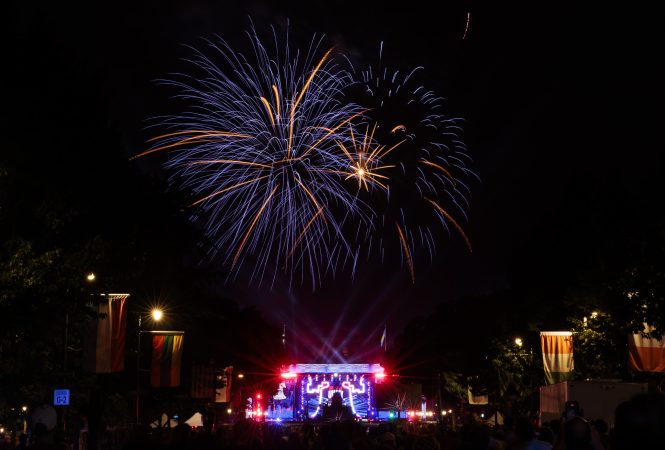
    Parker’s administration this year took over management of the July Fourth concert and fireworks show on the Ben Franklin Parkway, which for years had been handled by the nonprofit Welcome America, a public-private partnership created by the city in the 1990s.

    Parker instead hired ESM Productions, a for-profit company led by well-known concert producer Scott Mirkin, and renamed the event the “One Philly: Unity Concert for America,” a version of her slogan, “One Philly: A United City.”

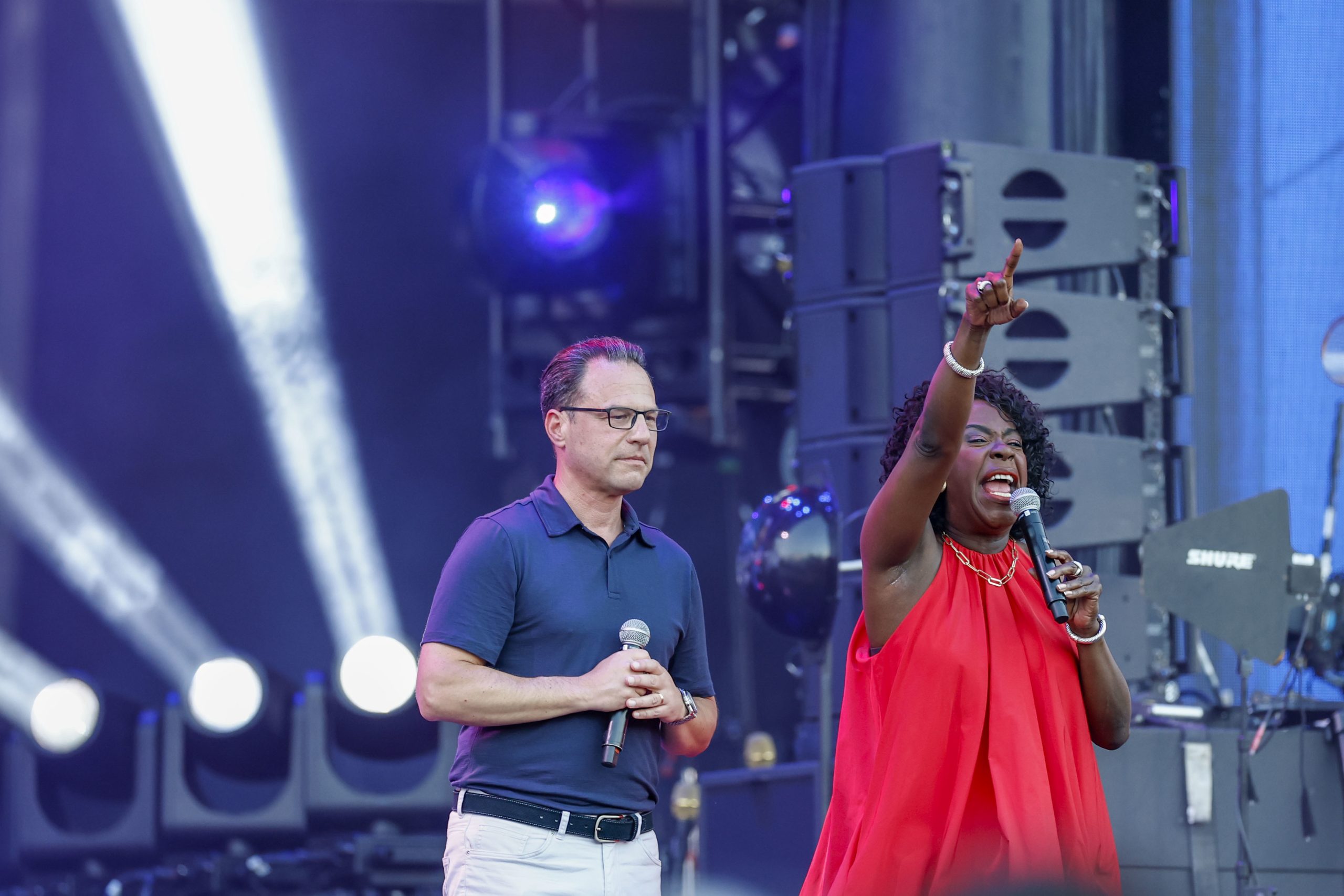
    Pennsylvania Governor Josh Shapiro and Philadlephia Mayor Cherelle L. Parker at the One Philly: Unity Concert for America on the Benjamin Franklin Parkway on Saturday, July 4, 2026, in Philadelphia.Yong Kim / Staff Photographer

    The changes resulted in a much more expensive concert than in years past. The city agreed to pay ESM about $15.5 million to put on the show, The Inquirer reported after obtaining the contract. The previous year’s concert cost Welcome America about $3 million, a source with knowledge of the event told The Inquirer.

    Those sums did not include costs related to city employees, such as sanitation workers and overtime for police officers who worked the event.

    Inclement weather, including extreme heat in the afternoon and a thunderstorm that disrupted the concert for hours in the evening, limited attendance at what Parker had hoped would be a major event.

    The city’s coming analyses, however, will include all of 2026’s major events, not just the concert.

    Parker has said her administration will spend $120 million on this year’s celebrations, and she has pledged to ensure communities across Philadelphia, not just Center City, benefit from the investment, which includes beautification projects in neighborhood commercial corridors and funding for block parties and events across the city. The administration has not yet provided details on how much was dedicated to the concert or any other specific event this year.

    “At the end of our celebration, you will be able to see an accounting of how that $120 million was spent,” Parker said at a July 1 news conference.

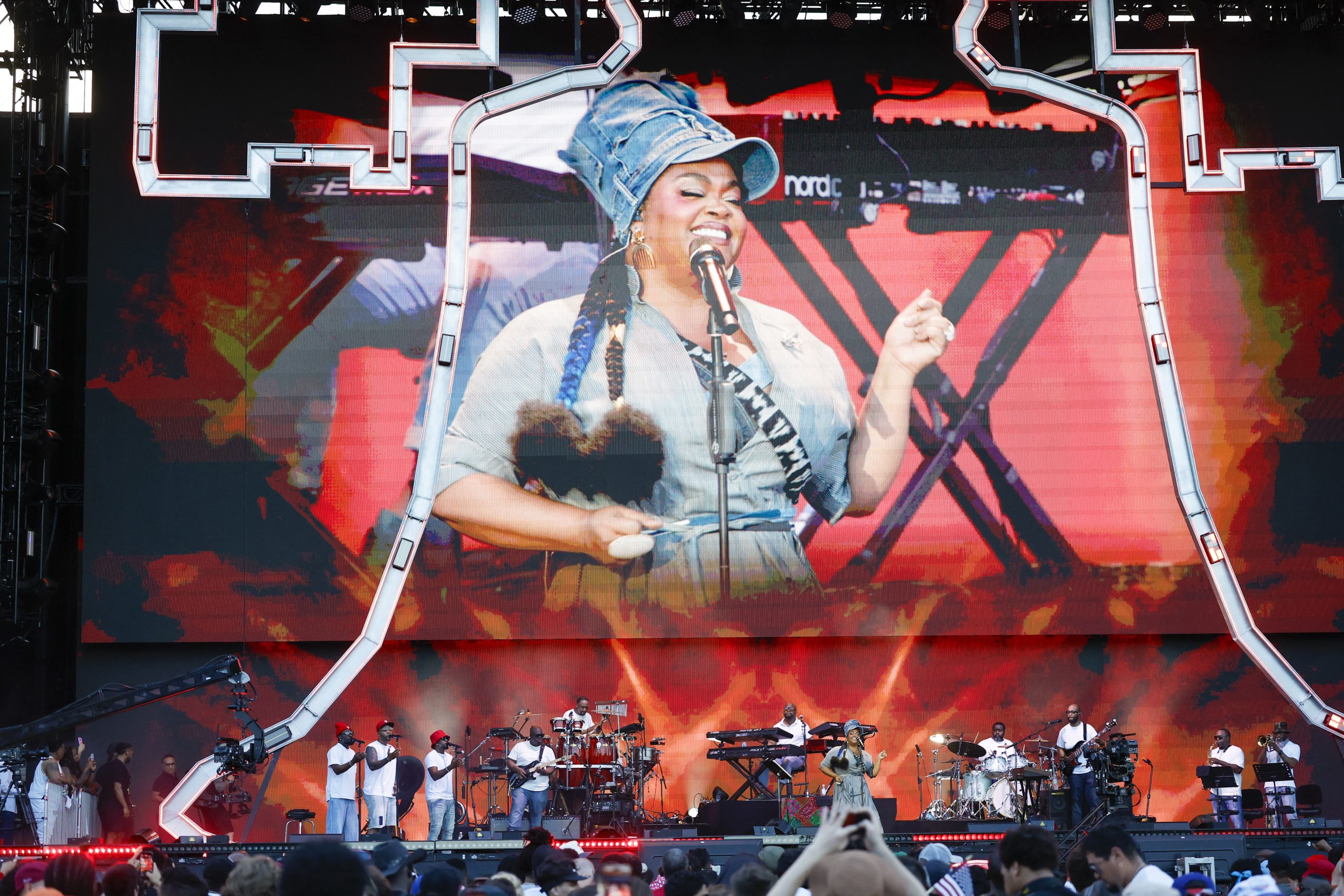
    Jill Scott takes to the stage for One Philly: Unity Concert for America on the Benjamin Franklin Parkway on Saturday, July 4, 2026, in Philadelphia.Yong Kim / Staff Photographer

    Economic impact analyses produced by paid consultants often include rosy estimates that public officials use to justify priorities. Academics who study their work for years have cited issues including inflated assumptions for visitors’ spending and understated or omitted opportunity costs for economic activity displaced by a large project or event.

    “Most economic impact studies are commissioned to legitimize a political position rather than to search for economic truth,” John L. Crompton, a professor at Texas A&M University, wrote in an influential 2006 paper published in the Journal of Travel Research. “Often, this results in the use of mischievous procedures that produce large numbers that study sponsors seek to support a predetermined position.”

    This year’s July Fourth concert was supposed to be headlined by Christina Aguilera, but the pop star ended up not taking the stage after the city paused the event around 9 p.m. due to the storm. The show resumed shortly after midnight, pushing the fireworks to about 2:30 a.m. July 5.

    Parker’s office on Wednesday did not respond to a request for comment on whether the city would receive any refund in light of Aguilera not performing.

    All other scheduled performers went ahead with their sets, including the Roots, Jill Scott, Meek Mill, DJ Jazzy Jeff, and Will Smith, who said Parker reached out to him personally to ensure he came back after the weather delay.