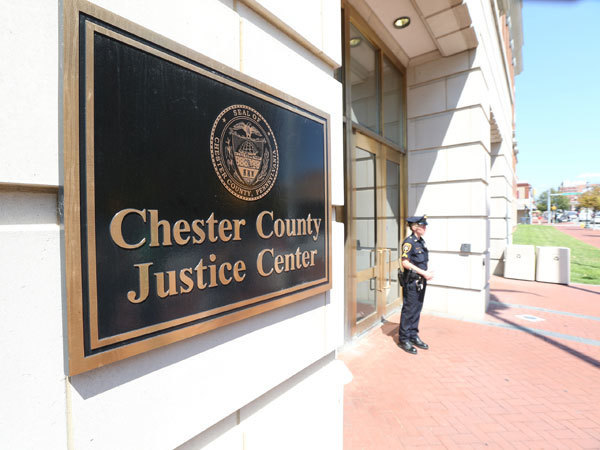
A Chester County man who forced two teenage girls, one of them a relative, to work long hours on a Kennett Square mushroom farm for no pay pleaded guilty Thursday to human trafficking, involuntary servitude, and related crimes.
Ramiro Caal Jolomna, 37, threatened to have the girls deported back to their homes in Guatemala if they did not comply with his demands, Senior Deputy Attorney General Zachary Mills Wynkoop said.
Pennsylvania Attorney General Dave Sunday, whose office investigated the case through its human trafficking division, called crimes like Jolomna’s “cruel and dehumanizing behavior that forces victims into a routine of helplessness and silence.“
The victims, who were 14 and 17 when interviewed by state investigators in 2024, said Jolomna helped transport them to Chester County with a promise of giving them better lives and the opportunity to earn money to send back to their families.
Instead, prosecutors said, Jolomna, of New Garden Township, took their salaries from the mushroom farm for himself.
The younger victim told investigators that she had been working on the mushroom farm since she was 12 years old, and that Jolomna had been signing her paychecks over to himself and his wife.
After working predawn shifts at the farm, the girl was forced to act as the couple’s housekeeper, and was not even given new clothing to wear, Wynkoop said.
The other victim told investigators Jolomna charged her rent to live in his home alongside nine other people and forced her to reimburse him for the cost of her flight to America. These debts prevented her from sending money home to her father, who was sick and unable to work, the prosecutor said.
At one point, Jolomna’s parents contacted the older victim’s parents and asked them for more money, according to the affidavit of probable cause for his arrest. The girl said she “did not know what would have happened if her parents said no,” the document said.
In an interview with prosecutors, Jolomna admitted to having debts from “smuggling” the girls into the country and to taking the girls’ paychecks to use for food and other items, according to the affidavit.
Jolomna will be sentenced in the coming months by Chester County Court Judge Debra Ryan.
A well-known activist and founder of a Kensington anti-violence nonprofit was charged with aggravated assault and related crimes for attacking a woman with a box cutter during an argument on a SEPTA train last week, authorities said Thursday.
Rosalind “Roz” Pichardo, 48, was taken into custody days after the July 17 assault, which left the victim in critical condition with deep lacerations to her face and chestthat required more than 70 stitches to close, according to the Pennsylvania Attorney General’s Office, which is prosecuting the case.
Pichardo is the founder of Operation Save Our City, a nonprofit that offers social services to people who have experienced grief, addiction, or trauma from exposure to violence, according to the group’s website. She also runs “Sunshine House,” a storefront on Kensington Avenue where people in addiction can drop in for meals, clothes, and other forms of support.
She has been involved with other anti-violence and victim services organizations throughout the city and has received at least two city grants for her work.
Last week, one day before the assault, Pichardo touted a $20,000 grant that Operation Save Our City received from the Philadelphia Office of Public Safety.
And in 2024 and this year, the Philadelphia District Attorney’s Office awarded Pichardo’s organization $25,000 and $10,000, respectively, through its violence prevention microgrant program.
Pichardo declined to comment Thursday. No attorney for her was listed in court documents.
Around 9 p.m. Friday on an eastbound SEPTA train near Eighth and Market Streets, prosecutors say, Pichardo assaulted a woman with a box cutter. They said the conflict began when the two women argued on a platform at the transit agency’s 15th Street Station.
The victim told investigators Pichardo “got smart with her” after she asked a man who was blocking a platform bench to move so she could sit down, according to an affidavit of probable cause for Pichardo’s arrest. She said she, in turn, “got smart” with Pichardo.
During the spat, the victim said, Pichardo complained about “how rude young people are” and called her entitled for asking the man to move.
The women then boarded the train, where the argument continued, and they “both got in each other’s face and started fighting each other,” the woman told investigators, according to the affidavit.
At some point during the scuffle, the woman said, Pichardo pulled out a box cutter and assaulted her. She told investigators she felt warmness on her face and felt “a lot of blood.”
The attack left the woman with severe lacerations on her cheeks and her chest that,in addition to needing stitches, required surgery to help her regain muscle movement, the documents said.
Pichardo was taken into custody by SEPTA transit police but released the same evening.
Investigators said technical issues initially prevented them from viewing surveillance footage captured within the train car, but they later recovered footage from an adjoining car that showed portions of the incident.
On Wednesday, Pichardo was charged with two counts of aggravated assault, simple assault, possessing an instrument of a crime, reckless endangerment, harassment, and disorderly conduct.
She was released from custody after posting 10% of $25,000 bail, court records show.
The case will be handled by the attorney general’s special prosecutor for mass transit, a position created by the state legislature to address what Republican lawmakers said was the failure of District Attorney Larry Krasner to prosecute violent crimes on or near SEPTA properties.
A spokesperson for Krasner’s office declined to commenton the case and referred questions to the attorney general.
Pichardo appeared to address the matter in cryptic posts on Facebook, where she frequently promotes her activist work to her 23,000 followers.
On July 18, one day after the assault, she posted a photo of a SEPTA train car with the caption: “Lord please give me strength to get through this pain.”
And on Wednesday evening around 9 p.m., she updated followers: “I’m Good .. I’m Home and trusting the process . My head is up..”
In addition to founding Operation Save Our City in 2012 and later Sunshine House, Pichardo has worked as a lead educator with the harm reduction nonprofit Prevention Point and as a trauma victims advocate in Temple University Hospital’s emergency department.
Staff writers Ellie Rushing, Aubrey Whelan, and Jillian Kramer contributed to this article.
John Coltrane wasn’t born in Philadelphia, but we can claim him as the city where his musical identity was forged.
“Game knows game,” is the slightly incongruous way that 6abc morning anchor Tamala Edwards described Coltrane’s apprenticeship years in Philly at the “Coltrane 100: Legacy″ concert Wednesday night. “Iron sharpens iron.”
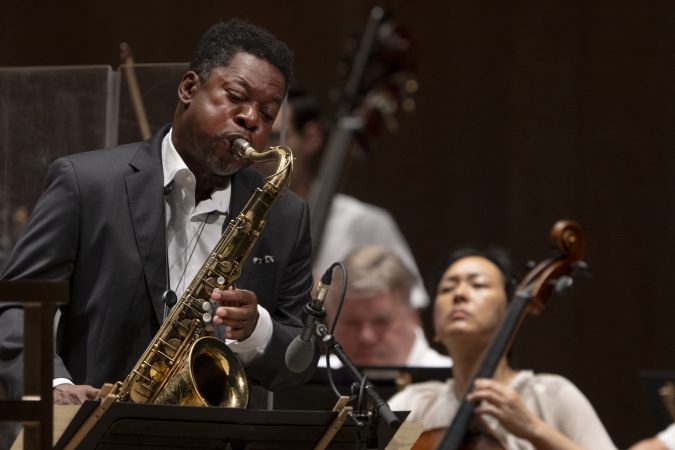
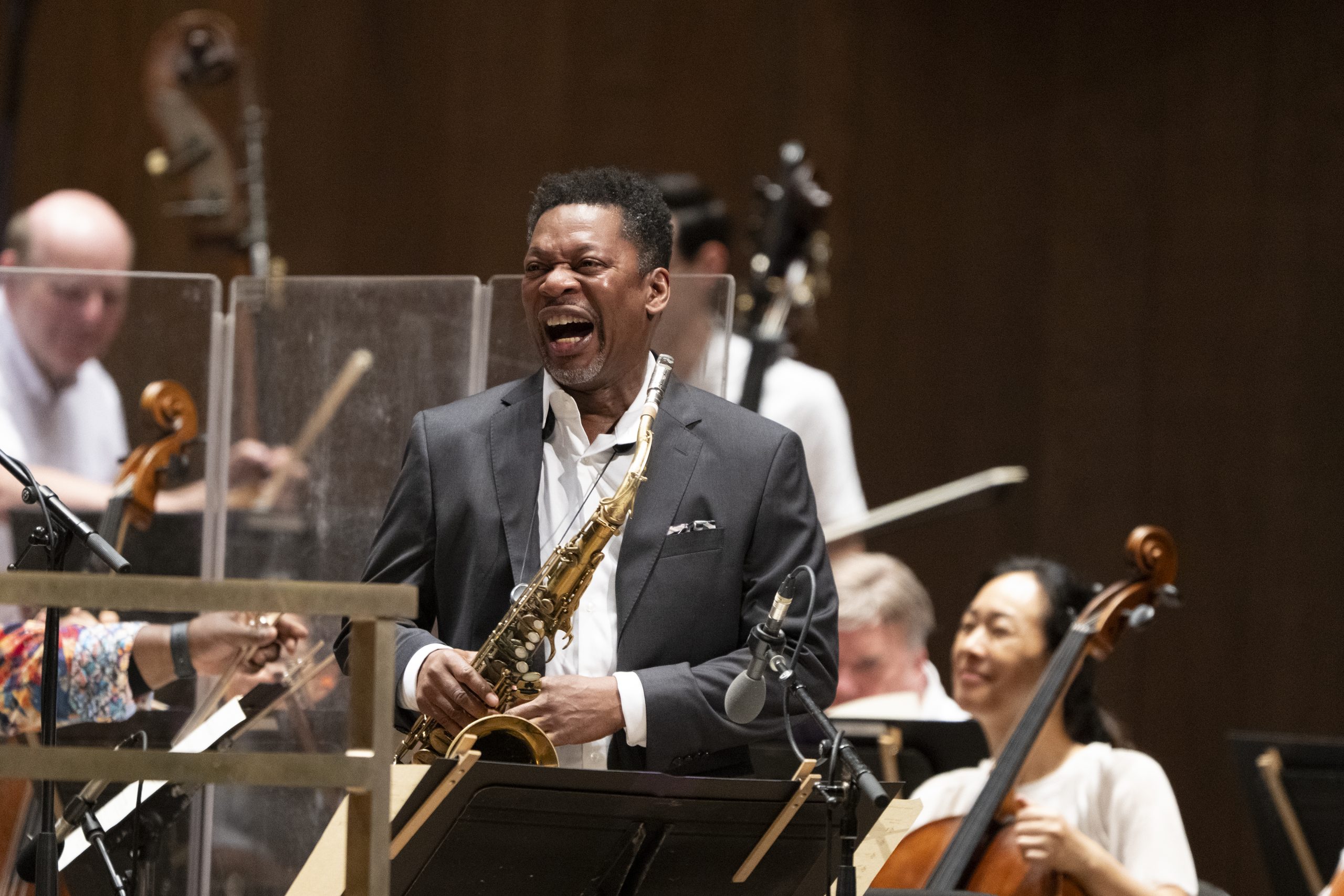
Ravi Coltrane performs with the Philadelphia Orchestra, conducted by Edwin Outwater, during a concert celebrating the 100th anniversary of jazz legend John Coltrane’s birth at the TD Pavilion at the Mann in Philadelphia on Wednesday, July 22, 2026.Jose F. Moreno / Staff Photographer
The indelible music that emerged from that honing process was honored by the Philadelphia Orchestra at the Highmark Mann Center. An early celebration of the legendary saxophonist’s 100th birthday (which falls on Sept. 23), the concert featured Coltrane’s son, saxophonist Ravi Coltrane, backed by the Fabulous Philadelphians on an evening of newly orchestrated renditions of pieces written by and associated with his father.
Composer Carlos Simon curated the program, enlisting a host of arrangers to reinterpret Coltrane classics in a symphonic setting. The repertoire spanned much of the saxophonist’s career, from his tenures with Thelonious Monk and Miles Davis to later masterpieces like “A Love Supreme.”
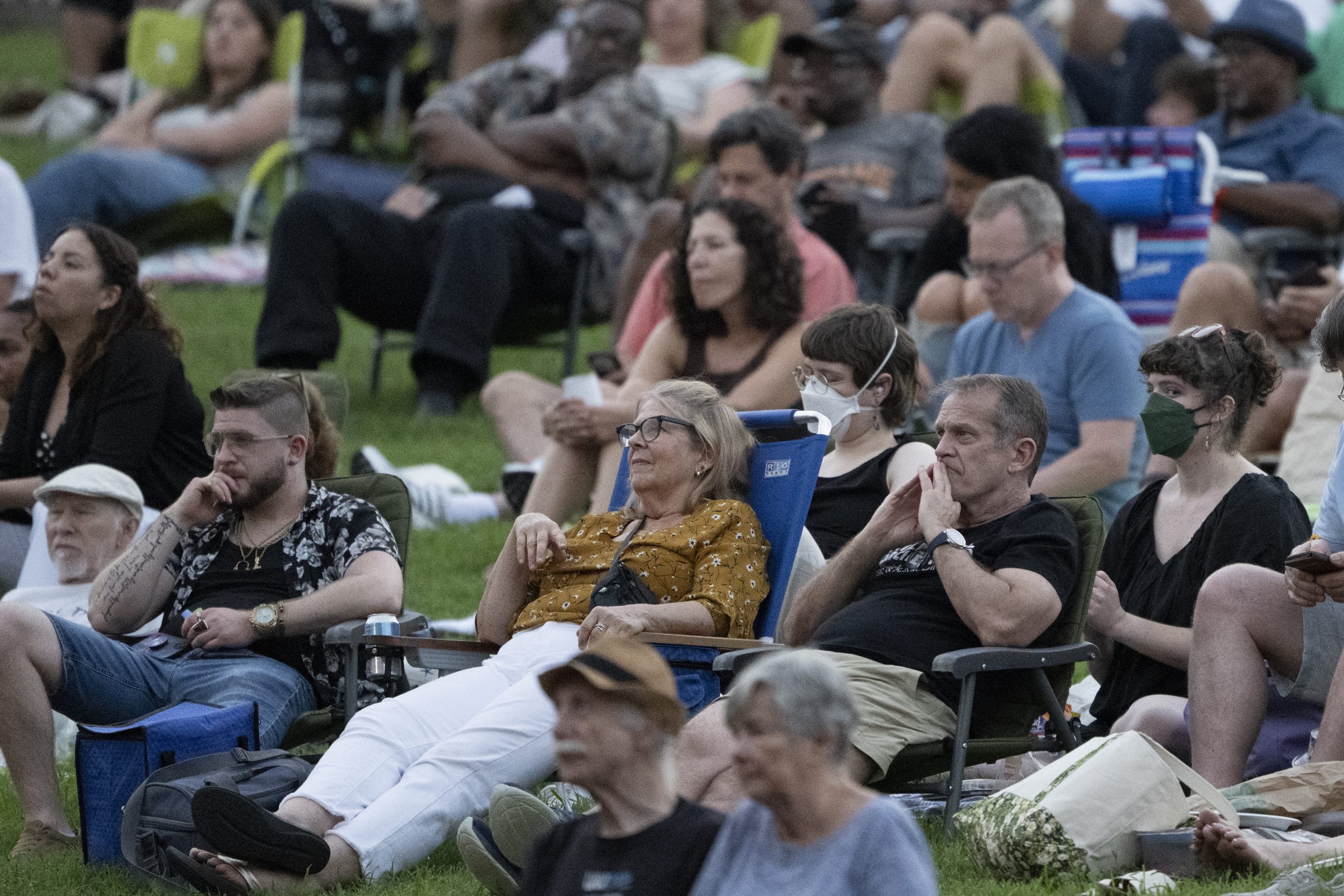
Concertgoers listen as Ravi Coltrane performs with the Philadelphia Orchestra, conducted by Edwin Outwater, during a concert celebrating the 100th anniversary of jazz legend John Coltrane’s birth at the TD Pavilion at the Mann in Philadelphia on Wednesday, July 22, 2026.Jose F. Moreno / Staff Photographer
A break in the summer’s unrelenting heat greeted concertgoers at the Mann, virtually just across the Schuylkill from the Coltrane home in Strawberry Mansion — itself undergoing a major renovation in time for a yearlong centennial celebration kicking off in September. The breezes greeted the modest crowd who made up for lack of numbers in vigorously voiced enthusiasm, especially during the evening’s most bombastic moments — an acrobatic “Giant Steps” and the precision, program-closing “Impressions” greeted with roars.
The night’s loudest ovation may have been reserved for native son Johnathan Blake, the drummer in Coltrane’s stellar quartet. Blake’s father, violinist John Blake Jr., was a regular collaborator with McCoy Tyner, pianist in the revered John Coltrane Quartet, providing another direct connection to the Legacy in the program’s name.
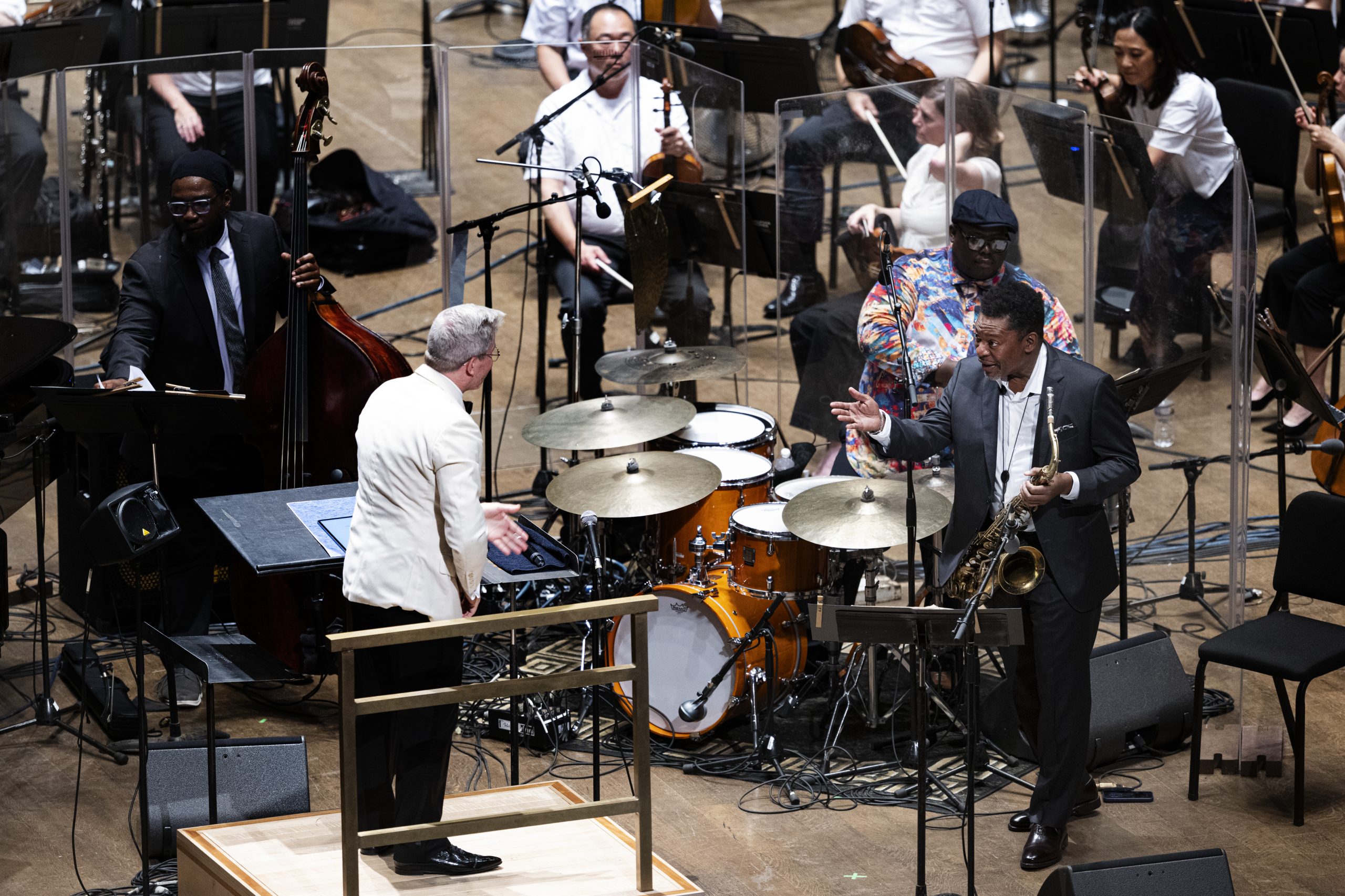
Ravi Coltrane performs with the Philadelphia Orchestra, conducted by Edwin Outwater, during a concert celebrating the 100th anniversary of jazz legend John Coltrane’s birth at the TD Pavilion at the Mann in Philadelphia on Wednesday, July 22, 2026.Jose F. Moreno / Staff Photographer
Ravi Coltrane was less than 2 years old when his father died. At 60, he’s reached an age two decades older than his father ever achieved, and boasts an estimable career of his own. He could be forgiven for being ambivalent about the elder Coltrane’s looming shadow, but he played passionately throughout his first encounter with Simon’s orchestral program.
If John Coltrane’s place among the pantheon of 20th-century musical masters seems assured, many of the arrangers appear determined to place him in conversation with other luminaries.
Steven Feifke’s take on “Giant Steps” began with a Wagnerian flourish, while Andy Milne couched “Acknowledgement,” the first movement of “A Love Supreme,” in horns that dawned like a Copland pastorale over harp shimmers. Monk’s “Crepuscule with Nellie,” again arranged by Milne, seemed to navigate through Leonard Bernstein’s midcentury cityscapes.
Ravi Coltrane performs with the Philadelphia Orchestra, conducted by Edwin Outwater, during a concert celebrating the 100th anniversary of jazz legend John Coltrane’s birth at the TD Pavilion at the Mann in Philadelphia on Wednesday, July 22, 2026.Jose F. Moreno / Staff Photographer
As is so often the case with jazz-meets-classical hybrids such as this, the orchestra was often relegated to set dressing for the soloists. Did those famed strings really add anything but volume to the stabs of “So What” or “Blue Train”? Was the profound ballad “Naima” helped or hindered by the sentimental swells swathing its incisive melody?
Simon took the greatest chances with his own arrangements.
Duke Ellington’s “In a Sentimental Mood,” which Coltrane recorded with its composer in 1962, seemed to ripple through the ensemble underneath Ravi’s aching statement of the melody. The fervent protest piece “Alabama,” penned in response to the 1963 16th Street Baptist Church bombing in Birmingham, felt aptly stark and dramatic, fueling Ravi’s raw-edge, impassioned soloing.
The Philadelphia Orchestra, conducted by Edwin Outwater, during a concert celebrating the 100th anniversary of jazz legend John Coltrane’s birth at the TD Pavilion at the Mann in Philadelphia on Wednesday, July 22, 2026.Jose F. Moreno / Staff Photographer
Many of the concert’s highlights arrived in similar moments of alchemy between composition, orchestration, and musicians. Arranger Tim Davies’ use of lush horns seemed to imagine “Central Park West” as an early morning reverie in the park, which Ravi and pianist David Virelles picked up in their solos as if on meditative strolls — the saxophonist’s a hazy daydream, the pianist’s a solemn rumination.
At times, Ravi directly evoked his father’s voice, beginning his solo on “So What” with a direct quote, weaving his solo on “Acknowledgement” out of ideas from the entirety of “A Love Supreme.”
Ravi Coltrane performs with the Philadelphia Orchestra, conducted by Edwin Outwater, during a concert celebrating the 100th anniversary of jazz legend John Coltrane’s birth at the TD Pavilion at the Mann in Philadelphia on Wednesday, July 22, 2026.Jose F. Moreno / Staff Photographer
Virelles took a different approach, conjuring striking moments of abstraction from sudden dissonances and violent clusters, or jarring hints of his Cuban roots. Ravi’s playing on “In a Sentimental Mood” approached it as haunting echoes of the blues; Virelles played with a bold understanding of the deep melancholy undergirding Duke’s elegance.
Ravi Coltrane called it an honor to perform with “one of the greatest orchestras in the history of the world.” The feeling appeared to be mutual, and whatever the balance of cohesion and collision between the two, “Coltrane 100: Legacy” proved to be a fitting tribute to an iconic artist.
For the first time, Pennsylvania will inventory the thousands of public school facilities throughoutthe state to better assess the extent of aging and unsafe buildings.
Educators have long raised concerns that deteriorating school conditions threaten student safety and impede learning — but understanding the scope of the problem has been difficult.
Included in this year’s $50.8 billion budget deal, and effective in 2027, the Pennsylvania Department of Education will be required to collect information about school facilities, including the age and renovation history of buildings as well as their capacity and square footage.
Democratic State Rep. Elizabeth Fiedler, who represents South Philadelphia and was the initial sponsor of the bill, said the legislation will allow state funding for facilities repairs to be used more efficiently.
Some school districts already track this information, Fiedler said, but not all do. Having that information in a centralized location, she said, will allow for a “better understanding big picture of what we’re facing and figure out where we should be allotting our very limited school facilities dollars.”
The state has allocated $200 million in funding for public school facilities improvements in recent budget cycles.
While her initial bill also called for the creation of a public school facility advisory committee, Fiedler said the inventory requirement represents an important first step.
“The people who spend Monday through Friday all day long in those same schools, they know what the problems are,” Fiedler said. “They’re tired of having to find work-arounds and deal with them. We need to invest more money. I think that part is plain and simple.”
Students attending school in Philadelphia have faced leaking roofs, mold, asbestos, and inadequate cooling systems.
The Philadelphia school board voted in April to approve a controversial $3 billion facilities plan that would close 17 schools and renovate nearly 200 others over the next decade. The average age of a school building in the Philadelphia district is 75.
That problem is not unique to Philadelphia.
In Pittsburgh — where the average building is nearly 90 years old — the school board similarly approved a facilities plan this spring that would close 12 schools in a move district leaders hope will help address the older school buildings.
Statewide, the first round of school facility information will be collected by the education department through an online form by the end of 2027, and then every five years after that. Public school districts as well as cyber charter, charter, and career and technical schools will be required to submit information.
“This information will enable lawmakers and the administration to evaluate the condition of public school facilities, identify collective needs of our public schools, and further support the investments needed to ensure healthy and safe learning environments,” a spokesperson for the state education department said.
Aaron Chapin, president of the Pennsylvania State Education Association, said the state’s largest teachers union was proud to work alongside lawmakers in creating the inventory system.
“We encourage school districts to partner with the Department of Education to provide the information needed so that the commonwealth can address school facility equity in a fair and timely way,” he said in a statement.
Ethan Young is an intern with the Pennsylvania Legislative Correspondents’ Association. He can be reached at ethanmyoung@gmail.com.
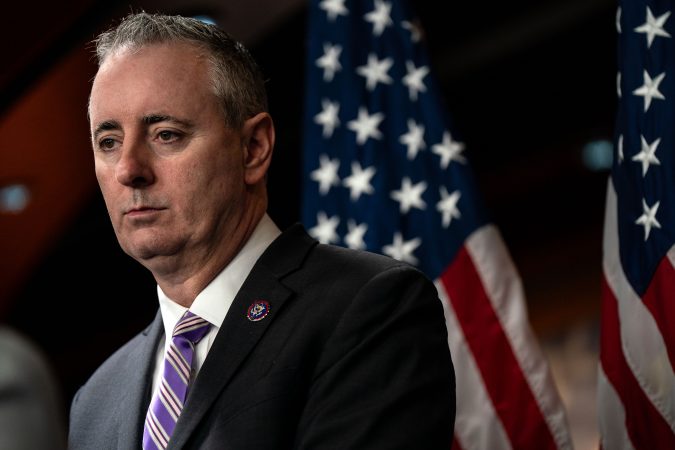
Early on in his tenure, U.S. Rep. Brian Fitzpatrick proved himself to the largest federal employees union in the United States.
In 2017, President Donald Trump signed a law to improve whistleblower protections and set guidelines for employee misconduct at the Department of Veterans Affairs. But the American Federation of Government Employees began noticing some adverse effects.
As Phil Glover, a national vice president for AFGE, tells it, veterans, including those with disabilities, and lower-level employees were being targeted instead.
AFGE officials went to Fitzpatrick with their concerns, and the Bucks County Republican introduced his own bill repealing and adjusting certain provisions.
That move, Glover said, was an inflection point in solidifying a long-lasting partnership with Fitzpatrick — one that gives the union a rare ally in the Republican caucus and Fitzpatrick a consistent endorsement from a powerful organization as he has repeatedly won reelection in a narrowly divided district.
“He’s carried a lot of water for us within the Republican Party, within the caucus, whether they were in the minority or majority,” said Glover, whose jurisdiction includes Pennsylvania.
In the high-stakes midterm elections this year, union endorsements behind Fitzpatrick and U.S. Rep. Rob Bresnahan, a freshman Republican trying to hold onto his seat in Northeastern Pennsylvania, are shaping up to be a potentially critical factor inthesetwoswing districts that could help determine which party controls the U.S. House.
“They all reached out. I didn’t even have to call them. They reached out to me right away and said we are 10,000% with you,” Fitzpatrick said, describing his relationship with the unions as “beyond advocacy” and “like family.”
Organized labor has traditionally backed Democratic candidates in the state —and that remains mostly true this year.
Fitzpatrick was the only Republican congressional candidate to get an endorsement Wednesday from the Pennsylvania AFL-CIO, which is also backing popular Pennsylvania Democratic Gov. Josh Shapiro.
In two other swing-seat districts centered on Harrisburg and the Lehigh Valley, unions have coalesced behind the Democratic nominees, including by spending big to help union leader Bob Brooks win his primary in May.
But the splintering of their endorsements in both Fitzpatrick’s Bucks County-based 1st Congressional District and Bresnahan’s Scranton-based 8th Congressional District seat has been a striking departure — underscoring some unions’ willingness to reward incumbents’ loyalty to give labor a voice in a Republican caucus that may not always work in their interests.
Last week, the Pennsylvania State Education Association — the largest union for teachers or any other labor organization in the state — backed Fitzpatrick even though Harvie, a former social studies teacher at Bucks County Technical High School, was previously a member.
How those endorsements move the needle in the election is still an open question.
But in a district with independent-minded voters who have shown a willingness to cross party lines, some observers say, the labor endorsements could make a difference — both in the get-out-the-vote and fundraising support that unions sometimes provide, and in appealing to swing voters.
“It suggests to an independent voter or even a moderate Democratic voter that this candidate isn’t a far-right candidate, that this candidate is somebody who will work with workers and work with unions,” said Paul Frymer, a politics professor at Princeton University who studiesorganized labor.
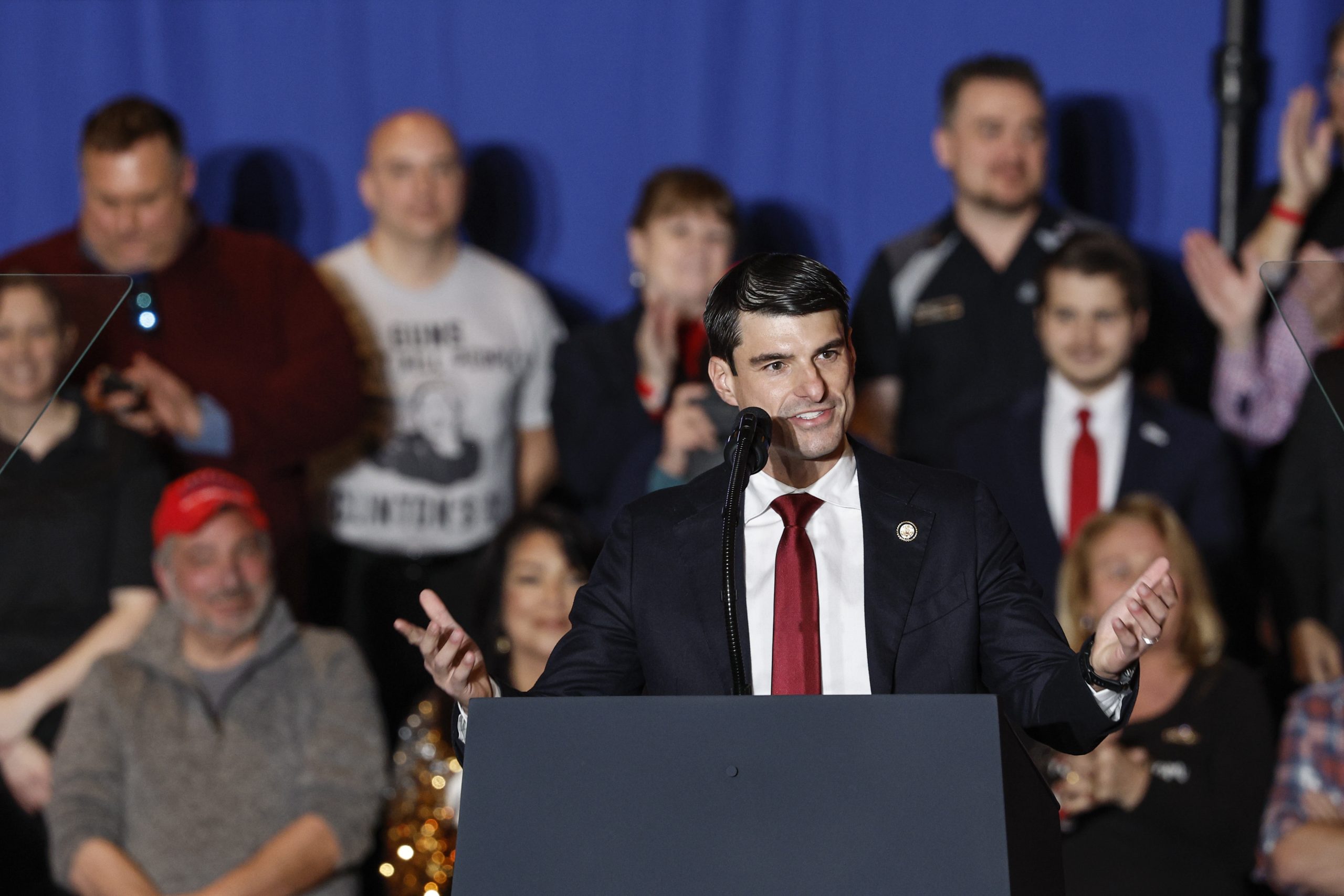
U.S. Rep. Rob Bresnahan introduced before remarks from President Donald Trump in Mt. Pocono, Pa., in December. Steven M. Falk / For The Inquirer
‘We consider them our friends’
With Trump in office and Republicans in control of Congress, Fitzpatrick and Bresnahan have won some union support by backing policies their own party leadership opposes.
In December, they were among 20 Republicans to join 211 Democrats to force a successful vote on the Protect America’s Workforce Act, which aimed to reverse a Trump executive order to strip collective bargaining rights from federal workers. In June, they were again among 20 Republicans — and the only ones from Pennsylvania — to vote for the Faster Labor Contracts Act, an effort to speed up bargaining negotiations.
And Bresnahan’s decision-making, as a freshman going against the White House, “had some guts to it,” Glover said. He said his group “didn’t entertain” endorsing Democrat Paige Cognetti, the Scranton mayor running against Bresnahan, or Harvie in the Bucks County race.
Angela Ferrito, president of the 700,000-member Pennsylvania AFL-CIO, which endorsed Fitzpatrick on Wednesday, said that while he has not always sided with labor, he has become the kind of Republican who will “sometimes almost put their neck out.”
Still, the union’s own public scorecard shows Fitzpatrick has aligned with its priorities far less often than Democrats — about 46% of the time in the current session of Congress. Bresnahan, who did not secure the union’s endorsement Wednesday, voted with the AFL-CIO just once — on the Protect America’s Workforce Act — to give him an 8% score.
Ferrito said the organization supports candidates who “support us and stand up when it matters.”
“Pennsylvania has always been unique in that way, where we do have moderate Republicans who will support unions and the rights of union workers. And so in those circumstances that we consider them, we consider them our friends,” she said.
State of play
As both of their districts draw national attention, Fitzpatrick has touted more than 40 labor-centered recommendations or formal shows of support and Bresnahan has highlighted about a dozen.
Fitzpatrick’s labor endorsements have ranged from local building trade affiliates — such as the Boilermakers Local 13 and the deep-pocketed International Brotherhood of Electrical Workers Local 98 — to national labor organizations, like the Transport Workers Union of America and the National Air Traffic Controllers Association.
The SEIU Pennsylvania State Council, which represents employees in public services, healthcare, and property services, backed him for the first time after a decade of either endorsing against him or staying neutral. But the council’s perspective changed after Fitzpatrick publicly supported reforms for U.S. Immigration and Customs Enforcement and was only one of two Republicans to vote against his party’s cuts to Medicaid in the One Big Beautiful Bill Act.
“For us, that means something,” said Matt Yarnell, president of SEIU Healthcare Pennsylvania and the state council, “if someone’s down to both organize and fight and stand up and speak out against your own party.”
Fitzpatrick said his “unique” role as a labor-friendly Republican has made him a “pivotal voice” in Congress — largely because of the hyperpartisan nature of politics that he has railed against, he said.
“That’s unfortunate,” Fitzpatrick said. “If we did away with the political parties and we just had people form coalitions around ideas, you would see so much support, so much more support for commonsense measures, like supporting labor.”
Bresnahan said he made it a personal mission to cultivate strong relationships with organized labor when he entered Congress last year after having had collective bargaining agreements as the CEO of his family’s electrical contracting business.
As a freshman Republican, he said, he had to prove himself. He got up to speed on the roughly 10,000 federal jobs in his district and made visits to a high-security federal prison with “serious staffing shortages”at the same time as Trump was laying off thousands of federal workers.
“I absolutely encourage my Republican colleagues to take another look at this and find a way to support the people that support us each and every day,” said Bresnahan, who narrowly defeated six-term Democratic U.S. Rep. Matt Cartwright in 2024.
Bucks County Commissioner Bob Harvie addresses supporters after winning the May 19 Democratic primary. Steven M. Falk / For The Inquirer
Harvie, the Democrat challenging Fitzpatrick, grew up in a union household and hasreceived the backing of two unions: the American Federation of Teachers Pennsylvania and Transport Workers Union Local 234, which represents SEPTA employees. His campaign said conversations are ongoing with labor and believes more support is in the works.
Harvie said Fitzpatrick’s endorsements have in some ways been a “reward for doing the bare minimum” while his own track record as a former Falls Township supervisor and as a twice-elected county commissioner proves he would be a steadfast supporter of labor in Congress.
He said he was “anxious to get the support of the rank-and-file workers,” who are bearing the brunt of cost-of-living issues.
“They’re the ones who are really going through all the pain right now with higher gas prices, higher grocery prices, higher energy prices, concerns about their healthcare,” Harvie said.
Cognetti, meanwhile, has credited her endorsements from nearly a dozen local labor unions to her record in Scranton, including increasing the number of jobs and wages for public workers. Endorsements from AFSCME, which represents municipal employees, and others that she announced this month underscore that support, she said.
She also said she would support more labor priorities than Bresnahan, including the PRO Act — a major effort to expand workers rights that Bresnahan has not endorsed — and repealing parts of the One Big Beautiful Bill Act, which Bresnahan voted for.
“It’s very important that you look at the whole picture of someone’s votes. It’s very easy to sign on to a letter and try to make yourself a hero,” Cognetti said.
In one unusual instance, Cognetti appeared to receive the endorsement of the Pennsylvania Conference of Teamsters with a voice vote during an April meeting, but the organization released a statement endorsing Bresnahan in June. But conference president Bill Hamilton, who had called for the vote at the April meeting, said in the June statement that Bresnahan “has always had our backs,” including through his vote for the Faster Labor Relations Act.
Bresnahan, in an interview, also referenced that bill and stressed his relationship with Sean O’Brien, the national Teamsters leader whose podcast Bresnahan appeared on in January.
The state and national Teamsters organizations did not respond to multiple requests for comment about the situation.
“Democrats just can’t take unions for granted anymore,” Bresnahan said.
Scranton Mayor Paige Gebhardt Cognetti hosts the national summer meeting of the Mayors Innovation Project in Scranton in 2023. Tom Gralish / Staff Photographer
‘Stick with them no matter what’
The union endorsements in the 1st and 8th Congressional Districts have been a sharp contrast to other swing-seat districts that have arguably already shown the power of labor as a political force.
In the Lehigh Valley district where Brooks, a statewide union leader and retired firefighter, is running against freshman Republican U.S. Rep. Ryan Mackenzie, high-profile Democrats recruited and rallied around the Democrat largely because of his union bona fides. And when opponents unleashed a last-minute ad campaign against him in the May primary, another political action committee padded with organized labor donations spent nearly $1.8 million to push back and help give Brooks the win.
It is not yet clear whether unions will similarly spend heavily to elect Fitzpatrick or Bresnahan — especially as they mostly look to elect Democrats elsewhere in Pennsylvania and across the country.
TJ Lepera, political director of IBEW Local 98, said he believed a Democratic blue wave would be highly favorable to labor interests. But his union has also backed Fitzpatrick,who“knows our issues, and that could be helpful in trying to calm down a lot of the crazy rhetoric that comes out of the Republican side, sometimes, on the attacks of labor,” Lepera said.
“If somebody has a great voting record with us and has been loyal to Local 98 and the way that we see legislation, we typically stick with them no matter what,” Lepera said.
That emphasis on loyalty was echoed by other unions, even if their political calculus led them to go the other direction.
“We were not going to support anything that would possibly turn the House or the Senate red,” said Joe Coccio, secretary-treasurer and political coordinator from TWU Local 234, which has endorsed Harvie. “If they were a good candidate by us … once we endorse a candidate, unless they break the law or do wrong by us, we continue to endorse them until they move up or move on.”
Coccio said Harvie had proved his appreciation for SEPTA employees when he served on the transit agency’s board.He is also accessible and pro-union, and has valuable experience as a teacher and county commissioner during the COVID-19 pandemic, Coccio said.
AFT Pennsylvania, which is backing Harvie, did not respond to multiple interview requests.
As November inches closer, unions backing both Fitzpatrick and Harvie are planning out their financial and ground-game support.
“For us, is it strategic? Yeah, it’s very strategic,” said Lepera, whose Local 98 has a long history as a political power broker in Philadelphia and statewide. “We want to have a voice on the other side of the aisle.”
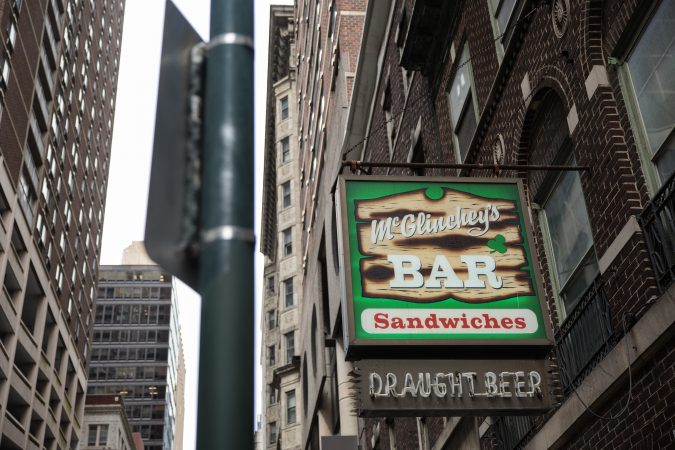
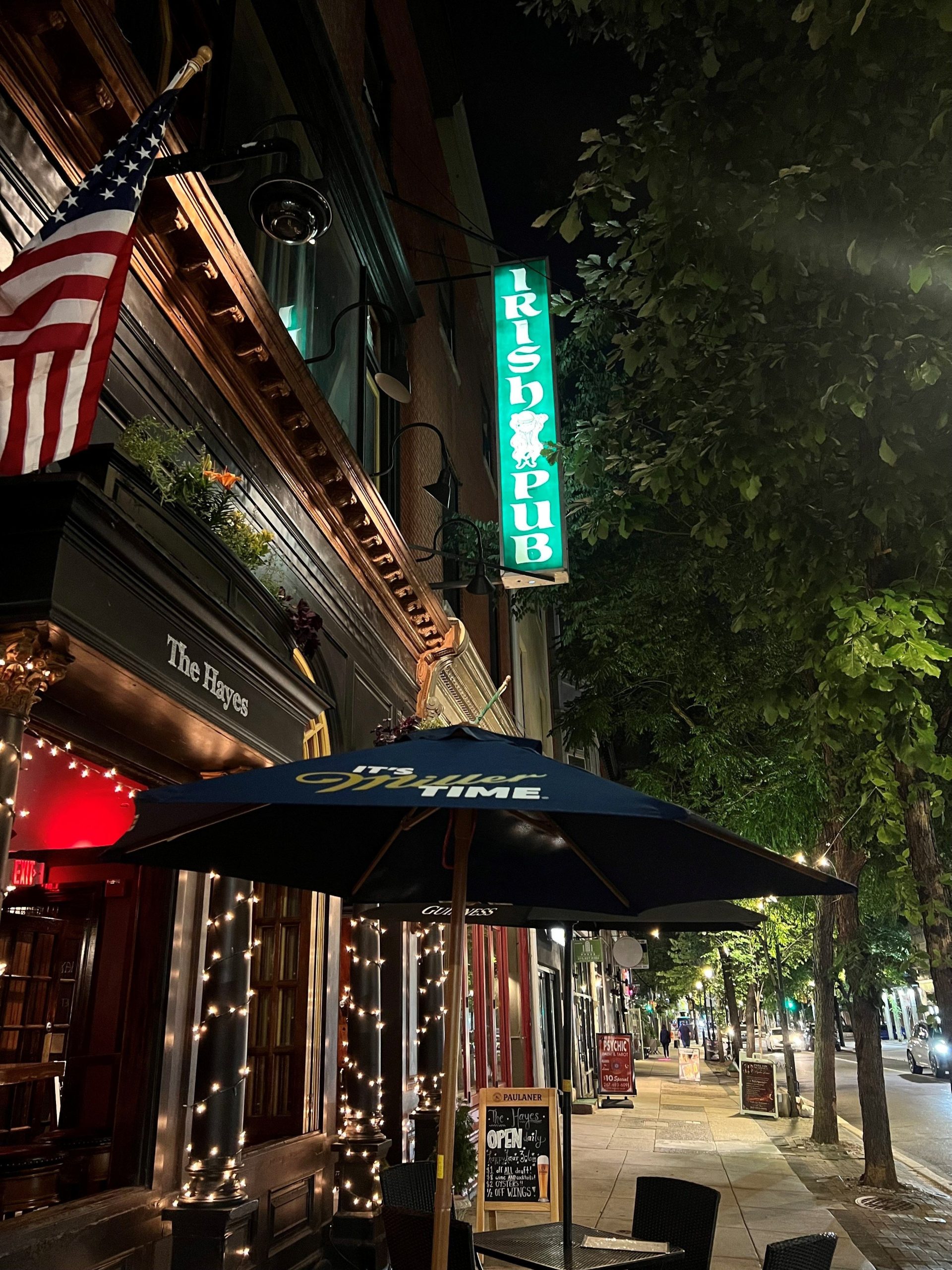
The building housing the shuttered McGlinchey’s Bar is back on the market after a planned sale fell through. Chef-restaurateur Townsend “Tod” Wentz wants to sell the Hayes, the American tavern he opened in the former Irish Pub building on Walnut Street near 12th. And Cherry Street Tavern, another historic watering hole whose owners announced plans to sell earlier this year, appears close to finding a buyer.
The biggest surprise may be McGlinchey’s.
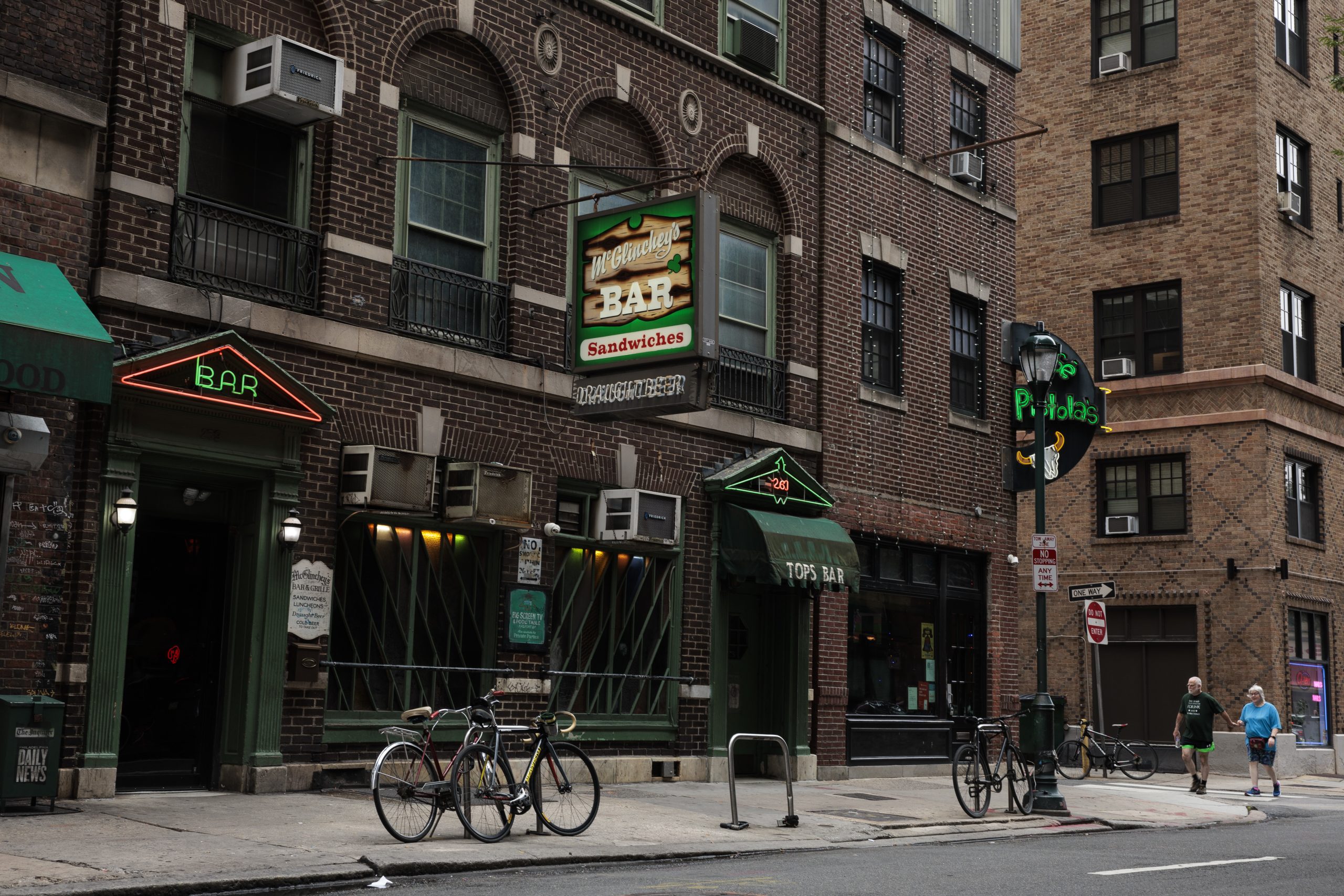
The building housing McGlinchey’s had been a bar for 90 years before last summer’s shutdown.Monica Herndon / Staff Photographer
In April, Alterra Property Group confirmed that it was under agreement to buy the building at 259 S. 15th St., home to McGlinchey’s for more than 90 years before the dive bar closed in summer 2025. But Leo Addimando, Alterra’s cofounder and managing partner, said Wednesday that the company “decided not to proceed.”
The building is listed by Nadia Bilynsky and Dennis Carlisle of MPN Realty at $2.45 million. The offering includes the liquor license, two bars, a stage, a small kitchen, and a shell-condition third floor. The property, which occupies nearly 5,000 square feet, is being marketed as a turnkey bar-restaurant opportunity or a redevelopment site.
A few blocks east, another familiar address is available.
Wentz has listed the Hayes, his 268-seat American tavern at 1123 Walnut St., through Veronica Blum and Joe Scarpone at MPN with an asking price of $2.93 million. City records show that it sold for $2.3 million in 2019.
The Hayes, at 1123 Walnut St., previously was the short-lived Pearl Tavern, after many years as the Irish Pub.Michael Klein / Staff
Wentz said he intends to keep the restaurant open until a sale.
Wentz said the decision reflects a personal shift after years of expanding his restaurant group with his wife, Gordana Kostovski. “I want to take advantage of the increase in the real estate market,” he said. “I think it’s time to capitalize on some things and put some money to work elsewhere in my private life.”
“I just kept opening restaurants instead of buying a shore house or buying a bigger home,” said Wentz, 58. “I don’t want to go into my 60s with that same mindset.”
The Hayes at 1123 Walnut St., seen on June 16, 2026, still has the original sign of the Irish Pub, its previous occupant.Michael Klein / Staff
The Hayes occupies one of Center City’s best-known tavern addresses.
Richard and Catherine Burke opened the Irish Pub there in 1980, bringing with them the concept they had established in Atlantic City. For nearly four decades, it was a gathering place for lawyers, police officers, theatergoers, and neighborhood regulars, known for its carved wooden back bar, inexpensive food, and walls covered with framed newspapers and playbills.
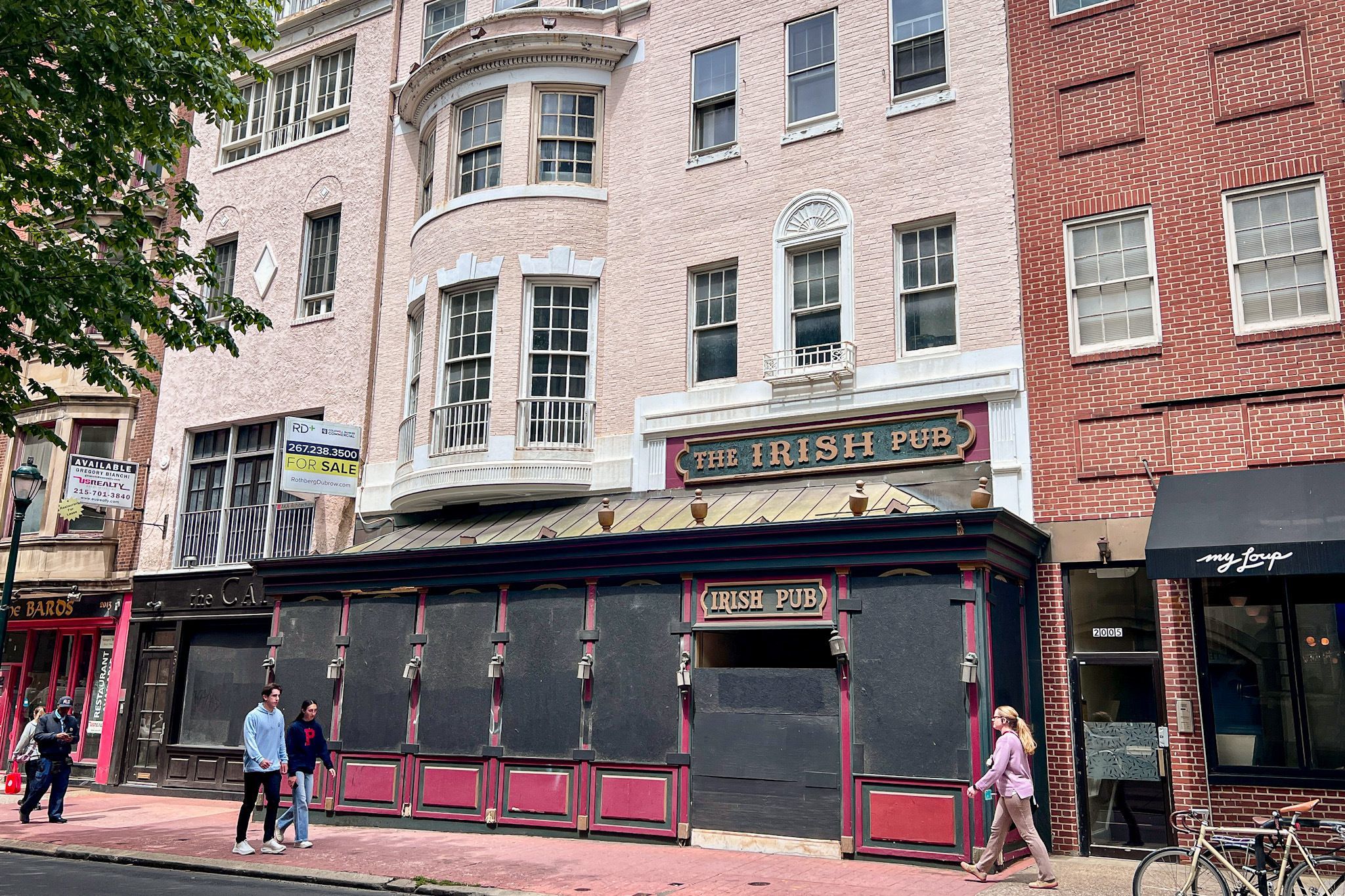
When longtime operator Mark O’Connor closed it in July 2019, he said he wanted to focus on the second Philadelphia Irish Pub location, at 2007 Walnut St.
Wentz bought 1123 Walnut later that year, briefly opened Pearl Tavern before the pandemic derailed those plans, then renovated the property and reopened it as the Hayes in 2023. He owns Oloroso next door as well as Caribou Café across the street, A Mano in Fairmount, and Oltremare in Rittenhouse. A sixth restaurant, Townsend on East Passyunk, is closed pending repairs from water damage after a fire next door in May.
The listing includes the 6,776-square-foot building, restaurant equipment, liquor license, and outdoor seating. The restaurant occupies the first two floors, while the upper levels contain office and unfinished space. The through-block property extends from Walnut Street to Moravian Street.
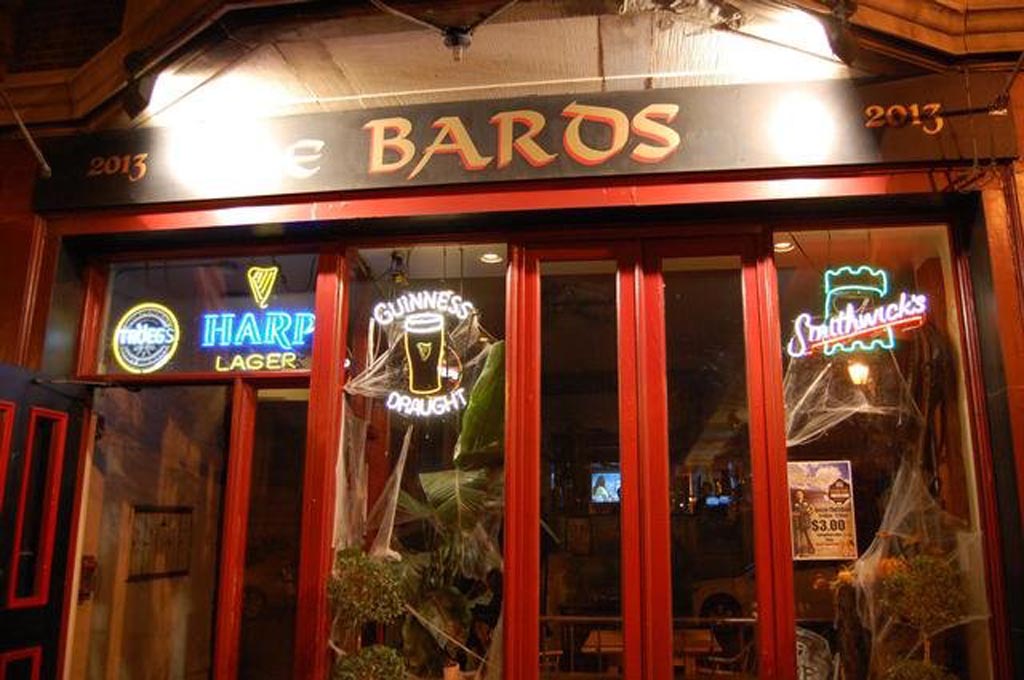
The Bards at 2013 Walnut St. closed in 2020.
The Hayes’ listing is the latest chapter in a broader reshaping of Center City’s pub scene. Over the last two decades, Philadelphia has lost a number of big names: Downey’s at Front and South Streets closed in 2016 after four decades. Finnigan’s Wake, the sprawling multilevel pub at Third and Spring Garden Streets, closed in 2014 and is now GoPuff’s headquarters. In 2020, the pandemic led to numerous shutdowns, such as Manny Brown’s at 512 South St. and the Bards at 2013 Walnut St.
The sister Irish Pub at 2007 Walnut St. also never reopened after the pandemic. Earlier this year, restaurateur Dan Tsao, owner of EMei, purchased the property for a future hospitality project. One of the remaining stalwarts, the Black Sheep at 17th and Latimer Streets, was closed by a fire in May, though owner James Stephens said he hopes to reopen by Christmas.
The former Irish Pub, 2007 Walnut St., on April 30, 2026.Michael Klein / Staff
Meanwhile, Cherry Street Tavern, whose owners announced plans to sell earlier this year, also appears headed toward new ownership. A manager told The Inquirer on Wednesday that a sale is believed to be close, though no agreement has been announced publicly.
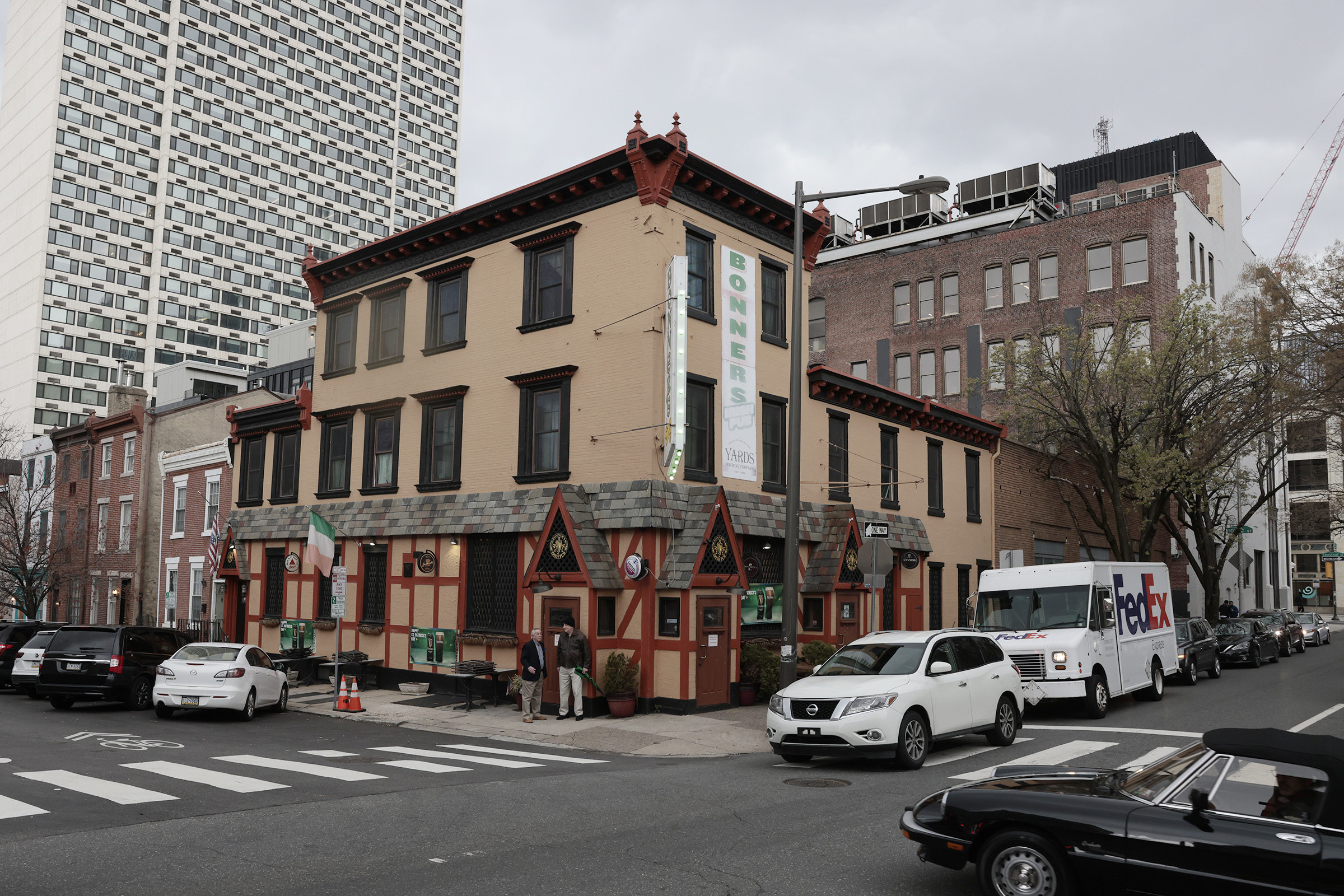
Meanwhile, the longtime Bonner’s Irish Pub’s future is secure, said owner Danny Bonner, who opened at 23rd and Sansom Streets in 1994.
Bonner, 71, put the building on the market in 2024, hoping to attract a developer. Instead, he struck a deal with the owner of the property next door to pursue an apartment project that would incorporate a new Bonner’s into its lobby.
Bonner’s Irish Pub at 120 S. 23rd St. in April 2024.Elizabeth Robertson / Staff Photographer
Bonner said one preliminary plan calls for a roughly 3,200-square-foot Bonner’s, about 900 to 1,200 square feet larger than the current pub. There is no timetable for the development, whose price tag Bonner estimated at $45 million to $55 million. The existing bar will remain open until construction begins.
“Where I’m located, we’re fortunate,” Bonner said. “We get professionals, union guys, and loyal neighborhood customers.”
Bonner’s Irish Pub owner Danny Bonner chatting with patrons in April 2024. Elizabeth Robertson / Staff Photographer
Bonner hopes the project will allow the bar to outlast him.
“You have to leave some kind of legacy,” he said. “We’re losing too many mom-and-pop operations. All these big franchises are coming in. Philadelphia is still a city of neighborhoods, and we’re losing that. My customers walk in, and while I don’t know every single one, I probably know 70% of them by their first name.”
Staff writers Mike Newall and Jake Blumgart contributed to this article.
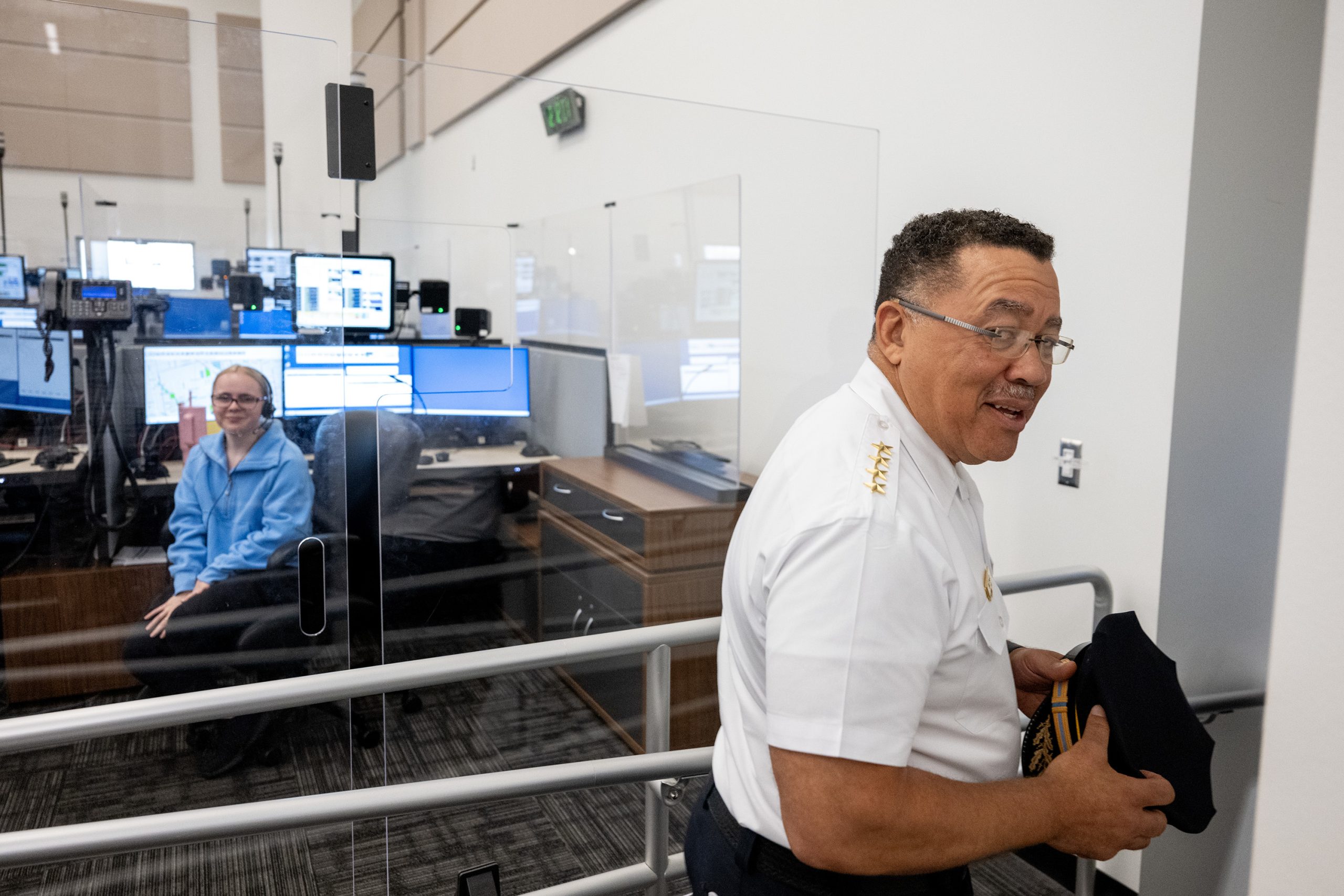
Until last year, Philadelphia police detectives wrote search warrants on typewriters. Officers still take incident reports with pen and paper, and hand deliver them to detective bureaus. And when someone reports a minor crime, it can take hours for police to respond — if they do at all.
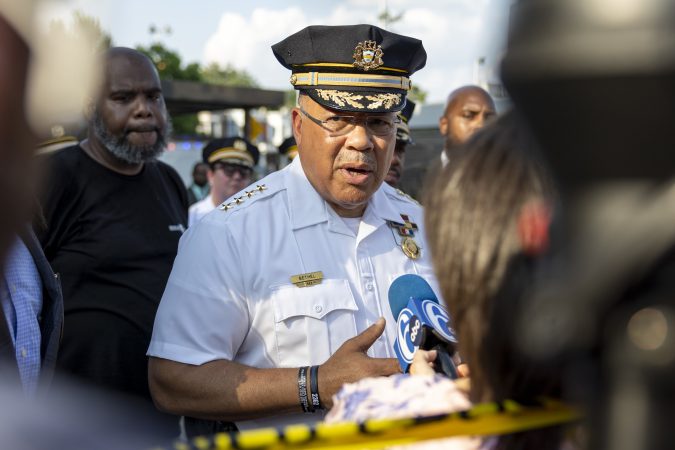
To Police Commissioner Kevin Bethel, those details capture something bigger: a department in need of a systems upgrade.
In a new five-year strategic plan released Thursday, Bethel broke from the tradition of his predecessors by treating the police department and its nearly $900 million budget as a business in need of modernizing — with an eye toward better “customer service” for residents — rather than centering on crime-fighting tactics like commanders of the past.
“If we’re going to be a modern police department,” he said in an interview this week, “we have to take on some of the structures of a modern business.”
To him, that involves tackling many of the less glamorous parts of police work: upgrading internal records systems, streamlining police report forms, and expanding training for officers.
But there are also some flashy — if not eyebrow-raising — initiatives within the 73-page plan: integrating artificial intelligence into 911 calls, allowing residents to report nonemergency crimes via video chat, and creating an internal diversion program for officers who violate low-level department policies.
Some parts of the plan — built on conversations with more than 200 people in the department, city leadership, and community — would be funded through grants, the department said, while others would need to be approved and funded by City Council, which has been largely amenable to Bethel’s budget requests in recent years.
The department said the long-term view “allows future needs to be considered through the normal budget process well before they arise.”
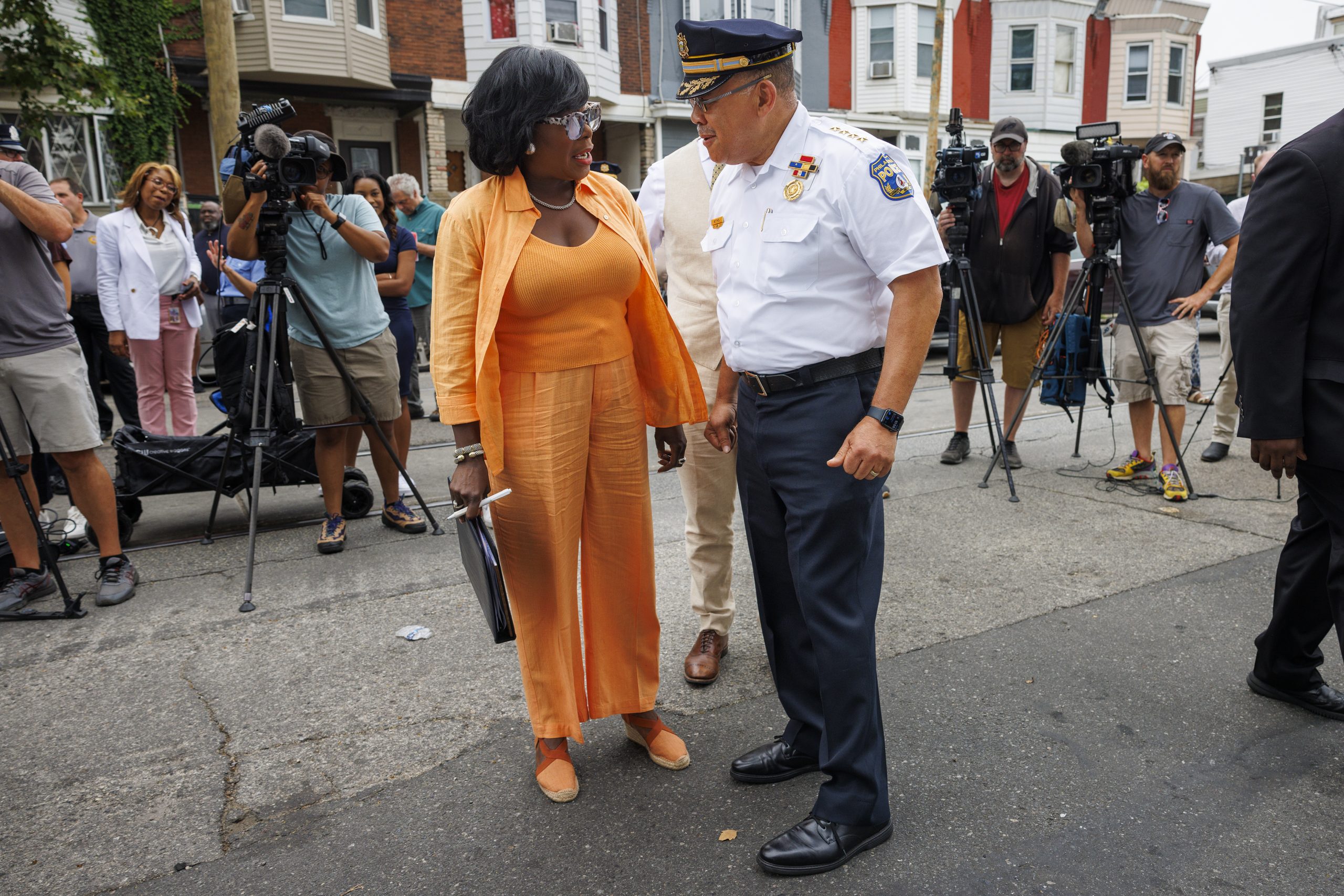
Philadelphia Mayor Cherelle Parker and Police Commissioner Kevin Bethel speak at a press conference in 2024.Alejandro A. Alvarez / Staff Photographer
It has been one of Bethel’s signature undertakings since Mayor Cherelle L. Parker appointed him as Philly’s top cop in January 2024, part of a long history of police commissioners and mayors working together to craft long-term public safety plans to guide their administrative goals.
In 2012, then-Mayor Michael Nutter said the department would focus on confiscating illegal guns, and ramp up overtime to put more cops on the street. And in 2020, amid an unprecedented spike in gun violence, then-Police Commissioner Danielle Outlaw outlined goals to increase the clearance rate for homicides and shootings.
Bethel’s plan, by contrast, is light on specifics for traditional crime fighting. While it broadly describes strategies like increasing foot patrols on SEPTA and expanding the use of digital forensic evidence in investigations, it does not set targeted reductions in homicides, shootings, or traffic deaths.
That, he said, was intentional.
“This plan is really not a crime plan. We have a crime plan. We’ve been covering it for a long time. We know that space of it,” he said. “But we’ve never done anything as an organization with, how do we move into being a modern and forward-thinking, always-evolving organization?”
That has likely given Bethel the rare breathing room to look past the crime stats that have defined past administrations and focus instead on the machinery behind them.
Here are some standout parts of the plan:
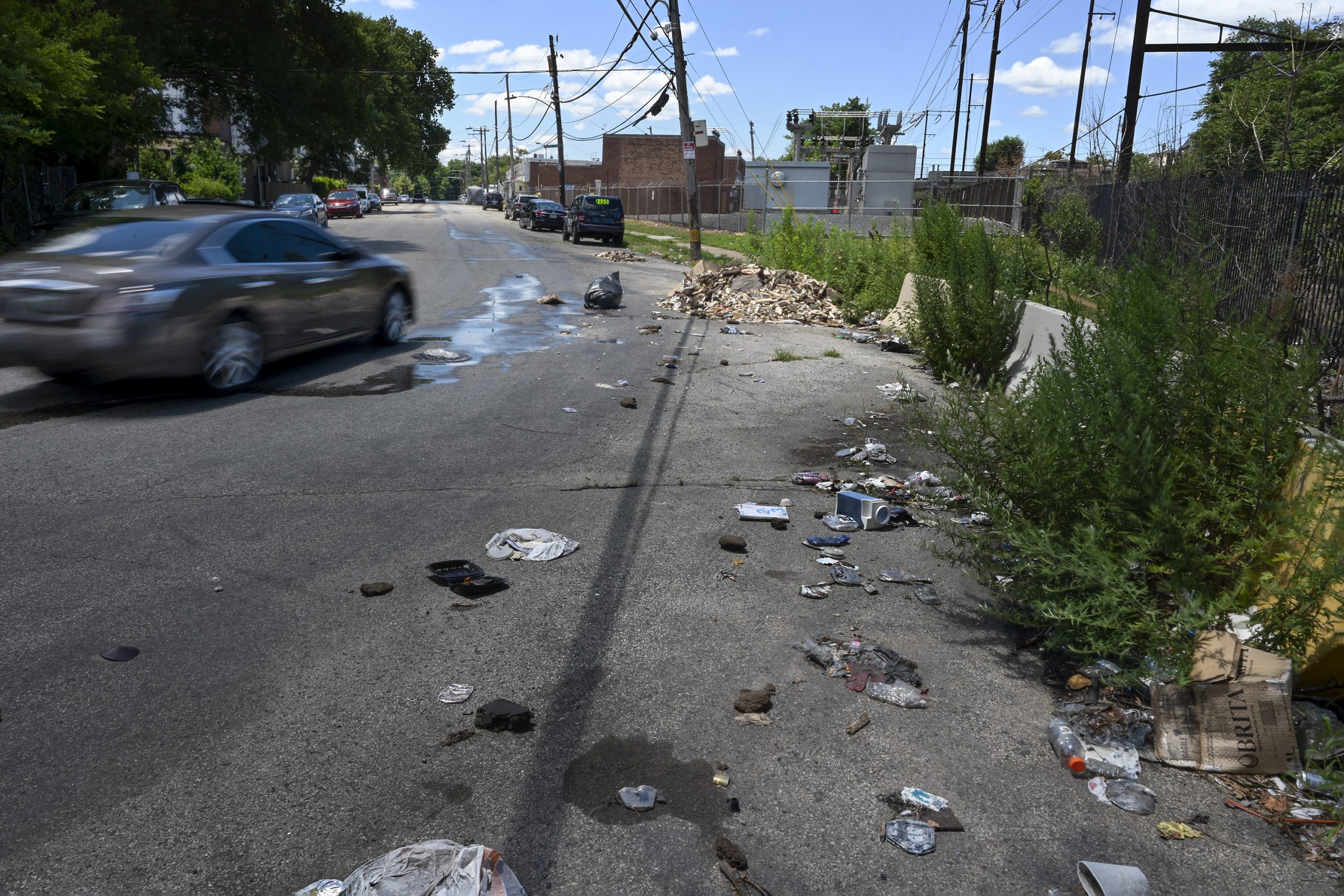
Illegally dumped trash piles up at South 56th and Hoffman Streets in Kingsessing in this 2024 photo. Residents would now have officers in their police district to specifically help address quality-of-life issues. Tom Gralish / Staff Photographer
New quality-of-life officers
Quality-of-life concerns have long dominated community police meetings, Bethel said. So within the next two years, the department plans to install “quality-of-life officers” in every police district to be the point of contact for residents on issues like abandoned cars, illegal dumping, and nuisance businesses.
Those officers, Bethel said, would be responsible for coordinating calls with other city departments to more quickly resolve problems.
Report low-level crimes via video call
One of the biggest issues for the department, Bethel said, is poor “customer service.”
Officers typically juggle high-priority calls — like shootings and assaults — alongside reports of nonviolent crimes like petty theft, vandalism, or minor car crashes. Because the lower-level offenses are considered less urgent, officer response can sometimes take several hours, leaving residents frustrated.
Under the new system, he said, people would be able to report low-level crimes online and be provided with a link to a video chat with officers, who could take the report and send a copy to the caller digitally, with no in-person visit needed.
Filing a report over the phone will still be possible, he said, but for people who want to avoid an emergency call for minor issues, this is a new option.
The new system could start to roll out within the next year.
AI-assisted 911 calls
The department also plans to test 911 call systems that use artificial intelligence to screen calls.
When people call for help, they will be connected to an emergency dispatcher, with AI listening in the background. Callers who report lower-level crimes, like vandalism or theft, will be transferred to an AI-assisted line and have the option to report the matter online or via video call.
There will also be a separate, nonemergency phone number that will be answered by an artificial voice. The system will screen for keywords or issues linked to high-priority crimes, like a robbery or shooting, and immediately transfer those calls to a human dispatcher, the department said.
Bethel said the department is still evaluating potential pitfalls, and acknowledged the nuances: “A theft can turn into a robbery, and a robbery can turn into a shooting, a shooting can turn into a murder,” he said.
Police Commissioner Kevin Bethel inside the radio room at PPD headquarters in 2024.Tom Gralish / Staff Photographer
An internal diversion program
When city police officers violate department policy, their disciplinary cases are sent to the Police Board of Inquiry, and reprimands can remain on their record and affect future promotions unless appealed and overturned through union arbitration.
Under a new initiative, officers accused of lower-level violations could go through an internal diversion program that requires them to undergo training and avoids a mark on their record. Among those offenses are sleeping on duty, dismissive behavior, using derogatory or offensive language, or failing to activate body-worn cameras. In the latter case, Bethel said, the diversionary program would not be available for officers with repeated failures to turn cameras on.
Officers would not be eligible for diversion if they are found to have committed the same offense within the previous six months, or if the offense happened alongside more serious violations ineligible for the program.
Bethel said the diversion option was developed in coordination with the Citizens Police Oversight Commission with a goal of giving officers “a second chance, but also train them.”
Expand communication with the public
The department intends to develop transition plans when captains or commanders leave neighborhood police districts — something community leaders had requested, Bethel said.
It will also host quarterly community meetings to review data, and develop publicly available dashboards with additional crime, quality-of-life, and other types of data to measure performance.
By expanding points of contact with the community, Bethel said, “they’re going to hold us accountable.”
The tension between the rise of legalized sports betting and the specter of gamblers developing ruinous addictions came into sharp focus last week, between the stark recommendations of a nonpartisan Pennsylvania commission and a baseball star’s social media post.
Lawmakers could impose restrictions on sportsbook operators, such as banning in-game microbets and curtailing VIP programs, the Joint State Government Commission wrote in a 126-page study on sports betting and interactive gambling that was published July 13.
A bill to prohibit microbets and other sports gambling products that could amplify addiction is currently being drafted, said State Rep. Tarik Khan, who introduced the resolution that authorized the commission’s research.
“The scope of the problem is worse than we thought,” said Khan (D., Philadelphia).
State Rep. Tarik Khan said lawmakers are drafting legislation that will seek to prevent sportsbook operators from offering in-game microbets.Tom Gralish / Staff Photographer
He referenced surveys, cited by the study, showing that 48% of men ages 18 to 49 have an account with at least one sportsbook company, while 52% reported wagering an increased amount of money after they experienced losses.
“Sometimes you have to be very clear on what companies can and can’t do, especially when money is involved,” Khan said.
Analysts have predicted that microbets — wagers that can be made on individual plays and outcomes during a live game — could grow by $14 billion by the end of the decade.
The sports gambling industry is likely to oppose eliminating such a lucrative product, according to Joe Maloney, the president of the Sports Betting Alliance, a national advocacy organization whose members include FanDuel, DraftKings, BetMGM, bet365, and Fanatics.
“I’m just not sure that something as proscriptive as banning that market achieves what is the stated endgame,” Maloney said. “I’m not entirely sure what the problem is that they’re trying to solve.”
The same day the state study came out, Philadelphia Phillies first baseman Bryce Harper took to Instagram to explain how FanDuel had acquired a personalized video he made in 2024, which the sportsbook company then sent to Terry Thompson, a local VIP bettor who suffered from a gambling addiction.
Harper wrote that he had recorded the 21-second video — a copy of which was obtained by The Inquirer — through the video service Cameo. In it, Harper said he was doing the video on behalf of a FanDuel host. But the nine-time All-Star later said that he was not aware that FanDuel intended to use the recording for business purposes or that Thompson had an addiction.
“Had I known FanDuel’s true intent,” Harper said, “I would not have made the video.”
The state study summarized litigation that sportsbook operators are facing in Pennsylvania, including a lawsuit filed in March by the Public Health Advocacy Institute on behalf of Thompson and another man against FanDuel and DraftKings. The suit alleges that the companies profit from the compulsive nature of microbets and use VIP rewards to entice gamblers to keep betting, even after they have displayed signs of addiction.
Thompson, of Montgomery County,lost nearly $2 million to wagers that he placed with FanDuel and DraftKings.
“These companies’ profit margins are dependent on people with gambling disorders,” Khan said. “It’s clear. Did [FanDuel] tell Bryce Harper that they wanted a video for a person who had lost that much money? Of course not.”
Maloney disputed Khan’s characterization of sportsbook companies’ business practices.
He compared VIP programs to customer rewards that retailers like Starbucks or T-Mobile offer, and said bettors can easily opt out of the programs or from receiving promotional offers.
“There’s no sustainable and durable future for this industry if it is not responsible and committed to integrity,” he said. “The notion that any industry can sustain itself across a small and finite number of users is completely false.”
The regulation battle
The commission, a research and policy development agency for the Pennsylvania legislature, retraced the evolution of sports betting in the U.S. and identified measures that lawmakers could pursue to curb addiction.
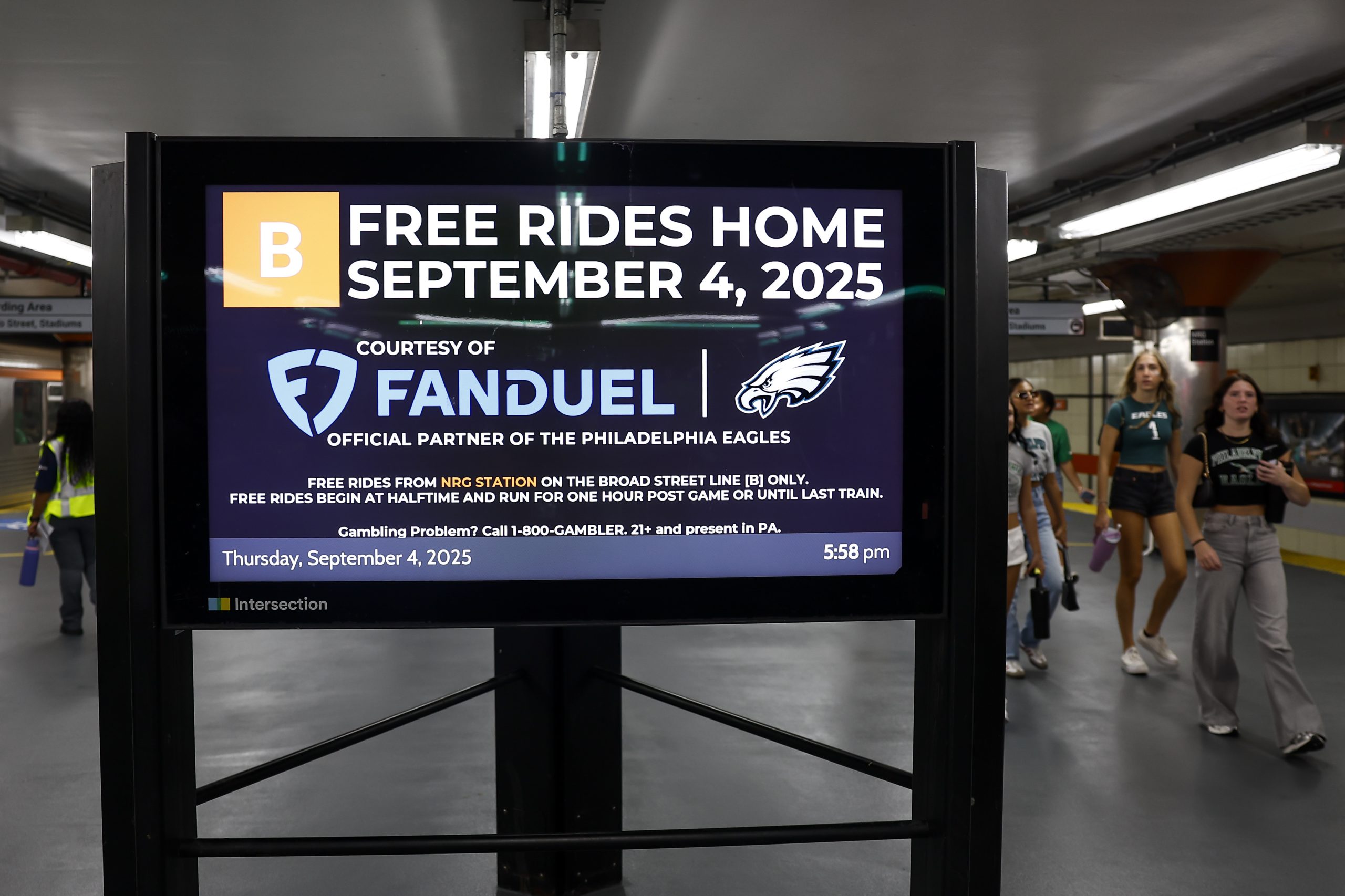
Since the U.S. Supreme Court ruled in 2018 that states could establish their own sports betting laws, sportsbook companies and lesser-regulated prediction markets have entered into highly visible partnerships with professional sports leagues and teams that once were uniformly opposed to gambling.
The rise of the sports betting industry has helped fill state coffers. Pennsylvania recorded $6.7 billion in gambling revenue in 2025, with $602 million derived from sports wagers.
Tales of bettors who grew addicted to the instant dopamine spike of gambling on mobile devices or placing in-game microbets, then tumbled into a whirlpool of spiraling debt, have also become plentiful.
“States are waking up to the reality of sports betting now. They’re seeing a lot of the downstream impacts,” said Uttara Ananthakrishnan, an assistant professor of information systems at the University of Washington and an expert on online betting and gambling addiction.
The NFL, like other professional sports leagues, has abandoned long-held opposition to gambling entities, and entered into partnerships with sportsbook operators.Monica Herndon / Staff Photographer
Ananthakrishnan said new research suggests that gambling is not only associated with financial stress, but also can lead to more crime, suicide, divorce, child maltreatment, and housing instability, while siphoning state lottery revenue.
A recent study conducted by Pennsylvania State University’s Criminal Justice Research Center found that 2.5% to 6.4% of Pennsylvania adults may be problem gamblers, while a 2025 National Council on Problem Gambling survey showed that at least 20 million Americans reported experiencing problematic gambling behavior during the previous year.
The state commission study, meanwhile, cited a Harris Poll that found 79% of Americans believe gambling addiction is “as serious or more serious” than alcohol or drug addictions.
“It’s very, very disturbing,” Khan said.
The commission suggested that lawmakers could obtain customer data from gambling companies and have them independently analyzed to better understand which practices and products are most harmful.
It offered other, more immediate recommendations as well: preventing bettors from using credit cards to place deposits; mandating that customers limit the duration of their gambling and the frequency of their deposits; and forbidding companies from sending promotional offers to gamblers if they have logged out of their accounts, or using artificial intelligence to create individualized promos.
The study also suggested prohibiting gambling advertisements from public university campuses.
“I don’t sit here as a voice of the industry and deny the science,” Maloney said. “Gambling is an activity that can become problematic, and for some people, it can become addictive.”
But Maloney argued that many of the gambling studies and surveys that experts cite do not prove a direct link between gambling products and those who develop addictions.
“By all means, it’s a policy conversation that we absolutely want to have if the legislators are responding to highly publicized research, and confusing correlation with causation, and relying on national media interlopers who are largely transcribing academics and researchers in that space, and delivering clicky headlines,” Maloney said.
Sports betting helped drive gambling revenue in Pennsylvania to a record $6.7 billion in 2025. Jeff Chiu
Ananthakrishnan said the negative effects are real.
“I am glad Pennsylvania is recognizing the problem and looking at evidence-based policy to curtail problem gambling,” she said.
Ananthakrishnan said the legislature should act on at least two proposals in the study: Require gambling apps to use their own data to predict problem gambling behavior, rather than using the information just to convince users to place more bets; and require the apps to release anonymized player stats that could be analyzed by an independent research entity.
“This creates a pathway to design evidence-based policies that directly address the specific mechanics of digital addiction without relying solely on operator self-reporting,” she said of the latter proposal.
‘Too close to the edge’
While legislators in Pennsylvania and other states, like New Jersey, grapple with how to enforce guardrails on sports betting, leagues continue to face headline-grabbing gambling scandals.
The NFL last week indefinitely suspended an Arizona Cardinals official, Ryan Gold, who is accused of leaking information about the team’s draft plans and participating in parlay bets on NFL and college games, ESPN reported. Gold has denied any wrongdoing through his attorney. The matter is now being investigated by the Arizona Department of Gaming.
In May, a DraftKings employee was arrested in Las Vegas and charged with conspiracy and related offenses for allegedly participating in a sports betting ring with a basketball player from Fresno State.
Hours before he participated in the All-Star Home Run Derby on July 13, Bryce Harper wrote on Instagram that he didn’t know FanDuel planned to use a video he recorded through Cameo as a reward for a VIP bettor. Monica Herndon / Staff Photographer
The Pennsylvania Gaming Control Board, meanwhile, is reviewing the controversy over FanDuel’s use of the Bryce Harper video.
Major League Baseball’s commissioner, Rob Manfred, told reporters that Harper did not violate the league’s collective bargaining agreement, which allows players to engage in some promotional work for sportsbooks and casinos, provided they do not encourage betting on baseball.
The gaming control board has separately proposed new regulations to address gambling addiction, said a spokesperson, Doug Harbach.
Among the changes the board wants to implement are daily, weekly, and monthly limits on deposits that bettors can make to cashless gaming systems, and prohibiting companies from implying that betting is risk-free or a way to pay bills.
“We have to make sure there are safeguards,” said Khan, the state representative. “Sometimes people get too close to the edge.”
The Inquirer will continue to report on issues related to the growth of gambling addiction — among teens and adults — across Pennsylvania. If you, or someone you know, would like to speak with a reporter, please contact David Gambacorta or William Bender at dgambacorta@inquirer.com or wbender@inquirer.com
When Kai Wagner was introduced in the Union’s starting lineup on Wednesday, the roar was so loud that it drowned out public address announcer Kevin Casey. When Quinn Sullivan jogged up the sideline to finally return to the field in the second half, the buzz in the stands was real and wholesome.
But neither of them ended up as the biggest name in the 3-1 win over Red Bull New York, just the Union’s second league win of the season (2-10-4, 10 points). It wasn’t even interim manager Ryan Richter, who earned a victory in his debut on the first-team bench in the first game back from the MLS World Cup break.
Neil Pierre, the prized centerback prospect, played 34 minutes as a second-half substitute after Japhet Sery Larsen felt some hamstring tightness, and finally showed he’s ready for the big leagues.
It was only Pierre’s second game with the first team. His first was when he was thrown to the lions in last year’s infamous 7-0 blowout loss in Vancouver. This time, he was at home and got to take the field in the 56th minute with the game tied 1-1. Mere seconds later, he leapt at a Wagner corner kick service to slam in a header that put the Union ahead.
“I kind of knew when Kai came back, I told him we’re going to score a lot of goals, we’re going to have a lot of moments,” Pierre said. “And then as soon as I ran up to the ball, I was like, there’s no way. My eyes got a little big — luckily, I scored it.”
But between the game’s momentum and the Union’s fragile psyche, it was far from certain the lead would hold. So it mattered that while his defensive stats totaled just two clearances and one recovery, he helped see out the win.
“I knew, even if I started or came in the game, the team’s confidence in me to play,” Pierre said, reflecting the endorsements Richter and sporting director Jon Scheer have given him lately.
“I’ve come up through the academy, so it’s kind of a dream coming to these games,” Pierre said. “To come on the pitch was obviously an honor, and then to score was like, wow, what a dream.”
Perhaps if someone else had finished that play, Wagner’s return would be the feature item here. But Pierre’s arrival has been anticipated for some time, and this felt like it, even as he also put an almost-comical miss off the crossbar from right underneath it. (Asked how many teammates gave him grief for that, Pierre cracked a smile and said, “Every single one.”)
“I think he made another step forward,” Wagner said. “I think it really helped him to grow as a person, as a player, in Europe a little bit, even as it was probably a lower league. But I think we know that we can throw him in now. Today was a good test for him, a good start, solid start for him.”
At just 18 years old, Pierre has a wide range of tools on his 6-foot-7 frame, including sublime passing skill for a centerback. But as he rose through the Union’s academy and reserve squad, the key question was how he’d handle the physicality of the top flight.
New York didn’t have the kind of old brute who will really stick an elbow in your chest with a veteran’s savvy. But Pierre will face that eventually.
It’s the main reason the Union sent him on a six-month loan to Danish club Lyngby, in which the Union have an ownership stake. Even though Lyngby played in the second tier last season, it’s still a more physical circuit than MLS Next Pro, and Pierre helped the club earn promotion before returning to Chester.
There was also the mental side of going somewhere else for the first time, after a childhood in Harrisburg and now having his family in Media.
“I noticed a lot, especially me growing up, finally being by myself away from home for six months,” Pierre said. “I think it made me really sit with myself and think about certain things I wouldn’t think about being home. And obviously, as a player, it made me more mature on the ball.”
The cherry on top Wednesday was seeing Pierre join a game with many intriguing young Americans on the field. The matchup was hyped as one U.S. national team fans could watch to see players who might contend for the 2030 World Cup squad, and it delivered: Cavan and Quinn Sullivan, Frankie Westfield, Pierre, and New York’s Julian Hall, Adri Mehmeti, and Justin Che.
“I think it kind of showed where MLS is going,” Pierre said. “Trusting the players and showing that yeah, it doesn’t matter your age. I think if you come through the programs and trust the process, you’ll end up playing in MLS and hopefully then going to Europe or whatever it is.”
Quinn Sullivan received a lengthy ovation as he entered for his 2026 debut, just short of 10 months after he tore his ACL. pic.twitter.com/6vxEdg1w7z
When will Pierre play next? It depends in part on how bad Larsen’s hamstring tweak is, with the Seattle Sounders coming to Subaru Park on Saturday (7:30 p.m., Apple TV). Then there’s an Aug. 1 home game against Atlanta United.
An interesting test could come in next month’s Leagues Cup games. Though the tournament understandably still isn’t of much interest to fans, the Union have group stage home games against three Mexican clubs — including former Union striker Julián Carranza’s Necaxa. Those will be interesting tactical tests for Pierre.
For now, it’s a good step that he looked the part in this game. With Olwethu Makhanya away for personal reasons amid transfer rumors, if Larsen is out for any extended time there’s now some proof that Pierre can step in.
“I believe in him,” said Richter, who had his own rise from coaching in the Union’s academy to the reserves to now. “I’ve worked with him since he was 11 years old, and I have seen him progress in every stage of this. I’ve seen him be successful as an academy player, I’ve seen him be the defender of the year in MLS Next Pro, I watched his games when he went on loan and saw him be successful there and work and fight his way into the team there, and now it’s no surprise to see him come in and be ready for this next step.”
Terry Thompson’s spiral into gambling addiction offers a window into the human destruction Pennsylvania lawmakers unleashed when they legalized online betting.
Before sports gambling was legal, the Montgomery County resident placed occasional bets through bookies. But in 2020, shortly after Harrisburg legalized sports betting, Thompson created an account with FanDuel Sportsbook to bet on the Eagles.
He began placing numerous microbets through FanDuel and DraftKings, the two main gambling apps, and soon became addicted. Within five years, he wagered more than $22 million between the two companies, and lost more than $1.8 million.
To feed his gambling addiction, Thompson sold his company and took out additional mortgages on his home. He hit rock bottom in February, gambling away his last dollar and planning to take his own life, according to a lawsuit filed in the Common Pleas Court of Philadelphia against FanDuel and DraftKings, and detailed by Inquirer investigative reporter David Gambacorta.
Thompson’s story lines up with many others who get hooked on gambling. But it included a new wrinkle that adds to the insidious way gambling companies entice people to keep betting.
In November 2024, Thompson received a personalized video message from Phillies superstar Bryce Harper.
In the video, Harper references Thompson by name, mentions his young son, and thanks him for his support. Harper adds that he was reaching out on behalf of the VIP manager at FanDuel who wanted to make sure Thompson had an “extra special Thanksgiving.”
In a personalized video that was sent to a problem gambler, Phillies slugger Bryce Harper said he was reaching out on behalf of an official at FanDuel.Obtained by The Inquirer
A few days after Gambacorta’s story was published, Harper issued a statement claiming he was not aware of FanDuel’s involvement even though he mentions the company’s VIP manager by name.
Harper said he joined the messaging site Cameo to engage with fans by providing paid video messages. Indeed, there is no evidence Harper was paid by FanDuel or aware of Thompson’s addiction.
Strategic ignorance aside, it seems pathetic for a star athlete paid roughly $25 million a year to work a side hustle shilling videos to strangers. Talk about not elite.
Clearly, everyone is finding a way to make money off gamblers, including state lawmakers, sports leagues, gambling apps, and former and current players.
It’s all about the fans, right?
More disturbing is how the apps entice gamblers.
In Thompson’s case, FanDuel rewarded him with perks, including champagne, hotel stays, and Super Bowl tickets. His VIP manager texted him about the Eagles as well as personal exchanges about family and travel plans.
FanDuel said its VIP managers do not work on commission. The company has a number of systems in place to help gamblers bet responsibly, including a dashboard so customers can track spending, real-time check-ins if players deviate from usual habits, and devices that let gamblers set limits on losses or time spent on the app, as well as cooldown periods or formal self-exclusions.
That’s well and good, but gamblers find workarounds, and the VIP perks sure seemed designed to keep high rollers gambling. Expecting gamblers in the throes of addiction to police themselves is not a serious solution.
One recovering gambling addict not involved in this case told me how FanDuel and DraftKings would send him numerous incentives a day to keep betting.
Indeed, the gambling business model depends on a small percentage of gamblers making frequent bets. One study found 5% of sports gamblers generate 86% of the industry’s revenue.
The ease of online gambling has turned everyone’s mobile phone into a casino. Nearly 40% of men and 20% of women gamble online daily, according to the American Psychiatric Association.
Online betting has enabled companies to attract younger gamblers. Two-thirds of 18- to 22-year-old men surveyed by the NCAA had bet on sports. Many teens and adolescent children have become hooked on gambling, including some as young as 11.
In a statement, FanDuel said it “is committed to fostering a culture of responsible gaming and protecting our customers” and that “employees are trained to recognize and flag signs of problem gambling.”
Thompson’s experience, as alleged in his lawsuit, indicates otherwise.
“There are millions of Terry Thompsons out there,” Harry Levant, a former Philadelphia attorney who is now the director of gambling policy for Public Health Advocacy Institute, told me.
Levant, an addiction recovery coach, said he gets frequent calls from spouses, parents, and children seeking help for loved ones addicted to gambling. He said he has clients who gamble in the shower or before they get out of bed in the morning.
Harry Levant, an addiction recovery coach, said he has clients who gamble in the shower or while they’re lying in bed in the morning.Courtesy Harry Levant
Levant said the surge in online sports gambling has been fueled by a partnership between professional sports leagues and sports betting companies that provide a nonstop stream of in-game betting opportunities on everything from the next pitch to the next home run.
Microbets — such as betting on the outcome of the next pitch or play — and same-game parlays — where gamblers make a single bet that requires multiple events to happen — keep bettors engaged throughout a game. When the game is over, there is always another game somewhere in the country or across the world.
Levant said microbetting is designed to be addictive. “We are dealing with a fundamentally different form of gambling,” he told me. “It’s machine vs. humans, and no way can humans keep pace.”
Levant has called on Congress to pass the Safe Bet Act, which would require operators to conduct “affordability checks” on customers before accepting wagers; prohibit microbetting and the use of AI to track individual gambling habits and offer individualized promotions; and prohibit sportsbooks from marketing during live sporting events.
Even for us non-bettors, prohibiting sports gambling ads — the same way tobacco ads are not allowed — would be a welcome relief. The incessant ads from casinos and sportsbooks, as well as the in-game promotions, are beyond annoying.
The problem is the sports leagues, the TV networks, and the gambling companies are essentially in business together. The state lawmakers who are sworn to protect the public enjoy campaign donations from the gambling lobby and hefty taxes for state coffers.
But it is up to the 39 states and Washington, D.C., that have legalized sports betting to implement real safeguards to protect citizens from a system designed to keep people gambling. The states ignore the reality that all of their betting-related tax revenue comes from the pockets of gamblers.
Last year, Americans bet more than $166 billion on sports — and billions more at casinos and state lotteries. Before the U.S. Supreme Court cleared the way in 2018 for states to legalize sports betting, sports betting amounted to $4.9 billion.
Now, up to 30% of Pennsylvania adults engaged in some form of online gambling in the past year, researchers at Penn State University found.
The Philadelphia-area market leads the country in online gambling. The rapid growth has resulted in a doubling of calls to a problem gambling hotline.
Anthropologist Natasha Schull wrote a book years ago that explained how slot machines were designed to addict gamblers. The industry jargon was to get gamblers to “play to extinction.”
Now, online gambling saves a trip to the casino, but the endgame remains the same.