Tag: topic-link-auto

  • ⚽ Post-World Cup blues? Fill that soccer-shaped void | Things to do

    ⚽ Post-World Cup blues? Fill that soccer-shaped void | Things to do

    I’m not going to lie, I’m still recovering from Argentina’s loss and the end of the FIFA World Cup.

    I watched Spain shutout the Lionel Messi-led team on the world stage, right next to five Spain fans at Old City Beer Garden. Their La Roja jerseys flew into the air, as they leaped from their seats like a weight-absorbed spring.

    In the days that have seemed empty since, I’ve barely mustered up the energy to go looking for events and attractions happening in the region this weekend.

    But like Spain’s late-game rally, I fought through the heart ache and delivered anyway. (I can at least get a point for that, right?). Let me know how you’re coping with your World Cup blues.

    Read below to see what’s happening in the region.

    Also in this week’s edition:

    — Earl Hopkins (@earlhopkins_, Email me at thingstodo@inquirer.com)

    If someone forwarded you this email, sign up for free here.

    Jill Scott takes over the Met starting Friday

    Jill Scott takes to the stage for One Philly: Unity Concert for America on the Benjamin Franklin Parkway on Saturday, July 4, 2026, in Philadelphia.Yong Kim / Staff Photographer

    Jilly from Philly is coming home! After a brief but riveting performance at the One Philly Unity Concert for America stage on Independence Day, Jill Scott is coming home to North Philly.

    In support of her new album, To Whom This May Concern, the iconic singer will headline four shows at the Met Philadelphia.

    Her run begins Friday night, followed by a show on Saturday, July 27, and July 29.

    Learn more from about her upcoming performances here.

    The best things to do this week

    Anchor, a beloved hammerhead shark from Camden’s Adventure Aquarium, passed away on Sunday.Photo Courtesy of Adventure Aquarium

    🎵 The orchestra strikes a chord: Watch the classic, Star Wars: The Empire Strikes Back, but with the Philadelphia Orchestra playing the soundtrack to the space epic at the Highmark Mann Center.

    🎭 A love story across time: Experience the best-selling novel, turned beloved romance flick, on the theater stage. The Notebook is playing at the Academy of Music through Aug. 2.

    👣 Do like the Romans: Walk the streets of South Philly before you dine. The Passyunk Passeggiata, inspired by the Roman tradition, invites folks to an evening stroll before they enjoy speciality food and drink deals.

    🦈 Sip with the sharks: Head to the other side of the Delaware River for an undersea exploration, with a cocktail in hand. Adventure Aquarium’s Sunset with the Sharks offers views of the Philly skyline and the ocean’s apex predator.

    📅 My calendar picks this week: Jazzing on Ridge Festival, Liberty Flea Market, and Arte en Las Calles. Here’s our full list for the week.

    Make the World Better Weekend at the Dell Music Center

    Twisted Tens will open for Kurt Vile & the Violators and They Are Gutting A Body of Water at Connor Barwin’s Make The World Better Concert Weekend at the Dell Music Center in Strawberry Mansion on July 25.Courtesy of the Artist

    Former Philadelphia Eagle Connor Barwin’s two-night fundraising concert, Make The World Better Concert Weekend, launches at Dell Music Center on Friday.

    The annual festival’s lineup includes acts such as Pavement and Ratboys on Friday, and Kurt Vile and the Violators on Saturday.

    The proceeds will go toward Barwin’s Make the World Better Foundation, dedicated to improving local parks, rec centers, and playgrounds.

    Learn more about MTWB Concert Weekend here.

    Summer fun this week and beyond
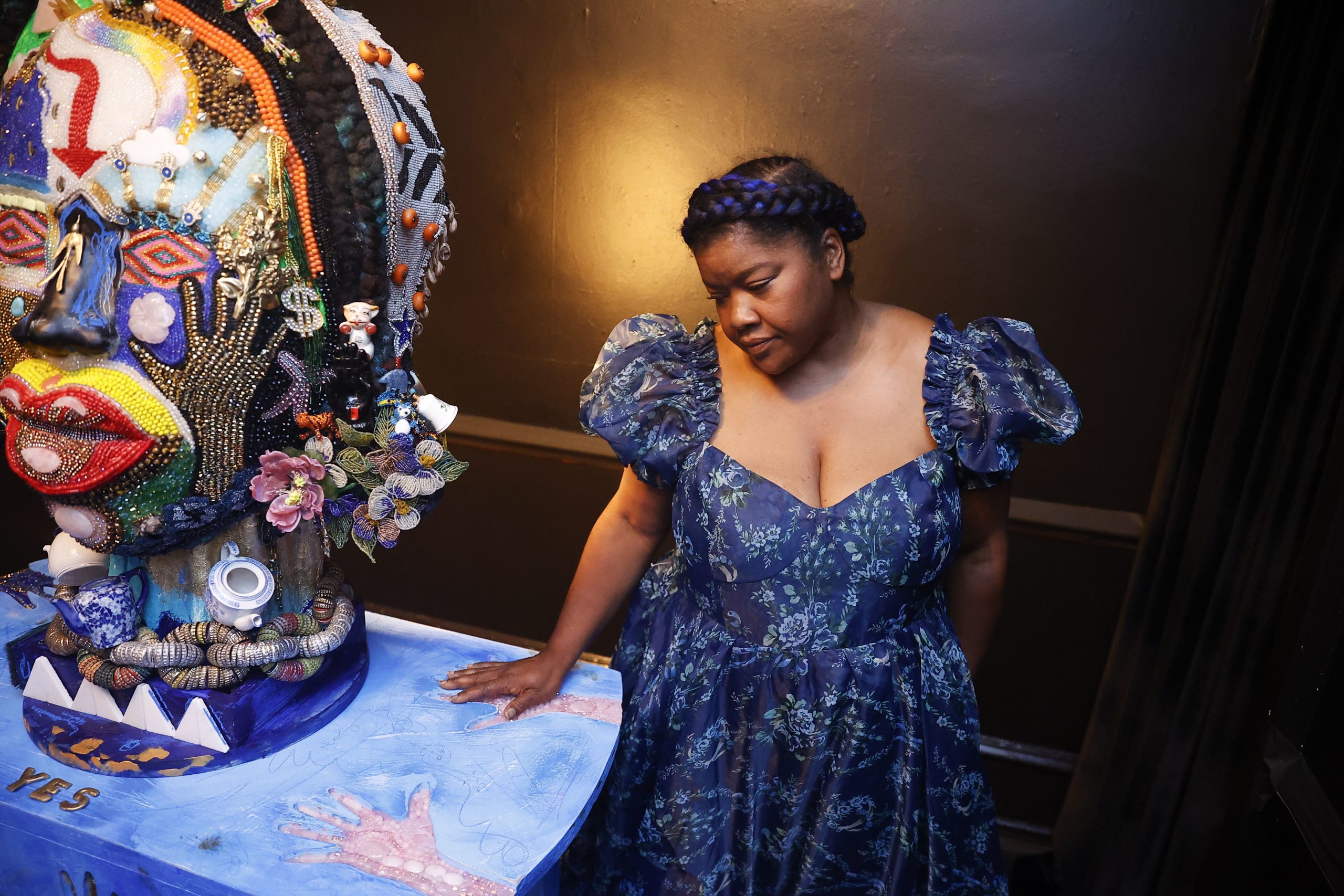
    At the Colored Girls Museum, vanessa german stands next to “The Oracle” and “The Table,” two characters in her exhibit “The House, The Oracle and The Table.” She built and curated the exhibit for the Colored Girls Museum.Zamani Feelings

    🧵 A thread of history: Franklin Thread, a new 375-foot-long art installation, explores Benjamin Franklin’s foray into early agriculture. The flax-based thread was developed by Temple University professor Jeff Richards. It’s on view beginning this Thursday at Maya Park.

    🎨 Colored Girls Museum is transformed: Renowned artist vanessa german’s new art show, “The House, The Oracle and the Table,” adorns the Colored Girls Museum’s first floor. It’s a three-piece exhibit in honor of the museum’s 10th birthday.

    📚 From ‘micro bookshop’ to storefront: Little Yenta Books started as a pop-up shop at South Philly bars, but its new, expanded storefront boasts triple the number of titles – which means all the more fun for us book nerds.

    🍲 South Philly bites: Feast on specialty bites and dining deals at 20 restaurants during Queen Village Restaurant Week. If you miss this week’s opening, don’t fret. The South Philly celebration lasts until Aug. 9.

    Staffer picks

    Shakira performs during halftime during the World Cup final soccer match between Spain and Argentina in East Rutherford, N.J., near New York, Sunday, July 19, 2026. (AP Photo/Matt Slocum)Matt Slocum

    Here’s pop music critic Dan Deluca’s list of the best concerts this weekend.

    🪕 Thursday: Country star Tim McGraw, fresh off performing at Taylor Swift’s wedding (or so we think), will perform his timeless classics and recent singles at Camden’s Freedom Mortgage Pavilion.

    🎸 Friday: Hannah Cohen, who released 2025’s Earthstar Mountain, is bringing her dreamy, pastoral collection to Wayne’s 118 North on Friday.

    💃 Saturday: The Colombian superstar Shakira, who performed her global hit “Dai Dai” at the FIFA World Cup final, is dropping into the Jim Whelan Boardwalk Hall on Saturday.

    🎤 Saturday and Sunday: Electro-jam band Disco Biscuits is set to perform at King of Prussia’s Heuser Park Saturday and Sunday.

    Check out the full concert list here.

    ❓Pop quiz

    North Philly’s Jill Scott says her favorite cheesesteak is at Ishkabibbles. How does she take it? (Here’s a hint: Fried onions is a must, and the rest is a delicious mess.)

    A) Fried onions, whiz, mayo, hot sauce

    B) Fried onions, provolone, relish

    C) Fried onions, marinera, mozzarella, mustard and mayo

    d) Fried onions, hot sauce, hot peppers, mayo

    Here’s the answer to last week’s question: DJ and record producer Diplo largely grew up in Miami, but what local university did he graduate from? Answer: Temple University

    Ask Earl anything

    Many of you have questions about each week’s listings, and others about Philly’s arts, culture, and entertainment scene.

    I got you. Have a question? Email me for a chance to have it answered in an upcoming newsletter.

    That’s all for this week’s edition, folks. Enjoy another weekend of theater, music festivals, restaurant specials, and interesting art installations.

    – Earl Hopkins

    By submitting your written, visual, and/or audio contributions, you agree to The Inquirer’s Terms of Use, including the grant of rights in Section 10.

    Courtesy of Giphy.comCourtesy of G
  • John Alviti, retired senior curator at the Franklin Institute and former executive director at the Atwater Kent Museum, has died at 76

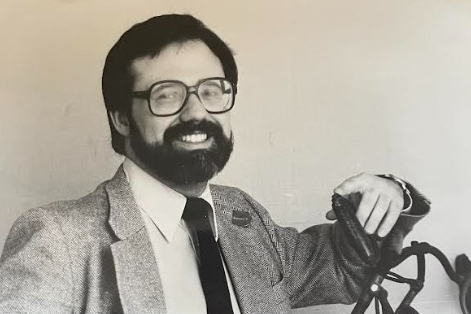
    John Alviti, retired senior curator at the Franklin Institute and former executive director at the Atwater Kent Museum, has died at 76

    John Alviti, 76, of Flourtown, Montgomery County, retired innovative senior curator at the Franklin Institute, former executive director at the Atwater Kent Museum, adjunct professor of urban studies, and “Mr. Philadelphia History” to family and friends, died Saturday, June 20, of complications from heart and kidney disease at Jefferson Abington Hospital.

    Born in Chicago and devoted to history and his South Side White Sox baseball team, Mr. Alviti came to Philadelphia in the 1970s to pursue a doctorate in history and urban studies at Temple University. He never got that doctorate.

    But he fell in love with Philadelphia’s history and architecture, got married, settled down in Flourtown, and, for 34 years, was one of the region’s most influential museum curators and historians. Affable, creative, and energetic, by all accounts, Mr. Alviti became a groundbreaking executive director at the now-closed Atwater Kent Museum in 1982 and celebrated curator at the Franklin Institute in 1994.

    Even after he retired in 2018, he was known around town as “Mr. Philadelphia History.”

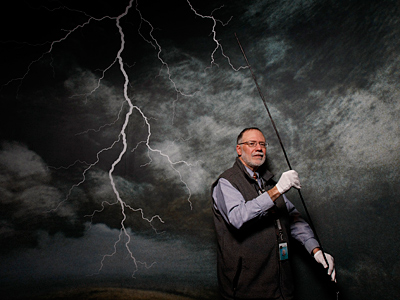
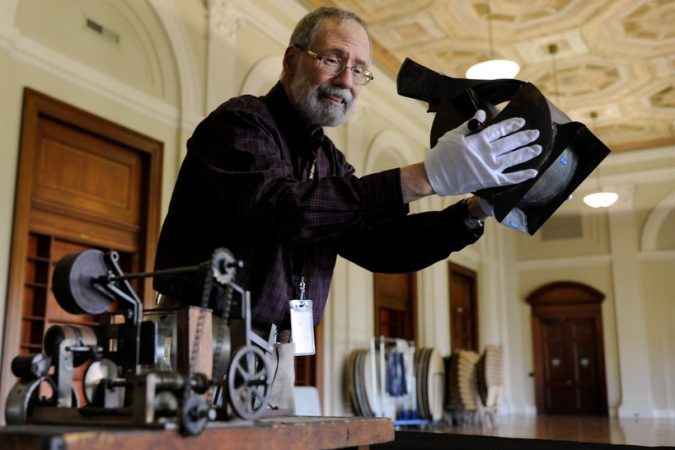
    Mr. Alviti displayed this 5-foot-long fragment of a lightning rod designed by Benjamin Franklin at the Franklin Institute in 2010. Michael S. Wirtz / Staff Photographer

    At the Atwater Kent, Mr. Alviti updated exhibits on William Penn, the history of Philadelphia, the old Enchanted Colonial Village display, and local cemeteries. He added maritime and archaeology galleries.

    At a gala to celebrate the museum in 1984, A. Atwater Kent Jr., son of the museum founder, said Mr. Alviti “has done a great job of creating interesting exhibits and improving the museum.”

    At the Franklin Institute, he reorganized its huge inventory, redecorated the galleries, digitalized many artifacts, and created popular exhibits regarding the Wright Brothers, Benjamin Franklin, antique machines, X-rays, and dozens of other scientific subjects.

    “He loved objects,” said his wife, Maryellen. “He loved the history of objects and telling their story.”

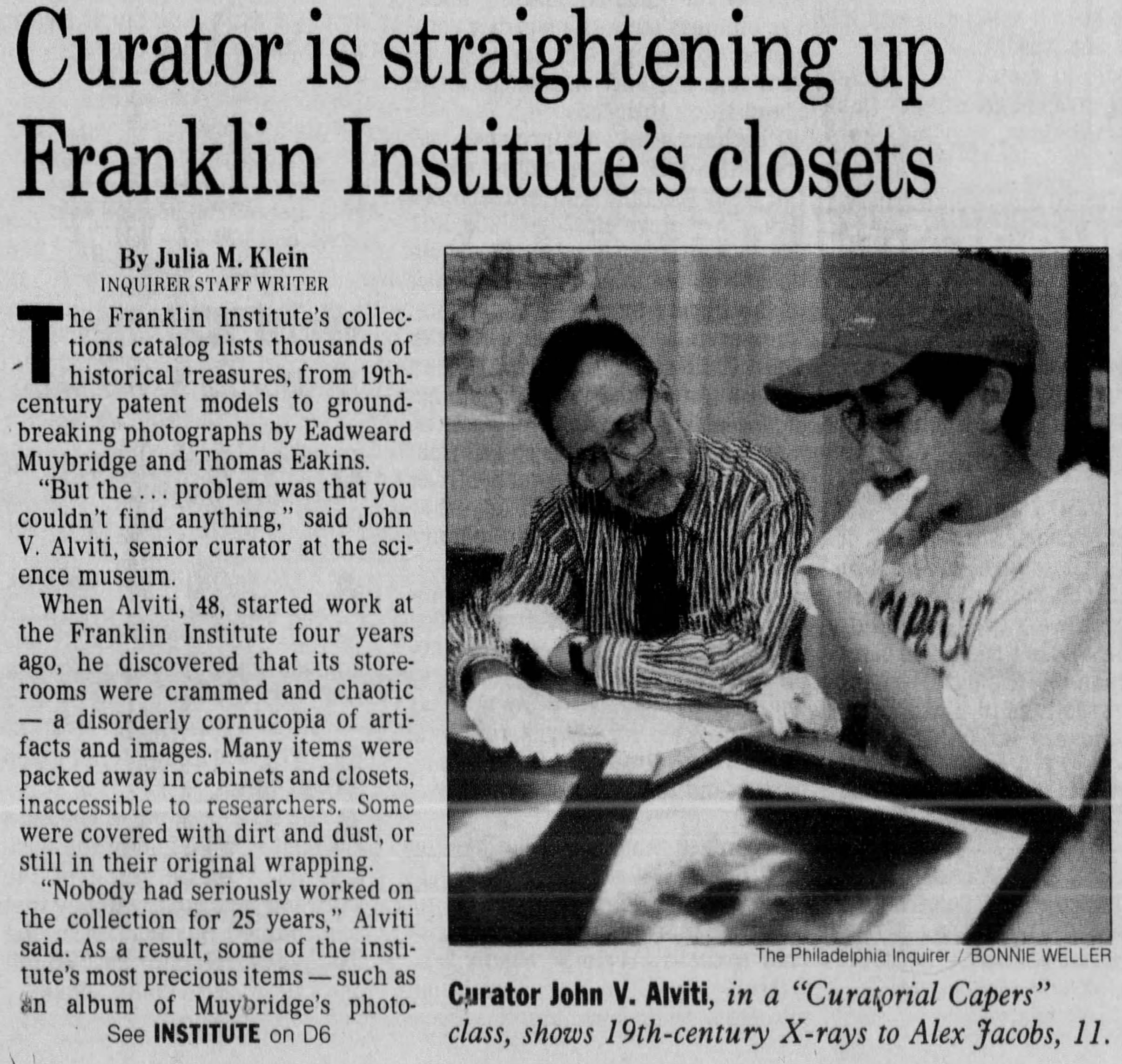
    This story and photo of Mr. Alviti (left) was published in The Inquirer in 1998.Newspapers.com

    In 1998, Mr. Alviti told The Inquirer: “Besides the curator of stuff, I’m also the curator of institutional memory. And institutional memory is more than just simply the facts about what happened in the past. It’s about the legacy of an institution … and how it informs our thinking and decision-making.”

    He was also adept at merging his collections with educational programs, and he helped organize the city’s National History Day competition for students, the Phil-A-Kid hands-on history workshop for fourth and fifth graders, the Peopling of Philadelphia research project, and the Curatorial Capers summer day camp program. Often, in a nod to the ever-present protective gloves he wore to handle the artifacts, he introduced himself as “Johnny Whitegloves.”

    “There are some curators who think I’m crazy,” he told The Inquirer. But a public presentation, he said, “really demonstrates the power of an object.”

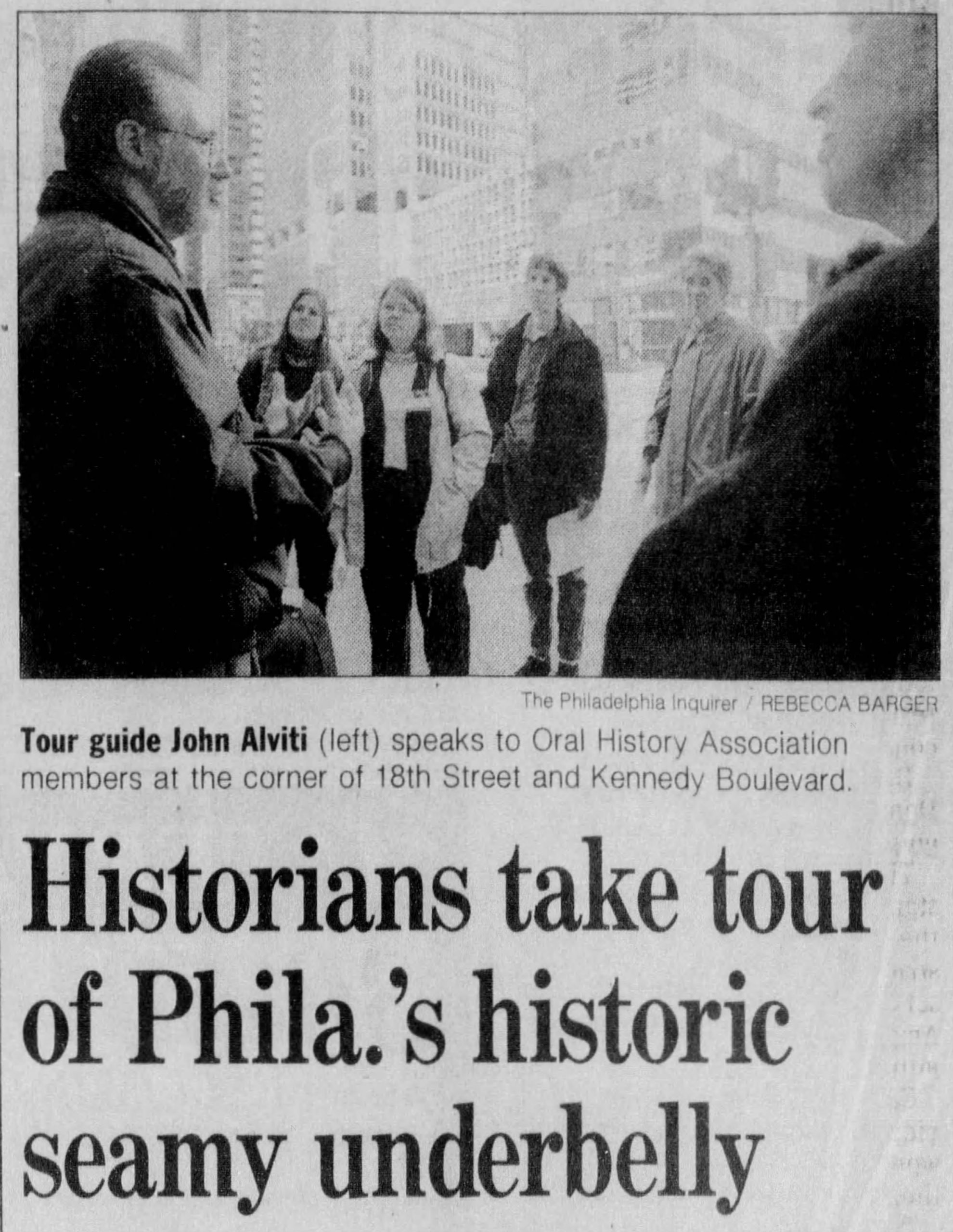
    Mr. Alviti also led walking tours of the city for visiting colleagues from the Oral History Association, the Organization of American Historians, and other groups. He admired and worked closely with amateur historians, and led the successful effort in 1981 to save the historic Lit Bros. building complex on Market Street from demolition.

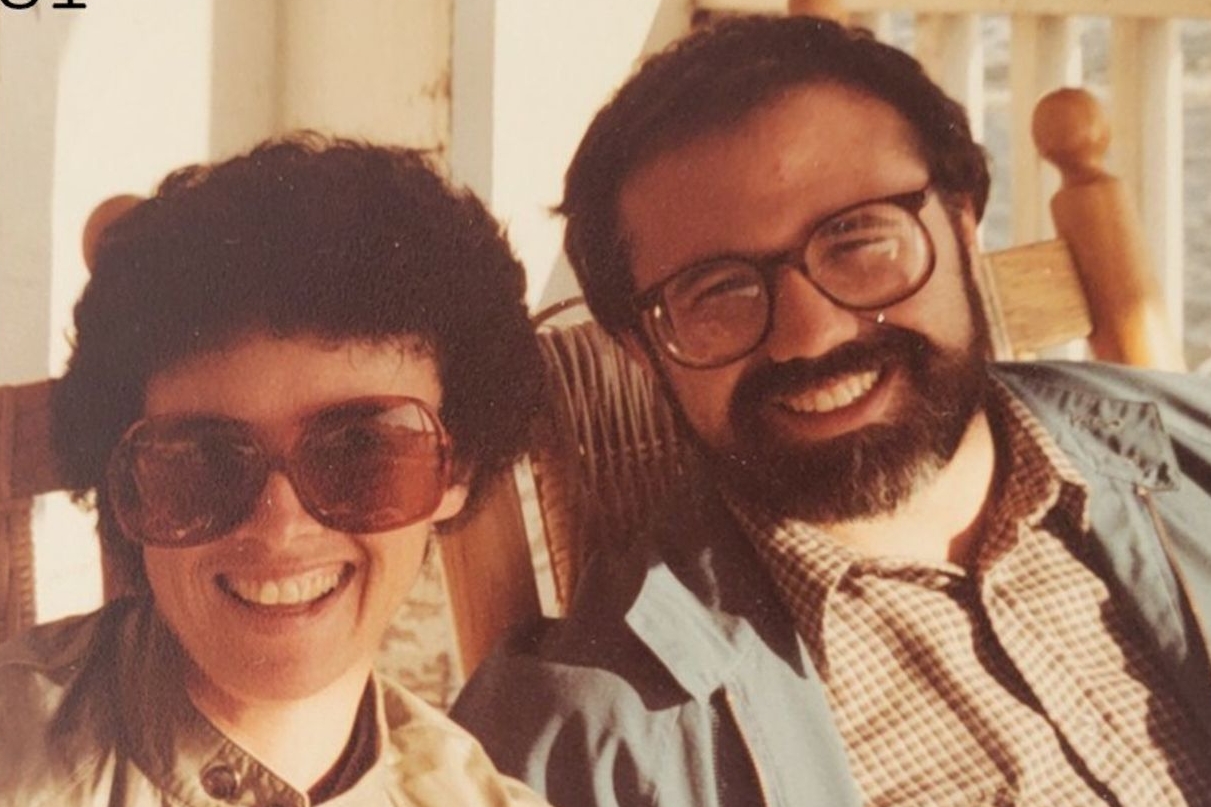
    Mr. Alviti and his wife, Maryellen, married in 1983.Courtesy of the family

    Between the Atwater Kent and the Franklin Institute, Mr. Alviti spent two years as director of the Historical Society of Washington, D.C. He was an expert on public transportation and taught urban studies, American history, and museum training at Temple and Stockton Universities, Rutgers University-Camden, and elsewhere.

    He was onetime curator of historic Fort Mifflin and president of what is now the Museum Council of Greater Philadelphia. He was on the advisory board of the old Philadelphia Alliance for Teaching Humanities in the Schools and active with the American Association of Museums and other groups.

    “He had a gift for making friends for life,” longtime friend Margaret Marsh said, “and he had a legendary generosity of spirit.” Longtime friend Howard Gillette said: “He never met a stranger.”

    John Vincent Alviti was born Sept. 22, 1949. A lifelong avid reader, he earned a bachelor’s degree in urban studies and history at Lewis University in Illinois in 1971 and a master’s degree in history at the University of Wisconsin-Milwaukee in 1975.

    The photo and a story about Mr. Alviti and his city walking tours appeared in The Inquirer in 1996.Newspapers.com

    He played piano and clarinet, and sang in choirs in high school and college. “He left Chicago when he was 25 or 26,” said his younger sister, Rosemarie Alviti Babic, “but never stopped loving the city.”

    He met Maryellen Coonahan when she took an urban studies class he was teaching at Temple, and they married in 1983 and lived in Philadelphia, Washington, and Flourtown. Together, they traveled the world and visited museums in London, Rome, Athens, Madrid, and elsewhere.

    Mr. Alviti enjoyed puzzles, games, and conversation. He lived with a heart condition for most of his life and was the lovable “Uncle Johnny” to his nieces and nephews. “He is missed beyond words,” said his niece Lindsay Hogan.

    He was fascinated by urban architecture and city life around the world, and he routinely bought food and drink for people without homes, picked up litter, and offered correct directions to those who looked lost.

    Mr. Alviti (right) enjoyed time with family and friends.Courtesy of the family

    “He was a curious fellow,” his wife said, “who loved to help people.”

    In addition to his wife, sister, and niece, Mr. Alviti is survived by a sister, Rita Jo Alviti Coyne, a brother, James, and other relatives.

    A celebration of his life was held earlier.

    Donations in his name may be made to Face to Face, 123 E. Price St., Philadelphia, Pa. 19144.

    His wife called Mr. Alviti “a curious fellow who loved to help people.”Courtesy of the family
  • School board votes to nonrenew a Philadelphia charter

    School board votes to nonrenew a Philadelphia charter

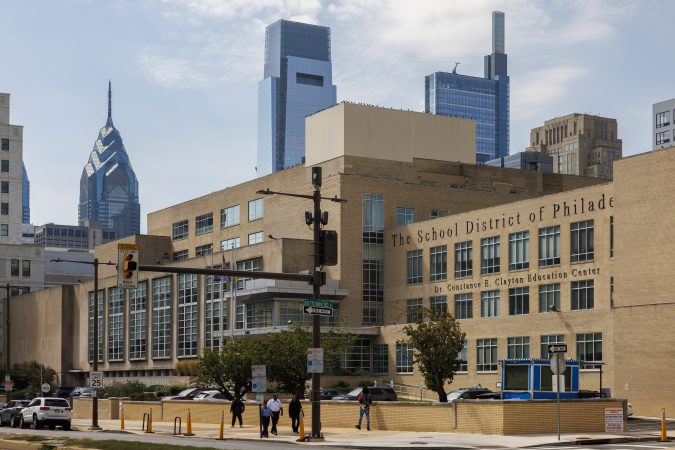
    The Philadelphia school board on Thursday voted to nonrenew a city charter school — despite multiple ongoing lawsuits to attempt to halt the action.

    The board voted 7-2 to nonrenew Philadelphia Montessori Charter School, the first step on a long road that could ultimately lead to closing the K-4 school in Southwest Philadelphia.

    Sarah-Ashley Andrews, school board vice president, said the school’s students “have shown consistently low academic performance in math and English language arts. Its third and fourth graders have consistently lagged behind their peers in demographically similar schools, school district schools, and other Philadelphia charter schools serving the same grade levels. And student academic growth has not kept pace with state expectations.”

    Philadelphia Montessori has had five different leaders since 2020. In 2024-25, the last school for which data are available, 18% of students met state standards in reading and 12% in math.

    School leaders say the school is improving and serves an important role as the only public Montessori school in the city. They have objected to what they say are shifting and arbitrary standards for charter schools.

    Board members Crystal Cubbage and Whitney Jones opposed the vote to begin the nonrenewal process. Cubbage, who said she had “mixed feelings” and initially was in favor of the nonrenewal, said she wanted more clarity on the school’s struggles.

    Philadelphia Montessori has been aggressively attempting to block such action in court. State and federal lawsuits are pending, with school lawyers asking judges this week to block the board’s vote.

    Amanda Wilson, the school’s executive director, asked the board to hold off on the nonrenewal.

    “There is no emergency,” Wilson told the board. “There is no deadline requiring a vote before the courts have had the opportunity to weigh in on the significant legal issues surrounding this charter renewal process. Those issues are now pending in both state and federal court, and they deserve to be resolved before any action is taken. If this board proceeds today and the courts later determine that the school district’s process was unlawful, everyone loses.”

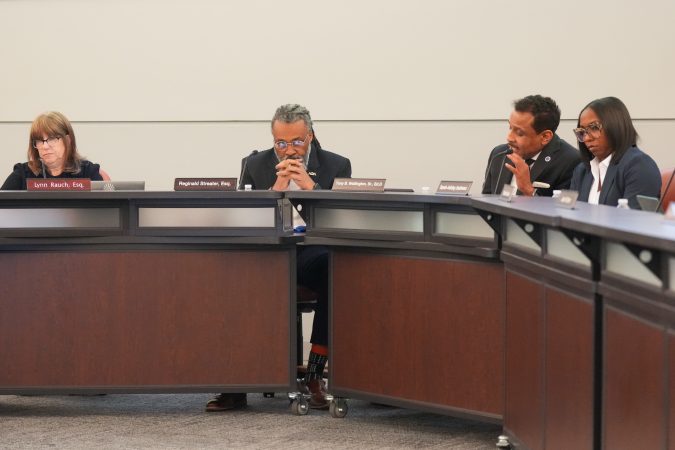
    Lynn Rauch, the district’s general counsel, said “both the state and the federal court issued rulings that do allow us to proceed with the vote today.”

    School board president Reginald Streater said it was appropriate to move forward with the Philadelphia Montessori matter, “exercising our responsibility and duty to ensure that schools throughout our district are meeting their responsibilities to children, families, and taxpayers by demonstrating a high-quality academic experience for our students.”

    The school, which educates 228 students in an Island Avenue building, will continue to operate during the nonrenewal process — the appointment of a hearing officer, a formal hearing with witnesses and evidence, a report from the hearing officer, and, finally, another school board vote on how to move forward.

    The nonrenewal process can take years.

  • Gov. Mikie Sherrill says motor vehicle vendor is responsible for issues beyond N.J. voter registration error

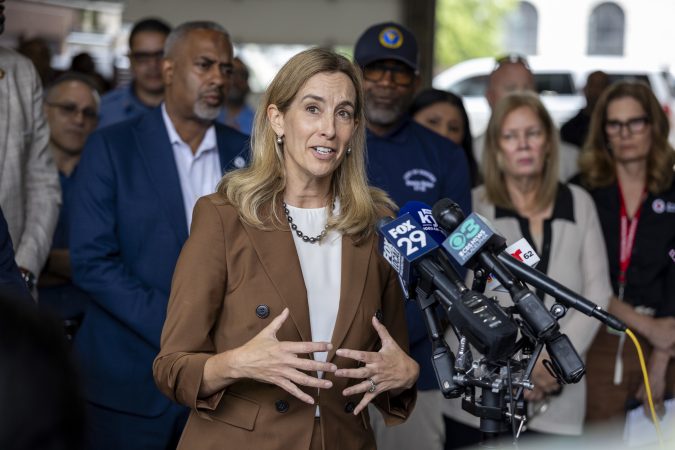
    Gov. Mikie Sherrill says motor vehicle vendor is responsible for issues beyond N.J. voter registration error

    New Jersey Gov. Mikie Sherrill revealed Thursday that her administration had already been trying to get rid of the vendor that she blames for thousands of illegal voter registrations in the state before she discovered the misstep.

    Sherrill, a first-term Democrat, announced Tuesday that she had learned almost a week earlier that about 6,600 noncitizens had been registered to vote between June 2023 and June 2024 under her predecessor, former Democratic Gov. Phil Murphy. She said fewer than 400 of those people had voted.

    The news coincided with President Donald Trump’s effort to revive conspiracy theories about the 2020 election. In an attempt to bolster his proposal for a national overhaul of elections, his administration has alleged large numbers of noncitizens are registered in a handful of states.

    Sherrill said a glitch in software at the New Jersey Motor Vehicle Commission (MVC) operated by a vendor called IDEMIA registered people to vote through the state’s automatic motor vehicle voter registration program even after they identified themselves as noncitizens.

    The term noncitizen can refer to people who are in the United States legally on green cards or visas as well as undocumented people, who have been able to get driver’s licenses in New Jersey since 2021. The state has allowed citizens to register to vote automatically at the MVC since 2018 unless they opt out.

    “I think it’s well known that the motor vehicle commission has been a mess, and IDEMIA is at the heart of that,” Sherrill said after a news conference Thursday.

    Sherrill said in remarks on Tuesday that her administration would replace the vendor but did not discuss the depth of her issues with the company before the recent scandal. She focused her criticism on the administration of her predecessor, Murphy, who has remained publicly silent on the issue.

    But on Thursday, the governor took more aim at IDEMIA.

    She blamed the company for long waits, bureaucracy, and red tape, and said she had already viewed the MVC as a “failure” prior to this incident. She said New Jerseyans have been told to get a passport because it would be faster than the process of getting a REAL ID in New Jersey, one of which is required for travel to avoid extra fees.

    “That’s the disarray that was going on there,” she said.

    Sherrill said Rosalie Johnson, whom she said she recruited from Colorado to appoint as the new MVC administrator this year, “was already in the process of removing them for their incompetence.”

    Johnson said Tuesday that her team has already made improvements at the MVC, is implementing additional safeguards, and is “actively working with a new vendor to ensure this type of technical malfunction does not happen in the future.” She said she expects the new vendor to begin next year.

    Additionally, Sherrill said her administration hired an independent firm to investigate what happened.

    In a separate news conference Thursday, New Jersey Republicans said an independent, bipartisan committee with subpoena power should also investigate the circumstances that led to the faulty registrations.

    New Jersey GOP chair Christine Hanlon said she believes there may be more instances of noncitizens improperly registered than what Sherrill disclosed.

    According to a sampling of data collected by the state party, she said, there were “hundreds” of noncitizens who had proactively requested to be removed from the voter rolls outside the time frame between 2023 and 2024. Not every county provided data, so the results show an incomplete picture, she said.

    “It just shows us we need a lot more information about what happened and when,” she said.

    Federally, Assistant Attorney General Harmeet Dhillon said in a post on X that the Civil Rights Division of the Department of Justice “is investigating this unlawful dilution of American votes.” U.S. Rep. Josh Gottheimer, a North Jersey Democrat who unsuccessfully ran for governor last year, called for a national audit of IDEMIA.

    IDEMIA released a statement Tuesday blaming the improper voter registrations on the New Jersey Department of State’s Division of Elections, saying the department is “ultimately responsible for verifying eligibility to vote.”

    The company’s responsibility was to transmit information from the motor vehicle system to the New Jersey Department of State, but the information “must still be validated and adjudicated by the Division of Elections,” the statement said. IDEMIA did not respond to a request for further comment on Thursday.

    Sherrill blasted the company’s justification on Thursday.

    “To suggest somehow that the fact that they had a huge software error like this for a year that they did not catch is somehow not something they were responsible for, I mean, this is why we’re getting rid of them,” she said.

  • Wu Shaoping escaped China’s repression, only to get busted by ICE in Pa.

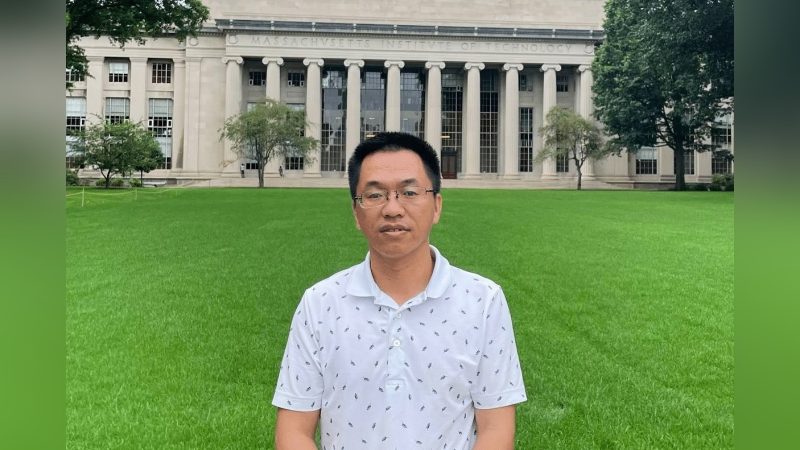
    Wu Shaoping escaped China’s repression, only to get busted by ICE in Pa.

    Seven years ago, the walls were closing in on Wu Shaoping in his native China.

    Like a firefighter who rushes into a burning building, attorney Wu had watched China’s repressive Communist Party arrest scores of human rights lawyers under a crackdown that began in 2015, and responded by joining their dangerous cause, representing practitioners of Christianity or the Falun Gong sect.

    “It is simply a duty of my profession, part of my responsibility, to uphold the legal right of every person,” Wu said in a 2023 video urging his fellow Chinese to quit the Communist Party, or CCP. “It’s one of the things we should do as lawyers.”

    In late 2019, China’s totalitarian government began arresting human rights advocates who’d attended a secretive conference in the southern city of Xiamen and charging them with subversion of state power. Wu was at that confab, and — fearing he’d be next — he fled with his wife and young daughter to a place that had offered a safe haven to so many Chinese dissidents: the United States.

    Wu’s family traveled to New York on a tourist visa, and before that expired, the attorney applied for political asylum. As his case lagged in the clogged U.S. immigration courts, Wu built a life in his new country.

    In 2023, the family moved to a more affordable town just outside Lancaster and joined a local Chinese Christian church, while Wu’s daughter enrolled in Hempfield High School. Wu supported them by driving for Uber, delivering packages for Amazon, and trying his hand at construction work. But he also built up his connections with the diaspora of Chinese dissidents while using his newfound free speech to speak out against the CCP.

    It took just one traffic stop in Donald Trump’s America to turn everything upside down.

    On July 15, Wu was making Amazon deliveries in Cumberland County, Pa., when a local police officer pulled him over and later placed him in the custody of U.S. Immigration and Customs Enforcement. Despite having a work permit and an active application for asylum — which should have shielded him from deportation — Wu was quickly sent to ICE’s notorious Moshannon Valley Processing Center in Northwestern Pennsylvania, which has been criticized for squalid conditions.

    Wu’s arrest and detention have stunned and demoralized the close community of Chinese political refugees on U.S. soil, who for years have faced harassment here from agents and allies of Xi Jinping’s dictatorship. Now they find themselves fighting on a second front as the reality sets in that the U.S. government they saw as their protector is no longer a reliable ally.

    “The CCP is the ultimate source of fear, whereas the threat of being detained by ICE like this is more kind of imminent, immediate,” Zhou Fengsuo, who’d been jailed as a student leader of the 1989 Tiananmen Square uprising and gained asylum and U.S. citizenship after fleeing here in 1995, told me on Wednesday.

    But Wu’s arrest is also a powerful symbol of an inhumane mass deportation policy that has become a mindless and lawless machine of evil banality. It is sweeping up all kinds of refugees to fill its gulag detention quota, without any thought to why its victims have come to America or preserving the U.S. legacy as a safe place for the world’s stateless dissidents, which is getting permanently destroyed by this meat grinder.

    How can anyone possibly make sense of the twisted logic of the Trump regime, which in arresting Wu has targeted an outspoken critic of communism and the Chinese government — the same government the president has just accused (with no evidence) of attacking our elections.

    But locking up an asylum-seeking Chinese dissident is no less illogical than the Minnesota ICE raids against the Hmong people who came here after aiding the CIA in Laos in the 1960s and ‘70s, or the detention of Afghan nationals who worked with U.S. troops after 2001, or so many others who thought America offered them safety. Instead, there is terror — not just for the detained and their families, but for those who fear they could be next.

    “I came here not only for my freedom, but for the freedom of other Chinese people,” Wu said this week in a conference call from the Moshannon Valley lockup that was translated into English by a dissident friend and reported by Lancaster Online. He added that he shouldn’t have been arrested because “America is a country built on the rule of the law.”

    Well, it was supposed to be.

    Wu’s passion for fighting injustice has burned since he was a teenager and took a year off from his studies in 1997 to leave his rural home and earn some money by working in bustling Shanghai. The cramped, filthy back alleys where factory workers lived looked nothing like the thriving communist state he’d learned about in school. He started tracking down banned books, where he learned the truth of the 1989 Tiananmen Square massacre that the government had lied about when he was in third grade.

    “It was upside down,” Wu said, as translated in the 2023 video. “They lied to the world and praised themselves, making the butcher the sweetest person in the world.” He said his dissatisfaction with China’s regime only grew after he became an attorney and witnessed rampant bribery, or saw residents whose homes were getting demolished for new projects get beaten by police when they tried to complain.

    The turning point was a date that’s little known to most Americans but holds great significance in the Chinese dissident community: July 9, 2015. More than 300 human rights lawyers and activists were detained in a government crackdown that launched that day, while others lost their law license and have been subjected to harassment.

    That’s also when Wu stepped up his legal representation of clients targeted by the regime — especially those facing persecution for their religious beliefs in the officially atheist nation. That’s how he came to be one of roughly 20 pro-democracy activists who attended the private December 2019 meeting in Xiamen, and why he fled when two prominent attendees were arrested, and others felt they were in the crosshairs.

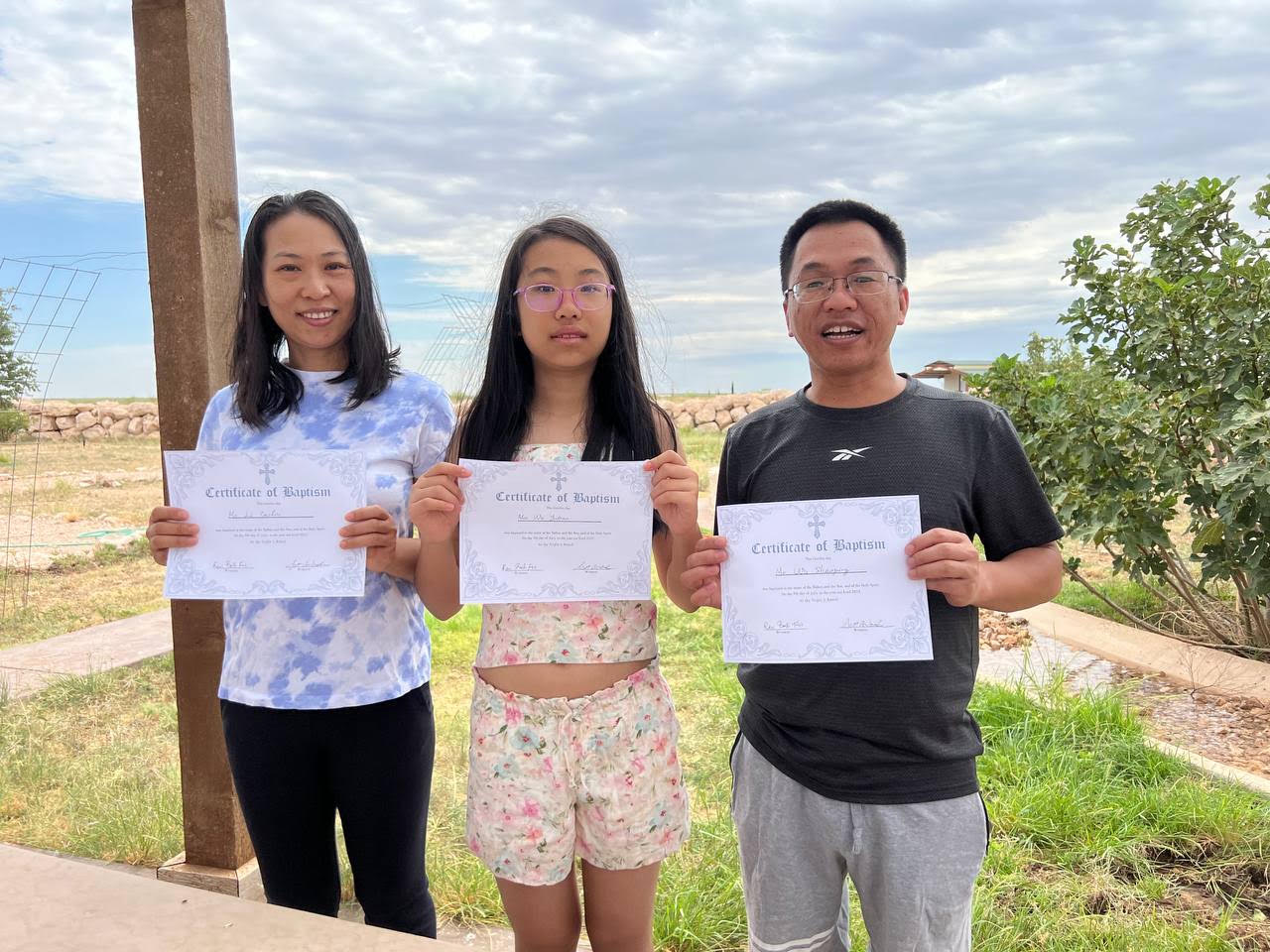
    Wu Shaoping (right), his wife Li Caoliu, and their daughter after their 2022 baptism in Texas. Handout art

    Wu’s life in America with his wife, Li Caoliu, and their daughter, now 17 and entering her senior year at the Lancaster County high school, has been divided between his quest for a normal family life and his tireless political activism. He helped found the Overseas Chinese Human Rights Lawyer Alliance — refugee attorneys who continue to advocate for the rule of law in their homeland.

    The family converted to Christianity in 2022, and joined the Chinese Bible Church of Lancaster after moving to Pennsylvania. The pastor there, the Rev. Daniel Luo, described his congregant Wu as a busy man who nonetheless would drop everything to drive cancer-stricken Chinese children from New York City airports to a hospital in Hershey.

    “He was so inspired by these persecuted Christians that he represented, and he felt a conviction to follow Christ,” said Wu’s close friend, the Rev. Bob Fu, the leader of the Christian diaspora group China Aid, who baptized the entire family during a 2022 retreat.

    Big changes were happening for Wu — except for his asylum case, which stalled as the surge at the southern border in the early 2020s slowed immigration courts to a crawl.

    The details of what happened when Wu was stopped by police earlier this month remain somewhat murky. Wu’s attorney in Montgomery County, John C. Visher, didn’t return calls or emails, but he’d previously told the New York Times that Wu was pulled over by police in Mount Holly Springs, Pa., while making his Amazon deliveries, and informed the officer of his work permit and his pending asylum application. But the officer called in ICE, whose agents detained Woo and eventually shipped him to Moshannon Valley.

    An ICE spokesperson claimed last weekend that Wu lacks legal status and had overstayed his visa by six years. Advocates find the arrest baffling and are hopeful the case can be resolved in Wu’s favor in a scheduled hearing before an immigration judge on Monday.

    His plight has gained support from two members of Congress — Republican Chris Smith of New Jersey and Democrat James McGovern of Massachusetts, who said in a letter to Homeland Security Secretary Markwayne Mullin and Secretary of State Marco Rubio that Wu “would face a severe risk of persecution — including detention and harsh punishment — if returned to China.”

    Fu said that on this week’s call from Moshannon Valley, his friend was grateful for the support, but “he’s very, very nervous, very concerned about the possible deportation.” His friends and allies agree that returning Wu to China would ensure the arrest he thought he’d avoided when seeking asylum in the United States.

    But he’s already been arrested, in a nation where the beacon of democracy has nearly died out.

    This man who has done absolutely nothing wrong is behind barbed wire walls in his adopted homeland, in a detention center where others have complained of rotten food and medical neglect. The irony is painful: Trump’s increasingly senseless human rights nightmare has totally lost the plot.

  • Phillies pitcher Alex McFarlane made his major league debut on Wednesday. He survived an All-Star-heavy order.

    Phillies pitcher Alex McFarlane made his major league debut on Wednesday. He survived an All-Star-heavy order.

    All Alex McFarlane knew, as he made the jog from the center field bullpen, was that he was due to face a lefty.

    As he’d warmed up for his major league debut on Wednesday, the 25-year-old hadn’t been paying close attention to where the Dodgers were in their order. The game was essentially out of reach already, with the Phillies trailing by five runs in the ninth inning. McFarlane had been more concerned with steadying his breathing, now that the moment he’d waited for had finally arrived.

    But when he made it to the mound and realized who he’d be facing, McFarlane had to take a few more deep breaths.

    “It turned out to be that lefty,” McFarlane said.

    Retiring Shohei Ohtani was Alex McFarlane’s first major league task. Chris Szagola

    As in four-time MVP Shohei Ohtani. Any left-handed batter would be a challenging first at-bat for the rookie righty, but the two-way Dodgers superstar, with a .940 OPS against right-handers, was a different beast entirely.

    “Try not to let the game speed up, slow everything down, and just try to get the ball over the plate, just like a normal hitter,” McFarlane said. “Obviously Ohtani’s Ohtani, but I’m just trying to get the ball over the plate. Trust my stuff.”

    Ohtani has not had recent success at the plate against the Phillies. Citizens Bank Park remains one of two active major league ballparks he has yet to homer in during either the regular season or postseason. He was 1-for-12 against the Phillies this week, with that one hit being a single.

    Ohtani had been aggressive early in counts all night Wednesday and he attacked McFarlane no differently, pouncing on a first-pitch 100.3 mph fastball that McFarlane dotted on the bottom inside corner of the strike zone. Ohtani hit it well, but it just stayed in the ballpark for a fly out, the first major league out of McFarlane’s career.

    “It was a high fly ball, but had no idea what the result would be,” McFarlane said. “Just took it as it was. Didn’t think it was gonna get out, but first time on this field, you never know what the ball flight looks like.”

    McFarlane had been called up from double-A Reading earlier in the week as a reinforcement for a Phillies bullpen that has been a revolving door of struggles and injuries. It marks his second stint with the Phillies, after previously being called up on April 24 and then being sent back the next day without appearing in a game.

    This time, the Phillies wanted to see what he could do — if he could be a potential internal solution for a bullpen unit that has been searching for answers for most of the year.

    His triple-digit fastball velocity and his slider have made McFarlane the Phillies’ No. 14 overall prospect, according to MLB Pipeline. In 35 innings in double A this year, he has a 2.06 ERA and 47 strikeouts.

    Alex McFarlane calmed his nerves after taking the mound against the Dodgers and had success against challenging hitters. Yong Kim / Staff Photographer

    Walks have been somewhat of an issue — he has a 12.7% walk rate — but in his outing on Wednesday, McFarlane was able to get the Dodgers to chase.

    Once Ohtani was retired, he still had the rest of the top of the Dodgers order to contend with. Andy Pages bit on a sinker below the zone to ground out.

    “Really exciting to face those guys, especially my first debut. Get some good experience in there and take it on to the next outing,” McFarlane said.

    Freddie Freeman singled on a fastball inside, but McFarlane rebounded with a groundout of Max Muncy to end the top of the ninth. He wasn’t even fazed by a mid-inning catcher change, as Rafael Marchán had to be taken out during Pages’ at-bat due to left knee pain, with J.T. Realmuto coming off the bench. Marchán was scheduled to undergo further imaging on Thursday.

    “Tough spot for him, too,” said interim manager Don Mattingly. “He’s coming in at Ohtani and has to run through the lefties. Not something we want to do, but in that game, it felt like the right time to get him in and get him at least out on the mound one time.”

    Alex McFarlane was elevated to the big leagues after emerging as one of the Phillies’ top prospects. Yong Kim / Staff Photographer

    McFarlane had his mother and girlfriend in the stands to witness his debut. He doesn’t know how long he’ll remain in the majors, and if he’ll stay up long enough to get another opportunity.

    But every chance he gets, McFarlane, who was born in St. Thomas in the U.S. Virgin Islands, will take pride in representing his home on the biggest stage.

    By walking to the mound on Wednesday, he officially became the 16th player from the Virgin Islands to make it to the major leagues. He has the words “VI STRONG” written on his left forearm as a reminder.

    “Just understanding where I came from,” he said. “It’s a long journey, and extremely grateful for the opportunity to be here today to represent them.”

  • U.S. intelligence agency quietly cut about 200 jobs since June 1

    U.S. intelligence agency quietly cut about 200 jobs since June 1

    The Office of the Director of National Intelligence has shrunk more than is publicly known in recent weeks, losing about 200 personnel to firings and reassignments since June 1, according to data the Trump administration shared with Congress this week.

    The cuts are the latest to hit ODNI, which was created to oversee and coordinate all U.S. spy agencies but has been targeted by President Donald Trump and many Republicans in Congress. They, and some former U.S. intelligence officials, say it has expanded far beyond what lawmakers intended when it was created two decades ago. The ODNI had about 2,000 employees at the start of Trump’s second term. It is now little more than half that size, according to congressional aides.

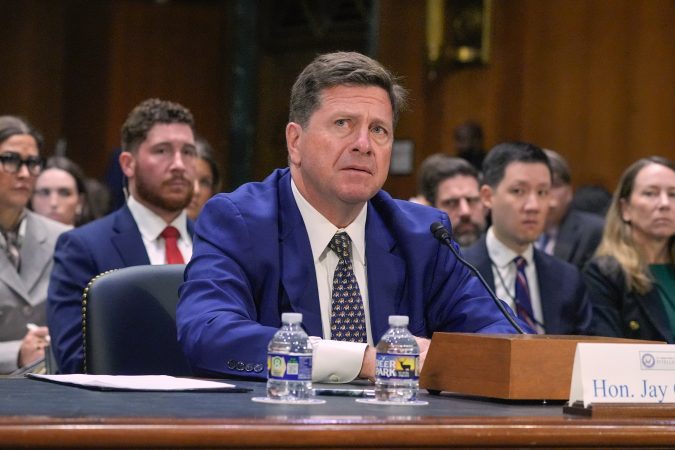
    The staffing reductions mean that Trump’s nominee for intelligence czar, Jay Clayton, if confirmed by the Senate as expected, while inherit a shrunken organization that has experienced steady upheaval over the last 18 months.

    The president in early June tapped federal mortgage regulator Bill Pulte, a political ally with no prior national security experience, to be acting director of national intelligence. Trump said at the time that he wanted Pulte to “start the process” of eliminating some workers.

    Trump has often maintained a hostile posture toward professional intelligence personnel and their agencies, claiming they tried to undermine him in his first term, particularly with the compiling of reports on Russia’s interference in the 2016 presidential election to aid his campaign. The president has dismissed intelligence analysis on a range of issues, from North Korea’s nuclear policy to Iran’s likely reaction to the attacks the U.S. and Israel launched in February.

    Neither Pulte nor the White House has publicly detailed what cuts they have made recently at ODNI, which houses the National Counterterrorism Center and was established to fix U.S. intelligence agencies’ failure to share threat information prior to the September 2001 terrorist attacks.

    The latest personnel cuts were confirmed by a congressional staff member and another person familiar with the matter. They spoke on the condition of anonymity to discuss nonpublic information.

    ODNI did not respond to requests for comment.

    The cuts include some firings, as well as a larger number of intelligence officers who were ordered back to their home agencies, the person familiar with the matter said. Much of ODNI’s workforce consists of personnel detailed from the CIA and other intelligence organizations.

    The counterterrorism center has not been affected significantly, officials have said. But there has been a whole-scale hollowing out of the National Intelligence Council, a prestigious analytic body that conducts intelligence community-wide assessments on key topics such as COVID-19’s origins and foreign interference in U.S. elections.

    The Washington Post previously reported that about 20 intelligence council personnel have been removed or have chosen to leave, including senior officers who oversaw the production of analysis on Russia, China, and Europe. The top official who oversaw the council was placed on administrative leave.

    Neither Clayton nor the Trump administration has articulated a vision of what ODNI should look like or focus on “other than it should be smaller,” said Julia Curlee, who served as a director for intelligence programs in Trump’s White House until last year and recently resigned from the CIA after 20 years as an analyst. “It seems like DNI was just a fat target to punish the ‘deep state.’”

    “Morale is pretty terrible, as you would imagine,” Curlee said.

    It is unclear how many of the 200 personnel were let go under Pulte, who became acting director of national intelligence on June 19, and how many were let go under his predecessor, Tulsi Gabbard, who left the administration after her husband became ill.

    The Trump administration and its allies in Congress have not publicly acknowledged the extent to which ODNI has been shrunk.

    “U.S. National Intelligence is operating more efficiently and effectively than ever before, and today, we started a third round of reducing redundant, or noncritical, personnel,” Pulte posted on X on July 10, without revealing details.

    Senate Intelligence Committee Chairman Tom Cotton (R., Ark.) said shortly after Pulte took over that the acting DNI had told him that “a small handful of front-office personnel” were leaving. “Around 45 or 50 career officers” were returning to their home agencies, Cotton said. Cotton’s office did not respond to requests for comment.

    The precise size of the workforce at ODNI and other U.S. intelligence agencies is classified. By the time Gabbard departed in mid-June, the workforce had shrunk from about 2,000 in January 2025 to about 1,300.

    Clayton was mauled in his Senate Intelligence Committee confirmation hearing by Democrats who decried what they said was his failure to unequivocally state that Joe Biden won the 2020 presidential election, which Trump denies. The Republican-led committee approved his nomination Tuesday on a 9-8 vote, and a full Senate vote is expected next week.

  • North Philly’s Kahleah Copper is heading to the 2026 WNBA All-Star Game as a replacement selection

    Kahleah Copper is an All-Star after all.

    Copper, a North Philly native and Phoenix Mercury guard, was named as a replacement player by WNBA commissioner Cathy Engelbert just days before the league’s All-Star Weekend tips off in Chicago.

    Copper will replace the injured Kelsey Plum on “Team Coop.” Cynthia Cooper and Teresa Weatherspoon, the All-Star general managers, drafted players to “Team Coop” and “Team Spoon,” while Becky Hammon (Las Vegas Aces) and La Salle alumna Cheryl Reeve (Minnesota Lynx) will coach the teams. The All-Star Game is Saturday (8:30 p.m., 6abc).

    This is Copper’s fifth All-Star nod after getting named to the game in four consecutive seasons (2021 to 2024). She’s leading the Mercury in scoring at 20.5 points per game — which is good for seventh in the league and the second-most of her career —along with 3.7 rebounds and 1.8 assists. Over her 11-year career, which includes seven seasons with the Chicago Sky, she’s averaging 13.4 points, 3.6 rebounds, and 1.5 assists.

    Copper rose to WNBA stardom in 2021 with the Sky as she led them to their lone WNBA title and was named Finals MVP. She was traded to Phoenix in 2024 and is now in her third season in the desert.

    This past offseason, the former Prep Charter and Rutgers standout had the opportunity to show off in the place it all began when three-on-three league Unrivaled came to Philadelphia for its first tour stop.

    “There’s so many people that just kind of stepped into my life,” Copper said in January as she led her teammates around her hometown, “and did stuff for me, literally not looking for anything in return. … For them to see me now, like I really made it because of y’all. That’s tough. That’s fire.

    “Everybody literally planted little seeds for me to be who I am today. That’s why it’s so special.”

    Copper wasn’t the only star with local ties to get a nod on Tuesday. Wilmington native Elena Delle Donne will participate in the Shooting Stars competition (8 p.m. Friday, ESPN), representing the Washington Mystics.

    In the timed shooting competition, in which players representing Washington, Minnesota, Seattle, and Dallas/Detroit, have 70 seconds to score as many points as possible from spots around the court, WNBA legends will be paired with a current player and a high schooler from the Nike EYBL circuit.

    Delle Donne, a member of the Naismith Memorial Basketball Hall of Fame’s Class of 2026, is paired with current Mystics center Shakira Austin and could be joined by another local as Wilmington’s Jezelle “GG” Banks and Philly’s Ryan Carter are among the EYBL players. Banks, who’s attending the St. James Performance Academy in Washington, D.C., is the No. 4 player in ESPN’s Class of 2027 rankings, while Carter, a rising senior at Friends’ Central, is the No. 12 player in ESPN’s rankings.

  • The Philly school board just voted to borrow $600 million to pay its bills

    The Philly school board just voted to borrow $600 million to pay its bills

    The Philadelphia school board on Thursday moved to borrow $600 million to pay employees and keep the lights on over the next several months.

    The temporary borrowing, authorized at a special school board meeting, comes in two tranches — $200 million this month, and $400 million in September.

    Borrowing to pay bills is a rite of summer for the district, the only school system in Pennsylvania unable to raise its own funds. The school board has had to issue tax and revenue anticipation notes for 43 of the past 45 years, officials said. Last year, the district authorized borrowing up to $1.5 billion because the state budget had not yet been passed.

    “Simply put, it helps ensure our schools have the cash flow needed to open on time, pay employees and vendors, and continue serving students without interruption,” school board president Reginald Streater said at the meeting, which was held virtually.

    Rates are not locked in, but chief financial officer Michael Herbstman said if the transactions happened now, the first borrowing, which is set to happen Tuesday through Bank of America, would come at a rate of 3.4%, and the September public borrowing would have a rate of 2.85%.

    The move, then, will mean millions in borrowing costs for the school system.

    Philadelphia, the nation’s ninth-largest school system, has about 114,000 students in 216 traditional public schools, and about 65,000 more in 83 charter schools. The district has a budget of about $4.6 billion.

  • A new federal judge for Philadelphia was confirmed by the U.S. Senate

    A new federal judge for Philadelphia was confirmed by the U.S. Senate

    A partner at one of the city’s largest law firms who once worked as a federal prosecutor was confirmed Thursday by the U.S. Senate to become the Philadelphia region’s newest federal judge.

    Antonio Pozos’ nomination to join the region’s U.S. District Court was approved by a vote of 49-44. There was no discussion as the Senate voted to approve his nomination, which earns him a lifetime seat on the bench.

    Pozos, 44, most recently a partner at Faegre Drinker Biddle & Reath, is the first person appointed to the region’s district court since President Donald Trump began his second term last year. During his first term, Trump had five judges confirmed to the region’s federal bench.

    Pozos will fill a vacancy created by last year’s retirement of U.S. District Judge Mitchell Goldberg, giving the court 22 district judges and eight senior judges.

    District court judges oversee a variety of criminal and civil cases each year, and typically issue the first rulings on legal questions that can sometimes reach the U.S. Supreme Court.

    Although some of Trump’s recent nominations to judicial posts across the country have been controversial — including his decision to nominate his former personal lawyer, Emil Bove, to the Philadelphia-based U.S. Court of Appeals for the Third Circuit — Pozos’ candidacy received some bipartisan support.

    Shortly after his nomination was announced, Pennsylvania’s Democratic senator, John Fetterman — who, under Senate rules, had the ability to block Pozos’ candidacy from advancing — decided to allow the process to move forward, the first time any Democrat had done so for a district court nominee during Trump’s second term.

    Fetterman also voted Thursday to confirm Pozos.

    During a confirmation hearing last month, U.S. Sen. Dave McCormick (R., Pa.) called Pozos a “successful attorney, a strong Pennsylvanian, a decorated public servant, and he’s eminently qualified for this role.”

    Pozos was criticized by some Democratic senators during the hearing for hesitating to use the word attacked when describing the riot at the U.S. Capitol on Jan. 6, 2021. He instead said it “appeared that there was violence and trespass” that day, and called the events “profoundly troubling.”

    Pozos lives in Bryn Mawr and is a graduate of Harvard College and the University of Michigan Law School, according to a questionnaire he submitted to the Senate Judiciary Committee.

    Before he became a partner at his firm in 2018, the questionnaire said, he spent three years as a prosecutor in the Justice Department’s criminal fraud section in Washington, where he often worked on cases involving healthcare fraud. He previously worked as an associate in a Washington-based firm and clerked for U.S. District Judge Anthony J. Trenga in Virginia.

    In Philadelphia, Pozos has served as a lecturer at the University of Pennsylvania’s Carey Law School and is on the board of Drexel University’s Kline School of Law.

    With Pozos’ confirmation to the bench, Trump has now appointed six of the Philadelphia region’s district judges, who handle cases that arise from the city, its suburbs, and counties in and around Reading and Allentown. Former Presidents Joe Biden and Barack Obama each appointed seven judges to the bench, and two were appointed by George W. Bush.

    Trump has had a more outsize impact on the region’s appellate court, where he has appointed six of the court’s 14 members across his two terms.