Tag: topic-link-auto

  • Philly’s new cruise terminal is behind construction schedule and will cost millions more than expected

    Philly’s new cruise terminal is behind construction schedule and will cost millions more than expected

    A cruise ship sailed out of the Port of Philadelphia this spring for the first time in 15 years, as state and local officials celebrated a new economic driver for the region.

    Officials have projected that the new cruise business — anchored by Norwegian Cruise Line at a Hog Island terminal near Philadelphia International Airport — will create more than 2,100 jobs and generate $300 million in annual economic activity.

    What they did not anticipate before breaking ground in December was that several obstacles — including several weeks of subfreezing temperatures and icy conditions on the Delaware River — would send the construction project millions of dollars over budget.

    The cost of building the terminal has increased 50% to more than $60 million, according to the Philadelphia Regional Port Authority (PhilaPort), an independent state agency that owns seaport facilities along the Delaware. The port authority is funding the project.

    PhilaPort is considering obtaining financing to help cover the $20.1 million in cost overruns. The authority’s board this month approved a resolution authorizing staff to borrow up to $15 million. PhilaPort spokesperson Marty O’Rourke said loan terms remain under negotiation.

    In addition to the potential financing, the port authority is funding the project from operating revenues, O’Rourke said. PhilaPort generates revenue from its leases with tenants that operate facilities such as marine terminals and warehouses.

    PhilaPort’s budget for the fiscal year that began July 1 includes $34.5 million in revenue.

    Despite the delays, Norwegian Cruise Line’s ships have continued to dock at PhilaPort’s under-construction terminal since April. Mayor Cherelle L. Parker and Gov. Josh Shapiro, both Democrats, attended an onboard ceremony for the Norwegian Jewel’s inaugural call that month.

    Shapiro — whose appointee chairs PhilaPort’s board — touted the cruise business “as the newest addition to our commonwealth’s fast-growing tourism industry.”

    There had been 13 voyages as of mid-July.

    PhilaPort remains upbeat about its new revenue stream. Under a seven-year agreement, Norwegian Cruise Line has committed to 41 voyages annually to locations like Bermuda, and PhilaPort says it will receive $59 million in rent from the company over that period of time.

    “The key point to remember moving forward is that all infrastructure is now in place for additional cruise lines to start using the PhilaPort Cruise Terminal,” O’Rourke said. Each new line has the potential to generate an additional $8.5 million in annual rent, he said.

    Construction began in December after PhilaPort acquired the Hog Island terminal facility in Tinicum from Energy Transfer Marketing & Terminals L.P. for $10. Under the deal, ownership of the 15.5-acre property reverts back to Energy Transfer in seven years.

    PhilaPort’s board in November authorized the agency to bypass competitive bidding “due to the urgency of need to ensure that the cruise terminal is operational and ready to receive passengers by the first scheduled sailing in April 2026.”

    The port authority hired Bridgeport, N.J.-based Commerce Construction Corp. to handle waterside construction, based on their past maritime experience, O’Rourke said.

    Norwegian Cruise Line tapped Philadelphia-based A.P. Construction to lead landside construction.

    O’Rourke said PhilaPort “had a very narrow four-month window to complete construction in time for the first ship berthing.”

    “This tight construction window was compounded by severe weather-related obstacles and delays caused by several weeks of subfreezing temperatures, resulting in higher-than-anticipated costs for labor overtime and added acceleration fees for materials acquisition,” he said in an email.

    Also contributing to added costs were regulatory requirements, environmental remediation, additional landside mooring work, and temporary facilities needed to support vessel operations, O’Rourke said.

    The landside construction was originally scheduled for completion by the end of June. The port authority now anticipates the terminal will be complete by its grand opening Aug. 27.

    Commerce Construction didn’t respond to a request for comment, but the contractor posted on LinkedIn earlier this summer that it had made progress despite “extreme cold, icy conditions, and a relentless deadline.”

  • At the Kimmel, jazz legend Herbie Hancock gave way to rock star Herbie Hancock

    At the Kimmel, jazz legend Herbie Hancock gave way to rock star Herbie Hancock

    At some point in his 86 years of life, Herbie Hancock — one of the most revered artists in jazz — became a rock star.

    That was evident simply from the rapturous reception that greeted the legendary keyboardist and composer at Kimmel Center’s Marian Anderson Hall on Wednesday night, from a packed crowd that would have been a demographer’s dream.

    The point was driven home throughout his nearly two-hour performance, which was raucous, pyrotechnical, and just plain big.

    That includes the members of his audacious quintet, outsized musical personalities all.

    Trumpeter Terence Blanchard is a fellow NEA Jazz Master who likely answers few calls for sideman work these days, busy as he is writing scores for Spike Lee and other filmmakers, composing acclaimed operas, and leading his own band.

    Benin-born guitarist Lionel Loueke pairs a singular sound (Hancock mused that he must be “either alien or AI”) with vocals that incorporate Xhosa-inspired rhythms and tongue clicks.

    James Genus is a virtuoso with a deep groove whose Saturday nights have been booked solid for more than 25 years as the bassist in the SNL band.

    The wild card was 27-year-old drummer Jaylen Petinaud, who played with the destructive force of a bulldozer, an avalanche of funk that provoked his elders on the stage into visceral flights. He was embraced so quickly by the Kimmel crowd that he received a trademark hazing, getting heckled for daring to show up for the gig sporting a Knicks cap. He obliged by turning the offending logo to the back.

    Herbie Hancock greets the audience during his tour stop at the Kimmel Center in Philadelphia on Wednesday, July 29, 2026.Elizabeth Robertson / Staff Photographer

    Hancock, attempting to introduce the band, was unaware of the details but quickly picked up on the vibe, asking, “What’s that, some Philly stuff?”

    As tumultuous as the set would become, it began in a meditative mood. Hancock spent the first few minutes musing on “Maiden Voyage,” the title tune from his 1965 Blue Note classic, letting the melody submerge and rise again from his elegant, gossamer lines as if gently bobbing on ocean waves.

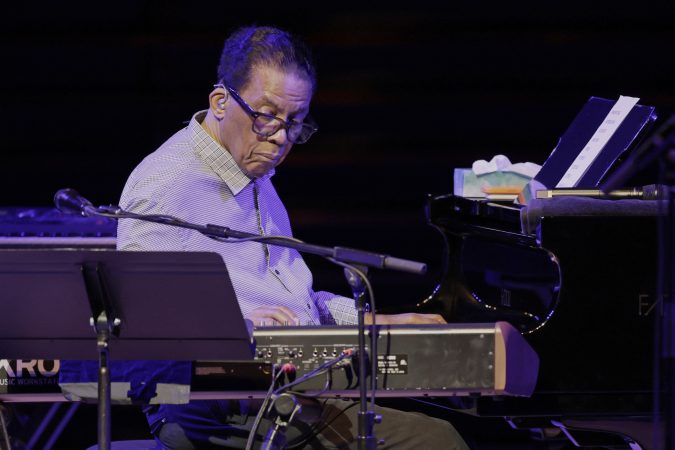
    After a few minutes, he turned to his right, bringing in the band with the familiar strains of “Watermelon Man” on his Korg keyboard. In that 90-degree swivel was represented a pivot point in jazz, the turn from the acoustic piano to the electric keyboard and the adoption of ‘70s rock into fusion, as embodied by Hancock’s Headhunters.

    The bandleader has long since melded the two strains into one, moving effortlessly throughout the show between piano, keyboard, and keytar — the latter allowing him to roam the stage and bend notes like a guitar wizard.

    Hancock’s age was a constant theme of the night, for him at least — nothing about his playing or his stamina showed any sign of slowing, even if his gait shuffled more than in the past. By the end of the night, he would be face-to-face with Loueke, wailing on the keytar while executing synchronized jumping jacks with the guitarist more than three decades his junior.

    Herbie Hancock (left) and guitarist Lionel Loueke perform during “Herbie Hancock’s Summer Tour 2026” stop at the Kimmel Center in Philadelphia on Wednesday, July 29, 2026.Elizabeth Robertson / Staff Photographer

    He introduced much of the set with jabs at the material’s age, only backing off when he realized that he might be insulting fans who can remember when these songs were new. “I was going to say this one is older than me, but that can’t be,” he remarked at one point — then added, “Nothing’s older than me.”

    This was in Hancock’s introduction to “Actual Proof,” an avant-funk framework for improvisation from 1974’s Thrust that proved to be one of the show’s most vital and exuberant highlights. Driven by Petinaud’s percussive barrage, Hancock erupted into forceful cascades along the piano, his hands crashing down onto the keys and then skittering away into curious, serpentine lines. (“I call that a finger-breaker,” he commented afterward.)

    Blanchard’s turn opted for tension, his electronically-enhanced trumpet sculpting sleek contours vigorously resisting the pull of Petinaud’s boisterous funk. Loueke’s quicksilver solo, Genus’ burbling flow unfolding with the logic and cadence of a monologue, and Petinaud’s final explosion rounded out the jaw-dropping showcase.

    These classics were balanced by a few newer pieces that Hancock introduced as works in progress, though “Secret Sauce” has been a staple of his setlist for nearly a decade. The other, tentatively titled “Phoelix” after one of its cocreators (along with Loueke and flutist Elena Pinderhughes), was a neo-soul-inflected number featuring Hancock singing through a vocoder. Genus’ eloquent unaccompanied solo, fleet and mellifluous, so impressed one woman in the audience that she was moved to announce, “I love bass players!”

    Herbie Hancock (left) and guitarist Lionel Loueke perform during “Herbie Hancock’s Summer Tour 2026 Tour” stop at the Kimmel Center in Philadelphia on Wednesday, July 29, 2026.Elizabeth Robertson / Staff Photographer

    “Footprints” was also included as an homage to the late Wayne Shorter, Hancock’s bandmate in Miles Davis’ second great quintet and “my best friend.” His investigatory piano solo offered a capsule portrait of Shorter’s quizzical and mysterious nature, becoming increasingly insistent and blistering as it unfurled, hinting at stride inflections that further expanded the historical reference points. Loueke’s solo turned from an intricate guitar/vocal pairing to blues-rock shredding, then to taut, gnarled figures, the malleable rhythm section hyper-attuned to every swerve and sudden stop.

    “Let’s see if we can have some fun,” is how Hancock introduced the evening, making sure to wave to every section and balcony before taking his seat at the piano.

    Mission accomplished, judging by the standing ovation from the crowd and the ear-to-ear grin on Hancock’s face after every tune. He confirmed the feeling with a final outburst of, “We had fun!” before breaking into a giddy run across the stage and shaking hands with an adoring crowd.

  • Former Sharon Hill police officer sentenced to state prison for raping, sexually assaulting three children

    Former Sharon Hill police officer sentenced to state prison for raping, sexually assaulting three children

    A former Sharon Hill Police officer was sentenced to nine-to-20 years in state prison after admitting he raped and sexually assaulted three children, one as young as 9.

    Tyler Humphreys, 24, pleaded guilty in March to rape, corruption of minors, involuntary deviant sexual intercourse, and related crimes in connection with the assaults, which took place between 2014 and 2022.

    The sentence was handed down by Chester County Court Judge Annalisa Sondergaard during a lengthy hearing Wednesday evening. As a condition of his sentence, Humphreys, of Malvern, is barred from contacting any of the victims or their families.

    His attorney, Elliot Marc Cohen, did not immediately return a request for comment Thursday.

    During the hearing, the mother of one of the victims described how Humphreys betrayed the trust afforded him as a public servant and had torn their family apart.

    Humphreys was hired as a Sharon Hill police officer in September 2023, three months before he was arrested.

    The borough fired Humphreys shortly after the charges were filed by prosecutors in Chester County. During his brief stint with the department, Humphreys worked as a school resource officer, but Sharon Hill officials have said there were no allegations that he had committed any crimes during his tenure with the department.

    Investigators said they received a report in November 2023 about the rape, which occurred the previous December at a home in Charlestown Township, according to the affidavit of probable cause for Humphreys’ arrest.

    The victim, then 15, told police Humphreys served her alcohol until she was drunk, then carried her to a bedroom and raped her as she was “in and out of consciousness, the affidavit said. Humphreys was 20 at the time.

    Another victim later told police about a second incident that also occurred in December 2022.

    The woman, then 19, told police she woke up next to Humphreys in bed, and felt sharp pain in her genitals, according to the affidavit. Earlier, she said, Humphreys had urged her to take over-the-counter medication in a dosage that far exceeded what was recommended. When she confronted him about the pain she felt, he denied any wrongdoing, the affidavit said.

    She also told investigators that Humphreys sexually assaulted her, groped her and exposed himself a number of times between 2014 and 2018, starting when she was 11 and he was 12, according to the affidavit.

    Humphreys was also charged with — and admitted to — the sexual assault of a 9-year-old boy that took place when Humphreys was 12.

  • Johnny Doc will remain in prison after a judge again denied his request to be released on house arrest

    Johnny Doc will remain in prison after a judge again denied his request to be released on house arrest

    Convicted former Philadelphia labor leader John Dougherty will remain in prison after a federal judge again denied Dougherty’s request to be released on house arrest to provide care for his gravely ill wife.

    U.S. District Judge Jeffrey L. Schmehl wrote in a memorandum filed Thursday that Dougherty and his lawyers had failed to demonstrate that he was the only person who could provide adequate care for his wife, Cecelia, who for years has suffered from a debilitating brain injury.

    In addition, Schmehl wrote, Dougherty did not sufficiently specify when a trust fund established to support his wife’s care would run out of money. Those factors, coupled with the “minimal amount of time” Dougherty has served in his six-year sentence, Schmehl wrote, “do not weigh sufficiently in favor of relief.”

    The decision was a blow to Dougherty, 66, who for months has been contending in court documents and in testimony before Schmehl that his wife’s condition has significantly worsened while he has been imprisoned, and that if he is not released to care for her, she will likely die.

    Dougherty’s attorney, George Bochetto, said in an interview Thursday that he was “deeply, gravely disappointed” by the ruling, and that he disagreed they had not shown the acute nature of the emergency that should qualify Dougherty for release.

    “I thought the evidentiary hearing we had in front of Judge Schmehl was extraordinary, and it left no doubt in anybody’s mind” about the merits of Dougherty’s petition, Bochetto said.

    The ruling followed another rejection in Dougherty’s ongoing bid for freedom. Earlier this month, President Donald Trump denied Dougherty’s request for a commutation, a legal avenue that could have cut Dougherty’s prison term short.

    Schmehl, in his memorandum, did say that Dougherty could file a renewed motion in the future, “should the facts materially change.”

    Bochetto said he would not wait that long. He was already working on his notice of appeal to the U.S. Court of Appeals for the Third Circuit, he said, and he intended to ask the court to consider the case on an emergency basis.

    “This is why God invented appellate courts,” Bochetto said.

    Dougherty was sentenced in 2024 to six years in prison after being convicted in separate bribery and embezzlement trials that centered on actions he took while serving as the head of his politically powerful union, Local 98 of the International Brotherhood of Electrical Workers.

    But last year, Dougherty — known colloquially as Johnny Doc — filed emergency motions asking Schmehl to allow him to serve the remainder of his prison term on house arrest so he could be his wife’s primary caregiver.

    In his first request, filed in the summer, Dougherty said that the trust fund established to pay for her care was about to run out of money, and that his daughters and other relatives were unable to provide the kind of around-the-clock assistance she needed.

    Then, in December, he filed another motion, saying the situation had become more dire after the death of his father-in-law, who had been serving as the primary caregiver in his absence.

    Prosecutors opposed Dougherty’s requests, saying that although they were sympathetic to his wife’s plight, they did not believe he had served enough of his sentence to merit release.

    And in January, Schmehl denied Dougherty’s request, writing that he, too, recognized the significant health challenges, but that they did “not outweigh, at this point in time, the need for punishment that has been adjudged.”

    Bochetto appealed that ruling. And in May, Schmehl held an evidentiary hearing to learn more.

    At the hearing, Dougherty took the stand for more than an hour, and occasionally choked back tears as he described his wife’s myriad complications and detailed the efforts he had made in prison to help her, including by sending her dozens of letters and using all of his allotted monthly phone minutes to call her.

    But prosecutors argued that Dougherty and his relatives had not sufficiently looked into alternative care arrangements that might be covered by Medicaid or other insurance. And they said that while many families across the country could benefit from having an incarcerated defendant released to help care for their relatives, Dougherty had not shown that he was the only person who could do so for his wife.

    Schmehl, in his order, said that Dougherty’s wife is being cared for by private nurses and her two daughters, and that “neither party suggests that her current care is inadequate.” Beyond that, the judge said, Dougherty did not sufficiently specify when her trust fund would run out of money and did not adequately explain what would happen once it did.

    The ruling will leave Dougherty, for now, to serve out the remainder of his term, which he is serving at a federal prison in Lewisburg, Pa. His projected release date is in June 2029, according to the Bureau of Prisons website.

  • Tuskegee University’s ban on hair bonnets and do-rags in class? I’m here for it.

    Tuskegee University’s ban on hair bonnets and do-rags in class? I’m here for it.

    Say what you want about Tuskegee University’s new ban on hair bonnets, bedroom slippers, and do-rags in classrooms and the dining hall. But the historically Black college’s iconic first president, Booker T. Washington, would be all for it.

    Born into slavery and educated at what is now Hampton University, Washington was nothing if not pragmatic. He was hired as the first principal at the school in central Alabama in 1881. Given the economic subordination of African Americans in the post-Reconstruction era, he believed that Black people needed to do whatever they could to survive.

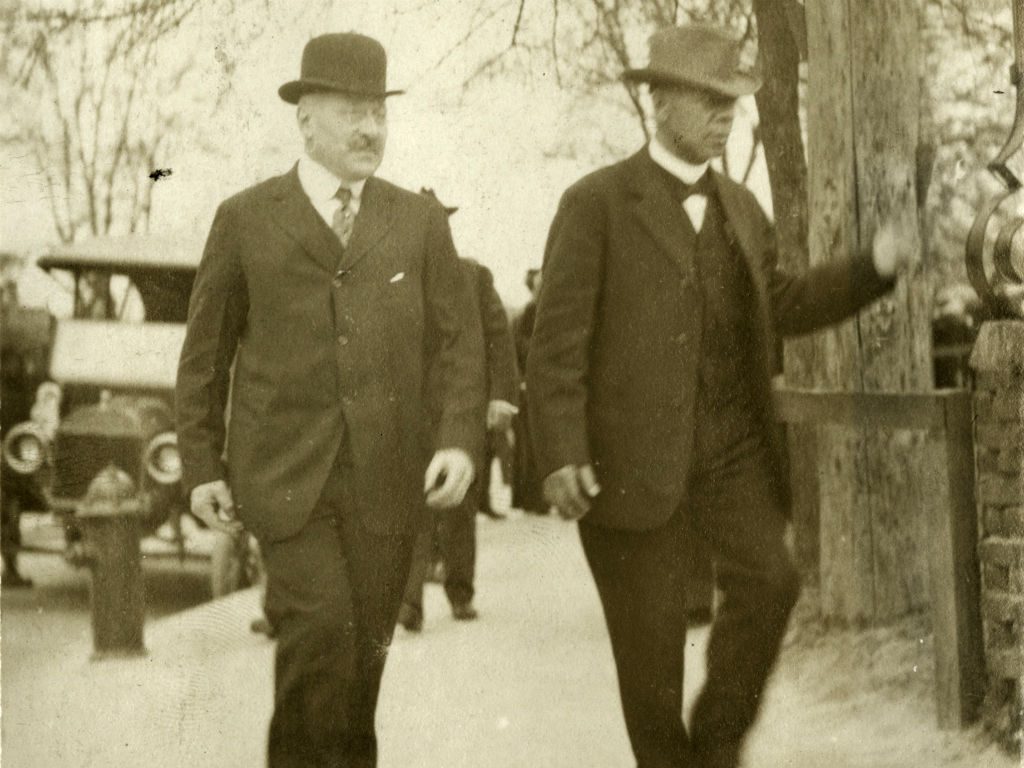
    Sears founder Julius Rosenwald (left) with Booker T. Washington at the Tuskegee Institute in 1915. The Institute became Tuskegee University in 1985.

    Students dressed in uniforms and learned skills such as shoemaking, dressmaking, carpentry, and other practical trades. The renowned educator recalled in his autobiography Up From Slavery that ”when the students march out of chapel in the evening and their dress is inspected, as it is every night, not one button is to be found missing.”

    Newly emancipated Black Americans had few rights and were often forced to work as sharecroppers. Critics might not think of Washington as having been woke, as they say, but he was convinced that, “No white American ever thinks that any other race is wholly civilized until he wears the white man’s clothes, eats the white man’s food, speaks the white man’s language, and professes the white man’s religion.”

    Fast forward to today where at Washington’s beloved HBCU in rural Alabama so much has changed but other things haven’t.

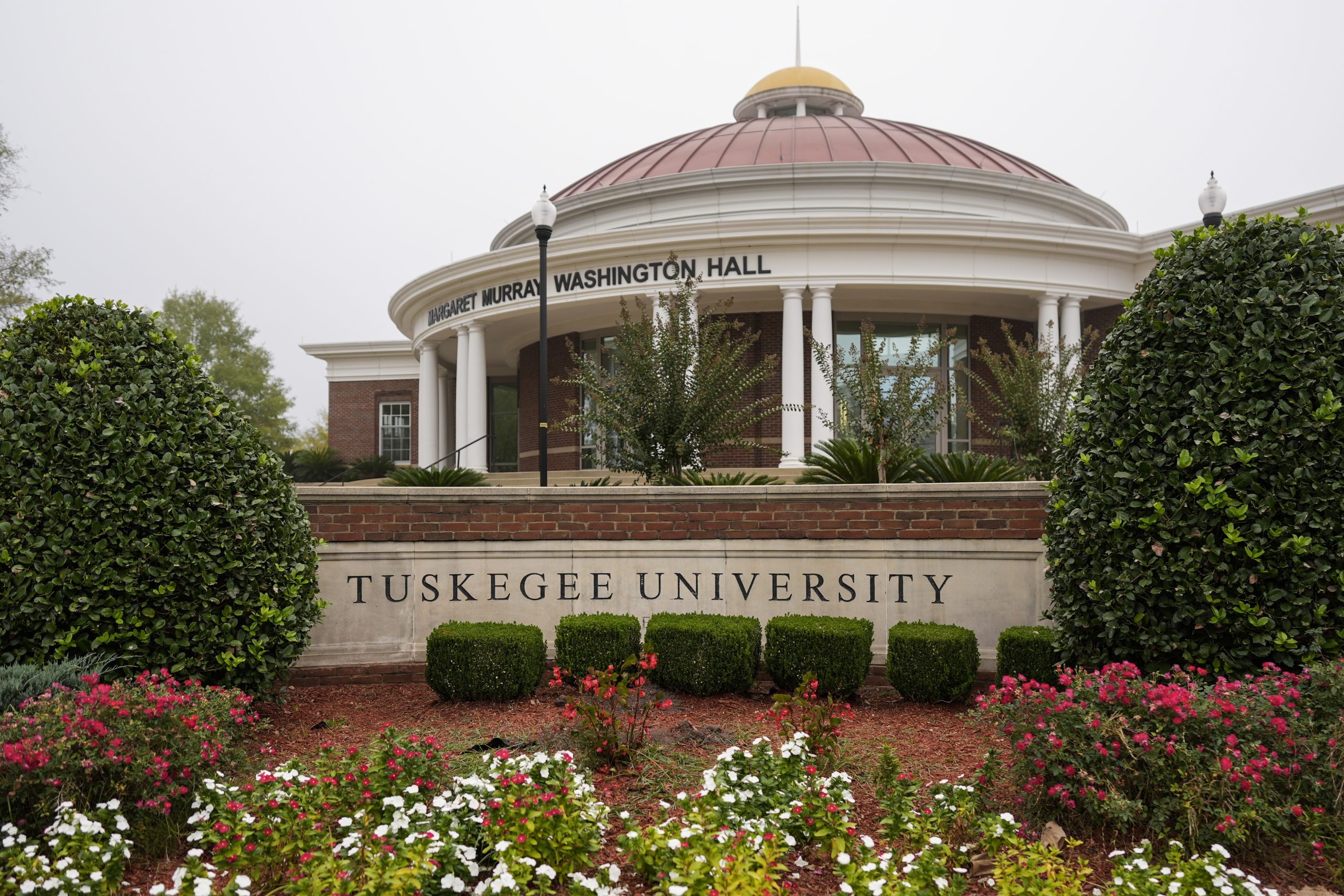
    The entrance to Tuskegee University in Tuskegee, Ala., in a photo from 2024.Mike Stewart

    Mark A. Brown, Tuskegee’s current president, recently addressed the issue of proper attire on the school’s sprawling 5,000-acre campus. In a letter to students Brown wrote that the goal is to prepare them for the workforce, adding, “Employers are less forgiving and too often presentation may overrule stellar preparation.”

    Many take exception to the ban on hair bonnets and do-rags, which customarily are worn to protect Black hairstyles while people sleep. In recent years, it has become much more common for people to also wear them on airplanes, at the mall, and in classrooms.

    As for me, I’m old school when it comes to this sort of thing. I don’t wear hair bonnets outside. I hate to admit it, but I low-key judge others when they do. So, even though it smacks of respectability politics — which refers to the adjustments people make to fit in with mainstream culture to shield themselves from racism — I am not mad at Tuskegee’s new dress code.

    It’s about having standards and encouraging young adults to take pride in their appearance. During my days at Howard University, we tried to look as good as we could whenever we stepped onto The Yard. It’s part of the HBCU mystique. Whenever I see old photos of my parents at their alma mater, North Carolina Central University, they were dressed in what today we’d consider business casual clothes — slacks, pencil skirts, collared shirts.

    Ever since the news broke about Tuskegee’s new policy, commenters have been buzzing on social media about the topic. Many see their ability to wear what they want — when they want and absolutely wherever they want — as an issue of personal freedom.

    “I can guarantee you that none of these people are walking into meetings and boardrooms in their do-rags and hair bonnets,” pointed out Danyl Patterson, an attorney from West Philly. “This is no different from code-switching. We know when and how to do it.”

    She brought up the issue of comfort. “When you’re a student, you drag yourself,” Patterson recalled. “You might be tired and you’re telling me this is the only food I have access to and I need to get fully dressed to go get cereal?”

    She presents a great argument.

    But I still cringe at the idea of people showing up for class in what I consider nightwear. It’s not too much to require college students to present themselves a little better. Tuskegee students also are now prohibited from wearing revealing clothing to class, the cafeteria, and convocation.

    Isis Rodriguez, whose son is a senior at Tuskegee majoring in veterinary science, agrees with the changes. “After COVID, it seems as if people slid into a state of complacency and comfortability. We all were in bonnets and pajamas.”

    That was then, she added: “But at some point, we had to get out of that rut and this is the time — because we need to send our young people into the professional world wearing real clothes.”

    African Americans fare much better than when Washington presided over Tuskegee, but we continue to face widespread systemic disadvantages in the workplace. President Donald Trump and members of his administration are doing all that they can to end DEI, which helps level the playing field for Black people, women, people with disabilities, and so many others.

    Newly minted graduates need to be ready to compete on day one. Preparation for that starts with them showing up to their classes regularly sans bedroom slippers, hair bonnets, and do-rags.

    Besides, as Iyatunde Garrett, a registered nurse who lives in Southwest Philly, said to me: “What professor wants to sit in a classroom with a bunch of students who look like they literally just got out of bed?”

  • Doctor killed in Southwest Philly was driving for DoorDash to support wife’s medical career, family says

    Doctor killed in Southwest Philly was driving for DoorDash to support wife’s medical career, family says

    For Minara Rahman and her husband, a move to Philadelphia was supposed to be a fresh start.

    She and Md Mahfuzul Haque met while attending medical school in their native Bangladesh in 2000, married soon after, and remained nearly inseparable for 21 years, most of them spent in Canada.

    Their love story came to a tragic conclusion early this month when Haque, a 43-year-old doctor who was driving for DoorDash to support Rahman’s optometry career, was shot and killed during a robbery outside a Southwest Philadelphia home.

    It was one of at least three shootings involving delivery drivers in the city this summer.

    Last week, prosecutors charged 15-year-old Zakah Johnson with murder, robbery, and related crimes in connection with the killing, and police are looking for two other people they believe are involved.

    “I still can’t believe it,” said Rahman, 43. “I’m crying, I’m mourning, I’m in grief, but I’m still not believing he’s not with me.”

    Philadelphia had only recently become home for Rahman, Haque, and their 14-year-old son.

    In 2023, the family moved from Vancouver, where much of Haque’s extended family lives, as Rahman began her studies at Drexel University’s optometry school, she said.

    She and Haque had both been practicing physicians in Bangladesh and worked in the healthcare industry in Canada, where they moved in 2011 after receiving skilled immigration visas.

    In Philadelphia, Rahman saw the opportunity to get an American medical license and earn enough to support her family.

    Haque, she said, sacrificed his own professional ambitions to support that move, doing odd jobs and driving for DoorDash to earn money while she completed school.

    Rahman graduated from Drexel last year and began practical training while the family worked to extend their U.S. visas. Part of her work involved conducting eye exams for police and security guards, she said.

    “It was me who wanted to do something more, and he always supported me,” Rahman said of her husband. “Without him, it would have been impossible.”

    A photo of Md Mahfuzul Haque.Minara Rahman

    Though Rahman worried that Philadelphia could be dangerous, she said, she and Haque believed that life in the United States would offer their family safety and security.

    She no longer thinks so.

    Just days after Haque’s killing, police made an arrest in a separate homicide case involving a food delivery driver. They accused a 14-year-old Queen Village teen of luring the man, Anshul Kuncha, to an abandoned North Philadelphia rowhouse, where he was found dead with a gunshot wound to the head.

    And on Tuesday, police said, a 31-year-old delivery driver was shot in the hand after getting into an argument with two women in Northern Liberties. He was placed in stable condition at a nearby hospital.

    Since the July 7 shooting of Haque, Rahman has been in touch with police seeking to gather more information about her husband’s killing.

    Officers responded to the 1000 block of South Ithan Street in the city’s Kingsessing neighborhood around 9:30 that evening to find Haque on the ground with a gunshot wound to the head.

    His car was still running, investigators said, and a bag of delivery food was found nearby. They soon identified three suspects, masked men wearing dark clothing.

    Johnson, of East Mount Airy, was charged with murder in Haque’s killing last Friday while he was in custody in connection with an unrelated crime. He is being held in prison without bail.

    The teen is expected to appear in court for a preliminary hearing on Aug. 10.

    Rahman said she was struck by the fact that the gunman who police say took her husband’s life is so young — just a year older than her own son.

    “I can’t imagine any boy like my son’s age treating anybody else like that,” she said. “I have no idea what they were thinking — what was their motive, and how did they get that firearm that easily?”

    Haque was buried in Vancouver, where Rahman and her son moved to be near his extended family, and she has abandoned her pursuit of a medical career in the United States.

    In an interview, she spoke sorrowfully of plans abandoned: a family trip to Florida, an Atlantic City wedding anniversary celebration set for the last week of July.

    And each day, Rahman said, she struggles with nagging worry that by moving her family to Philadelphia for her career, she was somehow responsible for her husband’s death.

    The only thing she wants now is justice.

    “We both did counseling for tons of patients,” Rahman said, recalling the years of challenging medical work caring for people at their worst moments.

    “Now I’m in that situation,” she said. “I can’t take it anymore, and I need help.”

  • A nonfunctioning grenade was thrown into a Feltonville home. The bomb squad safely removed it.

    A nonfunctioning grenade was thrown into a Feltonville home early Thursday morning, according to the Philadelphia Police Department. The home was evacuated and no one was injured.

    Police responded to the 400 block of West Courtland Street at 1:59 a.m. for reports that a grenade had been thrown into a residence. The home was cleared, and the Philadelphia Police Bomb Disposal Unit arrived at the scene around 3:35 a.m. to safely secure the device.

    Following an examination, bomb squad officers determined the device to be nonexplosive, or inert, and posed no danger to the public.

    Anyone with information about this incident is asked to call the Philadelphia Police Department’s tip line at 215-686-TIPS (8477).

  • Try a New Zealand sauvignon blanc that shows why Kiwis took the wine world by storm

    New Zealand wines were rarely encountered in the U.S. before the 1980s, when their distinctive citrusy take on unoaked sauvignon blanc took the world by storm, starting with the Marlborough region. Almost all the examples of New Zealand wine available stateside still come from there. However, there is considerably more to explore than Marlborough, as with this tasty sauvignon blanc from the scenic Waipara Valley.

    Like Marlborough, the Waipara Valley is located on New Zealand’s sparsely populated South Island, but it has significant differences of climate and terrain that create noticeable differences in wine flavor. Marlborough’s vineyards are centered on a broad expanse of cool and moist coastal flats at the northern tip of South Island. The Waipara Valley lies further south, near Christchurch, with vineyards that tend to be even cooler, higher, and drier in a network of sheltered valleys. This provides grape growers with a cooler but longer growing season, which develops more prominent tropical fruit flavors while remaining quite light-bodied and refreshingly tart.

    Like most New Zealand sauvignon blancs, this iteration still features the green and leafy aromatics that give the best ones a savory, ceviche-like profile. This delightful example offers vibrant flavors of passionfruit and guava; zesty, lime-like acidity; and a fragrance with notes of fresh cilantro and parsley.

    Sherwood Estate Sauvignon BlancCourtesy of Sherwood Estate

    Sherwood Estate Sauvignon Blanc

    Waipara Valley, New Zealand; 13% ABV

    PLCB Item #100056939 — on sale through Aug. 2 for $17.99 (regularly $19.99)

    No alternate retail locations within 50 miles of Philadelphia, according to www.wine-searcher.com.

  • 2026 Toyota Sienna: A Superior ride — and dressing room — through the North Country

    2026 Toyota Sienna: A Superior ride — and dressing room — through the North Country

    2026 Toyota Sienna XSE AWD: Practical people mover?

    Price: $53,159 as tested.

    What others are saying: “Highs: Fuel economy, ride, interior room, versatility and flexibility, cruising range; lows: Long stopping distances, engine noise,” reports Consumer Reports.

    What Toyota is saying: “Built for life’s everyday adventures.”

    Reality: Built for life’s everyday adventures.

    What’s new: Toyota last thoroughly updated the people-moving Sienna for the 2021 model year, when it received a hybrid powertrain. There have been some changes since then, but mostly it was a strong start, or restart.

    Competition: The minivan category is shrinking, but there are still some competitors. The Chrysler Pacifica, Honda Odyssey, Kia Carnival and Carnival Hybrid, and Volkswagen ID.Buzz are about it. The Pacifica PHEV is gone, and the ID.Buzz has been revamped for 2027 with more range and features.

    The latest Sturgis Sienna adventure was a long one. We had airline points so our choices were limited; a summer vacation to Minneapolis and the North Shore of Lake Superior would offer a summer-worthy set of adventures.

    As a Bob Dylan fan, it seemed the perfect time for me to drag the Lovely Mrs. Passenger Seat around the stomping grounds of one of Minnesota’s most famous sons.

    We hadn’t planned for the highest temperatures in the Upper Midwest in ages, followed by smoky skies after lightning strikes set up a million-acre wildfire in Canada.

    Up to speed: The 2.5-liter four-cylinder engine coupled with the battery pack and motor makes 245 horsepower, perfect for threading into I-35 traffic in Minneapolis or making a left onto the famed “Highway 61” from Black Beach or Split Rock Lighthouse.

    The power is also there when you’re stalking the Dylan-Zimmerman farm near Minneapolis, and you need to exit the long driveway quickly. (Special thanks to Favorite Waitress 1.0 who offered enough information to put the final pieces of the puzzle together. No, I’m not telling; we found it with internet clues, so you can, too.)

    Shiftless: A traditional T-bar lever gets things into gear, a thankful nod to tradition.

    On the road: Handling seemed loose at first, and Sport mode tightened things up, but over time Normal mode was fine for all of our purposes, riding half forever across upper Wisconsin to the tourist haven called Bayfield. Unfortunately smoky skies canceled the boat tours to Apostle Islands. After an hourlong visit to Madeline Island, we learned the awful truth that it is definitely to be missed; it’s seen better days and has little to offer.

    The road seams are rough on many of Minnesota’s highways, and the Sienna XSE with sport-tuned suspension is not doing much to smooth them over. I-35 had some rough spots up North. Lots of construction deluged us in Duluth. Maybe choose the more rarified Limited if you live in areas of rough roads, like, say, Pennsylvania, New Jersey, or anywhere I’ve been in the United States, to be honest.

    “The hills of old Duluth” Dylan mentions in the 1970s deep track “Something There is About You” could challenge Manayunk or Pittsburgh for steepness, but the Sienna slows itself nicely for the descent. We ventured past Bob’s boyhood home and through neighborhoods of truly beautiful architecture closer to the water. Everything is big downtown, just like the ships and the bridge. And the woods.

    Northern Wisconsin is the sad stepchild of the family up here. The Minnesota side captures all the tourists and their money, I imagine. The east sides of metro areas also tend to catch the prevailing winds and suffer for it.

    Driver’s Seat: The high 90s outside reinforced that the Sienna is best ordered with ventilated seats. Our model did not have the option, and the Softex seats held the heat like many of the places we stayed, which do not have AC units designed for such temperatures.

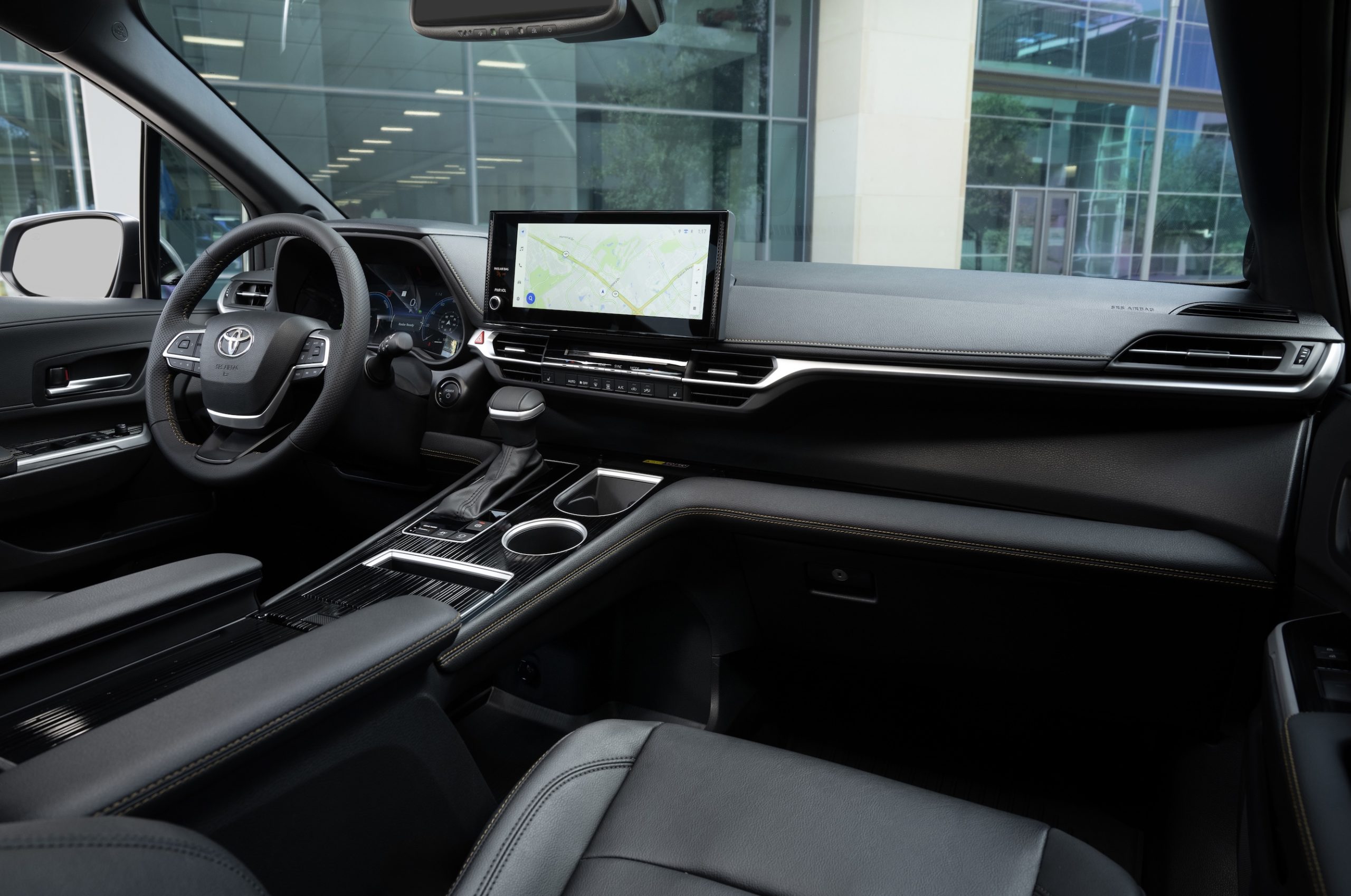
    The front of the 2026 Toyota Sienna has plenty of storage bins in addition to comfort; the rear makes a nice mobile changing room.NATHAN LEACH-PROFFER

    Friends and stuff: The second and third rows are among the most spacious out there and provided plenty of changing room for Mr. Driver’s Seat and The Lovely Mrs. Passenger Seat for swimming adventures in Lake Superior (43 degree water there, and brave Mr. Driver’s Seat was the only one with wet hair).

    The seats seem less cumbersome than Sturgis Kid 1.0’s Sienna but still only smash up against the front seats, no fold-down or fold-away option.

    Cargo space is 33.5/75.2/101. The old Sturgis Family Sienna from 2011 remains the cargo carrier, with 150 cubes when the third row is squished down, and the second row is left in the garage. Still, there’s plenty of room to shop it up at the Mall of America or Duluth and the North Country’s many gift shops.

    Play some tunes: Mr. Dylan would be as sad as Mr. Driver’s Seat to know how the JBL 12-speaker stereo was not quite up to the task. It didn’t play loudly enough to even hear some songs as we thumped along I-35 or U.S. 2 to our destinations. The system is set for full media experiences like Highway 61 Revisited or 2001’s Love and Theft, not the more spare sounds of Blonde on Blonde, and certainly not Freewheelin’. Songs from those acclaimed albums were half lost in the echoing cabin. I’d call it a B+, though sound could be good, it just disappeared into the corners of the van.

    It has a volume knob; other controls are in the 12.3-inch touchscreen, and with icons down the left, Toyota has made this a functional system across its lineup. Sound controls are sliders in the screen, though, and very difficult to follow.

    Keeping warm and cool: Dials for temperature and buttons for all the rest. The Sienna handled 100-degree heat pretty nicely for a giant box. But note the sweaty seats.

    The recirculation button kept the cabin smoke free even as we drove with our lights on for miles and miles and miles.

    Fuel economy: Averaged right around 33 mpg, which is where it started.

    Where it’s built: Princeton, Ind.

    How it’s built: Consumer Reports predicts the reliability of the Sienna to be a 3 out of 5, but I’m going to violate my oath to them here and say it received one point less than a 4 out of 5 on their more specific scale. I love CR, but I find that a really jerky thing to do.

    In the end: Toyota still has THE minivan, and I defend the reliability because my 15-year-old model is still going strong here at home. (Which I’m sure I just jinxed.) The competitors are good, too, and if the Odyssey went all-wheel drive and hybrid, I’d probably change allegiances. The ID.Buzz also is a joy to live with, although Volkswagen reliability is sketchy.

  • How views on Trump’s handling of Iran have shifted, according to a new AP-NORC poll

    How views on Trump’s handling of Iran have shifted, according to a new AP-NORC poll

    WASHINGTON — Most Americans say the war in Iran has not been worth fighting, and President Donald Trump’s approval rating on Iran has fallen slightly since last month, according to a new AP-NORC poll.

    The results are a stark repudiation of the Republican president’s approach to the conflict, which has dragged on far longer than he originally predicted.

    About two-thirds of U.S. adults say the war with Iran, which began Feb. 28, has not been worthwhile, according to the new poll from The Associated Press-NORC Center for Public Affairs Research. That includes the vast majority of Democrats and independents, as well as about 37% of Republicans.

    The poll was conducted July 23-27, as the U.S. and Iran paused attacks following a nearly two-week escalation in the war. During the escalation, the U.S. targeted Iranian military and commercial sites while Iran attacked U.S. military facilities in the Middle East, resulting in additional deaths of American service members. Since the war began, 18 U.S. service members have been killed, but the Trump administration has sought to revise those numbers.

    The survey reinforces how unpopular the Iran war has become at home, a potential problem for congressional Republicans up for reelection in November who have defended Trump’s military actions. Just 28% of U.S. adults now approve of how Trump is handling Iran, a slight decline from 34% last month. Even Republicans appear to be increasingly unhappy with the prolonged conflict. Roughly 61% of Republicans approve of how Trump is handling Iran, an apparent decline from 71% in June. The margin of sampling error for Republicans is 6 points, so the decline is considered slight, but it’s still noteworthy given Republicans’ much higher approval of how Trump is handling the presidency overall.

    Trump’s overall approval rating is at 33%, slightly below where he stood at this point in his first term and similar to where former President Joe Biden stood about one and a half years into his presidency, when inflation peaked.

    Robert McClary, a 52-year-old Republican from Sugar Grove, Ohio, is skeptical the war could be brought to an easy conclusion and disapproves of Trump’s handling of it. McClary voted for the president once, in 2016, but recalls that during the last election, Trump campaigned on not starting new wars in the Middle East.

    “I don’t have any trust in this administration at all and to why they brought us into this war, why they’re putting our soldiers at risk again,” he said.

    The findings also indicate that most Americans’ goals for the conflict may not be aligned with Trump, who has repeatedly said the war was launched to keep a nuclear weapon out of Iran’s hands. While about two-thirds of U.S. adults say it’s “extremely” or “very” important to keep Iran from gaining a nuclear weapon — with Republicans especially likely to say this — even more Americans say it’s highly important for the U.S. to keep gasoline prices low or negotiate a permanent ceasefire with Iran.

    McClary added: “I really don’t know what you can do now. I mean, you’ve kind of gotten yourself buried into this mess.”

    Relatively few want military action against Iran to continue

    There’s little appetite among Americans for a prolonged conflict.

    Only about 2 in 10 U.S. adults want to continue military action in Iran, while about 3 in 10 say the U.S. should pause military action and seek a renewed ceasefire through negotiations. About 2 in 10 want to completely stop military action in Iran and roughly one-quarter don’t know enough to say.

    About half of Republicans say the U.S. should continue military action against Iran, particularly those who identify as “very conservative.” Republicans who identify as MAGA — part of Trump’s Make America Great Again movement — are much likelier than non-MAGA Republicans to say the war should continue. Non-MAGA Republicans are more likely to want a ceasefire or a complete halt to the military action.

    Jennifer Norton, a 71-year-old Republican from Crossville, Tennessee, supports military action in Iran but has been displeased to see prices rising for things like beef roasts and hamburgers. Norton lives on a “modest income,” and things are getting expensive.

    “I am getting a little impatient, but when I start to dwell on that for a minute, I remember Mr. President Trump is a brilliant businessman,” she said. “He can’t tell us exactly what he’s doing, but I trust that he’s doing something. I mean, he is doing fine.”

    Independents and Democrats are more likely than Republicans to want to stop military action against Iran immediately, although about 3 in 10 Republicans want either a pause or complete stop to military action.

    Ryan Sloan, a 39-year-old Republican in Lakeland, Florida, has come to disapprove of the conflict in Iran recently because he wants a better explanation from the Trump administration about why the war intensified in late July.

    “Let’s face it, not everybody’s going to be happy with him,” Sloan said. “I just wish I’d have had more transparency about why things were going on the way they were.”

    Most say it’s important to keep gas prices down

    Many Americans continue to be concerned about the pocketbook impact of the Iran war. About 7 in 10 U.S. adults — 72% — say it’s “extremely” or “very” important for the U.S. to prevent domestic oil and gas prices from rising, up slightly from 67% in March.

    Oil topped $100 a barrel last week, ending a brief period of lower prices when hostilities between the U.S. and Iran eased in June. Gas prices rose above $4 per gallon on average, and the elevated fuel price is hitting consumers in other ways, too. Inflation cooled last month but remains elevated, and consumer spending has slowed, with signs that Americans are taking advantage of sales and other incentives.

    There are also indications that fluctuating gasoline prices are an increasingly big problem for many Americans. About 4 in 10 say the cost of gas for their car is a “major source” of stress in their life right now, compared with about 3 in 10 in February.

    Mikal Baker, a 47-year-old political independent in Sandy Springs, Georgia, disapproves of the war in Iran and is frustrated by the effect on gas prices.

    “I don’t see the benefit. I don’t see the total benefit of the American citizen for this war,” he said. But Baker is skeptical it will ever come to an end. “I can’t say it will ever be over with.”

    Some Americans may be hoping that gasoline prices could stabilize or go down. About 4 in 10 U.S. adults are “extremely” or “very” concerned about being able to afford gas in the next few months, down slightly from 45% in March.

    Republicans prioritize keeping Iran from obtaining a nuclear weapon

    Even as most Americans prioritize keeping gas prices from rising, a similar share say it’s “extremely” or “very” important to negotiate a permanent ceasefire with Iran.

    About 7 in 10 Americans say it’s “extremely” or “very” important for the U.S. to reach a ceasefire agreement, slightly higher than the roughly two-thirds who say it’s at least “very” important to prevent Iran from obtaining a nuclear weapon. That’s also well above the 4 in 10 who say it’s “extremely” or “very” important to prevent Iran from threatening Israel.

    Early in the conflict, Trump said the United States’ primary objectives were to degrade Iran’s military capability, eliminate their Navy and Air Force, keep them from gaining nuclear weapons and protect U.S. allies in the region.

    Republicans, in particular, say it’s highly important to keep Iran from obtaining a nuclear weapon. About 8 in 10 say this is at least “very” important, compared with roughly 7 in 10 who say that about preventing oil and gas prices from rising and negotiating a permanent ceasefire with Iran.

    Sloan, the Florida Republican, believes it’s important to keep Iran from gaining a nuclear weapon, adding: “We are most definitely their number one targets once they do have nuclear capabilities.”