Tag: topic-link-auto

  • Johnny Doc will remain in prison after a judge again denied his request to be released on house arrest

    Johnny Doc will remain in prison after a judge again denied his request to be released on house arrest

    Convicted former Philadelphia labor leader John Dougherty will remain in prison after a federal judge again denied Dougherty’s request to be released on house arrest to provide care for his gravely ill wife.

    U.S. District Judge Jeffrey L. Schmehl wrote in a memorandum filed Thursday that Dougherty and his lawyers had failed to demonstrate that he was the only person who could provide adequate care for his wife, Cecelia, who for years has suffered from a debilitating brain injury.

    In addition, Schmehl wrote, Dougherty did not sufficiently specify when a trust fund established to support his wife’s care would run out of money. Those factors, coupled with the “minimal amount of time” Dougherty has served in his six-year sentence, Schmehl wrote, “do not weigh sufficiently in favor of relief.”

    The decision was a blow to Dougherty, 66, who for months has been contending in court documents and in testimony before Schmehl that his wife’s condition has significantly worsened while he has been imprisoned, and that if he is not released to care for her, she will likely die.

    Dougherty’s attorney, George Bochetto, said in an interview Thursday that he was “deeply, gravely disappointed” by the ruling, and that he disagreed they had not shown the acute nature of the emergency that should qualify Dougherty for release.

    “I thought the evidentiary hearing we had in front of Judge Schmehl was extraordinary, and it left no doubt in anybody’s mind” about the merits of Dougherty’s petition, Bochetto said.

    The ruling followed another rejection in Dougherty’s ongoing bid for freedom. Earlier this month, President Donald Trump denied Dougherty’s request for a commutation, a legal avenue that could have cut Dougherty’s prison term short.

    Schmehl, in his memorandum, did say that Dougherty could file a renewed motion in the future, “should the facts materially change.”

    Bochetto said he would not wait that long. He was already working on his notice of appeal to the U.S. Court of Appeals for the Third Circuit, he said, and he intended to ask the court to consider the case on an emergency basis.

    “This is why God invented appellate courts,” Bochetto said.

    Dougherty was sentenced in 2024 to six years in prison after being convicted in separate bribery and embezzlement trials that centered on actions he took while serving as the head of his politically powerful union, Local 98 of the International Brotherhood of Electrical Workers.

    But last year, Dougherty — known colloquially as Johnny Doc — filed emergency motions asking Schmehl to allow him to serve the remainder of his prison term on house arrest so he could be his wife’s primary caregiver.

    In his first request, filed in the summer, Dougherty said that the trust fund established to pay for her care was about to run out of money, and that his daughters and other relatives were unable to provide the kind of around-the-clock assistance she needed.

    Then, in December, he filed another motion, saying the situation had become more dire after the death of his father-in-law, who had been serving as the primary caregiver in his absence.

    Prosecutors opposed Dougherty’s requests, saying that although they were sympathetic to his wife’s plight, they did not believe he had served enough of his sentence to merit release.

    And in January, Schmehl denied Dougherty’s request, writing that he, too, recognized the significant health challenges, but that they did “not outweigh, at this point in time, the need for punishment that has been adjudged.”

    Bochetto appealed that ruling. And in May, Schmehl held an evidentiary hearing to learn more.

    At the hearing, Dougherty took the stand for more than an hour, and occasionally choked back tears as he described his wife’s myriad complications and detailed the efforts he had made in prison to help her, including by sending her dozens of letters and using all of his allotted monthly phone minutes to call her.

    But prosecutors argued that Dougherty and his relatives had not sufficiently looked into alternative care arrangements that might be covered by Medicaid or other insurance. And they said that while many families across the country could benefit from having an incarcerated defendant released to help care for their relatives, Dougherty had not shown that he was the only person who could do so for his wife.

    Schmehl, in his order, said that Dougherty’s wife is being cared for by private nurses and her two daughters, and that “neither party suggests that her current care is inadequate.” Beyond that, the judge said, Dougherty did not sufficiently specify when her trust fund would run out of money and did not adequately explain what would happen once it did.

    The ruling will leave Dougherty, for now, to serve out the remainder of his term, which he is serving at a federal prison in Lewisburg, Pa. His projected release date is in June 2029, according to the Bureau of Prisons website.

  • Tuskegee University’s ban on hair bonnets and do-rags in class? I’m here for it.

    Tuskegee University’s ban on hair bonnets and do-rags in class? I’m here for it.

    Say what you want about Tuskegee University’s new ban on hair bonnets, bedroom slippers, and do-rags in classrooms and the dining hall. But the historically Black college’s iconic first president, Booker T. Washington, would be all for it.

    Born into slavery and educated at what is now Hampton University, Washington was nothing if not pragmatic. He was hired as the first principal at the school in central Alabama in 1881. Given the economic subordination of African Americans in the post-Reconstruction era, he believed that Black people needed to do whatever they could to survive.

    Sears founder Julius Rosenwald (left) with Booker T. Washington at the Tuskegee Institute in 1915. The Institute became Tuskegee University in 1985.

    Students dressed in uniforms and learned skills such as shoemaking, dressmaking, carpentry, and other practical trades. The renowned educator recalled in his autobiography Up From Slavery that ”when the students march out of chapel in the evening and their dress is inspected, as it is every night, not one button is to be found missing.”

    Newly emancipated Black Americans had few rights and were often forced to work as sharecroppers. Critics might not think of Washington as having been woke, as they say, but he was convinced that, “No white American ever thinks that any other race is wholly civilized until he wears the white man’s clothes, eats the white man’s food, speaks the white man’s language, and professes the white man’s religion.”

    Fast forward to today where at Washington’s beloved HBCU in rural Alabama so much has changed but other things haven’t.

    The entrance to Tuskegee University in Tuskegee, Ala., in a photo from 2024.Mike Stewart

    Mark A. Brown, Tuskegee’s current president, recently addressed the issue of proper attire on the school’s sprawling 5,000-acre campus. In a letter to students Brown wrote that the goal is to prepare them for the workforce, adding, “Employers are less forgiving and too often presentation may overrule stellar preparation.”

    Many take exception to the ban on hair bonnets and do-rags, which customarily are worn to protect Black hairstyles while people sleep. In recent years, it has become much more common for people to also wear them on airplanes, at the mall, and in classrooms.

    As for me, I’m old school when it comes to this sort of thing. I don’t wear hair bonnets outside. I hate to admit it, but I low-key judge others when they do. So, even though it smacks of respectability politics — which refers to the adjustments people make to fit in with mainstream culture to shield themselves from racism — I am not mad at Tuskegee’s new dress code.

    It’s about having standards and encouraging young adults to take pride in their appearance. During my days at Howard University, we tried to look as good as we could whenever we stepped onto The Yard. It’s part of the HBCU mystique. Whenever I see old photos of my parents at their alma mater, North Carolina Central University, they were dressed in what today we’d consider business casual clothes — slacks, pencil skirts, collared shirts.

    Ever since the news broke about Tuskegee’s new policy, commenters have been buzzing on social media about the topic. Many see their ability to wear what they want — when they want and absolutely wherever they want — as an issue of personal freedom.

    “I can guarantee you that none of these people are walking into meetings and boardrooms in their do-rags and hair bonnets,” pointed out Danyl Patterson, an attorney from West Philly. “This is no different from code-switching. We know when and how to do it.”

    She brought up the issue of comfort. “When you’re a student, you drag yourself,” Patterson recalled. “You might be tired and you’re telling me this is the only food I have access to and I need to get fully dressed to go get cereal?”

    She presents a great argument.

    But I still cringe at the idea of people showing up for class in what I consider nightwear. It’s not too much to require college students to present themselves a little better. Tuskegee students also are now prohibited from wearing revealing clothing to class, the cafeteria, and convocation.

    Isis Rodriguez, whose son is a senior at Tuskegee majoring in veterinary science, agrees with the changes. “After COVID, it seems as if people slid into a state of complacency and comfortability. We all were in bonnets and pajamas.”

    That was then, she added: “But at some point, we had to get out of that rut and this is the time — because we need to send our young people into the professional world wearing real clothes.”

    African Americans fare much better than when Washington presided over Tuskegee, but we continue to face widespread systemic disadvantages in the workplace. President Donald Trump and members of his administration are doing all that they can to end DEI, which helps level the playing field for Black people, women, people with disabilities, and so many others.

    Newly minted graduates need to be ready to compete on day one. Preparation for that starts with them showing up to their classes regularly sans bedroom slippers, hair bonnets, and do-rags.

    Besides, as Iyatunde Garrett, a registered nurse who lives in Southwest Philly, said to me: “What professor wants to sit in a classroom with a bunch of students who look like they literally just got out of bed?”

  • Doctor killed in Southwest Philly was driving for DoorDash to support wife’s medical career, family says

    Doctor killed in Southwest Philly was driving for DoorDash to support wife’s medical career, family says

    For Minara Rahman and her husband, a move to Philadelphia was supposed to be a fresh start.

    She and Md Mahfuzul Haque met while attending medical school in their native Bangladesh in 2000, married soon after, and remained nearly inseparable for 21 years, most of them spent in Canada.

    Their love story came to a tragic conclusion early this month when Haque, a 43-year-old doctor who was driving for DoorDash to support Rahman’s optometry career, was shot and killed during a robbery outside a Southwest Philadelphia home.

    It was one of at least three shootings involving delivery drivers in the city this summer.

    Last week, prosecutors charged 15-year-old Zakah Johnson with murder, robbery, and related crimes in connection with the killing, and police are looking for two other people they believe are involved.

    “I still can’t believe it,” said Rahman, 43. “I’m crying, I’m mourning, I’m in grief, but I’m still not believing he’s not with me.”

    Philadelphia had only recently become home for Rahman, Haque, and their 14-year-old son.

    In 2023, the family moved from Vancouver, where much of Haque’s extended family lives, as Rahman began her studies at Drexel University’s optometry school, she said.

    She and Haque had both been practicing physicians in Bangladesh and worked in the healthcare industry in Canada, where they moved in 2011 after receiving skilled immigration visas.

    In Philadelphia, Rahman saw the opportunity to get an American medical license and earn enough to support her family.

    Haque, she said, sacrificed his own professional ambitions to support that move, doing odd jobs and driving for DoorDash to earn money while she completed school.

    Rahman graduated from Drexel last year and began practical training while the family worked to extend their U.S. visas. Part of her work involved conducting eye exams for police and security guards, she said.

    “It was me who wanted to do something more, and he always supported me,” Rahman said of her husband. “Without him, it would have been impossible.”

    A photo of Md Mahfuzul Haque.Minara Rahman

    Though Rahman worried that Philadelphia could be dangerous, she said, she and Haque believed that life in the United States would offer their family safety and security.

    She no longer thinks so.

    Just days after Haque’s killing, police made an arrest in a separate homicide case involving a food delivery driver. They accused a 14-year-old Queen Village teen of luring the man, Anshul Kuncha, to an abandoned North Philadelphia rowhouse, where he was found dead with a gunshot wound to the head.

    And on Tuesday, police said, a 31-year-old delivery driver was shot in the hand after getting into an argument with two women in Northern Liberties. He was placed in stable condition at a nearby hospital.

    Since the July 7 shooting of Haque, Rahman has been in touch with police seeking to gather more information about her husband’s killing.

    Officers responded to the 1000 block of South Ithan Street in the city’s Kingsessing neighborhood around 9:30 that evening to find Haque on the ground with a gunshot wound to the head.

    His car was still running, investigators said, and a bag of delivery food was found nearby. They soon identified three suspects, masked men wearing dark clothing.

    Johnson, of East Mount Airy, was charged with murder in Haque’s killing last Friday while he was in custody in connection with an unrelated crime. He is being held in prison without bail.

    The teen is expected to appear in court for a preliminary hearing on Aug. 10.

    Rahman said she was struck by the fact that the gunman who police say took her husband’s life is so young — just a year older than her own son.

    “I can’t imagine any boy like my son’s age treating anybody else like that,” she said. “I have no idea what they were thinking — what was their motive, and how did they get that firearm that easily?”

    Haque was buried in Vancouver, where Rahman and her son moved to be near his extended family, and she has abandoned her pursuit of a medical career in the United States.

    In an interview, she spoke sorrowfully of plans abandoned: a family trip to Florida, an Atlantic City wedding anniversary celebration set for the last week of July.

    And each day, Rahman said, she struggles with nagging worry that by moving her family to Philadelphia for her career, she was somehow responsible for her husband’s death.

    The only thing she wants now is justice.

    “We both did counseling for tons of patients,” Rahman said, recalling the years of challenging medical work caring for people at their worst moments.

    “Now I’m in that situation,” she said. “I can’t take it anymore, and I need help.”

  • A nonfunctioning grenade was thrown into a Feltonville home. The bomb squad safely removed it.

    A nonfunctioning grenade was thrown into a Feltonville home early Thursday morning, according to the Philadelphia Police Department. The home was evacuated and no one was injured.

    Police responded to the 400 block of West Courtland Street at 1:59 a.m. for reports that a grenade had been thrown into a residence. The home was cleared, and the Philadelphia Police Bomb Disposal Unit arrived at the scene around 3:35 a.m. to safely secure the device.

    Following an examination, bomb squad officers determined the device to be nonexplosive, or inert, and posed no danger to the public.

    Anyone with information about this incident is asked to call the Philadelphia Police Department’s tip line at 215-686-TIPS (8477).

  • Try a New Zealand sauvignon blanc that shows why Kiwis took the wine world by storm

    New Zealand wines were rarely encountered in the U.S. before the 1980s, when their distinctive citrusy take on unoaked sauvignon blanc took the world by storm, starting with the Marlborough region. Almost all the examples of New Zealand wine available stateside still come from there. However, there is considerably more to explore than Marlborough, as with this tasty sauvignon blanc from the scenic Waipara Valley.

    Like Marlborough, the Waipara Valley is located on New Zealand’s sparsely populated South Island, but it has significant differences of climate and terrain that create noticeable differences in wine flavor. Marlborough’s vineyards are centered on a broad expanse of cool and moist coastal flats at the northern tip of South Island. The Waipara Valley lies further south, near Christchurch, with vineyards that tend to be even cooler, higher, and drier in a network of sheltered valleys. This provides grape growers with a cooler but longer growing season, which develops more prominent tropical fruit flavors while remaining quite light-bodied and refreshingly tart.

    Like most New Zealand sauvignon blancs, this iteration still features the green and leafy aromatics that give the best ones a savory, ceviche-like profile. This delightful example offers vibrant flavors of passionfruit and guava; zesty, lime-like acidity; and a fragrance with notes of fresh cilantro and parsley.

    Sherwood Estate Sauvignon BlancCourtesy of Sherwood Estate

    Sherwood Estate Sauvignon Blanc

    Waipara Valley, New Zealand; 13% ABV

    PLCB Item #100056939 — on sale through Aug. 2 for $17.99 (regularly $19.99)

    No alternate retail locations within 50 miles of Philadelphia, according to www.wine-searcher.com.

  • 2026 Toyota Sienna: A Superior ride — and dressing room — through the North Country

    2026 Toyota Sienna: A Superior ride — and dressing room — through the North Country

    2026 Toyota Sienna XSE AWD: Practical people mover?

    Price: $53,159 as tested.

    What others are saying: “Highs: Fuel economy, ride, interior room, versatility and flexibility, cruising range; lows: Long stopping distances, engine noise,” reports Consumer Reports.

    What Toyota is saying: “Built for life’s everyday adventures.”

    Reality: Built for life’s everyday adventures.

    What’s new: Toyota last thoroughly updated the people-moving Sienna for the 2021 model year, when it received a hybrid powertrain. There have been some changes since then, but mostly it was a strong start, or restart.

    Competition: The minivan category is shrinking, but there are still some competitors. The Chrysler Pacifica, Honda Odyssey, Kia Carnival and Carnival Hybrid, and Volkswagen ID.Buzz are about it. The Pacifica PHEV is gone, and the ID.Buzz has been revamped for 2027 with more range and features.

    The latest Sturgis Sienna adventure was a long one. We had airline points so our choices were limited; a summer vacation to Minneapolis and the North Shore of Lake Superior would offer a summer-worthy set of adventures.

    As a Bob Dylan fan, it seemed the perfect time for me to drag the Lovely Mrs. Passenger Seat around the stomping grounds of one of Minnesota’s most famous sons.

    We hadn’t planned for the highest temperatures in the Upper Midwest in ages, followed by smoky skies after lightning strikes set up a million-acre wildfire in Canada.

    Up to speed: The 2.5-liter four-cylinder engine coupled with the battery pack and motor makes 245 horsepower, perfect for threading into I-35 traffic in Minneapolis or making a left onto the famed “Highway 61” from Black Beach or Split Rock Lighthouse.

    The power is also there when you’re stalking the Dylan-Zimmerman farm near Minneapolis, and you need to exit the long driveway quickly. (Special thanks to Favorite Waitress 1.0 who offered enough information to put the final pieces of the puzzle together. No, I’m not telling; we found it with internet clues, so you can, too.)

    Shiftless: A traditional T-bar lever gets things into gear, a thankful nod to tradition.

    On the road: Handling seemed loose at first, and Sport mode tightened things up, but over time Normal mode was fine for all of our purposes, riding half forever across upper Wisconsin to the tourist haven called Bayfield. Unfortunately smoky skies canceled the boat tours to Apostle Islands. After an hourlong visit to Madeline Island, we learned the awful truth that it is definitely to be missed; it’s seen better days and has little to offer.

    The road seams are rough on many of Minnesota’s highways, and the Sienna XSE with sport-tuned suspension is not doing much to smooth them over. I-35 had some rough spots up North. Lots of construction deluged us in Duluth. Maybe choose the more rarified Limited if you live in areas of rough roads, like, say, Pennsylvania, New Jersey, or anywhere I’ve been in the United States, to be honest.

    “The hills of old Duluth” Dylan mentions in the 1970s deep track “Something There is About You” could challenge Manayunk or Pittsburgh for steepness, but the Sienna slows itself nicely for the descent. We ventured past Bob’s boyhood home and through neighborhoods of truly beautiful architecture closer to the water. Everything is big downtown, just like the ships and the bridge. And the woods.

    Northern Wisconsin is the sad stepchild of the family up here. The Minnesota side captures all the tourists and their money, I imagine. The east sides of metro areas also tend to catch the prevailing winds and suffer for it.

    Driver’s Seat: The high 90s outside reinforced that the Sienna is best ordered with ventilated seats. Our model did not have the option, and the Softex seats held the heat like many of the places we stayed, which do not have AC units designed for such temperatures.

    The front of the 2026 Toyota Sienna has plenty of storage bins in addition to comfort; the rear makes a nice mobile changing room.NATHAN LEACH-PROFFER

    Friends and stuff: The second and third rows are among the most spacious out there and provided plenty of changing room for Mr. Driver’s Seat and The Lovely Mrs. Passenger Seat for swimming adventures in Lake Superior (43 degree water there, and brave Mr. Driver’s Seat was the only one with wet hair).

    The seats seem less cumbersome than Sturgis Kid 1.0’s Sienna but still only smash up against the front seats, no fold-down or fold-away option.

    Cargo space is 33.5/75.2/101. The old Sturgis Family Sienna from 2011 remains the cargo carrier, with 150 cubes when the third row is squished down, and the second row is left in the garage. Still, there’s plenty of room to shop it up at the Mall of America or Duluth and the North Country’s many gift shops.

    Play some tunes: Mr. Dylan would be as sad as Mr. Driver’s Seat to know how the JBL 12-speaker stereo was not quite up to the task. It didn’t play loudly enough to even hear some songs as we thumped along I-35 or U.S. 2 to our destinations. The system is set for full media experiences like Highway 61 Revisited or 2001’s Love and Theft, not the more spare sounds of Blonde on Blonde, and certainly not Freewheelin’. Songs from those acclaimed albums were half lost in the echoing cabin. I’d call it a B+, though sound could be good, it just disappeared into the corners of the van.

    It has a volume knob; other controls are in the 12.3-inch touchscreen, and with icons down the left, Toyota has made this a functional system across its lineup. Sound controls are sliders in the screen, though, and very difficult to follow.

    Keeping warm and cool: Dials for temperature and buttons for all the rest. The Sienna handled 100-degree heat pretty nicely for a giant box. But note the sweaty seats.

    The recirculation button kept the cabin smoke free even as we drove with our lights on for miles and miles and miles.

    Fuel economy: Averaged right around 33 mpg, which is where it started.

    Where it’s built: Princeton, Ind.

    How it’s built: Consumer Reports predicts the reliability of the Sienna to be a 3 out of 5, but I’m going to violate my oath to them here and say it received one point less than a 4 out of 5 on their more specific scale. I love CR, but I find that a really jerky thing to do.

    In the end: Toyota still has THE minivan, and I defend the reliability because my 15-year-old model is still going strong here at home. (Which I’m sure I just jinxed.) The competitors are good, too, and if the Odyssey went all-wheel drive and hybrid, I’d probably change allegiances. The ID.Buzz also is a joy to live with, although Volkswagen reliability is sketchy.

  • How views on Trump’s handling of Iran have shifted, according to a new AP-NORC poll

    How views on Trump’s handling of Iran have shifted, according to a new AP-NORC poll

    WASHINGTON — Most Americans say the war in Iran has not been worth fighting, and President Donald Trump’s approval rating on Iran has fallen slightly since last month, according to a new AP-NORC poll.

    The results are a stark repudiation of the Republican president’s approach to the conflict, which has dragged on far longer than he originally predicted.

    About two-thirds of U.S. adults say the war with Iran, which began Feb. 28, has not been worthwhile, according to the new poll from The Associated Press-NORC Center for Public Affairs Research. That includes the vast majority of Democrats and independents, as well as about 37% of Republicans.

    The poll was conducted July 23-27, as the U.S. and Iran paused attacks following a nearly two-week escalation in the war. During the escalation, the U.S. targeted Iranian military and commercial sites while Iran attacked U.S. military facilities in the Middle East, resulting in additional deaths of American service members. Since the war began, 18 U.S. service members have been killed, but the Trump administration has sought to revise those numbers.

    The survey reinforces how unpopular the Iran war has become at home, a potential problem for congressional Republicans up for reelection in November who have defended Trump’s military actions. Just 28% of U.S. adults now approve of how Trump is handling Iran, a slight decline from 34% last month. Even Republicans appear to be increasingly unhappy with the prolonged conflict. Roughly 61% of Republicans approve of how Trump is handling Iran, an apparent decline from 71% in June. The margin of sampling error for Republicans is 6 points, so the decline is considered slight, but it’s still noteworthy given Republicans’ much higher approval of how Trump is handling the presidency overall.

    Trump’s overall approval rating is at 33%, slightly below where he stood at this point in his first term and similar to where former President Joe Biden stood about one and a half years into his presidency, when inflation peaked.

    Robert McClary, a 52-year-old Republican from Sugar Grove, Ohio, is skeptical the war could be brought to an easy conclusion and disapproves of Trump’s handling of it. McClary voted for the president once, in 2016, but recalls that during the last election, Trump campaigned on not starting new wars in the Middle East.

    “I don’t have any trust in this administration at all and to why they brought us into this war, why they’re putting our soldiers at risk again,” he said.

    The findings also indicate that most Americans’ goals for the conflict may not be aligned with Trump, who has repeatedly said the war was launched to keep a nuclear weapon out of Iran’s hands. While about two-thirds of U.S. adults say it’s “extremely” or “very” important to keep Iran from gaining a nuclear weapon — with Republicans especially likely to say this — even more Americans say it’s highly important for the U.S. to keep gasoline prices low or negotiate a permanent ceasefire with Iran.

    McClary added: “I really don’t know what you can do now. I mean, you’ve kind of gotten yourself buried into this mess.”

    Relatively few want military action against Iran to continue

    There’s little appetite among Americans for a prolonged conflict.

    Only about 2 in 10 U.S. adults want to continue military action in Iran, while about 3 in 10 say the U.S. should pause military action and seek a renewed ceasefire through negotiations. About 2 in 10 want to completely stop military action in Iran and roughly one-quarter don’t know enough to say.

    About half of Republicans say the U.S. should continue military action against Iran, particularly those who identify as “very conservative.” Republicans who identify as MAGA — part of Trump’s Make America Great Again movement — are much likelier than non-MAGA Republicans to say the war should continue. Non-MAGA Republicans are more likely to want a ceasefire or a complete halt to the military action.

    Jennifer Norton, a 71-year-old Republican from Crossville, Tennessee, supports military action in Iran but has been displeased to see prices rising for things like beef roasts and hamburgers. Norton lives on a “modest income,” and things are getting expensive.

    “I am getting a little impatient, but when I start to dwell on that for a minute, I remember Mr. President Trump is a brilliant businessman,” she said. “He can’t tell us exactly what he’s doing, but I trust that he’s doing something. I mean, he is doing fine.”

    Independents and Democrats are more likely than Republicans to want to stop military action against Iran immediately, although about 3 in 10 Republicans want either a pause or complete stop to military action.

    Ryan Sloan, a 39-year-old Republican in Lakeland, Florida, has come to disapprove of the conflict in Iran recently because he wants a better explanation from the Trump administration about why the war intensified in late July.

    “Let’s face it, not everybody’s going to be happy with him,” Sloan said. “I just wish I’d have had more transparency about why things were going on the way they were.”

    Most say it’s important to keep gas prices down

    Many Americans continue to be concerned about the pocketbook impact of the Iran war. About 7 in 10 U.S. adults — 72% — say it’s “extremely” or “very” important for the U.S. to prevent domestic oil and gas prices from rising, up slightly from 67% in March.

    Oil topped $100 a barrel last week, ending a brief period of lower prices when hostilities between the U.S. and Iran eased in June. Gas prices rose above $4 per gallon on average, and the elevated fuel price is hitting consumers in other ways, too. Inflation cooled last month but remains elevated, and consumer spending has slowed, with signs that Americans are taking advantage of sales and other incentives.

    There are also indications that fluctuating gasoline prices are an increasingly big problem for many Americans. About 4 in 10 say the cost of gas for their car is a “major source” of stress in their life right now, compared with about 3 in 10 in February.

    Mikal Baker, a 47-year-old political independent in Sandy Springs, Georgia, disapproves of the war in Iran and is frustrated by the effect on gas prices.

    “I don’t see the benefit. I don’t see the total benefit of the American citizen for this war,” he said. But Baker is skeptical it will ever come to an end. “I can’t say it will ever be over with.”

    Some Americans may be hoping that gasoline prices could stabilize or go down. About 4 in 10 U.S. adults are “extremely” or “very” concerned about being able to afford gas in the next few months, down slightly from 45% in March.

    Republicans prioritize keeping Iran from obtaining a nuclear weapon

    Even as most Americans prioritize keeping gas prices from rising, a similar share say it’s “extremely” or “very” important to negotiate a permanent ceasefire with Iran.

    About 7 in 10 Americans say it’s “extremely” or “very” important for the U.S. to reach a ceasefire agreement, slightly higher than the roughly two-thirds who say it’s at least “very” important to prevent Iran from obtaining a nuclear weapon. That’s also well above the 4 in 10 who say it’s “extremely” or “very” important to prevent Iran from threatening Israel.

    Early in the conflict, Trump said the United States’ primary objectives were to degrade Iran’s military capability, eliminate their Navy and Air Force, keep them from gaining nuclear weapons and protect U.S. allies in the region.

    Republicans, in particular, say it’s highly important to keep Iran from obtaining a nuclear weapon. About 8 in 10 say this is at least “very” important, compared with roughly 7 in 10 who say that about preventing oil and gas prices from rising and negotiating a permanent ceasefire with Iran.

    Sloan, the Florida Republican, believes it’s important to keep Iran from gaining a nuclear weapon, adding: “We are most definitely their number one targets once they do have nuclear capabilities.”

  • 5 takeaways from the Senate hearing where Fauci refused to answer questions

    5 takeaways from the Senate hearing where Fauci refused to answer questions

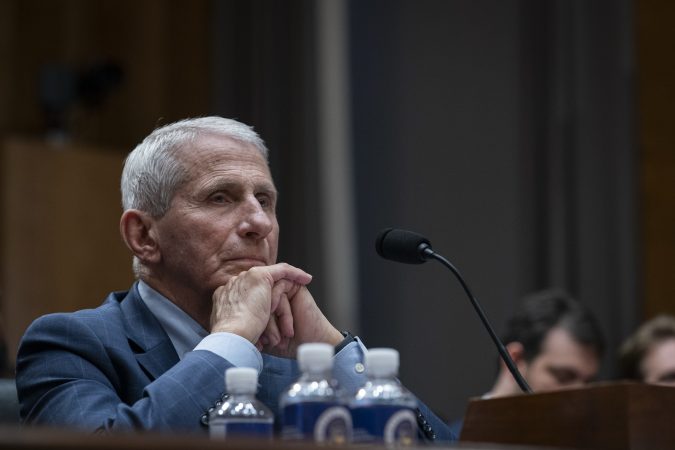
    For almost three hours Wednesday, Republican senators grilled Anthony S. Fauci with dozens of questions at a hearing focused on the origins of the covid-19 pandemic and whether Fauci previously lied under oath to Congress. Again and again, the 85-year-old former government scientist gave the same response.

    “On the advice of counsel, I respectfully decline to answer based upon my rights under the Fifth Amendment to the Constitution,” Fauci said. He delivered variations of that answer more than 100 times.

    Fauci was subpoenaed to appear before the Senate’s government oversight committee by its chairman, Sen. Rand Paul (R-Kentucky), who has spent years alleging that Fauci participated in a cover-up of the possible origins of the covid-19 pandemic. Paul has also blamed Fauci for inadvertently sparking the pandemic – noting that Fauci’s agency previously funded coronavirus research in Wuhan, China, where the outbreak was first detected in late 2019 – and has called for him to be put in prison.

    Fauci has denied the allegations in repeated appearances before Congress, most recently in a combative 2024 hearing. Infectious-disease experts have also insisted to Paul and other Republicans that while Fauci’s former agency, the National Institutes of Health, funded virus research in Wuhan, the work could not have caused the pandemic.

    Fauci said Wednesday that he refused to testify because he believed Paul was seeking to wrongly trap him.

    “The only conclusion I can reach is that the sole reason he is calling me before this committee is to get me to say something – anything – that could vindicate his repeated public pledges that I end up, in his words, ‘behind bars,’” Fauci said, before announcing his plan to invoke the Fifth Amendment.

    Here are five takeaways from the hearing.

    Republicans tore into Fauci

    Senate Republicans did not miss their chance to lace into Fauci. They inquired. They mocked. They goaded. At times, they flat-out insulted. Beyond asking about covid-19’s origins, senators accused Fauci of mishandling pandemic guidance and accused him of using his growing profile during the pandemic for personal benefit.

    Paul, a longtime adversary of Fauci, was visibly frustrated with Fauci’s nonanswers. Paul warned the former official that it was against the law to obstruct an investigation and threatened “repercussions” for Fauci’s unresponsiveness. When Fauci’s attorney, David Schertler, asked to make a comment, a back-and-forth led to Paul removing the lawyer from the room.

    It was the first of many tense moments.

    “Nothing says honesty like taking the Fifth, huh, Doc,” Sen. Josh Hawley (R-Missouri) said, leaning forward in his seat. The senator grew heated in his questioning, raising his voice and pointing with both hands as he accused Fauci of enriching himself.

    A Hawley staffer propped up an image of a magazine cover for which Fauci posed in September 2020. “You became a narcissist and a megalomaniac and a liar,” Hawley said.

    Fauci leaned forward, looking down at the table in front of him, hands fidgeting in his lap, glancing up occasionally at the senators accosting him.

    At one point, Sen. Bernie Moreno (R-Ohio) asked audience members to stand up if they had disagreed with or been harmed by policies such as mask requirements and school closures. More than a dozen stood. Moreno asked Fauci to turn around and look at them. Fauci turned to confer with his lawyers, then faced forward again.

    Sen. James Lankford (R-Oklahoma) adopted a warmer tone toward Fauci than his colleagues did. “I know you’re invoking your Fifth Amendment right, which you have the right to be able to do constitutionally,” he said. “Thanks for coming to be a part of this.”

    Democrats defended Fauci – mostly

    Democrats portrayed Fauci as a hero and said the GOP attacks were baseless. They also criticized Republicans for attacking public health officials like Fauci while supporting the Trump administration’s cuts to public health research and funding.

    Sen. Gary Peters (Michigan), the committee’s top Democrat, called Paul’s efforts biased. “One-sided investigations designed to validate predetermined conclusions do not serve the American people,” Peters said.

    Fauci and other public health officials have saved lives, said Sen. Richard Blumenthal (D-Connecticut). “Today, we are demeaning and degrading their lifesaving service,” he added.

    One Democrat struck a different note.

    Sen. John Fetterman (D-Pennsylvania) was not going to attack Fauci, he said, but he wouldn’t defend him, either. Instead, Fetterman shared a regret: that the lab-leak theory came to be seen by some as a right-wing conspiracy theory, preventing people like himself from taking it seriously.

    “I hope … the next time our nation’s facing something like this, we are not … as I might have been, blinded by the partisan idea that maybe the truth might come from a side that’s different than you are,” Fetterman said.

    The hearing shows how divisions have calcified

    Wednesday was the latest example in a years-long trend: Congressional lawmakers have been unable to work together on a probe of the pandemic’s origins.

    A House investigation of the government’s pandemic response began in early 2023 with the top Republican and Democrat pledging to work together. It descended into partisan bickering and dueling reports about what the investigation found, and whether Fauci was personally culpable.

    In the Senate, a bipartisan plan to set up a commission investigating the nation’s covid response repeatedly stalled out. Democrats have accused Republicans of promoting conspiracy theories about Fauci’s role and other aspects of the response, while GOP officials say liberals and the media have not been sufficiently transparent about mistakes that government officials made.

    Paul, particularly, has long vowed to hold Fauci accountable for his “crimes” – a claim that Fauci and his allies say made it impossible to cooperate with him Wednesday.

    Paul’s threat to hold Fauci in contempt raises new legal questions

    The chairman said his committee plans to hold a vote next week on whether Fauci was in contempt of Congress. But he and his colleagues acknowledged legal uncertainty about how to proceed, complicated by President Joe Biden’s preemptive pardon for Fauci before Biden left office.

    Lankford asked Paul if there is guidance on whether Fauci could be held in contempt for refusing to answer questions after making an opening statement. Lankford noted a 2013 episode in the House in which an IRS official made an opening statement and then invoked her Fifth Amendment right to not answer questions about whether her agency had wrongly targeted conservative groups. The GOP-led House concluded that the official had waived her Fifth Amendment rights by making an opening statement, and she was ultimately found in contempt.

    “Are we dealing with the same issue here?” Lankford asked.

    Paul said that was among the legal questions lawmakers would consider. He added that the courts may need to settle whether, with “a presidential pardon that offers you complete immunity, you can still claim that you need protection” in a congressional hearing.

    “Dr. Fauci isn’t liable for anything as long as he tells the truth,” Paul added.

    Some past congressional witnesses have also repeatedly pleaded the Fifth. Martin Shkreli, a controversial pharmaceutical investor, refused to answer questions in front of a House Oversight Committee hearing in 2016, annoying lawmakers with his smirking. While lawmakers discussed holding Shkreli in contempt of Congress, they ultimately did not.

    Regina Wallace-Jones, the head of the Democratic fundraising engine ActBlue, also repeatedly invoked the Fifth Amendment during a congressional hearing last month in which Republicans pressed her on the platform’s process for vetting foreign donations.

    “It is the only reasonable response to a proceeding that from the beginning has been about harassing a political opponent’s fundraising platform, not genuine oversight,” she wrote in The Washington Post.

    House Republicans have threatened to hold ActBlue in contempt.

    Evolving perceptions of Fauci

    Fauci was initially seen as a unifying figure, particularly in the early days of the pandemic as Americans looked for answers – and the highly visible doctor provided them in TV interviews, podcast appearances and other forums.

    About 8 in 10 Americans in April 2020 said they trusted Fauci to provide reliable information on the pandemic, including similar shares of Republicans and Democrats, according to polling by KFF, a nonpartisan health care research and polling organization. But within two years, only about 5 in 10 Americans had trust in Fauci, a decline driven by plunging GOP support: Just one-quarter of Republicans said they trusted the doctor, according to KFF.

    Some of that was fueled by relentless criticism of Fauci in conservative media, which blamed him for pandemic policies that were increasingly viewed as too harsh. It was also driven by President Donald Trump, who empowered Fauci in early 2020 and followed his advice on imposing shutdowns and other measures, before distancing himself from the doctor later that year and repeatedly criticizing his guidance.

    “I didn’t mind him, I didn’t find him to be bad personally, as a person,” Trump told “Fox & Friends” on Tuesday. “But I didn’t agree with what he was saying or what he was doing.”

    Fauci has previously said that Trump soured on him as the pandemic stretched on and the 2020 presidential election drew closer, with Trump telling the scientist to be more optimistic about the virus’s risks in his media appearances.

    Fauci still retains more trust than some current leaders.

    Fifty-four percent of Americans in February said they were confident that Fauci had provided the public with trustworthy medical information, according to a February poll by the Annenberg Public Policy Center of the University of Pennsylvania. That exceeded the level of trust in current Health Secretary Robert F. Kennedy Jr., who was at 38 percent.


  • Congo says the death toll in fastest-growing Ebola outbreak has passed 1,500

    Congo says the death toll in fastest-growing Ebola outbreak has passed 1,500

    BUNIA, Congo — Ebola has killed more than 1,500 people in eastern Congo in the fastest-growing outbreak of the disease, data released Thursday showed, marking a 50% increase in around a week as the emergency continues to outpace response efforts.

    As of Tuesday, 3,442 cases had been recorded, with 1,521 deaths, according to the latest government update. The sharp rise since last week partly reflects a backlog of cases and deaths that had not yet been confirmed or recorded, the Africa Centers for Disease Control and Prevention said Thursday.

    The outbreak, declared on May 15, has been linked to the Bundibugyo virus, for which there are no approved vaccines or treatments. Delays in contact tracing, difficulties accessing affected areas, mistrust from communities, and violence by armed groups and some residents have hampered the response, the Africa CDC said.

    The outbreak is mostly concentrated in eastern Congo’s remote Ituri province, which accounts for nearly 90% of cases, but there have been others confirmed in five provinces, including one of the country’s largest cities, Kisangani.

    Neighboring Uganda declared itself free of Ebola on Tuesday following the discharge of the country’s last patient in mid-June.

    Ebola is rare, but highly contagious and can be contracted via bodily fluids such as vomit, blood, or semen. The disease it causes is severe and often fatal.

    Africa CDC Director-General Jean Kaseya said Thursday that 63% of confirmed deaths in the last two weeks occurred outside of treatment centers.

    Kaseya said this is largely due to the “unsafe handling of infected bodies” by residents. Traditional burial practices in some communities involve touching the bodies of the deceased, which can be highly contagious.

    The restrictions that health authorities have placed on such funerals, along with widespread misinformation asserting that the deadly virus isn’t real, have angered some residents and led to attacks on health facilities.

    In Ituri’s Nyakunde health zone, international partners supporting the Ebola response had to temporarily relocate after a July 15 attack on a hospital and a treatment center, sparked by a patient’s death.

    Officials say the relocation of these partners, including Africa CDC and Mercy Corps, has disrupted surveillance, contact tracing, and supplies.

    Désiré Duabo, chief medical officer for the health zone, said foreign aid groups and agencies had provided much of the supplies, equipment, and operational support, and warned that the small stocks left are “almost depleted.”

    Attacks such as the one in Nyakunde are causing anxiety among health workers and making it difficult for them to carry out their duties, said Pierre Akilimali, the Ebola response incident manager at the National Public Health Institute of the Democratic Republic of the Congo.

    “They are working amidst risks of infection as well as risks to their personal safety,” he said.

    Local health officials say security has since stabilized and are urging partners to return, with Africa CDC saying teams could redeploy as soon as next week.

    The latest outbreak has killed more people at a quicker rate than any previous outbreak, including in 2014-2016 when 28,000 cases were reported, of which over 11,000 people died. That outbreak took about eight months to reach 1,000 deaths.

    The World Health Organization says the global risk of spread remains low because Ebola does not travel through the air, making it much harder to spread than respiratory viruses. Cases detected outside the affected region have so far been quickly identified and contained without leading to sustained transmission, the agency said.

    In Congo, however, the risk of the spread remains “very high,” according to the WHO.

  • Lawmakers will investigate Iranian attack that killed 6 U.S. troops

    Lawmakers will investigate Iranian attack that killed 6 U.S. troops

    Democratic lawmakers announced Thursday that they are opening an investigation into the Iranian drone strike that killed six U.S. service members in Kuwait earlier this year, citing doubts over the objectivity of the military’s internal review of the attack.

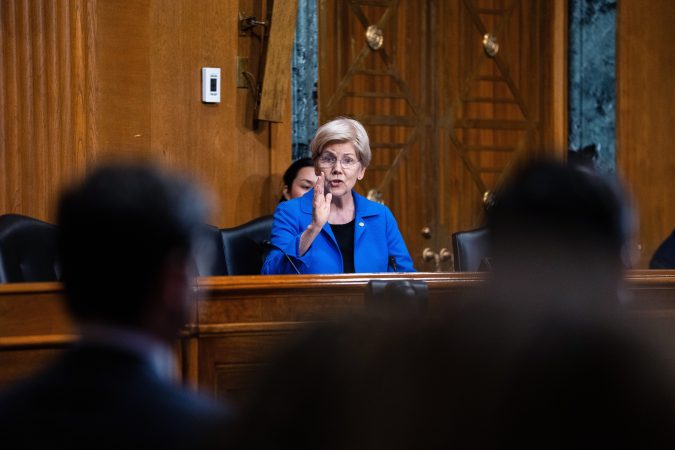
    In a letter to Defense Secretary Pete Hegseth, Sen. Elizabeth Warren (D., Mass.) and Rep. Pat Ryan (D., N.Y.) — along with almost a dozen other House and Senate Democrats — cited recent reporting by the Washington Post and other media outlets scrutinizing the March 1 strike, saying they want answers to whether the military had adequate protections in place before the attack and whether the troops received proper medical care afterward.

    “The need for this investigation goes beyond the Shuaiba attack — it’s about taking accountability and protecting our service members,” Ryan, an Army and Iraq War veteran, said in a statement to the Post. He was referring to Port Shuaiba, the facility along the Persian Gulf where the deadly strike occurred. “It’s our job as members of Congress to force [Hegseth] to give us real answers and make sure something like this never happens again.”

    Reached for comment, the Pentagon did not address whether it would cooperate with lawmakers’ investigation, saying in a brief statement that “as with all Congressional correspondence, we will respond directly to the sender.”

    It was just the second day of Operation Epic Fury, the name the Trump administration has given the conflict, when an Iranian Shahed drone crashed into the center of an Army operations center at Port Shuaiba. Dozens of service members were injured in the attack along with the six who died.

    In the months since, survivors have alleged that military leaders failed to take appropriate action after being warned the facility lacked adequate defenses. Some have said, too, that troops wounded in the strike faced considerable difficulty obtaining treatment.

    Military officials have contested both assertions.

    As the Post reported this month, several soldiers who were at Port Shuaiba have said they doubt the Army’s internal review will hold anyone accountable. Citing a U.S. official familiar with the review, the Post also reported that the initial findings did not assign fault for the attack or address any punitive action.

    The Army has shared its findings with the families of some of the fallen service members but has not released that information publicly.

    In their letter to Hegseth, lawmakers questioned the seriousness and independence of the Army’s internal review, citing other reporting by the Post that revealed the task was assigned initially to a midgrade officer within the affected unit instead of an outside investigator.

    The matter was later elevated to a more senior officer at U.S. Army Central, the affected unit’s parent command. Outside observers have said they were skeptical of the move, noting that it still left the review to be overseen by personnel in the same chain of command.

    The lack of an independent investigator, coupled with new concerns about the Pentagon’s transparency and recordkeeping, raise questions about “whether investigations into service member casualty incidents will be conducted objectively,” Warren wrote in the letter.

    Citing Democrats’ concerns about the Defense Department’s “failures to provide service members that sustained injuries in this war with adequate care and its inability to honestly and openly inform the American people about the consequences of this war,” the lawmakers have chosen to pursue answers on their own, the letter says.

    They requested a response from the Pentagon by Aug. 12.