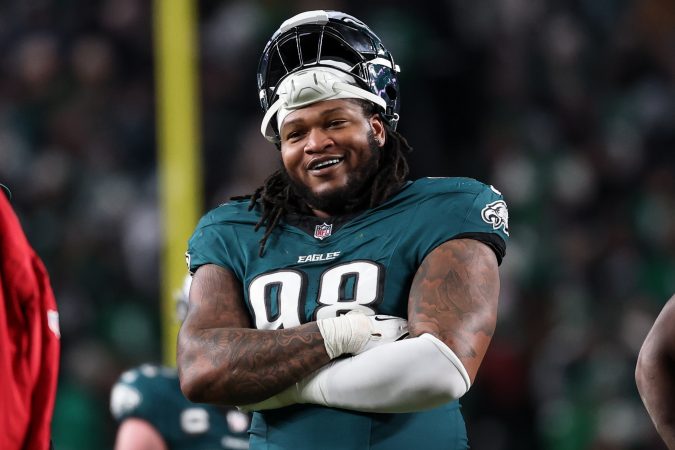
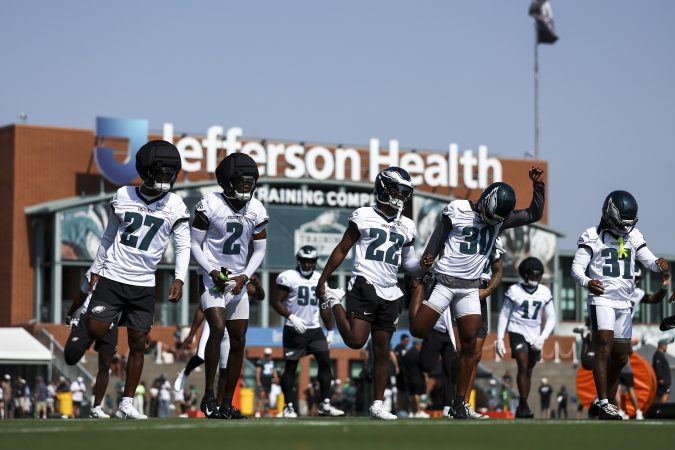
Jalen Carter plodded off the dais late Wednesday morning with a look of relief on his face, as if he were a student who feared public speaking and had just delivered an oral presentation for class. The Eagles’ first practice of training camp, at the Jefferson Health Training Complex, had ended minutes before. It was humid, and Carter wiped his brow with a towel. To his left were Dom DiSandro, who is the Eagles’ chief security officer, and Toni Brown, who is Carter’s mother. Dom and mom. Maybe the two most important people in making sure that the Eagles get their money’s worth from Carter, who is, for the moment, the highest-paid defensive tackle in the National Football League.
“I messed up a little bit,” Carter said to Brown and DiSandro, “but it was good.”
The Eagles had announced Tuesday that they and Carter had agreed to a four-year contract extension that reportedly guaranteed him $106 million and could pay him as much as $160 million. When a modern professional sports franchise holds a press conference, it does so not just to acknowledge the news that has already broken. The point and purpose of the event, from the franchise’s perspective, are to send subtle signals about what the angle on the news is supposed to be.
So there was Brown near the dais. And there was tackle Jordan Davis, Carter’s teammate at the University of Georgia and with the Eagles, hanging near the back of the media tent, ecstatic for his friend. And coach Nick Sirianni and vice president Howie Roseman had been there hours earlier, making no mention of the risk the Eagles had taken on with this commitment to Carter.
And there is risk here — plenty of it. Carter is just 25, and he has been a great player at times for the Eagles. He was the primary reason they beat the Los Angeles Rams in the 2024-25 NFC divisional round, and he has the power, strength, and raw talent to be the league’s best defensive tackle if he can stay healthy and keep his head on straight. But from the road-racing accident in January 2023 that led to two people’s deaths and caused him to drop far enough for the Eagles to trade in that year’s draft, to the decline in his play in the second half of his rookie season, to his dumb decision to spit in Dak Prescott’s face in last season’s opening game, to the two shoulder procedures that cost him a month of time, Carter has given the Eagles ample cause to cross their fingers here and hope.
Roseman likes to consummate such deals — extending the contracts of players whom the Eagles want to retain for years — as early in an offseason as possible. Carter’s, though, took much longer, and the reasons go beyond the ones Roseman cited Wednesday, the suggestion that he and Drew Rosenhaus, Carter’s agent, were simply waiting for the market to settle.
At just 25, Jalen Carter has the power, strength, and raw talent to be the league’s best defensive tackle if he can stay healthy.Monica Herndon / Staff Photographer
“We felt like [defensive tackle] was one of the strengths of our team,” Roseman said. “We want that to be one of the strengths of our team going forward. The defensive tackle position in the league, in college football — it’s a deficient position. It’s hard to find guys like that. So we feel like it was a priority.”
Understand: That’s why Carter got this extension, and that’s why the Eagles didn’t have much of a choice in giving it to him. He’s that talented, that vital to Vic Fangio’s defense. “The attention he draws is incredible,” linebacker Zack Baun said. “You’ve got to have four hands on him,” meaning the opposing offensive line has to double-team Carter at all times, opening up possibilities for his teammates to make plays. There’s no replacing a player like Carter, and if he commits another awful mistake off the field, if he does something dirty on the field and the NFL doesn’t go easy on him again — as it did last season after the Prescott incident — he will cost the Eagles dearly. As Roseman and more than one player said Wednesday, the Eagles don’t pay you for what you’ve done. They pay you for what you’re going to do.
To his credit, Carter said all the right things Wednesday, even pausing, after taking two questions, to thank the Eagles and chairman Jeffrey Lurie and even the media members in attendance. Any teacher or professor would have passed him on his assignment.
“When you get picked in the first round, a top-10 pick, you get a little bit of decent money,” he said. “That didn’t change me. I still came here. I had a goal. I let the team know and the fans know that the goal was to get a championship. It happened, but it’s a new contract, and it’s time to get more championships for the city of Philly.
“My goal wasn’t to come out and ‘Let me be the highest-paid defensive tackle.’ My goal was to build team chemistry and win a championship. I think that all falls in line with getting to where I’m at now.”
The proof was never going to present itself Wednesday. The easy part is over for Jalen Carter. He got his extension, and now he has to earn it. Now he has to keep every day clean. “I don’t think money is ever going to change me,” he said. It was an assertion that could cut either way, for good or bad, and it’s on him, his support system, and the Eagles themselves to make sure they don’t regret that he said it.
Saquon Barkley has long been an admirer of the wide zone run scheme. He’d study film of running backs like Todd Gurley — who thrived with the Los Angeles Rams under Sean McVay — and think about what he might look like in an offense like that.
Now he doesn’t have to daydream.
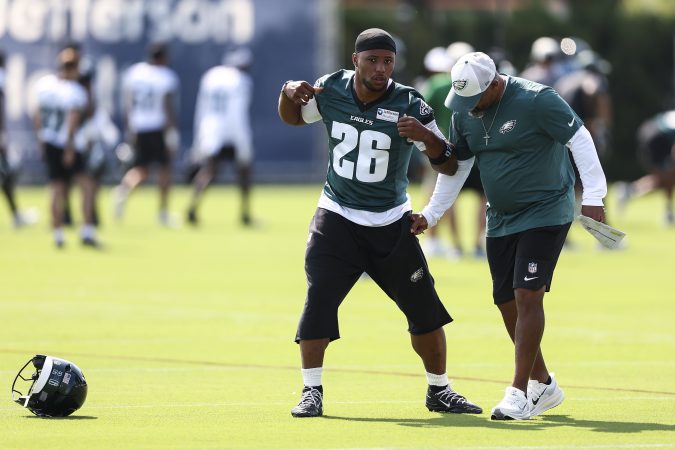
The Eagles held their first training camp practice of 2026 on Wednesday, which means Barkley and Co. got another important taste of life under first-year offensive coordinator Sean Mannion, whose playbook looks similar to McVay and Kyle Shanahan’s. It’s only Day 1, but the play calls were a major deviation from the inside zone-heavy Eagles offenses of the past. This was evident from the very first play, when Jalen Hurts — lined up under center — ran a stretch toss in “12″ personnel (1 running back, 2 wide receivers, 2 tight ends).
How fired up is Barkley about these changes? He spent nearly a minute lauding them after Wednesday’s practice.
“I’ve always been intrigued with this kind of system,” Barkley said. “Watching it kind of from afar and seeing a lot of guys have a lot of success in it. The thing that changes for me is we coach it a little bit different. Outside zone and wide zone, the read is pretty much the same, but just trying to get more of a one-cut mindset.
“I feel like naturally in my career, unless you are in a system like in college, most of us come from gun and playing shotgun. … You’re more natural to a duo, or to like an inside zone. Then, when you get into the NFL, you see a lot of guys struggle with outside zone in the beginning, but I’ve been working on that the whole time and just having that one-cut mentality, but still doing it in a way that I like to get out of the cut and being efficient and being aligned with the offensive line and in the play and making it work.”
Saquon Barkley’s ability to click in the running game will take pressure off Jalen Hurts (right) and the passing attack. Chris Szagola
Barkley’s excitement for a new system likely stems from his struggles (relative to his usual success) in the Eagles’ offense last season. The 29-year-old rushed for 1,140 yards and seven touchdowns under OC Kevin Patullo, as the Eagles went 11-6 and lost to the 49ers in the wild-card round. This came one year after Barkley’s dream first season in Philadelphia, during which he became the ninth player in NFL history to eclipse 2,000 yards and logged 13 rushing touchdowns en route to a Super Bowl crown.
Of course, it’s only Day 1. Growing pains and adjustments are inevitable. But with Mannion in the mix, Barkley feels rejuvenated — even if it means “starting from scratch.”
“I think it’s pretty cool that you start it from scratch again,” Barkley said. “Learning a new language, getting familiar with a new system. It’s fun. The way you take notes is a little bit different than you would … It’s going to put you in a spot to do something new, something you may not be used to. But as a competitor, you welcome that challenge.”
What surely feels like Christmas morning for many in Philly and beyond dawned on Wednesday as the Eagles took the field for the first training camp practices of the 2026 season — and, for Jalen Carter, with a nice pay raise.
So what did our writers see?
In short: plenty.
Plenty of Birds on the field (they’re healthy). Plenty of positional battles (especially on defense). Plenty of new concepts (on offense). And if you want the in-depth version of Wednesday’s key observations, Jeff McLane has you covered.
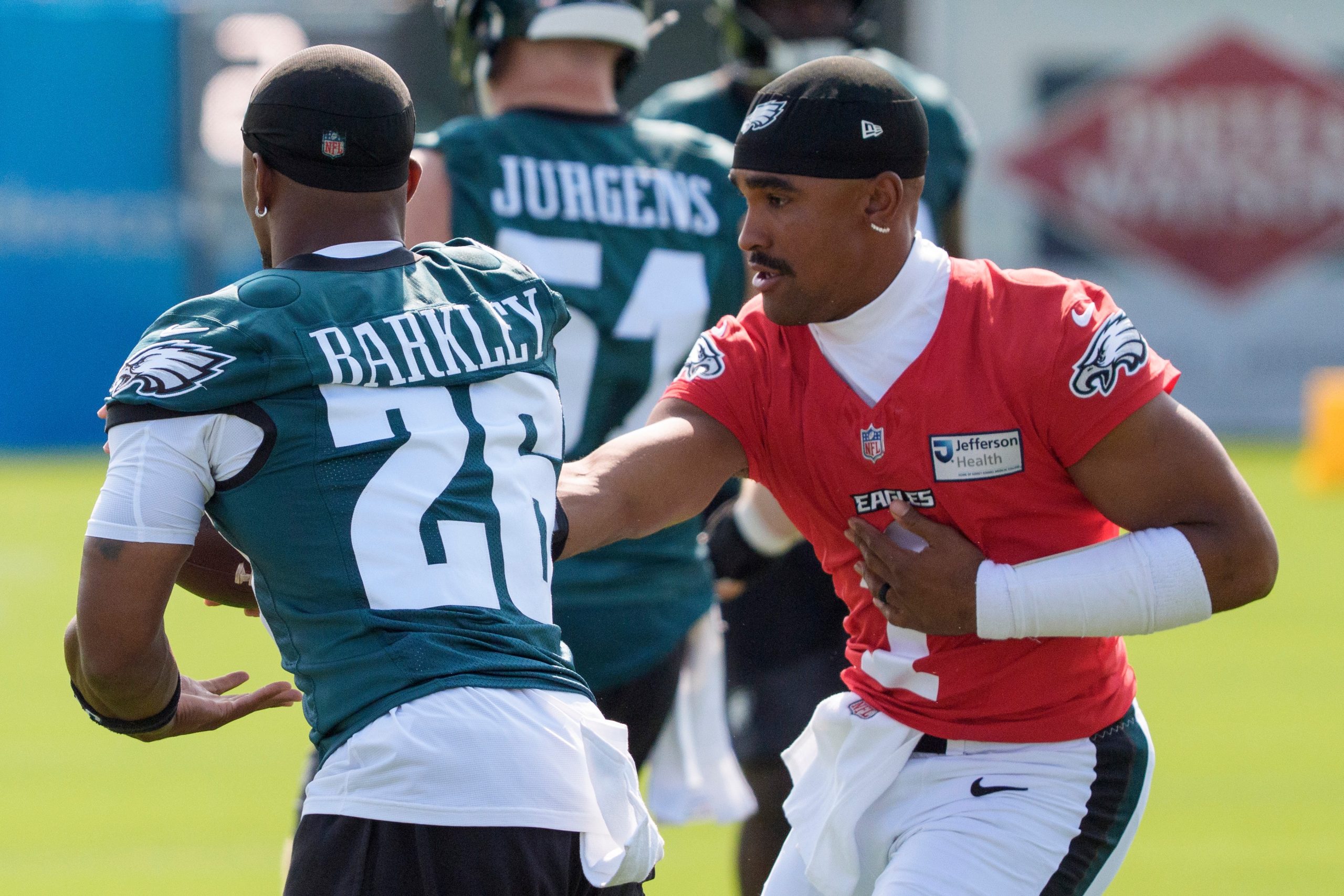
Eagles quarterback Jalen Hurts fakes a handoff to running back Saquon Barkley during the first day of on Wednesday.Monica Herndon / Staff Photographer
Part of Nick Sirianni’s opening message to the team stuck out to quarterback Jalen Hurts. He wrote it down in his notebook, and it underscores his mentality as a new season begins.
“100% alignment and zero entitlement,” he said Wednesday as the first practices of training camp began.
So what does that look like, as Hurts embraces his role as a veteran and helps his new teammates get acquainted with the Eagles?
And while there isn’t a Duolingo course for Sean Mannion’s offense, but Barkley is enjoying the challenge of “learning a new language” as the Birds install the offense.
Next: The fun continues today at the Jefferson Health Training Complex.
Phillies interim manager Don Mattingly returns to the dugout after making a pitching change. The Phillies blew a six-run lead to lose their third straight game on Wednesday in Miami.Rebecca Blackwell
Bryce Harper’s candid comments about the Phillies’ needs ahead of the trade deadline certainly raised eyebrows on Tuesday night.
Before Wednesday’s series finale vs. the Miami Marlins, interim manager Don Mattingly responded to his star first baseman, saying, “… players like being GMs and making calls and spending other people’s money, so just let it go at that.”
And the Phillies’ on-field misfortune continued Wednesday, as they blew a six-run lead en route to an 8-6 loss to the Marlins.
Next: After an off day Thursday, the Phillies’ road trip continues with a weekend series in Baltimore. The Orioles’ Brandon Young (8-2, 3.13) will start on Friday (7:05 p.m., NBCSP) against a Phillies starter to be determined.
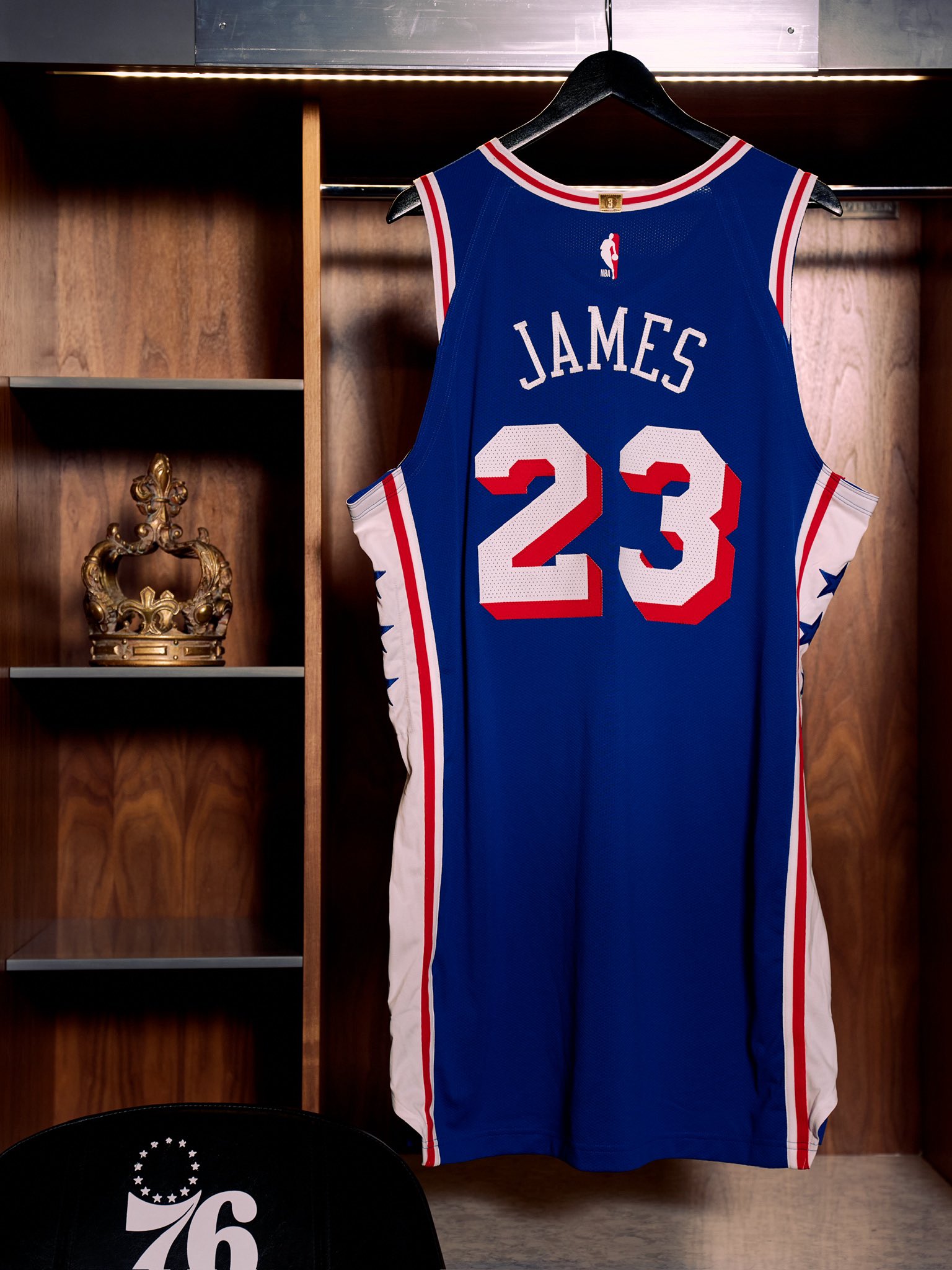
LeBron James will wear No. 23 with the Sixers, the team announced Monday.Sixers
OK, so what was the deal with that asterisk by Tyrese Maxey’s name on the now-infamous white board? Turns out the Sixers point guard had a notable role in helping bring LeBron James to Philly.
Women’s Lacrosse League players Abby Bosco (left), Katie Detwiler, and McKenzie Blake demonstrate a lacrosse drill for Mayor Cherelle L. Parker on Wednesday.Jose F. Moreno / Staff Photographer
The Philly area is a hotbed for women’s lacrosse. Of the Women’s Lacrosse League’s four teams — the Maryland Charm, California Palms, New York Charging, and Boston Guard — 18 players and two coaches have ties to the region.
“I think it’s just super crazy growing up in the area,” said Katie Detwiler, a California Palms defender who’s from Devon. “When we were growing up, we didn’t have any of this. We played in college, and then it was on to the real world. So I think it’s really good for them to see what could be possible someday. It’s awesome to see.”
And on Wednesday, Mayor Cherelle L. Parker, the WLL, and local lacrosse players came together to celebrate the league making history in the area when it plays its inaugural championship game in the area next month.
Next: The inaugural WLL championship is coming to Subaru Park in Chester on Aug. 15 (5 p.m., ESPN).
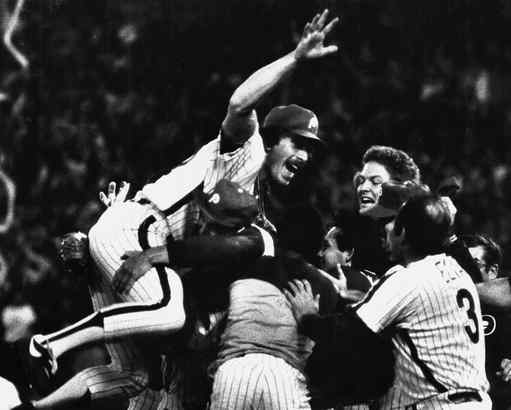
Mike Schmidt and other Phillies celebrate their World Series triumph on the night of Oct. 21, 1980. Schmidt also was the National League’s most valuable player that season.File photograph
On this day 31 years ago, two of the Phillies’ all-time greats were enshrined among baseball’s best as Mike Schmidt and Richie Ashburn were inducted into the National Baseball Hall of Fame in Cooperstown, N.Y.
An article by the Hall of Fame estimated that 40,000 came out to see Schmidt, a 12-time All-Star and six-time Silver Slugger winner, and Ashburn, who hit .308 over his career. Which Phillies might be next?
Standings, stats, and more
It’s a bit early for scoreboard watching, but the Phillies’ hold on a wild-card spot has gotten precarious. They’re tied with the Diamondbacks for the final two spots, and the Marlins, Pirates, Nationals, and Padres just two games behind them.
Here’s a place to access your favorite Philadelphia teams’ statistics, schedules, and standings in real time.
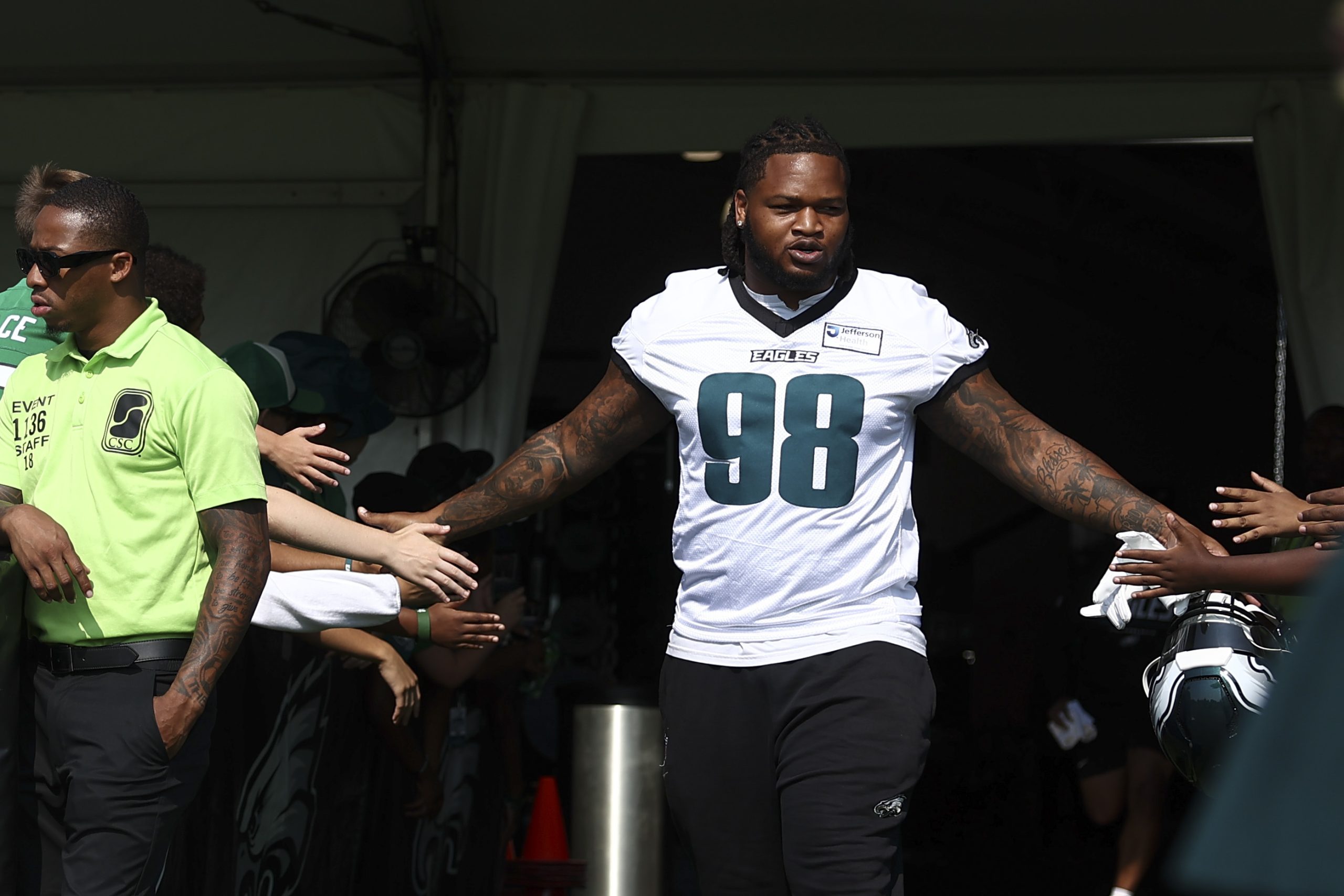
Eagles defensive tackle Jalen Carter takes the field during the first day of training camp.Monica Herndon / Staff Photographer
After Jalen Carter signed his lucrative extension, he met with the media flanked by two important people: security chief Dom (DiSandro) and his mom. Dom and Mom has a nice ring to it. They’re also the two people who’ll be most instrumental in making sure the Eagles get their money’s worth from the 25-year-old defensive tackle.
We asked: WhichEagles player is destined for a big year?
#33 is going to have an incredible year. Cooper DeJean 2026 Defensive Player of the Year. —Ronald R.
Jalen Hurts is destined for a big year. Rid of complaining AJ Brown, Jalen will have time and support to learn Sean Manion’s playbook without the pressure to cater to a diva receiver. — Bob C.
I think Jalen Carter will have a great year as he works extra hard to prove that he is worth that $152 million. Unless he is injured I think he will have an outstanding year. You always have to be wary of these long time extensions due to memories of Carson Wentz and Russel Wilson, [Deshaun] Watson, Jay Cutler and others, but I don’t think Carter will ever fail like any those players. — Everett S.
We compiled today’s newsletter using reporting from Jeff McLane, Olivia Reiner, Jeff Neiburg, Ryan Novozinsky, Lochlahn March, Gabriela Carroll, Gina Mizell, Ariel Simpson, Matt Breen, Becca O’Reilly, Mike Sielski, and Jonathan Tannenwald.
By submitting your written, visual, and/or audio contributions, you agree to The Inquirer’s Terms of Use, including the grant of rights in Section 10.
Thanks for reading along! Bella will be back in your inboxes tomorrow morning to close out the week. — Maria
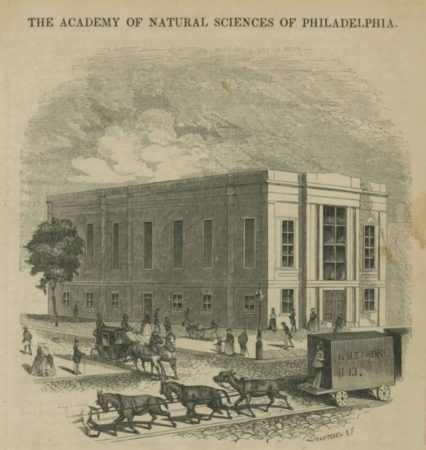
In the early 1800s, Philadelphia’s loose cohort of natural scientists became obsessed with learning all they could about the plants and animal species of the New World.
They shipped dried specimens to Britain for naturalists to identify and catalog. And when the American naturalists discovered a new species, the Brits named it and took the credit for the findings in their medical journals.
When the Crown enacted trade restrictions in 1807 — ultimately leading to the War of 1812 — American botanists, herbologists, and entomologists had enough with Britain’s interference.
Artist Ibi Padrón Venegas’ Academy of Natural Sciences No. 1 translates his ideas of daydreams, everyday sensations, and the curiosity that comes with playing with science for his sculpture.Ibi Padrón Venegas for Colibrí Workshop
Six Philadelphia gentlemen and amateur naturalists — Gerard Troost, Nicholas S. Parmentier, Camillus MacMahon Mann, Jacob Gilliams, John Shinn Jr., and John Speakman — held a meeting Jan. 12, 1812, in Speakman’s Old City apothecary. Their goal: to map out a plan to be recognized as scientific experts on what grew on their own soil.
The Philadelphia Historic District will celebrate the academy’s beginnings at its Ben Franklin Parkway home on Saturday from 11 a.m. to 1 p.m. The party, or “Firstival,” is part of a series of yearlong fetes honoring events, places, and organizations with Philly roots in honor of America’s 250th birthday.
“Americans were doing the research and risking their lives to cull these specimens,” said Robert M. Peck, curator of artifacts and senior fellow emeritus at the Academy of Natural Sciences of Drexel University.
The Academy of Natural Sciences’ current home at 1900 Benjamin Franklin Parkway. This building opened in 1876 for the Centennial and stands through present day.Courtesy of the Journal of the Academy of Natural Sciences of Philadelphia
Thomas Say is listed as the seventh founder, though he didn’t attend the first meetings, Peck said. Still, Say is the most famous of the early members as he is the father of American entomology and conchology.
The academy was a private club in the beginning, opening its nature collections to the public in 1828 when it was housed at the Swedenborgian Church at 12th and Sansom.
By the mid-19th century, the academy was as important in Philadelphia’s science and education circles as Ben Franklin’s highbrow American Philosophical Society. In 1849, the society transferred Thomas Jefferson’s fossil collection to the academy, where it remains today. During the mid-19th century, the academy acquired the bird skins from John James Audubon’s collection, and the pressed plants gathered by explorers Meriwether Lewis and William Clark.
In 1868, the academy made paleontology history when Benjamin Waterhouse unveiled a 15-foot-tall complete dinosaur skeleton of Hadrosaurus foulkiibuilt from the bones of the plant-eating dinosaur excavated in Haddonfield 10 years before.
Samples of the Academy of Natural Sciences’ robust dinosaur collection as photographed in 2020. Courtesy of the Academy of Natural Sciences of Drexel University
“Before then, people didn’t understand what dinosaurs really were, how they really looked,” Peck said. “This is the first time the world had ever seen what a dinosaur really looked like and it shaped how we still see them today.”
In 1876, the academy moved to its present building on the Parkway, where, exactly 100 years later, the Please Touch Museum opened its 2,200-square-foot pilot. (It is now located in Memorial Hall on the Centennial campus in West Philadelphia.)
The academy went on to become a home base for scientists who study a wide range of climate-related topics, from global warming in Mongolia to avian bird flu in Vietnam.
The Academy of Natural Sciences in June 2020. HEATHER KHALIFA / Staff Photographer
In 2011, the Academy of Natural Sciences became a subsidiary of Drexel University, retaining its own board and legal status as a separate nonprofit organization. In April, The Inquirer reported Drexel was in discussions to sever ties with the academy unless it agreed to grant Drexel its building, endowment, and significant collections.
This week’s “Firstival” is Saturday, Aug. 1, 11 a.m.-1 p.m. at the Academy of Natural Sciences of Drexel University, 1900 Benjamin Franklin Parkway.
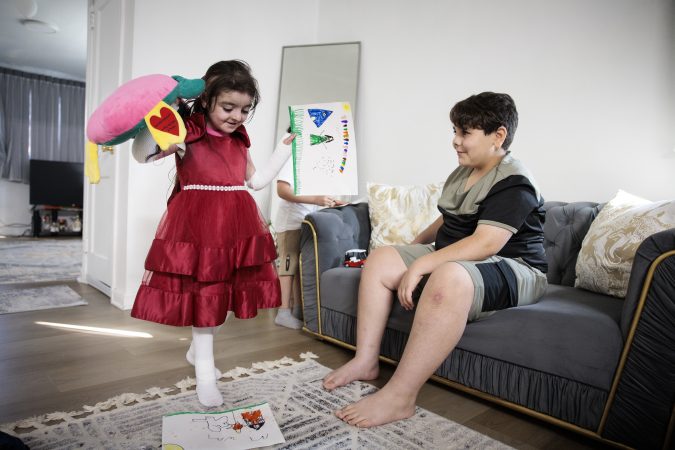
A small garden stands outside the two-story Northeast Philadelphia home where Fatima Alsalih Alti Keli and Waled Keli live with their three children. Inside, their 8-year-olddaughter, Abeer Janna Keli, sits on the couch drawing pictures with her two brothers, her small arms carefully wrapped in bandages to protect her fragile skin. The ordinary domestic scene would have seemed nearly impossible before the family immigrated to the United States from Turkey, after the civil war in Syria had prompted both parents to flee.
Over the last two years, the family’s future has been radically transformed in Philadelphia with the help of specialized treatment for Abeer. And yet, the resettlement process by which they were granted visas is threatened: When the family applied for resettlement in the United States around 2020, the annual refugee admission cap was set to 18,000. The cap this year is set to 7,500, the lowest in U.S. history.
Alti Keli, 28, and Keli, 30, had known each other through their families in Syria, but they married after both had fled to Turkey and started their family there. Once in Turkey, they applied to move to seek medical treatment for Abeer, a process that took about five years.
Abeer was born with epidermolysis bullosa, a rare genetic disorder that causes the skin to blister and tear from minor friction. Children with the condition are often described as having “butterfly skin.” Before the family came to the United States, Abeer had little access to specialized medical care. She struggled to eat because of sores in her mouth, relied on a wheelchair, and spent much of her time asleep.
“She was like a ghost,” her mothersaidin Arabic through a translator.
The family applied to immigrate through the United Nations High Commissioner for Refugees in 2020 on the basis of receiving treatment for Abeer’s disease and were connected with Children’s Hospital of Philadelphia, where Abeer still receives treatment. When they arrived in Philadelphia in July 2024, they went directly to CHOP, where Abeer stayed for 12 days before she could go home.Two years after the move, the Kelis have settled into their lives in Philadelphia.
“Now that she is here, she is talking, walking, and is happy going to school,”Alti Keli said, smiling through tears. “Her doctors saved her life.”
They moved to their predominantly Arab neighborhood after first living in Southwest Philadelphia. Struggling with the language barrier and the job search, they were feeling isolated there. The friction of daily life was a real struggle as the family balanced learning English, taking their daughter to medical appointments, finding employment, and coordinating schooling for Abeer and her brothers — Abdul Rahman, now 10, and Mahmoud, now 6.
For example, they were flabbergasted when their water bill spiked from $50 to $500 a month. Realizing their toilet was leaking, they struggled to communicate with their landlord. Those struggles have eased. In their new neighborhood, their children can easily walk to school and have made friends who share their Arab heritage. With the help of English classes, phone translators, and a refugee-support organization, the family has been able to build a comfortable life.
Volunteer Dan McVay talks with Abeer Keli, 8, about her drawing at her home on Wednesday, July 22, 2026 in Philadelphia. The Refugee Empowerment Support Team (REST) works with refugee families in Philly.Monica Herndon / Staff Photographer
The Refugee Empowerment Support Team (REST) helped the family confront the logistical challenges of moving to a new country. Efforts by President DonaldTrump’s administration to curb immigration have affected not only the number of refugees allowed into the country, but also the kind of help they receive while they are here. After the administration threatened to close resettlement offices in 2025 and froze federal funding, many of the offices shut down and laid off employees. Provisions in the One Big Beautiful Bill Act limited refugees’ access to government services like Medicaid, Medicare, and SNAP benefits.
REST has filled in those gaps by helping to connect refugees with employers, assisting with transportation to medical appointments, and dealing with other logistical challenges. Dan McVay, a leader with REST, said more refugees are now contacting the organization directly through Facebook, asking for help finding jobs and accessing services.
“There is no money for refugees already in the country,” McVay said.
Alti Keli, however, is “very happy with the challenge” of adjusting to life in a new country. While she takes care of the children, herhusband works in landscaping at a golf course. He also loves to garden at home and has filled the front of the house with potted plants and flowers.
McVay describes the family as very welcoming, often serving guests tea or coffee and homemade sweets.
Before the family moved to the United States, the Kelis fled to Turkey from Syria in 2014, where they married and had their three children. Alti Keli’s face contorts while describing her life in Syria, where she lost her father and four siblings, during the civil war: “It was like a nightmare.”
The family had to keep moving and did not have access to shelter, food, or even potable water.
“We had to drink dirty water,” Alti Keli said. In Turkey, life was better, but Abeer could not get the specialized care she needed.
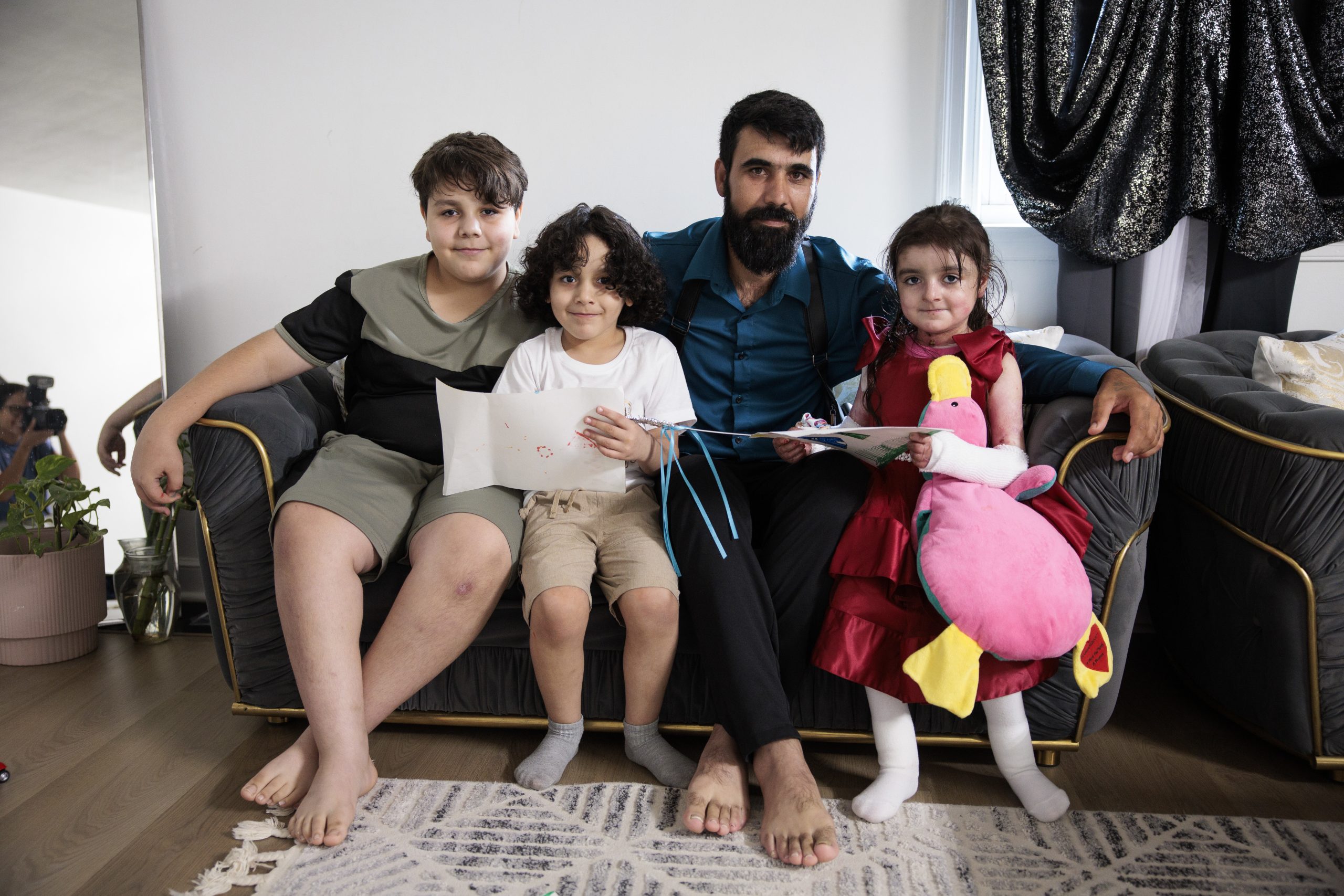
(left to right) Abdul Rahman Keli, 10, Mahmoud Keli, 6, Walid Keli, and Abeer Keli, 8, posed for a portrait at their home on Wednesday, July 22, 2026 in Philadelphia. The Refugee Empowerment Support Team (REST) works with refugee families in Philly.Monica Herndon / Staff Photographer
A United Nations spokesperson described the situation in Syria during 2013 as “a complete meltdown of humanity,” as Bashar Assad’s Russian-backed regime tried to recapture rebel-held territory. During the war, civilians were subject to chemical warfare, indiscriminate bombing attacks, and systematic torture and execution by the Assad regime.
Moving to Philadelphia was “the first step of hope,” Alti Keli said, a step that has been realized now that her daughter is doing well. “I came here for hope,” she says. “What else can I ask for?”
FOPS represents a multitude of residents who live on and near these historic, narrow residential corridors. We engaged with the city, voiced our concerns, and sought a balanced solution that maintains safety for cyclists while preserving essential accessibility for elderly, disabled, and young residents. But City Hall, so far, is beholden to a single, vocal advocacy group, and insists on designing our streets based on politics instead of data, good practice, and engineering. That is slowly changing, with our help.
In pursuing our lawsuit, we are exercising a foundational constitutional right. The judiciary exists precisely to act as a check on government overreach, improper legislative process, and a lack of transparency.
The 2024 death of Barbara Friedes was a terrible tragedy. But even in the wake of tragedy, municipal governments must follow the law and rely on sound traffic engineering. The driver in that tragic crash was severely intoxicated and traveling on Spruce Street faster than the speed limit set for I-95. Banning residential loading and erecting concrete barriers does nothing to solve the single greatest cause of traffic deaths: excessive speed.
Instead, the city’s rushed, politically driven response would make the streets more dangerous. Walled-off lanes turn narrow streets into high-speed e-bike expressways with no egress for pedestrians, separating seniors, paratransit vans, and emergency vehicles from front doors.
We all want safer streets — for all road users: pedestrians, cyclists, motorists, residents, seniors, and people with disabilities. It should be guided by data, accessibility needs, and open public input, not political decrees passed without transparency. This political coercion will soon come to your neighborhood. We’re all fighting back.
Lloyd Brotman,president, Friends of Pine and Spruce
Accountability
Sen. Dave McCormick once explicitly rejected Donald Trump’s Big Lie about winning the 2020 election. Now mum on election denial, he avidly supports the SAVE America Act, purportedly to stop voter fraud.
You may ask: Why would anyone object to proof of citizenship to register to vote? Let’s see: You need either an original birth certificate or a current U.S. passport. REAL ID? Won’t cut it. And if you’ve changed your name, you’ll need legal proof of any changes. Married? Legal proof. Divorced? Legal proof. Surely everyone has the time, access, and money to procure all these documents.
The fraud here is Sen. McCormick parroting the lies Republicans have been pushing for decades about rampant voter fraud. The SAVE Act is a draconian solution in search of a problem, intended not to protect democracy, but to subvert it.
Rosalind Holtzman, Elkins Park
. . .
Let me get this straight. The Inquirer publishes an excellent article about Sen. Dave McCormick and others who are pushing the ill-conceived SAVE America Act on us, and it concludes by saying McCormick declined to be interviewed for the article. All we get are quotes from his canned town hall, where he cherry-picks questions and offers prepared responses. But then we give the senator space for a Letter to the Editor to repeat his one-sided false arguments uncontested. Let’s have some legitimate dialogue with the senator and stop giving him space for his infomercials.
Helene Hilger,Philadelphia
Join the conversation: Send letters to letters@inquirer.com. Limit length to 150 words and include home address and day and evening phone number. Letters run in The Inquirer six days a week on the editorial pages and online.
ARIES (March 21-April 19). Your predictive guesses are more accurate than not. Use that today. Let it cue your preventive measures. As good as you are at solving problems in the moment, you get even better results if you prevent them before they happen.
TAURUS (April 20-May 20). Every group has someone setting the direction. Today’s advantage comes from understanding that vision and helping move it forward. You don’t have to be the loudest voice to become an indispensable one.
GEMINI (May 21-June 21). Small choices have outsized effects. Stay aware. Double-check your work. Keep reminding yourself what matters most. It’s easier to steer a moving ship than to reroute one that’s drifted miles off course.
CANCER (June 22-July 22). Did you mess it up in some way? Good. Until you have a collection of interesting mistakes, you’re not yet a master. The thing that doesn’t work today may become the missing piece of something better later.
LEO (July 23-Aug. 22). People think refinement is something you’re born with, but it’s more about small, respectful choices made over and over. Today your lovely instincts and steady self-control make a favorable impression that will linger for years to come.
VIRGO (Aug. 23-Sept. 22). Talk can be cheap, and it can be expensive, too. The price is paid in attention. You’ll notice who is asking for it and who is earning it. You’re inclined to give your attention to the people who say less.
LIBRA (Sept. 23-Oct. 23). You’ve established a method that works, though it’s not the only one that will. Switch the order. The beginning doesn’t always belong at the beginning. Rearranging familiar pieces can reveal a stronger story, a better argument or a clearer path forward.
SCORPIO (Oct. 24-Nov. 21). There are very few things in this world that “always” or “never” happen. So the hyperbole may be unhelpful, especially today when the odd chance is the one that actually transpires and the open mind is richly rewarded.
SAGITTARIUS (Nov. 22-Dec. 21). Your first impulse is often worth following, but not always. Today it’s those second through hundredth thoughts that are the most auspicious to follow. Well-considered strategies will be worth the time it takes to put them together.
CAPRICORN (Dec. 22-Jan. 19). You will sharpen your skills against the challenge of an equal. The match may end with a winner and a loser, but everyone walks away better for the match. A worthy opponent is a gift regardless of the outcome.
AQUARIUS (Jan. 20-Feb. 18). It’s OK to leave a project unfinished until tomorrow or next week. Returning with fresh eyes helps you notice what today’s version missed. Distance doesn’t solve every problem, but it will make the next step rather obvious.
PISCES (Feb. 19-March 20). You’ll deal with machines today, perhaps so much so that you’ll develop a craving for the human voice, touch, and yes, the human foibles too. Because without human mistakes, there is no real connection.
TODAY’SBIRTHDAY (July 30). This is your Year of the Fuse, when one spark starts a much bigger chain of events: exciting, fortuitous and transformative. The high energy cycles are complemented by stretches of serenity. More highlights: An investment in yourself pays off. A casual acquaintance becomes an important ally. Your domestic scene gets a style update that also makes daily life less work. Gemini and Aquarius adore you. Your lucky numbers are: 6, 14, 10 and 32.
DEAR ABBY: I moved into my apartment four months ago. While my sister, her son and I were moving things in, my new next-door neighbor introduced herself. She has since become intrusive. I am an introvert, and she knocks on my door wanting everything from plastic bags to cigarettes and alcohol. Every day since I moved here, she has been asking for something. She came six times yesterday. I’d like to be her friend, but she takes and I give. I’m tired. Help, please.
— OVERWHELMED IN OHIO
DEAR OVERWHELMED: A way to fix this would be to tell your neighbor the truth. Tell her you would like to be a considerate neighbor, but you are not a convenience store and do not wish to be disturbed on a daily basis. Then, when she comes around asking for cigarettes, liquor or plastic bags (which are choking our landfills and our waterways), tell her you are fresh out — and repeat it as necessary. If she persists, discuss it with the management of your apartment building.
** ** **
DEAR ABBY: My brother-in-law is currently in a relationship with a woman who was intimate with my husband many years before we married. It was a one-night thing, but now she is with my BIL and is going to be at family functions. I’m afraid it’s going to be awkward, and I’m not comfortable. My husband is supportive of whatever I choose to do. The rest of the family has no issue with it because, of course, it’s not their issue. I need advice.
— IN A DILEMMA IN PENNSYLVANIA
DEAR DILEMMA: This is not a dilemma unless you choose to make it one. A one-night stand is not a relationship, and the woman is not a cause for concern. What happened between them once, many years ago before your marriage, shouldn’t be a threat to you or your relationship with your husband’s family. If anyone is tasteless enough to bring it up, treat it with humor or say you don’t wish to discuss it. Then act like the lady you are and be cordial.
** ** **
DEAR ABBY: I’m a 17-year-old guy, and I still suck my thumb, though I do it mostly when I’m in bed. I am going to college next year and I’m worried I might get outed by a roommate if I’m caught. Is my habit that unusual, and do you have any advice on how to stop it? It’s like an addiction.
— EMBARRASSED IN THE WEST
DEAR EMBARRASSED: You are not alone in having this problem. In the past, I have heard from other adults who suck their thumbs. Comfort yourself with the thought that it’s not an addiction and not all that unusual. Stress has been known to cause people to suck their thumbs. One way to discourage the habit would be to keep yourself from becoming overly tired. Another would be to coat your thumbs with a bad-tasting substance. (Search online or ask your pharmacist to recommend something.) That, coupled with the fear of being ridiculed, may do the trick.
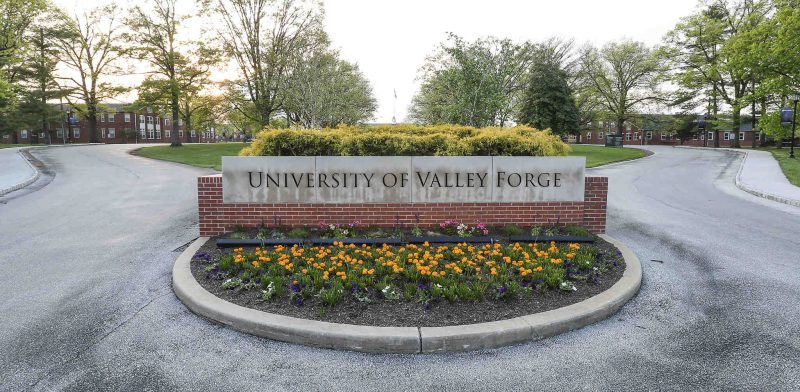
The University of Valley Forge, a small private Christian institution in Chester County, on Wednesday announced that it would suspend operations at the end of its summer 2026 semester.
The Charlestown Township-based college — which enrolls 589 students, according to the National Center for Education Statistics — has been facing the possible loss of its accreditation by the Middle States Commission on Higher Education.
Middle States last month issued its most serious warning — “show cause” — to the small Christian college that prepares students for leadership in the church and the world. It cited concerns about finances, planning, and governance.
Colleges need accreditation to keep their students eligible for financial aid.
The University of Valley Forge recently said on its website that it planned to charge $41,020 in tuition, fees, and room and board for next academic school year, which was scheduled to start Aug. 30.
“After much prayer, careful consideration, and consultation, the Board of Trustees of the University of Valley Forge has made the difficult and painful decision to suspend academic operations at the conclusion of the Summer 2026 semester,” the board said in a statement.
“This decision follows extensive efforts to address the University’s financial challenges, pursue strategic partnerships, and identify sustainable paths forward. These challenges have been well documented over several decades and were reflected in the recent action of the Middle States Commission on Higher Education, which placed the University on Show Cause status,” the board said.
“After careful assessment of the University’s financial realities, the Board concluded that it could not continue academic operations responsibly beyond the Summer 2026 semester,” the board said.
“To our students, we are deeply sorry. We understand that this announcement disrupts your lives, your plans, and your sense of stability, and we are grieving for you and with you,” the board said.
“Please know that until the very last moment, we had significant reason to believe there was a sustainable path forward. However, that path did not materialize in time,” the board said.
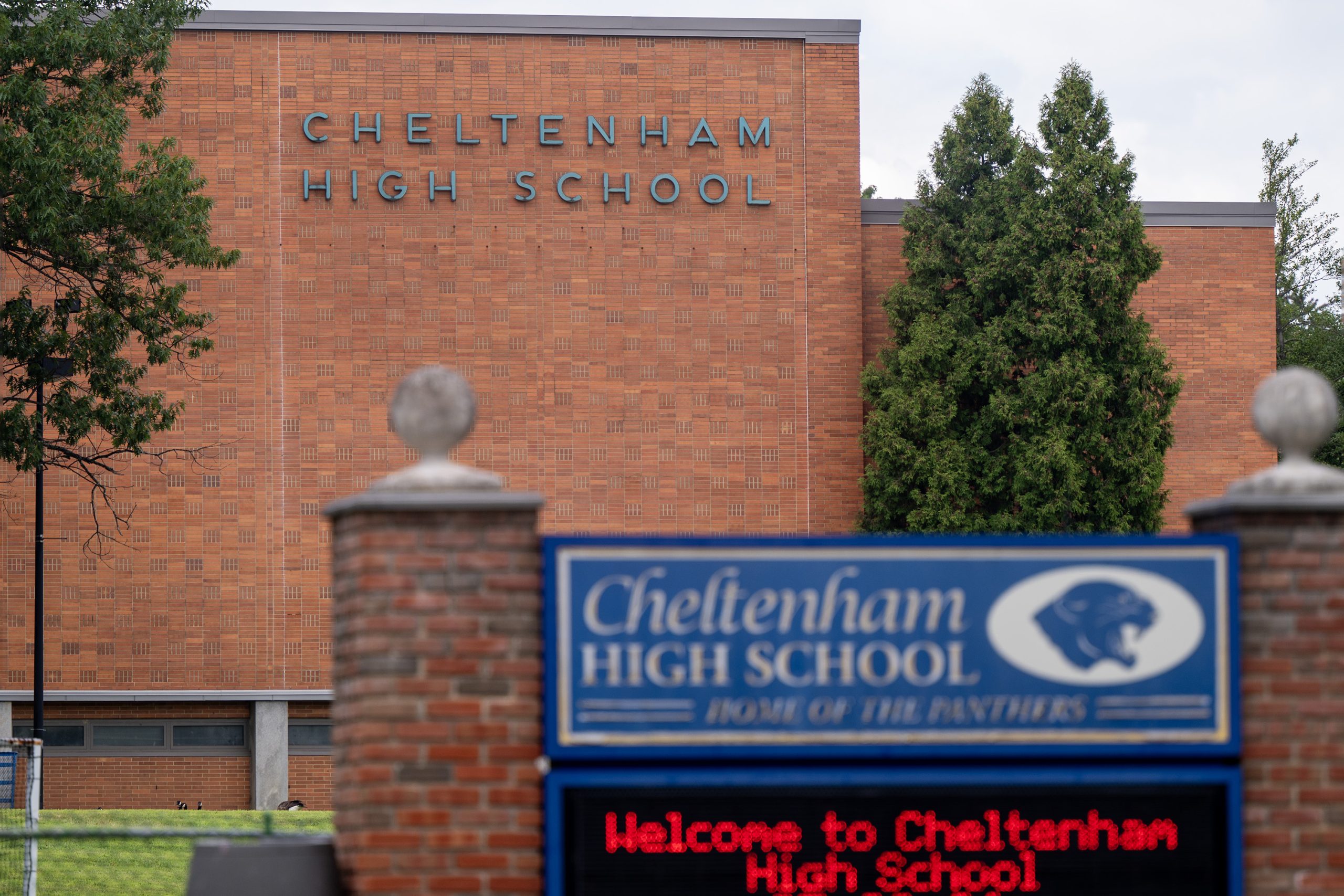
Four Cheltenham High School football coaches and six players have been charged in connection with two assaults in the school’s locker room that injured a 15-year-old player and led to the cancellation of two football seasons, Montgomery County prosecutors said Wednesday.
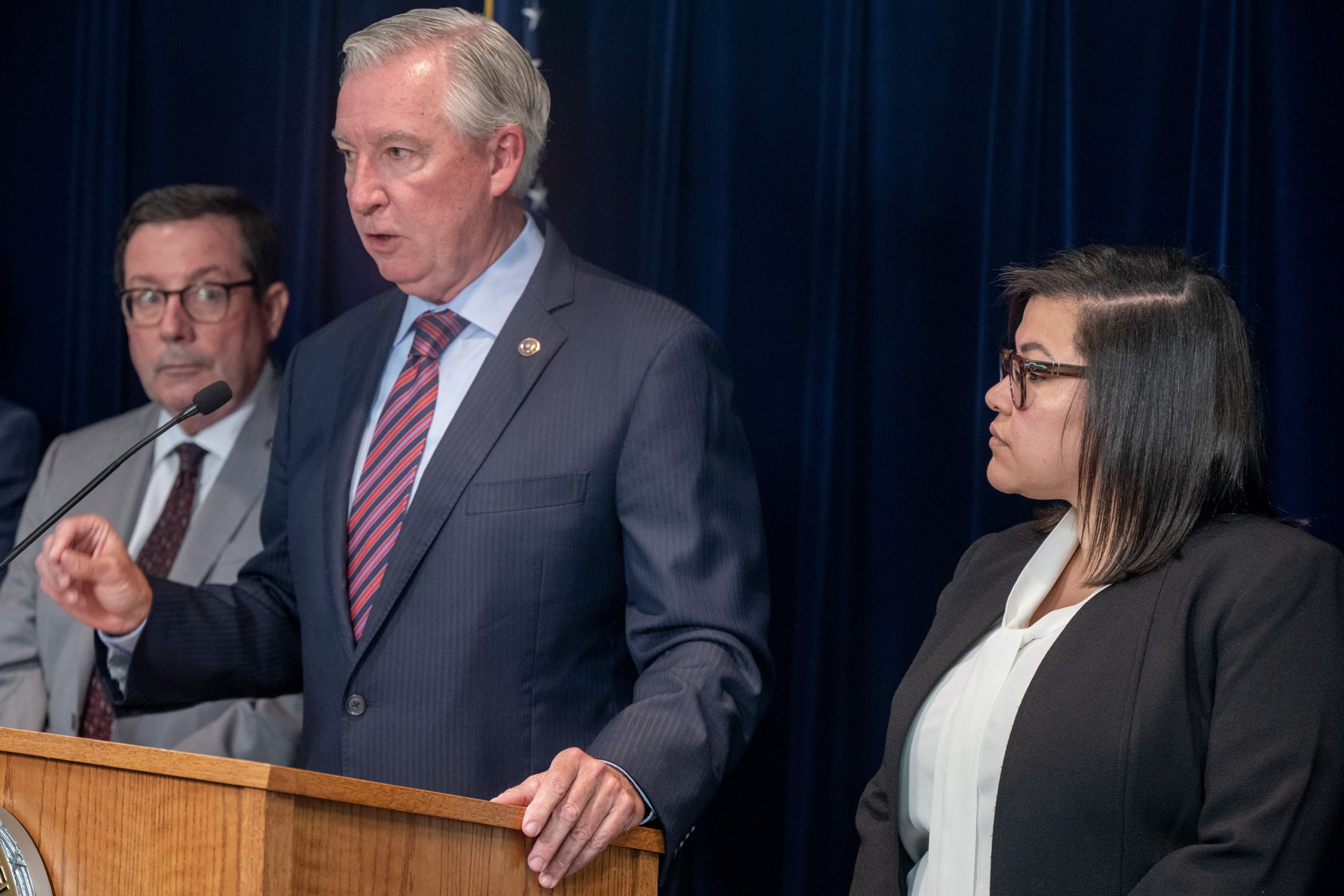
In two violent assaults, District Attorney Kevin Steele said, multiple football players attacked a sophomore on the team, stomped on his chest and groin while wearing cleats, and used a broomstick to poke at his buttocks.
“The assaults on this victim were not typical goofing around by teammates, or horseplay, as some of the coaches in this case called it,” Steele said at a news conference Wednesday. “They were crimes.”
After the attacks, which took place last August and September, Steele said, coaches tried to cover them up.
Head coach Terence Tolbert, 55; associate head coach Darian McFadden, 42; assistant coach Benjamin Johnson III, 45; and volunteer coach Ralph Burnley, 60, have been charged with endangering the welfare of a child and conspiracy. The coaches are no longer with the district.
Two football players, Isaiah Simpson, and Josiah Peeler, both 18, have been charged as adults — Simpson with conspiracy to commit aggravated assault, simple assault, reckless endangerment, and related crimes for his role in the September assault, and Peeler with false swearing for being untruthful to police. The two were 18, Steele said, when the crimes they are charged with took place.
The four other players have been charged as juveniles, and were not identified by prosecutors or named in court records. Two of them face charges of conspiracy to commit aggravated assault and related crimes, because authorities say they took part in the attacks. The other two players are charged with false swearing.
Tolbert, McFadden, Johnson, and Peeler were released on $5,000 unsecured bail. The two other adults had not been arraigned as of Wednesday afternoon. Only two of the defendants, Johnson and Peeler, had attorneys listed in court records.
Johnson’s attorney, Richard J. Fuschino, said his client “has been humiliated by what occurred and absolutely had nothing to do with it.”
“I do believe there is a cover-up, and I absolutely do not believe Benjamin Johnson had anything to do with it,” he said. “In fact, quite the opposite: He went out of the way to cooperate with every investigator.”
Peeler’s attorney, Jessica Mann, did not respond to a request for comment. Attempts to reach the other defendants were not successful Wednesday.
Cheltenham Superintendent Brian Scriven said Wednesday that the district appreciated prosecutors’ work on the case and the filing of criminal charges. “While no legal outcome can erase the harm that was experienced,” he said, “we appreciate that after nearly a year, charges have been announced and those responsible are being held accountable through the criminal justice system.”
Prosecutors say coaches wanted incident ‘kept quiet’
Steele said the charges followed a grand jury investigation in which witnesses described two violent assaults.
The coaches are criminally liable for the assaults, Steele said, because, while they were not present, they learned of the September incident and encouraged the victim not to tell his parents.
Montgomery County District Attorney Kevin Steele at a press conference Wednesday.Tom Gralish / Staff Photographer
Privately, the coaches sent incriminating text messages to one another, Steele said, expressing concern that the incident “has to be handled and kept quiet.”
McFadden, the former assistant coach, wrote “if this gets out we are [expletive]. They will cancel the whole season,” according to the grand jury presentment.
The assaults occurred Aug. 15, after a preseason practice, and Sept. 3, Steele said. He said video footage of the August incident showed several students restraining the victim, while another student poked at his legs and buttocks with a broomstick.
Players are laughing and yelling in the video, and “at least one player is chanting, ‘broomstick him,’” Steele said.
A football player who witnessed the assault, but is not charged in the case, told the grand jury that the use of a broomstick was an apparent reference to a TikTok video featuring a Meek Mill song with the lyrics “broomstick all in his butt, tell him take that,” according to the grand jury presentment.
Steele said there was no evidence that it constituted sexual assault.
Players didn’t take the incidents seriously
Several football players who testified before the grand jury characterized the behavior as “horseplay” and said they did not take it that seriously. Others said the victim had a difficult relationship with his teammates and was viewed by them as “someone who did not follow the rules during practices.”
The Sept. 3 assault, witnesses said, happened after the teen took a pair of shoulder pads from another player’s locker after misplacing his own, an infraction for which the entire team had to do extra conditioning as punishment.
Steele said that investigators did not have a video of the Sept. 3 assault but that multiple players, including Simpson and two of the juvenile defendants, kicked and stomped the victim.
The teen reported told investigators that his teammates were “trying to poke him in the butt with the broomstick,” and that they made contact with his buttocks, Steele said. He said the assault broke up when school buses arrived, and teammates left to board them.
Burnley, one of the coaches, drove the victim home after the attack, and the teen broke down in tears, telling the assistant coach he had been jumped by teammates, the district attorney said.
Burnley then texted coaches in a group chat and called Tolbert, Steele said. McFadden and Tolbert called the teen and “told him not to tell his mother about the incident because they would handle it,” Steele said.
He said the coaches were deliberate and calculating in their decision not to report the assault.
‘Serious concerns about the response’
The incident came to light four days later, when the teen’s mother said he told her he had been jumped by teammates and had pain in his genitals. She said she took her son to an urgent care center and texted the high school’s assistant principal, who called her later that day.
A front view of Cheltenham High School in Wyncote.Tom Gralish / Staff Photographer
The teen did not tell his mom that his teammates used a broomstick in the attack. He was embarrassed and reluctant to share that detail, the mother said in an interview with The Inquirer in which she spoke on the condition of anonymity to protect the identity of her son.
She said her son told her that his teammates had tried “to mess with his manhood.”
She learned about the broomstick later in September, when Cheltenham Township police called to tell her that someone had called Pennsylvania’s Safe2Say hotline to anonymously report that students had used a broomstick during the attack, according to the teen’s lawyers, Alan Yatvin and Gabrielle Turley.
Sometime in October, the district obtained a video that had been circulating in the community and depicted an assault of the student with a broomstick, the lawyers said.
Investigators initially believed that footage was from the Sept. 3 assault. It was discovered during grand jury testimony in January that the assault was from August, prosecutors said. The teen, who said he was not shown the video until this spring, also identified it as being from August, revealing for the first time that he had been assaulted more than once, according to the lawyers.
“Our client and his family are grateful to the Montgomery County District Attorney’s Office, law enforcement investigators, and the grand jury for their careful and thorough work in bringing these deeply troubling events to light and pursuing charges,” Yatvin said in a statement Wednesday. He added that the grand jury investigation “also raises serious concerns about the response by some within the Cheltenham High School community.”
The district faulted inadequate supervision in the locker room, “a failure to prioritize student safety” by coaches and volunteers, and “a toxic and negative culture” within the football program.
District officials have said a Title IX investigation, required by law when sexual assault or harassment is alleged, is ongoing.
Scriven, the superintendent, said in a statement Wednesday that “every report brought to the district’s attention was addressed based on the information available at the time.” He noted that law enforcement and the grand jury had the power to issue search warrants and compel testimony, which “brought information to light.”
In April, the district approved separation agreements with Tolbert and McFadden. Officials say none of the coaches from last season is still affiliated with the district.
The victim, who switched to virtual school after being harassed by peers after the attacks, has continued to struggle, according to his mother. She said he avoids going outside because he fears being taunted about what happened.
During Wednesday’s news conference, Steele criticized the school district and said it had failed the victim.
In its report, the grand jurors noted that they — not the school district’s Title IX investigator — discovered that two separate assaults had taken place.
“I believe the Cheltenham School District has taken the position that they don’t want police in their schools or school resource officers, and so it’s on them to address these issues,” Steele said. “So the grand jury took care of what the school did not.”
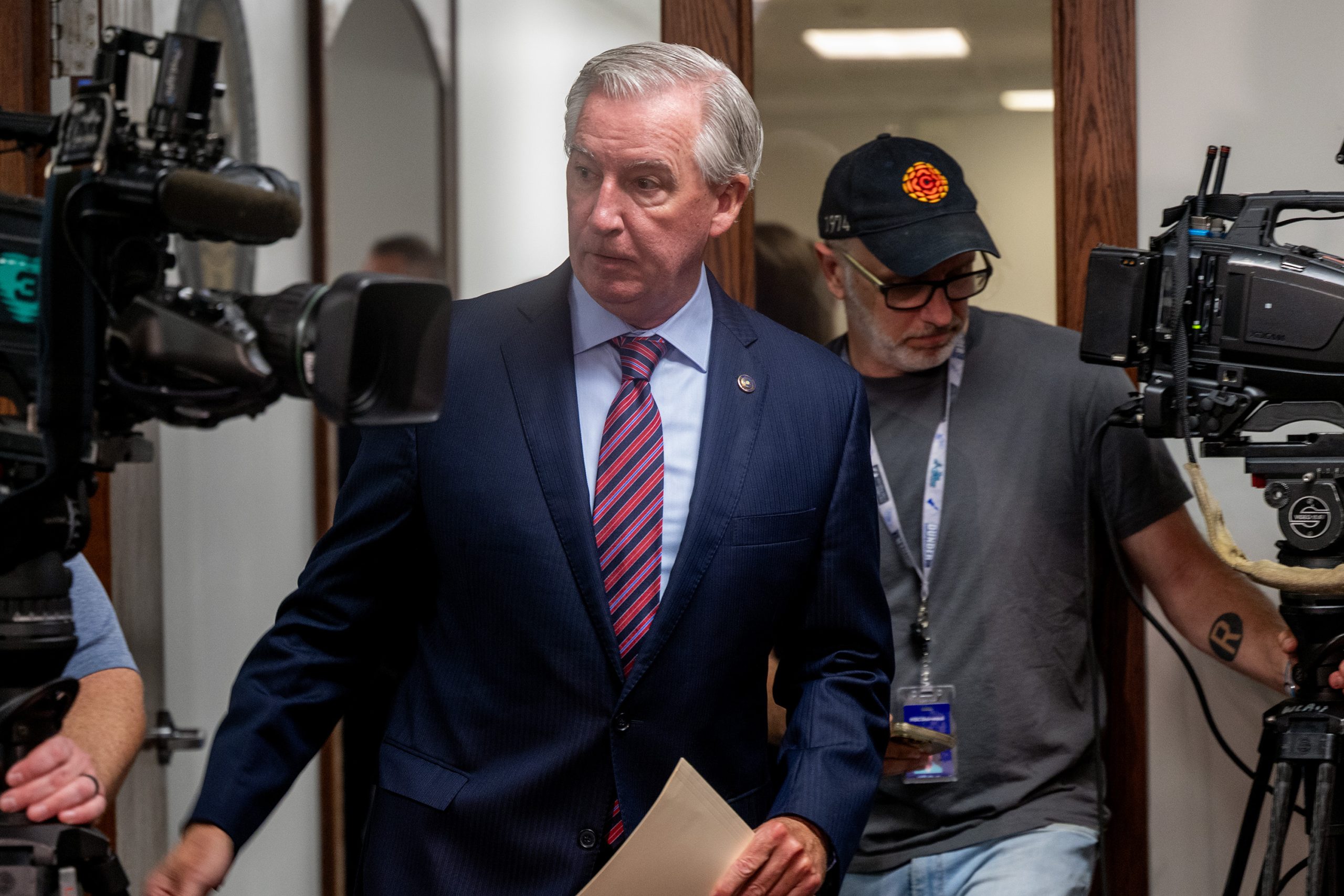
Montgomery County District Attorney Kevin Steele arrives at a press conference Wednesday to announce multiple charges in connection with two assaults in a Cheltenham High School locker room.Tom Gralish / Staff Photographer
In addition to recommending criminal charges against the players and coaches involved in the case, the grand jury filed a separate report calling for a change in state law that would require teachers and coaches to report incidents of hazing as a form of child abuse.
“While the school district claims to ‘protect and prioritize safety and well being,’ their actions in this case say otherwise,” the grand jury report said. “The administration carried out three school-led investigations that were so flawed they failed to even identify that two separate instances of hazing occurred in the locker room.”
News researcher Ryan W. Briggs contributed to this article.