Tag: topic-link-auto

  • Irish singer Glen Hansard was working on an album in Philadelphia before his death

    Irish singer Glen Hansard was working on an album in Philadelphia before his death

    Glen Hansard, the Irish singer-songwriter who fronted the Frames and won a best song Oscar for “Failing Slowly” from the 2007 film Once, is being mourned worldwide after his death at 56 in a motorcycle crash in Dublin this week.

    Bruce Springsteen paid tribute, saying Hansard was “always nothing but a great musician, a good friend and a generous and gracious man.” Ed Sheeran called him “an incredible human, an incredible force.” U2’s Bono said he was “a choir of angels in one man.”

    Hansard’s loss is being felt particularly keenly in Philadelphia where he established deep connections in the music community in recent years.

    Beginning in 2025, and continuing this past winter, Hansard spent weeks working on an album with producer Charlie Hall of the War on Drugs.

    The sessions, which included Philly musicians, such as guitarist Kevin Hanson, pianist Luke Carlos O’Reilly, and drummer Nazir Ebo, as well as Drugs bassist Dave Hartley and Wilco guitarist Nels Cline, were held at Elm Street Studios in Conshohocken, which is owned by Rob Hyman of the Hooters.

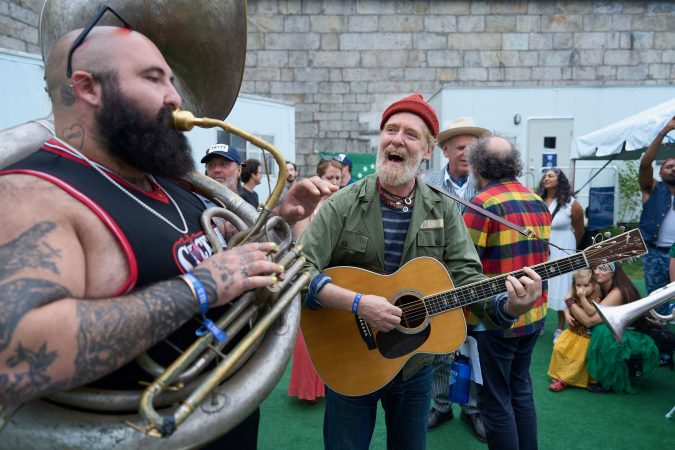
    Last year, after meeting the Philly band Snacktime at the Newport Folk Festival, Hansard invited the group to join him days later at the Met Philly for a few songs. He insisted they stay onstage for the entire show, during which he wore a Snacktime faux Sixers jersey.

    Hansard’s Philadelphia story included a gig at the Non-Commvention in 2015 when the singer, who began his career as a busker on the streets of Dublin, played World Cafe Live accompanied by two young violinists he saw playing for tips on Walnut Street.

    He opened for Pearl Jam at the Wells Fargo Center in South Philly in 2024. His final performance in the city was in March in the upstairs Sanctuary at the First Unitarian Church.

    “Unforgettable gig all around,” said promotor Jeffrey Ziga of R5 Productions. “The church show was supposed to be a small and intimate thing before that new record came out and he was going to come back around. It’s so sad.”
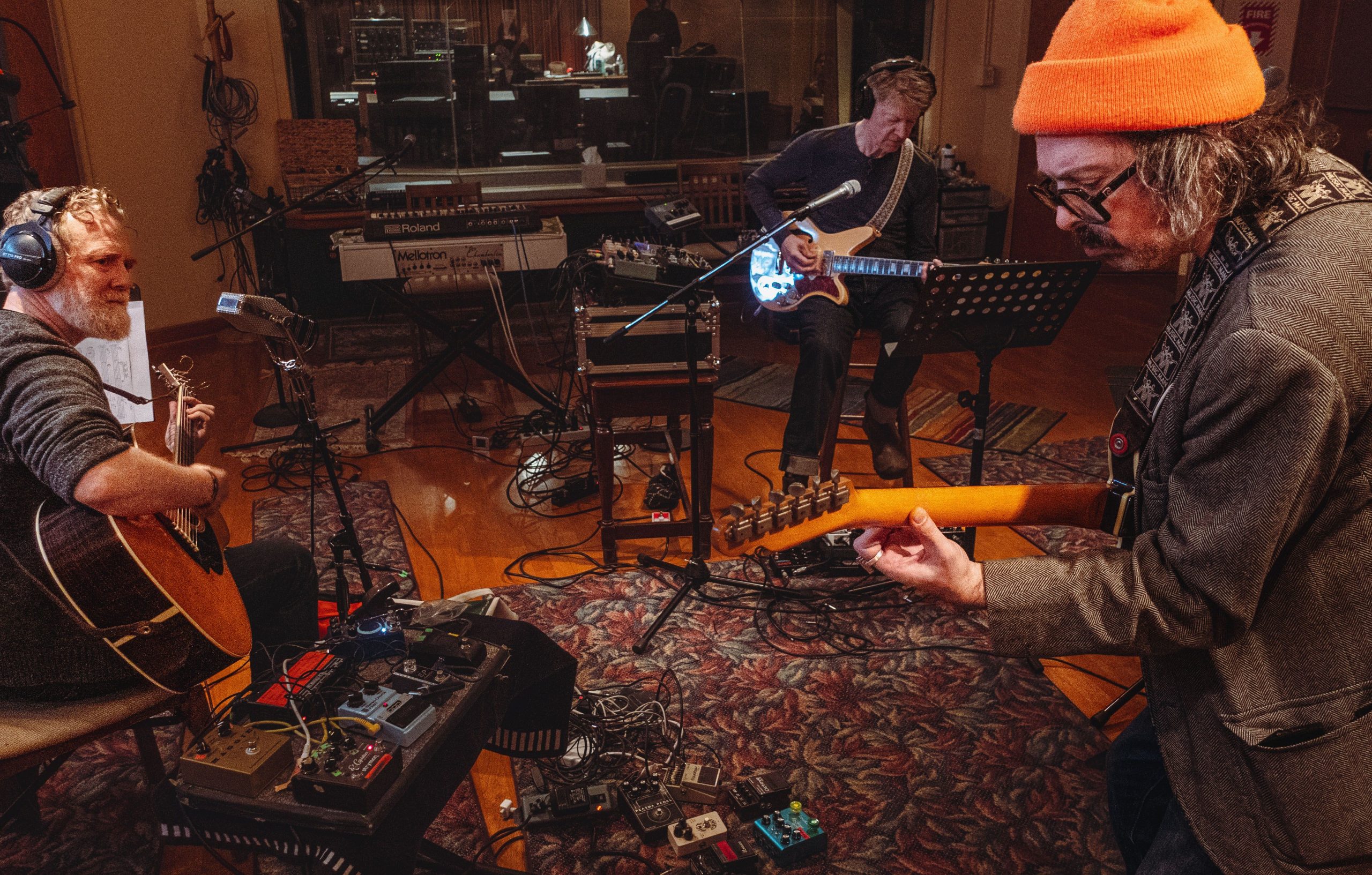
    From left: Glen Hansard, Nels Cline, and Charlie Hall at Elm Street Studios in Conshohocken in January. Irish singer-songwriter Hansard, who died Jul 29 in a motorcycle crash in Dublin, was working on an album of new music produced by Hall, who plays drums in the War on Drugs and produced the Philly Specials holiday albums.James Farrell

    Hall and Hansard met in 2023, when the War on Drugs played Eddie Vedder’s Ohana Festival in California.

    “Glen came into my life like a tsunami of love and affection,” Hall said of Hansard, who was raised in the household of an alcoholic father and left home as a teenager to sing on the streets.

    “My dad was quiet, angry, shut down,” Hansard told the New York Times in 2012, “so my thing is: I express everything that’s there. I want to get it all out.”

    “We were just instantly friends,” Hall said. “He just led with total honesty and put himself out there. He was the most compassionate person I’ve ever known. He was just always concerned with those without.”

    Hansard came to see Hall play a Los Angeles show in support of his solo album Invisible Ink, and later suggested they work on a record together.

    “He said, ‘We can go anywhere you want,’” recalled Hall, who spoke on the phone while sitting on the stoop of the St. Albans Street house in the Devil’s Pocket neighborhood where Hansard would stay while in town.

    “And I was like, ‘Come to Philly. It’s beautiful here, and you’re gonna love it.’ I just surrounded him with all my favorite people. And I knew instantly that what we were doing was special.”

    Hansard first came to Elm Street to work with Hall and his crew in March 2025 and then again in January this year.

    “He was here for that biblical snowstorm,” said Hall, and Hansard had never shoveled snow before. “He just took a shovel and was shoveling everybody’s stoops on St. Albans Street. It was just, ‘Oh my God, this is too funny.’”
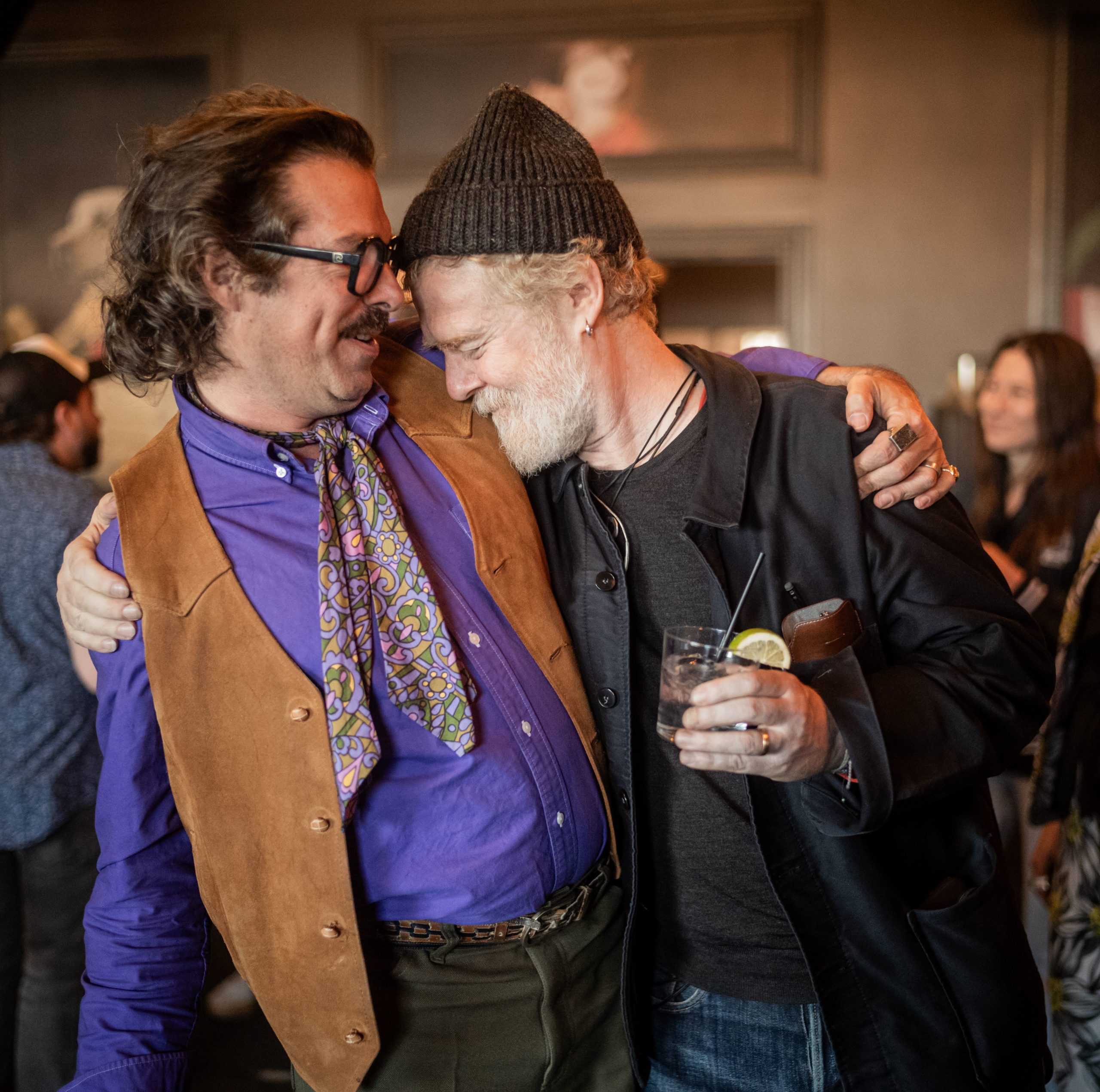
    Philadelphia music producer and the War on Drugs drummer Charlie Hall (left) and Irish singer-songwriter Glen Hansard in Asbury Park in April. Hansard, 56, died on in a motorcycle accident in Dublin on July 29.Danny Clinch

    Hyman didn’t play on the sessions at Elm Street, where much of the Eagles Philly Specials holiday music that Hall produced was made.

    “I was like a fly on the wall,” Hyman said. “Glen came out, and Charlie brought in a bunch of musicians to experiment and jam.”

    Hansard, who this year released the career-spanning Don’t Settle collections, Transmissions East, Vol. 1 and Transmissions West, Vol. 2, had an abundance of creative ideas, Hyman said.

    “Glen was constantly writing and had a bag full of notes and songs. He’s just one of those guys who made everybody feel super important and interesting, and he himself was just nonstop storytelling. He had met everyone and done it all but was just very down to earth.

    “A rugged guy but with a very sweet and friendly side. I’m just reading these tributes and everybody is saying these same things about him, and they’re all true. It’s the same guy we got to know and love.”

    Cline, who has his own long history with Philadelphia, came to Conshohocken to work with Hansard. “What a marvelous experience it was,” he said in a Facebook post. “I’m pretty sure everyone who came into contact with this man felt his warmth, passion and massive talent. I sure did.”

    For Hansard, who is survived by his wife, Maire Saaritsa, and their son, Christy, 3, the holy trinity of songwriters was Bob Dylan, Leonard Cohen, and Van Morrison. His priceless pinch-me story about being invited to Morrison’s 50th birthday party is easily found on the internet.

    Snacktime first met Hansard when its members were hanging around backstage at the Newport Folk Festival in July 2025.

    “We all had our horns out,” said sousaphonist Sam Gellerstein. “And Glen walked by and asked us if we knew Van Morrison’s ‘Into The Mystic.’”

    They did.

    Markéta Irglová and Glen Hansard appear after performing during the 80th Academy Awards in Los Angeles on Feb. 24, 2008. Mark J. Terrill

    “We hopped up with him. It went super well. So then he was like, ‘Hey, I’m playing Philly, let’s do it again. Here’s a handful of songs.’

    “And then he started sending me more and more. Basically after the set was over, we had improvised an entire set of music. We were making up arrangements as we went along. It was magical. You don’t often meet people in this industry that are so beautiful and generous and genuine.”

    The music that Hansard made at Elm Street is essentially finished, Hall said, though when he spoke to the singer last weekend, Hansard was eager to return to do more recording.

    “He loved it here,” said Hall. “I mean, he wanted to call [the album] Philadelphia, first of all. I don’t know if that’s what it will be. But that’s what he always called it.”

    The album, which also includes vocal contributions recorded remotely from k.d. lang, Sharon Van Etten, and Rachel Goswell of Slowdive, “is devotional music,” Hall said. “It’s soulful and burning with a sort of quiet fire.”

    It’s not clear when it will be released, but “it’s beautiful and I hope his fans get to hear it because he worked really hard on it.”

    Hall is heartbroken at the loss of a friend and musical partner.

    “But it’s everybody’s loss,” he said. “The thing about Glen is that he made everybody he came in contact with feel heard. So that connection that I feel with him is not unique. He made everybody feel that way.”

    Glen Hansard’s funeral will be held at St. Patrick’s Cathedral in Dublin, Ireland, on Tuesday, Aug. 4, at 1:30 p.m. That’s 8:30 a.m. Philadelphia time. It will be livestreamed at RIP.IE.
  • A Delco judge is weighing the fate of a firefighter accused of making racist threats

    A Delco judge is weighing the fate of a firefighter accused of making racist threats

    The fate of an assistant Delaware County fire chief accused of hurling racist threats at a woman during a tense confrontation in 2024 is now in the hands of a judge.

    John Romano, 48, was charged with ethnic intimidation, terroristic threats, and related crimes after a woman, who is Black, told police he called her the N-word, along with another racial epithet, while she was stopped in traffic because Romano’s forklift was blocking traffic on Hook Road in Darby Township in November 2024.

    Romano, of Secane, served as the assistant fire chief at the Sharon Hill Fire Company, an all-volunteer station, but was suspended by borough officials after his arrest, pending the outcome of his trial.

    During Romano’s one-day bench trial Wednesday before Judge Margaret J. Amoroso, the woman testified that a line of cars, whose drivers started honking out of frustration, had lined up behind hers. The road was blocked, she said, because Romano was using the forklift to load Christmas trees at J&P Fencing, a business he co-founded.

    After the car in front of hers squeezed through a small gap near the forklift, the woman said, Romano got out of the forklift, “rushed” to the passenger-side window of her car and demanded to know why she was honking at him.

    From the outset, she said, Romano was “on full-blast rage.”

    He called her the N-word, as well as another slur, she said, and took a picture of her license plate, telling her he would “take care” of her at her home. When she said she was calling the police, Romano told her to do so, saying he knew the county sheriff.

    “I really couldn’t believe this was happening in the year that we were in,” she said.

    Body-camera footage played in court showed Romano initially admitted to the responding Darby Township officers that he called the woman the N-word, but, minutes later, walked back the statement.

    He also told the officers that the woman is “a wild animal, and I’m tired of dealing with them,” the footage showed.

    That comment, said Assistant District Attorney Shuaiyb Newton, demonstrated Romano’s mindset and proved his guilt.

    “It’s clear beyond all doubt that a threat was made from a man to a woman that he would find her and take care of her, a man who was upset, a man who was screaming, and a man who hates her,” Newton said. “And it’s clear the hatred he had for this stranger was based on nothing more than what she looked like.”

    Romano’s attorney, Chris Boggs, disputed that. He said the confrontation was “more akin to a road-rage incident,” and was not a case of ethnic intimidation.

    Romano, upset at the car horns honking, would have said “awful things to anyone in that circumstance,” he said. Because the driver was Black, Boggs said, he used the racial epithet.

    But Boggs said Romano did not threaten violence.

    “If this was something more than transitionary anger, something that happens in the moment … he’s going to be using specific threats of violence,” the lawyer said.

    Amoroso is expected to deliver her verdict in the case on Aug. 31.

  • Philly developer Post Brothers faces contractor lawsuits and a union campaign

    Philly developer Post Brothers faces contractor lawsuits and a union campaign

    More than a dozen Philadelphia-area contractors have sued apartment developer Post Brothers, alleging the company failed to fully pay for all the work they did.

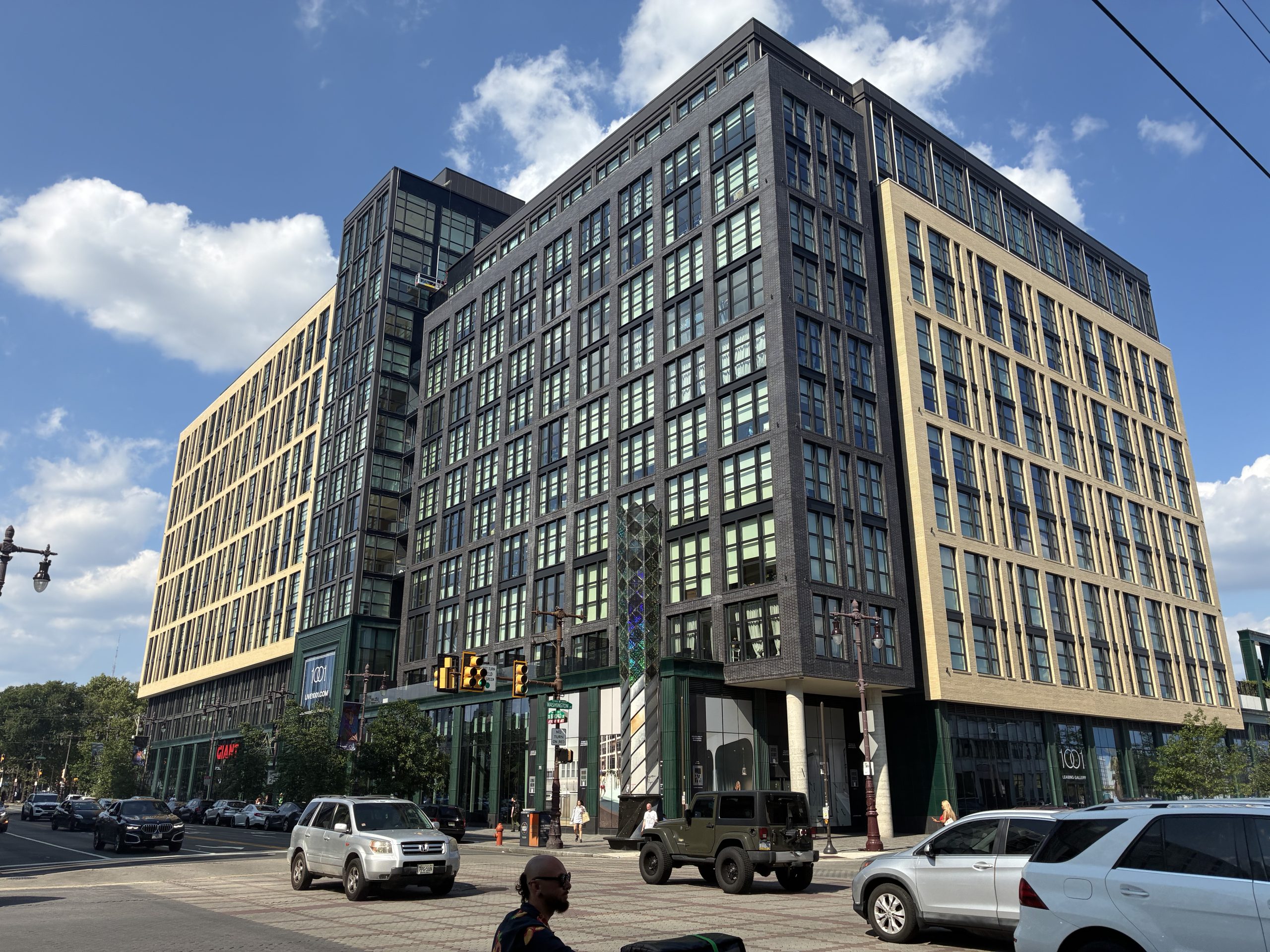
    In state and federal courts, the building and professional-services contractors, most of them affiliated with the city’s carpenters union, allege Post Brothers owes more than $9 million for work at the 630-unit One Thousand One apartment complex at Broad Street and Washington Avenue in South Philadelphia.

    “The Post Brothers want to take a Donald Trump business model where they don’t want to pay their contractors,” said James Hocker, assistant executive secretary-treasurer of the Eastern Atlantic States Regional Council of Carpenters.

    One of the contractors, Healy Long & Jevin, a concrete construction company based in Wilmington, alleges the Post Brothers mismanaged the project at Broad and Washington and should pay an additional $14 million.

    Post Brothers alleges it’s Healy that should pay them a larger sum — for poor performance. Healy’s lawyers did not respond to a request for comment.

    Doylestown-based Apollo Contractors and other smaller contractors filed the next-largest claim, for $5.8 million.

    According to Apollo’s complaint, the developer “doesn’t have adequate funds because the owners” used company funds “for their own personal benefit and expenses.” Healy has made similar claims.

    Post Brothers in court papers called the union contractors’ lawsuits “without merit.” The development company argues that the conflict is about who should bear the costs of inflation.

    “Subcontractors who agreed to a price in 2022 experienced 30% inflation probably throughout the course of the project,” which is wrapping up this year, said Michael Pestronk, CEO of the Post Brothers, who runs the company with his brother Matthew.

    But “the way that contracts work, our financing works, we pay lump sums for agreed scopes of work,” Pestronk said. “It’s up to the subcontractors to fix their costs and allow for that.”

    He also says the fraud allegations are baseless and just an example of contractors “throwing [stuff] at the wall” to see what sticks.

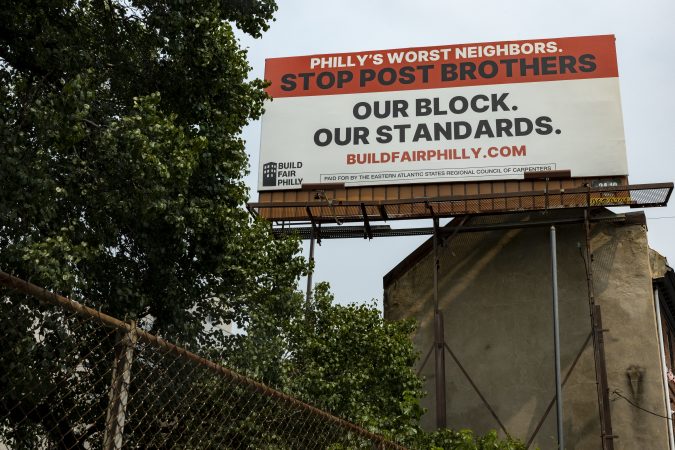
    The carpenters have launched a pressure campaign against Post Brothers, including nine billboards denouncing the company along Philadelphia’s highways. They say contractors at the Broad and Washington site had to pay union members and contribute to health and pension funds, despite not being fully remunerated.

    “That’s why they’re fighting hard to get what is owed to them because they have a lot of money on the street, and it’s jeopardizing their business,” Hocker said. “But they made their employees whole.”

    Post Brothers has made a counterclaim against Healy, accusing the concrete contractor of “false billing” and other violations. A judge rejected a motion from union-aligned Healy to dismiss the developer’s counterclaim.

    Pestronk says the legal saga is a manifestation of high interest rates and inflation in the construction market. Multifamily residential construction outside the city’s wealthiest neighborhoods has slowed dramatically. Office construction has ceased, and industrial sites do not require as many building trades.

    “Subcontractors and general contractors are feeling much more hungry today than two years ago,” Pestronk said. “Their pipelines are totally dry.”

    The Post Brothers development at Broad Street and Washington Avenue, which is at the heart of the conflict with the carpenters union.Jake Blumgart

    What’s in dispute

    One of the largest dollar-value claims against Post Brothers is a joint demand for $5.8 million from a group of businesses, led by Apollo Contractors, a carpentry, drywall, and finishing firm, and Fluid Works, a plumbing contractor, based at the same Doylestown address.

    Apollo and Fluid are owned by members of the Sharpan family, who are also partners with the Pestronks in another business, Mega Supply in Bensalem. The Sharpans are separately suing the Pestronks over money they say the Pestronks owe Mega Supply.

    The Apollo-Fluid Works complaint, filed in Philadelphia Common Pleas Court last August, was the first to include fraud allegations.

    Apollo says that the Pestronks paid Apollo to improve “their respective private residences” even as they owed millions to the contractors for work in Philadelphia, according to Apollo’s complaint. Attached to the suit are invoices for more than $200,000 worth of carpentry, painting, tile and drywall work that Post Brothers paid Apollo to perform at Michael Pestronk’s Eagle Farm in Villanova in 2021 and 2022.

    The groundbreaking for the Broad and Washington project was in December 2021.

    The Apollo complaint alleges that Post Brothers knew they didn’t have enough money to pay for the work but didn’t tell the contractors until the work was done.

    Early in July, Healy amended its federal complaint, pending before Judge Michael Baylson, to add similar claims. The Post Brothers denies those allegations and says the contractors have not offered detailed support for the allegations.

    “They are preposterous,” Pestronk said.

    Healy also demanded Post pay an additional $14 million for “mismanagement” at the Broad and Washington site that made the work difficult to complete and unprofitable. Post filed a counterclaim blaming Healy for “defective performance” that cost the developer $17 million. Each has asked the judge to dismiss the other’s allegations beyond the original complaint.

    Other lawsuits asked sums well under $1 million. Some have been in settlement talks; others are slated for trial.

    Post Brothers’ history with unions

    In addition to the nine billboards condemning the Post Brothers, the carpenters union has an electronic messaging truck attacking the company rolling around the city.

    The carpenters union’s electronic messaging truck outside City Hall, denouncing the Post Brothers.Eastern Atlantic States Regional Council of Carpenters

    The clash is the latest conflict between building trades unions and the company, which has always used an “open shop” mix of union-and-unorganized workers on their job sites.

    In 2012, the Pestronks sought to redevelop a former textile mill at 12th and Wood Streets into a 164-unit apartment complex called the Goldtex building, using an open shop model.

    The Philadelphia Building Trades Council, an umbrella group that covers many of the construction unions, fought for 100% union representation on the site.

    Union workers blocked access to the site — sometimes bringing construction to a standstill — and the Philadelphia sheriff’s office had to enforce a court order that protests stay back from the building. Violent tactics by protesters were caught on video.

    Relationships between the Post Brothers and the building trades have never been that contentious since, although they’ve never been tension-free either. The company still uses a mix of organized and nonunion labor.

    “We worked very hard to develop a relationship with Post Brothers over the last 10 to 15 years,” said Hocker of the Eastern Atlantic States Regional Council of Carpenters. “There was some bad blood [but] … we were able to secure some work on some of the Post Brothers’ work, specifically around concrete.”

    According to both the carpenters and the Post Brothers, the project at Broad and Washington employed greater numbers of union workers than some of their other major projects recently, such as Piazza Alta in Northern Liberties.

    “We were trying to play nice with the unions, and we made a commitment to hire these contractors at frankly greater expense than we otherwise would have incurred to try to foster relationships,” Michael Pestronk said. “And it turned out not to have gone well.”

    Besides the billboards and messaging truck, there have been periodic pickets at Broad and Washington, but according to Pestronk, nothing remotely comparable to the protests over the Goldtex building years ago.

    The carpenters are not a part of the Philadelphia Building Trades Council or the Philadelphia AFL-CIO. Other unions have not joined the campaign against Post Brothers, although the carpenters say they have invited them to partake.

    The union also has released a larger campaign, Build Fair Philly, meant to highlight what they consider unscrupulous development in the city. The billboards critical of Post Brothers bear the larger effort’s emblem. They also are trying to build alliances with neighborhood groups.

    “Post’s practices ultimately affect the whole market, and we welcome anyone who wants to be part of holding developers accountable,” Hocker said.

    Pestronk shrugs off the conflict. He notes that the Post Brothers continue to build in Philadelphia and says the current conflict does not compare to his company’s earlier struggles with the trades.

    “When that was going on, that was something I spent a lot of time thinking about and figuring out what to do every day,” Pestronk said. “This is less than 1% of that. These are just some [nonsense] lawsuits that just go on in the normal course of business.”

  • Inside the scramble to save Philadelphia’s only free sexual assault exam center

    Inside the scramble to save Philadelphia’s only free sexual assault exam center

    Philadelphia’s only free sexual assault exam center was so strapped for funding last spring that Drexel University, its former operator, started drafting a closure announcement.

    The school was facing financial strain of its own, and state funding to rape crisis nonprofits was tied up amid a prolonged budget impasse in Harrisburg. Emergency funding from the city was tangled in City Hall’s lengthy contracting process.

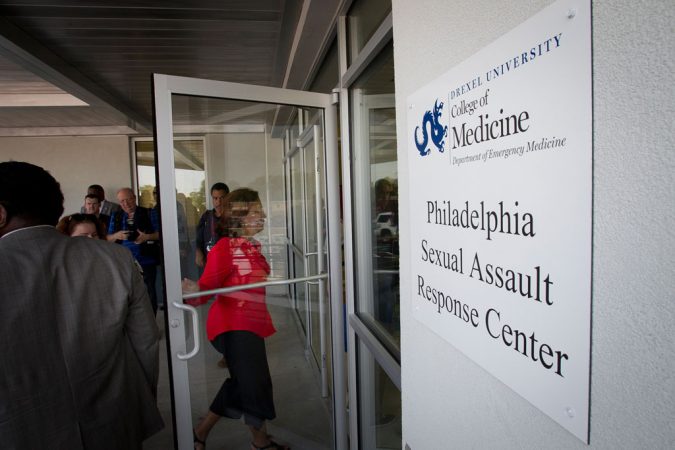
    At the time, there was no plan for who would run the Philadelphia Sexual Assault Response Center (PSARC), where roughly 300 rape survivors a year go for the sexual assault exams used to collect forensic evidence that are commonly known as “rape kits,” which often play a key role in prosecuting assaults.

    Fast-forward to this month, when Mayor Cherelle L. Parker’s administration announced the city’s public health department will assume all control of PSARC. Officials presented the news as the culmination of a careful, collaborative handoff, and one city staffer framed the transition in a news release as “seamless.”

    But hundreds of emails obtained by The Inquirer through a right-to-know request and a review of public records tell a far messier story. The emails show that for more than a year the fate of PSARC lurched from one near-miss to the next and that a failed bid process forced the city to take over the center’s operations when no one else would.

    Taken together, the records offer a granular view of how a critical piece of the city’s safety net for sexual assault survivors nearly broke. And they portray a chaotic process in which the city for months sought to transfer control of the center from Drexel to the nonprofit WOAR Philadelphia Center Against Sexual Violence, even as WOAR faced its own budgetary implosion.

    Over the course of the last year, the exam center never shut its doors to patients. But it came close on several occasions, a collapse that would have had ripple effects in hospital emergency rooms across the region that typically route sexual assault patients to the center.

    If PSARC suspended operations, hospitals would have to find specially trained staff — of which there are few — to perform the exams.

    “Philadelphia emergency rooms were not ready for that,” said Lila Slovak, director of the Philadelphia office of the Women’s Law Project, who spent months warning city officials that PSARC was in danger. “They did not know that [the center] was at risk of closing. It was not on anybody’s radar.”

    Crystal Yates-Gale, the city’s deputy managing director for health and human services, said in a statement that the final outcome — the city running the center — is ultimately what is best for sexual assault survivors.

    “We are proud to have secured the continuity of vital services for victims of crime in a dignified, victim-centered, culturally-competent atmosphere in Philadelphia,” she said.

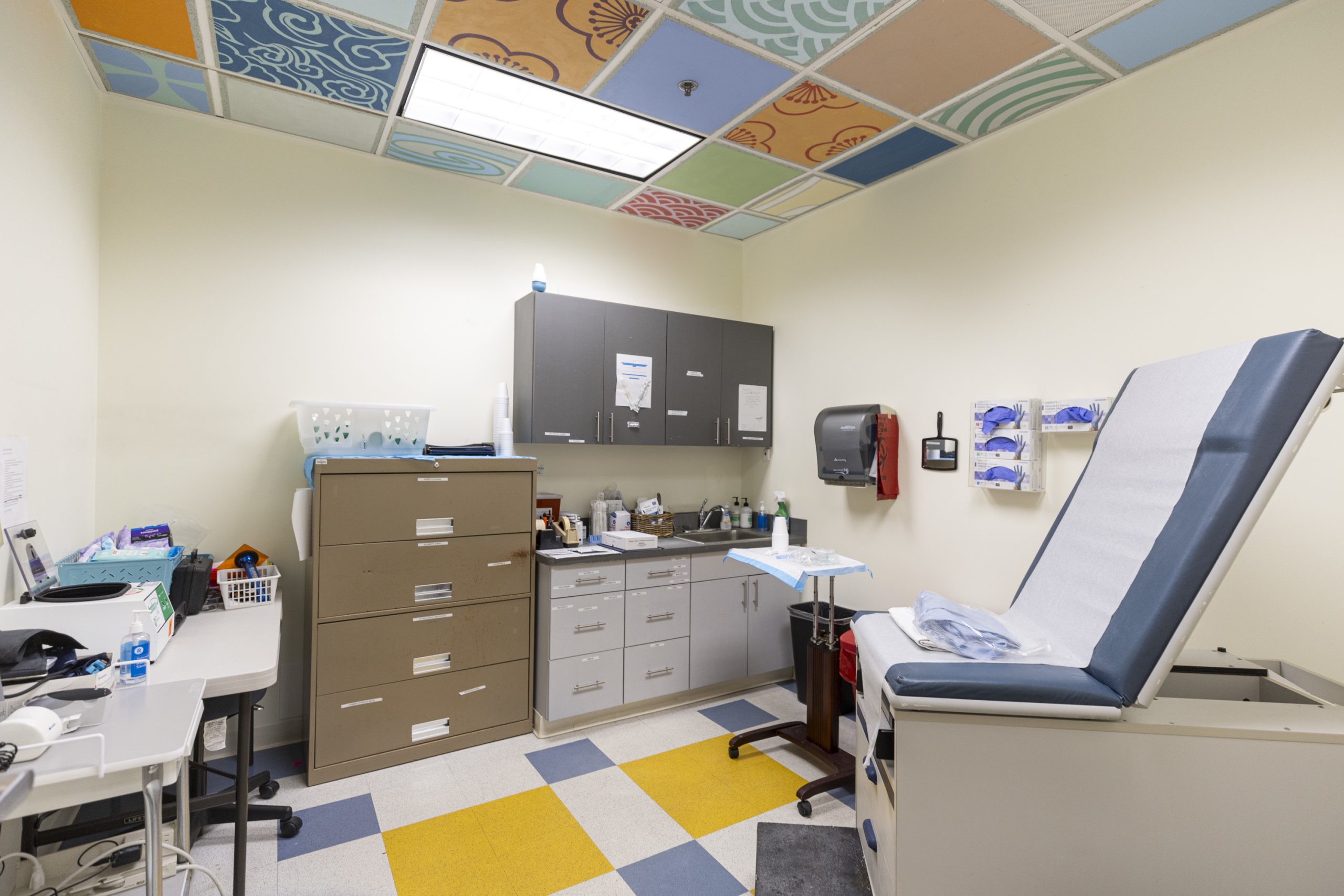
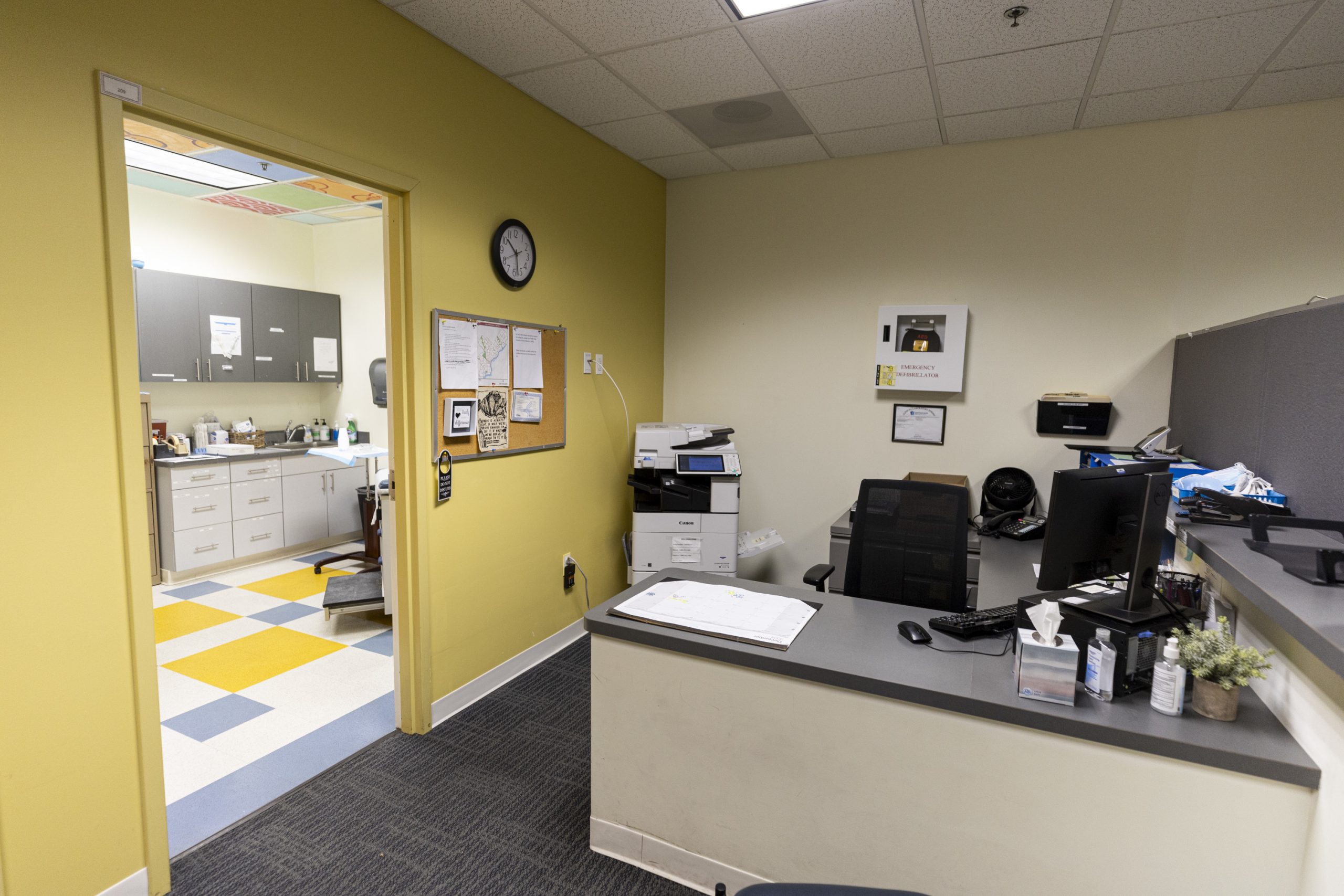
    The exam room at the Philadelphia Sexual Assault Response Center, in Philadelphia, Pa., on Friday Dec. 6, 2024.Tyger Williams / Staff Photographer

    LaQuisha Anthony, WOAR’s executive director, said in a statement that the organization was hamstrung by last year’s monthslong state budget impasse that froze much of its funding.

    She said WOAR was transparent with the city about its financial position.

    “Like most Commonwealth-funded providers, we planned on the assumption that funding would resume,” Anthony said. “The impasse instead ran 135 days. By the time it ended, we had drawn down our reserves.”

    A lifeline center on a shoestring budget

    PSARC, located at 300 E. Hunting Park Ave. in North Philadelphia, has two full-time staff members and a network of about 15 contracted nurses trained to perform sexual assault forensic exams, provided free under Pennsylvania law. The procedures are intended to gather physical evidence, such as DNA left behind by an assailant, and to document injuries that may aid investigators in a future criminal investigation.

    Many hospitals lack the specialized staff required to perform sexual assault forensic exams, so they refer patients to PSARC or work with PSARC to have a trained nurse dispatched to the hospital.

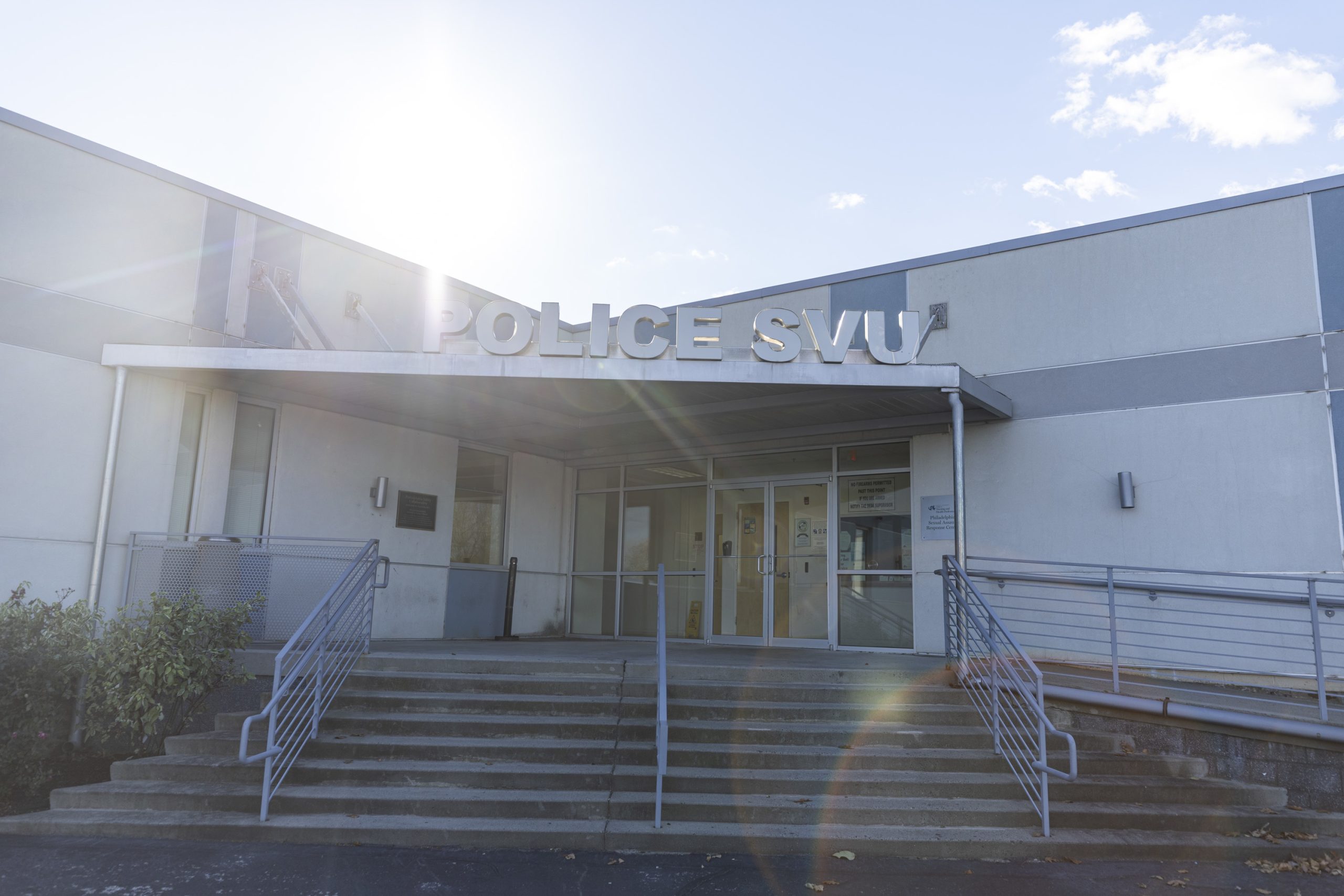
    The center is located next to the Philadelphia Police Special Victims Unit, but patients are not required to report the assault to law enforcement in order to have the free exam performed.

    The Police SVU where the Philadelphia Sexual Assault Response Center, in Philadelphia, Pa., on Friday Dec. 6, 2024.Tyger Williams / Staff Photographer

    Founded in 2011 and initially operated by the now-shuttered Hahnemann University Hospital, PSARC has been run since 2019 by Drexel University’s College of Nursing and Health Professions. For most of that time, the operation ran on a shoestring budget.

    Until last year, PSARC received no dedicated city funding. The state reimbursed Drexel about $1,000 for each patient treated, with Drexel absorbing substantial losses, according to records. The exam reimbursements can take months to flow from the state.

    Brian Keech, then Drexel’s senior vice president for government relations, shared a financial analysis with city officials last year that laid out an annual shortfall averaging more than $175,000.

    As Drexel cut staff and benefits across the university last year amid declining enrollment and a $63 million annual operating loss, its leaders told the Parker administration that the school could no longer manage PSARC on its own.

    In a series of emails last spring, Keech pressed the city for a funding commitment for the center and warned that, without one, the university would have to tell hospitals to stop referring patients for sexual assault exams.

    “We’ve begun to prepare the closure announcement,” Keech wrote in a May 20, 2025, email to Adam Geer, the city’s chief public safety director. “Obviously we’re hopeful we can avoid this scenario, but we do have to adequately prepare area hospitals that they will have to begin providing sexual assault services come July 1 if PSARC closes.”

    By early June, the city had found the money.

    The scramble to save PSARC

    Yates-Gale, the city’s deputy managing director, said in a June 2025 email to Drexel officials that the administration had identified $250,000 in emergency funding to keep the center running.

    The plan was for WOAR — the nonprofit formerly known as Women Organized Against Rape — to operate PSARC. The city would support its efforts by routing those funds to WOAR through an existing health department contract.

    Through the summer of 2025, the money was tangled in the city’s often lengthy contracting process.

    Meanwhile, WOAR was itself under severe financial strain amid the state budget impasse that left community organizations across Pennsylvania unfunded. WOAR’s leaders told city officials that they could not make payroll without the check from the city.

    PSARC was left in limbo. The handoff deadline from Drexel to WOAR was moved from Aug. 1 to Sept. 1, with Drexel agreeing to cover an extra month of payroll to bridge the gap. Then, on Aug. 28 — three days before the already delayed transfer — WOAR’s board chair, Joanne Strauss, wrote in an email to city officials that the organization “will not be acquiring” PSARC.

    She provided no reason other than saying the organization was “further evaluating the proposed transaction.”

    City officials were alarmed. Within an hour, the city’s victim advocate, Adara Combs, emailed Drexel officials to say she was “deeply troubled” by the sudden shift.

    Two weeks later, WOAR appeared ready to operate the center again. The group’s board of directors voted unanimously to approve the acquisition, and money from the city began flowing to WOAR to operate the rape exam center — more than $80,000 in total.

    Then the plan fell apart again.

    In early October, WOAR announced it would lay off staff and cut programs due to its funding crisis.

    Anthony, of WOAR, said in a statement the board’s approval of the acquisition of the sexual assault center came as the nonprofit thought the state budget impasse would come to an end and was “contingent on conditions related to funding and our ability to responsibly take control of PSARC.”

    “It became clear that those conditions were not resolved,” she said.

    Drexel continued to pay to operate the rape crisis center, and WOAR wired the university the city funding it had received. Drexel operated PSARC, with an additional $167,000 in help from the city, until June 30.

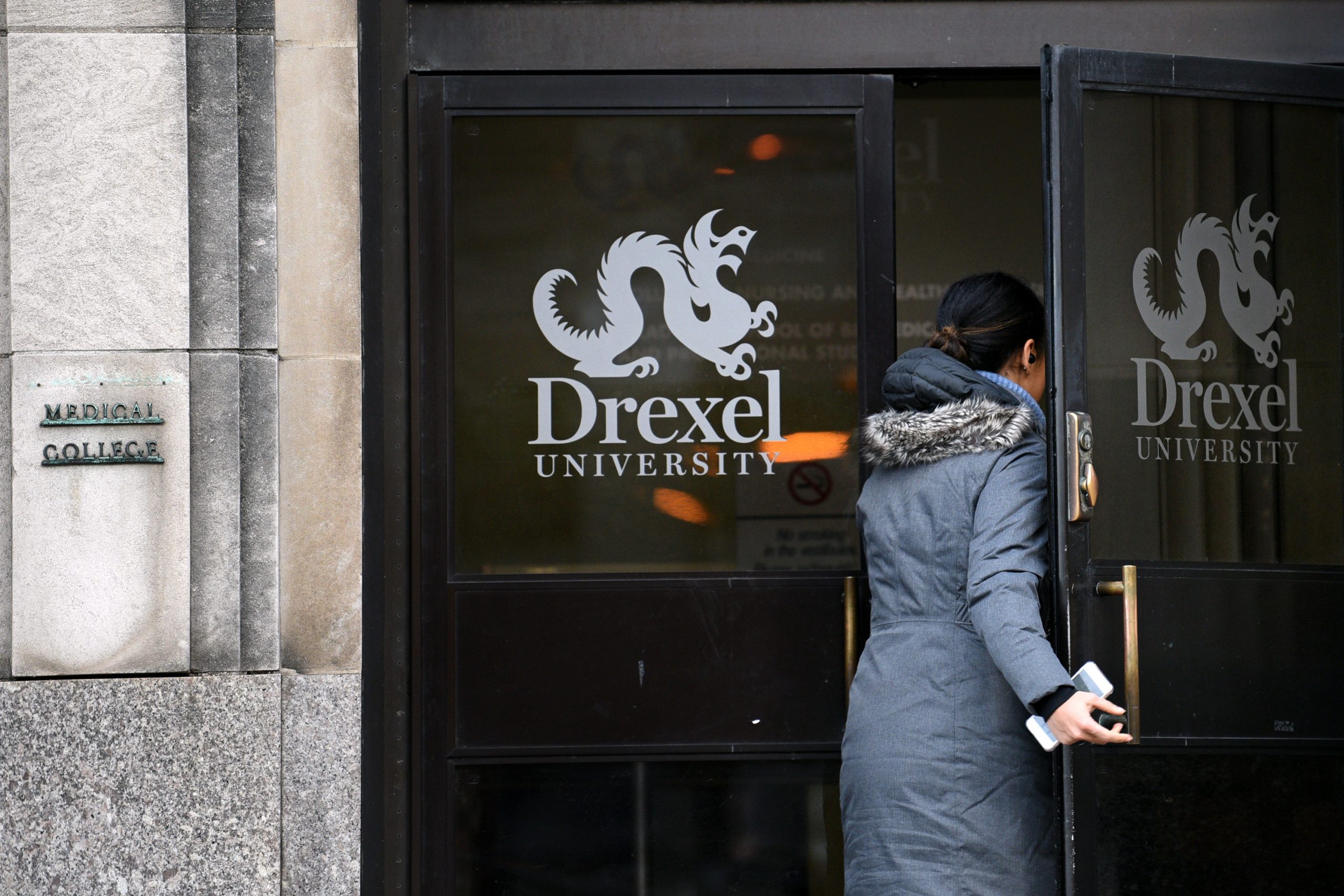
    The 15th Street entrance to Drexel University College of Nursing and Health Professions Feb. 19, 2020. The college has the largest bachelor program in the three-state region.TOM GRALISH / Staff Photographer

    The back-and-forth saga highlighted a central question: Why did the city seek to transfer a critical service to WOAR despite the nonprofit’s existing financial problems?

    Slovak, of the Women’s Law Project, said it made sense that WOAR stepped up to take over the center’s operations, given its mission to treat and prevent sexual violence. It is common in other cities for rape crisis centers to manage forensic exam facilities.

    But overseeing hundreds of sexual assault exams each year, she said, would have been a major expansion of WOAR’s scope because it “is about more than just providing emotional support or accompaniment for survivors.”

    Yates-Gale said WOAR was a natural choice to assume operations of the center. The group had an existing contract with the city and its mission aligned with that of PSARC.

    “Drexel agreed to continue operations until another suitable alternative organization could be identified,” she said, “and the entirety of the funds for the program were transferred back to them.”

    Britt Faulstick, a Drexel University spokesperson, said the school “worked closely with city leadership to ensure a smooth transition.”

    Another failed effort to find an operator

    The city’s $250,000 in emergency funding bought PSARC time. But the same question remained: Who would run it long-term, and where would they find the money?

    This spring, Parker’s budget proposal, which was approved by City Council in June, included $300,000 for the center. The city put the operation out for bid, seeking an outside organization like another hospital or nonprofit to run it.

    City officials met on April 13 with potential operators, including representatives from area hospitals that depend on the center, such as Temple University, the University of Pennsylvania, and Jefferson Einstein Philadelphia. Several expressed concerns about PSARC’s finances.

    According to a public recording of the meeting, multiple attendees suggested that $300,000 a year in city funding would not be enough to cover PSARC’s operations and salaries for medical staff who must be available 24-7.

    The exam room and desk space when patients are in at the Philadelphia Sexual Assault Response Center, in Philadelphia, Pa., on Friday Dec. 6, 2024.Tyger Williams / Staff Photographer

    “This has never been something that’s been profitable, so it’s always needed another source of funds to keep it stable,” one hospital representative said. “It’s the money, right, to keep it open and to be able to run this as a service for the city and keep it maintained so you’re not back in this ‘we don’t have it’ in six months.”

    Combs, the city’s victim advocate, told potential bidders that they were welcome to “reimagine” how PSARC operates and propose new funding streams.

    But hospital representatives remained skeptical and pressed the city to find a different solution, citing a moral urgency.

    “It would be a tremendous tragedy if we lost the resources of PSARC in the city,” said a representative from Jefferson Einstein Philadelphia Hospital.

    “I think we all agree,” said Azucena Ugarte, director of the Philadelphia Office of Domestic Violence Strategies. “That’s why we’re doing this.”

    But following the meeting, no one bid.

    The city takes over

    With no outside bid to operate Philadelphia’s only free rape exam center, the options in front of city officials were either to let it close or to take control themselves.

    The city chose the latter. Parker administration officials framed it as a lasting solution.

    Faulstick, of Drexel, said the school will continue to train nurses in sexual assault examination to help ensure the care is available. He said PSARC is “positioned for continued growth and long-term sustainability.”

    Others have questions about the stabilization plan.

    City Councilmember Nina Ahmad, who represents the city at-large and held a hearing earlier this year about PSARC funding, said that the $300,000 annual allocation to the center is likely inadequate and that she will push for more dollars in future city budgets.

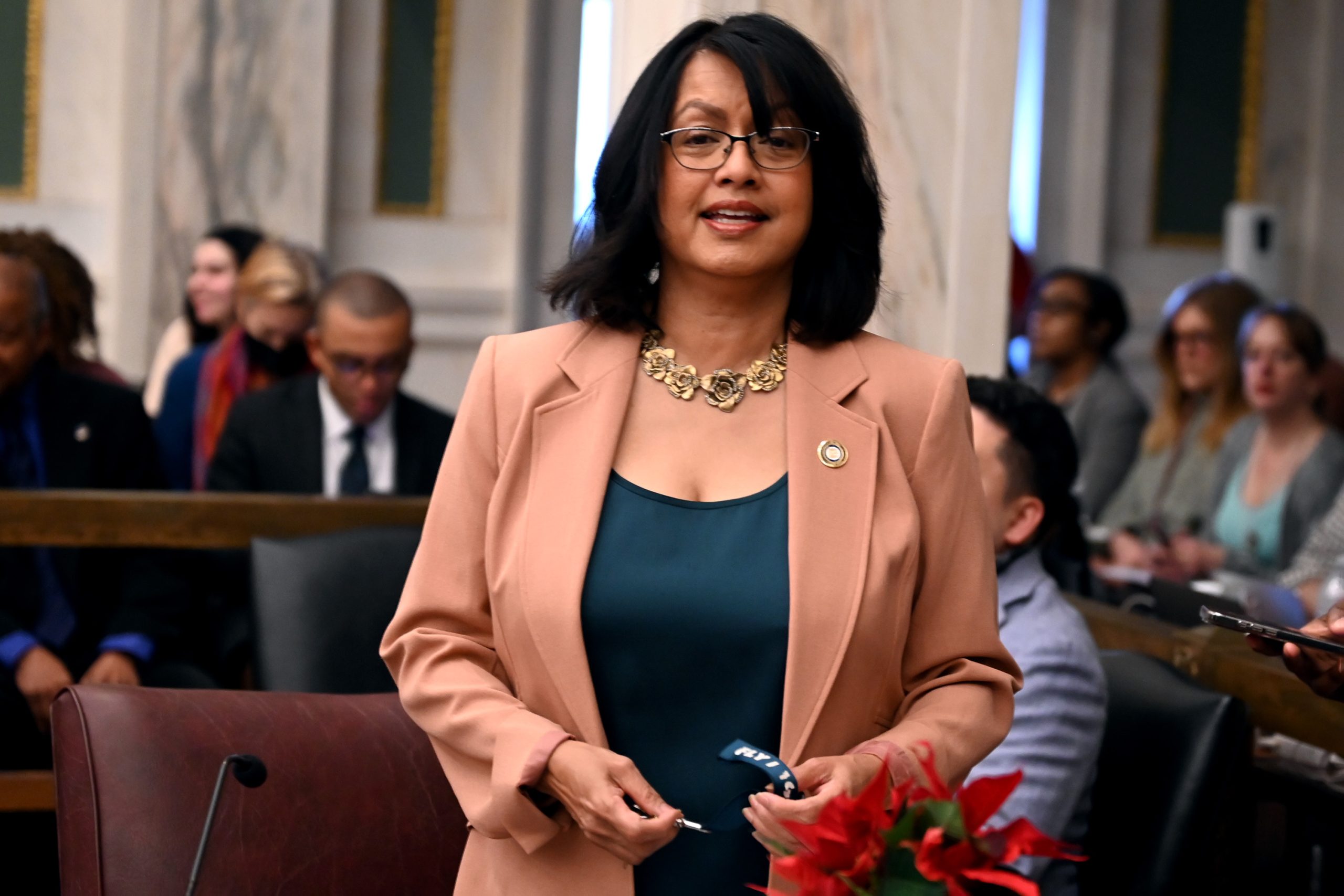
    Councilmember Nina Ahmad in chambers as City Council meets Dec. 11, 2025.Tom Gralish / Staff Photographer

    Ahmad also said she expected more buy-in from hospitals, noting they would have been saddled with the responsibility of providing sexual assault exams if PSARC had shuttered.

    “I am not surprised,” she said in an interview, “but I’m still disgusted that we have not come together on this. … This is evidence being collected, [and] this is how we prevent future rapes.”

    Slovak said ensuring PSARC’s financial survival will take more than a change in management. It will require cooperation, including from hospitals, the city, and the state, to work together “so that survivors aren’t sacrificed in the budget gamesmanship.”

    Still, she said, the city “can really be this positive, central, coordinating force.”

    “And I do feel confident at this point,” Slovak added, that the center “is going to move in a good direction from here.”

  • Phillies recall Andrew Painter before Friday’s game vs. Orioles

    BALTIMORE — Andrew Painter was going to pitch Friday night, one way or another.

    The Phillies decided it was best if he pitched for them.

    And so, six weeks after Painter got demoted to triple A with a 7.06 ERA, the Phillies recalled him to start the series opener against the Orioles and sent righty Brian Keller to Lehigh Valley.

    “Just listening to the pitching people, they felt good about where he was at, confident,” interim manager Don Mattingly said. “And from there, we thought it really gives us the best chance to win a game tonight.”

    With the trade deadline looming at 6 p.m. Monday, the Phillies are still looking to fill multiple needs, according to league sources. Among them: a back-end starter. The Phillies are 5-21 from the fifth-starter spot that originally was occupied by Painter, including 11 losses in a row.

    The Phillies have fanned out their scouts in recent weeks to get looks at various pitchers, including the pending free agents Clay Holmes (Mets), Kevin Gausman (Blue Jays), and Robbie Ray (Giants). One rival evaluator theorized that the Phillies could reduce the prospect return by paying down the remainder of a contract. Gausman and Ray, for instance, are owed roughly $8 million through the end of the season.

    It’s notable, too, that the Tigers and Mets scratched righties Casey Mize and Freddy Peralta, respectively, from scheduled starts Friday night. Both are pending free agents with a profile that would interest the Phillies.

    Painter, untouchable in previous trade talks, began the season in the majors but got demoted in mid-June with a 7.06 ERA in 14 games (12 starts). His bread-and-butter fastball was particularly ineffective, with opponents hitting .404 and slugging .660 against it.

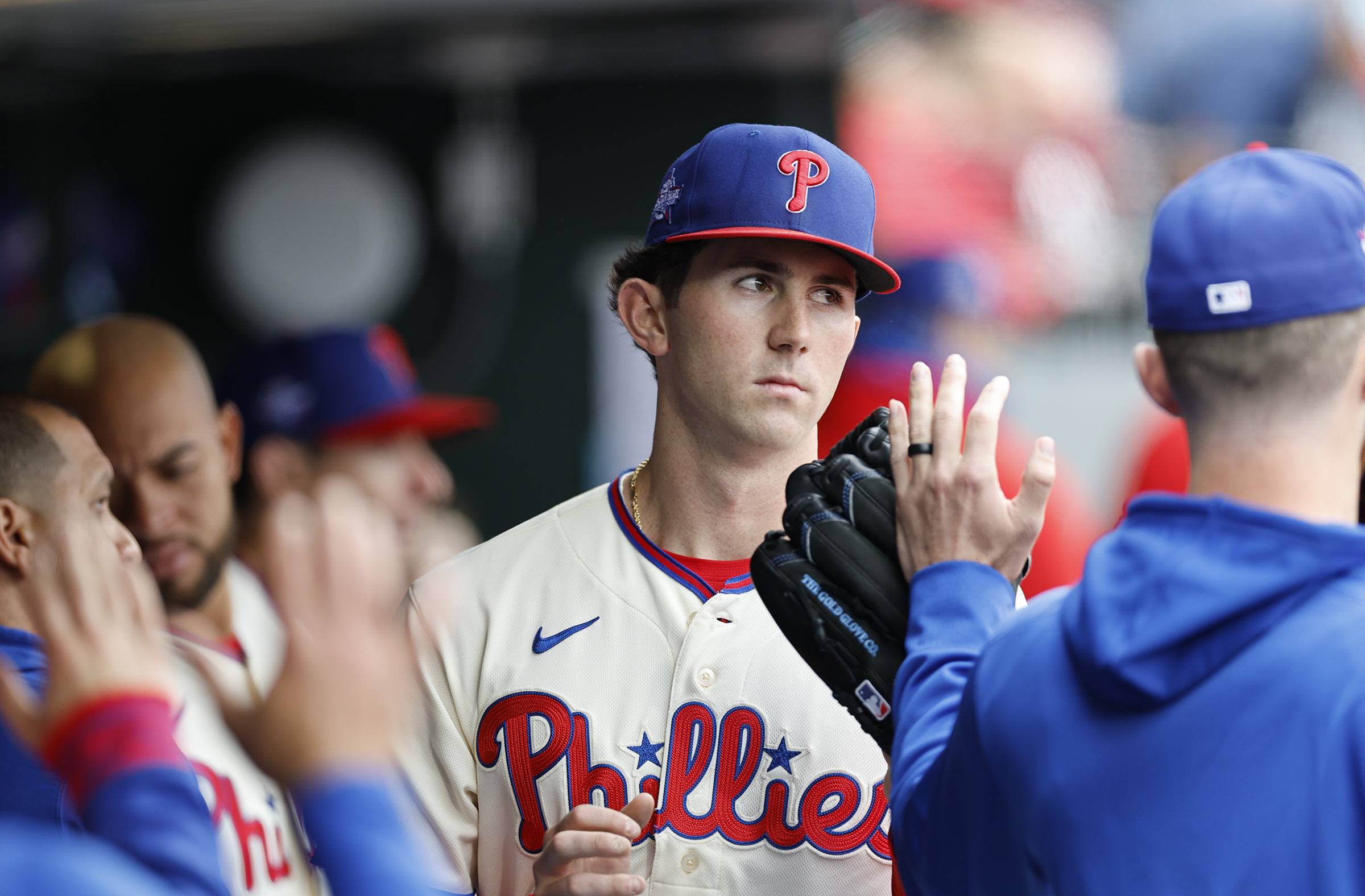
    Andrew Painter got demoted in mid-June with a 7.06 ERA in 14 games (12 starts).Yong Kim / Staff Photographer

    “Most of it is delivery-oriented,” president of baseball operations Dave Dombrowski said at the time. “That’s what it comes down to. Because when he’s done some things with his delivery, which is going more directly to the plate rather than spinning off, he’s had more life. And you see it at times.”

    Painter has a 4.56 ERA in five triple-A starts, though he has allowed two or fewer runs in four starts and completed the sixth inning twice. Last week, he allowed a total of three runs on 12 hits in 11 innings over two starts, including one run in six innings Sunday. The Phillies were particularly encouraged that he walked only one batter, none Sunday.

    “The biggest thing for us has been his command’s been good, confidence has been good,” Mattingly said. “The guys down there felt like that’s the best they’ve seen throw the ball, so it felt like it was time.”

    Painter’s status beyond Friday will presumably hinge on the Phillies’ ability to trade for a veteran starter who could slot in behind Cristopher Sánchez, Zack Wheeler, and Jesús Luzardo and alongside Aaron Nola.

    But Mattingly said the Phillies weren’t viewing Painter’s return as temporary.

    “There’s no talk of like, he pitches today and he’s out tomorrow and we bring a bullpen guy in and we have an extra arm,” Mattingly said. “There wasn’t a whole lot of talk about the future. It was like, ‘This is the best guy for us to win a game today.’”

  • N.J. Democratic delegation asks President Trump to reverse FEMA aid rejection for deadly February snowstorm

    N.J. Democratic delegation asks President Trump to reverse FEMA aid rejection for deadly February snowstorm

    Every Democrat in the New Jersey congressional delegation signed a letter to President Donald Trump asking him to reverse his rejection of disaster aid for a deadly blizzard earlier this year.

    The lawmakers sent the letter, which was first obtained by The Inquirer, to the White House on Friday in support of Gov. Mikie Sherrill’s appeal of the president’s rejection. Their plea comes after Trump denied an $84 million request to the Federal Emergency Management Agency (FEMA) for relief for a late February blizzard earlier this month.

    “Severe blizzard conditions led to widespread damage—overwhelming State and local capacity,” the lawmakers wrote. “Tragically, this fatal event resulted in 12 confirmed weather-related fatalities across nine counties, the most out of any impacted state.”

    The letter was led by U.S. Sens. Cory Booker and Andy Kim, both Democrats. All members of the New Jersey delegation were invited to join, Booker’s office said, but all three of the state’s Republican members opted out. Even U.S. Rep. Jeff Van Drew, a South Jersey Republican, sat out of the effort despite initially backing the request in April.

    Van Drew joined Booker, Kim, and six Democratic House members in an April letter of support for the request in which they said the public assistance and hazard mitigation funds “are crucial to the recovery of the communities” impacted by the storm.

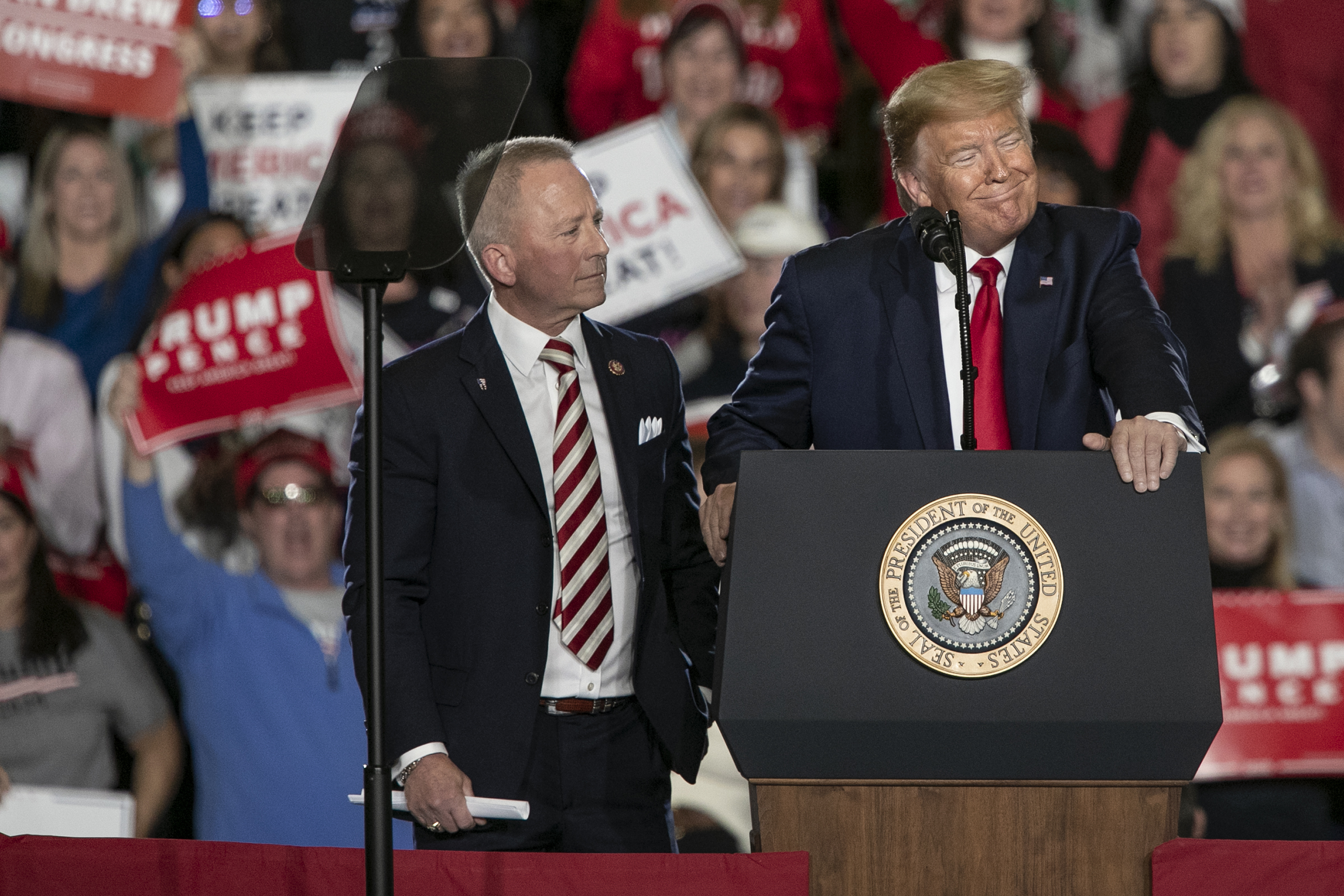
    President Donald Trump smiles while Rep. Jeff Van Drew (R-NJ) stands next to him at a Keep America Great campaign rally in Wildwood, NJ on Tuesday, Jan. 28, 2020.HEATHER KHALIFA / Staff Photographer

    The request sought money for every county in Van Drew’s district for costs related to the snowstorm, including damage from moderate coastal flooding in Atlantic County and his home county of Cape May. Van Drew, a Trump ally and former Democrat, faces a challenge from Cape May Mayor Zack Mullock for his reelection in November.

    Van Drew did not respond to a request for comment.

    In the Friday letter, the Democratic lawmakers’ tone was direct but they did not reference accusations that Trump’s decision was politically motivated. Those concerns come amid a revelation that the Trump administration has been rejecting Democratic states at a particularly high rate. A Wednesday Politico report found Trump recently overrode regional FEMA assessments when he rejected aid for four Democratic states.

    The request included assistance for the vast majority of the state’s counties – including all of South Jersey – as well as hazard mitigation funding statewide, according to the Friday letter. Preliminary damage assessments across those 19 counties documented “extensive emergency work” such as snow and debris removal and “damage to critical infrastructure and public facilities.”

    The New Jersey Office of Emergency Management estimates that disaster costs will exceed $100 million, which is more than five times more than the state’s threshold of about $18 million to qualify for federal disaster assistance.

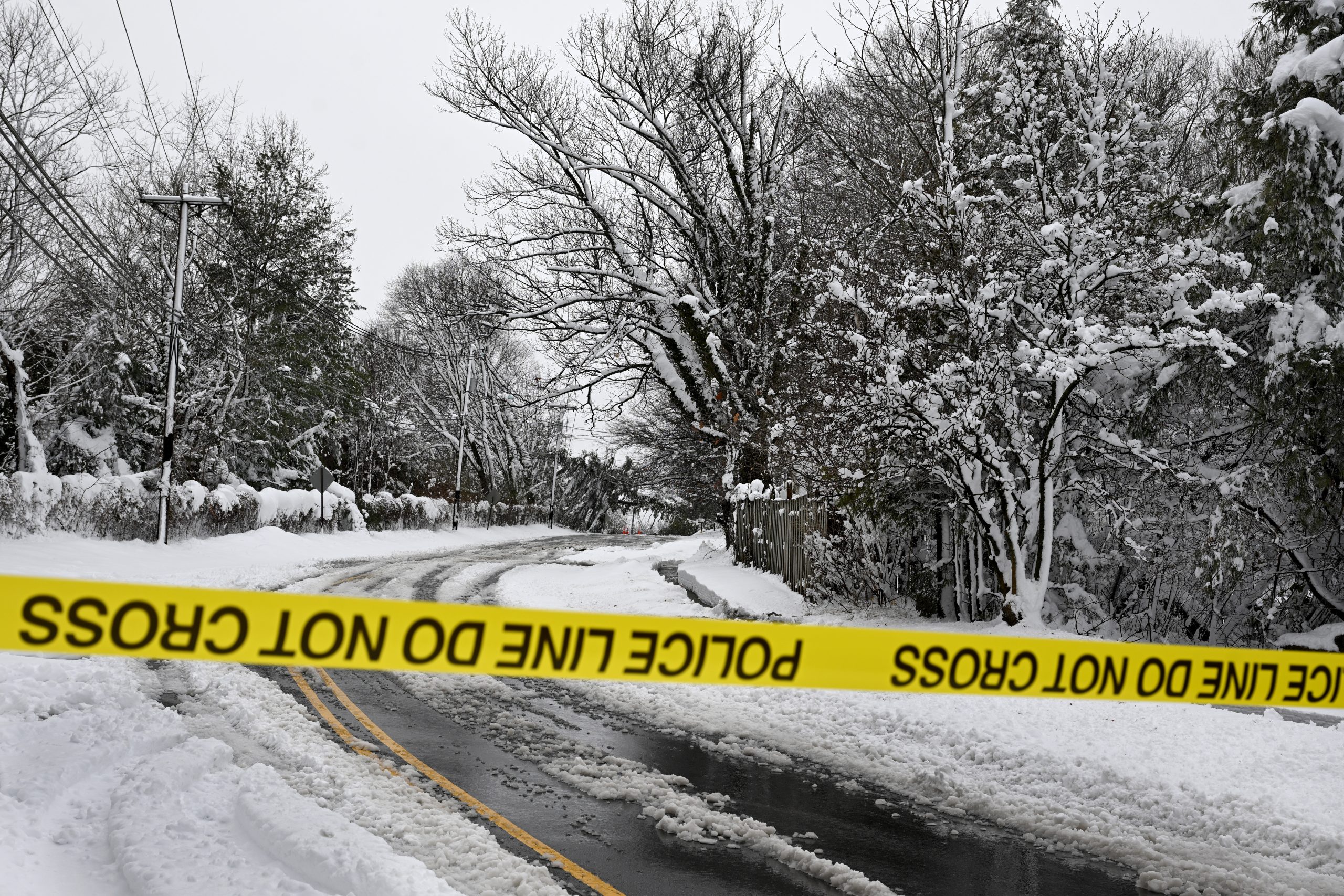
    Covered Bridge Road in Cherry Hill is Monday Feb. 23, 2026 after a power line was knocked down by the Sunday night snorwstorm.Tom Gralish / Staff Photographer

    “The extent of the damage, the operational burden throughout the State, and the cumulative impacts of recent and related extreme weather all provide overwhelming evidence that New Jersey’s request must be granted,” they wrote. “While we commend the actions of the State and local governments to respond thus far, full recovery will require your approval of federal resources.”

    The lawmakers cite National Oceanic Atmospheric Administration data that found approximately 24 inches of snow fell in less than 24 hours across central and eastern parts of the state, and eight of the state’s 21 counties recorded record or near-record snowfalls.

    Power outages during the storm impacted more than 127,000 customers in the state and there were 544 motor vehicle accidents and 1,518 motor vehicle-related assists, according to the letter.

    They also argued that Trump should consider that the state already had a “strained capacity to respond” because of another severe snow and ice storm weeks earlier, as well as six open federal disaster declarations — in reference to prior disasters for which the state is still working on recovery projects.

    “We look forward to working with you to ensure all Americans receive protection and support from the federal government in the aftermath of a serious disaster,” they wrote.

    On Thursday, Sherrill spokesperson Sean Higgins noted in a statement that the costs of the February snowstorm “didn’t care about political boundaries” and that the governor will fight for funding “regardless of political party,” in a nod to the accusations Trump is putting his thumb on the scale based on partisan favoritism.

    White House spokesperson Abigail Jackson said in a statement Thursday, before receiving the letter, that the president “provides a more thorough review of disaster declaration requests than any Administration has before him” and that he responds to FEMA requests “with great care and consideration, ensuring American tax dollars are used appropriately and efficiently by the states to supplement—not substitute, their obligation to respond to and recover from disasters.”

    She also said the Trump administration is committed “to empowering and working with State and local governments to invest in their own resilience before disaster strikes, making response less urgent and recovery less prolonged.” The Trump administration previously tried to cut disaster prevention funding because it was too “focused on ‘climate change” before a group of states including New Jersey sued.

    Kim, the ranking Democrat on the committee that oversees FEMA, said in an interview Thursday that he is concerned that politics were involved in the latest rejection but couldn’t say for sure.

  • Bayada Home Health Care’s new CEO Bryony Winn wants to provide higher levels of care at home

    Bayada Home Health Care’s new CEO Bryony Winn wants to provide higher levels of care at home

    Bryony Winn became the CEO of Pennsauken-based Bayada Home Health Care in March after a career at two big Blue Cross health insurers and at the consulting firm McKinsey & Co.

    Those experiences, she says, prepared her to take the reins at one of the nation’s largest home health companies at a time when Bayada is wants to increase the intensity of its home care offerings — and get insurers to pay for it.

    “Hospitals are full,” and patients want to be at home, said Winn in an interview this month at Bayada’s headquarters in Pennsauken.

    The company, whose founder Mark Baiada converted it to a nonprofit in 2019, operates in 22 states and five additional countries, employs 44,000 people, and had $2.2 billion in revenue last year.

    Winn, Bayada’s first non-family CEO, grew up in Zimbabwe and went to college in South Africa. “Being around so many challenges and so much opportunity every day in the developing world, I always had a sense that I wanted to do things that made lives healthier,” she said.

    When she came to the United States in 2009 to work as a consultant in Chicago, it struck her how specialized and disconnected healthcare is here. “In the developing world, there’s not enough trained people, so it’s a much more connected system around patients and humans,” she said.

    The Inquirer spoke with Winn about the importance of taking care of people at home as the nation’s healthcare providers come under increasing financial strain. Questions and answers have been lightly edited for length and clarity.

    How did your jobs at McKinsey and at Blue Cross of North Carolina and Elevance Health prepare you to lead one of the nation’s largest home healthcare companies?

    I learned a lot about the U.S. healthcare system and became more and more convinced that this lack of connection was driving unsustainable cost, and I still think it’s driving unsustainable cost. Pre-COVID, I used to say affordability is the greatest healthcare crisis of our time. Then COVID really was for a while, and I think we’re back to that now. The quality of care here is amazing if you have a really rare form of cancer. I’d prefer for it to be treated in some of the amazing institutions here than anywhere else in the world. But if you are just a typical person, and especially an aging person here with two or three chronic conditions, you are pushed from pillar to post across a system who doesn’t ever see you as a human being.

    (function(){function e(){window.addEventListener(`message`,function(e){if(e.data[`datawrapper-height`]!==void 0){var t=document.querySelectorAll(`iframe`);for(var n in e.data[`datawrapper-height`])for(var r=0,i;i=t[r];r++)if(i.contentWindow===e.source){var a=e.data[`datawrapper-height`][n]+`px`;i.style.height=a}}})}e()})();

    What do you think you can accomplish at Bayada, which was founded more than 50 years ago, to address that connectivity issue?

    What I can bring to it is really understanding the place of home health in the entire healthcare ecosystem. This is the place where clients and patients want to be; they want to be in their homes. And so the question I’m asking is not what are the kinds of conditions that should be addressed at home, but rather flip that on its head and say, what are the kinds of capabilities you need in the home to be able to address things for clients who want to be there?

    What’s happening now that makes it so important to solve this problem?

    For two decades in healthcare, we’ve been talking about people aging into Medicare. Ten thousand people a day aging into Medicare. Now 10,000 people a day are 20 years older. They’re aging into 85 every day. Because it’s not a change in insurance, it doesn’t generate the same conversation. But it’s a huge change in health status. We now have all of these seniors with two or three chronic conditions, and with a decent chunk of life expectancy still. The delivery system really needs to shift in how we care for these folks.

    What has to change?

    One thing that’s needed is a collection of multiple services in the home. Very rarely do you need just skilled nursing. You need skilled nursing and a home health aide and potentially wound care. That requires care management, a much more connected ecosystem, versus what is today much more a siloed set of services. The second thing is we just need more intense care at home. We have done this quite successfully, and we’re doing it even more now around NICU babies [in partnership with Children’s Hospital of Philadelphia and insurers Highmark and Independence Blue Cross].

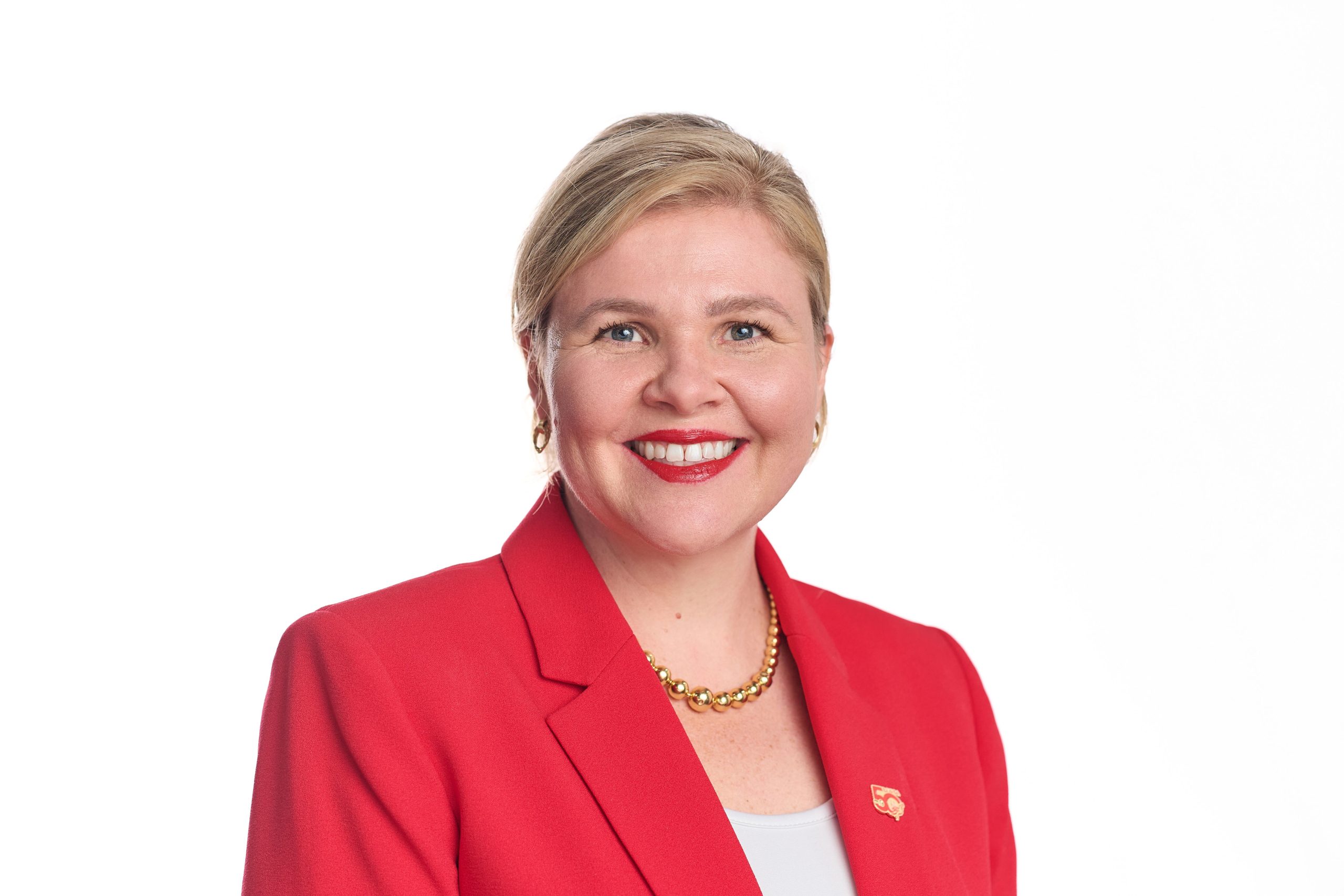
    Bryony Winn, who became Bayada’s CEO in March, said her background in health insurance will help the nonprofit expand by finding ways to get paid for new services.Bayada Home Health Care
    Do you see Bayada playing a broader role in health systems’ hospital at home programs?

    I do. We can serve higher-intensity patients at home with more complex care needs, and we do a lot of this today. We’re just not really paid for it, or it’s not the service that we’re meant to provide. So it’s really, how can we more sustainably do this high-intensity work at home? That’s a shift for us. Our clients want it. Wound care at home is hard. It’s one of the biggest reasons for readmission back into the hospital after post-acute discharge. How we can build really strong clinically evidence-based wound care capabilities is one of the big pieces that we’re looking at in this elderly population.

    Providing more intensive care has higher costs. How do you convince insurers to pay more, especially given the prevalence of Medicare and Medicaid in home health?

    There is not a ton of wiggle room, but this is where my background helps. I’ve worked on the payer side for a long time. They truly care about affordability and quality as well, and so it’s really working together to say how does what we need for our caregivers, clinicians, and ultimately clients map with what you can afford, and how do we build this together? I’m not sure home health has ever had those conversations as intently as we need to have them now. It’s a very fragmented industry. Hospitals have been having these more strategic conversations with health insurers for decades.

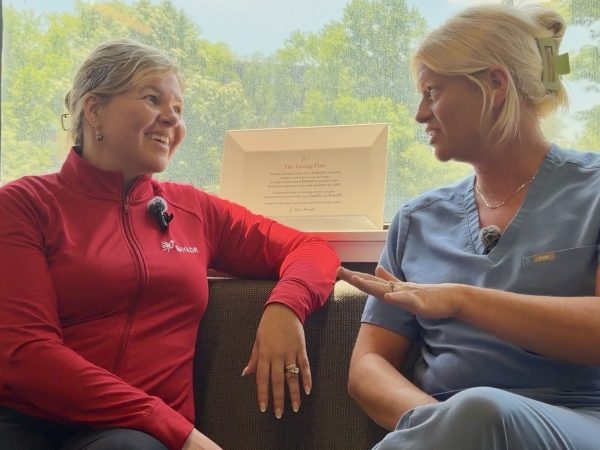
    Editor’s note: The caption with the main photograph has been updated to correct the name of the person Winn is speaking with. It’s Lillian Floyd, a nurse with Bayada’s Camden County Visits unit.

  • HBO series ‘Task’ to film in Wissahickon Valley Park in August

    HBO series ‘Task’ to film in Wissahickon Valley Park in August

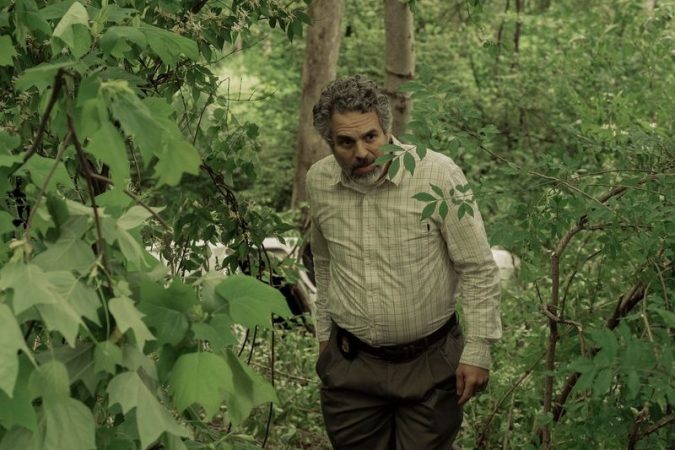
    If you’re taking a run through Wissahickon Valley Park next week and spot those signature Mark Ruffalo curls and determined glint in his eye through the tree leaves, worry not! The HBO series Task is filming its second season in the Northwest Philly park Monday through Friday.

    On Monday, the Bells Mill West Lot will be closed to the public for filming and will reopen the next day. Visitors can park instead in the Bells Mill East Lot.

    On Tuesday and Wednesday, the trail entrance at Manatawna Avenue will not be accessible. Houston Meadow can be accessed through the Houston Playground entrance on the Yellow Trail.

    The film crew is slated to park vehicles and equipment on some parts of Forbidden Drive. The trail will remain open, but hikers and runners may see stop signs warning them of “equipment ahead” or to go “slow ahead.”

    In July, the crew was spotted filming in Manayunk.

    The Delaware County-set series Task by Mare of Easttown creator and Berwyn resident Brad Ingelsby centers on FBI agent Tom Brandis, portrayed by Ruffalo. In the second season, Brandis is leading a new task force and confronting his rival Philadelphia DEA agent Eddie Barnes, played by Mahershala Ali, the Oscar winner who starred in Moonlight, Green Book, and the third season of the HBO crime show True Detective.

    The show’s first season also made its way around the city and suburbs. It featured scenes at the Rita’s Italian Ice & Frozen Custard in Collingdale, the Willowbrook Shopping Center in Boothwyn, and Marsh Creek State Park in Downingtown.

  • Ten months of inspections at Nazareth Hospital: July 2025 – April 2026

    Ten months of inspections at Nazareth Hospital: July 2025 – April 2026

    Violations between July 2025 and April of this year.

    The hospital is located in Northeast Philadelphia and is part of Trinity Health Mid-Atlantic.

    Here’s a look at the publicly available details:

    • July 1, 2025: Inspectors came to investigate a complaint but found the hospital was in compliance. Complaint details are not made public when inspectors determine it was unfounded.
    • Feb. 18, 2026: Inspectors came to investigate a complaint but found the hospital was in compliance.
    • April 13: Inspectors visited for a special monitoring survey and found the hospital was in compliance.
  • Dick Allen documentary tour makes a stop in Philly, telling ‘a great story that nobody’s told’

    Dick Allen documentary tour makes a stop in Philly, telling ‘a great story that nobody’s told’

    When production started for My Father, Dick Allen, it was supposed to be a one-hour documentary on the former Phillies star. Four years later, it’s a five-part series, featuring interviews with sportswriters, Allen’s loved ones, and former coaches and players.

    The cast is loaded with Hall of Famers, including Mike Schmidt, Goose Gossage, and Andre Dawson. For co-executive producer Sharon Pannozzo, the biggest surprise was seeing just how enthusiastic everyone they asked was to participate.

    “Not one person batted an eye and said, ‘Well, I can’t do that. You know, I don’t have time’. Everybody made time,” she said.

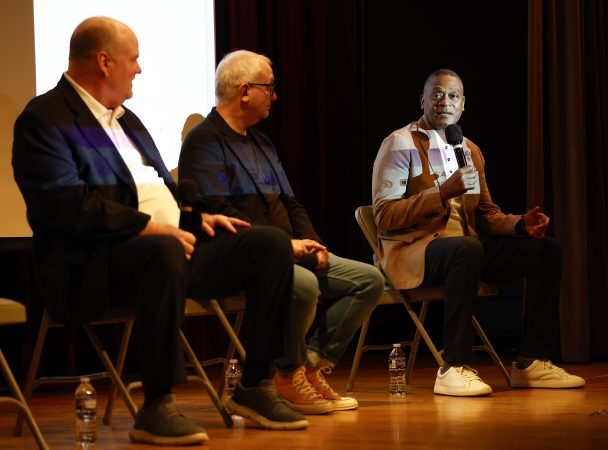
    Over the past few months, the documentary’s production team has put on screening events across the U.S., as they look to find a partner to license the series. On Thursday night, they stopped in Philadelphia, where Allen played nine of his 15 seasons. Fans were given the chance to see the third episode of the series, which focuses on Allen’s first stint with the Phillies from 1963-69. Following the screening was a panel moderated by The Inquirer’s Matt Breen. The participants included director Andy Billman, graphic designer Todd Radom, Allen superfan and co-producer Andy Wooley, and Allen’s son, Richard Jr.

    “Being here is like being at home,” said Allen Jr., known affectionately by his dad as Doobie. “I’ve grown up seeing that Phillies P and the Phillies logo my entire life.”

    Allen Jr. also serves as a producer for the series. Well before filming even started, one of his greatest passions in life was preserving his father’s legacy. For decades, Allen Jr. advocated for his father’s induction into the Baseball Hall of Fame. Allen died in 2020 at 78.

    Dick Allen finally got into the Baseball Hall of Fame in July of 2025, almost 50 years after he stopped playing. Monica Herndon / Staff Photographer

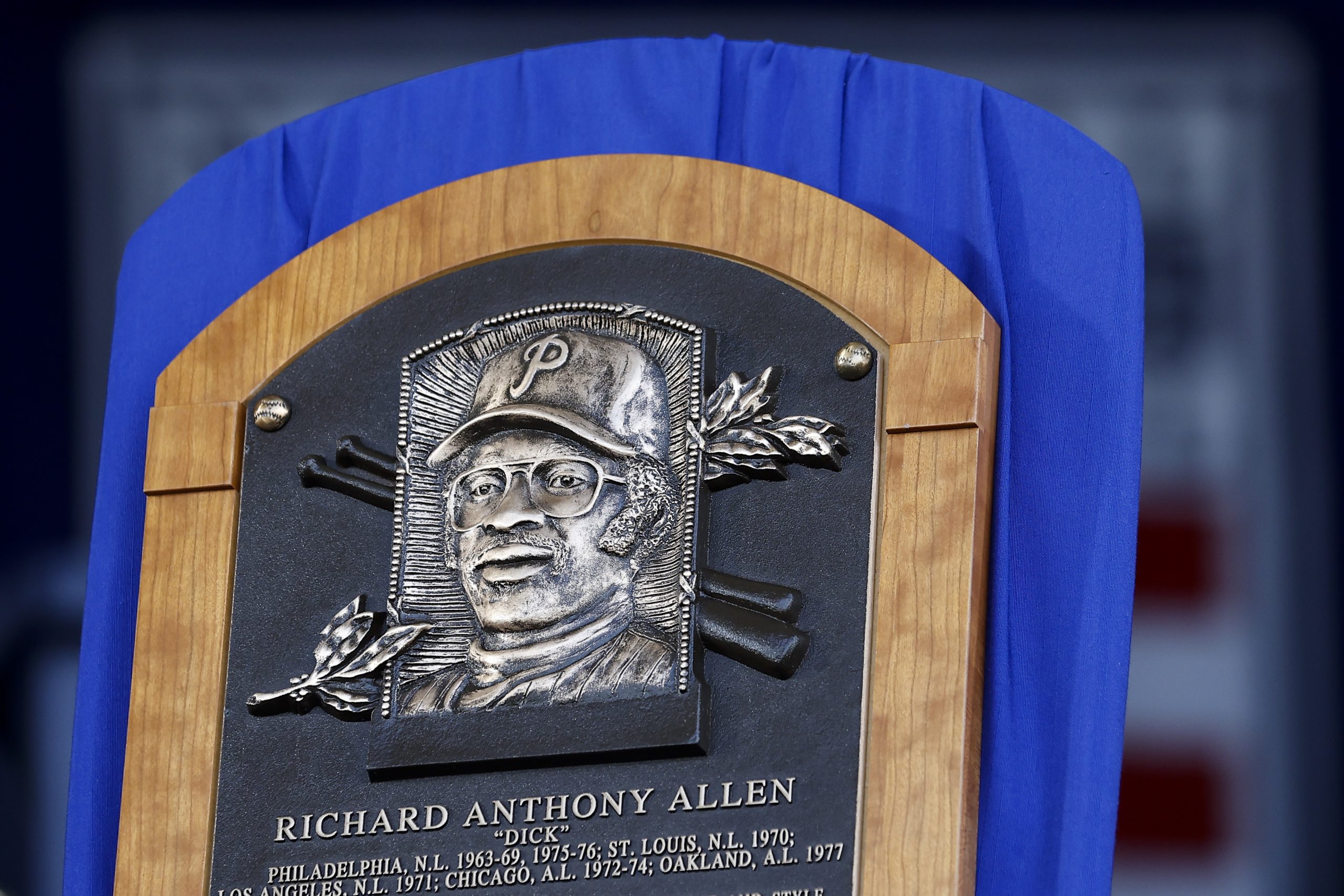
    Allen, who hit 351 career home runs, fell off the ballot in 1997 but was brought up for consideration by the Veterans Committee in 2014. He fell short by just one vote. Allen was brought up again in 2021 but also came up short. Last summer, he finally got into Cooperstown after 20 attempts, receiving 13 of 16 votes from the Classic Era Committee.

    “You can work on a film in the film business for years sometimes, and then all of a sudden it comes together,” said Pannozzo. “We would’ve told the story whether Dick got into the Hall of Fame last year or not … but we had a good ending.”

    When Allen was inducted last summer, Pannozzo and Allen Jr. were given a tour of the Hall of Fame storage vault. The artifact that stuck with Allen the most was a questionnaire his father had filled out at 18 years old, right after he started playing for the Class D Elmira Pioneers. Allen was deeply moved by that piece of paper.

    “My whole life, [baseball was] all he talked about, and I thought, OK, OK, OK, and then I get there, and it’s like, ‘Oh my gosh, he really wasn’t lying,’” Allen Jr. said.

    Another meaningful experience for Doobie was visiting Little Rock, Ark., where his father had played for the triple-A Travelers in 1963. It was that year that the Phillies moved their affiliate from Buffalo to the South. Allen had previously never been to the South and begged the organization to assign him elsewhere, but he didn’t have a choice.

    Inquirer sports reporter Matt Breen (left) moderates a discussion on the life and legacy of Phillies legend and Hall of Fame baseball player Dick Allen in the Montgomery Auditorium at the Parkway Central Library on Thursday.Yong Kim / Staff Photographer

    Allen became the first professional Black baseball player in the city of Little Rock, and it was a brutal year for him. Fans shouted slurs his way at the ballpark, in the parking lot, and throughout the city. Little Rock was also segregated, meaning that Allen was isolated from his teammates except when at the ballpark. He refused to return to the city with any of his kids.

    But the documentary dedicated a whole episode to the horrors Allen faced during his time in Arkansas. When Allen Jr. explored the city for the first time, however, he wasn’t doing it alone. Hall of Fame pitcher Ferguson Jenkins, who also played for the Travelers, volunteered to go through the city with Doobie. Jenkins was very close friends with Allen and overlapped in Little Rock with him briefly in 1963.

    “[He] pretty much substituted for my father, going to the high school, you know, and Little Rock … that would be my favorite part,” Allen Jr. said.

    At this point, the team does not have a deal lined up with a distributor for the film. But they know how important it is to be able to tell the story of Dick Allen to a younger generation of fans who did not see him play.

    “This is a great story that nobody’s told,” said Pannozzo. “Now we have to sell our project.”