Tag: topic-link-auto

  • Pressure rises on Infantino and FIFA’s World Cup investor plan as adviser resigns and Asia opposes

    Pressure rises on Infantino and FIFA’s World Cup investor plan as adviser resigns and Asia opposes

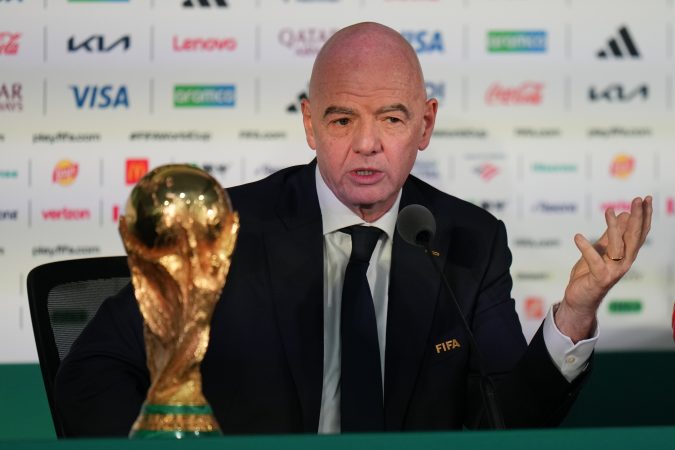
    GENEVA — Pressure on FIFA President Gianni Infantino and his divisive plan to sell World Cup profits to private equity grew Friday as his senior adviser who sat on a White House panel resigned and Asia’s soccer body joined Europe and North America in opposing it.

    An expanding crisis for soccer’s governing body reached into Infantino’s longtime inner circle when his pick to represent FIFA on the White House Task Force for the World Cup walked away calling the Joshua Kushner-backed $20 billion commercial subsidiary plan “a bad deal for football.”

    Carlos Cordeiro is a former Goldman Sachs banker and officially Infantino’s Senior Adviser yet revealed he was not involved in the secretive investment plan that has rocked the sport since media reports revealed it Tuesday.

    “I cannot stand by while FIFA considers selling a stake in the World Cup,” Cordeiro said in a statement formally resigning, just hours after FIFA insisted in a statement: “Nobody is selling football.”

    Cordeiro’s exit — and call for other senior staff to speak out — intensified scrutiny on Infantino one day after European soccer body UEFA threatened to boycott all FIFA games and events until the plan is dropped. North America’s CONCACAF also rejected Infantino’s offer of one-off $20 million payments to each member federation by a mid-September deadline.

    Cordeiro often joined Infantino on working visits to meet U.S. President Donald Trump at the White House in recent years, and took part in meetings of the administration’s World Cup task force led by Andrew Guiliani.

    “Let me be clear. I had no involvement in this proposal, and I oppose it unequivocally,” said Cordeiro, the former U.S. Soccer Federation president.

    Asia joins Europe and North America

    On another seismic day in soccer politics, Asia’s soccer body that has been a key ally in Infantino’s 11-year presidency opposed the investor plan and said FIFA must urgently review its management style

    The Asian Football Confederation said it “stands in solidarity” with UEFA and CONCACAF, the first two continental bodies to oppose Infantino whose combined 90 FIFA member countries near a majority of the 211 global total.

    “Football should never have been placed in such a position,” said the Asian soccer body, which counts 46 of FIFA’s 211 members

    Infantino has proposed spinning off FIFA’s commercial businesses — including World Cups and Club World Cups for men and women — into a $20 billion subsidiary with 20% owned by private investors.

    The “anchor investor,” described by FIFA, is a New York-based investment firm created by Joshua Kushner, the younger brother of Trump’s son-in-law Jared Kushner.

    “(T)he proposed (FIFA Forward Enterprise) cannot realistically achieve the necessary broad consensus and unity required to move forward” and must be reconsidered, the AFC said.

    The statement did not name Infantino yet criticized FIFA for problems beyond the content of the private equity plan plus failing to consult about the secretive proposal.

    “Rather, it has exposed fundamental weaknesses in FIFA’s consultation and decision-making processes that must now be addressed,” said the AFC, whose longtime president Sheikh Salman bin Ibrahim Al Khalifa narrowly lost the FIFA presidential election to Infantino in 2016.

    “Accordingly, the AFC calls upon FIFA to undertake an urgent review of its governance and decision-making framework,” said the organization based in Kuala Lumpur, Malaysia.

    Infantino’s job at risk?

    Infantino had seemed — 11 days ago after the World Cup final in East Rutherford, New Jersey — to have a clear path to being reelected unopposed for a fourth and final term in office through 2031.

    FIFA had briefed during the tournament that Infantino had letters of support from about 200 members, despite a furor over letting United States forward Folarin Balogun play against Belgium even though he received a red card in his previous game. Trump acknowledged asking Infantino to review Balogun’s mandatory one-game ban.

    FIFA has set a Nov. 18 deadline for potential candidates to declare in a presidential vote of the 211 members scheduled next March in Rabat, Morocco.

    FIFA blames the media

    The Asian statement came hours after FIFA blamed the media and doubled down on pursuing the project which now seems to have a majority of the 211 in opposition.

    “Our planned consultation process was disrupted by incorrect media reports,” FIFA said in a statement early Friday. “We will proceed with this consultation process to ensure that each (member) has the ability to express its vote based on facts.”

    The next FIFA event that would be targeted by the threatened European boycott is within weeks — the Women’s Under-20 World Cup hosted by Poland from Sept. 5. The four British federations comprise FIFA’s only bidder to host the 2035 Women’s World Cup. That decision is due Nov. 23.
  • hitchBOT was decapitated on this week in Philly history

    hitchBOT was decapitated on this week in Philly history

    The robot was no match for Philadelphia.

    The child-sized figure with robot-like qualities was the brainchild of Canadian researchers in the mid-2010s.

    The goal was to try and better understand human-robot relationships, and to generally gauge how humans would interact with robots.

    He was carried across the Northeast by the kindness of strangers who were kept up to date through social media posts.

    Nicknamed hitchBOT, the oddity developed quite a following, moving through the Netherlands, Germany, and Canada.

    When he hit the United States, he crossed through the northeastern part of the country over a two-week span.

    And he was making — and having — a good time. He took in a Boston Red Sox game, visited an aquarium, and was gleefully photographed in Times Square in New York.

    And then he arrived in Philadelphia.

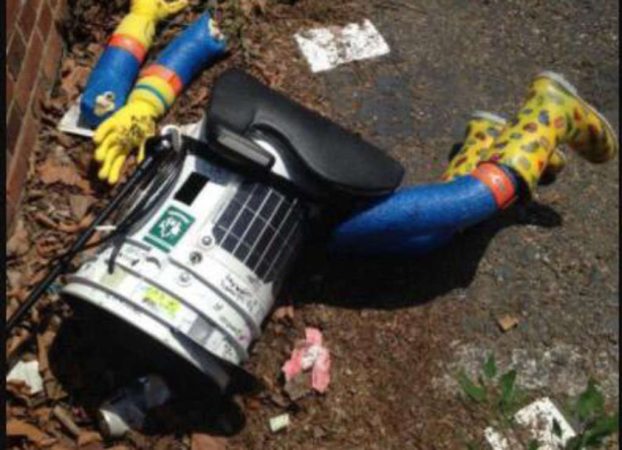
    hitchBOT’s creators said their baby had been mugged while taking a break at Elfreth’s Alley on Aug. 1, 2015, and stripped for parts.

    They said he had been horrifically decapitated.

    The creators later quipped, “sometimes bad things happen to good robots.”

    In 2015, Laura Blankenship, cochair of the Computer Science Teachers Association, wrote a post about the lessons from the experiment. She remarked that the creators got an answer to their existential question:

    “Humans might treat robots just like humans,” Blankenship wrote.

    hitchBOT became fodder for late-night talk shows, gossip websites, and ammunition for the usual folks who enjoy taking cheap shots at Philadelphia and its inhabitants.

    The New York papers ate it up, as did CNN.

    “This is why we can’t have nice hitchhiking robots,” CNN wrote.

    As far as Philadelphia’s role in the episode, the city still holds a special place in its heart for the headless kind-hunter. On the 10th anniversary, a memorial service and a remembrance were held at the famous alley where hitchBOT met his end.

    Today, hitchBOT’s body is on display at the Heinz Nixdorf Museums Forum in Paderborn, Germany.

    The head was never recovered.

  • Federal officials abruptly cut funding for a teen pregnancy prevention program in Philadelphia

    Federal officials abruptly cut funding for a teen pregnancy prevention program in Philadelphia

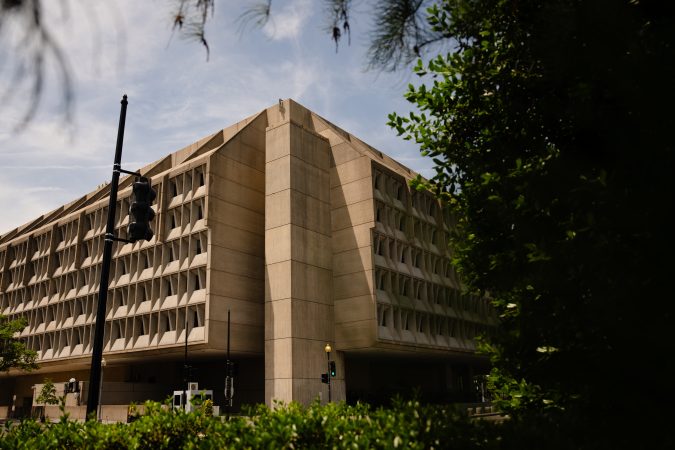
    Federal health officials last month abruptly cut funding for a teen pregnancy prevention program in Philadelphia — despite approving the program’s curriculum last year, its leaders said.

    AccessMatters, the reproductive health nonprofit that ran the program for more than 1,200 students in charter schools across the city, had a five-year grant, about $1 million per year, to teach students about pregnancy prevention.

    But, in a June letter, federal officials terminated funding two years early, saying the program was “normalizing adolescent sexual activity,” said Ayana Bradshaw, AccessMatters’ president and CEO.

    AccessMatters was one of dozens of organizations around the country that had received funding under a federal teen pregnancy prevention grant program. Nearly all have now been informed that they are losing their funding, Bradshaw said.

    Representatives of the U.S. Department of Health and Human Services did not respond to a request for comment.

    Staff at AccessMatters are still figuring out their next steps in the wake of the funding cuts.

    Federal officials took issue with a portion of the program’s curriculum about using condoms, said India Blunt, AccessMatters’ director of training and capacity building.

    But, she said, that curriculum had already undergone a rigorous approval process from the Trump administration.

    In April 2025, HHS officials had asked AccessMatters to review its curriculum and programming and edit it to align with the new administration’s priorities. The curriculum was approved, AccessMatters staff said, only to have the funding pulled just over a year later.

    “[The cuts were] shocking largely because we were using approved curriculum,” Blunt said. “We made adaptations to the curriculum to be in alignment. We were following the procedures, protocol, and program expectations to a T.”

    Blunt said the program provides students with medically accurate information about HIV and other sexually transmitted infections, good hygiene practices, and puberty. Program staff also discuss healthy relationships, communication, and consent with students.

    The curriculum is aimed at delaying teenagers from having sex, and includes tactics for how to refuse a partner, Blunt said.

    But in Philadelphia, which has a teen pregnancy rate twice that of the state average, it is crucial to provide teenagers with accurate sex education, AccessMatters staff said, including discussion of all options to prevent pregnancy.

    Surveys conducted at 32 Philadelphia public high schools in 2025 showed that just under a third of surveyed students reported that they had had sex. About 40% reported using a condom during their last sexual intercourse. Fewer than one in five reported that they had been tested for sexually transmitted infections.

    “I don’t know how you talk about pregnancy prevention and not talk about condoms. You need to understand what the actions are — there are many, from abstinence to how to use a condom,” Bradshaw said.

    “These are not programs meant to promote sexual activity, but programs that are meant for youth to understand what actions are available for them to prevent pregnancy.”

    The administration is now soliciting new grant proposals for teen pregnancy programming that must emphasize abstinence as the only way to prevent pregnancy, stressing “the importance of marriage and procreation” and “[instructing] young people how to safeguard their fertility,” the New York Times reported earlier this month.

    Several programs that lost funding have filed lawsuits to block the cuts.

    The abrupt funding cuts have put jobs at AccessMatters at stake, officials there say.

    “It has a disastrous impact on AccessMatters program staff, as well as community partners,” Bradshaw said. “Of course, most of all, it’s a devastating loss for adolescents in Philly.”

    President Donald Trump’s administration has targeted funding at AccessMatters in the past. The nonprofit oversees Title X funding in the Philadelphia region, helping people without sufficient health insurance to access contraceptives, sexually transmitted infection testing, cancer screenings, and vaccinations.

    The administration froze funds for four months last year for AccessMatters and hundreds of other organizations while it investigated compliance with the administration’s directives on immigration and diversity, equity, and inclusion.

    Trump has argued that DEI programs discriminate against white people, and his administration has targeted federal grants that support research on health equity and threatened universities with funding cuts based on their DEI policies.

    AccessMatters’ Title X funding was eventually restored late last summer, without the nonprofit having to change its policies. But the clinics it funded were hit hard by the freeze, in some cases laying off staff, shouldering extra costs, and helping patients find affordable medication elsewhere.

    “We’re still assessing the overall impact to the organization,” Bradshaw said of the June funding cuts. “There was no notice, no time to even plan for this.”

  • Times Square will be surrounded by a West Philly artist’s work all August

    Times Square will be surrounded by a West Philly artist’s work all August

    Times Square is getting a touch of Philly artistry.

    West Philly-based Maia Chao has been Times Square’s Public Artist-in-Residence since 2023, having been invited to examine the behind-the-scenes experience of what is one of the busiest tourist areas in the world.

    A photo installation and “Midnight Moment” presentation from her work will be on display through the month of August. The art will draw from her studies on the cleaning and beautification processes, and human behavior at the plaza.

    “I’ve always been interested in infrastructure, the management of public space, and the sociality of different places,” Chao said. “Times Square itself was a funny place to be presented with because it’s what a lot of New Yorkers avoid passing through. I was coming to it looking at what the space has become as it became corporatized.”

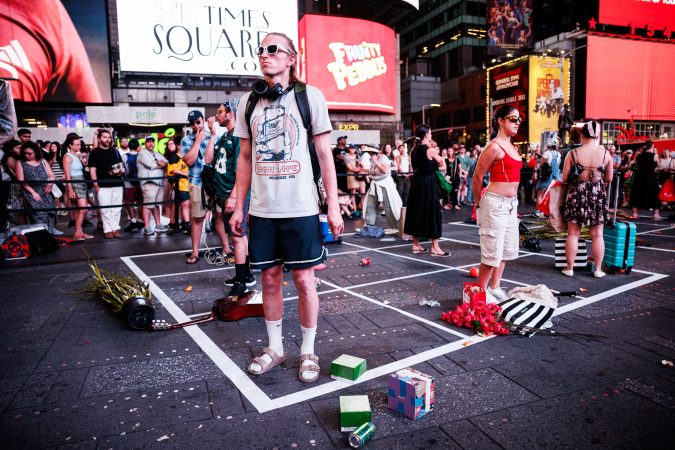
    Actors performing in Philly artist Maia Chao’s show “American Idle” in Times Square. The performance is being restaged August 14, 2026.Maria Baranova-Suzuki

    Chao’s photo project “Case Subtype: Damaged/Nonfunctional” will present 30 photographs displayed on Bigbelly trash cans across Times Square. The photographs were taken by actual sanitation workers, who already document potholes, graffiti, and other abandoned objects as a part of their job.

    “A lot of the work of the Times Square Alliance is to improve the reputation of Times Square from its history of being ‘seedy’ or ‘dangerous’ in the 1980s and 1990s,” said Chao. “A lot of that effort is about maintaining its appearance as clean and safe to visit. I came to that with a critical lens on what and who is deemed clean and safe.”

    The title of her project references how workers mark found objects as “damaged/nonfunctional” when they upload the photos to their system. Details like the location and photographer are seen in small text in the corner of each photograph.

    A mockup of one of the photo installations from Philly artist Maia Chao’s upcoming project “Case Subtype: Damaged/Nonfunctional.” The photos are to be displayed on Bigbelly trashcans in Times Square.Liz Ligon

    “People are used to seeing advertising [on trash cans] and [the art] might catch their eye when they’re putting something in the trash can,” said Anna Starling, director of Times Square Arts. “I’m hoping that people will understand or at least think about what is this, why it is there, and recognize the beauty in the everyday objects that you see.”

    Some of the images on display include photographs of an abandoned bike chained to a pole, a rolling office chair next to a trash can, a spill of light blue paint on the sidewalk, and a pothole with a cone coming out of it.

    “There was something appealing to me about thinking about the people making these strange narratives,” said Chao. “When you see a huge microwave on the street or an abandoned stroller, they feel poetic and narrative, and kind of like traces of people’s lives.”

    Actors perform in Philly artist Maia Chao’s 2025 work “American Idle” in Times Square. The performance will be restaged August 14, 2026.Maria Baranova-Suzuki

    In addition to the photo installation, there will be a restaging of Chao’s 2025 performance piece American Idle on Aug. 14. The show comprises a group of actors playing Times Square archetypes, like tired kids, lost tourists, and influencers, all acting out their typical behavior. At the same time, identically dressed body doubles of each character mimic the other’s actions.

    “Initially, the idea was for the pedestrians of Times Square to be able to watch themselves, so it would be a crowd watching a crowd,” said Chao. “Something that may seem spontaneous when one person is doing it, is all of a sudden seen as learned and programmed when two people are doing it in unison.”

    Chao, who has a bachelor’s degree in cultural anthropology from Brown University, drew inspiration from the human behavioral patterns she noticed in real life and the 3D modeling program Crowds Pro. Typically used to simulate crowds for TV and movies, the system has a collection of characters being “idle,” shifting their weight and/or looking around, and making common gestures like clapping or scrolling on their phone.

    Actors perform in Philly artist Maia Chao’s 2025 work “American Idle” in Times Square. The performance will be restaged August 14, 2026.Maria Baranova-Suzuki

    “It’s a way of showing we’re all scrolling and taking pictures, and there’s definitely a pessimism to the ways we’re all becoming these robots or our attention is being conditioned to become increasingly fractured,” said Chao, a Rhode Island native. “But we also need to bring an observational, loving, and compassionate lens on the beauty of people as they are in their everyday selves.”

    A three-minute video with portions of choreography from American Idle will be playing every night in Times Square throughout the month. This will be August’s “Midnight Moment,” a long-running program that displays digital art across all the billboards in Times Square, daily, for three minutes before midnight.

    “Part of having public art in such large public spaces is having to be accessible to audiences. Maia’s project makes art and its concepts accessible, which draws people in,” said Starling. “The repetitiveness and duplicative aspects of the performance are eye-catching. Then with the art on the everyday receptacles that people pass by, having those two together we felt would engage audiences in new ways.”

    Actors performing in Philly artist Maia Chao’s show “American Idle” in Times Square. The performance is being restaged August 14, 2026.Maria Baranova-Suzuki

    Chao has plans for her own home city, too. This fall, she will be showing Waste Scenes, a video installation, at the ICA Philadelphia. She will also be curating the multimedia exhibit “An Endless Meeting,” organized by Philadelphia arts collective Vox Populi, of which Chao is a former member.

    “I’ve been making live performances for the past few years and I think often there are flows and cycles to my practice,” said Chao. “In the next few years, I might be working in a different way, using one project to escape another, or to exercise a different muscle. I don’t know what medium I’ll be working in next, it could be sculpture. I’m excited to see what the ecosystem of my practice needs or calls for next.”

  • Smoky skies may be gone for now. But ‘climate grief’ may linger.

    Smoky skies may be gone for now. But ‘climate grief’ may linger.

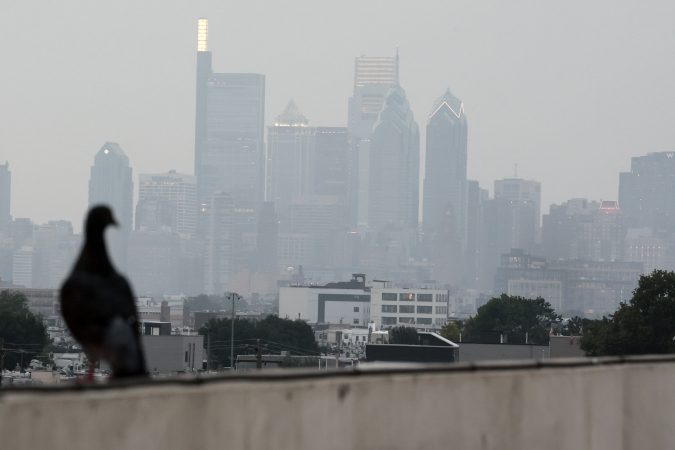
    Waking up to hazy skies and an eerily orange sun can feel more like a scene from an apocalyptic science fiction movie than reality. Yet, Philadelphians did just that earlier this month.

    Smoke from the Canadian wildfires has made its way to the East Coast and, along with it, an Air Quality Index, or AQI, reading that came close to 300 across the region. For context, when the AQI reaches over 50 it can affect folks with asthma and other respiratory illnesses. The general public will start experiencing symptoms and negative health impacts when the AQI hits 150. An AQI in our area of 300 is as uncommon as it is dangerous.

    This isn’t the first time Philadelphians have contended with the impacts of wildfire smoke during the summer months, but what’s occurred this month stands out from summers past. The last time the AQI reached similar levels was during a series of fires in Quebec in June 2023, with the AQI soaring over 400.

    For East Coasters, this is a relatively new and infrequent phenomenon, but the West Coast has been contending with real life impacts of wildfires for much longer. I experienced them for the first time while living in the Bay Area. I was there in September 2020, on the day when the smoke was so thick it blocked out the sun, making the afternoon look like the middle of the night. The thought of that day still haunts me.

    In the aftermath, I felt scared, frustrated, and filled with dread. When I eventually found the words to describe the experience, it was like a light bulb went off. The gauzy skies finally made the abstract concept of “climate change” into something very, very tangible and undeniable. It’s hard to deny that we’re in the midst of a climate crisis when the crisis shows up on your doorstep.

    There’s a term for this awareness of and emotional response to the environment in dire crisis — “climate grief.” In the coming days, Philadelphians may experience this grief firsthand for the first time. Climate grief manifests itself differently for everyone, and feelings of anger, hopelessness, dejectedness, and even confusion are all totally normal. What’s important is how we navigate these feelings, both as individuals and a community.

    There are small things we can do to protect ourselves and our family when the AQI hits triple digits. We can try to limit our exposure to bad air quality, but let’s be realistic — we all have jobs or classes to go to, kids to pick up, or errands that can’t wait.

    Wearing an N95 mask is the best way to protect your health, along with the health of your kids and even pets.

    You can join an environmental and community advocacy organization, like Philly Thrive, to fight back against harmful policies and corporations.

    You can also reach out to your elected officials in the state and federal government and demand that they prioritize laws that protect our health and environment.

    As the smoke clears, please don’t let the memory slip away or give up on fighting for our community. As a city, we’re gritty, steadfast fighters and we do not easily forget being wronged. Now is the time to act, show up for the environment, and show the world what Philadelphia is really made of.

    Erin Fitzgerald is a native Philadelphian who currently works as a communications strategist and environmental advocate.

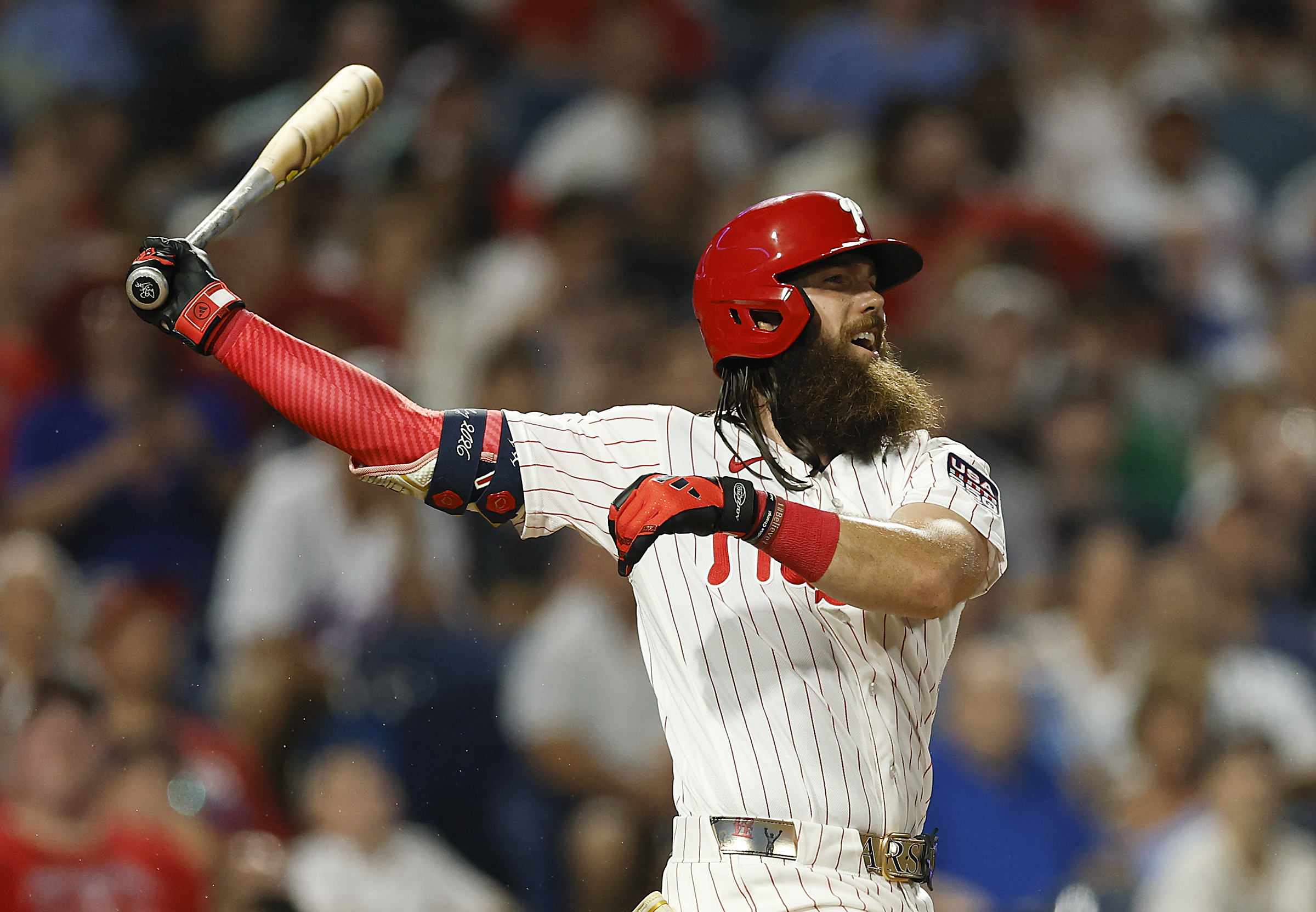
  • Brandon Marsh learned a lot clawing out of his last slump. He’s relying on those lessons to get right again.

    Brandon Marsh learned a lot clawing out of his last slump. He’s relying on those lessons to get right again.

    MIAMI — While Don Mattingly dissected the Phillies’ loss Tuesday night in the visiting manager’s office at loanDepot Park, his postgame comments were periodically interrupted by the crack of bat meeting ball.

    The window next to his desk overlooked the batting cage, and behind the closed blinds, several Phillies players were getting in some extra swings. Brandon Marsh was one of them.

    The team had just fallen to the Marlins, 1-0, in a four-hit effort. Marsh had gone 0-for-4, dropping his batting average, which had once led the majors, to .280.

    That number next to his name has been in steady free fall since the All-Star break, as Marsh finds himself in the first prolonged slump of his season. In 82 at-bats in July, the left fielder has a .146 batting average and .442 OPS. His struggles have gone along with the Phillies’, as they have a 3-9 record since the break.

    Two weeks removed from being one of the Phillies’ three All-Star starters, Marsh has lost his everyday role. His struggles against lefties have returned; in July, he has a 48% strikeout rate and .330 OPS against left-handed pitching.

    “Marshy’s just been struggling. I mean, that’s pretty clear,” Mattingly said.

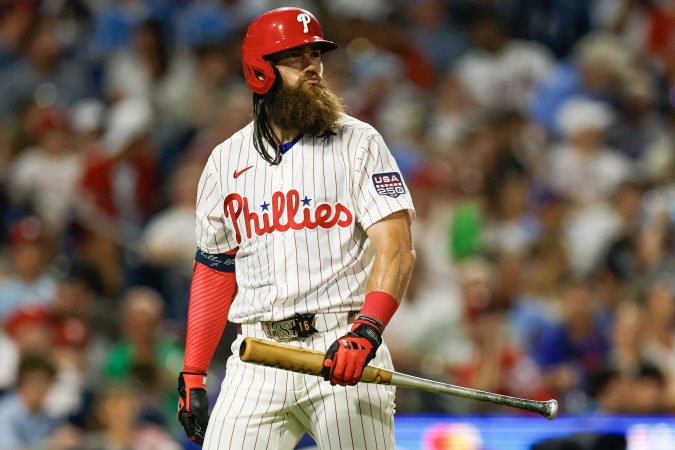
    Brandon Marsh was batting .301 going into his first All-Star Game on July 14. He’s hitting .116 since.Yong Kim / Staff Photographer

    Marsh is not a stranger to this. Last April, he found rock bottom. It was a slump so deep it overshadowed the career season he went on to put together over the next five months. But as he clawed his way out of it, he learned a lot about himself.

    “Just keep grinding, man,” Marsh said. “Just gotta keep going. Baseball’s a hard game. Even the best fail more than they succeed, so you just gotta keep going.”

    Marsh couldn’t identify one thing that has been going wrong for him with his approach at the plate this month. But his line drive rate has dropped from 24.4% across the first three months of the season to 11.1% in July.

    Accordingly, his ground ball rate (47.2%) and fly ball rate (41.5%) have spiked.

    It all contributes to a .176 batting average on balls in play this month. BABIP measures how often balls put in the field of play result in hits, excluding strikeouts and home runs from the calculation. And it’s been one of Marsh’s biggest strengths not just this season, but since he broke into the league.

    Luck can be one contributor to a high BABIP, but Marsh has sustained a .368 career marker, which places him behind only Ty Cobb (.378) among MLB hitters with at least 2,000 plate appearances. The MLB average this season is .290.

    In other words, Marsh historically has a knack for hitting the ball where defenders aren’t, but it just hasn’t been happening for him in July. (The only month in his entire career in which Marsh had a lower BABIP than this one? That would be the aforementioned March/April 2025, when it was .115.)

    “Those pitchers are good, man. So you just gotta keep going,” Marsh said. “Yeah, maybe swinging a little bit too much out of the zone, could tone it back a little bit, but I’ve also hit a lot of those pitches in my career. Just going through a little grind right now. We’ll be all right.”

    After Marsh’s extra work in the cage postgame on Tuesday, he snapped an 0-for-11 skid with a single off Marlins starter Jacob Gusto on Wednesday. He chased a pitch well below the zone to do it, but it resulted in a line drive to center that found some grass.

    It contributed to the Phillies’ early six-run rally against Miami, which they ultimately coughed up to lose 8-6 in their latest deflating defeat. In his two plate appearances after the hit, Marsh grounded out and struck out on a fastball above the strike zone.

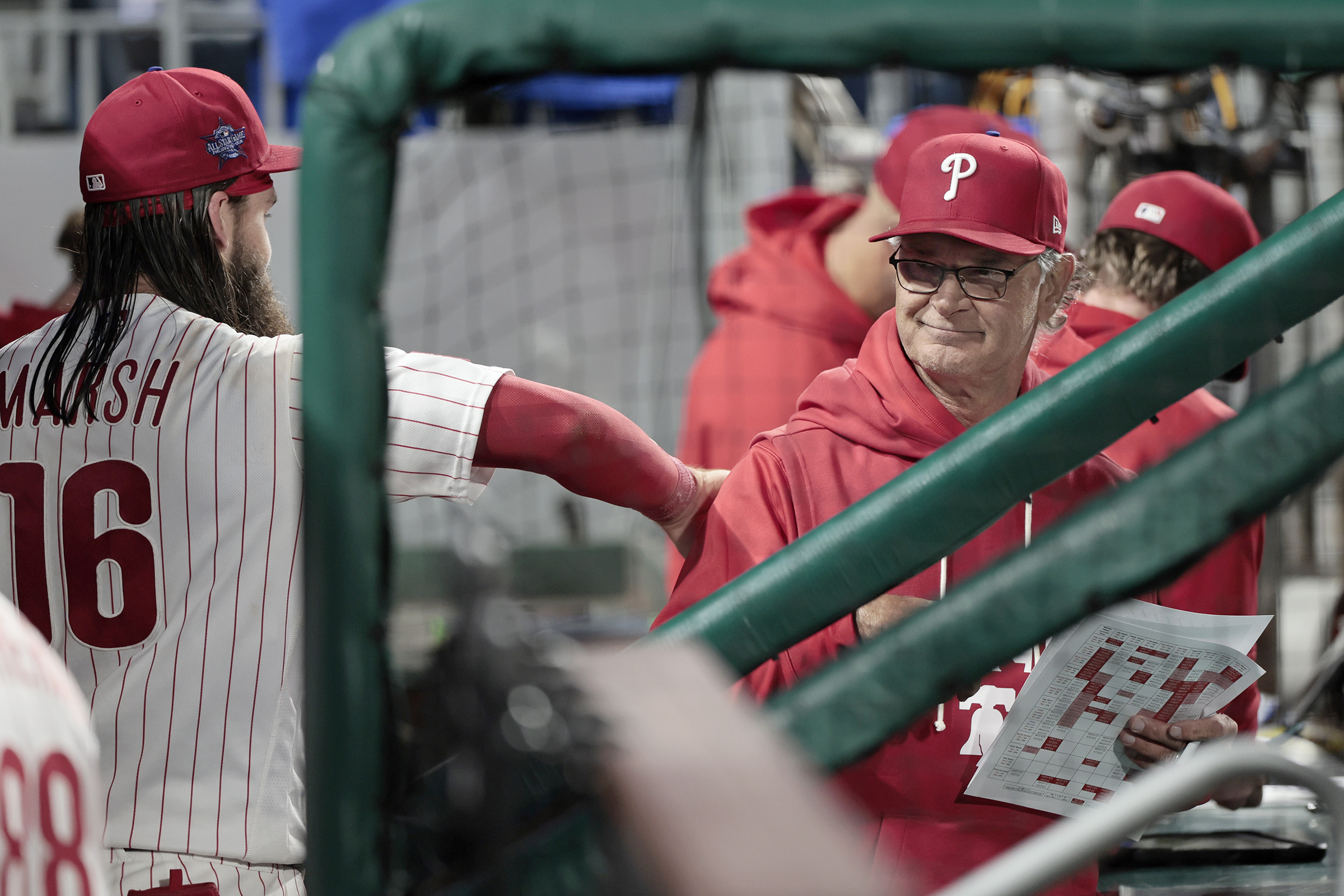
    “With him, like anybody else, we got to just keep working through it,” Mattingly said. “Probably his first prolonged struggle this year, so he’s going to come out of it, too. We just keep working and make sure he stays in a good head space, and keeps moving forward in this situation.”

    The work remains the same. That’s one thing Marsh learned from last season: to keep moving forward and not to dwell on failure, or even success. Earlier this year, when he was leading the majors in batting average, he reminded himself not to focus too much on it. The nature of baseball is that everyone cools off at some point.

    “Nobody’s going to remember this little stretch of his if he gets hot and down the stretch, he’s helping us win games,” interim manager Don Mattingly (right) says of Marsh.Elizabeth Robertson / Staff Photographer

    But just like he knew then he would slump again, Marsh knows now he will find his way out of it.

    “There’s going to be a light at this end of this, and it’s going to get going again,” Mattingly said. “So we got to make sure we stay in that space, and because he’s not getting anything that’s happened at this point back, good or bad. So it’s really what happens. Nobody’s going to remember this little stretch of his if he gets hot and down the stretch, he’s helping us win games. You get past it.”

  • How Bucks County pool player Steve Markle mastered the art of the trick shot

    How Bucks County pool player Steve Markle mastered the art of the trick shot

    At 13 years old, Steve Markle asked his parents for a not-so-typical gift for his age — a pool table. Bill Markle, his father, asked his son if he was going to use it, and Steve assured him he would.

    “Pool tables are good for storage and being in the way,” Bill recalled saying to his wife when Steve asked.

    The Bucks County native was first interested in pool after spending long summer mornings playing stickball. One of his friends had a pool table in his basement, and they would play in the afternoons to cool off.

    Steve eventually convinced his father to get him a pool table, so Bill took him to Kmart and bought him a seven-foot wooden table. Steve and his friends started making trick shot videos and posting them on YouTube. One night, Steve showed his parents one of the videos.

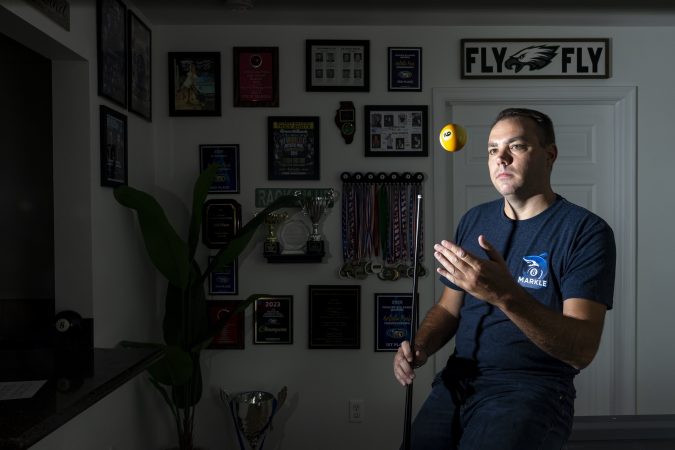
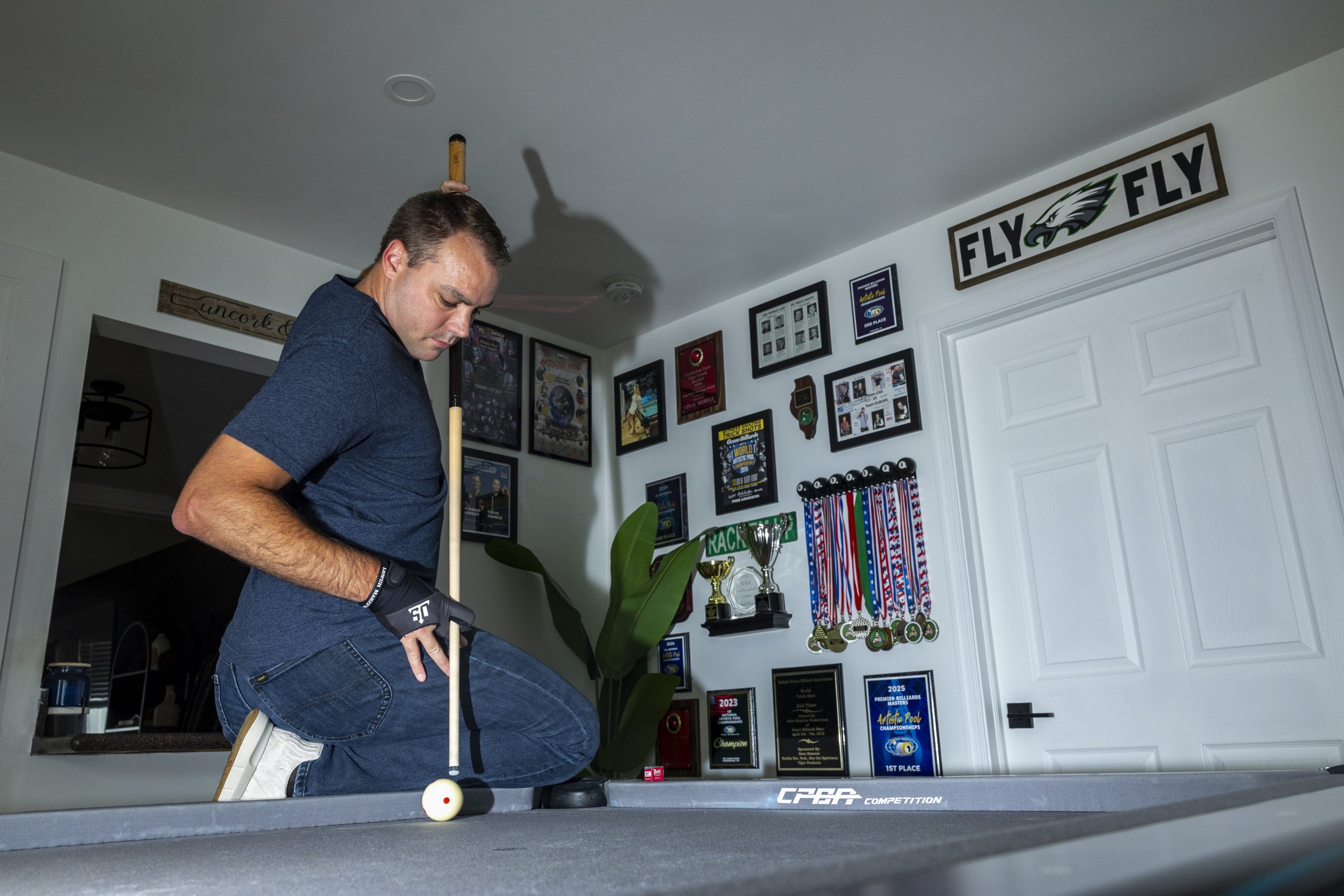
    Steve Markle began practicing trick shots at the age of 13.Aidan T. Gallo / Staff Photographer

    “We were taken aback at what he did,” Bill said. “We were like, ‘Did you really do that?’”

    That shock and surprise continued for the Markles as Steve’s career has taken off in ways they could have never imagined.

    “This game has been able to open up so many doors for me that I never thought would be open,” Steve said.

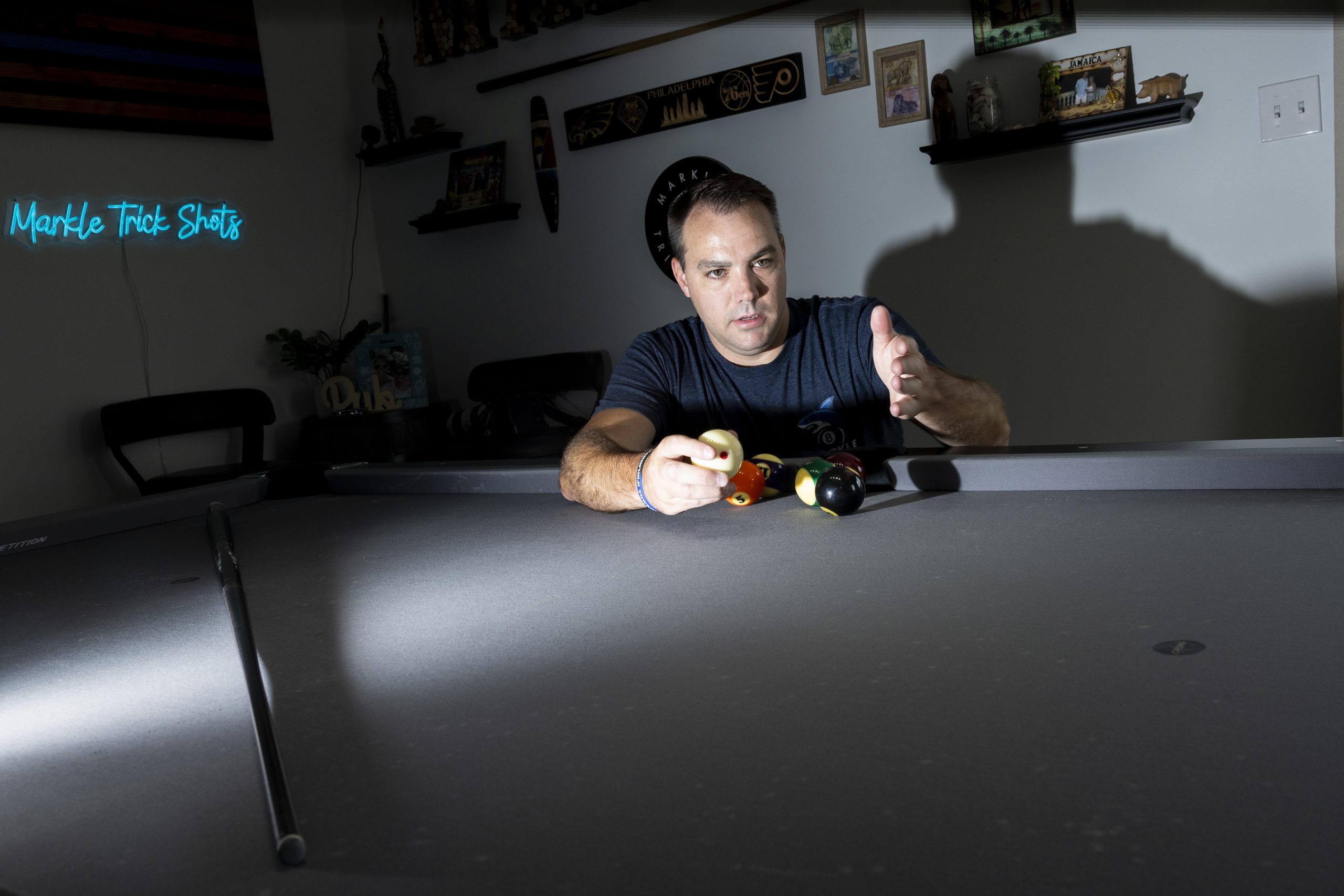
    Steve Markle, now 34, is Pennsylvania’s only professional artistic pool player and is ranked No. 1 in the United States by the Billiard Congress of America and No. 9 in the world by the World Pool Association. His trick-shot videos on social media have garnered more than 175 million views.

    Starting pool

    The Archbishop Ryan graduate’s introduction to artistic pool was random, he said.

    He was shooting pool with his dad at a restaurant in Penndel when an older gentleman approached him and showed him a trick shot where he made four balls in one shot.

    That same day, he ran over to his friend’s house and showed him the trick.

    “I brought that back to him and was like ‘You’ve got to see this; look what I just learned,’” Markle recalled.

    Before long, he was spending nearly every day practicing on his pool table and filming videos with his friend. By 16, he competed in his first trick-shot tournament in New Jersey.

    Artistic pool is one of the sport’s smallest niches, Markle said. Professional pool players must master 124 designated trick shots, with just three attempts allowed at each shot during competition.

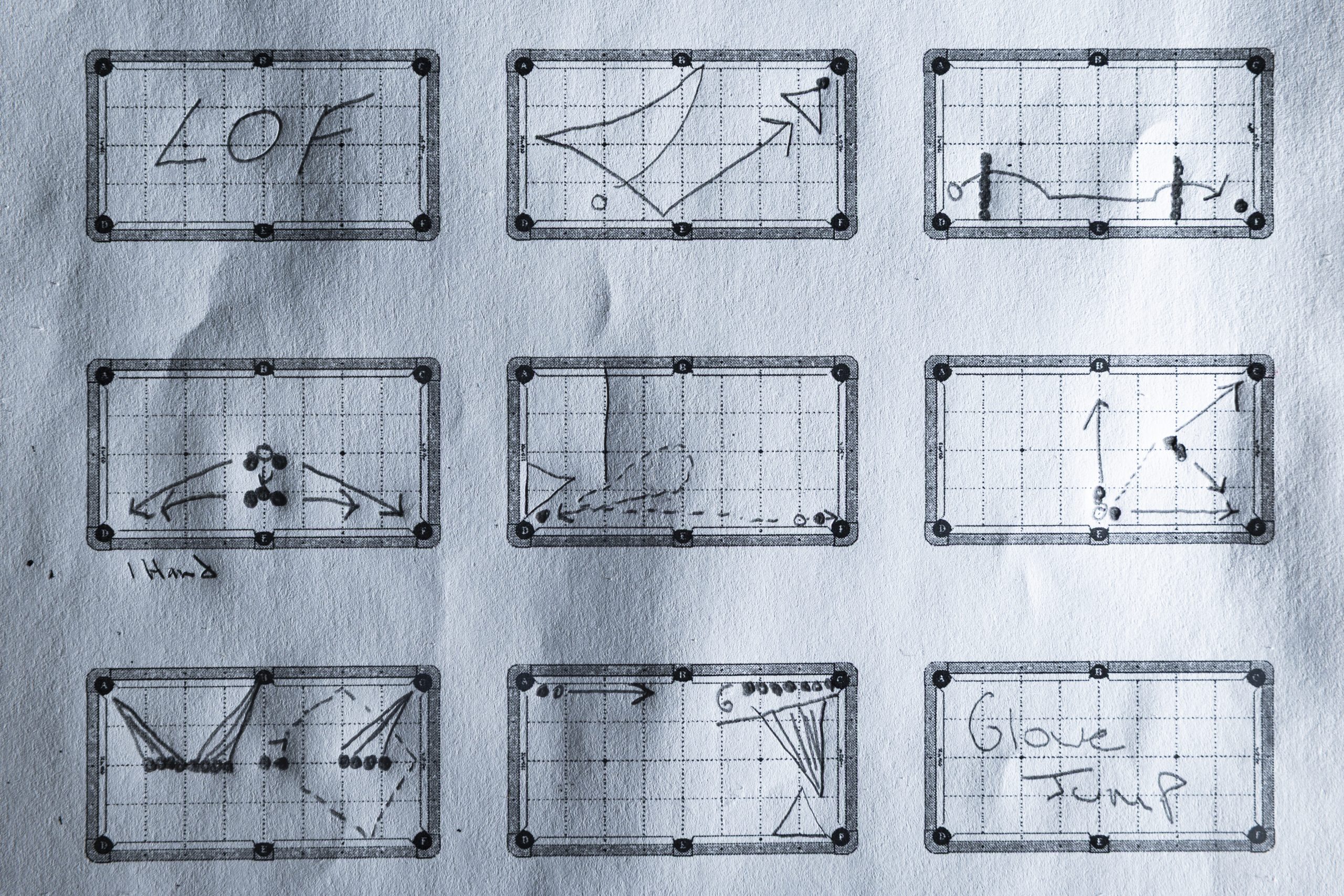
    Markle’s sketches of his new trick shots. He is organizing the 2026 WPA World Artistic Pool this fall.Aidan T. Gallo / Staff Photographer

    “To be good and consistent and give yourself a chance to win these tournaments, you really have to be consistent with all 124 shots because at a tournament you only get three attempts at each,” Markle said.

    The sport features six federations across the world, with the Billiard Congress of America in the U.S. The sport has two smaller events, U.S. Nationals and the Premier Billiards Masters Artistic Pool Championship, which are open tournaments and anyone can compete. Competitors qualify for the World Championship through smaller tournaments before earning a spot in the competition, which Markle compared to the Super Bowl for artistic pool players.

    Taking a break

    Markle competed professionally from 2008 to 2016 before deciding to take a break to join the police academy for Temple’s Ambler location.

    “Police academy teaches you a lot about people and life skills,” Steve said. “The physical training you have to go through, it pushes you a lot.”

    Markle worked part-time police jobs in Solebury Township and Bristol Borough before joining the Lower Makefield Township Police Department, where he still actively serves.

    Steve Markle competed professionally from 2008 to 2016 before deciding to take a break.Aidan T. Gallo / Staff Photographer

    Living in a one-bedroom apartment without room for his pool table and working a demanding job made competing professionally nearly impossible, he said.

    In 2023, he and his wife bought a house with enough room for his pool table, so he picked it back up. That break made all the difference in his professional career.

    Getting back into it

    The seven-year break was pivotal for his development, he said. In his second tournament back — the 2023 U.S. National — he ended up winning.

    “I never expected to come back and the same year end up winning a tournament,” Markle said. “That was something I had been trying to do since 2008, and when I won I was like all right, I’m back and definitely stronger.”

    Much of his growth was in the mental side of the game. He credits his time away from the sport and his experience as a police officer in strengthening his composure under pressure.

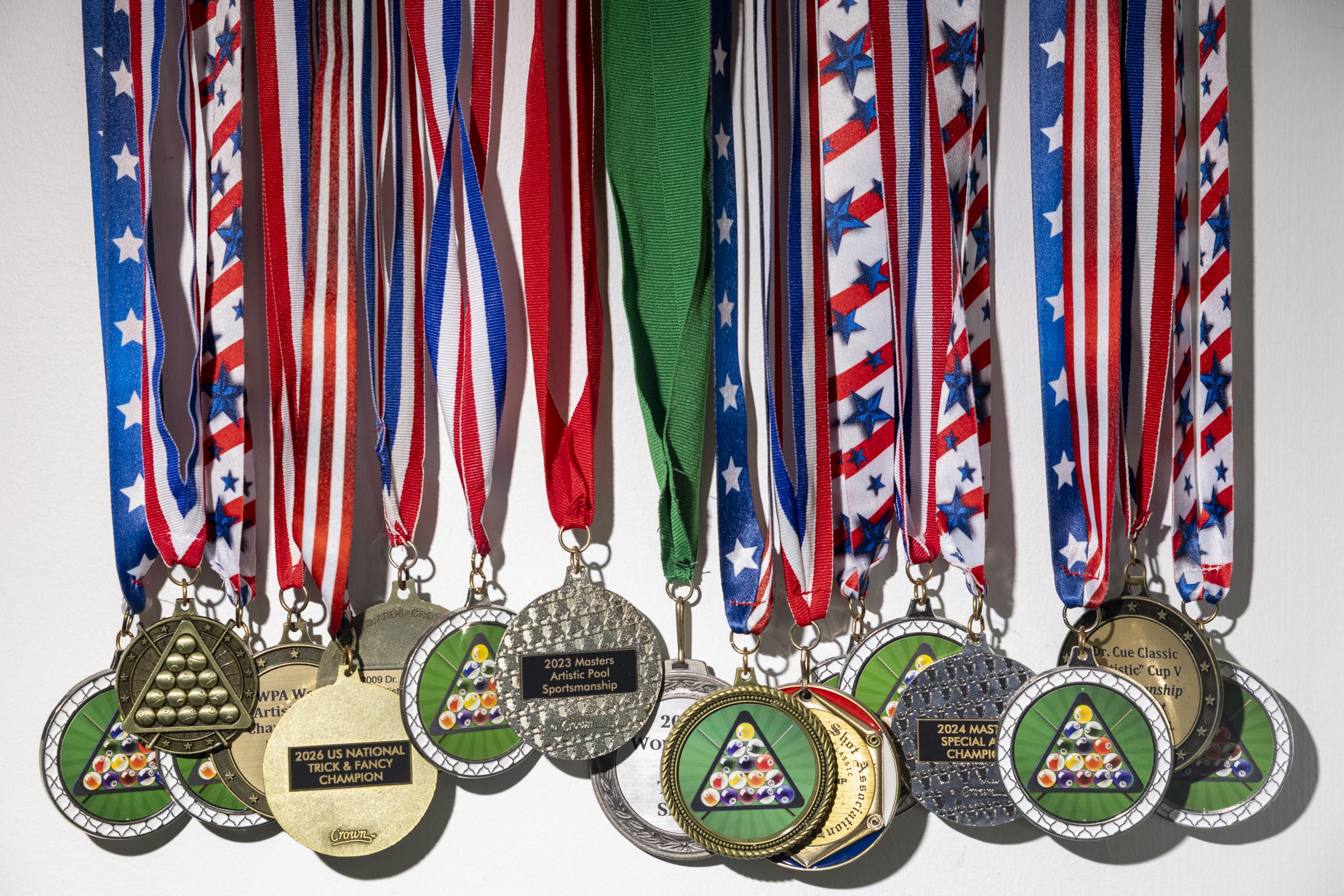
    Steve Markle’s medals from professional trick-shot competitions.Aidan T. Gallo / Staff Photographer

    “Patience and composure are the two things this sport has really taught me,” he said. “That correlates to life as a police officer because we have to stay calm in a lot of situations.”

    During June’s U.S. Nationals in West Virginia, Markle had to make one last shot to force a playoff for a chance to win the tournament. He missed the shot twice, and had one more attempt. He made the third attempt and went on to win the tournament.

    “I’m more calm,” he said. “If I miss a shot, I don’t let it get to me because my mental game is a lot stronger now. I stay more composed. Back in the day if a crucial shot came up, I may have missed it and I would’ve let it get to me, now I just brush it off.”

    Making the game go viral

    For many people, pool is synonymous with smokey dive bars, Markle said, but it has grown into so much more. The sport has continued to expand through amateur organizations, like the American Poolplayers Association, while major networks have begun streaming professional events.

    “If ESPN wants to tag along with pool, that just means that the sport is continuing to grow,” Steve said.

    Part of that growth has come through social media, where Steve has gone viral with over 20,200 followers on Instagram and 34,700 on TikTok.

    He initially posted three-to-four minute trick-shot videos on YouTube, but realized as social media began to evolve, audiences wanted shorter, more engaging content. He adapted by posting individual trick shots and combining multiple shots into fast-paced videos.

    His most popular video, called “Man’s Best Friend Jump,” features his 85-pound golden retriever sitting on the pool table while Markle jumps a ball over the dog. One of his videos, he said, has gained more than 36 million views.

    The popularity on his social media comes from the accessibility and uniqueness of the sport, Markle said.

    “Trick shots are universal,” he said. “You don’t have to know a single thing about pool to understand what I’m doing in these trick shots. It’s entertainment.”

    Coming to Philadelphia

    Markle was supposed to compete in the 2026 world championship in South Africa, but logistical issues involving exporting the tournament’s pool tables forced organizers to find another location.

    “The door was open for me, and I’ve always thought about bringing the world championship to Philadelphia,” Markle said.

    He is organizing the 2026 WPA World Artistic Pool and WPA World Freestyle Artistic Pool championship at Bluegrass Billiards in Northeast Philadelphia from Oct. 1-4. The competition will feature competitors from 10 different countries.

    Hosting the event is significant for Markle because he will have the opportunity to compete for a world championship in his hometown while introducing something new to the Philadelphia sports scene.

    “For people who are pool players that follow me, they’re used to your normal eight or nine ball matches. But this is something different that I’m bringing to the city,” he said. “It’s fun, it’s engaging, and it’s different for them.”

  • Bryce Harper took the wrong approach. But that’s not saying he wasn’t completely right.

    Bryce Harper took the wrong approach. But that’s not saying he wasn’t completely right.

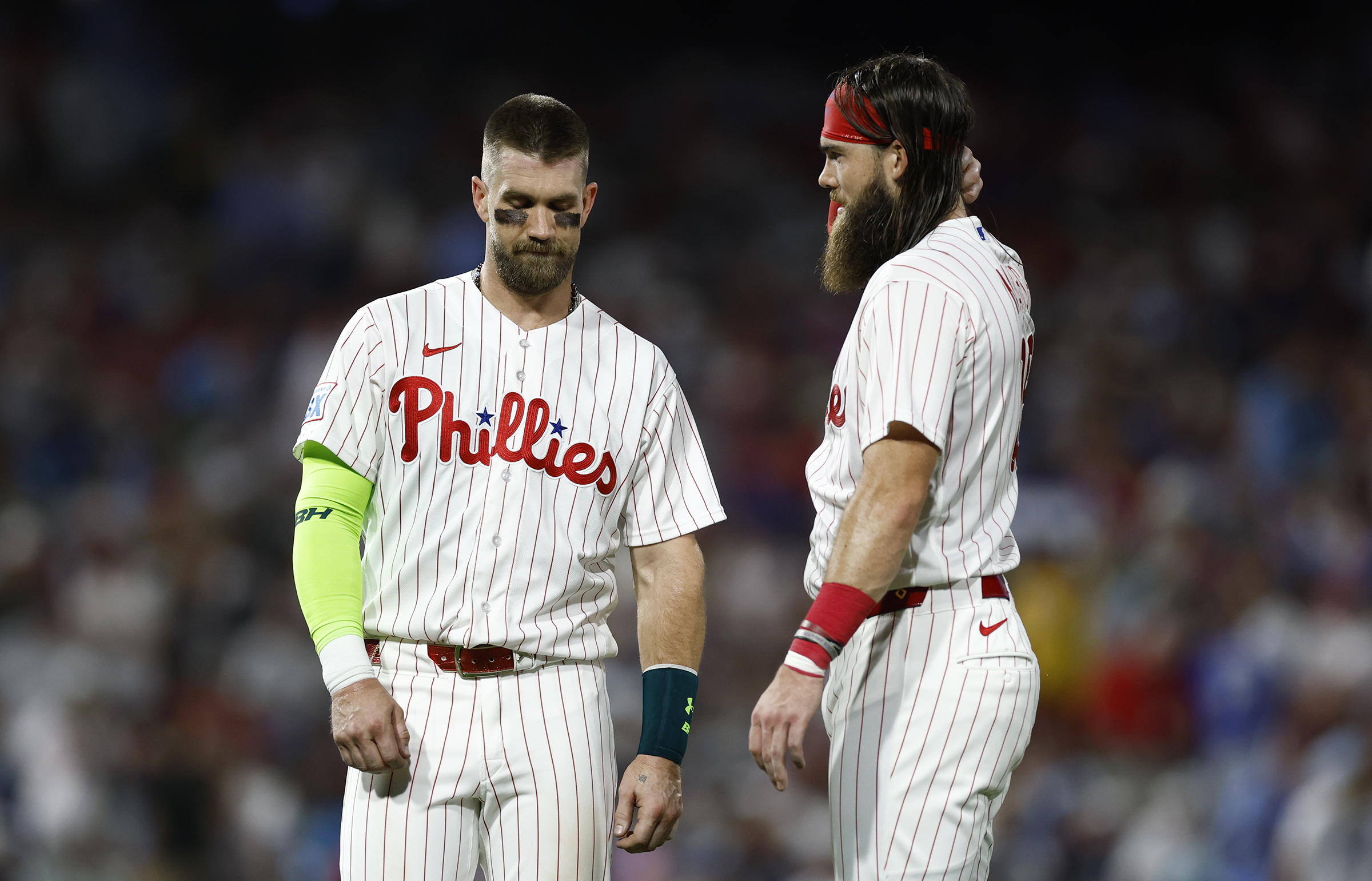
    Bryce Harper was right to be frustrated.

    He had the right diagnosis. He had the right prescription. He had the right motivation.

    He took the wrong approach.

    The first four of those things are the only ones that should matter to anybody invested in the Phillies’ approach to this year’s MLB trade deadline. That goes for the fan base and the members of the media, both social and mass.

    To the bloggers, the Twitterers and the TikTokers, the radio gabbers, the ink-stained goobers still typing with two hands, and to anybody else who has spent the last couple of days displacing their aggression upon a guy who desperately wants to win and has served honorably on the mission … let’s all heed the words of QB1 and “keep the main thing the main thing.”

    The main thing is this: Harper is right.

    “I think we need some help,” Harper told reporters earlier this week. “But you know, I think we’ve proved pretty much all year we’ve done a pretty good job. But anytime you can get some help in here and reinforcements, I think it helps.”

    The Phillies need all the help they can find. Rarely does a World Series contender arrive at August with this many holes. Dave Dombrowski will be doing his roster a massive disservice if he operates in triage mode. Starting pitching? Relief pitching? One outfielder? Two? Yes and yes and yes and yes. If the Phillies want to escape the slippery slope they are currently sliding down, they can’t afford to treat the deadline as an either-or proposition.

    “I think both,” Harper said when asked whether the Phillies need an arm or a bat. “Obviously, everybody knows what we need …”

    Phillies designated hitter Kyle Schwarber has been one of baseball’s best power hitters. But the question is, how long can he sustain this?Yong Kim / Staff Photographer

    Is it unrealistic to think that the Phillies can acquire everything they need over the next three days? Maybe. But they darn sure need to try. Harper, Kyle Schwarber, Zack Wheeler — all are at points of their career where they may never be as good again as they are right now.

    Factor in Jesús Luzardo and Jhoan Duran and Cristopher Sánchez and the Phillies almost certainly will never have another season with this much individual dominance among their stars. That group alone is enough to give the Phillies a near-even chance in practically any playoff series. But they need to get there, and they need to do it with enough depth to win three or four series in a row.

    Unrealistic? Maybe not when considering how low the bar for improvement is. The Phillies entered Thursday with the lowest on-base percentage in the majors. There’s no mystery why they seem to struggle to score runs. The fewer men a team puts on base, the fewer of them can score.

    Harper sees it. Think about your frustration level when watching it on TV. Now think about how you’d feel if you were watching it from the dugout, or the on-deck circle, or while standing on second base.

    Phillies left fielder Brandon Marsh (right) has been a consistent threat but is in the throes of a slump.Yong Kim / Staff Photographer

    The five most discouraging words in the human language are, “Now batting fifth, Edmundo Sosa.” The seven most discouraging words: “Now batting sixth, Bryan De La Cruz.” The Phillies lineup right now is Harper and Schwarber and a bunch of replacement-level players.

    That’s almost literally true, by the way.

    Besides Schwarber and Harper, the only two regulars with a positive offensive WAR are Bryson Stott and Brandon Marsh. The Phillies entered Thursday with MLB’s fourth-worst aggregate WAR among position players. That’s especially damning when you consider how good Harper and Schwarber have been. The only teams worse are the Mets, Rockies, and Reds. Just ahead of them are the Blue Jays and Angels. All will be selling off their rosters over the next few days.

    The Phillies shouldn’t need to bankrupt their system to bring in a line change at the trade deadline. Four years ago, they acquired Marsh, David Robertson, Noah Syndergaard, and Sosa midseason. Two years ago, they landed Austin Hays, Carlos Estevez, and Tanner Banks. Last year, they traded for Duran and Harrison Bader and also signed Robertson. Quantity is rarely an issue.

    Rarely has it been so sorely needed.

    The trade deadline’s dirty little secret is that it doesn’t matter nearly as much as everybody dreams it does. Baseball is too fluky a sport to expect two months of game-changing impact simply because you paid a high price. I would venture to guess that Dombrowski’s results haven’t been better or worse than the average GM.

    Former Phillies prospect Hao-Yu Lee, who was traded to Detroit for Michael Lorenzen is hitting is hitting .307 in his last 51 games for the Tigers.David Banks

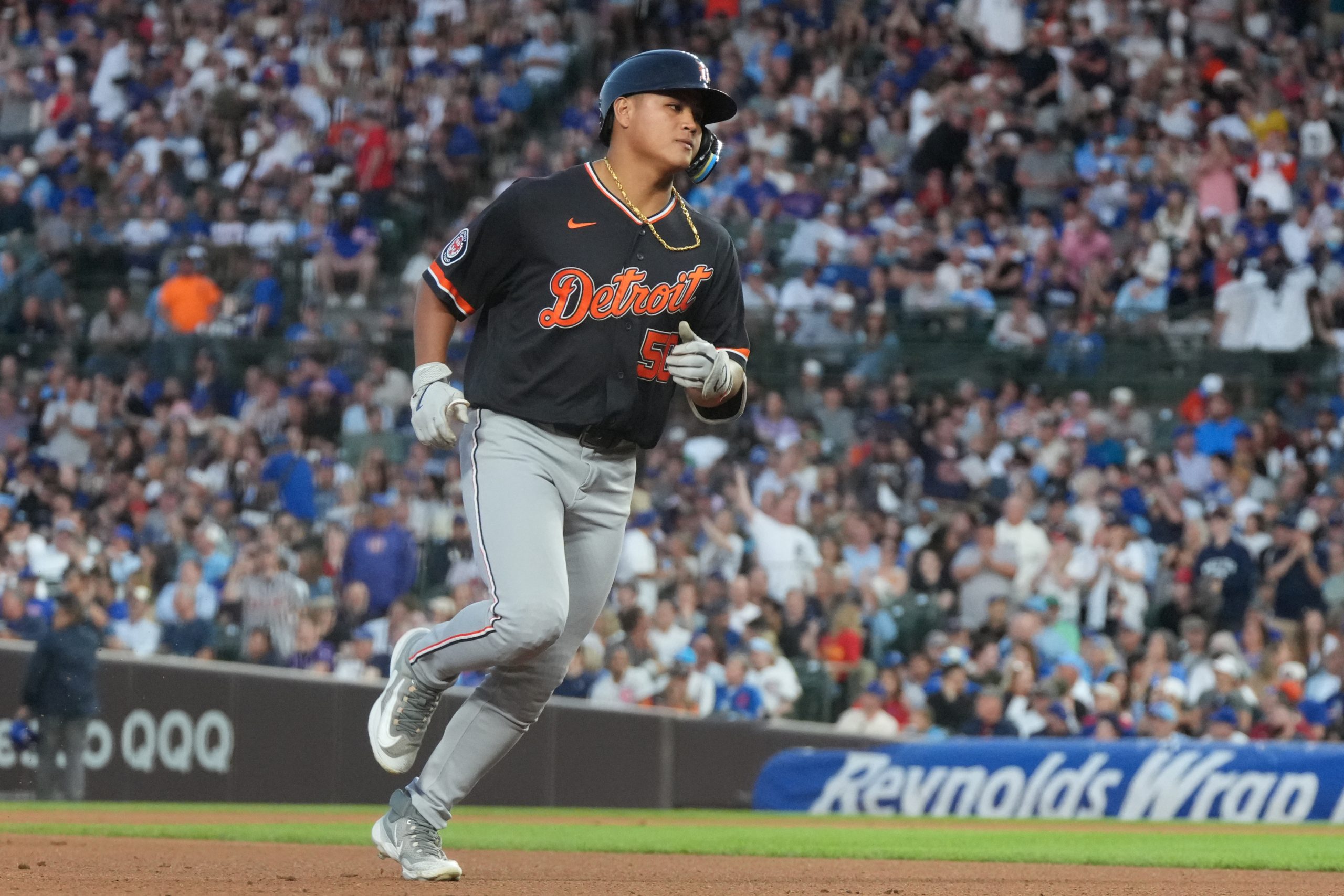
    He won the Marsh deal, marginally lost the Hays deal, and more or less got what he paid for in aggregate. One exception could be the 2023 trade for starter Michael Lorenzen. Prospect Hao-Yu Lee is hitting .307 with an .817 OPS in his last 51 games for the Tigers. He bats right-handed, by the way.

    The overarching point here is the process. The smoke signals are at least promising. The Phillies scouted Mets righty Clay Holmes’ rehab outing earlier this week. He’s a guy who would make a ton of sense, both as a rotation stabilizer in the present and as a potential postseason swingman in the future.

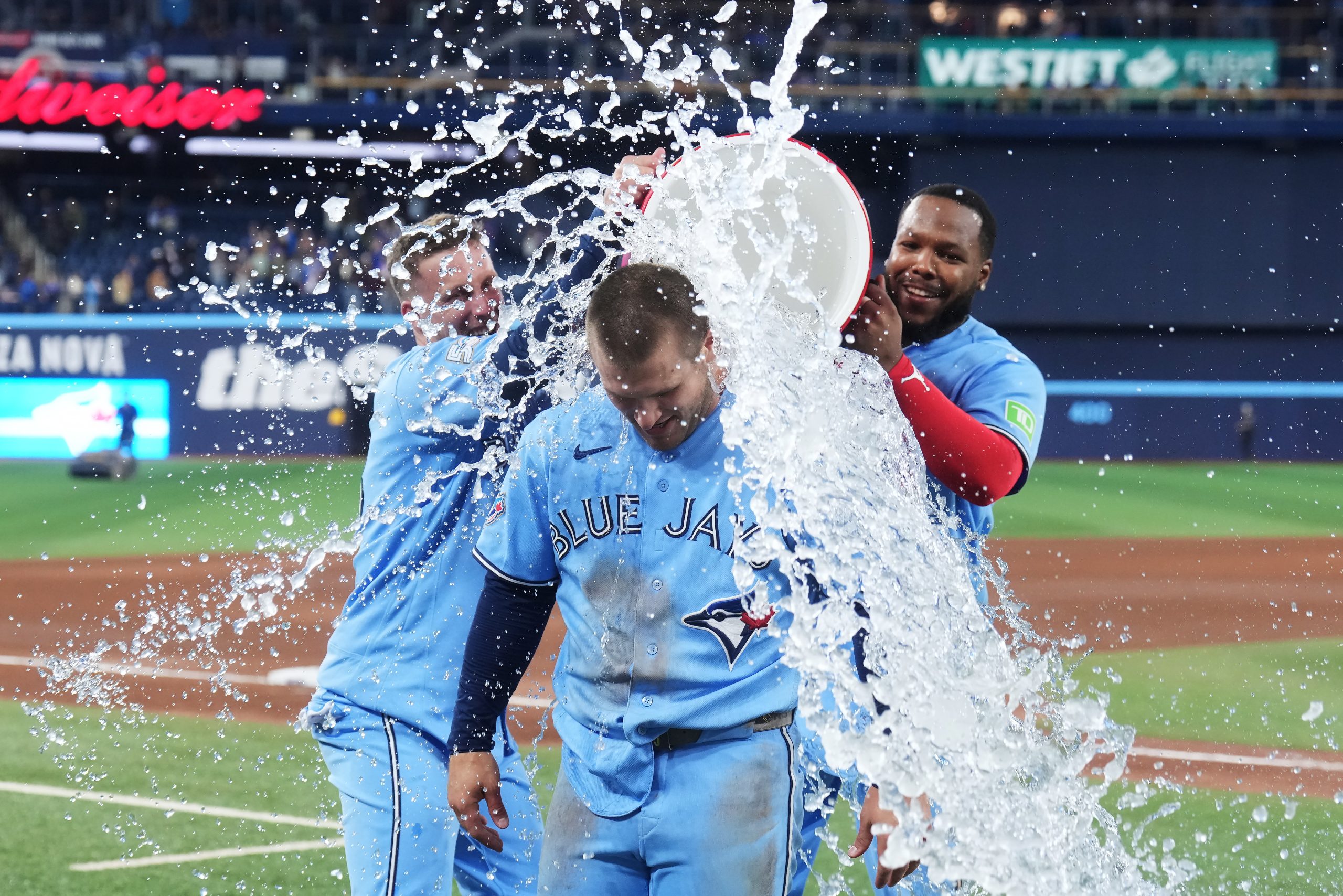
    A report from the New York Post had the Phillies interested in Blue Jays outfielder Daulton Varsho. The son of former Phillie Gary Varsho, he had five extra-base hits in the Blue Jays’ American League Division Series win over the Yankees last October. He’s left-handed, but, again, the Phillies need help everywhere. Plus, he can play center field.

    Toronto Blue Jays’ Daulton Varsho (center), son of former Phillies outfielder Gary Varsho, is a player some say the Phillies are looking at.Nathan Denette

    The broader point about Holmes and Varsho is they are the guys the Phillies should be targeting. Each is a couple months way from free agency. Dombrowski and John Middleton both have a history of taking big swings on players with years of club control beyond the present season. Duran and Marsh both fit that profile.

    Before them: Hunter Pence, Cliff Lee, etc. The Phillies’ needs are broad enough that they can’t afford to pay a premium price for any single player. Rentals sure look like the way to go for a team in their situation. Add the Orioles’ Taylor Ward to the list.

    As for Harper? From at least one perspective, the debate about his comments is much ado about nothing. There’s nothing less consequential than a player’s relationship with his front office.

    From another perspective, Harper would be wise to reconsider his approach. Nothing that he says is going to change a thing about how the Phillies operate at the deadline. It’s far more likely that his outspokenness ramps up the pressure on the guys whom he has implicitly deemed to be not good enough.

    The issue is not so much clubhouse chemistry as it is individual psyche and its impact on performance. Sure, some guys need a kick in the butt. But many others need a comfort zone. Whatever Harper’s evaluation of the talent around him, however accurate it is, the Phillies are likely going to need at least one or two of them to perform to win a World Series.

    Next time, he’d be better off keeping his honesty off the record and taking comfort in the fact that the rest of us already know exactly what the Phillies need to do.

  • Jihaad Campbell’s second season with the Eagles comes with positional clarity and a clear role. What’s next?

    Jihaad Campbell’s second season with the Eagles comes with positional clarity and a clear role. What’s next?

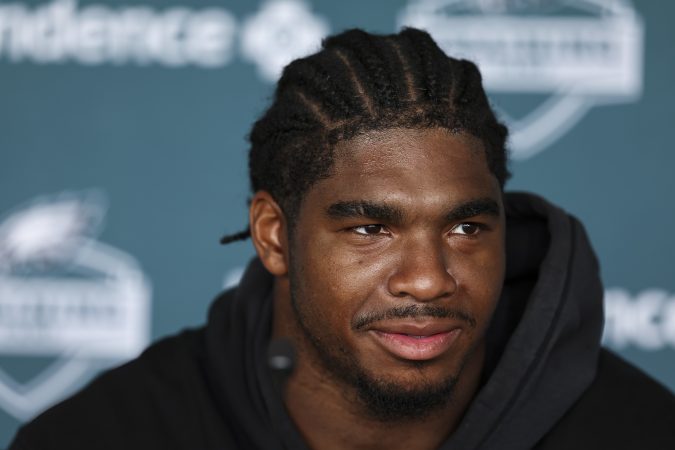
    A second consecutive offseason shoulder surgery forced Jihaad Campbell to miss most of the on-field portion of the Eagles’ spring program. Campbell’s time away from football during chunks of this offseason was somewhat forced, but also intentional, the 22-year-old linebacker said Thursday.

    College football at Alabama bled into the pre-draft process. Then came his left shoulder surgery following the scouting combine, an injury that likely caused him to slip a little bit in the draft before the Eagles traded up a spot to pick him at No. 31 last year.

    Then came that rehabilitation process, rookie minicamp, gearing up for his first NFL season, his first NFL training camp, and a rookie season that saw him filling in as a starter for the recovering Nakobe Dean, taking snaps as an edge rusher when the Eagles were banged up, and eventually finishing the season as a backup.

    Campbell, a South Jersey native, said he spent some time during the offseason and after his right shoulder surgery — which he called “a little fix-up thing” — doing some “spiritual grounding” and “self-critiquing” in an effort to “double down on myself and understand how I can be the best version of myself.”

    He’s now two practices into his second NFL training camp. He should feel more comfortable now, more secure in his role, than he did one year ago, considering there is little doubt whether he is the starter or not. He will line up next to Zack Baun, and he does not have a Nakobe Dean-like player looking over his shoulder, working his way back from an injury to take snaps away.

    Campbell’s own ailments, he hopes, are in the rearview.

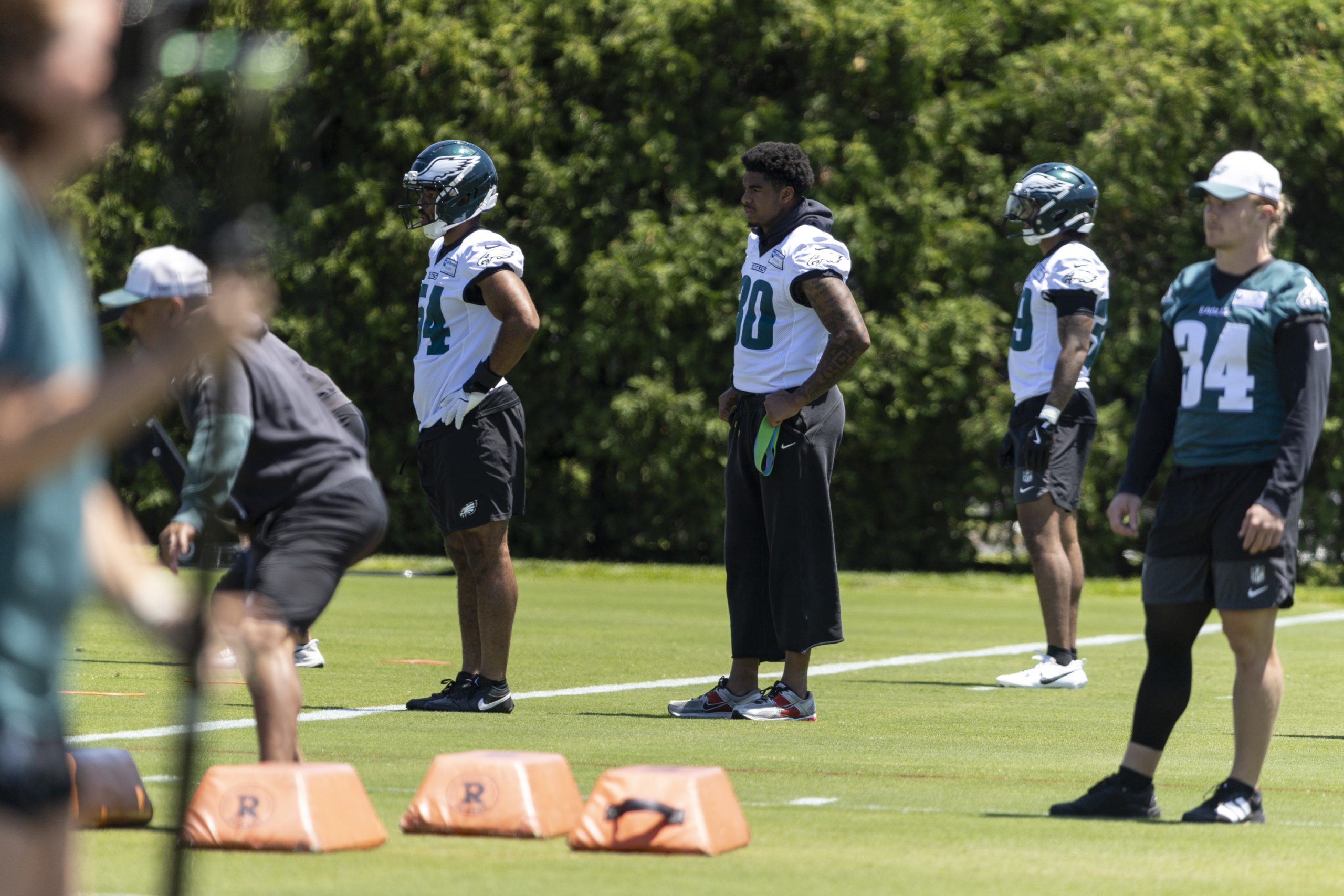
    Campbell (then wearing number 30) watched drills during OTAs and minicamp while recovering from shoulder surgery.Tyger Williams / Staff Photographer

    He showed up to camp this week a little bigger than he had been. Baun noticed. Campbell said he put an emphasis on getting stronger as he recovered from surgery. Baun said Wednesday, after the first practice of camp, that he can see Campbell’s growth not just in his body, but in the meeting rooms, where Campbell has a better understanding of the defense, having played in it last year at multiple positions.

    “I’m just glad he’s working hard and knows he’s still got some room for improvement,” Baun said.

    Defensive coordinator Vic Fangio said Thursday, though, that Campbell playing a few games primarily on the edge stunted his development at inside linebacker last season. The days of Campbell cross-training on the edge are over. He may blitz some, sure, but he’s an inside linebacker.

    Asked if he agreed with Fangio’s assessment of last season, Campbell said: “Whatever Vic says, right? He’s the big dog. I believe in Coach Fangio, his process, his understanding of how he actually wants things to look like for his defense.”

    Fangio’s defense is being stressed a little more in camp so far. The Eagles have a new offense under first-year coordinator Sean Mannion, and they’re implementing a new scheme, one that the Eagles typically have only seen against select opponents in the past. Baun said playing linebacker against an offense that runs from under center and utilizes more play action and wide-zone blocking in the running game requires “good eyes.”

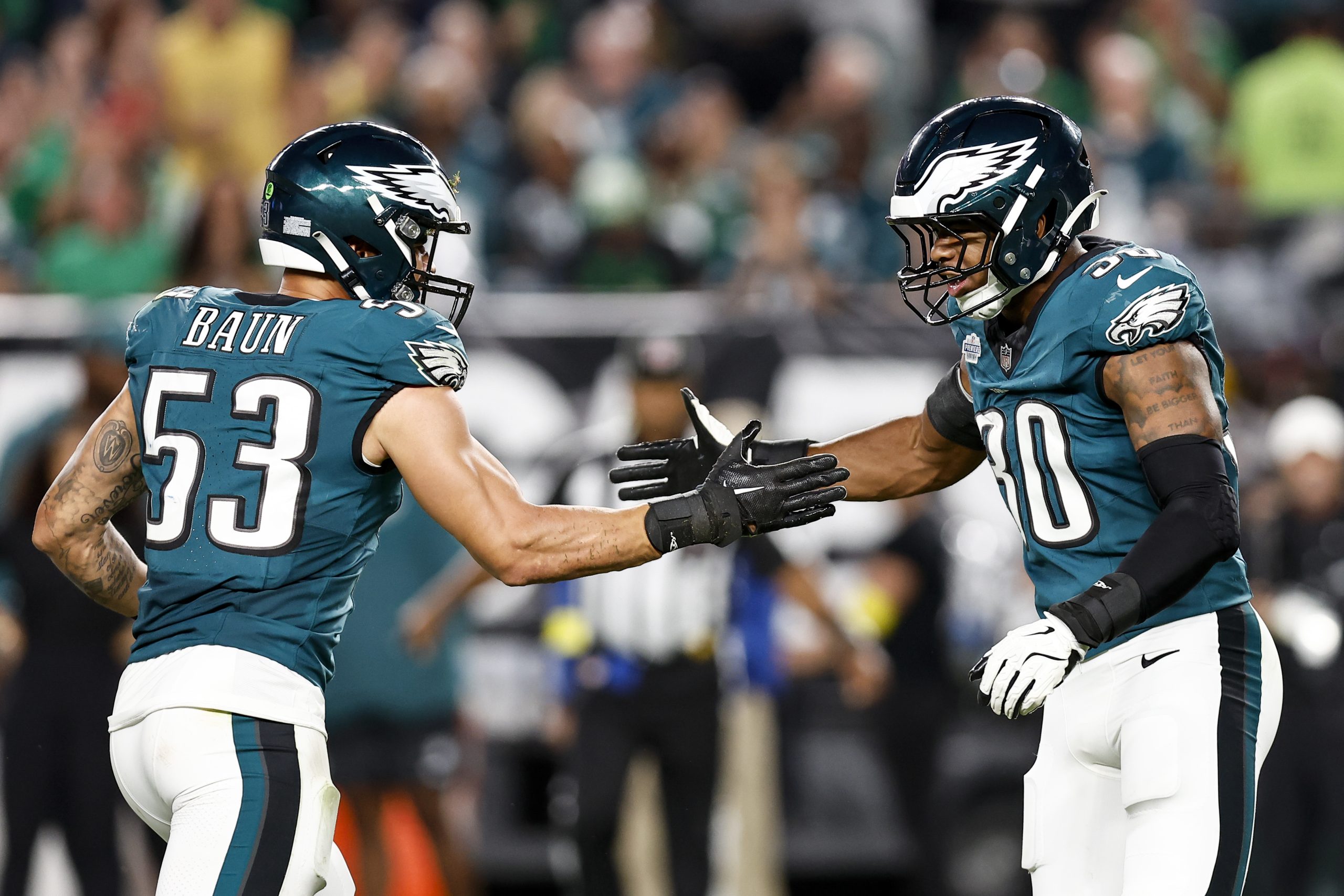
    Eagles linebacker Zack Baun (53) celebrates with Jihaad Campbell after breaking up a pass against the Cowboys in 2025.Monica Herndon / Staff Photographer

    Practicing against this type of offense should help the Eagles prepare for some of their opponents. The Eagles play principles of the Sean McVay-Kyle Shanahan scheme, and their schedule includes matchups against offensive coaches that hang from branches of that tree (Arizona, Houston, Jacksonville, Seattle).

    Campbell said he feels more comfortable in his second season, even against a new offense, dissecting formations and understanding what an offense is running and what it’s trying to do.

    Campbell wasn’t playing poorly when Dean — who now is with the Las Vegas Raiders — supplanted him as the starter last season. He forced a fumble in his first NFL game, had an interception in Week 4 in Tampa, piled up a season-high 11 tackles in Week 5 vs. Denver, had solid reps in coverage, and, later in the season, while filling in for Dean in Buffalo in Week 17, showed his speed when he raced past multiple players to recover a Josh Allen fumble.

    He finished the season with 80 tackles in 17 games (10 starts). Pro Football Focus grades are far from gospel, but Campbell was the sixth-ranked off-ball linebacker through eight games before Dean took over, and he finished the season graded 14th overall among players at his position.

    The offseason then featured another surgery, clarity on his role when Dean left in free agency, and a return to the No. 11, a number he wore in high school and college.

    What’s next?

    “When you’re a young linebacker, you want to improve on so many things,” Campbell said. “You want to grasp information from a lot of different things, a lot of greats, kind of steal their game, watch film. That’s what I’ve been doing during the offseason.”

  • Curtis’ $25 million plan for the Art Alliance building includes a 2,900-square-foot rehearsal hall

    Curtis’ $25 million plan for the Art Alliance building includes a 2,900-square-foot rehearsal hall

    It is hard to imagine, given the charred smell, wrecked plaster, and thick web of scaffolding and structural supports evident these days inside the Art Alliance on Rittenhouse Square. But a year after a devastating fire, the Curtis Institute of Music is closing in on a vision for the historic building’s next act as the new home of the music conservatory’s vocal and opera department.

    “My hope has always been that we could use this space to do for the vocal department what we did for the rest of the school or the orchestral program, certainly, with Lenfest,” says Curtis president and CEO Roberto Díaz.

    Lenfest Hall, on the 1600 block of Locust Street, opened in 2011, providing the school with 105,000 square feet of dorms, rehearsal studios, a dining hall, a light-filled rehearsal hall large enough to accommodate a full orchestra, and other spaces.

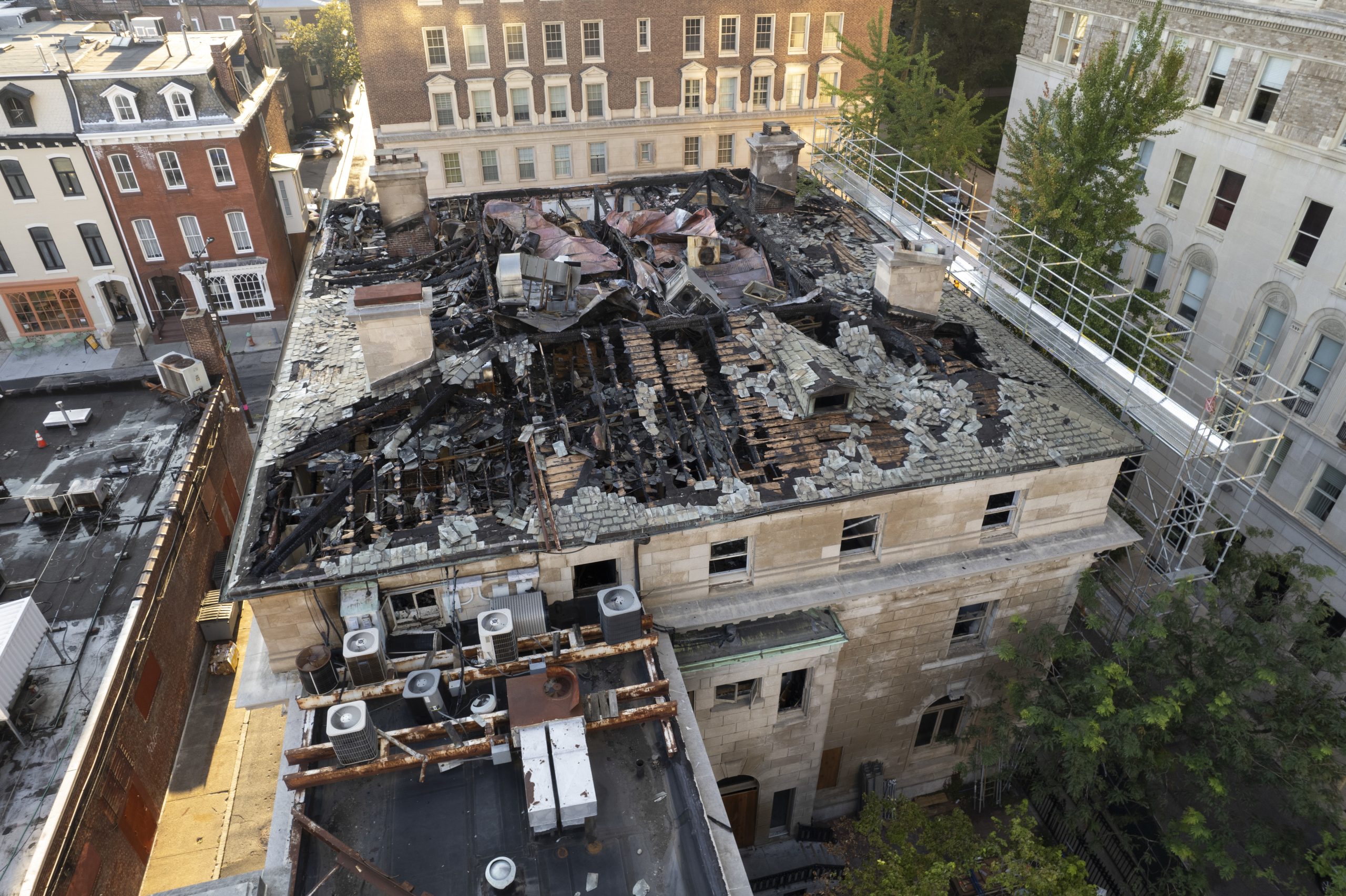
    The fire-damaged Art Alliance building at 251 S. 18th St. as it appeared in Aug., 2025.Monica Herndon / Staff Photographer

    The Art Alliance was gutted by fire and water damage in July 2025, and plans for its restoration are now being worked out by the school with Philadelphia firm VSBA Architects & Planners.

    The first floor is envisioned as having two 1,000-square-foot event spaces for master classes or lectures. The second floor will feature six teaching/coaching rooms and a student lounge. In the basement will be a catering kitchen, a costume shop/dressing room, and storage.

    The major new space in the Art Alliance building will be a rehearsal room on the third floor whose 2,900 square feet roughly equal the size of the orchestra rehearsal hall in Lenfest.

    “We could open it up for the neighborhood to come in and participate,” Díaz says, “but it gives the vocal department something that they just don’t have anything even remotely like.”

    The vocal and opera department currently occupies a series of spaces in Curtis’ main historic building on the 1700 block of Locust Street.

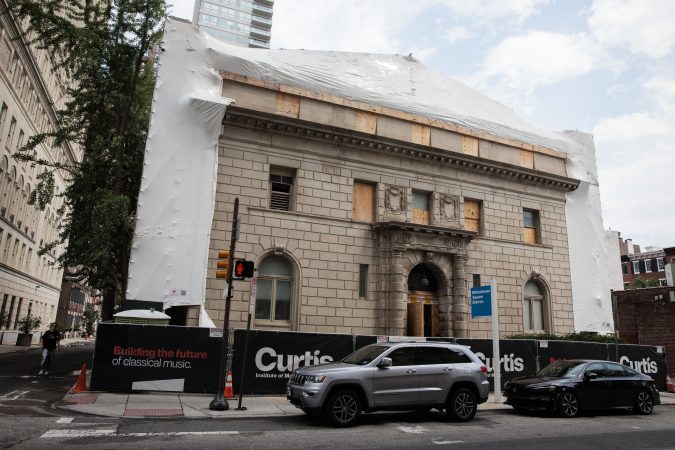
    The exterior of the Curtis Institute’s Art Alliance building, July 27, 2026.Monica Herndon / Staff Photographer

    While the restored and reconfigured Art Alliance building is primarily intended as the home of opera and vocal music, it will also likely host instrumentalists as space and scheduling allow. The school — with a student body of about 160, all on full scholarships — expects to open up events like master classes, informal workshop performances, and lectures to the public, but the frequency of public events has not been determined.

    “In addition to supporting the work of our students and faculty, we look forward to ensuring that the Art Alliance is a welcoming place for our neighbors, communities, and partners,” Curtis spokesperson Patricia Johnson said. “At this stage, we’re exploring ways this could take shape.”

    The building could open in about three years, Johnson said.

    A frieze honoring Art Alliance founder Christine Wetherill Stevenson in the building, July 27, 2026.Monica Herndon / Staff Photographer

    Among the issues still to be resolved is the eventual height of the Italian Renaissance Revival building, the onetime Wetherill mansion dating from 1906. Curtis would like to make the ceiling height on the third floor high, the better for acoustics in spaces like the large rehearsal room.

    “That’s a work in progress,” Díaz said. “When we were in the design stages of Lenfest Hall, we had to get a lot of permissions from the architectural folks and the [Philadelphia] Historical Commission and so forth. So that would be part of the process here. Obviously the more volume we have in this room, the more things we can do in it.”

    The building’s attic was destroyed in the fire, and a new one will not be built.

    Some of the plaster detail lost in Art Alliance fire.Monica Herndon / Staff Photographer

    A number of historic elements of the building have, however, been saved — the stained glass windows on the landing between the first and second floors, and a frieze honoring Art Alliance founder Christine Wetherill Stevenson, among them.

    Most of the demolition planned for the building’s interior has been completed, said Scott Kahan, senior project manager with construction management and general contracting firm C. Erickson & Sons.

    As the exact programmatic elements of the building are developed, Díaz said, a total project cost will emerge. A rough estimate is around $25 million.

    And then there is the matter of paying for it all.

    The school’s insurance claim is still unresolved, Díaz said, and philanthropy will be a part of the funding mix.

    Curtis has “lots of angels interested in opera and vocal music,” and while none has stepped forward yet, Díaz suggests the building will have naming opportunities.

    “The idea is very much like what we did with Lenfest, where Gould Rehearsal Hall has its name and we have the Locks Board Room and we have the teaching studios and rehearsal spaces that are named and so forth.”

    Most of the demolition of the Art Alliance building’s fire- and water-damaged interior is complete.Monica Herndon / Staff Photographer

    Curtis bid for the Art Alliance building in January 2025, acquiring it for $7.6 million from the bankruptcy estate of the University of the Arts, and was in the process of cleaning it out when the blaze struck. A report from the city’s fire marshal categorized the cause as “undetermined.”

    The school was exploring potential uses for the facility at the time.

    In its days as an arts institution and restaurant location, the Art Alliance lodged itself in the memories of many for its exhibitions, as well as weddings, parties, and other events.

    One element of the building that went unscathed in the fire now seems elegiac. It is a floor mosaic just inside the entrance with the University of the Arts logo rendered in red-and-white tile.

    Historic as the logo has become, that detail, Curtis leaders say, will go.