Tag: topic-link-auto

  • Trump administration may be forcing immigrant parents to choose between green cards and benefits for their U.S.-born children

    Trump administration may be forcing immigrant parents to choose between green cards and benefits for their U.S.-born children

    President Donald Trump’s administration may be creating a difficult choice for low-income immigrants who could be denied green cards by seeking public assistance to feed and access healthcare for their U.S.-born children.

    Under the “public charge” rule — which the administration plans to put in place on Sept. 18 — a person could be denied permanent residency in the United States if immigration officers believe the individual would become a drain on the country by accessing government benefits, which could include SNAP, Medicaid, and housing vouchers.

    In Philadelphia and throughout the region, the rule, though not yet official, is nevertheless having a chilling effect, frightening parents who are legal immigrants into avoiding public benefits for their children, say advocates who work with immigrants and low-income communities.

    “It could prevent families from going to food cupboards, or keep women from accessing domestic violence shelters. The effect will be broad,” said Maripat Pileggi, an attorney with Community Legal Services in Center City.

    Advocates say the administration’s public charge rule could have a major impact on so-called mixed-status families made up of immigrant adults awaiting green cards and their children who are U.S. citizens.

    Immigrant parents have customarily been permitted to apply for the Supplemental Nutrition Assistance Program as well as Medicaid and housing assistance on behalf of their children, as long as they were not seeking help for themselves.

    A spokesperson for the U.S. Department of Homeland Security said people in the United States legally “have nothing to fear” and reiterated that U.S. policy has been that immigrants “should not depend on U.S. taxpayer resources to meet their needs.”

    As the Trump administration pursues its highly public crackdown on undocumented immigrants, the rule highlights ways in which its policies have also targeted all immigrants, including ones on track for lawful permanent residency.

    “They throw another hurdle people have to worry about into their path, making America seem less desirable,” said Jeff DeCristofaro, executive director of the Camden Center for Law and Justice.

    “What happens next is people gathering around their kitchen table and deciding it’s too difficult to be in this country. So they give up and self-deport.”

    DeCristofaro said his organization, which provides free and low-cost legal services to individuals with low incomes, is “already getting calls from people who have to make agonizing choices.”

    What is the public charge rule?

    The public charge rule dates back to the Immigration Act of 1891, when entry to the United States was denied to people who could not take care of themselves, primarily “paupers.”

    In 1999, the Clinton administration clarified the public charge to deny entry to a person who would be primarily dependent on the government for cash subsistence, such as TANF (previously known as welfare), Supplemental Security Income (SSI), or long-term Medicaid. However, the guidance explicitly said that noncash benefits such as SNAP, non-long-term Medicaid, or housing help would not be considered public charge determinations.

    But near the end of Trump’s first term, the public charge definition was expanded to penalize green card applicants for using legal public benefits such as Medicaid of any kind, SNAP, and housing assistance. President Joe Biden later rescinded Trump’s version of the public charge, reestablishing the earlier iteration of the rule.

    Currently, the Trump administration’s second version of the public charge rule does not explicitly state which benefits will be penalized. Advocates, however, expect a return to 2019 standards.

    The Department of Homeland Security has calculated that more than 950,000 individuals will either disenroll from public benefits or forgo enrollment into them because of the policy, according to the Federal Register.

    Ann Sanders, the director of public benefits policy at Just Harvest, an anti-hunger nonprofit in Allegheny County, worries the disenrollments will exacerbate the already growing demands on food pantries in the state.

    “You’re going to have kids going hungry because parents will be trying to keep families together by not going for SNAP benefits,” she said. “It’s insidious. It’s awful.”

    The fear among advocates is that by not delineating the public benefits that can trip up a legal immigrant, U.S. immigration officers will be free to use the public charge rule in any way they see fit, which could severely limit the number of people accepted into the country.

    That is not the best way to assess the policy, according to Hans von Spakovsky, a senior legal fellow at Advancing American Freedom, a conservative think tank created by former Vice President Mike Pence.

    “It allows immigration officers to take a holistic view of the alien being considered for a green card. The old rules about obtaining cash and noncash benefits were rigid,” said von Spakovsky, who was a contributor to Project 2025, a more than 900-page document intended to serve as a conservative blueprint for Trump’s second presidency.

    He called the public charge rule an important tool for determining who should obtain a green card, a major step toward U.S. citizenship. “We want immigrants to be productive members helping the economy without relying on benefits,” von Spakovsky said. “It’s a matter of being more selective.”

    The public charge rule is expected to be challenged in court before the end of the summer.

    Jonathan Grode, an immigration attorney in Center City and adjunct law professor at Temple University, argued the policy stems from one of the goals of Project 2025, which is to reduce all immigration, not just illegal entry into the country.

    “What’s in the rule is secondary to the rule’s primary purpose: changing people’s idea to come to this country in the first place,” Grode said.


  • After meeting a legend, ‘rare guy’ Riq Woolen is even more fired up about being an Eagle

    After meeting a legend, ‘rare guy’ Riq Woolen is even more fired up about being an Eagle

    Riq Woolen stopped in his tracks. Following Thursday’s practice, the newest Eagles defensive back was sprinting off the field when he was waved down by one of his all-time favorite players: Hall of Famer Brian Dawkins.

    Woolen — who is the second tallest cornerback in the league — was enamored by the Eagles legend’s build at 52 years old.

    “He’s big as hell,” Woolen said with a laugh. “I didn’t expect him to be that big, bro.”

    People inside the building have been saying similar things about Woolen since he signed with the Eagles. Woolen, 27, is not your typical corner. Whereas other defensive backs stand at an average height of 5-foot-11 according to Joker Mag, Woolen has an impressive 6-foot-4, 210-pound frame. This physical advantage made him a Pro Bowler in 2022 and a key cog in the Seahawks’ Super Bowl run last season.

    These traits are the reason why general manager Howie Roseman handed him a one-year deal worth up to $15 million in March. With Woolen, Quinyon Mitchell, and Cooper DeJean in the defensive backfield, the Eagles now have three Pro Bowl cornerbacks for the first time in team history.

    Riq Woolen has an atypical build for an NFL cornerback. Monica Herndon / Staff Photographer

    So, how are things going with this potentially dominant trio so far?

    “It’s pretty cool because it’s just learning how to fit in with these guys,” Woolen said Thursday. “I know my personality, I get along well with everybody. So just being able to become close with these guys, that’s all I really care about.

    “I’ve got to be the best version of myself, and for me to do that, I’ve got to be comfortable with them, and they’ve got to be comfortable with me, and they’ve got to get to know me, and I’ve got to know them.”

    Woolen has had an excellent start to his NFL career, collecting Super Bowl hardware and 12 total interceptions. He could have signed with plenty of teams in free agency, but he said team culture brought him to the Eagles.

    “Honestly, just the culture here is just an amazing culture,” Woolen said. “They preach to us we got to work hard. It’s a hard working team. Everybody in this organization works hard. So just being able to be coached by them, I feel like it’s going to help me as a player and it’s going to push me to be a great person.”

    Riq Woolen reached a Pro Bowl and won a Super Bowl in four seasons with the Seahawks. Kyusung Gong

    It might not be a long-term marriage. The Eagles still need to pay Mitchell and DeJean, so Woolen could possibly serve as a one-year mercenary. But if he can replicate his elite production from Seattle with the Eagles, Roseman certainly won’t complain. Since his rookie season, Woolen has limited quarterbacks to a 54.2 completion percentage, which ranks 14th of the 139 corners (with at least 100 targets). He recorded his fourth consecutive season with 10-plus passes defended last year.

    Woolen’s new defensive coordinator, Vic Fangio, is thrilled about what he can do in the Eagles’ defense.

    “Well, he’s a rare guy in that you don’t see many corners in the league that are 6-foot-4,” Fangio said in May. “You don’t see many that are 6-foot-2 or even 6-foot-1 and there’s a reason for that. It’s hard to find guys at those heights that can move and mirror receivers that are hard to cover. He can do that for a guy his height. He can get in and out of breaks. He obviously has good downfield speed and his length is more of an asset than a detriment in his case.

    “I’m excited to have him. He’s been here since we started the offseason. Seems to be a great guy. He’s into being here and really looking forward to working with him.”

  • LeBron mania, Kruk’s clip-on ties, and saying goodbye to Cecily | Weekly Report Card

    LeBron mania, Kruk’s clip-on ties, and saying goodbye to Cecily | Weekly Report Card

    Philadelphia fandom: A+

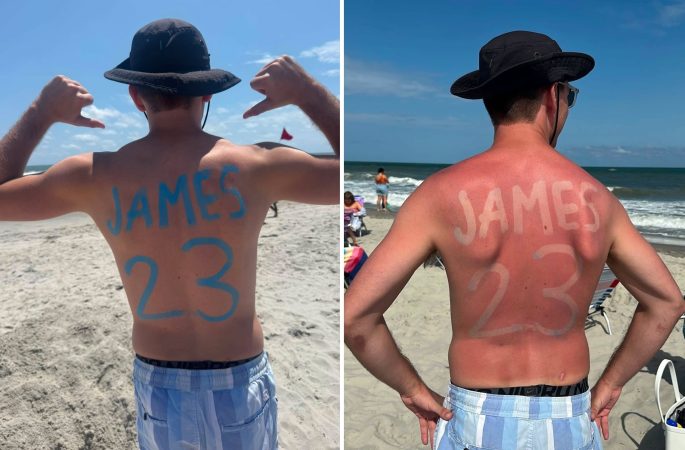
    LeBron James announced he was coming to Philadelphia. Within days, someone had intentionally sunburned a No. 23 jersey onto his back. That’s commitment.

    A Delco man spent a day at the beach in Sea Isle using zinc sunscreen to leave behind a perfectly outlined “James 23” sunburn. His family thought he’d lost his mind, and beachgoers assumed he’d lost a bet. But later that night he got to proudly show it off at Ocean Drive like he’d just gotten fresh ink.

    The man called it “Philly toughness” … sure. This is exactly why Philadelphia sports fans have the reputation we do. We climb poles, tattoo the Phanatic on our bellies, and name our dogs after backup quarterbacks. And now someone has a LeBron jersey they can’t take off for a week.

    Longtime 6abc meteorologist Cecily Tynan has spent more than 30 years as a member of the Action News team.6abc

    The end of another Action News era: F

    Thirty years is long enough for someone to become part of your routine without you even realizing it.

    For decades, Cecily Tynan has been the person telling Philadelphia whether to grab a jacket, brace for a blizzard, or enjoy a sunny weekend. You hear the forecast while making dinner or before heading out the door and rarely stop to think about who’s delivering it.

    Then one day, she announces she’s retiring.

    Cecily Tynan leaving feels a little bigger than another broadcaster calling it a career because Action News is part of the city’s daily rhythm. Generations have eaten dinner while those familiar voices played in the background.

    But it’s hard to argue with her reason. She’s retiring while she’s healthy enough to spend more time with her family, cheer at her daughter’s track meets, water ski in Florida, rescue animals, and, perhaps most shocking of all, cook Thanksgiving dinner for the first time instead of picking it up from Whole Foods.

    First Jim Gardner. Now Cecily Tynan.

    Good luck to whoever has to tell Philadelphia there’s snow coming next. Those are big rain boots to fill.

    Reacher comes to Philly: B+

    The new Reacher trailer opens with Jack Reacher fighting his way through a SEPTA station.

    So, pretty realistic.

    One of the best parts of watching a movie or TV show filmed in Philadelphia isn’t the plot. It’s playing, “I know where that is.”

    The trailer delivers plenty of that. You get SEPTA stations, Market East, the Benjamin Franklin Bridge, Center City rooftops — Reacher himself even slams a guy’s head against an Inquirer vending box. We knew Reacher was filming here last summer but seeing the finished product is still oddly satisfying.

    Maybe the action scenes will be great. Maybe the mystery will keep us hooked. But let’s be honest: Half of Philadelphia is going to spend every episode pointing at the TV and announcing exactly where they filmed it. (Bonus points if you can call out shots of Toronto masquerading as Philly.)

    NBC Sports Philadelphia analyst John Kruk following the Phillies’ loss to the New York Mets on Tuesday.NBC Sports Philadelphia

    John Kruk on national TV: A

    Every time John Kruk joins the Sunday Night Baseball broadcast, it feels like someone accidentally invited your funniest uncle to a black-tie wedding.

    This week, the conversation somehow turned into Kruk admitting he doesn’t really own ties, that most of the ones he brought were clip-ons, and then struggled to button his collar while Joe Girardi and Jason Benetti narrated the ordeal like it was Game 7 of the World Series. At one point, Kruk declared facing Randy Johnson was easier than putting on the tie.

    That’s why Philadelphia loves him.

    Kruk makes millions of viewers feel like they’re sitting in the living room watching baseball with a friend who wandered in wearing whatever he found in the closet. He’s knowledgeable without acting like the smartest guy in the room, and he’s never afraid to laugh at himself.

    Sure, NBC can put him in a jacket and hand him a tie, but they can’t make John Kruk stop being John Kruk.

    From left: Former Eagles receiver Terrell Owens, the Phillies’ Bryce Harper, and former Flyer Eric Lindros.Associated Press

    Everybody wants to be here: A

    Remember when Philadelphia was the city athletes were supposed to leave? Now, they’re choosing it.

    LeBron James is the latest reminder that the biggest names in sports don’t just tolerate Philadelphia anymore — they want to play here. And once you start thinking about it, the list is pretty impressive: Bryce Harper, Saquon Barkley, Terrell Owens, Jim Thome, Cliff Lee, Dr. J, Eric Lindros, Moses Malone. Each arrival felt like a holiday. Not every move worked out perfectly. (Sorry, T.O.) But that’s beside the point.

    For decades, Philadelphia fans carried around the idea that stars preferred bigger markets, warmer weather, or flashier franchises. We were the “underdogs.” Now, one of the greatest basketball players of all time looked around the NBA and decided he wanted to spend the final chapter of his career was South Philly. (We just have to convince him to move here now.)

    A crowd strolls along the boardwalk in Wildwood on Monday, May 26, 2025.David Maialetti / Staff Photographer

    Wildwood on TV: B

    A new comedy from the creator of Derry Girls is headed to FX, and it’s set in (and called) Wildwood.

    Now comes the important part: Please film it there.

    Hollywood has a habit of setting shows in one place and shooting them somewhere completely different. But Wildwood has too much personality to fake. The boardwalk, the neon motels, the tram car. If you’re going to call the show Wildwood, you have to earn it.

    Besides, if The Four Seasons can film down the Shore and Reacher can turn Philadelphia into an action movie backdrop, there’s no reason this one can’t let Wildwood play itself.

    If nothing else, we deserve a season of spotting familiar landmarks instead of arguing online, “That’s clearly not Jersey.”

  • The U.S. faces financial losses as the Trump administration ends temporary protections for thousands of immigrants

    The U.S. faces financial losses as the Trump administration ends temporary protections for thousands of immigrants

    The government protection that allows more than a million immigrants to live and work in the U.S. because it is unsafe for them to go home expired last month for people from Syria and Haiti.

    It is set to conclude for more than 170,000 people from El Salvador in September, and in October 100,000 from Ukraine could face the same termination of temporary protected status (TPS).

    The Trump administration promises to deport those who lose legal status ― a fate advocates say is guaranteed to hurt immigrant families that include spouses and children who are American citizens.

    But immigration researchers and organizations say that immigrants will not be the only ones hurt, that the rest of the U.S. will pay a big financial price ― in lost taxes, wages, spending, and services, as large numbers of workers and dollars exit the U.S. economy.

    The nation’s 1.3 million TPS-holders work at higher proportions than the country as a whole, pay billions of dollars each year in federal and local taxes, and contribute to the solvency of a Social Security system from which they are unlikely to ever draw benefits.

    “Even if you don’t care anything about immigration in this country, removing this many highly productive workers from the economy is going to hurt Americans in their pocketbooks,” said Rebecca Shi, executive director of the American Business Immigration Coalition, a Chicago-based, bipartisan network of companies and CEOs. “Americans are going to get hit, in terms of inflation, in healthcare, in housing.”

    Many TPS-holders work in critical jobs and industries. They are the people who build homes, keep restaurants running, fix plumbing and wiring, and, particularly in the case of Haitians, care for the ill and elderly.

    “If you access our healthcare system in any way, shape, or form, particularly elderly care or senior care, you’re going to feel it,” said Anuj Gupta, president and CEO of the Welcoming Center in Philadelphia, “Whether it’s shortage of staff at facilities, whether it’s longer wait times to get in for the appointment that you need. … And if we start going down the road of Salvadorians, Ukrainians, Venezuelans, all having their TPS removed, then those kinds of day-to-day impacts will be more profound.”

    (function(){function e(){window.addEventListener(`message`,function(e){if(e.data[`datawrapper-height`]!==void 0){var t=document.querySelectorAll(`iframe`);for(var n in e.data[`datawrapper-height`])for(var r=0,i;i=t[r];r++)if(i.contentWindow===e.source){var a=e.data[`datawrapper-height`][n]+`px`;i.style.height=a}}})}e()})();

    TPS-holders live in every state. Florida is home to the largest number, about 404,000, followed by Texas and New York. New Jersey ranks seventh, with 43,360, and Pennsylvania 14th, with 23,770, according to the National Immigration Forum.

    “Certain states are just going to get obliterated by this,” said Jeff Hornstein, executive director of the Economy League of Greater Philadelphia, a regional policy and research organization.

    The Philadelphia region will get hit, too. The league examined four countries where designations are ending or at risk ― El Salvador, Ukraine, Syria, and Haiti.

    In the local area, between 4,100 and 6,100 workers from those countries depend on TPS, and as many as 4,600 could lose legal employment authorization, the league said.

    In the city, those TPS workers bring home $36 million to $76 million in annual salaries and pay $1.5 million to $3 million in wage tax.

    The most affected local sectors are predicted to be construction, building cleaning and landscaping, trucking and warehousing, manufacturing, restaurants, and retail.

    The league’s Saloni Tandon, who directs research and analytics, said area residents may notice changes in everyday life, such as the cleanliness of offices and buildings, and the speed of delivery for goods.

    “Because our minimum wage is so low, there are fewer workers coming into the region,” she said. “So it’s going to get very tricky and very stressful to compensate for that.”

    Stephen Miller, a key White House advisor, speaks to reporters outside the White House after the Supreme Court ruling on June 25. He called Supreme Court’s ruling on TPS “a victory 10 years in the making.”DOUG MILLS

    The American Business Immigration Coalition notes that while the U.S. has only 4% of the world population, it produces 25% of all gross national product and captures 65% of global stock market value. That is tied to the strength of the economy, which depends on the growth and productivity of the workforce.

    With birth rates falling below replacement levels and a shrinking pool of domestic labor, the coalition said, the United States must embrace a robust legal immigration system to ensure sustained economic growth.

    That has become harder for people here under TPS.

    In June, the Supreme Court ruled that the Trump administration could terminate temporary protected status for countries like Haiti and Syria, putting more than 350,000 people from those lands at immediate risk of deportation.

    More broadly, the ruling appears to make Department of Homeland Security decisions about TPS unreviewable by lower courts, creating deep uncertainty for the future.

    Homeland Security says TPS has officially ended for Haiti and Syria, even though cases involving stays and constitutional issues are technically alive in lower courts. The Supreme Court decision started the process for an implementation order that typically takes 32 days. Once TPS ends for individual countries, holders revert to their previous immigration status, meaning those who have no other protection will be subject to arrest and deportation.

    The Trump administration has made a goal of ending TPS, insisting that “temporary” means temporary. It’s unclear if the administration may let TPS designations end on their staggered schedules or attempt to conclude the status for all holders at once.

    Work authorizations for Haitians expired on Monday.

    They face a forced return to a country crippled by natural disasters, governmental collapse, and ongoing gang violence.

    The U.S. government warns Americans not to go to Haiti, issuing its highest “Do Not Travel” advisory. The United Nations estimates that 90% of Port-au-Prince, the capital and largest city, is controlled by criminal gangs, the violence having left thousands dead and displaced more than 1.4 million people.

    White House adviser Stephen Miller told reporters after the court ruling that it was safe for Haitians to return, saying it would be “crazy to say that Haitians couldn’t live in Haiti.”

    Asked if people who lose TPS would be deported, he answered: “Of course. If you no longer have status in this country, then you’re supposed to be deported.”

    CBS News reported last Sunday that U.S. Immigration and Customs Enforcement is preparing a operation to quickly arrest and deport Haitians — including those in Ohio, where Trump falsely accused migrants in Springfield of eating cats and dogs.

    The Haitian Bridge Alliance, a California-based advocacy organization, warns against “one of the largest family separation events in modern-day history,” as TPS-holders live with an estimated 390,000 American-citizen children and 410,000 citizen adults.

    Demonstrators protest outside the U.S. Supreme Court after the court issued a 6-3 ruling that significantly impacts the future of Temporary Protected Status, a U.S. immigration program established by Congress in 1990.KENNY HOLSTON

    Immigrant allies are planning a rally for Haitians in Philadelphia on Thursday.

    TPS is a humanitarian status that the U.S. can grant to foreign nationals whose countries are embroiled in war, environmental disasters, epidemics, or other extraordinary circumstances. It provides work authorization and protection from removal, but no path to permanent residency or citizenship.

    People with TPS participate in the labor force at a rate of 85%, well above the overall U.S. rate of 63%, according to a new policy briefing from FWD.us, a bipartisan advocate for immigration and criminal justice reform.

    About one-third of TPS households own homes and pay mortgages.

    Each year, people with TPS pay about $7.8 billion in federal, payroll, state, and local taxes, and contribute $690 million to Social Security, FWD.us said.

    Haitian TPS-holders pay close to a billion dollars in taxes annually, according to the American Immigration Council.

    They compose a disproportionate share of nursing aides and long-term-care assistants, and any removal is expected to hurt nursing homes and assisted-living facilities that already face a shortage of workers.

    “In Ohio, Florida, and Pennsylvania, businesses will lose workers, the elderly will lose caretakers, and families will be separated,” said Vanessa Cárdenas, executive director of America’s Voice, a Washington-based advocacy organization.

    The pro-business U.S. Chamber of Commerce has urged the Senate to pass legislation that would extend protections for Haiti, in order “to prevent significant disruption to America’s workforce and avoid an unnecessary humanitarian crisis.”

    The chamber knows TPS was never intended to be permanent, it wrote in a letter to Senate leadership, but the reality is hundreds of thousands of Haitian nationals have lived and worked lawfully in the U.S., “contributing to communities and filling critical positions throughout the American economy.”

    At the same time, widespread violence and governmental dysfunction in Haiti “make safe and orderly large-scale repatriation unrealistic.”

    Ukrainians in the U.S. face a similar situation.

    Many have nothing to return to ― their homes were destroyed in the war. Or they lived in cities that face constant bombardment, making any return potentially deadly.

    The Philadelphia region has been a main resettlement area for people escaping the war, spurred by the vitality of a local Ukrainian community that is tens of thousands strong. Now Ukrainians who fled to the U.S. see their TPS scheduled to end on Oct. 19, and wonder how they will afford food and housing if that happens.

    “People are really panicked,” said Iryna Mazur, the honorary consul of Ukraine in Philadelphia.

    Ukrainians need both an extension and a redesignation of TPS ― the latter allowing newer arrivals to qualify, she said. Employers are upset, too, worried they are about to lose good, qualified workers, including many employed as mechanics or plumbers’ and electricians’ assistants.

    “They are losing their employees, and their businesses will be hurt,” Mazur said. “We need the [Trump] administration to act.”

  • What’s it like to be a player in the ‘Welcome to Wrexham’ fishbowl?

    What’s it like to be a player in the ‘Welcome to Wrexham’ fishbowl?

    If you watch the popular “Welcome to Wrexham” TV show, you might think you’ve gotten to know the Welsh soccer team’s players. And if you’re in Philadelphia, local favorite Rob Mac’s role as part-owner offers another reason to watch.

    But the scenes that unfold are real life, with real players in a real English soccer league. They actually live through everything others watch from their couches.

    That will happen again Sunday, albeit in exhibition form, when Wrexham plays Sunderland of the Premier League at Subaru Park (noon, ESPN). It’s Wrexham’s second visit to Mac’s hometown, three years after the first included a friendly against the Union’s reserves.

    What’s life in the fishbowl actually like? Centerback Max Cleworth knows better than most. Though he’s just 23, he has been with Wrexham since his youth days and has been with the first team since 2019 — a span in which the Red Dragons have earned historic promotions from the fifth-tier National League to the second-tier Championship.

    Max Cleworth celebrates with teammates and fans after Wrexham earned promotion from England’s third-tier League One to the second-tier Championship in 2025.Jon Super

    “It’s been pretty surreal, to be fair,” Cleworth told The Inquirer. “When I first heard of it, it was probably just over six years ago now, it was a bit like I didn’t believe it, wasn’t sure. And then, obviously, the cameras come in, and I remember the lads at the time were a bit unsure of the whole thing.”

    American sports fans are accustomed to behind-the-scenes shows, such as NFL Films’ famed Hard Knocks series. There are countless others these days, including in American soccer.

    But they are rarer abroad. Locker rooms traditionally aren’t open to the media in the world’s game the way they are in many U.S. sports (including MLS), and that’s especially true in Europe. So it took some convincing to make this show happen.

    These days, Cleworth said, Wrexham’s players are used to having cameras around all the time.

    A mural advertising the “Welcome to Wrexham” TV show on the wall of a house in the Welsh city in 2024.Jon Super

    “At first it was a bit strange, especially because of the level we were at — it’s [the] National League, not much coverage of that sort of league at all,” he said. “It’s gotten better over the years, but it was really a small amount of coverage. And then as you go up the leagues, the cameras become more and more, and the publicity becomes even bigger. So it’s something I’ve gotten used to, certainly, and something I’ve quite enjoyed, to be fair.”

    This season will be Wrexham’s second straight in the Championship, a level they hadn’t previously reached since 2004. Last year, they finished a remarkable seventh in the 24-team standings, just two points short of the playoffs for promotion to the Premier League.

    “I think we surprised a few people coming into last year,” Cleworth said. “The people we signed, the squad we had, we knew we’d always have a good chance, and the success we’ve had, we had that momentum that we just wanted to keep pushing and we knew how high we could finish. Obviously, everyone was a bit down after the last game of the season, but that’s past us now, and I think we’re certainly looking to be up near the top again going into this season.”

    It’s a wild rise for sure, even though cynics have pointed at the big sums of money (and, of course, publicity) offered by Mac, fellow celebrity co-owner Ryan Reynolds, and the sponsors they’ve attracted.

    Rob Mac (center) waving to fans at a Wrexham game in 2025.Getty Images

    This has led to a lot of roster turnover along the way, though that isn’t as much of a surprise. No one would expect too many fifth-tier players to be as good many levels higher.

    So it’s a compliment to Cleworth that he has made it all the way. He played 45 games last season, chipping in three goals along with his defensive work.

    “There’s been kind of an unwritten policy here that the gaffer only signs good people first,” he said, using England’s slang term for manager in referring to Phil Parkinson. “So, in that sense, it’s made easier because I’ve never had to share the changing room with what would be considered a bad lad or anything. … I’ve just tried to work hard every day and see it as a challenge to stay within a big part of the group, and I’d like to think I’ve done that over the last few years.”

    As for Mac and Reynolds, Cleworth said he has met them “a lot of times,” including at parties to celebrate promotions.

    Rob Mac (front) and Ryan Reynolds embrace after Wrexham scored a goal during an FA Cup home game against traditional Premier League power Chelsea in March.Nick Potts

    “They have the fame that comes with them, but they’re two really down-to-earth and humble people that do anything they can to help not only us as individuals, but as a collective,” he said. “I have a really good relationship with both of them, and am looking forward to seeing them.”

    And yes, he knows about Mac’s rabid Eagles fandom.

    “He hasn’t complained too much to me, to be fair,” Cleworth said. “I know a bit about the NBA — my NFL knowledge is a bit worse.”

  • Brenden Aaronson looks back at the World Cup, and ahead to his future with the USMNT and Leeds United

    Brenden Aaronson looks back at the World Cup, and ahead to his future with the USMNT and Leeds United

    MORRISTOWN, N.J. — Though the World Cup only just reached the rearview mirror, the soccer world is already speeding toward the new European club season.

    Brenden Aaronson is proof.

    After taking the three-week break that FIFA’s rules allow for players after major tournaments, the Medford native returned to work at his club, Leeds United of the English Premier League, on Monday. Conveniently, that was right as his teammates arrived in North Jersey amid Leeds’ first preseason tour of the U.S. in nearly 30 years.

    “Just great to get home, spend some time in Jersey,” he told The Inquirer. “I just needed to just get home and see family. I hadn’t been home since last September. That’s been probably the longest time I’ve been away from home.”

    Leeds fell to Wrexham of the second-tier Championship last Saturday in Tampa, 3-2, then beat fellow Premier League club Sunderland 1-0 on Thursday in Harrison, N.J. The finale is Sunday against powerhouse Liverpool in Chicago (4 p.m., ESPN Deportes), the same day Wrexham and Sunderland meet at Subaru Park (noon, ESPN).

    Alas, Aaronson wasn’t in the game squad Thursday, as much as he wanted to play being close to home. He had a lot of friends and family in attendance, and a busload of fans from the Leeds supporters’ group in Philadelphia made the trip. (Their viewing parties at the Black Taxi in Fairmount are lively occasions.)

    But if his absence disappointed the box office, it wasn’t too surprising since he’d only just returned. No one begrudged him the time to rest, having gone just about nonstop since the last preseason started.

    Not for nothing, too, he was also able to finally enjoy being a husband after his whirlwind wedding that briefly took him out of U.S. camp in late May.

    That was just one early turn in a roller-coaster ride through the World Cup.

    Brenden Aaronson (left) in action during the U.S.-Turkey group stage game, the only game of the World Cup he played in.Gregory Bull

    There were so many good moments, with three wins that brought unprecedented attention to the U.S. team and the sport. Then there was the sour ending of the crashout to Belgium and the scandal around Folarin Balogun’s red card.

    ‘An opportunity lost’

    As he looked back, Aaronson started by saying “I think we have to be proud of what we did,” before turning to the rest.

    “It’s a shame that our worst game was in the round of 16,” he said. “I don’t think that we were at our best that game — I don’t think it’s anything to blame this or that, I just think we weren’t at our best. And sometimes you have to put your hands up, because they were also very good on the day, Belgium.”

    He added that “it did feel like an opportunity lost” for a group of players who “felt very, very confident” heading into the biggest game of their lives.

    A dejected Matt Freese (right) amid Belgium players celebrating one of their goals against the U.S.Ted S. Warren

    “I felt like we knew what we could do and what we could have accomplished, and we knew we could have went farther in the tournament,” Aaronson said. “So I think that’s the thing that hurt the most. … It’s not fun when you lose that type of game, but also, I think we were upset with the way that we played, too.”

    The emotions were particularly strong around U.S. centerback and captain Tim Ream, whom Aaronson said “was really upset after the game, knowing that maybe this [was] his last one — it was difficult to see.”

    There was never any doubt about how the Balogun scandal affected Belgium’s team, especially President Donald Trump’s intervention with FIFA president Gianni Infantino to get Balogun reinstated. But there hasn’t been too much clarity about how it all affected U.S. players.

    In mid-July, Balogun told CBS This Morning that “I could almost see within my teammates a bit of nerves.” Not long after that, Ream spoke on ESPN’s First Take and said “I don’t think it affected the group.”

    Folarin Balogun’s reinstatement might have ended up hurting the U.S. against Belgium more than it helped.Ted S. Warren

    Aaronson came down on the latter side.

    “I wouldn’t say it affected us,” he said. “I think we did a good job the whole time of kind of just staying in our little bubble and not really paying attention to the outside noise. We know in those moments, of course there’s media, it’s the World Cup, everybody’s going to be talking and stuff like this. But I didn’t really think much of it, to be honest, myself.”

    He didn’t hesitate to add, though, “that it gave [Belgium] maybe a little more fire under their belly.”

    On to a new season

    As the next World Cup cycle begins, it’s natural that some players will move on, and newcomers will be welcomed. That’s likely to start in the fall, when the new FIFA calendar takes effect with a four-game national team window from Sept. 18-Oct. 3. And it will be no surprise if some of the players who’ve succeeded Aaronson at the Union get invitations, such as Cavan Sullivan, Frankie Westfield, and perhaps Quinn Sullivan too.

    A lot of U.S. fans want to see Union midfielder Cavan Sullivan (left) get a shot with the senior team this fall.Yong Kim / Staff Photographer

    “There’s a time period where you can test things out and try things,” Aaronson said. “So it’ll be interesting to see what goes on the next four years, but I’m excited for it. I think it’s an exciting time for the national team, and we need to keep getting better and better.”

    Aaronson hasn’t gotten a ton of playing time from Mauricio Pochettino, who from all indications seems headed toward a new four-year contract as U.S. manager. But it’s hard to believe that a 25-year-old who plays regularly in the Premier League, the world’s top domestic circuit, will be cast off entirely.

    He certainly intends to do his part to stay on the radar.

    “My aspiration, of course, is to play every game for the club, be a big player at the club and score goals and get assists, and then ultimately transfer that to the national team,” he said. “I want to play every game for the national team — I think that’s what everybody wants to do. That’s just been my aspiration, my goals. I’ve always been hungry like that.”

    Brenden Aaronson (right) signing autographs for fans during the U.S. team’s World Cup training camp.Jonathan Tannenawld

    And he was pleased by the news that Pochettino is likely to return.

    “I think it’s something that we can continue to grow on,” Aaronson said. “I mean, he’s coached the best players in the world [over his career]. Being able to study under him and learn from him is massive for me.”

    This will be Aaronson’s fourth season at Leeds, one of England’s most passionately supported clubs, and his third in the Premier League. As with last year, when the Peacocks returned to the top flight, the first goal is to stay up. But now Leeds can aim a little higher, with new signings bankrolled by an ownership group tied to the NFL’s San Francisco 49ers.

    “I swear, Leeds fans are everywhere,” Aaronson said. “It’s got such a big fan base, and it will continue to grow. Because what we want to do is put this club in the right spot, and that’s being in the top of the Premier League. So that’s the goal.”

    Brenden Aaronson at work during one of Leeds’ practice sessions leading up to Thursday’s game in North Jersey.Jonathan Tannenwald

    He has his share of critics in England, largely for the same reason he has them over here: for all his industrious work on the field, he’s an attacking midfielder who doesn’t score a lot of goals. But Leeds manager Daniel Farke has been one of Aaronson’s biggest backers, and intends to stay that way.

    “The task is more or less keep going exactly in the same way and develop exactly in the same way that he’s done since I’ve really worked with him,” Farke said. “I’m pleased for him that he was called up to the U.S. team — didn’t play perhaps as many minutes as he was hoping for, but he’s also a player full of potential, and he’s still in an age where he can develop and hopefully make the next steps. He is, in addition to that, also a great human being, and it’s a pleasure to work with him.”

    Forward Lukas Nmecha, who scored the winner Thursday, also gave a nice endorsement.

    “Firstly, on a personal level, he’s a lovely guy, works really hard,” he said. “On the football side, I think we all know what he brings. He’s very active in the game, he runs a lot, he creates a lot, and he’s just a good guy to have around.”

  • Over a decade removed from her Little League World Series moment, Mo’ne Davis is poised to make history again

    Over a decade removed from her Little League World Series moment, Mo’ne Davis is poised to make history again

    When Mo’ne Davis heard that there was going to be a professional women’s baseball league, she couldn’t believe it.

    “I thought it was fake at first,” Davis said. “I just thought it was a fan’s idea of wanting to see a women’s baseball league.”

    Then she saw Kelsie Whitmore (the first woman to play in a MLB partner league) sign on as a player and former baseball and softball standout Alex Hugo sign on as an adviser and thought, “OK, this might actually be a thing.” After confirming that the Women’s Pro Baseball League was actually happening and being encouraged to think about it, the Philadelphia native and Springside Chestnut Hill Academy graduate joined the 600-plus women trying out August 2025 to be considered for the draft that fall. From there, she was drafted 10th overall by the Los Angeles Queens.

    Now preparing for the sold-out opening day on Saturday in Springfield, Ill., Davis, a center fielder, is ready to pave the way for what she hopes is years of pro women’s baseball to come.

    The league currently has four teams: the Los Angeles Queens, the Boston Hunters, the New York Heights, and the San Francisco Firebells. The season consists of 30 games, running through Sept. 6, followed by two weeks of playoffs to determine the inaugural champion. Players from 11 countries and territories ranging from ages 18-40 are ready to take the field at Robin Roberts Stadium in Springfield, which will host every game this season.

    Though the league is all-new, the players share a love for a sport that often lacked opportunities for women.

    Davis has been a pioneer in the sport since her legendary Little League World Series game in 2014, when, with the Taney Dragons, she became the first girl to win and pitch a shutout. More recently, she took her skills to Banana Ball with the Indianapolis Clowns, where she’s spent the summer throwing trick pitches and dancing on the field, and she’s ready to bring what she’s learned to the WPBL.

    “In Banana Ball, we’re so used to just keeping people entertained,” Davis said. “But it’s all the same sport, and, at the end of the day, it’s all about still being able to have fun.”

    There has been growing interest in women’s baseball. MLB hosts annual girls’ baseball training camps, such as the Trailblazer Series and the Elite Development Invitational, that are growing in numbers every year.

    Davis says it’s important to remember that as the sport grows, they are following in the footsteps of the All-American Girls Professional Baseball League, which ran from 1943 to 1954.

    One of the AAGPBL players was Jeneane “Lefty” DesCombes Lesko, who pitched for the Grand Rapids Chicks in 1953 and 1954. Like many of the women in the WPBL, DesCombes grew up learning baseball and loving the game without many opportunities to play. Now 91 years old, she is cautiously optimistic about the future of the sport.

    “I’m just really anxious to see how many people actually attend,” Lesko said.

    Lesko and Davis want to see more publicity for the WPBL and its players. Davis believes that having the games in a central location will help build a community around the sport, and that the Queens can become a “fan favorite” by showing off their personalities on the field and on social media.

    “I think that’s the biggest thing, is having someone relate to you that can allow this to grow and want more people to watch because they’re like, ‘Oh my God, that person — I agree with what they’re saying, I agree with their lifestyle,’ whatever the case may be.” Davis said.

    Mo’ne Davis believes her team, the Los Angeles Queens, can become a “fan favorite.”Women's Pro Baseball League

    Lesko also emphasized the importance of supporting young girls in baseball to continue to propel interest and opportunities at the professional level.

    “My real dream has always been that every girl has the opportunity to play baseball, that they have that option,” Lesko said. “We haven’t even begun to tip the iceberg to really concentrate on finding all these girls who were brought up that way and can play baseball.”

    It’s been over 70 years since the nation has had a professional women’s baseball league, but Lesko and Davis show that there are great opportunities for girls and women in the sport.

    “When you finish and you’ve done the very best you could in sports — just like the men, you have friends forever.” Lesko said, reflecting on her pro career. “It’s been the greatest thing in my life, actually. I have a family, and I have another family, and that’s the baseball family.”

  • I just bought a South Philly house with a pristine 1950s bathroom. I want to tear it up.

    I just bought a South Philly house with a pristine 1950s bathroom. I want to tear it up.

    This week’s question (Have your own? Submit it here.):

    I just bought a South Philly house with a pristine 1950s bathroom. Everyone who sees it says I MUST keep it, pink toilet and all. But I want radiant heat flooring, marble, and a moody paint scheme. Am I a monster?

    Earl Hopkins

    NO, you are not a monster! As a homeowner, you have free will to do whatever you want with YOUR property. I’m all for architectural character, so a ’50s-style bathroom sounds beautiful. But if you want to scrap it for a more modern style, who am I — or anyone for that matter — to tell you differently? Go for it!

    What do you think, Stephanie?

    Stephanie Farr

    As someone who has pink tile in her bathroom and initially hated it when I moved in, I’d urge this reader to sit with it for a while (beyond just sitting on the toilet). My pink-tiled bathroom has grown on me over the years and now I kind of love how it feels anachronistic. I’m in the modern era in the rest of my house, but when I go to the bathroom I’m transported back to the 1950s. It’s a bathroom time machine!

    Earl, how much do you think you should let others influence your decisions with your house? Do you take input from guests? Should guests even be offering input on someone’s bathroom?

    Earl Hopkins

    No! This reader shouldn’t let any guests sway their opinion or steer their vision.

    No. 1: Buying a home is hard.

    No. 2: What may be odd or strange to one person, may be the very quirk that convinced them to purchase the home in the first place. In this case, they may have fallen out of love with the bathroom, or knew a remodel was in the cards. Either way, it’s their business.

    Stephanie, I feel like a bathroom is such an intimate place in someone’s home. What do you think?

    Stephanie Farr

    I totally get that. I think complimenting someone’s bathroom is fine but criticizing it — or the homeowner’s style preferences — is rude.

    I agree that if this person wants to renovate it they have every right to make their bathroom look like something out of the Beetlejuice house instead of out of 1950s South Philly. But, in case they feel like these comments from guests are coming out of nowhere, there is a deep appreciation for old Philly places stuck in time, particularly in South Philly. There’s an entire Instagram account called South Philly Time Capsules that features houses that haven’t been changed in decades and the first pinned post is of a pink bathroom.

    Earl, do you think there’s a way to pay homage to the old bathroom if and when it is completely modernized? Should this person take a photo of the bathroom now, frame it, and hang it up in the redone bathroom or is that just asking for more criticism?

    Earl Hopkins

    Oooh, that would be a nice touch; a great way to pay homage to the home’s roots. Plus, it could make for a great story to share with new visitors.

    Stephanie Farr

    And maybe they should save a few pieces of the tile to incorporate somewhere in the new bathroom or home too. And before the remodel, they should definitely throw a bathroom potty to send off their old restroom in style.

  • They sold two Wildwood vacation condos, then found their dream split-level in Brigantine | How I Bought This House

    They sold two Wildwood vacation condos, then found their dream split-level in Brigantine | How I Bought This House

    The buyers: Nick Matteo, an accountant, and Sandy Matteo, a nurse, both 63.

    The house: A 2,282-square-foot split-level coastal colonial with 3 bedrooms and 2½ baths built in 1993.

    The price: Listed for $699,000; purchased for $650,000.

    The agent: Maria Sacco Handle, Berkshire Hathaway HomeServices Fox & Roach-Margate

    The ask: The Matteos were ready to sell the home in Willow Grove where they raised their family to fulfill the dream of moving year-round to the Shore. They wanted a place that their children and grandchildren would want to visit and that would combine their love of the Shore during the summer with enough year-round community appeal.

    “By the time I was 58, I was trying to convince my wife to move down there full time in Wildwood,” Nick said. “That took a lot of convincing.”

    Nick and Sandy Matteo wanted a home that combined their love of the Shore with enough community to keep it interesting all year long. Vernon Ogrodnek / For The Inquirer

    The search: The Matteos shared two condos with another family in Wildwood and initially focused on the Wildwoods in their search. But people kept talking to Sandy about the charms of Brigantine.

    “People were telling us that you’ll get much better value than you would in Wildwood,” Sandy said.

    They were very close to making an offer on a house in Wildwood, when Sandy decided they should drive back up the Garden State Parkway, down the Atlantic City Expressway, and over the bridge to Brigantine.

    “We looked at 10 houses in two days in Wildwood,” Nick said. “We found one we thought we liked, looked at it the second time, and put a bid in for $130,000 less than the asking price of $880,000. The offer never made it to the seller.”

    In Brigantine, they fell immediately in love with a split-level house facing the golf course with a for sale sign out front.

    “It was 5:30 p.m., and I looked on my phone and saw a couple places, and we drove by here,” Sandy said. “I said, ‘This is the one.’ ”

    They called the listing agent from out front of the home, and she offered to show it to them the next day. “I said, ‘No, we’re about to buy a house. Can you show it to us, you know, any chance tonight?” Sandy recalled.

    “She said, I’ll be there in 15 minutes.’”

    Nick and Sandy Matteo were in love at first sight with this Brigantine split-level. They called the real estate agent from the car. Vernon Ogrodnek / For The Inquirer

    The appeal: Although the house needed some upgrades, it immediately spoke to them, combining the Shore location, across from Brigantine’s golf course, with the sturdy bones of a year-round house. “We went from one split-level to another,” said Nick.

    “We came in and I saw the staircase, and the fact that it was all split-level, I just love that,” Sandy said.

    The deal: The house was listed for $699,999, and they offered $600,000. The seller came back at $650,000, which they accepted. The seller, whose sisters had lived in the house, later offered a $1,000 credit for the non-working oven.

    The money: Nick says that once he was able to sell the shared condos in Wildwood, one for $450,000 and the other for $569,000, the couple cleared enough money to start their search. They started with a budget of $800,000.

    Selling their family home in Willow Grove, which they’d bought in 1992 for $152,000, meant they would be able to pay off the mortgage soon after closing. But to get there, they first put 20% down, and the rest in a 6.25% mortgage. Once the money from the Willow Grove sale comes in (sale price was $640,000), Nick says they will pay off the Brigantine mortgage.

    “Brigantine was economical for us,” Nick said. “It will allow us to maybe buy other things, like a pontoon boat.”

    The move: They closed on the Brigantine house May 29 but didn’t make the full-time move until July 16, after their Willow Grove house sold. Sandy went down first with the movers.

    Life after close: The first week after they moved in, the drains backed up with seaweed and other unappealing things, requiring an urgent visit from the plumbers from Zoom Drain. The oven needs replacing, and the Matteos are awaiting the installation of a new deck, a hot tub, and new shrubbery out back. They’d like to freshen the facade and get to some other upgrades, like central air, but have discovered the near impossibility of getting contractors down the Shore in summer.

    The oven is one of the things that needs to be replaced or updated at Nick and Sandy Matteo’s Shore house. Vernon Ogrodnek / For The Inquirer

    Despite those challenges, the family is ecstatic. Their son, daughter-in-law, and 6-month-old grandson claimed a sunny upstairs room with a bay window, and everyone is raving about the view of the golf course and community garden across the street.

    “My kids are elated,” Nick said. “They want to come down every weekend. My daughter-in-law said, ‘I’m going to bring the baby, and I’m going to set up shop down there.’ That was just the home run.”

    They’ve been warned about Brigantine’s notorious buzzing greenheads, but otherwise think they’ve found a warm and active year-round community, with Atlantic City right over the bridge if they need any excitement. The beach is just a few blocks away.

    “I love it,” Sandy said. “It’s a true community.”

    Did you recently buy a home in the Philadelphia area or South Jersey? Share the story of how you did it. Email Inquirer real estate reporters at properties@inquirer.com.

  • Horoscopes: Saturday, Aug. 1, 2026

    ARIES (March 21-April 19). You can tell that the way things are just doesn’t work. The wrong values are being elevated. Challenge the status quo. It’s OK if someone finds it irritating. People adapt; it’s one of their strongest qualities. Sand makes the pearl.

    TAURUS (April 20-May 20). Most people budget money and forget to budget time. Keep an eye on both now and in the weeks to come. Some things cost $20 and three weekends. Know the full price before you commit.

    GEMINI (May 21-June 21). When everything suddenly feels wonderful or terrible, urgent or pointless, hit pause. Check whether you’re tired, overwhelmed or simply too close to the problem. Black-and-white thinking often accompanies stress. Come back to it later.

    CANCER (June 22-July 22). The point of knowing yourself isn’t to think about yourself more. It’s to think about yourself less, ruminate infrequently and resist second-guessing every decision. You don’t have to figure yourself out. You just have to keep noticing what fits.

    LEO (July 23-Aug. 22). As long as people can change, the world can change. Think of the change you want and test the theory. You’re so powerful these days, and when you apply yourself, you make a difference.

    VIRGO (Aug. 23-Sept. 22). If you can explain a thing simply, you’ll understand it better yourself. And if you can condense it to one line, or a good title, even better. Once you know the short version, the rest comes with less effort.

    LIBRA (Sept. 23-Oct. 23). Stuck? A distraction will help. It brings you back to what matters to you. Your attractions and distractions are clues about your priorities and preferences. When something makes you stop and stare, it’s telling you something about yourself.

    SCORPIO (Oct. 24-Nov. 21). You don’t define people by their worst moment. The proof? You’ve nearly forgotten that someone wronged you because you’ve focused on the many things done right. You naturally notice what’s good in people, and it brings out the best in them today.

    SAGITTARIUS (Nov. 22-Dec. 21). You’re catching on. It’s almost easy for you now. Remember when you were only dreaming of being in this position? Now you’re doing it — not at the level you want to be, but every repetition counts toward that aim.

    CAPRICORN (Dec. 22-Jan. 19). People will check you out, watch what you’re doing or simply take more interest in you. Sometimes their curiosity feels nice, and other times it feels like criticism. Either way, you’re the only one who needs to feel good about your self-expression.

    AQUARIUS (Jan. 20-Feb. 18). Competition isn’t just something people do for fun or reward or the satisfaction of meeting goals. We evolved in social groups where status, skill and cooperation had real consequences. Today a “harmless” contest taps into ancient instincts.

    PISCES (Feb. 19-March 20). Surprisingly, the situation from last week is still on your mind. Something that was said is hard to let go of. Sure, the interpretations are endless. To examine them all would be exhausting. Choose one and move on.

    TODAY’S BIRTHDAY (Aug. 1). It’s your Year of the Puzzle Box when astoundingly complicated things just come together piece by piece, patience pays off and each solution reveals another opportunity. More highlights: A stressor is lifted from you almost by magic and you have room for new interests and relationships. A side project becomes a real source of income. You become the person who brings people together. Scorpio and Capricorn adore you. Your lucky numbers are: 20, 44, 13, 2 and 7.