Tag: topic-link-auto

  • Police were searching for a man who fired a gun inside a Walmart in Delaware County

    Police are searching for a man who fired a gun inside a Walmart store in Delaware County, wounding an employee.

    Around 7:30 p.m. Friday, police responded to a report of shots fired inside the Walmart at 50 N. MacDade Blvd. in Glenolden. Officers found a woman suffering from a “non-life-threatening” wound to the calf, police said Friday night in a video NBC10 Philadelphia posted to social media.

    The woman, a Walmart employee, was taken to the hospital and is “expected to be just fine,” police said.

    A disagreement between two customers led up to the shooting, police said.

    Police said they recovered the gun that was fired.

    Police initially searched a nearby ShopRite supermarket where some witnesses said the shooter ran to, but police did not find the gunman, who was described as wearing an orange sweatshirt and black pants.

    Police said they believed the man was shooting at someone and they were checking with area hospitals in case a victim arrived for treatment.

    A Walmart spokesperson said the safety of associates and customers is a top priority.

    “We’re grateful to first responders for their swift response and are working closely with law enforcement as they continue their investigation,” the spokesperson said.

    Police said there was no immediate threat to the public.

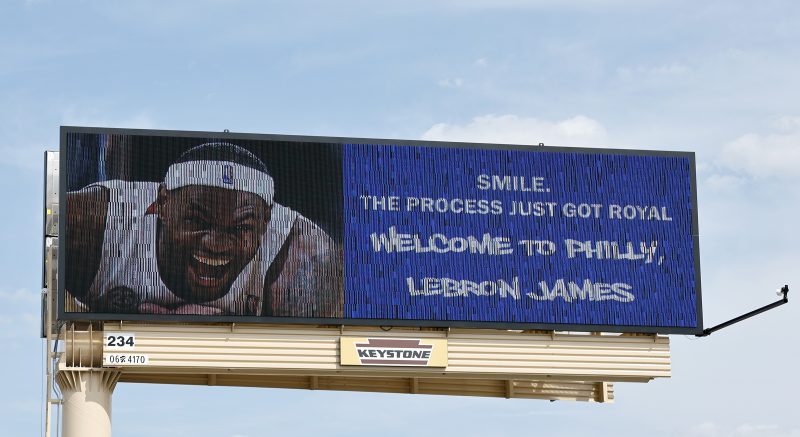
  • LeBron James could live in NYC as a Sixer. Philly’s wage tax has no exemption for a King.

    LeBron James could live in NYC as a Sixer. Philly’s wage tax has no exemption for a King.

    LeBron James is going to take his talent to South Philly, and a portion of his salary to City Hall.

    The newly signed Sixer — that feels so good to write — is being rumored to live in New York City and commute to games and practices by helicopter, according to ESPN.

    Commuters who live elsewhere but work in Philly are required to pay the city’s wage tax on a portion of their salary. And there is no exemption in the tax code for a King.

    Main Liners, rejoice. Next time you look at the withholdings on your pay stub, you are allowed to proclaim: LeBron, he’s just like us, amirite?

    In fact, James has likely paid the Philadelphia wage tax throughout his career for games he played here against the Sixers.

    But how much of James’ $8 million salary over two years counts toward the wage tax will depend on how, and where, No. 23 spends his time from training camp to the final day of the season.

    Let’s break it down.

    What is Philly’s wage tax, and does it apply to athletes?

    Philadelphia levies a 3.735% tax on the entire income of its residents, and 3.425% on the income nonresidents earned working in the city.

    The wage tax is one of the city’s three major revenue sources, alongside property and business taxes, and has brought in more than $2 billion annually in recent years. A third of the taxes collected comes from commuters.

    Philly’s tax on earnings is among the highest in the country, and the city led the charge in the 1990s to ensure professional athletes paid their share. It is now common practice for cities to impose a so-called jock tax on players — home and visiting — but athletes are taxed in the City of Brotherly Love under the same wage tax as everyone else.

    What counts as a Philly workday for LeBron James?

    Calculating the wage tax for commuters can get tricky, especially since remote work has become common.

    Every day of work that requires a nonresident to be in Philadelphia counts toward the tax.

    The question for James, and other athletes, is what counts as a working day — and how many of those days he spends in Philly vs. the Sixers’ training facility in Camden.

    Los Angeles Lakers’ LeBron James, left, shares a laugh with Philadelphia 76ers’ Tyrese Maxey, right, during an NBA basketball game, Sunday, Dec. 7, 2025, in Philadelphia.Chris Szagola / AP

    Practice, film review, rehab, and games could all count as workdays, said Stephen Kidder, a tax attorney who specializes in professional sports.

    “Every single one of those days is a duty day for a professional athlete,” Kidder said.

    A spokesperson for the city said, “Philadelphia welcomes LeBron James with open arms,” but did not respond to a request for comment about any special guidance for athletes.

    How much will LeBron James pay in wage taxes?

    If James ends up living in Philly, the calculation is simple. He would have to pay 3.735% of his annual salary of $4 million — roughly $150,000 — regardless of where he spends his time.

    But if he lives outside the city, it comes down to counting days.

    Without knowing James’ overall number of workdays in the year, and how much of that time is spent in Philadelphia, it is impossible to estimate his tax bill.

    The number of duty days for an NBA player can vary widely, depending on practice schedule, depth of playoff run, and other activities, such as promotions.

    An often-cited number to get a sense of the size of the tax bill for NBA players is 200 workdays.

    If his only Philadelphia workdays were the Sixers’ 41 home games, and if, as seemingly the youngest 41-year-old in history, he played in all of them, roughly 20% of King James’ income would be earned in Philly.

    In this scenario, the city would tax 20% of James’ annual income at the 3.425% rate for nonresidents, for a hypothetical tax bill of around $28,000. That number would decrease if he missed some home games, or increase if he attended other team activities in Philadelphia.

    (This writer refuses to make any calculation related to the playoffs that could constitute a jinx but suffice to say: See you on Broad Street next summer.)

    Do taxes affect players’ decisions?

    Professional athletes and the associations representing them care a lot about state and local taxes, and are fighting against them.

    The MLB, NHL, and NFL players associations, alongside three former professional athletes, sued Pittsburgh over its 3% jock tax for visiting players. And last year the Pennsylvania Supreme Court struck the tax down because it was higher for nonresidents than for residents.

    City and state taxes are part of the package when athletes choose where to play, according to Kidder, who represented the associations in the state Supreme Court case. A professional athlete in Florida owes the state no tax, for example, while California has a jock tax of up to 13.3%.

    “Some athletes may be in a point in their career where it doesn’t matter that much,” Kidder said. “But for other athletes it may be a big difference playing for a team based in Florida compared to a team based in New York.”

    Ed Wasielewski, a Philadelphia-based NFL agent and founder of EMG Sports, says tax considerations come up often in free agency deals. The difference between no tax, Philly’s 3.735% tax on residents, and California’s 13.3% jock tax amounts to millions of dollars in take-home pay.

    “A player is well advised to have a good accountant, a good attorney, and a good agent team to correctly analyze the tax consequences,” Wasielewski said. “It definitely comes into play in contract negotiations, especially in free agency.”

    If James chooses to live in NYC and commute to practices in Camden and games in Philly by helicopter, taxes might not be high on his list of concerns.

    New Jersey and New York have state jock taxes, and New York City has a new pied-à-terre tax on luxury second homes.

    At least one person in the Sixers organization, it seems, is not working overtime to duck a tax.

  • I’ve caught real voter fraud. What Trump’s saying about New Jersey doesn’t come close.

    I’ve caught real voter fraud. What Trump’s saying about New Jersey doesn’t come close.

    When I heard that roughly 6,600 people who were not American citizens were registered to vote in New Jersey ahead of the 2024 election because of a software glitch, I felt a familiar sense of dread.

    It wasn’t just because having ineligible voters on the rolls is concerning and never should have happened. It’s because despite what President Donald Trump would have you believe — with his unfounded claims of mass voter fraud — there is absolutely no evidence that these kinds of irregularities are the result of any organized effort to influence our election results.

    For Trump, this was not a coding error. It was evidence that America’s elections have been corrupted and the only way forward is to pass the SAVE America Act, a measure that would make it more difficult for many people to vote and which would represent the biggest ever federal intrusion into state control over elections.

    “These are just the ones that got caught,” the president wrote — again, without any evidence — in a social media post urging passage of the measure. “The real numbers will prove to be many times this amount.”

    That kind of rhetoric is the exact opposite of what our electoral system needs. Election fraud, administrative mistakes, and other voting irregularities deserve careful investigation, not fearmongering. I know this firsthand.

    Before joining The Inquirer, I worked at the Philadelphia City Commissioners where I investigated and identified real examples of voter fraud.

    What I saw when I worked in the system — and what my reporting has shown in the years since I’ve left it — is that electoral fraud is exceedingly rare; that the public officials I worked with didn’t hide or ignore any problems; and that when mistakes are made, they are found, fixed, and handled transparently.

    That last is exactly what New Jersey Gov. Mikie Sherrill did on July 21 when she explained that because of an error at the state’s Motor Vehicle Commission, a computer system erroneously registered people who were not eligible. Officials said that the 400 or so people from that pool who voted lived throughout the state, were registered in both political parties, and there was no evidence that any election results were swayed by their participation.

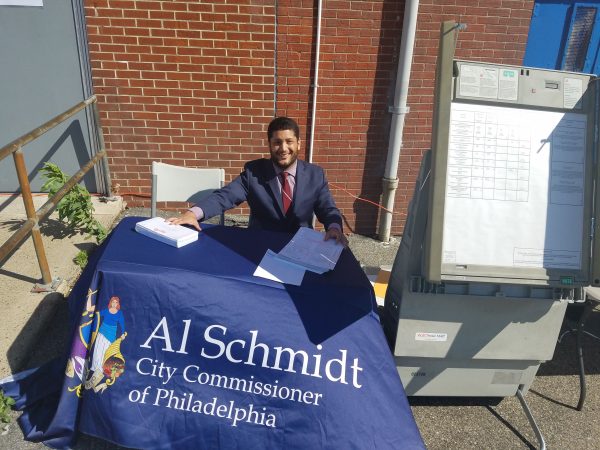
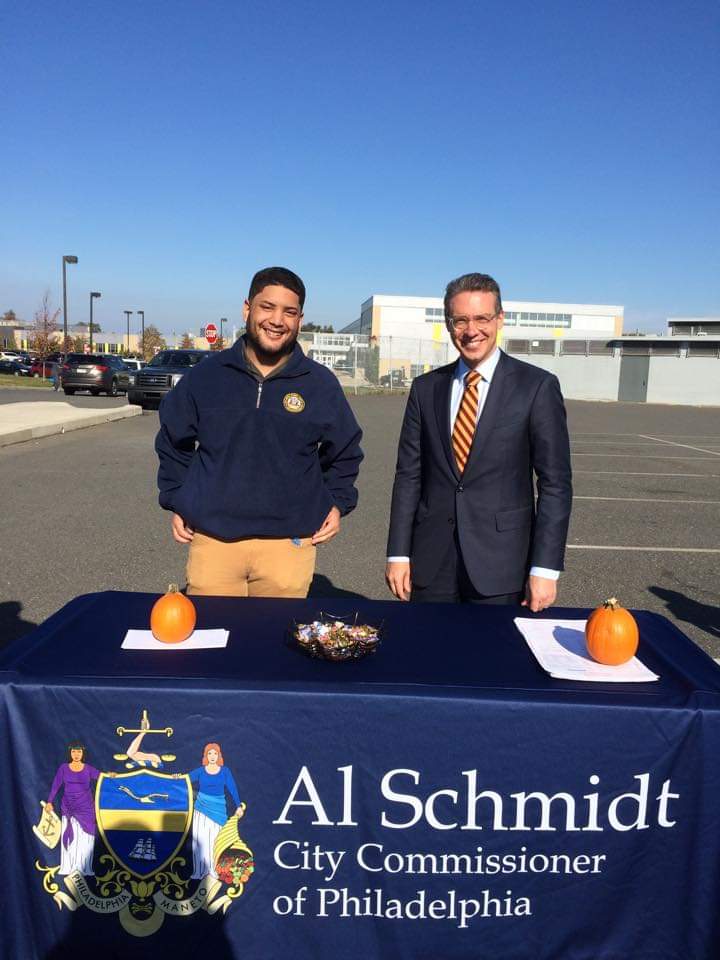
    Daniel Pearson and then-City Commissioner Al Schmidt in 2015.Courtesy of Daniel Pearson

    For those who diligently follow election administration news here in Philadelphia, this story might have felt like a distant echo. That’s because nine years ago, something similar occurred here.

    In 2017, Al Schmidt, who now leads voting statewide, was a Republican city commissioner in charge of voting in Philadelphia when he announced that an investigation had uncovered 220 people who were not American citizens on the city’s voting rolls.

    As with the situation recently in New Jersey, the source of the problems back then was also traced to a computer glitch connected to the driver’s license process. Even though they were ineligible, the system still asked the affected people whether they wanted to register to vote.

    Schmidt publicly stated what had happened without inflaming the situation, and pledged to protect people whose immigration status was now threatened by mistakes made by others. (He went as far as attending immigration hearings on behalf of some of those affected.)

    That style of leadership — clear, non-alarmist, focused on solutions — mirrors what Sherrill is doing in New Jersey now.

    It’s also worth noting that the Garden State is hardly alone in owning up to its errors. Earlier this year, Republican Auditor General Tim DeFoor released an audit of Pennsylvania’s system. Out of the 210,000 records his office examined, just one included an ineligible voter — a lapse blamed on human error, rather than any broader issue.

    In Pennsylvania, the system worked. A mistake was found, identified, and corrected. Sherrill seems on the path to doing the same.

    Unfortunately, the president wants to try to use New Jersey’s stumble for his own political gain — a cynical approach that makes it harder to be taken seriously when actual irregularities and malfeasance are discovered.

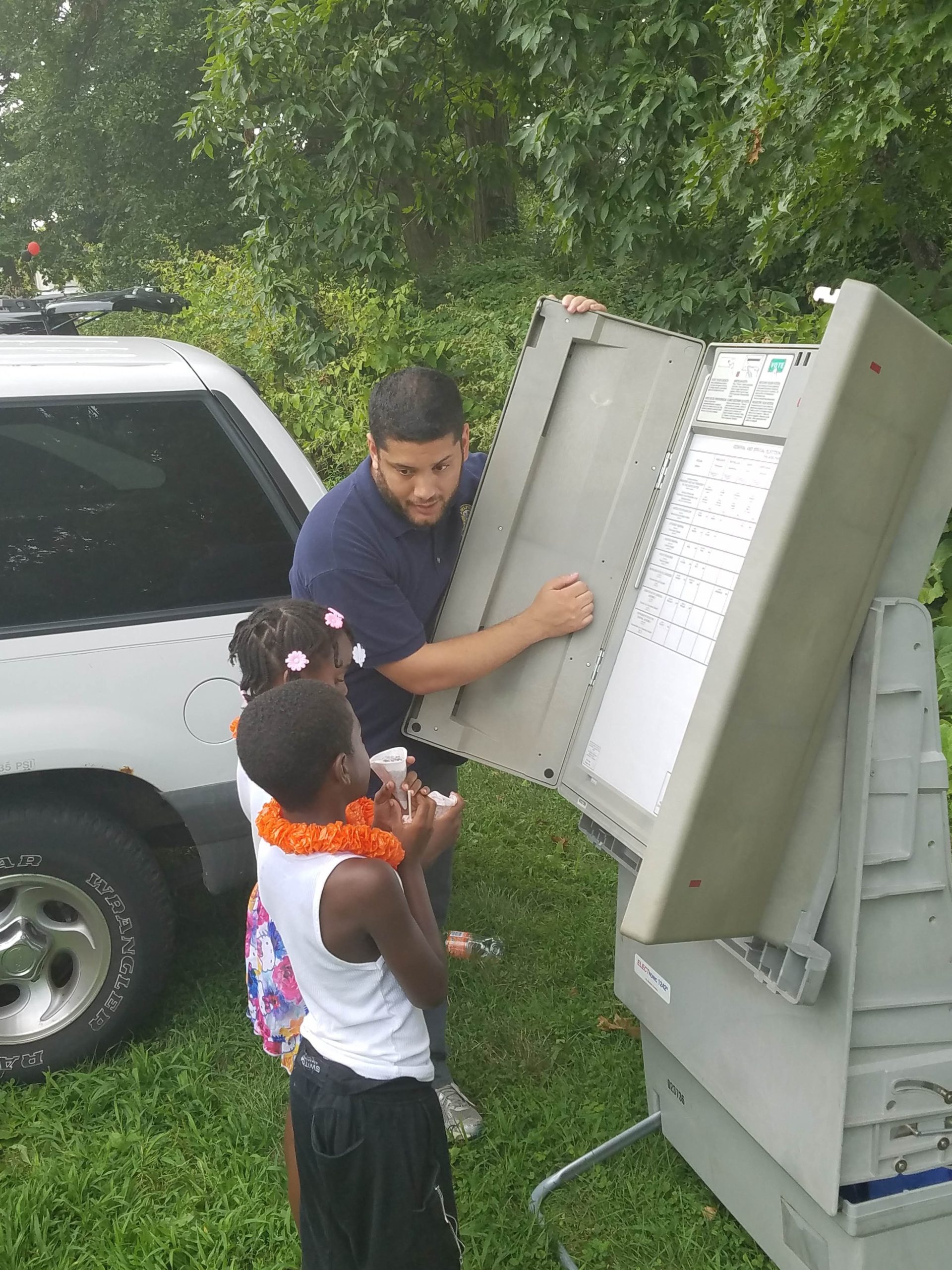
    Daniel Pearson explains how a voting machine works as part of a voter information event at Fisher Park in 2016.Courtesy of Daniel Pearson

    Disorganized crime

    After he was released from federal prison in 1985, convicted over bribery charges stemming from the Abscam investigation, former U.S. Rep. Michael “Ozzie” Myers became a political consultant and adviser. Over the years, business began to flag, so Myers and his allies came up with a scheme in the mid-2010s.

    Once the polls closed, poll workers would go into the booth and vote again, and again and again and again. Typically, these votes were for candidates running for positions at the very end of the ballot, like judges.

    Schmidt became my boss in 2014 when I joined the City Commissioners Office. Initially, my job was preparing street lists (names and addresses of registered electors) and voter files for campaigns. I attended community events and meetings on behalf of the office, and compiled data and information for voter guides.

    In retrospect, it would have been impossible to predict just how much interest people would soon have in elections. Back then, I could barely give away the guides.

    In time, I began helping with investigations into voting irregularities. When my colleagues and I started investigating the source of the overvotes, it pointed to one man, Dom DeMuro, a South Philadelphia poll worker.

    We compiled the evidence and referred the case to law enforcement. The FBI confronted DeMuro, who turned on Myers. Eventually, Myers, DeMuro, and another poll worker pleaded guilty to federal charges.

    Found, identified, and corrected.

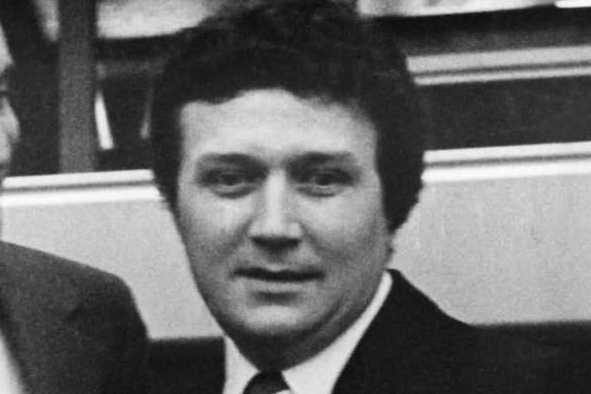
    Michael “Ozzie” Myers in 1976.MICHAEL MERCANTI / Staff file photo

    Small-time ruses like Myers’ are the face of “organized” voter fraud in this country, a few people trying to make an easy buck. There’s absolutely nothing in the SAVE America Act that could have stopped them.

    Looking back, I shudder to think of what 2020 may have been like without the groundwork Schmidt laid over a decade. How Philadelphia could have melted under the spotlight as Trump hurled accusations of fraud and the eyes of the world turned to vote counters inside the Pennsylvania Convention Center.

    For me, it was an unforgettable lesson in the grind that goes into making democracy work and also how difficult — and how rewarding — making positive change really is.

    To ensure election security and that voting remains easy and accessible, our country needs more leaders like Schmidt and Sherrill — and fewer bomb throwers.

    We don’t need any more false data points and baseless conspiracy theories. And we certainly don’t need the SAVE America Act, which would only increase the burden on ordinary voters — and wouldn’t fix a thing.

  • The Legionnaires’ outbreak in Philly 50 years ago led to months of mystery — and gave the disease its name

    The Legionnaires’ outbreak in Philly 50 years ago led to months of mystery — and gave the disease its name

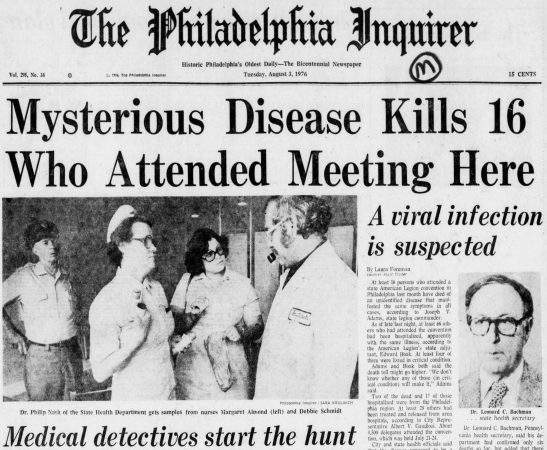
    As Philadelphia wallowed in self-pity over its seemingly botched Bicentennial celebrations 50 years ago, thousands of American Legion members arrived for a late July convention at the Bellevue-Stratford Hotel.

    Weeks later, dozens of them were dead from a mystery ailment, and scores of others were sickened. The victims, authorities said, returned home to develop respiratory infections that in some instances progressed to fatal cases of pneumonia.

    For more than half a year, local and federal health authorities were unable to determine what killed them, resulting in a web of fear, paranoia, and frustration that gripped not only Philadelphia, but also the nation at large.

    This was the infamous Legionnaires’ disease outbreak of 1976, perhaps the blackest of marks on Philadelphia’s record for the year. Today, the disease — known as legionellosis, caused by Legionella pneumophila bacteria — still crops up, most recently in a 50-building outbreak in Manhattan that has so far caused at least seven deaths.

    Philadelphia was not the last, or even the first, city to experience the disease. But that outbreak half a century ago is how it got its name. Here is how The Inquirer and Daily News covered it:

    https://www.newspapers.com/article/philadelphia-daily-news/202696263/

    Article from Aug 3, 1976 Philadelphia Daily News (Philadelphia, Pennsylvania) <!— –>

    The initial outbreak

    About 2,000 American Legion delegates came to town for a convention that ran from July 21 to 24, 1976, at the iconic Bellevue-Stratford Hotel. There were no signs of trouble during the convention, or for several days afterward.

    But by early August, about a week after the convention’s end, 14 Pennsylvania American Legion members were dead of an unclear illness, with their deaths involving “some type of respiratory problem,” reports from the time indicate. Roughly 50 others were reportedly hospitalized.

    Many of the initial victims were from Western Pennsylvania and had traveled to the city, though some Philadelphians were among the sick and dead. All had attended the American Legion convention the month before, officials said.

    https://www.newspapers.com/article/the-philadelphia-inquirer/202696881/

    Article from Jul 17, 1977 The Philadelphia Inquirer (Philadelphia, Pennsylvania) <!— –>

    As officials mounted an investigation that cost the state $25,000 a day, the death toll continued to increase. By mid-August, 29 people were dead and about 200 were sickened, reports indicate.

    The Centers for Disease Control said at the time that the outbreak was “without precedent” in the agency’s 30-year existence, and began conducting laboratory work to determine the cause.

    “We have not seen anything like this take place in such a short period of time,” said Jay Satz, chief virologist with the Pennsylvania Department of Health. “This is something to be quite concerned about.”

    https://www.newspapers.com/article/philadelphia-daily-news/202696483/

    Article from Aug 9, 1976 Philadelphia Daily News (Philadelphia, Pennsylvania) <!— –>

    Conspiracies reign

    Health officials largely expected the cause to be a then-long-awaited epidemic of swine flu, which had killed a soldier at Fort Dix in New Jersey earlier in the year, and focused much of the investigation on identifying that disease, reports indicate. Other possible causes, including toxins such as nickel carbonyl, were also considered.

    But public speculation about the cause, as well as how the disease arrived in the city, ran rampant. Or, as The Inquirer put it at one point, there were more people who had “their own ideas on what is causing the mysterious disease than there are Kennedy assassination conspiracy theories.”

    Inquirer readers wrongly blamed everything from pigeon droppings to contaminated ice. One person claimed the trash piling up on city streets, thanks to a municipal worker slowdown at the time, was the reason. Another contended shellfish was the cause, noting that “mostly men had been stricken because women don’t like shellfish.”

    Others believed the cause was more nefarious. Surely the disease had come from communists from Ecuador or Poland, who intentionally spread it to American Legion members. No, it was a sneak attack staged by the potentially disruptive activist groups Mayor Frank Rizzo had warned about.

    The American Legion, meanwhile, did not believe foul play was involved — nor did investigators, who said no evidence supported any of these theories. The truth, it seemed, was far less salacious.

    The Bellevue closes

    As worry over the illness wore on, the Bellevue-Stratford hotel itself also fell victim to the disease’s impacts, closing in November 1976.

    Though investigators avoided directly implicating the hotel early on, it suffered severe financial damage. Reservations collapsed into single-digit occupancy percentages, resulting in losses of up to $10,000 per day, reports from the time indicate. William G. Chadwick, the hotel’s vice president and general manager, said business had been devastated.

    https://www.newspapers.com/article/philadelphia-daily-news/202696555/

    Article from Nov 10, 1976 Philadelphia Daily News (Philadelphia, Pennsylvania) <!— –>

    “We have found it impossible any longer to withstand the economic impact of the worldwide adverse publicity which has been associated with the Legionnaires’ disease,” he said.

    By then, the Bellevue had operated for more than 70 years and was considered a jewel in the city’s hospitality crown. Its closure, Rizzo said, was a “great loss,” and he vowed the property would host a new, modern hotel to fill the gap. Today, it is a mixed-used development at 200 S. Broad St. that includes a hotel portion.

    Philadelphia’s Bicentennial tourist business also suffered, with several conventions canceling their bookings over fear of the illness, significantly affecting what was expected to be a banner year for visitors. Public perception erred on the side of avoiding the city, which some local officials tried to rebut.

    https://www.newspapers.com/article/philadelphia-daily-news/202696766/

    Article from Aug 19, 1976 Philadelphia Daily News (Philadelphia, Pennsylvania) <!— –>

    “We are still a safe city,” said Eugene Hosmer, director of the Philadelphia Convention and Visitors Bureau, noting the disease struck just as low civic self-esteem seemed to be fading. And then, “we’re hit with this.”

    Robert Jacob, manager of the Penn Center Inn and head of the Greater Philadelphia Hotel Association, put the illness’ impact more dramatically.

    “We’re being crucified,” he said.

    A break in the case

    Investigators searched for months for the disease’s cause to no avail, facing substantial criticism — including a congressional subcommittee hearing during which their efforts were labeled an “embarrassment,” according to reports from the time.

    But in January 1977, after tens of thousands of tests, investigators identified the culprit. The deadly Legionnaires’ disease, the CDC found, was caused not by a toxin or virus, but a bacterium. One so strange and unknown, lab workers and scientists had missed it for months.

    https://www.newspapers.com/article/the-philadelphia-inquirer/202696612/

    Article from Jul 17, 1977 The Philadelphia Inquirer (Philadelphia, Pennsylvania) <!— –>

    Credited with its discovery was Joseph McDade, then a CDC microbiologist in the agency’s leprosy and rickettsia laboratory. On a hunch after receiving a routine report, McDade reexamined slide samples and decided to look for unfamiliar microbe shapes. And he found them — and they appeared not only in samples from Philadelphia, but also in past unsolved outbreaks.

    The disease was found to be present in samples from a 1965 pneumonia outbreak at St. Elizabeth’s Hospital in Washington, in which 18 people died, and a 1968 one that sickened 144 people at a Pontiac, Mich., health department building. Additionally, the illness had struck a 1974 Independent Order of Odd Fellows convention in an outbreak that killed two people — also held at the Bellevue-Stratford.

    https://www.newspapers.com/article/the-philadelphia-inquirer/202696954/

    Article from Jul 17, 1977 The Philadelphia Inquirer (Philadelphia, Pennsylvania) <!— –>

    Investigators later determined the 1976 outbreak had been spread via airborne water mist from the hotel’s air-conditioning cooling towers. The towers allowed the bacteria to grow and be spread to convention attendees, as well as some individuals who had traveled near the hotel, investigators found.

    “We are dealing with a very real phenomenon which has been present in the past but has never been recognized,” said CDC director David Sencer in 1977. “We now know what to look for.”

  • Uninsured but undaunted, a surgical patient searched the globe for a deal

    Uninsured but undaunted, a surgical patient searched the globe for a deal

    Around the end of last year, Ronmel Rangel, 63, began to feel a familiar discomfort in his lower abdomen. Twenty-five years earlier, while living in his native Venezuela, he had undergone surgery to repair a hernia on the right side of his groin.

    Now, the same pain had returned — on the left.

    This time, Rangel was in the U.S. and lacked health insurance. In 2019, he moved to Portland, Maine, where one of his daughters lives.

    As a green-card holder, he qualified to purchase health insurance through the Affordable Care Act marketplace. But he quickly realized that the premiums for someone his age were beyond his budget. He decided to go without insurance, even though it had been a priority for him.

    Instead, Rangel signed up for a plan at a concierge practice where patients pay as little as $70 a month for services, including unlimited office visits and minor procedures such as stitches and biopsies.

    But when Rangel was diagnosed with a hernia, surgery became unavoidable. Ben Hagopian, his primary care physician, helped him compile a list of hospitals and surgical centers to consider. Rangel has a PhD in management, a field he pursued while serving in the navy in Venezuela. Armed with that knowledge and a naturally inquisitive mind, he began researching prices.

    His efforts paid off when the bill came.

    The medical service

    Rangel had what is called an inguinal hernia, which occurs when the contents of the abdomen bulge through a weak spot in the lower abdominal wall. The condition is relatively common, particularly among older adults.

    In most cases, surgery is required to fix the muscle wall and can be performed as an outpatient procedure. There are three main surgical approaches to repair an inguinal hernia: open, laparoscopic, and robot-assisted. Studies have shown that the three approaches have similarly low rates of hernia recurrence and are safe and effective.

    Rangel underwent an open repair, an approach often preferred by physicians for recurrent hernias. He said his operation lasted less than two hours, and he walked out of the surgical center shortly afterward.

    The bill

    $2,900: The flat rate Rangel ultimately paid for his hernia repair at an outpatient surgery center in Maryland, including the surgeon’s fee and anesthesia. He said he also paid around $1,800 to travel to the surgery center from his home in Maine, including airfare, meals, and lodging for him and his wife.

    The billing problem: No insurance — but time to shop

    Because Rangel did not have insurance, he had no protections from high costs — except time and his ability to shop for an acceptable price for his procedure.

    Rangel’s first stop was a nonprofit hospital close to home. He scheduled a consultation with a surgeon with MaineHealth, the state’s largest health system, and received an estimate showing it would cost approximately $23,000 to repair his hernia laparoscopically.

    Laparoscopic procedures generally cost more because surgeons use more advanced tools. Still, the average laparoscopic inguinal hernia repair costs nearly twice as much at a hospital as it does at an ambulatory surgery center for a patient covered by Medicare, which pays $5,280 for the hospital-based option.

    “I wasn’t going to mortgage my life just to have surgery and spend the next 30 years paying off the debt,” said Rangel, now 64.

    So, he kept shopping. He considered a surgical center in Oklahoma that was far cheaper, but he ultimately ruled it out because it was so far away. He also explored traveling to Universidad de los Andes in Santiago, Chile, where another of his daughters lives. There, his hernia repair would have cost about $7,000, but once he added thousands of dollars in travel expenses, that option no longer made financial sense.

    Gerard Anderson, a professor who analyzes healthcare spending at the Johns Hopkins Bloomberg School of Public Health, said patients without health insurance are often the ones hit hardest by wide price variations.

    A closer look at any hospital bill helps explain why. “Every hospital is different,” he said, “but generally about half of the total charge is the facility fee,” a charge added to hospital care to help cover overhead costs.

    Anderson said hospitals often mark up prices far more than smaller facilities do.

    Medical billing researchers say the price gap between hospitals and ambulatory surgery centers partially reflects the higher overhead costs of operating a hospital.

    Hagopian, Rangel’s physician, acknowledged that hospitals have higher administrative expenses. “But that doesn’t explain the high costs.”

    MaineHealth declined to comment to KFF Health News, directing questions about the hospital-based procedure’s cost to Jeffrey Austin, president of the Maine Hospital Association.

    Austin said that, unlike surgery centers, hospitals must absorb the costs of providing “money-losing” services, such as behavioral healthcare and care for Medicaid patients. He added that revenue generated by large hospitals in a health system supports other facilities, improving access to care.

    Hospital prices, which can vary widely, are also driven by negotiations with insurers and market concentration. For uninsured patients, those list prices can become the starting point for negotiations — or the full amount owed.

    Anderson noted that standardized payment rates exist for Medicare and Medicaid but not for most privately priced medical services. “In the private sector, providers can charge whatever they want.”

    The resolution

    Rangel has another daughter in Argentina, a son in Venezuela, and other family in Spain. But he decided to stop looking around the globe for a good price, because he finally found what he was looking for in Maryland.

    In April, he traveled to the Affordable Hernia Surgery center in Rockville, where he said “an efficient, well-coordinated system” guided him through the entire process.

    “I received professional and very human care,” Rangel said. He was fully recovered within two weeks, as his surgeon predicted, he said.

    The surgery center charged Rangel a flat fee for his hernia repair. The added travel expenses for the two-day trip with his wife went toward airline tickets, transportation, meals, and one night in a hotel.

    Rangel said he paid about $4,700 total.

    Alan Kravitz, the surgeon who performed Rangel’s operation, said the price difference uninsured patients face compared with insured patients is far from fair. “In the predatory and strategic world of U.S. healthcare pricing, uninsured patients generally get charged more than providers would accept from Medicare or commercial insurance.”

    Kravitz then pulled out an estimate another patient had received for an inguinal hernia repair from a different large health system. The price: $37,000.

    The takeaway

    Without insurance, many patients are on their own to negotiate.

    “With the help of their primary physicians, patients can dig into prices and compare their options to avoid falling into medical debt,” Rangel said.

    That approach, however, is most feasible for elective procedures with several surgical options offering comparable outcomes.

    Patients facing medical emergencies do not have the luxury of comparing prices before seeking care, though many hospitals offer cash-pay discounts or charity care for those paying without insurance.

    Billing analysts say patients who do have time to shop should look beyond cost alone. They recommend checking the quality of hospitals and surgical centers by reviewing publicly available ratings and patient reviews. Research has found that higher prices do not necessarily translate into a better quality of care, but it’s also important to select a reputable care provider.

    Comparison shopping for medical care can be time-consuming. But for patients facing elective procedures, the effort can pay off — sometimes saving thousands of dollars.

    “This was a learning experience for me,” Rangel said, “and I hope it will be for other people, too.”

    Bill of the Month is a crowdsourced investigation by KFF Health News and The Washington Post’s Well+Being that dissects and explains medical bills.

    KFF Health News is a national newsroom that produces in-depth journalism about health issues and is one of the core operating programs at KFF — the independent source for health policy research, polling, and journalism.

  • Quality Community Health Care’s financial troubles have deepened this summer

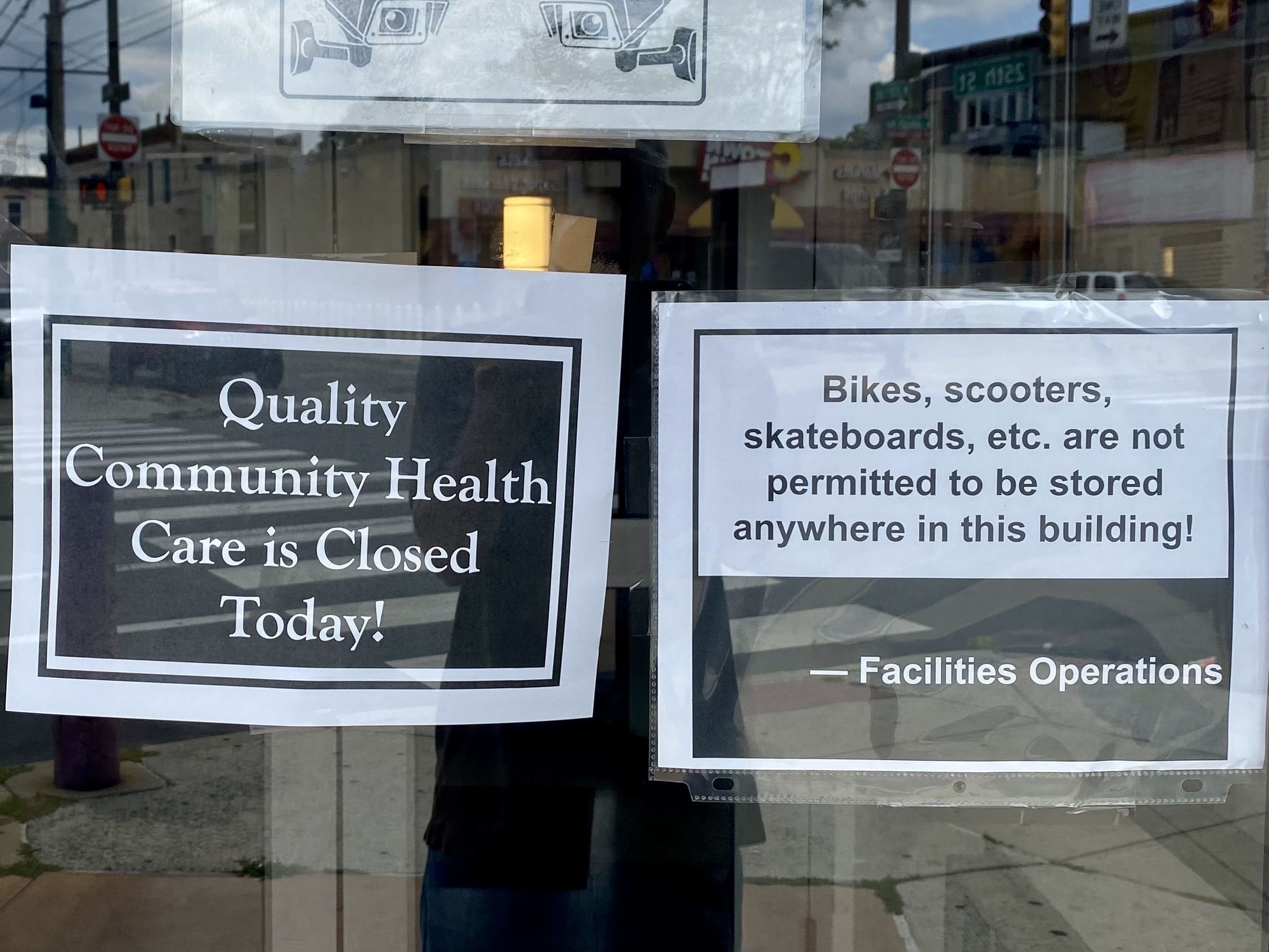
    When Pele Lewis arrived at Quality Community Health Care’s clinic in North Philadelphia Wednesday for his 1:30 p.m. appointment, he found the doors locked and a sign saying the clinic was “closed today.”

    Lewis was puzzled. “They called me this morning” with a reminder to come in, he said, as he stared at the door.

    The clinic, known as QCHC, was closed Thursday and Friday, as well, according to its phone message.

    “For many of our patients, QCHC is far more than a medical office,” its CEO, Helen Wilkinson, said in an email. “Members of our community are treated with dignity and respect regardless of their ability to pay.”

    She did not answer specific questions.

    The clinic at 2501 W. Lehigh Ave. began operating in 1981 under a federal program designed to provide medical and dental care in neighborhoods with few other options.

    Its troubles became public in the spring.

    After years of warnings from federal regulators that the clinic was delinquent on its audits, officials took the rare step in March of suspending it from the federally qualified health center program. At that time, audits for the years 2021 to 2024 were overdue. Now, the same is true for 2025. Typically such audits are due nine months after the fiscal year ends.

    Quality Community Health Care Inc., at 2501 W. Lehigh Ave. in North Philadelphia, was closed Wednesday. Management did not respond to emailed questions about the clinic’s status.Harold Brubaker / Staff

    A new audit

    In a small sign of progress, Quality Community Health Care last week posted an audit for the fiscal year that ended July 31, 2021, on a federal audit clearinghouse. Federal regulators had given a May 2 deadline to complete that audit or risk termination.

    The fiscal 2021 audit pointed to significant problems.

    “None of the data in it can be verified by the auditor,” said Steven Balsam, a professor of accounting at Temple University’s Fox School of Business.

    The auditor put it this way in the filing: “Because of inadequacies in QCHC’s accounting records, we were not able to obtain sufficient appropriate audit evidence for the amounts” stated in numerous categories of the financial statements.

    “I don’t know if just filing reports, if they look like this, is going to get them their funding back,” said Balsam, who reviewed the audit at The Inquirer’s request.

    The federal Health Resources and Services Administration, which regulates federally qualified health centers, has not responded to questions about QCHC since the suspension.

    Missed paychecks

    Some employees were not paid on July 10 and July 24, according to an email from the organization’s chief financial officer to staff Monday. This followed the organization not receiving the main federal funding for health centers, known as Section 330 grants, CFO Denise Ingram wrote.

    “QCHC is experiencing significant cash flow constraints following the suspension of 330 grant funding associated with the unresolved FY2021 audit submissions requirements,” Ingram wrote in the email obtained by The Inquirer.

    “QCHC remains committed to paying employees for all wages earned. Leadership continues to pursue funding, financing, and other lawful alternatives to address outstanding payroll obligations and restore normal operation,” the email said.

    Ingram did not respond to an emailed request for comment.

  • How to have a perfect Philly day, according to novelist Emma Copley Eisenberg

    How to have a perfect Philly day, according to novelist Emma Copley Eisenberg

    The novelist Emma Copley Eisenberg is not supposed to write about her new South Philly neighborhood.

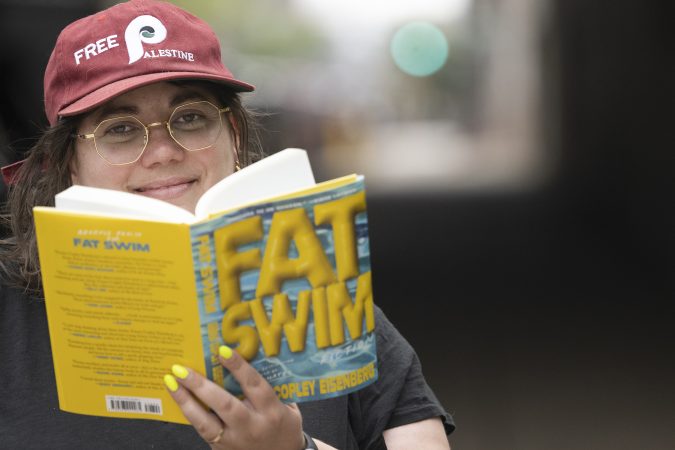
    A longtime resident of West Philly, Eisenberg wove its eccentricities and institutions into two books of fiction: the 2024 queer road trip novel Housemates, and the newly released Fat Swim, an interconnected short story collection featuring, among other local allusions, a pool inspired by the one at West Philly’s Kingsessing Rec Center.

    Then about a year ago, Eisenberg and her partner, Art Phung, moved together across the river. Phung suggested that maybe Eisenberg could avoid writing about their new environs, so they wouldn’t have to move again. (Eisenberg made no promises.)

    On her perfect Philly day, Eisenberg treks between fresh and familiar haunts, floats in the city pool immortalized in Fat Swim, and browses at least three bookstores.

    8 a.m.

    In a perfect world, I wake up at 8, and I go to Café y Chocolate, a wonderful Mexican brunch and breakfast spot in our new neighborhood. I read my book for a little bit until meeting a friend. The mocha they make is pretty life-changing. When my mom was in the hospital, she was like, “All I want is café con chocolate from there.”

    11 a.m.

    The Clark Park Farmers Market still has a chokehold on our Saturdays. I’d get some flowers from the Amish fellows [at Unique Gardens].

    I like to look at all the dogs. I don’t have a dog, my partner says I’m not responsible enough. So I force a friend who has a dog to bring their dog to the park to meet me. I like to run into people and hear the queer gossip of the day — who went out last night, what’s going on.

    A lot of my friends have kids now, so it’s usually a good excuse to see some of their kids and hear about their gossip at school.

    Noon

    At the Kingsessing pool, I like to just kind of flop around and float. I can’t ease my way into the pool, I have to jump all the way in. I’m not a particularly good swimmer per se, but it makes me happy. After doing the pool, I always feel 10% less dead inside.

    1 p.m.

    We make our way up to Saad’s [Halal Restaurant]. I like the chicken falafel sandwich. Fries are often important.

    3 p.m.

    From there I go see a movie at PFS East Theater. I always love seeing the Oscar-nominated shorts or when they play older movies. If it’s August, I go see a BlackStar Film Festival movie.

    5 p.m.

    Walking from Old City back to South, I stop at Head House Books. It’s kind of magical: whatever the book is that I want, they always have it. They have good book clubs, they’re supportive of local authors, they do a lot of events.

    Head House has a really good children’s section. I usually try to buy a couple of board books because they’re good for little kids and they’re cheaper. I also have a soft spot for the classic things that I read when I was a kid, like The Baby-Sitters Club and Nancy Drew. I buy a couple of kids’ books and put them in little free libraries because I find that joyful.

    I also cut over to Giovanni’s Room, because they have all those $1 paperbacks out. I’ll browse around to see if they have anything that’s cheap that I want to buy for my library or for one that I pass on the way home. I might wind through a few little free libraries. I could hit the one at the Singing Fountain on East Passyunk, and say hi to Little Yenta Books.

    6:30 p.m.

    My partner and I go to Cafe Nhan at least once a week. I love their vermicelli bowl with grilled pork, and fried spring rolls. They have an amazing limeade too. If you follow Cafe Nhan on Instagram, they often show what broths and soups they have going that day, so you can get excited.

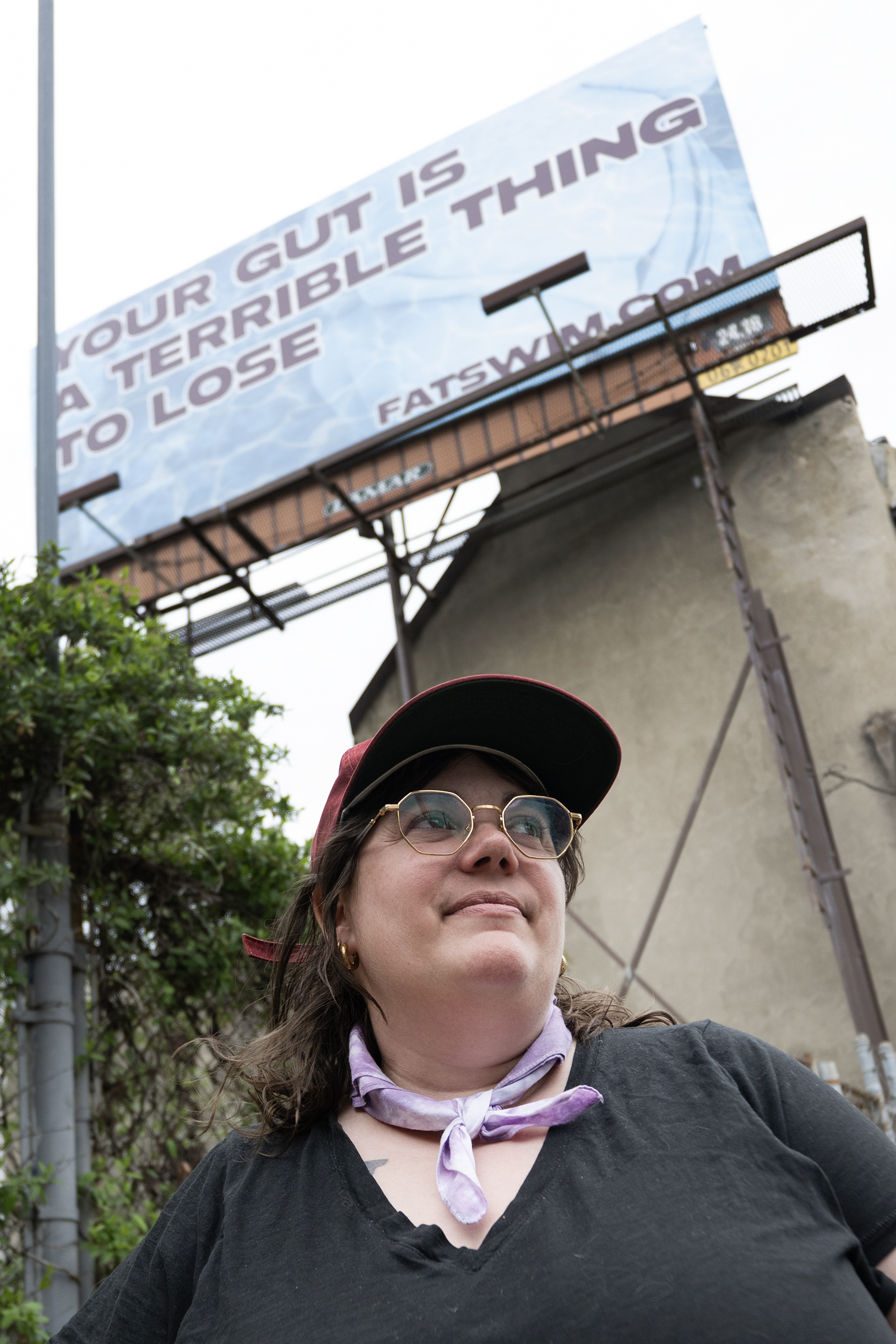
    Eisenberg poses with a billboard along Interstate 95 promoting the release of “Fat Swim.” Jose F. Moreno / Staff Photographer

    8 p.m.

    I used to be partial to Fred’s on 54th and Chester. I put Fred’s in Fat Swim. However, I will say that at Chuck’s Water Ice [on Snyder], the texture is incredible. It’s very fluffy. The flavors they have are really special — tangerine, blood orange. I like to get a gelati of tangerine and vanilla custard. I eat it as I walk home.

    8:15 p.m.

    If I’m feeling like I want a little nightcap, I go to Brewery ARS. They have good beer and it’s kind of a hole-in-the-wall, but not in a sports way. More in a “we might have a weird musician” way. They probably wouldn’t have the game on, but they would have a Sun Ra music video on.

    10 p.m.

    I watch a comfort episode of television or read a book. Right now I’m doing a rewatch of Girls, like everybody else. I get into bed at 10 and go to sleep by 11, if I’m honest.


    The conversation has been edited for clarity and brevity.

  • A vending machine that dispenses tiny art and a Mary Oliver documentary are among your best artsy things to do this week

    A vending machine that dispenses tiny art and a Mary Oliver documentary are among your best artsy things to do this week

    Teeny tiny art in Queen Village

    I’ve visited At My House a couple of times, scouring the aisles for quirky vintage pieces, loving the eclectic vibe of the store even when I didn’t buy anything. So I was not surprised to see them hosting what is possibly the most whimsical art show I’ve ever been to, displaying art about the size of a postage stamp.

    The Queen Village clothing and homewares store is run by Kelly Braun who, in collaboration with artist Fabiola Lara, started the mini art show last year. They invited artists to create art that was 3 inches x 3 inches, so this year, it had to be even more silly, cutting it in half to 1.5 inches x 1.5 inches.

    Prints by artist Fabiola Lara for sale at “The Mini Mini Art Show” at the store At My House on Fourth Street in Philadelphia on Friday, July 24, 2026.Elizabeth Robertson / Staff Photographer

    The opening reception for the show was absolutely buzzing, with people grabbing cocktails and lining up around the store to view the wall of tiny pieces. There was tiny clothing, houses, rooms, closets, and classic art pieces — those were made by Lara, who is no stranger to mini art.

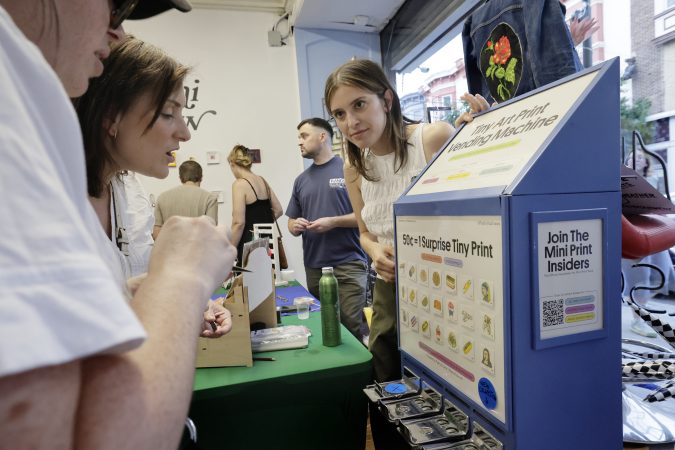
    You may have come across her mini art vending machines, of which there are 13 around the city.

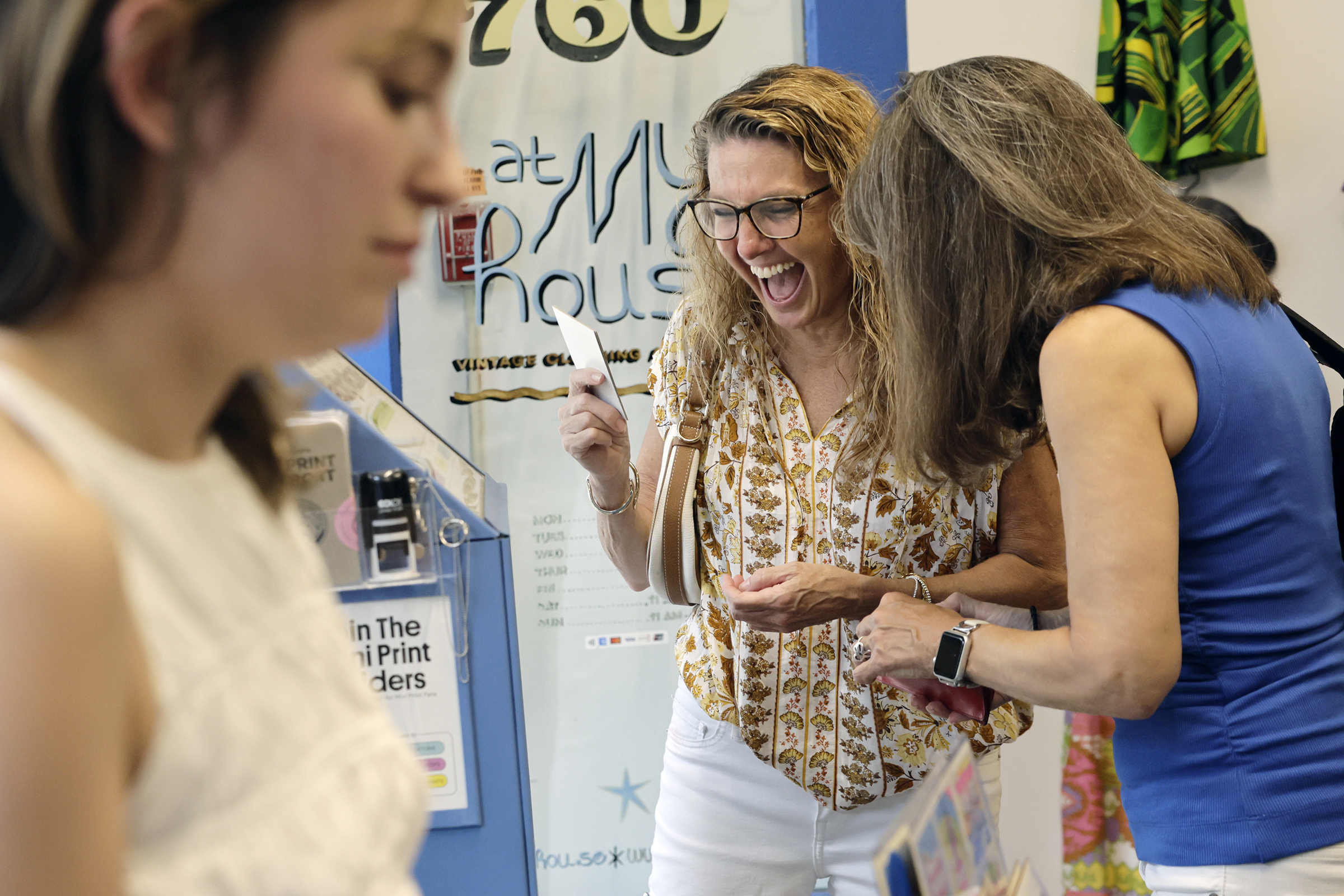
    Leann Curly (middle) and Karen Sarappo (right) were thrilled with artist Fabiola Lara’s (left) mini art print that they purchased from the mini art print vending machine during the opening/public reception of “The Mini Mini Art Show” at the store At My House on Fourth Street in Philadelphia on Friday, July 24, 2026.Elizabeth Robertson / Staff Photographer

    After visiting several major museums with grandiose pieces, I never thought I would see people get the most excited over art that can fit in the palm of their hands. But there was an infectious energy and a sense of joy at At My House.

    In a world where large-scale exhibits are so heavily celebrated, getting giddy over comically tiny art felt like a therapeutic break from artistic snobbery.

    “The Mini Mini Art Show” is on display through Aug. 2 at At My House, 760 S. Fourth St., Philadelphia. atmyhou.se

    — Morgan Ritter

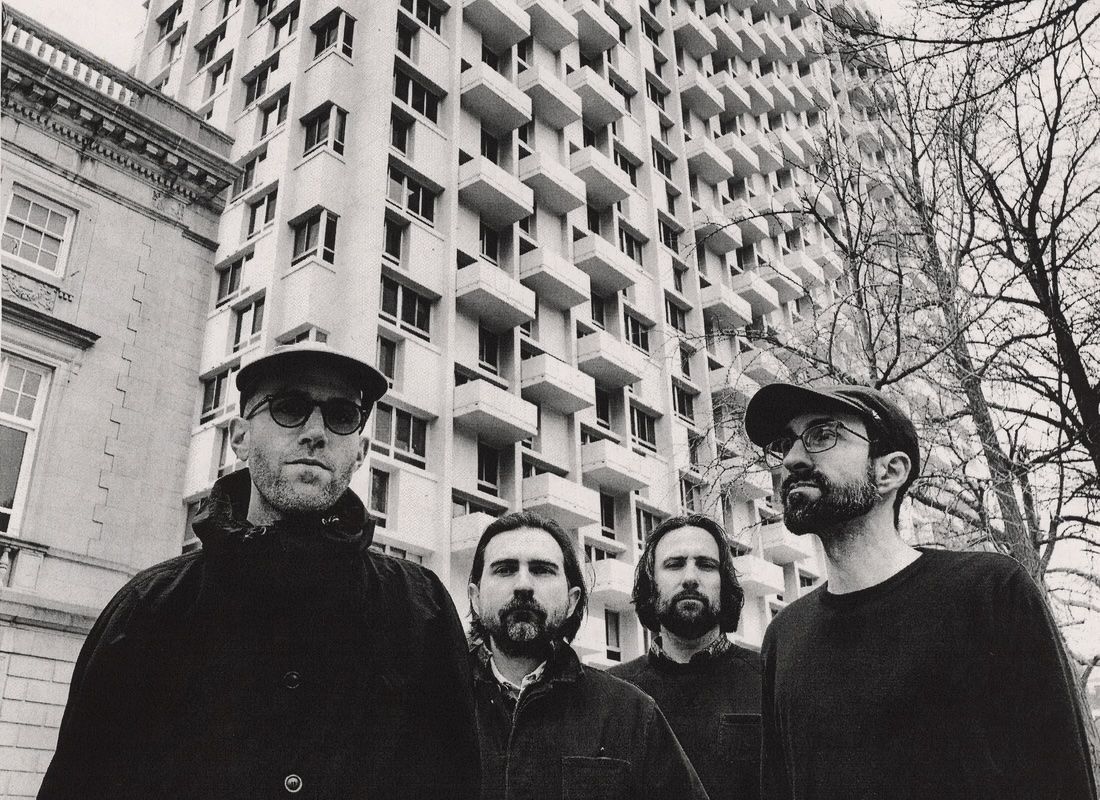
    Philly band Hurry’s new album is “Zoned Out.” They play Main Street Music in Manayunk on Aug. 1 and Philly Typewriter on Aug. 22. Luke Ivanovich

    Harmony-happy Hurry is back with ‘Zoned Out’

    Matthew Scottoline is Zoned Out. That’s the title of the transporting new album by Hurry, the jangly Philadelphia band that has been his creative outlet since 2012, when Scottoline — previously the bassist in Philly emo band Everyone Everywhere, stepped out as leader of his own power-pop project.

    Now six albums in, Scottoline continues to refine the harmony-happy Hurry approach, where longing and yearning and experiencing a bittersweet melancholy is elevated to an art form.

    In his notes to the album — which began as home recordings on cassette and was completed at the Metal Shop in East Kensington — explains that the dreamy, hypnotic song that gives the collection its name came about because “I tend to disassociate. I zone out and sort of crawl into my own head.”

    In this case, that dissociating is a result of facing life changes — the end of one relationship, the beginning of another, and the decision to become a parent — “and how [expletive] scary that is,” as Scottoline puts it in his notes.

    But while that tension exists as an undercurrent, Scottoline’s knack for breezy, cascading melodies mean that Zoned Out is always riding a pleasurable, reassuring wave. The album — which features a cameo from Gerard Love of Scottish power-pop heroes Teenage Fanclub — conveys a sense that any conflicts or “Complications” that may arise will ultimately resolve themselves, just as the melodies do on this seriously catchy set of 10 songs.

    Hurry will perform for free Aug. 1 at Main Street Music, 4444 Main St. in Manayunk with Planette Automatic, mainstreetmusicpa.com. After heading to England and Scotland for a short tour, the band will be back in town at Philly Typewriter, 1735 Passyunk Ave., with Chime School and Te Vista on Aug. 22. r5productions.com.

    — Dan DeLuca

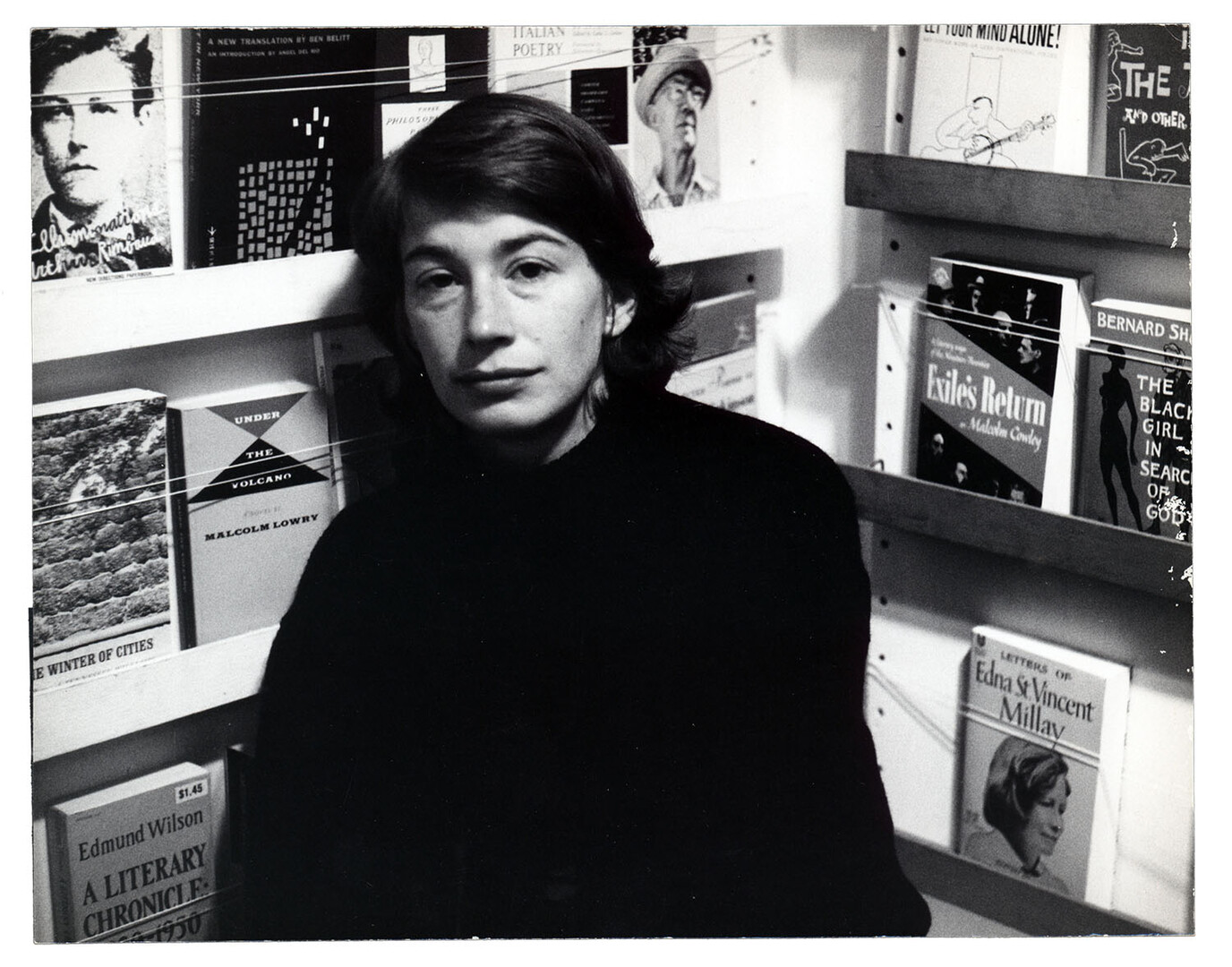
    A photograph of Mary Oliver from Sasha Waters’ documentary, “Mary Oliver: Saved by the Beauty of the World.”Courtesy of Kino Lorber

    Saved by Mary Oliver

    Before Mary Oliver’s poems became the stuff of Instagram inspiration posts, she was the patron saint of college girls discovering love and nature for the first time. I was 16 when I read “Wild Geese,” almost crying at the lines: “You do not have to be good. / You do not have to walk on your knees / for a hundred miles through the desert repenting.”

    In the years since, I have met so many women in love with her words: a former coworker had a tattoo of her lines, a friend will often quote from Oliver’s “The Summer Day” from memory just to describe her joy of being in a beach on a day so hot that the water shimmers as it evaporates in the horizon.

    Oliver, who lived with her partner, Molly Malone Cook, in Provincetown for several years, is also a queer icon whose words never fail to soothe a soul in need of a reminder of the love and tenderness in this world.

    Now, a documentary on her life and career — featuring readings of her poems by the likes of Helena Bonham Carter and Oprah Winfrey — celebrates the poet who died in 2019. Peppered with poetry, remembrances, interviews, photos, and notebook pages, Sasha Waters’ Mary Oliver: Saved by the Beauty of the World is a treat to those who love Mary Oliver and those who are waiting to start.

    “Mary Oliver: Saved by the Beauty of the World” plays July 31-Aug. 6, at the Bryn Mawr Film Institute, 824 W. Lancaster Ave., Bryn Mawr. brynmawrfilm.org

    — Bedatri D. Choudhury

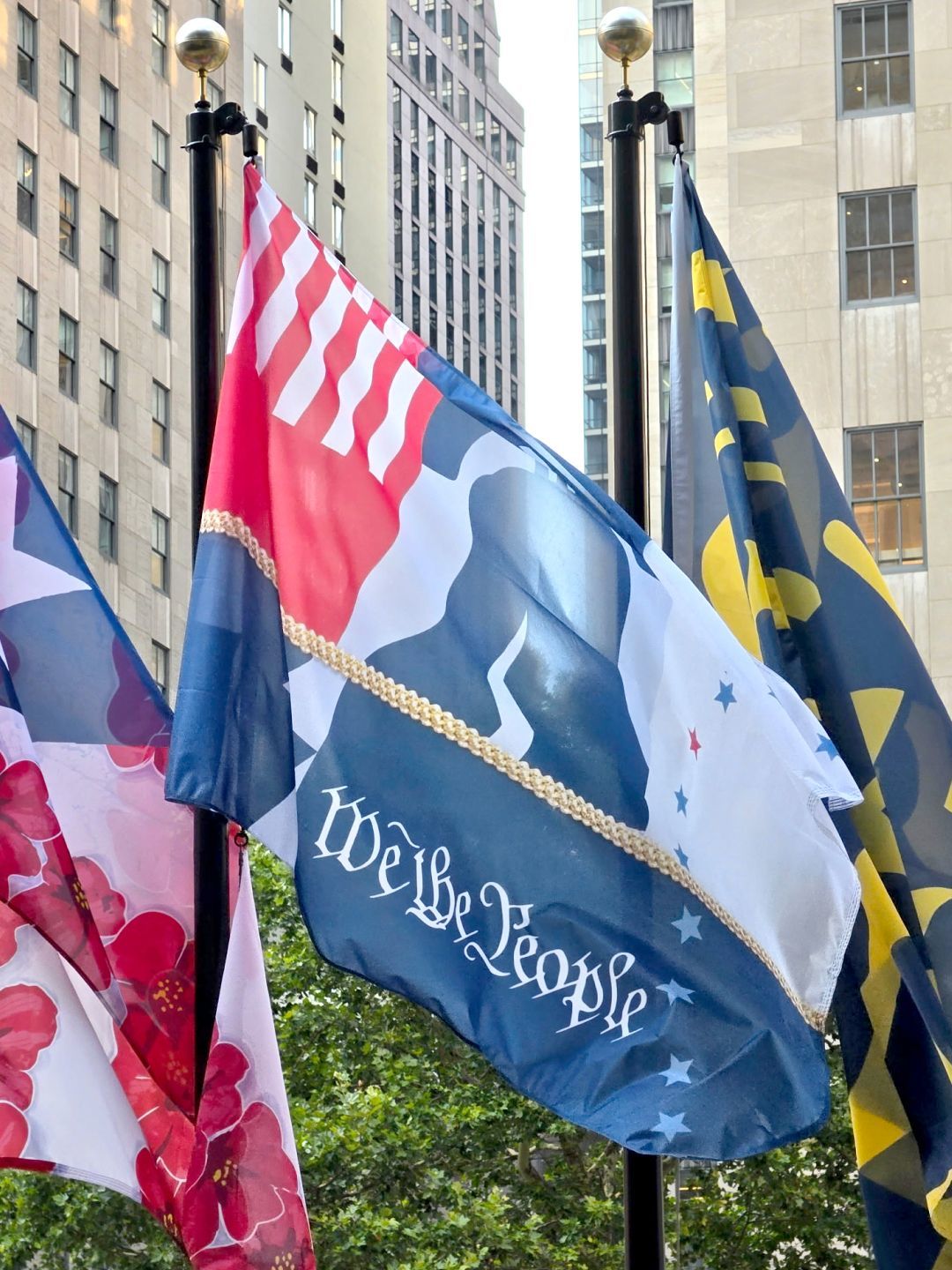
    Jeweler Steven Lagos’ flag is among the 120 flags from national and international designers celebrating America’s 250th birthday in Rockefeller Center. The flags will be up through Sept. 4, 2026.Lagos

    Steven Lagos’ Philly pride at Rockefeller Center

    Philly master jeweler Steven Lagos’ flag blows along the perimeter of Rockefeller Center with graphic images of a cracked bell, 13 stars, and red-and-white striped detail. At first glance, it does not look much different than other art shouting out Philly’s history.

    Then, I noticed Lagos’ golden caviar bead ribbon dancing in the center of the red, white, and blue canvas and thought this is special in a Lagos loves Philly kind of way.

    Those caviar beads are Lagos’ trademark, a part of the design dictionary of Philadelphia, where Lagos has lived and worked for more than 50 years. It’s amazing to see him continuing to integrate Philly in his work.

    Lagos’ flag is among 130 featured in the “United Flags of Fashion,” a joint project between the Council of Fashion Designers of America, Vogue, Rockefeller Center, and America 250 to honor the country’s milestone birthday. CFDA describes the project as a “sweeping tribute to American creativity, identity, and design.”

    Other household-name fashion brands with flags flying high are Tommy Hilfiger, Vera Wang, Calvin Klein, Gap, and Kenneth Cole. Bucks County-born Thom Browne’s flag is steely gray flag and features a crest; Main Line-bred Tory Burch’s red, white, and blue flag also showcases a Liberty Bell, but her image hovers over the words virtue, liberty, and independence. These Pennsylvania makers are full mast.

    While those designers proudly say they are from the Philly area, Lagos — whose red and white stripes represent the columns at the Philadelphia Museum of Art — stayed in Philly. His flagship business is on Philly’s toniest street and, as evidenced in his Rockefeller Center banner, Lagos reps Philly in everything he does.

    The flags will fly at Rockefeller Center through Sept. 4.

    — Elizabeth Wellington

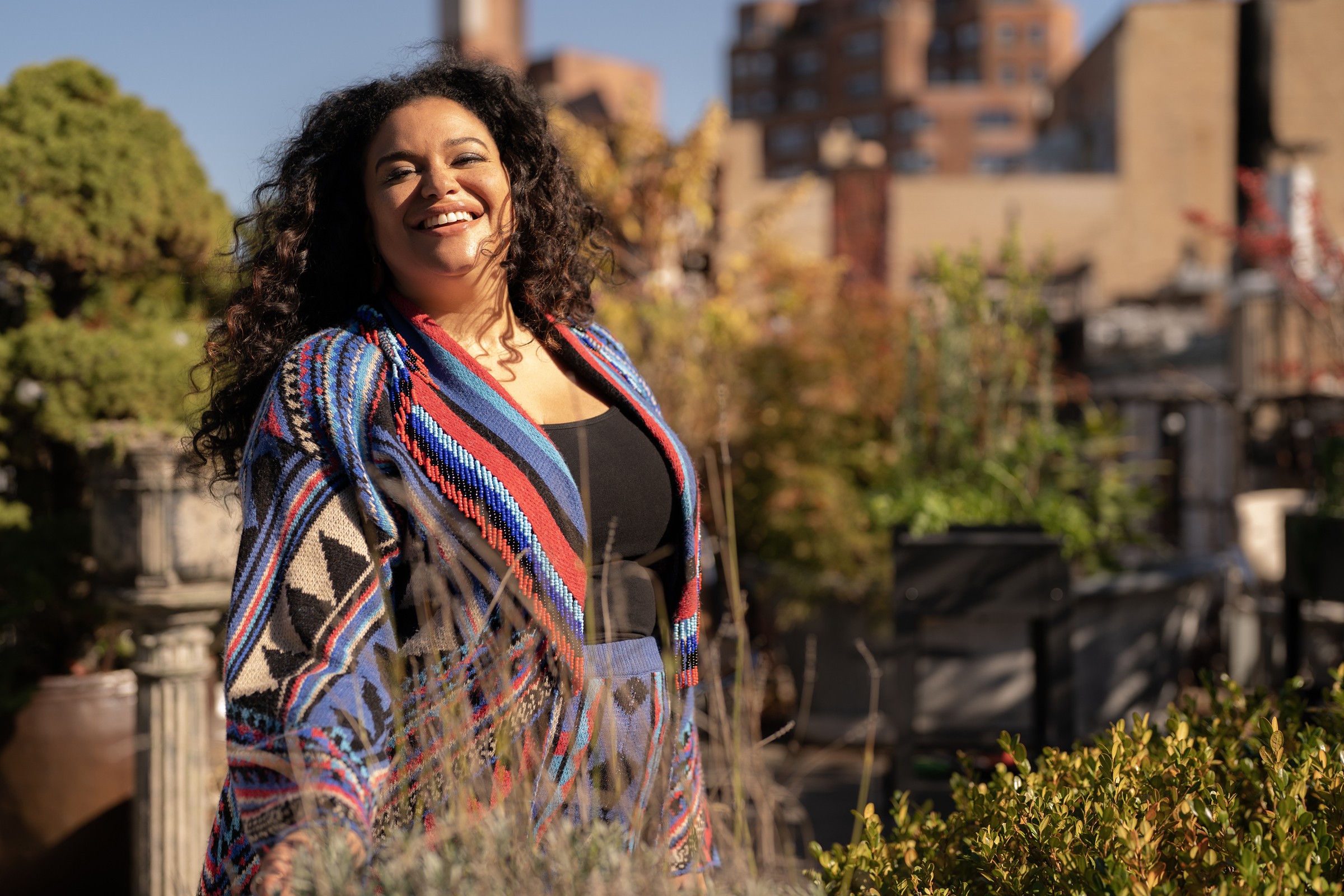
    Michelle Buteau as Mavis in the Netflix comedy “Survival of the Thickest.” MUST CREDIT: Netflix photo by Vanessa Clifton

    God bless you please, Michelle Buteau

    It’s hard to say goodbye to one of my favorite shows, but the third and final season of Survival of the Thickest felt like a fitting ending for Michelle Buteau’s witty comedy. She plays Mavis, an aspiring fashion designer who wants to make clothes that fit all body types — thick girls, genderqueer folks, and anyone else who thrives outside of the fashion world’s narrow beauty standards.

    In this season, (part-time) Delaware County resident Wanda Sykes joins the cast as Mavis’ fertility doctor and she’s a cool-headed, hilarious scene partner who deflates her patient’s babbling anxiety with well-timed precision.

    The show remains funny, warm, and sassy, but the emotions reach new depths as Mavis experiences a miscarriage and struggles in her recovery. Nothing keeps her down for long though, and it’s such a comfort to see Mavis get back up. It’s an uplifting and heartwarming story that could help any viewer overcome summertime (or other time) sadness.

    “Survival of the Thickest” streams on Netflix.

    — Rosa Cartagena

  • We are not part of Jalen Carter’s family, we shouldn’t care where LeBron lives, and other thoughts …

    We are not part of Jalen Carter’s family, we shouldn’t care where LeBron lives, and other thoughts …

    First and final thoughts …

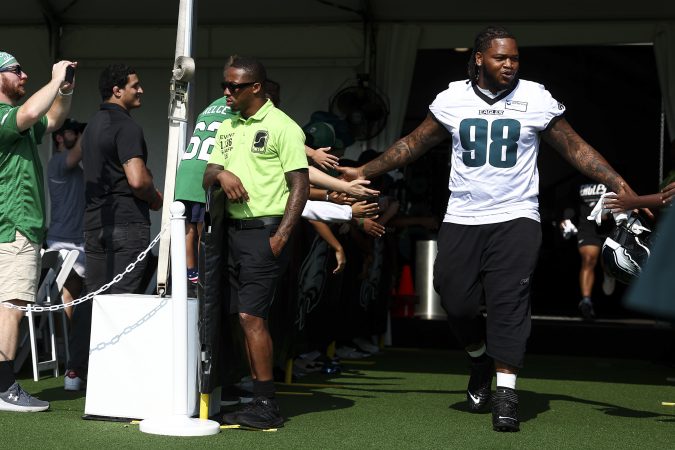
    Jalen Carter said something very sweet and very incorrect during a news conference Wednesday. In answering questions about his new contract extension with the Eagles — an extension that reportedly guarantees him $106 million — Carter paused while answering a question and mentioned all the people to whom he was grateful.

    “Wanna slow it down,” he said. “First, I want to say I’m thankful to God for putting me on this earth. Thankful for the coaches, the players, Mr. Lurie.”

    Then he nodded toward the media members gathered in front of him.

    “Thankful for you guys, too,” he said. “You guys put out some good information, some good facts about me, stuff like that. We’re all one family.”

    No, we’re not.

    Now, some of the people in the media tent at that time definitely were. Members of Carter’s actual family were on hand, as were several Eagles staff members and his friend and teammate Jordan Davis. And some other people there either don’t mind thinking of themselves as members of the Eagles’ family or have bosses who would like them to be thought of that way.

    But a fair number of us weren’t there to congratulate Carter for his newly attained wealth or share in the optimism that he will fulfill his potential and become a Hall of Fame-caliber defensive tackle. We were there to listen to what he said, to listen to what Howie Roseman and Nick Sirianni and Carter’s teammates said, to listen to other people in and around the Eagles’ organization said about the signing, and to explain what happened and what it might all mean. We might even point out that Carter has made some pretty big mistakes in his life and football career, and those mistakes raise the possibility that he won’t live up to such a lucrative contract, and he and the Eagles ought to be held to account for such decisions and mistakes.

    We were there to tell people what’s really happening or what we really think. We’re not going to sit on information or a story because it might embarrass or anger a coach or player or make things more difficult for the franchise. We were there to report, not to support. There’s a difference, and when you note that difference nowadays, you risk coming off like a scold, a jerk, an egomaniac, or all of those things at once. You face the inevitable barrage of complaints from those who want to be told only what they want to hear; who presume that you root for the athletes and teams that you cover and, when they find out that you don’t, insist that you should; and who can’t comprehend how someone could report or write something in good faith that was critical of those hometown heroes. Which is OK. That complaining, even the nastiest of it, comes with the job, and you have to be able to take it.

    Put simply, we’re there to be as fair and accurate and honest as we can be, but we’re not part of the team. We’re not part of the family. We’re not supposed to be.

    Quick hitters

    Wilt Chamberlain lived in Manhattan while he played for the Philadelphia Warriors. JJ Redick lived in Brooklyn while he played for the 76ers. If you are genuinely dismayed that LeBron James might not live in Philadelphia or any of its surrounding towns and suburbs during his (brief) career with the Sixers, please get in your car, drive it north on I-95, and, for perhaps the first time in your life, continue past the Street Road exit. There’s a whole world up there. …

    Kudos to Tom McCarthy: Phillies TV play-by-play man, former radio voice of the St. Joseph’s Hawks, all-around gem of a human being. During Tuesday’s Phillies-Marlins telecast on NBC Sports Philadelphia, he delivered a brief and beautiful eulogy for Chris DiJulia, the son of longtime St. Joe’s athletic director Don DiJulia and as familiar a presence as anyone connected to the school’s athletic program. Chris, who had cerebral palsy, died Monday night. Tom even mentioned the moving tribute that former Inquirer staffer Mike Jensen wrote to Chris on Mike’s Facebook page. …

    Jeez, that whole Flyers-are-having-the-most-interesting-offseason-of-any-Philly-team thing sure fizzled out fast. …

    Probable NBA schedule on Christmas. You know, to maximize viewership:

    • Noon: Celtics at Sixers
    • 3 p.m.: Cavaliers at Sixers
    • 8 p.m.: Sixers at Knicks
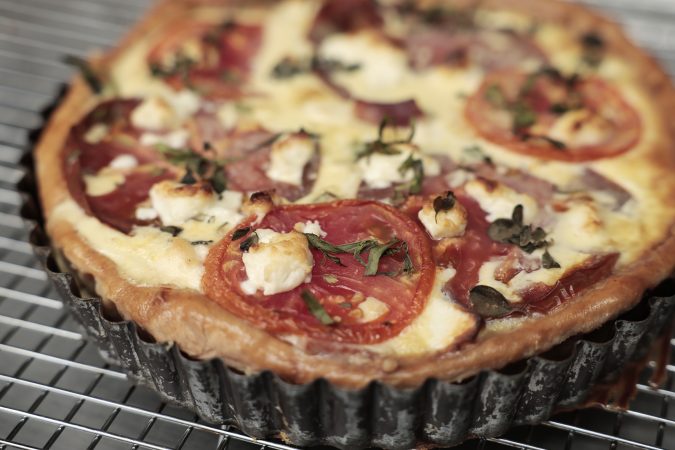
  • The best thing Kiki Aranita ate this week: The savory tomato tart from Market Day Canelé

    The best thing Kiki Aranita ate this week: The savory tomato tart from Market Day Canelé

    Market Day Canelé’s savory tart is a scrapbook of sorts for owners Gil Ortale and Nem Ngo. It’s sold at farmers’ markets on weekends, each tart a collection of every interaction they’ve had through the week, shopping from their fellow vendors at Rittenhouse, Headhouse, Chestnut Hill, and Swarthmore Farmers’ Markets, and filling in the gaps at Reading Terminal Market, where Ortale once ran Fireworks, a charcoal-grill stall four decades ago.

    It’s tomato season, and the Market Day savory tomato tart ($30) is an ode to this area’s most covetable, most anticipated fruit. Crimini and white button mushrooms, corn, herb-roasted cotto ham from Claudio, Alderfer Farm eggs, and gruyère play supporting roles to the tomato slices splayed across its top. It’s a tart that’s also a philosophical meditation on produce.

    “Flavors [in my cooking] should be crystal clear examples of the very thing you imagine,” said Ortale, whose resume reads like a highlights reel of Philadelphia’s most storied restaurants, as he has worked everywhere from Frog to La Terrasse. “Like when you’re a child and tasting herring or Roquefort for the first time.”

    Ortale’s goal is to make food that tastes exactly like one’s first recollection of tasting any food. And so, his tomato tart reminds me of the first time I tasted fresh tomatoes cooked gently on a pizza, when I was five years old. It made me think of the first time I had sweet, fresh corn and the kernels burst in my mouth, and the savory British pies I ate growing up in Hong Kong.

    Nem Ngo and Gil Ortale are the folks behind Market Day Canelé. They were photographed in their Philadelphia home on Thursday, July 30, 2026.Elizabeth Robertson / Staff Photographer

    It’s so good that I was hesitant to write about it, as Ortale and Ngo usually only make two dozen to sell every week, and if you get one, there’s far less of a chance I’ll be able to get one.

    The crust is intentionally imperfect and not uniform, which makes it so flaky, it will stop you in your tracks, mid-bite. Ortale makes every single tart by hand. He doesn’t use a mixer or a Robot Coupe. “He blends the butter into the dry ingredients for each dough ball. That’s why they taste the way they do, they’re light and never stodgy,” said Ngo. “You can’t get that without elbow grease. It can’t be done with a machine.”

    This approach is also why Market Day Canelé has never opened a brick-and-mortar bakery. They have no desire to scale up.

    “We’re not hardcore capitalists. We just genuinely want to make good food. The farmers’ market industry is the most supportive and values-driven part of the food economy. People are shopping there because they want to know where their food is coming from and they want to see the faces of the people who make the food. We try to uphold that by doing everything by hand, with love, and to the best of our ability,” said Ngo.

    The canelé by Market Day Canelé is a vanilla custard pastry that is the traditional pastry of Bordeaux. It was photographed in Philadelphia on Thursday, July 30, 2026.Elizabeth Robertson / Staff Photographer

    The airy, honey-combed crevices of beeswax and butter-slicked canelés may be the emblem of their business. They certainly have sent Ortale and then Ngo down an obsessive path of perfecting a corner of French-rooted baking traditions. But their savory tarts, with a rotation of ultra-local ingredients, many sourced from their friends, are the finest illustration of how skilled hands and devotion to one’s community can produce extraordinary things.

    Market Day Canelé, instagram.com/marketdaycanele. Hours: Every Saturday, 9 a.m. to 2 p.m. at Rittenhouse Farmers’ Market and every Sunday, 10 a.m. to 2 p.m. at Headhouse Farmers’ Market. Every other Saturday: Chestnut Hill Farmers’ Market and Swarthmore Farmers’ Market, 9 a.m. to 12 p.m.