Psychiatry’s leading guide to diagnosing mental health conditions is due for a major update — and a University of Pennsylvania psychiatrist is heading the effort.
Called the Diagnostic and Statistical Manual of Mental Disorders, the DSM was first published in 1952 and has historically been updated every 10 to 20 years.
The American Psychiatric Association released the last major update, the DSM-5, in 2013. (A text revision came out in 2022.) There is currently no estimated date of publication for the next edition, given the scale of the project.
Maria Oquendo, who chairs Penn’s department of psychiatry, was tapped to lead the strategic committee for the sixth edition. That will entail developing a road map for the future of the DSM, based on more than a decade of advances in research and patient care.
“I am very honored and also very daunted,” Oquendo said.
The group has proposed creating a “living DSM,” changing the manual’s name, and making diagnoses more “person-centered.”
There are subcommittees focused on the socio-economic, cultural, and environmental determinants of health, the biological factors behind mental health conditions, symptoms spanning multiple conditions, and functioning and quality of life.
Past DSM updates have similarly introduced sweeping changes — including changing how autism is diagnosed and adding “prolonged grief disorder” as a condition.
The manual is commonly used by mental health professionals, researchers, insurance companies, and the legal system.
The committee wants to make sure a small change doesn’t cause drastic ripple effects for the public, such as disqualifying people from insurance coverage or altering “the standard for deeming someone not criminally responsible,” Oquendo said.
“If it has a big impact, then the rationale has to be extremely robust,” she emphasized.
The Inquirer spoke with Oquendo about what changes could be coming in the next edition of the DSM in a conversation lightly edited for length and clarity.
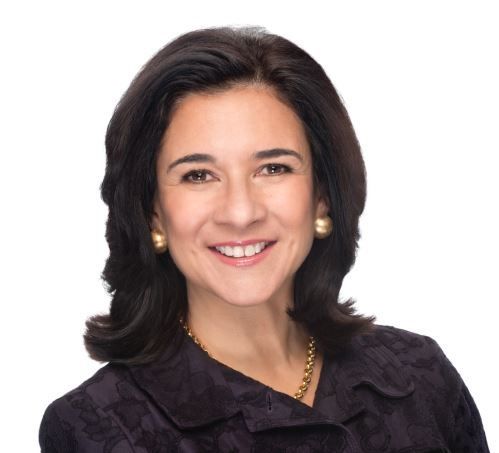
Maria Oquendo, who chairs Penn’s department of psychiatry, was tapped to lead the strategic committee for the next edition of the DSM.Courtesy of Penn Medicine
What is the DSM?
The DSM is a clinical manual intended to help clinicians make diagnoses.
It provides not only a list of all of the diagnoses but also descriptions that include some background information like family history. Importantly, it makes sure that when I, as a clinician, am talking about obsessive compulsive disorder, the person who’s listening to me knows exactly what I’m talking about.
The reach of this book is quite global, and in many places such as Western countries, it’s used as the primary diagnostic tool.
What changes are you hoping to make with the new edition?
There are people who refer to the DSM as the Bible. It’s not the Bible. At best, it’s a dictionary. And what we want to do is increase focus on contextual factors that are important for making a diagnosis. Ideally a person-centered explanation is about not only what the disorder is, but what’s contributing to it. We know that socio-economic, cultural, and environmental factors are super important for mental health.
If you’re assessing someone, knowing about that can be really helpful to understanding that person and where they are coming from.
As an example, if somebody comes from a culture like my culture (Puerto Rico), where people have very strong connections with the deceased, sometimes they experience the deceased person’s presence or hear them talk, especially at night. That could be construed to be hallucinations, and yet in the context of not only my culture but many cultures, that would be completely normative.
What other changes are being considered?
We are very focused on making sure that functioning and quality of life get the attention that they deserve. There are some people who have lots and lots of symptoms, and they’re happy as a clam. The amount of distress that a person feels can vary quite significantly, and it’s very relevant in terms of not only diagnosis but treatment planning. What are the best interventions to help that person get better?
We also have a section on biomarkers and biological factors. That’s really important because, to date, the DSM has been kind of agnostic about what the contributors to mental disorders are. But we know that there are biological contributors, and we also know that the environment is extremely important, and it’s the interaction of those two things that is critical in terms of whether an individual manifests a mental disorder or not.
What do you mean by biological factors?
I don’t necessarily only mean things like genetics and predisposition. Experiences like trauma can change our biology. We know that the stress response system in the brain can change very dramatically after trauma. That’s another biological contributor to a mental disorder that is not innate.
Another proposed change is to encourage broader diagnoses. Can you elaborate on that?
Historically, the DSM has encouraged precise diagnosis to the extent that it’s possible. But we think that in most first encounters, it’s very common not to be sure what the diagnosis is. You may know that a person has a mood disorder of some type, but you may not be sure if they really have bipolar disorder or major depression, as an example. Sometimes it takes time for that to become clarified. You need to get collateral information from loved ones to confirm what’s happening in the environment, or it may take time because you just need the symptoms to evolve.
We’ve looked at data from insurers, and found that people are using more general diagnoses. What we want to do is provide a platform so that people can start from that, and as they get to know the patient better, refine their diagnosis with more data and more information.
What about the proposal to change the DSM’s name?
It’s called the Diagnostic and Statistical Manual because, when it was first developed, the goal was to be able to develop estimates of the frequency of diagnosis, so public services could be planned. But now that’s not what it’s used for at all. We actually are planning to change the name to Diagnostic and Scientific Manual because we want to strongly communicate that this is based on science.
How could this next update make the manual a “living DSM”?
The American Psychiatric Association really wants to make sure that this next DSM can stay as up to date as possible. The idea is that there would be a book version, but also an electronic version that would be updated on a periodic basis.
One of the things that’s really tricky about that is that you want to keep things current — we don’t have to wait 13 years for things to be updated. But if you change things too much, you drive people in the field crazy.
In 1866, the realist painter Thomas Eakins was in Paris studying at the École des Beaux-Arts. While there, he wrote to Emily Sartain, a family friend and artist who, from 1886 to 1920, would go on to become principal of what is now the Moore College of Art.
“I am proud to be a Philadelphian. … I feel 6 ft and 6 inches high whenever I only say I am an American,” he boasted.
It took some years before Philadelphia accepted and loved the artist back.
In 1870, Eakins returned to Philadelphia, where he began a career painting subjects of modern life in a straightforward manner without pretense or flourish. Establishing a studio at his family home on Mount Vernon Street, he hoped to find artistic success in Philadelphia.
But his first paintings received mixed reviews and found no buyers.
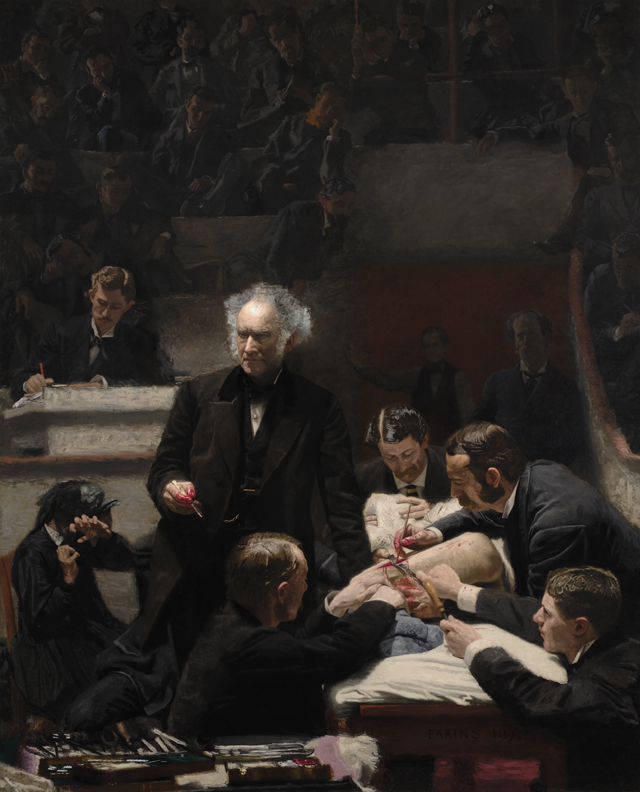
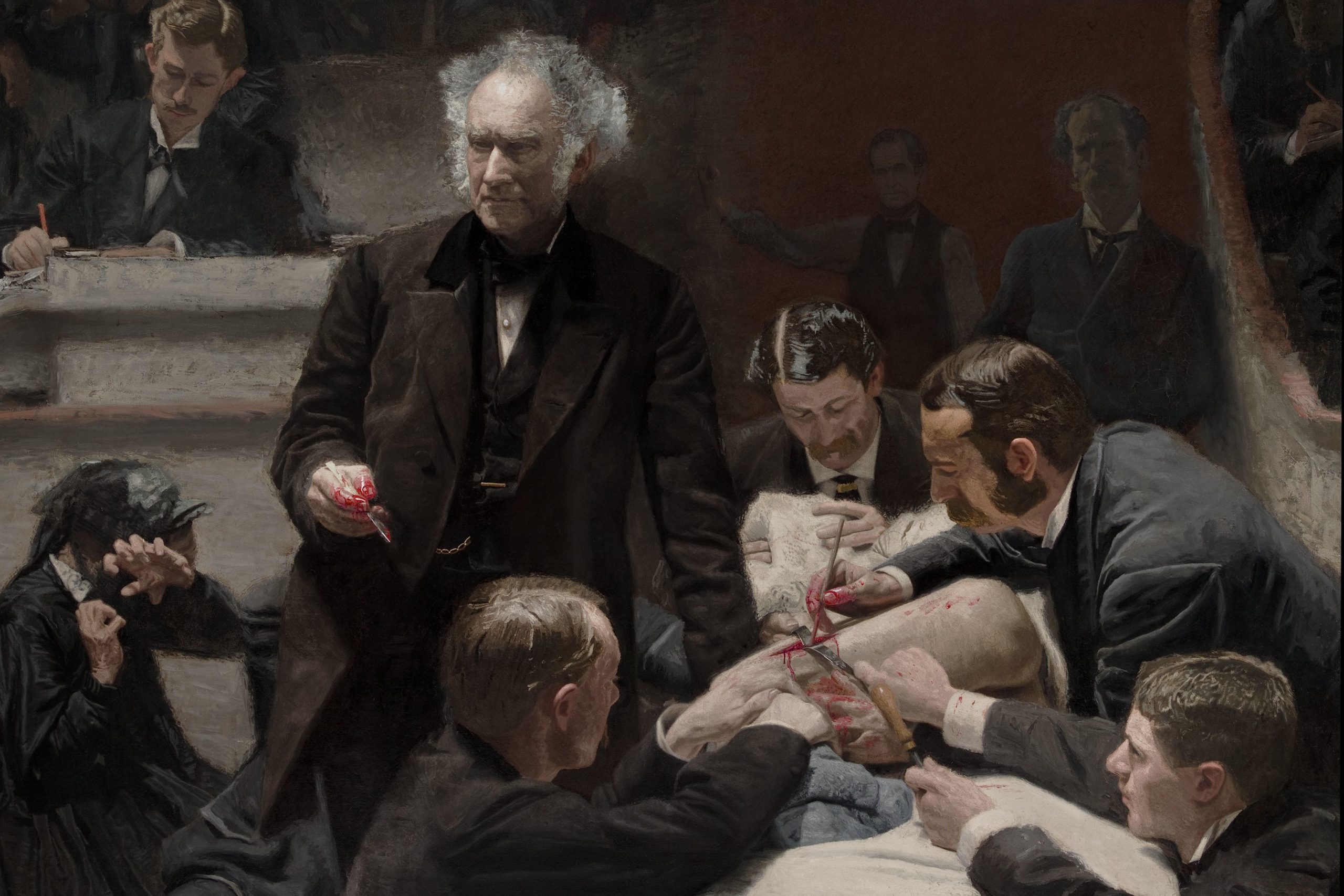
Thomas Eakins, “Portrait of Dr. Samuel D. Gross (The Gross Clinic),” 1875. Oil on canvas, 96 x 78 ½ in. Courtesy of the Pennsylvania Academy of the Fine Arts, Philadelphia. Gift of the Alumni Association to Jefferson Medical College in 1878 and purchased by the Pennsylvania Academy of the Fine Arts and the Philadelphia Museum of Art in 2007 with the generous support of more than 3,400 donors.Courtesy of the Pennsylvania Academy of the Fine Arts
‘The Gross Clinic’
In 1875, at age 30, Eakins began work on Portrait of Dr. Samuel D. Gross(The Gross Clinic), a noncommissioned oil painting of the eminent surgeon-teacher in clinical instruction at Jefferson Medical College, where Gross was chair of surgery from 1856 to 1882.
Drawing the nude model was a central aspect of academic art training, and students were required to attend lectures on anatomy and study animal and human cadavers in dissection labs. To better his scientific realism, Eakins attended surgical demonstrations and anatomy lectures at Jefferson, and often observed surgical demonstrations by Gross.
Detail from “The Gross Clinic” by Thomas Eakins. The painting was a gift of the alumni association to Jefferson Medical College in 1878 and purchased by the Pennsylvania Academy of the Fine Arts and the Philadelphia Museum of Art in 2007 with the support of more than 3,600 donors.Courtesy the Philadelphia Museum of Art and the Pennsylvania Academy of the Fine Arts
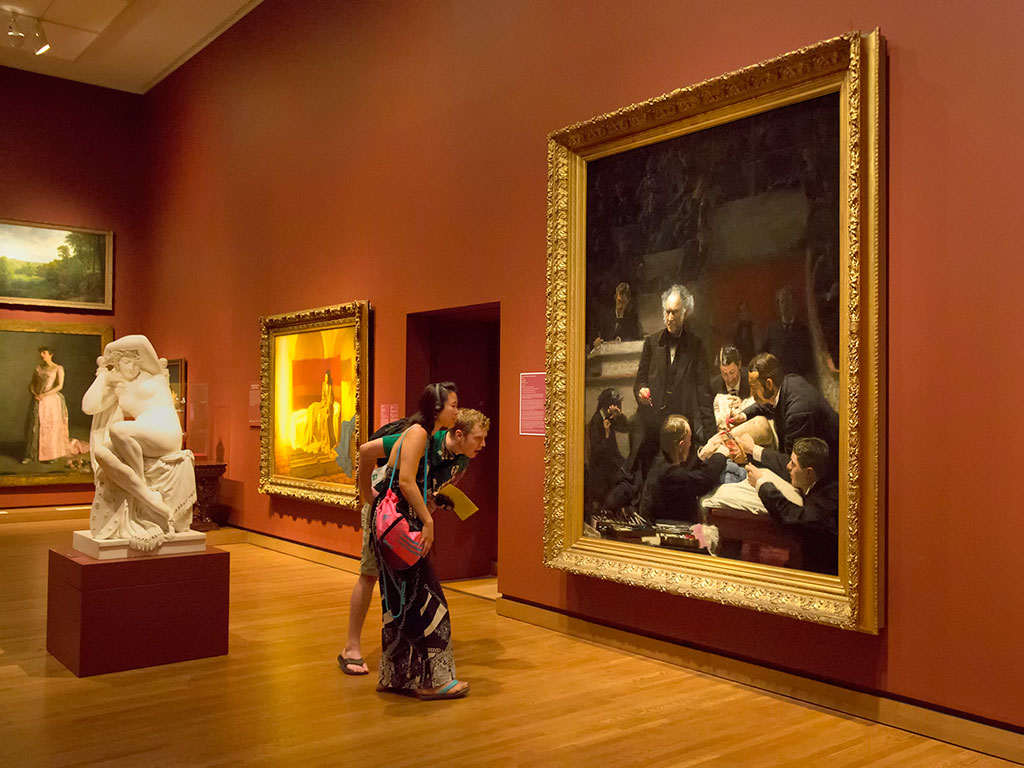
The Gross Clinic, the 8-by-6.5-foot large oil on canvas, shows Gross and his assistants operating in their street clothes worn with long coats. The surgical tools and bandages lie unprotected on a table in the lower foreground. (Germ theory of disease was yet to become an influential factor on medical practice in the United States.)
For this first clinic portrait, Eakins uses dramatic lighting that reflects off Gross’ forehead and his extended right hand. He holds a believably bloody scalpel, emphasizing how successful surgery requires intellect and manual dexterity.
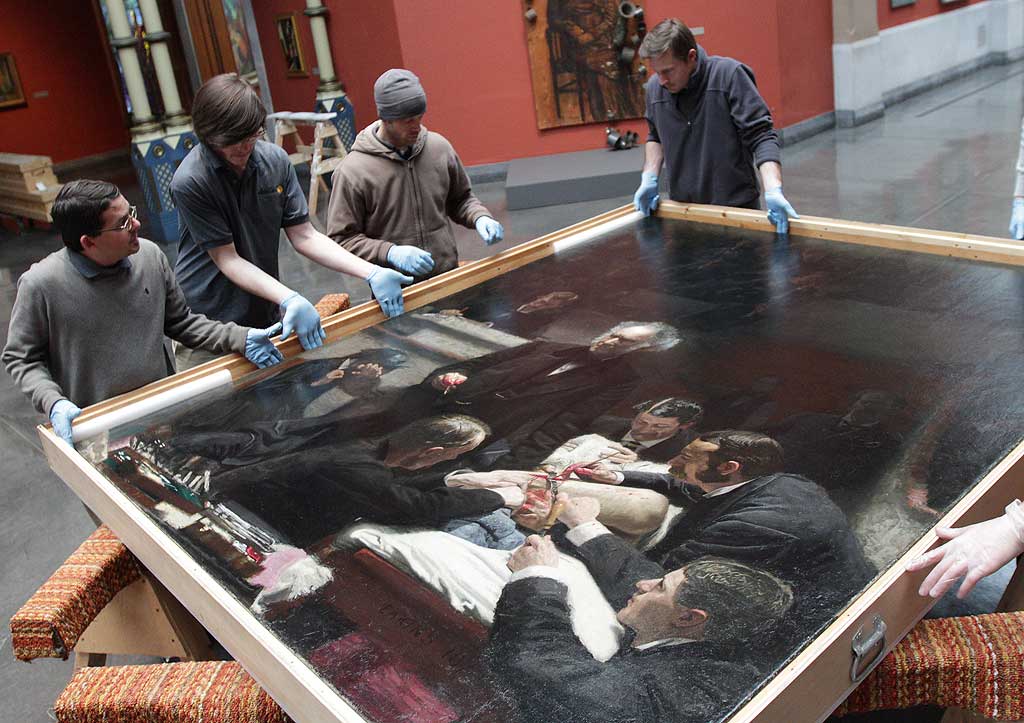
Art handlers from PAFA and Atelier Art Services Inc. place “The Gross Clinic” in a packing crate in 2014. The painting was being moved for display at the Philadelphia Museum of Art. ( David Maialetti / Staff Photographer )
The patient is a minor; the seated woman recoiling in horror is his mother. A chloroform-soaked cloth sedates the child .
In this stopped-action moment, Gross is the commanding figure of the surgical amphitheater. While his assistants hold a retractor to keep the patient’s left thigh incision open, Gross calmly explains to his audience of students the modern practice of removing a piece of diseased bone caused by osteomyelitis.
The moment celebrates stoic men performing surgery. Gross is a heroic savior giving renewed life to a patient who didn’t have to endure a brutal amputation and will retain use of both legs.
Much of the amphitheater is cast in darkness, but a self-portrait of Eakins sits by a railing to imply authenticity of direct observation. He holds a pen or brush like Gross’ scalpel, suggesting that art making is akin to surgery.
The artwork, Eakins believed, was “very far better than anything I have ever done,” as he wrote in an 1875 letter to Earl Shinn, a Philadelphia friend who had also studied at the Ecole in Paris.
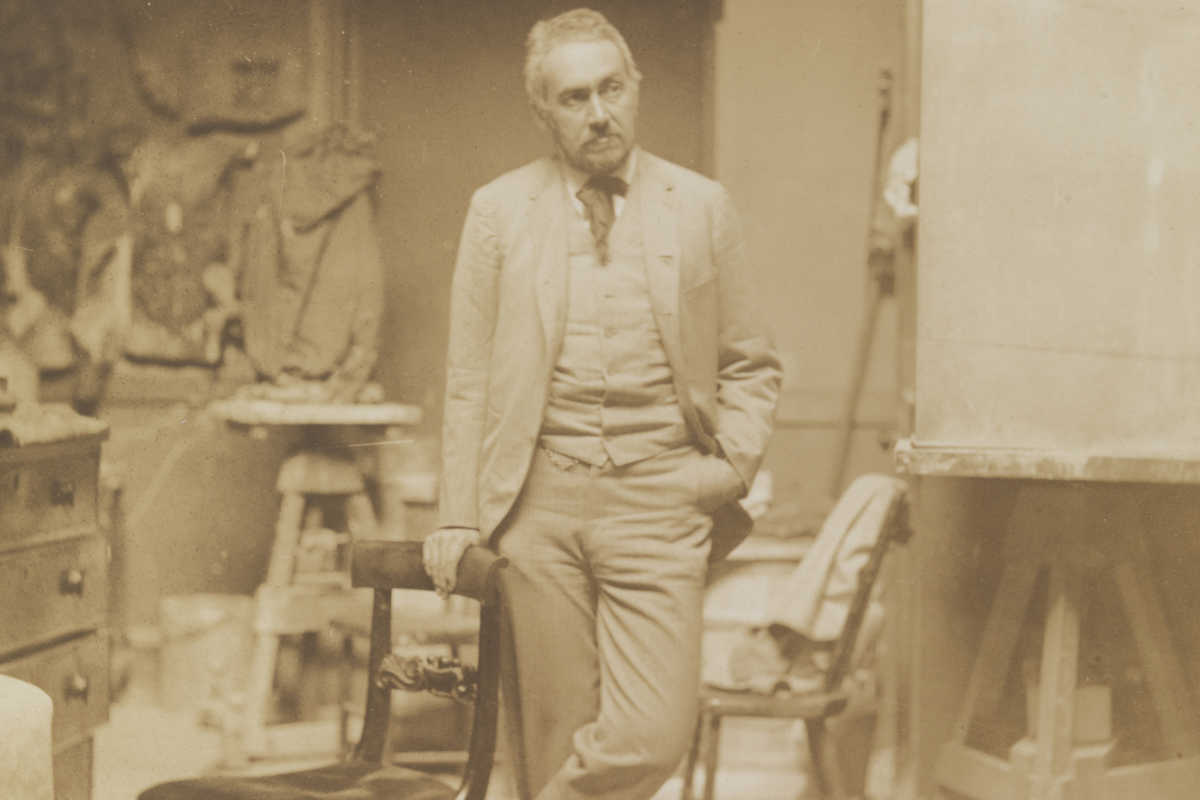
Thomas Eakins in a Chestnut Street studio, 1891-92.Photo taken by Samuel Murray.
Eakins had hoped the portrait of Gross would be seen at the large international art exhibition in Memorial Hall during the 1876 Centennial Exposition in Philadelphia, and help establish his reputation.
It was rejected by the art jury, but was displayed as part of a medical exhibit in the U.S. Army Post Hospital. When the painting was exhibited later at the second annual exhibition of the Society of American Artists in New York, a New York Daily Tribune critic wrote: “It is a picture that even strong men find it difficult to look at long, if they can look at it at all.”
Given the long-term relationship of Gross with Jefferson Medical College, the artist hoped the institution would acquire the painting for its art collection. It was only in 1878 that the Alumni Association of Jefferson Medical College purchased the portrait for $200 (approximately $6,660 in today’s dollars) and presented it to the school where it remained for 129 years.
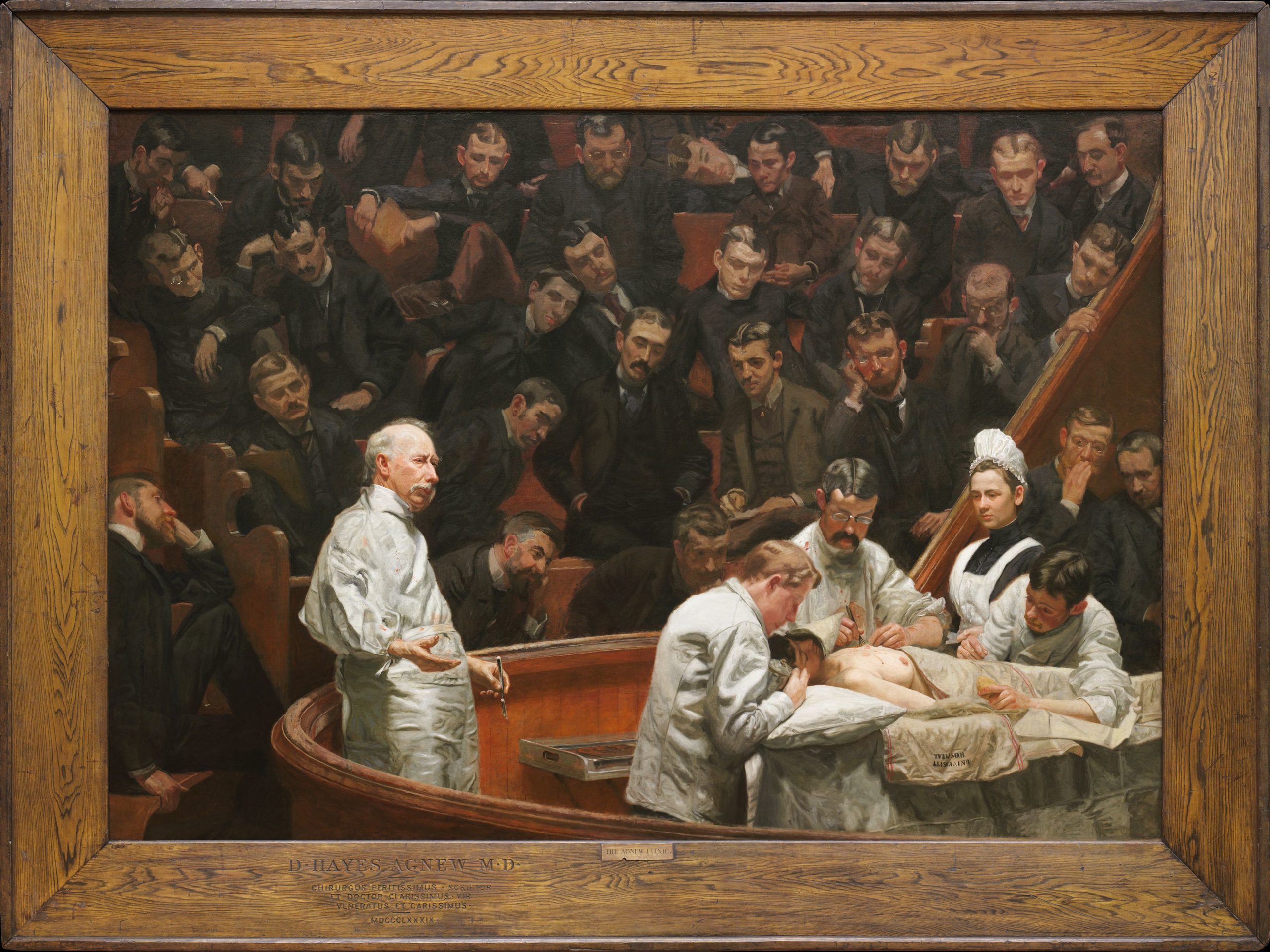
“The Agnew Clinic” (1889) by Thomas Eakins. On long-term loan to the Philadelphia Museum of Art.Courtesy of the University of Pennsylvania Art Collection
‘The Agnew Clinic’
Fourteen years later, in 1889, Eakins painted The Agnew Clinic.
By then, he had taught at PAFA, which admitted women; a rarity in its time. Eakins believed all serious art students, regardless of gender, must work from the life model and learn anatomy.
“I see no impropriety in looking at the most beautiful of nature’s work, the naked figure,” he said. His emphasis on nude life drawing and anatomical study was unsettling to Victorian propriety and his teaching methods eventually proved controversial.
The last straw came in early 1886 when Eakins was giving an anatomy lecture during which he removed a loincloth from a male model in the presence of female students. As requested by the administration, the artist, who was the academy’s director, submitted his resignation, stating: “Was ever so much smoke for so little fire?”
This was upsetting for him. In the summer of 1887, to overcome depression, Eakins made “a little trip to the West,” as he then wrote his friend and former student John Laurie Wallace, to experience “camp cure” at a ranch in the Dakota Territories.
Back in Philadelphia, Eakins received a major boost when in February 1889, he was commissioned by a group of aspiring doctors from the University of Pennsylvania School of Medicine, the nation’s oldest, to paint their retiring teacher, David Hayes Agnew, a colleague of Gross. They offered the artist $750 (approximately $27,148 in today’s dollars).
Eakins began work on The Agnew Clinic, his second clinic portrait.
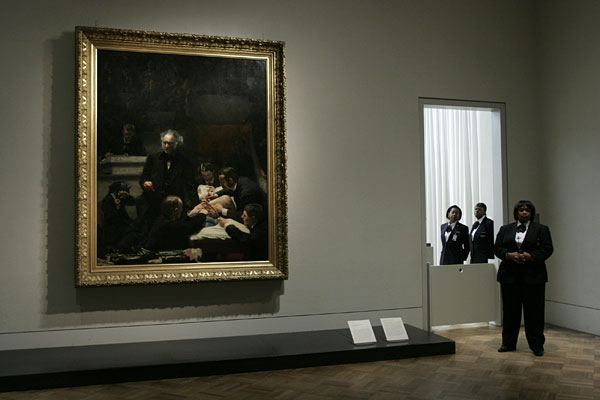
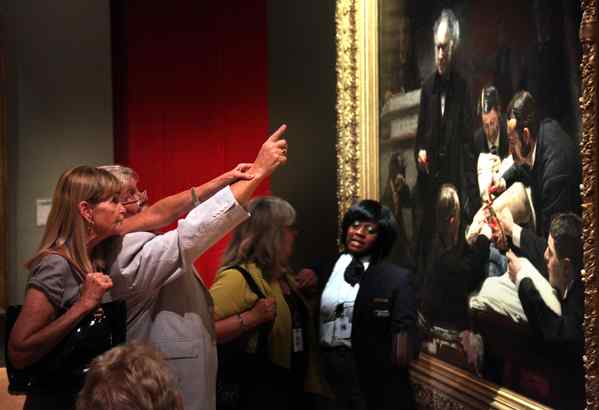
Visitors look at Thomas Eakins’ “The Gross Clinic” in the newly redone American gallery at the Philadelphia Museum of Art in 2014.
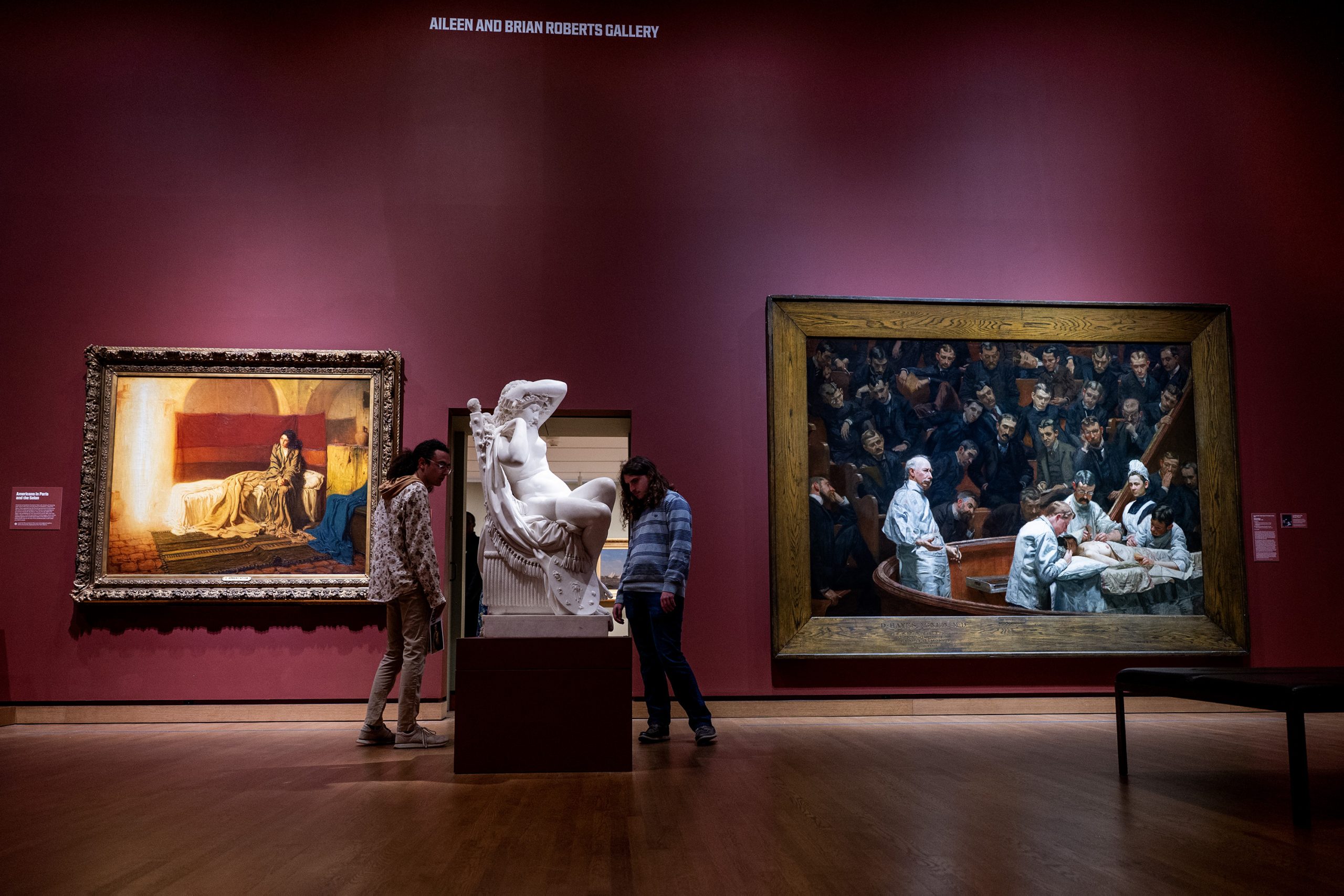
Even larger, at 6 feet by 11 feet, the painting reveals some newly instituted aseptic practices. Surgeon Agnew and his team wear white gowns; sterilized instruments are placed in a covered tray. The operation has a nurse at the patient’s side, but no gloves or masks are seen being used.
Because the canvas was too large for his easel, Eakins worked on the lower sections sitting on the floor, spending long days and nights (and occasionally falling asleep) on the studio floor. The work was completed in three months.
With less dramatic lighting and looser brushstrokes than The Gross Clinic, Eakins shows Agnew in his pedagogical role operating with assistant physicians, a nurse from the HUP Training School, and more easily visible class members who are observing the surgery.
Eakins places Agnew isolated at the left, lecturing. The patient, who has had a mastectomy, is having her incision sewn as a male assistant leans over her lower body. On the far right, the artist, who in this work was painted by his wife, Susan Macdowell Eakins, observes the nude woman sedated with an ether cone.
Deemed “not cheerful for ladies to look at,” the painting is a most provocative choice of surgery for Agnew, who wasn’t a breast cancer specialist but an authority on gunshot wounds.
The Agnew Clinic was given by the medical class of 1889 to their school.
Marble sculpture “La Première Pose (center, 1873-1876) by Howard Roberts; and paintings “The Annunciation” (left, 1898) by Henry Ossawa Tanner and “Portrait of Dr. Hayes Agnew (The Agnew Clinic)” (right, 1889) by Thomas Eakins.in the “A Nation of Artists” show at the Philadelphia Museum Monday, May 4, 2026, in the newly renovated American galleries which were closed for several years.Tom Gralish / Staff Photographer
Side by side
Eakins is a distinguished presence in “A Nation of Artists,” the exhibition of 1,000-plus artworks organized by the Pennsylvania Academy of the Fine Arts and the Philadelphia Museum of Art to mark the 250th anniversary of the founding of the United States.
The Gross Clinic at PAFA and The Agnew Clinic at the PMA are part of this expansive dual-venue survey of American artworks; each is a tour de force.
The two medical portraits reveal the painter’s respect for the art of surgery, underscoring Philadelphia’s vital role in medicine and its preeminent medical schools. Anesthesia, which was newly introduced in the 19th century, is used in both operations.
Both paintings were not well received and regarded as disturbing and unsightly. But both of those large clinical portraits were exhibited together at the 1893 World’s Columbian Exposition in Chicago.
A Philadelphia Public Ledger writer complained that the “surroundings and accessories are scarcely in good taste for a public exhibition.” Another critic dismissed “the clinical horrors” as “ghastly symphonies in gore and bitumen” and mused: “To have hung the pictures at all was questionable judgment.”
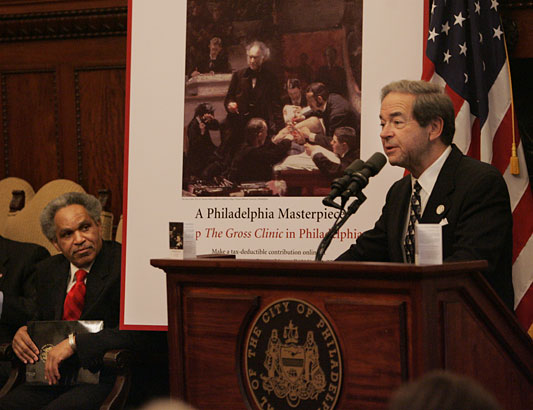
In this photo from 2007, Herbert Riband, vice chairman of the board at the Pennsylvania Academy of the Fine Arts, speaks at City Hall as Mayor John Street listens during the announcement that the Philadelphia Museum of Art and PAFA are to acquire “The Gross Clinic.” Michael Bryant / Inquirer Staff Photographer)
Afterlives
In November 2007, Jefferson Medical College agreed to sell The Gross Clinic for the stunning sum of $68 million offered by Alice L. Walton, Walmart heiress and founder of the Crystal Bridges Museum of American Art in Bentonville, Ark.
It set off a maelstrom resulting in a spirited fundraising campaign that successfully matched her price in a few weeks, keeping the masterpiece in Philadelphia. With a few thousand donations, PAFA and the Art Museum jointly acquired the canvas.
The two institutions collaboratively share the painting on a five-year cycle; it will be at PAFA until 2031.
On opening day of an exhibition at the Art Museum’s Perelman Building, visitors gather around Thomas Eakins’ “The Gross Clinic.” Photo from 2010.LAURENCE KESTERSON / Staff Photographer
Unlike The Gross Clinic, Eakins was asked to paint the portrait of Agnew, creating his second clinic image and the largest canvas of his career. It was completed for presentation at the graduation ceremony that took place at the Academy of Music on May 1, 1889. Its original wood frame has a Latin inscription believed to have been carved by Eakins honoring Agnew as “the most experienced surgeon, the clearest writer and teacher.”
Since 2000, the canvas has been on loan from the university to the PMA.
While recent research has shed light on his pattern of sexual harassment, including allegations that he sexually molested his niece, Eakins continues to be appreciated as an individualist and one of America’s greatest painters. He maintained: “My life is all in my work.”
“A Nation of Artists” runs through July 5, 2027, at the Philadelphia Museum of Art (2600 Benjamin Franklin Parkway, Philadelphia, 215-763-8100 or philamuseum.org) and through Sept. 5, 2027, at the Pennsylvania Academy of the Fine Arts (118-128 N. Broad St., Philadelphia, 215-972-7600 or pafa.org). Note: Exhibit admission is separate at each venue, though discounts are available to view both.
Fifty years ago this Aug. 11, my brother Harold Rosenthal was late for a plane out of Istanbul bound for Jerusalem. He was always late — school, appointments, parties, or late finishing dinner at Horn & Hardart’s, the only restaurant working-class families patronized in Philly then.
While my younger brother Norman and I agonized on the sidewalk, Harold would take bites of food in between whatever book he was reading, a passion cultivated when he was a student at Central High in the early 1960s.
On this August day his tardiness put him near the back of the line at the gate for El Al Airlines. At the time, Harold was working as a senior aide to Republican New York Sen. Jacob K. Javits. He was heading to Israel as part of an assignment for the Senate Foreign Relations Committee, which had sent him on a tour of American embassies in the Mediterranean, ending with a seminar at Jerusalem’s Van Leer Institute.
Fifty years on, I’m certain Harold’s improbable rise was built in Philadelphia.
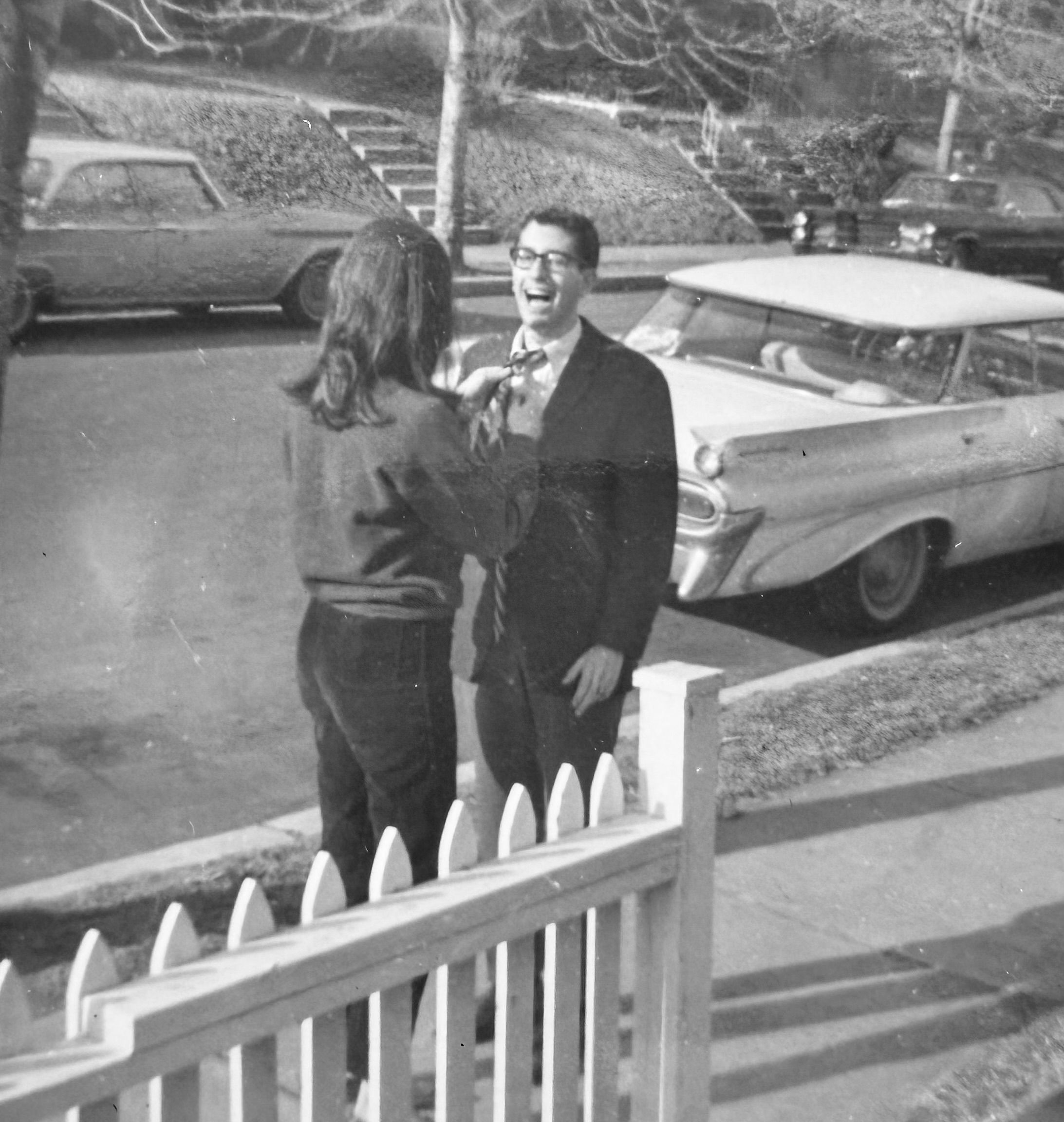
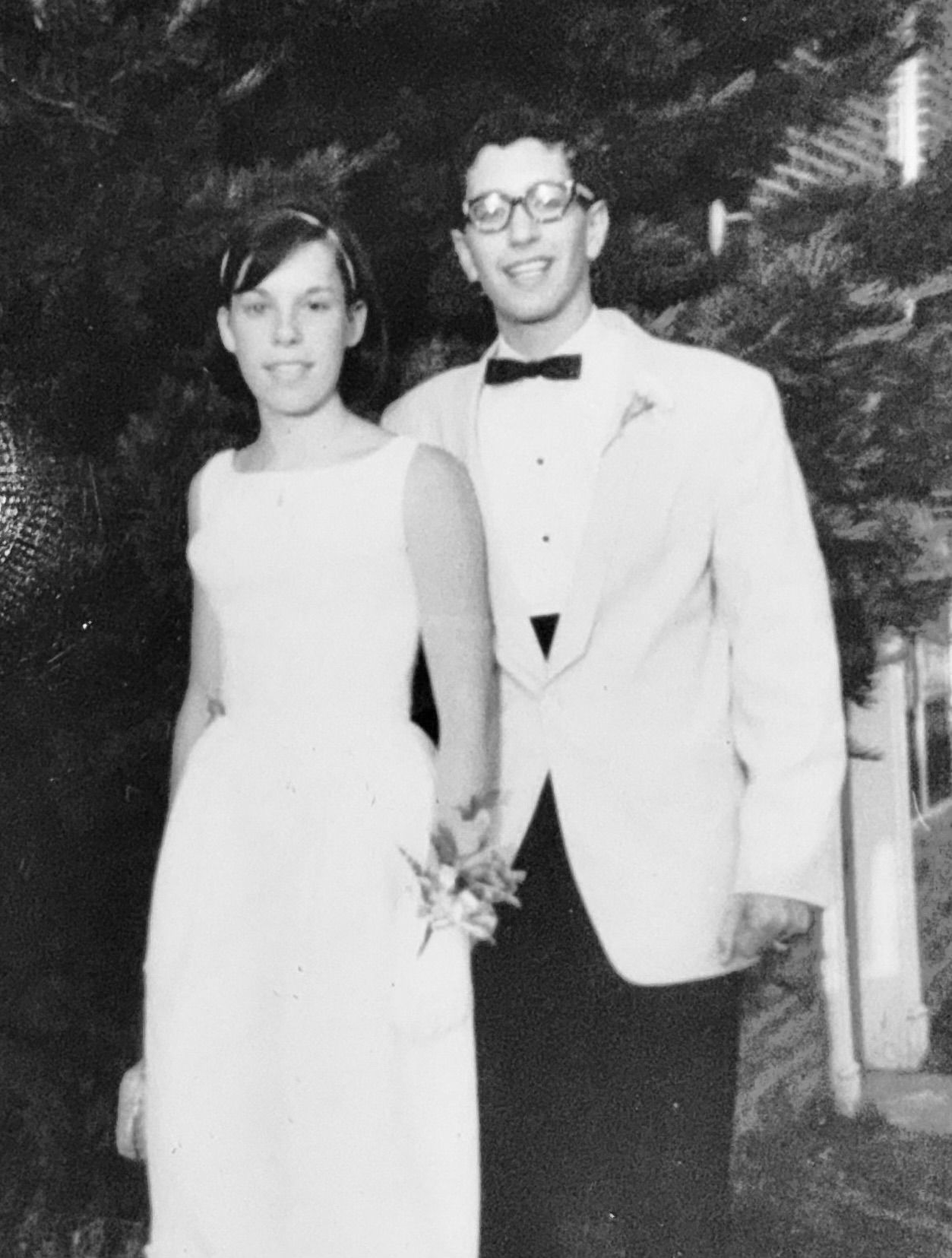
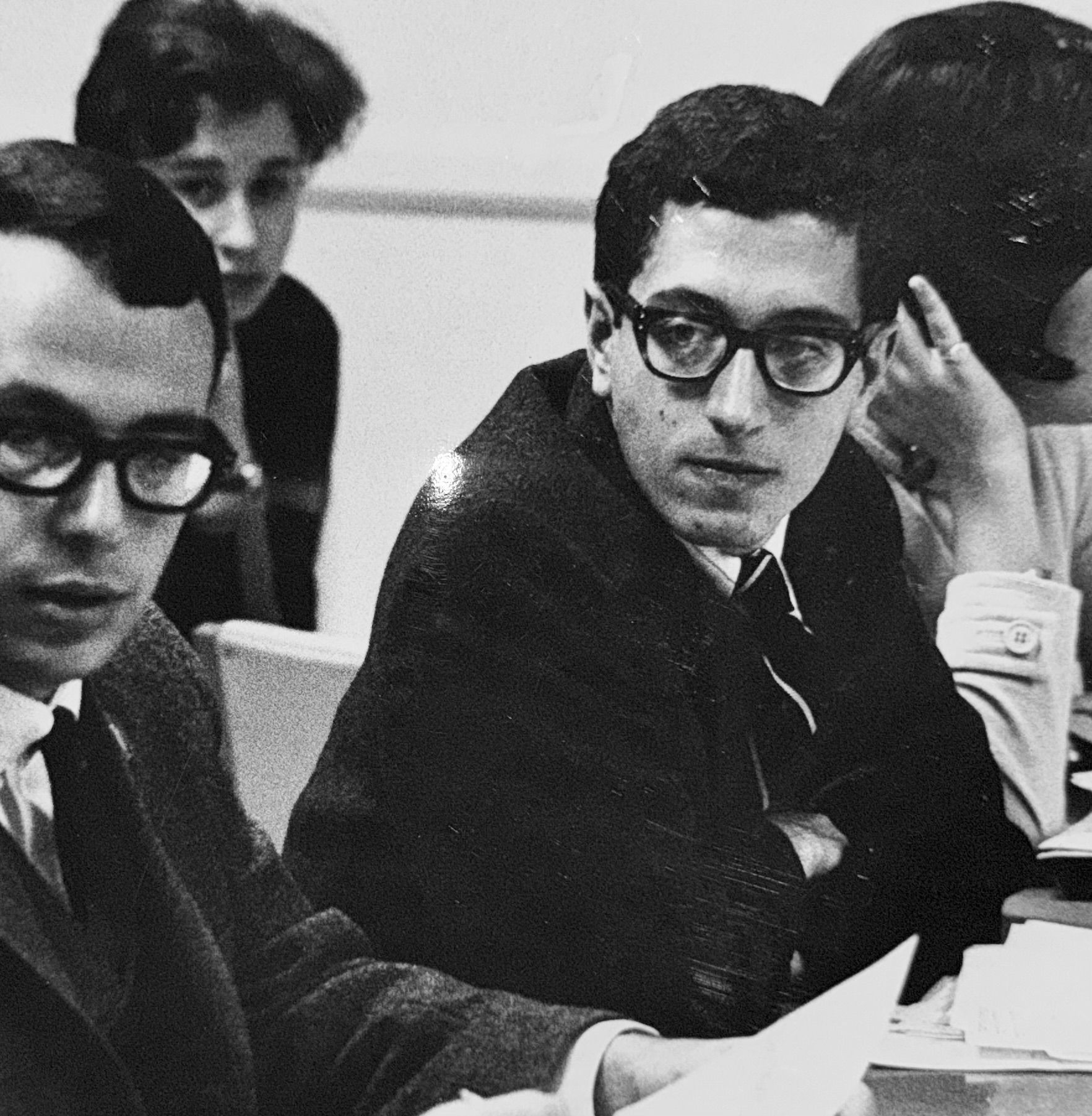
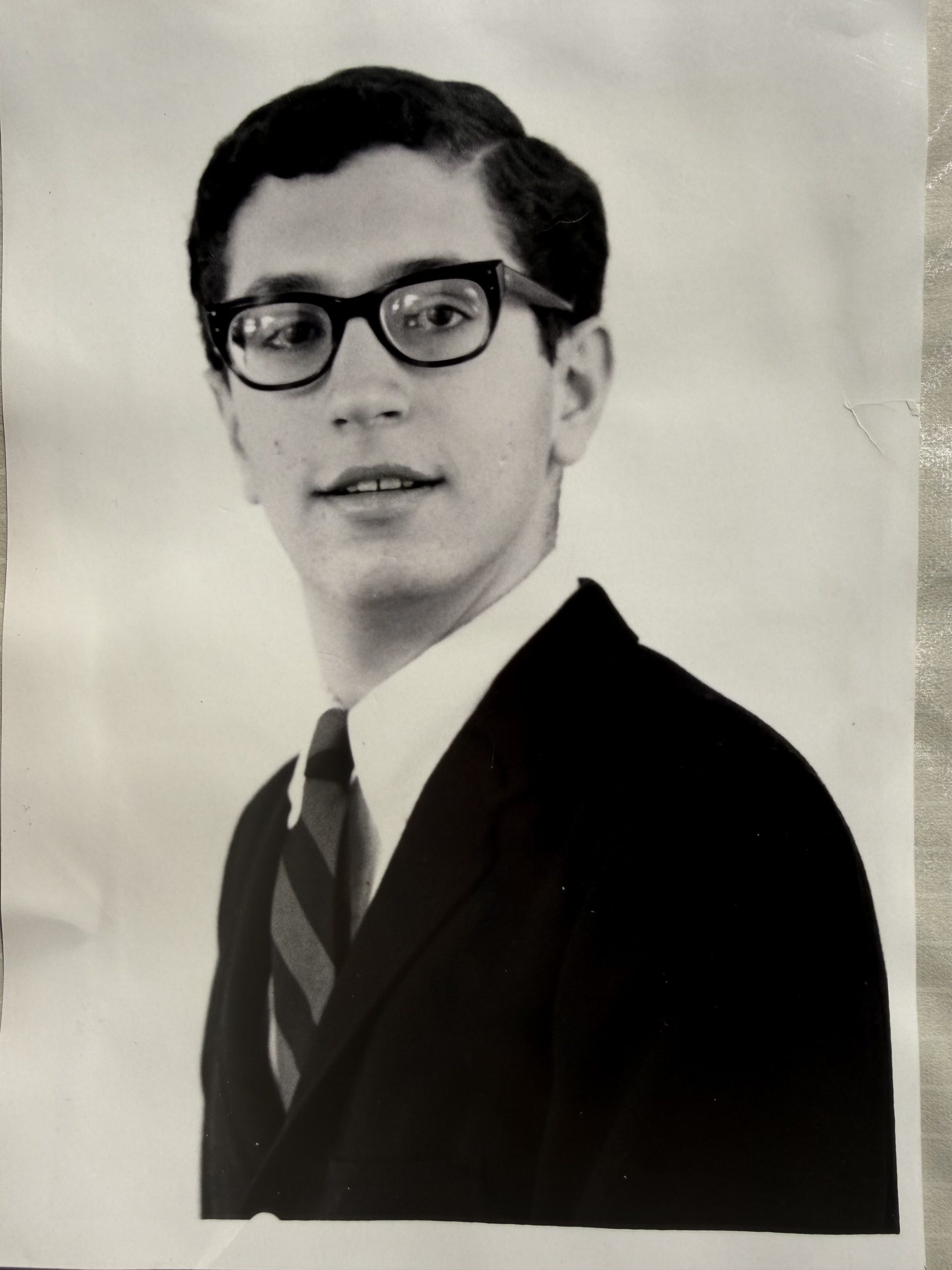
Harold Rosenthal, on Tulpehocken Street in West Oak Lane, in 1966.Courtesy of Mark RosenthalHarold Rosenthal ready for his senior prom at Central High School, May 1965.Courtesy of Mark Rosenthal
We grew up in a rowhouse on Tulpehocken Street in West Oak Lane, the kind of block where everyone knew everyone and you learned early which streets were yours to walk down and which weren’t.
Our parents worked hard but nearly lost that house to foreclosure twice. No kids had cars back then, which was fine. You walked to Pennypacker Elementary and then, to get to Wagner Junior High, Central High, and Temple University, you learned the buses, trolleys, and subways.
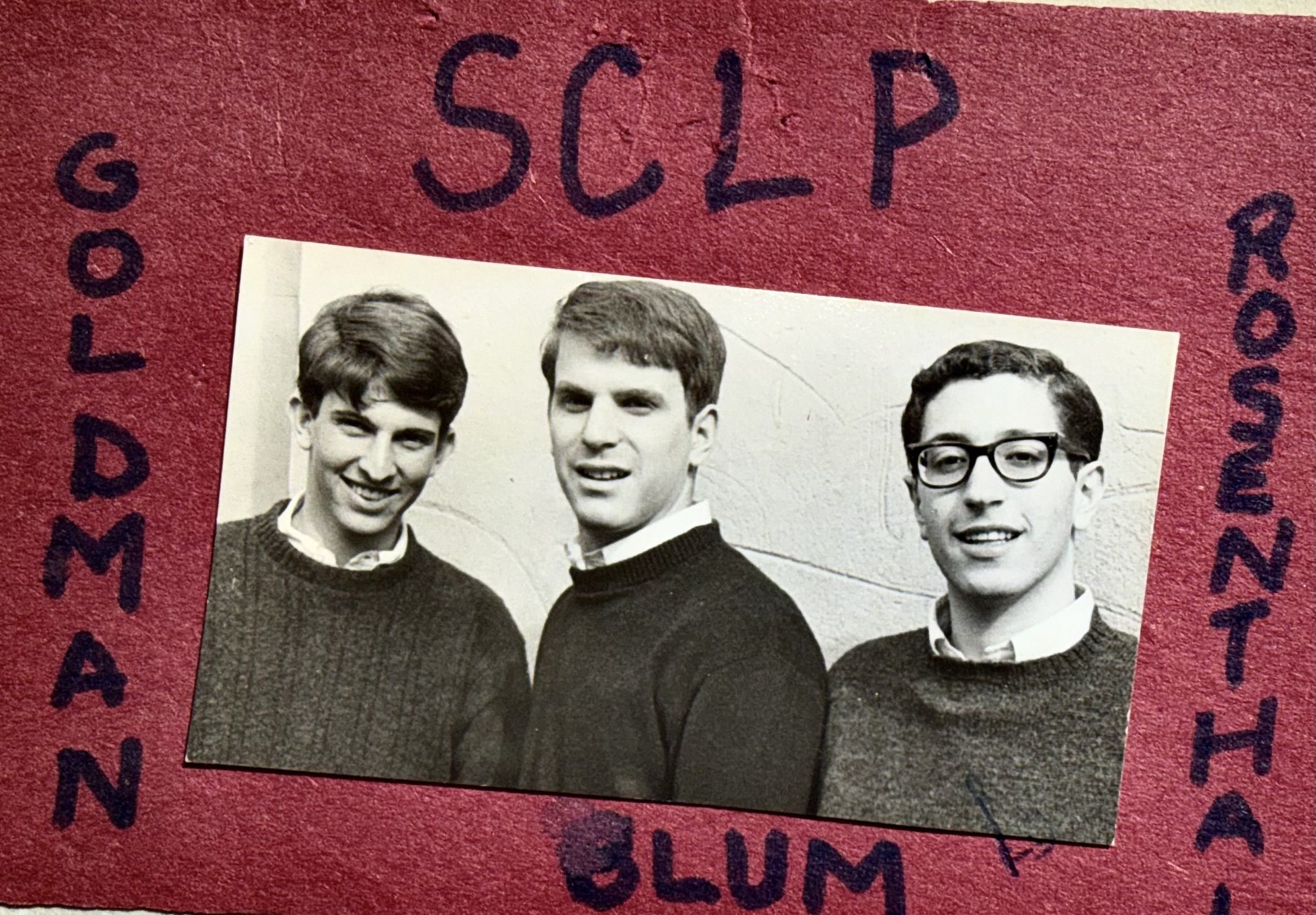
Harold Rosenthal (right) running for student council at Temple University in 1966.Courtesy of Mark Rosenthal
Out of this modest life, Harold built a career in a world that seemed unknowable to the rest of us — all on his own. We didn’t have a word yet for “nepo baby” because no one we knew had money or connections. But Harold was audacious about wanting more. That audacity carried him to a scholarship in France, then Cambridge University in England, and finally Harvard.
I was awed by his fearlessness. At Cambridge, seated at the back of a church for an Advent Carol service, he watched choristers slip through a side door and, deciding his seat wasn’t good enough, followed them. His friends — the ones who’d never dare follow — watched an hour later as he processed down the aisle in white robes, candle flame dancing, past Prince Charles, biting back a laugh.
That was Harold in full: certain that any door marked not for you was the one worth opening.
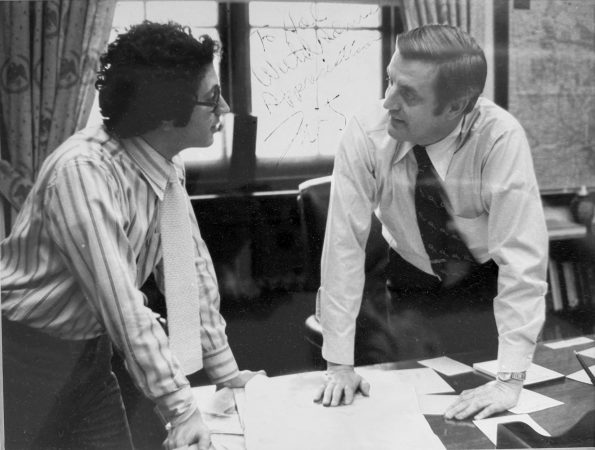
After Harvard, his climb was stunning. Legislative assistant to New York Rep. Hugh Carey, then for Sen. Walter Mondale of Minnesota, a stint at the Rockefeller Brothers Fund, and finally a senior adviser to Javits.
Harold Rosenthal at a Harvard seminar in November 1972.Courtesy of Mark RosenthalHarold Rosenthal’s official portrait for the Senate Foreign Relations Committee, 1976.Courtesy of Mark Rosenthal
Sen. Mondale had already told him that if Jimmy Carter won the White House in November, there’d be a staff position for Harold in the West Wing or as part of an undersecretary’s desk at the State Department. A public school kid from a Philly rowhouse, one election away from the top of the government.
That August I took a position as a teaching assistant at the University of the Pacific in California, more hiding from adulthood than pursuing a doctorate. Our younger brother, Norman, was already on his way to an influential career as an endocrinologist.
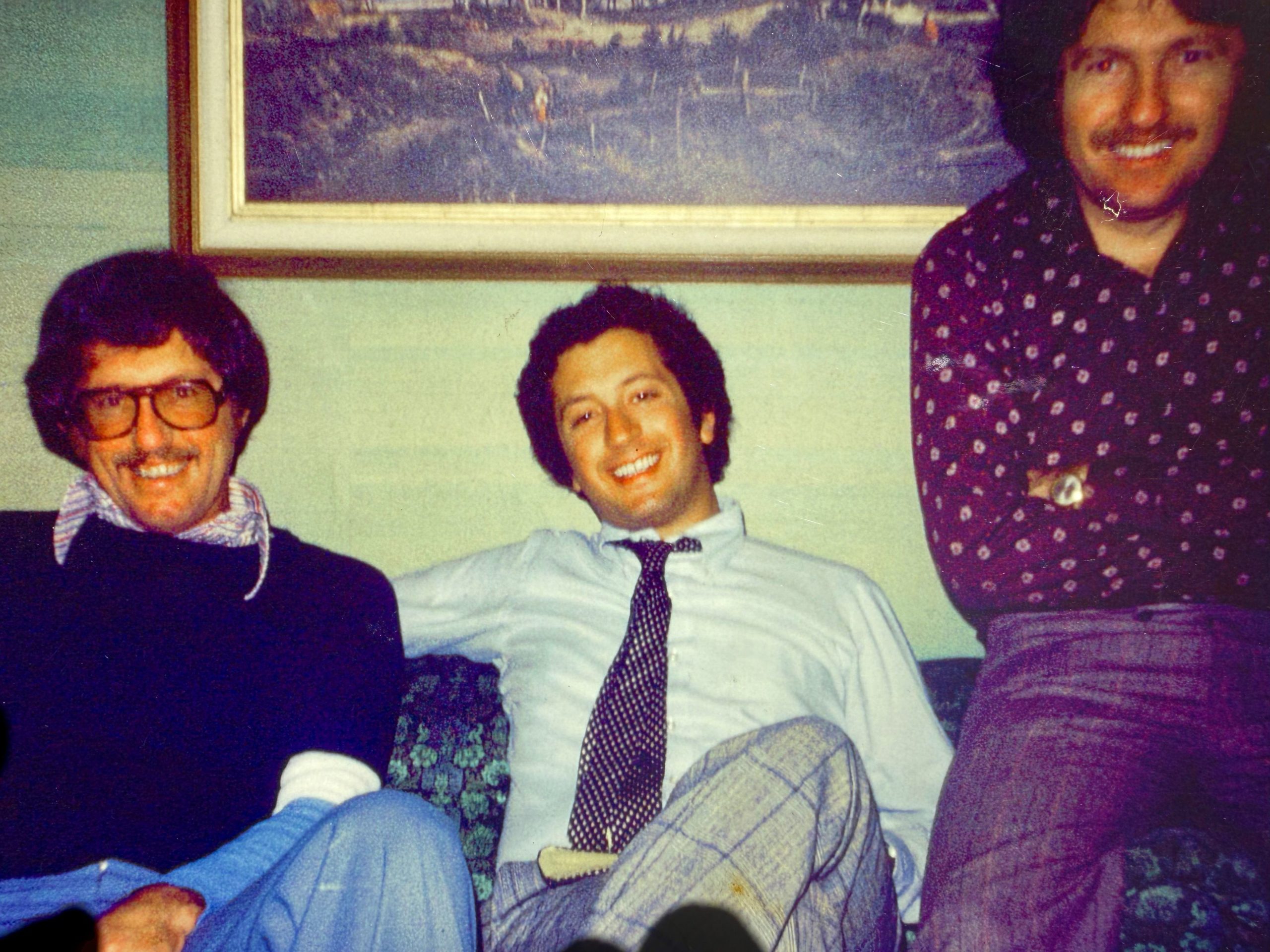
Harold Rosenthal (center) during a State Department visit to South Africa, 1974.Courtesy of Mark Rosenthal
If my future was uncertain, Harold was rewarding my overworked parents with the gift of an insider’s view of his rise. He always shared his itinerary, printed on Senate stationery, with my mother, who tracked this Mediterranean tour almost hourly. He was only passing through Istanbul.
I was at a going-away dinner near Penn when I called home and heard the fear in my mother’s voice — something about an attack on an El Al flight. There was no cable news then, no way to know. I quickly said my goodbyes and drove to Roxborough.
I opened the door to find my mother collapsed on the floor and my father — who’d flown with the Flying Tigers in China during World War II, and who’d lost his own cousin on D-Day — slamming his head against the wall. A stranger from the State Department had called and quickly said, “We regret to inform you that your son is dead. Someone will contact you soon.” That’s all.
It took time to bring Harold’s body home. Turkish law required an autopsy first, and a friend of Harold’s quietly warned me it would leave him unrecognizable. Waiting for Harold, my father consoled himself with the fact he’d be able to see his son one last time. In the back of a limo to Roosevelt Cemetery, Norman and I had to tell our father the casket would be closed — one of the hardest sentences I’ve ever spoken.
Sens. Mondale and Javits both eulogized Harold at the funeral on Broad Street. Weeks later, after a memorial at the Capitol, I sat with my parents outside, silently, in the brutal heat and viscous humidity waiting for a valet to find their car, which had been misplaced. Watching people coming and going up and down the marble steps, I realized this world wouldn’t stop for Harold. It doesn’t pause for anyone. It was already looking for his replacement.
Years later, because of a new thing called the “internet,” we were handed a second wound. Just a year after the attack, a Christian-supremacist cult leader had fabricated a grotesque “Rosenthal Interview,” inventing a confession in which Harold revealed how Jews secretly run the government. So witless — it was dated a year after Harold died. It was too absurd to survive anywhere but in fringe pamphlets — that is, until the internet gave it a permanence no pamphlet ever could.
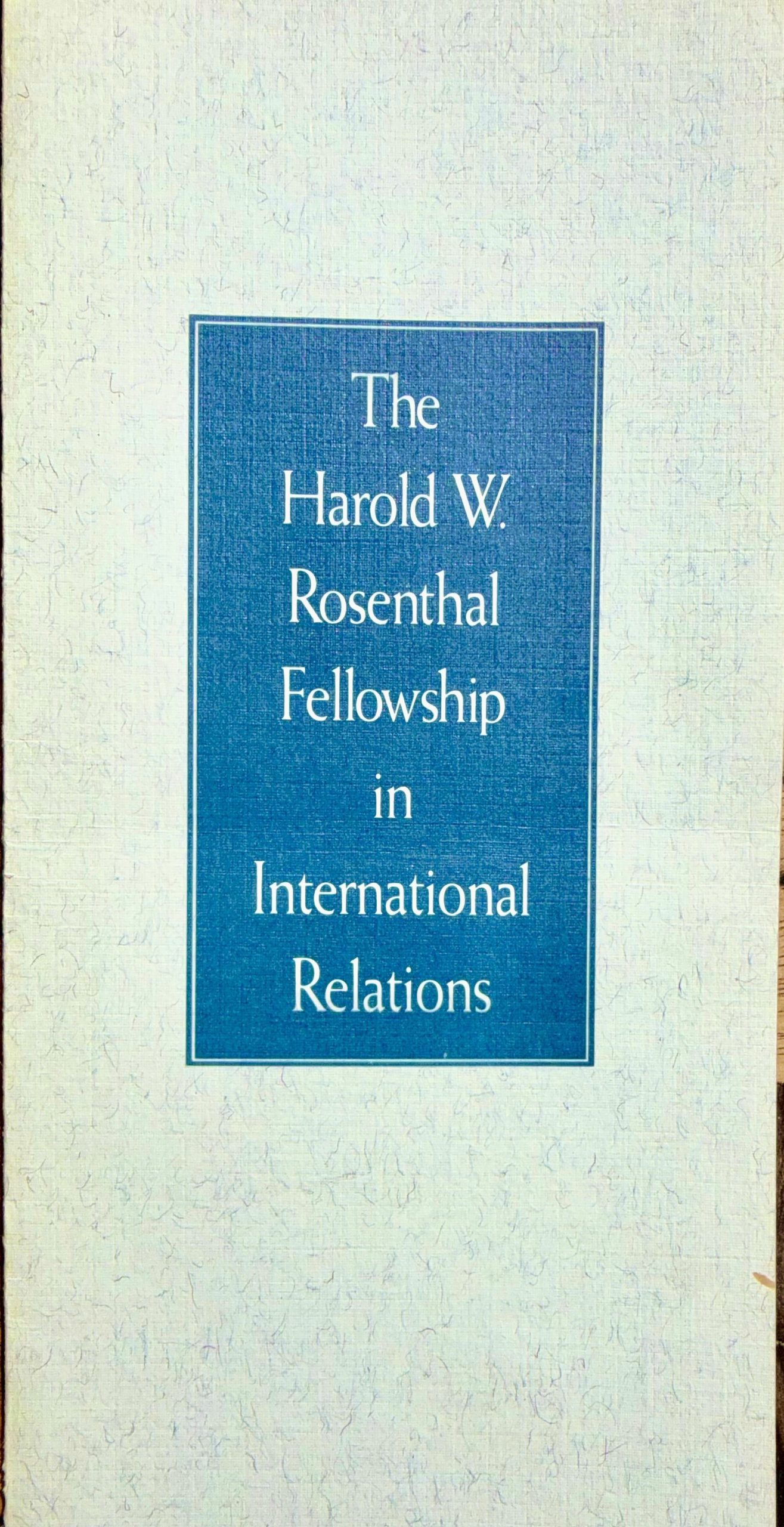
What outlasted the hoax is the Harold Wallace Rosenthal Fellowship in International Relations, founded by his friends in 1977. Fifty years and over 300 fellows later, it’s still helping ordinary students from ordinary families into congressional offices and embassies — through the same door Harold forced open with nothing but nerve.
The fellowship started by Harold Rosenthal’s friends on Capitol Hill is still going strong, placing graduate students into offices from the Senate to the Pentagon.Courtesy of Mark Rosenthal
The night Harold’s shiva ended, sitting in my parents’ now quiet apartment, I demanded of myself to learn something from Harold’s death. Two things happened. First, I admitted the only thing I actually cared about was movies, not academics, and after my doctorate was done, I packed my car, which had been Harold’s car, and drove to Los Angeles to figure out a way into the movie business.
Second, I swore never to hear news the same way again. We measure disasters in body counts — just two, just eight — a statistic filed away and forgotten by people with their own lives to return to. I promised myself I’d stop, every time, and imagine the families behind each number.
In floods in Texas. In Gaza. In Kyiv. The dead are aggregated. Grief is always singular. Every one of those numbers is somebody’s brother, somebody’s family.
Mine was Harold.
Mark David Rosenthal is a writer and producer of film and television. He is a member of the Motion Picture Academy of Arts and Sciences and the Writers Guild of America, West. He was nominated for an Emmy for the 2016 miniseries, “Roots,” and his WGA credits include “Mona Lisa Smile,” Tim Burton’s “Planet of the Apes,” and “The Jewel of the Nile,” among many others.
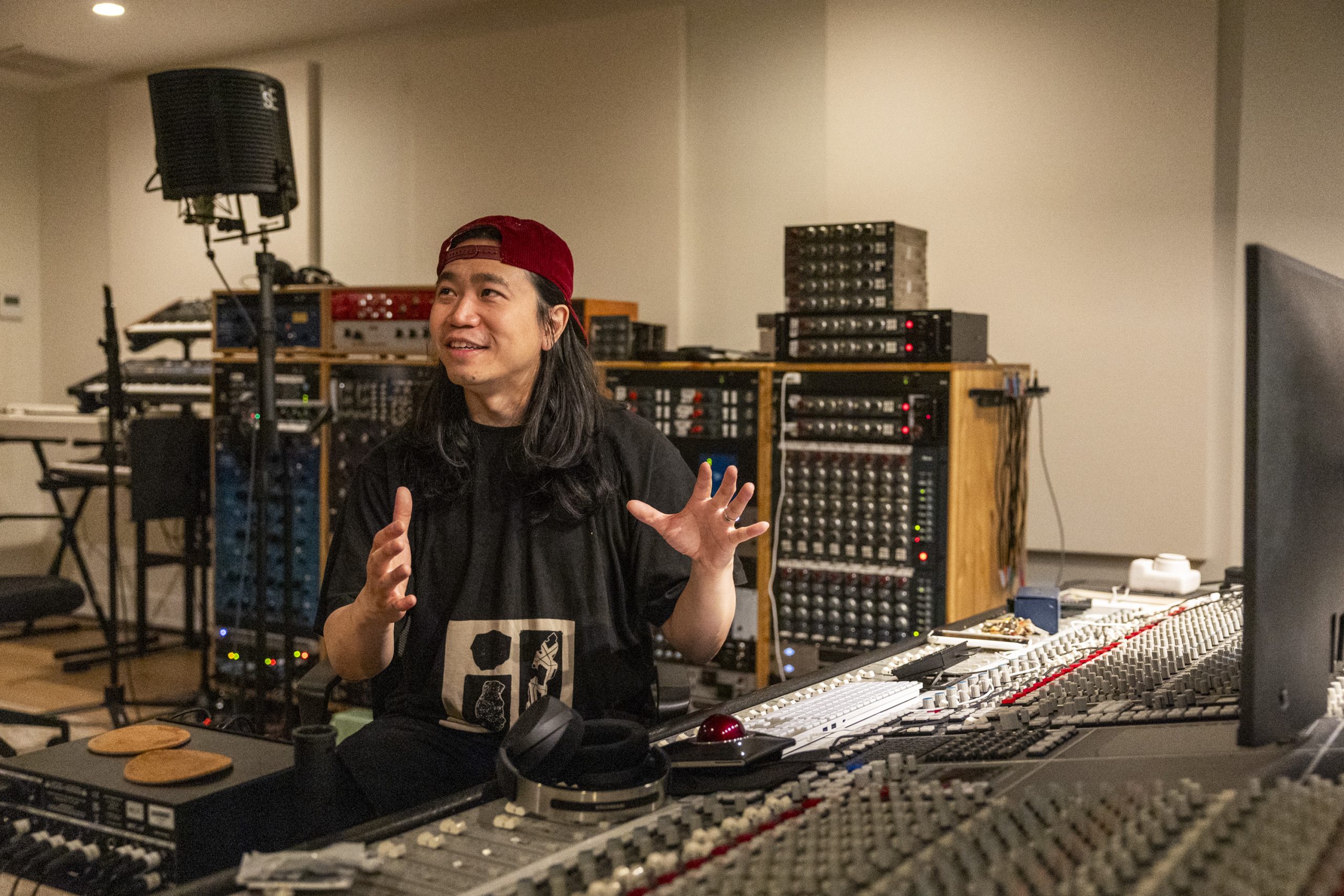
There’s a piano in every studio, a room full of guitars, and a mixing console shipped from Los Angeles that was used to record some of hip-hop’s iconic albums. Everything an artist needs, Will Yip said, is waiting for them in his South Philadelphia music studio.
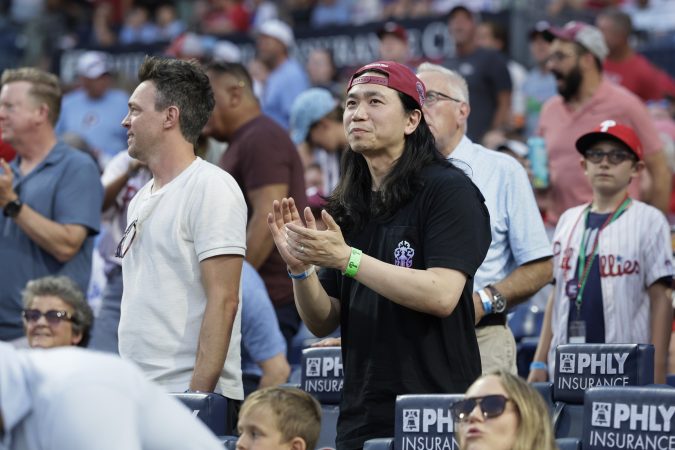
But perhaps the most important thing is the TV in the lobby that Yip — a Northeast Philly native who won a Grammy earlier this year — flips on each night to catch the Phillies.
The 39-year-old works with some of the biggest acts in rock, continuing a career that started as a teenager volunteering at a Mayfair studio. Music has consumed him ever since he was a kid when he heard his brother listening to Dr. Dre and Nirvana.
He arrives at Memory Music Studios — the spot he opened in December at Swanson and Wolf Streets — each morning and does not leave until late at night. Artists send him ideas or ask for edits at odd hours. It’s a great gig, but a record producer does not clock out.
So that’s why Yip steps outside the studio every night and puts the Phillies on that TV in the lobby.
“When 6:40 comes around, I can check in on the game. Every game,” Yip said. “It’s my comfort zone and something I can count on every day. When they’re off on a Monday or Thursday, I’m like, ‘Damn.’ It kills me. It crushes me. Especially when they’re good.
“If anything, it has helped my music career. I think if all I was doing was music and didn’t have that time to step away a little each day, I think I’d lose my mind. This way, I can refocus and watch the game and come back and say, ‘This song rocks.’ Everyone needs something, a little balance, another place to put their energy in. Three hours a day, I’m forever grateful for the Phillies.”
William Yip at his recording studio in Philadelphia this summer.Tyger Williams / Staff Photographer
For so many, a game is the reward at the end of a day. The Phils are a conversation starter with a stranger, background noise in the car, and even on the TV at the recording studio. Fandom is what brings people together, Yip said. And it’s that fandom that helped him win that Grammy.
“The Phillies changed my life,” Yip said. “I think if I didn’t have the Phillies, I probably would’ve lost my mind on music. I need it. You can ask my wife. I need something to take my mind off music. If I didn’t have sports, I think I would get too consumed with music. I’m always stressing about music, so to be able to take a step back is huge.”
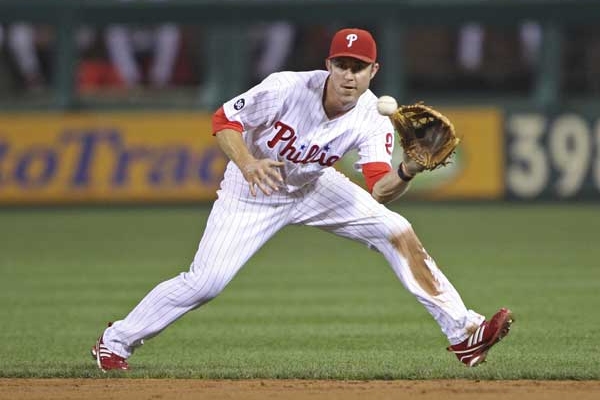
The Phillies felt cool again to the Yip brothers when Chase Utley arrived.(Michael Bryant / Staff Photographer)
Chase brings them back
Yip remembers how excited his older brother, Wilfred, was to open a pack of cards in the summer of 1993 and find Darren Daulton. The younger brother was hooked. And then Joe Carter hit that homer.
“That stuck with me,” said Yip, who was 6 years old that October.
The Phils bonded Yip with his brother, who is four years older than him. But that connection felt thinner in the early 2000s when the Phillies were in a rut and his brother left for college. Yip, then a teenager, checked out of sports after becoming immersed into music. That was his life.
Then Chase Utley arrived. The Phillies felt cool again. And the Yip brothers had something to share.
They went to Utley’s bobblehead night in 2006, and the crowd was electric. His sabbatical from the Phillies was necessary, as Yip started his path to that Grammy during those few seasons he missed. But he needed to be a fan again. He needed something else.
Yip worked with Lauryn Hill, sat Prince next to his wife at a concert, and met Jay-Z and Beyoncé. But it’s only the Phils who leave him starstruck.
“If it’s a Phillie, I lose my s—,” Yip said. “I lose my mind. If John Mayberry Jr. walked in the door right now, I’d go ‘Holy s—! That’s John Mayberry Jr.’ I always tell my buddies that my dream in life is to become friends with Chase Utley and Bryce Harper. That’s my dream. Forget the Grammy. That’s the absolute dream. Chop it up with Chase one day.”
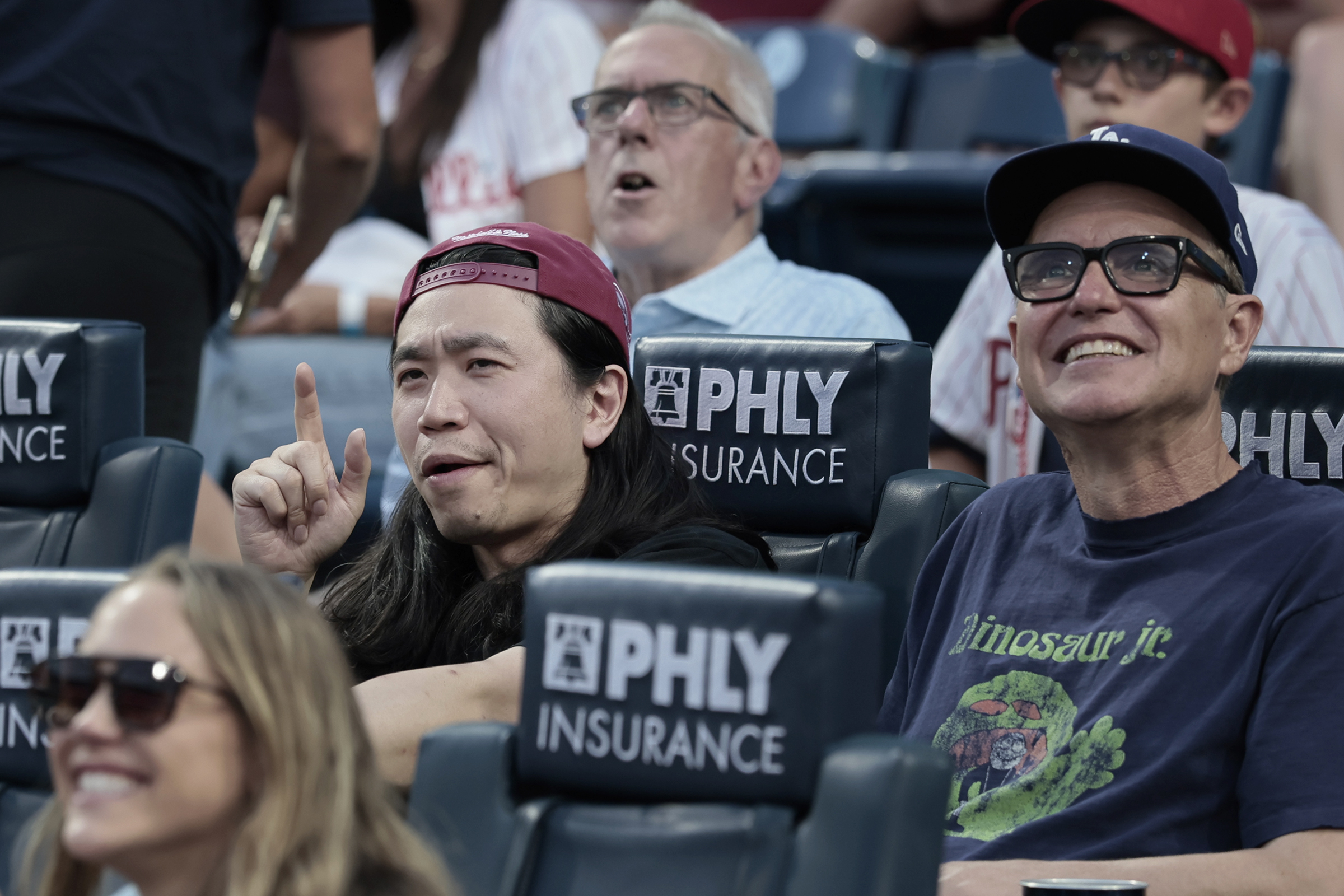
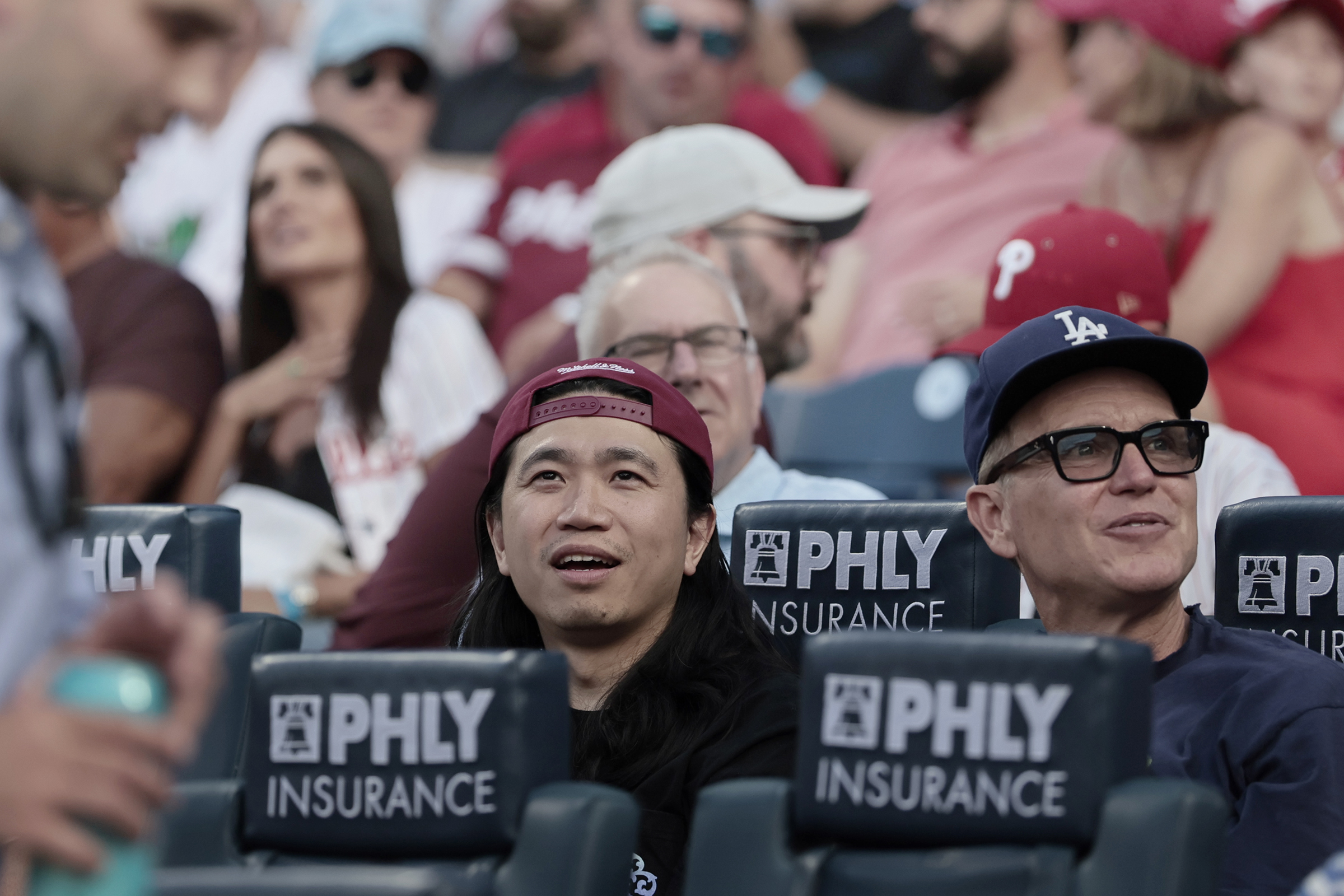
Will Yip (left) and Mark Hoppus from the band Blink-182 watch a Phillies game at Citizens Bank Park on July 22.Elizabeth Robertson / Staff Photographer
The Yip brothers have shared season tickets to the Eagles for 10 years, and Yip said the Birds have never lost when the brothers are in the Linc together. If there’s a big game, Wilfred texts his little brother that “they need us today.” The brothers go, and the Eagles win.
“That didn’t work with the Phillies,” Yip said. “In 2023 with the Diamondbacks, it was Game 7 [of the NLCS], and my brother goes, ‘They need us.’ I said, ‘I’m not sure that works with the Phillies.’ We went, and it didn’t work. But at least we shared it together.”
Maybe it would have been easier for Yip to check out after Carter’s homer. That was enough heartbreak. But Yip, just like everyone else, kept coming back. He stepped away as a teenager but returned to the thing that crushed him when he was in elementary school at John Hancock. Why?
“There’s always hope,” Yip said. “I think hope and dreams keep us alive. It’s the journey that keeps us alive. If we all accomplished our dreams right now, what would tomorrow even mean? It’s the hope of ‘Man, we can do it.’ That means so much. Without hope, humans don’t exist. I learned that as a sports fan. ‘This could be the year.’
“But for Philly sports, if we don’t have sports, what do we have? Sports is what ties our community together. Purely culture in terms of art, food, music, sports — and this is coming from a guy who works in music — sports is the most important thing to the city of Philadelphia. It just is. It ties everyone together. There’s no concert that you’ll ever put together or meal you’ll ever put out there that will get 2.1 million people walking Broad Street like that parade did.”
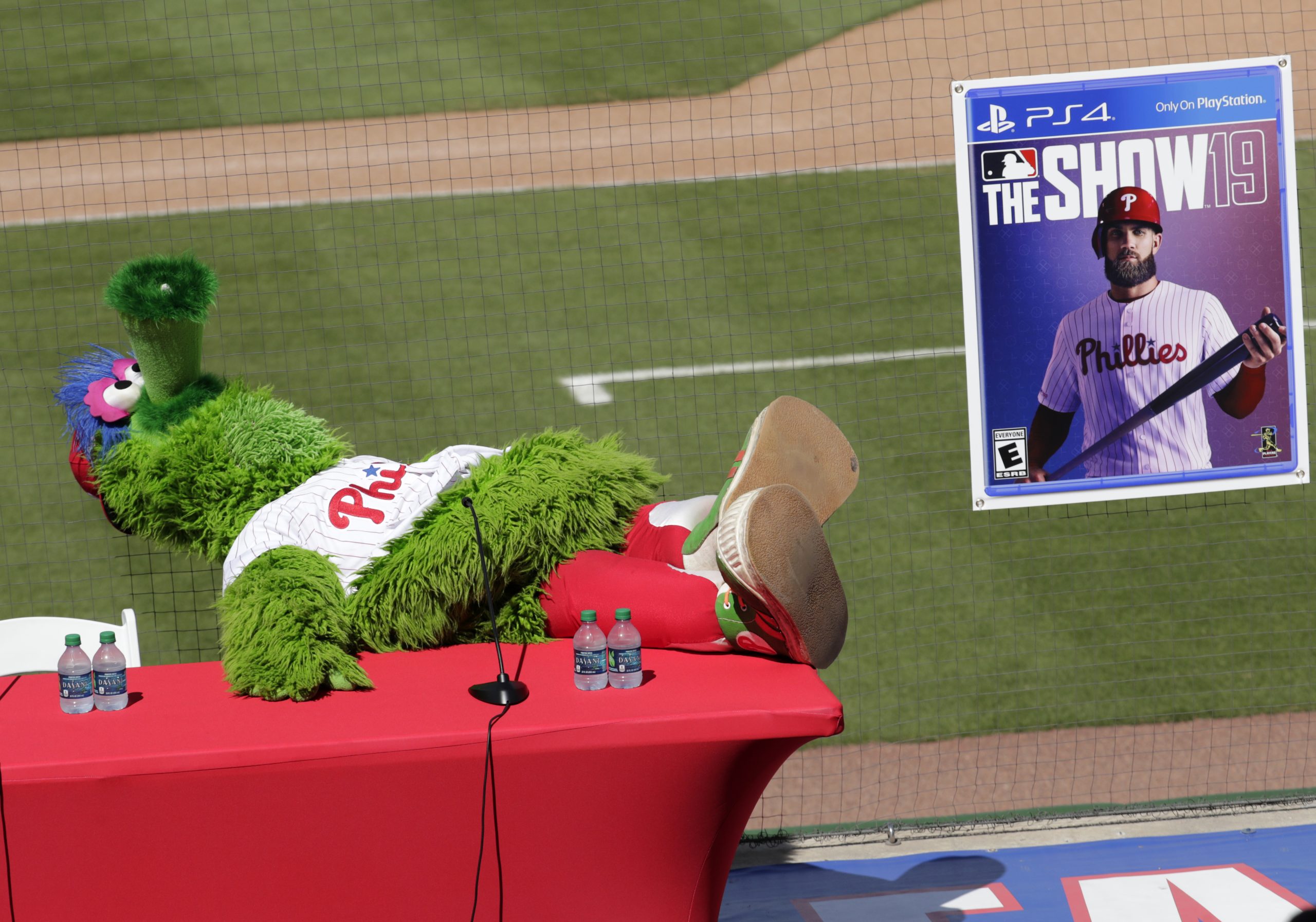
Among Will Yip’s collection of Phillies memorabilia: This cover for “MLB The Show ’19” that hung behind Bryce Harper during his introductory news conference in 2019.Lynne Sladky
The thrill of the hunt
There was something about holding the game-used Utley bat that his wife, Christina, bought him for Christmas in 2010. It was like owning a piece of history. Yip needed more.
“I went down this rabbit hole,” Yip said. “I had to see what else was out there.”
He scoured eBay, joined Facebook groups, and logged onto auction house websites. Yip became a part of what he calls an “underground market” of people who become friends as they help each other find game-used Phillies memorabilia. The search became a thrill as he spent an hour every night browsing for new things to add or became friends with other fans who were searching for others. It was another way to step back from the music he was creating.
He has 100s of jerseys that he keeps in storage and has lost track of how much money he’s spent over the years.
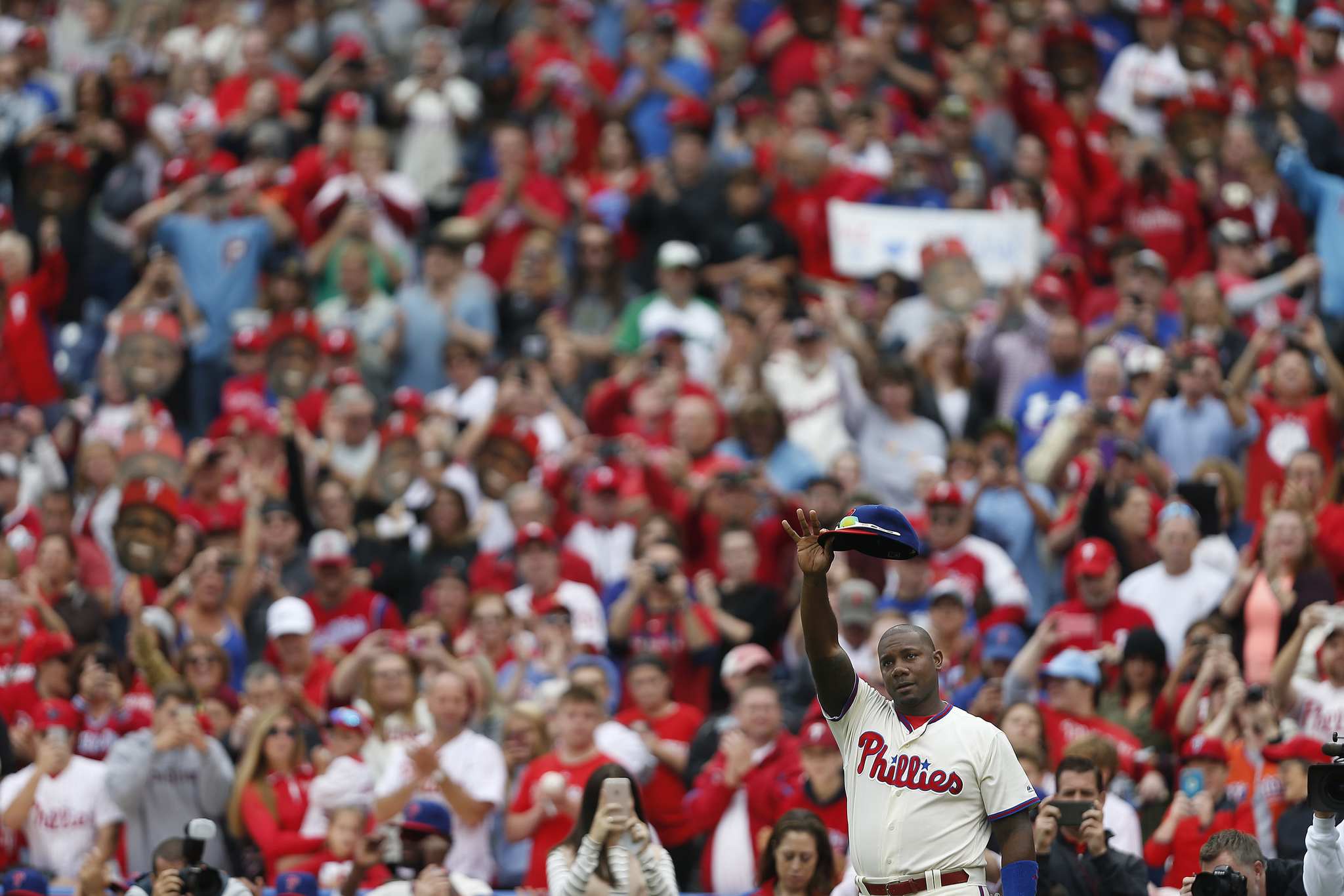
Yip has the last jersey Roy Halladay pitched in and the final uniform Ryan Howard wore. He bought the batting helmet Cole Hamels used when he hit a home run and the first bat Aaron Nola swung. He has World Series jerseys worn by Utley, Jimmy Rollins, and Harper and a bunch of game-used Rollins bats. He has a glove used by Utley — which is rare, since fielders use the same glove for years — and the video game cover that hung behind Harper at his introductory news conference in 2019.
Will Yip has the jersey Ryan Howard wore here during his last game as a Phillie in 2016.DAVID MAIALETTI / Staff Photographer
Not every purchase has been a great investment. Yip is a fan, so he dreamed on the same players everyone else did. He collected Cody Asche, Darin Ruf, and Domonic Brown jerseys. He bought six of Scott Kingery’s tops and spent too much on Maikel Franco.
“My wife probably wanted to kill me when I got a lot of that stuff,” Yip said. “We were looking for the next guy. You can’t hit on them all. But the ones that hit, hit.”
The attraction to collecting was the ability to own pieces of history, something that never felt tangible for the child of immigrants who grew up in a rowhouse near Frankford Avenue and Knights Road. Yip used to stay up until his dad came home from waiting tables at the restaurant he owned so they could watch the Sixers game he taped that night on VHS.
Now he has a closet full of artifacts. No, he does not wear any of it.
“You don’t do that,” Yip said. “You can’t wear that. I’ve never worn one. I’ve swung a bat though. You can feel the power of Chase.”
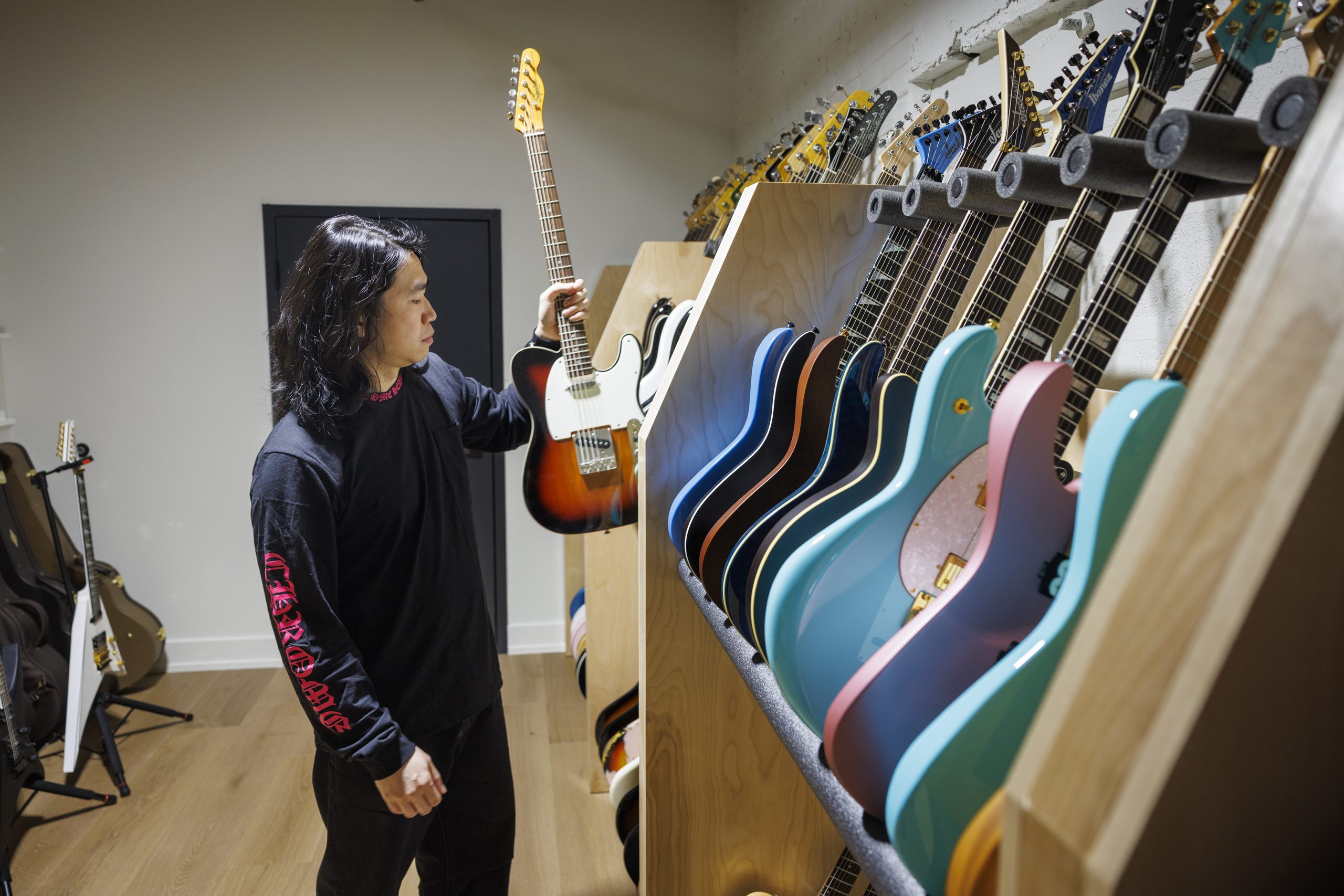
Will Yip in the guitar room of his Memory Music Studios in South Philadelphia.Alejandro A. Alvarez / Staff Photographer
‘Winning our ’chip’
Yip was at the Grammy Awards in February, but he was thinking like he was in the stands in South Philly as his chances to win started to dim. Turnstile, the band Yip produced, fell to Yungblud for Best Rock Performance and Trent Reznor of Nine Inch Nails for Best Rock Song.
Yip started thinking like a bummed fan late in the game: He talked himself into accepting a loss for Best Rock Album.
“We were like, ‘Hold up. We’re not supposed to be here,’” Yip said. “‘It’s all good. This isn’t built for us. We make punk music, man. We’re lucky to be here.’ I came to terms after the first two that we weren’t going to win the Best Rock Album, which is the one that I really wanted.”
And then Turnstile won. Yip’s wife started crying. It was all so surreal, like that walk-off you saw only because you refused to leave the game early, even though you didn’t think the Phils would come back.
“It was winning our ’chip,” Yip said. “It was hard work, but it doesn’t make me who I am. A statue is never going to make you who you are. But it does make me appreciate the appreciation from other people. They acknowledged our hard work. We don’t need a Grammy to validate who we are, but it was a win that we touched so many people. That’ll be the closest thing I’ll feel to winning a World Series.”
Will Yip (left), with Mark Hoppus, says the Phillies are “the best distraction, the best getaway,” from his music career.Elizabeth Robertson / Staff Photographer
His family was back home, and his mom told him that his brother cheered louder than he did when the Eagles won the Super Bowl. The brothers watched that game together just like they did when the Phillies won it all in 2008.
They watched the Phils win at Wilfred’s apartment in Gulph Mills and drove back to the Northeast to celebrate at Cottman and Frankford. The brothers stopped at a Wawa as they cut through the city and a man stopped Yip as he walked in.
“If you looked at us, we couldn’t look more different,” Yip said. “He daps me up, gives me a hug outside this North Philly Wawa, and says, ‘We did it, man.’ Me and this guy will probably never see each other again. We’re from completely different neighborhoods, but ‘We did it.’ And that’s what Philly sports is. I’ll never forget that.”
The Phillies were the common bond outside that Wawa, providing a connection between two strangers. The hope that Yip clung to for all those seasons finally paid off. And now the Phils provide a distraction when he turns the music down and takes a brief break from his own dream.
“That is why I lean in on the Phillies so hard and connect with them so hard. It’s the best distraction, the best getaway,” Yip said. “It’s always there. It’s definitely helped my career because it just gives me a reset and a focus. We care so much about sports because of that distraction, that extra thing that connects us all no matter who it is. We can all get together and talk about last night’s game. What else does that? I don’t think anything.”
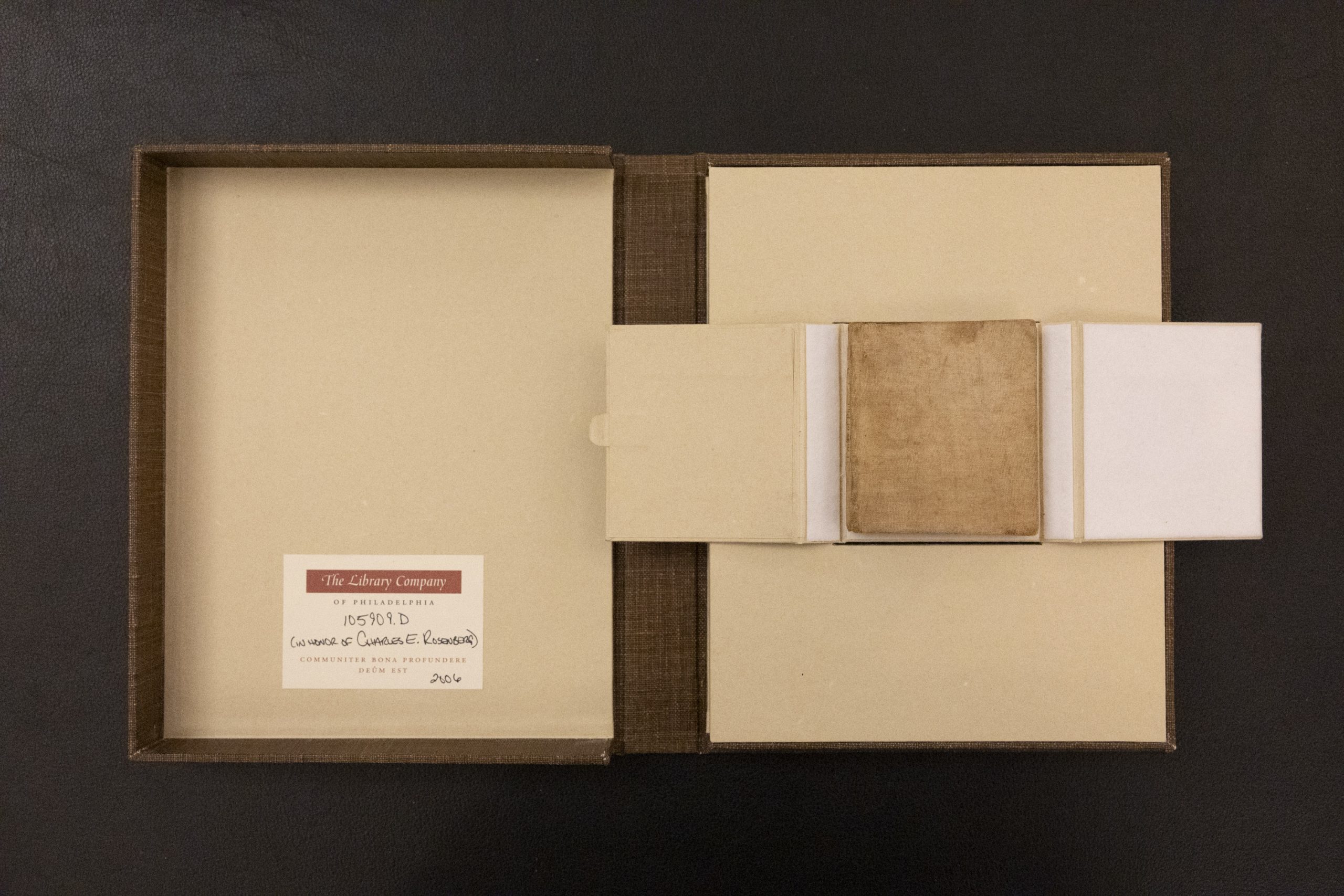
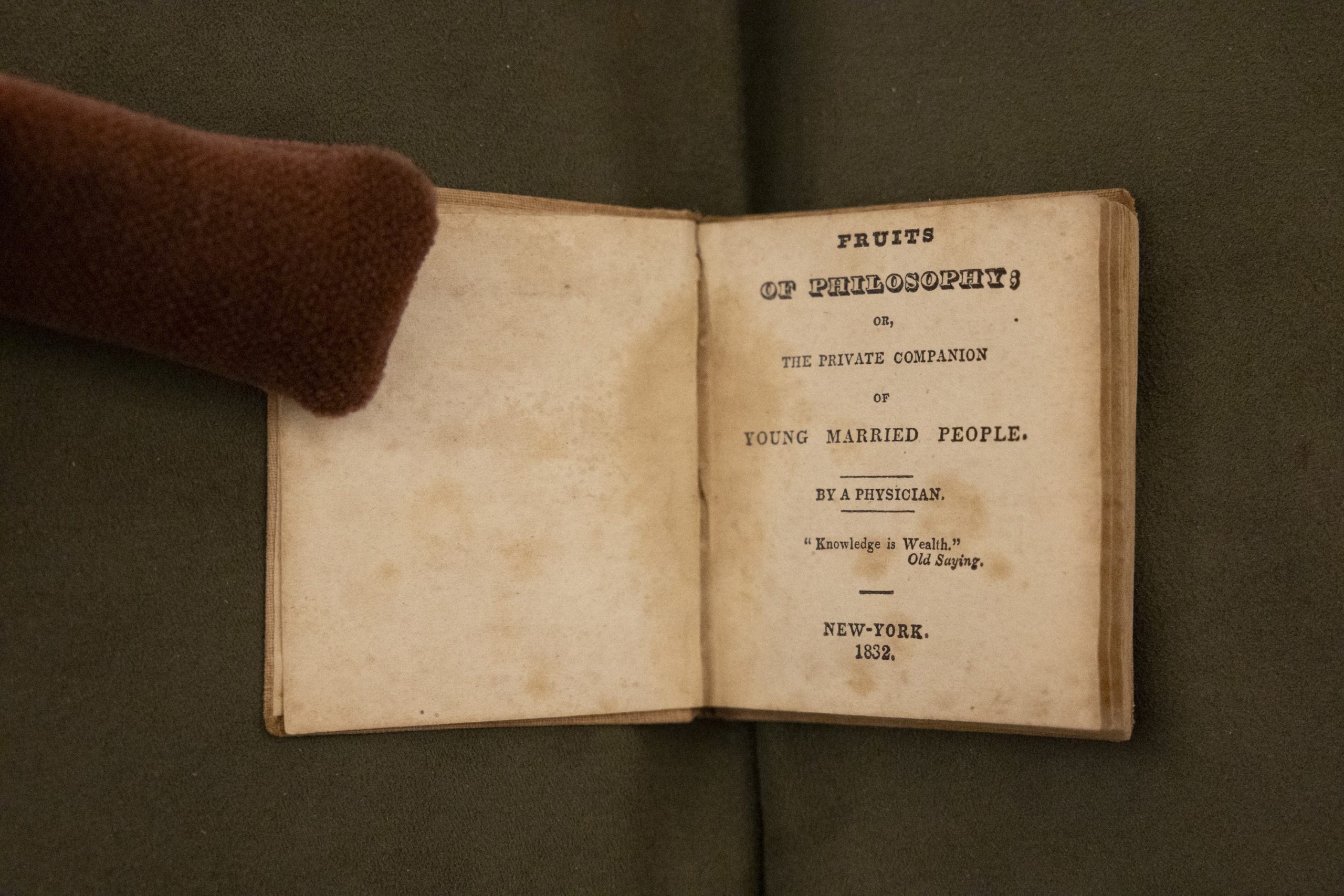
On a recent visit, the Library Company of Philadelphia’s curator of printed books, Rachel A. D’Agostino, gently removed the delicate 1832 edition of Charles Knowlton’s Fruits of Philosophy from a matchbox-size box within a box.
The two-and-a-half-inch-tall book’s exquisite packaging was like that of a 1.5 oz. bottle of vintage French perfume.
But unlike Chanel N°5, there were no fancy logos or recognizable typeface on the weathered encasing; just a small sticker with its title. Next to the first edition print were two additional volumes published in 1834 and 1839, respectively.
Both a tad bigger, yet small enough to fit discreetly on a chatelaine.
“Fruits of Philosophy is a 19th-century manual about birth control,” D’Agostino whispered like she was sharing a confidence, not simply using her inside-of-the-library voice.
“Fruits of Philosophy,” a 19th-century manual about birth control first written by Charles Knowlton in 1832. Tyger Williams / Staff Photographer
”Everything about it is meant to be hidden, a secret. There is no name of the printer, or publisher. Knowlton’s name is not even there. Everybody knows this book is a potential problem and they are saying, ‘We think this is important and at the same time we have to keep it hidden.’”
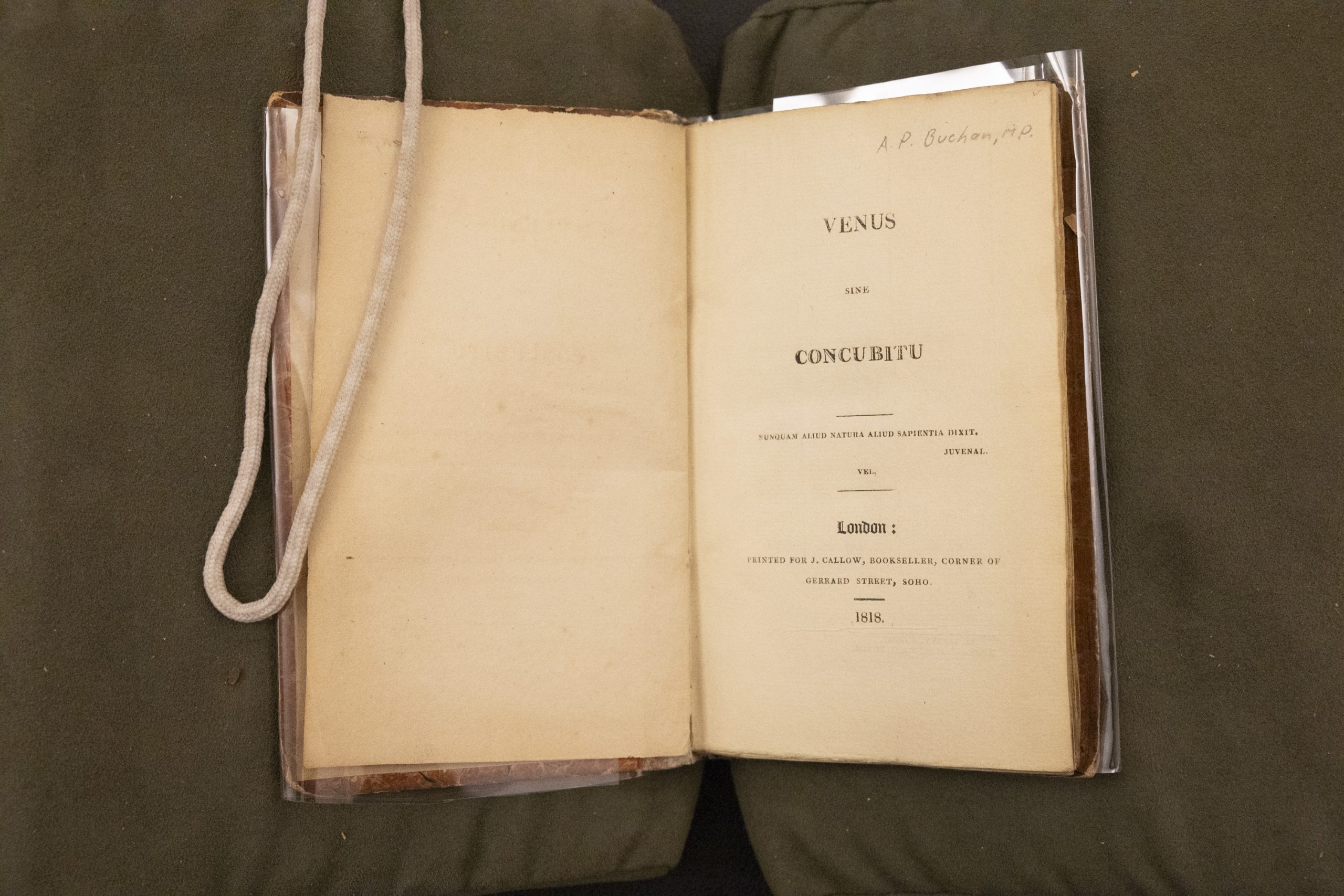
Fruits of Philosophy is one of 1,500 19th-century clandestine hardcovers that are part of the Library Company’s most recent set of acquisitions from respected medical historian, author, and avid book collector Charles E. Rosenberg. Over the last 40 years, he has donated more than 16,000 books to America’s first independent lending library.
Rosenberg’s own scholarly texts about cholera, mental health, and religion in science are widely read and referenced. However, these bound works donated by him were expected to be tucked away in secret compartments and buried in the bottom of bedroom drawers when they were first published upward of 200 years ago.
“Fruits of Philosophy,” an 19th century manual about birth control first written by Charles Knowlton in 1832. One of the various books on the science of sex from the 18th and 19th Century at The Library Company in Philadelphia, Pa., on Tuesday, July 21, 2026.Tyger Williams / Staff Photographer
Why? Because they are all about sex. The books taught denizens of centuries past about sex and their bodies.
Not scintillating, bodice-ripping sex, but scandalous enough.
Books about every conceivable unmentionable
Americans didn’t go to the doctor for regular checkups before the mid-20th century, let alone talk to their MDs about their sexual health. Discussions about sex — even between husband and wife — were taboo.
So, an entire underground economy of books and pamphlets printed to help people navigate their sexual lives emerged. They were naughty at best, scandalous at worst, and distributed through the kinds of secret channels we think of today as the dark web. Despite their nefarious nature, people sought them out even when the tips — especially the birth control hacks in Fruits — would be considered dicey by today’s standards,
“They helped people manage their bodies,” said Rosenberg, whose collection spans from the early 18th- to the mid-20th century. “Abortion, birth control, masturbation, anything involving sexual pleasure was controversial in polite company.”
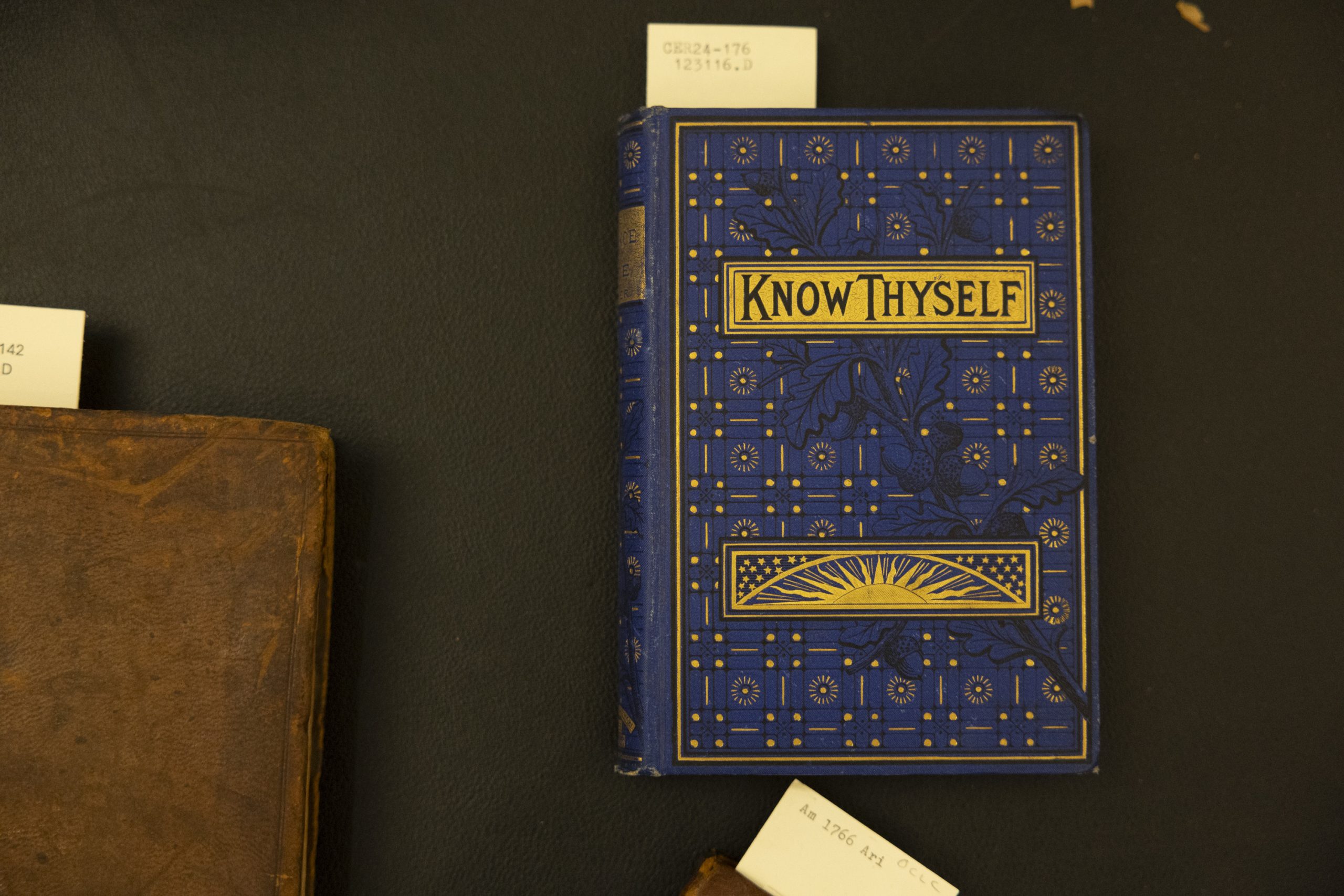
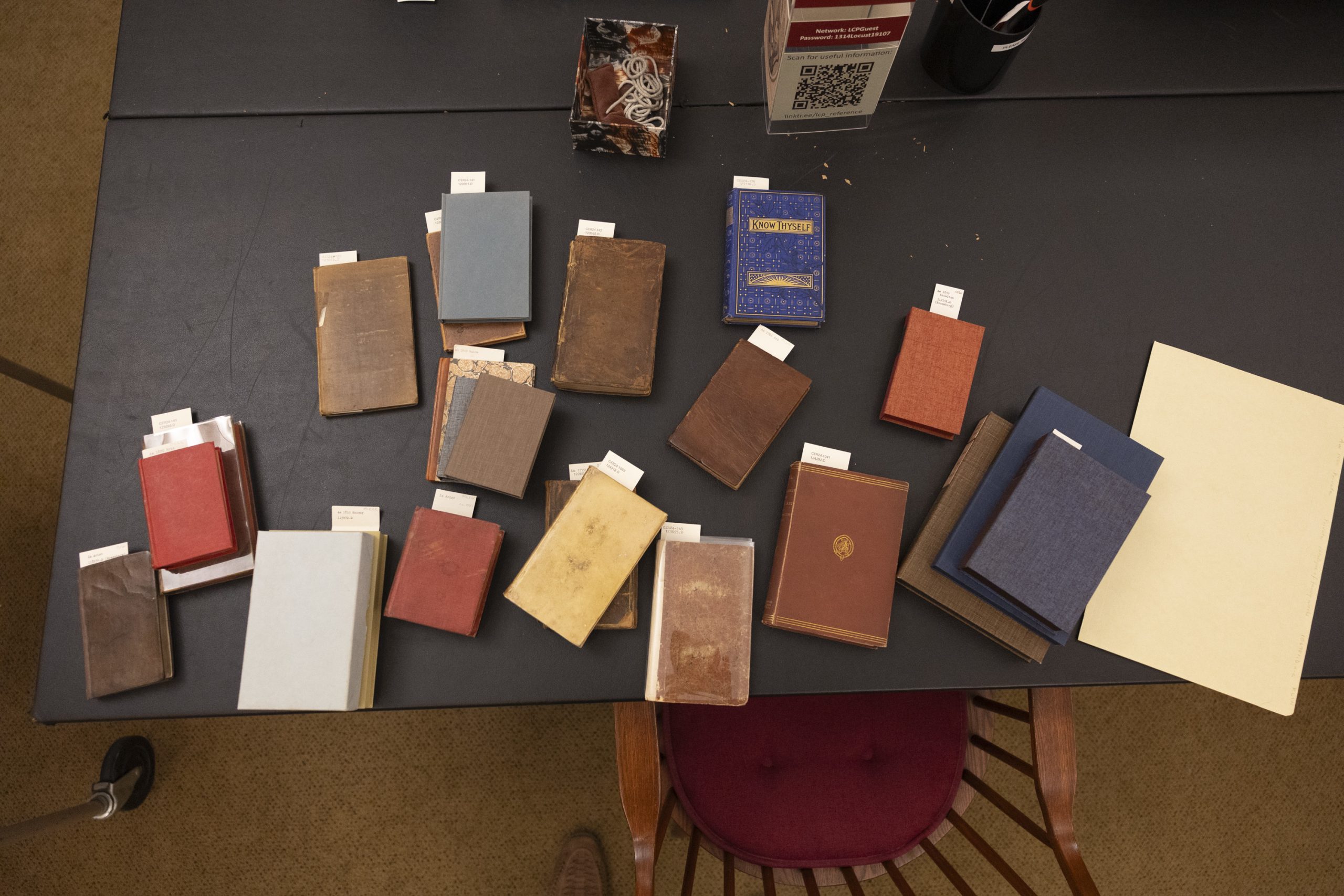
The title of this book appears to be, “Know Thyself” However, its true name is ‘The Science of Life, or, Self Preservation.” “Perhaps the biblical reference on the cover hints at what the book was really about without telling you directly that its about sex,” Rachel D’Agostino suggests.Tyger Williams / Staff Photographer
Rosenberg’s provocative collection covers every conceivable unmentionable from sterility to STDs.
Young wives learned what was expected of them in the marriage bed from sneaking reads of William H. Walling’s 1904 hardcover, Sexology. Men discovered why their virility might be waning through covert perusals of George Howard Jones’ 1881 manualThe Science of Life, or, Self-Preservation, whose cover hid the book’s real title and was labeled as Know Thyself.
“Perhaps, the biblical reference on the cover hints at what the book was really about without telling you directly that it’s about sex,” D’Agostino suggested.
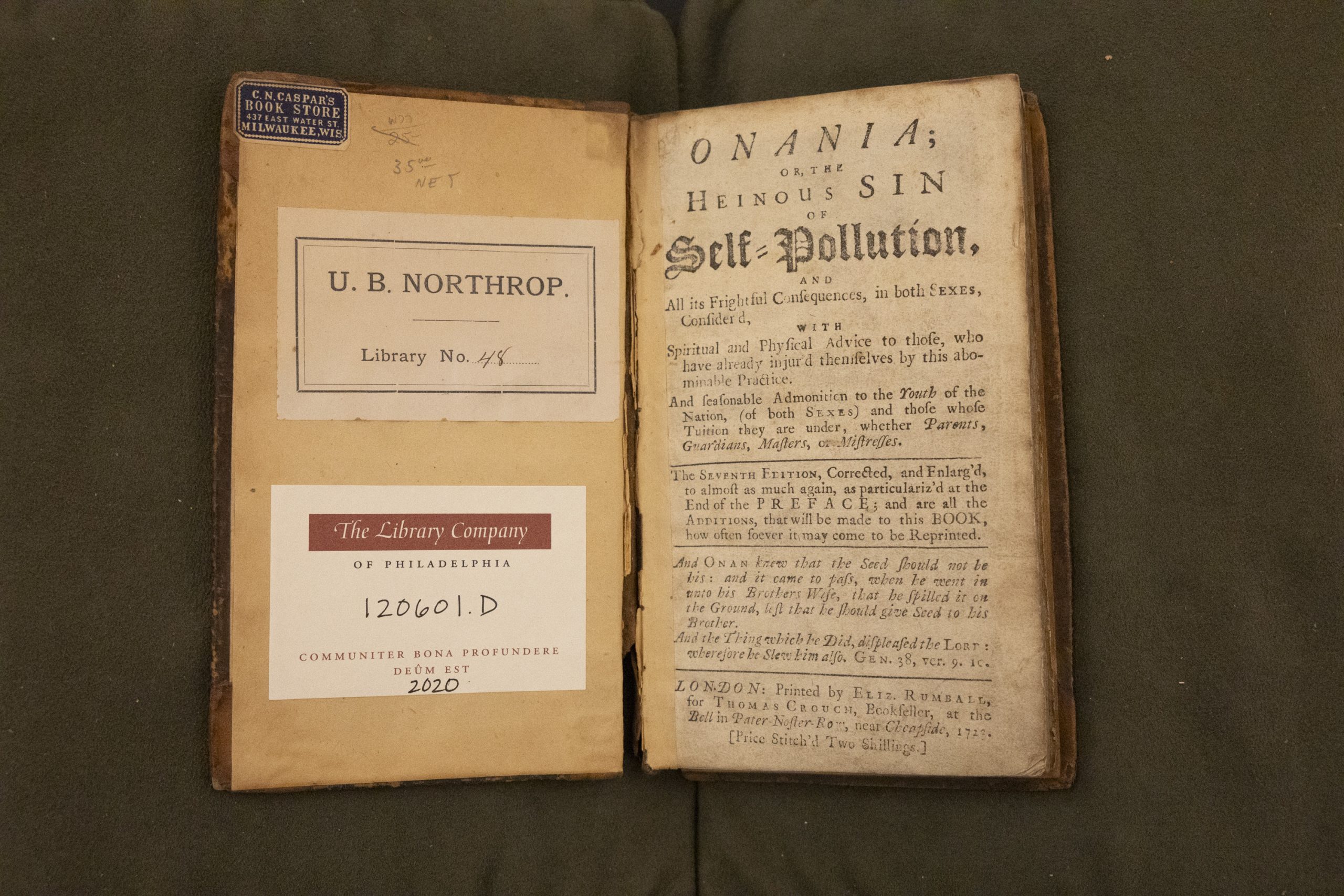
There are also several editions of the 18th-century masturbation treatiseOnania: Or, the Heinous Sin of Sexual Pollution in the Rosenberg donation. In keeping with the mores of the times, the anonymous pamphlet damns the act but also entertains questions from anonymous readers curious about their urges.
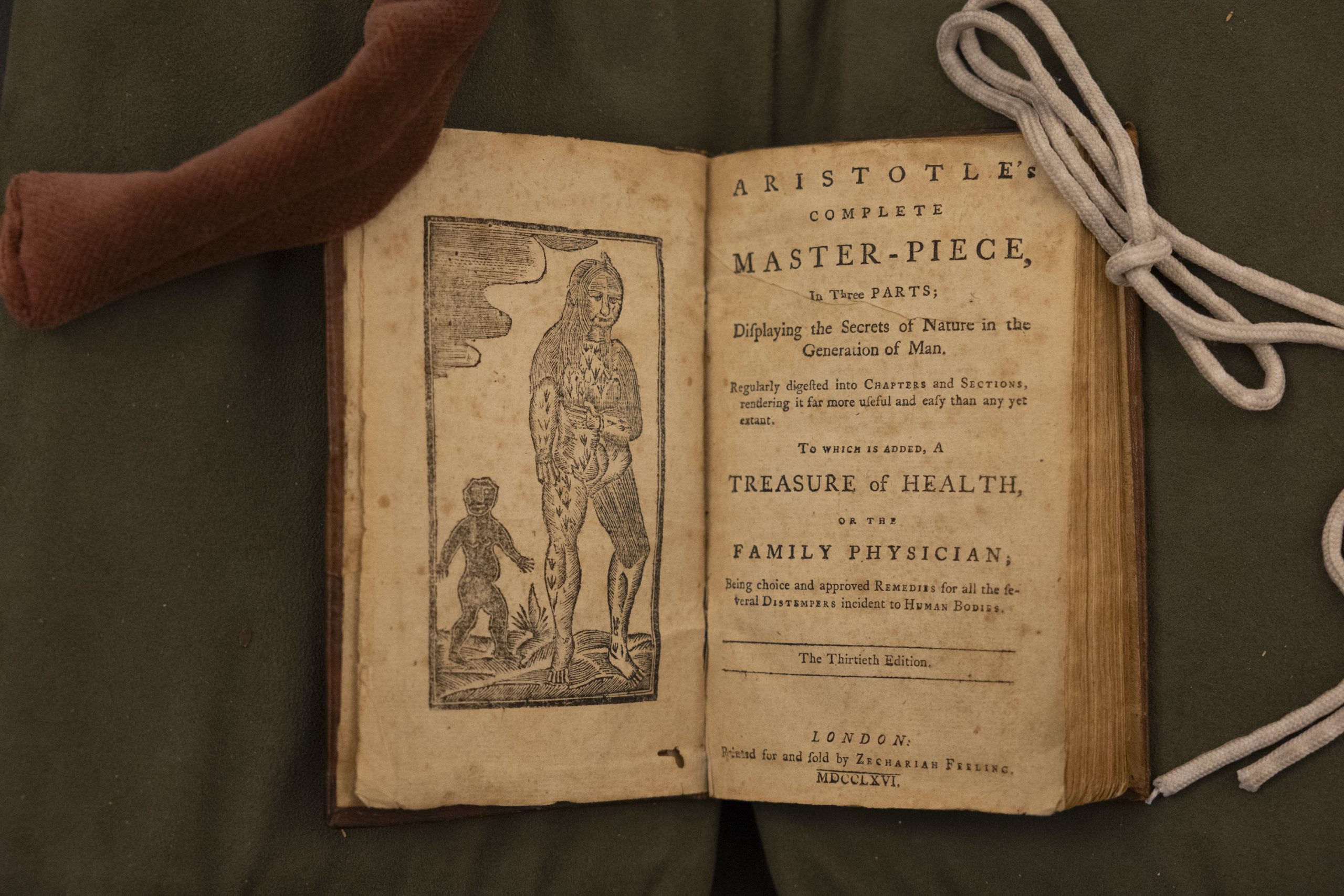
First published in 1684, “Aristotle’s Masterpiece” is a midwifery and sexual education manual that among other things acknowledged that women do enjoy sex. It’s the collection’s donator Charles Rosenberg’s favorite.Tyger Williams / Staff Photographer
“The conversations might have been forbidden, but people were still clearly talking,” D’Agostino said. “It really makes you wonder where these conversations started. Were people asking about themselves, or their teenage sons. … These books give us so many hints about what was important in society, what we shouldn’t talk about, but what was talked about anyway.”
Rosenberg’s favorite are the 35 copies of Aristotle’s Masterpiece. First published in 1684, Aristotle’s Masterpiece — which, by the way was not written by the Greek philosopher — is a midwifery and sexual education manual that among other things acknowledged that women do enjoy sex.
Illustrations, although rudimentary, firmly place the manual in the naughty category.
“I was very fascinated by Aristotle’s Masterpiece,” Rosenberg said. “There is just something very romantic about rare items.”
” Onania: Or, the Heinous Sin of Sexual Pollution,” an 18th century treatise on the perils of self-pleasure, is among the many books donated to The Library Company by Charles E. Rosenberg. Tyger Williams / Staff Photographer
A subset of ‘popular medicine’
Rosenberg’s donated sexual health primers from yesteryear are a subset of his larger collection of hundreds of books on “popular medicine,” a term he’s lauded in academic circles for coining.
Scientific discoveries made during the Age of Enlightenment challenged the belief that any ailment — whether a stomach ache or a sprained finger — was a punishment from God. As the study of medicine found its way to the halls of universities, a new genre of reading material, blending home remedies with the popular science of the day, came on the scene. Like the wellness gurus of today.
In the 19th century, such reading material teetered between blindly obeying the will of God and understanding the needs of everyday people.
Which is why the popular science in sex subset is the most radical part of Rosenberg’s collection.
“I wasn’t interested in the high culture of medicine,” he said. “I was interested in the questions ordinary people had about their bodies as it related to their health.”
A view of respected medical historian Charles E. Rosenberg’s collection of “scandalous” 18th and 19th century books about popular medicine centering sex. Rosenberg donated these books to The Library Company of Philadelphia. Tyger Williams / Staff Photographer
In 1962, while a lecturer at the University of Wisconsin, Rosenberg’s most famous work, The Cholera Years: The United States in 1832, 1849, and 1866, was published by the University of Chicago Press. When the first cholera outbreak hit in 1832, people thought contracting the cholera bug, which caused diarrhea and dehydration, was a punishment from God.
During the 1849 cholera epidemic, physician John Snow determined the disease spread through contaminated drinking water. When cholera reemerged in 1866, it was treated as a public health issue. Rosenberg’s book examined the societal shift’s impact on medicine and personal hygiene.
“By this time I already had a great collection of popular science books that I accumulated through my research,” Rosenberg said. “I was a nutty collector.”
One of the various books on the science of sex from the 18th and 19th Century at The Library Company in Philadelphia, Pa., on Tuesday, July 21, 2026.Tyger Williams / Staff Photographer
Books, books, books
Rosenberg moved to Center City in 1963 to take a job as an assistant professor in the University of Pennsylvania’s history department.
Shortly after coming to Philadelphia, he befriended Edwin Wolf II, the rare book aficionado and bombastic director of the Library Company. Wolf is credited with breathing life into the struggling institution in the 1950s.
Rosenberg gave his first set of books to Wolf in the 1960s.
“I liked the notion of it being the oldest surviving colonial library that wasn’t a university,” Rosenberg, 89, said. “It was associated with Ben Franklin, the Declaration. … It was rich with American history.”
Charles E. Rosenberg, respected medical historian, author, avid book collector and Library Company Emeritus Trustee has donated more than 16,000 books to The Library Company of Philadelphia including, 1500 popular medicine titles centering 19th century sex.Charles E. Rosenberg
He spent the next 40 years of his life researching, collecting, writing, and giving away books about popular science.
Each book, essay, or paper he wrote meant he amassed books on a new genre of popular science, which would eventually make their way to the Library Company — usually after a major move.
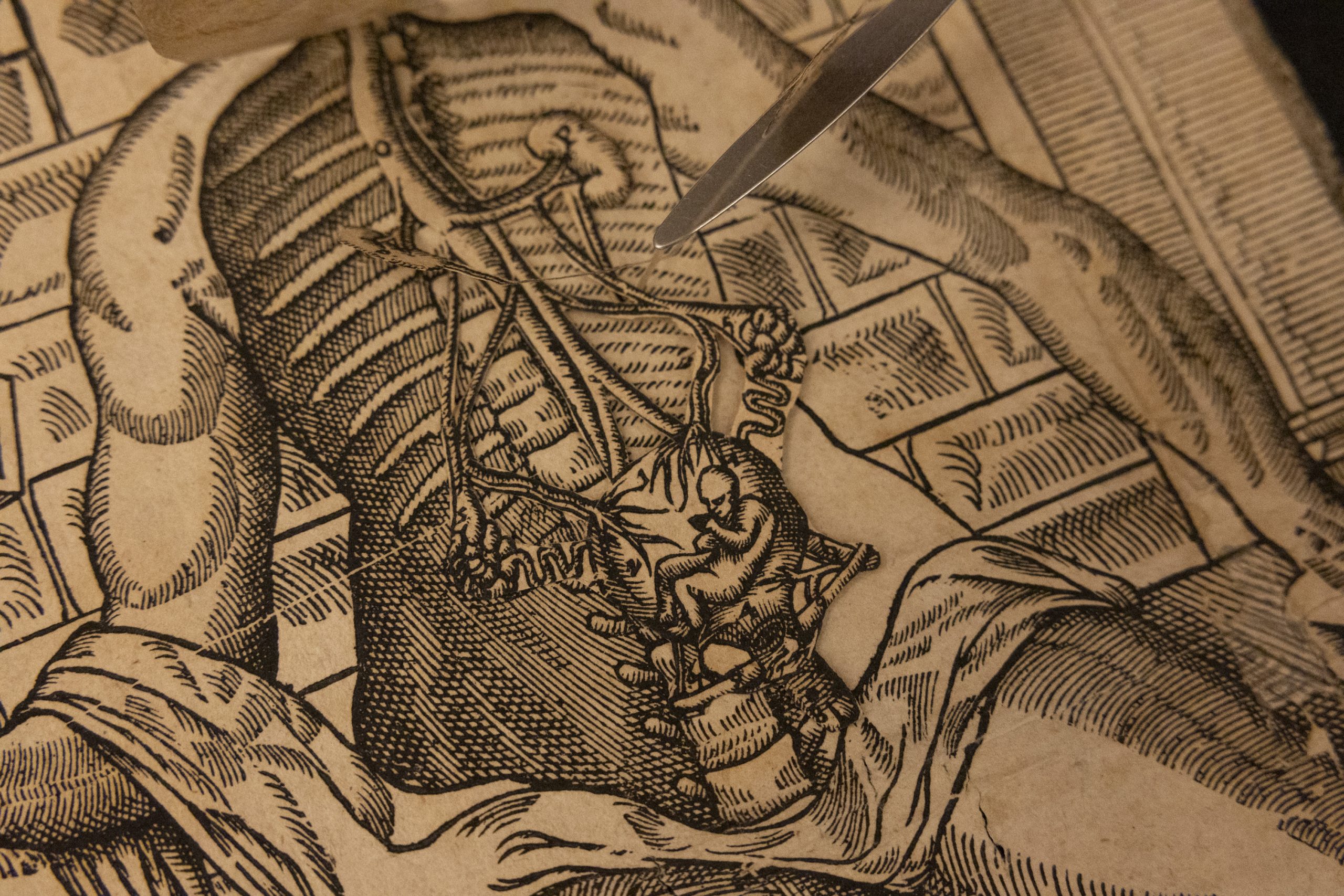
An example of a 17th century anatomical illustration that showing the insides of a woman carrying a child. Although not a part of Rosenberg’s collection these texts centering science rather than God’s will were not socially acceptable at the time. Tyger Williams / Staff Photographer
“When I moved from Center City to West Philly, I gave a bunch of stuff to the library,” Rosenberg, who became chair of the department of history and sociology at Penn in 1991, recalled. “Then I moved to Merion and gave even more books.”
In 2001, Rosenberg’s wife, Penn professor Drew Gilpin Faust, was appointed the first dean of Harvard University’s Radcliffe Institute for Advanced Study, prompting Rosenberg to donate a slew of books to the Library Company. (Faust became Harvard’s first female president in 2007 and served as its leader until 2018.)
Rosenberg kept donating books through his time on Harvard’s faculty and after his retirement in 2004. The popular sex collection donation, made in the spring of 2024, is his latest batch.
He held on to them the longest, he said, because he was toying with the idea of writing a book that looked at how sexual agency developed through the centuries and would discuss topics like abortion and masturbation.
“When I gave up on that project, I decided to part with the books,” said Rosenberg, who is now a Library Company emeritus trustee.
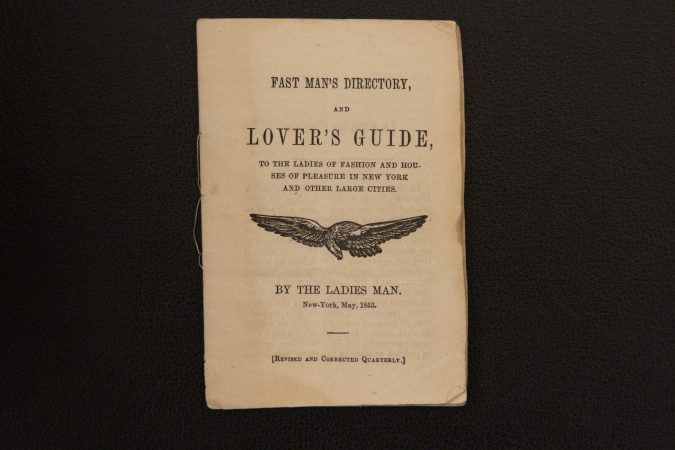
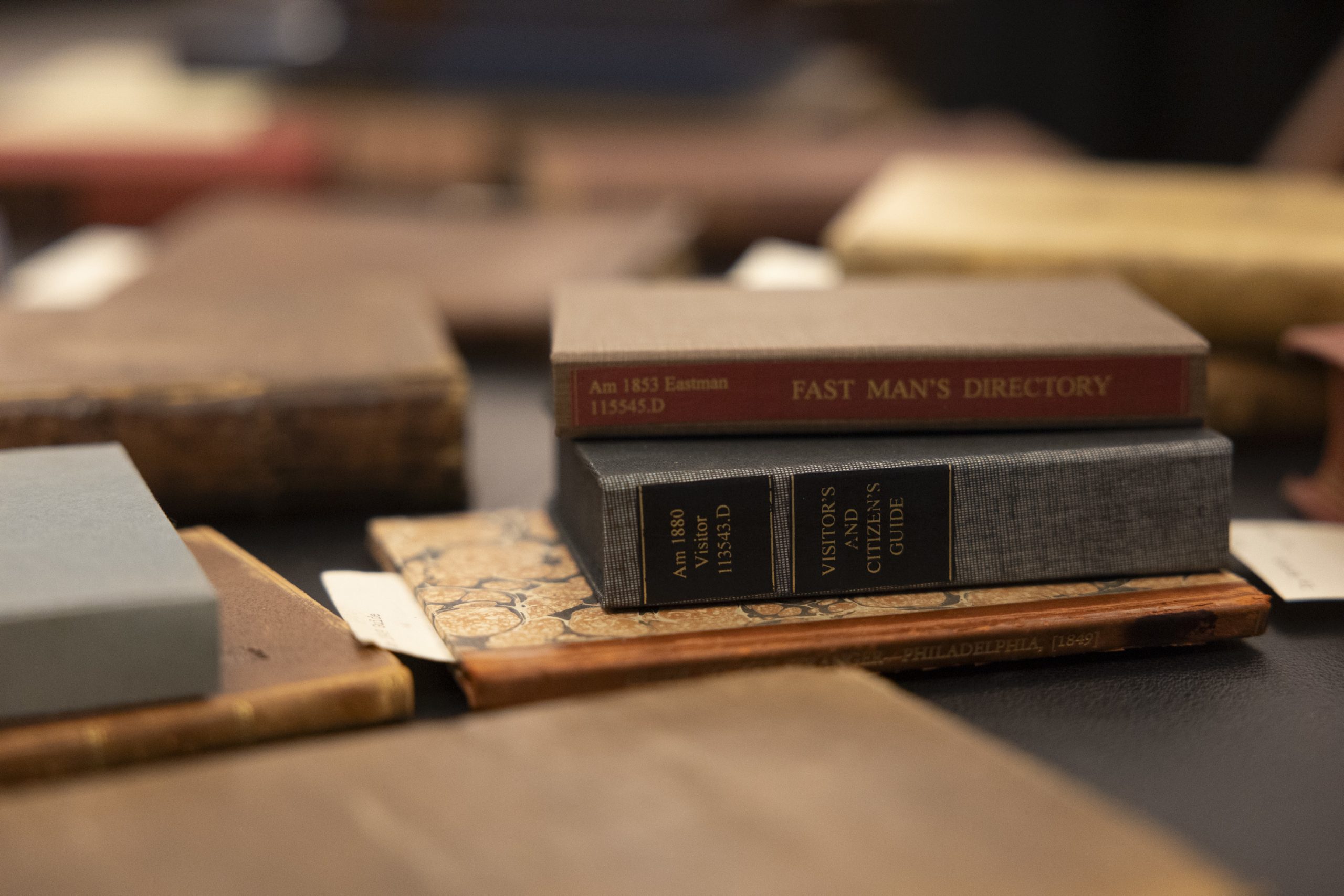
Pictured here are the “Visitor’s & Citizen’s Guide, of Pleasure and Amusement in the City of New York. New York, 1880. Anonymous. and “Fast Man’s Directory, and Lover’s Guide to the Ladies of Fashion and Houses of Pleasure in New York and Other Large Cities” New York, circa 1853. They are among the collection of books at The Library Company of Philadelphia illuminating the sexual habits of 19th century people.Tyger Williams / Staff Photographer
Sex in the stacks
The Rosenberg acquisitions are extra special, D’Agostino said, because they provide a glimpse into how people actually lived, thought about, and had sex.
“The Library Company didn’t acquire these books on their first run,” D’Agostino said. “We bought for the gentleman, the most upstanding people at the community. They would have come here looking for medical texts, but not books about managing their sex lives.”
Today, Rosenberg’s donations are nestled in the stacks on the top floors of the Locust Street building that smells of old leather.
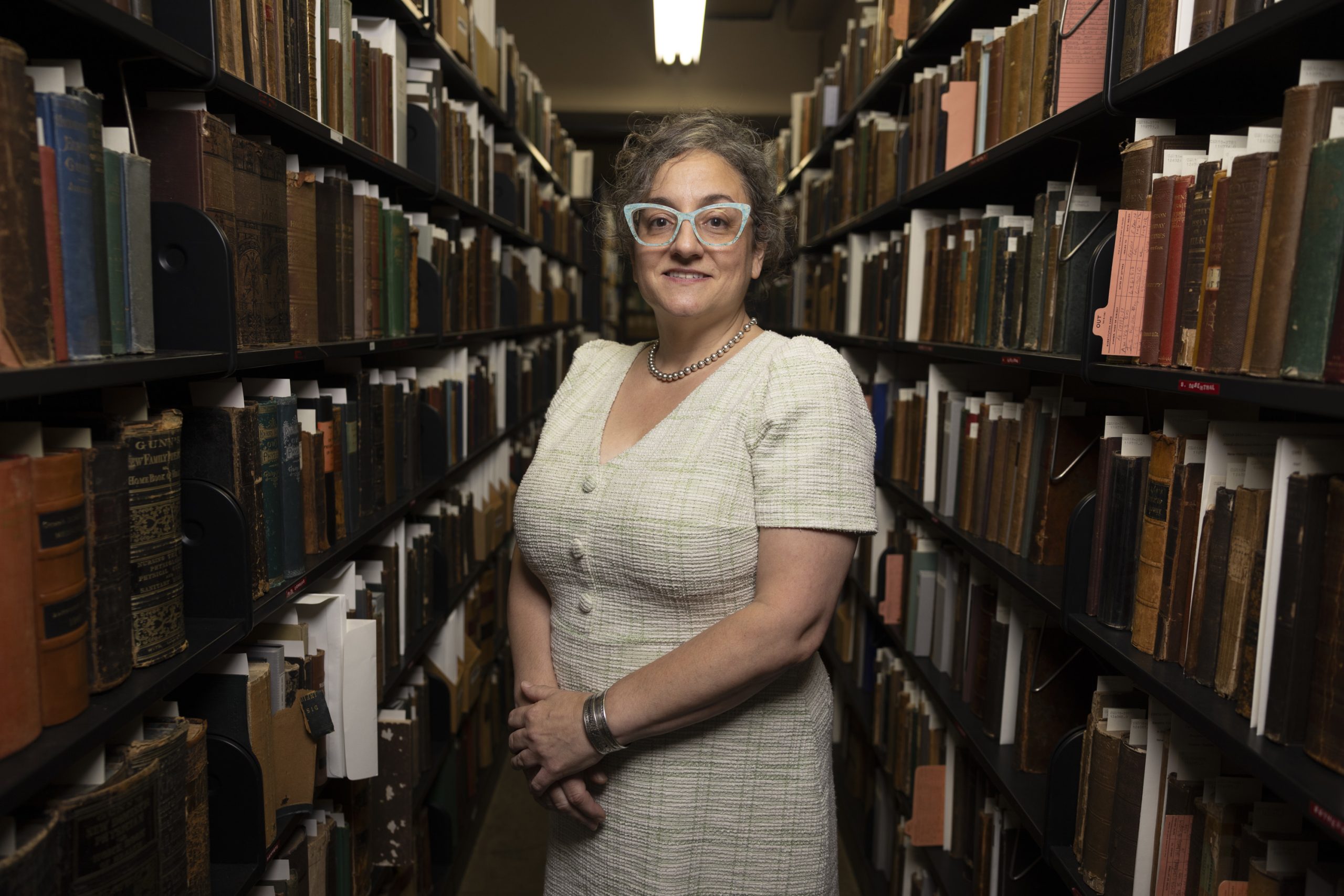
Rachel D’Agostino, curator of printed books at the Library Company of Philadelphia, in the stacks. Tyger Williams / Staff Photographer
They sit not far from the quack medicine pamphlets of the late Philadelphia-born collector William Helfand. If Rosenberg’s collection speaks to managing and understanding sexual desires, Helfand’s ephemera — a seemingly endless grouping of city directories telling where and how to cure venereal disease — is proof people were living out those desires.
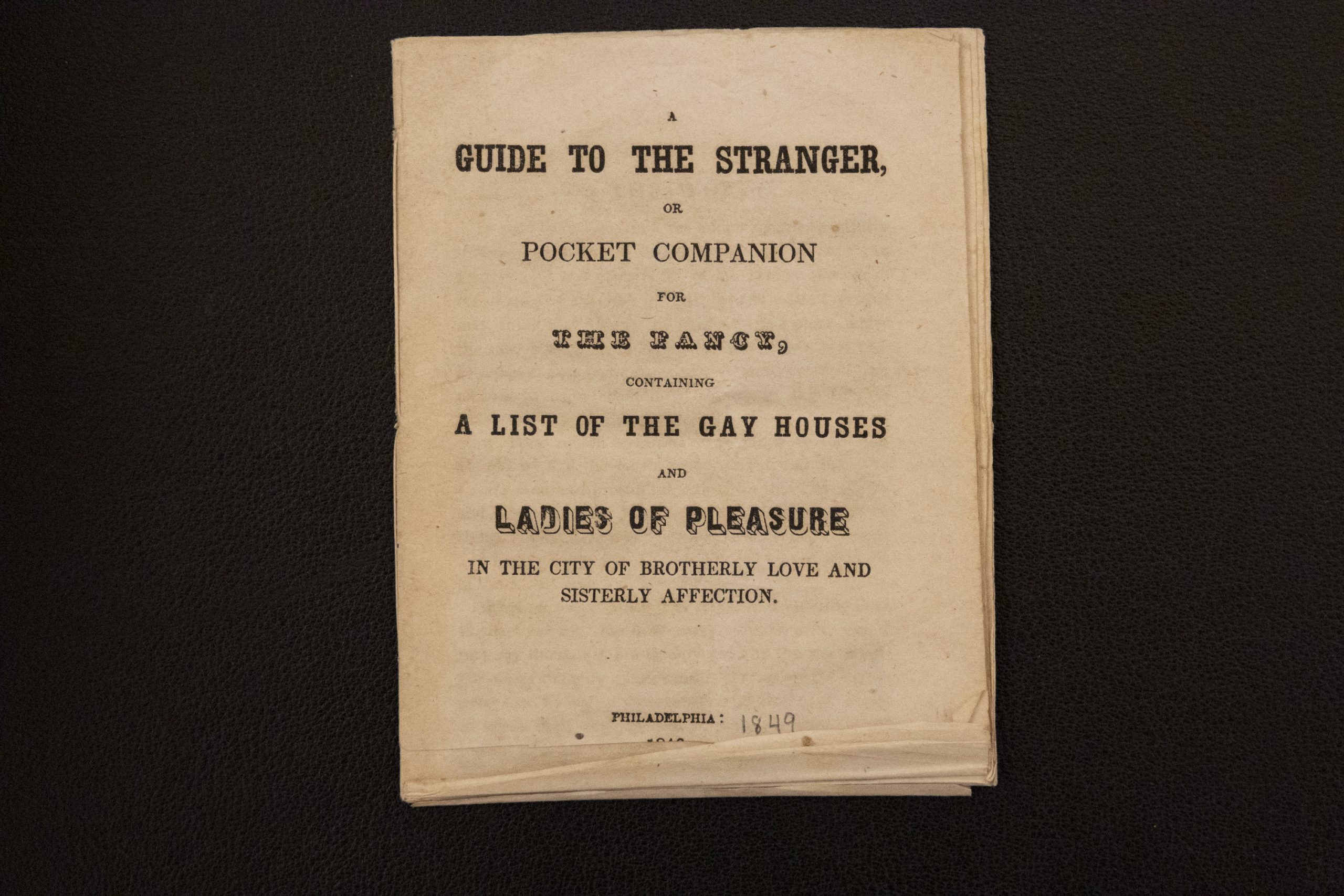
Also in the vicinity are several brothel directories including A Guide to the Stranger, or Pocket Companion for the Fancy, Containing a List of Gay Houses and Ladies of Pleasure in the City of Brotherly Love and Sisterly Affection from 1849. It reads like a Yelp review, rating things like cleanliness and performance.
“Look at how they are folded,” D’Agostino said, pointing to a centuries-old crease in one directory. “Proof that this was perhaps hidden in a man’s jacket pocket?”
Recently, D’Agostino purchased a 19th-century condom and corresponding advertising material.
“A Guide to the Stranger, or Pocket Companion for the Fancy, Containing a List of Gay Houses and Ladies of Pleasure in the City of Brotherly Love and Sisterly Affection” from 1849. This is a part of the Library Company’s growing collection about the sexual lifestyle of 19th-century Philadelphians. Tyger Williams / Staff Photographer
People like to romanticize the 19th and early 20th centuries as a time when only people on the societal margins were having sex outside of society’s rules of decorum. And that’s just not accurate, D’Agostino said.
She still works with Rosenberg to build collections designed to help researchers illuminate stories lost to the dark shadows of disrepute but which are important to America’s story.
“A market for this work always existed and always will exist,” D’Agostino said. “It’s just finding its way into formal history now.”
Charles E. Rosenberg’s collection at the Library Company of Philadelphia is available for perusal by appointment only. It is located at 1314 Locust St.
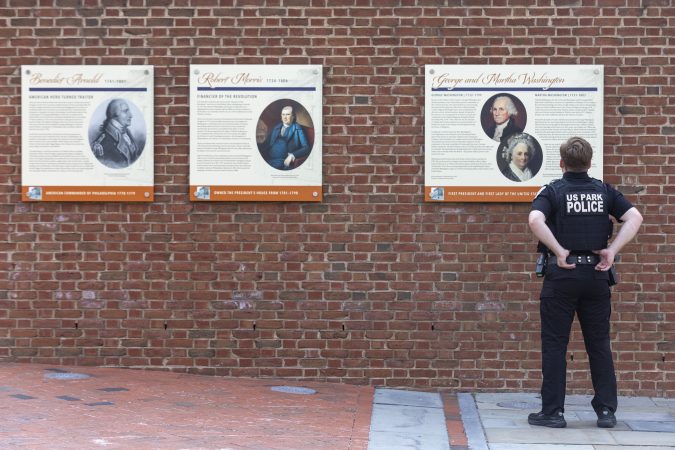
The longer I live, the more I see how family difficulties and those that must be confronted in our society have parallels. One mutual theme is denial — in therapist lingo, it is far, far more than a river in Egypt. It is the inability or refusal to see glaring truth. For example, when a daughter speaks up about sexual abuse — most often by a close family member — her mother often refuses to believe her for myriad reasons, usually supported by other family members, including siblings. In time, with support, a violated young person can move on with their own life, even if rejected by blood relatives. Let’s use this lens to look at the sneaky removal of the truth about the people enslaved by George Washington at the President’s House.
It is not coincidental that it was done in the cover of darkness by those who refuse to face the truth. The panels depict violations endured by human beings treated like chattel. They were ugly things to consider, but they were things America must face. Regardless of the stony path of reality, a country, like a family, must face the truth to move forward together with any semblance of health. Once we find the courage to confront reality together, there is no problem that we cannot solve.
Of course, a young, abused woman whose family does not face the truth of her hell can move on. But a split on the truth is something America cannot survive. Tragically, this split is being fed by leadership in Congress and the White House. There is only one way to address this cancer in our midst. There is only one way for America to survive. I ask all who support Donald Trump to face the truth: We no longer have a president leading and inspiring America. We have only a dictator, committed to denying us the opportunity to come together and heal.
SaraKay Smullens, Philadelphia
Labor loyalty
The recent article about unions supporting Republican Reps. Brian Fitzpatrick and Rob Bresnahan was infuriating. According to the latest AFL-CIO scorecard, the average score (i.e., the percentage voting with labor) for the seven Pennsylvania Democrats in Congress was 98% for 2025 and 99% for their lifetime. The 10 Republicans in Pennsylvania’s congressional delegation achieved an average 6% in 2025 and 16% in their lifetime. Of those Republicans, Fitzpatrick’s 2025 score was 46% and 58% for his lifetime, whereas freshman Bob Bresnahan attained 8% as both his 2025 and lifetime scores.
What these statistics tell us is that while the principles of the AFL-CIO and its affiliates are lined up closely with Pennsylvania’s Democrats in Congress, many union leaders still prefer to grade on a curve when considering endorsements for Republicans. Rewarding representatives for work on a particular bill is no way to run a political endorsement campaign. Supporting candidates who will stand consistently with labor is.
Coleman Poses,Philadelphia
Join the conversation: Send letters to letters@inquirer.com. Limit length to 150 words and include home address and day and evening phone number. Letters run in The Inquirer six days a week on the editorial pages and online.
ARIES (March 21-April 19). What will happen if you trim extra words from your correspondence, your conversations, your stories, your instructions or your requests? Try it and find out. The fortunes favor succinct, purposeful communication.
TAURUS (April 20-May 20). Those who do nothing invite very little criticism. Those who take initiative attract opinions. Keep that in mind as you sort through the feedback. Give yourself credit for being the one who stepped boldly forward.
GEMINI (May 21-June 21). Someone can be funny, generous, vain, insecure, ambitious and pretentious all at once because people are mixtures. Seek information without judging. Leave room for people to be complicated.
CANCER (June 22-July 22). Worry rarely improves the outcome. Experience does, though — and reliably so. Every time you put yourself through a bit more life, you collect another piece of evidence that you’re capable of handling whatever comes next.
LEO (July 23-Aug. 22). In some restaurants, the food can be ordered on a sliding heat scale of zero to five, with zero being an absence of pepper and five being fire. If today were a dish, it would be hot as they come.
VIRGO (Aug. 23-Sept. 22). You’ve spent enough time beating yourself up over what didn’t happen, about what went sideways, or didn’t happen at all. Instead of working through the particular situation and psychology, try this one on for size: Who cares?
LIBRA (Sept. 23-Oct. 23). You don’t have to slow down your thoughts to be happy. A still mind is more of a poetic ideal than a psychological reality. For a mind to wander into anticipation, memory, rando-associations and problem solving… well, that’s just healthy.
SCORPIO (Oct. 24-Nov. 21). You may feel an urgency today that wasn’t there before. You want life to go faster. Narrow down your options, shorten your lists, forget about some of the rules. When you remove what’s unnecessary, the action accelerates.
SAGITTARIUS (Nov. 22-Dec. 21). Some like to shop for options, others study and plan, as for you — see the problem, fix the problem, not theoretically but materially. And you do it fast. No wonder you’ll collect customers and fans.
CAPRICORN (Dec. 22-Jan. 19). It seems you’ve over-obligated yourself — which is just what happens when your generous heart intersects a miscalculation of the amount of time and energy things actually take. But don’t stress. This all fits together when put in the right order.
AQUARIUS (Jan. 20-Feb. 18). As much as you don’t want to lean on anyone, it may be your best move. People favor those they help. People like those who need them more than those they need. Letting someone assist you today is simply a smart strategy.
PISCES (Feb. 19-March 20). If the Wright brothers had aligned their expectations with reality, they’d have stayed on the ground. Your life has also been shaped by moments when you expected something that didn’t exist yet. Today, the thing to align isn’t expectation, but prediction.
TODAY’S BIRTHDAY (AUG. 2). It’s your Year of the Voice Command. Doors open when you speak your wishes. As you develop and share your unique takes, whole rooms reorganize around you. Casual introductions lead to oversized opportunities, which you’ll leverage through this new chapter. More highlights: You’ll make ever-bigger deals. Family both depends on you and elevates you. You’ll be loved back in kind. Pisces and Cancer adore you. Your lucky numbers are: 1, 4, 30, 22 and 15.
DEAR ABBY: After a nearly 20-year marriage, my first husband, “Lloyd,” told me his feelings for me had changed. He said we needed “some time apart,” but he didn’t want a divorce. He immediately went to a lawyer and executed a financial settlement for me, still insisting he wasn’t going to file for divorce. Six weeks later, I bought a house and moved. Two weeks later, Lloyd’s son told me my husband moved a woman in with him two days after I moved out. Obviously, we divorced.
In time, I remarried and was very happy for 13 years until my husband died. I took care of him for the last three years. A year later, my older brother became ill, and I went to help him 300 miles away. It also turned into a nearly three-year stay.
I have been back home for only a year and a half now. I just received a text from a friend of Lloyd’s, telling me Lloyd has passed away. None of Lloyd’s family contacted me, nor did they let me know his brother had died a while back. I have been so hurt by this man. After I moved, he told many lies. He said that I had been cheating, etc., and literally turned the whole community against me. When the true story came out, a lot of people apologized for treating me so badly.
I feel indifference toward my ex. The bad memories with him far outweigh the good ones, and I don’t want to go to his funeral. It would feel two-faced because I lost all respect for him many years ago. Am I wrong for not acknowledging his death?
— MOVING ON IN THE SOUTH
DEAR MOVING ON: You certainly are not wrong. People attend funerals in order to pay their respects and emotionally support the grieving family. Your presence is not required at this one. Lloyd’s family would not welcome it, and neither would the woman who helped to break up your marriage. On that day, do something you would enjoy, ideally with friends who support you.
** ** **
DEAR ABBY: Two years ago, my mother bought a pair of diamond earrings for us to split. She wears one every day, and I wear the other. She tried doing the same thing with my older sister about 20 years ago, but after my sister lost her diamond earring for the second time, they mutually agreed to give up.
Last summer, my mother gave me a box of old jewelry, odds and ends. I found two diamond earrings that looked similar but weren’t from the same pair, so I took them — who doesn’t like diamonds? Now I am realizing they’re likely Mom’s half of the pairs she split with my sister. Can I wear them? I have a place for each, but would it be an act of bad faith to horn in on what was originally their tradition?
— BEJEWELED IN NEVADA
DEAR BEJEWELED: Your mother gave you the box of old jewelry. The items were hers but now they are yours. Your sister lost the mates to those earrings and the tradition ended. Your sister should have no claim on them. Wear them and enjoy them without guilt.
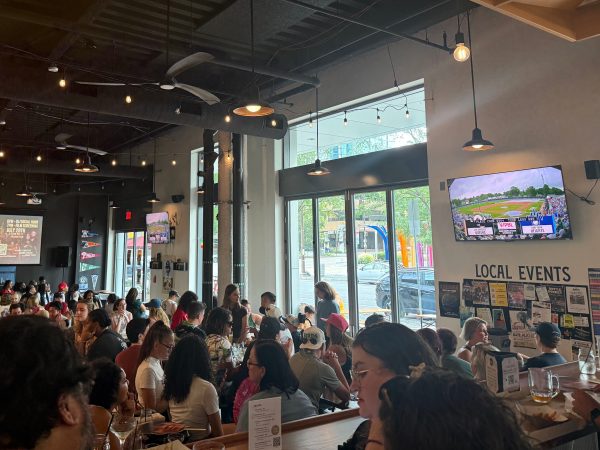
Despite rain delays, technical difficulties, and the hurdles of modern-day sports streaming, fans packed into Two Locals Brewing Co. in University City on Saturday night to witness the debut of the Women’s Pro Baseball League halfway across the country.
The Los Angeles Queens and the New York Heights played the WPBL’s inaugural game in front of a sold-out crowd at Robin Roberts Stadium in Springfield, Ill. The Queens feature Philadelphia’s own baseball icon, Mo’ne Davis.
Davis had a crowd of family, friends, and supporters at the watch party, which was hosted by The Stoop Pigeon, a group that hosts women’s sports watch parties in Philadelphia. The family-friendly party had barbecue, raffles, games, and even cutouts of Davis’ face to celebrate not only her achievements, but the historic moment for women’s sports.
“It’s amazing to see people are coming out to support Mo’ne Davis,” Jen Leary, the founder of The Stoop Pigeon, said. “We got here at 4 o’clock, and people already were lining up, which tells you a lot about, A, her impact on the state, but B, the want and need to support women’s sports.”
The Stoop Pigeon can trace its roots to Watch Party PHL, a monthly WNBA watch party group, and plans to open a brick-and-mortar location this year.
Davis has been a history-maker in the sport for years, starting with her legendary Little League World Series game in 2014, when, with the Taney Dragons, she became the first girl to win and pitch a shutout. Davis, alongside many other women in the sport, had spent years being the only girl on the team — most recently for the Indianapolis Clowns of Banana Ball.
At first, Davis didn’t believe there even was going to be a professional women’s baseball league.
But others in her corner had no doubt, cheering as she appeared on the screen.
“Oh yes, yes, yes, I always knew she was going to do something great like this,” her longtime mentor and step-uncle, Tyrique, said. “She’s got that fire in her … I aspired to be a ballplayer myself, so I taught her everything that I knew about pitching. Actually, I told her how to throw these nine different pitches, and that’s how it all started when she was a kid. Plus, she’s good — she’s really good.”
As if to prove his point, Davis scored the first run in WPBL history, on a two-run single by Maggie Foxx in the top of the first inning. The Heights answered with five runs in the bottom of the frame and led for much of the game, but the Queens rallied with a four-run seventh and won, 10-8.
The energy was shared at Marsha’s, the South Street women’s sports bar, which also hosted a watch party for the WPBL debut.
“As women’s sports grow in popularity, it’s important to have spaces to promote them,” Helen Ehrlich, Marsha’s PR coordinator and a patron, said. “We want to give people not only a place to watch them, but to really celebrate these people at the top of their field.”
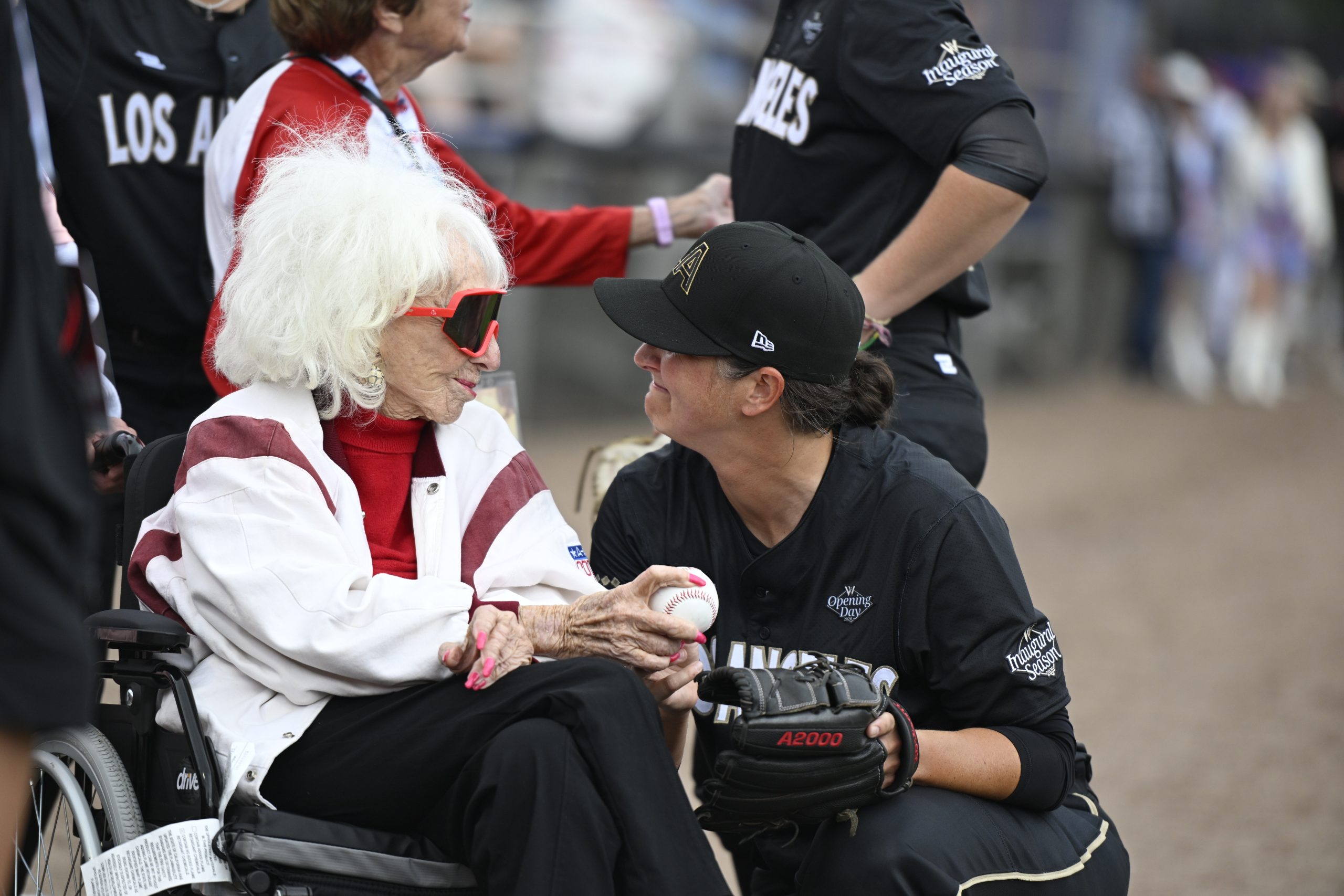
Former All-American Girls Professional Baseball League player Maybelle Blair (left) and the Los Angeles Queens’ Elodie O’Sullivan share a moment before the inaugural Women’s Pro Baseball League game against the New York Heights on Saturday in Springfield, Ill. Lexie Knight
Spectators at Marsha’s and The Stoop Pigeon expressed frustration over the inaccessibility of many women’s sports games. The WPBL largely is available on ESPN Select (a new name for ESPN+), with a 11 games also being televised by Scripps Sports Network. Not knowing where to find games is an issue in other leagues, too, such as soccer’s NWSL, which is broadcast on several networks, including its direct-to-consumer platform.
“We want women’s sports to be accessible everywhere,” Leary said. “Whether that’s at Stoop Pigeon or in your homes, we need to show that the demand is there.”
BALTIMORE — A few minutes after it ended — the game, and the Phillies’ losing skid — Dave Dombrowski poked his head into Don Mattingly’s office.
“I was just telling him,” Dombrowski said, straight-faced, “about the four trades we made.”
Winning, it seems, brings out the comedian in everyone.
But the Phillies earned a few moments of levity here Saturday night, near the end of a tension-filled week — less than 48 hours before the trade deadline — with a 5-0 blanking of the Orioles to halt a four-game losing streak.
A closer inspection reveals the Phillies won by doing the little things. To wit:
J.T. Realmuto blocked a sinker in the dirt from atypically erratic Sánchez with the bases loaded in the sixth inning before Trea Turner fielded Leody Taveras’ high chopper to extinguish the threat.
Bryson Stott capped a 15-pitch duel — the longest at-bat in the majors this season — with a one-out single in the seventh inning to knock tough Orioles starter Shane Baz from the game.
Crawford ran down a ball in right-center field when the game was scoreless in the fourth inning.
“It was kind of a complete game for us,” Mattingly said. “We caught the ball. Sánchy was good, got out of jams, which is not ever going to be easy for you. Just kind of the whole game today felt like a clean game.”
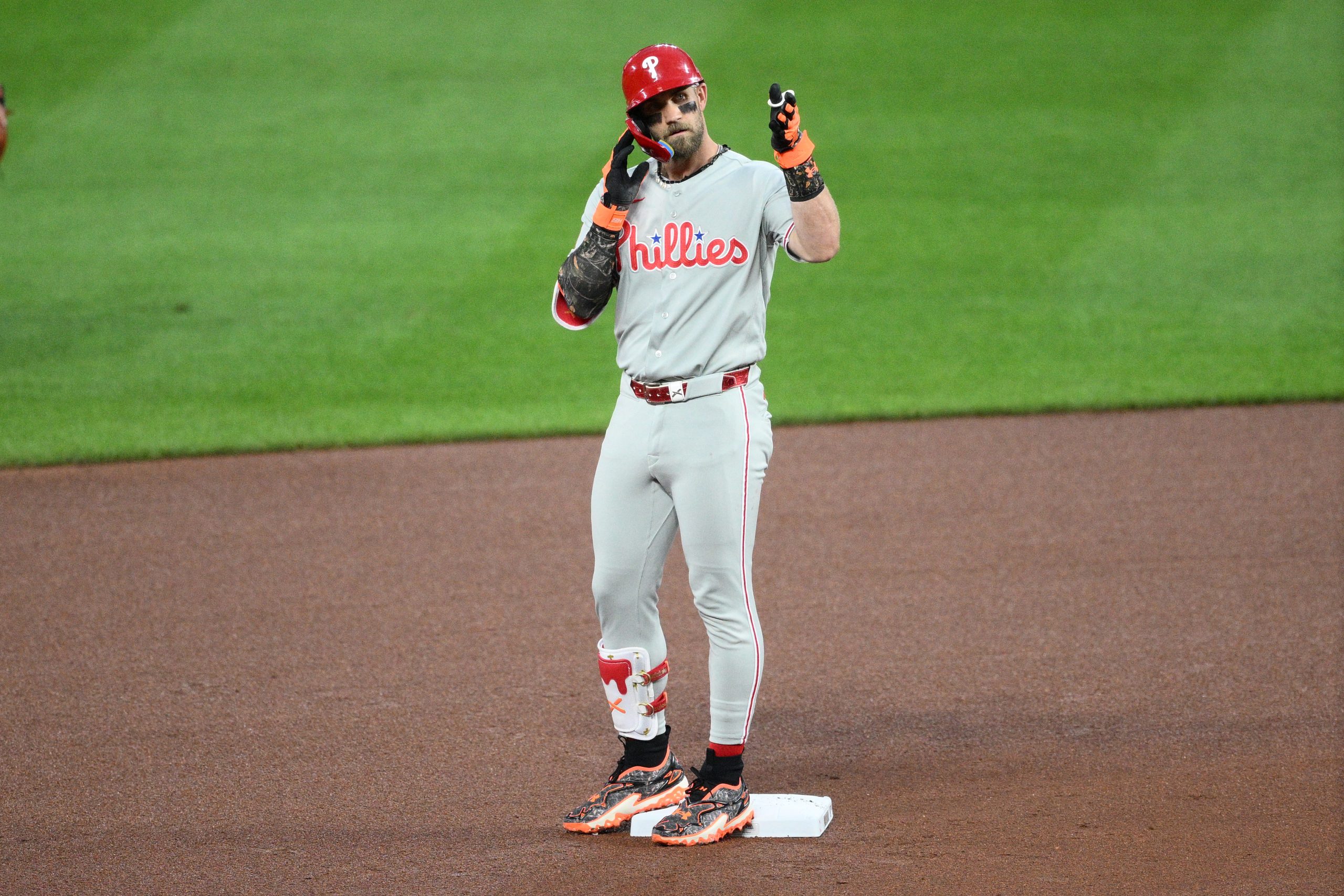
Bryce Harper gestures to the dugout after a ground-rule double in the fourth inning of the Phillies’ 5-0 win Saturday night in Baltimore.Nick Wass
Indeed, little things go a long way.
That’s always true, of course, but especially with the trade deadline bearing down at 6 p.m. Monday. It’s down to the wire for teams on the buy-sell fence. Some clubs, such as the Orioles, may not choose a lane until Monday morning, if at all.
The Phillies, who hold the final wild card in the National League, firmly are in the buyers’ club. But they need a late-inning reliever, a right-handed bat, and probably a starting pitcher to hold off a charge from the Padres and Marlins — and maybe the Pirates and Nationals, too.
It was no wonder, then, that Sánchez shrugged off the notion that a start in which he equaled his career-high with five walks was uncharacteristic for him.
“Not weird, not rare,” he said with a smile through the team interpreter. “Just an excellent outing. We won.”
Or that Crawford gave a different answer altogether upon being asked which was more satisfying: his catch to rob extra bases from Taylor Ward early in the game or his two-run single late?
“I think just coming out with a win, honestly,” the rookie center fielder said. “Being able to get that win right there was huge for us. And hopefully we could keep the momentum going and get another one [Sunday].”
It surely will help to have Zack Wheeler on the mound.
The Phillies look like a World Series contender whenever their top three starters — Sánchez, Wheeler, and Jesús Luzardo — are on the mound. Even when they don’t have their sharpest stuff.
Sánchez overcame spells of poor control, twice escaping bases-loaded jams. In the fourth inning, he struck out Taveras on a sinker that clipped the inside corner. In the sixth, with the Phillies clutching a 1-0 lead, Realmuto knocked down a first-pitch sinker in the dirt before Sánchez got the chopper to Turner.
“Oh, it was big,” Sánchez said of sidestepping the sixth-inning jam. “After the inning ended, I just took a deep breath and said, ‘Thank God.’ Too many walks today, and we know that not the type of pitcher that I am or want to be.”
Sánchez also had a few words for the Orioles’ dugout.
“They were yelling some stuff, some things,” he said. “I saw one of their coaches talking a little. But what they don’t know is that those type of things, that motivates me. I take as fuel. That fuels me. I just get motivated by that.”
Given the bullpen’s recent problems, Mattingly surely exhaled after the four-run eighth inning. Rather than a cuticle-chomping finish, lefty José Alvarado was able to work with a big lead before turning it over to Jhoan Duran, pitching for the first time since his blown save five nights earlier in Miami.
“We got a little breathing room there,” Mattingly said.
Dombrowski continues to pursue help for the bullpen, a starting pitcher, and a right-handed bat. The rival Braves landed righty-hitting outfielder Lane Thomas from the Royals late Saturday night. Thomas was a Phillies target, too.
Righty-hitting outfielder Bryan De La Cruz has filled in well. He’s 8-for-18 since getting called up from triple A, including an RBI single to break a scoreless stalemate in the fifth inning.
“De La’s always kind of like day in, day out, you know?” Mattingly said. “He plays solid defense, doesn’t really make mistakes. The at-bats are good.”
It’s something to think about.
Meanwhile, a victory put everyone in a good mood — at least for a night.