Tag: topic-link-auto

  • Trump claims active ceasefire talks, but Iran denies direct negotiations

    Trump claims active ceasefire talks, but Iran denies direct negotiations

    The status of the Iran war remained in limbo Monday, as President Donald Trump insisted that talks between Tehran and Washington were “going on right now” while Iran’s Foreign Ministry spokesman said, “We are not currently holding negotiations with the United States.”

    Trump, who in a social media post earlier in the day called Iranian leaders “unbelievably duplicitous,” told reporters in the Oval Office that “we’re straight about” talks between the two countries, though “they deny. But they’re not denying it now. They just put out a statement, not denying it.”

    Asked where that statement could be found, a White House spokesperson referred The Washington Post back to the president’s remarks.

    Trump said Iran, along with other regional states, had “begged” for talks, leading him to call off what he had described as an imminent U.S. attack that would have been “harder than any attack … since World War II.”

    “We were going to hit them very hard yesterday, very, very hard,” Trump said. But “I want to give them every last chance before decapitation. It’s very tough to do what we have planned, still planned,” he said. “I’m very proud of the fact that I will give people a chance.”

    It was far from the first time since the war began on Feb. 28 that the two sides have offered differing versions of reality on damage done by their dueling airstrikes, what they have agreed to in on-again-off-again informal talks, or even whether those talks were happening.

    The conflict, which officials originally said would last only a few weeks but is now entering in its sixth month, has dragged down Trump’s poll numbers. Growing numbers of Republican lawmakers and voters have questioned both the rationale for the war and Trump’s strategy.

    Although Trump went into the war saying his goal was to destroy Tehran’s nuclear program — an objective he previously said was achieved after 12 days of U.S. and Israeli bombing last summer — Iran’s closure of the Strait of Hormuz within days after the conflict began quickly became the focus of administration attention. The narrow waterway is a chokepoint, bordered by Iran and Oman in the Persian Gulf, through which at least 20 percent of the world’s energy supplies transit.

    Iran refused to let ships pass without permission, said it was going to impose tolls, and began mining the channel and shooting at commercial vessels. In April, the U.S. imposed a naval blockade barring all ships from entering or leaving Iranian ports. Iran continued to menace international shipping while Washington responded by bombing Iranian defensive sites around the waterway and some infrastructure farther inland, leading Tehran to fire missiles and drones at its Persian Gulf neighbors that host U.S. military facilities.

    As the price of gasoline surged at U.S. pumps, the two sides agreed to direct talks in mid-April in Islamabad, with the U.S. delegation headed by Vice President JD Vance. Unable to reach agreement there, after subsequent lower-level negotiations they signed a 14-point memorandum of understanding in mid-June that included a pullback of the U.S. blockade, an easing of sanctions against Iran, and plans for Iran and Oman to jointly figure out a way to manage the strait, while Washington and Tehran moved to nuclear negotiations.

    The ceasefire collapsed within weeks, largely over Iran’s insistence on continuing its control over the strait. The U.S. reimposed its blockade and sanctions, as both sides resumed sporadic military attacks.

    In recent days, regional Arab powers — including Saudi Arabia, the United Arab Emirates and Qatar — have been in touch with Trump as they try to facilitate an end to the conflict, which is damaging their economies. Iran has also been reaching out to many of those same leaders.

    U.S. intelligence agencies have assessed that Iran is unlikely to change its own negotiating stance or be defeated in the near term.

    According to Tehran, there have been no direct negotiations with the U.S. since April, although both sides concede that messages have been passed through regional mediators.

    Last week, Oman sent Tehran a proposal for reopening the Strait of Hormuz that would divide maritime traffic 50-50 between routes along their opposite coastlines. Muscat also suggested a system of “voluntary” contributions from nonprofits, interested states and companies to pay for navigational aid, maintenance and environmental safeguards for the strait.

    Similar to a process used by Singapore, Malaysia and Indonesia, which border the Strait of Malacca, an international trade chokepoint between the Pacific and Indian oceans, the proposed system could be a face-saving way for Iran to move away from the tolls and controls that it has demanded and that Trump and other world leaders have said can never be allowed.

    In a press briefing Monday in Tehran, Foreign Ministry spokesman Esmaeil Baqaei said that Iran was negotiating only with Oman over ensuring the safe passage of commercial shipping through the strait and that there were no talks with the United States.

    “The strait was not closed because of disagreements between Iran and Oman,” Baqaei said. “It has faced disruption since last March due to the military aggression of the United States and the Zionist regime” in Israel.

    In his Truth Social post Monday morning, Trump was dismissive of the Iran-Oman talks. “They ask for a meeting, some would say ‘beg,’ talks begin, with more scheduled in the immediate future,” he said of Iran, “and they say, openly and proudly, that they’re not having any discussions, that nothing is being talked about, and they’re only dealing with ‘Oman.’”

    “They then go on to give their usual blather in saying, the Strait of Hormuz will be operated powerfully by them,” Trump said. But the United States has erected a “wall of steel” with its naval blockade, and “nothing gets through to Iran, unless we want it to, and nothing will get through, unless a Deal, or Total Surrender, is accomplished.”

    Isaac Arnsdorf contributed to this report.
  • House of the week: A condo in Washington Square West for $339,900

    House of the week: A condo in Washington Square West for $339,900

    Zachery McKinnon grew up in Michigan but moved to various places, always fostering a passion for art and home renovation.

    Now, after over a decade in the East, he is selling the Washington Square West condo he bought last year. He is drawn back home for a long stay to help his parents.

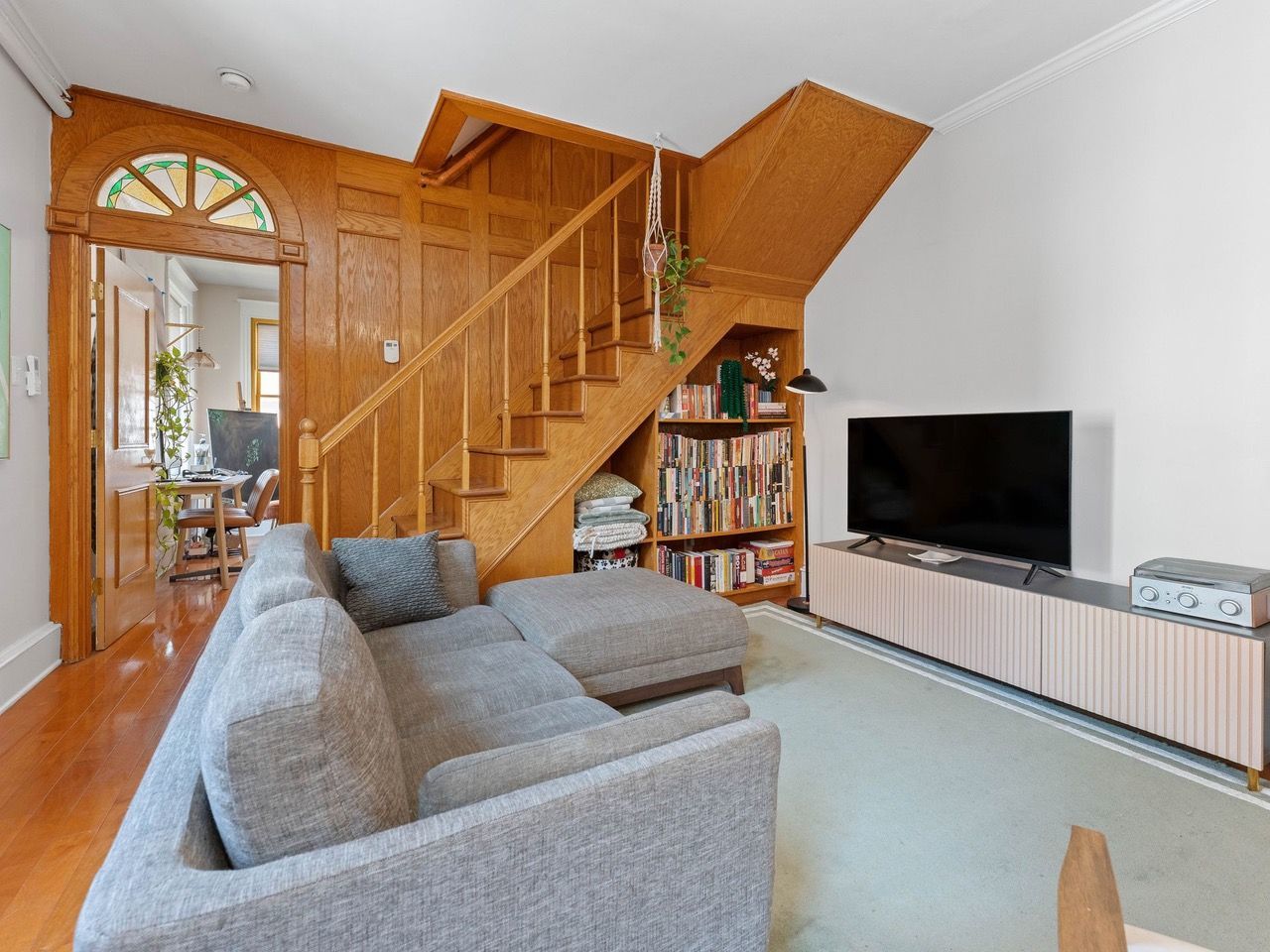
    Living room with stairway to rooftopCal Media

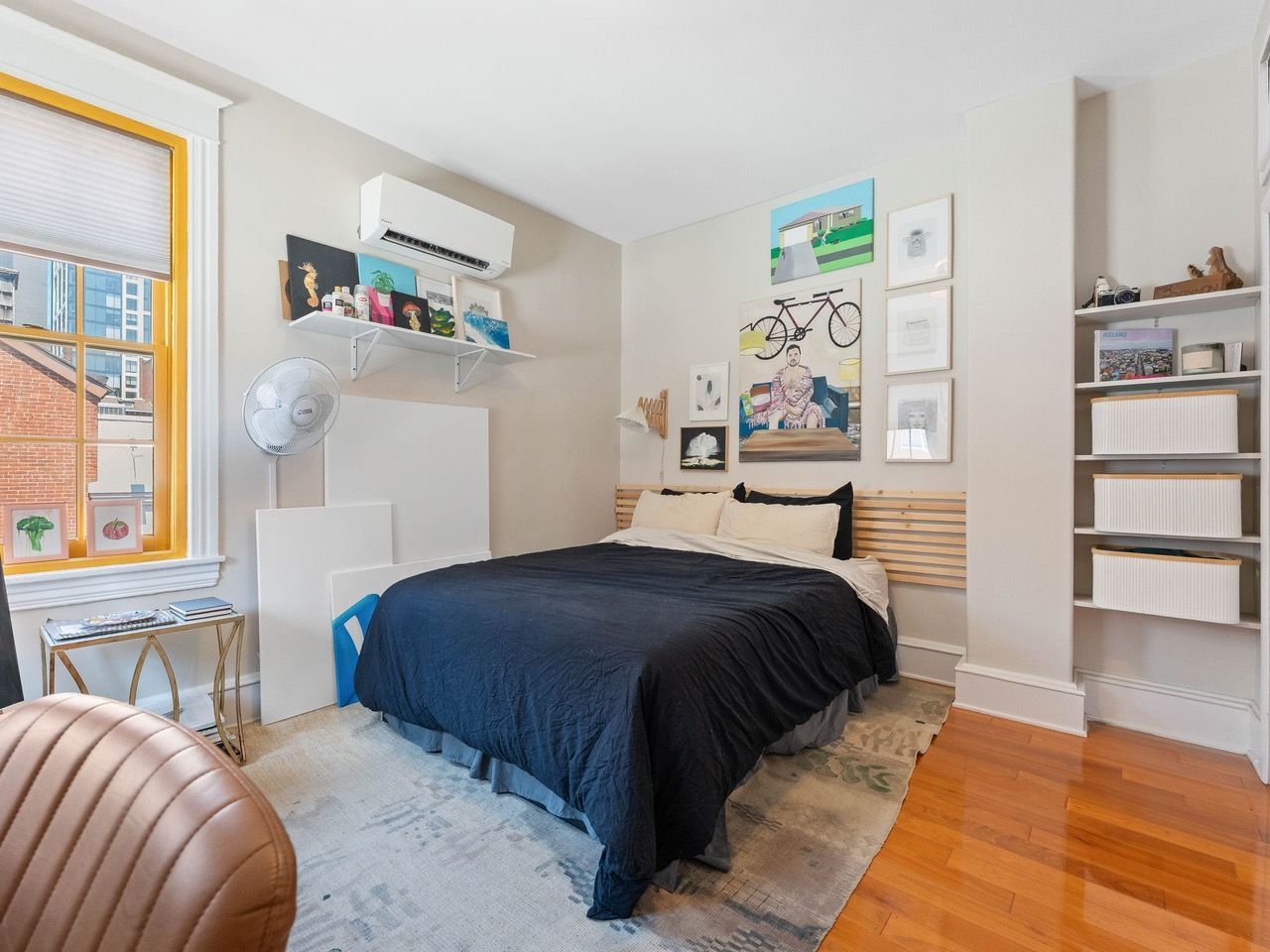
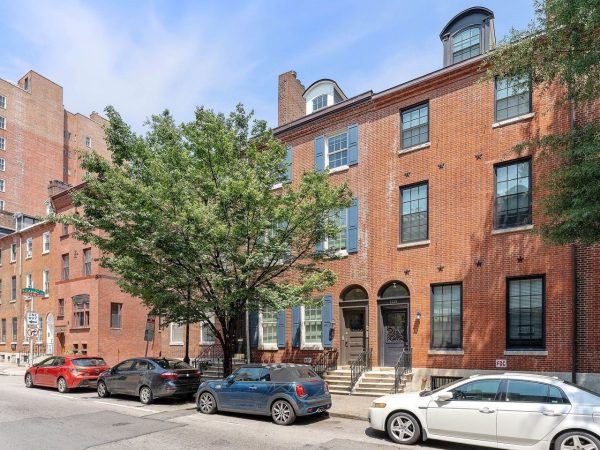
    His one-bedroom, one-bathroom condo spans 603 square feet. “The rooftop was really why I bought the place,” said McKinnon, who works in data analytics for an education nonprofit.

    The condo’s proximity to City Hall, Thomas Jefferson University Hospital, the Kimmel Center for the Performing Arts, Old City, South Street, Chinatown, and SEPTA Regional Rail were convenient for McKinnon, who doesn’t own a car.

    RooftopCal Media

    The six-unit building, the Aldrich, was built in the 1820s and is on the Philadelphia Register of Historic Places. It underwent a major renovation in 2021, including new floors.

    McKinnon did some work on the condo’s kitchen and added mosaics throughout the unit. He is an admirer of mosaic artist Isaiah Zagar.

    Mosaic by Zachery McKinnonCal Media/Aaron Cantu

    The unit has tall windows, high ceilings, an in-unit washer and dryer, and dedicated basement storage.

    There is year-round mini-split AC and gas heat.

    BedroomCal Media

    The condo building is pet-friendly.

    The unit is listed by James A. Olivieri of Penn Jersey Realty for $339,900.

    Editor’s note: This story has been updated to reflect a change in the listing price.

  • Does the American masculinity crisis have roots in Valley Forge?

    Does the American masculinity crisis have roots in Valley Forge?

    In the winter of 1777-78, after the Second Continental Congress hightailed it from Philadelphia following the British army’s attack on the city, the Revolutionary Army of the freshly minted United States hunkered down in Valley Forge.

    Soldiers dropped dead from disease and malnourishment, as they huddled for warmth in little wood huts. Lice ran wild.

    By the summer of ’78, American troops, under the leadership of General George Washington, emerged, battered but not beaten, reengaged the British, and turned the tide of the Revolutionary War.

    In that short time, Valley Forge became synonymous with American perseverance and resilience.

    The Marquis de Lafayette and Gen. George Washington, with whom he had a father-son relationship, at Valley Forge. From John Ward Dunsmore painting, 1909.From John Ward Dunsmore painting, 1909

    Reports of Washington, kneeling in the snow and praying for the Army’s salvation, became part of popular lore — a powerful image of the revolutionary American spirit, blessed by the grace of God.

    Historians debate whether such an appeal even happened. Records show the winter of 1777-78 was mild.

    This push-and-pull between myth and reality — between what the United States aspires to, and what it actually is — is embodied in the legendary status of Valley Forge in the American psyche.

    It’s a tension that, a new book argues, undergirds a current crisis in American masculinity.

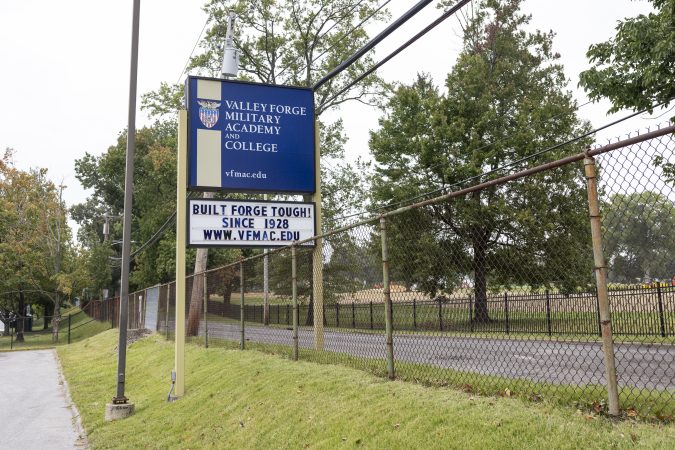
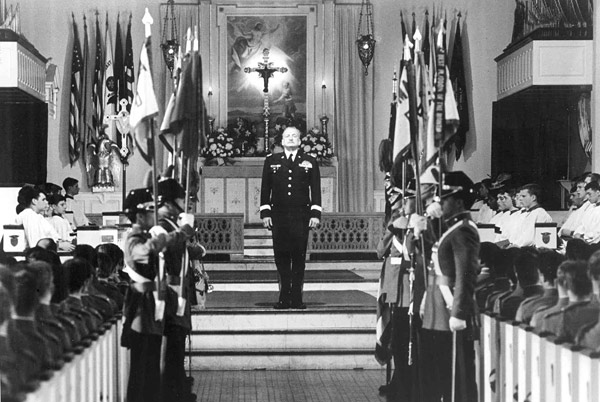
    Established in 1928 by a U.S. Armed Forces lieutenant general named Milton G. Baker, Valley Forge Military Academy (VFMA) in Wayne, Pa., promised parents: “Send us your boy and we will return to you a man.”Jasper Craven

    The George Washington school of American masculinity

    Journalist and author Jasper Craven argues that the figure of the American male, for better and worse, owes a lot to Washington. Or, at least, to the idea of him championing his country’s freedoms against all odds.

    In his new book-length history of American militarized machismo, God Forgives, Brothers Don’t, Craven locates a tension in Washington that proves foundational.

    “Washington made efforts to establish himself as a man who was stronger, mightier, braver than he actually was,” Craven said. “[He] captured the American imagination, and was an early, influential archetype on young boys.”

    So it followed that generations of boys would attempt to embody a Washingtonian archetype — resilient, brave, dignified — near the site of that mythic winter encampment at the Valley Forge Military Academy (VFMA) in Wayne. Established in 1928 by a U.S. Armed Forces lieutenant general named Milton G. Baker, Valley Forge promised parents: “Send us your boy and we will return to you a man.”

    Author Jasper Craven’s new book-length history of American militarized machismo, “God Forgives, Brothers Don’t” is a look into the fraught history and ominous future of military education in the USA, per its summaryCourtesy of Atria/One Signal Publishers

    Craven’s book argues that it was at schools like Valley Forge that the modern idea of the American male was made.

    “These military schools represent an extended, expanded, more pedagogical version of boot camp,” he says. “You arrive a young boy, a little bit reckless. Maybe you’re a bully. But very quickly, everyone is stripped of their identities, given matching uniforms, see their heads shaved, and are put into a very grueling hierarchy.”

    On paper, this pedagogical vision mirrors America’s notion of meritocracy: Everyone starts at zero, and scrambles for rank, and prestige, among the militarized hierarchy. Ribbons and bows are awarded to the most industrious scramblers.

    But, as Craven’s book reveals, that ostensibly fair model of achievement can be riven with dehumanization, corruption, and systemic emotional, physical, and sexual abuse. Even the nickname “The Forge” has a double resonance — suggesting both hammering something out in fire, and total fakery.

    Established in 1928 by a U.S. Armed Forces lieutenant general named Milton G. Baker, Valley Forge Military Academy in Wayne, Pa., promised parents: “Send us your boy and we will return to you a man.”Jasper Craven

    A history of abuse

    As Craven notes in his book: “Between 2015 and 2020, the Forge logged more than 30 incidents of alleged sexual misconduct, from stalking and fondling to rape, as well as fistfights, assault with a knife, even arson.” Cadets as young as 13 were driven to suicidal behavior.

    Craven played a key role in exposing these incidents.

    God Forgives, Brothers Don’t grew out of his 2022 reporting for Mother Jones magazine, which cast a piercing light on the school’s hallowed halls. His reporting captured not only the violence visited upon “plebes” (military slang for first year cadets) by upperclassmen, but the equally endemic corruption of the school’s administrators, who pocketed hefty tuition fees while essentially operating what one graduate called, “a sleepaway camp for troubled kids with very little supervision … more Lord of the Flies than The Catcher in the Rye.”

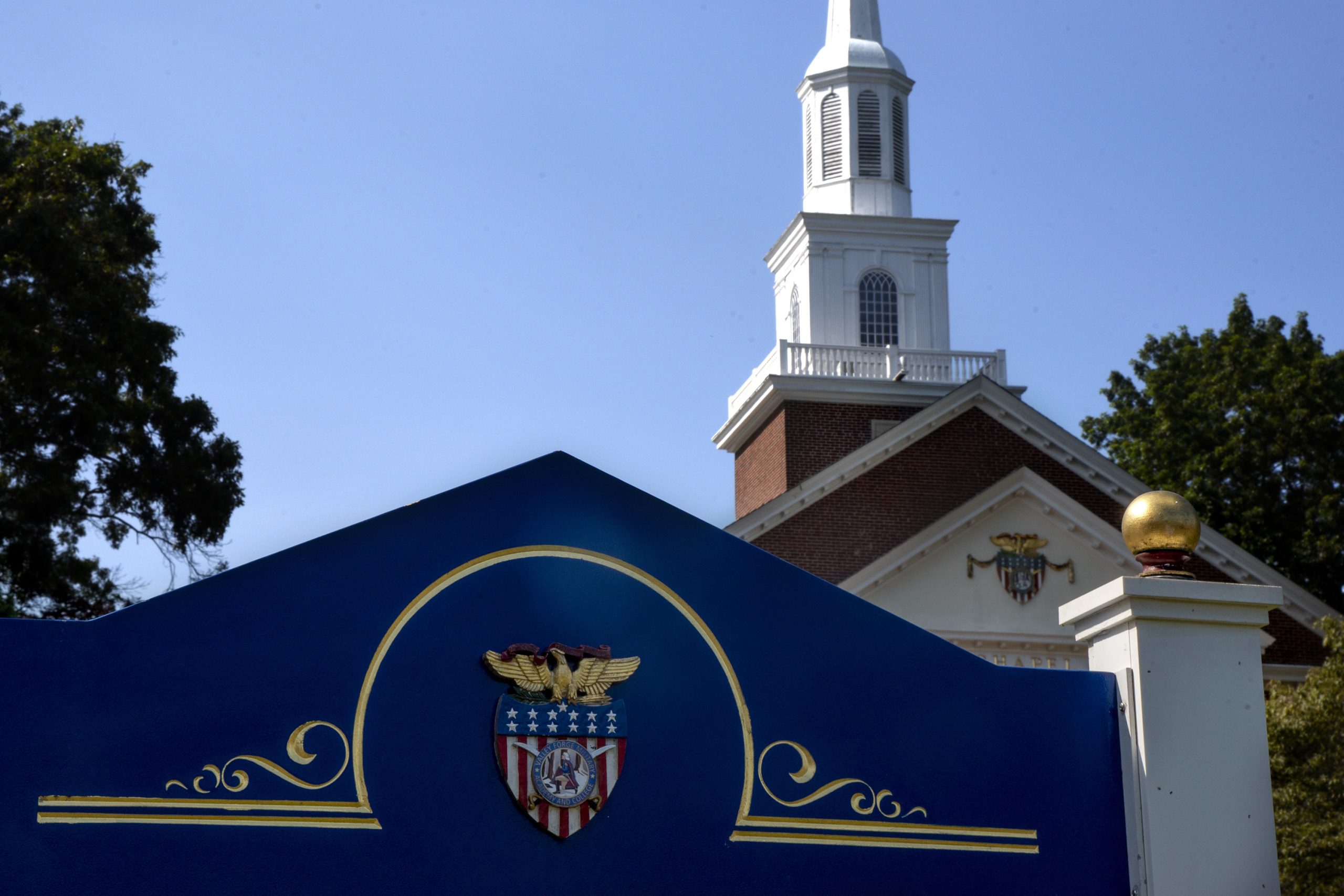
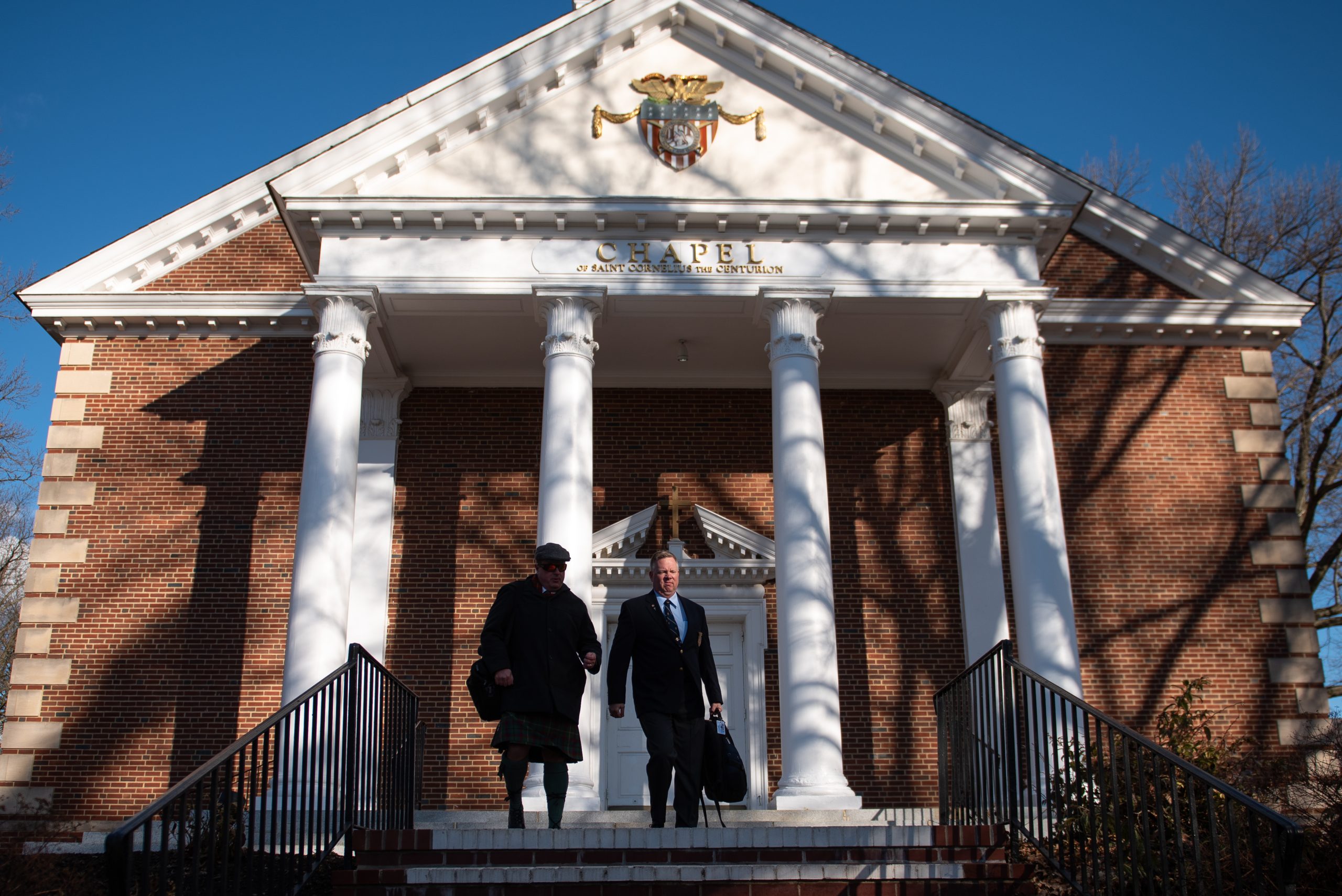
    The Chapel of St. Cornelius the Centurion at Valley Forge Military Academy & College in Wayne is photographed July 21, 2020.TOM GRALISH / Staff Photographer

    (Speaking of Catcher in the Rye: Author J.D. Salinger is among the Forge’s more notable graduates, and Craven traces the author’s conflicted relationship with the school, and its disciplinary culture, as a major influence on his fiction.)

    In 2025, the VFMA announced its closure; the May 2026 graduating class was its last. The neighboring Valley Forge Military College, a private military junior college, remains operational, having separated from the larger Academy in 2023, amid ongoing scandal.

    Last year, the VFMC became the first school in the country to offer support for President Donald Trump’s proposed Compact for Academic Excellence in Higher Education and received a $1 million federal grant earlier this year.

    More than a deeply researched and utterly harrowing inquest into how the American military turns boys into men, Craven’s book doubles as a critique of American masculinity itself: its valorization of violence, its codes of silence, its curated pathologies of aggression and shame.

    “While we have not read the book and therefore cannot comment on its specific arguments, we generally disagree with the author’s perspective on military schools,” the Valley Forge Military Academy Foundation said in a statement. “We believe military schools can have a profoundly positive and transformative impact on students by providing structure, discipline, leadership development, and a strong sense of purpose.”

    George C. Scott faces rebellious cadets in “Taps,” much of which was shot at Valley Forge Military Academy in 1981. After previewing the film, the academy repudiated it and nixed plans to host a premiere.

    It’s a dismal vision of chauvinist mock-virility that endures, culturally, Craven said, in everything from the prevalence of Punisher skull T-shirts and bumper stickers, to the vacant bellicosity of President Donald Trump (himself a military school alum who eventually avoided the Vietnam War draft), and the self-styled posturing of Pete Hegseth as “Secretary of War.”

    A workable alternative

    “Military schools across the country, including ours, have long lists of distinguished alumni who have gone on to achieve great success, many of whom credit their time at these institutions with helping shape their character, leadership, and future direction,” reads the VMAF statement.

    But in the course of his reporting, Craven was disillusioned of any idea that militarized men embody any sort of ideal.

    “The best evidence of my book’s thesis,” he said, “is that all these dudes who claim they’re the most macho and militaristic people around are all so jumpy, so self-conscious, and so uncomfortable with themselves.”

    “They are so clearly not happy with this identity they’ve constructed,” he said, “and yet are desperate to reinforce all the time.”

    Asked if there are any workable alternatives for this conception of the American man, Craven (who is a civilian) draws from a nonmythical figure in his own life: his father, the American activist and filmmaker Jay Craven.

    Valley Forge Military Academy alums pass in front of the school’s chapel on their way to a board of trustees meeting held at the Wayne, Pa. campus on Saturday, March 16, 2019. Kriston Jae Bethel / For The InquirerKRISTON JAE BETHEL / For the Inquirer

    “My dad grew up in Pottstown, Pa., and almost went to Valley Forge, before finding a Quaker school and becoming involved in the anti-war movement,” he said. “There was a moment in America where the peacenik was the prevailing masculine pinnacle. He has his own ‘war stories.’ He was followed by the feds. He was imprisoned. He was beat up. He’s got some scars, which is cool. He even dated Jane Fonda for a bit.”

    In tribute — and, perhaps, in aspiration for the future of the American male — God Forgives, Brothers Don’t is dedicated, “To my dad, who taught me how to wage peace.”

    “God Forgives, Brothers Don’t: The Long March of Military Education and the Making of American Manhood” by Jasper Craven is available at online and physical bookstores. $29, 352 pages, Atria/One Signal Publishers.

    The article was updated to include comments from the Valley Forge Military Academy Foundation.

  • Pa. lawmakers have proposed dozens of ways to fix the state’s low housing stock. They’re making a database instead.

    Pa. lawmakers have proposed dozens of ways to fix the state’s low housing stock. They’re making a database instead.

    HARRISBURG — More than one million Pennsylvania households spend over 30% of their income on housing. And over the next decade, the state’s housing crunch is slated to intensify, with estimates that Pennsylvania will have nearly 185,000 fewer new homes than it needs to keep up with projected demand.

    State legislators have pushed to address the need, introducing bills that would increase the housing supply through accelerated approval processes and lifting restrictions on new developments — and urged leaders to include those initiatives in this year’s budget negotiations.

    Gov. Josh Shapiro also put housing at the forefront of his budget address in February, asking the General Assembly to ease restrictions for rental applications and to cap costs on manufactured home increases.

    But none of the proposed policies were included in the final budget deal, passed last month. Instead, the budget included the creation of a housing database — a move some lawmakers and advocates say falls short of addressing Pennsylvania’s burgeoning housing crisis.

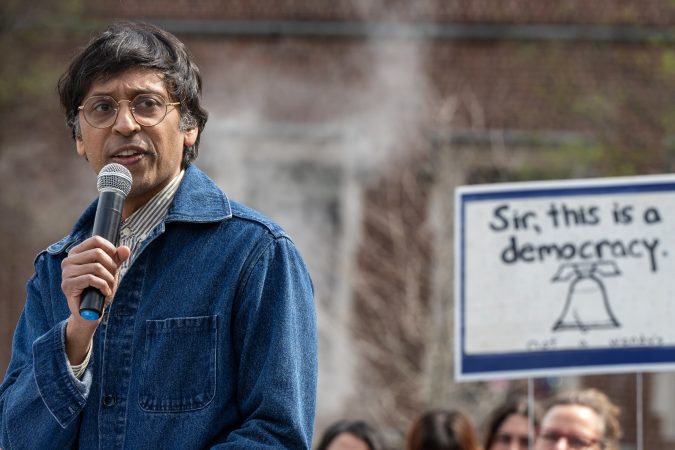
    “I think the budget generally left a lot of questions unaddressed. And housing, one of the top three issues in terms of the cost-of-living crisis, was one of them,” said Sen. Nikil Saval (D., Philadelphia).

    Saval was one of six senators who voted against the budget. He has since said that was because it left many key policy issues, including housing, unaddressed. Sen. Katie Muth (D., Montgomery), the only other Democratic senator to vote against the budget, has also said she believes the budget left issues like housing, rising energy costs, and affordability unanswered.

    Shapiro’s office did not respond to a request for comment.

    (function() {
    var l2 = function() {
    new pym.Parent(‘pa_housing’,
    ‘https://media.inquirer.com/storage/inquirer/projects/innovation/arcgis_iframe/pa_housing.html’);
    };
    if (typeof(pym) === ‘undefined’) {
    var h = document.getElementsByTagName(‘head’)[0],
    s = document.createElement(‘script’);
    s.type = ‘text/javascript’;
    s.src = ‘https://pym.nprapps.org/pym.v1.min.js’;
    s.onload = l2;
    h.appendChild(s);
    } else {
    l2();
    }
    })();

    The new housing database — incorporated through a bill sponsored by Saval and authored by fellow Philadelphia Democratic Sen. Vincent Hughes — will be overseen by the Pennsylvania Housing Finance Agency. Saval said it will ensure more robust data collection to provide transparency on how much affordable housing is available across the state.

    Under the new legislation, the agency will be required to create an online searchable database of all publicly financed housing that is subjected to public assistance programs. It will include anticipated termination dates on properties’ affordability restrictions and will note if the property has been granted an extension on those restrictions.

    Saval said the publicly available database will ensure lawmakers have a better idea of the state’s affordable housing stock. Much of the affordable housing in the state was created with the help of low-income tax credits that are subject to expiration dates. As termination dates on these housing units loom, with many set to expire within the next five years, Saval said, the database will keep lawmakers aware of when housing is no longer affordable and allow them to see if restrictions can be extended.

    The database will be updated annually by the PHFA, with local housing agencies submitting data every year.

    Chris Anderson, communications officer for the PHFA, wrote in an email that the database is still in the early stages of being built, but that it will not pose any significant costs to the agency and existing resources will be used to create it.

    There are no penalties if the PHFA does not update the database, and the new law does not make it mandatory for local agencies to report information to the agency. The intended audience is primarily housing advocates and organizations, as well as policymakers, Anderson said.

    Saval said the database will help lawmakers know how much affordable housing there actually is in the state.

    But he said the state budget — where legislators often pass policies in addition to the yearly spending plan — was still a missed opportunity to address Pennsylvania’s housing concerns.

    “Anytime there’s a set of budget negotiations where there’s the potential to allocate funding, or create policy that would increase the supply of housing, or address the concerns faced by renters, and anytime that opportunity is missed as it was in this budget, I think it’s a step back,” he said.

    ‘Missed opportunity’

    Carrie Rathmann, vice president of strategic partnerships for Habitat for Humanity Philadelphia, said one initiative notably absent from the final budget deal was the PA Home Preservation Program, a grant administered by the Pennsylvania Department of Community and Economic Development to provide funding for construction cost gaps and keep homeowners in their houses through repairing outdated buildings. The initiative was last funded when it was signed into the budget in 2022, but has not received funding since.

    Previously known as the Whole-Home Repairs Program, the state allocated $125 million toward the program using American Rescue Plan dollars, repairing more than 2,600 affordable homes across the state.

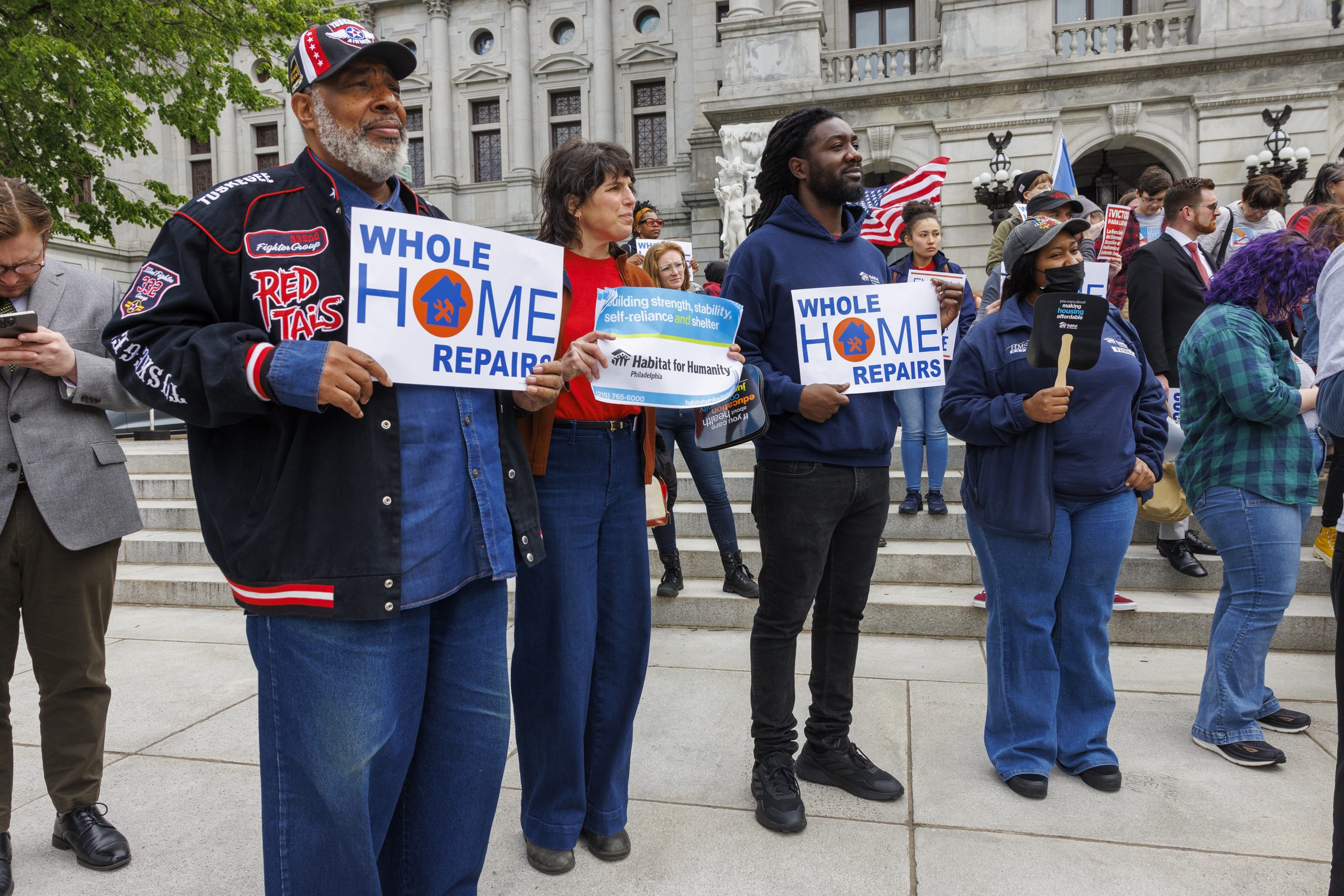
    Douglas Paige (from left), Carrie Rathmann with Habitat for Humanity, Tyron Cheeseboro, and Danielle Paige on the steps of Pennsylvania Capitol during a 2023 rally for the Whole-Home Repairs Program.Alejandro A. Alvarez / Staff Photographer

    Housing advocates have pushed for the state to renew the funding, with the Housing Alliance of Pennsylvania calling it one of the organization’s biggest priorities.

    In an email, spokespeople from the housing alliance noted that the state funding in 2022 was not enough to support the number of people that applied for it, meaning there are still people waiting to have their homes repaired.

    “The program received far more applications from qualified homeowners than available funding could support, highlighting both the scale of unmet need and the importance of preserving existing housing,” the spokespeople wrote.

    The program has not returned in a line item in the state budget since 2022. Companion bills in both chambers supporting the program have received bipartisan support — the House bill passed 122-80 — but are sitting in the Senate Urban Affairs and Housing Committee.

    “That felt like it represented a huge missed opportunity to help thousands of Pennsylvanians stay housed and to keep homeowners safe and healthy in the homes that they already own, because without that dedicated investment, this crisis will only grow,” Rathmann said.

    Habitat for Humanity is a nonprofit that does not rely on state dollars, but Rathmann said state money goes to counties and housing providers like the Philadelphia Housing Development Corp. The money helps an “ecosystem” of housing organizations in the Philadelphia area, and Habitat uses it for a portion of the organization’s work. That included the Built to Last program, an initiative spearheaded by the Philadelphia Energy Authority that inspired the statewide initiative of Whole-Home Repairs in 2022.

    Rathmann said state initiatives that increase efficiency on building houses are key to developing homes faster and cheaper, which in turn increases the housing supply and can keep people in high-quality houses. This includes incentives like building lower density “by right,” meaning property owners can build low-density housing without special approval.

    “We see every day at Habitat that that impact is real, it’s tangible, it crosses different sectors like kids can get to school and do better,” Rathmann said. “Seniors are healthier. People are healthier. People feel less stressed. They have more money in their pocket for medication and food.”

    ‘Risk aversion on all sides’

    Lawmakers on both sides of the aisle in Pennsylvania’s divided state legislature have pushed for their own housing initiatives. Bills have passed through the Democratic-controlled House or Republican Senate, but have yet to move forward in the opposing chamber.

    Democratic-backed House bills sitting in Senate committees include proposals to remove barriers to building accessory dwelling units, lift restrictions on how many unrelated people can live in one home, and seal eviction records to help tenants.

    And the Senate GOP also has a number of bills sitting in the House’s committee, like creating an accelerated approval process for new housing, or establishing a Housing Regulatory Compliance Officer.

    Beth Rementer, spokesperson for House Democrats, wrote in an email that the House has sent 22 bills to the Senate Housing Committee, while the Senate sent two in June.

    The state’s lack of housing action marks a difference from the Republican-controlled federal government. In early July, Congress sent the ROAD to Housing Act to President Donald Trump’s desk — a bill that reduces barriers to home construction and modernizes housing programs alongside other initiatives, including a pilot of Whole-Home Repairs.

    Saval attributed the Pennsylvania legislature’s inaction to a desire to pass the state budget quickly without debate on hot-button policy issues ahead of the November election, when half the Senate and all members of the House are on the ballot.

    “Essentially, there was risk aversion on all sides,” Saval said. “And, understandably, an unwillingness to get into a budget discussion that would prolong the budget negotiation process.”

    Kate Flessner, spokesperson for the Senate Republicans, said in an email that the Senate supports a number of housing initiatives, but that underlying issues lie in how the state will pay for them in light of the roughly $5 billion structural deficit.

    “As we continue working to address the state budget’s serious structural deficit, we will be primarily focused on ways we can improve housing access that do not require vast sums of taxpayer money — and there are many of them,” Flessner said.

    Natalie Javitt is an intern with the Pennsylvania Legislative Correspondents’ Association. She can be reached at natalie.javitt@gmail.com.

  • Why Pennsylvania quietly repealed its 1929 midwifery law — and is now getting sued for it

    Why Pennsylvania quietly repealed its 1929 midwifery law — and is now getting sued for it

    HARRISBURG — Hidden deep in more than 600 pages of state budget documents, Pennsylvania lawmakers last month quietly repealed an unenforced 1929 law that allowed traditional midwives, the main group of midwives delivering home births, to practice.

    Now, traditional midwives — who differ from midwives usually found in hospitals, are not medically trained, and often serve religious minorities like the Amish — are worried they have no legal standing to work in Pennsylvania and are challenging the repeal and a new law in state court.

    The 1929 law had been on the books for nearly a century, asking traditional midwives to submit a paper application and a $10 fee to get a state certificate. But it had not been enforced for decades, and Pennsylvania, which has one of the highest rates of home births in the nation, was counted as one of 13 states that did not regulate the practice at all.

    Meanwhile, other forms of midwifery — such as nurse midwives and certified midwives, who are medically trained and are formally affiliated with a doctor or health system — are highly regulated by the state and its medical board. But these affiliations often prevent nurse midwives and certified midwives from offering home births, as the health systems see them as possible risks for medical malpractice lawsuits.

    The practice of traditional midwifery dates back to the Old Testament and has lived on through centuries of community knowledge and traditions. It can include Amish and Mennonite midwives, who are limited in the amount of education they are allowed to receive, as well as other unlicensed midwives who say they take only low-risk pregnancies.

    Some Pennsylvania traditional midwives say their practice is more necessary than ever, citing the United States’ maternal mortality and morbidity rate and cesarean section rates that outpace most of the rest of the Western world. They see their work as more holistic and personal than the American medical system, offering more personalized care to the new parent and baby for weeks after birth, as well as an answer to maternity care deserts as more hospitals and birth centers close.

    Medically trained midwives and physicians, who receive licenses from the state, argue the practice of traditional midwifery is potentially unsafe for mothers and babies, and requires little to no oversight in comparison to their medical training and licensure.

    A new law, and legal uncertainty

    There is no state law regulating home births — which are chosen by a variety of families for different reasons, from Amish who have religious beliefs about delivering at home to Black and brown women who have felt underserved or discriminated against by the modern healthcare system. But if traditional midwives — the primary group delivering babies in home births — cannot practice, some argue, home births will become inaccessible.

    The legal fight over midwifery began earlier this year, when the General Assembly approved changes to a separate law to include another class of midwife: certified midwives, who have all the same education training as nurse midwives except the nursing degree. To receive a certification from the Pennsylvania Board of Medicine, nurse midwives and certified midwives must provide proof of education and a collaborative agreement with a physician or medical institution.

    The law, the Midwife Modernization Act, was written to protect traditional midwives’ ability to practice, its author, Sen. Rosemary Brown (R., Monroe), said in a statement.

    Kate McHugh, a nurse midwife who has worked for a decade with lawmakers on updates to midwife regulations, said stakeholders approached traditional midwives during earlier iterations of the bill to see how they would like to be regulated. The different groups of traditional midwives could not agree, so the nurse midwives and certified midwives moved forward on their own.

    But the changes to Pennsylvania’s laws created a legal gray area, some midwives argued in a lawsuit filed last month.

    An anonymous group of two traditional midwives, a nurse midwife, and an Amish man whose family utilizes traditional midwifery filed a lawsuit in a state appellate court, challenging Brown’s law as unclear about their ability to practice, and asking the state to enforce the 1929 law already on the books.

    After the lawsuit was filed, legislators repealed the 1929 law as part of an overall state budget deal, creating more uncertainty for traditional midwives, according to their amended filing. Some lawmakers said they did not know they had voted to repeal the law, as the state budget is drafted in closed-door meetings among top leaders and fast-tracked through the legislative process with little time for rank-and-file members to review what they are voting on.

    The law was repealed as part of a request by Democratic Gov. Josh Shapiro’s administration, according to a source briefed on budget conversations. The administration works closely on legal matters with Republican Attorney General Dave Sunday’s office, which is defending the state in the case. Shapiro’s office declined to comment.

    “It’s not fair the way [the budget] is done,” said Rep. Dave Zimmerman (R., Lancaster), who said he unknowingly voted in support of the bill that repealed the 1929 law in an omnibus bill. “It concerns me a little bit that we repeal something in the fiscal code rather than right up front where it’s transparent.”

    “You have people in the Amish and Mennonite community that this is what they do. We have midwives that have been doing this for 30 and 40 years, They’re probably as good as anyone else doing it, certified or not,” Zimmerman added.

    The lawsuit

    The group of traditional midwives filed the lawsuit anonymously out of fear of retribution from the state for continuing to practice, said the group’s attorney, Jonathan Goldman, of the Goldman Law Team, based in Fort Washington. The midwives spoke with The Inquirer on the condition of anonymity for the same reason.

    One of the midwives, who serves south-central Pennsylvania with a largely Amish and Mennonite clientele, said she has delivered 1,600 home births over 38 years. She had practiced traditional midwifery in other states, before similar certifications were required there. At one point, she said, she was arrested and charged with a misdemeanor for continuing to practice home births in New York.

    Unlike medically trained nurse midwives and certified midwives, traditional midwives are prohibited from practicing medicine, which could mean dispensing medication or conducting medical procedures as simple as stitches. They have historically been investigated by state boards of medicine if this is called into question, making the group even more distrustful of state oversight.

    One of the anonymous traditional midwives, who has delivered an estimated 600 births around eastern parts of Pennsylvania, said her clients are often religious and want traditional models of care, such as no lab work and one ultrasound — a very hands-off approach compared to the highly surveilled pregnancies in modern medicine.

    The midwife, who delivered four of her 10 children in the hospital before finding an interest in home births, said her faith as a born-again Christian drew her to the “completely different model of care” that does not rely on pharmaceuticals, with a comfortable home setting and few restrictions like in a hospital.

    “In the hospital, it’s a fractured system. There are several midwives and physicians, you never know who you’re going to get, who is going to be on call,” said the midwife, who works with Amish and Mennonite populations in south-central Pennsylvania. “We are the community midwives. We know the secrets, we know the stories, we know what kind of care works. We know the family intimately. And it improves outcomes because knowing them intimately and emotionally allows us to provide that kind of specialized care.”

    Sunday’s office, defending the state in the suit, said in a July 24 filing that the midwives’ claims are a “misreading and misunderstanding of the current law,” and that traditional midwives “can continue to practice as lay midwives without certificates.” Sunday’s office did not respond to a request for comment.

    The case is scheduled for a preliminary injunction hearing to block the law from going into effect on Wednesday, where Brown and other lawmakers may be called to testify and a judge is expected to rule whether current laws prevent traditional midwives from practicing.

    Outside the medical system’s framework

    Obstetricians in hospitals and birth centers routinely work with certified midwives, who have an advanced degree in midwifery, and nurse midwives, who have a nursing degree in addition to specialized midwifery training.

    “As an OB-GYN physician, I absolutely respect somebody’s right to make a medically informed decision about how they take care of themselves in their pregnancy, and who they request assistance from in birth, and where they give birth to their babies,” said Holly Cummings, an OB-GYN in Philadelphia and chair of the Pennsylvania section of the American College of Obstetrics and Gynecology, a leading physician organization. “But I do also believe a hospital or an accredited birth center is the safest place to give birth. I don’t think in the U.S. in 2026 we can currently safely, uniformly support home birth.”

    ACOG does not support traditional midwives, who can also be known as lay midwives.

    But traditional midwives maintain they should be able to continue their work outside the medical system’s framework, citing it as a religious tradition and safe practice, and hope the judge rules in their favor.

    “Pennsylvania has a rich history of midwifery,” said the midwife listed in the lawsuit who serves parts of eastern Pennsylvania. “We have some of the highest home-birth numbers in the country. … It would be sad to see Pennsylvania not acknowledge the heritage in midwifery that we have here.”

    Staff writer Sarah Gantz contributed to this article.

  • A fugitive pornographer, his troubled son, and missing women: 5 takeaways

    A fugitive pornographer, his troubled son, and missing women: 5 takeaways

    What started as a routine car stop in Philly quickly evolved into a mystery concerning the fate of two missing women — and a boarded-up home in Olney that contained a confounding set of clues.

    In June, police encountered 44-year-old Eugene Horsch with a woman near Independence Mall, carrying drugs, illegal guns, and fake IDs. One of them featured the name of Blair Tonzelli, a woman who has been missing for three years.

    That led local and federal investigators to Horsch’s twin house in Olney, where they unearthed an array of disturbing evidence, including vats of chemicals, notes describing serial killings, and Tonzelli’s bank cards. Tonzelli’s case also resurfaced questions about Amy McHale, who was last heard from at the Olney house in 2016 and is the ex-wife of Eugene Horsch’s deceased father, Raymond “R.C.” Horsch.

    Eugene Horsch remains in jail on illegal gun and drug charges, as well as one count related to carrying fake federal law enforcement credentials. No bodies have been found, and police have not charged him with any crimes related to the women.

    Despite the disturbing evidence found in the Olney home, the investigation is clouded by the unusual lives and predilections of Eugene Horsch and his father, who was an erotic filmmaker and photographer obsessed with depicting sexualized violence against women in addiction — many of whom he lured to his home studio with drugs.

    To unravel the backstory behind the case, The Inquirer interviewed more than 30 people familiar with the Horsch family, reviewing hundreds of pages of police documents, court records, newspaper clippings, and archived interviews. The result is a portrait of a thrill-seeking criminal artist and his son as they navigated seaside New Zealand, rural Bucks County, and the drug markets of Kensington.

    Here are five takeaways from our weeks of reporting:

    Raymond ‘R.C.’ Horsch’s directorial debut was a violent pornographic film financed by a Philly mob associate.

    Raymond Horsch was a bookish engineer from Bucks County who underwent a sexual awakening during the so-called Golden Age of Porn in the 1970s. His 1973 film, The Erotic Memoirs of a Male Chauvinist Pig, was financed by Philly mob associate Sam “The Barber” LaRussa, a nightclub owner and friend of Nicodemo “Little Nicky” Scarfo, who went on to run the Philadelphia-area Mafia.

    The low-budget movie depicts rape, bondage, underage sex, and the titular character’s violent relationship with a drug-addicted woman.

    These hypersexualized themes would become a constant fixation of Raymond Horsch’s later life and artistic works.

    Raymond and Eugene Horsch have long criminal histories.

    In the late 1970s, Raymond Horsch was busted for printing counterfeit money, and then a few years later for running a methamphetamine lab. He skipped bail after the second arrest and absconded to coastal New Zealand after stealing the identity of a real-life chemist.

    He married a longtime girlfriend, who gave birth to his son, Eugene, while Raymond Horsch was an international fugitive. Raymond Horsch worked in the port city of Timaru at a chemical plant thanks to his adopted alias and a forged Stanford diploma.

    He was ultimately caught in New Zealand with five fake passports and fled back to the U.S. He was apprehended in Florida and returned to Philadelphia, where he was sentenced to federal prison.

    Raymond Horsch recruited dozens of women in addiction by trading drugs if they agreed to appear in his pornographic art.

    Between stints as a porn actor and director, Raymond Horsch searched the streets of Kensington for women in addiction to use, in his description, as models. He asked one of his son’s high school friends to star in one of his films. He recruited another woman with a classified ad for a housekeeper. He offered them cash and drugs in exchange for sexual favors and to appear in films or photographs, which often featured simulated acts of violence or death.

    After he was arrested in the 2000s on another drug charge, he lost his home in Chalfont. Both father and son moved into the home in Olney, which they had inherited from relatives, and Raymond Horsch allowed some of the women he recruited to reside in the home, sometimes for years.

    At least five women connected to Raymond Horsch died of accidental drug overdoses.

    Krista Killen lived off and on in the Horsches’ Olney house from 2016 until her death last year at the age of 47. Killen, who had been estranged from her family, told friends that Raymond Horsch was never violent toward her and that she cared deeply for him.

    But she told friends that she was scared of Eugene Horsch. She told two friends that one night, she was asleep when Eugene shattered her bedroom door and threatened to kill her. Raymond, then 80, had to pull his son away.

    In late 2024, within a span of a few months, doctors had to amputate part of Killen’s leg, her beloved tabby BabyCat died of a brain tumor, and Raymond Horsch died of a lung condition, leaving her alone in the Olney home with Eugene. Three months after Raymond’s death, Killen died of an overdose. Eugene Horsch shared the news on Killen’s own Facebook page. He wrote that he and Killen were in love and had planned to get married, something her friends said was not true.

    Raymond Horsch said his art blended facts with his violent fantasies, and he wanted people to wonder what was true.

    Investigators are reviewing Raymond Horsch’s films and self-published novels, some of which depict various ways to murder women. He casts himself in some of the stories as an “empathetic” serial killer who preys on addicted women and kills them to end their suffering. The books are billed as true stories that include both real details from Horsch’s improbable life story and passages that he concedes are fictitious — noting that he wanted readers to parse fantasy from reality.

    In a scene from one of his novels, Raymond Horsch describes how he dissolved a body with chemicals in a bathtub. Is it just another of his violent fantasies? Complicating that question is the fact that a woman told investigators that Eugene Horsch told her he knew how to dissolve a body with chemicals, making it small enough to flush down a toilet.

    Read the full story here.

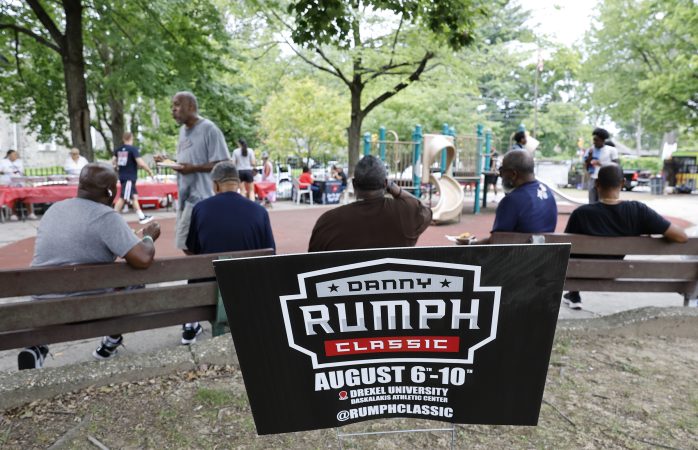
  • The big theme ahead of this week’s annual Rumph Classic? Bridging the gap for a common cause.

    The big theme ahead of this week’s annual Rumph Classic? Bridging the gap for a common cause.

    Early Sunday afternoon, the Daniel E. Rumph II Recreation Center looked unassuming. The old Germantown basketball gym was empty outside of a few local kids shooting around. Every dribble sounded like three, with the bounces echoing off the building’s cement walls.

    A few hours later, it was nearly impossible to hear the ball bounce once.

    On Sunday, the center hosted three basketball games and a community barbecue. The event brought in a large crowd, quickly filling the hallowed hall with laughter, music, and friendly jeers.

    The event was held in partnership with the Hank Gathers Recreation Center. The two Philly rec centers share a mission to spread awareness for hypertrophic cardiomyopathy — a condition that makes it harder for the heart to pump blood. Most are unaware they have the condition until they receive a screening.

    The Rumph-Mallery Recreation Center hosted a youth game between Team Rumph and Team Hank Gathers Center on Sunday.Yong Kim / Staff Photographer

    Both Danny Rumph and Hank Gathers, the namesake for the respective centers, died from HCM while playing basketball. In 1990, Gathers, a Philadelphia native and standout at Loyola Marymount, collapsed on the court while playing against Portland in the West Coast Conference semifinals.

    It would be 15 years later when Rumph went into sudden cardiac arrest during a pickup game at the same Germantown gym that hosted Sunday’s event. It was later renamed after him.

    “Danny was at this exact rec center where he collapsed on a court, and it took a long time for an ambulance to come,” Janet Williams, a board member for the Daniel E. Rumph II Foundation, said. “There wasn’t an AED here. Even though they started CPR, it still wasn’t enough. So, we’re trying to bring education to the community at large, not just youngsters in sports.”

    The Rumph Foundation has provided every recreational center and Boys & Girls Club in Philadelphia with a defibrillator. They have also partnered with Youth Heart Watch, a program with a similar mission, to provide both CPR and AED training to the community. A majority of the foundation’s funding comes from the Danny Rumph Classic, a five-day pro-am basketball tournament.

    This year, the 21st iteration of “The Rumph” will tip off on Thursday at Drexel’s Daskalakis Athletic Center. In the past, NBA stars like Jalen Brunson, James Harden, and Tyrese Maxey have graced the tournament’s floor. For the third consecutive year, the event will feature a women’s pro-am tournament, featuring local players.

    Team Rumph and Team Hank Gathers Center compete against another in a youth game on Sunday.Yong Kim / Staff Photographer

    Sunday’s event in Germantown acted as a way for the foundation to connect with the community and with those who have been crucial to its success. The afternoon started with a 50-and-over game — for the hoop veterans who have seen the foundation flourish over two decades.

    “The whole reason why a lot of us are still close to this day is the friendships that we built playing here as kids,” said Mike Morak, the foundation’s director of events. “How do we celebrate 21 years? And it was like, let’s come back to where we started.”

    “Let’s get everybody together,” Morak said. “People can come and go as they please. The reason we’re here and where we all started was because of this playground. So it was like no better way to just come back to the neighborhood, making sure we can all have a fun day together and then get ready for the full Danny Rumph Classic this week.”

    ‘It’s really a homecoming’

    When Morak had the idea to bring the Rumph and Gathers recreational centers together for Sunday’s event, he thought to invite Derrick Gathers — the younger brother of Hank.

    Derrick Gathers was a quick “yes,” having known Morak and the role the Rumph Foundation has played in the community. What Gathers didn’t know is that he would be given a full uniform at the door.

    “Well, I was set up by Mike,” Gathers, who played in the 50+ game, said with a laugh. “Mike set me up.”

    “I get up here, they talking about ‘suit up,’” Gathers added. “I ain’t played in a long time, but it felt good, you know, just to hang out with the guys, the guys I grew up with. … I think it’s a tribute to them for just keeping the Danny Rumph legacy going for so many years. That’s outstanding.”

    Derrick Gathers addresses members of Team Rumph and Team Hank Gathers at the Rumph-Mallery Recreation Center on Sunday.Yong Kim / Staff Photographer

    After Gathers’ game, which his team won, he joined Morak at center court to address the 11-and-under and 13-and-under players before their games began. Kids who played at both centers were invited to participate — but with a twist.

    Instead of matching up against each other, the centers’ teams were combined, so the players would get to know one another.

    “A lot of these kids don’t know the similarities of the story, so we want to make sure [they do],” Morak said. “Man, bring those kids up here. Let’s also explain to them how they’re all interwoven. Some kids today don’t really realize what happened to Danny. They don’t realize what happened to Hank. They don’t realize how we’re all connected.”

    Added Williams: “It’s getting the generations together, the older and the younger, and passing it down. Showing the importance of community, showing not just the importance of sports, but making sure that you stay healthy.”

    Daniel E. Rumph II Foundation board member Janet Williams (left) and volunteer Carol Oliver (right) serve food during a BBQ after basketball games at the Rumph-Mallery Recreation Center on Sunday.Yong Kim / Staff Photographer

    Like the Classic, Sunday’s community event was powered by volunteers. Dozens of people worked behind the scenes to make sure the games and the barbeque ran smoothly. One of these volunteers was Shawn Werdt, who coached the “Team Rumph” 11U team. Werdt, who regularly runs clinics at the center, helped out because he “believes in the mission of the foundation.”

    “It’s really a homecoming,” Werdt said. “Guys always come back to this and either want to play or support it, and you just see a lot of old friends, old faces in the crowd, and it’s just a really good event. A really, really fun week of basketball.”

  • Jay Sugarman is glad ‘the Union spirit’ is back on the field, with Kai Wagner a big part of it

    Jay Sugarman is glad ‘the Union spirit’ is back on the field, with Kai Wagner a big part of it

    NEW YORK — After a rough first half of the season, Union principal owner Jay Sugarman finally has some reasons to be in a good mood.

    Though there’s still a ways to go before the club is fully back, the current three-game winning streak has lifted everyone’s spirits at Subaru Park. Saturday’s wild comeback win over Atlanta United was the latest chapter, with the tying and winning goals toward the end of eight minutes of second-half stoppage time.

    “I have to say, that spirit, it’s really the Union spirit,” Sugarman told The Inquirer as he left the meeting where Cherry Hill native Larry Berg was elected MLS’s new commissioner. “You can feel it: the guys, they’re not giving up. They want to fight to the end, and that makes me really happy.”

    You can count the reasons why, including a new-manager bounce from Bradley Carnell’s dismissal and Ryan Richter’s promotion during the World Cup break. But it’s clear that Kai Wagner’s return at left back is likely the biggest factor.

    He has created 14 scoring chances in three games so far, and officially notched three assists. It would be four if his cross for Milan Iloski’s opener Saturday hadn’t taken a deflection along the way.

    For as much as Wagner wanted to return to Philadelphia, Sugarman had to get out his checkbook to seal the deal with Birmingham City. The Union paid a $4 million transfer fee, one of the biggest in their history (though not huge by current MLS standards).

    But it’s certainly been worth the money so far. Wagner and his family are happy to be back, and one of the best left backs in MLS history looks like he didn’t miss a beat.

    “Kai checked so many boxes for us,” Sugarman said. “I always thought he was an incredibly valuable piece, and I think that was the piece we didn’t expect to lose. And so, say what you will about all the other decisions we made, but that was the one that was involuntary, and it had repercussions that were way beyond what we could have expected.”

    Union defender Kai Wagner has brought a spark to the team’s efforts to ascend the standings. Yong Kim / Staff Photographer

    He knows what fans’ responses will be to that. Some might have expected it given all the offseasons when Wagner wanted to leave; and it could have been expected that the Union would suffer a lot in losing him.

    There are other left backs in the world, though. Perhaps if the one the Union signed, Philippe Ndinga, had been better, there wouldn’t have been so much pining for what was lost.

    Sugarman knows this, because it can happen to any soccer team when a new player isn’t as good as the prior one. He also knows he might have to leave the checkbook open. But he has said often over the years that if the right move comes along, he’ll pay for it, and he did here.

    “So I was like, if you can get him back, get him back,” he said. “We paid up for him, but he’s been proven both here and there to be a difference-maker. And he’s been a difference-maker already.”

  • What happens when a village goes up for sale? St. Peter’s is ripe for more housing, but poses challenges.

    What happens when a village goes up for sale? St. Peter’s is ripe for more housing, but poses challenges.

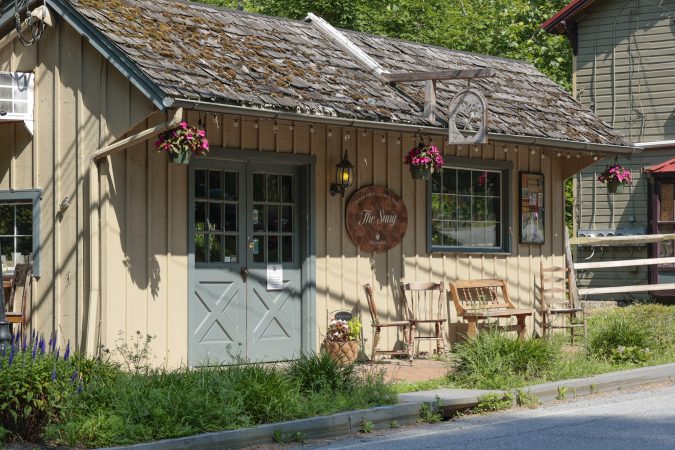
    Doug Reeser first came to St. Peter’s Village as a youngster, running along the rocks at French Creek, like so many locals and tourists still do. As an adult, the charm of the quirky little village drew him and his partners to open a branch of their cidery business there three years ago.

    He’s one of many wondering what could change when the village goes up for auction in September, with more than a hundred home lots and a smattering of businesses available to the highest bidder.

    “There’s lots of positive energy around what’s happening, so I think generally everybody would love to be able to see that continue,” said Reeser, owner of Excursion Ciders at the Snug. “I know personally we’d love to stay there. We anticipate some changes with new ownership. We hope that we can absorb them, but obviously, it’s not unlimited change that we can handle.”

    The auction, scheduled for Sept. 30 at 2 p.m. at the Desmond Hotel Malvern, will put up for sale roughly 83 acres of the historic 19th-century village that sprung up in the Gilded Age, thanks to its rich mineral resources and its proximity to the creek. It became a recreational destination, one that people are still drawn to because of its scenic location. Visitors are able to take a dip, hike the nearby trails, and enjoy the artsy downtown.

    Nestled in Warwick Township — which has a population of roughly 2,600, according to newly released estimates from the U.S. Census Bureau — the small village could see a bump in residences, if initial development visions are seen through. The land, zoned for residential and neighborhood business, offers 121 subdivided home lots for development. A commercial core — which boasts dining and retail — is composed of both privately owned businesses and leased storefronts that will be picked up by the new owner. Thirteen commercial buildings, totaling about 43,500 square feet, are included in the auction, according to the site.

    The auction site teases mixed-land use development potential “suitable for major builders, venture capitalists, historic preservationists, and entrepreneurs.” The auctioneer, Douglas Clemens, said previously they had seen thousands of messages of interest — but who ultimately purchases the property remains to be seen.

    And concepts of high- and low-density housing from the previous owner — the Piazza family, which runs the Piazza Management Co. and owns multiple Main Line car dealerships, is listed on associated parcels — haven’t exactly come to fruition, and the site could be a challenge for new owners given its rural location.

    Reeser is among the renters who would love to see current businesses stay, and some rehabilitation of the historic buildings that have suffered some neglect in recent years, he said. He doesn’t think anyone would be opposed to more foot traffic in town, but too much could tip the scales.

    “There is this rural charm there, and that is part of what the village has built its reputation on over the years,” he said. “So, if development could be done with an eye towards preservation and minimal impact, I think that would be great.”

    The 83-acre St. Peter’s Village — a historic destination in Chester County will be sold at an absolute public auction to the highest bidder in September. Steven M. Falk / For The Inquirer

    What could residential development look like?

    The property offers an opportunity for someone to develop housing to the north and east on the available land, said Matt Edmond, executive director of the Chester County Planning Commission.

    Land development plans available through the auction site previously have laid a densely populated housing development near the commercial core on roughly 36 acres. Generally, that’s a good thing, Edmond said.

    “Our villages are kind of like small towns, and when they have a walkable commercial core, you want more dense housing in and around there to support those businesses to increase foot traffic,” he said of Chester County.

    An aerial view of one proposed development — which the current owner envisioned as a densely populated townhouse, twin, and single-family neighborhood — shows several completed homes.

    Eight buildings are unfinished, Clemens said. One finished building is occupied, and the lease would move over to the new owner.

    Farther back, on roughly 45 acres, a sketch plan posted on the auction site offers larger lots for lower-density housing. A unpaved road was established ahead of building.

    In the county’s comprehensive plan, there are areas called “rural centers,” built around larger villages, Edmond said. There are similarities among those places: a commercial corridor on a main road, with streets fanning out for walkable neighborhoods. St. Peter’s could become a rural center, if the previous vision was fulfilled. The growth would be somewhat akin to Marshallton or Unionville, other Chester County villages that people enjoy visiting.

    St. Peter’s scenic, rural location offers a bit of a unique problem. Though the village isn’t far from Elverson or Pottstown, it’s still a bit out of the way. Reeser, the business owner, has found the village to be seasonal, with business bolstered by an occasional social media post. In the winter, the cidery, open on Saturdays and Sundays, is frequented by locals.

    The 83-acre Saint Peter’s Village, a historic destination in Chester County, will be sold at an absolute public auction to the highest bidder in September.Steven M. Falk / For The Inquirer

    “The whole village, by and large, is somewhat off the beaten path. It’s not really near a highway. It’s certainly not near transit. There isn’t a whole lot around it,” Edmond said. “That’s probably one reason why the current owners couldn’t quite make it work, because the market just wasn’t quite there yet to do that sort of thing in that sort of place.”

    But just because the village has had challenges with finding footing for residential development, that doesn’t mean it’s ripe for other types of development — such as a data center, other industrial sites, or even a major shopping center.

    The village is listed on the National Register of Historic Places, which doesn’t necessarily safeguard it from demolition. But it provides some protections, particularly if government funds are being used.

    Plus, its current zoning would have to be changed, and the infrastructure and conservation easements don’t “lend itself towards intense development,” Edmond added.

    “I think a lot of people are worried about that because they do see other parts of the county developing more intensely,” he said. “Every community is different, and Warwick Township is still very rural, and so it wouldn’t be surprising if a new owner tried to develop consistent with the character and the nature of Warwick, and certainly Warwick leaders would be looking for that type of development within their boundaries as well.”

    The 83-acre St. Peter’s Village, July 2026. Steven M. Falk / For The Inquirer

    Rich in natural resources

    The auction site notes the property’s “valuable subterranean mineral rights, including documented iron ore deposits, adding a rare investment dimension.” Those materials once bolstered the village’s economy, transporting its iron to Philadelphia. But it also became a place of leisure: a getaway for city workers, a majestic retreat to a scenic place.

    The village is surrounded by outdoor recreation, with state game lands adjacent to the property. French & Pickering Creeks Conservation Trust holds easements on a portion of the land. The easements are perpetual, and must be honored.

    Karl Russek, conservation director at French & Pickering Creeks Conservation Trust, anticipates the organization will be in conversation with the prospective bidders, working closely with future owners “to help them understand those limitations, and [we] are open to seeing what they have to offer and how the conservation value of the property might be improved.”

    But “much remains to be seen” for what could come to the land, he said.

    “St. Peter’s Village, and the area around it, is a very special place and has been a very special place for generations of families in this area. I took my kids down there when they were little. My peers remember spending time there when they were younger,” Russek said. “It’s a community hub in many ways, and so obviously many folks in the area are very invested in what ultimately happens, as are we as an organization.”

    Reeser hopes to see a purchaser who understands all of what makes it beloved — its natural beauty, its historic buildings, and its unique setting.

    “Change is inevitable, most likely, in this situation,” he said. “But if we could keep sort of what’s made it special alive, I think that would be great.”

    This suburban content is produced with support from the Leslie Miller and Richard Worley Foundation and The Lenfest Institute for Journalism. Editorial content is created independently of the project donors. Gifts to support The Inquirer’s high-impact journalism can be made at inquirer.com/donate. A list of Lenfest Institute donors can be found at lenfestinstitute.org/supporters.

  • Hanwha vs. Holt: How New Jersey lost a shipyard

    Hanwha vs. Holt: How New Jersey lost a shipyard

    Hanwha Philly Shipyard says it needs a lot more space outside its 110-acre South Philadelphia complex to win lucrative U.S. Navy contracts, turn the money-losing facility profitable, and hire up to 1,000 union welders and metalworkers.

    The Korean-owned yard’s leaders thought they had found just the place, four miles by barge down the Delaware River at the New Jersey-funded Paulsboro facility, vacated by the offshore wind industry when President Donald Trump killed that program. In December, Hanwha agreed to take over the lease.

    But port operator Holt Logistics refused approval and sued to block the deal. After months of lobbying, Hanwha has given up and is now collecting offers from southern states that hope Hanwha will invest a big chunk of the $5 billion it has pledged for U.S. shipbuilding into their yards and future workers.

    Philadelphia Shipyard as seen from southbound I-95 in 2024.Alejandro A. Alvarez / Staff Photographer

    This despite the fact Hanwha’s proposal enjoyed support from federal, state, and local officials and even made it into the U.S. military budget for fiscal year 2026, which called for $110 million “to support shipbuilding industrial capacity” and steel fabrication in a manufacturing facility “formerly used for offshore wind manufacturing.”

    Paulsboro Mayor John Giovannitti estimates that on a given day, there are fewer than 50 workers at the port.

    Leo Holt, whose century-old company runs ports in Gloucester City and South Philadelphia, said he’s not completely averse to manufacturing around the Paulsboro terminal after his family’s plans to beef up container and bulk shipping there accelerate.

    Hanwha declined to comment, confirming only that the shipyard is still looking for space “in the U.S.”

    A rendering of a 600-acre shipyard that the Port of Tampa Bay has offered to build for Hanwha. Port Tampa Bay

    What went wrong?

    Since the early 2010s, New Jersey borrowed and spent more than $500 million building a Paulsboro wharf, highway ramps, and other facilities to attract big employers to the port. It replaced lost oil industry jobs and also compensated for nearby Camden’s loss of piers due to Holtec Inc.’s redevelopment in that city’s aging port district.

    In borrowing documents and news releases, the public spending was justified by predictions that the port would draw hundreds, even thousands, of port and industrial jobs, which in more than a decade have yet to arrive.

    Paulsboro sublets the facility to Holt as the port operator. Holt paid $1.6 million to use the property last year.

    At the urging of then-Gov. Phil Murphy, then-State Senate President and iron workers union leader Steve Sweeney, then-Paulsboro Mayor John Burzichelli, and other officials, Holt in 2020 agreed to let EEW, a global pipemaker based in Germany, build supports up to 400 feet long and 40 feet across for the federally subsidized offshore wind-electric generation facilities that its Danish partner Orsted planned to locate off the New Jersey coast.

    Orsted canceled in 2023, citing rising costs. Trying to cut his company’s losses, EEW executive vice president Esben Strandgaard began looking for new tenants, attracting more than 200 inquiries and initiating talks with Hanwha.

    Hanwha needed the landlord’s permission to take over the lease. Hanwha Defense USA president Tom Anderson, a retired Navy rear admiral, and the Holts met last fall to discuss the proposal.

    Instead of approving, the Holts sued, challenging EEW’s authority to pick a replacement and demanding control of the facility.

    Hanwha, aided by its political supporters, tried to make a deal, but Holt stood firm. In March, Hanwha canceled the agreement.

    What the Holts want

    “The north star for redevelopment at Paulsboro has been marine terminal operations,” said Leo Holt, president of the Gloucester City-based company. “We stretched to assist the state in any way we could,” but “Hanwha was never a part of the plan, nor was shipbuilding.”

    Holt spoke of the failed industrial proposals — wind, shipbuilding, and others to build power plant equipment on site — as an obstacle, not a goal.

    “The detour imposed on New Jersey is over, and the road is clear to the Paulsboro Marine Terminal,” he said. “We were glad to see that the page was turned on the detour.”

    Holt Logistics, which has been expanding containerized cargo facilities on both sides of the river, has shipped containers to Paulsboro and hopes to augment Paulsboro’s current port tenants, Holt said.

    Those include Novolipetsk Steel (NLMK), owned by Russian billionaire Vladimir Lisin, which due to Ukraine war sanctions stopped importing Russian steel through the port for its plant in Farrell, Pa., and has switched to steel from Latin America, East Asia, and other countries, according to Holt.

    The port also ships containers to the U.S. Navy base in Rota, Spain, and to ports in Cyprus, Israel, and other Mediterranean countries.

    More than a container port

    New Jersey has spent more than half a billion dollars improving the Paulsboro site with a wharf, highway connections to I-295, and other public works, the mayor said.

    “I’m not aware of Paulsboro people, Gloucester County people, working there right now,” said Burzichelli, now a state senator and a supporter of both the wind and the Hanwha projects.

    New Jersey invested in the BP site to make it more than a container port, Burzichelli says.

    “That [state-built] wharf was designed to handle any industry, and the public investment was designed to create the maximum amount of high-paying jobs that can be created,” he said.

    The port section “was always intended to be a bulk port,” requiring plenty of longshoremen’s labor, and “certainly not a container port,” which “take up a lot of space but don’t generate big jobs,” Burzichelli said.

    “They don’t pay taxes the way an [industrial] building will pay,” he added.

    The Holts’ “choices and the interest of the state of New Jersey, the interests of Gloucester County, and the interests of the borough of Paulsboro, are not aligned, at this point,” Burzichelli said. “I hope we can get them aligned.”

    Mayor Giovannitti said, “We thought we had a deal last year with Hanwha” but are left with “a $750,000 hole in our budget” — the annual payment, in lieu of taxes, that EEW and its partners paid the borough while it was operating. The town’s annual budget is $13 million.

    Instructors and graduates of the union-backed preapprenticeship program Global Skills Union Pathways Project at Philly Hanwha Shipyard in February.GSUPP

    What Paulsboro could offer

    Strandgaard says he’s not surprised Hanwha decided not to “waste any more of their time” on Paulsboro: “They could not see themselves working with a hostile landlord.”

    It’s an ideal site for shipbuilding or any other industry that needs a deep water port, he said. But “Holt Logistics really controls what comes in and out. This was very upsetting, for us and Hanwha, that Hanwha with the support of the Navy did not have enough leverage.”

    Other East Coast sites would take a year or more to prepare. “The beauty of Paulsboro is they could start the day after” concluding a deal, Strandgaard said.

    He said he was surprised the new administration of New Jersey Gov. Mikie Sherrill didn’t make landing Hanwha a priority.

    Sherrill was “disappointed that EEW could not reach an agreement with Hanwha or other parties despite the state’s efforts to facilitate discussions and bring stakeholders together,” spokesperson Maggie Garbarino said in a statement.

    Holt’s goal: A modern marine terminal

    On any given day, between 500 and 900 Holt employees are moving cargo at the company’s South Jersey operations, Holt said. He declined to estimate how many of those were in Paulsboro.

    According to tax records, the port handled about 250,000 tons of cargo last year. That’s less than one-tenth of all South Jersey Port Corp. cargoes.

    Holt called the state “vital partners in the renovation of the facility. We are working to have both marine operations and manufacturing operations. But we cannot be deterred from taking it where we promised: to be an active modern marine terminal.”

    He said he expects the Sherrill administration will prove to be more congenial to the Holts’ vision for the property — “manufacturing, distribution, or anything” that makes sense to his family.

    South Jersey officials say they haven’t given up. “The people of Paulsboro were told this was about jobs, jobs, jobs, and those would be manufacturing jobs. Not stacking containers four high with automated forklifts,” Giovannitti said.

    Burzichelli still hopes Hanwha and Holt can be brought to the same page. “Many of us still don’t think we are done with manufacturing,” he said.