ORLANDO — Cavan Sullivan made his senior U.S. men’s soccer debut at the first available opportunity, as the 16-year-old was part of the starting lineup in Saturday’s 4-1 win over Peru.
Taking the field two days before his 17th birthday, Sullivan became the fourth-youngest player in senior men’s national team history and second-youngest starter.
He was a lively presence in a 61-minute run: 35 touches, including seven in the 18-yard box, 25 completed passes of 28 attempted, one shot, and one defensive recovery.
He even raised the Peruvians’ ire at one point midway through the first half. Chasing after a potential rebound, he was pushed from behind into goalkeeper Pedro Gallese and tumbled over him into the net. Referee Steffon Dewar of Jamaica quickly got in the middle of things to calm them down, and gave Sullivan a yellow card after Gallese was attended to by medical staff.
On two occasions later in the first half, Sullivan had opportunities to go for spectacular plays on the ball if he wanted to. But both times, he stayed restrained and made simpler moves to help teammates.
Tactically, he played in a right-sided attacking midfield role in a 4-2-3-1 formation. It’s the same area of the field he plays in with the Union, though in slightly different tactics under Ryan Richter’s 4-2-2-2 setup.
Sullivan was one of four players with Union or Philadelphia ties in Saturday’s starting lineup, along with Media’s Auston Trusty and Chester’s George Campbell at centerback, and Wayne’s Matt Freese at goalkeeper.
Trusty and Freese are former Union players, and Trusty and Campbell were youth soccer teammates at the former Nether United club in Delaware County.
Campbell tried out for the Union academy at one point and didn’t get in, though his brothers Will and Rob did. The family moved to Atlanta in 2013, so George grew up with Atlanta United. He played professionally there from 2020 to 2022, then moved to CF Montréal before the 2023 season, and joined English second-tier club West Bromwich Albion last year.
The U.S. opened the scoring in just four minutes, with forward Justin Ellis delivering in his club home stadium with Orlando City. But the good mood didn’t last, as a giveaway by Campbell led to Gianluca Lapadula’s equalizer in the 15th.
Each side was allowed 11 substitutions per game, far more than soccer’s usual five, and U.S. manager Mauricio Pochettino used all of his.
The first came at halftime, Freese departing for much-touted prospect Diego Kochen. The 20-year-old Miami native grew up at Spanish superpower Barcelona, and is currently at Denmark’s Lyngby — a club part-owned by the Union — on a loan for the season.
There was a wave of five subs just past the hour mark. Sullivan, Ellis, Gio Reyna (who assisted Ellis’ goal with a free kick), Yunus Musah, and Peyton Miller left, and Mathis Albert, Julian Hall, Zavier Gozo, Sebastian Berhalter, and Antonee Robinson entered.
Albert made an instant impact, darting down the left flank and winning a penalty kick on a foul that replays showed started outside the 18-yard box. But with no video review in use, the call stood, and the play showed why the 17-year-old from Germany’s Borussia Dortmund is another big-time prospect.
Malik Tillman stepped up to the spot and calmly dispatched his shot.
Hall extended the lead in the 72nd, crashing the back post to finish Sebastian Berhalter’s cross. Robinson also got credit on the play, hitting a beautiful cross-field pass that Berhalter settled before his assist.
Five minutes later, Westfield subbed in, meaning he coincidentally made his senior U.S. debut on the same field where he made his Union first-team debut in last year’s season opener. Brooklyn Raines also entered, with Alex Freeman and Tillman departing.
18-year-old Julian Hall off the bench to score on his debut.
The last moves came in the 88th. Neil Pierre replaced Campbell — meaning all three Union players made their senior U.S debuts in this game — and Adri Mehmeti replaced Tyler Adams.
Berhalter capped off the scoring with a 25-yard thunderbolt in the 90th.
In all, 11 of the 12 newcomers on the U.S. squad got on the field, with Campbell earning his second career cap. Goalkeeper Brian Schwake was only one of the bunch who didn’t play.
K.C. Keeler called Temple’s 21-17 loss to Army on Friday at Lincoln Financial Field a sign of growth. Six days after a collapse at Toledo that left him questioning his players’ preparation and the team’s culture, it was a striking judgment to make after another loss.
“I thought we grew up a little bit today, even though we lost the game,” Keeler, the Owls’ coach, said. “Last week was brutal — not only because of the loss, but because we panicked. This week was totally different with the preparation and the energy they brought into the game. They were excited to play.”
There is evidence for his view. Army entered averaging 394 rushing yards a game, and Temple held it to 279. After the Black Knights scored on their first possession, the Owls forced three consecutive punts. They answered Army’s long scoring drives with a 78-yard catch-and-run by Sam Brown and a 67-yard touchdown pass to Colin Chase. Those responses gave Keeler the evidence he wanted after Toledo.
Eric Stuart saw a difference from the field. Asked whether Temple’s defense was more cohesive than it had been a week earlier, the redshirt senior linebacker answered, “Yeah, 100%.”
The offense offered its own reasons for optimism.
With quarterback Jaxon Smolik sidelined by a foot injury, Ajani Sheppard threw for 242 yards and two touchdowns, rushed for 48 more yards, and committed no turnovers. Brown gained 96 yards on 10 carries in addition to his 78-yard reception.
Temple ran for 217 yards against an Army team accustomed to controlling games on the ground.
For all of that, the Owls scored 17 points. Their two touchdown plays accounted for 145 of their 459 yards. The other six possessions yielded one field goal. Temple had enough explosiveness to quickly erase deficits, but it struggled to turn sustained movement into points.
Three possessions got within Army’s 25 and ended empty. The first stopped on fourth-and-4 at the 23. On the other, holding and a false start against center Grayson Mains turned a second-and-10 at the Army 30 into second-and-25 at the 45.
Sheppard helped recover much of the lost ground, only for Carl Hardin’s 42-yard attempt to strike the upright. Later, an 88-yard march from Temple’s 1 produced a 29-yard field goal. The Owls reached the red zone only once all afternoon as their final drive stalled at the Black Knights’ 24.
“When we look at the film, we’re going to feel like we did a lot of good things, but they only give you so many opportunities,” Keeler said. “We needed to make one more play.”
Army made that problem especially costly. The Black Knights held the ball for just over 38 minutes, giving Temple eight possessions. Keeler said he avoided an early field-goal attempt because of the shifting wind, which is why the Owls went for fourth down on their first drive. Hardin’s miss changed what Temple needed at the end, yet the Owls still gained 8.8 yards per play and scored on only three drives.
Temple was more cohesive defensively, by Stuart’s account, and kept Army well below its rushing average. But the Black Knights still had 20 rushing first downs. Their three touchdown drives consumed more than 23 minutes, and Temple could not force a single pass on the go-ahead 12-play, 75-yard possession.
“You need to create negative plays against them because they’re excited when they get 3 yards,” Keeler said. “That’s what they want.”
Instead, Army converted third-and-2 and third-and-1 in the red zone on its winning drive. Keeler rejected the idea that his defense had been worn down, but Stuart described what changed at the line of scrimmage.
“I think we just kind of had a little lull,” Stuart said. “They got off the ball and fired off better than we did on that last drive. I think they just got some push.”
Army quarterback Cale Hellums (left) runs the ball as Temple’s Orel Gray defends during the first quarter. Hellums led the Black Knights on a game-winning drive in the fourth quarter.Getty Images
That distinction matters to the question Keeler raised after Toledo.
A more cohesive defense can still lose a physical matchup. A composed offense can still waste the few possessions Army permits. Temple did not panic after falling behind or when Sheppard got the ball back with 1 minute, 41 seconds remaining. He moved the Owls to Army’s 24 before his fourth-down pass fell incomplete. The failure to finish was different from the collapse at Toledo, but it went into the standings the same way.
There are reasons to think the Owls can improve. Sheppard made enough plays to keep them competitive without Smolik.
Brown has supplied a jolt to the running game. And Keeler expects left tackle Giakoby Hill back in roughly three weeks. Yet the line remains unsettled: left guard Eric King has struggled to push off his injured foot, forcing more rotation than Keeler planned.
“I told our guys going into the season that we’re a dramatically better football team than last year in terms of our talent, but there are still going to be a lot of 50-50 games,” Keeler said. “That’s this conference.”
Temple has lost two of those games in six days. It heads to South Florida at 1-3 and 0-1 in the American and needs five wins in its final eight games to reach the six wins for bowl eligibility. Friday gave Keeler reasons to believe his team is better. The missed points and the final Army drive gave him areas to improve.
Temple lost its second straight game on Friday.Isaiah Vazquez / For The Inquirer
The president’s self-aggrandizing impulse knows no bounds or limits of reality. In his AI-addled dreams, Trump has put his face on Mount Rushmore, placed himself alongside great military leaders, and even compared himself to Jesus Christ (or, according to Trump, just a doctor in flowing robes bathed in a heavenly glow).
Yet, all his efforts up to this point have proven mostly ephemeral, likely bound for the novelty bin.
And if indeed the arc of the moral universe bends toward justice, it will only be a matter of time until Trump’s politics of cruelty and abuse of power are but an unpleasant memory.
It is no wonder, then, that the president is relying on concrete and marble to try and leave any sort of legacy Americans can look up to.
Of course, Trump being Trump, his desperate need for approval, his insatiable hunger for adulation and praise, are inseparable from the corrupt chicanery that characterizes the Art of the Steal.
The president’s bid to remake Washington in his image began with the seemingly overnight demolition of the East Wing of the White House in October to build a massive ballroom. By the time the National Trust for Historic Preservation sued over the project’s defiance of multiple rules and regulations, construction was already underway — funded by a who’s who of companies and individuals who have business interests before the federal government.
Trump has never addressed the appearance of corruption or possibility of quid pro quo deals over the private funding, instead touting the money coming from donors. “This is a gift. This is not going to be paid for by the taxpayer,” he said in May.
However, as the price tag for the arguably needless structure continues to balloon — from an initial $200 million to upwards of $600 million — it is taxpayers who have been left to cover the shortfall. While Senate rules blocked a Republican effort to funnel $1 billion to ballroom security expenses, around $300 million in public funds have already been earmarked.
In August, the U.S. Supreme Court allowed construction to continue on a 5-4 vote. The justices did not rule on the legality of the project, only that the plaintiff did not have the legal standing to sue.
Unlike the ballroom construction effort, Trump has suffered nothing but legal setbacks in his bid to be spoken of in the same breath as JFK. The president’s systematic debasement of the John F. Kennedy Center for the Performing Arts offers an example of what happens when Trump doesn’t get his way.
In December, a day after Trump’s handpicked board (of which he is the chairman) voted to rename the Kennedy Center in his honor, workers were slapping Trump’s name on the building’s facade. The name change led to widespread cancellation of events by artists and abandonment by audiences and donors.
As a face-saving measure, Trump announced in February that the center would close for two years of renovations. But while a district court judge has ruled repeatedly that Trump’s name was added illegally (the right belongs to Congress), the president has grown more toxic in his possessiveness.
On Sept. 18, protesters formed a human chain outside the center after photos of Trump reviewing a potential demolition plan circulated. While the imminent destruction of the memorial to the slain president has not been confirmed, what is most certainly verified is Trump’s pettiness and disregard for the law.
Congress has appropriated more than $250 million for renovating the center, money which Trump is now holding hostage unless he gets his way. “Because frankly, if we don’t do that, it’s going to close,” he told reporters recently. “It’ll end up being ripped down.”
As the fate of the Kennedy Center remains in flux, across the Potomac River, plans for the 250-foot arch Trump wants built at a traffic roundabout near Arlington National Cemetery are advancing at an alarming pace.
The arch, which would stand more than twice as tall as the nearby Lincoln Memorial, would adversely impact dozens of historic properties, according to the National Park Service. What is more troubling than the results of the agency’s review is that critics contend the report is nothing more than part of a box-checking process, not a real effort to examine the merits of the proposed monument.
Consider that Trump has installed loyalists in the federal panels reviewing the proposal and that its approval — being rushed for the National Capital Planning Commission’s November meeting — is believed to be a fait accompli.
The administration has defended building the arch as the continuation of a project Congress approved in 1925, with the president adding recently that the structure will also serve as a “military complex” that will help ensure national security.
You cannot blame Trump, nor can you excuse him, for his desire for glorification. He is a deeply flawed human being whose lifetime has been defined by the empty flaunting of wealth. But blame for how his unchecked ego has shattered the rule of law can be readily assigned to the Republican-controlled Congress.
Legislators could have stopped the president from any and all of his vainglorious efforts. They chose not to. As the midterms approach, it will be up to voters to do what their representatives couldn’t.
Ultimately, the Art of the Steal may take away the power the GOP sacrificed all to hold on to. Or perhaps Trump will have his way, and his monuments will tower above Washington for generations to come.
Generations who may think of a pitiable man who wanted to be remembered.
The effects of an early-season nor’easter along the Jersey Shore may continue to be felt Sunday, as the potential for more hazardous weather and high tides threaten already wind-tattered and soggy coastal cities.
The unusual September weather system on Saturday unleashed ferocious showers, high winds, massive waves, and cascading floodwaters on the Shore, where New Jersey officials had issued a state of emergency Friday.
“This is the worst I’ve seen it in a long time,” said Atlantic City Battalion Chief Mike Famularo, whose crewswere busy rescuing drivers trapped after the morning tide brought what he called “major flooding” to the area. One thoroughfare, Albany Avenue, had more than two feet of water on it, Famularo said.
The highest tides and strongest winds — with gusts of up to 60 mph on the coast — were forecast through Sunday morning, according to the National Weather Service. Waves pounding the oceanfront and swelling back bays were expected to bring multiple rounds of at least moderate flooding at the Shore and at least minor flooding along the Delaware River in Philadelphia.
“We’re pretty much in it right now,” Lee Robertson, a meteorologist at the National Weather Service in Mount Holly, said Saturday morning in a phone interview.
What’s to come
The nor’easter, howling from off the Eastern Seaboardand battering much of the Northeast, will likely continue generating rainandwinds across the region Sunday.
NWS meteorologist Matt Brudy said in a phone interview Saturday afternoon that the worst of the coastal flooding had likely passed and high tides into Sunday may crest lower. Prolonged rainfall may also worsen the consequences of coastal flooding, according to the weather service.
Flood warnings and hazardous weather advisories have been extended through the bulk of the weekend, and the widespread flooding may still make roadways impassable and damage vulnerable structures. Famularo, who is also a deputy coordinator of the Atlantic City Office of Emergency Management, recommended that people stay inside and avoid driving.
Hotels along the Black Horse Pike in Atlantic County were evacuated as the roadway was underwater earlier in the day. Nine adults, including one using a wheelchair, and a dog were rescued from the Travel Inn and New Sea Breeze motels, where the first-floor rooms had more than 2 feet of water, according to Egg Harbor Township police. Bargaintown Volunteer Fire Co. both rescued the guests and extinguished a small fire in the Travel Inn, police said.
Nor’easter disruptions
As noon approached Saturdayand the tide receded in Atlantic City, people left their homes to survey the damage.
One resident found his garbage can a block up the street. Another used a broom to push water away from her front door.
Gaetano Petinga put on boots and trekked through the water to reach his Volkswagen Jetta, which had water pooled inside from flooding.
“Don’t park on the sidewalk tonight,” he advised a neighbor who drove by.
Petinga, who is 23, said he was just a child when flooding from Hurricane Sandy in 2012 left two feet of water in his family’s house.
This time, the water stopped at his top step.
“I’m definitely getting some water tonight,” he said, and he saw little he could do to prevent it. “Can’t control Mother Nature.”
In Atlantic City, Star Rios’ vacation to celebrate her daughter’s birthday was cut short. The Syracuse, N.Y., resident checked out of Club Boardwalk Resorts a day early.
“We still had a blast yesterday, but I was like, ‘I just want to go home,’” Rios said.
While relatives of past presidents sought to make money off their family name — see: Billy Carter, Roger Clinton, and Hunter Biden — no one has been anywhere near as brazen or greedy. Nor has anyone dared to mix policy with profiteering like the Trump family.
It is all part of Trump’s shameless Art of the Steal.
Often lost amid the Trump administration’s daily chaos, destruction, and incompetence is the unprecedented profiteering as the felonious president takes from America while he and his family grow richer.
In just over a year, Trump’s two oldest sons, Donald Jr. and Eric, have seen their net worths jump six- and 10-fold to $300 million and $400 million, respectively, according to Forbes.
Recent revelations that a Russian oligarch with close ties to Vladimir Putin paid hundreds of thousands of dollars for a party on a private island after Don Jr.’s wedding in May were brushed off as merely a gift from a friend — though Trump later said his son paid back the oligarch.
Trump’s third and current wife, Melania, is also cashing in. She received an estimated $40 million from Amazon for documentary projects during her husband’s term in the White House. She also pocketed an undisclosed amount for her memoir titled Melania.
The first lady is also involved in cryptocurrency. She launched $MELANIA, a memecoin that had an initial market capitalization of about $1.7 billion, but quickly plummeted by about 95%.
But not before some insiders reportedly made roughly $100 million. A lawsuit accused the designers of Melania’s cryptocurrency of orchestrating a “pump-and-dump” scheme.
Overall, the Trump family reportedly pocketed $1 billion in pretax profits from several cryptocurrency-related products and companies since Trump’s return to the White House.
Even Trump’s youngest son, Barron, 20, who is still in college, made an estimated $40 million off the family’s crypto venture.
Trump’s older daughter, Ivanka, has maintained a low profile in his second term. But during Trump’s first term, she and her husband, Jared Kushner, reported between $172 million and $640 million in outside income while working in the White House.
After Trump’s first term ended, Kushner received a $2 billion investment from a fund led by the Saudi crown prince for his fledgling private equity venture — even though he had no private equity experience.
In Trump’s second term, Kushner continues to mix personal business with diplomacy.
Kushner is reportedly trying to raise $5 billion for this private equity fund from Middle East governments, even as he serves as Trump’s point person in negotiating a peace deal with Iran.
Kushner’s role as Trump’s special envoy for peace has been a struggle since he and his peace partner, Steve Witkoff, a New York real estate developer and Trump crony, knew nothing about Iran’s nuclear capabilities.
More troubling, Kushner has raised questions as to whether he is focused on peace or personal profits.
“You cannot both be a diplomat and a financial pawn of the Saudi monarchy at the same time,” said U.S. Rep. Jamie Raskin (D., Md.), who called for an investigation into Kushner’s foreign financial entanglements.
Trump dismisses any critiques of his family’s money-making ventures and maintains he always puts the nation’s interests first. Likewise, the Trump Organization, his family business, insists it is “fully compliant with all applicable ethics and conflicts of interest laws.”
The Trump Organization, the family real estate company run by Eric and Don Jr., has announced a dozen international development deals since their father returned to the White House.
But most of Trump and his family’s newfound wealth stems from crypto ventures — a business he once dismissed as “a scam.”
Trump changed his tune during the 2024 presidential campaign after he met with Bitcoin mining executives. One executive said his industry would raise over $100 million and turn out more than five million votes in the 2024 presidential race.
Once in office, Trump returned the favor.
Three days after his inauguration, Trump signed an executive order that officially declared it U.S. policy to support the growth of the digital asset economy and blockchain technology.
He then proceeded to gut crypto regulations, eliminate watchdogs, and drop investigations.
In March 2025, he signed an executive order to create a new U.S. crypto reserve. The following month, Trump’s Justice Department disbanded the unit that investigated cryptocurrency crimes. By December 2025, the Securities and Exchange Commission dropped or paused nearly 60% of crypto cases.
Under Trump, the Commodity Futures Trading Commission slashed crypto enforcement actions, purged career officials, and shrunk the agency’s workforce, while paving the way for crypto and prediction markets to blossom.
All that occurred as the Trump family embraced cryptocurrency — even though none of them had any experience in the risky and complex business.
In September 2024, Trump, Don Jr., and Eric unveiled World Liberty Financial, a cryptocurrency start-up that sparked immediate concerns regarding conflicts of interest.
Four days before Trump’s inauguration, World Liberty Financial landed a windfall: An investment firm tied to the United Arab Emirates invested $500 million to acquire a 49% stake in the company.
A few months later, the Emirati government reached a deal with the Trump administration involving the export of hundreds of thousands of advanced computer chips to power AI technology. Lawmakers and intelligence experts warned the sale presents a national security risk of the technology being diverted to China.
Trump also used his presidential power to do a favor for a convicted executive who gave his family’s crypto company an early boost.
World Liberty Financial benefited from a business alliance with Binance, the world’s largest crypto trading platform, founded by Changpeng Zhao, a billionaire mogul who pleaded guilty to money laundering in 2023.
President Trump pardoned Zhao in 2025. Days after that pardon, Binance began promoting a digital coin offered by World Liberty Financial on its U.S. site, making it more accessible to American buyers.
In March 2025, Don Jr. and Eric expanded their crypto portfolio by buying a 20% equity stake in American Bitcoin, a cryptocurrency company.
Trump’s oldest sons have jumped into other businesses in which they have little to no expertise. Since their father’s election, Don Jr. and Eric have joined 10 company boards, where they receive stock and other financial benefits.
After Trump was elected to a second term, Don Jr. became a venture capitalist. He was hired as a partner at 1789 Capital, a firm based in Palm Beach, Fla., founded in 2022. Companies backed by 1789 Capital have since received government contracts valued at $735 million.
Drones have also become a lucrative part of Don Jr. and Eric’s portfolio, even though they had no experience in that business, either.
In November 2024, Don Jr. became an investor and adviser at Unusual Machines, a tiny drone manufacturer with fewer than 200 employees. The announcement caused the company’s stock price to jump 100%.
Just over six months later, Trump signed an executive order directing federal agencies to prioritize American-manufactured drones and accelerate domestic production for military applications.
Four months later, Unusual Machines won its largest contract ever to supply drone motors to the U.S. Army.
In an unusual deal, a golf club company backed by Trump’s two oldest sons merged with Powerus, a Florida-based drone manufacturer with fewer than 100 employees.
Companies are learning that hiring a Trump can make their troubles go away.
After Don Jr. joined the board of PublicSquare, the company’s stock price jumped 180%. The Consumer Financial Protection Bureau then closed a yearslong investigation into a subsidiary of Public Square called Credova Financial, claiming the probe was biased.
Don Jr. is also an investor and board member at Polymarket and a strategic adviser at Kalshi, the controversial and unregulated prediction betting market companies. Yet another business in which he had no experience.
A number of states have sued Polymarket and Kalshi, alleging the companies operate a gambling business in violation of state laws.
But the Trump administration has sided with the prediction companies and sued three states, insisting the prediction industry should be regulated by the federal government.
Apparently, the golden age of America Trump promised largely stops at his family tree.
As real estate development in Philadelphia slows, the most expensive project on the horizon is a state-of-the-art laboratory and classroom building set to replace a mid-century structure that lacks central air-conditioning.
The $520 million redevelopment of the David Rittenhouse Laboratory at 209 S. 33rd St. will raze two-thirds of the existing structure.
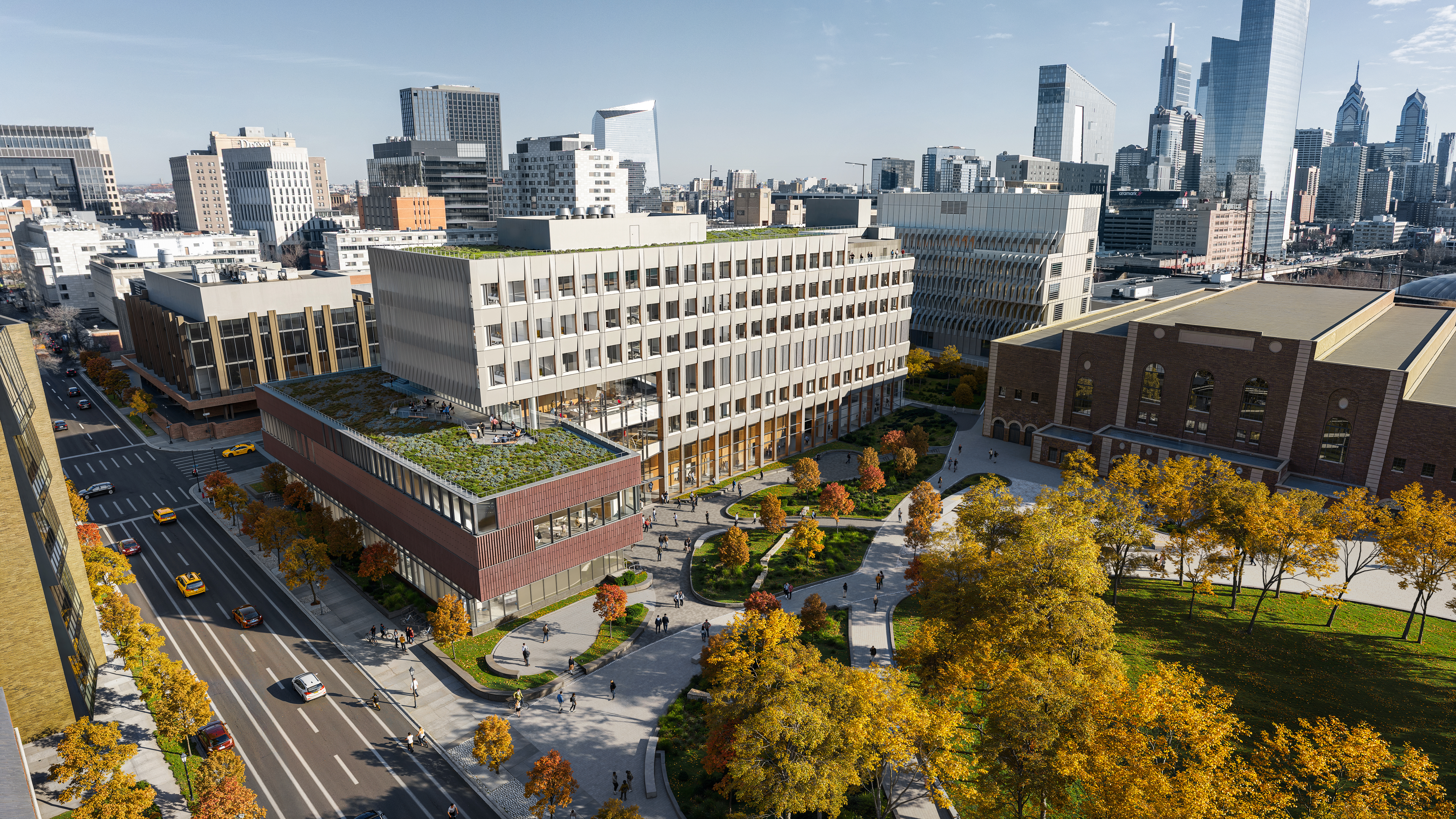
A seven-story, 325,000-square-foot replacement, dubbed the Penn Discovery Commons, will be built in its place.
The David Rittenhouse Laboratory has housed the math and the physics and astronomy departments since 1954. While the building has been the setting for multiple Nobel and Breakthrough Prize discoveries, university leaders now consider it outmoded.
“Those young, amazing experimenters are doing their work in this terrible, dilapidated old building that’s just not fit for purpose,” said Mark Trodden, dean of the School of Arts & Sciences, who has had an office in the building for over 17 years.
Penn has been considering replacing the existing Rittenhouse Lab building for 10 years, with the Daily Pennsylvanian first reporting on redevelopment plans in 2024. The new structure is designed by Los Angeles-based CO Architects, which is known for West Coast eds and meds designs, along with local partner Ewing Cole.
The project comes amid a challenging time in higher education, as Penn and other universities have faced funding cuts from the Trump administration. Last year, the West Philadelphia Ivy League school instituted a hiring freeze and other economies as a result.
Penn is still moving forward with a variety of major real estate projects from a new wrestling facility to a new theater addition to the Annenberg Center for Performing Arts.
But the new Penn Discovery Commons — and its more than half-billion dollar price tag — is the largest single project in the university’s pipeline and for the city in the coming years.
It eclipses the $450 million TerraPower Isotopes factory at the Bellwether District in South Philadelphia. The only larger project in Philadelphia is the Children’s Hospital of Philadelphia’s $2.5 billion new patient tower, which will be completed in 2028.
Why a new building is needed
David Rittenhouse Laboratory was built in phases, with the core constructed in 1954. It was Penn’s first new development on its main campus since the Great Depression and was seen as a sign of the university’s dedication to the city.
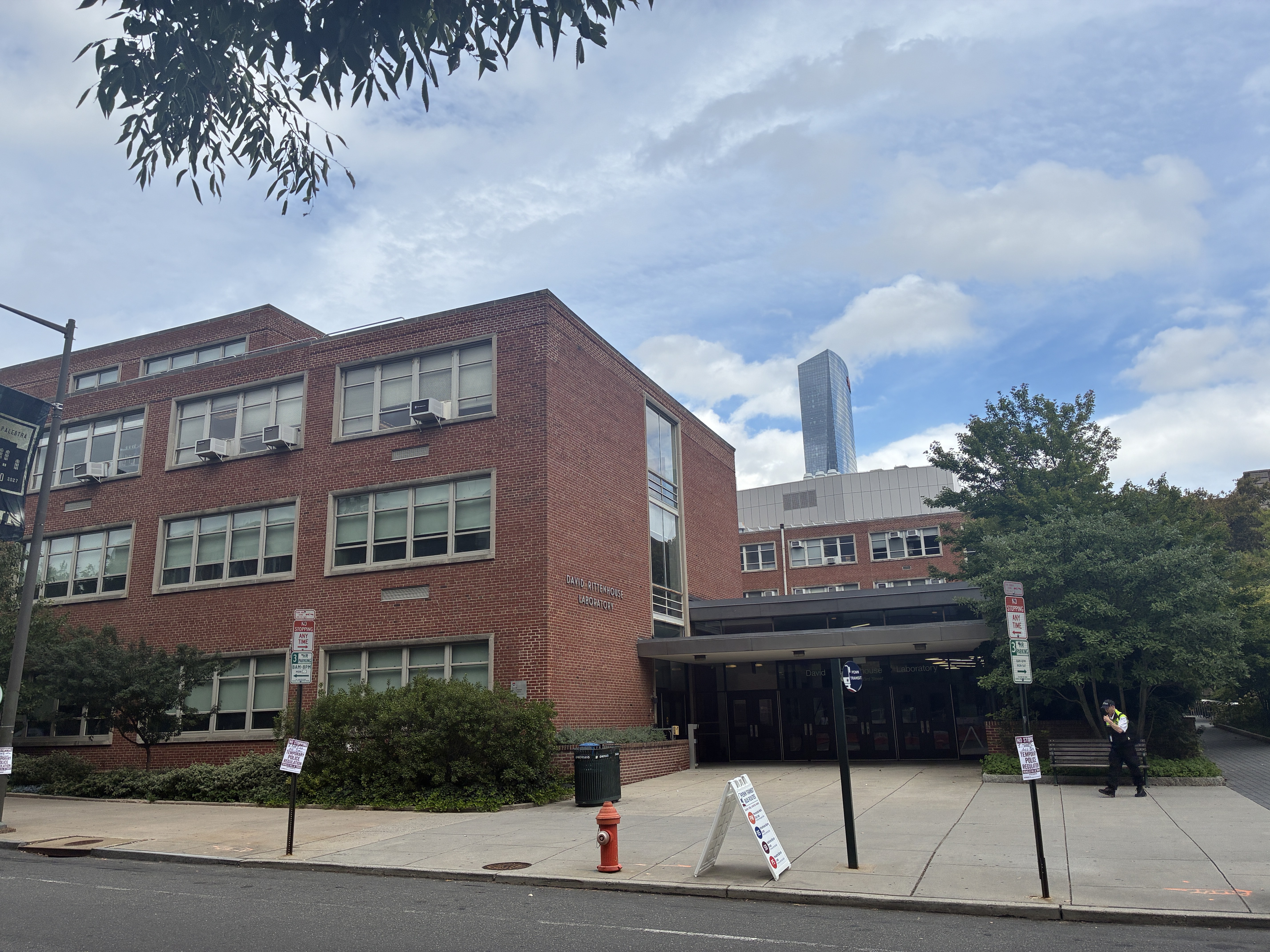
The original redbrick 1954 building predates central air-conditioning and is cooled by window units.
The redbrick portion of the existing building will be demolished.Jake Blumgart
“It’s temperature control doesn’t work,” Trodden said. “The laboratories do not have the right structure or capabilities to do modern science. It’s just a very inhospitable place to work.”
Penn looked into renovating this portion of the existing building, but it rivaled the cost of new construction. So the redbrick portion with the David Rittenhouse Labs’ current main entrance on 33rd Street will be demolished.
“Many buildings built post World War II, particularly with government funding, were built relatively quickly, and they aren’t as durable,” said Mark Kocent, Penn’s university architect. “A lot of universities like us have these buildings from the 1950s and 1960s that were not well built.”
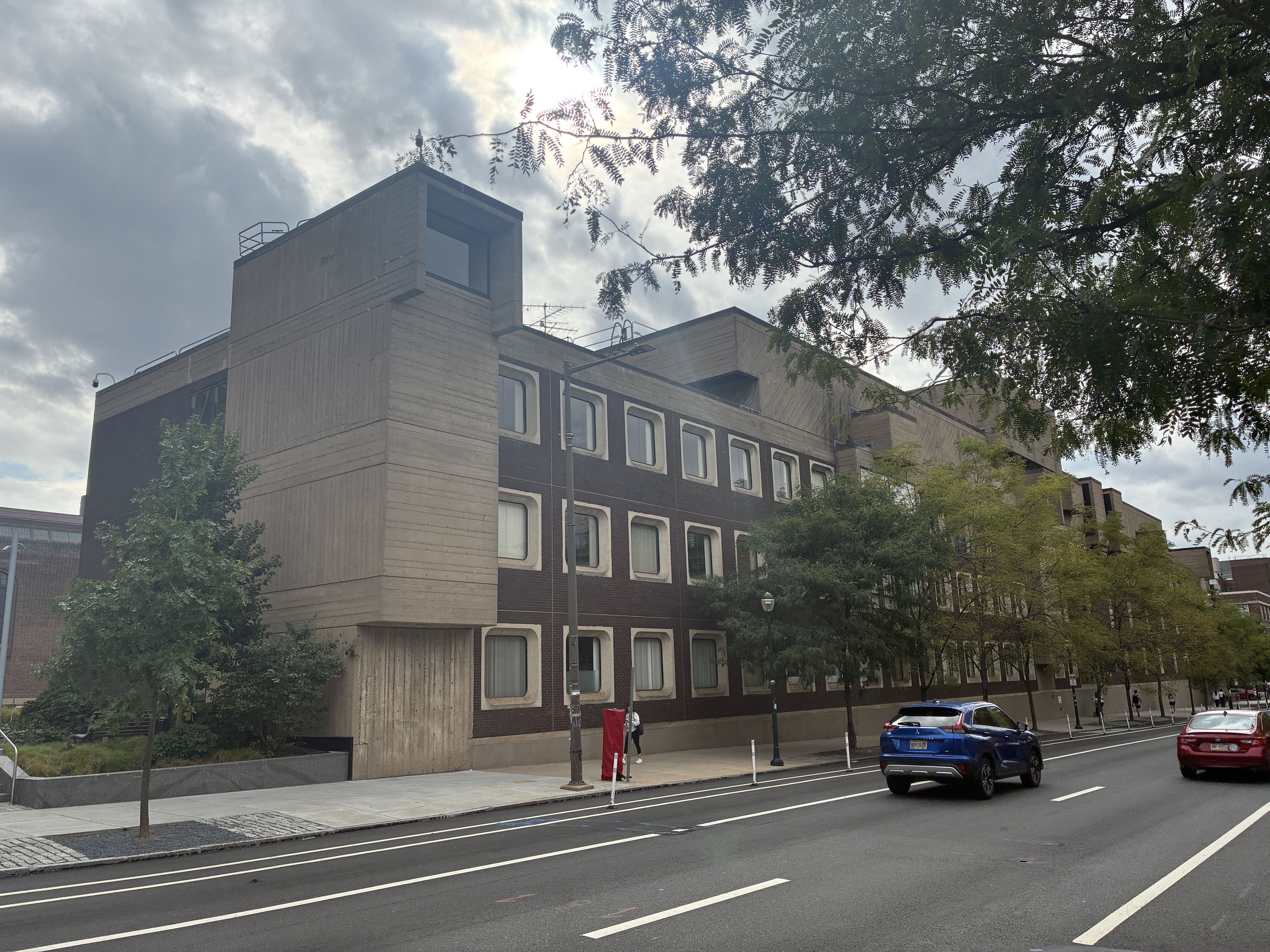
An expansion followed in 1967, which features the space-age addition that fronts much of the block of Walnut Street between 33rd and 32nd Streets. It was designed by Carroll, Grisdale & Van Alen, a renowned modernist firm that also designed the Pennsylvania State Office Building at 1400 Spring Garden St.
That over 80,000-square-foot portion of the David Rittenhouse Labs, built with cast-in-place concrete and brown brick, will remain and become part of the new Penn Discovery Commons.
The 1967 expansion, seen here, will be incorporated into the new building.Jake Blumgart
The decision to keep this architecturally distinct piece of the building will save money and reduce the project’s environmental impact.
“The most sustainable building is an existing building, and so we evaluated this pretty carefully and [decided to preserve part of the existing building] both due to cost and sustainability and less time to tear everything down and rebuild,” Kocent said.
Discovery Commons’ redesign also adds natural light and replaces confusing-to-navigate hallways. It will include features like a green roof, stormwater management, and increased energy efficiency.
The new building will have 15% more research laboratory space than the current structure, and 57% more space devoted to classrooms and teaching labs.
This interior rendering of the new building planned by Penn shows all the natural light that the new design will allow, in contrast with the existing David Rittenhouse Lab.CO Architects
The university plans to add space for socializing outside the classroom, with the hope of fostering the kind of spontaneous interactions that spur creativity and collaboration.
“There is this idea of scientists as the lone genius that sits in their lab or office and dreams up these wonderful ideas,” Trodden said. “Most of modern science looks nothing like that at all.”
What’s now one floor of public space will become three stories, dubbed The Nexus, which will serve as the main entrance and a connection between the research and academic sections of the new building.
Kocent, who trained under renowned Penn architecture professors Denise Scott Brown and Robert Venturi, says that encouraging socialization and unstructured interaction is in keeping with their ideas.
“Denise would often say the next Nobel Prize wasn’t necessarily going to be figured out at the lab bench; it was going to be figured out at the coffee shop at the end of the hallway,” Kocent said.
Faculty concerns about research disruption
The seven-story Vagelos Laboratory for Energy Science and Technology just to the east, which features similar environmentally conscious design, opened in 2024. It is 112,500 square feet and cost $173.5 million to build (or $1,540 a square foot).
Replacement of the Rittenhouse lab will cost $1,600 a square foot. Penn’s development team says that prices haven’t spiked dramatically — despite the current inflationary environment — because the preservation of the 1967-portion of the building is helping to manage costs.
The cost is also held down because the Penn Discovery Commons contains a lot of classroom space, which is cheaper to build.
The university plans to begin relocating the building’s tenants at the end of next year, with demolition beginning in spring 2028. Construction would take about three years, with the goal of Penn Discovery Commons being open by Sept. 1, 2031.
A rendering of the new lab, looking to the northeast. None of the preserved Walnut Street-facing facade can be seen here.Co Architects
The Daily Pennsylvanian reported earlier this year that some faculty based out of the David Rittenhouse Laboratory worry that relocating their lab space twice in four years could “decimate research.”
Trodden says that he understands the faculty’s concerns and that the university is committed to taking care of their needs.
“Everyone is rightly anxious about how this will work in practice,” he said, “but there’s a lot of thought going into it, and a lot of care being taken about individual people’s research needs, and the needs of departments.”
Fall is the best time of year to explore Philadelphia’s theater scene, with local stages upping the ante on their programming. This season is full of family drama; from rival brothers in Suzan-Lori Parks’ Topdog/Underdog to father-daughter clashes in the world premiere of Horsegirl & Cowdaddy.
We’ll also see big-name Broadway tours (Mamma Mia!, Operation Mincemeat) and a dance-fueled new musical (A Beat of Our Own), along with spooky stories right in time for Halloween (The Addams Family, Misery).
Local theaters are also examining social issues this autumn: Feminism takes center stage with the Philadelphia premiere of the 2026 Pulitzer Prize-winner Liberation and a contemporary twist on a 17th-century play called Witch. Additionally, in #CHARLOTTESVILLE, an immigrant playwright explores the rise of white supremacy through a verbatim play based on interviews with community members in Virginia.
These are 10 shows we want to see this fall, paired with suggestions on drink and dining options near each respective theater.
Suzan-Lori Parks (second from left) and members of the company of “Topdog/Underdog” accept the award for best revival of a play at the 76th annual Tony Awards on June 11, 2023, at the United Palace theater in New York. Charles Sykes
‘Topdog/Underdog’
Sept. 16-Oct. 18, People’s Light
Oct. 29-Dec. 13, Arden Theatre Company
An American classic will be staged at two theaters in separate runs this season in a rare coproduction between Malvern’s People’s Light and Old City’s Arden. This Pulitzer Prize-winning play from the prolific and incisive dramatist Suzan-Lori Parks follows two Black brothers, Lincoln and Booth, with a complicated relationship that is both competitive and interdependent. Booth (played by West Philly-raised actor George McGriff) scams and steals to get money while Lincoln (notable Philly star Akeem Davis) works at an arcade where he dons white face and reenacts the assassination of the president for whom he’s named.
People’s Light, 39 Conestoga Rd., Malvern, 610-644-3500 or peopleslight.org, Arden Theatre, 40 N. Second St., Philadelphia, 215-922-1122 or ardentheatre.org
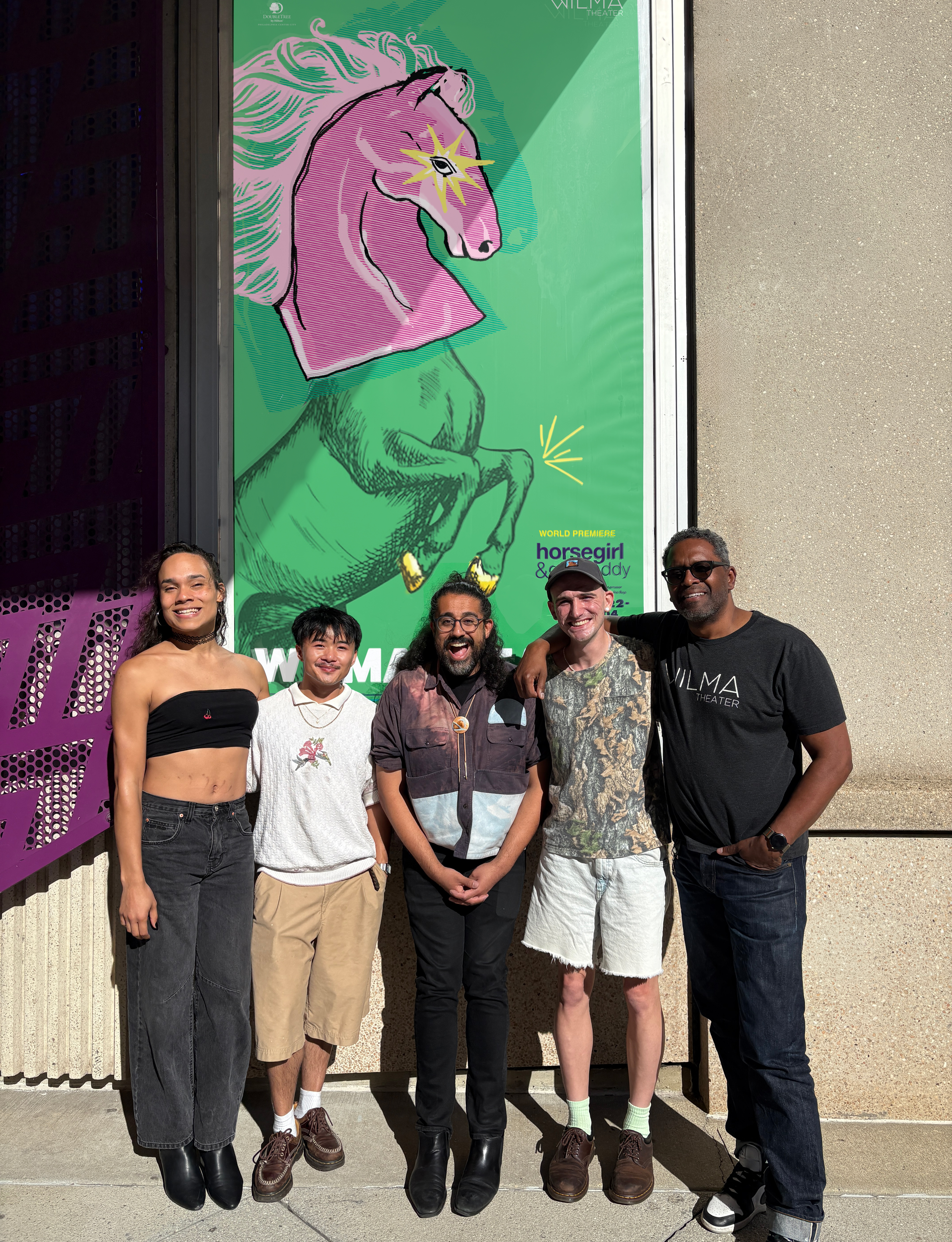
Actor Samora de la Brisa, actor Ni-Ni, director Adil Mansoor, playwright DJ Hills, and actor Lindsay Smiling pose in front of the Wilma Theater following the first rehearsal for the world premiere of ‘Horsegirl & Cowdaddy,’ running Sept. 22 through Oct. 4.Courtesy of Wilma Theater
‘Horsegirl & Cowdaddy’
Sept. 22-Oct. 4, Wilma Theater
Philly poet/playwright DJ Hills — a queer and trans artist from Franklin County, Pa. — penned a new play that will have its world premiere at the Wilma before transferring to New York’s Soho Rep next year. Set in a small and rural Pennsylvania town, the story centers on a 30-something trans woman named Horsegirl who still lives at home with her father, Cowdaddy. A newfound love leads to an unexpected change that threatens to upend her life. Puerto Rican actor and singer/songwriter Samora de la Brisa stars as Horsegirl while veteran actor Lindsay Smiling, who was recently named the Wilma’s sole artistic director, plays Cowdaddy.
Wilma Theater, 265 S. Broad St., Philadelphia, 215-546-7824 or wilmatheater.org
Restaurant recs: Order a Southern-tinged feast at Kitchen & Kocktails, whose menu includes fried green tomatoes, shrimp and grits with lobster tail, chicken and a wide array of waffles, and peach cobbler.
‘The Addams Family: The Musical’
Sept. 22-Nov. 1, Walnut Street Theatre
The morbidly moody teen Wednesday Addams is about to do the scariest thing imaginable: introduce her eccentric family to her “normal” boyfriend and his parents. The young couple soon realize they aren’t the only ones with relationship problems as their parents — yes, even the eternally head-over-heels Gomez and Morticia — stumble into their own conflicts following a discomfiting dinner. With music and lyrics by Andrew Lippa, the popular musical features everyone’s favorite spooky relatives, including Uncle Fester, Lurch, and Thing. (Plus there’s a special showing on Halloween.)
Walnut Street Theatre, 825 Walnut St., Philadelphia, 215-574-3550 or walnutstreettheatre.org
Restaurant recs: Hi-Lo Taco Co. is one of the family- (and budget-) friendliest options in Washington Square West, and the tacos and margs couldn’t be tastier. If you’re looking for something funkier, try Dara, featured in the 2025 edition of The 76, for its deft touch with a range of Thai dishes.
Jalynn Steele (Tanya), Carly Sakolove (Rosie), and Jessica Crouch (Donna Sheridan) in “Mamma Mia!” The show runs Sept. 29 -Oct. 4 at the Academy of Music.Joan Marcus
‘Mamma Mia!’
Sept. 29-Oct. 4, Academy of Music
One of the longest-running shows in Broadway history makes its return to Philadelphia with a fresh cast belting beloved ABBA classics. On a luscious Greek island, a young bride has devised a clever plan to determine the identity of her father: inviting three potential dads to her wedding. What could go wrong? Sing along to favorite tunes like “Dancing Queen,” “Money, Money, Money,” and, of course, “Mamma Mia” while watching the heartwarming family bonding. Pretty Woman: The Musical actor Jessica Crouch takes on the role of Donna while The Voice contestant Juliette M. Ojeda stars as her daughter, Sophie.
Academy of Music, 240 S. Broad St., Philadelphia, 215-893-1999 or ensembleartsphilly.org
Restaurant recs: Double down on the spectacle of a night at the theater with drinks and starters at the bar at Mr. Edison, Jeffrey Chodorow’s aesthetically dazzling $10 million restaurant in the Bellevue Hotel. There are a number of Craig LaBan-approved items if you choose carefully.
Suli Holum (center) and Frank Jimenez play Elizabeth Sawyer and the devil in “Witch,” running Sept. 30-Oct. 25 at Quintessence Theatre.Courtesy of Quintessence Theatre
‘Witch’
Sept. 30-Oct. 25, Quintessence Theatre
This fresh, funny, feminist twist on a 17th-century English play from Jen Silverman focuses on Elizabeth Sawyer, an outcast labeled a “witch” for reasons she can’t fathom. When the devil arrives in the small town of Edmonton, he considers Elizabeth easy prey, but she’s not convinced selling her soul for revenge on cruel neighbors will satisfy her. Instead, the devil finds men who readily fall, like two brothers eager to seize their rich noble father’s inheritance (and you can guess how that feud ends). Suli Holum, a Philly theater mainstay who once cameoed in the Emmy-winning show Mare of Easttown, stars as the titular witch while University of the Arts graduate Frank Jimenez plays the devil, aka Scratch.
Quintessence Theatre at the Sedgwick Theater, 7137 Germantown Ave., Philadelphia, 215-987-4450 or quintessencetheatre.org
Restaurant recs: It’s a bit of a walk down Germantown Avenue, but for a fresh pick in Mount Airy, head to Doho, the fusion-minded bistro from the culinary talents behind Catering by Design. The cocktails are always on point and you can easily fill up on the creative small plates and pasta dishes.
Tara Venkataraman and Salena Quershi lead the cast of ‘A Beat of Our Own,’ running Oct. 7-25 at the McCarter Theatre Center.Thomas Robert Clarke Photography
‘A Beat of Our Own’
Oct. 7-25, McCarter Theatre Center
This big, bold musical feels like Bring It On meets competitive bhangra dancing. Married playwrights Rehana Lew Mirza, who grew up in Bridgewater, N.J., and Mike Lew (Teenage Dick) wrote this comedy about two bhangra teams going head to head in a national competition: one that prides itself on maintaining traditional choreography from Punjab, and another that embraces fusion and incorporates other dance styles like Bollywood and hip-hop. Challenge is, the latter team consists of total amateurs. With music and lyrics by Sam Willmott, the coming-of-age tale features movement by Bollywood choreographer Rujuta Vaidya, and Mirza promises some inside jokes meant specifically for Jersey audiences (her family included).
McCarter Theater Center, 91 University Place, Princeton, N.J., 609-258-2787 or mccarter.org
Restaurant recs: For small and local, Princeton restaurants like Mistral, Agricola, and elements are classic choices. For something new and from New York, try Ayat.
Susannah Flood (left) and Irene Sofia Lucio appear in the Broadway production of “Liberation” in New York. The production comes to Philadelphia this fall. Adam Brisbine
‘Liberation’
Oct. 9-25, Philadelphia Theatre Company
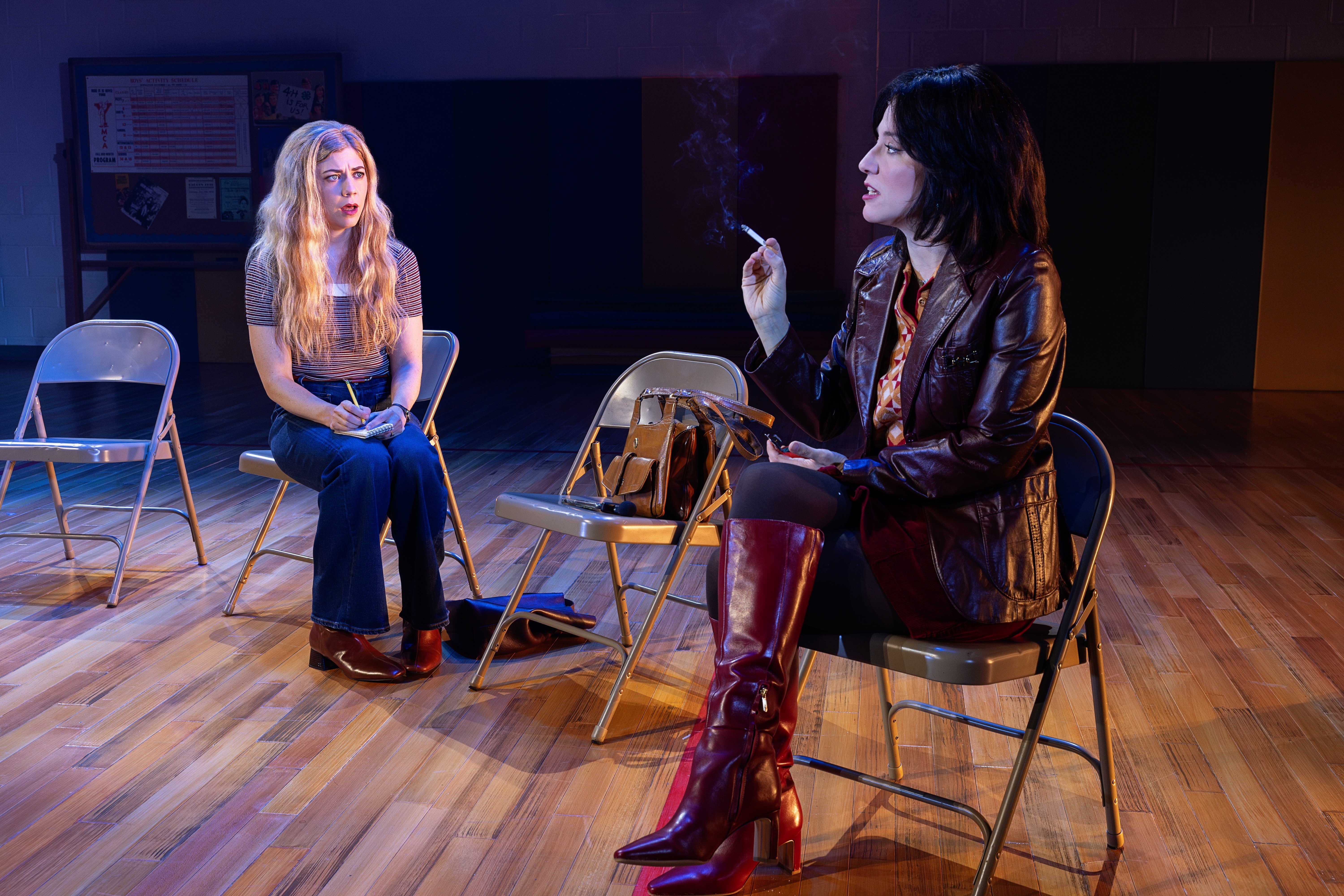
The Philadelphia premiere of this much-buzzed-about play from Bess Wohl comes with dazzling credits as the winner of the 2026 Pulitzer Prize for drama and the 2026 Tony Award for best play. Partially based on the life of Wohl’s mother, who worked at the legendary feminist outlet Ms. Magazine, the play swings between present day and the 1970s as the protagonist, Lizzie, reflects on her mom’s activism in the women’s rights movement. Six women meet in an Ohio rec center and bond over workplace discrimination and the challenges of being wives and mothers while debating what it means to be a revolutionary. Philadelphia Theatre Company coartistic director Taibi Magar directs.
Philadelphia Theatre Company at the Suzanne Roberts Theatre, 480 S. Broad St., Philadelphia, 215-985-0420 or philadelphiatheatrecompany.org
Restaurant recs: If you’re heading to PTC, you couldn’t be closer to Oroshi, the recently opened omakase restaurant located directly across Broad Street. Check that out before the show, then head to Sonnys Cocktail Joint afterward for drinks, tavern pies, and hot dogs.
‘Misery’
Oct. 14-Nov. 7, Hedgerow Theatre
Before the internet age of stans, there was Annie Wilkes, a scarily impulsive fan who terrorized her favorite author in Stephen King’s 1987 novel Misery. After a major car crash, novelist Paul Sheldon wakes up in a remote cabin with Annie playing nurse, but soon he realizes her enthusiasm belies a dangerous obsession. This stage adaptation from Oscar-winning writer William Goldman — the pen behind All the President’s Men, Butch Cassidy and the Sundance Kid, and The Princess Bride — premiered at Bucks County Playhouse in 2012 before a star-studded run on Broadway with Bruce Willis and Laurie Metcalf. This production sees Bruce Graham and Emma Gibson facing off in this psychological thriller.
Hedgerow Theatre, 64 Rose Valley Rd., Media, 610-565-4211 or hedgerowtheatre.org
Restaurant recs: Media has lots of options, but why not go to Fond, Lee Styer and Jessie Prawlucki Styer’s brilliantly revived French bistro, located a mere four-minute drive away from Hedgerow.
‘#CHARLOTTESVILLE’
Oct. 14-Nov. 1, Azuka Theatre @ The Drake
Philadelphia-based actor/playwright Priyanka Shetty was a student at the University of Virginia in 2017 when hundreds of white supremacists marched in Charlottesville, resulting in the three people killed and 35 injured. As an immigrant from Bangalore, India, Shetty felt compelled to respond, so she began interviewing dozens of residents, researching court transcripts, and reading extremist right-wing material to create this verbatim play in which she stars as the sole performer. Popular local theatermaker Yury Urnov directs this production, which he also directed during its award-winning run at the 2025 Edinburgh Fringe Festival.
Azuka Theatre at The Drake, 302 S. Hicks St., Philadelphia, 215-563-1100 or azukatheatre.org
Restaurant recs: The options are good and plenty in this part of town. I’m partial to Monk’s Cafe for sentimental reasons, but you also have La Jefa & Tequilas, Kissho House, and Superfolie to choose from, all within a few minutes’ walk.
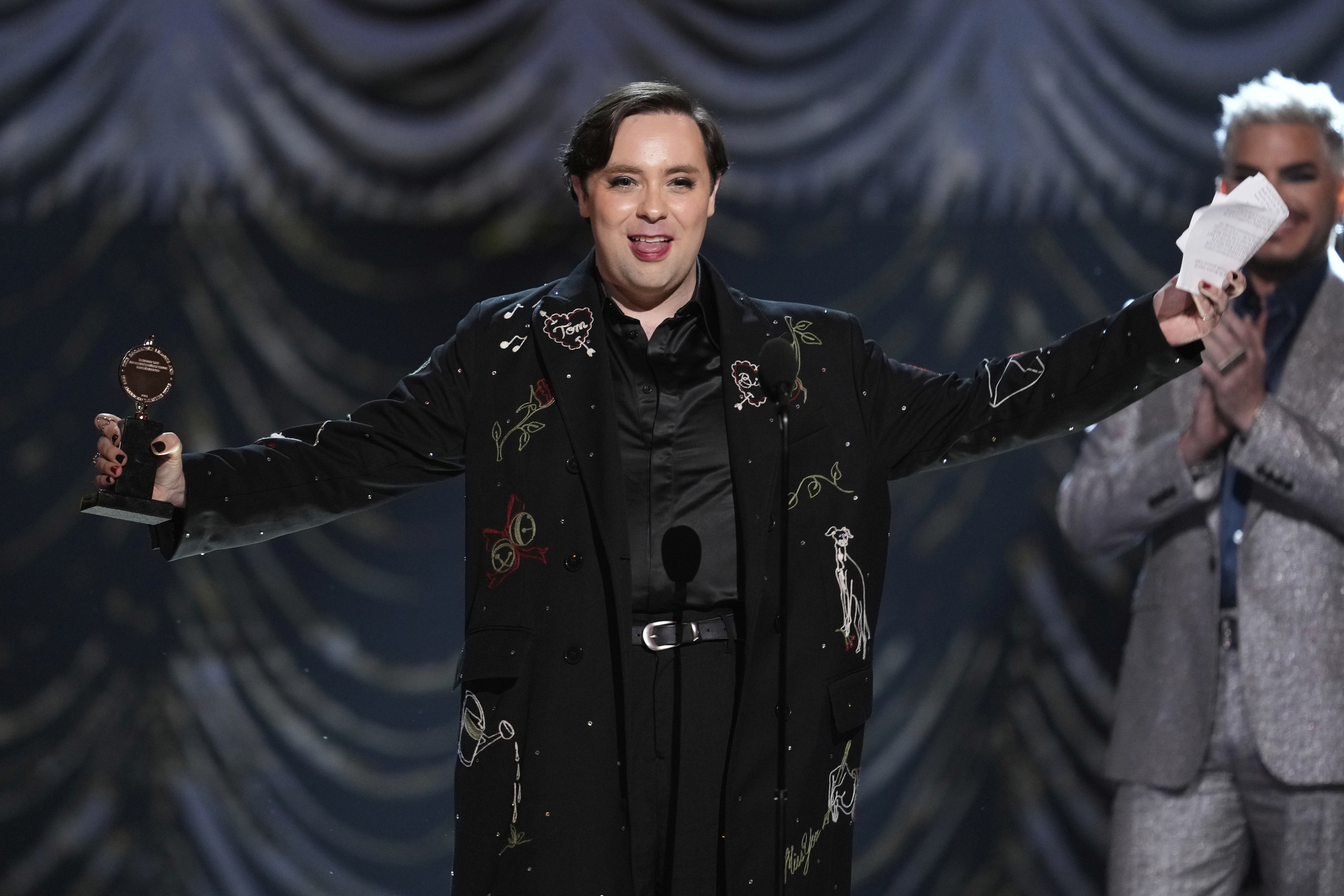
Jak Malone accepts the award for best performance by an actor in a featured role in a musical for “Operation Mincemeat: A New Musical” during the 78th Tony Awards on June 8, 2025, at Radio City Music Hall in New York. The musical will have its Philadelphia premiere this fall.Charles Sykes
‘Operation Mincemeat’
Dec. 15-20, Forrest Theatre
Based on a real-life secret mission during World War II, this zany musical brings five versatile actors to play 87 characters with Monty Python-like humor. The British plot involved disguising a corpse as a Royal Marine officer and dumping the body into the sea along with a briefcase full of fake documents intended to deceive German spies (allowing the Allied forces to invade Sicily). The score includes sea shanties, ballads, electro-pop, and rap for an uproarious, unbelievably informative good time.
Restaurant recs: The Walnut Street Theatre suggestions apply here, too, but for a few more, how about Kichi (a “zoomakase”), Oloroso (delicious tapas by chef Tod Wentz), and Darling Jack’s (a something-for-everyone contemporary tavern menu)?
You might roll your eyes if a real estate agent tells you about a fixer-upper with a lot of potential. But that truthful line of persuasion has been working for supporters of the Germantown Life Enrichment Center.
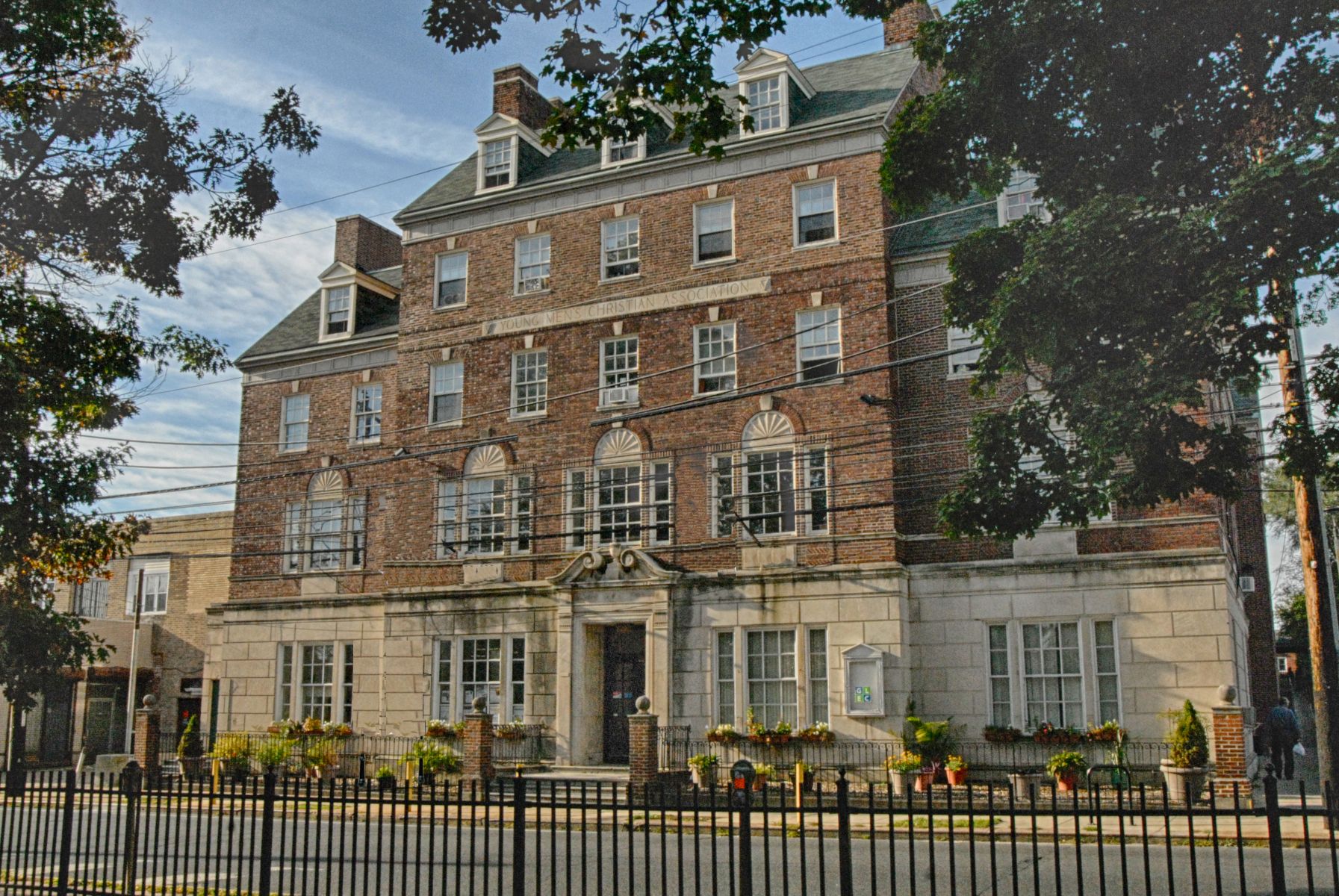
The center, known as GLEC, is an unusual two-in-one facility at 5722 Greene St. It offers an array of community programming, including pool, fitness, and youth activities, and transitional housing for formerly homeless men.
The former YMCA building opened in 1922, and has not received major renovations since the 1990s. It has gradually decayed while waiting for essential repairs, including to its HVAC system and roof.
The building was in dire financial condition in late 2024 into 2025, after the pandemic hurt memberships and childcare participation. Utility bills and shutoff notices piled up, and it appeared the center could close at any time. Germantown would lose a vital community resource, and one of the city’s few housing options for homeless men would disappear.
But over the last several months, GLEC has begun receiving support it has long needed, by way of a combined $9.2 million from various sources. In the spring, the center learned it had been awarded $5 million from the city’s funding for homeless housing, courtesy of the American Rescue Plan, to use on its residential section. Then the center received an additional $2.5 million for the creation and repair of residential housing units in July from state funding. The money will go toward new central air-conditioning, new showers, updated bathrooms, and more.
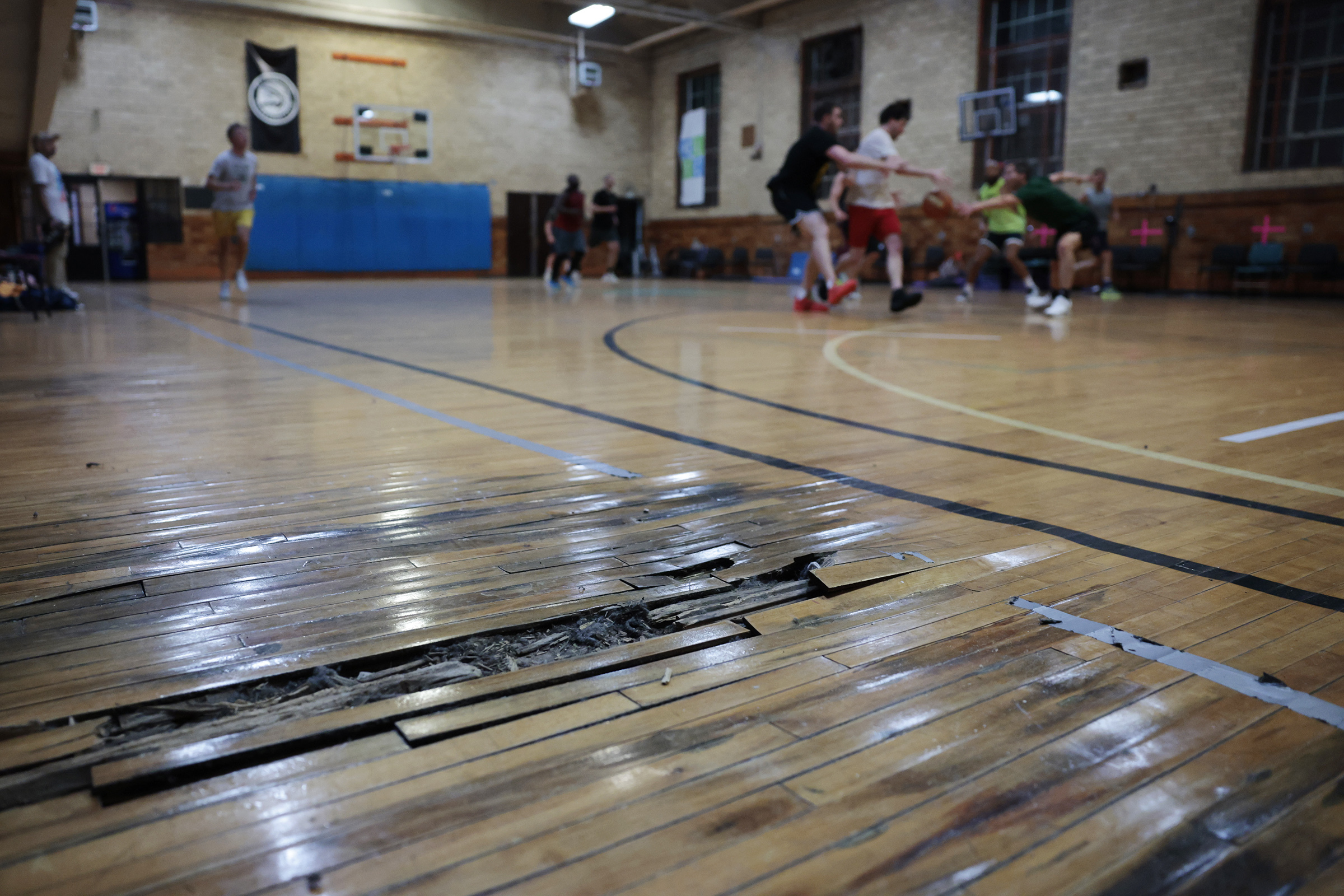
Last week, GLEC learned it will receive about $950,000 from state Local Share Account funding, raised from gaming revenues, which will go toward repairs to the building’s community center offerings, like replacing the basketball floor and renovating locker rooms and bathrooms.
Macy Brown, 4, center with swimcap, uses her life vest to stay above the water as she kicks up a storm to navigate the pool at the Germantown Life Enrichment Center in 2018.MICHAEL BRYANT
And on Sept. 17, Democratic State Sen. Art Haywood presented GLEC with a $750,000 grant from a state program that goes toward housing affordability and rehabilitation measures, also meant for improvements to the community center sections of the building.
The inflow of funding represents a remarkable and hopeful turn of events for those who have fought to keep the building open.
“It feels like a miracle. … I’m so profoundly grateful to the entire community that rallied around to to work together to make this happen,” said Doron Taussig, chair of the GLEC board.
Yet even with those funds, Taussig said, the building’s daily financial challenges remain.
The center still operates with a monthly deficit of about $25,000, executive director and CEO Lyn Kuebler said. She said even while the major investments from the city and state suggest they are committed to the center’s being used for this kind of housing work for the next 30 to 40 years, there is still a long way to go before all of its needs are met.
“Even though we’ve gotten awards … it’s not money in the bank that can pay your electric bills,” Kuebler said.
Not finished
When the center hit its low point at the end of 2024, Kuebler said, she began warning people that without an intervention soon, “we’re not gonna be here.” She invited Haywood, who represents parts of Philadelphia and Montgomery County, to tour the building that December to see both its potential and how much was needed to reach it.
“There’s not many places for men who have been hard on their luck,” Haywood said, noting that it is one of the few single-occupancy housing options for homeless men in the city. He said he admired the resiliency of the center’s leadership, and agreed to help secure funding.
“The organization just needed a lot of love,” he said.
A Dadball basketball game (in background) at the Germantown Life Enrichment Center in Philadelphia, where there are some badly needed repairs, in 2025.Elizabeth Robertson / Staff Photographer
While Haywood and other officials went to work to preserve the building’s long-term future, Taussig sought out smaller donors to help with the daily expenses. For over a decade, the center has been the home of Taussig’s pickup basketball group, which nicknamed itself “Dadball.” The group of once-new dads in their 30s and 40s kept playing as their kids grew up, and formed a community.
In April 2025, one of the group’s most beloved members, Greg Anderson, died after suffering cardiac arrest during a game. In their grief, Taussig and the other Dadballers rallied and raised about $100,000 to keep the center open. They have since renamed the basketball gym in Anderson’s honor.
Personalized notes are stuck to a portrait of Greg Anderson during a gym dedication ceremony for the late Mount Airy Dadball basketball player on Saturday, May 2, 2026 in Philadelphia.Joe Lamberti / For The Inquirer
Kuebler said the organization determined it needs about $4 million more to address all of the community centerrenovations, so several items are on hold, like installing an elevator. She is asking community members to help in any way they can.
“We are further than we’ve ever been. It helps you not be weary,” said Kuebler, who has been with the center for 16 years.
People are riding the fundraising momentum, Taussig said. Another Dadballer will soon begin a culinary education program focused on teaching people to make affordable, high-nutrition meals. Anderson’s widow, Melanie Anderson, is organizing a women-only dance party in the basketball gym, he said.
And a Jefferson University master’s in architecture class is conducting a community design project on GLEC. The students will study the building and surrounding community for what the best uses of the space may be, and offer suggestions on how to accommodate them, Taussig said.
“It’s bringing all of this energy into the building. … It’s what this building needed and really ought to be used for,” Taussig said.
Correction: Lyn Kuebler’s name was spelled incorrectly.
Classical music has long sought a friendlier mien, and this fall the genre seems to have redoubled its efforts. New books and author chats are in abundance, aiming to demystify the art form and make personal connections. Films with live orchestra have become not a special event, but a regular feature. Concert formats continue to get rejiggered in an effort to make the tent bigger.
There’s a danger, of course, that in its quest for relevance, classical will no longer be the main event. Some of the Philadelphia Orchestra’s appearances with pop artists, for instance, are hard to justify artistically. The balance bears watching.
But in a season that offers rare Bach and Mozart, the continuation of a chamber music series second to none, and a generous pipeline of new works, it’s hard to feel anything but fortunate as the curtain raises on a new season in one of the nation’s classical music hot spots.
In the Kimmel Center plaza, Andres Amarilla (right) and Amy He of the Philadelphia Argentine Tango School perform at an Orchestra After 5 event in 2024.Yong Kim / Staff Photographer
Orchestra After 5
Oct. 8, Marian Anderson Hall
The Philadelphia Orchestra sometimes launches an initiative only to let it quietly fade, but the Orchestra After 5 series has had remarkable staying power. Now in its fourth season, it’s designed to be a friendly on-ramp for newbies, though one suspects that it’s also luring experienced listeners with its earlier start time, conviviality, and brevity.
The first of three such concerts this season features the orchestra and popular guest conductor Dalia Stasevska in Respighi’s Pines of Rome and, with Gil Shaham, Saint-Saëns’ Violin Concerto No. 3. It starts with a 5 p.m. happy hour in the Kimmel plaza, and the hourlong concert is followed by an artist chat. philorch.ensembleartsphilly.org, 215-893-1999.
The Philadelphia Orchestra performing a Halloween concert in 2016.ELIZABETH ROBERTSON / Staff Photographer
Philadelphia Orchestra Children’s Halloween Spectacular
Oct. 10, Marian Anderson Hall
With excerpts from Elmer Bernstein’s Ghostbusters Suite, Bach’s Toccata and Fugue in D Minor, and Grieg’s “In the Hall of the Mountain King” from Peer Gynt, the Saturday morning family concert promises to be a fright. But within bounds. This first of five full-orchestra offerings in the coming season aimed at young listeners is sensory-friendly, with house lights kept at mid-level, a cool-down space for stimulated guests, and other accommodations. The aim for all is an introduction with impact to the world of the symphony orchestra, which this ensemble never fails to deliver. Austin Chanu conducts. philorch.ensembleartsphilly.org, 215-893-1999.
Leah Hawkins (left), soprano, and Anthony Roth Costanzo, countertenor, performing at the Wanamaker Building’s Grand Court in 2025.Allie Ippolito / For The Inquirer
Anthony Roth Costanzo’s ‘Countertenor’
Oct. 27, Free Library of Philadelphia Parkway Central Library
“When you are nervous about going onstage, they say you’re supposed to picture the audience naked. But what happens when you’re nervous about actually being naked onstage in front of three thousand fully — and mostly very nicely — dressed people?”
Costanzo, who has maintained a busy performing schedule as a countertenor while running Opera Philadelphia, recounts the unusual experience of performing naked at the Metropolitan Opera in his forthcoming book. What is a countertenor? Costanzo explains his unusual voice type in this mix of autobiography and opera history, which he’ll discuss at the Free Library’s author series.
There is, of course, a companion recording, which comes out a few days before his talk. Tracks include not just works of Osvaldo Golijov, Philip Glass, and Mozart, but also, intriguingly, the Frankie Valli and the Four Seasons tune “Walk Like a Man.” freelibraryfoundation.org/events.
Lara Downes with the Philadelphia Orchestra in Marian Anderson Hall in 2025.Jessica Griffin / Staff Photographer
Lara Downes with Rhiannon Giddens
Oct. 30, Rowan University Pfleeger Concert Hall
In a “musical conversation” called Sounds Like America, pianist Downes and singer-cultural historian Giddens explore the “roots and routes” of American music, with stops at “Amazing Grace” and Paul Simon’s “American Tune” along the way. go.rowan.edu/america.
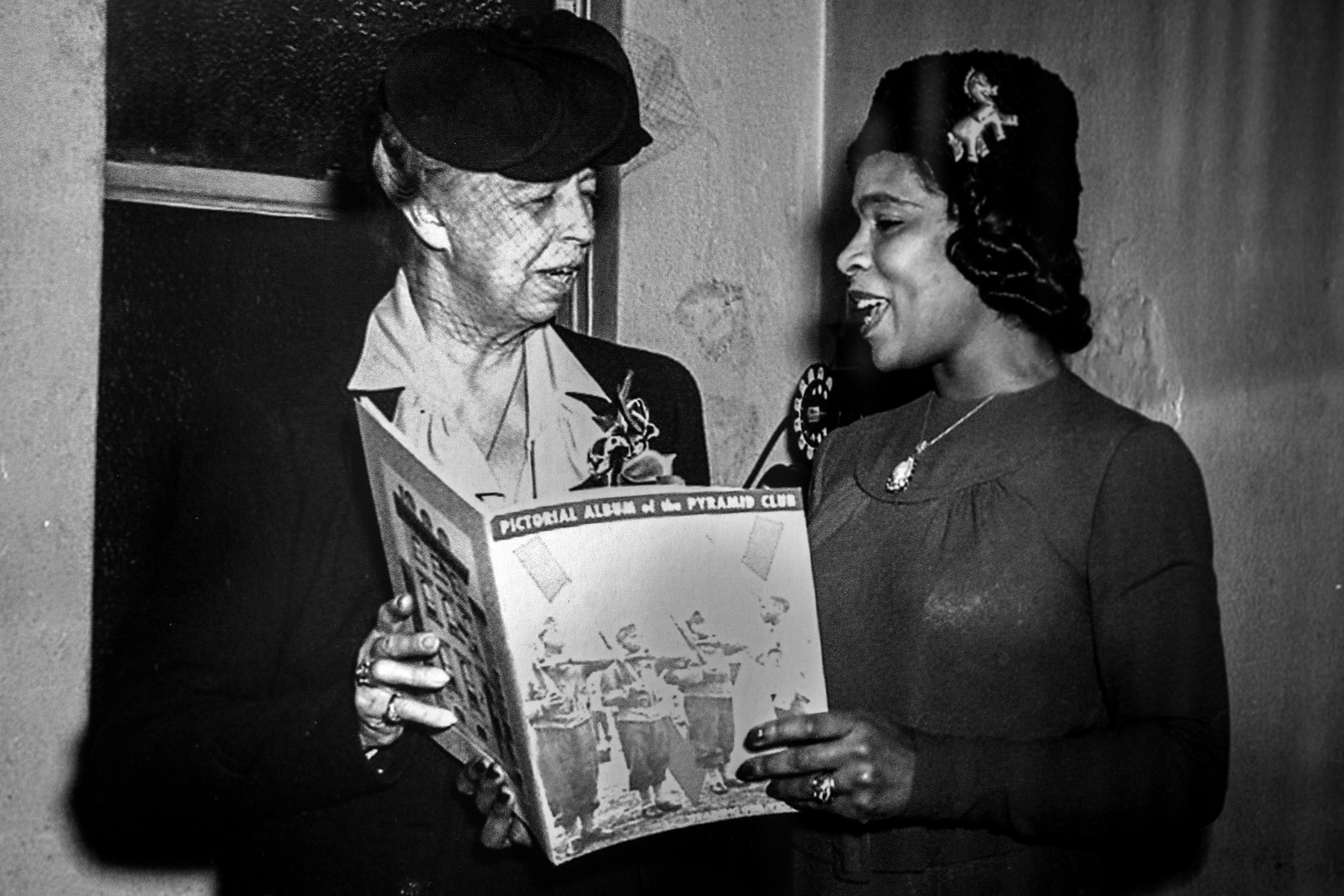
A photo by John W. Mosley of Eleanor Roosevelt (left) and Marian Anderson at the Pyramid Club in Philadelphia in 1943.John W. Mosley Photograph Collection, Charles L. Blockson Afro-American Collection, Temple University Libraries
Anthony Tommasini, author of ‘Voice of a Century: The Life and Artistry of Marian Anderson,’ in conversation with Anthony McGill
Nov. 12, Free Library of Philadelphia Parkway Central Library
The former chief classical music critic of the New York Times chats with Anthony McGill, principal clarinetist of the New York Philharmonic, about Tommasini’s new biography of the Philadelphia contralto and civil rights leader. freelibraryfoundation.org/events.
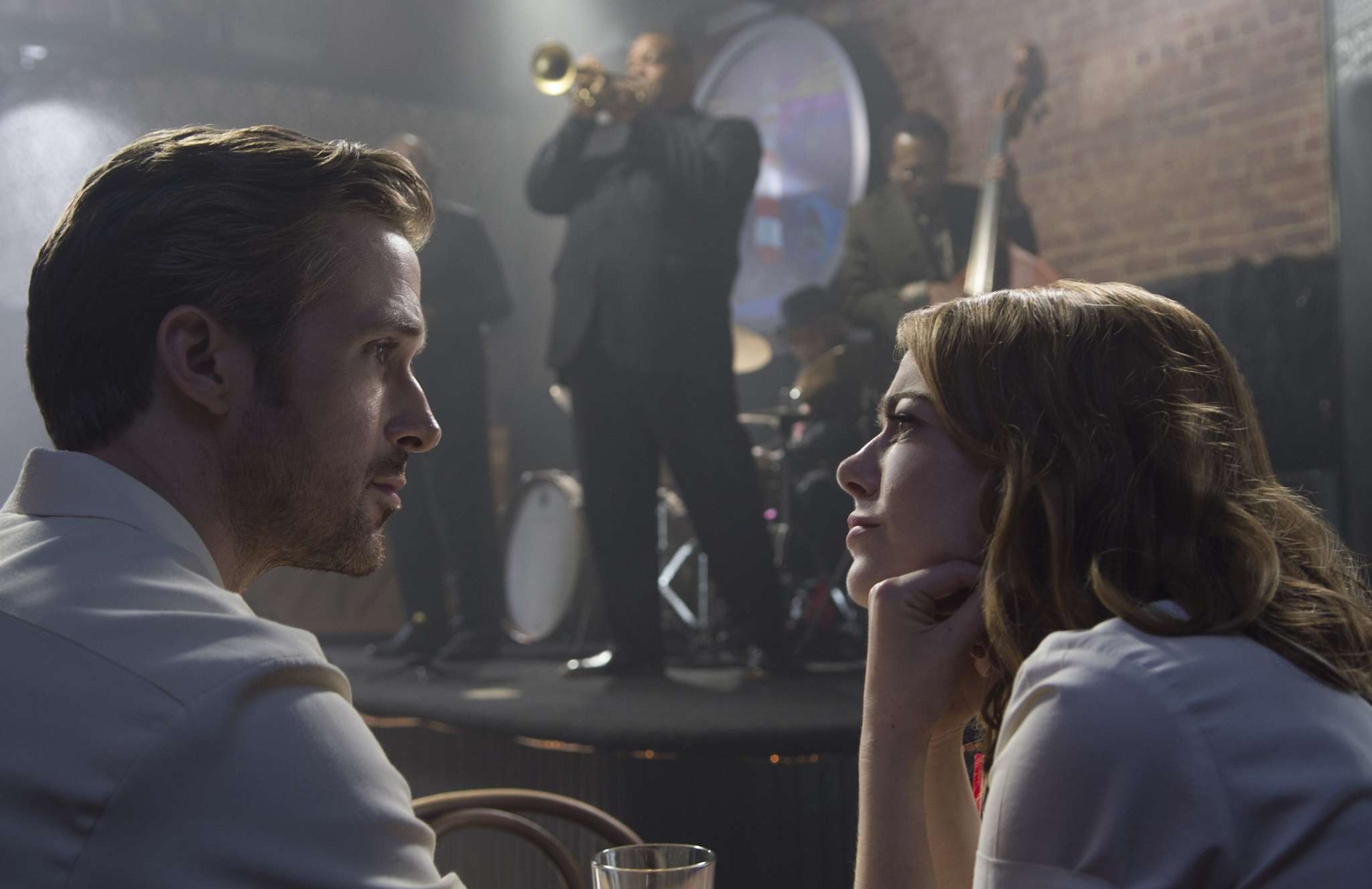
Ryan Gosling and Emma Stone in “La La Land.”DALE ROBINETTE / Lionsgate
Philly Pops ‘La La Land’ in Concert
Nov. 28, The Met Philadelphia
Can it really be a decade since La La Land was released? I never quite got the film, at least not in the way many others did. But this presentation puts a live orchestra and jazz band behind it, which promises to up the daffy appeal and vibe in the room a few notches. Conducted by Esin Aydingoz. phillypops.org.
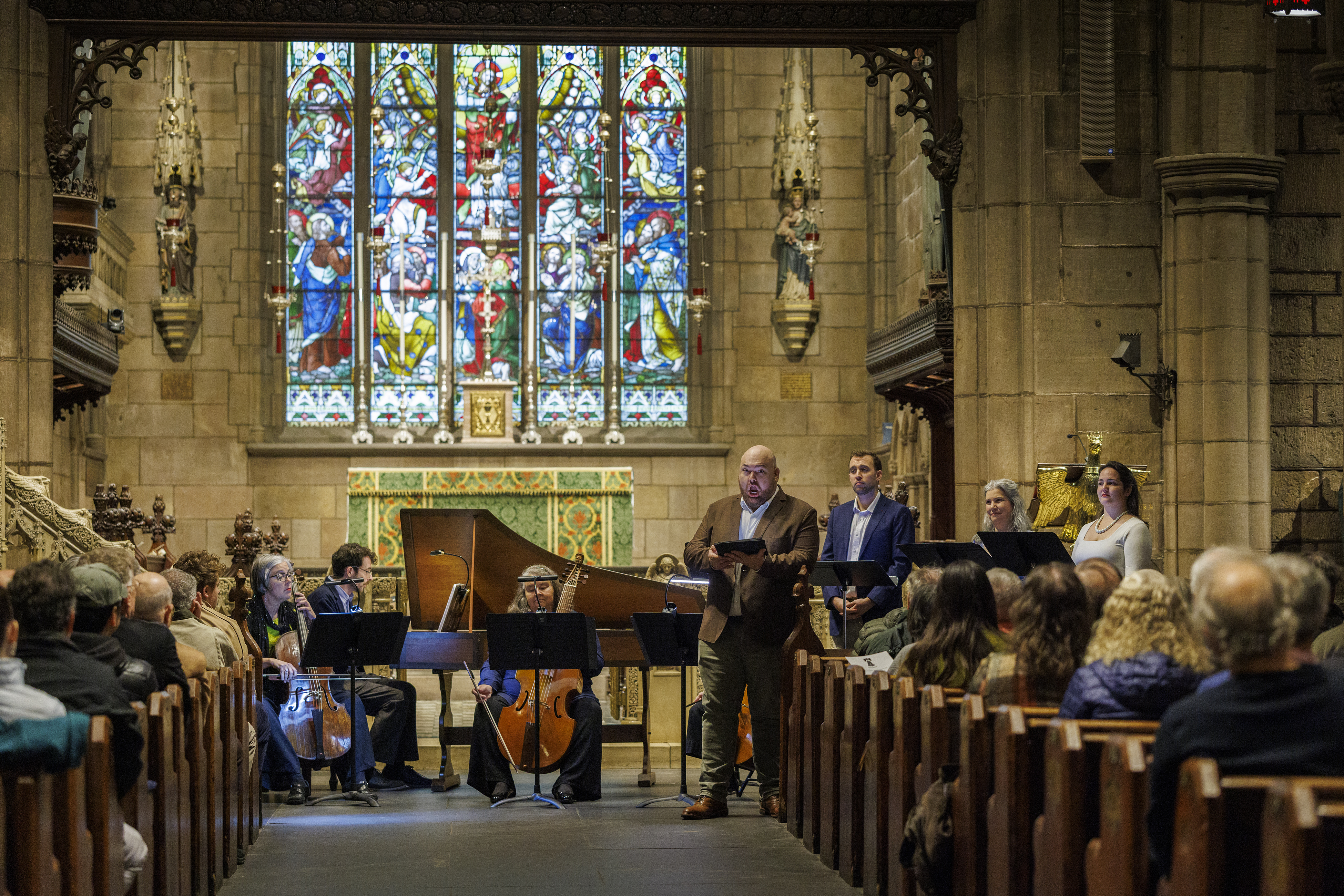
Bass Daniel Schwartz singing in a Philadelphia Bach Collective performance at St. Mark’s Church in 2025.Alejandro A. Alvarez / Staff Photographer
Philadelphia Bach Collective in ‘Nun komm, der heiden Heiland, BWV 62′
Dec. 1, St. Mark’s Church
So seemingly endless is Bach’s genius that even the experienced listener will keep finding gems previously unknown. This is the promise of the Philadelphia Bach Collective, a series of short, pay-as-you-wish afternoon concerts featuring Bach cantatas and other works. To mark the start of Advent, the skilled instrumental and vocal forces take up Nun komm, der heiden Heiland, BWV 62. It’s a concise cantata whose opening chorus based on a Lutheran hymn announcing the coming of the Savior is a beautiful paradox: in a minor key, yet so joyous it can barely contain itself.
“The idea is that Advent is a time of joyful but active anticipation. It’s essentially a call to arms,” says Heather Miller Lardin, one of the collective’s co-artistic directors.
Cellist Yo-Yo Ma at a Kimmel Center appearance in 2024.Charles Fox / Staff Photographer
Yo-Yo Ma and Emanuel Ax
Dec. 6, Marian Anderson Hall
Beethoven? Brahms? Rachmaninoff? The program remained unannounced at press time, but it’s a pretty sure bet that the only thing most ticket buyers really need to know are the names of the cellist and pianist who have both entered the increasingly rarified realm of the legendary. ensembleartsphilly.org, 215-893-1999.
Philadelphia Orchestra conductor Yannick Nézet-Séguin in Marian Anderson Hall in April.Elizabeth Robertson / Staff Photographer
Bach’s ‘Christmas Oratorio’ with the Philadelphia Orchestra
Dec. 12 and 13, Marian Anderson Hall
Bach’s packaging of six cantatas into one vast canvas encompassing the Christmas story offers an astonishing variety of orchestral combinations and colors, not to mention emotional realms. The Philadelphia Orchestra, which has never before performed the work in its entirety, is led here by its music and artistic director, Yannick Nézet-Séguin.
The program, by the way, is in addition to (and not instead of) the orchestra’s traditional Messiah, which will be performed Dec. 4 and 5 with conductor Bernard Labadie. philorch.ensembleartsphilly.org, 215-893-1999.
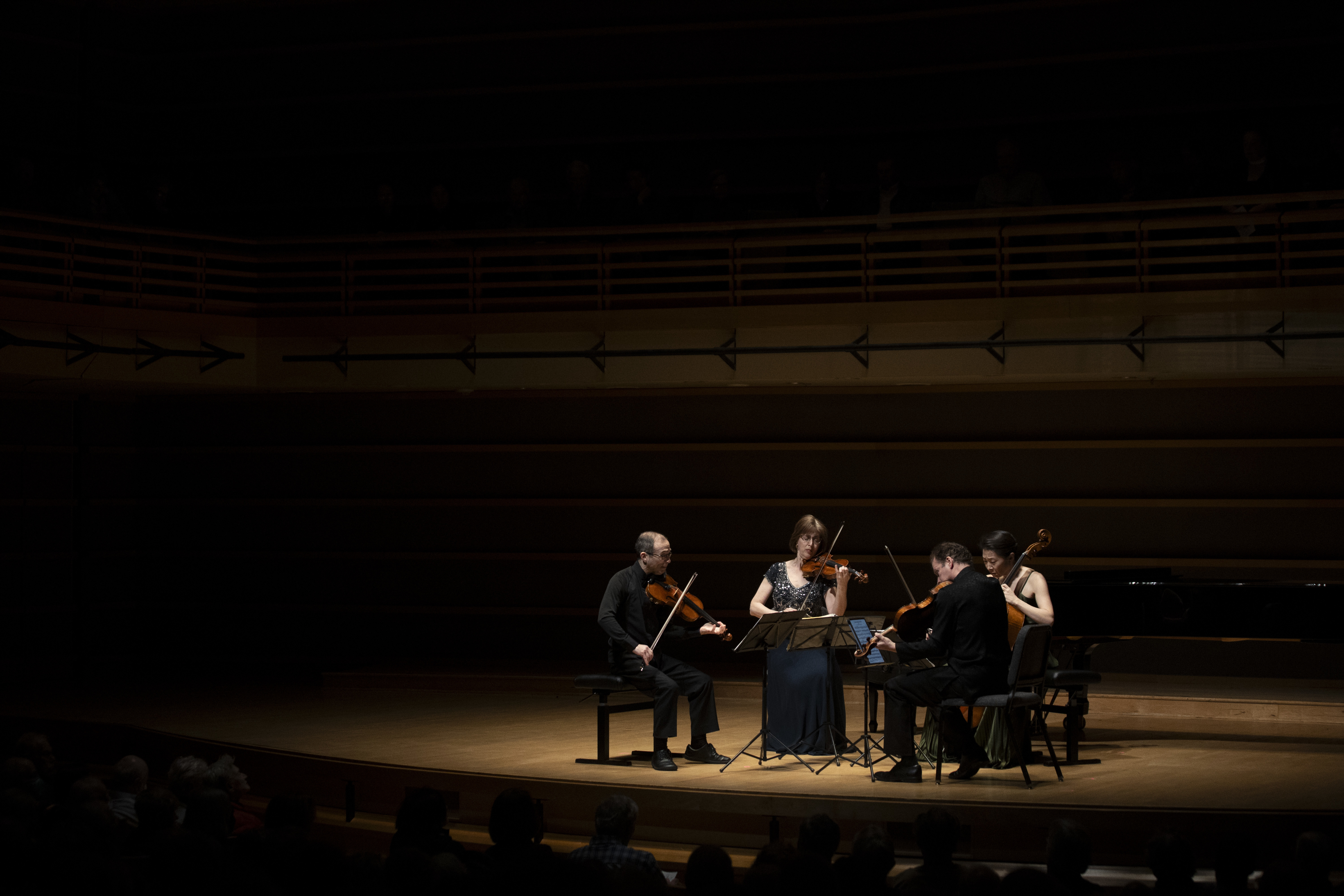
The Brentano Quartet at the Perelman Theater in 2024.Monica Herndon / Staff Photographer
Brentano Quartet
Dec. 13, Perelman Theater
The fugue in classical music is like the golden mean in nature or classical columns in architecture. Once you know it’s there, you start seeing it everywhere. Put simply, it is where a melodic theme is introduced and then repeated in another key while the first one continues. It’s more complicated than this, but basically it’s an almost mathematical tool for creating a dense overlap of competing (though complementary) voices.
Is there a greater meaning to the fugue — say, a philosophical one? The Brentano Quartet, in residence at Yale University, explores that question in works of Beethoven, Shostakovich, and, of course, the fugue’s unsurpassed innovator, Bach. pcmsconcerts.org, 215-569-8080.
David Hayes, music director of the Chamber Orchestra of Philadelphia.Alejandro A. Alvarez / Staff Photographer
Chamber Orchestra of Philadelphia, Bach Brandenburg Concerti
Dec. 19 and 20, Bryn Mawr College’s Goodhart Hall and Philadelphia Film Society Center
Philadelphia’s long-running chamber orchestra has adopted a format of concerts running more or less an hourlong in venues around town. That includes this holiday-time one with Bach’s Brandenburg Concerto Nos. 1, 3, and 4. They are joined by Christopher Theofanidis’s Muse, which was inspired by the third Brandenburg concerto. David Hayes conducts. chamberorchestra.org, 215-545-1739.
Simon Rattle conducting the Bavarian Radio Symphony Orchestra at the Kimmel Center in 2024.Heather Khalifa / Staff Photographer
Simon Rattle and the Philadelphia Orchestra
Jan. 28, 29, and 30, Marian Anderson Hall; Feb. 2 at Carnegie Hall
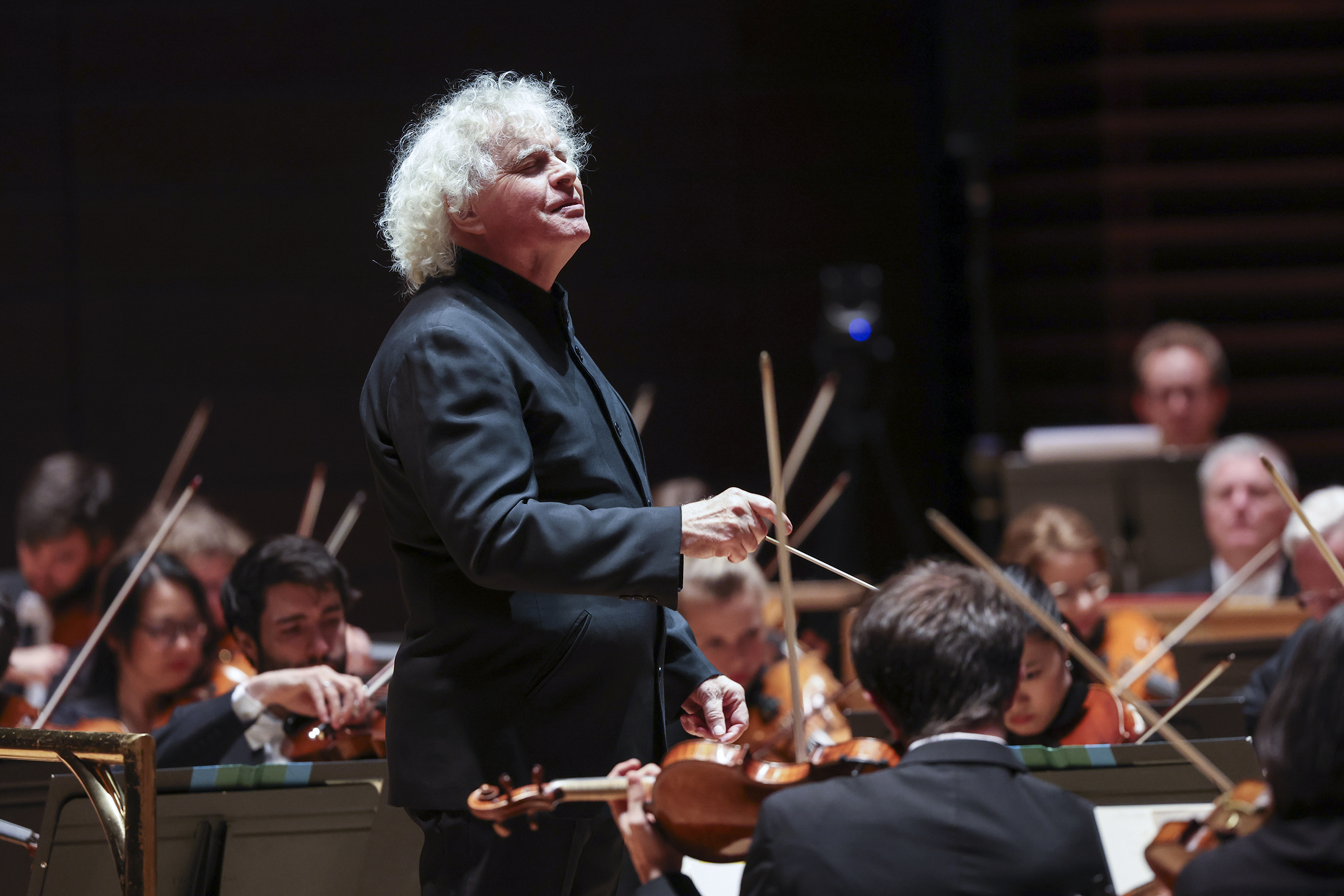
Even if he didn’t end up being music director, Rattle still visits the Philadelphia Orchestra’s podium from time to time. His current absence from the orchestra has been a painfully long one — a decade — and he returns with a program of works that seems bound by nothing other than their potential for virtuosity from the ensemble and interpretive depth from the podium: John Adams’ Harmonielehre, Debussy’s La Mer, and the second suite from Ravel’s Daphnis et Chloé. That works just fine for us. philorch.ensembleartsphilly.org, 215-893-1999.
The Gershwins’ ‘Let ‘Em Eat Cake’
Jan. 29, 30, and 31, the Academy of Music
Who knew this is where we’d end up as a country? George and Ira Gershwin did, in an opera with a book by George S. Kaufman and Morrie Ryskind. The piece depicts an election denier who renovates the White House and establishes a dictatorship. “You couldn’t write a better farce about what’s going on in the world than this,” said Costanzo, who is bringing the work from 1933 to Opera Philadelphia for the first time. Conducted by Corrado Rovaris and directed by Zack Winokur. operaphila.org, 215-732-8400.
My fifth grader wants to take Regional Rail back from his downtown magnet school by himself. He’s done a few weeks with an adult so he knows the route, and I can track him on my phone. But he doesn’t have any buddies to walk back with. Is this crazy, or will it help foster independence?
Amy Rosenberg, Life & Culture reporter
I want this to be OK, but my first thought is maybe fifth grade is a little too young?
Elizabeth Wellington, features columnist
I think you might be right, Amy. I mean, when I was 10 — and that was 100 years ago — I took the bus by myself. But the train was a different animal completely. There are a lot of ways for them to get lost, and missing a stop is a long walk, rather than a few blocks. You know?
Amy Rosenberg
It also depends on the child. Some are more ready than others. A group of fifth graders, or maybe two of them together, might work? Not sure about the walk home from the stop either. I walked to and from school for lunch as a fifth grader and that seemed fine, but it was also a long time ago.
Elizabeth Wellington
I walked to and from school by myself when I was in the fifth grade. I demanded it because I had a crush on a boy, but that’s another story.
Now, I’d be afraid to let my fifth grader walk to the end of the block by themselves. Then again, I wouldn’t want to foster sense of fear for the city in my fifth grader either.
Amy Rosenberg
I used to walk home and read the newspaper that was in the driveway and eat my lunch out of a bag (not every day!). My girls had a lot of freedom as kids, but still, as fifth graders they were not traveling around by themselves.
Maybe this person hires someone to meet the child at the train station? I’d definitely try to find another student making that same trip. Maybe there’s an older student that could be a buddy.
Elizabeth Wellington
That’s a great idea. I think the fifth grader wants to feel independent around friends, and there are always friends to travel from school to the train with. If someone is waiting for them when they get home then the parent can know the child made it home safely and the 10-year-old can still feel cared for. Because sometimes when you’re 10 — and even when you are 50 — you need to know someone is there for you when you get home.
When the 10-year-old becomes a 12-year-old or maybe even 13, then they can travel by themselves confidently. Even today, as Gen X’s latchkey-kid generation, I’m not sure 9- and 10-year-olds coming home by themselves from school was the safest thing.
Amy Rosenberg
I agree. There’s a lot of maturing that happens between 10 and 12. I think kids should move around the city confidently and be able to ride public trains by themselves, but the sweet spot age seems a little bit older than fifth grade. Especially the start of fifth grade.
I also think the parent would worry, and be constantly tracking, or even on the phone with the child, and that’s hardly independence. That’s just anxiety.
Elizabeth Wellington
And independence for one person should never translate to anxiety for a loved one.
Amy Rosenberg
I had an after-school babysitter one year who famously drove into our garage door with my girls in the backseat, at around fifth grade. Luckily, only damage to the garage door. So danger everywhere!
Elizabeth Wellington
Yeah, and I fear a 10-year-old kid walking to and from school by themselves, even with a cell phone, might be a danger magnet.
I’m getting nervous just thinking about it.
Amy Rosenberg
I have recently done a bit of traveling on Regional Rail, and I didn’t see anyone that young. And those stations are big. It’s nice to want independence for your kids, but this seems like a big step. I would definitely wait, or try to find a traveling buddy.
I also bet other parents at the school have a big range of travel strategies and opinions about age and independence.
So, look for smaller ways to foster independence at this age.
Elizabeth Wellington
And explain it to them in a way that doesn’t say you don’t trust them, but that it’s a good idea to wait a few years.
Amy Rosenberg
Yeah, lean into finding a buddy or two. I traveled on trains to school with buddies beginning at around 14 and those were great memories.
Elizabeth Wellington
I think it’s important that the child knows that it’s not that you don’t trust them. … Just it’s not their season yet to be taking public transportation alone.