Tag: topic-link-auto

  • Some of Philly’s oldest restaurants are closing or changing hands. What’s going on?

    Some of Philly’s oldest restaurants are closing or changing hands. What’s going on?

    An unusually visible collection of Philadelphia-area restaurant institutions is reaching a turning point at the same time — with some closing for good and others seeking buyers as a generation of longtime owners reaches retirement age.

    At Kelly’s Seafood, the end is definite. The Northeast Philadelphia restaurant will close this month as its owners retire, ending a run spanning three generations of the Kelly family. So will Steve Stein’s Famous Deli, whose history in the Northeast also reaches back nearly 70 years.

    Elsewhere, the outcomes are less certain.
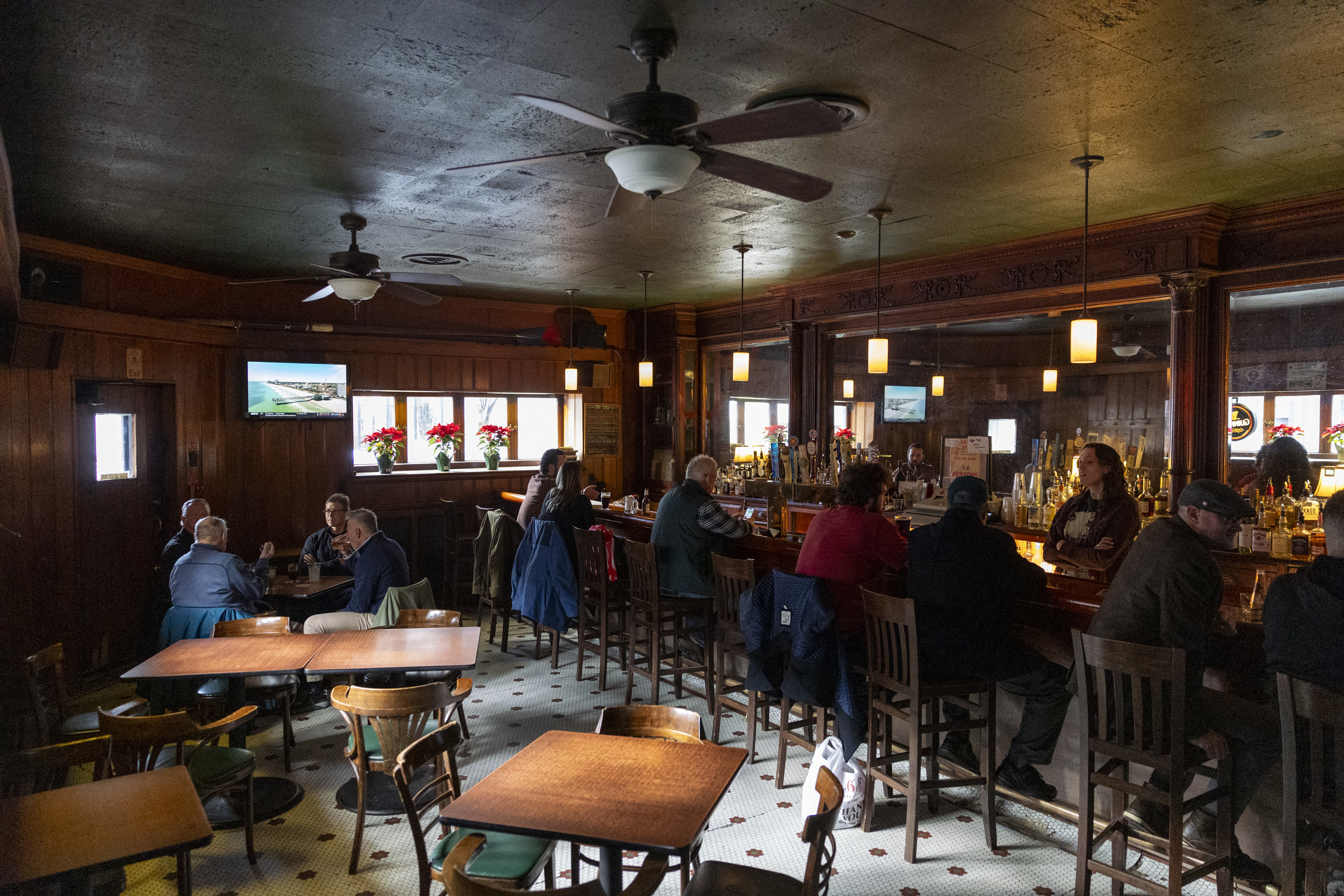
    Cherry Street Tavern has been around for a century at 22nd and Arch Streets.Tyger Williams / Staff Photographer

    The Pub, the sprawling Pennsauken steakhouse known for its open hearth, medieval decor, and thousand-plus seats, is on the market. The restaurant, which dates to 1951, is not closing: It is on its customary summer break and is scheduled to reopen Sept. 18.

    The owners of Cherry Street Tavern, the Logan Square bar that has operated for more than a century, are looking for a buyer after 50 years of stewardship by the Loughery family. The buildings that housed Mamma Maria’s, the East Passyunk Italian restaurant that opened in 1992, went up for sale this month. Aldar Bistro in Bala Cynwyd has been sold after 34 years and will give way to an Italian restaurant called Bruzi.

    McGlinchey’s, the Center City dive that closed last year after nearly 90 years, is back on the market after a prospective buyer walked away from a deal for the building.
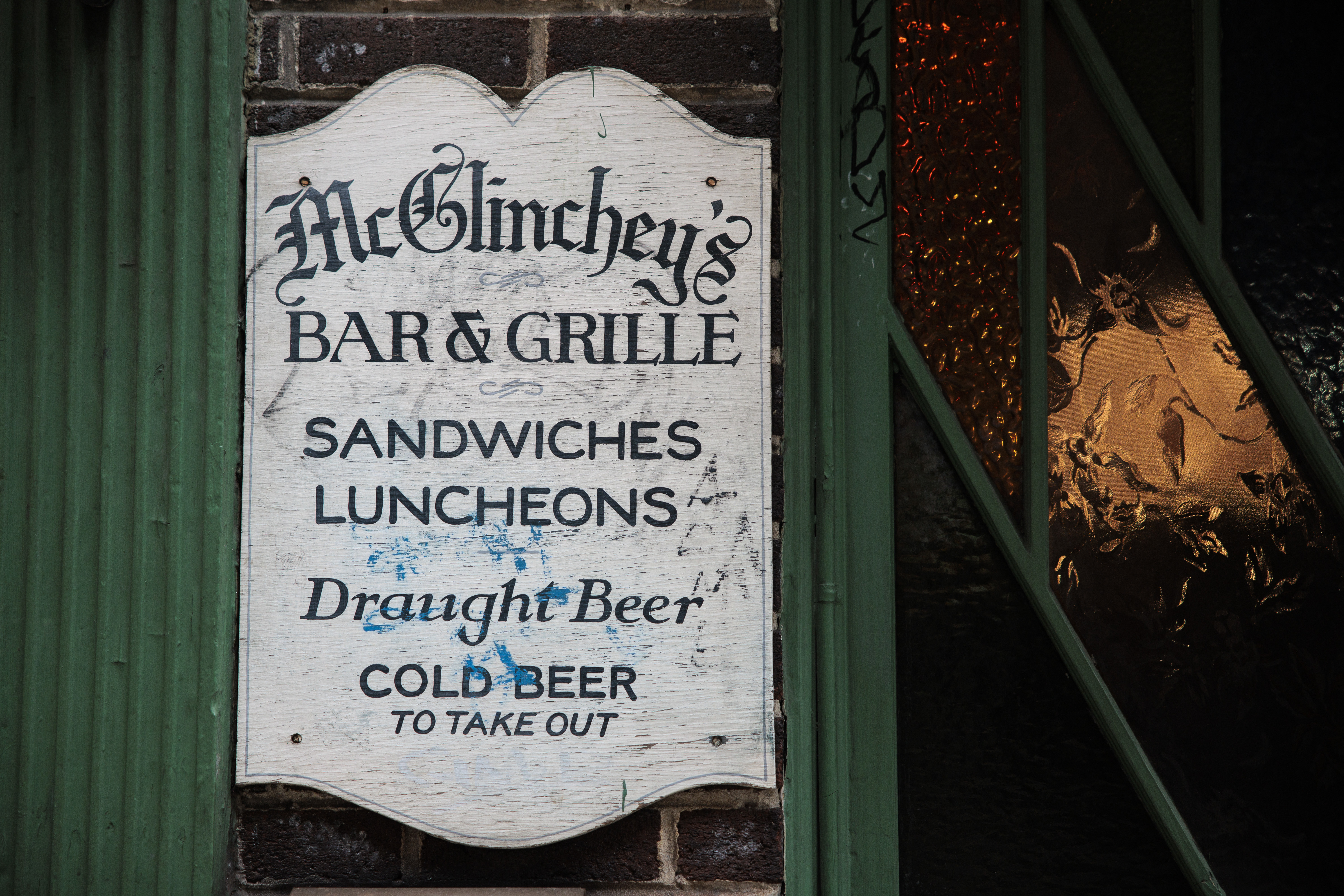
    McGlinchey’s, at 259 S. 15th St., after its closing in August 2025.Monica Herndon / Staff Photographer

    And the nearly 40-year-old Jake’s & Cooper’s Wine Bar in Manayunk is being marketed for sale as owner Bruce Cooper looks toward retirement.

    Restaurants have always turned over, and the recent activity does not appear to reflect a restaurant market in retreat. The Inquirer counted 86 Philadelphia-area restaurant closings in 2025, while more than 100 new restaurants and bars were on the drawing board for 2026. What distinguishes many of the businesses now closing or being sold is their longevity: They survived for decades, weathering the pandemic and recent increases in food and labor costs, before their owners reached retirement.

    ‘The gray wave’

    People in the restaurant, liquor, and real estate businesses say the turnover is part of a broader generational transition among small businesses as longtime owners reach retirement without children interested in taking over.

    Jim Creed, handling Jake’s listing, calls it the “gray wave.”

    “You’ve got operators who have been in business 40 or 50 years, and they don’t have heirs who want to take over the business,” said Creed, a senior vice president with CBRE.

    His father, also Jim Creed, knows the issue from the other side. He opened Creed’s Seafood & Steaks in King of Prussia in 1982 and, at 78, has no immediate plans to sell. “I go to the restaurant every night,” he said. “It’s actually fun.” But when he does decide to close, he said, his children don’t want to take over.

    For the counterexample, consider McGillin’s Olde Ale House in Center City. Open since 1860, it has survived through generations of owners; the Spaniak family has run it since 1958, with Chris Mullins Jr. now the third generation involved. There are no plans to sell. “It’s part of my DNA, part of our customers’ DNA, part of our staff’s DNA,” Mullins told The Inquirer this year.

    Irene Levy Baker and Chris Mullins Jr. lead a toast at McGillin’s on Tuesday, Feb. 3, 2026 in Philadelphia. Attendees gathered for a book talk on “Cheers to McGillin’s: Philly’s Oldest Tavern” on Tuesday.Monica Herndon / Staff Photographer

    Ed Taraskus has watched generations of restaurant and bar owners come and go over 50 years of practicing liquor licensing law. He could not say whether the current number of sales and closings constitutes a statistical trend, but said the succession problem is familiar.

    “The parents retire and the children don’t want to get into the business — because it’s a hard business,” he said.

    Taraskus said the hours can be punishing for small family operators. His clients also complain about finding employees willing to work nights and weekends. Drinking habits have changed, he said, and some businesses are still feeling the effects of the pandemic.

    Taraskus knows the succession question personally. His South Philadelphia family owned a small restaurant and tavern, but his father discouraged him from entering the business. When his parents retired in the 1960s, they sold.

    Real estate on the line

    Retirement can present a second question for operators who own their buildings: What, exactly, are they selling?

    A restaurant may have value as a going business, but decades of appreciation can make the underlying real estate a substantial part of an owner’s nest egg. Sometimes the economics favor a different restaurant — or an entirely different use.

    Douglas Green, a principal at commercial real estate brokerage MSC, said the value of restaurant real estate is closely tied to the sales a location can support and, consequently, the rent an operator can afford.

    “The more volume they do, the more rent they can pay,” Green said.

    That means a location can be worth more to another restaurateur if the existing operator is underperforming. And in some cases, Green said, a restaurant may no longer be the property’s most valuable use at all.

    “At some point, perhaps the building becomes obsolete,” Green said. “Perhaps the highest and best use of the real estate is no longer a restaurant.”

    Those possibilities are playing out among the region’s longtime establishments.
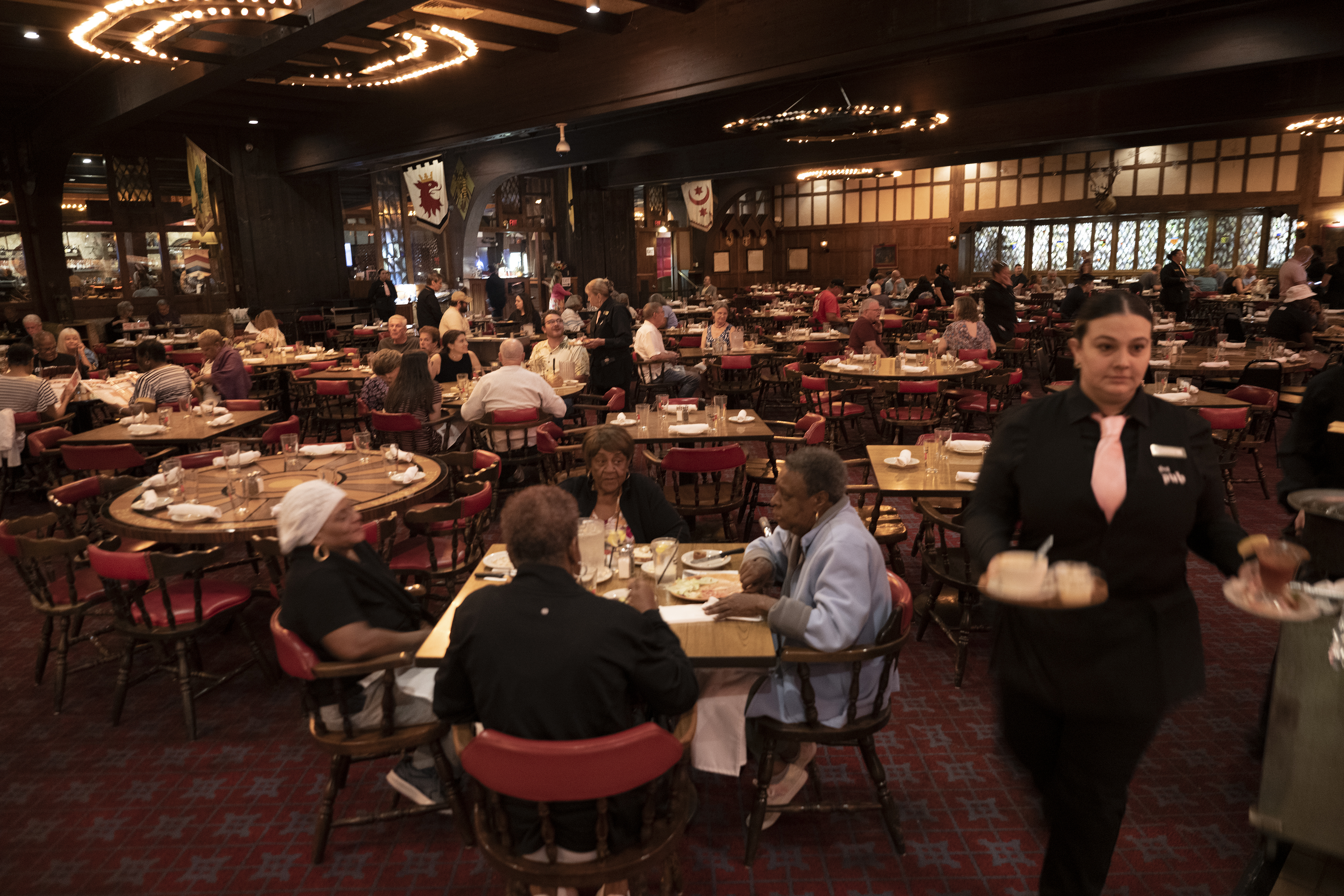
    The Pub restaurant near the former Airport Circle in Pennsauken in 2024.Jose F. Moreno / Staff Photographer

    At the Pub, the Gelman family is seeking a buyer for the restaurant and its roughly 6.3 acres on Kaighns Avenue near the former Airport Circle. The family has operated it since Marc Gelman bought it in 2000.

    “I don’t think there’s one thing in general why we’re selling, but it’s time for a new steward — if you will — of the business, or the property,” Marc’s son David Gelman said.

    At Cherry Street Tavern, at 22nd and Arch Streets, the Loughery family hopes to find a buyer who understands what generations of regulars value about the place.

    McGlinchey’s illustrates the other possibility. Its nearly 5,000-square-foot property at 259 S. 15th St. is listed for $2.45 million, including the liquor license, bars, and McGlinchey’s name, as either a turnkey bar and restaurant or a redevelopment opportunity.

    Decisions for buyers

    Creed said longevity itself can tell a prospective buyer something about a restaurant property.

    “Anytime you have operating longevity, that speaks to the real estate,” he said. “When you have a concept that has been in operation for 40 years, clearly the real estate has something to do with that, too.”

    The retirement of one operator does not necessarily mean the end of restaurant use.

    The former Mixto space is set to become the revival of South Philadelphia bar Toll Man Joe’s.Charles Fox / Staff Photographer

    Mixto closed July 12 after nearly 24 years at 1141 Pine St. Within weeks, restaurateur Lori Penrose bought the property and announced plans to revive her former South Philadelphia sports bar, Toll Man Joe’s, there.

    Emei owner Dan Tsao has pursued that strategy on a larger scale. Over roughly a year, he acquired or leased four landmark restaurant properties: the former John Henry’s Pub in Ardmore, Marra’s on East Passyunk Avenue, the former Irish Pub in Rittenhouse, and the Old Original Bookbinder’s/Olde Bar property in Old City. All four are intended to remain in hospitality use.
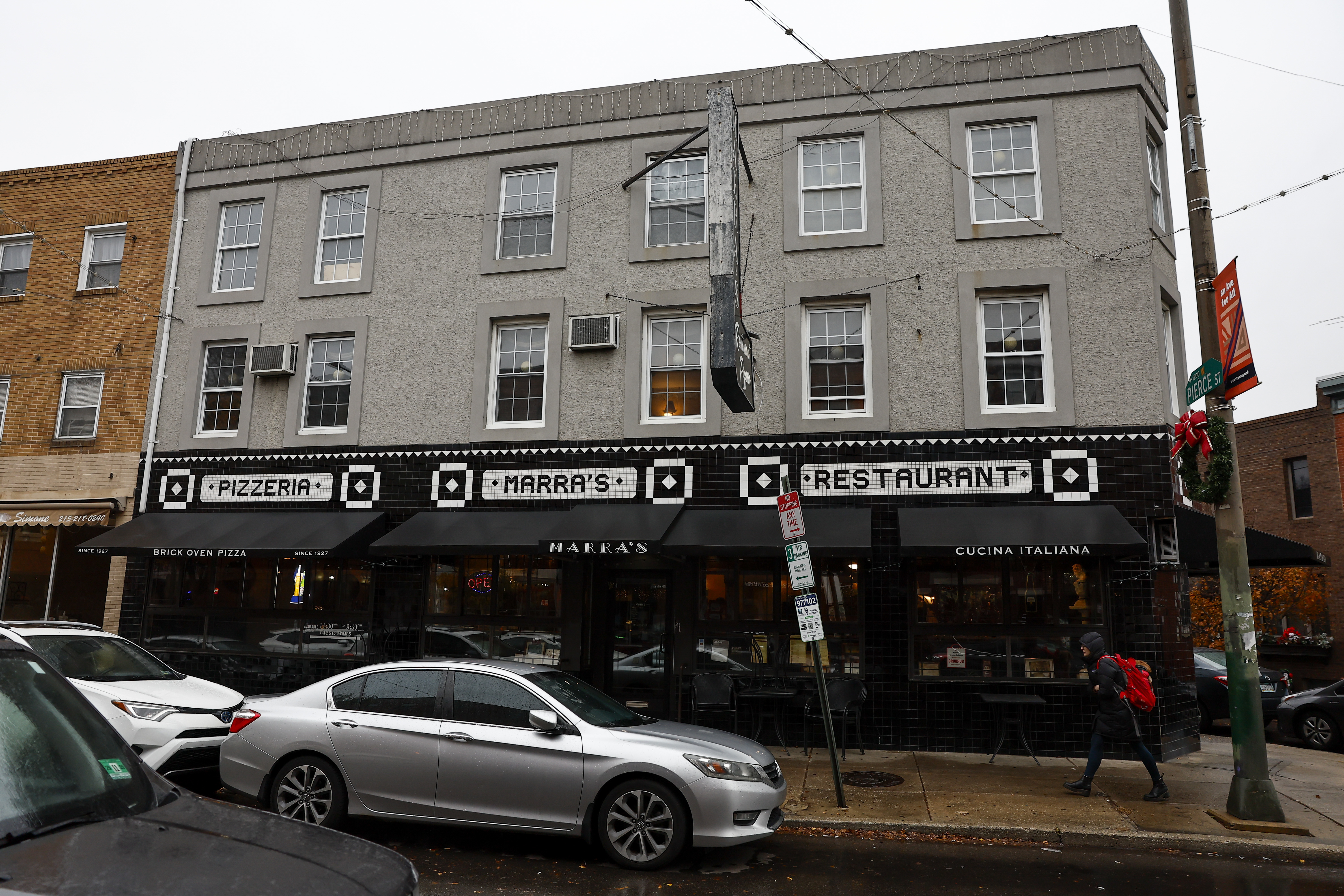
    The exterior of Marra’s Restaurant on East Passyunk Avenue is due to become a branch of Dan Tsao’s burgeoning restaurant group. Monica Herndon / Staff Photographer

    “There are pros and cons to both,” Tsao said of taking over an existing restaurant rather than starting with a new space. “But with an existing restaurant space, especially a legacy restaurant, it already has a place in the neighborhood, and a place in the memories and hearts of generations of customers.”

    Such properties may also have much of the expensive infrastructure required to operate a restaurant.

    But for Tsao, the attraction isn’t purely economic.

    “I also like the idea of preserving some of that history,” he said, “while giving the space a new chapter.”

  • Could GLP-1s help with alcohol use disorder? A Philly VA doctor is leading a national trial to find out.

    Could GLP-1s help with alcohol use disorder? A Philly VA doctor is leading a national trial to find out.

    A Philadelphia Veterans Affairs doctor is leading a national trial testing whether GLP-1 drugs could help patients with alcohol use disorder.

    The treatments, which work by mimicking a natural hormone in the body, have skyrocketed in popularity in recent years for diabetes and weight loss. People have also reported unexpected benefits for other conditions, from heart issues to kidney disease. GLP-1s may even help reduce cravings for addictive substances, including alcohol, opioids, and nicotine, early studies suggest.

    While some of the additional health effects have been well-studied, others, like alcohol use disorder, still need a robust trial to assess safety and efficacy.

    The upcoming trial will take place at 18 VA sites around the country, including Philadelphia, with the goal of recruiting 622 participants.

    “The driving force has been really the groundswell of anecdotal and observational data from folks,” said David Oslin, the psychiatrist leading the national trial.

    Recruitment for the trial starts this week and will likely take two years. Half of participants will be randomly selected to receive the treatment for six months, while the other half will receive a placebo with no active drug.

    Participants will not know whether they received the intervention — a study design that’s considered the gold standard for medical research.

    Alcohol use disorder affects roughly 28 million people nationwide. While there are many options to treat it — including psychosocial treatment, peer support groups, and medications — uptake is low.

    Fewer than 10% of people with alcohol use disorder receive any treatment in a given year. Oslin hopes GLP-1s, should they prove safe and effective, could improve that statistic.

    “The impact is potentially very big in the sense that this is a drug that people seem comfortable prescribing and using,” he said.

    He anticipates publishing the results in about three years.

    The Inquirer spoke with Oslin, who also serves as the chief of behavioral health at the Philadelphia VA, about the trial in an interview lightly edited for length and clarity.

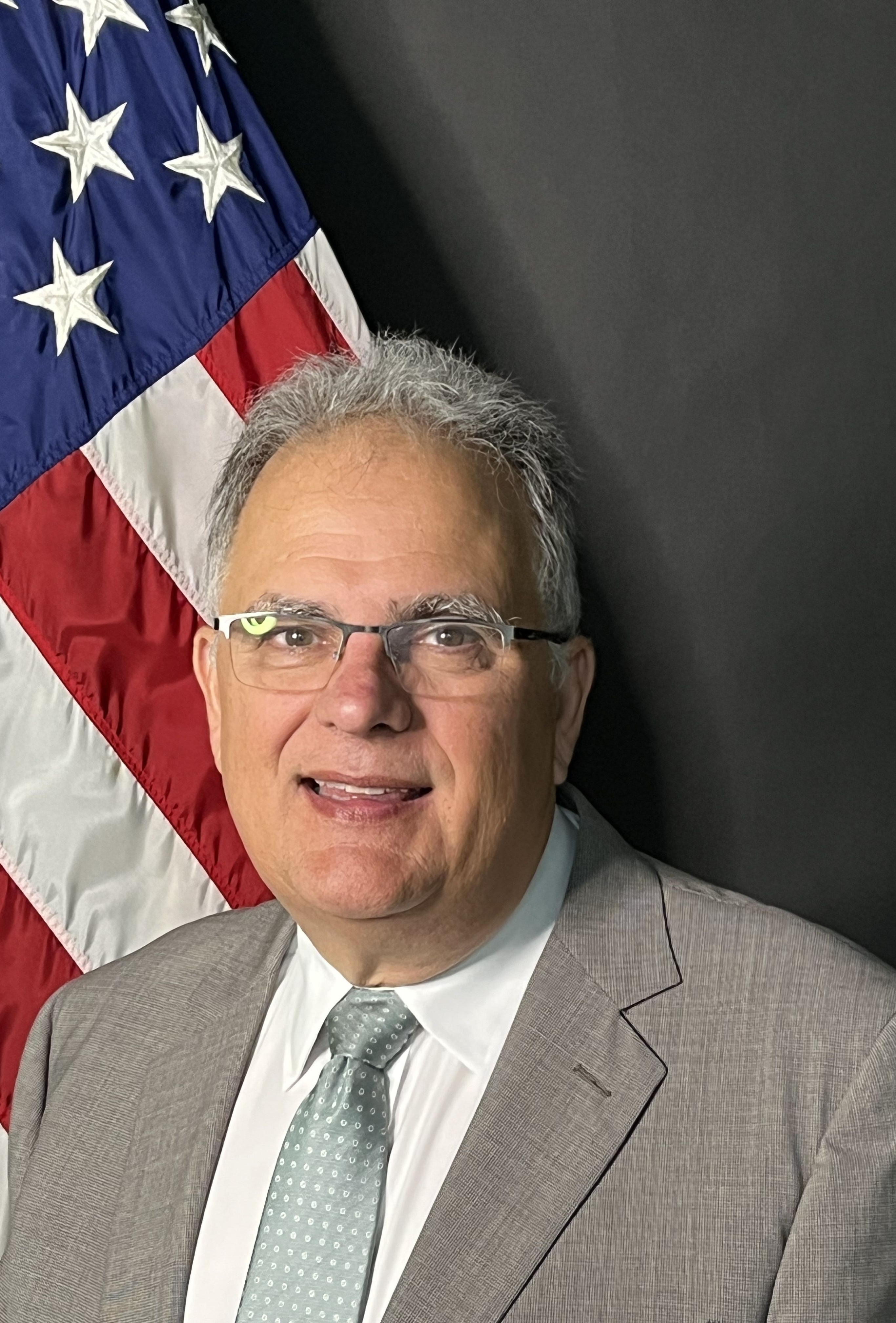
    David Oslin serves as the chief of behavioral health at the Philadelphia VA Medical Center and a professor of psychiatry at the University of Pennsylvania. He is leading the national trial.Courtesy of the VA
    What inspired the trial?

    Anecdotally, folks that have been receiving the GLP-1s for something else — diabetes or weight loss — had noticed a decline in use of alcohol.

    There have subsequently been three small clinical trials in the U.S. that have been published. They wouldn’t be sufficient to define efficacy from an FDA perspective, but they’re certainly encouraging.

    Each of them have their own little pitfalls. One of them is small — 40 subjects — so we wouldn’t want to change clinical practice based on that. But they certainly point us in the direction that we need a large trial, and this trial was designed specifically with FDA requirements in mind.

    How is this trial different?

    Semaglutide is already FDA-approved. What you would want to be able to do is change the existing label to add the indication of alcohol use disorder.

    The FDA has a number of requirements for trials in this domain for alcohol use disorder. One is that the duration be a minimum of six months, and we are doing that. The other is that it be a sufficient sample size to test a hypothesis. For our trial, we are hoping to enroll 622 veterans over the course of the next couple of years. That would be sufficient to answer the question of, ‘Is there efficacy and is there safety?’

    What is the theory behind how GLP-1s could treat alcohol use disorder?

    We know that GLP-1s have three main effects on the body.

    One effect is to induce the pancreas to release more insulin. The second effect is that it slows down the stomach’s emptying when you eat. The third effect is on GLP-1 receptors in our brain. Those receptors actually respond to reward, and the natural effect of GLP-1s is to indicate that you’re full or that you don’t need any more to eat or drink.

    These medicines will have the effect of reducing your desire to want to drink more. They don’t take away your pleasure or your ability to enjoy life, but they will reduce excessive eating and excessive drinking — that’s the hypothesis that is driving the study.

    (function() { var l = function() { new pym.Parent( ‘he1ozempic__graphic’, ‘https://media.inquirer.com/storage/inquirer/ai2html/he1ozempic/index.html’); }; if(typeof(pym) === ‘undefined’) { var h = document.getElementsByTagName(‘head’)[0], s = document.createElement(‘script’); s.type = ‘text/javascript’; s.src = ‘https://pym.nprapps.org/pym.v1.min.js’; s.onload = l; h.appendChild(s); } else { l(); } })();

    Who can participate in the study?

    They have to be a veteran getting their healthcare through the VA. They have to be between 18 and 80. They have to be drinking sufficiently enough to meet criteria for moderate to severe alcohol use disorder. You also can’t be on insulin and can’t be taking another medication for diabetes.

    The 18 sites would take any veteran and screen them, and if they’re not appropriate for the trial, we would get them into the right care for their needs.

    How could having a GLP-1 as an option improve uptake?

    A lot of folks that have alcohol use disorder will not seek treatment in a specialty care setting. They don’t think of their symptoms as being that severe. So they’ll talk to their primary care doctor.

    We need treatments that primary care providers are comfortable delivering. The current medicines are not medicines that they often prescribe, so they’re not used to using them. Meanwhile, they’re prescribing GLP-1s for diabetes and weight loss, so they clearly are comfortable prescribing them.

    There’s a lot of potential here that this could become a front-line treatment for folks, and we could reach many more people to get them in treatment. We need to establish the safety and efficacy first.

    How big of an impact could that have?

    The early clinical trials show that the effect of the treatment is actually larger than our current treatments, which would be really great if that’s replicated. It really could shepherd in a new era of being able to treat more people than we’ve been able to treat in the past.

    Is there anything else you would like to share?

    We want to really make sure that these compounds are safe in this population. I know that you can get these compounds pretty much anywhere these days, and I would discourage people from doing that when we don’t know that they’re safe and efficacious.

    Alcohol use disorder is a devastating illness, and people should feel comfortable reaching out for help. Even if they can’t get into the study, the VA is here to assist them in that journey and try to find them a path to sobriety and a better life.

    Veterans who need support can contact the Veterans Crisis Line 24/7. You don’t need to be in immediate crisis or enrolled in VA care to reach out. Dial 988 and press 1, visit VeteransCrisisLine.net/Chat, or text 838255 to connect with trained responders who can help with next steps.

    Those interested in participating in the clinical trial in Philadelphia can call: 215-823-5800 extension 203404.

  • The Eagles defense has immense upside, though questions about Jonathan Greenard and Riq Woolen linger

    The Eagles defense has immense upside, though questions about Jonathan Greenard and Riq Woolen linger

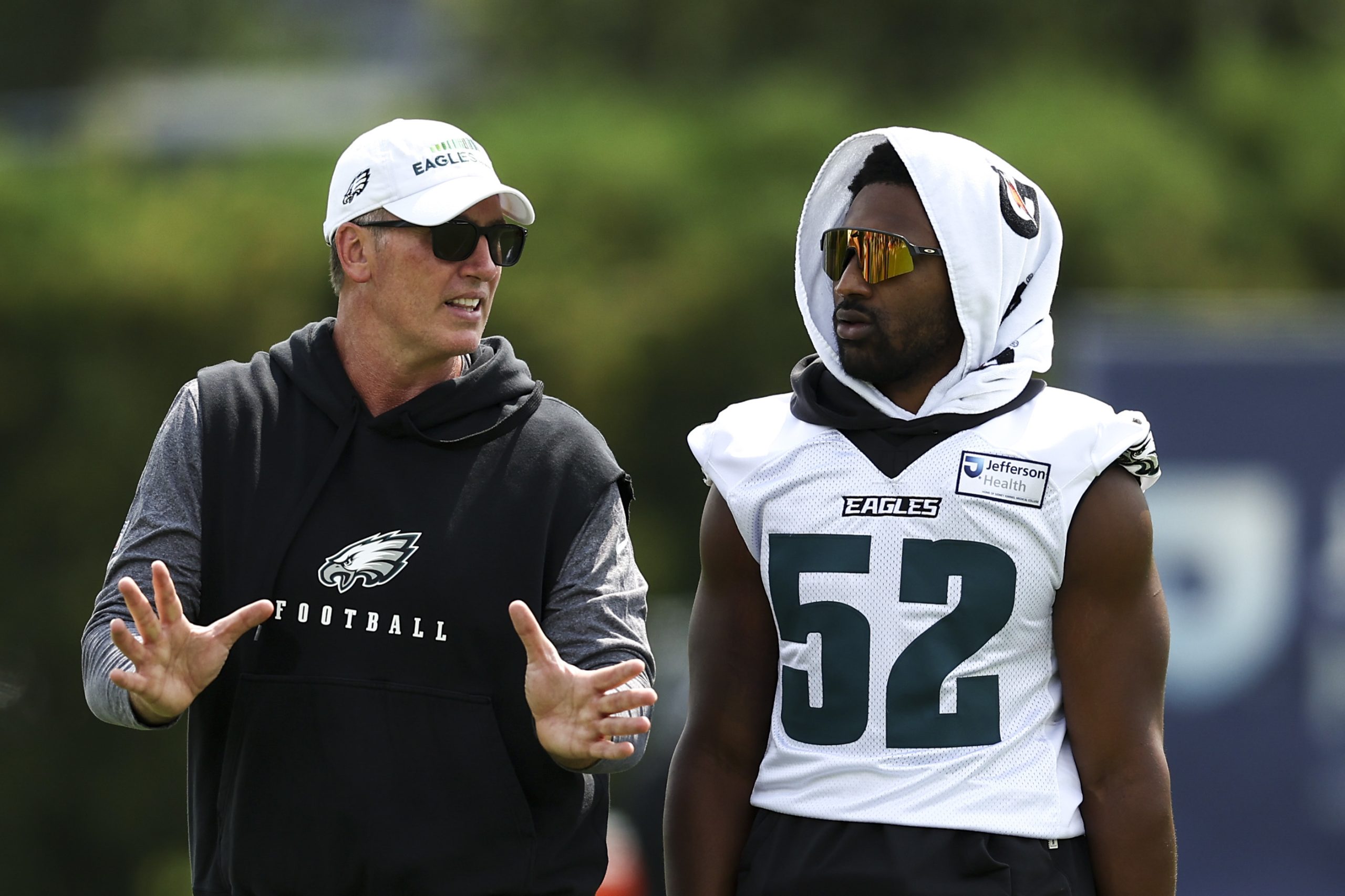
    The most notable thing about the latest round of Eagles’ press conferences was Vic Fangio’s cautious tone when asked about the two newcomers who will determine the ceiling of his defense.

    The first instance concerned Jonathan Greenard, whom the Eagles handed a four-year, $98 million contract extension after losing Jaelan Phillips to the Panthers. While the team has betrayed little concern regarding the pectoral strain that has sidelined the veteran defensive end since before training camp, Fangio didn’t go out of his way to reassure fans that Greenard will be ready for the season opener.

    “We aren’t going to see him for another couple of weeks, at least,” the defensive coordinator said last week.

    Your interpretation of that statement depends a lot on how you weigh the phrase, “at least.” Some might hear a coach who is timing Greenard’s return for the start of the week leading up to the Eagles’ Sept. 13 season opener against the Commanders. Others might instead train their angst on the uncertainty. Rarely does the phrase “at least” carry a hopeful connotation.

    Even less clear is where Fangio’s heart was in assessing new cornerback Riq Woolen. The Eagles’ signing of Woolen to a one-year, $12 million contract spoke volumes about their assessment of last year’s disappointing campaign. While the vast majority of the public attention has focused (rightly) on an offense that looked like a shadow of its previous year’s self, the Eagles clearly felt the same about the downgrade from Darius Slay to Adoree’ Jackson in the secondary. While $12 million is a small price to pay relative to the potential market worth of Woolen’s talent, it is also a lot more than Jackson was paid last season on a veteran minimum deal worth up to $5 million, per reports.

    General manager Howie Roseman consistently operates with the notion that potential salary cap dollars should be measured by how good you are at one position now vs. how much better you will become given expenditure X or Y. That logic precipitated the Eagles’ decision to sign Saquon Barkley to a contract that didn’t necessarily adhere to the current groupthink about running back value. The move to sign Woolen was an admission of how much better the Eagles think they would have been last year, and how much better they will be this year, with a legitimate outside cornerback to start opposite Quinyon Mitchell. That tells you all you need to know about Woolen’s importance to this team.

    “At times he can get a little lazy or sloppy with his technique and have a bad down or two, but he’s still showing everything that I think he can do,” Fangio said of Woolen. “He’s just got to get in such great shape and calloused to football that those don’t happen.”

    You could write off the comment as innocuous if it didn’t echo a lot of what came out of Seattle during the end of Woolen’s tenure there. One need spend only a day in the presence of Woolen to walk away convinced that Roseman and Fangio landed themselves a steal this offseason. The 26-year-old is as imposing a physical specimen as has ever played cornerback at a chiseled 6-foot-4 and 210 pounds with remarkable limb length. His All-Pro selection as a rookie in 2022 wasn’t a fluke.

    Riq Woolen was an All-Pro corner in 2022, but fell out of the Seahawks’ starting lineup last season.Monica Herndon / Staff Photographer

    At the same time, one would be foolish to completely discount what the market says when it values such a player for what the Eagles were able to sign him. Woolen is coming off a season in which the eventual Super Bowl champs jettisoned him from the starting lineup and then, after said Super Bowl victory, let him walk as a free agent for a pittance.

    Woolen is as big of a wild card as exists on the Eagles roster. That’s not a criticism. What makes his range of outcomes so broad is the high-end potential. Woolen at his best has been more of an impact player than Slay was at the tail end of his Eagles career, when he was good enough to start for a dominant Super Bowl defense. The Eagles are coming off a season in which they allowed an opposing receiver to gain 99 or more yards in five of their first seven games. That CeeDee Lamb, Puka Nacua, Courtland Sutton, Emeka Egbuka, and Jordan Addison were all able to accomplish the feat is even more remarkable given the level Mitchell played at last season.

    Greenard factors in here, too. The Eagles were desperate enough on the edge last season that Brandon Graham came out of retirement to become a true value add. The acquisition of Phillips at the trade deadline was a massive stabilizer, particularly defending the run. The Eagles defense was still one of the best units in the NFL. But their playoff loss to the 49ers was a microcosm of the season. That is, a game that was decided by a handful of plays that the 2025 defense was not in the habit of allowing.

    There are lots of reasons to think this year’s Eagles will be closer to 2025, even given the questions about Woolen and Greenard. Their decision to hand Jalen Carter a massive contract extension is a good indication in their confidence that the fourth-year defensive tackle will be back to his dominant self after some midseason shoulder troubles. Edge Jalyx Hunt looks poised to take another big leap forward. Mitchell and Cooper DeJean are still in the exponential growth phases of their careers.

    That said, in today’s NFL, a team is only as good as its weakest link, particularly when a weak link in the secondary is paired with a less-than-elite pass rush.

    There is no need to raise alarms with either Greenard or Woolen. Roseman’s recent decision-making has earned him the benefit of the doubt. Fangio’s first two years have shown his brilliance in making things work as the season unfolds. The schedule sets up nicely in that regard.

    Eagles defensive ends/outside linebackers coach Jeremiah Washburn (left) talks with edge rusher Jonathan Greenard, who has not yet practiced since joining the team in a trade.Monica Herndon / Staff Photographer

    The Commanders will enter the season with a new offensive coordinator and a quarterback who will have played just five games in the previous calendar year. They could also potentially have a new left tackle, after five-time Pro Bowler Laremy Tunsil suffered a triceps tear in practice last week.

    Washington has done surprisingly little to build on Jayden Daniels’ promising rookie season in 2024. The last Commanders receiver besides Terry McLaurin to gain 800 or more yards in a season was Pierre Garçon, who did it in 2016, three years before the Commanders drafted McLaurin. There are high school graduates who weren’t born when Garçon was a rookie. Newly signed Stefon Diggs still carries name value, and he is coming off a 1,000-yard season with the Patriots. But there is a reason the 33-year-old was available until the last moment and only then landed a contract with slightly more of a one-year guarantee than Juaun Jennings landed to be the Vikings’ third receiver.

    In Week 2, the Eagles travel to Tennessee, where they’ll face another new coaching regime. Titans offensive coordinator Brian Daboll inspired little fear in the Eagles during his tenure with the Giants. This time, he has even less talent, with quarterback Cam Ward entering his sophomore season as likely to get Josh Rosen’ed as to get a contract extension down the road.

    The immediate schedule means the Eagles defense will have a comfortable margin for error while easing into 2026. Granted, there are few unofficial bye weeks in the NFL. But the Eagles’ opening weeks are about as favorable as a team can hope when coming off an 11-6 season. They opened last season at home against the Cowboys and faced the Rams sandwiched around a road Super Bowl rematch in Kansas City. Two years ago brought the Packers in Brazil followed by the Falcons — maybe not a gauntlet, but a couple of teams with enough talent to rack up 400 or more yards of offense against an early-season defense.

    Given the health questions about Greenard and uncertainty inherent in Woolen, Fangio could need another few weeks of runway before his defense reaches its full stride. But the upside is immense, and Greenard and Woolen are two of the biggest reasons to bet on the Eagles reaching their potential. Perhaps Fangio’s understanding of this is the real source of his caution.

  • After 50 years in Delran, this couple downsized to a Cherry Hill apartment

    After 50 years in Delran, this couple downsized to a Cherry Hill apartment

    After raising their kids in Delran, Fred and Barbara Zucker were ready to downsize from the home they had lived in for 50 years. The retired couple spent several months searching for an over-55 community, but nothing seemed quite right. In March 2020, that changed.

    “I was shopping at Nordstrom Rack in Cherry Hill and saw a sign for an open house at the Plaza Grande,” Barbara recalled.

    They toured a 1,150-square-foot apartment with two bedrooms, two bathrooms, and a den featuring a balcony with a western exposure. The apartment was on the top floor, which meant no neighbors walking overhead, and the kitchen had a gas range. There was also plenty of closet space for Barbara’s treasured shoe collection.

    Plaza Grande, which opened in 2008, is a sprawling community with 507 units within 16 buildings. Featuring lots of amenities and surrounded by shops and restaurants in walking distance, it seemed like a perfect home to the Zuckers.

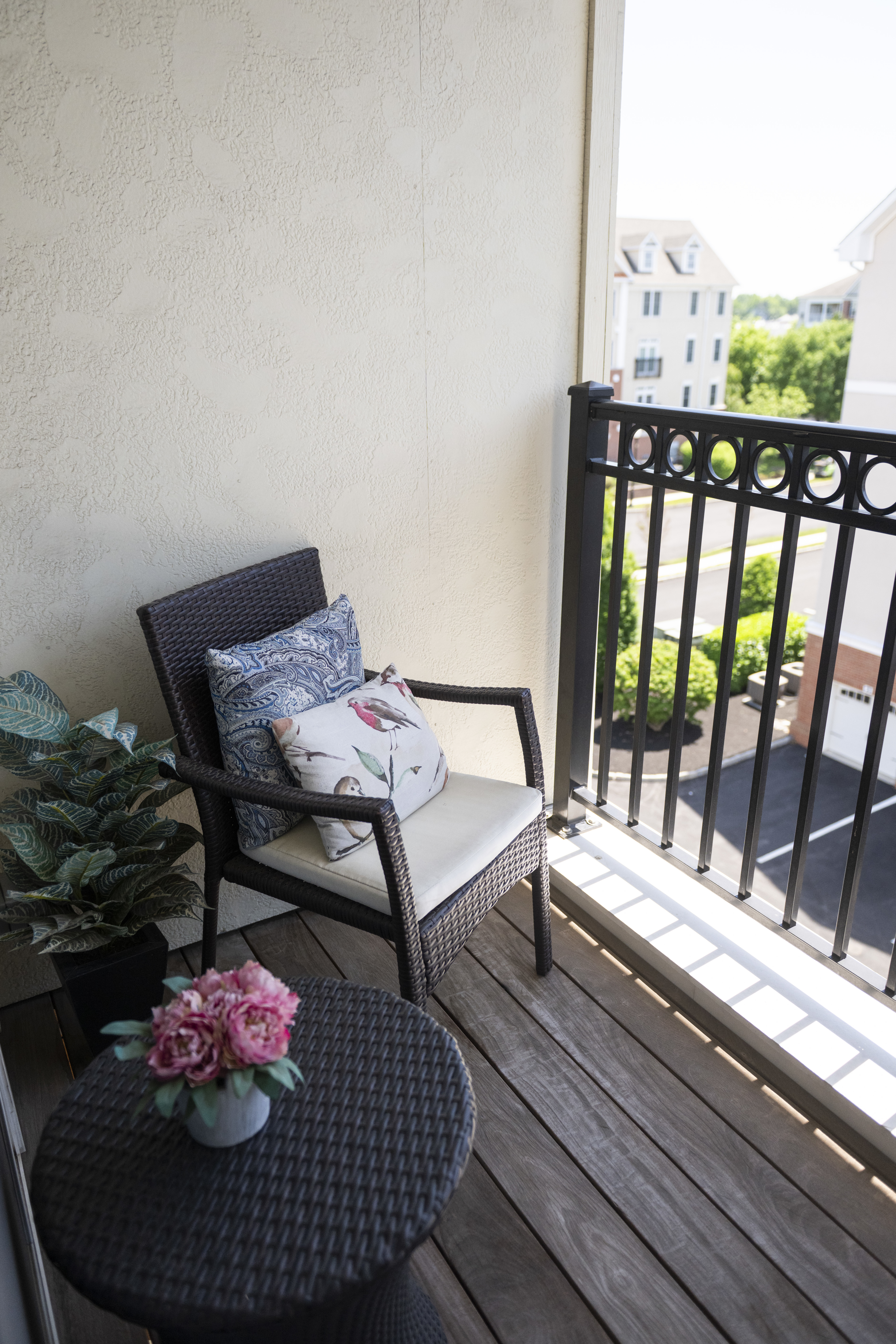
    A view from the balcony at Fred and Barbara Zucker’s apartment.Allie Ippolito / For The Inquirer
    The outdoor pool at the Clubhouse at the Plaza Grande.Allie Ippolito / For The Inquirer

    While Fred and Barbara were excited to downsize, emptying the house, where they had lived for 50 years while raising their family, was no easy task.

    They had to offload most of their belongings, and with the help of a neighbor, they sold their furniture on Facebook Marketplace. Beyond Barbara’s favorite pots and pans, their televisions, family photos, and a few other keepsakes, they made a completely fresh start.

    “My stuff was 50 years old, and it was time to go,” said Barbara.

    The couple shopped at Raymour & Flanigan to outfit their new apartment, starting with a comfortable, dark gray velour couch, and matching chair and ottoman for the living room. With light pouring in from the balcony, it’s their favorite spot to relax, reading the newspaper and watching TV.

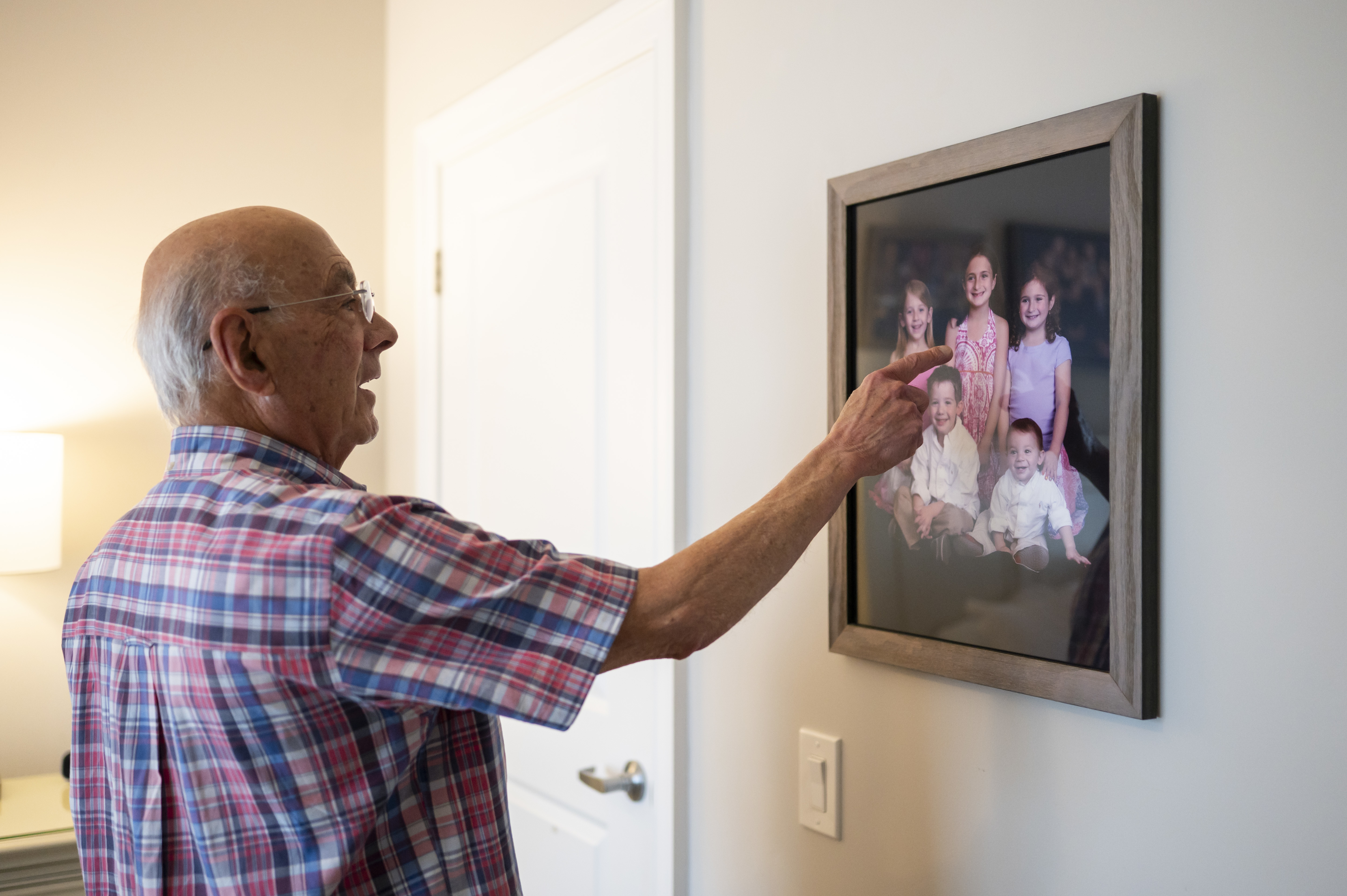
    Barbara admires family photos on display in her apartment.Allie Ippolito / For The Inquirer
    The balcony is one of Fred and Barbara Zucker’s favorite features in their apartment.Allie Ippolito / For The Inquirer

    Sliding glass doors lead to the balcony where they enjoy morning coffee, read for pleasure, or gaze at the pond below. The large, bustling community provides ample people-watching opportunity.

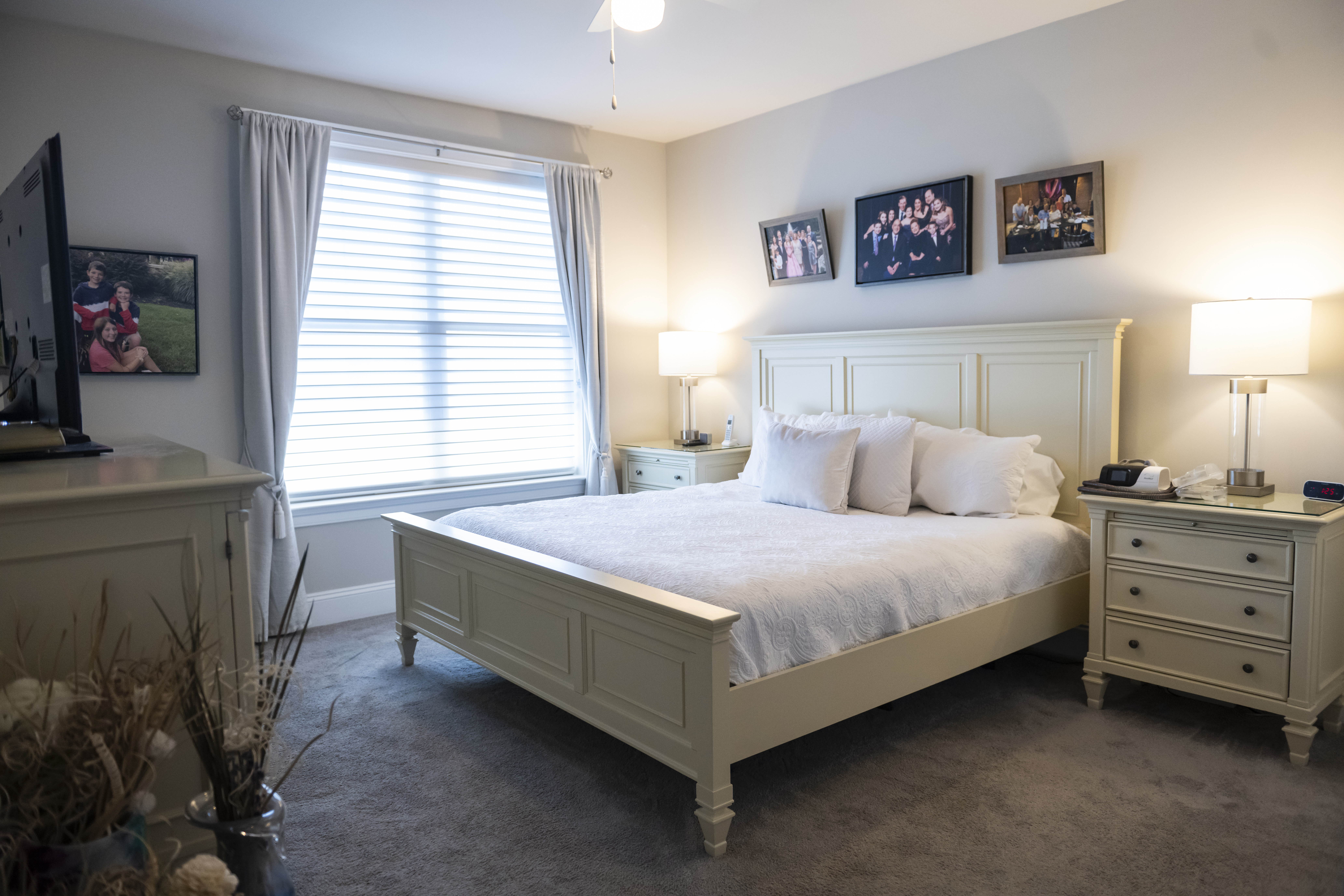
    The primary bedroom features creamy white furniture with bright white bedding. Family photos from special gatherings decorate the walls.

    “Family is everything,” Barbara said.

    The Zuckers prefer an uncluttered look, only keeping artwork and knickknacks that have personal meaning. Souvenirs from their travels are also on display.

    An avid cook, Barbara appreciates her new kitchen, with dark brown wood cabinets, speckled granite countertops, and a faux wood floor. The layout is roomy and the GE appliances are easy to use. She especially values the ice maker, a new-to-her luxury.

    Barbara is an avid cook, often found making soup for friends. Allie Ippolito / For The Inquirer
    The large door to the balcony lets plenty of light into the apartment’s living area.Allie Ippolito / For The Inquirer
    Fred points to a photo of his grandchildren.Allie Ippolito / For The Inquirer
    The primary bedroom features more family photos and a large window.Allie Ippolito / For The Inquirer

    “I don’t know what I was thinking for 50 years. Why I didn’t have an automatic ice maker?” she said.

    Barbara can often be found baking cakes or stirring up a pot of hearty chicken soup to share with her neighbors. Her role has become caregiver when her friends and neighbors need some TLC.

    “If somebody’s sick, I make a pot of soup,” Barbara said matter-of-factly.

    It is the development’s family-like feeling that the couple appreciates the most. Along with their neighbors, they take full advantage of the abundance of amenities the community has to offer.

    “Plaza Grande offers a resort-style experience for active adults 55+, anchored by an 18,500-square-foot clubhouse, the largest in South Jersey,” said Billy Procida, CEO of Procida Funding & Advisors, which developed the community.

    The complex features indoor and outdoor swimming pools, tennis and pickleball courts, a golf simulator, a sauna, massage rooms, and lifestyle programming.

    The golf simulator in the clubhouse at the Plaza Grande.Allie Ippolito / For The Inquirer
    The clubhouse, as seen from the outside.Allie Ippolito / For The Inquirer
    A movie room inside the clubhouse.Allie Ippolito / For The Inquirer
    The clubhouse lounge area includes elegant seating and a fireplace.Allie Ippolito / For The Inquirer

    “We’ve made good friends in the clubhouse, where we go every day,” noted Barbara. “We play cards and they have exercise classes and movies.”

    The couple has become close friends with their neighbors, taking advantage of nearby restaurants to meet for dinner. They recently traveled to Jamaica as a group.

    “Our home is a peaceful retreat for us,” said Barbara. “It is sort of like summer camp.”

    Added Fred: “We are a giant family. Every day is another day in paradise.”

    Is your house a Haven? Nominate your home by email (and send some digital photographs) at properties@inquirer.com.

  • Letters to the Editor | Aug. 19, 2026

    Letters to the Editor | Aug. 19, 2026

    AveArts 2.0

    Alan Greenberger and Harris M. Steinberg are two of Philadelphia’s most respected voices on planning and the public realm. That’s why I was surprised by how narrowly they framed AveArts 2.0.

    We agree that South Broad Street is one of Philadelphia’s great civic spaces, with potential still unrealized.

    We disagree on the new median. They suggest it reinforces Broad Street’s highway feel. I see the opposite. Six lanes of traffic were already there. The median breaks up the noise and asphalt, making a street dominated by automobiles more welcoming to people.

    Is every decision perfect? Of course not. That’s why we are building a beta block: to gather data, learn what works, and let that inform the next nine blocks rather than relying on opinion alone.

    Landscaping won’t create street life. People do. Future phases will focus on sidewalks and places to gather and linger.

    Philadelphia knows how to debate. But debate doesn’t get things built. The hard part is raising money, solving problems, bringing people together, and sticking with a big idea long enough to make it real.

    So, Alan and Harris, join us.

    Broad Street began as an audacious idea. Together, let’s do the hard work to finish it.

    Carl Dranoff, board chair, Avenue of the Arts Inc., founder and CEO, Dranoff Properties

    . . .

    Alan Greenberger and Harris M. Steinberg’s condemnation of the new Broad Street median seems remarkably premature.

    My wife and I live two blocks away and walk this stretch regularly. We knew the old median well. No one was lingering, strolling, or dining there. Today, a ribbon of trees and greenery has replaced it. To our eyes, it creates a view rather than destroying one, and has already made this heavily trafficked block feel more humane.

    More importantly, the median is only the first part of the project. The next phase will expand the pedestrian realm along the sidewalks, adding landscaping, seating, public art, and performance space — the very kind of street life the authors say Broad Street needs.

    They may ultimately prove right that elements of the design should be changed. That’s the point of building a “beta block” before extending the concept up and down Broad Street. But calling for millions of dollars of completed work to be ripped out before the rest of the block has even been built seems less like thoughtful urban planning than a rush to judgment.

    Give the trees — and the project — a chance to grow.

    Pete Sparber, Philadelphia

    Security at home

    This weekend we learned of the invasion and assault of Central Synagogue in New York and the defacing of the Weitzman here in Philadelphia.

    Pick your emotion. Anger, fear, frustration. But let’s be determined to do something rather than wallow in anguish. Let us take action. I call upon every police force to ramp up their protective response to houses of worship, both Jewish and Muslim — as we are both under assault. I call upon government bodies to make funding accessible to help secure our sites, harden them, and actively man them.

    I call upon each of us to reach out in the following ways:

    Call your legislators and demand action to support safety and security, and put their offices behind the efforts noted above. Contribute what you can in time and money to help our institutions do the important work of bringing our tradition safely to our communities.

    Last but certainly not least: Show up, go to your synagogue, and be counted. It is an act of defiance in the face of hatred; it is a concrete way to be in a community supporting our institutions.

    We cannot remain on the sidelines hoping someone will address the problems. That is our job. Now is the time to stand for what we believe in. We must not succumb to the fear that makes us cower in the shadows. Together we are stronger.

    Rabbi David Levin, president, Board of Rabbis of Greater Philadelphia

    A safer future

    On my way home from the hospital, I held my breath as a child on an e-bike careened across an intersection, directly in the path of a car trying to beat a traffic light. As a pediatrician who has seen too many broken limbs and traumatic brain injuries from crashes like this, I ran through the mental checklist of what I could do to help. I exhaled only when I heard the boy’s laughter drifting down the street; he was alive and well.

    The rise in fatal and serious crashes involving children on e-bikes is a public health priority. As The Inquirer recently reported, however, responsibility for improving safety cannot rest with parents alone — nor should grieving parents face criminal charges when their children are killed. Parents may purchase e-bikes, but they cannot control reckless drivers, inadequate bike infrastructure, or inconsistently regulated retailers.

    Individual responsibility remains important. E-bike users should meet minimum age requirements, wear helmets, and follow speed limits, just as young drivers must follow rules when operating cars.

    We need consistent regulations, safer infrastructure, and proactive safety education. Protecting children from preventable death and disability requires a shared responsibility among parents, riders, retailers, drivers, and policymakers.

    Vongai Mlambo, Philadelphia

    Grand safari?

    The guilty elephant is in the room, not in Africa. Thanks to The Inquirer’s March exposé, the shameful conduct of some members of the Montgomery County intermediate unit board — who, since 2023, have expensed $40,000 in international trips, including a 14-day African safari — has been brought to the public’s attention. No laws may have been broken, but any sense of ethics appears to have been abandoned.

    The intermediate unit serves Montgomery County children with physical, psychological, or intellectual disabilities. These are our children and our neighbors’ children. If the intermediate unit was sincerely interested in learning how economically distressed communities addressed the needs of these children, then it need not have traveled to Africa, but closer to economically distressed communities, such as Camden or East St. Louis, Ill.

    Families seeking services know how precious the available resources are. From personal experience, we know that even our local district is constrained by its budget and may resist providing services. Often, it is only through the perseverance and persistence of parents or guardians that these children ultimately receive the support they deserve under the law. Many parents become discouraged and give up. Others attend meeting after meeting, often missing days of work in order to overcome denial of services.

    Once the services are finally obtained, the professionals who provide them prove to be skilled and helpful. Their abilities make the judgment demonstrated by their board all the more troubling. The Inquirer reported that not every board member participated. Good for them. However, the safari takers, if honorable, should resign. How can we trust them with the future of our children? The board doesn’t need to travel to see elephants; the guilty elephant is right in their room. I’m grateful for the work of the investigative reporters at The Inquirer — they once again demonstrate why we need a strong, independent, local press.

    Leon S. Malmud and Elsa C. Malmud, Rydal

    Join the conversation: Send letters to letters@inquirer.com. Limit length to 150 words and include home address and day and evening phone number. Letters run in The Inquirer six days a week on the editorial pages and online.

  • Dear Abby | Calls and messages threaten racy video leak

    DEAR ABBY: A few years ago, I started receiving mysterious phone calls from a man claiming to have in his possession videos of me performing sexual acts. I do not know where he would have gotten something like that. I changed my phone number, but somehow he got my new number and started harassing me again.

    After a while, the phone calls stopped, and I haven’t received one in years. Recently, I was sent a request on Facebook by a girl with no profile information who then sent me a message saying something about a video and accosting me with sexual language. I have since deleted all my social media accounts. My question is: What if there is some video I have no knowledge of, and how do I handle it if someone decides to leak it?

    — SCARED AND EMBARRASSED

    DEAR SCARED AND EMBARRASSED: What has been happening to you amounts to harassment and blackmail. That is why you should notify the police about what has been going on. I seriously doubt that there is a video. (The whole thing is probably a scam.) If there is one and it is leaked, I recommend that you hold your head high and say to anyone who mentions it that yes, like most of the adult population in the world, you, too, have a sex life. At least then you will know who filmed it, and you can share that additional information with the authorities.

    ** ** **

    DEAR ABBY: I am 70. My sister is 68, and her husband is 80. He has kidney failure and needs 24 / 7 care. Our mother is 98. She lives independently in a condo and is mentally fully functional, but she can’t cook or do housekeeping anymore. (She has cleaning help.) My sister and I take turns making Mom warm meals, and my sister also does some light housekeeping. It takes one to two hours. My sister does this three times a week while her husband is at dialysis at a nearby facility. She also has my mother’s medical and financial powers of attorney and prefers to be the one to take care of things.

    I am in fairly good health but have some medical issues that may eventually make it difficult (or even impossible) to travel. This fall, I plan to go to Europe for three weeks. I would like to have someone come in to help my mom three times a week while I am gone. I would introduce this person ahead of time so that Mom could get to know them and I could show them what needs to be done.

    Unfortunately, Mom doesn’t want anyone other than my sister and me to care for her. My sister’s plate is already more than full, so I don’t want to add to it. Is it unreasonable of me to expect my mother to accept outside help?

    — PERPLEXED IN PENNSYLVANIA

    DEAR PERPLEXED: Your plan is not unreasonable, but it’s common for someone your mother’s age to resist change. Remind her that the clock is ticking on your travel opportunities, and emphasize that the arrangement is only temporary. Tell her you will call to check in while you’re away, and promise to bring back lots of photos and stories to share with her when you resume your normal caregiving routine.

  • Horoscopes: Wednesday, Aug. 19, 2026

    ARIES (March 21-April 19). Some people need the headline. Others need the whole story. Start with the short version and watch what happens next. The questions they ask will tell you which kind of listener you’re talking to and how much detail they want.

    TAURUS (April 20-May 20). People usually choose the path that’s most appealing in the moment. Arrange your environment so the easiest choice is also the one you want. A bowl of fruit on the counter gets eaten. A guitar on a stand gets played.

    GEMINI (May 21-June 21). Every conversation is an imperfect translation. We turn thoughts into words, then words back into thoughts. Some meaning gets lost along the way. Give each other a second chance to explain and you might discover a different story entirely.

    CANCER (June 22-July 22). You’ll be settling a question of boundaries. Everyone wants some say over their own corner of the world. Territorial disputes usually calm down when people feel heard. You’ll ask good questions before drawing conclusions.

    LEO (July 23-Aug. 22). The message in your heart feels important, urgent and larger than words. Consider that its strongest communication may be wordless. A warm welcome, a steady hand, a knowing smile or beautiful work can say everything that needs saying today.

    VIRGO (Aug. 23-Sept. 22). Sometimes the argument is about the wrong thing. Before defending your position, make sure everyone is answering the same question. Half the battle ends once people discover they’ve been talking about different problems.

    LIBRA (Sept. 23-Oct. 23). There are experiences that seem inconvenient but are nonetheless worthwhile: a crowded restaurant, a long drive, sore muscles, a second draft. You can put up with a fair amount of inconvenience when you know why you’re doing it.

    SCORPIO (Oct. 24-Nov. 21). Every conversation leaves a few loose threads. Before you assume you know what someone meant, pick up one of them and ask. A single follow-up question can spare everyone an afternoon of wrong assumptions.

    SAGITTARIUS (Nov. 22-Dec. 21). The “main character” energy is all around you today. It’s funny how lines that work on screen seldom play in the full dimension of reality, but reality can look beautiful on screen.

    CAPRICORN (Dec. 22-Jan. 19). A misunderstanding can become today’s funniest story if nobody rushes to protect their pride. Laugh first. Explain second. People forgive confusion, but they have a much more difficult time with defensiveness.

    AQUARIUS (Jan. 20-Feb. 18). It’s impossible to keep the end goal in mind if you don’t have an end goal in mind in the first place. Today feels a bit adrift. If you can’t pick a direction, start ruling things out. By declaring what you’re not into, you’ll get a clearer picture of what fits.

    PISCES (Feb. 19-March 20). Every time you say yes, you spend something valuable. Sometimes it’s cash. Sometimes it’s an afternoon. Sometimes it’s your attention. Before you spend anything today, ask yourself what you’re buying.

    TODAY’S BIRTHDAY (Aug. 19). It’s your Record-Breaking Year when you will train hard and perform at a level to surpass your previous best. Fresh inspiration and motivation give you an edge. You’ll become comfortable in unfamiliar situations. More highlights: Loved ones lavish you with respect and special treatment. Travel is a teacher. Through acts of public service, you’ll make a difference while also making golden connections. Capricorn and Gemini adore you. Your lucky numbers are: 7, 20, 33, 14 and 39.

  • Alec Bohm’s ‘really good rhythm’ leads Phillies’ hitting surge in 6-4 win over Marlins

    Alec Bohm’s ‘really good rhythm’ leads Phillies’ hitting surge in 6-4 win over Marlins

    Alec Bohm righted himself on second base and swiped his hand on the Phillies logo across his chest, staring back across the diamond at his dugout.

    The Phillies first baseman has been riding a hot streak at the plate for the past few weeks, and he continued it Tuesday against the Marlins by punching a slider to left-center field. The RBI double was part of a five-hit, four-run outburst in the sixth inning that put the Phillies ahead for the 6-4 win over the Marlins.

    “That low, rising liner,” said Bryson Stott, who also drove in a pair, “that’s my favorite swing of his.”

    Kyle Schwarber came a few feet foul of a three-run homer that would have turned the inning into a total bloodbath. He even completed his home run trot before the initial call of fair was overturned by replay review. Schwarber later made up for it, though, with an RBI single in the eighth inning that scored a big insurance run.

    Bohm drove in the Phillies’ first run of the game with a single in the first, and he wasn’t done after the double. He also completed an unassisted double play to help out José Alvarado in the seventh, reaching out to snag a line drive and beating Javier Sanoja back to first in one fell swoop.

    “We told him he couldn’t play in the NFL, only college, because he only got one foot in there,” Stott said jokingly. “But that was a sick play.”

    Bohm pointed to an on-field batting practice session before the Phillies’ series opener in St. Louis last week where he felt like things started to click for him offensively. Bohm sat out that game to give Bryce Harper a day at designated hitter.

    “I just felt a really good rhythm, and it wasn’t really anything I intentionally tried to do different or anything,” Bohm said. “I don’t know what it really was.”

    Whatever the cause, he felt like he carried the rhythm into the next day, and then the next day. And since the St. Louis series, Bohm has been hitting at a .500 clip. In his last eight games, Bohm has five doubles and a homer.

    “It’s a crazy game,” Bohm said. “Obviously, I would have liked to feel great all year long and do it in April, but it’s a crazy game. Just some random little thing can kind of click or whatever.”

    The sixth-inning eruption was key for the Phillies to overcome two fielding errors and five walks issued by the pitching staff.

    Through the first four innings, the only hit starter Zack Wheeler allowed was an 0-2 count homer from Griffin Conine. But he often fell behind and had seven three-ball counts, four of which resulted in walks.

    Zack Wheeler has not completed six innings in his last five starts.Elizabeth Robertson / Staff Photographer

    Two of those walks came back to bite him in the fifth. Wheeler lost the zone against Brian Navarreto and Jakob Marsee, issuing free passes to both. Xavier Edwards laced a line drive into center field for a single that scored a run. But an outfield assist from Justin Crawford, who combined with Trea Turner and Luis Arraez to catch Edwards sliding into second, limited the damage there.

    The deep counts drove up Wheeler’s pitch count, and he was lifted after 98 pitches and five innings. The Phillies right-hander has not completed six innings in his last five starts, although that includes a rain-shortened outing in Baltimore on Aug. 2.

    “That’s the frustrating part, really. It’s just not characteristic of me, and I feel like I’ve been walking too many guys the past handful of games,” Wheeler said.

    Wheeler made an adjustment after his last start that helped him get back into his legs more in his delivery. That helped his fastball, and his velocity was back to normal after losing a tick in his previous start in St. Louis. Three of his seven strikeouts came on the pitch.

    But this time, he didn’t have feel for his off-speed pitches.

    “It’s hard to pitch with one pitch,” Wheeler said. “Worked out well at the beginning, and then just kind of got sloppy toward the end.”

    Even so, Wheeler is confident he will put all the pieces together. Interim manager Don Mattingly said he wasn’t worried either, since Wheeler’s stuff was still at its normal quality, even if his command was inconsistent.

    Bryson Stott is riding a 19-game on-base streak.Elizabeth Robertson / Staff Photographer

    “I know I still got it, and there’s no question about that,” Wheeler said.

    The Marlins capitalized on throwing errors from Arraez in the sixth inning and Orion Kerkering in the eighth to score two unearned runs.

    But the offense responded. Their sixth-inning outburst started with Turner getting hit by a pitch. Arraez used his bat-to-ball skills to reach down for a slider well below the zone, flaring it into center for a single to put two on for Bohm.

    After his RBI double, Bohm scored standing up on a single up the middle from Stott. Brandon Marsh and Crawford each joined the party with singles, giving the Phillies a 5-3 lead in a game they trailed 3-1.

    “Just as a whole, it’s been a lot more of the focus of just getting on base and trying to set up the next guy,” Bohm said. “And just trying to string things together, and just get a lot of traffic.”

    That focus has led to tangible results. The Phillies collectively have a .371 on-base percentage in August, which leads baseball. Going into the All-Star break, they had a .303 marker that ranked third-worst in baseball.

    A big part of that has been Stott and Harper, who extended their on-base streaks to 19 games and 22 games, respectively, on Tuesday.

    Trea Turner sits on the ground after being hit on the wrist by a pitch in the seventh inning.Elizabeth Robertson / Staff Photographer

    Turner was hit with a fastball on the wrist in the seventh inning, but the umpires ruled that he had swung and it was deemed a strikeout instead. Turner was checked out by trainers but remained in the game.

    With closer Jhoan Duran unavailable after pitching back-to-back games, Brooks Raley delivered a 1-2-3 ninth to pick up his first save as a Phillie. He was helped out by two diving plays from Stott at third base.

    “Both those plays right there at the end were right in Bohm’s chest, so it’s always good to have a really good third baseman,” Wheeler said. “The guys also picked me up tonight. We’ve been putting together some good at-bats lately, and that’s what good teams do.”

  • 9-year-old girl critical but stable after North Philly hit-and-run

    9-year-old girl critical but stable after North Philly hit-and-run

    A 9-year-old girl was hospitalized in critical but stable condition after she was struck by a hit-and-run driver Tuesday night in North Philadelphia, police said.

    The girl was hit on Germantown Avenue not far from Erie Avenue shortly before 8:30 p.m., police said.

    She was transported by medics to St. Christopher’s Hospital for Children, where she was being treated for a broken foot, at least one broken rib, and skin abrasions, police said.

    The striking vehicle was possibly a Toyota RAV4 with two flat tires, police said.

  • The Cheltenham school board has appointed Chris McGinley as interim superintendent

    The Cheltenham school board has appointed Chris McGinley as interim superintendent

    The Cheltenham school board on Tuesday appointed Chris McGinley as its interim superintendent, approving a contract for the veteran administrator through the end of the 2026-27 school year.

    McGinley, who previously led Cheltenham and Lower Merion schools before joining Temple University in 2014, takes over immediately. He replaces Brian Scriven, who resigned as superintendent earlier this month amid community uproar after charges were announced against four football coaches and six players in connection with two assaults in a high school locker room in 2025.

    McGinley, who first came to Cheltenham as an assistant superintendent in 1999, led efforts in the district aimed at closing its achievement gap, and partnered with the University of Pennsylvania to establish the Center for Equity and Excellence, a regional consortium of school districts working to close their own gaps.

    “At a time when the district is focused on rebuilding public trust and ensuring the safety of all students at all district schools, we believe that Dr. McGinley is uniquely qualified to lead our schools during the upcoming school year,” Cheltenham board president Leah Mulhearn said in a statement Tuesday night.

    McGinley was approved unanimously at a special meeting Tuesday, according to district spokesperson Kevin Kaufman.

    Chris McGinley, newly installed interim superintendent, speaks as solicitor Edward Diasio and board member Daniel Schultz listen Tuesday at the Cheltenham Administration Building in Elkins Park.William Thomas Cain / For The Inquirer

    He will be paid $1,500 per business day “for time actually worked” under the contract approved by the board, which specifies that McGinley is not an employee and will not receive benefits.

    Cheltenham has not said what it will pay Scriven, who had received a new five-year contract from the board in December. Kaufman said last week that a separation agreement would be negotiated and approved at a future board meeting.

    McGinley served as assistant superintendent in Cheltenham from 1999 to 2003. He then became superintendent and led the district until 2006. Two years later, he was named superintendent in Lower Merion, where he worked until leaving to become a professor at Temple in 2014.

    In 2017, McGinley was appointed by then-Philadelphia Mayor Jim Kenney to the School Reform Commission, a state-controlled governing body that oversaw the Philadelphia School District. When the SRC dissolved the following year, Kenney named McGinley to the new Philadelphia school board; he served until 2020.

    He recently left Temple, where he had worked as policy, organizational, and leadership studies department chair in the university’s College of Education and Human Development.

    McGinley began his career in Philadelphia as a special-education teacher, and worked in the district as an elementary and middle school principal, a regional superintendent, and an executive director of leadership development.