Tag: topic-link-auto

  • ICE workplace enforcement is increasing. Here’s what Philadelphia employers should do | Expert Opinion

    ICE workplace enforcement is increasing. Here’s what Philadelphia employers should do | Expert Opinion

    Border czar Tom Homan is putting employers on notice: Expect significantly more scrutiny of who you’re employing and whether your paperwork is in order.

    Homan, in a recent conversation with the Center for Immigration Studies, talked about his intention to expand employment verification inspections that would “dramatically increase” worksite enforcement.

    “We want to hold employers who circumvent the law responsible,” he said.

    This statement is in addition to a number of changes recently made to the Form I-9, Employment Eligibility Verification, which is required by the U.S. Citizenship and Immigration Services (USCIS) within the Department of Homeland Security and which employers generally must complete and retain for employees to verify their identity and authorization to work in the United States.

    The bottom line is that immigration enforcement activity is, and will be, of increased concern for employers, and if your company is not in compliance, you could not only face fines but potential civil and criminal charges.

    Here is what employers should do.

    Audit your employees’ I-9s

    “For businesses, the biggest mistake is having no plan at all,” said immigration attorney Kristofer C. Kaufmann of Philadelphia-based Kaufmann & Associates.

    Kaufmann encourages his clients to conduct a privileged internal I-9 audit under the guidance of immigration counsel and then create a one-page response protocol that every manager knows.

    “The audit tells you what is actually in the files and what needs fixing before the government ever asks, and the protocol tells your people exactly who to call, what to say, and what not to do if agents appear,” he said. “Most small businesses that get into serious trouble do so because they had neither.”

    When auditing I-9s, businesses should not try to hide problems, said attorney Zachary Gold, from New Jersey law firm Cruz Gold & Associates, which serves clients in the Philadelphia area.

    “Correct mistakes in the open: line through the error, enter the correction, then initial and date it,” Gold said. “Never backdate, which turns a compliance problem into fraud. Good compliance is a folder you can hand an auditor in five minutes.”

    He says to keep I-9 records organized and separate enough that they can be produced quickly. Employers should include former employees as they can also be subject to a review, Gold said.

    “Run the audit the same way for everyone, and do not start demanding new or different documents based on how a worker looks or sounds, because that trades an I-9 problem for a discrimination claim,” Gold said.

    Ricky A. Palladino, an immigration attorney in Philadelphia, recommends going one step further by using E-Verify, an online system that compares an employee’s Form I-9 with records from the Department of Homeland Security and the Social Security Administration.

    This step “gives an immediate answer on whether a person is authorized to work and provides electronic updates on when forms need to be updated,” he said.

    Create an ICE response plan

    So what happens if Immigration and Customs Enforcement shows up at your company’s door? The most important thing is to stay calm, professional, and cooperative but have some guardrails. And the first thing to know is that there’s a difference between an I-9 audit and a raid.

    “An I-9 audit, sometimes called a ‘silent raid,’ begins with a Notice of Inspection,” Kaufmann said. “By regulation, ICE must give the employer at least three business days to produce the Forms I-9 and related documents.”

    A raid, or unannounced worksite enforcement action, Kaufmann said, “usually involves a judicial search warrant. There is no advance notice.”

    Kaufmann advises his clients to designate one or two people in advance to handle any ICE interaction, preferably the company owner or a senior manager. Requesting and verifying each agent’s identification card is also important.

    When ICE agents arrive, employers should ask the purpose of their visit and then document all interactions either in writing or video in case questions later arise about what the agents requested, where they went, or what was produced, said Nadine C. Atkinson-Flowers, a Philadelphia-based attorney with experience in U.S. and Jamaican immigration law.

    “If things get testy, try to de-escalate tensions so that you and your employees are safe,” she said. “Don’t become hostile. Don’t refuse lawful orders like a request to see compliance documents. Don’t allow ICE to go through private spaces.”

    Palladino also warned against giving ICE access to nonpublic areas. “Employers should always ask to see a warrant and review it to determine which part of their premises ICE can examine,” he said.

    Gold also recommends understanding the different types of warrants.

    “A judicial warrant is signed by a judge and lets agents into the areas it lists,” he said. ”An administrative warrant is signed by an ICE officer, and it does not reach your nonpublic areas without your consent.”

    If ICE presses in their search, Gold recommends telling them that you are not consenting and documenting that, too.

    “Then, call your attorney,” he said.

    Palladino is urging his clients to prepare.

    “It’s clear that DHS intends to dramatically increase the number of audits moving forward,” Palladino said. “We’re telling our clients to get ready now. Businesses can be fined for both technical and substantive violations.”

  • The gang is back this week with Season 18 of ‘It’s Always Sunny in Philadelphia’

    The gang is back this week with Season 18 of ‘It’s Always Sunny in Philadelphia’

    Philly’s favorite people to hate are back on TV this week.

    It’s Always Sunny in Philadelphia dropped two episodes on Monday for the premiere of its 18th season and the legendary comedy is already off to a stomach-churning start. (Spoilers ahead.)

    Frank (Danny DeVito) has found love with Sam (Carol Kane), whom he met competing on The Golden Bachelor in a crossover episode last season, and they’re getting married at Paddy’s Pub. Much to Dennis (Glenn Howerton) and Dee (Kaitlin Olson)’s delight, Sam is rich and generously offers to leave them money as her new stepchildren. But the bride suddenly dies before she can get to the altar, so Dee makes the depraved decision to drag her corpse down the aisle.

    Hence the episode titles “Frank Marries a Corpse” and “Dennis and Dee Don’t Get Rich.”

    For America’s longest-running sitcom, it’s an especially fitting way to kick off the latest season of outrageous shenanigans with the gang of morally bankrupt misfits. The show celebrated its 20th anniversary last year and it’s not slowing down anytime soon.

    The new season promises even wilder stunts and ever-worsening bad behavior from its cast including DeVito, Howerton, Olson, Rob Mac (Mac), and Charlie Day (Charlie). The group will somehow be allowed to sponsor a Little League team — these people should not be around children, as last year’s crossover episodes with Abbott Elementary underscored — and they’ll spoof classic films like Gilligan’s Island and Back to School.

    The gang will also be joined by guest actors throughout the season, like Big Mouth comic Nick Kroll, who cameos in a Renaissance Faire episode. Older characters who haven’t appeared in recent seasons also make a comeback, like the McPoyle family — longtime rivals of the Paddy’s Pub crew — including Liam (Jimmi Simpson), Ryan (Nate Mooney) and Pappy (Guillermo del Toro).

    It’s not all petty battles and absurd high jinks, though.

    In one episode, the show will memorialize Charlie’s mother Bonnie, played by the late Lynne Marie Stewart; last season featured a tribute montage to Stewart and this season will spotlight Charlie as he sings a ballad dedicated to her at the Mummers Parade.

    ‘It’s Always Sunny in Philadelphia’ airs weekly on Mondays on FX and FXX and streams on Hulu and Disney+.

  • Better communication skills and ethical use of AI: How NBME’s new CEO sees the future of medicine

    Better communication skills and ethical use of AI: How NBME’s new CEO sees the future of medicine

    The National Board of Medical Examiners has named Suzanne Anderson the next CEO of the Philadelphia-based nonprofit that develops exams for medical licensing.

    She will succeed Peter Katsufrakis, who has led the organization since 2017, the board announced Monday.

    Anderson, who starts in October, will help steer the organization as the skills and competencies needed to practice medicine evolve. The organization creates the United States Medical Licensing Examination and other tests for medical students and resident physicians.

    Anderson anticipates greater emphasis on communication skills, the ethical use of AI, and what happens outside of the clinic setting.

    “Without having these assessments that ensure that people are developing the skills that they need, we wouldn’t have as high-quality a workforce as what we want in healthcare,” Anderson said.

    Anderson most recently served as regional president of SSM Health Wisconsin, a not-for-profit health system. She has also been involved in the National Board of Medical Examiners for the last 20 years, chairing the board and volunteering on committees.

    The Inquirer spoke to Anderson about the future of medicine in an interview lightly edited for length and clarity.

    What is your vision as the incoming CEO?

    My entire career, I’ve been really focused on the patient experience, quality and safety, and effective operations. The priorities for NBME will be to continue to innovate — because things are changing so rapidly — in order to continue to meet the needs of health professionals.

    That’ll mean focusing on competencies in addition to medical knowledge. Things like critical reasoning, communication, professionalism, and other competencies ensure that we have high-quality healthcare professionals.

    How have the exams evolved?

    Communication skills, as an example, are something that NBME is focused on and has new assessments to address. The goal is to help people have better communication with their patients and families.

    There are specific components of communication skills, in terms of creating a connection to the individual that you’re communicating with and communicating clearly in language that everyone can understand. It’s empathy.

    Are there any other trends that you’re seeing in how future doctors are tested and trained?

    One obvious trend is how AI will inform the development and assessment of skills. NBME has focused a lot on how we can use AI to support the human actions involved in providing human-centric care, as well as on the ethical use of AI.

    When professionals are presented with information from AI, how do they evaluate it critically and ensure that they’re getting the right information to support particular circumstances? And then, also, how can NBME use AI to help streamline the examination development process?

    What does the future of medicine look like?

    The future of medicine is going to be highly collaborative, with health professionals across all disciplines working together to meet people’s needs. There’ll also be more focus on what happens in the home.

    How do we help professionals work with patients outside of the normal office setting or hospital setting? You see it on the consumer side with wearables and having much more information at your fingertips that can help support the care that’s provided to you in more formal settings.

    How do you feel about becoming the next CEO?

    It’s an organization that is already performing at a very high level, and I’m just excited to be able to continue to help advance the mission.

  • Jason Kelce gets a new gig at ESPN and a new teammate: Pat McAfee

    Jason Kelce gets a new gig at ESPN and a new teammate: Pat McAfee

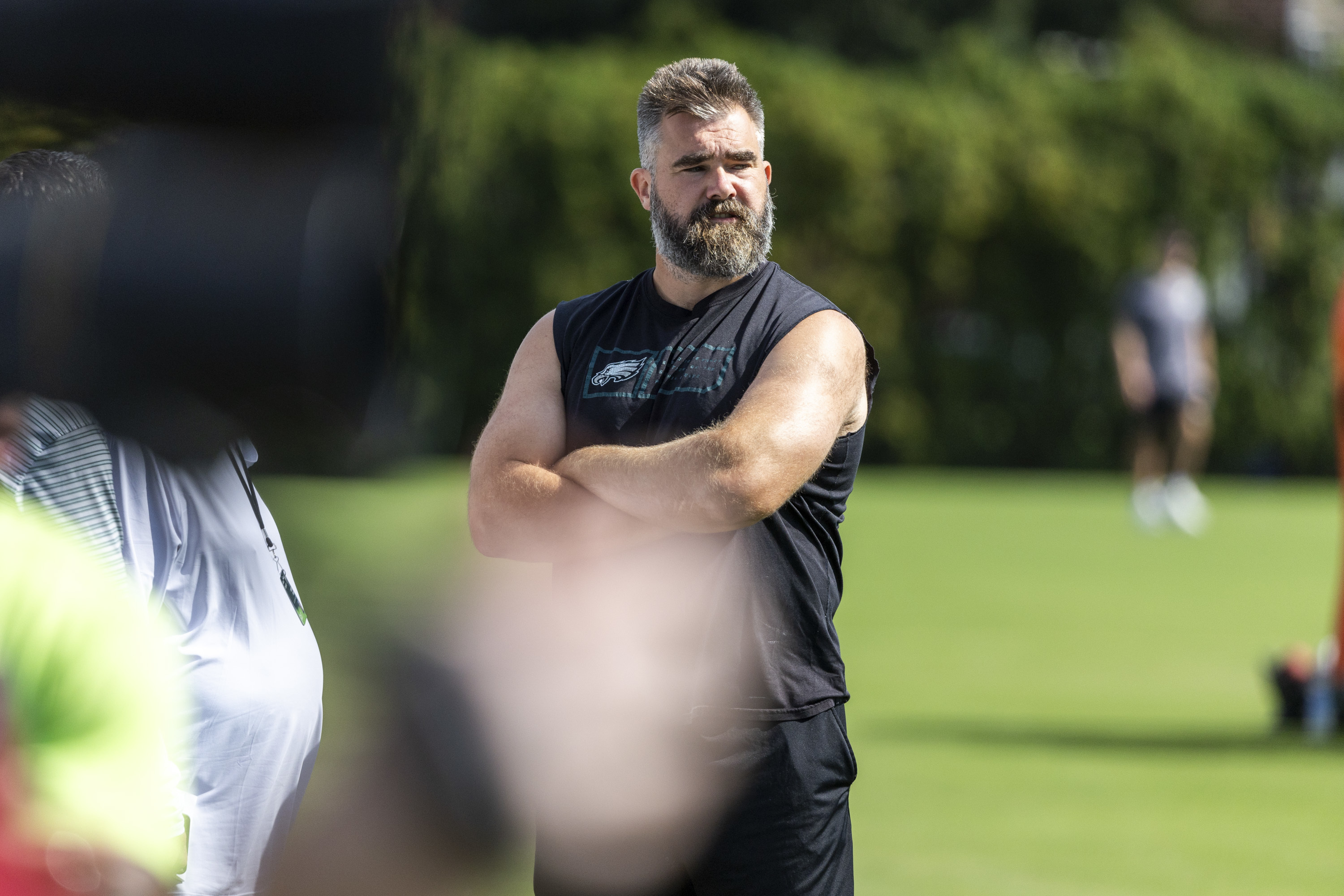
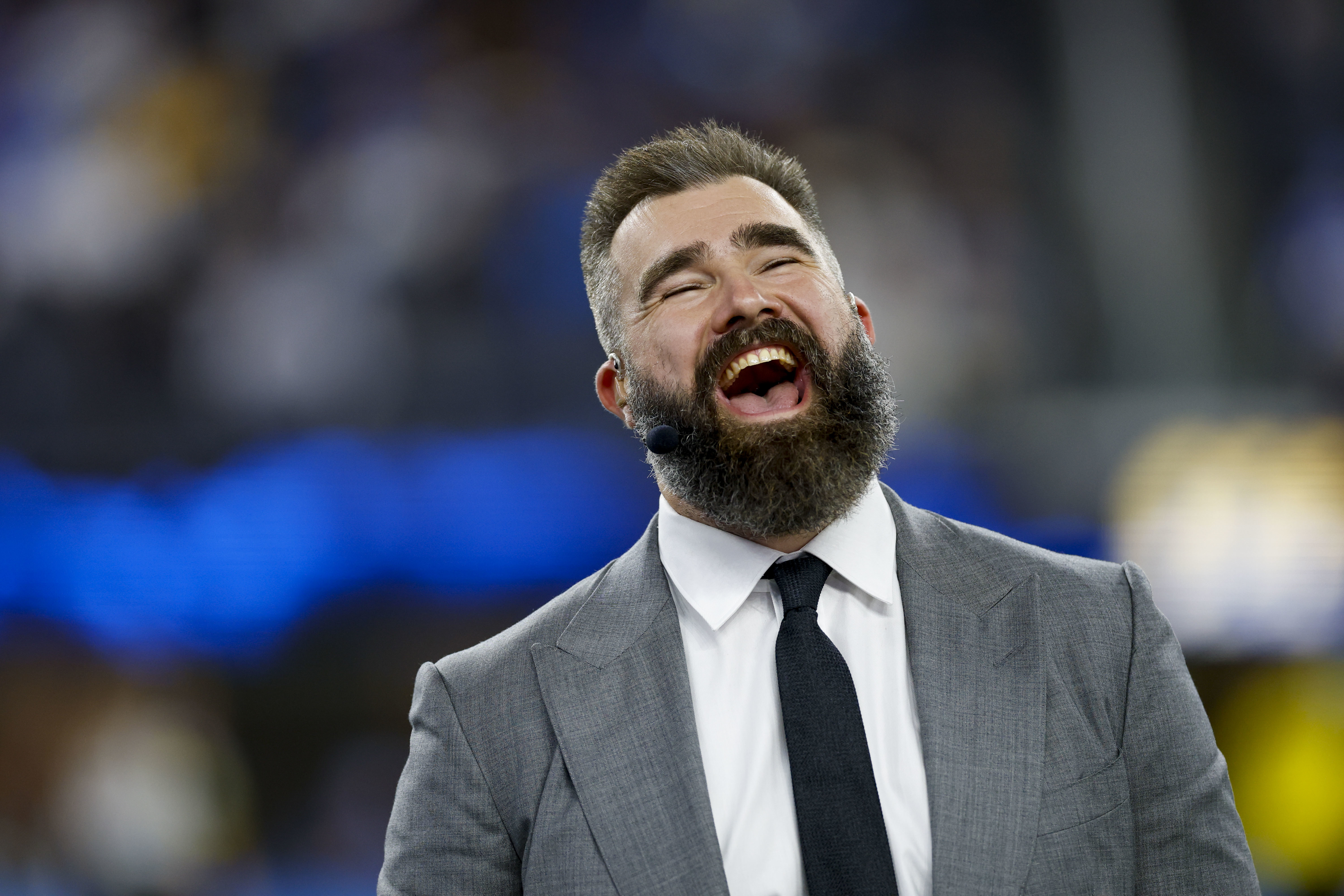
    Jason Kelce spent 13 seasons with the Eagles. Now he’ll get the chance to call a Birds game.

    The former offensive lineman turned podcaster and ESPN announcer is jumping to the booth to call a handful of NFL games this season on the NFL Network, the network announced.

    Kelce will join play-by-play announcer Dave Pasch and Hall of Famer Kurt Warner to call four games, including the Eagles’ Week 5 matchup against the Jacksonville Jaguars in London on Oct. 11.

    Here are the four games Kelce, Pasch, and Warner are slated to call:

    • Week 4: Colts at Commanders in London (Oct. 4)
    • Week 5: Eagles at Jaguars in London (Oct. 11)
    • Week 7: Steelers at Saints in Paris (Oct. 25)
    • Week 16: TBD matchup (Dec. 26)

    ESPN inherited seven NFL games as part of its purchase of the NFL Network. The remaining three will be called by play-by-player Bob Wischusen and one-time Eagles executive Louis Riddick.

    Molly McGrath will serve as sideline reporter for both teams.

    Joe Buck and Troy Aikman are back to call Monday Night Football, with King of Prussia native Lisa Salters and Laura Rutledge on the sidelines. Because of his role as a consultant with the Miami Dolphins, Aikman won’t have access to practice facilities or team practices this season, the same restrictions placed on Tom Brady.

    Jason Kelce is entering his third NFL season with ESPN. Yong Kim / Staff Photographer

    While Kelce has yet to call a full NFL game, he did swap out his South Philly tuxedo for a suit to call part of a 2024 Eagles game alongside Monday Night Football’s Buck and Aikman.

    “I think I got better as it went. There were a couple [of moments] trying to figure out where you fit in and what to say,” Kelce said following the game. “In the heat of the moment, you have to offer a perspective or something the viewer can take and enjoy … it’s difficult.”

    Kelce will also be back for his third season as a studio analyst on ESPN’s Monday Night Countown alongside Marcus Spears and host Scott Van Pelt. The show is adding two new analysts: Jason McCourty (replacing Ryan Clark, who was laid off last month) and Pat McAfee, ESPN’s omnipresent star who will still host his daily show and continue as a co-host of College Gameday.

    Pat McAfee will join Jason Kelce on “Monday Night Countdown” this season. Darron Cummings

    Kelce is in the final year of a three-year deal he signed with ESPN in 2024. During that time, he’s appeared on the network’s coverage of the Masters and The Golf League, and a five-episode stint as a late-night host in Philly.

    He also launched a new YouTube series called Kelce Versus, which features the former offensive lineman trying out other sports, including driving for NASCAR and learning how to dunk a basketball (which he did in front of a live crowd in Los Angeles in June). It’s unclear how many episodes there will be.

    Kelce also remains a presence at Eagles training camp and continues to host the popular New Heights podcast with his brother, Kansas City Chiefs tight end Travis Kelce.

    Exhausted? Some fans are, too. But Kelce has a lot of time to fill since having retired from the Eagles in 2024 and is focused on bucket-list stuff he couldn’t do during his playing days.

    “We’re definitely capitalizing on the ability to go and do random things,” Kelce told CBS analyst and Eagles pregame announcer Ross Tucker on his podcast last month. “Maybe too much. We got to talk as a team, but it’s been fun.”

  • AI erodes trust between students and teachers. That’s no small concern.

    AI erodes trust between students and teachers. That’s no small concern.

    It was my fourth year teaching, and I had just completed a unit on descriptive writing with my ninth graders. I sat down to read their final pieces, both curious and terrified to see what they had come up with. The first few were solid, if unremarkable, but then I picked up a piece that opened with a line that remains crystal clear in my mind 25 years later.

    The trees were sprayed with the scent of wonderful.

    Once I finished reading, I couldn’t wait to get to school the next day to talk to the author about her work, a delightful evocation of a place in South Carolina where she had gone for a family reunion. For the rest of the year, I recommended poems and stories she might like, and we stayed in touch for years after she graduated.

    Contrast this with my experience last semester in a college course I’m teaching. I began reading my students’ response papers to the week’s readings and encountered a particularly astute opening line.

    This time I was neither excited nor delighted. Instead, I was wary. I spent the next 15 minutes using a variety of tools to try to figure out if AI wrote the paper.

    I am not alone. According to an NPR/Ipsos poll, almost 60% of teachers believe artificial intelligence is eroding trust between educators and students. I’ve talked to my university colleagues, as well as the many current high school and middle school teachers I work with, and in the classrooms of America, suspicion pervades. Now when we teachers see great work, we don’t feel pride or wonder or joy. We feel skepticism.

    To make matters worse, schools at all levels are inviting the vampire into the house, spending millions on AI products and, in some cases, mandating that teachers incorporate AI use into their curriculum, despite the misgivings of many teachers.

    These policy decisions are not happening in a vacuum. Our school districts are a lucrative market for Silicon Valley and have become targets of relentless campaigning.

    So, teachers and students end up stuck in a Groundhog Day cycle, as districts continue to pursue the latest technological solution, despite the repeated failure of this strategy.

    In a photo from 2018, students use their cell phones to look up information on political races during a social science survey class at Fremd High School in Palatine, Ill.Stacey Wescott/Chicago Tribune/MCT

    Cell phones were marketed as a great way to enhance participation and engagement by students — for example, teachers were encouraged to use tools like Poll Everywhere. Now, states are increasingly passing bills banning phones from schools because we recognize their distracting effects.

    Then there was the movement to get every student a laptop in class to allow for individualized, work-at-your-own-pace instruction — for example, teachers were encouraged to use video collections like Khan Academy. Now, we are starting to recognize that students staring into screens for seven hours a day isn’t necessarily what we want for our children.

    AI companies are making familiar bold claims about how this latest technology will improve learning and revolutionize classrooms with little consideration or acknowledgment of the downsides.

    During one of my recent AI conversations, I was reminded by a friend that 25 years ago, American author and educator Neil Postman asked us to be thoughtful when adopting new technology. He told us to ask not only what a new technology will do, but also “What will a new technology undo?”

    We have an answer for what AI will undo: AI is spoiling the interactions between students and teachers, undoing the relationship-building that is vital for learning.

    There have been and should continue to be vigorous debates about whether and how AI helps or doesn’t help student performance. But we must include in these debates the damaging effects such tools are having on relationships between teachers and students. Those relationships are critically important to learning no matter what technology surrounds them, and we neglect them at our peril.

    Jeremy Glazer is a former high school teacher in Philadelphia and Miami, and is currently an associate professor in Rowan University’s College of Education focusing on teacher preparation.

  • My husband was kicked out of hospice for dying too slowly

    My husband was kicked out of hospice for dying too slowly

    “No more operations,” he said.

    It was mid-January 2026, and my then-73-year-old husband, Mike Salmon, had just started bouncing back from a three-month ordeal of three operations related to aortic aneurysms, sepsis, and a terrifying descent into delirium tied to a stay in the intensive care unit. Now, after another potentially fatal aortic aneurysm and ambulance ride, the doctors clustered around his hospital bed said the fix involved two more major, risky operations.

    If Mike did nothing, the aneurysm or sepsis would likely kill him, they predicted. How soon? “Weeks,” one doctor said. “I’m astonished I’ve made it this far,” Mike said. So, abruptly, we were shunted onto hospice care — the dead-end spur of the American medical system.

    Hospice agencies manage care for patients expected to die within six months. They don’t provide curative procedures or drugs. Instead, they aim to help families make terminally ill patients comfortable, typically at home, as an illness reaches its inevitable conclusion. Families provide most of the day-to-day care, and 85% have suggested they are very satisfied with their hospice’s services, which include supplies of drugs and medical equipment, and visits from nurses, therapists, and aides.

    More than 1.9 million Americans were enrolled in hospice in the last fiscal year. Over 80% of those patients stayed on hospice until they died — within four weeks, on average. But each year, about 6% of patients are kicked out because a hospice doctor decides they have stabilized or improved enough that they are no longer likely to die in the next six months.

    In May, Mike joined that select group. His experience in and out of the hospice system revealed surprising lessons about how families can manage care. And getting removed from hospice revealed a little-known process that can represent a welcome respite for families like ours — but can be devastating for patients with serious chronic illnesses.

    Here’s what we learned in our four months on and off hospice.

    Check before you choose

    “Choose one.” A hospital nurse handed me a list of local hospice agencies. The sooner we signed up, the sooner Mike could go home. Stunned by the suddenness of Mike’s health emergency, I just pointed to the name at the top of the alphabetical list, assuming they were pretty much the same.

    Big mistake. Medicare sets basic standards for the hospice agencies it reimburses, but some agencies are understaffed or poorly run. Amy Tucci, president of the Hospice Foundation of America, noted that some agencies provide extra therapy, aide support, and other services.

    The problems with the organization I had chosen started immediately. Staffers were often late. They entered inaccurate medical information on Mike’s paperwork and didn’t make corrections when alerted. Medicare allows you to quit or change agencies, so I asked neighbors for recommendations.

    That was a good start, but Kristina Newport, chief medical officer of the American Academy of Hospice and Palliative Medicine, said I should also have checked the quality ratings on Medicare’s Care Compare site and the National Hospice Locator. Those sites would have alerted me to our first agency’s low ratings. Ideally, Newport said, patients or caregivers should call their area’s top-rated agencies to find those that provide the services you need, such as staff members who speak the patient’s native language, provide spiritual care that aligns with the patient’s beliefs, or are stationed nearby to arrive quickly in an emergency.

    The local, long-established nonprofit that neighbors recommended handled the transfer seamlessly. Its staff was punctual, accurate, and kind. The chef’s kiss after we switched: A nurse from the original company we chose called to say she hoped I hadn’t initiated the change because of “concerns about our care of your mother.”

    Some people get better on hospice

    Research hasn’t yet fully explored why, but some people actually see their health improve under hospice care. Studies have found, for example, that hospice patients with congestive heart failure or lung cancer live about a month longer, on average, than similar patients in the standard medical system.

    Terry Berthelot, who teaches courses on elder law and hospice care at the University of Connecticut, said many patients benefit from hospice’s careful pain management and from leaving hospitals, where they risk infection and overtreatment. Returning home allowed Mike to get up and walk without waiting hours for an overworked nurse to unplug a bunch of monitors, and to enjoy real food. Also, the hospice nurse gave him medicine to help him sleep through the night. He soon started regaining weight and strength.

    You can flunk out of hospice for not dying quickly enough

    Medicare and many other insurers pay for hospice services only for patients whom physicians certify are likely to die within six months of the most recent assessment (not the date of enrollment), so hospice staffers regularly reassess patients. Medicare audits agencies to check for fraud and demands repayment of funds provided for care of patients its auditors deem have not proved to be terminal. Hospices, good and bad, worry about their bottom lines and Medicare’s fraud audits. They may feel pressure to discharge patients who threaten the organization’s finances, even though such discharges can remove important care. “Medicare is worried about fraud and abuse, not about people not getting enough care,” Berthelot said.

    Especially for diagnoses with uncertain prognoses — such as dementia — if a patient improves or even stabilizes, hospice physicians might discharge the patient because they can no longer certify a likelihood of death within six months.

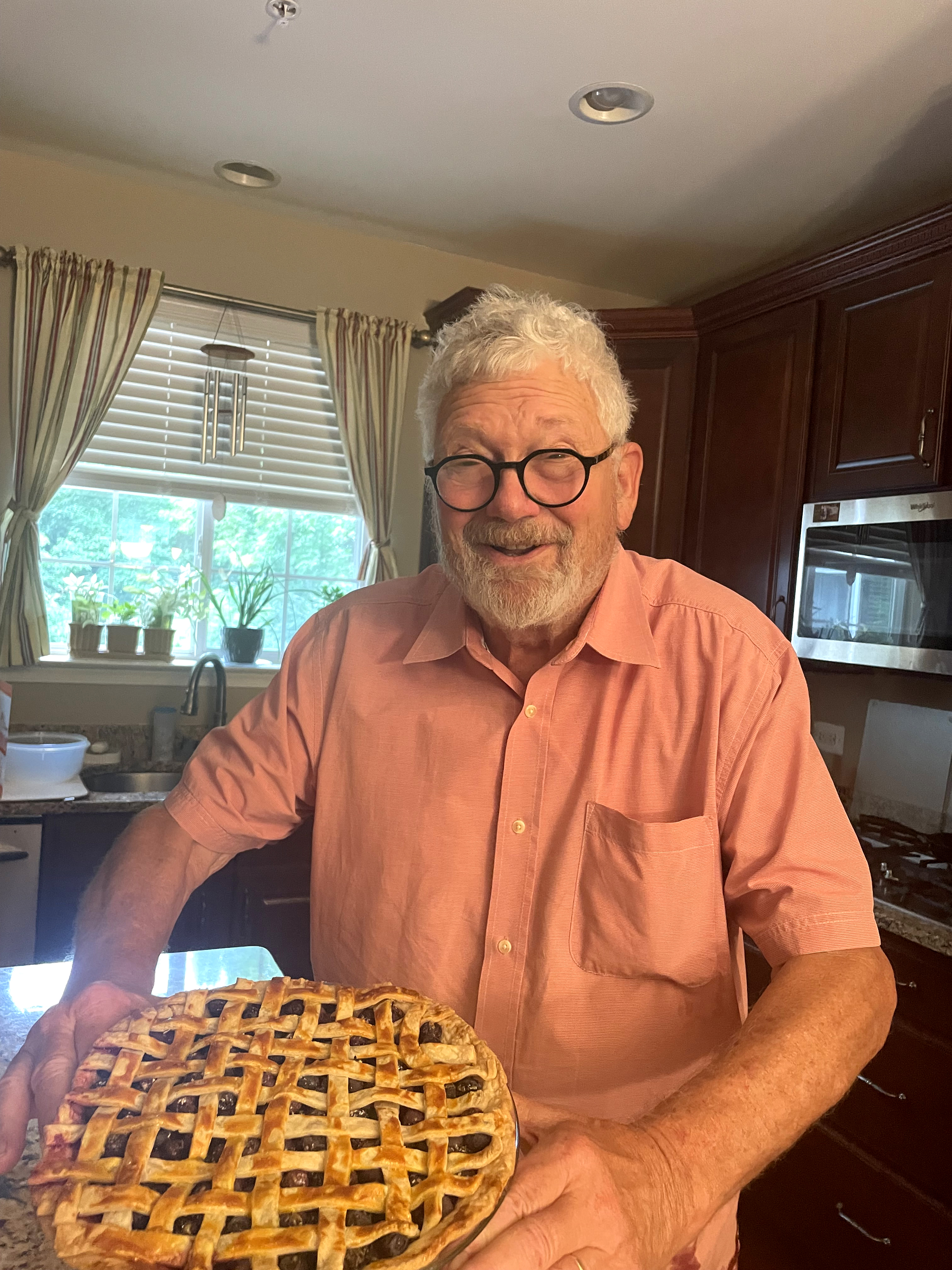
    For some lucky reason, Mike’s aneurysm and sepsis held off. By early May, his wounds had healed, and his strength had improved enough that he returned to gardening, playing bridge, and whipping up his signature lattice-topped blueberry-cinnamon pies. While we appreciated the convenience of the nurse’s visits and the drug and medical supply delivery, we realized Mike no longer needed care, so we agreed with our agency’s decision to discharge him.

    For patients suffering from more debilitating diseases, discharges can be a “nightmare,” said Krista Harrison, a hospice researcher at the University of California-San Francisco. Discharges often happen quickly. Medicare requires that patients be given a minimum of two days’ notice.

    When Harrison’s stepfather, suffering from a neurodegenerative disease similar to Parkinson’s, was discharged because his health seemed to plateau, the family scrambled to replace and pay for hospice-provided equipment such as a hospital bed and oxygen supply, and they had to quickly find and hire aides to replace the hospice aides. “Just getting his prescriptions reestablished and filled was a big deal,” she said. Her stepfather died six weeks after discharge, she said.

    Do your homework to ensure appropriate care

    Arming yourself with information about your risks and rights can help you get the hospice care you need when you need it.

    • Know your diagnosis. Discharges are unlikely for most cancer patients. But patients with dementia, heart disease, and Parkinson’s often plateau. So they are disproportionately likely to be discharged, UCSF’s Harrison said.
    • Choose a highly rated hospice. Research shows for-profit hospice agencies are more likely to discharge patients than nonprofits. Medicare’s Care Compare site will alert you to which is which.
    • Keep your own records. Caregivers who can document, say, a patient’s growing need for eating assistance can help hospice staff approve continuing care, or build a stronger appeal, UCSF’s Harrison said.
    • Keep your family doctor more informed. Doctors “don’t have the financial interest” the hospice faces and could help you dispute a discharge, Berthelot advised.
    • Appeal quickly. Hospice agencies must provide information on appealing a discharge. But you must file the appeal (online or by phone) by noon on the day before the termination date, which may mean you have only a few hours if you’ve been given the minimum two days’ notice, said Wey-Wey Kwok, a senior attorney for the Center for Medicare Advocacy.
    • Reenroll. Patients can try reenrolling in hospice at any time. Another hospice agency may take you immediately. Or you can wait until the patient’s health declines and try reenrolling with your original hospice agency, the Hospice Foundation’s Tucci advised.

    That last option is our plan. For now, Mike and I are enjoying these unexpected bonus days. But whenever fate catches up with him, Mike said, he’s comforted to know he’ll get good care from the hospice’s staff. “They’ll try to improve the quality of what time I have left,” he said.

    KFF Health News is a national newsroom that produces in-depth journalism about health issues and is one of the core operating programs at KFF — the independent source for health policy research, polling, and journalism.

  • Drexel grad Jeffrey Cunningham is making his mark in golf and pushing for diversity

    Drexel grad Jeffrey Cunningham is making his mark in golf and pushing for diversity

    For Jeffrey Cunningham, golf has always been more than the scores, wins, and losses.

    The Drexel alumnus started playing golf at 5 years old in Dallas. His coach, Dante Degrate, introduced him to his son Austin, another young Black golfer who was competing and winning U.S. Kids Golf tournaments. Seeing someone who looked like him playing golf made it easier for Cunningham to catch the golf bug.

    Now, the 27-year-old hopes to create the same sense of representation for the next generation.

    Cunningham graduated from Drexel in 2022 and earned a spot on the Advocates Professional Golf Association tour after finishing second in the APGA’s collegiate rankings. Cunningham returned to Philadelphia to compete at an APGA Tour event at The 1912 Club on Aug. 3-5.

    The APGA Tour provides competitive opportunities for underrepresented golfers and an inclusive future for the game. What began in 2010 as just three events has grown into a national schedule held almost every month from coast to coast.

    The APGA has provided Cunningham a place to compete, develop his game, and build a professional resume as he works toward earning his PGA Tour card.

    “The APGA Tour is definitely important for guys like me who need a place to play and get ready for qualifying school,” he said. “I don’t think what I’m doing now is possible without the APGA Tour because it gives me a chance to sharpen my game and learn more about myself to reach the highest level of the game.”

    Solomon Hughes, APGA’s chief operating officer, said co-founders Ken Bentley and Adrian Stills, the last Black player to make it through PGA Tour qualifying school for 25 years, created the organization to address the lack of access and opportunity for talented golfers from underrepresented communities.

    “Bentley and Stills started the organization really to help address access and opportunity issues for players who have the game but maybe haven’t had the resources,” Hughes said. “We give players you haven’t heard of, but certainly talented players, a chance to play and compete.”

    In 2022, Jeffrey Cunningham was the first African-American golfer to advance to the finals of the BMW Philadelphia Amateur Championship.APGA Tour

    But Cunningham sees the work of the tour extending beyond professional golfers.

    Along with the tour, the APGA has a foundation focused on empowering underserved youth through golf, education, and wellness. While in Philadelphia, the tour hosted a youth clinic for members of the First Tee of Philadelphia at The 1912 Club.

    The youth clinics are for ages 13-21, and they participate in a three-phase program focused on golf education, career development, and mental health advocacy.

    “We really want to try to give the game of golf to people who may have a background in it, but also to people who don’t,” Hughes said.

    This year, the APGA had more than 3,500 participants in the youth clinics, Hughes said.

    “Getting out in the community and educating the youth on the etiquette of the game and the culture and how to fit ourselves within the culture of the game is important for our country,” Cunningham said. “I think the game and the industry would look a lot more represented if we met at those crossroads.”

    Austin Degrate was a major influence on Cunningham’s golf journey and pushed him to compete in tournaments in West Palm Beach, Fla., where he moved to when he was 8. As Cunningham got older, he became more serious about competition and playing in college.

    After visiting Drexel, he loved the coach and program, so he decided “to take a gamble on West Philadelphia.” The difference in style of golf and wearing his North Face parka between shots in qualifying rounds during the winter was an adjustment for Cunningham, but his time in the city pushed him to be where he is today.

    “It was the best decision that I’ve made for my career because it gave me a place to play for five years and hone in my game, then get into the APGA Tour through their collegiate program,” he said.

    Cunningham said playing golf at Drexel was the “best decision that I’ve made for my career.”Drexel Athletics

    His time in Philadelphia also gave him a firsthand look at the barriers facing Black golfers.

    In 2022, Cunningham was the first African American golfer to advance to the finals of the BMW Philadelphia Amateur Championship.

    “In the city of Philadelphia, there is a large population of African Americans and Black folks who have not gotten the opportunity that I have gotten, as we can see from me being the first African American to reach the finals of the Philly Am,” he said. “It is awesome to be able to break that barrier, but we can also learn that it was 2022. … We should be pressing and doing what we can and using the right resources to make that more possible for people who look like me.”

    America is diverse, Cunningham said, and golf should reflect that.

    “The misrepresentation is something we see in all levels,” he added. “Whether it be professional golf, teaching pro level, we are not giving enough opportunities across the board to underrepresented communities.

    “It is cool to see we are on the right path, but we still have a lot of work to do, and it starts with getting the youth into the game.”

  • How Philly distributed an estimated 1 million meals to kids this summer — and kept them busy

    How Philly distributed an estimated 1 million meals to kids this summer — and kept them busy

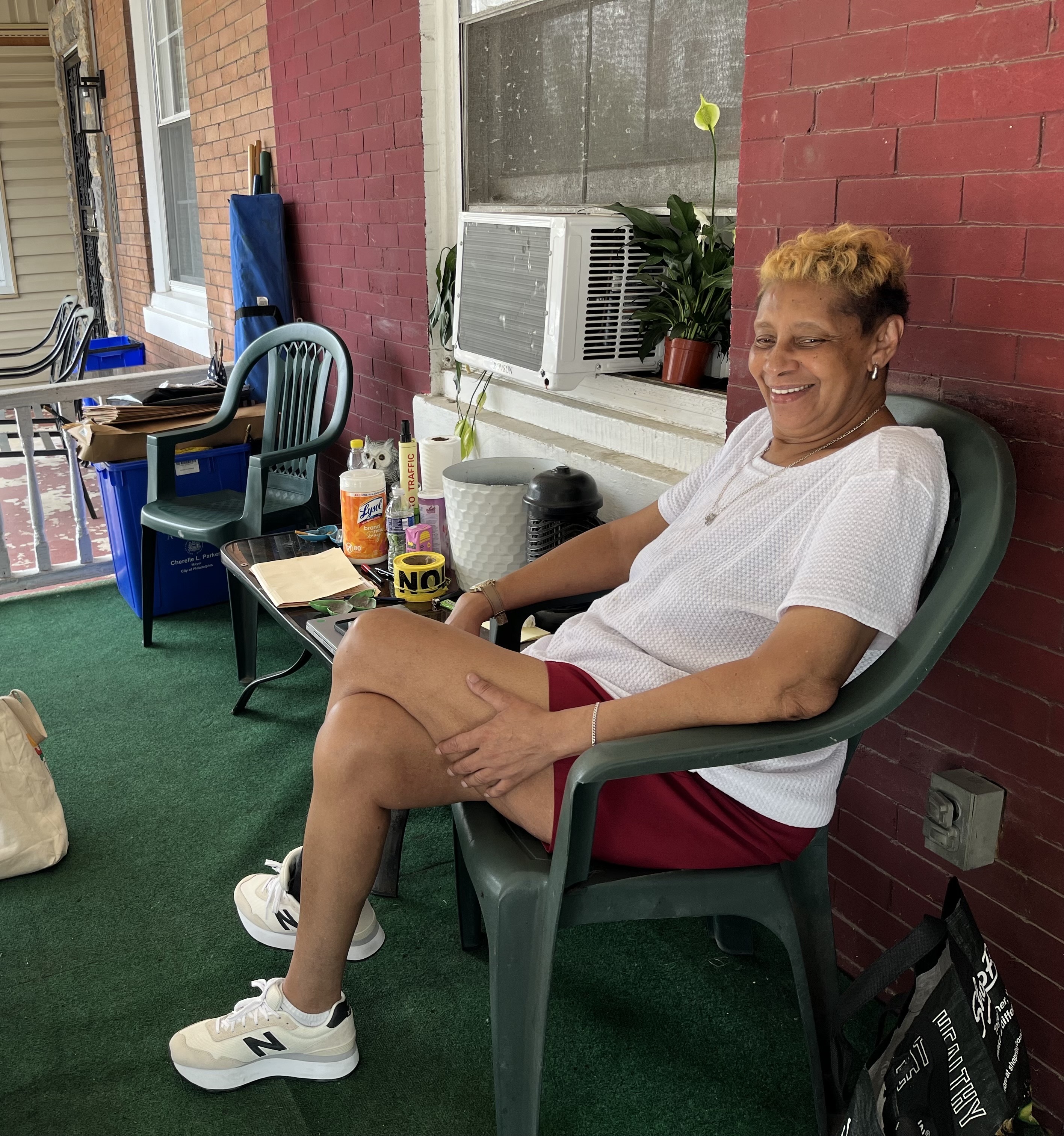
    Michella Crosby first noticed it a couple of years ago: The children surrounding her block in West Philadelphia were hungry — and a little bored — during the summer break.

    Once a kid in need of a meal, often getting one at her local armory, Crosby decided to do something to make sure no child went unfed.

    The 74-year-old block captain signed up to run a Playstreet last summer. Through the city-run Playstreets program, and with the support of neighbors, she closed off her block to traffic on weekdays and distributed free, nutritious lunches to children, no questions asked.

    “This is survival,” Crosby said in her second summer running a Playstreet. “We have to live. We have to be able to take care of our children.”

    Crosby is just one part of the more than 500 churches, camps, schools, recreation centers, and Playstreets in Philadelphia that offer children under 18 opportunities to do everything from crafting to sports and unstructured play during the summer. These sites have the added benefit of feeding children for free.

    The meals were paid for through the Summer Food Service Program, a federal program with funds administered by Pennsylvania.

    Providing children with a free, federally approved breakfast and lunch is a benefit many families only speak about in whispers, according to program operators. At many sites, all children are handed meals, even if they don’t need them or come with their own snacks. Coordinators say this method of meal distribution makes it so no one feels less-than for lining up during breakfast or lunch.

    This summer, the city was projected to distribute more than a million meals. A final count of meal sites will not be available until the end of the year, according to the city.

    The Inquirer visited several of these meal sites to get a glimpse of the many purposes these hubs serve and the people who make it all possible.

    Holy Innocents School summer camp

    The gymnasium is abuzz on a Tuesday with approximately 70 children ages 4 to 14.

    The pre-K children are the first to boldly rush the plastic folding table featuring a spread of small cardboard boxes topped with pints of milk.

    “There’s a line behind you,” an instructor gently reminds a little boy skipping past his classmates.

    The child spins around, offering a sheepish grin, and joins the friends he had zoomed past, giggling with glee.

    Almost every child in the room attends Holy Innocents School during the school year, said Dee D’Aulerio, director of the free all-day summer camp in Juniata Park.

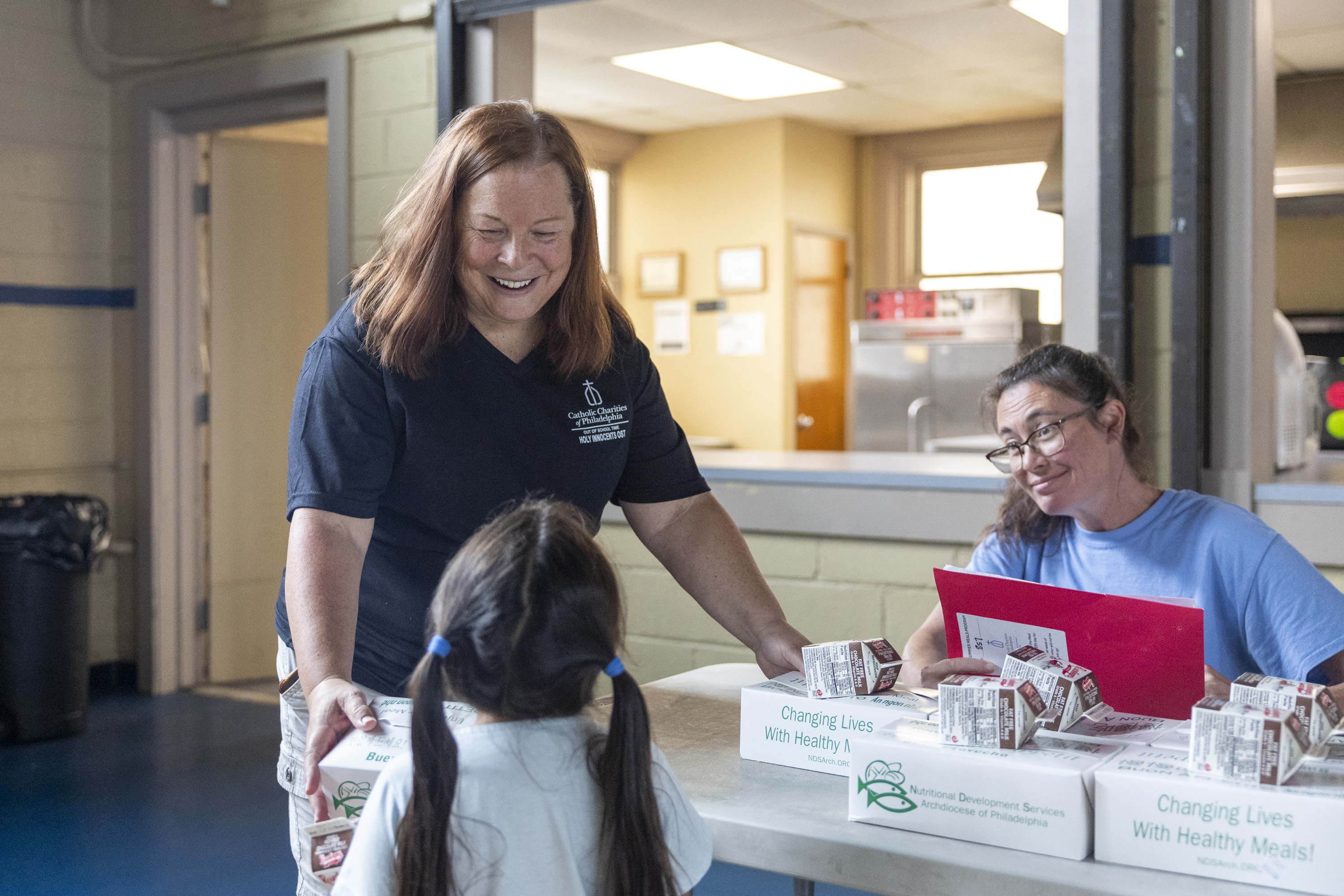
    A calendar of the meals made by Nutrition Development Services for about 150 kids at Holy Innocents Catholic Church in Philadelphia, Pa., on Tuesday, July 28, 2026.Tyger Williams / Staff Photographer

    “Historically, they did have to pay a fee, but now that we’re free, it really eases the burden on the families who pay tuition to take something off their plate,” she said.

    In rapid succession, D’Aulerio personally hands every child a box that includes a ham and cheese sandwich, celery sticks, and potato salad.

    Most look past the celery, donating their untouched containers to the “share table,” where a milk crate is already overflowing with applesauce containers.

    One of the middle school boys walks up to the share box and grabs a handful of sandwiches. He tosses one to a friend and keeps the rest.

    “The kids can help themselves if they’re still hungry after eating; they’re also able to take things home with them, too,” no questions asked, D’Aulerio said. “That’s a big help, especially if there are multiple children in the family.”

    100 block of Dewey Street

    Michella Crosby won’t admit it, but she is kind of the linchpin of her block, according to her neighbors.

    She had been block captain for a decade and a member of the nonprofit ACHIEVEability, which aims to break the “generational cycle of poverty,” for 16 years. She is the person neighbors go to for help applying to city programs that can lower their tax bills.

    Michella Crosby waits for children to stop by mid-August to pick up a free meal.Ximena Conde

    Last year, she started to tackle hunger in the neighborhood.

    Two children run up to Crosby’s house around 2 p.m. on a Friday, cracking open a blue cooler full of chocolate milk and apple juice. They are not from the 100 block of North Dewey Street, but they are near-daily visitors.

    “Got something to eat?” the boy asks, knowing the answer is yes.

    “I want two juices!” the girl says, pointing at a doll she is swinging around. “It’s for the baby.”

    “I got your applesauce,” Crosby says to the boy as he inspects the ham sandwich lunch. The boy is in a picky eating stage, Crosby notes.

    There were no Playstreets when she was coming up, so Crosby would head to the local armory. She only wishes she could do more for the modern-day latchkey kids who live in neighboring blocks. This summer, she has gotten faint knocks on the weekend of kids asking for food. Playstreets, however, only runs during the week.

    “As much as I would love to, I can’t give away my refrigerator,” she said, as a neighbor greets her from across the street.

    Still, she considers this summer a success, grateful that children feel safe enough to come to her for food and a chat. Their continued presence has persuaded her to continue the program.

    “As long as there’s a need for children to be fed, I’m going to do it,” she said.

    Kingdom Restoration Ministries

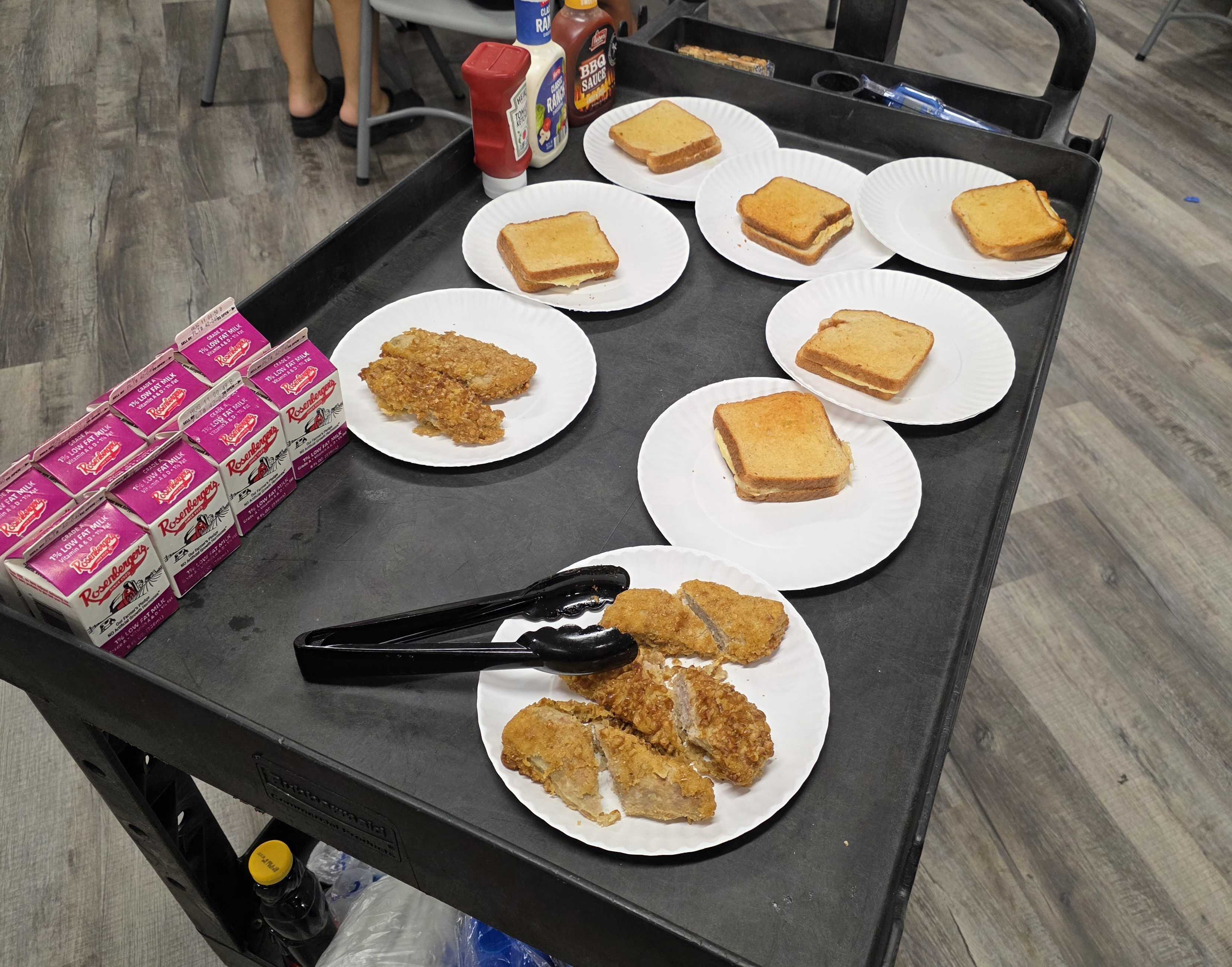
    Eight children were already digging into crispy grilled cheese sandwiches, fried chicken, corn, and fruit cups when Peace McClain, 35, walked into Kingdom Restoration Ministries in Olney with two of his own.

    A lunch of grilled cheese sandwiches and fried chicken is served at Kingdom Restoration Ministries in late July.Ximena Conde

    McClain keeps his kids busy with beach trips and other activities during the summer breaks, but worries they are missing out on an experience he remembers fondly: hanging out with friends freely on his block.

    “I remember summertime, going outside, and going to get free lunch from the block captain,” McClain said.

    Still, safety concerns keep McClain from letting his children too far out of his sight.

    The half-day camp he saw advertised on utility poles across the neighborhood felt like a good compromise.

    “I wanted to give them the experience to come in and meet these people because they don’t get to walk around,” McClain said.

    Velvet Howard gets ready to serve a lunch of grilled cheese sandwiches and fried chicken at Kingdom Restoration Ministries.Ximena Conde

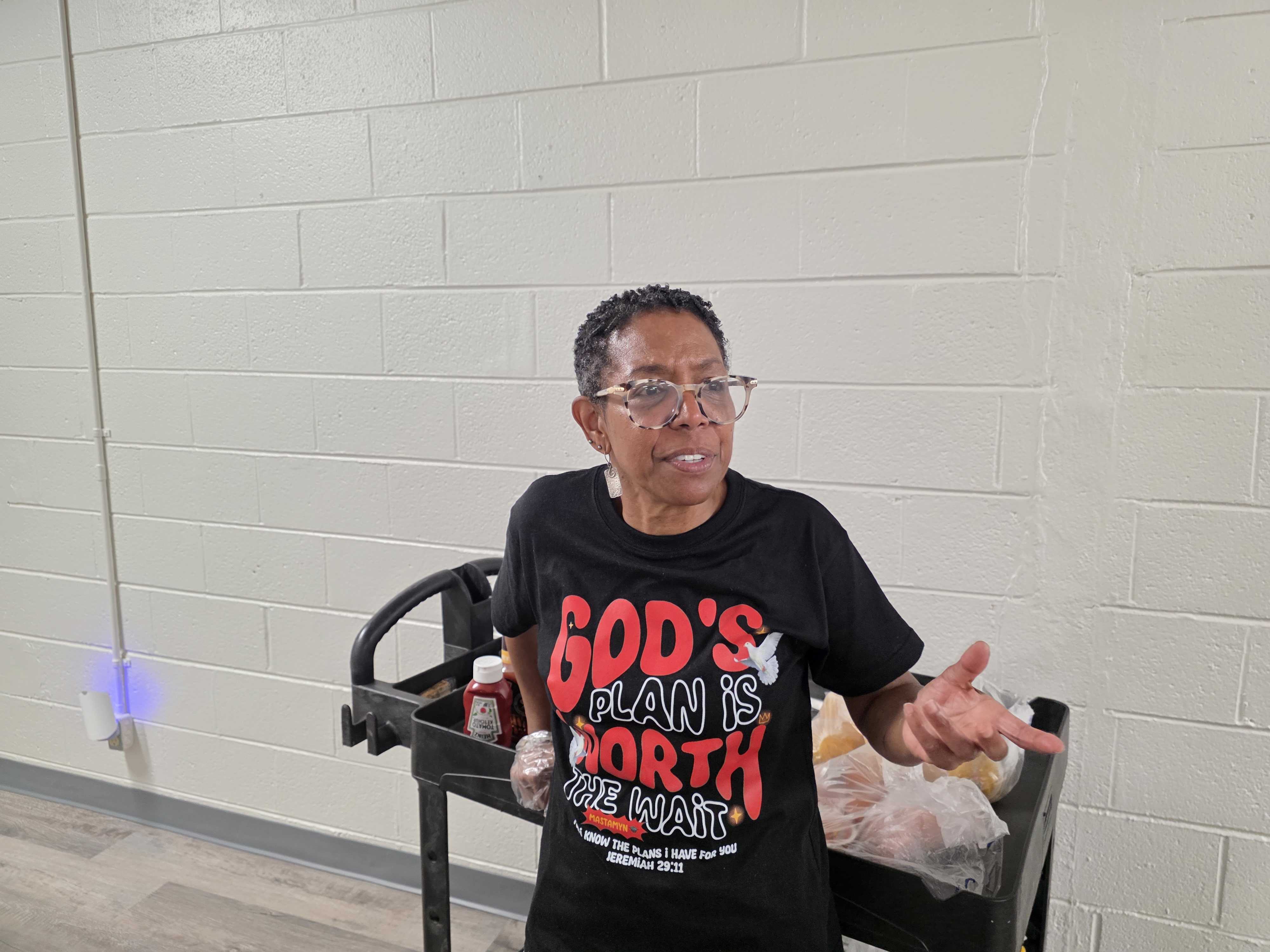
    Velvet Howard, 70, who is officially retired but is the camp supervisor for the summer, tells McClain how the camp works.

    In its first year, the camp offers half-day summer programming for children on Tuesdays and Wednesdays with breakfast and lunch included — all free. No preregistration is required, so the number of children in attendance fluctuates based on families’ summer plans. And while many of the children in attendance have some connection with the church, it is not required.

    (Left to right) Peace McClain picks up his children, Peace and Payton, from Kingdom Restoration Ministries in late July. The family was drawn by the possibility of having the children mingle safely with neighborhood kids their age, and the nutritious lunch was a bonus.Ximena Conde

    Lunchtime is almost over by the time Howard finishes answering McClain’s questions, but she encourages Peace, 10, and Payton, 8, to stick around, grab a bite, and mingle with the time left.

    “The staff was super nice here and it was really fun,” Payton said when reporting back to her father, noting she would come back. “And they had really good food.”

    The intersection of food insecurity and summer childcare

    More than 100,000 Philadelphia youth experience food insecurity, according to Laura Crandall, Philadelphia’s director of food security initiatives. In addition, close to 87,000 children under 18 live below the poverty line, according to the most recent data from the U.S. Census Bureau.

    Worries that many of these children lose access to reliable meals during the summer have long existed. But recent cuts to the Supplemental Nutrition Assistance Program, a result of the One Big Beautiful Bill Act, have exacerbated concerns.

    An estimated 45,000 SNAP recipients in Philadelphia could see benefits cut this year, according to the Pennsylvania Department of Human Services.

    As the social safety net tightens for families, summer camp enrollment has only grown more competitive.

    “Prior to the pandemic, we were already seeing that the options for families during the summer was decreasing,” said Erinn Hill, director of child nutrition programs for Catholic Charities of Philadelphia’s Nutritional Development Services, which sponsored 192 meal sites in the city this summer.

    “Camps and other programs were getting smaller, shorter, or closing. As of now, the number of sites is still not back to pre-pandemic levels.”

    The nonprofit CBS Food Program, which provides meals to Kingdom Restoration Ministries, responded to the mounting interest by delivering food to 41 partner locations in Philadelphia, close to double the number of sites it worked with last summer.

    Even so, some city partners worry food insecurity is only spreading amid the rising cost of groceries.

    At least two site operators, who asked not to be named to avoid getting in trouble, said seniors in their communities are increasingly coming to summer meal sites for food, which they are supposed to save for kids. In areas where the kids do not want the meals, operators will sometimes look the other way and let seniors take the leftovers.

    “We just can’t let our neighbors go hungry,” one site operator said.

  • What trades could Howie Roseman make to alter the Eagles roster in his typically active month of August?

    What trades could Howie Roseman make to alter the Eagles roster in his typically active month of August?

    The Eagles made five trades last August, acquiring four players who eventually landed on the team’s initial 53-man roster.

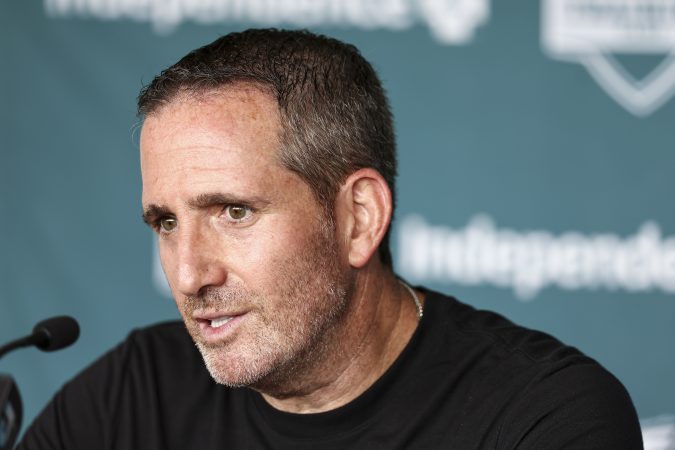
    It was an active month for Howie Roseman, even more so than usual. The longtime general manager has made a habit of August acquisitions. Over the last five years, Roseman has added backup quarterbacks, a starting safety, a third wide receiver, a depth corner, and others, never shying away from upgrading the roster early, in the middle of, or late in training camp.

    This August is more than halfway gone, and Roseman hasn’t yet made a trade. That could change soon, of course. The Eagles could be in need of an upgrade in a certain spot, or they may aim to acquire some draft capital.

    Where might the GM be looking to make a move?

    Here are some possibilities:

    Quarterback

    Let’s start with the obvious one.

    Andy Dalton and Tanner McKee are auditioning for the backup quarterback job behind Jalen Hurts. But they’re likely also auditioning for other teams. It seems unlikely the Eagles would keep both and either cut rookie fifth-round pick Cole Payton — which would expose him to waivers — or use four roster spots on the quarterback position.

    So, which of the two quarterbacks vying for the No. 2 job will go? Whichever one can fetch the best asset in return, is the obvious answer.

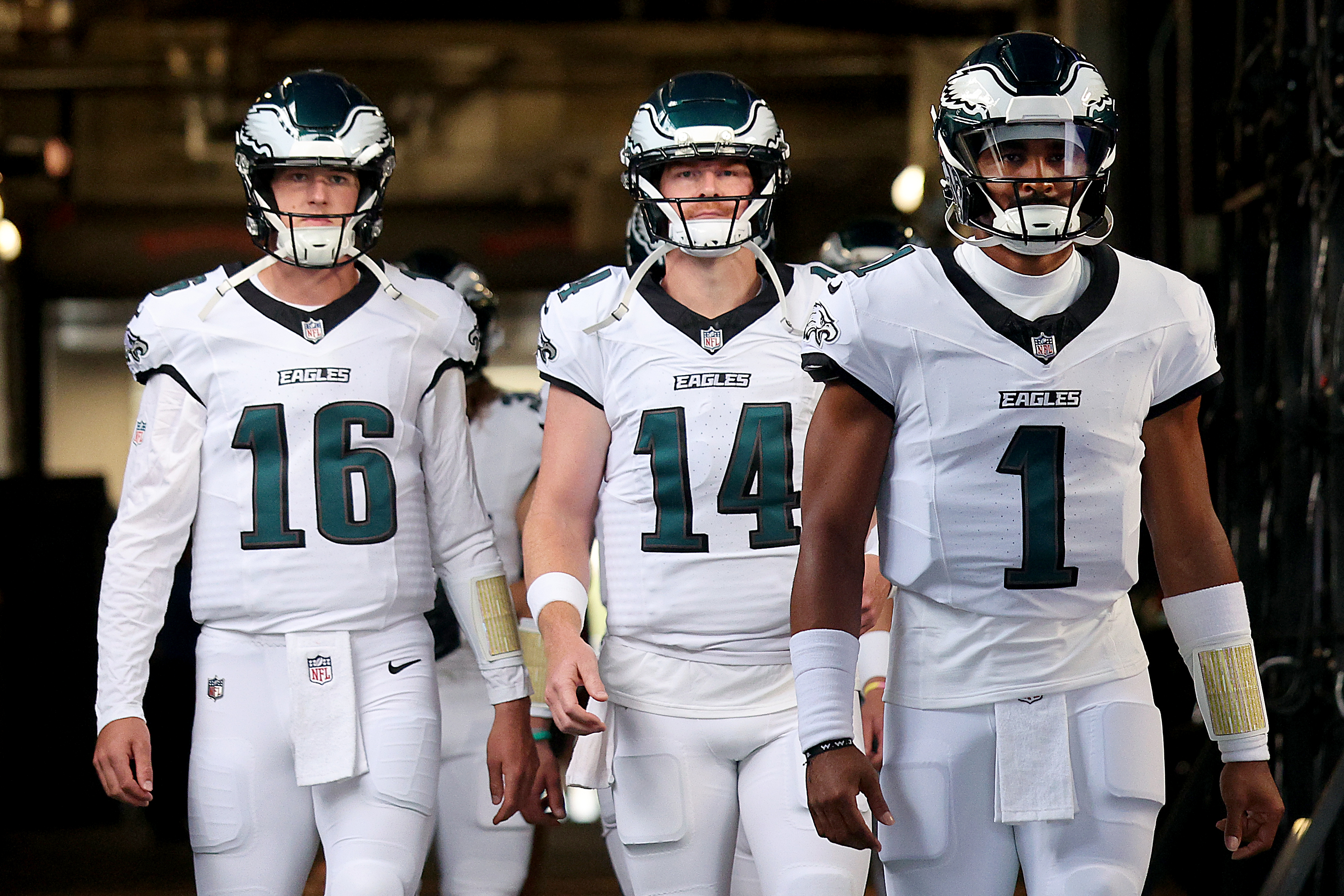
    Philadelphia Eagles quarterback Jalen Hurts (right) walks to the field with quarterback Tanner McKee (left) and quarterback Andy Dalton (center) before the preseason game against the Ravens on Saturday. David Maialetti / Staff Photographer

    Both Dalton and McKee are entering the final year of their contracts. A few weeks from now, teams could be hurting for quarterback help and might find one of them useful. The Eagles were one of those teams looking for help last season. Sixth-round pick Kyle McCord had a rough camp and the Eagles didn’t think he was ready to be the third quarterback, so they traded fifth- and seventh-round picks to Minnesota for Sam Howell and a sixth-rounder.

    Dalton, the Bengals’ starter from 2011-19, has played a lot of football and recently helped mentor young quarterback Bryce Young in Carolina. McKee, meanwhile, has been a solid backup and had a stellar starting debut at the end of the 2024 season, though his 2025 start in Week 18 wasn’t as strong.

    The Eagles parted with a 2027 seventh-round pick to acquire Dalton this offseason. They used a sixth-round pick on McKee in 2023. If they’re able to get a Day 3 pick for either player, it’s a pretty good result as far as asset management goes for a player who won’t play much and isn’t under contract next season.

    Safety

    The back end of the defense remains the thinnest position on the roster. It’s the only spot where an undrafted free agent rookie might make the team. But defensive coordinator Vic Fangio has at least publicly expressed confidence in what the Eagles have.

    Perhaps it’s less of a concern since Cooper DeJean, an All-Pro nickel, will play safety when the Eagles are in their base defense. But that still leaves something like 75% of the defensive snaps to Marcus Epps, the current leader in the race to start next to second-year safety Andrew Mukuba. Epps, 30, has been a solid player in the NFL, but he also was available at the end of camp last season for the Eagles to add to their practice squad.

    Behind Epps is Michael Carter II, a converted nickel who may also be the top option at backup nickel if DeJean goes down. An undrafted free agent like Max Pulley or Kapena Gushiken might make the team as the fourth safety, though seventh-round pick Cole Wisniewski returned to the practice field Monday after missing most of camp with a hamstring injury and veteran J.T. Gray, a special teams ace, is in the mix.

    Michael Carter II (35) is among those in the mix at safety. Tyger Williams / Staff Photographer

    The Eagles don’t have a lot of proven talent at safety. Mukuba is coming off a season-ending fibula fracture and has just 11 games of NFL experience under his belt. He’s the lone constant back there right now.

    Fangio’s defense might be the best in the NFL with or without Roseman addressing the safety spot, but the thought of what could happen if the defensive backfield is hit with an injury or two might force Roseman to make a move.

    Atlanta’s Jessie Bates III, for example, a veteran on an expiring contract, could be available.

    Wide receiver

    The Eagles travel up to Massachusetts this week to see old friend A.J. Brown and the New England Patriots for two joint practices and then a preseason game.

    It’ll provide a look at what they do and don’t have at wide receiver with Brown no longer with the team.

    DeVonta Smith returned to practice on Monday after missing time with a hamstring injury, and rookie first-round pick Makai Lemon, who also has a hamstring injury, looks like he’s nearing a return to the practice field. If both players are in uniform with the first-team offense Wednesday morning, the unit certainly will look a lot different than it has in recent practices.

    The Eagles aren’t lacking for top-end talent with Brown gone. Smith is more than capable of being a top-of-the-depth-chart receiver in the NFL. But behind him are players who are either unproven or aging.

    Hollywood Brown has not made a visible impact in training camp. Yong Kim / Staff Photographer

    Is Dontayvion Wicks ready to take the next step? Can Lemon provide an immediate impact in the slot? Is Darius Cooper more than the “dirty work” receiver Nick Sirianni described him as? Does Hollywood Brown just hate training camp and have more left in the tank? Is Elijah Moore’s NFL career nearing its end, or is there more? How much can you rely on Johnny Wilson after a season-ending knee injury last camp?

    The Eagles have reasons to like the position group. A trio of Smith, Wicks, and Lemon on the field has potential, and the Eagles probably are better at spots 3 through 6 on the depth chart than they were a year ago. But they don’t have the physical presence and one-on-one catching talent that A.J. Brown had.

    This position is an interesting one as far as trades go. Roseman actually could go either way. There’s a world where he gets to the end of August and realizes Hurts needs more top-end help. But there’s also a scenario that has him trading a player like Hollywood Brown, who Roseman signed to a one-year deal worth $5 million guaranteed, and flipping a receiver for a late-round draft pick because he’s comfortable rolling the dice with what the Eagles have.

    Honorable mentions

    Cornerback: The Eagles have arguably the best group of corners in the NFL with Quinyon Mitchell and Riq Woolen manning the outside and DeJean at nickel. But could they use better depth? Veteran Jonathan Jones, who’s in line to be the primary backup at outside corner, is out with a shoulder injury. Second-year corner Mac McWilliams has inside-out versatility, like Jones, but is he ready to be relied upon? Kelee Ringo is great on special teams but through three years hasn’t shown the coverage chops to play corner. Jakorian Bennett also hasn’t been consistent. The Eagles have a few other unproven players they like in Ambry Thomas and Tariq Castro-Fields, but Roseman could be in the market for some insurance.

    Edge rusher: Jonathan Greenard’s pectoral injury has the major offseason acquisition sidelined, and while the Eagles are hopeful he’ll be ready for Week 1, his absence highlights what could be a weakness. Jalyx Hunt has emerged as a talented pass rusher, but Nolan Smith Jr. is coming off a season that was marred by injury and inconsistency, and behind him the Eagles have two veterans on one-year deals in Arnold Ebiketie and A.J. Epenesa. International Pathway Player Joshua Weru may push to make the team during his first-ever football training camp, but edge rusher is an important position to complement an interior line group that might be the best in the NFL. A healthy Greenard should make a move unnecessary, but, like cornerback, you rarely consider the value of the insurance policy until it’s time to use it.

  • A.J. Brown and the Patriots vs. Jalen Hurts and the Eagles is the perfect rivalry for our hot-take age

    A.J. Brown and the Patriots vs. Jalen Hurts and the Eagles is the perfect rivalry for our hot-take age

    You know how this is going to go. The Eagles will take part in two joint practices, on Wednesday and Thursday, against the New England Patriots — and against A.J. Brown. Those workouts, plus the teams’ preseason game Saturday, will provide all the narrative jet fuel necessary to power us through the rest of the preseason and at least five weeks into the regular season.

    By then, Jalen Hurts will have played a few real games in Sean Mannion’s offense, and Brown will have caught who-knows-how-many passes from Drake Maye, and we’ll have a better if incomplete gauge of each team’s chances of qualifying for the playoffs, winning its division, and reaching Super Bowl LXI. Let’s be honest, though: A lot of people who follow the NFL and root for the Eagles will pay attention to how the Patriots fare, sure, but they’ll be more interested in another comparison, another unspoken competition: Jalen vs. A.J.

    Jalen vs. A.J. is about more than football. It’s about a friendship that fell apart and that may or may not have been put back together. It’s about a partnership that contributed to a championship, to four seasons’ worth of excellent collective performance, and to a year-plus of questions and passive-aggressive behavior that culminated in the acknowledgment that it was time for one of these men to move on.

    Best of all, Jalen vs. A.J. taps into one of the most visceral and familiar sensations within Philadelphia sports fandom (and, to a less intense degree, sports fandom generally). People here love to hate a villain, and Brown — whether he intended to or not, whether it’s fair that he is perceived this way or not — made himself one when he made it clear that he’d be happier playing for another team.

    He’s the guy who left, who snubbed the Eagles and everyone who cheers for them. Hurts is the guy who stayed, who wanted to be here. For a lot of fans here, it won’t be enough if Hurts has a terrific season or the Eagles win more games than the Patriots. Brown must drop every pass Maye throws to him, complain incessantly about how miserable he is, and be photographed paging through a copy of The TB12 Method on the New England sideline. These two are going to be held up against each other all season.

    A.J. Brown (1) wanted out, and now resides in New England where many Eagles fans wish him to fail. Charles Krupa

    So how will we judge who has won this soap-operatic battle? Obviously, team success and individual achievement will be the primary determining factors. And while there’s really no way to know for certain how the season will play out for either Hurts or Brown, we can look at some conditions and circumstances as they are now to make an educated guess about who will get the better of whom.

    For instance …

    Hurts’ head coach is Nick Sirianni, who has won a Super Bowl and sometimes has his children accompany him to his postgame news conferences. Mike Vrabel, who has lost a Super Bowl and isn’t quite as devoted a family man, will hold Brown’s hand throughout their time together with the Patriots. Advantage: Jalen.

    Brown’s quarterback will be Maye, who, before his four rocky playoff games, led the NFL last season in completion percentage, yards per attempt, passer rating, and QBR. Hurts’ wide receivers will be DeVonta Smith and three guys named Sal. Advantage: A.J.

    In fairness, Hurts can probably count on Sal 1, Sal 2, and Sal 3 to finish running all their routes. Advantage: Jalen.

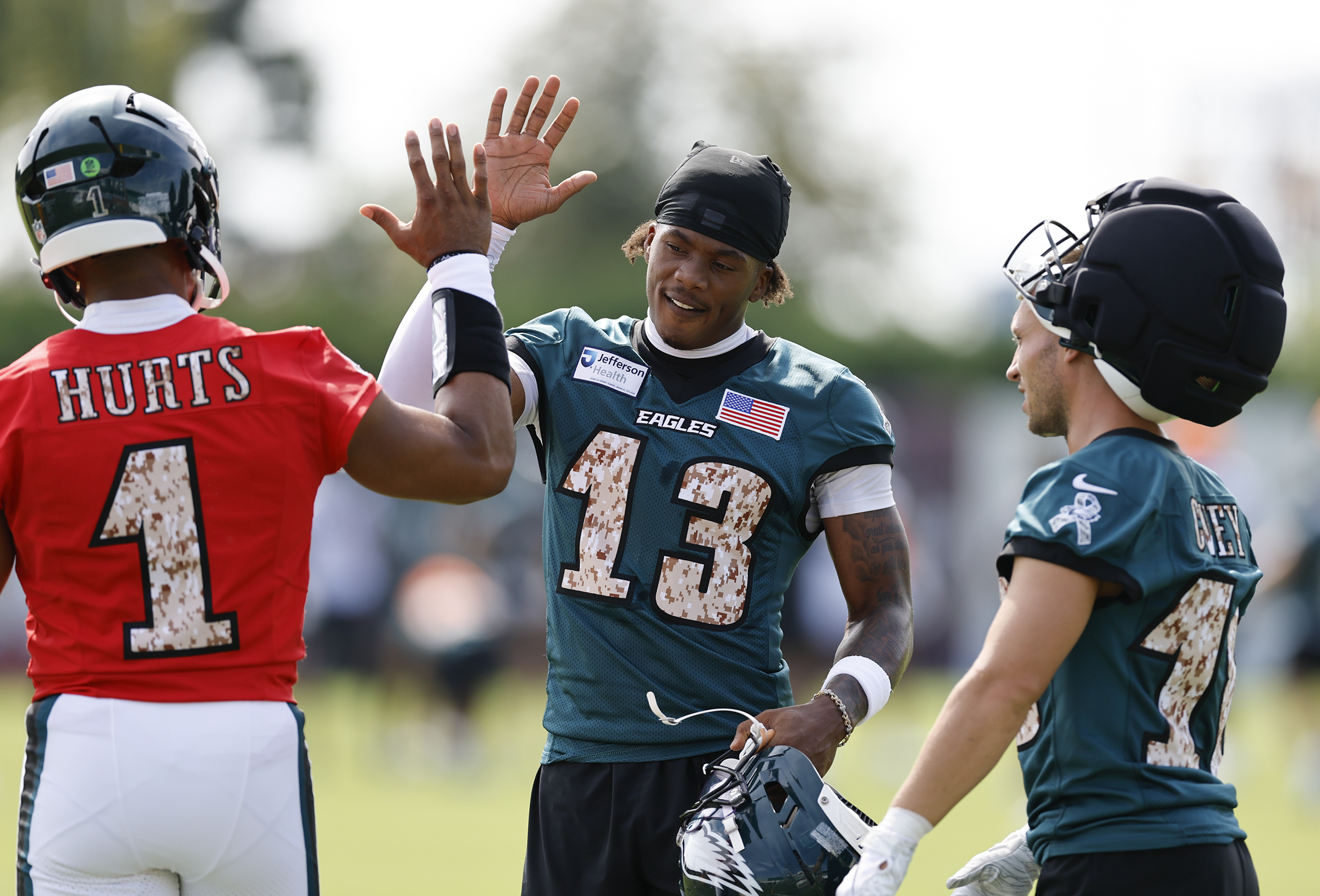
    Jalen Hurts with wide receivers Dontayvion Wicks (center) and Britain Covey during training camp earlier this month. Yong Kim / Staff Photographer

    The Patriots’ play-caller will be Josh McDaniels, regarded as one of the league’s most astute orchestrators of offense. The Eagles’ will be Mannion, who has never called plays in the NFL but is also not Kevin Patullo. Advantage: A.J.

    Hurts still plays in Philadelphia, where he can have dinner at any number of world-class restaurants and partake of a robust cultural scene and night life. Brown now plays in Foxboro, Mass., where he can pay full price for a refill at Dunkin’. Advantage: Jalen.

    Over his career, Brown has spent a lot of time, perhaps too much time, on Instagram and X/Twitter and paid a lot of attention, perhaps too much attention, to what has been written and said about him there. But with the Patriots, he doesn’t have to worry about the franchise’s social media team undermining his standing in the locker room by posting a video of him doing something totally humiliating and vitally important like throwing an interception in training camp. Advantage: A.J.

    Welp, looks like Jalen vs. A.J. is too close to call at the moment. Which is great. More intrigue! More drama! More content! Two man enter. One man leave. There can be only one Highlander. The winner gets a free copy of Pat McAfee’s new country-rock-rap-grievance album and the satisfaction of knowing the other guy was the true source of the problems with the Eagles’ passing game all along. The loser must live with the shame of knowing he let down a desperate fan base starved for its first Super Bowl victory in a year and a half. Let our long march to the ultimate hot take begin.