Tag: topic-link-auto

  • 🗳️ As seen on TV: Pa. debate and a House ad blitz | PA 2026 Newsletter

    🗳️ As seen on TV: Pa. debate and a House ad blitz | PA 2026 Newsletter

    📅 There are 25 days until Election Day.

    There’s a governor’s race at the top of the November ticket. But this week might have been the first time some Pennsylvanians heard of it — or, at least, learned who is challenging Gov. Josh Shapiro, as state Treasurer Stacy Garrity lags behind him by 25 points in the latest statewide poll of likely voters and remains unknown by a quarter of her own party.

    🎤 I’m Gillian McGoldrick, The Inquirer’s Harrisburg reporter, and I’ve been following all the twists and turns of Pennsylvania’s gubernatorial election that date back to late 2024. It was then when Republicans were determining who they’d choose for the top of the ticket, in hopes of avoiding the same downballot repercussions they saw with an unpopular gubernatorial candidate in 2022 — and with an overall goal to more seriously challenge Shapiro.

    We sat down with Garrity last week to learn more about the retired U.S. Army colonel and business executive who has struggled to compete with Shapiro’s deep pockets and multi-million dollar weekly ad buys — and why she thinks President Donald Trump may still come to Pennsylvania to stump for her ahead of the Nov. 3 election.

    The two candidates also met on the debate stage on Wednesday, in what was Shapiro’s first debate since 2016. (Practicing for 2028, anyone?) Both gave even-tempered and well-rehearsed showings that could make or break their political futures, as Garrity needed to give an attention-grabbing performance to help salvage her campaign, while Shapiro wanted to dominate as part of his efforts to generate enthusiasm for Democrats to help flip the U.S. House and get a trifecta in Harrisburg.

    📩It’s up to you to decide how they did — drop me a line (gmcgoldrick@inquirer.com) and tell me your favorite moments from the 2026 governor’s debate, hosted by Harrisburg’s abc27.

    In this edition:

    🗳️ Head-to-head: Shapiro and Garrity sparred over Trump’s leadership, the state budget deficit, and more in their lone debate ahead of Election Day.

    🗳️‘The cavalry will be coming’: Why Garrity still expects help competing against Shapiro, as Republicans face strong national headwinds.

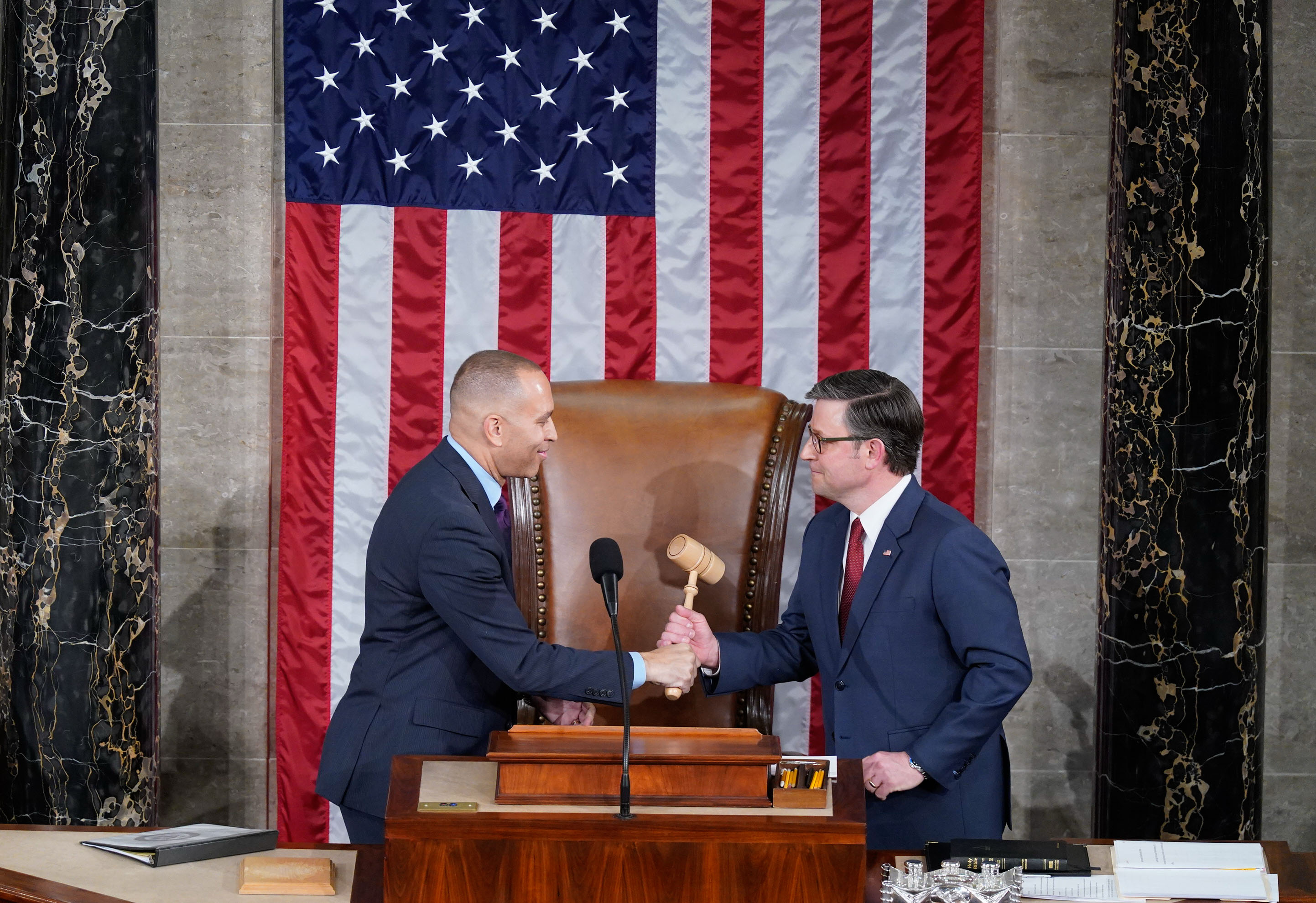
    🗳️ House wars: Both House Speaker Mike Johnson and Democratic Leader Hakeem Jeffries are making trips to Pennsylvania, signaling how critical they consider four Pennsylvania congressional races in deciding which party controls the U.S. House.

    — Gillian McGoldrick, Fallon Roth, Michelle Baruchman, Sam Janesch, (pa2026@inquirer.com)

    The latest

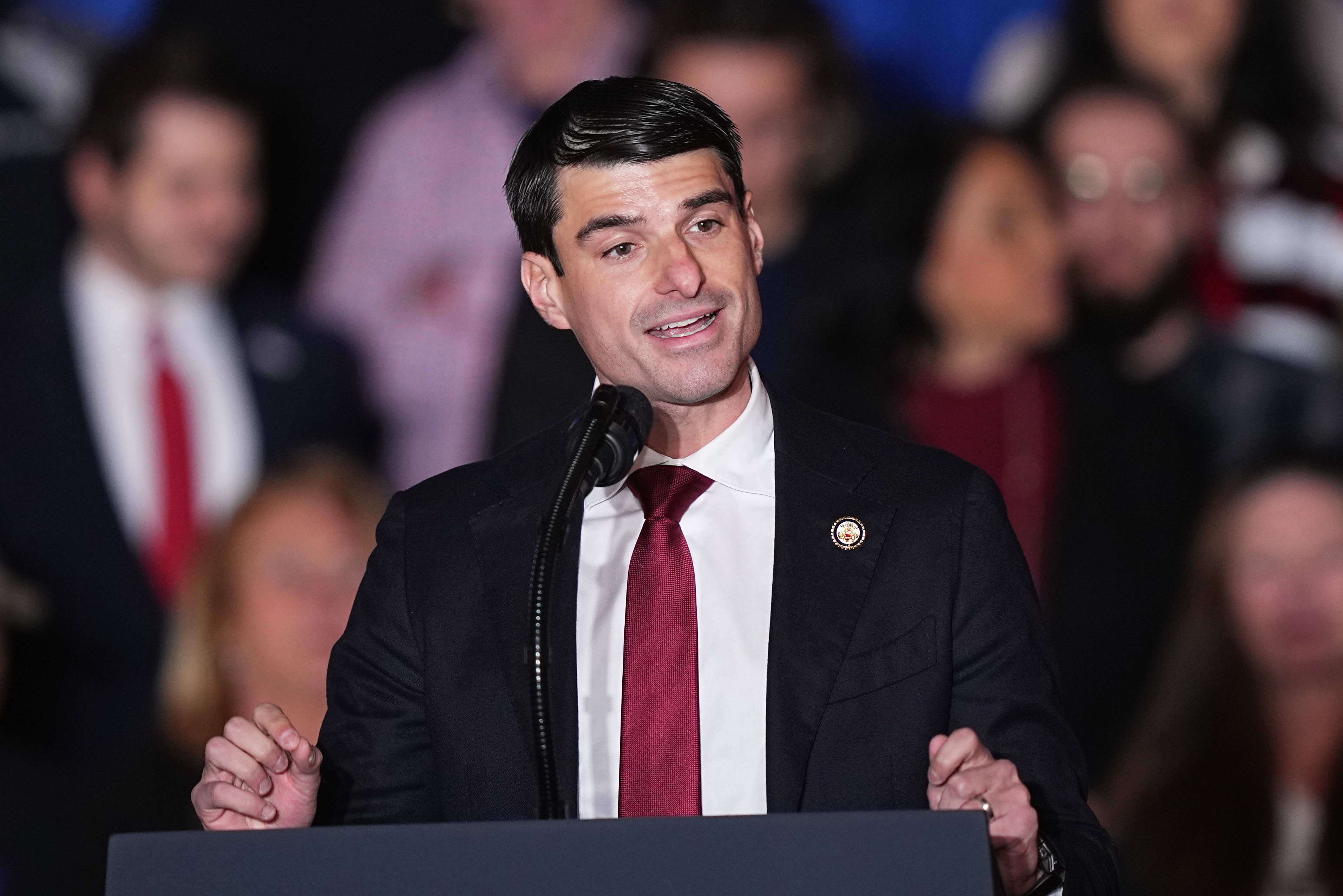
    • Shapiro, in his quest to flip four Republican-held congressional districts in Pennsylvania, dubbed Republican Brian Fitzpatrick’s seat “the most competitive in the entire commonwealth” as he stumped for Democrat Bob Harvie.
    • The unreleased full batch of Jeffrey Epstein investigation files have been a thorn in Republicans’ sides since Trump pledged during his campaign to release them all, only to change course in office. This week, Harvie said he would push “very, very hard” to release the full unredacted files if elected.
    • Philly State Rep. Malcolm Kenyatta said his colleague in the state House should resign after he reportedly used a homophobic slur against him.
    • And across the river, Democrats are expanding their horizons with growing optimism in the midterms — including by adding Republican Jeff Van Drew’s seat in South Jersey to their list of targets.

    Data dive

    We’re approaching the final three weeks until Election Day and both parties are pouring all they can into getting their message out to voters (read: back-to-back TV ads) in Pennsylvania’s key swing districts. Let’s follow the money:

    📺 Out of the state’s four competitive congressional races, the 7th District contest between Democrat Bob Brooks and U.S. Rep. Ryan Mackenzie, who is considered to be one of the most vulnerable Republicans on the ballot this cycle, is by far the most expensive, with $27.8 million in total in ad spends and reservations between June and December, according to media tracking firm AdImpact.

    Democrats have allocated roughly $10 million in advertising so far to the general election race in the 7th, which is based in the Lehigh Valley, and the party’s top advertiser is the House Majority PAC. The GOP has earmarked about $17 million, and the Republicans’ top advertiser in the 7th is the Congressional Leadership Fund, a super PAC.

    📺 Up in the Scranton area, where Democrat Paige Cognetti is challenging GOP U.S. Rep. Rob Bresnahan, spending is pretty close between Democrats and Republicans — each allocating about $12 million in spending and reservations between June and December. In the Harrisburg-based 10th District, between Democrat Janelle Stelson and Republican U.S. Rep. Scott Perry, it’s also a pretty tight money race, as Democrats have spent $9.9 million on ad buys, while the GOP has spent $11.5 million

    📺 The least expensive is the 1st Congressional District (a total of $13.6 million in spends and reservations), but Democrats, with Harvie at the top of the ticket, are outdoing the GOP in ad buys at the moment by roughly $3 million, including a recent boost in attention from party leaders and the Democratic Congressional Campaign Committee.

    Fitzpatrick, the longtime GOP incumbent, is spending and reserving far more on ads than he has before — $4.5 million in total between June and December.

    During the entirety of his 2024 reelection bid, Fitzpatrick’s campaign spent roughly $460,000 on ads.

    Campaign scrapple

    🚁 High flyers: There’s a new commonality between LeBron James and Josh Shapiro, besides their love of basketball: The helicopter James is using to commute between Philadelphia and New York City is provided by Fanatics, the multibillion-dollar sports empire led by Shapiro’s longtime friend Michael Rubin. Rubin previously allowed Shapiro to use the same luxury helicopter with the same tail number — in addition to three others owned by Rubin — amounting to a total $68,000 in in-kind contributions in 2024, according to campaign finance and flight records. (H/t to SpotlightPA’s Stephen Caruso for first pointing it out.)

    💍 He went to Jarrett: Democrats are borrowing the popular jewelry store’s motto in a new negative ad about State Sen. Jarrett Coleman (R., Lehigh/Bucks) as they target his seat in hopes of flipping the state Senate to their control for the first time in 30 years.

    📸 Behind the scenes snapshot
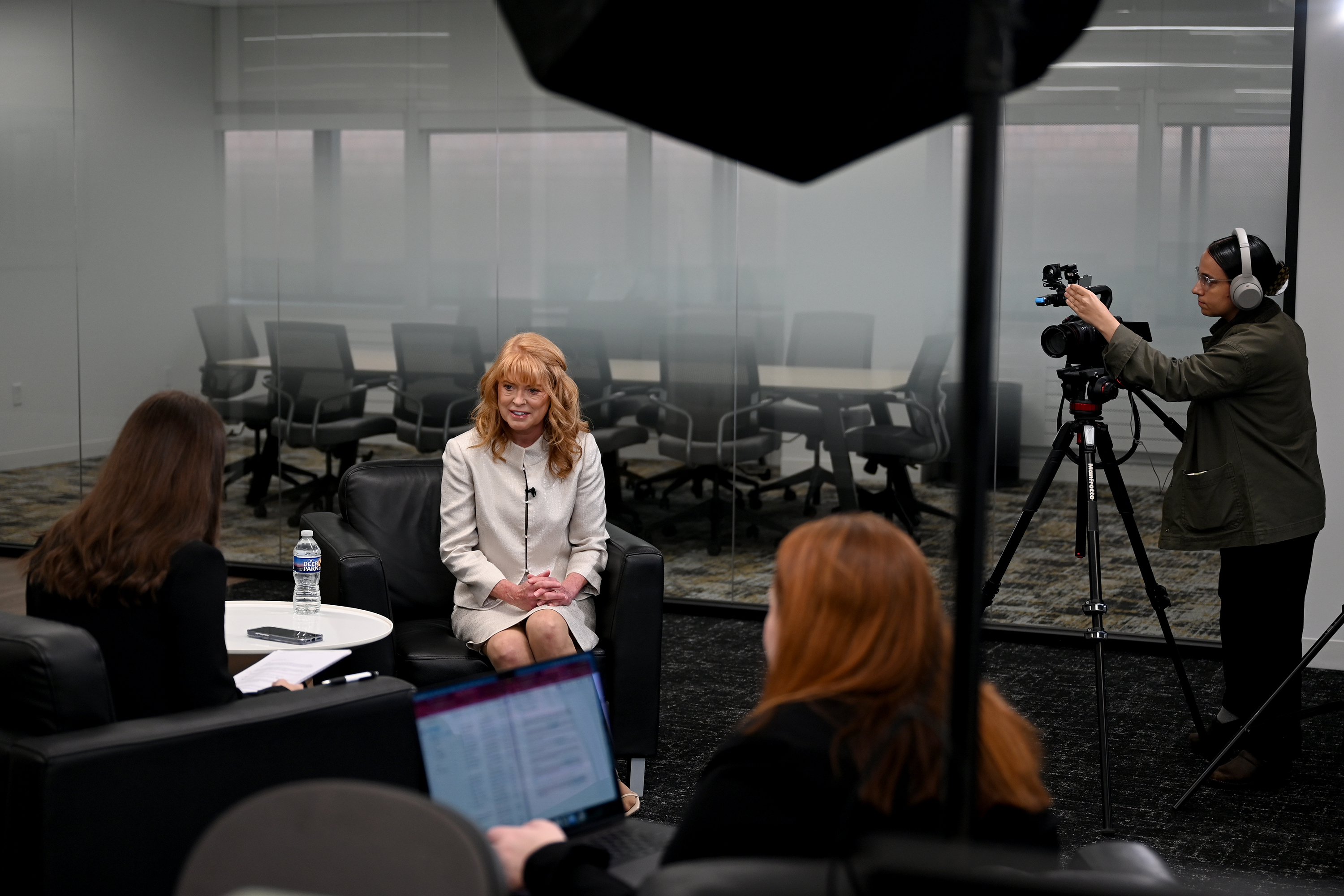
    In an interview with The Inquirer last week, Garrity discussed her military background, policy positions, and the status of her campaign against Shapiro. She’s been largely financially abandoned by state and national Republicans as they spend resources elsewhere. With less than a month until the election, she said she hopes they’ll still come through.

    What we’re watching

    🤑 Candidates for Congress will file their latest campaign finance reports next week, offering insight into the kinds of crucial resources they’ll need for the final weeks of their campaigns. Democratic challengers in Pennsylvania’s four competitive districts have previously out-raised the Republican incumbents — except for one: Harvie’s campaign against Fitzpatrick in Bucks. Stay tuned as our team dives into the details.

    ➡️ Also on tap in a competitive district: A high-profile debate between Republican U.S. Rep. Scott Perry and Democrat Janelle Stelson in the competitive Harrisburg-based seat. Viewers can catch it Wednesday on abc27 in Harrisburg, or abc27.com.

    Quote of the week

    👋 Another busy week in Pennsylvania politics is in the books! We’ll see you in your inbox next Friday with all the latest midterm election news.
  • ICE officer shoots a man while making an arrest in New York, officials say

    ICE officer shoots a man while making an arrest in New York, officials say

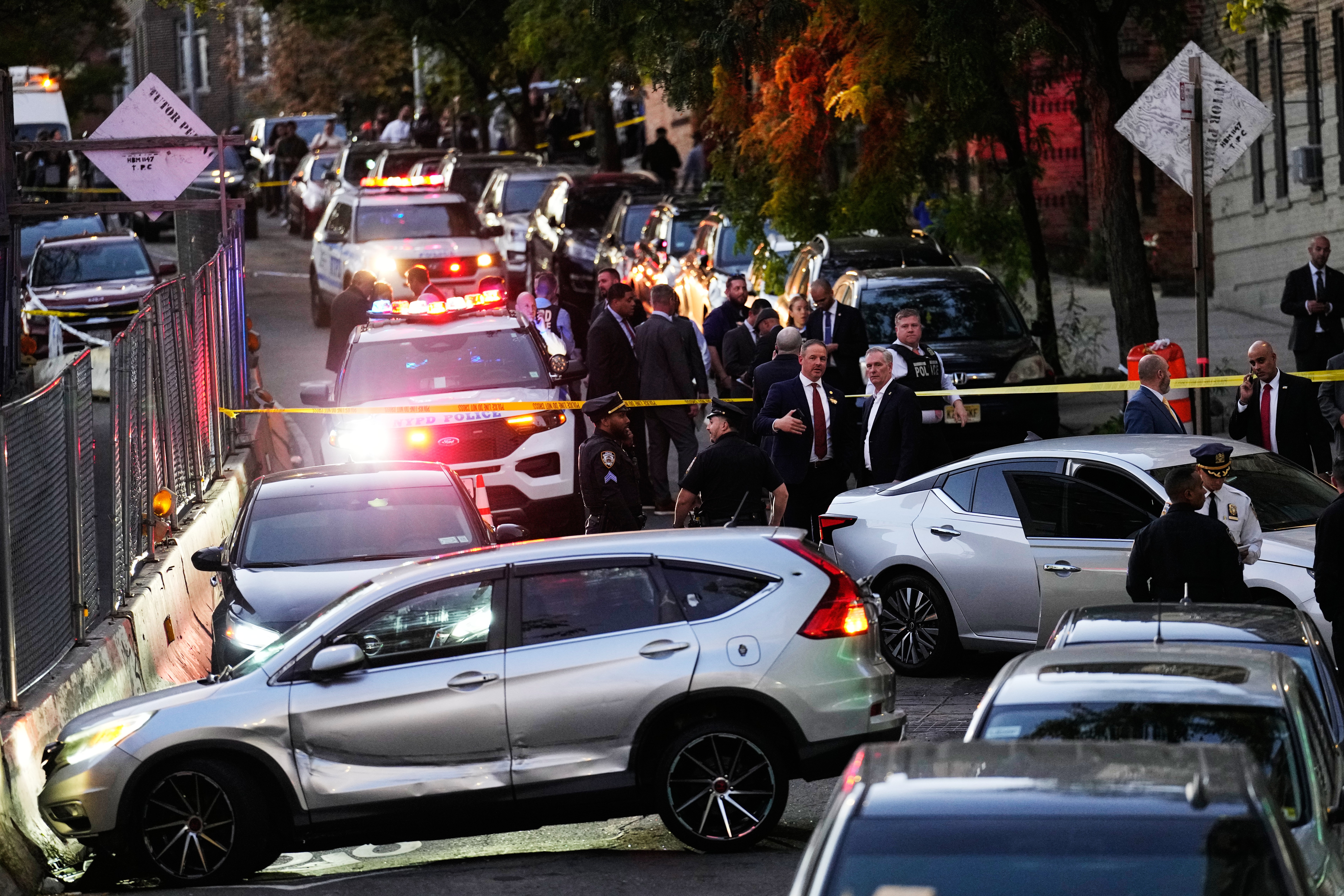
    NEW YORK — A federal immigration officer shot a Dominican man in the neck as he drove in a car with a 5-year-old boy Thursday afternoon, officials said. The Department of Homeland Security said it was seeking to arrest the man in a “targeted enforcement operation,” but protesters and local officials decried it as an example of the dangers of the Trump administration’s immigration crackdown.

    The 28-year-old man, whom city police identified as Oscar Belgal, survived and was treated at a hospital.

    DHS did not describe exactly what led to the shooting, saying only that “during the incident, an ICE officer discharged his weapon” and that the man was injured.

    But city Police Commissioner Jessica Tisch said Belgal was pulling into a parking space when a federal officer in plainclothes approached with gun drawn, followed by another federal officer who also wasn’t in uniform. Belgal started to pull the car forward, and then at least one of the officers fired seven rounds, hitting the man below his left ear, Tisch said at a news conference near the shooting site late Thursday.

    The child was unharmed and with a relative, said Tisch, who noted that city police weren’t involved in the operation but heard the shots and responded.

    DHS said in a statement that it was seeking to arrest a “criminal illegal alien” with a grand larceny conviction and a history of other arrests. But an irate Mayor Zohran Mamdani called the shooting an outrage.

    “There is no justification for what we have seen today,” Mamdani said. He said the federal officers who surrounded the vehicle wore construction vests and masks, making it difficult to identify them as immigration officers.

    The mayor, a Democrat, said he had spent two hours Thursday night pressing Republican President Donald Trump and Homeland Security Secretary Markwayne Mullin to release the wounded man, to no avail, and urging them to stop immigration enforcement operations in the city. He said that late Thursday night, federal authorities removed the man from the hospital and took him away.

    Gov. Kathy Hochul, also a Democrat, said in a statement that she had delivered a similar message to Trump and Mullin by phone.

    Videos show aftermath of the shooting

    The gunfire erupted around 4 p.m. in Marble Hill, a small part of Manhattan that is attached to the Bronx.

    Tisch said that an NYPD security camera had recorded some of the events leading up to the gunfire, but not the shooting itself.

    Pedro Almaraz, an employee at a nearby restaurant, said he heard several gunshots and saw a man on the ground surrounded by several officers wearing face masks and vests with Department of Homeland Security branding. Witnesses, he said, were screaming.

    Bystander videos and photos posted on social media showed a man sitting on the ground with his hands behind his back, in the immediate aftermath of the shooting. Another video shows New York City police officers picking up Belgal and carrying him into a police vehicle.

    Nearby, a damaged car sat blocking the roadway with small holes in two of its windows. Tisch said the shooting left the car with a bullet entry point on its front windshield and an exit point in one of its rear windows.

    Heated protest and press conference

    At a heated press conference at the shooting scene Thursday night, several local politicians condemned the shooting.

    “We are heartbroken and enraged,” said City Council Member Carmen De La Rosa, a Democrat who emigrated from the Dominican Republic and now represents areas including Marble Hill. Some other elected officials cursed ICE and Trump, a Republican.

    Demonstrators at the scene chanted, “ICE off our streets now!” and then marched to the hospital where the injured man was being treated. A sizable crowd blocked an intersection at the hospital entry, and as police began to set barricades so that ambulances and other vehicles could pass, some protesters shoved at the barriers and hurled water bottles at officers.

    More clashes at the barricades followed, and police made some arrests.

    Homeland Security blames ‘sanctuary policies’

    DHS complained that its officers “are forced to make arrests at large in the community in unpredictable and dangerous environments” when “dangerous illegal aliens” get released. The agency blamed “reckless sanctuary policies” in Democrat-led areas. There is no clear definition of sanctuary jurisdictions, but the term is generally applied to state and local governments that limit cooperation with federal immigration authorities.

    Belgal had been arrested on a robbery charge in 2023, later pleaded guilty to grand larceny and was sentenced to probation, Tisch said, adding that he later was arrested on a drug-sale charge that hasn’t yet been resolved. Electronic court records show that Belgal has pleaded not guilty in the drug case.

    ICE agents have fired their guns during more than a dozen vehicle stops since last year, killing at least four people and wounding others. In late September, ICE ordered its officers not to engage in high-speed car chases and to make vehicle stops only if they have completed specific training.

    Marble Hill resident Alfred Silva, 38, called for federal officers to more clearly identify themselves, saying one was wearing a construction safety vest.

    “We need to have better transparency to understand who we’re dealing with, because anybody in the street can just put on a vest and pull out a gun and claim to be ICE,” he said.

    “I feel like regardless if you’re left or right, we should understand that this shouldn’t be happening.”

  • South African-born jurist Navi Pillay wins Nobel Peace Prize for her work in international justice

    South African-born jurist Navi Pillay wins Nobel Peace Prize for her work in international justice

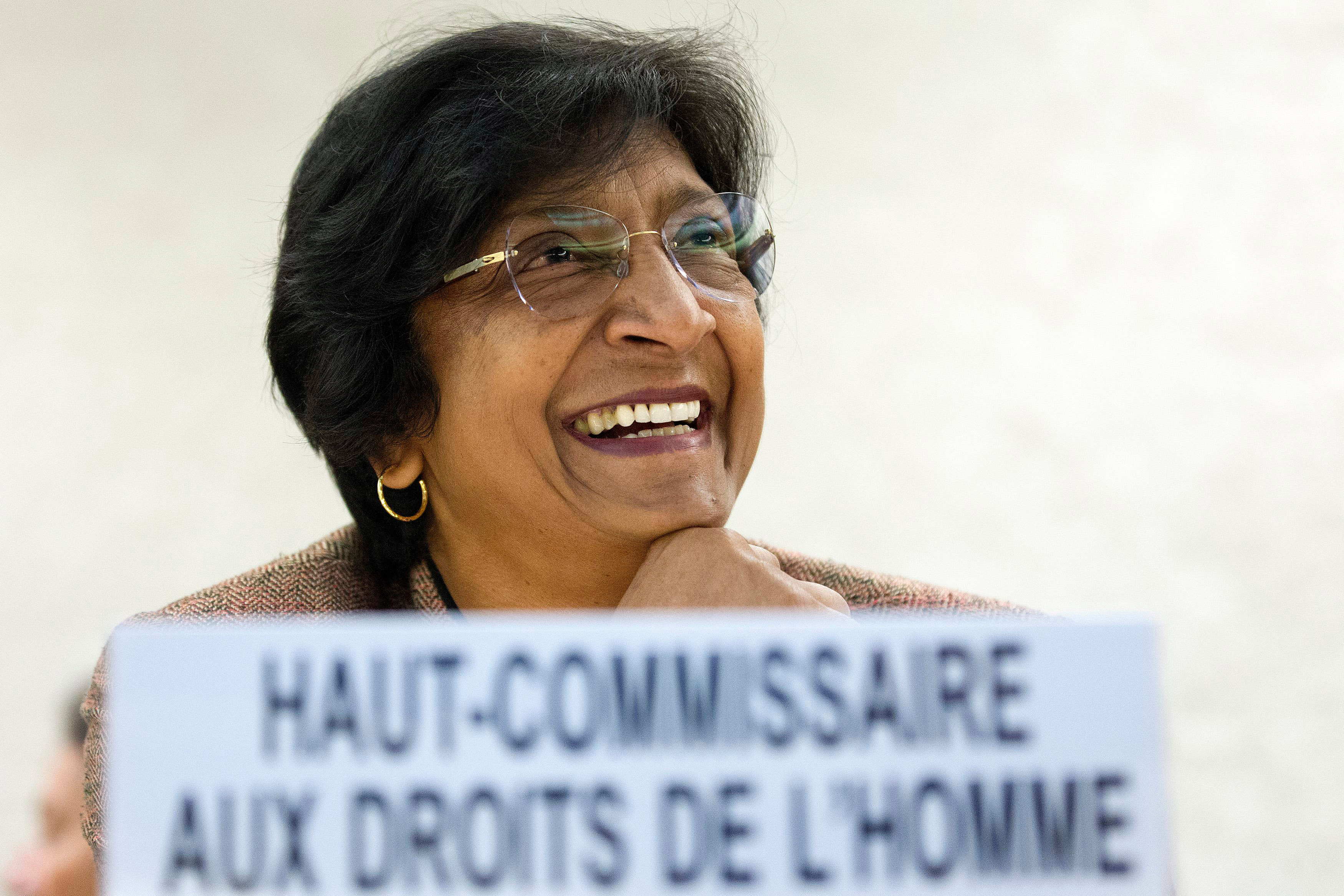
    OSLO, Norway — Navi Pillay, a South African-born jurist and former U.N. human rights chief whose career has spanned from defending the rights of an imprisoned Nelson Mandela to leading a panel that found that Israel committed genocide in Gaza, won the Nobel Peace Prize on Friday for efforts that the award committee said promoted international law as it comes under attack.

    Her win is sure to be seen as a high-profile rebuke to U.S. President Donald Trump and Israeli Prime Minister Benjamin Netanyahu, who have both rejected the findings of the U.N. commission she led on Gaza. The leaders also have been highly critical of the International Court of Justice and the International Criminal Court. Pillay has worked at both.

    Hours after the award was announced in Norway, the Trump administration imposed sweeping new sanctions on the International Criminal Court as part of its campaign to dismantle the tribunal over investigations into the United States and its allies, including Israel.

    On the 125th anniversary of the prize’s inception, the Norwegian Nobel Committee sought “to remind the world that the rule of law, national and international, underpins the system we have set up to ensure peace and resolve conflicts nonviolently. Peace requires justice,” committee Chairperson Jørgen Watne Frydnes said.

    Judges “guard the thin red line between order and chaos,” and the world needs jurists “of courage, vision and determination, qualities that Navi Pillay demonstrates in her work on the bench.”

    In places such as Israel and in apartheid-era South Africa, she and peers took on some of the world’s most painful and sensitive legal issues and most vulnerable populations.

    Pillay, 85, received the news while attending a forum in Nuremberg, Germany, where the trials of Nazi war criminals helped lay the foundations of international law. She was in the same room where the trials were held when the prize was announced.

    She said efforts to weaken international criminal justice “endanger the progress painstakingly made since Nuremberg, and they risk returning us to a world in which power, rather than law, determines whose suffering matters.”

    Winner led investigation that determined Israel committed genocide in Gaza

    Pillay chaired the Commission of Inquiry on the Occupied Palestinian Territory and Israel, which was created by the U.N.-backed Human Rights Council. The commission a year ago concluded Israel was responsible for genocide in Gaza with a specific intent to destroy Palestinians in Gaza.

    Gaza was among Pillay’s first comments Friday after hearing she had won. “What’s happening there is genocide,” she said to more applause.

    The commission also found that the Israeli president, prime minister, and former defense minister “have incited the commission of genocide.” Israel, which has refused to cooperate with the commission since it was established in 2021, has strenuously denied the accusations.

    Pillay has repeatedly rebuffed critics who accused her of antisemitism or turning a blind eye to the Hamas attacks in Israel. Under her leadership, the commission also issued reports accusing Hamas of war crimes and violations of international humanitarian law during its Oct. 7, 2023, attack.

    In an interview with the Associated Press last year, she recalled how she worked closely with some Jewish lawyers in the fight against apartheid in her native South Africa and was invited to Israel as the U.N. rights chief from 2008 to 2014.

    Growing up under the harsh system of segregation influenced Pillay’s interest in human rights and the law. Starting with Mandela’s presidency, South Africa’s government has openly compared the situation faced by nonwhite people during apartheid to the Palestinians’ plight.

    “We know too well that our freedom is incomplete without the freedom of the Palestinians,” Mandela said soon after apartheid ended.

    The Nobel announcement came at another critical time for Gaza, just two days after the anniversary of the Hamas-led attack on Israel on Oct. 7, 2023, that killed about 1,200 people and sparked the war. Over 74,000 Palestinians have since been killed, with their territory devastated. Saturday marks a year since a fragile ceasefire took effect, while Israeli strikes continue.

    Netanyahu wrote on X that the Nobel committee “has lost its moral compass” by awarding its highest honor to “a bigot who built her career around inventing and propagating blood libels against the one and only Jewish state.”

    The award was announced less than three weeks before Israel’s election, in which Netanyahu is fighting to stay in power.

    Award and sanctions renew focus on Trump’s feud with court

    Pillay’s win and the new U.S. sanctions bring renewed attention to Trump’s ongoing feud with the International Criminal Court, where Pillay was a judge from 2003 to 2008.

    In a video address, U.S. Secretary of State Marco Rubio said the administration would “ban transactions with this rogue court, cutting off their resources and crippling its ability to operate against us.”

    The sanctions block any assets the ICC as an institution has in U.S. jurisdictions and set a six-month timeline for American companies and individuals to wind down any business with the court.

    The Nobel Committee did not immediately respond to an email seeking comment following Rubio’s announcement.

    Pillay currently serves as an ad hoc judge at the International Court of Justice, the highest court of the United Nations, in the ongoing genocide case against Myanmar.

    When countries do not have a representative on the court’s permanent, 15-judge panel, they can appoint an expert of their choice. Gambia, which launched the proceedings in 2019, selected Pillay when the country accused Myanmar of committing genocide against the Rohingya minority group.

    As a young lawyer in apartheid South Africa, part of Pillay’s work involved establishing key rights for political prisoners being held on Robben Island, which included Mandela, who later won the Nobel Peace Prize.

    After apartheid ended, Mandela appointed Pillay to be the country’s first nonwhite woman to serve as a High Court judge.

    Venezuelan opposition leader won last year

    Last year, Venezuelan opposition leader María Corina Machado won the Nobel Peace Prize for her struggle to achieve a democratic transition in the South American nation.

    Machado gave Trump her Nobel medal shortly after the United States ousted then-President Nicolás Maduro. But it was largely a symbolic gesture: The Nobel Committee has said the honor itself cannot be transferred.

    In Trump’s second term, he has been outspoken about his desire for the Nobel, but has expressed doubts that the committee would ever award him the prize.

    “They have a reputation for maybe not giving it to people like me,” Trump told reporters Wednesday.

    Peace prize follows a week of Nobel announcements

    Four of this year’s Nobels were announced earlier this week, in the categories of medicine, physics, chemistry, and literature. The Nobel Memorial Prize in Economic Sciences will be announced Monday.

    The prize money this year is 12 million Swedish kronor (about $1.2 million), whether for an individual, small group of laureates, or organization.

  • Fiery Senate debates in Maine, Michigan and Georgia: Five takeaways

    Fiery Senate debates in Maine, Michigan and Georgia: Five takeaways

    A trio of debates in key Senate races on Thursday night underscored how fraught the midterms have become, as candidates in Maine, Michigan, and Georgia traded personal and heated attacks.

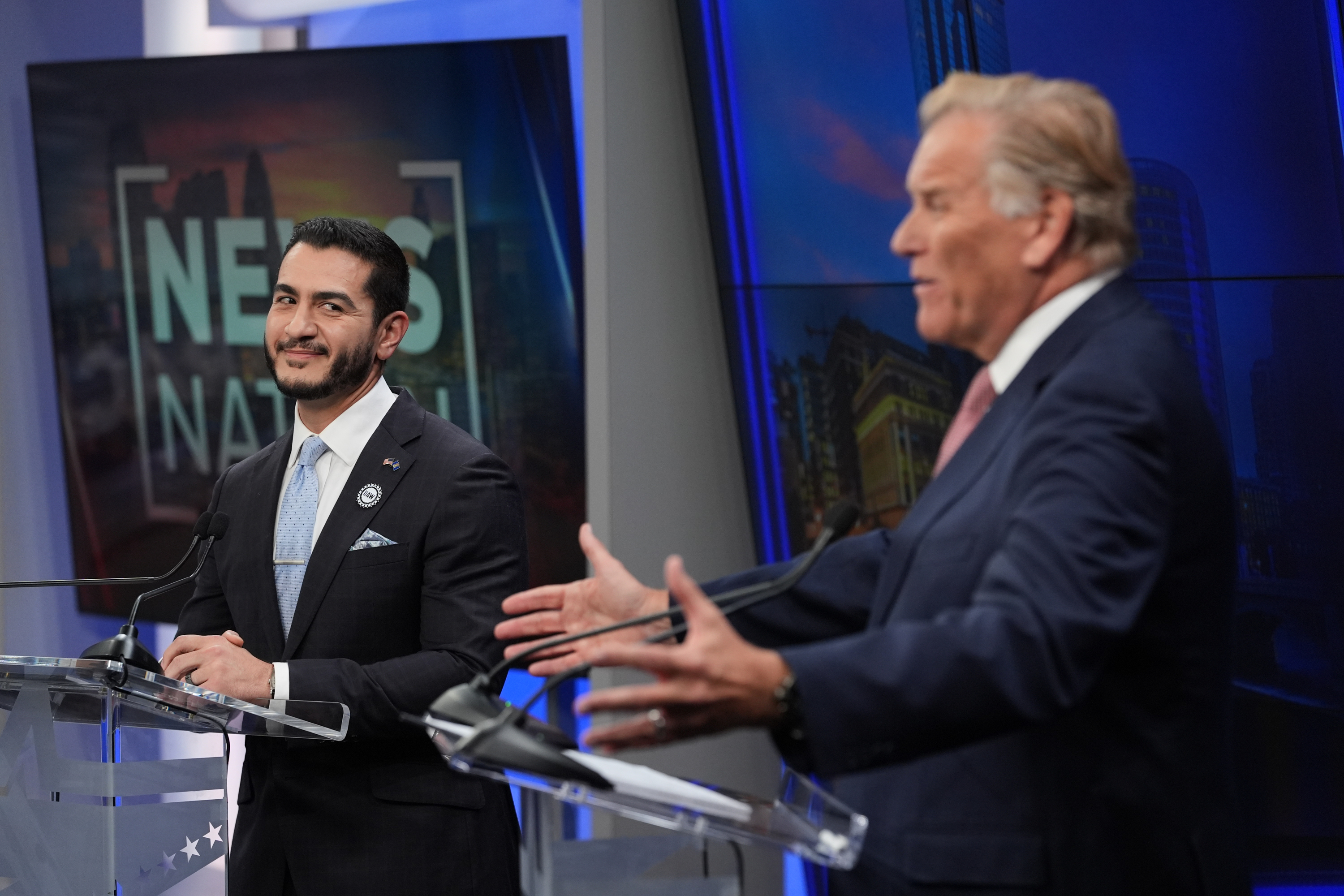
    In Michigan, Abdul El-Sayed, a Democrat, said former Rep. Mike Rogers, a Republican, was a warmonger, while Rogers tried to tie El-Sayed, a Muslim, to terrorism.

    In Georgia, Sen. Jon Ossoff, a Democrat, called Rep. Mike Collins, a Republican, a “bigot.”

    And in Maine, Sen. Susan Collins demanded a public apology after her Democratic opponent, Troy Jackson, accused her and her husband of profiting from the Iran war.

    Here are five takeaways from the debates across three states that could determine control of the Senate.

    Democrats tied their opponents to Trump

    In all three debates, Democrats said that Republicans marched in lock step with the unpopular president.

    Again and again, Jackson charged Susan Collins with failing to use her power to oppose Trump administration policies that have hurt Maine, including the war in Iran and tariffs. “We are in a crisis now,” he said of energy prices, “because she and her Republican colleagues would not stand up to Donald Trump.”

    In Georgia, Ossoff asked Mike Collins repeatedly how Trump’s tariffs have helped Georgians, at one point calling them the “Mike Collins-Donald Trump tariffs.” Ossoff argued that economic pain for farmers and increased healthcare premiums for consumers were both “predictable,” but Collins still voted for Trump-backed policies that contributed to them.

    “Whatever Donald Trump says, Mike Collins does,” Ossoff said. “Doesn’t matter what it is. Doesn’t think for himself.”

    And in Michigan, El-Sayed accused Rogers of being “a guy who wants to be a sock puppet for the Trump administration,” especially over the war in Iran, which has pushed gasoline prices higher.

    Debate questions put Republican candidates on defensive

    You can usually tell who is winning debates based on the questions. Candidates on offense get to talk about issues that are good for them, while those on defense are trying to change the subject to more favorable territory.

    The problem for the Republican candidates in Thursday’s debates — along with their compatriots running for offices across the country — is that the issues core to voters’ concerns this year are not good for them. Moderators asked about high gas prices, Trump’s tariffs, the Iran war, and immigration raids — all topics that forced Republicans to defend unpopular Trump administration policies or explain why they are now skeptical of stances they previously supported.

    There were no questions across the three debates about transgender athletes in youth sports, a topic that often divides Democrats and that Trump and the super political action committees he controls have used to attack Democratic candidates.

    In the Michigan debate, El-Sayed was not asked about his association with Hasan Piker, the left-wing streamer who campaigned with him during the primary but has since kept his distance. In Maine, Jackson was not asked whether he is a member of the Democratic Socialists of America, which has endorsed his bid and backed his run for governor this year.

    Rogers tried to link El-Sayed to terror groups, El-Sayed called Rogers desperate

    It took just 20 seconds into his first answer, about the federal gas tax, for El-Sayed to attack Rogers for backing the war in Iran.

    There would not be a single exchange during the debate that did not include a personal attack, with the two men frequently interrupting each other. The two argued about second homes — Rogers’ in Florida and El-Sayed’s overseas. El-Sayed, who was quicker on his feet and a smoother talker, got the best of Rogers on many of these exchanges, frustrating the former member of Congress.

    Their jousting continued when they were off the air.

    “In 30 years of doing debates, I’ve never seen it continue during the commercial, but it did,” said the moderator, Rick Ablin, of the Grand Rapids NBC affiliate.

    Perhaps the nastiest, most personal exchanges came when Rogers tried to tie El-Sayed to terror organizations. He said the man running to be the first Muslim in the Senate is “bought off by Hamas, Hezbollah, al-Qaida, those people who are supporting you, pour that money into your campaign.”

    There is no evidence El-Sayed has support from terror groups.

    When he got a chance to speak uninterrupted, he called Rogers desperate.

    “He wants this to be about anything but his own record,” El-Sayed said.

    Accusations of Nazism and hatred flew in Georgia

    Ossoff began the Georgia Senate debate saying it would be the “trial of Mike Collins.” Then, he set out to prosecute his case.

    He accused the Republican congressman of hiring “half the Third Reich,” referring to past Collins aides who have espoused white nationalist and antisemitic views. He slammed him for reposting a video in 2024 of white male students taunting and jeering a female Black student with racist and profane remarks.

    “If John Lewis were marching today from Selma to Montgomery,” Ossoff said, “Mike Collins would be grabbing a billy club.”

    Collins said that he has “condemned racism, antisemitism, hate.” And he tried to turn the tables on Ossoff, who is Jewish, by criticizing the Democrat’s support for El-Sayed, whom Collins claimed “hates Israel” and “loves Iran.”

    Ossoff, who is the more polished debater, tied every policy problem to Trump, while Collins, who owns a trucking company, leaned into his experience to suggest he was more in touch with regular Georgians.

    Jackson accused Susan Collins of corruption, she accused him of lying

    Jackson shifted his approach for the second Maine Senate debate of the week. He devoted far less attention to questioning Collins’ support for abortion rights and her vote to confirm Justice Brett Kavanaugh, who joined the conservative Supreme Court majority that overturned Roe v. Wade. Instead, he focused his attacks on rising costs, including the drastic increase in heating oil prices, and accusations that Collins is abusing her position for personal gain.

    “Ever since I was a young boy, I watched power and corruption hold people back,” Jackson said of reports that the FBI last year shut down an inquiry into corruption allegations against an adviser to Collins.

    That prompted a sharp response from Collins. She repeatedly charged Jackson — whom she called “Troy” throughout the debate — with lying about her record. “These allegations are absolutely false, and they’ve been proven false.” She also accused Jackson of running “false ads” about the issue.

    This article originally appeared in the New York Times.

  • One of New Jersey’s oldest lighthouses will reopen to the public

    One of New Jersey’s oldest lighthouses will reopen to the public

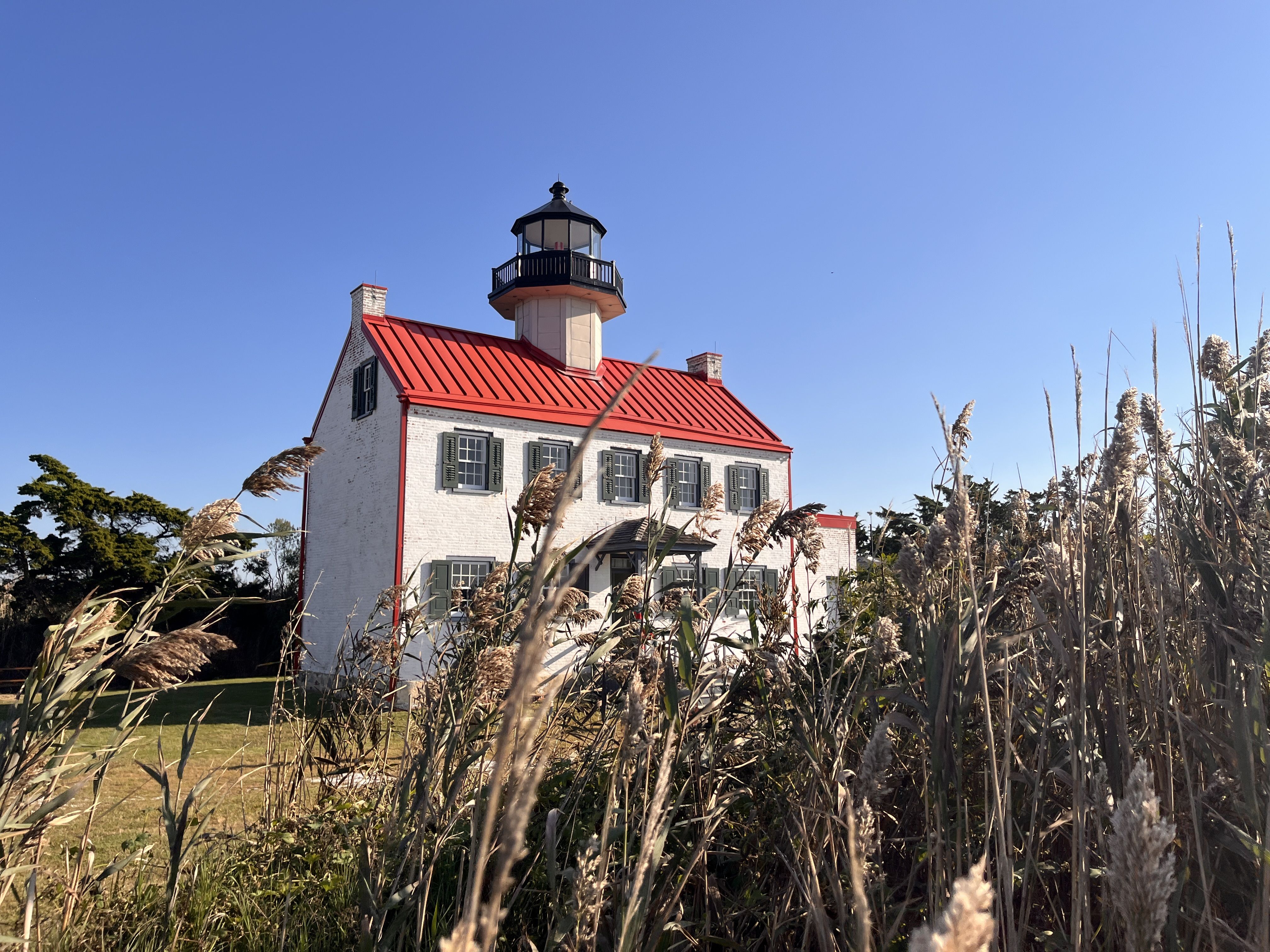
    East Point Lighthouse, set on the Delaware Bay and amid 7,600 acres of wetlands, will reopen to the public this month after being closed for two years.

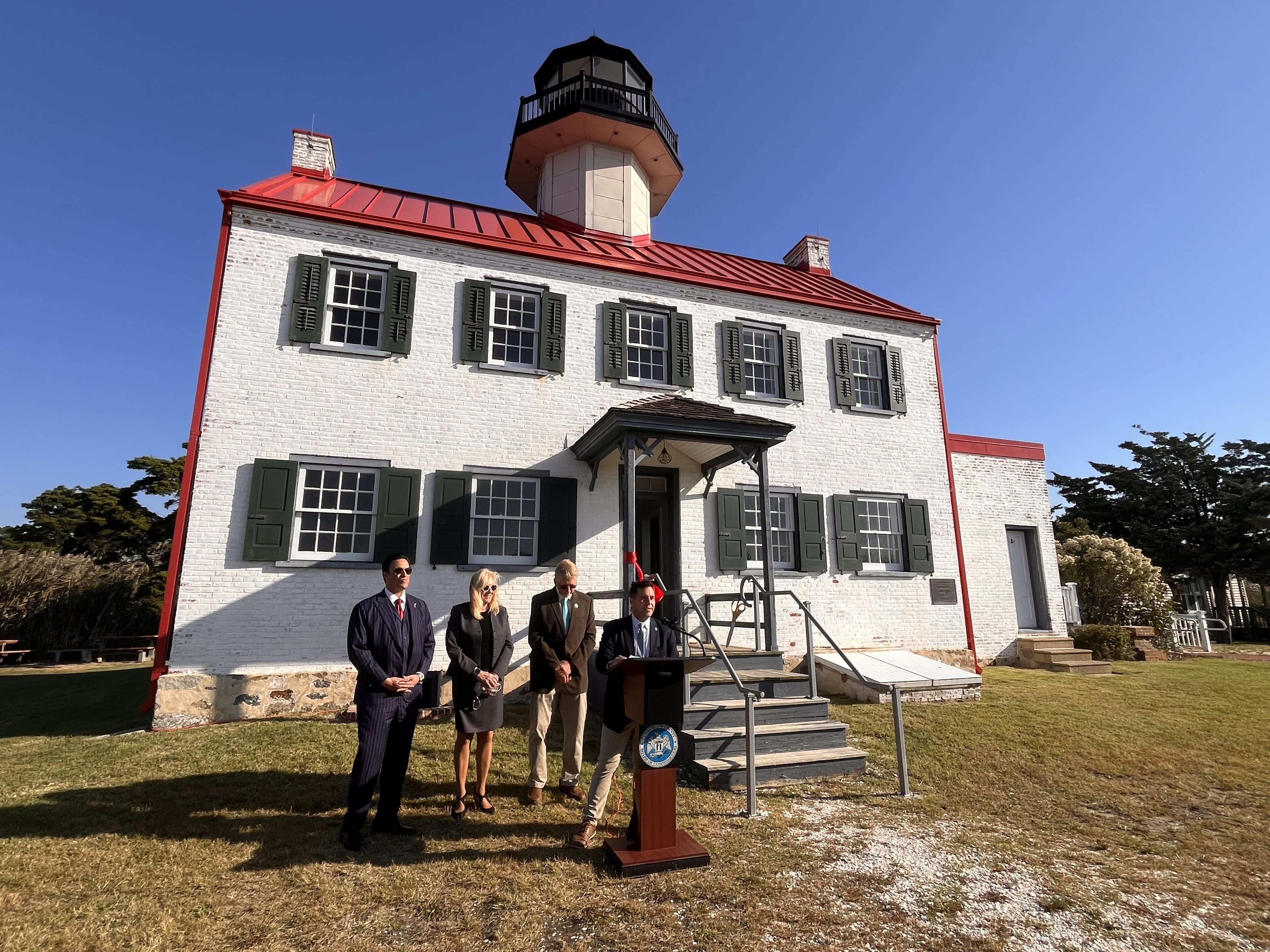
    Ed Potosnak, commissioner of the New Jersey Department of Environmental Protection, announced a lease agreement with Cumberland County on Thursday on the steps of the lighthouse that dates to 1849.

    The quaint white-and-red lighthouse within the state’s Heislerville Wildlife Management Area in Cumberland County will reopen to the public on a limited basis Oct. 16.

    The number of days and hours are expected to grow when a full plan, which will include programs, is developed by early next year. Admission will be free, at least for now.

    “It’s one of the state’s few surviving lighthouses from the 19th century,” Potosnak said. “With this agreement, it’ll be open again to the public.”

    (function(){function e(){window.addEventListener(`message`,function(e){if(e.data[`datawrapper-height`]!==void 0){var t=document.querySelectorAll(`iframe`);for(var n in e.data[`datawrapper-height`])for(var r=0,i;i=t[r];r++)if(i.contentWindow===e.source){var a=e.data[`datawrapper-height`][n]+`px`;i.style.height=a}}})}e()})();

    Who will run the lighthouse?

    Cumberland County will lease the landmark at Maurice River Cove at little to no cost.

    Because the lighthouse is on state land, the DEP will be responsible for overall maintenance. Cumberland County and Maurice River Township will help with programming, such as festivals, visitor services, and coordinating volunteers for tours.

    Potosnak said the DEP is also working with the U.S. Army Corps of Engineers to design a bulkhead, dunes, or another method to protect the lighthouse from the encroaching bay and rising sea levels.

    The DEP installed geotubes — long membranes filled with sand — years ago along a beach that fronts the lighthouse, but they are at the end of their life expectancy.

    County Commissioner Director Sandy Taylor, who grew up nearby on the bayshore, said the reopening is personal for her.

    “That we finally have the opportunity to keep the lighthouse open for our community, for the county, for many visitors from around the state is huge for us,” she said.

    Ed Potosnak, commissioner of the New Jersey Department of Environmental Protection, announces that the East Point Lighthouse on the Delaware Bay will reopen. Behind him (from left) are State Sen. Mike Testa, Cumberland County Commissioner Director Sandy Taylor, and Maurice River Mayor Ken Whildin.Frank Kummer

    Maurice River Township Mayor Ken Whildin recalled how the lighthouse helped guide maritime traffic until it was decommissioned during World War II so German U-boats could not be guided by it.

    The lighthouse survived an arson in 1971 and was restored in the 1990s. Whildin emphasized that reopening the site has been a priority.

    He said he frequents a local Wawa and is routinely stopped by residents asking when the lighthouse will reopen.

    The lighthouse, Whildin said, is “not only a beacon of light, but it’s also a beacon of hope.”

    And State Sen. Mike Testa noted the lighthouse’s prominent location along a key migration path for horseshoe crabs and monarch butterflies.

    The beacon also remains an active navigational aid for the U.S. Coast Guard, he said.

    “This is a really good day,” Testa said.

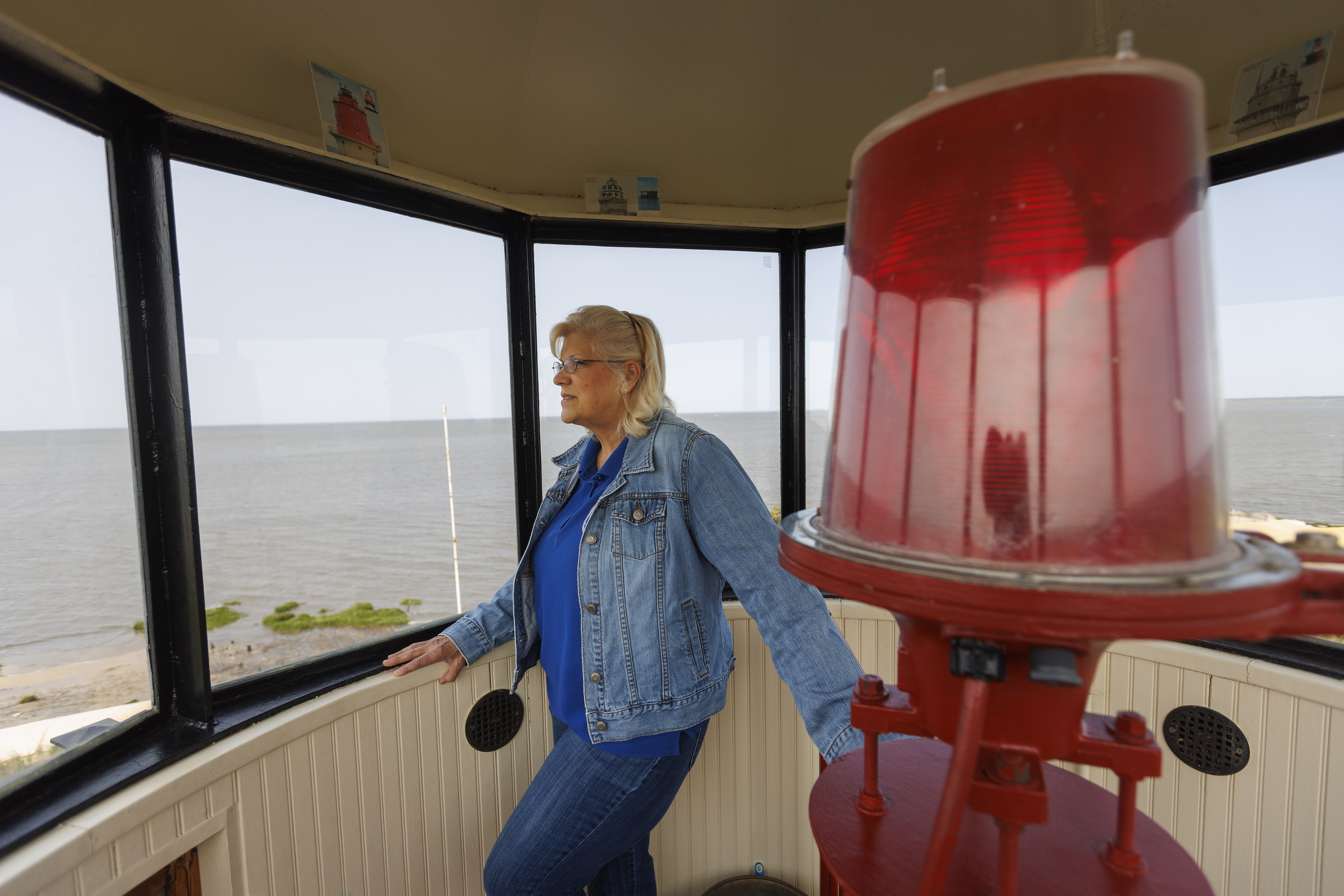
    Nancy Patterson, with the Maurice River Historical Society, in the lantern room of East Point Lighthouse in 2023. The group previously operated the lighthouse until its lease expired with the state.Alejandro A. Alvarez / Staff Photographer

    Why the lighthouse closed

    The lighthouse closed in 2024 after the DEP, under the administration of former Gov. Phil Murphy, failed to reach a lease agreement with the previous operator, the Maurice River Historical Society.

    Nancy Patterson, the group’s volunteer president, had been tussling with the state since 2017 over the terms of a new lease.

    But efforts stalled, and the lighthouse was closed.

    It is unclear what role the historical society will play going forward, though officials credit the group with reviving the lighthouse’s fortunes.

    After the fire, the society led an $850,000 restoration effort along with the Cumberland County Improvement Authority and the New Jersey Historic Trust.

    The historical society began managing the lighthouse in the 1990s under a lease of the small property at the confluence of the Delaware Bay and Maurice River.

    The group installed period-replica pieces in various rooms to give visitors an idea of what life in a lighthouse was like. Those have been removed.

    ‘A great day’

    Matthew Pisarski, head of the county planning department, said details of the interior are still being worked out, as is programming.

    “We’re really excited at the opportunity to interpret the site and not only talk about the history of the lighthouse, but talk about some of the techniques of preservation that’s gone on, some of the challenges like rising tides, and preservation of historic properties.”

    Potosnak, the DEP commissioner appointed by Gov. Mikie Sherrill, said the current government agencies now involved began meeting in March to find a way to reopen the lighthouse.

    “It’s a great day for the residents of New Jersey,” Potosnak said. “When people roll up their sleeves and work together, good things can happen.”

  • Nickelodeon’s ‘Double Dare,’ filmed at WHYY, made its debut this week in Philly history

    Nickelodeon’s ‘Double Dare,’ filmed at WHYY, made its debut this week in Philly history

    Paging through the black-and-white pages of daily newspapers, a common descriptor for a then-revolutionary game show featuring neon green slime baths was gooey.

    As were goopy, gloppy, yucky, ridiculous, and gross.

    Then again, it was a game show for kids.

    It was a sticky concept, and to a generation of millennials, can’t-miss-TV.

    “If you, like me, are a child of the 1980s or ‘90s, or a parent to one today, no doubt you know Double Dare as the outrageous, bright, loud game show for kids and starring kids that put Nickelodeon on the map and became a phenomenon like few other children’s shows in television history,” superfan Jesse Cute (real name) wrote in The Inquirer in 2019.

    Jesse Cute on the set of the “Double Dare” revival in Los Angeles in 2019.Courtesy of Jesse Cute

    This program was also a product of Philadelphia.

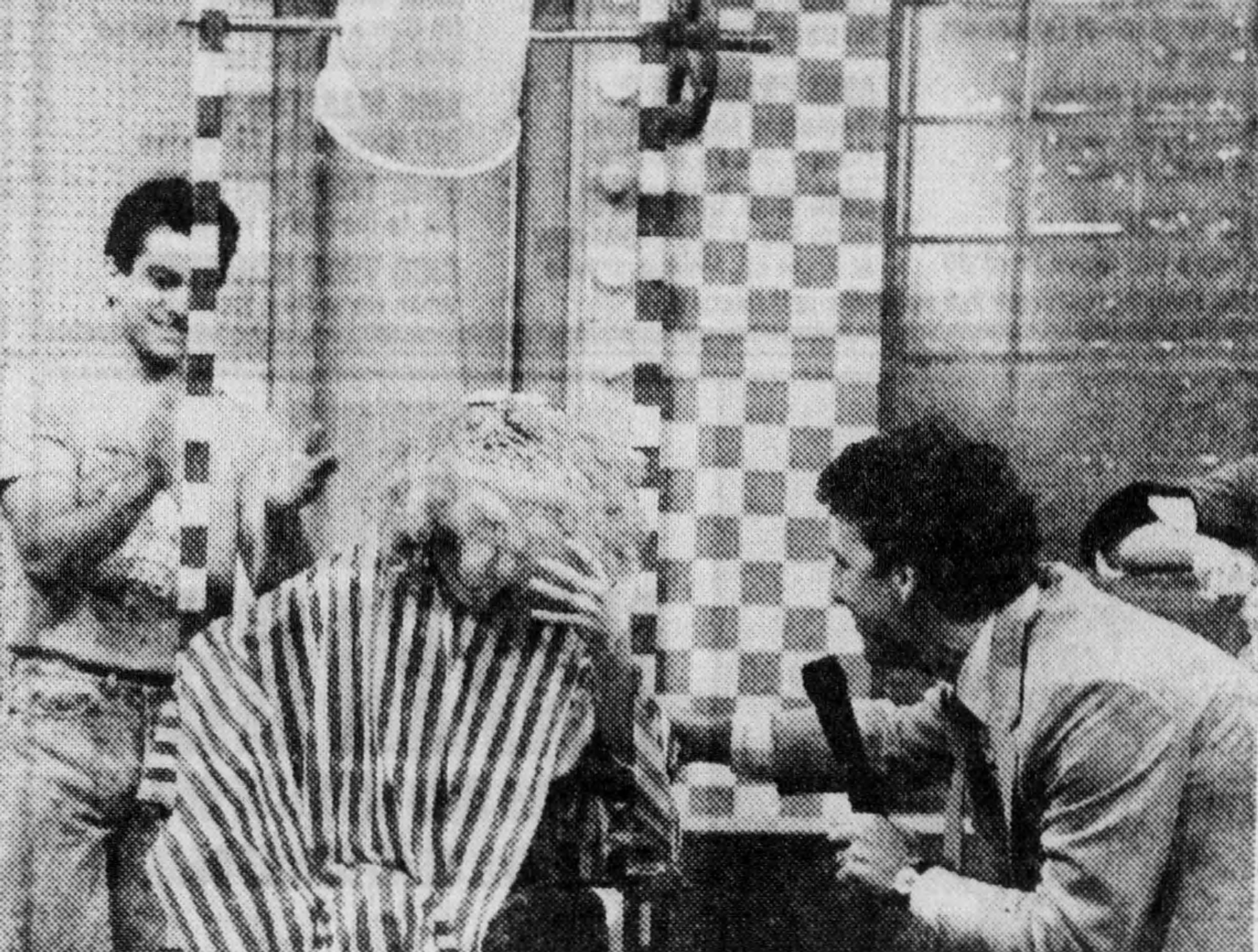
    The show, which debuted Oct. 6, 1986, was produced at WHYY studios on Independence Mall and used teams of kids from the region to fill out its lineups.

    But, why Philly?

    “We like Philadelphia, and we wanted to get out of New York,” executive producer Geoffrey Darby told The Inquirer in 1986. “We wanted suburban ‘middle America’ kids, because most of our demographics are in the suburbs, and it’s a lot easier to bring kids in from the suburbs in Philadelphia than it is in Manhattan.”

    The format of the half-hour program pitted two teams of kids, ages 10 to 15, against each other.

    As described in a September 1986 Inquirer ad, they would “dare and double-dare each other to answer questions and take on the challenge of funny physical feats on the Double-Dare obstacle course.”

    It was a game show just for them: a pie-in-the-face aesthetic where kids watched other kids struggle with trivia and then launch waffles, smash eggs with cymbals, and pelt flypaper with ping-pong balls. It culminated with cold, hard cash or the best prizes a kid could find in the annual Sears holiday-toy catalog.

    It was emceed by local morning DJ John Harvey and hosted by Marc Summers, whose way of connecting with kids made them feel like he was laughing with them instead of at them.

    “I used to dream about the set,” Cute wrote. “It’s a giant playground on steroids. An overload of colors, jagged shapes, and busy marquee lighting made the show magical.”

    The show was filmed in Philly from 1986 to 1989, before moving to Orlando to finish out its nearly 500-episode run in 1993.

    And when it comes to a game show for kids, talking with them, instead of at them, was the secret sauce.

    Well, besides the slime.

    There was a revival attempt in 2000, and another in the late 2010s, and a traveling road show took flight before the pandemic, but none could completely recapture the magic of the moment.

  • Copper wire thieves turn out the lights on youth sports teams

    Copper wire thieves turn out the lights on youth sports teams

    Nationwide, youth sports have evolved into a $40 billion industry, attracting private equity and other major investors. But in Philadelphia, some teams are dealing with problems as basic as nightfall.

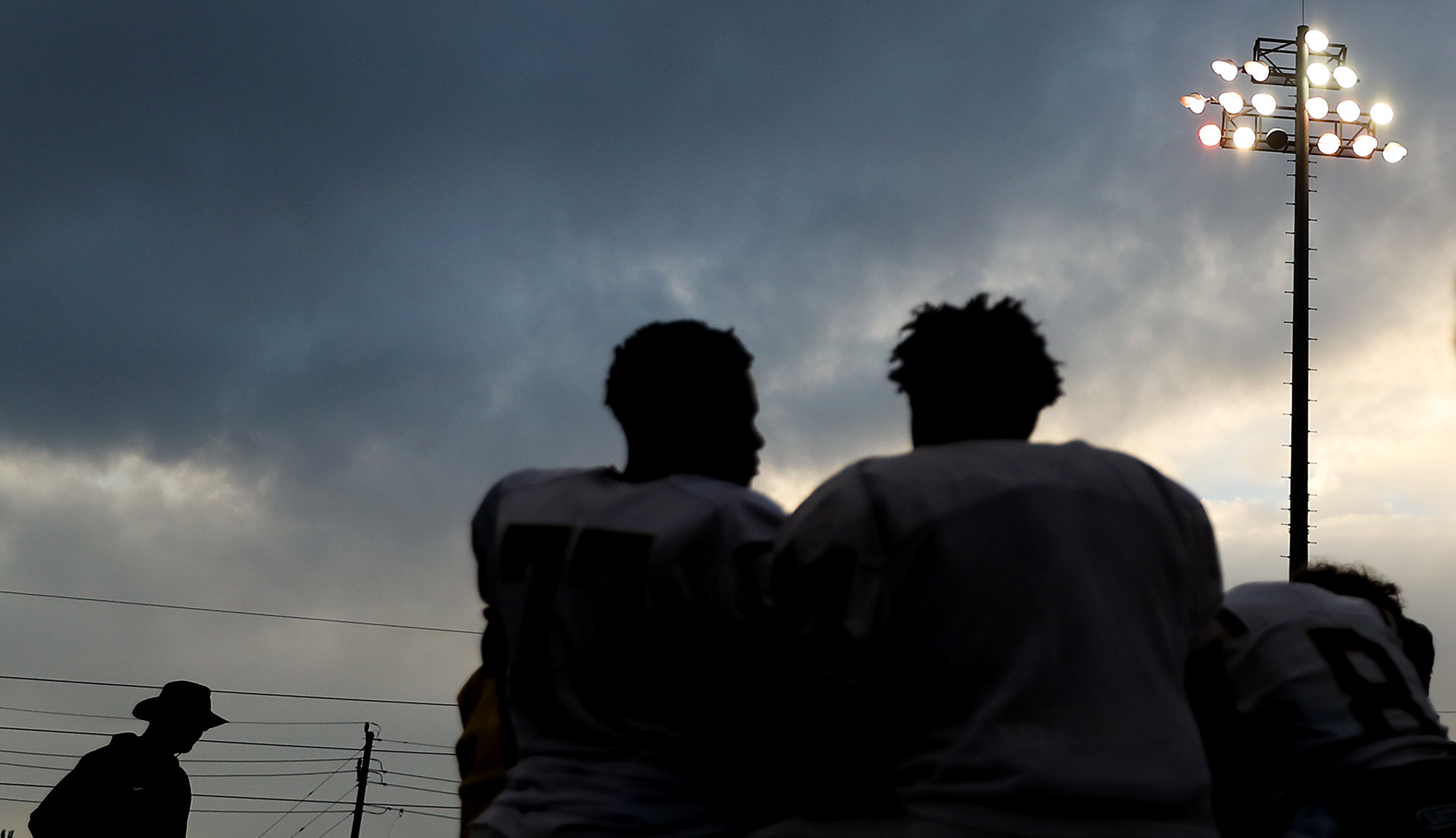
    In Hunting Park, parents of players on the North Philadelphia Aztecs football team pull their cars up to the end zones and use their headlights to keep practice going.

    Copper wire theft has damaged the field’s overhead lights, and has threatened the football and cheer programs’ existence, despite winning national championships in both sports in recent years, Aztecs cofounder Mitchell Brown said.

    It has been difficult to hire volunteer coaches because they do not want to deal with the lighting problem, which has been going on since last year, he said. The Aztecs currently have the fewest volunteers Brown has had in the three decades he has been running the program.

    “Who wants to bust their butt all summer … and then find out they can’t practice on the field when you’re just getting ready to go to the championship?” he asked.

    Copper wire at the Rusty Rooster scrap metal recycling center in Louisville, Kentucky, on March 21, 2022Luke Sharrett

    The city has announced a new initiative to combat copper wire theft at Philly parks, recreation centers, and other public properties after recent incidents left youth sports teams without working field lights. Officials said thefts were reported in Hunting Park, Bartram’s Garden, and Oxford Circle, along park trails, and even inside some city buildings over the last 18 months.

    Copper theft likely is not making anyone rich, but the metal has some minimal value when sold. One Pennsauken scrapyard, Sgt. Scrap, is offering between $5.24 and $5.50 per pound for copper, by far the most for any metal it has priced.

    Philadelphia Parks and Recreation is partnering with the city streets department to deter theft and increase security around lighting infrastructure. The new measures will include the installation of anti-theft hardware at the base of streetlight poles, transitioning from copper to aluminum cables (which have less scrap value), reinstalling cable at the top of some street poles to limit access, and increasing video surveillance.

    The streets department is also working to develop software that will detect unauthorized wire movement and streetlight pole access.

    The security measures will be implemented citywide, based upon infrastructure needs and history of theft in particular areas, according to streets department officials. The improvements are being incorporated into the department’s ongoing maintenance work and will not require additional spending by the city. Some of the work has already begun, but no completion date has been set, officials said.

    City Councilmember Quetcy Lozada said her district, which includes sections of North Philadelphia and Kensington, has been hit hard by copper wire theft. Eight playgrounds or recreation centers in Lozada’s 7th District have experienced wire thefts, requiring a combined repair cost of nearly $1 million, and forcing young athletes to practice in the dark, she said.

    “Copper wire theft is taking a real toll on communities across Philadelphia. The theft is an urgent crisis for our Parks and Rec fields,” she said in a statement.

    Quetcy Lozada, Philadelphia City Council member during Mayors budget address, City Hall, March 12, 2026.

    She warned the problem will only get worse for Philadelphians who depend on the lights in the fall and winter, as daylight hours shrink.

    “The impact goes beyond one team or one field — when these lights are out, entire neighborhoods often lose safe, reliable access to public recreation spaces in the evening,” she said.

    Lozada said she supported Councilmember Mark Squilla’s efforts to bring stricter oversight to scrapyards, including a bill he introduced in 2025 that would require individuals to acquire a license to sell scrap metal. The bill did not advance out of committee.

    The city held an event last week at Hunting Park announcing its initiative against copper wire theft, where officials were flanked by members of the Aztecs team. Brown said the darkness does not affect the kids’ desire to practice and play.

    Brown was worried about how the end of daylight saving time in a few weeks could make the problem even worse, since some practices are already starting as late as 6 p.m. But while the Aztecs wait for city repairs, Brown said, they will still be carrying out the original mission of the program — keeping kids safe and out of trouble.

    “Even in the dark, they’re off the street,” he said.

  • Council members would rather boycott Starbucks than hold accountable the sheriff who misled them | Shackamaxon

    This week’s edition of Shackamaxon asks why City Council won’t hold Sheriff Bilal accountable, explores the Philadelphia Police Department’s continued inaction on traffic safety, offers a compromise for student SEPTA fares, and provides an update on historic preservation.

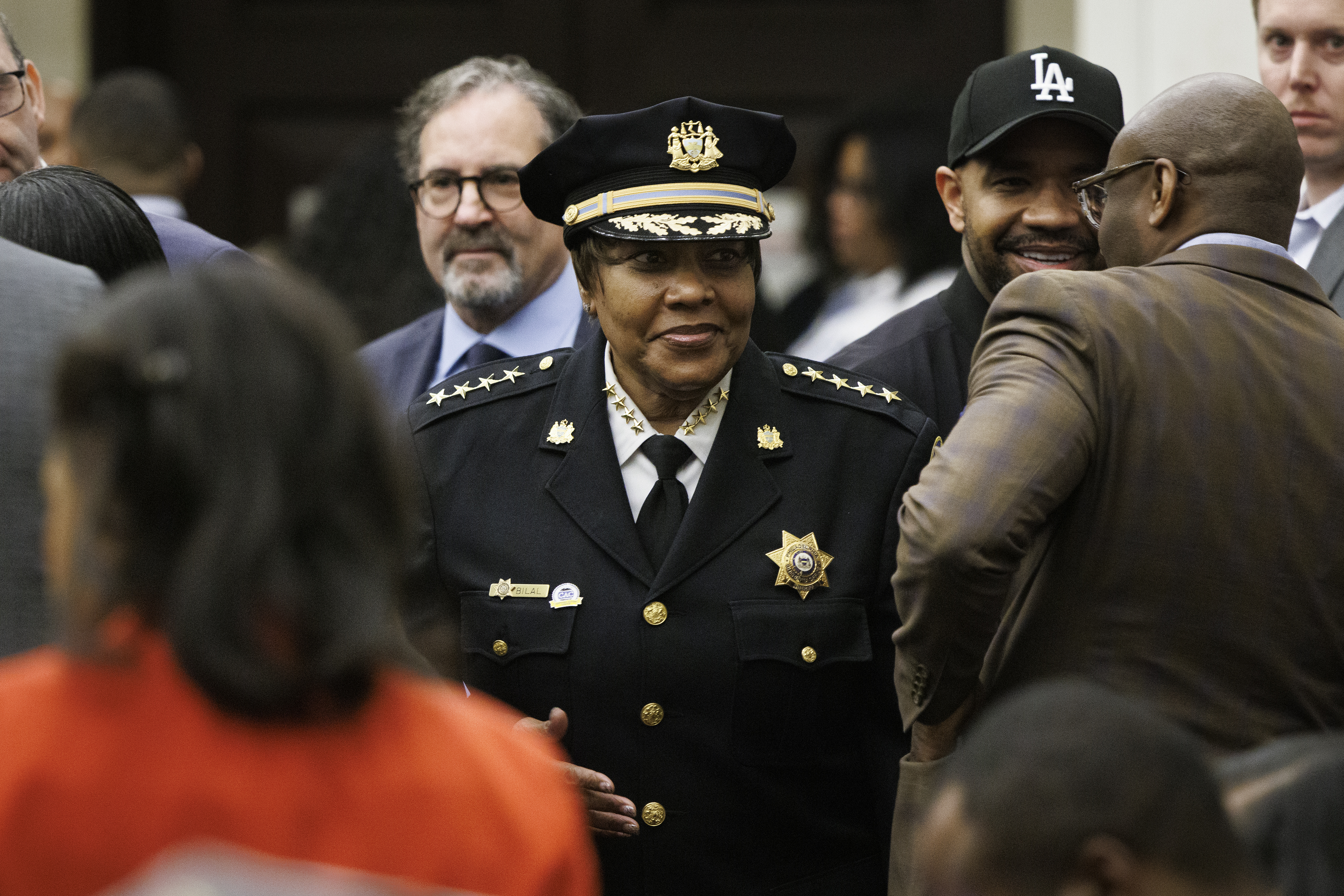
    Sheriff Rochelle Bilal during the mayor’s budget address at City Hall in March.

    Council’s choice

    Philadelphia Sheriff Rochelle Bilal continues to embarrass the city. Most recently, she reneged on her agreement to accept court-appointed oversight of her office, while a top deputy announced that roughly $20 million worth of taxpayer dollars had been hiding in the department’s couch cushions.

    All of this comes just months after Inquirer reporting showed that Bilal had misled City Council during her budget hearing, claiming deed processing was moving full steam ahead despite significant evidence that things were stuck.

    Given these circumstances, you might think Council would act, hold fact-finding hearings, and even consider abolishing the office. Instead, their focus is on something completely different, namely Starbucks workers’ unionization effort. Council wants everyone to know it supports boycotting the coffee chain until a contract agreement is reached.

    It is one thing for members to signal their support for organized labor, but Council could have done so by signing a letter. Instead, where people get their coffee became the biggest issue of the day during last week’s Council hearing, which included an anti-Starbucks rally. The Seattle-based chain itself is no longer thriving. The company just closed 250 stores nationwide, including three in the Philadelphia area.

    This level of attention was particularly galling when paired with Council’s inaction over Bilal, which is an issue they can actually do something about. Instead, the city’s lawmakers have been virtually silent.

    Beating up on big out-of-town corporations is easy; fixing systemic issues in city government is hard. It is clear what the current crop of Council members prefers to do.

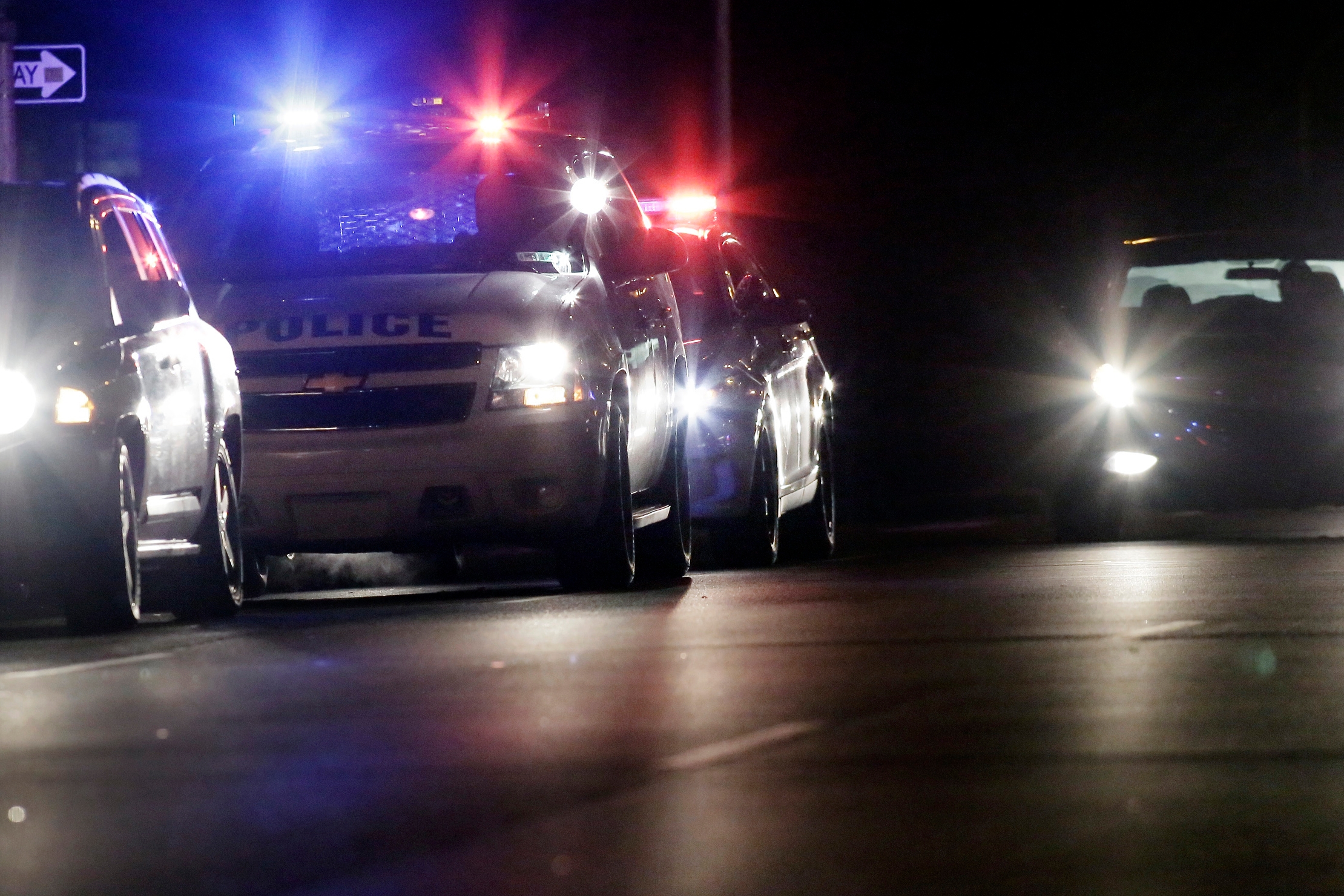
    A Philadelphia police officer makes a car stop on the 4400 block of Chestnut Street just after midnight in December 2014.ELIZABETH ROBERTSON / Staff Photographer

    Stalled stops

    In August, after a Philadelphia police officer left a struggling man to die in the street, I joined others in criticizing the department’s decision to deprioritize traffic enforcement. Unfortunately, it doesn’t seem like anything has changed. When a cyclist was struck by a hit-and-run driver near Jefferson Einstein Hospital on North Broad Street on Sunday, police apparently failed to arrive at all. I wish I could say I was surprised, but this inaction is par for the course.

    Walk or drive here long enough, and you’ll find multiple examples of motorists executing blatantly illegal maneuvers on the city’s streets, only for the police who witness it to do nothing at all. The numbers confirm it: Traffic citations have decreased by 90% since 2000.

    Policing experts I’ve talked to suggest this strategy is a kind of risk avoidance. In an era when cops fear potential “social media moments,” doubling or tripling the number of stops could double or triple the number of bad headlines police brass are forced to explain.

    It is safer, from a public relations standpoint, to simply respond to calls rather than engage in “proactive policing.” This, however, is the wrong mindset. What’s needed is for police to do their jobs, including traffic stops, with poise and professionalism.

    Beyond the impact on traffic safety, there’s also evidence that traffic enforcement helps to reduce other forms of crime. Policing experts pointed to the U.S. Department of Justice’s “Data-Driven Approaches to Crime and Traffic Safety” program, which is built on the idea that “traffic law enforcement not only prevents accident fatalities and injuries, but also provides an opportunity to identify fugitives, stolen merchandise, illegal weapons, and stolen cars … the more vehicle stops an agency conducts, the more likely it is to identify persons wanted by the police.”

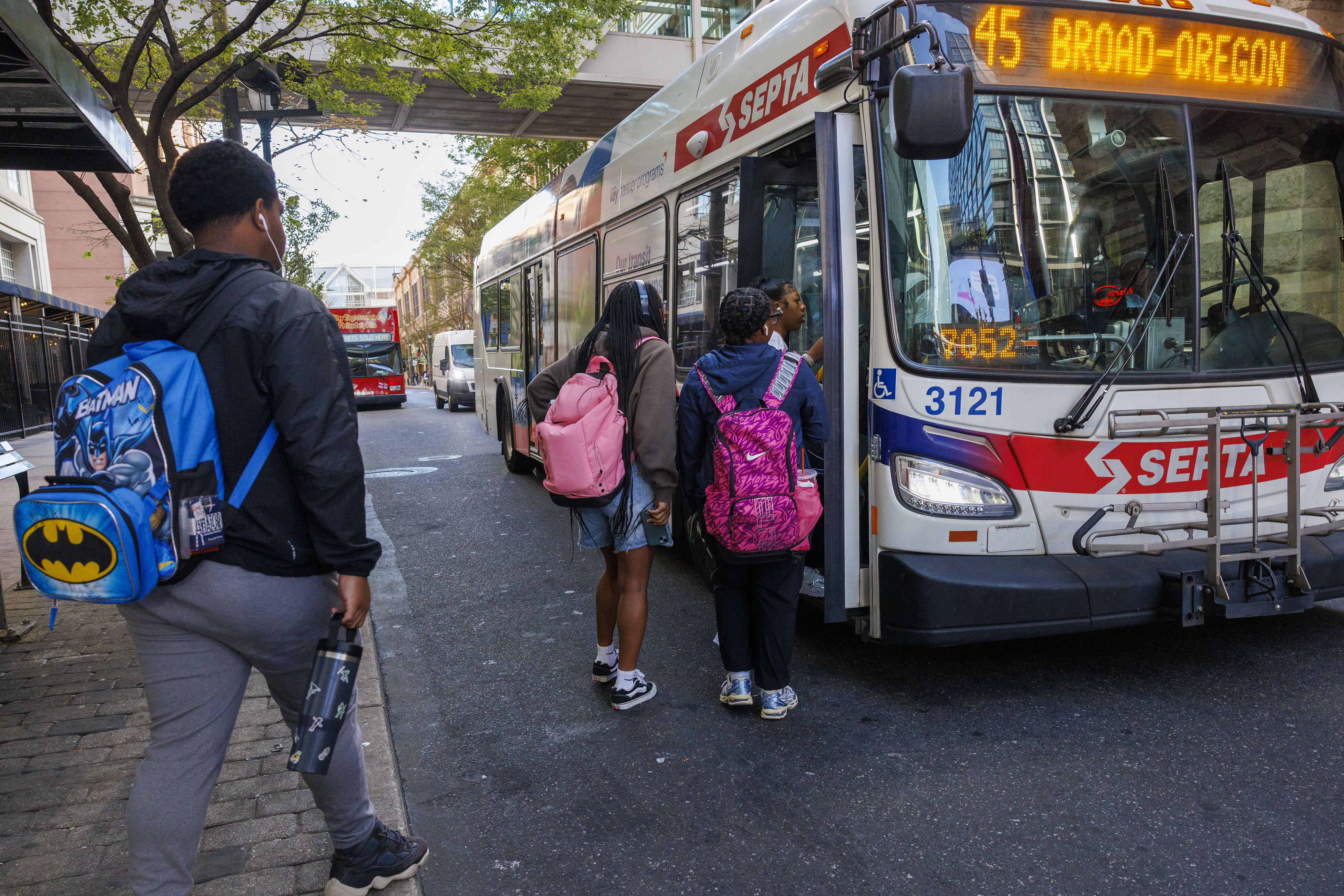
    Students making their way south board a SEPTA Route 45 bus as they commute to school in September 2025.Alejandro A. Alvarez / Staff Photographer

    Earned privilege

    On Tuesday, City Council’s transportation committee held a hearing to explore expanding free student access to SEPTA’s TransPass+, which currently does not work after 8 p.m. or on weekends. There was widespread agreement that something should be done.

    While we had to pay for our school tokens back when I attended Central, they were similarly restrictive. Paying full price to get home from work or engage in weekend extracurricular activities is a pain when the only people interested in hiring you pay just $7 an hour. Expanding access could help get more students to broaden their horizons, which would enrich both them and the city.

    There were, however, two major concerns noted before Council. One is how to pay for this expanded access, which could cost tens of millions of dollars. The other is the behavior of some students. Councilmember Curtis Jones Jr. mentioned the crowds that have mobbed Dilworth Plaza, while others brought up the inexplicable failure of many students to tap their fare cards on their way to and from school, which reduces SEPTA’s ability to get reimbursed by the state.

    Councilmember Anthony Phillips, citing his own experience working with young people, suggested limiting the expansion to only students who are enrolled in extracurricular activities, while Jones suggested turning off the benefit for students who have misbehaved. Although these ideas are well-intentioned, they also sound like a headache to administer.

    There may be a way to overcome these obstacles, in part by tying them together. A key part of growing up is earning privileges. In that spirit, SEPTA and the school district could extend transit access if students start tapping their cards at an acceptable rate. This would cut down on turnstile jumping, offer some of the accountability Jones and Phillips were looking for, and create a pathway to expanded access.

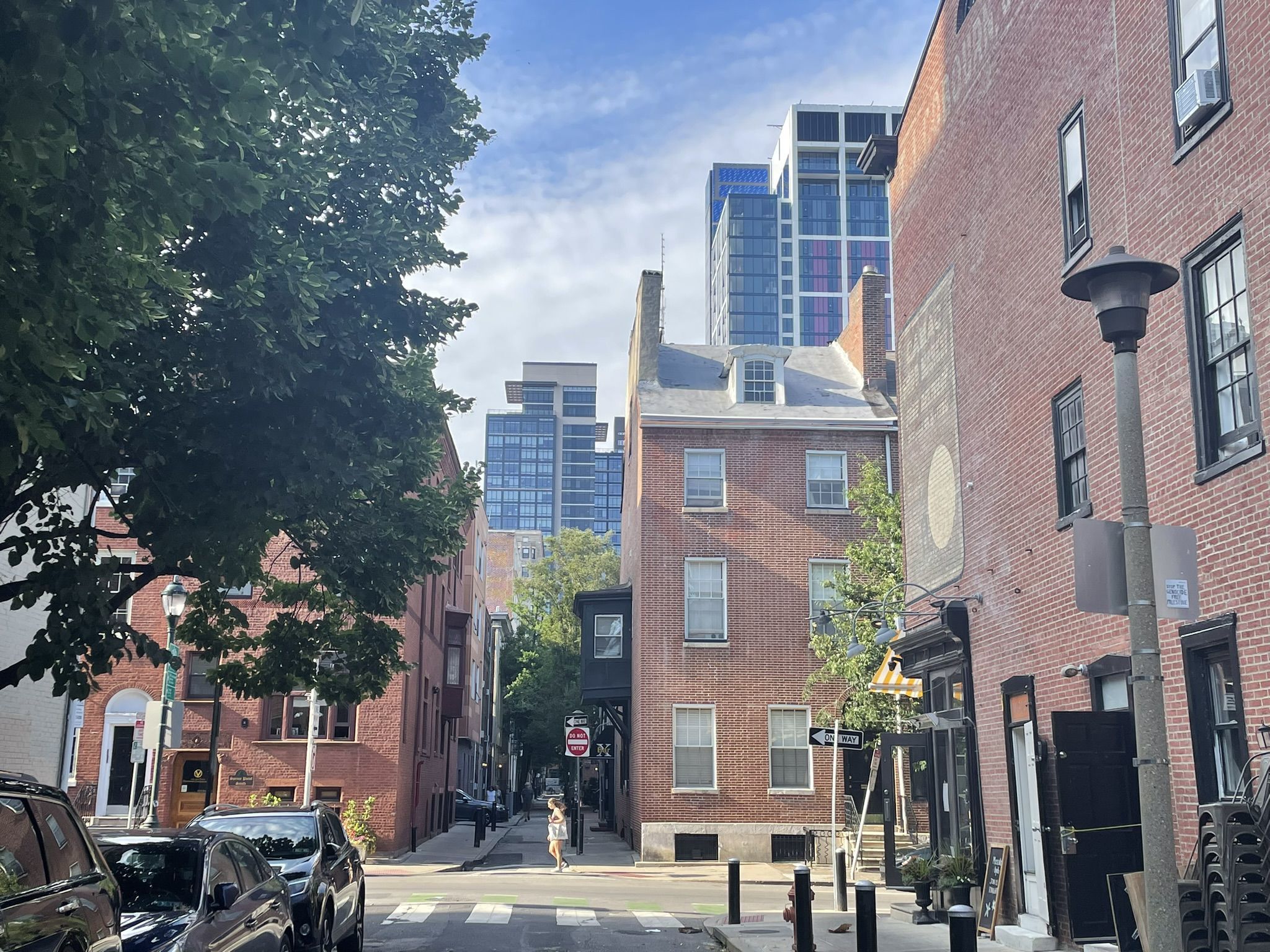
    The Washington Square West neighborhood has accommodated all types of buildings, from elegant townhouses to modern high-rise towers.Inga Saffron

    Historic ruling

    Last week, I wrote that Common Pleas Court Judge Christopher Hall seemed skeptical of the case for the Washington Square West Historic District. That observation was confirmed by this week’s decision, which once again revoked the Philadelphia Historical Commission’s decision to create the city’s largest and most extensive preservation zone.

    I share the Preservation Alliance’s appreciation for great architecture and our city’s history. At the same time, the revocation of this district should not come as a surprise. As Hall’s order notes, 85% of residents opposed the designation during the commission’s hearing, and in many cases, properties were included simply due to their location, with no other justification listed.

    It turns out that infringing on homeowners’ ability to renovate their own property according to their own wishes requires more than good intentions.

  • Hakeem Jeffries will visit Bucks County to boost Bob Harvie as battle for the gavel descends on Pennsylvania

    Hakeem Jeffries will visit Bucks County to boost Bob Harvie as battle for the gavel descends on Pennsylvania

    With one month left and an expanding map of battleground districts across the country, the fight for control of the U.S. House has arrived in Pennsylvania in full force.

    Republican House Speaker Mike Johnson and House Democratic leader Hakeem Jeffries — battling it out for the gavel come January — were both kicking off the final push of Pennsylvania’s midterm elections this week, signaling the Keystone State’s importance in determining party control of the chamber, which Republicans have held since 2023.

    Jeffries will visit Lower Bucks on Saturday to give a high-profile boost to Democrat Bob Harvie in his challenge against Republican U.S. Rep. Brian Fitzpatrick in the Bucks County-based 1st Congressional District.

    The Democratic leader will appear alongside Gov. Josh Shapiro, marking the Democratic governor’s second weekend in a row in Bucks. Shapiro’s visit to Langhorne last week intensified the attention on the 1st District when he stumped for Harvie and other Democrats in competitive downballot races that could have determinative outcomes.

    Jeffries’ visit follows Johnson’s time Tuesday in each of the four competitive Pennsylvania districts that Republicans are trying to defend, including a private meeting with Fitzpatrick in Bucks and public events with the other swing-district Republicans. The House speaker’s Pennsylvania stops launched a seven-state tour this week, as Democrats expand the districts they are targeting across the country and the GOP goes on the defensive.

    Johnson’s and Jeffries’ respective affiliated campaign organizations, meanwhile, are spending millions of dollars to flood the Pennsylvania airwaves in the coming weeks. That includes a new, nearly $1 million cash infusion for Harvie — a sign that Democrats see potential for a nationwide blue wave to oust Fitzpatrick after several failed attempts.

    The National Republican Congressional Committee, for its part, has invested $120,000 in partnership with Fitzpatrick, who also has his own massive war chest, as the group prioritizes three other competitive districts in the state.

    “We’ve seen this in past wave conditions where triage starts to happen,” said Chris Borick, a political science professor at Lehigh University. “It becomes a math game. How much do we have left in resources? Where is it going to make a difference?”

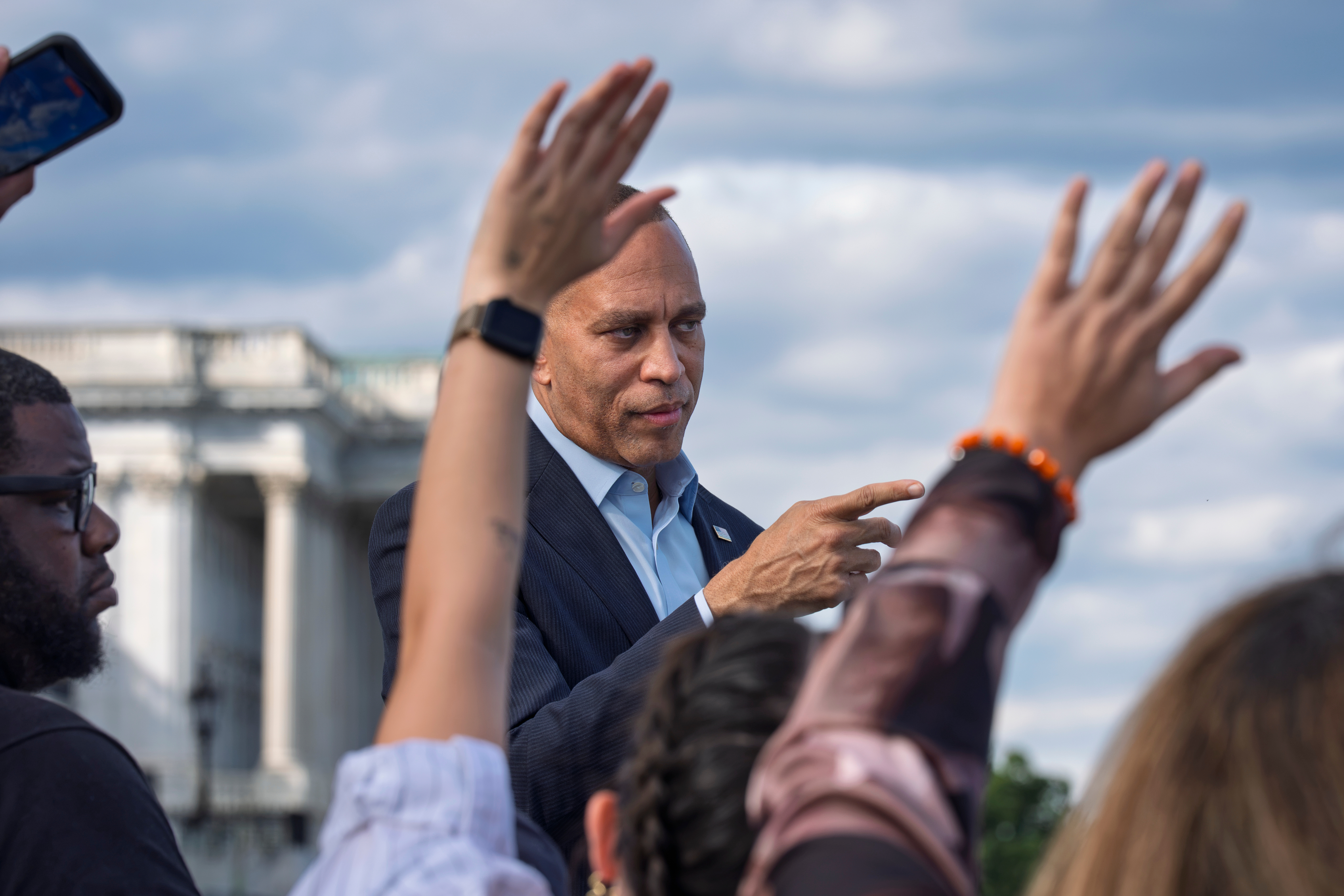
    House Democratic Leader Hakeem Jeffries (D, New York) and House Speaker Mike Johnson (R, Louisiana) are traveling to key congressional districts in Pennsylvania.Jabin Botsford

    The battle for the gavel

    Johnson, a Louisiana Republican who has led the House since 2023, is trying to defeat the odds and preserve a narrow majority as a largely unpopular president from his party sits in the White House.

    On Tuesday, he went to a Harrisburg diner and college campus with U.S. Rep. Scott Perry (R., York), a diner and Fraternal Order of Police headquarters in Bethlehem with U.S. Rep. Ryan Mackenzie (R., Lehigh), and a rally at a local Hazleton business with U.S. Rep. Rob Bresnahan (R., Luzerne). Johnson’s office confirmed he also met with Fitzpatrick, though they did not hold a public campaign event and Fitzpatrick’s campaign did not return a request for comment.

    Though he votes with President Donald Trump and his party most of the time, Fitzpatrick is the last remaining Republican representing a Philadelphia suburb — one of the swingiest in the state. It is a political dynamic that has let him distance himself from Johnson and Trump more than any other GOP lawmaker from the state — or in the country — as he runs on a record of bipartisanship in a district that former Vice President Kamala Harris won in 2024.

    Even in the other three competitive seats that Trump won, Johnson’s appearance is a risky maneuver, Borick and others say.

    Sam Chen, an Allentown-based GOP strategist, worked for a candidate whom Mackenzie defeated in the Republican primary two years ago. He said the freshman lawmaker is a “formidable campaigner” who could benefit from any fundraising and get-out-the-vote message from a national figure like Johnson. But it might be only a “moderate” benefit considering voters are largely unhappy with Republican messaging on issues like affordability and the war in Iran, he said.

    “I don’t think Mike Johnson is the right spokesperson for this. I don’t think the administration at all, or anyone in Republican leadership, has messaged this correctly,” Chen said. “They’re doing it the same way Joe Biden messaged it back when Harris lost in ’24. So [Johnson serving as a campaign surrogate] could backfire in that it might drive some Democrats to vote.”

    Democrat Bob Brooks, the Lehigh Valley firefighter and union leader running against Mackenzie, was an early focus for the party as Jeffries and Shapiro rallied in support of the candidate in July, with the House leader declaring the 7th as the key place to kick off Democrats’ final 100 days of battle for the midterms.

    The race, long considered a toss-up by nonpartisan national groups that evaluate elections, recently shifted to one that “leans Democratic,” according to the Center for Politics at the University of Virginia. The change followed a Franklin and Marshall College poll that found Brooks leading Mackenzie 45% to 40%.

    Republican Rep. Rob Bresnahan, R-Pa., speaks before President Donald Trump arrives at the Mount Airy Casino Resort in Mount Pocono, Pa., Dec. 9, 2025.Matt Rourke

    ‘Bucks County’s more amenable than Nebraska’

    Trump’s worsening poll numbers, especially on economic-related issues, and voters’ frustrations have added to Democrats’ optimism in races they previously thought were out of reach — including in Senate and House seats long held by Republicans.

    That optimism has filtered to Bucks County, where Fitzpatrick’s brand has made him popular among Republicans and Democrats. The Democratic Congressional Campaign Committee, the official campaign arm associated with Jeffries (D., N.Y.), has not helped fund a challenger to Fitzpatrick since 2020, but it now intends to invest about $900,000 to boost Harvie, according to a source familiar with the plans.

    “Democrats now are thinking, ‘If we could be competitive in Nebraska and we could be competitive in Kansas and Texas, why can’t we be competitive in the Pennsylvania 1st Congressional District?’” Borick said. “Bucks County’s more amenable than Nebraska.”

    Fitzpatrick is one of only three House Republicans in the country representing a district Harris won in 2024.

    Before the latest shift in sentiment, it was unclear whether Harvie — a twice-elected Bucks County commissioner whom Democrats saw as a key recruit this year — would receive competitive levels of support. Previous campaign finance reports show he lagged in fundraising compared with the Democratic challengers in the other swing districts.

    Meanwhile, Fitzpatrick out-raised all candidates running in the four districts and has unleashed an unrelenting stream of ads targeting Harvie, a major shift from his previous campaigns. His campaign has allocated $4.5 million for ads from June through Election Day, according to the tracking firm AdImpact.

    He spent a little more than $460,000 in total in his reelection bid two years ago. But as of this week, Democrats planned to outspend Republicans $8.4 million to $5.2 million through Election Day in the race — including Fitzpatrick’s spending — though reserved ad time in the next few weeks could change.

    Out of more than $87 million worth of ads already spent or planned to be spent in all four races between June 1 and Nov. 3, the $13.6 million in the Fitzpatrick-Harvie matchup represented the smallest piece of that pie, according to The Inquirer’s review of spending tracked by AdImpact.

    Where Johnson’s trip could help at this point, Borick said, is in fundraising — a strategy that became evident when Johnson said in a recent video that Mackenzie was running “one of the most important races in all of America” and Mackenzie immediately turned to asking viewers to donate through his website.

    Videos that Johnson filmed with Bresnahan and Perry also aimed to lay out the stakes. Next to Bresnahan, the speaker called the contest in the Scranton-based district “one of the top five races in America.” Johnson, filmed in the Harrisburg-based district, nodded as Perry — a hard-line conservative — called the election “a choice between common sense and absolutely crazy.”

    Perry faces a tough November rematch with former TV anchor Janelle Stelson, whom he beat by roughly 1 percentage point when Trump carried the state in 2024. And Bresnahan, who also won his seat narrowly last election, is running against Scranton Mayor Paige Cognetti in the closely watched race.

    Eugene DePasquale, the chair of the Pennsylvania Democratic Party, said in a statement that Johnson’s visit showed the speaker was “doing everything he can to bail out the four members after they sold out their constituents to help him raise costs and cut healthcare.”

    In the race between Mackenzie and Brooks, the $27.8 million in general election ad spending was more than twice the 1st District outlay. The GOP has allocated $17.1 million to that race, while Democrats have earmarked $10.5 million for the general election.

    Jeffries’ visit will likely aim to boost Harvie’s campaign coffers. Chen, the Republican strategist, said it also would be wise for it to represent something of a course correction after Harvie’s ads have focused on attacking Fitzpatrick — who is largely popular — rather than highlighting the stakes of the race.

    “Jeffries, if he’s smart, he’s going to come in and [say], ‘Hey, I know you might like Fitzpatrick. I know you guys might respect him. You respect that he calls out the president. But at the end of the day, we have to change the majority. Even if he’s a naysayer to the president’s agenda, it doesn’t help if we don’t have the majority,’” Chen said.

    Staff writer Michelle Baruchman contributed reporting.