Tag: topic-link-auto

  • AmeriHealth Caritas to invest $15M in a company that serves people with intellectual and developmental disabilities

    AmeriHealth Caritas, a Medicaid insurer based in Delaware County, has agreed to invest $15 million in Deon Health, a Michigan start-up that works with states and insurers to improve care for people with intellectual and developmental disabilities, the two companies announced Friday.

    Deon was founded in 2024 to work with local providers to help people with intellectual and developmental disabilities (I/DD) overcome the silos that make it hard to coordinate primary care, specialty services, behavioral health, and long-term supports needed to allow individuals to live in community settings.

    “We built Deon Health to create a better way to organize care around people with I/DD, their families and the professionals who support them every day,” Sara Ratner, chief executive of Deon Health, said in a news release. “AmeriHealth Caritas brings deep Medicaid experience and shares our commitment to a model built around strong local relationships.”

    Other investors in Deon include Town Hall Ventures, First Trust Capital Partners, and Difference Partners.

    Independence Health Group, the parent company of Independence Blue Cross, is the majority owner of AmeriHealth Caritas. Independence’s partner in the business is Blue Cross Blue Shield of Michigan. Among the nation’s largest Medicaid insurers, AmeriHealth Caritas has contracts in 13 states and Washington D.C.

  • With 89 new cases in a week, Pa. reports the nation’s third-largest measles outbreak

    With 89 new cases in a week, Pa. reports the nation’s third-largest measles outbreak

    Pennsylvania health officials confirmed 89 new measles cases in the state in the last seven days, an escalation of a rapidly growing measles outbreak now impacting more than two dozen counties.

    As of Thursday, Pennsylvania had reported the third-highest number of measles cases in the country for 2026, behind Utah and South Carolina, according to data from the Centers for Disease Control and Prevention.

    Delaware has reported 22 cases this year, the first time in a decade that the highly contagious disease has been diagnosed in state residents. New Jersey has confirmed just one case.

    In Pennsylvania, children made up about one-third of the 379 patients diagnosed with measles in two separate outbreaks so far this year, state officials say. None of the patients diagnosed with measles this year has been fully vaccinated.

    In all of 2025, the state reported just 16 measles cases.

    Lancaster County, with some of the lowest measles vaccination rates in the state, has been at the center of both Pennsylvania outbreaks this year. As of Friday, the county has tallied 181 cases.

    State officials warned earlier this week that the public may have been exposed to the disease on Aug. 4 and 5 at a soccer camp at Millersville University and on Aug. 12 at a Whole Foods in Lancaster.

    Chester County has the second-highest number of cases in the state, at 41; it is the only Philadelphia-area county to report cases in the current outbreak, which began in April.

    And cases are climbing in central Pennsylvania, with Centre County reporting 13 cases and neighboring Mifflin County reporting 25.

    State health officials said that 70 people, including 22 children, have been hospitalized with measles this year. That’s about 18% of the total cases reported.

    In August alone, state officials have confirmed nearly 200 new cases in Pennsylvania.

    The true number of cases is likely much higher, physicians and health officials in Lancaster and Chester Counties say.

    In Chester County, some residents have refused to cooperate with health workers looking to trace their contacts to understand how measles is spreading in the county, officials there have said.

    Local officials also worry about the spreading outbreak as many children return to school next week. Overall, about 93% of kindergarteners in Pennsylvania were vaccinated against measles, mumps, and rubella (MMR) in the 2025-26 school year.

    That’s just below the 95% “herd immunity” threshold, the level at which scientists say a given population must be immunized to prevent the spread of measles, which can infect nine in 10 unvaccinated people exposed to it.

    Analyses earlier this year by The Inquirer and the Pittsburgh Post-Gazette show pockets of vulnerability across the state, with hundreds of kindergarten classes reporting vaccination rates below herd immunity, putting students and communities at risk for an outbreak.

    Still, most Pennsylvania students are fully vaccinated and schools “benefit from robust community immunity that serves as a powerful barrier against the virus,” state health officials said in a statement.

    The state hosted medical briefings for nearly 1,000 school nurses over the summer to provide guidance on preventing measles as they prepare for the upcoming school year, officials said.

    Most measles cases resolve in weeks with mild-to-moderate flulike symptoms, but the disease is particularly risky for young children and can result in severe complications, including death.

    This year, Pennsylvania hospitals have treated adults with brain swelling and pneumonia, and children with dehydration or damaged organs from measles.

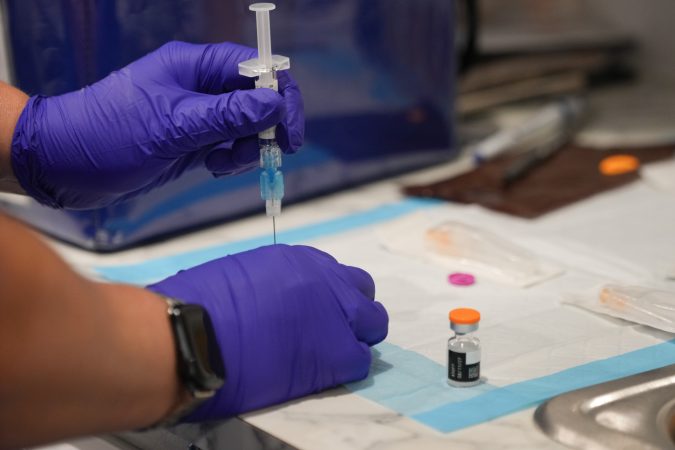
    State officials have stepped up vaccination campaigns in response to the outbreak, with health department staff dispensing more than 4,000 vaccinations in the state this year — and more than 1,800 in August alone.

    The department has held 85 pop-up clinics in affected counties since April and has scheduled “dozens” of additional clinics for the coming weeks and months.

    The state has also hosted briefings for healthcare providers on how to recognize and treat measles, and is recommending that doctors offer early vaccinations for children as young as six months old in affected areas.

  • The Philly School District, with 70,000 empty seats, will spend $7M for a lease for a single school

    The Philly School District, with 70,000 empty seats, will spend $7M for a lease for a single school

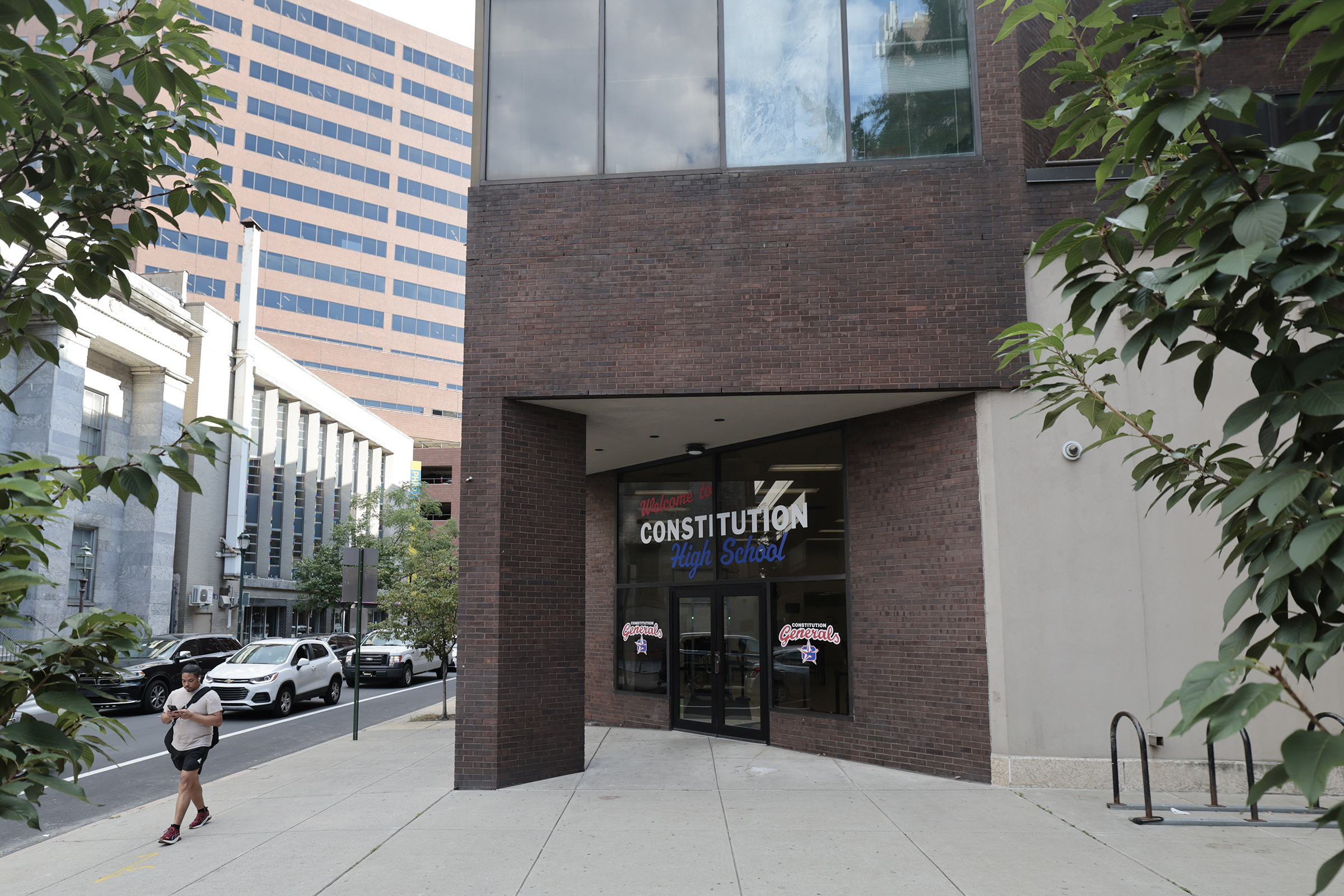
    The Philadelphia school board voted Thursday night to spend up to $7 million on rental space to house a district high school in Center City.

    The four-year agreement — the district will pay $1.7 million annually for two years, then $1.8 million and $1.9 million in the final two years — covers classrooms and related spaces at 18 S. Seventh St., the longtime home of Constitution High School.

    The move comes months after the district voted to close 17 schools, in part because it has 70,000 empty seats in schools across the city. The school system will also merge some schools — like Overbrook High and the Workshop School — as part of its $3 billion facilities master plan, to be enacted over the next decade, but it opted not to move Constitution High into any school with empty space.

    Board members voted unanimously to pass the resolution, which noted the district “continues to work through the completion of the Facilities Master Plan to properly identify appropriate space for our students.”

    Officials will “review the opportunities that may exist in the coming years that would cause us to re-evaluate the current necessary decision to remain at this location, which accommodates the needs of the students within this program. If the opportunity arises for the school district to consider relocation, the community and stakeholders will become aware and involved in this process.”

    The facilities plan calls for Constitution to move in 2035-36 into the current Bodine High building in Northern Liberties. Bodine will eventually expand and move into the current Penn Treaty building, in Fishtown, and Constitution will then occupy the Bodine space.

    Constitution, a citywide admissions school, has been located at its current building since the school opened in 2006 as part of Philadelphia’s small-schools boom. The school was designed with a civics focus, and deliberately located near the National Constitution Center.

    The district has moved other schools out of rental properties. It relocated Science Leadership Academy, which had been in rental space near the Franklin Institute, into Benjamin Franklin High. District officials have pointed to that colocation as a model.

    Charter renewals, but no mention of missing PSSAs or Kensington asbestos relocation

    The board also voted Thursday night to renew two charters: YouthBuild Philadelphia Charter, on North Broad Street in North Philadelphia, and Inquiry Charter, on Belmont Avenue in West Philadelphia.

    Both schools received five-year renewals.

    YouthBuild’s renewal came with conditions: agreeing to submit a student attendance plan, tracking students’ daily attendance, and divulging supports offered; and promising to ensure the school’s suspension rate is at or below the district’s suspension rate.

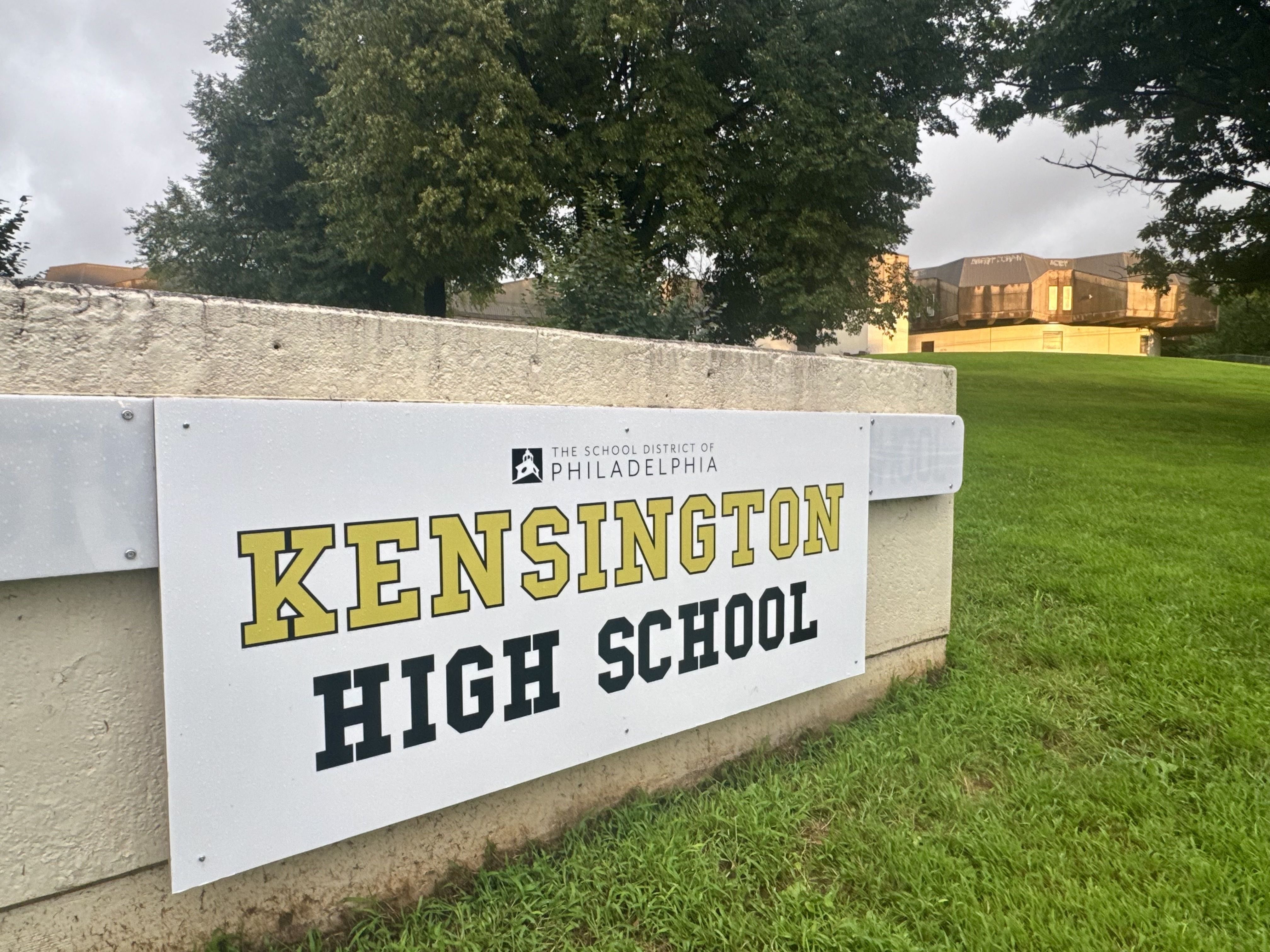
    No district official addressed two brewing matters: either the asbestos-related relocation of Kensington High students to the former Meehan Middle School building in the Northeast, more than seven miles away, or the district’s missing PSSA scores.

    Earlier on Thursday, a Lincoln High parent and a Mayfair resident were attempting to block Kensington’s move to Meehan, a closed district school currently used as swing space to house school populations that need a temporary home.

    Meehan shares a campus with Lincoln and Northeast Community Propel Academy, both of which are overcrowded. Parent Harold Brown and Peter McDermott, a former Philadelphia teacher who’s active in Mayfair civic life and city Democratic politics, say moving Kensington onto the campus will harm students.

    They also say placing 400 Kensington students and 90 staff at Meehan violates a Community Benefits Agreement signed in 2019, when neighbors OK’d building Propel to ease overcrowding at other Northeast schools.

    No mention was made, either, of the lack of data around Philadelphia students’ PSSA and Keystone exams.

    District officials said they won’t release the scores of students’ spring tests — which district officials have access to — because of a delay in Harrisburg.

    Though the district did receive preliminary student-level scores, and released limited data to some teachers and administrators in order to correctly roster a limited number of students, they have walled off the data from the vast majority of educators.

    A district spokesperson said this week that they won’t be using PSSA scores for the school selection process that admits students to 37 magnet schools. Instead, students can take an alternate assessment the district declined to name or detail.

    The scores are consequential in a district where officials frequently state their goal to become the fastest-improving large urban school system in the country. Philadelphia has posted academic gains during Superintendent Tony B. Watlington Sr.’s tenure and earned national attention for its post-pandemic improvement, but its students still generally struggle.

    Citywide, 34% of students score at grade level in English and 23% in math, as judged by 2024-25 standardized tests.

    Administration of this year’s PSSAs, given to students in third through eighth grades, was snarled by some technical glitches. It was the first year Pennsylvania required students to take the exams online.

    Research shows that scores usually dip when tests move online.

    Kristin Luebbert, a retired district teacher, urged the board and the district to release the scores.

    “Obviously, the administration must have strong feelings about what they show,” Luebbert said of the scores. “At this point, we all know they’re out there, so you might as well release them.”

  • Sixers hiring assistant coach Phil Handy, a veteran with deep ties to LeBron James

    Sixers hiring assistant coach Phil Handy, a veteran with deep ties to LeBron James

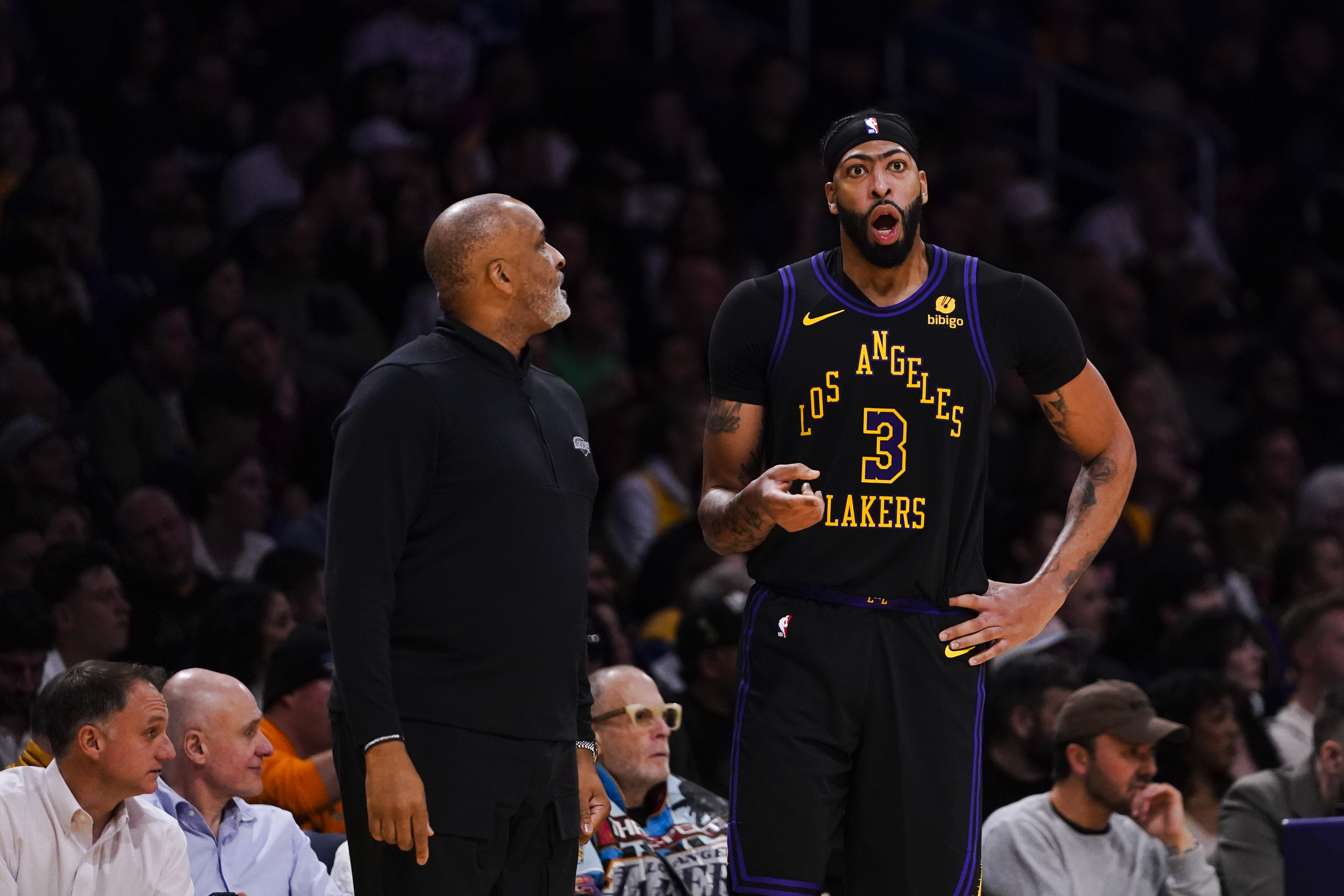
    The 76ers are adding a well-regarded assistant to their bench who is familiar with both LeBron James and head coach Nick Nurse.

    The Sixers are hiring Phil Handy, who was with the Dallas Mavericks last season, a source confirmed. Handy is regarded as one of the elite player development coaches in the league.

    But prior to the Mavericks, Handy had stops with the Cleveland Cavaliers (2013-18), Toronto Raptors (2018-19) and Los Angeles Lakers (2019-24). In Cleveland, Handy won a championship in 2016 along with James. He stayed in Cleveland until the 2018-19 season, when he joined Nurse’s staff in Toronto, where he also won a championship with the Raptors.

    The following season, Handy reunited with James in Los Angeles, where he stayed for the next five years. He was part of Frank Vogel’s staff that led the Lakers to a title in 2020 and stayed with the Lakers through multiple head coaching changes from Vogel to Darvin Ham and JJ Redick.

    He joined Jason Kidd’s staff in Dallas last season before Kidd and the Mavericks mutually parted ways this offseason. Handy made his reputation in the league in part because of his player development work with Kobe Bryant.

  • Meet the Philly drag king competing in Season 2 of ‘King of Drag’

    Meet the Philly drag king competing in Season 2 of ‘King of Drag’

    Philadelphia’s drag scene returns to the TV spotlight this fall in Season 2 of the reality competition show, King of Drag. For a second year in a row, the show has cast a Philly drag king: The new contestant is Cyrus K. Stratton.

    The West Philly performer, whose offstage name is Simone Lawrence, follows drag king Henlo Bullfrog, who competed in last year’s inaugural season and landed in third place.

    King of Drag premiered in 2025 on the LGBTQ+ streaming service Revry as the first show of its kind for drag kings, following the yearslong success of RuPaul’s Drag Race and its many spin-offs. (Drag Race has also turned its attention to drag queens representing Philly recently, like Sapphira Cristál and Mandy Mango.)

    The second season premieres Sept. 20 with actor-comedian Cameron Esposito serving as host and competition judges including Our Flag Means Death actor Vico Ortiz, Drag Race alum Gottmik, and King of Drag cocreator Damian Pelliccione. Ten contestants will face off in weekly challenges showcasing drag artistry, performance, and originality across eight episodes.

    By day, Lawrence is a painter and art therapist. Originally from California’s Bay Area, she began performing drag while attending graduate school for psychology in Madison, Wisc. Typically an introvert who shied away from the spotlight, Lawrence found that drag provided a chance to explore and embrace her queerness.

    “I’m a pretty quiet and shy person by nature, but stepping on stage, I felt empowered … just trying on a beard or a mustache gives you permission to play with gender, to wear what you want and look how you want,” said Lawrence, 35, who studied art therapy at Drexel University. “The stage was a space to feel liberated as a queer person. I think it gave me the opportunity to reclaim space or to take up space.”

    Philadelphia drag king Cyrus K. Stratton, aka Simone Lawrence, is a painter and art therapist.Courtesy of Cyrus K. Stratton

    She moved to Philadelphia about five years ago and has appeared on local stages with performances inspired by Black male artists like Prince, Stevie Wonder, and Barry White. She took the name Stratton in honor of the drag king who first inspired her in Wisconsin, Kingston Stratton.

    Cyrus K. Stratton has since become a fixture in the Philly drag community, working with Henlo Bullfrog to recruit and train amateur drag kings and producing all-drag king shows around the city. In an effort to build community with fellow Black drag kings in the city, Stratton combined his passion for painting and drag to create the 2024 exhibit “The Coronation” at Prism Arts Philadelphia; it featured portraits of local drag kings including Mister Right, Sir Suavey, and Mo Betta.

    “I have seen the king scene grow since I’ve been here — prominent kings in Philadelphia take bigger stages and are more respected, accepted, and celebrated by the wider community,” said Lawrence. “For example, Fabrika [the drag performance space in Fishtown] only ever had [Drag Race] girls or the most prominent queens, and [last year] I was the first drag king to perform on that stage and sort of infiltrate that space.”

    Appearing on King of Drag was an intense and stressful experience, but Lawrence believes the friendship she found while competing was worth it. She worked with a team of 10 designers from Philadelphia to prepare her outfits, songs, and choreography for the show.

    Cyrus K. Stratton in a promotional poster for Season 2 of “King of Drag.”Courtesy of Cyrus K. Stratton

    As the premiere date nears, Lawrence is a bit nervous for all the attention, but she recognizes the power in representing Black drag kings on a national platform. She’s also excited to have Philly’s drag community supporting the show: Center City’s Franky Bradley’s will host weekly watch parties as the season progresses, so fans can see Stratton on screen and in person.

    “People are still learning what it means to be a drag king and why people do kinging. It’s about challenging different stereotypes and archetypes of manhood and masculinity,” said Lawrence. “It’s just so important for so many of us [to have] an opportunity to maybe dismantle masculinity and dismantle the patriarchy, and give people sort of a new interpretation of what masculinity could be.”

    Season 2 of “King of Drag” premieres Sept. 20 on Revry.

  • Video shows altercation before off-duty Philadelphia officer was killed

    Video shows altercation before off-duty Philadelphia officer was killed

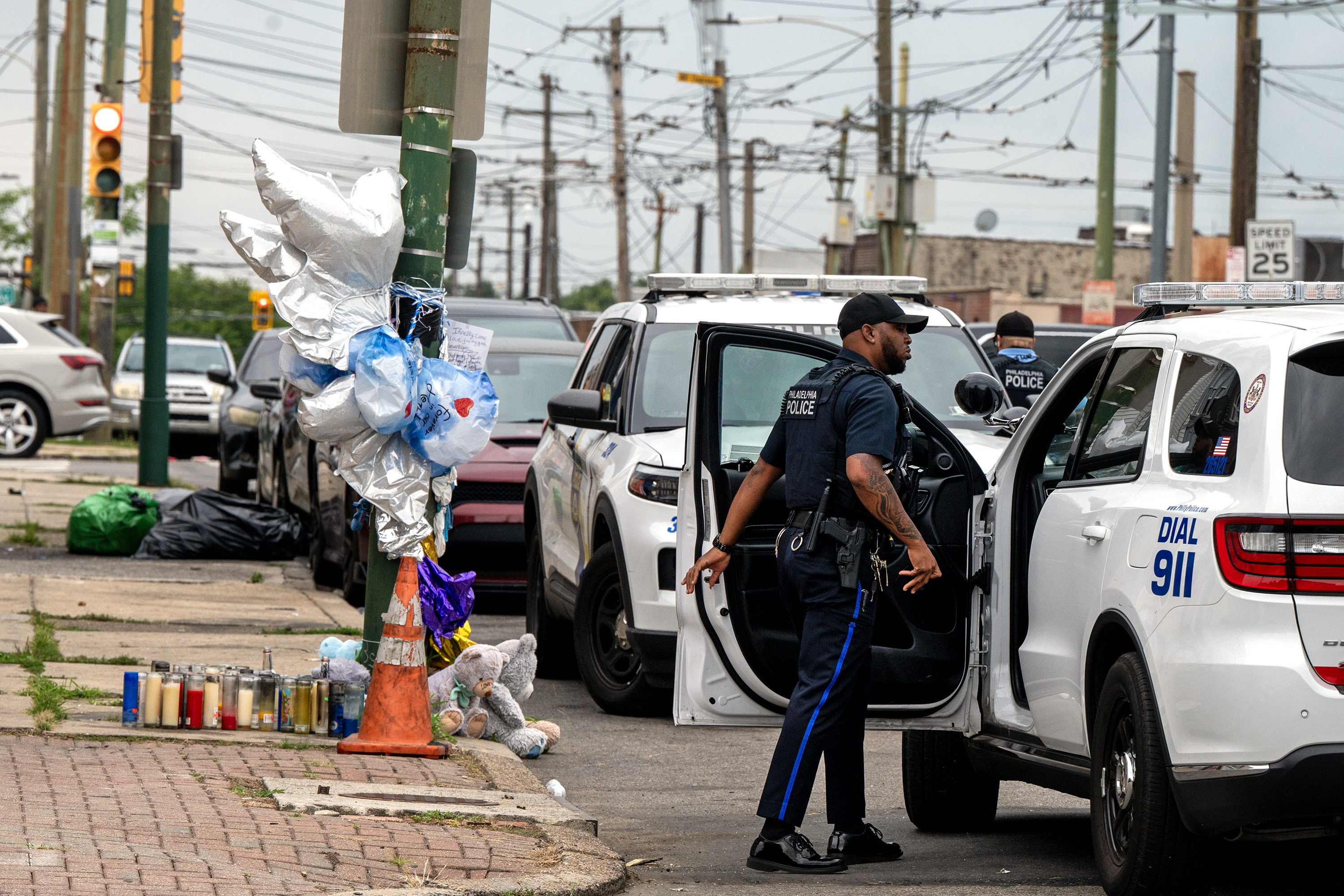
    Seconds before an off-duty Philadelphia police officer was shot and killed outside a Southwest Philadelphia nightclub, he was involved in a confrontation with the man who police believe fired the fatal shot, according to a surveillance video under review by department investigators.

    The video captures a previously unseen part of the encounter that preceded the Aug. 16 killing of Officer Alhassane Barry, 29. But it does not show the shooting itself, leaving critical questions unanswered.

    Police spokesperson Sgt. Eric Gripp confirmed Friday that the department is reviewing the video as part of its investigation. But he declined to comment further, citing an “active homicide investigation.”

    No charges had been filed against the alleged shooter as of Friday afternoon.

    The newly surfaced video footage, which was obtained and reviewed by The Inquirer, appears to show Barry leaving Nipsey’s Hookah Lounge with the man police have identified as a suspect in the killing and a third man who has not been publicly identified.

    Barry is seen in the video moving toward the alleged shooter, who is then struck twice in the head by the third man. The blows appear to knock him out of the camera’s view.

    Barry and the third man then run in the same direction, also disappearing off screen.

    A few seconds later, Barry comes back into view, falling onto the sidewalk outside the nightclub. He appears to be bleeding from a gunshot wound to his abdomen.

    Police had said they responded to a report of gunfire shortly before 4 a.m. Aug. 16 on the 7200 block of Elmwood Avenue. Officers found Barry and a 35-year-old man suffering from gunshot wounds.

    Both were taken to Penn Presbyterian Medical Center, where Barry was pronounced dead at about 8 a.m. The other man, who had been shot multiple times, was critically injured.

    It was unclear Friday whether the 35-year-old victim was one of the men in the surveillance camera footage.

    The footage comes as investigators try to determine what led to the shooting of the off-duty officer and whether the circumstances warrant criminal charges against the man police believe fired the fatal shot.

    Two law enforcement sources with knowledge of the investigation said Friday that self-defense had become part of the discussion about whether charges would be appropriate. The sources, who were not authorized to speak publicly about the case, said the investigation had also not yet been referred by police to the Philadelphia District Attorney’s Office for review.

    Police previously said that Barry, the other critically injured victim, and the suspected shooter had been inside the after-hours lounge before the shooting. The men exchanged words inside, Deputy Commissioner Frank Vanore said earlier this week, and the verbal confrontation continued after they went outside. Police said the altercation then became physical before the men were separated and the suspect opened fire.

    The newly surfaced video appears to capture at least part of that physical confrontation. The video does not show what happened before the men exited the club. And because the shooting occurs off camera, it does not show the moments in which the man fired his gun.

    Investigators recovered a firearm and eight spent 9mm shell casings at the scene.

    Barry had been a Philadelphia police officer for two years and was assigned to the 12th District in Southwest Philadelphia. Before joining the department, he served for a decade in the Pennsylvania National Guard, including a two-year deployment to Egypt’s Sinai Peninsula, and left the Army as a sergeant, according to an Army spokesperson.

    His killing prompted a funeral attended by more than 100 people at the Fouta Islamic Center of Philadelphia on Monday. Mourners and fellow officers remembered Barry as a young man devoted to public service.

  • This incoming Swarthmore first-year is biking from Colorado to Delco for his first day of school

    This incoming Swarthmore first-year is biking from Colorado to Delco for his first day of school

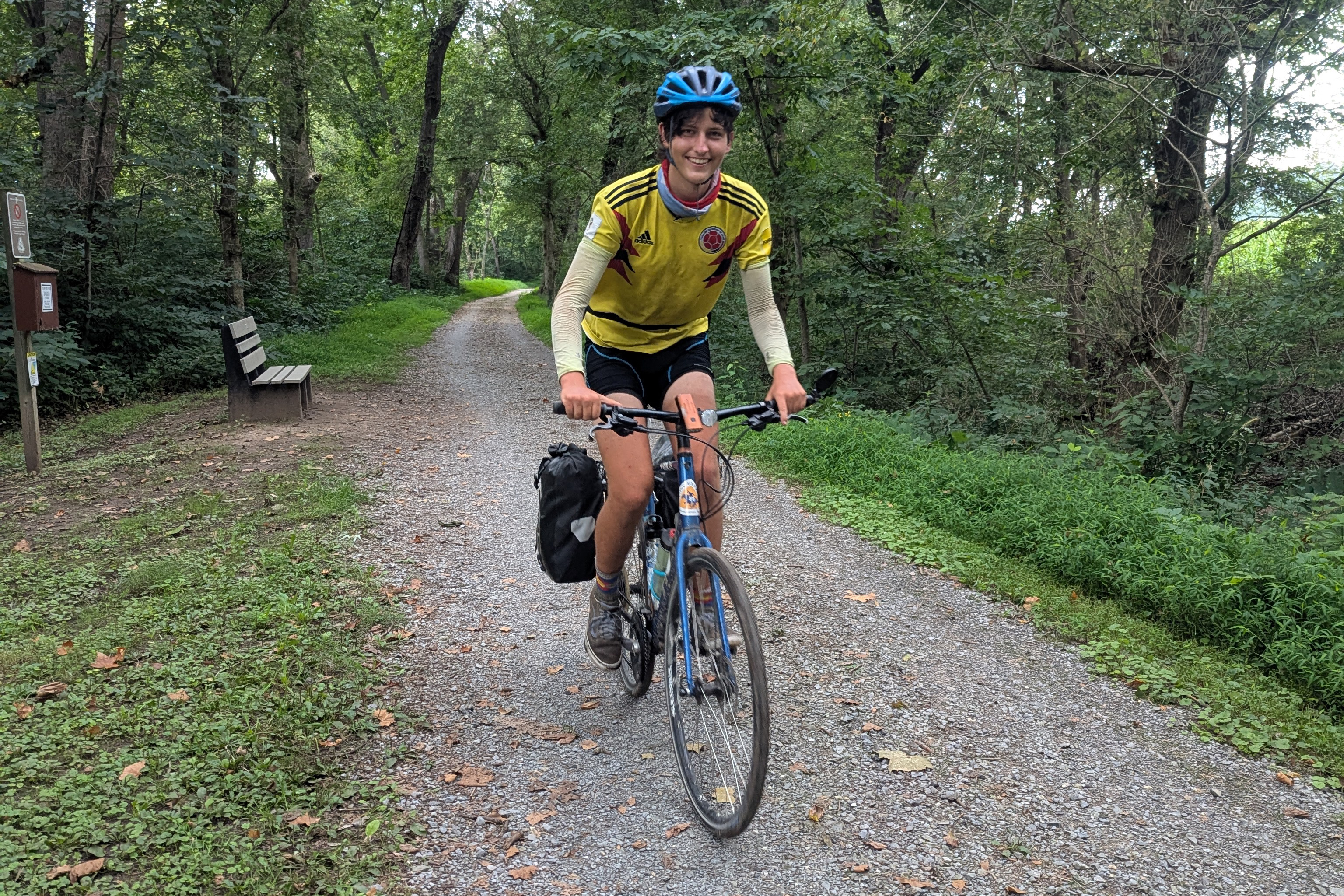
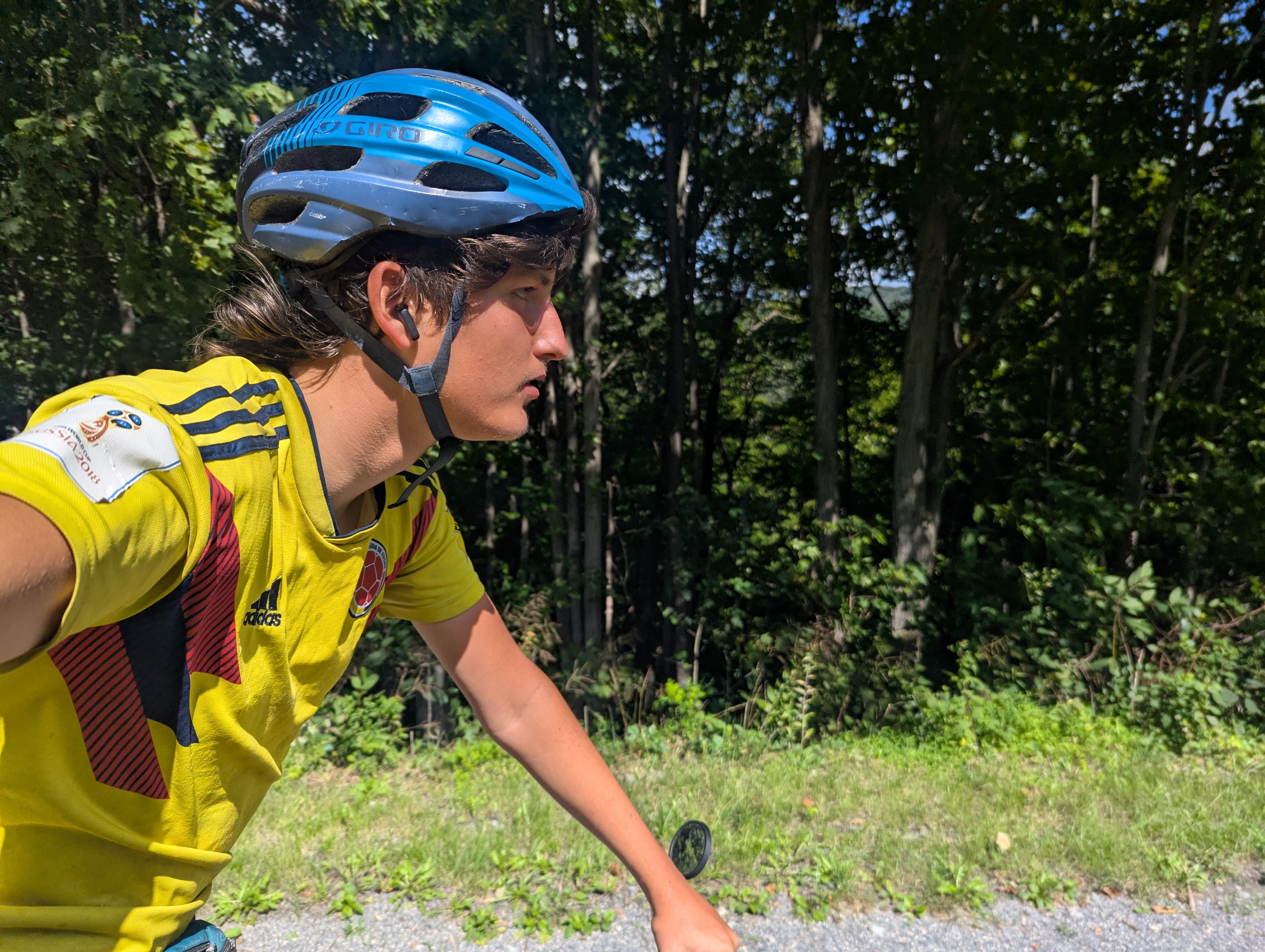
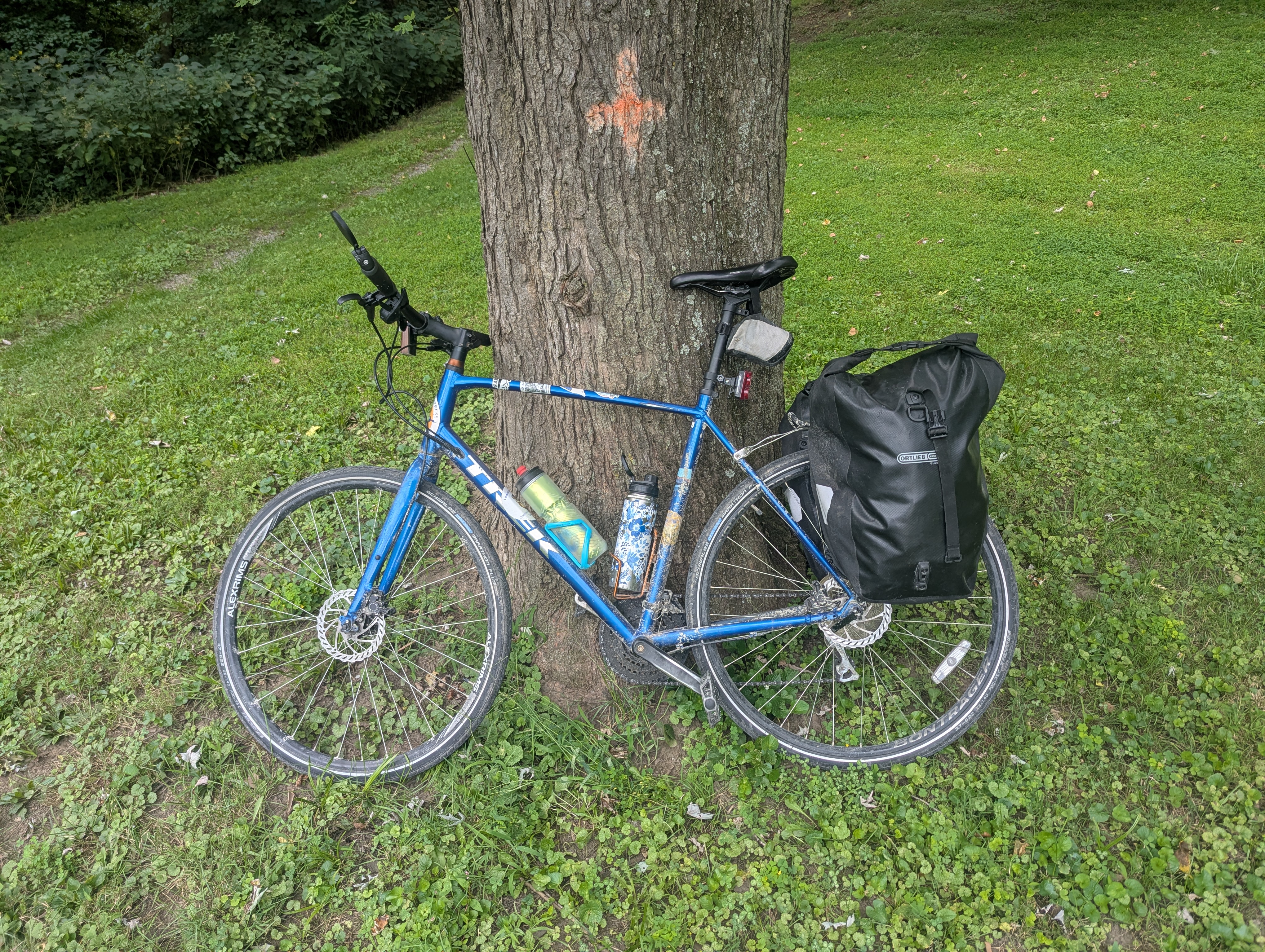
    Finn Fremstad has spent the last month biking past rolling hills and endless cornfields, through state capitols and sleepy Main Streets, and in heat waves and torrential storms. Fremstad isn’t competing in an ultra-cycling competition or checking off a 50-state bucket list — he’s commuting to school.

    Fremstad, 18, is an incoming first-year at Swarthmore College. Since July 23, he’s been on the road, biking from his hometown of Fort Collins, Colo., to Swarthmore College to start his first year.

    “To me, it just seems like kind of the perfect way to experience this country,” he said, calling in from Pennsylvania’s Franklin County on day 29 of his anticipated 31-day journey.

    Incoming Swarthmore freshman Finn Fremstad is biking to school from his hometown of Fort Collins, Colo.Courtesy of Finn Fremstad

    Why is Fremstad biking the roughly 2,000 miles it takes to get from northern Colorado to Delco, rather than, say, fly?

    Fremstad grew up cycling around Fort Collins, taking his bike into town and riding it to school. He had his sights set on a big trip this summer, and when a few other possibilities fell through, he decided to plan a solo cycling journey. It’s by far the longest bike trip he’s ever taken.

    He left home on July 23, armed with a playlist his parents made him and a healthy dose of pre-college excitement. As July turned to August, Fremstad passed from Nebraska into Missouri, Indiana into Ohio, and, finally, Pennsylvania. He strolled through state capitols and stopped into local museums. Sometimes he rode in silence, but most days he listened to podcasts or music (the soundtrack to the Broadway musical “Hadestown” has been a stalwart). He called his parents nightly.

    What has stood out about his travels?

    “A lot of corn and soybeans. I mean, just remarkable,” Fremstad said.

    Finn Fremstad is commuting from Colorado to Swarthmore College via bike.Courtesy of Finn Fremstad

    Each night, Fremstad rode into the nearest town and knocked on strangers’ doors asking if he could camp in their backyards. Most said yes, and some sent him on his way with food or some extra cash for his journey.

    “All of the greatest things about this trip have been how I’ve been able to interact with people,” Fremstad said.

    The trip, he said, has allowed him to “discover places and people in a much more intimate way than I would have been able to otherwise.”

    Weather has been the hardest part of the trek. He passed through Nebraska during a record heat wave and Indiana and Ohio amid torrential rain.

    Fremstad is set to hit Philly this weekend, where his mom will meet him with a checked bag (he will need a bit more than what he’s carrying on his back for college).

    Of Swarthmore, where he’ll be studying math, Fremstad said, “I’m just really excited to finally get there.”

    This suburban content is produced with support from the Leslie Miller and Richard Worley Foundation and The Lenfest Institute for Journalism. Editorial content is created independently of the project donors. Gifts to support The Inquirer’s high-impact journalism can be made at inquirer.com/donate. A list of Lenfest Institute donors can be found at lenfestinstitute.org/supporters.

  • The return of the Philadelphia Cycling Classic will close roads

    The return of the Philadelphia Cycling Classic will close roads

    The Philadelphia Cycling Classic is back after a decade-long hiatus, bringing loads of cycling fans, events, and road closures along with it.

    The race, which dates back to 1985, begins and ends on the Benjamin Franklin Parkway. It loops up through Fairmount Park to the grueling “Manayunk Wall,” and back down for a finish line evoking the Tour de France’s conclusion at the Champs-Élysées in Paris.

    The marquee race takes place on Sunday, but there’s a weekend full of events leading up to it. Here’s what you need to know:

    Saturday road closures

    The racing begins at 9 a.m. on Saturday with the Philadelphia Cycling Classic Amateur Time Trial, an eight-mile individual event. Martin Luther King Drive will be closed from Eakins Oval to Falls Bridge beginning at 8 a.m. Sedgley Drive between Girard Avenue and Poplar Drive will be closed from noon until the end of the event.

    The weekend’s free fan fest also begins Saturday, running from 10 a.m. to 5 p.m., and from 8 a.m. to 5 p.m. on Sunday. It will take place near the Iroquois Sculpture at Eakins Oval.

    Sunday road closures

    Plan ahead if you need to drive near the 14.4-mile path for the main women’s and men’s races, beginning at 8:30 a.m. and noon, respectively, and the morning charity ride, which begins at 6:30 a.m.

    The following road closures will take effect from 3 a.m. until 10 p.m. on Sunday.

    Near the Benjamin Franklin Parkway:

    • Benjamin Franklin Parkway from 17th Street to Eakins Oval (all lanes)
    • Eakins Oval (all lanes)
    • I-676 ramps at 22nd Street
    • I-76 eastbound off-ramp at Spring Garden Street
    • Spring Garden Tunnel
    • Rear of Philadelphia Museum of Art — Anne d’Harnoncourt Drive
    • 1900 block of Race Street
    • 1800 and 1900 blocks of Vine Street
    • Park Towne Place between 22nd and 24th Streets
    • 2000 and 2100 blocks of Winter Street
    • Spring Garden Street between Pennsylvania Avenue and 31st Street
    • All roads from Arch to Spring Garden Streets, 18th to 22nd Streets (access maintained for residents)
    • All roads from Arch Street to Fairmount Avenue, 22nd to Corinthian Streets (access maintained for residents)
    • 23rd Street between Pennsylvania Avenue and Eakins Oval
    • 22nd Street between Winter Street and Pennsylvania Avenue
    • 21st Street between Winter Street and Pennsylvania Avenue
    • 20th Street between Arch Street and Pennsylvania Avenue
    • 19th Street between Callowhill and Cherry Streets
    • 16th, 17th, and 18th Streets between Arch and Spring Garden Streets, if public safety conditions warrant
    • 1600 and 1700 blocks of the Benjamin Franklin Parkway, if public safety conditions warrant
    Cyclists speed past the Philadelphia Museum of Art on their first lap in the Philadelphia International Championship on June 11, 2006. Rider Greg Henderson won the race.David Maialetti / Staff Photographer

    Fairmount Park:

    • Kelly Drive (all lanes)
    • Waterworks Drive
    • Reservoir Drive
    • Lemon Hill
    • Sedgley Drive between Girard Avenue and Kelly Drive
    • Poplar Drive between Girard Avenue and Kelly Drive
    • MLK Drive from Falls Bridge to Eakins Oval

    Manayunk and Roxborough:

    • Ridge Avenue between Kelly Drive and Hermit Street
    • Main Street between Ridge Avenue and Green Lane
    • Levering Street between Main and Tower Streets
    • Cresson Street between Levering and Cotton Streets
    • Lyceum Avenue between Tower and Mitchell Streets
    • Pechin Street between Green Lane and Roxborough Avenue
    • Roxborough Avenue between Mitchell and Terrace Streets
    • Manayunk Avenue between Roxborough Avenue and Osborn Street
    • Rector Street between Terrace and Pechin Streets
    • Pensdale Street between Terrace and Lauriston Streets
    • Kingsley Street between Manayunk Avenue and Lauriston Street
    • Salaignac Street between Manayunk Avenue and Lauriston Street
    • Terrace Street between Dawson Street and Ridge Avenue
    • Vassar Street from Ridge Avenue to Cresson Street
    • Mitchell Street from Connaroe to Martin Streets
    • Additional streets: unit blocks of Shurs Lane, Jamestown Street, Pensdale Street, Roxborough Avenue, Grape Street, Levering Street, Gay Street, Carson Street, Rector Street, Cotton Street, and Connaroe Street, and the 300 block of Burnside Street

    SEPTA detours

    The following SEPTA bus routes will be detoured through Kelly Drive, Manayunk, and Roxborough beginning at 4 a.m. Sunday: 7, 9, 27, 32, 33, 38, 43, 48, 49, 52, 60, 61, 65, 82, 124/125, K.

    For information on specific route changes, visit www.septa.org.

  • Kensington High kids will go to Meehan after a Philly judge denies an injunction to stop the relocation

    Kensington High kids will go to Meehan after a Philly judge denies an injunction to stop the relocation

    Kensington High students can begin the 2026-27 school year at the former Austin Meehan Middle School in the Northeast, on Monday — despite a lawsuit that hoped to halt the relocation before classes begin.

    Philadelphia Common Pleas Court Judge Christopher R. Hall on Friday declined to issue an emergency injunction that would have prevented moving Kensington students to Meehan, a now-empty Northeast middle school.

    Asbestos issues rendered Kensington’s E. Clearfield Street building temporarily unusable. District officials decided to move Kensington’s 400-plus students and 90 staff to Meehan — on Ryan Avenue in Mayfair — until Kensington’s building is ready, likely in January.

    Meehan shares a campus with Lincoln High and Northeast Community Propel Academy, which are both already overcrowded.

    Harold Brown, parent of a rising sophomore at Lincoln, and Peter McDermott, a former district teacher and Mayfair civic leader, objected to the relocation, saying that moving Kensington into the Meehan space would create safety and other concerns.

    After a four-hour hearing, Hall said he did not “believe that there is evidence of an immediate and irreparable harm” if Kensington students start the year at Meehan on Monday.

    In fact, the judge said, “I think granting the injunction would throw off the Kensington families,” forcing the district to pivot to virtual instruction on short notice, which would harm students’ academics, food security and social and emotional needs.

    “The balance does not tip there,” Hall said in court.

    Hall’s ruling rests on the district meeting a 5 p.m. Friday deadline to submit a safety plan for the Kensington-at-Meehan campus. Hall and McDermott’s lawyers said they would file another injunction request.

    More police, and yellow bus service for most Kensington students

    Witnesses for both sides made their case over several hours.

    The school system rejected two alternative sites closer to Kensington — Roberto Clemente Middle School, in North Philadelphia, and Penn Treaty High School, in Fishtown — before settling on Meehan, Teresa Fleming, chief operating officer, told the judge.

    Clemente was considered the better alternative, but ultimately could not accommodate all Kensington programs. Penn Treaty didn’t meet accessibility needs for students with disabilities, Fleming said.

    And Craig Johnson, the school system’s chief safety officer, said the district is adding police officers to ensure student arrival and dismissal run smoothly.

    Kensington typically had four school safety officers; it will get a fifth full-time officer with the relocation to Meehan, and a sixth part-time officer to help with arrival and dismissal.

    Answering concerns about additional students complicating the transit situation at the Lincoln-Meehan-Propel campus, Fleming said there will be no more than 90 Kensington students traveling to Meehan by SEPTA buses.

    Just under 70 Kensington students already receive yellow bus services, and those will continue, Fleming said; an additional 250 students now live close enough to walk to Kensington, and will take yellow bus shuttles from Kensington to Meehan. The remaining 90 students, who are out of catchment for Kensington, already receive SEPTA fare cards and will continue to do so, but may also opt to use the yellow buses if they so choose.

    ‘The kids are just kids’

    Brown, on the witness stand, said he had no problem with Kensington students specifically.

    “I don’t even want to say the kids are bad, the kids are just kids, but if you have more kids, things arise,” said Brown.

    After Hall made his ruling, Michael van der Veen, a lawyer for the plaintiffs, said his clients remained concerned, despite the district’s plans.

    What if “a week from now, or a month from now, we get a shooting, a stabbing, a killing, or violence that breaks out there?” van der Veen said.

    Regardless of Hall’s rejection of the injunction, the lawsuit will continue, van der Veen said, and “we’re going to continue to look at what the legal options are.”

    William Brennan, another lawyer representing the plaintiffs, said the relocation of Kensington students to Meehan is “a neighborhood safety issue, and we’re going to do everything we can to keep the neighborhood safe.”

    Hall, during the hearing, asked Brown and McDermott’s lawyers why parents and the neighborhood groups – who also say the district is violating 2019 and 2020 community benefits agreements – did not object to other students using Meehan.

    In the past, elementary school students from Mayfair Elementary — which was overcrowded, and Thomas Holme Elementary, which needed a temporary building while its new school structure was being built — learned in the Meehan space.

    “There’s a significant difference in that they were K-8 students, and now we’re looking at 9-12 students,” said McDermott, who previously taught in the district, at Benjamin Franklin High, when it and Science Leadership Academy were relocated after construction on their shared building went awry.

    Brennan expressed skepticism that the district’s safety plan, finished a few days before students return to class, will be adequate.

    “It sounds like the plan is to drop the bomb on the neighborhood,” Brennan said, “and just hope for the best.”
  • New Jersey Gov. Sherrill signs a law to protect reproductive and gender-affirming healthcare. Here’s what to know.

    New Jersey Gov. Sherrill signs a law to protect reproductive and gender-affirming healthcare. Here’s what to know.

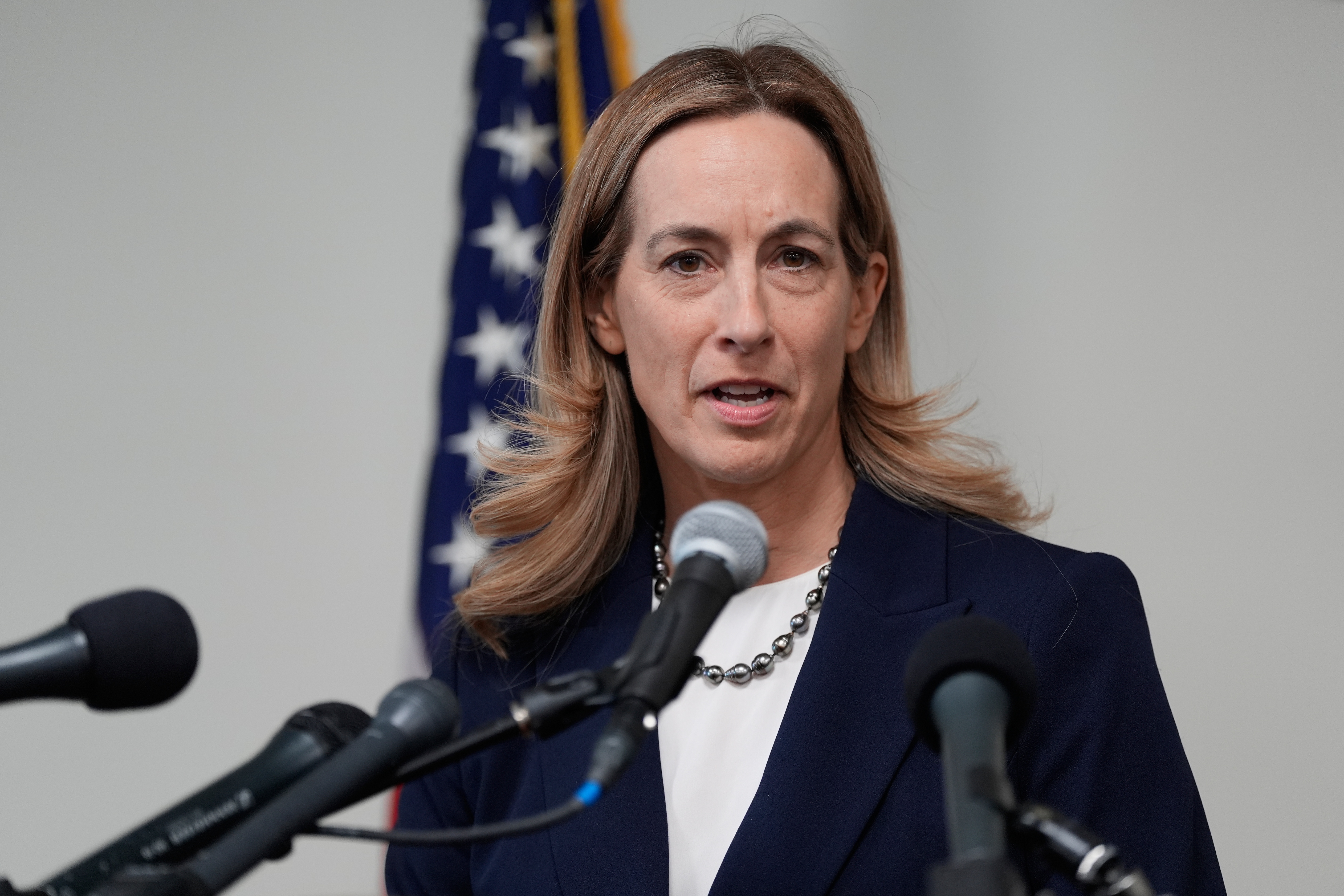
    New Jersey Gov. Mikie Sherrill signed a bill Thursday that offers greater protections for reproductive and gender-affirming healthcare — both for patients and for providers in the state — by making it a crime to intervene against such care.

    The new law strengthens existing reproductive healthcare protections and also broadens them to now include gender-affirming care. It is meant to cover residents as well as people traveling to the state.

    “This is a very big deal. It’s amazing,” said Martha Madrigal, a transgender woman who leads the Collingswood chapter of PFLAG, a national advocacy group for the families of LGBTQ+ people.

    She added that the law is a “solid declaration” that interfering with transgender rights “does not stand in New Jersey. We’re letting out an enormous sigh of relief today.”

    The legislation expands New Jersey’s shield laws by expressly including gender-affirming care in the definition of “protected reproductive healthcare services.”

    Essentially, the law creates a new crime for interfering with someone trying to access reproductive healthcare, such as an abortion, or gender-affirming care.

    It is now a fourth-degree crime (a low-level felony like shoplifting, punishable by up to 18 months in prison) to injure, threaten, intimidate, or physically block patients or providers, or to damage property in an effort to interfere with such care.

    The law would also protect providers from extradition to other states that have banned abortion or gender-affirming care for minors.

    Sherrill said New Jersey is “standing firm in defense of reproductive freedoms — including the right to choose and the right to receive gender-affirming care.”

    In comments after the signing, Sherrill referenced “attacks” and efforts to impose restrictions on access to abortion and gender-affirming healthcare by the Trump administration and Republican-led states.

    She said the transgender community has been “relentlessly attacked” by the Trump administration.

    “They’ve pulled tactics straight out of the ‘Red Scare’ playbook to restrict transgender people’s healthcare,” Sherrill contended.

    Since returning to office last year, President Donald Trump has issued orders to block federal funding for gender-affirming care for people under 19, oust transgender military personnel, and prevent transgender people from using the gender they self-identify as on passports.

    “We are not going to pay for our innocent children to undergo these barbaric surgeries and practices, which result in unthinkable and irreversible harm to their young bodies,” Trump said on Truth Social earlier this month after Medicaid ended reimbursement for hormone treatment and surgeries for minors.

    Surgeries for minors are extremely rare. And fewer than 1 in 1,000 U.S. adolescents receive medication for gender-affirming care, according to a Harvard University study released last year.

    State Sen. Teresa Ruiz (D., Essex), a chief sponsor of the bill and the Senate’s majority leader, said the bill makes New Jersey “a beacon of hope” in the nation.

    “You can’t tell us what we can read on a library shelf but want to be up in our uterus in an exam room,” she said.

    The law empowers patients and providers to take legal action against individuals who interfere with their access to or delivery of protected care.

    And it protects healthcare providers from professional penalties or adverse actions involving their medical malpractice insurance for providing care that is legal in New Jersey.

    Speaking for healthcare providers in New Jersey, Kristyn Brandi and Catherine Obando, doctors from Union who are preparing to open a clinic providing abortions and gender-affirming care, praised the law as an assurance that providers could deliver care without “risking their freedom or professional license” in the state.

    “We are grateful to know that our patients and staff will be protected from criminalization and harassment,” Brandi and Obando said in a statement as founders of the Luminosas Wellness Collective.