Tag: topic-link-auto

  • He waited nine years in prison for his lawyer to file a two-page brief. There’s no rule against it.

    He waited nine years in prison for his lawyer to file a two-page brief. There’s no rule against it.

    In 2020, seven years after he was appointed to represent a client who claimed he was wrongly convicted, attorney Scott Galloway told the judge that he was still looking into the case and needed more time.

    “I am still in the process of interviewing individuals,” the lawyer wrote to the judge in Delaware County, outside Philadelphia, who had already granted him 32 extensions.

    His client, Nolan O’Neal, had been a 20-year-old high school student when he was arrested in a murder case by Chester police, who had four eyewitnesses identifying him. At his 2005 trial, those witnesses all recanted, saying police had pressured them to accuse O’Neal.

    By the time Galloway joined the case, in 2013, O’Neal had already spent eight years in prison insisting he was innocent. The lawyer’s job was to help him file a petition under Pennsylvania’s Post Conviction Relief Act. That law provided a narrow path to freedom if Galloway could find crucial new evidence or prove that previous lawyers had mishandled the case.
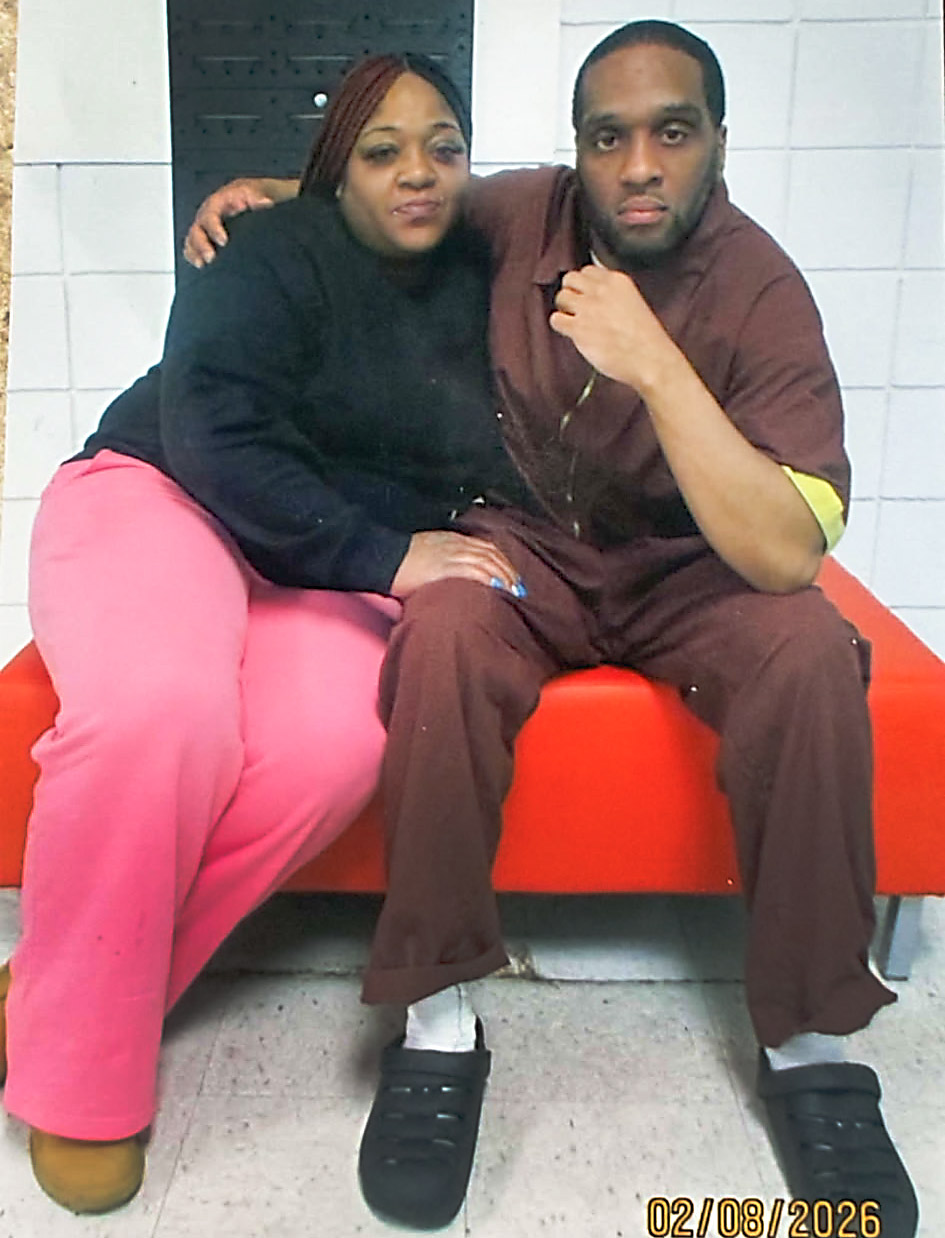
    Nolan O’Neal spends time on a visit with his sister Erin O’Neal at the State Correctional Institution Chester, where he’s incarcerated.Courtesy of Erin O'Neal

    But court records do not show that the attorney did much other than ask for more time.

    In 2022, after nine years, one unsuccessful request to access evidence, and 41 extensions, Galloway filed a two-page petition addressing just one of the many issues O’Neal had wanted him to raise. It would not be enough to get O’Neal his day in court.

    For more than half a century, Pennsylvania has promised people who claim they didn’t get a fair trial the right to “effective” post-conviction legal representation, regardless of their ability to pay. That is more than most states promise people after they have been convicted and lost their appeals.

    Yet Pennsylvania has done little to fulfill that promise. The Philadelphia Inquirer and ProPublica previously reported that Pennsylvania lets lawyers resolve cases quickly using a practice that is discouraged in several states: filing “no-merit” letters, also known as Finley letters, urging judges to reject their clients’ handwritten or typed claims. In Philadelphia, dozens who had received such letters later had their convictions or sentences overturned based on issues their lawyers had rejected or overlooked.

    But the problems go deeper than that: The state’s loose rules and its failure to fund post-conviction work have made the type of breakdown O’Neal encountered a recurring feature of this system.

    By filing public records requests with courts serving all 67 Pennsylvania counties and analyzing a decade of court dockets, an Inquirer and ProPublica investigation found that the system Pennsylvania set up to protect the right to counsel instead allows, or even encourages, shoddy representation.

    The news organizations found that:

    • Unlike in other types of appeals, attorneys handling post-conviction cases work under no particular timeline and are allowed numerous extensions. The state also has no standards regarding how many cases lawyers should be assigned, and many counties ask lawyers to sign contracts that set no limit on the number of cases courts can assign them. At least 250 people have languished in prison for five years or longer while waiting for their lawyers to act.
    • Unlike some other states, such as North Carolina and New York, Pennsylvania requires no specific training, experience, or qualifications for appointed posttrial lawyers, and it holds them to few standards. Lawyers are not required to speak to their clients or take other basic investigative steps before withdrawing from cases by writing no-merit letters.
    • Pennsylvania, which lags behind almost every other state in funding legal defense for poor people, known as indigent defense, dedicates no money for posttrial work. Instead, it leaves it up to each individual county to set pay rates. A majority of county court systems use flat-rate fee structures that some other states ban.

    While almost every county in the state has a public defender office, most post-conviction cases are handled by private lawyers who are paid hourly, by the case, or by the year and work with little to no supervision. Our review of court records found pay as low as $500 per case and delays as long as 19 years without a single court filing.

    In some counties, contracted lawyers’ backlogs spanned dozens of cases. In Chester County, an affluent region west of Philadelphia, a lawyer left cases untouched for as long as two years before the county ended his contract last fall.

    Delaware County, where O’Neal was convicted, relies on a group of part-time lawyers to handle most of its posttrial matters. One is Galloway, who has handled 20 or 30 posttrial cases per year for the county in addition to running his own law practice and, for a time, holding local elected office. Galloway said that his ethical obligation to confidentiality prevented him from commenting on O’Neal’s case. Judge George A. Pagano, who granted him 41 extensions on O’Neal’s case, declined to comment.
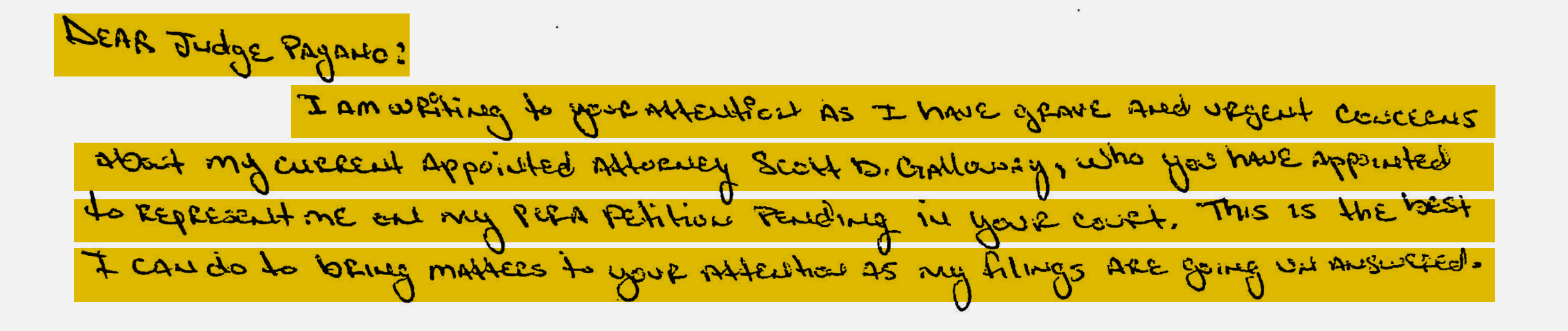
    On Aug. 16, 2022, Nolan O’Neal wrote from prison to the judge deciding his post-conviction claim: “Dear Judge Pagano: I am writing to your attention as I have grave and urgent concerns about my current appointed attorney Scott D. Galloway, who you have appointed to represent me and my PCRA petition pending in your court. This is the best I can do to bring matters to your attention as my filings are going unanswered.”Courtesy of Nolan O’Neal

    In the years Galloway was on the case, O’Neal wrote him dozens of letters from state prison, proposing legal arguments and sending leads to investigate.

    “It is a daunting and exhausting task to navigate this legal process and be heard,” O’Neal said in an interview. “We at times even have to fight the attorneys who are supposed to represent us.”

    In 2020, he received a letter from the brother of the murder victim, admitting that his testimony against O’Neal was a lie. “I want to fix it. I know my brother would want me to. It’s been long enough,” he wrote. O’Neal said he pleaded with Galloway to track down the man.

    In 2022, Galloway attached the brother’s signed statement to a sparse two-page brief, which mentioned none of the other issues O’Neal had raised nine years earlier or the other witnesses who had come forward over the years. The judge started the process of dismissing the claim. One reason: The filing had been made too late. O’Neal is still fighting his case, now with a new court-appointed lawyer.
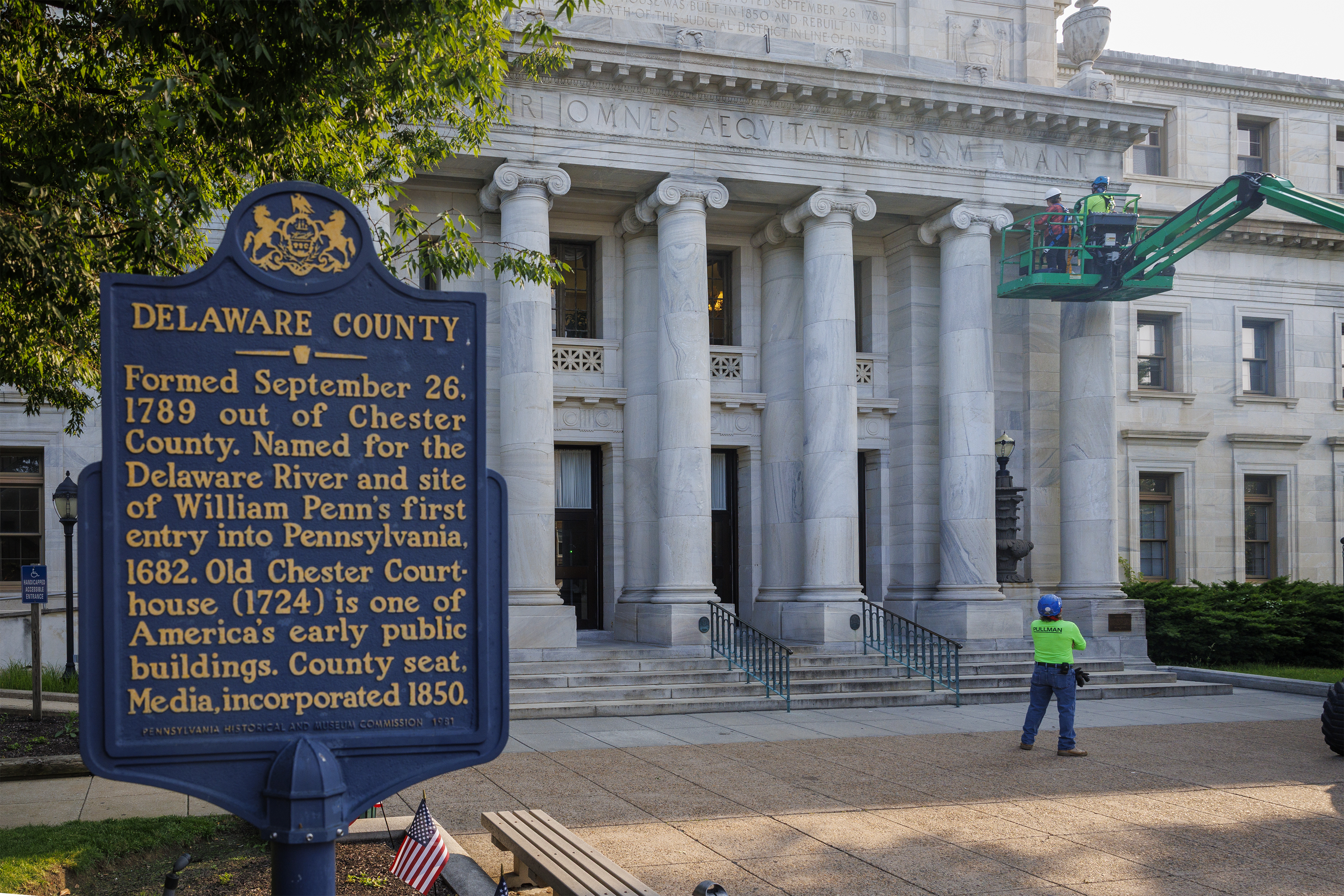
    O’Neal’s claims have been pending in the Delaware County Court of Common Pleas for more than a decade.Alejandro A. Alvarez / Staff Photographer

    Delays and extensions

    Before they are assigned a lawyer, Pennsylvania prisoners must write the first draft of their post-conviction filing on their own within a strict one-year deadline. The lawyers appointed to revise their petitions, on the other hand, are not generally held to any timeline. The state courts say lawyers should act “expeditiously so as to reduce unnecessary delays.” Yet judges have granted extensions liberally, court dockets show, and in many cases failed to impose any deadlines at all.

    An Inquirer and ProPublica review of court dockets found that hundreds of people have waited two years or longer, only to receive no-merit letters. That analysis is an undercount, since many court clerks do not clearly label attorney filings on their dockets. In Philadelphia alone, roughly 65 people have waited three to eight years for lawyers to take action before reaching that same outcome. Similarly, across the state, dockets show that lawyers received seven or more extensions in dozens of cases before filing Finley letters or nothing at all.

    In 2017, Lee Mandell, who has been practicing law in Philadelphia for more than 50 years, sent a Finley letter saying that he had written to but never spoken with his client of four years and did not understand his claims.

    “It is entirely unclear as to what the defendant really means,” Mandell wrote. In his own review of the case, Mandell failed to flag an erroneous jury instruction that four years later would lead to the conviction being overturned. Mandell was later formally reprimanded for allowing another client’s hearing to be delayed by six years, during which time two witnesses died. He did not return calls seeking comment.
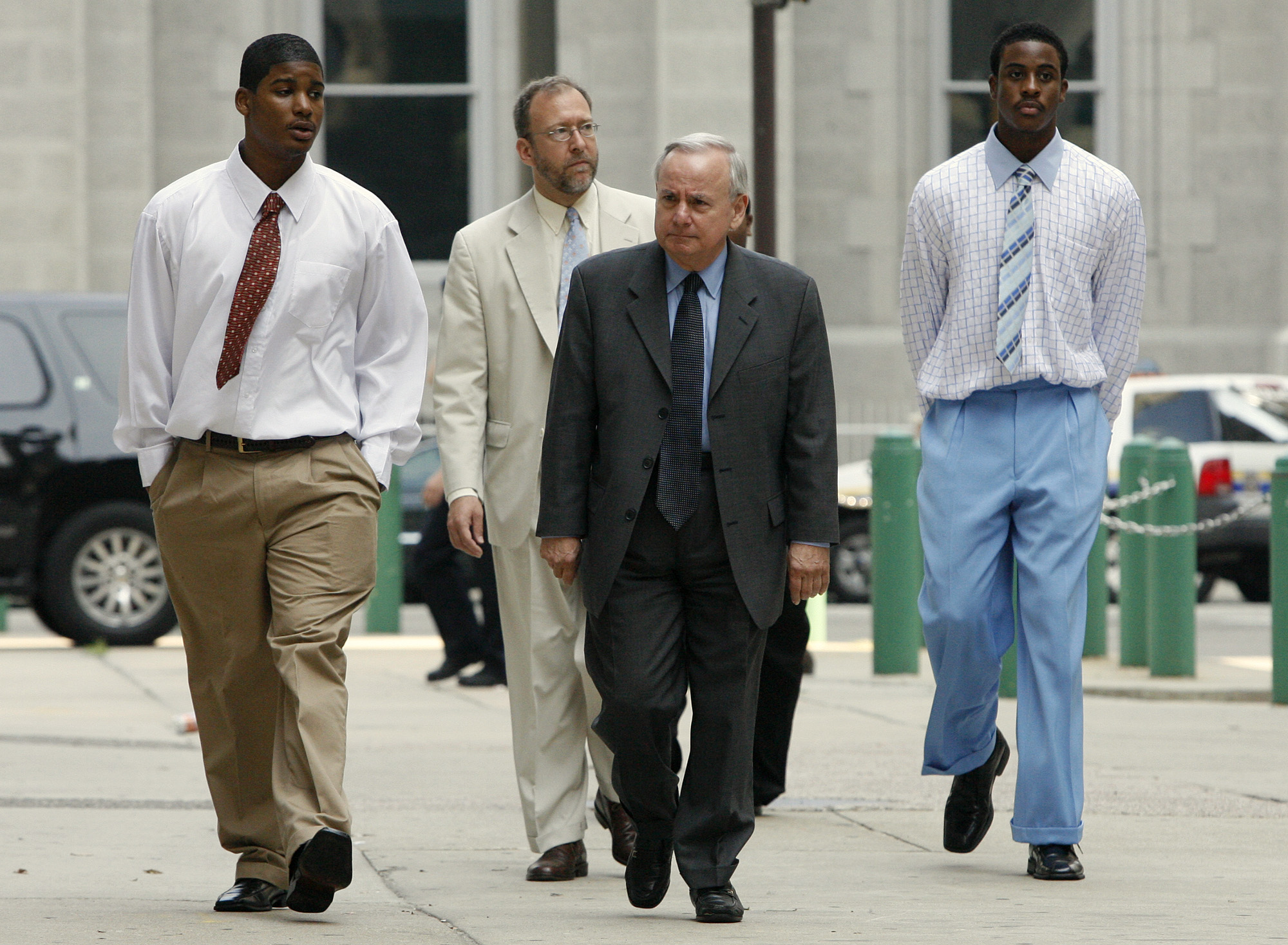
    Nashir Fisher (left), with attorney Lee Mandel; behind them, Ameer Best, with attorney Stephen Brown. Fisher and Best were convicted of 3d-degree murder in the subway-beating death of Sean Conroy.
    Attorney Lee Mandell (front, center) walks outside Philadelphia’s Criminal Justice Center in 2009. With him (from left) are Nashir Fisher, attorney Stephen Brown and Ameer Best.Alejandro A. Alvarez / Staff Photographer

    Judges’ inaction added to lawyers’ delays, leaving matters to stagnate for years on end. In 2023, the state Superior Court registered such concerns about a case from Wayne County, where a lawyer filed a “two-page, deficient motion to withdraw, and the PCRA court did nothing in this case for 20 years.”

    To be sure, there can be good reasons for delays, since investigations can be complex. Lawyers have spent years chasing down missing witnesses, litigating requests for DNA testing, or combing through police files.

    But in almost 200 post-conviction cases across Pennsylvania in the last 15 years, lawyers were appointed, then filed nothing at all over the span of a year or longer before being replaced with a new appointed lawyer. One of the cases stagnated for almost seven years, only for a new attorney to pick up the file. Another man was appointed five lawyers over eight years, dockets show, none of whom filed anything on his behalf.

    Court officials have long been aware of the backlogs wracking this system, even publishing a law review article about it in 2003. The study outlined needed reforms but acknowledged the lack of political will, saying the “low status” of these cases stems from a bias among judges and lawyers who believe “that most post conviction claims are frivolous.”

    No standards for lawyering

    The loose timeline is just one dimension of a system with few standards. The state has published no best practices for indigent defense or guidelines on how many cases a lawyer can take; it has provided no training and instituted virtually no guidelines to ensure that court-appointed lawyers are qualified. As a result, lawyers hold widely diverging views on just what obligations they have to their clients.

    The Inquirer and ProPublica previously found that about three-quarters of the time, Philadelphia lawyers who ended up filing Finley letters did not take basic steps such as meeting with their client, tracking down the trial lawyer’s file, and obtaining all available discovery.

    “I do not know how you can evaluate trial counsel’s performance, which is the main role of post-conviction counsel, without talking to your client and reading trial counsel’s file,” said Jennifer Merrigan, a cofounder of Phillips Black, a nonprofit law firm. That file would reveal whether the lawyer had consulted with experts, received all relevant evidence from the prosecutor, and investigated potential witnesses.

    The state’s lack of vetting and training stands in contrast with national norms. A majority of other states have centralized defender services or support offices that provide resources, education, and oversight. For instance, in North Carolina, appeals lawyers seeking court appointments must apply with the state appellate defender and submit references, work history showing the lawyer is qualified to litigate appeals, and legal writing samples. They are also required to take a training course covering strategy and best practices.

    Even without a statewide office, Pennsylvania’s Supreme Court could establish minimum qualifications for lawyers handling indigent defense. In August, a state court committee published such a proposal, but it recommends only that lawyers have relevant work experience “to the extent practicable.” Work experience requirements have been enforced in some other states, such as Ohio, for years. But the committee’s proposal argued that work experience is not “possible to quantify” and that “less-than-experienced representation is better than no representation.”

    Ted Skaarup, a public defender who has advocated for training and qualification requirements, said inexperienced and untrained lawyers are more likely to default to writing Finley letters. New lawyers, he said, are left to consult with older attorneys who may pass on bad practices. “You go to them for advice and they say, ‘I’ll send you a copy of my [no-merit] letter.’”

    Only one of the state’s 67 counties provided written criteria requiring specific work experience for lawyers to be appointed to post-conviction cases in response to records requests. Philadelphia court leadership says that lawyers must complete a training session and show they have recently handled three hearings involving disputed evidence. A volunteer panel tasked with approving prospective lawyers there rarely meets and is not empowered to approve or reject candidates based on writing samples, a core part of screening appeals lawyers in some other places.

    In Pittsburgh, the nonprofit Allegheny Lawyers Initiative for Justice has urged local court officials to set up a system to screen and supervise appointed lawyers. For now, the organization is running its own voluntary trainings, as well as a resource center with office hours, a library of sample motions, and help with social service referrals.

    Without such systems, the organization’s executive director, Rob Perkins, said, “There’s no quality control.” Lawyers can get away with “doing a poor job in these cases for years without anyone really paying attention.”
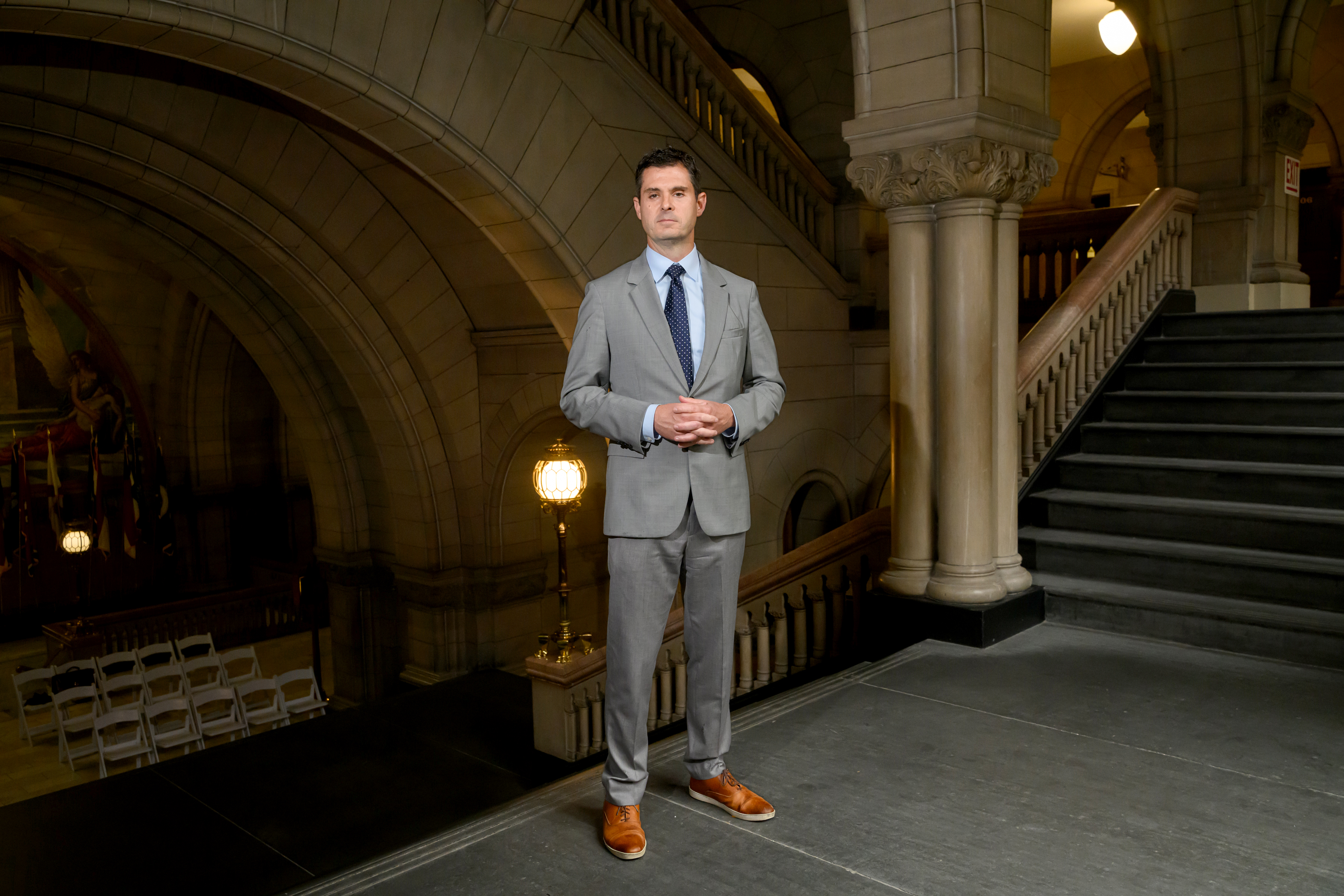
    Rob Perkins, the executive director of Allegheny Lawyers Initiative for Justice, stands in the Allegheny County Courthouse in Pittsburgh, where he’s urged administrators to adopt training requirements.Justin Merriman / For the Inquirer

    ‘Your incentive is to do the least work’

    When attorney Corrie Woods took over Washington County’s post-conviction caseload in 2020, he was startled to discover about a dozen files that had been untouched since being assigned to the previous lawyer in 2019 or earlier. In some, the lawyer’s inaction had caused the clients to lose their appeal rights.

    Looking back, Woods said, it was not surprising, given that the Western Pennsylvania county was paying him $25,000 a year as a part-timer for up to 24 cases. “These cases are not going to take priority in most law offices,” said Woods, who now handles mostly personal injury cases.

    Under such a contract, he said, “Your incentive is to do the least work. You’re not getting more for doing more.”

    The American Bar Association has long opposed such flat-fee pay structures for that reason. States including Colorado, Idaho, and Nevada have banned them.

    Not Pennsylvania. The state began contributing any money to indigent defense only in 2023. Today it kicks in just 57 cents per capita; neighboring states, on average, pay $26 per resident. Counties provide the rest as they see fit. A pending American Civil Liberties Union lawsuit claims that arrangement has resulted in widespread violations of the right to counsel.


    Pennsylvania Spends Less Than Most Other States on Indigent Defense

    At 57 cents per resident, Pennsylvania’s state-level contribution toward funding legal defense for poor people is a fraction of what neighboring states pay.

    (function(){function e(){window.addEventListener(`message`,function(e){if(e.data[`datawrapper-height`]!==void 0){var t=document.querySelectorAll(`iframe`);for(var n in e.data[`datawrapper-height`])for(var r=0,i;i=t[r];r++)if(i.contentWindow===e.source){var a=e.data[`datawrapper-height`][n]+`px`;i.style.height=a}}})}e()})();

    Source: State budget documents, U.S. Census 2025 population estimates


    About three-quarters of Pennsylvanians live in counties that use flat-fee arrangements or cap the amount a lawyer can bill for a case. Daniel Buzard, the court administrator in the county where Woods held the contract several years ago, said in an email, “This provides financial stability for both parties.”

    Some counties pay as little as $500 per case. Based on time estimates from Maine, one of the only states to publish post-conviction workload standards, that would come out to $11 per hour.

    Twenty-one Pennsylvania counties offer flat annual pay for part-time lawyers — sometimes then assigning them caseloads that exceed Maine’s standard for full-time work.

    Only five of the 18 contracts obtained in response to public records requests included a limit on the number of cases the court could heap onto a lawyer. None of the contracts set deadlines, specified a time commitment, or described any oversight mechanism.

    Stuart Wilder said his contract to handle post-conviction cases in Bucks County, outside Philadelphia, kept the lights on in his office for years. He worked hard for clients, he said, and won several challenging cases. But he said the flat-fee structure did require him to deprioritize cases where he didn’t see merit.

    “Being able to file Finley letters gave me the time to work on cases I could fix,” said Wilder, who recently retired.

    But in at least three counties, contract lawyers left multiple clients stranded for a year or longer with no progress on their cases, dockets show.

    In 2021, the court in Erie County yanked 50 cases from attorney James P. Miller and eventually reported him for discipline, citing extreme delays that cost some clients their appeal rights. Miller, whose law license was suspended as a result, declined to comment. But Erie court administrator Robert Catalde said the debacle spurred the county to double lawyers’ pay to $46,800 and provide benefits.
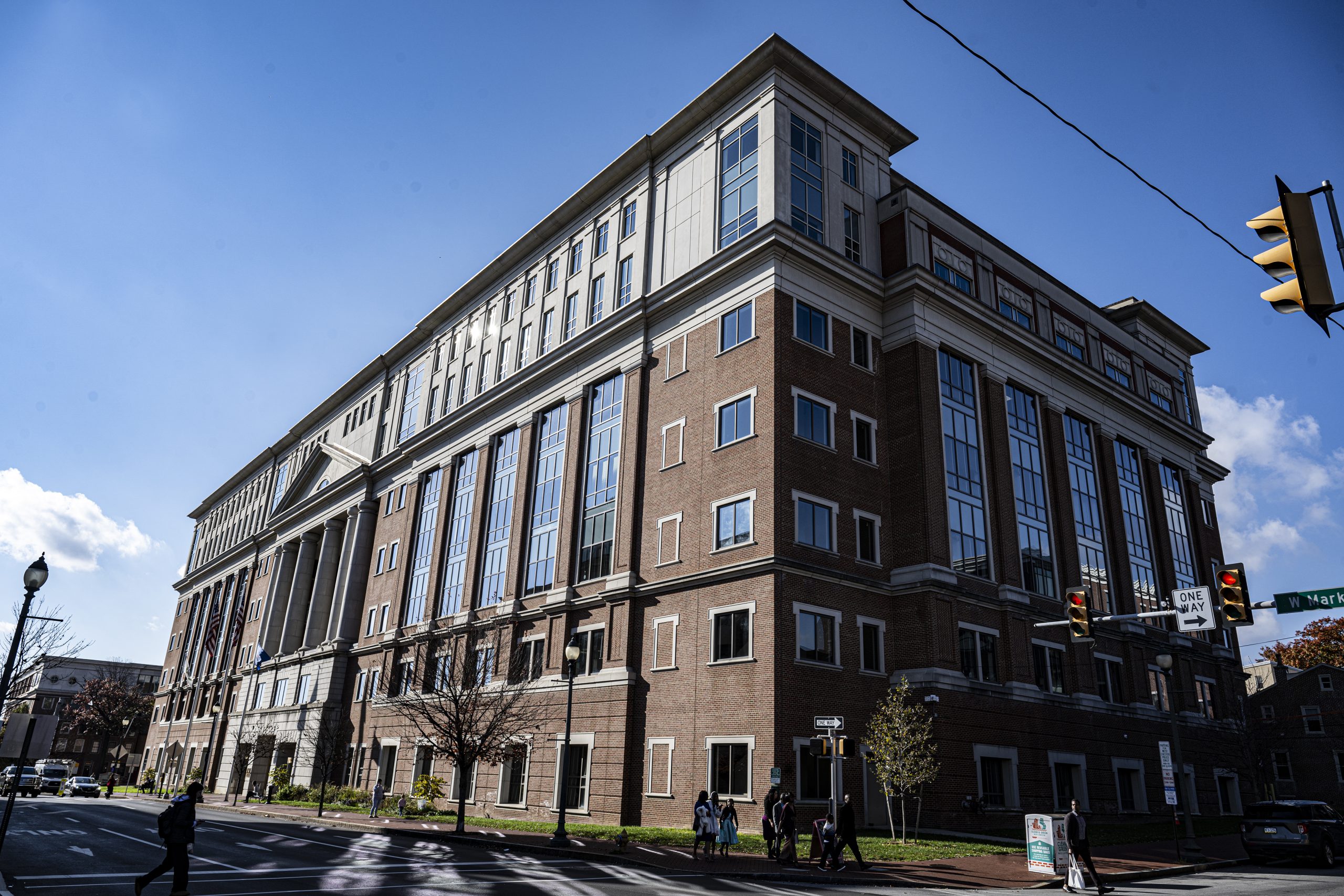
    The criminal court administrator at the Chester County Justice Center had to pull a lawyer’s contract last year, after he fell behind on post-conviction cases.Jose F. Moreno / Staff Photographer

    A similar situation played out last year in Chester County, which abruptly ended its contract with the lawyer handling all its post-conviction cases, Charles Thomas Jr., after discovering that he had been putting in an average of just five hours a week across his roughly 25 cases.

    One client, Patrick Hickson, said he spent two years trying to get Thomas to track down evidence that could clear him of a 2018 shooting or at least prove he had not gotten a fair trial. His defense lawyer had failed to call a single witness — admitting to the judge, mid-trial, that he had wrongly assumed the prosecutor would send a summons to an eyewitness who had told police Hickson was not the shooter.

    To raise the issue, Hickson needed Thomas to track down the missing witness. But when he reached Thomas by phone in August 2025, for the first time in months, the lawyer told him he was off the case. “He said the courts told him he was taking too long,” Hickson said. Thomas declined to comment.

    Chester County criminal court administrator Jordan Ludwick acknowledged concerns about the delays but said he resolved the problem by finding a qualified lawyer to take over the contract.

    That attorney, Shannon McDonald, said it was “not an easy transition.”

    “There were many cases that had not been touched at all,” she said.

    She cut through the backlog by filing 17 briefs in just over three months. All but three were Finley letters.
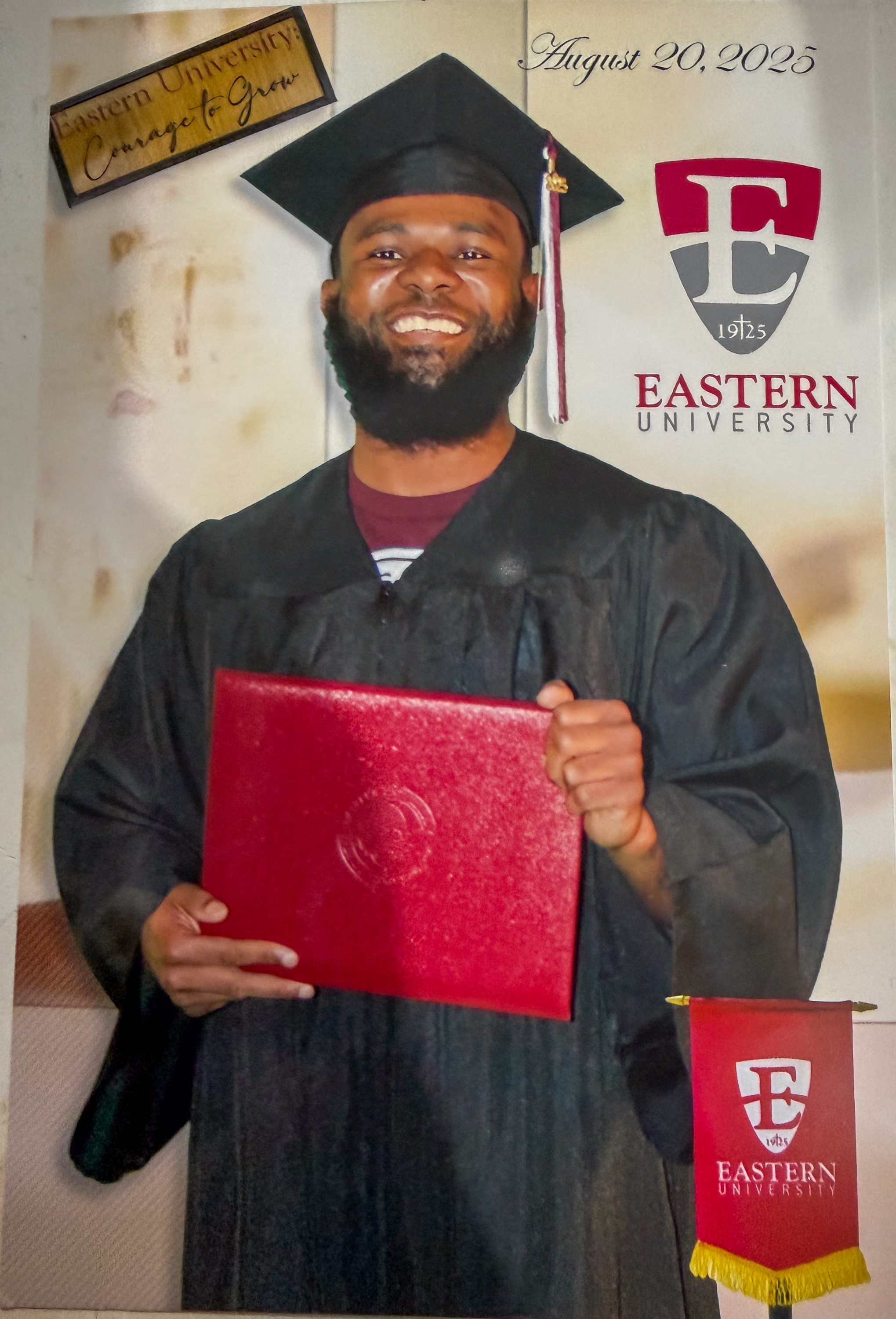
    Patrick Hickson receives an associate’s degree from Eastern University in 2025, while incarcerated at the State Correctional Institution Chester.Courtesy of Patrick Hickson

    “The case has to survive on the merits,” she said, “and, frankly, the deck is stacked against overturning a case.”

    This March, she also sent Hickson a Finley letter. McDonald said ethics rules prevented her from discussing Hickson’s case, but in the letter she blamed Hickson for failing to track down the would-be witness and said his trial lawyer had a strategic reason for not sending the subpoena.

    Reading the letter, Hickson said, “I felt defeated.”

    Since McDonald asked to drop the case, he is pursuing exoneration alone.

    Hannah Beckler of ProPublica contributed to this article.

  • What we know (and don’t) about the Eagles entering Week 6 vs. the Panthers

    What we know (and don’t) about the Eagles entering Week 6 vs. the Panthers

    Jordan Mailata called the last seven days, which brought Lane Johnson’s retirement and Cam Jurgens’ trade, the “week from hell.”

    The two weeks that preceded them weren’t much better for the Eagles.

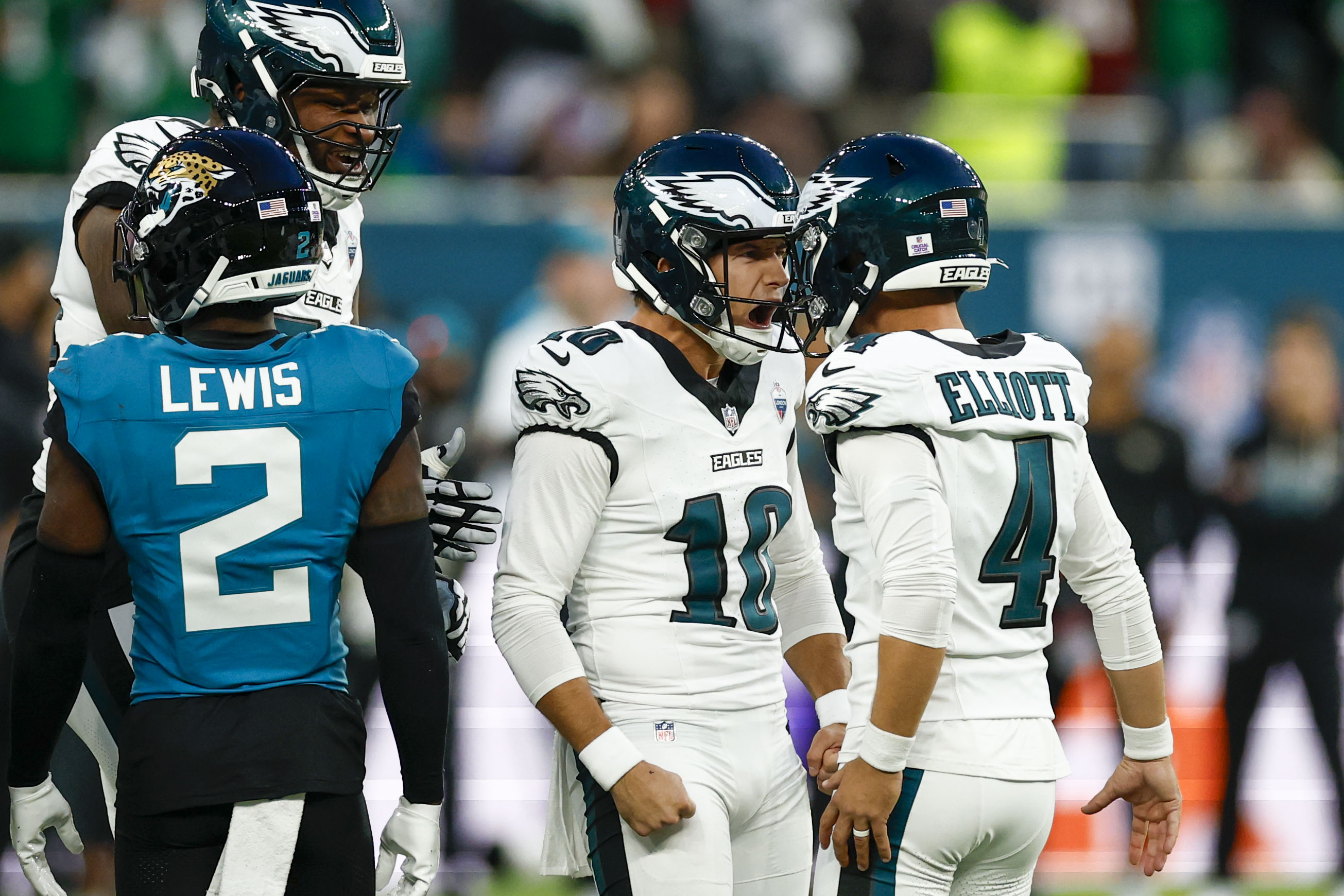
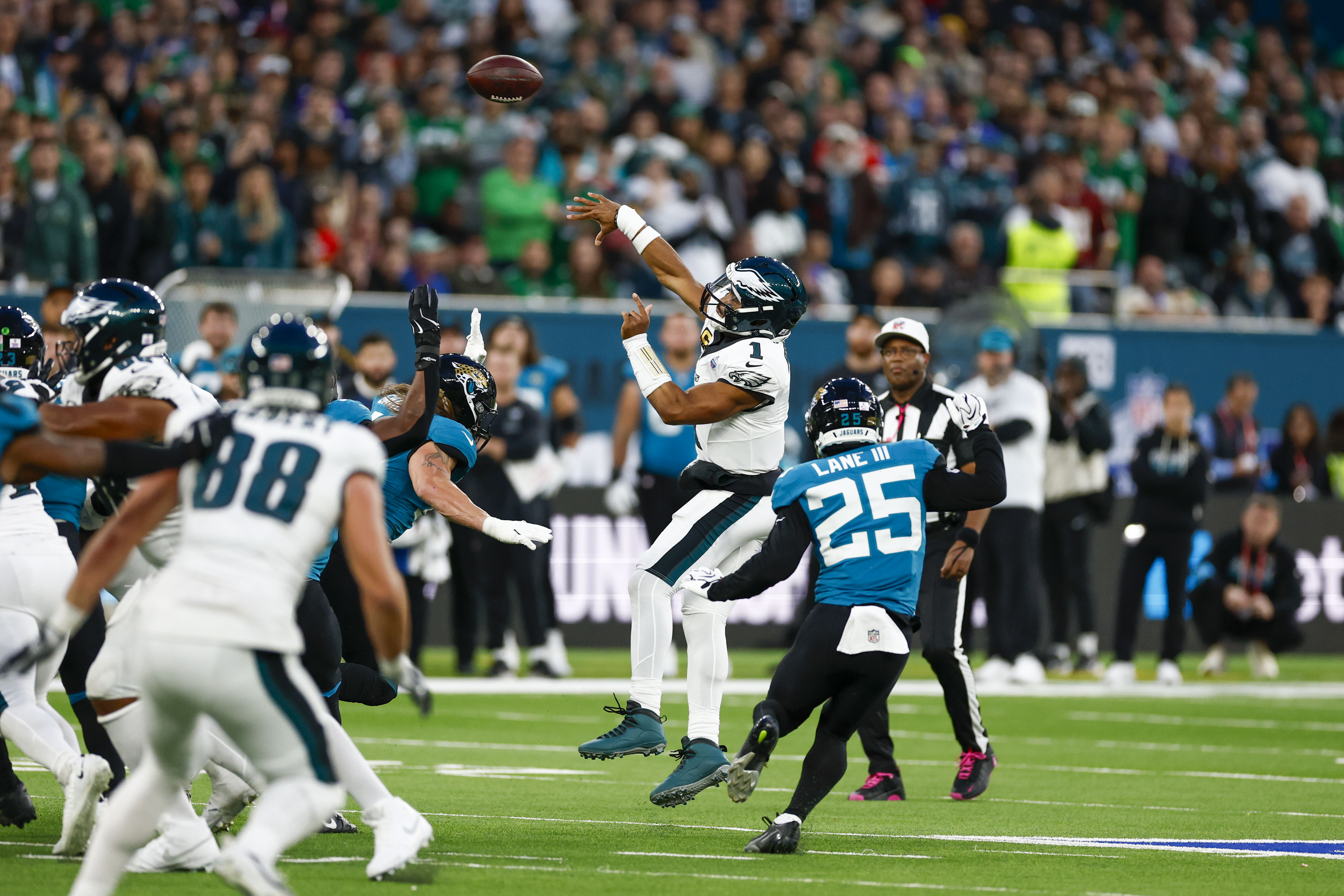
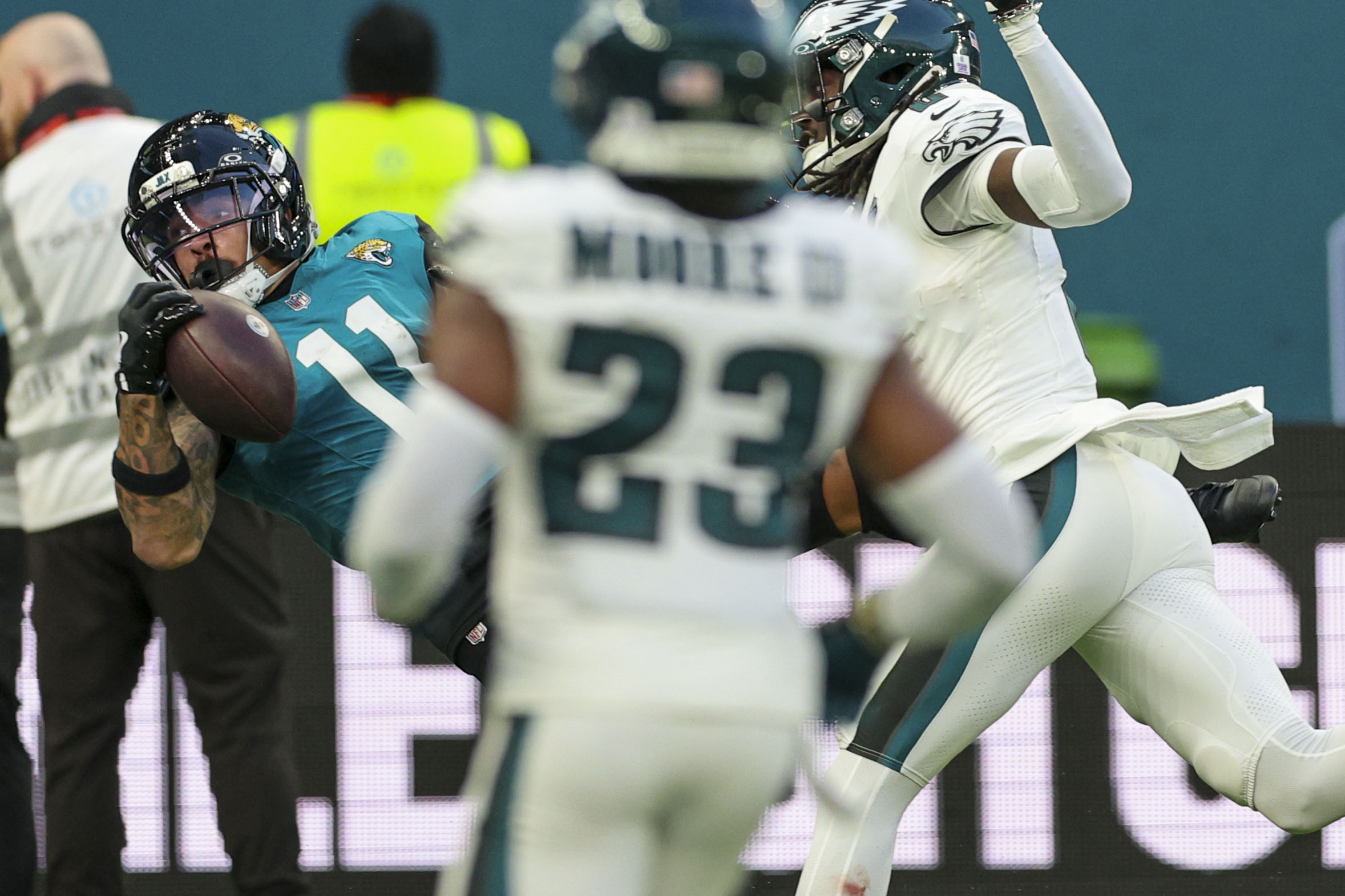
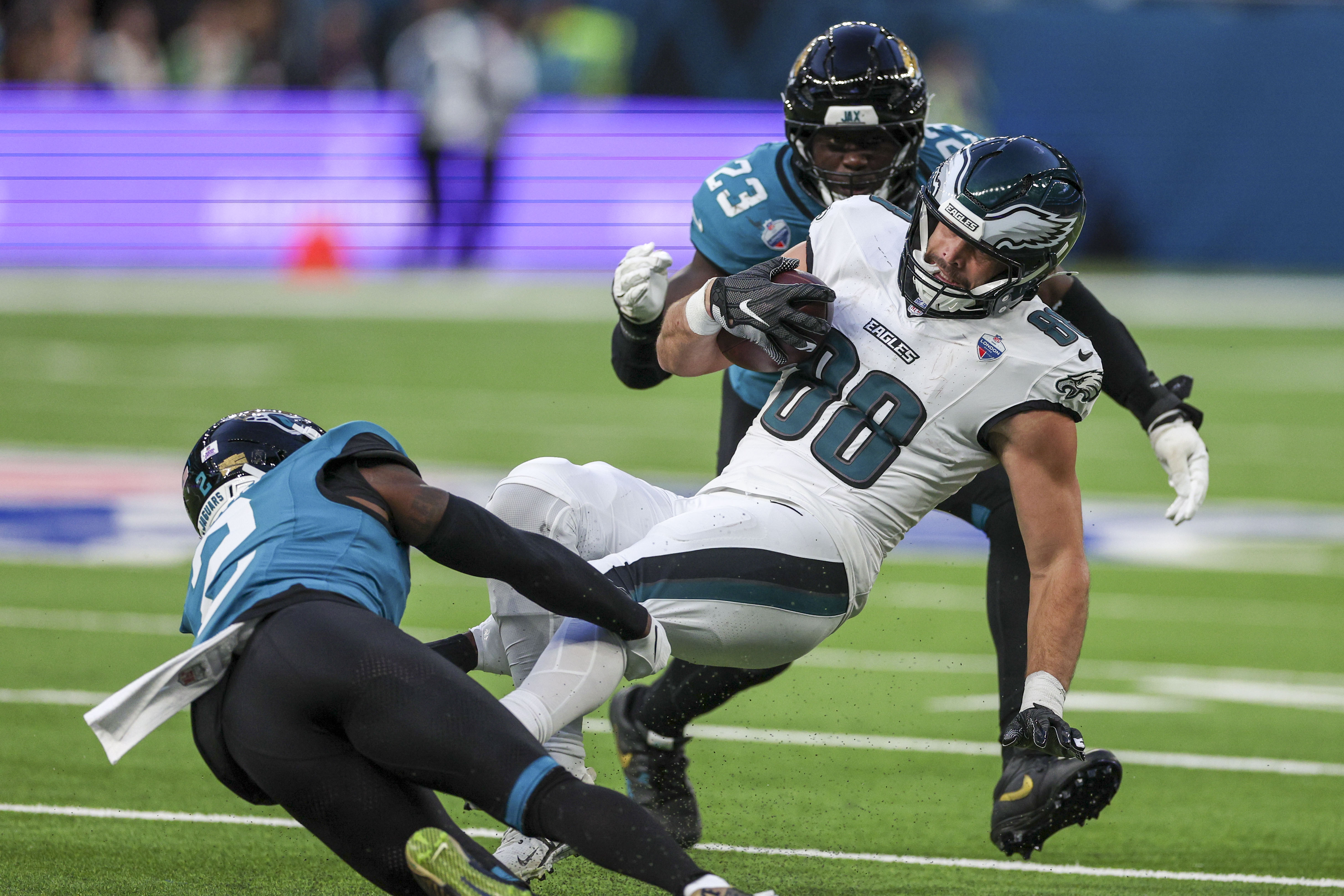
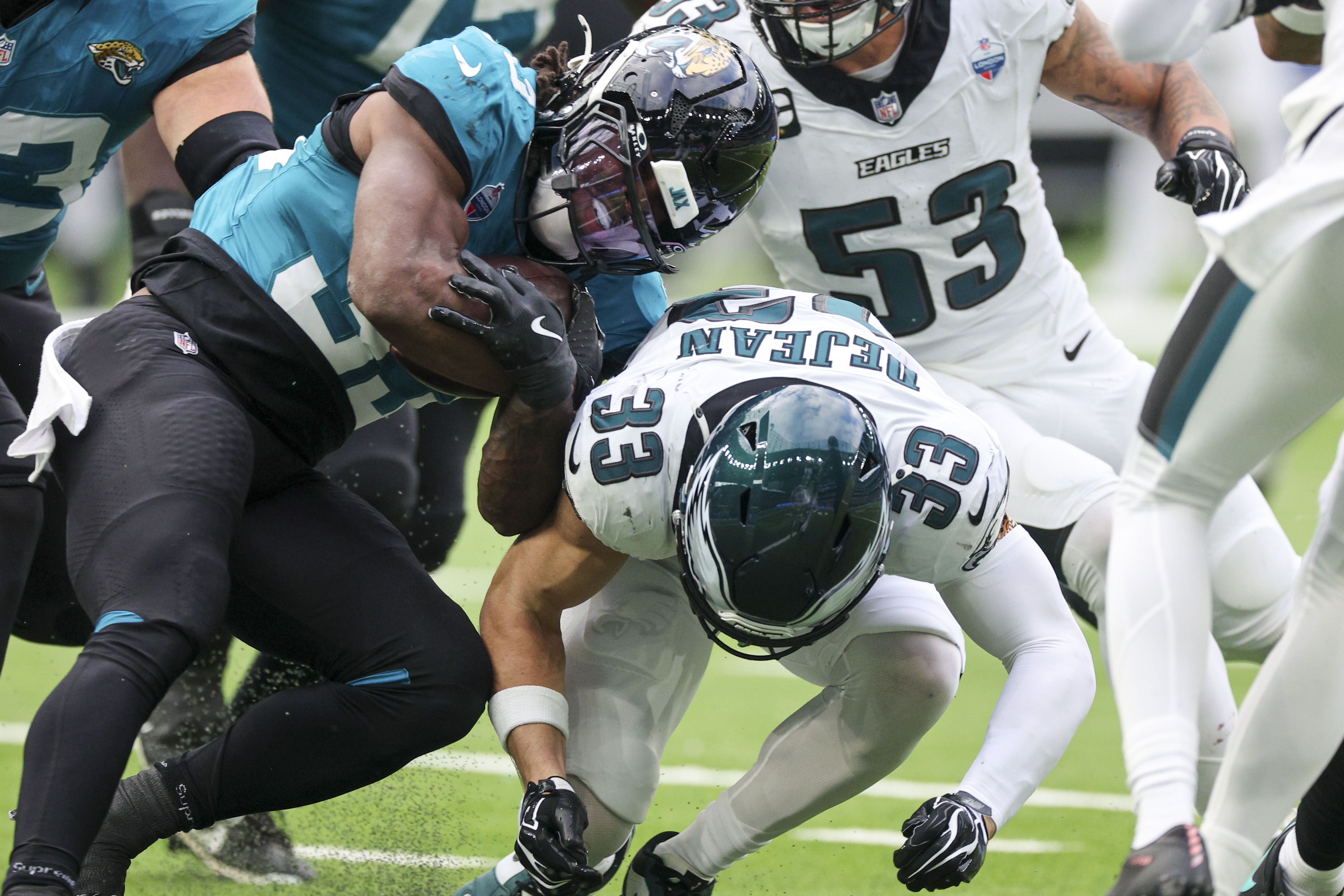
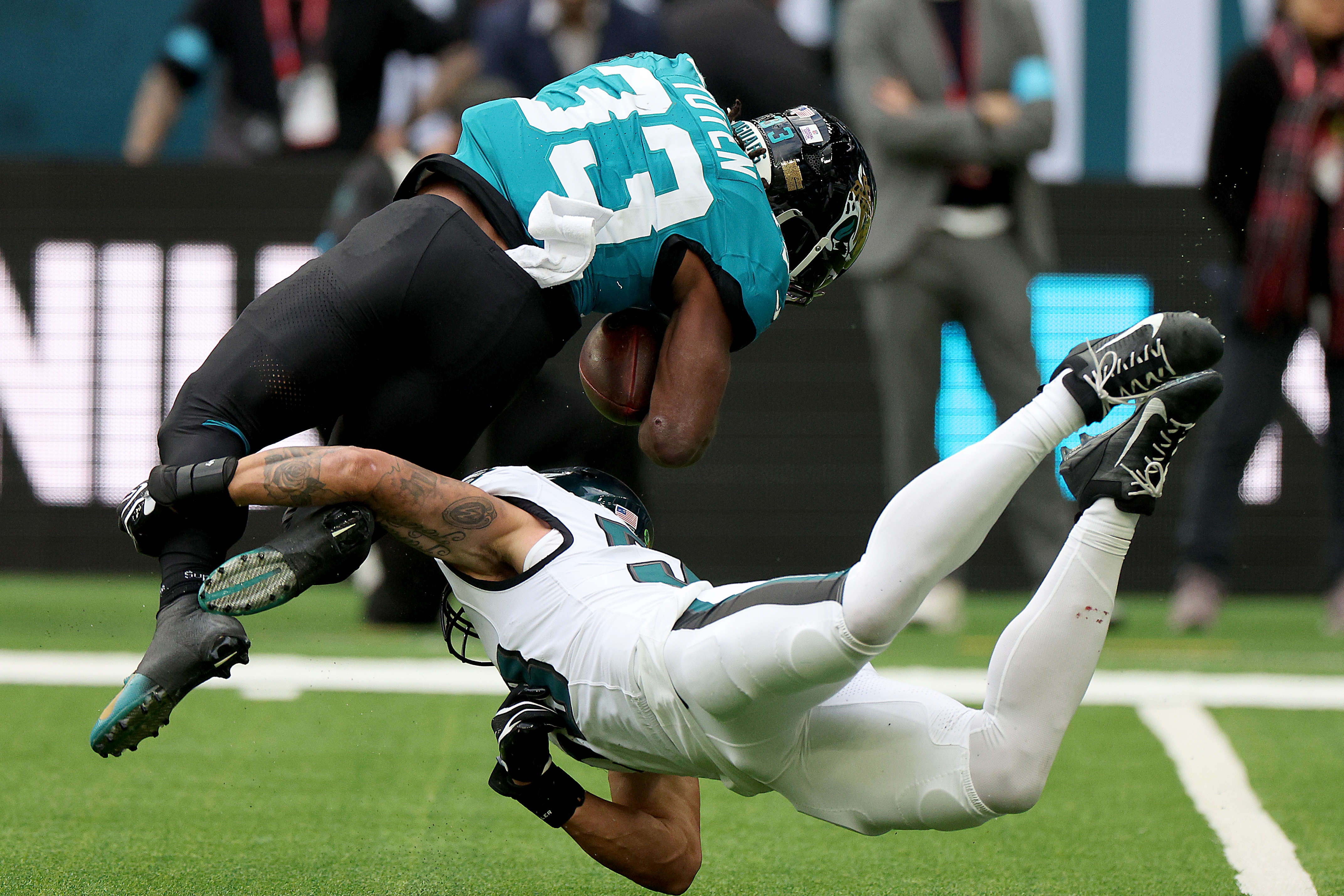
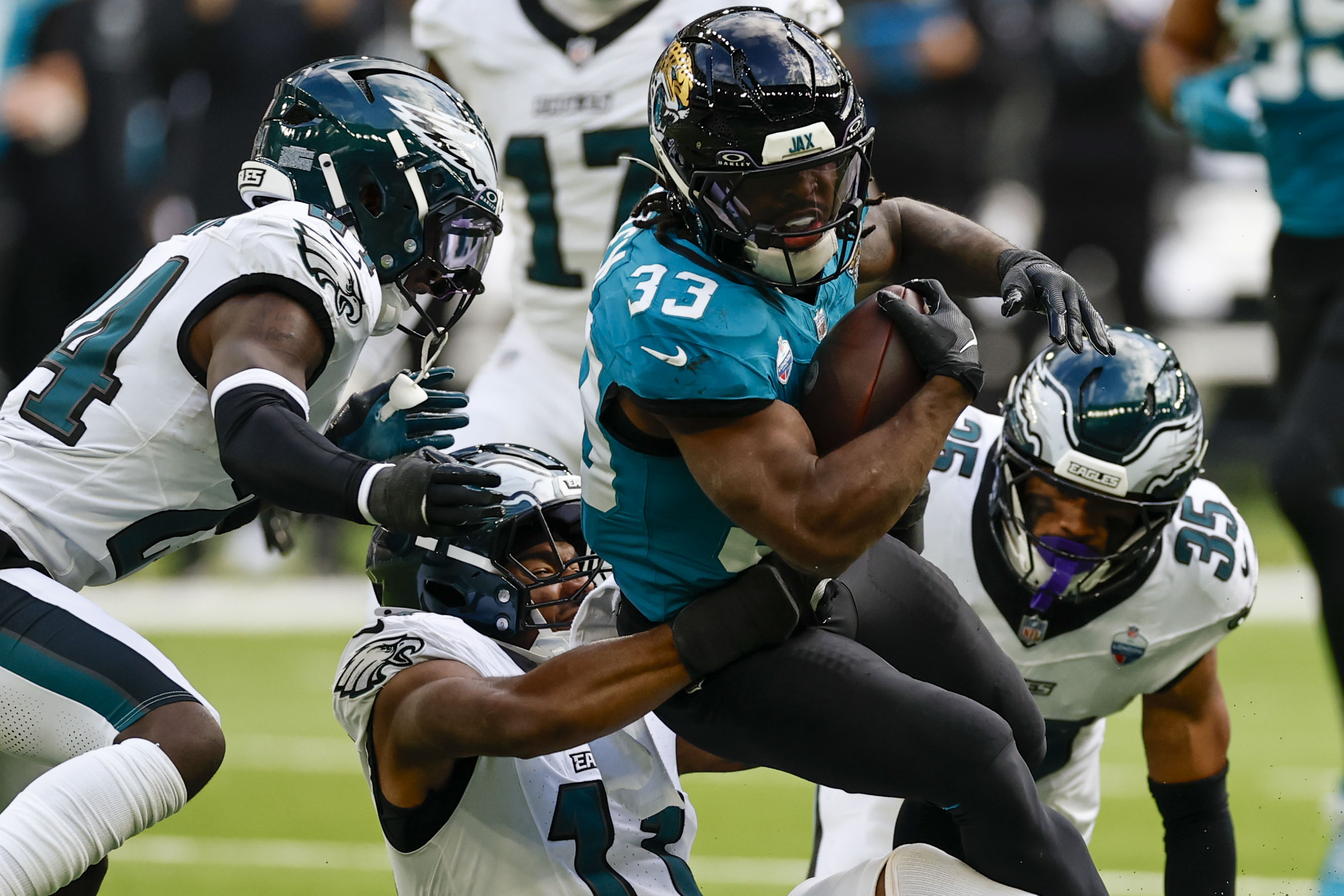
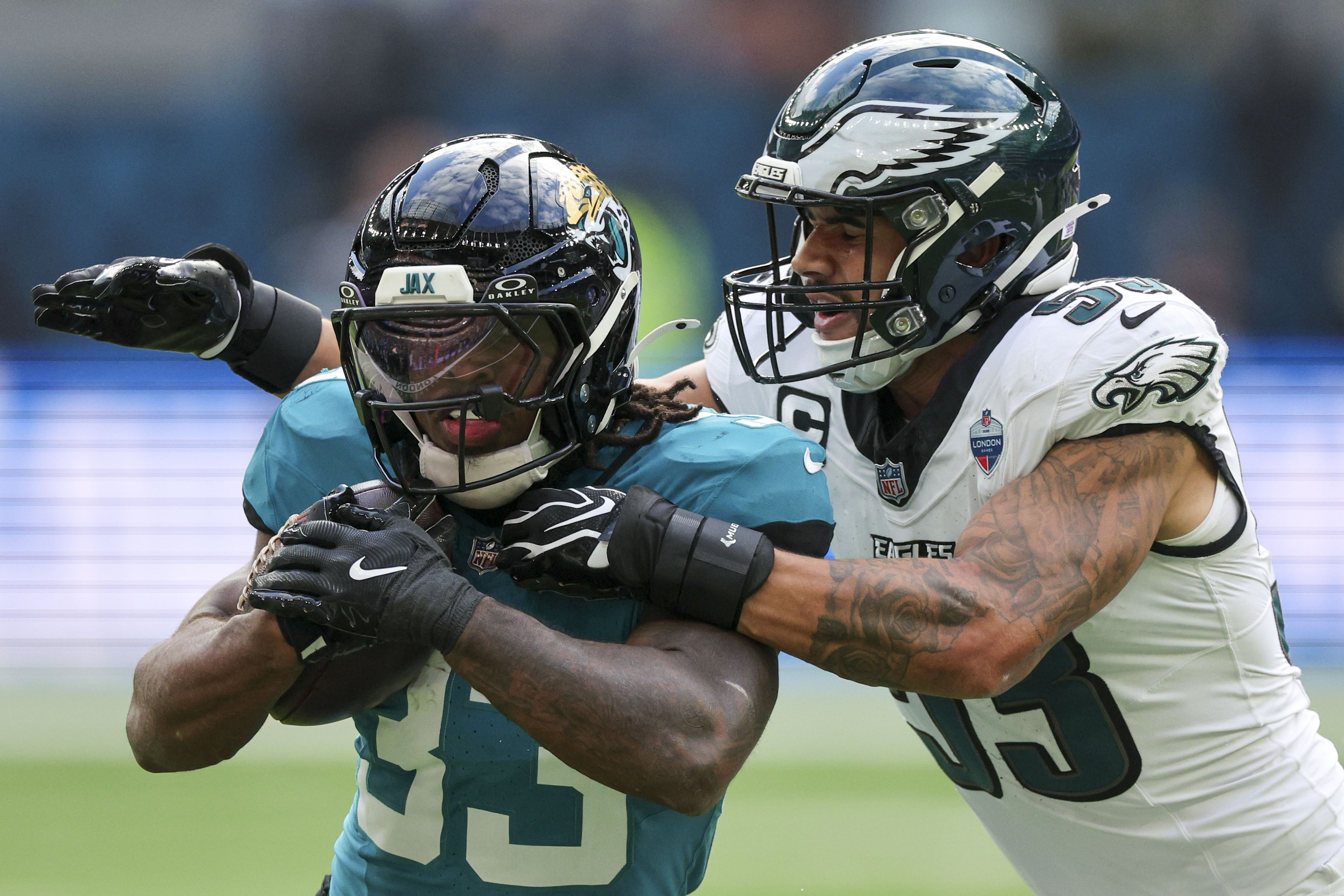
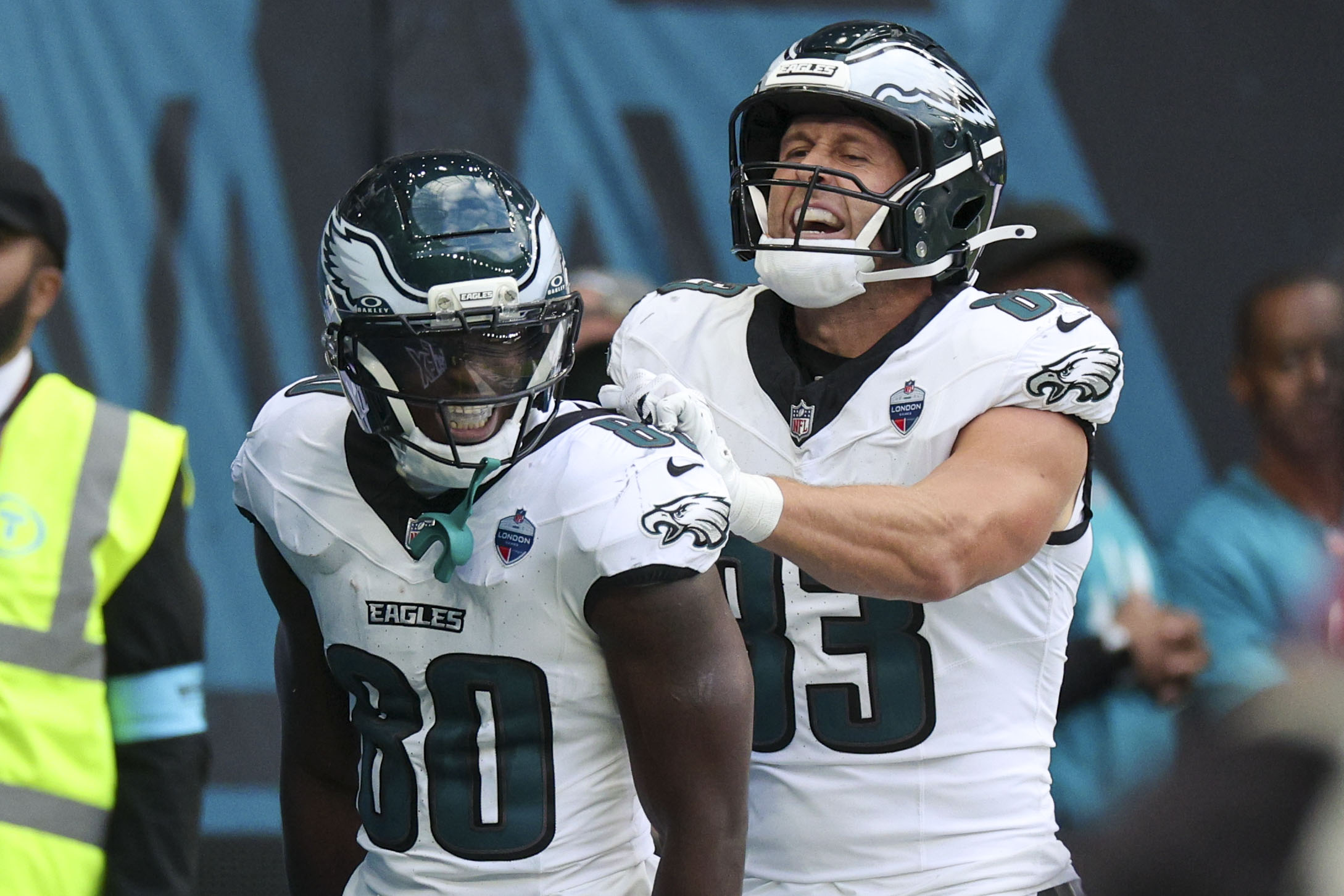
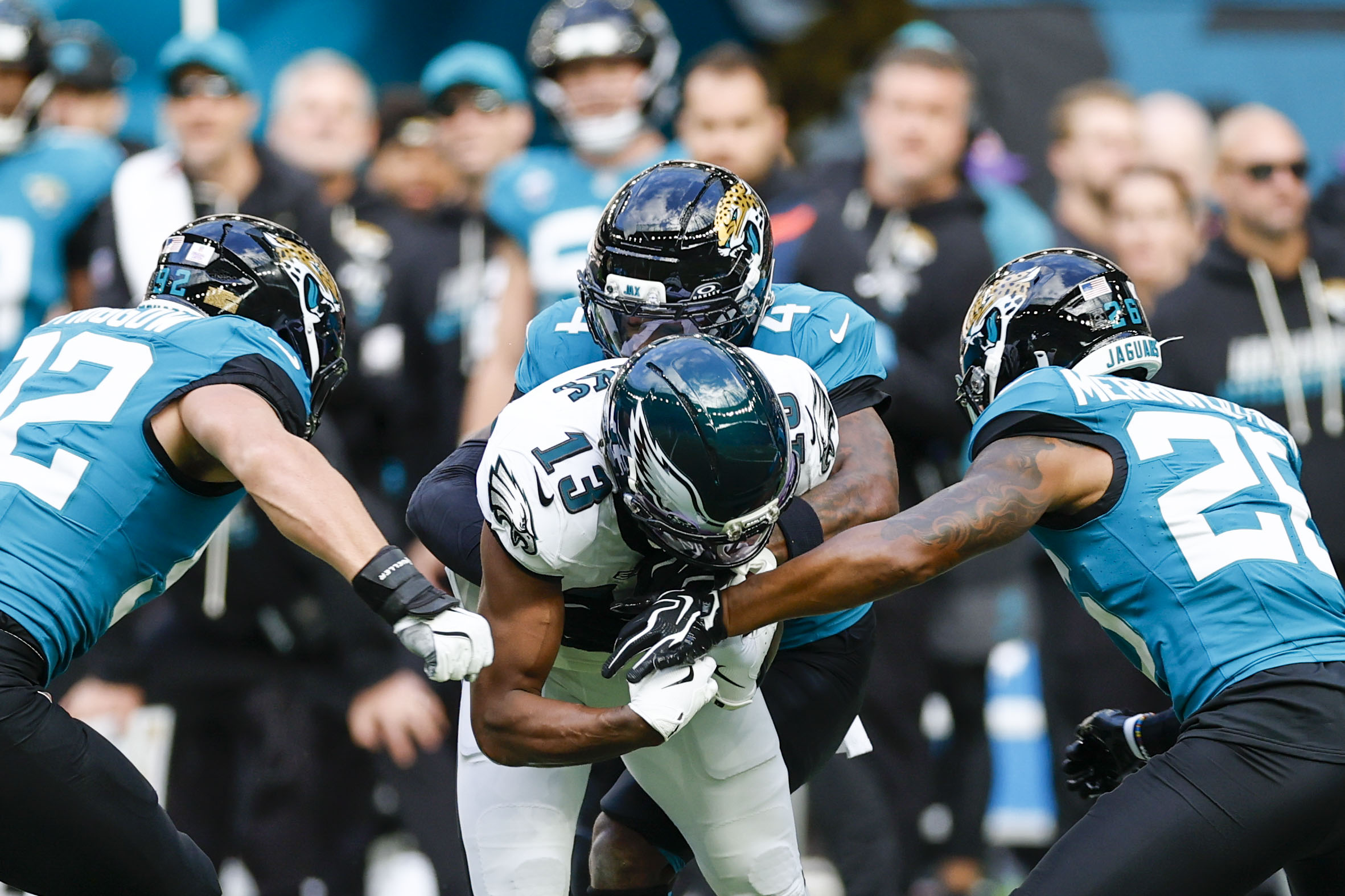
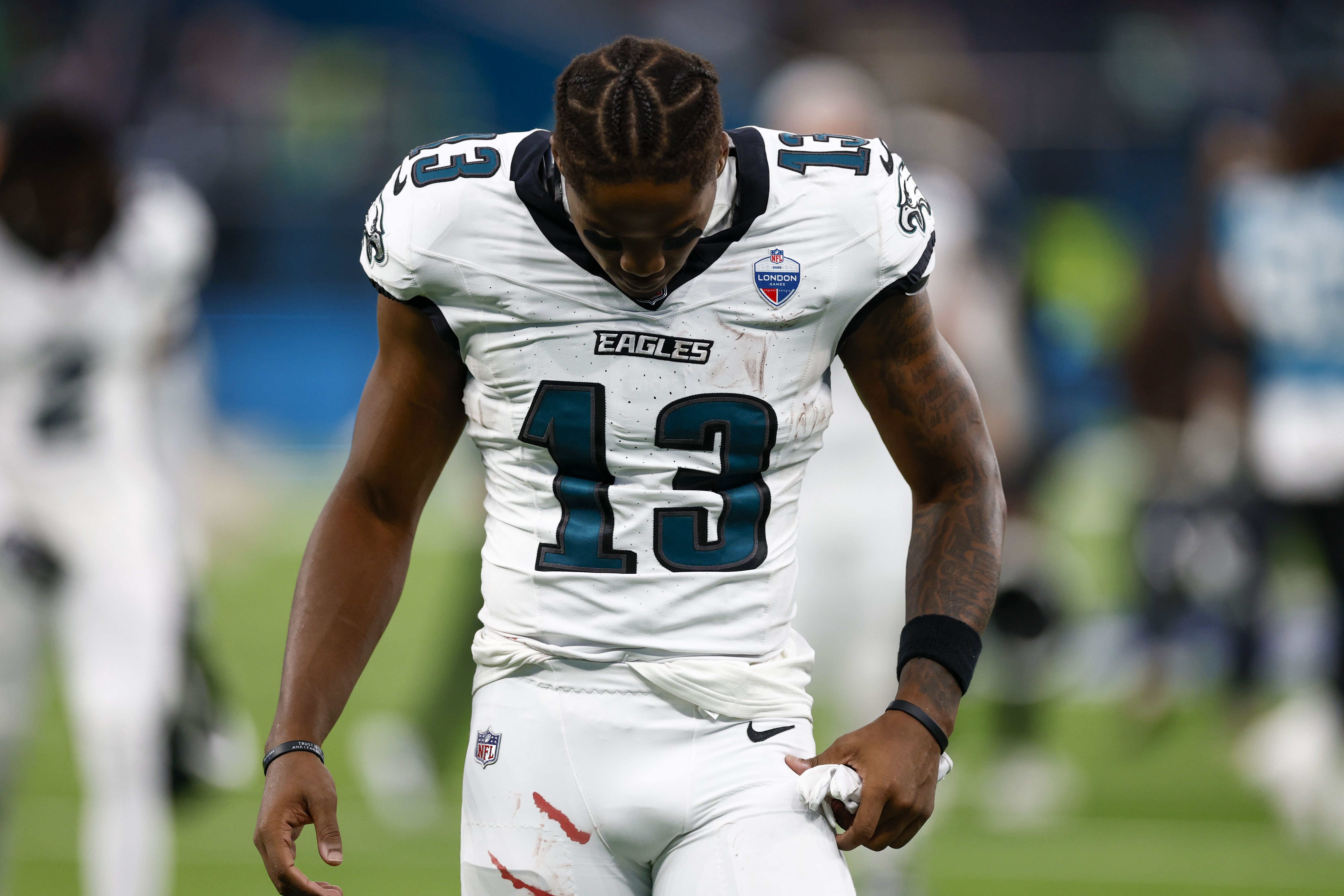
    Following their 19-17, last-second loss to the Jacksonville Jaguars in London, the Eagles have dropped three straight games, falling below .500 for the first time since 2021.

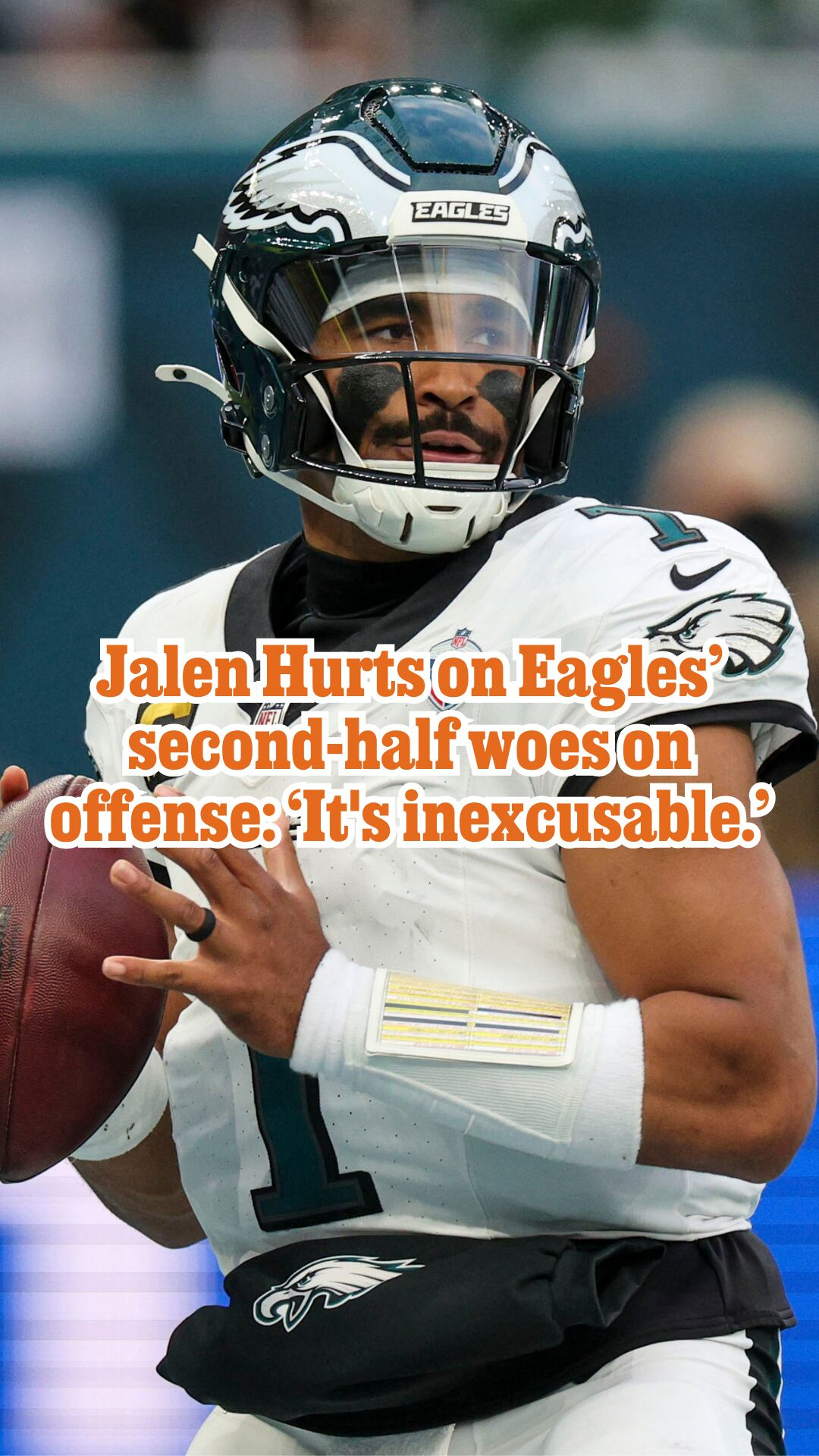
    Second halves of games continue to be nightmares for the Eagles offense. This season, they’ve amassed just 495 scrimmage yards in the final two quarters, which was the league low among teams that had played four games going into Monday night. The next closest team is the Minnesota Vikings at 694.

    Jalen Hurts on Eagles' second-half woes on offense: 'It's inexcusable.'
    Video: Jalen Hurts on Eagles’ second-half woes on offense: ‘It’s inexcusable.’

    Their 3.59 yards per play also ranks last in the league, nearly a full yard per play less than the next worst team, the Arizona Cardinals (4.52).

    They’ve scored two touchdowns in the second half, also a league low. The next closest teams are the Vikings and the Indianapolis Colts, who have double the Eagles’ total.

    And now, the Eagles return home to face a 2-2 Carolina Panthers team coming off a bye week, with a passing offense that is firing on all cylinders.

    Here’s what we know (and what we don’t) about the Eagles going into Week 6:

    NFC Least

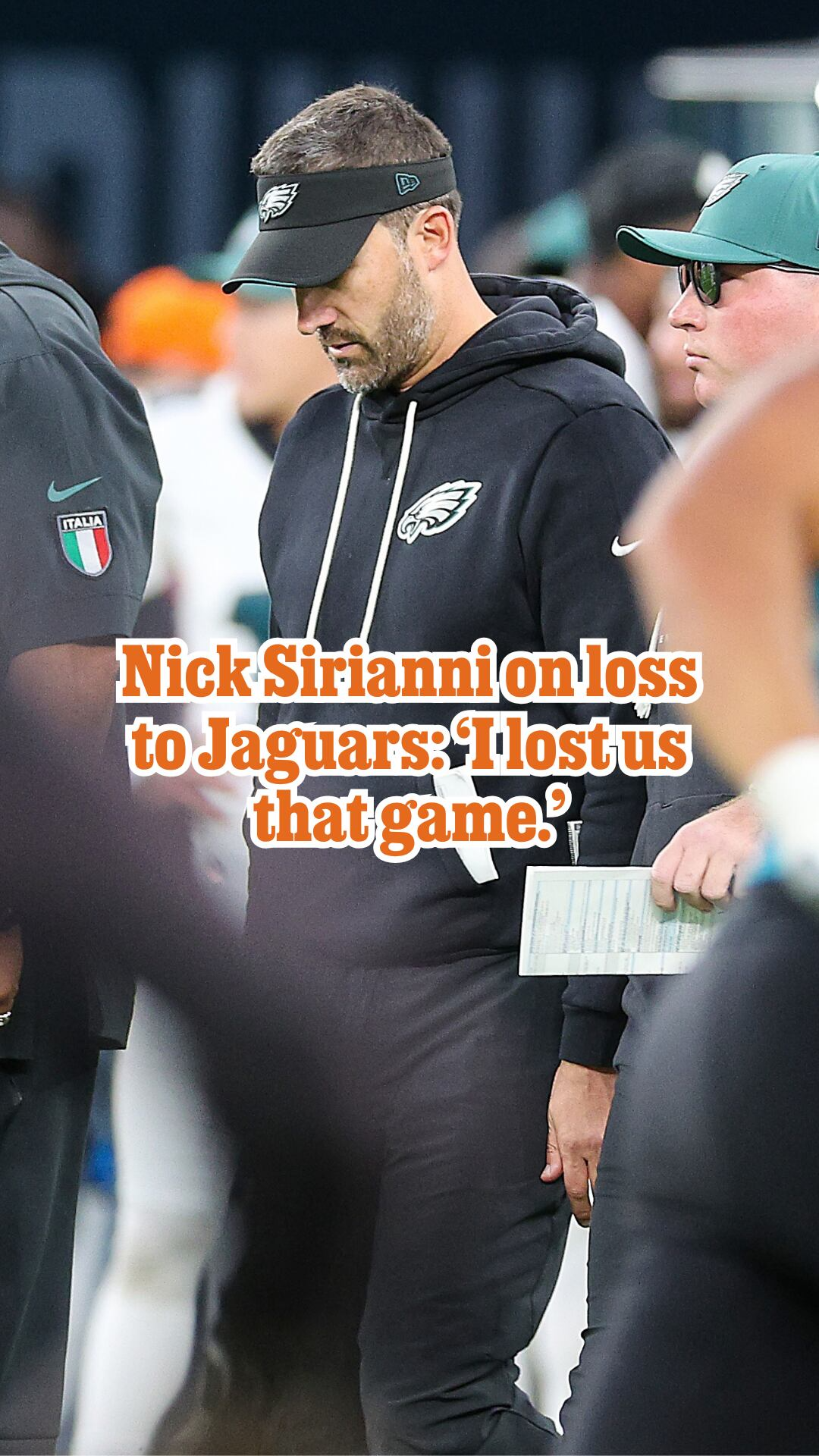
    Over the last three weeks, Eagles coach Nick Sirianni took accountability for making poor game-management decisions that have contributed to two of the team’s losses. Most recently, he lamented the decision to not kick the ball out of the end zone in the waning seconds of the loss to the Jaguars.

    After the loss to the Bears in Week 3, Sirianni took a similar tone when he decided to punt from fourth-and-1 on the Eagles’ 49-yard line, with the Eagles down 13 points late in the third quarter.

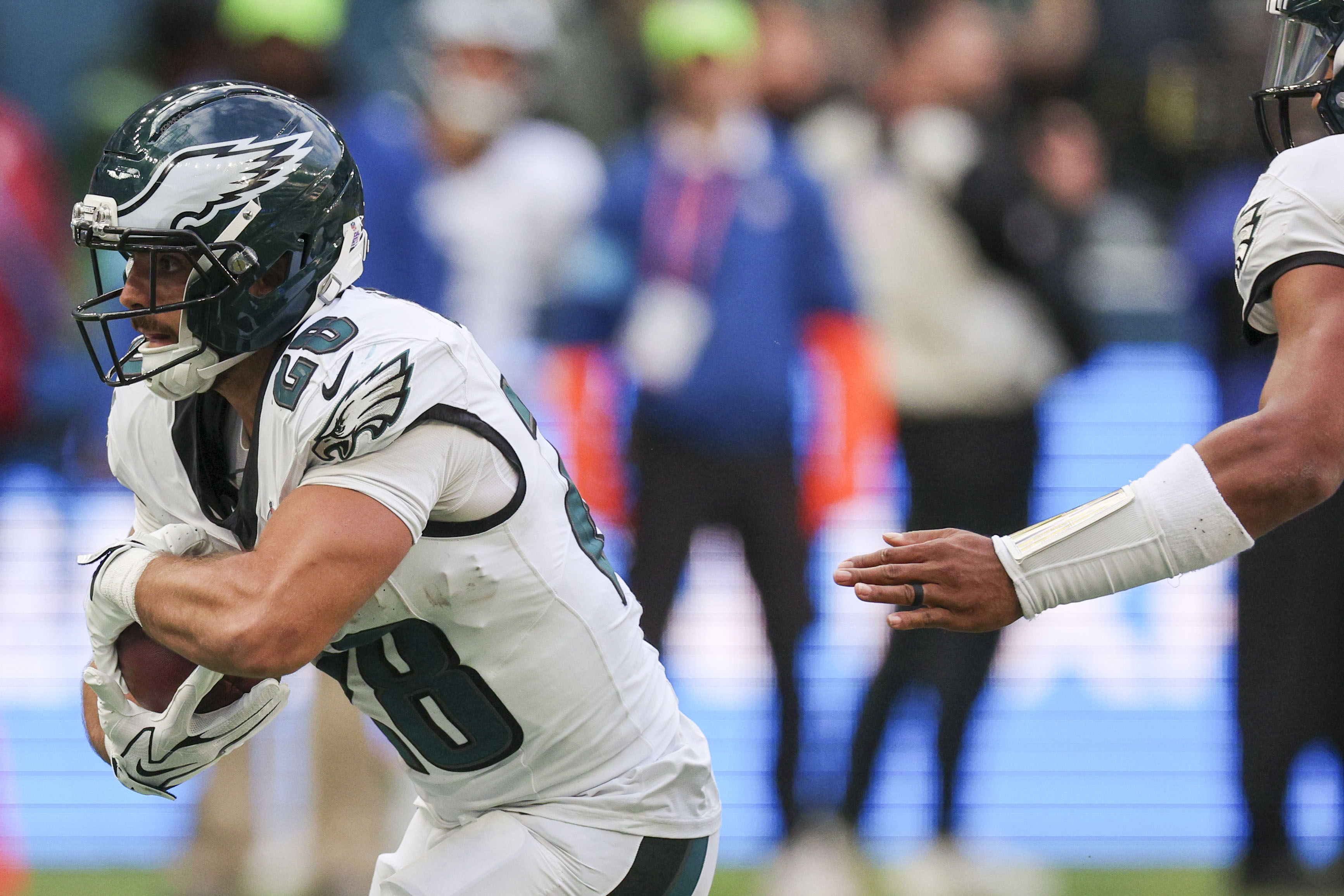
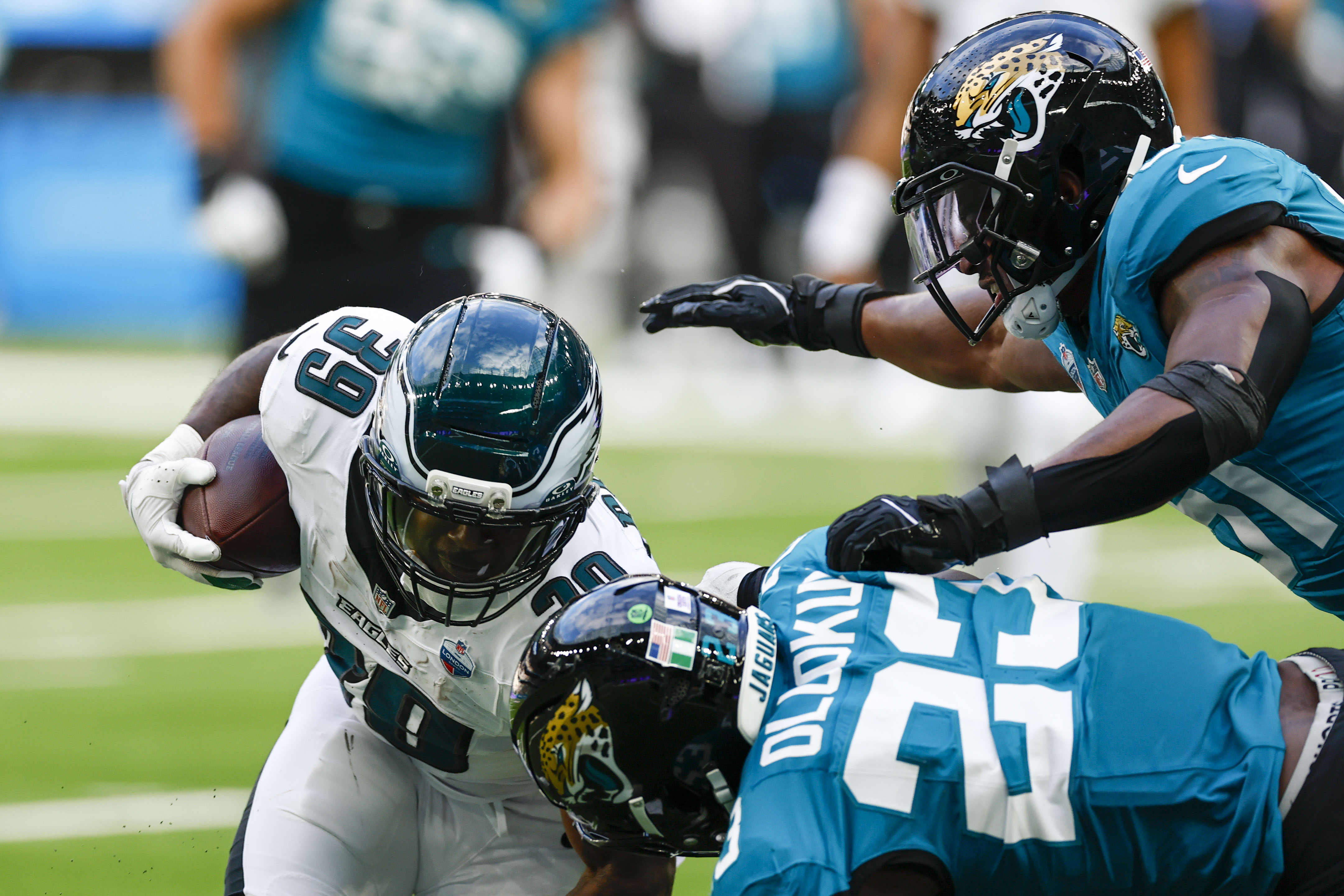
    The Eagles’ woes don’t fall solely on Sirianni. Sean Mannion’s offense is still sputtering in the second half. The run game, which is supposed to be at the foundation of Mannion’s offense, dropped to a new low on Sunday by amassing just 22 yards in 18 attempts through four quarters.

    Eagles coach Nick Sirianni on loss to Jaguars: 'I lost us that game.'
    Video: Eagles coach Nick Sirianni on loss to Jaguars: ‘I lost us that game.’

    In the last two weeks in particular, the team has been banged up, lacking top weapons DeVonta Smith (hamstring) and Saquon Barkley (hamstring), among other important players.

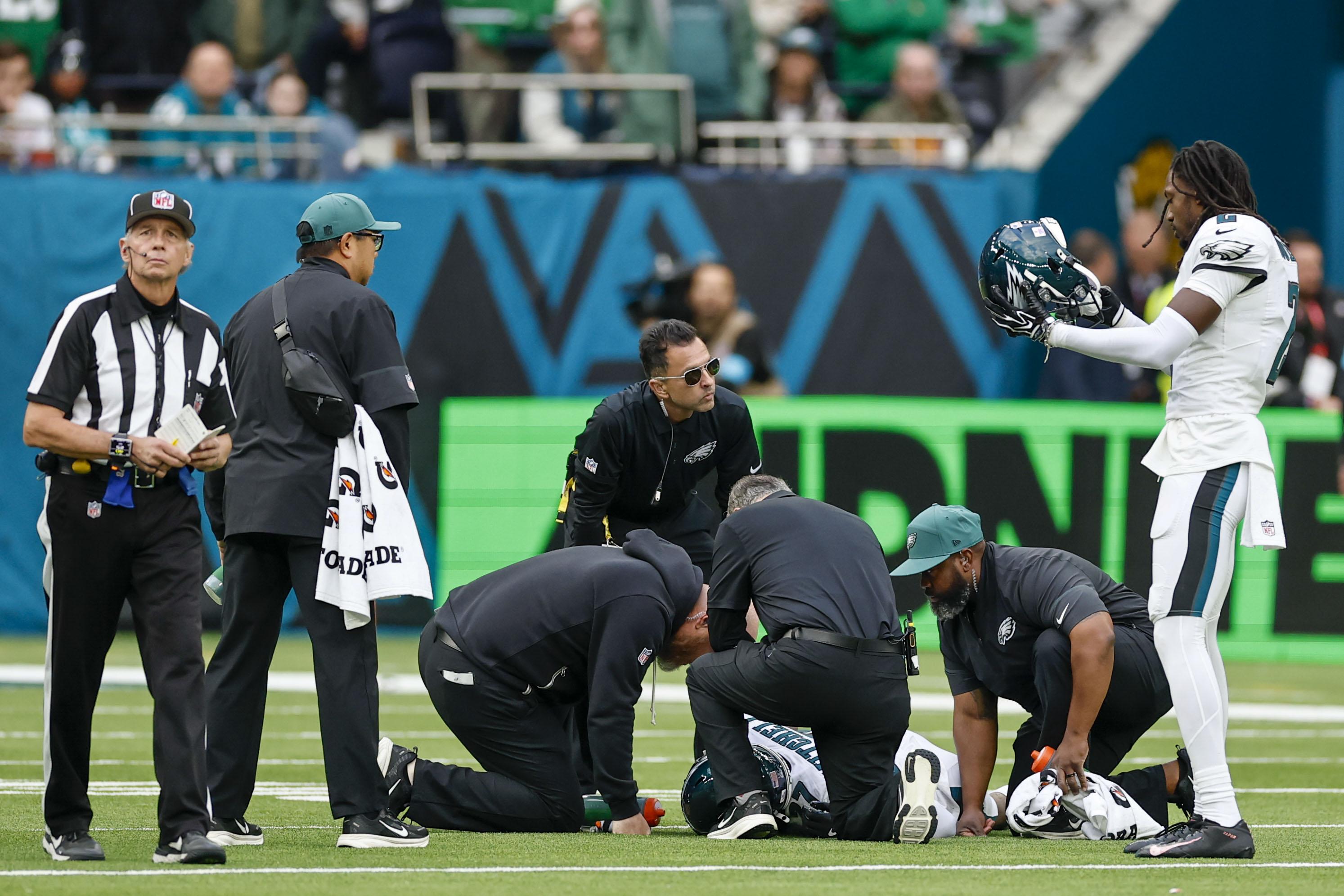
    Week 5 starting running back Will Shipley (foot) joined the injury parade in Sunday’s loss.

    Still, after suffering back-to-back heartbreaking losses, the Eagles were just a couple of plays away from going 4-1 to start the season. No, that wouldn’t solve the underlying offensive issues that have characterized the first quarter of the season, but they could have stolen a far better start after arguably the toughest three-game stretch of the schedule.

    And yet, the Eagles aren’t anywhere close to being out of contention in the NFC East. They’re tied for second with the same record as the Dallas Cowboys, the Eagles’ Monday Night Football opponent in Week 7.

    In an almost impressive feat, none of the four teams in the division won their Week 5 games. Two of those teams — the 1-3-1 Washington Commanders and the 3-1-1 New York Giants — played each other.

    Commanders coach Dan Quinn out-dueled Sirianni in the category of bad game management. The Commanders were nearly in position to kick a game-winning field goal in overtime, but Jayden Daniels either didn’t know the Commanders were out of timeouts or he didn’t know that time was dwindling. Regardless, the 25-year-old quarterback was tackled before he could stop the clock, and the game ended in a 27-27 tie.
    The Cowboys, meanwhile, collapsed in the third quarter on Thursday night, conceding 17 points coming out of halftime in their 24-16 loss to the Baker Mayfield-less Tampa Bay Buccaneers. Christian Parker’s defense is among the worst in the league against the pass (7.8 net yards per attempt against; 31st) and only slightly better against the run (5.1 yards per attempt against; 29th).
    The Eagles are down, but they’re not out, especially if they can get healthy and begin to demonstrate some offensive competency.

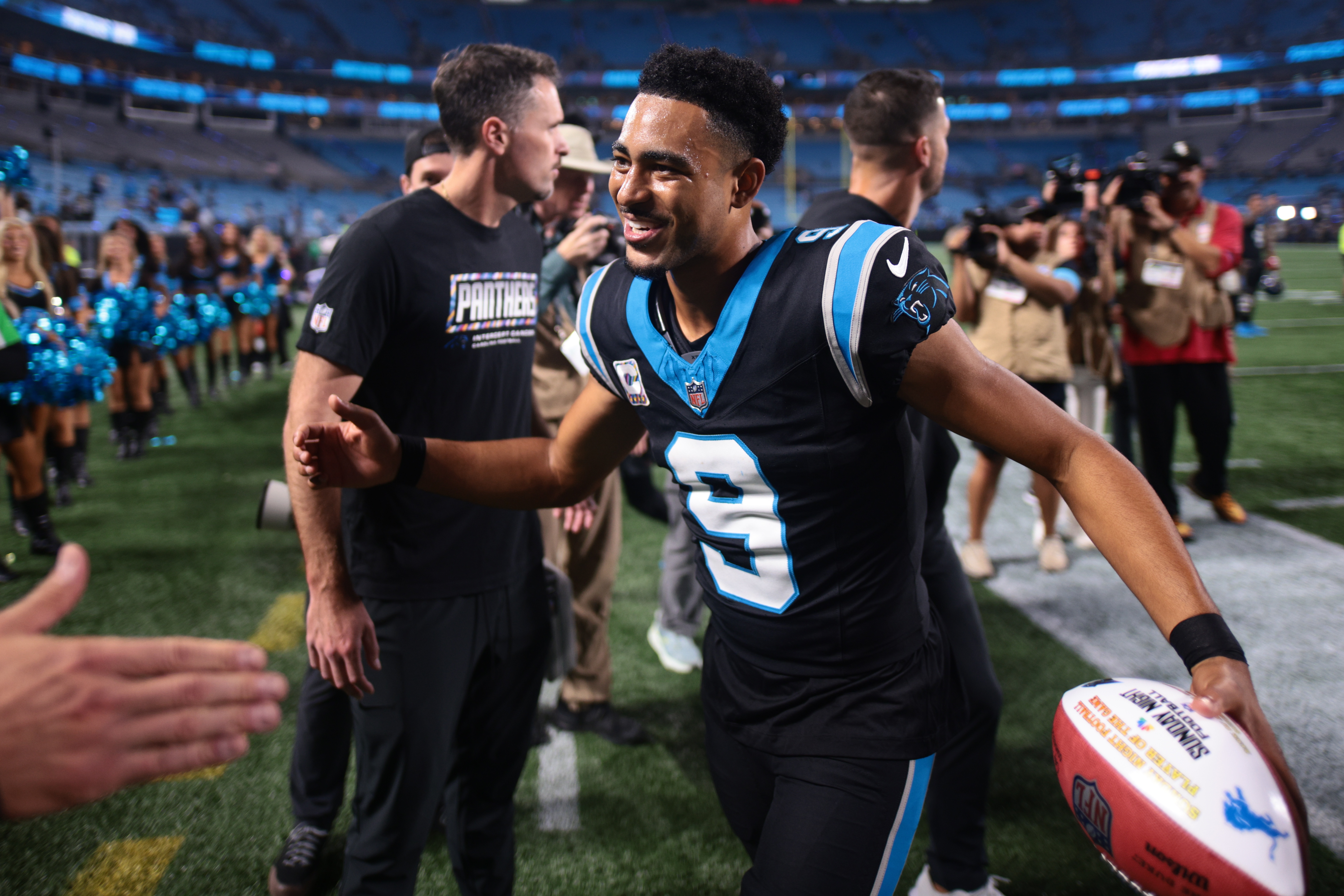
    Bryce Young (9) is coming into his own after a shaky start to his NFL career. Scott Kinser

    Young reborn

    Speaking of offensive competency, how about those Panthers?

    Fourth-year starting quarterback Bryce Young entered the 2026 season at an inflection point in his career. After Young had an inconsistent season in 2025, the Panthers picked up his fifth-year option to keep him under contract through 2027, but they didn’t sign him to an extension.

    Through four games, the 2023 first overall pick out of Alabama is making his case for a hefty payday.

    Going into Week 5, Young led the league with 1,268 passing yards. Even though most of the starting quarterbacks around the NFL now have a game in hand on the Panthers, Young still ranks eighth among them with his passing total. His 317 yards per game leads the NFL, with the next closest quarterback averaging 297.3 (Matthew Stafford).

    He was stellar in the Panthers’ 32-26 win over the Detroit Lions before their bye. Young completed 29 of 41 passes for 329 yards and two touchdowns. He was pressured on 40% of his dropbacks, according to Next Gen Stats, which was actually an improvement after he faced rates over 50% in each of their last two games.

    Still, while under pressure against the Lions, Young went 7-for-15 for 103 yards and a touchdown. Following Week 4, he led the league with 411 passing yards under pressure and was tied for the lead with four touchdowns.

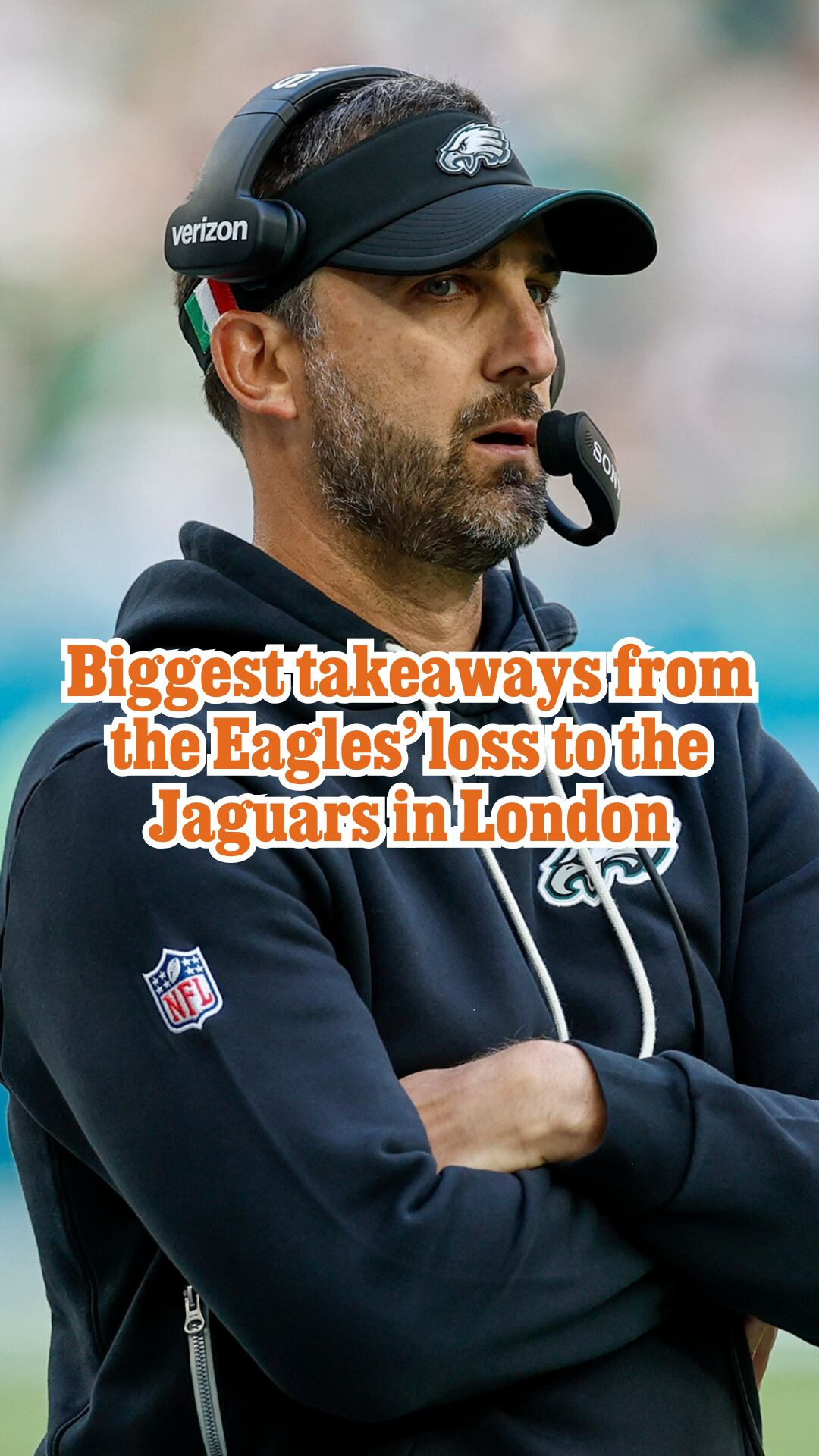
    Biggest takeaways from the Eagles' loss to the Jaguars in London
    Video: Biggest takeaways from the Eagles’ loss to the Jaguars in London

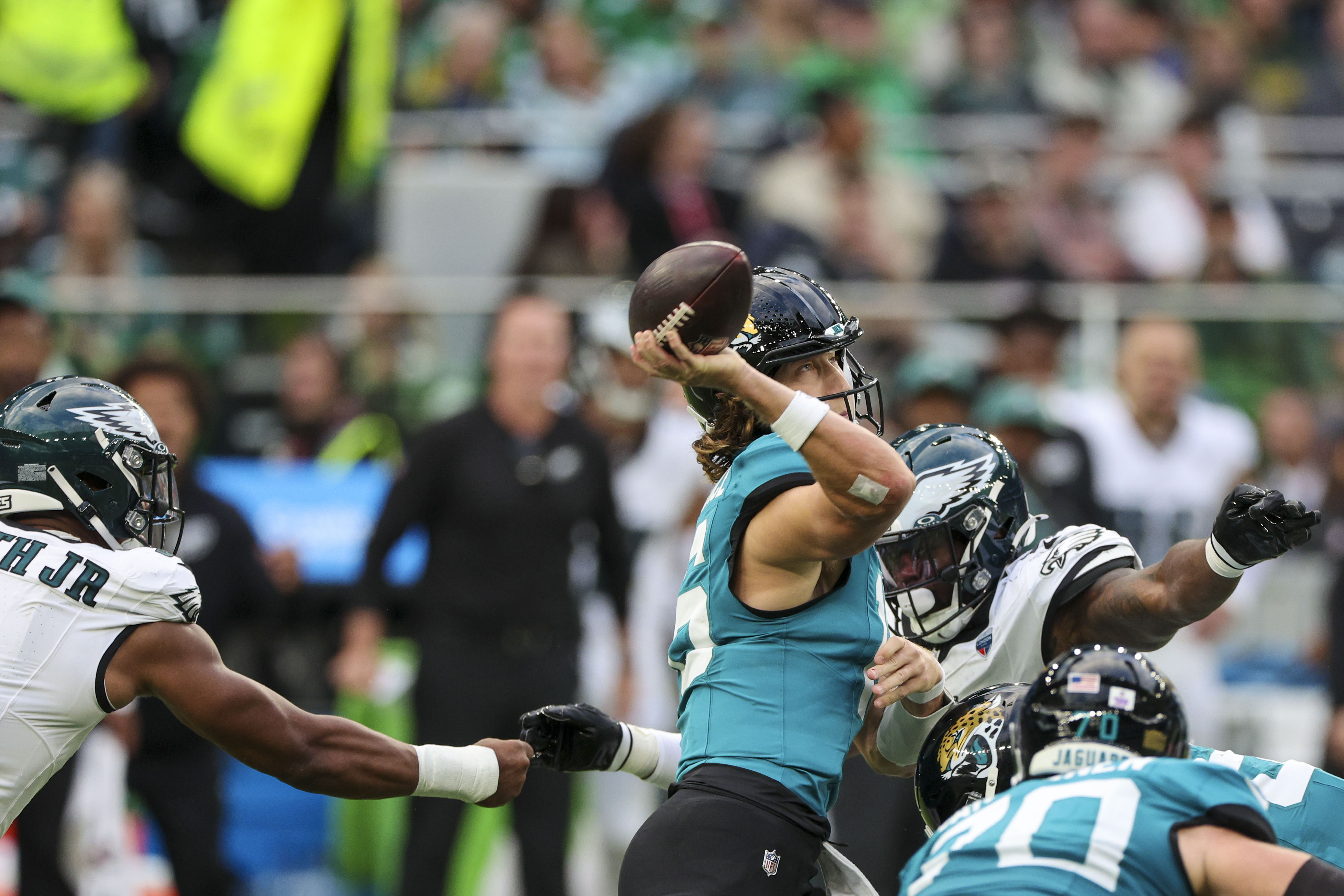
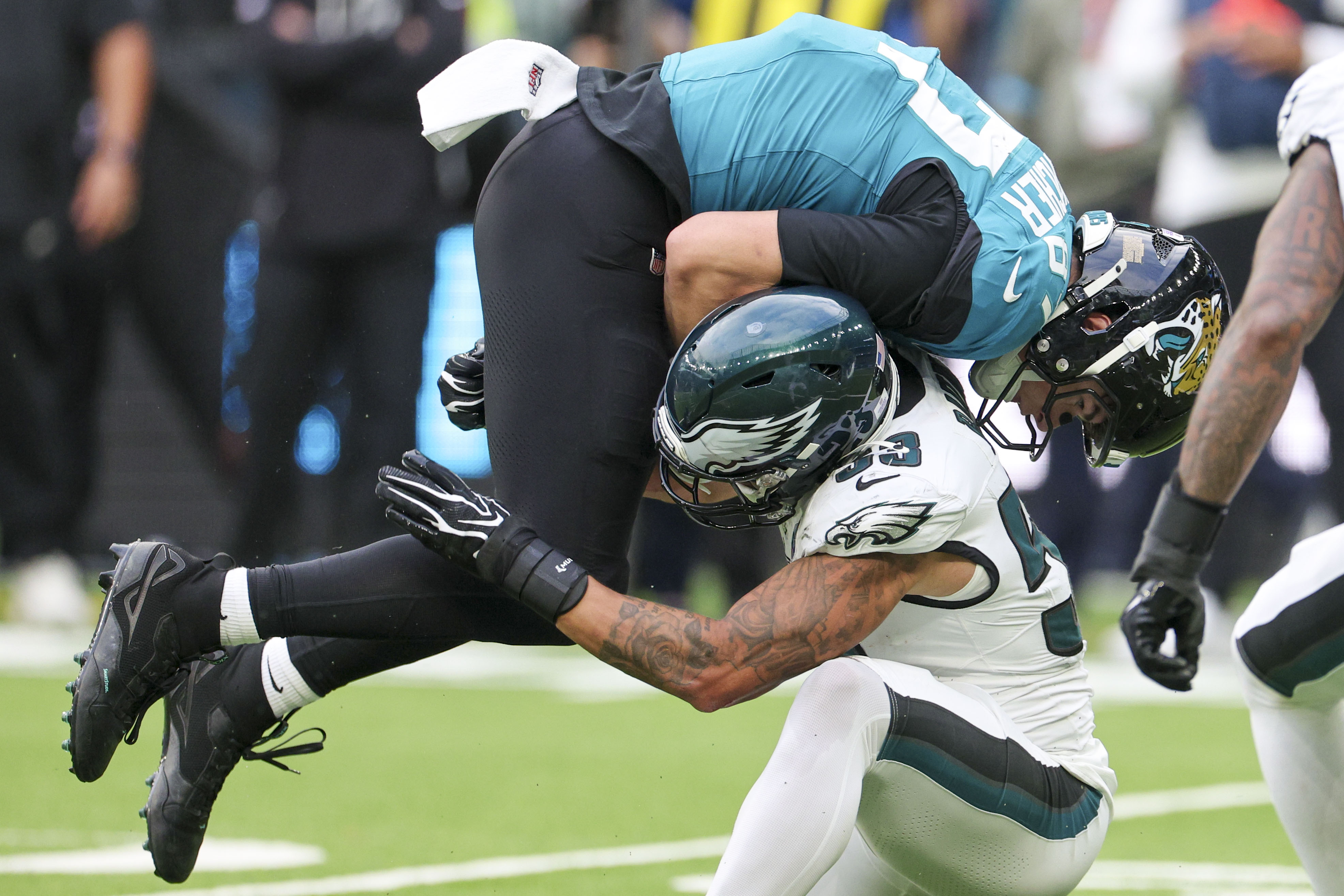
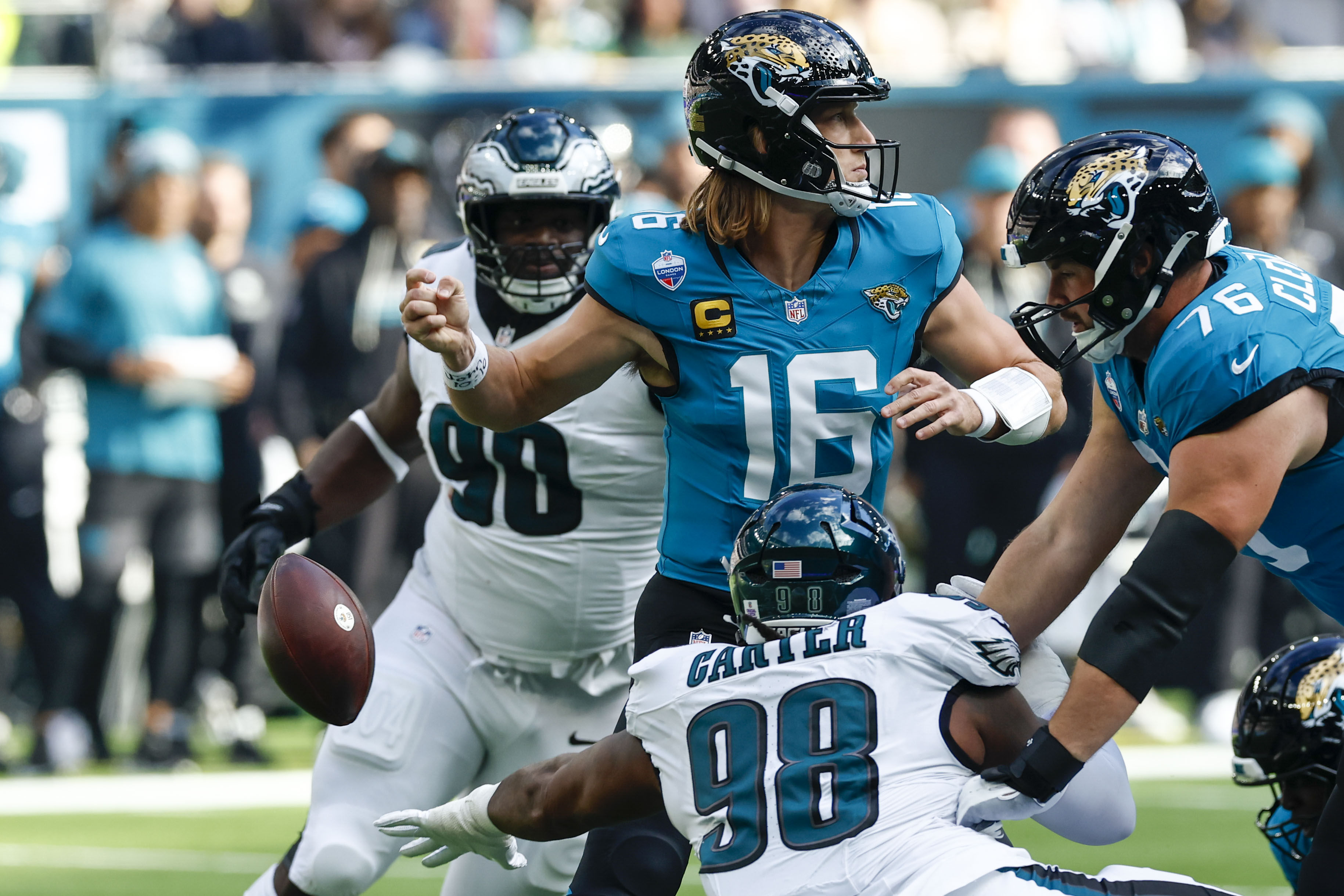
    The Eagles defense gave up 306 passing yards to the Jaguars, 3 yards shy of their season high against the Rams, but the group has still seemingly made strides since the start of the season. They made big plays on Sunday, especially Jalen Carter’s two strip-sacks, a Zack Baun fourth-down stop before halftime, and a Quinyon Mitchell interception, but they ultimately gave up some big plays, too.

    They’ll need their best effort yet to limit Young, especially if the Panthers get one of their top pass catchers in Jalen Coker back after he missed the last two weeks with a quadriceps injury.

    Cats’ corners

    As the Eagles offense looks to find some semblance of identity, they could try to exploit a thin Panthers cornerbacks corps.

    Starting cornerbacks Jaycee Horn (quadriceps) and Mike Jackson (groin) went on injured reserve following the Panthers’ loss to the Cleveland Browns in Week 3. In their absence, they’ve turned to Will Lee, the rookie fourth-rounder out of Texas A&M, and Akayleb Evans, who has primarily been a special teams ace the last few years.

    In the Panthers’ Week 4 win over the Lions, Lee held up well enough in his first NFL start, giving up four receptions on seven targets for 47 yards, according to Next Gen Stats. Evans also made a fourth-down stop on Lions wide receiver Isaac TeSlaa to end the game.

    But Evans struggled in his first start since 2024. He conceded 12 catches on 16 targets for 208 yards and a touchdown from tight end Sam LaPorta, the Lions’ only receiving touchdown of the night.

    With the week of preparation just beginning, the Panthers haven’t yet indicated if they’re planning on making a change at cornerback. But if they roll with the same starting duo on the outside, Jalen Hurts could have his opportunities in the passing game, especially if Smith returns to action.

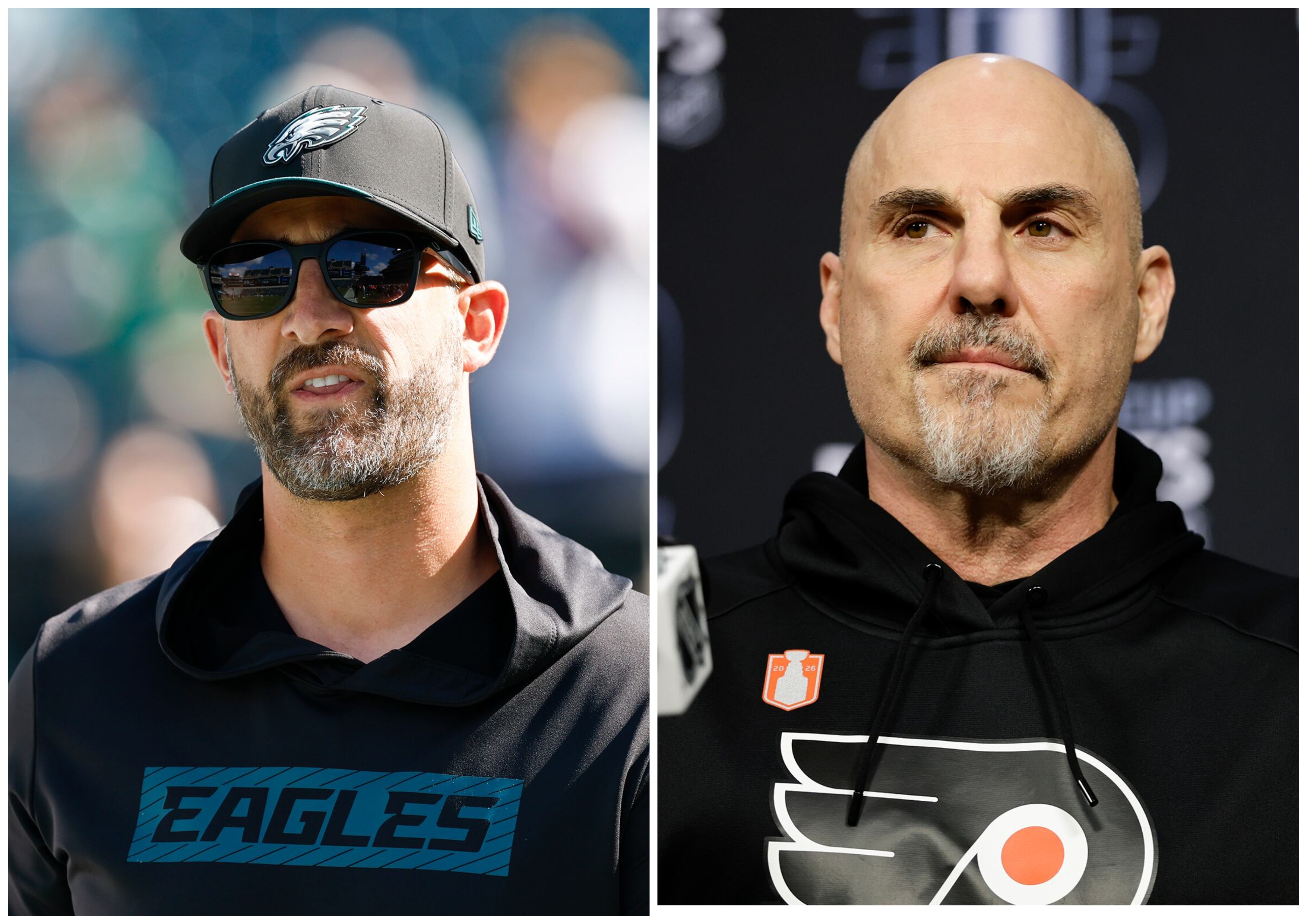
  • Nick Sirianni and Rick Tocchet share the same coaching strength. It might be hurting the Eagles and Flyers.

    Nick Sirianni and Rick Tocchet share the same coaching strength. It might be hurting the Eagles and Flyers.

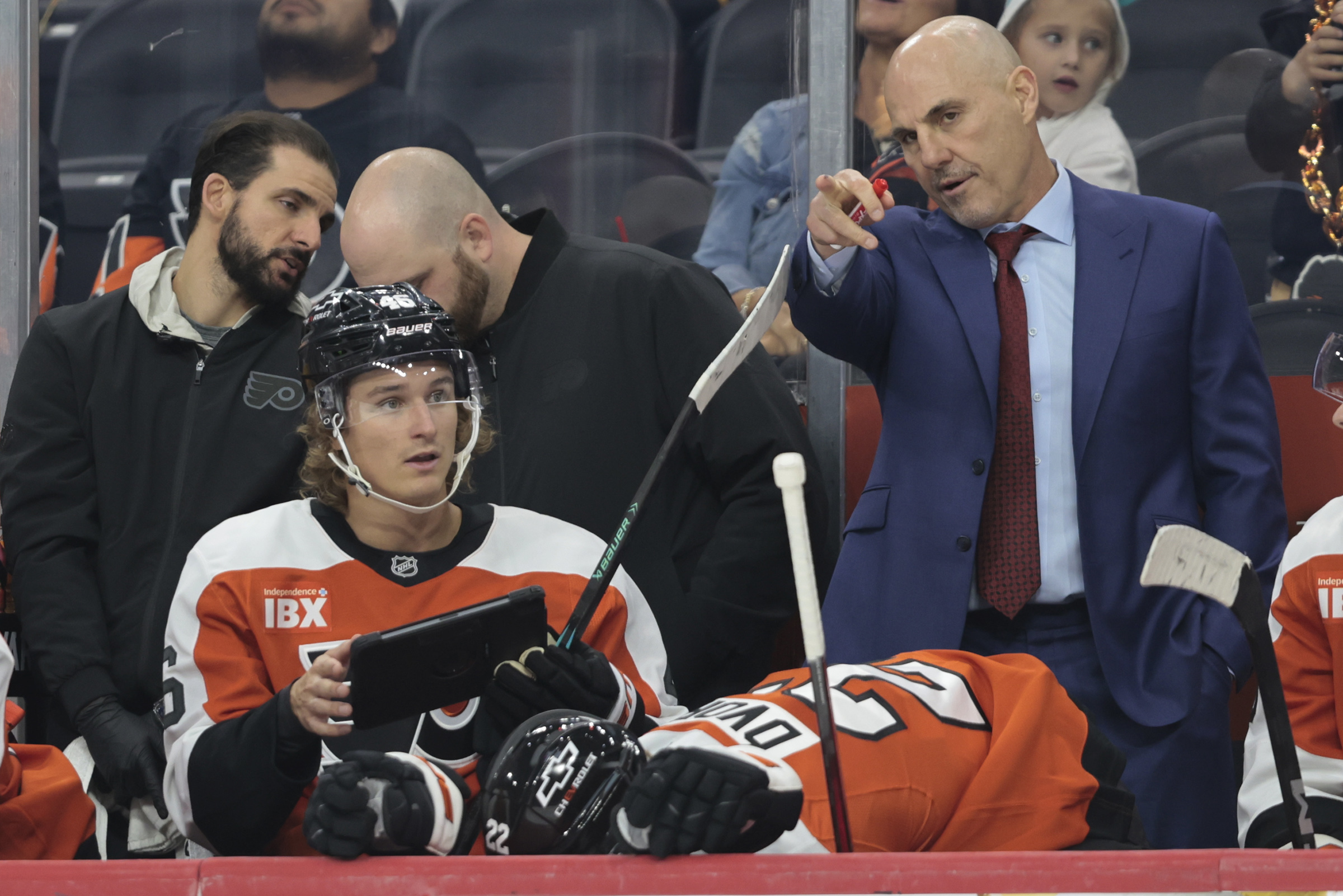
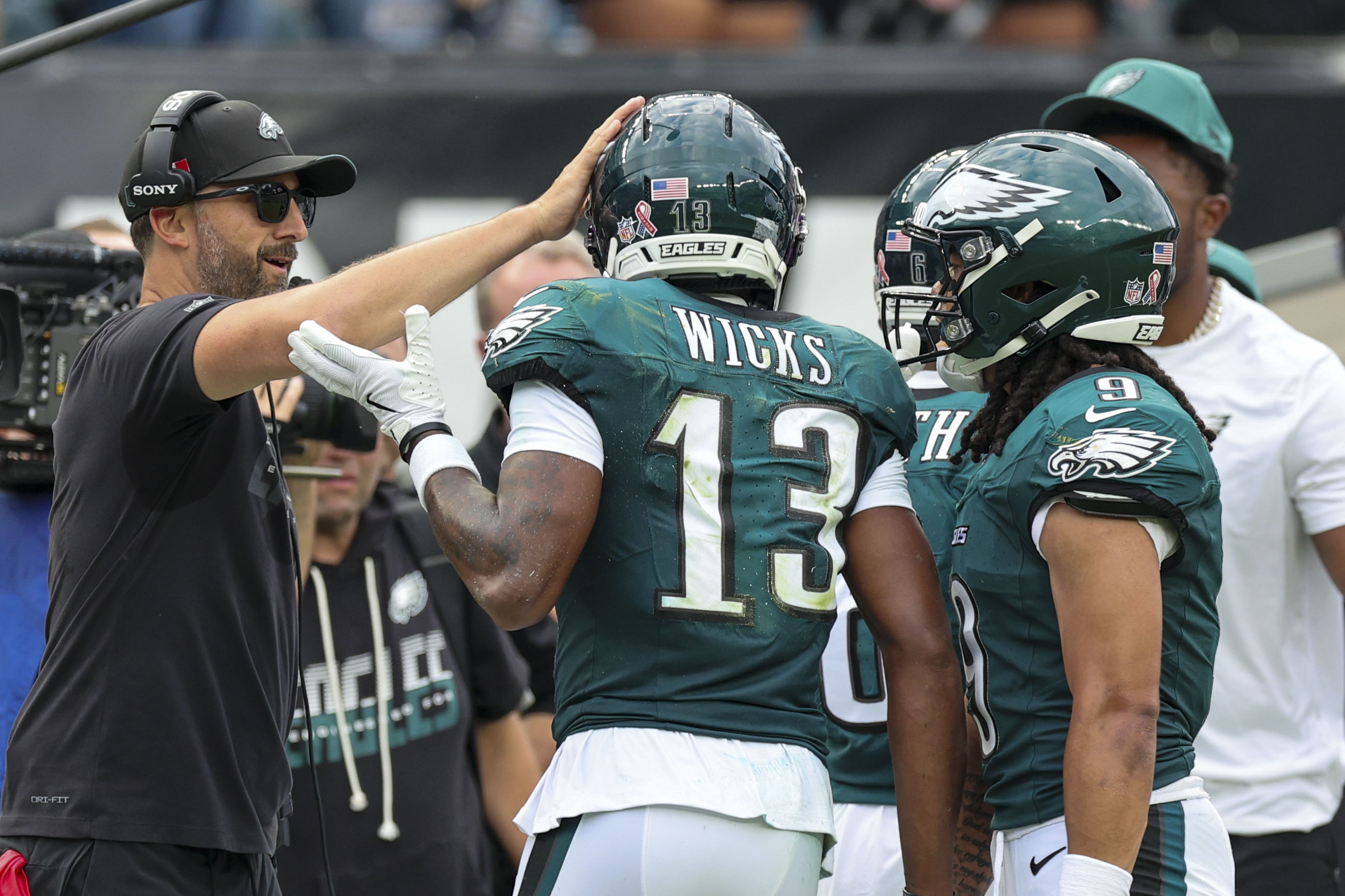
    The Eagles are in a bad way: three consecutive losses, each more infuriating than the last, too many injuries to count, their head coach struggling to find answers. The Flyers are in a worse way: seven games, seven losses, the worst start in franchise history, each effort less competitive than the last, their head coach struggling to find answers.

    There’s more linking Nick Sirianni and Rick Tocchet, though, than the lousy stretches their teams are going through, and their core shared characteristic might account for at least some of their issues. As coaches, the two men have the same style and strength — which, in these circumstances, might actually be a weakness.

    It’s fair to say that Sirianni and Tocchet are players’ coaches. All the clichés about modern team-building apply to them at their best: They get guys to buy in. They create a healthy culture or change a bad one to a good one. They are authentic. Sirianni’s players have routinely cited his authenticity as one of the reasons they like and respect him, and Flyers general manager Danny Brière said in May that free agents would want to sign here because of Tocchet’s presence and personality. Even Sunday night, after another one-sided loss — this time, 4-1, to the Carolina Hurricanes — Flyers forward Trevor Zegras reaffirmed the team’s support for Tocchet.

    “Fully, fully behind Toc,” Zegras told reporters. “He’s an amazing person. He’s an amazing coach. He does so many little things for us behind the scenes. We’re a little disappointed with how these games are going. We’ve got the guys in the room to turn this thing around. It’s a great learning experience for the future.”

    Trevor Zegras (left) has Rick Tocchet’s back. But has Tocchet made life too comfortable for Zegras and a team in a formative stage?Elizabeth Robertson / Staff Photographer

    But it’s also fair to say that aligning a coach’s style and personality with the makeup and developmental stage of a particular team is essential for that team to have success. Consider one example:

    In 2001, Larry Bowa’s hard-driving nature was ideal for a Phillies team loaded with young players still learning what it took to win in the majors. That club overachieved, going 86-76 and finishing in second place, just two games behind the Atlanta Braves, in the National League East.

    Come 2004, however, the Phillies were veteran-laden, and those experienced players didn’t want or need a manager who had them walking on eggshells every day. What’s more, once Jimmy Rollins, Chase Utley, Ryan Howard, and Pat Burrell were patrolling the clubhouse as fully formed leaders, Charlie Manuel’s lighter hand was perfect for guiding the Phillies to five straight division titles and a World Series victory.

    Both Sirianni and Tocchet are closer to the Manuel model than the Bowa model. And while I’m not suggesting that the two of them should start unleashing paint-peeling tirades at their players — it’s possible they already are; I’m not in the locker room to know — I am suggesting they might need to be sterner and more punitive than they’re usually inclined to be.

    Neither one of them have been coaching a team that can be trusted to do the smart or right thing in a game’s most important moments. The Eagles are too shorthanded, and the Flyers are still too young — and probably a little too high on their own supply after their foray into the playoffs last season. Their coaches might have to be harder on them for their own good, to help them reach the highest standard.

    To return to the 2007-11 Phillies for another instructive example, in Game 5 of the 2008 World Series, Manuel didn’t advise Utley, Hey, Chase, if the batter happens to hit a tough grounder up the middle that you have to backhand, try faking the throw to first on the off chance that the runner on second turns for home. He didn’t have to advise Utley to do anything. Utley had already prepared himself for every possible scenario and outcome in that situation.

    Is Nick Sirianni’s voice being heard by the Eagles’ most important young players, including Makai Lemon (right)?David Maialetti / Staff Photographer

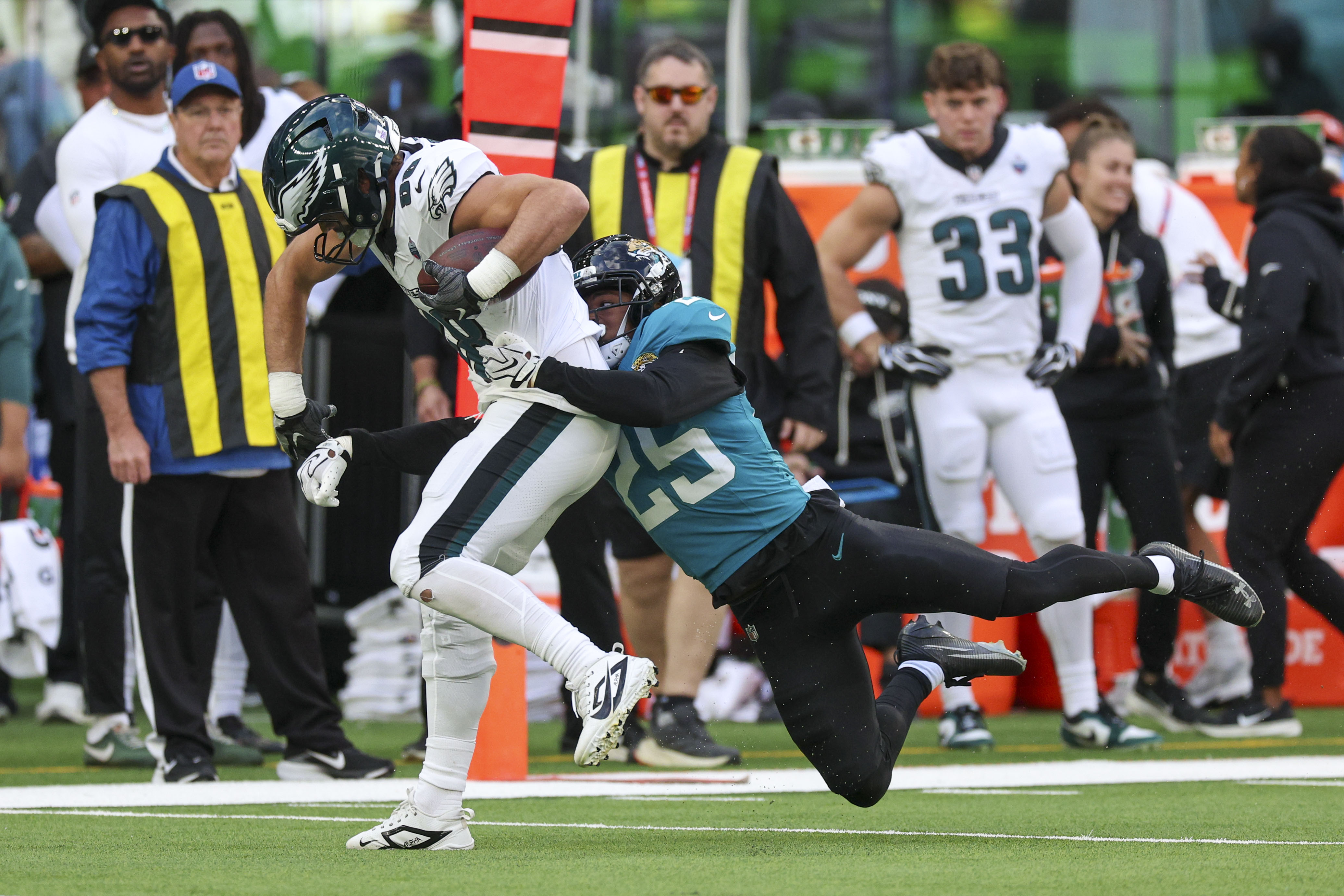
    Now, go back to Sunday in London. At the risk of coming down too hard on a rookie in just his fifth NFL game, the most obvious and egregious error during the Eagles’ misbegotten handling of the game’s final minute was committed by wide receiver Makai Lemon. When he caught that second-down pass from Jalen Hurts with 21 seconds left in regulation, Lemon did the one thing he absolutely could not do: He dashed toward the sideline, making it easier for the Jaguars to tackle him out of bounds and stop the clock, which they did. A savvier receiver doesn’t make that mistake, but the Eagles didn’t have such a receiver available, and it falls on the head coach to make absolutely certain that a kid like Lemon knows what to do in that spot.

    “If you’re saying, ‘Hey, we’ve got these new guys in, and we’ve got to be even more detailed,’ then I didn’t do my job as good as I possibly could do it prior to that,” Sirianni said Monday. “The parity in this league is so tight. We don’t go play a cupcake game to get ready for another game. That doesn’t happen in the NFL. I think every day and every situation in everything that we do is fourth-and-1. I really do believe that. We’ve got to do that on a daily basis.”

    Similarly, Zegras’ endorsement of Tocchet isn’t necessarily the good sign it might first seem to be. The Flyers, under Brière, Tocchet, and president Keith Jones, have been laboring to improve the franchise’s image after its decade-plus of dormancy. They want the Flyers to be perceived as an appealing destination, as a great place to play. The word comfortable comes up a lot when describing the atmosphere around the team. But this roster, like the Eagles’ in its current iteration, doesn’t have the talent or accomplishments to have earned or to expect such cushy treatment. This is back-to-the-basics time for both of these teams, and their head coaches shouldn’t waste another minute waiting for them to snap out of it on their own.

  • How Pope Leo has brought Villanova University closer to the Vatican

    How Pope Leo has brought Villanova University closer to the Vatican

    ROME — The Rev. Peter M. Donohue, Villanova University’s president, emailed his former classmate and friend last May, congratulating him on the one-year anniversary of his new position.

    “It has been quite a year,” Donohue wrote to his fellow Villanova alum.

    His friend — Pope Leo XIV — responded: “It has certainly been a whirlwind… God is good.”

    Since Leo, formerly Robert Prevost, became pope in May 2025, Villanova University has been in a major spotlight as the only U.S. college with an alumnus pope — a distinction it’s likely to keep for many generations. The pope graduated from Villanova, one of only two Augustinian colleges in the United States, in 1977.

    For years Villanova has sent student interns to work in the Vatican — there are 12 this semester — and professors have taken classes to study in Rome. Three are there now.

    But Villanova’s ties to Rome and the Vatican have grown substantially as a result of having an alumnus pope. The university this week is hosting an international conference on sustainability near the Vatican, which will cap off Tuesday evening with the presentation of Villanova’s inaugural sustainability medal, named for Pope Leo. The pope, 71, was scheduled to present the award, but he announced during his weekly Sunday prayers that he would be undergoing surgery to remove a nodule from his lung. The surgery is now scheduled for Tuesday and Villanova officials were unsure who will present the medal.

    On Halloween weekend, 6,000 Villanova alumni, students, and employees will travel to Rome for a doubleheader men’s and women’s basketball game. Villanova will play Notre Dame, which is only sending 1,000 folks.

    “The voice of the people of God will be very strong on the Villanova side,” Pope Leo recently told a Vatican correspondent for the National Catholic Reporter.

    Neither event would have happened there if Leo weren’t the pope, Donohue said.

    “His very election has opened the door to a lot of different things,” Donohue said.

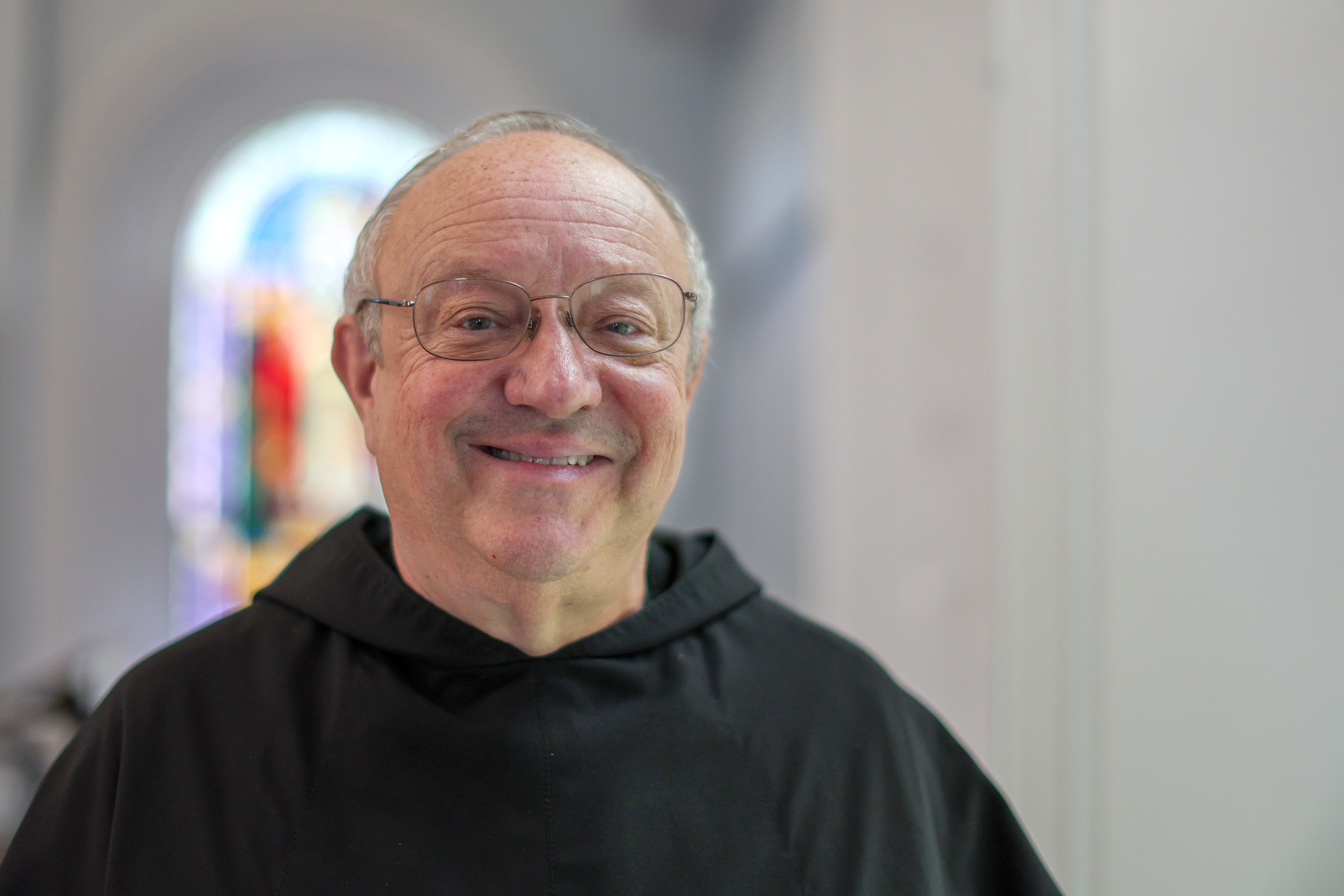
    Hundreds of interview requests have poured in to Villanova and the Augustinian priests who work there and are personal friends of the pope. One graduated from Villanova the same year as him, then lived with him in Peru for 10 years, visited his apartment in Rome, and rode in the Popemobile. Another, who had lived with him for six years in Rome, vacationed with him twice since he became pope at the pope’s summer residence at Castel Gandolfo, a scenic Italian town south of Rome.

    The Rev. Bernie Scianna is a long-time personal friend of Pope Leo. He works at Villanova University.David Maialetti / Staff Photographer

    The Rev. Bernie Scianna, also a longtime friend of the pope and Villanova’s vice president for mission and ministry, has been to Rome five times since Pope Leo was elected and has met with him each time. He is returning for both the sustainability conference and the basketball games.

    “It has put us in the limelight in the sense that you are the pope’s university,” Scianna said. “It calls us to a greater accountability in many areas, sustainability being one of them.”

    More courses, events, and programming on campus are integrating Pope Leo, Villanova officials said. There’s a Pope Leo campus committee discussing opportunities for academic programs and events related to the pope.

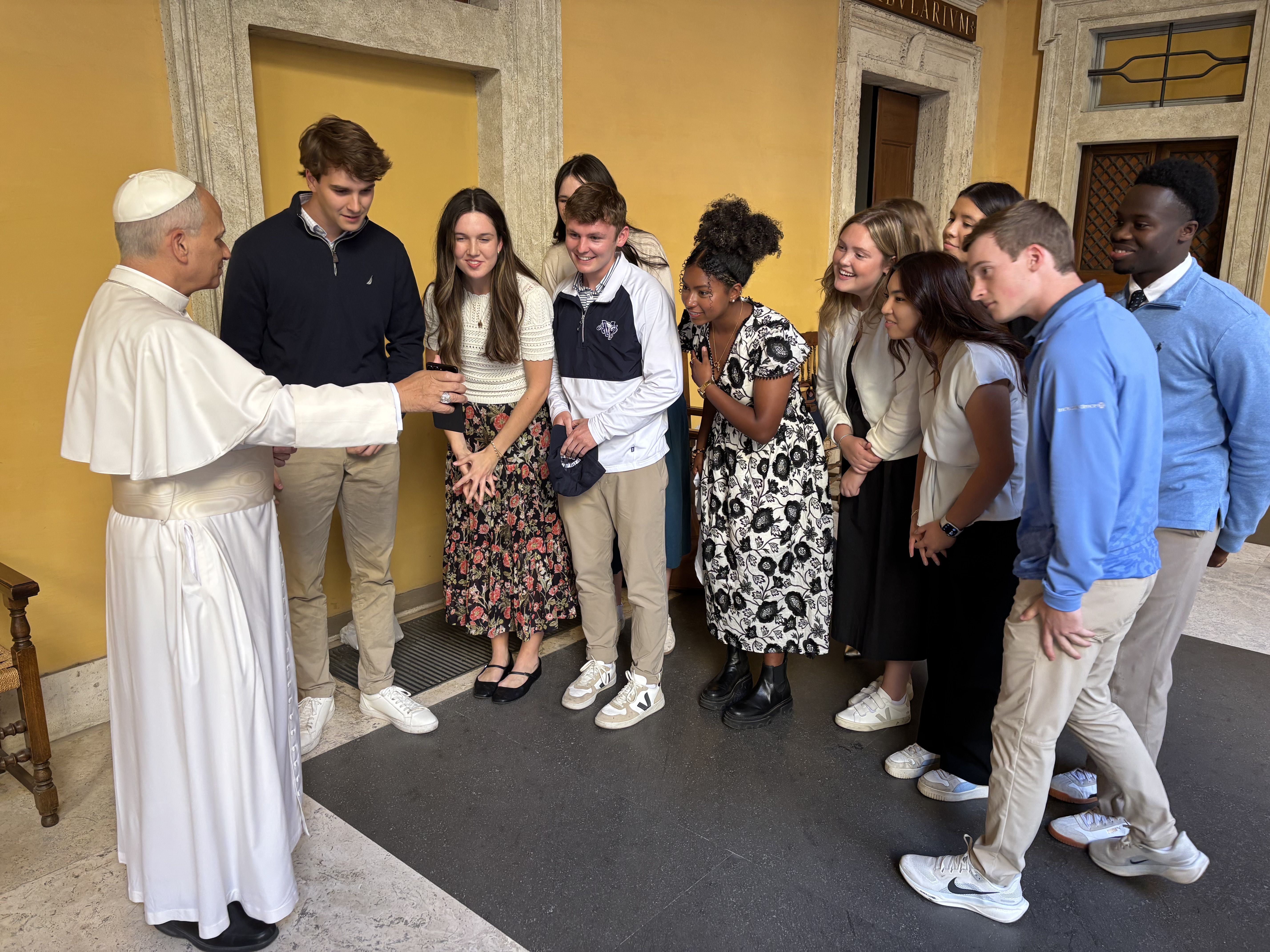
    Students and faculty have gotten intimate audiences with Pope Leo. During a visit last fall, the pope chatted with students and pulled out his phone, showing them the purebred Arabian horse a Polish man had just gifted him because the donor had seen him on horseback when he was stationed in Peru decades ago, said Matthew Manion, faculty director of Villanova’s Center for Church Management, who accompanied the students.

    Pope Leo interacts with Villanova University students last fall during their Augustinian Leadership Journey in which students walk in the steps of St. Augustine. Here, Pope Leo shares a photo of a horse he was gifted by a donor who had seen him riding horses in Peru where had been stationed at one time.Courtesy of Matthew Manion

    And on another occasion last fall after the pope introduced a Villanova church management program for newly ordained bishops, he asked Manion and his wife to stop by for a cup of coffee afterward.

    “The next thing I know there’s the Holy Father serving my wife cappuccino,” he said, signifying his “instinctive Augustinian hospitality” and “servant leadership mindset.”

    Not a coffee drinker, Manion asked for tea.

    “My wife’s like, if the pope offers you coffee, you drink the damn coffee,” he said.

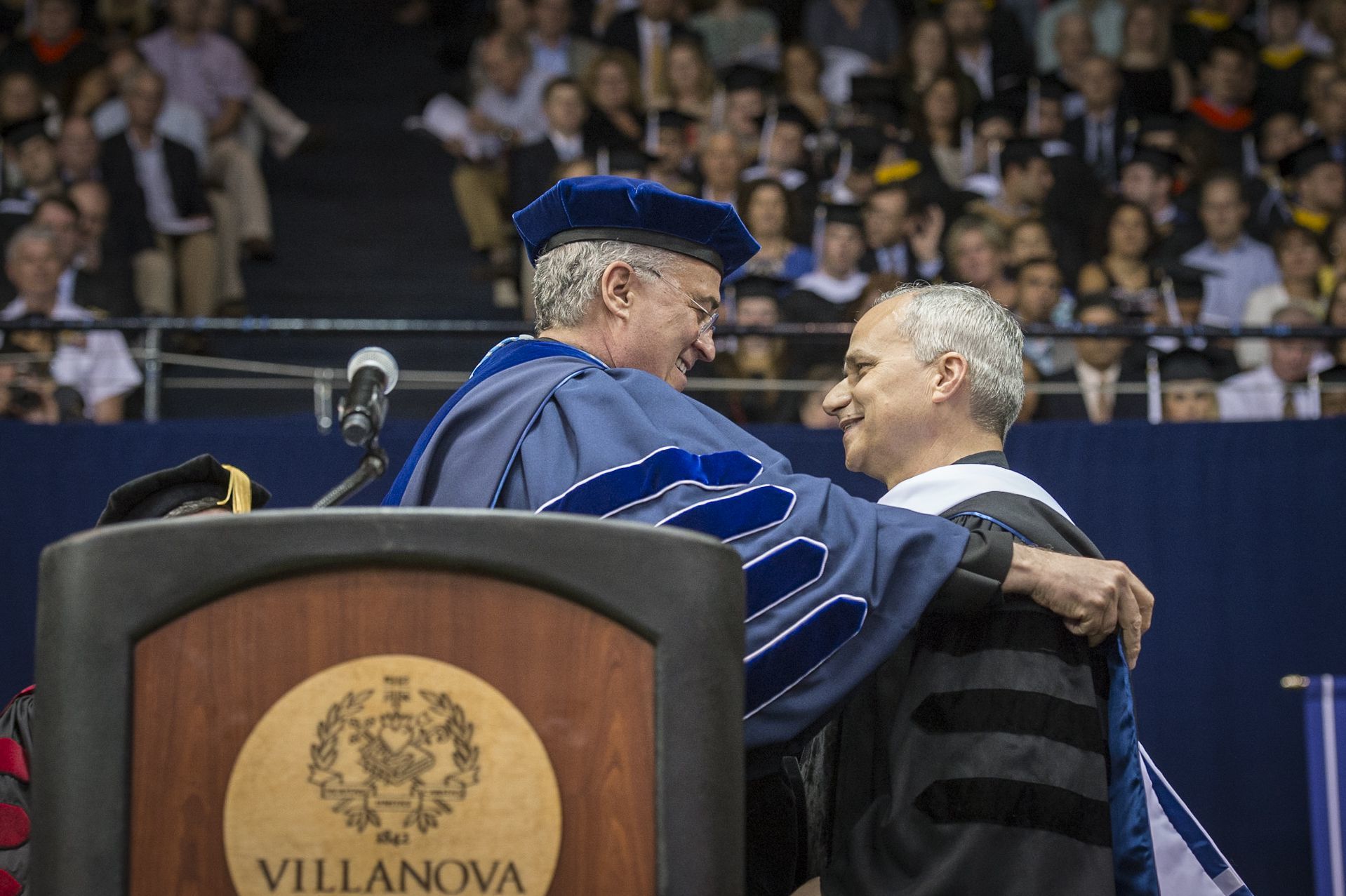
    The Rev. Peter M. Donohue, president of Villanova University, presents an honorary doctorate to Robert Prevost at the 2014 commencement, 11 years before he would become Pope Leo XIV.Courtesy of Villanova University

    ‘The school the pope went to’

    Villanova, a more than 10,000-student Catholic university on the Main Line, already was in a rarefied position in a competitive higher education market where schools are struggling with falling enrollment and financial pressures. The school has benefited from national championship basketball teams in 2016 and 2018 and the three Villanova alums who helped carry the New York Knicks to the championship this year, but also climbing applications and donations.

    An alumnus pope has only enhanced its prospects.

    “Every conversation I have with alumni involves Pope Leo,” said Kevin Noller, vice president of university advancement.

    The last two years have been high marks for giving at Villanova, which received more than $170 million in 2024-25, the year the pope was elected, and more than $150 million in 2025-26. It’s hard to say how much is related to Pope Leo, Noller said, but “when people feel good and they feel pride… it helps in their process of making an investment.”

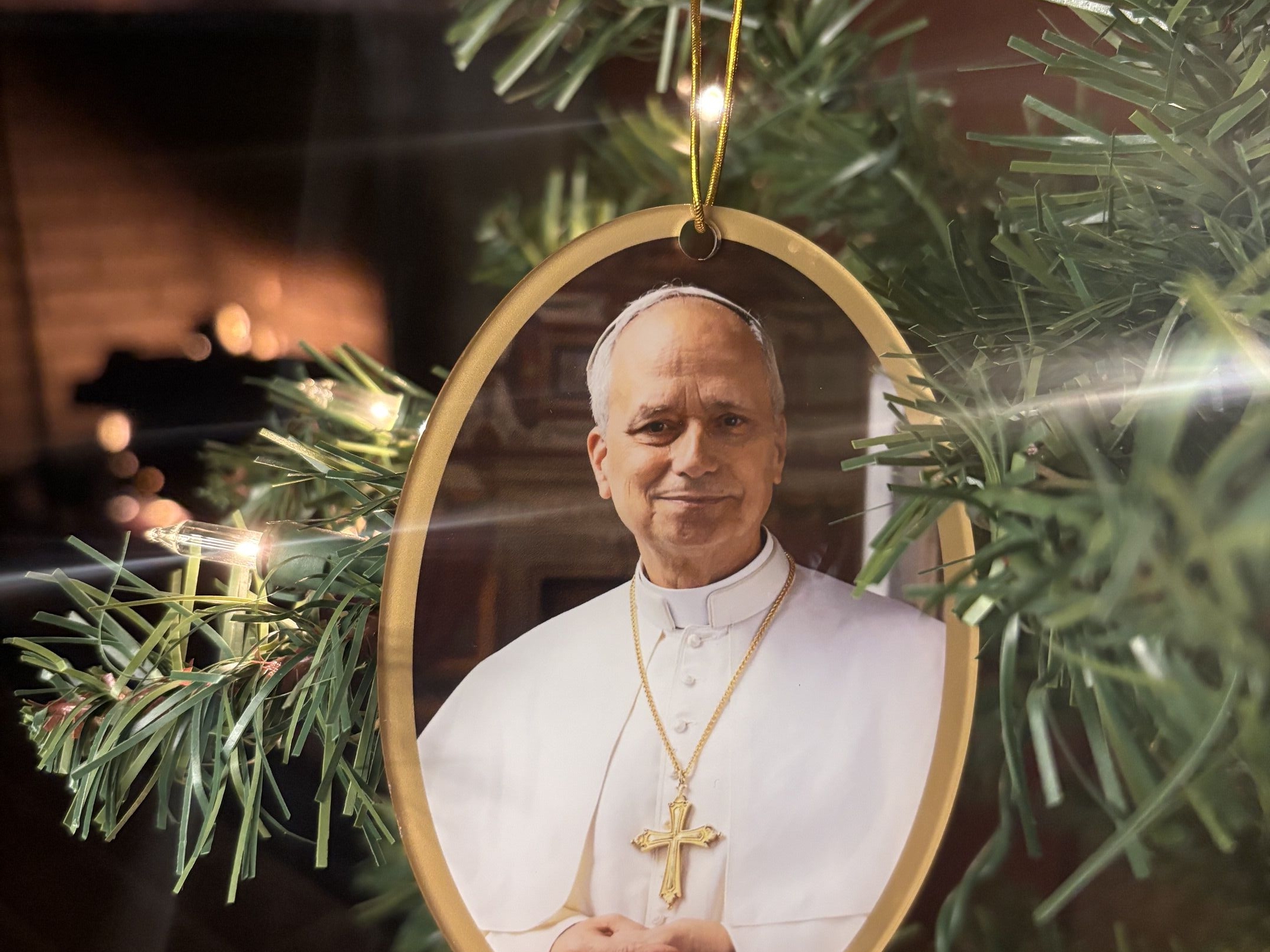
    In 2025, the university created a Christmas ornament featuring Pope Leo, which helped bring in 6,150 donations to Villanova, compared to 2,400 gifts brought in by the prior year’s ornament appeal, Noller said. The 2024 ornament depicted a stained-glass detail from St. Thomas of Villanova Church.

    Villanova created a Christmas ornament of Pope Leo in 2025, the year he became pope. “He approved it,” said Kevin Noller, Villanova’s vice president of university advancement. “It was our best performing ornament by a long shot.”Courtesy of Villanova University

    Villanova saw about 1.1 million unique website visitors on the day the pope was selected, compared to about 65,000 on a typical day. The week after his election, the university was mentioned in nearly 50,000 news stories around the world.

    The summer after the pope was elected very few admitted students fell away, what’s known as summer melt: “Who’s not going to come to the school the pope went to,” Donohue said.

    The school received 28,870 applications for the fall 2026 class, nearly a 10% increase over the prior year and the highest number ever. Student visitors to campus increased to nearly 22,000 in 2025-26, up from 19,900 in 2024-25.

    And Scianna said so far this year 50 people, most of them students, are planning to become Catholic and join the church on campus, up from 24 last year.

    “I think that’s a lot to do with him being close to us as an American pope, but also close to us as a Villanova pope,” he said.

    Donohue said it’s hard to say how much of the rising numbers can be attributed to Pope Leo, but certainly some of it. The university’s website prominently highlights the connection between the pope and Villanova. And Pope Leo is mentioned on admissions tours and during information sessions for prospective students, said university spokesperson Jonathan Gust.

    “Some people say it’s the Leo effect,” Donohue said. “Pope Leo became Pope and suddenly it was ‘Let’s go look at Villanova.’”

    He told Pope Leo about the impact he’s had on his alma mater.

    “He said, ‘Use it wisely,’” Donohue recalled.

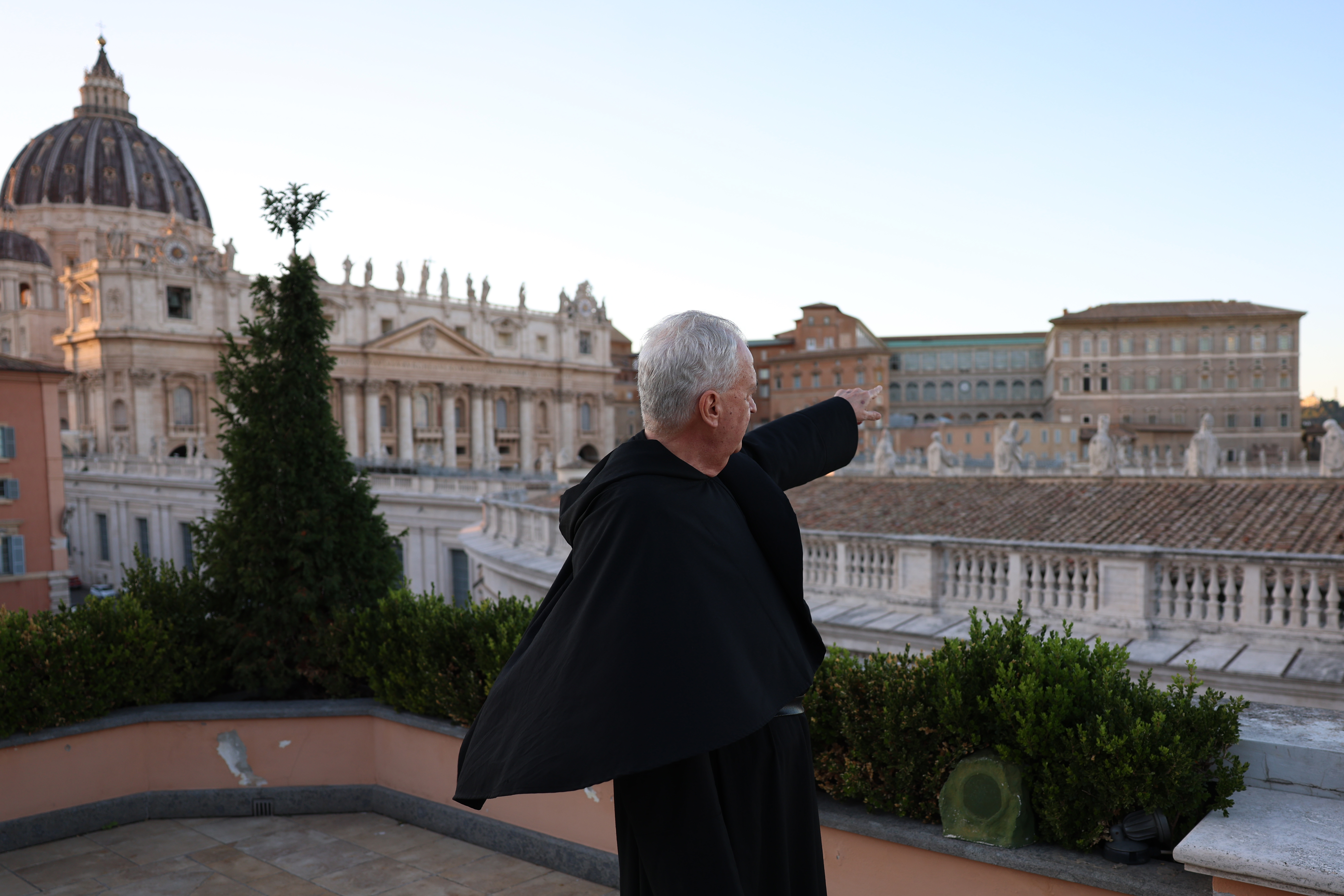
    Villanova University president Rev. Peter M. Donohue points to the pope’s residence in Vatican City.David Maialetti / Staff Photographer

    Prayers for Pope Leo

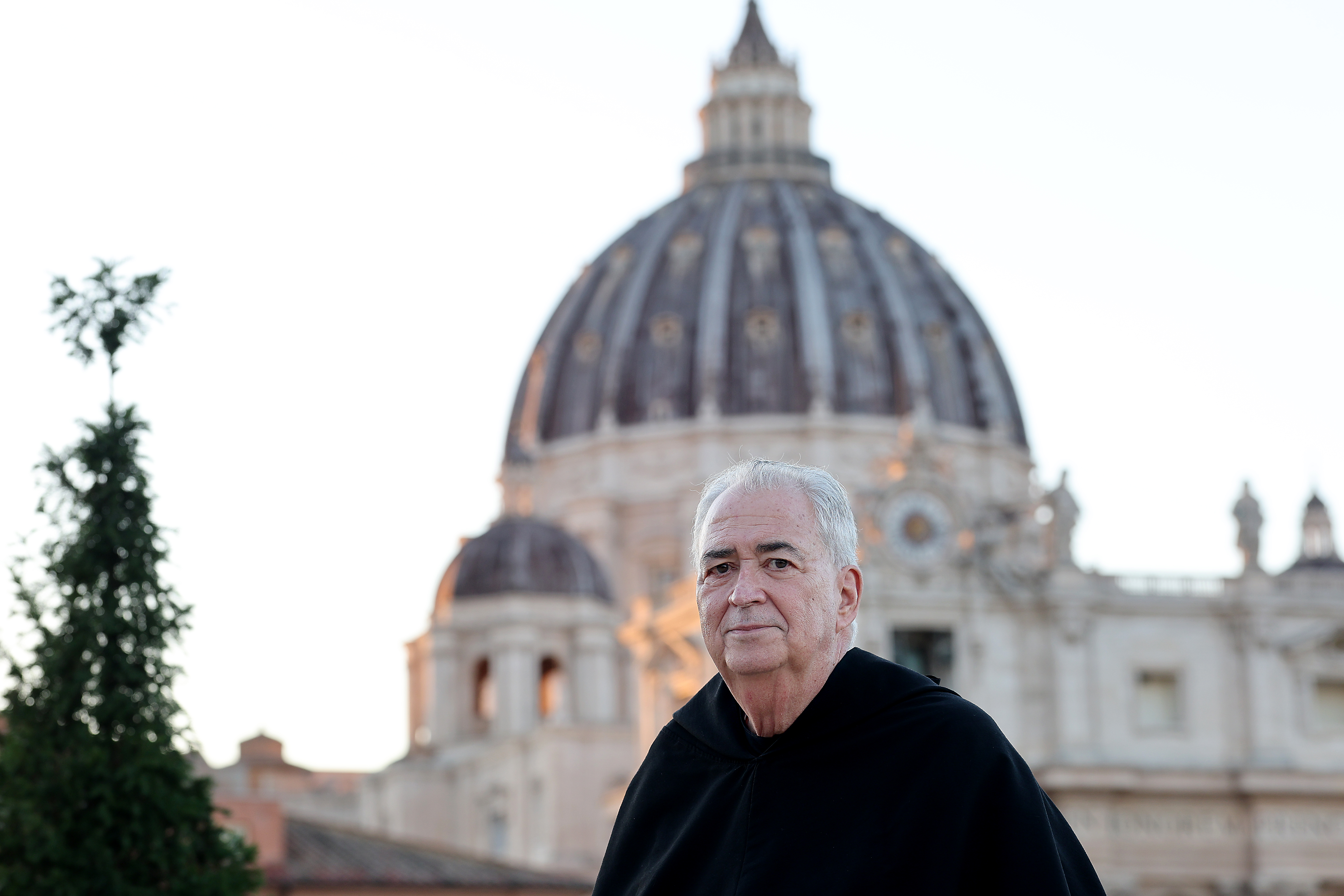
    On Monday, Villanova opened its sustainability conference, Responding to the Cries of the Earth and the Poor, at The Patristicum, a pontifical institute in Rome under the order of St. Augustine. From its rooftop is a stunning view of Vatican City, including the very window of Pope Leo’s apartment from which he sometimes addresses crowds.

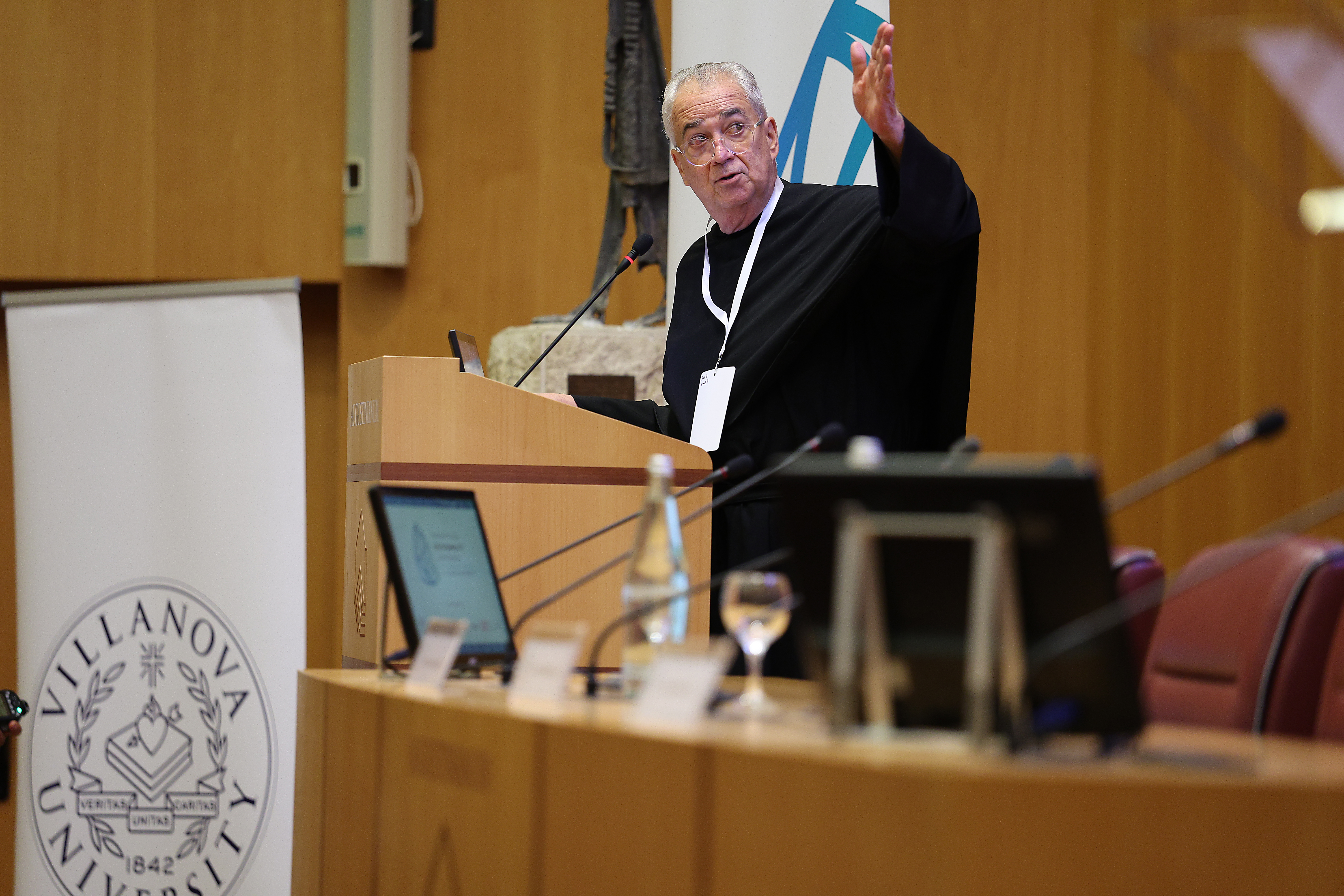
    “The conference brings together voices from many disciplines, cultures, and perspectives, united by a common purpose: To address some of the most urgent challenges facing our world and to do so in a way that honors both human dignity and integrity of the individuals and creation,” Donohue told the 350 conference attendees from 30 countries, including 90 people from Villanova.

    Speakers are scheduled to present over the next three days on many issues facing communities around the world, including pollution and soil contamination, illegal trash dumping, community gardens, and artificial intelligence.

    But at Monday’s opening, Pope Leo’s health was front and center on participants’ minds, with speaker after speaker offering prayers for the pontiff.

    “We pray that this is a simple procedure, that he is OK,” said Donohue, Villanova’s president. “May God’s healing presence be with you, Pope Leo.”

    Villanova University president Rev. Peter M. Donohue speaks during opening remarks at Villanova University’s 2026 International Sustainability Conference at the Patristicum in Rome. David Maialetti / Staff Photographer

    ‘Proud to be a Villanova student’

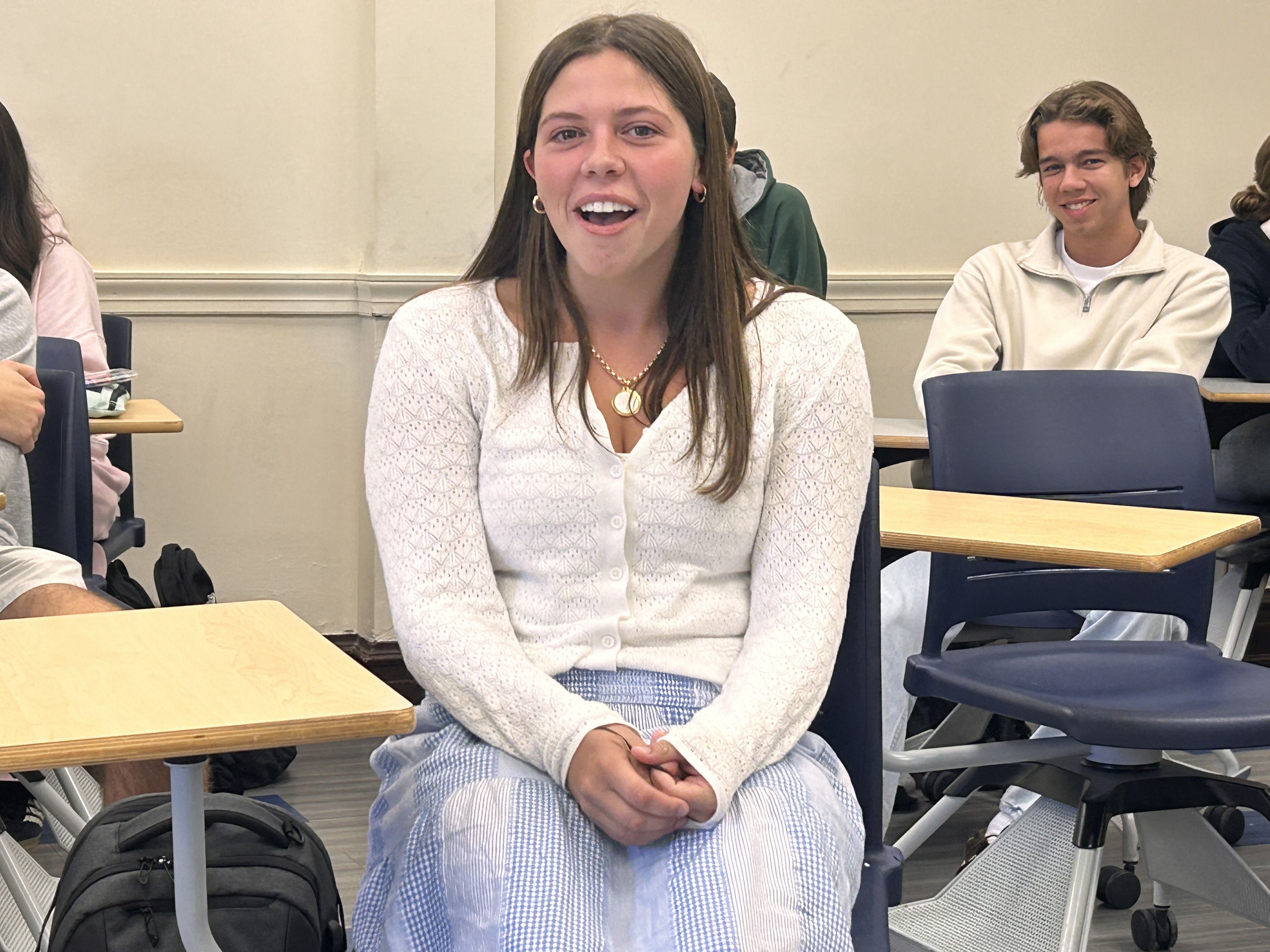
    In a Villanova theology classroom one afternoon last week, one student said Pope Leo’s status as an alum put Villanova on her radar and influenced her decision to apply. Another, Alexandra Abraham, a freshman from Los Angeles, said it didn’t influence her decision, but that certainly her classmates knew of Villanova because of Pope Leo.

    But students were especially awed that their Italian-born professor, Massimo Faggioli, had not only written a book about Pope Leo, but had the opportunity last month to personally present it to him in Rome. And it wasn’t the first time Faggioli met Pope Leo. He also interacted with the Holy Father on another occasion in Rome last December and saw him as part of a larger group at an immigration conference that Villanova hosted in Rome last year.

    Faggioli, a professor of historical theology whose specialties are the church and the papacy, began writing the book after Leo was elected, knowing how consequential it is to have an American pope.

    Faggioli, who has worked at Villanova for a decade, was at an event with about 30 people in Rome when he presented the pope with the book. He had never had personal interaction with a pope before Leo. Most of the popes he studied had already died.

    The awe of the responsibility of writing about a pope who may read the work is heightened, he said. He plans to teach a course next year on Pope Leo.

    Carlie Briere, a freshman from Boston in Faggioli’s class, hopes she, too, can meet the pope. She’s Catholic and her father met a previous pope, she said, though she’s not sure which one.

    Carlie Briere, a freshman from Boston who is in Faggioli’s class, hopes she, too, can meet the pope one day.Susan Snyder

    “I think that that’d be a really cool experience, not only to meet him myself, but also just to, like, feel that further connection to the church,” she said.

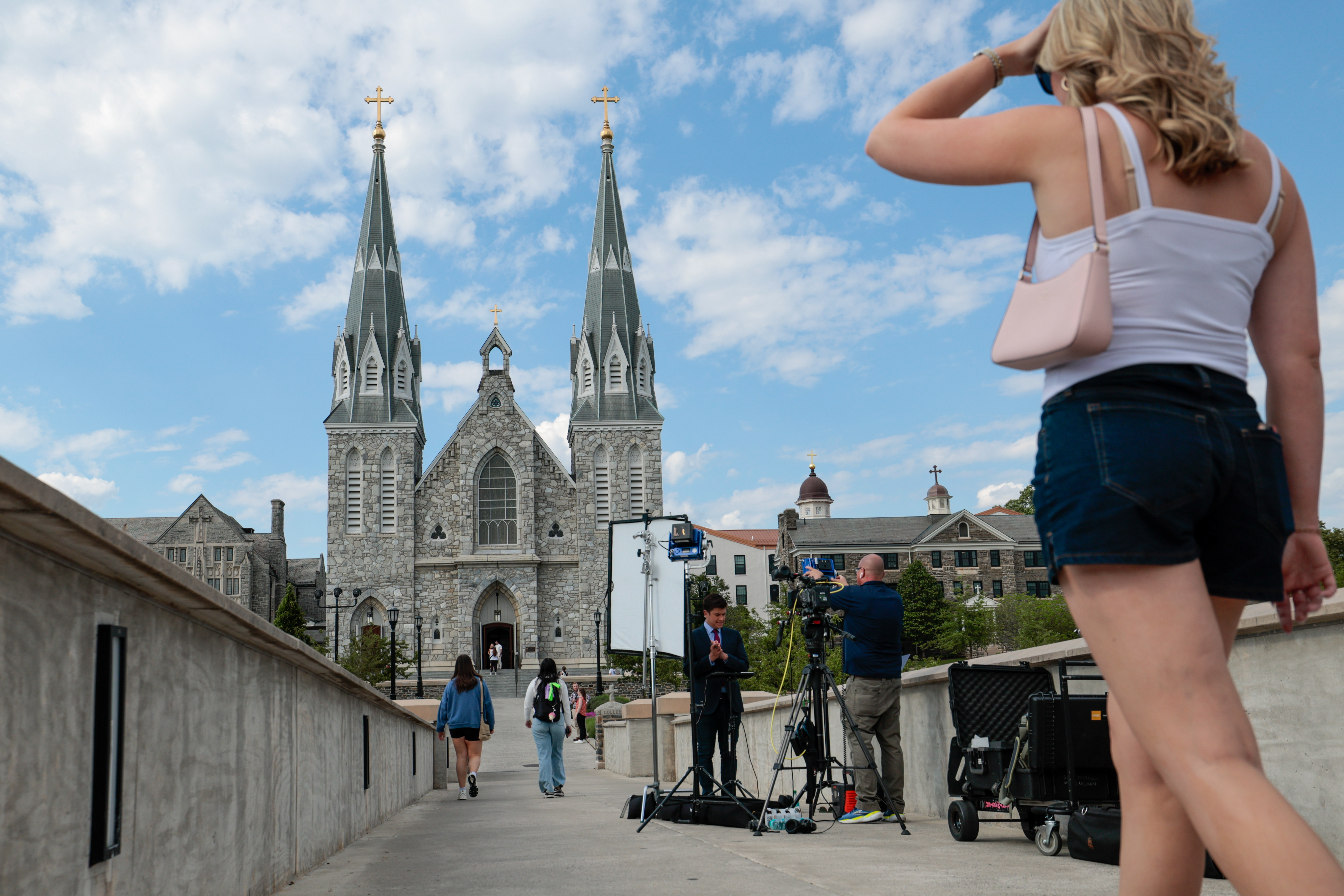
    The scene outside of Saint Thomas of Villanova church a few hours after Robert F. Prevost was named pope on May 8, 2025. He was an undergraduate math major at Villanova University in the class of 1977.Elizabeth Robertson / Staff Photographer

    ‘This campus went crazy’

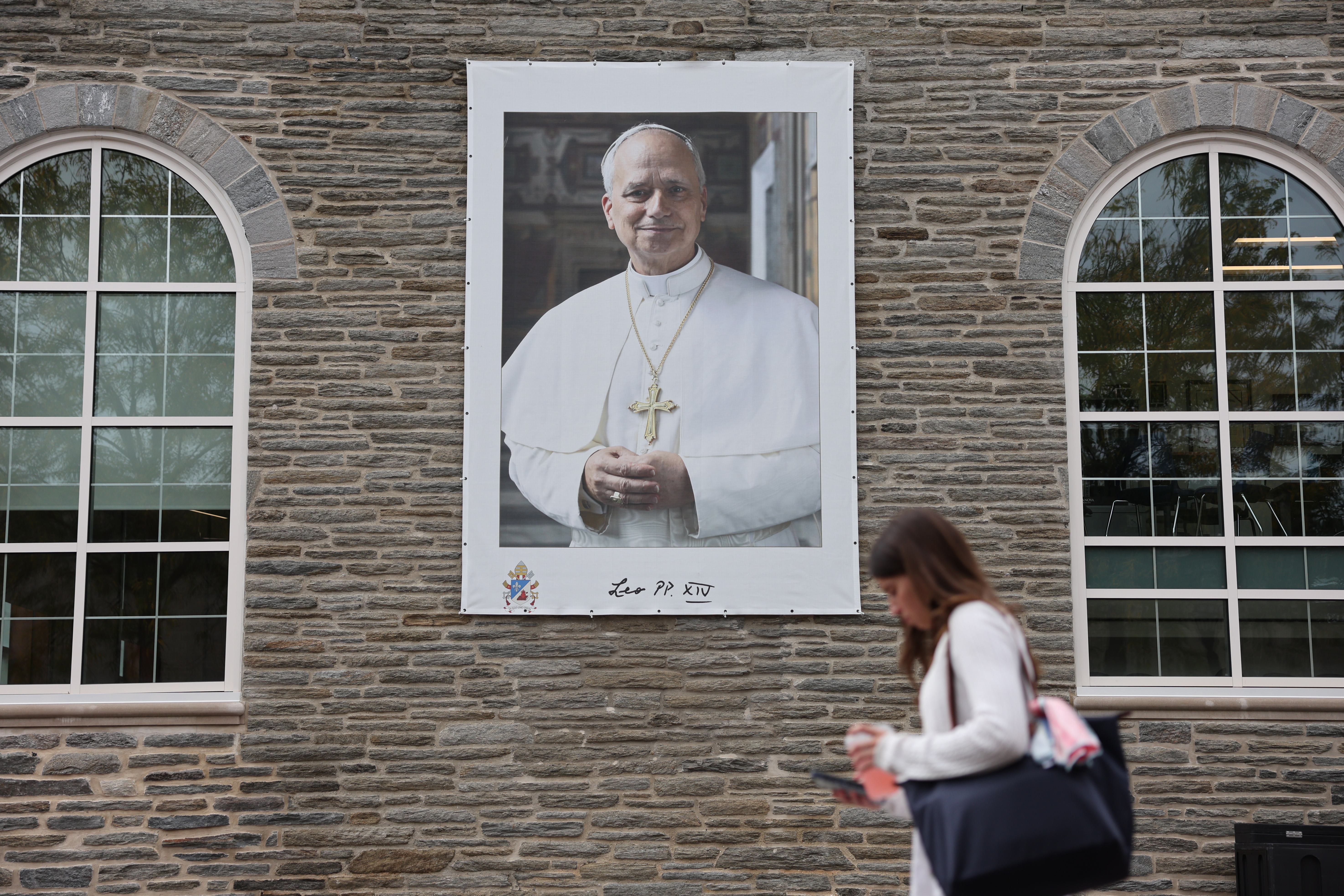
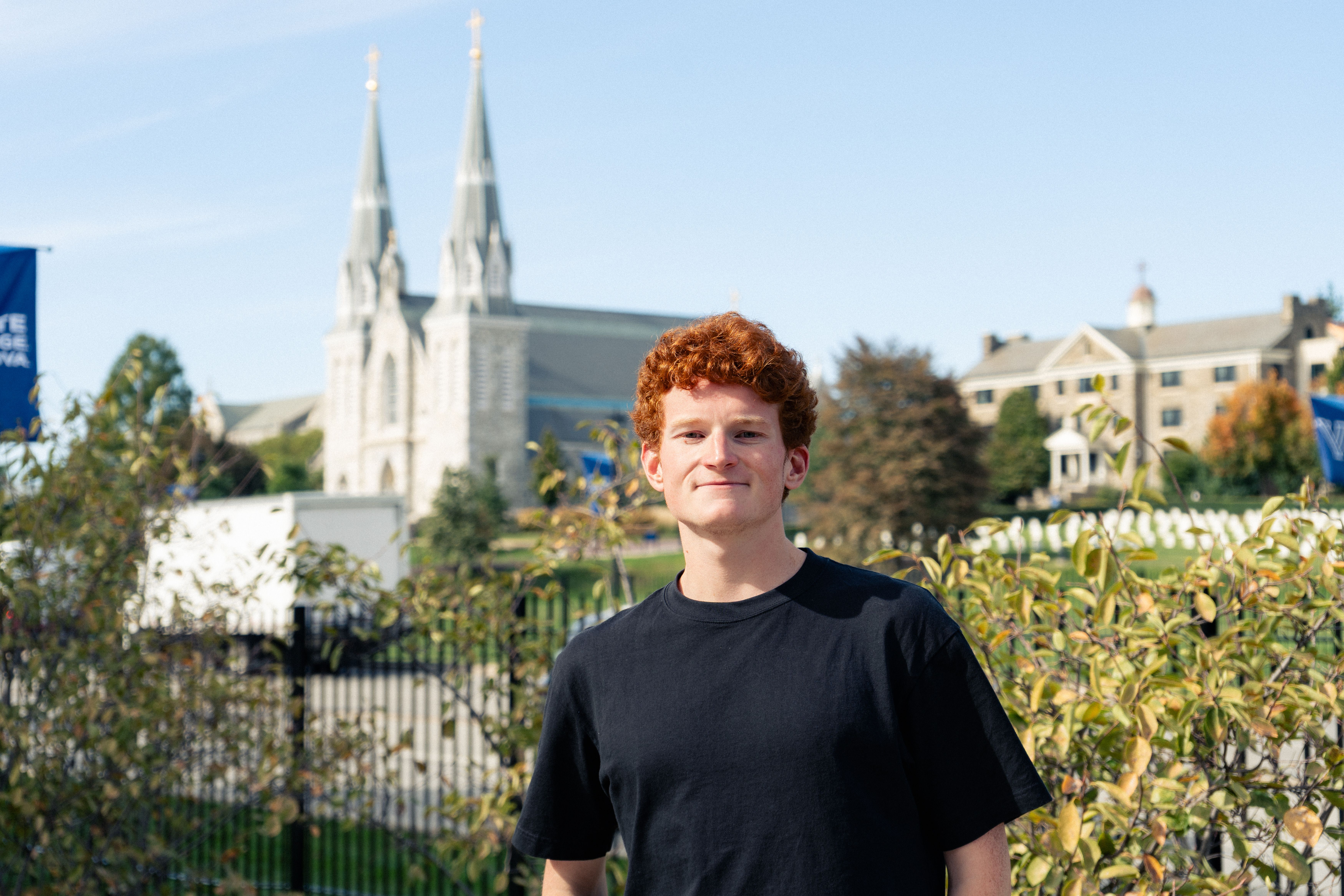
    The day that Prevost was elected pope, “this campus went crazy,” said Dylan Johnson, 21, a senior from Chichester and co-editor-in-chief of The Villanovan, the student newspaper. Now, there are signs around campus of the connection, including a large banner of Pope Leo that hangs on the graduate school building. During the recent parents’ weekends, families were taking pictures in front of it, said Johnson, who is also an intern with The Inquirer’s sports department.

    “I feel like it’s made students proud to be a Villanova student,” he said. “It’s like the opportunities are limitless.”

    Dylan Johnson, co-editor-in-chief of The Villanovan, will go to Rome to cover the doubleheader men’s and women’s basketball games on Nov. 1. About 6,000 Villanova alumni, students, and staff are attending.Courtesy of Dylan Johnson

    Having an alumnus pope has opened more opportunities for students, too, he said. He’s heading to Rome to cover the basketball games for The Villanovan and potentially be in the company of the pope.

    “I couldn’t miss that,” he said.

    Manion, the church management faculty director and professor, said enrollment in the master’s program has risen since Pope Leo came in. The majority of the 55 enrollees are ordained and lay leaders and church business leaders from around the world.

    “We’re benefiting from the halo effect that Villanova is benefiting from,” Manion said.

    The program also offers an Augustinian leadership journey for undergraduates, teaching them to live Augustinian values in business and leadership contexts, culminating in the pilgrimage in Florence, Milan, and Rome when they are seniors, he said.

    Thirty of those students are in Rome this week and will stop by the sustainability conference.

    Manion said the Villanova program for newly ordained bishops was actually started with the pope’s help when he was still a cardinal.

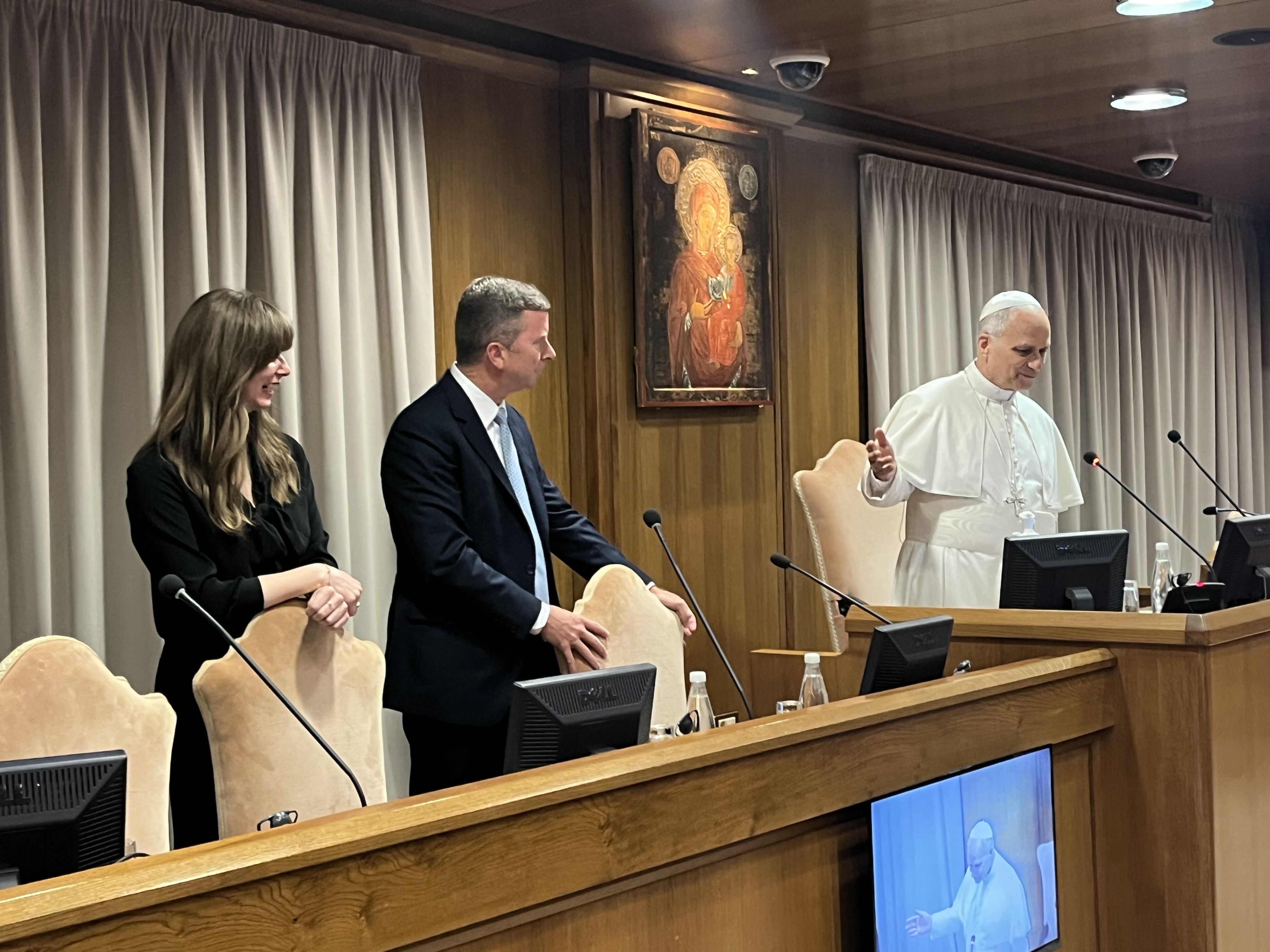
    Pope Leo introduces Villanova’s program on church management for newly ordained bishops at a program in Rome, as Matthew Manion, Villanova’s faculty director of the Center for Church Management, and Chesley Turner, director of the center, listen.Courtesy of Matthew Manion

    On a shelf in his Villanova business school office is a photo of Pope Leo introducing Manion and his colleague to new bishops in Rome in September 2025.

    “I never thought in a million years that I’d have any interaction with the pope, let alone be collaborating with him to support his bishops,” Manion said. “You’re on stage in front of a room full of bishops in the Vatican and the Holy Father says, ‘These are our friends from Villanova and they’ve got a cool program I think you should consider.’”

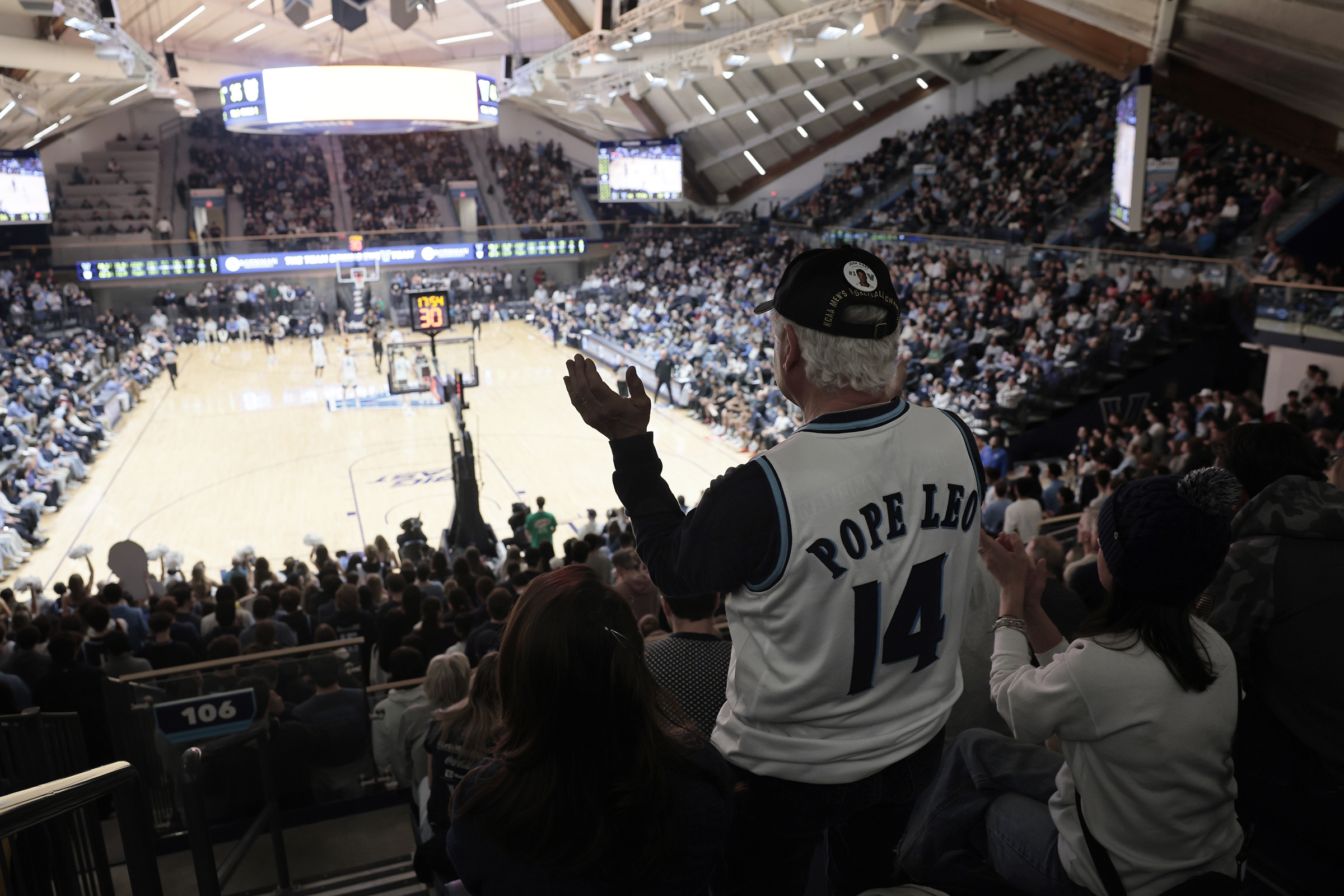
    Dick Genevieve of Warminster (Villanova class of ’71) received his Villanova Pope Leo # 14 jersey from his daughters for Christmas. He wore it proudly and cheered during the Butler vs Villanova men’s basketball game at Villanova’s Finneran Pavilion on Wednesday, Feb. 25, 2026.Elizabeth Robertson / Staff Photographer

    About 6,000 Villanovans will visit Rome

    Donohue estimates he has exchanged 25 or so emails with the Catholic Church’s highest leader since he took the position in May 2025. When Donohue in mid-September went to Rome for the sustainability medal announcement, he met with Pope Leo for an hour.

    Their relationship stems back decades.

    Donohue first met Prevost when they were students at Villanova. Donohue was two years ahead of him. He got to know Pope Leo better when Prevost became prior general.

    “Villanova is a major place in the Augustinian world, so there were lots of meetings here and I was president … and I had a lot of communication with him,” Donohue said.

    Prevost briefly served on Villanova’s board of trustees and received an honorary Villanova degree while Donohue was president in 2014.

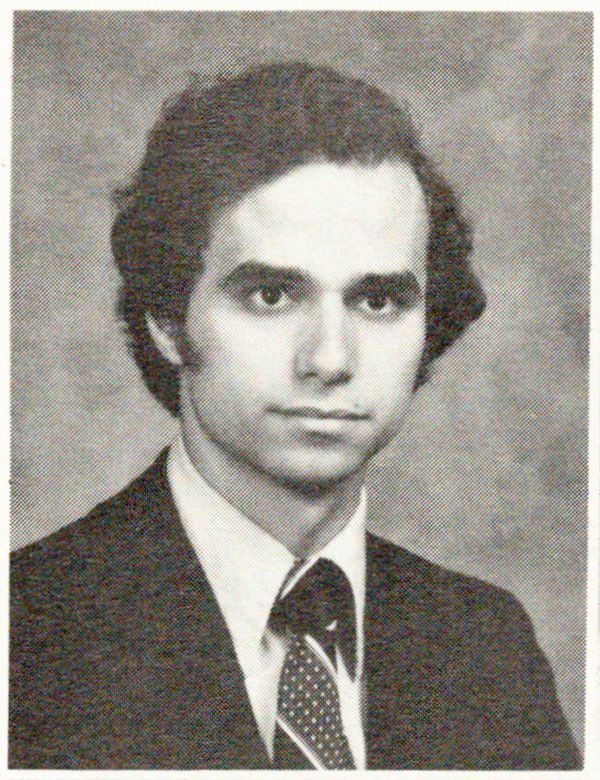
    Robert F. Prevost pictured in his Villanova University Class of 1977 yearbook.Courtesy of Villanova University

    Most things Donohue has asked, the Pope has granted, including having the sustainability medal in his name, he said.

    Donohue contacted Pope Leo on behalf of the National Constitution Center to ask if he would accept the Liberty Medal. The pope told Donohue he couldn’t attend in person or live video but would send a recorded message, Donohue recalled.

    Sometimes, the pope has said no or offered a modification. The pope told Donohue he would not attend his 50th Villanova reunion next year because it would be too difficult to fly to the United States for one event.

    But the pope, Donohue said, has promised to visit Villanova when he comes to the United States, though no trips have been set.

    The pope also turned down Donohue’s request to be commencement speaker via video message last May, but sent a written message to the class that Donohue read.

    The promotion company setting up the basketball games solicited Donohue to ask Pope Leo to participate. The pope told Donohue he wasn’t sure. (In September, however, he said he might come, Donohue said.)

    Donohue then asked if the pope would hold “an audience” with those from both schools, and he agreed, Donohue said last week. It’s now unclear though whether his health will change that. The event is scheduled Oct. 31, the day before the games. If able, the pope plans to address the crowd of 7,000 at the Vatican’s cavernous Audience Hall, Donohue said.

    Villanova University president Rev. Peter M. Donohue at the Pontifical Patristic Institute Augustinianum in Rome after the opening ceremony Monday of Villanova University’s 2026 International Sustainability Conference. Behind Donohue is St. Peter’s Basilica in Vatican City.David Maialetti / Staff Photographer

    “I’m amazed at the number of people going and people that are taking their entire family,” Donohue said.

    Many of those at the conference had looked forward to seeing the pope present the sustainability medal, but said the pope’s health is more important.

    “If we were able to meet him, that would be the icing on the cake of all time,” said Frank Falcone, a professor emeritus of Villanova’s College of Engineering. “But the cake is still there. I mean the conference is wonderful.”

  • Letters to the Editor | Oct. 13, 2026

    Letters to the Editor | Oct. 13, 2026

    Cruel spectacle

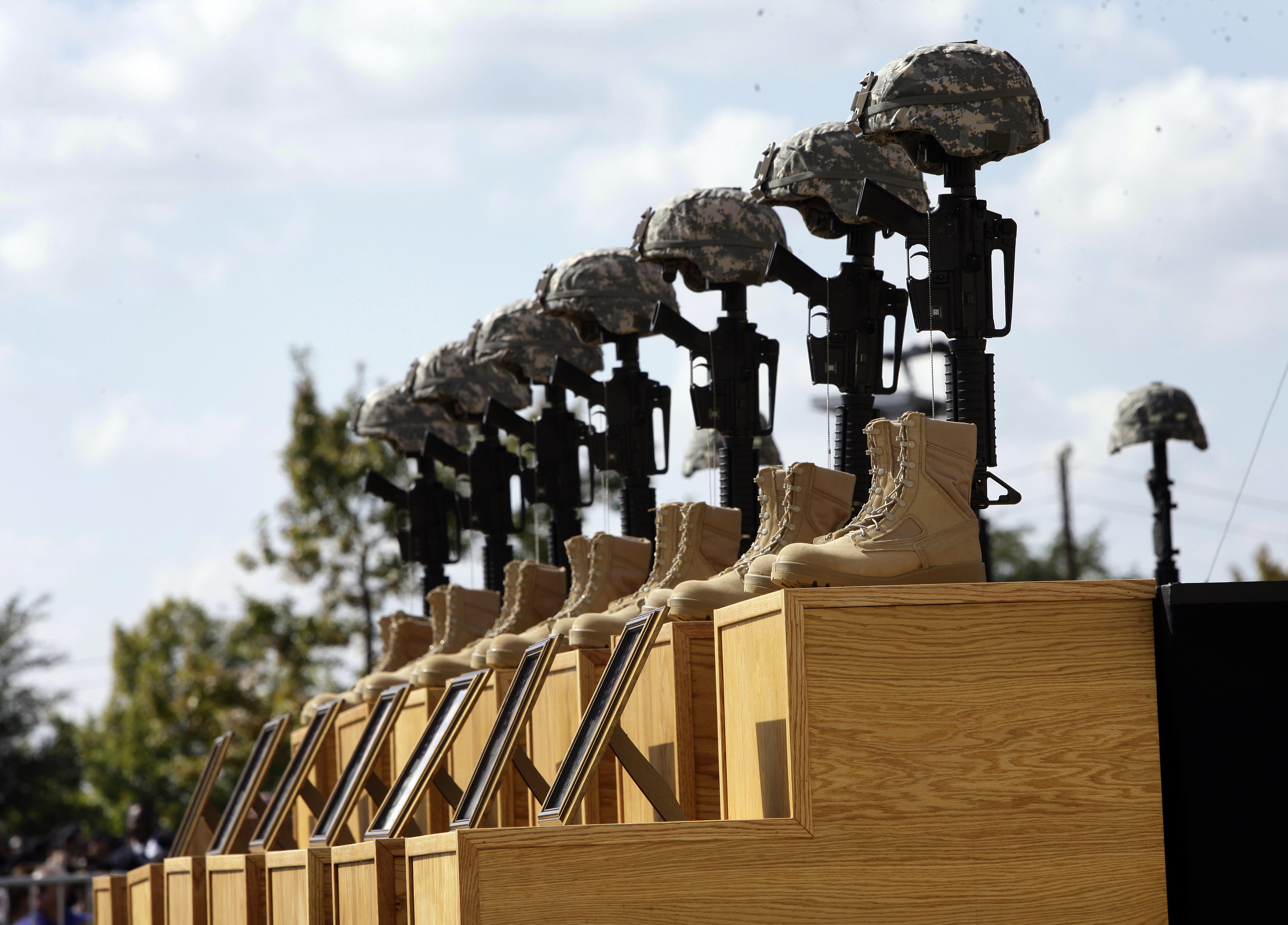
    I read with great dismay that the secretary of defense is planning to livestream the execution of Nidal Hasan on Dec. 3. The last large-scale public execution, a hanging, took place in Owensboro, Ky., in 1936. Executions were moved behind closed doors because they had become public spectacles rather than a solemn display of justice. The military hasn’t executed a service member by firing squad since 1945; the best-known case that year involved Pvt. Eddie Slovik, who deserted his unit. The president has criticized Iranian officials for their public executions, but his administration has approved this one. Hasan, a former Army major who killed 13 people and injured 32 others in a 2009 mass shooting at Fort Hood in Texas, was shot in the spine during his arrest and is paralyzed from the waist down. I understand people want to see justice served, but regardless of the crime, this is the execution of a human being — not a video game to be livestreamed. Where is our decency? It is very troubling. What have we become?

    Catherine Poynton, Havertown

    . . .

    I suppose we should not be surprised that a presidential administration that is driven by retribution and vengeance would choose to livestream the firing squad execution of a mass murderer.

    I believe in capital punishment for the worst of the worst, and the criminal who perpetrated this atrocity qualifies, but I draw the line at making this a public spectacle that impressionable children could watch.

    What will be next, gathering thousands of people in a town square to jeer and chant as they witness a hanging?

    When Kamala Harris ran for president, she pledged that “we are not going back.” She was wrong. We have, and we will continue to go back for as long as Donald Trump and his cast of clownish federal officials are in power.

    Oren Spiegler, Peters Township

    Treatment interference

    Doctors should be the authority on patient care. As trained professionals in our respective medical specialties, we work directly with patients and have years of experience in diagnoses and treatment plans, all of which help build relationships and trust with our patients.

    So when a doctor prescribes a patient medication to treat their condition, that should be the accepted treatment plan. Unfortunately, current policy allows pharmacy benefit managers (PBMs) to limit or control patients’ access to necessary medication.

    PBMs serve as middlemen between insurers and pharmacies, controlling drug prices and influencing which medications patients can receive. As a rheumatologist, many of my care plans involve prescribing specialty medication to mitigate chronic joint pain, inflammation, and mobility decline. Because of PBMs, however, my patients are forced to fight for their medications or pay higher insurance premiums, despite having a treatment plan that a medical professional has decided would be best for them.

    Lawmakers in Washington can help to reduce this delay and confusion by supporting PBM accountability and transparency reforms through legislation such as the PBM Transparency Act, the PBM Fiduciary Accountability, Integrity, and Reform (FAIR) Act, and the DRUG Act.

    Patients with chronic pain from rheumatic conditions shouldn’t have to delay or find alternatives to care. Let doctors do our jobs and remove PBMs from the treatment equation.

    Jorge Alexis Rosario Vega, Elkins Parks

    Join the conversation: Send letters to letters@inquirer.com. Limit length to 150 words and include home address and day and evening phone number. Letters run in The Inquirer six days a week on the editorial pages and online.

  • Horoscopes: Tuesday, Oct. 13, 2026

    Horoscopes: Tuesday, Oct. 13, 2026

    ARIES (March 21-April 19). You will get new information that makes you wonder if you should keep going past the gate. Look around before you proceed. Seek a sign, and you’ll see it. You’ll know exactly what it means. Trust the message.

    TAURUS (April 20-May 20). You will be tempted to share something about yourself, but think twice. Do you know this person well enough? Start with a small test. Disclose something minor and see how they react before you tell them more.

    GEMINI (May 21-June 21). When relationships unfold in stages, you enjoy them more. The pacing is an essential part of the experience and takes an amount of restraint. It can go slow enough to fascinate and quick enough to excite.

    CANCER (June 22-July 22). Someone will ask you to make an exception, and you may want to accommodate them. Before you say yes, consider the question behind the question. What is this ask really about? Who could be helped and why do they need it?

    LEO (July 23-Aug. 22). You have something new to show people, though you may feel protective of it. Choose your first audience carefully. Show it to someone who understands what you’re trying to do and knows how to give a useful response.

    VIRGO (Aug. 23-Sept. 22). Someone may want to spend more time in your home or become more involved with your family. Invite them closer at your own pace. You’ll give a warm welcome, not a complete one. Parts of your life are private.

    LIBRA (Sept. 23-Oct. 23). Few things in life feel better than when someone looks at you, really sees you and is able to put it into eloquent words. More and more, you are living in a way that shows people who you are and lets them adore you.

    SCORPIO (Oct. 24-Nov. 21). Today there’s an impulse to lend money, share something valuable or pick up the bill. Decide early on how much you’re comfortable giving, then give that amount with an open hand and keep the rest in your pocket.

    SAGITTARIUS (Nov. 22-Dec. 21). This day seems ripe for venturing and no one ventures like you. Because of this, you’ll get the most excitement for your time when you go it alone. Then you won’t have to compromise, and you’ll never wonder how it would play out if you had done it your way.

    CAPRICORN (Dec. 22-Jan. 19). Ideas are coming together in your mind, but it’s too early to discuss. Wait until you’re ready. The interest of others is proof that you’re fascinating, and you’ll remain fascinating when you hold the boundary.

    AQUARIUS (Jan. 20-Feb. 18). The world asks for your time, contacts, ideas or help. Just remember that you’re not obligated to give anything at all. Some people seem to expect it, but that’s a “them” thing, not a “you” thing. Only you know what really feels comfortable and right.

    PISCES (Feb. 19-March 20). More people are seeing your work these days. Enjoy the attention and decide how much more you want them to know. There’s an opportunity here to create your own lore. Be imaginative. You don’t have to do it as everyone else does.

    TODAY’S BIRTHDAY (Oct. 13). In your Year of the Legend, you’ll refine yours, adding chapters of whimsy and accomplishment, and overwriting the less interesting or definitive parts of your story with the experiences you will be proud to be known for. More highlights: Investments in you — your skills, your home, your appearance — will pay off. What and whom you take care of will thrive. Two awards. Taurus and Capricorn adore you. Your lucky numbers are: 5, 36, 4, 44 and 19.

  • Dear Abby | Student eager to move despite mental health struggles

    Dear Abby | Student eager to move despite mental health struggles

    DEAR ABBY: I’m 34 years old and have been diagnosed with schizoaffective bipolar disorder. I have been in treatment for years with a psychiatrist and a therapist, and I take my medication daily as instructed. I do not drink or use drugs. I am committed to my mental health to prove that people like me can lead full lives. My family wants me to stay where they live forever, but I dream of moving back down south, where I lived on my own before. I loved the culture, art, weather and friends. Whenever I bring it up, they dismiss it. I think they’re afraid that I will start hallucinating again and not have a support system there.

    I will be graduating soon from a master’s program in counseling, and I look at jobs online all the time. Is it wise to move away from my family with my disorder? Do I sit them down and explain that I was my happiest when I lived there and want to return? I love them and don’t want to hurt them. I think if I have a plan in place and stay on track with medication, it would be safe.

    — CONFLICTED IN THE NORTH

    DEAR CONFLICTED: Have you discussed this with your therapist and psychiatrist? If they both sign off on the move, your family will have less cause for concern. Bring a family spokesperson with you and have your therapist go over the support plan for your new environment. The spokesperson can then help you ease the worries of the rest of the family. If, however, your care providers don’t think it’s wise to move right now, please listen to them. Ask them to outline some milestones you can work toward to make moving south a healthier goal for the future.

    ** ** **

    DEAR ABBY: My brother died a year ago. I have been visiting his widow, “Cheryl,” twice a month ever since. She lives an hour away and doesn’t get around very well. I drive to her house, and I treasure my time with her. She was the love of my brother’s life. My problem is my sister, “Kate.” Kate is self-centered, whiny, disruptive and generally unpleasant. I spend as little time as possible with her. I know that as soon as she finds out about them, Kate will expect to be included in my visits with Cheryl. I haven’t mentioned them, as I would rather not include her. What I would like to see happen is for Kate to come up with her own plan to visit with Cheryl. I love Kate and don’t want to hurt her, but on the other hand, I don’t want her to ruin my visits with Cheryl either. What should I do?

    — BAD SISTER IN MISSOURI

    DEAR SISTER: There’s no reason for you to hurt your sister’s feelings. Tell Kate you feel one-on-one visits with your brother’s grieving widow are more beneficial than overwhelming her with additional company. Then (with Cheryl’s permission) suggest that Kate call Cheryl and make some plans to visit with her on her own. If Kate argues, see if you can get Cheryl to back you up.

  • The man accused of killing Police Officer Shane Seiber was acquitted of murder three years ago. ‘They had him in 2023.’

    The man accused of killing Police Officer Shane Seiber was acquitted of murder three years ago. ‘They had him in 2023.’

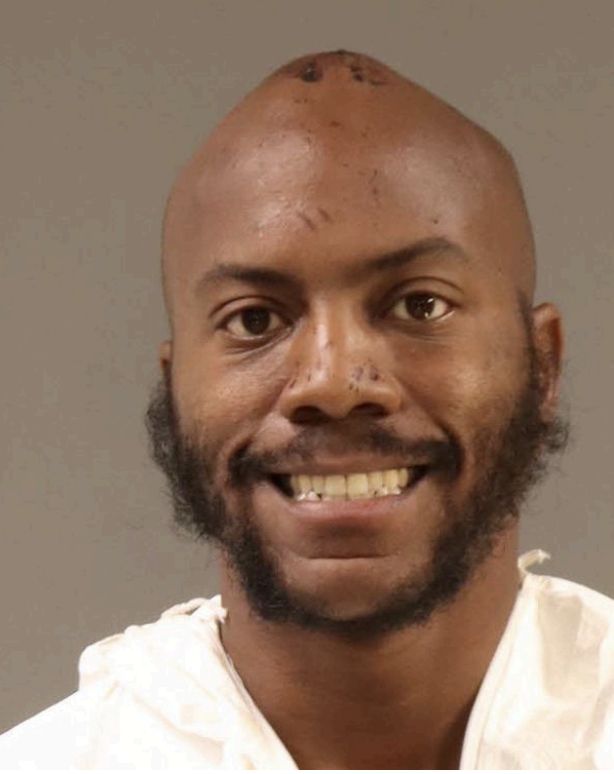
    Eric Lewis, the man charged with killing a Philadelphia police officer and seriously wounding another during the weekend, was charged with the murder of a 32-year-old man in West Philadelphia six years ago.

    But the case against Lewis in the fatal shooting of Christopher Williams fell apart at a trial in 2023 after a series of issues with the police investigation and prosecution, according to four people familiar with the case. A judge found Lewis not guilty of the crimes, and he walked free.

    Now, three years later, police say Lewis, 35, shot two Philadelphia police officers on his West Philadelphia porch early Saturday, then fired at nine other responding officers in a nearly hourlong standoff. He was later arrested by a SWAT team. In possession were a shotgun, and two handguns — one of which police said he stole from an officer he shot.

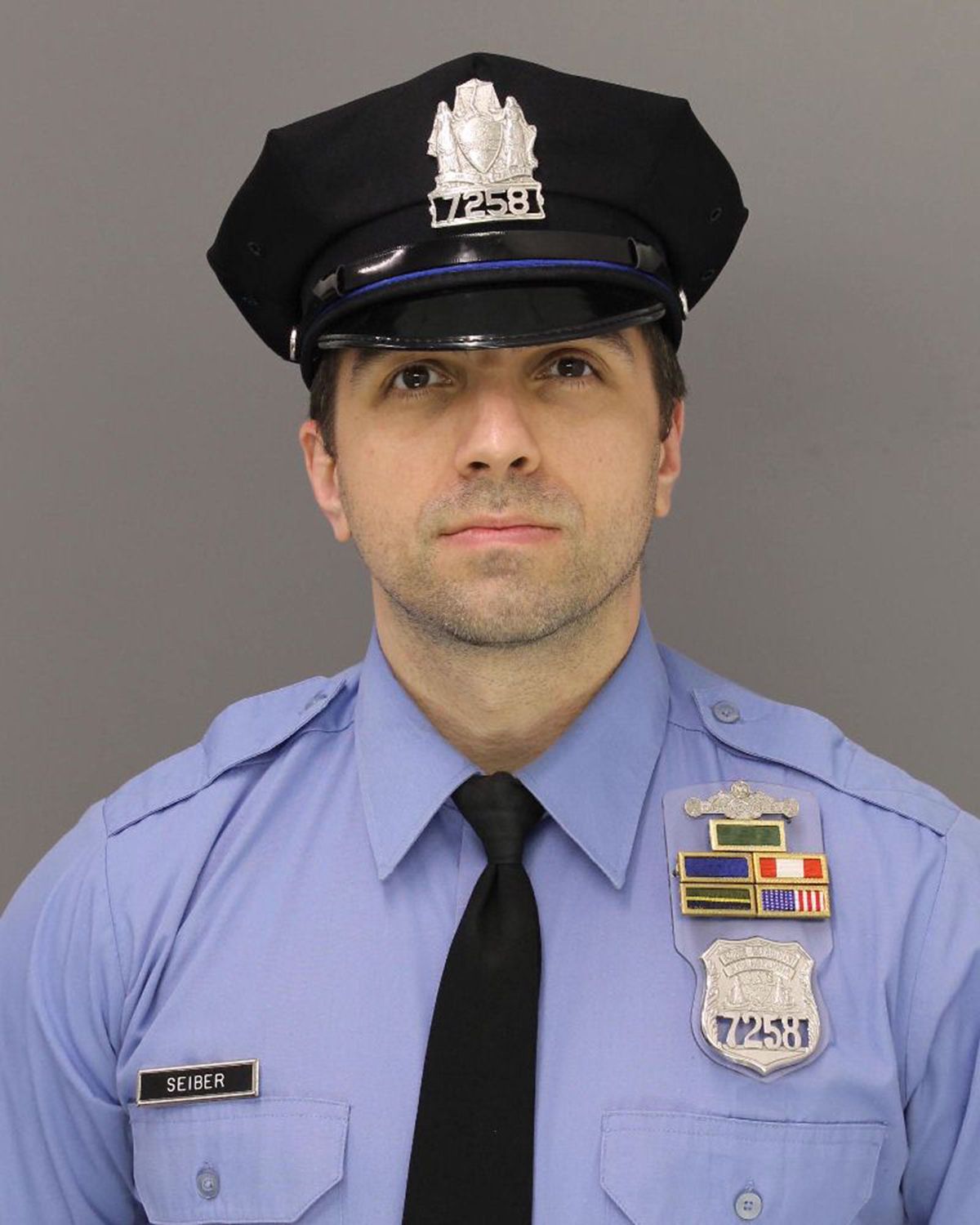
    The shooting left Officer Shane Seiber, 40, a 10-year police veteran, dead hours later. His 33-year-old partner, who has nine years on the force, was shot 12 times and remains hospitalized.

    Officer Shane Seiber.Courtesy of the Philadelphia Police Department

    Lewis’ criminal history — particularly how he could have evaded justice in a crime that likely would have sent him to prison for decades — has come under scrutiny in the aftermath of a crime that has shattered the local law enforcement community and left Seiber’s family mourning the father of two children.

    It has also reopened wounds for the family of the man Lewis was accused of killing in August 2019.

    When Darlene Brown saw Lewis’ mugshot come across her phone Saturday evening, she said she screamed in shock that the man she believes killed her son had killed again.

    Brown, in an interview at her West Philadelphia home on Monday, said that she is praying for Seiber’s family and that Lewis is finally brought to justice. But she also resents how her son’s case fell apart three years ago.

    “These kids didn’t have to be fatherless had they done their job back in 2023,” Brown said.

    “They had him in 2023,” she said. “They freed that murderer, and it took him three years to come back and do it again.”

    Sgt. Eric Gripp, a police department spokesperson, said officials were reviewing Lewis’ criminal history, including the handling of the earlier murder case.

    District Attorney Larry Krasner did not respond to requests for comment Monday.

    Eric Lewis, charged with murder in the shooting death of police officer Shane Seiber, is shown in a Philadelphia Police Department photo.Philadelphia Police Department

    A concerned judge

    Lewis’ criminal convictions date back to 2012 for a series of misdemeanors, including simple assault, carrying a gun in public, and disorderly conduct.

    But at least two serious cases against him fell apart at trial.

    Court records show Lewis was charged in September 2020 with endangering the welfare of children, making terroristic threats, aggravated assault, and related crimes. Prosecutors later declined to move forward with the case at a trial in November 2022.

    Additional details on the case were not immediately available.

    In the fall of 2020, while Lewis was jailed on a separate case, he was charged with murder and related crimes for shooting Williams on the 900 block of Fallon Street on Aug. 31, 2019.

    Brown said that her son, who got married one year earlier, was driving a Jeep on Fallon Street but was blocked in by a Nissan double-parked in the street. Williams, she said, honked his horn.

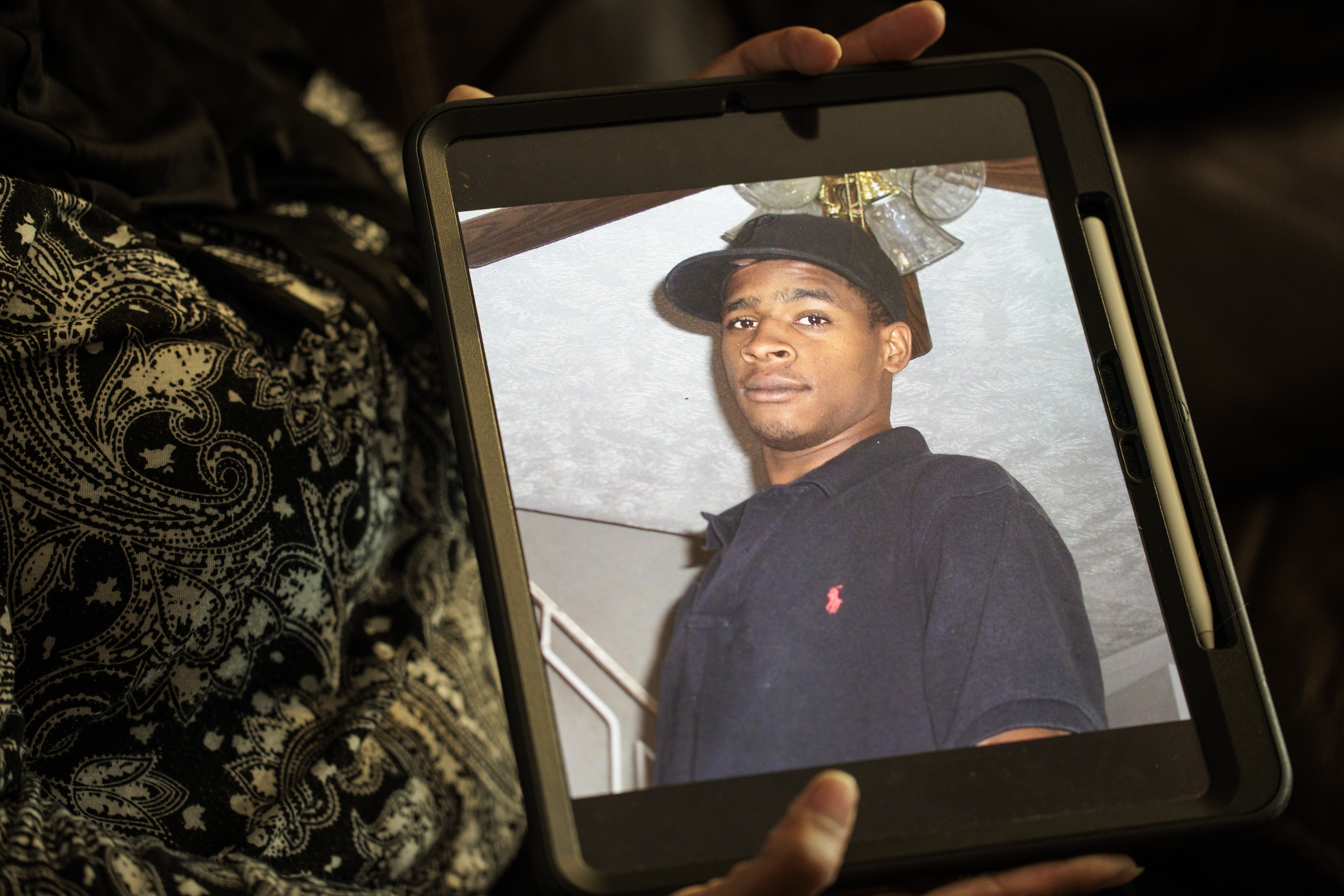
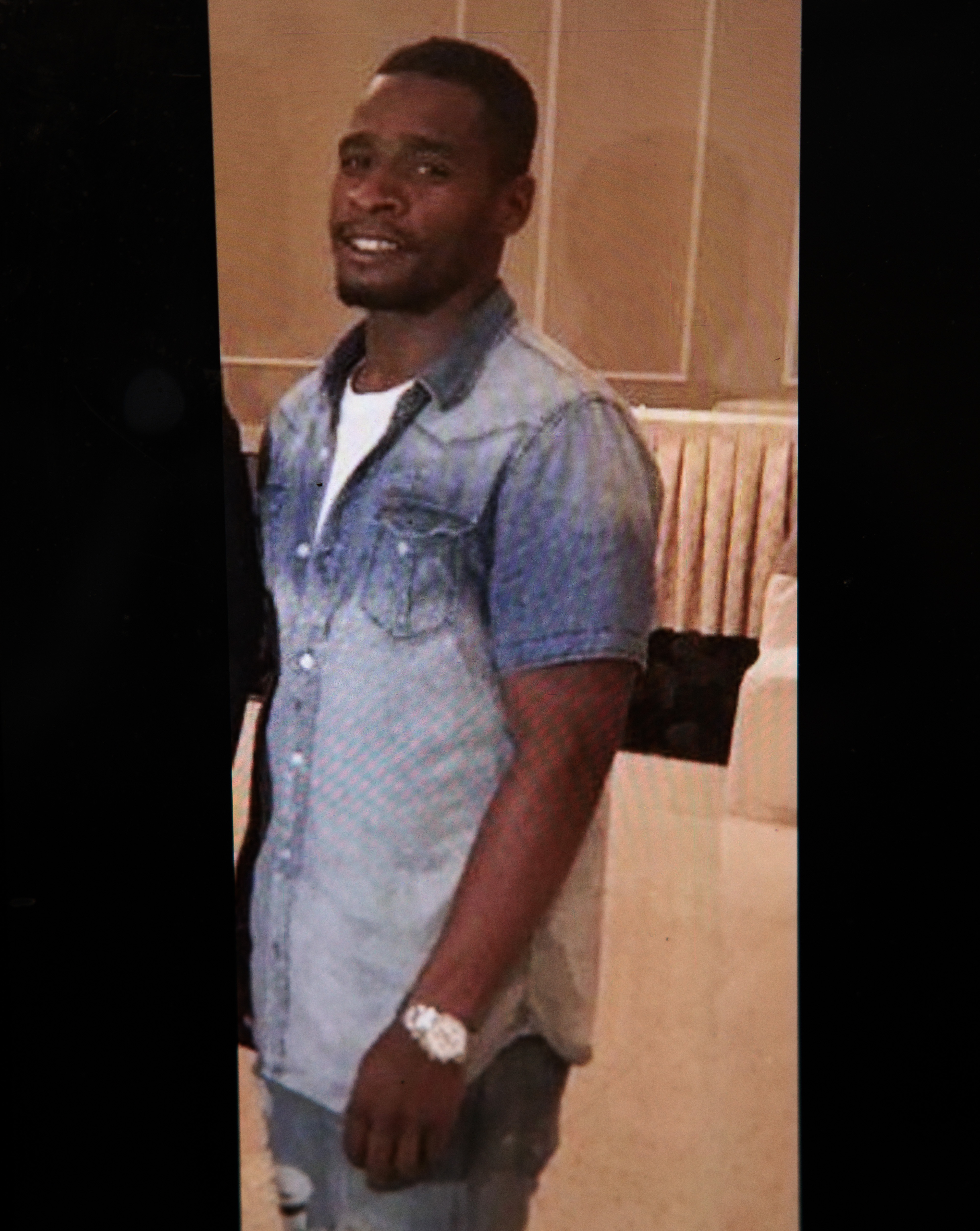
    Christopher Williams was killed in 2019 in West Philadelphia. Monica Herndon / Staff Photographer

    He exchanged words with people connected to the car, she said. Then, prosecutors said, Lewis pulled a gun and fired multiple times into the Jeep, fatally striking Williams.

    A source familiar with the investigation said Lewis was identified as a suspect after a police officer from the 15th District came forward with information about the case and identified Lewis as the gunman. That officer was dating someone in Lewis’ family, according to a person familiar with the matter.

    But for reasons that were not immediately clear, that officer did not testify at the April 2023 trial before Common Pleas Court Judge J. Scott O’Keefe, said the source, who spoke on the condition of anonymity because they were not permitted to speak publicly about the case.

    One of Williams’ friends, who was in the passenger seat of the Jeep when the shooting erupted, later testified at trial and identified Lewis as the gunman, Brown said.

    Prosecutors showed a video of the shooter’s Nissan driving in the area before the crime, Brown said. And, she said, the shooting occurred outside the home of Lewis’ mother.

    But prosecutors did not present Lewis’ cell phone location records at the trial, the source said, and it wasn’t clear if the homicide detective or prosecutor on the case ever obtained or analyzed those records.

    O’Keefe ruled that the prosecution had failed to prove Lewis’ guilt, and found him not guilty.

    After the trial, O’Keefe spoke with the attorneys on the case and faulted the investigation, according to a source familiar with the matter.

    The judge was so upset that he contacted the Police Department’s Internal Affairs Unit, three people with knowledge of his actions said.

    The outcome of that internal investigation was not immediately clear.

    Gripp, the police department spokesperson, said officials were reviewing the case and internal affairs records, and that the department would provide additional information at a later date.

    “Our immediate focus remains on supporting Officer Shane Seiber’s family, our recovering officer and his family, and the members of this department as we navigate this devastating loss,” he said.

    A moment of silence is held for fallen Philadelphia Police Department Officer Shane Seiber in Xfinity Mobile Arena on Sunday.Isaiah Vazquez / For The Inquirer

    ‘They had him’

    Brown, 63, said she did not recall issues with the homicide detective’s testimony. She was upset, though, about how the district attorney’s office prosecuted the case, she said.

    The case was transferred between at least two prosecutors, she said, before another took it over before trial.

    She said the assistant district attorney was passive during the trial, and after the acquittal, she apologized but did not offer an explanation for what went wrong.

    Brown said she left the courthouse devastated — but also feeling as if there was more to it that she didn’t know.

    “Something was very off,” she said of the case.

    “And now someone else … had to lose their life, when they had him,” said Williams’ older sister, Royce Johnson. “They had him.”

    Christopher Williams was killed just a year after he got married. Monica Herndon / Staff Photographer

    Williams was born and raised in West Philadelphia, and worked in construction and as a commercial truck driver. He was funny and charismatic, his family said. He gave strong bear hugs, and loved taking his many nieces and nephews for days at the pool, and going on family trips across the region — to Disney, Busch Gardens, and Atlantic City.

    His family said they will never be the same.

    His mother said seeing Lewis on the news has made her relive the trauma of her son’s killing all over again — the call, the hospital, the trial that left her without closure.

    “Since the day I lost my son, I haven’t allowed myself to feel it,” she said. “I keep thinking that if I do, I won’t come back.”

    And she couldn’t stop thinking of Officer Seiber’s wife and children, she said.

    She paused and touched her face. Her eyes welled with tears, and for a moment, she allowed herself to cry.

  • Armed man dead after barricading himself on a SEPTA bus in Fox Chase

    Armed man dead after barricading himself on a SEPTA bus in Fox Chase

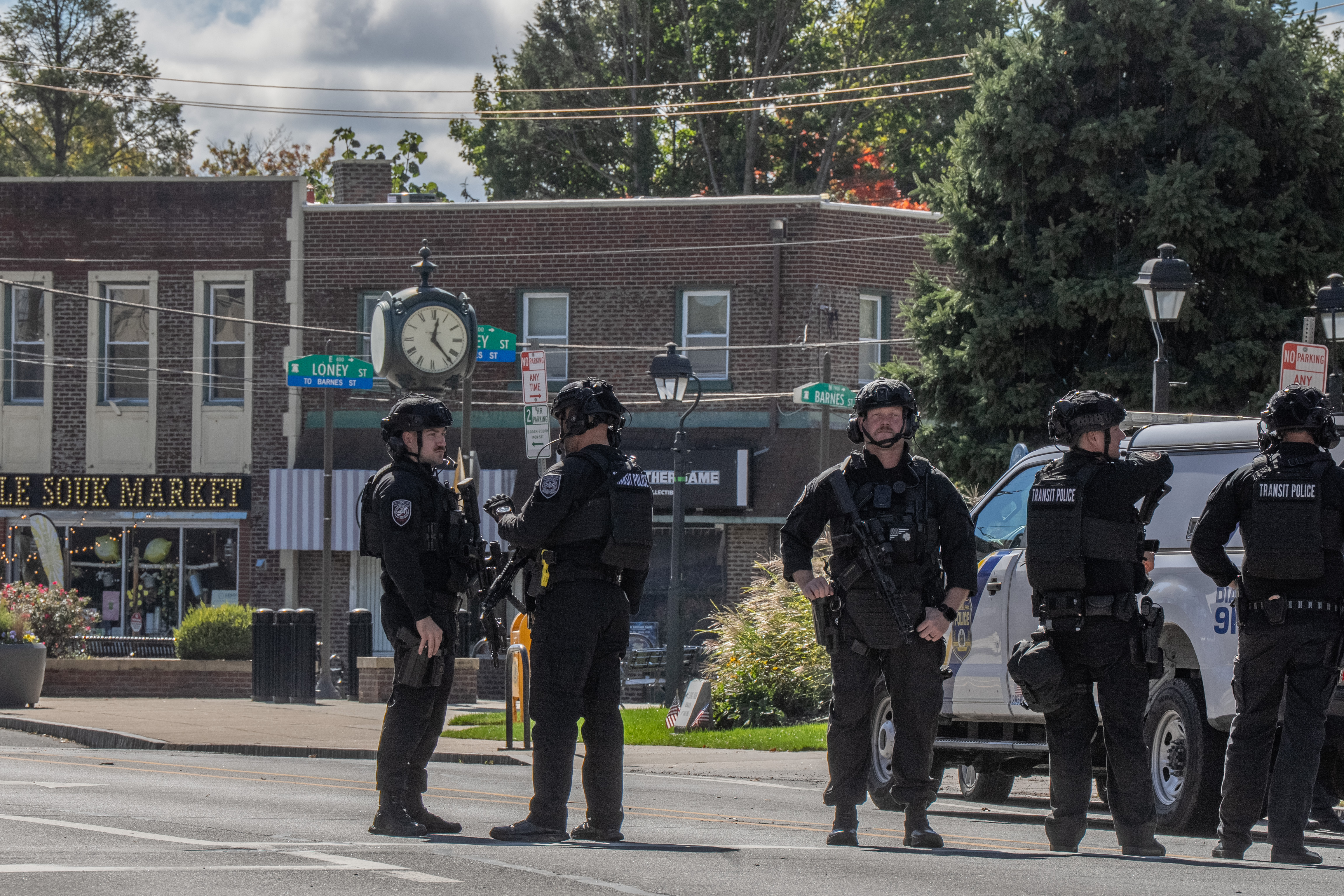
    An armed man believed to be connected to an earlier double homicide — who then barricaded himself for hours inside a SEPTA bus in the city’s Fox Chase section — has died after shooting himself, police said.

    The man, who was not officially identified, was transported to Jefferson Abington Hospital, where he was pronounced dead, police said. The barricade was declared over just after 5 p.m.

    Shortly after 3:40 a.m., Philadelphia Fire Department responders removed two adult women from the scene of a house fire on the 8200 block of Williams Avenue in the city’s Cedarbrook section, police said.

    Both women, who were not identified, had been shot, police said.

    The women were taken to Jefferson Einstein Philadelphia Hospital, where they were both pronounced dead.

    Around 5 a.m., a Route 18 bus pulled into the Fox Chase Loop at Oxford Avenue and Loney Street to drop off two passengers.

    “At that time, there were just three people on board — the bus operator, the man who later barricaded himself on the bus, and another passenger,” SEPTA spokesperson Andrew Busch said.

    “When the bus stopped for a layover at the loop, the man told the bus driver that he was not getting off the vehicle and to call the police. The other passenger exited the bus without incident and the operator did as well after calling for assistance,” Busch said.

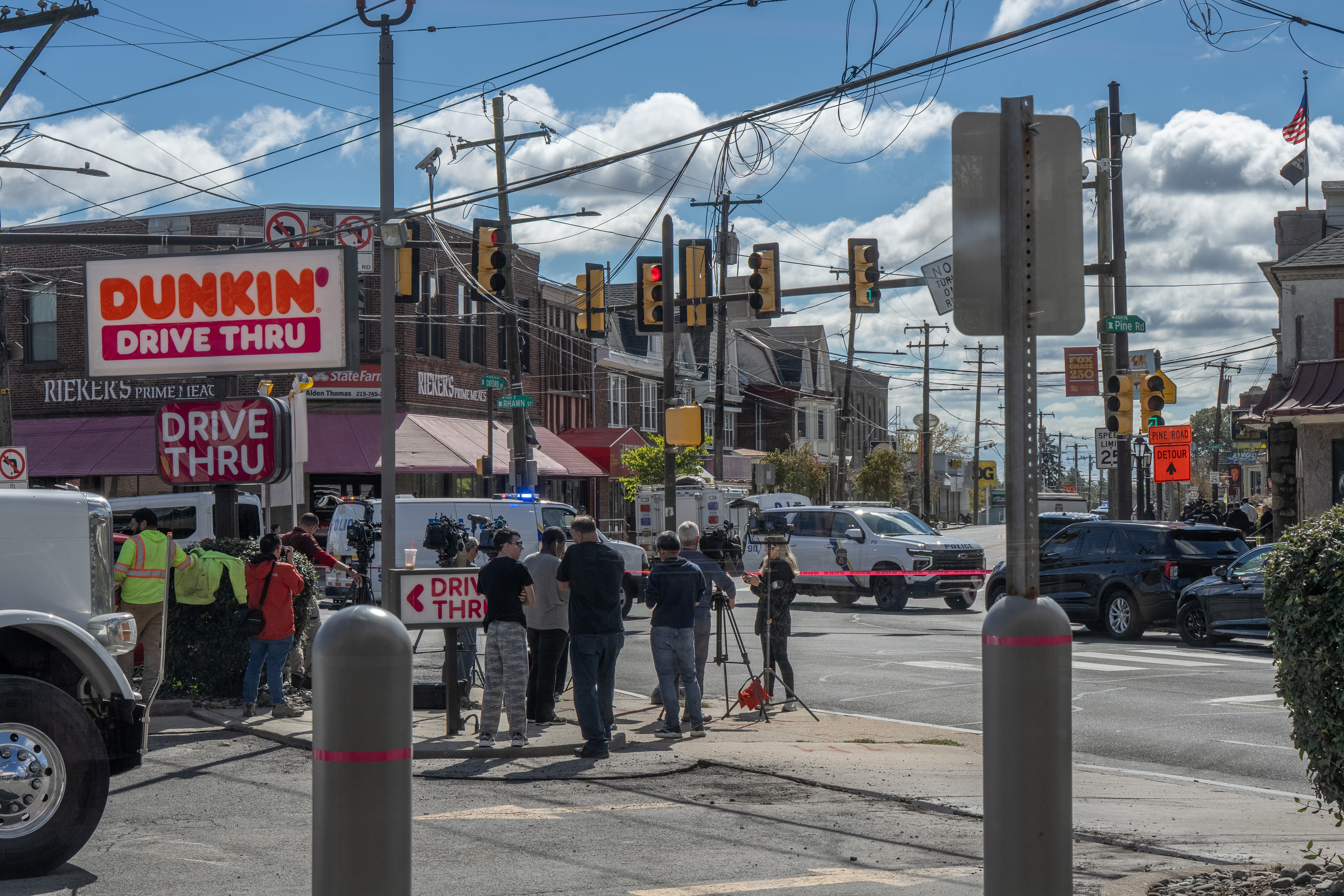
    Police in the city’s Fox Chase section near where a man barricaded himself on a SEPTA bus in Philadelphia on Monday.Jessica Griffin / Staff Photographer

    The surrounding streets near the barricade were shut down, and SEPTA trains and buses were detoured away from the Fox Chase Loop transit hub.

    Police said no officers were injured and the investigation was ongoing.

  • An ‘absolute embarrassment,’ an ‘idiotic decision,’ and what else they’re saying about the Eagles loss in London

    An ‘absolute embarrassment,’ an ‘idiotic decision,’ and what else they’re saying about the Eagles loss in London

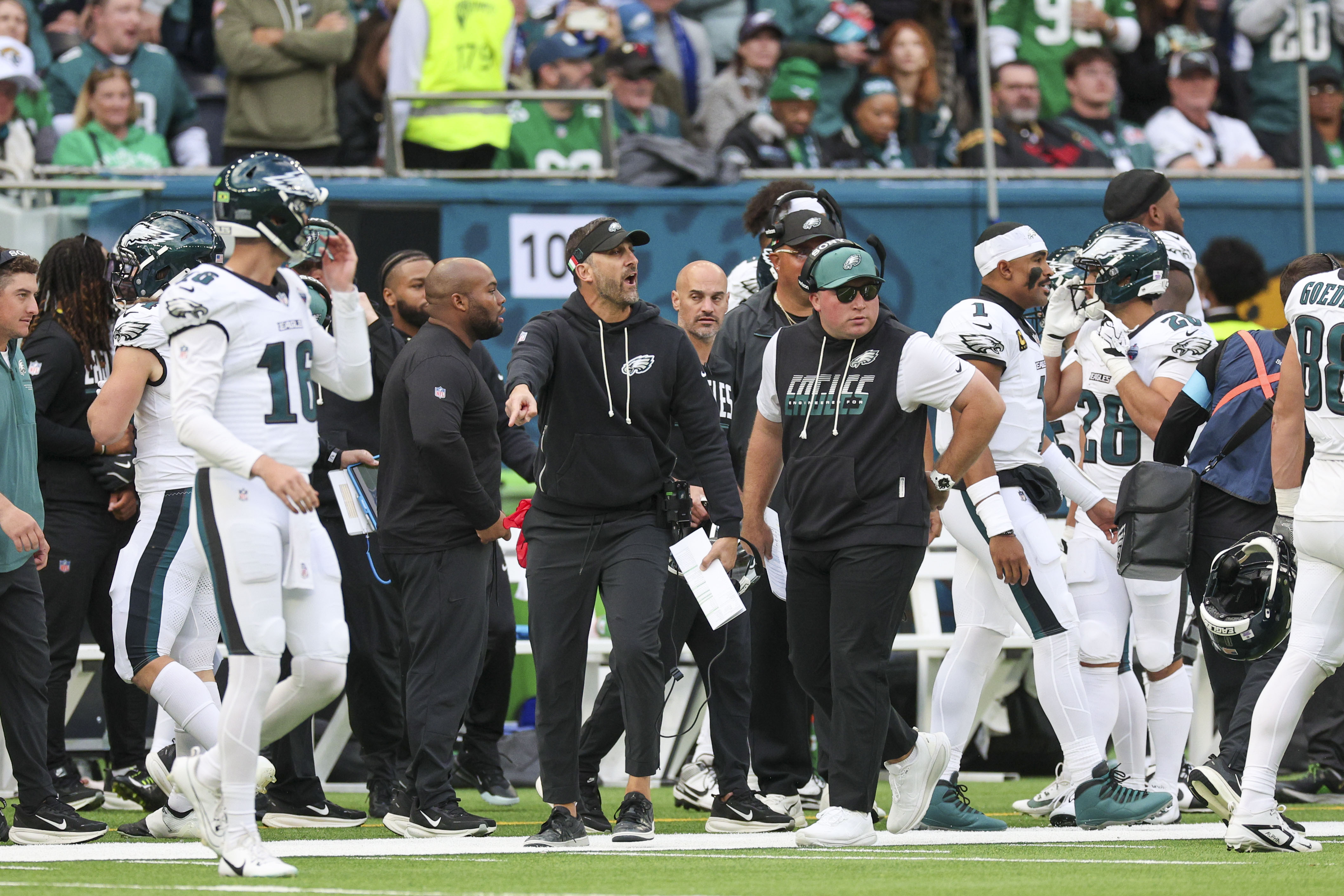
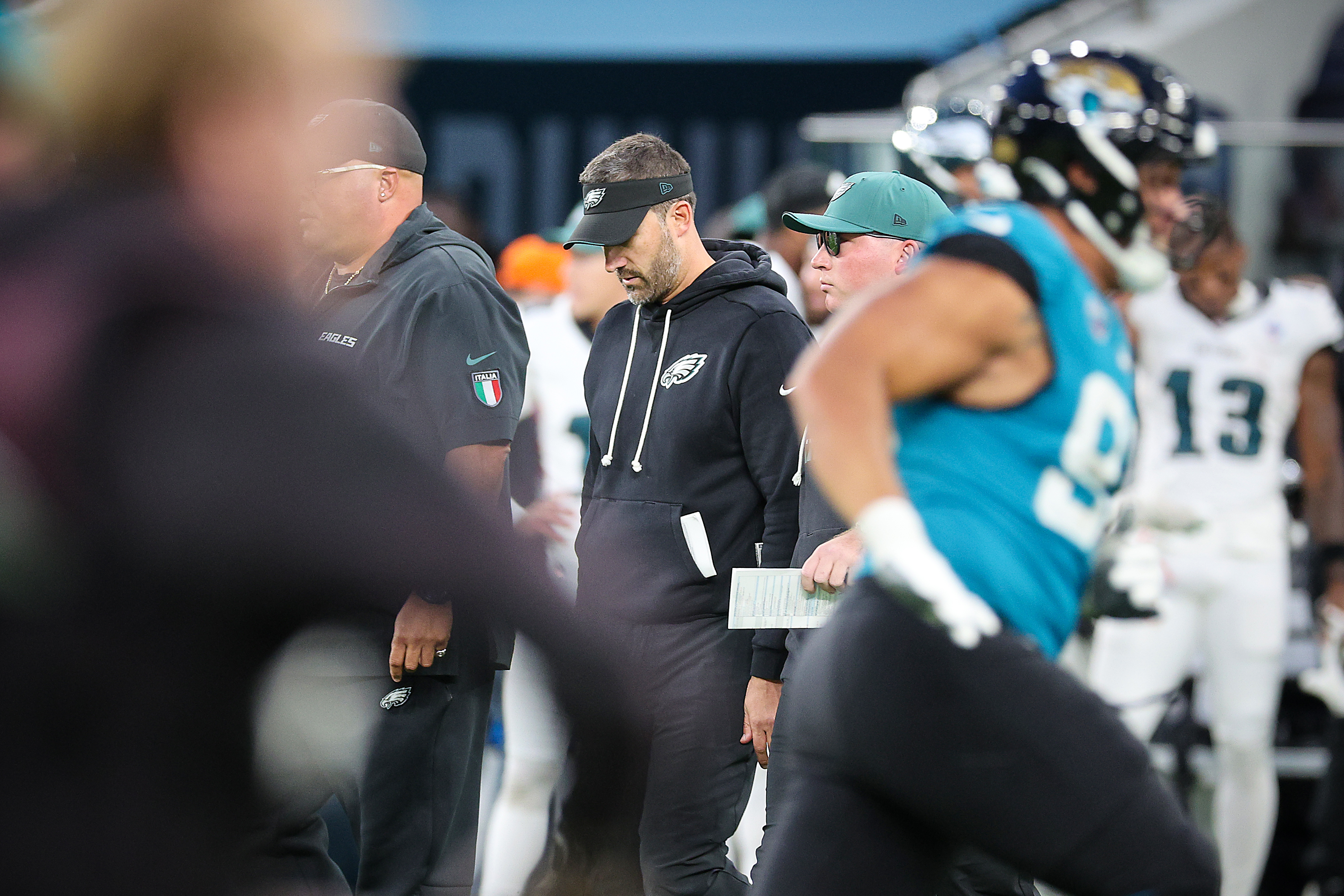
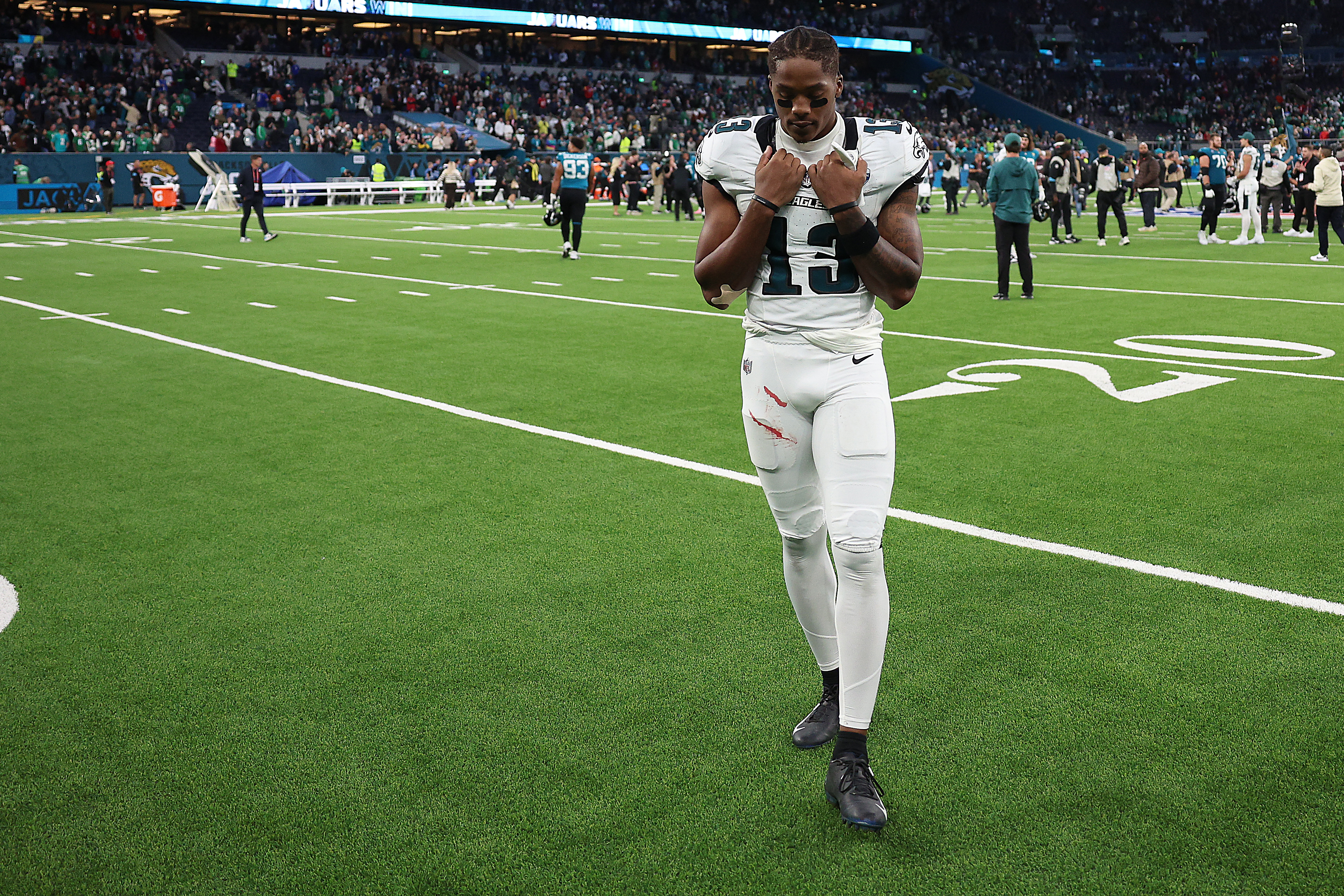
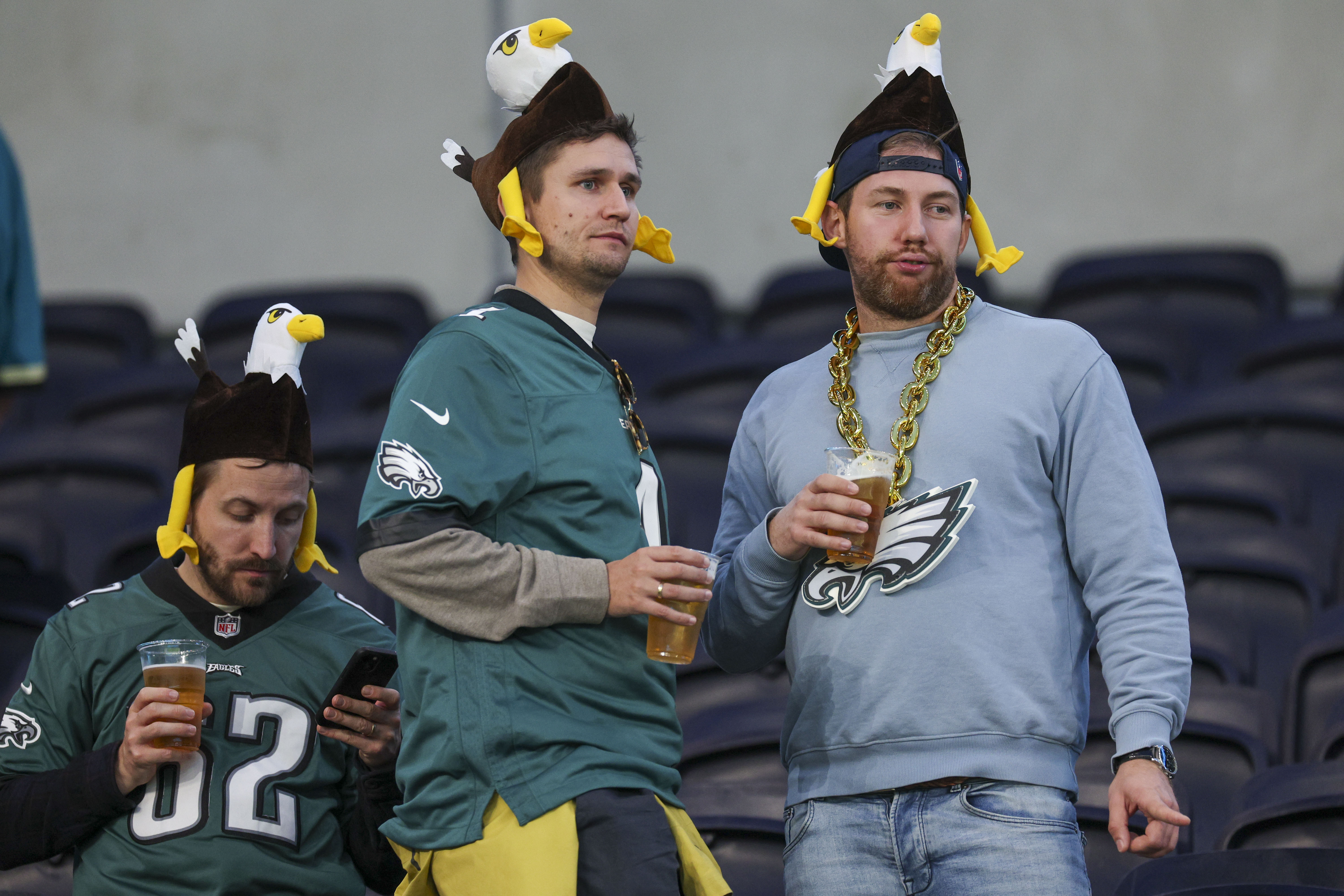
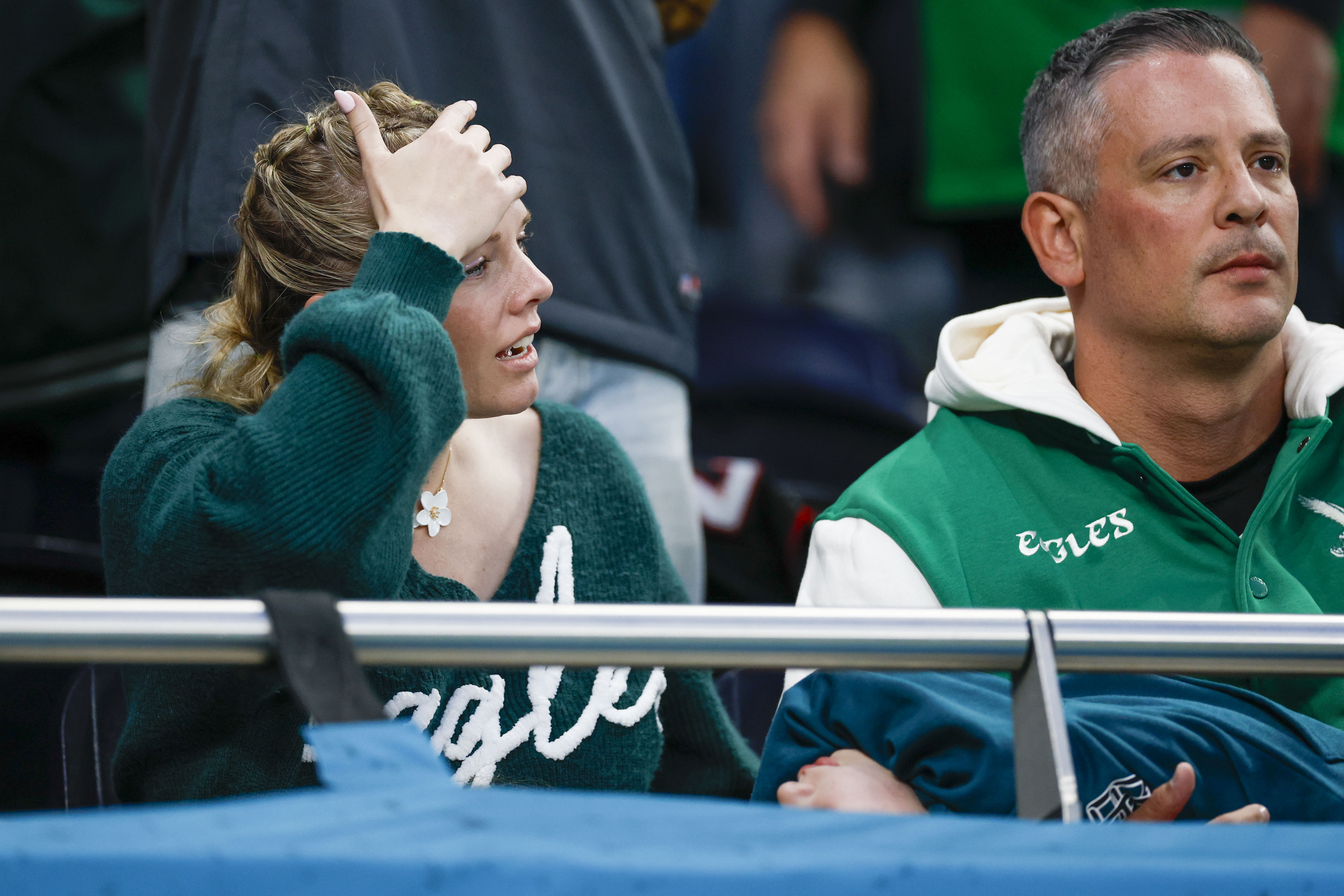
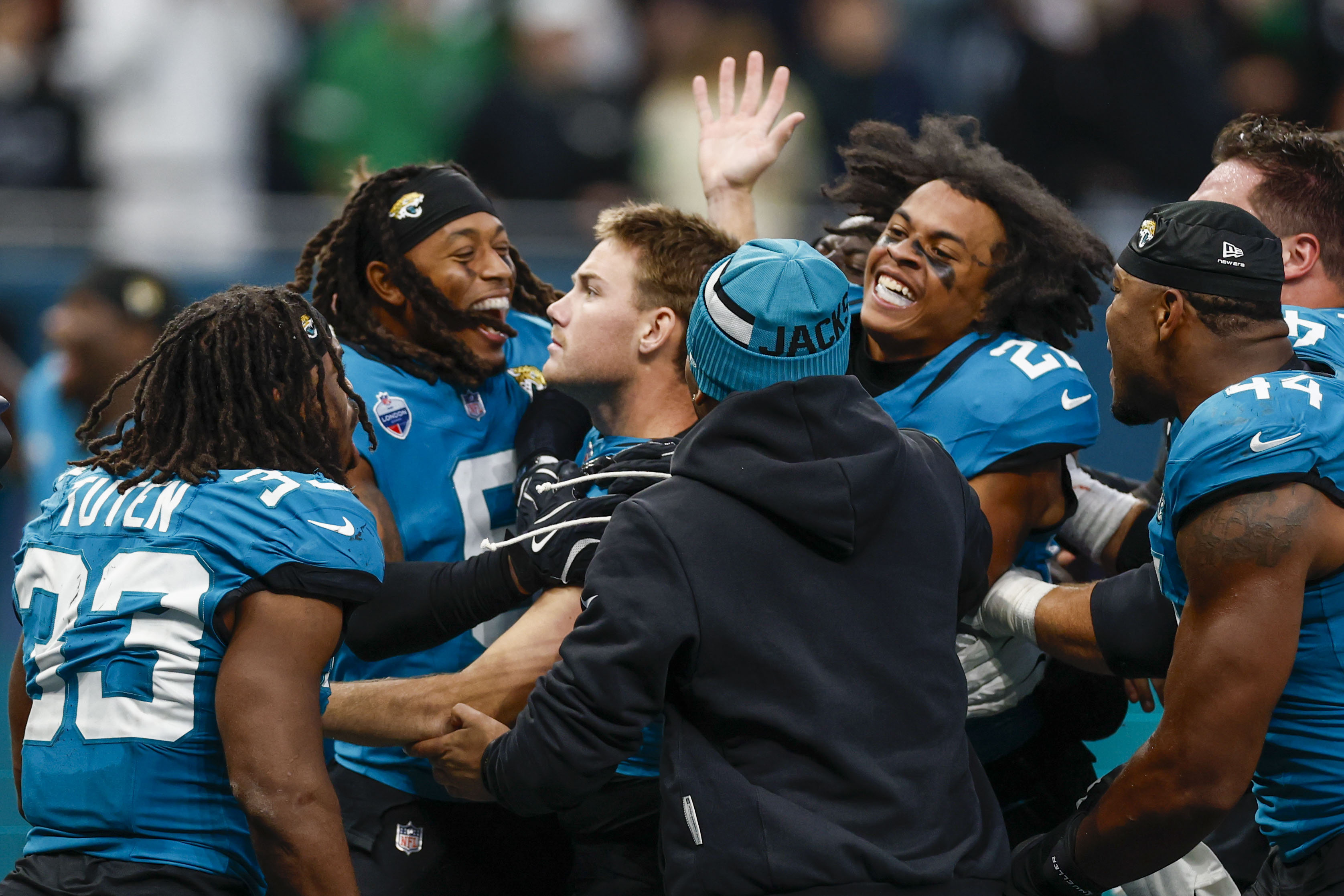
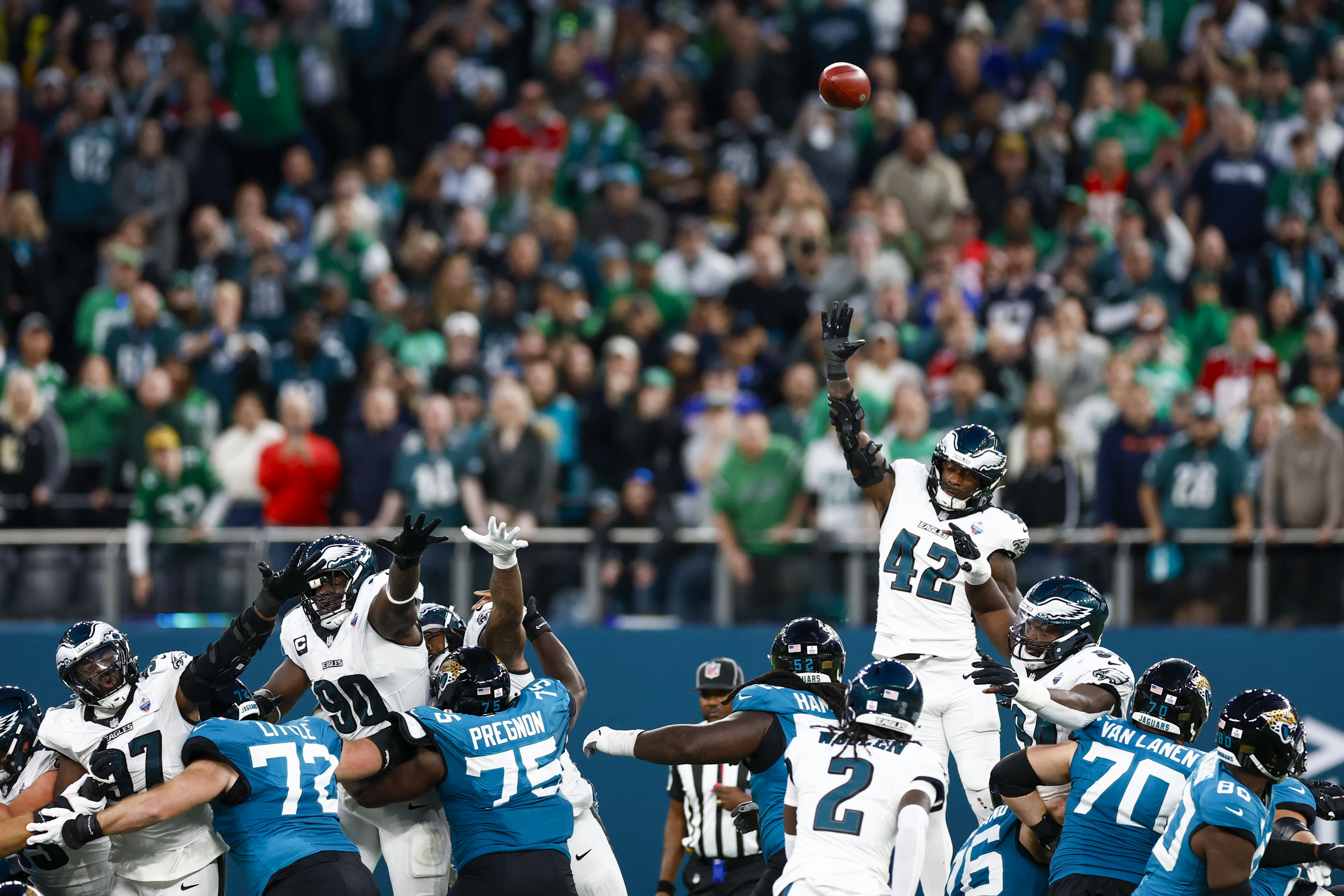
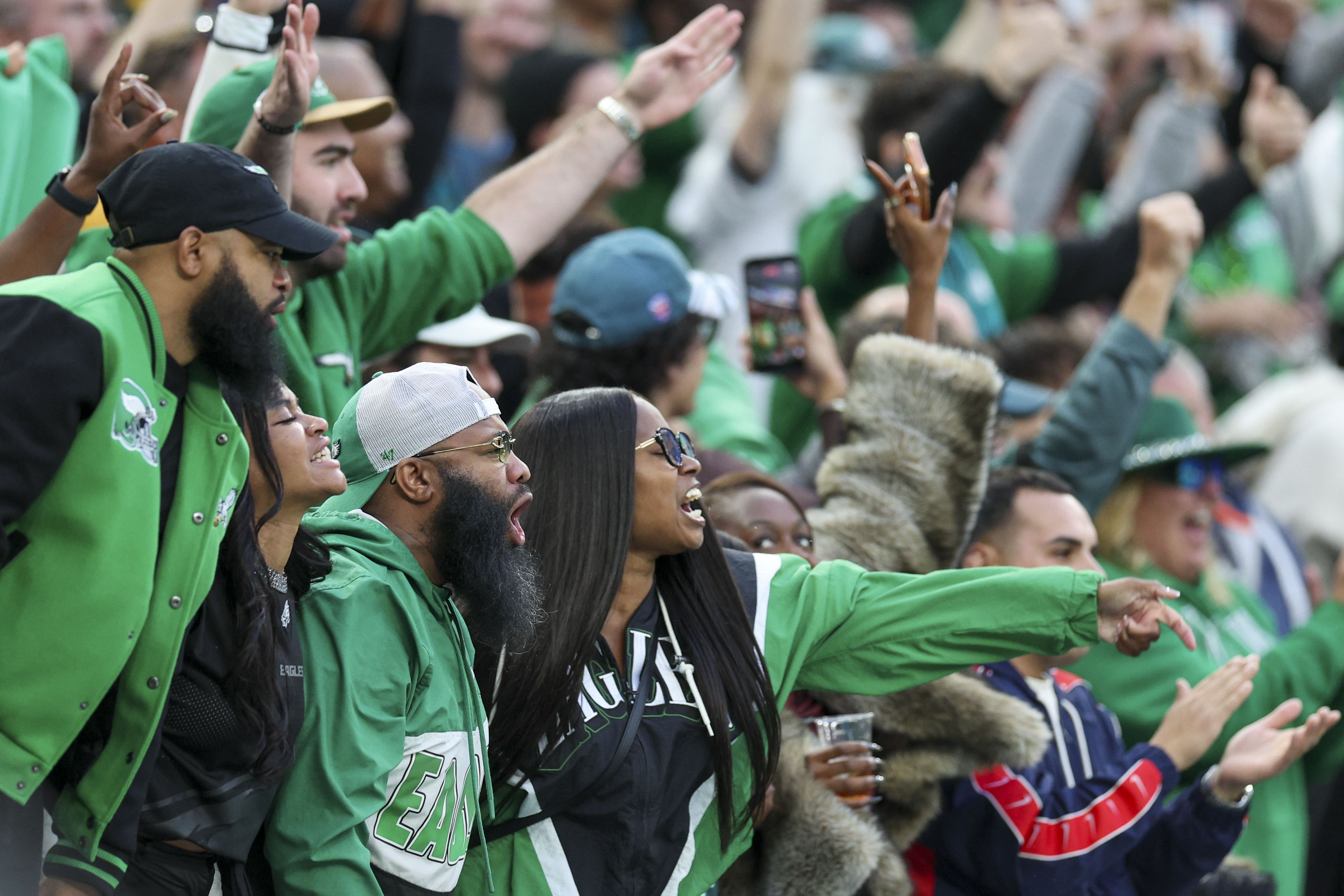
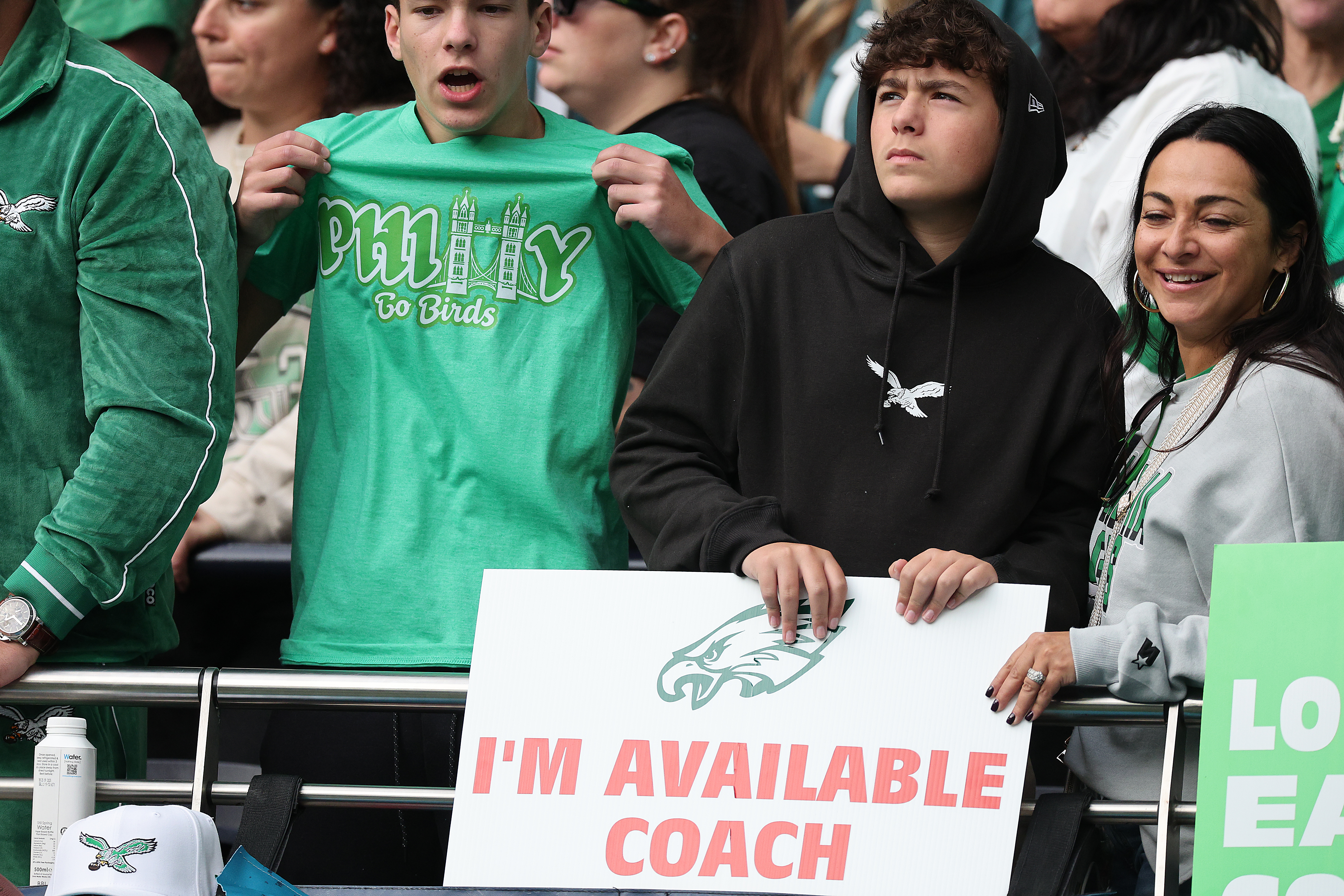
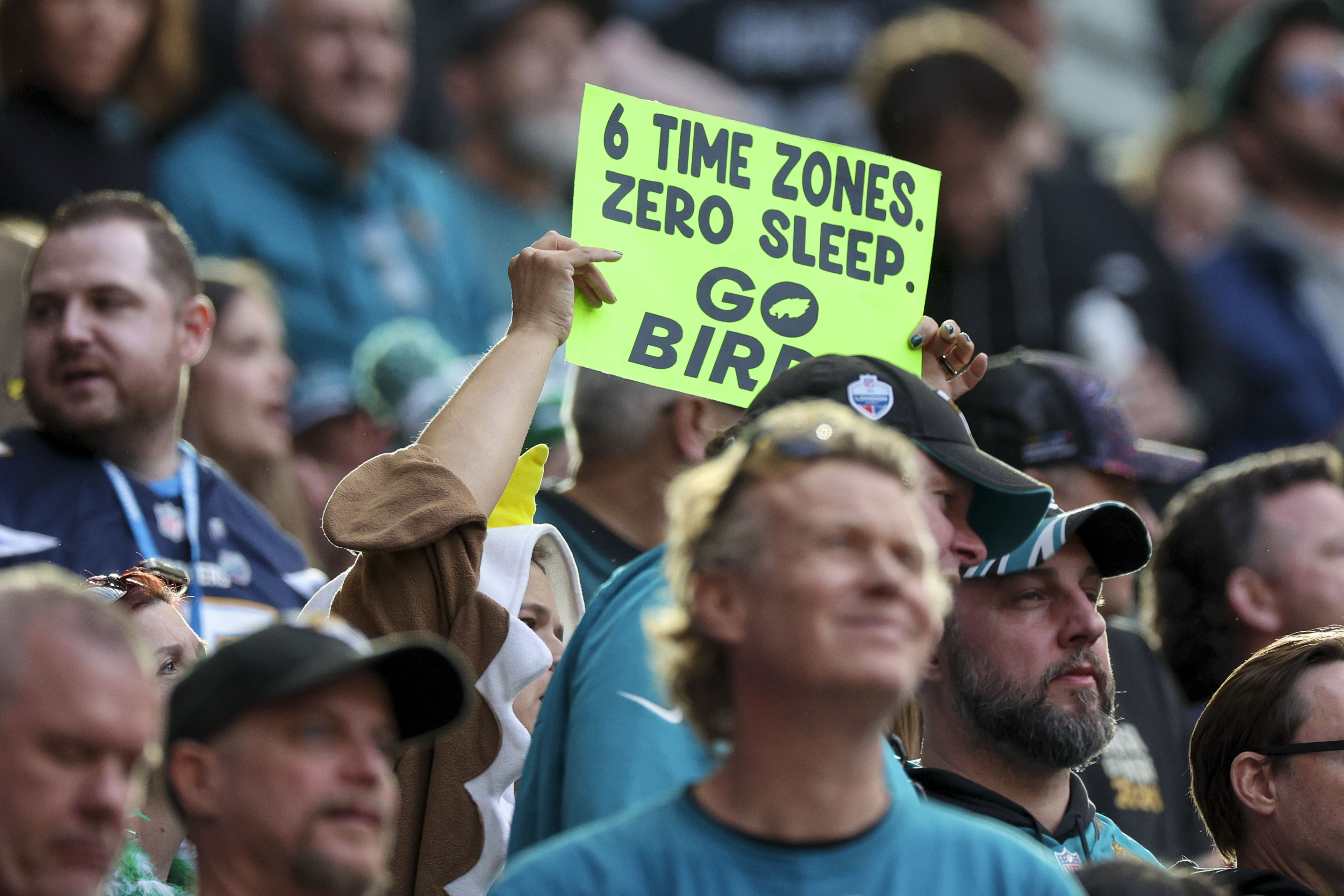
    With eight seconds remaining, the Eagles took a one-point lead over the Jacksonville Jaguars. Then, the Jaguars managed a 53-yard kickoff return and kicked a 57-yard game-winning field goal on the next play to win 19-17 — disappointing all the Birds fans who made the trip to London’s Tottenham Hotspur Stadium.

    Following the loss, most of the discourse surrounding the team has centered around the team’s offensive struggles and Nick Sirianni’s decision-making on the game’s final kickoff.

    Here’s everything they’re saying about the Birds, following their third consecutive loss:

    Sirianni’s ‘idiotic decision’

    On the final kickoff, instead of making the decision to kick the ball through the end zone, Sirianni decided to kick the ball to Jacksonville’s Ameer Abdullah. Abdullah put Cam Little in position to score a 57-yard game-winning field goal as time expired.

    “Nick Sirianni made an absolutely idiotic decision to not kick the ball out the back of the end zone and you got to make a tackle,” said former Eagles linebacker Emmanuel Acho on The Speakeasy podcast. “Here’s why it starts and ends with Sirianni. The very first play of the game, before Hurts took a snap, before Jalen Carter got a sack, the Philadelphia special teams already showed itself that day in London when Jacksonville already took a kick return about 80 [yards]. The very first play of the game. As a result, Nick Sirianni, you got to know that.

    “Yes, the kickoff team should have made the tackle. But Nick Sirianni has to understand the hand that he was dealt, not the hand he wishes he had. He does not have pocket aces, he doesn’t. Nick Sirianni is sitting there with a couple of threes.”

    This is now the second week in a row where Sirianni’s decision making has been questioned, following his Week 4 decision to not kick a field goal on fourth-and-goal from the Los Angeles Rams’ 2-yard line.

    “Well we know it’s fully on you Nick,” Chris Canty said on ESPN’s unSportsmanlike. “And this is the second week in a row where your players have to overcome bad coaching. And quite frankly, they weren’t able to do it. … As great as Nick Sirianni’s coaching record was since he’s taken over the team, it doesn’t absolve him from criticism or blame for what’s happened over the last two weeks — but certainly what happened across the pitch in London yesterday. That was an absolute embarrassment.”

    And for the second week in a row, former Eagles linebacker Seth Joyner had plenty to say about the Eagles coach.

    “You go and you make a bonehead decision to not only kick the ball off but kick the ball straight to a guy, and give him a straight line run,” Seth Joyner said. “I feel so bad for these players because they played their hearts out. And again, the head coach is the reason for this loss. And I’m going to chime it all week long because guess what? He deserves to be held accountable for this.”

    ‘The only way where they can go is up’

    The Eagles were missing key players in London, including DeVonta Smith and Saquon Barkley. Earlier in the week, the team lost Lane Johnson to retirement, and traded Cam Jurgens to the Baltimore Ravens.

    Despite the loss, former Eagles quarterback Nick Foles has faith that the Eagles could be a “super dangerous” team once they figure everything out.

    “You don’t want to let this loss or the previous loss affect the next game,” said Foles on The SZN podcast. “Because all it takes is that one game, or one play to change the entire season. So, the Eagles are on the cusp of that. They can’t play worse, offensively. They are playing really bad offensively.

    “And this might be a soundbite that someone takes, but they’re losing the context. The only way where they can go is up. And that’s really good because they’re almost beating teams that are going to be in the playoffs while playing really bad. So, once they figure this thing out they’re going to be super dangerous.”

    The Bella twins, Nikki and Brie, also have optimism for their team.

    “No matter what at the end of the day Go Birds,” they wrote on X. “To see a stadium from across the pond be so electrifying for the Philadelphia Eagles was incredible. You truly felt the emotions through the screen. The boys have been through a lot especially this past week and they showed up for England. So proud to be a Philly fan. Fly Eagles Fly.”

    Carolina Hurricanes troll the team

    With Sunday’s loss, the Birds are now 0-2 in October. The Phillies’ season ended on Oct. 1 in Game 3 of their wild-card series with the Atlanta Braves. And the Flyers are now 0-6 this month, after losing to the Carolina Hurricanes at home on Sunday night, setting a franchise record for most losses to start a season.

    After beating the Flyers, the Hurricanes trolled the Philly sports teams.

    “We’ve won more games in Philly in the last nine days than the Flyers, Eagles, and Phillies combined this month,” the team’s admin wrote on X.