A tornado touched down in Dover, Del., on Thursday amid severe weather and flooding, the National Weather Service confirmed.
Debris from the tornado and widespread power outages closed one mile of Route 13 between Kings Highway and Lepore Drive in Dover for several hours, according to the Dover Police Department.
Crews and first responders cleared debris, reopened roadways, and restored power to the affected areas.
There were no reported injuries, “and we are extremely grateful for that,” said a Dover police spokesperson on social media.
The weather service will conduct surveys to evaluate the damage and gather more information on the tornado.
Dover Mayor Robin R. Christiansen lifted the city’s state of emergency at 6:10 a.m. Friday, while stressing to residents to avoid areas where debris may still be present and to yield to crews who are still working to clear affected areas.
“A huge thank you to all of our City staff for the outstanding teamwork and dedication throughout this event. Your hard work and commitment are greatly appreciated,” Christiansen said on social media.
Thursday’s storm brought fallen trees and downed wires in Chester County, and toppledtrees blocked portions of heavily traveled Route 322 in Honey Brook, the weather service reported.
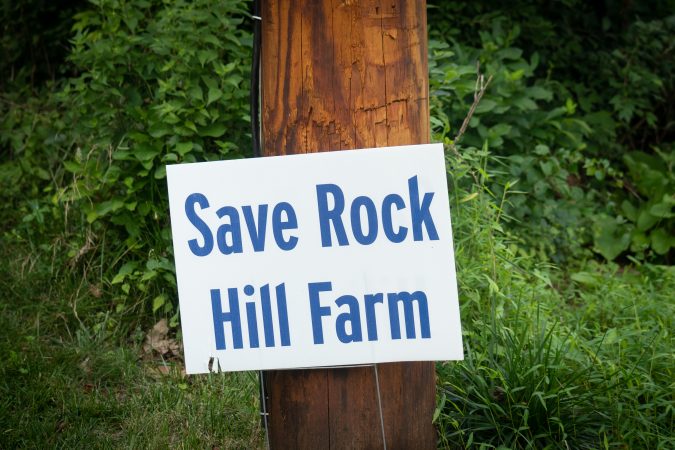
A proposed settlement with the developer who is seeking to turn the rolling, open Rock Hill Farm into housing could significantly preserve more of the land than initially planned, if township officials decide to accept it.
During a public meeting Thursday, Willistown Township officials laid out for residents a potential settlement between the township and Rock Hill Farm Acquisition LLC, the developer who purchased the sprawling 222-acre parcel, and an adjacent 24-acre property, in 2021. Supervisors did not vote on the plans Thursday night; a vote will be held at a future, undetermined meeting.
A Chester County judge last month sided with the developer, overturning the township’s September 2024 denial of plans to build more than a dozen homes on the property. The township appealed the ruling earlier this month.
But under a proposed settlement, the developer would radically scale down the plan that was before the court, preserving roughly 166 acres of the larger tract, or 75% of the land, under a conservation easement. The land would be subdivided into 18 lots, down from roughly 24, with all but one lot proposed for residential development. The one non-residential lot would be conserved as open space. The lots vary from about four acres to up to 26 acres.
“This is a good ‘best-case scenario’ for us,” said Molly Perrin, chairperson of Willistown’s board of supervisors. “It could get a lot worse than this. Ongoing litigation would almost ensure that.”
A view of part of Rock Hill Farm, in Paoli, Tuesday, August 2, 2022. JESSICA GRIFFIN / Staff Photographer
A conservation easement for the preserved land would be held by the Willistown Conservation Trust. The trust would maintain the protected woodland as private property, not public land.
Separately, the developer has offered Willistown Conservation Trust the exclusive option to buy the adjacent 24-acre property, if the settlement agreement is approved by the township and court. The township would plan to buy it from the trust using designated open space funds, and preserve the property as open land. The board voted to approve the purchase in February, officials said.
“We understand there are members of the community who feel very strongly that the entirety of the 222-acre parcel should be coJ. Brian O’Neillmpletely conserved with no future development,” Perrin said. “Municipalities cannot simply ban a property from being developed. It would be nice if we could, except that when that’s turned against us, we would all hate it.”
The property, purchased by developer for $25.4 million, boasts rolling hills, meadows, woodlands and historically significant properties across its hundreds of acres.
For years, it had been owned by a conservation-minded local family. When it sold to O’Neill, who originally planned to build up to 24 residential lots on the grounds with only roughly 52 acres of land preserved, it sparked a community battle.
Rock Hill Farm in August 2022. JESSICA GRIFFIN / Staff Photographer
At Thursday’s meeting, residents were relatively open to the proposed settlement.
David Rawson,who lives in thetownship, thought it was a “far better plan than I thought anybody would be able to negotiate.”
It’s the “best deal you’re going to get short of continuing to fight,” resident Joe Heenan told the board.
“I’m not opposed to the fight,” he said, “but I think it’d be nice to have odds in the favor.”
Others hoped more could still be done.
Invoking President Franklin D. Roosevelt, Les Haggett, a leader of Save Rock Hill, noted, “Sometimes fear is the only thing we have to fear.”
“I don’t think it’s the right time to settle,” he said. “My thought is, don’t be afraid. Don’t settle.”
Supervisor Bill Shoemaker said the township was working to achieve the best possible plan. Though they feel their appeal is “based on good and solid reasons,” they thought that of their initial filing, too, he said.
“The court is always a bit of a gamble,” he said. “So we have to consider very, very carefully what the best possible plan would be.”
This suburban content is produced with support from the Leslie Miller and Richard Worley Foundation and The Lenfest Institute for Journalism. Editorial content is created independently of the project donors. Gifts to support The Inquirer’s high-impact journalism can be made at inquirer.com/donate. A list of Lenfest Institute donors can be found at lenfestinstitute.org/supporters.
West Chester will limit where future smoke and vape shops can open within the borough, after an innocuous corner store grandfathered into a residential neighborhood became a glowing, neon vape shop and brought pushback.
Council voted unanimously Wednesday to amend its zoning ordinance to allow smoke and vape shops by conditional use only in the town center and commercial services district. The goal is to considerably limit where the shops can appear, after a resident came to council with concerns about the sale of a small corner store to a new owner who put in a vape shop. Its bright lights flooded the resident’s home, and it was right by school bus stops.
The ordinance also defines smoke and tobacco shops as a retail store that primarily sells tobacco, CBD, THC, kratom, and vaping products. If at least 20% of the store’s display area is dedicated to the sale of smoking products, it’s considered a smoke shop.
The measure also outlined parameters including limits on how close the shops can be to one another and requiring them to be more than 500 feet away from schools, public recreation facilities, day cares, school bus stops, libraries, and religious institutions. The shops can’t be permitted on a lot or within a building that is also residential. The shops can’t sell food.
It also places restrictions on age, prohibiting those under the age of 18 from entering the shop without a parent or guardian, and requiring the business to verify ages. Anyone under 18 cannot be employed to work within the store.
“It helps us kind of separate incompatible uses, preserve the quality of life, health, safety, and welfare of our residents, particularly the vulnerable populations,” said council member Lisa Kearns. “It also helps us make certain our business district remains diverse, and vape shops don’t take over our commercial areas or neighborhoods.”
West Chester’s town center has at least five smoke and vape shops and the updated zoning won’t affect any of the existing businesses. Instead, the ordinance will keep others from coming into the roughly handful of other retail locations that are in residential areas, officials said.
“We in the borough are not trying to stifle business as much as we’re trying to create a balance so that families and residents can have the quality of life that they’re looking for,” said Nicole Scimone, council president.
A suggestion from the borough’s planning commission to carve cigar shops out as a separate entity was ultimately not included, as the amendment would require months before it came back to council for approval. At Wednesday’s meeting, Kearns urged the borough to adopt the amendment because she would “hate to see another vape shop open up where we don’t want it to be between now and then.”
Meanwhile, an ordinance seeking to regulate the sale of kratom — an herbal substance that can have effects similar to opioids and stimulants, according to the National Institutes of Health — was sent back to committee for further refinement. Kratom often appears in vape and smoke shops.
The ordinance would have prohibited the sale and public use of kratom and 7-OH, the synthetic of kratom, in the borough. It wouldn’t have prohibited the use or possession.
Supporters of the “leaf” version of the substance — which often appears as a supplement or a tea — opposed West Chester’s proposed ordinance and pressed council to tweak the language.
Some council members felt they were overstepping in passing a measure.
“I think this is a big lane violation, quite frankly. We are not the FDA,” said council member Brian Travis. “I asked point blank the chief of police if this even was on the radar. It’s not. Nothing’s come up. It’s not a problem right now locally, but we’re making it a problem.”
Council member Bernie Flynn said that, after talking with two soon-to-be West Chester University students, neither had heard of it. It made him wonder how popular it really was.
“I don’t think we should be in the business of telling adults what they can or cannot do,” he said.
Several bills in the state legislature have been introduced regarding the sale and use of kratom. In July, the U.S. Drug Enforcement Administration announced it planned to temporarily place the chemical found in the synthetic kratom, 7-OH, in Schedule I of the Controlled Substances Act, alongside drugs like heroin and LSD. That won’t apply to the plant itself.
This suburban content is produced with support from the Leslie Miller and Richard Worley Foundation and The Lenfest Institute for Journalism. Editorial content is created independently of the project donors. Gifts to support The Inquirer’s high-impact journalism can be made at inquirer.com/donate. A list of Lenfest Institute donors can be found at lenfestinstitute.org/supporters.
Philadelphia’s largest apartment owner, PMC Property Group, wants to build a 31-story high-rise at 24th and Walnut Streets.
The 372-unit apartment building at 200-10 S. 24th St. would also include 118 parking spaces and a swimming pool.
The proposed 358-foot-tall tower would be the real estate company’s latest apartment development on the Schuylkill. PMC built the two Riverwalk Towers a half mile to the north, in Center City’s Logan Square neighborhood, and the 287-unit building at 2301 John F. Kennedy Blvd.
“Through these [earlier] efforts, PMC has taken dead space pretty much and activated it, creating the vibrancy of Center City living,” said Adam Laver, a land-use attorney with Blank Rome who represents the developer, in a meeting with the Center City Residents Association (CCRA) on Thursday night.
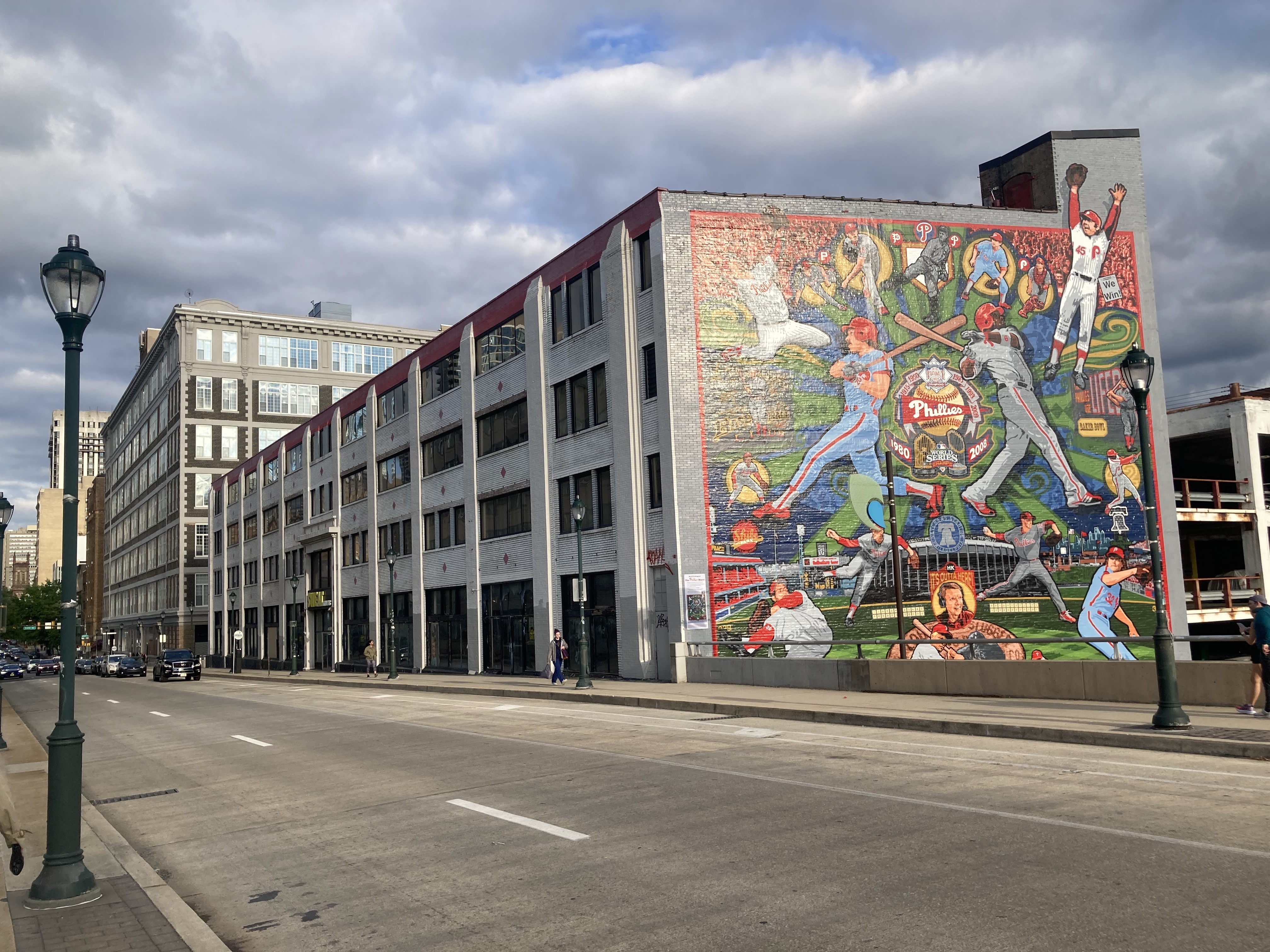
The 110-year-old building that currently sits at 200-10 S. 24th St. is best known for its mural celebrating the Phillies, by David McShane, which dates to 2015. It would need to be demolished to make way for the project.
The building currently houses Walnut Bridge Parking & Storage and is owned by Michael Karp, a major local real estate owner, student-housing landlord, and charter school operator. He did not respond to requests for comment.
“PMC does not currently own the property, and it could potentially be a joint venture,” said Laver.
PMC Property Group wants to change the zoning on this 110-year-old former industrial building at 200-10 S. 24th St. so they can build a large, new apartment tower.Jake Blumgart
Parking for the proposed project would be on the bottom two levels, on a podium built to reflect the current industrial building. (The parking garage on those lower floors would exit onto 24th Street.) The tower itself would be set back from the podium and property line.
Philadelphia-based Tantillo Architecture is designing the building. They have previously worked on projects like the office-to-residential conversion of 400 Market and the redevelopment of the landmark Bellevue Hotel on South Broad Street.
Like many historical buildings along the Schuylkill, 200-10 S. 24th St. has an industrial past, but unlike some of its counterparts it is still zoned exclusively for that kind of use.
PMC is seeking to change the property’s zoning legislatively, which would require the support of City Council President Kenyatta Johnson, who represents the area.
That means support from CCRA — the local registered community organization (RCO) — would be invaluable to the project. RCOs grapple with zoning issues and their feedback often holds significant sway with elected officials.
The presentation on Thursday night was part of PMC’s ongoing negotiations with CCRA.
“The industrial [zoning] does not allow residential household living,” said Laver. “That’s really why we’re having this open process with all of you this evening.”
A rendering of the proposed tower, looking east, along Walnut Street.Tantillo Architecture
Neighbors were concernedabout whether parking could be available to the public, whether demolition could affect the direct neighbors in the condos and townhouses of Fitler’s Walk, and whether the Phillies mural could be saved.
“That is something that we would be pleased to work with CCRA and others to try to figure that piece out,” Laver said, in regards to the mural.
He said that PMC would also consider providing some public parking, as the garage’s demolition will mean some current public spaces are lost.
Laver said that he anticipates that the project could take two and a half years to develop, assuming that PMC gets the support of CCRA and Council President Johnson.
Following Thursday’s public meeting, CCRA will consider public feedback, and the organization’s board will vote on whether to support the zoning change.
A rendering of the tower, from street level, looking west.Tantillo Architecture
A bill changing the property’s zoning could not be introduced until Sept. 17, at the earliest, when City Council returns to session.
Johnsonsaidearlier this year that he hadn’t yet begun seriously considering the project as negotiations between the developer and CCRA unfold.
“I’m aware of the project, but they’re still going through the RCO process,” said Council President Johnson, in a May interview.
“Once they get through that process, if the RCO says, ‘Yes, this is something we want to see in our neighborhood,’ then they’ll get a hearing where we’ll evaluate if this is something we want to support as a body,” said Johnson.
PMC could also secure relief from the property’s industrial land use regulations from the Zoning Board of Adjustment, but that is often a lengthy andunpredictable endeavor.
This week’s edition of Shackamaxon covers SEPTA’s New Bus Network, an upset victory in Western Pennsylvania, and Center City’s creepy clown.
A sign with a “Frequent Red” designation is posted at a South Philadelphia bus stop on Thursday. Some SEPTA bus routes are changing Aug. 23 with the launch of the New Bus Network program.Tom Gralish / Staff Photographer
Quiet revolution
Philadelphia has changed over the years, yet the city’s bus lines have mostly remained the same. Some of them are even based on routes that were once traversed by horse-drawn streetcars.
The dated nature of these routes has started to take a toll. In the 2010s, bus ridership in Philadelphia declined. In fall 2014, Philadelphians took an average of 505,004 bus trips each weekday. By fall 2019, before any pandemic-induced declines, that number had fallen to 436,109. This made providing bus service less financially viable.
In 2016, each bus trip cost SEPTA $3.44. With fares set at $2.25, riders paid most of the costs of service. Today, the fare is $2.90, but each bus trip costs SEPTA $6.90 — which is an improvement over the last few years, when costs have ranged from $7.19 to $11.32. Still, each ride is now largely subsidized by taxpayers. Given political realities and SEPTA’s deep capital needs, that’s not sustainable.
This meant that it was time for some changes — never an easy task for Philadelphians.
Because SEPTA’s fiscal sponsors were unwilling to invest more money in bus service, SEPTA was tasked with finding more riders without increasing the number of buses, bus operators, or bus depots. This meant cuts needed to be made to facilitate investments elsewhere while ensuring there were no disparate impacts on lower-income communities.
On Monday, those changes will begin to take effect. The new Routes 72 and 76 will debut, providing crucial crosstown service. The 35, 47M, 62, 78, 89, and 106 will be discontinued.
Although I sympathize with anyone who is losing their preferred bus route, these choices were not made without justification. In the case of the 47M and 89, some at SEPTA have been seeking their cancellation for ages.
The 47M exists to distinguish the route from the regular 47, which travels down Seventh and Eighth Streets rather than Ninth. While the Ninth Street Market is an important destination, double-parked trucks making deliveries, double-parked customers picking up orders, and food stalls crowding the streetscape all make staying on time a difficult proposition. As for the 89 — which loops around parts of Juniata, Port Richmond, South Kensington, and Harrowgate — it takes nearly an hour to complete a route that takes 12 minutes on the El.
These changes, to many riders, feel like cuts. This is an understandable response. In fact, SEPTA seems to have dropped the more ambitious-sounding Bus Revolution moniker in favor of the blander New Bus Network in response.
But unlike last fall’s reductions over budget concerns, there won’t be fewer buses overall. The resources formerly used by the canceled routes will shift elsewhere. Importantly, frequency will increase across many routes. Including the regular 47. More and more transit experts are advising agencies to prioritize frequency and reliability in order to grow ridership.
There will undoubtedly be some hiccups, despite SEPTA’s extensive attempts at communicating these changes. But whatever name you use, when it comes to the long-term health of the system, change is a step in the right direction.
Voters walk past a sign pointing them to the polling location in Cranberry Township, Pa. Democrat Brandon Dukes won Tuesday’s special election in a district Donald Trump won by 18 points in 2024.Keith Srakocic
Blue Cranberry
Pennsylvania’s 12th Legislative District, which includes Cranberry Township, used to be represented by Daryl Metcalfe. The commonwealth’s most infamous right-wing lawmaker once invited a white supremacist to testify at a legislative hearing, made bizarre homophobic remarks to a fellow lawmaker, and blocked dozens of bills for no reason other than their sponsor.
After this week’s special election, it appears the Butler County district, which voted for Donald Trump by 18 points, will now be represented by a Democrat.
While provisional ballots have yet to be counted, Democratic candidate Brandon Dukes currently holds an 88-vote lead over Republican Scott Timko. The two will face off again in November.
For House Democrats, this win represents some desperately needed breathing room. While a small cohort of Republicans, many of them representing Southeastern Pennsylvania, have occasionally voted with the Democrats, the one-vote majority they’ve held for most of the last four years makes any defection costly.
For Republicans, it should be taken as a warning sign. Right now, four congressional races are expected to be competitive, along with five races in the Pennsylvania Senate. If Democrats are overcoming 18-point margins, then Republicans may be vulnerable in more districts than anyone expected.
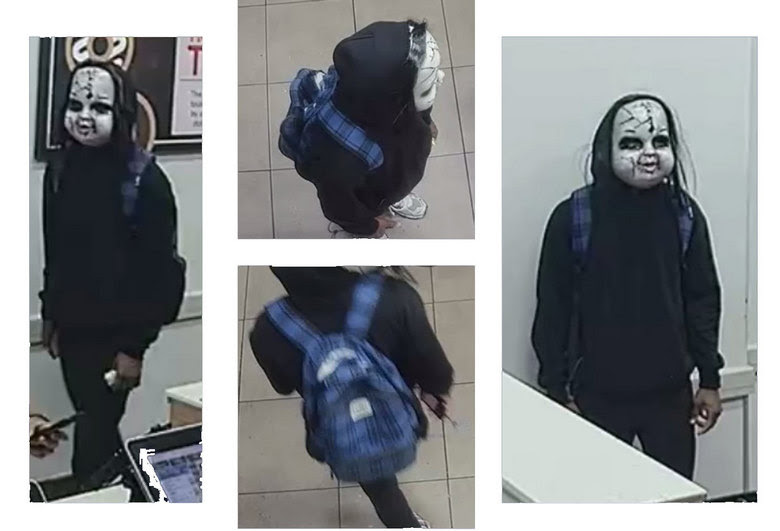
Police are searching for a man in a “Chucky” style horror mask who is harassing Center City pedestrians.Philadelphia Police Department
Clown time is over
No matter how Philadelphia changes, the city seems unable to shake its tradition of men behaving bizarrely in public. From the “Swiss cheese” guy to Pukemon, and now a masked clown creeper.
This time around, however, the city has found a champion who faced the danger and won.
Jameka Wilson was on her way to SoulCycle early Wednesday morning near City Hall when she noticed a man wearing a Chucky doll-style horror mask stalking another woman, whom she tried to warn. As she toldGood Day Philadelphia, when the man later approached her, laughing menacingly, Wilson stood her ground.
She said she remained calm, turned around to face the man, squared up, and then landed a high kick directly to his chest. She even demonstrated her technique on Fox29 anchor Mike Jerrick, who volunteered for the task. Wilson advised other people who are concerned about the figure to avoid headphones and stay alert as they walk around.
Wilson’s actions, and wise advice, have made her a genuine civic hero. Hopefully the Phillies and Sixers will soon come calling so she can throw out the first pitch, ring the bell, and get some love from grateful Philadelphians.
For years, Graduate Hospital — the Center City neighborhood roughly bounded by South Street and Washington Avenue, and Broad Street and the Schuylkill — has been sorely lacking in places to stop in for a snack, pastry, or ice cream cone.
It didn’t seem to matter: Rittenhouse was so close that residents’ desires for little treats were generally met by walking a couple blocks north, where “little treats,” the culture of which has been surging worldwide, abound. On the 200 block of 20th Street alone, between Walnut and Spruce, you’ll find 1-900-Ice-Cream, which opened in 2022 and sees relentless lines down the block; All Aboard Candy, which opened last year and is one of two places you can buy adorable gummy candies; and Biederman’s, a seafood-centric “appetizing” shop that opened earlier this year.
Now, Grad Hospital is seeing its own treat boom. In recent months, the neighborhood has seen an influx of treat sellers that shows no sign of stopping.
The openings have been concentrated on South Street between 15th and 17th Streets, but other parts of the neighborhood are changing as well.
Winners Ice Cream, Ange Branca’s jacket potato and creamsicle-driven operation Mod Spuds, Sandpiper Cafe (where you can get trendy matcha lattes), and Sweet Mousse (which sells even fancier beverages and mousse cakes) all opened within two blocks of one another on South Street between May and July this year. They are all Asian-owned — a notable aspect of little treat culture, as Asian flavors like matcha and ube have been extremely popular at little treat retailers. (Demand for both ingredients has been so high, both have seen global supply chain shortages.)
The market for little treats, also known as treatonomics, is propelled by Gen Z but not at all restricted to that generation, as spending on “pick-me-ups” generally increases in recessions and in uncertain economic conditions, economists have found.
Cookies and cream dream in a waffle cone at Winners Ice Cream in Graduate Hospital.Kiki Aranita
The Grad Hospital boom is powered by nimble operators with no need for the ventilation systems required at most full-service restaurants. Thus, they are able to launch after footing comparatively light construction costs.
“We’re two months in and it’s been awesome,” said Anh Nguyen, the owner of Winners. “Many are saying Grad Hospital needed an ice cream shop, so I’m happy we opened here.”
Nguyen’s clientele consists mostly of neighborhood residents and families. He hopes to attract more customers from outside the area. “My aim is to win the block, then win the city. I love being the neighborhood ice cream parlor — somewhere for families to go celebrate and make memories.”
Though Nguyen currently lives in Roxborough, he hopes to move. “I’ve fallen in love with Grad Hospital since being here and everyone I’ve met has been so welcoming and encouraging.”
The dark chocolate banana mousse cake from Sweet Mousse in Graduate Hospital.Kiki Aranita / Staff /
Little treats are massively impacting a neighborhood that, until this year, was stalled in gentrification. Once primarily home to working-class Black residents, Grad Hospital fell into disrepair when the manufacturing industry declined in Philadelphia. The neighborhood gentrified rapidly between the late 1990s and early 2010s due to city tax abatements and proximity to University City and Center City. According to a study by Pew Charitable Trusts, Graduate Hospital experienced the most dramatic changes in racial composition in Philadelphia in the early aughts: “[Graduate Hospital’s] total Black population fell from 7,793 in 2000 to 3,450 in 2014. During the same period, the number of white residents more than tripled in the neighborhood.”
The wave of redevelopment, new construction, and gentrification brought comparatively few small businesses and restaurants. Unlike South Philly and Fishtown, Grad Hospital has no established restaurant corridor.
A Malaysian spud from Mod Spuds.Courtesy of Mod Spuds
“Mod Spuds [on the 1400 block of South Street] needed a place that is a fine balance between good traffic, neighborhood-y, and affordable,” said Branca, who said that the location was perfect despite (or even because of) being a “less desirable block.” Its limited kitchen space, which does not allow for an exhaust hood, kept her rent down. It was only after Mod Spuds opened that Branca realized she was right on Grad Hospital residents’ commute home from jobs in Center City.
The neighborhood has also beckoned “empanada queen” Jezabel Careaga, who had left as a business owner, but not as a resident, in 2018. Technically, Careaga’s original Argentine bakery, Jezabel’s, was in Fitler Square, but now she is reopening it at 617 S. 24th St., right on the cusp of Grad Hospital. Careaga’s empanadas and alfajores helped define Philly’s little treat scene long before the culture acquired its tagline.
“Graduate Hospital has changed so much since I first came to this neighborhood, but what is really special to me is seeing the generations grow up here,” said Careaga, who has lived in the neighborhood since 2010. “It feels like I’m creating a little piece of the memory I had with my grandmother, right here in my own neighborhood.”
Assorted dishes from Jezabel Careaga, including empanadas, medialunas, escabeche, ricotta cake, facturas, olive oil crackers and preserved lemon labneh.Lucas Careaga / Innprodev Agency
The same children who would stop at her bakery after school are now grown up — some have even asked her for jobs. “And now I’m seeing them with children of their own, stopping by our bake sales with their little ones,” said Careaga. “It makes me so happy to think that the traditions we started years ago can continue with another generation.”
In between his shifts as a guard at the State Correctional Institute at Chester, David Lemmon sent multiple child pornography videos to users on an encrypted messaging app, according to court documents obtained Thursday by The Inquirer.
After sending one video involving a girl that appeared to be between 5- and 7-years-old performing a sex act on an adult man, Lemmon, 45, bragged about his collection, the affidavit of probable cause for his arrest said.
“I have quite a bit I can share,” he told an unidentified person in a June 12 conversation.
Lemmon, of Clifton Heights, was charged last week with more than 100 counts of possessing and distributing child pornography after detectives in the Delaware County District Attorney’s Office received a tip from the National Center for Missing and Exploited Children.
Arik Benari, whose law firm is representing Lemmon, declined to comment Thursday. Lemmon, who was freed after posting $10,000 bail after his arrest, did not respond to a request for comment.
The investigation into Lemmon began in March, after county detectives received the tip that an IP address connected to Lemmon’s email had uploaded a video to Snapchat of an adult man sexually assaulting a girl between 3 and 6-years-old, according to the affidavit.
Detectives served a search warrant on Lemmon’s cell phone in June, and found nearly 190 child pornography files on the device.
The warrant also showed Lemmon had been sending some of those files through Session, an end-to-end encrypted messaging application that detectives said is commonly used to share child pornography, the affidavit said.
Within those chat logs, Lemmon also discussed having sex with another user who told him she was 17, the affidavit said. Detectives noted that Lemmon “sent more [child pornography] than he was receiving.”
Maria A. Bivens, press secretary of the Pennsylvania Department of Corrections, said Lemmon has not worked at SCI Chester since his arrest last week, and that the department is moving to suspend him.
Lemmon is scheduled to appear before a district judge for a preliminary hearing on Sept. 24.
In the early hours of a summer Sunday morning, vapors snuck out of an overfilled oil storage tank and snaked through the hulking Gulf Oil Refinery smeared along the Schuylkill in Southwest Philly.
What happened next was so destructive, and so deadly,it was assigned a chilling and haunting label: “Refinery Holocaust.”
The overfilled storage tank, which at the time was being filled from a Venezuelan tanker, contained more than 70,000 barrels when the fire started.
The explosion at the sprawling refinery Gulf called Girard Point drew a massive response from local fire departments.
Teams coated the oil-slicked flames with firefighting foam, and the six-alarm blaze was declared under control just before 9 a.m.
Eight hours later, a second explosion rocked the refinery, spreading to more storage tanks and sending racing flames through waist-deep pools of water mixed with oil and chemicals and engulfing a group of firefighters standing in those pools.
The second explosion elevated the inferno to 11 alarms.
Ruin and ashes
Under thick clouds of charcoal-gray smoke a day later, three Gulf employees steered a rowboat over the toxic pools to shut off a valve that was spewing liquid naphtha. The highly flammable chemical used in the refining process was fueling the last fire, and the last dangerous threat.
On Aug. 26, nine days after the escaped vapor silently swept through the refinery and ignited a blaze that wreaked $10 million (or more than $60 million today) in damage, the last of the flames were finally and fully extinguished.
The Daily News noted that the occasion was celebrated by those in attendance with cigars and watermelon.
Investigators ultimately concluded that inattentive employees had let the tanks overfill, and the buildup of flammable vapors ultimately led to the explosions. The city cited and fined the corporation for code violations.
Many large storage tanks, the refinery’s office building, and an assortment of pipelines and processing units were wiped out.
Six firefighters died at the scene, two others succumbed later to severe burns, and more than 30 were injured — two critically — in what is considered one of the deadliest days in the department’s history.
“The tanks, the line — maybe you can replace them,” Bill Zahner, then a Gulf fire safety man, told the Daily News in 1975, “but the bodies you just can’t replace.”
As they do each Friday, Inquirer photo editors picked the best sports images from the last seven days. Here’s this week’s Big Picture …
Union players block a free kick off the right foot of Inter Miami’s Lionel Messi. The game ended in a 2-2 tie — but not before some fireworks.Steven M. Falk / For The Inquirer
Phillies left fielder Brandon Marsh makes a leaping catch in foul territory to retire the Marlins’ Xavier Edwards in the seventh inning of Wednesday’s win.Elizabeth Robertson / Staff Photographer
Marsh breaks his bat — and grounds out — in the fourth inning of Tuesday’s 6-4 win.Elizabeth Robertson / Staff PhotographerShortstop Trea Turner was nearly hit in the head by a pitch in the seventh inning on Tuesday night.Elizabeth Robertson / Staff Photographer
Phillies second baseman Luis Arraez reacts to an umpire’s call during Tuesday’s win.Elizabeth Robertson / Staff PhotographerA stunned Turner sits on the ground after narrowly avoiding a pitch to the face in Tuesday’s win.Elizabeth Robertson / Staff Photographer
Phillies catcher J.T. Realmuto scores on a sacrifice fly ball past Miami Marlins catcher Brian Navarreto during the sixth inning of Monday’s 6-5 win in South Philly.Yong Kim / Staff Photographer
Young fans try to catch T-shirts during a break in the action at the inaugural Women’s Lacrosse League Championship at Subaru Park on Saturday.Elizabeth Robertson / Staff PhotographerJack Whaley (right) celebrates with his father and caddie, Andy, after making a birdie putt on the par-4 15th hole to win the 126th U.S. Amateur Championship at Merion Golf Club in 33 holes.Yong Kim / Staff Photographer
Eagles cornerback Kelee Ringo intercepts a pass in the end zone to stop a Ravens drive late in the second quarter.David Maialetti / Staff PhotographerAlly Kennedy (left) and Alex Holman (right) of the Maryland Charms celebrate Kennedy’s goal late in the fourth quarter of the inaugural Women’s Lacrosse League Championship.Elizabeth Robertson / Staff Photographer
Jeremiah Wells (right) gets hit Myktybek Orolbai in the first round of their bout at UFC 330, but Wells, who trains in Philly, went on to defeat Orolbai by submission.Yong Kim / Staff Photographer
The Phillie Phanatic hugs former Phillies manager Joe Girardi before the start of the Perfect Game All-American Classic at Citizens Bank Park on Sunday. Girardi was the manager for the West team.David Maialetti / Staff Photographer
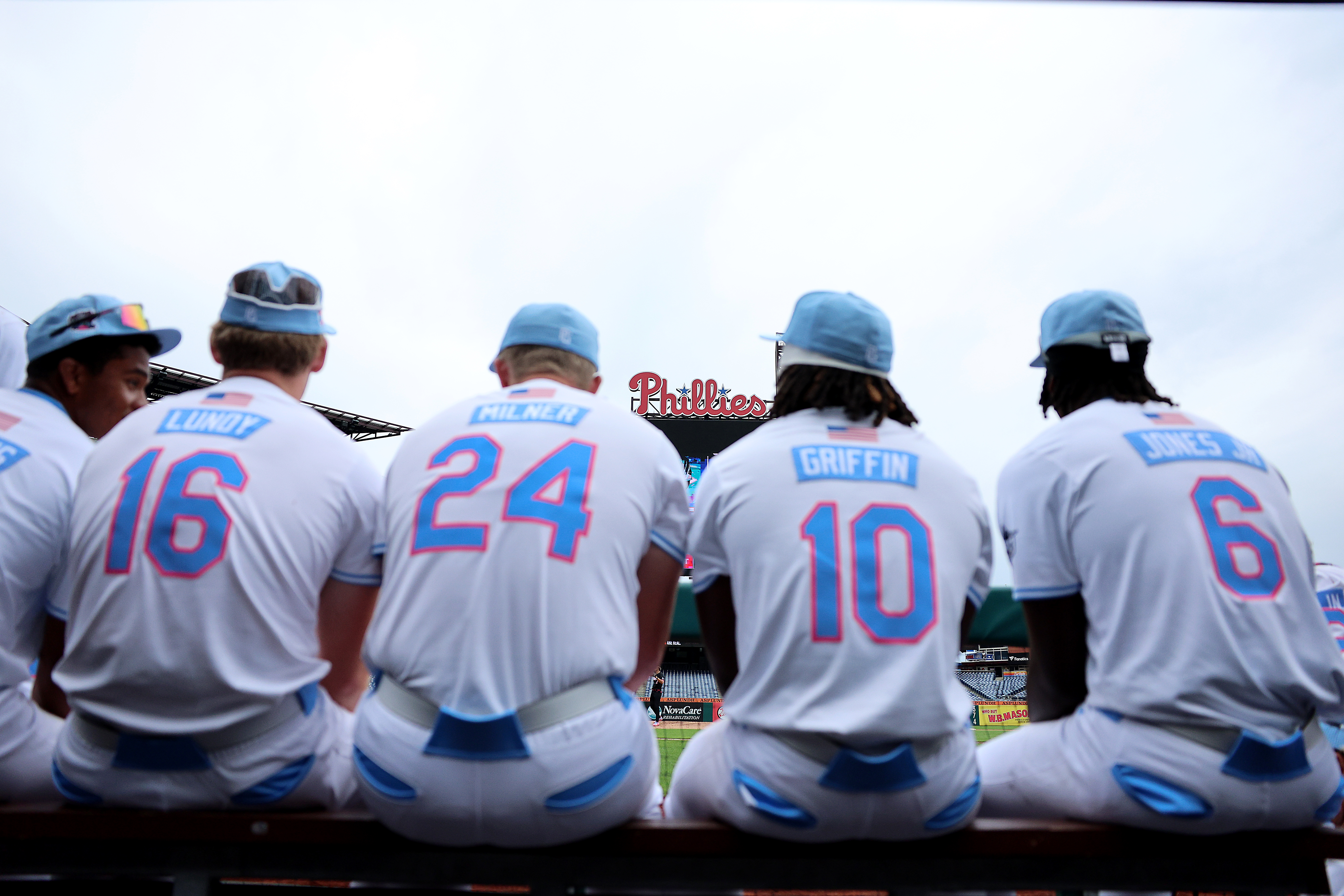
Players from the East team sit in the dugout during the Perfect Game All-American Classic on Sunday. They were managed by former Phillie Shane Victorino.David Maialetti / Staff Photographer
Phillies left fielder Brandon Marsh walks through the cornfields at the site where they filmed “Field of Dreams” before his team played the Minnesota Twins in the Field of Dreams Game in Dyersville, Iowa.Yong Kim / Staff Photographer
Members of the Phillies and Twins emerge from the cornfield during introductions prior to the Field of Dreams Game in Dyersville, Iowa.Yong Kim / Staff Photographer
Three big questions for the Phillies as they look to do to the Cardinals what they just did to the Marlins …
Zack Wheeler is going to be OK, right?
Only once in Wheeler’s seven years with the Phillies had he gone more than two consecutive starts without pitching at least 5⅔ innings. Never had he gone more than three. His current streak now stands at five, a career-high and by far the most important subplot of the Phillies’ stretch run.
The top-line key performance indicators suggest something more than bad luck is responsible. Wheeler’s ground ball ratio over his last five starts is half of what it was in the first two-plus months of this season. His soft contact percentage is down, while his hard contact percentage is up. His 10 walks over his last three starts are his most in a three-start span since 2019, his last season with the Mets. His strike percentage on Tuesday was his second lowest of the season.
The Phillies don’t sound too concerned. Wheeler’s pitch-level metrics don’t set off any health alarm bells.
His fastball velocity remains in line with his overall season average: 95.5 mph on the four-seamer and 95 on the sinker in his most recent start, per Statcast. Both are marginally above their season-long baseline. Wheeler’s spin rates haven’t changed much at all. He is simply struggling to locate.
Can Bryson Stott keep this up?
The Phillies don’t need Stott to be Albert Pujols, but it’s always a good thing when a player does something that nobody since Pujols had done. In Stott’s case, that something was walking 21 times with just four strikeouts in a 19-game on-base streak that ended earlier this week with an 0-for-4 outing against the Marlins.
The Phillies’ formula for a late-season surge has always required somebody in the bottom-third of the lineup to get hot. They are a completely different team when somebody at the bottom of the order is reaching base consistently. Few hitters have been hotter than Stott in recent weeks. Less than a month ago, his OPS was .692. As of Thursday, it was .755. That’s a remarkable jump this late in the season. The encouraging thing is what preceded it.
In his last 81 games, Bryson Stott is hitting .284 with a .375 OBP and a .429 slugging percentageYong Kim / Staff Photographer
Stott has been a well-above average big league hitter for half of a season now. In his last 81 games, he is hitting .284 with a .375 OBP and a .429 slugging percentage. That’s an .804 OPS, with 52 strikeouts and 41 walks in 326 plate appearances.
If Stott continues at this pace for the rest of the season, there is a conceivable world where Bryce Harper and Kyle Schwarber both get hot at the same time and the Phillies score runs with enough consistency to rattle off the kind of winning streak that can pressure the Braves.
Can the Phillies avoid overworking Jonathan Bowlan?
This is one of those questions that would have sounded like a foreign language at the start of the season. Not only has Bowlan worked his way to the back of the bullpen, the Phillies might not be able to survive without him. It’s worth noting, then, that the 29-year-old right-hander threw a combined 62 pitches in his last two outings with one day of rest between them.
Bowlan fits the profile of a guy who can handle the rigor of intensive bullpen action. With the Royals last season, he threw 63 pitches in a three-day stretch and 96 over four days and showed no ill effects. He was optioned to the minors but continued pitching regularly and returned to the big leagues later in the month, posting a 2.55 ERA in 17⅔ innings from late August through the end of last season.
All that said, the Phillies will need to exert some willpower with Bowlan, who has emerged as the most dependable arm in the bullpen this side of Jhoan Duran. He has walked just seven batters in 19⅓ innings since moving into a high-leverage seventh- or eighth-inning role on July 7. He has a 2.33 ERA during that stretch, even after allowing a couple of runs to the Marlins on Monday. Bowlan’s has been the kind of unforeseen emergence that a team needs to get where the Phillies want to go. Interim manager Don Mattingly and his athletic training staff are going to need to walk the perilous line that always exists when a manager trusts one reliever above all others.