Jenkintown Borough is seeking a design and engineering consultant to help decide whether to expand or reorganize its historic library.
Library use is booming, according to Jenkintown’s request for consultant proposals: Almost a third of the borough’s residents are active patrons, owing in part to new apartments within walking distance, borough officials wrote. Visits from Philadelphia residents are also up 28% from last year.
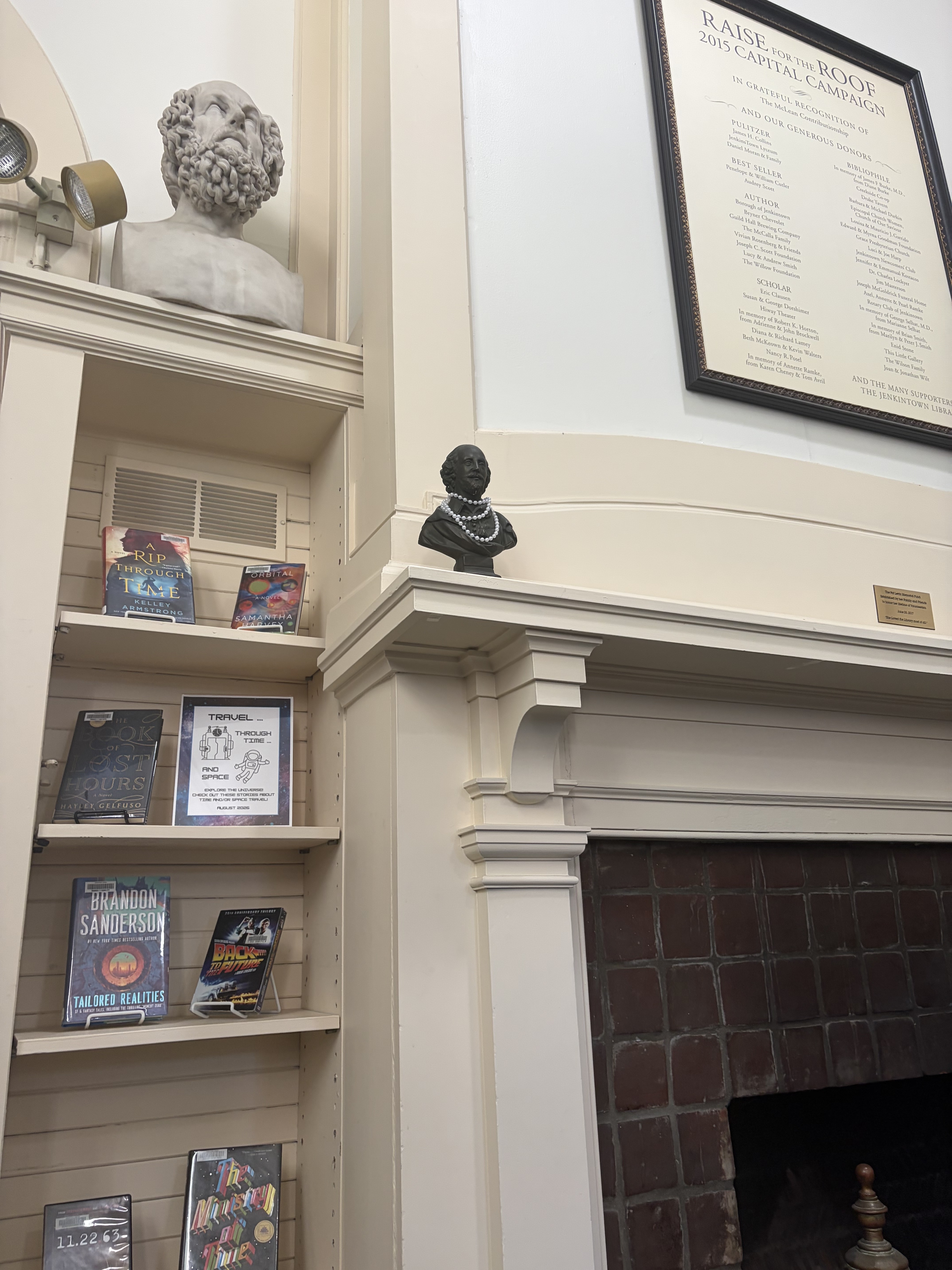
Busts by the fireplace at Jenkintown Library, a pre-Civil War building listed on the National Register of Historic Places.Jess Rohan
But the 187-year-old building, which is on the National Register of Historic Places, is not suited to the needs of modern library users. The building, which includes additions from 1909 and the 1970s, has just six computer stations and no quiet study areas. Originally designed as a lecture hall, the library also lacks energy efficiency and accessibility.
“These spaces were designed for a very different era,” borough officials wrote.
Jenkintown won a state grant for $81,900 to fund the master plan process, which the borough will match with its own money under the grant requirements.
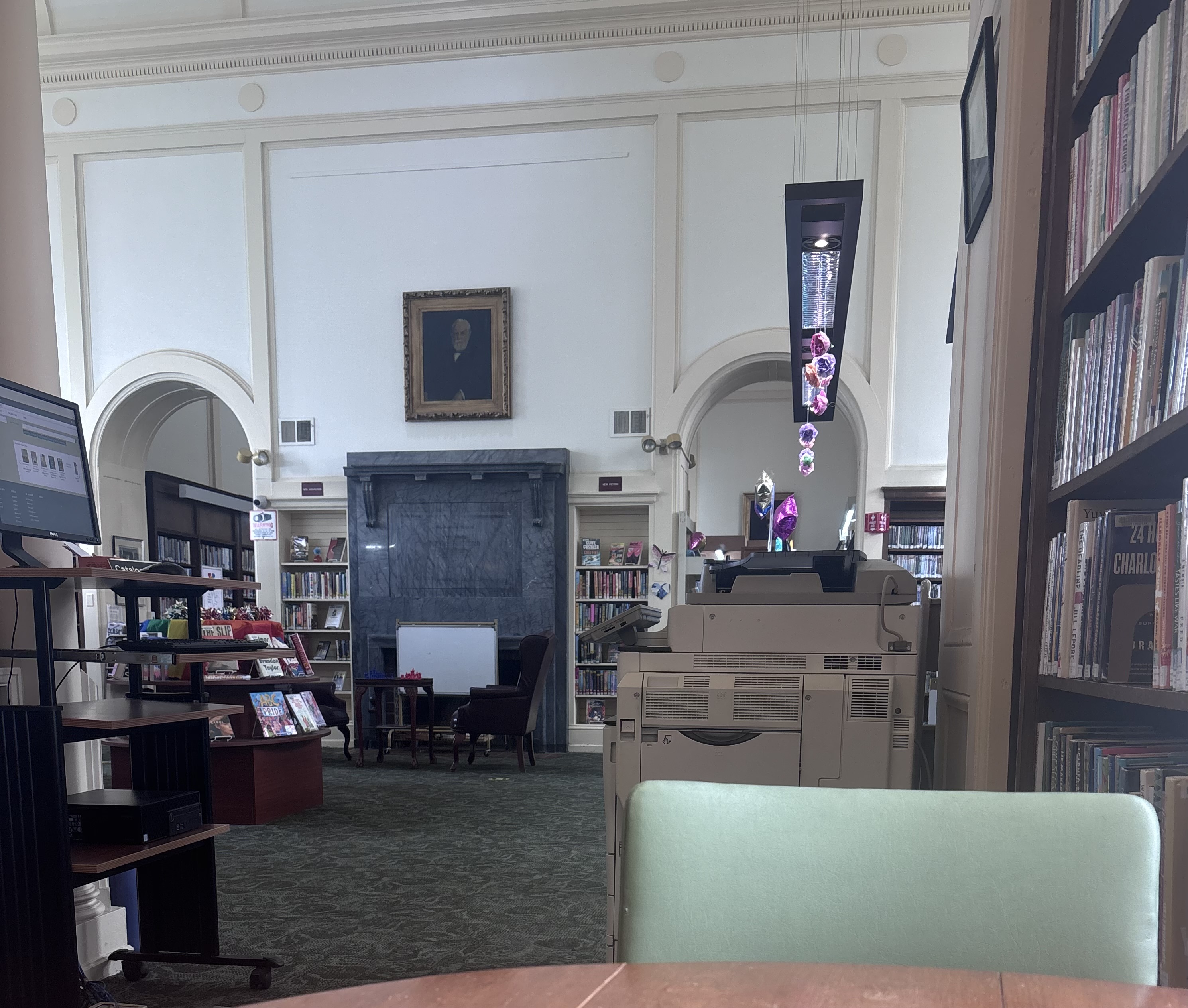
Jenkintown Borough plans to either reorganize or expand its historic library, which has only six computer stations and no quiet study room.Jess Rohan
The consultant will assess all of the library’s facilities, including fire code compliance, the electrical system, and architectural elements, and identify short- and long-term facilities needs.
The community would then be presented with the consultant’s recommendations for two options: either expanding the library or reconfiguring the existing space. The consultant would use the community feedback to create the final master plan.
This suburban content is produced with support from the Leslie Miller and Richard Worley Foundation and The Lenfest Institute for Journalism. Editorial content is created independently of the project donors. Gifts to support The Inquirer’s high-impact journalism can be made at inquirer.com/donate. A list of Lenfest Institute donors can be found at lenfestinstitute.org/supporters.
Philadelphia Superintendent Tony B. Watlington Sr. zigzagged the city Monday, visiting seven schools across the city to start the 2026-27 year.
The late-summer weather was perfect, sunny but not sweltering — an important factor in a school system laden with old buildings, where extreme heat sometimes means about a quarter of the district’s 113,000-plus students cannot learn in person or at all,
Watlington is hoping that the back-to-school weather was an omen.
“The way we start is going to be the way that we roll, and the way we finished last year,” the superintendent said. “We started off really well.”
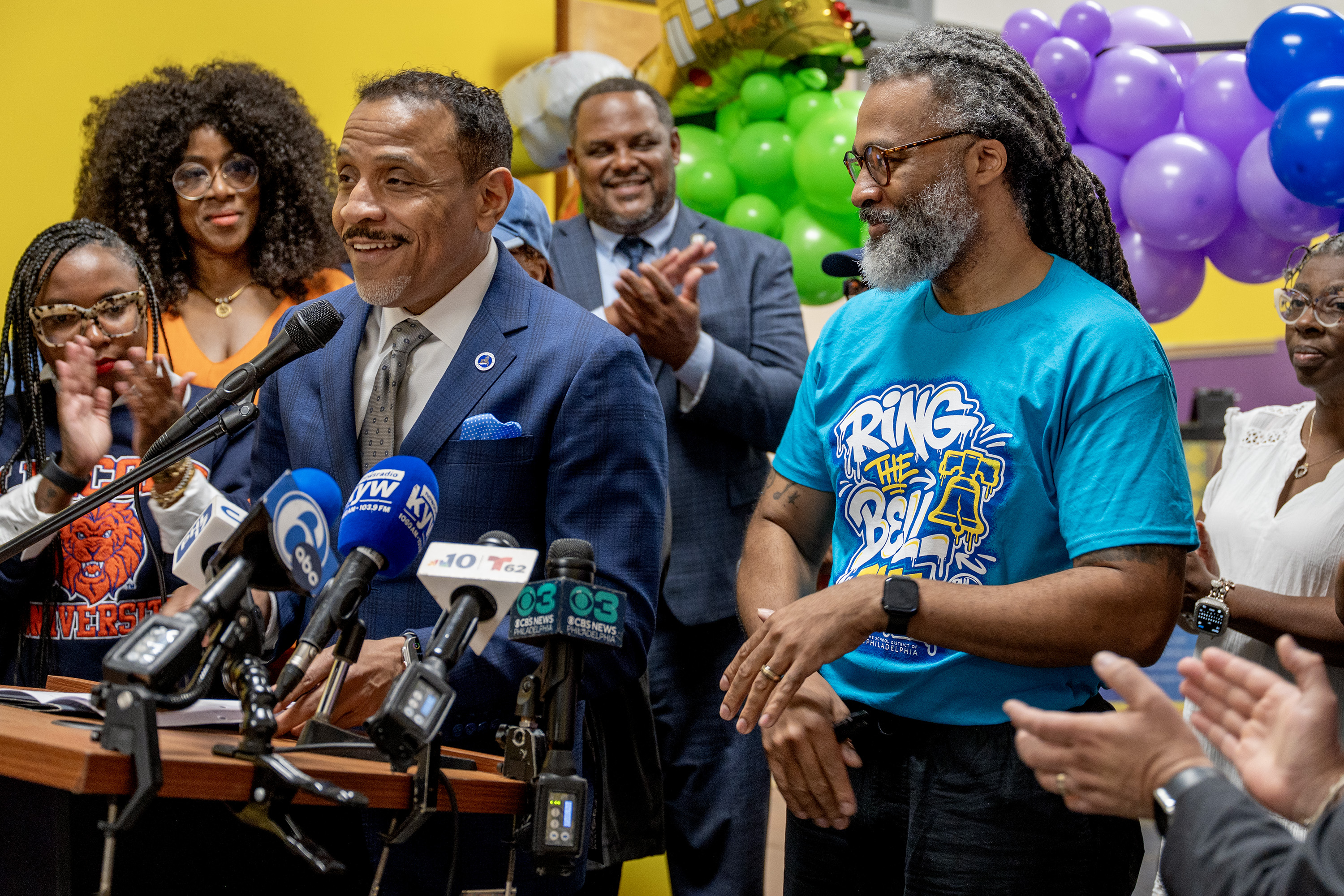
Superintendent Tony B. Watlington Sr. (left) and district board president Reginald L. Streater (right) hold a press conference at McClure Elementary Monday, Aug. 24, 2026 on the first day of school in the Philadelphia School District. Behind them in center is Carlton Williams, just a week into his job as the City’s Philadelphia’s Managing Director (he started Aug. 17)Tom Gralish / Staff Photographer
“We want people to stop and digest that for a moment,” Watlington said. “Because people will say, ‘Well, are the scores still too low?’ I’d say absolutely, yes, we’ve got a lot of work to do and it’s not acceptable that two out of three kids don’t read or perform on grade level in math, but we’re getting better faster than the 25 largest school districts, and that’s our goal to be the fastest-improving, so we’re well on our way,” Watlington said.
“We believe it’s important for us to work with parents as equal partners because they are our children’s first teachers, and when we support our parents and families, our kids just do better in school,” he said.
The Parent and Community Ambassador Program will provide small stipends to “key community members and parents who just have a level of influence and cachet that no teacher, principal, counselor, police officer, or superintendent has in communities,” Watlington said. “If we can figure out how to connect with some of these key community folks, it will do nothing but help us to improve student attendance in schools where there may be some tensions or poor communication between families and school staff.”
Johnny Beauchamp (right) waits with his son Johnny (5, not a Jr.) as they arrive early at McClure Elementary Monday, Aug. 24, 2026 on the first day of school in the Philadelphia School District. Young Johnny is going into kindergarten and Beauchamp, a single father, took two days off from his work as a truck driver to make sure he could be there on “the start of the rest of his life.”Tom Gralish / Staff Photographer
The aim, the superintendent said, is to address issues like homework completion, or family cooperation with key school initiatives.
“We think that’s a pioneering effort,” Watlington said. “Families first in 2026-2027.”
The program will begin as a pilot in a limited number of schools. Watlington did not provide details about how much ambassadors will be paid or how many schools will participate initially. He said details will be released soon.
About those PSSA and Keystone scores
There has been significant speculation around the release of state test scores. Pennsylvania released preliminary data to districts in the late spring, as it typically does, but Philadelphia has shared only limited student PSSA scores with select staff. Most Philly principals and teachers have not seen the scores, though other districts and schools have not withheld the data.
Wuimarlyn Sanchez, (left) , 7, is greeted by a classmate outside McClure Elementary Monday, Aug. 24, 2026, starting as second graders on the first day of school in the Philadelphia School District.Tom Gralish / Staff Photographer
The Pennsylvania Department of Education notified districts last week that statewide results, typically available to districts in late August or early September, would be delayed, though the release of the data to parents and the public does not typically happen until the fall.
Philadelphia officials then suggested the state holdup was the reason for their own delay.
Watlington said Tuesday that “we’re just going to wait for the official, verified data to come to us. We’re not trying to hide anything, but we need to get the verified data.”
The superintendent suggested, however, that both statewide glitches in the administration of the test on the first day of PSSAs and the shift to online administration of exams, which research links to decline in student scores, will show an effect when the scores are finally made public.
“My hunch is that, at the end of the day, online testing will have had some impact, but I don’t want to speculate on that across the Commonwealth of Pennsylvania,” Watlington said. “When the state verifies the data, we’ll release it immediately.”
Some students were unable to access tests for up to 40 minutes on the first day PSSAs were administered.
“All things being equal, I personally would like to be able to do over every single first-day test,” Watlington said. “That’s not really financially or time practical, but in an ideal world that would be my, my superintendent’s wish.”
School selection’s still up in the air
The district’s much-watched school selection process will open this year on Sept. 8 and close on Oct. 30. Watlington said its details are still being worked out, given the state score wrinkle.
Pencils and crayons in the first grade classroom of teacher Lauren Cucinotta at Fanny Jackson Coppin Elementary are ready to write and color Tuesday, Aug. 18, 2026, as she prepares for the start of the School District of Philadelphia school year on Aug. 24.Tom Gralish / Staff Photographer
Students who wish to gain admission to the system’s 37 criteria-based schools typically submit PSSA scores for consideration. Last week, district officials said they would not use PSSAs for school selection.
Watlington said Tuesday that his team was “currently reviewing a number of options about how to handle the fact that we won’t have 2025-26 data in time for our school selection process. So we’re reviewing all of our options. I believe there was a thinking initially that we’d have students who have access to some special test — the Terra Nova, etc. We’ve not finalized a decision there yet, so we don’t want to get ahead of our skis just yet.”
District size, and winning back kids to Philadelphia schools
When Watlington talks about Philadelphia being one of the 10 largest school systems in the U.S., he is counting children enrolled in both traditional district schools and charters — all of which are supported by taxpayer dollars.
Counted together, last year, the district had 113,735 students, and charters enrolled 64,469.
The district’s enrollment grew for the first time in a decade in 2024-25, inching up by a little fewer than 2,000 students. It then lost 794 students last year, which Watlington attributes to a SEPTA strike at the beginning of the school year that caused a pronounced drop in student attendance and, he believes, caused some families to disenroll children from district schools.
“It’s too soon to know exactly where our numbers will shake out, but my expectation and hope would be that we maintain the similar enrollment to last year,” Watlington said. “I expect this school district to grow over time, though.”
Why? Watlington touted Masterman’s recent ranking by U.S. News & World Report as the nation’s No. 3 public high school in the country and the district’s academic gains.
“We just need to tell that story,” Watlington said, “and go out and market ourselves to parents.”
The Philadelphia Cycling Classic is back this weekend for the first time in a decade.
From 1985 to 2016, the race was a staple in the streets of Philadelphia, and it’s finally making its return with the men’s and women’s races on Sunday.
Here’s everything you need to know about the race and its return …
What is the Philadelphia Cycling Classic?
The Philadelphia Cycling Classic started in June 1985 and was recognized as one of the most iconic cycling races in the country.
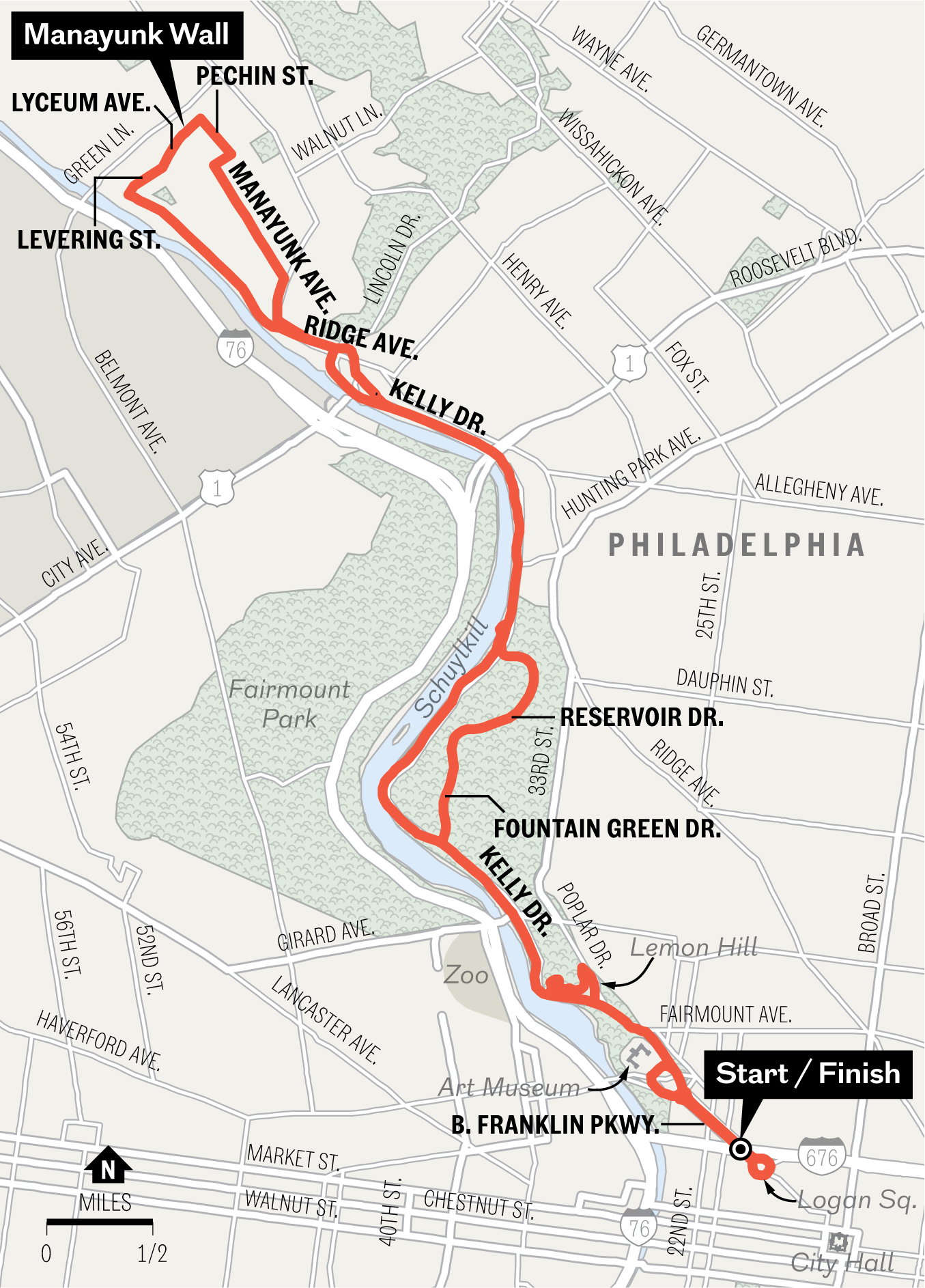
The course is a 14.4-mile circuit that will start and finish on the Benjamin Franklin Parkway. The women’s race will total 65 miles, while the men’s race will be 122 miles.
Originally known as the CoreStates U.S. Pro Cycling Championship, the race took about 100 professional riders on a 10-lap circuit spanning Fairmount Park and the hills of Manayunk, with speed skater and Olympic gold medalist Eric Heiden winning the inaugural race.
In late January 2017, city officials announced that the race’s run had come to an end. That year, organizers said, the race would cost an estimated $1 million to stage successfully and safely, and not enough sponsors were interested.
Former racer Carlos Rogers, former Philadelphia Mayor Michael Nutter, and Eric Robbins are responsible for spearheading the race’s return this year.
What is the race route?
The original course ran up the Ben Franklin Parkway to Kelly Drive, passing through East Falls, Roxborough, and Manayunk, which was home to the most famous part of the course, the Manayunk Wall.
This year’s race will return to that original course, and will take participants past Strawberry Mansion, Lemon Hill, Boathouse Row — and, of course, up the Wall.
Course map for the 2026 Philadelphia Cycling Classic.John Duchneskie
The Wall is a steep incline hill, reaching up to a 17% grade over a stretch of about a half mile, mostly on Levering Street in Manayunk. It is considered one of the race’s most iconic components, and has been part of the race since 1985, when Jerry Casale and David Chauner first mapped out the course.
Road closures will start Saturday with the Philadelphia Cycling Classic Amateur Time Trial and continue into Sunday for the main races.
Who is competing?
The Philadelphia Racing Classic will feature 36 teams and 212 riders.
Eight of the teams competing are WorldTour teams — three women’s and five men’s. Overall, there will be 21 women’s teams and 15 men’s teams, with riders representing 28 countries.
Olympians and national champions are among the riders on Sunday, including world class athletes who have competed in the Tour de France, Giro d’Italia, and Vuelta a España.
Racers Robin Carpenter of Modern Adventure Pro Cycling and Kim Stoveld of AUTOMATIC Racing will be among the local riders. For Carpenter, this is his fourth Philadelphia Cycling Classic while Stoveld has witnessed the race as a spectator before she started cycling around the time of the COVID-19 pandemic.
What do the winners receive?
The Philadelphia Cycling Classic offers equal prizes, in the men’s and women’s races, of $75,000 each. Winners will also receive trophies crafted by John Rais, an artist and metalsmith with a studio located in North Philly.
How do I watch?
Locally, 6abc will air the race live on television for those who want to watch from home, which includes streams on 6abc’s YouTube Channel, website, and on Hulu and Disney+. A special will air at 5:30 p.m. on Sunday on 6abc.
The women’s race will start at 8:35 a.m. with the men’s race to follow at noon.
For fans interested in attending, access to the race will be free, meaning anyone can line up along the course to watch.
Traditionally, large parties take place along the tight streets of Manayunk, turning the race into a festival of sorts. But for those not located in the Manayunk area, the event’s official Fan Fest will be held by the Iroquois Sculpture near Philadelphia Museum of Art from 10 a.m. to 5 p.m. on Saturday and 8 a.m. to 5 p.m. on Sunday. Entry is free and will include vendors, live entertainment, a stream of the race, activities for kids, and a beer garden.
For the better part of two decades, I have been living with cancer. I’m grateful for the advances in treatment that have made that possible, but I also have faced denials and delays to my care that could have meant a different outcome for me.
In 2010, I went to the doctor with what I thought was the flu. I was having trouble sleeping, frequent heartburn, and a persistent cough. My life quickly took an unexpected turn when I was diagnosed with chronic myelogenous leukemia (CML), a cancer that starts in the bone marrow.
Again, the unexpected. Suddenly my family and I were navigating an unknown and scary world — multiple tests and treatments I couldn’t spell, countless decisions, and most unexpectedly, despite having insurance coverage, wondering how we’d be able to afford the treatments to save my life.
For most of my adult life, like most people, I paid insurance premiums for my family, expecting that if my wife or I or one of my daughters gets sick, the money I’ve paid into that pool will be there to help cover what we need. But when I was diagnosed, I quickly realized this wasn’t the case.
It turns out the insurance company had a treatment plan of its own for me, but not the one my actual oncologist had prescribed.
I was told that before the insurer would grant coverage for the treatment my oncologist felt was best for me, I had to try and fail on medications the insurance company preferred. That practice is called step therapy, and for cancer patients, it can be deadly.
I can’t speak for everyone, but for me, failure is not really a word you want to be part of the discussion when it comes to cancer. The companies driving it, pharmacy benefit managers like OptumRx, Express Scripts, and CVS Caremark, profit from controlling what drugs get covered and in what order.
For patients with other blood cancers like chronic lymphocytic leukemia, the most common adult leukemia, the consequences can be even more severe. Delays and forced substitutions can allow the disease to evolve in ways that close the window on the best available treatment entirely.
If I had been diagnosed 10 years earlier, the treatment for CML would have included chemotherapy or a bone-marrow transplant. Today, thanks to medical advances, the most effective treatment option for my type of leukemia is daily oral anti-cancer therapy.
There are no comparable IV medications, and the self-administered pills allow me to continue to work and be an active person. In the last several years I’ve started running again, which has been a great outlet for me and another way to protect my health.
Thankfully, when my insurance tried to force me to try and fail on their alternative treatment plan, my oncology team was able to get me enrolled in a program with a drug company through which I’m able to get my medication directly from them and at low cost. But without that option, I could be forced to deal with my insurer and likely face delays and denials for my care.
Thanks to medical advances, the most effective treatment option for his type of leukemia is daily oral anti-cancer therapy, writes Paul O’Hara.Pongsak Tiantad/Dreamstime/TNS
Congress has an opportunity to stop this from happening to cancer patients, and everyone else who has been put through the dangerous process of step therapy.
The House Oversight Committee is already leading the charge. In a letter to Mehmet Oz, administrator of the Centers for Medicare and Medicaid Services (CMS), Oversight Committee Chair James Comer called on the centers to do more to protect Medicare Part D patients from insurer- and pharmacy benefit manager-imposed step therapy.
Part D plans are already bound by national cancer treatment guidelines that make clear not all cancer drugs are interchangeable, yet insurers and their pharmacy benefit managers routinely substitute treatments for financial reasons rather than medical ones. CMS has the tools to crack down and needs to use them.
Comer also played a critical role in crafting pharmacy benefit manager reforms. He and his colleagues should seize on the momentum of those successes by passing the Safe Step Act, which would ensure patients can receive timely exceptions when step therapy is medically inappropriate.
The commitment to putting patients first should extend to ending fail-first policies that can delay access to the cancer treatments that physicians determine are most appropriate for their patients.
All cancer patients want is to live life to its fullest, to see the other side of their diagnosis, and to get back to knowing what to expect out of each day. Patients deserve to know that their health insurance will provide the care their doctors say they need. I ask the Pennsylvania federal delegation to get behind the Safe Step Act. It is vitally important to the lives of American patients.
Paul O’Hara is a Doylestown resident and the president of Connected Cloud LLC, an information technology consulting firm specializing in cybersecurity.
TORONTO — Canada struck back at the United States on Tuesday with retaliatory tariffs on about $20 billion worth of American goods, including steel, dairy products, appliances, and farm equipment, as the trade war between the once-friendly neighbors escalated sharply.
The confrontation threatened one of the world’s largest trading relationships and further strained ties between the United States and a country long considered one of its closest allies. A prolonged dispute could raise costs for American businesses and consumers less than 2½ months before the midterm elections.
The new tariffs extended well beyond industrial goods, hitting everyday purchases such as seafood, cheese, clothing, cosmetics, and toilet paper, with some facing duties as high as 50%.
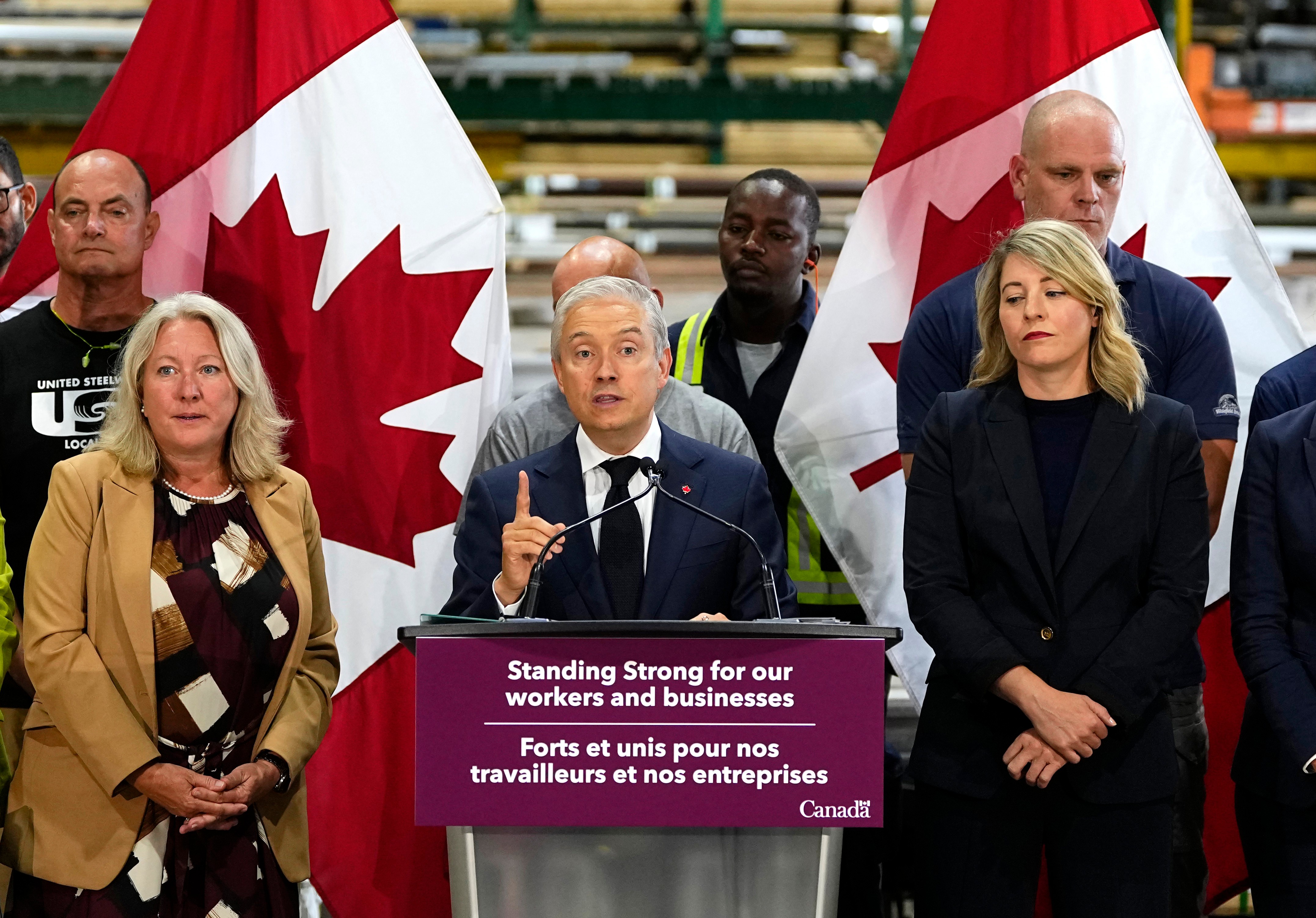
“We did not choose this conflict, but when our economic integration is used as a weapon rather than the foundation for a win-win partnership, we need to stand up,” Finance Minister François-Philippe Champagne said in French, calling the situation “an unprecedented challenge imposed on Canada.”
Industry Minister Mélanie Joly urged Canadians to buy Canadian goods, saying doing so would help protect jobs and launch a “movement of resistance.” She said Canada selected some American products for tariffs to put political pressure on particular U.S. states. Canadian officials used a similar strategy during Trump’s first term, when retaliatory tariffs targeted Kentucky whiskey, Florida orange juice, and Wisconsin yogurt.
Canada’s retaliation came after the Trump administration imposed 50% tariffs over the weekend on Canadian goods following the collapse of trade negotiations. Canadian Prime Minister Mark Carney accused Washington of trying to subordinate Canada and said U.S. demands during the failed talks showed that Americans wanted to “destroy our major industries.”
Trump told Canadian leaders to ‘fall in line’
Trump intensified the confrontation Monday, telling Canadian leaders to “fall in line” or face consequences “far WORSE” than existing tariffs and threatening new 50% tariffs on Canadian vehicles, auto parts, and steel.
Trump added another provocation Tuesday, saying the United States was giving “serious consideration” to renaming Lake Ontario “Lake America” in a feud with Ontario Premier Doug Ford. Such a change would be reminiscent of the Republican president’s unilateral action last year by executive order to rename the Gulf of Mexico to the Gulf of America.
In the hours before Canada’s announcement, Trump went on a social media tear against the country, accusing it of ripping off American farmers and driving American companies out of business.
“I deal with many countries, and Canada is easily the most difficult and unreasonable,” Trump wrote in one post. “They feel entitled, but they are not a State, and will be entitled no longer!”
Tariffs on many U.S. products would double
The tariffs will take effect Sept. 8 at rates of 15%, 25%, and 50%, with Canada matching the corresponding U.S. tariff rate on more than 700 products such as pulp and paper and electronics. The tariffs on many American products would double from 25% to 50%, with the largest share of the new measures affecting steel and aluminum.
Canadian officials said the goal is not to raise revenue but to protect Canadian companies and reduce U.S. imports.
U.S. steel imports, for example, have already fallen 30% since Canada imposed a 25% tariff, and the new 50% rate is expected to cut them further, Canadian officials said.
Goods facing 50% tariffs include some steel and aluminum products, furniture, and clothing. Appliances, dairy products including cheese, fish and seafood, and certain steel and aluminum derivatives will face 25% tariffs. Existing Canadian countertariffs on U.S. autos will remain in place.
Canada also announced a support package for workers and businesses affected by the dispute worth $7.5 billion in Canadian dollars ($5.4 billion in U.S. dollars).
Canadian officials acknowledged the counter tariffs will raise costs for some businesses and consumers but said they expect the overall economic effects to be moderate.
They said the government has provided more than $30 billion Canadian dollars (US$21.7 billion) in tariff-related support since the beginning of 2025 — far more than it has collected in retaliatory duties — as it tries to cushion the blow from the trade fight.
Countries have integrated supply chains
Canada and the United States have deeply integrated supply chains across autos, energy, agriculture, and manufacturing, making a prolonged trade fight potentially costly for businesses and workers on both sides of the border.
Businesses and consumers are caught in the middle, facing uncertainty about how much prices may increase.
Michael Howard II, owner of a furniture business in Warren, Mich., outside Detroit, said the tariffs will hamper the “ability for us to put food on the table for our family” and affect ”the ability for us to give back to our community.”
Howard and his wife started their business a decade ago. They make and sell everything from dining room tables to bookcases.
“To say that we don’t need Canada is just disingenuous,” he said. “It’s dishonest. And it’s just absolutely not truthful. We need our neighbor, but also they need us.”
On Monday, Carney said U.S. negotiators had raised objections to French-language content on streaming platforms and French-language labeling rules. He rejected the idea that those issues were negotiable, saying in French: “For the Americans, questions about the French language, Quebec culture, francophone culture, and Canadian culture are irritants. Here in Quebec, here in Canada, they are rights.”
In a social media post early Tuesday, Trump wrote: “I would never interfere with Canadians speaking French! In fact, I have never even thought of doing such a stupid thing. This lie was made up by a weak and ineffective Prime Minister in an attempt to gain political support, which he has totally lost, from the people of Quebec. I love French Canadians!”
Emily Wielk, a senior policy analyst for working families at the Bipartisan Policy Center, says that she “hears consistently” that paid family and medical leave is a benefit that workers want and need to continue working.
“It is also a benefit that many businesses want to offer, but they are trying to determine the best way to manage the financial, compliance and administrative burdens,” she said.
It doesn’t matter how big or small your business is. Providing this benefit has become increasingly important for recruiting and retaining talent. The good news is that the federal government can help, and thanks to 2025’s One Big Beautiful Bill Act, more support is available.
Employer tax credit
Since 2018 there has been a generous tax credit available for employers who want to voluntarily provide some sort of compensation to their employees taking leave. It’s called the Employer Credit for Paid Family and Medical Leave under Internal Revenue Code Section 45S.
As long as you pay your employee a minimum of 50% of their normal wages while they are on leave, you can take a 12.5% tax credit on what you pay. The credit then increases by 0.25% for each additional percentage point of wages paid.
“If you offer the leave, you have greater certainty that the employee is coming back, and you can determine how to manage the gap in the interim,” said Wielk. “If you lose the worker, you will spend more time, money, and energy recruiting and trying to replace that employee.”
For example, if an employee normally earns $15,000 over 12 weeks and you pay the employee $7,500 while on qualifying leave, your business may receive a federal income-tax credit of $937.50. The more of the employee’s normal wages you replace, the larger the potential credit — up to 25% of the qualifying wages paid. So if you paid the full $15,000, your credit would be $3,750.
To claim the credit, you must have a written policy and provide two weeks of paid leave (not vacation or sick time).
If you own a pass-through business, like an S corporation or partnership, you can still claim the credit against the taxes you owe. If the credit is larger than the taxes you owe, you can carry it forward for up to 20 years. Highly compensated employees — those making $96,000 or more per year — are excluded.
“One specific thing the Section 45S credit does is encourage businesses to offer the benefit specifically to lower- and moderate-wage workers — not just necessarily to their C-suite or higher-wage earners,” said Wielk. “It is designed to ensure that workers who typically don’t have access to the benefit are getting access.”
Updated guidance
Earlier this month, the Treasury Department and Internal Revenue Service provided interim guidance on the expanded credit (more comprehensive proposed regulations are expected.)
Among these changes: Employers who purchase insurance providing paid family and medical leave benefits may now calculate the credit using qualifying premiums rather than wages actually paid during leave. It also potentially allows certain employers to use the credit where leave is required by a state or local government (such as New Jersey and soon in Delaware).
Previously, only wages paid to employees who worked for a company for a year were eligible, but that requirement was relaxed to six months. For 2026, employees who earned more than $96,000 are excluded. Most importantly, the credit has now been made permanent. Previously it came up for renewal every few years.
Stability promises
Wielk says that for Section 45S in particular, the fact that it was a pilot program created uncertainty. She believes that even when businesses knew the credit existed, they couldn’t be sure it would still be there four, five, or six years down the road.
“Many businesses were hesitant to use it for a few years and then have to assume the entire financial burden if the credit expired,” she said. “I think that uncertainty deterred some businesses from utilizing the credit.”
According to Wielk, the data “is very clear” that when workers have access to paid family leave, it boosts employee morale and increases loyalty to the business.
“It allows employees to take the time they genuinely need away from work with the knowledge and security that they can come back,” she said. “That has ripple effects on their ability to return and be productive.”
Carlos Rogers was devastated when the iconic Philadelphia Cycling Classic hosted its final race in 2016.
“It was like a schism across my body,” Rogers said. “As a fan, it was a big gash. It was a feeling of loss, as a passionate cyclist and as a fan.”
For years, he and others both in and outside the Philly cycling community lamented the loss of the race. But while attending the Maryland Cycling Classic in 2022, Rogers decided he’d “had enough of people missing it.”
Rogers, a salon owner in Old City, had helped organize smaller bike races before, but never anything on the scale of the 14.4-mile course through Philadelphia. Virtually everyone he talked to in the community, from local government leaders and civic organizations to those formerly involved with the Philly Cycling Classic, was interested in bringing the race back.
The hard part, of course, was finding the money.
“I was throwing spaghetti on the wall and seeing what would stick with any kind of corporate sponsors,” Rogers said.
“Someone’s got to step up,” said Carlos Rogers, co-owner of the Philadelphia Cycling Classic. Monica Herndon / Staff Photographer
One of his connections referred him to entrepreneur Eric Robbins, who lived in Manayunk in the late 1990s and remembered how great an event the race used to be for the neighborhood.
Rogers’ enthusiasm and determination made it a “no-brainer” to partner with him on bringing back the race. Robbins looped in former Mayor Michael Nutter, who used to represent the Manayunk and Roxborough neighborhoods in City Council. But from there, it still took about a year and a half to secure the funding.
“There were a tremendous amount of no’s,” Robbins said. “For us, the vision of 2026, of bringing it back after a 10-year hiatus, it made perfect sense. It’s the greatest year to bring it back, but also the most difficult one.”
Because of the large number of sports events in the area this summer, from the World Cup to the PGA Championship to the Major League Baseball All-Star Game, sponsorship dollars were extremely competitive. As the lead organizers, they knew why bringing the race back was important, but with so many events happening, they struggled to find sponsors who understood their mission.
“We’re reintroducing an historic event to a whole new crowd of people and bringing along the folks who knew it because they longed for it,” Nutter said.
Former Mayor Michael Nutter is one of the co-owners of the Philadelphia Cycling Classic.Monica Herndon / Staff Photographer
Rogers was reluctant to publicize his efforts to bring back the race until they’d actually secured the funding.
“I knew how easy it would be to fail, and then how everybody could point the finger and be like, here’s another clown trying to do something. … I had no resumé of success at this level, where people would invest in me.”
But he ultimately decided to go to the press late into the process, as a last-ditch effort to get the race up in 2026. His hope was that maybe a CEO or local business leader would see it and be moved to support.
That didn’t happen, but it did put a bit of “wind in his sails” as more people learned about the efforts and tried to push it along. Ultimately, through a mutual connection, he met with Bob Flexon, CEO of the UGI Corporation, who happened to be an avid cyclist himself, and got AmeriGas on board as the title sponsor in September 2025.
Carlos Rogers (from left), Brian O’Reilly, Eric Robbins and Former Mayor Michael Nutter toast with the new Philadelphia Classic Lager from Mainstay brewery during an event at Craft Hall on Thursday, Aug. 6, 2026 in Philadelphia.Monica Herndon / Staff Photographer
Since then, it’s been a mad dash to rebuild the teams that made past iterations of the race so successful. Former race director Robin Morton and G4 Productions are leading the production, and numerous city employees who managed logistics for the race 10 years ago are still in place.
“[Raffaele Casale], he’s worked security barricade staging for 31 years of the race, and he’s on our crew this year,” Rogers said. “He could put barricades around the course blindfolded. He knows every turn, every corner, every pothole. He’s a secret weapon.”
Rogers, Robbins, and Nutter coined the race “the People’s Race.” Spectating the men’s and women’s races, which will be held Sunday, is completely free, everywhere from Kelly Drive to the iconic Manayunk Wall. They hope it will be a big community celebration, like the Philadelphia Marathon, and what the race once was.
“This race is by Philadelphians, for Philadelphians,” Rogers said. “We haven’t brought in any outside components. We put the band back together.”
As a former psychiatric hospital nurse, Justinna Dixon knows what it’s like to feel passionate for a job and overwhelmed by it at the same time.
Dixon graduated from nursing school at the height of the COVID-19 pandemic, and threw herself into her work, caring for people struggling with mental health and addiction issues. But her new-nurse shine quickly dulled under the burden of long hours, high caseloads, and insufficient support.
Now a postdoctoral fellow at Penn Nursing’s Center for Health Outcomes and Policy Research, Dixon is studying the burnout she experienced. She hopes her work will help hospital systems better understand what contributes to burnout and what they can do to improve.
Two out of five inpatient psychiatric mental health registered nurses experience high burnout, according to Dixon’s latest study, published in July in the Journal of Psychiatric and Mental Health Nursing. The study, based on data from 740 registered nurses across 10 states, found that workplace improvements — such as increasing staffing — can help nurses feel more supported and provide better care.
Dixon spoke to The Inquirer about her research and experience as a nurse in an interview lightly edited for length and clarity.
What in your experience as a nurse made you want to study burnout?
I’m a Ph.D.-prepared registered nurse. After I finished my bachelor’s degree in nursing in 2020 from Rutgers University, I worked as an inpatient psychiatric registered nurse for two years. I worked within the same types of units that I talk about in this study. I have personally seen and even felt myself how, when we didn’t have enough leadership support and adequate staffing, it made the job much harder. It made me and my other fellow colleagues give worse care to our patients and made our patients suffer even more than they already were.
What were the study’s most significant findings?
One of the main takeaways is that 40% of current inpatient psychiatric nurses right now are burned out. One of the other takeaways: Staffing was a huge driver of these outcomes, the impact of the work environment on the poor job outcomes of the nurses.
Were you surprised by what you learned?
To be honest, I’m actually not struck by any of my findings, because I have lived it. Normally, on medical-surgical units in a general acute hospital, nurses are assigned around four to five patients to take care of for their shift.
I worked on a substance-abuse detox unit in a psychiatric hospital. In this unit, one of the most medically complex units in the psychiatric hospital, I was typically assigned around 10 to 12 patients. One time, we were very short-staffed and had a full house or an almost full house, and we had one patient who was just so sick from actively withdrawing. We were so overwhelmed with all the other patients on the unit, taking admissions on top of caring for our other patients, being short a nurse.
To be honest, we just couldn’t take care of him the way we wanted to, we couldn’t get him the medication he really needed to quell his uncomfortable symptoms. He was in a lot of distress, and he ended up getting so overwhelmed he threw a chair into our nursing station. It was terrifying for the nurses, but imagine how the other patients felt. It made us delay their care because now we have to deal with this situation, and they’re all sick, too.
What could hospitals do to reduce nurse burnout?
Nurse staffing is a very complex issue. But there are some things I think could move the needle. In the current system, hospitals are not financially incentivized to improve their staffing. Hospitals are typically able to bill individually for physicians or other prescribing provider services. But for registered nurses, there’s really no financial structure that allows hospitals to bill insurance companies to pay for a nurse’s contributions to patient care. Nurses are actually lumped in with hospitals’ overhead costs.
I think that a potential solution to incentivize hospitals to improve hiring is giving them a financial incentive to do so. Another thing that I think could really help is enlisting the public. As nurses, we try to advocate so much for our patients. But maybe we could let our patients advocate for us, too.
Elizabeth Monroe was living in New Jersey with her son in 2006 when she saw a listing in Bryn Mawr, and thought it might be time to go back to the town where she’d grown up.
“I hadn’t even gone inside it,” she said. “but I loved the Tudor look and the stone.
“It’s a soulful kind of house. A friend once called it my ‘sanctuary,’” she recalled.
One of the bedrooms in the Bryn Mawr home features large windows to let in the light. Brendan Farrell
The four-bedroom, two-bathroom house spans 1,762 square feet.
Monroe, an ordained Presbyterian minister who mostly worked as a hospice chaplain, said she had considerable renovations done, mostly on the first and second floors.
The house, has a gated front porch, original hardwood floors, and deep-set windows.
The kitchen has updated appliances. Brendan Farrell
The kitchen has white cabinetry, black granite countertops, and updated appliances.
The living room has a working gas fireplace.
Each of the two second-floor bedrooms has its own sitting room, which could be used as a home office, reading room, art studio, or playroom.
A working gas fireplace is a highlight of the living room.Brendan Farrell
The third floor has two additional bedrooms and a hall bathroom.
There is high velocity central air and 200-amp electrical service.
There is a private brick patio, a fenced outdoor space, and a detached one-car garage. It is walkable to the Bryn Mawr Regional Rail station.
The dining room can fit a table for six.Brendan Farrell
And “it’s walkable to the Wawa,” Monroe joked. And since the parking lot there is often congested, “I thought that this might be a selling point.”
The house is in the Radnor School District.
It is listed by Colleen Whitlock and Brianna Golden of Keller Williams Main Line for $699,000.
Through tense smiles and laughter, Fox News host Jesse Watters frequently reminded his guest — the Democratic nominee for Senate in Michigan, Dr. Abdul El-Sayed — that Watters was the one conducting their prime-time interview as the candidate swerved through a minefield of hostile questions about issues ranging from transition surgeries to reparations to Islam to immigration.
The appearance Monday night by El-Sayed, a progressive who has sought to dispel worries from moderate Democrats that he is too left-wing to win battleground Michigan, signaled his growing efforts to reach Republican voters and previewed his messaging strategy for the general election. His hard-fought primary victory this month has set up a race against former Rep. Mike Rogers, a Republican, in a contest considered crucial to Senate control.
When Watters sought to pin down El-Sayed, the candidate would often redirect the question to more favorable political terrain. He pivoted from a question on immigration enforcement to high gas and grocery costs, and turned an inquiry on whether he drives an electric car (he drives a plug-in hybrid, he said) into a jab at President Donald Trump’s new trade war with Canada.
In the most eye-popping moment of the exchange, Watters asked if El-Sayed believed it was OK “for a parent to slash his kid’s ding-a-ling off,” referring to transition surgeries for minors.
El-Sayed responded by asking if Watters was circumcised.
“Uh, yeah, but that’s a personal question, doctor,” Watters responded, laughing, before contending that “circumcision’s different than castration.”
El-Sayed said that he believed the government should not tell Americans what healthcare procedures they could undergo, but he did not directly say whether he approved of transition surgeries.
The interview showed the strategy El-Sayed is adopting as Rogers seeks to paint him as a radical leftist who is out of touch with Michigan voters. The Democratic nominee’s approach is to cast “culture-war” issues as a distraction from the everyday problems Americans face, like rising costs and worries about health care.
The interview also previewed the kinds of arguments that could animate El-Sayed’s planned debate against Rogers, which is set for Oct. 8 on WOOD-TV, both campaigns announced Monday. The two men may face off sooner if they agree to additional debates.
After Watters brought up Shariah — the system of Islamic religious rules often invoked by opponents to portray Islam as dangerous and anti-American — El-Sayed countered by asking the host if he knew about canon law, the code of religious rules that guides the Roman Catholic Church.
“Nobody is trying to push Shariah law on anyone else, just like I hope nobody is trying to push canon law on anybody else,” El-Sayed said. “Because we live in an America where you should have the freedom of your religion.”
Watters responded by saying: “Maybe. Shariah law in Michigan is kind of scary.”
El-Sayed argued that voters were far more concerned about affording gas, seeing doctors and keeping their jobs than they were about Shariah.
Asked about his position on trans athletes in sports, El-Sayed said he believed that matter should be “decided by the people who govern sports,” not him.
“I’m out here trying to take on the healthcare crisis and Big Pharma, and you’re asking me about who gets to play what sports,” El-Sayed said. “It’s silly.”
El-Sayed’s appearance Monday was his third televised interview with Fox News of the campaign, and his first of the general election.
Whether or not he is able to attract a slice of Republican voters, he has already sought to capitalize on Watters’ comments about him. He started airing an ad Thursday that features the Fox News host saying after the primary, “You’ve got to respect Abdul because he beat the machine.”
At the end of the interview Monday, Watters gave his guest “credit for facing the music” by going on his show, but called him “a little naive” and said some of his policies were “straight-up wacky.”
El-Sayed contended that Trump’s ballroom renovations amid the war with Iran were “wacky,” and then said he would “love to come back on” to talk about money in politics, affordability and Medicare for All.
“We’ll do it again, Abdul,” Watters said, smiling amusedly and adding, “Good luck in Michigan.”