When Richard Sperry’s right shoulder began to ache, the pharmaceutical executive thought he was overdoing it at the gym.
“I was doing CrossFit at the time,” Sperry said. “I thought it was from doing things that I shouldn’t be doing in my mid-40s.”
Then, almost overnight, the entire right side of his body was weak. He could not pick up a coffee mug, grasp a pen, or shave his face with his right hand. His wife had to help him button his dress shirts each morning.
An orthopedic doctor sent him to a Philadelphia neurologist in late 2019. After a battery of tests, the neurologist diagnosed Sperry, then 45, with amyotrophic lateral sclerosis (ALS), or Lou Gehrig’s disease, a fatal nervous system disorder. The neurologist said he would die within three to five years. He went for another opinion, and a second neurologist concurred.
In early 2020, Sperry traveled to the Mayo Clinic in Minnesota for a third opinion.
“‘I’m gonna cut to the chase — I don’t think you have ALS,’” Sperry recounted the Mayo doctor saying, as his sister erupted in tears.
Sperry actually had a rare autoimmune disease called multifocal motor neuropathy, or MMN. The doctor prescribed intravenous immunoglobulin therapy, a treatment made from the blood plasma of healthy donors. Immunoglobulin is an antibody found in plasma, the straw-colored liquid in blood.
Once back home in Princeton, Sperry got infusions for five straight days, sitting about four hours each time. A few days after treatment ended, Sperry awoke and discovered he could move his right hand for the first time in more than a year, he said.
“My wife and I were in bed bawling,” Sperry said. “It was like a wonder drug.”
Demand for plasma is growing as the global population ages, more people like Sperry are being diagnosed with chronic diseases, and new medical treatments that require plasma are discovered, research shows.
The value of a liter of plasma rose from about $181 in March to $192 in June, likely because of increased demand, according to Georgetown University professor Peter Jaworski, who studies the global economics and ethics of the plasma industry.
No cure existsfor all three conditions, butsymptoms are alleviated with regular infusions of plasma-based therapies.
“It is life-changing for patients with rare and chronic diseases,” said Anita Brikman, president and chief executive of the Plasma Protein Therapeutics Association, a trade organization that represents donation centers in North America and Europe.
Doctors are not exactly sure how it works on patients like Sperry, said Sami Khella, a Penn Medicine neurologist and clinical neurology professor at the University of Pennsylvania Perelman School of Medicine.
But if Sperry does not get his medicine on time, he will “develop weakness almost right away,” said Khella, who sees Sperry as a patient.
Sperry’s condition causes his immune system to attack his nerves. The immunoglobulin in plasma quells the attack, Khella explained.
Every four weeks, Sperry receives 35 grams of immunoglobulin through infusions over two days. It takes hundreds of donors to make 35 grams, Khella said.
Sperry, who is back doing CrossFit, said it feels “scary” to be dependent on plasma donations. When he sees people going in and out of donation centers, he said, he is enormously grateful.
“It’s not like the drug manufacturer can just build another plant and make more pills,” Sperry said.
Maleka Evans waited outside Octapharma Plasma in South Jersey at 8:30 on a recent sweltering morning, sweat beading on her face. A dozen other prospective donors had arrived before her, and the line was still growing a half hour before doors opened.
One woman sat on an overturned shopping cart pilfered from the nearby Walmart. Another brought her own folding chair. A man held a bicycle tire, removed to protect his bike from being stolen once he was inside and hooked up to a machine that extracts antibody-rich blood plasma needed for medical treatments.
Every Monday and Friday for the last three years, Evans has trekked to the Audubon strip mall for what she considers her second job. She takes a 45-minute bus ride from her Willingboro home to Camden, then walks another 45 minutes to the donation site with a slogan posted in its window: “When it pays to give hope. That’s plasmagic.”
The 37-year-old single mom has noticed the lines growing in the last year, as others are seeing at donation sites elsewhere in the Philadelphia region and across the nation. The for-profit business is booming as more and more Americans, both poor and middle class, struggle to straddle the gap between stagnant wages and increased living costs.
Evans relies on the $50 that she typically earns for each plasma donation — loaded onto a prepaid debit card — to help with bills that she cannot cover with her $18-per-hour job packing boxes at a warehouse.
“Prices for everything — food, rent, transportation, electricity — are just getting higher and higher,” Evans said. “You have to work two jobs to make ends meet, and you’re still living paycheck to paycheck.”
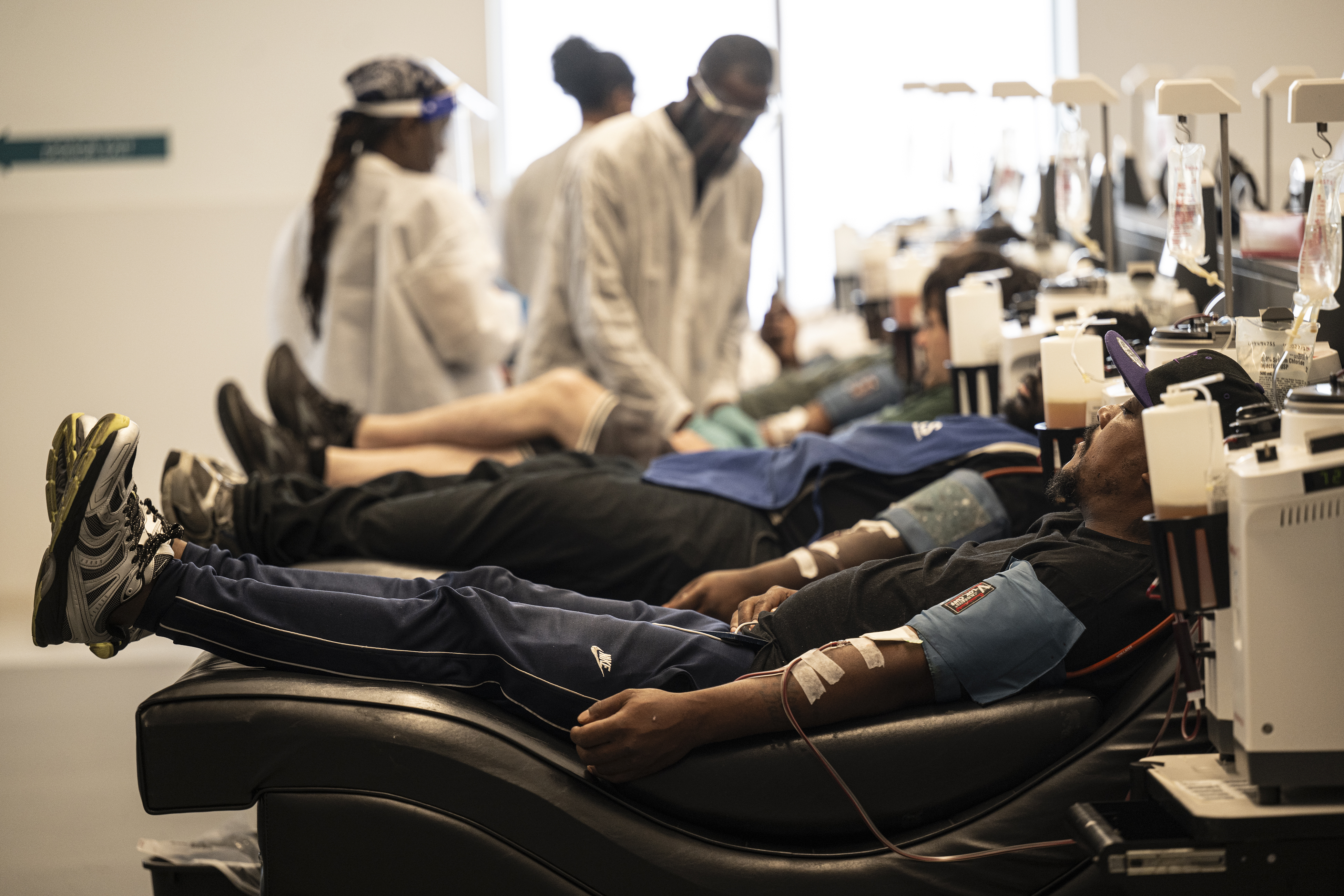
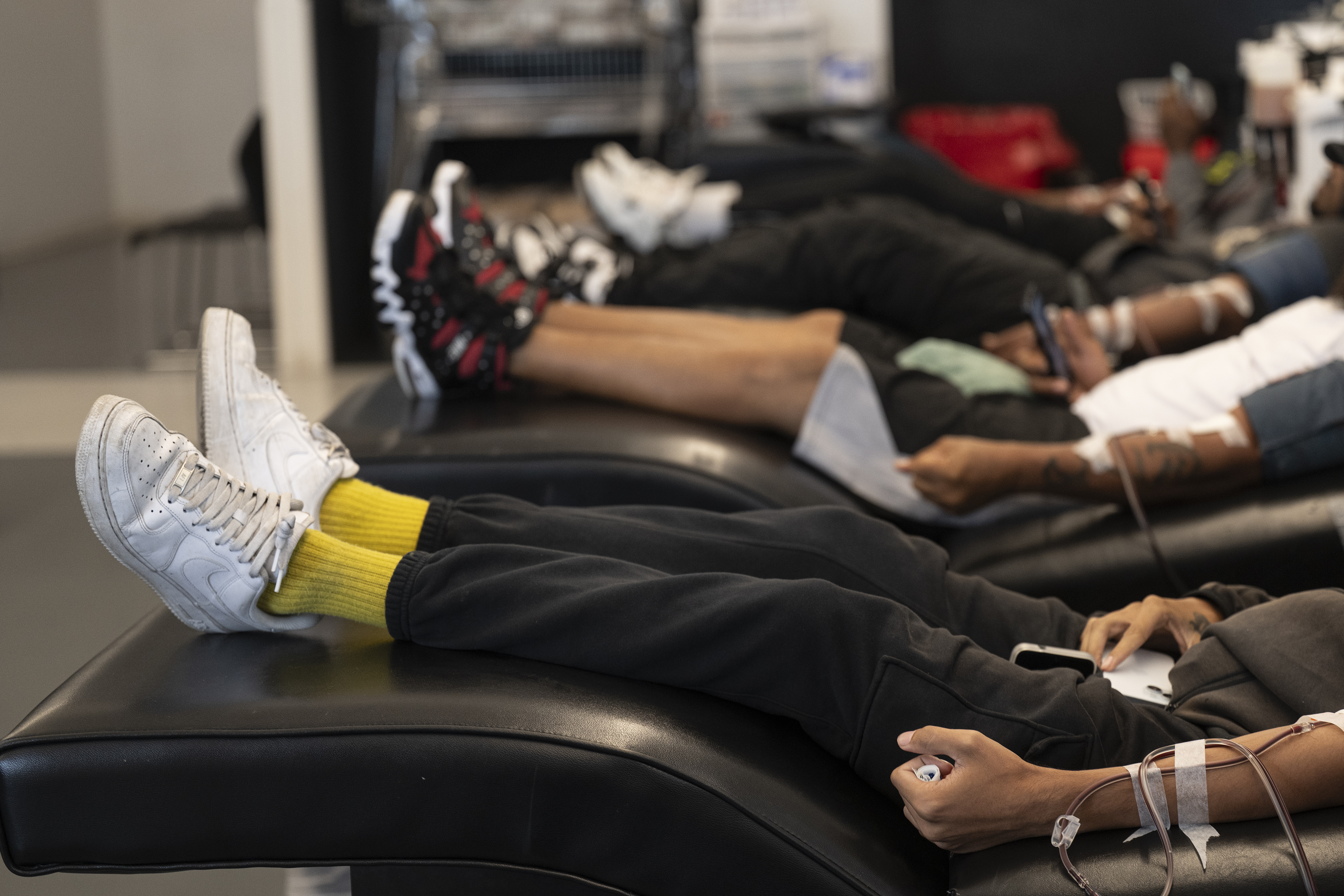
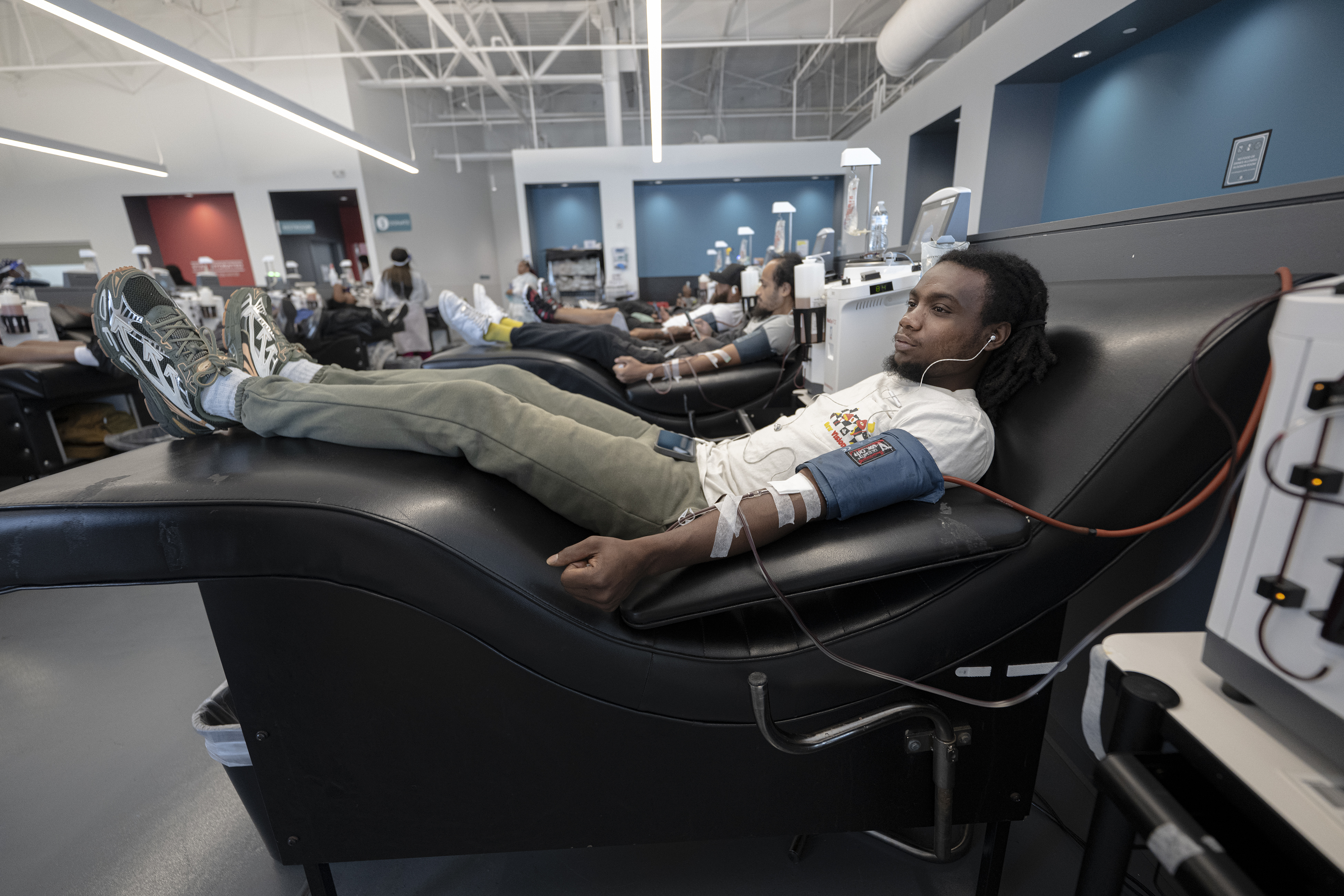
An increasing number of people in the Philadelphia region are selling their blood plasma for money. Here, local donors sit in recliners with needles in their arms at B Positive Plasma in Montgomery County.Jose F. Moreno / Staff Photographer
The U.S is one of about a dozen countries where it is legal to pay donors for plasma. It is among only three countries where people are allowed to donate two times over seven days, though not on back-to-back days, per U.S. Food and Drug Administration regulations.
Nearly 70% of the world’s plasma comes from donors in America, fueling a multibillion-dollar global industry. Plasma, a straw-colored liquid in blood, contains antibodies and other proteins used for treating a wide range of patients with immunodeficiencies, neurological conditions, kidney disease, and bleeding disorders.
Last year, U.S. donors produced 62.5 million liters of plasma — the highest volume ever collected and an 8% increase from the previous year. That trajectory has continued into this year, according to Georgetown University professor Peter Jaworski.
“When the price of most staples goes up, so does the amount of plasma donations,” Jaworski said. “If I fell on hard times, the very first thing I would do is become a regular plasma donor.”
Donating plasma is widely considered low-risk, with millions of people doing it each year without reported health problems. However, the long-term health effects of donating twice weekly for years have not been well-studied. Safety concerns raised by the deaths of two people in Canada who had recently donated at for-profit clinics run by the healthcare company Grifols haveprompted an investigation there.
In the U.S., an FDA investigation into 34 deaths of people who had donated plasma between 2016 and 2020 did not find a link between donations and fatalities.
Some donors experience lightheadedness, fatigue, bruising, bleeding, or dehydration. Drinking water and eating foods high in iron and protein can help alleviate those side effects, according to U.S. health guidance.
Security guard Danny Morales of North Philadelphia said he feels “tired” after donating. But that has not deterred him from heading to CSL Plasma in the city’s Olney neighborhood twice a week, as soon as he finishes his overnight shift at 6 a.m.
Morales can earn $520 a month donating plasma, which helps to offset rising expenses that have the 35-year-old father feeling ever more drained: The cost to fill up his Honda Civic’s gas tank jumped from $30 to $80 in the last year; a package of ground beef increased by $8; and even the brand of mac and cheese that his 8-year-old daughter and 2-year-old son enjoy costs about $1 more, he said.
“It’s just getting worse and worse,” said Morales, whose plasma donations supplement his $18 hourly security job wage. “Stuff is just getting so expensive. Groceries are ridiculous.”
CSL opens at 6 a.m., but a line starts to form around 4:30 a.m. In late July, it snaked past the building, wrapping around the corner. The sight caught the attention of nearby Olney resident Tony Reed.
“There’s always a line there, especially toward the end of the month and definitely on Monday mornings,” Reed said. “People are broke.”
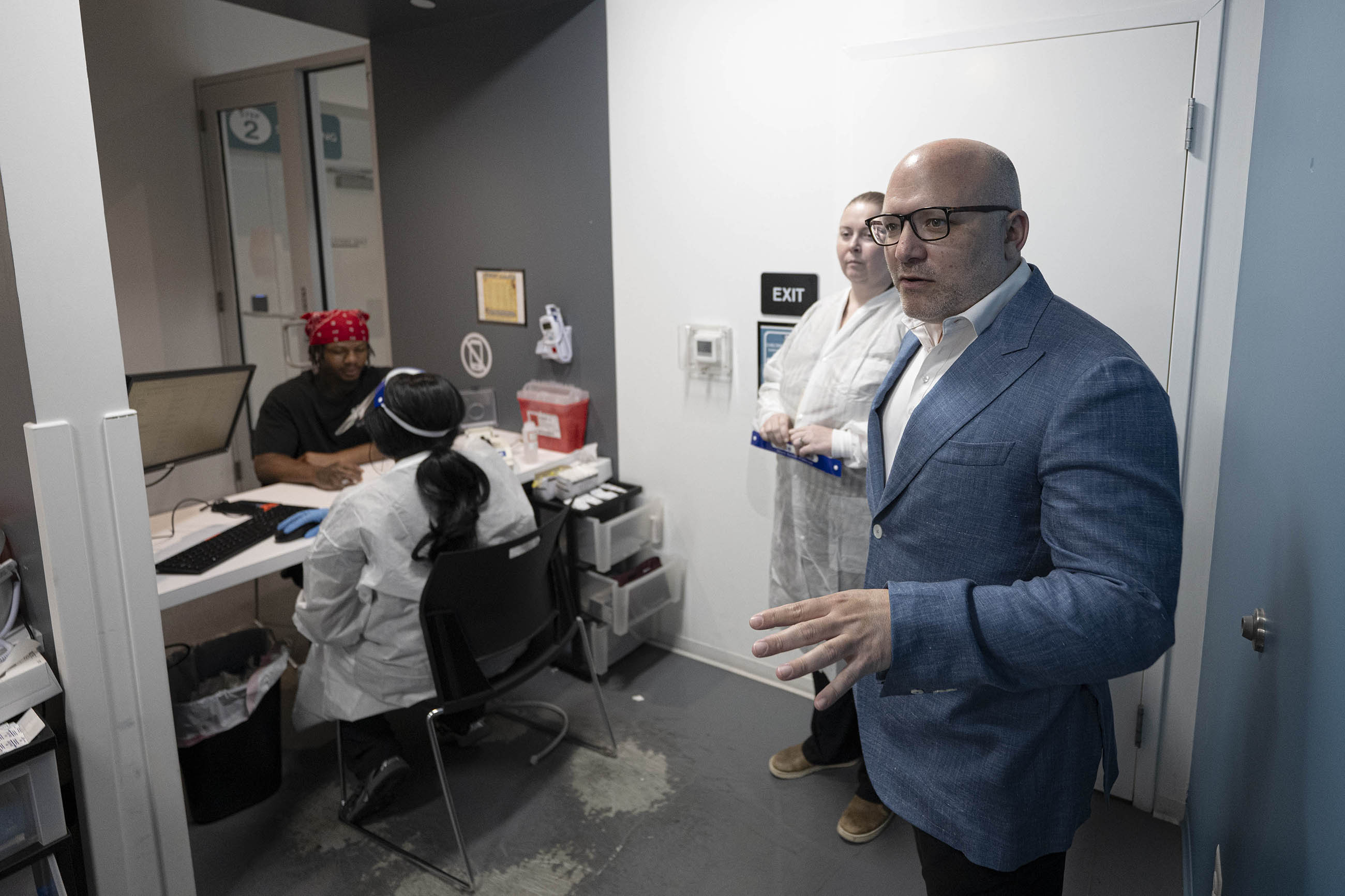
Ben Ruder, CEO and founder of B Positive Plasma, and Pearl Dixon, an assistant manager and phlebotomist, explain the donor intake process. Each donor fills out an extensive health questionnaire, undergoes a medical exam, and gets a finger prick to test their blood for iron and protein levels. Jose F. Moreno / Staff Photographer
Inside the booming industry
On a recent Wednesday afternoon at B Positive Plasma in Montgomery County, a steady stream of donors checked in at kiosks in the lobby.
After filling out an extensive health history questionnaire, each new donor undergoes an on-site medical exam by a licensed practical nurse. Repeat donors must get annual exams. At each visit, a medical tech checks their vitals, including blood pressure, pulse, and temperature, and performs a finger prick to test their blood for protein and iron levels. Donors must weigh at least 110 pounds.
“We make sure they’re healthy and well,” said Ben Ruder, founder and CEO of B Positive Plasma, noting that the plasma itself is tested for HIV and hepatitis B and C before being sold.
Next, plasma donors are hooked up to a machine that draws out blood, spins off the plasma, and then returns the red blood cells back to the donor, a process that typically takes 45 minutes to an hour.
At 2 p.m., 18 of the 24 cushioned recliners at the Wyncote location on Cheltenham Avenue were occupied by donors, each with a needle in one arm. They included a Philadelphia police officer who had donated more than two dozen times since May 2025; a casino cleaner who earns $120 a week donating to support his young daughter; and a home health aide who donates twice a week to help cover his $750 monthly apartment rent.
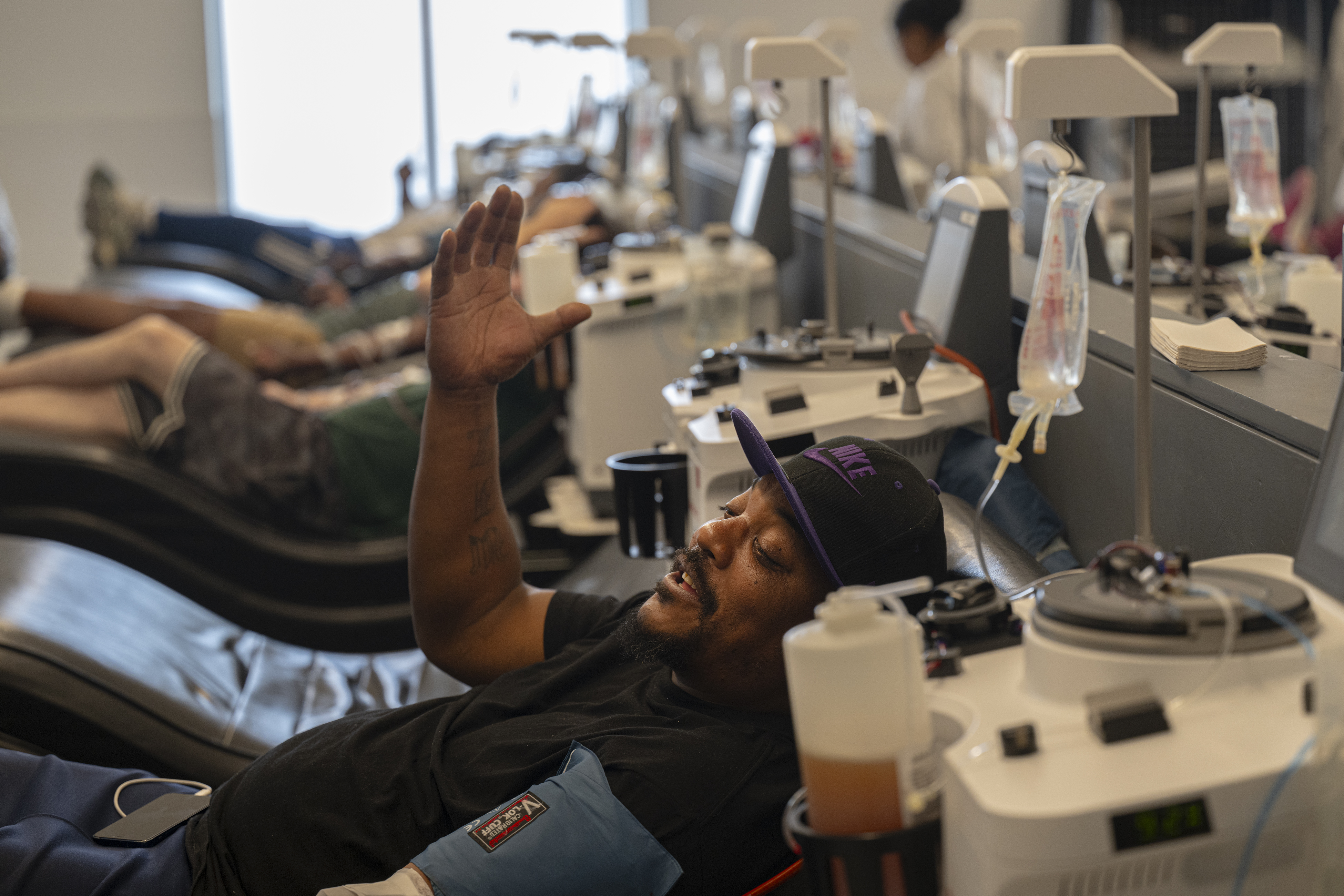
Jason Johnson, 29, of East Mount Airy, has donated plasma 68 times at B Positive Plasma in the past two years. He makes an extra $120 a week donating twice weekly. The money helps supplement the $17.80 an hour he earns as a cleaner at Live! Casino & Hotel Philadelphia. “In the beginning, I was doing it for the extra money, but once I learned that I’m helping people out in their life, it made me want to come back even more,” Johnson said. Jose F. Moreno / Staff Photographer
Plasma donation differs from whole blood donation, a faster process that relies on unpaid volunteers who can donate only once every 56 days in the U.S.
B Positive Plasma is on track to see a record year, with 180,000 donations, peaking this holiday season, when people need extra money for gifts. Last year, the company saw 150,000 donations at about 1 liter per person.
Ruder, 42, who lives in Center City, opened his first plasma donation center in Cherry Hill in 2012 and rapidly expanded to 12 locations in New Jersey, Pennsylvania, and Delaware. He plans to open two more sites in Maryland next year and another in Allentown later this year.
B Positive Plasma, like other plasma companies, structures payments to incentivize twice-weekly donors. For instance, donors whose weight and physical health yield the maximum amount of plasma — 1,001 to 1,200 milliliters — will receive $45 for the first visit and another $90 if they return that same week. Plus, the company offered a $50 bonus for anyone who donated eight times in August.
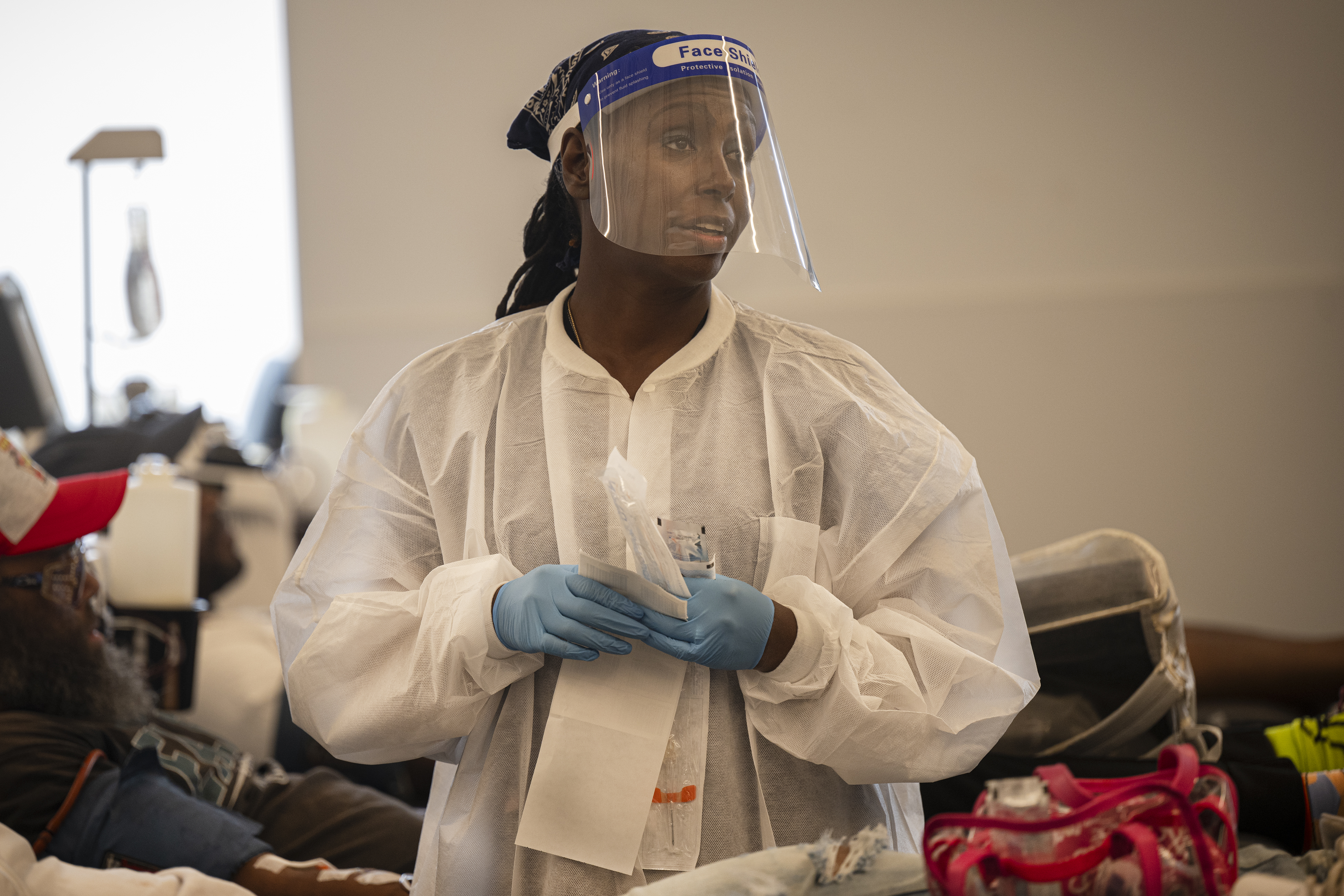
Donyele Wilkins, 48, a phlebotomist and medical assistant, works in the donation room at the B Positive Plasma in Montgomery County. She suffers from lupus, a chronic autoimmune disease for which she receives plasma-derived infusions to control her symptoms.Jose F. Moreno / Staff Photographer
Phlebotomist Donyele Wilkins works 12-hour shifts, four days a week, at B Positive Plasma.
For Wilkins, the paycheck is not the only benefit of working there.
The 48-year-old Northeast Philadelphia resident suffers from lupus, an autoimmune disease in which the body’s immune system attacks its own tissues and organs. Wilkins said she relies on plasma-derived medication, infused through an IV every four to five months, to help control symptoms like inflammation and joint pain.
Knowing how plasma is processed makes her feel “safe,” she said. She also likes getting to know “the regulars” who donate.
“It makes me feel like I know exactly where it’s coming from, and I know the people who are doing it,” Wilkins said. “A lot of them really need the money, so they’re helping me, on top of me helping them.”
‘Blood money’
Paying donors for plasma has sparked ethical debate, with some accusing the industry of exploiting poor people.
In her 2023 book, Blood Money: The Story of Life, Death, and Profit Inside America’s Blood Industry, Kathleen McLaughlin, a Montana-based journalist, found that donors in many U.S. regions are disproportionately Black and brown people.
McLaughlin, who has a rare autoimmune disease treated withmonthly plasma-derived infusions, said today’s rise in donations is “a symptom of our broken economic system.”
While the FDA regulates health safety at plasma centers, the pay rate is set by the companies, McLaughlin found. She thinks donors should be paid more and the amount should be standardized.
“Right now, it’s a capitalist free-market system, where the pricing isn’t transparent,” McLaughlin said. “The profit margins are crazy for these plasma companies, and it’s gamified to make you donate twice a week, every week, in perpetuity.”
Jaworski, the Georgetown University professor, said donors are compensated fairly. A donor whosits for an hour and a half makes “significantly more than” New Jersey’s $15.92 minimum hourly wage and Pennsylvania’s $7.25. Plus, he stressed, donors save “hundreds of thousands of lives.”
Wallace Smith, 45, of Upper Darby, prides himself on making an honest living. He earns $15 an hour as a home health aide. He makes an extra $130 a week selling his blood plasma. The money helps cover cigarettes, rent, and his phone bill. Jose F. Moreno / Staff Photographer
Recently published research suggests that communities can benefit when a new plasma center opens, because fewer young people take out high-interest payday loans and area crime drops, mostly driven by decreases in property and drug-related offenses.
“It helps you from having to do something wrong,” plasma donor Wallace Smith said.
When Smith was in his late 20s, he got arrested for selling drugs. Now 45, he is still struggling to find a job that pays a living wage, he said.
Smith, of Upper Darby, works three days a week, earning $15 an hour, as a home health aide. He earns $130 a week donating plasma, which helps pay for cigarettes, his phone bill, and rent, he said.
Like many donors, Smith said he likes the win-win of earning extra cash and helping patients who depend on plasma.
“They say there’s a job’s out here for everybody, but when you become a person who made mistakes in life, then they look at your background, so there’s only certain jobs you can do,” Smith said as his blood flowed into a spaghetti-thin clear tube at B Positive Plasma.
“With that being said, you don’t go back to your old ways,” he said. “You find better resources like this.”
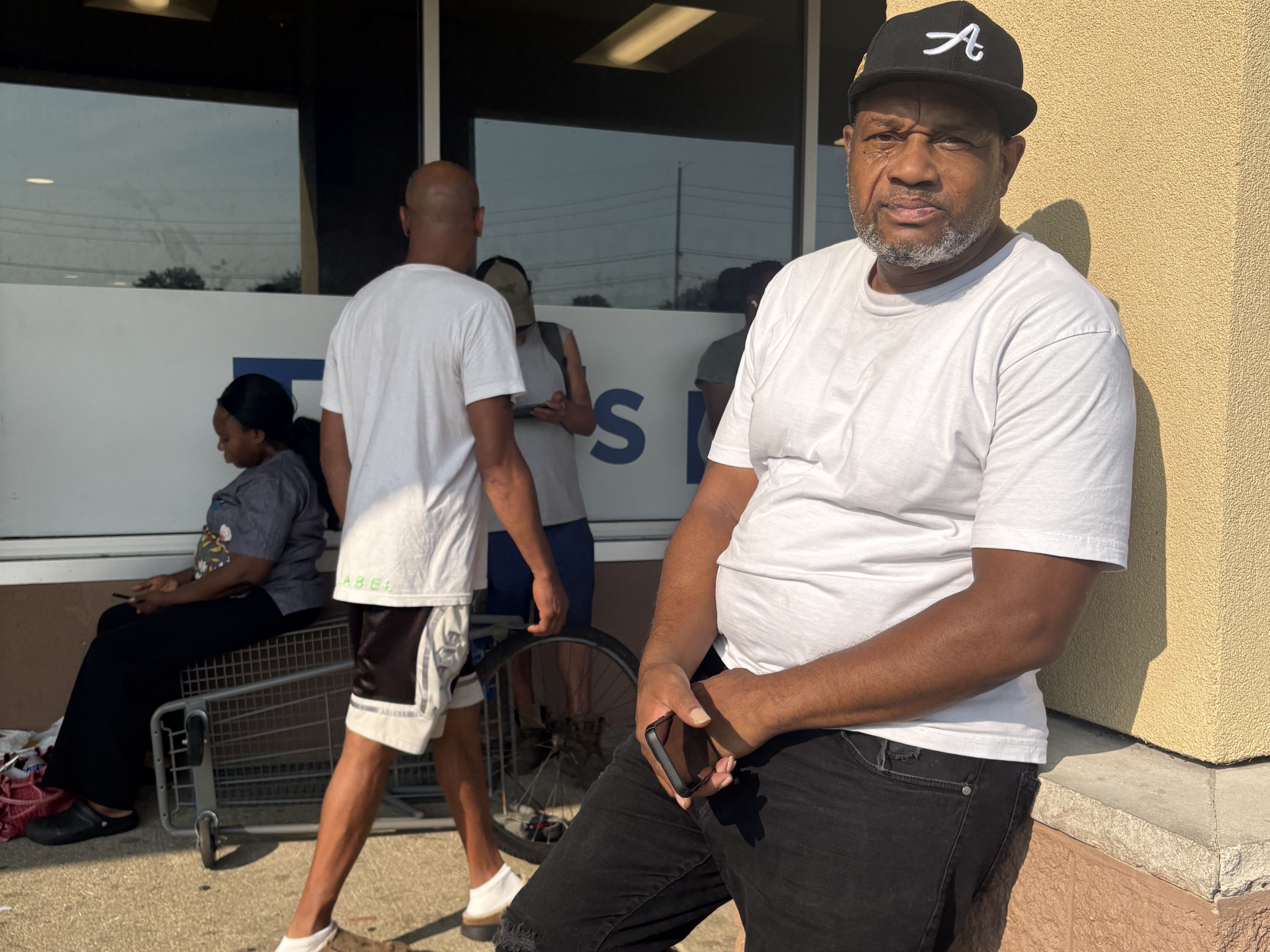
On a hot August morning, donors line up outside Octapharma Plasma in South Jersey to sell their blood plasma for money. They arrive before the doors open at 9 a.m. to beat the wait. Donor Carl Davis, 56, of Camden, donates every Saturday and Monday, earning $70 each time. The extra money helps supplement his $900 monthly Social Security Income disability check. “I get SSI disability, but it’s not enough at all to pay my bills and buy food,” Davis said.Wendy Ruderman
Beach boardwalk fun
At Octapharma Plasma in South Jersey, the wait time can be as long as three hours, donors said. When a sewer pump broke and bathrooms stopped working earlier this year, the company trucked in a row of porta-potties to accommodate donors and staff.
On a recent August morning, Brittany Barr, 36, and her three sons — 5-year-old twins and a 6-year-old — waited outside Octapharma as her husband donated. The family had walked roughly two miles from their Gloucester City home.
When Barr learned her friend had kidney failure and needed plasma infusions, she wanted to help. Barr was unable to donate plasma because she is anemic, so her husband agreed to do it.
In the month since Barr’s husband started donating, the family has earned more than $500. It has helped with groceries and their phone bills to supplement her husband’s income as a shipping manager.
“With only one income, money is tight these days,” Barr said. “Everything is messed up.”
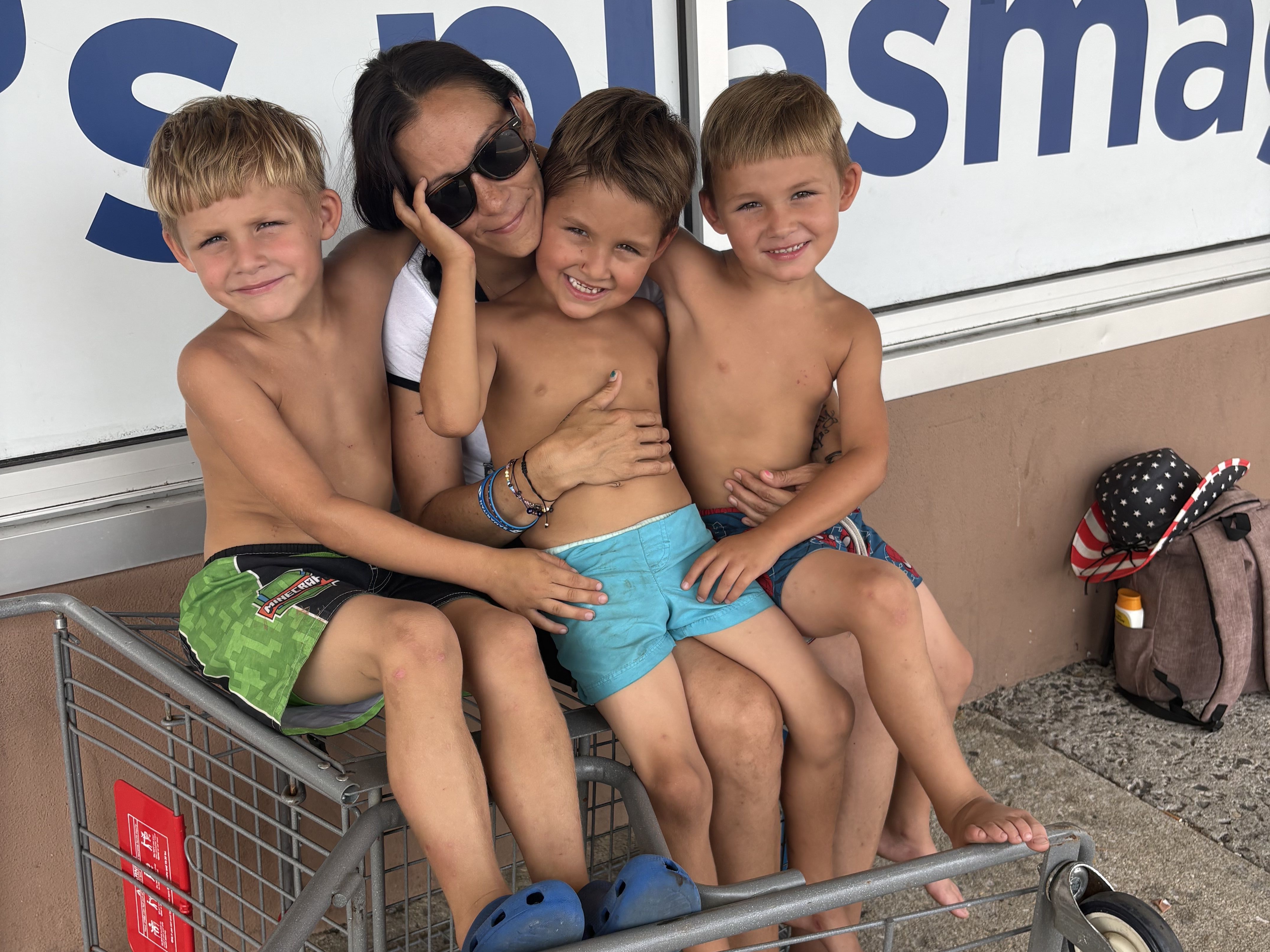
The boys, clad in their bathing suits, climbed up on Barr as she sat on a tipped-over shopping cart. They were headed next to Atlantic City for a beach day.
“This week, the money is going toward fun. They’re going to play arcades and have ice cream or whatever their little hearts desire,” Barr said. “Next week, it’s going to school supplies.”
Brittany Barr, 36, seated with her boys (from left) Cooper, Cannon, and Colton, waits outside for her husband to finish donating plasma at Octapharma Plasma in Audubon, N.J. The family from Gloucester City was next headed down the Shore, where they planned to spend the extra money earned from donating plasma on arcade games and ice cream.Wendy Ruderman / Staff
Since the beginning of 2025, nearly a dozen bagel shops have opened or leased space in Philadelphia and its suburbs, bringing new locations from local operators as well as fast-growing out-of-town brands that see the region as fertile ground for expansion.
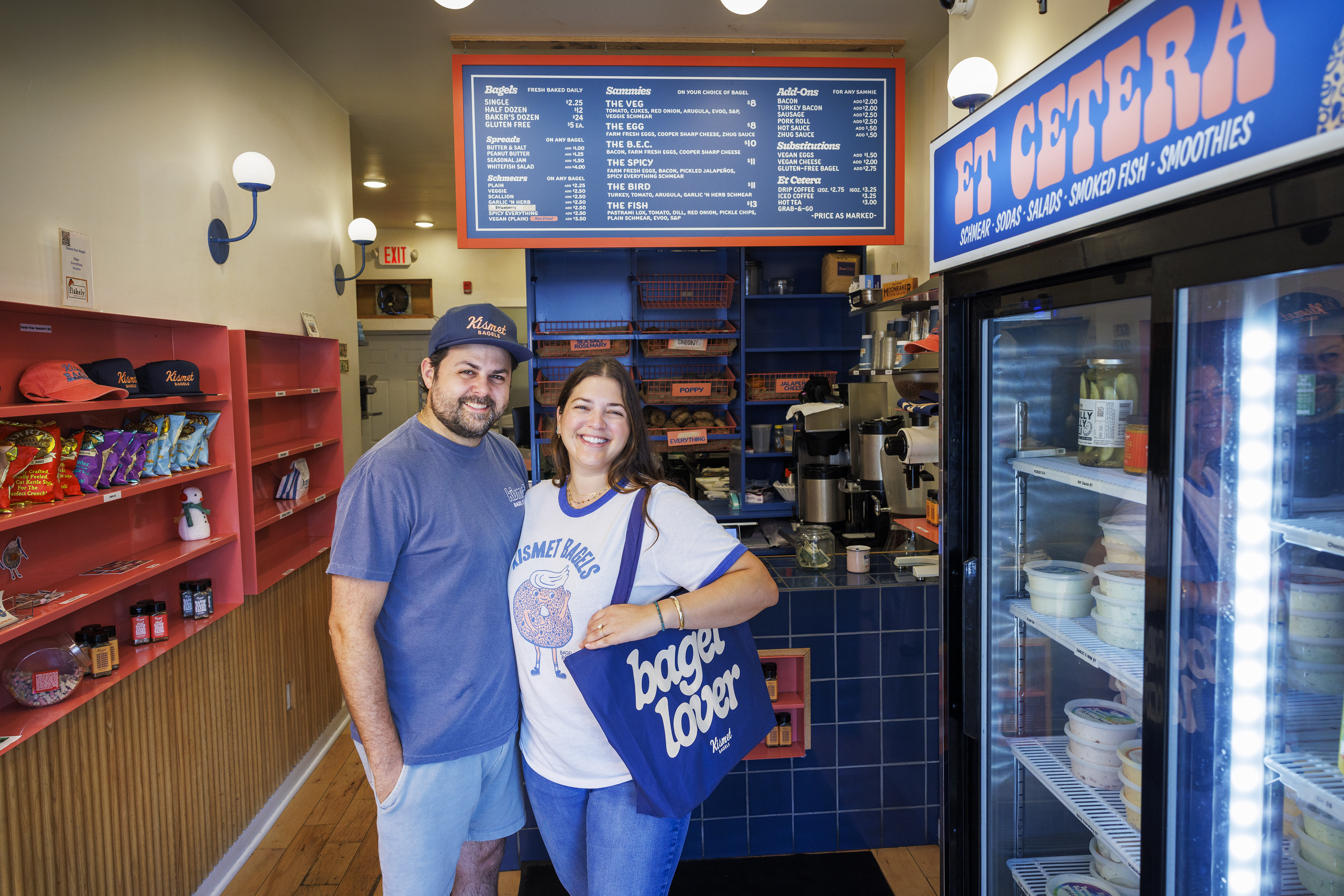
Jacob and Alexandra Cohen, owners of Kismet Bagels, at their location on Girard Avenue in Fishtown in 2024.Alejandro A. Alvarez / Staff Photographer
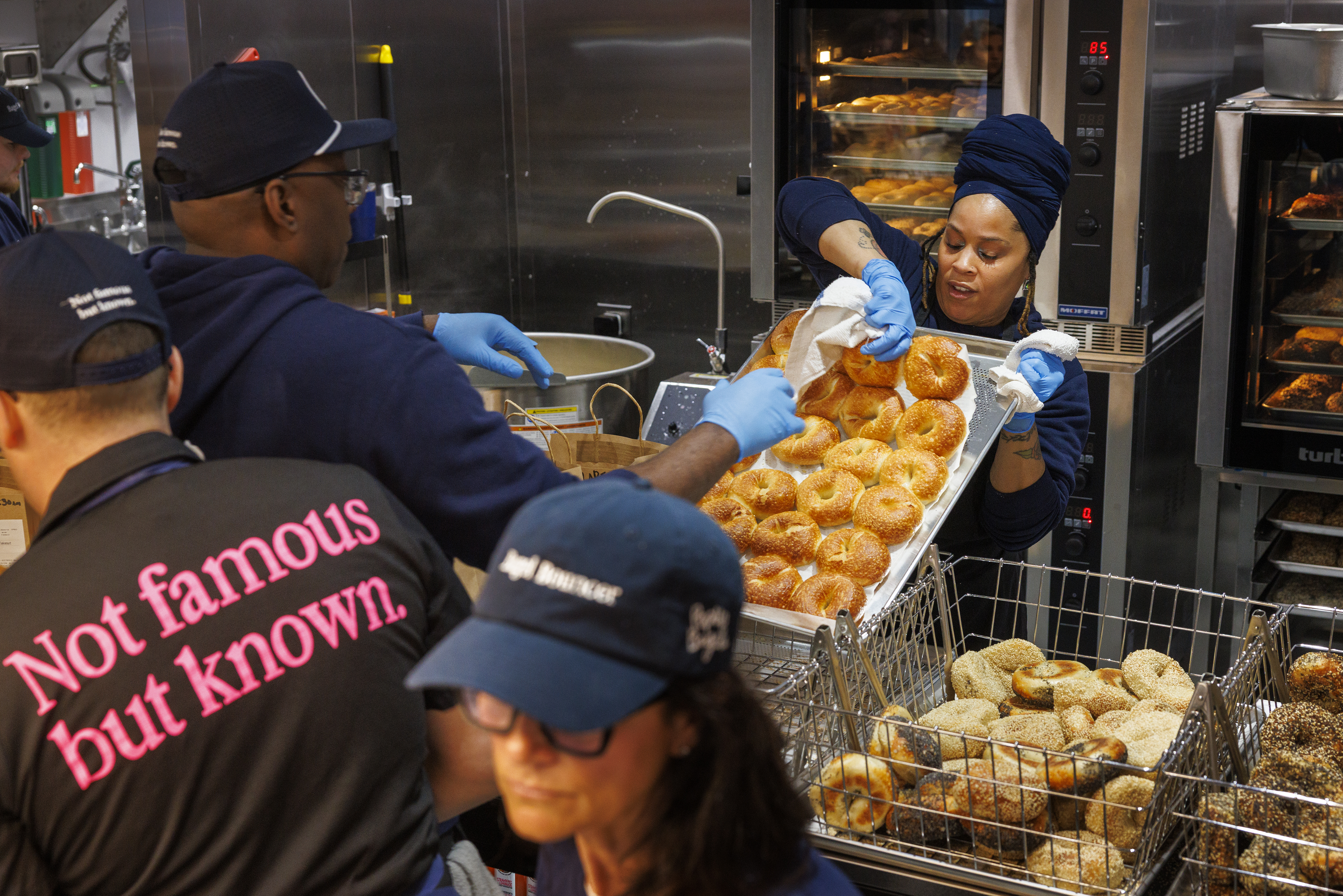
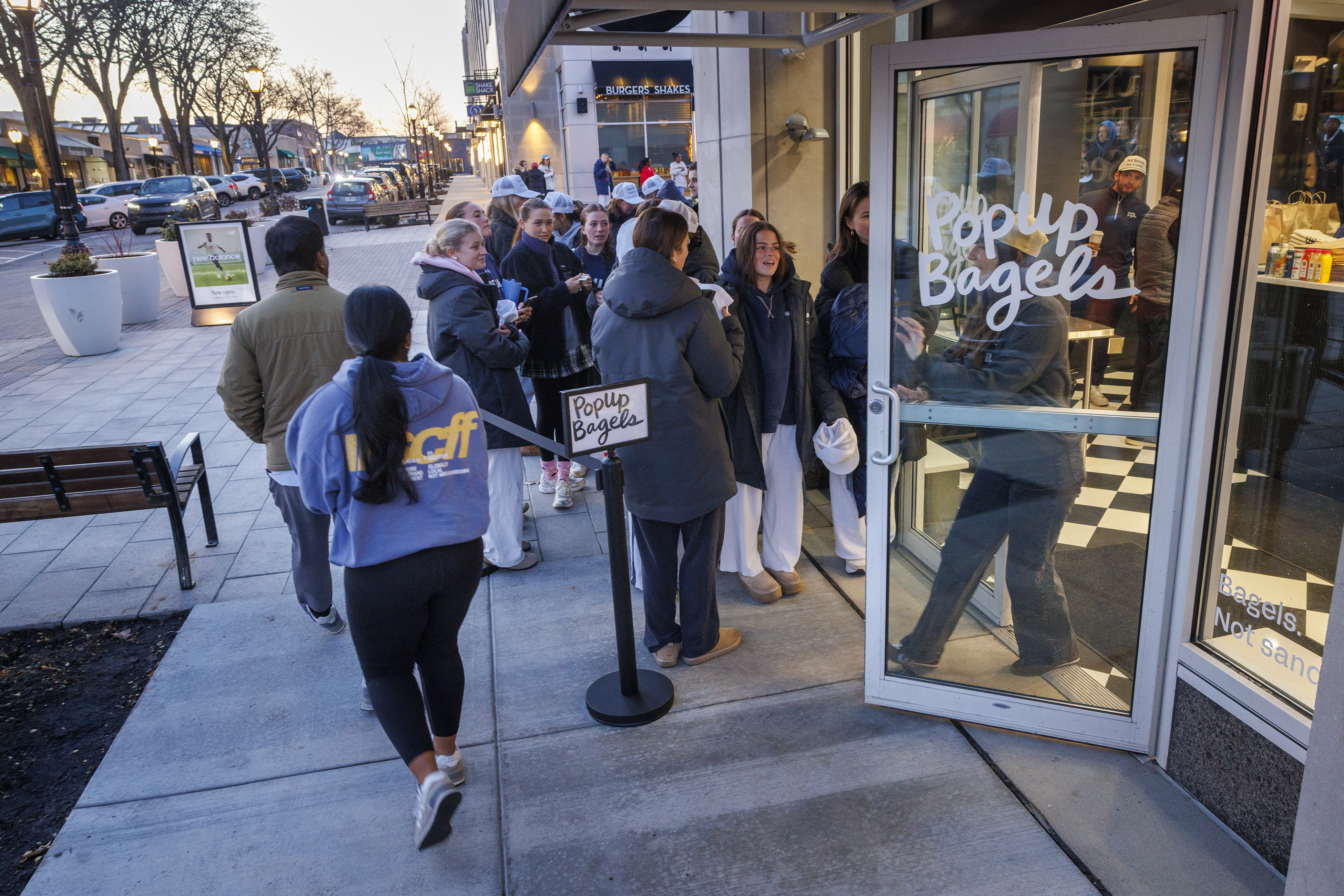
Kismet Bagels has opened its fourth and fifth shops, in Manayunk and Collingswood. Bart’s Bagels, which has shops in West Philadelphia and Bella Vista, recently expanded to the founders’ hometown of Bala Cynwyd. PopUp Bagels, the Connecticut-born chain that built a following on social media, made its local debut in Ardmore this spring and has signed a lease for a Rittenhouse shop as part of a larger regional expansion.
And Washington, D.C.-based Call Your Mother is preparing three soon-to-open Philadelphia locations — in Fishtown (due first), Rittenhouse, and Washington Square West — committing to all three before serving its first Philadelphia bagel.
Call Your Mother bagel sandwich shops have a subtropical feel.Courtesy of Call Your Mother
That tally doesn’t include all of the stores that could follow. Florida-based Jeff’s Bagel Run has announced a 10-unit development agreement for Eastern and South Central Pennsylvania, while PopUp franchisee Brian Harrington is scouting additional territory in the Philadelphia suburbs.
All this raises an obvious question: How many bagels can Philadelphia eat?
Plenty, apparently — at least for now.
Jacob Cohen, who started Kismet six years ago with his wife, Alexandra, said the company has seen sales increase even as new bagel shops have entered the market. “I don’t think they’re just dividing the same customer base, because we’ve already had new shops open in Philadelphia and we haven’t seen a decrease in sales,” Cohen said.
But Cohen, who rapidly expanded Kismet before putting thebrakes on growth earlier this year, also sees a limit. “More is not always better,” he said. “I obviously don’t have a crystal ball, but I have a feeling that some of these private-equity bagel companies coming are going to learn that the hard way.”
Bagels are having a moment
Philadelphia is part of a much broader bagel boom. The U.S. bagel market generated an estimated $3.17 billion in revenue in 2025 and is projected to reach $4.51 billion by 2033, according to Grand View Research, a market-research firm. That represents annual growth of about 4.6%. Worldwide, the firm values the bagel market at $5.8 billion in 2025 and projects it will reach $8.6 billion by 2033.
Customers lining up for the grand opening of PopUp Bagels in Ardmore in March.Alejandro A. Alvarez / Staff Photographer
Mike Kostyo, vice president of Menu Matters, a Vermont-based food-industry consulting firm, sees the current surge as the convergence of several trends rather than the sudden discovery of a new food. Artisan baked goods have been rising in popularity for years, he said, after the pandemic produced a generation of home bakers and pop-ups experimenting with sourdough and bagels. At the same time, café culture and the rise of the “little treat” have made consumers more willing to spend on premium versions of everyday foods.
“At its core, the bagel has always been a blank canvas for lots of flavors and toppings,” Kostyo said. “But now, instead of sesame seeds, you see them topped with Flamin’ Hot Cheetos.”
The traditional formula — bagels by the dozen, cream cheese, lox, and coffee — also has evolved into something closer to a breakfast-and-lunch fast-casual restaurant.
The Ramen Thing bagel sandwich from Cleo Bagels in West Philadelphia.Tyger Williams / Staff Photographer
Bagels become vehicles for egg sandwiches, smoked salmon, avocado, specialty cream cheeses, and elaborate combinations that can command substantially more than a plain bagel and schmear. And operators increasingly are looking beyond breakfast.
“The sandwich factor is so important,” Kostyo said. “You need something that you can sell across multiple occasions, not just to commuters in the morning.”
That versatility helps explain why investors have noticed.
“Investors are always looking for that next category that could blow up,” Kostyo said. “They want Call Your Mother or PopUp Bagels to be the next 7 Brew or Dutch Bros.”
From pandemic project to expansion vehicle
Some of the brands now expanding grew directly out of the pandemic.
The Cohens started Kismet as a pandemic project before turning it into a brick-and-mortar business and eventually growing to five locations — down from seven after the company shuttered a stand at Reading Terminal Market in 2025 and closed a shop in Ventnor earlier this year.
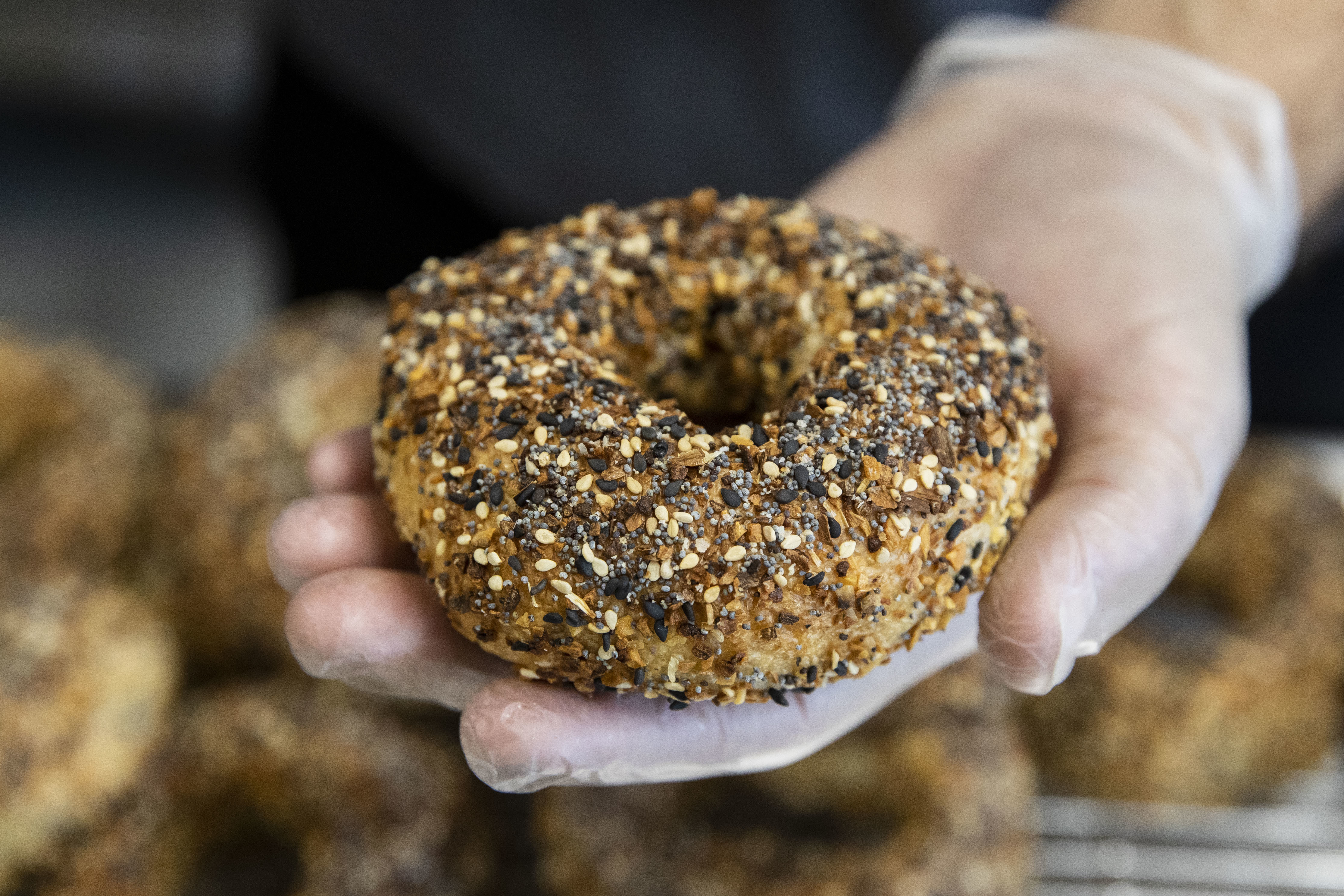
Jacob Cohen of Kismet Bagels holds an everything bagel.MONICA HERNDON / Staff Photographer
PopUp followed a similar trajectory. Founder Adam Goldberg began baking bagels at home during the pandemic and developed the idea into a business built around an unusually stripped-down concept: hot bagels and schmears, rather than the sprawling sandwich menus associated with many modern bagel shops.
Customers are encouraged to “grip, rip, and dip,” tearing apart the bagels and dipping them into containers of cream cheese.
The company’s first Philadelphia-area shop opened in the spring in Suburban Square in Ardmore. Harrington, the franchisee developing PopUp in this region, said sales have remained strong even through the summer.
“We anticipated a little bit of pullback with a lot of our core [teen] clientele getting jobs in Avalon and down the Shore, and with vacations and things like that,” Harrington said. “But it’s been very, very steady.”
In more than 25 years in the restaurant business, Harrington said, he has typically seen sales soften in late June, July, and early August. “We’ve not seen that,” he said.
PopUp has signed for the former Starbucks at 1709 Chestnut St. in Rittenhouse, as reported by the Philadelphia Business Journal. Harrington said he has a deal for a location in Lawrence Township, N.J., near Princeton, that is awaiting its permits. Another South Jersey deal is close, he said, and he sees additional potential in Montgomery County.
Despite the influx of bagel shops, Harrington said he believes PopUp occupies a somewhat different niche.
“We’re not making sandwiches,” he said. “So far, people have found us and enjoyed the way that we do it, and it doesn’t preclude them from going and getting a bacon, egg, and cheese somewhere else.”
Three stores before the first bagel
Call Your Mother is making an even larger initial bet on Philadelphia. Founded in Washington in 2018 by Andrew Dana and his wife, chef Daniela Moreira, the self-described “Jew-ish” deli has expanded beyond the Washington area as New York investment firm Invus acquired a majority stake in the company in January 2025.
Call Your Mother has signed three Philadelphia leases: 1500 Frankford Ave. in Fishtown, the former Metropolitan Bakery at 262 S. 19th St. near Rittenhouse Square, and 12th and Sansom Streets in Washington Square West. Dana said the decision to enter Philadelphia was considerably less scientific than the three-store commitment might suggest.
“My mom grew up there, my grandparents lived there, and I’ve been there so much visiting my friends,” Dana said. “I’ve been in Fishtown on a Sunday when it’s popping, and I’ve been in Rittenhouse Square when it’s super-crowded on the weekend and the market’s going. A lot of it is just gut and feel.”
Dana does not believe Philadelphia lacks good bagels. On a recent trip, he tried Bart’s and came away impressed.
“I think a lot of people are doing a great product in Philadelphia,” he said, “but there’s always room for a different bagel shop. At least I hope so.”
Dana also rejects the idea that taking investment inevitably leads to runaway growth or declining quality.
He described Invus as “patient capital” and said the investment agreement carries no requirement that Call Your Mother open a prescribed number of stores.
“We’re going to do what we can do while still keeping the quality of the food and the service top-notch,” Dana said. “And if that ever slips, we have the ability to hit the pause button.”
Local operators dig in
For some Philadelphia bagel operators, however, the arrival of heavily financed brands is cause for skepticism.
Cohen, at Kismet, is particularly wary.
“I think it’s the rare exception when private equity marries itself to a food brand and they continue to do good things,” he said. “I’d like to keep private equity out of bagels.”
He stressed that Kismet remains owned solely by him and Alexandra, financed through bank loans rather than outside investors.
David Fine, owner of Schmear Bagel Parlor, is also watching the expansion. Fine entered the business in 2013 with his Schmear It food truck and has since acquired the shops owned by Philly Bagels, giving the company eight locations in Philadelphia.
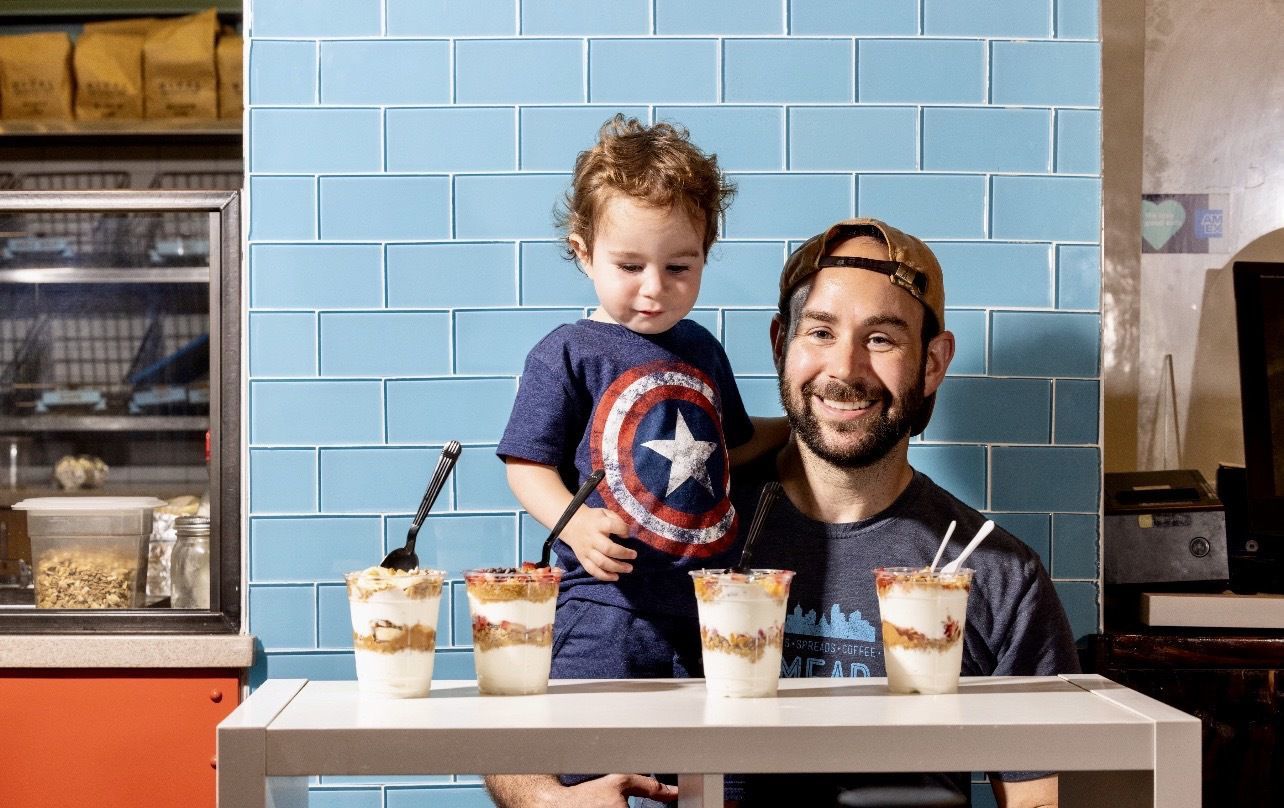
David Fine of Schmear with his son.Courtesy of David Fine
Fine said those stores have not appeared to steal business from one another.
He thinks part of the bagel’s appeal is almost mundane: It is familiar, relatively accessible, portable, and infinitely customizable.
“They’re comfort food at their very core, and they can really appeal to such a wide variety of customers,” he said.
He is less certain about the economics behind the rapid expansion of some competitors.
“The buildouts are expensive,” Fine said. “You have to be quite profitable for quite some time just to recoup that investment.”
Schmear is expanding, too, Fine said, renovating its original brick-and-mortar location at 36th and Market Streets. But he believes that being local gives the company an advantage as more national and regional shops arrive.
“There’s a keen allegiance to local brands,” Fine said.
Built for the feed
Bagels also have another quality particularly suited to the moment: They look good on a phone.
Kostyo points to the now-familiar image of a bagel sandwich sliced in half and held toward the camera, its fillings and schmear exposed.
“The visual factor is also so important in today’s social media age,” he said. “That picture … is the type of indulgent food that people go out of their way for today.”
The lines themselves become part of the marketing. A crowd outside a shop signals that the food is worth leaving home for, he said, while arguments over the proper density, crust, schmear, toppings, and even whether a respectable bagel can be made outside New York keep the category in the conversation.
“In the end, it’s all advertising and marketing,” Kostyo said.
But social media enthusiasm is fickle — witness the rise and fall of cookies and cupcakes — and Kostyo sees the flood of investment and expansion as carrying the seeds of an eventual shakeout.
“This is a pretty classic bubble where some of these brands that are doing a great job and really resonate with people will survive, but a lot will overexpand and shut down in the next few years,” he said.
Cohen, meanwhile, has decided not to test Kismet’s limits.
After years of opening shops, Kismet entered 2026 determined to improve what it already has rather than add more locations. The company is focusing on consistency, profitability, new products, employees, and customers, he said.
He is happy to see Philadelphia’s bagel culture growing and says he does not regard every new shop as a competitor. Years ago, Cohen recalled, Inquirer restaurant critic Craig LaBan told him that Philadelphia did not have enough bagels per capita.
“We might be starting to get there now,” Cohen said.
Since being sworn-in as Philadelphia’s sheriff in January 2020, Rochelle Bilal has brought new levels of dysfunction to an office with a history of corruption and scandal going back to the mid-19th century.
Tax revenue plummeted, court security incidents soared, and millions of dollars in public money have been diverted into an office slush fund.
City Hall has ignored the mounting problems for the last six years. But this week Bilal must face a judge who could limit her ability to auction off foreclosed properties — arguably the office’s most important function.
Bilal, a former police officer and self-described reformer, is due to appear Wednesday before Common Pleas Court Judge Paula Patrick to explain why the judge should not appoint a “special master” or some other expert to fix major delays in processing deeds after sheriff sales.
Buyers have been waiting a year or longer after auction to receive their deeds, leaving the properties in a state of limbo that can invite squatters and contribute to blight. Without a deed, the foreclosed homes cannot be renovated, rented, or resold.
The Inquirer first reported on that problem in July 2024. An analysis of more recent financial records shows that the office has also earned millions of dollars in interest from property auctions. That is because the proceeds of the sales are sitting for long periods in TD Bank accounts the Philadelphia Sheriff’s Office controls, rather than being used to quickly settle old tax and utility liens.
Bilal’s office initially claimed the deed process was working as intended, saying through a spokesperson in 2024 that there was no “widespread delay” in recording deeds. With complaints continuing, she told City Council at an April budget hearing that it was the buyers who were responsible for the delays.
Neither statement was true.
In May, with buyers still petitioning the courts for their deeds, Judge Patrick, who is supervisor of the court’s commerce division, filed an order demanding that Bilal address the “ongoing harm” caused by the chronic backlog and submit extensive documentation pertaining to the handling of sheriff sales and related funds since she took office.
The court order said Bilal’s office appears not to be “timely performing its essential, nondiscretionary, ministerial duties, which are mandated by law.”
The sheriff snapped into action.
Within 48 hours of Patrick’s court order, Bilal’s office processed 277 deeds — filing more paperwork in two days than it had in the prior three months.
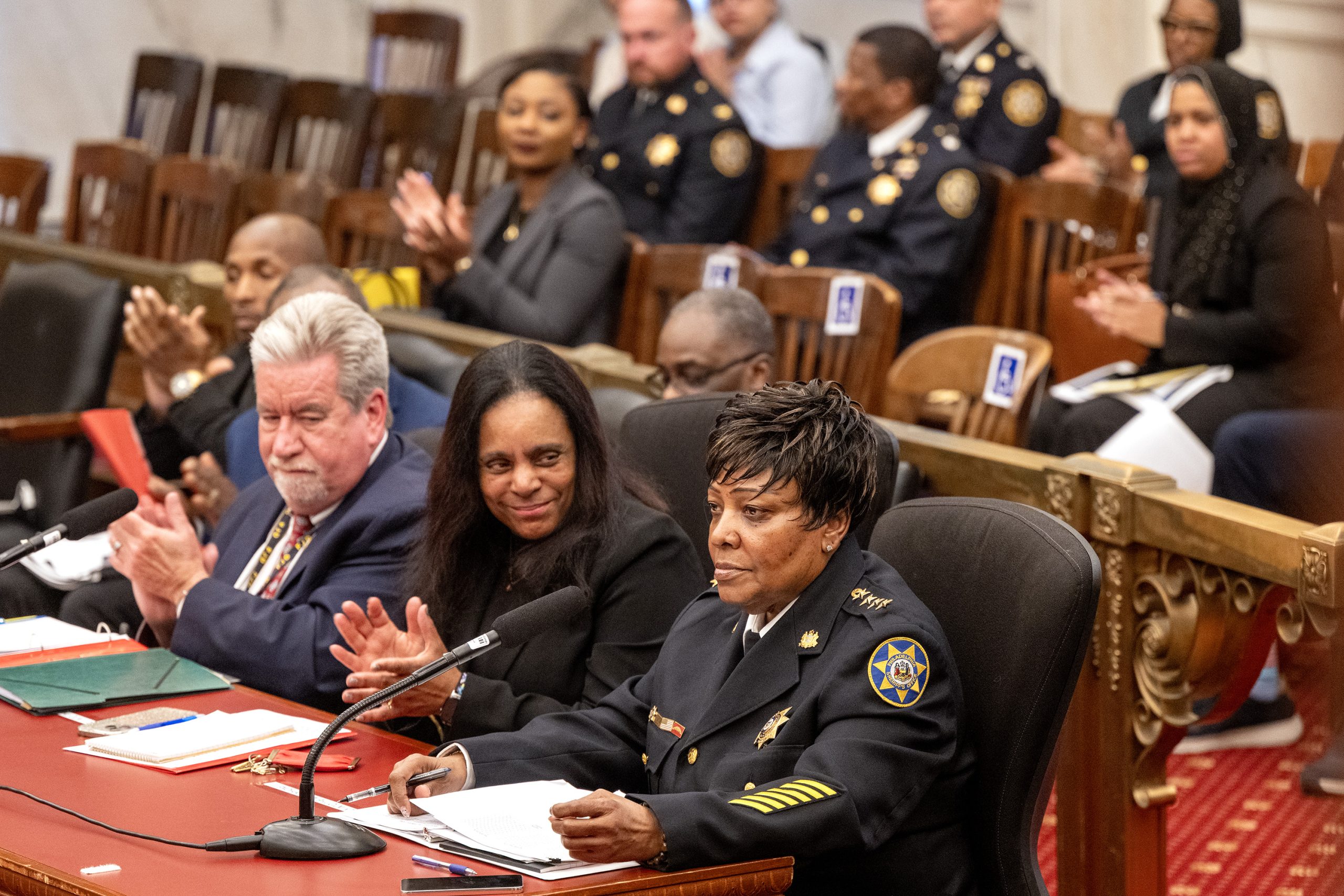
Sheriff Rochelle Bilal (right) is applauded as she testifies in City Council during a budget hearing in April. She claimed the deed-delay problem had been resolved.Tom Gralish / Staff Photographer
Last month, the office filed a response to the court order providing a new explanation for the delays: Bilal didn’t know about them.
Steven Wakefield, a newly hired attorney who serves as Bilal’s deputy undersheriff, blamed the problem on a former director of deeds who was “doing the work of multiple people” after the office switched software vendors in 2023, requiring some functions to be performed manually.
“The former director did not inform the sheriff of the backlog,” Wakefield wrote in a certification filed with the court on July 13.
The certification does not say when Bilal first became aware of the delays or why she remained in the dark while her then-undersheriff, Tariq El-Shabazz, was signing the deeds.
In a recent op-ed in City & State Pennsylvania, Bilal wrote that she was making “practical, measurable improvements designed to increase transparency, accountability and customer service.”
“I have never shied away from constructive scrutiny from the media, watchdog organizations and the public,” she wrote.
She declined to answer questions for this article.
An expensive problem
Cleaning up the deed mess has not been cheap.
Among thousand of pages of records Bilal’s staff submitted to the court last month is a check log showing that the office, beginning in March, paid more than $4.5 million from the proceeds of mortgage foreclosure sales to the Corporation Service Co., or CSC, a Utah-based financial services corporation.
Check memos describe the payments, equivalent to more than 10% of the office’s annual budget, as “deed processing fees.”
Wakefield’s certification to the court claimed that all deeds have been issued through June. He attributed the turnaround partially to new hires and the integration of the office’s Tyler Technologies software — a system that went live two years ago — but made no mention of the money paid to CSC.
“There is no further backlog of deeds to be issued,” he wrote.
Real estate agents, investors, and attorneys interviewed by The Inquirer in recent weeks said deeds are, in fact, being processed more quickly after the court order.
But the backlog has not been fully cleared.
“That is 100% incorrect,” Edward Levin, a real estate agent, said of Wakefield’s statement to the court.
Levin, whose firm resells homes following mortgage foreclosures, is still waiting on a handful of deeds from sheriff sales that took place in late 2024 and early 2025. They are supposed to be transferred within 40 days of settlement under state law.
Homes have fallen into disrepair in recent years because Bilal’s staff has taken so long to transfer the deeds. Levin does not know what to tell new buyers who are under contract to purchase the properties.
“I go to the properties once a week and I have to hear complaints from neighbors,” said Levin, who has dealt with squatters, overgrown lawns, and broken windows. “The people living next door to these properties get screwed the most.”
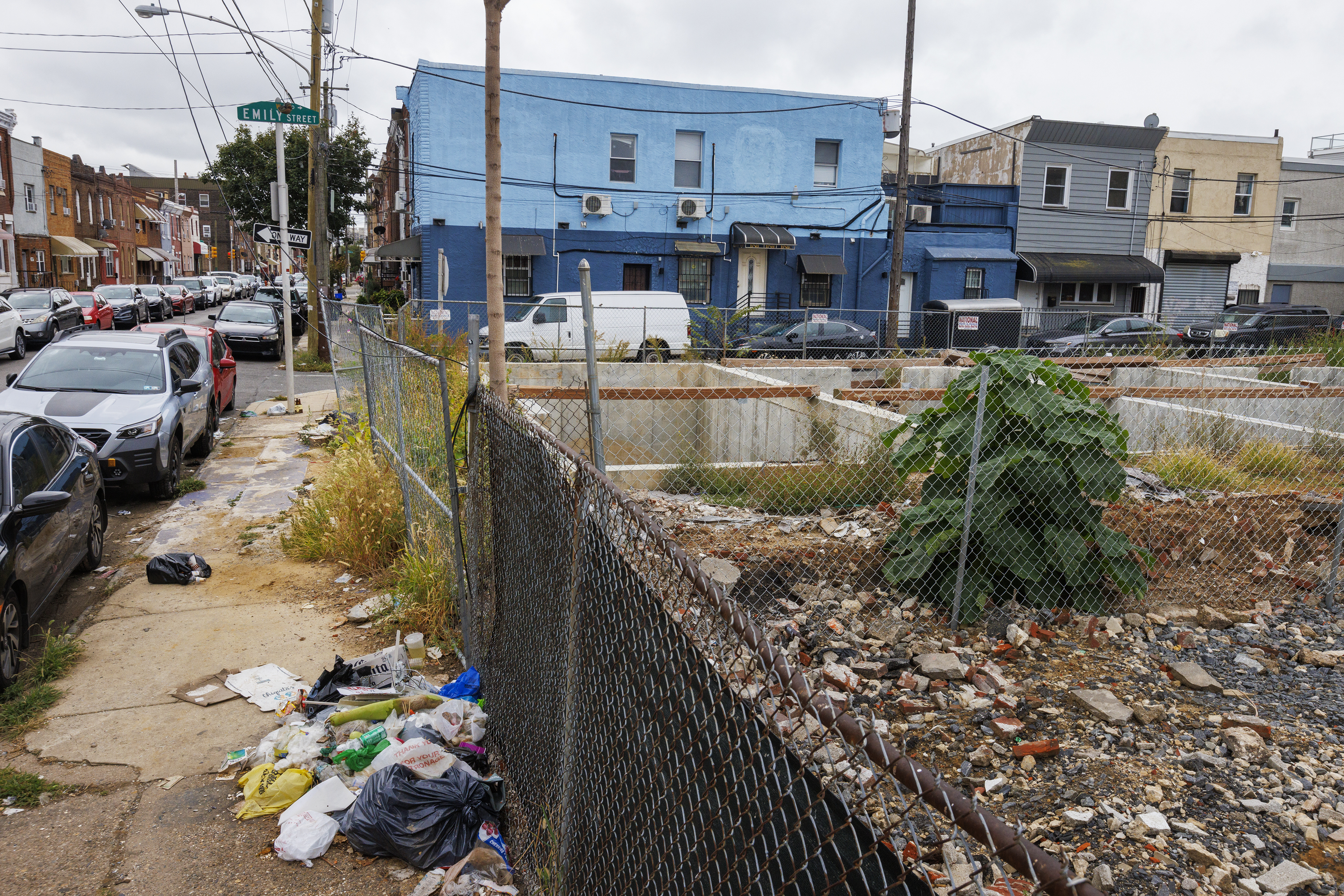
An unfinished construction site along 900 block of Emily Street in September 2024 shows what can happen when foreclosed properties remain between owners for long periods. New owners can’t take possession of properties after auction until the sheriff’s office processes the deeds.Alejandro A. Alvarez / Staff Photographer
Mary Jo Potts, a foreclosure specialist at Elfant Wissahickon Realtors who resells those properties, said last week that she has seen a recent influx of deeds from the sheriff’s office.
But Potts and other real estate agents are still dealing with another problem: The sheriff’s office is taking even longer to distribute the proceeds from auctions to settle tax and utility liens on the properties.
Even with a deed in hand, the homes still cannot be resold without a clear title.
“To me, that’s not getting any better,” Potts said.
Financial records obtained by The Inquirer through a Right-to-Know request show that tens of millions of dollars began flowing into the sheriff’s coffers after auctions resumed for tax-delinquent properties in July 2024.
But the money trickled out much more slowly.
Twenty-two TD Bank checking accounts managed by the sheriff’s office contained a combined $39 million at the end of May 2024. By last August, that sum had swollen to $130 million.
The majority flowed into a business account earmarked for money from mortgage foreclosure sales. The combined sums are so large, statements show the office generated more than $3 million in interest between 2024 and 2025.
After all liens have been settled, any excess funds are owed to the former homeowner.
David Denenberg, an attorney who seeks to collect those funds, said Bilal’s system for distributing the proceeds of sales is worse than ever. He questioned the propriety of the office generating millions of dollars in interest by holding onto the funds.
“They’re making money on other people’s money,” Denenberg said. “They should be helping you, if you’re the purchaser or the one who lost their home. You shouldn’t have to flood the courts with this litigation.”
David Bogdan, a probate attorney in Delaware County, said he spent nearly two years trying to obtain about $26,000 in excess funds from a 2022 mortgage-foreclosure sale. The money was owed to the estate of the former homeowner, who had died.
“They just refused to pay,” Bogdan said. “There is no defense whatsoever. You have to return that money. It’s not yours.”
Bogdan, who filed his claim in July 2024, said he contacted the office at least a half dozen times over more than a year, getting either no response or new excuses for the delay. He ended up having to hire a second attorney, Denenberg, to take the sheriff’s office to court.
“They’re failing to do their basic duties,” said Bogdan, who in May finally received the funds owed to his clients. “It’s just torture dealing with them.”
Among the other records Bilal submitted to the court in July is a list of about 16,000 unique properties that had been ordered to sheriff sale since Bilal took office, worth a combined $1.2 billion, based on city tax assessments.
Only about 6,500 of those properties were ever successfully sold, according to the records, and many were repeatedly held back from the auction block, sometimes due to repayment or court orders, and sometimes for more opaque reasons.
While the new filings shed some light on the scale of the sheriff’s real estate operations, they do not appear to be the full disclosure requested by the court, which included “a detailed accounting of all sales proceeds received and disbursed” by the sheriff from 2020 to now.
None of the submitted records list any money distributed for sales later than 2023, and the sheets include numerous payments or credits that are missing dates or descriptions.
Daniel Bernheim, the lawyer for a property group whose March lawsuit triggered the court order, said he has been unable to follow the money based on the records the office has provided so far.
“It shouldn’t be like Where’s Waldo? It should be set forward clearly,” said Bernheim, who is also a township commissioner in Lower Merion. “I don’t know how you could function internally in the sheriff’s office if that information is not readily available.”
Lauren Cristella, president and CEO of the good-government group Committee of 70, said the court should require new oversight.
“The court should appoint a special master who will not just execute deeds but also process lien and utility payments so Philadelphians get what they’re owed without having to sue for it,” Cristella said.
Bilal named ‘Hometown Hero’
Both the Committee of 70 and the Pennsylvania Intergovernmental Cooperation Authority, Philadelphia’s fiscal watchdog, have called for the sheriff’s office to be abolished.
In addition to the operational issues, Bilal has been mired in one mini-scandal after another since she took office: the cover-up of an inspector’s “stolen” city-leased vehicle; a bungled arrest of a suspect that led to a fatal accident; fake AI-generated headlines touting her performance; a top aide violating city ethics rules; an employee in the office who shot himself in the leg before a budget hearing.
But despite that — and years of complaints from the public — both City Council and the mayor’s office have offered nearly universal praise for Bilal.
“Give our sheriff a huge round of applause,” Mayor Cherelle L. Parker said during her first budget address in March 2024, as Bilal’s botched sheriff-sale contract with an online auction firm was costing the city and the school district an estimated $35 million in uncollected tax revenue.
“I just want to thank you for your hard work and your dedication and working in partnership with members of Council and the city of Philadelphia,” Council President Kenyatta Johnson told Bilal at a budget hearing for her office the following month.
By then, Bilal had been diverting millions of dollars in service-fee revenue — public money Philly’s Home Rule Charter says should be remitted to the city’s general fund — into an internal office account that is used for “discretionary” purchases, including $40,000 in branded merchandise, a $9,000 office mascot, and a $6,600 party at Chickie’s and Pete’s.
“The city of Philadelphia works because you all work,” Councilmember Cindy Bass told Bilal at a budget hearing this April. It was at that hearing that Bilal falsely told Council that the problems with deeds had been fixed.
Last week, the Phillies ushered Bilal onto the field at Citizens Bank Park and honored her as a “Hometown Hero.” She swung an honorary bat.
Was any consideration given to the additional difficulties of snow removal and street maintenance?
How about losing space for an emergency vehicle en route during heightened traffic?
Was a thought given to further congesting a major artery already encumbered with bus and bike lanes?
How about further strangulation by the inevitable appearance of that darling of the well-heeled — the streetery?
Shall the Mummers be forced to separate into two groups?
Another $150 million boondoggle destined to be removed by a head-scratching later generation. It would seem AI of a different sort has been at play on this one.
Writing is thinking. You cannot write without thinking, and you cannot learn to think without writing.
While it may be very hard mental work, especially at first, it gets better with practice. Students and others should not be deprived or deprive themselves of that training.
When you write about anything, you research your facts and arguments (AI can help there). You explore counter facts and arguments that may change your perspective. You organize your thoughts in a coherent and appealing way. You learn how to spell, how to use proper grammar, and how to develop your own voice and style.
This is how you develop critical thinking, which is sorely lacking in many of today’s adults. Writing really is an essential human skill. AI defeats that.
I am a retired writer of one sort or another. At 81, I still write every day, and I still reject all efforts of the AI in my computers to do any of the writing for me. The pleasure — and it is a great pleasure — is in exercising that mental muscle, not letting a machine do it for me.
Join the conversation: Send letters to letters@inquirer.com. Limit length to 150 words and include home address and day and evening phone number. Letters run in The Inquirer six days a week on the editorial pages and online.
ARIES (March 21-April 19). Mistakes are inevitable. If you learn from them, they’re called an education. If you don’t, you may need to keep building up your collection until the breakthrough comes. Some lessons take longer to learn.
TAURUS (April 20-May 20). Spending time on your spiritual life lifts your physical health, and caring for your body deepens your spiritual life. Exercise, prayer, proper rest, long moments of silence — all send benefits through multiple parts of your life at once.
GEMINI (May 21-June 21). A reluctant leader may nonetheless be excellent in the post. People who fully appreciate how much responsibility leadership carries are less eager to seek power for its own sake. Knowing what’s involved, they approach the role with more caution than enthusiasm.
CANCER (June 22-July 22). Some experiences make perfect sense only after you’ve lived through them. Your head catches up with your heart a little later. Move through the bafflement. It all clicks in at the perfect moment.
LEO (July 23-Aug. 22). You’ll solve a human puzzle. Someone does something that makes no sense. You become fascinated by why they did it. You keep observing until the pattern clicks. Once you understand their motive, you know how to deal with them.
VIRGO (Aug. 23-Sept. 22). If you only knew the depth, breadth and intensity of pure love directed at you on a regular basis, all life’s irritations, frustrations and injustices would be swept away by the mighty current of this profound truth.
LIBRA (Sept. 23-Oct. 23). While it may seem unfair that someone so easily accomplishes the thing you’ve been struggling to do, it also doesn’t matter in the least since the only way to improve is by using what you have for however long it takes to figure it out.
SCORPIO (Oct. 24-Nov. 21). Worry is a form of time travel — jumping to a possible future to check out the demands, losses and outcomes that live there, then borrow a bit of the bad feeling to bring back home. Skip the trip today.
SAGITTARIUS (Nov. 22-Dec. 21). Identity is a story we tell ourselves about who we are. Good stories sometimes involve contrivances, exaggerations and facts placed in a strategic order. But when it’s your story, you have the artistic license to craft it.
CAPRICORN (Dec. 22-Jan. 19). Micromanaging is often counterproductive, especially when the manager and the managed are both the same person. You have your reasons for doing things your way, even when you don’t know what they are.
AQUARIUS (Jan. 20-Feb. 18). You settle into a remarkably even temper and attitude as you embody this truth. Whether you’re in a three-step process or a three-million-step process, it’s all stepping, and the number you’re on is always “this one.”
PISCES (Feb. 19-March 20). Learning about the world helps you see that there is much more available to you than the options you knew about last week. The choices most people around you are making might be fine for them, but not for you.
TODAY’S BIRTHDAY (Aug. 25). It’s your Year of Sweet Reverberations, when the goodness you’ve been pouring into the world catches up to you, giving you what you most desire and also what you need going forward: vitality, resources and people around you who support your favorite version of yourself. More highlights: Love’s fever. A big money deal. A hard asset or intellectual property becomes much more valuable — a game changer. Leo and Scorpio adore you. Your lucky numbers are 7, 5, 25, 10 and 14.
DEAR ABBY: After nearly 18 years of marriage, I left my wife. Our daughters were 10 and 12. We had married quickly, and only later did I realize how deeply judgmental her “born-again” beliefs were — so much so that she gradually cut off my entire side of the family. I tried for years to reason with her, to no avail, and we divorced. What I never anticipated was losing my children as well.
In the years that followed, I sent cards, letters and messages — most went unanswered. I was told, “The girls don’t want to see you,” yet I was never given the chance to hear that directly from them. Over time, I came to realize I was a victim of parental alienation — something I never would have imagined from someone who professed strong Christian values.
More than 35 years have passed since I left that marriage, and I have had no meaningful contact with my daughters since. I am not without fault, and I own my mistakes, but the pain of lost years — and lost connection — remains. I write for others who may see themselves here: Please don’t let years pass in silence. Talk. Listen. Apologize. Seek understanding before distance becomes permanent.
— MR. KALAMAZOO
DEAR MR. KALAMAZOO: You have my sympathy for the years of pain and separation you’ve endured. Your story shows the importance of seeking partial custody or visitation rights as part of a divorce settlement. Your ex-wife would have had a much harder time cutting you off from your daughters if you’d had a court-mandated right to spend time with them. What’s done is done. You must allow yourself to accept it and live your life.
** ** **
DEAR ABBY: I am feeling uncomfortable with what has become a steady stream of requests on social media for charitable contributions on friends’ birthdays. My husband and I carefully budget our annual charitable contributions, and we try to be as generous as possible, but we cannot possibly respond to all of these requests and still fund our own preferences.
Would it be rude to post a comment saying, “Although this is not one of our charitable priorities, we wish you a happy birthday!”? My best friend says it would be better not to respond at all, but that feels a bit rude. What do you think?
— UNHAPPY BIRTHDAYS IN MONTANA
DEAR UNHAPPY: Do not state that the charity the person has chosen is low on your list of priorities. Acknowledge the occasion by posting warm wishes for the birthday to be a special one. Period.
** ** **
DEAR ABBY: My daughter is 19 and has a job. She has had a friend since fifth grade. They went six months without talking, but now they’re friends again. My daughter offers to buy her stuff, but I feel it’s not fair of the friend to accept. She works, too, but she doesn’t have enough money for any activities other than lunch. I want to stay out of it, but it bothers me. What should I do?
— PROUD MOM IN MASSACHUSETTS
DEAR MOM: Stay out of it. If the arrangement becomes so out of balance that it begins to bother your daughter, she will deal with it without your involvement. If she wants your advice, she’ll ask for it.
SEATTLE — Julio Rodríguez unloaded on a two-strike splitter in the first inning here Monday night and set off the foghorn that signals Mariners home runs.
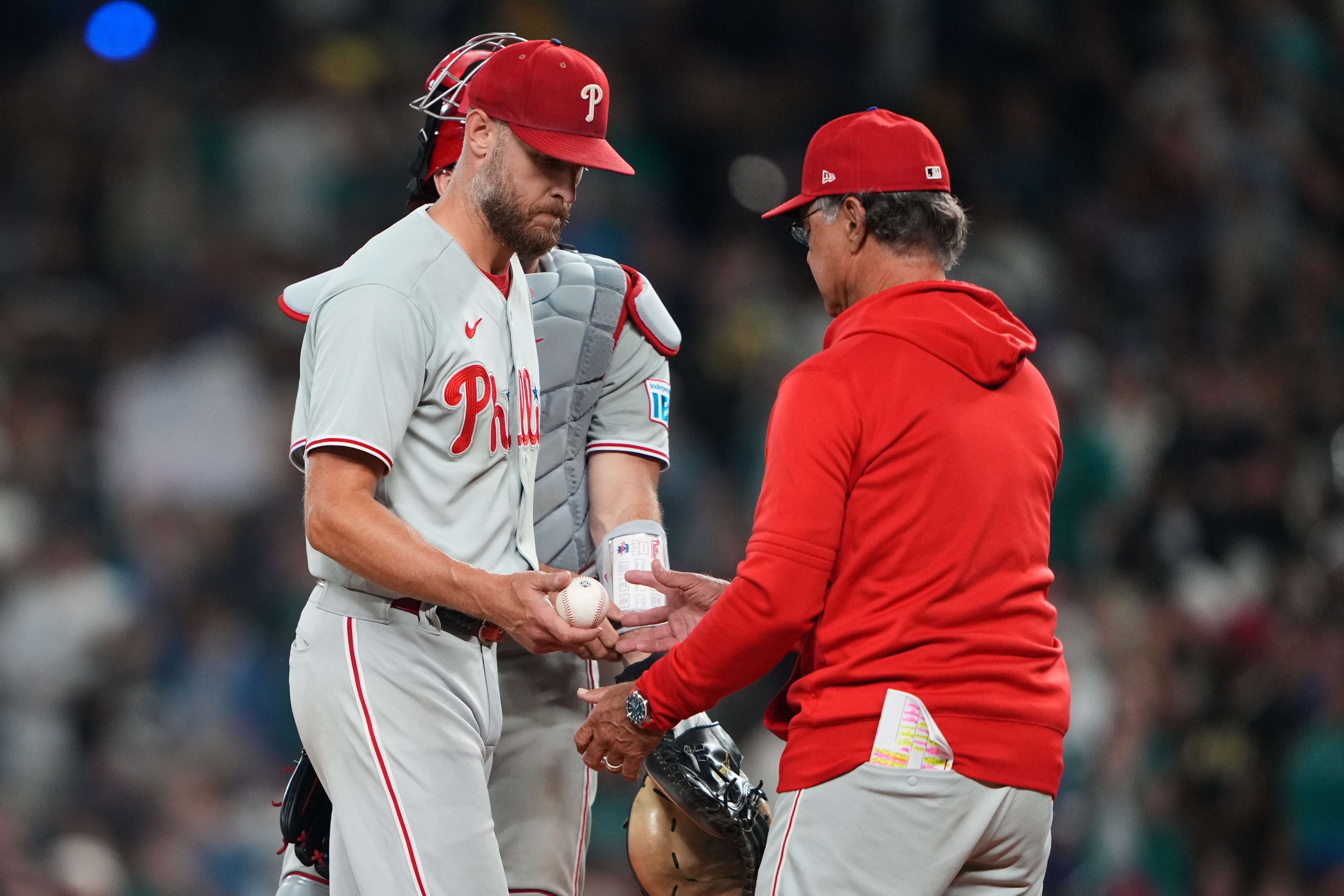
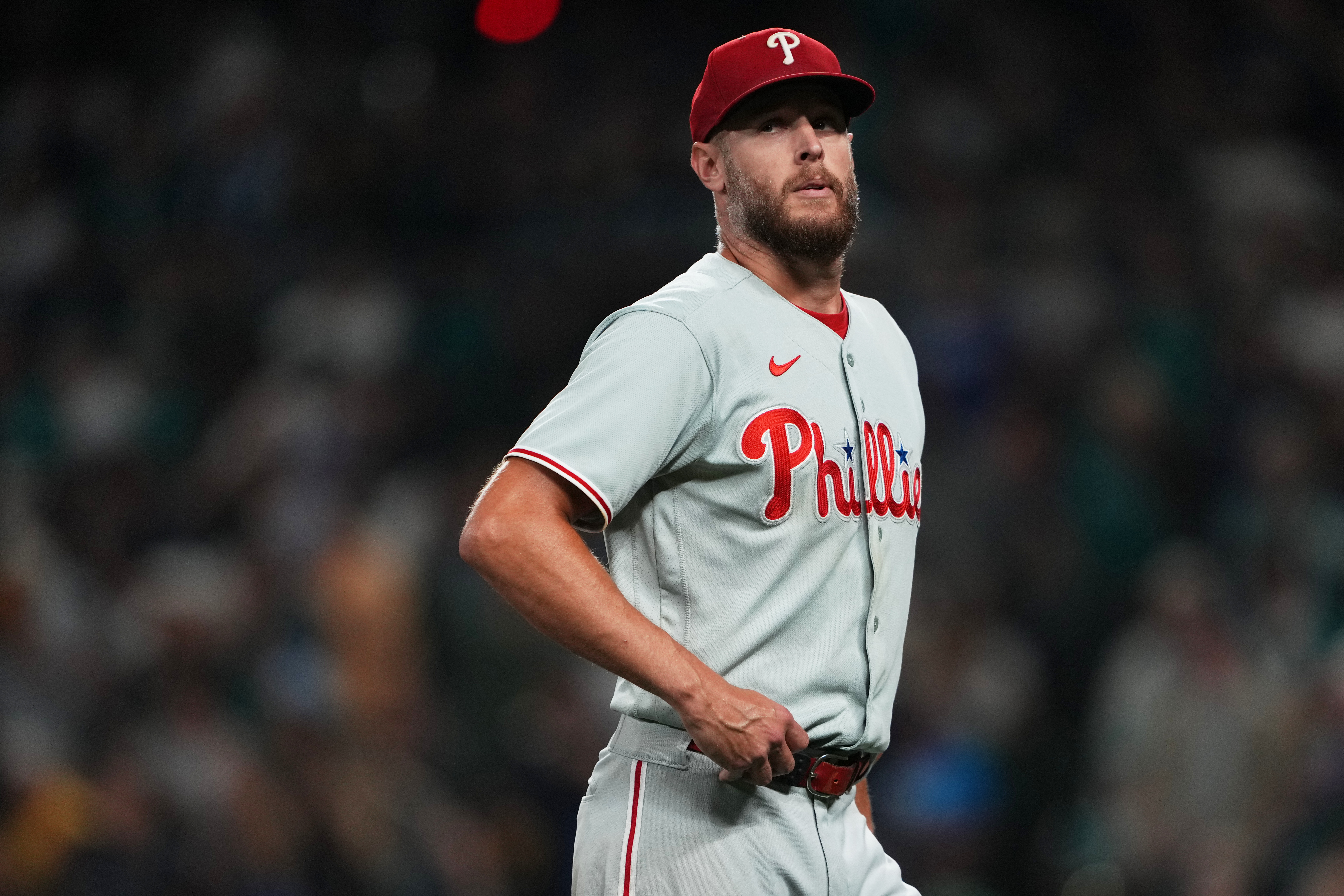
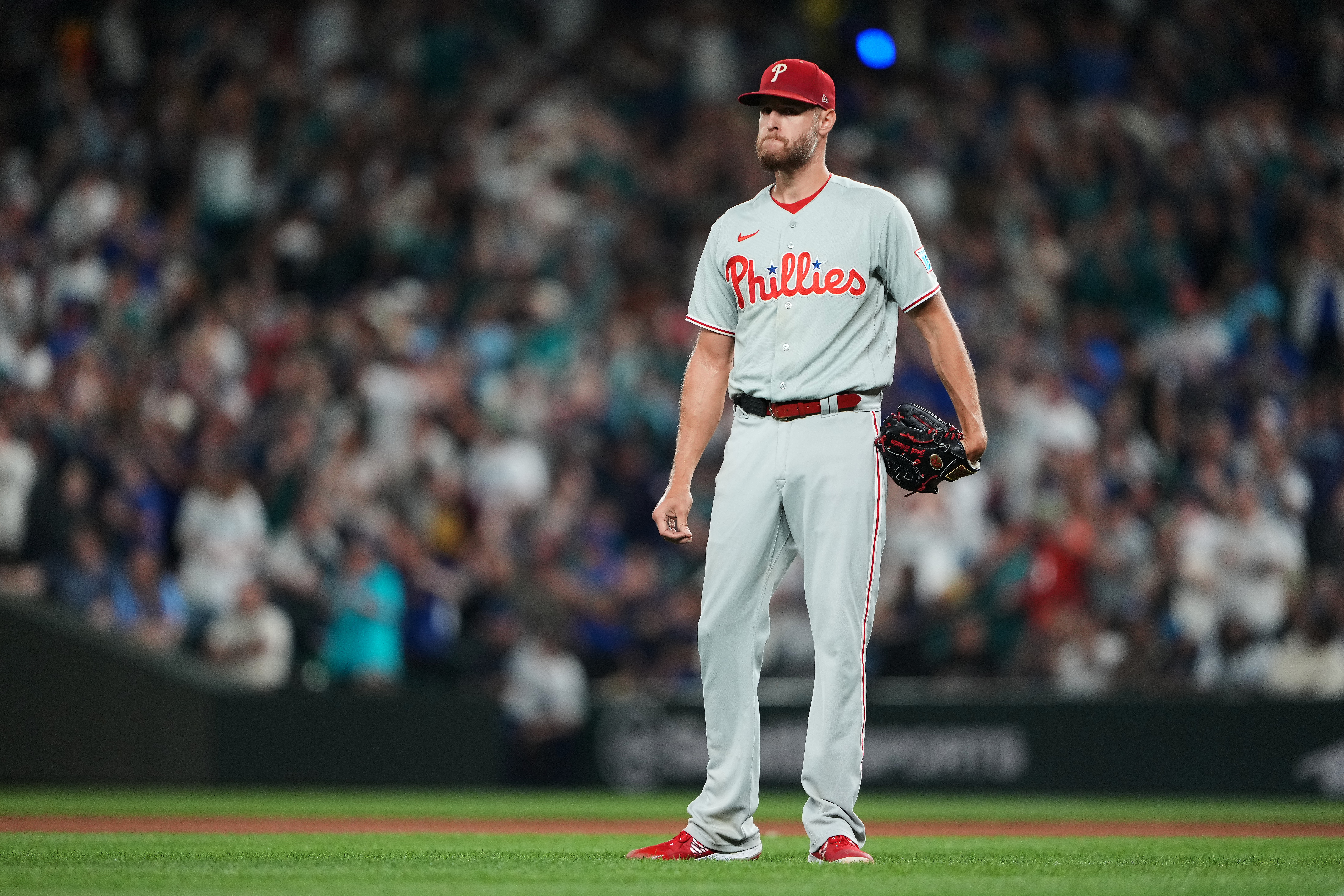
Because the Mariners’ five-foghorn, 9-2 victory was a five-alarm start for Zack Wheeler. Never mind that the Phillies’ nine-game winning streak went up in smoke. There was a more urgent question to keep the team’s pitching brain trust from sleeping in Seattle.
It wasn’t merely what happened against the Mariners, but as long as we’re on the subject: Wheeler allowed eight runs (a season-high) on nine hits, four homers, and five walks, tying season-highs in those categories. He didn’t record an out in the fifth inning after Don Mattingly sent him back out at 94 pitches. His ERA jumped from 2.92 to 3.40.
The Phillies could chalk it up to a one-off, just one of those nights, if not for the fact that the 36-year-old ace has given up at least four runs in four of his last six starts. Related: He has issued at least four walks in back-to-back starts for the first time since July 2017.
“I haven’t had a stretch like this in a while,” Wheeler said. “I mean, I just don’t really have anything else to say.”
At least not after saying this: “To be totally honest with you, I feel perfectly fine, healthy, strong. Everything’s there.” And that’s relevant because Wheeler missed the final six weeks of last season and the first month this year after having a rib removed to relieve a compressed vein that caused a blood clot near his shoulder.
Phillies starting pitcher Zack Wheeler gave up five runs in the first inning of his team’s 9-2 loss. Lindsey Wasson
Wheeler’s velocity readings appear to support his claim. His fastball averaged 94.9 mph, consistent with his 95-mph season average. The Phillies have other metrics that also suggest Wheeler is healthy.
So, if he insists he’s physically fine and not struggling with stamina 124⅓ innings into his comeback season, is there another explanation for walking 15 batters in a four-start span for the first time since … checks notes … May 2014, his second season in the majors?
“That’s why it’s so frustrating right now,” Wheeler said. “Because I’m on a rough stretch and I feel fine. You’ve really got to dig in. That’s what I’m going to do [Tuesday], you know? Sit down, talk, and try to get some stuff figured out.”
OK, start here: Wheeler said the only pitch he was able to throw for a strike was his fastball — “and that’s not even fully consistent.” He gave up homers on his splitter (to Rodríguez and Cole Young), fastball (to Cal Raleigh), and cutter (to Raleigh, the .167-hitting star catcher who went deep a third time against reliever Chase Shugart).
Wheeler gave up five first-inning runs for the first time since Sept. 12, 2023. The first six batters reached base, with the only out coming when Bryce Harper nailed Josh Naylor trying to stretch a single.
It all started by running a 3-1 count to leadoff-hitting Randy Arozarena, who drew a seven-pitch walk.
“I hate walking guys,” Wheeler said. “I used to walk guys a good bit [early in his career] and kind of got away from that, and now that this little stretch has been walking guys, it’s pretty frustrating.”
Considering this is Wheeler, the best pitcher in baseball over the last seven years, the Phillies won’t dismiss any theory for why he’s struggling. Odds are, he isn’t tipping pitches. Just in case, they’ll look into it.
“They were taking really good swings, so first, I’m going to check off the box of, am I doing something to where other teams are seeing it, you know?” Wheeler said. “At this point, you’ve got to check off all the boxes. It’s not where I want to be. But like I said, we’ll sit down and kind of dig in and see what’s really going on.”
Zack Wheeler gave up five first-inning runs and back-to-back homers in the fifth inning of a 9-2 loss Monday night in Seattle.Lindsey Wasson
Maybe it’s a mechanical issue that’s causing Wheeler to lack command. Then again, it’s not like he was missing his spot by an inch or two. Most of his pitches weren’t close to where catcher J.T. Realmuto wanted them.
“I would just say overall it’s more big misses that you’re seeing out of him than usual, and then more pitches in the heart of the plate,” Realmuto said. “As a hitter, it just makes the ball look a little bigger when your misses are big. And then when you do throw it in the zone, it’s covering a little more plate than usual, and that’s obviously not what we’re used to seeing from him.”
Wheeler being Wheeler, he wanted to start the fifth inning, according to Mattingly, who quickly added, “And I kind of wanted him to go back out.” So, although rookie Alex McFarlane was warming to enter a 6-2 game, Wheeler stayed in and gave up back-to-back homers to Raleigh and Young to make it 8-2.
For the sake of the game, Mattingly probably should’ve gone to McFarlane. But in the larger picture, the Phillies aren’t going anywhere if they’re unable to unlock the mystery of Wheeler’s last six starts, in which he has an 8.51 ERA in 24⅓ innings after running a 2.16 ERA in 100 innings through 16 starts.
“The stuff still feels sharp,” Realmuto said. “It’s coming out of his hand good. It’s just, he’s getting into some bad counts, and then throwing the ball too much in the middle of the plate. He’s going through a tough time right now, but we have all the faith in the world that he’s going to come out of it.”
Authorities were searching for a woman who disappeared in the Delaware River after rescuing a girl Monday afternoon, according to Delran Township police and Burlington County officials.
Delran police responded just after 3:50 p.m. to Burlington County’s Amico Island Park for two possible drowning victims, officials said.
Officials gave the following account:
Police were told that the woman entered the river to rescue a struggling juvenile girl.
The woman pushed the girl toward the shore, where bystanders pulled her safely from the water.
During the rescue, the woman went under the water and did not resurface.
Officials said the search included personnel from the Delran Police Department, the Delran Fire Department, the Delran Emergency Squad, the New Jersey State Police, the Philadelphia Police Department, and the Camden County Dive Team, officials said.
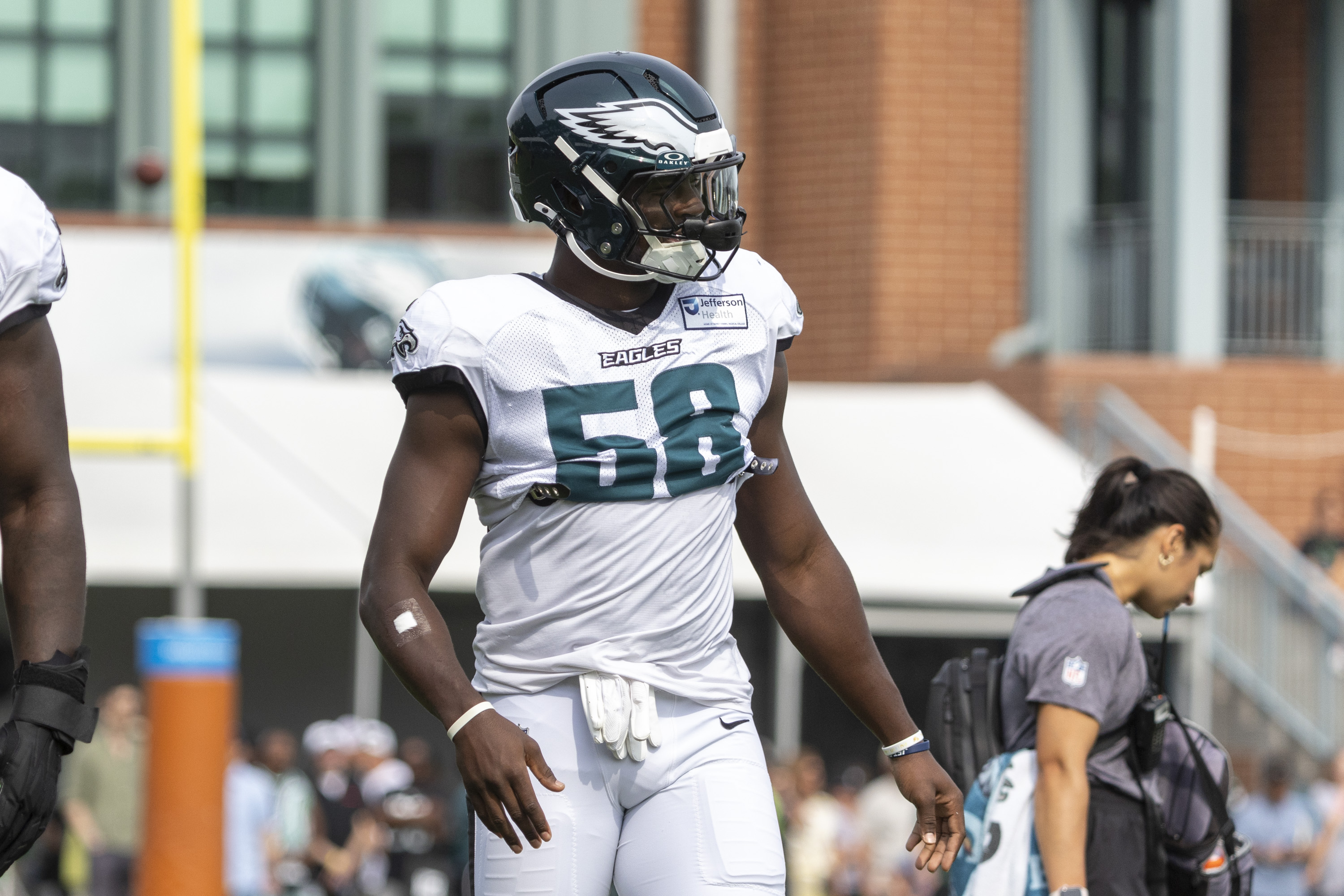
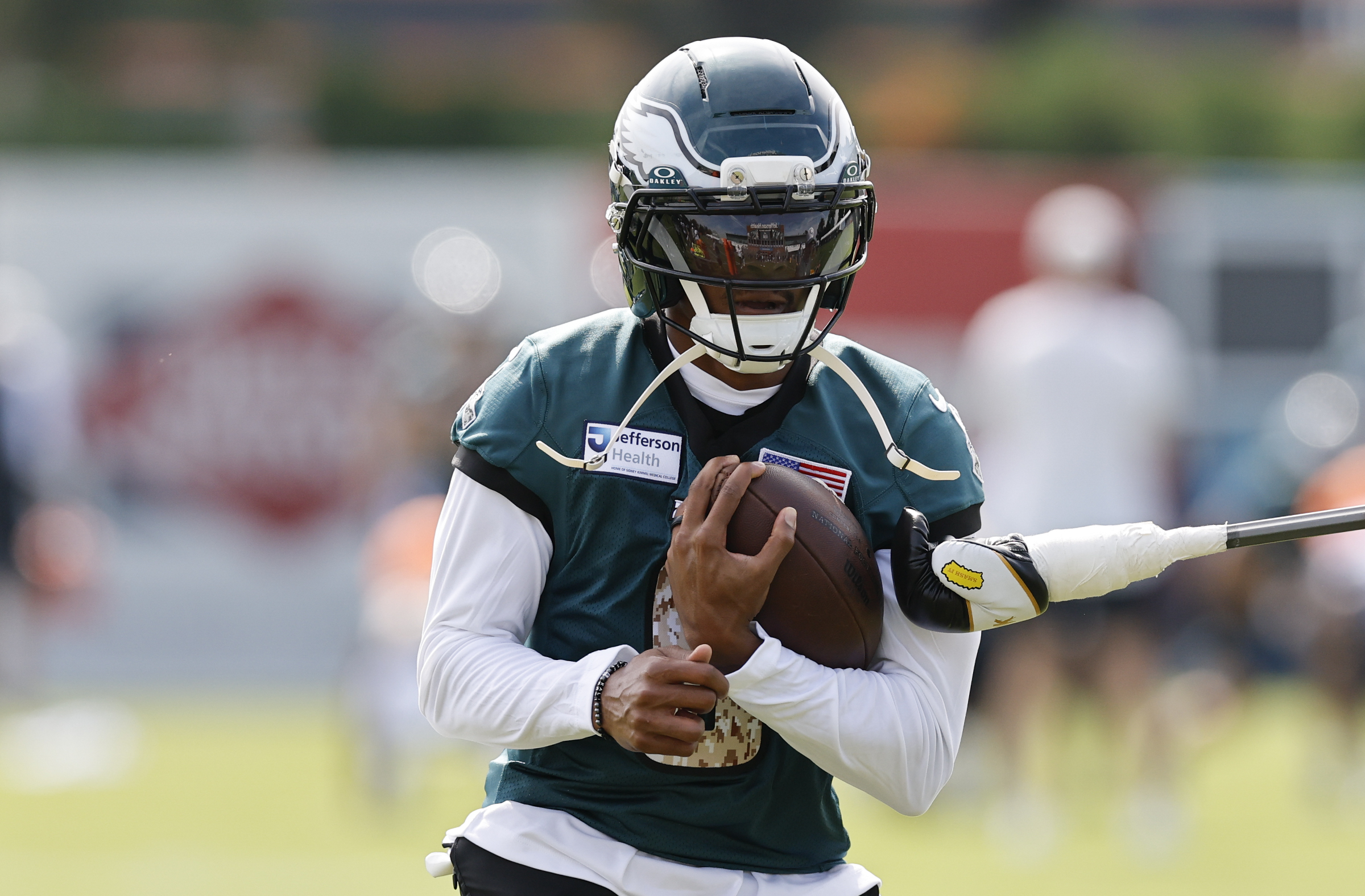
The Eagles held the 15th open practice of their 2026 training camp on Monday at the Jefferson Health Training Complex. Here were my observations from Day 15 (and links to Days 1, 2, 3, 4, 5, 6, 7, 8, 9, 10, 11, 12, 13, and 14):
Makai retry
Makai Lemon was a full participant for the first time since injuring his hamstring three weeks ago. While the rookie wide receiver was limited for Thursday’s joint practice with the New England Patriots, this was Lemon’s first opportunity to play in competitive periods. The next step will be practicing in full pads for Tuesday’s open practice. It’s unclear whether he’ll be active for Friday’s preseason finale vs. the Cincinnati Bengals. Lemon said afterward that he expects to be ready by the Sept. 13 season opener.
Makai Lemon said he believes he will be ready for the season opener in terms of learning the offense and having Jalen Hurts’ trust. https://t.co/YNuuUFRZr7
Lemon confirmed that he strained the same hamstring he injured during spring workouts. He said he needed to be “more professional” off the field to avoid future soft-tissue injuries. The Eagles’ top draft pick has a fair amount of catching up to do if he wants to be an early focal part of the offense. He worked mostly out of the slot with the first unit. Eagles coaches aren’t backing off on Lemon — at least not yet.
A pass came his way early in 11-on-11s and the ball caromed off Lemon’s hands incomplete. It would have been a tough grab, but it appeared as if he eased up on his route over the middle. The importance of chemistry between a quarterback and a receiver cannot be overstated. It could take time before Jalen Hurts completely trusts the rookie. I watched his release off the line closely on several repetitions and there is a suddenness to his first move. Hurts went back to Lemon later on a short crosser. He was able to stop on a dime and turn upfield for a few extra yards.
Eagles tight end Eli Stowers’ rough camp continued with an injury that sidelined him Monday. Yong Kim / Staff Photographer
Stowers sour
Lemon’s return coincided with a setback for second-round rookie Eli Stowers. The tight end was sidelined with, yes, a hamstring injury. His chances of playing much on offense to start the season were always in jeopardy, considering the Eagles’ depth and his lack of blocking experience, but Stowers can’t afford to miss extensive time if he wants to at least be a part of special teams in Week 1.
The following also suffered injuries during Saturday’s preseason game and were held out of practice: tackle Markel Bell (thumb/leg), center/guard Willie Lampkin (stinger), cornerback Mac McWilliams (shoulder), safety Cole Wisniewski (concussion), receiver Quez Watkins (foot), and cornerback Ambry Thomas (groin).
Cornerback Jonathan Jones (shoulder), tight end Grant Calcaterra (back), and cornerback Jakorian Bennett (knee) were still not practicing. Defensive tackle Byron Young (shoulder), running back Dameon Pierce (hamstring), and tackle John Ojukwu (pectoral) returned and were limited. Receiver Danny Gray remained limited with a groin injury.
Eagles wide receiver DeVonta Smith was back in action on Monday. Yong Kim / Staff Photographer
Receiving line
Receivers DeVonta Smith (hamstring) and Elijah Moore (neck) also were back to being full-time participants. The offense looked different with a full arsenal of receivers, but Hurts had to relish having top guy Smith back in the fold. He hit the receiver on a dig route over the middle and ahead of cornerback Quinyon Mitchell during seven-on-sevens. Smith just needs to get to the season healthy.
Hurts still sprinkled throws to most of his skill position players. His first two throws in seven-on-sevens went to tight end Dallas Goedert and receiver Dontayvion Wicks, who churned upfield for yards after the catch. Darius Cooper continued to get snaps with the starters even though Smith, Wicks and Lemon were the first three on the field in “11” personnel. Hurts hit Cooper on an intermediate route between the numbers.
The play-action bootleg continued to pay dividends with completions to Wicks and Moore. Those are layup throws if the offense can sell the outside zone run fake, even if Hurts has to check down. The quarterback later hooked up with receiver Hollywood Brown on a deep corner route, although defensive tackle Jordan Davis may have been initially credited with a sack.
Hunting Moro
Hurts had to eat a number of his dropbacks or throw the ball away because he was either sacked or pressured out of the pocket. Defensive tackle Moro Ojomo got to the quarterback on two occasions. Outside linebacker Jalyx Hunt notched a would-be sack. He recorded an earlier tackle for loss and spun running back Tank Bigsby around.
Ojomo and Hunt have been two of Vic Fangio’s top performers in camp. The former is in a contract year, while the latter could be playing for an early extension next offseason. I’m not saying they have extra motivation to play well this season, but it doesn’t hurt.
Off target
When Hurts had time to throw, the results were mixed. He hit Wicks on the run to his right, but his receiver was unable to get both feet inbounds. He went to Wicks again — this time on a slant — but Hurts’ pass was a missile and deflected off his receiver’s hands.
Lemon motioned outside and Smith ran a little wheel route out of the slot later in the red zone, but Hurts’ pass was errant. Brown got behind safety Drew Mukuba on a deep post, but the pass sailed long. There were some other unfortunate moments: Running back Will Shipley got open over the middle, but linebacker Jihaad Campbell appeared to trip him up before the ball arrived.
Hurts doesn’t often throw to Johnny Mundt, which could explain why the blocking tight end was unable to reel in a pass thrown slightly behind him.
Saquon Barkley was featured Monday after not playing in the preseason game on Saturday. Jose F. Moreno / Staff Photographer
Rushing roulette
With the starters dormant for the previous three days, coaches gave the first units most of the reps in practice. Right tackle Lane Johnson and left guard Landon Dickerson didn’t take any rest plays off. The season is obviously inching closer. The O-line opened some creases for running back Saquon Barkley, who had several strong runs.
Linebacker Zack Baun got to Barkley in the backfield when he was unblocked off the edge. But the tailback had a couple of positive runs to the perimeter. He had to jump around Dickerson when the guard fell back and nearly into his lap on one carry. And Lemon had trouble blocking on the outside on a stretch run later on. But offensive coordinator Sean Mannion’s run offense appears to be rounding into form after a strong first joint practice in New England.
The Eagles’ second-unit O-line stood out in the preseason game, although injuries to Lampkin and Bell will warrant monitoring. Center/guard Drew Kendall projects as the first off the bench at the interior positions, however.
Eagles tight end Dallas Goedert will be asked to block more at the point of attack this season. Yong Kim / Staff Photographer
Dallas does blocking
Goedert has had a quiet camp compared to other years. He explored opportunities elsewhere the two prior offseasons, but is back on another one-year deal. Goedert was still an effective receiver last season. He had 60 catches and a team-high 11 touchdowns. But he’s 31 and clearly not as explosive.
Blocking was an issue a year ago. He’ll be asked to do more of it at the point of attack this season. He got pushed back into Hurts during Monday’s practice and the quarterback was forced to eventually scramble out of bounds. Goedert had a reception on a run-pass-run option play, but he also later had a drop on an out route.
Goedert motioned out of the fullback spot as a lead blocker for Barkley at one point. I can’t imagine he’ll fill that role in games. Mannion declined to reveal his plans for the fullback position. We’ve seen very little of it in camp, although Mundt, tight end Cameron Latu, and running back Carson Steele could be in-season candidates.
Tanner McKee might have pulled ahead in the QB2 competition. Yong Kim / Staff Photographer
It takes two
If you’re a Tanner McKee fan looking for a morsel that he’s moved ahead of Andy Dalton in the backup quarterback competition, he was first up with the second-unit offense. It’s happened before, and Dalton took as many reps with the backups, but maybe it meant something this time around.
McKee checked down on a naked bootleg and also found Bigsby, who made a defender miss in space. He later hit Cooper on a comeback route and had to throw the ball away on another play-action rollout. Dalton connected with Moore for a nice pickup, but his other snaps were either handoffs or a dropback in which he had to eat the play.
Michael Carter II ran with the first-teamers on Monday. Tyger Williams / Staff Photographer
This and that
Hurts hit one of the peace sign thingamajigs that replicate pass rushers during seven-on-sevens. … Michael Carter II got some first-unit snaps at slot cornerback. … Johnson had a nice kickout block to spring Barkley. … Myles Hinton was the second-unit left tackle with Fred Johnson moving over to the right side for Bell. … Micah Morris was the second-unit left guard. The rookie played well vs. the Patriots.
Extra points
Defensive tackle Gabe Hall squeezed through on a pass rush, but he got crunched in a body pileup and limped off the field. … Noted golf architect Gil Hanse was a guest of Fangio’s. Hanse and his business partner Jim Wagner have been behind renovations of local classic Philadelphia courses like Merion Golf Club and Aronimink Country Club, host of this year’s PGA Championship. Fangio is around a 15 handicap, but is a notorious sandbagger. … The Eagles will hold their lone practice open to fans at Lincoln Financial Field on Tuesday at 6 p.m. They follow on Wednesday with a workout at the Jeff and will have a closed walkthrough on Thursday.