Tag: topic-link-auto

  • Jeffries defends Kushner meeting, vowing tough oversight of Trump

    Jeffries defends Kushner meeting, vowing tough oversight of Trump

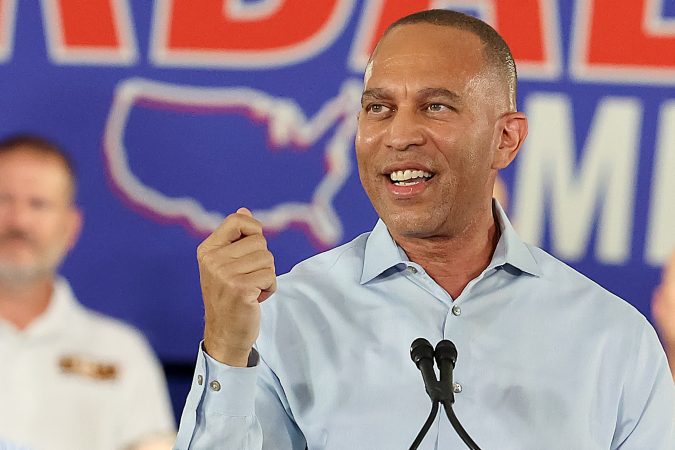
    WASHINGTON — Rep. Hakeem Jeffries, the minority leader, was forced to defend himself on Monday for taking a recent meeting with Jared Kushner, President Donald Trump’s son-in-law and top outside adviser, amid a backlash about the encounter from some progressives.

    “I wanted to give you a little real talk on this Jared Kushner situation,” Jeffries, D-N.Y., said in a video he posted on social media, in which he appeared in Brooklyn dressed in a bright green New York Yankees cap and matching polo shirt.

    Jeffries, who had initially declined to acknowledge the meeting or comment on it, said in the video that Kushner had asked for the meeting, and he had taken it, in order “to discuss the affordability crisis that exists, that is not a hoax.” (Trump has accused Democrats of inventing the concept of “affordability” to attack him over the high cost of living.)

    The discussion came as Trump and Democrats are attacking one another relentlessly on the campaign trail as they battle for control of Congress, and as the president’s inner circle is facing the increasingly likely possibility of a Democratic takeover, one that would put the Brooklyn lawmaker in line to be the House speaker.

    It drew bitter criticism from some Democrats, who are eager to see accountability for the Trump administration on a range of topics after a pliant two years of House Republican control. They said his decision to privately huddle with Kushner raised questions about how tough Jeffries would be in investigating the administration.

    “You do not meet with them — don’t have anything to do with them,” James Carville, the veteran Democratic strategist, vented online in a four-minute rant about Jeffries. “Any business we have is going to be conducted with you under oath.”

    Jeffries insisted in the video that he would be aggressive.

    “I shouldn’t have to say it, but I am,” he said. “No one is going to get a pass. We’re going to hold every single member of the Trump cartel accountable.”

    A spokesperson for Kushner did not respond to an email seeking comment on Jeffries’ video.

    The confab, which was first reported by The New York Times on Sunday, was described by people familiar with it as a general get-together in New York City to discuss areas where the Trump administration and Democrats could find common ground, discussing housing, cost-of-living and immigration. Kushner used the discussion to suggest that Jeffries meet with Susie Wiles, the White House chief of staff, with whom the Democratic leader has no relationship, according to one of the people with knowledge of the meeting.

    Kushner worked with Jeffries on criminal justice legislation during Trump’s first term, when he was an official senior adviser in the White House. Kushner now runs an investment firm backed heavily by Middle Eastern sovereign wealth funds and is not formally a part of the administration.

    But he has been an increasingly key outside adviser to his father-in-law, playing a central role in aspects of Trump’s foreign policy since last summer, a fact that Democrats on the House Judiciary Committee have begun to investigate.

    One of the most prominent faces of the Democratic left, Mayor Zohran Mamdani of New York, said he would still support Jeffries to lead the party. But elsewhere, there was outrage.

    Mehdi Hasan, the founder of the news site Zeteo, called the meeting “pathetic stuff from the House Dem leader” in a social media post. Adam Kinzinger, a former Republican member of Congress who has been among Trump’s harshest critics, referred to the meeting by posting: “Make this make sense.”

    Jeffries was already facing a potential rift within his caucus next year, with an incoming faction of antiestablishment members on the left who have repudiated him and broken with mainstream Democrats on a number of issues.

    A person with knowledge of the meeting, who spoke on the condition of anonymity to discuss a sensitive topic, said it was a mutual friend, not the president’s son-in-law, who suggested that Jeffries and Kushner meet.

    The meeting also created an awkward situation for House Speaker Mike Johnson, R-La., who has been confidently predicting that his party will retain its majority and found himself pushing back on the idea that the Trump administration was instead preparing for a Democratic victory.

    Asked on Sunday about the meeting, Johnson played down Kushner’s influence, saying he was “not really directly involved” in the administration, “at least in the day-to-day in the White House,” and again expressed confidence that Republicans could keep control of the House.

    This article originally appeared in The New York Times.

  • How to reset your child’s sleep schedule for back-to-school season

    How to reset your child’s sleep schedule for back-to-school season

    NEW YORK — After a summer of vacations and late nights, it’s time to set those back-to-school alarms.

    A good night’s sleep helps students stay focused and attentive in class. Experts say it’s worth easing kids back into a routine with the start of a new school year.

    “We don’t say ‘ get good sleep ‘ just because,” said pediatrician Dr. Gabrina Dixon with Children’s National Hospital. “It really helps kids learn and it helps them function throughout the day.”

    The amount of sleep kids need changes as they age. Preschoolers should get up to 13 hours of sleep. Tweens need between nine and 12 hours. Teenagers do best with eight to 10 hours of shut-eye.

    Set an earlier bedtime

    Early bedtimes can slip through the cracks over the summer as kids stay up for sleepovers, movie marathons and long plane flights. To get back on track, experts recommend setting earlier bedtimes a week or two before the first day of school or gradually going to bed 15 to 30 minutes earlier each night.

    Don’t serve a heavy meal before bed and avoid TV or screen time two hours before sleep. Instead, work on relaxing activities to slow down, like showering and reading a story.

    “You’re trying to take the cognitive load off your mind,” said Dr. Nitun Verma, a spokesperson for the American Academy of Sleep Medicine. “It would be like if you’re driving, you’re slowly letting go of the gas pedal.”

    Parents can adjust their back-to-school plans based on what works best for their child. Nikkya Hargrove moves her twin daughters’ bedtimes up by 30 minutes the week before school starts.

    Sometimes, her kids will negotiate for a few extra minutes to stay up and read. Hargrove said those conversations are important as her children get older and advocate for themselves. If they stay up too late and don’t have the best morning, Hargrove said that can be a learning experience too.

    “If they’re groggy and they don’t like how they feel, then they know, ‘OK, I have to go to bed earlier,’” said Hargrove, an author and independent bookstore owner from Connecticut.

    In the morning, soaking in some daylight by sitting at a window or going outside can help train the brain to power up, Verma said.

    Squash back-to-school sleep anxiety

    Sleep quality matters just as much as duration. First-day jitters can make it hard to fall asleep no matter how early the bedtime.

    Dixon says parents can talk to their kids to find out what is making them anxious. Is it the first day at a new school? Is it a fear of making new friends? Then they might try a test run of stressful activities before school starts to make those tasks feel less scary — for example, by visiting the school or meeting classmates at an open house.

    The weeks leading up to school can be jam-packed and it’s not always possible to prep a routine in advance. But kids will adjust eventually, so sleep experts say parents should do what they can. After all, their kids aren’t the only ones adjusting to a new routine.

    “I always say, ‘Take a deep breath, it’ll be OK,’” Dixon said. “And just start that schedule.”

  • From ‘Fortress North America’ to all-out trade war: How the U.S.-Canada talks collapsed

    From ‘Fortress North America’ to all-out trade war: How the U.S.-Canada talks collapsed

    The clock ticked toward midnight on Friday. New U.S. tariffs on Canada were about to come into effect and negotiators cooped up across the street from the White House were still plodding through the differences on each side. Aides shuffled in and out with new drafts, adjusting and readjusting.

    U.S. officials said they had offered Canada the best trade deal of any nation. Canadians believed it was a bad one. In the waning hours, both sides dug in even more.

    One Canadian negotiator said it was as if “shadow figures were suddenly in the room,” raising topics that had supposedly been settled in previous days.

    Back in Ottawa, Prime Minister Mark Carney got off the phone with Doug Ford, the premier of Ontario. Ford had told him plainly: Don’t take the deal.

    Ford told Carney he would not comply with a key U.S. demand: restoring the sale of U.S. alcohol that he, alongside most other provincial leaders, had banned. American tariffs on Canadian steel and automobiles were still too high to enable their long-term survival, Ford had decided.

    Carney called his team in Washington for the latest news from the negotiations. Then, just after 10:30 p.m., he pulled the plug and ordered them home.

    A month of intense talks to stave off new U.S. tariffs on Canada and soften the ones previously imposed by the Trump administration had been yielding steady progress. But they collapsed suddenly, setting in motion an all-out trade war between the two nations.

    The sticking points were many. In the last few hours, negotiators clashed over Canadian rules promoting French-language movies and shows online, as well as the Trump administration’s demands to dictate Canada’s steel tariffs on other countries. Canada, in turn, insisted on more generous treatment for its autos and electric vehicles, and ultimately backed away from its offer to cooperate on the Keystone XL pipeline that President Donald Trump has long desired, people familiar with the negotiations said.

    On Monday, after the negotiations collapsed, Trump vowed to increase tariffs on all cars, trucks, car parts and steel from Canada to 50%, starting on Jan. 1. He called Canadian officials “clowns” from “among the worst Nations in the World to deal with.”

    “WE DON’T NEED CANADA, THEY NEED US!” he wrote.

    Carney fired back: “The attitude, at the negotiation table, that Canada is a subsidiary of the United States,” he said, “that’s not something we’re going to accept.”

    Carney is now expected to announce Canada’s retaliation tariffs against the United States.

    What led to the breakdown is a story of fundamental misalignment between the countries — ideological, economic and political. Ultimately, Carney decided to defy Trump and endure his economic and political targeting of Canada.

    This account, which contains previously unreported details of the final days and hours of the trade negotiations, is based on interviews with five American and Canadian officials with direct knowledge of the talks, two former U.S. officials, as well as seven senior industry leaders on both sides of the border who were briefed throughout.

    The interviews show that the red lines for the two sides were so far apart that it would have required major concessions, particularly by Canada, to come to a final agreement.

    The zombie pipeline

    “The great Keystone XL Pipeline, long ago killed by Sleepy Joe Biden, may be awoken from the grave!” Trump said in an Aug. 18 social media post, in which he also claimed that the United States and Canada had a “DEAL!”

    Trump’s love of the beleaguered pipeline extension, meant to transport oil from Canada to the U.S. Gulf Coast until it was canceled by Biden in 2021, is well known.

    Carney had brought up the idea of reviving it during his first White House visit last year.

    Officials said that, when Carney and Trump spoke by phone early last week, Carney again mentioned the pipeline, saying that, for the right deal on tariffs, Canada would consider bringing its side of the pipeline back to life. Trump was thrilled, a former official briefed on the talks said.

    But by Friday, the Keystone XL pipeline idea was buried again. A U.S. official said that, in the last few hours, Canada had expressed reluctance to cooperate. A Canadian official said that the trade deal on offer was not good enough to make the pipeline make sense.

    The Lutnick factor

    Last Monday afternoon, with the talks still underway, Jamieson Greer, the U.S. trade representative, and Dominic LeBlanc, the Canadian trade minister, dodged reporters waiting in the Washington humidity as they left a roughly two-hour meeting at the Commerce Department.

    Canadian negotiators were used to working closely with Greer, who oversees U.S. trade deals and helped negotiate the United States-Mexico-Canada Agreement during Trump’s first term. But many of the issues that Canadians cared about most were instead the purview of the man who stayed inside in the air conditioning: Howard Lutnick, the secretary of commerce.

    Lutnick, a hard-charging former bond broker who has known Trump for decades, oversees the administration’s tariffs on cars, trucks, steel and aluminum. And in the coming days, he would take a hard line on those topics, issues that ultimately took down the talks.

    Negotiators were hopeful to start that week. After Trump threatened last month to impose 50% tariffs on hundreds of products, the Canadians reached out to negotiate, asking for a comprehensive deal that resolved Trump’s earlier tariffs and his latest threats, a U.S. official said. Trump gave Greer a green light to see what the Canadians had to offer.

    U.S. officials felt confident that they could get Canada to both scale back the retaliatory tariffs they had imposed against Trump and to remove what the United States saw as unfair barriers to agriculture, energy and digital trade.

    On Aug. 18, U.S. and Canadian officials agreed on the outlines of a deal, and Trump proclaimed on social media that he had paused his tariffs until midnight Friday to finalize the paperwork.

    But on Wednesday, as the two sides got into the details, particularly on metals and autos, snags emerged. Lutnick was wary of Canadian proposals that would lower the tariff on autos below the level he wanted.

    As word leaked last week that the United States would reduce its tariffs on Canadian steel and aluminum, U.S. companies lobbied the Commerce Department and the White House to preserve their protections. Lutnick intervened on their behalf, including suggesting that only a certain volume of aluminum be subject to lower tariff rates.

    After spending several days in negotiations, LeBlanc flew home to Ottawa on Wednesday afternoon. But early the next morning, he urgently returned to Washington, as did Marc-André Blanchard, Carney’s chief of staff.

    Neither was scheduled to be in Washington that day, according to two people familiar with the events. They were rushing back because of Lutnick’s intervention.

    Lutnick also insisted that tariffs not be lowered for heavy trucks, as they would be for cars. And Canada, which produces the GM Silverado and Ford F-350 and F-450 in Ontario, insisted this was a red line.

    Lutnick’s interventions caused frustration inside the trade office, which had been in talks with the Canadians for weeks, one person close to the office said. The person said Greer did not disagree with Lutnick substantively, but he did not think the Canadians would accept the proposals.

    A White House official said Lutnick’s hard line did not derail the negotiations. Kush Desai, a White House spokesperson, said that the entire trade and economic team was “playing from one playbook, President Trump’s playbook.”

    The United States ultimately offered to reduce its tariffs on steel, aluminum and cars, and eliminate entirely a tariff on Canadian lumber imposed last year, Greer said in an interview Saturday.

    For Canadians, Lutnick was already something of a villain. Though he is friendly enough to exchange text messages with Carney, he has offended many Canadians, including intervening to block the opening of a new Canada-U.S. bridge and saying that Canadian officials “suck” during an event in Washington in April.

    Lutnick had also made clear that his goal was moving auto production out of Canada into the United States. Speaking virtually at a U.S.-Canada summit late last year, Lutnick told a Canadian audience that the United States was no longer interested in buying Canadian-made cars.

    Sovereignty matters

    For the Canadian team, a number of different issues came down to sovereignty.

    On Friday, U.S. officials raised concerns about Canada’s future trade agreements and how they would guard against foreign products flooding into North America. They wanted to be able to review and potentially dictate the terms for Canada’s trade agreements with other countries, a Canadian official said.

    Canadian negotiators had gone into the talks suggesting the ultimate goal should be to create a “Fortress North America,” as they called it, with ultralow or nonexistent tariffs inside its walls, namely between Canada and the United States, and aligned tariffs for outsiders.

    But the United States wanted Canada to apply U.S. tariffs to other countries, particularly when it came to steel, now and in the future: If the United States changed policy and place higher tariffs on certain goods from a third country, Canada would need to do the same, even if it already had a trade agreement in place, a Canadian official said.

    For the Trump administration, this was necessary to prevent, for example, cheaper steel from flooding third countries through Canada and into the United States.

    But this was unacceptable to the Canadians, who are in talks on multiple trade deals with Latin American and other nations as part of Carney’s vision to diversify trade away from dependence on the United States.

    A Canadian official also said that the U.S. side also wanted Canada to swiftly phase out a program it began last year to support industries impacted by U.S. tariffs, known as “Buy Canadian,” which prioritizes using domestic products and suppliers for public-sector projects — similar to a policy the United States implements to favor its own industries.

    The Canadians also pressed the United States for a level of certainty that the deal would not be scrapped overnight by the Trump administration. But the United States maintained that it would retain all power to change tariff policy against Canada at any time, irrespective of the agreement, officials said. Carney would say in his seething Saturday address to Canadians: Sometimes, the United States signature is “written in pencil.”

    Lost in translation

    A particularly sore point in the talks, and one that has animated Canadians since they collapsed, was the suggestion by Carney that the United States wanted to intervene in Canada’s all-important policy to protect the use of the French language.

    French, spoken mostly but not exclusively in Quebec, is one of Canada’s two official languages and bilingualism is government policy across the country. Different kinds of laws protect and guarantee the continued use of French in daily life, from labels on products to funding for the arts and education. Quebec would likely break away from Canada, as it has often threatened to, without such guarantees.

    As part of the trade talks, Canada had agreed to review laws that protect Canadian-made online content, including French-language shows. On Friday, and until the final moments, the United States was asking Canada to repeal a law that would, among other provisions, compel streaming platforms to place such movies or series more prominently for Canadian subscribers.

    The U.S. side, officials said, viewed such policies as an intervention in the platforms’ freedoms.

    A person with direct knowledge of the talks said that the American side was flexible on this point, and did not make any asks regarding the French language explicitly. A Canadian counterpart said that, even if that were the case, the topic was still being debated until the last minute before the talks broke down Friday.

    It would be one of many issues left unresolved, as Carney decided the concessions were unthinkable for Canada.

    “We cannot accept what they have offered, and we will not give what they have asked,” he said.

    This article originally appeared in The New York Times.
  • An ‘economic D-Day’ that must overcome a troubled history

    An ‘economic D-Day’ that must overcome a troubled history

    In declaring a new “economic D-Day” for Iran on Monday, President Donald Trump and Treasury Secretary Scott Bessent are reaching for yet another strategy to grope their way out of a military adventure gone wrong. Along the way they are reversing the usual approach to coercing adversaries to bend to American will.

    Ordinarily, Washington approaches a problem like dismantling Iran’s nuclear program with straightforward diplomacy. If that goes nowhere, officials mix in escalating economic sanctions, adding an element of coercion. Military action is a last resort, and only if the president determines that risking American lives is worth the possible benefit.

    But Trump leaped from a brief round of diplomacy straight to bombing runs, meant to force the country to give up its stockpiles of 11 tons of enriched uranium — including a batch that was nearly bomb-ready — and perhaps collapse the government. The attacks failed at both objectives, at the cost of 18 American lives, hundreds or thousands of Iranians dead, and a price tag that independent analysts put at over $100 billion, though the Pentagon’s estimates are lower.

    And only now are Trump and Bessent trying one more grand experiment, named Operation Economic Outcast, that the White House described as “an unprecedented campaign to sever every remaining economic lifeline sustaining the Islamic Republic of Iran.”

    The plan is not implausible. As described by Bessent, it involves choking off every last transaction that funnels money to Tehran, whether it is well-disguised digital transactions, or ship-to-ship transfers of oil, or the movement of gold around the globe. “This is a sustained operation to collapse every last option for Iran,” Bessent, who has become the public face of the effort at economic strangulation, said at a news conference at the Treasury on Monday.

    But the effort raises a series of questions that the White House has not answered. First among them is why, if sanctions as airtight as these are possible, they were not employed before Trump ordered the U.S. military into battle, exposing shortages of key munitions and the limits of U.S. military power? And now that the military has, in Bessent’s words, “laid the groundwork” for success, what about China — which purchased more than 80% of Iran’s oil exports in 2025? Is the administration willing to risk another direct confrontation with Beijing, with which it is already at odds over artificial intelligence, Taiwan, a rapid nuclear expansion and a huge production overhang that threatens the global economy?

    The original D-Day, on the shores of Normandy, did not require Chinese participation. This economic D-Day does, and there is no indication so far that it is forthcoming, a month before Chinese President Xi Jinping is scheduled to arrive in Washington for his first state visit in more than a decade.

    “This will be tricky,” Peter Harrell, a visiting scholar at Georgetown Law School who has written extensively on the limits of economic sanctions, said on Monday.

    Earlier this year, in deciding how to bring Iran to its knees, Trump “had a choice to really come down hard on the Chinese, which he didn’t want to do because of his own economic agenda with Xi, or put the naval blockade on the Iranian tankers,” Harrell noted. “It turned out it was politically easier to put the blockade on all the Iranian tanks than to tell the Chinese ‘We will sanction your big companies’ if they continued their trade with Iran.”

    It is still a delicate issue.

    Bessent threatened what are called “secondary sanctions” on all nations that continued to do business with Iran.

    But in an opinion article for the Financial Times over the weekend and at his news conference Monday, Bessent never uttered the word “China.” He was going out of his way to avoid angering the world’s second-largest economy, and the one nation that may well determine whether this new White House strategy has a chance.

    Of course, there is nothing new in trying to make Iran an economic outcast. The first serious efforts to impose sanctions on Iran for its nuclear program date back to the George W. Bush administration. When the Obama administration was trying to push Iran into negotiations in 2009, the secretary of state at the time, Hillary Clinton, promised “crippling sanctions” unless the country entered negotiations.

    It took years to generate results, but many experts contend that the escalating sanctions that followed helped compel Iran to agree to the 2015 nuclear accord, sharply limiting its nuclear work in return for a lifting of financial and oil sanctions. Trump ripped up that agreement in 2018, declaring it deeply flawed.

    At that time, he began reimposing sanctions, and he and his secretary of state, Mike Pompeo, predicted that the economic pressure would be too much for Iran’s leaders to take.

    “The Trump administration is pursuing a ‘maximum pressure’ campaign designed to choke off revenues that the regime — and particularly the Islamic Revolutionary Guard Corps, part of Iran’s military that is directly beholden to the Supreme Leader — uses to fund violence,’’ Pompeo wrote in Foreign Affairs in late 2018. “Yet President Trump does not want another long-term U.S. military engagement in the Middle East.”

    Pompeo, now estranged from Trump, sounded many of the themes repeated by Bessent on Monday. The exception is that the United States is now committed to a military presence off Iran’s coast for an indeterminate amount of time, but certainly as long as Iran threatens shipping through the Strait of Hormuz.

    The record of these past sanctions is unimpressive: Iran kept shipping 2 million to 3 million barrels of oil a day despite them. Those numbers have now come down to a trickle, thanks to the naval blockade now in place.

    But the nuclear material has not moved out of its rubble-covered storage sites since the United States bombed those areas in June 2025, satellite photographs indicate. And the government survives, though under different management after Ayatollah Ali Khamenei was killed in the opening strikes of the war in February. His son, considered more of a hard-liner, now holds the post, even though he has not been seen or heard from directly.

    As a result, one of the more curious elements of Bessent’s speech Monday came when he returned to a promise made by Trump nearly six months ago: that he would establish the conditions for regime change.

    At the time, Trump thought the military battle would last a few days or weeks, before Iran offered what the president called “unconditional surrender.” He urged the Iranian people to rise up, and take over their government, after the smoke of the U.S. bombing cleared. Trump soon abandoned that effort, acknowledging in an interview with The New York Times in June that the Iranian people simply did not have the guns or organization to make that happen.

    Bessent tried a slightly different approach Monday.

    “To the ordinary soldiers supporting this regime,” Bessent said, “as more and more of your paychecks stop or are supposedly just delayed, ask whether your commanders are leading your country to triumph or to ruin, and recall that the Berlin Wall fell when ordinary soldiers decided not to shoot at their own people.”

    Of course, the circumstances when the wall fell were entirely different from those in Iran. There was no external, active war going on, just the accelerating pressure of the Cold War. And the Soviet Union and its satellites saw little hope in putting down the local uprisings, including the one in East Germany that led to Bessent’s historical analogy.

    Yet that is Trump’s big bet right now. His decision in February to forgo the kind of sanctions announced Monday, and to move right to military force, was in some ways an acknowledgment that economic sanctions move slowly, and that history suggests they often fail to work.

    Today, he is back to that plan, for absence of many other viable choices.

    This article originally appeared in The New York Times.

  • This Manayunk company creates AI surveillance for 100 U.S. buildings, part of an evolving Philly start-up scene

    This Manayunk company creates AI surveillance for 100 U.S. buildings, part of an evolving Philly start-up scene

    The people who built 3.0 University Place, an eight-story lab and office complex that covers a landscaped block of West Philly, had a problem: During the biotech slump after their 2023 opening, security costs escalated faster than occupancy.

    “We had 80 Siemens cameras in there,” remotely monitored from a suburban surveillance office, and were “paying more than $150,000 a year for guard shifts,“ said Anthony Maher, the University Place Associates president.

    But the building’s New York owners were still getting midnight calls for nonevents. Meanwhile the human video watchers missed incidents of concern — the stranger who had taken to sleeping on a tenant’s canopy at night, the fired contractor who sneaked back into the building one weekend.

    Investors pressed them for a better way.

    Maher and his partner, Scott Mazo, went hunting for an artificial-intelligence solution — an AI-era automated security system to collect and analyze camera, physical, and human-observed surveillance data; rank threats; sort out false alarms; open or shut locks; and quickly notify law enforcement, emergency services, management and owners’ groups as needed.

    They rang an entrepreneur they’d met five years earlier at a Drexel University pitch meeting: Matias Klein, founder of Manayunk-based Kognition AI.

    Kognition specializes in what Klein calls “cyber-physical threat detection systems,” which link and analyze digital security video, activate remote locks and sensors, load key data into formulas matching clients’ priorities and requests, sort and share communications to alert the right people and agencies, and update responses based on results.

    “You hang the cameras; we network the building systems,” as Klein puts it.

    100 North American buildings

    At 3.0 University Place, “Matias’ system gave us full access to the best 25 cameras, every floor, all times,” said Maher. The system caught incidents, routed them to the right people, and suggested simpler warning paths.

    “They keep teaching us to manage the building, telling us, for example, about our people coming in when they didn’t really need to,” he said.

    It worked so well “we told the owners to take the security-guard line-item out of the budget,” though they still use guards on occasion. It helps that the building’s big new tenant is the city police forensics unit: “We have a lot of cops coming here,” Mazo added, laughing.

    More than 100 North American properties use Kognition AI, from Scotia Plaza, one of the largest office buildings in Toronto; to Pa.-based Benco Dental locations in several states.

    A growing sector

    Kognition, founded by Klein in 2017, was one of a handful of Philadelphia-area AI start-ups that presented to local investors at a June gathering. Investors included Osage Capital, MissionOG, and Susquehanna International Group’s SIG Growth Equity Fund.

    “The AI landscape is changing so fast, it’s hard to tell what will be supplanted in a few months,” said Ellen Weber, who runs Robin Hood Ventures, and attended the meeting.

    Robin Hood is a Philadelphia investors’ group whose members include start-up veterans. Members’ portfolio of local AI-dependent start-ups include Center City-based Deepwave, which makes laser weapons guidance systems for Air National Guard jets and other military projects; University City-based GreenIRR, which uses AI to speed carbon-emissions detection for truckers; and Proscia, which digitizes biotech images for fast diagnosis and pharmaceutical drug trials.

    Thomas P. Dwyer, a partner at the law firm Troutman Pepper Locke who organized the June meeting, said Philadelphia trails other AI hotbeds.

    “Philly has a lot of potential and opportunity here, especially if some of its larger companies get involved, as they do in Silicon Valley,” he said.

    AI, he noted, is still seen as a threat by many local companies. They worry, “Can someone armed with Claude overtake your business, duplicate your software, and compete with you immediately — without having to hire people?”

    And veteran investors are “gun shy” about AI profitability, he said.

    Which, he added, leaves opportunity to those investors who make the “leap of faith” to promising AI start-ups

    Operating on ‘the edge’

    “An AI product makes itself better” the more it is used, said Kognition AI founder Klein.

    Some of the best-known (and most-feared) AI image-and-data applications are based on giant AI companies’ mass sorting of millions of individuals’ information into ever-improving, readily searchable central databases at big new data centers — raising familiar privacy worries, as seen in the recent controversy over the alleged misuse of Flock digital camera data that police have used in attempting to quickly identify drivers.

    By contrast, Kognition is one of the firms that operates at the “edge” of big networks, Klein said in an interview at his firm’s Manayunk meeting space. “We don’t send customers’ data throughout our network, and we don’t preload that information,” he said. “We don’t flow data back to a central monitoring station.”

    Rather, the goal is “to give people control over the spaces where they live or work or worship, so they can get into a defensive posture fast, if they ever need to.” Custom, localized, focused solutions are “a big area of value creation” for AI start-ups, according to Klein.

    Customized experiences

    Kognition AI’s custom sharing limits and options are part of its appeal to Ravi Kalidindi. He was tasked by leaders of Bharatiya Temple, a Jain and Hindu religious congregation in Montgomery County, with setting up a system “that gave us control of our doors” without intimidating visitors or compromising members’ private information.

    Kalidindi turned to Kognition as a locally based provider.

    The system at Bharatiya starts with security cameras at the main entrance and stairways, integrated into a software and communications platform. “They check if our doors are closed. They tell us where there is human traffic. We can let the cleaning crew in without a key. It has mobile device control. It can even work on fobs,” Kalidindi said.

    Kognition also has capabilities the temple has not used: “It has a weapons-detection system we have not enabled. It has additional sensors that can ID what people are carrying. It can tell us if we are seeing an above-average or above-expected crowd, make a note of the faces of people who are entering for the first time, and trigger an alert.”

    There is a sense of user control of the AI systems that Kalidindi finds reassuring: ”We want to enhance the sense of security, that our facilities are being monitored, but also that everyone with good intent is allowed to enjoy the premises.”

  • N.J. students will have to put down their cell phones this fall under new state law

    N.J. students will have to put down their cell phones this fall under new state law

    New Jersey students are going back to school with a new phone-free routine in September.

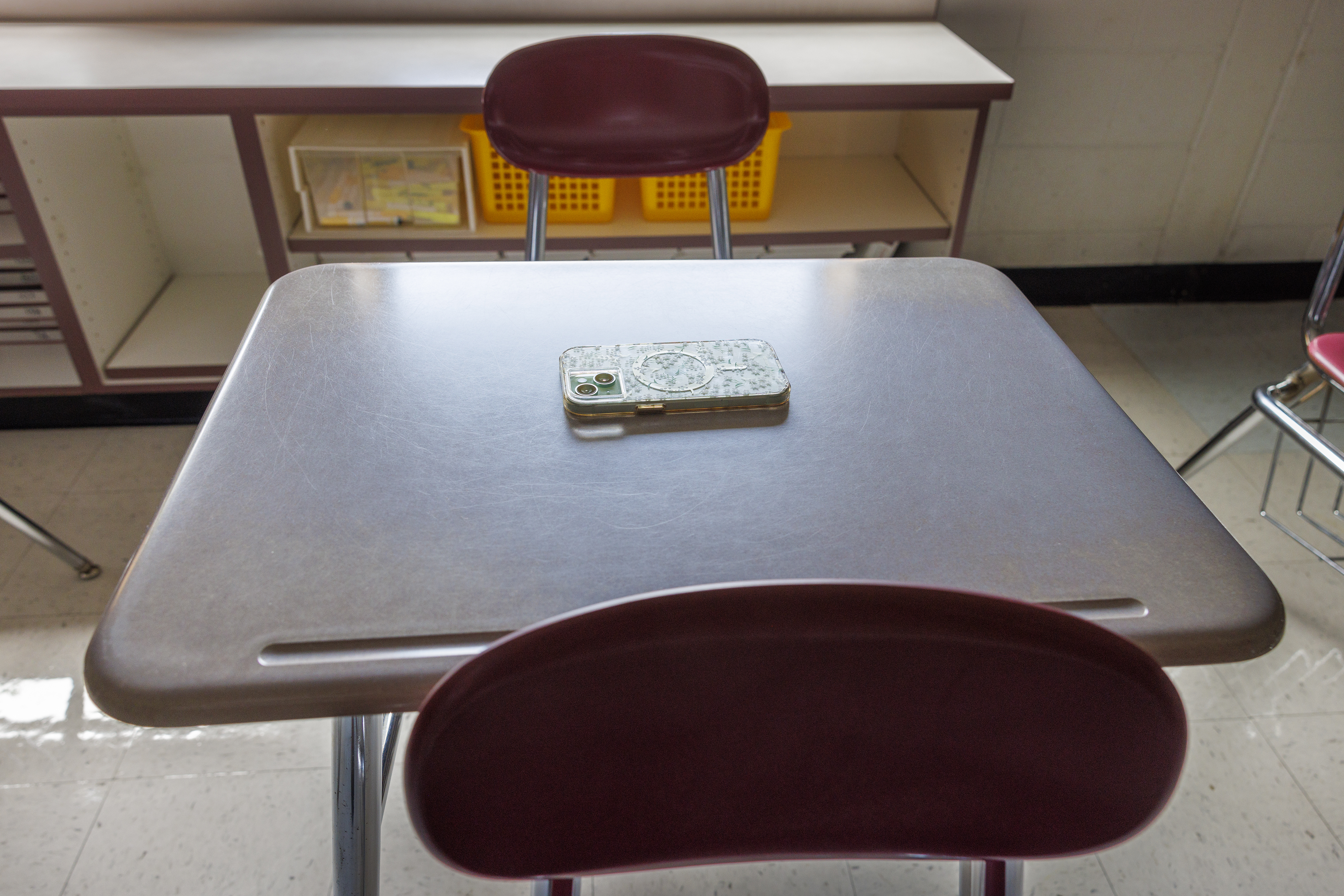
    Starting on the first day of classes, all K-12 students in public schools must power off and put away phones and most internet-enabled devices before the bell rings, with only a few exceptions.

    The new policy — signed into law in January by former Gov. Phil Murphy — puts New Jersey among a growing number of states including New York and Maryland that have passed measures to crack down on students using cell phones during the school day. (Pennsylvania has not passed a state law, though Gov. Josh Shapiro has signaled his support for such a policy and some districts have independently banned the devices in their schools.)

    Heartily endorsed by educators who believe it will ease classroom distractions, promote academic performance, and improve student mental health, New Jersey’s new rule marks a big change for students accustomed to having their cellphones and other devices nearby and checking them regularly — even during class.

    Some districts, such as Cherry Hill and Woodbury, have voluntarily implemented cell phone bans. Woodbury Superintendent Andrew Bell said most students embraced the restrictions and spend more time interacting with each other during breaks.

    “At this point, it’s simply part of our culture and daily routine,” Bell said of the cell-free policy, passed two years ago.

    The state left it to local school boards to determine how to implement the law at a district level, while complying with the guidelines. Because policies may vary, parents and students should check with their local district.

    Here’s what you need to know.

    How are districts implementing the policy?

    The law requires the state’s nearly 600 public school districts to adopt a policy banning the use of cell phones and other personal devices for the entire school day. The law allows some flexibility on enforcement and how the devices are stored.

    The state Department of Education issued guidelines this summer to help district set local policies. Some districts including Cherry Hill in Camden County and Washington Township in Gloucester County this month are voting on amending existing policies.

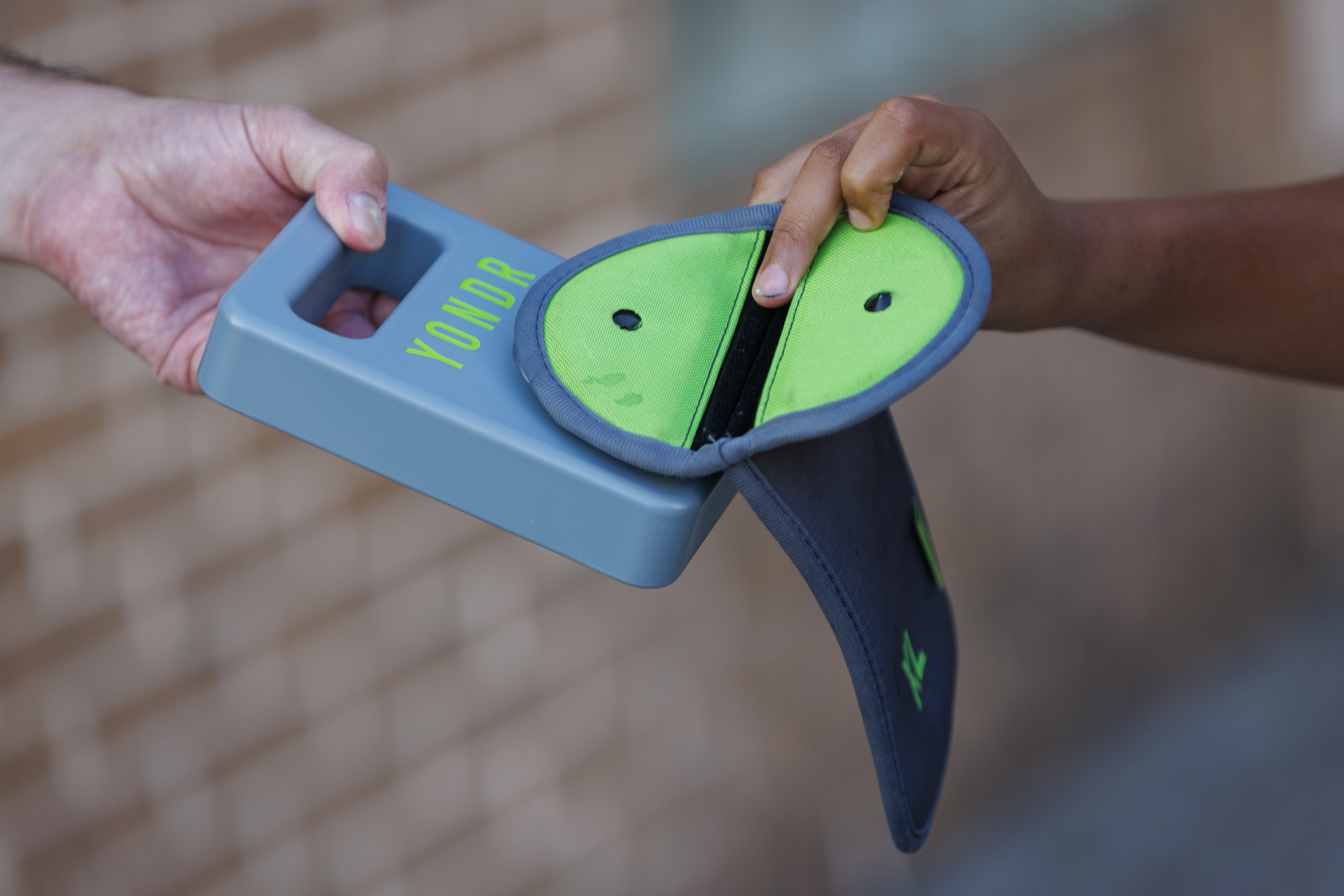
    Districts had to decide whether students would be required to store their phones in their lockers or bins, in locked pouches, or in their backpacks with their personal belongings. The devices must be powered off.

    The guidelines apply to all internet-enabled devices, typically smartphones, smartwatches, smart glasses, and ear buds, or any device that can access online content.

    Some districts have also included other communication devices like flip phones, two-way radios, and walkie-talkies. Some rules may vary, for age appropriateness, depending on grade level, too.

    What is bell-to-bell?

    Cherry Hill school board member Bridget Palmer explained the restriction this way at a recent board meeting: “The minute you walk in to the meeting, you leave.”

    The law restricts students from using their phones during lunch and study hall periods.

    Districts get to decide whether phones can be used before and after school on school grounds, on school buses, and during school-sponsored events, such as athletic events and extracurricular activities.

    “We’re not going to tell kids they can’t use their phones when they’re at Disney,” Washington Township Superintendent Eric Hibbs said at a board meeting. “We couldn’t enforce it anyway.”

    Districts must also provide parameters for how and when parents can contact their children during an emergency. Hibbs said Washington Township will have phones available in every office that a student can use, and is developing a way for parents to contact their child on a district-issued device.

    “A true emergency — all of this goes away,” Hibbs said. “No child will ever get in trouble for calling 911 for reporting an emergency.”

    Where will the phones be stored?

    The law lets the districts decide where the phones will be stored during the school day. The state provided some funding for districts to purchase locked Yondr pouches. Others are designating lockers or bins.

    Lianah Carruolo, 12, a seventh-grade student, unlocks her cell phone pouch outside the junior high entrance to Woodbury Junior/Senior High School on Friday, Sept 20, 2024. Alejandro A. Alvarez / Staff Photographer

    Cherry Hill’s amended policy would allow students to keep their phone in their personal belongings. It must be turned off, not just on vibrate or silent.

    “We prefer that you don’t bring it to school, but if you bring it to school, it has to be off and in your backpack or your locker for the duration of the day,” Palmer said.

    In Camden, the district’s new “off and away” policy says phones should be off and out of sight. They are permitted at a teacher’s discretion for instructional purposes. After a first offense, the phone will be confiscated and returned to the student at the end of the day; for subsequent offenses, the phone will be returned to a parent or guardian.

    In Washington Township, pre-K to fifth graders must store their phones in their backpacks, sixth to eighth graders must store theirs in their lockers, while high schoolers will be allowed to keep theirs in their backpacks.

    Hibbs said few high school students use their lockers so it was decided to allow them to keep their phones in their personal property. With about 2,100 students, the high school is among the largest in South Jersey.

    Are there any exceptions to the law?

    The law mandates exemptions for students with a disability or an Individual Education Plan (IEP) or 504 plan that stipulates the need for an internet-enabled device.

    The exemptions include students with a health plan, such as students with diabetes who need their phone to check glucose levels.

    There are also exemptions for students who use the cell phone for translation, or are the primary caregiver responsible for the well-being of a family member.

    School policies must also outline procedures for mobile devices that will be implemented in the event of an emergency, such as a lockdown.

    In the event of a family emergency, parents should contact the school office, and not the student directly, according to the guidelines.

    How will violations be handled?

    Districts are posting the new policy on district and school websites, in newsletters, and on social media sites to inform parents and students about the changes. They may also review it at back-to-school-nights, orientations, and training sessions for staff.

    The disciplinary action may vary, depending on the district, and typically begins with a warning that could escalate with additional violations. Districts must specify how a phone may be confiscated.

    Washington Township’s policy calls for progressive discipline, based on grade level. Administrators, not teachers, will be responsible for confiscating a phone if warranted.

    There are 10 possible “consequences” for high school students beginning with an administrative warning for the first two violations, Hibbs said.

    For additional violations, students will get a lunch detention and have their phone confiscated for three to four infractions, Hibbs said. Sanctions for additional violations include requiring a student to store the phone in a locker or main office, a two-day internal suspension, and a mandatory parental meeting.

    “It’s going to be a very big change, but we’re going to navigate it,” Hibbs told the board.

  • Riq Woolen feels like ‘a rookie again’ with the Eagles. His prove-it year is big for him and the Birds.

    Riq Woolen feels like ‘a rookie again’ with the Eagles. His prove-it year is big for him and the Birds.

    A month into 2026 training camp, five months after signing with his new team, and more than four years after being drafted by Seattle, Eagles cornerback Riq Woolen still feels nervous before some of his practice reps.

    Why?

    “It’s like I’m a rookie again,” Woolen said. He spent his first four NFL seasons with the Seahawks, but after losing some of his playing time last season during what would become a Super Bowl run, it was time to find a new team.

    Woolen was one of the better man-coverage corners last season, but he struggled in zone, and the open market wasn’t that kind to him in terms of finding a long-term deal. He landed with the Eagles on a one-year deal worth $12 million guaranteed and had to move nearly 3,000 miles away, mesh with new teammates, and learn a new scheme. Hence the feeling like a rookie all over again.

    “I feel like every day I continue to get better and feel like I fit in,” Woolen said Monday.

    Moments like his plays during Thursday’s joint practice session in New England help the fitting-in part. First, Woolen jumped an A.J. Brown out route near the goal line and picked off Drake Maye for a 100-yard pick-six. Later, he again had tight coverage on Brown and forced the ball free into the air, allowing Jalyx Hunt to make a diving interception.

    Eagles cornerback Riq Woolen was a standout in joint practices with the Patriots last week. Yong Kim / Staff Photographer

    That Woolen’s big day came on the heels of one of his worst days of camp Wednesday was a good sign for him and the Eagles. Woolen may feel like a rookie now, but he is wise enough at 27 to know that a short memory is crucial to playing cornerback in the NFL. The younger version of himself didn’t know how to handle it, he said Monday.

    “That’s just part of the game and it’s part of being a DB as well,” Woolen said. “One thing may [not] go your way, but you got to be able to rebound and be able to keep playing plays and keep making plays because that’s what the coaches and team expect.”

    Woolen, who is unusually tall for a corner at 6-foot-4, was on the radar of the Eagles last season when it became clear that he could be made available before the trade deadline. He had one of the best seasons in recent years in man coverage — according to Next Gen Stats, his 27.6% completion rate allowed in man coverage was the lowest by any defender to face 20-plus targets in man since at least 2018. But the Seahawks, according to Sharp Analytics, deployed man coverages on 15.2% of their defensive snaps, sixth-fewest in the NFL. The Eagles, meanwhile, used man coverage on 24.5% of their snaps last season.

    That should favor Woolen, and maybe defensive coordinator Vic Fangio will dial that number up a little more to fit Woolen’s strengths. But Woolen will need to improve his off-ball play if he wants to earn a long-term contract in the spring.

    Woolen, who has 12 interceptions in his first four NFL seasons, had arguably the best offseason program of any Eagles player. He blanketed DeVonta Smith on multiple occasions during OTAs. Then, on the last day of minicamp in June, he “sacked” Jalen Hurts on a corner blitz and then picked off Hurts on the next play, on an errant throw toward Dallas Goedert. But Woolen’s play during training camp has been inconsistent, highlighting what could be an issue for a team that doesn’t have much in the way of reliable depth behind him.

    The Eagles had a bit of a revolving door across from Quinyon Mitchell last season before Adoree’ Jackson claimed the role. They entered the offseason seeking an upgrade, knowing Cooper DeJean would remain at nickel and even play some safety after struggling a bit on the outside. Woolen has the potential to provide the Eagles with a major upgrade, but he still has to prove he can be reliable working in zones and not take plays off.

    “At times he can get a little lazy or sloppy with his technique and have a bad down or two, but he’s still showing everything that I think he can do,” Fangio said earlier this month. “He’s just got to get in such great shape and calloused to football that those don’t happen.”

    Eagles cornerback Riq Woolen speaks with reporters during training camp last month.Monica Herndon / Staff Photographer

    Woolen also will need to shed his reputation, too. He was called for three taunting penalties last season, including one in the NFC championship game late in the third quarter that extended a Los Angeles Rams drive that ended with a touchdown.

    Woolen agreed when asked Monday if there were misconceptions about him in free agency.

    “I can’t be likable to everybody, but I know that people who really do know me, I know there’s a reason why they like me and that’s because I’m being myself,” he said. “As long as I’m here being where my feet are at, I feel like my personality will outshine a lot of things.

    “I still feel like I have a lot more to prove to these guys, even the fans and everybody here. People only know me where I come from, and what they’ve heard from where I came from. People don’t really know me as a person. The more and more I make plays, the more and more I talk to you guys, talk to people around here, they’ll be able to understand me and get to know me and the type of player I am.”

    The real games are only a few weeks away, but Woolen will get his first taste of his new home field and fan base Tuesday, when the Eagles have their annual open practice at Lincoln Financial Field.

    “It’s another opportunity to show people how I play ball and express who I am,” he said.

    Forgive him if he’s a little nervous.

  • Fetterman gains GOP favor as Pa. Democrats regret electing him, new poll finds

    Fetterman gains GOP favor as Pa. Democrats regret electing him, new poll finds

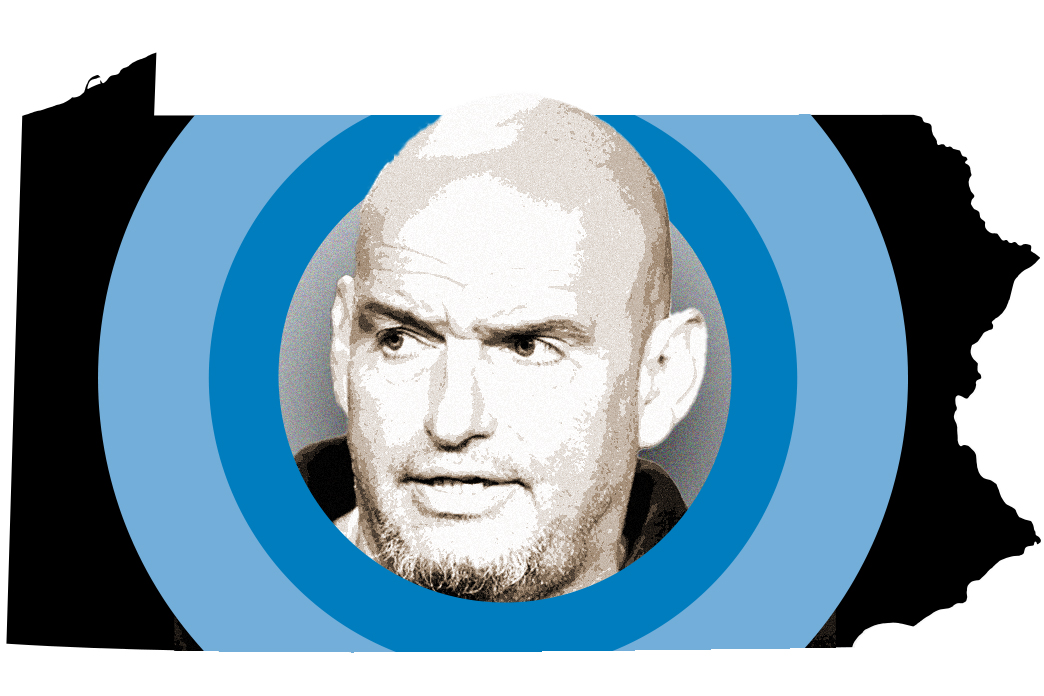
    Two-thirds of Pennsylvania Democrats who are likely to vote this year believe U.S. Sen. John Fetterman supports President Donald Trump too frequently, while about half say the Democratic senator has been too supportive of Israel, according to an Inquirer/New York Times/Siena University poll published Tuesday.

    Democratic voters’ sharply divided views on Fetterman — with 69% having an unfavorable opinion of him in general — are the latest signs he could face an uphill battle if he seeks reelection as a Democrat in 2028.

    Fetterman has not said whether he will run for a second term.

    But as he weighs his options — which include leaving the Democratic Party because of what he considers its anti-Israel sentiment — the senator’s occasional support of Trump’s agenda has contributed to his declining favorability among voters who helped elect him in the first place, the new survey indicates.

    “I’m so disappointed in him, I can’t even see straight,” said Joseph Jaskula, a retired salesman from Lewisburg, Union County, who participated in the poll of 760 likely voters conducted by Siena University on behalf of The Inquirer and the New York Times from Aug. 17 to 21.

    (function() { var l = function() { new pym.Parent( ‘nyt-fetterman__graphic’, ‘https://media.inquirer.com/storage/inquirer/ai2html/nyt-fetterman/index.html’); }; if(typeof(pym) === ‘undefined’) { var h = document.getElementsByTagName(‘head’)[0], s = document.createElement(‘script’); s.type = ‘text/javascript’; s.src = ‘https://pym.nprapps.org/pym.v1.min.js’; s.onload = l; h.appendChild(s); } else { l(); } })();

    Jaskula, a Democrat who said he voted for Fetterman in 2022, said he is particularly upset about the senator’s votes for several of Trump’s nominees and for the war in Iran.

    Fetterman has been the only Senate Democrat to vote against restricting the president’s use of military force in Iran.

    “He voted with the Republicans on that,” Jaskula, 72, said of the war powers resolutions that aimed to rein in Trump. “And he’s had some other ones where we wonder if he’s a Republican or a Democrat.”

    Fetterman’s standing among Pennsylvania voters overall remains split, according to the poll.

    He is viewed favorably by 49% and unfavorably by 43% of all likely voters in the state. That was nearly the same result as the last time the Inquirer/New York Times/Siena poll asked about Fetterman’s favorability, in May 2024.

    But the difference between now and then — when Fetterman was campaigning against Trump’s election and only two years removed from his own sweeping victory in the Pennsylvania Democratic primary — is who is supporting him.

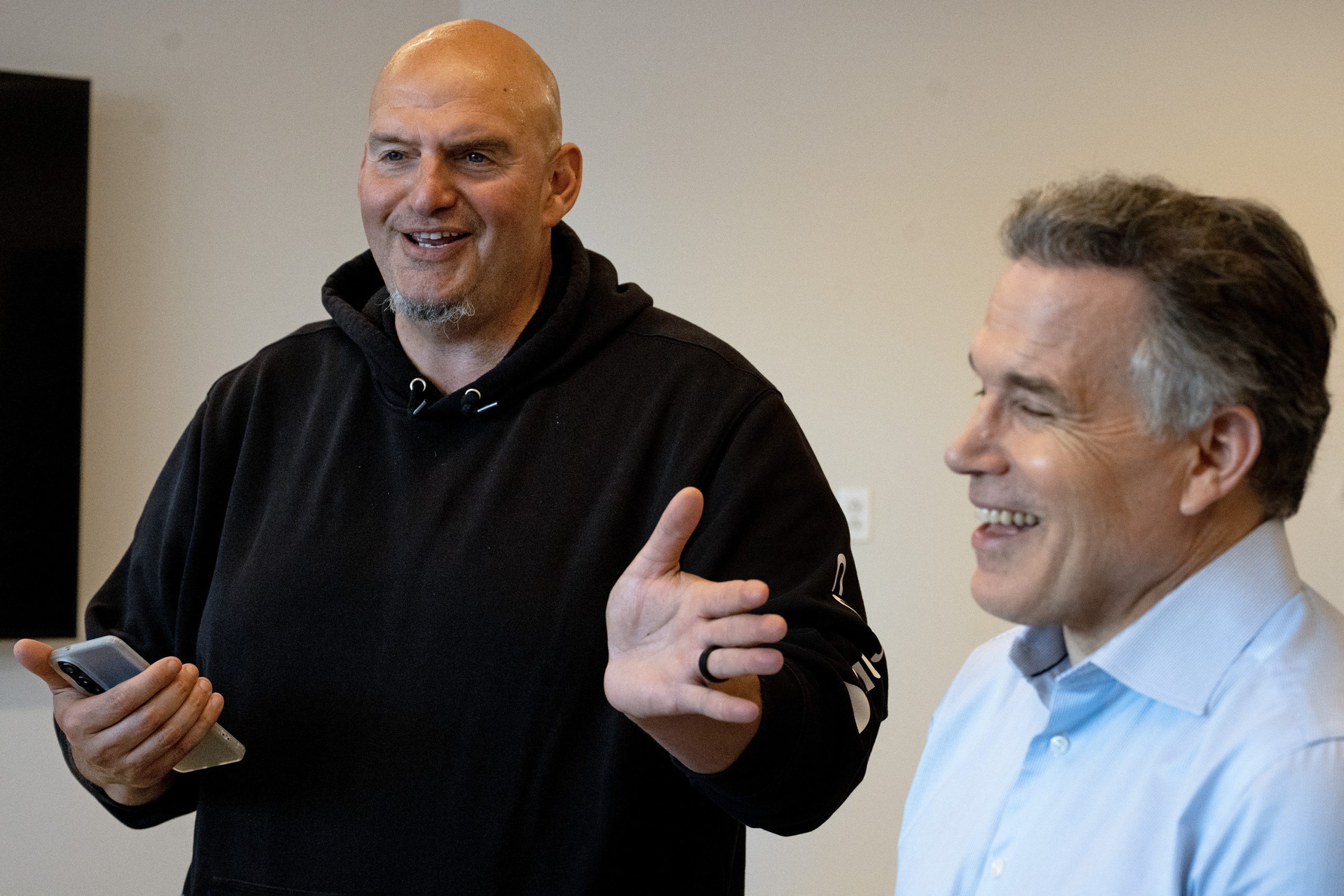
    Pennsylvania’s U.S. Senators John Fetterman (left) and Dave McCormick appear together at June event in Philly to promote the savings accounts for kids that were part of President Donald Trump’s One Big Beautiful Bill Act.Tom Gralish / Staff Photographer

    Fetterman outperforms McCormick with GOP voters

    In almost the exact opposite breakdown compared with about two years ago, just one in five likely Democratic voters reported having a favorable view of Fetterman, while four out of five likely Republican voters said they have a favorable view.

    Even Fetterman’s Republican counterpart in Pennsylvania — U.S. Sen. Dave McCormick, who was elected in 2024 — is viewed favorably by a smaller share of GOP voters, about 66% compared with Fetterman’s 79%.

    (function(){function e(){window.addEventListener(`message`,function(e){if(e.data[`datawrapper-height`]!==void 0){var t=document.querySelectorAll(`iframe`);for(var n in e.data[`datawrapper-height`])for(var r=0,i;i=t[r];r++)if(i.contentWindow===e.source){var a=e.data[`datawrapper-height`][n]+`px`;i.style.height=a}}})}e()})();

    Don Levy, director of the Siena Research Institute, called the Democratic senator’s numbers “shocking.”

    “If you didn’t know any difference, you would immediately assume that Fetterman and McCormick are both Republicans, and that Fetterman is an extremely popular Republican senator amongst Republicans,” Levy said. “I can’t think of another case exactly like this.”

    Fetterman, citing his voting record in the Senate, which still mostly aligns with Democrats, has said repeatedly that he will not switch his registration to Republican.

    GOP leaders, who are fighting to retain control of the Senate this fall, have said they would welcome the Pennsylvania Democrat into their fold.

    And Fetterman has raised the prospect of leaving the party, possibly becoming an independent, if Democrats oppose Israel as an “official” part of their platform. He has staunchly supported the country in the wake of the Oct. 7, 2023, attack by Hamas, and as Democrats have become increasingly critical of Israel’s counterattack.

    (function(){function e(){window.addEventListener(`message`,function(e){if(e.data[`datawrapper-height`]!==void 0){var t=document.querySelectorAll(`iframe`);for(var n in e.data[`datawrapper-height`])for(var r=0,i;i=t[r];r++)if(i.contentWindow===e.source){var a=e.data[`datawrapper-height`][n]+`px`;i.style.height=a}}})}e()})();

    Fetterman has opposed fellow Democrats’ efforts to end the United States’ assistance to Israel’s offensive measures. He has also become the most vocal Democratic supporter of both countries’ attacks against Iran, an issue that also remains deeply unpopular among Pennsylvania voters.

    At the same time, Fetterman has backed other Trump initiatives, like immigration enforcement and the investment accounts for children known as Trump Accounts.

    “He’s a voice in the party, standing up for what’s right,” said Nicholas Morabito, a 32-year-old warehouse worker in Butler who participated in the poll.

    A registered Republican, Morabito said he would consider voting for Fetterman in 2028, regardless of which party label accompanies his name on the ballot.

    “I don’t think there’s very much difference between the two of us. Just the difference in party,” Morabito said.

    Fetterman has acknowledged the shift in support. He wrote in his 2025 memoir that he was “completely at peace” with the idea that his support of Israel might cost him his Senate seat. And in interviews, he has repeatedly said that, as a swing-state senator, he should work with and not demonize the other party.

    A plurality of likely voters — 47% — say Fetterman is “about right” when it comes to supporting or opposing Trump, according to the poll. About 38% said he supports Trump too much, 6% said he opposes Trump too much, and 9% did not answer.

    (function(){function e(){window.addEventListener(`message`,function(e){if(e.data[`datawrapper-height`]!==void 0){var t=document.querySelectorAll(`iframe`);for(var n in e.data[`datawrapper-height`])for(var r=0,i;i=t[r];r++)if(i.contentWindow===e.source){var a=e.data[`datawrapper-height`][n]+`px`;i.style.height=a}}})}e()})();

    But Democratic voters have indicated a strong desire for their elected officials to push back against Trump, and Fetterman’s declining support among them appears to be due in part to that shift during Trump’s second term. About 67% of likely Democratic voters said Fetterman supports the president too much, while 20% said he gets it “about right.”

    “Fetterman has been such an interesting, unique personality now since he broke onto the scene,” Levy said. “Given the state of play right now, Democrats are just angry that he was elected. Democrats are supposed to act like Democrats, and this shows that their perception of him is that he is not.”

  • Most of Pa.’s likely voters disapprove of Donald Trump and his policies, new poll shows

    Most of Pa.’s likely voters disapprove of Donald Trump and his policies, new poll shows

    More than half of likely voters in Pennsylvania’s forthcoming midterm elections disapprove of President Donald Trump’s job performance, and he is drastically underwater among the state’s electorate on key issues — some of which helped him win a second term in 2024.

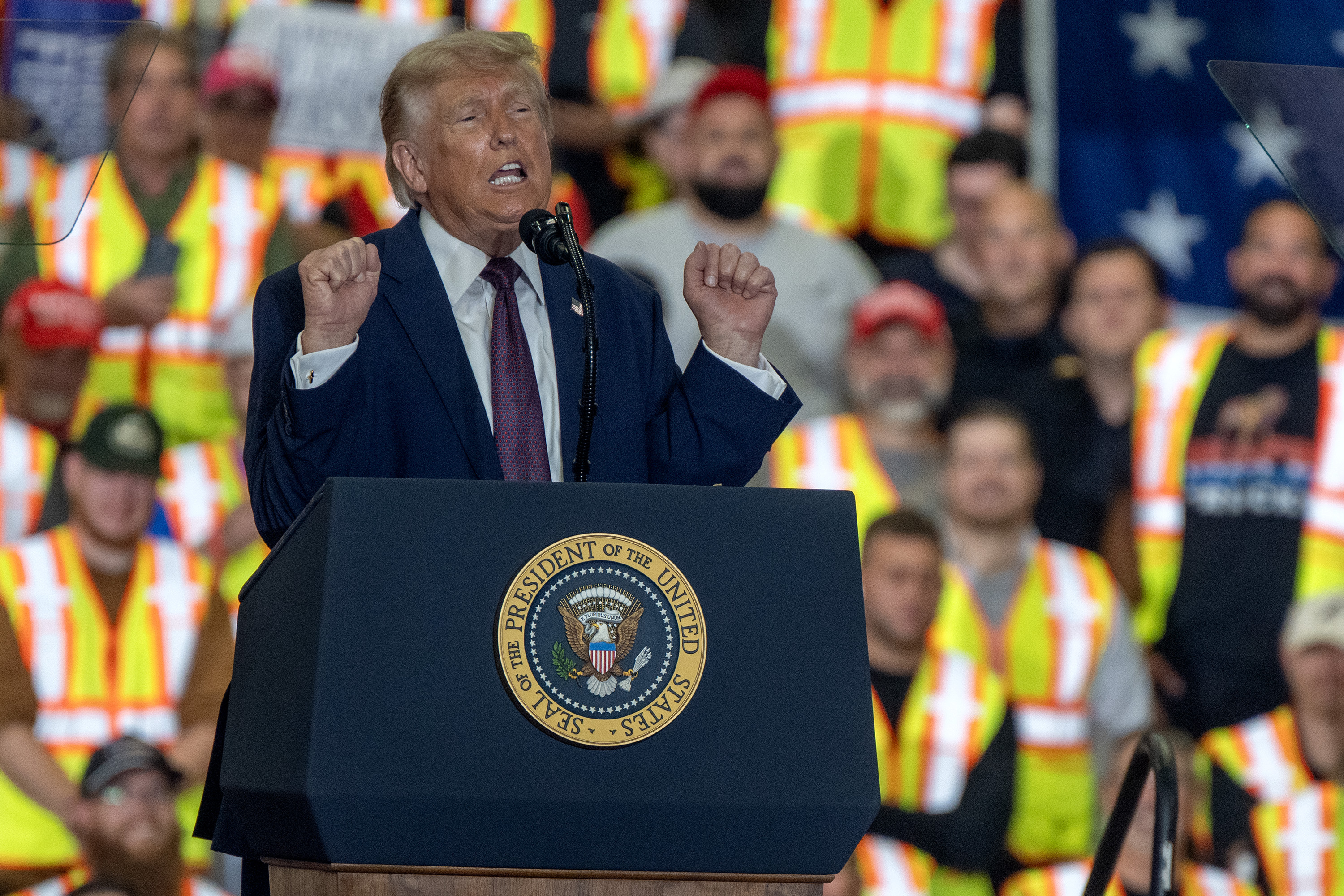
    Trump, who won the crucial swing state by nearly two percentage points in November 2024, now has an approval rating of 39% and a disapproval rating of 58% among Pennsylvania’s likely voters, according to an Inquirer/New York Times/Siena University poll published Tuesday.

    The poll, which was conducted from Aug. 17 to 21 among 760 likely Pennsylvania voters, raises questions about how voters’ perception of the president will affect November’s midterms, when many Pennsylvanians will cast their ballots in four critical swing district races that could determine which party controls the U.S. House.

    (function() { var l = function() { new pym.Parent( ‘nyt-trump2__graphic’, ‘https://media.inquirer.com/storage/inquirer/ai2html/nyt-trump2/index.html’); }; if(typeof(pym) === ‘undefined’) { var h = document.getElementsByTagName(‘head’)[0], s = document.createElement(‘script’); s.type = ‘text/javascript’; s.src = ‘https://pym.nprapps.org/pym.v1.min.js’; s.onload = l; h.appendChild(s); } else { l(); } })();

    Even among his Pennsylvania supporters who were surveyed, Trump faces some of his lowest approval ratings regarding his handling of the war in Iran and cost-of-living issues, according to the poll, counteracting campaign promises that proved successful in 2024: ending foreign wars and helping people pay their bills.

    Once again, the economy will likely be at the front of voters’ minds heading into November — 22% of Pennsylvanians polled said it is their top issue in the governor’s race — and it could also serve as an indicator for the outcome of House races where Republicans will be on the defensive.

    “Certainly it’s got to be a drag on their fortunes,” said Don Levy, director of the Siena Research Institute.

    (function(){function e(){window.addEventListener(`message`,function(e){if(e.data[`datawrapper-height`]!==void 0){var t=document.querySelectorAll(`iframe`);for(var n in e.data[`datawrapper-height`])for(var r=0,i;i=t[r];r++)if(i.contentWindow===e.source){var a=e.data[`datawrapper-height`][n]+`px`;i.style.height=a}}})}e()})();</script

    Trump losing ground on issues that propelled him to White House

    The new polling on Trump’s management of top concerns facing the United States — particularly the economy and the cost of living — shows how the issues that helped propel him to the White House in 2024 are now souring his approval among Pennsylvanians, including some who previously voted for him.

    Among likely voters in the Keystone State, 39% approve and 61% disapprove of Trump’s handling of the economy. On his handling of the cost of living, 33% said they approve and 66% disapprove.

    The data come as voters continue to grapple with rising costs, including unusually high gas prices, and grocery prices that have been increasing for nearly six years. Trump’s tariffs, one of the defining policies of his first year back in office, also raised prices for consumers and businesses.

    Now, a quarter of Pennsylvanians who voted for the president in 2024 say they disapprove of how he is handling of the cost of living.

    Michael Patterson, 60, of Bucks County, is one of them.

    Though Patterson said Trump’s term has been “great” overall, he was expecting more from the president on the economy and costs.

    “The prices are still too high, interest rates are still too high,” Patterson said. “We still haven’t seen anything from that promise yet.”

    (function(){function e(){window.addEventListener(`message`,function(e){if(e.data[`datawrapper-height`]!==void 0){var t=document.querySelectorAll(`iframe`);for(var n in e.data[`datawrapper-height`])for(var r=0,i;i=t[r];r++)if(i.contentWindow===e.source){var a=e.data[`datawrapper-height`][n]+`px`;i.style.height=a}}})}e()})();

    Trump’s messaging on the economy in 2024 was part of why he won Pennsylvania with more votes than any other statewide GOP candidate in history. Pennsylvania voters cited Trump’s promises to bring costs down as a top reason that they voted for him and overlooked Democrats’ warnings about what his election could mean for democracy.

    Trump is also hurting on other issues that helped boost him to the presidency, including his promise to end wars. Thirty-two percent of likely voters in Pennsylvania approve of Trump’s handling of the war in Iran and 66% disapprove — including 30% of Trump voters.

    The war has now gone on for almost six months, after Trump promised it would last just a few weeks, and has contributed to rising oil and gas prices.

    Kay Skripac, who voted for Trump in 2024, said that though she supports the president on almost every other issue, “I just don’t think that we should have invaded or bombed Iran. I was very surprised, because I didn’t vote for that.”

    The 72-year-old independent voter said, despite thinking Trump has done strong work on the economy (she says her retirement portfolio doubled from 2016 to 2026), she is feeling the war’s impact at the gas pump.

    “I want everything to just be normal and stay the same, because everything was fine,” said Skripac, who lives in Crawford County. “We weren’t involved in any wars. You didn’t have to worry about any friends or loved ones potentially getting killed. I don’t like that at all.”

    Trump’s handling of the Israeli-Palestinian conflict also received low marks from voters, with 62% disapproval, compared with 36% approval.

    Republican Sandra Faust, 40, approves of Trump’s handling of that conflict. But her support does not extend to the war in Iran, which Trump launched in coordination with Israel.

    Faust, who voted for Trump two years ago, said she strongly disapproves of the war due to rising gas prices and believes it conflicts with the president’s promise to end wars. The Pittsburgh resident, who has a family member in military training to become a jet refueler, said she wishes the conflict in Iran would end.

    “Them dragging it on is not only harming us, locally with gas and, you know, pricing and stuff like that, but it’s putting our military in harm’s way, and I’m not happy about that,” she said.

    Faust added that she opposes the war because of her belief in the “America First” ideology. That perspective also makes her supportive of Trump’s immigration agenda, she said.

    The president is lagging in Pennsylvanians’ support of his immigration policies — which have included mass deportations and enhanced border security — but the disapproval is not as stark. Among likely voters, 44% approve of his handling of immigration and 55% disapprove.

    “We are not responsible for taking care of the world’s problems,” Faust said.

    What does Trump’s approval rating mean for November in Pa.?

    So what does this mean for the midterms?

    Time will tell.

    But 51% of Pennsylvania’s likely voters who were polled indicated they would be more likely to vote for a Democrat in their congressional district, and 44% said they would support a Republican. More than half, 53%, say they would want to see a flip of control in the House, putting Democrats in charge, while 44% say they would want to see the GOP maintain control.

    The polling for the GOP in November is not as bleak as Trump’s numbers, but it shows where voters’ heads are a little more than two months away from the midterms, when Pennsylvanians will weigh in on four competitive swing district congressional races.

    (function(){function e(){window.addEventListener(`message`,function(e){if(e.data[`datawrapper-height`]!==void 0){var t=document.querySelectorAll(`iframe`);for(var n in e.data[`datawrapper-height`])for(var r=0,i;i=t[r];r++)if(i.contentWindow===e.source){var a=e.data[`datawrapper-height`][n]+`px`;i.style.height=a}}})}e()})();

    Both parties are targeting GOP-held seats in Bucks County’s 1st Congressional District, the Lehigh Valley’s 7th Congressional District, the Scranton area’s 8th Congressional District, and the Harrisburg area’s 10th Congressional District.

    Democrats are hoping that a message focused on affordability and tying opponents to Trump will usher in wins this fall. For instance, Democrat Bob Harvie in the heated 1st Congressional District race published a new campaign platform recently that focuses mainly on addressing economic issues.

    “The task of Republicans running in various congressional districts, or for the governor of the state, is going to be to somehow separate themselves from the perception that Pennsylvanians have about the job that the head of their party is doing on the economy,” said Levy, the Siena polling director.

    But for Democrats, connecting Harvie’s opponent, longtime Republican U.S. Rep. Brian Fitzpatrick, to Trump could be a harder sell. The Bucks County lawmaker consistently outperforms his party and has survived one blue wave after another.

    The poll’s findings signal that both parties may also have to think about their branding to the public — 50% of respondents said the Democratic Party is too far to the left and 47% said Republican Party is too far to the right.

    Republicans will also have to consider Trump’s unpopularity, especially with women. Sixty-two percent of female likely voters in Pennsylvania disapprove of Trump’s policies, while 34% approve. The president is also struggling with men — a key base for him in 2024: 51% of men disapprove of Trump’s policies, compared with 46% who approve.

    (function(){function e(){window.addEventListener(`message`,function(e){if(e.data[`datawrapper-height`]!==void 0){var t=document.querySelectorAll(`iframe`);for(var n in e.data[`datawrapper-height`])for(var r=0,i;i=t[r];r++)if(i.contentWindow===e.source){var a=e.data[`datawrapper-height`][n]+`px`;i.style.height=a}}})}e()})();

    Democrat Vincent Russo, 78, of Lackawanna County, where Republican U.S. Rep. Rob Bresnahan faces a challenge from Democrat Paige Cognetti in the 8th District, said he will be voting straight blue on his ballot in November and thinks opposition to Trump’s policies will motivate his party to get out to the polls.

    “I think the people are starting to see he does nothing but lie,” Russo said.

    Staff writers Michelle Baruchman and Gillian McGoldrick contributed to this article.

  • Josh Shapiro has a 16-point lead in the governor’s race — and most Pa. Democrats would support him for president

    Josh Shapiro has a 16-point lead in the governor’s race — and most Pa. Democrats would support him for president

    With a little more than two months until Election Day, Democratic Gov. Josh Shapiro has a double-digit lead over his Republican challenger, Stacy Garrity, among likely Pennsylvania voters in the race to lead the critical swing state — an election that could also serve as an audition for the 2028 presidential primary.

    Shapiro holds a 16-percentage-point lead over Garrity, the state treasurer, according to a new poll of 760 likely voters conducted from Aug. 17 through 21 by The Inquirer, the New York Times, and Siena University.

    The numbers could foreshadow another commanding victory for Shapiro, as he hopes his popularity trickles into other down-ballot races, including four congressional districts that national Democrats think they can flip. Shapiro is also trying to flip the state Senate for the first time in 30 years and deliver a Democratic trifecta in the statehouse.

    (function() { var l = function() { new pym.Parent( ‘nyt-shapiro2__graphic’, ‘https://media.inquirer.com/storage/inquirer/ai2html/nyt-shapiro2/index.html’); }; if(typeof(pym) === ‘undefined’) { var h = document.getElementsByTagName(‘head’)[0], s = document.createElement(‘script’); s.type = ‘text/javascript’; s.src = ‘https://pym.nprapps.org/pym.v1.min.js’; s.onload = l; h.appendChild(s); } else { l(); } })();

    A majority of Pennsylvania voters — 60% — have a favorable opinion of the governor, compared with Garrity, who is viewed favorably by just 37% in the state.

    Shapiro’s popularity also eclipses that of President Donald Trump, according to the poll. Sixty percent of likely Pennsylvania voters approve of the job Shapiro is doing as governor, while 39% approve of Trump, who won the state two years ago.

    Lora Peluso, 63, a Democrat and retired catering director from Pittsburgh, said Shapiro has been a shield in Pennsylvania against some of Trump’s most harmful policies affecting low-income and older people.

    “I think [Shapiro] is trustworthy,” said Peluso, who participated in the poll. “His policies are things that actually benefit people, the average working person, seniors.”

    Garrity still unknown by some Republicans

    Pennsylvania Republicans this year had hoped to avoid another walloping by Shapiro, who has won three times statewide, with fears that a weak gubernatorial candidate could negatively affect the rest of the Republican ticket. So the state GOP took the unprecedented move of endorsing Garrity in September 2025 — approximately 14 months before the election — to try to raise her profile.

    Despite securing Trump’s endorsement, Garrity has struggled to raise money, attract support from national Republicans, or compete with Shapiro’s $13 million in ad buys so far this cycle. Her campaign has spent $679,000 on ad buys thus far, according to media-tracking firm AdImpact, as it seeks to introduce the candidate to voters.

    Now, with 70 days until the election, a quarter of likely Republican voters still did not know Garrity or know enough about her to form an opinion of her, according to the poll.

    Meanwhile, Shapiro maintains favorable opinions among 27% of Trump’s 2024 supporters, and 35% of registered Republicans approve of the job he is doing as governor, the poll found.

    (function(){function e(){window.addEventListener(`message`,function(e){if(e.data[`datawrapper-height`]!==void 0){var t=document.querySelectorAll(`iframe`);for(var n in e.data[`datawrapper-height`])for(var r=0,i;i=t[r];r++)if(i.contentWindow===e.source){var a=e.data[`datawrapper-height`][n]+`px`;i.style.height=a}}})}e()})();

    Michael Patterson, a Republican from Trumbauersville, Bucks County, who supported Trump in 2024, said he plans to support Shapiro in November because he likes the job the governor is doing and because he does not know much about Garrity besides what he has seen on social media.

    “Honestly, I don’t know much about her,” Patterson, 60, said. “I guess I don’t see advertisements on the TV. Other than Facebook, I really don’t see her. The stuff I see on Facebook is just typical partisan stuff.”

    Shapiro, on the other hand, appears more moderate and independent from his party in Patterson’s eyes.

    “He’s kinda doing his own thing. I have a lot of respect for that. He’s not playing partisan games,” Patterson said, contrasting Shapiro with Democrats in California and New York.

    Michael Patterson, a Bucks County Republican voter pictured in his Trumbauersville home, plans to vote for Democratic Gov. Josh Shapiro over Republican nominee Stacy Garrity. William Thomas Cain / For The Inquirer

    This attitude shows up among other Republicans, too, said Don Levy, the director of the Siena Research Institute.

    “Shapiro is seen as sufficiently middle of the road,” Levy said. “He’s got 35% of Republicans approving of the job that he’s doing as governor. That’s a really impressive number in today’s world.”

    Other Republicans like Steven Keenan, 70, of Ridley Township, are all in for Garrity, citing her military experience and support for Trump.

    “[Shapiro’s] a big phony. He’s a politician,” Keenan said. “She is, too, but she’s been through the wars. I think she’s earned her place. I think we should give a woman a chance.”

    A majority of Pennsylvania voters trust Shapiro over Garrity to handle top issues facing the state, including the economy, cost-of-living increases, the Trump administration, immigration, and doing what is best for ordinary Pennsylvanians.

    Tina Hoffert, 68, of Lenhartsville, Berks County, said she has not heard much about Garrity, but plans to vote for her in November because she is unsatisfied with Shapiro’s leadership.

    “He’s forever bashing Trump,” Hoffert, a Republican, said. “I’m sorry, I don’t care whether you like him or not, he’s our president. You work with him. You don’t fight him. And if there’s things you don’t like that he’s doing, then you go in there and you have discussions.”

    Shapiro’s presidential prospects

    If Shapiro is reelected in a landslide victory this November, it becomes even more likely that he jumps into the 2028 presidential race as the governor of a key swing state with 19 electoral votes.

    Among those surveyed who said they plan to vote in the Democratic primary in two years, 86% said they would be likely to support him — though the poll did not compare him with other potential primary candidates.

    Other prospective candidates include former Vice President Kamala Harris, Govs. Gavin Newsom of California and JB Pritzker of Illinois, U.S. Sens. Mark Kelly of Arizona and Jon Ossoff of Georgia, and U.S. Rep. Alexandria Ocasio-Cortez of New York.

    (function(){function e(){window.addEventListener(`message`,function(e){if(e.data[`datawrapper-height`]!==void 0){var t=document.querySelectorAll(`iframe`);for(var n in e.data[`datawrapper-height`])for(var r=0,i;i=t[r];r++)if(i.contentWindow===e.source){var a=e.data[`datawrapper-height`][n]+`px`;i.style.height=a}}})}e()})();

    Shapiro has brushed off questions about his ambitions and told a reporter Saturday, in response to whether he would commit to serving a four-year term in office, that “the only thing that I’m focused on — and the only thing anybody should be focused on — is winning in November and being a check on this president’s chaos, cruelty, and corruption.”

    Most voters in the poll — 58% — said that if Shapiro decides to run for president, doing so either would not distract from his role as governor or would not keep him from being effective at governing.

    “I mean, it would be a distraction, of course, but I think he’s a professional and a hard worker, and he would figure it out. It seems like he hires good people, too,” said Peter Hewitt, 62, of Devon, a Democrat who supports Shapiro’s reelection bid.

    (function() { var l = function() { new pym.Parent( ‘nyt-trump2__graphic’, ‘https://media.inquirer.com/storage/inquirer/ai2html/nyt-trump2/index.html’); }; if(typeof(pym) === ‘undefined’) { var h = document.getElementsByTagName(‘head’)[0], s = document.createElement(‘script’); s.type = ‘text/javascript’; s.src = ‘https://pym.nprapps.org/pym.v1.min.js’; s.onload = l; h.appendChild(s); } else { l(); } })();

    Shapiro’s potential candidacy has largely centered on his electability, especially his ability to win the top office in the nation’s premier swing state. He has pitched himself as a Democratic governor more interested in working with Republicans to make meaningful improvements to the state than in picking partisan fights, and voters agree: 58% of respondents said he is neither too far to the left nor to the right.

    “He’s done a good job of just being more of a moderate, middle-of-the-road Democrat,” said Andrew Perez, a 58-year-old self-described independent voter in Pittsburgh. He said he appreciated Shapiro’s focus on improving roads and highways and not “just blindly disagreeing” with Trump.

    “I think we need a strong presidential candidate who will try to unite the country instead of just keeping it being divisive, so I think that I’d be pretty likely to vote for him [for president],” said Perez, a physician.

    Montiese McKenzie, 46, of West Philadelphia, said she is supporting Shapiro for a second term, but is not quite yet sold on a presidential run. She said she has not seen him rise to the level of “fighter” she thinks the Democratic Party needs, and believes as of now, she would be more likely to support someone else in the Democratic primary.

    “You see people like Jon Ossoff and JB Pritzker, and they’re not putting up with it. They don’t make it pretty anymore,” McKenzie said. “If I saw some of that in Shapiro, I might be more likely to support him as a presidential candidate. Until then, I’m not sure he has the gumption.”

    Shapiro has signed on to dozens of lawsuits against Trump’s administration on a host of issues, from tariffs to gender-affirming care.

    But to win the party’s nomination, Shapiro would have to defeat more progressive candidates and make the case for his more centrist approach.

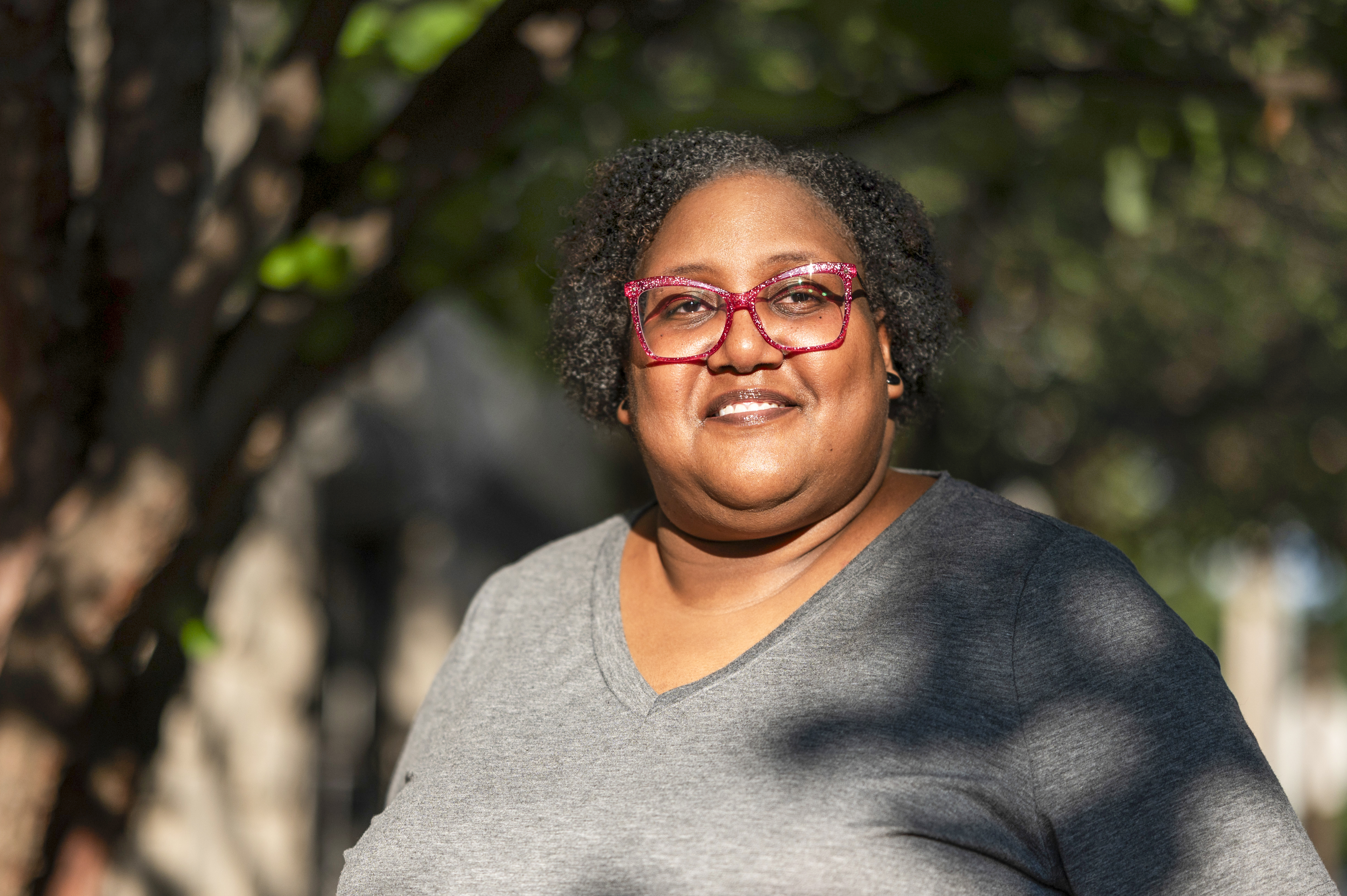
    Montiese McKenzie, 48, poses for a portrait near her home in West Philadelphia on Monday, Aug. 24, 2026. McKenzie is a supporter of Gov. Josh Shapiro’s reelection, but is hesitant to back his potential presidential run in 2028.Allie Ippolito / For The Inquirer

    He has already faced criticism from some progressive voters over his previous support for school vouchers, and his early embrace of data centers, which he reversed last week by implementing what he called some of the nation’s “strictest guardrails.” Shapiro, Pennsylvania’s third Jewish governor, has also faced a perception from some progressives that he has been too supportive of Israel during its war with Hamas, despite his vocal opposition to the country’s leader, Prime Minister Benjamin Netanyahu.

    Nearly half, 47%, of respondents said he has been just “about right on support of Israel,” with 14% saying he has been too supportive and 19% saying he has been not supportive enough.

    Should Shapiro launch a presidential campaign, Hewitt wants to see him “come out on the right side.”

    Hewitt, who emphasized his support for Jewish people in his community, said he considers the Israeli government’s actions toward Palestinian people in Gaza to be genocidal. More than 73,000 Palestinian people have been killed in Gaza since the war began nearly three years ago, and multiple international institutions have said Israel’s actions violate human rights.

    “I don’t think it’s really that big of a deal for governors per se. He’s not going to vote on national policy as the governor of Pennsylvania,” Hewitt said. But he added: “He does have a voice, and if he’s thinking about a next step beyond Pennsylvania, then he will have to come out in regard to that issue.”