For the last three seasons, since the 76ers traded James Harden in October 2023, Tyrese Maxey has been the team’s point guard whenever he has been on the floor. As his usage rate increased, so have his production and accolades (two All-Star Games and being named to the All-NBA third team).
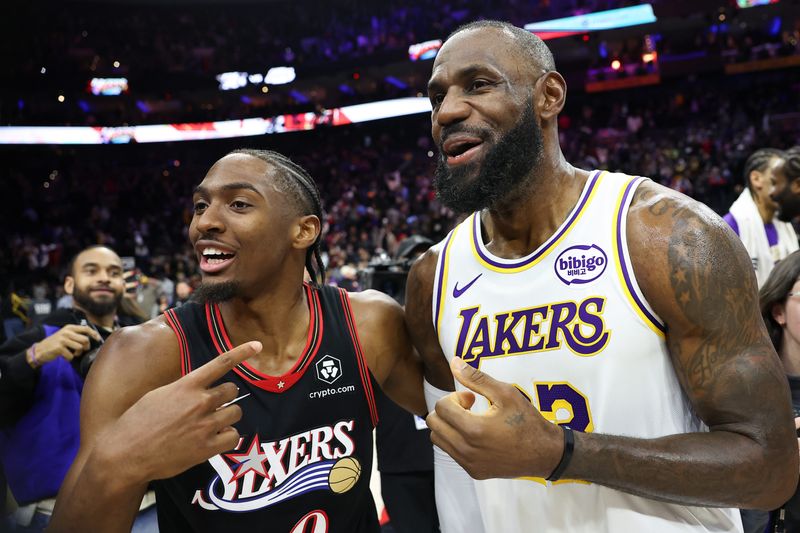
The arrival of LeBron James and Jaylen Brown, two other All-NBA talents who like to have the ball in their hands, is going to shift things for Maxey. James, who averages 7.4 assists per game in his career, is likely to take over some of those point guard duties.
But this doesn’t have to be a bad thing for the Sixers or Maxey’s usage. In fact, getting Maxey off the ball could mean more efficient shots for him in an important area: his three-point shooting.
Turning back the clock
The last season Maxey played with Harden in 2022-23 offers a clue into how the Sixers can utilize him slightly differently with Brown and James on the floor at the same time.
According to the website Cleaning the Glass, Maxey played 53% of his possessions that season at shooting guard, 47% at point guard. The previous season had Maxey listed at shooting guard 21% of the time. Once Harden was gone, Cleaning the Glass logged every possession Maxey played from that point onward at point guard.
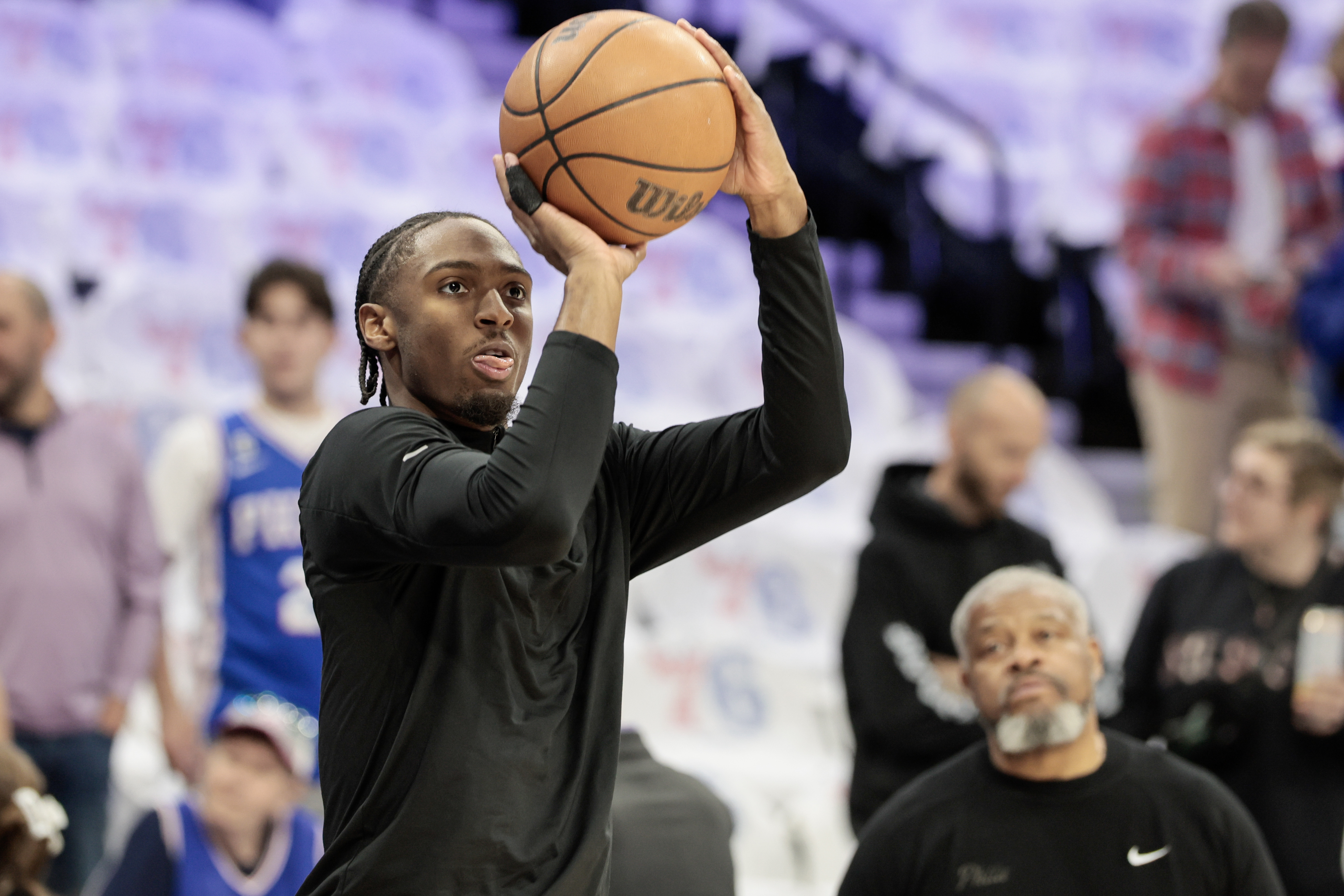
Sixers guard Tyrese Maxey is shooting 37.7% from three-point range in his career.Monica Herndon / Staff Photographer
The 2022-23 season was Joel Embiid’s MVP year, and he played 66 games, helping the offense to have the third-best efficiency in the league. Harden played 58 games and led the league in assists. The offense was humming, and it had a slightly higher efficiency with Maxey at shooting guard than point guard. What was different about Maxey that changed once Harden left? Take a look at his shooting.
Three-point shooting spike
From 2021-23, Embiid played in 134 regular-season games, more than any two-year stretch of his career. With Embiid playing a lot and Harden being a ball-dominant point guard, Maxey averaged 17.5 points per game in 2021-22 and then 20.3 points in 2022-23. He also had the two best three-point shooting seasons of his career, by percentage (42.7% and 43.4%, respectively).
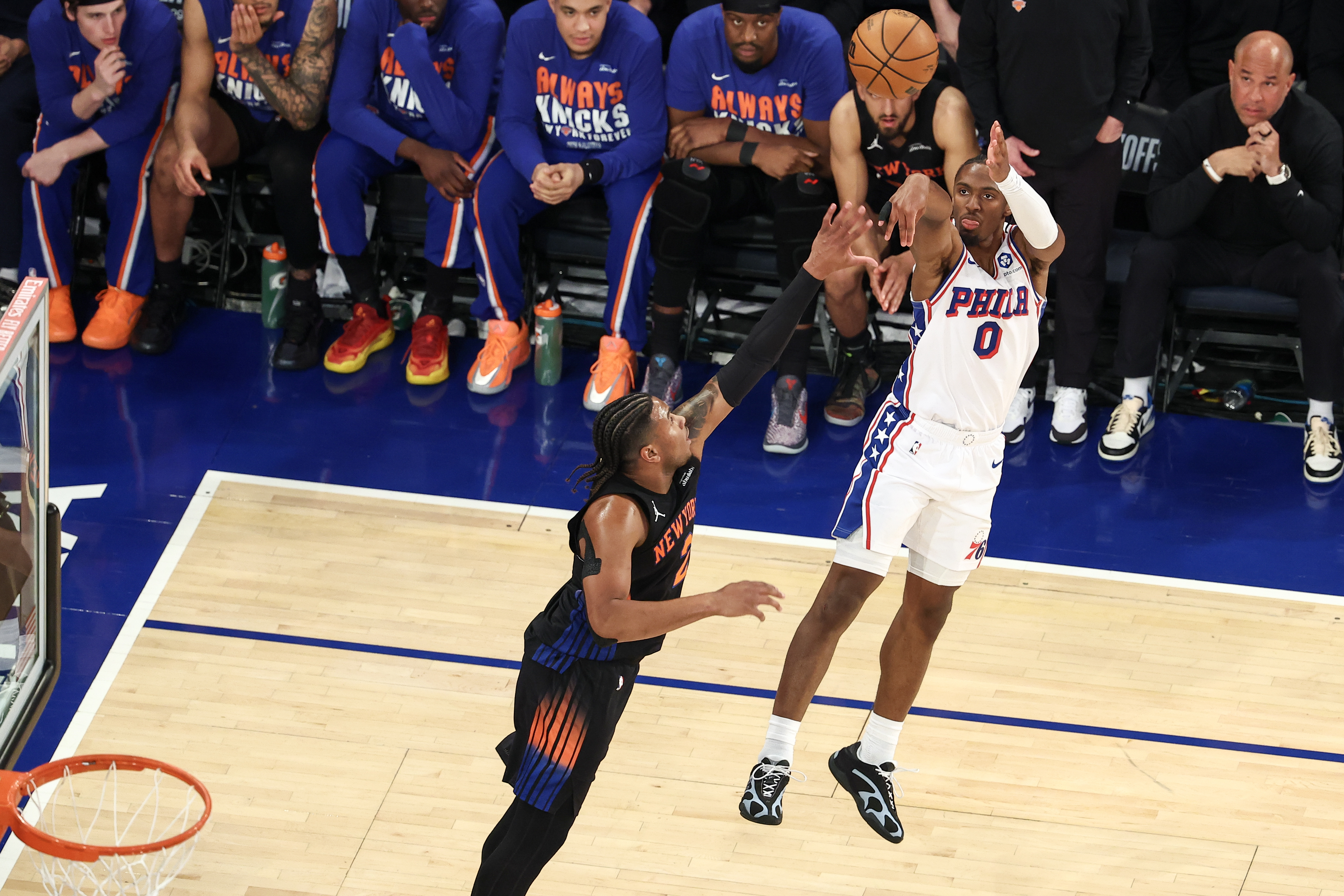
In the latter season, that 43.4% came on 6.2 attempts per game, up from 4.1 the previous season. Maxey excelled, and has always excelled, at taking catch-and-shoot threes, the kind of looks offenses can generate with an athletic player like Maxey playing off ball. In 2022-23, Maxey shot an excellent 45.5% on 3.5 catch-and-shoot three-point attempts per game. Keep that number in mind if and when Maxey plays more off ball this season.
Once he became the team’s full-time point guard, his three-point volume increased, but his percentages took a step back.
2023-24: 37.3% on 8.1 attempts per game
2024-25: 33.7% on 9.2 attempts
2025-26: 36.7% on 8.6 attempts
A deeper look into the type of threes Maxey was taking shows the number of catch-and-shoot threes did not increase; he has never topped those 3.5 attempts per game from 2022-23, according to tracking data from NBA.com.
Instead, Maxey was taking more pull-up threes, which is the kind of shot he, and many other shooters, are not as efficient in taking. Last season, Maxey took 5.2 pull-up threes per game and hit them at a 33.5% clip. His catch-and-shoot threes: 41.7% on 3.4 attempts per game.
What does the future hold?
The ideal role for Maxey next season might be playing more off ball, running off screens and getting more catch-and-shoot threes. When he is getting those shots on a regular basis, he can be an elite shooter. For instance, the Minnesota Timberwolves have found the same with another member of Maxey’s 2020 draft class, Anthony Edwards. They made a trade to get point guard LaMelo Ball this summer to get Edwards more of these catch-and-shoot looks.
LeBron James will likely take on more ballhandling responsibilities when he joins the Sixers, allowing Tyrese Maxey to step away and focus on scoring. Bill Streicher, Bill Streicher-I
Edwards shot nearly 50% on catch-and-shoot threes last season, 35.3% on pull-ups, an even more exaggerated split than Maxey’s numbers. The underlying theme is those shots, when a player gets them in rhythm, are as close to a practice shot as players get in a game.
A cliché of coaching across all sports is that it’s the coach’s job to put players in the best positions to succeed. The revamped Sixers roster offers Nick Nurse a chance to do this with Maxey. Maxey having the ball less and having less on his plate as a ballhandler doesn’t have to be a negative for him individually and the Sixers as a team. The gravity of Brown, James and Embiid could do wonders for Maxey off ball, and it could end up getting him a higher volume of the type of shot he can be lethal at converting.
Over the last decade, there was one team the Philadelphia area was measured by in high school football: St. Joseph’s Prep. That changed last year. The 2025 season marked a historic shift in power for several programs.
Roman Catholic won its first PIAA state football championship, taking the Class 5A title with a dominant team that defeated Bishop McDevitt (Harrisburg) in the state finals, and beat Philadelphia Catholic League and Class 6A state champion La Salle during the regular season.
La Salle had its greatest team in school history, beating two state powerhouses twice in one season, Pittsburgh Central Catholic and, locally, St. Joe’s Prep, en route to its first PIAA Class 6A state championship and first state title since 2009 — the 4A title in the PIAA’s four-class structure. Before last year, the Explorers had only beaten the Prep three times in the previous decade.
Plus, Springfield (Delco), Cardinal O’Hara, and Class 1A Belmont Charter won state playoff games for the first time, each reaching their respective state semifinals. Springfield (District 1 5A) and O’Hara (District 12 4A) also achieved their programs’ first district titles.
It all sets up for an intriguing 2026 season, without a clear-cut dominant team in the area. The usual suspects — La Salle, St. Joe’s Prep, and Roman Catholic — will be good again, but so will Bonner-Prendergast, O’Hara, Archbishop Wood, and Archbishop Ryan.
The talent gap between the powerful Catholic League and PIAA District 1 has narrowed. Central Bucks West, Downingtown East, and North Penn return a wealth of talent, enough to attract Power Four programs.
Malvern Prep is well stocked again, looking to claim its fourth straight Inter-Ac championship, but the Friars will first have to deal with a tough nonleague schedule that includes La Salle, St. Joe’s Prep, and perennial Public League power Imhotep Charter.
As for the Public League, Imhotep will once again be the standard, although the Panthers will drop from Class 6A to 5A this season, opening the doorfor several schools in 6A like rebuilding Northeast and Lincoln to make postseason runs.
Here are the top 10 area teams — in descending order — to watch this season.
10. Springfield (Delco) (14-1 last season)
The Cougars had their best season in program history in 2025. Eight starters are back on defense and seven on offense for the three-time defending Central League champions. The program won its first PIAA District 1 Class 5A championship last season and returns a core group that includes junior quarterback John Hopkins, senior running back/linebacker TJ Valletti, two-way senior lineman Zion Culbreth, and junior running back/defensive back Michael DePetris.
Games to watch: Oct. 9 at Ridley; Oct. 30 at Strath Haven.
9. Central Bucks West (7-4)
The Bucks return eight starters on offense and seven on defense for one of the better coaches in the area, Rob Rowan. CB West lost in the first round of the PIAA District 1 Class 6A playoffs last season to Neshaminy. The Bucks are led by senior quarterback Josh George, senior center Jake Stranix, senior middle linebacker Nick Miletto, senior safety Louie Cipollo, senior defensive back Mason Darrows, and senior defensive ends Liam Laphen and Ryan Zadroga. It is a senior-led team that is well aware of the last time the Bucks won a District 1 championship: back in 2000 under Mike Carey (as a Class 4A program before the Class 6A system took over in 2016).
Games to watch: Sept. 18 at Pennridge; Sept. 25 vs. North Penn.
8. Pope John Paul II (10-2)
The Panthers reached the PIAA District 1 Class 4A finals, where they lost to Bishop Shanahan (42-21) last year. This was a young team that made some amazing strides for coach Darrell Scott in his first year. Junior quarterback TJ Dozier, junior tailback Kassidy Jackson, senior WR/DB Eric Green, and four offensive linemen (senior Dan Tammaro and juniors Nate Seasholtz, Julian Betts, and Griffin Kaczerski) return. The Golden Panthers will move this season from the Pioneer Athletic Conference small-school Frontier Division to the large-school Liberty Division.
Games to watch: Sept.18 at Bishop Shanahan; Sept. 25 vs. Owen J. Roberts.
7. North Penn (12-3)
The Knights won the District 1 Class 6A title last year, beating Pennridge (21-14), and reached the state semifinals, losing to eventual state champion La Salle (49-14). North Penn, under legendary head coach Dick Beck, has a strong nucleus back, led by three-year starters, senior running back Rylei Gray, who rushed for close to 1,200 yards last season, senior WR/DB Sal Colella, and junior RB/DB Ziyon Smith, who will combine with Gray to make up one of the area’s best backfields. Senior London Evans is the leading candidate at quarterback.
Games to watch: Sept. 25 at Central Bucks West; Oct. 9 vs. Pennridge.
The Cougars reached the PIAA District 1 Class 6A quarterfinals, where they lost to eventual district finalist Pennridge, 21-9. They feature one of the best players in the state, game-changing Notre Dame-bound edge rusher Abraham Sesay, along with senior quarterback Ethan Ellis, senior tight end/H-back Michael Schlachter, and junior running back Juelz Robinson.
Games to watch: Oct. 9 vs. Downingtown West; Oct. 23 at Coatesville.
5. Imhotep (8-5)
The Panthers won their 13th straight Public League championship (the COVID-19 pandemic canceled the 2020 season), and second straight PPL Class 6A championship, The Panthers lost to eventual 6A state champion La Salle in the District 12 championship (31-16). Joey McLeish, Imhotep’s three-year starting quarterback, will lead the offense, with support from junior running back Kassan Chappelle. On defense, 6-1, 170-pound junior cornerback Kaleb Woseley, the younger brother of former Imhotep star Kenny Woseley, now at Virginia Tech with James Franklin, and Tristan Alexander, a 6-4, 250-pound sophomore edge, will carry the load. The Panthers are young and open against Camden, DeMatha Catholic, and Malvern Prep.
Games to watch: Sept. 5 vs. DeMatha Catholic (Md); Sept. 12 vs. Malvern Prep.
Joey McLeish has been a three-year starting quarterback at Imhotep.Jose F. Moreno / Staff Photographer
4. St. Joe’s Prep (5-5)
The Hawks had a highly uncharacteristic season last year, going 5-5, the first time they finished .500 or worse since 2010, when former coach Gabe Infante went 4-7 in his first year at The Prep. It’s still a prideful program that has produced nine PIAA state championships (two Class 4A under the 4A system and seven under the 6A system), which is more state titles than any other Philadelphia area program. Five of the Hawks’ nine state titles came under current coach Tim Roken and his staff. It’s a program that plays under high expectations, and this season will not be any different. The Hawks have possibly the best linebacker in the state in Oregon-bound senior Brandon Lockley, and one of the nation’s best receivers in 6-1, 180-pound Ohio State-bound Jett Harrison, a junior who is the son of Hall of Famer Marvin Harrison. Max Rogers, a 6-foot, 190-pound junior, will take over at quarterback and Army-bound senior Jake Wilson, a 6-5, 240-pound tight end and the younger brother of former Archbishop Carroll basketball stars Taylor and Brooke Wilson, both now playing for Army, will be a large target down the middle of the field.
Games to watch: Sept. 19 vs. Malvern Prep at Franklin Field; Oct. 10 at La Salle at Central Bucks South; Oct. 31 vs. Roman Catholic at Franklin Field.
3. La Salle (13-1)
The Explorers were pounded by graduation but still return a good chunk of talent to defend their Catholic League, District 12, and 6A state crown. La Salle will have back a solid foundation in junior wide receiver Owen Johnson, one of the best in the state, UCLA-bound senior cornerback Trey Hopkins, and senior offensive guard Andrew Sorge. Luke Gordon, a 5-11, 170-pound junior and son of Explorers’ coach Brett Gordon, will take over at quarterback and knows the system. Tailback Ahzir Nelson will carry an impact this season, taking some of the load off Luke Gordon. Watch for 6-foot, 185-pound sophomore receiver Jordan Reid, and 6-3, 235-pound sophomore edge Jye Walter.
Games to watch: Sept. 4 vs. Malvern Prep at Ocean City, N.J.; Oct. 10 vs. St. Joe’s Prep at Central Bucks South; Oct. 17 vs. Roman Catholic.
2. Malvern Prep (8-2)
The Friars won their third consecutive Inter-Ac championship last year, sharing the title with Springside Chestnut Hill after winning the Inter-Ac outright in 2023 and 2024. The Friars will be going for their seventh Inter-Ac title in the last nine years. This is a loaded team, arguably the best in the area, returning LSU-bound receiver Cade Cooper, Duke-bound offensive tackle Tyler Graham, and major Division I junior edge recruit George Parkinson IV.
Games to watch: Sept. 12 at Imhotep at the Germantown Supersite; Sept. 19 at St. Joe’s Prep at Franklin Field.
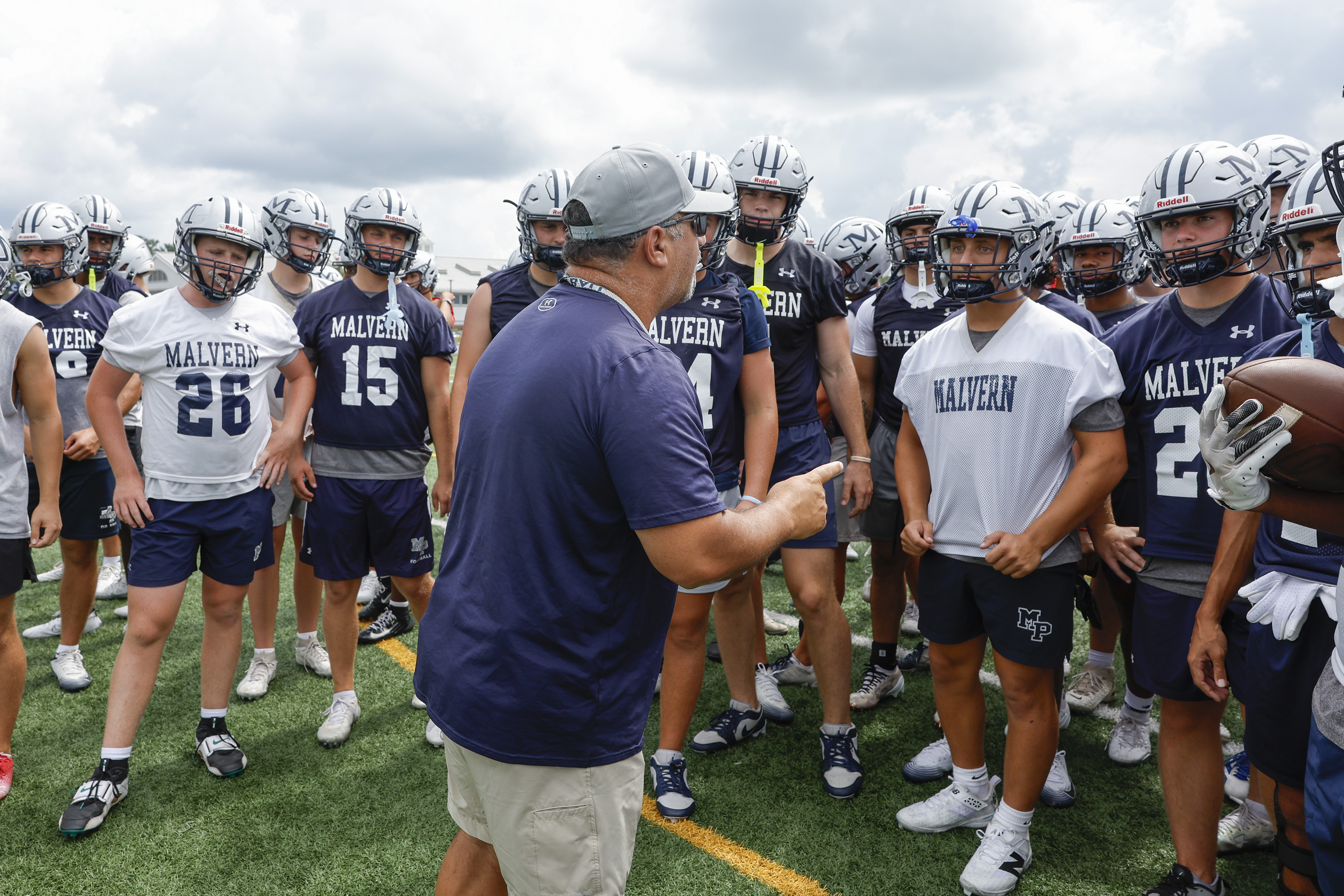
Malvern Prep coach Dave Gueriera addresses his team during practice on Aug. 18.Steven M. Falk / For The Inquirer
1. Roman Catholic (12-3)
Like La Salle, the Cahillites enjoyed their best season in school history last year, winning its first state championship; Roman beat La Salle last season and almost beat St. Joe’s Prep for the first time since 2011 (a 45-17 Roman victory in a Catholic League semifinals) and during the regular season for the first time since 1999 (a 27-24 Roman victory). Coach Rick Prete has opted for a national schedule, so the Cahillites may be roughed up early. One thing is certain, Roman will have a stout defense that features stalwarts Victor Ezeukwu, a junior edge rusher, and Pitt-bound senior linebacker Walter Hudson. Junior Jahmil Hawkins will step in for graduating all-time Roman passing leader Semaj Beals, now at Akron, who threw for over 12,000 yards in his four-year career. The Cahillites will make the jump this season from Class 5A to 6A, with La Salle and St. Joe’s Prep in the Catholic League Red Division.
Games to watch: Oct. 17 at La Salle; Oct. 31 at St. Joe’s Prep at Franklin Field.
Honorable mention: Archbishop Ryan, Archbishop Wood, Bishop Shanahan, Belmont, Bonner-Prendie, Cardinal O’Hara, Central Bucks South, Chester, Downingtown West, Garnet Valley, Haverford School, Lincoln, Neshaminy, Neumann Goretti, Owen J. Roberts, Perkiomen Valley, Pennridge, Pennsbury, Plymouth Whitemarsh, Springside-Chestnut Hill, and Upper Dublin.
The two recent measles-related deaths in Lancaster County, including that of a newborn, were the first in Pennsylvania in 35 years. Sadly, as vaccination rates decline across the commonwealth and the country, they will likely not be the last.
The deaths occurred amid a major measles outbreak in Lancaster that has sickened nearly 400 people. Nationwide, the number of cases grew to a 35-year high.
In normal times (a.k.a. before Donald Trump), federal and state government officials would work together to contain the outbreak, protect the public, and use the incident to urge residents to get vaccinated.
But under Trump, all issues are political. Someone must lose so he can win. Rather than lead and unite, the president and his minions divide and misinform.
Gov. Josh Shapiro did what any responsible public official would do. He traveled to Lancaster General Health’s Women and Babies Hospital to express empathy, support the local community, and urge the public to get vaccinated.
“We hope, and we pray, that those deaths will be the last,” Shapiro said. He underscored, “This illness and death from measles is completely preventable.”
Initially, state officials did not provide details about the two people who died in order to protect their privacy.
Lancaster County Coroner Stephen Diamantoni, a Republican elected official who is also a physician, said the newborn tested positive for measles, but died from a ruptured spleen. State health officials clarified that they define a “measles-associated death” as one in which measles was present, even if it is not the immediate cause of death.
That provided an opening for others to stir the misinformation sphere.
Robert F. Kennedy Jr., the dangerously unqualified head of the U.S. Department of Health and Human Services, rushed right in, claiming on social media that Shapiro’s administration may have “fabricated” the deaths, and wrongly commenting in an interview on C-SPAN that “they cannot find any measles deaths in Lancaster County.”
To be sure, Pennsylvania health officials should have been more forthcoming in sharing information about the patients’ ages, causes of deaths, and reasons for being unvaccinated.
The lack of details “created fertile ground for conspiracy theories to thrive,” said Paul Offit, a physician at Children’s Hospital of Philadelphia who heads the hospital’s Vaccine Education Center.
Offit explained that measles can cause an enlarged spleen to become fragile, which can lead to rupture. He added that he learned from state health officials that the patients who died in Pennsylvania would have lived if they were not infected with measles.
It is frustrating and sad that so much energy is needed to convince the public that vaccines work. Vaccines are tested, proven, and settled science. The most effective way to stop the spread of measles is to get vaccinated.
Indeed, measles was declared eradicated from the United States in 2000. Thanks to vaccines, other viruses such as mumps, rubella, and chickenpox were either eliminated or reduced by as much as 99%.
But measles has made a comeback in recent years as vaccination rates have declined. Pennsylvania is among the states with the most cases, and public health officials fear more outbreaks.
The drop in vaccination rates is due in large part to the spread of misinformation across social media in recent years. That misinformation has been amplified by Trump, the king of conspiracy theories, witch hunts, and any other form of quackery that gets attention and plays to a crowd’s worst fears.
In a cynical political deal to win over so-called Make America Healthy Again voters, Trump appointed Kennedy, who is not a doctor, to oversee HHS.
Beyond his famous family name, Kennedy is best known for spreading misinformation about vaccines and promoting debunked claims about autism. He was a leading vaccine skeptic — and attention seeker — during the pandemic.
From his powerful perch, Kennedy has upended vaccine policy. As a result of his anti-science agenda, the country is getting sicker.
The sooner America’s leaders return to promoting evidence-based science and public health, the safer and healthier we will be.
No, we’re not just talking about the start of the NFL season. Flyers hockey also returns this month, with the Orange and Black opening up training camp on Sept. 17 before officially dropping the puck on the season on the 30th against the Penguins at Xfinity Mobile Arena.
So on theheels of the team’ssurprising run to the second round of the playoffs and the increased expectations that come with it, how willRick Tocchet line up his upstart team for opening night? Here’s our suggestion for what lineup we’d like to see — not necessarily what we expect to see — to start the season.
Forward lines
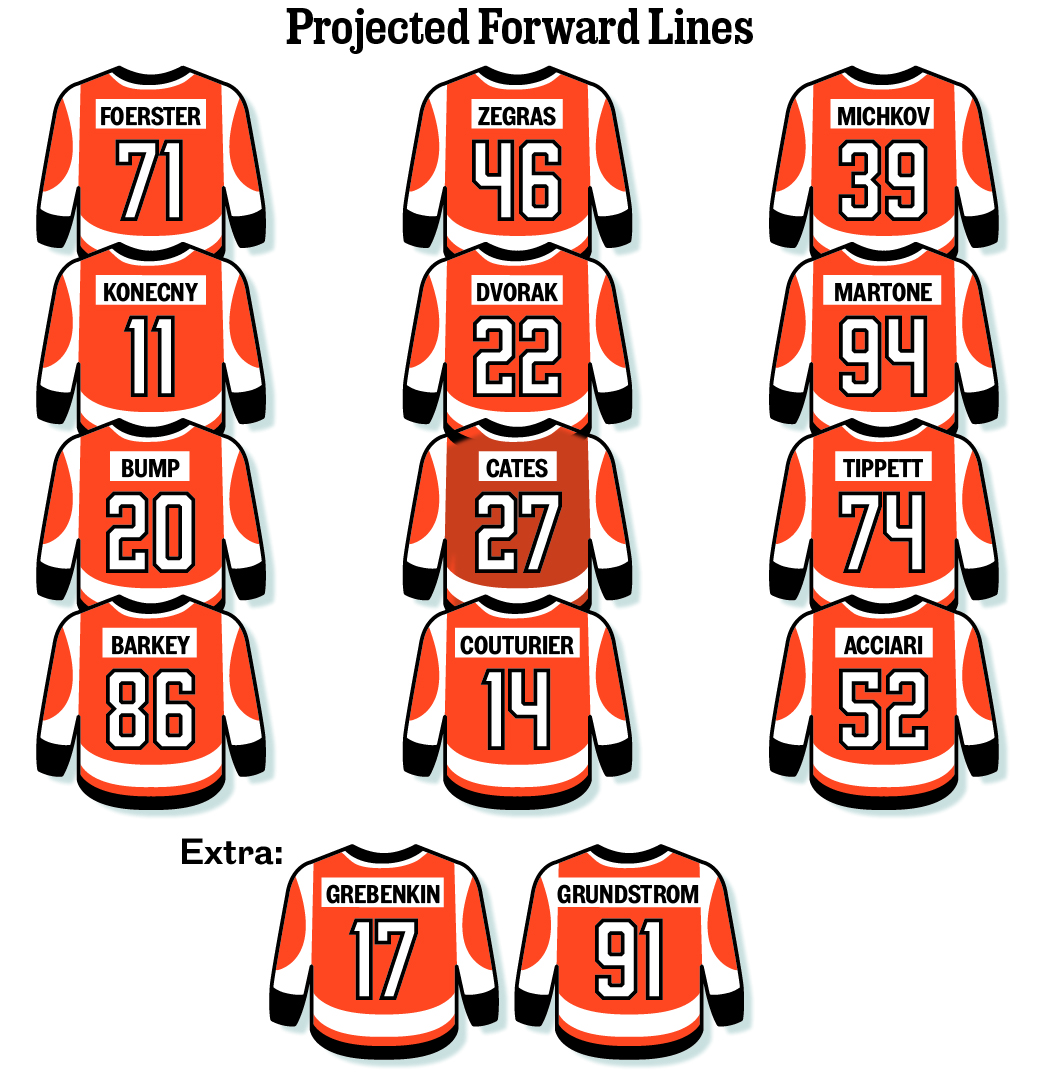
Here’s how The Inquirer would like to see the Flyers line up on opening night against the rival Penguins.Steve Madden
The Flyers enter the season, at least on paper, with their strongest roster in quite some time. There is serious competition for spots at forward and on defense, and not a ton separating the two wingers who will play on the first line from the four that will comprise the second and third lines.
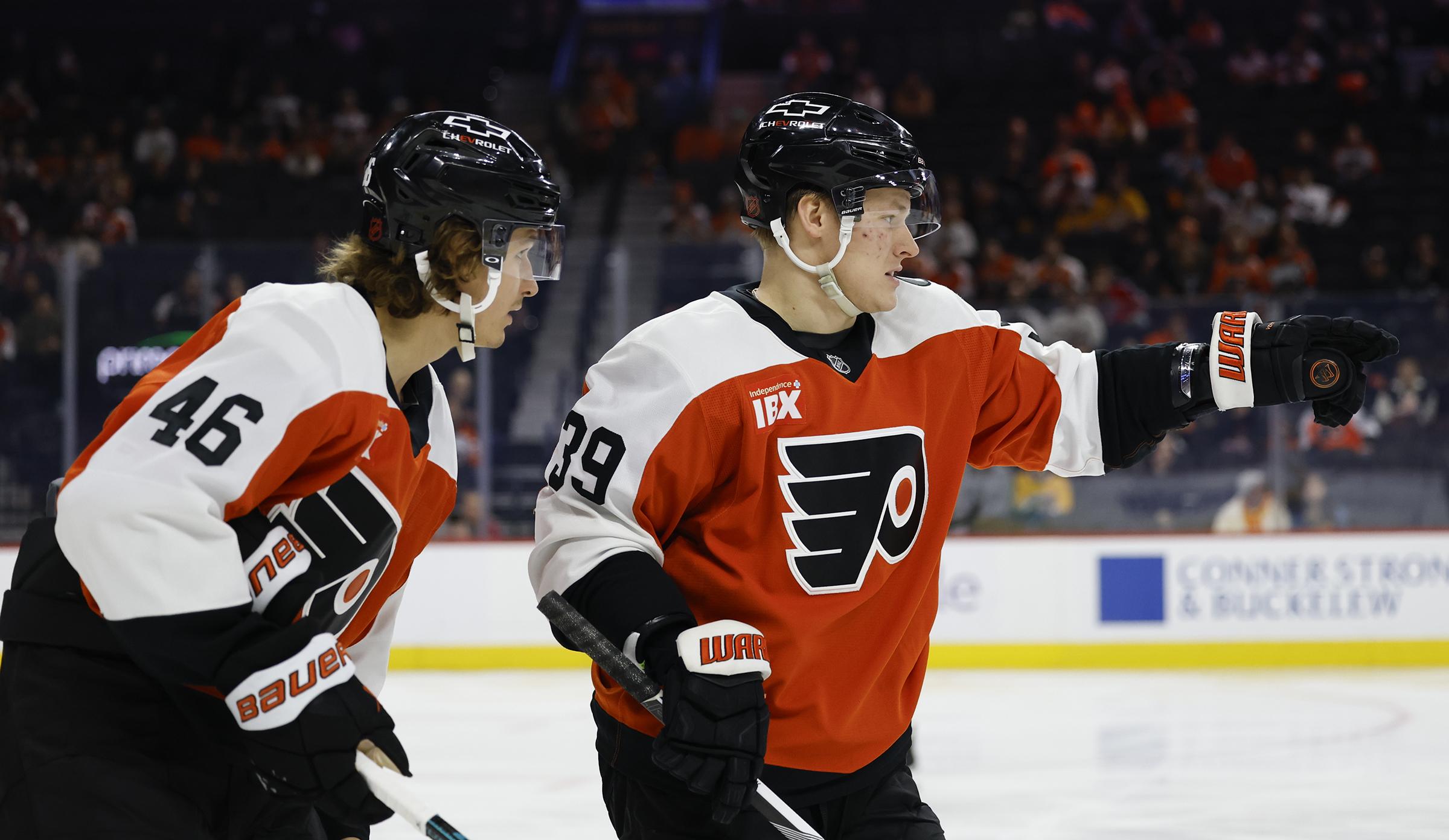
Trevor Zegras remains entrenched as the team’s No. 1 center, although who his wingers will be remains up for debate. We like the idea of pairing Zegras with the team’s other creative mastermind, Matvei Michkov, especially with the Flyers hell-bent on getting the latter back on track after an up-and-down sophomore season.
Michkov and Zegras also showed instant chemistry during the preseason and had some success in sporadic minutes over the course of the year. According to Natural Stat Trick, in 169 minutes together at five-on-five, the pair earned basically an even share of the shot attempts, outscored opponents 7-6, and created 38 high-danger chances compared to 30 against. The Athletic recently reported that the Flyers are intrigued to see if the two can develop chemistry.
Rounding out our top line is a volume shooter in Tyson Foerster, who would relish a first extended chance to be set up by playmakers of the ilk of Zegras and Michkov. Foerster’s defensive responsibility would also offset some of the risk/concerns with Michkov’s game away from the puck.
Travis Konecny, Christian Dvorak and Porter Martone stay together on our second line after a quietly impressive run in April. The trio logged a Corsi percentage of 50.93% and won the scoreboard battle 5-1 in 80 minutes together last season at five-on-five. This line wouldn’t be a ton of fun to play against either, as Konecny and Martone both play in-your-face hockey and thrive at getting under opponents’ skin. This could just as easily be considered the top line depending on how you look at it, too.
After Porter Martone’s impressive late-season cameo, the Flyers have high hopes for the 19-year-old as he enters his first full NHL season.Yong Kim / Staff Photographer
Our third line is centered by Noah Cates, who continues to develop into one of the league’s better defensive forwards. On one flank he’d have speedy power forward Owen Tippett, who raised his game a level last year and could finally be poised to crack the 30-goal plateau.
The other wing will likely come down to a battle between goal scorer Alex Bump and diminutive playmaker Denver Barkey. While Barkey is ahead of Bump in the pecking order, if the Flyers want to squeeze their 12 best forwards into one lineup, Barkey’s feistiness and versatility to play up and down a lineup make him a more natural fit on the fourth line than Bump. Bump could also play out of his element on the fourth line or be the odd man out altogether if the Flyers believe Barkey, who they are extremely high on, needs to play in the top nine and Nikita Grebenkin is healthy enough to start the year.
Sean Couturier, who thrived in a bottom-six role in the postseason, is poised to slot in as the team’s fourth-line center. Veteran free agent acquisition Noel Acciari represents an upgrade on Garnet Hathaway and should provide some beef and nastiness at right wing, as well as the versatility to take some draws at center when needed. That leaves Barkey, Grebenkin, and the speedy Carl Grundström competing for the final spot in what could be a rotation at least out of the gate. Grebenkin’s health remains a question mark, but he is reportedly ahead of schedule in his rehab from an upper-body injury.
Defensive pairs
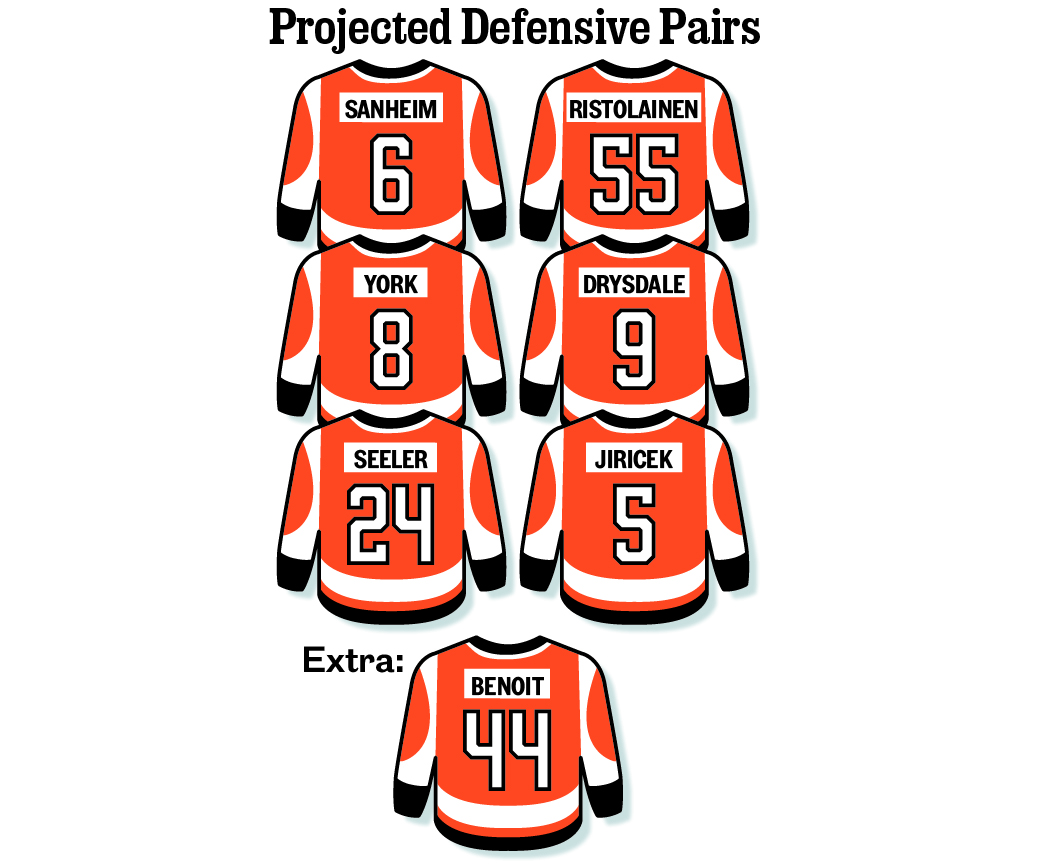
The Flyers’ defensive pairs will look quite similar to last year, if Rasmus Ristolainen sticks around that is.Steve Madden
Any discussion about the Flyers blue line starts with Travis Sanheim, who has elevated himself into a bona fide top-pair defenseman and is playing the best hockey of his career at age 30. Sanheim played the 10th-most minutes in the NHL last season and posted career highs in goals (11) and plus-minus rating (plus-12), all while shutting down opposing teams’ top lines.
His partner to start the year is projected to be Rasmus Ristolainen, who is still around despite the latest cycle of trade rumors swirling around his name. The rugged and defensively solid Finn complements Sanheim well and allows his partner the increased freedom to jump into the rush. Ristolainen, who is a free agent at season’s end, might not be here come March, but for now he remains a big part of the Flyers’ blue line.
Rasmus Ristolainen remains a Philadelphia Flyer for now despite widespread speculation that he would be traded during the summer.Yong Kim / Staff Photographer
Jamie Drysdale and Cam York have long been close off the ice, so it came as no surprise that they thoroughly enjoyed their time playing together on the second pair last season. In almost 500 regular-season minutes, the results were mixed, while in the playoffs the two got caved in at points, particularly against Carolina (31.76 Corsi %). This pairing probably isn’t ideal long-term given their size and lack of physicality, but they’ll get another shot to prove they can play together in 2026-27. The Flyers are counting on both, particularly Drysdale, to take another step forward this season.
As long as Ristolainen remains in Philadelphia, the third pair figures to feature some sort of rotation. The selfless Nick Seeler is the most veteran option on the left, while former Toronto Maple Leaf Simon Benoit, beyond being Ristolainen insurance, could push for playing time due to his combination of size, skating, and snarl. The Flyers also like Ty Murchison, who impressed before suffering a season-ending injury last season, quite a bit on the left as well.
Former top-10 pick David Jiříček, 22, will try to revive his career with his third NHL team after being acquired from Minnesota last March for Bobby Brink. The towering Czech, who can handle the puck and possesses a booming shot, was tasked with working on his defensive game in the American Hockey League last year and figures to get the first shot on the right given he’s no longer waiver-exempt. He also should get a look on one of the power-play units given the team’s longstanding ineptitude in that area. Righty Oliver Bonk, 21, will push hard for a roster spot as well, but he’ll have to blow the Flyers’ doors off to usurp Jiříček given the team has the option to send him to Lehigh Valley without waivers.
Goaltenders
Projected Flyers goaliesSteve Madden
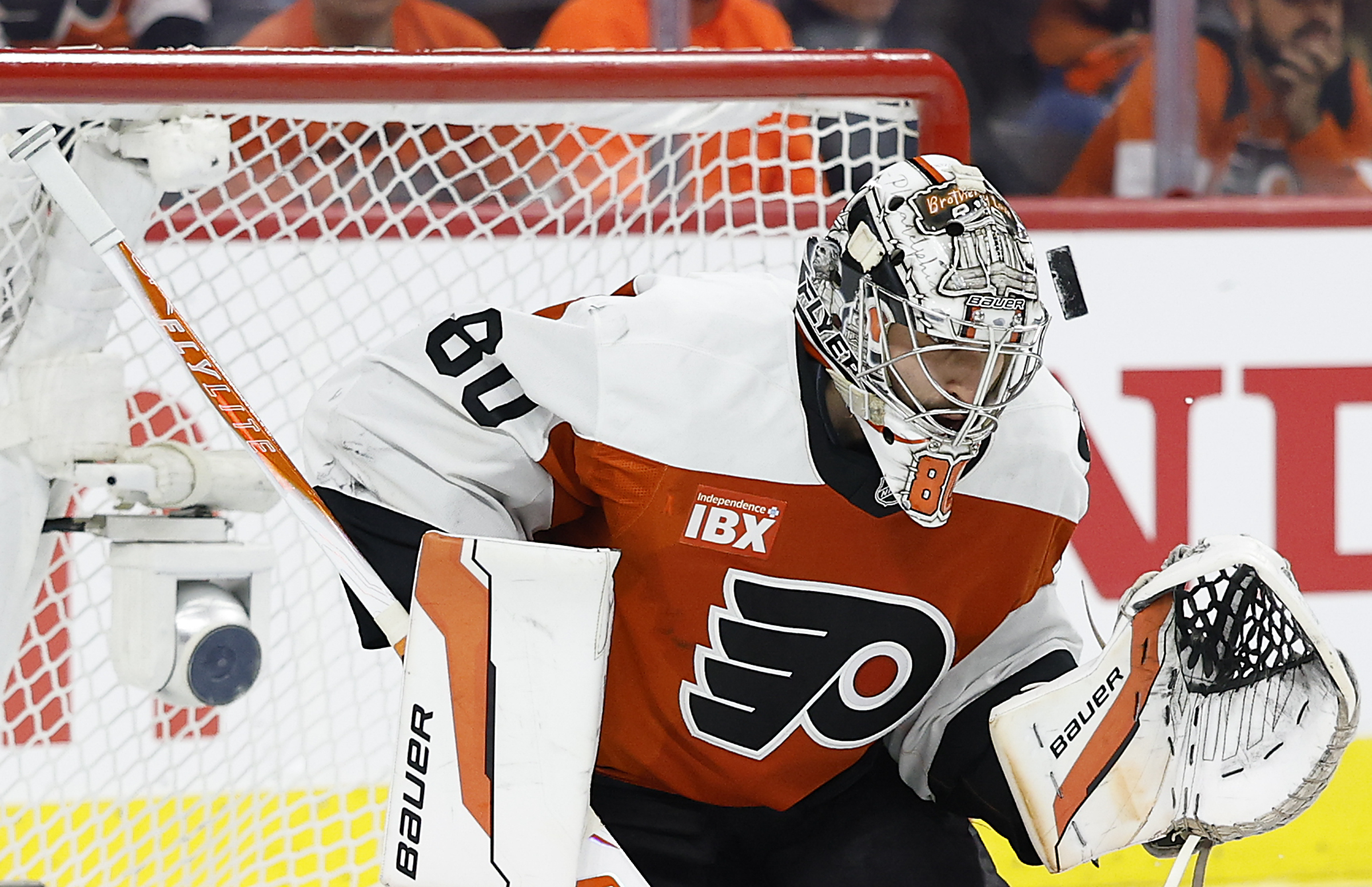
Long the biggest sore spot in the organization, goaltending improbably became the team’s biggest strength last season thanks to the revelation that was Dan Vladař. The 29-year-old career backup enjoyed a breakout season, starting a career-high 51 games and posting a .906 save percentage (eighth among goalies with 40 starts) and saving 13.8 goals above expected (10th-best), according to Money Puck. Now, after signing a five-year, $27.5 million contract in the summer, the question becomes: Can Vladař do it again?
All signs point to yes based on his mental makeup, play in the postseason, and the way this team is set up to defend under Tocchet. Vladař also may not have to, as the Flyers significantly upgraded the backup position by swapping Sam Ersson for Joseph Woll.
Woll, 28, has a .906 career save percentage and, when healthy, has shown the capability of being a No. 1 goalie in this league. Woll’s presence should not only ease the physical burden on Vladař but also allow the Flyers to feel much more confident about their chances on days the Czech netminder gets a rest.
In his first year with the Flyers, goaltender Dan Vladař came out of nowhere to finish sixth last season in the Vezina Trophy voting.Yong Kim / Staff Photographer
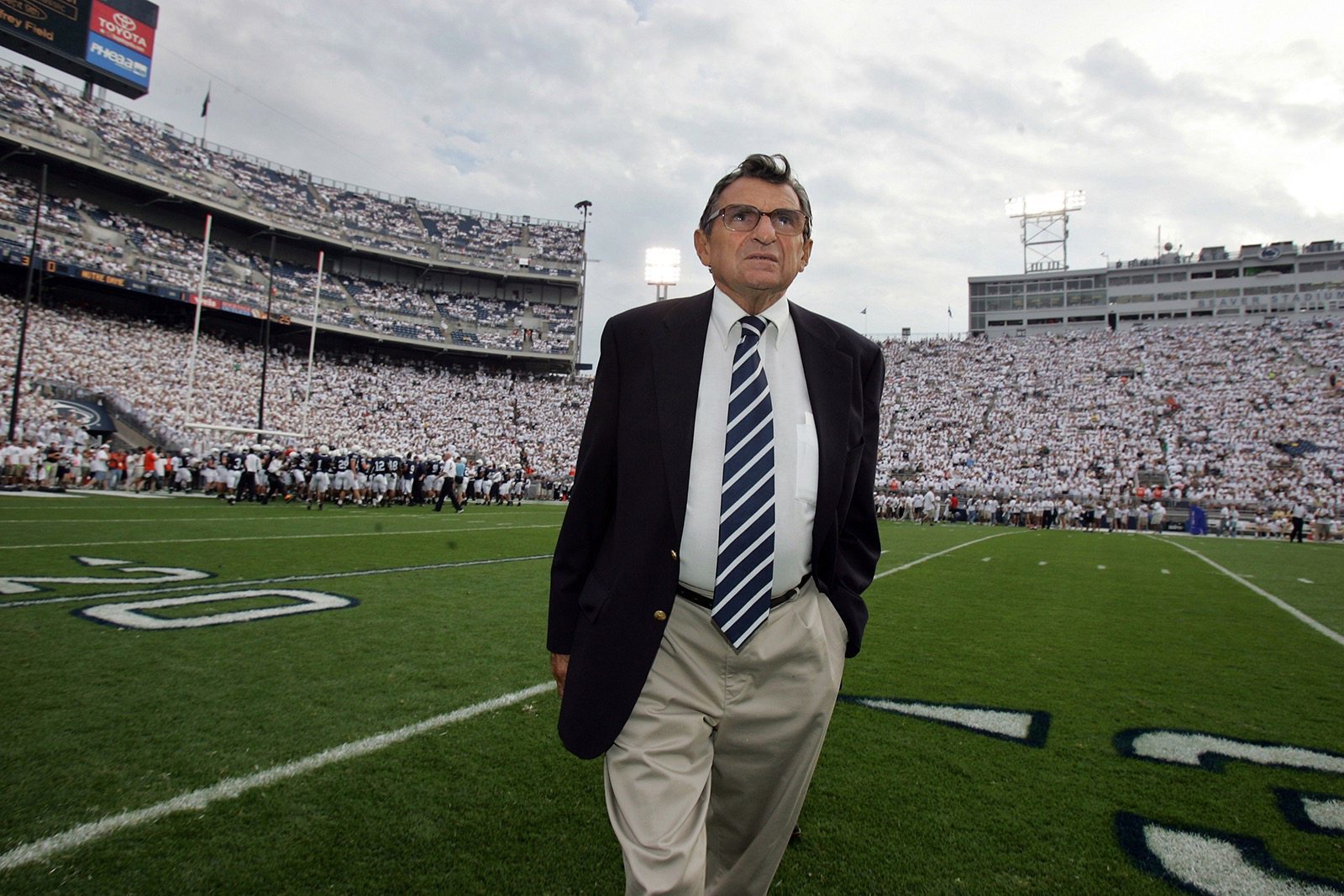
Pennsylvania State University this week announced the opening of the Paterno Family Football Experience Room, named for the school’s iconic — and deeply polarizing — longtime football coach.
The backlash quickly followed.
According to a university news release, the new exhibit — which will be part of the Penn State All-Sports Museum inside Beaver Stadium — will include a slate of features, including Paterno’s original office desk and personal artifacts from his six-decade tenure at the school.
“Penn State Football’s history belongs to generations of student-athletes, coaches, staff, and supporters who helped build this program,” Pat Kraft, Penn State’s vice president for intercollegiate athletics, said in a statement. “This room gives us an opportunity to preserve that history, present it thoughtfully, and create an experience that connects the proud tradition of Penn State Football with its future.”
The release did not directly address how the university settled on the name of the new exhibit, saying only that the school’s athletics department “received a lead gift from an anonymous donor supporting the creation and naming of the Paterno Family Football Experience Room.”
In an email Wednesday, Leah Beasley, a Penn State deputy athletics director, declined to comment further, directing a reporter to the original news release.
The Paterno Family Football Experience Room is set to open to the public Thursday.
The announcement of the new attraction comes 15 years after Paterno’s coaching career came to an abrupt end, when he was fired in 2011 by Penn State’s Board of Trustees over the program’s handling of child sexual abuse allegations involving longtime assistant coach Jerry Sandusky. Paterno died in 2012 at the age of 85.
And on Wednesday, it quickly rekindled the discourse surrounding Paterno’s complicated legacy.
Critics on social media expressed their disbelief at the university’s decision to name the museum after a man who played a role in one of the biggest scandals in college sports history.
“The WHAT Family football experience room!??!?!?!?!?” wrote one user on X.
“Incredibly tone-deaf,” wrote another.
“Yeah I think I’ll pass on the ‘Paterno family football experience room,’” said another.
In an interview Wednesday, Penn State booster Michael Kirschner — who along with wife Patty helped fund the Paterno desk exhibit and historical display in the new project — said he supported the use of the Paterno name.
“I am OK with it,” he said. “Those of us who sit on the Paterno side realize that the character of the man was not such that he would do something like that, and he’s done so much for Penn State that we have an allegiance to him that is lasting.”
Brandon Short, a former Penn State football captain and NFL linebacker who now serves on the school’s Board of Trustees, also praised the announcement.
“As a two-time football captain, PSU Trustee, and Letterman, I’m proud to see the Paterno Family Football Experience Room coming to Beaver Stadium,” Short wrote in a social media post. “Been working on this for a while — grateful it’s finally happening. We Are!”
On the field, Paterno’s success was indisputable. From 1966 to 2011, the coach amassed a 409-136-3 career record, becoming the winningest coach in major college football history. He led the Nittany Lions to two national titles, five unbeaten seasons, and 37 bowl appearances.
But to many, those achievements were far overshadowed by the coach’s role in the case of Sandusky, who was accused of using his association with Penn State football to groom boys for sexual abuse.
Sandusky was eventually convicted of 45 counts of sexual abuse involving 10 boys over the span of 15 years. (Last week, a judge agreed to a hearing in the case after a man said he wanted to recant his allegations against Sandusky.)
In a 2012 report commissioned by the university, former FBI Director Louis Freeh found that Paterno, school president Graham B. Spanier, athletic director Tim Curley, and vice president Gary Schultz “failed to protect against a child sexual predator harming children for over a decade.”
“The most powerful leaders at the university … repeatedly concealed critical facts relating to Sandusky’s child abuse,” the report said.
Shortly after the release of the Freeh report, then-Penn State president Rodney Erickson announced that the seven-foot statue of Paterno in front of Beaver Stadium was being removed, calling it “a source of division” and “an obstacle to healing.”
The coach’s name still adorns the university’s main campus library, The Pattee Library and Paterno Library — and many within the Penn State community have remained vocally supportive of the coach and his legacy.
What effect, if any, the exhibit’s name has on prospective interest remains to be seen — though Kirschner, for his part, doesn’t appear overly concerned.
“The lines to see the exhibit,” he predicted, “will be longer than the lines to the Creamery.”
It was a historic Sunday afternoon at Atlanta’s East Lake Golf Club in the penultimate Tour Championship in its present form, which begged the question: Why change?
With the exception of contrived, boorish, international gimmickry, golf will never be relevant after majors season ends. With apologies to the British Open, golf’s not particularly relevant after Father’s Day and the final round of the U.S. Open. This was proved again last weekend when everything was up for grabs: golf’s biggest money, its MVP trophy, a Tiger record, all swirling around the game’s biggest star.
And all most sports fans cared about was if Bill Belichick’s lousy college football team would win in Ireland (they did; ugly), how many NFL teams would keep four quarterbacks (four teams did, including the Eagles), whether Aaron Donald would unretire to join Myles Garrett with the Rams (he did; yikes), and if the Brewers and Rays are for real (TBD).
Meanwhile, golf’s most monied weekend delivered. It was a closed, $40 million tournament with mostly the same old names, but it delivered more drama than any 16-man, single-elimination tournament will deliver when the latest format begins in 2028, the year after FedEx’s deal expires with the Tour.
This is the brainchild of a panel of existing Tour stars and new PGA Tour CEO Brian Rolapp, the latest attempt of Big Golf to extend interest to compete with MLB’s stretch run, the NCAA’s kickoff frenzy, and the NFL’s annual four months of dominance. Past formats have included cumulative points systems that rendered playoff events (as many as four of them) moot, as well as a system that awarded the best players with pre-tournament handicaps that absurdly skewed the odds of winning the Cup.
Currently, players compete for FedEx Cup points to determine the field for a playoff tournament for the top 70, which winnows the next field to the top 50, which winnows the next field to the top 30, the winner of which wins the Cup and the $10 million first-place check.
It is imperfect, but it is simple, and it is elegant.
Beginning in 2028, a bifurcated series of Tour events will assign qualifying points to determine the top 90 golfers, who will compete in a stroke-play tournament to determine a top 32 in points. That group will compete for a week in round-robin, match-play in pods of four. The two top players from each pod advance to a Sweet 16, single-elimination, match-play tournament to determine a playoff winner.
The problems:
Match play is boring, even if it winds up at non-traditional venues like Pine Valley or Bandon Dunes. The Ryder Cup is the only exception, but that’s more about jingoism and theater than it is about golf.
Stroke play is a truer test of quality. There’s a very real chance that Min Woo Lee and Viktor Hovland would have been the finalists had the 2028 format been used this year. Yawn.
This year’s tournament absolutely delivered.
Got it right
The best golfer of his generation came from three strokes down for a three-stroke win to claim his second FedEx Cup title and surpass the winnings of the best golfer of any generation.
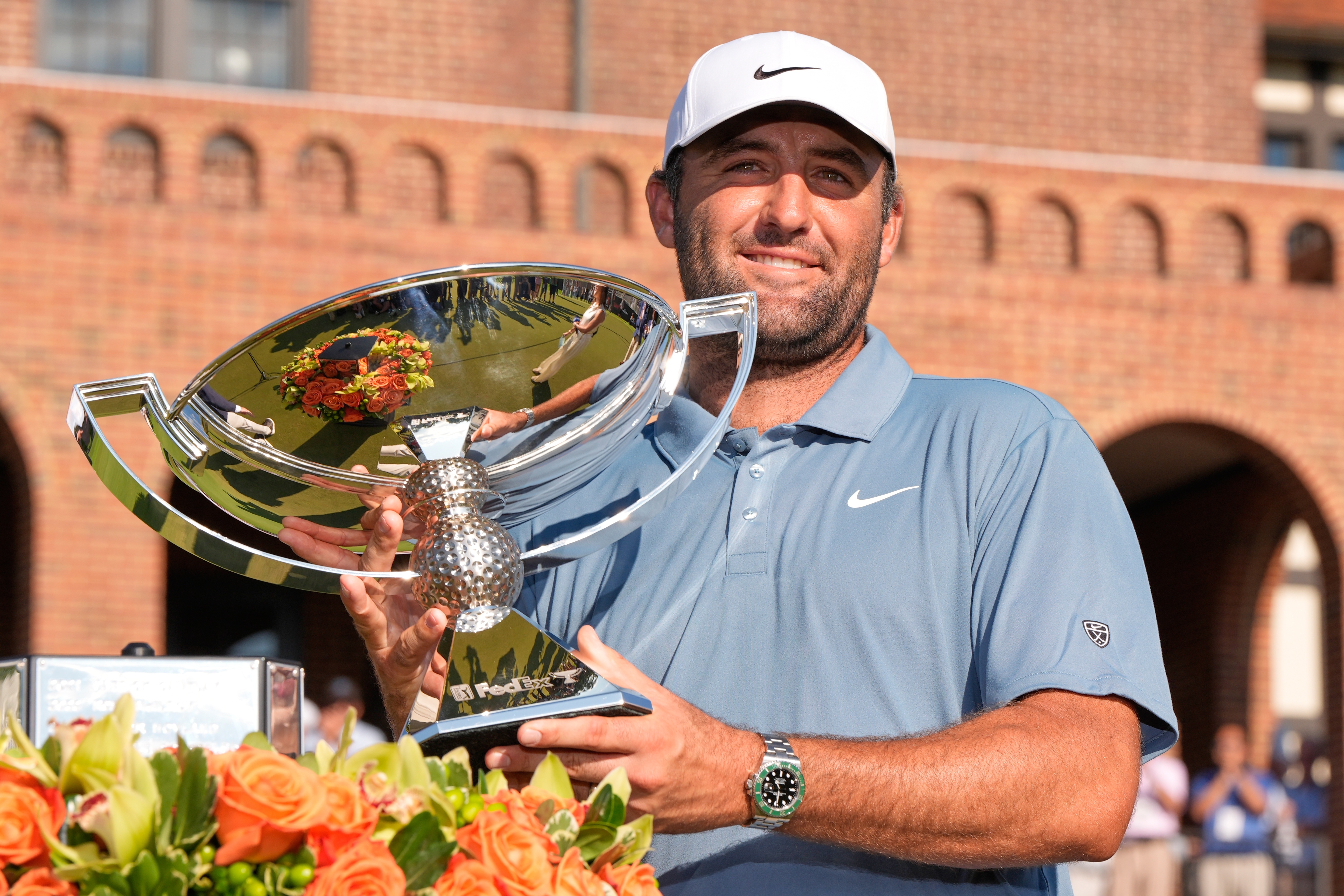
Scottie Scheffler passed Tiger Woods and became the all-time leading money winner in PGA Tour history.
The win, Scheffler’s third of the season, his second of the playoffs, and his 22nd of his career, surely secured his fifth straight Player of the Year award. It will be announced in December, and the five in a row ties him with Tiger. (The award has only existed since 1990, so it postdates Jack and Arnie and Gary Player, but Tiger also won it three times in a row and 11 times overall.)
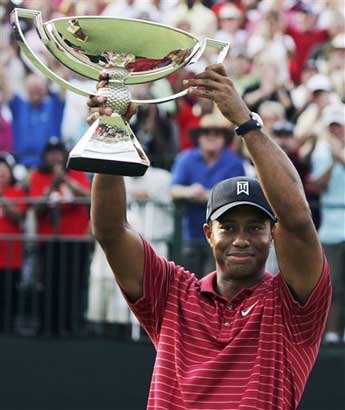
Tiger Woods, who won the FedEx Cup three times, was the tour’s player of the year 11 times.AP
Before the 30-man Tour Championship there was, incredibly, some debate over whether Scottie should win it over a handful of other players. This, even though Scheffler had a lead of more than 1,400 points over the next closest Tour Championship qualifier; had won two tournaments; and led the Tour in second-place finishes (five), top-5 finishes (13), scoring average (by nearly three-quarters of a stroke), birdie average, greens in regulation, scrambling, and, with more than $20 million in the bank, had earned more than $6 million more than his closest competitors — Matt Fitzpatrick, Wyndham Clark, and Cameron Young.
Uphill battle
At any rate, Scheffler took care of business — a business that he has dominated. Since Official World Golf Rankings began 40 years ago, his 207 weeks at No. 1 are third-most in history, including the last 172 weeks, the third-longest streak in history. He recently ended a streak of 78 consecutive cuts made, sixth-best in history.
In a world of self-promoting social media wankers, he’s about as interesting as warm skim milk.
It’s not his fault. In the midst of golf’s most divisive era, Scheffler won’t say anything controversial. In the midst of America’s most heated political climate in 60 years, Scheffler is apolitical. He’s a retiring Christian family man who tries to play the best golf he can every time he plays.
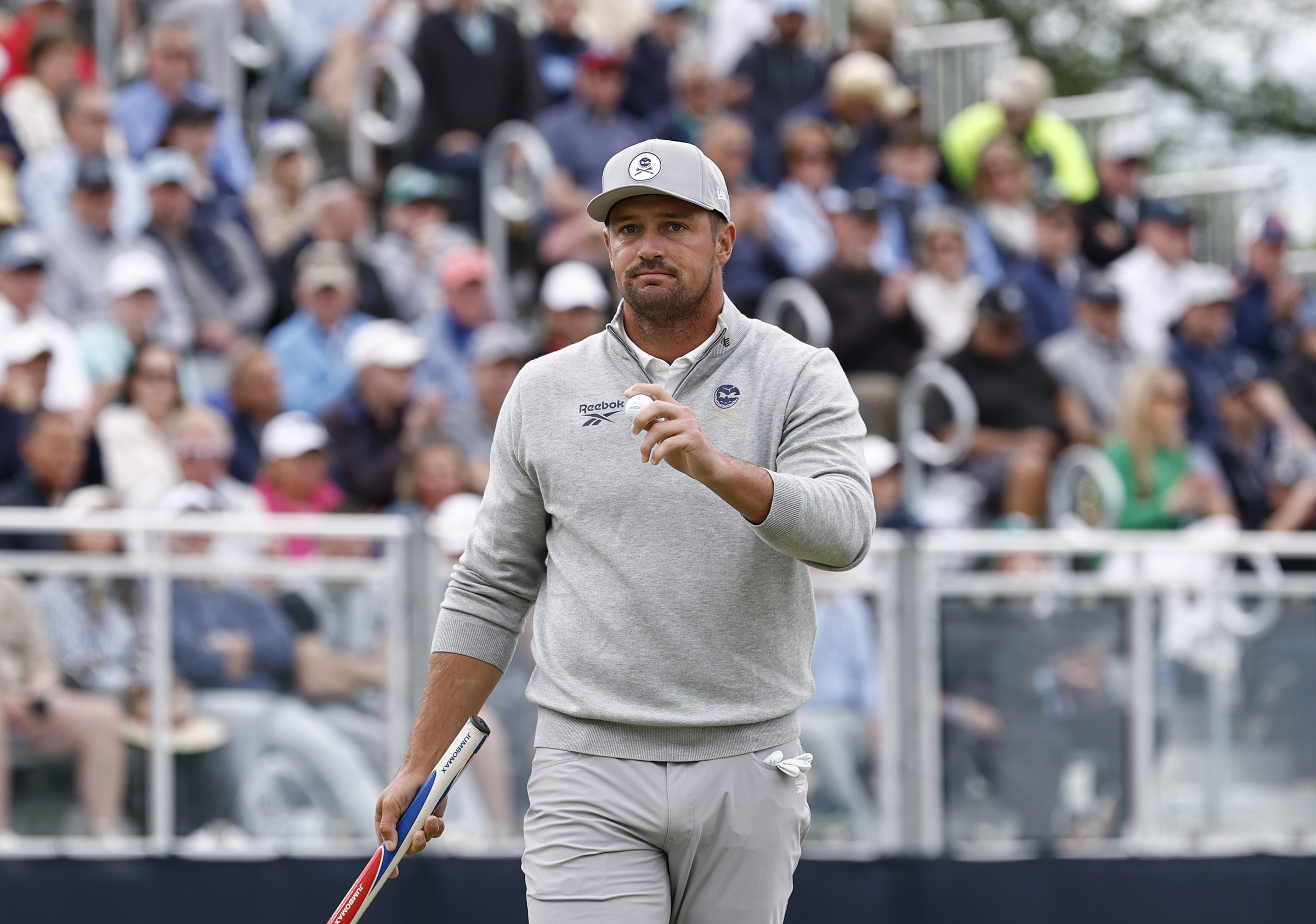
Bryson DeChambeau is always interesting, no matter how he plays.Yong Kim / Staff Photographer
He lacks the additive abrasion of Bryson DeChambeau. He lacks the international appeal and frank assessments of Rory McIlroy, a glib Northern Irishman, or Jon Rahm, a prickly Spaniard.
Exhausted
More than anything, the Tour’s long, top-heavy schedule is its own worst enemy.
Its best tournament, the Players Championship, happens in March. Its most beloved tournament, the Masters, happens in April. Its best major tournament, The PGA Championship, now comes in May. Its toughest test, the U.S. Open, is in June. Its oldest and coolest tournament, the British Open, is played in July.
By August, all but the most rabid golf fans (hand raised) are burned out. Every other year the casuals need the eight weeks between the British and the Ryder Cup to refuel. (We’ll keep ignoring the President’s Cup until it matters.)
As LIV dies and its prodigals return, the Tour Championship in its present form only would have become better. Now, instead of being virtually assured of having DeChambeau, Rahm, LIV stud Joaquin Niemann playing against Rory and Scottie at East Lake on the final Sunday of the 2028 season, you’re guaranteed to have no more than two of them.
Federal authorities learned four decades ago that Raymond “R.C.” Horsch — a man whose Olney home is now linked to five dead or missing women — was a manipulative criminal who was “consumed by anger,” according to a psychological profile obtained by The Inquirer.
“He is grandiose, mistrustful, suspicious, and excessively controlling,” the psychologist, Don Seraydarian, wrote in 1985 as part of a federal drug manufacturing case.
At the time of the exam, a wiry, 41-year-old Horsch had just been captured after spending several years on the run in New Zealand to escape criminal charges. Prior to absconding, he had spent the previous decade producing a mobster-backed pornographic film, counterfeiting cash, and running a meth lab.
Ahead of his sentencing on the drug charges in Philadelphia, Horsch’s defense team commissioned the four-hour clinical assessment that concluded he likely suffered from bipolar and paranoid personality disorders. The report was filed along with a motion seeking lenient sentencing, with Seraydarian writing that prison time for Horsch would likely “increase his hostility and sense of alienation.”
“He feels this unfocused rage was the source of his criminal behavior,” Seraydarian wrote.
The full report, obtained by The Inquirer through a federal records request and not previously reported, is a window into the mind and early childhood of the criminal pornographer at the center of an expanding investigation into a series of missing women.
The Inquirer reported last week that police believe a video recovered from Horsch’s Olney property shows him strangling a woman to death on camera, according to law enforcement sources. Police also said they recovered photos on Horsch’s hard drives that appeared to show two other women who went missing in the 2010s alive — and then dead — inside his Chew Avenue home.
While Horsch was an established pornographer with a criminal record by 1985, he had never been charged with any violent offenses before he died in May 2025, at the age of 82. Still, the psychological report showing insight into Horsch’s unstable mental state was presented to law enforcement decades before he was linked to any disappearances.
Court records show federal prosecutors reviewed the 1985 case file again during Horsch’s 2009 indictment in a separate drug manufacturing case. Seven years later, his ex-wife, Amy McHale, went missing after being last heard from at his Chew Avenue home. Another woman was reportedly last seen at the property in 2022.
It is unclear whether police reviewed Horsch’s psychological profile as part of their ongoing investigation, or in these prior missing persons cases.
Michael Yoder, a retired FBI special agent who spent nearly a decade as a criminal profiler in the Behavioral Analysis Unit, reviewed the exam notes at The Inquirer’s request. He said that it was unusual for such an exam to be conducted for a drug case, but that he saw overwhelming hallmarks of psychopathy in the description of Horsch, and said the report would have been a red flag for criminal profilers.
“If you were to give me this report and I knew nothing about this person, and knew nothing about the crimes he committed, I would say you have a potential serial killer on your hands,” Yoder said.
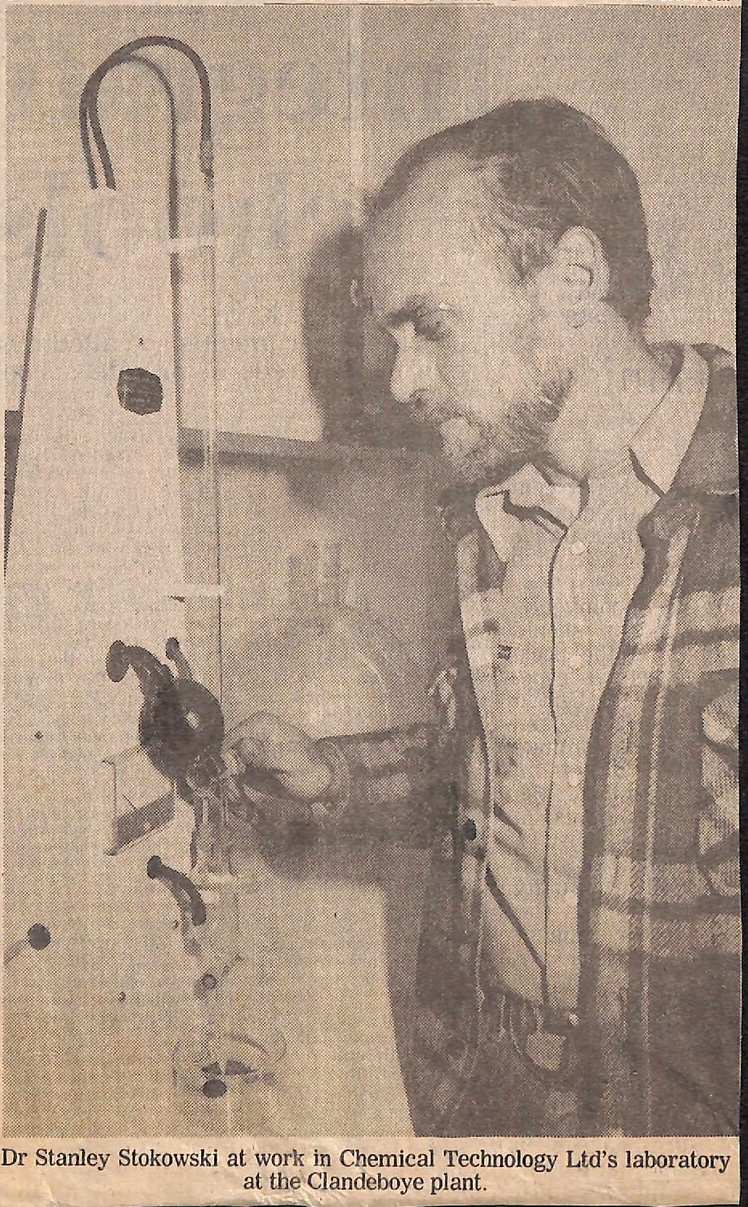
A clipping from a 1982 news article in New Zealand, where Horsch found work at an ethanol plant under the stolen identity of “Stanley Stokowski.”Custom
The report notes that during the interview, Horsch chain-smoked, dodged questions, and downplayed his crimes. He referred to himself in the third person when discussing his illegal activities, as if they were “events from someone else’s life.”
He ultimately opened up to Seraydarian about his insecurities and resentments, describing himself as a social misfit. Money was not Horsch’s motivation for committing crimes, the psychologist determined.
“He has great concern about ‘losing control’ over himself and invests great quantities of psychic energy in trying to maintain a sense of equilibrium and control,” Seraydarian wrote.
Seraydarian, in an interview this week, confirmed he had written the notes but could recall only that Horsch was “very bright.”
The report also offered insights into Horsch’s childhood.
He described a pleasant early life — raised on a farm in Bucks County by a father he called “strict but fair” and a mother who was a “salt of the earth type.” But when he was 12 or 13, he said, he had a “philosophical split with his family” that affected their relationship. He then began to rebel in high school and was later expelled from two colleges.
The report states that Horsch was an “extremely bright man” with a 140 IQ, and that he was a hard worker who could be rehabilitated as a productive member of society. It detailed an “erratic but prolific” life across the U.S. and New Zealand while he worked as a chemist, computer analyst, and photographer.
“I go from job to job because once I learn something, I want to go to something else,” Horsch explained.
And yet, the report noted, Horsch “has not been able to attain any financial success.”
Horsch told the psychologist that he had never abused drugs or alcohol, in part because “I can’t stand being out of control.” He said he had no fears or phobias, but sometimes stayed awake for several days at a time.
Seraydarian said Horsch was “very protective” of his wife and then-4-year-old son, Eugene. They were the “most important things in his life.” Horsch said he would never commit another crime because “now I’m hurting them as well as myself.”
But his crimes continued.
In the years that followed, Horsch was unabashed about his prolific career as a law breaker and a shock-seeking pornographer. He later sought to use the psychological report to cultivate his desired public image as a highly intelligent villain and psychopath, constructing a mythology around himself that blurred the line between his art and his life.
In 2014, a Wikipedia user named “S.E. Stokowski” — which was Horsch’s alias while on the lam in New Zealand — created a page for the pornographer and made more than 150 edits over the years, according to the page’s public revision history. One entry referenced Horsch’s psychological exam as testament to his supposed intellect and sociopathic tendencies.
As Horsch aged, he cast himself as an empathetic serial killer in his films and writings.
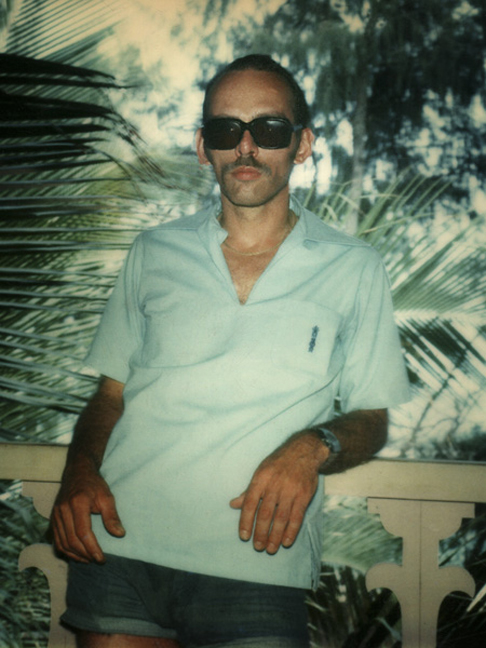
Horsch at an unspecified location in the 1980s.Obtained by The Inquirer
The 1985 psychological profile noted that Horsch’s only real friend or support system at that time was his then-wife, Anna Ferkuniak, who had a “therapeutic and rehabilitative effect” on him. He said his main wishes were to spend time with his family, live in a rural or isolated area so he could “deal with society as little as possible,” and have a better understanding of quantum physics.
Ferkuniak died of a drug overdose in 1989, less than two years after Horsch was released from federal prison.
Horsch later told an interviewer he was full of anger over her death, saying his wife “bailed out and left me with a kid to raise.” Following her death, he moved to the suburbs in Bucks County, co-opened a barbecue restaurant, and raised Eugene as a single father.
There, Horsch pursued a pornographic career that mainly featured sexual violence toward women in addiction. In his photos, films, and self-published novels, he used these women as models for his psychosexual fantasies, often depicting their deaths by drowning, hanging, or strangulation.
Federal and local law enforcement agencies are again assessing Horsch’s life after a June 19 car stop near Independence Hall involving his son, Eugene, turned up a fake ID in the name of a missing woman and led police on an extensive search of the Horsch home in Olney. Eugene Horsch is in federal custody, charged with possessing a gun, which is usually illegal for someone convicted of a felony.
Police continue to sort through the hundreds of thousands of images, videos, and pages of writing on the hard drives recovered from the dilapidated and boarded-up twin where the father and son lived together.
Investigators have so far recovered at least one video that appears to show Raymond Horsch killing a woman inside the property, sources said, as well as “dark and graphic” images of two other missing women — Maribel Fresses and Gabrielle Amarando — alive inside the home, and then dead. Law enforcement sources say the number of missing women connected to the home could grow as the investigation continues.
Police have not publicly confirmed that either Raymond or Eugene Horsch is believed to have killed anyone, and they have not recovered any bodies.
Raymond Horsch long maintained that the often gruesome violence in his films and photographs was staged. As an older man, however, he also professed that he was running out of boundaries to push.
“The problem,” he said in a 2013 interview, ”is I have no fantasies left.”
Inquirer reporters Max Marin and Ryan Briggs will host a Reddit AMA in the r/Philadelphia subreddit on Friday at 1 p.m. You can ask them questions there about the Olney investigation and the life of Raymond Horsch.
I’ve seen The Inquirer’s extensive coverage of the office of our district attorney, Larry Krasner, including its internal discussions. In general, scrutiny of an elected official is a good thing. If previous DAs had been subjected to such scrutiny, perhaps there would be fewer innocent people in prison, and fewer wrongful convictions to overturn. What the reporting fails to consider, however, is how much opposition there is to Krasner’s work. There are a lot of people who would rather see an innocent person remain behind bars than admit error. And there are a lot of people who figure that if someone is in prison, they must have done something wrong, even if it’s not the crime they were convicted of.
These people want to see our district attorney fail. And they’ve tried very hard to make that happen, helping explain the DA’s caution, which columnist Paul Davies calls paranoia. Krasner has been impeached, his office undermined, his actions subjected to state oversight, and so on. Has any Philadelphia DA ever been impeached for overzealous prosecution? I don’t think so. Please take this into account. Krasner is fighting the good fight, on the side of the innocent, as he should be.
Jon Webb,Philadelphia
Broken system
The overall need for mental health care has surged significantly post-pandemic, yet according to a 2024 survey, about 34% of psychologists and 45% of psychiatrists do not accept health insurance. For a private-pay psychiatrist, evaluations typically cost $300 to $500, and standard sessions range from $100 to $300. Enter Lindsay Clancy, married mother of three, a former labor and delivery nurse. Described by her coworkers as compassionate, kind, and an advocate for her patients.
Months following the birth of her third child, Clancy recognized a change in her mental health. She had the courage to share those terrifying thoughts with her husband and parents. She called a crisis hotline, went to an emergency room, and voluntarily checked herself into a psychiatric hospital. She did all of this because she did notwant to harm herself or her children. She desperately wanted to get well and was caught in a mental health care system strained by provider shortages and understaffed clinics. Mental illness, like every serious condition that threatens life, needs the proper treatment. Treatment that she didn’t receive. Compassion for Clancy, not conviction.
Kathy Carroll, Wayne
A true loss
The planned closing of the Academy of Natural Sciences of Drexel University is a profound loss for our region and the history of science. Few institutions anywhere can claim a more consequential place in paleontology. In 1868, the academy became the first museum in the world to mount and publicly display a genuine dinosaur skeleton: Hadrosaurus foulkii, unearthed a decade earlier from a marl pit in Haddonfield. That landmark installation transformed dinosaurs from fragmentary scientific curiosities into creatures the public could see, imagine, and understand.
The mounted Hadrosaurus helped ignite public fascination with dinosaurs that soon helped fuel the great fossil-hunting rivalries of the late 19th century — the era now remembered as the Bone Wars. It also helped establish the model of a natural history museum as the place where scientific research and public wonder meet. The dinosaur displays that now draw crowds around the world owe something to that moment in Philadelphia.
To allow this museum to go dark would be an astonishing act of cultural and civic neglect. Philadelphia rightly invests enormous sums in sports and entertainment. It should not abandon an institution whose legacy reaches far beyond the region — a place bound to one of the defining chapters in the worldwide history of paleontology. The museum deserves not closure, but preservation, investment, and a secure future.
Hoag Levins,Haddon Township
Join the conversation: Send letters to letters@inquirer.com. Limit length to 150 words and include home address and day and evening phone number. Letters run in The Inquirer six days a week on the editorial pages and online.
ARIES (March 21-April 19). With so many answers to the world’s questions but a keystroke away, success secrets should be called “success Googles.” But knowing the answer isn’t the answer — applying it is. The one who can help you do this is the real success secret.
TAURUS (April 20-May 20). Let each situation tell you what kind of exchange fits. When charity is called for, give with an open heart. When professionalism is called for, charge what it’s worth.
GEMINI (May 21-June 21). Friends can offer perspective. Media can offer ideas. Experts can offer insight. Still, some truths about yourself can only be learned by living them. Your confidence comes from experience: Trust it.
CANCER (June 22-July 22). A relationship doesn’t have to be perfect to be worthy of fighting for, and neither does it need to be bad to be worth fighting against. If it’s just “meh,” you can do better. Resist the pull by putting distance between you.
LEO (July 23-Aug. 22). Familiarity has a curious side effect. It makes remarkable things blend into the wallpaper. A change of scenery may be all it takes to see your own life with fresh eyes. Home will become more interesting after you’ve been somewhere else.
VIRGO (Aug. 23-Sept. 22). You’re so generous, though today you can’t seem to give anything away without being gifted with new rewards and resources. Don’t worry, you don’t need to repay every good thing you’re gifted. Just enjoy yourself.
LIBRA (Sept. 23-Oct. 23). An offhand remark may surprise you, even though you’re the one who said it. Before you explain it away, sit with it for a moment, as there could be a tiny bit of truth or useful wisdom here.
SCORPIO (Oct. 24-Nov. 21). A new project involves learning stages. The exciting part is brief. The interesting part lasts much longer. Today you’ll find yourself somewhere between the two. You’ll discover whether you came for the novelty or the craft.
SAGITTARIUS (Nov. 22-Dec. 21). The way people show how they feel about you doesn’t always come across as intended, especially if their feelings are strong and unfamiliar to them. Expect some awkwardness and try to extend the most generous interpretation.
CAPRICORN (Dec. 22-Jan. 19). Somewhere along the way you stopped asking what people usually do and started asking what works for you. One choice made life easier. Another made it more fun. Today you’ll look around and realize your life is unmistakably your own.
AQUARIUS (Jan. 20-Feb. 18). There’s no good reason to put yourself in an uncomfortable situation or spend time in draining or negative situations. Your emotional body needs as much care, caution and attention as your physical body.
PISCES (Feb. 19-March 20). Every collection begins with one item. Every tradition begins with one time. Every friendship begins with one point of connection. What’s the difference between a one-off and a runner? The first time is chance. The second is choice.
TODAY’S BIRTHDAY (Sept. 3). It’s your Year of Fascination, when people, projects and environments captivate your curiosity, and relationships hum with mutual intrigue. More highlights: Your home environment is upgraded by good design and warm connections. You’ll learn ways of communicating that make work easier and more efficient, and profitable too. Hot tickets and big social events. Pisces and Scorpio adore you. Your lucky numbers are: 2, 26, 15, 9 and 7.
DEAR ABBY: My husband died six years ago. I met a widower three years ago. He was nice and attentive, but not anymore. We moved in together, and the last two years I have been miserable.
I pay half the rent. I also pay for all the groceries and gas and pick up the check every time we go out to eat. He even takes my meds, so I have only half of what I need. The only time he is not moody is when I wait on him hand and foot.
I have nothing. I live on Social Security, and so does he. He doesn’t hit or abuse me, so I feel like I should stay, yet I’m so unhappy. He doesn’t talk to me or even give me a hug. I think I’m stuck and don’t know where to turn. My grown kids don’t need to hear that I messed up, and I don’t want to burden them. Can you please advise me?
— MISERABLE IN ARIZONA
DEAR MISERABLE: Gladly. Your grown children need to know exactly what your situation is with this man. Whose name is on the lease of your dwelling? If it isn’t you, there is no reason why you can’t end this pain. Tell your kids what’s going on and ask for their help in getting out of this soul-crushing mess. It may be embarrassing, but it may be the only way to escape.
** ** **
DEAR ABBY: I will be attending my nephew’s wedding in the northeast part of the country. I live in the mid-Atlantic. I have been told that at the reception each plate will cost $200, and they are expecting their wedding gifts to be worth at least the cost of the plate. Therefore, if a couple attends and both spouses dine at the reception, a $400 wedding gift is expected. Are these guidelines for real?
— BAFFLED ABOUT ALL THIS
DEAR BAFFLED: These “guidelines” do not exist except in the minds of the presumptuous individuals who are throwing this shindig. A wedding reception is not a quid pro quo affair. The cost of the celebration is borne by the bride and groom and their parents, and no one else. If you plan to attend, your wedding gift should not cost more than you can comfortably afford.
** ** **
DEAR ABBY: I lost my wife in November to non-alcoholic fatty liver disease (NAFLD) that had progressed to cirrhosis. She also had polycystic ovary syndrome (PCOS), which was diagnosed in 1990. No doctor told my wife in the intervening years, “You have PCOS, so you need to get your liver checked.” For some reason, most general practitioners and OB-GYNs do not tell their patients this. According to the World Health Organization, about 10% of women have PCOS. According to the National Institutes of Health, between 34% and 70% of PCOS patients develop fatty liver disease. Could you use your platform to tell PCOS patients to advocate for themselves to get liver scans done? I don’t want any other family to experience the loss that my family has.
— WARNING TO WOMEN
DEAR WARNING TO WOMEN: Please accept my sympathy for the loss of your wife to this terrible disease. Readers, I can’t promise insurance will pay for the additional testing for all PCOS patients, but it can’t hurt to raise the subject with your doctor.