Tag: topic-link-auto

  • Gloria Steinem, a potent voice of U.S. feminism and cofounder of Ms. Magazine, has died

    Gloria Steinem, a potent voice of U.S. feminism and cofounder of Ms. Magazine, has died

    NEW YORK — Gloria Steinem, the celebrated author and activist who became one of the most visible symbols and potent voices of the U.S. women’s movement and a fierce advocate for feminist causes throughout her life, has died. She was 92.

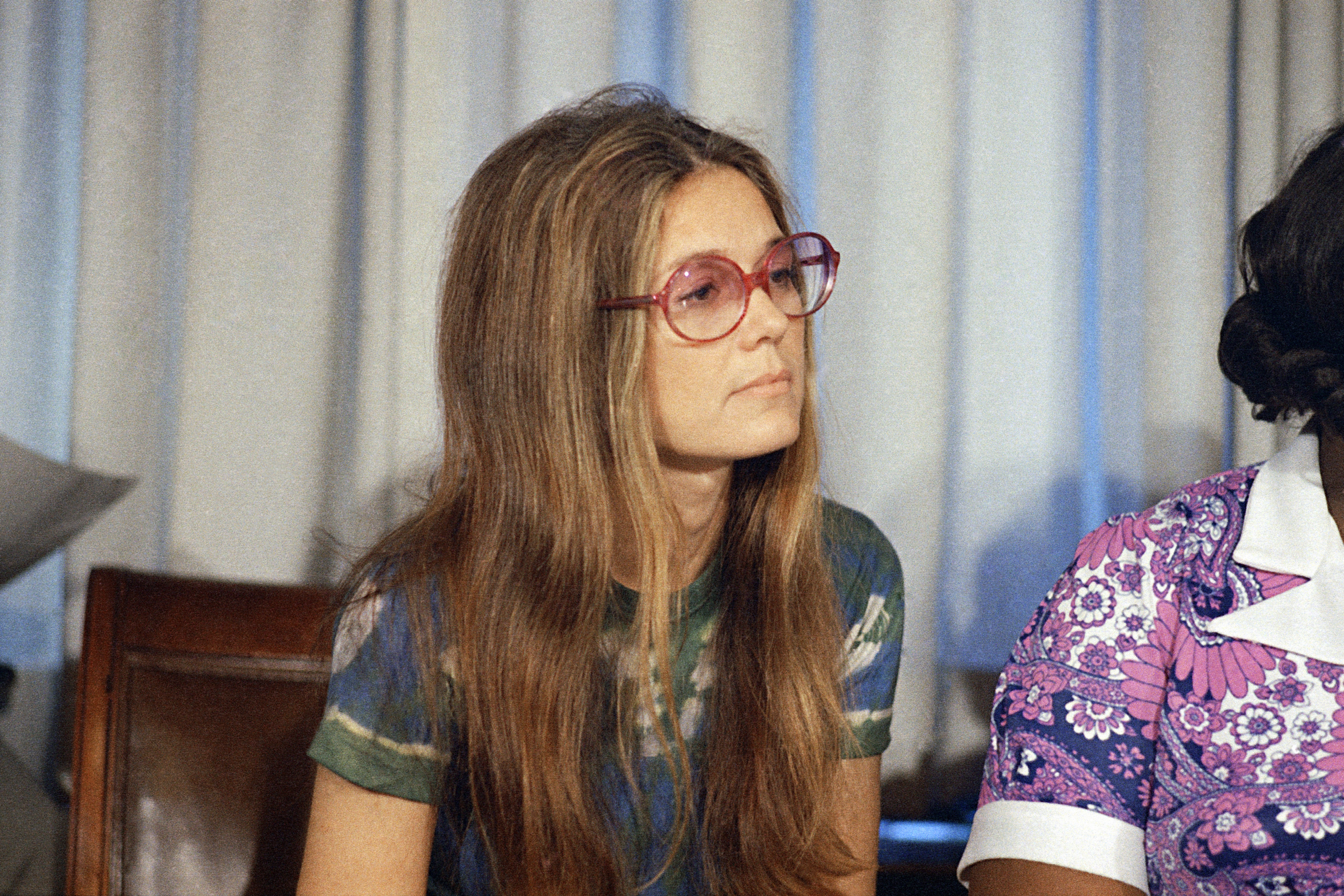
    With her trademark streaked hair parted down the middle and large aviator glasses, Ms. Steinem, a co-founder of Ms. Magazine, was a hugely recognizable presence wherever she went. And she went everywhere: Much of her life as an advocate was spent on the road, speaking at college campuses and community centers, at rallies and marches.

    She died Wednesday at her home in New York City, according to her and her foundation’s social media pages.

    “Gloria’s greatest gift was her ability to listen to others, to make others feel seen and heard,” the posts said. “Her words, actions, and example gave people permission to be their truest selves. Gloria lived true to her independent spirit, always with curiosity and a great sense of humor.”

    Ms. Steinem enjoyed writing and spending time in the community in recent years, the posts said. She also hosted talking circles for hundreds of people in her home. She died just before a planned memoir was to be released this fall.

    “You can’t do it on the phone or on the web,” she told The Associated Press in a 2015 interview. “You have to be there with all five senses. It should be obvious that people can’t empathize with each other unless we’re in the same room.”

    Ms. Steinem changed her career path after a start as a journalist

    Ms. Steinem at an Equal Rights Amendment rally outside the White House on July 4, 1981.Scott Applewhite

    She began her career as a journalist, notably one who reported, in 1963, on degrading conditions in Hugh Hefner’s Playboy empire, an undercover assignment she came to later regret. She credits a meeting six years later, where women spoke out boldly in favor of abortion rights, with changing her career path.

    “That speak-out was the beginning of activism for me,” Ms. Steinem, who had undergone a secret illegal abortion herself at age 22, told the AP in an email in 2022, reflecting on the reversal of Roe v Wade. “Either our control over our own bodies is equal, regardless of sex or race, or we’re not living in a democracy.”

    Though she soon became a known activist, those who watched Ms. Steinem denounce discrimination for so many years likely never suspected that she’d had to overcome a deep fear of public speaking. She would have simply stuck to writing, she said, if only editors at the time had been willing to let her write about the women’s movement.

    But they weren’t interested, she told the AP in 2015. “So I ended up going out and speaking, which was my nightmare,” she said. “I mean, I was terrified. But I’m grateful, even though I still get scared even now.”

    Ms. Steinem’s visibility endured throughout her life

    Ms. Steinem claps as she walks on the stage during an International Women’s Day event in Abu Dhabi, United Arab Emirates, in 2023.Kamran Jebreili

    Time hardly slowed Ms. Steinem down; well into her 80s she was traveling the globe and speaking out on issues of importance to her. These included everything from genital mutilation to Korean reconciliation, but it was equality for women that took precedence. “Being a feminist means that you see the world as whole instead of half,” she once said. “It shouldn’t need a name, and one day it won’t.”

    As the years went on, Ms. Steinem’s visibility endured. At 83, she sat in the front row of her first fashion show, guest of designer Prabal Gurung. A few days after her 85th birthday, she was leading a women’s “talking circle” at an off-Broadway play celebrating her life, where one by one, women in the audience — many fighting tears — rose to thank her and tell their own stories of discrimination. In 2020, her life was the subject of a feature film, The Glorias, A Life on The Road, based on her 2015 memoir and starring Julianne Moore.

    And at 91, she collaborated on a picture book with Liberian peace activist and Nobel laureate Leymah Gbowee aimed at inspiring young people to change the world. Rise, Girl, Rise: Our Sister-Friend Journey. Together for All was published in February.

    The constant visibility came with a price; even into her older years, Ms. Steinem expressed frustration that despite her accomplishments, she was often described as beautiful or glamorous (A 1992 Vanity Fair profile even noted her “spectacular racehorse legs.”) It was a label she said unfairly detracted from her message.

    “Nobody ever called me beautiful until I was publicly a feminist, and that was in my mid-30s,” she told AP in a 2011 interview. “It was clear that label was being assigned to me. The most hurtful part is that you work very hard, and people say it’s because of your looks.”

    Ms. Steinem dealt with hostility from many directions

    Of course, Ms. Steinem also had to deal with hostility. Sometimes it came from surprising places. Appearing on Larry King’s talk show on CNN in 1990, she was visibly stunned when a female caller greeted her cheerfully, then told her to “rot in hell” because she had ruined “the beautiful American family.”

    But by then, she noted, at least people were taking feminists seriously. That wasn’t the case in 1972 when she co-founded Ms. Magazine and many commentators — especially male — dismissed it as ridiculous, predicting an early demise. (The magazine continues to this day, published by the Feminist Majority Foundation.)

    Among Ms. Steinem’s detractors was President Richard Nixon, who was caught on an Oval Office tape ridiculing both her and the “Ms.” title. The ridicule was mutual: In a 1972 National Press Club speech, Ms. Steinem called Nixon “the most sexually insecure chief of state since Napoleon.”

    It was just one example of Ms. Steinem’s trademark wit. Before she married at 66, she often explained her singlehood by saying “I can’t mate in captivity.” Laughter, she wrote, was “the only free emotion — the only one that can’t be compelled.”

    In 2013, Ms. Steinem was awarded the Presidential Medal of Freedom by President Barack Obama. “Because of her work across America and around the world, more women are afforded the respect and opportunities that they deserve,” he said, “but she also changed how women thought about themselves.”

    Ms. Steinem ‘read everything I could get my hands on’ growing up

    Gloria Marie Steinem was born on March 25, 1934, in Toledo, Ohio. Her father was a traveling antique salesperson; she spent her early years on the road with her parents, not attending regular school. “I just read everything I could get my hands on,” she told an audience at Manhattan’s 92Y in 2026. “Which was frequently completely unsuitable … just everything and anything. I also was in love with the movies — my idea of heaven was a movie and a malted.”

    In 1944 her parents divorced, and 10-year-old Gloria was left to take care of her mother. a once-promising journalist who struggled to combine her work with running a household, and eventually suffered a nervous breakdown.

    As a young girl she excelled at tap dancing — it was even going to be her “ticket out of Toledo,” she said. Although she remained a good dancer, that particular career didn’t materialize. She attended Smith College in the ’50s, a time when, she has said, women were being educated to be mothers and wives.

    But marriage was not on Ms. Steinem’s mind. “I was engaged to a very nice man. It wasn’t his fault, but I just didn’t want to get married,” she told her 2026 audience. Instead, she took advantage of a modest fellowship to travel to India. After that, Ms. Steinem headed to Manhattan, where she couldn’t rent her own apartment because, she said, landlords avoided single women, assuming “if you could earn enough, you must be a hooker.”

    The aspiring journalist wanted to write about politics. But editors gave her assignments on food, fashion, and, in what she jokingly called “the low point of my life,” an article about textured stockings. Even more demoralizing was her experience with an editor who, she said, gave her a choice one day: Spend the afternoon in a hotel with him, or mail his letters on the way out.

    She chose to mail the letters. “There was no word for sexual harassment then,” she has said. “It was just life.”

    But one assignment in 1963 sounded compelling: posing as a Playboy Bunny, for an exposé in the now-defunct Show magazine. Ms. Steinem went through the audition process, assuming she’d be weeded out. But she was given her bunny costume — “so tight, it would give a man a cleavage,” she joked — and worked in the job for about a month.

    “I could not have made a bigger mistake,” she told the AP in 2011. “It was personally and professionally a disaster. In the short term, it was much harder to get assignments, and in the long term it’s been used to ridicule me.”

    Ms. Steinem’s writing became more political in her 30s

    Ms. Steinem was in her 30s when she joined the editorial board of New York magazine, and her writing became more political. In 1969, she went to cover an abortion rights hearing. She had never told anyone about her illegal abortion at 22, in London. That was the moment, she has said, that triggered her career as a women’s rights activist. “I don’t think I had ever felt part of a group before,” she said in a 1970 TV interview.

    Ms. Steinem founded the National Women’s Political Caucus in 1971 along with Betty Friedan, Shirley Chisholm and Bella Abzug. The latter became a dear lifelong friend — “the woman I wished I had had as a mother,” she said at Abzug’s funeral.

    Unlike Abzug, Ms. Steinem was naturally reserved, not comfortable in front of a crowd. Gradually, with her early speaking partner Dorothy Pitman Hughes, a Black feminist and child welfare advocate, she found her footing. The two formed a powerful partnership at a time when feminism was viewed as largely a white, middle-class movement. In an iconic photo, the two raise their right arms together in the Black Power salute.

    As she grew more famous, Ms. Steinem drew attention not just for her work but for a glamorous Manhattan life. Asked once about her streaked hair and aviator glasses, she explained that the hair was inspired by Holly Golightly, the free-spirited character played by Audrey Hepburn in Breakfast at Tiffany’s. The glasses? They were “more about hiding,” she said.

    When reaction was hostile, Ms. Steinem would try to reason that it was a step above ridicule. But sometimes it stung, like a snarky Esquire profile in the early ’70s, so hurtful that she cried, and colleagues called a news conference to defend her.

    Ms. Steinem co-founded Ms. Magazine and stayed with it as an adviser
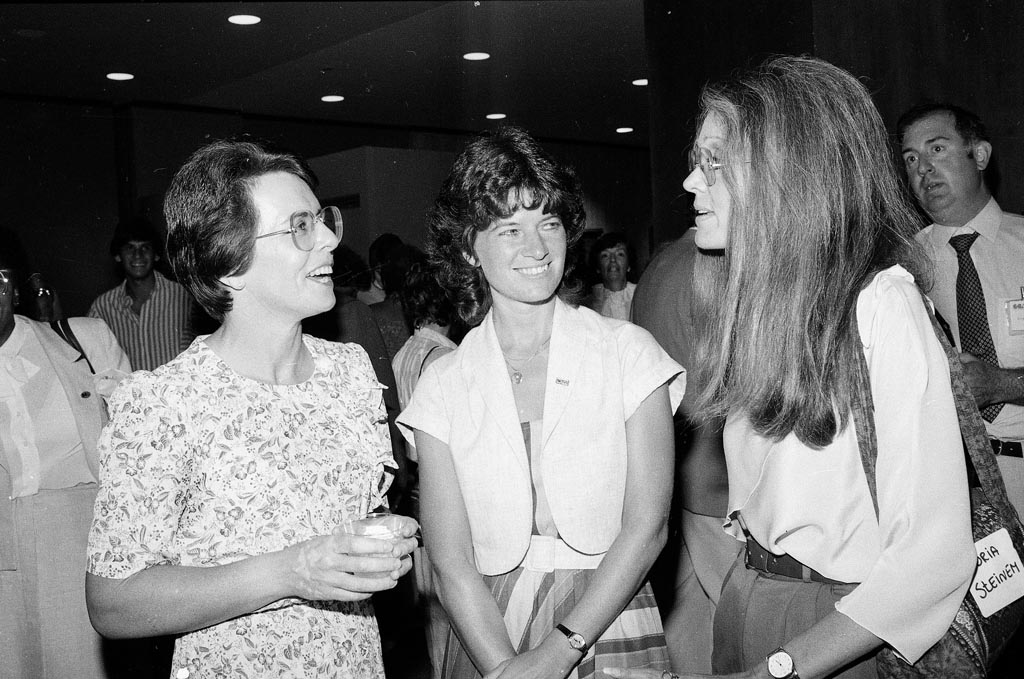
    (From left) Tennis star Billie Jean King, astronaut Sally Ride, and Ms. Steinem at a reception hosted by the Girls Club of America and Ms. Magazine to honor Ride in 1983.ASSOCIATED PRESS

    Then came Ms. Magazine in 1972, a magazine by women, for women. “I was so obsessed with the fear that it would fail and be a disgrace to the movement,” Ms. Steinem, age 37 when it launched, told the AP in 2011. And opponents hoped that would happen. TV newsman Harry Reasoner, an especially tart critic, later apologized on air. Ms. Steinem continued with Ms. until it was bought in 2001 by the Feminist Majority Foundation, and remained an adviser.

    By 1977, numerous gains had been made for women, including Roe in 1973. But the Equal Rights Amendment, which had passed the House and Senate in 1972 but needed to be ratified by three-quarters of state legislatures, remained elusive. The issue was front and center at the 1977 National Women’s Conference, convened on a congressional mandate to examine women’s rights.

    “If they want us to become the radicals that they fear we are, just let them stop the ERA and we will become those radicals,” Ms. Steinem said there.

    Among groups Ms. Steinem co-founded were the Women’s Action Alliance, which was active through the 1990s; the Women’s Media Center in 2004, the Voters for Choice political action committee in 1977, and the Ms. Foundation for Women. She also helped establish the Take Our Daughters to Work Day.

    Ms. Steinem never had her own children, and said she never regretted it. “No, not for a millisecond,” she told the AP, describing an incident in which she was afraid to answer that question in front of a group of women in India, fearing they wouldn’t like the answer. “But they applauded,” she said. “It’s important that some of us not have children, to show that we have a choice.”

    In 2000, Ms. Steinem she did something she’d never planned to: She got married, at 66, to British activist and businessman David Bale, whom she met at a fundraiser (Bale was the father of actor Christian Bale.)

    “I thought, ‘I haven’t changed, marriage had changed,’” Ms. Steinem said. “David and I wanted to be together, we loved each other. He needed a green card.” They married at a Cherokee ceremony in Oklahoma. Several years later, he became ill with brain lymphoma, and Ms. Steinem cared for him until his death in 2003.

    Ms. Steinem said she had few regrets in life, but did miss being present when her father died. She received word that he’d been in a serious car accident, but did not respond in time, and he died alone. “I had taken care of my mom as a child, and I feared I’d never come back,” she explained. She was also sorry that she didn’t become closer to her mother. “I was so fearful of becoming her,” she said in an HBO documentary, Gloria: In Her Own Words.

    Ms. Steinem’s books included ‘A Life on the Road’

    Ms. Steinem’s books included the 2015 road memoir A Life on the Road — but she wryly noted at the time that she’d actually never learned to drive. It would have taken away, she said, from her ability to converse with her hosts, who would pick her up from airports or train stations. And, she noted, she always loved to chat with taxi drivers.

    On Jan. 21, 2017, when hundreds of thousands of women gathered in Washington in their pink “pussy hats” for the historic Women’s March, it surprised nobody that the keynote speaker, and the most rousing, was Ms. Steinem.

    “We are linked,” she told the crowd. “And this is a day that will change us forever because we are together.”

    For many women, Ms. Steinem was the galvanizing voice that day. She would go on to advocate fiercely. But, though many saw her as a singular figure in history, she often liked to say that if she hadn’t come along, someone else would have accomplished the same things.

    By the same token, she said, it was less important that younger people listen to her, and more important that they listen to themselves.

    “The primary thing is not that they know who I am,” she said, “but that they know who THEY are.”

  • Living in an exhausted, morally distressed nation

    Living in an exhausted, morally distressed nation

    This is not us.

    This is not the America we thought we were. As nurses, we’re sensitive to negative shifts in compassion and empathy. Almost two years of multiple, relentless attacks on America’s core values have left us morally distressed.

    It is not like us to set a weekly quota of arresting 2,000 of our law-abiding neighbors seeking asylum in the United States. It’s not like us to propose spending $20 million in taxpayer dollars on a device that will allow immigration agents to deliver painful electric shocks to any human being. It’s not like us to put those without criminal records in jails and provide them with less than adequate medical care that has now resulted in the deaths of at least 50 innocent human beings.

    Values out of whack

    As a nation, our actions are out of alignment with our values.

    We are overwhelmed by the constant barrage of toxic messages and distressful events that shape our sense of who we are as a society and negatively affect our physical and mental health. We have seen, and some have personally experienced, the horrific public health impact of the resurgence of preventable diseases and deaths from measles, a disease that had been eradicated from the U.S.

    As nurses, we have seen how words are used to evoke false beliefs. We have never seen a “vat” of solution injected into any person — let alone an infant, as President Donald Trump recently claimed about the childhood vaccination regimen. We have witnessed the fear and confusion of parents related to the mixed messages coming from non-pediatricians about the value of childhood vaccinations. Why change the vaccination schedule without evidence?

    We see reductions and disinvestments in essential research funding that will hurt Americans waiting for scientific breakthroughs. Discouraging the next generation of investigators threatens our standing as a global leader in research innovation.

    President Donald Trump and his former press secretary Karoline Leavitt at the White House earlier this year. Both have brought a new level of coarseness and personal denigration to official public discourse.Tom Brenner

    We experience ourselves the rising costs of life’s necessities, such as food, housing, and healthcare. And we endure public coarseness and disgraceful conduct among those elected to represent us, increasingly characterized by contempt and by labeling those with whom they disagree as “radicals,” “socialists,” “fascists,” or worse.

    These developments are not mutually exclusive, and they represent a troubling sign for a country where trust in the values of public institutions and in government leaders and workers is being eroded by outright lies and a lack of mutual respect. In 2025, only 17% of Americans trusted the government to do “what is right.”

    Moral distress occurs when one’s values are constrained because of institutional, social, political, or other barriers.

    The concept is often applied to healthcare workers, such as nurses. For example, moral distress has been widely documented when nurses are unable to deliver a treatment they know is best because of restraints imposed by the healthcare system in which they work.

    Repeated experiences of moral distress often lead to a sense of disillusionment, disengagement, moral outrage, burnout, and apathy. When this moral distress and resulting harm is experienced by a broad swath of the general population, we call this civic moral distress.

    So what can we do?

    We know respectful dialogue instead of derision advances collaborative agendas and builds solid coalitions. We know public health is key to the prevention of disease. We know respect for the dignity of our fellow humans has nothing to do with their age, race, gender, political ideology, or immigration status. We know a lack of basic healthcare leads to emergency room visits and higher costs. We know the average citizen is not being heard by those who represent them to address the broader societal and moral problems at home and feels powerless to change any of it.

    Don’t be disillusioned

    There are no easy antidotes to civic moral distress. Experts coalesce around key principles, grounded in a foundation of trust, that could move us from a morally distressed nation to one characterized by moral strength and integrity.

    For everyone: Be kind, be truthful, perform one random act of kindness every day, care for your neighbors. For newspapers: Publish one issue a week that focuses on local community issues. For all government officials: Don’t break everything just because you can; stay in your lane and do not make healthcare recommendations out of your area of expertise.

    For all Americans: Do not be disillusioned.

    Advancing this agenda will require significant moral courage. Failing to do so will further erode our society, our humanity. And although civic moral distress is our current reality, it need not be our future.

    Connie M. Ulrich is a registered nurse and professor of nursing and of medical ethics and health policy at the University of Pennsylvania School of Nursing. She is a Hastings Center Fellow. Mary D. Naylor is a registered nurse and professor of gerontology and nursing at Penn’s School of Nursing. Martha A.Q. Curley is a registered nurse and professor of pediatric nursing at Penn’s School of Nursing.

  • Russia will close German cultural centers as Moscow and Europe spar over Ukraine

    Russia will close German cultural centers as Moscow and Europe spar over Ukraine

    WARSAW, Poland — Russia will close German cultural centers on its territory, Foreign Minister Sergey Lavrov said Thursday in a retaliatory measure reflecting the deepening tensions between Moscow and European countries that are helping Ukraine resist the Kremlin’s 4 ½-year-old invasion.

    Lavrov’s announcement came after Berlin blamed Moscow for an attempted drone attack at Leipzig/Halle Airport on Aug. 4. The explosives-laden drone was found near a Ukrainian plane at the airport, a major international freight hub used for providing support to Ukraine. The drone was later defused.

    Earlier Thursday in Munich, several incendiary devices were thrown at a construction site near a building where several companies, including from the defense sector, are located, the Bavarian State Criminal Police Office said. There was a brief fire that caused no significant damage, police said, adding they suspect the target was one of the companies in the area.

    Two Bulgarian nationals were arrested, police said, but their suspected involvement was not confirmed.

    Western officials have repeatedly accused Moscow of conducting a campaign of sabotage and disruption in their countries with the aim of undermining support for Ukraine and destabilizing European nations, something Russia denies.

    Germany says it has become a “daily target” of the Kremlin’s hybrid campaign.

    It said Wednesday it was closing both the Russian Consulate in Bonn and the Russian House cultural center in the German capital.

    Lavrov countered that cultural centers belonging to Germany’s Goethe-Institut would be closed in Moscow, St. Petersburg, and Yekaterinburg, adding that any other response would show a lack of “self-respect” on Russia’s part.

    He told an economic forum in the far east city of Vladivostok that Germany “could not have failed to understand” that closing the center in Berlin would “signify the end of their cultural presence in Russia.”

    Russian President Vladimir Putin said Berlin wants to distract from its own failings and dissatisfaction among voters. Any proof being offered “has been planted,” Putin said.

    Europe increasingly views itself as facing what it calls hybrid attacks by Russia, marked by cyberwarfare and disinformation as well as a conventional military threat. Each side accuses the other of state terrorism.

    The tension has continued for months and grown into a major foreign and defense policy challenge for countries in the European Union.

    Putin is testing the West with tactics that fall “just below the threshold of war” and is determined to “harass NATO members,” the head of Britain’s MI6 spy agency said last year.

    European countries seek to counter Russia’s threat

    Following Germany’s claims, Poland, Denmark, Finland, the U.K., the Czech Republic, and Lithuania have summoned Russian diplomats stationed in their countries.

    In Norway, authorities on Wednesday seized a Russian vessel in the Arctic archipelago of Svalbard at the request of Ukraine’s state-owned Naftogaz energy group.

    A Norwegian court ordered the seizure as part of efforts by Naftogaz to recover a $4.22 billion arbitration award stemming from Russia’s 2014 illegal annexation of Crimea and its seizure of Ukrainian energy assets, including gas fields and pipelines. After Moscow refused to pay the 2023 award, Naftogaz petitioned national courts for orders to seize Russian commercial assets.

    Putin on Thursday compared it to “state terrorism,” and Russia’s Foreign Ministry summoned Norway’s ambassador to Moscow, Heidi Olufsen, to protest the seizure of the vessel, which it said belongs to the state weather and environmental monitoring agency.

    It carried workers, scientists, and cargo to Russian settlements on one of the islands in Svalbard, the ministry said, adding that Moscow “will seek to lift the vessel’s arrest.”

    In Finland, meanwhile, more than 2,000 people took part Thursday in the biggest civil defense exercise in Europe since the end of World War II. Among the threats envisioned were missile strikes from neighboring Russia.

    EU weighs how to respond further

    EU ministers on Wednesday weighed how best to respond to the attempted drone attack but struggled to find new ways to meet the challenge without resorting to military means.

    The EU has slapped almost two dozen packages of sanctions on Russia over the war, targeting over 3,000 officials, oligarchs, and entities including banks, energy companies, and drone makers.

    One senior EU official said the bloc’s anti-terrorism procedures could be put to effective use.

    “If we list individuals as terrorists, we can deploy a range of instruments to actually target those individuals and to track them, all their activities, and people associated with those individuals,” EU Counter-Terrorism Coordinator Bartjan Wegter said.

    He told The Associated Press that EU methods for combating terrorist financing and money laundering, as well as boosting the resilience of infrastructure like airports, could be put to good use.

    “It is a very worrying development,” Wegter said of the failed Leipzig drone attack. But he noted that “it is not new what we’re seeing.”

    Both Russia and Iran have used hybrid warfare methods before, he said.

    “They’re actually deploying terrorist tactics” that are meant to “destabilize our society,” Wegter added.

    Denmark sounds alarm about Russian sabotage plans

    Danish security services are warning that Russian acts of sabotage against the country’s defense industry may be imminent.

    Intelligence services have seen signs of specific planning by Russia to conduct sabotage operations in Denmark, Emil Græsholm, head of counterintelligence at the national security and intelligence service PET, told the Berlingske newspaper.

    The targets are primarily companies in the defense industry and especially those associated with delivering military components to Ukraine, he said.

    Russian Ambassador Vladimir Barbin said PET has not presented any concrete evidence that Moscow was preparing sabotage acts in Denmark. He said Græsholm’s comments were actually an acknowledgement of Denmark’s involvement in Ukraine.

    The transformation of Danish territory into a production and logistics base for the Ukrainian military posed a security risk to Denmark, he added.

    Italy’s Defense Minister Guido Crosetto told AP on Wednesday that the German airport incident was “a very serious act that could have very grave consequences.”

    But he said the threats aren’t discouraging Italy from further helping Kyiv as Rome weighs whether to send SAMP/T air defense batteries. As in other Western countries, limited weapons production capacity is hampering efforts to supply more to Ukraine, he said.

  • EPA proposal could leave the public in the dark on data center plans

    EPA proposal could leave the public in the dark on data center plans

    WASHINGTON — A plan by the Environmental Protection Agency could make it harder for the public to learn about and comment on proposed AI data centers that have sparked backlash in communities across the United States and transformed the midterm election landscape.

    The EPA proposal would eliminate a federal requirement that states notify the public and seek comment before issuing air pollution permits for data centers and other industrial facilities. States could still offer opportunities for public comment, but the EPA would no longer mandate them as a condition for states to grant permits.

    Critics say the move could thwart local residents from learning about proposed data centers or making their voices heard before projects are approved and construction begins. The move comes during a widespread backlash as tech giants build hundreds of massive server warehouses to fuel artificial intelligence and cloud computing.

    “By eliminating the long-standing federal requirement for public notice, this proposal continues efforts by the Trump administration to turn its back on the fundamental EPA principle of transparency,” said Mike Koerber, a former deputy director of EPA’s air quality office.

    If made final, the plan could create “an unlevel playing field where citizens in one state are kept completely in the dark about new data centers and heavy industrial emissions in their backyards, while neighboring states maintain oversight,” he said.

    Under the EPA plan, states with weak or no requirements for public comment could speed permits for data centers, power plants and other pollution sources without consulting the public or even informing communities where the facilities are located, Koerber and other critics said.

    Communities deserve a chance to weigh in, advocates say

    “Data centers and other industrial sources should not be able to get their air pollution permits in secret,” said Keri Powell, senior attorney for the Southern Environmental Law Center, an advocacy organization that leads a coalition of nearly 200 environmental, health and community groups that filed comments with the EPA opposing the plan. “Communities deserve a chance to weigh in” before potentially harmful projects are approved.

    An EPA spokesperson called that a false narrative.

    “In our proposal we are saying that states get to pick how they want their permitting process to go for minor sources” of air pollution, spokesperson Carolyn Holran said.

    The EPA proposal does not specifically identify data centers, she said, noting that the plan also would apply to laundromats, car repair shops and even landfills and steel mills that are considered “minor” pollution sources under the federal Clean Air Act.

    The proposal does not demand that states make particular changes to their programs, nor does it alter federal emission standards or weaken environmental protections, Holran said. “Rather, the proposal simply aligns the national program with the Clean Air Act language to ensure that states are in the lead regarding their programs.”

    EPA Administrator Lee Zeldin, who has made U.S. leadership in AI a top agency priority, said in a statement that the plan is aimed at “cutting unnecessary and burdensome red tape, unleashing American energy and advancing cooperative federalism” with states. The EPA is expected to make the rule final next year.

    President Donald Trump continues to stick up for data centers, even as politicians from both parties criticize them and many communities try to block them. Trump said on social media this week that U.S. communities that don’t have data centers will “end up being backwards and poor.”

    Trump says data centers are crucial in the AI race against China

    Trump has acknowledged that data centers need “a little public relations help” and has pushed tech companies to generate their own electricity to shield consumers from higher utility bills. The Republican president calls data centers critical to winning the AI race against China.

    Environmental groups and other critics say the EPA proposal ignores the reality that many states, particularly in the South and Midwest, don’t require public notice or hearings beyond those set by federal agencies. The federal plan would leave many communities in the dark before data centers show up in their backyards, they said.

    “It’s beyond cruel for Trump’s EPA to silence front-line communities who bear the brunt of unhealthy air,” said Brandon Jones-Cobb, a senior attorney at the Center for Biological Diversity, another environmental group.

    The EPA “has already turned its back on science, cut enforcement against industrial polluters and eliminated life-saving air pollution measures,” he said. “Now it wants to shut the public out of decisions to build or expand facilities that expose communities to dangerous air pollution, including data centers.”

    Powell, whose organization focuses on six Southern states from Virginia to Alabama, said many states “only do what is required by federal law” when it comes to public notice of land-use projects and other environmental concerns.

    “We rely on a minimum federal requirement to ensure we have environmental protections and a voice,’’ she said in an interview, calling regulation of data centers a crucial issue in a region where the energy-hungry behemoths are proliferating. Virginia and Georgia are both among states with the highest concentration of current and proposed data centers.

    Americans worry data centers could cause pollution, job losses

    Besides powering AI and cloud computing, data centers are often sources of nitrogen oxide, which helps form ozone, as well as carbon monoxide and other air pollutants. Local communities also have expressed concerns about excessive water use and noise from data centers. Many Americans worry that AI could increase economic disparities and cause widespread job losses.

    Data center advocates stress that local taxes paid by the centers can help fund public schools, reducing the financial burden on homeowners.

    Jane Williams, executive director of California Communities Against Toxics, said even if data centers ultimately are approved, “every community should be able to participate robustly in governmental decisions that can pollute our air.’’

    Rolling back the EPA rule “pulls a dark cloud, filled with soot and toxic chemicals, over communities’ right to know what polluting facilities are planned in their community,” she said.

  • A federal judge has blocked Trump’s second try to restrict birthright citizenship

    A federal judge has blocked Trump’s second try to restrict birthright citizenship

    A federal judge in Maryland temporarily blocked much of President Donald Trump’s latest effort to withhold citizenship from babies born in the United States to noncitizen parents, ruling that the Supreme Court had already settled questions reopened by an executive order Trump signed in August.

    While the decision was limited to children born after Feb. 19, 2025, including those born in the future, Judge Deborah L. Boardman wrote that the order would likely affect babies the Supreme Court had already defined as citizens. The ruling delivered a sharp rejection of the president’s renewed efforts to restrict birthright citizenship, after the Supreme Court ruled 6-3 in July that a previous, more sweeping, executive order from 2025 was unconstitutional.

    “No presidential executive order can undo what the Supreme Court has done,” she wrote.

    Boardman’s order took a dim view of the Trump administration’s reasoning, which she characterized as a thinly veiled attempt to get around the Supreme Court’s decision. She wrote that the president and others named in the lawsuit “completely misread” the majority’s opinion and embraced a “distorted interpretation” of its conclusions.

    In a 35-page opinion, she described the latest order as only the most recent attempt to curtail birthright citizenship by any means that could survive legal scrutiny.

    “Since his second term in office began on January 20, 2025, the president has tried, through executive order, to upend our country’s longstanding tradition of birthright citizenship and eliminate, for large swaths of Americans, the right to citizenship by birth, a right enshrined in the Citizenship Clause of the Fourteenth Amendment,” she wrote.

    Boardman described a number of ways that children covered by the lawsuit could have their citizenship rescinded, including if the Trump administration moved to label their parents members of terrorist groups or “alien enemies” under arbitrary legal determinations. She cited a pattern in which the administration has accused Venezuelan nationals of being affiliated with the criminal organization Tren de Aragua, often without evidence, in deportation proceedings.

    While she stressed that it was too soon to find that the order itself was unconstitutional, she wrote that it already appeared clear that it was unconstitutional as applied to the class of babies defined when immigration groups initially sued last year to block Trump’s first order.

    The order this year had included other measures to create novel categories of babies that could be disqualified from citizenship, including those born to parents engaged in so-called “birth tourism,” through which mothers deliberately traveled to the United States to give birth.

    It was unclear how the Trump administration planned to tag those it suspected of traveling to the United States to have their children. But Boardman noted that the executive order was broad, describing anyone who engaged in a “commercial transaction” — such as purchasing a plane ticket — as traveling to access birthright citizenship.

    The Supreme Court’s decision upholding birthright citizenship “is the law of the land,” Boardman wrote. “The President must follow it.”

    This article originally appeared in The New York Times.

  • This Broad Street baked potato costs $88

    This Broad Street baked potato costs $88

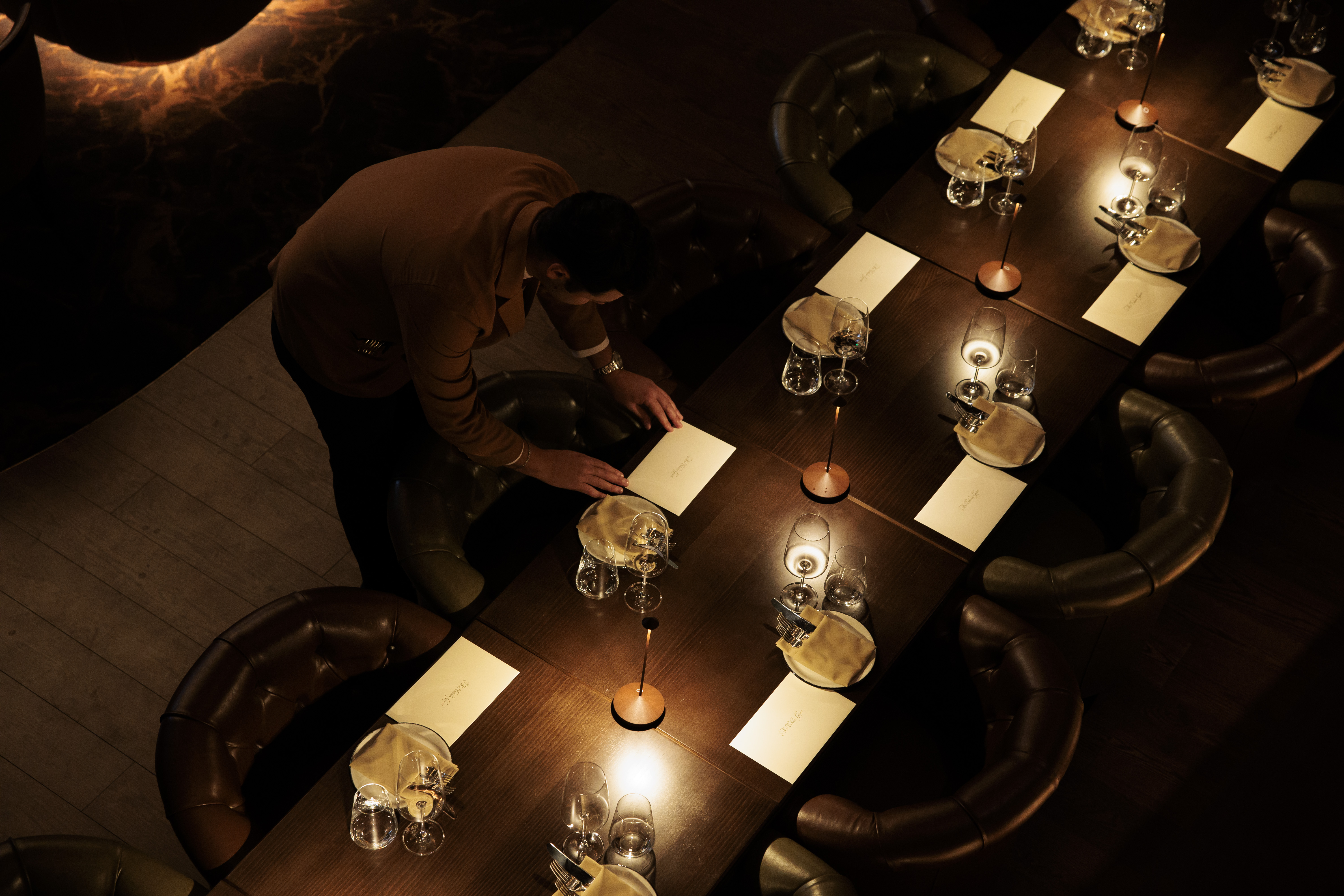
    When the baked, crab au gratin-stuffed potato with a caviar “blackout” was placed in front of me at Mr. Edison’s bar, the man sitting next to me looked upon it with wonder. His eyes were transfixed upon the spud, which spewed crab cream — lightly broiled, like the top of a classic French onion soup — and lots of fish eggs from its potato casing. After he watched me take one bite and then another, he leaned over and asked, “Is that as good as everyone says?”

    The $48 baked potato at Mr. Edison comes stuffed with crab imperial.Craig LaBan / Staff

    Short answer: It is not. I wanted this absurdly expensive baked potato to be good. I love that baked potatoes, of all things, have been trending in the last year. And besides, my colleague, restaurant critic Craig LaBan, liked the non-caviar-topped version of it. It was one of the few bright points of his review of the splashy new restaurant in the Bellevue hotel: “The restaurant’s $48 baked potato, stuffed with nearly half a pound of sweet lump crab au gratin, was the most memorable thing I ate at Mr. Edison,” he wrote.

    Thomas Angelina straightens the menus during service at Mr. Edison in the Bellevue Hotel on Tuesday, Aug. 18, 2026 in Philadelphia.Monica Herndon / Staff Photographer

    The same restaurant can offer experiences that diverge widely, just as not all potatoes are created equal.

    Alas, the baked potato I was served at Mr. Edison was all mush. “Well, a baked potato is usually all mush,” you might say. But think about a classic baked potato. There’s the crisp and chew of bacon bits; the gooeyness of melted cheese; bright, tangy, cold sour cream; a sharp pop of chives, all before you even get to the potato part. Precisely the kind of baked potato that’s all-you-can-eat for $15 on Wednesdays at Wine Dive, not even two blocks from Mr. Edison.

    And if you’re eating a jacket potato from Mod Spuds in Graduate Hospital (five blocks away from Mr. Edison, with much better baked potatoes), you can trust great attention was paid to making sure the potato skin is crispy.

    The caviar-laden baked potato at Mr. Edison costs almost six times what a potato at Mod Spud’s costs. Is it six times better? It is not. There is always a chasm between cost and value. When it comes to the Mr. Edison’s baked potato, that chasm is very wide.

    The ideas behind the dishes at Mr. Edison aren’t terrible. Cream belongs on a baked potato, and so there it is. People love crab. So there’s crab in that cream. And people love caviar, so put that on there, too. But somewhere along the way, it seems that the kitchen forgot to make the final result delicious in addition to expensive.

    But we’re not really talking about an $88 potato here, are we?

    We’re talking about that upcharge, the caviar that catapults a $48 baked potato (still wildly expensive) into the stuff of legend — or at least, the stuff that makes food writers like me write articles about it, including a $55 slice of pizza (it comes with caviar), a $59 pancake (it also comes with caviar, but thankfully, it’s delicious even without it), or a $140 cheesesteak (it comes with truffles, foie gras, and champagne).

    My colleague Michael Klein, who wrote about that $55 slice of pizza from Marina’s Pizza, said that it felt like a stunt. Indeed, caviar is seemingly everywhere now. Give me all the high-quality caviar all the time. But caviar for caviar’s sake? It’s starting to feel like it’s going the way of truffle oil.

    The bar at Mr. Edison in the Bellevue Hotel on Tuesday, Aug. 18, 2026 in Philadelphia.Monica Herndon / Staff Photographer

    Beware: Caviar is great. Baked potatoes are great. But more caviar and/or money does not buy you a better baked potato. It does, however, buy you the privilege of eating a baked potato in the company of a live pianist, sitting under a Ferris wheel that houses equally astonishingly expensive bottles of liquor.

  • Peco upgrades in West Philly are paused after residents say trees will face ‘butchery’

    Peco upgrades in West Philly are paused after residents say trees will face ‘butchery’

    A Peco power project in West Philly that Councilmember Jamie Gauthier described as “critical” for the neighborhood has been delayed, after residents expressed outrage at the electric utility’s plans to trim their beloved tree canopy.

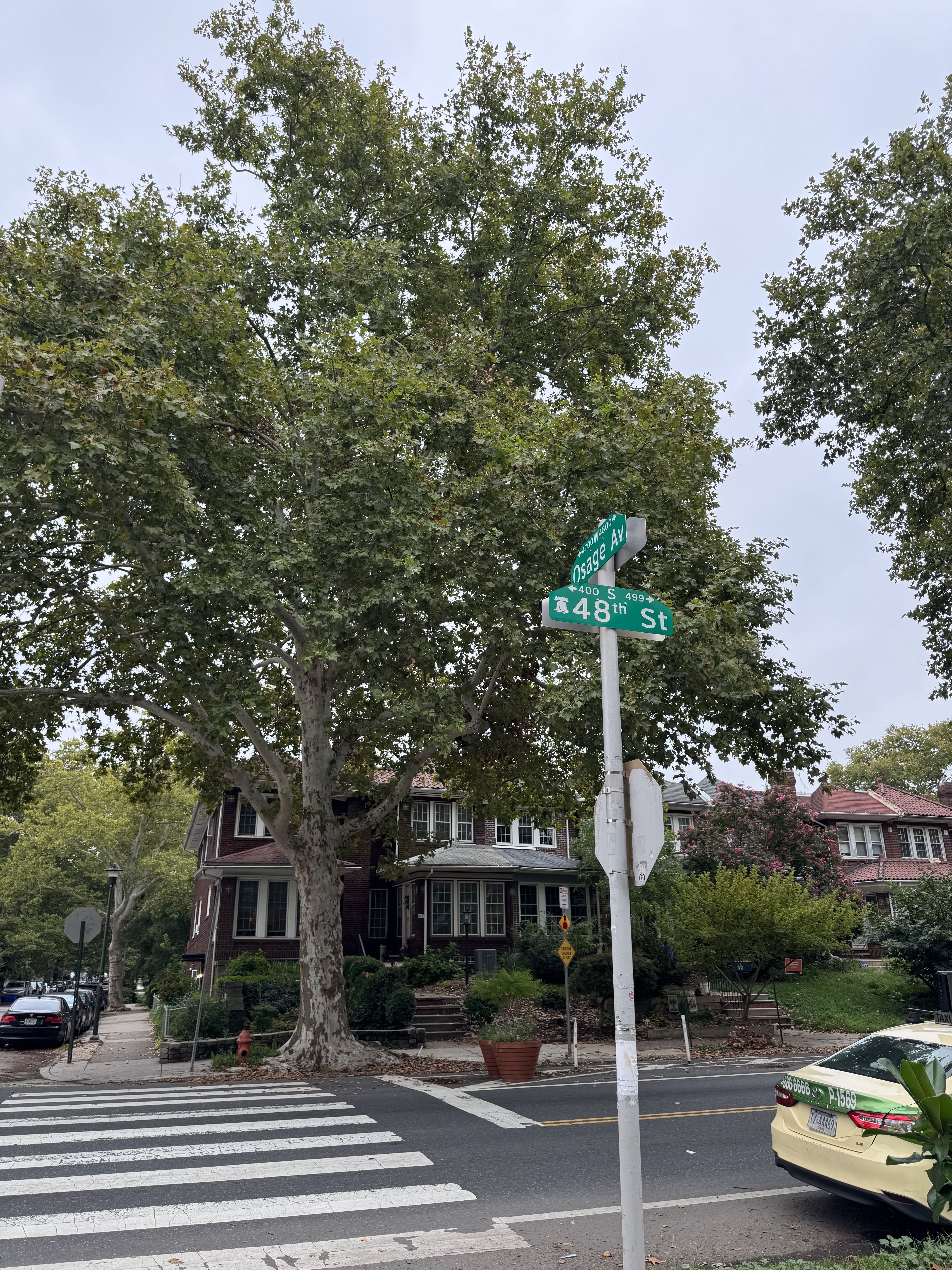
    Residents near the 400 block of South 48th Street received flyers from Peco in early August, explaining that the utility would soon begin a power infrastructure project involving the installation of electrical poles and wire, and trimming large trees draping over the street. It was the first they’d heard of the project, according to block captain Jonas Maciunas.

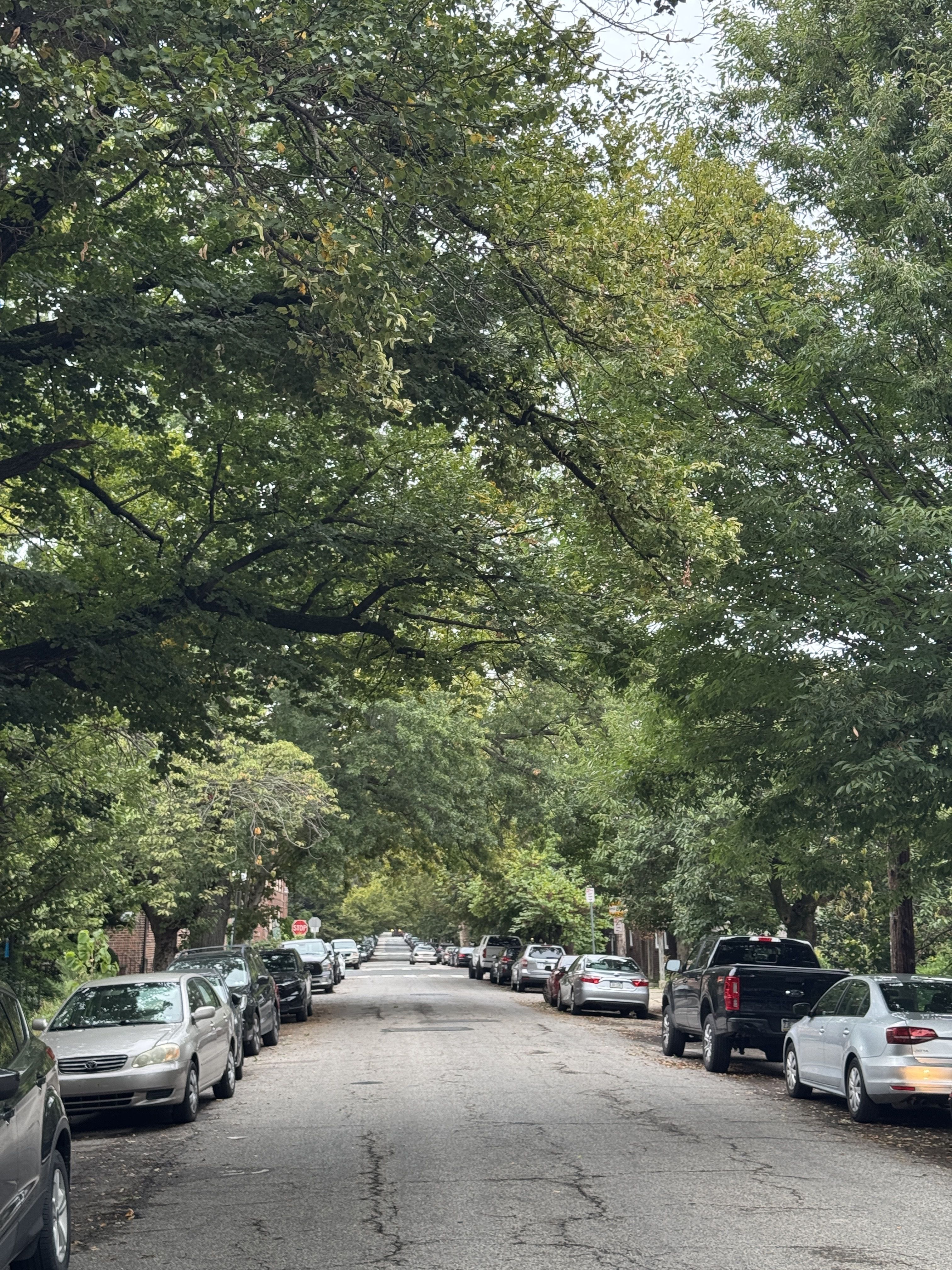
    “Right now the place that is our home, the creation that we’re taking care of, is being unilaterally changed against our will,” Maciunas, 42, said. The Garden Court street’s tree canopy is one of the draws for living in the neighborhood, and Maciunas said he believes that feature would be ruined by the project and ongoing maintenance.

    “That’s butchery … over time, this is a death sentence,” he said of the tree trimming.

    The tree canopy over Osage Avenue near South 48th Street.Nate File

    But residents are in dire need of the new infrastructure. Over the hottest days of this summer, Gauthier’s office began hearing from people living in apartments at 48th Street and Osage Avenue about extended power outages. For the better part of a year, they’d experienced several days-long outages in the summer and the coldest parts of the winter.

    Gauthier said it surprised her to learn Peco had not adequately communicated with these residents about the problems and why temporary fixes had continued to fail.

    Looking for answers

    The area near 48th Street and Osage Avenue is served by an aging, four-kilovolt infrastructure, according to Peco spokesperson Candice Womer. Peco’s modernization plan would transition residents to a modern 13-kilovolt distribution system, which is designed to be more resilient, more reliable, and reduce the frequency and impact of power outages.

    Gauthier said she contacted Peco after hearing about the outages, and learned the utility already had plans for a $15 million modernization plan that would improve power access for a large portion of West Philly. Those plans have been under development since at least 2023, but have yet to break ground. Gauthier implored Peco to accelerate the plan for a smaller portion that would cover these 48th and Osage residents, and it agreed.

    Councilmember Jamie Gauthier talks with news media following a special session of City Council March 24, 2025.Tom Gralish / Staff Photographer

    The expedited plan, which will cover roughly 1,000 residents, involves installing or replacing 10 power poles, and installing 450 feet of new wire and related equipment along 48th Street. It’s unclear how many trees would be need to be trimmed to accommodate the new infrastructure, and how much wider the scope of the full plan is. Womer said the upgrades would better support future anticipated energy needs for electric vehicles, solar energy, and other electricity demands.

    After residents received the flyers from Peco stating installation would begin the following week, some contacted Gauthier’s office in confusion and anger. She asked Peco to pause its plans, and organized a community meeting last week with the utility so residents could learn and ask questions about the project. It did not go well, both Mathias and Gauthier said. Peco representatives provided little information, they said, and could not answer questions in a satisfactory manner.

    “I don’t understand Peco’s communication. I don’t understand their response, and I don’t understand the lack of ownership for allowing this to become such a big, urgent problem,” Gauthier said.

    Womer said Peco appreciated the feedback it has received from residents and community stakeholders, but noted that it does not include a public engagement process for every one of its projects.

    “While we welcome community feedback and consider it when evaluating project implementation, our responsibility is to ensure we continue providing safe and reliable electric service to our customers,” Womer said by email.

    In particular, Gauthier said she and residents did not receive an adequate explanation from Peco as to why the new power lines need to be built aboveground, when areas like Center City use underground power lines. Womer said Peco evaluated alternatives, but determined the underground system in the area had no capacity for the new lines and infrastructure without major construction.

    A pigeon resting on electric pole in October.Tyger Williams / Staff Photographer

    “The aerial solution provides the most timely and cost-effective path to improving reliability while minimizing overall construction duration and disruption,” Womer said.

    Top priority

    Gauthier is attempting to thread the needle of satisfying all of her constituents. She said the concerns of the aesthetically concerned homeowners are valid. So too are those without power, some of whom asked Peco at the community meeting to reimburse them for food that has been spoiled as a result of the failing electricity.

    There is no precise timeline for the accelerated plan to resume. Gauthier is arranging for Peco to speak at another community meeting in the near future, where she expects them to have more answers for residents upset by the new infrastructure plan. But ultimately, she said the need for reliable power has to come first.

    “I understand the concerns around the trees,” she said, but ”we have to get this project done.”

  • Broad Street enforcement cameras have caught nearly 800,000 speeders, new report says

    Broad Street enforcement cameras have caught nearly 800,000 speeders, new report says

    Speed enforcement cameras along Broad Street seem to have nudged drivers to slow down. Violations have dropped 67% from October 2025 through March 2026, according to the first available data from the Philadelphia Parking Authority.

    Broad Street, also designated State Route 611, has 31 speed cameras spread over 13 miles between Philadelphia’s northern and southern city limits. They began operating last September.

    Since then, PPA has issued warnings or violations to nearly 800,000 speeders.

    In October 2025, the Broad Street cameras issued 213,057 formal warnings to people who drove 11 or more miles per hour above the 25 mph limit.

    Fines began the next month. In March, 70,498 fines were handed out based on speed-camera readings.

    (function(){function e(){window.addEventListener(`message`,function(e){if(e.data[`datawrapper-height`]!==void 0){var t=document.querySelectorAll(`iframe`);for(var n in e.data[`datawrapper-height`])for(var r=0,i;i=t[r];r++)if(i.contentWindow===e.source){var a=e.data[`datawrapper-height`][n]+`px`;i.style.height=a}}})}e()})();

    “Fewer people are speeding, and that means fewer people seriously injured or killed on Philadelphia roadways,” Gabe Roberts, interim executive director of the PPA, said in an interview.

    “That’s the goal and it’s how we measure the program’s success. We feel very good about where it stands today,“ Roberts said.

    Drivers who travel more than 11 mph over the posted speed limit will eventually be ticketed, with fines starting at $100 and rising to $150 for those driving more than 30 mph over.

    (function() {
    var l2 = function() {
    new pym.Parent(‘speed-camera-map2’,
    ‘https://media.inquirer.com/storage/inquirer/projects/innovation/arcgis_iframe/speed-camera-map2.html’);
    };
    if (typeof(pym) === ‘undefined’) {
    var h = document.getElementsByTagName(‘head’)[0],
    s = document.createElement(‘script’);
    s.type = ‘text/javascript’;
    s.src = ‘https://pym.nprapps.org/pym.v1.min.js’;
    s.onload = l2;
    h.appendChild(s);
    } else {
    l2();
    }
    })();

    When speed cameras were placed on Broad Street, some suburban commuters had concerns they were being targeted. PPA’s numbers found 59% of speeders lived in Philadelphia zip codes.

    Speed cameras were first installed on Roosevelt Boulevard in 2020 on a trial basis and more were added in the next two years.

    Speeding has dropped 95% on the roadway, based on the declining number of violations issued since the first month cameras were operating there, PPA said.

    A state law enacted in 2023 made the Roosevelt Boulevard speed cameras permanent and authorized Philadelphia to designate five more dangerous corridors on which to use the technology.

    The use of speed cameras continues to grow in Philadelphia.

    On Monday, people found speeding by newly installed cameras on portions of Route 13 began to receive formal warnings.

    The Route 13 corridor — identified by the city as a particularly dangerous stretch of road — spans Baltimore Avenue in West Philadelphia, Hunting Park Avenue in North Philadelphia, and Roosevelt Boulevard in the Northeast before leaving the city by way of Frankford Avenue.

    The first set of cameras along Route 13, in the Northeast, began issuing warnings in June, and there are not enough data to report from the corridor, officials said.

    PPA also operates cameras to enforce school-zone speed limits at five elementary schools in the city. Those were installed in the spring and by law had to be shut down in the summer when school was not in session. Roberts said that the school zones will be assessed more fully in next year’s annual report.

  • What’s open Labor Day? Grocery stores, SEPTA, trash pickup, and more.

    What’s open Labor Day? Grocery stores, SEPTA, trash pickup, and more.

    Labor Day, which falls on Monday, Sept. 7, marks the unofficial end of summer in Philly — one last long weekend to squeeze in a Shore trip, a park picnic, or a few errands before fall routines kick in. But holiday weekends also mean schedule shifts, closures, and crowded highways.

    This year, city services including trash collection will run on altered schedules, while government offices, banks, and other services will close for the day. Many businesses, stores, and attractions may also adjust their hours, so it pays to check before you head out.

    Whether you’re trying to avoid a surprise at the curb, plan a grocery run or figure out what’s open for some last-minute fun, here’s your guide to what’s open and closed in the Philadelphia region this Labor Day.

    Grocery stores

    Acme Markets

    ✅ Acme Markets locations will be open. Hours vary by location, so check your local store before heading out.

    Whole Foods

    ✅ Whole Foods stores will be open. Hours may vary by location, so check your local store before visiting.

    Giant Food Stores

    ✅ Giant locations will be open. Check your local store for hours.

    Sprouts Farmers Market

    ✅ Sprouts Farmers Market locations are expected to be open. Check your local store for holiday hours.

    Trader Joe’s

    ✅ Trader Joe’s stores are expected to be open. Check your local store for hours.

    Aldi

    ✅ Aldi stores will be open with limited hours on Labor Day. Check the store locator for your local store’s schedule.

    Reading Terminal Market

    ❌ Reading Terminal Market will be closed on Labor Day and will resume normal operating hours Tuesday, Sept. 8.

    Liquor stores

    Fine Wine & Good Spirits

    ✅ Fine Wine & Good Spirits stores that are normally open on Mondays will operate on a modified schedule, opening at their regularly scheduled time and closing at 5 p.m. Check your local store for hours.

    Mail and packages

    U.S. Postal Service

    ❌ Post offices will be closed, and USPS will not deliver regular mail. Regular mail delivery and retail services will resume Tuesday, Sept. 8.

    UPS, FedEx, and DHL

    ❌ UPS will not offer regular pickup or delivery service. UPS Store locations may have modified hours or be closed.

    ❌ Most FedEx pickup and delivery services will be closed. FedEx Office locations will operate on modified hours.

    ⚠️ Check your local DHL location or service for its Labor Day schedule.

    Banks

    ❌ Labor Day is a federal holiday, so most banks, including TD Bank, Bank of America, Wells Fargo, and Chase Bank, will be closed. ATMs and online banking services will still be available.

    Transit

    SEPTA

    ✅ SEPTA buses, Metro, and Regional Rail will operate on a Sunday schedule on Labor Day. Routes that do not have Sunday schedules will not operate.

    Pharmacies

    CVS

    ✅ Most CVS stores will be open on Labor Day, though pharmacy and store hours may vary by location. Check your local store before visiting.

    Walgreens

    ✅ Most Walgreens stores will be open. Pharmacy and store hours may vary by location, so check before visiting.

    Trash collection

    ❌ Philadelphia trash and recycling will not be collected on Labor Day. Collections will be delayed by one day for the remainder of the week.

    Big-box retail

    Target

    ✅ Target stores are expected to be open. Hours may vary by location, so check your local store.

    Lowe’s

    ✅ Lowe’s stores are expected to be open. Check your local store for Labor Day hours.

    Home Depot

    ✅ Home Depot locations are expected to be open. Check your local store for hours.

    Shopping malls

    Mall and individual retailer hours can vary on Labor Day. Check with the Shops at Liberty Place, Cherry Hill Mall, Fashion District Philadelphia, and King of Prussia Mall before visiting.

  • Their Merion Station yard didn’t have much life. Now it’s filled with flowers.

    Their Merion Station yard didn’t have much life. Now it’s filled with flowers.

    Platter-sized hibiscus, hydrangea, cardinal flowers, small yellow blooms called partridge peas, chartreuse creeping Jenny, daisies, and lavender fill the front yard of the Merion Station home.

    The plantings extend from the porch to the curb, where parked cars push against tall stems of deep pink celosia. “It’s a hostile environment. You hope for the best,” said Boots Levinson.

    Levinson and his wife, Laura White, own the three-story Tudor surrounded by colorful vegetation.

    “Laura’s the gardener,” Levinson said. “I’m the waterer and manual laborer.”

    White and Levinson’s home is surrounded by flowering gardens.Joe Lamberti / For The Inquirer
    The Tudor-style home has an arch that required repairs.Joe Lamberti / For The Inquirer

    The couple moved to the 3,000-square-foot property in 2021 from a one-bedroom condo in Center City. “We bought the first house we looked at,” White said, then conceded, “We had no idea what we were getting into.”

    The stucco-and-brick, four-bedroom, 2½-bath house had a new kitchen and bathroom. There was space to entertain and for corgis Archie and Ozzie to romp.

    Levinson and White met on Jdate, an online dating service for Jewish singles. They had in common a Midwest background. She grew up in Missouri, while he lived in Minnesota until moving to the Philadelphia area in the sixth grade. White came to Philadelphia for her medical training. The couple married in 2013.

    The house needed new air-conditioning and heating systems, and a basement leak exposed a drainage problem.

    Hibiscus flowers bloom in the front yard.Joe Lamberti / For The Inquirer
    White roses in the garden.Joe Lamberti / For The Inquirer

    Landscaping amounted to little more than a crab apple tree in the backyard, rocks and dirt, and a flower bed covering a parking space in front of the garage.

    White and Levinson hired mason Deen Vinci of Surrounded by Stone in Merion Station to repoint and repair the stone arch that leads to the backyard. Vinci also built the arch’s wood door and paved the front driveway. In the backyard he reset and repaired patio bricks.

    White furnished the patio with a wood table and chairs from Arhaus. The large umbrella from Wayfair is set in concrete so it won’t tumble over in a storm. Plants in the backyard include hydrangeas, zinnias, jasmine, dahlias, gardenia, a juniper and a pine tree.

    White, a psychiatrist, had no horticultural training. But she learned a bit from watching her father, Bruce, garden and is grateful to neighbors who share knowledge and plantings with her. Watching hummingbirds and bees flit about her flowers, she and her neighbors “have created a pollinator pathway.”

    A hummingbird enjoys cardinal flowers in White and Levinson’s garden.Joe Lamberti / For The Inquirer

    Neighbor Suzanne Kane, who tends a lush garden across the street, is a particularly helpful mentor, White said.

    Levinson, a Realtor, said his wife’s cultivating talents have been aided by her medical training. “She’s a scientist and is observant and nurturing.”

    White planted a kitchen garden on one side of the house with honeynut squash, Swiss chard, Thai and Shishito peppers, and varieties of plum tomatoes she will can. Cucumbers grow on a trellis. In late summer, Ozark strawberries are ripening. Alpine strawberries, which ripen in the front yard in late spring, are so sweet neighborhood children pilfer them.

    White stores garlic harvested from her garden in the basement.Joe Lamberti / For The Inquirer
    A squash growing in the garden.Joe Lamberti / For The Inquirer

    White has harvested garlic stored in trays in the basement where she starts seeds in the winter with hydroponic lamps. She likes to garden year-round. Soon she will move the Amaryllis plants from outside to the basement for eight weeks or so before placing them in a sunny spot indoors in time for them to bloom at Christmas.

    White grows straw flowers because they are easy to dry for year-round flower arrangements. And she chooses perennial plants that span the seasons, such as Muhly grass, which turns from green in the summer to fluffy pink in the fall. Amsonia grass has blue blossoms in the spring and turns from green to gold in the fall.

    White shops for plants at several locations, including Primex Garden Center in Glenside, Wynnewood Garden Center, and Lancaster Farmers Market.

    A hydrangea in the front yard.Joe Lamberti / For The Inquirer
    A dahlia in bloom in the garden.Joe Lamberti / For The Inquirer

    Caring for the property is work.

    “Sometimes,” Levinson admitted, “I miss just paying a monthly condo fee.”

    Still, he said having gardens on all sides of his home is “like having four extra rooms.”

    Is your house a Haven? Nominate your home by email (and send some digital photographs) at properties@inquirer.com.