The heat waves that baked Europe this summer were likely the continent’s deadliest on record, and climate change was primarily responsible, researchers at Imperial College London and the London School of Hygiene & Tropical Medicine found in two recent peer-reviewed studies.
About 50,000 more people died in European cities between June and August than would have if temperatures had not been abnormally hot, researchers estimate. The figures are 71 percent higher than in 2022, the second-deadliest year, which researchers said is likely due to just how widespread and extreme the heat domes were across Europe this summer.
Of those estimated additional deaths, about two-thirds would not have occurred if the climate were not warming, the researchers calculated. The papers were accepted for publication in the journal Nature Health, and one published earlier this month.
The findings “clearly highlight the danger from human-caused warming and the need for rapid emissions reductions,” said Clair Barnes, a statistician and climate change researcher at Imperial College London, who is a lead author of the studies.
The researchers analyzed weather data from 854 urban areas in Europe, covering a total population of about 173 million. Using 26 years of data, climate models, population data and a previously peer-reviewed method to link mortality to heat, researchers calculated how many more deaths likely occurred due to the heat than would’ve without the high temperatures.
The research comes on the heels of a United Nations climate report out this week, which found that the planet is on track to warm 2.6 degrees Celsius above preindustrial levels during this century – assuming countries stick to their climate action plans – and that the previous global target to not overshoot 1.5 degrees of warming “has been lost.”
Determining how many people’s deaths are at least partially caused by heat is notoriously difficult for public health authorities to untangle, earning it the nickname of a “silent killer.” Heat can cause heat stroke, but it can also contribute to death by heart attack, stroke, cardiovascular disease and other conditions.
“Whenever the human body is exposed to extremes of temperature, but particularly heat, it puts the body under stress,” said Andrew Hartle, an intensive care consultant at the Imperial College Healthcare NHS Trust, who did not contribute to the new research. The body has coping strategies, he said, but “eventually, your ability to control your temperature fails.”
But even when it’s very likely that heat played a role in a death, other causes often take the blame on death certificates. For example, if the medical examiner evaluates the body long after the internal core temperature has fallen, heat may not be listed as a factor.
Recognizing the gap in data, some European health authorities also calculated heat-related death estimates this summer with their own models. In France, for example, the nation’s public health agency Santé publique estimated about 5,800 excess deaths during the late June heat wave. (The Nature Health study estimates about 7,300 heat-related deaths in France’s urban areas across the whole summer.)
WASHINGTON — The Justice Department asked a federal appeals court Thursday to step in and accelerate a lawsuit against California, where it has sought to compel the state not to tabulate as many as 20,000 mail-in ballots sent to voters it claims are “likely noncitizens.”
The request jumped ahead of a lower court that was still considering the government’s emergency request last week. The government’s moves came as it has gone to extraordinary lengths to scrutinize the midterm elections, ostensibly in search of instances of voter fraud. Related efforts, such as trying to force states to turn over voter rolls and having homeland security agents interview recently naturalized citizens about their voting history, have been blocked in other federal court cases.
In a filing on Thursday, the Trump administration cited the “critical and exigent nature” of its request, and blamed a lower court’s “silence” so far for holding up the lawsuit. It repeated accusations that California was in the processing of sending and counting “vote-by-mail ballots cast by ineligible noncitizens to illegally participate in federal elections.”
The judge presiding over the case, Judge David O. Carter of the Central District of California, had scheduled a hearing next Tuesday to consider the government’s claims.
It was unclear what evidence the Trump administration had relied on, or what federal data or methods had been used to create the list of 20,000 individuals.
In a filing on Monday, the government wrote that the Homeland Security Department had “received what appeared to be the California voter roster for the general election of 2026,” and forwarded it to U.S. Citizenship and Immigration Services to check against its immigration data.
The agency produced a “refined list of individuals” that homeland security officials eventually distilled down to the list of more than 20,000 people, according to the filing.
California election officials have said the data shared by the Trump administration was riddled with omissions and difficult to parse.
Judges in other cases have raised concerns about the reliability of federal immigration data, as applied to screening state voter rolls. Data sets the Trump administration has compiled to help determine a person’s citizenship have repeatedly been found to be out of date or unreliable for establishing citizenship.
Elon Musk has adopted a war posture in response to looming threats of congressional investigations: If Democrats win control of Congress in next month’s midterm elections, Musk has signaled he is bracing for a fight.
“Live by the sword, die by the sword,” he said Wednesday in a post on X, responding to a Politico report that cited Democratic lawmakers seeking to investigate him.
“Those who pick fights with me should understand that I will find out who is really pulling the strings and come for them, not just their puppets,” said Musk, the CEO of Tesla and SpaceX.
Musk’s battle-ready stance comes as a host of Democrats have said they are eager to wield the power of their office to investigate the world’s richest person should they win either chamber in the midterms.
As Republicans’ election prospects have soured, lawmakers are building momentum for probes looking into the tech mogul, his companies, or the work of the U.S. DOGE Service, which Musk oversaw and which was instrumental in dismantling the U.S. Agency for International Development.
Sen. Richard Blumenthal (Conn.), the ranking Democrat on the Senate Permanent Subcommittee on Investigations, said in an interview Thursday that he would investigate Musk and DOGE if Democrats win. Blumenthal led inquiries relating to the cost-cutting group but was in the minority and did not have subpoena power, which could be used to compel the attendance of witnesses, as well as the production of documents and records.
“The American people have a right to know the cost, the consequences, and the chaos resulting from DOGE and … what he may be concealing,” Blumenthal said. “There is a web of potential corruption here that needs to be explored.”
He dismissed Musk’s threats of retaliation, expressing surprise at his strong reaction.
“He should have nothing to hide,” said Blumenthal, adding that he would expect a Democratic chair of the Senate Homeland Security and Governmental Affairs Committee to support efforts to investigate Musk.
Musk did not respond to requests for comment.
Diverging from many of his corporate peers, Musk has consistently countered threats with force. He has contested lawsuits, picked fights with powerful government officials, and at times taken drastic action over business disputes, including changing his state of residence — and the locations of his businesses — from California to Texas.
But Musk has also acknowledged his own vulnerability in an unfavorable political environment, joking in 2024 about the prospect of going to prison if President Donald Trump was not elected to a second term.
Musk has also poured his resources into midterm races, eclipsing his donations toward Trump’s election in 2024. He is the largest individual donor in the 2026 midterm elections, putting more than $350 million toward efforts to elect Republicans.
Musk and others who carried out DOGE’s agenda face a potential slew of subpoenas, investigations, and hearings after the midterms, in which Democrats are heavily favored.
Several other Democratic members of Congress have also raised the prospect of exploring Musk’s business or political ventures in recent days.
Rep. James Walkinshaw (D., Va.), a member of the House Oversight Committee, tagged Musk in a post on X.
“I’d just like you to explain to Congress and the American people why DOGE failed so miserably and why you then lied about the savings,” he wrote. “Will you commit to testifying under oath to explain?”
Disputed legacy
As an influential adviser to President Donald Trump last year, Musk oversaw the sweeping and at times chaotic U.S. DOGE Service campaign to cut costs at government agencies.
Staffed largely with young tech workers new to government service who were chosen by Musk and his circle, DOGE eliminated the jobs of hundreds of thousands of federal workers and accessed sensitive data on hundreds of millions of Americans.
Musk said that he aimed to cut $2 trillion in federal spending with DOGE, which ultimately claimed $215 billion in estimated savings. A Government Accountability Office audit found that the group consistently overstated its savings. DOGE took credit for lease cancellations set into motion before it existed, for example, and claimed savings from contracts that continued to exist.
Musk has at times issued threats of retribution on X, the platform he bought in 2022 when it was named Twitter and later folded into his rocket company SpaceX.
“There is a large graveyard filled with my enemies,” he wrote in a 2023 post. “I do not wish to add to it, but will if given no choice. Those who pick fights with me do so at their own peril, but maybe this is their lucky day.”
The entrepreneur mused about his fate if Democrats took power in a 2024 interview with Tucker Carlson.
“If he loses, I’m f—ed,” Musk said, going on to joke: “How long do you think my prison sentence is going to be?”
“There may be some vengeance on me” if Trump doesn’t retake the White House, Musk said in the interview, which took place before the election.
Should Democrats regain control of Congress this time, they will face pressure from some voters and activist groups to move on Musk.
Activist group Investigate DOGE has channeled the spirit of the Tesla Takedown movement, which staged anti-Musk demonstrations outside Tesla showrooms, calling for Musk and DOGE alumni to face congressional scrutiny.
Activists are asking, “‘How do we make sure Elon gets held accountable if Democrats take Congress again?’” said Evan Sutton, a spokesperson for the group. “Congress needs to get in there. They need to get their hands dirty. The American people need to know what happened.”
Some former DOGE staffers are already taking precautions in the event of a Democratic-controlled Congress, seeking to insulate themselves from the potential outcomes of ethics probes by attempting to button up their post-DOGE business dealings.
Though the midterms are still more than a week away, Musk continues to signal he’s readying a counteroffensive.
Responding to a video of the tech journalist Kara Swisher noting that if Democrats take power, he “knows what’s coming,” Musk had a simple reply: “Message received.”
PARIS — Some 70,000 law enforcement officers will be deployed across France on Saturday while the Louvre and several other major Paris museums will be closed as authorities seek to prevent renewed violence during planned protests.
Protests last week devolved into mayhem, with people setting fires, storming public buildings, smashing shop windows, looting, and clashing with police. It was France’s most violent unrest in years.
Demonstrators plan to take to the streets again Saturday to denounce the high cost of living. Students, members of the CGT labor union, and activists from the “yellow vest” movement, whose demonstrations against social injustice shook France in 2018 and 2019, are all set to join.
While some protests have been banned for security reasons in several cities, including Lyon, Nice, and Montpellier, marches are expected in many other places including Paris and Marseille.
French Interior Minister Laurent Nuñez said some 70,000 police officers and gendarmes would be deployed, along with helicopters, armored vehicles, and water cannons. In addition, elite police units will help secure public buildings like city halls in a “highly mobile” security operation, he said.
“There have been numerous calls from radical far-left groups on social media to commit acts of violence and vandalism. There have also been renewed calls for looting, with those messages clearly being spread by rioters,” Nuñez said at a news conference.
“We will be absolutely uncompromising” with those involved in violence, he added, warning that police will have a “very firm approach to making arrests, and there will be legal consequences.”
Paris museums to be closed
In a statement to the Associated Press, the Culture Ministry said the Louvre, the Orsay, and the Picasso museums as well as the Grand Palais would be closed. The ministry called on all institutions under its authority to adopt any necessary measures to ensure “visitor safety, staff protection, and the preservation of artworks,” according to the statement.
After two days when admission was by invitation only, Art Basel Paris opened to the public Friday — but only for the day, with the threat of unrest prompting organizers to cancel the weekend program. One of the world’s most prestigious contemporary art fairs, Art Basel includes exhibitions by 211 international galleries at Paris’ Grand Palais.
“This decision has not been taken lightly, and the safety of everyone involved in the fair remains our utmost priority,” organizers said in a statement Thursday.
Saloni Doshi, an art collector who traveled to Paris from India for the fair, grew worried last Saturday as she saw the fires and panicked people, and she received phone calls from friends asking whether Paris was safe. She agreed with the organizers’ rationale to close.
Antoine Donzeaud and Elisa Rigoulet, the owners of the gallery Exo Exo, felt the same.
“We understand this decision, which we consider reasonable and consistent with the urgency of the social demands currently unfolding in France,” they said in a text message.
But some visitors were disappointed.
“It’s very sad, because we just came here to the fair, and we could not get in because they canceled it for the weekend,” said Fabián Hernández, 32, from Mexico City. “So it’s very busy today, and it’s disappointing to me because I love the art fair, you know? But it is what it is.”
An anti far-right protest is planned
A demonstration Saturday in the city of Orléans, about 70 miles south of Paris, will also be closely watched.
About 50 organizations have called for a protest against the far right on the sidelines of the two-day congress of Marine Le Pen’s nationalist, anti-immigration party ahead of next spring’s presidential election. Organizers include labor unions, left-wing political parties, student organizations, and anti-racism groups.
Hugues Moutouh, the prefect of the Loiret region, said that 20,000 to 30,000 demonstrators from across the country were expected.
Le Pen, whom opinion polls place as the front-runner in next year’s election, accused left-wing organizations and political parties of trying to “disrupt a political party’s democratic congress,” on news broadcaster Franceinfo.
Still, she said she had “no concerns” about security because the government had “recognized the need for measures allowing the congress to proceed safely.”
In reflecting on his first season with the Phillies, and especially his 157-day term as interim manager, Don Mattingly thought about two teams.
There was the team that batted .270, led the majors with a .353 on-base percentage, and averaged 5.3 runs over 28 games in August. And then there was the club that batted .234, reached base at a .303 clip, and averaged 4.2 runs in the other 134 games.
Maybe. It wasn’t long ago, after all, that the Phillies had a high-powered offense. From 2022 to 2025, they scored the fifth-most runs of any team in baseball and ranked third in both on-base percentage and slugging.
But with mostly the same hitters this season, they slid to 19th in runs, 23rd in on-base percentage, and 24th in slugging. So, maybe August was about bullying the pitching-weak Nationals, Cardinals, Twins, and Angels. Because sample-size math suggests the 2026 Phillies were characterized less by assembly-line efficiency than below-the-line production.
The question, then, as president of baseball operations Dave Dombrowski convened organizational meetings this week, is how they can improve.
As ever, it comes down to the players. The Phillies were below league average in OPS at every position except first base (mostly Bryce Harper), DH (Kyle Schwarber), and second base (Bryson Stott/Luis Arraez). Not on that list: Trea Turner, whose career-worst .675 mark was below average at shortstop, just as it would’ve been if he played second or third base or left field.
Turner’s theory for the teamwide offensive downturn: “Me,” he said after the Phillies got booted in the wild-card round. “It’s pretty simple. When you hit first or second, you get a lot of at-bats and kind of get things going. So, a lot of that’s on me.”
Video: Phillies Extra: What is Trea Turner’s role with the Phillies moving forward?
Fair enough. It’s also reasonable to believe that a 33-year-old two-time batting champion will rebound next year after 62- and 137-point plunges in average and OPS, respectively, from 2025 to 2026.
Team officials are hoping for a needle-moving rookie year from top prospect Aidan Miller, healthy at last after being crippled by a back condition for most of this season. And maybe the Phillies will finally add a middle-of-the-order right-handed bat, either through a trade or free agency.
But, as Mattingly put it, “the guys that we have, they’re not going anywhere.” And with the band — Harper, Schwarber, Turner, Stott, J.T. Realmuto, Justin Crawford, possibly Brandon Marsh — expected to mostly stay together, the manager’s ideas for changing the tune have more to do with adjustments to the overall approach than the personnel carrying it out.
Mattingly’s vision for the offense involves swinging at fewer pitches out of the strike zone, running the bases better and more aggressively, and making contact that isn’t always pulling the ball in the air.
And what everyone has seen nightly in the postseason from the Brewers and Rays.
It’s more of an analog approach in an analytics age. A new hitting coach will presumably help espouse it. (Last week, the Phillies fired Kevin Long with two years left on his contract and despite his deeply rooted relationships with Harper, Turner, and Schwarber because they sought a new voice in the batting cage — and perhaps to throw red meat to angry fans.)
But it will also require buy-in from not only the players but also one of the most robust analytics departments in baseball.
“[August] showed that we can control the zone, we can swing at strikes, we can take our walks, we can do teamwide damage that way,” Mattingly said. “Like, if you said, ‘What do you want to be?’ That’s what I want to be. We’re creating traffic all the time; we’re putting pressure on teams. That would be where I would like to head.
“How do we get there? I don’t know. Can we get there? I think that’s something you’ve got to believe you can.”
After stealing 40 bases in three consecutive seasons in the minors, Justin Crawford swiped only 17 in 21 attempts as a rookie this season. Yong Kim / Staff Photographer
A need for speed
At 29.9 feet per second, Turner averaged the 11th-fastest sprint speed among 567 players clocked by Statcast this season. Crawford tied for 22nd (29.6); Derek Hill tied for 27th (29.5).
Yet the Phillies were 19th in stolen-base attempts.
“I think we have speed that we don’t use,” Mattingly said. “I felt like we played a little cautious.”
Of course, it’s impossible to steal first base. And despite even their August uprising, the Phillies finished with only a .312 on-base percentage, tied for their lowest full-season mark since 1985.
Still, Mattingly’s point is well-taken. Crawford swiped at least 40 bases in three consecutive seasons in the minors. As a rookie this year, he attempted 21 steals, 48th among players who reached base at the same clip (.309) or better. He wound up swiping 17 bags.
Early in the season, first base coach Paco Figueroa said Crawford may have been “a little bit more conservative” on the bases, a common instinct for a 22-year-old in his first month in the majors.
“First time in the big leagues; 40,000 fans,” Figueroa said on The Inquirer’s Phillies Extra podcast. “He’s got the makeup and all the confidence in the world, but it’s just reminding him: Trust it.”
But even in August, Crawford’s most productive month with a .306 average and .358 on-base percentage in 84 plate appearances, he made only three steal attempts.
“He needs to be a guy that causes havoc, where he’s a 30- to 40- stolen-base guy,” Mattingly said. “To do that, you’ve got to get on base. He strikes out maybe a little more than he should, doesn’t walk as much as he should. He has to get where he controls the strike zone better. I think that’s a general theme for him.”
Video: Phillies Extra: Aidan Miller on how Tom Brady’s training center helped him recover from injury
In other words, Crawford must be the Phillies’ version of Rays left fielder Chandler Simpson.
Drafted 53 picks after Crawford in 2022, Simpson was an equally polarizing prospect for the same reason: an extreme tendency to hit the ball on the ground. This season, their ground-ball rates were nearly identical (Simpson — 58.8%; Crawford — 57.5%), with Crawford actually making much harder contact (35.1% of balls hit at an exit velocity of 95 mph or harder compared to 13.6% for Simpson).
But Simpson put the ball in play in 86% of his plate appearances, led the majors with 61 infield hits, and was second with 14 bunt hits. Crawford put it in play 74% of the time, with only 31 infield hits and three bunt hits.
And after utilizing his speed to get on base more often, Simpson was daring. He led the American League with 46 steals and the majors with 60 attempts. He swiped more bags after the All-Star break (24) than Crawford did all season.
It wasn’t only Crawford. Turner was on first or second base with the next base open 265 times; he attempted only 25 steals. Stott had 232 opportunities to run; he took off only 27 times — and went 27-for-27 in steal attempts.
Maybe it’s reflective of an organizational philosophy. Data-driven teams tend to be more risk-averse on the bases. And the Phillies employ more full-time analysts than any other team, according to a recent study by former major league executive Zack Scott of Four Rings Consulting.
To be fair, the Phillies did rank among the top-10 in steal attempts in 2024 (eighth), 2023 (ninth), and 2022 (tied for seventh). And Figueroa believes in creating havoc on the bases to apply pressure to the opposing defense.
Mattingly isn’t suggesting that the Phillies morph into the millennial version of Whitey Herzog’s Cardinals. But he sees an opportunity to run more often.
“I know [Stott] doesn’t really get thrown out, but if he gets thrown out three or four times but he steals an extra 10 bags, then I would like that,” Mattingly said. “I’d like Trea to be more aggressive. These are all conversations that we need to have with guys, so I’m just throwing it out. I want Craw to be aggressive.
“When we have chances to do that, I’d like to be able to do it.”
Trea Turner was 21-for-25 in steal attempts this season.Yong Kim / Staff Photographer
The sincerest form of flattery
Every October, two teams advance to the World Series and their rosters become case studies in the other 28 clubs’ quest to improve.
There’s a lot about the Brewers and Rays that’s worth imitating.
Because hitting is more difficult than ever. The average fastball velocity has risen each year since 2021. Not coincidentally, eight of the 10 lowest batting averages by season since 1969 have come in the last decade, including .243 in 2024, .245 in 2025, and .244 this year.
In that run-scoring environment, offenses must be multidimensional.
Behold the Rays and Brewers, first and second in the majors, respectively, in bunt hits, infield hits, and sacrifice bunt attempts. The Rays were tied for first in steal attempts; the Brewers were third. The Brewers swung at the lowest rate of pitches outside the zone (26.9%); the Rays (30.7%) were a tick above league average. (The Phillies, by comparison, swung at 32.6%, the fourth-highest rate.)
It scarcely mattered that the Rays were 22nd and the Brewers tied for 28th in homers. The Brewers scored the second-most runs in baseball, while the Rays were 12th.
“I’m watching playoff games, and you’re seeing teams, they fight, they foul off balls, they create more opportunity, and then they break through,” Mattingly said. “I feel like that’s what I would want us to be.”
But homers remain the most instant source of offense. Slugging is still vital. The small-ball Brewers outhomered the mighty Dodgers, 7-1, in a four-game, pennant-winning sweep. The Rays’ clinching victory in Game 6 of the AL Championship Series was powered by homers from Junior Caminero and Yandy Díaz.
Surely, then, the Phillies will go on a familiar pursuit for middle-of-the-order right-handed power. Randy Arozarena and Seiya Suzuki are free agents. The Phillies have scouted lefty-hitting Japanese slugger Teruaki Sato, though it’s unclear if they view him as a third baseman or a corner outfielder.
Video: Phillies Extra: How much change is needed for the Phillies entering 2027?
There’s also the question of how much they will spend, given their $239 million in luxury tax commitments for 2027 and uncertainty over MLB’s economic system in the next collective bargaining agreement. Even if the owners don’t succeed in their bid for a salary cap, the penalties imposed on the highest payrolls are almost certain to get harsher.
“One of the tricky questions, I don’t know what the rules are,” Dombrowski said last week. “Our ownership has been as open to doing things as anybody possibly can be. … But we have a lot of high-salary guys at this point, so I think you have to figure out which way you go.”
In any case, Mattingly believes there’s one surefire way for the offense to move forward.
“We need to score in different ways,” he said. “Doesn’t just have to be Harp and Schwarb hitting a homer. It’s nice when you get the homer and you drive in runs like that. But I feel like, to be sustainable throughout the course of the year and into the playoffs, you’ve got to be able to find different ways to score.”
HEBRON, West Bank — Israeli soldiers shot and killed two Palestinians who the military said had launched an attack near Hebron in the occupied West Bank on Friday morning. At least five other people were injured, some critically.
The violence is likely to heighten political tensions and security concerns ahead of Israel’s parliamentary election next week.
The army said it had prevented a “terror attack against Israeli civilians” and that the two men, both Palestinians from Hebron, were armed with an M16 rifle and a handgun. It did not identify the target of the alleged attack or those injured.
Prime Minister Benjamin Netanyahu’s office later said it had instructed security forces to immediately cordon off Hebron and prepare for a full closure of the West Bank starting Friday.
Voters go to the polls Tuesday in an election that will help determine whether Netanyahu secures another term as prime minister. The vote comes three years after the Hamas-led attacks on Israel that triggered the war in Gaza.
Israel’s government has warned of potential attacks by the country’s “enemies” in the lead-up to the election.
Netanyahu holds an emergency meeting
Following the shooting, Netanyahu held an emergency meeting of his Security Cabinet and officials from top military and security agencies. He said Hamas was “planning a major attack aimed at murdering innocent civilians.”
“Our brave soldiers thwarted this attack with courage and determination,” he said, without elaborating on what the planned attack entailed.
“I commend them for their actions and wish our wounded a speedy recovery,” he added but did not say if the wounded were soldiers or civilians.
Earlier Friday, Israel’s far-right national security minister Itamar Ben-Gvir, known for extremist views, said that the attack shows that Israel needs to restrict the Palestinians’ freedom of movement in the West Bank.
“The lives of the residents of Judea and Samaria, of the settlers, the lives of the soldiers, the lives of the police officers, the lives of our fighters are a million times more important than freedom of movement,” he said, using an Israeli reference to the West Bank.
Ahead of the anniversary of the Oct. 7, 2023, Hamas-led attack that triggered the war, Netanyahu said the Palestinian militant group could attack Israel in a bid to influence the outcome of the elections. He did not provide evidence to back up the claim.
Dozens arrested in West Bank security operations
Emergency responders said five people were injured, some critically, and were being evacuated to hospitals in Israel. A statement from the responders said gunfire was still ongoing as they arrived at the scene of the attack near the Yehuda Junction in the morning.
Two men in their 20s had gunshot wounds to their lower limbs, and one was unconscious and seriously injured, the responders said.
“We arrived at a difficult scene while shooting was still taking place in the area,” said Tzuriel Edri with the response team.
An investigation was underway, authorities said.
Also Friday, the army said soldiers and Israeli security and intelligence agencies conducted dozens of operations in the West Bank and apprehended dozens of people, including those affiliated with Hamas and Islamic Jihad militant groups. It also said it had located weapons, including M16 rifles and submachine guns.
Eyal Zamir, the Israeli army’s chief of staff, said a “large quantity of ammunition was found” in a vehicle used by the gunmen.
“This ammunition was intended to be used in a larger-scale attack,” he added.
Palestinian life is ‘impossible,’ says US congressional candidate
Closures of the West Bank are becoming more common. It was the fourth time in the past month that Israel had imposed restrictions across the territory, shutting gates and checkpoints connecting Palestinian villages to major roads.
Roads in the territory remain open to Israeli drivers, including settlers, who can still travel through the area but may face delays.
Democratic congressional candidate Brad Lander, who was in the West Bank on Friday, said the Israeli army’s closure following the attack was an example of Israel enforcing an apartheid system on Palestinians.
“It’s part of the effort to take more control, to make Palestinian life impossible,” Lander, who was detained by Israeli forces Wednesday, said in an interview.
Yishai Fleisher, an international spokesperson for Hebron’s Jewish community and a political candidate for the far-right Otzma Yehudit, or Jewish Power, party, said Israel had the right to defend itself from a “hostile majority.”
“We are tired of the weapons and the brainwashing and incitement that is next door,” he said.
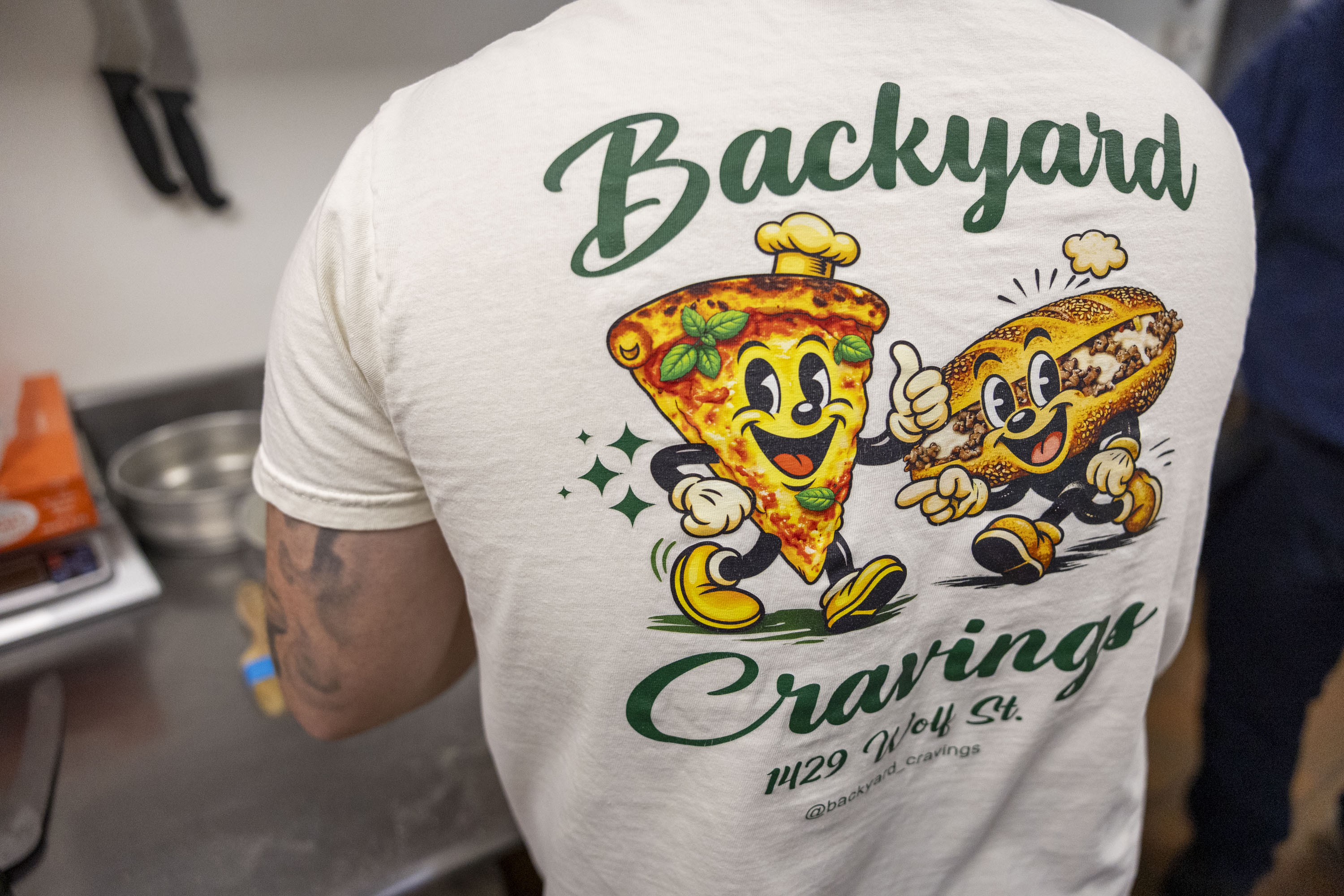
Backyard Cravings began as a pandemic pizza-making hobby on a South Philadelphia patio. It soon became a social media sensation, drawing customers, food influencers, and celebrities to a rowhouse on 13th Street.
Now, Sal Burgese is taking Backyard out of the backyard.
Burgese, 34, plans to open his brick-and-mortar storefront Saturday at 1429 Wolf St., trading the outdoor pizza oven, the kitchen oven that baked four rolls at a time, and the 2 a.m. bread-making sessions for commercial equipment capable of producing hundreds of cheesesteaks and pizzas a day in a storefront.
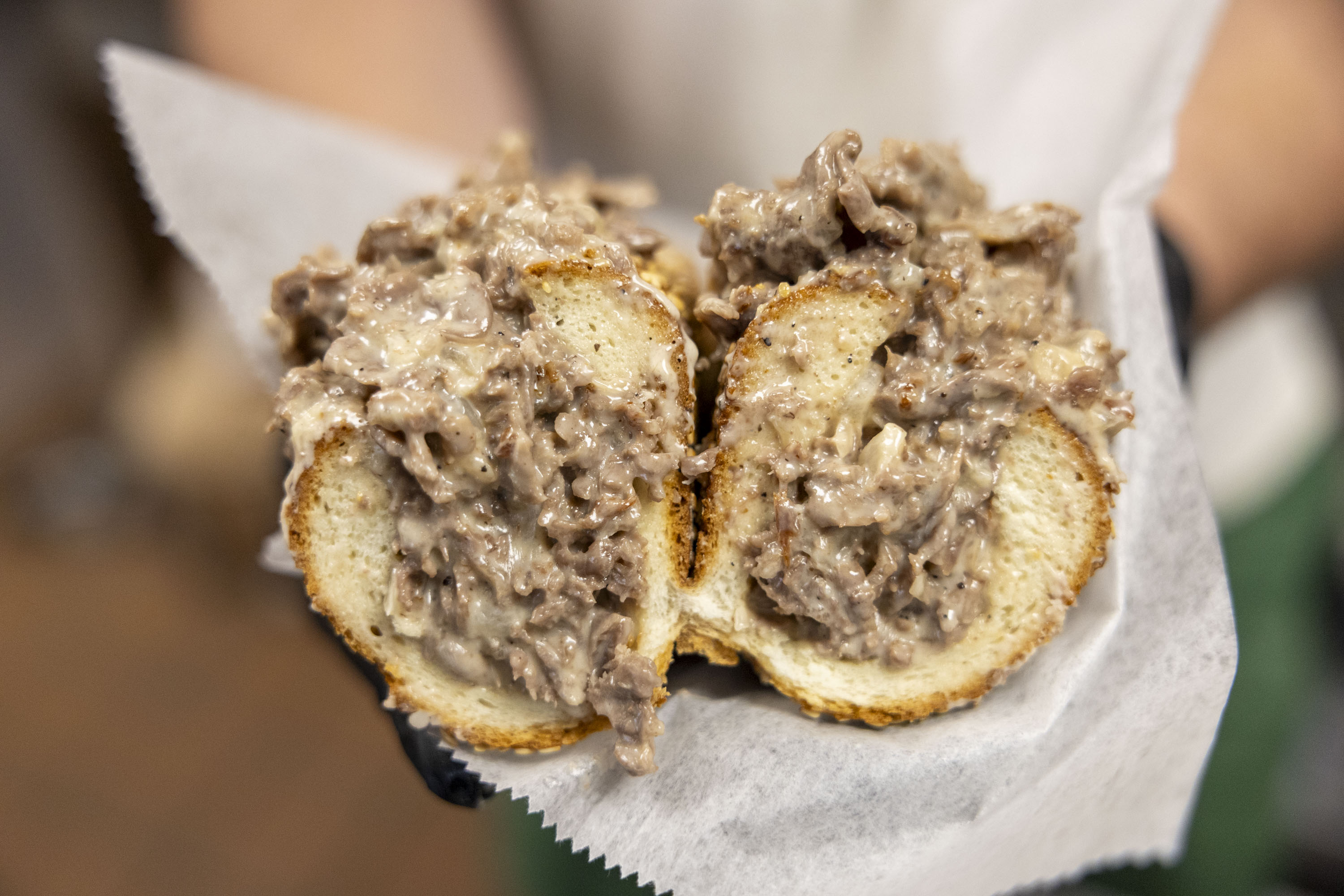
A cheesesteak with Cooper Sharp cheese on a seeded roll at Backyard Cravings.Tyger Williams / Staff Photographer
Thursdays and Fridays will be pizza days, Saturdays and Sundays for cheesesteaks — noon to 7 p.m., or until sold out — first come, first served, no call-ins, no online ordering, cash only, takeout only.
It’s a leap Burgese could hardly have imagined in 2020. Then a Philadelphia court officer with time on his hands during the pandemic, he joined countless homebound Americans who took up baking. He began experimenting with bread and pizza, teaching himself through books and YouTube videos.
He bought a small Gozney oven and began cranking out rolls and pizza in the apartment he shared with his wife, Gianna, at 10th and Moore Streets — “not to sell, just because I was so nervous about ordering out and touching things,” he said. When the couple moved to a house on 13th Street between Ritner and Porter, Burgese started making them in his backyard, just to give away.
Sal and Gianna Burgese in the kitchen of the new Backyard Cravings.Tyger Williams / Staff Photographer
“I was probably making 200 pizzas a week,” he said. “We were eating pizza seven days a week.”
One night, craving a cheesesteak, he used one of his homemade rolls to make a sandwich and found it “phenomenal.” He began giving rolls and sandwiches to neighbors. One posted about it on Facebook, and strangers and influencers started to ask to buy food.
At first, Burgese was baffled.
“I’m not selling food,” he recalled telling them.
Steak hits the flat-top at Backyard Cravings.Tyger Williams / Staff Photographer
Eventually, he reconsidered.
He came up with the name Backyard Cravings while sitting — where else? — in his backyard.
The backyard buzz
The unlikely setting became part of the attraction: a guy making pizzas and cheesesteaks on homemade rolls behind a Lower Moyamensing rowhouse.
And so it began online. He and customers posted photos and videos, influencers visited, followed by more curious customers. “I think people were attracted to the idea of this guy selling food out of his backyard,” Burgese said.
The business grew into a weekend operation that went well beyond a hobby.
Sal Burgese at Backyard Cravings.Tyger Williams / Staff Photographer
The Burgeses worked their regular jobs Monday through Friday — Gianna handles patient admissions at Penn Medicine — then devoted weekends to filling advance orders. Customers were assigned pickup times, allowing the couple to manage a growing business without turning their block into a waiting area.
Eventually, Burgese — still working full time —was producing 225 to 250 cheesesteaks a day, roughly 500 per weekend.
Making enough bread was an ordeal.
They needed about 100 rolls a day, but their electric oven held only four at a time. They rose at 2 or 3 a.m. to bake, using Gianna’s mother’s oven across the street when theirs couldn’t keep up. Baking finished around 1 p.m., just before pickups began between 2 and 7.
Sal Burgese plops a dough onto his work table at Backyard Cravings.Tyger Williams / Staff Photographer
Pizza production was equally improvised. Burgese bought a commercial double-deck Baker’s Pride oven, had an electrician neighbor wire it up, and installed it beneath a tent. They baked through rain and snow. (He plans to keep the oven for off-site catering jobs, though moving the monster requires three people and access to a 220-volt electrical connection.)
There was also a big risk to running an increasingly visible food business behind a residential rowhouse. Burgese said the neighbors were supportive. “I was just going with the flow,” he said. “All it takes is one person, and I knew eventually it was going to end.”
(Clockwise from top left) Sal Burgese of Backyard Cravings with former baseball player Edwin Jackson, Nick Castellanos, a former Phillies player, with Sal Burgese, Gianna and Sal Burgese at their home with former Phillies shortstop Jimmy Rollins and Sal Burgese in his kitchen with Phillies broadcaster Tom McCarthy.Courtesy of Sal Burgese
Meanwhile, the operation was attracting famous customers.
Former Phillies shortstop Jimmy Rollins came for a cheesesteak last year and became a friend, Burgese said. Ken Griffey Jr., Curtis Granderson, Shane Victorino, Phillies broadcaster Tom McCarthy, and singer Teddy Swims also visited.
Having Rollins in his living room was surreal. “I was like, ‘What the hell?’ That’s J-Roll. He was my childhood hero.”
Eventually, the backyard couldn’t accommodate the demand.
Out of the backyard
About a month ago, Burgese quit his city job after 10 years as a court officer to run Backyard Cravings full time. Gianna plans to keep hers.
The couple, who met at Neumann-Goretti High School, have been together 17 years and married last year. They’re expecting their first child next spring.
Seeded rolls at Backyard Cravings.Tyger Williams / Staff Photographer
Burgese’s rolls are heavily sesame-seeded and have a crisp, well-done exterior and soft middle. He scoops them and leaves the ends intact. They’re overfilled with beef seasoned with salt and pepper, onions, and Cooper Sharp cheese.
No Whiz, no provolone, no list of substitutions. A cheesesteak is $21, including tax.
He chops the meat finer than Angelo’s Pizzeria does, but not as finely as Jim’s on South Street. His Cooper Sharp-only policy dates to the backyard, where he did not have room for multiple cheeses. He likes its creaminess and sees no reason to expand the choices.
Steak and cheese are cooked on the flat-top grill at Backyard Cravings.Tyger Williams / Staff Photographer
The new kitchen also allows Burgese to increase pizza production, which took a back seat because cheesesteaks were easier to produce in quantity.
His 16-inch pies have a light, airy, crisp outer crust; the slices have very little flop. Burgese, a proponent of the cheese-on-the-bottom school of pizza making, is keeping the initial pizza menu short: plain, pepperoni, pizzazz (Cooper Sharp), vodka, and a pie with ricotta, pepperoni, and Mike’s Hot Honey. A plain pizza, including tax, is $22 and pepperoni is $25. Specials are $30.
Burgese hopes to make 150 to 200 pizzas a day and more cheesesteaks than he could manage at home, though he expects the first weeks to be a test.
Sal Burgese at Backyard Cravings is a proponent of the cheese-on-the-bottom school of pizza making.Tyger Williams / Staff PhotographerA finished plain pizza at Backyard Cravings.Tyger Williams / Staff Photographer
He’s still tinkering with recipes and agonizing over batches that fall short.
Sometimes he asks Gianna and his assistant and next-door neighbor, Pierce Domenick, to taste something, leaves the room, then returns for a verdict. When they say it’s good, he wants specifics.
Gianna said she recognized early that her husband’s experiments were unlikely to remain casual. “I know that once he puts his mind to something, he doesn’t stop until it’s perfect,” she said. “But it’ll never be perfect in his eyes.”
Sal and Gianna Burgese outside of Backyard Cravings with Pierce Domenick, their neighbor and cook.Tyger Williams / Staff Photographer
In what may be one of the greatest collegiate flexes of all time, Thomas Jefferson University senior Aidan Harbison is storing the 8-foot-long, 400-pound crossbow he built with friends this month in the industrial design department’s senior studio. (Oh you got an internship at Goldman Sachs? Well, Harbison has a gigantic crossbow).
“There’s not really any hiding it,” he said. “If we’re working in the studio and somebody walks by, they see it and stop and say, ‘This thing is insane!’”
It’s only been about a month since Harbison and his two classmates saw a flyer on campus for “Pumpkin RAMpage” — Jefferson’s first punkin chunkin design contest — and decided to compete for the orange guts and glory of it all.
“We were impressed that this was actually happening,” Harbison said. “Growing up, I used to make potato cannons, so this is a very parallel kind of thing, launching vegetables.”
Thomas Jefferson University student Lucas Fellin (standing) offers encouragement as teammates Adam Lewis (left) and Aidan Harbison prepare their crossbow-style launcher for testing.Tom Gralish / Staff Photographer
At Jefferson’s Alumni Field at its East Falls campus Saturday, Harbison and his Autumn Artillery teammates will pit their crossbow-style siege machine known as a ballista against launchers created by other student groups, like the Pumpkin Spice Girls, to see whose device can fling a five-pound pumpkin the furthest.
It’s either gourd big or gourd home in this contest.
Named in honor of the university’s mascot, Phil the Ram, the event is free and open to the public, said organizer Todd Kramer, associate dean of the College of Architecture, Design & Engineering (CADE).
“This, for me, feels a little like a whole Field of Dreams kind of moment, the only downside is there is nobody whispering in my ear: ‘Build it and they will come.’ I’m hoping they will come,” Kramer said. “The hope is to create a little block party atmosphere.”
Thomas Jefferson University students line up for a group photo before testing the launchers they built for the school’s first punkin chunkin contest, Pumpkin RAMpage, which will be held at Alumni Field Saturday.Tom Gralish / Staff Photographer
‘Proof of concept’
A dozen teams signed up to compete with only about a month to design and build their launchers, but only two of those teams showed up for an optional test run this week at Alumni Field. Kramer said he’s confident six or seven teams will be ready to compete by Saturday and a group of professors are considering entering a device of their own too.
On Wednesday, Harbison’s Autumn Artillery team, all of whom are seniors in Jefferson’s industrial design program, set up their crossbow-style launcher on a hill above Alumni Field. Next to them, another team of industrial design students — the Liability Launchers — set up their large catapult-style device called a walking arm trebuchet. The latter team built their launcher in just nine hours the day before, but they swore they spent a lot more time designing it.
Todd Kramer (right), associate dean of the College of Architecture, Design & Engineering at Thomas Jefferson University, photographs a team of students who call themselves the “Liability Launchers” as they prepare to test their catapult design for Saturday’s RAMpage punkin chunkin contest at Alumni Field in East Falls. From left are Peter Lewis, Logan Smith, and Chris Cavender.Tom Gralish / Staff Photographer
To save on cleanup, the teams practiced with large exercise balls filled with sand. The Liability Launchers went first and, after some initial hiccups, the team launched their ball an impressive 250 feet or so out onto the field.
“Yes! We did a thing!” Kramer said, when it worked.
Team Autumn Artillery faced a bit more difficulty. After propping up the top of their crossbow with a wooden pallet, they realized they needed to prop it up on the opposite end too. Someone found a random cinderblock with leaves stuck in it that did the trick.
Harbison had to wind up the crossbow, then use a razor on the end of a long stick to cut a tow cable to launch it. When he did so, the ball launched about 10 feet and then dropped like a dud. If there was an accompanying sound it would have been “ploop” or “wah-wah.”
Two older men who were watching from a nearby parking lot laughed.
“That was like my wedding,” one of them said.
Using a five-pound exercise ball as a stand-in for a pumpkin, Thomas Jefferson University students Adam Lewis (left) and Aidan Harbison (right) prepare their crossbow-style launcher for testing in preparation for Saturday’s RAMpage punkin chunkin contest.Tom Gralish / Staff Photographer
The trial run was “a bit of a disappointment” for Harbison, but he said he was grateful for the opportunity. Knowing what didn’t work will help the team implement some pumpkin patches on the device before Saturday.
“There will definitely be some improvements made,” he said. “I’m happy it kind of worked. It could have not worked at all.”
Punkin stems
Punkin chunkin contests stem back to 1986, when the World Championship Punkin Chunkin Contest began as a local battle for bragging rights in a cantaloupe field in Lewes, Del. Within a decade, the contest grew to include dozens of teams, 25,000 spectators, and early-morning tailgating. The event, which allowed engine-powered launchers, was covered by ESPN and Sports Illustrated.
The contest was held annually through 2011 and sporadically after that through 2016, when it was discontinued in Delaware due to a personal-injury lawsuit filed by a Science Channel producer who suffered critical injuries when a piece of an air cannon dislodged and hit her in the head as she was covering the event.
Not to worry, none of the launchers at Jefferson’s challenge are air-powered cannons, and students aren’t allowed to use gas or motors to power their devices. The footprint of their launchers may not exceed 5-by-8 feet and the throwing arm can’t exceed 20 feet in length.
Thomas Jefferson University students Lucas Fellin (left), Adam Lewis (center), and Aidan Harbison (right) prepare their pumpkin launcher for testing.Tom Gralish / Staff Photographer
Kramer said he was inspired to create the contest so Jefferson students can apply in the real world what they’ve learned in the classroom, though admittedly, “we don’t learn to make siege machines at school,” he said.
“I can’t guarantee every pumpkin will go 500 feet, but even if it goes five feet, they will learn from it,” Kramer said.
Jefferson’s contest was open only to students in its CADE program. Students picked their own teams and each team has between three and seven members, some of whom have different majors.
“It’s kind of the beauty of this. They’re not all straight architecture teams or engineering teams,” Kramer said. “We have one team that has three animators and an architect. It’s really lovely to see that cross-pollination.”
Each team will launch three pumpkins that are roughly five pounds each. The four teams who fling their pumpkins the farthest will then face off and launch two more pumpkins. The top two teams in that round will then compete in the finals. The winner is based strictly on farthest distance traveled by a pumpkin.
Thomas Jefferson University students Lucas Fellin (from left), Aidan Harbison, and Adam Lewis prepare their crossbow pumpkin launcher for testing on Alumni Field for Saturday’s RAMpage punkin chunkin contest. Looking on is Jefferson resource manager Frank Porras (right) and members of a competing team, Chris Cavender (front) Peter Lewis, and Logan Smith behind him.Tom Gralish / Staff Photographer
The champions will receive bragging rights, $500, and a trophy of a raging pumpkin with ram horns that was created using a 3D printer at the school.
Participation is extracurricular. No credits are given to contestants, who had to carve out time in their own schedules to create their launchers.
“It’s really about building the community and the culture of our college,” Kramer said. “I hope this will become a signature event for our university.”
RAMpage will take place rain or shine at 11:30 a.m. Saturday at Alumni Field, 4201 Henry Ave., Philadelphia, Pa. 19144.
Joan Dillon opened a childcare center in June of last year for 46 infants and toddlers in Gloucester County, where options for working-class and middle-class families are scarce. But within a month, the center was in trouble.
New Jersey froze additional funding for its Child Care Assistance Program in July 2025, stranding most families who expected to receive financial help to pay most of the cost. Former DemocraticGov. Phil Murphy reversed the decision eight months later, but it was too late for many of these parents, Dillon said.
“One-third of the mothers of those families left the workforce. Some families moved out of the area to live with relatives who could help them. Others pieced together inadequate care,” Dillon told 20 members of the Assembly during an often emotional hearing at the Statehouse in Trenton on what many called the “childcare crisis” in New Jersey.
Dillon was among the dozens of speakers Thursday who explained how “the math does not work” when it comes tothe cost of childcare. The monthly rates range from $1,600 to $2,200 a month for infant care and $1,400 to $1,900 monthly for toddler care, according to state market data.
Childcare centers also struggle because even for those families who qualify for help through the state’s assistance program, the subsidy covers only one-third to one-half of the cost of rent, utilities, and trained educators, providers said.
“We invest in public dollars inpre-K through 12th grade because education benefits our entire society. But somehow, when children are at their most critical stage of brain development, we treat their early education as a private family obligation,” Dillon said. “We are asking New Jersey to recognize that education does not begin at age 3.”
A campaignled by childcare providers and nonprofits called Strong Start New Jersey offered one solution to begin to address the problem: Commit $35 million a year in the next three state budgets to expand the subsidy program to families with slightly higher incomes. This would allow 3,000 more families a year to qualify for help, said Sharon Levine, the Start Strong New Jersey director.
The $870 million program served about 70,000 working-poor families across the state last year.
“Unfortunately, this means many working families with young children are stuck in an affordability gap — their income is too high to qualify and too low to afford childcare without assistance,” Levine said.
Shelby Willmot of Hamilton said she fell into that gap. A promotion edged her just out of range for subsidized childcare.
She has sinceput pursuing a bachelor’s degree on hold and every month decides which bill she can pay late because she needs childcare for her son.
“I want to keep working. I want to finish my degree and provide a stable home life for my son,” Willmot said. “I’m asking for a system that gives us a chance to do that.”
Assembly member Brian Bergen (R., Morris), a member of the Assembly Commerce and Economic Development Committee, said he would support adding $35 million to expand the subsidy program.
“That doesn’t sound like a lot of money,” Bergen said. “What we heard today is an easy, solvable solution if we just cut the junk out of the budget.”
Assembly member William Spearman (D., Camden), who chairs the commerce committee, said one solution may be to adjust the program’s income limits to reflect what families take home after taxes.
Advocates said other solutions must help small and family-run businesses, which have been hit hard by the state’s push to expand free prekindergarten programs — a great initiative that has hurt childcare centers.
Kayanna Jackson, owner of Angel Touch Nature Preschool in Southampton, Burlington County, said she has allowed parents to skip or delay payments because she understands they are struggling to hold onto their jobs.
“As an educator and taxpayer, I contribute to our tax system, and I believe our tax dollars should be invested in meaningful change that strengthens our communities and builds an economy for our future generation,“ Jackson said in a rally on the Statehouse steps before the hearing.
“Our children deserve a system that will protect them and invest in them so that they can give back to the system and their communities.”
A Rutgers-Eagleton poll released this month found 73% of state residents said it is “very” or “somewhat” difficult to afford childcare expenses — more than for housing, utilities, and other spending categories.
An earlier version misstated the percentage of New Jersey residents who struggled to afford childcare expenses. It is 73%.
Developer Brian O’Neill, who is trying to build a data center campus in Upper Merion Township and another facility on the outskirts of Conshohocken, has set his sights on another nearby property.
Last month, O’Neill submitted a conditional use application to West Conshohocken Borough for a proposed three-story data center on a vacant property. Data centers handle the cloud-storage and computing needs of increasingly sophisticated AI tools.
The 60-acre West Conshohocken site is on Front Street, according to Montgomery County property data, and borders Upper Merion Township and I-476. O’Neill owns the land, which previously operated as a quarry, a cement plant, and a Montgomery County solid-waste disposal site, the application says.
“This is at the early stages of the borough’s land development and conditional use review process,” West Conshohocken Borough Manager Doug Borgerson said, adding that public meetings or hearings on the application will be publicly advertised as legally required.
One of the Upper Merion Township properties where Brian O’Neill wants to build an AI data center.
O’Neill’s withdrawal of specific zoning appeals — which led to the cancellation of a public zoning hearing board meeting that had been scheduled for this week — does not equate to a withdrawal of the broader legal appeals of the supervisors’ rejection, said Marc Kaplin, an attorney for O’Neill.
“The appeals of the rejection are ongoing,” Kaplin said.
Across the Schuylkill River, O’Neill and his team are making their case for another 2 million-square-foot data center before the Plymouth Township Zoning Hearing Board. That proposed facility would be on the site of the closed Cleveland-Cliffs steel mill on Conshohocken Road.
The latest special meeting of the Plymouth Township Zoning Hearing Board was held last week. The quasi-judicial proceeding was the second procedural meeting about the plans and included testimony from O’Neill and his attorney Edmund J. Campbell. It did not include public comment. Township officials have said public comment will occur after all the evidence is presented.
At last week’s meeting, Montgomery County was granted party status as the owner of Ivy Rock Quarry across the street from the proposed data center. That means county officials can now present evidence, call their own witnesses, and cross-examine other witnesses.
The closed Cleveland-Cliffs steel mill, where Brian O’Neill wants to build a 2 million-square-foot AI data center.Monica Herndon / Staff Photographer
The data center is expected to be the subject of several Plymouth Township Zoning Hearing Board meetings, with the next one scheduled for November.
O’Neill is requesting a special exception to Plymouth Township’s zoning ordinance to allow for a data center in the municipality’s heavy industrial zone, which permits warehouses and laboratories. O’Neill has argued that data centers should be included among those uses.
In West Conshohocken, data centers are permitted in the borough’s heavy industrial zone under certain conditions, according to a data center ordinance that officials passed earlier this year. O’Neill’s Front Street property is in the heavy industrial zone.
However, according to the borough’s data center ordinance, a data center developer must show that their facility will meet specific parameters related to light and noise pollution, landscaping, power generation, and other factors.
O’Neill has said his data centers would emit little light and noise, operate on a closed-loop system that requires no outside water, provide their own power, and be an economic engine for Montgomery County. He released an economic impact study saying the Upper Merion project alone would result in more than 10,000 jobs during construction, more than 700 permanent jobs, and more than $55 million a year in local tax revenue.
In Upper Merion and Plymouth Townships, many neighbors near the longtime developer’s proposed data centers have rallied against the plans, expressing concerns about pollution, light, noise, electricity prices, property values, and quality of life.