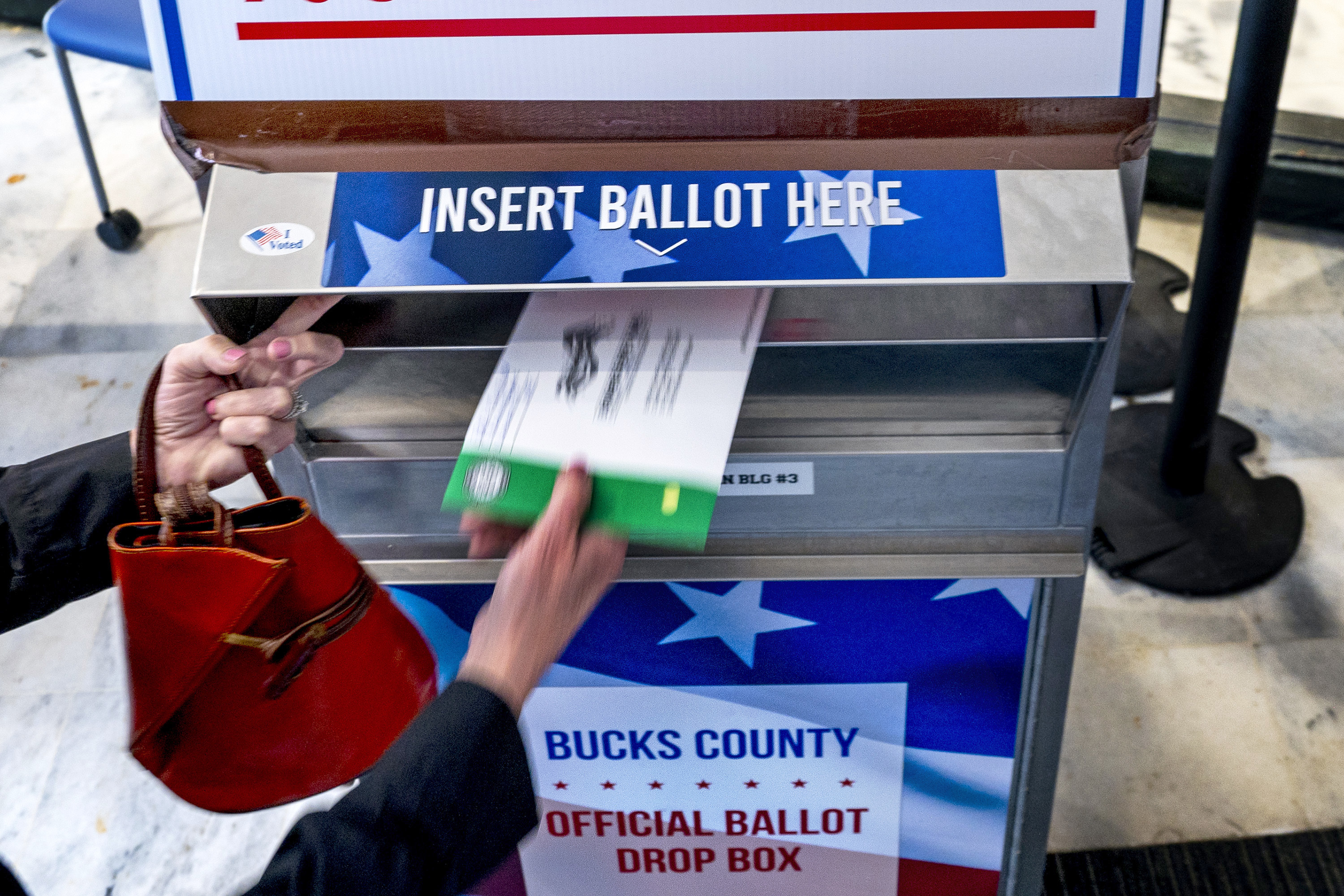
As President Donald Trump’s approval ratings have sunk, his corruption and policy disasters have proliferated, and his party has deployed a particularly subpar crop of candidates, the midterm campaign has been accompanied by increasingly confident predictions of a Democratic takeover of Congress. At the same time, Trump and his allies have been more inventive than ever in their schemes to skew, suppress, and subvert a well-earned rebuke from the electorate.
But neither the polling nor the plotting should affect the calculus for voters who prize their right to vote. We’ve seen more than enough flawed public opinion assessments over the past decade to know we shouldn’t count on them. And we’ve seen more than enough of Trump’s failed efforts to undermine and ignore elections to know we can defeat them.
Casting your ballot is the most important answer to those who would deny your power to do so.
Polling has only seemed to grow in prominence even as the decline of the landline and rise of institutional distrust have made it more difficult. Polling aggregators and betting markets have made political prognostication an even bigger business, as have the high stakes of elections that put the rule of law and democracy itself on the line.
This year’s polls certainly are auspicious for the opposition. Midterm elections tend to function as referendums on the incumbent party and president, and voters remain nearly as disgruntled as ever with Trump. Democrats are heavily favored to win a majority in the House despite extraordinary gerrymandering, and they’re narrowly ahead in the Senate despite a map forcing them to compete in red states such as Texas, Kansas, and Alaska.
That said, polls over the past decade have famously underestimated support for Trump as well as, somewhat less famously, his opponents. The public opinion trade has also been shaken by isolated but troubling recent revelations of fake polling. And, of course, even the best polls have margins of error that indicate high uncertainty about races that will be decided by a few percentage points or less. This year’s closely contested House races in Bucks County and Central and Northeastern Pennsylvania all fit that description, and fundamentally unpredictable margins in several states could make the difference in the Senate.
President Donald Trump arrives at a campaign rally ahead of the midterm elections in Wasilla, Alaska, on Oct. 13.DOUG MILLS
Meanwhile, rather than address the policies that put his congressional majorities in jeopardy, chief among them his inflationary trade and actual warfare, the president has looked to cheat his way out of the widely expected midterm shellacking.
His allies’ unprecedented gerrymandering of Texas and other states, partly offset by Democratic retaliation, didn’t appear to yield enough gains to withstand a blue wave. So Trump tried to use his power over the U.S. Postal Service to interfere with voting by mail, only to be (narrowly and provisionally) blocked by the U.S. Supreme Court. His latest gambit is to use trumped-up charges of noncitizen voting to arrest and intimidate those who might cast ballots for Democrats.
The frustration of these desperate measures isn’t likely to prevent Trump and Co. from further attacks on the voting process and results. Administration officials have alluded to the possibility of misusing federal personnel to intimidate voters on Election Day and retain power afterward. They have already threatened to prosecute Alaska’s Democratic Senate candidate, Mary Peltola, and opened a dubious investigation of Rep. Ilhan Omar (D., Minn.), pointing toward a reprise of the postelection assaults on democracy that Trump undertook after his 2020 loss.
Fortunately, voters here and abroad have successfully resisted authoritarian tactics and elected pro-democracy leaders. As recent elections in Brazil and Serbia demonstrated, the more decisively the will of the people is expressed, the more difficult it is to thwart.
On Tuesday, let’s vote as if it’s the last time to ensure it won’t be.
When things go well for a long while, a stretch of two ties and two losses in four games late in a season can become a worry.
But there aren’t any alarm bells sounding about the Union right now, either within the team or within the fan base. Nor should there be.
For one thing, everyone knew the schedule was going to kick up in difficulty in the second half of October, and it did. For another, the injury bug bit Milan Iloski and Cavan Sullivan at the same time Bruno Damiani and Danley Jean Jacques served suspensions for yellow card accumulation.
Now here they are in sixth place in the Eastern Conference, right about where most people thought they’d land once things started going well. And for as much as the scoreboard renders the final verdict, interim manager Ryan Richter wasn’t entirely wrong to say his team played the better soccer in Saturday’s 1-0 loss at FC Cincinnati.
“It’s tough to walk away from this game with nothing, but I think we played a good game,” he said afterward. “At the end of the day, if we continue to play good games, then we’ll continue to be successful. We’re in a tough stretch right now, and it was a tough week, and at least from what I saw, we put a lot of energy into this game, and I thought we were the better team.”
He then added: “What we have to do is find a way to turn these games like this, when you outplay a team on the road — we have to turn those into wins.”
It was stating the obvious, but this was a game where stating the obvious was enough.
Are there things to clean up? Sure. Agustín Anello had another good chance that he didn’t finish, and Ezekiel Alladoh had another game without a chance in the first place. That will raise more calls for Malik Jakupović to go back above him on the depth chart.
It also bears noting that Quinn Sullivan has now gone seven games without a goal or an assist, with starts in four of those contests. Ending that drought would be a big help heading into the playoffs.
Quinn Sullivan (left) battles with Cincinnati’s Kévin Denkey during Saturday’s game.Philadelphia Union
“If you get 15 shots in a road game, that’s creating a number of chances. … I think we just didn’t take any,” Richter said.
Those included Damiani crashing a header off the crossbar; Anello turning a shot from a good position right at Cincinnati goalkeeper Roman Celentano; and Nathan Harriel’s close-range header in the 21st minute that forced a great close-range save from Celentano.
The biggest lesson of the day might have come at the other end of the field. In the buildup to Cincinnati’s goal, their star playmaker Evander drove right at four Union players and no one really stepped in to stop him.
Of course there was the risk of conceding a penalty kick if they did, but still, a team that prides itself on defending will notice when there wasn’t enough of it. Those players will also know that the next time an attacking midfielder that good gets in that kind of a position against them, it might be Lionel Messi in a Union-Miami playoff series.
“With a player like Evander, and a number of teams have a quality attacking player like this, they have to make sure that they close down when he gets anywhere around the goal,” Richter said.
Overall, the best prescription right now might be a few days of rest before getting back to practice, and getting Iloski back on the field on schedule.
Follow that with a win in Saturday’s regular-season finale against Toronto FC (4 p.m., Apple TV), and whatever nerves are out there should be mostly settled. Toronto won’t have anything to play for, having been eliminated from the playoffs in a 3-1 loss at Atlanta on Sunday night.
The Union, meanwhile, will seal sixth with a win, and will stay out of the wild-card game with a tie. But a win should be the expectation, as it already is within the team.
Then it will be on to the playoffs, and we’ll see what happens.
“We don’t have concern,” Richter said. “We need to get the guys fit, and get the guys back in, and with our strongest team hopefully leading into the Toronto game next week.”
window.addEventListener(“message”,function(a){if(void 0!==a.data[“datawrapper-height”]){var e=document.querySelectorAll(“iframe”);for(var t in a.data[“datawrapper-height”])for(var r,i=0;r=e[i];i++)if(r.contentWindow===a.source){var d=a.data[“datawrapper-height”][t]+”px”;r.style.height=d}}});
I have a confession to make: I don’t like voting by mail, and I avoid doing it if I can. This has nothing to do with the false allegations of voter fraud and election integrity pushed by the likes of President Donald Trump. I’ve consistently defended the legitimacy of mailed votes and have personally counted thousands of them. I have always just loved to vote in person.
There is something about the communal experience of going to the same place on the same day with your nearest neighbors, interacting with your local election board, and getting a sticker (that in my case is almost immediately handed off to whichever of my children has tagged along).
Filling out a ballot at the kitchen table simply can’t replace that. I even miss telling the canvassers outside that I don’t need their help.
Millions of voters, however, clearly disagree — including Trump, who has voted by mail in Florida even as he attacked the process across the country.
In fact, around one in three Americans vote by mail, across political parties. The reasons why vary, including that not every voter has the same five-minute stroll to the polls that many Philadelphians enjoy. In fact, Americans have been voting by post for more than 200 years. This history shows voting by mail can cultivate democracy — if there are clear rules.
Fittingly, exceptions were first made for those serving their country, and Pennsylvania pioneered the concept.
The Military Absentee Act of 1813 was created to ensure Keystone State service members who were stationed away from home during the War of 1812 could participate in elections. By the time of the Civil War, other states had followed suit. Military votes from so-called absentee ballots helped Abraham Lincoln prevail over George McClellan in the election of 1864, saving the cause they were fighting for.
Over time, election officials began to realize that mail voting could be more than just a wartime indulgence. With the rise of the automobile, voters began traveling farther away to vote on Election Day. Because access to polling places is correlated with the likelihood of turning out, voting by mail was increasingly a necessary solution.
Municipalities and states gradually began mailing ballots to all eligible voters. Western states, which tend to be less densely populated, led in this effort. In 2000, Oregon became the first state to conduct a presidential election by mail. Turnout was 79%.
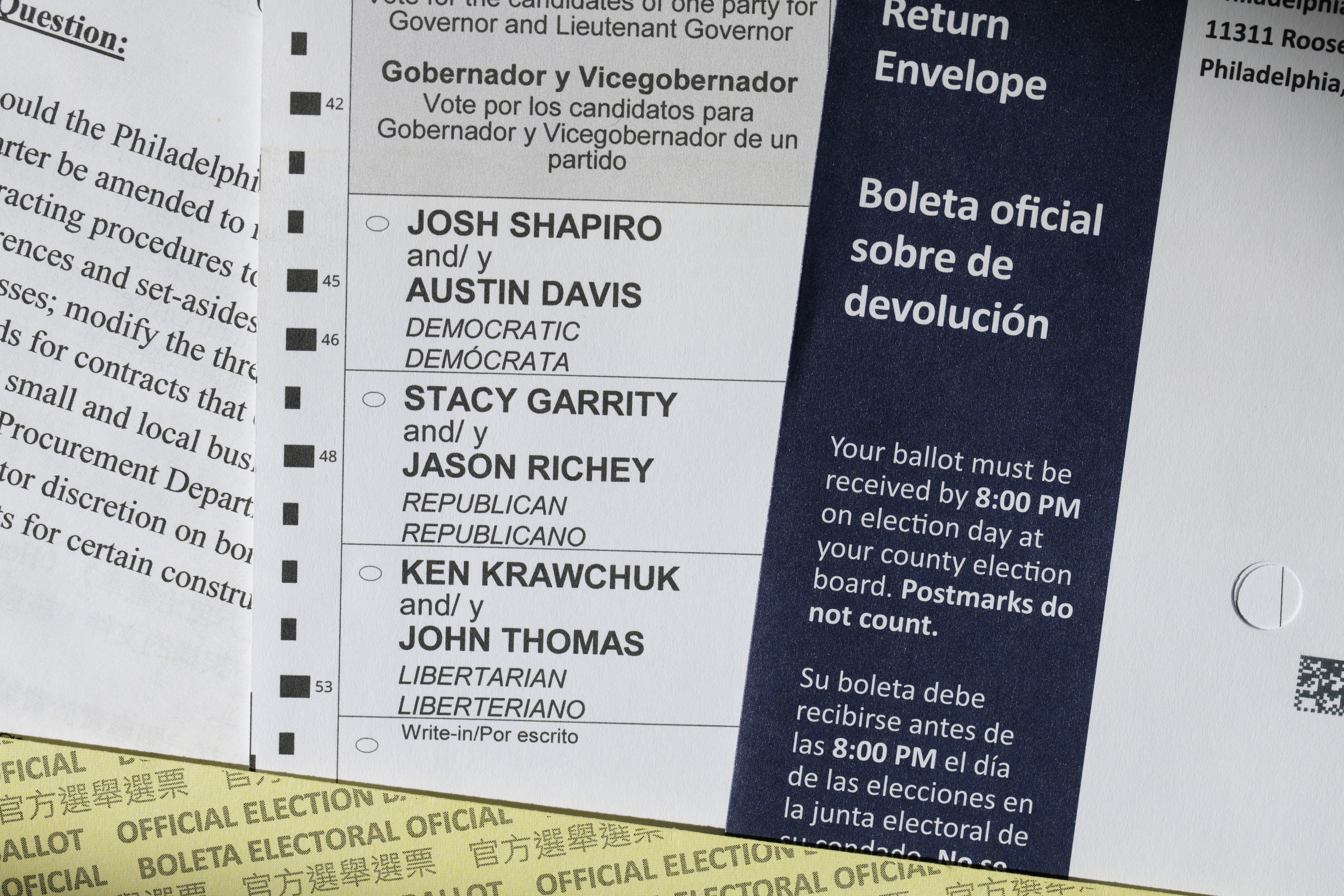
Gubernatorial candidates Josh Shapiro, Stacy Garrity, and Ken Krawchuk are listed on an official mail ballot for Philadelphia.Monica Herndon / Staff Photographer
While Oregon has a well-earned reputation for progressive politics, mail voting didn’t start in Portland or Eugene. It began in 1981 in rural Linn County, where life is built around agriculture, lumber, mining, and manufacturing. Del Riley, then serving as county clerk, decided to look into voting by mail for local elections. Riley found a partner in Norma Paulus, the state’s Republican secretary of state.
In conversation with Phil Keisling, who oversaw Oregon’s shift to mail voting as secretary of state during the 1990s, he told me that partisan and ideological considerations have always played a part in opposition to voting by mail.
In 1995, it was a fellow Democrat, then-Gov. John Kitzhaber, who vetoed the initial efforts to allow mail voting in all elections. Apparently, there were concerns that higher turnout could derail efforts to fund public schools.
The partisan alignment on mail voting would soon change. After Republican U.S. Sen. Bob Packwood resigned, the Beaver State used mail voting to select his replacement. Because the contest was neither a primary nor a general election, it was able to evade the state’s restrictions. When Democrat Ron Wyden, who still represents Oregon in the Senate, won the 1996 special election, some Republicans changed their minds.
A 1997 effort to broaden mail voting was blocked by some of the same legislators who’d proposed it two years earlier.
Despite this, Oregon’s voters, with Keisling’s encouragement, overwhelmingly approved a 1998 ballot referendum that allowed for mail voting in all elections.
Pennsylvania was slower to embrace a more widespread version of the practice. When I first began working at the Philadelphia City Commissioners Office back in 2014, we still required most voters to supply a reason for not voting in person. In some cases, I believe our restrictions were too harsh. Philadelphia firefighters may be stationed far from home during Election Day, but because home was still within the city limits, many found themselves unable to vote.
Some of the restrictions, however, made sense.
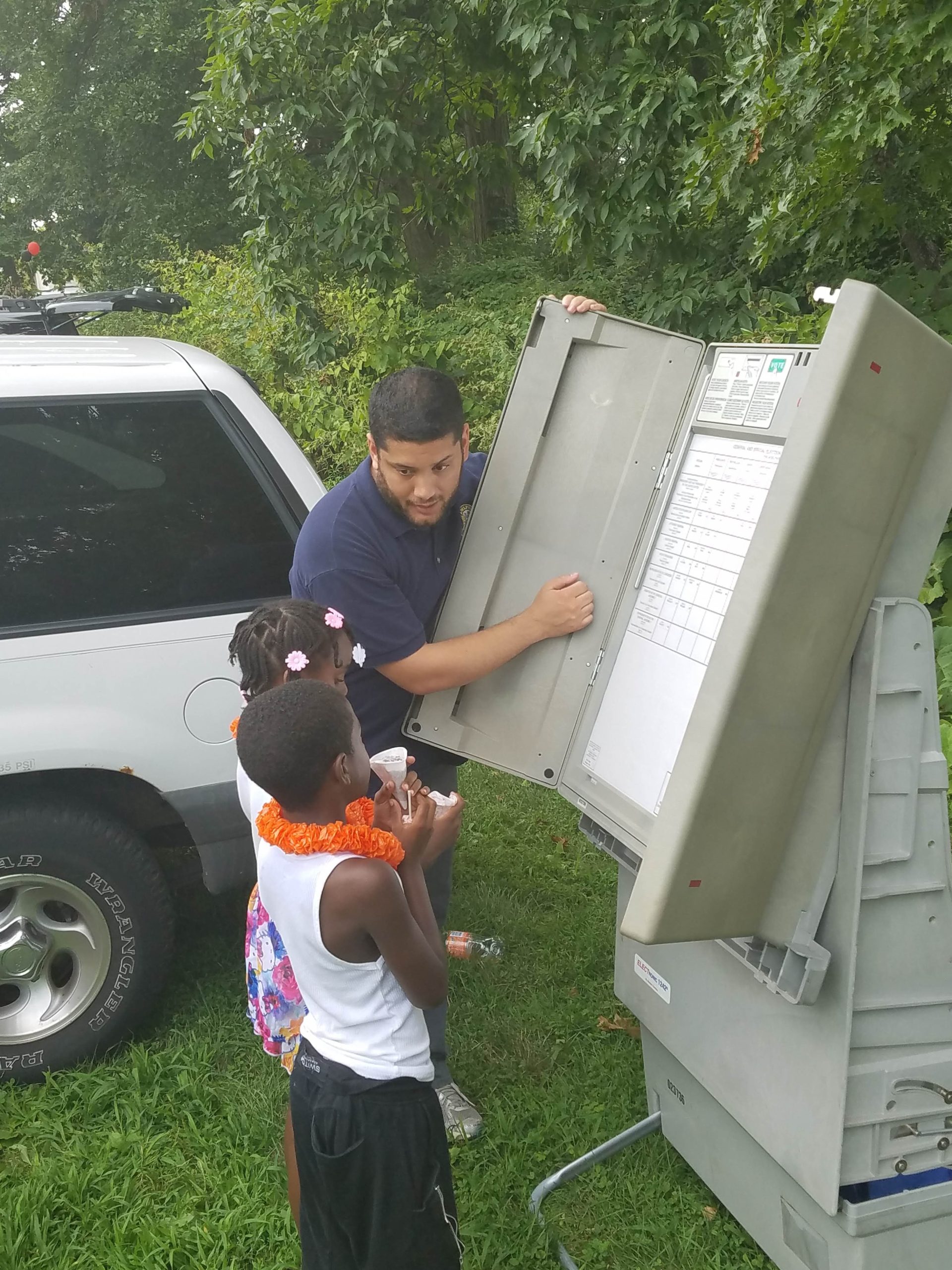
The Inquirer’s Daniel Pearson, then an employee of the City Commissioners Office, explains how a voting machine works as part of an information event at Fisher Park in 2016.Courtesy of Daniel Pearson
Voters cannot drop off a ballot for anyone else — including friends, spouses, family members, or neighbors — without special authorization. This was done to assuage fears of a practice known as ballot harvesting.
Unfortunately, we do have some local history with this phenomenon. In 1994, federal judge Clarence Charles Newcomer overturned the results of a 1993 special election for the Pennsylvania Senate. William Stinson, the Democratic nominee, had won by 461 votes out of 40,575 cast. On the actual voting machines, however, Stinson had lost by 564 votes. Absentee ballots had swung the race. Bruce Marks, the Republican candidate, sued and won.
There are legitimate reasons why results for absentees may differ significantly from day-of results. In this race, however, the disparity was the result of illegal tactics. Eighteen voters told the courts they had been misled by the Stinson campaign. In some cases, ballots were submitted by voters who were not eligible to vote by mail. Others alleged they were promised favors in exchange for their vote.
But research indicates that events like the Stinson/Marks race are the exception.
A 2025 analysis from the Brookings Institution found that documented cases of mail voting fraud are very rare, accounting for only 0.000043% of total mail ballots cast. That’s about four cases out of every 10 million mail votes cast.
There used to be a strong bipartisan consensus about expanding access to mail voting in Pennsylvania. In 2019, the General Assembly passed Act 77, which allowed all Pennsylvania voters the right to vote by mail for any reason. While it passed in a bipartisan fashion, the proposal actually had more support from Republicans than it did from Democrats.
The change came just in time, as the COVID-19 pandemic made voting in person in 2020 a risky proposition.
Around half of Philadelphia’s voters chose a mail ballot during that year’s general election. For election administrators, this was an unprecedented challenge. It meant buying new equipment, hiring additional staff, and consulting experts from states with more experience with mail voting.
Pandemic safety concerns also generated an election integrity controversy. To reduce potential virus transmission, the Philadelphia City Commissioners — the three-member bipartisan board tasked with running elections — established a partition between election workers and election observers, a group that includes partisan activists, lawyers, and journalists.
Republicans sued, unsuccessfully, to get closer to the counting process. Trump himself alleged that observers were “not let into the room.” This, of course, was not accurate. Observers were close enough to have a conversation with workers, and I can attest that those of us who worked inside the Pennsylvania Convention Center that year were fastidious in how we handled and tallied ballots.
Oregon’s Keisling maintains that mail ballots help foster democracy, rather than representing a threat to it. He said making it easier to vote can help increase turnout by 5%, which in Pennsylvania would mean another 400,000 votes.
As for which candidates or political movements would benefit, Keisling was blunt: “Who cares?” In a democracy, we should all want as many people as possible to vote, even if it doesn’t always align with our side.
This Election Day, I’ll once again make the trek to the polls. But as much as mail voting may not be my personal preference, thanks to the professionals and dedicated volunteers in charge of elections, it is a safe, secure, and convenient way to vote.
With just days left until the midterm election, Stacy Garrity, the Republican running an uphill campaign to challenge Pennsylvania Gov. Josh Shapiro, received a last-minute influx of millions in much-needed campaign cash from an unlikely source.
Garrity, the state treasurer who received an unprecedentedly early showing of support from the state party and was endorsed in January by President Donald Trump, still has yet to receive financial support from the top GOP groups candidates often rely on to help them reach voters. She told The Inquirer last month that she was optimistic that the “cavalry will be coming” to back her campaign, including hope that Trump would visit the state ahead of Election Day — something he was not scheduled to do in the dwindling days ahead of Nov. 3 as he focused on elections in other states with the U.S. Senate on the line.
Trump instead held an unscheduled telephone town hall Saturday on behalf of Garrity and several congressional Republicans.
The Republican National Committee, the Republican Governors Association, Pennsylvania Republican Party, and other top GOP groups have not contributed directly to Garrity’s campaign, according to campaign finance reports filed through Thursday — although the RNC and state GOP say they are supporting Garrity in other ways.
Instead, that so-called cavalry appears to be from skill games industry distributors and manufacturers: Skill games industry backers, including the Pennsylvania Amusement and Music Machine Association, have contributed at least $5.5 million in total to Garrity’s campaign since Oct. 13,according to state campaign finance filings.
But will the eleventh-hour cash infusion — now allowing her to run more than $6 million in ads on TV and streaming services — be enough to boost her name recognition ahead of Election Day?
Skill games, which are slot-machine look-alikes that the state Supreme Court ruled earlier this year are the same as other gambling machines, were required to be removed from the market in October. The unregulated and untaxed industry is made up of the software producers, manufacturers, distributors, and retailers, and has become a lifeline for small businesses with low profit margins, such as gas stations, bars, and fraternal organizations.
Ever since she voiced support for the industry’s favored monthly $500 fee-per-machine plan during the Oct. 7 debate, calling the businesses which the industry supports the “backbone of Pennsylvania,” Garrity has received individual contributions from related industry groups — as well as skill games vendors, whose companies have checkered legal pasts, such as $2 million from John Conley, of Pittsburgh, and $100,000 from Arthur Deibler, of Schuylkill County.
Decommissioned skill games are stored outside the Automatic Coin Vending warehouse in Chester on Oct. 23. Nearly all of the older model skill games at the warehouse are currently being disassembled and collected for parts, including the printing paper and motherboards. The rest of the debris is thrown away.Aidan T. Gallo / Staff Photographer
Garrity is “encouraged by the groundswell of support she has received since her debate victory over Josh Shapiro earlier this month,” her campaign spokesperson Matt Beynon said in a statement. He also cited Shapiro’s relationship with Michael Rubin, a past campaign contributor and longtime friend of Shapiro who runs the sports empire Fanatics with stakes in Pennsylvania’s gambling industry. (Neither Rubin nor Fanatics has contributed to Shapiro’s gubernatorial campaign this cycle.)
Beynon declined to answer questions about the skill games industry’s late involvement in the race, but said Garrity’s position has remained the same since the state Supreme Court ruled the machines as illegal in the summer.
“She believes that small businesses, VFWs, American Legions, and fire halls need to be front and center in the debate over skill games regulation, not billionaire casino owners,” Beynon added.
“Stacy Garrity is raking in millions in contributions from special interest groups to try and save her disastrous campaign as she and her Senate Republican allies block progress for Pennsylvania,” said Manuel Bonder, a spokesperson for Shapiro’s campaign.
Fundraising woes and still no backing from top GOP groups
Garrity has struggled to fundraise throughout her 16-month campaign, despite her early backing by the state party in September 2025. The party cleared the primary field for Garrity, in an effort to more seriously challenge Shapiro after he pummeled his 2022 far-right opponent that top Republicans blamed for dragging down the rest of the ticket.
But once she announced her candidacy, she failed to generate the tens of millions of dollars needed to win the Pennsylvania governor’s race — especially against a formidable fundraiser like Shapiro, who has raised more than $60 million since the start of his campaign.
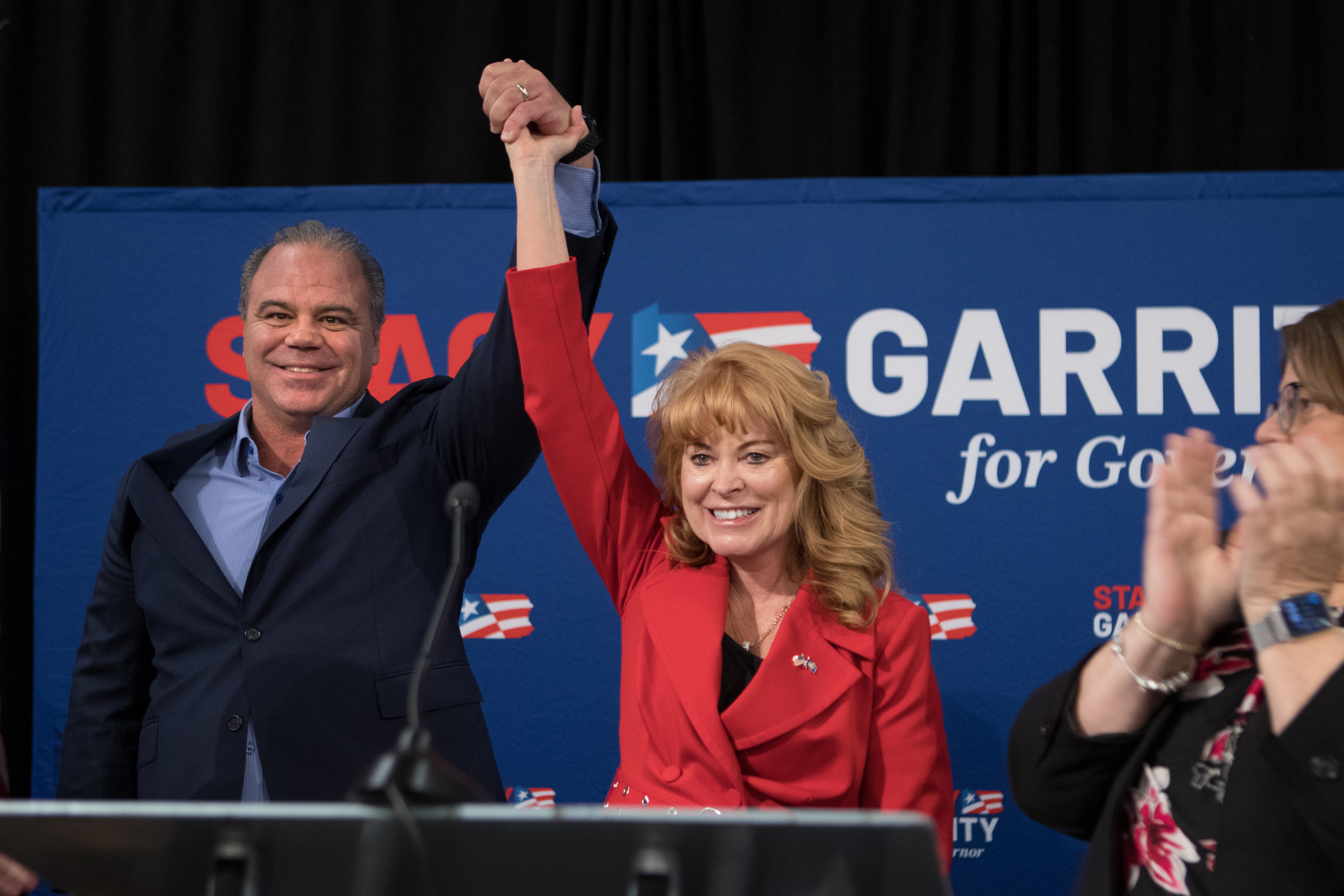
Treasurer Stacy Garrity and Jason Richey hold up their arms in Harrisburg on Feb. 7. The state Republican Party endorsed the two in their quest for the governor’s mansion.Kalim A. Bhatti / For The Inquirer
Garrity told The Inquirer in September that part of her struggle was that industry leaders that usually support GOP candidates had told her they could not support her challenge against Shapiro because they feared retribution from him if he’s reelected.
Statewide candidates like Garrity are expected to fundraise on their own, and contribute to the state party to help downballot races, as Shapiro has done by contributing more than $10 million to the Pennsylvania Democratic Party and the campaign arms for state House and Senate races.
But as Republicans hoped to more seriously challenge Shapiro at the top of the ticket and generate enthusiasm for downballot races, Garrity’s fundraising fell short and in the face of strong headwinds national GOP support for her was nonexistent to prop her up — until the last two weeks of the election, when skill game backers got involved.
Political action committees backed by Pennsylvania’s richest man, Jeffrey Yass, have also not contributed to her campaign, instead opting for state legislative races as Republicans focus on retaining control of the state Senate.
The state GOP said it has supported Garrity in a number of ways, including hosting hundreds of volunteer trainings, and spending millions on staff and direct mailers.Garrity reported $446,000 in in-kind contributions to her campaign on Thursday from the state GOP for mail and postage.
“Now, in the closing days of this election we are disbursing even more resources to get out the vote to help the campaign, reaching out to millions of voters across the commonwealth,” said James Markley, a spokesperson for the state Republican Party, in a statement.
“The Republican Party of Pennsylvania has been committed from day one,” Markley added. “We are proud to stand with Stacy Garrity and we are leaving it all on the field for her.”
The Republican National Committee, for its part, said in a statement it has “boots on the ground in Pennsylvania” door knocking for GOP candidates, including Garrity. The RNC traditionally does not give directly to candidates, but sends money to state parties and campaign arms to support their election efforts.
Gubernatorial Candidates Josh Shapiro, Stacy Garrity, and Ken Krawchuk are listed on an official mail-in ballot for Philadelphia County photographed on Oct. 6 in Philadelphia.Monica Herndon / Staff Photographer
The Republican Governors Association did not respond to requests for comment.
George Bochetto, a well-known Philadelphia attorney and GOP booster, hosted a fundraiser for Garrity last month. He’s not convinced by the polls that show Shapiro with a more than 20-point lead over Garrity, noting that she received the most votes of any state-level candidate in Pennsylvania history during the 2024 election.
“They’re off, and it’s belied by the vote total that she just received [in 2024],” Bochetto said, who contributed $10,000 to her campaign last week. “She just received the best poll you can ever get: the actual vote counts.”
Many a momentous journey has begun at Independence Hall — the founding of a republic free from British rule, the finalizing of documents that would govern our nation for centuries, and the longest ever distance traveled in toy cars.
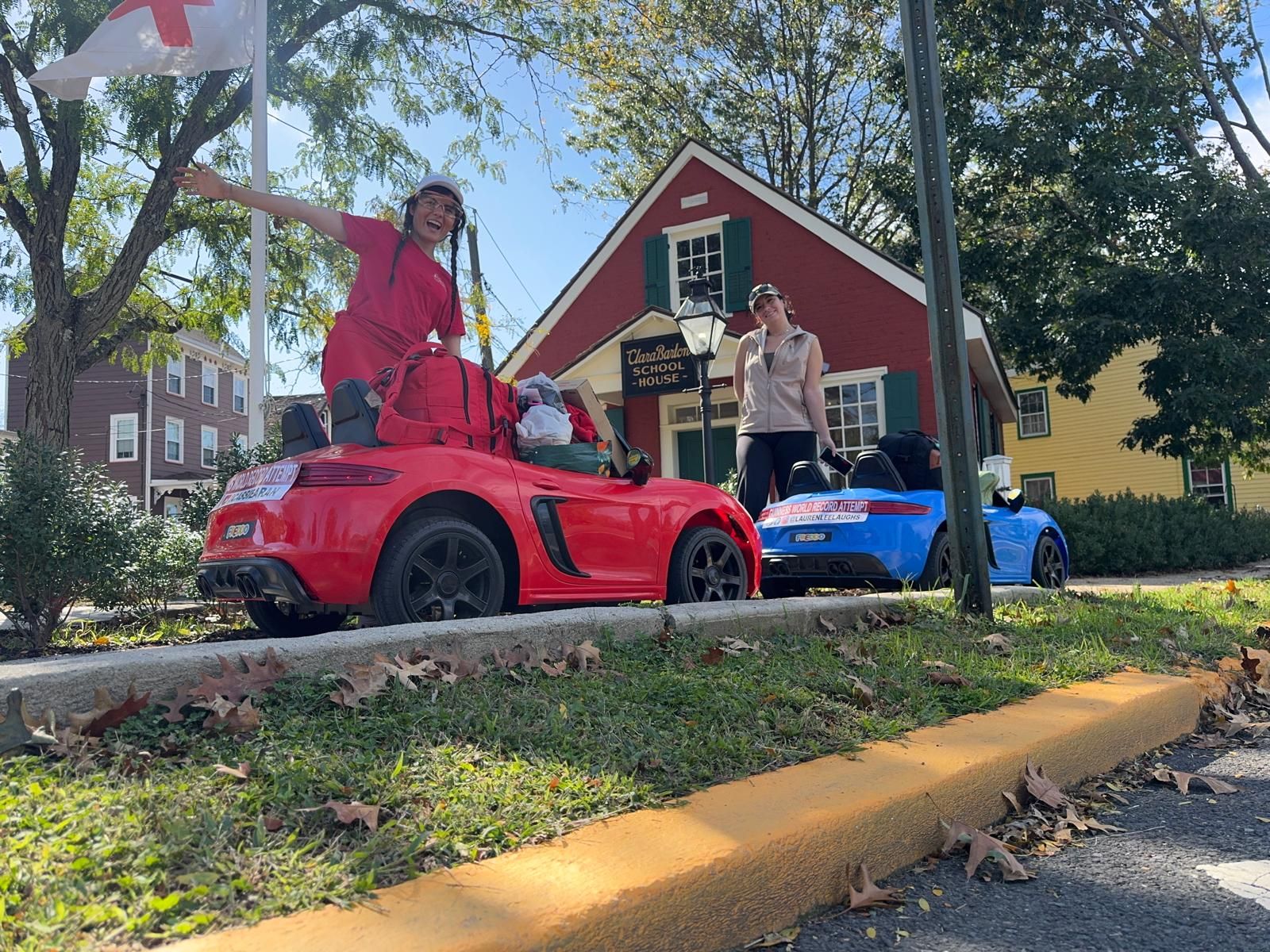
Last month, childhood best friends Lauren Lee and Cassie Aran, both 32, kicked off a planned 700-mile toy car trek to Niagara Falls in front of the hallowed brick chambers. If they make it all the way, and submit all the required evidence, they’ll be crowned Guinness World Record holders.
They’re also hoping to raise funds and awareness for suicide prevention along the way.
Cassie Aran and Lauren Lee in front of Independence Hall in their toy cars.Cassie Aran
Lee and Aran havetraveled from Philadelphia, over the Ben Franklin Bridge and through New Jersey to the Newark area by way of sidewalks, bike lanes, and trails. But they have miles — hundreds of miles, not to mention roadside chickens, overgrown shrubbery, and unfortunately placed garbage cans — to go before they rest. In all, they’re expecting the toy car odyssey to take two months.
Cassie Aran and Lauren Lee drive toy cars over the Benjamin Franklin Bridge.Cassie Aran
From jaunts in toy jeeps to cross-state treks
Lee and Aran, best friends since kindergarten, grew up cruising around the block together in toy jeeps.
“We always wanted to take it further,” Aran said.
But, under the watchful eye of parents, that wasn’t an option.
However, they never lost those adventuresome spirits. In the years that followed, both became travel influencers, living on the road full-time. Lee clocks in at more than 300,000 TikTok followers while Aran maintains 1.2 million.
They’ve traversed the country, but, about five years ago, their minds wandered back to those languid Florida days tooling around in the little jeeps and the untested limits of the adventures the tiny automobiles could take them on.
So they started with a cautious three-day journey from Tampa to Clearwater, about 35 miles, in toy jeeps. It was a success.
Afterward, Lee thought: “Let’s actually put some brain power into this.”
In 2024, they endeavored on a two-month, roughly 500-mile adventure from Jacksonville to Key West. They selected a pair of mini battery-powered vehicles from Freddo Toys, and though the cars sputtered to the finish line, they made it.
That was their first stab at setting a Guinness World Record, but, due to miscommunication, they had to abandon the record attempt.
This time around, they’re determined to succeed, armed with a notebook to collect witness signatures and GPS trackers to log their miles.
“We feel so much more capable this time,” Aran said.
Cassie Aran and Lauren Lee in front of the Clara Barton Schoolhouse in Burlington County, New Jersey.Cassie Aran
Finding their path
Though Aran attended Rowan University, the pair selected the Philly starting point because it was one of the few multistate stretches that offered mostly contiguous sidewalks, bike lanes, and trails.
The route is somewhat of a Google Maps marvel. The duo spent two weeks in a real car charting their journey and dropping pins to generate a custom path.
In terms of the pace, it’s a leisurely journey, Aran said, as they’re averaging around two miles an hour and traveling about 20 miles a day — on a good day.
Theirpath is riddled with obstacles — fire hydrants in the middle of the sidewalk, deep puddles, and mosquito and twig-riddled trails.
“It’s one thing to see the sidewalk driving by it,” Lee said. “It’s another thing to come face to face with it in something this big.”
The journey has unintentionally served to raise awareness for how inaccessible some stretches of Philly and New Jersey are for those in wheelchairs, they noted.
Cassie Aran driving her toy car from Freddo Toys.Cassie Aran
Some obstacles have relatively easy workarounds. When it rains they hold umbrellas. But, if it downpours, they surrender a day of progress so as not to risk a breakdown. At night they break out the headlamps and lanterns. They also wear light-up scrunchies on their arms and wave them in the air so people in cars can see them at crosswalks from such a low center of gravity.
Other impediments present bigger challenges. In a set of cars designed for a fraction of this much mileage, mechanical issues are practically inevitable. Freddo Toys mechanics have guided them in resolving a number of problems so far including rewiring one of the cars when a pedal snafu snapped a wire.
“After they taught us how to splice wires we started feeling a lot more confident,” Aran said. “They could walk us through that. Maybe they can walk us through anything.”
Finding a cause
The destination of Niagara Falls was in consideration for a while, but became an even clearer choice after Aran witnessed something chilling at the falls a few months ago.
While on a camper trip across the country with her boyfriend, she witnessed an apparent suicide attempt.
“After that we had to take a lot of time to get our heads straight,” Aran said. “That was just something that is hard to describe how you feel after you see it.”
Because she was filming for her social media channels, she inadvertently caught the incident on film and provided the footage to the local police. They told her this was a fairly common occurrence at the falls.
The duo decided to use their journey to raise awareness and money for suicide prevention. Their fundraiser for “To Write Love on Her Arms,” a nonprofit which helps people afford and get connected to therapy, has raised more than $8,000 so far.
In addition to the cause, Lee and Aran said they hope their journey moves people to think outside the box once in a while.
“People’s boxes get so tiny and you have no idea how tiny your box is until something or someone blasts it open,” Lee said. “That frame of mind can really get you so far.”
The Eagles are in the nation’s capital to face the Washington Commanders in one of the worst Sunday Night Football matchups to ever air on NBC, at least on paper.
After both teams went winless in October, they enter their Week 8 matchup with a combined three wins, boasting a win percentage of .269 (the NFL counts ties as half a win).
Take out early-season games in September, and it’s the first Sunday Night Football game since NBC took over in 2006 to feature teams with a combined win percentage below .300, according to ProGridSpots.
It’ll also be just the 11th time during that 20-year span both teams will walk away from their Sunday Night Football matchup with a record below .500, according to The Athletic.
Funny enough, it isn’t the first time a two-win Eagles team played an NFC East opponent on Sunday Night Football in Week 8. During the 2020 season, the 2-4-1 Birds defeated the equally terrible 2-5 Dallas Cowboys (combined win percentage .321) despite then-starting quarterback Carson Wentz’s four turnovers.
In Week 17 that same season, the 4-10-1 Eagles took on the 6-9 Washington Football Team (combined win percentage .350) in the final game of the NFL season. Why did the NFL stick with such a terrible matchup? Because Washington was playing for the NFC East title, which it claimed with a 7-9 record by defeating the Birds, 20-14.
Sunday Night Football has generally been able to avoid terrible matchups because of the league’s ability to swap out bad games for good ones. Since 2006, the NFL has flexed 36 games off Sunday Night Football, averaging just over one a season.
So why didn’t the NFL move Eagles-Commanders? A few reasons, but mostly because both teams are still in contention in a lackluster NFC East, where the division-leading New York Giants also lost their starting quarterback for the season and have just a two-win lead on the Eagles entering Sunday.
NFC East standings
(function(){function e(){window.addEventListener(`message`,function(e){if(e.data[`datawrapper-height`]!==void 0){var t=document.querySelectorAll(`iframe`);for(var n in e.data[`datawrapper-height`])for(var r=0,i;i=t[r];r++)if(i.contentWindow===e.source){var a=e.data[`datawrapper-height`][n]+`px`;i.style.height=a}}})}e()})();
There was also a lack of options due to TV rights deals that give CBS and Fox the right to air at least one game each of divisional rivalry during the season from the AFC and NFC, respectively.
Despite that, the NFL seriously considered swapping in an AFC North matchup between the Cleveland Browns (5-2) at Pittsburgh Steelers (5-2), which instead remains at 1 p.m. on CBS (and won’t air in Philly).
While the NFL didn’t move the Eagles out of primetime this week, circle January 3 on your calendar. The Birds are scheduled to face the San Francisco 49ers on Sunday Night Football in Week 17. If the 49ers have nothing to play for at that point and the Eagles’ season continues apace, the NFL would likely move the game out in favor of a matchup with some playoff implications.
Then again, the way the NFC East is stacking up, the Eagles could still be fighting for a third-straight divisional championship and a playoff spot.
How to watch and stream Eagles-Commanders
Mike Tirico (left) and Cris Collinsworth will call Eagles-Commanders on NBC. NBC Sports
After all that, you still plan on tuning in?
Eagles-Commanders will air on NBC, with Mike Tirico and Cris Collinsworth calling all the action (or lack thereof). Melissa Stark will be reporting from the sidelines of Northwest Stadium.
The game will stream on Peacock, NBC’s subscription streaming service. It will also be available to stream on NFL+ and any service that carries NBC, including YouTube TV and Hulu + Live TV. You can also stream it for free on a digital antenna if you live in or near Philadelphia (or any other major city).
The Spanish radio call — featuring Rickie Ricardo, Oscar Budejen, and Dave Gerhardt — can be heard on the Eagles website and on a handful of stations, including La Mega 105.7 FM in Philadelphia, 93.9 FM in Atlantic City, and 103.3 FM in Vineland/Millville.
Other Week 8 NFL games on TV in Philly
Josh Allen and the Bills will face the Ravens Sunday afternoon. John Locher
Sunday
Ravens at Bills: 1 p.m., CBS3 (Ian Eagle, Ross Tucker)
Cardinals at Cowboys: 1 p.m., Fox 29 (Joe Davis, Greg Olsen)
Chiefs at Broncos: 4:25 p.m., CBS3 (Jim Nantz, J.J. Watt)
Monday
Bears at Seahawks: 8:15 p.m., ESPN (Joe Buck, Troy Aikman)
Eagles news: Five things to read
Jalen Carter fell in the 2023 draft due to concerns about maturity.David Maialetti / Staff Photographer
Yet, the opposition will probably fail, because 19 of the opposition seats were won by Israeli Arab political parties — and two out of the four Jewish parties which comprise the formal opposition bloc refuse to accept Palestinian Arab lawmakers as legitimate political partners.
The historic Palestinian Arab turnout (about 80% of eligible Arab voters) was spurred by the desire to get rid of Netanyahu. Yet, he may retain power because Arab members of the Knesset are anathema to many Israeli Jews.
Ethnic Arab citizens comprise 21% of Israel’s population. They are descended from Palestinians who remained in the territory that was recognized by the United Nations as the state of Israel in 1947. Even though they have the right to vote alongside other rights denied to inhabitants of many Arab states, they have endured a long history of discrimination.
Netanyahu’s extreme-right minister of national security, Itamar Ben-Gvir (who controls the federal police), has behaved viciously against Arab citizens within Israel, even as the government supported right-wing settler terrorism on the West Bank and destroyed much of Gaza in the wake of the Hamas terror attack in 2023.
Yet, many Israelis in the opposition recognize that righting relations with Arab citizens is a vital prelude to halting right-wing settler terror and to any negotiated solution for Gaza.
This stacked bar chart shows the 11 parties that qualified for seats in the 26th Knesset and the number of seats each received.Catherine Murphy
“We have no future here if we don’t stop being afraid, and if we don’t put an end to racism,” warned former Israeli Gen. Yair Golan on social media. A retired deputy chief of staff of the Israel Defense Forces, Golan heads the The Democrats, the only party in the opposition bloc to demand a partnership with Arab parties in order to replace Netanyahu. He has been viciously (and falsely) accused of betraying Israelis, despite his widely acclaimed heroism in driving to Gaza on Oct. 7, 2023, to rescue young Israelis under Hamas attack at the Nova music festival.
“The vote of an Israeli citizen casting a ballot in Tira [a Palestinian Arab town in Israel] is worth exactly the same as that of an Israeli citizen voting in Givat Shmuel,” Golan posted on X. “Anyone who tries to erase the votes of Arab citizens is surrendering to Netanyahu and giving up on Israel.”
Still, Netanyahu, in full Trump-mode, is already claiming the Arabs “stole” the election, while his son Yair has posted on X that Arab citizens are Israel’s “greatest threat” beyond a nuclear Iran. Bibi’s fear-and-smear campaign against any politician who cooperates with Palestinian members of parliament may yet win the day.
The debate within the Israeli opposition over whether to lean on Arab support will play out in the next few weeks in a complex fashion. The first step is for Israeli President Chaim Herzog to consult with every party leader to ascertain whether the moderate opposition bloc or the far-right Bibi bloc has the majority of seats required to form a government.
In principle, Gadi Eisenkot, a former Israeli army chief who now heads the largest opposition party, Yashar, has the necessary seats overall. That’s because the two Arab parties are willing to support a minority government comprised of Jewish parties that depends on support from the Arab parties from the outside for critical issues.
Gadi Eisenkot, a former Israeli military chief and the leading candidate against Prime Minister Benjamin Netanyahu, at a campaign event in Haifa, Israel, on Sept. 23.AMIT ELKAYAM
However, Herzog prefers a national unity government, under which some opposition parties would join Bibi’s Likud bloc minus the two most extreme ministers, Ben-Gvir and Bezalel Smotrich who has encouraged the settler violence on the West Bank.
Yet, this would require opposition leaders to betray the voters whom they promised a government of change. And if the opposition refuses to join a national unity government, the most likely outcome is new elections months from now. During the interval, Netanyahu would remain prime minister, meaning the situation in the West Bank and Gaza would deteriorate further.
It would also mean a return to bombing Iran, which is likely to further roil the Mideast without solving the Iran nuclear problem or bringing regime change.
Most tragically, it would end the chance for Israeli leaders to begin building a political partnership with Arab citizens of their country, which could eventually serve as a bridge to resolving the future of the West Bank and Gaza.
The smaller of the two Arab parties, Ra’am, with seven seats, was part of a government coalition. Its leader, Mansour Abbas, recognizes Israel as the Jewish homeland and is focused on improving domestic conditions for Palestinian citizens. The Democrat’s Golan would like to see his party included in a governing coalition.
Yet, whatever Abbas’s role, it would be a mistake to ignore the value of the support of the other Arab grouping (known as the Joint List) from outside Eisenkot’s coalition. That is true, despite the Joint List’s harder-line positions.
Yoav Segalovitz, right, a former Israeli police officer and candidate for the United Arab List party, or Ra’am, embraces Mansour Abbas, the party’s leader, during a campaign event in Sakhnin, Israel, Sept. 22.AVISHAG SHAAR-YASHUV
If Israel fails to integrate its Arab citizens into the political system after their incredible participation in a supposed democracy, it cannot expect them to sit passively by forever while they are denied their political rights.
“This is an incredible opportunity, which, if seized upon, will be transformative for generations,” I was told by Nimrod Novik, a fellow at the Israel Policy Forum and the former senior diplomatic adviser and special envoy to the late Prime Minister Shimon Peres. “For one thing, Israelis would get used to a new political and social reality by realizing that the Arab citizens truly comprise 20% of Israeli citizens. Nineteen seats is an enormous bloc. Israeli society has gotten used to inequality and discrimination by long practice.”
“If we miss this opportunity,” Novik continued, “it will send a message to the Arab minority that it won’t get what it deserves via politics. That could lead to violence.”
I asked him what he thought of the right wing’s arguments that involving the Arab parties would create a security risk. He noted that Arab politicians would not be part of the security cabinet.
Interestingly, a former Jewish deputy minister of police (the police in Israel are national, not local) named Yoav Segalovitz has joined Ra’am as second on the list to leader Abbas. Segalovitz wanted to signal his anger at the Israeli government’s deaf ear to Arab pleas for a police takedown of Mafia-style crime that has scarred Arab cities and towns. Instead, Minister Ben-Gvir, who oversees the police, has attacked law-abiding Arab citizens.
Segalovitz’s brave move is an indication of how the mood inside Israel could change if Eisenkot took up the challenge of cooperating with Arab parliament members — and could convince his coalition partners to sign on.
The alternative is probably a new election in which the opposition would get fewer seats, and Bibi would get another term — and in which Palestinians would give up on voting. That would be a tragedy not only for the Arab citizens of Israel but also for Israeli Jews.
Technology updates are a constant in business. Artificial intelligence applications are hitting differently, forcing structural change.
That doesn’t mean slashing jobs for tech to take over, at least at first. Professionals who can figure out how to get staff to use AI safely and efficiently are in high demand. Some businesses have to hire, not cut, to make AI work.
The Inquirer spoke recently with practitioners who share what has changed. Their insights have been edited for clarity and brevity.
The consultant: This time it’s different
John Castleman is CEO of Bridgenext.Bridgenext
Anytime you have a new technology cycle, the beginning is incredibly disruptive. Companies scramble to do something with the new technology. Their boards ask, ‘What are you doing about this? Is our business going to be obsolete?’
So many people in the tech space are tinkering and creating new whizbang stuff. The technology is iterating very quickly. A lot of stuff will get thrown away.
Everyone is messing around with Claude. But for our clients, CFOs are saying‚ what’s the return-on-investment here? Let’s try to get your ideas better aligned to what’s important for the business.
The technology will become better and more stable. You hope to get to the productive stuff more quickly. And most companies have layers of applications. They can’t just say, ‘Let’s build.’
The first mobile apps were just billboards on your phone. Mobile only became really useful when it was integrated to do transactions on your phone. That took retailers years. AI is like that.
Internet, mobile, cloud, AI are all amazing technology. But there is still a human element to deal with.
We have a client in manufacturing. We’ve been working with AI agents for their sales team to watch for buying behavior: ‘Your customer is not reordering like they used to every week.’ Or ‘they are buying something they didn’t used to.’
We have another client in the insurance industry. The CEO wanted their sales team to consult more with customers on the policies they need. We helped them enhance a new platform to be smarter going into the sales call.
AI is where all the buzz is. The shiny object. But data is really where the action is.
Your data is a product you can sell. But almost every client we go into, there is a significant data effort that needs to be undertaken.
The designer: More AI output, more human review
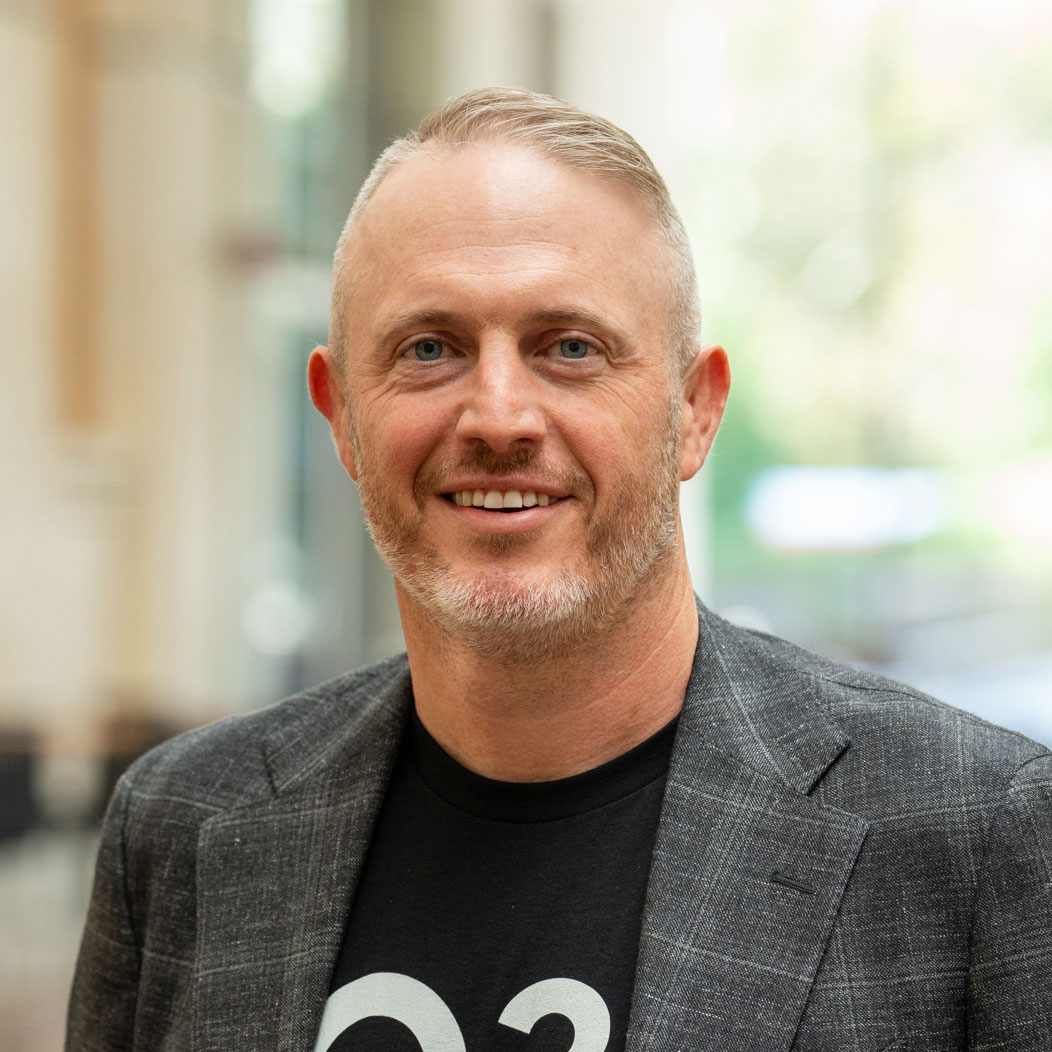
Mike Gadsby is cofounder and chief innovation officer at O3 World.Dylan Eddinger
AI is very different from Web and product development. It is easily the most transformative factor, in business, that we’ve ever seen. Mobile, the cloud, digitization, none of that comes close to this.
The most ironic thing about dealing with AI is that we are dealing with more philosophical and human-centered issues than we are dealing with technology problems.
When we hire the individuals we are looking for — engineers, FDEs — we are really looking for problem solvers, people who can talk to people and suss out not just where the problem sources are, but how people feel about that.
We talk to them about augmentation — not replacement. When AI generates 10 times the output, that’s 10 times more that needs to be looked at — by people.
There was this real fear students won’t have jobs. Where are the entry positions when AI [can do so much]? But in my world, they are getting hired left and right. They are killing it because with AI tools, we can immediately make them valuable on client work.
I see accounting departments now where these CFOs and controllers are knee-deep into building their own dashboards and connecting data feeds and all the stuff they required an engineer to do. And yet there’s no drop in the need for engineers. Their role changes. They were doing a lot of tedious work, copying and pasting data. If you’re still doing that, it’s a sign you’re doing it wrong.
Now, engineers get to think more, about more and better ways to build things, and the quality-added value of what we are providing.
We need AI for all, accessibility to tech, to solve problems. Because AI is not going anywhere. The expectations from employers and employees is increasing.
The organizer: Pacing AI so it doesn’t overwhelm
Grace Francisco is founder and chief of Philly Builds AI.Grace Francisco
I was just at Launchpad Philadelphia, where they were graduating another group of young people. They work as interns at companies like Bentley Systems. Even though they are at the start of their careers, they have a lot to offer. They are seeing enterprises with fresh eyes, they listen well, and they are seeing how they can use these new tools to start to put together solutions that benefit clients.
You hear a lot about organizing your data for AI. But at this year’s 1682 Business of Innovation Conference [at the Barnes Foundation Oct. 6], one of the construction company leaders said that’s not the route they chose. They said the first thing they did was review their business processes. What’s the most important thing they do? Review that, and that’s where you start with AI.
If you have problems in your business that are not resolved, adding AI isn’t likely to solve those problems; it could make things worse.
Organize your main process — whether you’re a construction company, a hospitality company where you need to focus on [customer-facing] people, a financial institution. Payroll and other functions you can add later. Or you risk overwhelming the enterprise with too much change at once.
AI lets you do that — you move so fast — sometimes you need to set a measured pace that enables you to bring more people along together.
You know Aramark is a very large company, headquartered here in Philadelphia, andthey have been recognized for doing this very well. They are fundamentally a hospitality company, and their approach to AI has been to focus agents to the needs of their frontline people — their chefs, their site managers, their procurement staff.
The hiring boss: AI is easier; people are tough
Larry Solomon is chief people officer at EPAM Systems.From Day One
The top corporate-hiring position as of 2026 is the forward deployed engineer (FDE) who understands AI agents and technology, has a deep understanding of the business, has solid change-management and relationship skills.
‘Adjusting to AI’ goes beyond learning the products; it means you can work your way around an office and a bureaucracy and make yourself understood at different levels of an organization to implement AI agents and systems. For that, you often need to have experience — with meshing systems, and with failures.
AI hasn’t reduced the need for most technical staff. It has shifted AI spending, disrupting legacy commercial models, and has changed the way sellers sell and buyers buy services.
That’s a business opportunity, not a technical problem.
We put a greater emphasis on continuous learning and developing the skills, tools, and capabilities employees need to operate effectively in an AI-driven environment.
Given HR’s role in understanding the new technology, negotiating and implementing pricing, using AI insights to [justify] staffing decisions, the HR function is becoming more important, not less.
AI will not take jobs away. The resistance to change, experimentation, learning, and adopting these new technical realities is the threat.
The Ph.D.: Good AI rules make complex legal work fast, cheap, abundant
John Nay is founder and CEO of Norm.AI.Norm AI
We developed a process for tailoring and supervising AI agents in live workflows, with AI agents and practicing attorneys collaborating to provide faster, consistent, and more scalable legal work.
We have raised more than $140 million in investment capital, from financial institutions such as Blackstone, Vanguard, Citi, New York Life, TIAA.
With AI agent deployments, we can pursue things that would otherwise be too costly. You can give more investment advice, you can analyze a permit or a loan, you can create a new building, and other things, more abundantly, through an AI agent provision. AI deployments have proven more efficient and cost effective.
We think AI should be deployed in a governed way with industry rules and appropriate oversight built in.
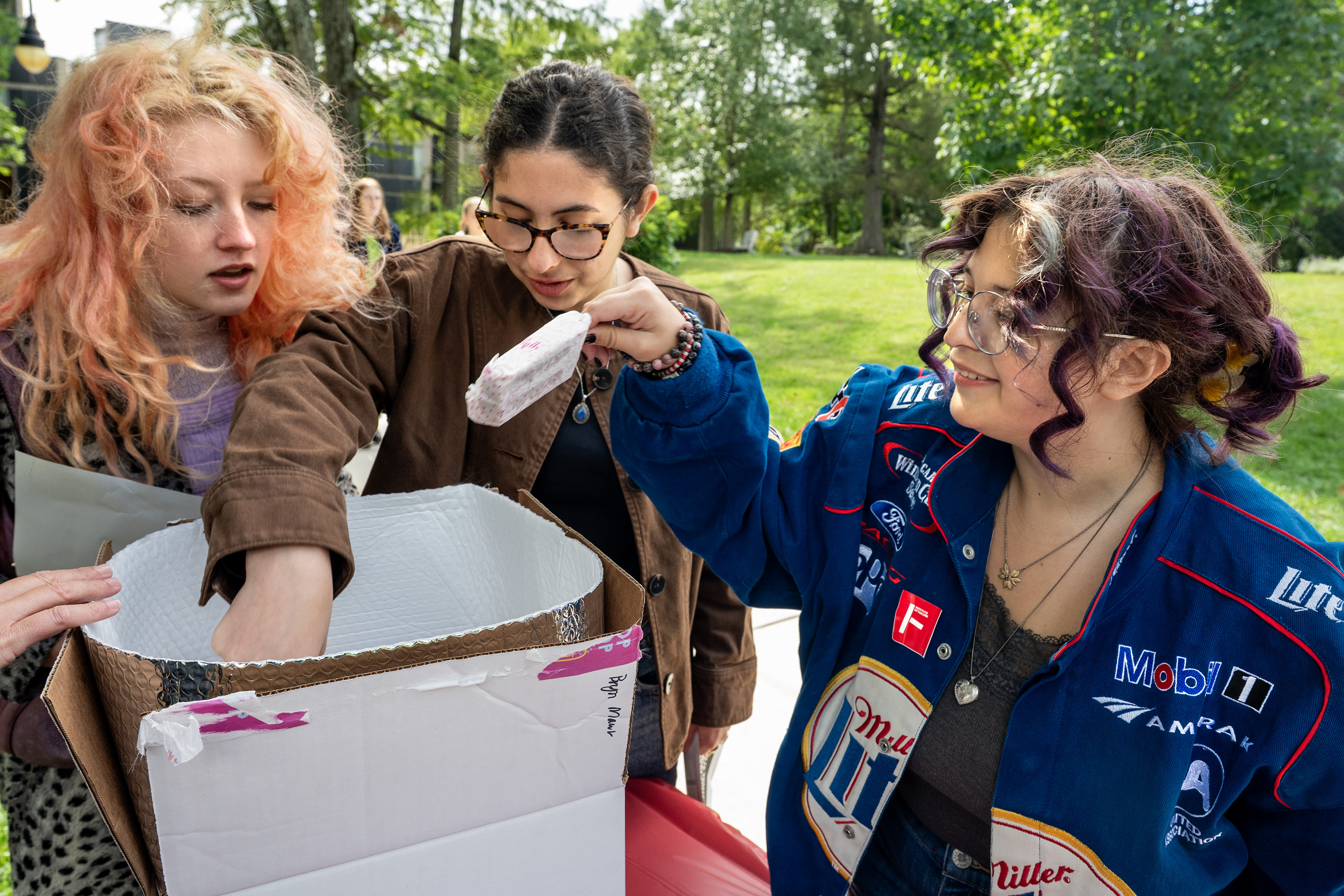
At Bryn Mawr College, professors, staff, and students recently gathered to try challenges, such as puzzles and painting, some of which they most surely would fail.
And that was just fine. Fitting, in fact, for a fall festival with failure as the focus.
“It’s not failure fest if you don’t fail,” freshman Fable Gunther, 18, said as she and her friends tried Jenga, cornhole, and othertasksduring the event held outside Bryn Mawr’s wellness center in late September.
In a world where students increasingly are striving for perfection, educators at Bryn Mawr who have created an “Institute of Failure” are teaching students that failure is part of life and that a fear of it should not discourage them from trying new things.
José Vergara, professor of Russian, talks about how he and his colleagues developed the Institute of Failure at Bryn Mawr College. Tom Gralish / Staff Photographer
“We are trying to change the culture around failure, to destigmatize and normalize failure,” said José Vergara, an associate professor of Russian. “When we get too concerned with perfection, that can inhibit growth and prevent us from achieving something new and exciting that we might not otherwise reach.”
What they are not striving for, Vergara said, are stories where failure leads to success, though that is a fine outcome.
“What we want is to sort of sit with and deal with that failure,” he said, “to think about what it felt like and potentially … share and discuss how that failure does inform a person’s work or art.”
Students entering Bryn Mawr — a selectivewomen’s college that enrolls about 1,300 undergraduates — often come from high-performing academic backgrounds with a string of achievements, and some struggle with not hitting those same marks when they enter Bryn Mawr, said Baru Roberson-Hornsby, who helps guide the experience of juniors as an assistant dean.
“Often our students will not reach out when they are failing,” he said, and that is why activities such as the failure festival are important.
Frances Matthews, 17, a freshman from St. Paul, Minn., attempts to catch randomly falling batons during a “failure festival“ at Bryn Mawr College. Tom Gralish / Staff Photographer
The idea of focusing on failure is not new. Duke University has a “learning to fail” course. At Temple University in 2019, then-professor Doug Webber, now a senior economist in the Consumer and Community Research Section of the Federal Reserve Board, touted his rejections and stalled projects on a “failure CV.”
But Vergara said he and his colleagues wanted something ongoing and deeper that would cross the campus.
The idea was born about three years ago, on Mount Roberts in Alaska, when Vergara and several colleagues were on a hiking trip. They were making their way on narrow trails with little room for error and started talking about students’ fear of failure and how that can inhibit experimenting and taking risks, he said.
About a year ago, a handful of faculty decided to launch an institute, and it was one of several projects that received $9,860 in funding from the college to pilot as part of a new initiative launched by president Wendy Cadge.
Since then, the college has held several “monologue” events in which faculty and staff share their failures and how they have shaped or impacted their lives. Michelle Francl, an emeritus chemistry professor, discussed failing a physics exam and how it has affected her response to students who struggle. Claire Scanlon, head soccer coach, shared how she was cut from the Irish national team before an international match.
A student who “failed at failing” by guessing an outcome correctly signs in during a “failure festival“ at Bryn Mawr College. Tom Gralish / Staff Photographer
“She talked about how it’s always on her mind as she’s making decisions about who plays and who doesn’t and how many minutes they get,” Vergara said.
On the institute’s website is a collection of failure stories submitted by employees and students.
Akirah Fenimore, assistant dean for the senior experience, wrote about falling asleep in a math class that met after lunch and ultimately failing it. Student success coordinator Caroline Northcutt shared her inability to climb an indoor rock wall but vowed to keep trying. Cadge, the president, posted a rejection letter she received for the Fulbright Scholar program, just six months before she became Bryn Mawr’s president.
While it is not on the website, Vergara said he had his own failure trek when he was a visiting professor at Swarthmore College, which is surrounded by streets named after other prestigious colleges, including Harvard and Yale. Each day, he would pass the signs of colleges that had rejected him for full-time work.
“It felt like a kind of cosmic cruelty,” he said.
Students paint failure squares during a “failure festival“ at Bryn Mawr College. Tom Gralish / Staff Photographer
At the festival, Gunther, who is from Berwick, watched as her friend Ruth Pournelle, 18, a freshman from Washington, painted a unicorn.
“I can see it,” Gunther said encouragingly.
Then they tried cornhole. They couldn’t sink a bag. Building a house of cards on a windy day proved particularly tricky.
The students said they liked trying, but even more so the idea behind it.
“Education is so focused on ‘always do your best,’” Pournelle said. “It’s important to make mistakes on your way to your best.”
Vergara and his colleagues hope to grow the institute over time.
“Right now we’re in the process of hiring a couple of what we’re calling failure interns,” Vergara said.
He and colleague Selby Hearth, an associate professor of geology, plan to coteach a class on failure in the spring.
“I’ll bring a geologic perspective,” Hearth said. “He’ll bring the perspective of Russian literature. Both of these perspectives have something interesting to say about failure, systems failure, … physical failure, rifts and dam breaks, and collapse of whole economic systems.”
Students at the festival collected stamps as they finished each station. They turned their cards in for a prize that proved even failure can be sweet.
“At the end of the day, you can get a Popsicle if you fail,” Pournelle said.
Freshmen Ruth Pournelle (from left), Frances Matthews, and Fable Gunther select a frozen dessert after successfully completing the stations during a “failure festival“ at Bryn Mawr College. Tom Gralish / Staff Photographer
Passyunk Square resident Dylan Wise was talking with a friend about the Strait of Hormuz — the contested Persian Gulf shipping chokepoint that has been central to the United States’ ongoing tensions with Iran — when he got the wild idea of opening a video store.
“I was talking to someone about the strait,” he remembers. “And I thought, ‘I’m an idiot. I shouldn’t have an opinion on that. Why do I even know about this?’ I need to get a little more myopic. I need to focus on myself, and my family, and my community.”
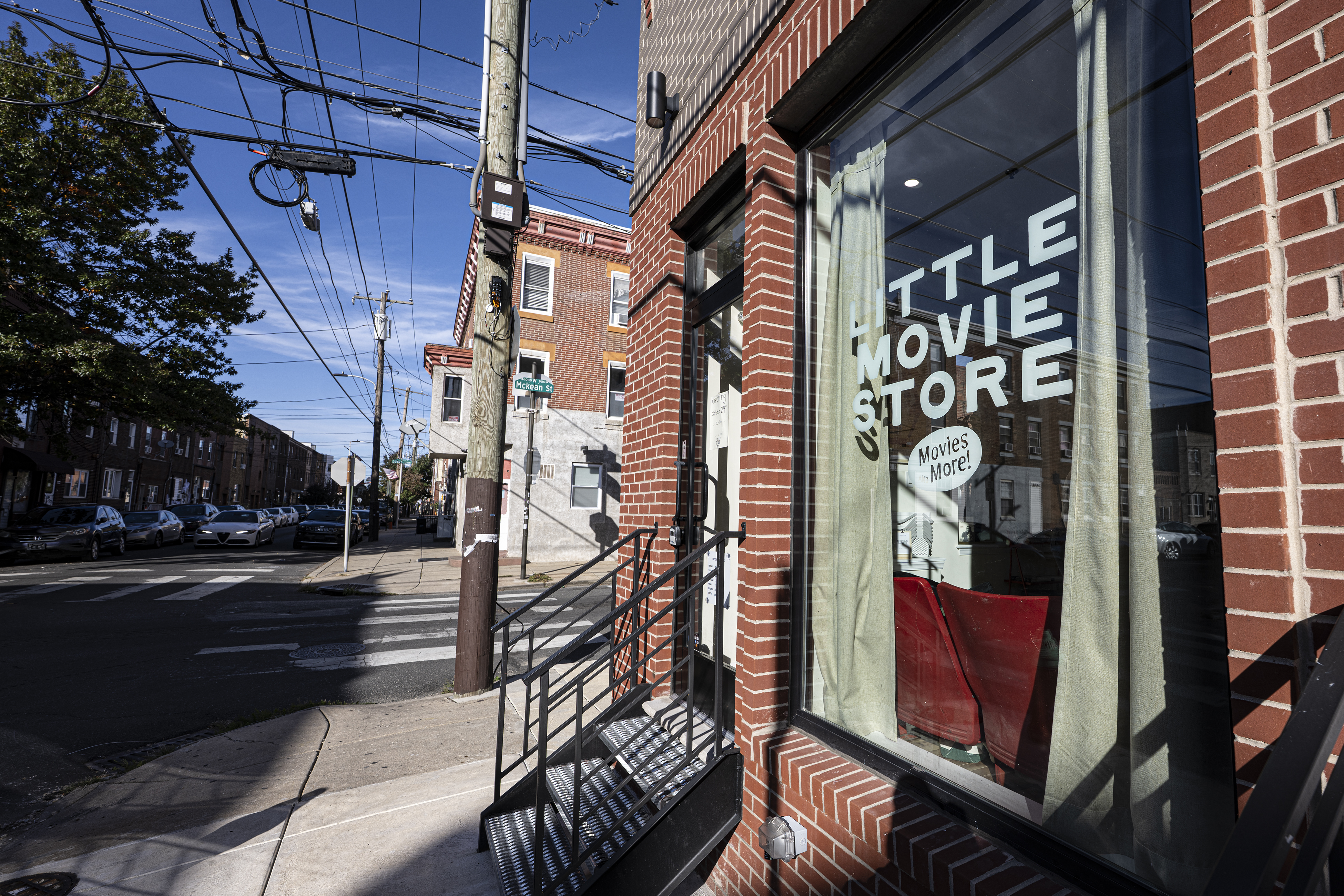
And his way of doing that was to open the Little Movie Store in South Philadelphia.
Opening a video rental business in 2026 can seem a little foolhardy. They were once a staple of communities across the country — in 2000, the Video Software Dealers Association census tallied nearly 28,000 video rental storefronts in the United States, per Billboard.
Little Movie Store owned by Dylan Wise and his wife, Keri, is shown in Philadelphia on Oct. 21. Jose F. Moreno / Staff Photographer
But today, the video store is now about as defunct as, well, the videotape.
Blame the rise, and subsequent tumble, of big chains like Blockbuster, which bullied mom-and-pop stores out of business before collapsing themselves. Blame the Netflix mail-order rental model, which ended in 2023, and the ascent of at-home streaming platforms. Blame the financial pressures of the COVID-19 pandemic.
The video store is no longer a salable retail model or community space where cinephilia is nurtured and lifelong passions for the so-called “seventh art” take root. These shops are now more typically spoken of in the past tense, and are the subject of eulogies, odes, and nostalgic paeans to times gone by.
Wise and his partner (in business and in life), Keri Wise, hope to change that. At least in their corner of the world.
“It is a wave that’s happening,” said Dylan Wise, brimming with the optimism of a small-business owner who is also a true believer. “I can feel it in the air. The physical media resurgence.”
The Wises looked at a number of retail spaces along Passyunk Avenue, but had difficulty persuading landlords that their video store and physical media retail idea was viable. Their current landlord, who lives above the store, was considering turning the space into a cafe, but worried it wouldn’t have a big enough footprint.
A large selection of movies in various formats fills the shelves at Little Movie Store, the new video store owned by Dylan Wise and his wife, Keri, in Philadelphia on Wednesday, Oct. 21, 2026. Jose F. Moreno / Staff Photographer
Wise eventually put together what he regarded as a “solid business plan,” and was able to persuade the landlord. Keri Wise already has experience managing retail spaces in Boston and New York City, where the couple lived before moving to Philly in 2020, during the peak of the COVID pandemic.
“This is a huge decision for us,” said Wise. “I see comments on our Instagram saying, ‘Oh, what could go wrong?’ I always think, what could go right! You think we didn’t think through this? Of course we did!”
The Wises believe that their Little Movie Store can follow the template set by bookstores and record shops, which have benefited from a renewed interest both in nondigital media consumption and in-person interactions.
In addition to selling and renting movies (using a subscription model, where for $160/year customers can rent up to three movies at a time), the Wises are planning to host screenings and even curate a little nook with a coffee table and coloring books to entertain neighborhood youngsters, while their parents peruse the shelves of Blu-rays, DVDs, and even VHS cassettes.
“Every Friday night my family would go pick out our movies,” Keri Wise remembered fondly. “We’d eat on the couch, and have a few movies to watch. It’s a deep memory. When I talk to other people in the neighborhood, they all tell me they can’t wait to come and look around, and bring their kids.”
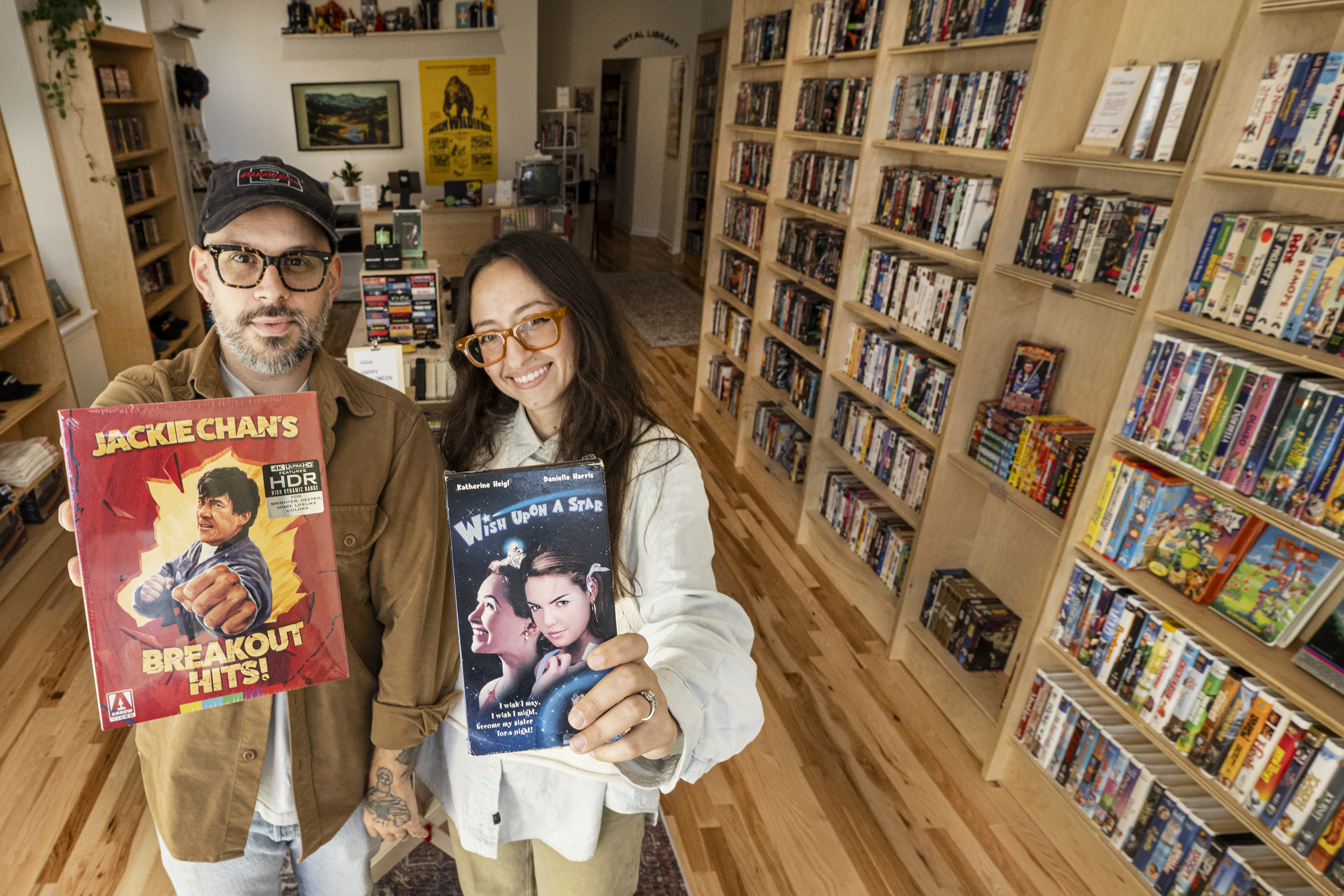
Dylan Wise and his wife, Keri, at their video store, Little Movie Store, in South Philadelphia.Jose F. Moreno / Staff Photographer
For her, owning the store is about curating an interesting collection of physical media. The Little Movie Store has already collected 5,000 titles: everything from new releases from boutique Blu-ray labels like Arrow Video and the Criterion Collection, to a whole collection of old-school Warner Bros. snap-case DVDs. The titles were largely amassed from donations from social media followers, who were hip to their mission and eager to chip in. They also came from private collections, including one belonging to a former video store owner.
The Little Movie Store is not totally without precedent. While cavernous Blockbusters offering walls of Hangover 2 rentals may have come and gone, smaller video rental shops have sprouted across the country. There’s Scarecrow Video in Seattle, Beyond Video in Baltimore, and Night Owl Video in Brooklyn, to name a few.
A nascent network of revivalists has emerged, providing business (and emotional) support to one another.
“There’s enough new video stores popping up that we’re now in an Instagram group chat with one another,” said Wise. “We’re talking about what’s working, what’s not working, and how we’re handling certain problems.”
Some of these problems include a point-of-sale software from the ‘90s that only runs on outdated operating systems.
A large selection of movies in various formats fills the shelves at Little Movie Store, the new video store owned by Dylan Wise and his wife, Keri, in Philadelphia on Wednesday, Oct. 21, 2026. Jose F. Moreno / Staff Photographer
More than pure nostalgia, the Wises believe that physical media sales and rentals respond to a new problem that has been created by the ever-more-sprawling digital media landscape.
Anyone in the mood to watch a movie at home has had the experience of cycling through potential titles across half a dozen streaming platforms, from Netflix to Amazon Prime to Tubi and Shudder and Paramount and the Criterion Channel, before tuckering out and just heading to bed. The sheer accessibility, and frictionless ease, of watching a movie at home has itself become a dilemma.
There is, simply, too much to watch.
Dylan Wise and his wife, Keri, are photographed at their video store, Little Movie Store, in South Philadelphia on Wednesday, Oct. 21, 2026. Jose F. Moreno / Staff Photographer
“Why is the algorithm deciding what I’m going to watch?” Wise said. “That’s why we want a store: to have a place for people to see each other, and hang out, and pick a movie together, and take recommendations.”
“These are real, physical things that you can hold, and touch — and smell, if you want. It’s not nostalgia for a thing. It’s nostalgia for a slower way of living.”