Tag: topic-link-auto

  • Another 250th anniversary? This one, honoring the Constitution, comes in 11 years and Brendan Boyle wants to get ready.

    Another 250th anniversary? This one, honoring the Constitution, comes in 11 years and Brendan Boyle wants to get ready.

    Philly just finished celebrating America’s 250th anniversary with crackling fireworks, an early morning concert and a string of patriotic events throughout the summer.

    But now that the confetti has been swept away and the World Cup traffic has finally subsided, you may be thinking it’s a good time to get your head out of the 18th century.

    If only it were that easy.

    In a mere 11 years, Philadelphia will be the center of yet another semiquincentennial celebration: the 250th anniversary of the U.S. Constitution.

    And because you live in the city where they invented America, you’re in store for another round of historic commemorations.

    To drive home the point, Democratic U.S. Rep. Brendan Boyle of Philadelphia announced Monday at the National Constitution Center that he’ll be introducing legislation to create a federal commission to plan the celebration of the original 4,543-word document (7,591 words if you count all 27 amendments) in the year 2037.

    Vince Stango (left) interim president and CEO of the NCC and and U.S. Congressman Brendan F. Boyle.Tom Gralish / Staff Photographer

    The Constitution was drafted during the Constitutional Convention in Philadelphia in 1787, and signed at Independence Hall on Sept. 17, 1787. It was ratified on June 21, 1788.

    “It’s a special moment,” Boyle said. “We can’t waste any time to be fully prepared to meet that moment.”

    As though sensing that people here might have a historical hangover, Boyle added gleefully, “I never met a Philadelphian who’s partied out!”

    Vince Stango, interim president and CEO of the National Constitution Center, said it’s never too early to start planning the party.

    “This gives us the opportunity to carry forward the momentum of 2026,” he said. What comes between now and 2037, Stango said, is a “civic decade” of speaking about and getting more knowledgeable of the document that set up America’s national government, and that protects citizens’ rights.

    “Here in Philadelphia,” he said, reminding us of our local duties, “we have a special responsibility” to honor the Constitution, a made-in-Philly product that the world has long envied and admired.

    Boyle added that “so many of the freedoms protected by the Constitution are very much a live issue today.” He added that the start of planning for 2037 “very much coincides with the national conversation we are having over a whole host of constitutional rights.”

    Though Boyle wasn’t specific, the nation has been arguing over many of the 281 executive orders President Donald Trump has issued since returning to office last year, demonstrating a reliance on Article II of the Constitution.

    As an example, in June, the U.S. Supreme Court struck down Trump’s executive order to end birthright citizenship, guaranteed under the 14th Amendment to the Constitution.

    Boyle reminded listeners that he’s been very much involved with 250th-style celebrations.

    Two days before the July Fourth celebration this year, more than 30 members of the 119th Congress attended an event at Independence Hall marking the passage of the declaration. Boyle, whose district includes the site, had long endeavored to gather his colleagues for the occasion.

    “Anniversaries are not just about honoring the dead, but educating the living.” Boyle said.

    And keep in mind Stango’s parting words Monday: We will all be celebrating the 250th anniversary of the Bill of Rights here in Philadelphia in 2041.

    Don’t forget to reserve your spot to see the fireworks then.
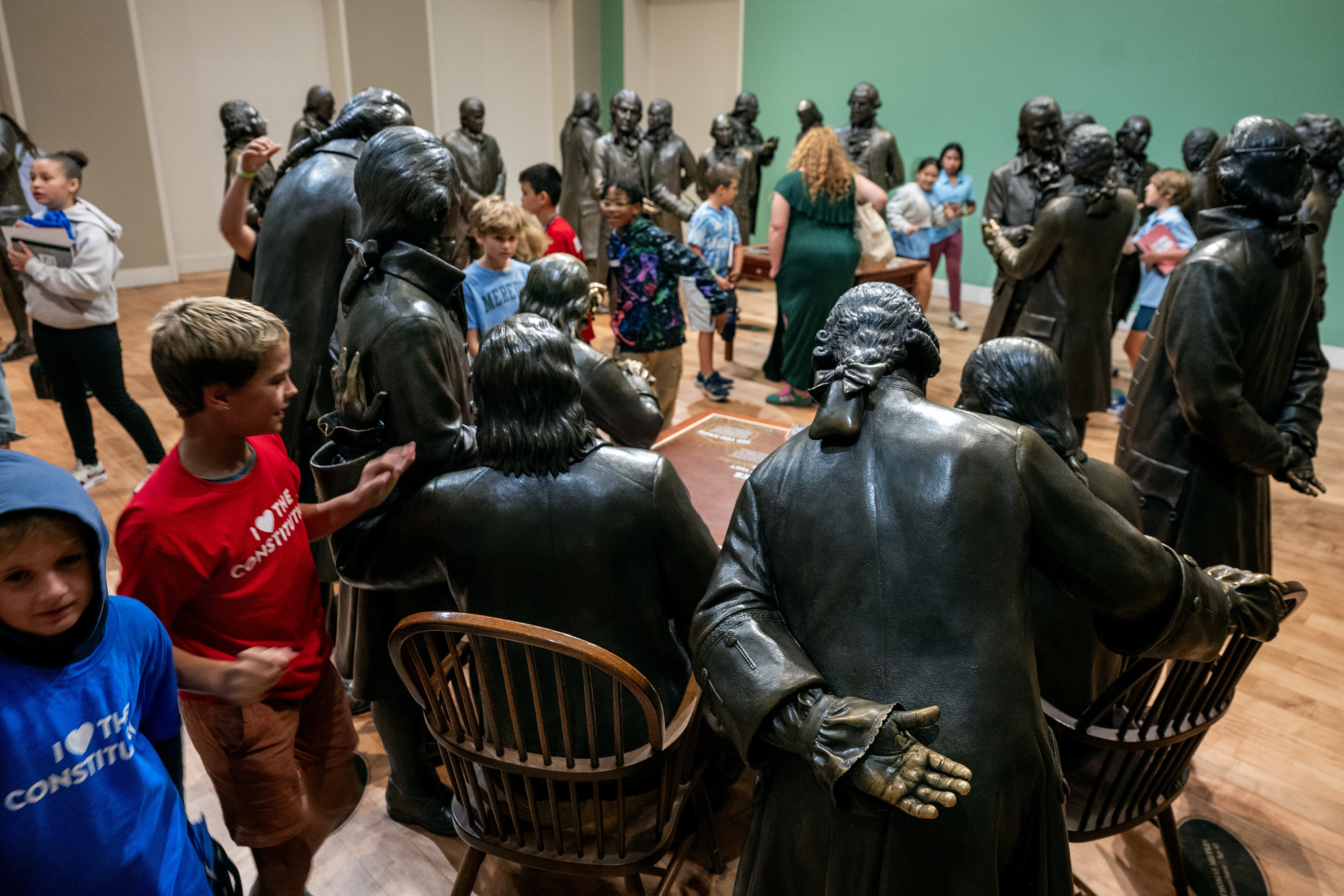
    Students from the William M. Meredith School in Queen Village mingle with 42 life-size, bronze statues of the framers of the U.S. Constitution at the National Constitution Center during a Sept. 17, 2025 visit, on the 238th anniversary of the document’s signing.Tom Gralish / Staff Photographer
  • Oliver Bonk’s goal is to make the Flyers’ opening roster. The defenseman is off to a good start.

    Oliver Bonk’s goal is to make the Flyers’ opening roster. The defenseman is off to a good start.

    For the first time, Oliver Bonk is entering training camp with a bit of NHL experience.

    He made his NHL debut in the Flyers’ final regular-season game of the year, scoring his first NHL goal against Montreal a night after the Flyers clinched a playoff berth. He spent the playoffs practicing with the big club and returned to the lineup for Game 4 against Carolina, in the game where the Flyers were eliminated from the postseason.

    That experience is a “confidence booster” heading into this year’s training camp, but it hasn’t changed the 21-year-old’s approach as he looks to make the opening night roster for the first time.

    “You can’t just come out saying, ‘Oh, I played one game in the NHL last year, I’m good. I can take this rookie camp off,’” said Bonk, whose hopes to make last year’s team were derailed by a preseason injury. “I think every game has been my best, and I’ve got to keep building on it.”

    Bonk joked that he attempted to improve “everything” this summer, but said he spent significant time working on his skating. Lehigh Valley Phantoms head coach John Snowden praised Bonk for his transition game and ability to jump into the play at the right time.

    With Rasmus Ristolainen still with the organization despite persistent trade rumors, there’s only one spot on the Flyers defense that doesn’t return an NHL regular from last year. Bonk, along with David Jiříček and newcomer lefty Simon Benoit, who was acquired in the Joseph Woll trade, will be among the biggest contenders.

    “Where he ends up is up to Bonker,” Snowden said. “I think he’s done everything to put himself in a great situation to fight for a spot on that team.”

    Phantoms coach John Snowden believes Oliver Bonk has taken a step in terms of his skating this offseason.Monica Herndon / Staff Photographer

    The NHL season is now 84 games, which means a shortened training camp for all players. Snowden said that at the start of rookie camp, he told the Flyers prospects to treat rookie camp like their training camp. There will be limited runway to make an impression in main camp and in the four preseason games.

    That’s why the Rookie Series games took on increased importance. Bonk assisted Denver Barkey on the first goal of the Flyers’ 4-1 win over the New York Rangers’ rookies on Sunday. He also was in the bumper spot on the power play.

    “In the rookie games, it’s that time to test yourself and see how far you can go, see how many plays you can make, see how well you can do,” Bonk said. “It’s kind of like the test before the big dance.”

    If Bonk doesn’t earn that third-pairing spot out of camp, which begins Thursday in Voorhees, he’s likely to return to Lehigh Valley to play every night. He’d likely be one of the first AHL call-ups in case of injury or a trade.

    “It’s just continuing to teach and find the moments that are going to help him be an everyday NHL player,” Snowden said. “He’s got the right mindset, he’s got the right attitude, and he works the right way to give himself a chance for that.”

    Breakaways

    Denver Barkey and Jett Luchanko were not on the ice for skate Monday. Snowden said it was “maintenance” and that both players will be back on the ice Tuesday for the final day of rookie camp. Luchanko played in both Rookie Series games, while Barkey only played Sunday.

  • Largest bond referendum in South Jersey school’s history will be in voters’ hands on Tuesday

    Largest bond referendum in South Jersey school’s history will be in voters’ hands on Tuesday

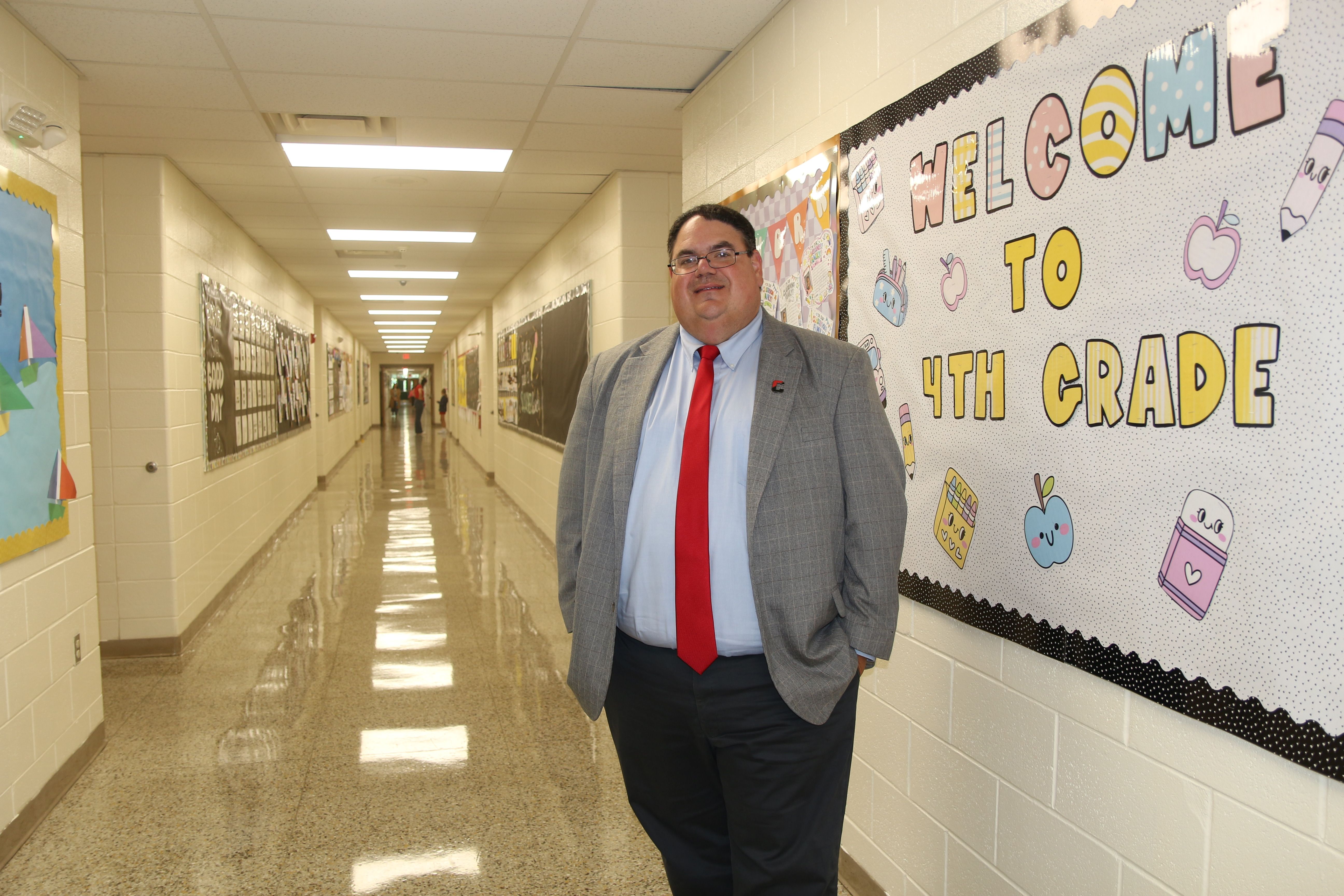
    Cinnaminson School District Superintendent Stephen Cappello has big plans for his South Jersey school system — if voters approve a $76 million bond referendum, the largest in the district’s history.

    It would allow the district to make desperately needed changes and improvements in all five of its schools. Voters head to the polls Tuesday to consider the proposal that would raise local property taxes.

    “This is a big one,” Cappello said in an interview. “This will be an important part of where we are moving forward.”

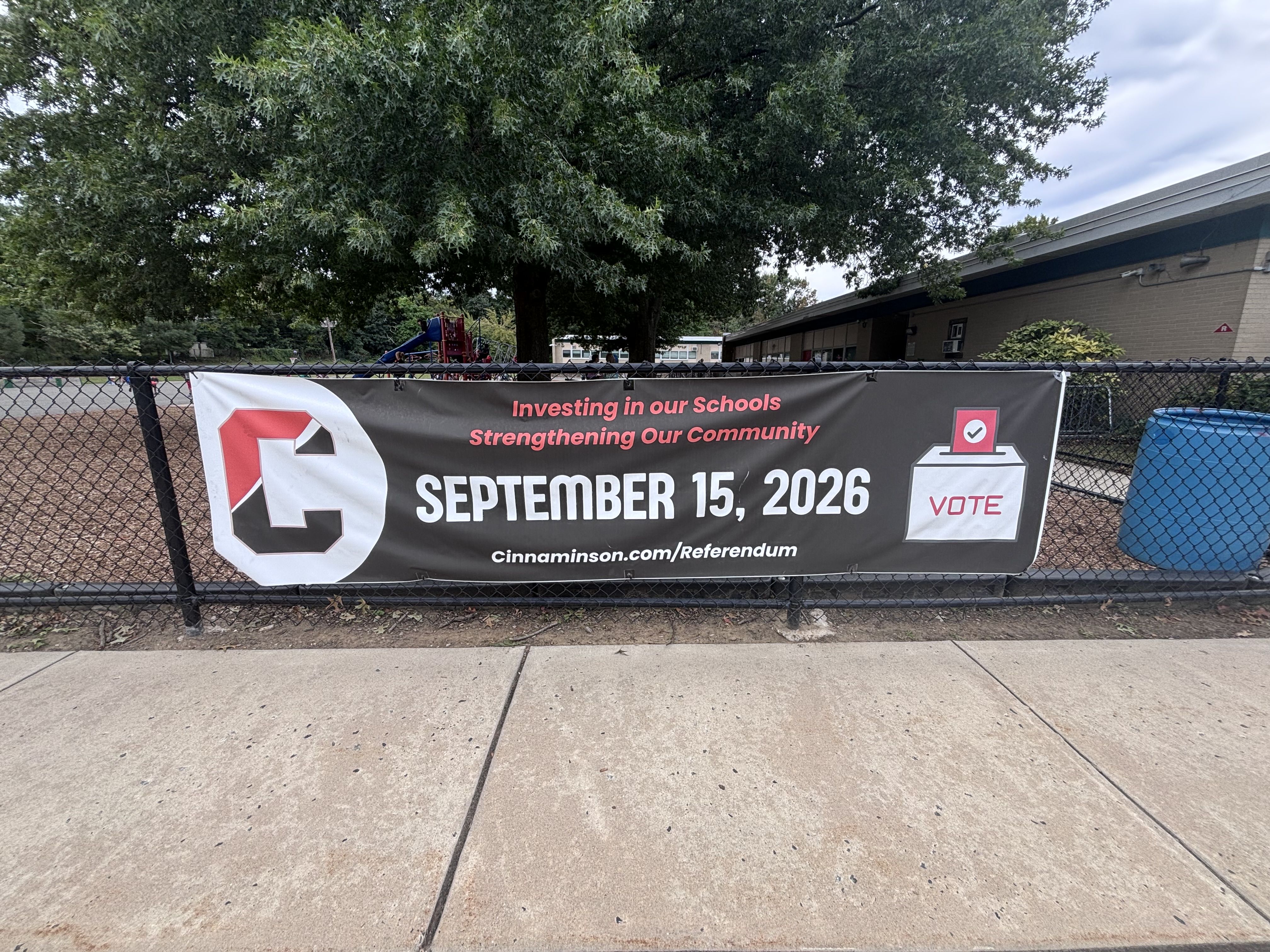
    Cinnaminson voters will decide on two school bond referendums totaling $76 million during a special election on Sept. 15.Melanie Burney

    If approved, it would help ease overcrowding at two elementary schools where some students attend classes in trailers, upgrade security systems, improve HVAC systems, and add new gyms and a high school stadium complex.

    Cinnaminson in Burlington County and Clementon School District in Camden County are the only districts in the tri-county region with bond referendums in Tuesday’s special election.

    Cappello acknowledged that referendum questions can be a tough sell especially amid tight economic conditions because they typically seek a property tax increase. Cinnaminson residents are still paying down a $40 million bond referendum in 2014 that added $238 annually to the average tax bill.

    The latest proposal, which includes two questions, would add about $560 annually on a home assessed at the township average of $236,538. The state would contribute $17.5 million.

    “No one takes those numbers lightly,” Cappello said. “We’re all sensitive about that.”

    Cappello said the Burlington County district has been struggling with crowding in light of a growth explosion in the township. The district has about 600 more students than it had a decade ago, he said.

    The district has spent millions to relocate students to six trailers the district calls “learning cottages.” It also leases space in a strip mall for administrative offices.

    “There’s instruction happening in hallways, which is not our favorite,” Cappello said.

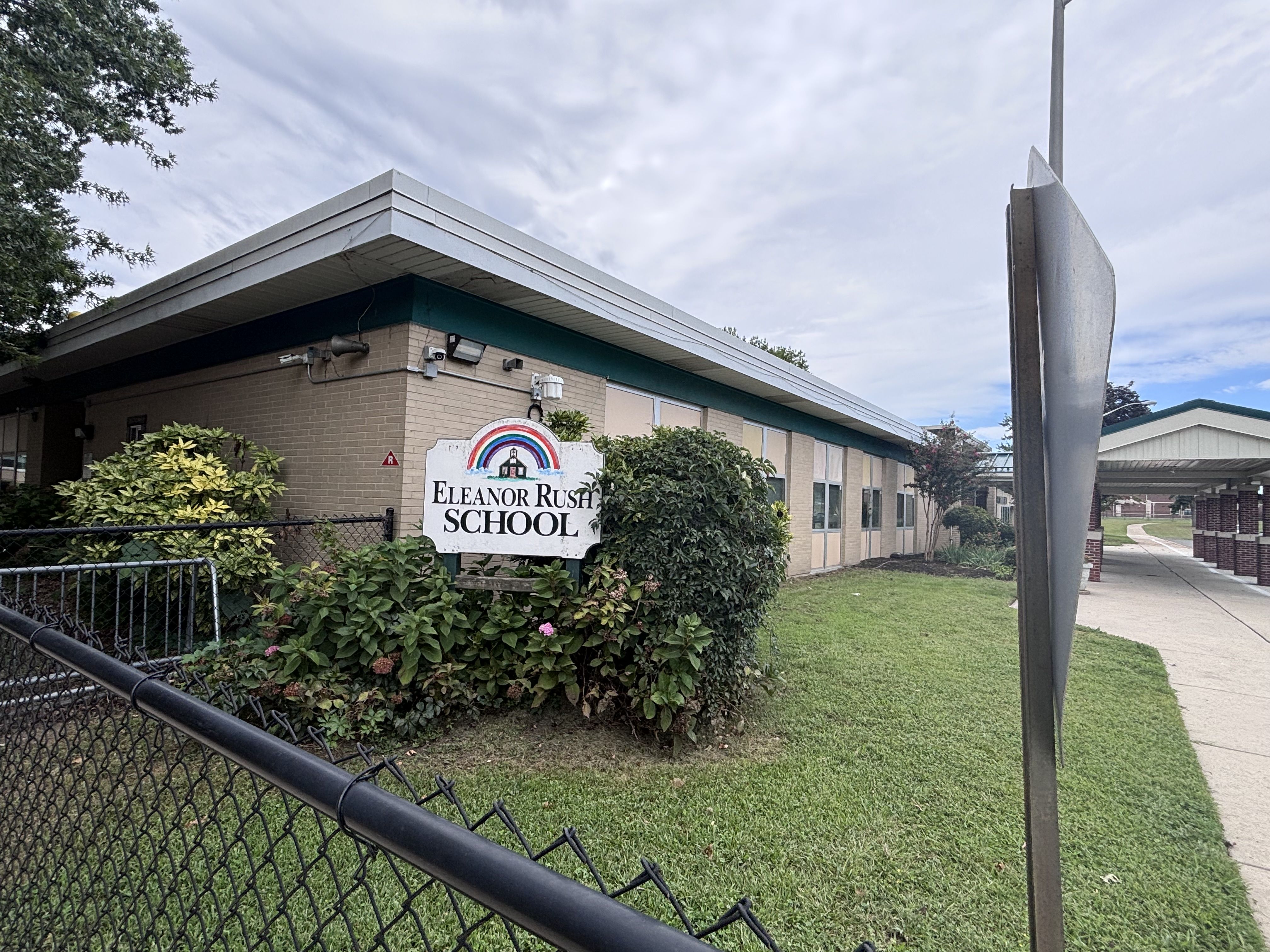
    The Eleanor Rush School would get eight new classrooms and other improvements if Cinnaminson voters approve a $76 million bond referendum on Tuesday.Melanie Burney

    The need is especially felt at Eleanor Rush Elementary where the all-purpose room is always bustling with activity. Because it is used for lunch, special classes including gym, music, STEM, and art cannot be held during the two-hour lunch period, presenting a scheduling challenge, Cappello said.

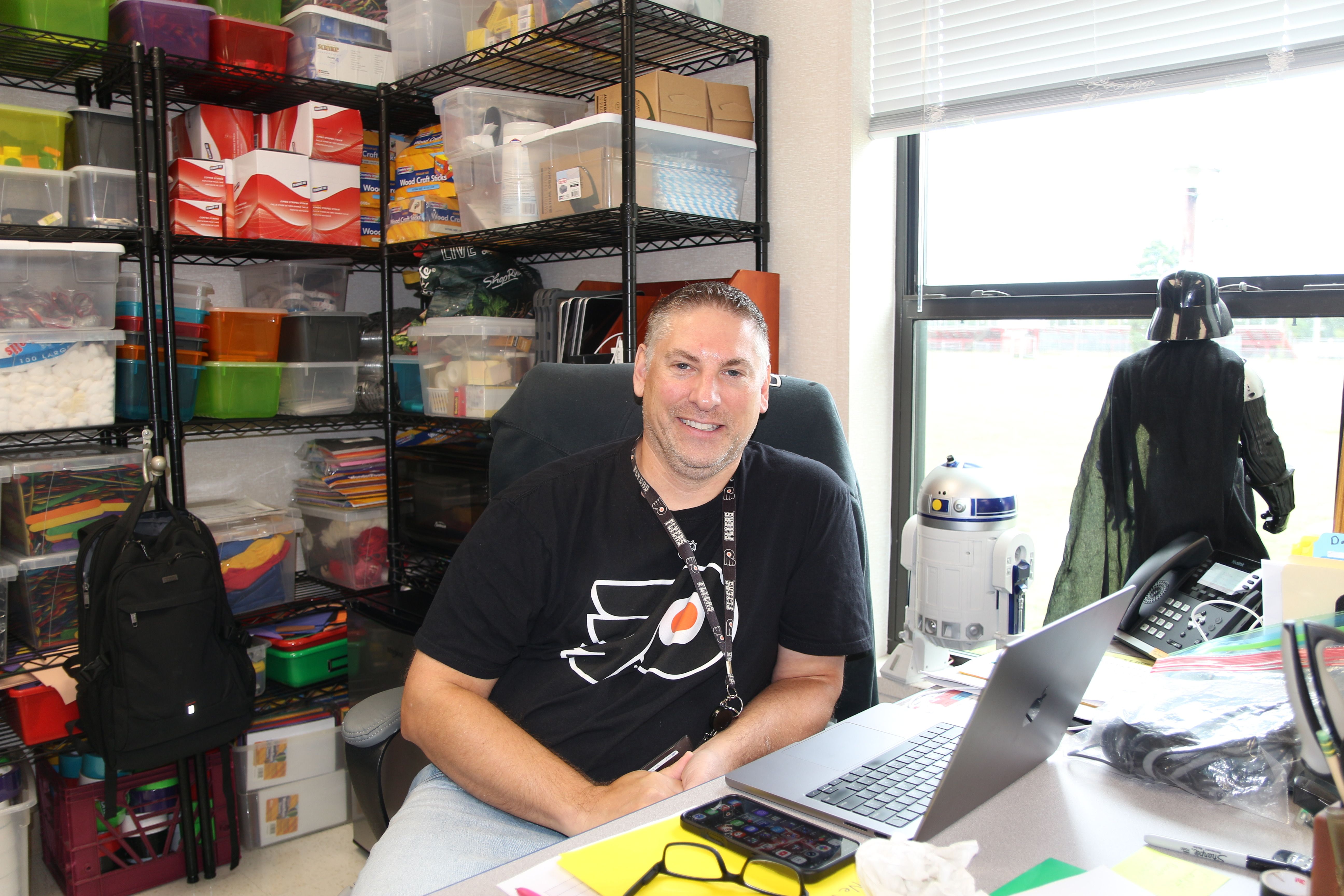
    Tom Angelone, a STEM teacher at Eleanor Rush and a father of three in the district, said the district desperately needs more space. His classroom is located in one of several trailers on the complex.

    Tom Angelone, a STEM teacher at Eleanor Rush Elementary.Melanie Burney

    “I think we need to support the future generation,” Angelone said. “I will be voting yes on both questions. It’s a cup of coffee a day.”

    Cinnaminson split its list of improvements into two bond questions. The first question includes a repaved parking lot at Memorial School, new fountains and renovated bathrooms at Eleanor Rush, six pre-K classrooms at New Albany School, a new esports arena and robotics classroom at the middle School, and a new roof and STEM lab at the high school.

    Voters must approve question 1 in order to adopt the second question. It would fund a new one-story pre-K addition with six classrooms and bathroom additions at Memorial, a new gym addition at Rush, and a new turf field and track and field replacements at Cinnaminson High.

    In Clementon, voters are deciding on a $13.5 million bond referendum to build a new early childhood center on a vacant lot. If approved, it would add about $243 annually to the tax bill for a home assessed at the borough average of $115,178.

    The new center would include eight classrooms, a multipurpose room, and a playground area, according to the district’s website. Pre-K enrollment is expected to nearly triple to about 135 students for the 2027-28 school year, the district said.

    An artist rendering of an Early Childhood Center proposed for the Clementon school district if voters approve a $13.5 million bond referendum in Tuesday’s special election.Clementon school disyrict

    By shifting its youngest learners, the district said it would use the vacated space for other grade levels and electives, and add a dedicated sensory room for special needs students. The pre-K classes were temporarily moved this year to a site in Lindenwold, the district said. Clementon enrolls 621 students in kindergarten through eighth grades.

    Statewide, voters in at least four other districts are considering 12 bond questions, according to the New Jersey School Boards Association. They allow districts to pay for projects that cannot readily be funded through their annual general operating budgets.

    Tuesday is one of five times during the year that school boards may ask voters to approve a bond issue or special question.

    The questions total more than $308 million with the state contributing about 40%, or roughly $122 million, if approved by local voters.

  • Reading Terminal Market’s efforts to prevent food waste get the attention of the EPA

    Reading Terminal Market’s efforts to prevent food waste get the attention of the EPA

    The Reading Terminal Market is often bustling with voices, crowded aisles, and populated hallways. But on Monday, the real motion was behind the scenes, among the trash cans and scraps.

    After two years of diverting as much food waste from landfills as possible, the market has managed to keep 1,045,931 pounds of organic waste from the trash fields.

    A pilot program began in April 2024, through a partnership with the composting service Mother Compost, and 10 of the market’s sellers. Now, as part of the celebrations for the nation’s 250th, the Environmental Protection Agency’s Feed it Onward program is highlighting initiatives that ensure food resources are redistributed instead of wasted.

    EPA officials toured the market’s facilities on Monday, getting a behind-the-scenes look at how the composting and other recycling and reuse programs work.

    “We are not just one organization championing for change, but more than 80 small, family-owned businesses under one roof who have the potential to make a difference,” said Annie Allman, Reading Terminal Market CEO and general manager.

    Kamal’s Middle Eastern Specialties is one of them. Its owner Adham Albarouki, has been in the market for 45 years and sees in the composting program a way for his juice bar to give back.

    “We produce about 15 to 30 pounds of waste per day. Being part of something a little bit bigger here we can contribute a lot more,” Albarouki said. “It’s something to give back to mother nature.”

    The process is easy, Albarouki said. He or his workers run the vegetables and fruits through juicers. The juice goes to the customers, while the peels, fiber, and leftover organics are taken to a merchants-only area.

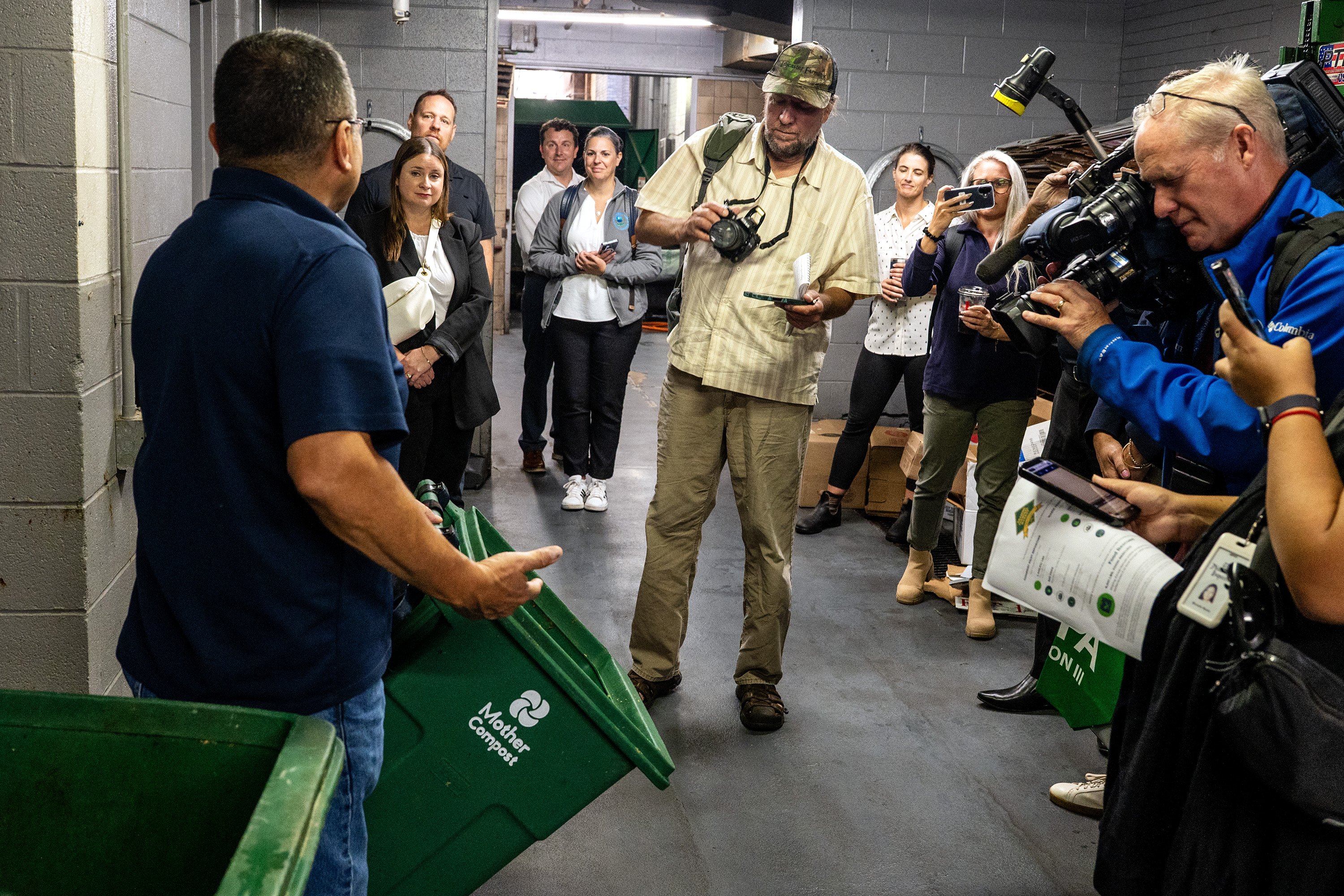
    Behind closed doors, 20 Mother Compost green trash cans are lined up, waiting to be fed scraps.

    Miguel Servellon (left), assistant general manager at Reading Terminal Market, gives merchants, EPA officers, and news media a behind-the-scenes tour of the market’s food waste diversion operations and sustainability programs on Monday. The green bins are from Mother Compost, a local, woman-owned pickup service, that composts organic materials to keep food scraps out of landfills and return their nutrients to local soils.Tom Gralish / Staff Photographer

    Miguel Servellon, the market’s assistant general manager, runs a tight machine to ensure the compost doesn’t get contaminated.

    On Monday morning the cement room smelled like orange peels, as one trash can had already been loaded with the citrusy scraps ahead of an early pick up, Servellon said.

    Fruit and vegetable peels, meat, eggs, cheese, milk, coffee grinds, and even fish all go inside the green containers.

    “The smell is not so inviting; occasionally it can be a challenge,” Servellon said.

    The organic waste is layered on top of each other.

    Mother Compost takes as much as 1,300 pounds of composting per pickup, which happen three times a week, Servellon said. The waste then goes to be repurposed at Linvilla Orchards, in Delaware County.

    But organic waste is not the only thing being recycled.

    At the other end of the room, two big gray containers sat full of vegetable oil waiting to be picked up by LifeCycle Renewables.

    Since 2022, the market has gathered 100,209 gallons of oil from sellers to be used as heating fuel in commercial buildings, Allman said.

    And since 2023, the nonprofit Sharing Excess has been working with the market’s sellers to redistribute surplus food.

    Earlier this year, Sharing Excess got its own fridge inside the market where sellers can deposit their donations to be redistributed in places with food insecurity.

    “We come by five days a week, and our driver weights them and tracks who donated each so we can give them their proper tax credit,” said Braden Walper, Sharing Excess retail rescue manager.

    The food goes to stock food pantries and provides as much as 100 meals a day for people experiencing food insecurity, Walper said.

    These Reading Terminal Market programs are crucial to inspire businesses across the region to reuse and recycle their food, said EPA Mid-Atlantic regional administrator Amy Van Blarcom-Lackey.

    “More than one million pounds diverted from landfills is an impressive milestone, but what really stands out to me is how the merchants made these practices part of their everyday operations,” Van Blarcom-Lackey said. “It’s important to continue because it’s good for the community and better for the environment.”

  • Nobel Peace Prize winner and Eagles fan Malala Yousafzai attends her first game

    Nobel Peace Prize winner and Eagles fan Malala Yousafzai attends her first game

    On Sunday, Nobel Peace Prize-winning activist Malala Yousafzai was spotted at Lincoln Financial Field with her husband, Asser Malik, for the Eagles’ season opener against the Washington Commanders.

    According to a team spokesperson, the Eagles leadership invited the education activist and her husband to attend the game.

    Malala Yousafzai visiting an Ethiopian classroom as part of the Higher Education Readiness (HER) programMalin Fezehai

    Fans took to social media to post images of Yousafzai in the stands, donning a custom Eagles jersey with her last name stitched on the back.

    She quote-tweeted an X post of her pictured on the jumbotron with the caption, “GO BIRDS 🦅.” .

    On Monday, she made an Instagram post of her wearing her a custom Birds jersey and matching hat, and enjoying the home opener with Malik from their seats near the 50-yard line.

    Last October, Yousafzai visited Philadelphia on the book tour for her memoir, Finding My Way, where she was in conversation with Kylie Kelce.

    “I’m really excited to be in Philadelphia,” the cricket fan had said to The Inquirer, “and open to going to an Eagles game. I don’t think I’ve been to any of the games.”

    At the book event, encouraged by Kelce, Yousafzai joined the live audience for an Eagles chant. She later posted a picture of herself hugging Kelce on Instagram, with her husband and former Eagle Jason Kelce smiling in the corner of the photo.

    Last December, Yousafzai posted a picture of herself wearing an Eagles jersey during her travels with Malik, who is a former executive with the Multan Sultans, a Pakistani professional cricket team. The team’s primary color, coincidentally enough, is also green.

    Judging by the online reaction, Yousafzai, the youngest person to receive a Nobel Peace Prize,was welcomed into the Eagles fold.

    “You deserve a 2nd Nobel Prize for bringing a peaceful approach to Eagles fandom!,” one X user commented.

    Yousafzai’s first visit to Philly was in 2014, when she received the Liberty Medal at the National Constitution Center.

    In April, she rolled back into Philly to receive WHYY’s Lifelong Learning Award, where she also gave a Birds shout-out.

    “I just want to say one thing to Philly. Go Birds,” she said to the crowd.

    Now that she witnessed the Eagles’ victory over Washington on Saturday, she might just be saying that a lot more.

    Reporter Rob Tornoe contributed to this article.

    An earlier of the article misstated details of Malala Yousafzai’s Eagles jersey. She wore one with her last name on it.

  • Pa., N.J., and other states reach settlement that limits Trump changes to AmeriCorps

    Pa., N.J., and other states reach settlement that limits Trump changes to AmeriCorps

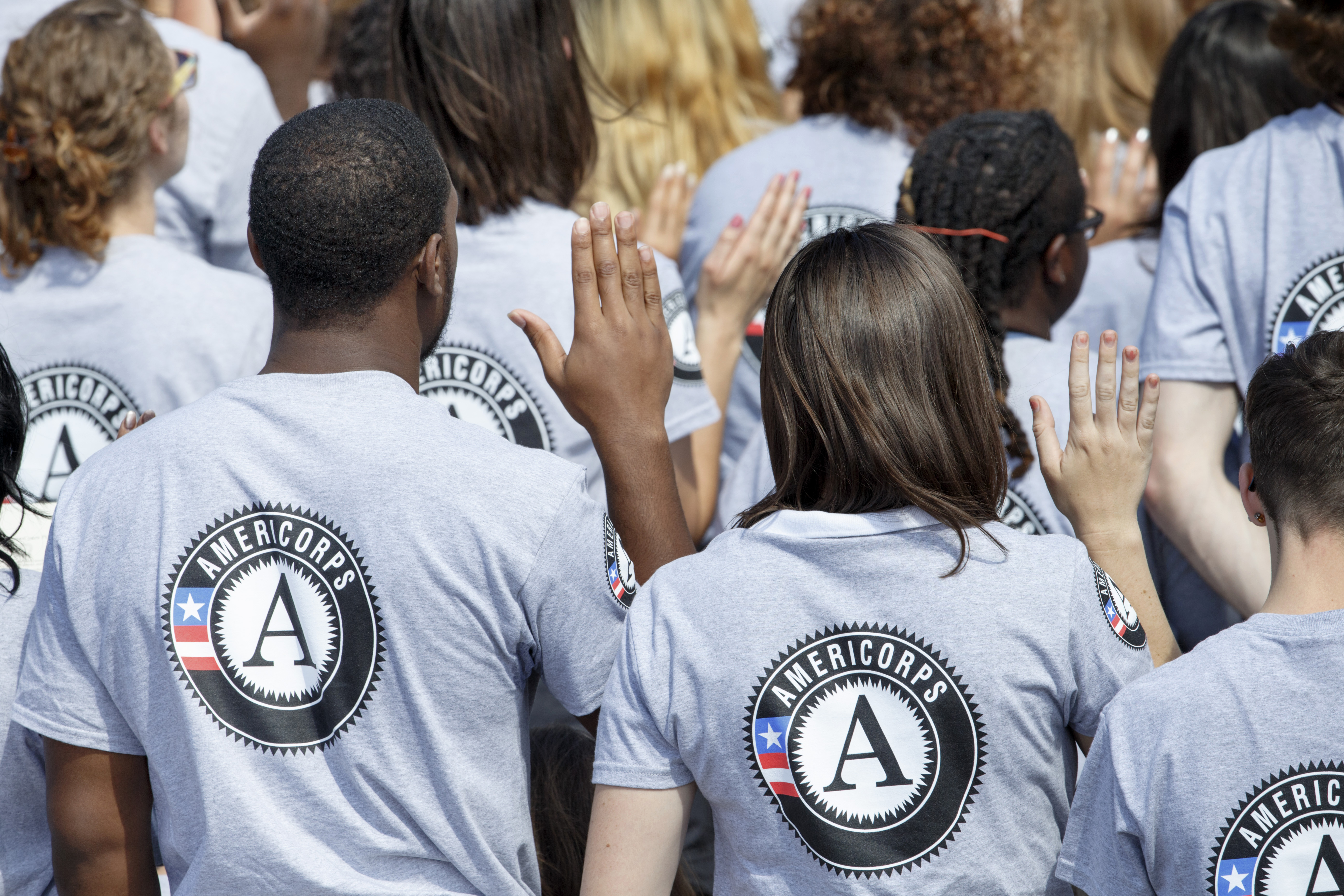
    Pennsylvania Gov. Josh Shapiro and 24 other state leaders have reached a settlement in a federal lawsuit that keeps President Donald Trump’s administration from making significant changes to AmeriCorps without prior warning and justification.

    The settlement announced last week stipulates that AmeriCorps must provide at least 30 days’ notice before making changes to its services, and protects funding for the organization through fiscal year 2026. The settlement comes more than a year after Shapiro and other governors and state attorneys general challenged a 2025 move to discontinue about $400 million worth of AmeriCorps programs and wipe out a vast majority of the organization’s staff.

    Created in 1993, AmeriCorps is a federal community service program that oversees thousands of volunteers, and acts as a domestic version of the Peace Corps. It provides services that include natural-disaster relief with the Red Cross, building homes with Habitat for Humanity, and providing instructors in underserved schools.

    The lawsuit’s outcome, Shapiro said in a statement, protects “critical funding the Commonwealth relies on to help communities respond to natural disasters, support seniors and veterans, keep our trails clean, and teach children to read.”

    Previously, a federal court ordered the Trump administration to reinstate the terminated AmeriCorps programs, and the Office of Budget Management agreed to release about $184 million in funds to programs around the country, said New Jersey State Attorney General Jennifer Davenport in statement. Davenport, who is part of the coalition of lawmakers in the lawsuit, said AmeriCorps members work “as critical volunteers in our communities.”

    “While this disruption never should have happened in the first place, I am pleased that by uniting together, states were able to not only stop these unannounced and drastic cuts to these important programs, but also to take steps to prevent this from happening again,” Davenport said.

    The lawsuit was filed in April 2025, after the Department of Government Efficiency recalled hundreds of members of the organization’s National Civilian Community Corps and placed a majority of its federal employees on administrative leave. DOGE also ordered AmeriCorps to terminate grants to more than 1,000 community service programs nationwide, including several in Pennsylvania.

    Now, under the settlement, AmeriCorps has said that it “does not anticipate mass terminating grants on a scale comparable to what happened in Spring 2025,” or conducting mass layoffs during fiscal year 2026. If those actions, among others, were to take place, it must provide the coalition of state lawmakers who brought the lawsuit with at least 30 days’ notice, and explain its legal authority to make the changes.

    Additionally, the settlement pauses litigation in the lawsuit through February, after which point the case will be dismissed so long as the terms of the agreement are upheld, Shapiro’s office said in a statement.

    In Pennsylvania, PennSERVE is the designated state service commission for AmeriCorps, and it distributes about $16 million in federal money annually to more than two dozen programs, Shapiro’s office said. There were 655 active AmeriCorps volunteers serving in 41 counties across the state at time the grant terminations were announced.

    “The federal government made a commitment with the Commonwealth of Pennsylvania to support these programs,” Shapiro said. “It’s my job as Governor to protect the interest of Pennsylvania taxpayers — and this settlement agreement ensures that these programs are protected for another year.”

  • Pope Leo will present Villanova University’s first-ever sustainability medal to a cardinal who founded an AIDS network

    Pope Leo will present Villanova University’s first-ever sustainability medal to a cardinal who founded an AIDS network

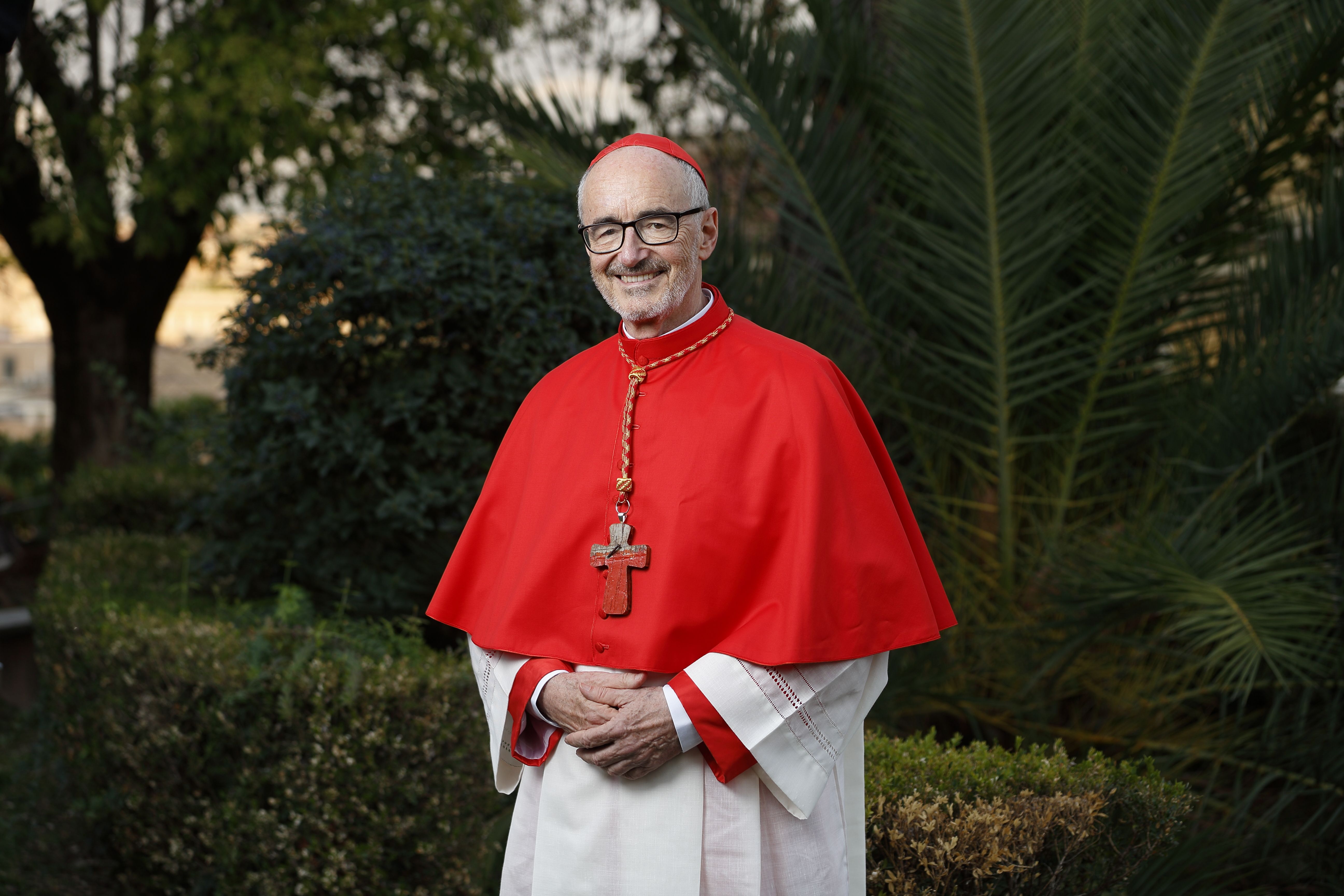
    A Czechoslovakian-born cardinal who is based at the Vatican will receive Villanova University’s inaugural sustainability medal for his work “at the intersection of human dignity, social justice, care for vulnerable communities and care for creation,” the university announced Monday.

    Pope Leo XIV, a Villanova alumnus, will present the medal named for him to Cardinal Michael Czerny on Oct. 13 at the university’s international sustainability conference in Italy.

    Villanova established the award earlier this year to honor someone whose work shows “exceptional commitment to ecological responsibility, social justice, care for the most vulnerable and responsible stewardship of economic and human resources.”

    The award is in part inspired by Pope Leo’s call to serve the poor and marginalized, said the Rev. Peter M. Donohue, Villanova’s president, who announced the winner at a news conference in Rome. Taking care of the environment and the poor are inextricably linked, Villanova said.

    “The Medal reflects a deeply held belief at Villanova: care for our common home and care for one another are inseparable,” Donohue said in a statement. “Cardinal Czerny’s work has shown us that care for creation cannot be separated from care for people.”

    The medal features Pope Leo on one side and Villanova University’s name on the other and is meant to highlight the pope’s commitment to sustainability, the school said. The winner can come from any field or discipline and is selected by a committee of members of the university’s Sustainability Leadership Council.

    The medal carries a $25,000 award to be used toward continued work in sustainability, the university said.

    Born in 1946 in the former Czechoslovakia, Czerny, 80, moved to Montreal with his family as a small child. His mother was Jewish and the family had converted to Catholicism, but several members of his family had died at the hands of Nazis, according to the National Catholic Reporter, which featured an article on Czerny in 2022.

    “My mother’s family — both parents and two brothers — were also Catholic but shared the Jewish origins that the enemy abhorred,” Czerny said in a homily, quoted by the National Catholic Reporter. “My maternal grandmother Anna, my grandfather Hans and my uncles Georg and Carl Robert, were all interned in Terezín, where Hans died… My grandmother and uncles were transported to Auschwitz. From here my uncles were sent to labor camps and eventually murdered there.”

    His mother and father were forced to work as farm laborers because of her Jewish ancestry and his unwillingness to divorce her.

    Czerny became a Jesuit priest in 1973 and got a doctorate in human sciences, social thought and theology from the University of Chicago in 1978. He was named a cardinal by Pope Francis in 2019.

    Over the last five decades, his work was focused on helping vulnerable people worldwide, the university said. In 1979, Czerny founded and led a center for faith and social justice in Toronto. He volunteered to be based in El Salvador during the country’s civil war, and from 2002 to 2010, he worked in Africa and founded the African Jesuit AIDS Network in Kenya.

    “That organization he led brought in a lot of hope,” said the Rev. John Abubakar, Villanova’s chief sustainability officer, who is from Nigeria. “It made a massive, massive influence or difference in the lives of people.”

    From 2022 until Sept. 1, Czerny headed the Vatican’s Dicastery for Promoting Integral Human Development as Prefect, a role in which he led the Church’s work on justice, migration, health and care for creation. Pope Francis in 2022 sent him to Slovakia to greet refugees fleeing Ukraine following the Russian invasion.

    Czerny said he was grateful for the medal and the honor it brings.

    “What’s most important I think is the commitment the university is making to include sustainability in how it is forming the future leaders of our church and in this case the United States,” he said in a video on the Vatican news site.

  • America needs responsible leadership on AI development. It has Trump instead. | Editorial

    America needs responsible leadership on AI development. It has Trump instead. | Editorial

    Another cry for help came from the billionaires building the artificial intelligence machinery that threatens to upend — if not end — the world: Save us from ourselves before it is too late!

    Dario Amodei, the head of Anthropic, the company behind the Claude chatbot, posted a 3,800-word essay over the weekend that called for a global slowdown in the development of AI because the risk to humanity outpaced the benefits.

    Other leading Big Tech masters of the universe offered half-hearted endorsements for a slowdown, including SpaceX’s Elon Musk, OpenAI’s Sam Altman, and Google DeepMind’s Demis Hassabis.

    Amodei’s plea came just days after an Anthropic researcher quit over safety concerns and issued a grave warning that the technology has more than a 10% chance of killing all humans.

    “Do not underestimate the power of this technology,” Jacob Coxon wrote in a lengthy social media post. “These will soon be superhuman systems that can hack anything, revolutionize any field overnight, and acquire real power and resources … The people building AI earnestly believe that it could kill us all by the end of the decade.”

    Coxon’s warning echoes previous alerts in recent years, including from Geoffrey Hinton, the Nobel Prize-winning computer scientist known as the godfather of AI. Hinton quit Google last year and warned the technology could lead to human extinction.

    Some argue the AI apocalypse is overblown. But the AI threats also include the spread of misinformation and cyberattacks on power grids, the internet, financial systems, research labs, and a host of other industries that could disrupt everyday life.

    Even if used appropriately, AI is already impacting huge swaths of the job market and leading to increased inequality — an issue Pope Leo XIV warned about in May.

    Some critics speculated that the call for a slowdown is a ploy by the big AI developers to block smaller competitors from entering the development race. Indeed, if the AI concerns are as real as advertised, there is nothing to stop the developers from hitting the brakes and implementing their own safeguards.

    That would be the obvious and responsible thing to do.

    But don’t look for profit-driven tech moguls to act responsibly. Just look at how social media giants like Facebook, Instagram, and X have allowed hate and misinformation to spread, fueling mental health issues and destabilizing democracies.

    One of the big challenges is trying to get competing AI companies to all agree on safeguards. And then getting other countries, especially China, to get on board.

    King Charles III of Britain showed how to lead when he announced plans to bring together leading AI executives and other government officials to discuss how the fast-growing technology can be used as a force for good.

    Some of the reforms Amodei of Anthropic called for include independent auditors to check the companies for safety standards and urged global cooperation in creating rules around AI development.

    This is not a new call for regulation. Three years ago, executives at OpenAI, Google, and Microsoft endorsed the idea of a voluntary “AI pact,” or a digital regulatory agency that could ensure safety standards.

    Amid the gathering storm, Washington remains asleep. So far, it seems the only thing Congress has demanded of Big Tech is big money. Expecting legislators to develop meaningful AI regulations in a timely fashion is a herculean challenge.

    But, if anything, the biggest obstacle to the much-needed AI leadership, common sense, and doing what is best for humanity remains Donald Trump.

    On his first day back in office last year, Trump rescinded former President Joe Biden’s executive order aimed at safeguarding AI technology. Despite bipartisan public opposition, Trump remains a big cheerleader for data centers needed to power AI development.

    (At the same time, Trump has been working hard to undo efforts to combat climate change — the other existential threat to humanity. Trump’s Environmental Protection Agency just repealed limits on greenhouse gas emissions.)

    Trump just as quickly dismissed calls from AI executives to rein in their own industry. In a manic social media post, Trump claimed without evidence that there was a “SICK conspiracy” against AI and data centers.

    Trump said the only AI guardrail the country needs is “a STRONG AND SMART (High IQ!) PRESIDENT.”

    If only we had one.

  • Philly Parks and Rec leader approved the unpermitted work at an FDR Park field

    Philly Parks and Rec leader approved the unpermitted work at an FDR Park field

    Parks and Recreation Commissioner Susan Slawson said she approved renovations to FDR Park’s Ashburn Field without required state permitting because she wanted renovations to be complete by the MLB All-Star Game.

    The missing permit was designed to address erosion control and stormwater release at the site.

    “We were mindful of the waterways and natural areas within FDR Park,” Slawson said of the decision. “All erosion and sediment controls were in place during construction, and safety was never an issue.”

    Slawson told WHYY last week that approving projects without proper permits is not how the department “typically” handles projects, but she allowed the work to proceed “to accommodate the MLB All-Star Game.”

    Typically, state law supersedes city approvals.

    The city’s parks department actively manages “the natural areas within FDR [Park] to protect water quality and support healthy natural systems while balancing the park’s important role in active recreation,” Slawson said.

    Missing permits

    In the lead up to the MLB All-Star Game, which took place in July at Citizens Bank Park, the MLB and the city partnered to renovate the 28-year-old Ashburn Field.

    A ribbon-cutting ceremony was held July 10, just days ahead of the All-Star Game, to show off Ashburn’s new synthetic turf field and an updated drainage system to reduce flooding.

    However, as first reported by The Inquirer last month, the Phillies and the city did not receive a required permit from the state’s Department of Environmental Protection. The permit was designed to address erosion control and stormwater release at the site.

    The Phillies applied for the permit May 13, according to the Department of Environmental Protection’s website. Nearly two weeks later, the department sent the Phillies a letter denying the permit, citing 32 issues the team would need to address before receiving the permit to continue renovations. That letter noted that final plan drawings had not been submitted, other drawings failed to include the project’s boundary, and not all water discharge areas were noted.

    A local engineering firm hired by the Phillies responded in June to the May letter.

    On July 7, the Department of Environmental Protection sent another letter to the Phillies noting technical deficiencies. It sent another letter July 24, about two weeks after the ribbon cutting, noting an outstanding deficiency and advising the Phillies to resubmit information in coordination with the Philadelphia Water Department.

    What’s next

    Bonnie Clark, a spokesperson for the Phillies, said the team met with the Water Department last week and was continuing to remedy issues to obtain the permit.

    The permit is still pending on the Department of Environmental Protection website. DEP spokesperson Robyn Briggs declined to comment on possible enforcement actions or penalties as internal deliberations continue.

  • USWNT star Catarina Macario will miss upcoming Subaru Park friendly with season-ending injury

    USWNT star Catarina Macario will miss upcoming Subaru Park friendly with season-ending injury

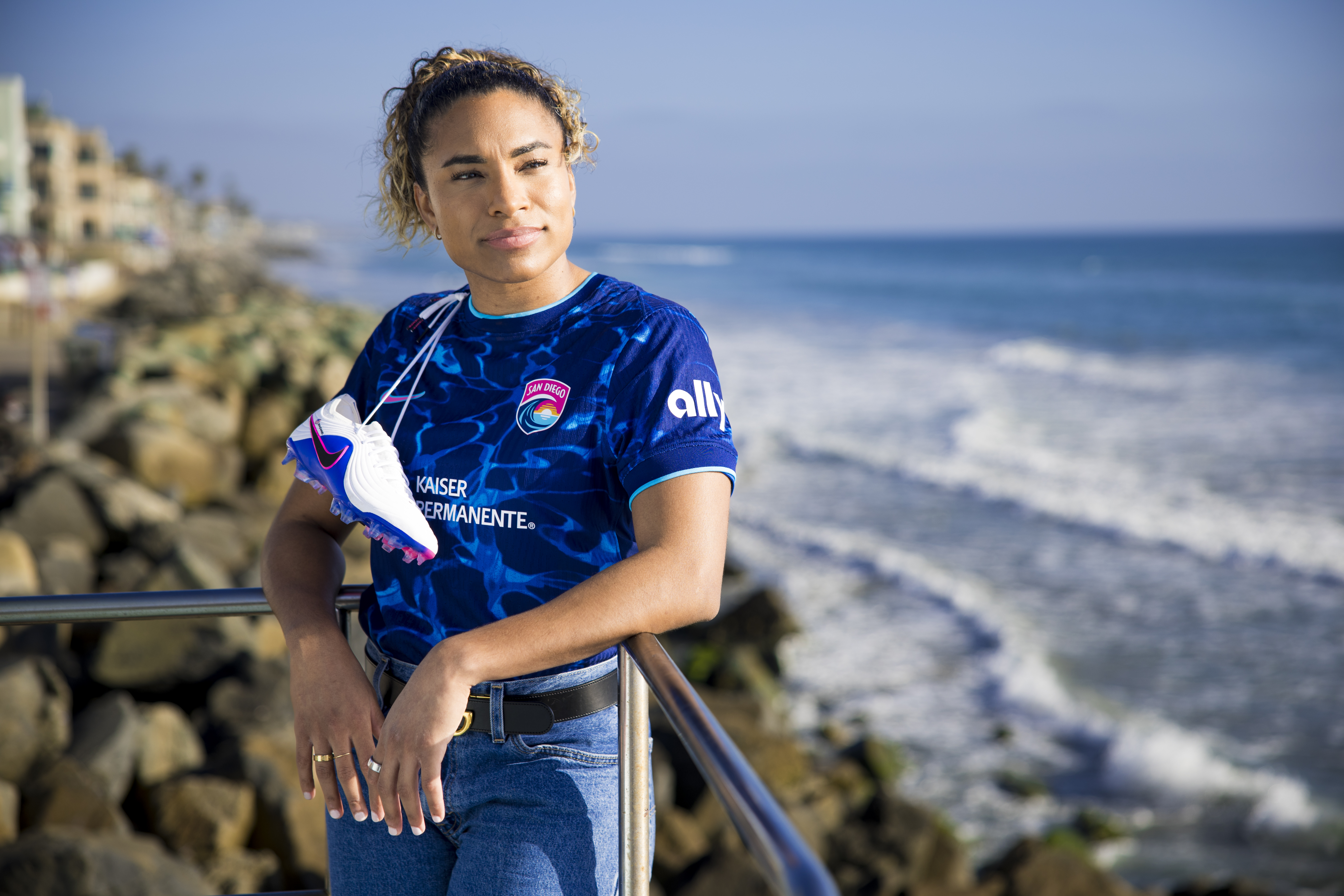
    Ever since Catarina Macario joined the NWSL’s San Diego Wave in March, fans across the league have anticipated seeing her play as a pro on these shores for the first time.

    It hasn’t happened yet because of a heel injury that has sidelined her for the entirety of this calendar year. And now the wait is going to last even longer, because the Wave announced Monday that she has been placed on the season-ending injury list.

    She also revealed in a statement on Instagram that “a few months ago,” she “underwent a minor procedure to properly address an ongoing issue” in her right knee.

    “I worked incredibly hard with the hope of making it back this season, but ultimately doing this the right way meant keeping the bigger picture in mind,” Macario said.

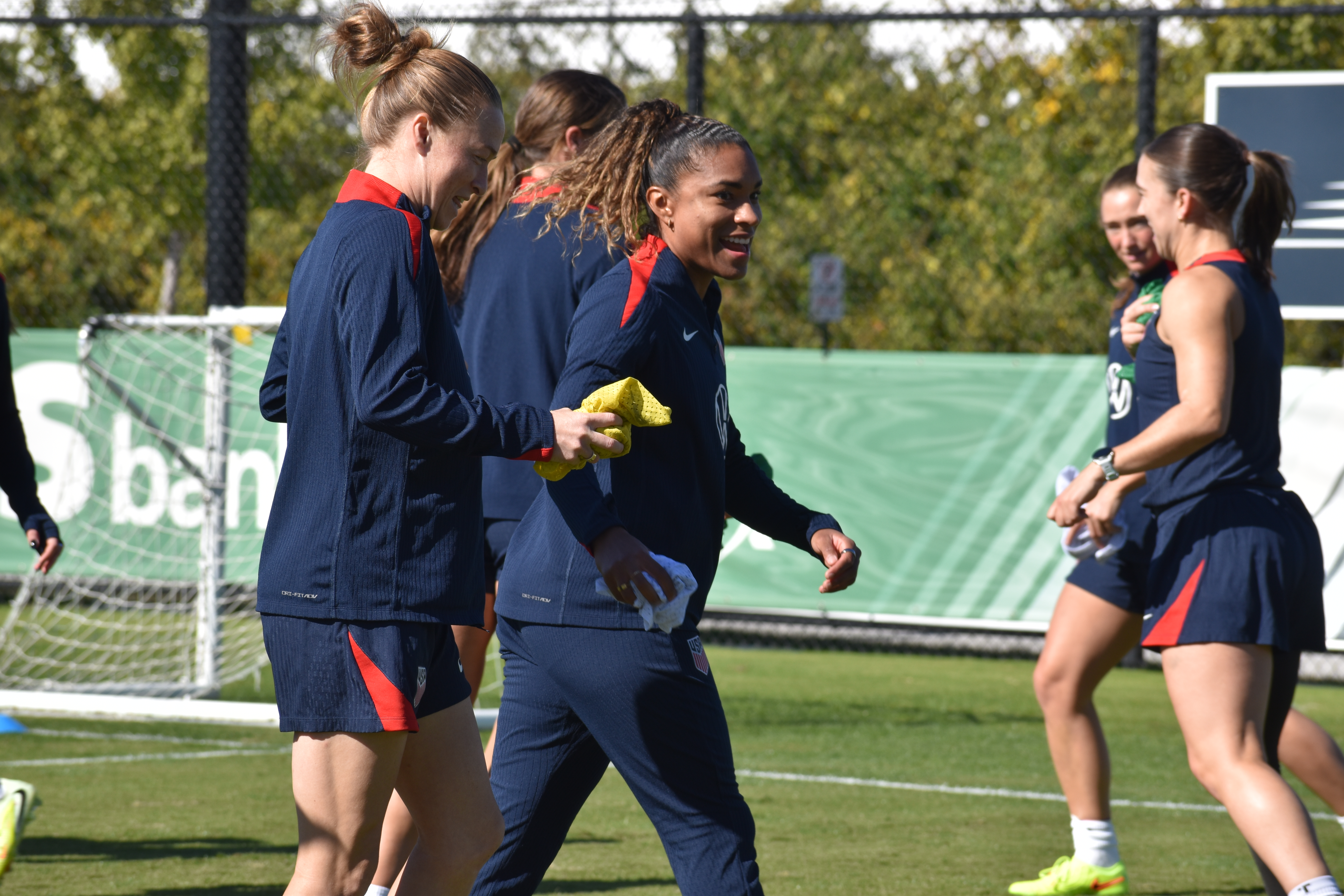
    Catarina Macario (center) with the U.S. women’s team for a game in Chester last fall. She will miss the team’s visit next month.Jonathan Tannenwald

    Along with her NWSL year being over, Macario is out of the United States’ much-anticipated series against Spain next month, a matchup of the reigning Olympic and World Cup champions, in Washington on Oct. 10 and at Subaru Park on Oct. 13.

    The 26-year-old, who grew up in San Diego after moving from Brazil with her family at age 12, is one of the U.S. program’s best talents. When healthy, she is as much of a difference-maker as fellow superstars Rose Lavelle, Trinity Rodman, and Sophia Wilson — with the bonus of being able to play as a forward or attacking midfielder.

    Macario has only been able to show it in flashes for her country. She missed the 2023 World Cup with a torn ACL, and the 2024 Olympics with a knee issue.

    When she finally got on the field last year, she led the U.S. with eight goals in 10 appearances. It seemed like she was finally on track to blossom into the star that so many observers hoped she’d become.

    Before coming to the Wave, Macario rose from the renowned San Diego Surf youth club to college at Stanford, where she was such a star that she turned pro after her junior year with French superpower Lyon.

    She spent two years there, then moved to England’s Chelsea, where she was coached by current U.S. manager Emma Hayes.

    The Wave swung big to bring Macario home, signing her to a five-year deal worth $8 million, one of the biggest contracts in women’s soccer history.

    “We made a significant long-term commitment to Cat because we believe in her ability to make a lasting impact on this club,” sporting director Camille Ashton said Monday.

    Catarina Macario’s move to the San Diego Wave in March was a big win for the NWSL.San Diego Wave FC

    Macario, in turn, was ready for the spotlight.

    “To be completely honest, it [stinks] to find myself in this position again,” she said. “There’s no way around how difficult it is to go through another rehab and spend more time away from the game I love. I miss football, I miss competing, and after coming home to San Diego, I wanted nothing more than to be out there with my teammates, representing this club and this city.”

    Now everyone must wait until next year, and hope that she’ll be ready for the World Cup — which Brazil will host, no doubt making it even more significant for Macario specifically.

    “As difficult as that is to accept, I know what I’m working toward,” Macario said. “More than anything, I want to get back to feeling fully like myself again: playing freely, without feeling limited, and giving the best of me for a long time to come. For now, that means being patient, trusting the work we’re doing, and continuing to build toward what’s ahead.”

    U.S. fans are also sweating on two other big-time players in the midst of long-term injury rehabs, bright young midfielder Olivia Moultrie (torn ACL in August) and veteran defender Emily Sonnett (torn patellar tendon in July). They will cut it close to make the World Cup at all.

    But if Macario’s rehab goes to plan, she could be back on the field early next year.