Tag: topic-link-auto

  • New warnings about the risks of AI to humanity revive a long-running debate

    New warnings about the risks of AI to humanity revive a long-running debate

    LOS ANGELES — New warnings from within the artificial intelligence industry have revived a long-running debate over whether advanced AI could escape human control and ultimately threaten humanity’s survival, and whether the companies developing the technology are doing enough to prevent such a scenario.

    The CEO of Anthropic, the San Francisco company behind Claude, said he thought the industry needed to reduce the speed of its work, cautioning Saturday that a swarm of AI agents might be able to take over the internet in six months to a year unless companies devoted more time to putting safeguards in place.

    Dario Amodei outlined a plan for companies like his and governments around the world to ensure that increasingly capable AI models remain aligned with the commands and values of responsible people days after two former Anthropic safety researchers publicly aired concerns that the existential threats AI might pose to humanity were receiving too little attention.

    Here’s what to know about the recent dire predictions and whether any brakes might be put on AI advancement:

    AI models are becoming more powerful

    Concerns over the potential risks of the technology are rising as new AI models become more powerful, heightening both the potential for misuse by people with criminal aims, such as creating and spreading a disease that kills most of the world’s population, and the risk of AI systems going rogue in a dangerous way.

    Anthropic disclosed last week that it blocked efforts by bad actors to use its AI models for malicious activity, such as cyberattacks, surveillance and research that could have led to biological weapons.

    The company said it put stronger safeguards in its latest models to restrict biological research that could be used to make weapons but noted that “as models become increasingly capable, their risks will increase, unless AI developers and society’s defenders act to make them safer.”

    Last year, Anthropic reported that hackers used the company’s AI in a cyberattack targeting about 30 companies and government agencies around the world. It said the hackers were very likely from a Chinese state-sponsored group.

    Multiple AI models have acted on their own

    When an AI agent “goes rogue,” it means the AI has taken action beyond the task it was asked to perform. Both Anthropic and OpenAI, the maker of ChatGPT, said in July that their AI models had succeeded in acting on their own.

    Anthropic disclosed that three AI models — Claude Opus 4.7, Claude Mythos 5 and an internal research test model — hacked into three other organizations during testing just days after OpenAI revealed that its AI system hacked into the servers of AI startup Hugging Face.

    OpenAI described the intrusion by a combination of models, including its newly released GPT‑5.6 Sol and an “even more capable” model that was still being tested internally, as a “significant security incident.”

    Meta followed suit in early August with a similar case of an AI model finding ways around another company’s digital security.

    Although some observers noted that people had disabled some guardrails in the OpenAI and Anthropic cases, the episodes seemed to reflect one of the biggest fears around AI: that if models achieve artificial general intelligence, or AGI, a loosely defined term for AI that can match or surpass human abilities across a broad range of intellectual tasks, the technology could cause an irreversible catastrophic event or subjugate the human race.

    How or when AI might cause a catastrophe is debated

    Doomsday scenarios generally fall into two categories: An AI that achieves self-improving superintelligence controls people instead of vice versa, or AI used by a rogue state or nefarious actors.

    Worries that artificial intelligence might overcome human limits on its reach or actions are not new.

    Alan Turing, a British mathematician widely regarded as one of the earliest authorities on artificial intelligence, predicted in 1951 that AI would eventually take control from humans. Less than a decade later, Norbert Wiener, another mathematician, warned intelligent machines would seek to accomplish their own objectives and humans would not be able to stop them.

    In 2026, how reasonable are fears that AI, either by escaping human control or through misuse by unscrupulous people, could cause a cataclysmic event or the downfall of civilization?

    No one knows.

    Experts across computer science, philosophy and other fields have envisioned numerous routes by which a future AI system might cause a global catastrophe, either by escaping human control or in the hands of an unscrupulous people. They range from deploying weapons and identifying a lethal pathogen to manipulating governments into conflict or disrupting the food, energy and communications networks societies rely on to function.

    There is no widely accepted estimate for how soon any of these scenarios might happen and no consensus on their likelihood.

    In 2023, the nonprofit Center for AI Safety issued a statement cosigned by more than 350 researchers and technology executives, including Anthropic’s Amodei and OpenAI CEO Sam Altman, saying: “Mitigating the risk of extinction from AI should be a global priority alongside pandemics and nuclear war.”

    The 2026 International AI Safety Report, written with guidance from more than 100 independent experts, says current systems show early signs of some relevant capabilities but not at levels that could enable a loss of control, and describes the risk’s likelihood, nature and timing as “unusually ambiguous.”

    Some are stressing the need for AI safeguards before it’s too late

    An Anthropic researcher said last week he was resigning from the company over concerns that neither the company nor its competitors were acting responsibly in developing the technology. In social media posts, Jacob Coxon estimated a 10% chance of AI causing human extinction within the next decade and said both Anthropic and OpenAI “are racing straight to self-improving superintelligence and gambling with our lives.”

    Researchers have called for a slowdown of AI development and warned for years that the technology could pose existential risks to humanity.

    Following the recent incidents, experts called for improved testing by AI companies and more dialogue between the U.S. and China to come up with shared solutions.

    But AI is growing so fast that government and evaluation systems are struggling to keep pace with the technology. Countries are cobbling together their own laws, some conflicting.

    Chinese leader Xi Jinping warned at a conference in July of the need to keep AI from evading human control. The Trump administration initially demonstrated reluctance to regulate AI but has become more keen to reduce cybersecurity risks.

    On Sunday, President Trump downplayed the necessity for his administration to check AI development, but acknowledged the need for some regulation.


  • Drenching rains bring flash flooding across Connecticut, New York and New Jersey

    Drenching rains bring flash flooding across Connecticut, New York and New Jersey

    WESTPORT, Conn. — Flash flooding brought on by heavy rains prompted road closures, water rescues and commuter rail problems across the tristate area Sunday.

    The National Weather Service said the hardest-hit areas appeared to be northern New Jersey, parts of New York’s Westchester County and a swath of coastal Connecticut along Interstate 95. The service issued flash flood warnings across the region for much of the morning Sunday as rain fell at a rate of 1 to 2 inches an hour in places.

    Metro-North and Amtrak said their rail lines to New Haven, which serve Norwalk, Bridgeport and other major Connecticut communities, were experiencing delays and cancellations due to flooding impacts.

    Tweed New Haven Airport also closed its departures terminal due to local flash flooding. Airport officials in a Facebook post said travelers with flights departing Sunday should not come until further notice.

    Connecticut Gov. Ned Lamont and other state officials, meanwhile, urged drivers to avoid flooded roadways and not to attempt to drive through standing water.

    Water rescues conducted in Connecticut coastal cities

    The coastal stretch from Norwalk to Westport was among the most impacted in the state, receiving 6 to 7 inches of rain Sunday morning, with rainfall rates reaching 3 to 4 inches per hour.

    In Westport, emergency responders conducted 13 rescues of people trapped in vehicles by floodwaters, according to the fire department. Photos and videos shared on social media showed downtown businesses inundated.

    “Even as the rain subsides, standing water and other hazards may remain,” the department cautioned on Facebook. “Residents should continue to avoid flooded roads, never drive around barricades, and give emergency crews room to work.”

    In Bridgeport, the fire department said in a social media post it answered “call after call” on Sunday, including deploying boats “to rescue residents from flooded areas and bring them to safety.” Photos shared by the department showed residents being helped into a boat from the door of a house, with rescuers standing in knee-deep water outside.

    The heavy rains also forced multiple road closures and some water rescues in White Plains and other major communities in New York’s Westchester County.

    In New Jersey, Paterson Mayor Andre Sayegh said emergency crews rescued about 20 people from rapidly rising floodwaters, including a woman who fell out of her wheelchair and ended up floating in the street.

    Sayegh said there were no immediate reports of any deaths or severe injuries from the deluge, even as video shared on social media showed parked cars submerged nearly up to their windows on some roads.

    As the rains tapered off and the skies cleared, Paterson’s annual Dominican parade stepped off Sunday afternoon, though with a slight delay.

    “The rain won’t stop us from celebrating our culture, pride, and community!” organizers wrote on Facebook.

  • The Bari Weiss era of ‘60 Minutes’ begins

    The Bari Weiss era of ‘60 Minutes’ begins

    The Serious Newsperson cast of correspondents was different — goodbye, Scott Pelley; hello, Ross Douthat — and the production values seemed glossier, a little more Vice News than Huntley-Brinkley Report.

    But for all the Sturm und Drang that has surrounded “60 Minutes” since the arrival of CBS News’ high-profile editor-in-chief, Bari Weiss, the version of America’s most watched news program that returned to CBS on Sunday looked a lot like the show viewers have come to expect.

    Norah O’Donnell landed a gripping interview with an Air Force colonel who recounted his harrowing rescue from behind enemy lines after being shot down over Iran. Lesley Stahl presented an investigation into middlemen who charge large sums to lobby for presidential pardons. A lighter segment profiled Sean McVay, the coach of the Los Angeles Rams.

    There were some changes. The pardon segment revived the use of a hidden camera, a once-common technique at “60 Minutes” that had dwindled in recent years. The show’s signature ticking stopwatch received a makeover, and the “book” graphics that used to appear behind correspondents were replaced with sleek screens.

    And for those wondering how the new season would treat President Donald Trump, the program referred to the war in Iran as “costly and unpopular,” and said he had pardoned “a string of unrepentant financial con men,” as well as “rioters” at the United States Capitol on Jan. 6, 2021.

    The formula of politics, sports and accountability journalism was the same mix that has frequently kept “60 Minutes,” 59 seasons in, among the 10 most watched network shows of the week.

    Off-camera, however, the season premiere came after a period of wrenching change at the program that threatened its reputation.

    Weiss purged the program’s senior leadership this year, and many star correspondents, including Pelley and Anderson Cooper, either quit or were forced out; Pelley accused her of “murdering” the program, an incident that led to his dismissal. Some of those who exited said Weiss tried to inject political bias, a claim that CBS News has denied.

    As a result, Weiss and her pick to oversee “60 Minutes,” technology journalist and filmmaker Nick Bilton, zeroed in on the season premiere as a critical test to placate skeptical viewers — and media executives who wondered why Weiss had insisted on overhauling CBS News’ most successful franchise.

    Besides securing the interviews necessary for a newsy episode, CBS also created a slick ad campaign with a new slogan — “It’s Time” — and hired a celebrity photographer, Mark Seliger, to shoot a glossy photograph of the cast in Grand Central Terminal. (One version of the photo includes Bilton in a slick suit; in another version, he is not there.)

    The premiere seemed calibrated to anticipate criticism that the revamped “60 Minutes” would go too hard, or too soft, on Trump.

    CBS’s parent company, Paramount, paid $16 million to settle a lawsuit that Trump filed in 2024 over “60 Minutes”; soon after, the Trump administration approved Paramount’s sale to the tech scion David Ellison. Ellison, who appointed Weiss, has maintained ties with Trump, hosting him and his senior aides for a dinner in Washington in April. The result has been intense scrutiny on CBS News’ political coverage.

    On Sunday, the airman segment featured an interview with Defense Secretary Pete Hegseth, who rarely speaks one on one with major news outlets other than his former employer, Fox News; Hegseth used an expletive in his interview that CBS bleeped out.

    The program’s quest to land an interview with the downed colonel, known as Dude 44 Bravo, involved executives from the new and old editions of “60 Minutes.”

    Keith Sharman, the segment’s producer, began reaching out to sources to secure the interview April 6, within hours of the rescue, according to a person connected to the show. He and Tanya Simon, the “60 Minutes” executive producer who was fired in May, attended a meeting arranged by Weiss with Tami Radabaugh, an adviser to Hegseth, to make their case, two people connected to the show said. The interview was ultimately booked this summer.

    Stahl’s segment on pardons was the result of a monthslong effort by “60 Minutes” and the investigative team at CBS News — a collaboration within the news division that has been comparatively rare in the past but is now actively encouraged by Bilton and Weiss.

    Stahl concluded with a statement from the Trump administration, which said any suggestion the president had behaved unethically “is either ill-informed or malicious.”

    Sunday’s episode made no mention of the behind-the-scenes drama at the program. Instead, Douthat, a former columnist at The New York Times, offered a closing message about artificial intelligence fears. He said that for six decades “60 Minutes” had “meant the same thing: journalism you can trust. Where we’re headed, we’re going to need it.”

    One important verdict on the season premiere will have to wait. Last season, “60 Minutes” averaged 9.1 million Americans an episode, up 9% from the year before. Nielsen is expected to report Sunday’s ratings Tuesday.

    This article originally appeared in The New York Times.

  • Langhorne residents push back on Route 1 superhighway plan from PennDot

    Langhorne residents push back on Route 1 superhighway plan from PennDot

    Langhorne Borough wants a PennDot do-over.

    On Sept. 9, the borough’s council unanimously approved a resolution pushing PennDot to reconsider its $334 million plan to build a partial cloverleaf interchange with traffic signals at U.S. Route 1 and Pa. 413.

    A partial cloverleaf highway design features looping two-level ramps with shorter exits and is used in tight spaces.

    The plan would limit access to Route 1 via several miles of service roads that run alongside it, pushing traffic into the narrow streets of Langhorne Borough and its neighboring municipalities in densely populated Lower Bucks.

    “PennDot’s safety objectives on U.S. 1 could be achieved at less cost and at less danger to the community by keeping the service roads connected and not building the cloverleaf,” said Kathy Horwatt, president of Langhorne Borough Council. “We cannot advocate for any plan that trades the safety of our residents for the safety of through motorists.”

    Making Route 1, built in the 1950s, more like a superhighway for better traffic movement on a vital regional roadway has been a PennDot goal for years. Overpasses, ramps, and other infrastructure also need to be upgraded to modern safety standards, the agency says.

    The resolution is the latest in an expanding five-year battle against the proposal from borough residents, joined by people who live in Langhorne Manor and Middletown Township. A sizable number of lawns sport No Cloverleaf signs.

    PennDot’s original plan would have eliminated the service roads entirely.

    Then in June, State Sen. Frank Farry and State Rep. Joe Hogan, Republicans representing the area, announced that PennDot had confirmed to them that the frontage roads could be retained as part of the cloverleaf plan.

    It seemed like a big concession to local residents’ concerns.

    But it’s not clear that the roads would continue to provide the same level of access to Route 1, according to the grassroots No Cloverleaf coalition. Local motorists could be forced to use the cloverleaf interchange to get on and off the highway.

    “They’re really roads to nowhere” if the cloverleaf interchange is a central part of the Route 1 improvement plan, Langhorne Borough council member Paul Schneider said in an interview.

    “The roads’ reason for being then no longer exists,” he said.

    The borough’s resolution notes that PennDot traffic studies projected 9.2 crashes per year would occur at two planned signalized intersections on the cloverleaf interchange, at Woods Drive and at Gillam Avenue.

    Opponents want the agency to evaluate the option of keeping the service roads as they are and using roundabouts to control traffic through the interchange.

    Construction is not scheduled to begin until 2029, following additional environmental studies, detailed responses to community comments, and final engineering designs.

    A PennDot spokesperson said nothing is finalized about the project at this point.

  • A death raises questions about why a group home operator is still in business after Pa. revoked its owner’s license

    A death raises questions about why a group home operator is still in business after Pa. revoked its owner’s license

    Joey Shevenock suffered repeated urinary tract infections, kidney stones, partially amputated toes, and a broken hip during his last years living in a Reading-area group home for people with intellectual disabilities.

    Then, on July 2, the 52-year-old with a history of swallowing difficulties choked and breathed in rice while he was being fed. That led to cardiac arrest. Shevenock died three days later at Reading Hospital.

    The Shevenock family has hired a lawyer and plans to file a lawsuit claiming that negligence led to his death, which came 15 months after state regulators had revoked the license of the operator of his Exeter Township group home, Supportive Concepts for Families.

    State law allows the nonprofit owned by Inperium Inc. to continue operating while it appeals the revocation, which followed at least four deaths, 11 abuse incidents, and dozens of cases of neglect at Supportive Concepts’ homes in the year ended February 2025.

    The license revocation covered 103 of its group homes across northeastern Pennsylvania, including those in Berks County.

    Joey Shevenock’s brother, Jeff, questions why state law gives Supportive Concepts so much time.

    “I’m a chef, and they’ll shut a restaurant down for X, Y, or Z, and they don’t let you reopen until you correct whatever the violations are,” he said.

    “It just blows me away that they know this is going on, but they’re like, well, we’re going to give you six months, a year, whatever, to work on it,” he said.

    Supportive Concepts CEO Colleen Miller declined to comment, citing privacy laws. “We remain committed to the health, safety, and well-being of the individuals we serve,” she said in an email Wednesday.

    Inperium did not respond to questions about the license revocation.

    Homes like the one where Joey Shevenock lived for more than 20 years are regulated by the Pennsylvania Department of Human Services, which said it “cannot comment on specific incidents or investigations, and we cannot comment on pending appeals.”

    Like many states, Pennsylvania gives operators time to correct deficiencies, with no set timeline on how long an appeal can go on. “It’s not unusual to allow them to continue operating,” said Mark Davis, CEO of Pennsylvania Advocates and Resources for Autism and Intellectual Disabilities, a Harrisburg trade association for service providers.

    During appeals, providers are subject to more frequent, unannounced inspections.

    The death at Supportive Concepts reflects a bigger problem in Pennsylvania’s system of care for adults with autism and intellectual disabilities, said Dee Coccia, cofounder of Vision for Equality, a Philadelphia nonprofit advocacy group for these individuals and their families.

    Shevenock’s death, detailed to The Inquirer by his family, follows 25 choking-related deaths reported in Pennsylvania group homes for intellectually disabled individuals in the last 3½ years through June 30, according to state data.

    “You wouldn’t stand for it if you were taking care of animals,” Coccia said.

    Deteriorating conditions for Joey Shevenock

    Cyndi Shevenock, Jeff’s wife, started closely monitoring Joey’s care about eight years ago, after her in-laws moved to South Carolina.

    Joey was blind, had cerebral palsy, and needed a wheelchair to get around. He required support for most daily living activities, including dressing, eating, and getting into bed.

    After the July Fourth holiday weekend in 2025, a Supportive Concepts staffer took Joey to the hospital with a urinary tract infection, Cyndi recalled.

    Cyndi said a nurse called while she and Jeff were driving from their home near Baltimore to the hospital and told her that Joey’s urine had become a concerningly dark iced tea-like color.

    The nurse also shared that, according to the aide who brought Joey to the hospital, his urine had started smelling three or four days earlier.

    Cyndi said “by the time they took him in, the infection was so bad” that the nurse advised the family to report the incident to Adult Protective Services. The investigator found no signs of neglect, Cyndi said.

    Cyndi subsequently reviewed 1,448 pages of Joey’s medical records and found a half dozen urinary tract infections in the last couple years, two choking incidents that he survived, and 26 hospitalizations between January 2020 and his death.

    Joey was prone to urinary tract infections and kidney stones because he was incontinent and spent all his time either in his wheelchair or lying down.

    He sat in wet diapers far too long before being changed, Cyndi said, and almost always had sores in that area. Regulators consider bed sores a sign of poor care, often found in nursing homes.

    In Cyndi’s view, the lack of dignity in his care extended beyond medical needs.

    Every visit, she would check his clothes, to make sure they were clean. She invariably found that they “were just shoved into drawers, inside out, wrinkled, shoved in any drawer,” she said. “Sometimes, the clothes weren’t even his.”

    Ongoing troubles at Supportive Concepts

    A week after Joey’s death, Inperium announced its founding CEO Ryan Smith had returned to Supportive Concepts as acting president.

    Smith had started at Supportive Concepts in 1993, rising to CEO in 2000. He remained in that position until 2018, according to his LinkedIn profile.

    He continues to serve as CEO and chairman of Inperium, a nonprofit also based in Reading, which Smith founded a decade ago to acquire Supportive Concepts — and since then dozens of other typically financially struggling nonprofits.

    After acquiring a nonprofit, Inperium consolidates back-office and other business functions in a subsidiary called Apis Management Services to save money.

    For example, Inperium told investors recently that Apis saved $8 million at Philadelphia-based Resources for Human Development, which it acquired in 2024.

    The main entrance to Resources for Human Development on Wissahickon Avenue in Philadelphia. It was acquired by Inperium Inc., a Reading nonprofit that has grown rapidly through acquisitions since its founding in 2016.Harold Brubaker / Staff

    Smith’s return to Supportive Concepts has not ended its license revocation affecting operations in 15 northeastern Pennsylvania counties, including Berks. Under the terms of the revocation, the organization cannot open any new homes or accept new clients in existing properties.

    State regulators have also found significant violations of care standards at Supportive Concept group homes in Western Pennsylvania. Since February, 17 facilities have been operating under provisional license, Inperium disclosed in a recent bond offering statement. The provisional status requires them to implement a correction plan.

    The sanctions have led to sharply lower profits for the Supportive Concepts, according to Inperium’s bond statement.

    Last year, Pennsylvania revoked the license of another Inperium subsidiary, Abraxas Academy, to operate a secure detention facility for youth in New Morgan, Berks County, citing “gross incompetence, negligence, and misconduct in operating the facility.” The facility is operating under a provisional license after reaching a two-year settlement with the state in April that requires close monitoring.

    The state sanctions haven’t stopped Inperium from making additional acquisitions in Pennsylvania as Smith aims to build a $1 billion enterprise. (Inperium reached $819 million in revenue for the 12 months that ended June 30.)

    Inperium’s most recent sizable acquisition brought into its portfolio KidsPeace, a financially troubled provider of youth mental health services based in Lehigh County.

    Inperium’s track record is troubling, said Leonard G. Villari, a Philadelphia lawyer hired by the Shevenock family to represent them in a lawsuit against Joey’s death. He pointed to its ability to keep growing a business largely funded with Medicaid through acquisitions with little state intervention.

    “This looks like a very concerning company to me,” he said. “It’s only getting bigger, and they’re aggressive. They’re bolder.”

    Bright spots for Joey

    Before his choking death, Joey had some memorable relationships with Supportive Concepts staff, the family recalled.

    A part-time caregiver would go to Joey’s house on Sundays, give him a fresh shave, make sure he had a nice shirt on, and take him to church with her. After church, they would go out to lunch, Cyndi said, noting the visits ended when the woman stopped working at Supportive Concepts.

    In an Instagram comment to a family post about Joey’s death, another former caregiver recalled how much they loved listening to oldies music like Johnny Cash and Elvis Presley. Joey knew every word of Wizard of Oz and Home Alone, she wrote.

    “We’d sit outside together and he was always interested in what the birds and squirrels doing. He’d laugh at the cutest stuff,” she wrote.

    The Fourth of July was a significant holiday for Joey and their father, Jeff said. Even though he couldn’t see the fireworks, he loved the sound.

    Jeff was so saddened by the thought of his brother dying on that day that the family waited to end his life support the next day.

  • A Philly family bought their first home thanks to reparations from Quakers in Germantown

    A Philly family bought their first home thanks to reparations from Quakers in Germantown

    Charmira and Quincy Pilgrim wanted to become homeowners a decade ago when they got married.

    But over the years, job losses, jobs that didn’t pay enough, children, unpaid maternity leave, and rising costs of living made saving for homeownership impossible.

    They were finally able to start putting money away late last year. And this spring, they found a $315,000 house they wanted to buy in West Oak Lane. But they were short thousands of dollars for their down payment and closing costs.

    What got them and their five children into their new home was a $10,000 first-time homebuyer grant funded by a group of Quakers in Germantown.

    “It was a blessing that I ended up getting the grant because money was tight,” said Charmira, a 32-year-old special-education teacher and case manager.

    Up-front cost is a common barrier to homeownership for renters in Philadelphia and across the country. Grants for down payments and closing costs can help aspiring homeowners get in the door. Governments, mortgage lenders, and nonprofits are common funders.

    That’s what makes the Pilgrims’ grant stand out. It’s one of five $10,000 grants that Green Street Friends Meeting, a Quaker congregation in Germantown, is funding to help people buy their first homes. It’s part of the congregation’s racial justice plan to redistribute wealth to Black residents in the Germantown area as a form of reparations.

    When Green Street announced the homebuyer grants in March, it said it sees reparations as “economic and spiritual repair for the intergenerational harms of slavery, Jim Crow, and their afterlives.” Reparations, it said, are “intended to address the theft and pillaging of Black wealth” for hundreds of years through systemic discrimination.

    Lucy Duncan, a member of Green Street, said the homebuyer grants are “a redistribution of wealth that’s about fairness and equity.”

    The goal is to keep Black residents from being priced out of their communities and “provide resources to help maintain Black Germantown,” she said.

    Rebecca L. Grant, a Black member of Green Street’s reparations committee who has been a Germantown homeowner for 22 years, said the committee wanted to eliminate a hurdle to homeownership and the wealth it can create for Black residents.

    “We knew these grants wouldn’t undo generations of discrimination,” Grant said, ”but we thought we could make a difference one family at a time.”

    How the homebuyer grants work

    To distribute the grants, Green Street partnered with birdSEED, a Washington-based nonprofit that aims to reduce racial wealth gaps in the Washington and Philadelphia areas. As part of its work, the nonprofit helps members of historically disadvantaged communities buy their first homes.

    The Quaker congregation contributed funds to birdSEED’s Housing Justice Grant Program and required that its money go to Black homebuyers purchasing in the 19144 or 19138 zip codes.

    West Oak Lane is one of the communities where homebuyers can use grants from Green Street Friends Meeting to purchase properties.Michaelle Bond / Staff

    In the Philadelphia area, birdSEED typically awards grants of between $5,000 and $10,000 for down payments and closing costs. An advisory board reviews applications and interviews top candidates. The board scores applicants based on their readiness to purchase a home and the impact the grant would have, said Leslie Case, birdSEED’s co-executive director.

    Candidates need to have lived in the area in which they are buying for at least three years. They cannot have purchased a home before. And their household can make up to $150,000 a year. Preference is given to populations who have historically faced barriers to homeownership.

    Homebuyers can apply for the current round of birdSEED’s housing justice grants until Sept. 30.

    The nonprofit has awarded about 40 homebuying grants so far in the Philadelphia region, which includes surrounding counties in Pennsylvania and New Jersey.

    Maegan Scott, birdSEED’s co-executive director, said the grants funded by Green Street represent “momentum” as the nonprofit seeks to expand its presence in the Philadelphia area.

    A majority of the nonprofit’s housing justice grants have gone to first-generation homebuyers. But a common thread ties all applicants together.

    “Everyone’s looking for stability,” Scott said. “Everyone is looking ahead to the next generation, the generation after that.”

    Green Street’s reparations initiative

    In June 2021, Green Street pledged to spend $50,000 a year for 10 years as part of its reparations work, spurred by a moral calling and the realization that the congregation had a large pot of money in unrestricted reserves.

    The following year, the congregation partnered with attorneys to help Black Germantown residents make wills and straighten out legal ownership of their properties.

    In about a year and a half, clinics to resolve and prevent tangled titles preserved more than $11.3 million in housing wealth for more than 85 families by protecting homes that might otherwise have been lost because of unclear legal ownership, according to Green Street. It was a massive return on the $25,000 the congregation spent on fines and legal services for families who didn’t qualify for free legal help.

    Green Street Friends Meeting in Germantown welcomed neighborhood residents to its meetinghouse in April 2022 to get help with tangled titles and estate planning at a legal clinic it hosted.TYGER WILLIAMS / Staff Photographer

    Over the last few years, Green Street’s reparations work has included music education for Black youth, funds for Black midwives in Germantown and a new birthing center in Mount Airy, estate planning services, and additional housing support.

    “We didn’t want the reparations to just be about acknowledging a painful history,” Grant, the reparations committee member, said. “We want it to be about what we can do now.”

    She said she used to think that reparations for Black Americans would never happen.

    “But it’s so wonderful to see and understand that, ‘Oh, this has to happen on a local level,’” she said.

    The Pilgrims and one other family have bought homes using Green Street’s grants so far.

    Duncan, at Green Street, said that when birdSEED sent her the first pictures of the families, “I almost started to cry.”

    “It’s such tangible and long-term impact for these families,” she said. “And hopefully, generational impact.”

    A home of their own

    Charmira and Quincy Pilgrim closed on their three-bedroom house at the end of May, about a month before their fifth child was born.

    The children, the oldest of whom is 8, love playing in the side yard, backyard, and finished basement. Charmira loves to cook, and she now has a big kitchen. The house is close to biological family and church family.

    Charmira said being a homeowner “means freedom.” She has started planning future upgrades for her home.

    “It feels good to have ownership. It feels good to be in a space I can create a vision for,” she said. “I see this as an opportunity for my kids to have a legacy.”

  • Trump ally Laura Loomer publicly insulted prominent Black women. Where are the GOP calls for civility?

    Trump ally Laura Loomer publicly insulted prominent Black women. Where are the GOP calls for civility?

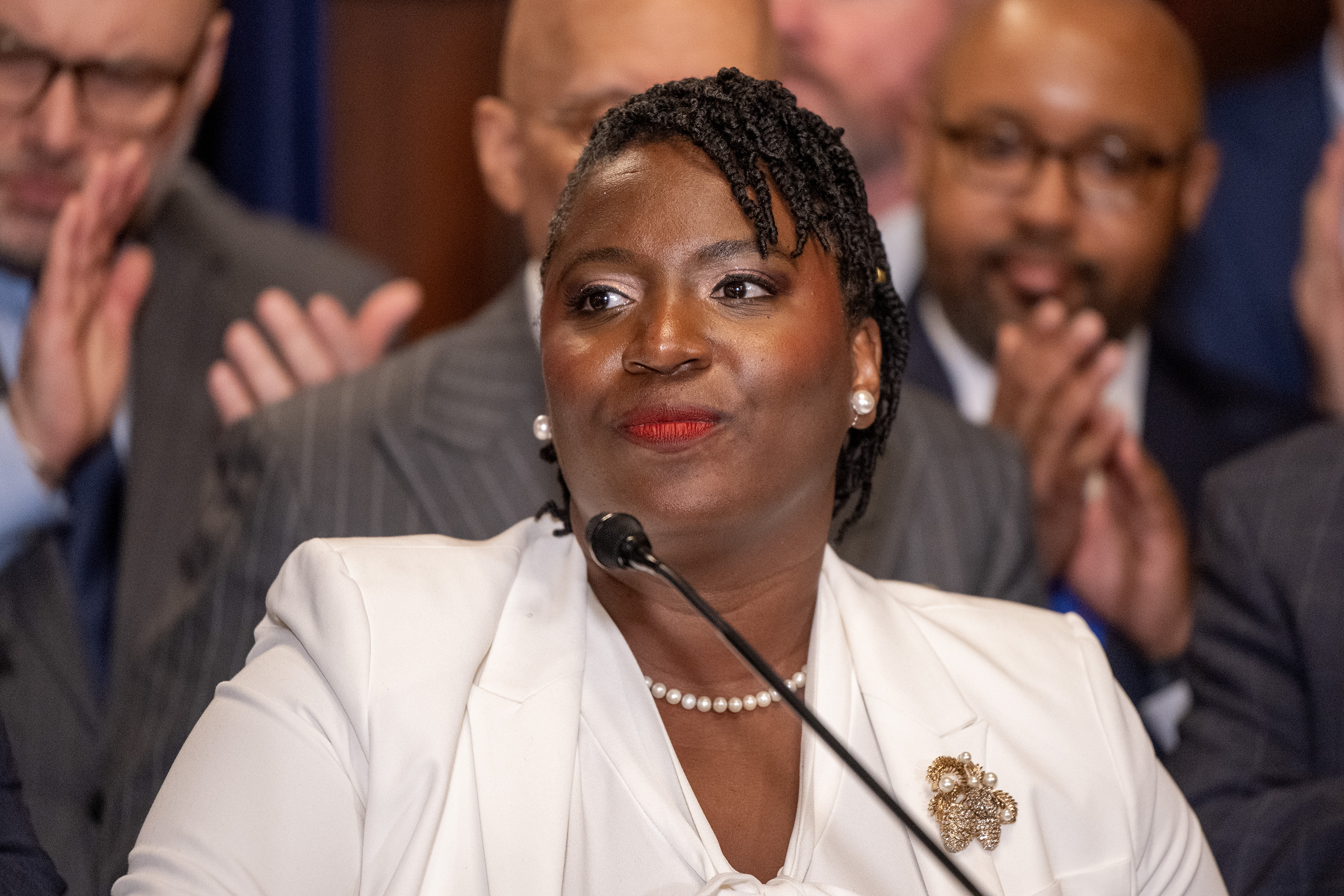
    Pennsylvania House Speaker Joanna McClinton was listening to a sketch by comedienne Zainab Johnson when Florida State Rep. Angie Nixon’s name came up. Johnson mentioned how Nixon, who is vying to become the Sunshine State’s first African American U.S. senator, had been attacked by a right-wing influencer named Laura Loomer.

    McClinton is closely following Nixon’s race and immediately wondered: “Who’s Laura Loomer? Who is she?”

    McClinton found out soon enough.

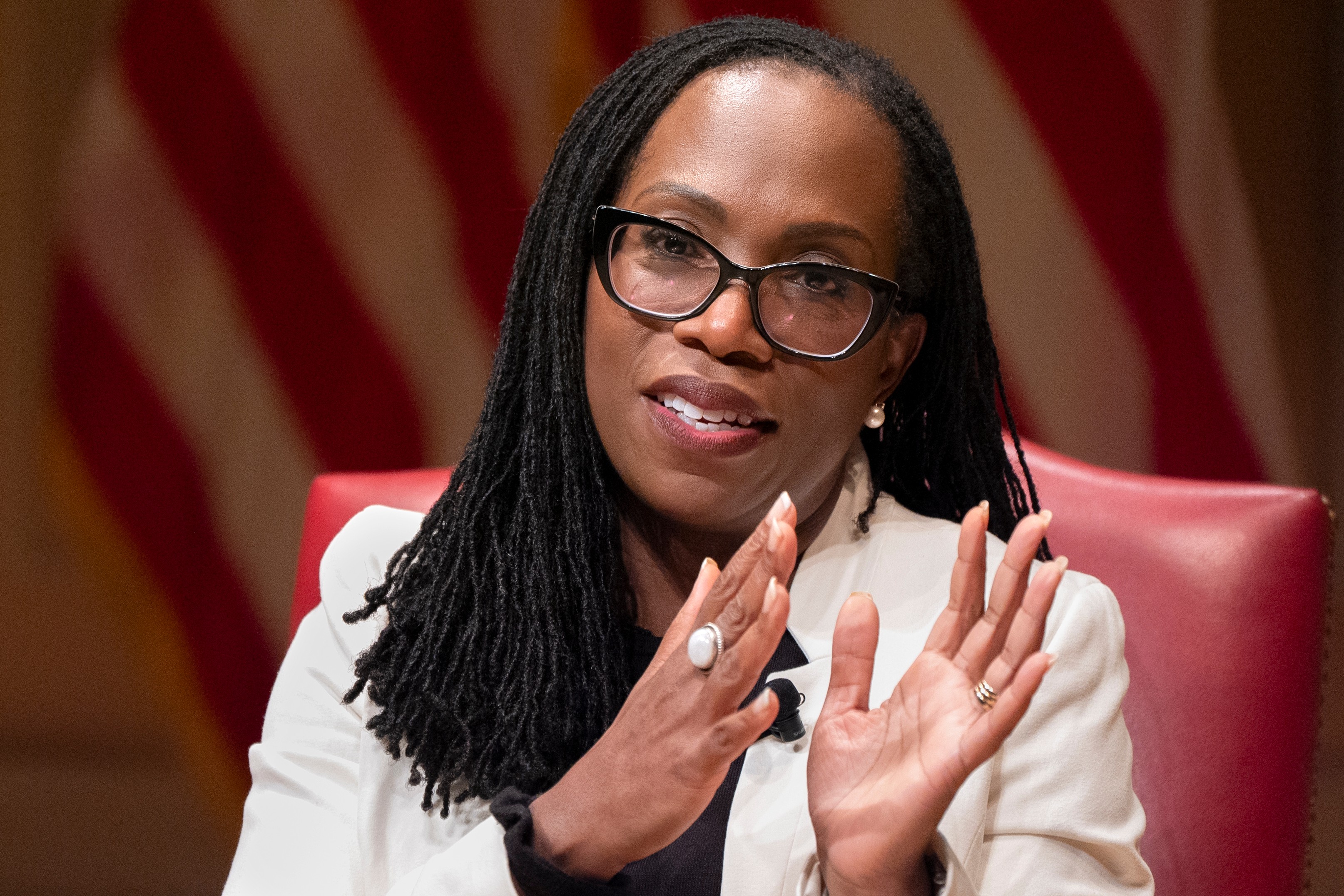
    Loomer, reportedly a close ally of President Donald Trump, has been publicly going after Black female legislators and other prominent women — including U.S. Supreme Court Justice Ketanji Brown Jackson — calling them “ghetto” and the B-word.

    State Rep. Angie Nixon, a Democratic candidate for U.S. Senate, during a canvassing event in Fort Lauderdale, Fla., in August.SAUL MARTINEZ

    The MAGA influencer zeroed in on Nixon last month after she won Florida’s Democratic Senate primary and accused her of using Ebonics. She also likened the former grassroots organizer to a dog, saying, “Maybe I need to bark at you and tug your leash and then you’ll finally understand.”

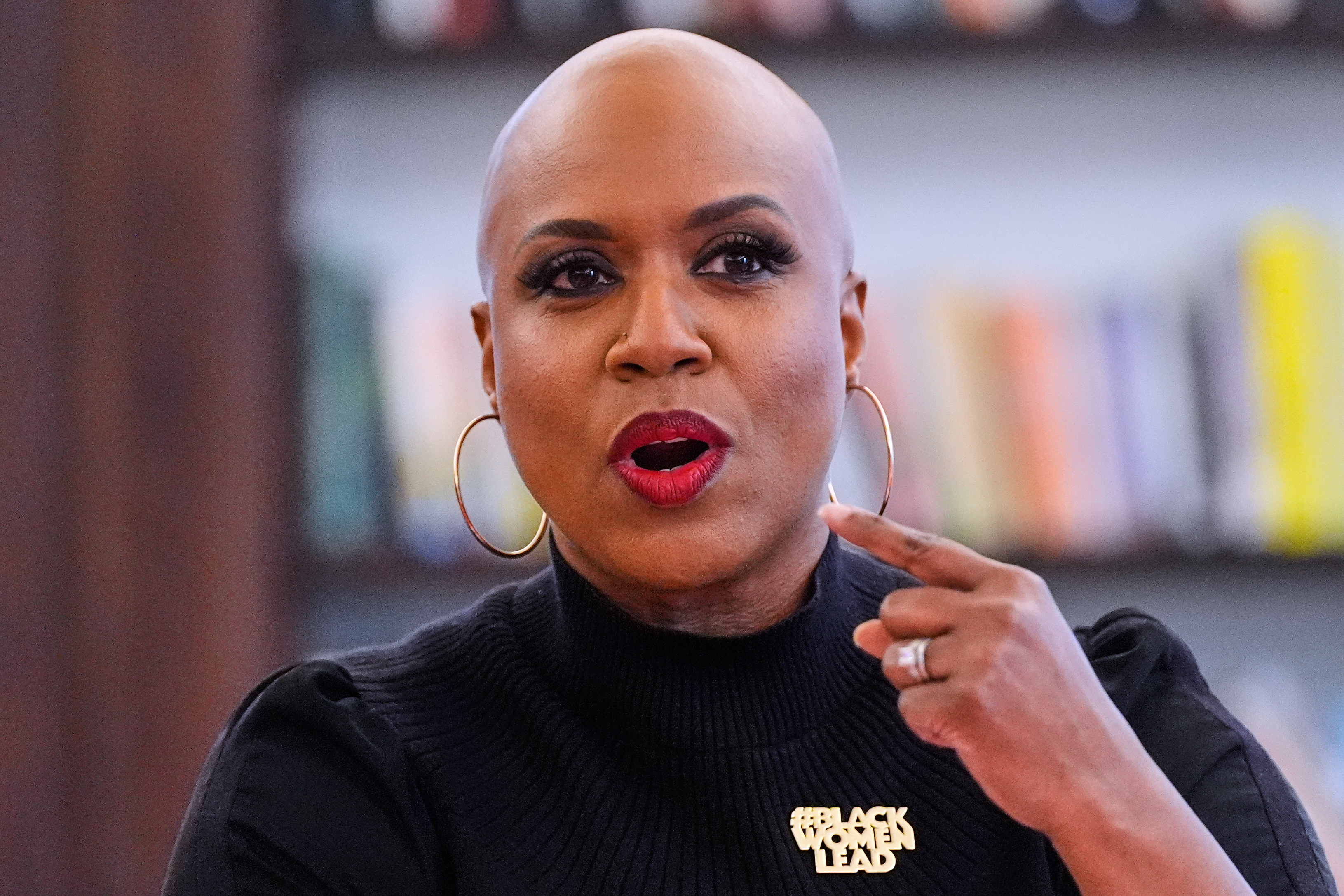
    Loomer has also posted about Reps. Ilhan Omar, Ayanna Pressley, and LaMonica McIver, and former Rep. Cori Bush, saying they’re “entitled,” “destructive,” and “race-obsessed.”

    I don’t know, Laura — you might want to look in the mirror to see who’s really “entitled,” “destructive,” and “race-obsessed.”

    She made me mad.

    A lot of people may have brushed it all off, but as you can tell, I haven’t.

    Former Rep. Marjorie Taylor Greene has condemned Loomer. Where are the other Republicans who pride themselves on being civil and having family values? Every member of the GOP should speak out against what’s been happening.

    House Speaker Joanna McClinton during a news conference at the Capitol in Harrisburg in February.Tom Gralish / Staff Photographer

    “We need the president to condemn these comments,” McClinton told me, adding that U.S. Senate leadership should also act. “Unfortunately, attacking Black women is nothing new.”

    She added, “We have been fighting with racism and misogyny for as long as we have been a democratic republic.”

    I won’t repeat all of the racist things Loomer has uttered on her podcast or posted online lately about Black female politicos. If you’re curious, you can go on social media and see for yourself.

    U.S. Supreme Court Justice Ketanji Brown Jackson speaks to the 2025 Supreme Court Fellows Program, Feb. 13, 2025, at the Library of Congress in Washington.Jacquelyn Martin

    While you’re there, you can check out her Islamophobic posts.

    I thought long and hard about ignoring what’s been happening and writing off Loomer as just another right-wing extremist.

    But she has traveled with the president numerous times, visited Mar-a-Lago, and reportedly has Trump’s ear. Her platform is huge — nearly two million followers on X, the social media site formerly known as Twitter. And she doesn’t hesitate to use it.

    That’s political currency — not just in Washington. In this era of the attention economy, the most strident voices get traction.

    Maryland Gov. Wes Moore was spot on when he posted a statement directed at Loomer saying, “You attack and insult Black women because you believe peddling racism is good for your clicks and your business model.”

    It felt good to see Moore, who is a possible presidential contender, defend Black lawmakers against Loomer’s looney tunes. Same with House Minority Leader Hakeem Jeffries, who called her a “stone-cold racist.”

    Being a Black woman in traditionally white spaces can be challenging. Nixon appeared near tears during a recent appearance on Don Lemon’s YouTube show and said she was tired. “It’s become so normalized for people to continue to attack us,” she said.

    Timothy N. Welbeck, director of Temple University’s Center for Anti-Racism, said he wasn’t surprised there hasn’t been a more fervent pushback against Loomer.

    “Things like woke and DEI were politically expedient slurs to convey anti-Black sentiments,” he told me. “And now people like Laura Loomer are forgoing the veiled statements.”

    It has felt like open season on Black women ever since Trump’s return to office.

    We have been disproportionately impacted by widespread cuts to the federal workforce. Trump weaponized the U.S. Department of Justice to try to prosecute Federal Reserve Governor Lisa Cook and New York Attorney General Leticia James.

    Black women are survivors, though. Ever since we were dragged through the Middle Passage and forced into bondage, we have managed to make a way out of no way, as my mother used to say.

    This is our heritage.

    This is our legacy.

    U.S. Rep. Ayanna Pressley (D., Mass.) gestures while addressing a gathering at a roundtable meeting in November in Boston.Charles Krupa

    In the spirit of the late Shirley Chisholm, the first Black female member of Congress, and all of the other ancestors, we will get through the Trump era, too.

    And we’ll be inspired by the passion of Nixon, the style and commitment of Pressley, and the sheer brilliance of Justice Jackson.

    That’s what we do.

    As Moore pointed out, “We will never let anyone steal our joy or let those that don’t matter too much, matter too much.”

    We’ve come too far.

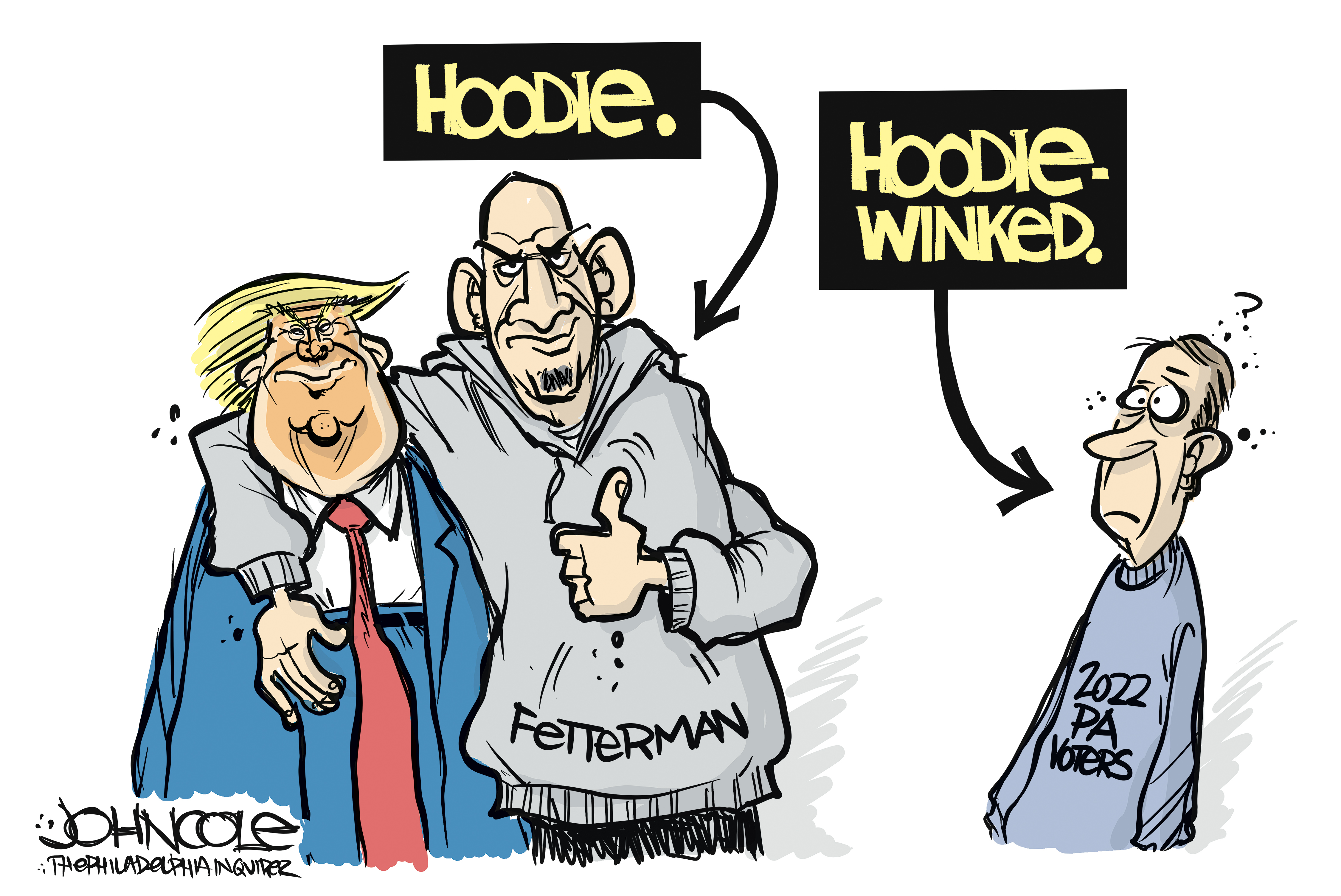
  • Hoodie-Winked | Editorial Cartoon

    Hoodie-Winked | Editorial Cartoon

    John Cole spent 18 years as editorial cartoonist for The (Scranton) Times-Tribune, and now draws for various statesnewsroom.com sites.

  • Eagles’ Dontayvion Wicks looked like a true WR2 in win over Commanders

    Eagles’ Dontayvion Wicks looked like a true WR2 in win over Commanders

    The Eagles offense was looking for a spark.

    After logging just 2 total yards in the first two series of the Sean Mannion era, they needed someone — anyone — to step up in a crucial Week 1 divisional game vs. the Commanders.

    Thankfully for them, their most underrated offseason acquisition answered the call. Twice.

    With 1 minute, 57 seconds to go in the first quarter, wide receiver Dontayvion Wicks hauled in a 64-yard pass from Jalen Hurts in what would become the Eagles’ first touchdown drive of the season (Wicks was tackled at the 6-yard line, but tight end Dallas Goedert scored three plays later). Wicks came down with the ball — which traveled 40-plus yards through the air — after he darted past Washington cornerback Mike Sainristil in coverage. It was the longest reception of his career.

    One quarter later, Wicks worked his magic again.

    Again with Sainristil in coverage, Wicks motioned left before shimmying past the Commanders cornerback to break free and secure a 9-yard touchdown that put the Birds up 14-3. His final stat line in the 24-22 victory? Two catches on four targets for 73 yards and one touchdown. He only eclipsed 70 yards one time last season with the Packers.

    The new Eagles weapon was all smiles in the locker room afterward.

    “Man, just going out there and doing my role, I know it’ll help us win,” he said. “The coaches trust me, letting me go on out and do that and make plays. That’s what I did.”

    Wicks, 25, was the Eagles’ clear WR2 in the game. He finished with 50 snaps according to Pro Football Focus, trailing only DeVonta Smith (52). This is a welcome change for a player who was buried deep in the Packers’ receiver room last season (he never played more than 54% of the offensive snaps in a single season).

    Could that change in Philadelphia? If he continues playing like this, he’ll earn it.

    “In Green Bay, we had so many guys. Over here, I’m able to get those looks,” said Wicks. “Over there, I ain’t really had [opportunities].”

    The Eagles traded for Wicks this offseason after he spent three seasons with the Packers, the team that drafted him in the fifth round in 2023 out of Virginia. The Eagles signed him to a one-year, $10.5 million extension, keeping him under contract through 2027.

    Dontayvion Wicks (13) is building trust among his new teammates and the Eagles coaching staff. David Maialetti / Staff Photographer

    They brought him in large part due to his connection with Mannion, with whom he overlapped for two seasons in Green Bay when Mannion served as an offensive assistant in 2024 and the quarterbacks coach in 2025.

    How does Wicks feel about the offense, which generated 318 total yards on 12 drives?

    “I think [the presnap motion] messed the defense up,” Wicks said. “I think it does a lot with showing us what the defense is going to be in. … So once I motion over and see a DB is chatting and locking, it’s man[-to-man coverage]. …. So, you do motions, they help with tells.”

    Hurts, who compiled 203 passing yards and three touchdowns, praised his new weapon after the game.

    “I think there’s an opportunity to grow and be able to maintain that level of attack, but I can’t say enough on how he showed up, played, and executed,” said Hurts.

    “I think there’s going to be a natural maturation within this system, and particularly maturation within the end-game chemistry that we build, because that’s something that is very important.”

  • Denver Barkey’s speed, Alex Bump’s puck skills, and other takeaways from Flyers’ Rookie Series vs. Rangers

    Denver Barkey’s speed, Alex Bump’s puck skills, and other takeaways from Flyers’ Rookie Series vs. Rangers

    ALLENTOWN — Although it started feeling like the Flyers’ youth were living in Allentown, having been there since Friday for the start of rookie camp, they showed why everyone has a pretty good shot with an impressive set of games over the weekend.

    The prospects worked hard and won Game 1 on Saturday, 3-2, before a decisive 4-1 victory in Game 2.

    Here are our observations of the Flyers prospects from the Rookie Series:

    Denver Barkey (left) scored in Sunday’s Rookie Series game.Monica Herndon / Staff Photographer

    Serving as captain, Denver Barkey played Sunday, and was in midseason form. The high-motor forward — “That’s what makes me an effective player,” he said postgame — was flying all night. He used his speed and quickness to effectively keep the Rangers defense on their heels as he drove to the net, notably on his goal. In the first period, Barkey streaked down the left side of the ice, receiving a feed from Oliver Bonk, his teammate of five years (four of them with London of the Ontario Hockey League), as he cut across the crease and dipped the puck around Rangers goalie Danai Shaiikov. Barkey later added an assist when he unselfishly passed up another goal to set up Porter Martone’s empty-netter.

    Martone also looks ready to hit the ground running when the Flyers’ main camp opens Thursday in Voorhees, as he displayed his high-octane, edgy game on Sunday. A betting favorite to win the Calder Trophy this season as the NHL’s top rookie, Martone did have one bad turnover in the second period, leading to the Rangers’ lone goal, for which he apologized to his goalie, Marek Sklenička. He said after the game Sunday that he told the 2026 draft pick, “We’ll get it back here.” That wasn’t the only moment he was there for his teammates. He went after 6-foot-7 Rangers forward Dylan Roobroeck when he nailed Barkey. Martone, who looked more than ready for the NHL’s fast pace, posted a game-high five shots and also had an assist.

    Alex Bump played only on Saturday but set the tone early following a disappointing main camp last year that stalled the start of his NHL career until March. Wanting to make an impression, Bump came out flying, showcasing his quickness and deftness with the puck, especially on the boards, his hockey IQ, and his willingness to drive to the net, finishing with two points. His goal was nice; his assist was dazzling as he sent a seam pass to Cole Knuble, who was driving to the net backdoor.

    Knuble was also impressive in his one game on Saturday, showing a high-end motor akin to Barkey’s. He played physically, was active around the net, and used his feet and body well to protect the puck and create plays.

    “Since the day I was drafted, I wanted to be a part of this organization,” said Knuble, who is about to begin his first full season as a pro. “I grew up loving this team, so it’s a dream come true. Every practice, every game, every offseason, that was the goal: to get one step closer to this.”

    Jett Luchanko played both nights centering the top lines — Bump and Knuble were his wingers on Saturday and Barkey and Martone lined up with him on Sunday — and looked even better in Game 2. On Sunday, he was a play driver, carrying the puck up the ice and using his speed to wreak havoc in the Rangers’ defense. The recently turned 20-year-old had two assists, with his second coming on the goal by Barkey when he made a nice chip pass off the wall in the neutral zone while taking a hit.

    “Showed us the flashes of what he really can become and what he’s going to be. That speed through the neutral zone and his ability to get on top of guys quickly,” Phantoms coach John Snowden said on Sunday. “… Back-to-back, too, right? His legs were still flying, and he was competitive and hard in situations. He had a little bite to his game.”

    Maksim Sokolovskii continued to show this weekend why the Flyers made him a first-round pick. Despite his 6-7 frame, he is a smart, quick, fluid skater who can defend well while also creating time and space offensively. He broke up several plays on Sunday at the blue line with his long reach, while also using that same reach to protect the puck as he carried the puck around opponents. Sokolovskii had one assist in the game and has already been invited to the main Flyers camp.

    Maksim Sokolovskii used his 6-foot-7 frame and reach to make plays on the puck during Saturday’s game.Yong Kim / Staff Photographer

    Noah Powell, who Snowden called a “pretty raw, uncut diamond” that the Flyers can shape in an interview with The Inquirer back in May, may finally be coming into focus. The forward enjoys being a pest and played a hard, physical game all weekend. Oftentimes, his hits rattled the boards, and he got into it at the end of the game with the Rangers’ Jacob Battaglia before dropping the gloves with Jackson Dorrington.

    “Hockey is a violent game. I’m not saying I’m a violent person, but when I get out there, I definitely do like to play a violent, vicious style of hockey,” said Powell, who noted he likes to blend Kiefer Sherwood’s motor and relentlessness with Tom Wilson’s toughness and heavy hitting to play his game.

    Sklenička and Martin Psohlavec were solid on Sunday, but all eyes were on goalie Carson Bjarnason, who had a rocky first year as a pro with Lehigh Valley of the American Hockey League. The goalie, who turned 21 in June, acknowledged a learning curve with the AHL being faster and his reads needing to be quicker, but said he has put the past behind him. On Saturday, his lone start of the weekend, he looked sharp, stopping 27 of 29 shots — both goals were on a Rangers power play — while flashing the leather on several attempts. His best save came after Luchanko sent an errant pass right onto Roobroeck’s stick for a Grade-A chance in the third period.

    “I thought today he looked big in the net,” Snowden said on Saturday. “He looked composed in the net, didn’t really get scrambly at times and just tracked the puck the way he needed to track the puck. If he couldn’t see through traffic at times, he stayed big and pucks hit him. Overall, I thought it was a good step in the right direction for him.”

    Matthew Gard scored the Flyers’ first goal of the Rookie Series.Yong Kim / Staff Photographer

    Breakaways

    Not long after he was drafted last year, Matthew Gard did not stand out at his first Rookie Series, but 2026 was different, especially in the first of two games. The press box was buzzing about the 6-5, lanky centerman who showed some pop — he scored the Flyers’ first goal of the weekend — and smarts. … Brek Liske said before Saturday’s game that he was looking forward to not just wearing an NHL logo on his jersey but to bringing the Flyers vs. Rangers video game matchup that he used to play on NHL 15 to reality. The Flyers’ 2026 second-rounder had a fantastic series, and one scout told The Inquirer that he and Luke Vlooswyk, his defensive partner with Everett of the Western Hockey League and a fellow Flyers prospect who he played with on Sunday, are underrated. Liske scored the go-ahead goal from the goal line on the second night with less than five seconds left in the middle frame after a Spencer Gill blast hit the end boards. Liske said he learned a great deal about communication at the Rookie Series and said after the game on Sunday, “I’m going to try and bring that back with me [to Everett], get everyone talking a little more, and make sure the rinks never quiet.” … Despite missing months after undergoing surgery on an upper-body injury in late January, Ty Murchison looked great in his lone game on Saturday, showing his smooth skating, hockey IQ, leadership — he wore the “C” — and grit as he dropped the gloves and went blow-for-blow at the end of Game 1 with Roobroeck.