Tag: topic-link-auto

  • On Tuesday, the country may once again look to Pennsylvania | Mike Newall

    On Tuesday, the country may once again look to Pennsylvania | Mike Newall

    Every Sunday, Mike Newall brings you an inside look at a story defining Philly this week and a preview of what’s coming in the week ahead.

    Okay, Pennsylvania. We got our extra hour of sleep — the longest weekend until the very end of the century. Now, it’s time to “save the republic,” according to Gov. Josh Shapiro.

    Once again, the balance of power in Washington could hang on a few key Keystone State counties. We got this. Right, Pennsylvania?

    Here’s the basic state of play: Democrats need a net gain of three seats to win back control of Congress. They can win them in four nationally watched Pennsylvania swing districts. Gov. Josh Shapiro leads by double digits. Trump is sinking like a stone in the Schuylkill. The economy. War in Iran. Surging gas prices. Surging inflation. The desperation feels real, the anger urgent.

    In Pennsylvania, where we’ve been bombarded with more than $121 million in ads, polls are mainly within the margin of error. Ready the cold pizza and warm beer. It could be a long night on Tuesday.

    Fear not. We got you. First, don’t be a crumb bum. Vote! Just type your address into this exceptionally handy Inquirer 2026 midterms Voter’s Guide. It has everything you need to know to cast your ballot without a hitch.

    Inquirer political reporters Fallon Roth and Sam Janesch have been pounding the pavement of Pennsylvania battlegrounds for months. They’re here to cut through the noise and tell us all we need to channel our inner Steve Kornacki (khakis optional).

    Mike: Hey guys! So what’s your white board look like right now?

    Sam: So many more races are in play. The map has expanded across all these Republican areas over just the last month.

    Mike: All eyes on Bucks County where five-term Republican U.S. Rep. Brian Fitzpatrick is narrowly losing in polls to Democratic county commissioner Bob Harvie.

    Sam: Fitzpatrick is the moderate, least-Trumpy house Republican trying to hold on in the worst political environment of the Trump Era.

    Fallon: All of our political rating agencies and forecasters are saying it’s a toss-up. If Bob Harvie is able to pull off a win, that would be monumental for Democrats. A Democrat has not represented Bucks County since 2011. It would be the last of the four collar counties to flip blue.

    Mike: Things have gotten particularly nasty in the Harrisburg-area race where Republican U.S. Rep. Scott Perry and Democrat Janelle Stelson remain tied.

    Sam: One of the biggest Trump supporters in Congress, Perry, is trying to skate through again after Democrats thought they had him on the ropes a few years ago in Harrisburg.

    Mike: Rumors of Trump’s demise have long abounded.

    Sam: It really is all about Trump, and this is maybe the last major election where that is going to be true. It’s all about his staying power. How it actually plays out, which districts they win and lose and how big Shapiro likely wins by, will determine a lot about what democrats do in the next two years, and who they nominate in 2028.

    Fallon: It just reinforces that Pennsylvania is always going to be so important politically, no matter what happens.

    Video of the Week

    Inside Zitner's new chocolate factory
    Video: Inside Zitner’s new chocolate factory

    Zitner’s Fine Confections is back! The century-old Philly candy company — famed for its cream-filled chocolate Easter eggs — missed last year’s holiday season after it shuttered its North Philly plant. Inquirer food reporter Michael Klein recently visited Zitner’s shiny new Montgomery County factory, where humming production lines crank out 220 eggs a minute. The candy could hit shelves before Christmas.

    A look ahead: midterms edition

    The Justice Department plans to dispatch 1,000 election monitors nationwide Tuesday, including to polling stations in Philadelphia, Allegheny, Luzerne, and Lehigh Counties. The monitors may observe and take notes but cannot interfere with voting, according to a letter obtained by the Inquirer.

    Read Inquirer alum, Jeremy Roebuck, who now covers the Justice Department for the Washington Post, on the Trump administration’s frenetic planning to protest an election that hasn’t even happened yet.

    Philly’s dry spell could end by the end of next week with potentially “prolific” rainfall. But no worries, Election Day forecasts call for a balmy 69 degrees in Philadelphia.

    And in a bit of unrelated, but equally consequential news, Philly will celebrate the 50th anniversary of the release of Rocky next week with events at the Philadelphia Visitor Center and the Art Museum steps.

    In honor of the pending milestone, I asked John Giordano, former owner of P & F Giordano Fruit and Produce and a teenage fruit vendor back in 1976, of his memories of the day an unknown actor named Sylvester Stallone showed up in the Italian Market to film the movie’s now iconic training montage.

    “There were always people filming down on Ninth Street,” he said, with a laugh. “It was really low budget, like a single camera on the back of a van. We were just working in the store, and like, ‘there’s another guy making a movie.’ Now I must have seen that movie a hundred times.”

    One more thing: ‘The mini-Rocky statue of her time’
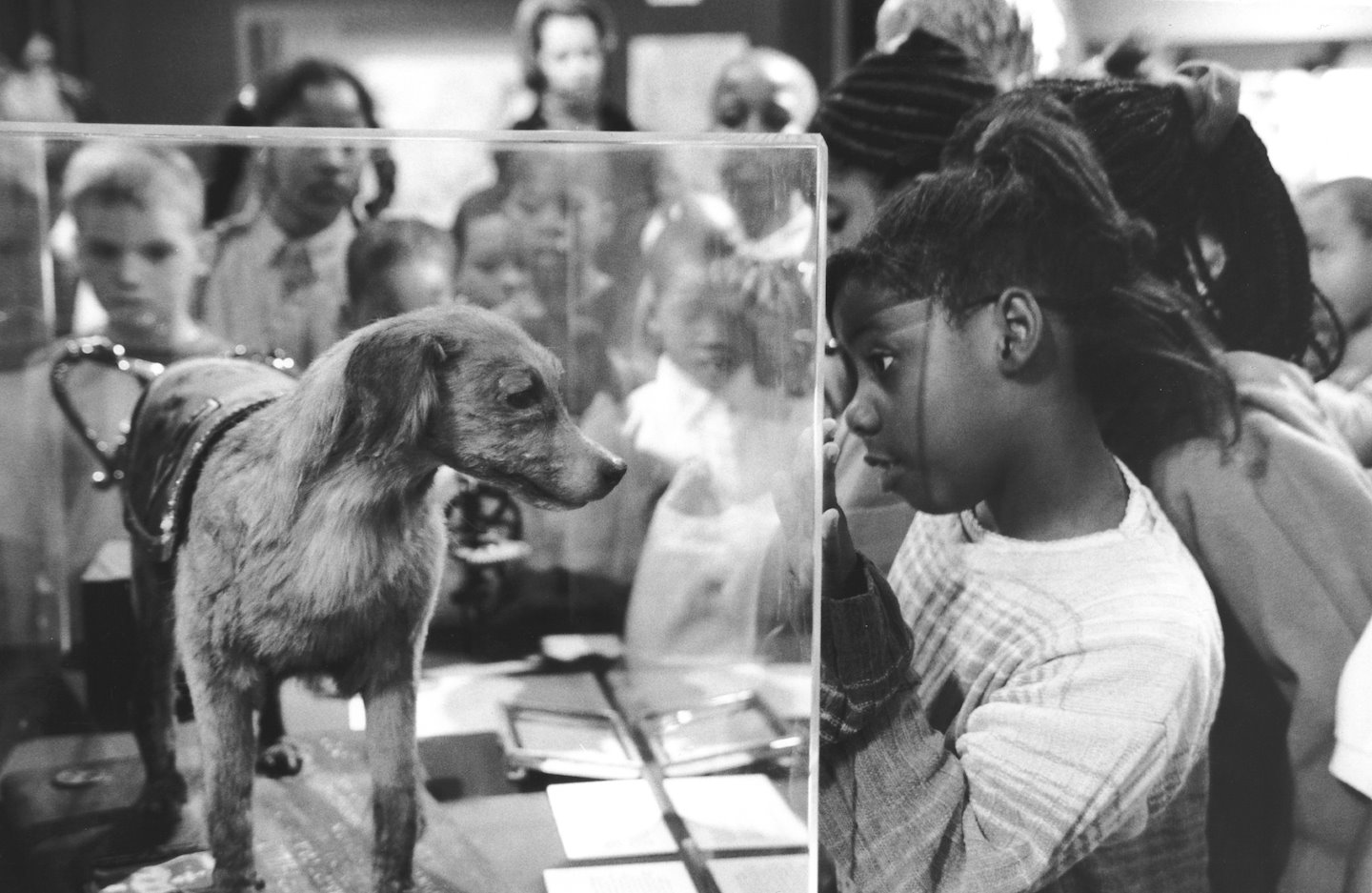
    A taxidermy of Philly the war dog, a hero of World War I, was displayed for years at the Atwater Kent Museum.Courtesy of the Atwater Kent Collection of Drexel University (Custom Credit)

    Her name was Philly. And she was said to be the greatest war dog of them all. Her origins remain a mystery. By 1917, the pint-sized stray with a scruffy coat and devilish grin rambled into the training camp of “Philadelphia’s Own” — a famed World War I Army unit made up of local raw recruits.

    When the Doughboys shipped off to war, a sergeant smuggled the beloved mascot in a shirtsleeve.

    Philly excelled at war. On the blood-soaked Western Front, she earned a reputation as a fierce sentry. She was wounded. Poison gas and some shrapnel in the tail. Pinned with makeshift “Purple Hearts,” she returned to duty. She was a comfort to the men. Tired of her heroics, Germans placed a 50 Deutsche mark bounty on her head.

    At war’s end, she marched in Washington with the troops. President Woodrow Wilson cheered the “Heroine of the Trenches.”

    Living out her life in Frankford, she enjoyed meals of lamb liver at unit reunions, before dying peacefully of old age in 1932. Her owner, an old sergeant, buried her in his driveway until the 315th raised funds for a taxidermist to preserve and mount her. For years, Philly was displayed behind glass at the 315th’s division headquarters on Wissahickon Avenue, and then the Atwater Kent Museum. She has been wrapped in Mylar in storage at the Pennsylvania Academy of Fine Arts since the museum shuttered in 2018.

    Recently, Michael Shepherd, an associate director of the Atwater Kent Collection, received an unexpected call from a national institution wanting temporarily display the old war dog (he doesn’t want to say which yet). This week, Shepherd will consult researchers at Drexel University’s Materials Characterization Core lab, about testing taxidermy for hazardous chemicals, like arsenic, once used by taxidermists. His fingers are crossed.

    “She was like the mini-Rocky statue of her time,” he said. “She meant something to people. She was a hero and she deserves to be honored.”
  • A hack exposed personal info of nearly 300 Philadelphia-based DHS personnel

    A hack exposed personal info of nearly 300 Philadelphia-based DHS personnel

    The identities and personal information of nearly 300 Philadelphia-based U.S. Department of Homeland Security employees were exposed by a data breach that hit the federal security agency last week.

    A “hacktivist” group known as Department of Peace took credit for stealing the personnel files, which encompass roughly 41,000 DHS agents, operatives, and other employees across the United States — about one-fifth of all agency staff. The data also includes purported organizational structures of several DHS agencies.

    The hacking group said the breach was retaliation for more aggressive activity by Immigration and Customs Enforcement under the Trump administration.

    “[DHS Secretary] Markwayne Mullin said he was ‘turning up the heat’,” read a statement from the group that accompanied the release. “This is what happens to ICE when you do that.”

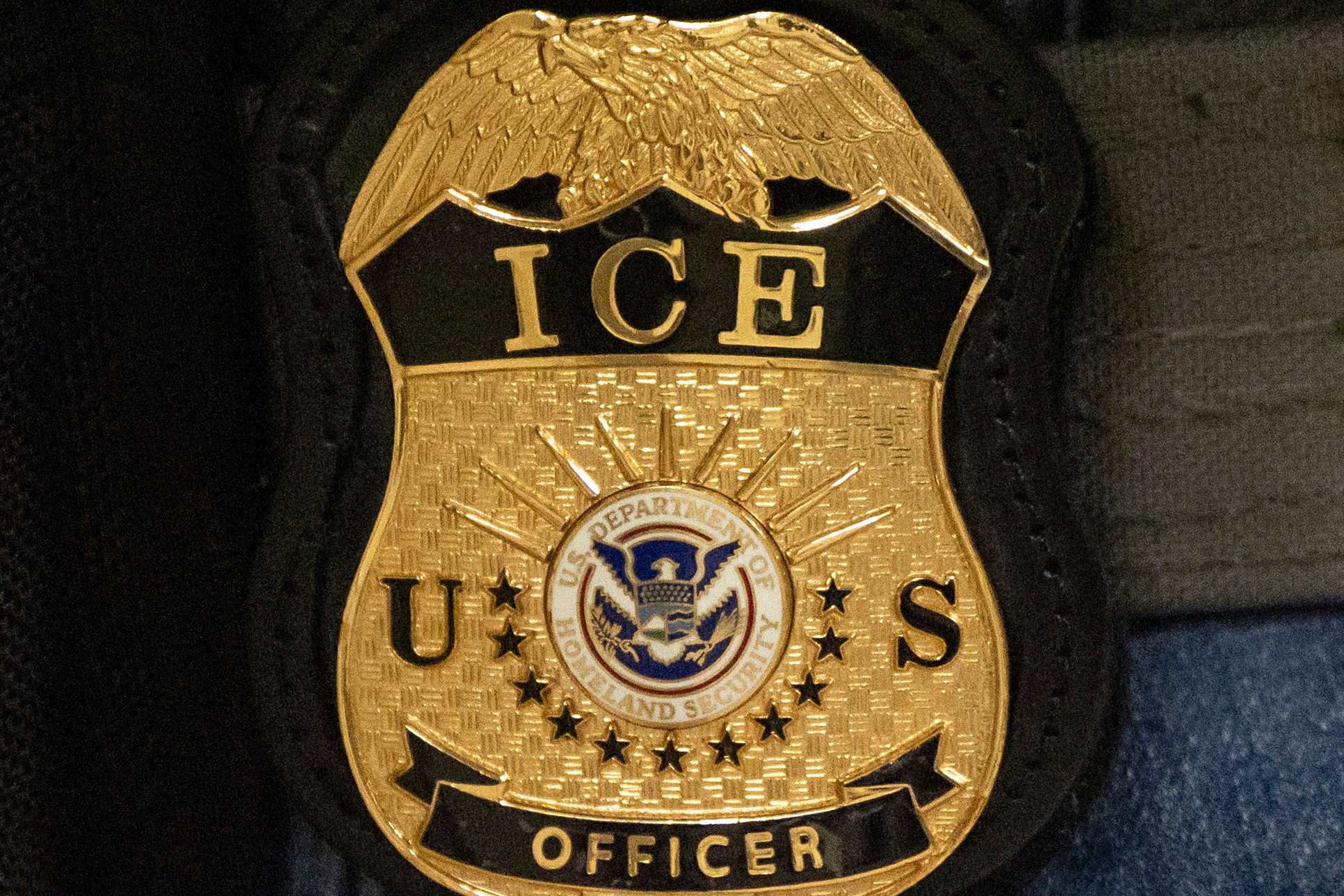
    FILE – A federal agent wears an Immigration and Customs Enforcement badge in New York, June 10, 2025. (AP Photo/Yuki Iwamura, File)Yuki Iwamura

    The personnel files were published by the website Distributed Denial of Secrets (DDoS) through a database known as “Icepick.”

    The files contain information, including emails and cell phone numbers of 6,500 ICE staff, including 41 deportation officers and other personnel based at a Philadelphia field office.

    The data contains 483 Pennsylvania-based DHS staffers, about 285 of whom are based in the city of Philadelphia.

    Forty-seven employees at ICE and U.S Citizenship and Immigration Services field offices in Mount Laurel were also listed in the breach.

    Other impacted DHS agencies locally include offices for Customs and Border Patrol, the Cybersecurity and Infrastructure Security Agency, the Federal Protective Service, and Homeland Security Investigations.

    In a statement last week, a DHS spokesperson said the agency was “aware of a potential breach and is actively working to address the situation swiftly and effectively.”

    DDoS had previously published records from an earlier hack that targeted the membership rolls of the Oath Keepers, a right-wing group with a claimed membership of 38,000 people — many current or former military or law enforcement.

  • South Jersey’s Hannah Hidalgo starts her Player of the Year campaign in win over Villanova

    South Jersey’s Hannah Hidalgo starts her Player of the Year campaign in win over Villanova

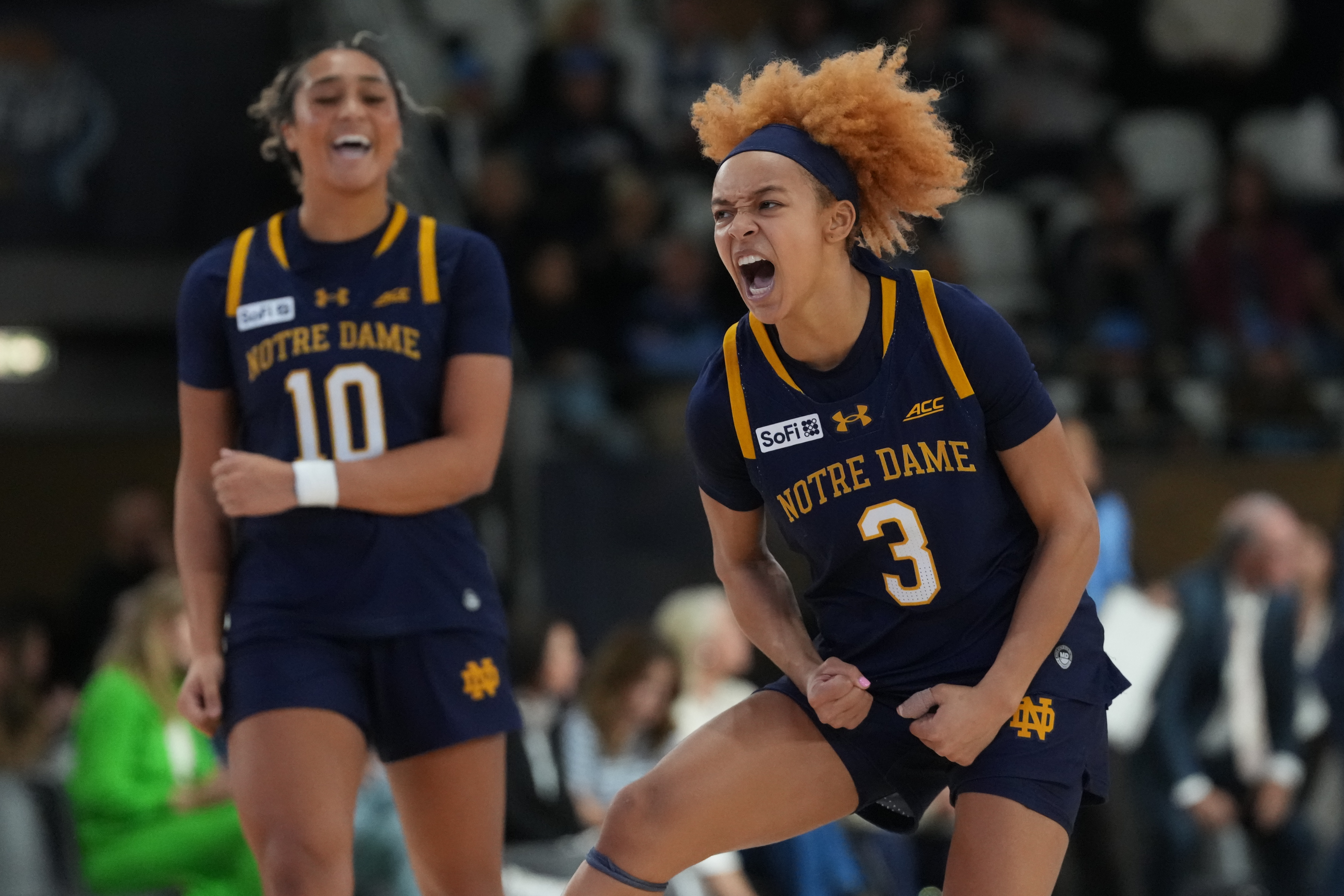
    ROME — In her first college basketball game, in November of 2023, Hannah Hidalgo announced herself to the college basketball world — and international basketball fans — with a 31-point outburst in Paris.

    Her Notre Dame team got blown out that day by the eventual national champions, South Carolina. But it was the start of Hidalgo, a Merchantville native and graduate from Haddonfield’s Paul VI, becoming one of the stars of college hoops.

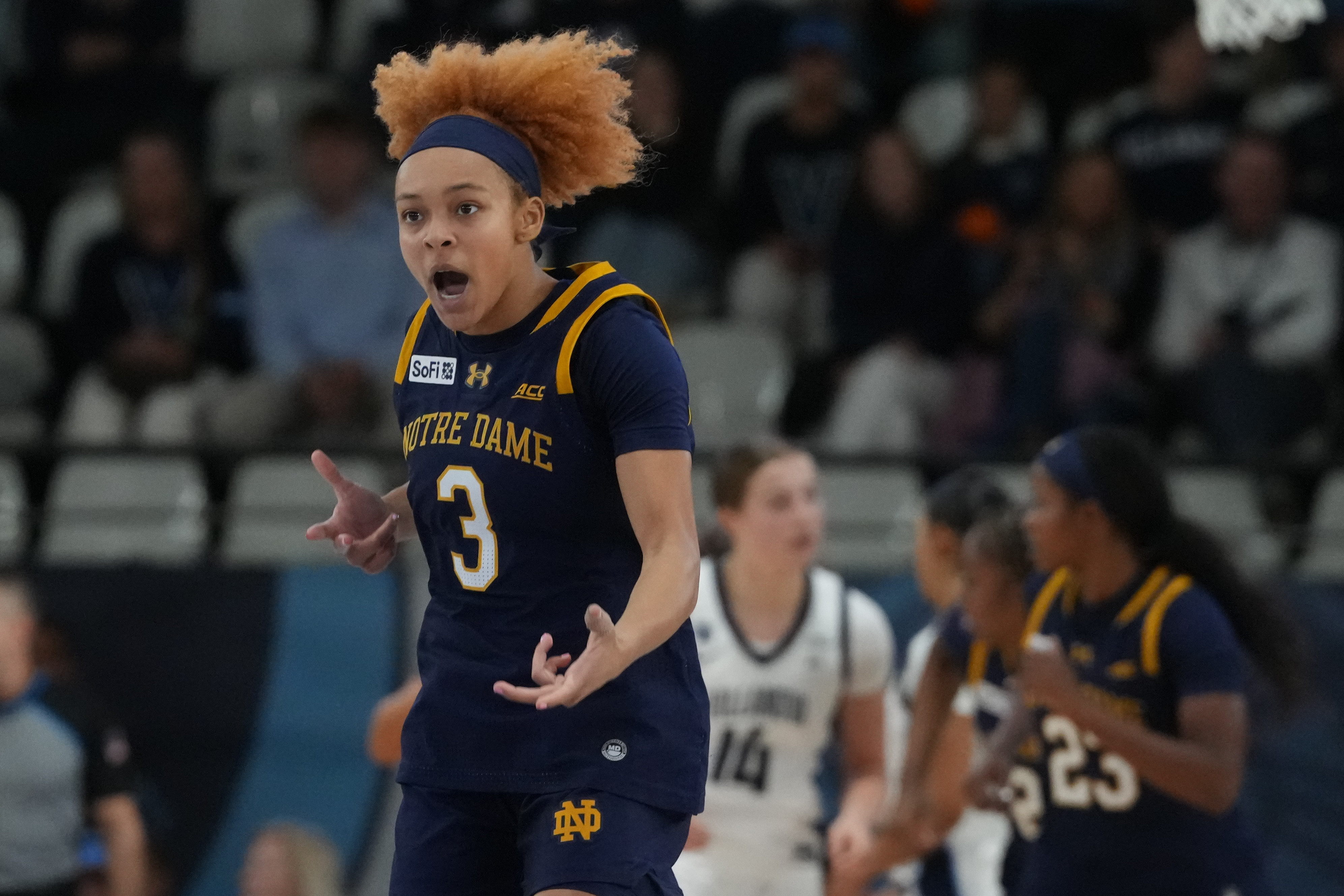
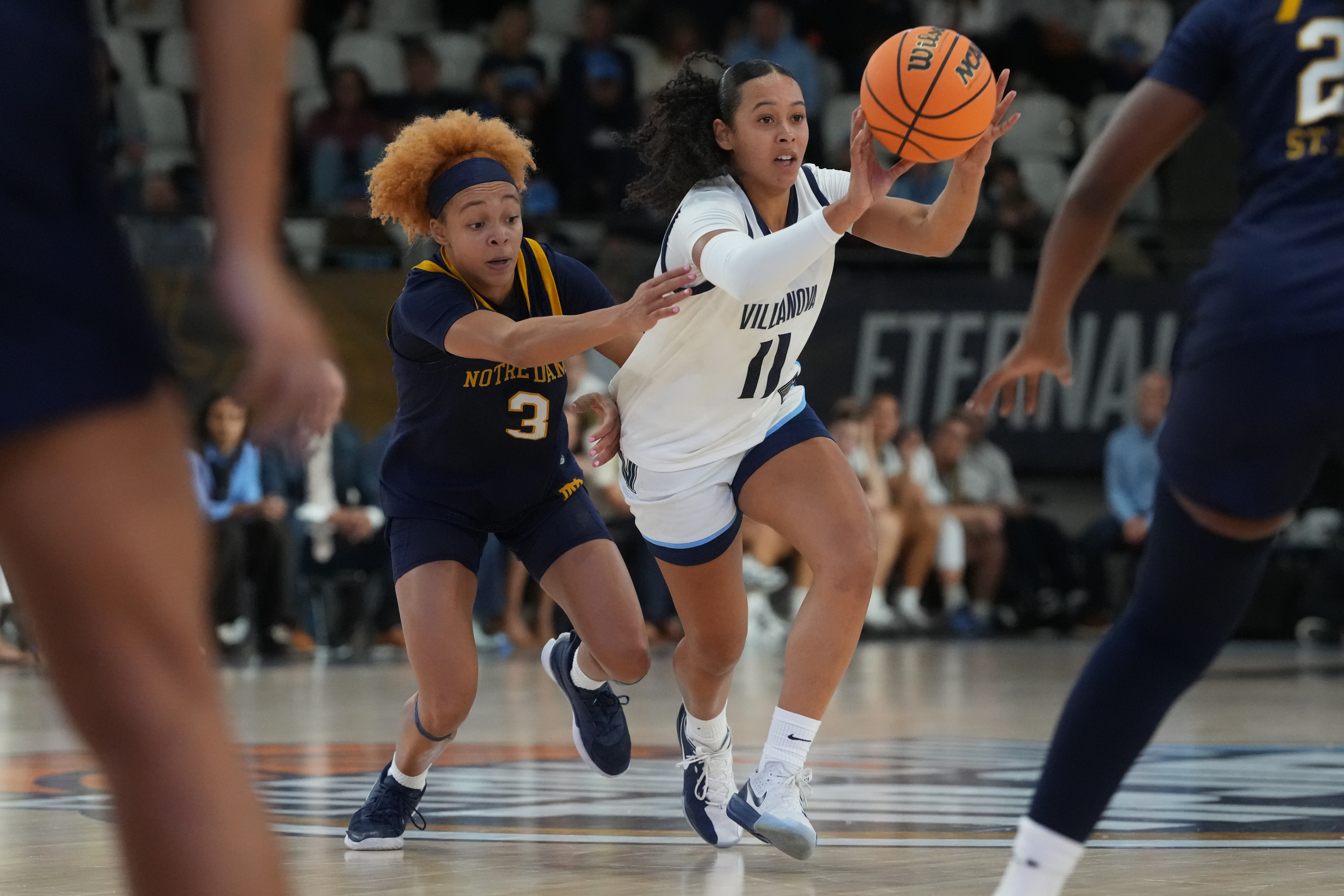
    Three years later, in another European city, Hidalgo kicked off her senior year and Player of the Year campaign by doing everything 13th-ranked Notre Dame needed her to do in a 99-75 blowout victory over Villanova, finishing off a sweep in the men’s and women’s doubleheader after Notre Dame’s men beat Villanova, 74-72.

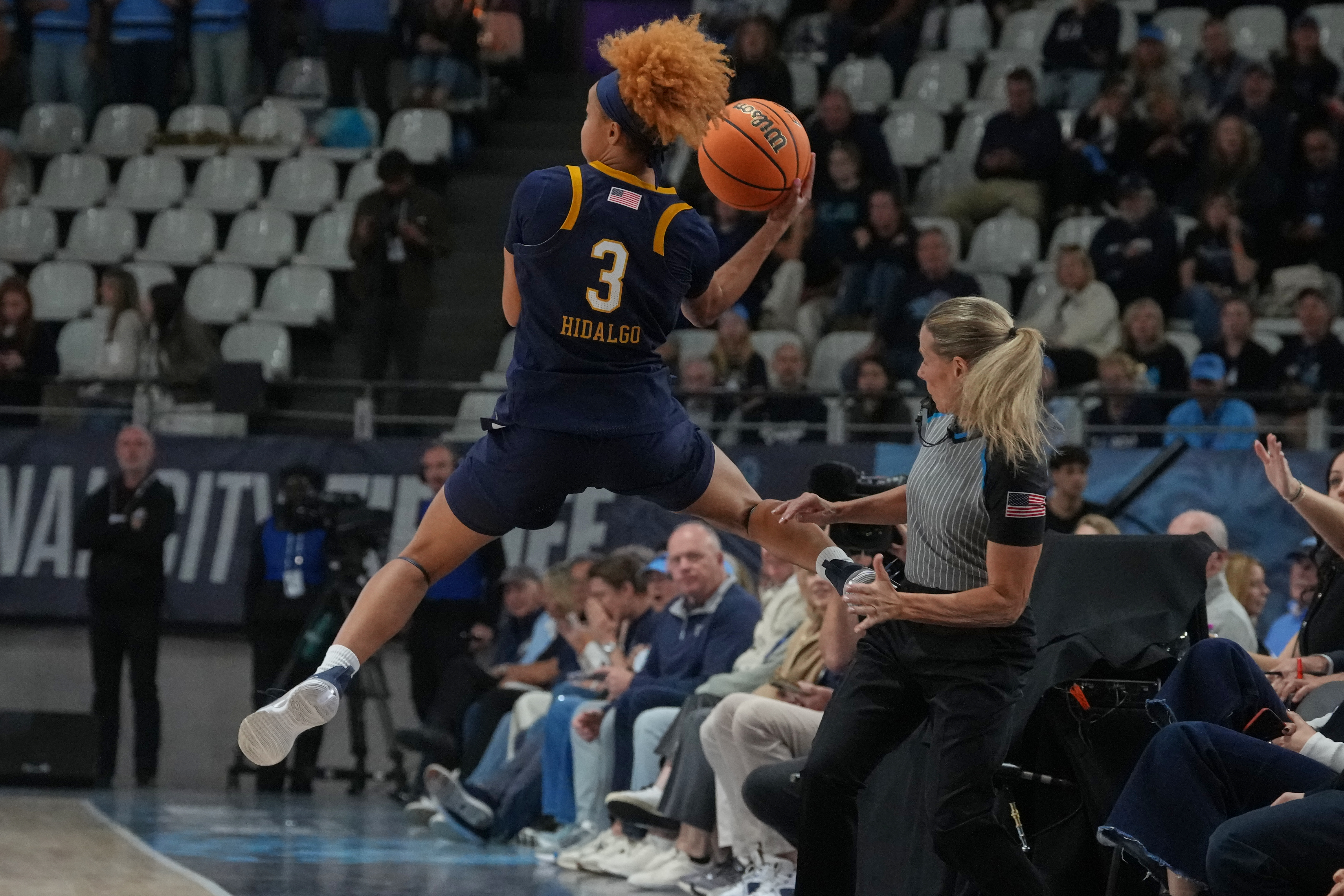
    Hidalgo, a preseason All-American, one-upped her big day in Paris, scoring 32 points. Always a threat for a triple-double, sometimes with steals as part of the math, Hidalgo added eight assists, seven rebounds, and three steals.

    “Seeing it on film, watching her for the last three years, you’re aware of what she’s capable of doing,” said Villanova coach Denise Dillon. “Just trying to throw a number of different players her way to mix up the defensive scheme.”

    Notre Dame’s Hannah Hidalgo reacts against Villanova on Sunday.Gregorio Borgia

    It’s become a futile effort. Hidalgo has averaged at least 22 points in all three of her college basketball seasons. Last year, her final per-game averages were: 25.3 points, 6.9 rebounds, 5.2 assists, and 5.6 steals. Yes, a dominant point guard who for the last two seasons averaged more steals than assists.

    There were points Sunday where probably nobody inside the Palazzo dello Sport would have cared if Hidalgo and Villanova’s Jasmine Bascoe just played one-on-one. Bascoe, a junior, had 26 points and nine assists.

    The difference was Hidalgo has much more capable co-pilots. One of them, sophomore forward Leah Macy, scored 27 points and had 14 rebounds. There was an obvious talent disparity at times, but Notre Dame will go as far as Hidalgo takes the Fighting Irish.

    Hidalgo, the 2023 Gatorade Player of the Year in New Jersey, will have stiff competition in the Player of the Year race from the likes of USC’s JuJu Watkins and UConn’s Sarah Strong, the last two players of the year, and maybe a few others. Hidalgo is projected to be a top-three pick in the next WNBA draft.

    “She’s always been how good she was today,” Bascoe said. “She played really hard. I respect her a lot. She’s done a great job representing small guards out there and I hope to do the same thing that she’s doing.”

    Villanova’s Jasmine Bascoe said Notre Dame’s Hannah Hidalgo “played really hard. I respect her a lot.”Gregorio Borgia

    Notre Dame coach Niele Ivey said coaching Hidalgo the last three years has been “amazing.”

    “She’s somebody that I love to coach,” Ivey said. “I love her tenacity. I love that she’s a dog. She allows me to coach her. She wants to be coached. She’s turned into an incredible leader. She gets better every time she steps on the floor. It’s easier for me to coach because she holds herself to a higher standard and she helps me hold the team to a higher standard. So when you have one of your best players, one of your hardest workers, and someone I can communicate with … she wants to be great. It’s been a joy.

    “She’s just really special. We have a special bond and I’m blessed that God allowed me to be a part of her journey because she’s amazing.”

    Faith has guided Hidalgo, she said. Asked about her performance Sunday, she credited her faith and her teammates.

    “I try and stay humble,” she said. “They were available for me to get the assists and they were able to get me open so I could create my own shot.”

    Hannah Hidalgo recovers the ball against Villanova in Rome on Sunday.Gregorio Borgia

    Hidalgo is Christian but not Catholic. She was moved Saturday when she spent the morning in St. Peter’s Basilica for a Mass given by Philadelphia Archbishop Nelson J. Pérez and later presented a gift to Pope Leo XIV inside a building in Vatican City, the Paul VI Audience Hall, that shares a name with her high school.

    Faith, Hidalgo said, “keeps me grounded” and she was able to connect with that aspect of her life during the trip to Rome this week.

    “It keeps me humble,” she said. “It’s such a blessing. Basketball has taken me all over the world and so I’m grateful.”

    From Paris to Rome, and everywhere in between.

  • New protections for Philly renters are in effect. Here are three big changes.

    New protections for Philly renters are in effect. Here are three big changes.

    Philadelphia renters have new rights under a package of laws that went into effect Nov. 1.

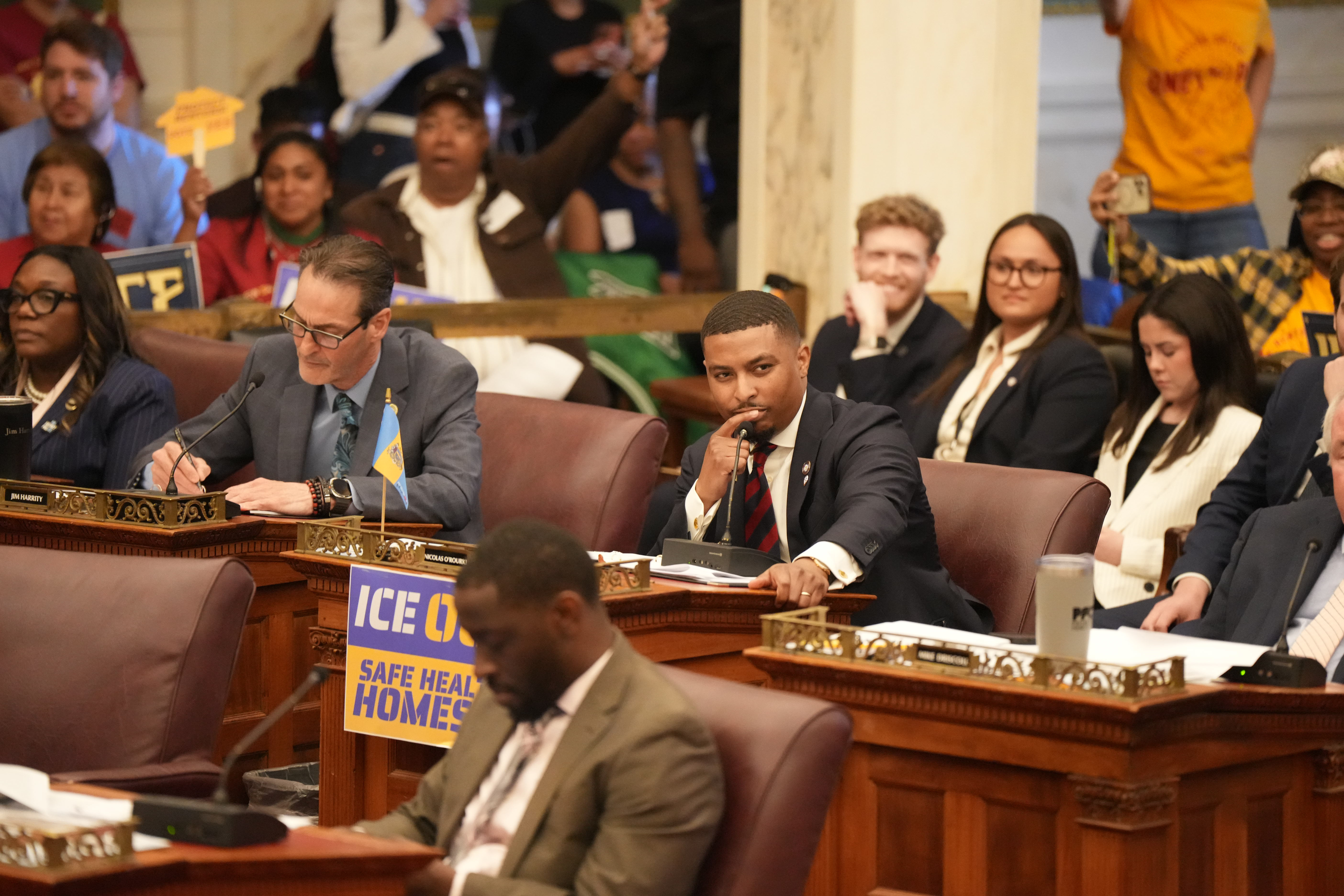
    The Safe Healthy Homes Act protects tenants from being evicted without cause, bars retaliation against them for filing complaints or joining tenant unions, and makes it easier for renters to sue. The new law also establishes a fund for renters forced out of their homes because of unsafe living conditions.

    About half of Philadelphians rent their homes, and City Council members passed the bill after hearing from residents who described living with mold, crumbling ceilings, pests, and no heat.

    The Safe Healthy Homes Act, introduced by Councilmember Nicolas O’Rourke, passed 16-1 in April — enough votes that it would become law even without the mayor’s support. Mayor Cherelle L. Parker signed it into law in May.

    Some groups such as the National Apartment Association said the new law adds risks and complications for landlords and may result in increased rent for tenants. Two landlords have already sued the city. A judge dismissed the case on Friday.

    Here are some of the biggest changes under the Safe Healthy Homes Act:

    Retaliation protections

    Established laws prohibit city landlords from ending or changing a lease to punish renters who file complaints with the city’s Department of Licenses and Inspections, according to the Public Interest Law Center. Tenants also may organize with others, it said.

    However, in the past, if renters were targeted for either of these activities, they had to file a complaint with the Fair Housing Commission or sue in court — not exactly an easy alternative for someone living paycheck to paycheck.

    With the new rules, landlords are explicitly barred from making these changes to the lease in these circumstances. They also can’t refuse to lease to someone or otherwise punish them for these actions.

    “The new law will also protect tenants from retaliation based on their good faith communications with government officials and/or testimony in judicial proceedings,” the legal nonprofit said.

    Tenants will be eligible for $1,000 per infraction, plus attorneys fees, which the law center said makes it easier for lawyers to take on these cases.

    Expands ‘good cause’ rules

    Similarly, the new law expands who is eligible for protection under the city’s “good cause” law. Good cause protection demands that landlords have a legitimate reason before they end a tenant’s lease, the law center said.

    Previously, only Philly renters living on month-to-month leases were protected by the good cause rule.

    “Under the Right to Safety legislation, all tenants will be protected by good cause requirements, no matter what type of lease they have,” the Public Interest Law Center said.

    There are still plenty of reasons for a landlord to end a lease. Tenants who always pay rent late, don’t pay at all, or who create nuisances or do things like harass neighbors are just a few of the examples provided.

    Adds new rights for tenants

    Another rule focuses on renters’ right to organize and create unions, the law center said.

    Landlords must engage in good faith negotiations with tenants’ groups. They must treat organizers who don’t live on-site the same as anyone else that visits a location. Landlords are barred from interfering with organization efforts.

    Another aspect of this law requires that landlords provide 24 hours’ notice before entering an apartment. They cannot deny amenities that were in the lease, and they can’t harass or intimidate tenants by reporting them to immigration officials.

    Similar to the other new laws, tenants can seek damages to help pay for legal assistance should they go to court.

    Complications for landlords

    The package of laws add new compliance requirements for Philadelphia housing providers, according to the National Apartment Association.

    “Industry stakeholders have expressed concern that the expanded standards could create additional litigation exposure and make it more difficult for housing providers to address legitimate operational and lease enforcement issues,” the group said in September.

    The group pointed to a study that it had partly sponsored, which found that some new housing regulations actually can increase the cost of rent, “particularly for lower-income renters and those renting from small multifamily properties.”

    Earlier this year two landlords, one of whom is the political chair for HAPCO Philadelphia, the city’s largest rental property owners’ association, sued the city over its consideration of the law. The plaintiffs said City Council violated Pennsylvania’s Sunshine Act and the city’s Home Rule Charter, the apartment association said.

    It said that the legality of some of the Safe Healthy Homes provisions could be challenged in court.

    “The plaintiffs have expanded their claims to include constitutional and property rights arguments connected to the new obligations under the legislation imposed on housing providers,” the group said.

    Correction: This story has been updated to reflect the status of a lawsuit surrounding the protections.

  • A 15-year-old was killed in a Halloween shooting at a gas station in Port Richmond, police say

    A 15-year-old was killed in a Halloween shooting at a gas station in Port Richmond, police say

    A 15-year-old boy was killed Saturday night after being shot at a gas station in Port Richmond, police said.

    The teen, whom police did not name, was shot once in the back just before 7 p.m. at a Sunoco station on Richmond Street near Castor Avenue.

    Responding officers found the boy about a block away, where he had apparently run after the shooting. He was transported to St. Christopher’s Children’s Hospital, and later pronounced dead there.

    The alleged shooter was taken into custody not far from the scene, and the gun believed to have been used in the shooting was recovered by officers, police said.

    Investigators did not identify the suspect, nor say what the potential motive for the shooting was.

    Anyone with information about the shooting is asked to call the Philadelphia Police Department’s Homicide Unit at 215-686-3334.

  • Travis Konecny and Owen Tippett back in Flyers’ lineup vs. Utah Mammoth

    Travis Konecny and Owen Tippett back in Flyers’ lineup vs. Utah Mammoth

    As the calendar flips to a new month, and the Flyers try to turn the page on a miserable start to their season, they will get two key cogs back.

    After returning to full practices late this week, Travis Konecny and Owen Tippett are back in the lineup and will dress against the Utah Mammoth on Sunday (4 p.m., NBCSP).

    “Obviously, in the room helps,” coach Rick Tocchet said. “Even on the ice, steadiness. Especially when teams are making presses at us, you get a couple of veteran guys that [are] good in our own end, can kind of make a play out or something like that. Calm the waters down, so that helps.”

    Tocchet said there will be no restrictions with their ice time.

    The two veterans were activated off injured reserve on Sunday afternoon. Konecny missed the past 10 games with a lower-body injury, and Tippett missed six with an upper-body injury.

    “It’d be a huge boost. I think they’re on-ice play speaks for itself, but it’s just more older guys in the room,” said winger Porter Martone.

    “TK has been a huge leader, speaking from my personal [experience], before I was even on this team, someone that I got to meet and kind of look to. And Tipp, just the way he plays, his speed, and he’s always got a good voice in the room, too. So if they can both come back, that’d be huge for our group, and we’ve really been missing them.”

    Konecny has led the Flyers in scoring for six of the past seven seasons and has three assists in five games this season. Tippett was the team’s leader in goals last season with 28 and had a goal and an assist in his first nine games.

    An alternate captain and vocal leader, Konecny will be back on a line with Christian Dvorak and Trevor Zegras. Tippett skated with Denver Barkey and Tyson Foerster.

    To open roster space, Jacob Gaucher was loaned to Lehigh Valley of the American Hockey League on Thursday, and defenseman Hunter McDonald went down Saturday.

    The loss of McDonald directly impacts the physicality of the Flyers. Between his first game of the season on Oct. 19 and Friday, he was tied for seventh in hits (21) in the NHL alongside several players, including former Flyers forward Garnet Hathaway.

    Owen Tippett had a goal and an assist in his first nine games.Isaiah Vazquez / For The Inquirer

    Will the Flyers pick up their physicality in response?

    “I hope so,” said Tocchet. “I think we can add more physicality to our team. I don’t think one individual [impacts it]. Obviously it does help, but definitely we can have another notch of physicality in defending the puck.”

    And what was the message to McDonald, who also drew seven penalties during his time in the NHL — tied for the most in the NHL in that timeframe — but is one of a handful of players who are waiver-exempt, making for an easy move?

    “It’s a numbers game. It comes to that; that’s really what it comes down to,” said Tocchet. “That doesn’t mean he won’t get called up. I think [general manager Danny Brière] just needs time to sort a few things out.”

  • This Philly educator earned a national rep. He’s proudest of the students he inspired to be teachers.

    This Philly educator earned a national rep. He’s proudest of the students he inspired to be teachers.

    This is a big month for Sharif El-Mekki. Philadelphia is naming a street after him, and a conference he conceived will draw over 1,500 people to the city to discuss issues that have put him on a national educational stage.

    That’s all great, said El-Mekki, founder and CEO of the Center for Black Educator Development. But he keeps coming back to what really matters to him the most.

    “We’ve got to invite young people into the profession,” El-Mekki said.

    His invitations have worked.

    Makiah Burroughs, a first-grade teacher at Mastery Charter-Mann Elementary, loved the idea of becoming a teacher from the time she was a young child. But people kept discouraging her.

    “They would say, ‘Makiah, you’re so smart, why don’t you be a doctor, a nurse.’ Teaching is not the most lucrative career path, and everyone’s trying to make it out the ‘hood to make the most money. But they’re not thinking about the impact you can make as a teacher,” said Burroughs, a 2020 Mastery Shoemaker high school graduate.

    Burroughs vividly remembers when she was a Shoemaker 12th grader, completing her senior project about education.

    “El-Mekki looked at me, and he was proud,” Burroughs said. “That’s the first time someone was excited when I said I wanted to be a teacher.”

    The path to the work

    El-Mekki didn’t grow up imagining a career in education. He graduated from Overbrook High School and Indiana University of Pennsylvania with a criminal justice degree.

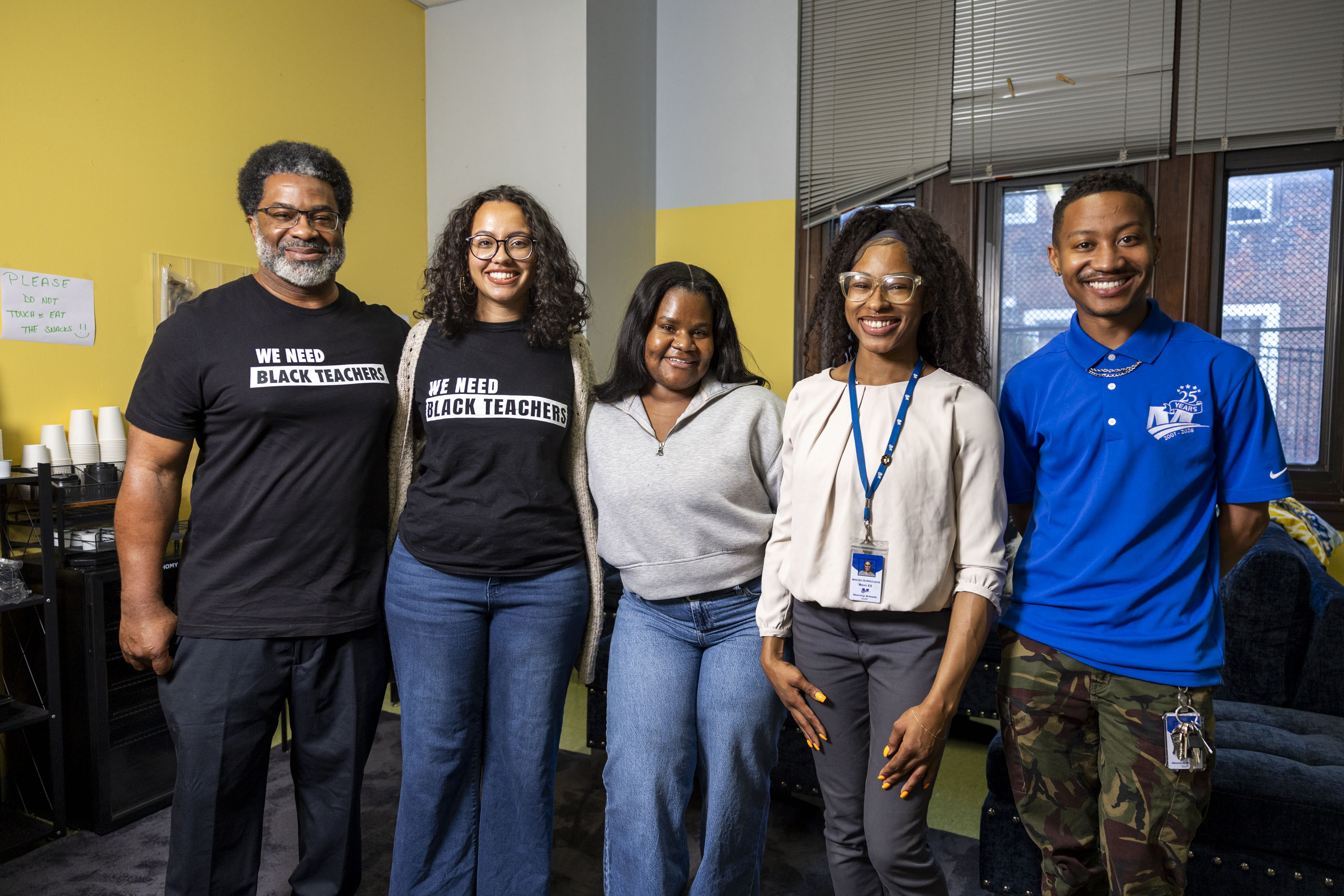
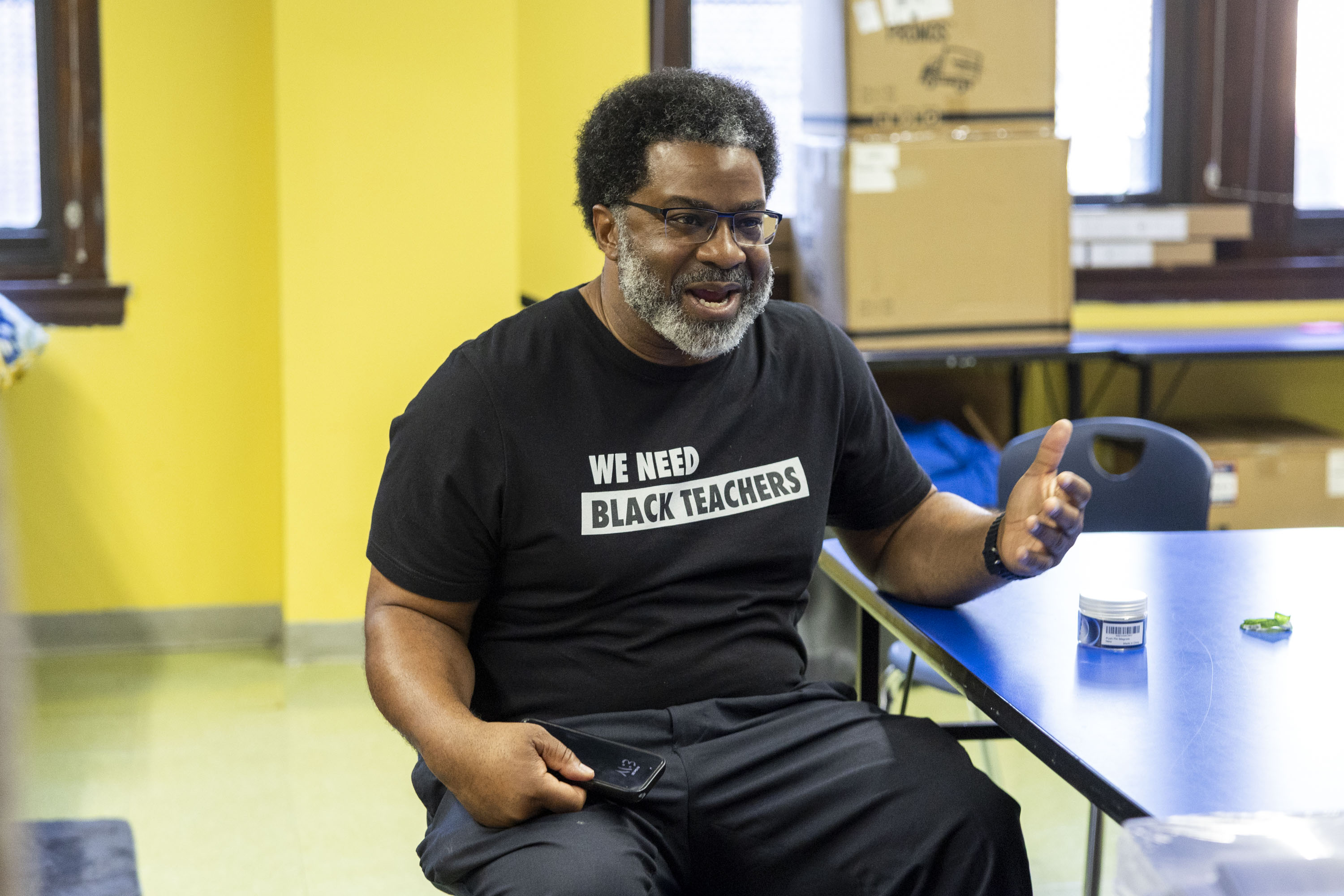
    Sharif El-Mekki, founder and CEO of the Center for Black Educator Development, talks with some of his former students who are now educators themselves.Tyger Williams / Staff Photographer

    After El-Mekki survived being shot while playing a pickup football game in the city, his career plans moved away from becoming a lawyer. He started working with young people like his shooter, who lacked opportunities and struggled with anger issues. El-Mekki became a counselor, got a teaching degree, and worked as a teacher and principal at Turner Middle School, Shaw Middle School, then Mastery Shoemaker.

    He became a U.S. Department of Education principal fellow and built a national reputation. He started an organization that eventually became the Center for Black Educator Development, focusing on diversifying the teacher pipeline in myriad ways.

    The organization offers a fellowship that provides up to $40,000 for students who pursue teaching and stay in the profession for five years. It offers summer programs that work as training grounds for teachers of color and a year-round career and technical education course for high school students interested in teaching. And it runs the annual Black Men in Education Convening, which draws over 1,500 diverse educators to Philadelphia every November.

    The work matters, research shows.

    Having a diverse teaching force benefits all students, but particularly Black students, who are less likely to have educational and opportunity gaps when taught by Black teachers. Black students taught by just one Black teacher in the early grades are 13% more likely to graduate from high school, and 19% more likely to attend college. Having two Black teachers makes it 32% more likely they will attend college.

    But 40% of all U.S. schools have no Black teachers at all. Many Black students around the country will go through 13 years of school without a single Black teacher.

    Philadelphia’s teaching force is more diverse than most of the country but still lacks in representation. About half of the Philadelphia School District student body is Black; a quarter of its teaching force is Black.

    The teachers influenced by El-Mekki know that intrinsically. Shadae Hamilton, a 2019 Mastery Shoemaker graduate who now teaches Algebra I at her alma mater, “came back because of El-Mekki and the teachers who had that impact for me. I want to be that for my students.”

    The students become the teachers

    At a recent informal gathering of El-Mekki-inspired educators, the conversation was easy. It was about their students and their journeys to the classroom. It was about doing for others what El-Mekki and impactful teachers did for them.

    If you asked Rasheen Hill what his future held when he was a student at Mastery Shoemaker, he’d tell you he wanted to go into business.

    “I liked that businesspeople wore suits,” he said.

    But even with degrees in management and in human resources, Hill felt an itch to mentor. He realized how impactful the adults at his schools were to him, even when he got in trouble for talking too much in class or not putting his full effort into assignments.

    “There was a sense of pride and integrity that they instilled in us at such a young age,” said Hill. “They tapped into our community, they cared about us.”

    Hill ran into his former dean, who told Hill: I think you’d be good as a dean.

    That’s just what he’s doing now, working as dean at Mastery Prep Elementary.

    “People poured into me, no matter how much I got sent to a dean’s office for talking,” said Hill. “It definitely makes the job easier, being able to relate to my students. I say, ‘It’s OK to mess up, but we’re not going to continue to mess up.’ El-Mekki had this lasting image on us, and it runs through us to pour back into our students.”

    Tiera Sedden, a 2011 Mastery Shoemaker graduate now working as an assistant principal in Washington, D.C., and working on her doctorate, said like those who taught her, she’s focused on moving both her students and her employees forward.

    “I’m always thinking, ‘How am I equipping you to take my place?’” Sedden said. “There is always room for everybody to grow, and everybody to win. Ultimately, I have not done my job if I haven’t helped develop someone to replace me when I’m gone.”

    Dear Fatima

    El-Mekki’s pride in his students now working in education was evident in a recent blog post he wrote to Fatima Ponzo, a former Shoemaker alum now in her own seventh-grade math and science classroom in Philadelphia.

    Ponzo wrote to El-Mekki asking for advice as she started her school year. His message back to her and the dozens of his former students whose trajectories led them into classrooms of their own, encapsulates his reason for doing the work.

    “We’ve been passing your news around like proud grandparents — your deans, your coaches, the teachers who wrote your recommendation letters,” El-Mekki wrote. “You were leaders in our classrooms long before anyone handed you a roster or a caseload, and now your students get what we got.”

    Content knowledge matters deeply, El-Mekki told Ponzo and her peers, but that’s not everything. Relationships matter more. He urged them to find mentors, enmesh themselves in their students’ community, and avoid outside battles that bring them down. He told them to tend to their joy and stay in the profession, even through the rocky first years.

    “Teaching is how a people builds itself, generation by generation,” El-Mekki wrote. “When you stand in front of those seventh graders, you are not just delivering math and science. You are shaping the adults who will raise the children who will inherit whatever we leave behind. You teach the child in front of you, and you teach that child’s grandchildren. That has always been the assignment.”

  • The biggest threat to democracy in Alaska isn’t named Dan Sullivan

    The biggest threat to democracy in Alaska isn’t named Dan Sullivan

    On the list of U.S. towns that are easy to get to, Petersburg, Alaska, would rank really low. A fishing village of just 3,000 people midway between the capital of Juneau and the southern Alaska panhandle’s border with Canada, largely settled by Norwegian immigrants, Petersburg is only accessible by boat or small airplane.

    This made it all the more surprising when an FBI agent from Anchorage showed up in town and headed for the boat dealership run by a local man named Charles Flint. The boat dealer was away, so the agent left his card with Flint’s son and said he was there to investigate why his dad had donated $500 to Alaska Senate candidate Dan J. Sullivan, a retired schoolteacher from Petersburg running as a long shot independent.

    If you’re a politics buff, you already know that the Republican incumbent U.S. senator in the race is named Dan S. Sullivan.

    The senior Flint later told the Associated Press that had he been there, he would have told the FBI agent — who asked his son whether his dad was somehow “misled” into donating to the wrong Sullivan — that he had totally intended for the money to go to the independent Dan J. Sullivan.

    “I don’t feel like I’ve been misled at all,” Flint told the AP, saying he’s known the not-senator Sullivan for a long time and that he respected his friend’s decision “to throw his hat into the ring.”

    This FBI probe of campaign donors — unprecedented in that it’s occurring less than a week before Alaska voters go to the polls in a highly watched, ranked choice Senate election where former Democratic House member Mary Peltola is given an excellent shot at ousting the incumbent Sullivan — isn’t confined to only Alaska.

    Nearly 3,000 miles east, FBI agents were in Groton, Mass., knocking on the door of a Dan J. Sullivan donor named Pat Campbell and speaking with her husband. “They said they were from the FBI and investigating fraud in election contributions,” Campbell wrote in a text message to the AP. “No, we had not been defrauded. We knew to whom we had contributed.”

    What’s this all about? A push by a politically cornered Trump regime to prove the existence of two Dan Sullivans on the Alaska ballot isn’t just fishy (pun slightly intended), but somehow a crime shifted into fifth gear last week, lubricated by some overcaffeinated investigative reporting by the New York Times. Those articles established links between the Peltola campaign and the spoiler candidate who could siphon votes away from Sen. Dan Sullivan for a few confused voters.

    Never mind that this type of political stunt is probably older than the Code of Hammurabi, or that in the year 2026 A.D., variations of this ploy (for example, conservatives propping up a third-party leftist candidate who’ll undermine a more centrist Democrat) are coming from both parties — including Republicans in Alaska!

    And never mind the flat-out denials of fraud from Dan J. Sullivan donors such as Campbell.

    Nothing will deter the Trump regime from its never-seen-before goal of canceling a major U.S. election before the votes are even counted, which has already included this Stasi-like FBI inquisition of political donors, a public declaration by Alaska’s Trump-appointed U.S. Attorney of a “sprawling conspiracy” linking Peltola and the outsider Sullivan, and a stunning lawsuit filed by the U.S. Department of Justice aiming to pre-block certification of the Democrat if she wins.

    If Trump’s candidate wins, however, the election was perfectly fine in the eyes of the Justice Department.

    (Moments after this column was initially posted, a federal judge in Alaska dismissed the Justice Department lawsuit, in a ruling saying the government’s stated motivation of investigating the intentions of Dan J. Sullivan voters threatened the right to a secret ballot. The Trump regime is likely to appeal.)

    This effort is, appallingly, led by the man who, after Sullivan the senator, has the most to lose in Alaska: Donald Trump. The president — who, in obliterating the modern post-Watergate norms around an independent Justice Department, has done more to tear down a wall than Ronald Reagan ever did — has even bragged that, yes, he ordered the Code Red to attack the vote in the state known as the Last Frontier.

    At a preelection rally in Daytona Beach, Fla., on Friday, Trump said Peltola “should be removed from the ballot and prosecuted!” Then, the president looked over at Attorney General Todd Blanche, who in yet another gobsmacking violation of precedent and arguably the Hatch Act, had traveled with him. ”But [Blanche] is going to make his own decision. Todd, please make your own — OK, he said yes.”

    Let’s do what the New York Times seems incapable of doing here and put this in some perspective. The president of the United States is putting his vulgar short fingers on the scales of justice to nullify the will of Alaska voters, in the hope that keeping this seat in GOP hands will preserve a Senate majority that will continue to confirm extremist judges and thwart investigations into his family’s corruption.

    The American Civil Liberties Union, which is intervening in what it calls a “frivolous” Alaska lawsuit by the Trump regime, offered some additional context in its court filing.

    ACLU lawyers wrote that “imagine if the government were right. Imagine if the federal executive could pluck a few words like ‘election integrity’ from some statutory preamble and, on that basis alone, bend the machinery of state elections to his will, preemptively blocking certification of a U.S. Senate election to protect his preferred candidate from defeat and then subjecting voters to a law-enforcement-led inquest about who they ‘really’ supported.

    “Imagine that world and ask whether it is what the Framers wanted or precisely what they feared most.”

    Bingo.

    This is the story out of Alaska that really matters. Exactly as happened in 2016 with the matter of Hillary Clinton’s email server — which, like the case of the two Dan Sullivans in Alaska, was a story, but not worthy of Watergate-level surge journalism (the Times has so far published a dozen news articles, and counting) — the mainstream media’s “both sides” obsession has obscured the real threat here.

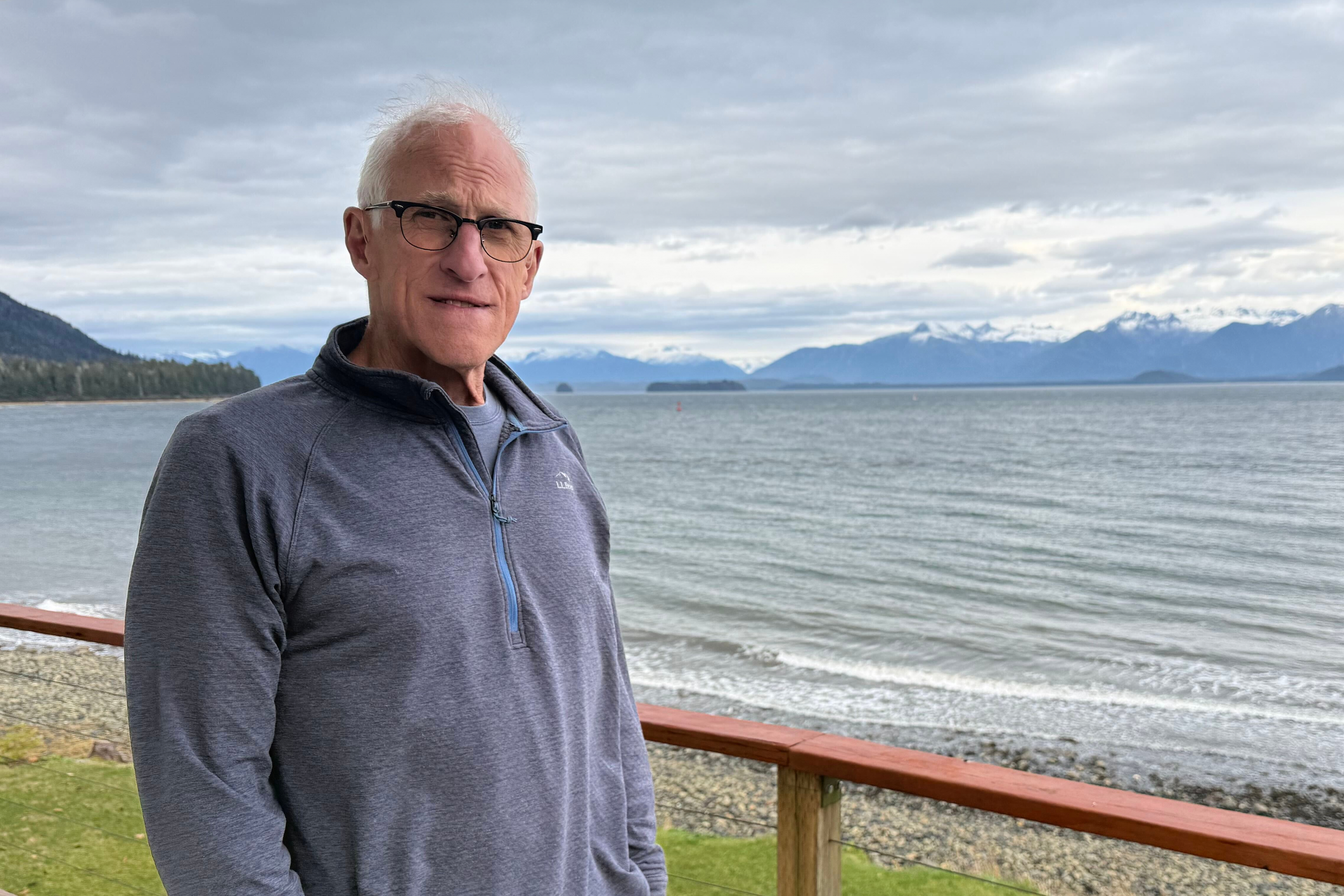
    Charles Flint poses for a photograph in Petersburg, Alaska, on Saturday.Joshua Goodman

    It’s given MAGA World the inch it will now take a mile in its efforts to end democracy as we know it.

    Because it’s based on something that’s real — if banal and almost certainly legal — the Trump-led push to nullify the Alaska election has become the leading edge of an election interference crusade that is unlike anything that has come before it. But it is mostly built upon a bed of lies.

    This includes the sweeping and wildly inaccurate claims that thousands of noncitizens are registered to vote in California and other states, as well as threatened legal action against state or county officials who don’t obey the Trump regime’s demands to scrub them. As with Peltola, we’ve also seen moves against a likely Democratic winner in a House race, as Rep. Ilhan Omar of Minnesota is also targeted in an equally ridiculous federal investigation into her decades-ago immigration here as a Somali-born refugee.

    Aside from the most glaring problem — that these maneuvers go against the foundations of the democratic republic launched here in Philadelphia 250 years ago — there are two other issues with Trump’s schemes of dictatorially preventing a Democratic majority in Congress from taking office and investigating his crimes.

    For starters, disqualifying Peltola is only a coup (literally!) for Trump if the Democrats win just 51 seats, including Alaska. It won’t keep a GOP majority if Dems rise to 52 or more seats, which looks increasingly likely. That’s even more true with the drive to possibly even deport Omar, since every poll and pundit suggests Democrats will blow well past the 218 seats needed for a House majority.

    Are there other dark scenarios? Sure, including one way-out-there plot to block the maybe dozen or so incoming House or Senate members with ties to the Democratic Socialists of America (DSA) as somehow un-American — a return to full-blown McCarthyism that would almost surely be thrown out in the courts, if attempted.

    Indeed, that’s the looming second problem for Trump’s dictatorial dreams — almost none of this will pass judicial muster. Already, a federal judge in California has ordered the regime to stop its intimidation efforts of local election officials, in a preview of a coming courtroom bloodbath for White House election interference.

    But is that good news or bad news? It seems certain from Trump’s recent history that he cares everything about preserving his family’s wealth and staying out of prison, and nothing about preserving the American Experiment in democracy. That’s a stance that leads to disobeying judges and ruling by emergency order: a coup.

    The responsibility for American voters on Tuesday — if they’re not among the 52 million-plus who’ve already cast ballots — is clear. A resounding rejection of authoritarianism at the ballot box means that — short of a coup, which would also fail — Trump couldn’t flip Congress in the wildly unlikely event he actually could disqualify a senator from Alaska or deport a House member from Minnesota.

    And if and when you do vote, imagine the FBI knocking on your door and demanding to know why you supported a particular candidate. Ask yourself whether that’s the America you want to keep, or whether it’s time to start demanding a lot better.

  • Villanova collapses late in season-opening loss to Notre Dame in Rome

    Villanova collapses late in season-opening loss to Notre Dame in Rome

    ROME — Asked in late September about the upcoming Villanova and Notre Dame trip to his city, Pope Leo XIV mentioned that he was told there would be a lot more Villanova fans in attendance than those from Notre Dame, and that “the voice of the people of God will be very strong on the Villanova side.”

    There would be no holy power, not even a day after a blessing from the pope himself on Saturday, to save Villanova’s men’s team in the waning minutes on Sunday.

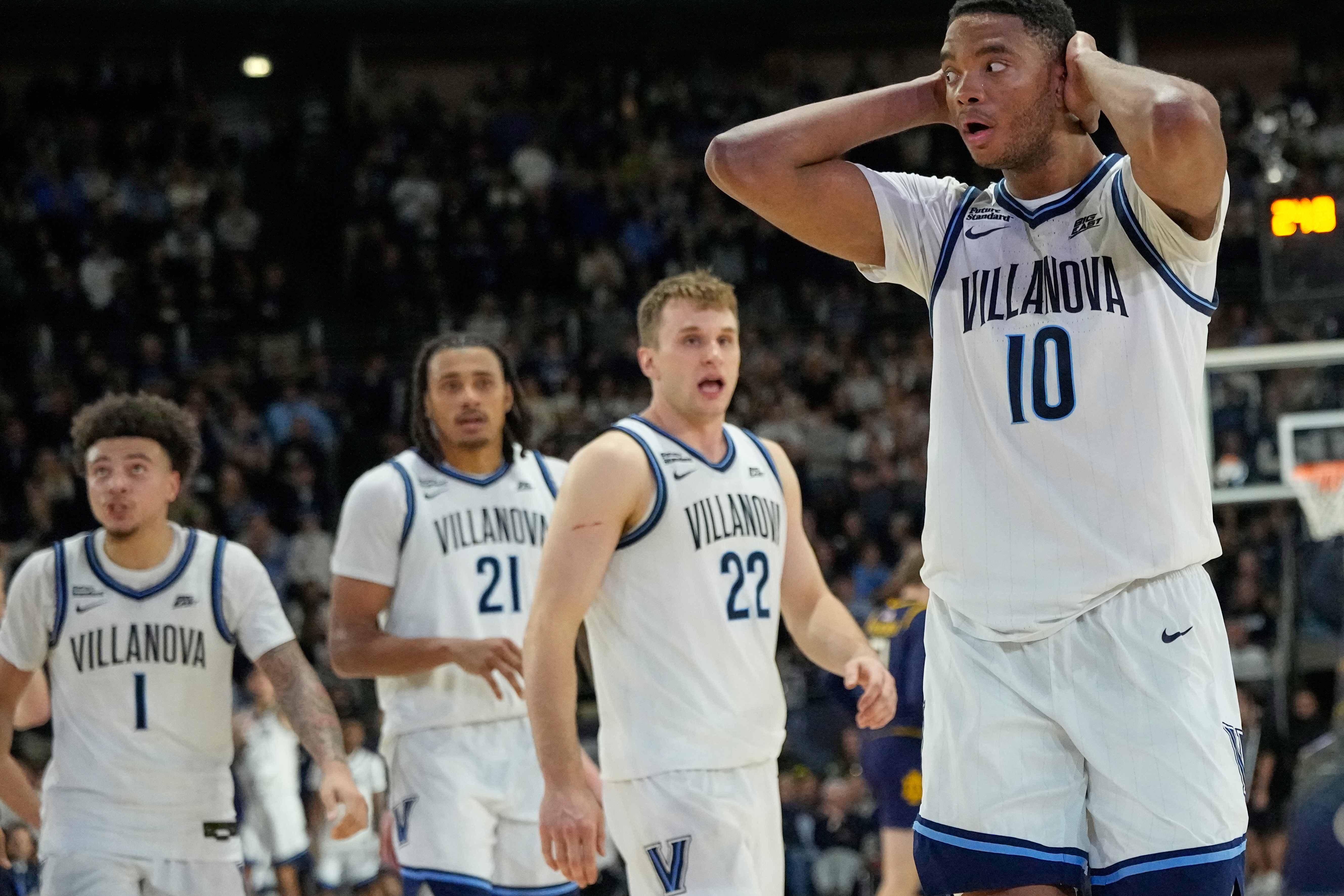
    Villanova blew a 10-point second-half lead and collapsed late in a 74-72 loss to Notre Dame in the first game of the college basketball season.

    They kept a seat open for Pope Leo, a 1977 Villanova graduate, in case he decided to make the 12-kilometer trip from Vatican City to the Palazzo dello Sport, but the leader of the Catholic church — who said during his audience with both teams on Saturday that his former identity, Bob Prevost, would have a strong rooting interest — ultimately did not attend as expected.

    The final 10 minutes might have sent him to confession.

    Everything was turning up Villanova. Tyler Perkins drilled his fourth three-pointer of the second half to give the Wildcats a 60-50 lead, their largest of the game, with 10 minutes, 24 seconds remaining.

    It all unraveled from there.

    Villanova made just two of its next nine attempts from the field before Buddy Simmons’ meaningless layup at the buzzer. The Wildcats also committed two critical turnovers in the final four minutes, giving them 20 on the night.

    Fans hold a poster showing Rev. Peter M. Donohue, the president of Villanova University, and Pope Leo XIV on Sunday.Alessandra Tarantino

    “They hit two big threes … but we just gave up too many offensive rebounds,” said Villanova coach Kevin Willard. “It’s been one of our struggles so far. We just got to fix our offensive rebounds and turnovers. You can’t have 20 turnovers and 18 offensive rebounds and expect to win.”

    Villanova gave up at least 10 offensive rebounds in its three-game exhibition slate, an issue that continued into the first game of the regular season. The turnovers were especially problematic in the first half. Villanova committed 15 first-half giveaways and led by four, a differential that should and could have been much larger considering how well the Wildcats were defending.

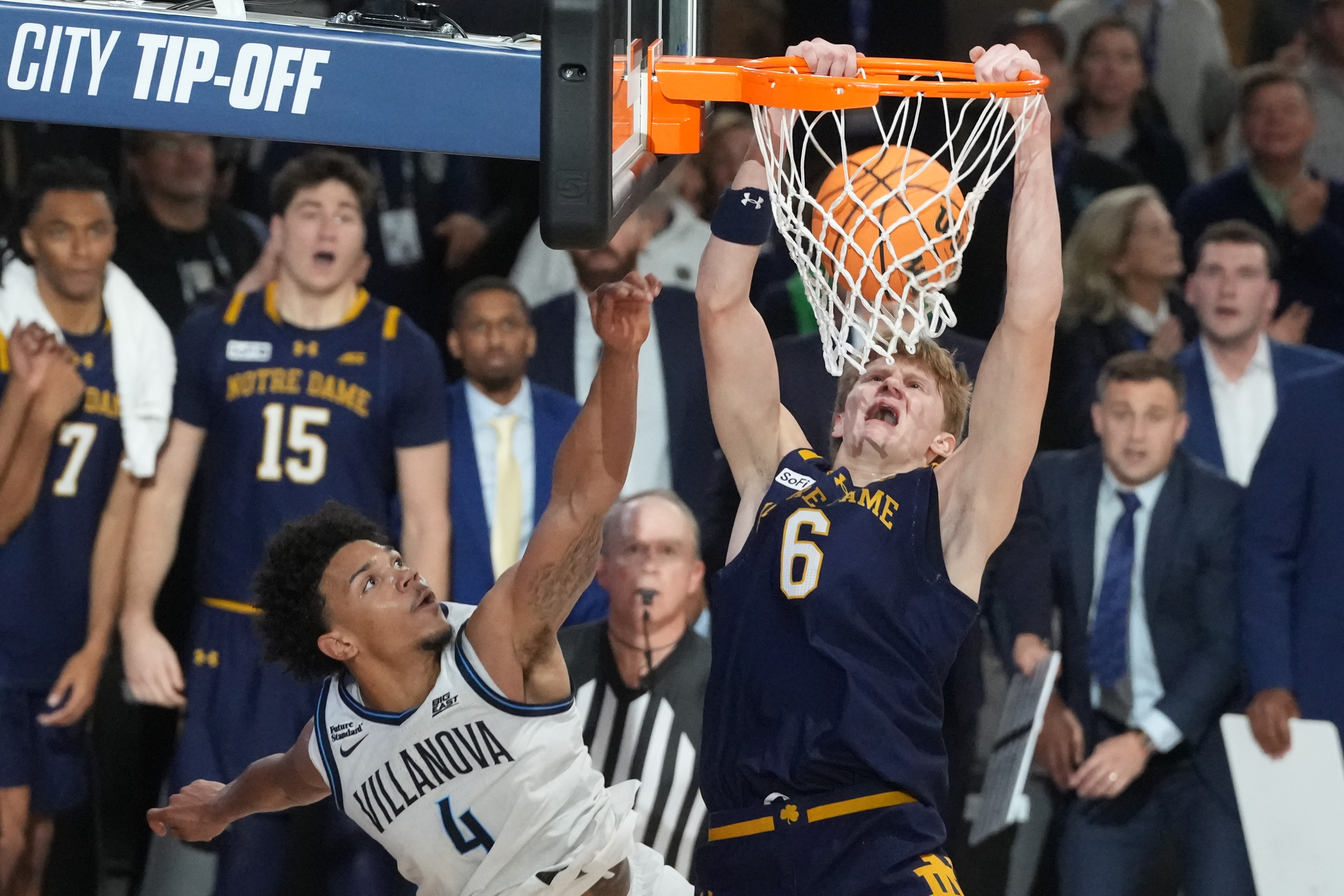
    They took better care of the ball in the second half, but not in the key moments. Devin Royal was Villanova’s best offensive player during the exhibitions, but the forward from Ohio State was out of sync offensively. Out of a timeout after Notre Dame’s Brady Koehler dunked on Perkins to cut Villanova’s lead to 67-66 with 1 minute, 44 seconds on the clock, Royal drove into the lane and lost the ball.

    Down at the other end, Notre Dame big man Logan Duncomb was left alone at the top of the key and hit a go-ahead three-pointer. Willard elected to hold onto his timeout. Villanova’s possession ended when Kwame Evans Jr.’s corner three-pointer was blocked by a closing Koehler and rebounded by Braeden Shrewsberry.

    Later, Villanova had a chance to tie the game, but Elijah Crawford’s pull-up jumper from 14 feet went in and out with 10 seconds left, and Notre Dame sealed the game at the free-throw line.

    “It was more defense,” Perkins said when asked about the issues down the stretch. “But offensively, I always look at myself. I made some questionable plays that I’ll learn from and we’ll all learn from at the end of the day.”

    Notre Dame forward Brady Koehler (6) dunks on Villanova guard Tyler Perkins (4) on Sunday.Gregorio Borgia

    Perkins connected from beyond the arc on three consecutive possessions to open the second half for Villanova. The team’s leading scorer from last season — one of only two returnees from last year’s team — was providing a steadying presence for a team that looked out of sync at times.

    Perkins led Villanova with 18 points on 6-for-12 shooting (5-for-11 from deep). His three-pointer midway through the second half, though, was followed by a six-minute stretch where Villanova missed four shots from the field and three free throws while committing a turnover and allowing three offensive rebounds.

    “We talked about at the under eight[-minute TV timeout],” Notre Dame coach Micah Shrewsberry said. “Let’s take a deep breath, let’s settle, and let’s play our best basketball these last eight minutes, and I felt like we did that.”

    Villanova didn’t, and heads back to Philadelphia Tuesday morning with a bitter taste.

    “We’re playing 30-some games this year,” Perkins said. “That’s one game. We obviously wanted to win. We should have won. We hurt ourselves at the end of the day, but we just got to stay together.”

  • Philly police have warned residents that Hondas are a top target for car thieves

    Philly police have warned residents that Hondas are a top target for car thieves

    Of the 12,000 cars stolen from Philadelphia this year, about a quarter of them were Hondas, and police are warning city residents to take action.

    Auto thieves, exploiting a computer port on 2023 or newer CRVs and Accords, among other models, are able to quickly reprogram target cars to work with other keys, according to Philadelphia Police Major Crimes Unit Capt. Robert McKeever.

    McKeever’s advice, he said in a recent interview, is to combine new and old technology: Honda dealerships are now offering a cover for cars’ on-board diagnostic ports, and, when paired with a steering wheel club lock, can help keep cars protected.

    “The most important thing is that they’re deterrents,” he said. “And when thieves see that, they’ll move onto vehicles they can access more easily.”

    McKeever’s unit has been engaging in a public-information campaign this year, in light of high-profile investigations into aggressive car thieves.

    In September, investigators broke up an auto-theft ring operating out of an auto-body shop on 9th and Ontario Streets in Fairhill. The group was stealing Hondas to strip for parts they then shipped to the Dominican Republic.

    Six stolen CRVs were recovered from that business, McKeever said.

    Months earlier, Philadelphia police assisted investigators from the state Attorney General’s Office in dismantling a title-washing scheme that stole and resold 50 vehicles under fraudulent vehicle identification numbers, including multiple Hondas, McKeever said.

    The ringleader of that group, Reginald Manson Jr., is facing trial in Montgomery County on racketeering, forgery, and related crimes.

    Hondas are desirable, McKeever said, because their parts can be interchanged with those used on Acuras. Many of the stolen cars the department recovers are found abandoned on secluded roads, stripped of bumpers, rims, or other pieces.

    He also said thieves are becoming more brazen, with some stealing cars out of dealership lots.

    Others have threatened owners who intervene in the thefts with guns.

    In one recent case, a Croydon man was shot at while going to confront thieves who attempted to steal his SUV out of his driveway.

    “It’s still the second-biggest purchase you’ll make in your lifetime, after your house, but it’s not worth your life,” McKeever said.